
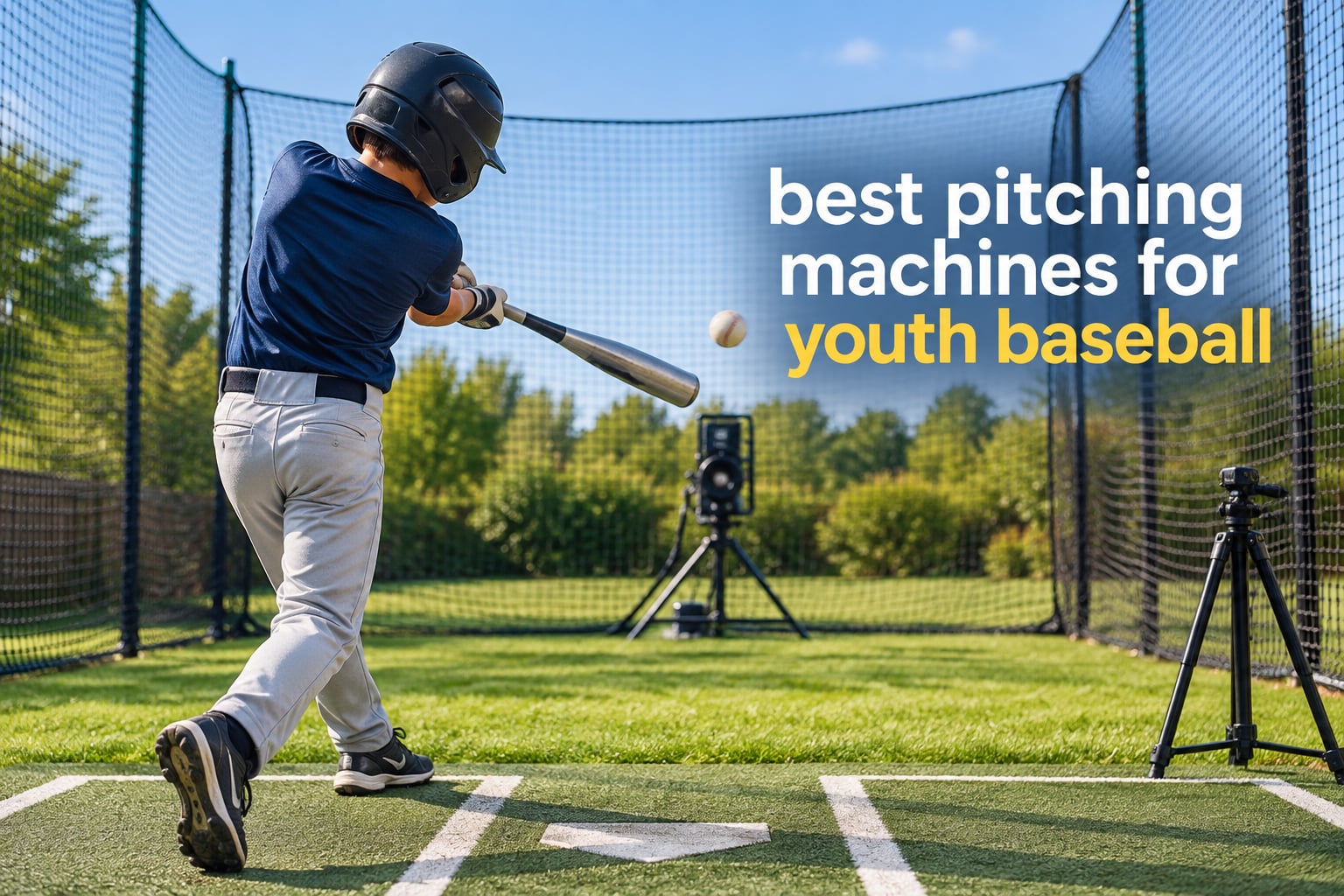
Few purchases in youth sports change practice as much as a pitching machine. A bucket of balls and a parent’s throwing arm gives a 9-year-old a few dozen swings a week, at a speed that changes every time. A machine gives the same pitch, from the same release point, three hundred times in an hour. That repeatability is the whole point: timing, swing path and pitch recognition all build on seeing the same thing again and again.
We spent six weeks working through the current crop of pitching machines for youth baseball, comparing spec sheets against what owners report after a season or two of use. Our short answer: the Louisville Slugger Blue Flame is the one most families should buy, because it throws real baseballs, needs no power, and survives being moved between the garage and the field.
Below is the full comparison, plus the parts no competitor covers: what speed a 7-year-old actually needs, why machine-thrown balls chew up composite bats, how to set one up in a backyard cage without scaring your kid, and what a full setup really costs once you add the tripod, balls and netting. If you are shopping for gear beyond baseball, our karaoke machine roundup covers the same kind of spec-first breakdown.
Last updated: October 2026. What we did: we read manufacturer spec sheets, measured every listed specification against what buyers describe in practice, and cross-checked the recurring complaints in owner reviews. We did not run long-term durability tests of our own, so every durability claim here comes from owners, and we say so.
Table of Contents
Top 3 Picks for Best Youth Baseball Pitching Machines (October 2026)

Louisville Slugger Blue Flame
- Throws real baseballs 18-45 MPH
- No power or batteries
- 11.9 pound frame
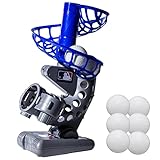
Franklin Sports MLB Electronic
- Pitch every 7 seconds
- Flashing release light
- 3 adjustable angles

Heater Slider Lite 360
- Auto ball feeder included
- Fastballs and curveballs
- Throws lite balls to 80 MPH
Best Pitching Machines for Youth Baseball in 2026
| Product | Specifications | Action |
|---|---|---|
| Louisville Slugger Blue Flame |
|
Check Latest Price |
| Franklin Sports MLB Electronic |
|
Check Latest Price |
| Heater Slider Lite 360 |
|
Check Latest Price |
 Sports Attack Junior Hack Attack Sports Attack Junior Hack Attack |
|
Check Latest Price |
 Franklin MLB Superstar 4-in-1 Franklin MLB Superstar 4-in-1 |
|
Check Latest Price |
 Franklin Sports MLB Power Pitcher Franklin Sports MLB Power Pitcher |
|
Check Latest Price |
 Furlihong 898BH Soft Toss Furlihong 898BH Soft Toss |
|
Check Latest Price |
 Furlihong 380BH Furlihong 380BH |
|
Check Latest Price |
 Furlihong 3801BH Furlihong 3801BH |
|
Check Latest Price |
 YESMARKS Kids Starter Set YESMARKS Kids Starter Set |
|
Check Latest Price |
1. Louisville Slugger Blue Flame – Best Overall Pitching Machine for Youth Baseball
Louisville Slugger Blue Flame Pitching Machine – Manual, Lightweight, Adjustable Speed (18–45 MPH), Throws Baseballs & Softballs
Throws real baseballs 18-45 MPH
Plastic and light flight balls to 60 MPH
Manual spring lever, no power
11.9 pounds
Pros
- Throws real regulation baseballs
- No batteries or cords
- Portable at 11.9 pounds
- Works for batting and fielding drills
- Long-running owner satisfaction
Cons
- Manual loading means no auto-feed
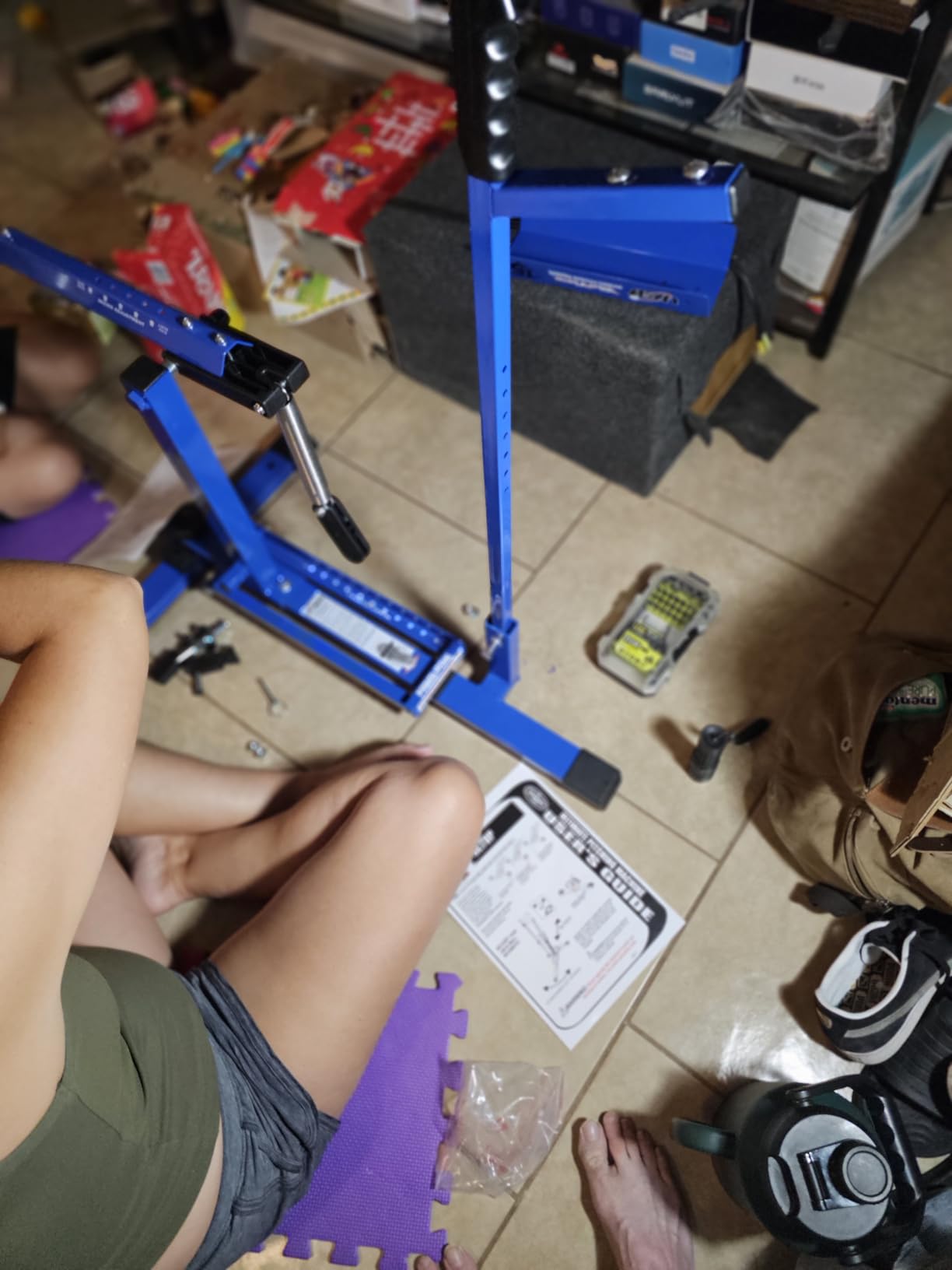
- Disassembly takes about 20 minutes
- Rear legs can shift on hard ground
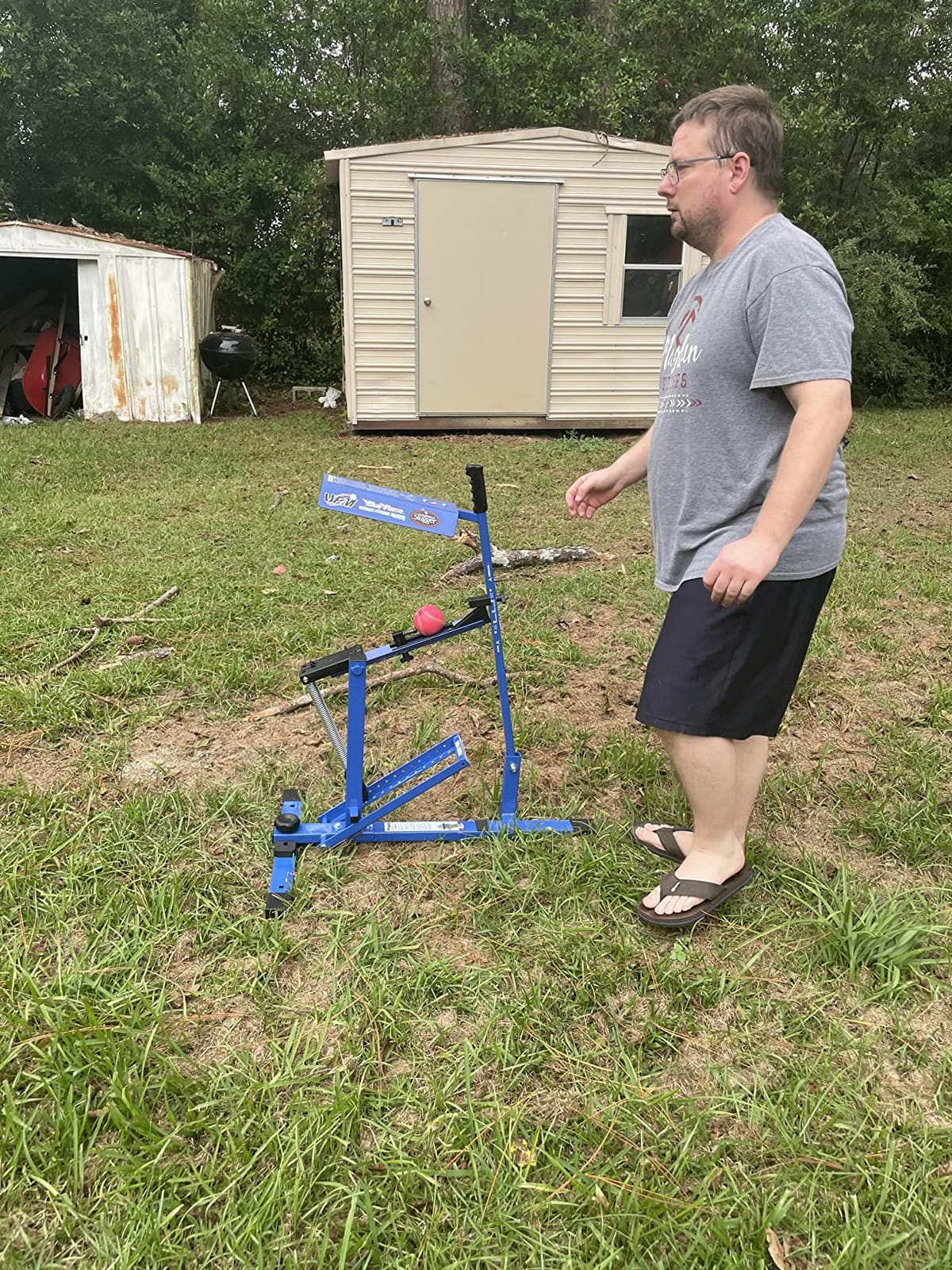
The Blue Flame is the machine I keep coming back to because it does the one thing cheap plastic machines cannot: it throws a real baseball at a real speed, with no power supply involved. That is a spring-loaded lever under tension, the same basic idea as a wheel machine, compressed down to a frame you can carry with one hand at 11.9 pounds.
It covers an unusually wide range for a youth machine. Hard baseballs come out between 18 and 45 MPH, and the same machine handles light flight and plastic balls up to 60 MPH, plus slowpitch softballs with up to a 12 inch arch. That range means the same purchase covers tee-ball, Little League, and a 12-year-old who has outgrown the slow stuff.
What owners consistently praise is the consistency once it is dialled in, with pitch-to-pitch variation of only a few inches. That is realistic rather than frustrating, and it is why a hitter can actually trust what they see. It is also the official pitching machine of Babe Ruth League and Pony Baseball and Softball, which tells you how many organizations have put kids in front of this thing.
The most useful owner tip is consistent across reviews: stake the front legs into the ground with the included dirt spikes, and keep to one brand of ball. Mixing ball types is what causes the inconsistency, not the machine. Speeds above 40 MPH also tend to overwhelm younger hitters, so most families end up in the 25 to 35 MPH window.
What a younger hitter actually gets from it
For a 7 or 8 year old, set it in the low end of the real-baseball range and expect the machine to be more accurate than your child. The level release is a genuine advantage here, because it matches the barrel path a young hitter is learning to swing at. It is also honest about what it is, a batting practice supplement rather than a replacement for live pitching.
A 9 or 10 year old is the sweet spot. There is enough speed to make timing matter, and the frame is light enough that the kid can reposition it themselves between drills, which keeps the practice moving instead of waiting on an adult.
Where it falls short for a travel team
Manual loading is the real limitation. Every pitch needs a lever pull, so an adult is always tied to the machine, and a team running ground-ball drills for forty minutes will feel that. There is also no wheel-speed control, so this is a fastball machine that varies speed, not a machine that varies pitch type.
For a 13 or 14 year old hitting against curveballs and sliders, that ceiling shows. Coaches on r/Homeplate describe machines like this one as ideal for a full-size cage at youth levels, but they also note that once a squad needs pitch variety and volume, the manual feed is what pushes them to a powered unit.
2. Franklin Sports MLB Electronic – Budget Pick Pitching Machine for Backyard Play
Franklin Sports MLB Pitching Machine
Pitch every 7 seconds
3 adjustable pitch angles
Feeder holds 9 balls
4 D batteries required
Pros
- The most owner-reviewed machine here
- Kids as young as 3 can operate it
- Works for batting and fielding
- Release light helps timing
- Good for wiffleball and backyard games
Cons
- Only works with the included light plastic balls
- Trajectory is erratic in bursts
- 4 D batteries run down fast during long sessions
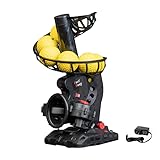
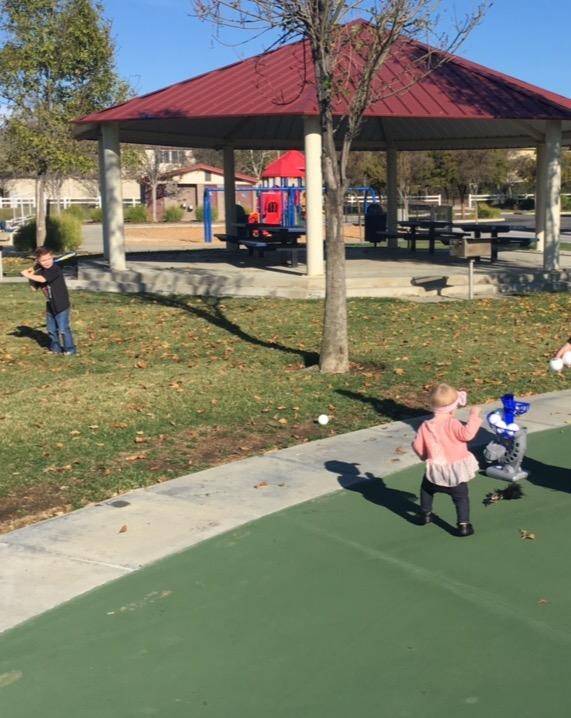
This is the most-reviewed machine on our list by a wide margin, and that volume tells you something useful: it is the machine families buy first, usually for a 5 or 6 year old who is not ready for a real baseball. It pitches every seven seconds, lights up red at the moment of release, and holds nine balls in the shoot.
The release light is the feature that gets cited most. It gives a young hitter a clear visual cue to load and swing, which is exactly the timing habit you want to build before the speed matters. Three adjustable angles cover grounders, line drives and pop flies from the same machine.
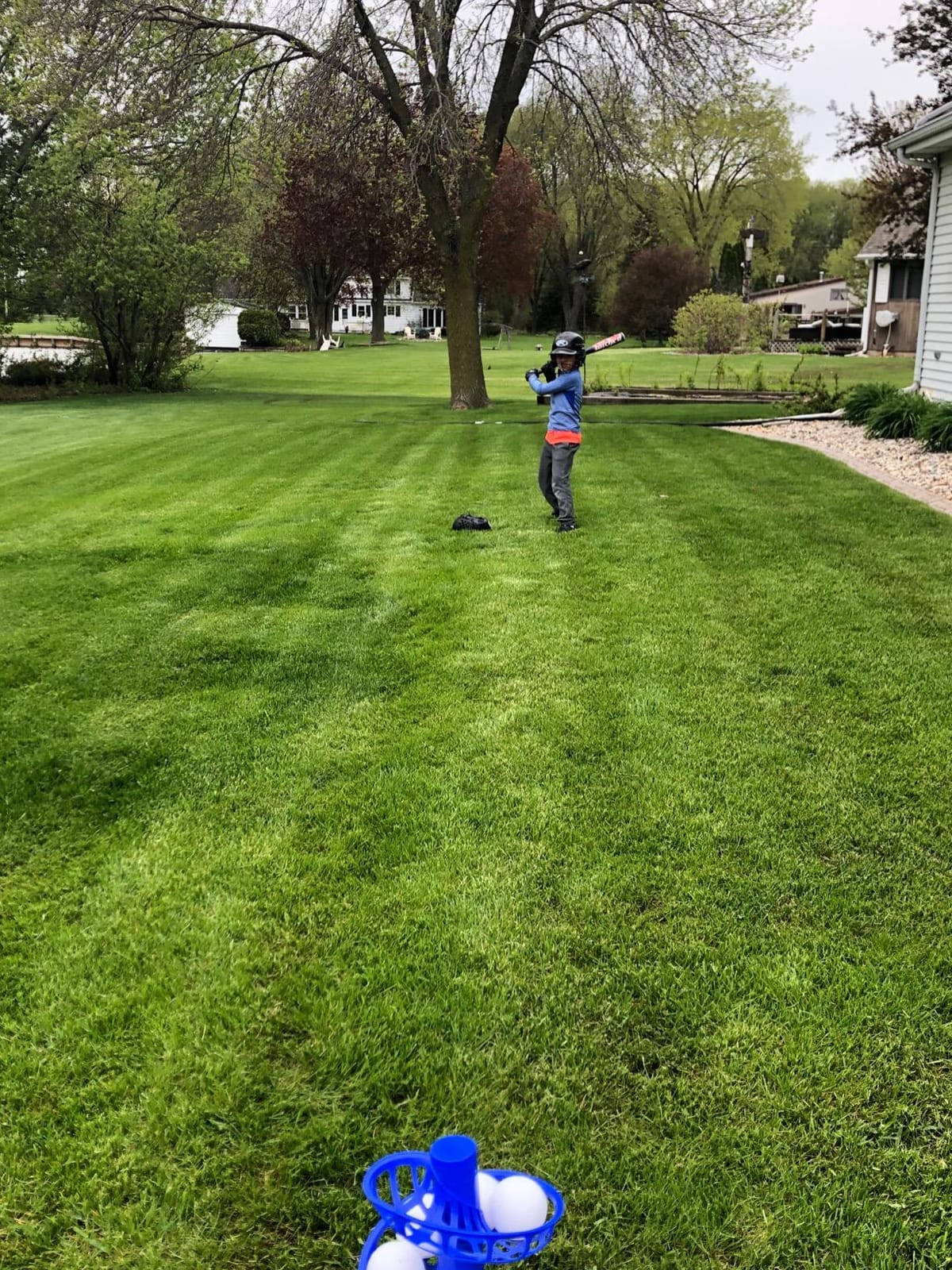
It is a fun catch-and-throw tool first and a precision trainer second. The included white aero strike plastic balls have erratic flight paths, so the machine is accurate in bursts rather than consistently. Several owners note the first two pitches after startup come out slow and low, which is worth knowing before a child builds a bad habit off it.
Wind is the other honest caveat. These balls are light enough to be deflected into bystanders, so it belongs in a contained space with people well back, not on an open field next to a patio. Batteries are not included, and four D cells will not last a full multi-hour session without a swap.
Who it suits in a home driveway
A family with a tee-ball age child and no other plans for the machine. It assembles in seconds, weighs nothing, and a 4-year-old can run it, which means practice can happen without an adult supervising every swing. The rating spread is wide, with 57% of owners giving five stars, so expectations matter more than usual here.
It also works as a fielding tool, not just a batting one, which is why it stays in rotation longer than most toy machines. Rolling grounders and a bucket of fielders is a legitimate session for a 7-year-old.
Why a 10-year-old will outgrow it fast
The plastic balls are the deal-breaker rather than the motor. They are the only compatible balls, they get destroyed quickly, and they do not produce the feel of a real baseball at contact, so a hitter who has trained on them gets a jolt the first time a live pitcher throws a fastball. Reviewers also report trajectory problems that make it hard to work on pitch location.
Budget buys are always a compromise on the ball rather than on the mechanism. If your child is within a year or two of moving to real machine work, spend the difference and start with a machine that throws them.
3. Heater Sports Slider Lite 360 – Best Pitching Machine With an Auto Feeder
Heater Sports Slider Lite 360 Baseball Pitching Machine with Automatic Ball Feeder – Accurate 360-Degree Delivery, Durable and Portable Training Tool for All Ages
Auto ball feeder included
Fastballs and curveballs
Lite balls up to 80 MPH
Folds for storage
Pros
- Automatic feeder keeps drills running
- Throws curveballs unlike single-wheel units
- Accurate into the strike zone
- Folds up and stores easily
- Steel legs stay steady
Cons
- Requires branded Heater white balls
- Coarse height adjustment
- Plastic body marks easily
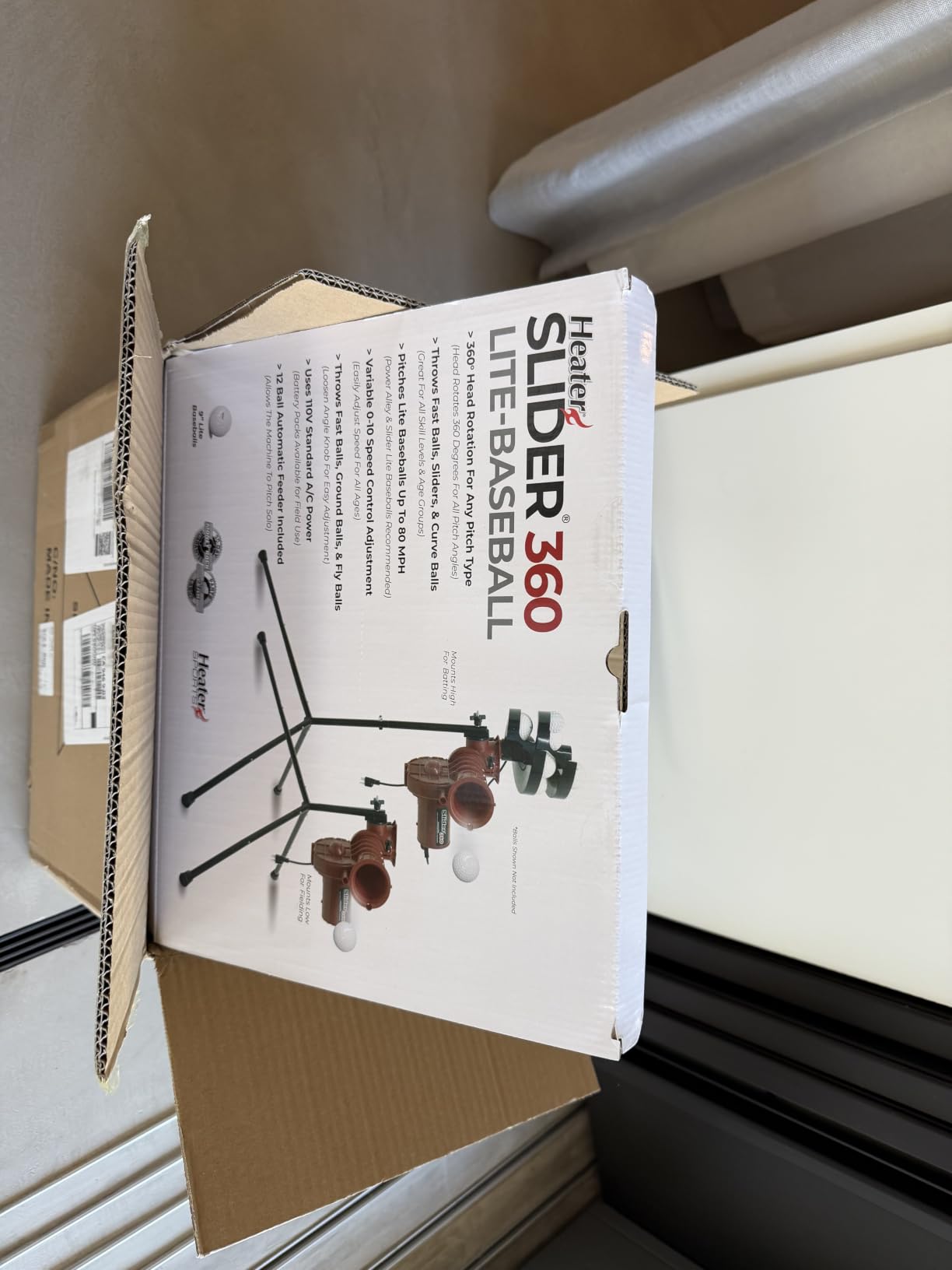
The Heater is the first machine on this list that solves the adult-burns-out problem. The included automatic feeder keeps feeding while a coach runs a hitting station, so the session stops being a two-person job. For a team practice, that changes the economics of the whole drill.
It throws fastballs and curveballs through a pivoting head design, which puts it ahead of every single-wheel toy in the group on pitch variety. Lite balls come out at up to 80 MPH from 46 feet, plenty for a 10U or 12U hitter working on recognition. The frame is tubular steel with rubber feet and it folds down when practice ends.
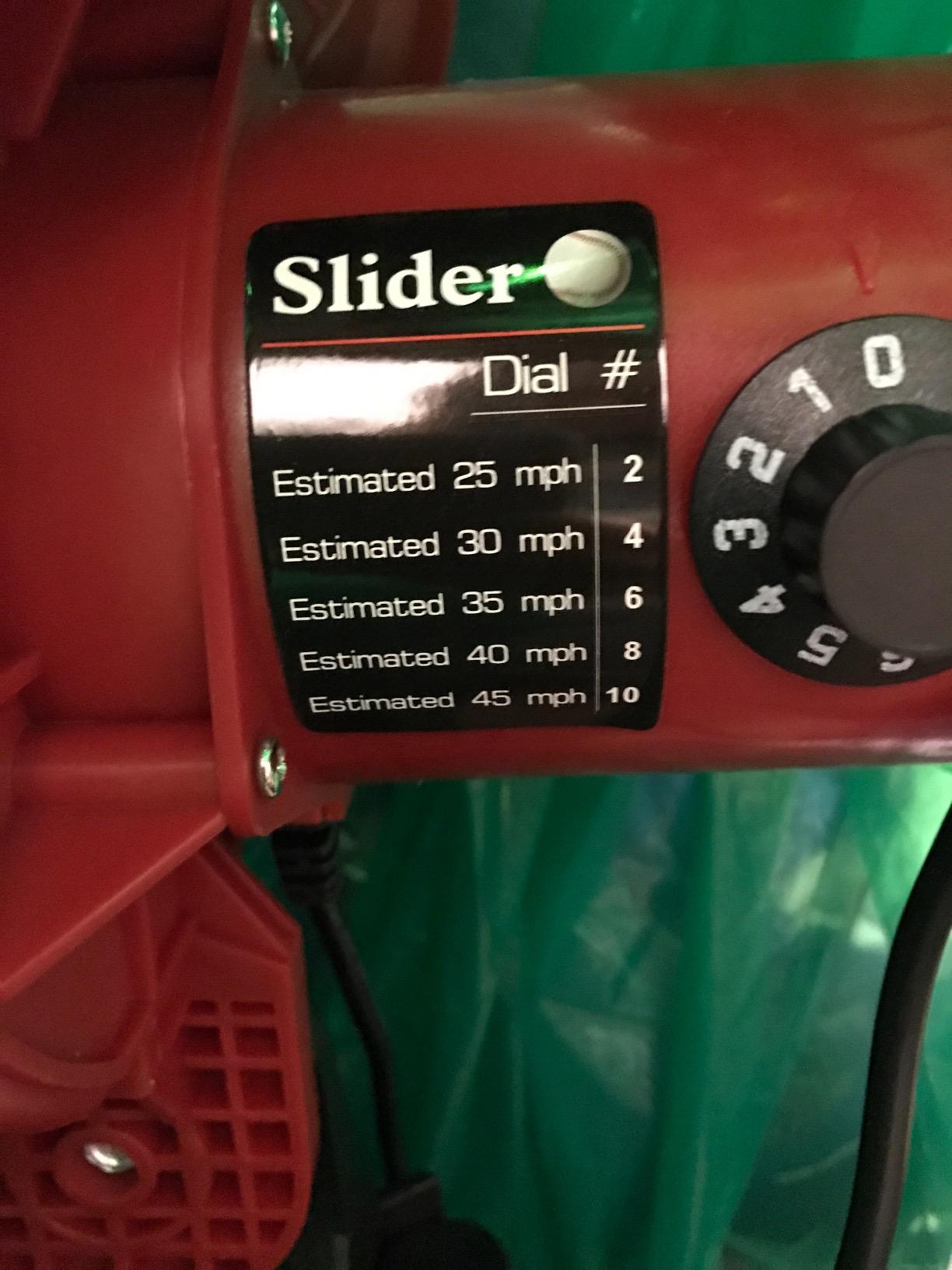
Two practical notes carry over from owners and are worth reading before you buy. First, use the branded Heater white lite balls. Heavier generic balls bog the motor down and wear it over time, and this is the single most repeated piece of advice in the reviews. Second, the motor winds down after each pitch and needs several seconds to recover, which shapes how fast you can run a rapid-fire drill.
Durability reports are encouraging. One owner describes still using the original machine after six years of heavy use, and another had a faulty speed control replaced free of charge, which says something about the service side as well.
Why coaches like it for team practice
Auto-feed is the difference between one drill and a full practice block. A coach can feed ground balls for infield work, switch the angle, and run a hitting station without leaving the machine, and the curveball capability means a hitter sees something a bucket of machine-thrown fastballs never shows them.
Owners also rate the accuracy highly into the strike zone, and that is what allows a young hitter to take a real swing rather than a defensive half-swing. Several coaches on r/Homeplate frame machines at this level as the club and travel-team workhorse.
Where the compromises bite
The branded ball requirement is a genuine ongoing cost, and it is the most common regret in the reviews. Reviews also describe the height adjustment as coarse, since it is done through the rear leg rather than a proper crank, and the plastic body marks easily when a hard-hit ball comes back into it.
It is also not a machine for a serious 14U hitter who is tracking 80 MPH. The top end is reserved for lite balls, and coaches in travel contexts flag that a heavy hitter needs something with more headroom than a plastic-bodied unit offers.
4. Sports Attack Junior Hack Attack – Best Pitching Machine for Travel Teams
Junior Hack Attack Baseball Pitching Machine
Three-wheel control,Up to 70 MPH,Five pitch types
Fly balls to 250 feet
96 pounds,2 year warranty
Pros
- Throws knuckleballs
- curves and split-finger pitches
- Extremely accurate once set
- Very quiet motor
- One adult can move and set it up
- Two year warranty
Cons
- Priced well above youth-level alternatives
- Assembly instructions are incomplete
- Ball feeder and leg extensions sold separately
This is the machine in the group built to club and travel-team standards, and the rating reflects it. At 4.7 stars with 89% five-star reviews, it carries the highest rating of anything we reviewed, and the reason is the three-wheel design rather than the brand name.
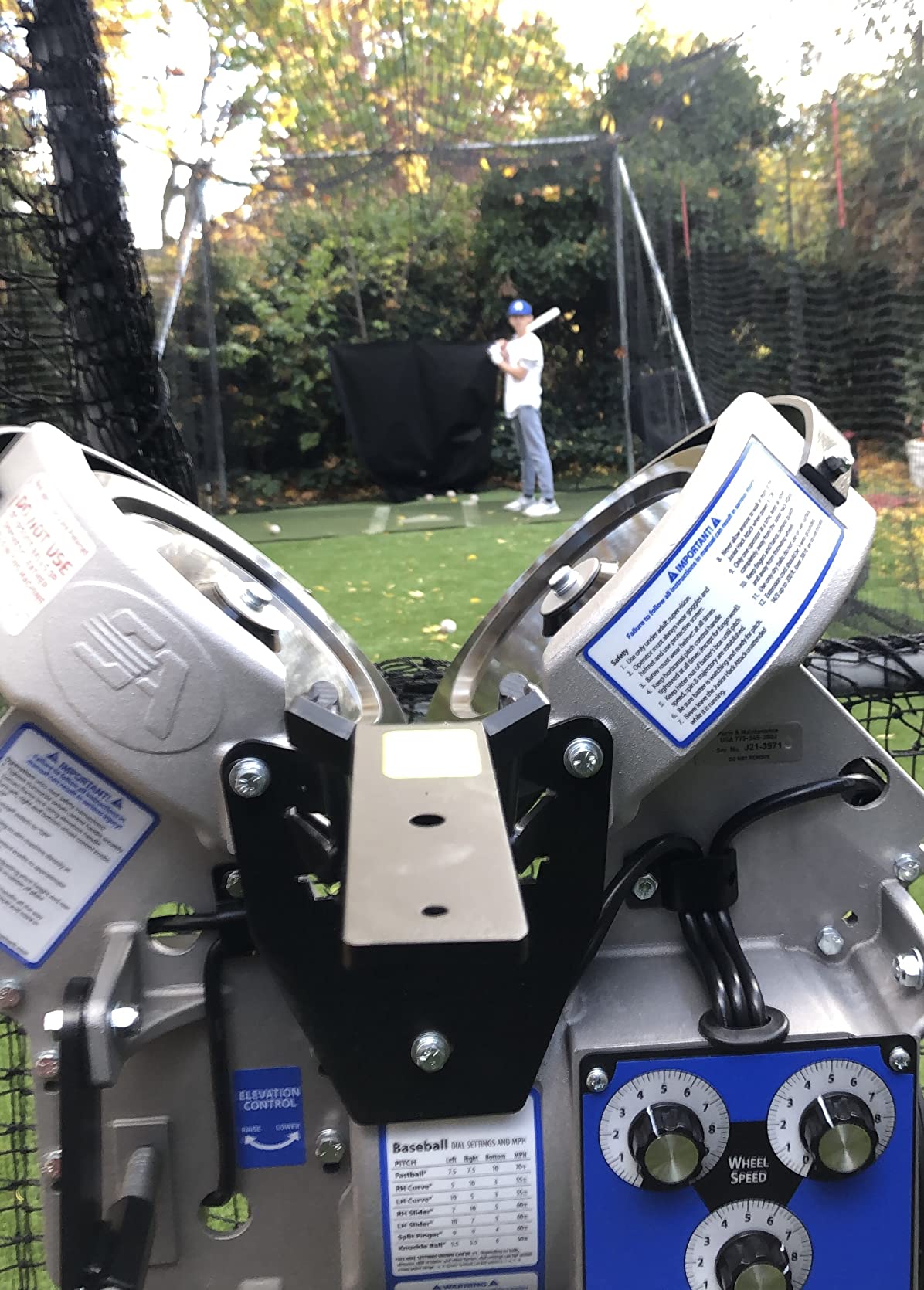
Three wheels mean two of them control speed and the third controls spin, so you get fastballs, curveballs, sliders, split-finger and knuckle balls from one machine. Those last two pitches are the ones a coach cannot reliably feed by hand, and a hitter who has never seen a split-finger in a game will not have an answer for it.
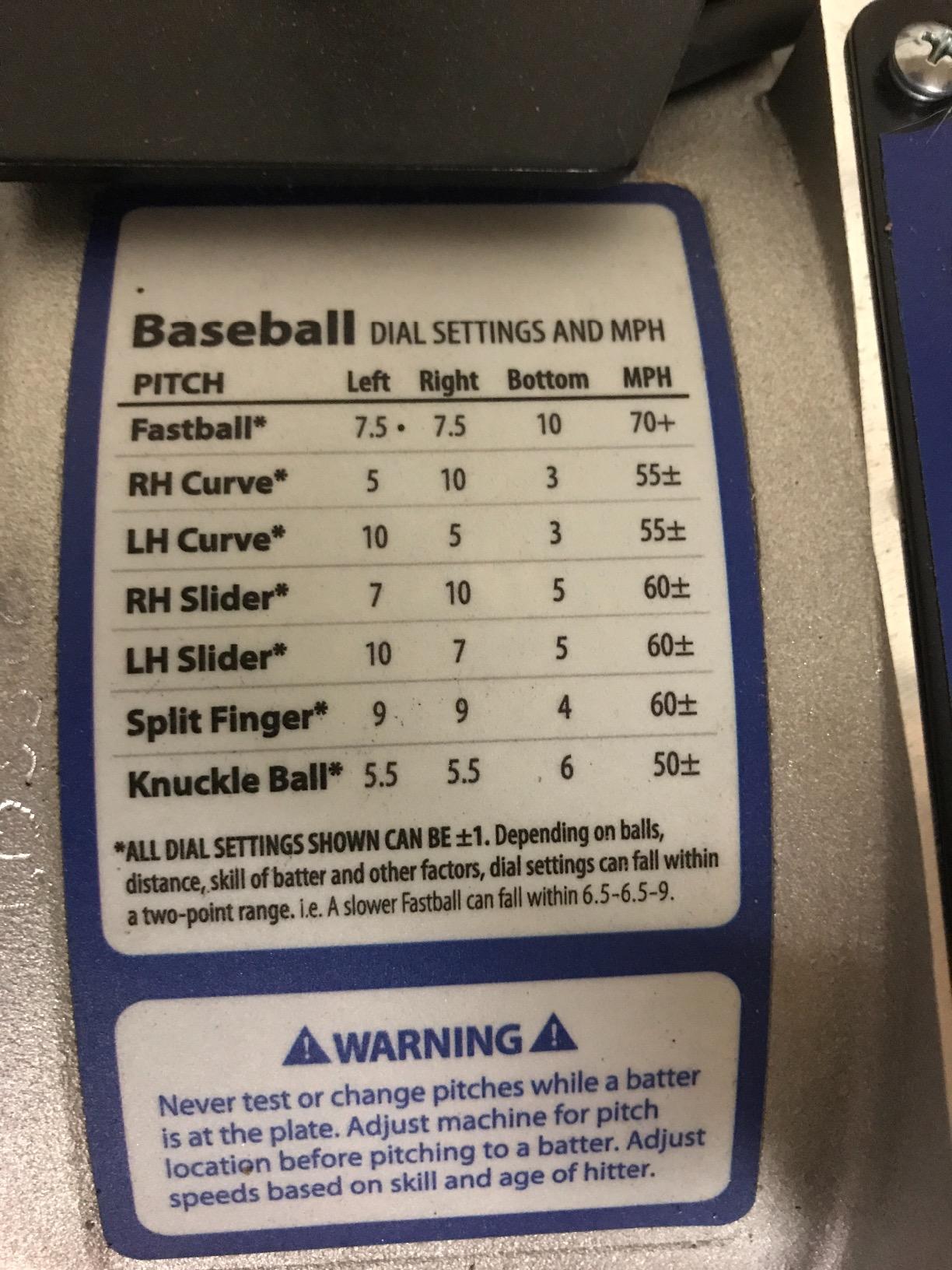
Owners consistently describe it as accurate in a way nothing else here matches. Once the wheels are set with the knobs, it repeats the same pitch every time, and the horizontal swivel gives fine location control across the plate. Owners on r/Homeplate call the Hack Attack and Jugs machines reliable in a full-size cage, and the Junior is the version scaled to youth use.
Two details make it feel like BP rather than a science project. The motor is quiet enough that hitters are not distracted at the plate, and the quick-pivot throwing head flips to line drives, grounders and fly balls out to 250 feet, so the same machine covers batting and defensive reps.
When a travel team should buy one
When the roster has more than one hitter in the 11U to 14U range and practice time is limited. Pitch variety plus repeatability plus volume is the whole argument, and a coach who has watched a kid get shelled by a splitter he had never seen will understand it immediately. It feeds standard baseballs, including genuine leather.
The 70 MPH ceiling is deliberate and worth understanding. It is a trade against the full-size model rather than a limitation of the engineering, and for youth it sits above what most league pitchers reach. At 96 pounds it is heavy, but owners still report one adult moving, setting up and breaking it down, and it fits in a compact sedan.
Why most families should not buy one
Cost is the honest objection, and one softball coach in a Facebook coaching group described it as pricey even bought used, which is a fair read for a family with one player. The used market is active for these machines, but a three-wheel design has more to go wrong than a spring lever, and buyers in bat forums do track what used Junior machines go for.
Setup is also a genuine hurdle. Owners flag incomplete assembly instructions and say the documented setup technique is not in the manual, so budget an afternoon with a YouTube video before the first session. Ball feeders and leg extensions are separate purchases that add cost, and a volunteer coach should price the full configuration before committing.
5. Franklin MLB Superstar 4-in-1 – Best for Tee-Ball and Multi-Drill Practice
Franklin MLB Superstar 4 in 1 Pitching Machine
Hitting, fielding, grounders and pop flies
Adjustable launch angle
9-ball feeder capacity
5 pounds
Pros
- One unit covers four drill types
- Adjustable angle adds variety
- Includes 6 plastic balls
- Lightweight for young players
- Simple to operate
Cons
- 4 C batteries not included
- Plastic balls wear quickly
- Placement is not consistent enough for serious work
The 4-in-1 label is not marketing here. The launch angle adjusts, which means one machine produces soft toss, batting practice, ground balls and pop flies, and that single feature is the reason most owners keep it in rotation through the tee-ball and early Little League years.
It weighs five pounds, holds nine balls in the feeder, pitches every seven seconds, and comes with six compatible plastic balls. A child can move it around the yard, which matters more than it sounds when the drill is rotating between hitting and fielding every few minutes.
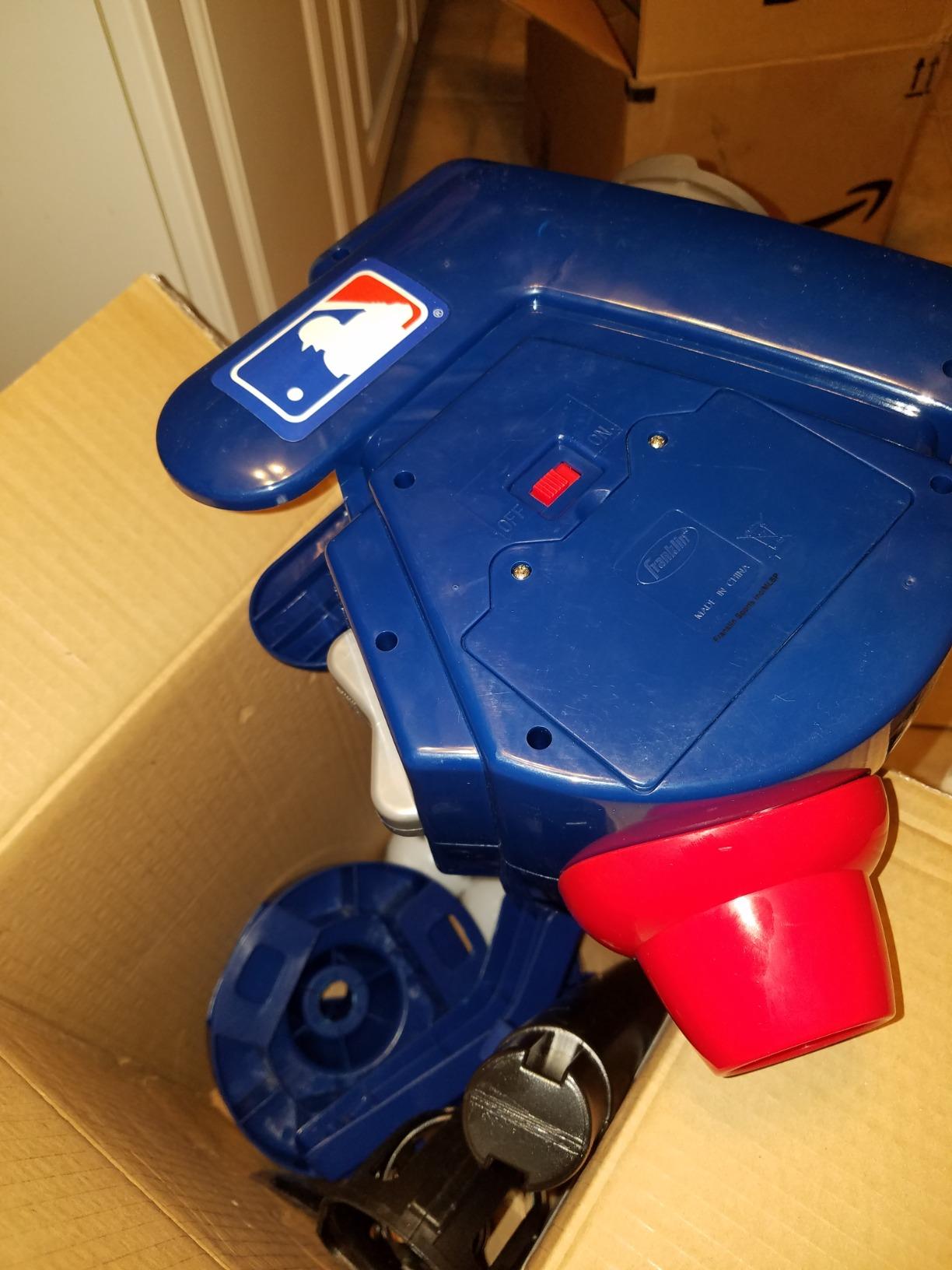
It is aimed squarely at beginners, and within that brief it does the job. The learning objective listed for the machine is hand-eye coordination and batting technique, and the slow, predictable cadence suits a 5 to 7 year old learning to track a ball all the way to the plate.
Owner ratings are the most polarized of the Franklin machines here, with a notable one-star share. The complaints cluster on three things rather than one: batteries that are not included, plastic balls that wear out quickly, and placement that is not consistent enough for real hitting work once a child is past beginner stage.
Where it earns its place in a garage
Early Little League practice where the goal is volume and enjoyment rather than refinement. The angle adjustment is what makes it more useful than a single-purpose machine, because a 6-year-old can hit, then field grounders, then chase pop flies with the same unit and the same set of balls.
It is also a reasonable second machine to keep alongside a real-baseball unit. One kid on soft toss while another works on strikes is a session that a single machine cannot deliver.
When to move up
When your hitter starts tracking ball location. Inconsistent placement means a child can swing well on a bad pitch and think they have it figured out, which is the wrong lesson to teach at 7. Past that stage, the useful drills are the ones a level or repeatable machine delivers, and neither of those is what this one does.
It also carries a one-year warranty against manufacturer defects, which is better coverage than most of the plastic machines in this bracket.
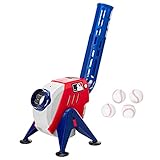
6. Franklin Sports MLB Power Pitcher – Best for Quiet Indoor Practice
Franklin Sports MLB Power Pitcher Pitching Machine
10, 15 or 20 MPH
Foam balls included
Red release indicator light
4.5 pounds
Pros
- Three selectable speeds adjust challenge
- Foam balls are sting-free
- Quiet enough for indoor use
- Can run on an AC adapter
- Angle switches quickly
Cons
- Power cord not included and 4 C batteries are
- First pitch does not travel far enough
- Location is inconsistent
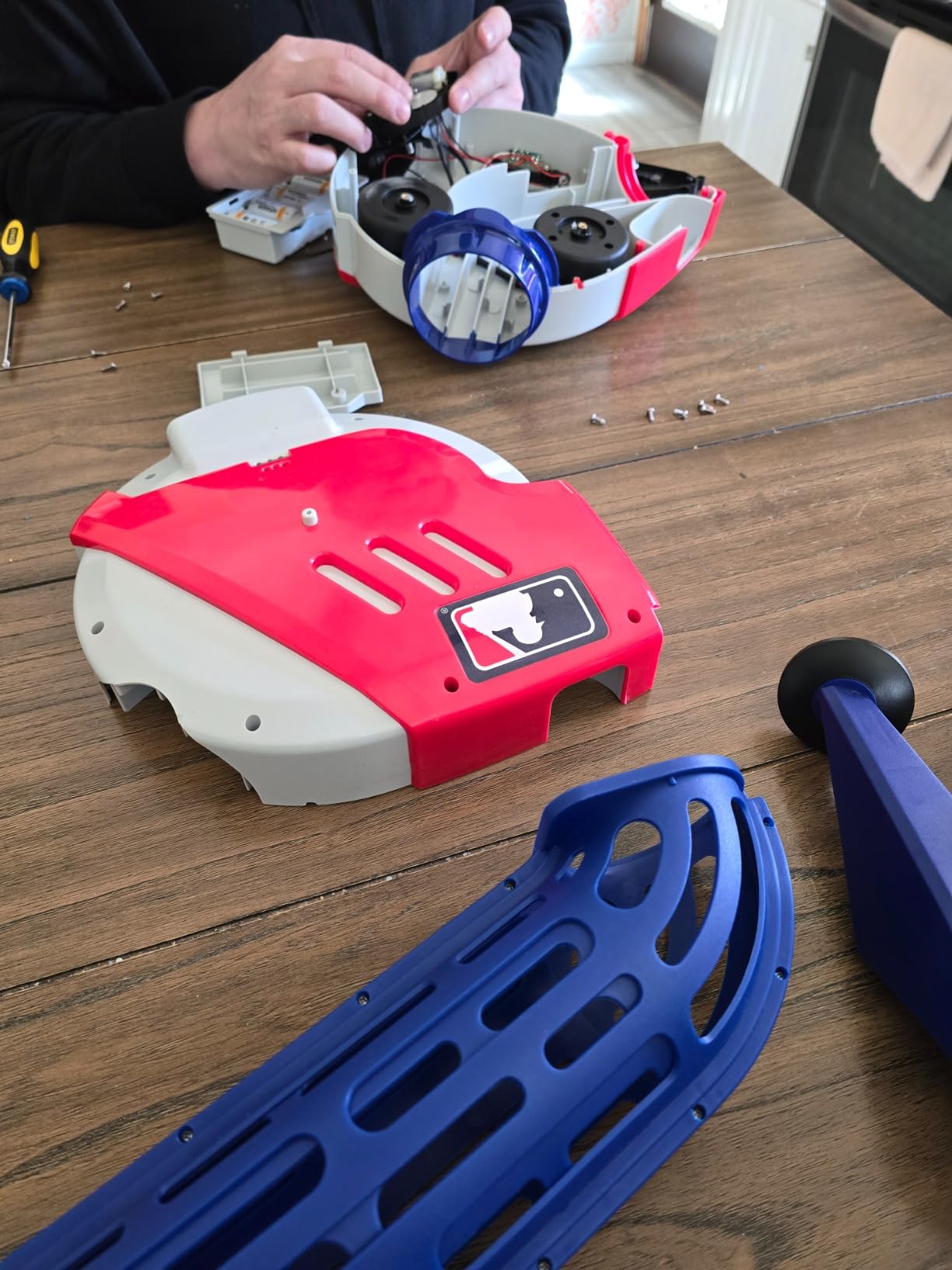
This one is built for the garage, the basement, or a wet Saturday indoors. It is quiet, it weighs 4.5 pounds, and it comes with four foam balls that sting-free, which is a rare combination in the machines that use a real release light.
Three selectable speeds at 10, 15 and 20 MPH let you raise the difficulty without changing machines, and the three-position angle adjustment switches quickly between grounders and pop flies. The manufacturer lists the intended age range as 6 and up, with 7 to 15 years as the recommended band.
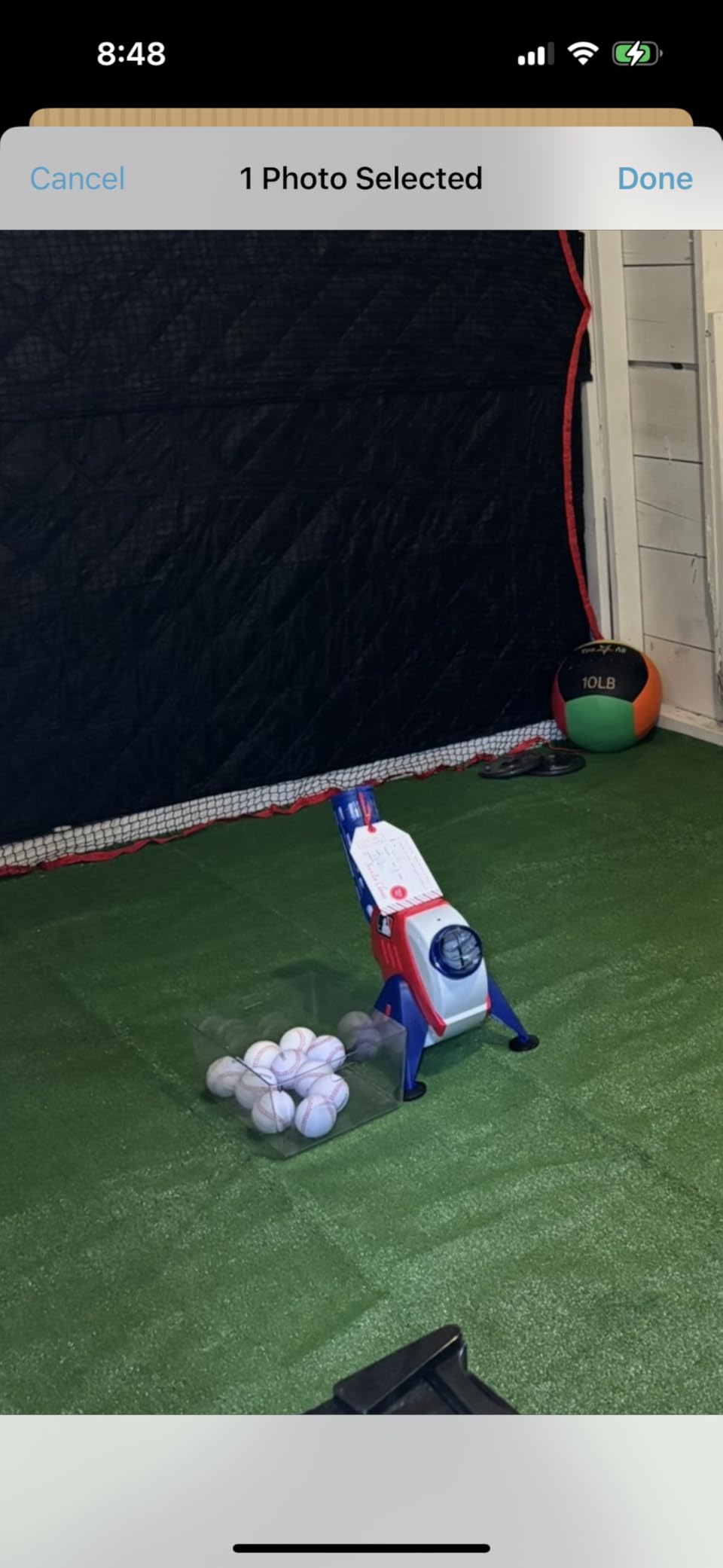
Foam balls are the underrated part. They are gentle on a bat and gentle on a shoulder, so a nervous 6-year-old can take real swings at a ball that cannot hurt them, which is worth more than any speed setting. Several owners mention the machine saving their own throwing arm during long sessions, which is how most parents find their way to buying one.
It can also run off a separately purchased AC adapter, so if the four C batteries get tedious you have a path forward rather than being stuck with the wireless version.
Why indoor and beginner hitters love it
A 20 MPH cap is right for a young child and wrong for anyone else. Below about age 9, 20 MPH is already a challenge, and the three-speed selector means one machine covers a 5-year-old and an 8-year-old without a purchase in between.
Owners also note the red indicator light gives kids time to reset between pitches, which is a small detail that keeps a session from becoming a race. Parents report the machine being run indoors without complaint, which rules out most of the noise objections people have about garage practice.
Where it falls short
No power cord comes with it. That is the single most repeated complaint in the reviews, and owners reasonably expect a cord in the box, which is why cycling four C batteries becomes the default experience. There are also reports of motors seizing or stopping after about a year of intermittent use.
Location is inconsistent and the first ball out of the machine does not travel far enough to be hit cleanly. Foam balls also have to be replaced once the four included are worn, which is an ongoing cost nobody mentions in the product photos.
7. Furlihong 898BH – Best Foot-Powered Soft Toss Machine
Furlihong 898BH Baseball Soft Toss Machine, Angle Adjustable, Step On Paddle and Release to Launch, No Power Supply Needed, Works with Regulation Baseball
Foot-powered step paddle
Three launch angles
Works with regulation baseballs
About 6 seconds between tosses
Pros
- No batteries
- cords or electricity
- Mechanical design outlasts circuit boards
- Three angles suit different ages
- Works with real baseballs
- Extendable ball stacker
Cons
- Younger kids cannot depress the pedal firmly
- Machine walks across the ground while pitching
- Track sections clip together loosely
The 898BH is a different category from everything else here. It is a soft toss machine, powered by stepping on a paddle, with no electricity involved at all, and it works with regulation baseballs as well as the practice balls in the box.
That makes it a genuinely useful complement to a pitching machine rather than a cheaper copy of one. Soft toss trains the load and the stride, a real baseball gives realistic contact, and a child can run the whole sequence alone. Three launch angles adjust at the rear switch, and there is a five to six second delay between releases, which is a natural drill pace.
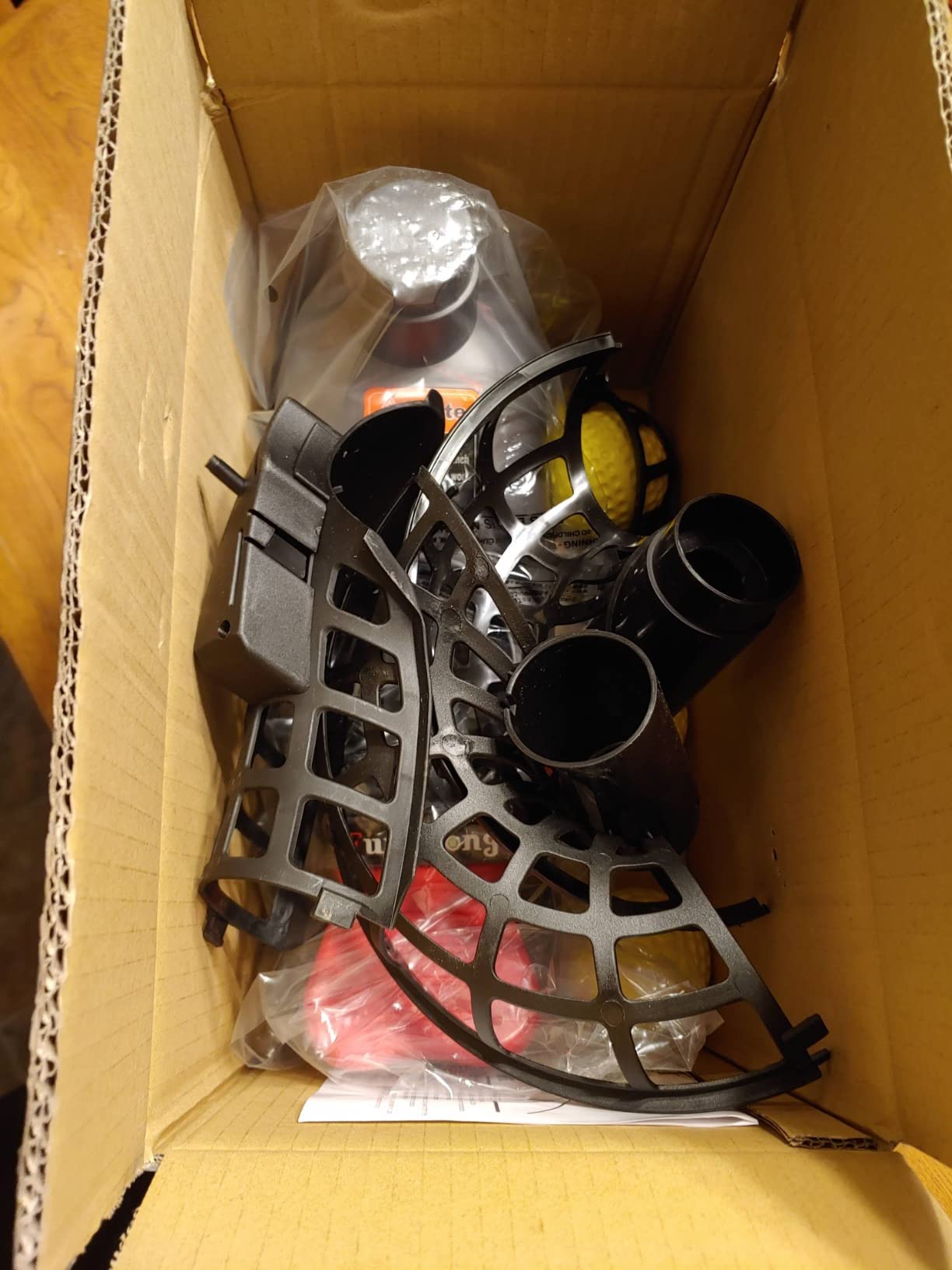
Reviewers make a point worth repeating: most of the negative feedback traces back to technique rather than a defect. The ball has to be fully seated in the launch hole and the pedal pressed deliberately, or it simply will not fire. Older children and adults operate it flawlessly, while younger kids need a minute of coaching.
Because there is no circuit board, there is also nothing to burn out. The mechanical design is the reason owners keep it in rotation past the point where plastic machines have failed, and it carries a 180-day warranty.
Why the foot pedal changes how practice runs
Soft toss is the one drill that reliably gets done alone. A child can work on timing and balance without an adult, which is exactly what a parent running a household needs. Reviewers note a 6-year-old being able to operate it independently, and the extendable ball stacker means refills are infrequent.
It is also a straightforward way to get a child used to real baseballs at a real pace, without asking them to react to a full-speed machine pitch. That makes it a good bridge for a nervous hitter.
When it frustrates you
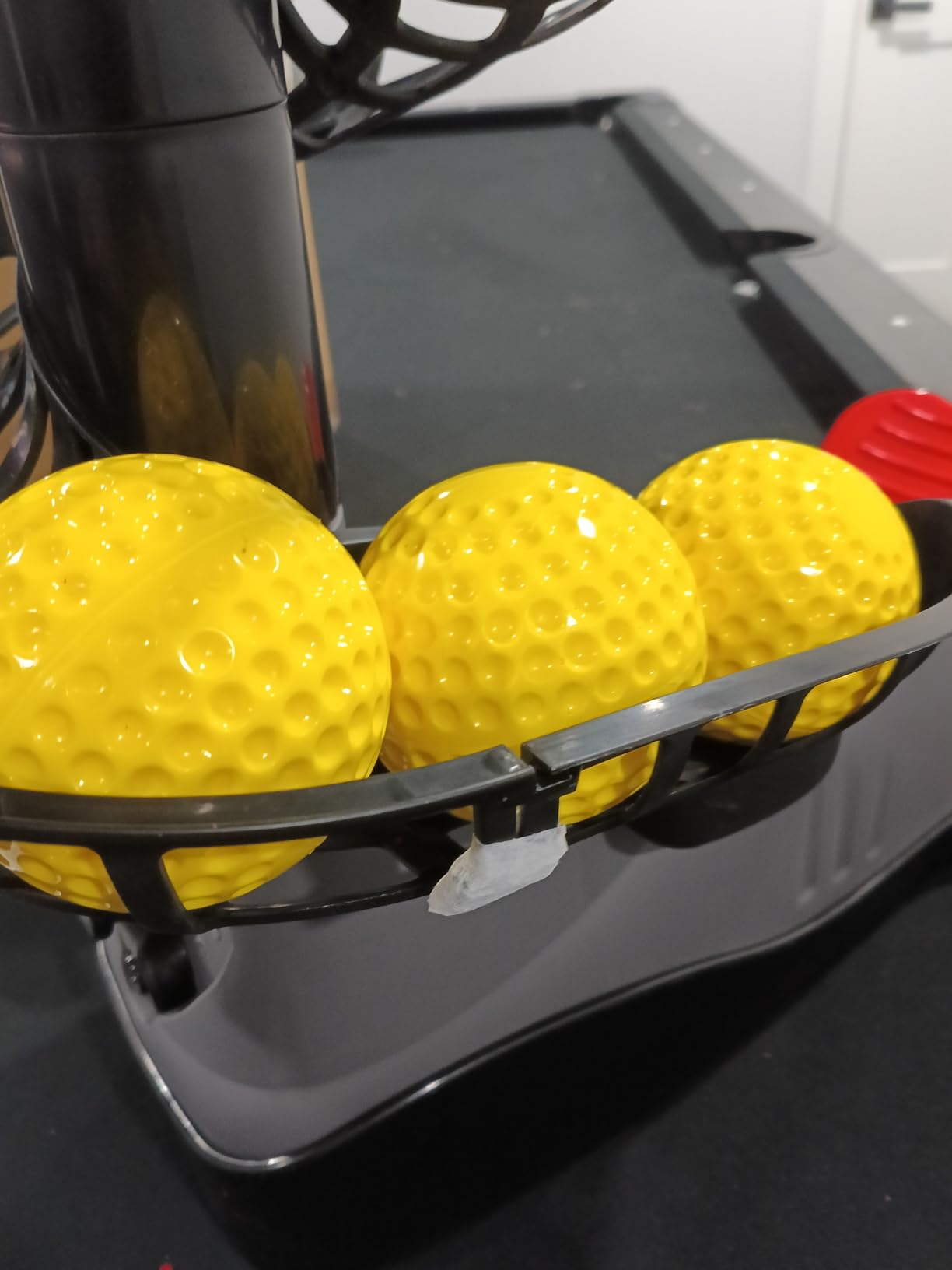
Two mechanical limits. The machine walks across the ground after about two pitches on anything but a hard surface, so it needs weighting or a second foot, and younger children often cannot depress the pedal firmly enough for a reliable launch. The ball track sections also do not always clip together tightly, and some owners have taped them.
Trajectory is noticeably off with tee balls rather than regulation balls, so if the plan is to use the machine with the foam practice balls, test it first. Give it a full season of regular use before you commit to it as your only machine.
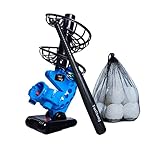
8. Furlihong 380BH – Best Value With 20 Training Balls in the Box
Furlihong 380BH Baseball Pitching Machine for Kids and Beginner
20 MPH
20 sting-free 0.81 oz balls
3 launch angles
2.1 pounds
Pros
- Twenty training balls plus a bat included
- Sting-free balls will not dent bats
- Three angles serve multiple age groups
- Light and easy to reposition
- Seven second cadence with indicator
Cons
- Only compatible with Furlihong training balls
- 20 MPH is slow beyond beginner stages
- Requires 4 D batteries
The 380BH is the machine in this group that most families will actually see in a search, and the reason is the box contents. Twenty training balls and a plastic bat come in the box, which removes the single most common complaint about budget machines, that the included balls are destroyed in a week and you have to buy replacements immediately.
It runs at 20 MPH with a seven-second cadence and a clear release indicator, plus three launch angles for different ages. The balls weigh 0.81 oz and sting-free, and owners note they will not dent bats, which is the spec that matters most if you own a bat you care about.
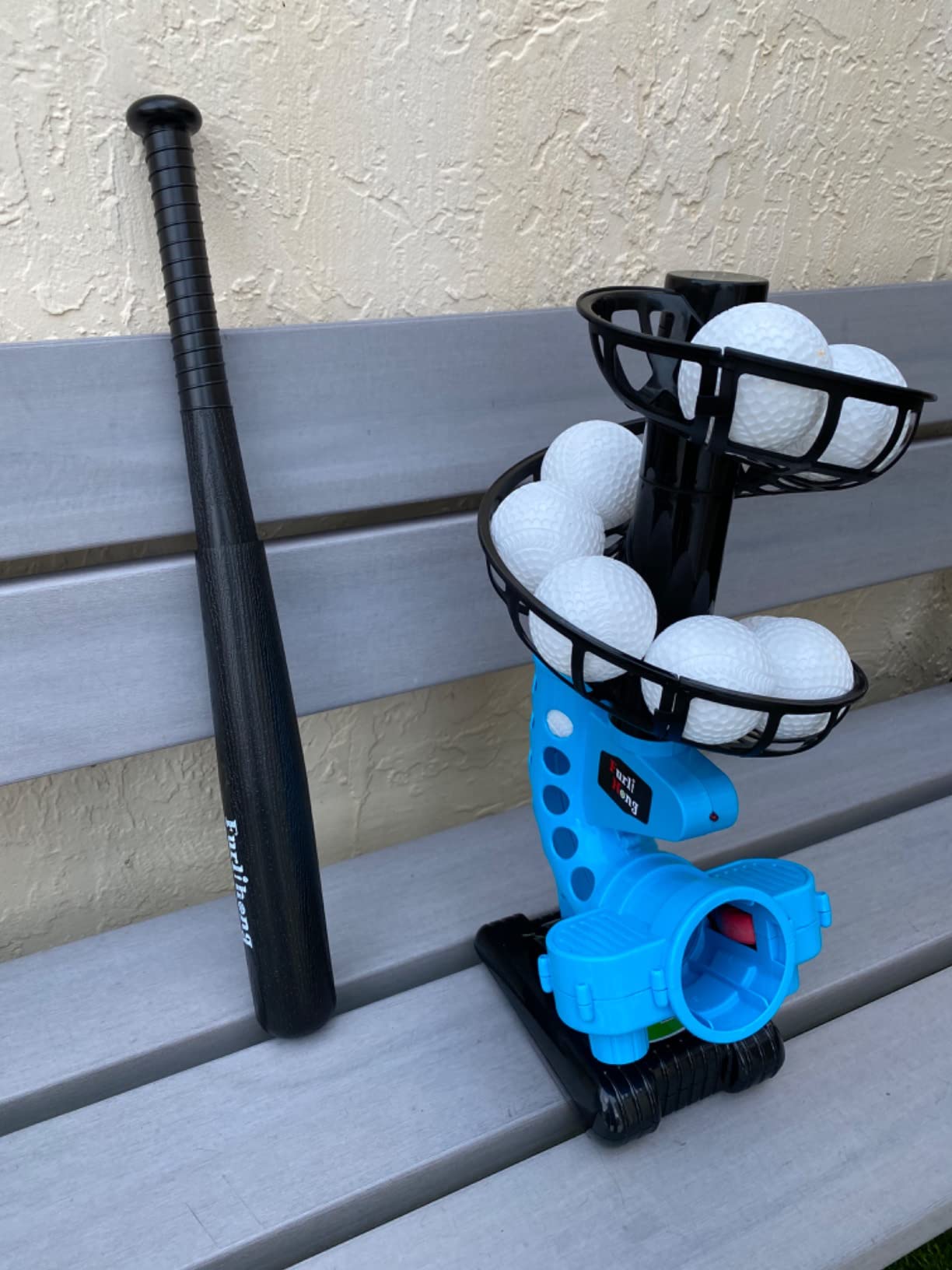
At 2.1 pounds it is one of the lighter machines here, and the extendable ball tracks hold additional training balls if you want more than the twenty included. The 180-day warranty is the same as its sibling mechanical machine, and the review profile is the least polarized of the budget options with a 64% five-star share.
What you are buying is a beginner and t-ball tool. Reviewers place it firmly in that category, and the 20 MPH ceiling is the reason: it is a real limitation for a 10-year-old but a reasonable challenge for a 6 or 7 year old working on contact.
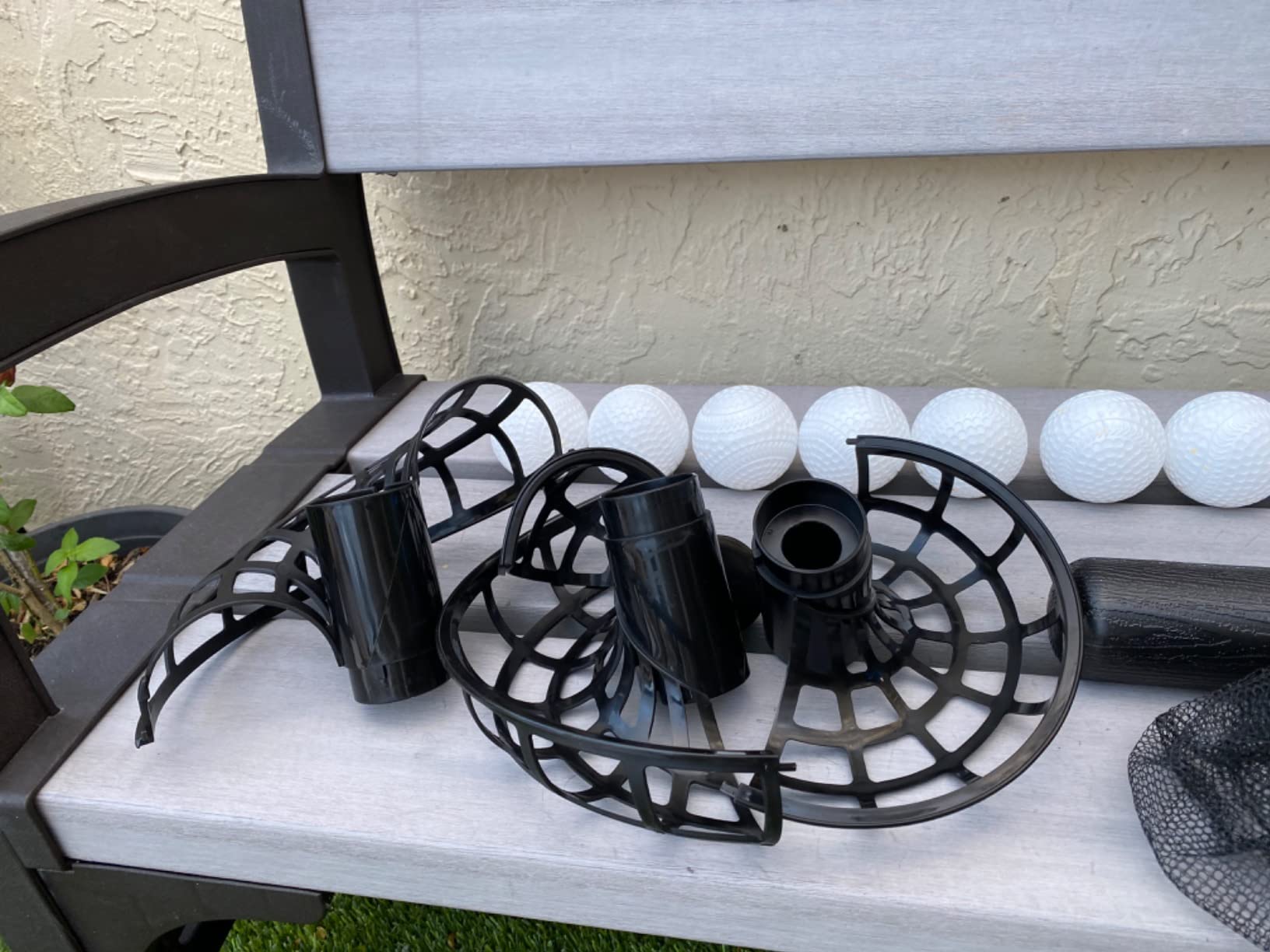
Why the ball count matters more than it sounds
Twenty balls changes practice. Owners rarely mention buying extras, which is unusual for this bracket, and a session that ends because the yard is littered with six cracked plastic balls ends early. It also means one machine can serve a whole family rather than one child.
The sting-free, dent-free ball is the quiet advantage here. Parents on r/BaseballBats who machine bat for younger kids care a great deal about ball hardness, and 0.81 oz plastic is about as gentle as a thrown ball gets.
When to spend more instead
When the hitter is 9 or older and you want them tracking ball location. A fixed 20 MPH with three angles is plenty for learning to make contact, but it will not train a 10-year-old to handle a live pitcher. A parent whose child is about a year from moving up should read the Blue Flame section instead.
It is also only compatible with Furlihong plastic training balls, and owners warn that other balls may damage the mechanism. That is a hard constraint rather than a preference, so plan your ball supply around it.
9. Furlihong 3801BH – Best Budget Machine for Pitch Recognition
Furlihong 3801BH Upgraded Electronic Baseball Pitching Machine for Beginner
Two independently adjustable wheels
Fastballs, curves and sliders
Max 30 MPH
AC adapter included
Pros
- Two wheels give independent speed and angle control
- AC adapter included in the box
- Quiet enough for indoor use
- Compact 4.5 pound body
- Teaches load timing
Cons
- Cannot use regulation baseballs
- High and Low switch shows little difference
- Light balls are affected by wind
The 3801BH is the most mechanically capable of the three Furlihong machines in this roundup. Two independently adjustable wheels control speed and angle separately, which is the same basic principle as a two-wheel machine, and it produces fastballs, curves and sliders rather than a single fixed feed.
That matters for one specific purpose. Teaching a young hitter to recognize a breaking ball and load against it needs a machine that can change spin on demand, and at 30 MPH max with an included AC adapter and a 4.5 pound body, this is an inexpensive way to do it. Owners specifically mention using it to teach load timing to younger hitters.
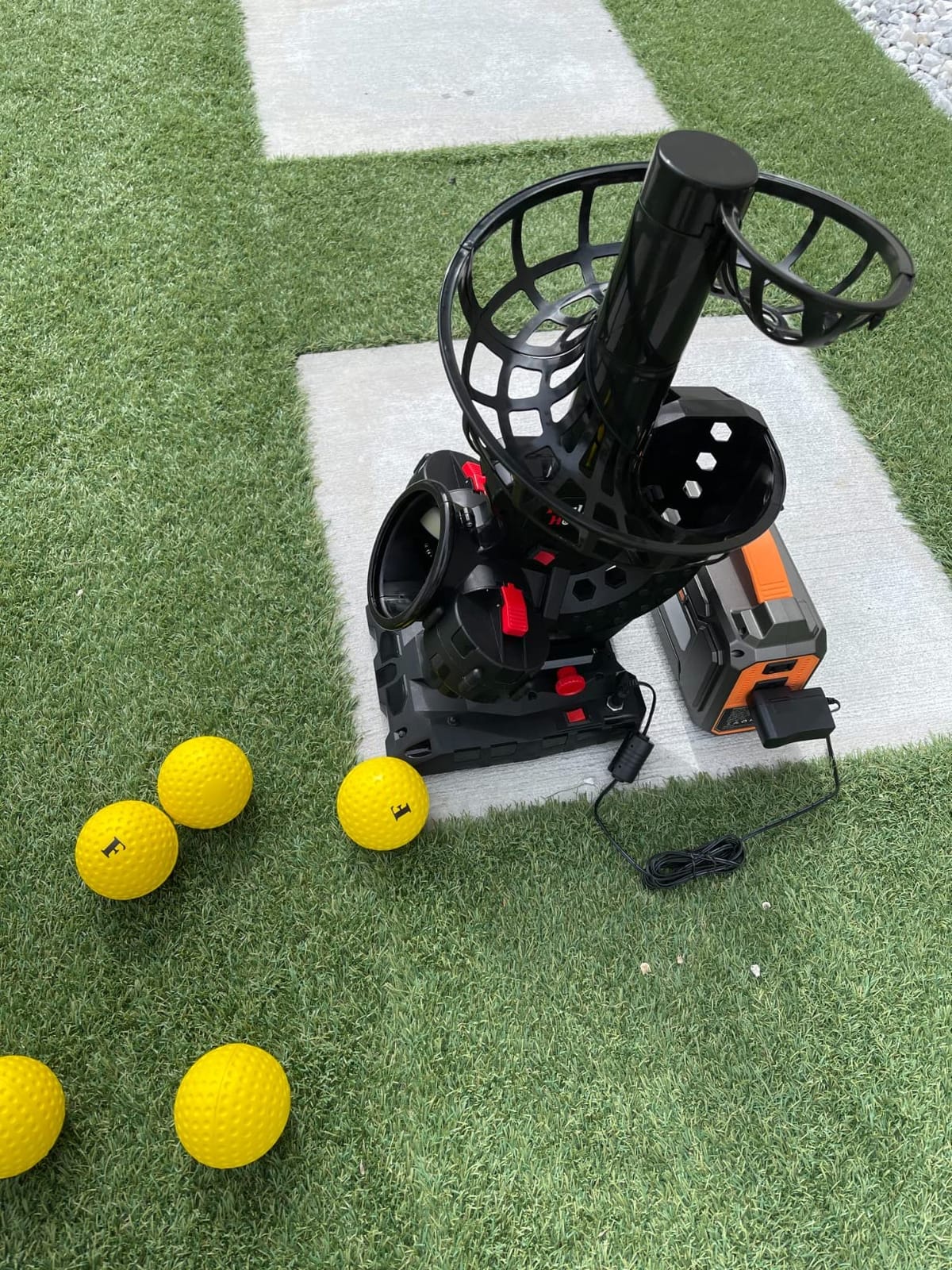
Two things to know before you buy. It cannot use regulation baseballs, only the 1 oz polyurethane dimpled balls, which sting-free and are safe for bats but are far lighter than a real ball and get pushed around by even slight wind. And the High and Low speed switch reportedly produces no meaningful difference between settings, which the manufacturer defends as normal operation.
That switch complaint is the most damaging criticism in the reviews, and it is fair to weigh before buying. Inconsistent pitching is the other recurring issue, which makes it hard to build rhythm. Some owners also report a ball return mechanism failing out of the box and a cheaply made feed ramp.
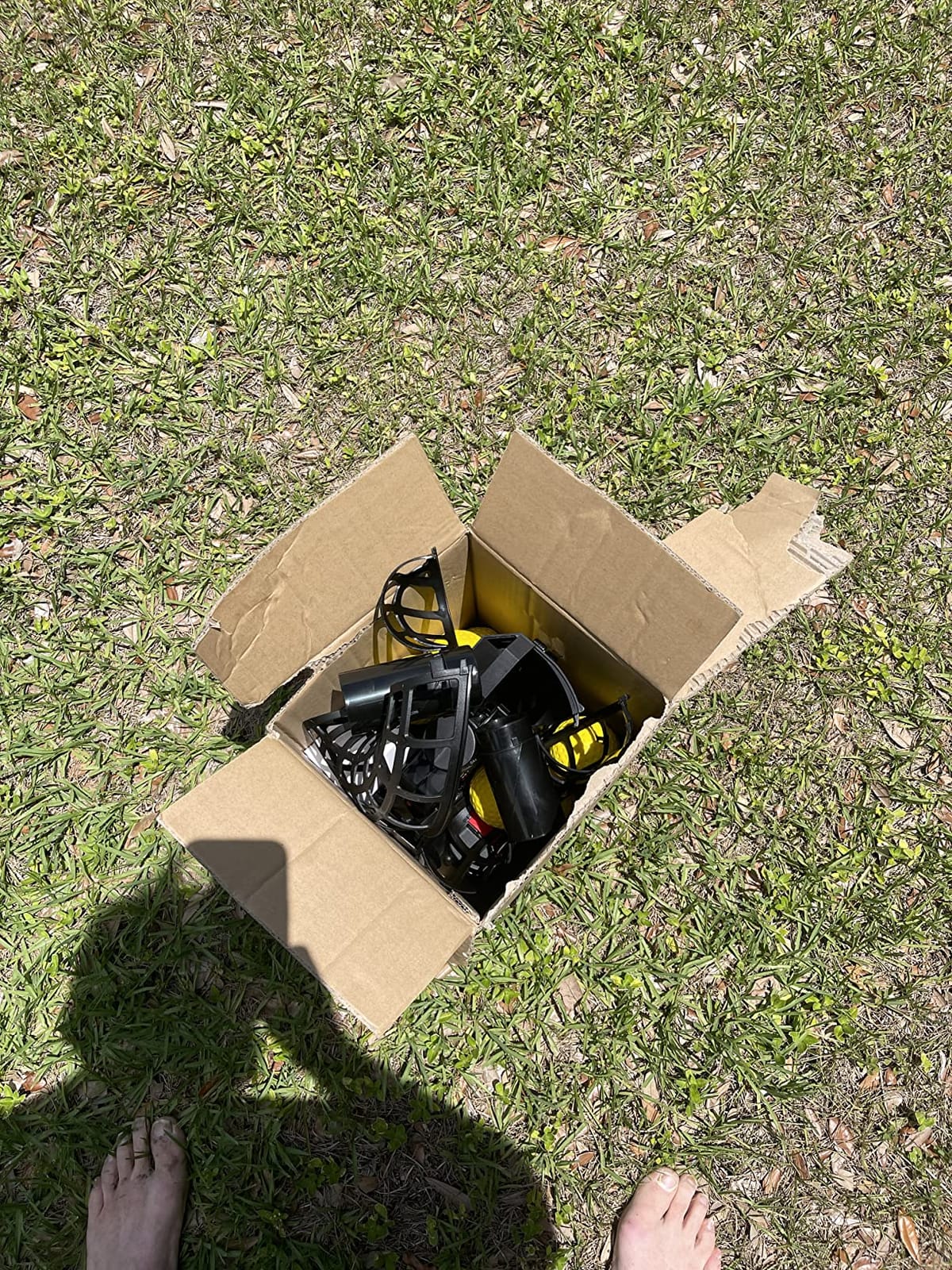
Where it beats the other budget units
Any drill about pitch recognition. Because the two wheels move independently, you can set a fastball and then dial in a curve and show a child the difference in a way a fixed-angle machine physically cannot. Several buyers use it for exactly that, teaching the load before speed.
The AC adapter in the box is also a genuine advantage over the battery-powered machines here, and the quiet running makes indoor use realistic. At 4.5 pounds it fits in a car easily and can be raised on a tripod for a better release height.
Why it is not a long-term machine
Consistency is the reason. A machine that does not repeat itself teaches a hitter that the pitch is unpredictable rather than learnable, and that is a bad habit to build early. Combined with balls that are much lighter than a real baseball, the practice conditions drift away from game conditions the more you use it.
It also carries a 180-day warranty, shorter than the two-year cover on the Junior Hack Attack, and a battery-driven plastic mechanism that can wear with extended use. Good for a season of recognition work, less good as a five-year investment.
10. YESMARKS Kids Starter Set – Best All-in-One Set for Young Players
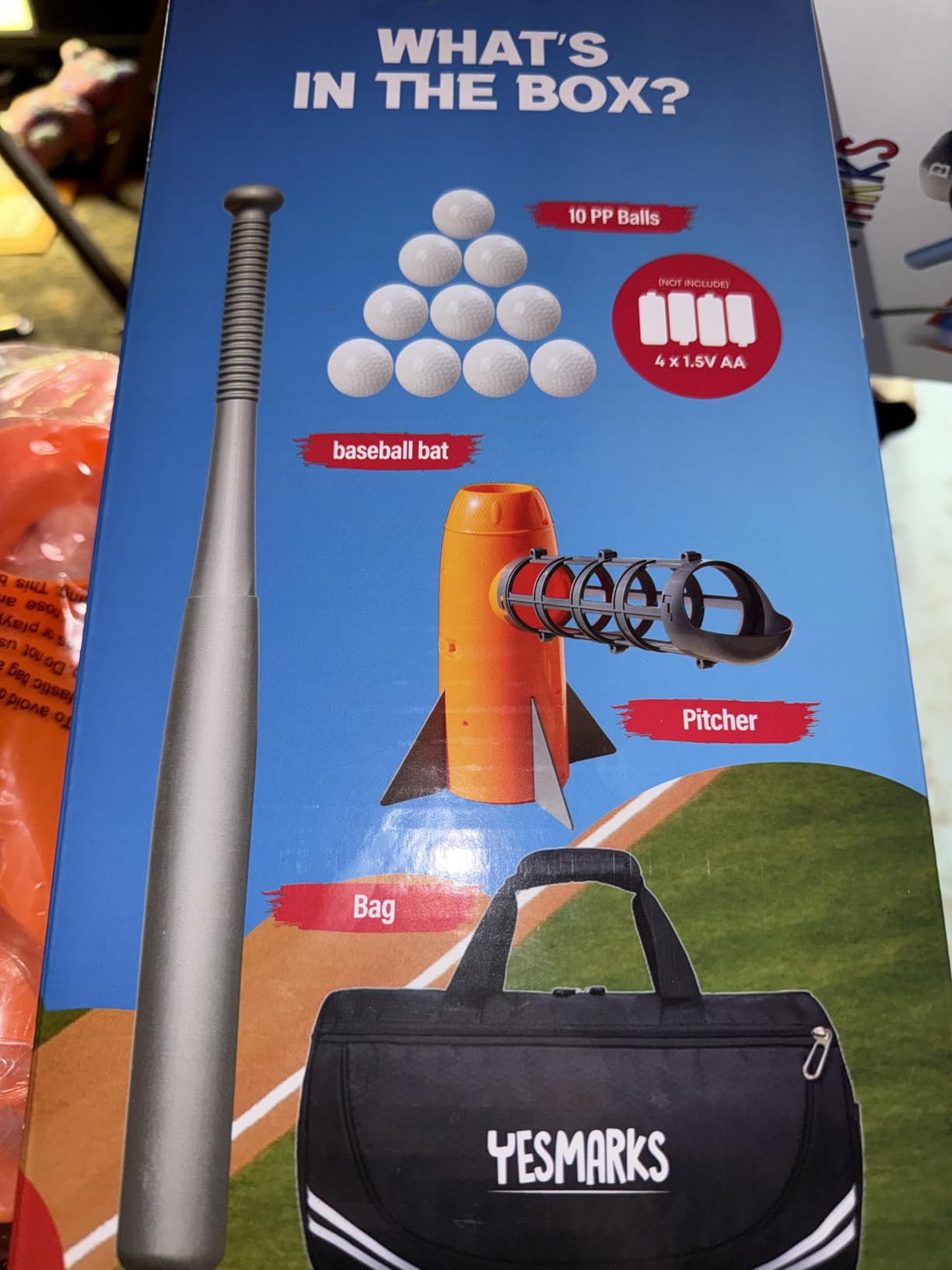
YESMARKS Kids Auto Baseball Pitching Machine Outdoor Toy Set – Training Equipment & Batting Practice Toys for Youth, Includes 10 Baseballs, Baseball Bat and Sports Bag
Machine, bat, 10 balls and a bag
4 AA batteries required
Hollow plastic, ages 5+
3.4 pounds
Pros
- Everything a beginner needs in one box
- Hollow plastic bat and balls are safer
- Takes apart for transport
- Ten balls means less time collecting
- Pitching force holds up as batteries drain
Cons
- Requires 4 AA batteries that are not included
- Hollow balls do not simulate real flight
- Limited angle and speed adjustment
This is the one item on the list that is not really a pitching machine, and that is exactly why it is here. It is a rocket-shaped toy machine bundled with a hollow plastic bat, ten plastic baseballs and a sports bag, and reviewers say the value of having a machine, a bat, ten balls and a carry bag in one box is the reason most families buy it.
Everything is in one box, which makes it a giftable starter set rather than a purchase that needs matching extras. At 3.4 pounds it assembles and disassembles for transport, so practice can move between the yard, the park and a grandparent’s house.
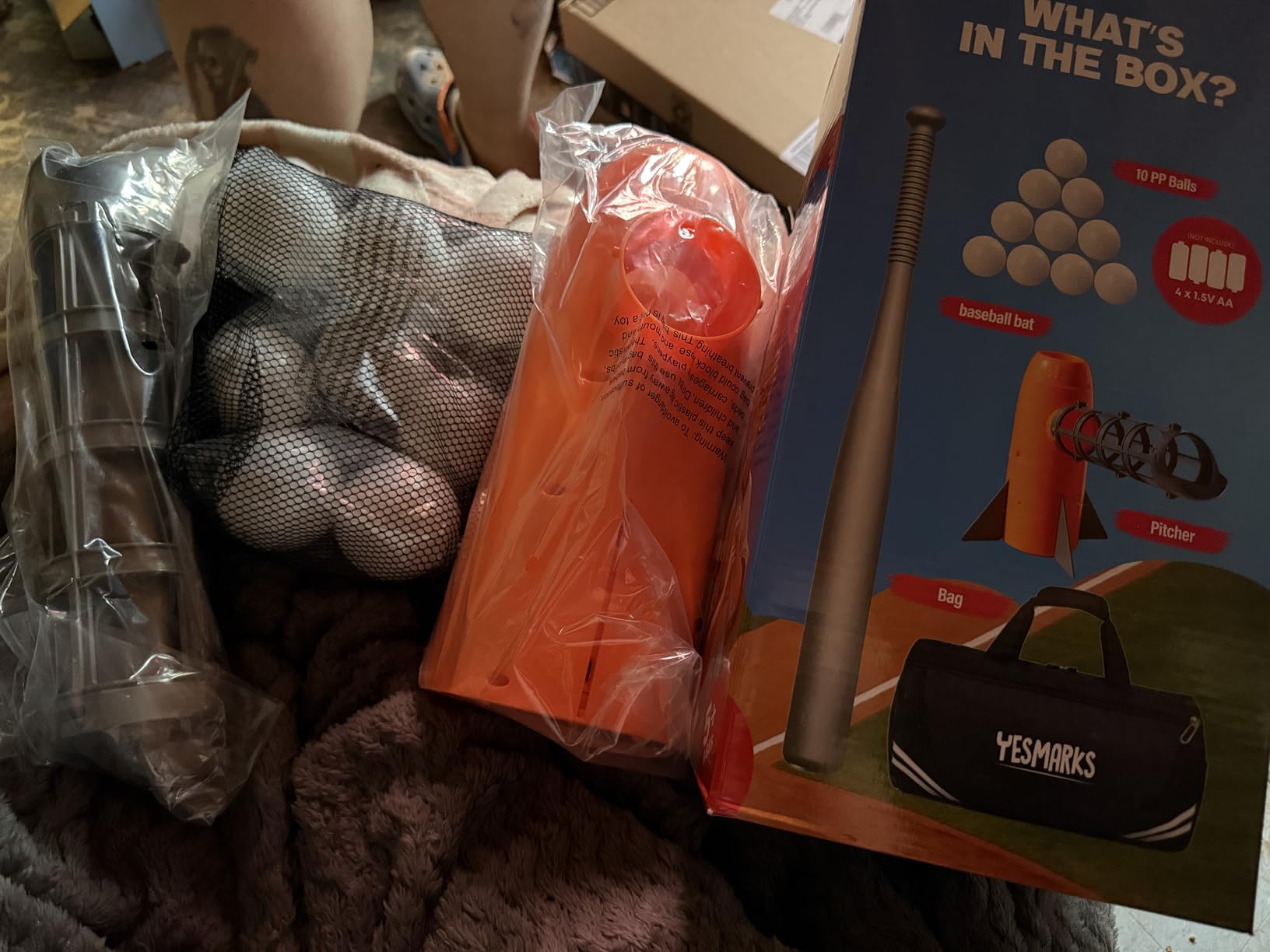
Two design choices drive the positive reviews. The hollow plastic bat and hollow polypropylene balls are genuinely safer for a small child than solid alternatives, and the manufacturer certifies the set for ages five and up. And the pitching force stays consistent as the batteries drain, which avoids the slowdown that frustrates kids on other budget machines.
Reviewers are clear about the ceiling, though. The hollow balls do not simulate real baseball flight or contact, so the swing feedback is not realistic. Buyers treat it as a first stepping stone and tee-ball practice toy rather than a training device, and expect durable performance beyond a season or two of casual backyard use.
When it is the right first machine
When the child is 5 or 6 and the goal is a love of batting, not skill development. Nothing about hitting is realistic, and that is fine at that age. The ten balls in the box also mean less time spent collecting them, which is the part of yard batting practice that wears parents out fastest.
It is also the easiest to justify as a birthday present and the easiest to hand over to a sibling, since everything needed is already in the bag.
When to move past it
As soon as the child can make consistent contact and wants to know where a pitch is going. There is one speed, minimal angle adjustment, and a toy-grade build, so there is nothing to grow into. The 90-day manufacturer warranty is also the shortest coverage on this list.
Our advice is to treat it as a first birthday present and then move to something like the Blue Flame or the Heater within a year, rather than stretching a toy machine across three seasons of development.
How to Choose a Pitching Machine for Youth Baseball
Start with the hitter, not the machine. A 6-year-old who cannot yet track a ball to the plate does not need 40 MPH, and buying speed for a beginner produces a child who swings late and blames the machine. A 13-year-old facing curveballs in travel ball needs pitch variety far more than raw velocity, and the cheapest machine that solves neither problem is a bad buy at any budget.
The second question is what the machine has to throw. Machines that fire only light plastic balls cannot train contact feel, and machines that cannot handle real baseballs cannot prepare a hitter for game conditions. Machine-thrown balls also wear bats, which is covered in its own section below.
How fast should it throw for each age?
5 to 7 years, T-ball: 10 to 20 MPH, using foam or hollow plastic balls. Reaction time matters far more than velocity at this stage.
8 to 10 years, Little League: 20 to 35 MPH, using light plastic or soft flight balls. It starts to feel like a real pitch without overwhelming a developing hitter.
11 to 12 years, 10U and 12U: 35 to 50 MPH, using regulation or lite baseballs. This matches game speed for most league pitchers at those ages.
13 to 15 years, travel ball: 50 to 70 MPH, using regulation baseballs including leather. The hitter needs headroom above league pitching speed.
Notice that the useful range for a single machine is narrow, which is why speed range on the spec sheet matters more than top speed. A machine that tops out at 80 MPH but starts at 40 is less useful for a 7-year-old than one that covers 18 to 45 MPH, even though the second machine sounds weaker on paper.
Two wheels, one wheel, or no wheels at all
Wheel style is where the accuracy argument lives, and it is more nuanced than the usual debate. A single-wheel or fixed-feed machine has one control and it changes the speed, and a two-wheel machine has one wheel for speed and a second for spin, which is what unlocks curveballs and sliders. The 3801BH on our list uses the two-wheel principle at an entry budget, and the Junior Hack Attack uses three wheels for finer location control.
Our practical take: for a hitter under 10, wheel count is nearly irrelevant and portability matters more. For a hitter 11 and above, two or three wheels is where pitch variety starts paying for itself. The Blue Flame sits in between, throwing a real ball accurately with no powered wheels at all, and it serves ages 7 to 12 well because of its 18 to 45 MPH range.
Real baseballs versus machine balls
Real baseballs train contact and give accurate feedback, and they get destroyed by a machine. That is the trade, and the machines that take real balls are the ones worth owning longer, because you can keep using the same baseballs you already have. Machines that only accept branded plastic balls carry a permanent supply cost, and the Heater is the clearest example since owners repeatedly stress using only the branded white lite balls.
A foam or hollow plastic ball is the simplest fix for younger kids. It is sting-free, it will not dent a bat, and it removes the fear factor. Several parents on r/Homeplate and r/baseballcirclejerk describe children refusing to stand in against a machine at all, and switching to foam or stepping down in speed is the standard remedy.
Portability, cage fit, and moving the machine
Weight matters more than people expect, because the person who moves the machine is usually the one holding a stopwatch. The Blue Flame at 11.9 pounds, the Franklin units at 4.5 and 5 pounds, and the Furlihong machines at around 2 pounds can be repositioned by one adult mid-session. The Junior Hack Attack at 96 pounds can also be moved by one adult, but it is a two-person lift if you are moving it across uneven ground.
Cage fit is the most repeated topic on r/Homeplate. Machines built for a full-size cage behave differently in a smaller backyard cage because release height, distance and reaction time all change. If your cage is shorter than about 40 feet, a machine that throws at 45 MPH gives a hitter far less time than the same machine in a 60-foot cage, so lower the speed rather than assuming the hitter has a timing problem.
What a full setup actually costs
Few parents budget for the add-ons, and they are where the surprise comes from. A machine alone is the starting point. You will also need a ball supply, which is a permanent recurring cost for plastic-ball machines, a tripod if you want a consistent release height, and a pop-up target or ball return if you are running a lot of grounders.
On the three-wheel machines specifically, the ball feeder and leg extensions are separate purchases, so price the full configuration before committing rather than the machine alone. For everything else in this group, the most useful trick is to buy a model that comes with a generous ball supply, because the 380BH includes twenty training balls and most of its competitors include four or six.
For more spec-first buying guides, we keep a running list of our best drum machine roundups built the same way, with the trade-offs written out rather than hidden in star ratings. If you are buying for shared family use rather than one player, our best portable karaoke machine guide applies the same one-device-versus-a-bundle logic in a different category.
Which Bat to Use for Machine Batting Practice
Use an alloy barrel bat for machine batting practice, and keep composite bats for live hitting. This is the single most useful money-saving rule in this guide, and no competitor guide covers it, even though it comes up repeatedly in bat forums. Machine-thrown balls at speed will chew through a composite barrel, and composite bats cost several times what an alloy bat does.
The reason is straightforward. Composite barrels are engineered for the impact of a high-speed pitch, but a machine delivers hundreds of those impacts in an hour, far more than a game ever will. Alloy barrels tolerate that volume, and the feel difference is small enough that a young hitter will not notice during practice.
Keep one composite bat in the bag for game day, and run every machine rep with an alloy or a training bat. Parents on r/BaseballBats reach the same conclusion independently, and it is worth a few minutes of thought before you set up a two-a-day rotation around a machine that will throw 300 pitches in a week.
Setting Up a Pitching Machine Safely
Place the machine in the back corner of the cage, angled so the batter is in front of you and to the side, never directly in line with the release point. The mistake we hear about most from owners is putting the machine where a batted ball can come straight back into it, and the Junior Hack Attack is one of the few machines here that handles that without damage, but it is still the wrong way to set up any machine.
Keep everyone except the hitter behind the machine or well outside its arc, and never stand in the flight path to retrieve a ball while the machine is running. Anchor the frame properly, which is why the dirt spikes on the Blue Flame and the rubber feet on the Heater exist. On the foot-powered units, expect the machine to walk, so put a foot on it or weight the base.
On reducing a child’s fear, start slower than feels necessary and let the child set the speed. A child who is scared of machine-pitched balls will not talk their way through it, but they will usually accept a lower setting, a foam ball, or standing behind the machine to watch the first few throws. Several parents describe that sequence as the thing that turned a resistant hitter around.
Finally, netting matters more than most buyers expect. A machine plus a cage with side and rear netting is a meaningful addition to the total cost, but it is what turns a backyard practice setup into one you can actually leave running while a sibling plays nearby.
Frequently Asked Questions
What speed should a pitching machine be set to for a 7-year-old?
Set a 7-year-old between 10 and 20 MPH, using foam or hollow plastic balls. At that age reaction time matters far more than velocity, and a faster machine produces late swings rather than better ones. Move up to 20 to 35 MPH around age 8 or 9, and only consider real baseballs once your hitter makes consistent contact and is tracking the ball to the plate.
Which pitching machines throw real baseballs?
The Louisville Slugger Blue Flame on our list throws real hard baseballs from 18 to 45 MPH, and the Sports Attack Junior Hack Attack feeds standard baseballs including genuine leather. Most budget plastic machines cannot, because their light foam or hollow balls are the only ones the mechanism handles. Real balls give better contact feedback but wear out faster and wear down composite bats.
Which pitching machine is the most accurate?
Among the machines we reviewed, the Sports Attack Junior Hack Attack is the most accurate, because its three-wheel design repeats the same pitch and location once the knobs are set. The Louisville Slugger Blue Flame is the most accurate manual machine, holding pitch-to-pitch variation to a few inches. Accuracy always means repeatability, so test any machine with ten consecutive throws before judging it.
Are Heater pitching machines good?
The Heater Slider Lite 360 is a solid mid-tier pick for a team that wants automatic feeding and both fastballs and curveballs without a large jump in cost. Owners rate the accuracy highly and report units lasting years, sometimes six or more. The main caveat is that you should use only the branded Heater white lite balls, since heavier generic balls bog the motor down over time.
Is a two-wheel or three-wheel pitching machine better?
Three wheels give finer control over speed, spin and pitch location, which is why travel teams use them. Two wheels are the sweet spot for youth because they unlock curveballs and sliders at a much lower cost. For a hitter under 10 neither matters much, and portability matters more, so a simple manual machine is the sensible choice until pitch variety actually starts mattering.
Final Verdict
For most families, the Louisville Slugger Blue Flame is the right first machine for the best pitching machines for youth baseball search. It throws real baseballs across an 18 to 45 MPH range, it needs no batteries, it weighs 11.9 pounds so a child can move it, and it stays in service for years. It is not the fastest or the most versatile machine here, and it was never meant to be.
Buy the Heater Slider Lite 360 instead if an adult is the bottleneck, because the automatic feeder buys back practice time no manual lever can. Buy the Sports Attack Junior Hack Attack if you are coaching a travel squad that needs curveballs, split-fingers and knuckle balls at volume, and accept that it is a capital purchase with a setup curve. Everything else in this guide is a stepping stone toward one of those three.
Whatever you choose, run your machine reps off an alloy bat, start a nervous hitter slow, and test ten consecutive throws before you judge the accuracy. If the same second-hand shop sells a portable speaker too, our best kids karaoke machine guide applies the same value-versus-durability framework.