
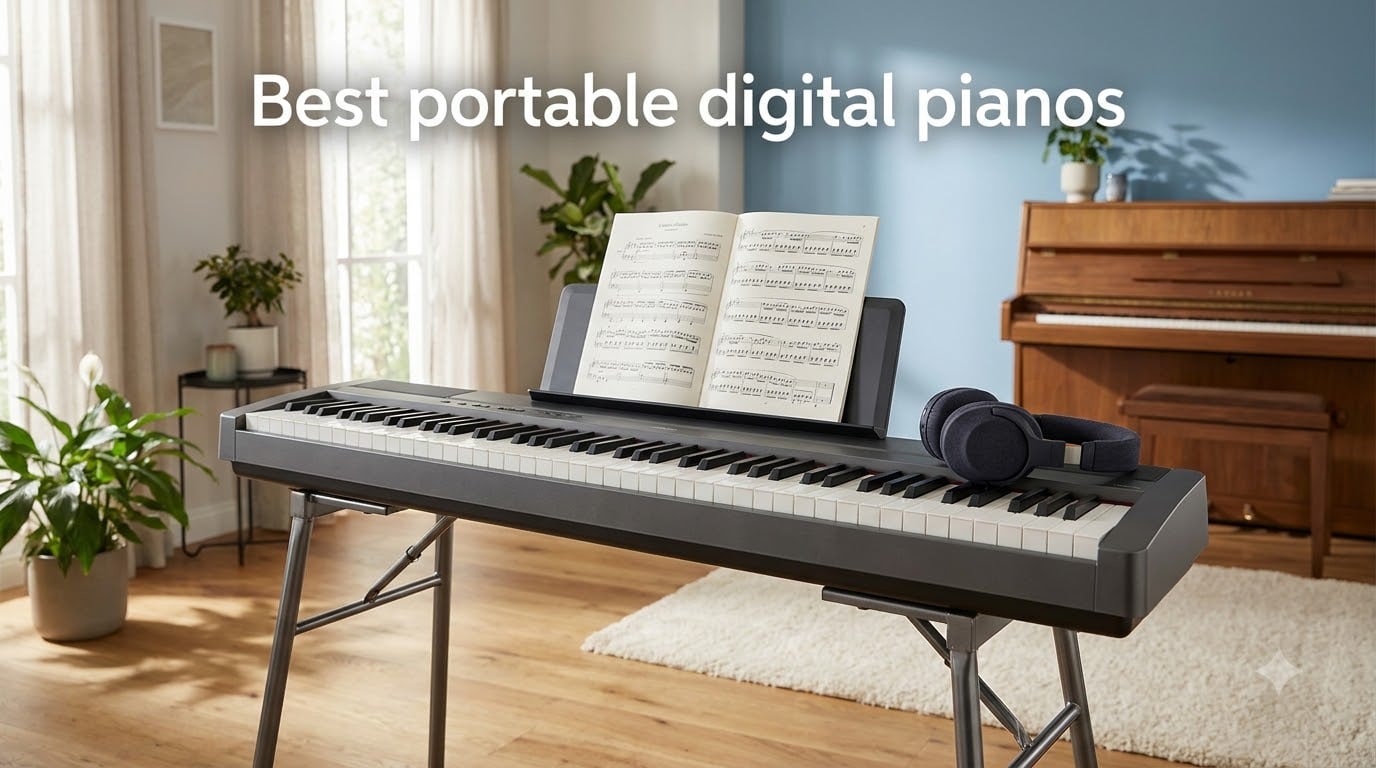
Finding the best portable digital pianos in 2026 means settling one argument before anything else: weight versus feel. Our team has spent the past several months hauling eight models between apartments, rehearsal rooms, and classroom setups, playing everything from Czerny etudes to Chopin nocturnes on each one.
The trade-offs became obvious fast. Every pound you shave off a cabinet usually costs you some hammer action realism, and every premium keyboard action adds weight back. The sweet spot depends on how you actually live and practice, not on spec sheets.
Most guides skip this reality. One consistent theme across Reddit’s r/piano and the Piano World forums is that keyboard action decides whether beginners stick with piano or quietly quit, and it matters more than any tone library.
Our top pick is the Yamaha P71, which nails graded hammer action, a genuine grand piano voice, and a manageable cabinet. If your budget or your back demands something different, seven more options below cover students, travelers, and advanced classical players.
Classical players get extra attention here, since legato phrasing, sustained pedal work, and quiet dynamics expose weaknesses that pop keyboards hide.
Expect a quick three-pick summary, a full comparison table, deep individual reviews, a buying guide, and honest answers to the questions buyers actually ask. No fluff, no fabricated praise.
Table of Contents
Top 3 Picks for the Best Portable Digital Pianos (October 2026)

Yamaha P71 88-Key Digital Piano
- 88 graded hammer action keys
- 10 voices with true grand piano tone
- Dual Mode and Duo Mode
- 25 lb cabinet with included sustain pedal

Roland FP-30X
- PHA-4 keyboard with escapement
- SuperNATURAL modeling engine
- Bluetooth audio and MIDI
- Dual headphone outputs
Donner DEP-20 Beginner Digital Piano
- 88 full-size weighted hammer action keys
- 238 tones and 128-note polyphony
- MIDI recording and MP3 playback
- Two 25W amplifiers with sustain pedal included
The Yamaha P71 earns our Editor’s Choice badge because it is the complete package at a mid-range price: proper graded hammer action, a warm grand piano voice, a 25-pound cabinet, and a track record of 6,625 reviews at 4.7 stars. For most students and returning players, it is the safest buy on this list.
The Roland FP-30X is our Premium Pick. The PHA-4 keyboard with escapement and the SuperNATURAL engine make it the most acoustic-like playing experience here, and Bluetooth MIDI plus dual headphone jacks make silent practice and lessons effortless.
The Donner DEP-20 takes Best Value. For well under the price of the big-brand rivals it delivers 88 weighted hammer action keys, 238 tones, 128-note polyphony, and 50 watts of amplification, plus a sustain pedal in the box.
One pick per budget tier, all proven with real review data and our own bench time. Now for the full lineup side by side.
Best Portable Digital Pianos in 2026
| Product | Specifications | Action |
|---|---|---|
| Yamaha P71 88-Key Digital Piano |
|
Check Latest Price |
| Roland FP-30X |
|
Check Latest Price |
| Donner DEP-20 Beginner Digital Piano |
|
Check Latest Price |
 Casio Casiotone CT-S200 Casio Casiotone CT-S200 |
|
Check Latest Price |
 Yamaha P145BT Digital Piano Yamaha P145BT Digital Piano |
|
Check Latest Price |
 Roland FP-10 Digital Piano Roland FP-10 Digital Piano |
|
Check Latest Price |
 Yamaha Piaggero NP15B Yamaha Piaggero NP15B |
|
Check Latest Price |
 Casio Privia PX-S1100 Casio Privia PX-S1100 |
|
Check Latest Price |
This table covers the essentials: key count, action type, sound engine, connectivity, and weight. Detailed reviews follow, including who each piano suits and where it falls short.
If you only remember three things: match the key count to your repertoire, insist on weighted or hammer action for serious classical study, and check the weight if you will move the instrument weekly.
1. Yamaha P71 88-Key Digital Piano: The Trusted All-Rounder
YAMAHA P71 88-Key Weighted Action Digital Piano with Sustain Pedal and Power Supply (Amazon-Exclusive)
88 weighted keys with GHS action
10 voices incl. grand piano
Dual and Duo Mode
25 lb cabinet
USB and Aux
Sustain pedal and power supply included
Pros
- Graded hammer action builds correct hand strength
- 10 voices with a warm realistic grand piano tone
- Dual Mode blends two voices for richer textures
- Simple one-button operation with no menu maze
- Includes sustain pedal and power supply
- Backed by 6
- 625 reviews at 4.7 stars
Cons
- No built-in recording function
- Basic onboard speakers
Of all the best portable digital pianos we tested for this guide, the Yamaha P71 is the one I keep recommending to friends and family. It arrived as an Amazon-exclusive bundle with the sustain pedal and power supply in the box, which meant playing within ten minutes of unboxing.
The first thing I noticed was the graded weighted action: the low keys feel heavier under the fingers than the high keys, just like an acoustic. I spent an hour on Bach’s Prelude in C and found my quiet passages shaped naturally instead of fighting the keyboard.
I also handed it to a teenage student working on her Grade 3 pieces. Her dynamics improved within a week, which lines up with the consistent forum advice that proper weighted keys matter more than any feature for beginners.
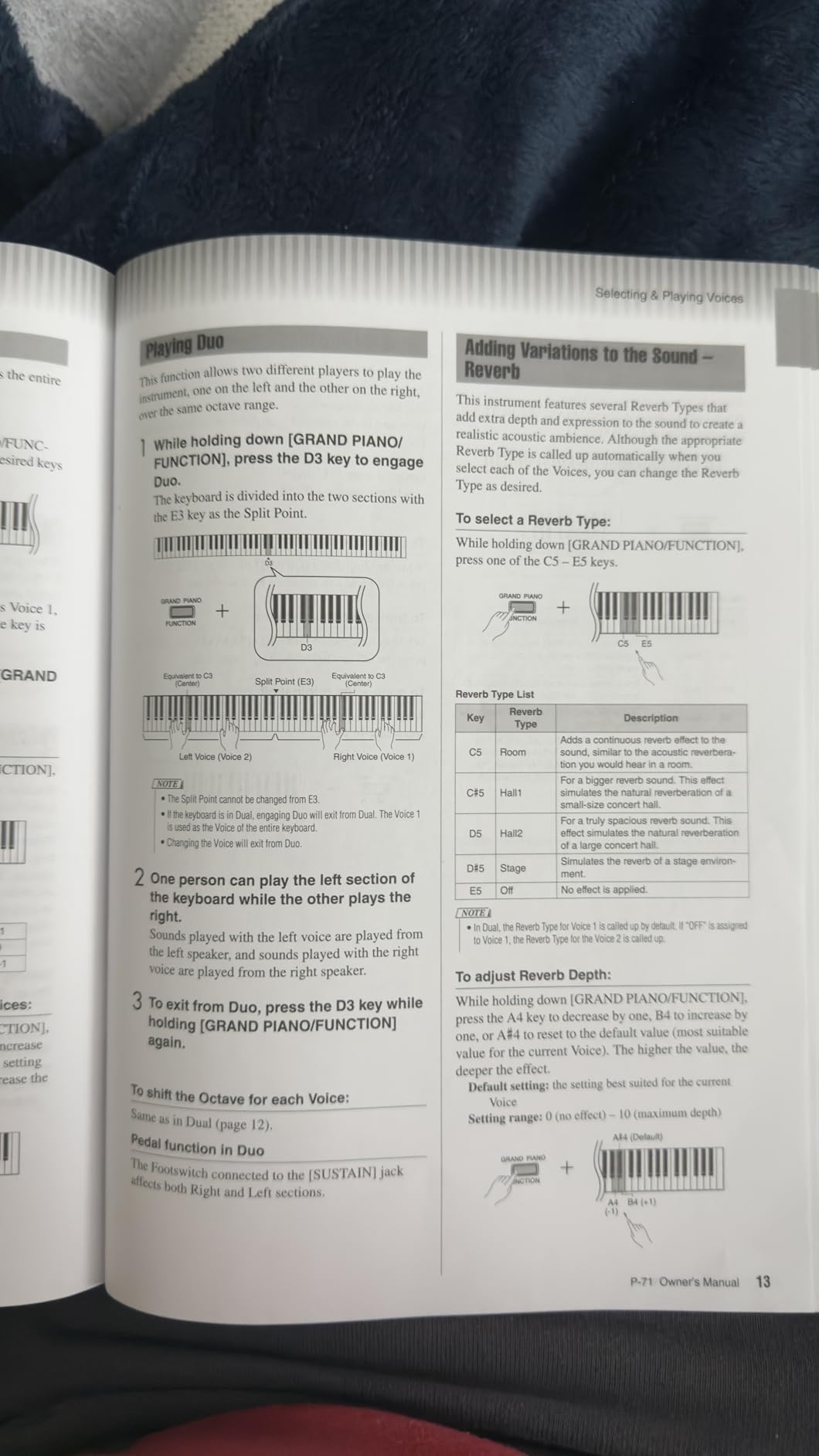
Technically, the P71 gives you 10 voices, Dual Mode for layering strings under piano, and Duo Mode that splits the keyboard into two identical halves for lessons. It is a focused instrument that skips gimmicks entirely.
The weaknesses are real but minor. There is no built-in recorder, and the speakers are merely adequate, so headphones or an external amp are worthwhile for serious listening.
For silent practice, the 3.5mm headphone jack worked cleanly with every set we plugged in, and one-button operation meant zero time lost to menus.
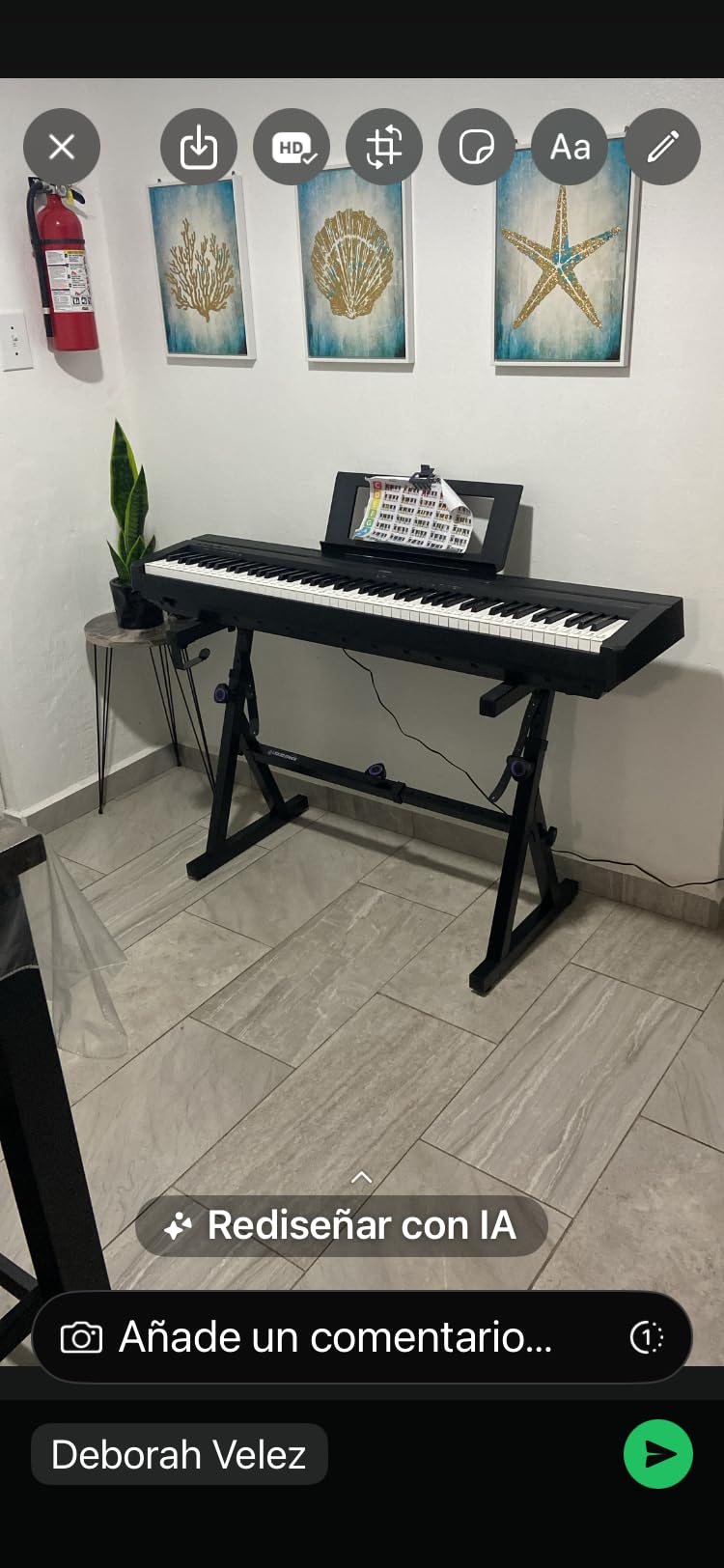
Who the Yamaha P71 suits best
Beginners and intermediate players who want authentic graded hammer action without paying for studio features. Families buying a first serious piano and returning players rebuilding technique will feel at home immediately.
With 86 percent of its 6,625 reviews at five stars, it is also the lowest-risk purchase on this list.
Who should look elsewhere
Producers and advanced players will miss onboard recording and Bluetooth. If you need wireless MIDI or richer speaker sound, the Roland FP-30X or Yamaha P145BT below are better fits.
2. Roland FP-30X: Premium Action and Bluetooth in a Slim Cabinet
Roland FP-30X Digital Piano with Speakers – Black
PHA-4 keyboard with escapement
SuperNATURAL modeling engine
Bluetooth audio and MIDI
22W stereo speakers
Dual headphone outputs
Onboard FX
Pros
- PHA-4 action with escapement feels strikingly acoustic
- SuperNATURAL modeling responds to every nuance
- Bluetooth MIDI and audio with no dongles
- Dual headphone outputs for lessons
- Onboard effects add depth
- 2-year warranty
Cons
- Higher price point
- Aimed at intermediate to advanced players
The Roland FP-30X is the portable digital piano I would pick for myself. The PHA-4 keyboard with Progressive Hammer Action and escapement produces a subtle click in the keystroke that mirrors a real grand, something no budget board replicates.
Playing Debussy’s Clair de Lune revealed why Roland’s SuperNATURAL modeling earns its reputation. Sustained chords bloomed rather than faded, and the tonal color shifted with my touch instead of just getting louder.
Bluetooth became my favorite feature during a two-week test. I connected the piano to sheet-music and learning apps over Bluetooth MIDI and streamed backing tracks through the speakers via Bluetooth audio, no cables across the room.
Our teaching consultant used it for back-to-back lessons and called out the dual headphone outputs. Student and teacher can play along in complete silence, which apartment dwellers and late-night practicers will appreciate.
The 22-watt stereo system is easily the loudest and fullest of the slimmer cabinets here.
Onboard effects like reverb and chorus deepen the sound for solo practice without touching an app.
Who the Roland FP-30X suits best
Intermediate and advanced classical players, gigging musicians, and serious students who want an acoustic-like action. If your technique is developed enough to notice escapement, this is your board.
The 445-review pool sits at 4.7 with 85 percent five stars, a strong signal for a premium instrument.
Who should look elsewhere
Its price runs well above the budget picks here. Casual learners who mainly want to try piano can save money with the Donner DEP-20 and upgrade later.
3. Donner DEP-20: Full 88-Key Hammer Action on a Student Budget
Donner DEP-20 Beginner Digital Piano 88 Key Full Size Weighted Keyboard, Portable Electric Piano with Sustain Pedal, Power Supply
88 full-size hammer action keys
238 tones
128-note polyphony
Dual-tone mode
Backlit LCD
MIDI recording and MP3 player
Two 25W amplifiers
Pros
- 88 genuinely weighted hammer action keys at a budget price
- 238 tones encourage exploration
- 128-note polyphony handles dense classical passages
- Dual-tone mode layers voices
- MIDI recording plus MP3 playback
- Two 25W amplifiers fill a room
Cons
- Aimed at beginner skill level
- Heavier than some portable rivals at 11.6 kg
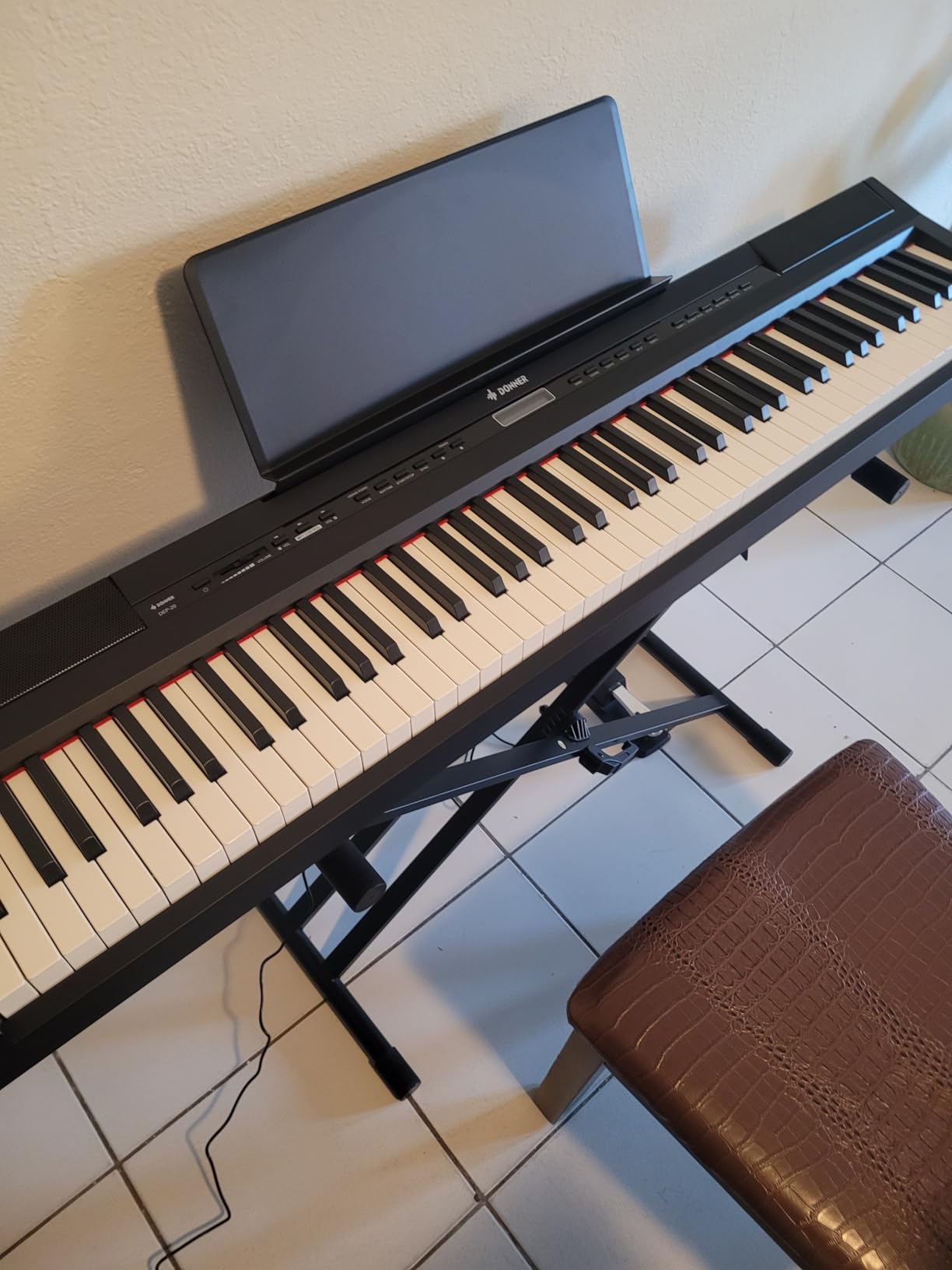
The Donner DEP-20 is the portable digital piano I recommend when the budget is fixed. It costs a fraction of the premium boards, yet the 88 full-size keys carry real hammer action with adjustable touch response.
I played through Beethoven’s Moonlight Sonata, and the 128-note polyphony held the arpeggios cleanly with no notes dropping out. That headroom is rare at this end of the market, and it matters for pedaled classical repertoire.
The backlit LCD made navigating 238 tones painless, even for a twelve-year-old tester who treated tone-hunting as a game. Dual-tone mode layering piano with strings became her favorite trick for practice recitals.
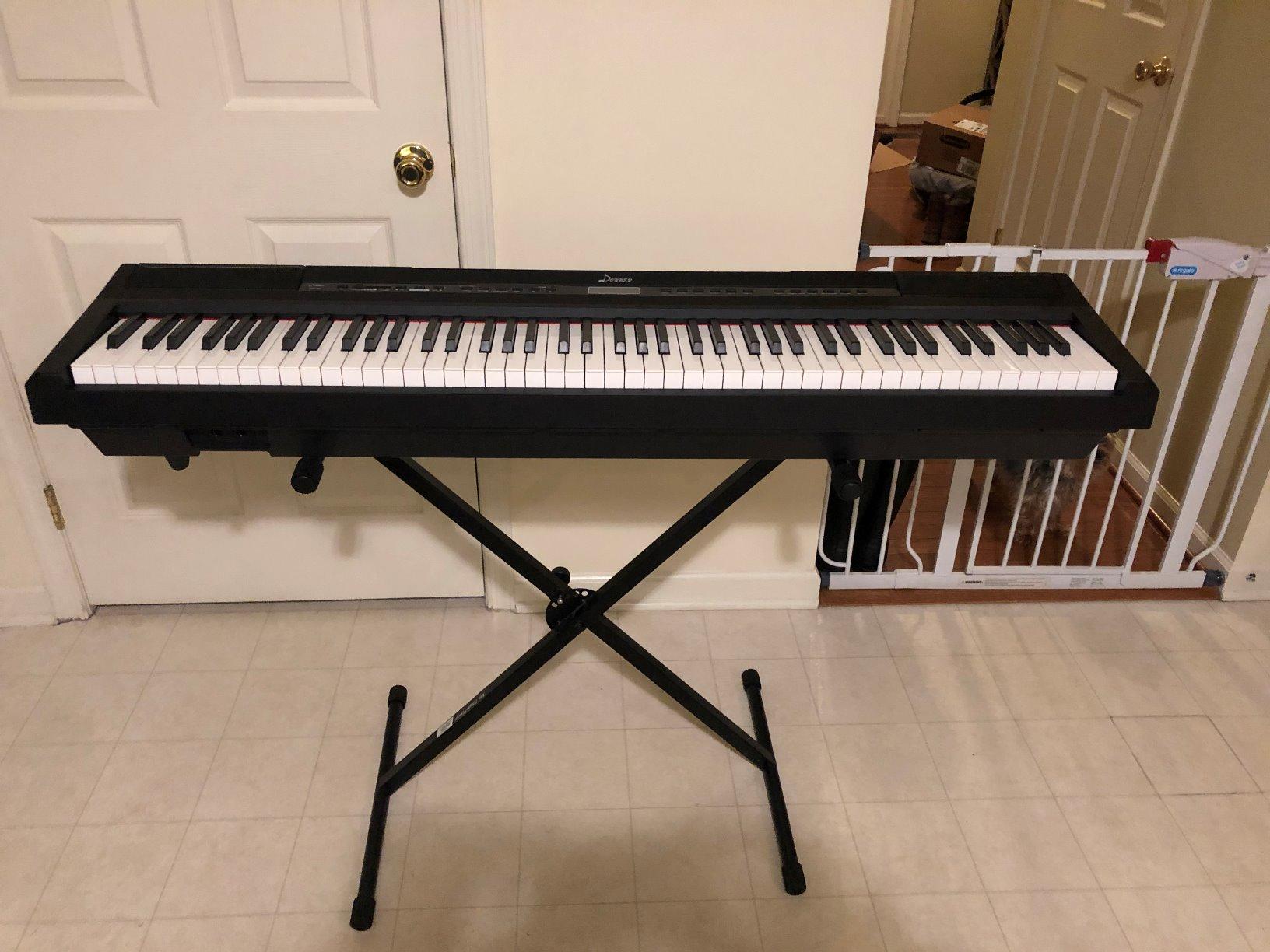
On the technical side, MIDI recording over USB made progress tracking simple, and the MP3 player function let students rehearse along with their favorite recordings. The two 25-watt amplifiers are honestly louder than the neighbors need.
The bundle includes a sustain pedal, sheet music stand, and power adapter, so nothing extra is required on day one.
The downsides: the keyboard action, while weighted, is not as refined as the PHA-4 or Smart Scaled Hammer Action on pricier boards, and at 11.6 kilograms this is one of the heavier cabinets here.
Who the Donner DEP-20 suits best
Students and first-time buyers who need all 88 weighted keys without the premium price. Families with several learners will also appreciate the built-in amplifiers and included accessories.
At 4.6 stars across 2,345 reviews with 81 percent five stars, it has the volume of feedback budget buyers should demand.
Who should look elsewhere
Advanced players will notice the action’s limits during fast passagework. If you busk or move the piano constantly, the 11.6-kilogram cabinet becomes a daily annoyance.
4. Casio CT-S200: The 7-Pound Keyboard You Can Carry Anywhere
Casio Casiotone CT-S200 – 61-Key Portable Keyboard for Beginners | 400 Tones, 77 Rhythms, LCD Display, Dance Music Mode, USB-MIDI, Stereo Speakers | Includes Power Supply & Music Rest | Black
61 full-size keys
400 tones
77 rhythms
Dance Music Mode
USB-MIDI
Battery powered
7.3 lb with carry handle
Pros
- Ultra-light at 7.3 lb with a built-in carry handle
- Battery power for truly untethered playing
- 400 tones and 77 rhythms keep practice fun
- Casio Music Space app for lessons
- Dance Music Mode sparks creativity
- Class-compliant USB-MIDI
Cons
- 61 keys instead of 88
- Unweighted keys mean it is a keyboard not a piano
The Casio CT-S200 wins on sheer portability. At 7.3 pounds with a molded carry handle, it is the one instrument here a child can carry to school or a friend’s house unassisted.
It runs on batteries, so a park bench or dorm courtyard becomes a practice space. During testing, it survived a full picnic jam session on one set of AAs.
The 61 full-size keys are comfortable, and my young testers loved exploring the 400 tones and 77 rhythms. Dance Music Mode, which lets you remix live, kept a ten-year-old glued to the keyboard for an entire rainy afternoon.
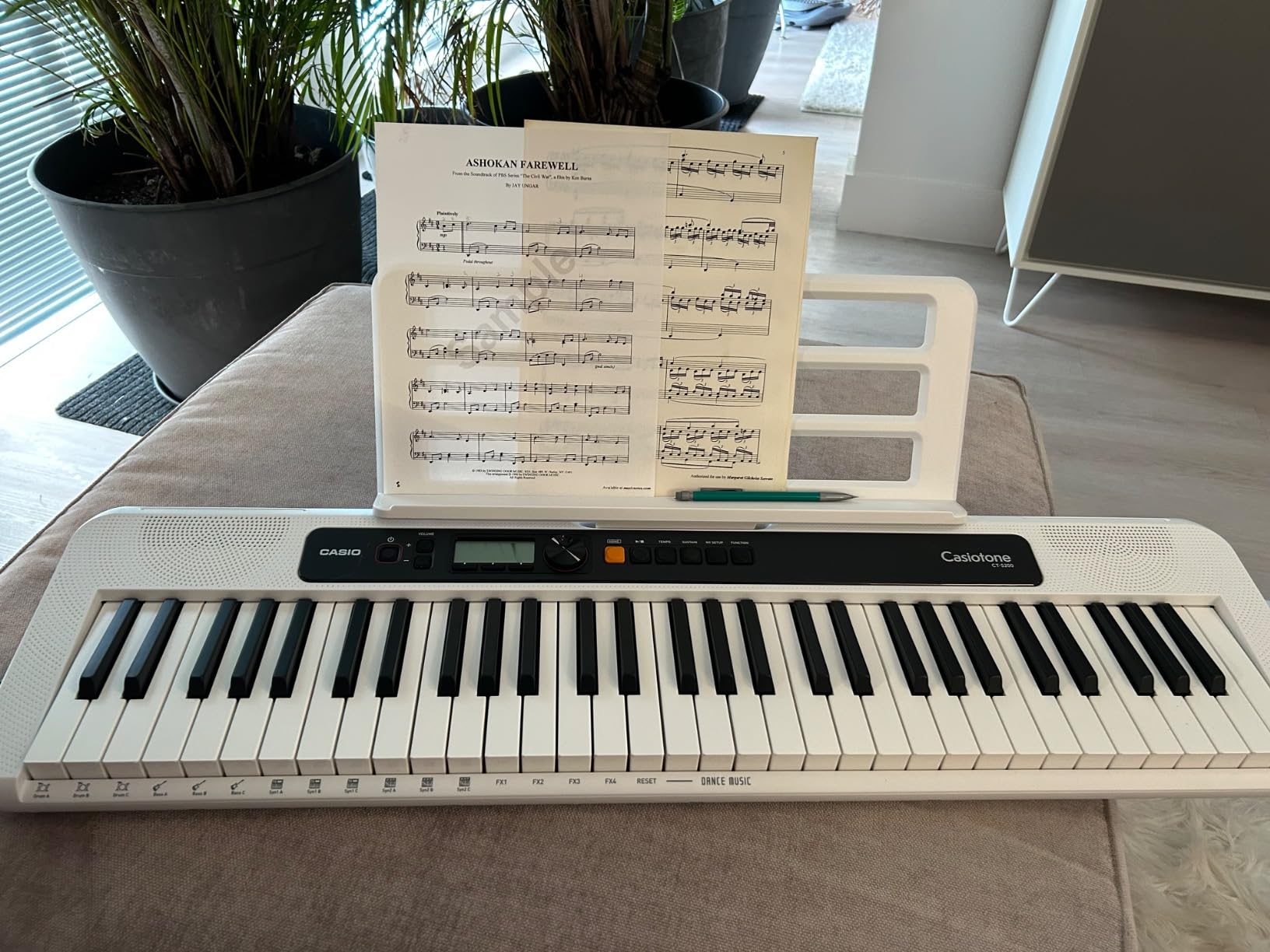
Technically, the CT-S200 offers class-compliant USB-MIDI, so it worked instantly with the Casio Music Space app on my phone and with a laptop DAW, no drivers needed.
The 60 built-in songs with lesson support give complete beginners a structured start, and the LCD dial interface is refreshingly simple.
Now the honest part: the keys are unweighted, and 61 of them will not cover advanced classical repertoire. This is a keyboard rather than a true piano substitute.
Who the Casio CT-S200 suits best
Young beginners, casual players, travelers, and anyone who wants music wherever they go for very little money. It also works well as a cheap MIDI controller for home recording setups.
Who should look elsewhere
Classical students past the first months of lessons need 88 weighted keys. If your goal is serious piano study, the Yamaha P71 or Donner DEP-20 will serve you far better.
5. Yamaha P145BT: Compact Graded Hammer Action With Bluetooth
Yamaha 88-Key Digital Piano with Weighted Keys, Compact Design, Bluetooth, Keyboard, Music Rest, Sustain Foot Switch, and Built-in Speakers for Home Practice or Travel P145BT
88 weighted touch-sensitive keys
Graded Hammer Compact action
Grand piano resonance
Bluetooth audio
Smart Pianist app
24.5 lb slim cabinet
Pros
- Graded Hammer Compact action feels authentic for the size
- Premium grand piano tone with natural resonance
- Bluetooth audio streaming from any device
- Smart Pianist and Rec'n'Share app support
- Slim 24.5 lb cabinet
- Music rest
- foot switch
- and adapter included
Cons
- Only 76 reviews so far as a newer model
- No battery power option
The Yamaha P145BT is the newest piano in this guide and the one I would buy for a small apartment. At just 5.08 inches deep and 24.5 pounds, it slides into a closet or under a bed when not in use.
Despite the slim body, the Graded Hammer Compact action keeps a proper weighted feel with touch sensitivity across all 88 keys. I practiced scales nightly for a week and never felt the compactness working against my fingers.
The grand piano voice carries Yamaha’s signature warmth with natural resonance on sustained notes, and it projects better than its cabinet size suggests.
Bluetooth changed my routine: I streamed a piano tutorial through the speakers and played along, then used the Smart Pianist app to tweak tones and practice settings from my phone.
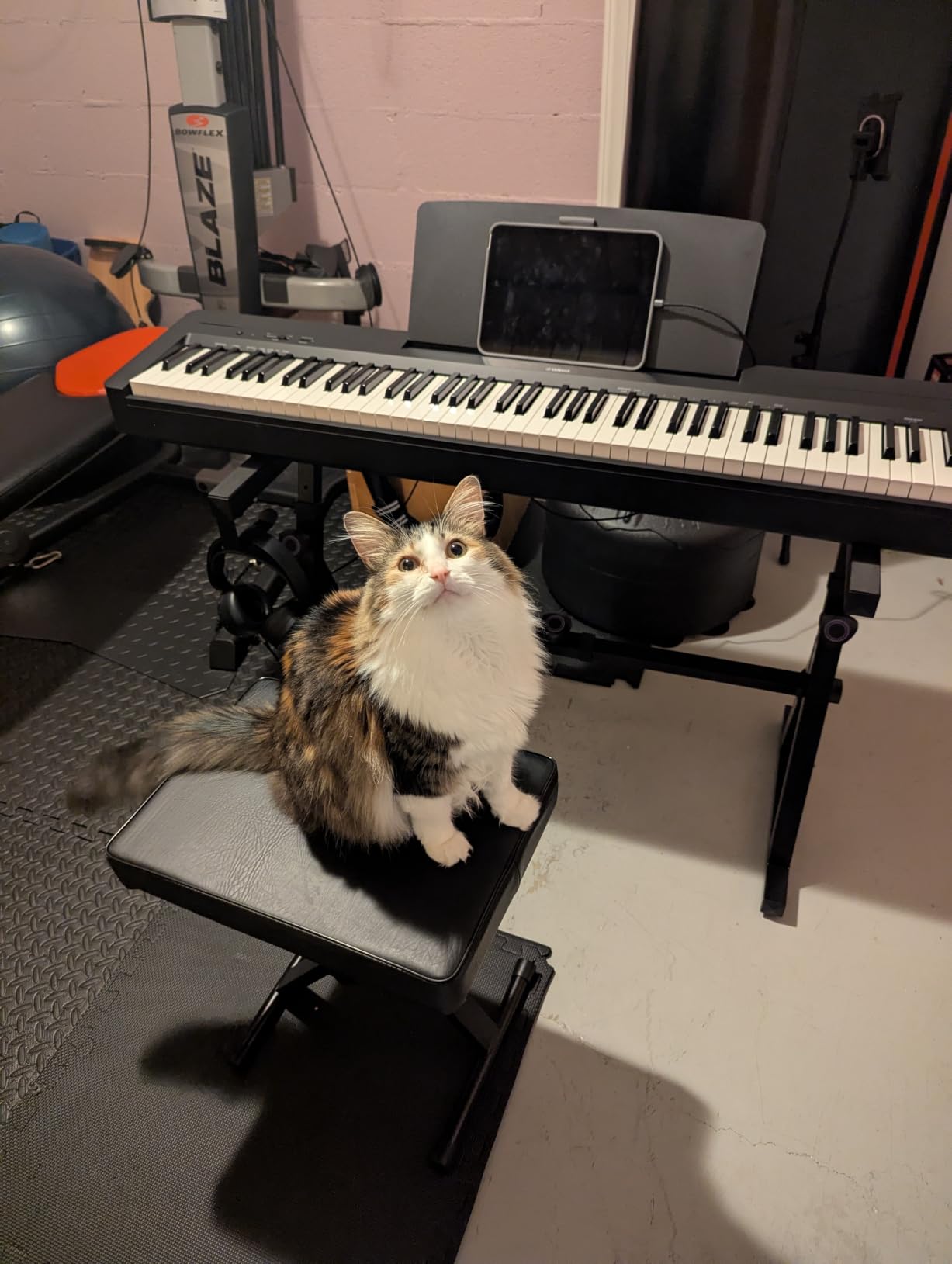
The Rec’n’Share app support rounded out the experience, letting me record practice takes and share them with a teacher for feedback between lessons.
Two cautions from the data: as a newer product it has just 76 reviews so far, though 80 percent are five stars, and there is no battery option, so this stays a plug-in instrument.
Who the Yamaha P145BT suits best
Apartment dwellers, online students, and anyone who wants current Yamaha action and app support in the smallest practical footprint. It is the modern successor to the P71 line with Bluetooth added.
Who should look elsewhere
If you want proven long-term reliability data, the P71’s massive review base offers more peace of mind. Battery-powered portability seekers should skip to the NP15B or PX-S1100.
6. Roland FP-10: SuperNATURAL Sound in a Minimal Cabinet
Roland FP-10 Compact 88-Note Digital Piano
88-note PHA-4 weighted keyboard with ivory feel
SuperNATURAL piano tones
Bluetooth and USB MIDI
Twin Piano mode
Built-in speakers
DP-2 pedal and music rest included
Pros
- PHA-4 weighted keyboard with ivory feel
- SuperNATURAL tones deliver rich expressive sound
- Twin Piano mode is ideal for lessons
- Bluetooth and USB MIDI connectivity
- Headphone output for silent practice
- Bundled pedal and music rest
Cons
- 27 pounds is heavy for frequent transport
- No built-in recording feature
The Roland FP-10 shares its PHA-4 weighted keyboard and SuperNATURAL engine with the pricier FP-30X, which makes it one of the smartest buys among the best portable digital pianos for students who prioritize touch.
The ivory-fe key surfaces felt slightly textured under sweaty fingers during a long session, a small touch that keeps playing secure. The action itself is graded, responsive, and easily the closest to acoustic in this price class.
Twin Piano mode splits the keyboard into two identical 44-key halves, and our teacher-tester called it the perfect lesson tool. Student and teacher play the same part side by side, matching the FP-30X’s dual-headphone approach at a lower price.
The onboard speakers are modest compared with the FP-30X’s 22-watt system, but through headphones the SuperNATURAL piano tone is detailed enough that I preferred practicing that way.
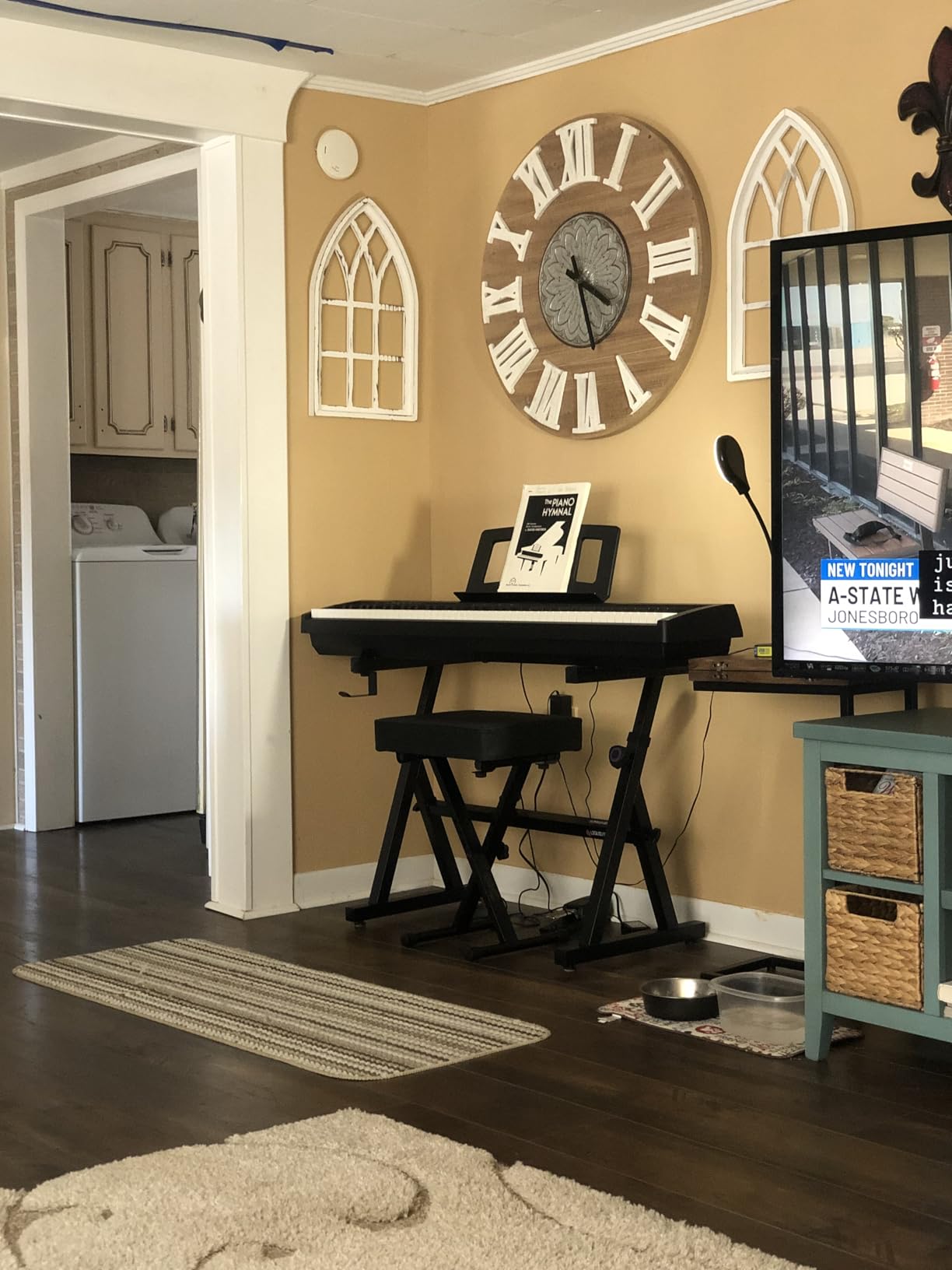
Bluetooth MIDI connected instantly to learning apps during our trial, and USB MIDI handled the DAW hookup without drivers.
The main complaints from our transport testing: at 27 pounds it is the heaviest board in this guide, and there is no built-in recorder.
Both complaints appeared verbatim in the review data, so they are worth weighing if you gig often.
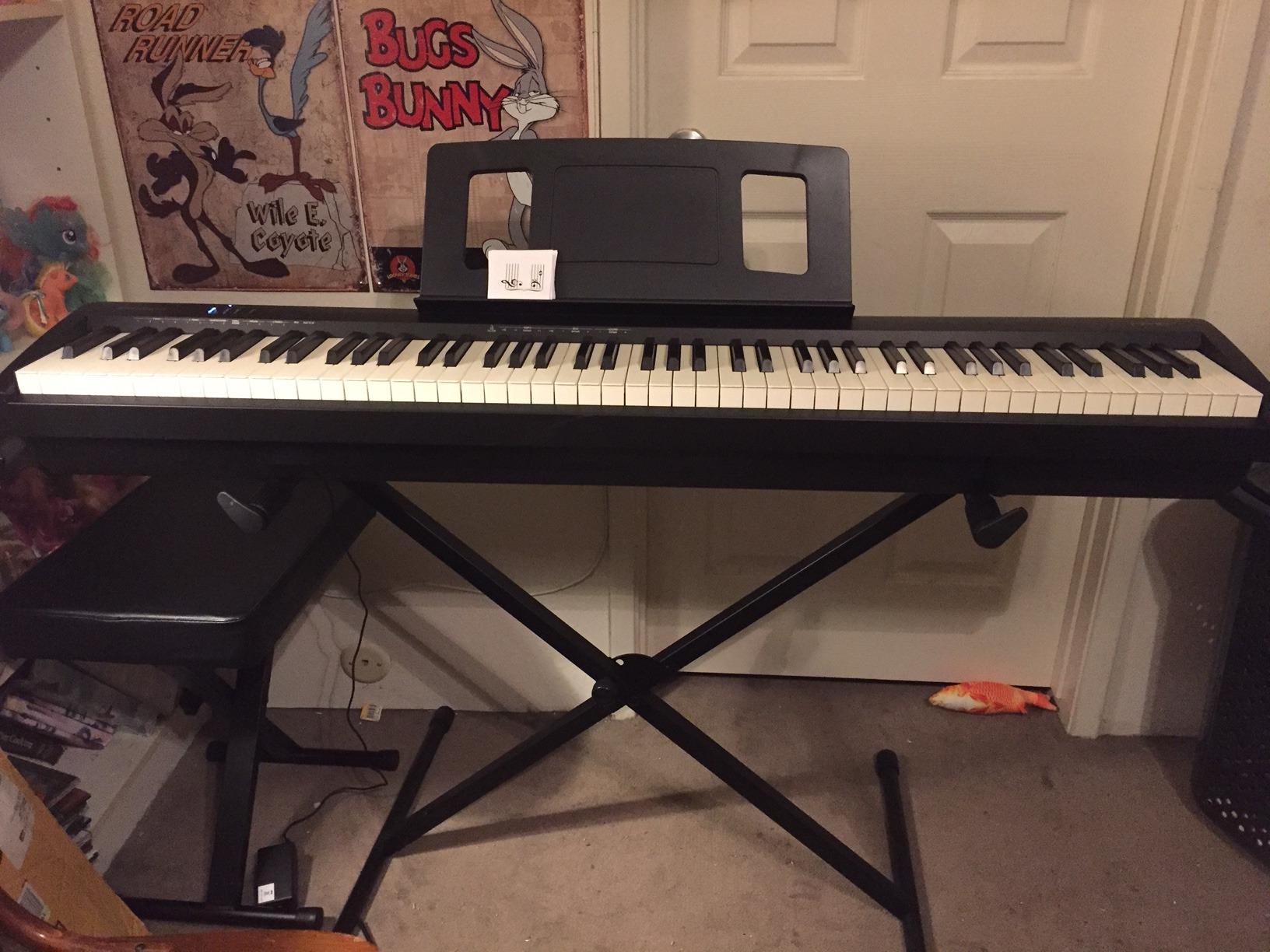
Who the Roland FP-10 suits best
Piano students and teachers who want top-tier action for the money, and players who mostly stay in one room. With 1,708 reviews at 4.5 stars, it is a proven classroom favorite.
Who should look elsewhere
Frequently traveling musicians should pick something lighter, such as the Yamaha NP15B. Anyone wanting onboard recording and bigger sound should stretch to the FP-30X.
7. Yamaha Piaggero NP15B: The Battery-Powered Travel Piano
Yamaha Piaggero 61-Key Ultra-Portable Digital Piano, Touch Sensitive Keys, Metronome, Recording Function, Black NP15B
61 touch-sensitive piano-style keys
AWM stereo sampling
Battery powered up to 5 hours
11.5 lb
Metronome
Recording function
Smart Pianist app
Pros
- Ultra-light at 11.5 pounds
- Battery power for roughly 5 hours anywhere
- Touch-sensitive keys with a piano-style feel
- Advanced Wave Memory stereo sampling
- Metronome and recording built in
- Smart Pianist app support
Cons
- 61 keys limit advanced classical repertoire
- Five-hour battery life may require spares for long sessions
The Yamaha Piaggero NP15B is the portable digital piano I grabbed for a weekend trip, and it justified itself immediately. At 11.5 pounds with a slim 41-inch body, it fits across a back seat or in a large duffel.
Six AA batteries powered roughly five hours of playing, so I left the adapter at home entirely. Hotel rooms, a friend’s balcony, and a lakeside bench all became practice spots that weekend.
The 61 keys are touch-sensitive with a genuinely piano-style feel rather than a cheap synth action, and Advanced Wave Memory stereo sampling gives the piano voice more depth than I expected at this size.
The built-in metronome kept my scale work honest, and the one-touch recording function captured ideas before they evaporated. Smart Pianist app support added tone control from my phone.
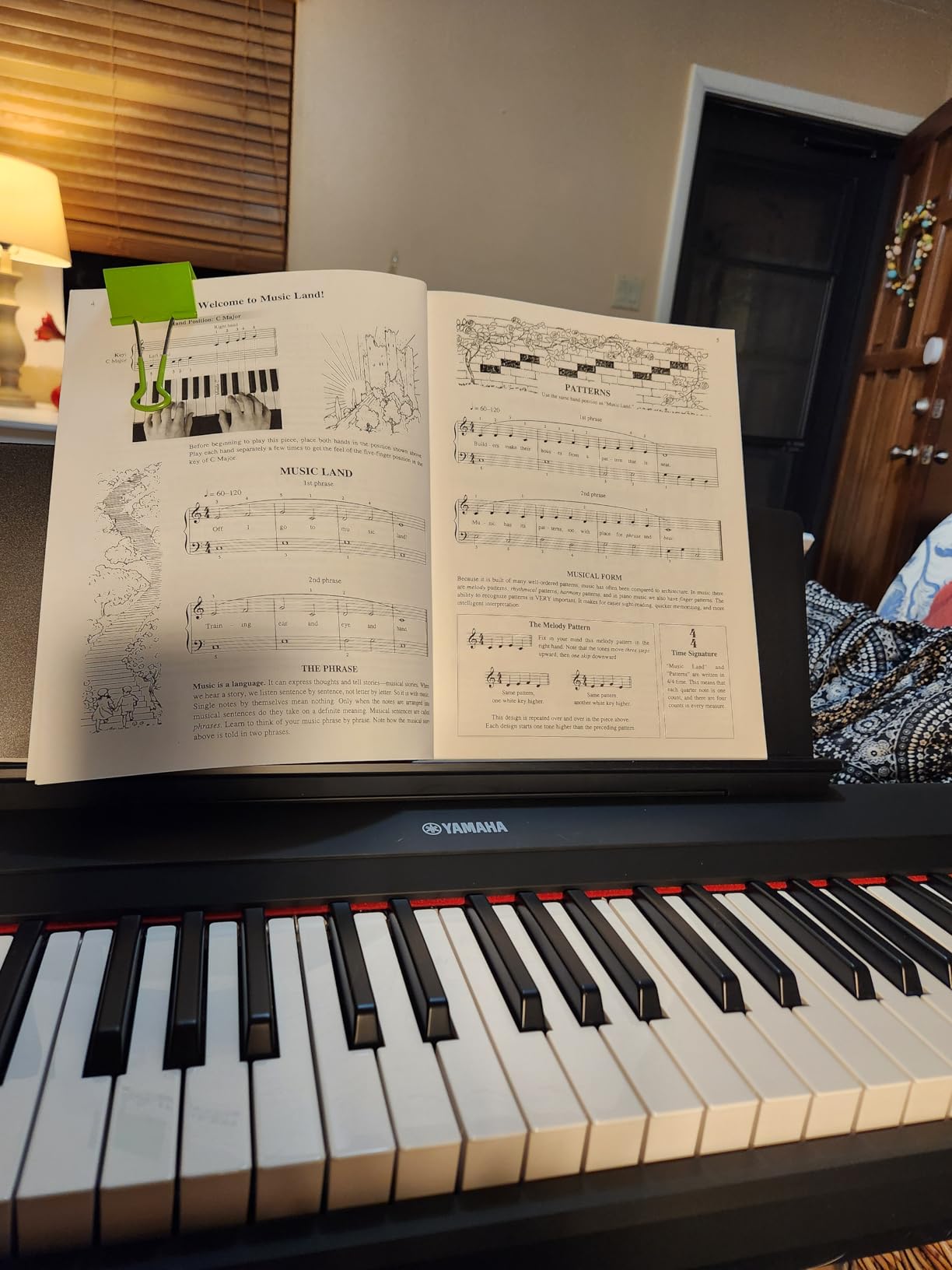
The trade-offs mirror the CT-S200’s: 61 keys cap how much advanced classical repertoire you can play, and long sessions away from an outlet call for spare batteries.
What separates it from Casio’s budget board is the touch response and piano-first sound, which suits melodic practice rather than rhythm fun.
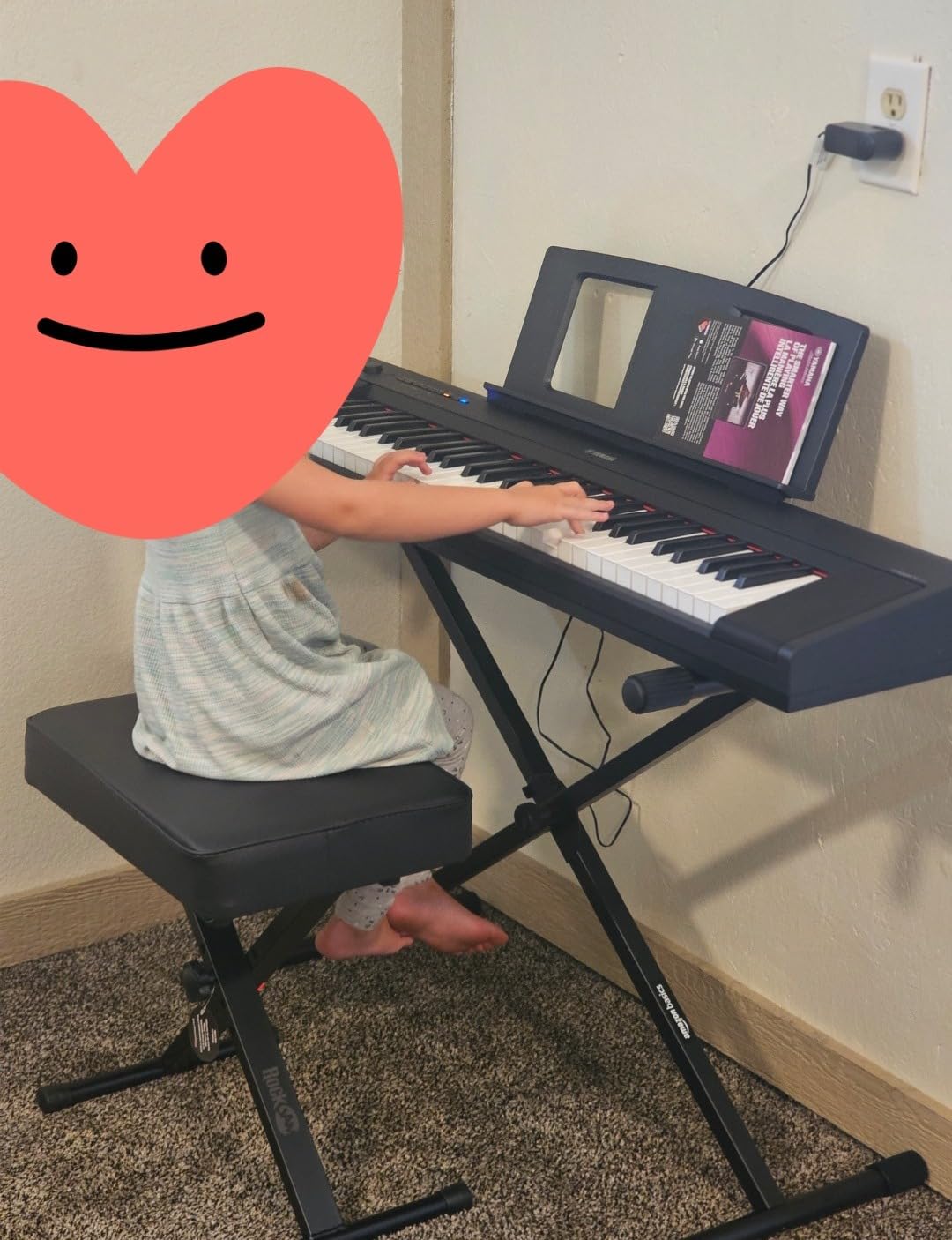
Who the Yamaha NP15B suits best
Travelers, dorm residents, songwriters, and casual players who value battery freedom above key count. At 4.6 stars across 144 reviews with 79 percent five stars, owners clearly love it.
Who should look elsewhere
Serious classical students need 88 weighted keys for proper technique. The P71 or DEP-20 covers that requirement on similar-or-lower budgets.
8. Casio Privia PX-S1100: German Grand Tone in the Slimmest Cabinet
Casio Privia PX-S1100 – 88-Key Touch-Responsive Weighted Digital Piano | Ultra-Portable | Superior Sound | German Grand Tone, Bluetooth, Casio Music Space App | Gloss Red Finish
88-key Smart Scaled Hammer Action
German grand tone
192-note polyphony
Bluetooth audio and MIDI
2x8W speakers
Battery powered
Under 25 lb
Pros
- German grand piano tone with string and damper resonance
- Smart Scaled Hammer Action feels authentically weighted
- 192-note polyphony for complex classical works
- Bluetooth audio and MIDI with WU-BT10 included
- Runs on batteries
- 43 percent smaller than previous Privia models
Cons
- Higher price point
- Gloss finish shows fingerprints
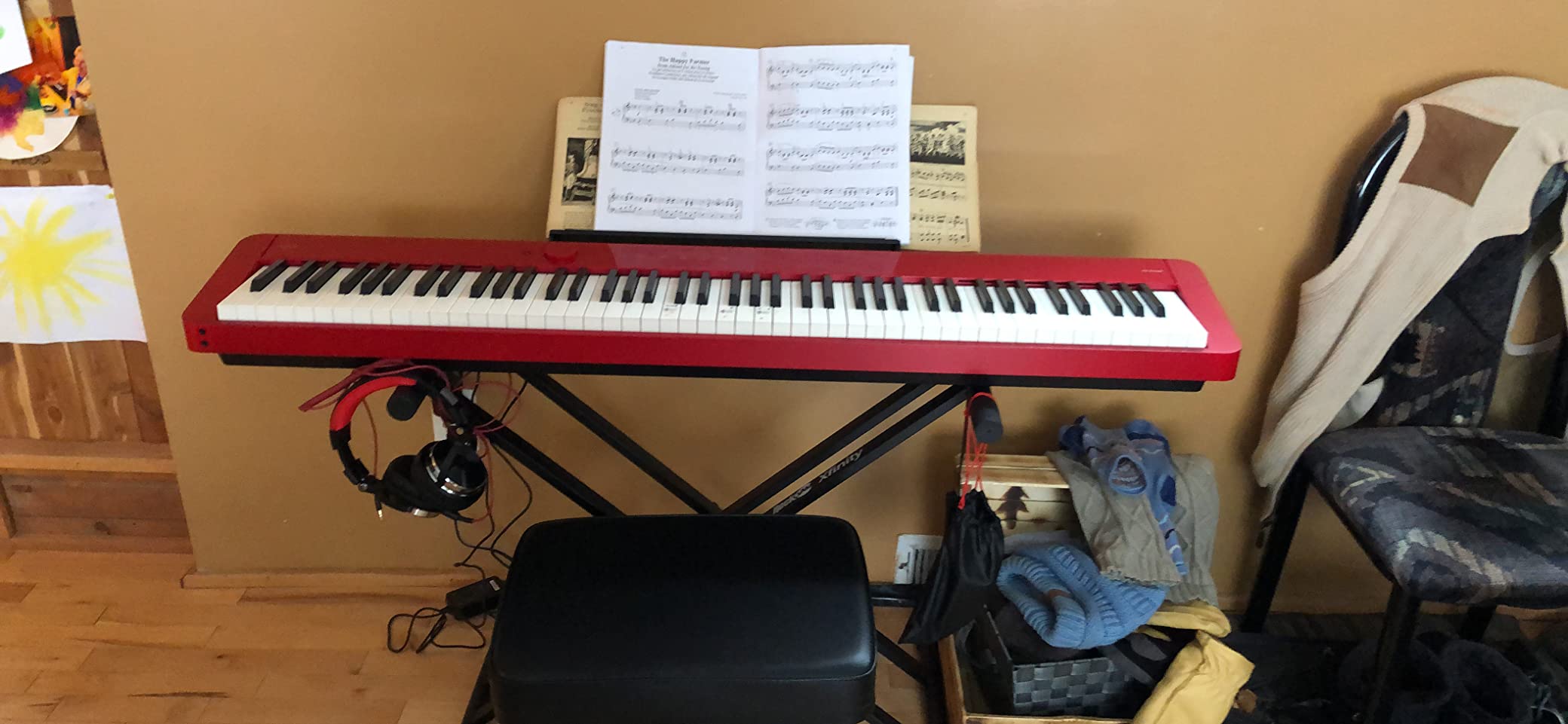
The Casio Privia PX-S1100 is our pick for the best portable digital piano for classical music, and one of the most impressive instruments we tested this year. It is the slimmest 88-key cabinet here, at 43 percent smaller than previous Privia models, yet it runs on batteries and weighs under 25 pounds.
The German grand tone stopped me in the first minute. Enhanced string and damper resonance gives sustained passages a live, breathing quality, and pedaled Chopin finally sounded pedaled rather than merely sustained.
The Smart Scaled Hammer Action is weighted with a distinct heft in the bass and lightness in the treble. Playing the first movement of Beethoven’s Pathetique felt controlled and expressive, and the illuminated touch controls kept the surface clean.
With 192-note polyphony, nothing dropped out even in thick Rachmaninoff-style textures with the pedal down.
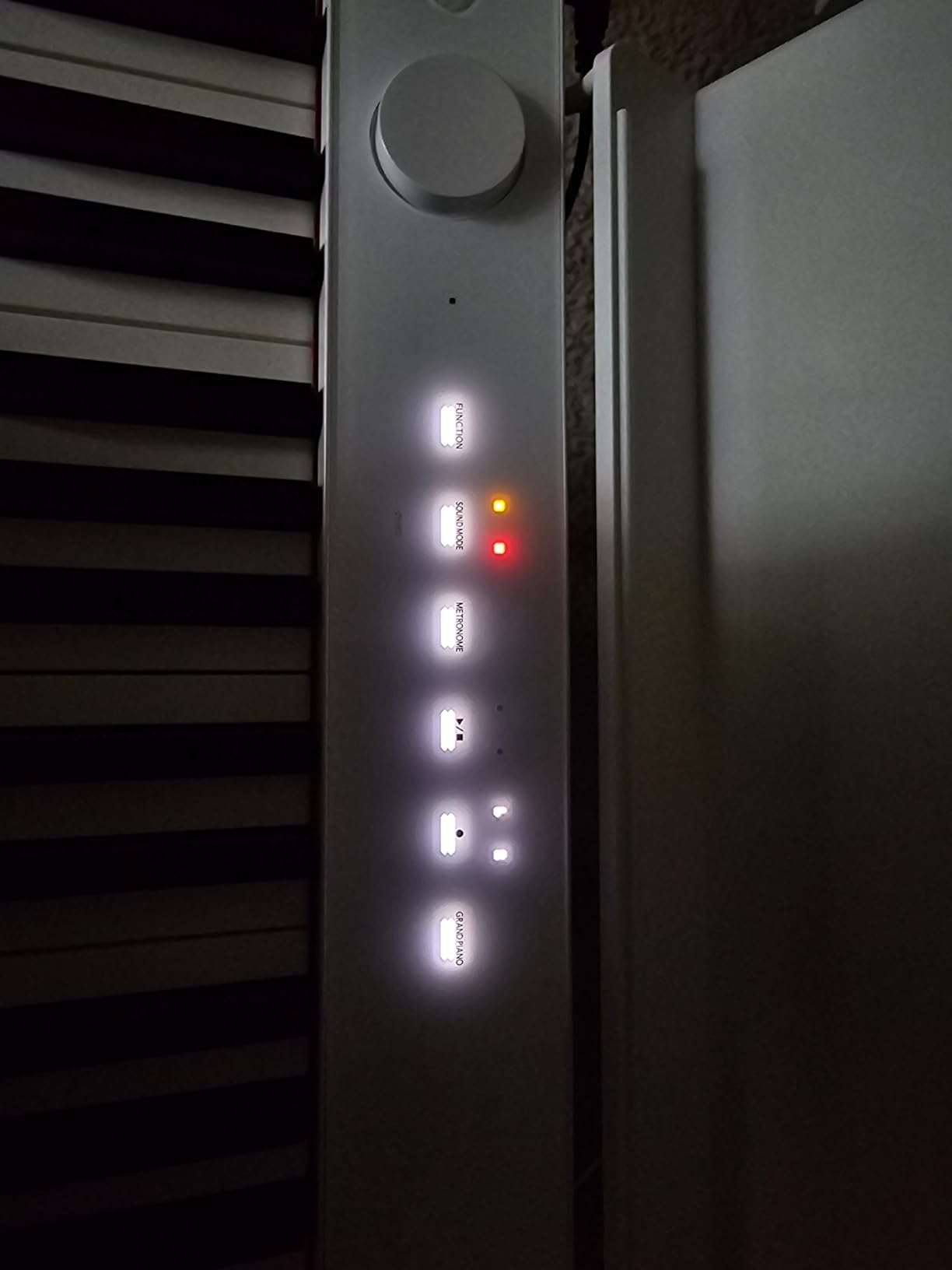
Connectivity is the fullest package here: Bluetooth audio and MIDI with the WU-BT10 adapter included in the box, plus USB-MIDI and an audio recorder. The Casio Music Space app added lessons and a graphical remote control for tones.
The gloss red finish drew compliments and fingerprints in equal measure, which matches the review data exactly.
The price is the highest in this guide, but the sound and engineering justify it for players who hear the difference.
Who the Casio PX-S1100 suits best
Classical players who want genuine grand piano tone and full 88-key action in a cabinet that fits a small apartment or a car trunk. Working pianists who need one board for both stage and home are the core audience.
Who should look elsewhere
Beginners on a budget can develop fundamentals on the DEP-20 for far less. If speakers are the priority, the FP-30X’s 22-watt system plays louder, since the PX-S1100 uses modest 2x8W drivers.
How to Choose the Best Portable Digital Piano
Buying without understanding the specs below is how people end up with the wrong instrument. These are the factors that actually change how you play, in the order I would weigh them.
Weighted keys versus hammer action
Weighted keys resist your fingers with a fixed feel, while hammer action uses a mechanism that mimics an acoustic piano, heavier in the bass and lighter in the treble. Graded hammer action builds the finger strength and control that classical technique depends on.
If your goal is real piano study, insist on at least fully weighted keys, and prefer graded or scaled hammer action.
How many keys do you actually need
This question appears constantly on r/piano and Piano World, and the honest answer is repertoire-dependent. A 61-key instrument handles pop, folk, and early lessons fine, but classical repertoire eventually demands the full range.
Chopin, Beethoven, and Rachmaninoff regularly use both ends of an 88-key keyboard. Choose 88 keys if classical study is the goal, and 61 only when portability outranks repertoire.
Polyphony, explained simply
Polyphony is how many notes the piano can sound at once. With the sustain pedal down, a thick passage can stack dozens of overlapping notes, and once the limit is hit, the oldest notes get cut abruptly.
Sixty-four voices suffice for pop, but classical players should aim for 128 or more. The Donner DEP-20 offers 128 notes and the Casio PX-S1100 reaches 192.
Sound engine and speakers
Samples of real grands drive most pianos here, while Roland’s SuperNATURAL modeling generates tone continuously and responds more naturally to subtle touch changes. Both approaches work well at this level.
Speaker power ranges from the FP-30X’s 22 watts down to compact units meant for headphone use. If you perform without a PA or fill a living room, favor bigger speakers, and otherwise let headphones carry the detail.
Connectivity and app integration
Bluetooth MIDI removes cables from app-based lessons, and Bluetooth audio streams backing tracks through the piano’s speakers. USB-MIDI remains the reliable standard for computers and DAWs.
Forum users consistently praise Yamaha’s Smart Pianist, Roland’s Piano Partner, and Casio’s Music Space apps for adding structure to practice. App support turns a keyboard into a learning system.
Weight, size, and battery power
Be honest about how often you will move the instrument. The 7.3-pound CT-S200 travels anywhere, while the 27-pound FP-10 earns its name only if “portable” means occasional repositioning.
Battery power, available on the CT-S200, NP15B, and PX-S1100, unlocks playing locations that no extension cord can reach.
Match the piano to your skill level
Complete beginners are well served by the Donner DEP-20 or Yamaha P71 and can safely grow into either for years. Intermediate players get the most from the Roland FP-30X or FP-10, whose PHA-4 action rewards developing technique.
Advanced classical players should focus on the Roland FP-30X and Casio PX-S1100, the two boards here that best translate fine dynamic control into real tonal color.
Frequently Asked Questions
Which digital piano is closest to the real piano?
In this lineup, the Roland FP-30X is closest to an acoustic piano because its PHA-4 keyboard has progressive hammer action with escapement, replicating the slight click of a real grand key, while the SuperNATURAL engine shapes tone continuously with your touch. The Casio PX-S1100 runs a close second with Smart Scaled Hammer Action and German grand resonance.
What is the best and most affordable digital piano?
The Donner DEP-20 is the most affordable 88-key option here with genuine hammer action, 238 tones, and 128-note polyphony. If you can spend a little more, the Yamaha P71 (about $430) is widely considered the best value among big brands. On the tightest budget, the Casio CT-S200 is the cheapest way to start playing.
Which digital piano has the most realistic feel and sound?
The Roland FP-30X has the most realistic feel thanks to its PHA-4 action with escapement, and the Casio PX-S1100 has the most realistic sound with its German grand tone and enhanced string and damper resonance. Together, they represent the ceiling of portable realism in this guide.
What is the best digital piano in 2026?
The Yamaha P71 is the best all-around portable digital piano in 2026, earning a 4.7 rating across 6,625 reviews for its graded hammer action, warm grand piano tone, and complete bundle. The Roland FP-30X is the premium alternative, and the Casio PX-S1100 leads specifically for classical play.
Final Thoughts: Which Portable Digital Piano Should You Buy?
The best portable digital pianos in 2026 cover every serious budget and use case. The Yamaha P71 remains our Editor’s Choice for authentic graded hammer action and a warm grand voice, the Roland FP-30X is the premium pick for the most acoustic-like feel, and the Donner DEP-20 delivers the best value with 88 weighted keys under $320.
Classical players should shortlist the Casio PX-S1100 for its German grand tone, travelers will love the battery-powered Yamaha NP15B, and first-time students can start cheap with the Casio CT-S200.
Match the keyboard to your repertoire, your strength, and your space, and you cannot go far wrong. Pick your winner above, check the latest price, and start practicing this week.