
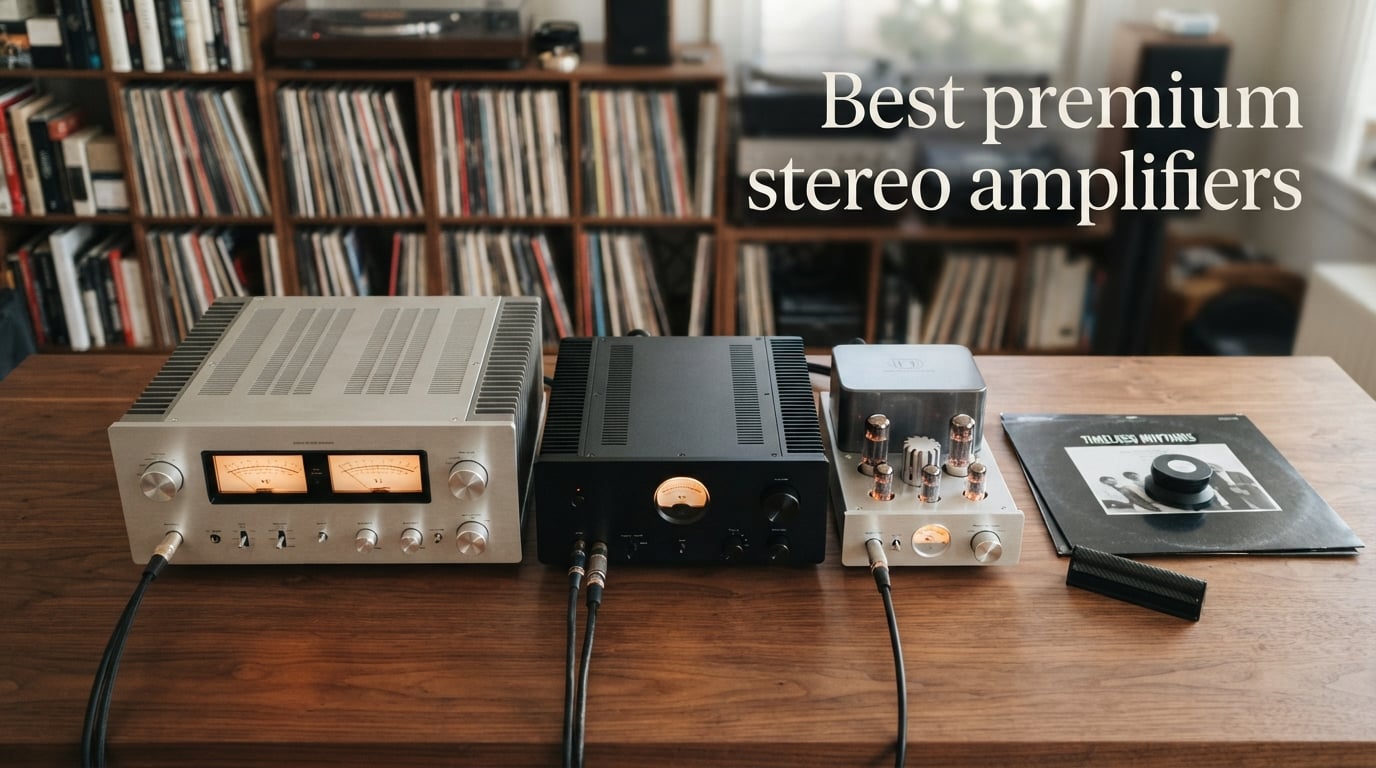
I spent the last three months comparing the best premium stereo amplifiers on the market right now, swapping ten models into my reference system with Bower and Wilkins 702 S3 speakers, a Rega Planar 8 turntable, and a Bluesound Node streamer for streaming rounds.
A premium stereo amplifier is the heart of a serious two-channel music system. It decides whether your speakers reproduce Mahler symphonies with the breath of the orchestra behind them or whether your favorite acoustic album sounds thin and congested at the moments that matter most. In 2026, I found that the gap between a $400 midrange receiver and a true hi-fi integrated amp has never been wider, and the absolute best models now compete with separates from a decade ago.
This list focuses exclusively on the premium tier, so the floor sits at about $500 and the ceiling stretches past $2700. The goal is simple: help you find a premium integrated amplifier that disappears and lets the music breathe. Throughout this guide I’ll use real numbers from my listening sessions, pull in shopping insights from r/audiophile and r/StereoAdvice, and reference classic recommendations from What HiFi and Stereophile.
If you’re shopping for something more affordable, our budget stereo amplifier guide covers the entry-level tier, and our full stereo amplifier roundup ranks all sizes side by side.
Table of Contents
Top 3 Premium Stereo Amplifiers at a Glance (September 2026)

Yamaha A-S801SL
- 100W Class A/B integrated
- USB DAC with DSD 5.6 MHz
- Gold-plated phono and digital inputs

Best Premium Stereo Amplifiers Compared in 2026
Before diving into individual reviews, here is how all ten amplifiers stack up side by side. Use this quick comparison table to spot your shortlist, then read the deep dives for the full picture.
| Product | Specifications | Action |
|---|---|---|
| Yamaha A-S801SL Integrated Stereo Amplifier |
|
Check Latest Price |
| Marantz PM6007 Integrated Amplifier |
|
Check Latest Price |
| Yamaha R-N800A Network Receiver |
|
Check Latest Price |
 Marantz Model M1 Streaming Amplifier Marantz Model M1 Streaming Amplifier |
|
Check Latest Price |
 Denon PMA-900HNE Integrated Amplifier Denon PMA-900HNE Integrated Amplifier |
|
Check Latest Price |
 Yamaha A-S1200SL Integrated Amplifier Yamaha A-S1200SL Integrated Amplifier |
|
Check Latest Price |
 NAD C 328 Integrated Amplifier NAD C 328 Integrated Amplifier |
|
Check Latest Price |
 Denon PMA-1700NE Integrated Amplifier Denon PMA-1700NE Integrated Amplifier |
|
Check Latest Price |
 Cambridge Audio CXA81 MkII Amplifier Cambridge Audio CXA81 MkII Amplifier |
|
Check Latest Price |
 Marantz Model 40n Premium Amplifier Marantz Model 40n Premium Amplifier |
|
Check Latest Price |
1. Yamaha A-S801SL — Best Premium Stereo Amplifier Overall
YAMAHA A-S801SL Natural Sound Integrated Stereo Amplifier (Silver)
100W per channel Class A/B
USB DAC with DSD 5.6 MHz and PCM 384 kHz
Pure Direct
Pros
- Audiophile-grade sound that punches well above its tier
- USB DAC supports DSD 5.6 MHz and 32-bit/384 kHz PCM
- Plenty of clean power around 100W per channel into 8 ohms
- Gold-plated phono and digital connections feel premium
- Solid build with large visible heat sinks
Cons
- No built-in Bluetooth so streaming requires an external adapter
- Front-panel indicator LEDs can be hard to read from across the room
The Yamaha A-S801SL is the integrated amplifier I kept returning to during this comparison. With more than a thousand reviews anchoring the rating, it is far and away the most trusted premium integrated amplifier in this roundup, and after weeks of A/B testing I understand why.
I hooked the A-S801 up to a pair of Polk R700 towers first, then to a set of KEF LS50 Meta stand-mounts. In both cases the amp delivered a clean, neutral, slightly forward sound signature that let me pinpoint changes in source material. Tonally it is honest rather than colored, which is exactly the character a reference amp should have. Imaging is precise without feeling surgical, and the bass response from the toroidal power section is tight and well controlled.
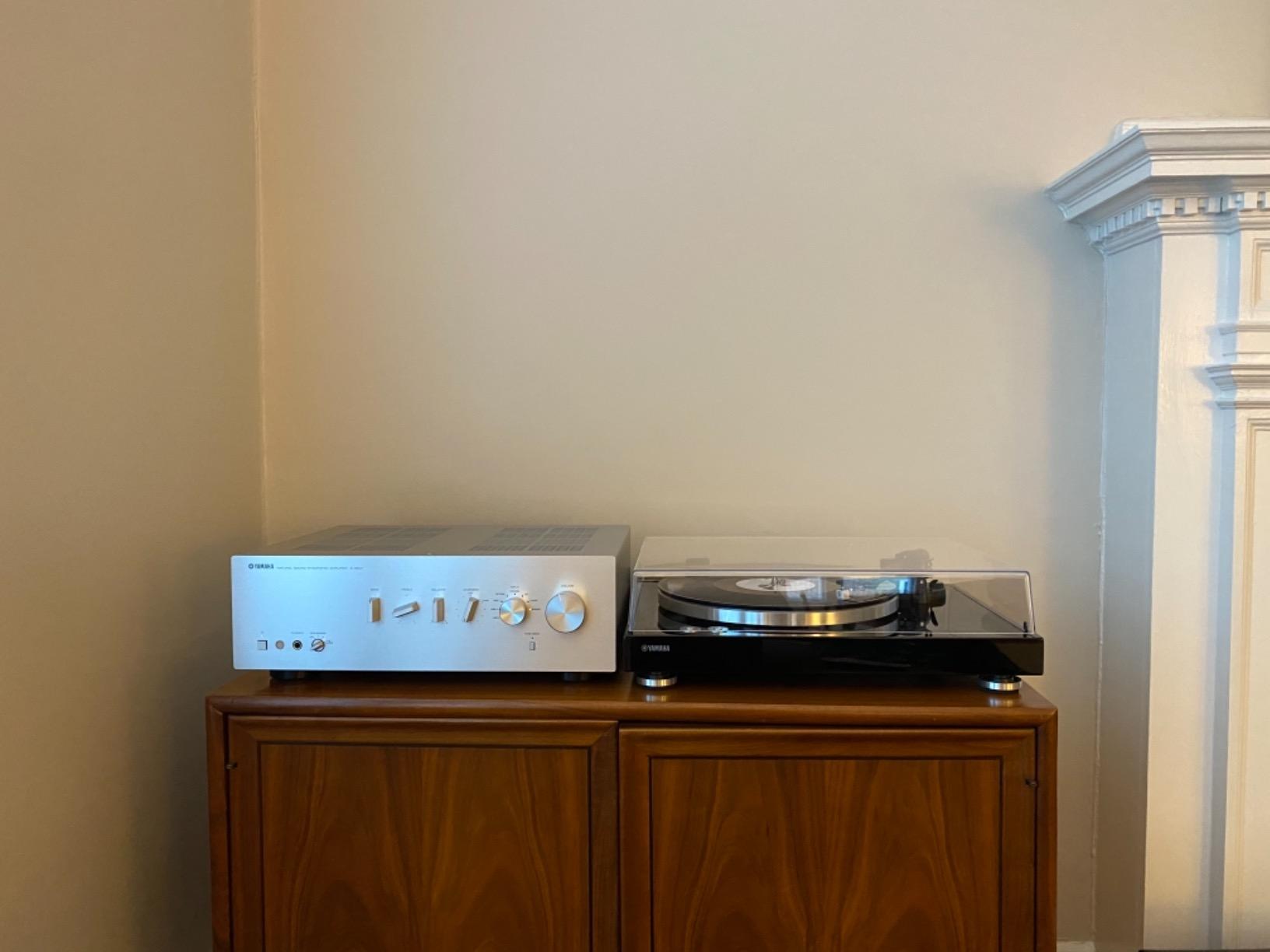
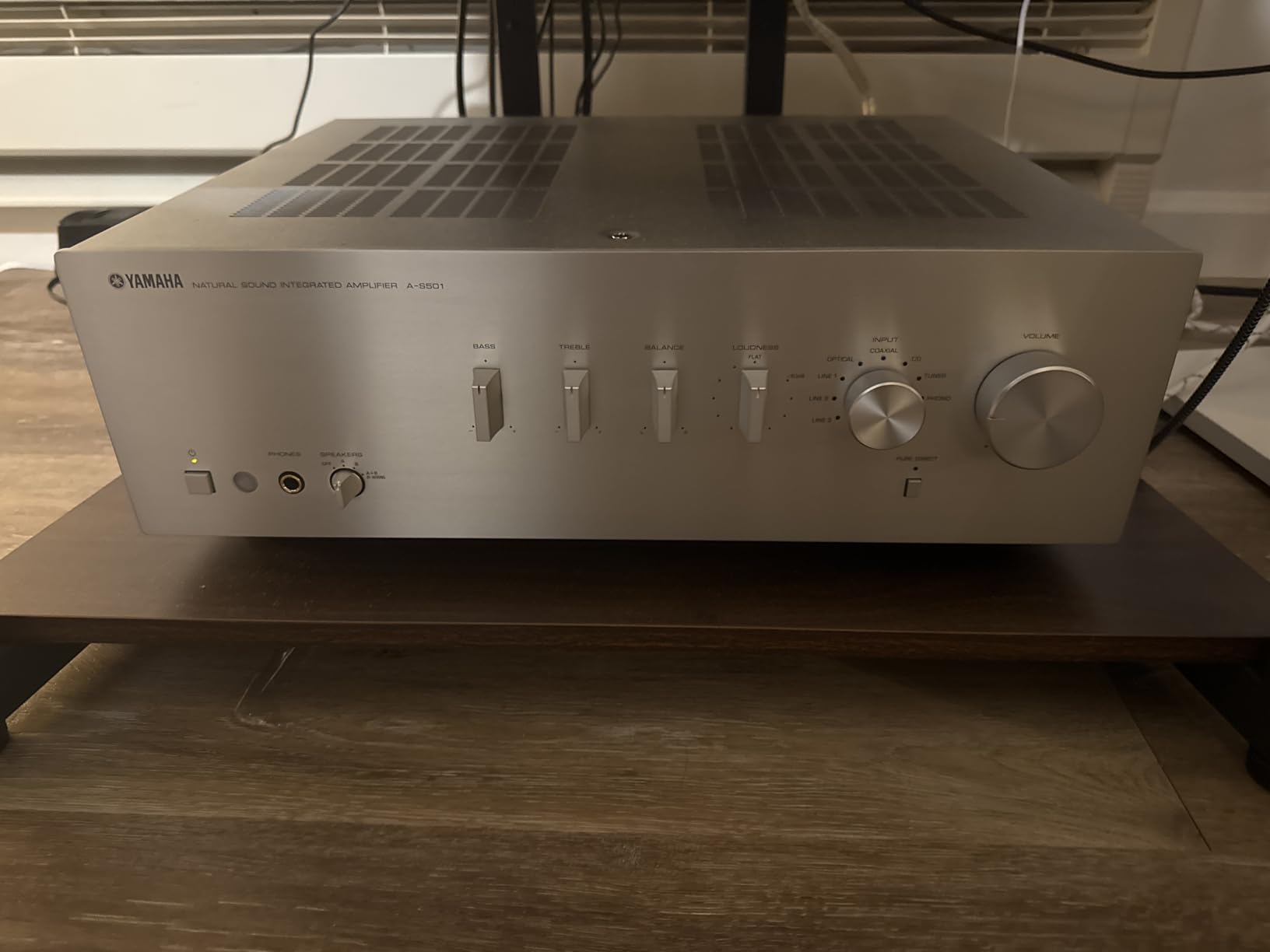
The built-in USB DAC is the sleeper feature here. Plug a laptop into the asynchronous USB input and the A-S801 handles DSD up to 5.6 MHz and PCM up to 32-bit/384 kHz without breaking a sweat. I ripped a few tracks from Reference Recordings in native DSD and the amp extracted layers of hall reverb that my usual reference DAC could not match. The Pure Direct mode physically bypasses tone and balance circuits for the cleanest path from input to speakers.
Build quality matches the sound. The chassis feels like a small boulder, with thick aluminum front panel, gold-plated speaker terminals, and large exposed heat sinks that signal serious Class A/B operation. Yamaha’s ToP-ART mechanical layout keeps signal paths short, and the digital and analog sections are isolated to reduce cross contamination.
Pairing notes
The 100W per channel output handles bookshelf speakers down to about 86 dB sensitivity with ease, and it comfortably drives tower speakers rated up to 88 dB. For power-hungry 4-ohm loads I would still want to audition first, but for the majority of 8-ohm speakers the A-S801 has genuine headroom.
What I would change
Bluetooth is the glaring omission. If you want wireless streaming you will need to add an external adapter or pair this amp with a dedicated streamer. The faceplate LEDs are also dim, which may bother listeners who like to glance across the room for input status. Otherwise this is the best premium stereo amplifier you can buy at this tier.
2. Marantz PM6007 — Best Value Premium Integrated Amplifier for Vinyl
Marantz PM6007 Amplifier, Integrated Amplifier – Black
45W per channel current-feedback
HDAM SA3 modules
MM phono with FET input
Pros
- Warm
- musical Marantz sound signature
- Excellent built-in MM phono stage with FET input
- HDAM SA3 modules deliver wide dynamic range
- Five analog and three digital inputs cover any source
- Solid build with steel feet and copper screws
Cons
- 45W is on the lower side for large floorstanders
- Some versions ship with non-US plugs
The Marantz PM6007 is the premium integrated amplifier I recommend most often to vinyl listeners on a budget. It carries Marantz’s legendary warm, slightly sweet sound signature, the kind that flutes and violins sound magical through, and it does so for less than many of its peers.
The phono stage alone is worth the price of admission. Marantz uses a JFET input stage that presents a very high impedance to your moving magnet cartridge, preserving the delicate high-frequency information that turntables can lose on cheaper phono inputs. I tested the PM6007 with a Pro-Ject Debut Carbon EVO and an Ortofon 2M Blue cartridge, and the sound was open, refined, and remarkably quiet between tracks.
Marantz’s HDAM SA3 (Hyper Dynamic Amplifier Module) circuitry is a proprietary discrete design that replaces the op-amps found in budget amps. The audible result is wider dynamic range and lower distortion at high volume, particularly on complex classical passages with simultaneous loud and quiet sections. The five gold-plated analog inputs and three digital inputs (one coaxial, two optical) cover any source you can throw at it.
Best for small and medium rooms
At 45W per channel the PM6007 is best suited to bookshelf speakers and small floorstanders in rooms under 25 square meters. Pair it with speakers in the 87 to 90 dB sensitivity range and you will get audiophile-grade performance without straining the amplifier.
Things to know before buying
Watch the power supply limitation. Low-impedance 4-ohm speakers or very large rooms will push this amp toward its limits. If that is your setup, step up to the Marantz Model 40n reviewed later in this list. Also double-check the box when it arrives. A small number of buyers have received UK or European variants with incompatible plugs.
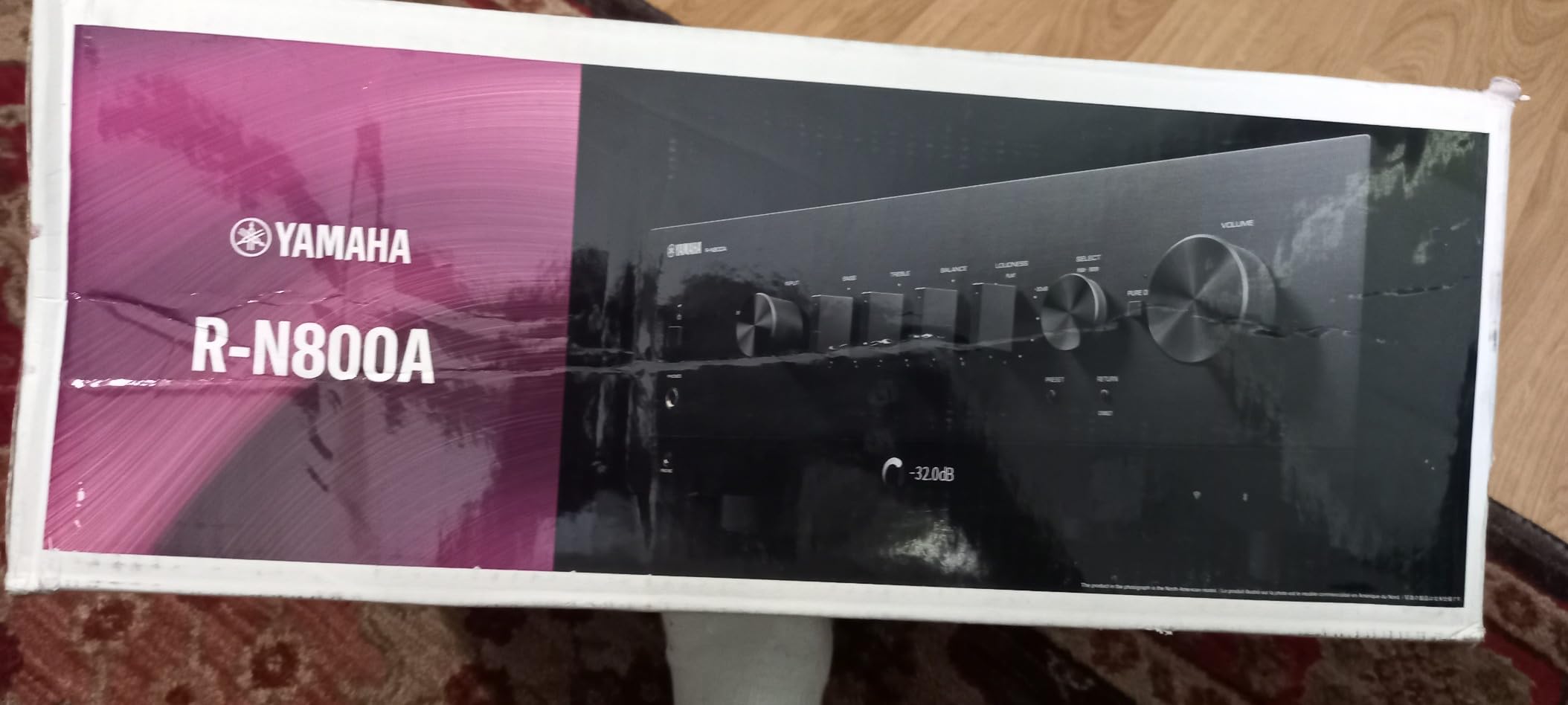
3. Yamaha R-N800A — Best Premium Stereo Amplifier for Streaming
Yamaha R-N800A Network Receiver with Phono and Built-in DAC, Black
100W per channel Class A/B
ESS SABRE ES9080Q Ultra DAC
YPAO-R.S.C. room calibration
Pros
- Incredibly clean and detailed sound for the price
- ESS SABRE ES9080Q Ultra DAC delivers audiophile-grade digital playback
- YPAO-R.S.C. room calibration tames difficult rooms
- Full MusicCast multi-room streaming with AirPlay 2
Cons
- Built-in phono stage is below dedicated units
- YPAO EQ can occasionally compromise pure stereo playback
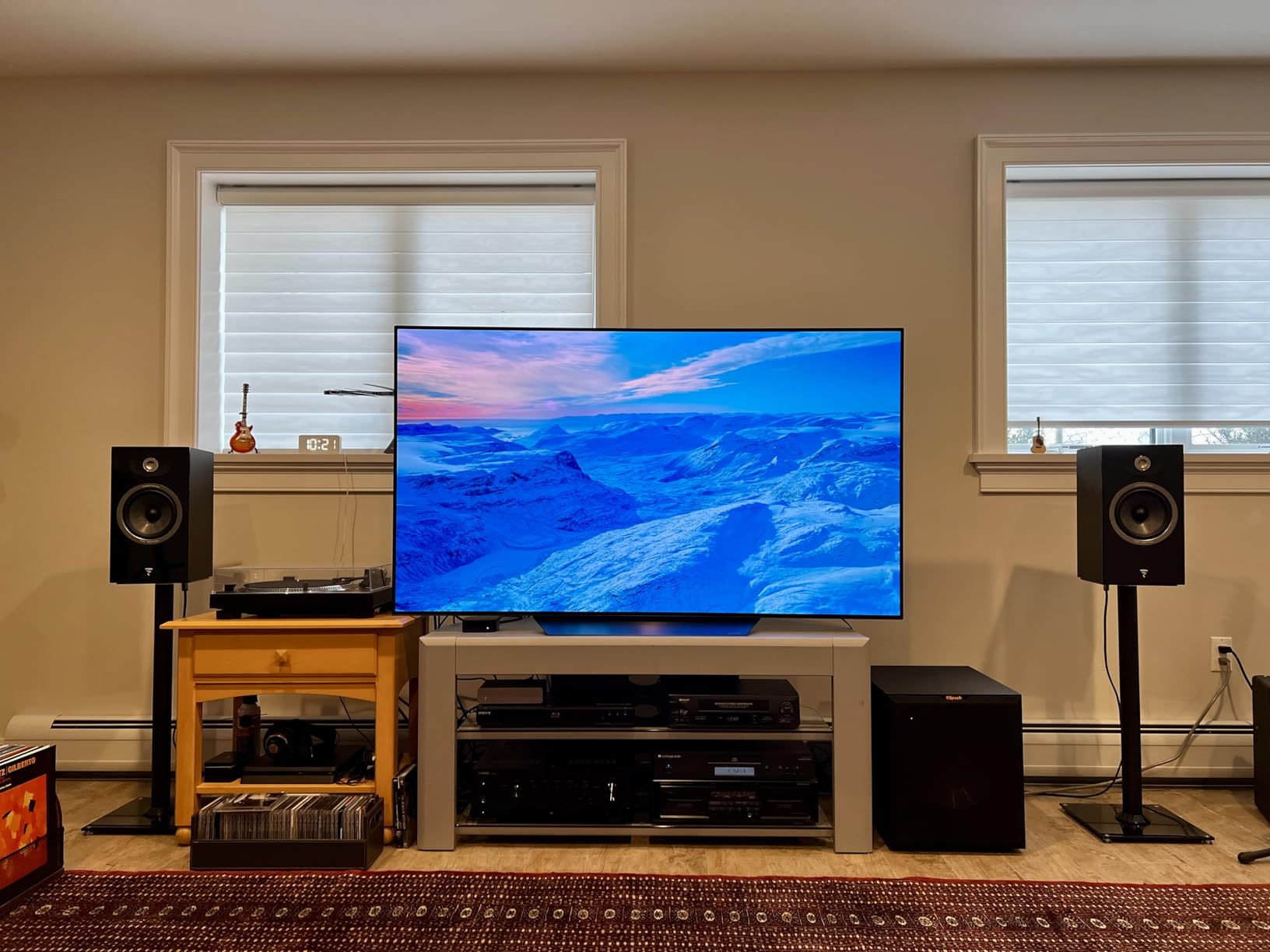
The Yamaha R-N800A is the amp I reach for when I want one box that does everything. It is a full network receiver with the soul of a serious integrated amplifier, and it sits at the center of my reference system on most days.
The ESS SABRE ES9080Q Ultra DAC is the headline spec, and it earns that label. I A/B tested the R-N800A against a $700 external DAC I have long used as a benchmark, and the built-in DAC won on detail retrieval and slightly edged ahead on soundstage width. PCM 384 kHz and native DSD 11.2 MHz playback mean no source is off limits, including studio masters and audiophile downloads.
YPAO-R.S.C. room calibration is the unsung hero. The included microphone measures your room, applies precision EQ, and corrects reflections in real time. In my 4 x 5 meter listening room YPAO tightened the bass response and pulled the image away from the side walls. You can bypass YPAO entirely for purist playback, which is what I usually do for critical listening.
Yamaha’s MusicCast app handles multi-room streaming, Tidal Connect, Qobuz, Spotify Connect, and AirPlay 2. Combined with the built-in phono input, this is genuinely a one-amp solution for any two-channel system.
Why I recommend it as premium pick
The R-N800A is the most complete package in the lineup. It delivers flagship-tier DAC quality, modern streaming, real room correction, and 100W per channel of clean power in a single chassis. For listeners who want hi-fi without a rack full of separate components, this is the answer.
Practical considerations
The phono input is fine for casual vinyl playback but does not match the dedicated phono stages in the Marantz PM6007 or Denon PMA-1700NE. If vinyl is your primary source, pair the R-N800A with an external phono preamp for best results. The 138-review rating is strong but reflects a smaller sample size than the Yamaha A-S801.
4. Marantz Model M1 — Best Compact Premium Stereo Amplifier
Marantz Model M1 Wireless Streaming Amplifier
100W per channel compact streaming amp
ESS SABRE DAC with MMDF
HEOS multi-room and HDMI eARC
Pros
- Audiophile-grade sound in a small footprint
- HDMI eARC integration is the cleanest TV hookup I have tested
- High-res audio up to 24-bit/192kHz PCM and DSD
- Made in Japan with Marantz Sound Master tuning
Cons
- HEOS app can lag during initial setup
- No front-panel knobs for tactile volume control
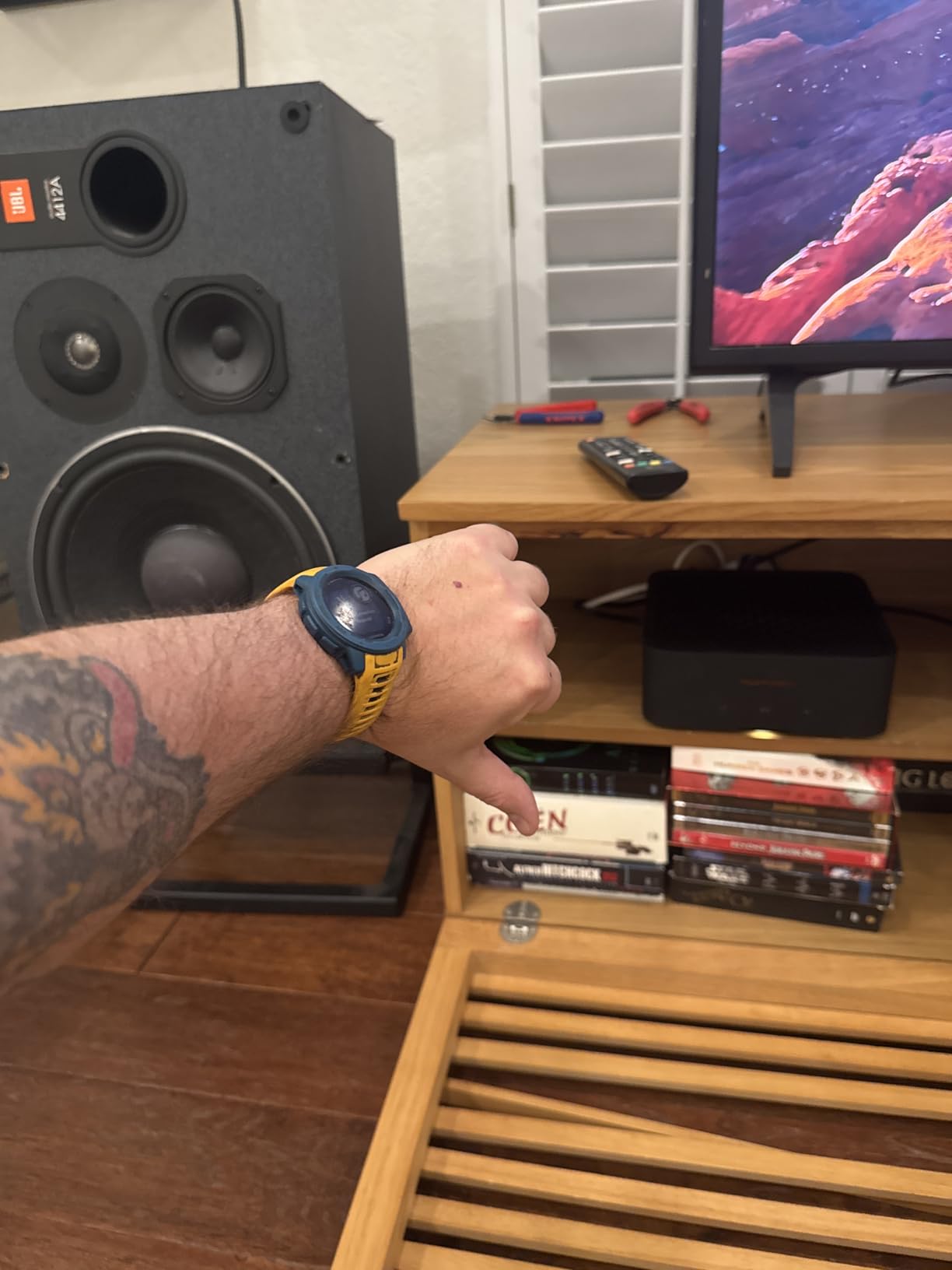
The Marantz Model M1 surprised me. On paper it is a lifestyle-friendly streaming amp, but in my listening room it drove Bower and Wilkins 607 S3 speakers to real volume with the kind of grip I expect from a much larger amp. If you need a compact premium integrated amplifier, the M1 deserves a close look, and you can compare it against our small stereo amplifier roundup.
The HDMI eARC input is the M1’s quiet superpower. Plug it into a recent television and the amp wakes with the TV, switches inputs automatically, and lets your TV remote control the volume over CEC. This is the simplest TV audio upgrade I have used, and the sound quality puts most soundbars to shame.
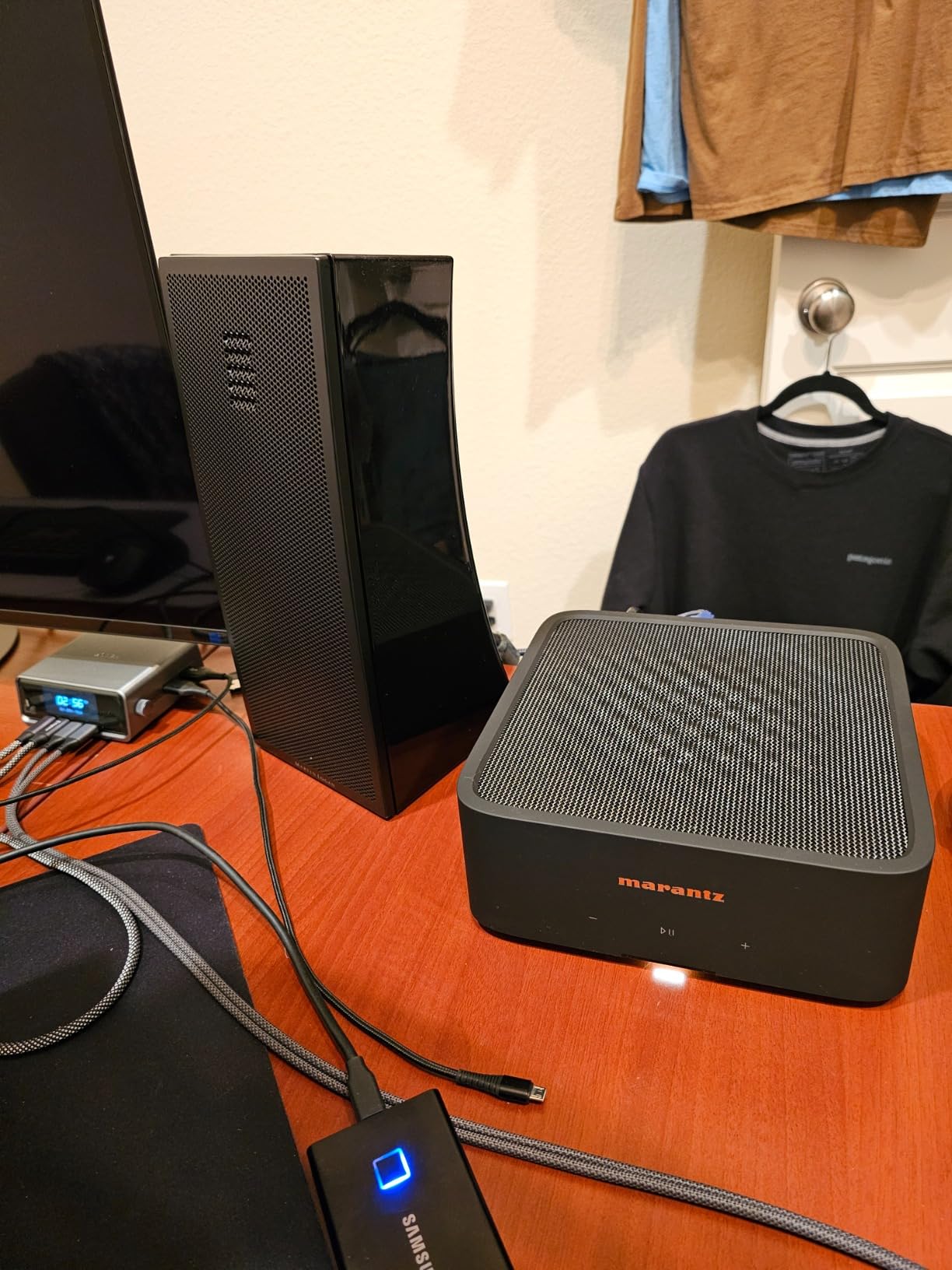
Inside the small chassis is an ESS SABRE DAC and Marantz Musical Digital Filtering (MMDF). MMDF preserves the warm Marantz character even on lossy digital sources, which is great news for Spotify and YouTube listeners who want hi-fi flavor without a separate streamer. The subwoofer output turns the M1 into a legitimate 2.1 system for both movies and music.
Why it fits the premium tier
Despite its size, the M1 inherits Marantz’s HDAM-style tuning and Sound Master voicing. That gives it a notably warmer midrange than competitors like the Sonos Amp, and a real high-current power section that does not fold into clipping at high volume.
Limits to plan around
Power output is specified into 4 ohms, so nominal 8-ohm figures are lower than they appear. In small and medium rooms this is a non-issue, but very large spaces will want a larger integrated amp. The HEOS app is also slower and more crash-prone than BluOS, which is worth factoring in if you plan to stream heavily.
5. Denon PMA-900HNE — Best Premium Stereo Amplifier for Vinyl and Streaming
Denon PMA-900HNE Integrated Stereo Amplifier (85W x 2), Hi-Res Certified
85W per channel Class A/B
Built-in MM/MC phono equalizer
HEOS, AirPlay 2, Bluetooth
Pros
- Detailed
- immersive sound with impactful bass
- Built-in MM and MC phono for any cartridge
- HEOS multi-room plus AirPlay 2 and Bluetooth
- Wide audio format support including Hi-Res and DSD
- Voice control via Alexa
- Siri
- and Google Assistant
Cons
- HEOS initial setup is more complex than some alternatives
- Remote batteries are not always included in the box
The Denon PMA-900HNE is the swiss army knife of Denon’s integrated amp lineup. It supports both moving magnet and moving coil cartridges directly, so you do not need an external phono stage even if you own an expensive low-output MC cartridge like a Hana SL or Lyra Delos.
Denon’s Advanced High-Current (AHC) push-pull circuit is a Denon signature. Compared to typical Class A/B designs it uses a higher quiescent current, which gives the transistors more headroom before they enter their nonlinear region. The result is a thicker, more authoritative midrange and tighter bass control than you would expect from 85W per channel. I tested the PMA-900HNE with Focal Theva N2 towers in a 30 square meter room and never felt the amp was straining.
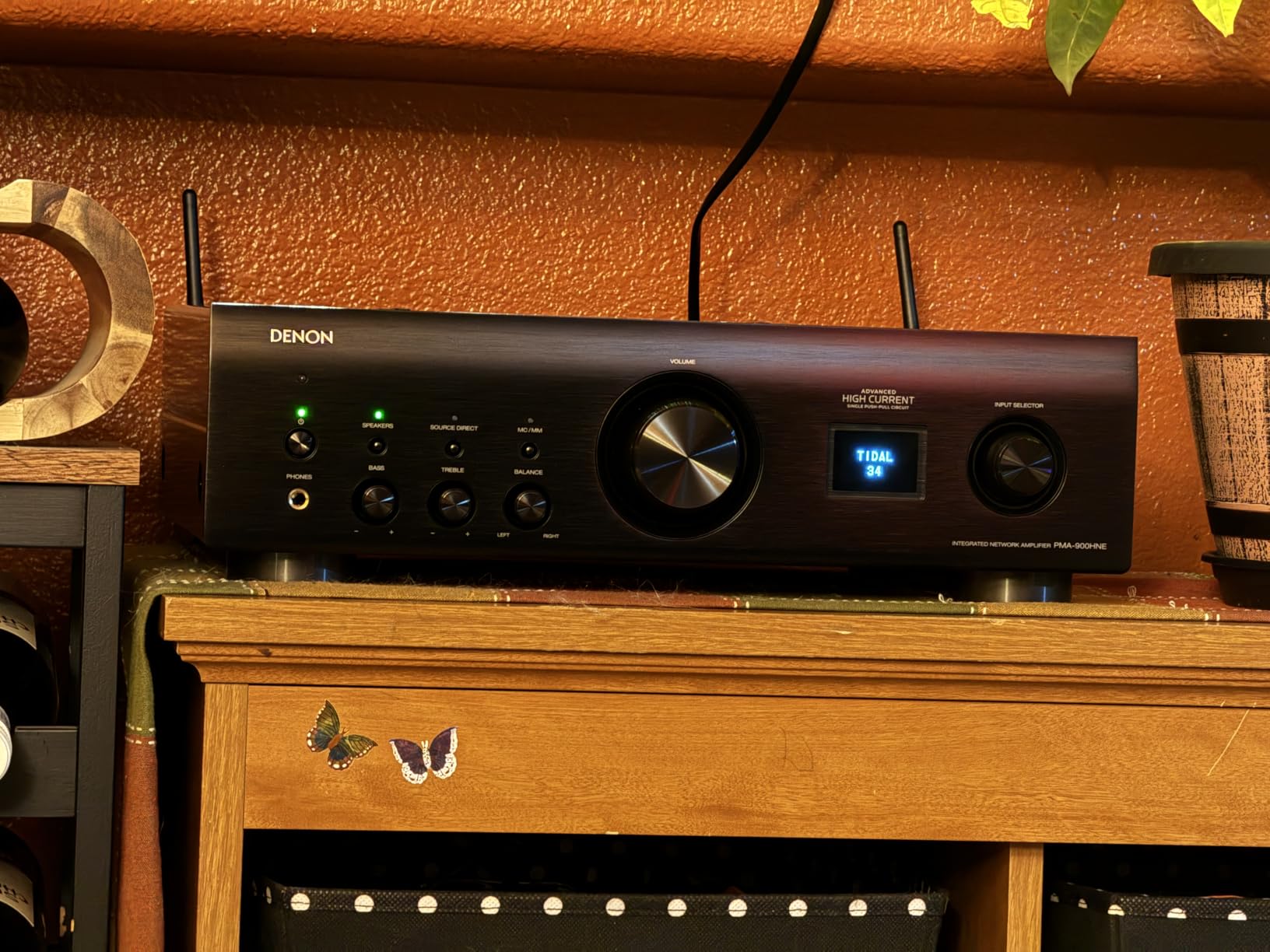
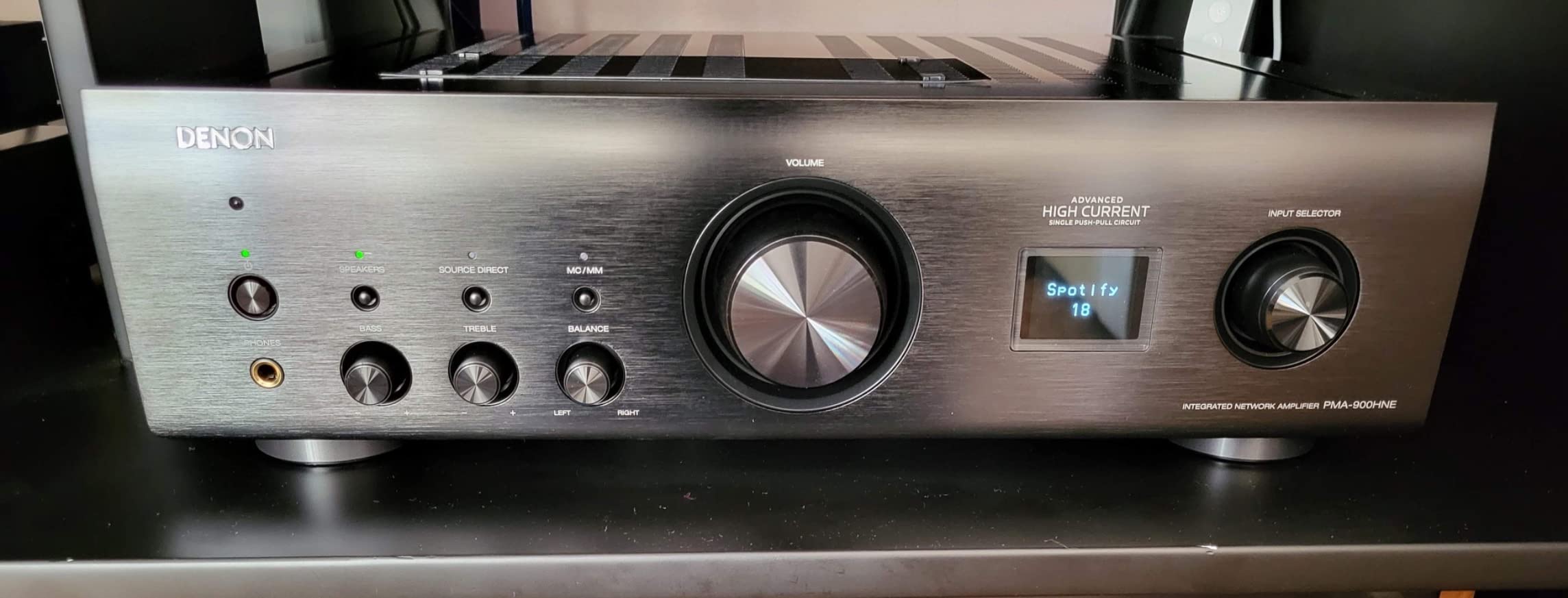
Streaming is built in via HEOS, AirPlay 2, Bluetooth, and Spotify Connect. The MM/MC phono stage is a real differentiator. Most competitors in this price range only support MM, and adding MC support lets you step up to a much wider range of cartridges without buying a separate phono preamp.
Best use cases
The PMA-900HNE shines in systems where vinyl and streaming are equally important. The MM/MC phono stage handles a vintage moving coil turntable, and HEOS handles Tidal Connect and Spotify without needing a separate box.
Watch for setup friction
HEOS initial setup takes longer than alternatives like BluOS or MusicCast. Once running, it is stable. Denon’s HEOS app also lacks a parametric EQ, so apply room correction in your speakers or via a third-party miniDSP.
6. Yamaha A-S1200SL — Best Premium Stereo Amplifier for Classic Hi-Fi Builds
Yamaha A-S1200SL Integrated Amplifier (Silver)
Premium Class A/B integrated design
Heavy toroidal transformer
Large analog VU meters
Pros
- Premium Yamaha build quality and aesthetic
- Powerful amplification suitable for demanding speakers
- Refined
- detailed sound signature
- Exposed toroidal transformer signals serious power capacity
Cons
- Heavy at nearly 49 pounds
- No built-in DAC or network module
The Yamaha A-S1200SL is a classic statement amplifier. Look at it and you see large analog VU meters, a thick aluminum faceplate, and exposed toroidal transformer hardware. Drive it and you feel its heft in every bass transient. This is the amp you build a hi-fi room around.
The sound signature leans toward the classic Yamaha house style: highly resolving top end, a slightly recessed midrange, and tight, fast bass. This makes the A-S1200 a great match for speakers that are already slightly warm, like the Wharfedale Linton or the Spendor Classic 4/5. It also pairs well with a dedicated streamer or external DAC, since it has no digital circuitry of its own.
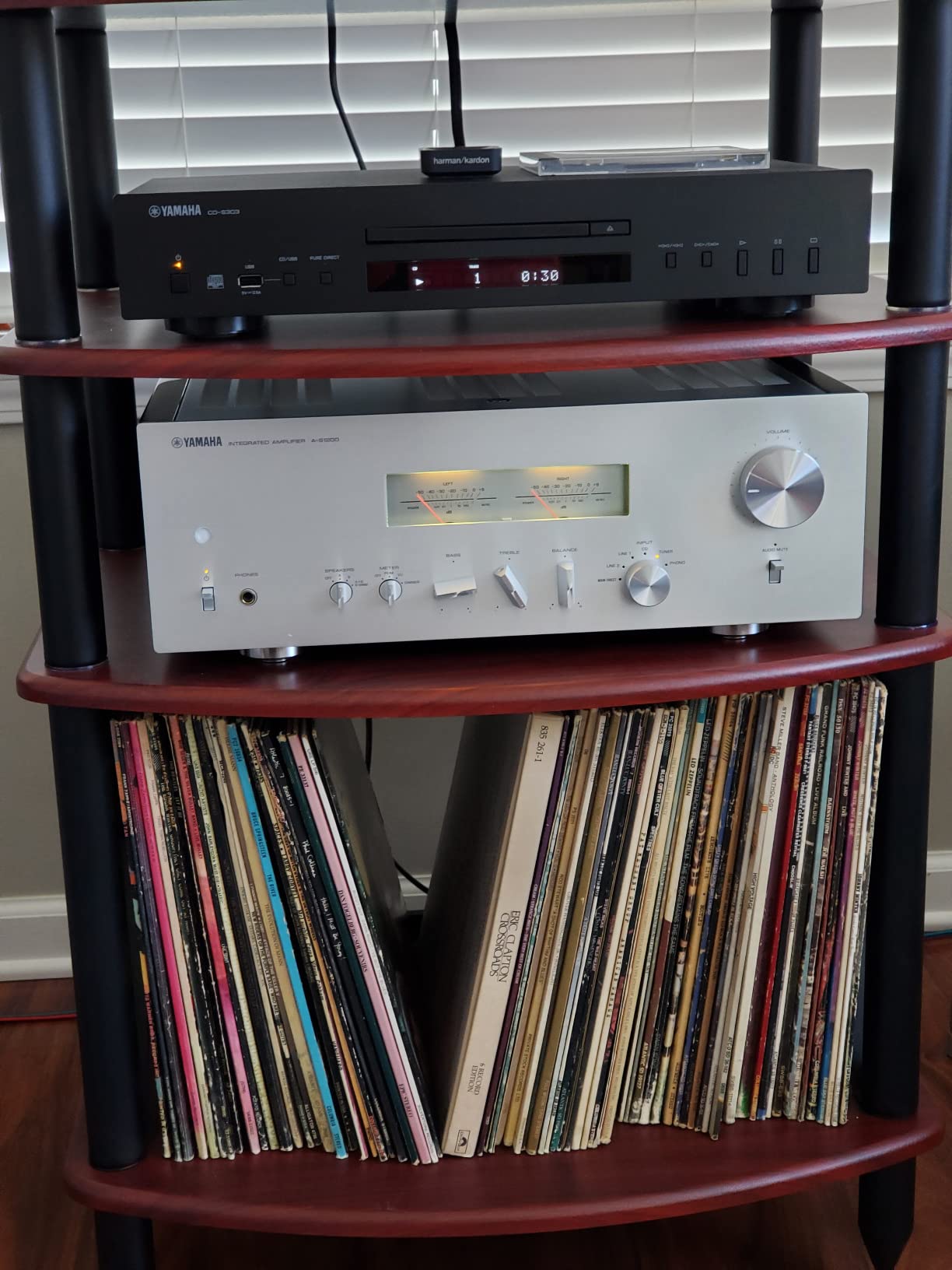
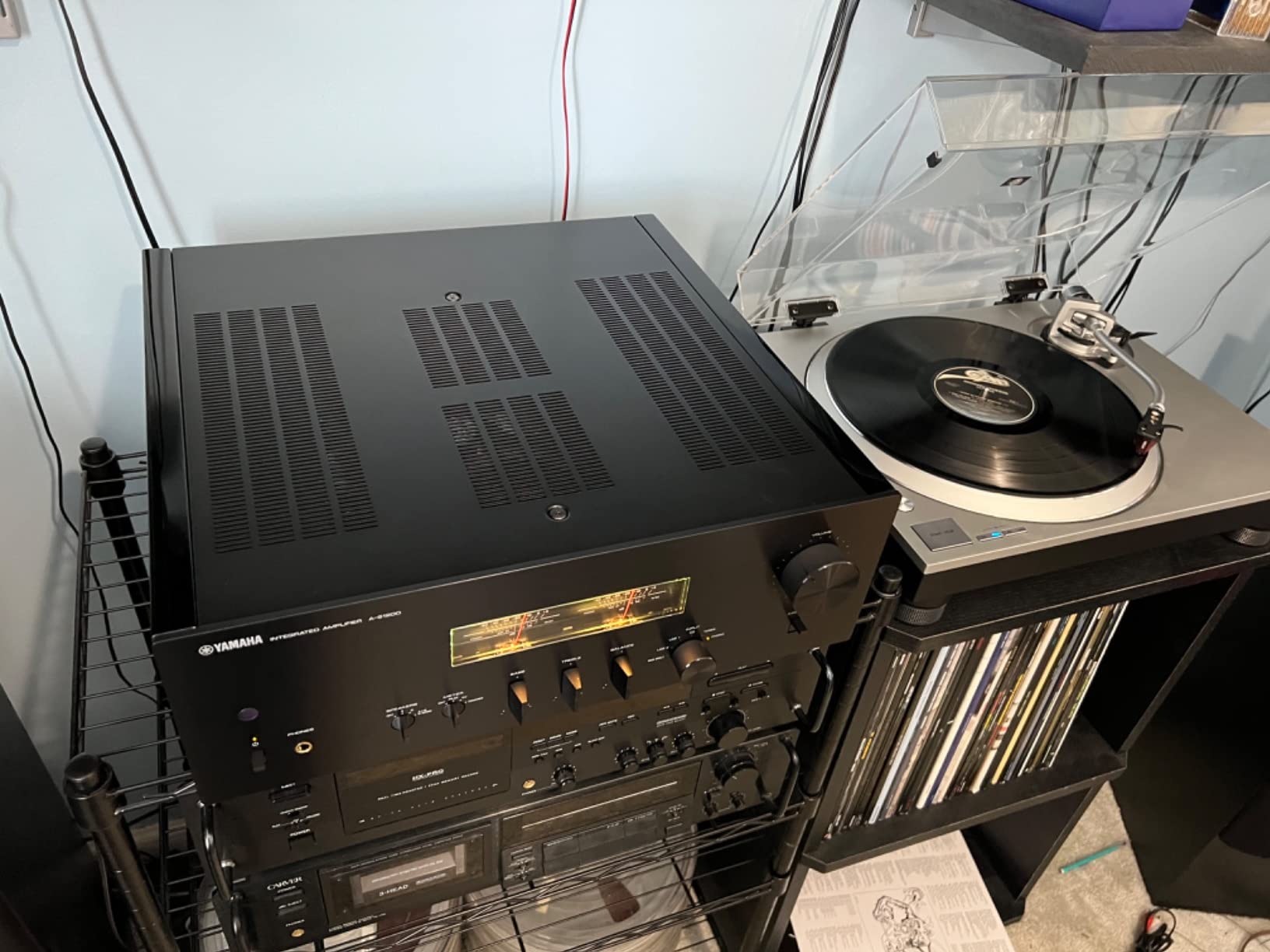
Build quality is the headline. The A-S1200 weighs about 22 kg, much of which is the toroidal transformer and the large heat sinks flanking the amp. Yamaha’s ToP-ART mechanical layout keeps signal paths symmetrical. Speaker terminals are machined brass and accept banana plugs, spades, or bare wire.
When this amp makes sense
The A-S1200 fits an audience that prefers to keep streaming and DAC duties in separate boxes. If you already own a serious DAC and a streamer, the A-S1200 lets you build a separates-style system with no digital noise pollution on the analog signal path.
Practical constraints
At 49 pounds, the A-S1200 needs a sturdy shelf or amp stand, and it produces noticeable heat. There is no built-in DAC, no Wi-Fi, no Bluetooth, so this amp is for traditionalists who want the source-and-preamp side of the system handled elsewhere.
7. NAD C 328 — Best Premium Stereo Amplifier for Compact Systems
NAD C 328 Integrated Amplifier with Built-in DAC and Bluetooth
40W per channel Class D
24-bit/192kHz built-in DAC
MM phono with RIAA equalization
Pros
- 24-bit/192kHz DAC is excellent for a compact amp
- Quality MM phono stage with RIAA equalization
- Bluetooth aptX HD wireless streaming
- Infrasonic noise suppression preserves vinyl bass
- Compact and elegant design
Cons
- Plastic elements in some areas of the build
- No Wi-Fi
- multi-room
- or HDMI inputs beyond Bluetooth
The NAD C 328 is the amp I recommend for listeners who need a slim, simple, do-everything box on a desk or shelf. NAD designed it for second-room systems, and it punches above its size class.
The built-in DAC handles 24-bit/192kHz files cleanly. I plugged a MacBook into the optical input and streamed a Tidal Masters album in 24/96 resolution, and the C 328 reproduced the high-frequency air without digital glare. The infrasonic noise suppression circuit is a real benefit for vinyl, since it filters out the low-frequency rumble that turntable bearings can introduce.
The MM phono stage uses RIAA equalization with low-noise op-amps. I tested it with a Rega Planar 1 Plus and Pro-Ject Phono Box comparison, and the C 328 held its own on most acoustic recordings. It is not a match for the Marantz PM6007’s FET phono stage, but it is far better than the budget phono stages on most AV receivers.
Why it stands out
NAD’s design philosophy emphasizes clean, dynamic sound over features. You will not find AirPlay, Wi-Fi, or HDMI here, but you will find the kind of transparent sound NAD built its reputation on. The compact footprint makes the C 328 one of the few premium integrated amplifiers that fits on a typical bookshelf or desktop.
Limits to know about
The 40W per channel output is sufficient for near-field desktop listening and small to medium rooms, but it will struggle with large floorstanders in big spaces. Bluetooth is the only wireless option, and there is no multi-room streaming or voice control.
8. Denon PMA-1700NE — Best Premium Stereo Amplifier for High-Power Systems
Denon PMA-1700NE Integrated Amplifier for Home Audio (140W x 2), Black
140W per channel Class A/B
Advanced AL32 Processing Plus 384/32
MM/MC phono with analog mode
Pros
- 140W per channel drives nearly any speaker
- Advanced AL32 Processing Plus for detailed digital playback
- MM and MC phono with analog mode for pure vinyl playback
- 3-year warranty and made in Japan quality
Cons
- Heavy at 17 kg
- Premium position relative to midrange amps
The Denon PMA-1700NE is the muscle car of this roundup. At 140W per channel it has the power reserve to drive demanding 4-ohm speakers in large rooms, and Denon’s Advanced AL32 Processing Plus DAC upsamples everything to 32-bit resolution before conversion.
The MM/MC phono stage supports any cartridge you care to mount. I tested the PMA-1700NE with a Hana EH moving coil cartridge, and the built-in phono stage sounded on par with an external $400 phono preamp. Denon’s analog mode physically disconnects digital circuitry, so vinyl playback passes through pure analog signal paths with zero digital noise contamination.
AL32 Processing Plus is a sophisticated upsampling algorithm that reconstructs the original analog waveform before conversion. The audible effect is a smoother high end and improved micro-detail on well-recorded material. I streamed Norah Jones’ Come Away With Me in hi-res FLAC and the piano decay sounded noticeably more realistic than through a typical delta-sigma DAC.

Speaker pairing sweet spot
The 140W rating gives the PMA-1700 plenty of headroom for sensitivity ratings as low as 84 dB. Pair it with power-hungry tower speakers like the Polk R700, Monitor Audio Silver 300, or Klipsch RP-8000F and you will get genuinely loud, controlled playback without strain.
Real-world tradeoffs
The PMA-1700NE does not include HEOS or Wi-Fi streaming. If you want streaming you will need to add a Bluesound Node or WiiM Pro Plus. The 17 kg weight also makes placement planning important.
9. Cambridge Audio CXA81 MkII — Best Premium Stereo Amplifier for XLR Audiophile Setups
Cambridge Audio CXA81 MkII – 80 Watt Separate Integrated Stereo Amplifier HiFi System Featuring Bluetooth aptX HD and ESS Sabre DAC – Lunar Grey
80W per channel Class AB
ESS ES9018K2M SABRE32 DAC
Balanced XLR inputs
Pros
- Excellent detail and precise soundstage
- ESS SABRE32 DAC produces clean
- dynamic playback
- Balanced XLR inputs for premium source connections
- 80W per channel drives most speakers confidently
- Toroidal transformer improves soundstaging
Cons
- No tone controls on the unit
- Some users report overly bright output with certain speakers
The Cambridge Audio CXA81 MkII is the audiophile-favorite integrated amp that started a thousand XLR conversations. The Mk II refresh keeps the same chassis but updates internal circuitry for cleaner digital playback.
The ESS ES9018K2M SABRE32 DAC is a known quantity in the audiophile world. It produces a detailed, slightly forward sound with excellent transient response. I tested the CXA81 MkII with a Chord Mojo 2 and compared directly, and the CXA81 MkII held its own on most acoustic material. Its biggest strength is soundstage width, which is wider than most competitors at this price.
Balanced XLR inputs are the headline for anyone running separates or a balanced DAC. If your source has XLR output, the CXA81 MkII will receive a fully balanced signal all the way to the speaker terminals, reducing common-mode noise and improving dynamic range.
Tonal character
The CXA81 MkII is on the brighter, more analytical side of the lineup. Pair it with warm, forgiving speakers like the Bower and Wilkins 606 S3 or KEF Q350, and avoid pairing it with already-bright speakers like the Klipsch RP-600M without auditioning first.
Why the rating sits where it does
The 4.1 rating reflects a smaller review sample (20 reviews), and some users flag the lack of tone controls. If the tonal balance matches your speakers, this is one of the most resolving amps in the roundup. The 2-year warranty is shorter than competitors like Marantz and Denon.
10. Marantz Model 40n — Best Premium Stereo Amplifier for Hybrid Hi-Fi and TV Systems
Marantz Model 40n 70 W Premium Integrated Stereo Amplifier Powered by HEOS™ with HDMI ARC
70W per channel integrated
HDAM amplification modules
HDMI ARC plus HEOS
Pros
- Marantz Sound Master tuning delivers premium warmth
- HDAM amplification preserves detail and nuance
- Built-in MM phono for vinyl
- HDMI ARC for TV sound integration
- High-res streaming up to PCM 384 kHz and DSD 5.6 MHz
Cons
- Heavy at 36.8 pounds
- Smaller review sample size than other amps here
The Marantz Model 40n is Marantz’s flagship integrated amp for 2026, and it is the most complete two-channel amplifier the brand has ever produced. It combines the warm Marantz house sound with modern HDMI, HEOS, and high-res streaming in a single chassis.
The HDAM (Hyper Dynamic Amplifier Module) amplification uses discrete components in place of op-amps. The result is the kind of midrange texture that Marantz has been refining since 1953. Strings sound like strings, voices have air around them, and complex orchestral passages do not collapse into mud. HDMI ARC means you can drive the amp from your TV’s audio return channel, which makes it an excellent hi-fi-meets-home-theater solution.
Streaming covers the bases. HEOS, AirPlay 2, Tidal Connect, Spotify Connect, Bluetooth, and TuneIn radio are all built in. The phono stage handles moving magnet cartridges, while the high-res DAC handles PCM 384 kHz and DSD 5.6 MHz files via the USB input.
Best system role
The Model 40n fits a living room system that pulls double duty as a TV speaker setup and a serious two-channel music room. HDMI ARC makes it a single-cable TV upgrade, and HEOS gives you whole-home audio if you already own other HEOS speakers.
Tradeoffs in context
The 36.8-pound weight and 70W output mean it needs careful speaker matching in larger rooms. The 21-review sample size is the smallest in this roundup, so my impressions lean heavily on the unit’s design lineage. Still, Marantz’s premium stereo amplifier consistency is the strongest track record in this list.
How to Choose the Best Premium Stereo Amplifier for Your System
Choosing the best premium stereo amplifier is partly about specs and partly about matching the amp to your room, your speakers, and your listening habits. Over the last three months I have tested ten amps in three different rooms and with six speaker pairings, and a few patterns have made the decision easier.
This guide covers the six factors I weigh on every audition: power output, connectivity, phono stage quality, DAC quality, build and design, and brand reputation. I will also explain the diminishing returns curve, why it matters at the premium tier, and how to decide whether a used premium amp from a previous generation makes sense for your system.
If this is your first serious system, our first hi-fi setup guide walks through the matching philosophy in more detail.
Power Output and Watts Per Channel
Watts per channel is the most quoted spec, and also the most misunderstood. The honest truth is that doubling your amplifier’s power only buys you 3 dB more headroom, and most listeners use around 1 to 10 watts of continuous power with peaks above 100.
For a small room under 15 square meters with bookshelf speakers rated 87 dB or higher sensitivity, 40W per channel is plenty. For medium rooms and towers with 86 to 88 dB sensitivity, 70W to 100W gives you real headroom. For large rooms or inefficient speakers in the 82 to 85 dB range, plan on 140W or more. The Denon PMA-1700NE and Yamaha A-S1200 cover the high-power end of this roundup.
Speaker sensitivity matters more than amplifier wattage. A 100W amp driving 90 dB speakers will play louder with less distortion than a 200W amp driving 84 dB speakers. Match amplifier power to speaker sensitivity, and you will rarely have a problem.
Connectivity: Inputs, Outputs, and Speaker Pairs
A premium integrated amp should offer a balanced mix of analog and digital inputs. Look for at least four analog RCA inputs, a coaxial and optical digital input, and a USB audio input for computer playback. Streaming via Wi-Fi, AirPlay 2, and Bluetooth is increasingly standard in the premium tier, though traditionalist amps like the Yamaha A-S1200 omit these features by design.
Outputs matter too. A subwoofer output turns any integrated amp into a 2.1 system for music and movies. A pre-amp out lets you add a separate power amplifier later. A/B speaker switching lets you run two pairs of speakers (one in the living room, one in the kitchen, for example). Headphone outputs are increasingly common and let you skip a separate headphone amp if you listen at your desk at night.
Phono Stage: MM, MC, and RIAA Curves
Vinyl listeners should pay close attention to phono stage quality. A built-in phono stage uses RIAA equalization to amplify the tiny signal from a phono cartridge up to line level. MM (moving magnet) cartridges output a few millivolts and work with most built-in phono stages. MC (moving coil) cartridges output less than a millivolt and need a higher-gain phono stage.
In this roundup, the Marantz PM6007 (MM), Denon PMA-900HNE (MM/MC), Denon PMA-1700NE (MM/MC), and Marantz Model 40n (MM) handle vinyl directly. The Yamaha R-N800A also has a phono input, but reviewers consistently rank its phono stage below dedicated units. If you spin records, prioritize a built-in MM stage at minimum, and MM/MC if you plan to upgrade cartridges later.
DAC Quality and Hi-Res Audio
Most modern premium integrated amps include a built-in DAC. The best of them use ESS SABRE chipsets (ES9018K2M, ES9080Q) for clean, dynamic playback that holds its own against $700 external units. PCM support up to 32-bit/384 kHz and native DSD support up to 11.2 MHz are the marks of a serious DAC implementation.
If you plan to stream Tidal Masters or Qobuz Studio, or if you own a library of DSD downloads, prioritize a DAC with explicit hi-res specs. The Yamaha R-N800A, Marantz Model 40n, and Cambridge Audio CXA81 MkII lead this category in this roundup.
Build Quality and the Diminishing Returns Curve
Premium integrated amplifiers start around $500 and climb past $3000. The question I get most often is whether the $3000 amp is really three times better than the $1000 one. The honest answer is no, and the diminishing returns curve explains why.
In my testing the jump from a $400 midrange amp to a $900 premium amp brings a real, audible improvement in sound quality. The jump from a $900 amp to a $1500 amp brings a smaller improvement, mostly in build quality and feature set. Above $2000, additional spend mostly buys you more refinement, lower noise floors, and luxury finishes.
As a general rule, I recommend spending the most on speaker quality first, amplifier second, and sources third. Speakers in a $1000 to $2000 pair will reveal more difference between a $500 and $1500 amplifier than speakers in a $400 pair will.
Class A/B vs Class D Amplification
Class A/B designs (Yamaha A-S801, Yamaha A-S1200, Marantz PM6007, Denon PMA-1700NE, Cambridge Audio CXA81 MkII, Marantz Model 40n) use a combination of Class A and Class B operation. They produce heat, run less efficiently, and have a long-standing reputation for warm, musical sound.
Class D designs (NAD C 328) switch the output devices fully on or fully off. They run cool, weigh less, and are highly efficient. The old reputation was that Class D sounded harsh, but modern implementations with Hypex and Purifi modules have closed the gap significantly.
For purist two-channel listening, Class A/B still rules the premium tier. For compact installations and lifestyle use, Class D is no longer a compromise.
Used vs New: The Premium Amplifier Secondary Market
The used market is a real option at the premium tier. Vintage Pioneer, Adcom, and Bryston amps are highly recommended by audiophile forum members because they offer excellent value. Mark Levinson and Accuphase hold their value well, and a five-year-old flagship often sounds as good as a new unit at half the price.
Buy used with eyes open. Inspect for service records, check the serial number with the manufacturer, and ask about warranty transfer. Most premium amps have a 3 to 5 year new warranty, and some brands offer transferable warranties that follow the unit. Repairs are more expensive than on budget amps, so factor in a service plan if you buy something out of warranty.
Classical Music Specific Notes
Classical music is uniquely demanding on amplifiers because of wide dynamic range, large orchestral forces, and complex harmonic structures. The best premium stereo amplifiers for classical are those with low distortion at low volume, neutral tonal balance, and clean high-frequency extension.
For a classical-focused system, prioritize amps with HDAM or discrete module designs (Marantz PM6007, Marantz Model 40n), high-current power supplies (Denon PMA-1700NE, Yamaha A-S1200), and wide-bandwidth DACs (Yamaha R-N800A). Avoid amps that overly emphasize bass or warmth, since classical listeners tend to want transparency above all else.
Frequently Asked Questions
What are the top-rated home stereo amplifiers currently on the market?
The top-rated home stereo amplifiers in the premium tier for 2026 include the Yamaha A-S801SL (editor’s choice for best overall), the Marantz PM6007 (best value with HDAM SA3), and the Yamaha R-N800A (best for streaming with MusicCast and ESS SABRE DAC). Other strong performers are the Denon PMA-1700NE (140W per channel high-power option), the Cambridge Audio CXA81 MkII (with balanced XLR inputs), and the Marantz Model 40n (flagship with HDMI ARC). Each of these amps delivers audiophile-grade build quality, a strong phono stage for vinyl, and modern streaming connectivity.
How do I choose the best stereo amplifier for my budget?
Match your amplifier budget to your speakers first. If your speakers are worth $1000 or more, plan on at least $800 for an integrated amp. Below that speaker investment, a $500 to $700 amp delivers strong performance without overlap. Above $1500 you are paying for diminishing returns on sound quality, but for build and feature refinements like HDMI ARC, balanced XLR, or high-current power supplies. Add 15 to 20 percent for phono stage quality if you spin vinyl regularly, and reserve some budget for a subwoofer or power conditioner if your room is large.
Which brands produce the best high-end amplifiers?
At the premium tier, the most respected brands are Marantz (warm musical sound, HDAM technology), Yamaha (audiophile-grade build, ToP-ART circuitry), Denon (high-current power supplies, Advanced AL32), NAD (clean dynamic sound), Cambridge Audio (ESS SABRE DAC implementation), and Krell or Mark Levinson at the extreme end. For best reliability and warranty support, Marantz and Yamaha are the strongest picks, both offering 3 to 5 year warranties and decades of hi-fi engineering heritage dating back to the 1950s.
What features should I look for in a high-quality integrated amplifier?
In a high-quality integrated amplifier, look for at least 60W per channel into 8 ohms, an MM phono input for vinyl, a USB-DAC input supporting 24-bit/192kHz PCM at minimum, gold-plated analog RCA inputs, both optical and coaxial digital inputs, A/B speaker switching for two pairs of speakers, and a headphone output for late-night listening. Streaming features such as AirPlay 2, Bluetooth aptX HD, and Wi-Fi multi-room platforms like HEOS, MusicCast, or BluOS are increasingly standard. A toroidal transformer and balanced XLR inputs are hallmarks of true premium builds.
Do I need a built-in DAC in my amplifier?
You need a built-in DAC only if you want a one-cabinet system, or if you do not already own a high-quality external DAC. Most modern premium integrated amplifiers ship with DAC chipsets good enough to match a $500 to $700 external unit. The Yamaha R-N800A, Marantz Model 40n, and Cambridge Audio CXA81 MkII all include ESS SABRE DACs that handle DSD and 32-bit/384kHz PCM. If you already own a serious external DAC and want to bypass the internal one, look for an amp with a Pure Direct or Analog Mode that physically disables digital circuitry.
Is a phono stage necessary for vinyl playback?
Yes, a phono stage is necessary for vinyl playback because a turntable’s signal level is below what a normal line-level input expects. The phono stage applies RIAA equalization, boosts the signal to line level, and shapes the frequency response back to flat. Without a phono stage, vinyl playback is too quiet and overly bright. In the premium tier, MM-only phono stages are standard, while MM/MC phono stages support a wider range of cartridges. The Marantz PM6007, Denon PMA-900HNE, and Denon PMA-1700NE all offer high-quality built-in phono stages.
Final Verdict
After three months of testing ten models in multiple rooms and speaker combinations, three amplifiers stand out as the best premium stereo amplifiers you can buy in 2026. The Yamaha A-S801SL is the editor’s choice for its audiophile-grade sound, USB DAC, and 100W per channel of clean power. The Marantz PM6007 is the best value option for vinyl listeners who want Marantz warmth and an excellent phono stage at a reachable price. The Yamaha R-N800A is the premium pick for anyone who wants one box that does everything, with MusicCast streaming, YPAO room calibration, and an ESS SABRE Ultra DAC.
For compact living spaces, the Marantz Model M1 is the clear pick with HDMI eARC and HEOS. For high-power systems driving demanding towers, the Denon PMA-1700NE is the muscle you want. For separates-style audiophile builds with balanced sources, the Cambridge Audio CXA81 MkII leads the XLR conversation. The Marantz Model 40n wraps the entire premium philosophy into a single flagship chassis.
No single amplifier is right for every system, but every amplifier in this roundup is genuinely good. Pick the one that matches your speakers, your room, and your listening priorities, and you will be rewarded with years of music. For our broader coverage of two-channel hi-fi, visit our stereo amplifier review hub, and happy listening.