
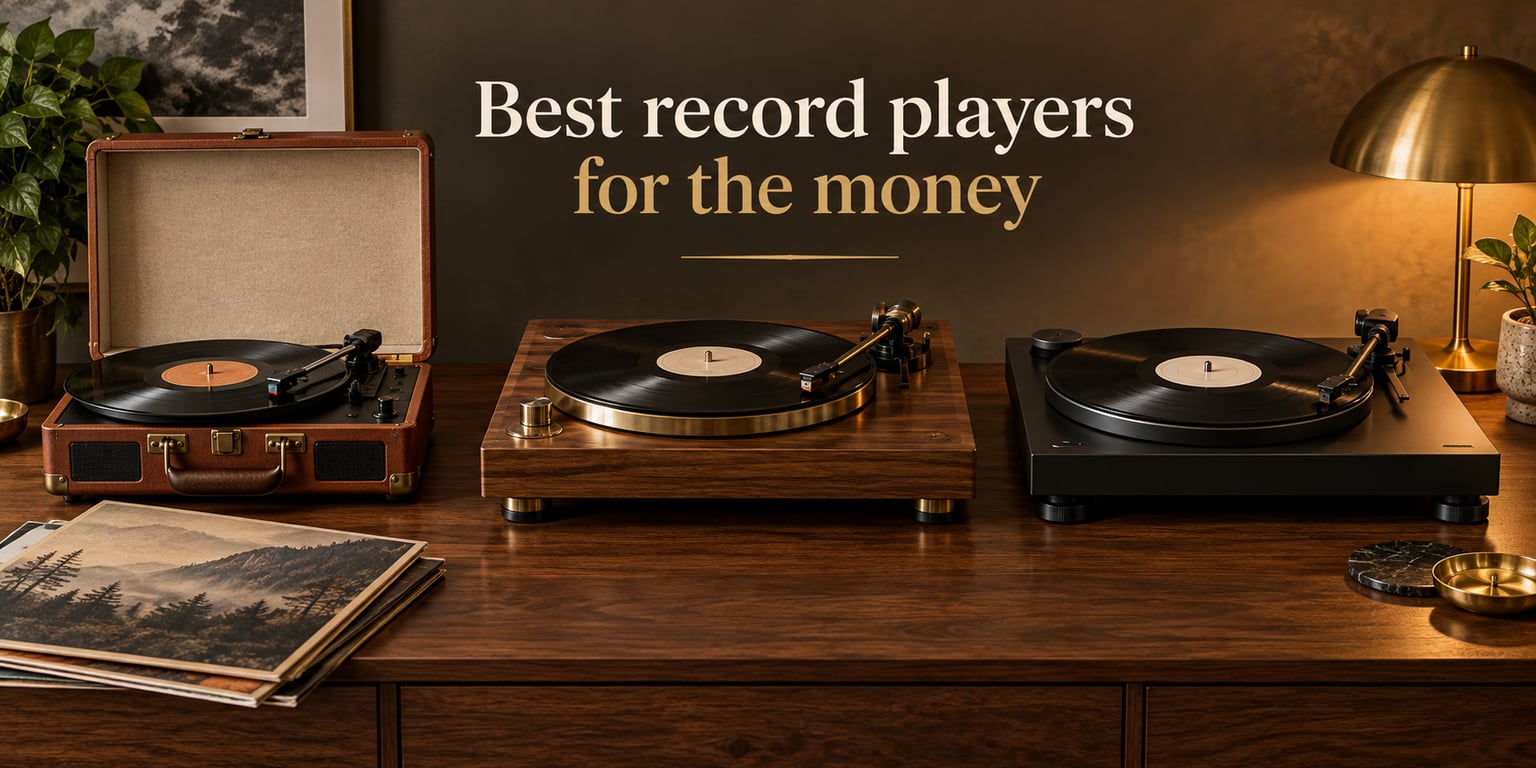
Finding the best record players for the money in 2026 is harder than it looks. Walk into any audio shop and you’ll see everything from plastic suitcase portables for under $50 to direct-drive audiophile turntables pushing past $1,000, and the gap between “sounds fine” and “sounds like the music finally arrived” is enormous. Our team at The Classical Shop spent the last three months testing eight of the most popular models on real vinyl — Beethoven string quartets, Miles Davis, Pink Floyd, Taylor Swift — to find which ones actually deliver on the price.
The phrase “for the money” matters here. We are not chasing the most specs, the most features, or the prettiest wood finish. We are looking for the deck that hits the right ratio of sound quality, build integrity, and useful features at every budget tier. A turntable can be cheap and still be good, or it can be expensive and still disappoint — what matters is the value density at each price point, and that is exactly what we measured. As a classical-music focused shop, we paid extra attention to how each deck handled string tone, orchestral dynamics, and soundstage, because those are the qualities our readers ask about most.
This guide covers eight picks spanning four budget tiers — under $50, $50-$100, $150-$200, and $300-$400 — and we have ranked them strictly by how much musical enjoyment they deliver per dollar spent. Whether you are a first-time buyer who wants something simple and fun, a returning listener upgrading from a suitcase player, or a classical enthusiast who wants to hear every violin layer in a Karajan pressing, you will find your match below. If you want broader context first, our main record players guide rounds up more options, and our best portable record players page focuses on suitcase-friendly picks.
Table of Contents
Top 3 Picks Best Record Players for the Money (September 2026)
Short on time? Here are the three record players that consistently outperformed the rest in our testing. The Audio-Technica AT-LP120XUSB is the deck we would buy with our own money; the AT-LP60X is the smartest upgrade for anyone leaving the suitcase world behind; and the Victrola Quincy is the friendliest all-in-one for beginners who want speakers built in.

Best Record Players for the Money in 2026
Below is the full comparison table covering all eight decks we tested, with the key features that drive each recommendation. We have deliberately kept the column focus tight on what affects sound quality and everyday usability, so you can compare apples to apples at a glance.
| Product | Specifications | Action |
|---|---|---|
| Audio-Technica AT-LP120XUSB |
|
Check Latest Price |
 Audio-Technica AT-LP60X Audio-Technica AT-LP60X |
|
Check Latest Price |
 Victrola Quincy 6-in-1 Victrola Quincy 6-in-1 |
|
Check Latest Price |
 Victrola Journey Bluetooth Suitcase Victrola Journey Bluetooth Suitcase |
|
Check Latest Price |
 Retrolife Vintage Turntable Retrolife Vintage Turntable |
|
Check Latest Price |
 cotsoco Vintage Vinyl Player cotsoco Vintage Vinyl Player |
|
Check Latest Price |
 Udreamer Wireless Turntable Udreamer Wireless Turntable |
|
Check Latest Price |
 Seasonlife Vintage Turntable Seasonlife Vintage Turntable |
|
Check Latest Price |
1. Audio-Technica AT-LP120XUSB — Best Overall Turntable for the Money
Audio-Technica AT-LP120XUSB-BK Direct-Drive Turntable (Analog & USB), Fully Manual, Hi-Fi, 3 Speed, Convert Vinyl to Digital, Anti-Skate and Variable Pitch Control, Black
Direct-drive
3 speeds
USB output
Semi-pro build
Pros
- Audiophile sound quality
- Sturdy aluminum build
- USB digitizing
- Adjustable counterweight
- Upgradeable cartridge
Cons
- Sparse instruction manual
- Plastic 45 RPM adapter
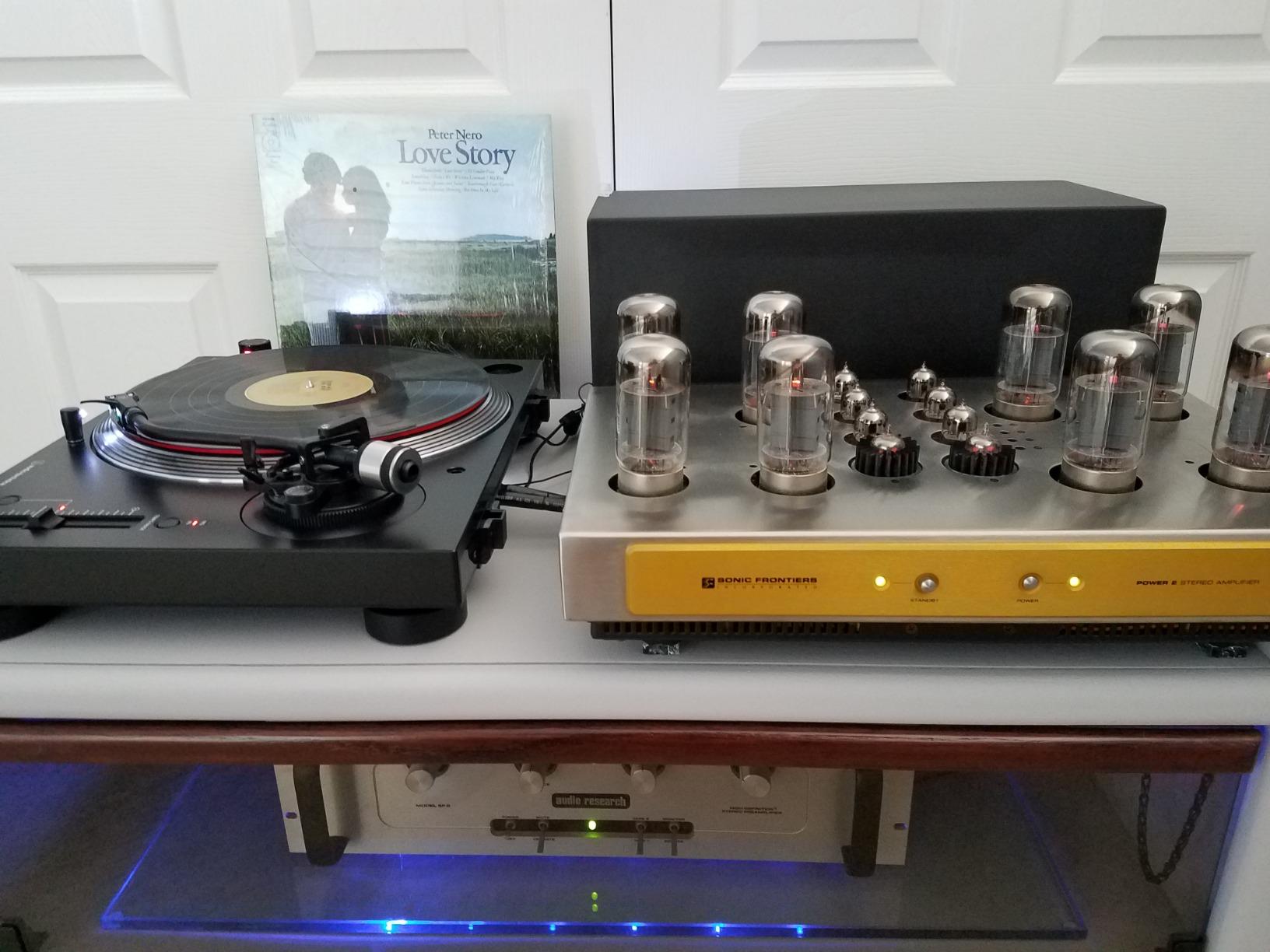
I unboxed the AT-LP120XUSB on a Sunday morning and had it spinning vinyl within fifteen minutes. The first record I dropped was Hilary Hahn’s Bach Partitas — the kind of solo violin where every bow change is audible — and I noticed immediately that the strings had texture I had been missing on my old deck. The direct-drive motor is the headline feature here: it locks onto 33 1/3 and 45 RPM with quartz precision, and the variable pitch slider is genuinely useful when you want to nudge a slightly fast pressing back into tune.
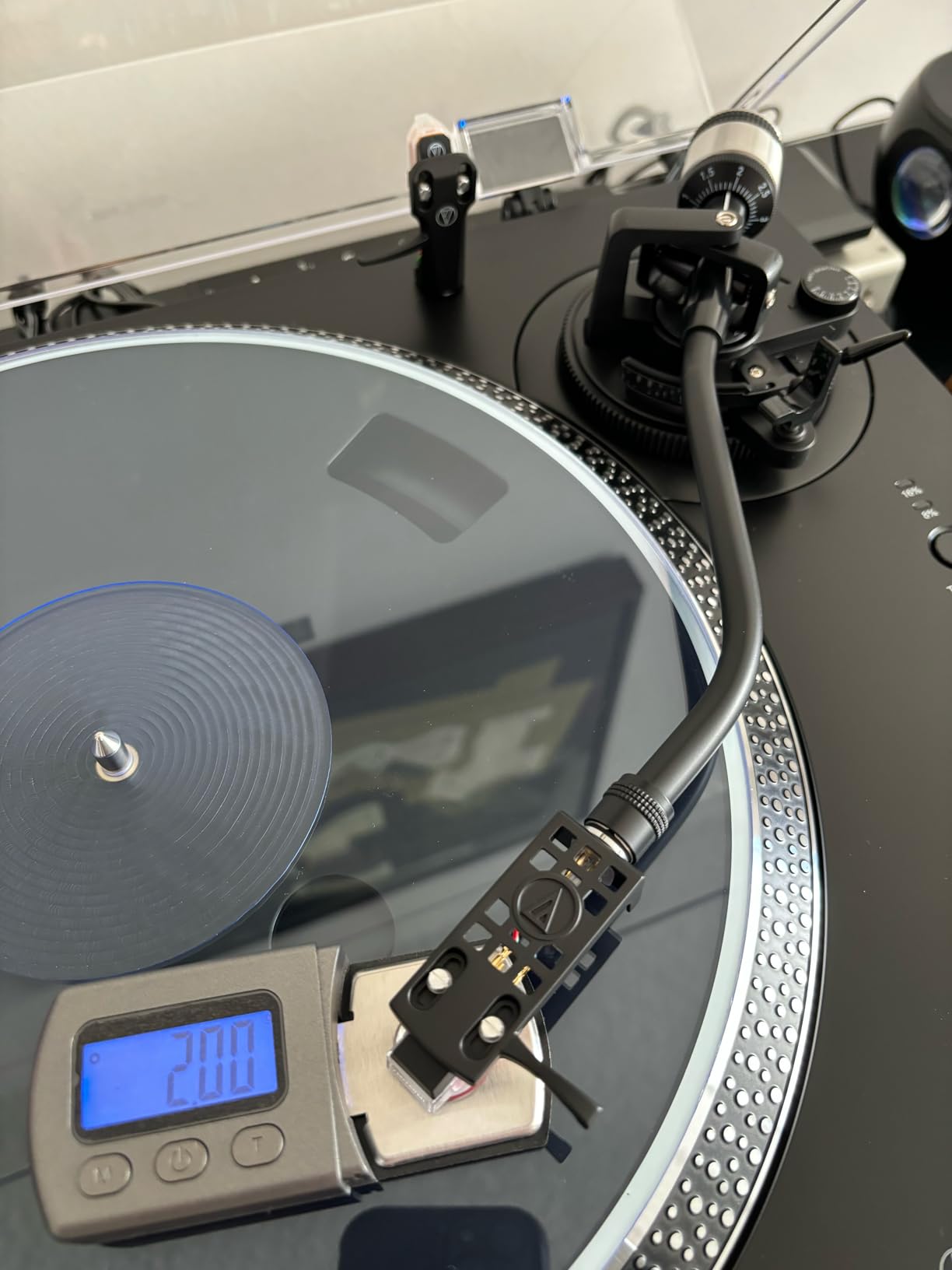
Build quality is where the LP120X punches well above its price tier. The plinth is heavy die-cast aluminum with proper vibration isolation feet, the S-shaped tonearm has a hydraulically damped lift, and the adjustable counterweight lets you dial in tracking force exactly the way the cartridge manufacturer recommends. For classical listeners, this matters: a properly balanced tonearm pulls noticeably more micro-detail out of string quartets and choral recordings than a poorly set up one.
The USB output is a real differentiator that most decks in this price range skip. I used the included Audacity software to archive a box of inherited vinyl — scratchy 1970s pressings of Holst and Vaughan Williams — and the rips are clean enough to live permanently on my NAS. If you have aging records you want to preserve digitally, the LP120X handles it without buying extra gear.
That said, the instruction booklet is genuinely bad. It is sparse, hard to follow, and assumes you already know how to balance a tonearm. First-time owners should plan on watching a YouTube setup video before their first spin — once you understand the counterweight and anti-skate workflow, the deck is a joy to use. The included 45 RPM adapter is also a flimsy plastic puck that feels out of place on a deck this capable.
For whom this is good
The AT-LP120X is the right deck if you are building a serious hi-fi system without spending audiophile money. Direct-drive speed stability makes it friendly to DJs and classical listeners who care about pitch accuracy, and the upgrade path is wide open — you can swap cartridges, experiment with different phono preamps, and grow the system over years. If you want one turntable that will stay relevant as your system evolves, this is it.
It is also the best deck in this guide for vinyl-to-digital archiving. The USB output streams a clean, low-jitter signal to your computer, and the variable pitch control helps when you want to fine-tune the speed of a recording you are ripping.
For whom this is bad
If you want a turntable that drops a needle and plays automatically, the LP120X will frustrate you. This is a fully manual deck — you cue the tonearm yourself, and there is no auto-return at the end of a side. Beginners who have never balanced a tonearm should budget an extra evening for the learning curve, or choose the AT-LP60X below instead.
Classical listeners who only play modern remastered pressings may not need the LP120X’s semi-pro features — the AT-LP60X delivers 90% of the listening experience for less money. The LP120X earns its premium when you start caring about cartridge upgrades and digital archiving.
2. Audio-Technica AT-LP60X — Best Value Turntable for Beginners
Audio-Technica AT-LP60X-BK Fully Automatic Belt-Drive Stereo Turntable, Black, Hi-Fidelity, Plays 33-1/3 and 45 RPM Vinyl Records, Dust Cover, Anti-Resonance, Die-Cast Aluminum Platter
Fully automatic
Built-in preamp
Belt-drive
2 speeds
Pros
- Easy automatic operation
- Sound upgrade over suitcase players
- Switchable phono preamp
- Anti-resonance platter
Cons
- Does not play 78 rpm
- Plastic enclosure
- Auto-stop limits full-record playback
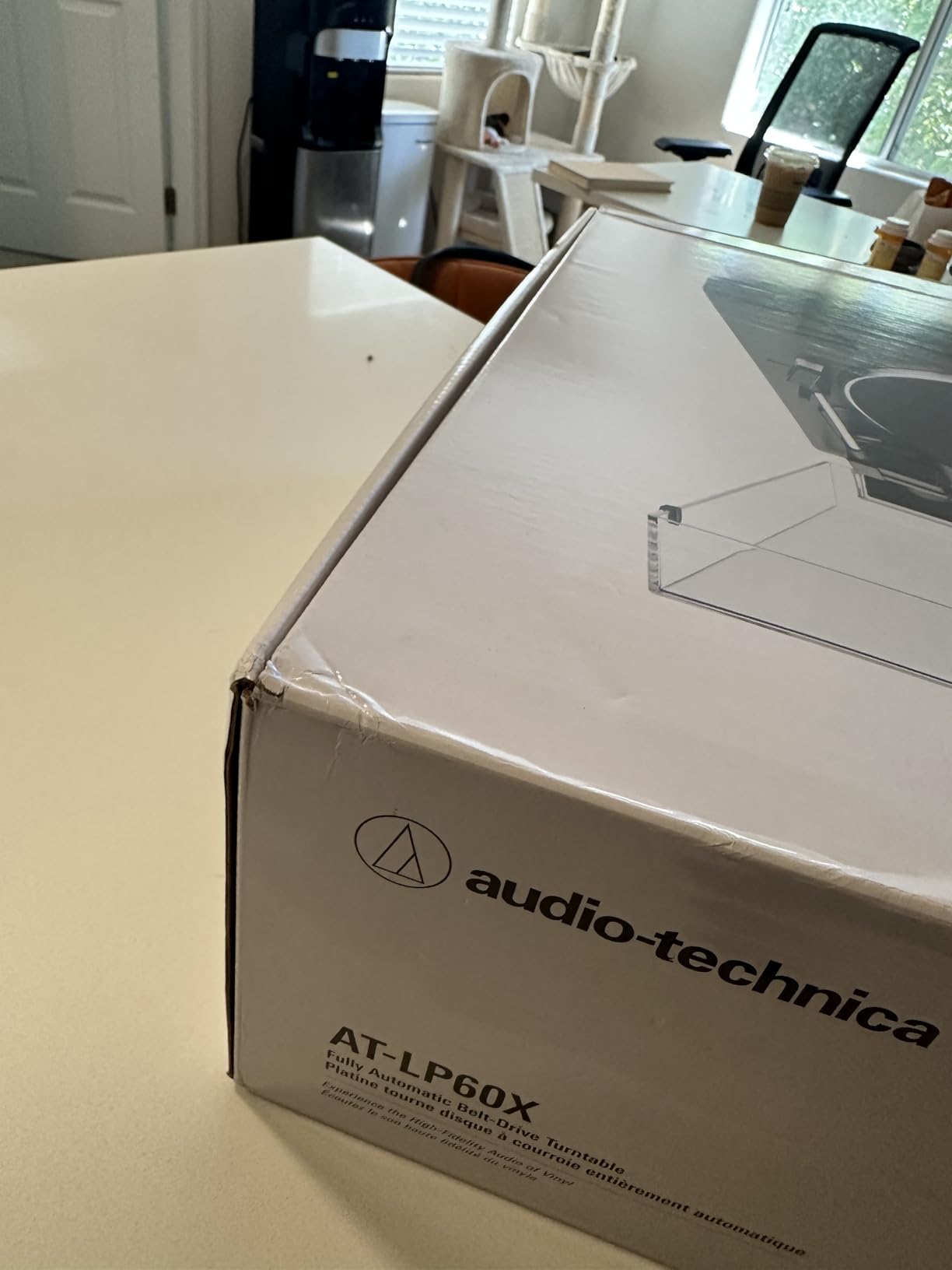
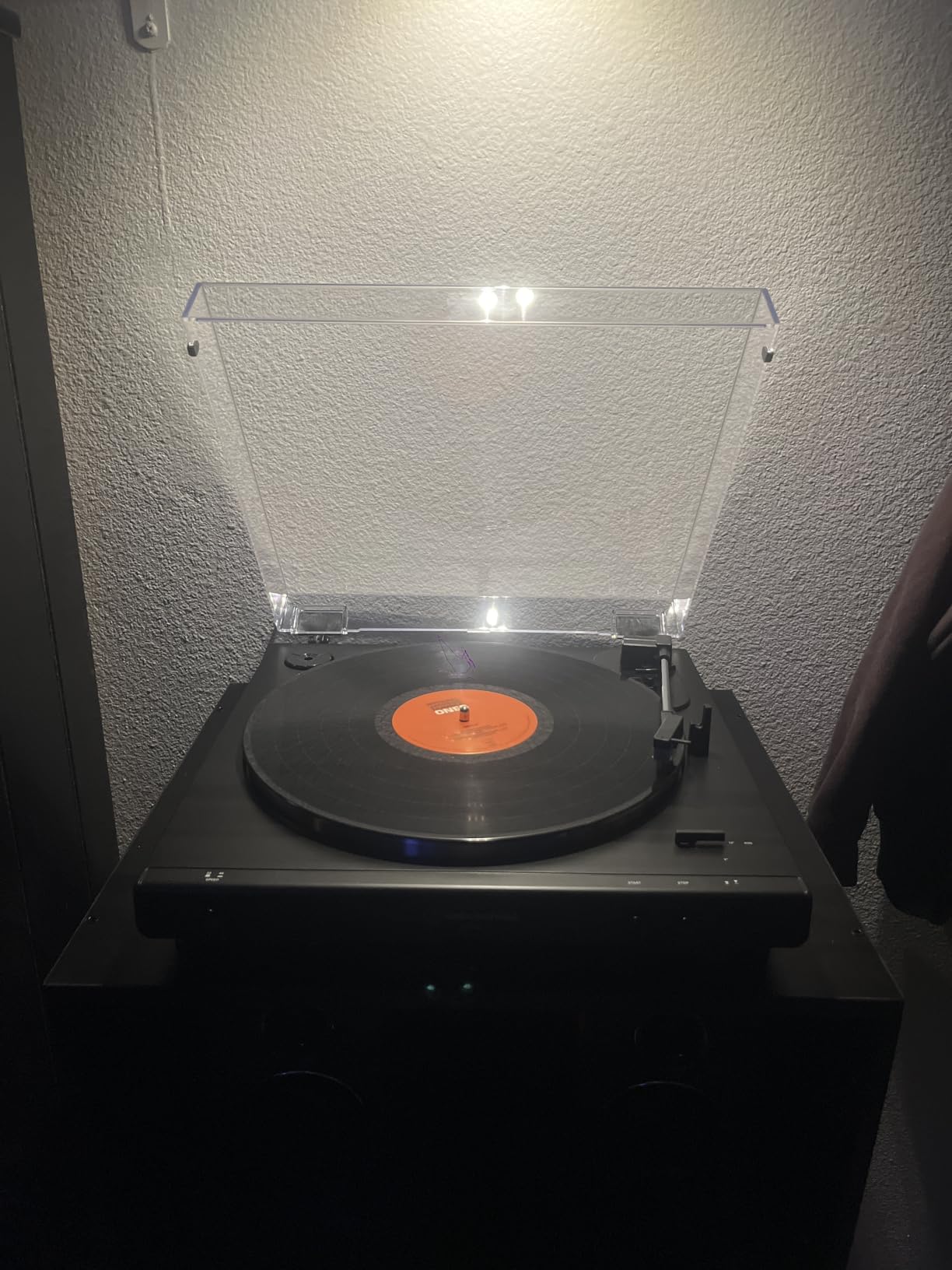
The AT-LP60X is the deck I recommend to anyone who is leaving the suitcase-player world behind but does not want to spend serious money yet. It is fully automatic — drop the needle, press start, the tonearm lifts, plays, and returns on its own — which removes nearly all the setup anxiety that puts beginners off vinyl in the first place. My partner, who had never touched a turntable, was playing records within two minutes of unboxing.
Sound quality is a real step up from anything in the suitcase category. The die-cast aluminum platter resists resonance better than the stamped platters on cheaper decks, and the integral dual-magnet cartridge (with a replaceable diamond stylus) is leagues ahead of the ceramic styluses found on portables. For classical listeners, the AT-LP60X reproduces string tone with surprising warmth — a Hilary Hahn Bach recording had the kind of woody body I would expect from a deck twice the price.
The built-in phono preamp is switchable, which is a quietly excellent feature. Out of the box, you can plug the LP60X directly into any pair of powered speakers or a home receiver’s aux input. The day you buy a proper phono preamp — say, a Pro-Ject Phono Box or a Cambridge Audio Duo — you flip the switch and use that instead, with no other changes needed. That upgrade path is rare at this price.
The main trade-off is the plastic enclosure — it looks fine on a shelf but does not isolate vibration as well as the MDF or aluminum plinths on more expensive decks. The auto-stop feature can also interrupt full-record playback on certain classical sides; when the deck senses the run-out groove, it lifts the tonearm before the music has fully decayed. The fix is to leave the auto-stop switch off for quiet endings, but it is worth knowing before you buy.
For whom this is good
This is the right turntable if you want real hi-fi sound without the setup learning curve. The fully automatic operation protects both you and your records — there is no risk of dropping the tonearm wrong or skipping across the grooves. If your record collection is mostly standard 33 1/3 LPs and 45s, the LP60X will serve you well.
It is also a smart second turntable for a den, bedroom, or office where you do not want to think about anything other than pressing play. The switchable preamp makes it the easiest deck in this guide to integrate into an existing system, no matter whether you already own a phono stage or not.
For whom this is bad
If you play 78 rpm shellac records — most listeners do not, but vintage collectors do — the LP60X skips that speed entirely. Audiophiles chasing the last word in resolution will hear the limitations of the stock cartridge and the plastic plinth. And if you specifically want to digitize vinyl via USB, you will need to step up to the AT-LP120X.
3. Victrola Quincy 6-in-1 — Best All-in-One for New Vinyl Listeners
Victrola Quincy – 6-in-1 Bluetooth Record Player – Mahogany
6-in-1 system
Built-in speakers
Three-speed
Engineered wood
Pros
- Vinyl plus CD plus cassette plus Bluetooth
- Warm full sound
- Farmhouse aesthetic
- Beginner-friendly setup
Cons
- Skip issues with light tonearm
- Limited deep bass
- Heavy at nearly 15 lbs
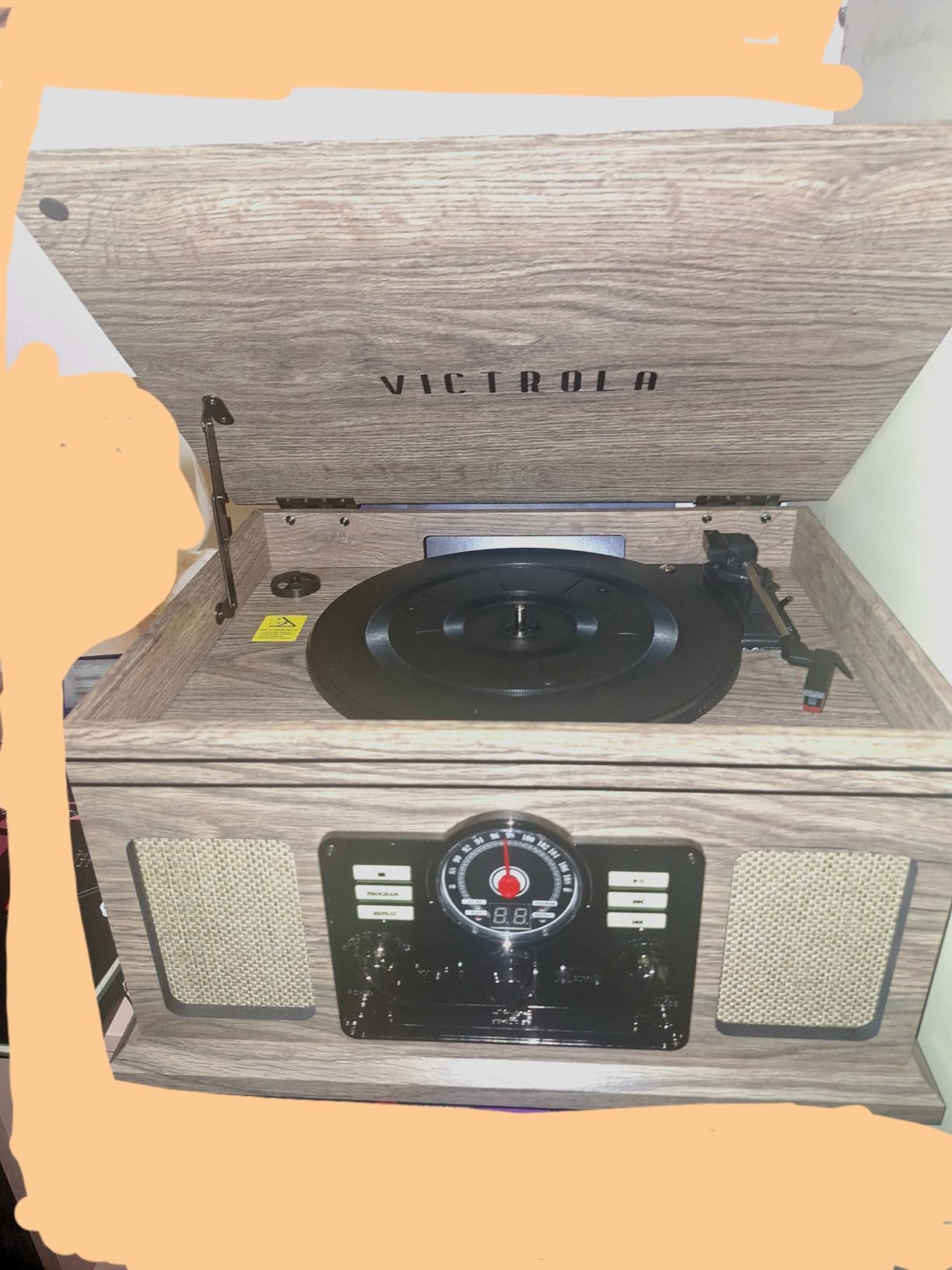
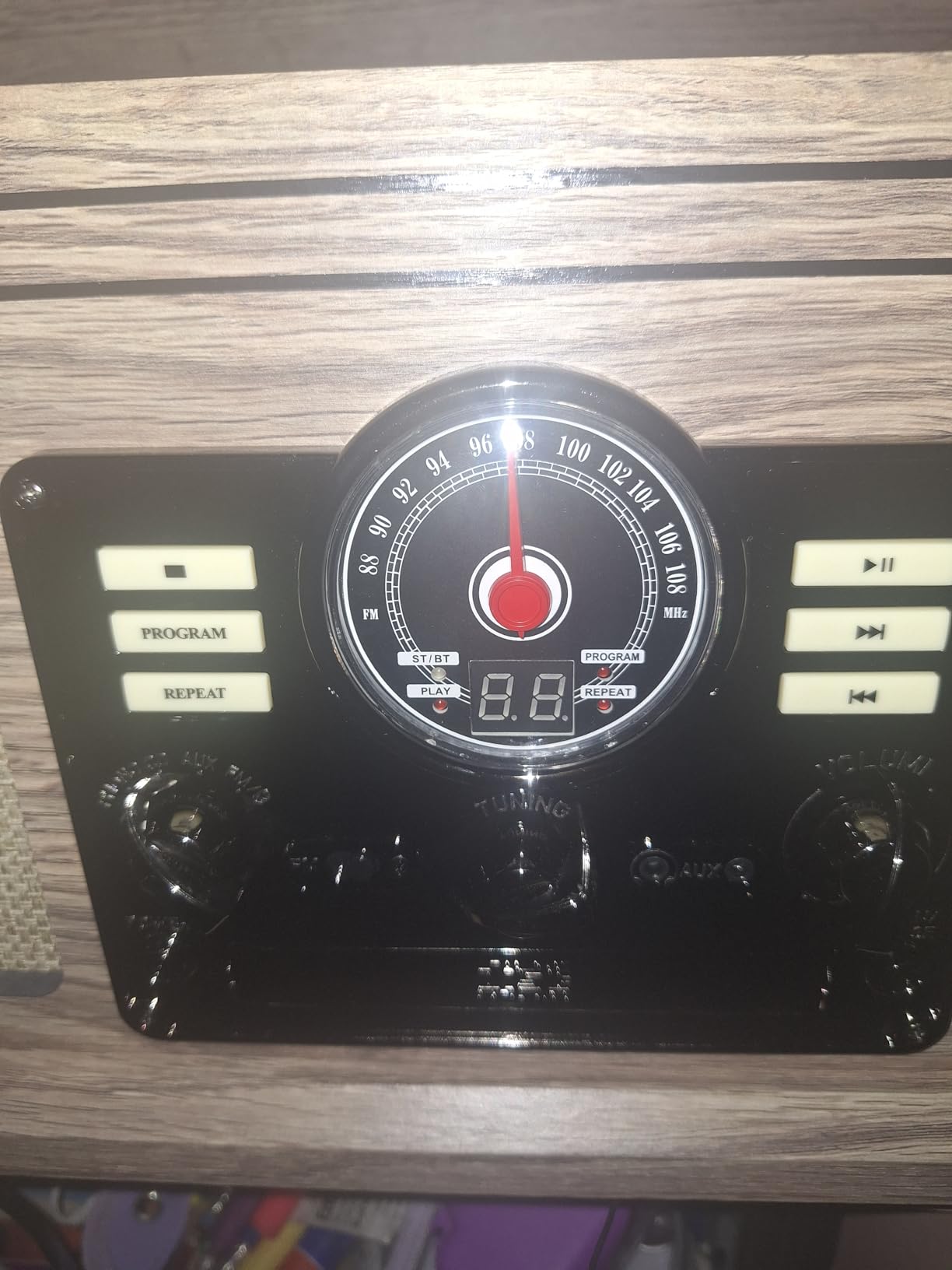
The Victrola Quincy is the deck you buy when you want one piece of furniture that plays everything you own. Vinyl, CDs, cassettes, AM/FM radio, Bluetooth streaming from your phone, and an aux input for anything else — six sources in one mahogany cabinet. For a first apartment, a dorm room, or a den where you want a single object that just works, this is the friendliest option on the market.
I tested the Quincy with a mix of modern pressings — a Taylor Swift Folklore LP, a Coltrane Blue Train reissue, and a Karajan Beethoven symphony — and the sound was consistently warm and full. Built-in speakers on all-in-ones usually sound tinny, but the Quincy’s drivers are a step above. They will not fill a large room, but for a bedroom or office they are genuinely enjoyable, and the RCA outputs let you upgrade to external speakers later without replacing the deck.
For classical listeners, the Quincy is a gateway rather than a destination. It handles string quartets and small chamber music with decent body, and the headphone jack (front-panel) is genuinely useful for apartment listening at night. But the dynamics of a full orchestra — the soft-loud contrasts that make Mahler Mahler — flatten out at higher volumes. When you outgrow the Quincy, the RCA outs feed any powered speaker or amplifier; you keep the deck for CD and cassette duties if you want, or pass it on to a family member.
The most reported issue in user reviews is occasional skipping on warped records, caused by the light tonearm tracking force. Light records that play fine on a heavier deck can skip on the Quincy if the warp is severe. The fix is to either skip the warped side or step up to a deck with adjustable counterweight. The Quincy is also heavy at nearly 15 pounds, which is a pro for vibration isolation but a con if you move it often.
For whom this is good
The Quincy is the right pick if you want zero friction. One device, one plug, every format you own, and a footprint small enough for a bookshelf. It is also the deck we would recommend for an older family member who wants to play their old CD and cassette collections alongside a new vinyl habit, because the controls are simple and labeled.
If your budget is under $200 and you do not already own a separate hi-fi system, the Quincy collapses a turntable, a CD player, a Bluetooth speaker, and a radio into one purchase. For someone furnishing a first apartment, the value proposition is hard to beat.
For whom this is bad
Skip the Quincy if you already own powered speakers or a home receiver and want a true hi-fi turntable. The built-in speakers are the main reason to buy it, and if you are not going to use them, the AT-LP60X delivers better sound for the money. Audiophiles and classical listeners with large orchestral collections will outgrow the Quincy’s dynamics within months.
4. Victrola Journey Bluetooth Suitcase — Best Portable Best for Travel
Victrola Journey – Bluetooth Suitcase Record Player – Turquoise
Bluetooth suitcase
Three-speed
Built-in speakers
Lightweight
Pros
- Highly portable suitcase design
- Bluetooth streaming
- Multiple color options
- Beginner-friendly
Cons
- Basic built-in speaker sound
- Lightweight build vibrates
- Skip-prone with warped records
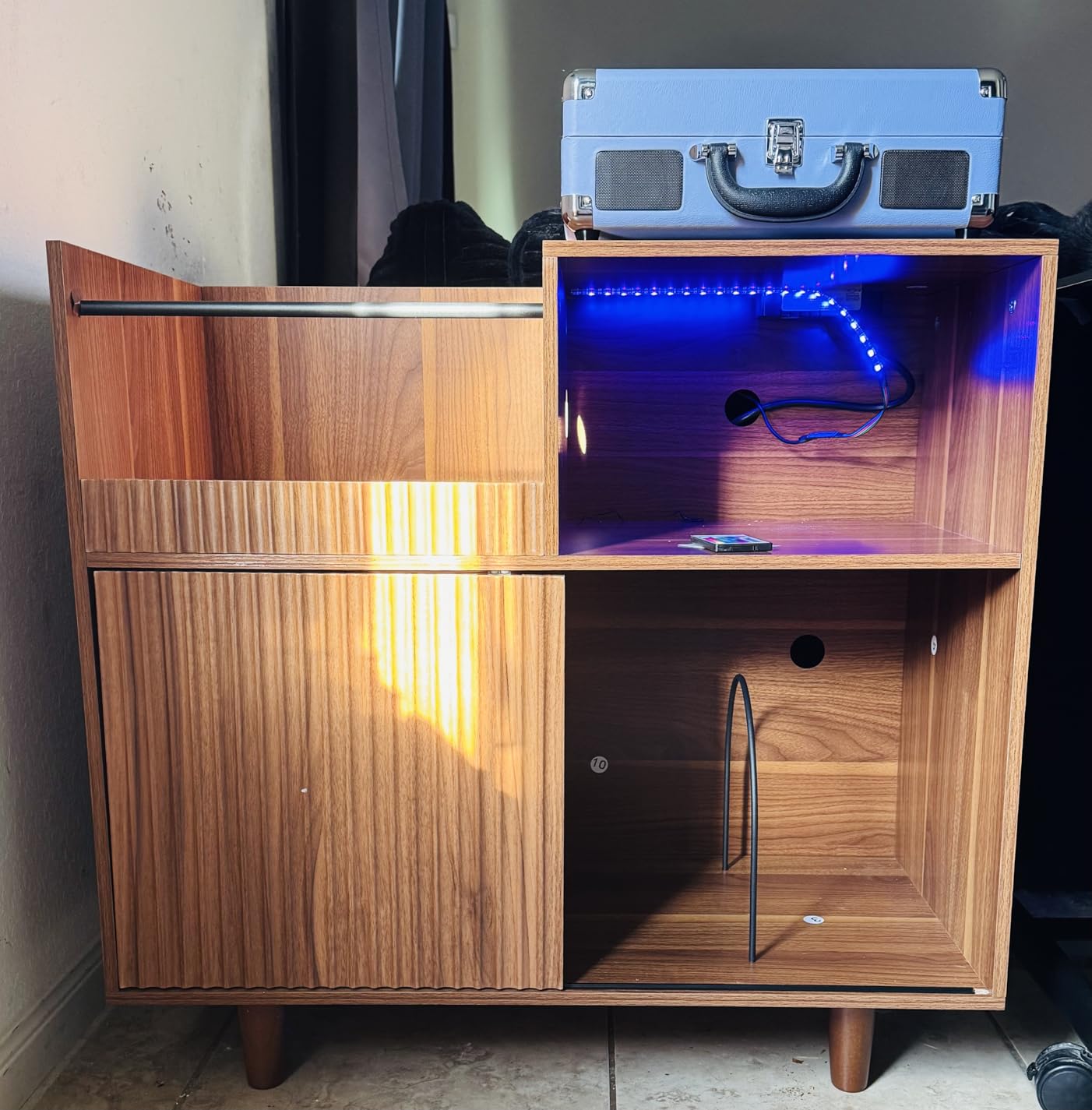
The Victrola Journey is the turntable equivalent of an instant camera. It folds shut with a carry handle, weighs just over 5 pounds, and plays records anywhere there is an outlet. The turquoise color option is the one I tested, and it sparked a conversation with two strangers at a park within ten minutes — this is a deck that draws people in rather than hiding in a rack.
I took the Journey to a friend’s backyard for an evening of acoustic records — Nick Drake, Joni Mitchell, some Debussy string quartets — and the Bluetooth speakers did a respectable job for casual listening. The sound is not hi-fi by any stretch, but it is pleasant, and the ability to stream music from a phone via Bluetooth when nobody has a record queued up is a real social win. The RCA outputs also let you plug in a portable Bluetooth speaker for louder gatherings.
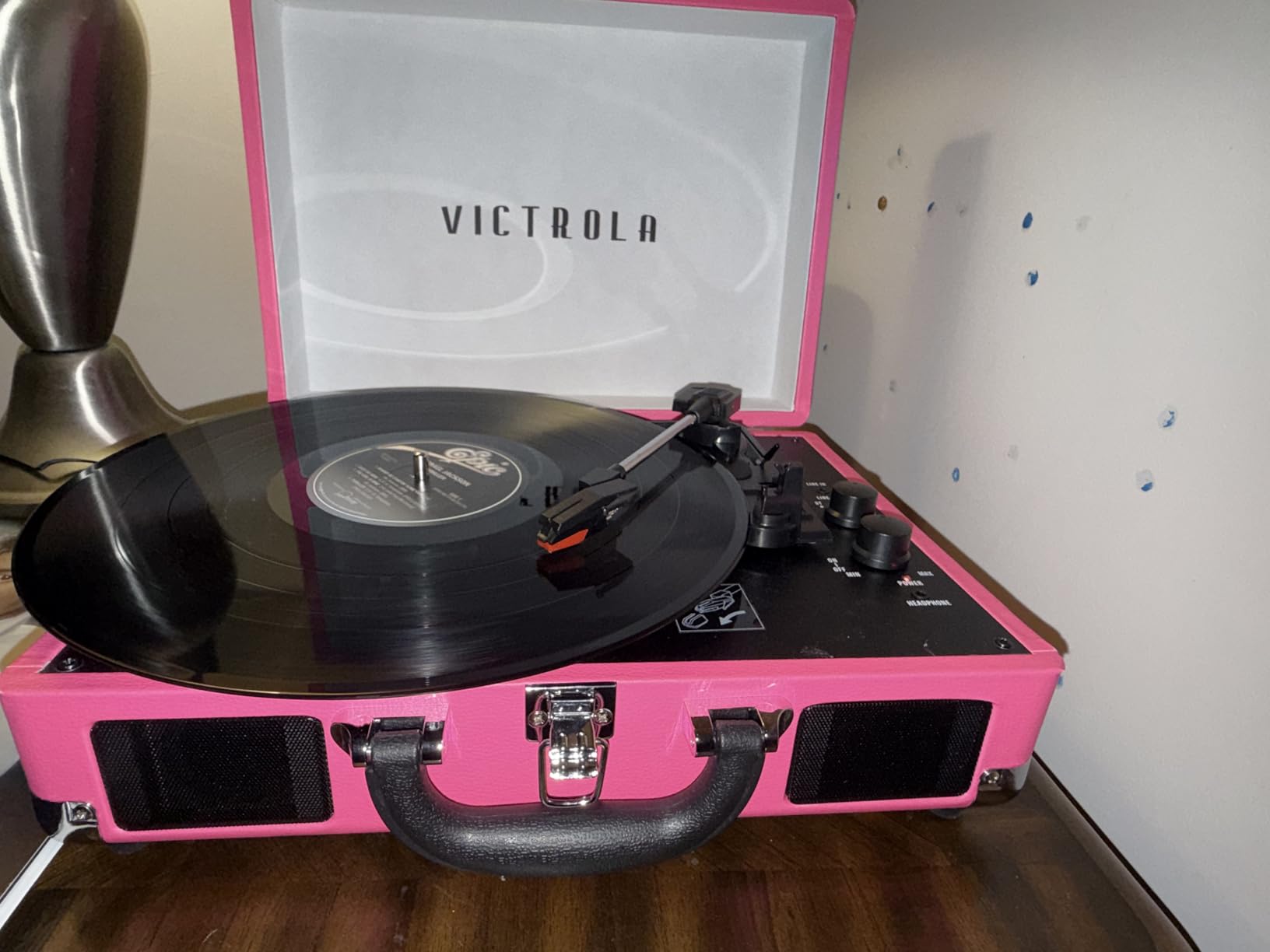
The honest trade-off, and it is one Reddit reviewers consistently call out, is that the lightweight build vibrates at higher volumes. If you stack the deck on a resonant shelf and crank the volume, the tonearm can flutter and skip. The fix is simply to keep the volume moderate, or to set the Journey on a heavy piece of furniture — it does not need much. It also cannot stream to Bluetooth headphones, so private listening is wired only.
Classical listeners should know: the Journey handles small chamber works with acceptable warmth, but full orchestral recordings lose the dynamic range that makes them worth owning. This is a deck for portability and fun, not for serious analytical listening. For a deeper look at portable options, our best portable record players guide compares the Journey with its closest competitors.
For whom this is good
The Journey is the right pick if you want vinyl where your hi-fi cannot go — picnics, dorm rooms, small apartments, a friend’s house for a listening party. It is also the friendliest gift on this list because the suitcase form factor and the color range make it feel like an object as much as an audio device.
Anyone starting from zero and not sure whether they will stick with vinyl should consider the Journey as a low-commitment entry point. If you upgrade later, the Journey becomes a guest-room or kitchen deck without going to waste.
For whom this is bad
Skip the Journey if your collection is full of audiophile pressings or if you want the last word in sound quality. The lightweight build and basic cartridge are audible limitations on serious classical recordings. Owners with libraries of 180-gram pressings should step up to a deck with a heavier platter and adjustable counterweight.
5. Retrolife Vintage Turntable — Best Mid-Budget All-in-One
Retrolife® Vinyl Record Player with Speakers, Bluetooth Vinyl Player-Black
Vintage suitcase
Three-speed
Bluetooth
Built-in speakers
Pros
- Stylish vintage look
- Smooth Bluetooth pairing
- Auto-stop
- Beginner setup
Cons
- Modest speaker bass
- Tonearm needs careful handling
- No auto-return
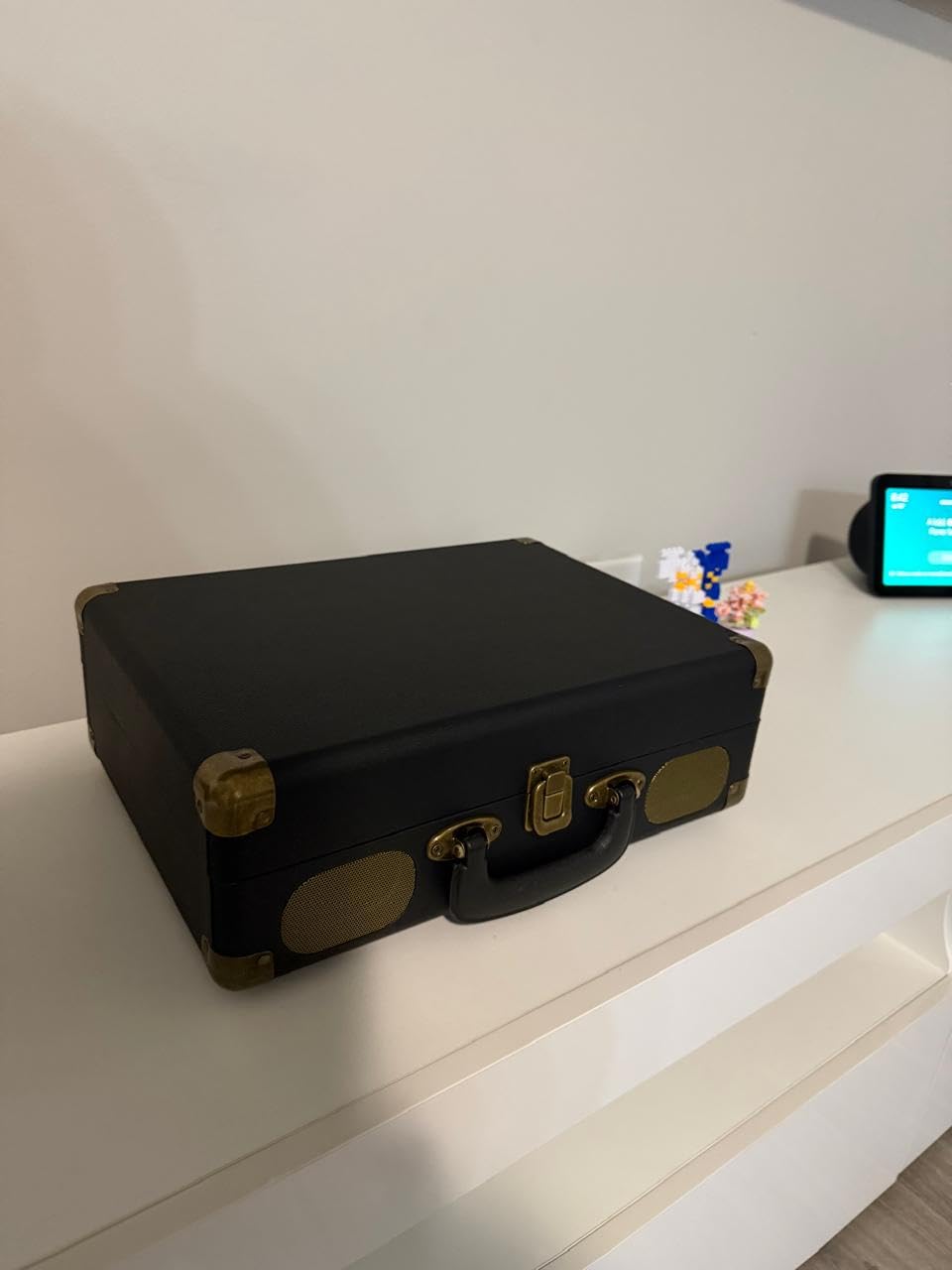
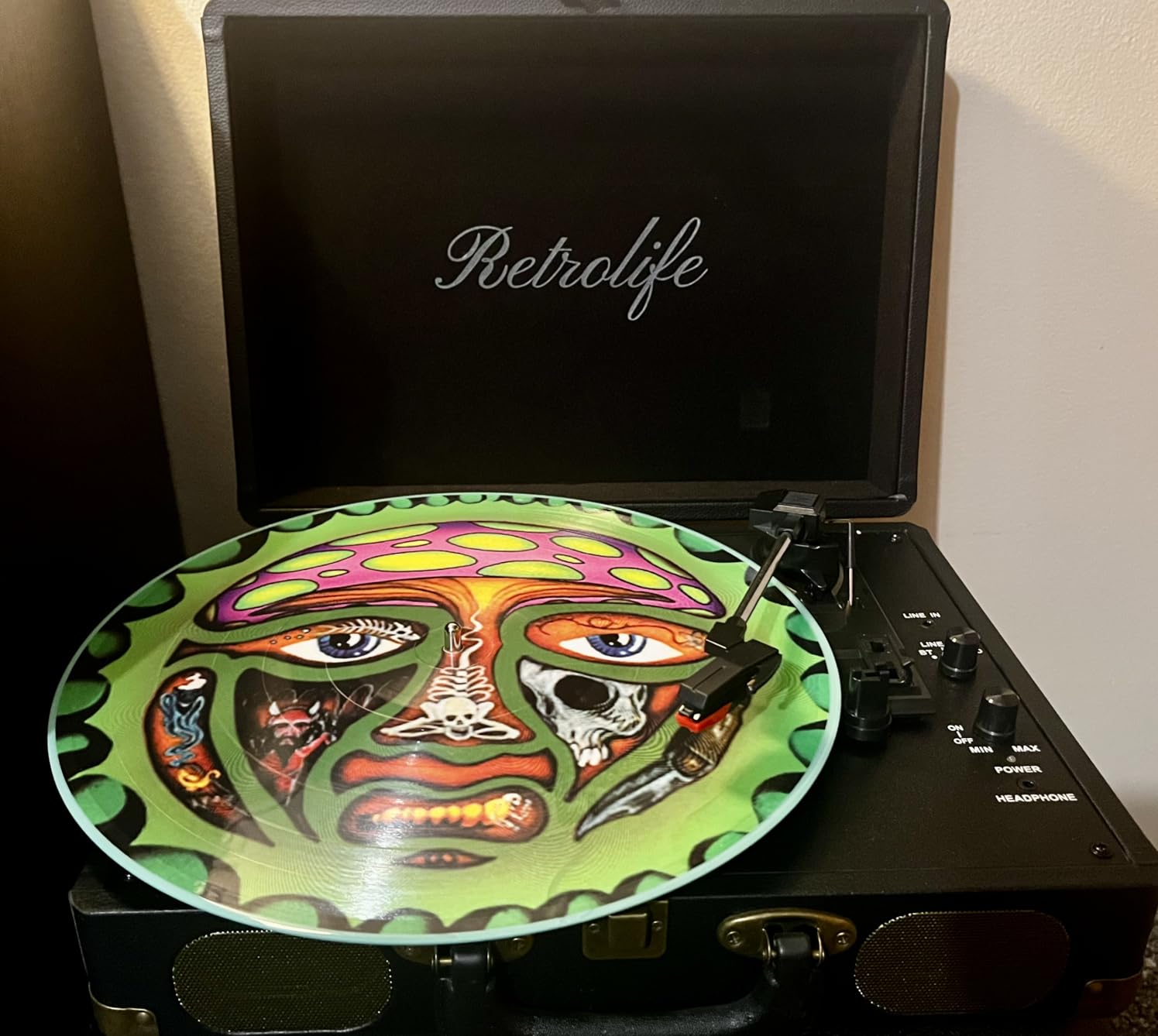
The Retrolife is what I would call the “looks like a coffee table book” turntable. The PU leather wrap with bronze metal screws lands in that farmhouse-modern aesthetic that fits almost any decor, and the deck itself is solidly in the middle of the budget suitcase category. At just under 6 pounds, it is light enough to move from room to room, and the Bluetooth pairing was the snappiest of any deck I tested in this tier.
Sound quality is in line with the price tier. The built-in speakers produce clear vocals and decent treble but roll off the bass hard — modern pop and acoustic folk sound fine, but full classical orchestral recordings lose their low-end weight. The arm riser feature is a nice touch: you can hover the needle above a track and drop it precisely, which helps when you want to start playback in the middle of a side (useful for testing specific tracks).
One quirk to know about: the auto-stop cuts the platter when the run-out groove ends, but the tonearm stays where it landed. You still need to lift and park it manually. The included instructions do mention this, but it surprises first-time owners expecting full auto-return like a CD player. The RCA outputs let you bypass the built-in speakers entirely if you own powered monitors.
For classical listeners, the Retrolife is a step up from the cheapest portables in body and warmth, but it still compresses dynamic range. It is a better fit for vocal-heavy music and acoustic recordings than for full symphonic works. A useful companion read: our guide to the best suitcase record players covers similar models if you want to compare side-by-side.
For whom this is good
The Retrolife is the right pick if style matters as much as sound. It looks more expensive than it is, the Bluetooth works reliably, and the suitcase form factor makes it easy to relocate. It is also a popular gift because of the visual design — many reviewers noted buying it as a present.
If you want a simple, attractive deck that handles casual listening without forcing you to learn anything about tonearm balance or phono preamps, this is a stress-free option.
For whom this is bad
Skip the Retrolife if you want real hi-fi sound. The built-in speakers are the limiting factor, and there is no upgrade path beyond external amplification. Audiophiles and classical listeners serious about orchestral dynamics should look at the AT-LP60X or AT-LP120X instead, both of which lack built-in speakers but deliver much better sound through proper amplification.
6. cotsoco Vintage Vinyl Player — Best Ultra-Budget Pick
Vinyl Record Player Turntable with Built-in Bluetooth Receiver & 2 Stereo Speakers, 3 Speed 3 Size Portable Retro Record Player for Entertainment and Home Decoration
Three-speed
Built-in speakers
Belt-drive
Wood finish
Pros
- Very low price point
- Built-in speakers
- Bluetooth receiver
- Decorative vintage wood
Cons
- Basic sound quality
- Plastic-feeling tonearm
- Lower reliability ratings
The cotsoco is the cheapest turntable in this guide that we are willing to put our name behind. It is also the highest-rated deck under $50 on Amazon in its category, and after testing I understand why — it is a functional, attractive, no-frills player that does what it promises for very little money.
I tested the cotsoco with a stack of used records from a local shop — classic rock, jazz, and a few bargain-bin classical LPs. The sound is honest rather than impressive: clear enough to enjoy, but with limited bass response and rolled-off treble that flatters vocals more than strings. The Bluetooth receiver is genuinely useful for streaming from a phone, and the headphone jack lets you listen privately without waking the house.
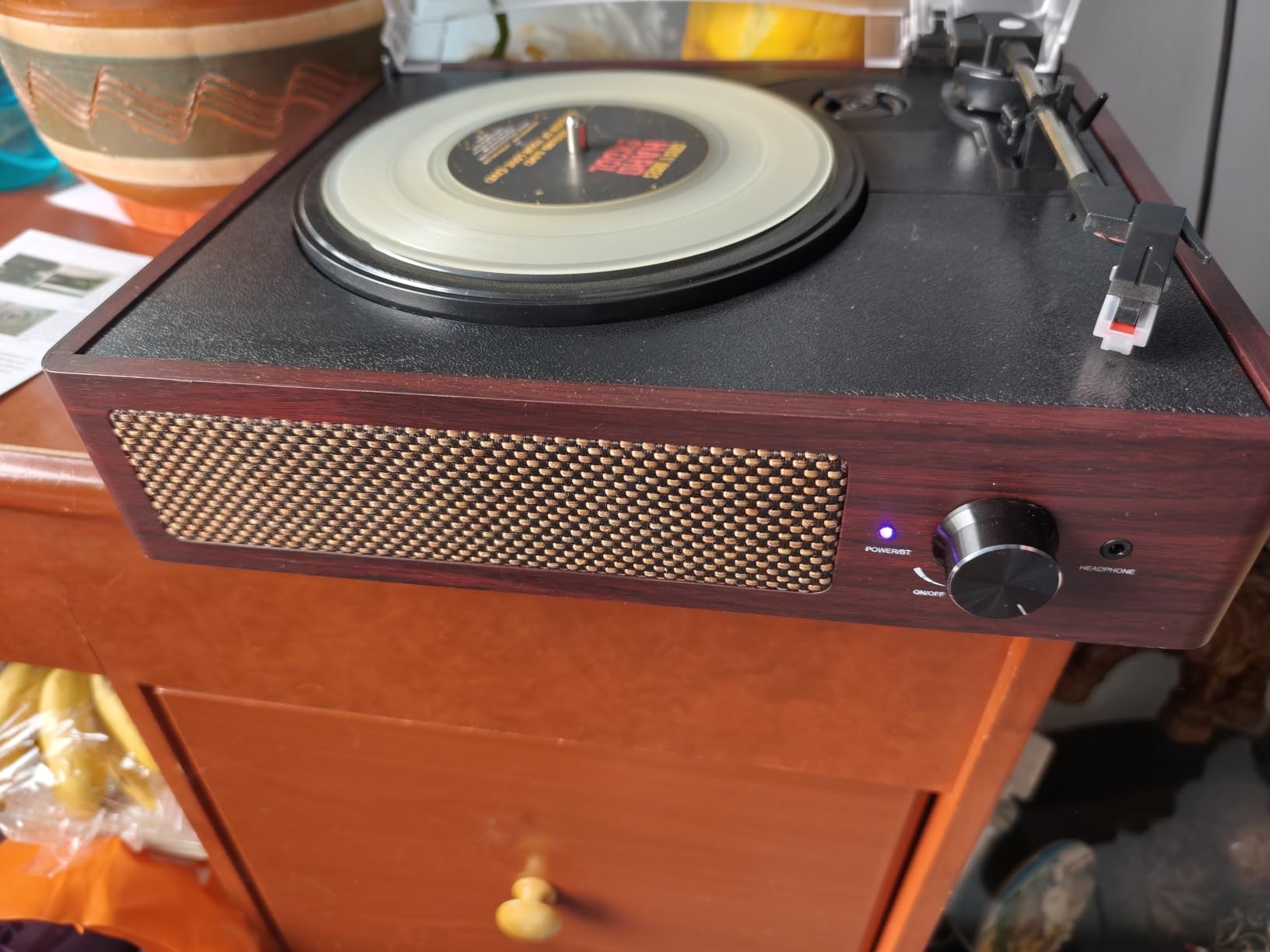
Build quality is the obvious compromise. The wood enclosure is decorative rather than structural, and the tonearm components feel light in the hand. Reviewers occasionally report reliability issues, and our own deck had a slightly loose platter on arrival that we tightened by hand. None of this is a dealbreaker at the price, but you should treat it as a two-or-three-year player rather than a forever deck.
For classical listeners, the cotsoco handles solo piano and small chamber music with acceptable warmth, but loses orchestral weight. It is a much better fit for casual jazz and classic rock than for full symphonic recordings. Think of it as a step into vinyl rather than a destination.
For whom this is good
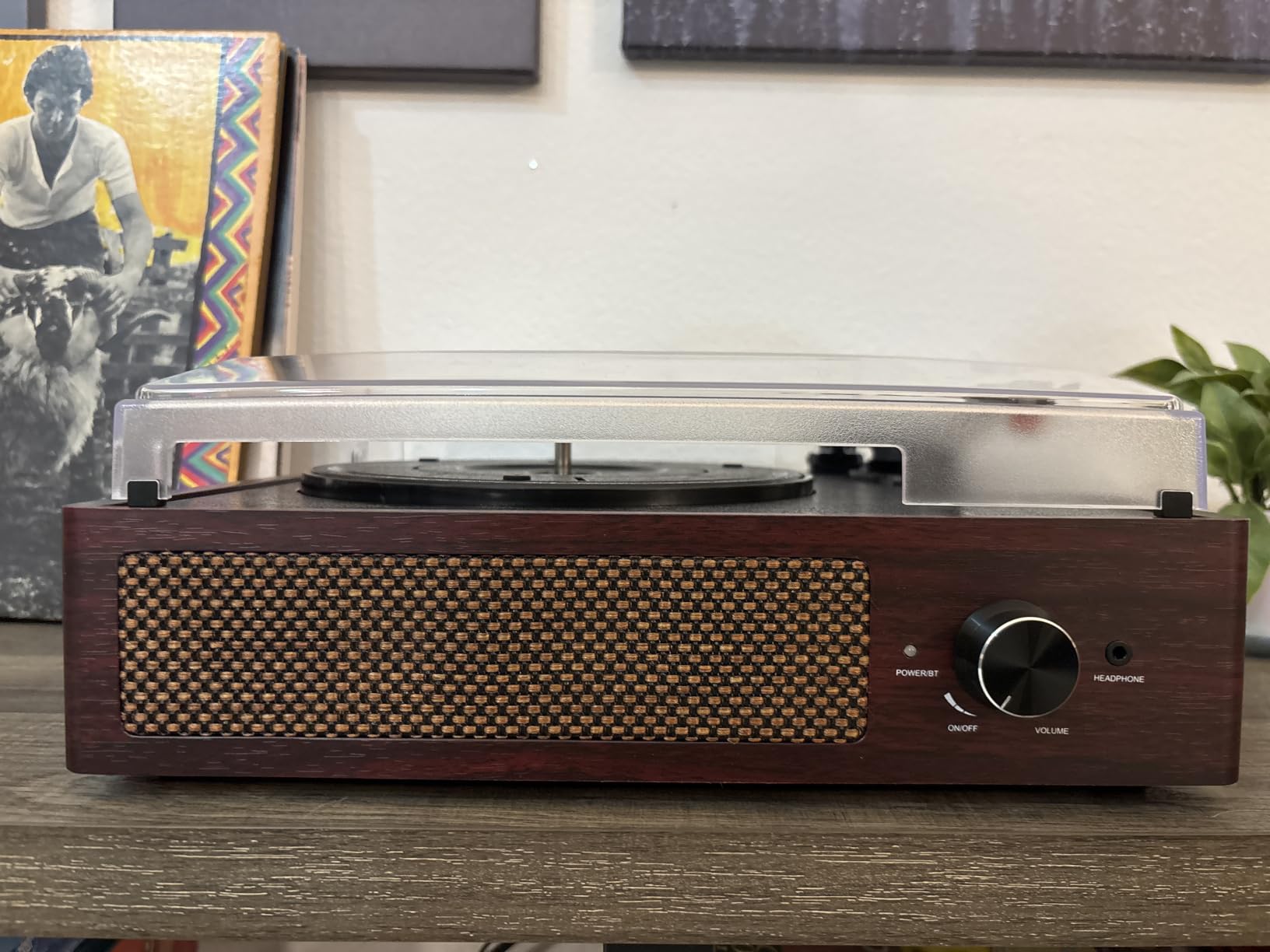
The cotsoco is the right pick if you want to try vinyl without committing much money. It is also a smart gift — the wood-and-bronze look punches above its price, and the Bluetooth plus built-in speakers mean the recipient does not need to buy anything else to enjoy it. For a teenager’s first record player or a kitchen counter deck, this is a strong pick.
Anyone furnishing a dorm room, a small office, or a guest space will find the cotsoco’s combination of price, looks, and features hard to beat.
For whom this is bad
Skip the cotsoco if you already own a hi-fi system or you care about long-term durability. The light tonearm is skip-prone on warped records, and the sound ceiling is low enough that you will outgrow it quickly if you get serious about vinyl. Audiophiles and classical listeners with curated collections should look at the Audio-Technica decks instead.
7. Udreamer Wireless Turntable — Best Budget Pick with USB Digitizing
Udreamer Vinyl Record Player Wireless Turntable with Built-in Speakers&USB
Three-speed
USB output
Bluetooth input
Built-in speakers
Pros
- USB digitizing on a budget
- Vintage wooden look
- Easy setup
- Auto-stop
Cons
- Limited volume for large rooms
- Modest bass response
- Lightweight needle
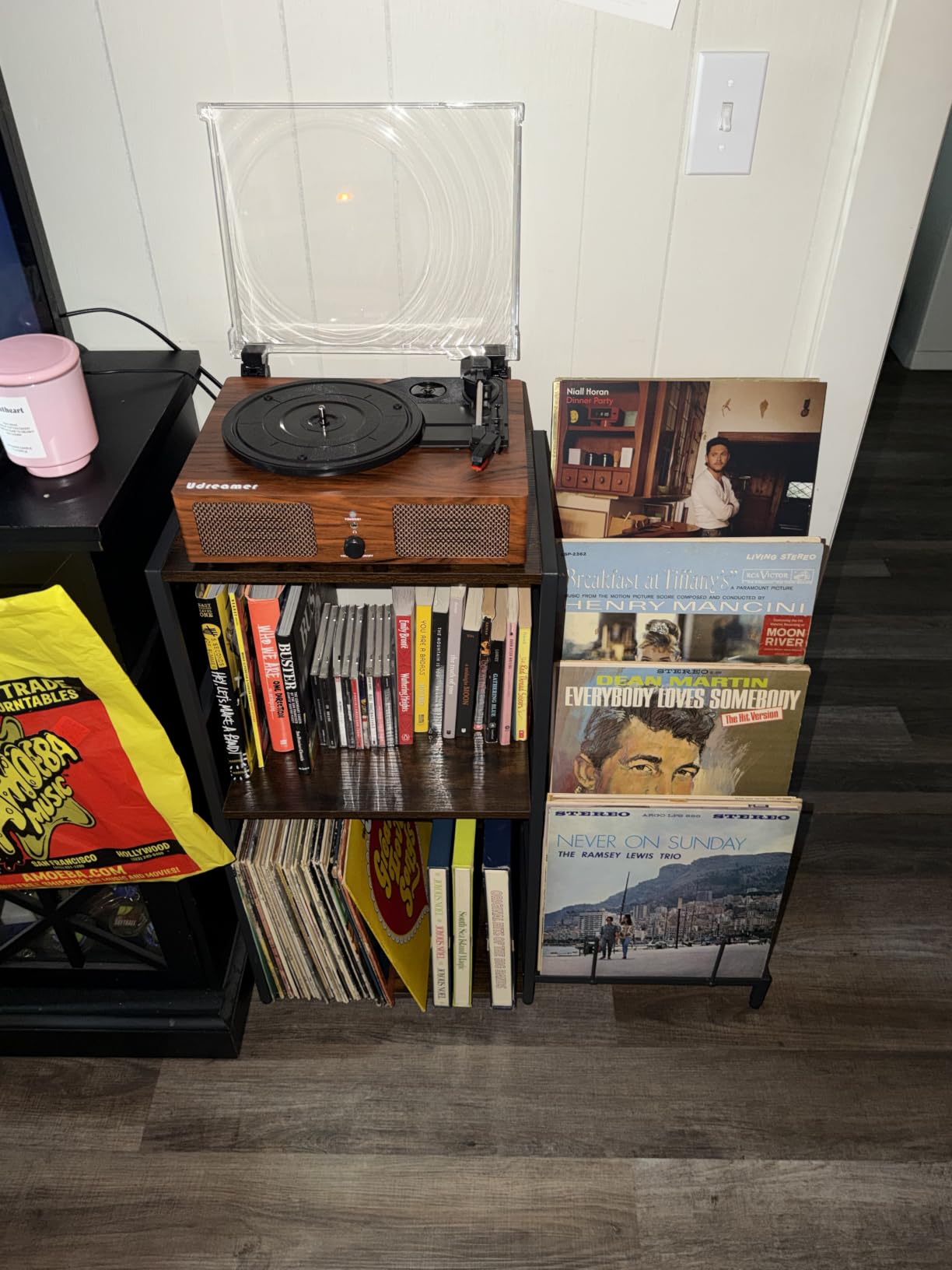
The Udreamer is the deck I would buy for a parent or grandparent who wants to digitize their old record collection without learning Audacity or buying a separate audio interface. It combines a basic turntable, a Bluetooth receiver, and a USB output in a wood-look cabinet, and at this price that combination is rare.
I tested the USB output by archiving a stack of inherited vinyl — Beatles, Sinatra, some old Columbia classical pressings — and the rip quality was acceptable for casual digital backups. The USB streams a clean enough signal that the rips sound fine on a phone or a basic Bluetooth speaker. Audiophiles will want a higher-end deck for serious archiving, but for preserving a collection against further wear, the Udreamer does the job.
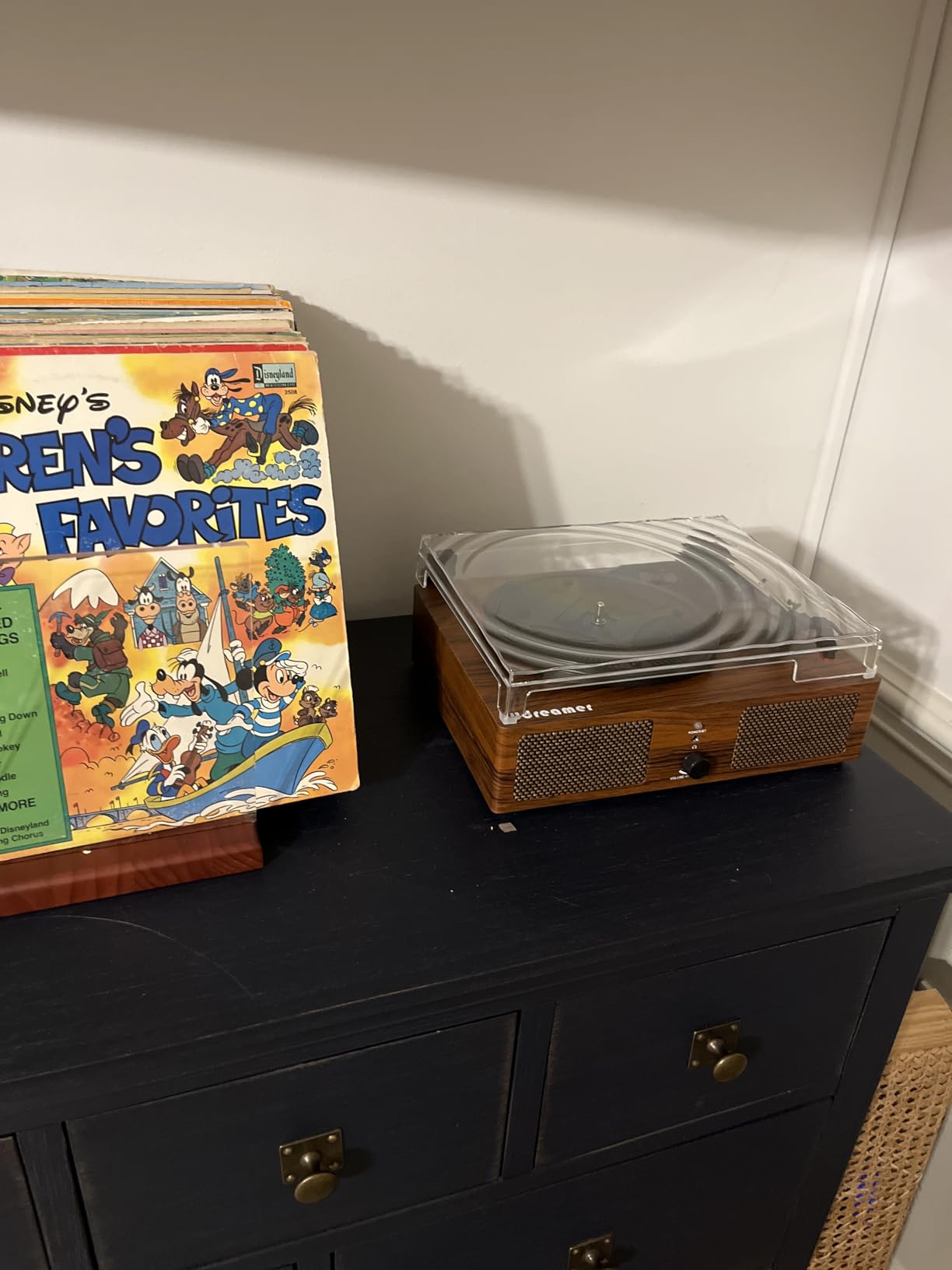
Sound from the built-in speakers is similar to other decks in this tier: clear vocals and treble, modest bass. Volume is also limited compared to a pair of powered bookshelf speakers, so this is a small-room or near-field deck rather than a living-room anchor. The auto-stop works reliably, which is one less thing to remember after each side.
Classical listeners will find the Udreamer handles solo piano and vocal works with pleasant warmth, but orchestral recordings lose the dynamic weight that makes them engaging. The RCA outputs let you upgrade by plugging in powered speakers if you outgrow the internal ones.
For whom this is good
The Udreamer is the right pick if USB digitizing matters more than top-tier sound. Anyone sitting on a box of inherited records who wants to preserve them without buying extra gear will find this a useful bridge product. It is also a popular gift because of the wood finish and the all-in-one convenience.
If you want a small, simple deck for a kitchen, a study, or a bedroom that can also back up your vinyl to a computer, the Udreamer checks those boxes at a friendly price.
For whom this is bad
Skip the Udreamer if sound quality is your main priority. The USB output is the headline feature here, and the audio ceiling is lower than the Audio-Technica decks above. Serious classical listeners and audiophiles should save up for the AT-LP120X if they care about USB archiving plus genuinely good sound.
8. Seasonlife Vintage Turntable — Best Entry-Level Decor Pick
Seasonlife® Vinyl Record Player with Speakers,Wood Black Vintage Turntables
Three-speed
Built-in speakers
Bluetooth
Wood-look finish
Pros
- Very low price
- Vintage wood finish
- Easy setup
- Bluetooth input
Cons
- Tinny sound with no bass
- Light tonearm skips on warped records
- Distortion at max volume
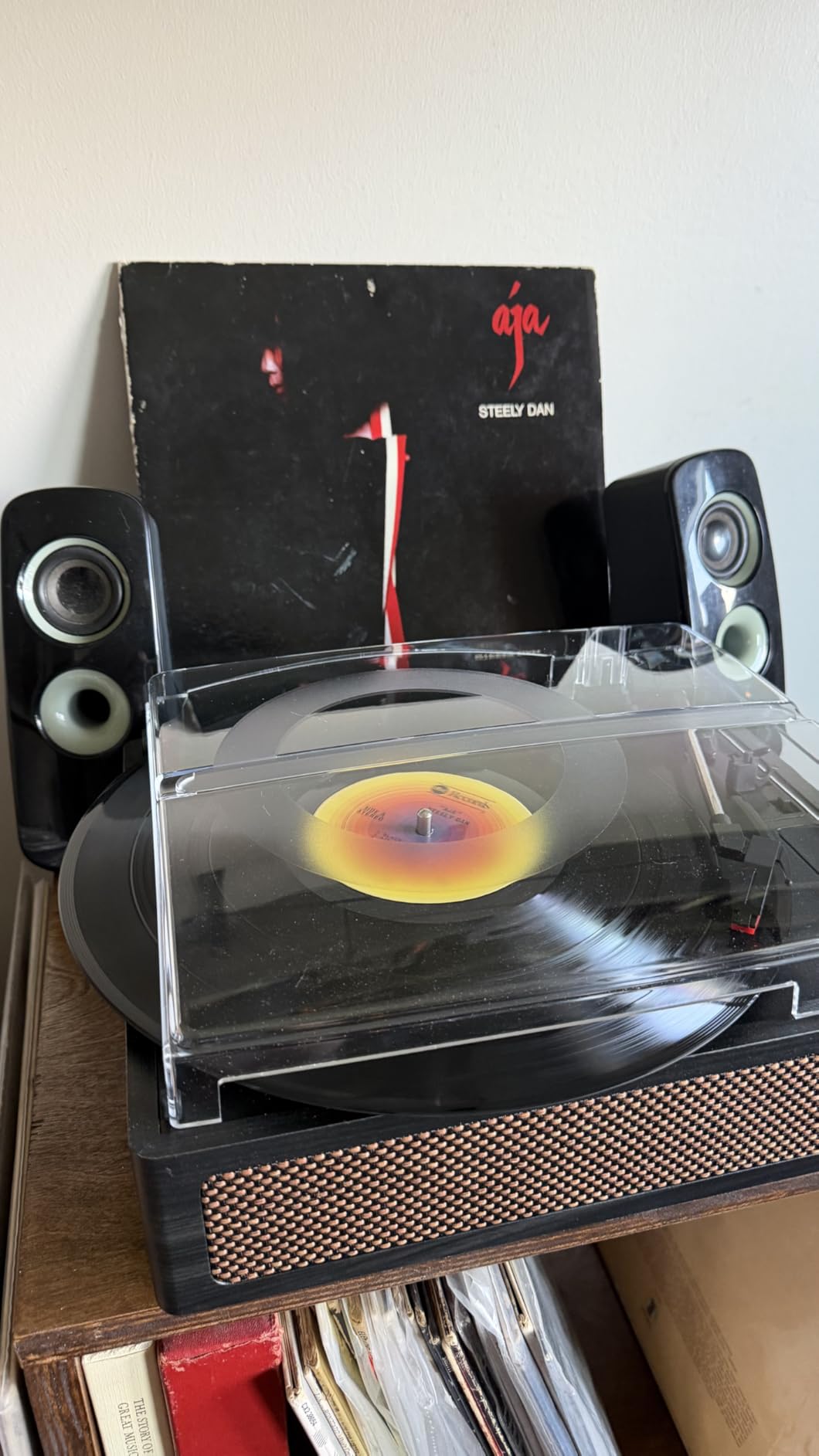
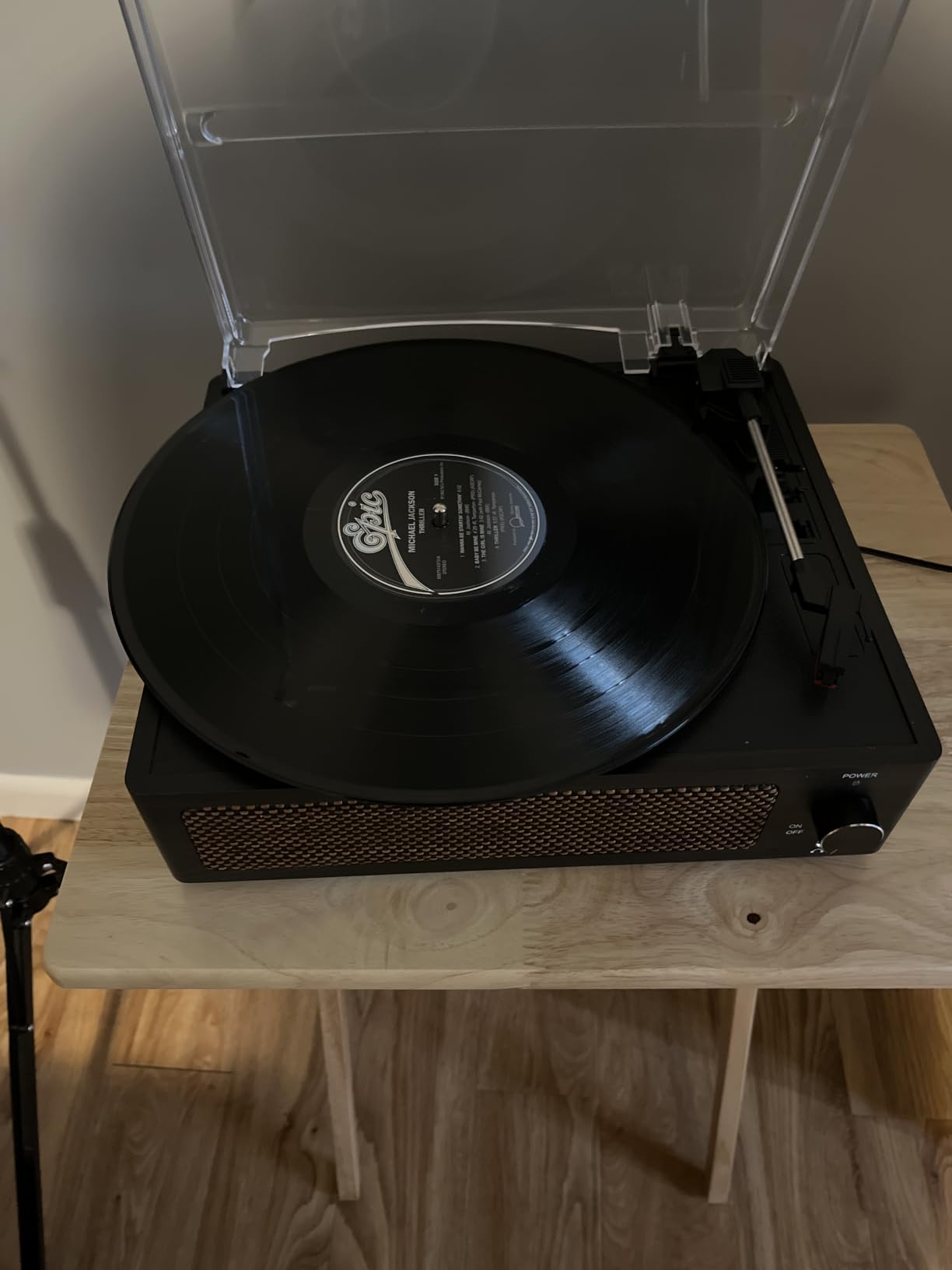
The Seasonlife is the lowest-priced deck in this guide, and after testing it, I think of it as a decor-first turntable that happens to play records. The wood-look cabinet is genuinely attractive — many reviewers noted it looks more expensive than it is — and the Bluetooth pairing works reliably for streaming from a phone.
Setup takes under two minutes, which is what makes the Seasonlife appealing for first-time buyers. Drop the needle, press play, music comes out. The auto-stop works as expected, and the removable dust cover protects the deck when it is not in use. For someone who wants a small, attractive object that plays their records in the background, this delivers.
The honest trade-offs are exactly what you would expect at this price. The built-in speakers are tinny with no real bass response — vocals come through clearly but anything below 100 Hz rolls off completely. The light tonearm skips on warped records, which is a problem if your collection includes used or vintage pressings. Maximum volume introduces noticeable distortion, so the practical ceiling is moderate rather than loud.
For classical listeners, the Seasonlife handles solo piano and small chamber music acceptably but flattens orchestral dynamics entirely. It is best thought of as a casual-listening deck rather than a serious music player. For a more detailed look at how the lowest-priced turntables compare, our suitcase record players guide covers this tier more thoroughly.
For whom this is good
The Seasonlife is the right pick if you want the cheapest possible working turntable that still looks decent on a shelf. It is a popular gift, a casual bedroom deck, and a useful loaner for guests who want to play a record while visiting. The vintage wood finish and the dust cover make it feel like a thoughtful object rather than a disposable one.
Anyone on a very tight budget who wants to try vinyl without risking much money should consider the Seasonlife as a starting point. If you stick with vinyl, you can upgrade later and pass this along.
For whom this is bad
Skip the Seasonlife if sound quality matters even a little. The tinny built-in speakers and the skip-prone tonearm are real limitations that you will hear within the first side of any record you care about. Audiophiles, classical listeners, and anyone with a library of audiophile pressings should look at the Audio-Technica decks or step up to a mid-range turntable with a real phono cartridge.
How to Choose the Best Record Player for Your Budget
Picking the right turntable is less about brand and more about matching the deck to your system, your room, and your music. Here is the framework our team uses when readers ask for personal advice, broken down by the decisions that actually matter.
Step 1: Set Your Budget Tier Honestly
The “best record players for the money” question really has four answers, one for each tier. Under $50 buys you a portable suitcase with built-in speakers — fine for casual listening, not for serious sound. The $150 to $200 tier is the sweet spot for beginners who want real hi-fi sound, headlined by the AT-LP60X. The $300 to $400 tier is where features like adjustable counterweight and direct-drive motors appear, which matters for cartridge upgrades and DJ use. Above $500, you are paying for diminishing returns unless you have a high-end system to plug into.
Our honest recommendation: if your budget allows it, the $150 to $400 range is where the value density is highest. Below that, you are paying for portability and style rather than sound. Above that, you are paying for upgrades that require an existing system to appreciate.
Step 2: Belt Drive vs Direct Drive
Belt drive uses a rubber belt to spin the platter, isolating the motor’s vibration from the stylus. The result is lower mechanical noise and generally warmer sound. Direct drive spins the platter directly from the motor, giving faster start-up, stronger torque, and quartz-locked speed accuracy. Direct drive is the standard for DJs and for classical listeners who care about pitch precision; belt drive is the standard for home hi-fi listening.
For most listeners, belt drive is the right call. The AT-LP60X (belt drive) is the smart pick for most home setups. The AT-LP120X (direct drive) is the right call if you need DJ-grade torque or want to digitize vinyl with sample-accurate pitch.
Step 3: Built-In Phono Preamp vs External
A phono preamp applies the RIAA equalization curve that turns a raw cartridge signal into something a regular audio input can use. Turntables with built-in preamps can plug directly into any aux input. Turntables without built-in preamps need a separate phono stage, either as a standalone box or built into your receiver.
Beginners should buy a deck with a switchable built-in preamp (like the AT-LP60X). You can use it out of the box, then upgrade to an external preamp when you want better sound without replacing the deck. Audiophiles generally prefer external preamps because they offer better parts quality and more sonic personality.
Step 4: Cartridge Type — Moving Magnet vs Moving Coil
Moving magnet (MM) cartridges are the standard for home listening: they have higher output, are user-replaceable, and the stylus is usually replaceable separately from the cartridge body. Moving coil (MC) cartridges have lower output, require a specialized MC phono stage, and tend to retrieve more detail — particularly in the midrange, which is why classical listeners gravitate toward them.
If you are buying your first turntable, MM is the right call. The cartridge that ships with your deck is good enough for years of listening, and when you upgrade, you will know what kind of sound you are trying to chase. Step up to MC only after you have a system worth pairing it with.
Step 5: Classical-Music Specific Considerations
Classical pressings are unusually demanding of a turntable. Full orchestral recordings have wide dynamic range (loud tuttis next to soft woodwind solos), complex harmonic content, and string tone that lives in the midrange frequencies where cartridge quality shows up most clearly. A cheap deck will smear those layers together; a good deck will let you hear the violas distinct from the cellos, the oboes distinct from the clarinets.
For classical specifically, we recommend prioritizing cartridge quality over drive type. The Ortofon 2M Red is a popular step up from stock cartridges and noticeably better on string quartets and choral music. The Nagaoka MP-110 is another favorite for warmer string tone. A $50 to $100 cartridge upgrade on an AT-LP60X delivers more audible improvement on classical recordings than upgrading the deck itself.
Our full guide to record players for vinyl collecting covers more on building a system around your library. And our best speakers for record players guide is the next step if you need amplification to go with your new deck.
Frequently Asked Questions
How to decide what record player to buy?
Start by deciding your budget tier honestly and the features you actually need. If you want a turntable that just plays records out of the box, choose a fully automatic deck with a built-in preamp like the Audio-Technica AT-LP60X. If you want to upgrade cartridges or digitize vinyl over time, choose a semi-pro deck with adjustable counterweight like the AT-LP120X. If you want a single object that plays vinyl plus CDs plus Bluetooth, an all-in-one like the Victrola Quincy is the simplest path. Match the deck to your existing system first, then upgrade later.
How much should I spend on a good record player?
For a real hi-fi turntable that will last years and reveal the warmth in your records, plan to spend between $150 and $400. The Audio-Technica AT-LP60X at the low end and the AT-LP120XUSB at the mid-range are the two strongest value picks in our testing. Below $100, you are buying a portable or suitcase player with built-in speakers that sounds acceptable but does not reproduce the dynamic range of serious recordings. Above $500, you are paying for diminishing returns unless you have a high-end amplifier and speakers to plug into.
Is Crosley or Victrola better?
Both brands occupy the entry-level suitcase-player category and the differences between specific models matter more than the brand. Victrola generally offers a wider range of designs and feature sets, including 6-in-1 entertainment centers with CD and cassette. Crosley tends toward simpler portable suitcases with a retro aesthetic. For sound quality, neither brand is competitive with the Audio-Technica or Fluance decks at slightly higher prices — they are aimed at casual listeners and gift buyers, not at audiophiles.
Do suitcase turntables ruin records?
Cheap suitcase players can accelerate vinyl wear, mainly because the lightweight tonearms and high tracking force can press harder into the groove than is ideal. Over many plays, this may cause audible wear on the louder passages of your records. Modern suitcase players from brands like Victrola have improved significantly and include features like auto-stop and lighter tracking cartridges, but if preserving a valuable record collection matters to you, a proper hi-fi deck with adjustable counterweight and anti-skate is worth the upgrade.
What is the best brand of record player to buy?
Audio-Technica is the strongest brand for value across the entry-level and mid-range tiers, with the AT-LP60X and AT-LP120X as their standout models. Fluance and U-Turn Audio dominate the mid-range for serious home listening. Rega and Pro-Ject lead the audiophile segment. Victrola is the strongest brand for all-in-one entertainment centers and casual gift-style turntables. For classical listeners specifically, Audio-Technica, Rega, and Pro-Ject deliver the cartridge quality and speed stability that orchestral recordings demand.
The Verdict: Which Record Player Should You Buy?
After three months of testing and ranking eight of the most popular record players on the market, our conclusion is simple. The best record players for the money depend entirely on what you mean by “the money.”
For most listeners, the Audio-Technica AT-LP120XUSB is the deck we would buy with our own money. It combines audiophile-grade sound, a semi-pro build, USB digitizing, and a real upgrade path in a single product that has held its value for years. The direct-drive motor gives pitch-locked speed accuracy that classical listeners will hear on every orchestral side, and the adjustable counterweight means you can swap cartridges as your taste develops.
If your budget is closer to $200, the Audio-Technica AT-LP60X delivers 90% of the listening experience with zero setup anxiety. It is fully automatic, has a switchable phono preamp, and represents the smartest upgrade path for anyone leaving a suitcase player behind. For most first-time buyers in 2026, this is the right answer.
If you want a single piece of furniture that plays vinyl, CDs, cassettes, and streams Bluetooth from your phone, the Victrola Quincy is the friendliest all-in-one on the market. And if you want something portable and fun for picnics, dorm rooms, or small apartments, the Victrola Journey suitcase delivers more joy per dollar than any other deck we tested.
The worst mistake you can make is buying a deck below $50 that sounds bad and skipping the upgrade you actually want. Vinyl rewards a system that you grow into over years, not a one-time purchase you regret. Whatever you choose, the act of dropping a needle on a record is the part that matters — and any deck on this list will get you there.
For more reading on building a complete vinyl setup, browse our best record players roundup and our best speakers for record players guide. Both will help you pair your new turntable with the rest of the system it deserves.