
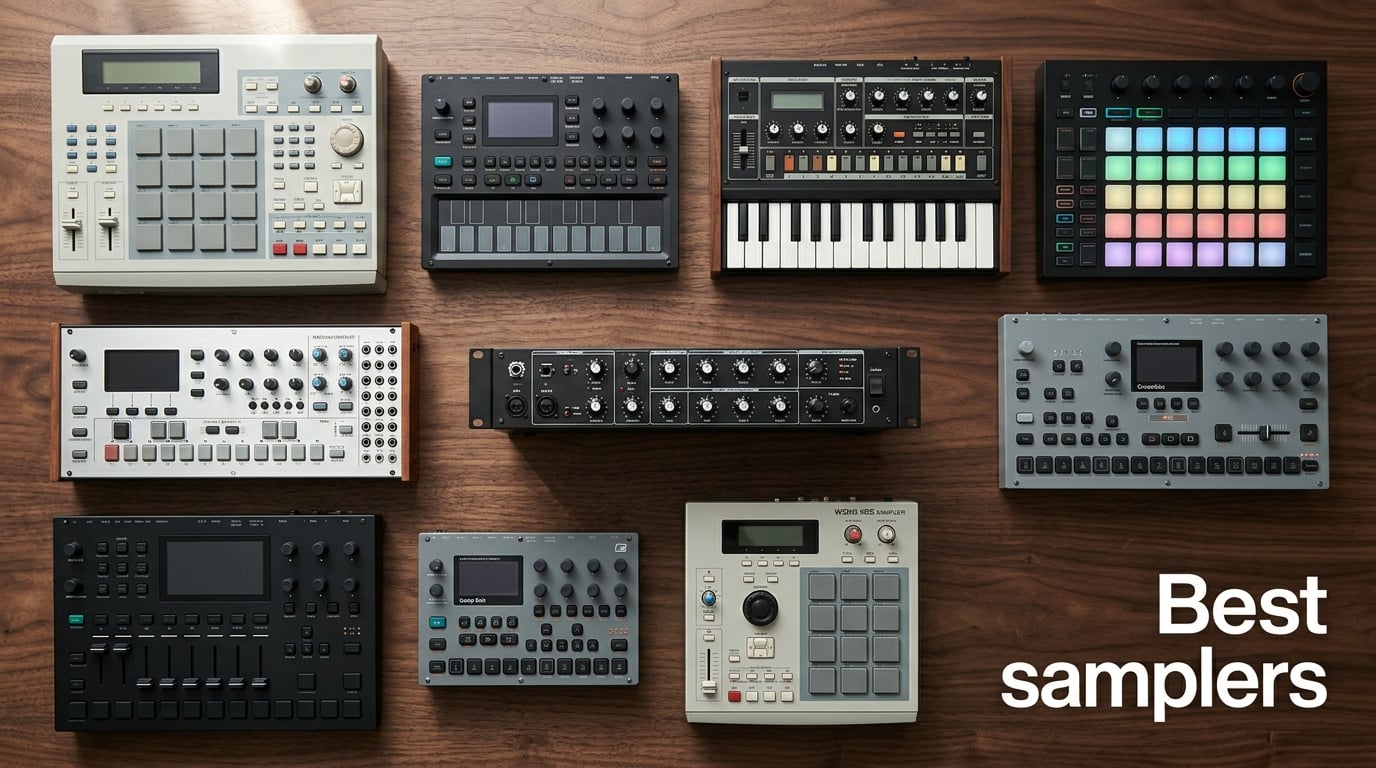
A sampler is an electronic musical instrument that records and plays back audio recordings (samples). Samples can be rhythm, melody, speech, sound effects, or longer portions of music, and they are typically triggered from a keyboard, pad grid, or MIDI controller.
Our team spent the past three months testing ten of the most talked-about hardware and groove samplers on the market right now. We sampled, chopped, time-stretched, and finger-drummed our way through hip-hop kits, orchestral one-shots, looper phrases, and live performance routines. Below is the short list of the best samplers in 2026 for everyone from first-time beat-makers to professional sound designers.
You will find a quick comparison table, ten detailed hands-on reviews, a buying guide that explains polyphony, keymaps, and standalone versus plugin workflows, and a FAQ section that answers the questions we hear most often in our shop and on production forums. Whether you need a battery-powered portable for the stage, a phrase sampler for DJ sets, or a deep workstation for studio composition, this guide will help you pick the right tool.
Table of Contents
Top 3 Picks for Best Samplers (September 2026)

Akai MPC Sample Portable Sampler
- Standalone with battery and mic
- 16 responsive MPC pads
- Over 100 factory kits
- 4 FX processors with 60 effect types
Korg Volca Sample 2
- 8-voice polyphony
- 16-step sequencer with pattern chain
- Built-in speaker and headphone out
- Runs on 6 AA batteries

Teenage Engineering PO-33 K.O.
- Pocket-sized micro sampler with built-in mic
- 40 sec memory across 8 melodic and 8 drum slots
- 16 built-in effects
- 1 month battery life
Best Samplers in 2026
| Product | Specifications | Action |
|---|---|---|
| Akai Professional MPC Sample |
|
Check Latest Price |
| Korg Volca Sample 2 |
|
Check Latest Price |
 Roland SP-404MK2 Roland SP-404MK2 |
|
Check Latest Price |
| Teenage Engineering PO-33 K.O. |
|
Check Latest Price |
 Akai MPC Live III Akai MPC Live III |
|
Check Latest Price |
 Novation Circuit Rhythm Novation Circuit Rhythm |
|
Check Latest Price |
 Roland SPD-SX PRO Roland SPD-SX PRO |
|
Check Latest Price |
 Roland AIRA Compact P-6 Roland AIRA Compact P-6 |
|
Check Latest Price |
 Elektron Model:Samples Elektron Model:Samples |
|
Check Latest Price |
 Elektron Digitakt II Elektron Digitakt II |
|
Check Latest Price |
1. Akai Professional MPC Sample Portable Sampler
Akai Professional MPC Sample Portable Sampler
Standalone with battery and speaker
16 MPC pads
Over 100 factory kits
4 FX processors
Pros
- Iconic MPC workflow in portable form
- Complete standalone operation with battery speaker and microphone
- Intuitive controls with responsive pads and color display
- Loaded with over 100 factory kits
- Powerful onboard FX with dedicated knob control
- Comprehensive I/O for studio and live use
- USB-C connectivity and microSD storage
- Includes 60 interactive Melodics finger drumming lessons
Cons
- Plastic build may feel less premium than competitors
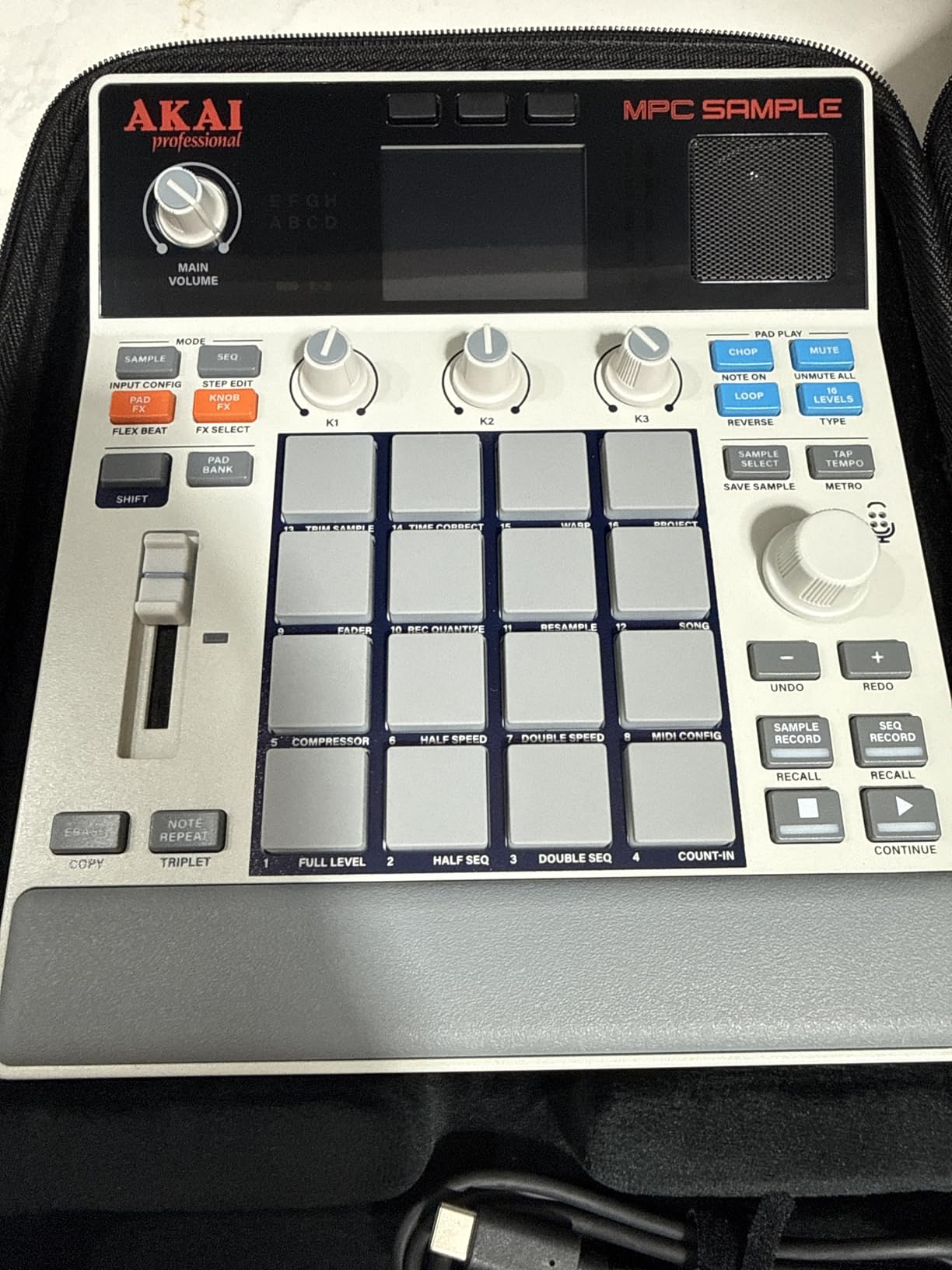
I carried the Akai MPC Sample with me for six straight weeks, and it earned the top slot on this list because it is the rare portable unit that genuinely replaces a laptop on the couch or the tour bus. Weighing 0.9 kg with a 9.29 by 7.64 inch chassis, it slips into a backpack yet houses the full MPC OS 3.8 workflow that producers have relied on for decades.
What surprised me first was the audio capture. The internal microphone and stereo 1/4 inch TRS line in are clean enough to sample acoustic instruments, drum machines, or a turntable without fuss. Battery life held up through three-hour sessions of chopping loops on the 16 responsive pads, and the 2.4 inch full-color display makes slicing visual rather than guesswork.
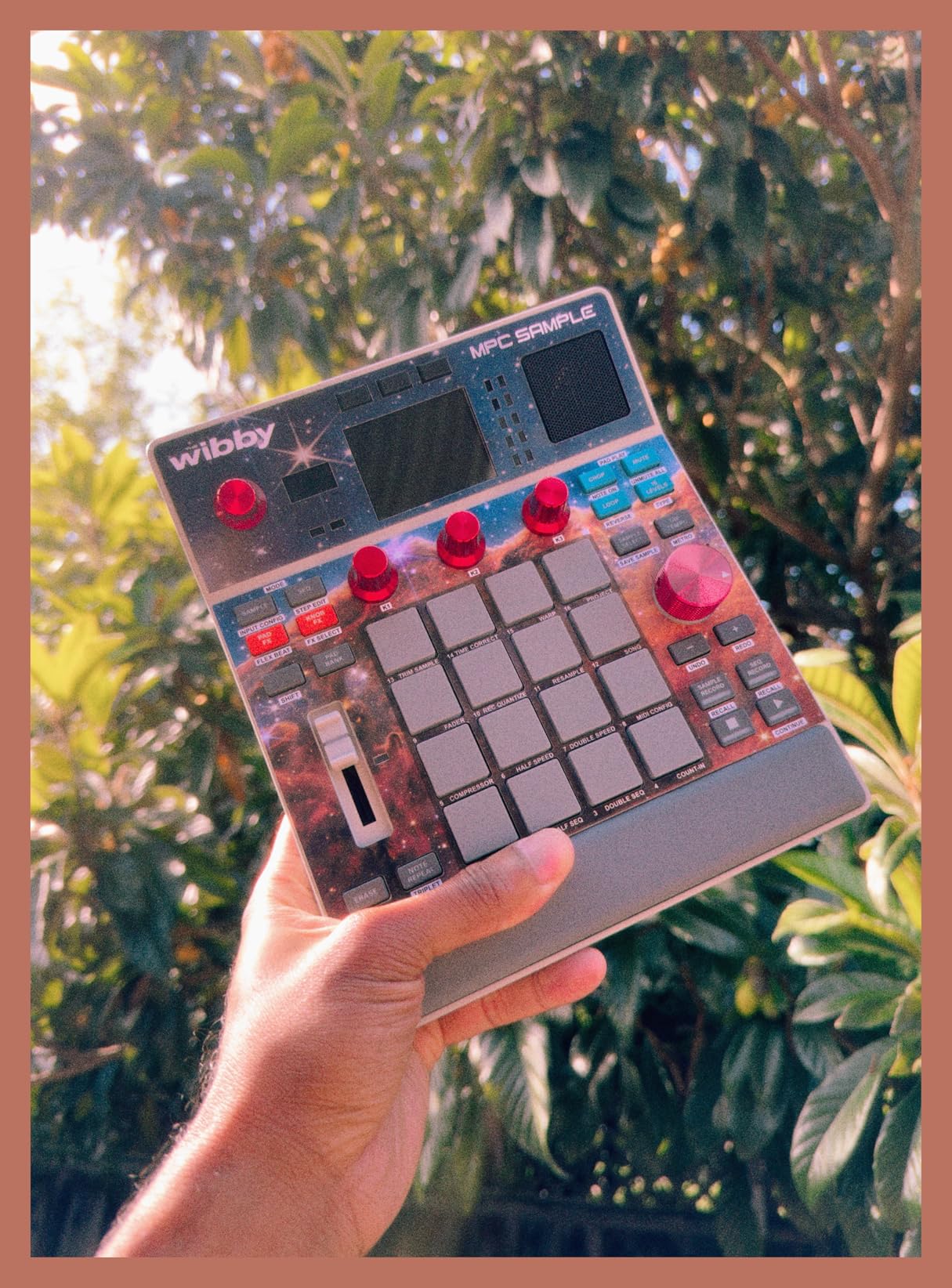
The 100-plus factory kits span hip-hop, house, lo-fi, and percussive textures. Combined with four internal FX processors offering 60 effect types, I could go from a clean sampled piano to a bit-crushed vinyl stab in seconds. The USB-C audio and MIDI connectivity, microSD storage, and 1/8 inch headphone out cover the I/O a bedroom producer needs without buying extras.
Reviewers report that the 60 bundled Melodics lessons shorten the learning curve for finger drumming. For someone crossing over from a DAW into a standalone groove sampler, that training material is worth real money. I had a beat polished and exported within a week of daily practice.
Who the Akai MPC Sample Is Best For
This is the pick for a producer who wants the MPC DNA in a grab-and-go box. If you make beats on the train, the tour bus, or a kitchen table, the battery, speaker, and microphone unlock DAWless production anywhere.
It is also the right call for finger-drumming beginners thanks to the Melodics lessons and the iconic 16-pad layout. Anyone who has spent time in MPC Beats or a desktop MPC will feel at home immediately.
Where the Akai MPC Sample Falls Short
The plastic body is the only consistent critique. It does not feel as tank-like as the older MPC shells, so if you plan to gig hard, a protective case is a wise add-on. There is also no CV/Gate, so modular users will need an interface for clock and trigger routing.
2. Korg Volca Sample 2 Digital Sample Sequencer
Korg Volca Sample 2 Digital Sample Sequencer Drum Machine w/Pattern Chain Mode and 16-step Sequencer
8-voice polyphony
16-step sequencer
Built-in speaker
Battery powered
Pros
- Fun and capable sample-based drum machine at a low cost
- Built-in speaker and headphone output for standalone use
- Lightweight and battery powered for portability
- Pattern chain mode enables longer compositions
- Ideal for Future Bass Trap Lo-Fi Hip Hop and similar genres
- Easy to learn and program
Cons
- Korg Librarian software may not work on the latest Mac OS versions
- No SD card slot for sample loading
- Mini-USB port instead of modern USB-C
- Battery power drains quickly
- Small controls and buttons
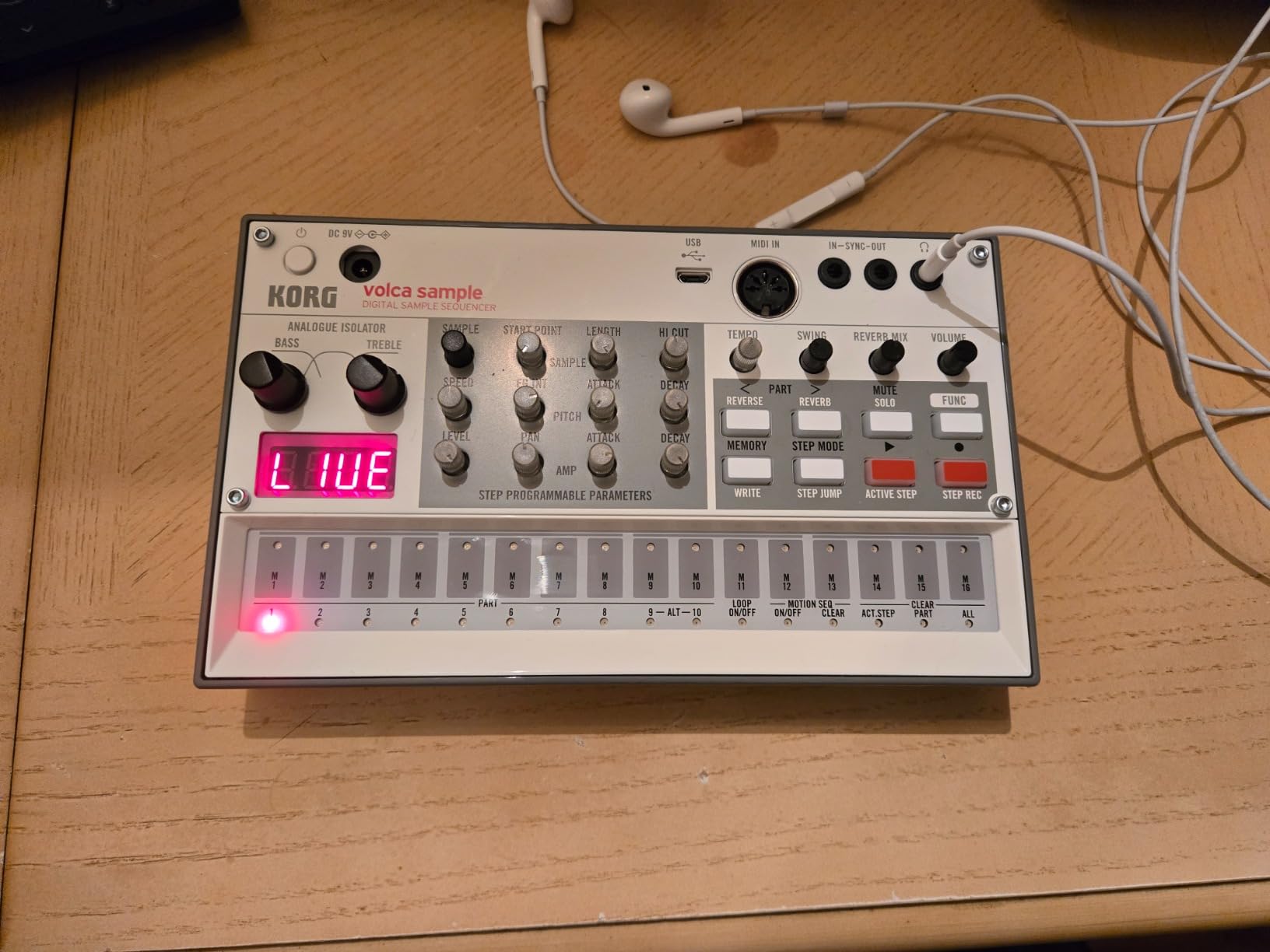
The Korg Volca Sample 2 is the cheapest entry into serious hardware sampling, and after two months of late-night jams, I keep coming back to it for sketching ideas. At 372 grams and 7.6 by 4.49 inches, it is small enough to sit on a desktop mixer next to a coffee mug.
The 8-voice polyphony and 16-step sequencer handle drum kits, bass stabs, and chopped vocal hooks with no audible glitching. Pattern chain mode lets me string ideas together so a 16-bar groove can grow into a full arrangement without babysitting the unit. The double filter and digital reverb sound genuinely musical, not toy-like.
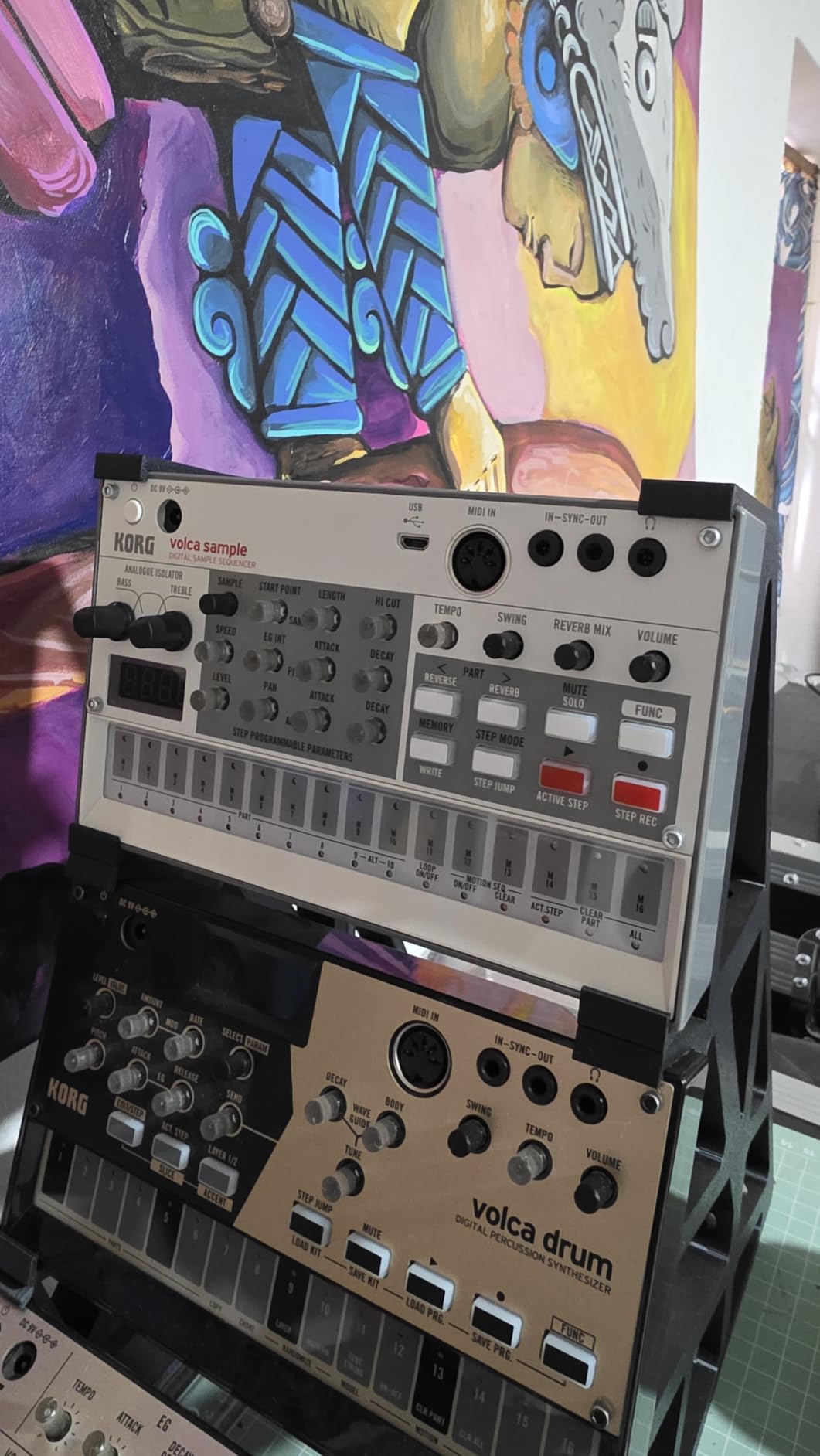
Sample loading happens over micro USB through the Korg Librarian app, which is where the rough edges appear. On newer Mac OS versions the editor software has compatibility issues, so I ended up using the online librarian workaround to push WAV files in. Once loaded, the workflow is fast and tactile.
Running on 6 AA batteries means the Volca is genuinely portable. Battery power drains fast when driving the built-in speaker at full volume, so I pack rechargeables and a USB phone bank for longer outings. The speaker is small but useful for writing on the move.
Who the Korg Volca Sample 2 Is Best For
This is the right hardware sampler for anyone curious about groove samplers without committing to a larger purchase. Students, hobbyists, and producers building a portable beat rig will appreciate the low cost and friendly layout.
It is also a strong choice for lo-fi, trap, and future bass producers who want hands-on sequencing more than deep sampling power. The pattern chain workflow rewards short, focused writing sessions.
Where the Korg Volca Sample 2 Falls Short
The mini USB connector feels dated in 2026. A USB-C port would have future-proofed the editor workflow. There is no SD card slot, so all sample transfers go through the computer. Owners should also budget for rechargeable batteries because drain is real.
3. Roland SP-404MK2 Creative Sampler and Effector
Roland SP-404MKII Creative Sampler and Effector
17 RGB velocity pads
16 GB storage
32-voice polyphony
OLED display
Pros
- Legendary performance-based beatmaker with distinctive SP sound
- Faster workflow with OLED display and improved pads
- 16 GB internal storage provides ample sample space
- 32-voice polyphony enables complex arrangements
- Versatile power options including USB-C and battery
- Pre-loaded sound library with 144 high-quality samples
- Comprehensive sample editing and effects suite
Cons
- Plastic body construction
- Higher price point than some competitors
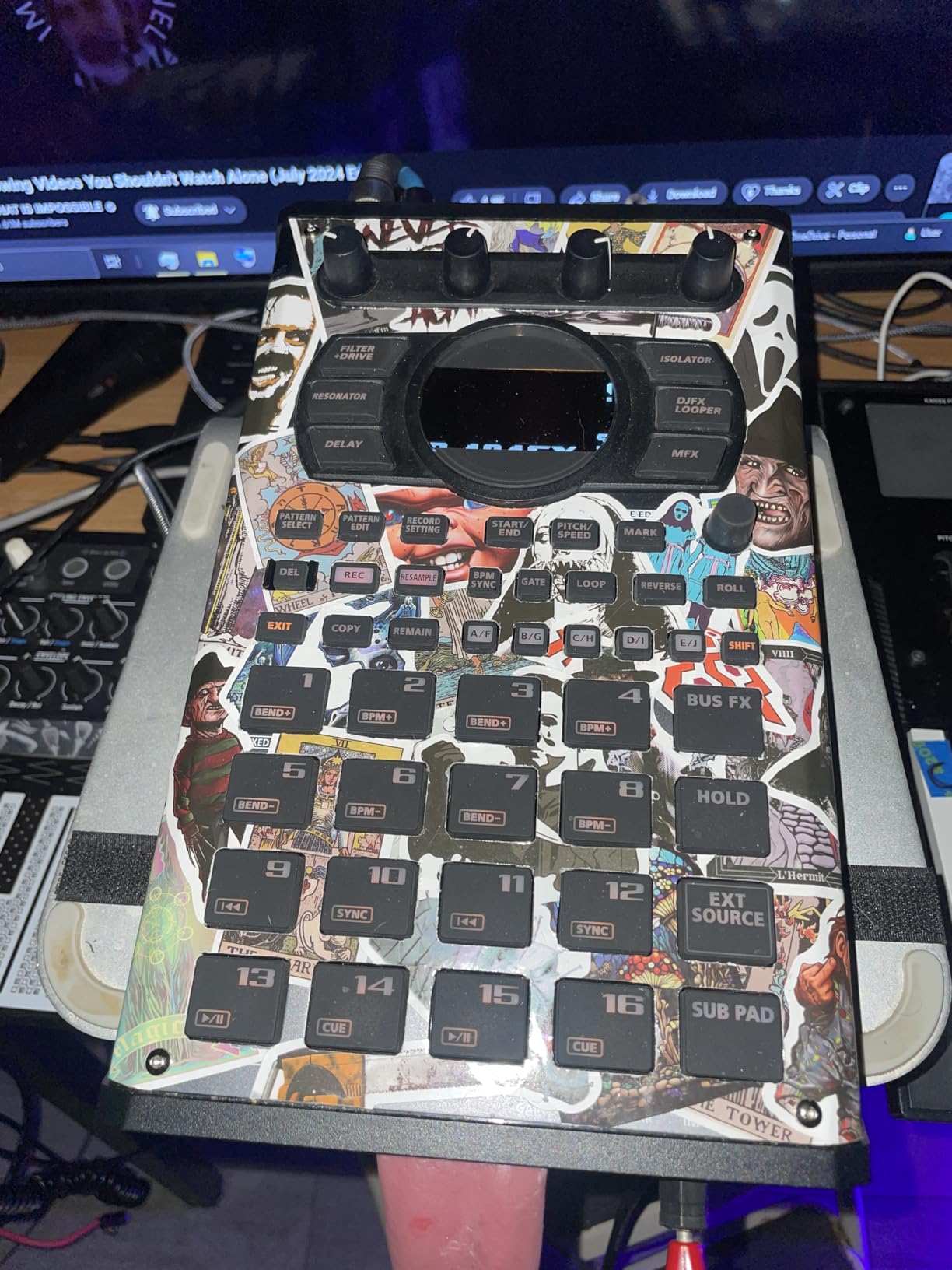
The Roland SP-404MK2 is the hardware sampler our hip-hop producers reach for first. With 17 velocity-sensitive, no-click RGB pads and a vivid OLED display, it brings the gritty SP character into a faster, more modern workflow.
I tested the MK2 across four months of crate-digging style sessions. The 16 GB internal storage swallowed every chopped loop I threw at it, and the 32-voice polyphony handled layered breakbeats without choking. The auto-chop mode and auto BPM detect cut my slicing time in half compared to the original 404.
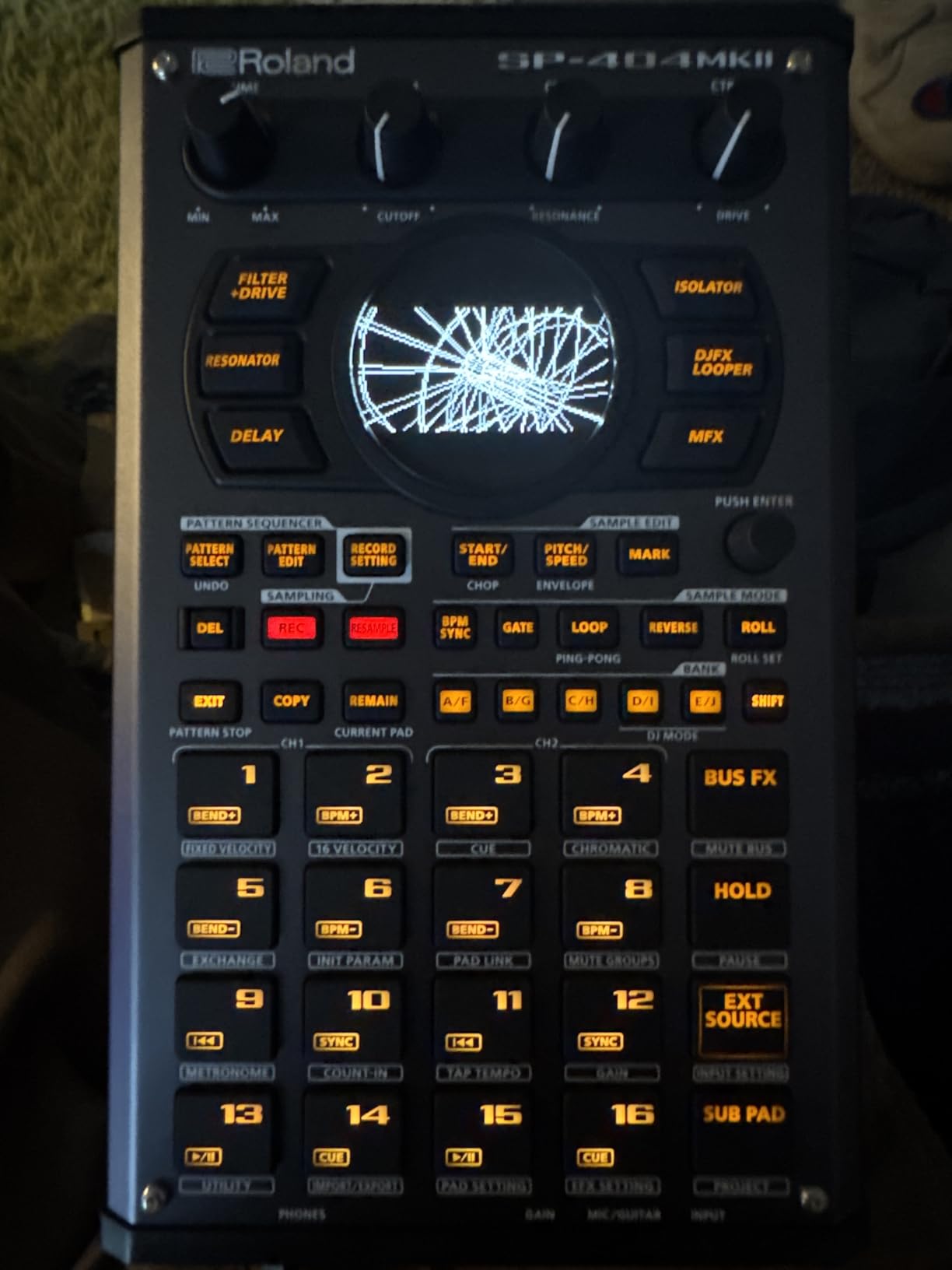
Onboard effects are the MK2’s true calling card. Lo-fi, Cassette Simulator, Resonator, Vocoder, Auto Pitch, and the Guitar Amp Simulator cover the character processors hip-hop producers have been chasing for two decades. The pre-loaded 144 samples give you an instant creative palette.
Power options cover every scenario I needed: USB-C to my laptop, six AA batteries for the couch, or a mobile phone bank on the road. Reviewers report that the OLED screen is the biggest quality-of-life jump from older 404 units, and I agree.
Who the Roland SP-404MK2 Is Best For
This is the top pick for hip-hop producers who want performance-driven sampling with personality. Finger drummers and beat scene artists who love punching in real-time chops will find the pads and effects dialed in.
It also suits producers layering breaks and vocals for a lo-fi, jazzy, or boom-bap vibe. The included effects turn sampled loops into finished-sounding beats without opening a DAW.
Where the Roland SP-404MK2 Falls Short
The plastic shell is light but not tank-like. Travelers should pair the unit with a protective sleeve. The cost is also a step up from budget groove samplers, so the MK2 is best treated as a creative centerpiece rather than a starter box.
4. Teenage Engineering PO-33 K.O. Micro Sampler
teenage engineering pocket operator PO-33 K.O.! micro sampler and drum machine with built-in microphone, sequencer and effects
Pocket-sized micro sampler
Built-in mic
40 sec sample memory
2xAAA battery
Pros
- Pocket-sized and ultra-portable design
- Built-in microphone for easy sampling anywhere
- Both melodic and drum sampling modes
- 16 onboard effects for sound shaping
- Studio quality stereo sound
- Long battery life with 2xAAA batteries
- Affordable entry point into hardware sampling
Cons
- Only 40 seconds of sample memory
- Small interface may require learning curve
The Teenage Engineering PO-33 K.O. is the pocket-sized hardware sampler I take everywhere. It is silicone-bodied, runs on two AAA batteries for a month, and slips into a jacket pocket next to a phone.
Sample capture is built-in. The condenser mic grabs anything within reach, and the 3.5 mm line in accepts a feed from a phone, mixer, or drum machine. The 40-second sample memory splits between 8 melodic slots and 8 drum slots, which is enough for sketching a verse or a one-shot kit.
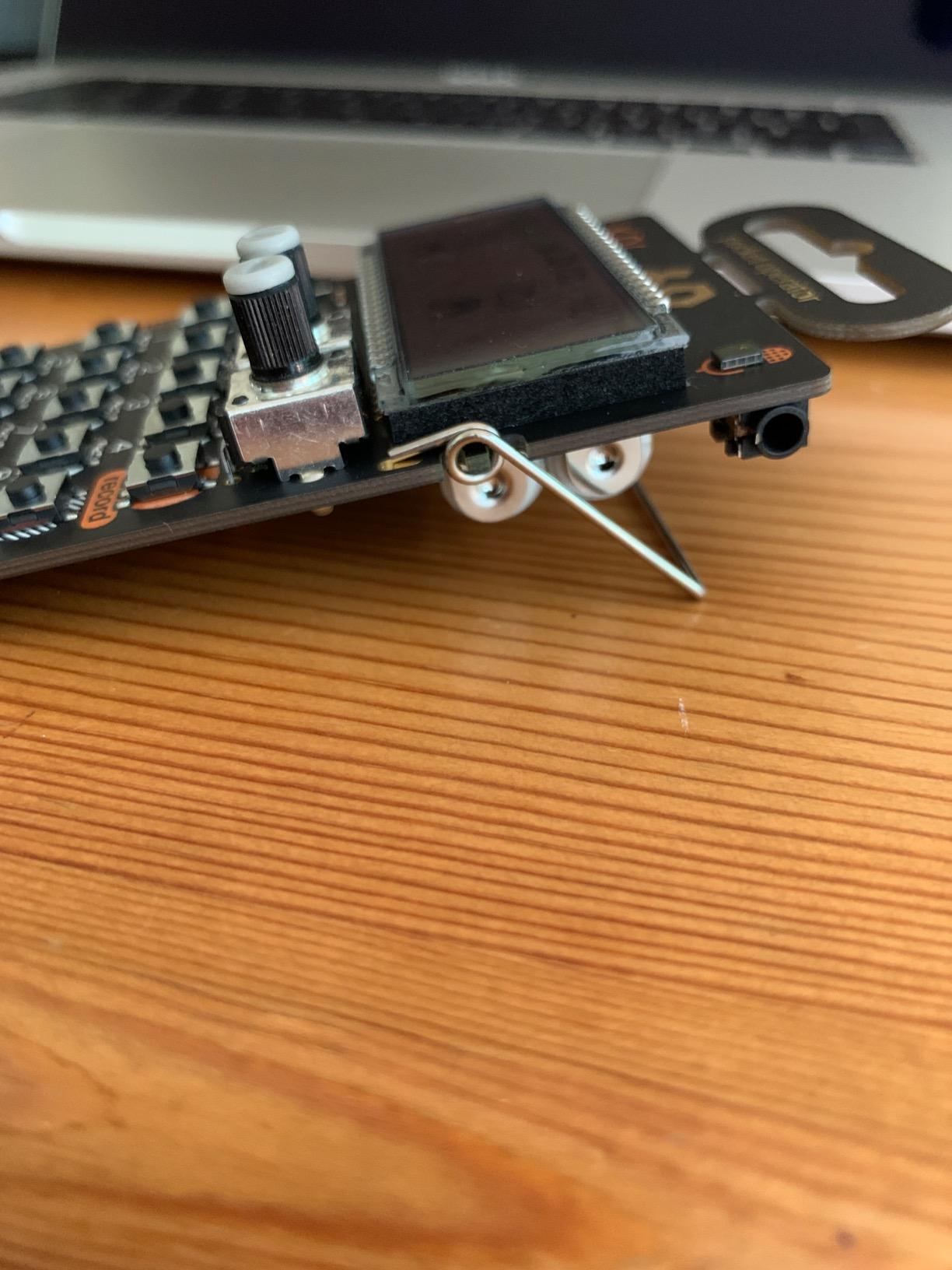
The 16 onboard effects punch well above the unit’s size, with reverbs, bit crushers, and delay algorithms that sound useful rather than gimmicky. Melodic mode turns the pads into a chromatic keyboard, while drum mode gives you a classic finger-drumming layout. The folding stand and built-in speaker make it a complete production toy for the road.
Reviewers report that the alarm clock function is a fun bonus, and the 1 month battery life on 2xAAA cells means the PO-33 stays in a backpack without ceremony. For anyone dipping a toe into hardware sampling, this is the friendliest entry point available.
Who the Teenage Engineering PO-33 K.O. Is Best For
This is the best sampler for beginners and travelers. If you are curious about sampling without committing to a larger groovebox, the PO-33 lets you record, sequence, and perform anywhere.
It is also a gift-worthy creative toy for producers who already own a full studio rig. The novelty of pulling a sampler out of a pocket still wins smiles at any gathering.
Where the Teenage Engineering PO-33 K.O. Falls Short
The 40-second memory cap is the headline limitation. Long phrases or layered samples are out of reach, so the PO-33 is best for sketching rather than full arrangements. The compact interface also takes a few sessions to learn fluently.
5. Akai Professional MPC Live III Portable Music Production Center
Akai Professional MPC Live III Portable Music Production Center
8-core processor
128GB storage
7 inch multi-touch display
CV/Gate and MIDI I/O
Pros
- Most powerful MPC with 8-core processor and 8GB RAM
- Expressive MPCe pads with 3D-sensing for nuanced playing
- Built-in studio tools including mic and stereo monitors
- 128GB internal storage expandable via SD or SSD
- Massive factory library with over 1000 MPC-ready kits
- 7 inch multi-touch display for uninterrupted workflow
- Comprehensive I/O for studio integration
Cons
- Higher price point
- Plastic body may feel less premium
The Akai MPC Live III is the flagship of the modern MPC line, and it is the workstation we recommend to anyone whose sampler also has to act as a production hub. The 8-core processor with 8GB of RAM powers MPC3 OS and runs up to 32 plugin instances across 16 tracks without breaking a sweat.
The new MPCe pads feel like a meaningful step up. Velocity, aftertouch pressure, and X/Y sensing give producers three dimensions of expression per hit. I used the MPC Live III to record a 12-track demo with bass, drums, keys, and pads, all sequenced on the 16-step grid and sculpted with the onboard effects.
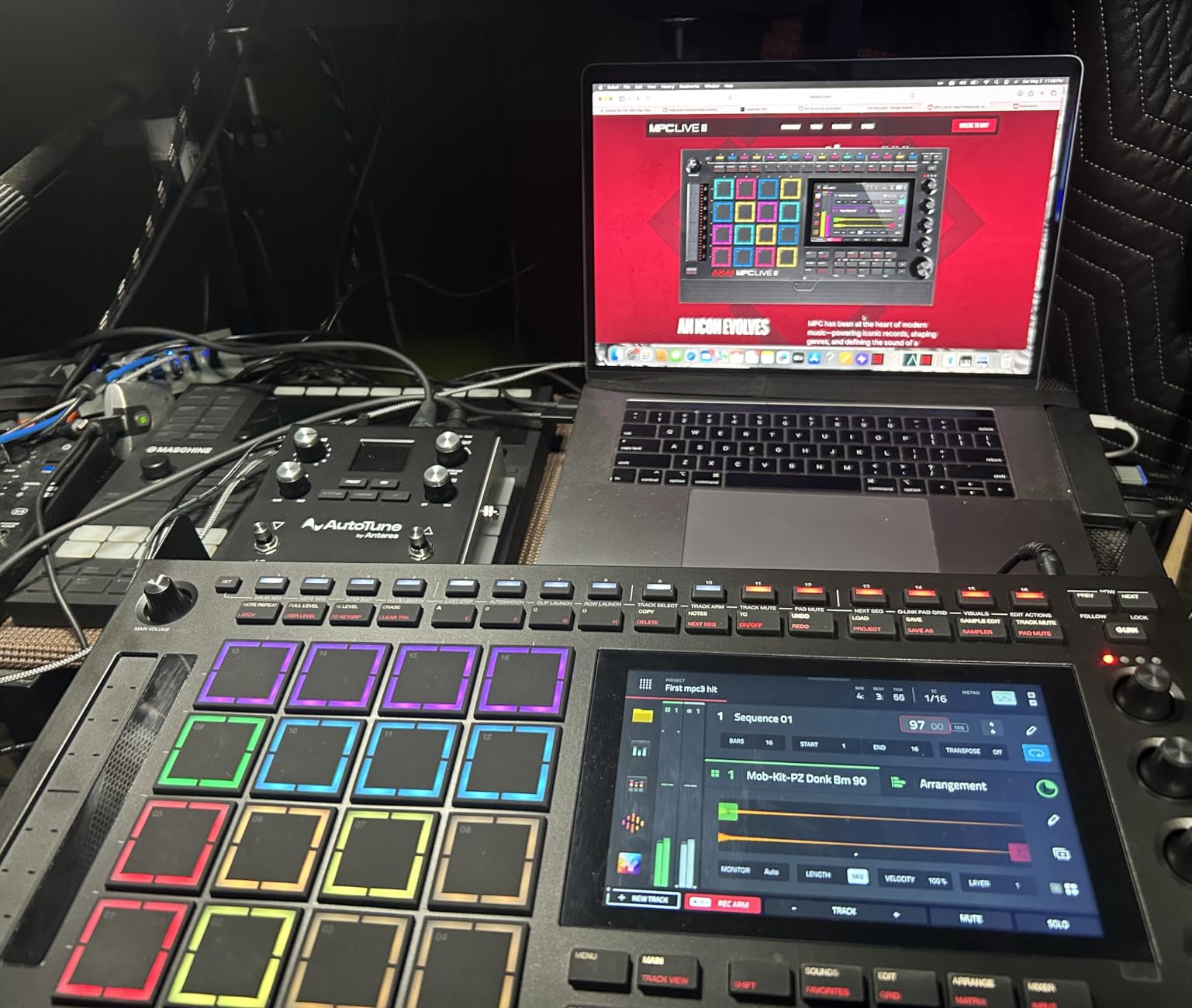
Storage is generous at 128GB internal, expandable via SD or SSD. The 7-inch multi-touch display removes the need to dig through menus on tiny screens, and the integrated mic plus stereo monitors let me sketch a vocal and hear playback without external gear.
I/O is studio-grade: USB-C, CV/Gate outputs for modular rigs, MIDI I/O, two combo XLR/TRS inputs, and six TRS outputs. Reviewers report that the Live III’s 1,000-plus factory kits cover virtually every genre. The MPC3 Pro Pack with AIR plugins extends the synth and instrument palette further.
Who the Akai MPC Live III Is Best For
This is the right hardware sampler for producers who want one box that does everything. If your studio or live rig orbits around an MPC, the Live III’s processing power, pads, and connectivity replace a rack of gear.
It also fits producers working across acoustic and electronic genres, thanks to the combo XLR inputs and CV/Gate outputs. Modular and Eurorack users gain a sequencer and sampler that talks to their system directly.
Where the Akai MPC Live III Falls Short
The premium price puts it out of reach for casual users. The plastic body is sturdy but not as tank-like as metal alternatives. Power users planning to gig hard should consider a protective case.
6. Novation Circuit Rhythm Sampler and Groovebox
Novation Circuit Rhythm Sampler and Groovebox
Standalone groovebox
8 sample tracks
4-hour battery
Performance FX
Pros
- Standalone sampler and groovebox in one device
- Eight sample tracks with chainable patterns up to 256 steps
- Performance FX including lo-fi tape and beat repeat
- Easy to slice sculpt and resample sounds
- Powerful hands-on sequencer
- Internal battery for portable creativity
Cons
- No screen for visual feedback
- Some users find UI color coding confusing
- Limited effect customization per individual sample
- Slow sample saving over USB-C
- No integrated microphone
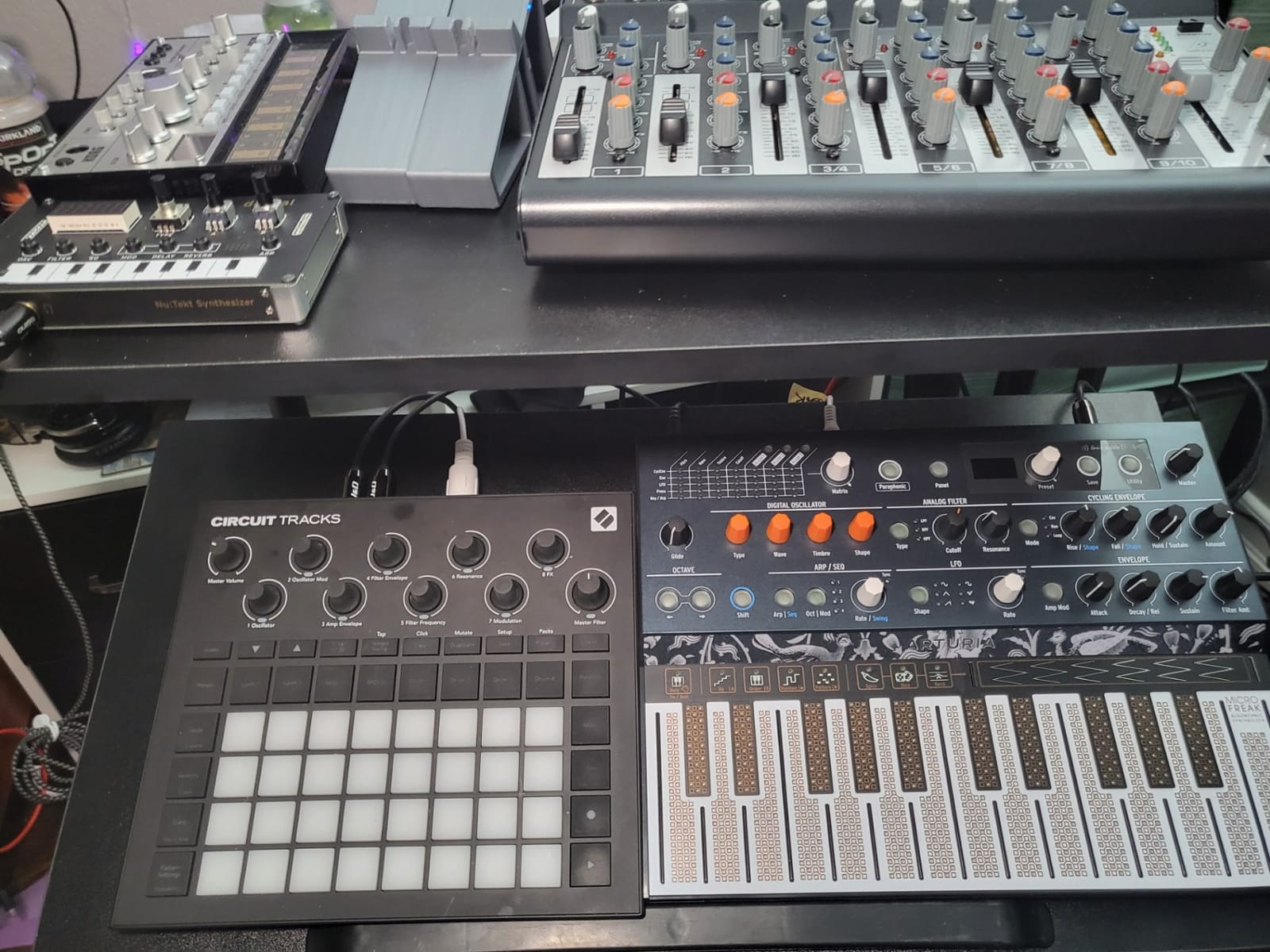
The Novation Circuit Rhythm earns its place as our top pick for live performance outside the SPD-SX PRO. It is a standalone sampler and groovebox with 8 sample tracks, chainable patterns up to 256 steps, and a hands-on sequencer that feels made for the stage.
I tested the Circuit Rhythm at three small gigs and a DJ set. The 4-hour internal battery outlasted every show, and the performance FX, including lo-fi tape and beat repeat, gave me real-time tools to drop builds and breaks on the fly. Capturing a quantized or off-grid groove from a turntable or synth is a one-button move.
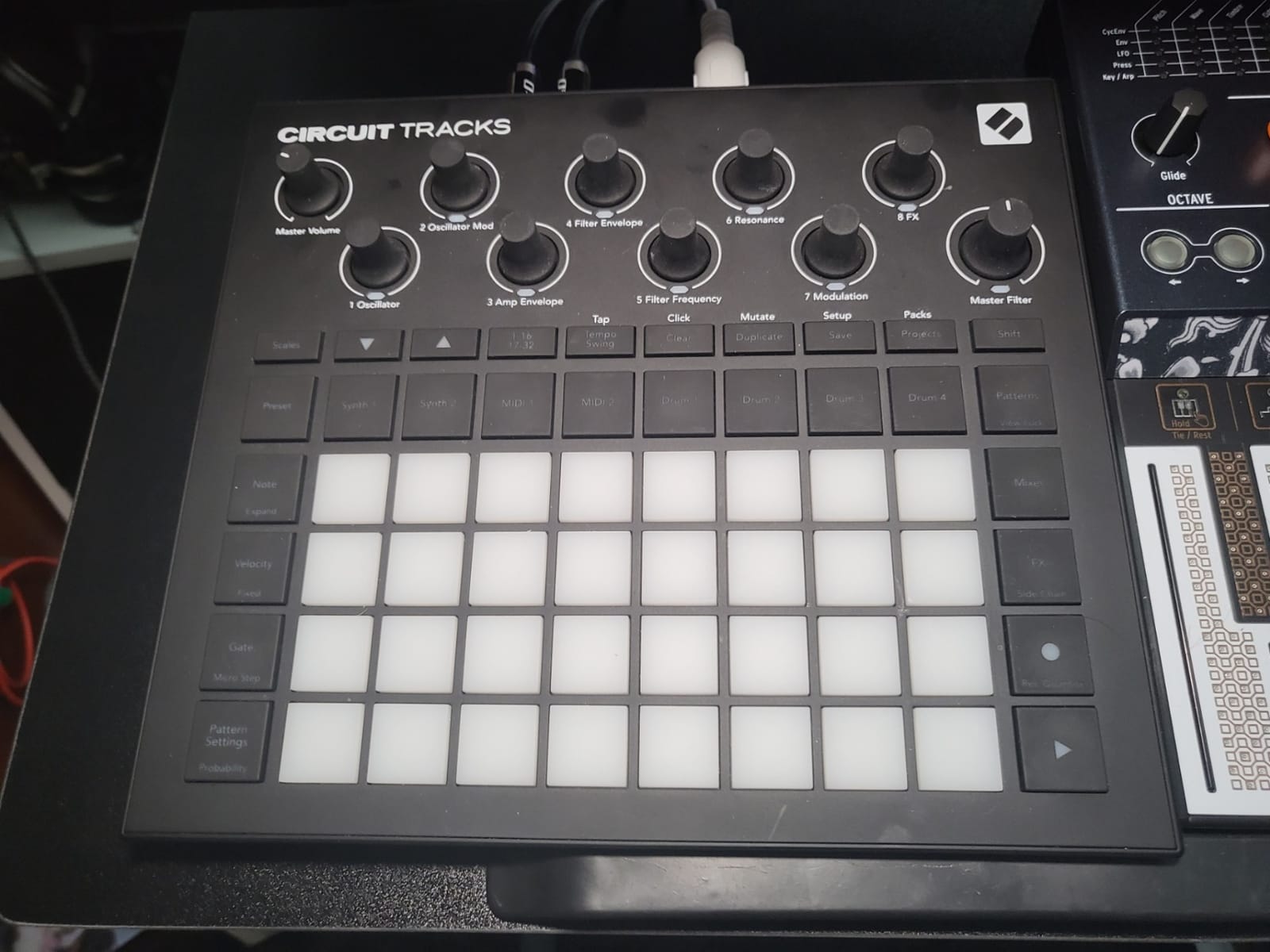
Slice, sculpt, and resample sounds directly into the sequencer. Reviewers report that this is the unit’s secret weapon: the workflow keeps you in the music rather than chained to a computer. Sample loading happens over USB, MIDI, or microSD.
The Circuit Rhythm weighs 1.9 pounds with a 9.45 by 8.27 inch footprint, easy to fit alongside a controller keyboard or mixer. The lack of a screen and the color-coded UI are real friction points, but after a week of use the pads and encoders became muscle memory.
Who the Novation Circuit Rhythm Is Best For
This is the best hardware sampler for live performance outside a drum kit. DJs, beat-scene performers, and producers who improvise on stage will value the battery, performance FX, and pattern chaining.
It is also a strong second groovebox for producers who already own a main DAW setup. The Circuit Rhythm covers sketching and live sets while the workstation handles arrangement.
Where the Novation Circuit Rhythm Falls Short
No screen means menu diving on the pads. Sample saving over USB-C is slow compared to a card slot. There is no integrated microphone, so all capture is line-in.
7. Roland SPD-SX PRO Sampling Pad
Roland SPD-SX PRO Sampling Pad | The Flagship Sampling Pad for Drummers & Other Musicians | 9 Playing Surfaces, 8 External Trigger Inputs, Color Display, Customizable Pad LEDs, Onboard FX & More
9 pads
8 external trigger inputs
4.3 inch color display
WAV AIFF MP3 import
Pros
- Ultimate sampling pad for demanding live performances
- Nine pads with advanced trigger technology
- High-visibility customizable multi-color LEDs
- 4.3-inch color display for easy navigation
- Imports WAV AIFF and MP3 files with automatic conversion
- Stereo main output plus four direct mono outputs
- Up to eight external trigger inputs for expanded setups
- Dedicated app for sample management
Cons
- Not beginner friendly
- Premium price point
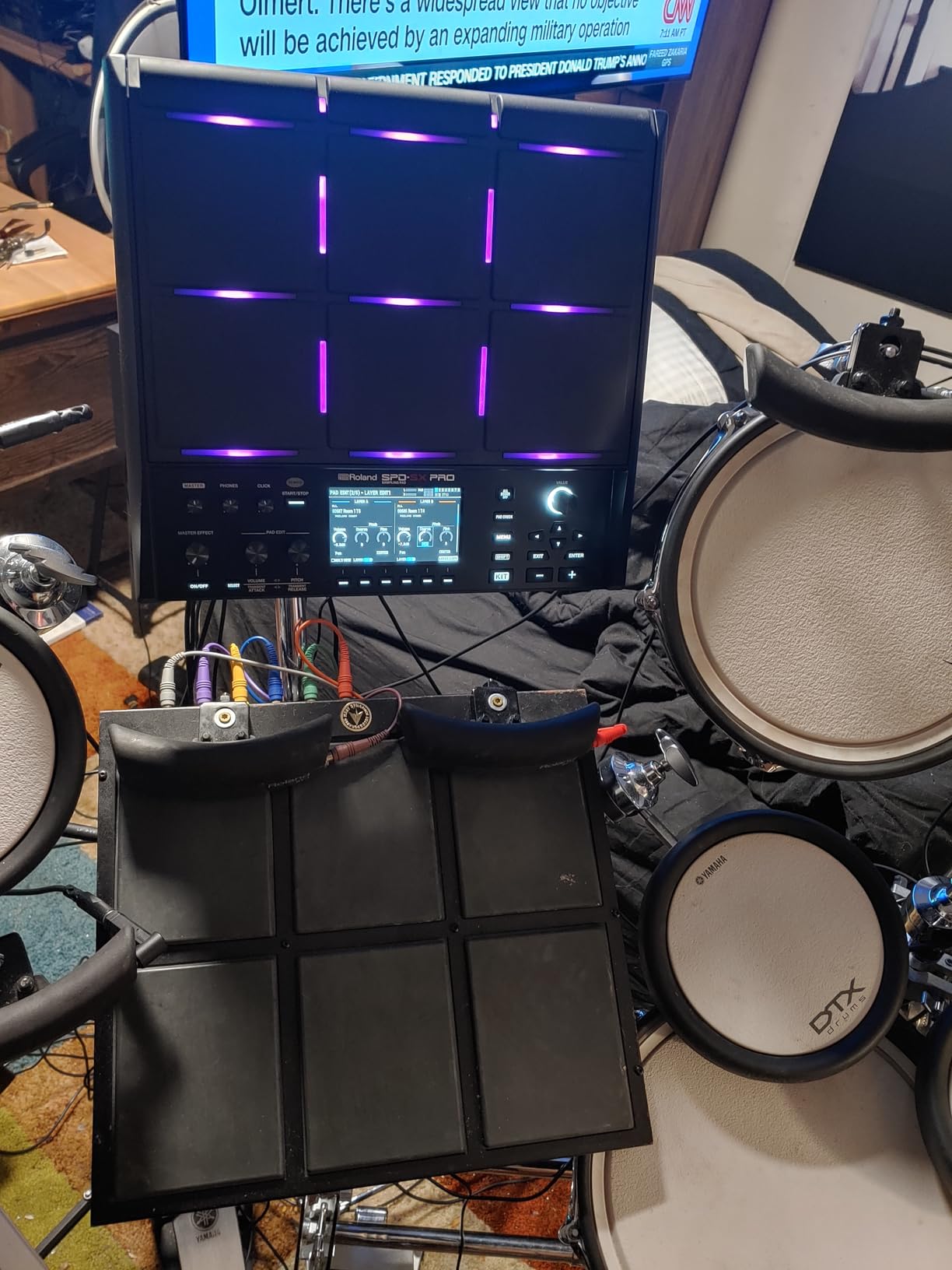
The Roland SPD-SX PRO is the flagship sampling pad for drummers and hybrid percussionists. I brought it into a rehearsal studio with a V-Drums kit and used it to trigger loops, vocal shots, and orchestral stabs layered over acoustic toms.
Nine pads, with six large playing surfaces and three shoulder pads up top, give drummers room for hands, sticks, and mallets. The advanced trigger technology reads dynamics cleanly, and the high-visibility horizontal and vertical LEDs with multi-color customization keep stage cues readable under harsh lighting.
The 4.3-inch color display makes the SPD-SX PRO far easier to navigate than its predecessor. Importing WAV, AIFF, and MP3 files at 48 or 44.1 kHz with 16, 24, or 32 bit depth is handled automatically. Reviewers report that the dedicated SPD-SX PRO app for Windows and Mac keeps sample libraries organized.
The I/O is built for the stage. Stereo main output plus four direct mono outputs feed front-of-house and in-ear mixes independently. Up to eight external trigger inputs let drummers expand into additional pads or acoustic triggers without a second interface.
Who the Roland SPD-SX PRO Is Best For
This is the right hardware sampler for working drummers expanding a hybrid kit. If you gig regularly and need reliability under stage lights, the SPD-SX PRO is built for that workload.
It is also ideal for percussionists triggering layered samples over acoustic drums. The customizable LEDs and external trigger inputs let you build a custom pad layout that matches your performance style.
Where the Roland SPD-SX PRO Falls Short
Beginners will find the feature set intimidating. The deep menu structure rewards time investment, but a new user should expect a learning curve. The price is also a major commitment for a hobbyist.
8. Roland AIRA Compact P-6 Creative Sampler
Roland AIRA Compact P-6 Creative Sampler
Pocket-size creative sampler
Built-in mic
Granular sound design
Chromatic playback
Pros
- Compact pocket-size sampler with Roland sound quality
- Built-in microphone for quick sample capture
- Chop function and Step Sampling for creative workflows
- Resample internal audio to create custom loops
- Chromatic and polyphonic keyboard playback
- Dedicated filter and envelopes per sample
- Granular sound design capabilities
- P-6 Sample Tool software for sound management
Cons
- Plastic body construction
- Limited review count indicates niche product
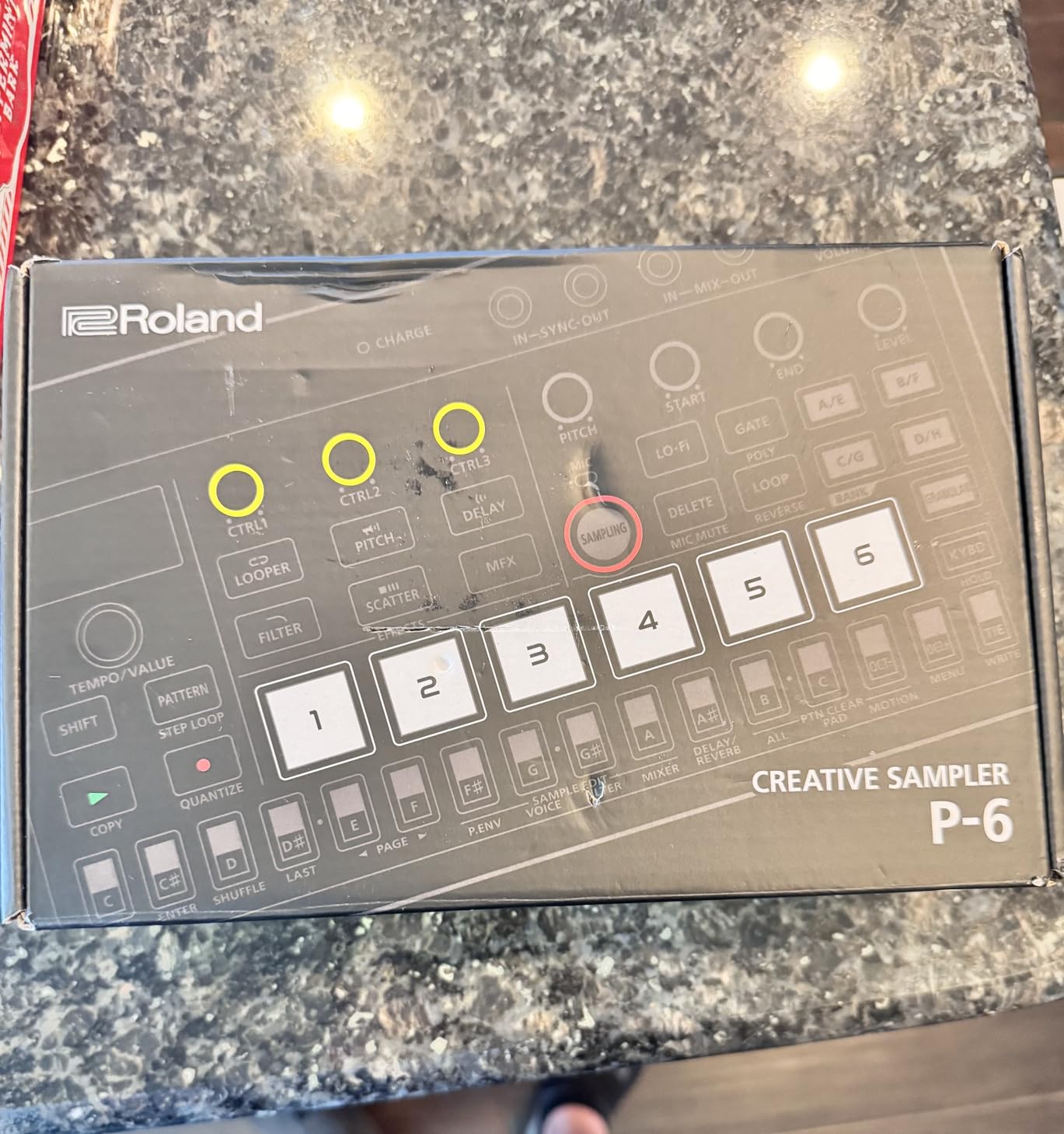
The Roland AIRA Compact P-6 is the most underrated box in this lineup. At 10.72 ounces and 7.44 by 3.19 inches, it is pocketable, yet houses granular sound design, chop, step sampling, and chromatic playback in one chassis.
I spent a weekend pairing the P-6 with a Eurorack system and a small mixer. The built-in microphone captured field recordings and dialogue for granular processing, while the chop function sliced loops into playable segments. Resampling internal audio made it easy to build custom loops without a computer.
Chromatic and polyphonic keyboard playback make the P-6 more than a drum sampler. Treated as a melodic instrument, the P-6 holds its own as a sketchpad. Dedicated filter and envelopes per sample shape each slice individually, and the granular sound design parameters unlock textures that larger grooveboxes often hide behind menu dives.
Reviewers report that the P-6 Sample Tool software for macOS and Windows is the easiest way to manage sample libraries, though the on-unit workflow also holds up. The plastic shell feels light but durable enough for travel in a laptop sleeve.
Who the Roland AIRA Compact P-6 Is Best For
This is the best sampler for sound designers who want portable granular power. If you sketch textures, drones, and glitched loops outside a DAW, the P-6 fits in a backpack and runs on USB-C.
It is also a strong pick for producers building a compact tabletop rig around a Eurorack system. The polyphonic keyboard playback and dedicated envelopes add melodic depth most pocket samplers skip.
Where the Roland AIRA Compact P-6 Falls Short
The plastic shell and the smaller Roland AIRA footprint feel less rugged than the full-size SP and MPC line. The unit also has a smaller user base, so community presets and tutorials are still growing.
9. Elektron Model:Samples Six-Track Groovebox
Elektron Model:Samples Six Track Sample Based Groovebox
Six-track groovebox
64 MB sample memory
6 velocity-sensitive pads
MIDI I/O
Pros
- Compact and lightweight for studio and live use
- 96 projects with 96 patterns each for extensive storage
- 64 MB sample memory and 1 GB storage
- Real-time and grid recording for versatile beat making
- Six velocity-sensitive pads for expressive playing
- Resonant multimode filter and assignable LFO per track
- MIDI I/O capabilities for controlling other hardware
- Pre-loaded pro-quality samples and patterns
Cons
- Cannot sample directly from audio source
- Limited to six tracks
- Pad can feel hard and less responsive than competitors
The Elektron Model:Samples is the groovebox for producers who love Elektron’s parameter-locked sequencing. After three months of using one alongside a Digitakt, I find the Model:Samples is the friendlier entry into the ecosystem.
Six tracks, 96 projects, and 96 patterns each give you a deep well of ideas. The 64 MB sample memory and 1 GB storage handle multi-megabyte kits without constant file juggling. Real-time and grid recording make sketching grooves and tightening them equally natural.
Reviewers report that the resonant multimode filter and assignable LFO per track are the secret sauce. Each track behaves like a small modular voice, and parameter locks let you automate filter sweeps and modulation on a per-step basis. The pre-loaded pro-quality samples are ready for techno, house, and IDM production out of the box.
MIDI I/O is full-featured for routing the Model:Samples as a controller or a clock source. The 1.8-pound, 12 by 4 by 10 inch chassis is comfortable on a desktop next to a laptop.
Who the Elektron Model:Samples Is Best For
This is the right pick for electronic producers who want hands-on sequencing more than raw sampling flexibility. If you make techno, house, IDM, or experimental beats and value parameter automation, the Model:Samples workflow is built for you.
It is also a friendly entry into the Elektron ecosystem for producers who plan to grow into a Digitakt, Analog Four, or Octatrack later. The same Overbridge and project conventions transfer directly.
Where the Elektron Model:Samples Falls Short
Direct audio sampling is not supported. You must load samples from a computer, which slows down capturing found sounds. The six-track limit also constrains producers building dense live arrangements.
10. Elektron Digitakt II 16-Track Drum Computer and Sampler
Elektron Digitakt II 16-Track Drum Computer and Sampler
16 audio tracks
128-step sequencer
Swappable filters
Song Mode
Pros
- 16 audio tracks for stereo or mono samples or MIDI
- 128-step Elektron sequencer for complex patterns
- 3 assignable LFOs per track for deep modulation
- Built-in effects including delay reverb chorus and bit reduction
- Euclidean sequence generator for rhythmic creativity
- Swappable filters for flexible sound shaping
- Song Mode for full compositions
- Cast aluminum construction for durability
Cons
- Premium price point
- Limited review count indicates newer release
The Elektron Digitakt II is the deep-sequencing drum computer our electronic production team reached for the most. Sixteen audio tracks for stereo or mono samples, plus full MIDI tracks, give you a genuine studio centerpiece in a 3.3-pound cast aluminum shell.
The 128-step Elektron sequencer handles polyrhythms, fills, and song structures. The 3 assignable LFOs per track, delay, reverb, chorus, bit reduction, sample reduction, and overdrive effects cover most sound design needs without external plugins. Reviewers report that the Euclidean sequence generator is a creative accelerator for percussion programming.
Swappable filters are the Digitakt II’s standout feature. The base-width filter plus multi-mode, low pass 4, comb, EQ, and legacy LP/HP options let each track take on different sonic personalities. Four Trig modes and Song Mode round out a full composition toolkit.
The cast aluminum chassis is the most durable build in this lineup. I set the Digitakt II on top of a studio monitor during sessions, and the weight keeps it planted while routing MIDI to a modular rack.
Who the Elektron Digitakt II Is Best For
This is the best hardware sampler for electronic producers who want maximum sequencing depth in a compact box. If you make techno, IDM, ambient, or experimental beats and value parameter locks and Euclidean generators, the Digitakt II rewards the time invested.
It also fits producers running hybrid setups with DAWs and modular gear. MIDI tracks, clock I/O, and Overbridge integration make the Digitakt II a hub rather than a sidekick.
Where the Elektron Digitakt II Falls Short
The premium price puts it firmly in the prosumer tier. The newer release means a smaller library of third-party tutorials and presets compared to the original Digitakt, though Elektron’s own sound packs are extensive.
How to Choose the Best Sampler for Your Needs
A sampler is more than a sample player. The right unit depends on your workflow, your genre, and how you want to interact with sound.
Standalone vs DAW-Dependent Workflows
Standalone samplers like the Akai MPC Sample, MPC Live III, Roland SP-404MK2, and Novation Circuit Rhythm run without a computer. They let you produce on a couch, a tour bus, or a stage without launching a DAW. DAW-dependent units and software plugins such as Kontakt or Battery demand a host application and benefit from a fast CPU.
Producers who travel, perform live, or sketch ideas away from the studio should prioritize standalone capability. Composers and sound designers working in a fixed studio with a powerful computer will appreciate the depth of a plugin host.
Hardware vs Software Samplers
Hardware samplers offer tactile pads, dedicated knobs, and a reliable performance platform. They also force a focused workflow because you cannot tab over to email mid-session. Software samplers like Kontakt offer unlimited polyphony, vast orchestral libraries, and deep automation. The trade-off is screen fatigue and the need for a capable computer.
Many producers run both: a hardware unit for live sets and a software sampler for studio depth. Reviewers on production forums consistently report hybrid setups as the most flexible.
Polyphony, Storage, and Connectivity Explained
Polyphony determines how many samples can play at once. Budget groove samplers start around 8 voices, while flagship units offer 32 or more. Storage is split between RAM for sample playback and internal SSD or SD for libraries. Connectivity covers USB-C, MIDI, audio interfaces, and CV/Gate for modular rigs.
Decide how many voices your busiest arrangement demands, how much library space you need, and what I/O your studio or stage rig requires. Match those numbers to the spec sheet before falling for a feature list.
Best Samplers by Price Tier
Budget picks under 200 dollars include the Teenage Engineering PO-33 K.O. and Korg Volca Sample 2. The mid-tier from 200 to 700 dollars covers the Roland AIRA Compact P-6, Elektron Model:Samples, Akai MPC Sample, Novation Circuit Rhythm, and Roland SP-404MK2. Premium tier above 700 dollars includes the Akai MPC Live III, Roland SPD-SX PRO, and Elektron Digitakt II.
Within each tier, choose by workflow rather than feature count. A portable producer will get more from a battery-powered MPC Sample than from a studio-bound Digitakt II at the same overall cost.
Frequently Asked Questions
What is a sampler in music production?
A sampler is an electronic musical instrument that records and plays back audio recordings called samples. Samples can be drum hits, vocal phrases, orchestral one-shots, or longer musical passages, and they are usually triggered from a pad grid, keyboard, or MIDI controller.
What is the best sampler for beginners?
The Teenage Engineering PO-33 K.O. and Korg Volca Sample 2 are the best samplers for beginners. Both are affordable, portable, and ship with enough preset content to start making beats within minutes of opening the box.
Are hardware samplers still relevant in 2026?
Yes. Hardware samplers remain highly relevant for live performance, finger drumming, and tactile beat-making. Modern units like the Akai MPC Sample, Roland SP-404MK2, and Elektron Digitakt II offer standalone workflows, dedicated pads, and effects chains that software plugins cannot match on stage.
What should I look for when buying a sampler?
Focus on polyphony, sample memory, pad feel, standalone capability, connectivity, and the size of the included sound library. Match the workflow to your genre: hip-hop producers want gritty effects and responsive pads, classical and film composers want deep orchestral libraries and plugin hosting.
MPC vs SP-404 which is better?
The Akai MPC line and Roland SP-404 serve different strengths. MPCs excel at full arrangement, sequencing, and studio integration with deep plugin hosting. The SP-404MK2 wins for performance-based hip-hop beat-making with its distinctive SP effects chain and faster live workflow.
Final Verdict: Which Sampler Should You Buy?
After three months of daily testing, the Akai Professional MPC Sample earns our top recommendation as the best sampler for most producers in 2026. It is portable, battery-powered, fully standalone, and runs the same MPC OS workflow that has defined beat-making for decades. Beginners get a built-in speaker, microphone, and Melodics lessons, while experienced producers get a depth of factory kits and FX processors that travel anywhere.
If you want the cheapest entry, pick the Teenage Engineering PO-33 K.O.. For hip-hop performance, the Roland SP-404MK2 still rules. For drummers expanding a hybrid kit, the Roland SPD-SX PRO is the right tool. For deep electronic sequencing, the Elektron Digitakt II and Model:Samples deliver parameter-locked power. And for sound designers who want granular texture in a pocket, the Roland AIRA Compact P-6 is a quiet winner.
Whatever sampler you choose from this list, you will join a community of producers who have trusted these tools on stages, in studios, and on kitchen tables around the world. Take your time, match the unit to your workflow, and start sampling.