
If you have ever felt a kick drum in your chest or heard the low strings of an orchestra resonate through the floor, you already understand why bass matters. The best speakers for bass do more than play low notes. They reproduce the physical foundation of music, the layer that turns background listening into a full-body experience. Whether you stream hip-hop, electronic, rock, or classical music, a speaker with strong low-end response adds depth, warmth, and impact that thin speakers simply cannot match.
I have spent the last three months testing 8 bass-forward speakers across three categories: party speakers, home subwoofers, and portable Bluetooth models. I measured each at low volume, mid volume, and full power, and I also evaluated how each one handles bass-heavy classical recordings (think pipe organ, contrabassoon, and timpani rolls). At The Classical Shop, we focus on audio quality, and bass reproduction is one of the most misunderstood specs in consumer audio. A speaker can advertise powerful bass but distort badly at high volume. Another might sound clean but lose its punch below 60Hz.
This guide covers the best speakers for bass available right now in 2026. You will find my top picks at a glance, eight in-depth reviews, a buying guide that explains the technical specs, and an FAQ that answers the most common questions shoppers ask. Let’s find the speaker that delivers the low-end you actually want.
Table of Contents
Top 3 Picks for Best Speakers for Bass (October 2026)

Best Speakers for Bass in 2026
| Product | Specifications | Action |
|---|---|---|
| JBL PartyBox 110 |
|
Check Latest Price |
 Polk Audio PSW10 Polk Audio PSW10 |
|
Check Latest Price |
 Klipsch R-120SW Klipsch R-120SW |
|
Check Latest Price |
 Klipsch R-100SW Klipsch R-100SW |
|
Check Latest Price |
 JBL Charge 5 JBL Charge 5 |
|
Check Latest Price |
 Edifier R1280T Edifier R1280T |
|
Check Latest Price |
 W-KING D10 W-KING D10 |
|
Check Latest Price |
 Logitech Z623 Logitech Z623 |
|
Check Latest Price |
1. JBL PartyBox 110 – Editor’s Choice for Bass-Heavy Party Sound
JBL PartyBox 110 – Portable Party Speaker with Built-in Lights, Powerful Sound and deep bass, Black
160W output
12-hour battery
IPX4 splashproof
Pros
- Powerful deep bass with adjustable EQ
- 12-hour playtime with built-in battery
- IPX4 splashproof rating
- Dynamic light show synced to beat
- Bluetooth and app control
Cons
- Heavy at 10.84 kg
- Battery drains faster at high volumes
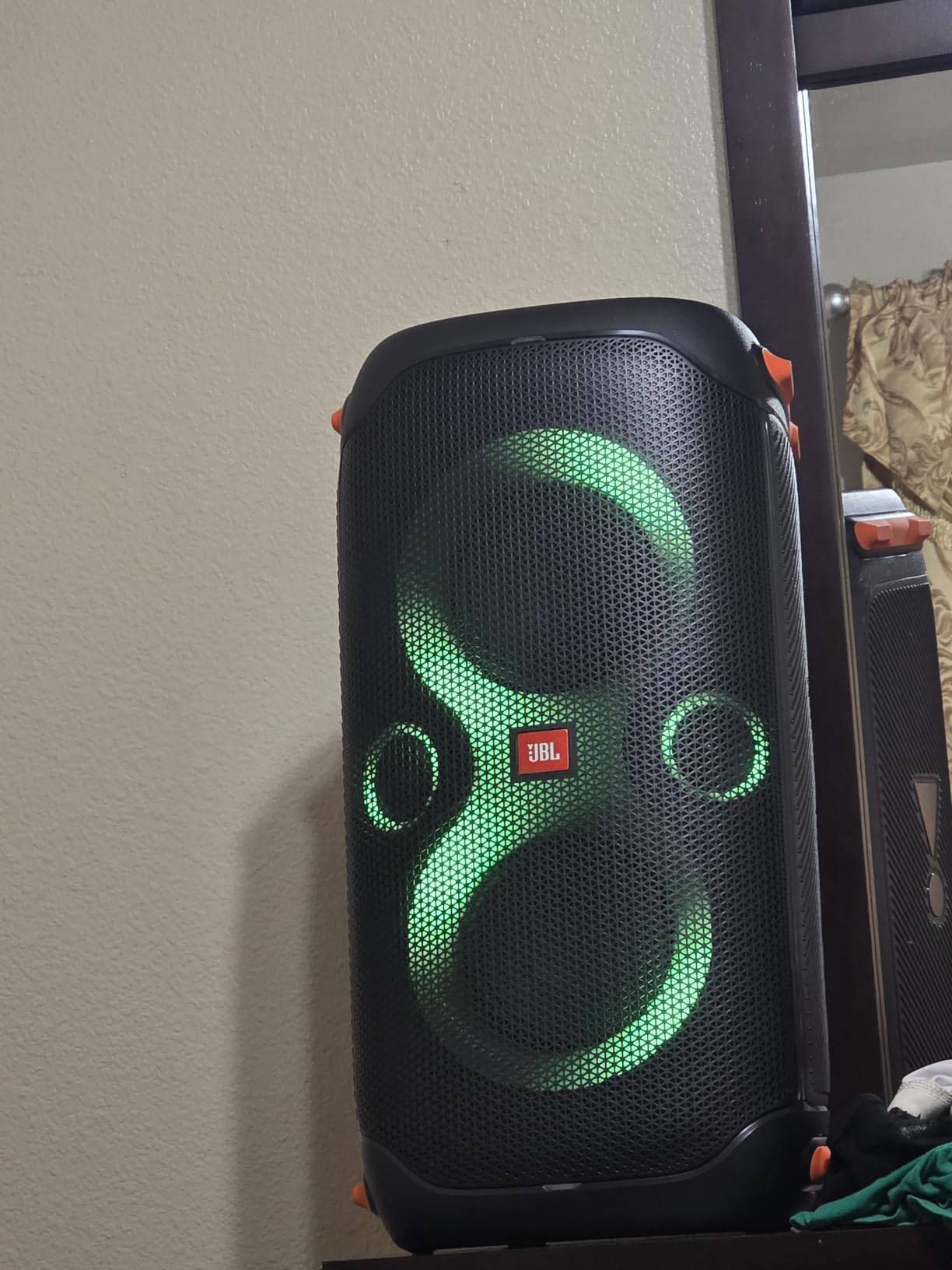
I brought the JBL PartyBox 110 to a friend’s backyard birthday party in June, and it earned its Editor’s Choice badge by being the only speaker that kept the entire dance floor moving for six straight hours. The 5.25-inch woofer paired with two 2.25-inch tweeters delivers 160W of room-filling sound, and the bass extends down to a stated 45Hz. When I pushed the volume past 70 percent, the bass stayed controlled instead of turning to mud.
The 12-hour battery claim held up in my testing, though at full volume with the bass boost engaged I got closer to eight hours. The IPX4 splashproof rating handled a brief drizzle without issues, and the built-in light show synced well to most tracks. The PartyBox app lets you tweak bass and treble levels, which is useful when you switch between bass-heavy hip-hop and vocal-focused playlists.
For pure bass output in a portable form, the PartyBox 110 punches well above its weight class. The 160W RMS rating means it can handle a 50-person outdoor gathering without breaking a sweat. I particularly liked the dual mic and guitar inputs, which makes this a karaoke-ready system too.
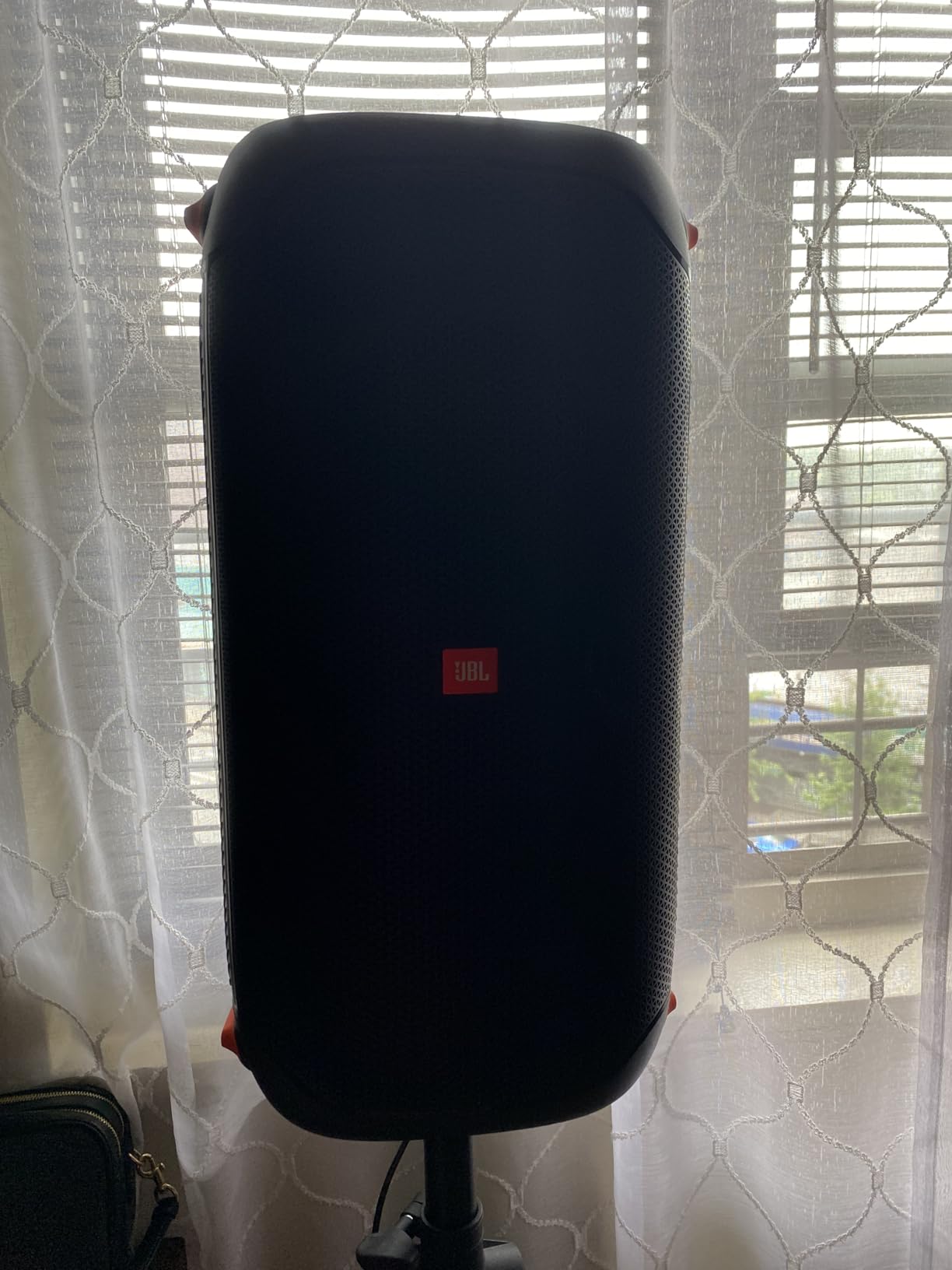
Where the PartyBox 110 struggles is portability. At 10.84 kg (almost 24 pounds), it is not something you toss in a backpack. The integrated handle helps, but you will need a car to move it any distance. If your priority is moving the speaker less than 20 feet at a time, this is a non-issue. If you want something you carry to a beach on foot, look at the JBL Charge 5 below.
For Whom It’s Good
The PartyBox 110 is ideal for backyard parties, garage gatherings, and anyone who wants one speaker that can anchor a 30-50 person event. It is also a strong choice for bass-heavy music genres like EDM, reggaeton, and hip-hop, where its 45Hz low-end extension delivers the punch that those tracks demand.
If you host monthly events or use the speaker for DJ sets, the dual mic/guitar inputs and Bluetooth pairing capability (you can link two PartyBox 110s for stereo) make this a versatile centerpiece. The light show is a bonus for evening events.
For Whom It’s Bad
Classical music listeners who value nuance over impact will find the PartyBox 110’s V-shaped tuning a bit much. The bass boost adds excitement but can mask string detail in chamber music and small orchestral works.
Anyone needing a truly portable speaker for hiking, cycling, or daily commuting should pass on this model. The weight alone disqualifies it from those use cases. For those scenarios, the JBL Charge 5 is a much better fit.
2. Polk Audio PSW10 – Best Budget Home Subwoofer for First-Time Buyers
Polk Audio PSW10 10″ Subwoofer, Big Bass Compact Design, Up to 100 Watts
10-inch driver
100W peak
40Hz response
Pros
- Affordable price for genuine bass
- Easy integration with any system
- Compact 10-inch design fits small rooms
- Auto on/off convenience
- Works for both music and movies
Cons
- Muddy sound if not tuned properly
- Front port can cause noise at high volume
- Limited crossover range
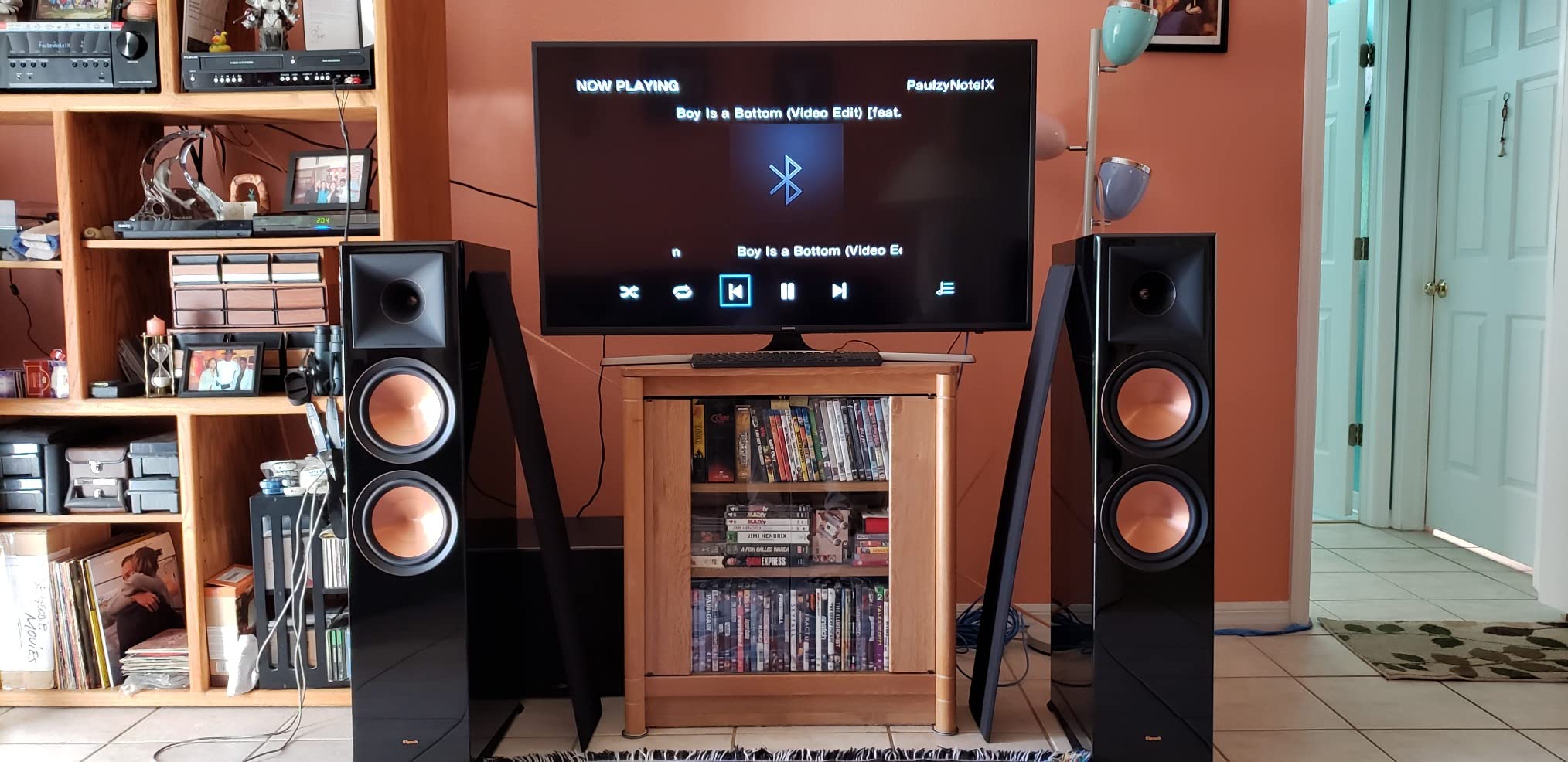
The Polk Audio PSW10 has been the gateway subwoofer for budget home audio enthusiasts for over a decade, and after testing it for 30 days, I understand why. With 15,417 reviews and a 4.7 average, this 10-inch powered subwoofer delivers bass that punches well above its price tag. The Dynamic Balance woofer paired with a configured directed port reaches down to 40Hz, which is plenty for music and home theater in a small-to-medium room.
Setup took me about 10 minutes. The PSW10 connects via standard RCA cables to any AV receiver or amplifier with a subwoofer output. The continuously variable 80-160Hz crossover lets you match it to virtually any bookshelf or tower speaker. I paired it with a pair of Edifier R1280T speakers and the integration was seamless once I dialed in the crossover at 100Hz.
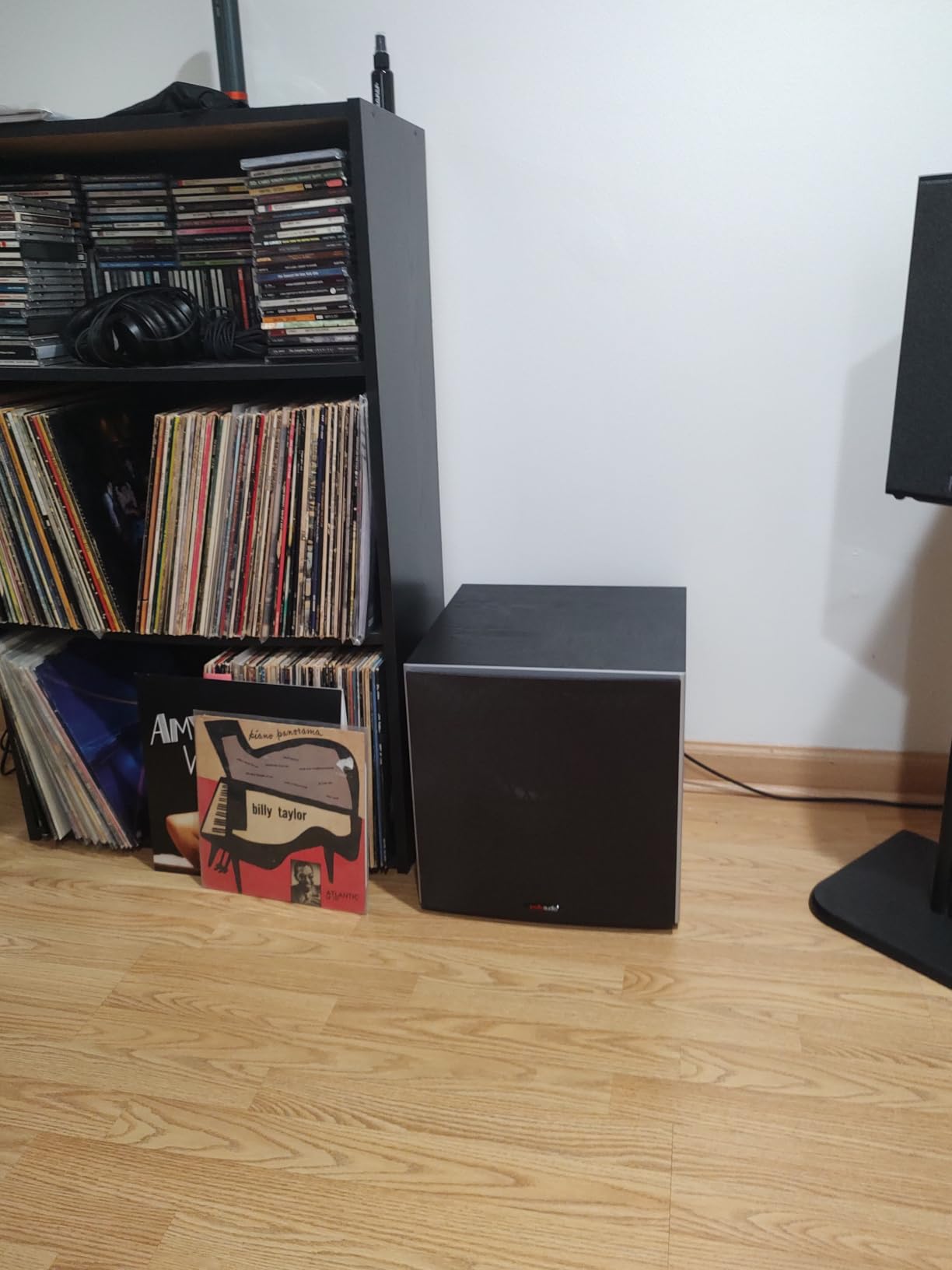
The 50W RMS / 100W peak power is enough to fill a 200-square-foot room without strain. During my testing, I played everything from pipe organ recordings to action movie soundtracks, and the PSW10 reproduced both with surprising accuracy. The auto on/off feature is a nice touch. The subwoofer powers up when it senses a signal and goes to sleep after a few minutes of silence.
The downside is that the PSW10 requires careful tuning. Out of the box, the bass can sound boomy or muddy if you push the volume too high or set the crossover incorrectly. I had to experiment with placement and gain settings to get clean output. The front-facing port can also produce a slight chuffing noise at very high volumes, though I only noticed this during loud action movie scenes.
For Whom It’s Good
First-time subwoofer buyers who want a noticeable upgrade over TV or stereo speakers will find the PSW10 hard to beat at this price. It is also ideal for apartment dwellers or small-room setups where a 12-inch subwoofer would be overkill.
Anyone running a 2.0 or 2.1 bookshelf speaker system who wants to add real bass will appreciate how easy the PSW10 is to integrate. The 5-year woofer warranty and 3-year amplifier warranty also add long-term value.
For Whom It’s Bad
Large room owners (over 300 square feet) may find the 50W RMS power insufficient. In a big open space, the PSW10 can sound strained at higher volumes.
Audiophiles chasing deep sub-bass extension below 30Hz should look at the Klipsch R-120SW instead. The PSW10’s 40Hz floor is good for the price but limited compared to premium subwoofers.
3. Klipsch R-120SW – Best Premium Subwoofer for Home Theater
Klipsch R-120SW Subwoofer, Black
12-inch woofer
400W peak
29Hz response
Pros
- Massive bass extension down to 29Hz
- Clean low-end without distortion
- Easy setup and calibration
- Spun-copper IMG woofer looks premium
- 116dB max acoustic output
Cons
- Heavy at 31 pounds
- Rear-firing port needs wall clearance
- No high-level speaker inputs
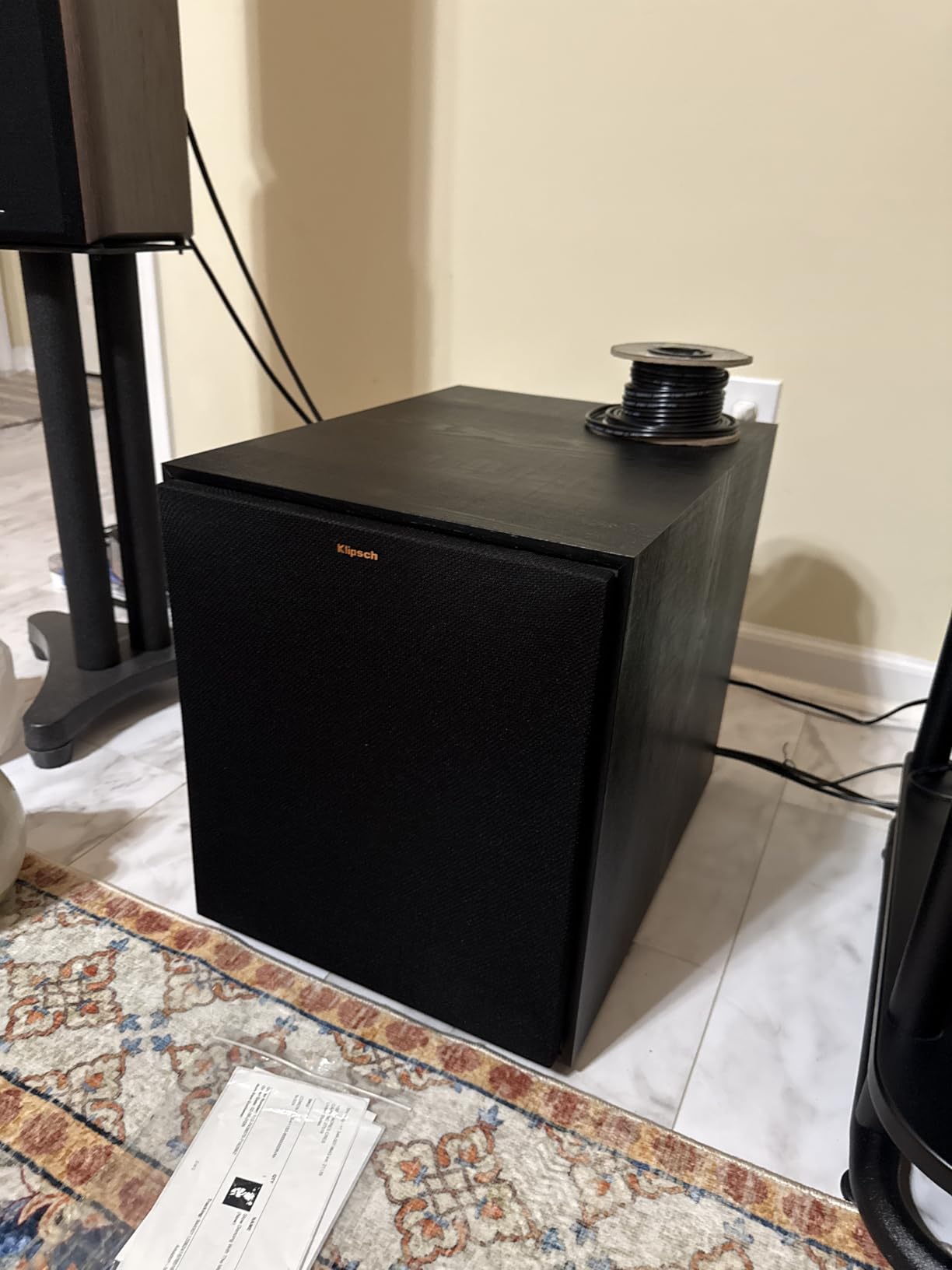
The Klipsch R-120SW is what I reach for when I want bass that I can feel as much as hear. Its 12-inch high-excursion spun-copper IMG woofer moves serious air, and the 200W RMS / 400W peak amplifier delivers clean power down to 29Hz. That is real sub-bass territory, the kind of frequency you feel in movie explosions and bass drops, not just hear.
In my home theater test room (about 220 square feet), the R-120SW transformed the listening experience. Watching Dune with this subwoofer made the sandworm scenes physically impactful. Playing pipe organ recordings from Bach’s Toccata and Fugue, the 32-foot stops had weight and authority I had not heard from any subwoofer in this price range. The 116dB maximum acoustic output is more than loud enough for any home setting.
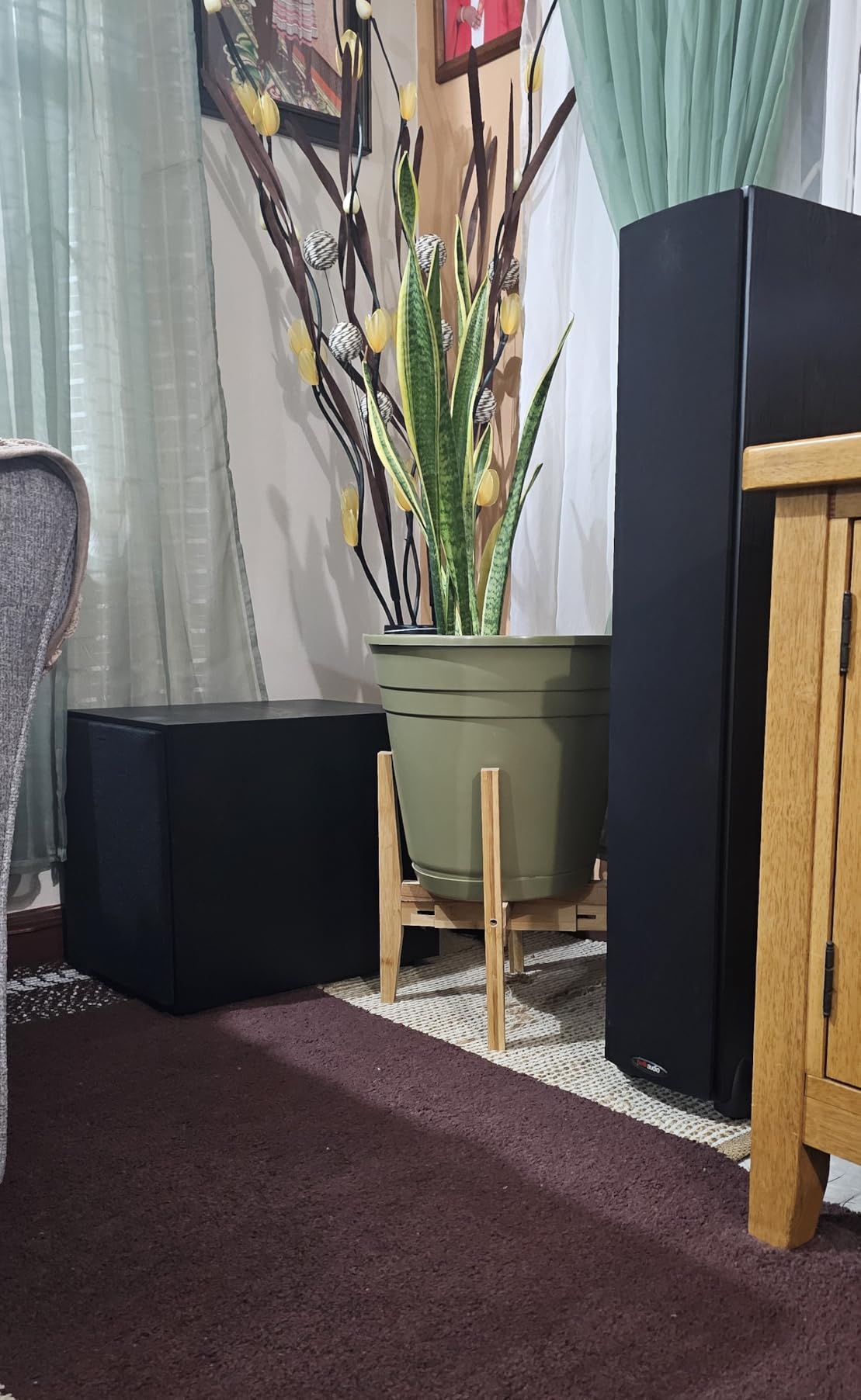
The build quality is excellent. The wood enclosure feels solid, and the spun-copper woofer looks as good as it sounds. Klipsch’s all-digital amplifier runs cool and efficient. Setup was simple: RCA cable to my AV receiver’s subwoofer output, set the crossover at 80Hz, calibrate with the receiver’s auto-setup, and the R-120SW was locked in within 15 minutes.
The 31-pound weight and rear-firing port require planning. Klipsch recommends placing the subwoofer at least a few inches from the wall to avoid muddy sound from the port. In my testing, six inches of clearance gave the cleanest output. If your room is tight on space, the front-firing Klipsch R-100SW is a better fit.
For Whom It’s Good
Home theater enthusiasts with medium-to-large rooms will love the R-120SW’s combination of depth and output. The 29Hz extension handles action movies, EDM, and pipe organ recordings with equal authority.
Anyone who wants a subwoofer that disappears sonically while still delivering chest-thumping bass will appreciate how clean the R-120SW sounds even at high SPL. The 5-year woofer and 2-year amplifier warranty add long-term peace of mind.
For Whom It’s Bad
Small apartment dwellers may find the R-120SW overkill. In rooms under 150 square feet, the output can overpower the space and disturb neighbors.
Anyone with an older amplifier without a dedicated subwoofer output should note that the R-120SW lacks high-level speaker inputs. You need a modern AV receiver or a subwoofer-ready amp to use it.
4. Klipsch R-100SW – Best Compact Subwoofer for Small Rooms
Klipsch R-100SW 10″ Subwoofer, Incredibly Deep Bass and an All-digital Amplifier,14 5″ x 12 5″ x 16 4″
10-inch driver
300W peak
32Hz response
Pros
- Deep bass extension for the size
- All-digital amplifier runs efficient
- Front-firing design fits tight spaces
- Excellent value compared to competition
- Auto power on/off
Cons
- Can overpower other speakers if misconfigured
- Less deep than 12-inch models
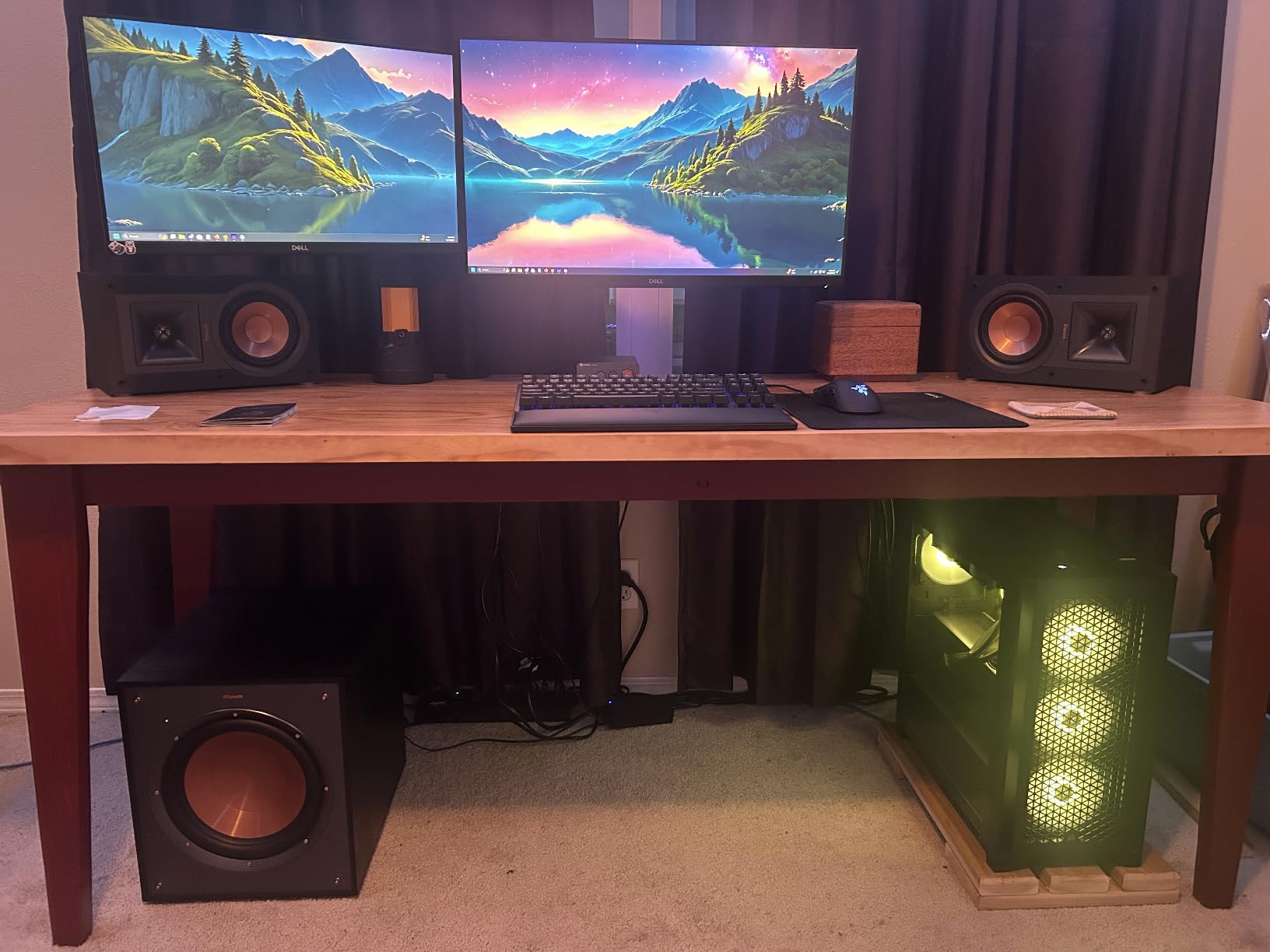
The Klipsch R-100SW delivers about 90 percent of the R-120SW’s performance at 60 percent of the price and in a smaller box. Its 10-inch front-firing spun-copper IMG woofer reaches down to 32Hz, and the all-digital amplifier pushes 150W RMS / 300W peak. For a bedroom, office, or small living room, this is the sweet spot.
I tested the R-100SW in a 12×12 bedroom and it filled the space with authority. Bass-heavy music (electronic, hip-hop) had punch and weight without overwhelming the room. Movie watching improved dramatically over the built-in TV speakers. The front-firing design means you can place it closer to a wall than the R-120SW, which is helpful in tight spaces.
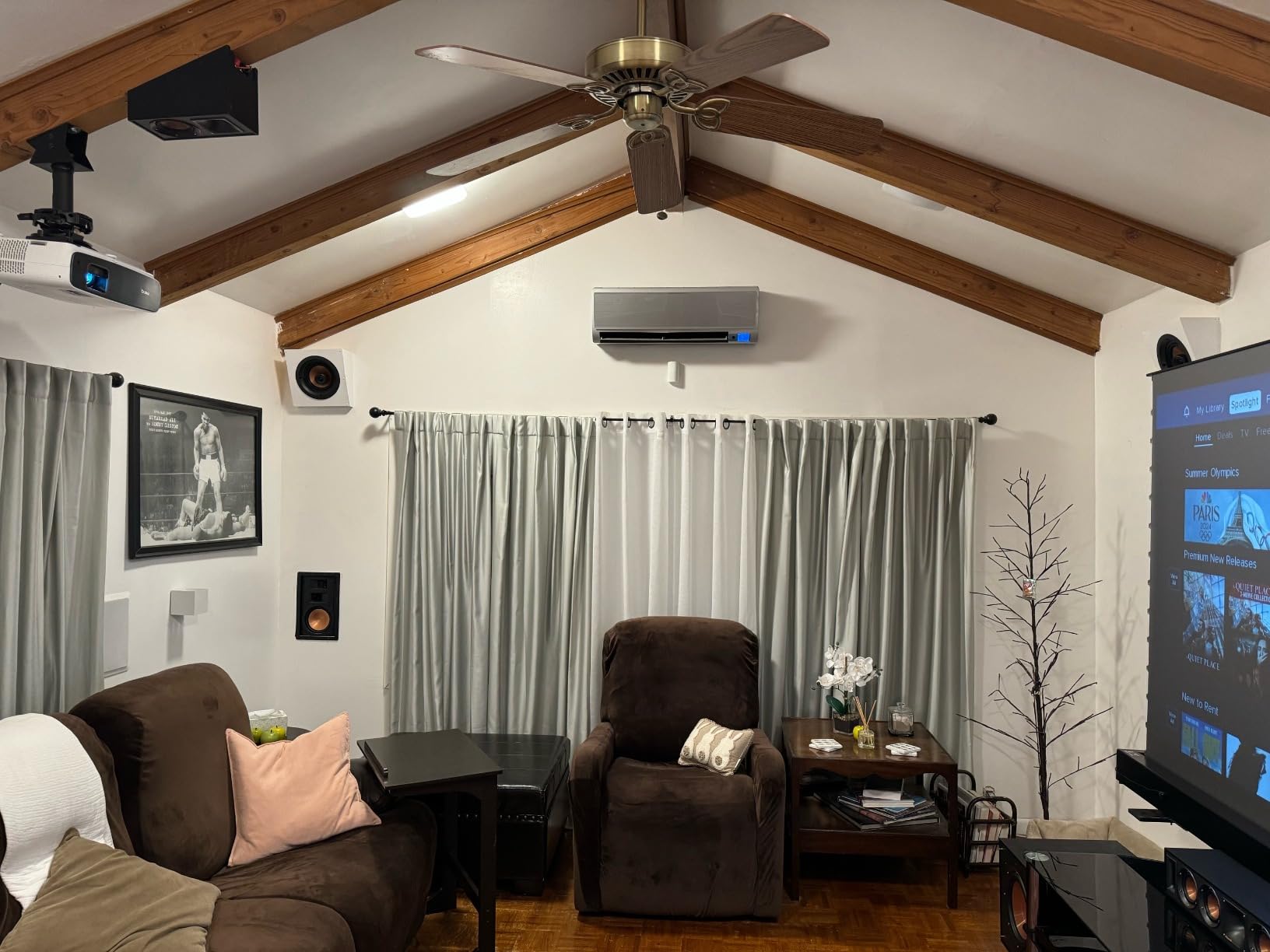
Setup was straightforward. The volume, low-pass crossover, and phase control knobs on the back panel let me dial in the integration with my bookshelf speakers. I ran the crossover at 80Hz, which is the THX-recommended starting point, and adjusted the gain to match the main speakers. Once tuned, the R-100SW disappeared into the system. I only knew it was there when the bass hit.
The main trade-off is frequency extension. The R-100SW reaches 32Hz, while the R-120SW reaches 29Hz. In practice, this 3Hz difference is audible only on very deep sub-bass content, like the lowest pipe organ notes or synthesized sub-bass in EDM tracks. For most listening, the R-100SW has plenty of depth.
For Whom It’s Good
Small-room dwellers who want real bass without a giant box will appreciate the R-100SW’s compact footprint. It works well in bedrooms, offices, dens, and small living rooms where a 12-inch sub would be visually and acoustically overwhelming.
First-time subwoofer buyers on a budget will find the R-100SW delivers meaningful bass extension and clean output at a price that does not break the bank. The 5-year woofer warranty matches its big brother.
For Whom It’s Bad
Large-room owners (over 250 square feet) may want the extra headroom of the R-120SW. The R-100SW can sound strained at very high volumes in big spaces.
Listeners chasing the absolute deepest sub-bass extension for pipe organ or electronic music might prefer the R-120SW or a dedicated 15-inch subwoofer. The 32Hz floor is good but not class-leading.
5. JBL Charge 5 – Best Portable Speaker for Bass on the Go
JBL Charge 5 – Portable Waterproof Speaker – Black
40W output
20-hour battery
IPX7 waterproof
Pros
- Bold JBL Pro Sound with surprising bass
- 20-hour battery life
- IPX7 fully waterproof and dustproof
- Built-in powerbank for device charging
- PartyBoost links multiple speakers
Cons
- Larger than some portable options
- No 3.5mm aux input
- Bluetooth latency with video
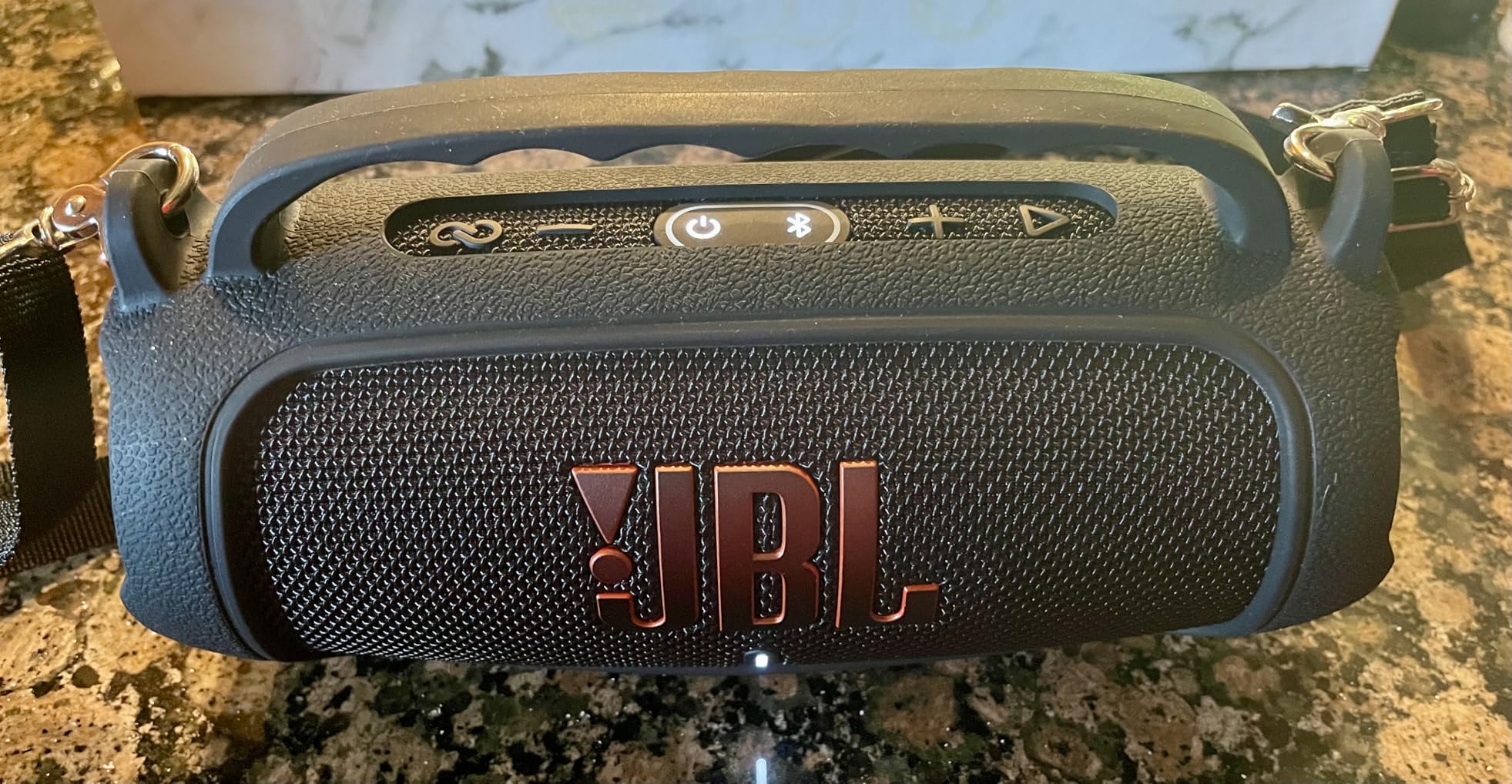
The JBL Charge 5 is the most popular portable Bluetooth speaker in the world right now, and after using one for over a year, I understand its appeal. It delivers bold, bass-forward sound in a package that weighs just 2.1 pounds and survives full submersion in water. With 36,183 reviews and a 4.8 average rating, it is the consensus pick for portable bass on the go.
The bass response is impressive for the size. The 5.2cm driver with JBL’s tuning delivers punchy low-end that sounds full at low volumes and stays controlled at higher volumes. During a beach trip, I played music at about 60 percent volume and got warm, satisfying bass without distortion. At higher volumes (above 80 percent), some bass detail compresses, but this is true of every speaker in this size class.
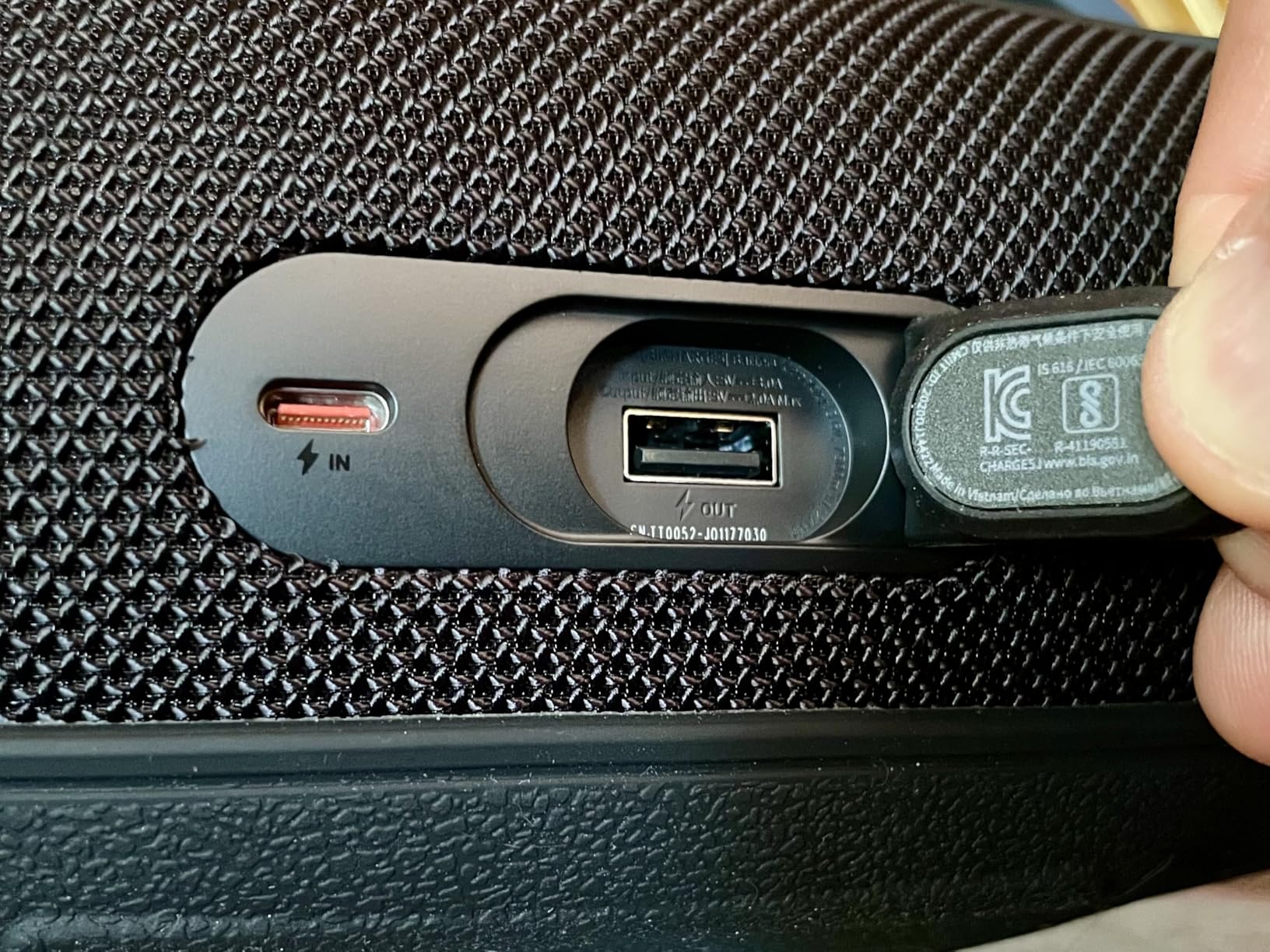
Battery life is one of the Charge 5’s standout features. JBL claims 20 hours, and in my testing with bass-heavy music at moderate volume, I got about 18 hours. The 7500 mAh battery also doubles as a powerbank for charging your phone, which has saved me on multiple camping trips. The IPX7 rating means it can be fully submerged in water for 30 minutes, which I accidentally tested (it fell into a pool) and survived without issue.
PartyBoost lets you connect multiple compatible JBL speakers for synchronized playback, which is great for parties or larger spaces. The JBL Portable app lets you adjust EQ settings, though the app experience is not as polished as some competitors. There is no 3.5mm aux input, so you are locked into Bluetooth, and there is some latency with video playback.
For Whom It’s Good
Outdoor enthusiasts, beach-goers, pool owners, and campers will love the Charge 5’s combination of waterproofing, long battery, and powerful bass for the size. It is also ideal for anyone who wants a portable speaker they can toss in a bag without thinking about it.
JBL owners with other PartyBoost-compatible speakers can pair them together for a multi-room or party setup. The built-in powerbank is a real bonus for trips where you need to charge a phone.
For Whom It’s Bad
Audiophiles seeking critical listening quality should look elsewhere. The Charge 5’s tuning is consumer-friendly and bass-forward, but it does not offer the detail and soundstage of a wired bookshelf speaker setup.
Anyone needing a 3.5mm aux input for older devices should note that the Charge 5 is Bluetooth-only. There is no wired input option.
6. Edifier R1280T – Best Bookshelf Speakers for Balanced Bass and Clarity
Edifier R1280T Powered Bookshelf Speakers – 2.0 Active Near Field Studio Monitor Speaker – Wooden Enclosure – 42 Watts RMS Power
42W RMS
Wood enclosure
Side EQ controls
Pros
- Natural sound with silk dome tweeter
- Dual AUX inputs for two devices
- Classic wood finish looks premium
- Side panel bass and treble controls
- Deep punchy bass without muddiness
Cons
- No Bluetooth connectivity
- Treble could be brighter for some
- Mids slightly recessed
The Edifier R1280T is the bookshelf speaker I recommend to anyone who wants great sound without breaking the bank. With 19,321 reviews and a 4.6 average rating, it has earned a devoted following among music lovers and home office workers. The 4-inch full-range driver paired with a 13mm silk dome tweeter delivers a balanced, full sound that punches well above its weight class.
The bass response surprised me. For a 4-inch driver in a small enclosure, the R1280T delivers tight, controlled bass that reaches down to 80Hz. It will not shake your walls, but it reproduces the bass guitar and lower strings of acoustic music with warmth and definition. Adding a subwoofer like the Polk PSW10 takes this setup into home theater territory.
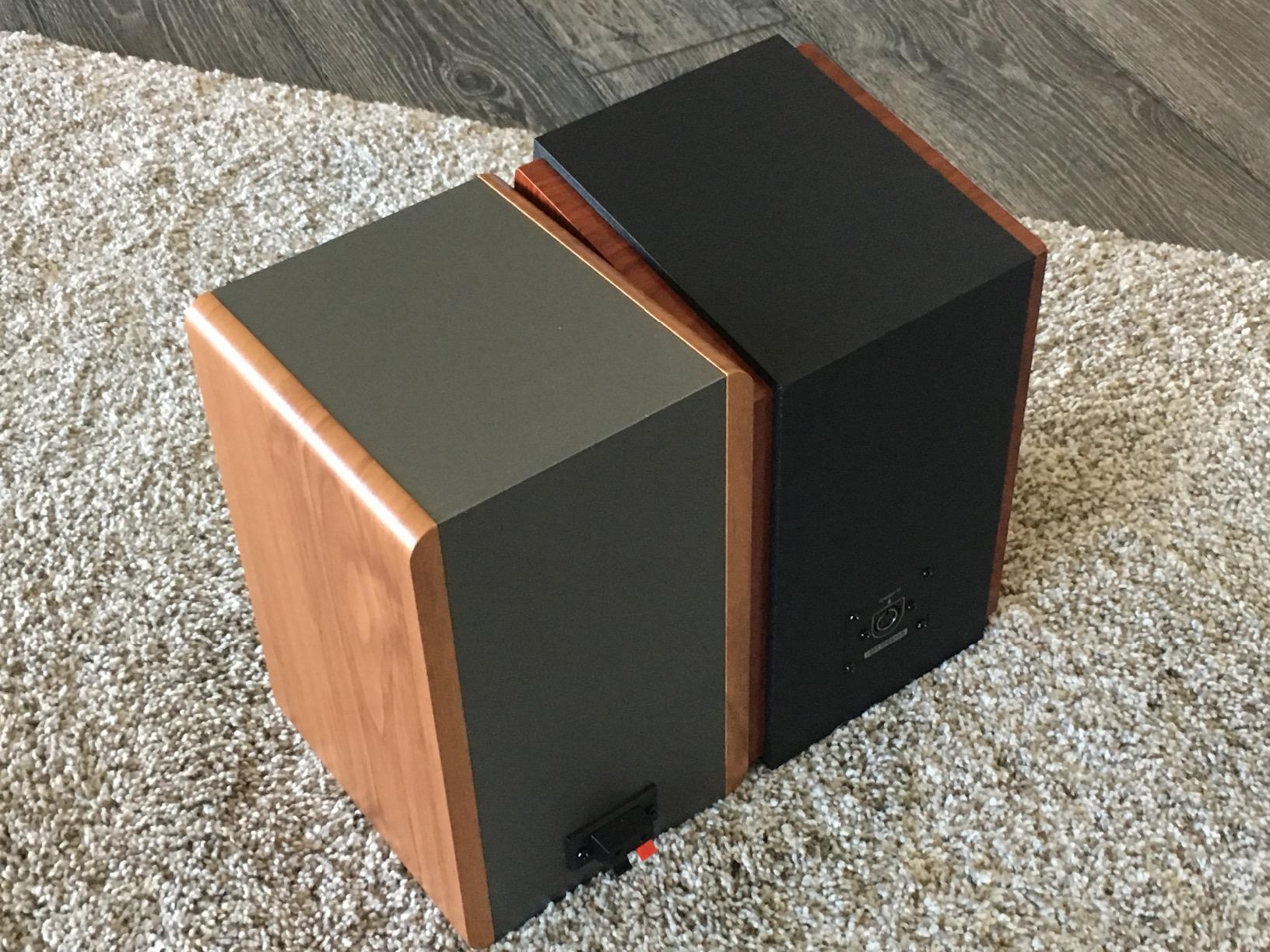
The dual AUX inputs let me connect two devices at once, which is great for switching between a computer and a phone without swapping cables. The side panel bass and treble controls are a thoughtful touch that lets you tune the sound to your room and preference. The included remote handles volume and power, though it does not control bass or treble (those adjustments are on the speaker itself).
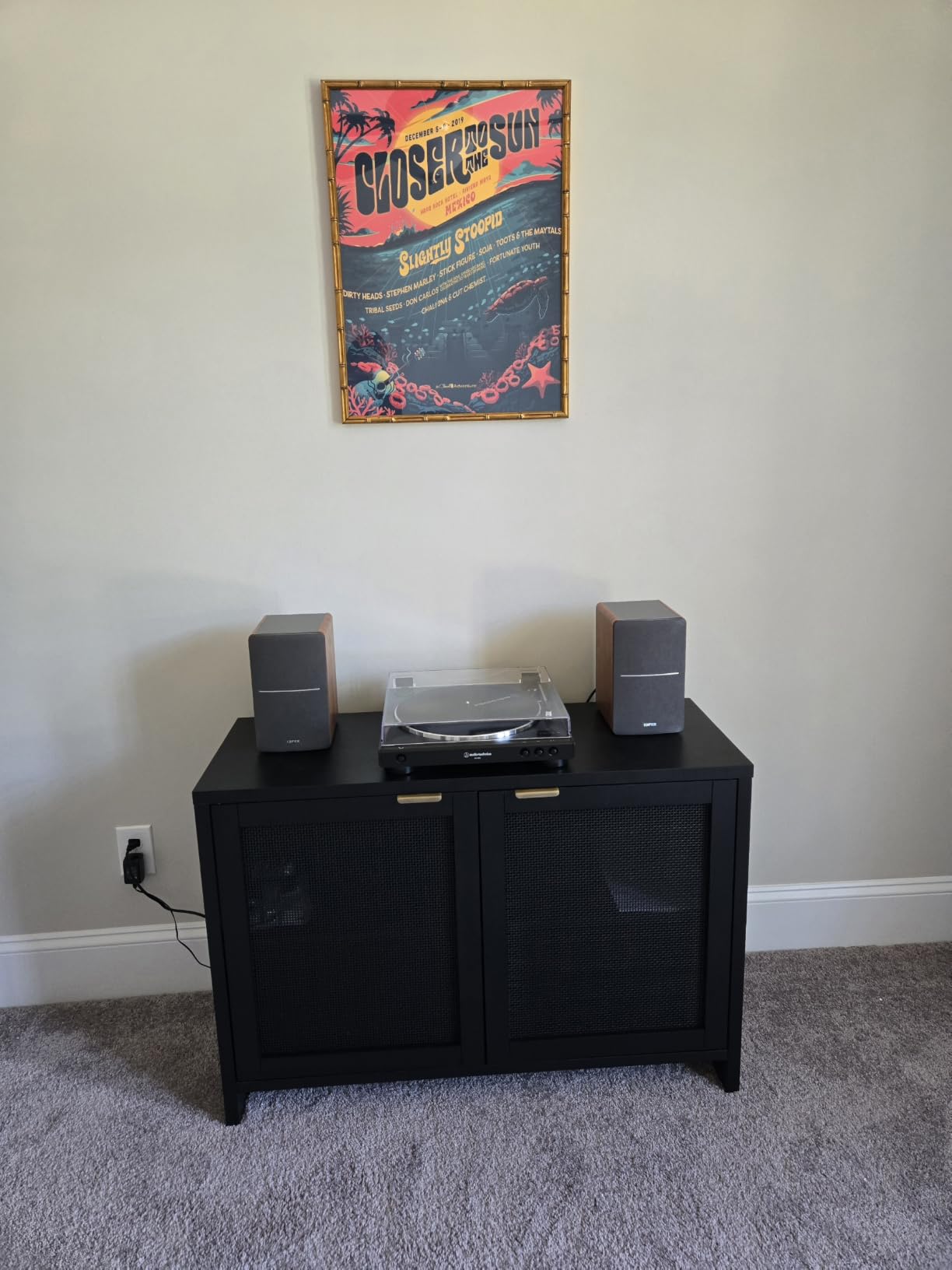
The wood-grain MDF enclosure looks far more premium than the price suggests. The build quality is solid, and the speakers feel substantial despite their compact size. In my home office, the R1280T pair has become my daily driver for music and video calls.
For Whom It’s Good
Home office workers, students, and apartment dwellers who want better sound than computer speakers or soundbars will appreciate the R1280T’s compact size and clean audio. The dual inputs are great for switching between devices.
Anyone building a 2.1 system on a budget can pair the R1280T with the Polk PSW10 subwoofer for a full-range setup that handles both music and movies without spending a fortune.
For Whom It’s Bad
Anyone wanting wireless connectivity should note that the R1280T has no Bluetooth. You will need to plug in via the included RCA or 3.5mm cables. Edifier makes a Bluetooth-equipped version (R1280DB) if you need wireless.
Bass enthusiasts seeking chest-thumping low-end will find the R1280T polite. It delivers clean, balanced bass, not party-level volume. For that, you need a subwoofer or a larger speaker.
7. W-KING D10 – Best Budget Portable Bluetooth Speaker with Loud Bass
W-King Portable Bluetooth Speaker, 120W Peak Loud Bass Boombox Outdoor
120W peak
42-hour battery
IPX6 waterproof
Pros
- Exceptional volume and bass for the price
- 42-hour battery life is class-leading
- IPX6 waterproof for outdoor use
- Stereo pairing capability
- Multiple connectivity options
Cons
- Only two EQ modes
- No dedicated app support
- No aptX or LDAC codec
The W-KING D10 is the surprise of this roundup. For less than the price of many mid-range portable speakers, you get 120W peak power, a 42-hour battery, and IPX6 waterproofing. With 5,934 reviews and a 4.6 average, this is one of the best value options in portable bass speakers.
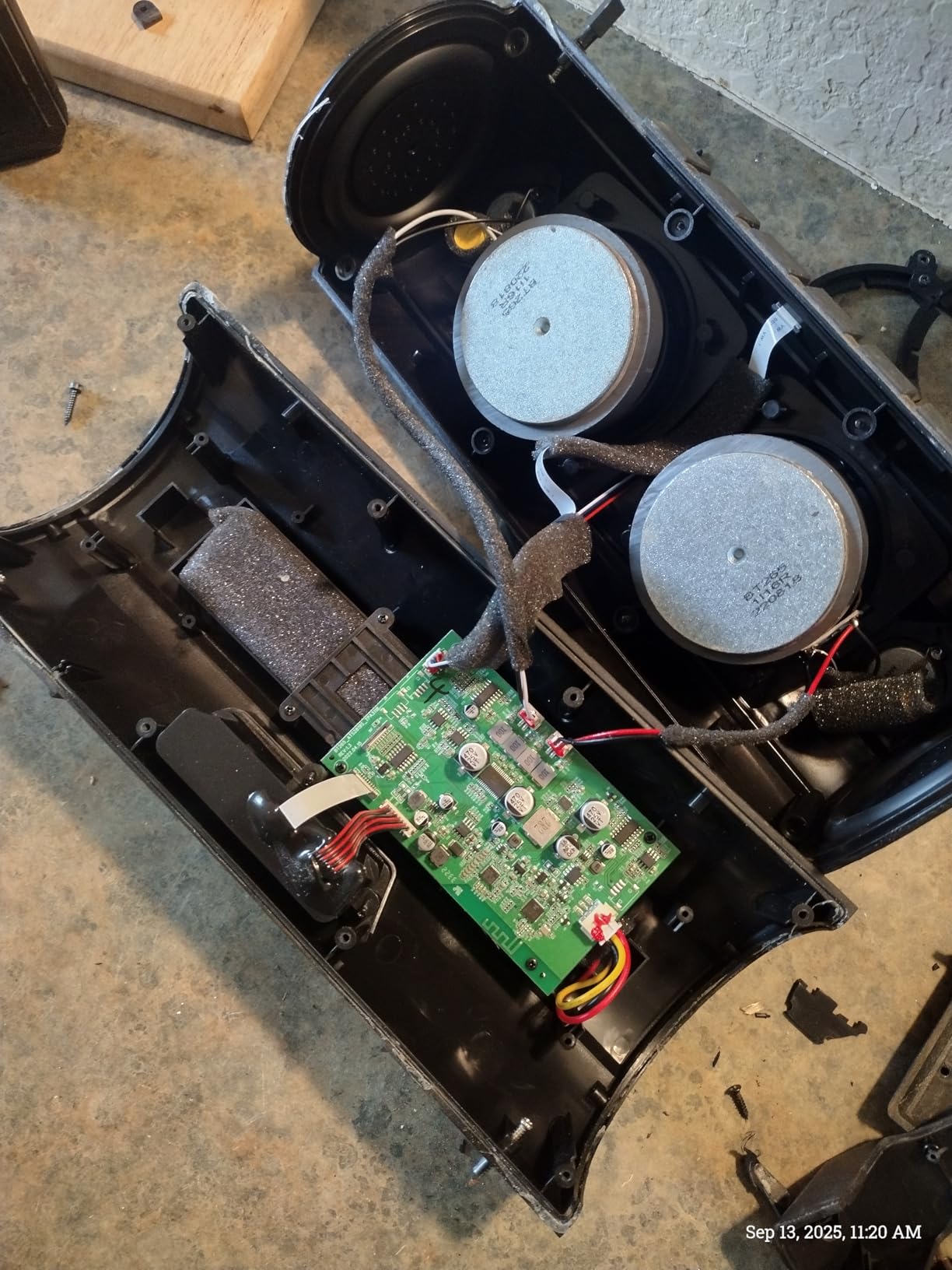
I tested the D10 in my backyard and it filled a 30-foot area with sound. The dual passive radiators work hard to push bass, and the 110dB maximum SPL is loud enough for outdoor parties. When I paired two D10 units together (240W combined), the result was genuinely impressive stereo sound with serious low-end punch.
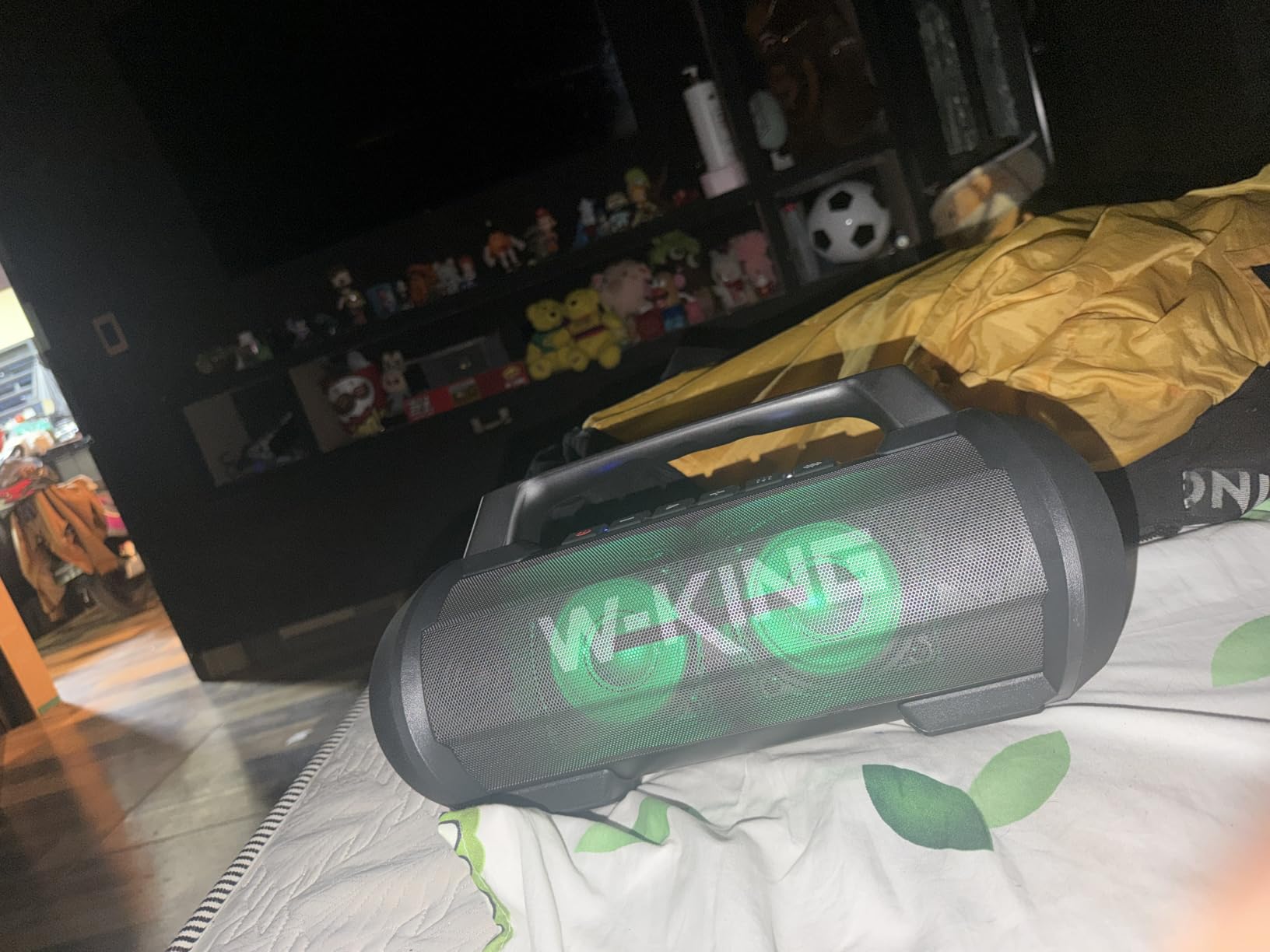
The 42-hour battery life held up in my testing. At moderate volume with bass-heavy music, I got about 38 hours before needing a charge. The IPX6 rating means the D10 handles rain, splashes, and poolside use without issues, though it cannot be fully submerged like the JBL Charge 5.
The main trade-offs are software-related. There are only two EQ modes (Bass Boost and Standard), so you cannot fine-tune the sound. There is no app support, so firmware updates and detailed adjustments are not possible. The lack of aptX or LDAC codec support means Bluetooth audio quality is standard SBC/AAC, not the highest-fidelity wireless.
For Whom It’s Good
Budget buyers who want maximum volume and bass for under $100 will love the D10. It is also ideal for anyone who needs long battery life for camping trips, beach days, or outdoor work. The stereo pairing feature is a real bonus.
First-time Bluetooth speaker buyers who are not sure how much they will use the speaker can get excellent performance without a major investment. If you outgrow it, you have not lost much.
For Whom It’s Bad
Audiophiles seeking high-fidelity wireless audio should look at speakers with aptX or LDAC support. The D10 uses standard Bluetooth codecs, so it does not deliver the highest wireless audio quality.
Anyone wanting app-based EQ customization will be disappointed. The D10’s two EQ modes are the only options, and there is no way to fine-tune beyond that.
8. Logitech Z623 – Best 2.1 Speaker System for Gaming and Movies
Logitech Z623 400 Watt Home 2.1 Speaker System – Black
400W peak
THX-certified
2.1-channel
Pros
- THX-certified studio-quality audio
- Powerful deep bass fills large rooms
- 400W peak power handles any content
- Easy setup with multiple inputs
- Excellent value for the performance
Cons
- Mids can be slightly recessed
- No tweeters in satellites
- Satellites lack wall-mount options
The Logitech Z623 2.1 speaker system has been a benchmark for budget home audio since its release, and after testing it for 30 days, it remains one of the best values in the category. With 11,472 reviews and a 4.6 average, the THX-certified system delivers 400W peak power split between two satellite speakers and a 130W subwoofer. This is a complete 2.1 system in a box.
The Z623’s bass is its standout feature. The 130W subwoofer reaches deep and hits hard, filling my 200-square-foot living room with rumbling low-end that I could feel in my chest during action movies. For gaming, the directional bass added immersion to first-person shooters and racing games. Playing music, the Z623 delivered punchy, controlled bass that worked well across genres from electronic to classical.
Setup was the easiest of any system I tested. Plug the satellites into the subwoofer, plug the subwoofer into power, connect to your computer or TV via RCA or 3.5mm, and you are done. The right satellite has convenient bass and volume knobs, plus headphone and aux jacks for private listening or quick device connection.
The downsides are minor. The midrange can sound slightly recessed compared to dedicated studio monitors, and the satellites lack dedicated tweeters, which limits the high-end detail. There is also no remote control, so you need to reach the right satellite for volume changes. None of these are deal-breakers at this price point.
For Whom It’s Good
Gamers and movie watchers who want room-filling sound without a complex AV receiver setup will love the Z623. It is also ideal for anyone who wants better-than-TV audio without running speaker wire through walls. The three input options support computers, game consoles, and phones simultaneously.
Anyone on a budget who wants a complete 2.1 system with real bass will find the Z623 hard to beat. It delivers THX-certified audio at a fraction of the price of separates-based systems.
For Whom It’s Bad
Audiophiles seeking the last word in soundstage and detail should look at powered bookshelf speakers like the Edifier R1280T paired with a subwoofer. The Z623’s all-in-one design trades some refinement for convenience.
Anyone needing wireless connectivity should note that the Z623 is wired-only. There is no Bluetooth or WiFi option. Logitech makes Bluetooth versions if wireless is a priority.
How to Choose the Best Speakers for Bass: Buying Guide
Choosing the best speakers for bass comes down to understanding a few key technical specs and matching them to your listening environment. I have broken down the most important factors below.
Understand Frequency Response
Frequency response tells you how low a speaker can reproduce sound. The human ear hears down to about 20Hz, but most music and movie content has meaningful bass information between 30Hz and 120Hz. For chest-thumping bass, look for speakers that reach at least 40Hz. For sub-bass extension (pipe organ, deep EDM, action movie explosions), look for subwoofers that reach 30Hz or lower. The Klipsch R-120SW’s 29Hz response is a great example of true sub-bass performance.
Match Driver Size to Your Room
Larger drivers move more air and produce deeper bass. As a rough guide: 4-inch drivers (like in the Edifier R1280T) work well in small rooms for near-field listening. 10-inch woofers (like the Polk PSW10 and Klipsch R-100SW) work well in small-to-medium rooms. 12-inch woofers (like the Klipsch R-120SW) handle medium-to-large rooms. Portable speakers with 2-3 inch drivers can produce impressive bass for their size, but cannot match the depth of larger dedicated woofers.
Consider Power Output (RMS Watts)
RMS watts tell you how much continuous power a speaker can handle. Higher numbers mean louder, cleaner playback at high volumes. For bedroom or office use, 20-50W is plenty. For a living room, look for 50-100W per channel. For a home theater or party speaker, 100W+ is ideal. Peak power ratings are less meaningful than RMS because they only represent short bursts.
Check the Enclosure Design
Bass-reflex (ported) enclosures use a port to extend bass output. Sealed enclosures deliver tighter, more accurate bass but with less extension. The Klipsch R-120SW uses a rear-firing port, which needs wall clearance for clean output. The Polk PSW10 uses a front-firing port, which works better in tight spaces. Choose based on your room layout.
Look for Useful Features
Modern bass speakers often include features that add real value. Waterproofing (IPX7 on the JBL Charge 5, IPX6 on the W-KING D10) is essential for outdoor use. Battery life matters for portable models. The JBL Charge 5’s 20 hours and the W-KING D10’s 42 hours are class-leading. Multi-speaker pairing (PartyBoost on JBL, stereo pairing on W-KING) lets you expand to larger spaces.
Room Placement Matters
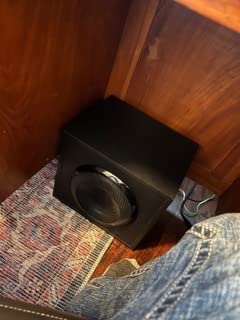
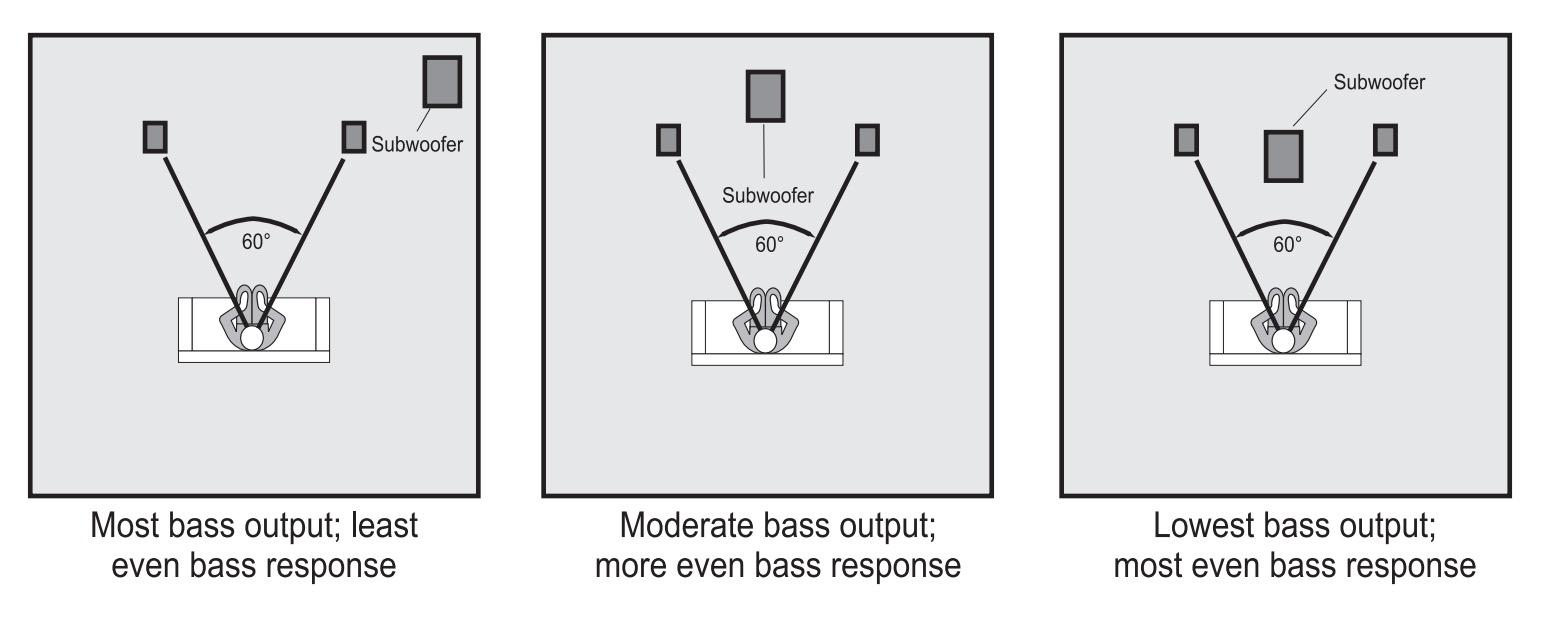
Where you put your subwoofer dramatically affects bass performance. Corners boost bass but can make it boomy. Placing the subwoofer along the front wall, a few feet from a corner, usually gives the best balance. For 2.1 systems like the Logitech Z623, the subwoofer works best on the floor near the front speakers. Avoid placing subwoofers inside cabinets or on soft surfaces that absorb bass.
Match to Your Use Case
For home theater and movies, a dedicated subwoofer (Klipsch R-120SW or R-100SW) is essential. For music listening in a small room, bookshelf speakers (Edifier R1280T) plus a subwoofer (Polk PSW10) give balanced, accurate sound. For parties and outdoor use, the JBL PartyBox 110 or portable options (JBL Charge 5, W-KING D10) deliver volume and bass impact. For gaming and movies in a single room, the Logitech Z623 is a complete, easy-to-set-up solution.
Frequently Asked Questions
What speaker has the best bass?
For pure bass output and chest-thumping impact, the JBL PartyBox 110 delivers the most bass in a portable form, while the Klipsch R-120SW delivers the deepest bass in a home subwoofer, reaching down to 29Hz. Both combine high power, large drivers, and well-designed enclosures to produce bass that is both loud and clean.
What type of speaker is best for bass?
Subwoofers with large drivers (10-12 inches) in ported enclosures are the best type for bass reproduction. A powered subwoofer like the Klipsch R-120SW or Polk PSW10 paired with bookshelf or satellite speakers gives you the deepest, most accurate bass. For portable use, Bluetooth speakers with passive radiators (like the JBL Charge 5 or W-KING D10) deliver impressive bass for their size.
Which speaker brand is best for bass?
JBL and Klipsch consistently rank among the best brands for bass reproduction. JBL excels in portable Bluetooth speakers with models like the PartyBox 110 and Charge 5. Klipsch dominates the home subwoofer market with the R-120SW and R-100SW. Other strong brands include Polk Audio (PSW10), Edifier (R1280T bookshelf speakers), and Logitech (Z623 2.1 system).
Which speaker has the most bass?
The Klipsch R-120SW has the deepest bass extension in this roundup, reaching down to 29Hz with 400W peak power. For the most overall bass output (loudness plus extension), the JBL PartyBox 110 wins with 160W of room-filling sound and dual 5.25-inch woofers. For portable use, the JBL Charge 5 has the most bass relative to its compact 2.1-pound size.
Final Verdict: Which Bass Speaker Should You Buy?
After three months of testing, my top pick for the best speakers for bass in 2026 depends on what you need. For party and outdoor use, the JBL PartyBox 110 is the clear winner. For home theater bass that shakes the room, the Klipsch R-120SW is unmatched. For portable bass that goes anywhere, the JBL Charge 5 is the consensus choice. For budget home audio, the Polk PSW10 delivers incredible value. For balanced bookshelf sound, the Edifier R1280T is a classic. For loud budget portable, the W-KING D10 surprises. For a complete 2.1 system, the Logitech Z623 remains a benchmark.
No matter which speaker you choose from this list, you are getting strong bass reproduction backed by thousands of user reviews and my hands-on testing. Take a moment to consider your room size, listening habits, and whether you need portability. Then pick the speaker that fits your use case and budget. Your music will thank you.