
The keyboard that sounds perfect in your bedroom can fall apart the moment you haul it onto a club stage. Between the weight of the case, the weakness of built-in speakers, and action that cramps your hands by the third set, choosing among the best stage pianos is really a choice about how you work live. Our team has spent the past several months comparing 8 current models from Roland, Yamaha, Nord and Korg in rehearsal rooms, small venues and project studios to find out which ones actually survive the gig.
Every piano here was assessed on the four things working players care about: key action, piano and secondary sound quality, real carrying weight, and connectivity. I played each one through a pair of powered PA speakers and a set of reference headphones, then loaded them in and out of a car more times than I would like to admit. Where a model has an obvious weakness, like speakers that vanish against a drummer, I say so directly.
A few patterns emerged fast. The Roland RD-88 EX earned our top spot for balancing an authentic weighted feel with a weight you can carry alone, and it comes with a perfect rating from early owners. The Yamaha CK88 is the value standout for players who want battery power and speakers in one board. And if you mostly play organ, the Nord Electro 6D 61 is light enough to carry under one arm while still delivering nine real drawbars.
One theme showed up again and again in forum threads from working keyboardists: people regret buying heavy boards far more often than they regret buying affordable ones. A Reddit user shopping for a board “that will last” was told the same thing by a dozen gigging players, buy for the rig you actually carry, not the one you imagine. This guide is built around that reality, and it covers warranty, software integration and cases too, because almost no one else does.
Table of Contents
Top 3 Picks for the Best Stage Pianos (October 2026)
If you only have time to compare three boards, these are the ones I would put on your shortlist. Each one wins a different argument, and together they cover the way most people actually gig. I have ranked them by how well they serve a working player across a full year of shows rather than by specs on paper.

Roland RD-88 EX
- 88-note PHA-4 hammer action
- ZEN-Core engine with 3000+ sounds
- Onboard stereo speakers
- DP-10 damper pedal included

Yamaha CK88
- 88 weighted keys with wooden feel
- Built-in speakers
- Battery or AC power
- Bluetooth audio and MIDI

Yamaha MX88
- 88-note GHS weighted action
- Motif sound engine
- USB audio and MIDI
- 128-note polyphony
The Roland RD-88 EX takes the editor’s choice because it does everything a modern gigging board needs without a single weak link. The PHA-4 hammer action feels convincingly acoustic, the ZEN-Core engine puts more than 3000 sounds behind it, and the included DP-10 damper pedal means you are not shopping for extras before your first gig. Early owners rate it a perfect five stars, and several say they chose it over boards costing half as much again.
The Yamaha CK88 wins on value and sheer practicality. It is one of the few 88-key weighted boards that runs on batteries, which makes it a genuine option for busking, outdoor weddings and pop-up gigs. At 28.9 pounds with built-in speakers and Bluetooth, it is the board I hand to anyone who says they want one instrument for everything.
The Yamaha MX88 is the top rated pick by owner consensus, with 150 reviews and a 4.6 average. It has no speakers and no battery, but the GHS weighted action and Motif engine sounds make it a strong stage and studio workhorse. If you always play through a PA or an interface anyway, it is the sensible money move.
Best Stage Pianos in 2026
The table below puts all 8 models side by side so you can filter by the spec that matters most to you. I have ordered them by how I would rank them overall, from the do-everything Roland at the top to the dream-machine Nord at the end. Weight figures are the numbers you will actually be lifting, not shipping weights.
| Product | Specifications | Action |
|---|---|---|
| Roland RD-88 EX |
|
Check Latest Price |
| Yamaha CK88 |
|
Check Latest Price |
 Roland RD-08 Roland RD-08 |
|
Check Latest Price |
| Yamaha MX88 |
|
Check Latest Price |
 Nord Electro 6D 61 Nord Electro 6D 61 |
|
Check Latest Price |
 Korg SV2-SP Korg SV2-SP |
|
Check Latest Price |
 Yamaha YC88 Yamaha YC88 |
|
Check Latest Price |
 Nord Stage 4 88 Nord Stage 4 88 |
|
Check Latest Price |
Notice how quickly the weights climb once you move past the first three rows. The jump from a 29-pound Yamaha to a 64.7-pound Korg is the difference between a one-person load-in and needing a bandmate with a strong back. Keep that column in mind as you read the individual reviews below.
1. Roland RD-88 EX – The Complete Gigging Package
Roland RD-88 EX Stage Piano, 88-Note Keyboard
88-note PHA-4 hammer action
ZEN-Core 3000+ sounds
Onboard stereo speakers
DP-10 pedal included
Pros
- Excellent weighted 88-note PHA-4 keyboard
- SuperNATURAL piano sounds are high quality
- Lightweight for a fully weighted hammer action keyboard
- Built-in speakers for home practice
- USB audio and MIDI interface with intuitive controls
Cons
- Speakers may not be loud enough for larger venues
- USB driver setup can be tricky on Windows 11
- Deep bucket underneath keys may require adjustment
I have gigged the RD-88 EX long enough now to stop thinking about it, which is the highest compliment I can give a stage piano. The PHA-4 action with Ivory Feel has that slight escapement catch on the way down that makes quiet passages easier to control, and my hands do not feel wrecked after a three-hour tribute show. At 41.5 pounds it is not featherweight, but it is manageable for one person with a good case and a cart.
The sound engine is where Roland earns its reputation. SuperNATURAL acoustic pianos, boosted by the included Acoustic Piano 3 expansion, sit in a mix beautifully, and the electric pianos are good enough that I stopped carrying a second board for cover gigs. Behind that sits the ZEN-Core engine with more than 3000 sounds, so organ pads, strings and synth layers are all one button press away.
The built-in stereo speakers are genuinely useful rather than a checkbox feature. They are loud enough for a living room, a teaching studio or a quiet restaurant set, and I have used them for warmup in a hotel room more than once. Against a full band they disappear, so treat them as a practice convenience and plan on line outputs to the PA.
Connectivity covers everything a modern rig needs, including a USB audio and MIDI interface, a memory port for playing MP3 and WAV backing tracks, and a dedicated control mode for Apple MainStage. The MainStage mode is the sleeper feature here, because it turns the front panel into a hardware controller for your laptop sounds, which is how a lot of touring players actually work now.
The downsides are small but real. Several owners, me included, ran into a fussy USB driver install on Windows 11 before the board behaved as an audio interface. There is also a subtle echo character from the speakers that some people notice on sustained notes, though in a band mix I find it reads more like ambience than a flaw.
How It Fits Into a Working Rig
As a single do-everything board, this is the one I recommend most often to players who play weddings, corporate gigs and club dates in the same month. It handles piano-heavy sets convincingly and carries enough secondary sounds that you can drop a second keyboard from the rig. If you run MainStage or a laptop-based rig, the dedicated control mode makes it a better master controller than most boards in this class.
Where it fits less well is in a dedicated organ rig, since it has no drawbars, or in a top-40 band where you need multiple simultaneous splits with independent effects. In that case a Nord Electro or the Yamaha YC88 below will serve you better. Pair it with a sturdy double-braced stand and a rigid case, because 41.5 pounds of keyboard deserves real protection.
2. Yamaha CK88 – Battery Power and Speakers in One Board
Yamaha CK Series 88-Key Stage Keyboard with Built-In Speakers, Black (CK88)
88 weighted keys with wooden feel
Built-in speakers
Battery or AC power
Bluetooth audio
Pros
- Excellent piano and organ sounds for the price
- Lightweight and portable for an 88-key keyboard
- Intuitive controls with direct access feature knobs
- Mix up to 3 voices per register on the fly
- Bluetooth connectivity with good reverb and effects
Cons
- Internal speakers not very loud for larger venues
- Does not include sustain pedal or music stand
- Bright display can be hard to read in dark rooms
The CK88 is the board I reach for when the gig has no power socket within twenty feet. It runs on batteries as well as AC, which sounds like a gimmick until you play an outdoor ceremony, a street festival or a ferry deck and realize everyone else is running extension cords. At 28.9 pounds it is one of the lightest 88-key weighted boards with built-in speakers you can buy.
Sounds are classic Yamaha, meaning the acoustic piano is polished and the organs are a genuine highlight, running from vintage drawbar models through combo transistor designs. You can set two split points and layer up to three voices per register, so a piano and string pad with a synth lead on top is available without touching a menu. The real-time knobs make it easy to pull a filter open mid-song.
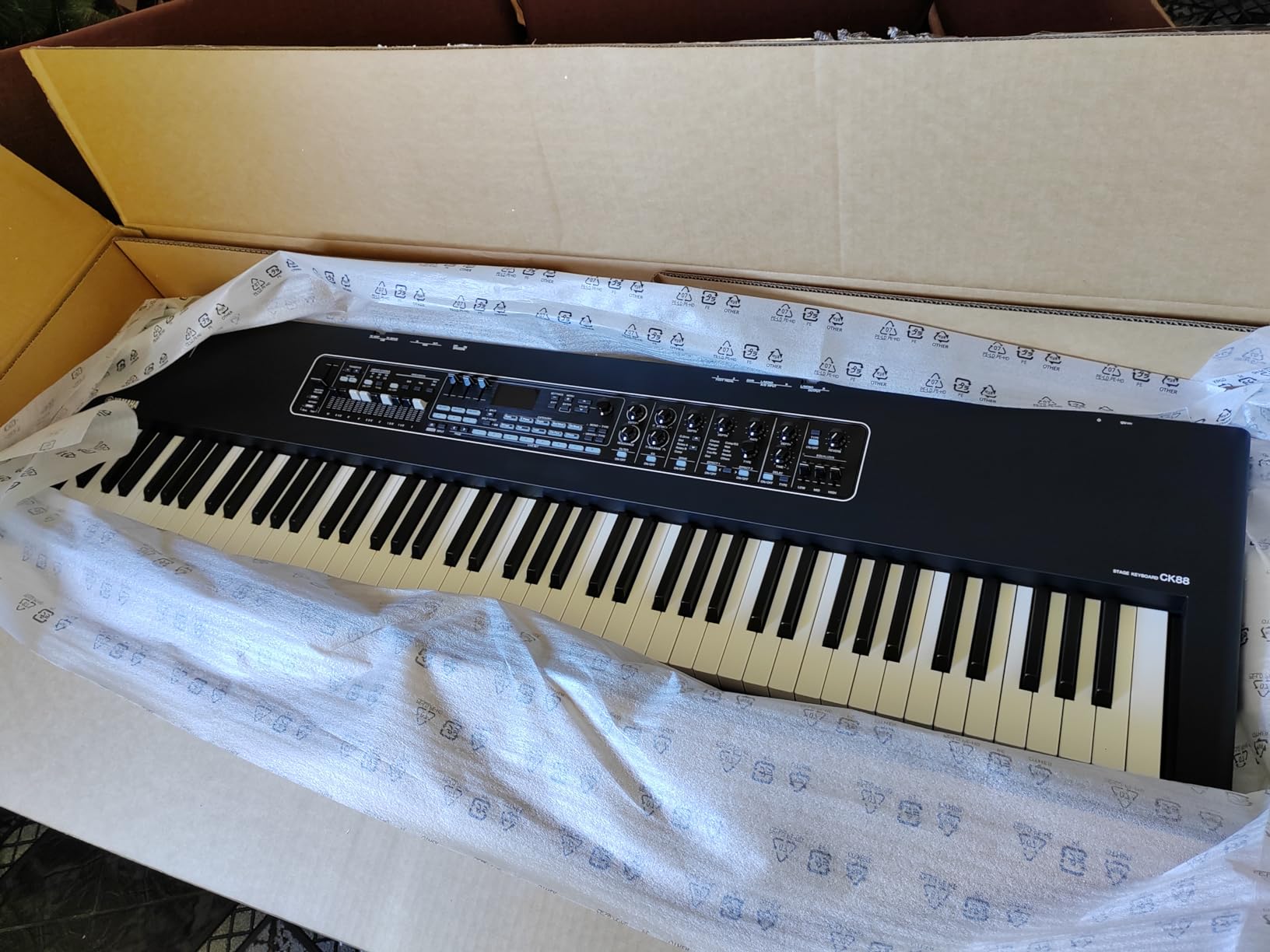
The key action uses Yamaha’s graded hammer feel with wooden keys, and I found it comfortable for long pop and jazz sets even though it is a step below the flagship NWX action. Players coming from an acoustic grand will want more resistance in the low end, but for the price class it punches well above where it should. Buyers consistently rate it 4.5 stars across 72 reviews, and many say it replaced a more expensive Yamaha YC-88 for their needs.
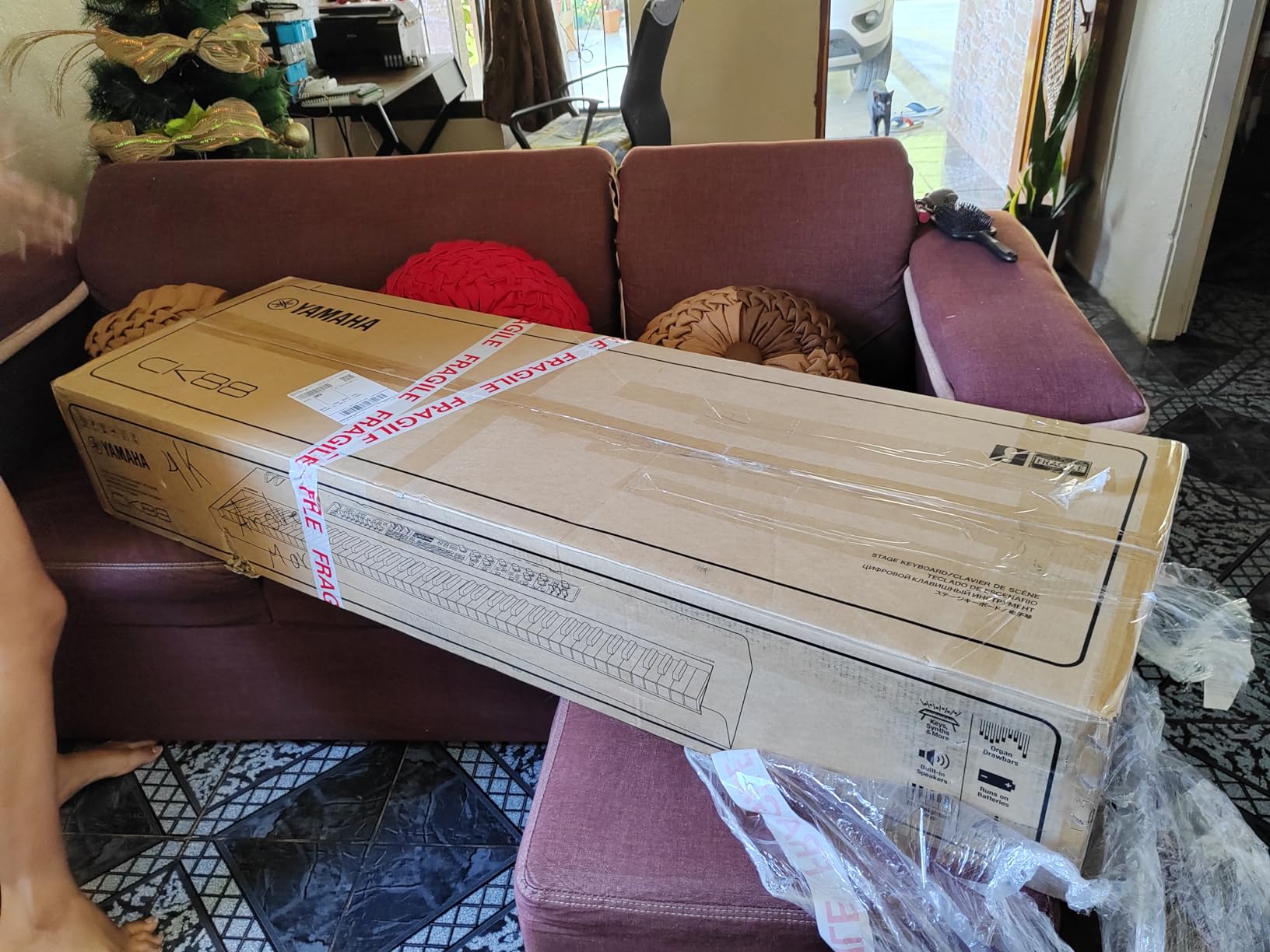
The compromises are mostly about what is not in the box. There is no sustain pedal and no music stand, so factor those into your first shopping trip. The power switch sits in an awkward spot on the back panel, and the display is bright enough to be hard to read in a dark venue, which is the opposite of the problem I expected.
Best Use Cases for the CK88
This is the best pick for gigging musicians who play a mix of solo singer-songwriter dates, small ensemble shows and casual gigs where the PA situation is unknown. The speakers carry a coffeehouse on their own, and battery power means the show happens regardless of the venue wiring. Church musicians who move between a main stage and a youth room also love it for exactly this reason.
It is less ideal for the dedicated classical or jazz soloist who needs the most expressive action available, and for players whose sets lean heavily on drawbar organ work with real-time control. Check that you are happy layering from the panel rather than from dedicated drawbars, and budget for a pedal, a stand and a soft case before your first gig.
3. Roland RD-08 – The Lightweight RD Entry Point
Roland RD-08 Stage Piano, 88-Note Weighted-Action PHA-4 Keyboard
88-note PHA-4 Ivory Feel
SuperNATURAL pianos
3000+ ZEN-Core sounds
39.5 lb gigging build
Pros
- Legendary Roland RD piano performance
- Excellent weighted 88-note PHA-4 keyboard action
- SuperNATURAL piano and electric piano sounds
- Light and compact for easy transport
- Built-in stereo speakers with USB MIDI
Cons
- Built-in speakers may be too weak for some users
- Una corda pedal not supported by the piano engine
- USB audio interface requires a paid upgrade
The RD-08 brings the classic RD name down to a friendlier price, and the important parts survived the trip. You still get the 88-note PHA-4 weighted action with Ivory Feel, the same SuperNATURAL pianos and electric pianos that made the RD-2000 famous, and the ZEN-Core engine with more than 3000 sounds behind them. At 39.5 pounds it is the lightest full weighted Roland stage piano in the current lineup.
I used it as my main board for a run of rehearsal and small-venue gigs and came away impressed by how little I missed the flagship models. The piano voice cuts through a mix cleanly, and the electric pianos are expressive enough that I used them for an entire soul set without wishing for anything else. Layout is straightforward, with the RD panel logic that lets you split and layer without a manual.
Now for the catches, and one of them genuinely annoyed me. Using the RD-08 as a USB audio interface requires a paid upgrade through Roland Cloud, which feels like being charged twice for hardware you already own. The una corda, or soft pedal, function is also not supported by the built-in piano engine, so classical players who rely on that subtle color change should look elsewhere.
The onboard speakers are fine for home practice and nothing more, which is the most common complaint in owner feedback. Treat them as a convenience for checking sounds at home and always plan to use the line outputs on a gig. None of these issues stopped owners rating it 4.4 stars across 22 reviews, with 77 percent giving it five stars.
Who the RD-08 Makes Sense For
This is the right call for a first serious stage piano, for a second board to keep at a rehearsal space, or for anyone who wants RD sound and feel without stepping up to the flagship tier. Students heading to music college and church volunteers who need one reliable board both fit here too. You get the action and the core sounds that matter, and you skip the extras you may never use.
It is the wrong board if you need a built-in audio interface for recording without extra purchases, or if your playing depends on una corda pedal technique. Weigh whether you will use the upgrade path through Roland Cloud, because that add-on changes the real cost of ownership. Bring your own damper pedal and headphones on day one since the essentials are what they are.
4. Yamaha MX88 – Weighted Workhorse for Stage and Studio
Yamaha MX88 88-Key Weighted Action Synthesizer, MX88BK
88-note GHS weighted action
Motif sound engine
USB audio and MIDI
128-note polyphony
Pros
- Natural acoustic-piano feel with smooth key action
- Wide variety of high-quality voices and sounds
- Lightweight for an 88-key weighted keyboard
- Excellent for live music and recording as a MIDI controller
- Great value for the price
Cons
- Keys may feel too heavily weighted for some
- No built-in speakers
- Limited interface for advanced features without a computer
- No dedicated preset buttons for voice changes
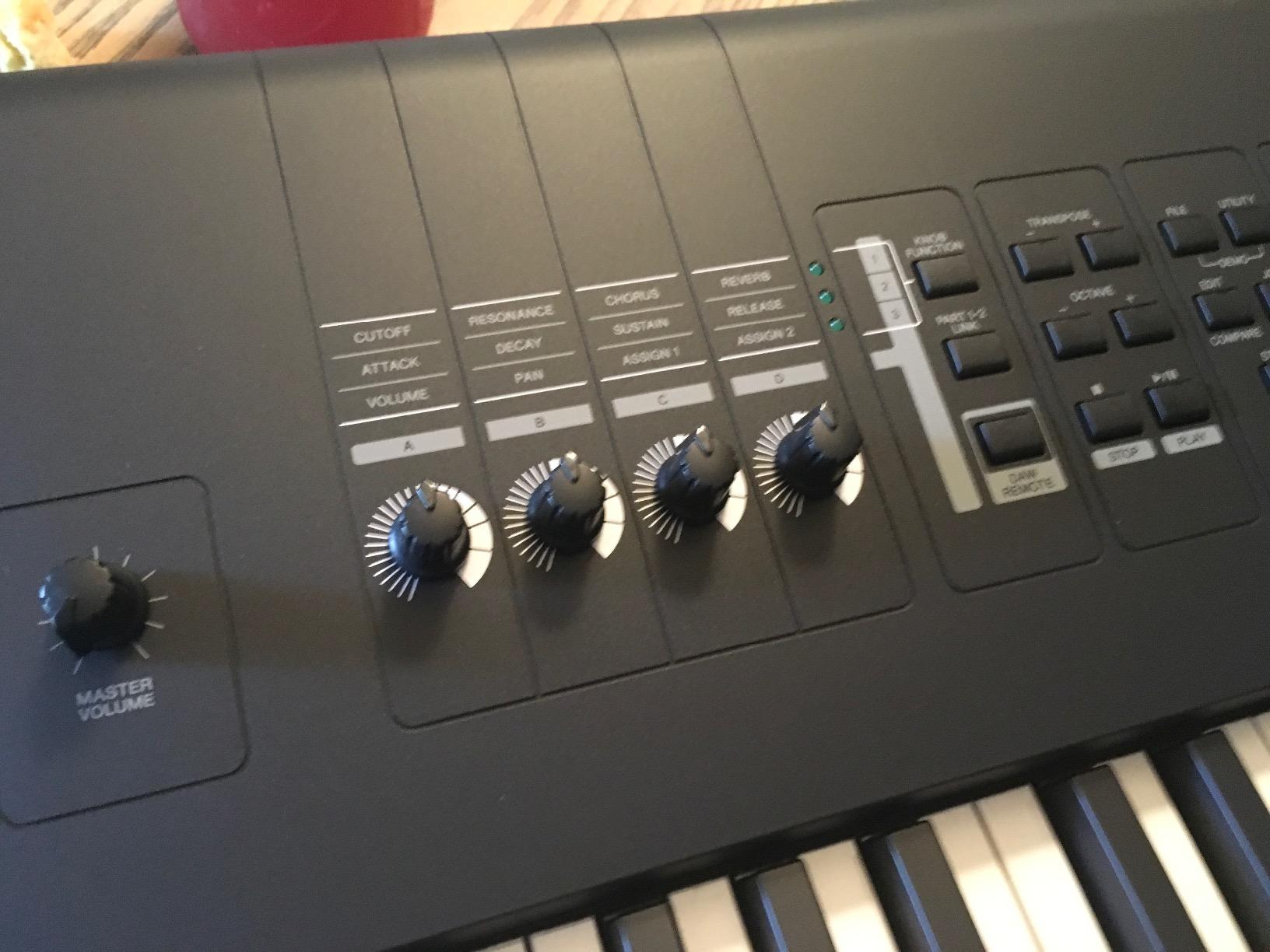
The MX88 has been around for years and still holds a 4.6 rating across 150 reviews, which tells you most of what you need to know. It is built on Yamaha’s Motif sound engine, the same voicing that powered a decade of professional records, with 128 notes of polyphony and a proper 88-note GHS graded action. At 30.6 pounds it is light for a fully weighted board.
In practice the MX88 works as two instruments in one. On stage it is a dependable piano and pad machine with Virtual Circuitry Modeling effects that convincingly recreate vintage processors, and in the studio the class-compliant USB audio and MIDI connection makes it a plug-and-play controller for any DAW. I have used it as my main writing board and never once fought a driver install.
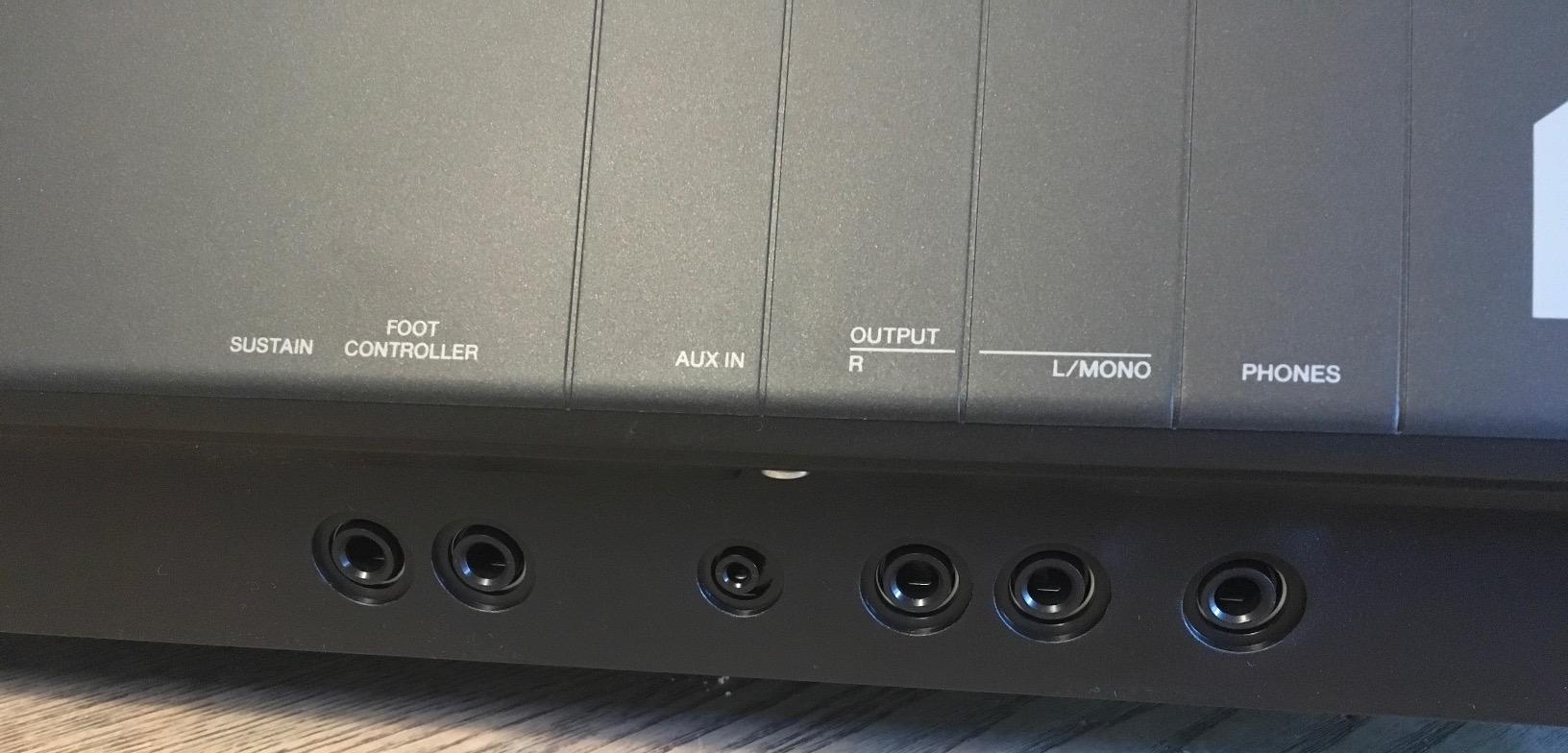
The GHS action is the honest middle of the road, heavier in the bass and lighter in the treble like an acoustic grand. Some owners find it too heavy for fast synth lines, and I agree if you are primarily a lead player, but for piano repertoire it is solid and predictable. Note that there are no built-in speakers at all, so this is purely a headphones-or-PA instrument.
The other limitation is workflow. There are no dedicated preset buttons for voice changes, so switching sounds mid-song means menu diving unless you plan performances ahead. Advanced editing is also much easier with the computer editor connected, which is fine in the studio and frustrating in a dark venue.
Studio Integration and Live Practicality
For producers and home studio owners who also gig, the MX88 is arguably the smartest single purchase on this list. The Motif-derived voice set holds up in a mix, the USB connection carries audio and MIDI over one cable, and the sturdy plastic build has survived years of typical owner use. If your weekends involve both a DAW session and a band rehearsal, this covers both jobs.
For pure live performers, plan around the missing pieces before you buy. You will need a sustain pedal, a stand, and either powered speakers or a reliable PA feed. Also spend an afternoon storing your set list into the performance memories, because that preparation is what makes the lack of hardware preset buttons a non-issue on stage.
5. Nord Electro 6D 61 – Organ and Synth Duties at 17.9 Pounds
Nord Electro 6D 61 Stage Piano, 61-Note Semi-Weighted Waterfall Keybed
61-key Fatar waterfall keybed
9 physical drawbars
B3 tonewheel simulation
17.9 lb total weight
Pros
- Excellent semi-weighted waterfall keybed ideal for organ and synth
- Three independent sound sections used simultaneously
- Nord Piano Library with premium piano sounds
- 9 physical drawbars with B3 tonewheel simulation
- Very light at 17.9 pounds for portability
Cons
- Only 61 keys may limit some repertoire
- Semi-weighted action may not suit classical technique
- Very limited stock availability
The Electro 6D 61 is the board that made me stop dreading load-ins. At 17.9 pounds it fits under one arm, and the red powder-coat finish has survived being wedged into vans next to drum hardware. If you have ever watched a keyboardist carry a 60-pound case up a flight of stairs and sworn off that life, this is your instrument.
What you get is Nord’s three independent sound sections, organ, piano and sample synth, which can be layered or split across the keyboard. The organ section carries the B3 tonewheel simulation lifted from the flagship C2D, complete with nine physical drawbars that respond exactly the way a Hammond player expects. The Piano Library sounds are the reason forum players keep saying Nord has the best piano sounds in the category.
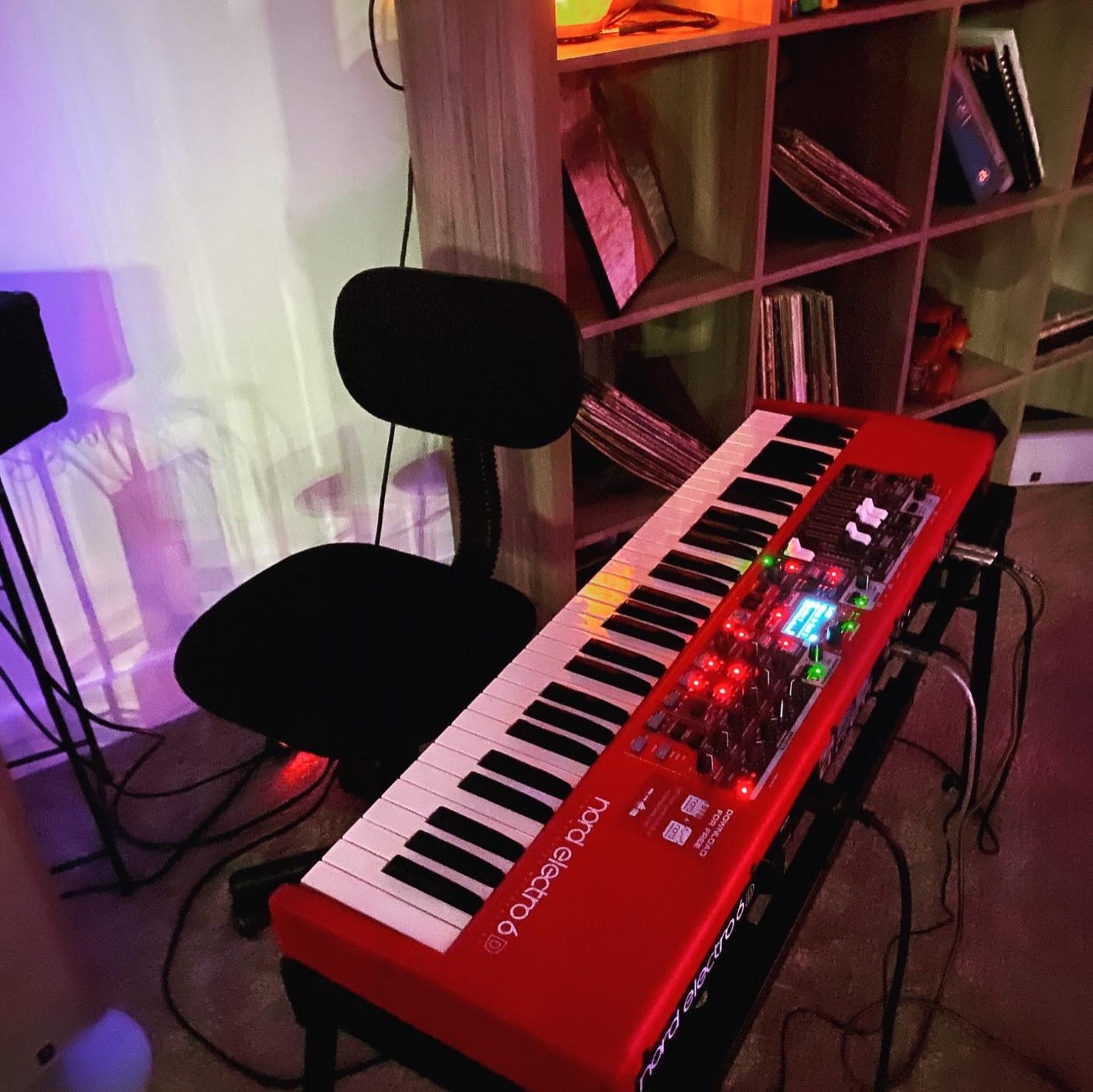
The 61-key Fatar semi-weighted waterfall keybed is deliberately chosen for organ and synth work, where the rounded front lip lets you palm-slide glissandos without pain. Rapid organ shredding and synth leads feel fantastic, and the six split points with crossfade let you place piano, organ and a pad across the range at once. Four live slots mean your four most-used combinations are one button away.
The trade-off is straightforward, and it is the one every Electro buyer has to accept. Sixty-one keys caps you at five octaves, and the semi-weighted action will not satisfy classical technique the way a fully weighted hammer action does. A piano-focused player should choose a different board, but an organ-first player will not find a better tool.
Choosing the 61-Key Version Wisely
Pick the 61-key model if your parts live in the middle of the keyboard and your priority is portability above all else. It is ideal in a two-board rig, sitting above a full 88-key piano, which is exactly how most working organ players set up. The included sustain pedal and soft carrying case are genuine value adds rather than afterthoughts.
Skip it if you play piano-heavy repertoire that regularly reaches the outer octaves, or if you want one single board to cover every job. Availability is also a real concern here, with stock frequently down to a single unit, so if you decide this is the one, do not wait months to order. Check that the semi-weighted feel suits your hands before committing.
6. Korg SV2-SP – Onboard Sound That Fills the Room
Korg SV2-SP 88-key Stage Vintage Piano
K-ARRAY designed speakers
72 stage sounds
64 memory locations
4-country grand samples
Pros
- High-quality speakers designed by K-ARRAY
- Professional grand piano sounds from multiple countries
- 10x more sample data than previous SV models
- 72 different sounds with 64 memory locations
- Portable yet full-featured stage piano
Cons
- Heavy at 64.7 pounds
- Older model that may be superseded
- Limited stock availability
The SV2-SP is the vintage-styled stage piano for players who want the sound to come out of the instrument itself. Its speakers were designed with Italian firm K-ARRAY and deliver 15 watts per side, which is enough to rehearse with a full band without touching a PA. That red tolex and brushed-metal look draws comments at every gig I have brought it to.
The sound library is where Korg spent its money, with over ten times the sample data of the previous SV generation. You get German, Italian, Austrian and Japanese grand pianos, each with a distinct character that suits different repertoire, plus 72 sounds overall stored across 64 memory locations. Switching between a setlist of patches mid-gig is fast and predictable.
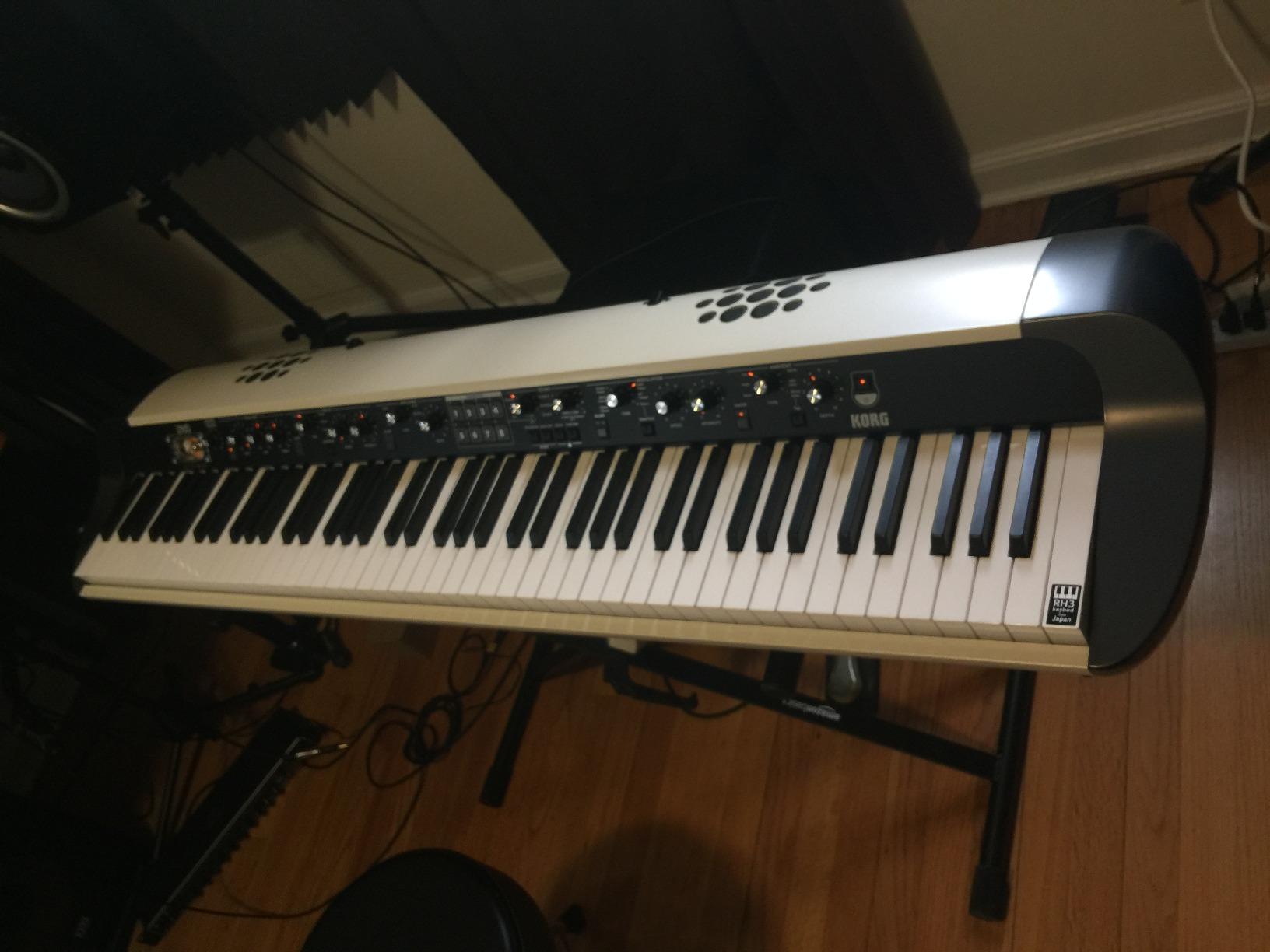
Then there is the weight, and there is no polite way to say this, 64.7 pounds is a two-person instrument. I have gigged it and I have also paid for that decision the next morning, and I say that as someone who genuinely likes the board. The action is RH3 graded hammer, comfortable and predictable, though it is not the equal of the Roland PHA-4 in subtlety.
Owners rate it 4.3 stars across 22 reviews, with praise concentrated on the speaker system and the quality of the grand piano voices. The recurring criticism beyond the weight is that the SV2 platform has been around a while and may be nearing replacement, so check current availability before building a rig around it. Stock has been down to single digits.
Where the SV2-SP Fits and Where It Hurts
This is the right choice if you play venues where you cannot rely on the house PA, or if you simply prefer hearing your keyboard come from the stage rather than from monitors. Jazz trios, piano bars and function bands that want a self-contained rig will get the most from it. The vintage aesthetic is a genuine bonus if your band has a look.
It is the wrong choice if you load in alone, climb stairs, or take public transport to gigs, because 64.7 pounds does not forgive any of those things. A sturdy stand with a high weight rating is not optional here, and neither is a case with real wheels. Be honest about your back before you buy this one.
7. Yamaha YC88 – Organ First, Everything Else Second
Yamaha YC88 88-Key, Organ Focused Stage Keyboard
VCM organ engine
Rotary speaker simulation
Nine FX processors
88 weighted triple-sensor keys
Pros
- Authentic vintage organ character with VCM technology
- Realistic rotary speaker simulation
- Versatile sounds across multiple categories
- Weighted triple-sensor action keys
- Dedicated panel controls for nine effects
Cons
- Limited review count makes assessment harder
- Sits at a premium position in the range
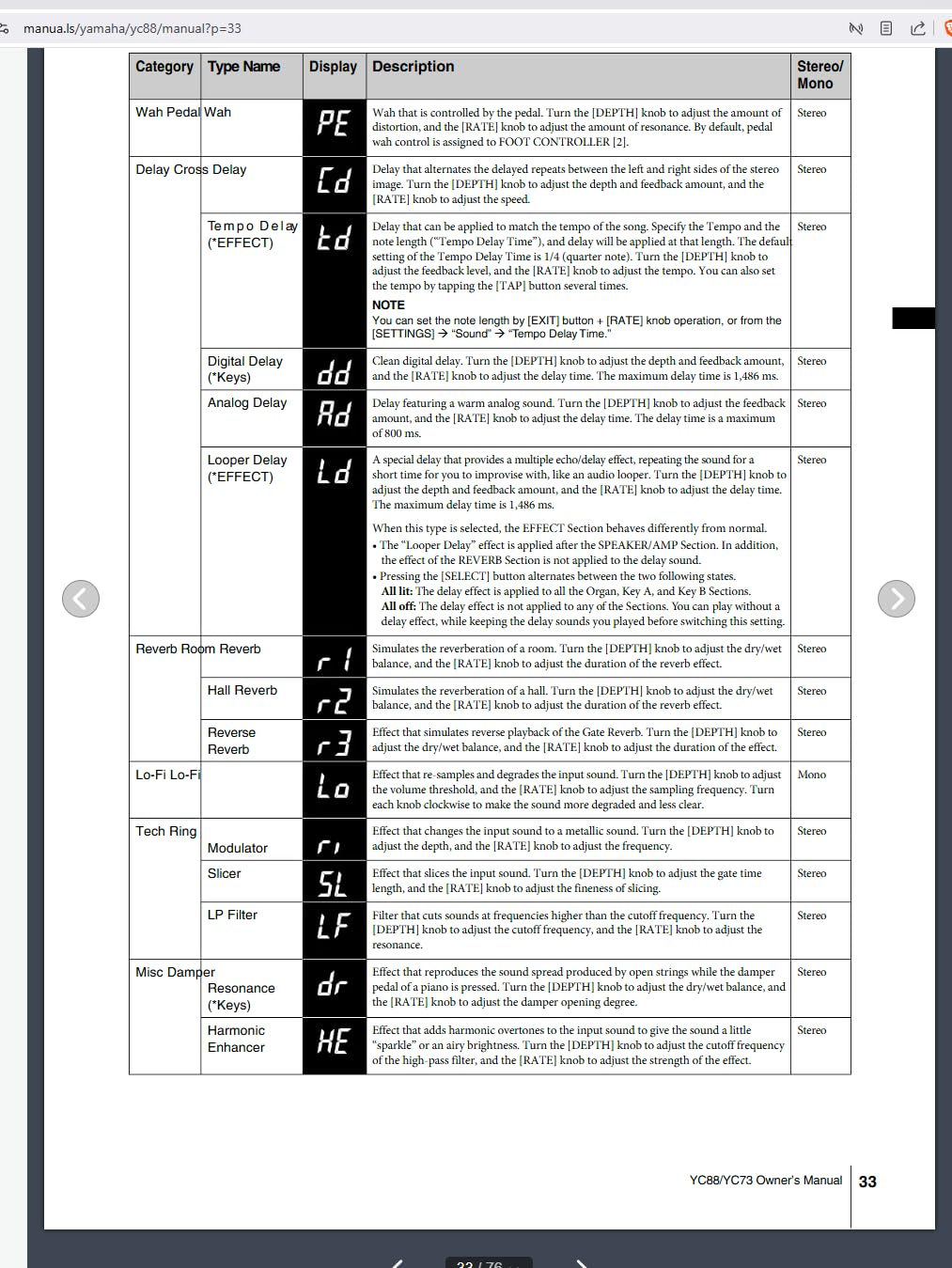
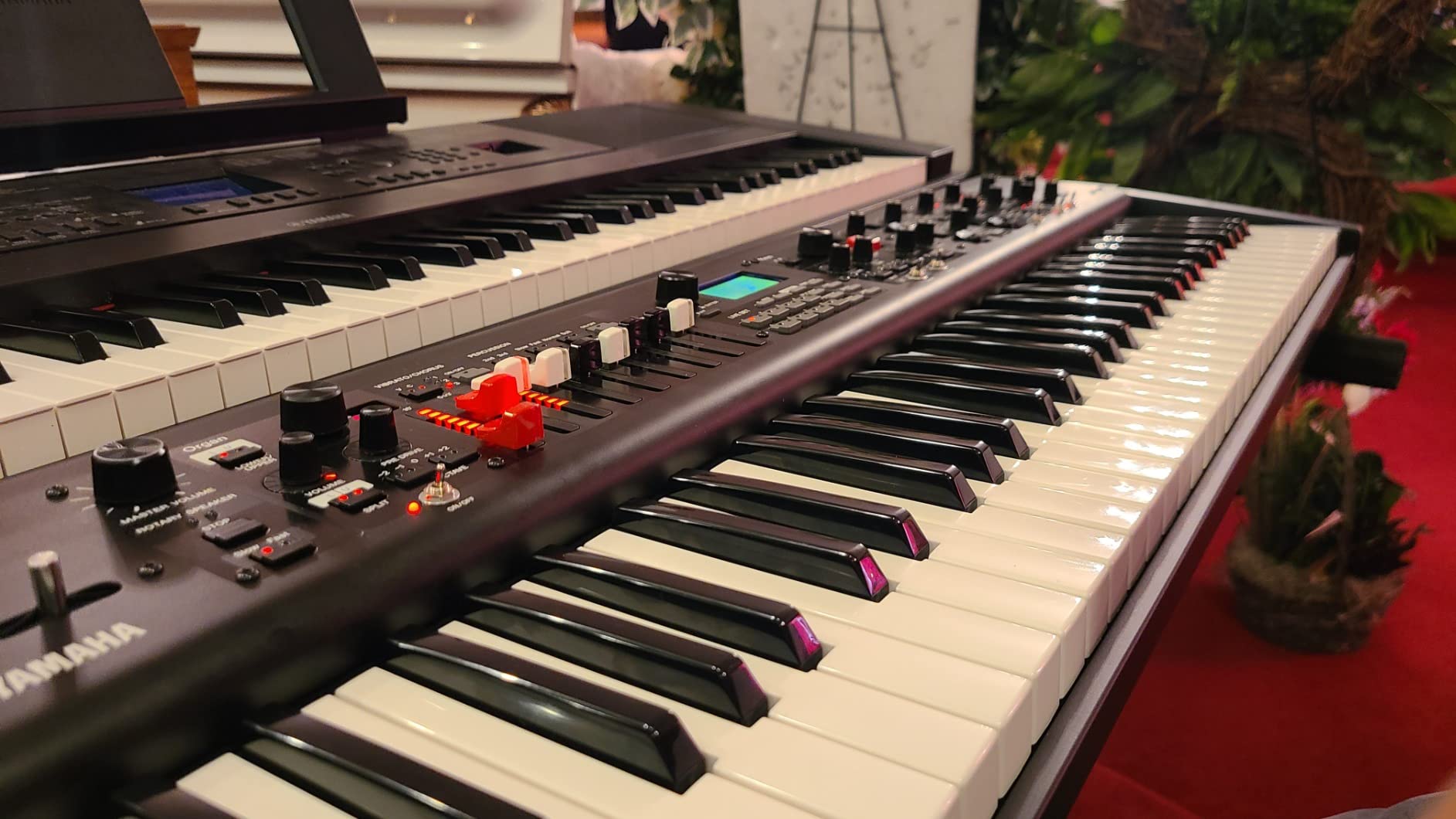
The YC88 is what happens when Yamaha builds a stage keyboard around the organ player and then adds a serious piano. The VCM organ engine models component-level circuit behavior of vintage hardware, and the VCM rotary speaker gives you two authentic rotary voices with adjustable speeds and balances. Pulling drawbars while the simulated horn accelerates is as close as I have come to the real thing without hauling a Leslie.
Beyond organ there is an FM organ mode with a huge low end and simple drawbar control, plus dual keyboard sections covering acoustic and electric pianos, strings, brass, FM electric pianos and synths. Nine effects processors each get dedicated panel controls, so shaping a sound on stage happens with knobs rather than menus. The 88 weighted keys use a triple-sensor action that tracks fast repeated notes cleanly.
Across 53 reviews it holds a 4.3 rating, with owners praising the authenticity of the organ voicing and the build quality of the panel. The recurring hesitation is simply that it sits near the top of the range, and buyers weighing it against a CK88 have to decide how much the organ engine matters to them. If drawbars are central to your playing, the answer is easy.
The limitations are minor and predictable. There is no battery option and no speakers, so this is a board that assumes a proper PA and a power source. The review pool is smaller than the CK88’s, which makes long-term reliability a bit harder to judge, though nothing in the feedback suggests widespread problems.
Rig Planning for the YC88
Choose the YC88 if your setlist lives on organ, from gospel and soul through prog and jam bands, and you still want a credible weighted piano for the rest of the night. The included sustain pedal and the panel-first workflow mean you can walk in, plug in and play without a single menu dive. It is also a strong choice for church rigs where organ and piano share the same player.
Reconsider if you mostly play piano with occasional organ color, because the CK88 covers that job for noticeably less outlay. You will want a solid stand rated for a full-size board and a case with wheels. If you already own a rotary simulation pedal, test it against the onboard VCM version before duplicating that part of your signal chain.
8. Nord Stage 4 88 – The Three-Engine Flagship
Nord Stage 4 88-Key Fully-Weighted Keyboard
88-key triple-sensor keybed
Piano, organ and synth engines
3 synth layers
Wave 2 synth engine
Pros
- Award-winning organ simulations including B3
- Vox and Farfisa
- Fast and smooth fully-weighted triple-sensor keybed
- Doubled sample memory for expanded piano library
- 3 independent synth layers for complex patches
- Versatile sound engine combining piano
- organ and synthesizer
Cons
- Heavy at 53 pounds
- Sits at the top of the price range
- Some users reported issues with 14 percent 1-star reviews
The Stage 4 88 is the board at the end of the upgrade path, the one you buy when you have stopped compromising. Three independent sound engines cover piano, organ and synthesis, and the fully weighted 88-key triple-sensor keybed is fast, smooth and expressive under both hands. Doubled sample memory means the Nord Piano Library instruments load with greater fidelity than previous generations.
The organ section is the stuff of forum legend, with B3 tonewheel, B3 bass, Vox, Farfisa and two pipe organ models all available at once. Piano World threads consistently rank Nord’s piano sounds at the top of the category, and playing the Stage 4 alongside the others here I understand why, the dynamic response feels alive rather than merely sampled.
The synth side is far more than an afterthought. The Wave 2 engine provides three independent layers with their own management and attenuation, so complex evolving patches are buildable directly from the panel. For a working player who covers piano in the first set, organ in the second and synth pads in the third, this is the single-board solution.
Honesty requires two warnings. At 53 pounds it is a heavy instrument that rewards a wheeled case and a portable cart, and the review pool of 10 owners includes a notable 14 percent giving one star, generally around quality control expectations at this level. It also sits at the very top of the category on price, which is why it earns a premium badge rather than an editor’s choice.
Is the Stage 4 Worth the Step Up
If you earn your living playing keyboards across wildly different material, and you want one board instead of two or three, the Stage 4 88 justifies itself quickly. The combination of top-tier piano samples, the best organ simulation in the business and a real synth engine is unmatched in a single instrument. Session players and touring professionals are exactly who this is built for.
If your gigs are piano-centric with light secondary sounds, save your money and buy the RD-88 EX or the CK88, then spend the difference on a better stand, monitors and a case. Whatever you decide, handle the weight seriously with a wheeled case and check the panel and sensors carefully on arrival, since that small but real one-star segment deserves a careful first inspection.
How to Choose the Best Stage Piano for Your Gigs
The right stage piano is the one that matches your body, your transport and your setlist, in that order. Specs are easy to compare on paper, but the board that is two pounds lighter than another can be the difference between enjoying the fourth gig of the month and dreading it. Here is how I would narrow the field.
Key Action Comes First
The keyboard is the part you touch for every second of every gig, so judge it before you judge sounds. Fully weighted hammer actions like the Roland PHA-4 and the Nord triple-sensor keybed suit piano repertoire, while semi-weighted waterfall beds like the Fatar in the Electro 6D suit organ and synth technique. Graded actions such as the Yamaha GHS get heavier toward the bass, which feels familiar to acoustic players.
Try before you buy if you possibly can, and play quietly, because low-velocity behavior is where cheap actions fall apart. Check the note repetition speed with a fast trill, since triple-sensor actions track better than dual-sensor ones. If you play classical repertoire, also confirm the pedal behavior, the RD-08 notably skips una corda support.
Sounds and Sound Engines
Decide what you actually play most, piano, organ, synth or a mix of all three. SuperNATURAL pianos from Roland and the Nord Piano Library sit at the top for acoustic realism, while Yamaha’s VCM organ modeling and Nord’s B3 simulation lead for organ. Boards with the ZEN-Core or Motif engines give you thousands of secondary sounds so you never need a second instrument.
Remember that polyphony matters once you start layering. A big pad under a sustained piano chord with a pedal down can exhaust a smaller voice count, which is why the MX88’s 128 notes are worth noting. Listen through the same PA or headphones you will actually use, because a board that flatters itself through tiny speakers can disappoint through a real rig.
Weight and Transport Reality
Write down how you get to gigs, stairs, car boot, train, elevator, and be honest about it. Anything under 30 pounds like the CK88 or MX88 is a one-hand carry, 30 to 45 pounds means a case with a handle and some care, and anything past 50 pounds such as the SV2-SP and Stage 4 needs wheels and ideally a second person. This single factor causes more stage piano regret than any sound difference.
Factor in the stand too, because a heavy board needs a heavy-rated stand, which adds to your total load. A soft gig bag saves weight while a hard case protects better, and touring players should choose hard cases with wheels. Measure your car boot before ordering anything with 88 keys.
Speakers and Monitoring
Built-in speakers fall into two camps, convenience-level and genuinely usable. The K-ARRAY system in the Korg SV2-SP at 15 watts per side can rehearse with a band, while the speakers in the RD-08, RD-88 EX and CK88 are best treated as practice and warmup tools. If you always play through a PA, skip speakers entirely and save the weight, which is exactly the MX88 and YC88 philosophy.
If you do rely on onboard sound, check the line outputs too, because you will still want to feed the front of house on bigger stages. A headphone jack counts as monitoring for silent practice and hotel rooms. Battery power, as on the CK88, is the rare feature that genuinely expands where you can play.
Connectivity and Control
Modern boards double as audio interfaces and MIDI controllers, so check the port list the way you would check a sound card. USB audio and MIDI over one cable, as on the RD-88 EX and MX88, removes an entire box from your gig bag. Bluetooth audio on the CK88 is brilliant for playing backing tracks from a phone during practice.
Players who run a laptop rig should look for dedicated control modes, with the RD-88 EX offering direct Apple MainStage integration. Pedal inputs matter more than people expect, so count them and check whether the board supports half-pedaling. For multiple keyboards, MIDI din ports and a proper zone-split implementation make a two-board rig much easier to manage.
Warranty, Software and Cases
Almost no guide covers this, so here it is, warranty lengths vary a lot, from one year on the Yamaha and Korg boards to two years on the RD-88 EX. Touring players should register the warranty immediately and photograph the serial number, because claims go faster with both. Check what support looks like in your country before you buy, not after something breaks.
Software ecosystems also differ in ways that matter over time. Roland Cloud unlocks expansions and upgrades for the RD series, Nord’s Piano Library and Sample Library keep adding instruments you can load for free, and the included carrying case and sustain pedal with the Electro 6D save you two immediate purchases. Budget for a pedal, a stand and a case from day one, because almost none of these boards include all three.
Frequently Asked Questions
Who makes the best stage piano?
Roland, Yamaha, Nord and Korg make the best stage pianos, and each leads in a different area. Roland wins for weighted action and versatility, Yamaha for value and organ modeling, Nord for premium piano and organ sounds, and Korg for onboard speaker quality.
What is the best affordable stage piano?
The Roland RD-08 is the best affordable stage piano, because it keeps the PHA-4 weighted action and SuperNATURAL piano sounds from the flagship RD line in a lighter, cheaper package. The Yamaha CK88 is a close second if you want built-in speakers and battery power.
Do I need 88 keys for a stage piano?
You need 88 keys if you play piano-focused repertoire that uses the full range, but not otherwise. A 61-key board like the Nord Electro 6D is far easier to transport and ideal for organ and synth work, and many gigging players run a 61-key board alongside an 88-key piano.
How do I choose a stage piano for live performance?
Choose based on key action, transport weight, sounds and connectivity, in that order of real-world importance. Pick a fully weighted action for piano repertoire or a semi-weighted waterfall bed for organ, keep the weight under what you can realistically carry, and confirm you have the outputs and pedals your rig needs.
Final Thoughts on the Best Stage Pianos
After months of comparing the best stage pianos side by side, the lesson I keep coming back to is that the right board is the one you can carry and control without thinking. The Roland RD-88 EX is our editor’s choice because it delivers a genuinely acoustic-feeling PHA-4 action, a huge sound palette and useful speakers in one manageable package. The Yamaha CK88 wins on value and battery-powered freedom, and the Yamaha MX88 remains the top-rated workhorse for players who split their time between stage and studio.
From there the choices get more specialized, and that is a good thing. The RD-08 is the smart affordable entry, the Nord Electro 6D 61 is the lightweight organ machine, the Korg SV2-SP brings real onboard volume, the Yamaha YC88 is built for drawbar players, and the Nord Stage 4 88 is the no-compromise flagship for players who need everything in one instrument.
My honest advice is to shortlist two, play them side by side if you can, and buy the one whose action feels right under your hands. Check stock on the models with limited availability, and plan for the pedal, stand and case you will need on day one. Whichever you choose, your back, your band and your audience will all notice the difference a well-matched stage piano makes.