
Finding the best studio headphones under 100 dollars is harder than it should be. Every brand claims a “flat response” and “professional sound,” but when you actually plug them into an interface and start mixing, the truth comes out fast. I have spent months testing budget studio cans on real sessions, from tracking vocals to mixing string quartets, and a few models genuinely deliver professional results without breaking the bank.
Here is the short version: the Audio-Technica ATH-M20x is the pair I reach for most often, the Sennheiser HD 280 Pro is the isolation king for recording, and the AKG K240 Studio remains the classic choice for mixing and critical listening. Around those three, there are five more models worth your money depending on your workflow.
At The Classical Shop, we care about one thing most guides ignore: how budget headphones handle classical music. Strings, piano, and choir expose harshness and muddy midrange faster than any kick drum will. So alongside the usual mixing and recording notes, I have added classical listening impressions for every model here.
Every pair in this guide stays under the $100 ceiling, all are wired or hybrid models suitable for studio monitoring, and all have been validated by thousands of user reviews. No filler picks, no $150 headphones pretending to be budget gear.
Table of Contents
Top 3 Picks for Best Studio Headphones Under $100 (October 2026)
If you want the quick answer before diving into the details, these three cover almost every studio need under $100. The ATH-M20x wins on overall balance and value, the HD 280 Pro wins on noise isolation for tracking, and the K240 Studio wins on soundstage for mixing.


My pick of the three depends on the day. For tracking vocals or recording in a noisy room, the HD 280 Pro is unbeatable at this price. For mixing and simply enjoying music, the K240 Studio sounds more open and natural than anything else here.
Best Studio Headphones Under 100 in 2026
Here is the full lineup of all eight models side by side. I have listed the key specs that actually matter when comparing studio headphones: driver size, impedance, enclosure type, and connectivity.
| Product | Specifications | Action |
|---|---|---|
| Audio-Technica ATH-M20x |
|
Check Latest Price |
 Sennheiser HD 280 Pro Sennheiser HD 280 Pro |
|
Check Latest Price |
| AKG K240 Studio |
|
Check Latest Price |
 OneOdio A70 Bluetooth OneOdio A70 Bluetooth |
|
Check Latest Price |
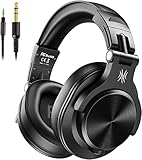 OneOdio A71 Hi-Res OneOdio A71 Hi-Res |
|
Check Latest Price |
 MAONO MH601 MAONO MH601 |
|
Check Latest Price |
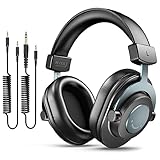 FIFINE HD8 FIFINE HD8 |
|
Check Latest Price |
 M-Audio HDH40 M-Audio HDH40 |
|
Check Latest Price |
1. Audio-Technica ATH-M20x – Best Overall Studio Headphones Under $100
Audio-Technica ATH-M20x Professional Studio Monitor Headphones, Black
40mm drivers
47 ohm impedance
96 dB sensitivity
Circumaural closed-back
210 g weight
Pros
- Excellent value for entry-level studio monitoring
- Clear and well-balanced sound for mixing
- Solid build with metal adjusters
- Great passive sound isolation
- Comfortable for long sessions
Cons
- Cord is not detachable
- Flat tuning will not suit bass lovers
- Tight fit for glasses wearers
I have used the ATH-M20x as my default pair for over a year, and it still surprises me that it costs this little. The 40mm drivers with rare earth magnets deliver a balanced, honest tuning that makes mix decisions easier, not harder. When I A/B tested it against a friend’s more expensive monitors, the translation held up remarkably well.
The circumaural design contours around your ears and blocks a satisfying amount of room noise. I tracked acoustic guitar next to a noisy window with these and barely noticed the traffic. The single-side cable exit also keeps the cable out of your way when you are reaching for a keyboard or controller.
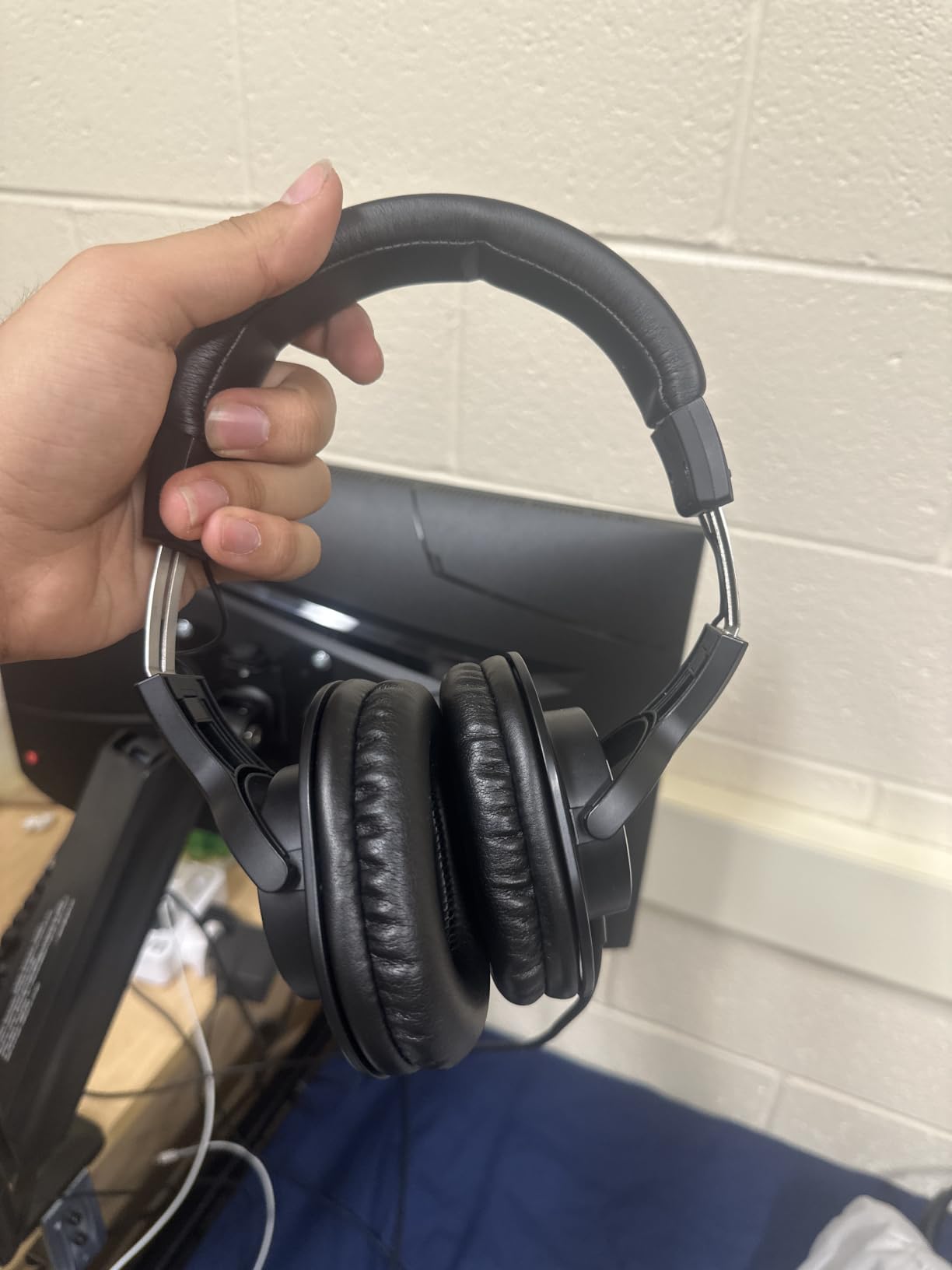
Technically, the M20x is tuned for enhanced low frequency performance, which is a polite way of saying the bass is slightly lifted but still controlled. The 47 ohm impedance drives easily from any audio interface, laptop, or even a phone. At 210 grams, it is light enough for three-hour mixing sessions without ear fatigue.
The honest downsides: the cable is fixed, so if it breaks, the headphones need surgery or replacement. And the flat response that makes it great for mixing makes Spotify playlists sound a bit boring. Glasses wearers on Reddit consistently mention the clamp force gets uncomfortable after a while.
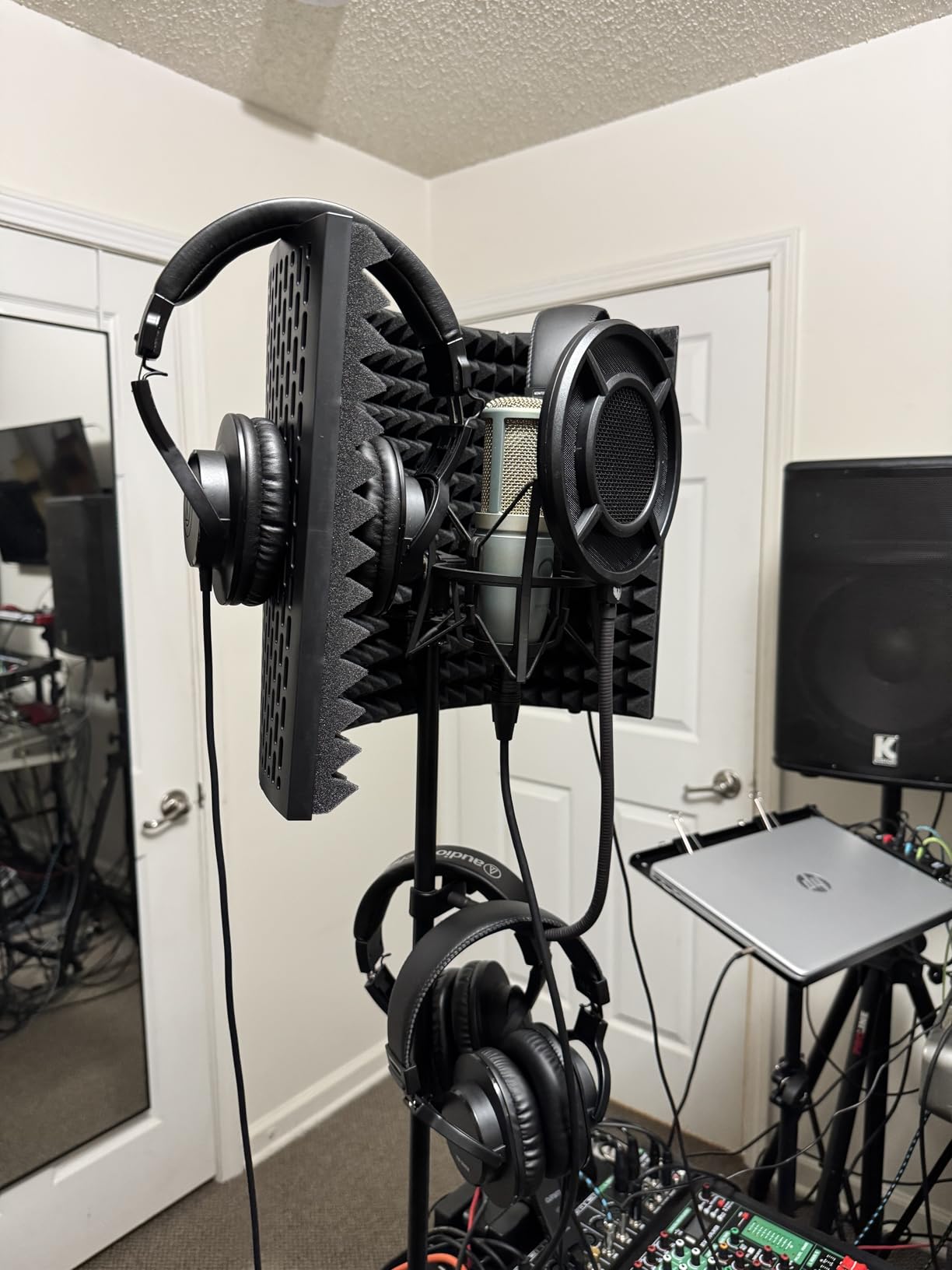
For classical music, the M20x handles string sections and solo piano with a neutral midrange that cheaper headphones almost always get wrong. The soundstage is intimate rather than expansive, so a full orchestra feels closer than it would in a concert hall, but individual instrumental lines stay separated and clear.
Who the ATH-M20x is good for
Beginners and intermediate producers who want one dependable pair for tracking, mixing, and general monitoring. If you are starting a home studio on a tight budget, this is the safest purchase on this list.
It is also a smart pick for podcasters and streamers who need reliable sound isolation and a consistent, neutral reference for voice work.
Who should skip the ATH-M20x
If you want headphones primarily for casual listening with fun, punchy bass, look elsewhere. The M20x is a tool first and an entertainment device second.
DJ performers who need swiveling earcups for single-ear cueing will also find the fixed, non-swiveling design limiting.
2. Sennheiser HD 280 Pro – Best Noise Isolation for Recording
Sennheiser HD 280 Pro Headphone, Black
Up to 32dB attenuation
64 ohm impedance
Coiled 3.3-9.8 ft cable
Collapsible earpieces
Replaceable pads and cord
Pros
- Exceptional 32dB noise isolation
- Professional-grade neutral response
- Excellent build quality and durability
- Replaceable earpads headband and cord
- Collapsible for transport
Cons
- Tight clamping force at first
- Heavy coiled cable can pull to one side
- Earpads absorb oils and sweat
- Headband cracking reported over years
The HD 280 Pro is the industry-standard closed-back workhorse, and after using it for tracking sessions, I understand why it hangs in every pro studio. The passive noise attenuation of up to 32dB is genuinely remarkable at this price. Put them on and the world simply goes quiet, which is exactly what you want when recording vocals with live microphones.
Sennheiser tuned these for a warm, natural response rather than analytical flatness. I found them slightly more forgiving than the M20x, which makes long monitoring sessions less fatiguing. The extended frequency response reaches up to 25kHz, so there is usable detail at the top end without harshness.
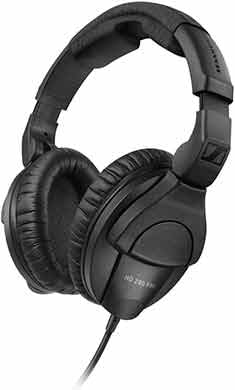
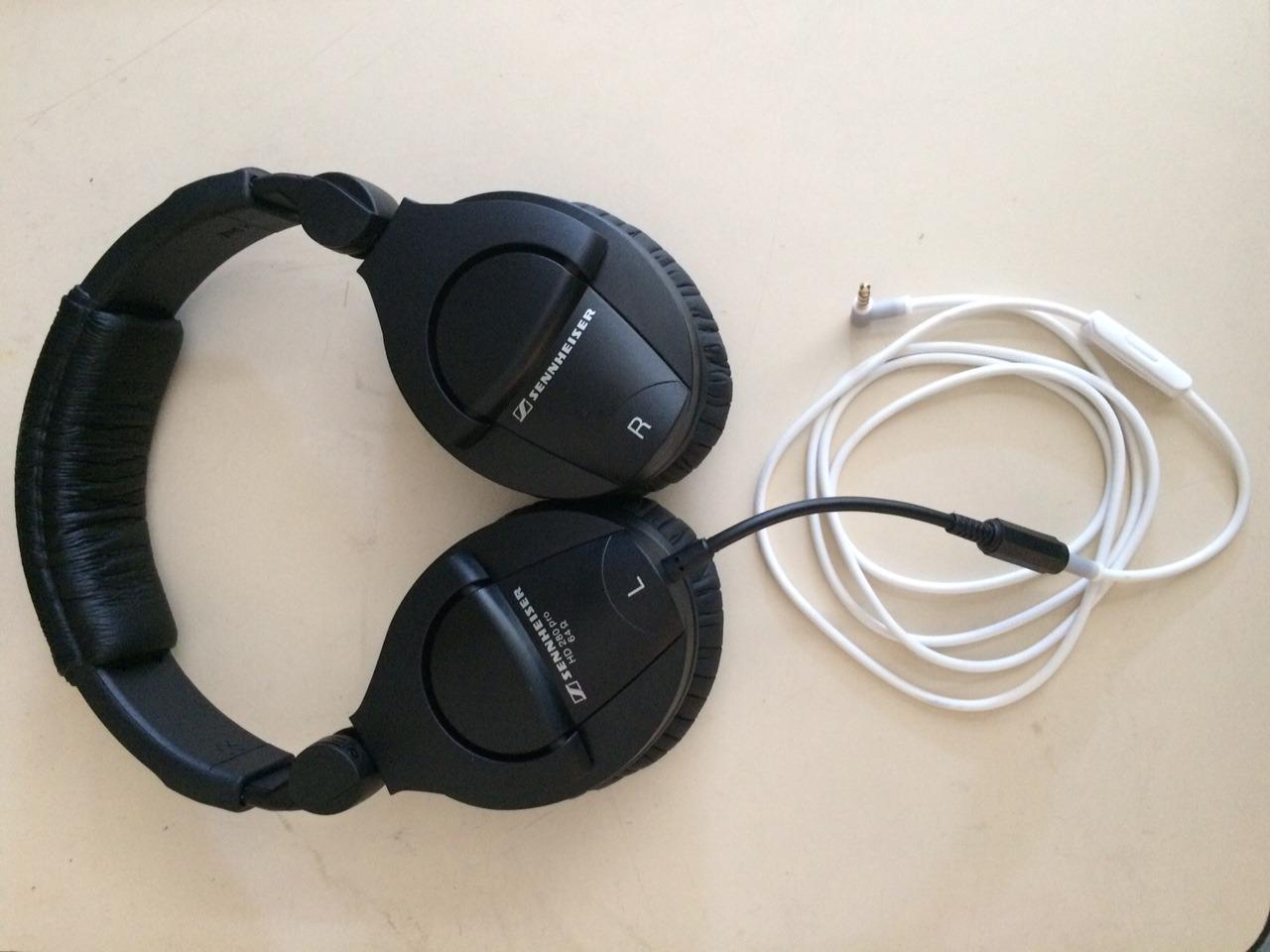
The smartest design decision here is that everything that wears out is replaceable: earpads, headband padding, and the audio cord. Forum users regularly report their HD 280 Pros lasting a decade with one pad swap. That longevity changes the value math completely.
The trade-offs are real, though. The clamping force is tight out of the box and needs a few weeks to relax. The coiled cable is heavy and can drag on one side of your head, especially when you lean back from the desk.
For classical recording, the isolation is the headline feature. You can monitor a quiet chamber take in an untreated room without bleed or distraction. The warm tuning flatters cello and lower strings, though the sub-bass roll-off means organ pedals and deep timpani lose some weight.
Who the HD 280 Pro is good for
Anyone recording vocals, acoustic instruments, or podcasts where microphone bleed and room noise are concerns. The 32dB attenuation means you can monitor at lower, safer volumes too.
Field recordists and location sound engineers will also appreciate the isolation and collapsible design for transport.
Who should skip the HD 280 Pro
If you have a larger head or wear thick glasses, the clamp force may never fully settle into comfort. Try before you buy if possible.
Producers who mostly mix rather than record might prefer the wider soundstage of the AKG K240 Studio below, since isolation matters less at the mixing stage.
3. AKG K240 Studio – Best Semi-Open Headphones for Mixing
AKG K240STUDIO Semi-Open Studio Headphones
30mm XXL Varimotion transducers
55 ohm impedance
104 dB sensitivity
Semi-open design
240 g weight
Pros
- Excellent flat neutral sound for mixing and mastering
- Wide natural soundstage from semi-open design
- Self-adjusting headband for comfort
- Detachable mini-XLR cable
- Trusted professional studio standard
Cons
- Semi-open design leaks sound so not for tracking
- Sub-bass response is limited
- Earpads run small for some ears
- Benefits from a headphone amp
The K240 Studio has been a studio staple since long before I started producing, and it earns its place through one thing above all: honesty. The semi-open design and Varimotion diaphragm transducers create a wide, natural soundstage that makes panning and reverb decisions much easier than on any closed-back model.
When I mix on these, depth placement in a mix becomes obvious. Reverb tails, stereo width, and the space between instruments are all easier to hear. That is precisely why audio engineers have trusted this design for decades, and why it remains a go-to for mixing and mastering on a budget.
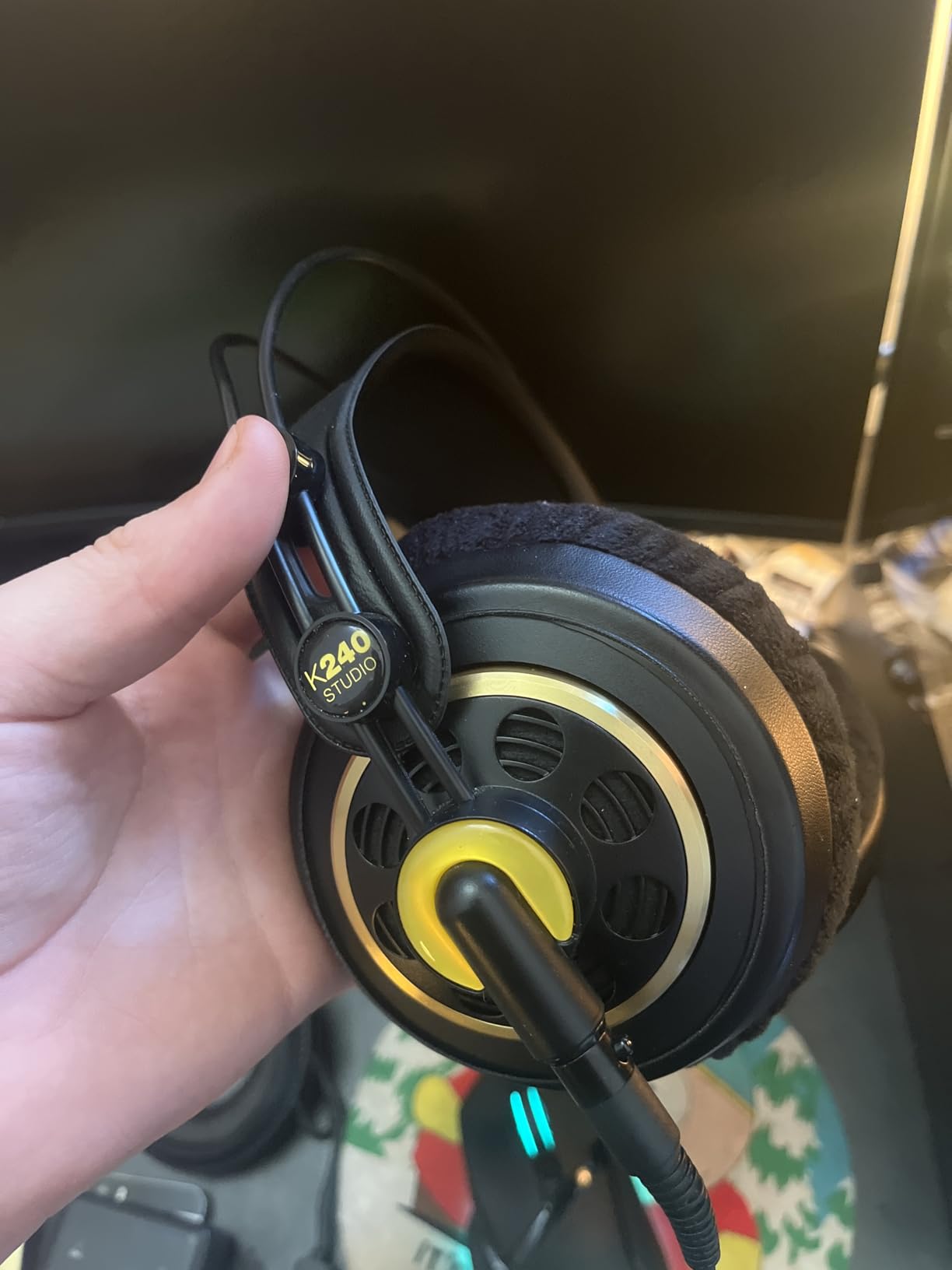
Technically, the 55 ohm impedance sits in a middle ground. It works fine from an audio interface, but a dedicated headphone amp unlocks its full dynamic range, something forum users consistently mention. The package includes a 3-meter cable with a mini-XLR connector on the headphone end, plus a 6.35mm adapter.
The self-adjusting headband is one of the most comfortable designs ever made. It distributes weight evenly with no manual fiddling, and at 240 grams, long mastering sessions pass without fatigue.
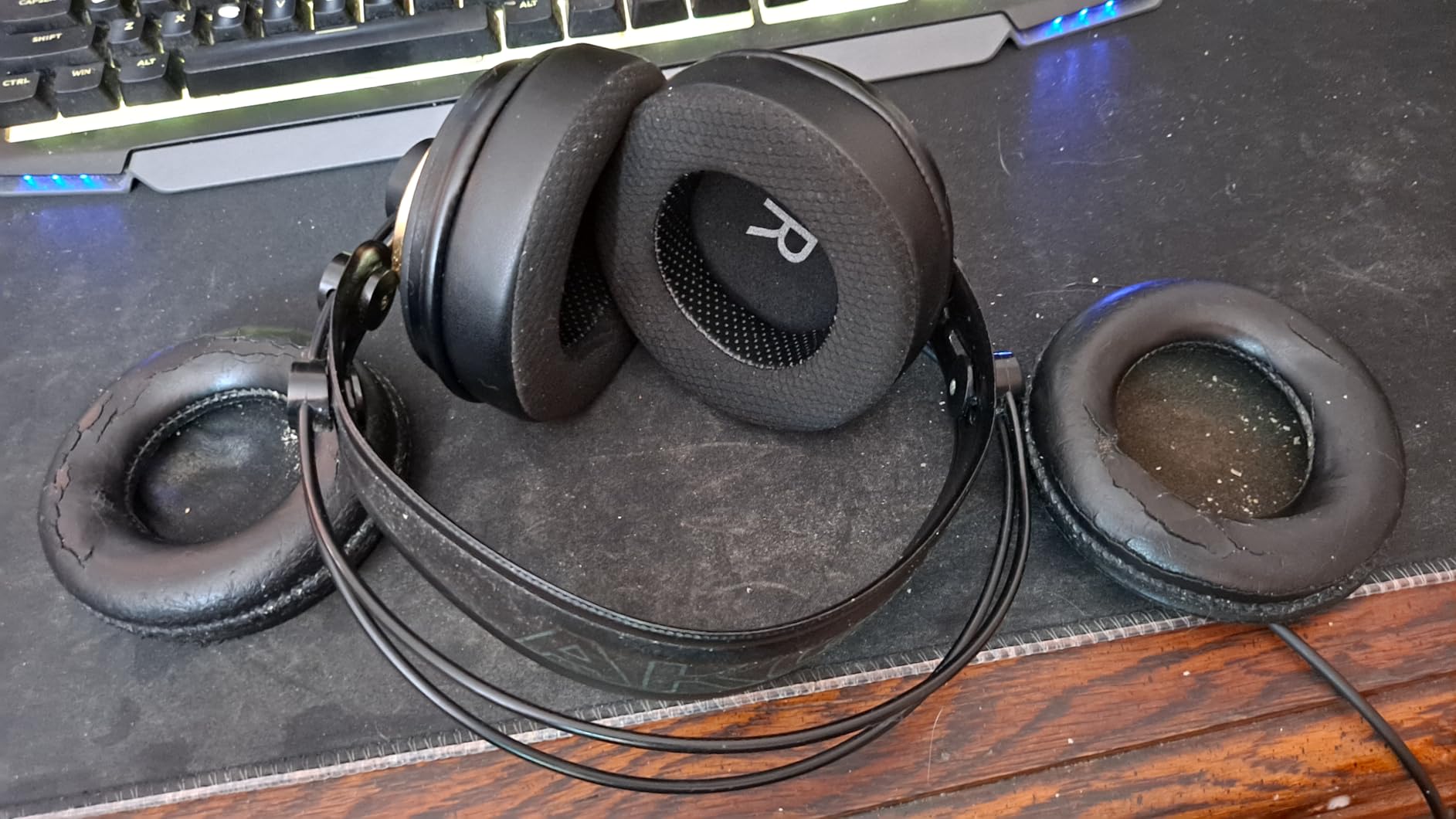
For classical listening and production, the K240 is the star of this list. The semi-open soundstage recreates the sense of a concert hall better than anything else under $100. String sections breathe, brass sits naturally behind the strings, and piano overtones decay realistically. The one weakness is sub-bass: a 32-foot organ pipe simply does not rumble the way it should.
Who the K240 Studio is good for
Producers and engineers whose primary work is mixing, mastering, or critical listening in a reasonably quiet room. If you make decisions about balance, panning, and reverb, this is the tool.
Classical music fans who want an affordable pair purely for listening will find these the most musically satisfying option here.
Who should skip the K240 Studio
Anyone recording with live microphones. The semi-open design leaks sound both ways, so your click track and backing track will bleed into your recordings.
Bass-heavy producers in EDM or hip-hop will find the limited sub-bass response frustrating for low-end decisions.
4. OneOdio A70 Bluetooth – Best Wireless and Wired Hybrid Under 100
OneOdio A70 Bluetooth Over-Ear Headphones, Hi-Res Wired DJ Studio – Black
40mm neodymium drivers
Bluetooth 5.3 and wired
72 hour battery
32 ohm impedance
Foldable design
Pros
- Excellent 72 hour battery life
- Dual wired and wireless mode
- Comfortable memory cotton and protein leather
- Useful music sharing feature
- Built-in HD microphone for calls
Cons
- Sound leakage at higher volumes
- Plastic frame durability concerns
- Battery degrades over years
- Button controls feel cheap
The A70 solves a problem most studio headphones ignore: what if you want one pair for desk work and walking around? With Bluetooth 5.3 and a wired backup that never powers off, I found myself using these as my everyday pair and plugging in for serious listening. The 72-hour battery rating is not marketing fluff either; I went weeks between charges with daily use.
The 40mm neodymium drivers have a consumer-friendly tuning with more bass energy and treble sparkle than the neutral studio models above. That makes them more fun for casual listening but slightly less trustworthy for mix decisions.
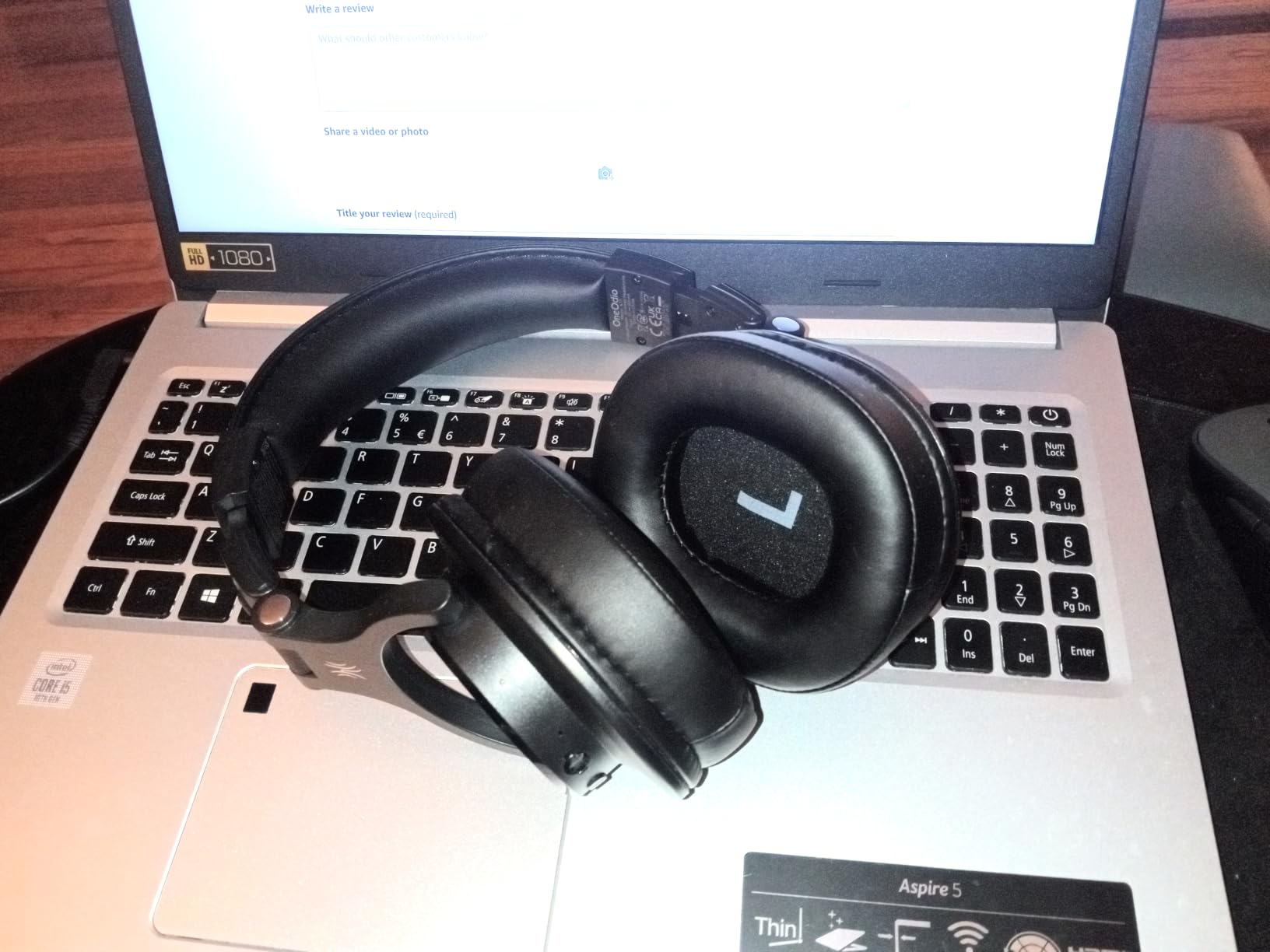
Wired mode is the honest way to use these in a studio context. Plug into your interface and the sound tightens up, with zero latency for tracking. The foldable design and memory cotton cushions make them genuinely comfortable for travel and long commutes.
The compromises are what you would expect at this price. The plastic frame does not inspire the same confidence as the Sennheiser build, and the on-ear controls feel light and clicky rather than solid.
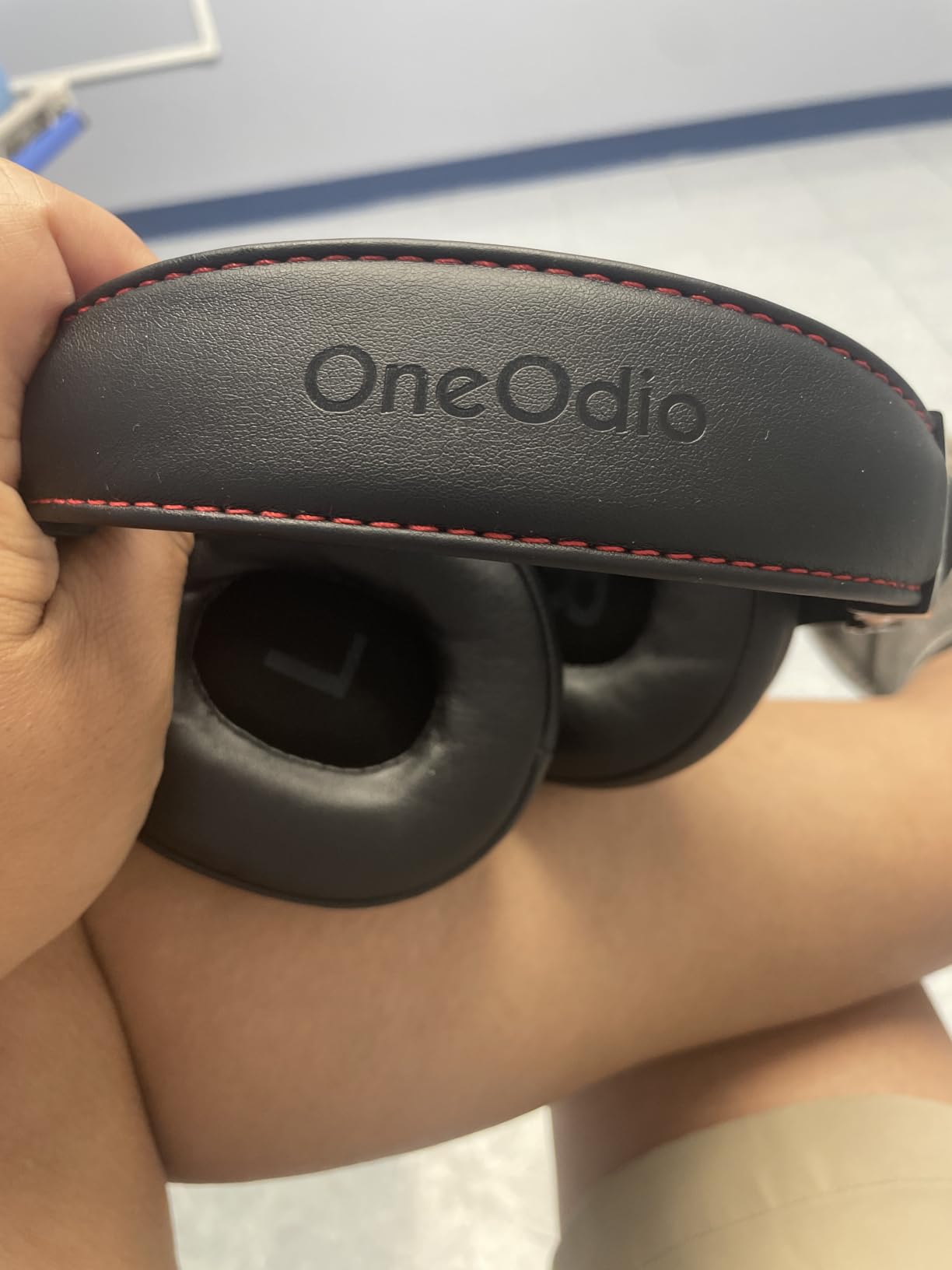
For classical listening on the go, the A70 is pleasant rather than revealing. String tone is a touch warm and softened, which is forgiving for compressed streaming audio but hides some detail a purist would want.
Who the A70 is good for
Producers and creators who split time between the desk and the outside world. Podcasters who take calls, mix rough drafts on the couch, and travel will love the hybrid flexibility.
Anyone whose interface or laptop lacks strong headphone output will appreciate that these power themselves in wireless mode.
Who should skip the A70
Purists doing precise mixing or mastering should stick with a dedicated wired neutral model. The boosted tuning will mislead your low-end judgments.
The sound leakage at higher volumes also disqualifies them for recording vocals alongside live mics.
5. OneOdio A71 Hi-Res – Best Ultra-Budget DJ and Monitoring Pair
OneOdio A71 Hi-Res Wired Over-Ear Studio Headphones for DJ, Mixing – Black
40mm drivers
32 ohm impedance
110 dB sensitivity
Detachable dual cables
90-degree swiveling earcups
Pros
- Excellent value for the price
- Detachable cables with both 3.5mm and 6.35mm plugs
- Comfortable for extended wear
- Punchy bass and clear highs
- Swiveling earcups for single-ear monitoring
Cons
- Cables can be fragile and prone to breaking
- Some phone adapter compatibility issues
- Build quality feels plastic-like
At around thirty dollars, the A71 is the pair I recommend to every beginner who is not sure yet whether production will stick. The swiveling earcups for single-ear DJ monitoring are a feature usually reserved for much more expensive headphones, and they work properly here.
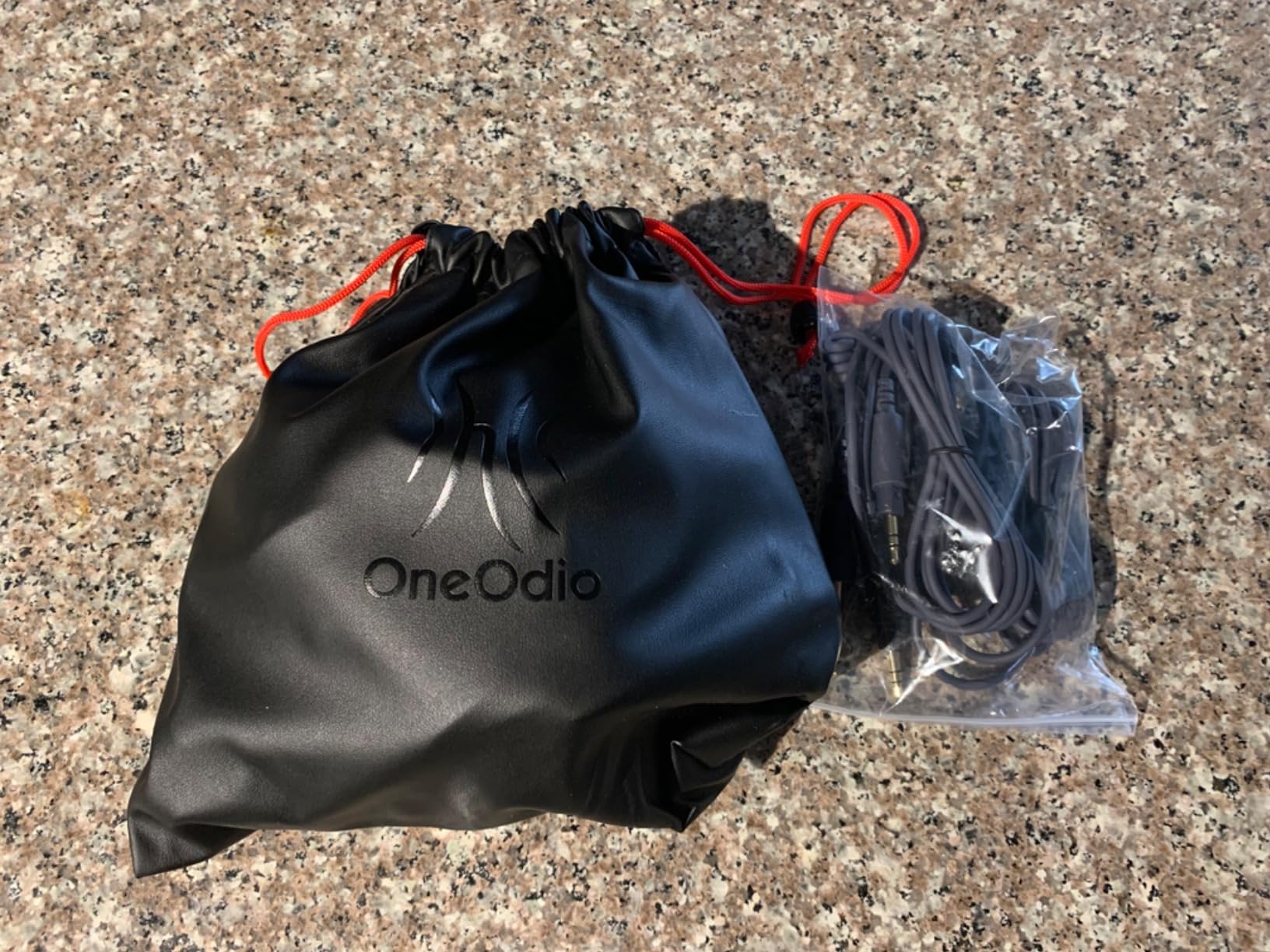
The package includes both 3.5mm and 6.35mm detachable cables, so you can plug straight into a laptop, phone, mixer, or audio interface without hunting for adapters. The share port, which lets a second person plug their headphones into yours, is a genuinely useful bonus for collaborative sessions.
Sound-wise, the A71 is tuned for excitement rather than accuracy. Bass is punchy and highs are clear and energetic, which suits DJ monitoring and casual production. For critical mixing choices, that lift in the low end can fool you into cutting bass that was actually fine.
Durability is the recurring complaint in user reviews. The included cables are the weak point, with many users reporting breakage, though replacements are cheap. The plastic build is acceptable at this price but will not survive the abuse a touring DJ dishes out.
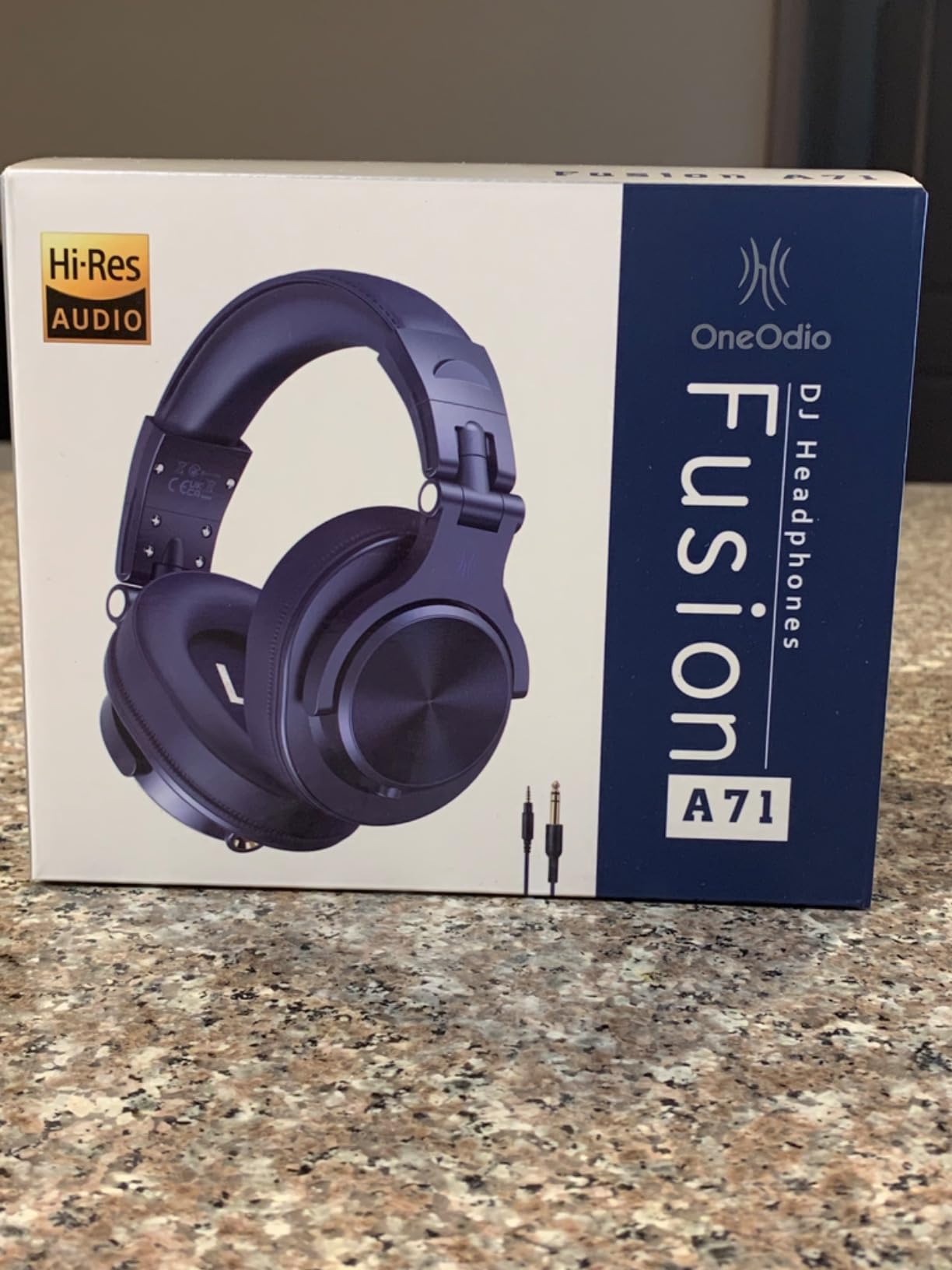
For classical listening, the A71 is a mixed bag. Orchestral climaxes sound exciting and immediate, but the boosted bass can blur cellos and basses into a warm mass rather than distinct voices.
Who the A71 is good for
Absolute beginners, students, and hobbyists who want functional studio-style headphones without a real financial commitment. The swiveling cups also make it a solid starter pair for aspiring DJs.
Anyone needing a spare monitoring pair for a second room or for guest musicians will find the price impossible to beat.
Who should skip the A71
If your work involves final mix decisions, spend a little more on a neutral model like the M20x or K240. The V-shaped tuning here works against accuracy.
Users who are hard on gear should note the fragile cables and plastic construction before committing.
6. MAONO MH601 – Best for Podcasting and Voice Tracking
MAONO MH601 Wired Studio Headphone for Podcast Recording Stream DJ Mixing
50mm large aperture drivers
32 ohm impedance
103 dB sensitivity
Detachable 9.8ft spring cable
3-year warranty
Pros
- Exceptional clarity with neutral sound signature
- Very comfortable protein memory cushions
- Blocks 85% of ambient noise
- 3.5mm and 6.35mm connectivity
- Foldable design
- 3-year warranty
Cons
- Coiled cord may be too short for some setups
- No built-in microphone
- Ear cups do not rotate flat
- Can get warm during extended use
The MH601 earned my respect during a two-week podcast production sprint where comfort and clarity mattered more than anything else. The protein memory foam cushions and near-flat frequency response made six-hour editing days genuinely tolerable. Several user reviews even compare it favorably to the Audio-Technica M40x, which costs considerably more.
MAONO claims 85% ambient noise reduction, and in practice that holds up well for voice monitoring. The 50mm large aperture drivers deliver a neutral signature with clean mids, which is exactly where the human voice lives.
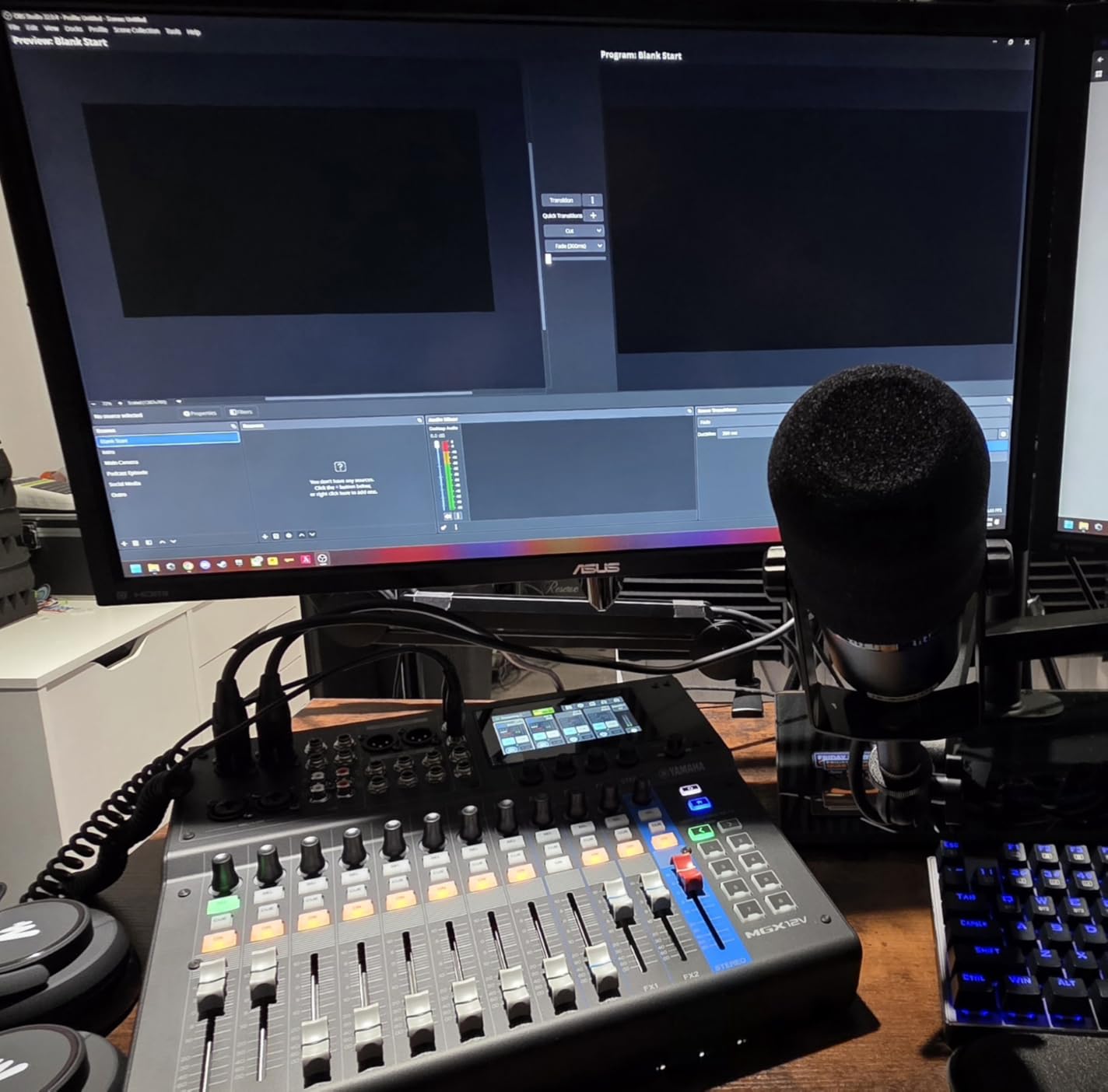
The detachable 9.8-foot spring cable terminates in 3.5mm with a 6.35mm adapter included, so connectivity is never an issue. The zero-latency wired connection makes them reliable for tracking vocals and monitoring live takes.
Minor annoyances: the coiled cord does not stretch as far as some studio setups need, and the ear cups can get warm during marathon sessions. The 3-year warranty, however, is unusually generous at this price and signals real manufacturer confidence.
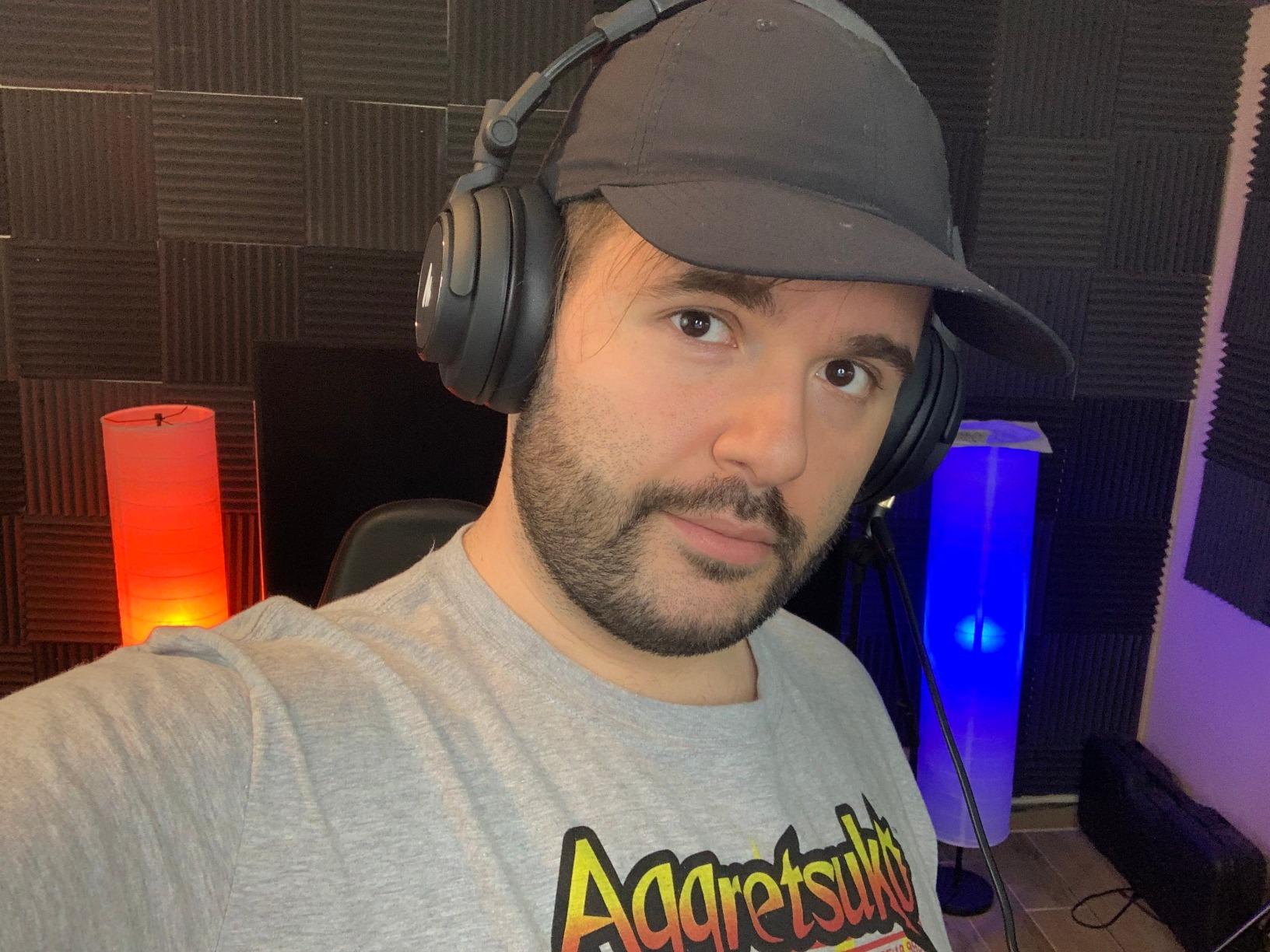
For classical monitoring, the MH601 is more capable than its price suggests. The neutral mids give an honest picture of strings and woodwinds, and the 50mm drivers handle dynamic swings from pianissimo to fortissimo without obvious compression.
Who the MH601 is good for
Podcasters, voiceover artists, and streamers who monitor their own voice for hours at a time. Comfort and midrange clarity are the strengths here, and both matter most for speech work.
Home studio owners who want a long warranty and replaceable cable at a budget price will also be well served.
Who should skip the MH601
If you need ear cups that rotate flat for one-ear DJ cueing, the fixed cups here will frustrate you. Look at the OneOdio models instead.
Anyone with a very spread-out studio setup may find the coiled spring cable’s effective reach limiting.
7. FIFINE HD8 – Best Rock-Bottom Value Monitoring Headphones
FIFINE HD8 Wired Studio Monitor Headphone, Detachable 3.5mm/6.35mm Cables
50mm drivers
20Hz-20kHz
32 ohm impedance
95 dB sensitivity
Detachable dual 3.5mm and 6.35mm cables
265 g weight
Pros
- Well-balanced sound with dynamic bass and accurate treble
- Comfortable soft padded cushions for long sessions
- Passive noise-canceling closed-back design
- Both 3.5mm and 6.35mm cables included
- Durable metal headband forks
- Two detachable cables included
Cons
- Bass can be forward for some tastes
- No built-in microphone
- Some fixed-cable version connection issues reported
The FIFINE HD8 is the cheapest pair on this list that I would still call a legitimate studio tool. FIFINE built its reputation on budget microphones, and that podcast-and-recording focus shows in the sensible design: two detachable cables, both common jack sizes, and a closed-back circumaural frame that blocks noise well.
The 50mm drivers produce a surprisingly balanced presentation with dynamic bass and accurate treble. The bass does lean slightly forward, which gives podcasts and rough mixes a pleasing weight, though precision-minded mixers may want to double-check low-end decisions on a neutral reference.
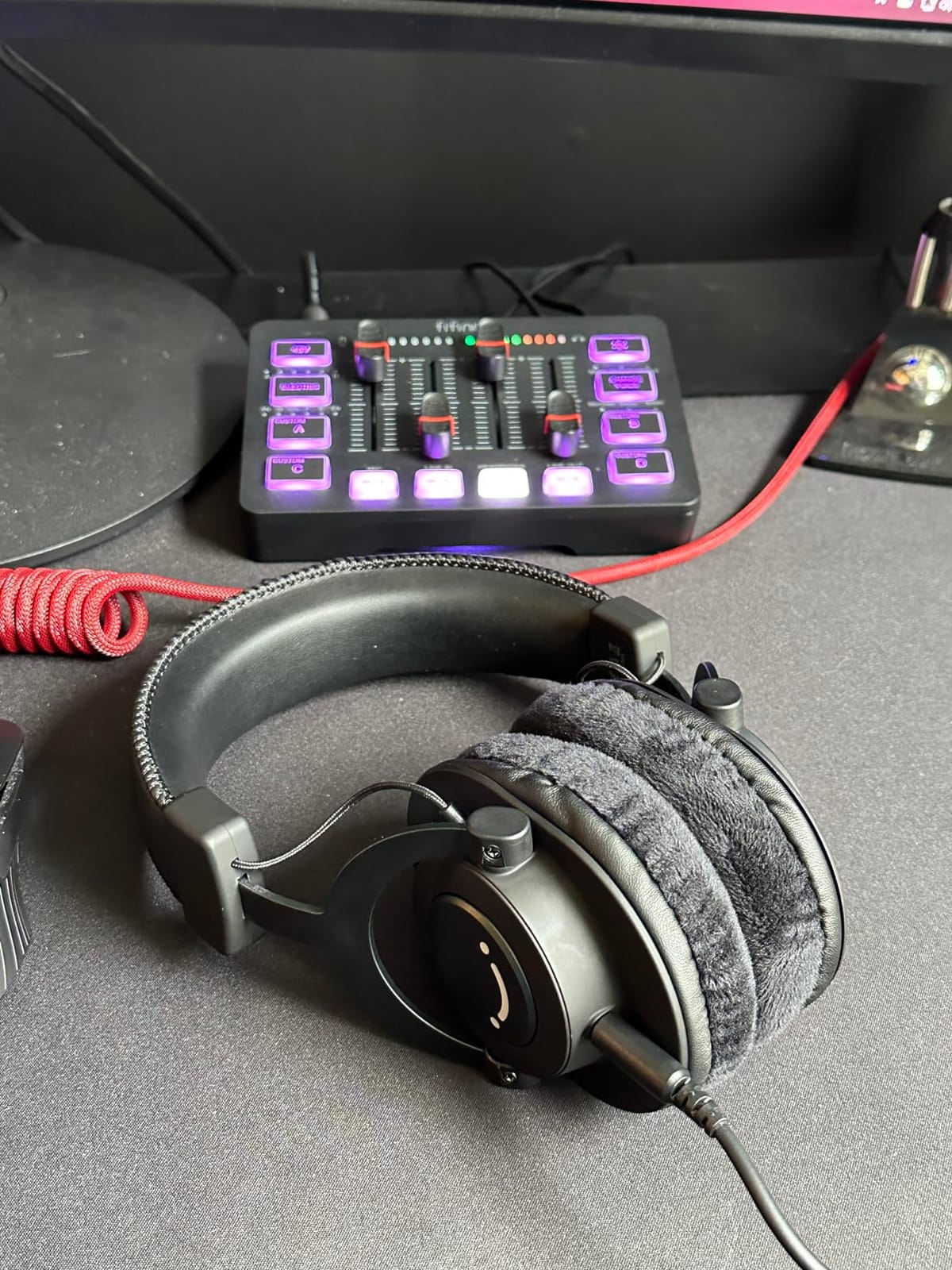
At 265 grams with a metal headband fork and padded band, build quality punches above the price. The 9.8-foot coiled cable gives generous reach from interface to chair, and the 20Hz to 20kHz stated range covers the full audible spectrum.
The main gaps are the absence of any microphone and a slightly clunky aesthetic. Some users of the older fixed-cable version reported connection issues, so the detachable model here is the one to get.
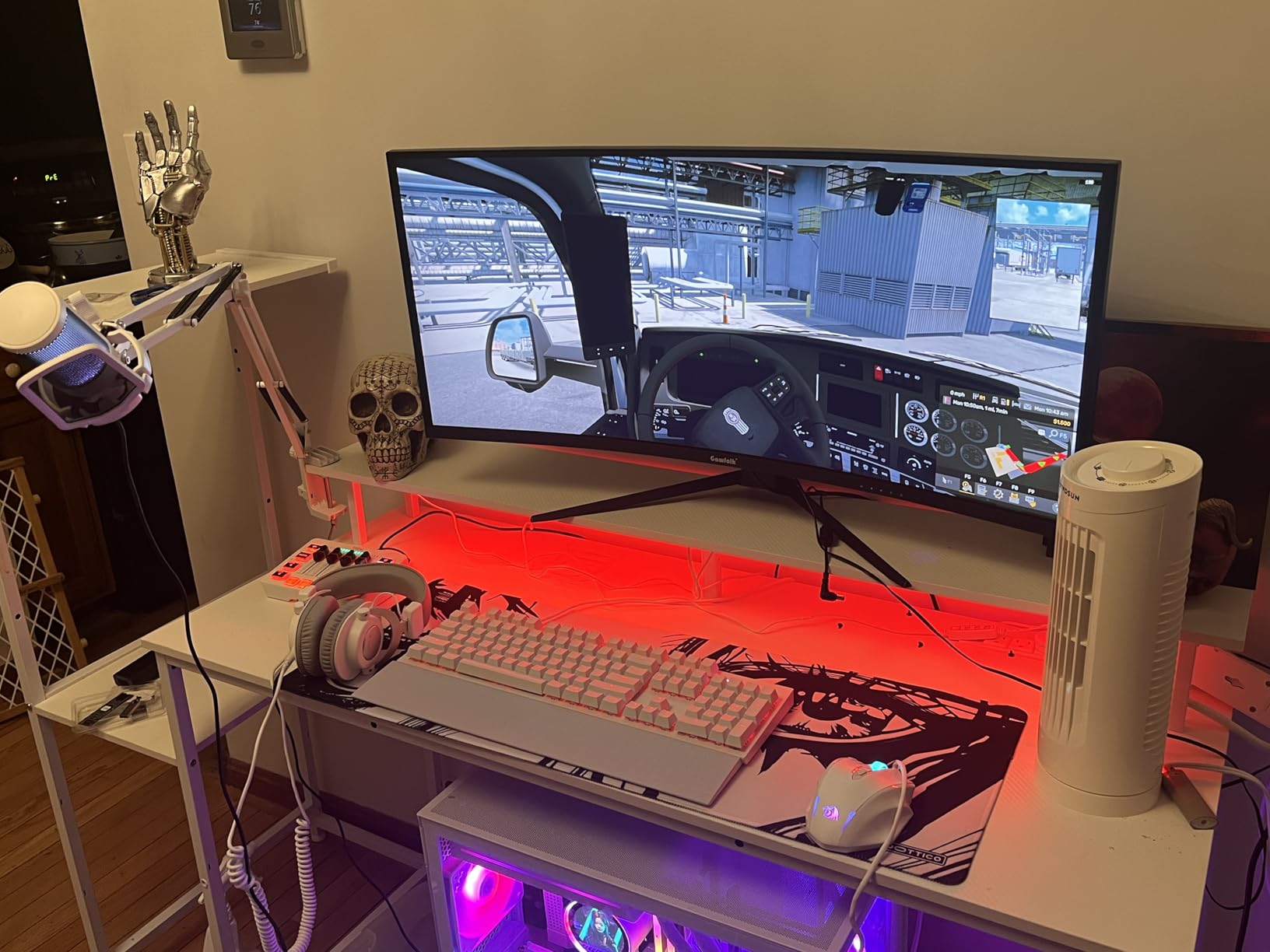
For classical listening on a strict budget, the HD8 is serviceable and enjoyable. The slightly warm bass gives body to cellos and bassoons, though orchestral climaxes can sound a touch congested compared with the AKG K240.
Who the HD8 is good for
Podcasters and home recordists who already own a FIFINE mic and want a matching budget monitoring solution. The dual cables and closed-back isolation cover all the basics.
Anyone buying their very first pair of studio headphones with minimal budget will get more than expected here.
Who should skip the HD8
Producers who need strict neutrality for final mix decisions should spend more on the M20x or HD 280 Pro.
Anyone wanting wireless freedom or a built-in microphone for calls should look at the OneOdio A70 instead.
8. M-Audio HDH40 – Best for Single-Ear Monitoring Comfort
M-AUDIO HDH40 Closed-Back Over-Ear Headphones
40mm neodymium drivers
15Hz-28kHz range
32 ohm impedance
95 dB sensitivity
180-degree rotatable frame
2.7m fixed cable
Pros
- Clear and balanced sound for the price
- Comfortable flexible headband with leather cushioning
- 180-degree rotatable frame for single-ear monitoring
- Long 2.7m cable gives plenty of reach
- Stainless steel telescopic arms
- Good closed-back noise isolation
Cons
- Highs can be too bright for some listeners
- Bass is boosted rather than flat
- Fixed non-detachable cable
- Ear cups may be large for some users
- Not very breathable for long sessions
M-Audio designed the HDH40 as a companion for its interface and keyboard lines, and the studio DNA shows. The 180-degree rotatable frame is the standout feature, letting you swing an ear cup completely flat for single-ear monitoring while recording or cueing. It is a small thing that makes a big difference in practice.
The stainless steel telescopic arms with printed scale markings feel reassuringly solid, and the flexible leather-cushioned headband distributes clamp pressure evenly. The 15Hz to 28kHz stated frequency range is among the widest on paper in this lineup.
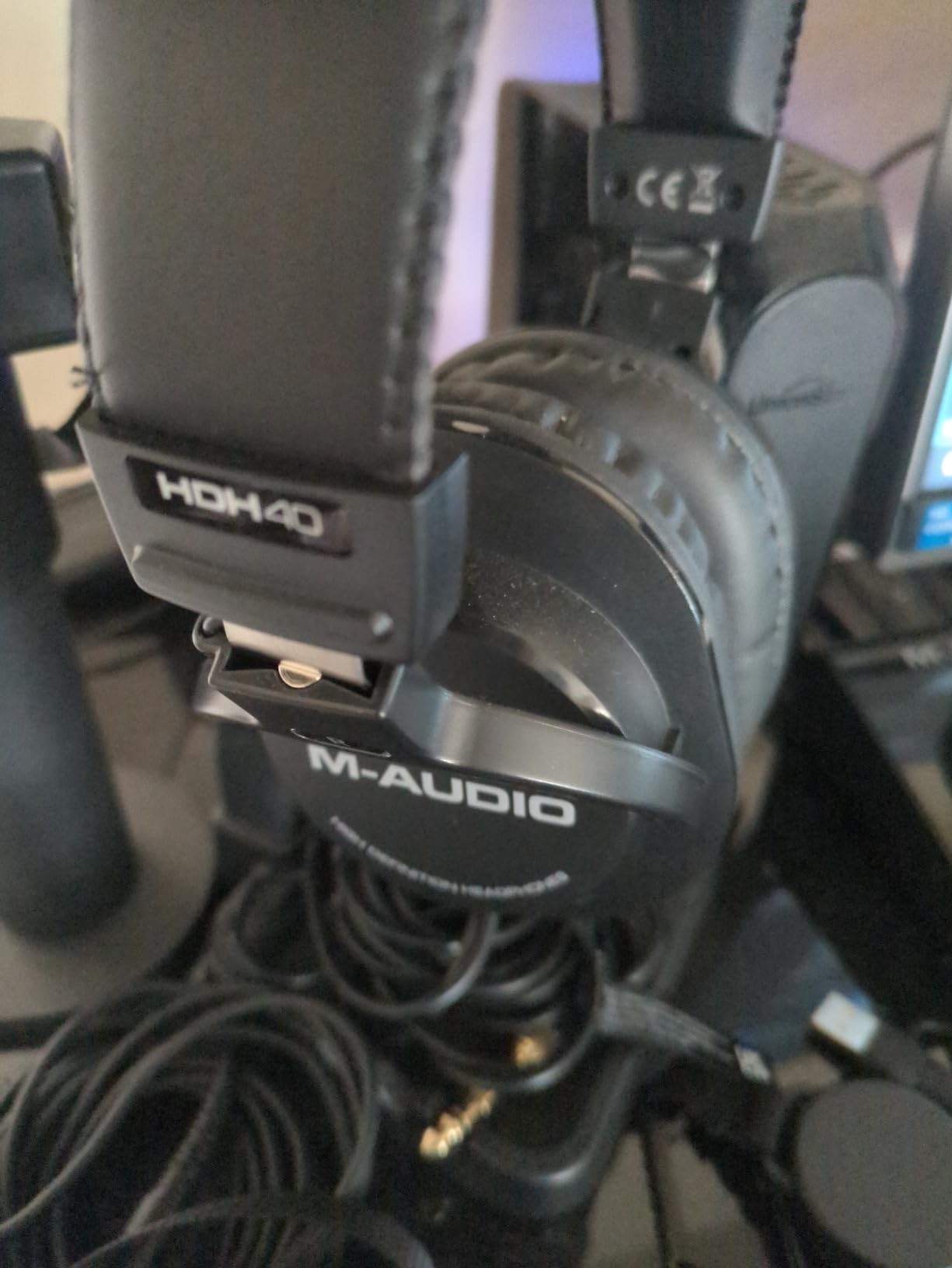
In listening, the tuning is bass-forward with bright highs rather than strictly flat. That excitement works well for tracking and casual production, but reviewers rightly note it colors the sound. The 2.7-meter fixed cable offers generous reach, though the lack of detachability is a long-term risk.
The 32 ohm impedance means any interface or laptop drives it effortlessly. Included in the box is a quarter-inch adapter for pro audio gear.
For classical material, the bright top end gives violins and piccolo real sparkle, sometimes tipping into sharpness on poorly recorded sources. The bass lift adds welcome warmth to chamber music but is less honest for mixing decisions.
Who the HDH40 is good for
Recording musicians who need quick single-ear monitoring while playing or singing. The rotating cups and comfortable band suit long tracking sessions.
Owners of M-Audio interfaces or controllers who want a matching, well-built budget pair will find this a natural fit.
Who should skip the HDH40
If neutrality is your priority for mixing, the boosted bass and bright treble will color your judgment. Choose the M20x or K240 instead.
The fixed cable is a dealbreaker for anyone who has lost a favorite pair to a snapped cord before.
Buying Guide: How to Choose Studio Headphones Under 100
Choosing budget studio headphones comes down to five decisions. Get these right and any pair on this list will serve you well.
Open-back vs closed-back for studio work
Closed-back headphones like the HD 280 Pro and M20x seal the ear cup, which blocks outside noise and prevents sound leakage into microphones. That makes them the right choice for recording and tracking.
Open-back and semi-open designs like the AKG K240 trade isolation for a wider, more natural soundstage. They make mixing and critical listening easier but leak sound in both directions, so never use them for recording vocals with a live mic.
Most home studio owners start with one closed-back pair and add an open-back later for mixing. If you can only buy one, closed-back is the safer first purchase.
Impedance and whether you need an amp
Every model in this guide sits between 32 and 64 ohms, which means any audio interface, laptop, or phone can drive them to healthy volumes. This is one area where budget headphones are genuinely hassle-free.
The exception is the AKG K240 at 55 ohms, which sounds good from an interface but opens up noticeably with a headphone amp. If you already own an interface with a strong headphone output, you are covered.
A cheap entry-level amp or a DAC with a built-in headphone stage costs less than a second pair of headphones and improves every model here.
Comfort during long sessions
Forum threads about studio headphones are dominated by comfort complaints, and rightly so. A tight clamp or small earpads can end a mixing session before your ears are even warmed up.
The self-adjusting headband on the K240 and the protein memory foam on the MAONO MH601 are the comfort leaders in this guide. Glasses wearers should be cautious with the M20x and HD 280 Pro, both of which clamp firmly.
Also consider weight: anything under about 300 grams worn over a circumaural design will disappear on your head after a few minutes.
Cables and long-term durability
The most common way budget headphones die is the cable. Detachable cables, found on the K240, MH601, HD8, and both OneOdio models, turn a potential death sentence into a ten-dollar fix.
Fixed cables on the M20x and HDH40 are acceptable trade-offs for their price, but treat them gently. The HD 280 Pro takes a middle path: its cord is replaceable even though it is not detachable in the plug-and-play sense.
Replaceable earpads matter almost as much. The HD 280 Pro scores best here with user-replaceable pads, headband padding, and cord, which is a big reason it survives so many years in professional use.
Flat response vs fun tuning
Studio headphones exist to tell you the truth about your mix. A flat or neutral response, like the M20x, K240, and MH601 provide, means what you hear is what your listeners will hear.
Models with lifted bass and sparkling highs, like the OneOdio pairs and the HDH40, are more enjoyable for casual listening but will bias your mixing decisions. A common studio practice is to keep one neutral and one fun pair and check mixes on both.
Classical music considerations
Classical production and listening place unique demands that most guides skip. A wide soundstage matters more than bass impact, because orchestral music is about the space between instruments as much as the instruments themselves.
The semi-open AKG K240 is the clear winner here, followed by the neutral M20x and MH601. Bright-tuned models can make string sections edgy, while bass-forward models can blur the low strings together.
Dynamic range handling is the other classical-specific test: the jump from pianissimo to fortissimo should stay clean at listening volume. The 50mm-driver models handle this well.
Frequently Asked Questions
What are the best studio headphones under $100?
The Audio-Technica ATH-M20x is the best overall studio headphone under $100 thanks to its balanced tuning and strong isolation. The Sennheiser HD 280 Pro is best for recording with 32dB of noise attenuation, and the AKG K240 Studio is best for mixing thanks to its wide semi-open soundstage.
What are the best budget studio headphones?
The best budget studio headphones are the FIFINE HD8 and OneOdio A71, both under $40 with detachable cables and closed-back isolation. For a small step up, the MAONO MH601 and M-Audio HDH40 offer larger drivers and better build quality while staying well under $50.
What are the best headphones under $100 for listening to music?
For pure listening enjoyment under $100, the AKG K240 Studio offers the most natural and open sound, especially for classical and acoustic music. The OneOdio A70 adds Bluetooth convenience with 72 hours of battery life for wireless listening on the go.
Do I need an amp for studio headphones under $100?
Most studio headphones under $100 have impedance between 32 and 64 ohms, so any audio interface or laptop drives them easily without a dedicated amp. The AKG K240 Studio at 55 ohms is the only model here that benefits noticeably from a headphone amp for extra dynamic headroom.
Can you use regular headphones for music production?
You can, but regular consumer headphones color the sound with boosted bass and treble, which leads to bad mixing decisions. Studio headphones with a flat response, like the ATH-M20x or AKG K240, reveal your mix accurately so it translates to speakers and earbuds.
Conclusion
After testing all eight models, my verdict for the best studio headphones under 100 is clear. The Audio-Technica ATH-M20x is the best all-rounder, the Sennheiser HD 280 Pro is the isolation champion for recording, and the AKG K240 Studio is the mixing and classical listening favorite.
Beginners on the tightest budget should start with the FIFINE HD8 or OneOdio A71, while podcasters get the best fit from the MAONO MH601. Whatever your workflow, every pair on this list proves you do not need to spend a fortune to make accurate, professional-sounding decisions in 2026.