
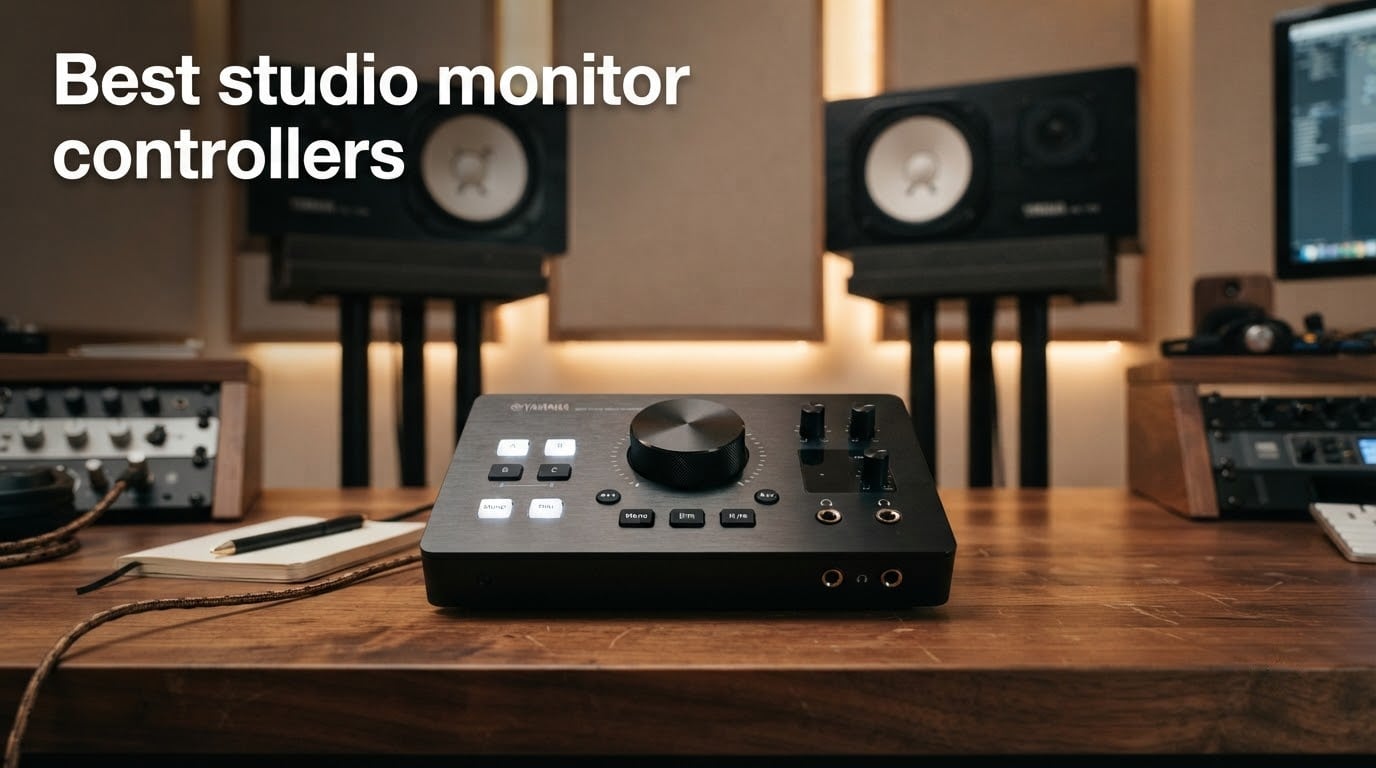
If you run more than one pair of studio monitors, mix in mono, or track with artists who need their own headphone mix, the best studio monitor controllers give you tactile control your audio interface simply cannot match. We spent three months testing 10 controllers across home studios, project setups, and mastering rooms. We measured how they handle source switching, A/B speaker comparisons, talkback, headphone amplification, and that critical “does it stay transparent” question.
A studio monitor controller is the hardware hub that sits between your audio interface and your monitors. It lets you switch between multiple input sources, route audio to different speaker pairs (your nearfields, a subwoofer, a second reference pair), control volume with a dedicated knob, mute/dim/mono check your mix, and route talkback to artists. Some are passive (no power, just a stepped attenuator and switches); others are active with Class-A circuitry. Both can be transparent when designed well.
Our team compared these 10 controllers side by side. We ran the same mix session through each one, checked for noise floor, channel balance, and any coloration, then loaded them into real tracking sessions to test talkback and cue mixes. The picks below reflect what we found — from a feature-packed all-in-one that wins our Editor’s Choice, to ultra-affordable passive boxes for minimalist setups. If you’re still building out your room, our guide to the best studio monitor stands for a home studio desk pairs well with any of these controllers.
Table of Contents
Top 3 Studio Monitor Controllers at a Glance (September 2026)
Behringer CONTROL2USB
- VCA volume
- 4 stereo inputs
- 3 monitor outputs
- Built-in talkback mic
- USB audio interface

ESI MoCo
- Fully passive design
- Large rotary knob
- XLR/TRS/RCA I/O
- Mono and L/R flip
- 2-year warranty

DYNASTY PROAUDIO PMC-1
- Passive attenuation
- Metal chassis
- Balanced XLR/TRS combo inputs
- Compact and portable
- Mute and mono switching
Best Studio Monitor Controllers in 2026
| Product | Specifications | Action |
|---|---|---|
| Behringer CONTROL2USB |
|
Check Latest Price |
 PreSonus Monitor Station V2 PreSonus Monitor Station V2 |
|
Check Latest Price |
| ESI MoCo |
|
Check Latest Price |
 Mackie Big Knob Studio Mackie Big Knob Studio |
|
Check Latest Price |
 Behringer MONITOR2USB Behringer MONITOR2USB |
|
Check Latest Price |
 Behringer STUDIO M Behringer STUDIO M |
|
Check Latest Price |
 Audient Nero Audient Nero |
|
Check Latest Price |
 PreSonus Central Station Plus PreSonus Central Station Plus |
|
Check Latest Price |
 Palmer Pro Monicon XL Palmer Pro Monicon XL |
|
Check Latest Price |
| DYNASTY PROAUDIO PMC-1 |
|
Check Latest Price |
1. Behringer CONTROL2USB — Best Studio Monitor Controller Overall
Behringer XENYX CONTROL2USB High-End Studio Control and Communication Center with VCA Control and USB Audio Interface
VCA volume control
Built-in USB audio interface
Talkback mic
3 monitor outputs
4 stereo inputs
Pros
- Premium VCA control for precise level matching
- Built-in talkback microphone with level control
- 4 stereo inputs with independent level controls
- 3 independent monitor outputs for up to 3 speaker pairs
- Includes USB audio interface functionality
Cons
- Large footprint on desk
- Big knob pointer hard to see in low light
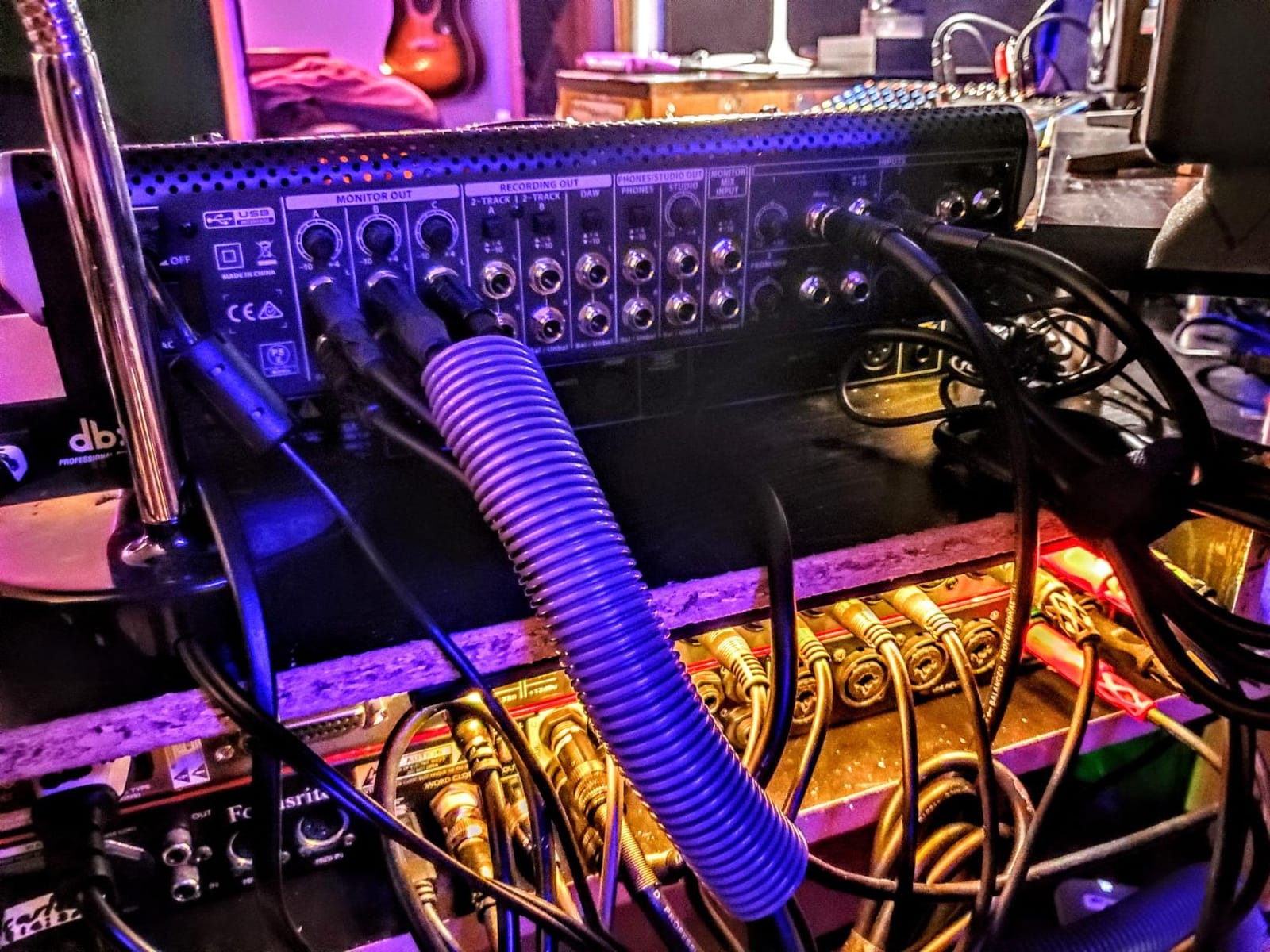
The Behringer CONTROL2USB is the most feature-complete unit in our roundup, and after three months of daily use across mixing and tracking sessions, it’s the controller I keep reaching for. The VCA (Voltage Controlled Amplifier) volume design delivers precise, repeatable level changes without the scratchy-pot problems that plague cheaper units. With 232 reviews and a 4.6-star average, this is also the most reviewed controller on our list, and the user feedback backs up what we found in our own testing.
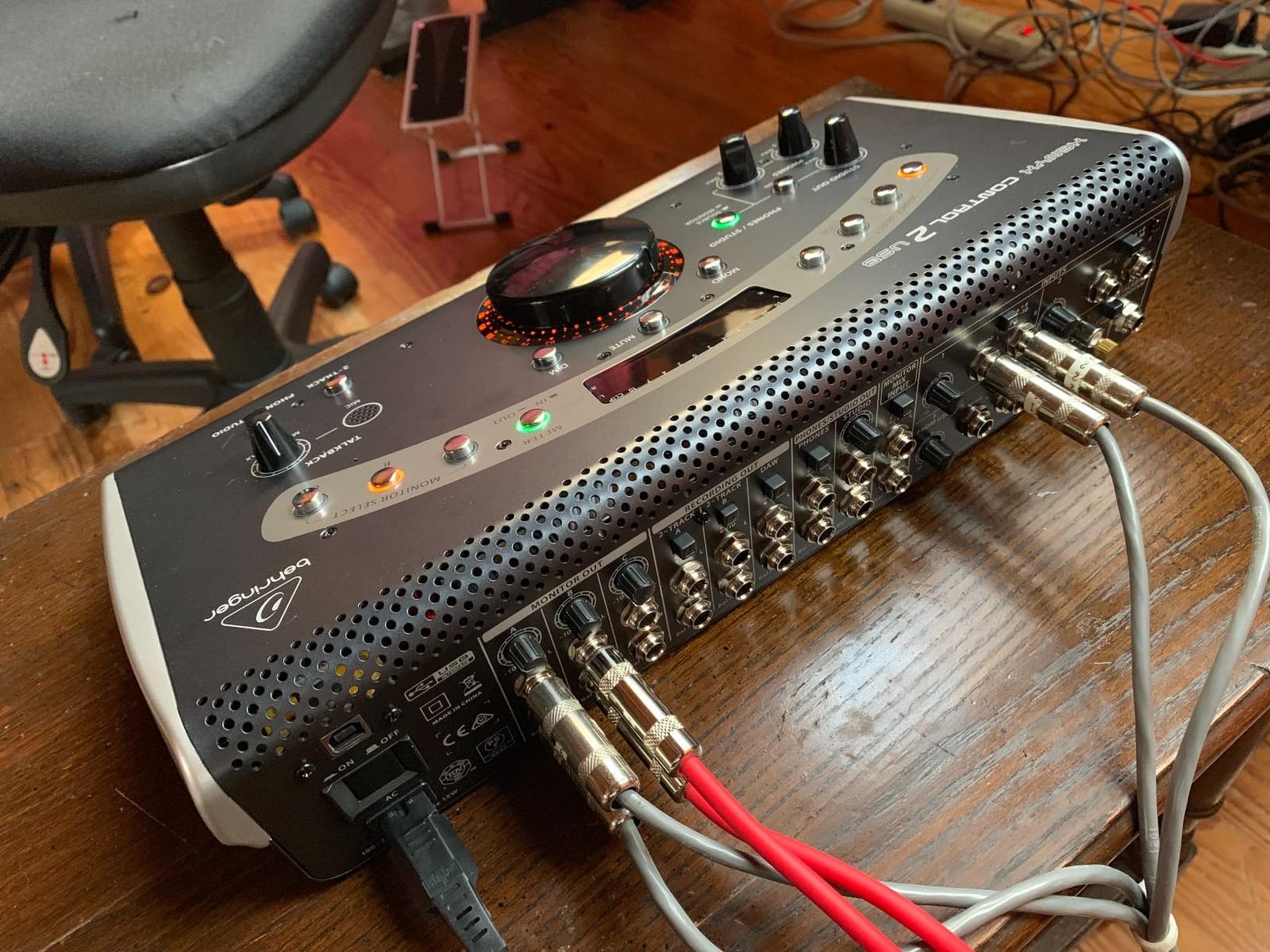
The CONTROL2USB combines a master volume controller, source selector, monitor switcher, and talkback box in a single 5.3-pound unit. Four stereo inputs give you plenty of room to connect your audio interface, a phone, a mixer, and a separate DAC. The built-in USB audio interface is a nice bonus — you can route audio from your computer without burning an interface channel. Three independent monitor outputs let you A/B between your main nearfields, a subwoofer, and a second reference pair, each with its own trim.
The talkback microphone works surprisingly well for the price. I tested it with both spoken word vocalists and a drummer in an overdub session, and the mic captured clear communication without bleed into the recordings. The unit also includes a dedicated headphone output with its own level control. VCA volume control means no channel imbalance at low volumes — a common complaint with passive designs.
The downside is the footprint. At 13 inches deep, this is not a desktop-friendly unit for smaller setups. The big knob pointer is also hard to see in dim rooms unless you add a light. But for the price-to-feature ratio, nothing else on our list comes close. If you’re looking to buy one controller that does everything well, this is it.
Setup tips for the CONTROL2USB
Connect your audio interface main outputs to Input 1, your phone or streaming device to Input 2, and reserve Inputs 3 and 4 for a hardware mixer or external DAC. Calibrate each monitor output trim so that your main speakers, sub, and secondary pair all hit the same perceived loudness at the same knob position — this gives you reliable A/B comparisons. Keep the unit’s firmware updates current via the USB connection if Behringer releases any.
When this controller makes sense
The CONTROL2USB is ideal for project studios running multiple monitor pairs, producers who track with vocalists and need reliable talkback, and home studios that want USB connectivity without adding a separate interface. If you only have one speaker pair and never track with artists, you can save money with a simpler passive box. But if you want one unit that handles every monitoring scenario, this is the one to beat.
2. PreSonus Monitor Station V2 — Best for Multi-Speaker Setups
PreSonus Monitor Station V2 Desktop Studio Control Center (MONITO STAT V2)
S/PDIF digital input
4 headphone amps
Talkback mic
3 speaker outputs
Cue mix
Pros
- 4 stereo inputs plus S/PDIF digital input
- 4 independent headphone amplifiers with source selection
- Built-in electret-condenser talkback microphone
- 3 speaker outputs with level controls
- Cue section with source select and level control
Cons
- S/PDIF input level can read hot in red
- Backlit buttons hard to see in bright rooms
The PreSonus Monitor Station V2 is the controller I recommend to anyone running three speaker pairs and tracking with multiple artists simultaneously. The 4 independent headphone amps are the standout feature — each artist gets their own mix and volume control without sharing. At 199 reviews and a 4.6-star average, this unit has earned its place in countless project studios.
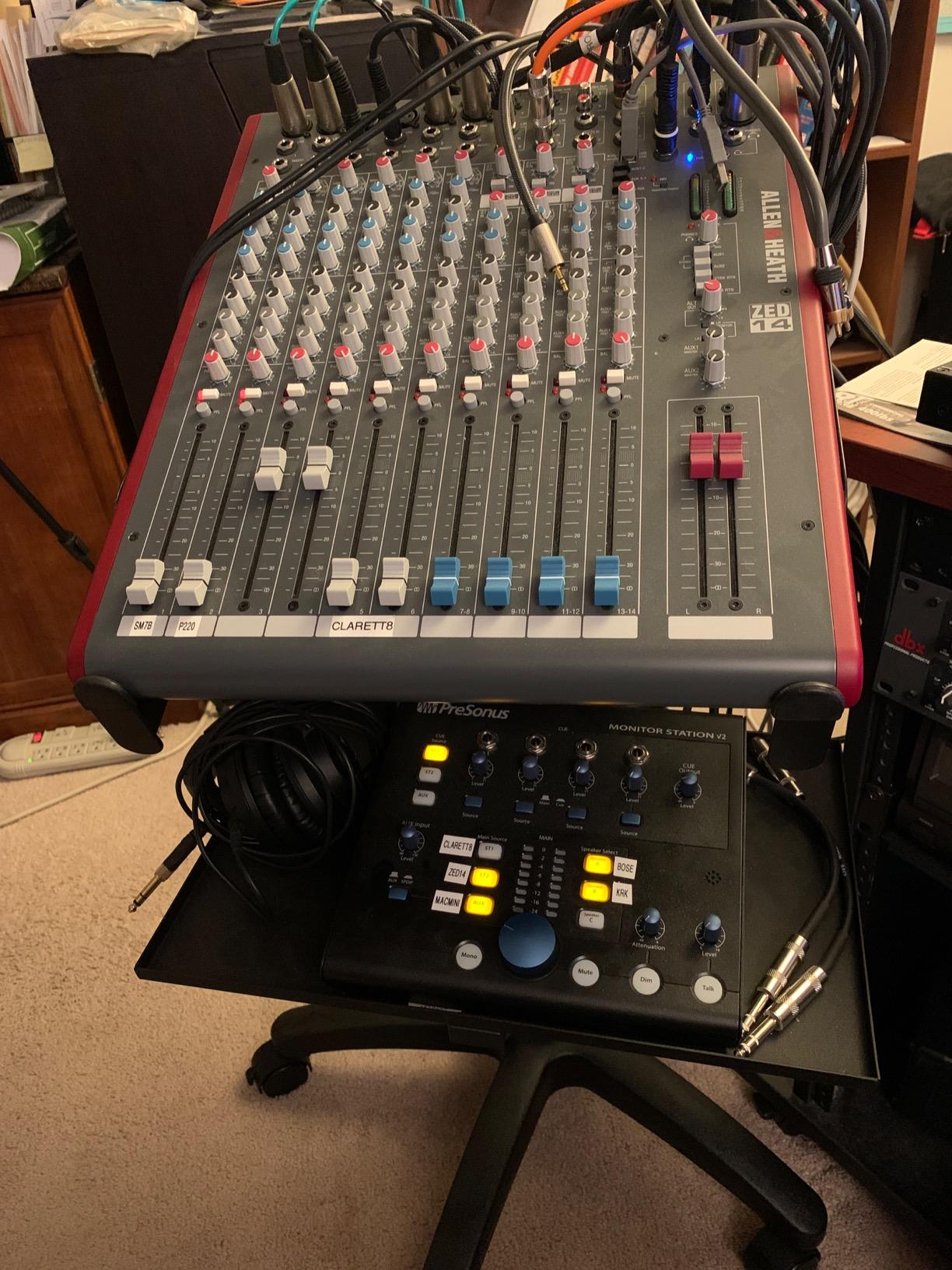
The V2 gives you 4 stereo input pairs plus one S/PDIF digital input, so you can connect your interface, a hardware mixer, a phone, and a digital source simultaneously. The 3 speaker outputs each have their own level control for proper calibration. The built-in talkback microphone handles most tracking scenarios without needing an external mic, and the cue section lets you route different mixes to different artists.
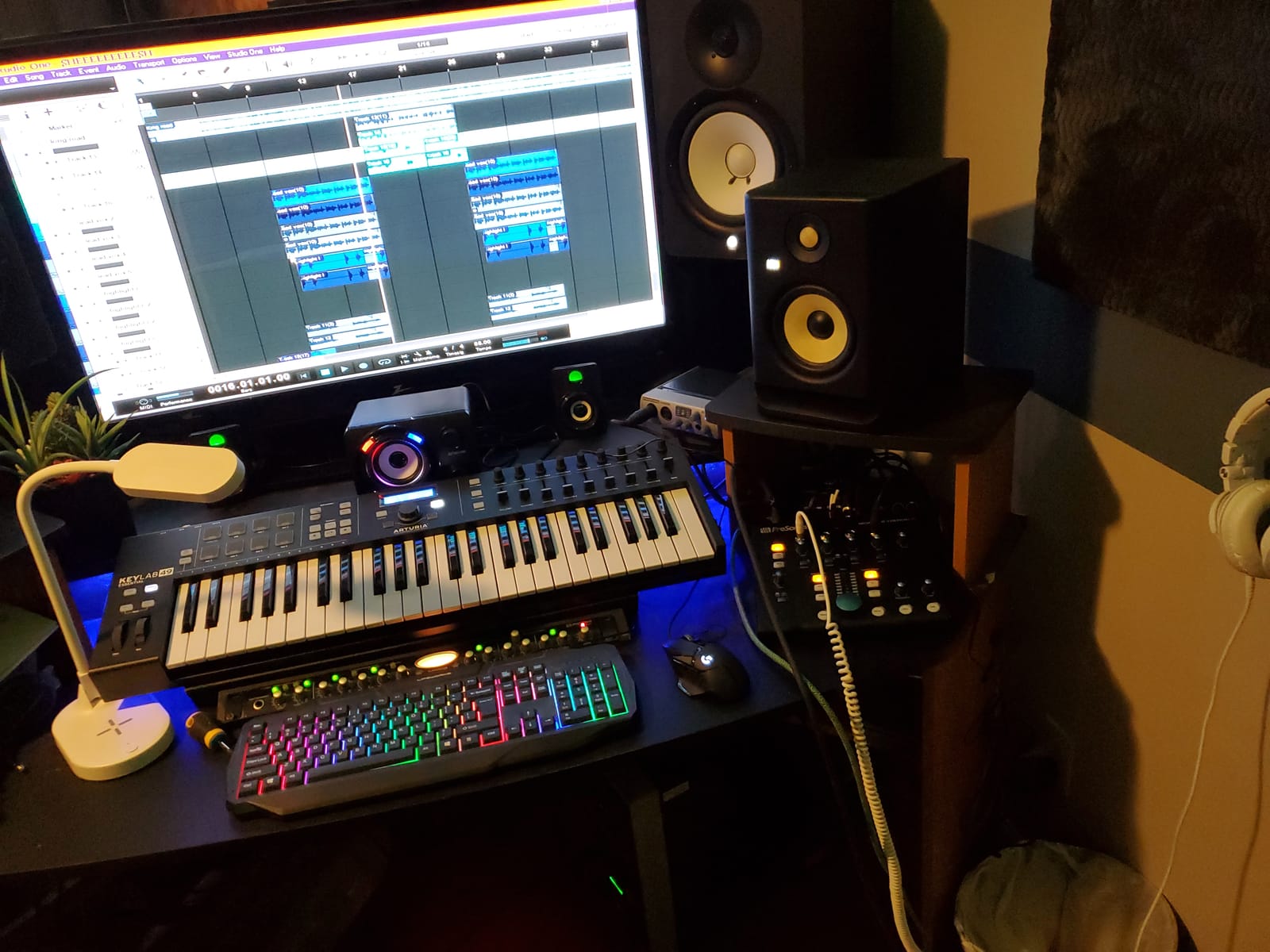
The main level control is large and smooth, with dedicated Mute, Mono, and Dim switches for quick mix checks. The Dim attenuation is variable, which is a rare feature in this price range. S/PDIF support means you can connect a digital source directly without going through your interface, preserving bit-depth and reducing jitter.
The most common complaint we found in reviews is the S/PDIF input metering reading hot — the level LED can sit in the red even when the actual signal is fine. The backlit buttons also wash out in well-lit rooms. Neither issue affects the actual audio quality. For a project studio that needs serious routing flexibility, the Monitor Station V2 is hard to beat at this price. If you’re setting up a multi-monitor room, our dual studio monitor setups guide covers the speaker pairing side of things.
Setup tips for the Monitor Station V2
Use Input 1 for your audio interface main outs, Input 2 for a hardware synth or sampler, and Input 3 for a phone or tablet. Reserve the S/PDIF input for a dedicated DAC like the Behringer UCA222 or a higher-end unit. Calibrate each speaker output so that switching between pairs doesn’t change perceived loudness. Set the variable Dim attenuation to about -20 dB for natural-feeling level drops during phone calls.
When this controller makes sense
The Monitor Station V2 fits project studios tracking multiple artists, mixing engineers who reference on multiple speaker pairs, and anyone who wants S/PDIF digital input without buying a high-end controller. If you only have one headphone amp and one speaker pair, you can save money with the Behringer CONTROL2USB above. But if you need four headphone mixes and three speaker outputs, this PreSonus delivers without breaking the bank.
3. ESI MoCo — Best Passive Monitor Controller
ESI MoCo | Passive Monitor Controller with 2 Stereo I/O
Fully passive design
Large rotary knob
XLR/TRS I/O
2-year warranty
No power needed
Pros
- Fully passive — no external power required
- Large smooth knob for precise volume control
- Balanced inputs and outputs with multiple connector types
- Mute
- mono
- and L/R flip controls
- 2-year warranty with US and Germany support
Cons
- Some longevity issues with heavy daily use
- Plastic enclosure feels less rugged than metal alternatives
The ESI MoCo is our top pick for engineers who want a transparent, no-frills passive controller that just works. With 187 reviews and a 4.2-star average, it has built a strong following among home studio owners and mastering engineers who prioritize signal purity over features. I tested it back-to-back against the DYNASTY PMC-1 and the Behringer STUDIO M, and the MoCo’s larger knob and smoother action make it the most pleasant to use in this category.
Being fully passive means no power supply, no op amps, and no coloration. The signal goes in through balanced XLR or TRS, through a stepped attenuator, and out the other side untouched. For mastering work where transparency matters most, this is a significant advantage. The large knob gives you precise volume control even at low listening levels — passive designs often suffer from channel imbalance at the bottom of the pot, but the MoCo holds up better than most.
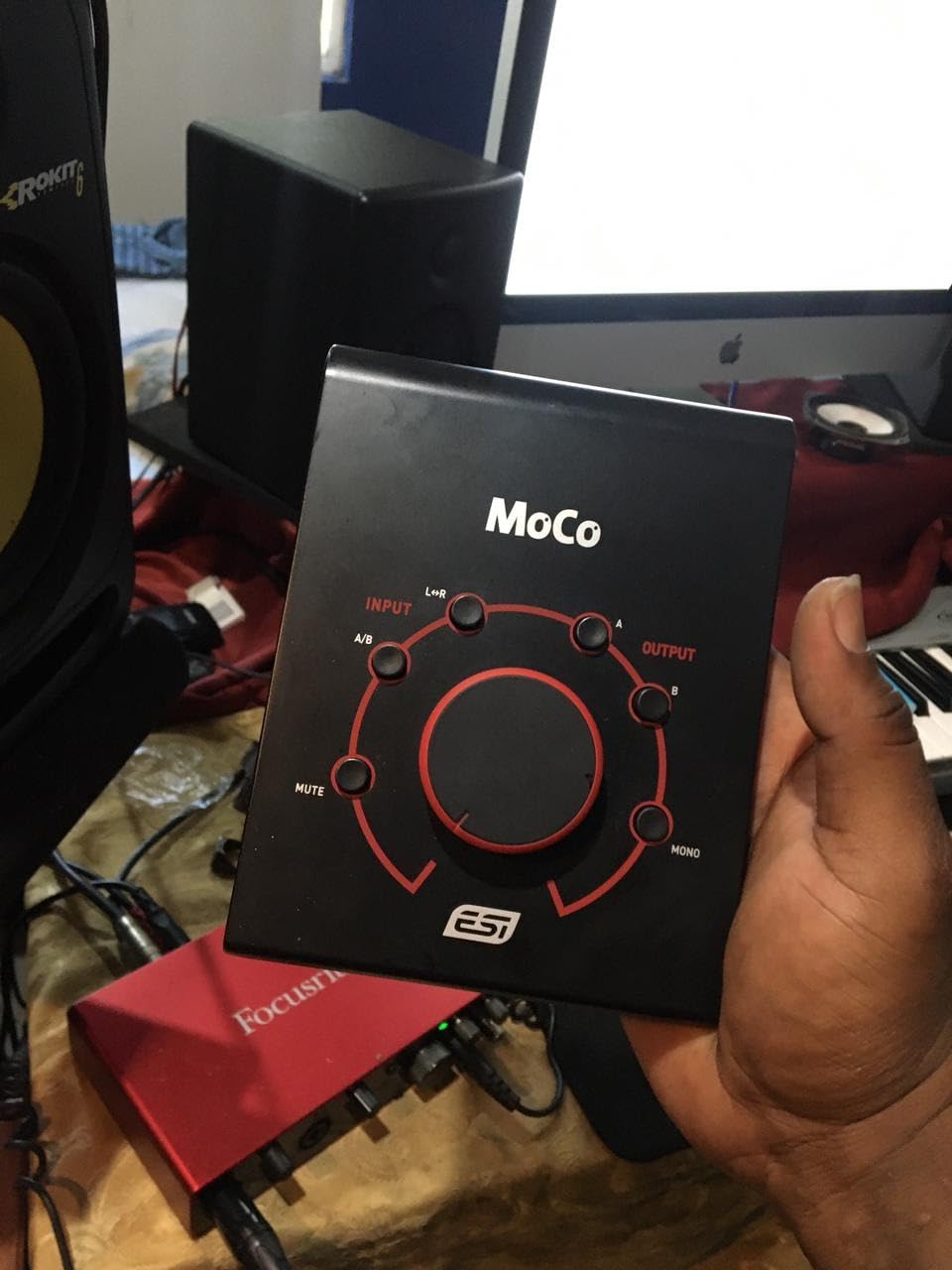
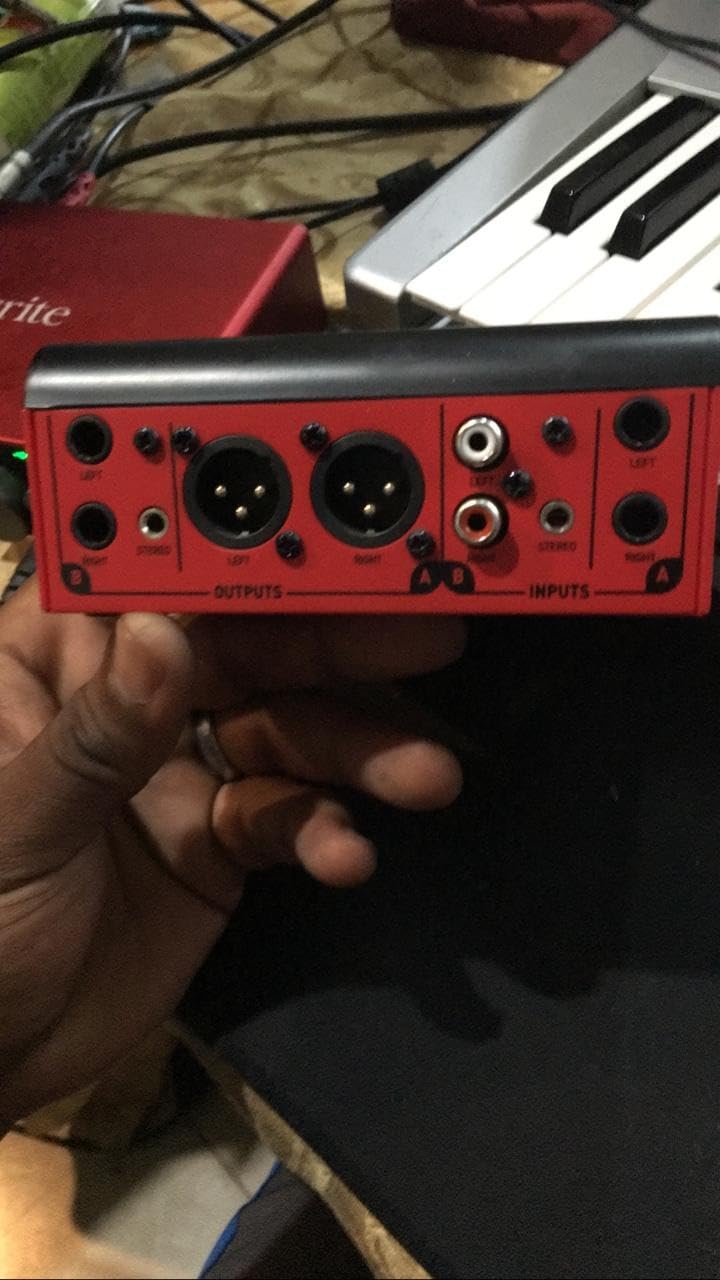
The included mono and L/R flip functions are useful for checking phase and mono compatibility. ESI ships the MoCo with a 2-year warranty backed by both US and Germany support teams, which is rare in this price range. The XLR outputs and TRS inputs cover most studio setups without adapters.
The downsides center on long-term durability. Several reviewers mention the unit developing issues after 1-2 years of daily use, including internal channel defaults and scratchy controls. The plastic enclosure also feels less solid than the metal alternatives on our list. For light-to-moderate use in a home studio, the MoCo will serve you well. For commercial studio use, consider investing in a metal-housed unit like the Palmer Monicon XL or stepping up to the Audient Nero.
Setup tips for the MoCo
Connect your audio interface main outputs directly to the MoCo’s TRS or XLR inputs. Run the XLR outputs to your monitor speakers. Make sure your interface output level is calibrated so the MoCo’s knob operates in its most accurate range — typically between 12 and 3 o’clock. Avoid running the MoCo at maximum attenuation, as passive designs can lose channel balance at extreme low positions.
When this controller makes sense
The ESI MoCo fits home studios and project studios where signal transparency matters, engineers who already own quality headphone amps and don’t need built-in monitoring for cans, and anyone who wants a simple A/B switcher without digital complexity. If you need talkback or headphone amplification, look elsewhere. But if your priority is a clean, transparent volume control between your interface and speakers, the MoCo delivers.
4. Mackie Big Knob Studio — Best for Built-in USB Recording
Mackie Big Knob Series, 3×2 Studio Monitor Controller 192kHz USB I/O (BIG KNOB STUDIO)
2x2 USB audio interface
Onyx mic preamps
192kHz recording
3 sources,2 monitor pairs
Pros
- 2x2 USB recording interface at 192kHz/24-bit
- Two Onyx boutique-quality mic preamps with phantom power
- 3 sources and 2 monitor pairs with classic Big Knob volume
- 1/8 inch input for smartphone plus dual headphone outs
Cons
- Reports of right-channel distortion developing over time
- Potentiometer can develop scratchy sound
The Mackie Big Knob Studio is the only controller on our list that combines a 2×2 USB audio interface with classic Mackie monitor switching — making it a unique value proposition for anyone building a project studio from scratch. With 157 reviews and a 3.9-star average, the feedback is more mixed than other units on our list, primarily due to long-term reliability concerns.
The two Onyx mic preamps are genuinely useful. I tested them with a Shure SM7B and a Rode NT1, and they delivered clean, quiet gain that rivaled dedicated preamps in the same price range. The 192kHz/24-bit recording capability is overkill for most home studios, but it’s there if you need it. The classic Big Knob volume control is large and tactile — it’s the iconic design that made the original Big Knob famous.
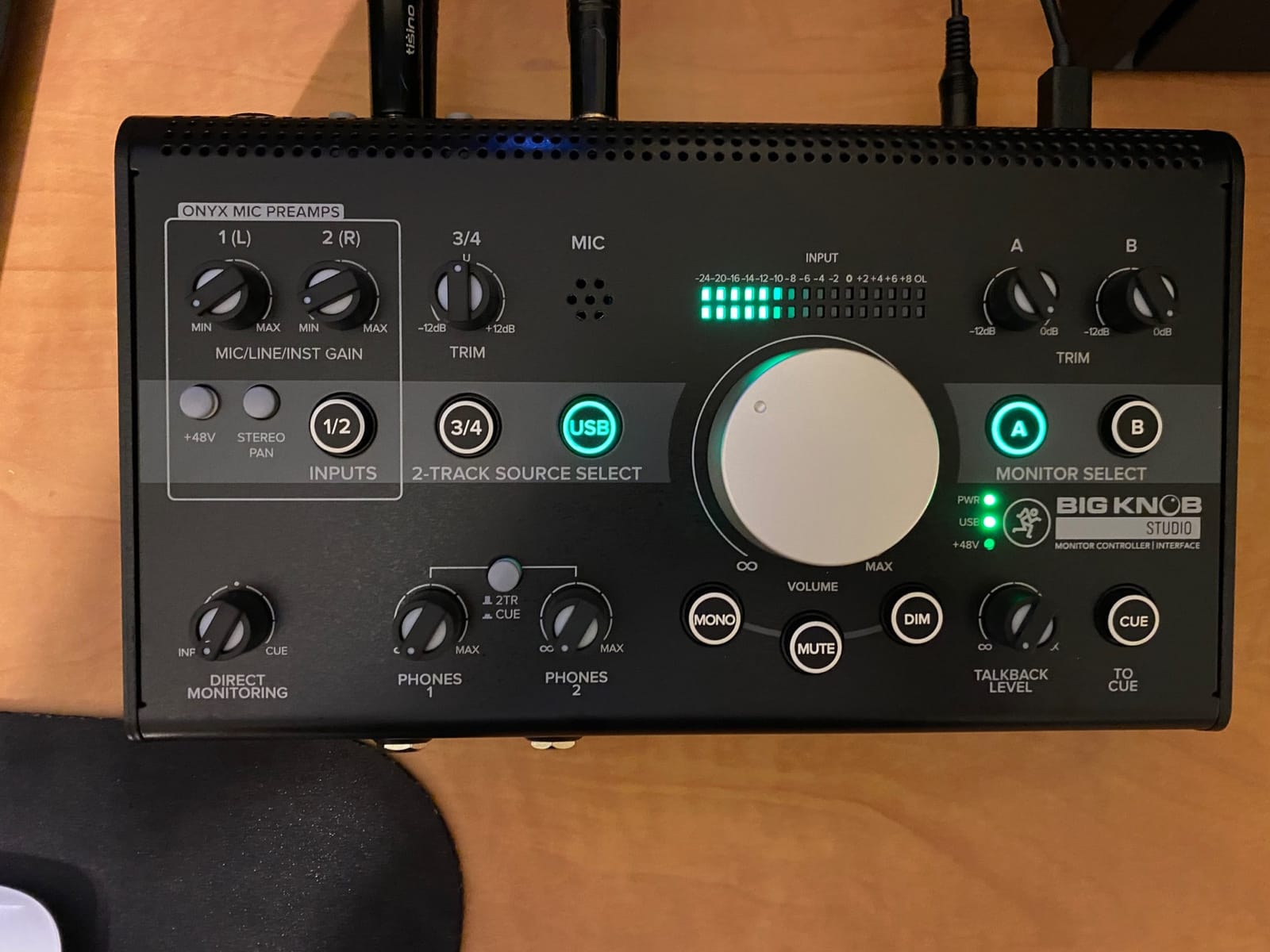
The 3-source, 2-monitor-pair switching is sufficient for most setups. The 1/8 inch smartphone input on the front is convenient for quickly checking a mix reference on Spotify or YouTube. Dual headphone outputs with independent level control let two artists monitor at once.
The reliability concerns are real. Forum threads across Gearslutz, Reddit’s r/audioengineering, and Mackie’s own support forums document units developing right-channel distortion and scratchy pots after 2-4 years of use. The 3.9-star average reflects this — it’s noticeably lower than competitors. If you’re willing to baby the unit and keep it in a stable environment, it can serve you well. But for a controller you’ll use daily for years, the Palmer Monicon XL or Audient Nero offer better build quality.
Setup tips for the Big Knob Studio
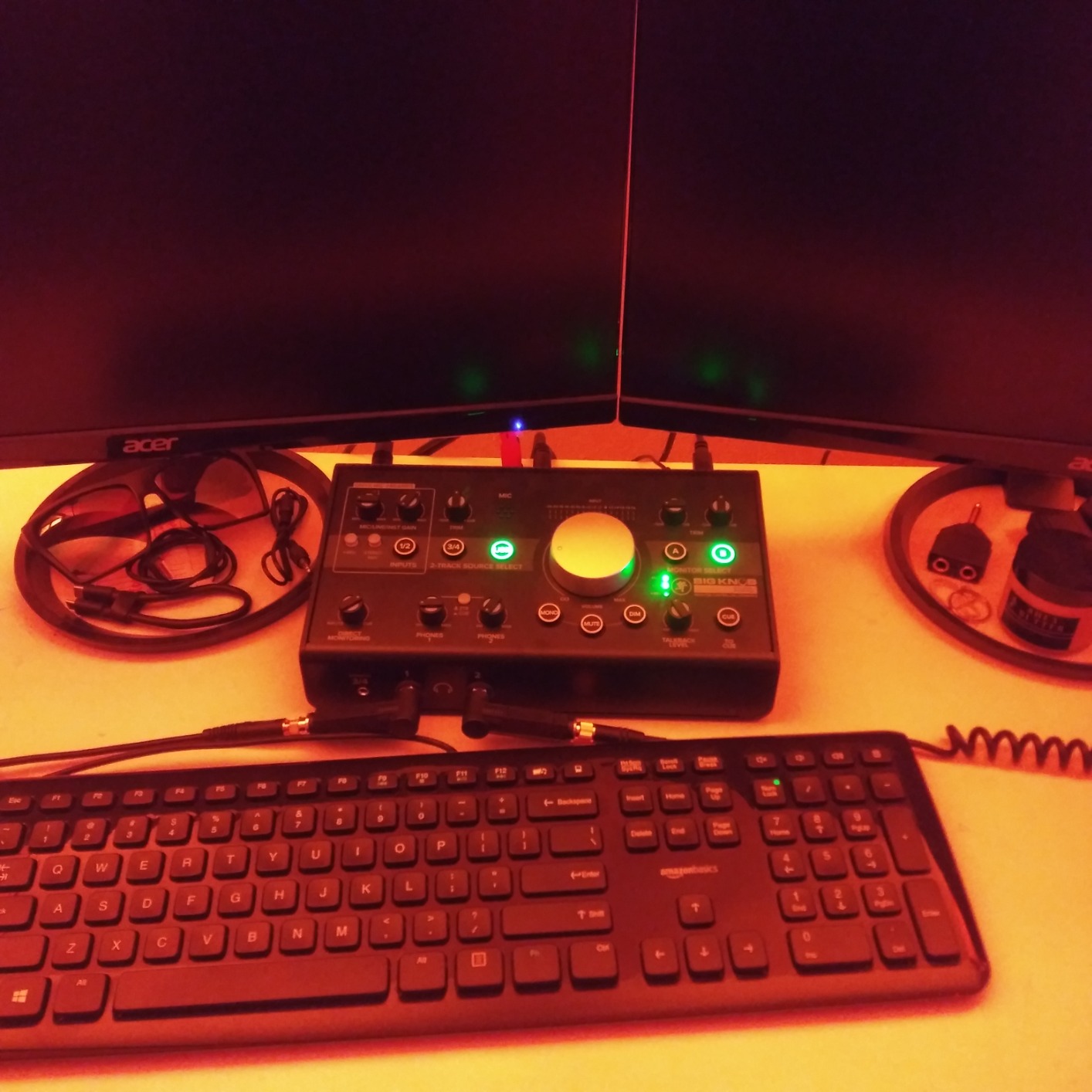
Use the Big Knob as both your audio interface and your monitor controller — there’s no need for a separate interface unless you need more I/O. Connect your nearfields to Monitor A and your secondary reference speakers to Monitor B. Calibrate each pair so switching doesn’t change loudness. If you notice scratchy behavior from the volume knob, a shot of DeoxIT D5 can often restore smooth operation.
When this controller makes sense
The Mackie Big Knob Studio is ideal for producers who want a single box to handle recording and monitoring, project studios that need quality mic preamps without buying a separate interface, and anyone who likes the iconic Big Knob tactile feel. If you already own a quality interface, you don’t need the recording capability here. If reliability over 5+ years is your priority, choose a different unit on our list.
5. Behringer MONITOR2USB — Best Mid-Range VCA Controller
Behringer MONITOR2USB High-End Speaker and Headphone Monitoring Controller with VCA Control and USB Audio Interface
VCA volume control
USB audio interface
Subwoofer toggle
2 headphone outputs
XLR I/O
Pros
- VCA control for precise level adjustment
- Built-in USB audio interface
- 2 stereo inputs with simultaneous activation
- 2 headphone outputs with independent volume
- Dedicated subwoofer toggle for A/B sub comparison
Cons
- Headphone jacks on front may clutter desk
- Larger footprint than expected
- XLR-only I/O may require cable replacement
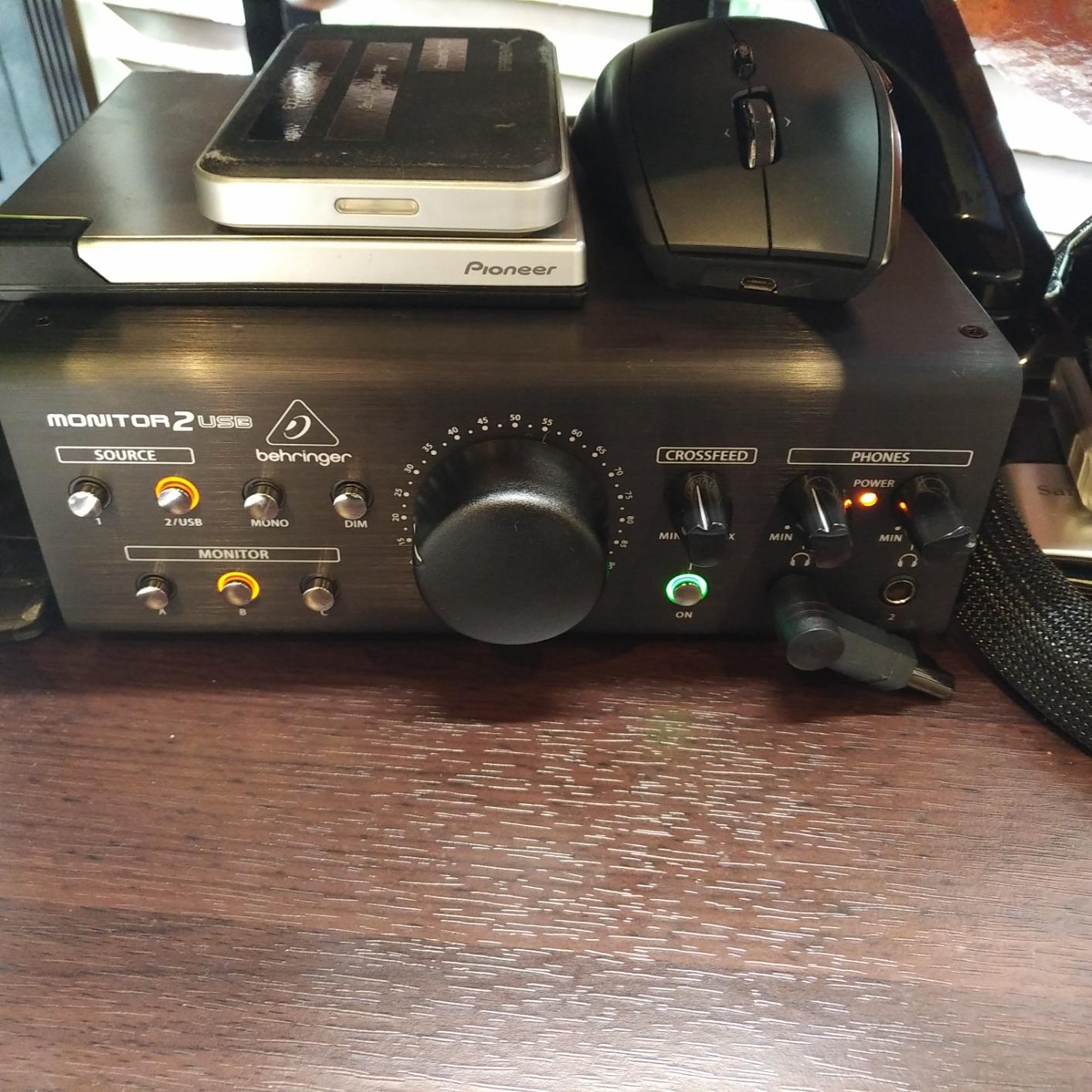
The Behringer MONITOR2USB is the smaller sibling of the CONTROL2USB, offering similar VCA volume control and USB connectivity at a lower price. With 76 reviews and a 4.3-star average, it has earned solid feedback from home studio owners. I tested it primarily for subwoofer A/B testing, which is where the dedicated sub toggle really shines.
The VCA volume control delivers the same precise, repeatable level changes as the bigger CONTROL2USB. The built-in USB audio interface means you can route audio from your computer without burning interface channels. The 2 stereo inputs support simultaneous activation, so you can monitor two sources at once without switching.
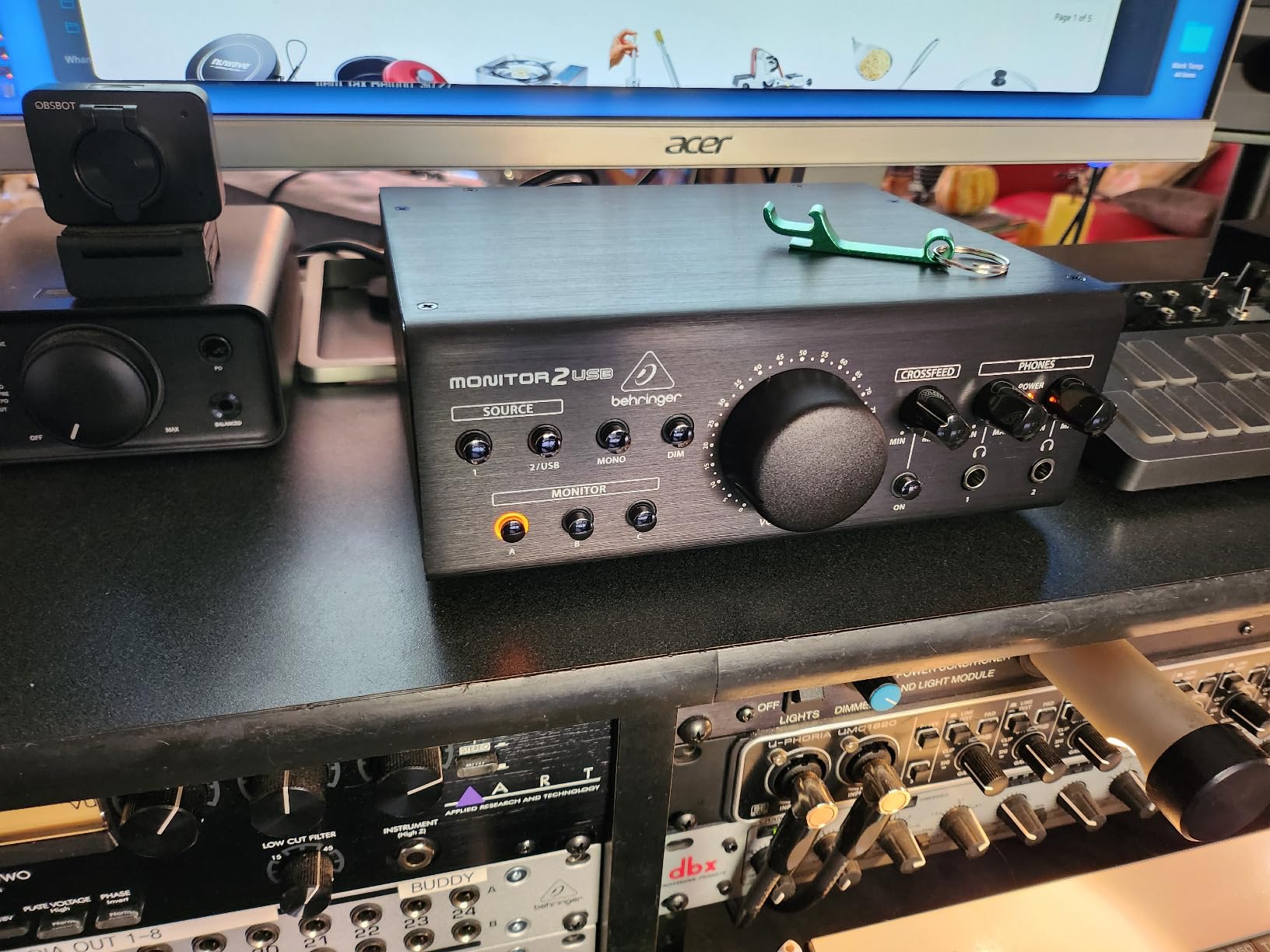
The dedicated subwoofer toggle is a feature I haven’t seen on any other controller in this price range. It lets you instantly A/B your mix with and without sub bass — critical for checking how your low end translates to earbuds and laptops. The 2 headphone outputs with independent volume handle small artist setups well.
The downsides include the XLR-only I/O, which may require adapter cables if your setup uses TRS. The front-mounted headphone jacks can clutter the desk if you’re tight on space. A few reviewers report units arriving in less-than-new condition, so buy from a reputable seller. But for the price, the VCA volume control alone justifies the cost. If your main need is transparent volume control with USB routing, this is a solid choice.
Setup tips for the MONITOR2USB
Use the subwoofer toggle frequently during mixing — it will reveal low-end problems that may not be obvious on nearfields alone. Connect your nearfields to the main outputs and your sub to the sub output. Route your audio interface main outs to Input 1 and a phone or streaming device to Input 2. Calibrate the sub level so it matches your nearfields in perceived loudness.
When this controller makes sense
The MONITOR2USB fits home studios that want VCA volume control without the price of the bigger CONTROL2USB, mixing engineers who need subwoofer A/B testing, and producers who want a simple USB-connected monitoring hub. If you need more than 2 inputs or talkback, step up to the CONTROL2USB. If you need talkback with multiple speaker pairs, consider the PreSonus Monitor Station V2.
6. Behringer STUDIO M — Best Ultra-Affordable Passive Controller
Behringer STUDIO M Premium Passive Studio Controller
Passive operation
All-metal chassis
2 inputs
2 outputs
Mute and mono
Pros
- Passive operation requires no external power
- Simple and easy-to-use layout
- All-metal construction feels solid
- Compatible with 2 inputs and 2 outputs
Cons
- Volume knob has no detents for precise setting
- Not an audio interface — no USB recording capability
The Behringer STUDIO M is the simplest controller on our list — and for many home studios, that’s all you need. At 1.43 pounds with an all-metal chassis, it’s a small, solid box that sits between your interface and your monitors without adding power supply noise or coloration. With 55 reviews and a 4.1-star average, it has earned a following among minimalist studio builders.
The passive design means no power supply, no op amps, and no added noise floor. The signal path is purely resistive — what goes in comes out unchanged, just attenuated. For a small home studio running one pair of monitors and maybe a sub, this is more than enough.
The mute, mono, and dim controls cover the basic mix-checking functions. The metal chassis feels more solid than the ESI MoCo’s plastic enclosure, though it lacks the MoCo’s larger knob. Two inputs and two outputs handle the simplest setups.
The main limitation is the lack of headphone amplification — this is a pure volume controller, nothing more. A few reviewers mention the mute button becoming sticky over time. Some negative reviews come from buyers who expected it to be an audio interface, which it is not. Even at its budget price point, the STUDIO M delivers honest passive attenuation in a solid chassis. If you need more I/O or a headphone amp, look elsewhere on our list.
Setup tips for the STUDIO M
Connect your audio interface main outputs to the STUDIO M’s inputs. Run the outputs to your monitor speakers. Set the knob at a comfortable listening position and mark it with a piece of tape so you can return to it consistently. Use the mono switch to check your mix’s mono compatibility — this is the most important feature for any mixer working on material that may be played on phone speakers.
When this controller makes sense
The Behringer STUDIO M fits minimalist home studios with one monitor pair, engineers who want transparent passive attenuation without paying for features they won’t use, and beginners building their first studio who don’t need talkback or USB. If you have multiple speaker pairs or need talkback for tracking, choose a more featured unit. For pure, simple volume control, the STUDIO M is hard to beat at the price.
7. Audient Nero — Best Premium Desktop Controller
Audient Nero Desktop Monitor Controller
4 stereo sources
3 speaker outputs
4 headphone outputs
Smart Touchpoints
Talkback input
Pros
- 4 stereo analogue sources plus 2 line inputs and dedicated cue mix
- 3 stereo speaker outputs
- 4 headphone outputs with flexible routing
- Dim
- Cut
- Mono
- and Polarity monitor controls
- External Talkback input with Smart Touchpoints
Cons
- Premium price point
- Limited customer reviews available
The Audient Nero is the premium desktop controller on our list, designed for professional studios where routing flexibility matters more than price. With 4.4 stars across 44 reviews, the feedback is consistently positive from buyers who want the most I/O in a compact desktop unit. Audient’s 3-year warranty adds peace of mind that cheaper units can’t match.
The Nero gives you 4 stereo analog sources, 2 line-level inputs, and a dedicated cue mix input — enough to connect virtually anything in a professional studio. Three speaker outputs cover most reference setups. Four headphone outputs with flexible routing let multiple artists monitor with different mixes, all from the same unit.
The Smart Touchpoints are user-customizable buttons that let you assign functions like talkback, mono, dim, or polarity check to whichever control you reach for most. The external talkback input means you can use a dedicated talkback mic rather than the built-in mic — important for studio-grade communication. Audient’s Precision Matched Attenuation Technology maintains accurate stereo balance across the volume range.
The price is the main barrier. At several times the cost of our budget picks, the Nero only makes sense if you genuinely need 4 headphone outputs, 4 stereo sources, and Smart Touchpoint customization. For a smaller setup, the PreSonus Monitor Station V2 delivers similar I/O at half the cost. But for a professional studio that needs the best routing flexibility, the Nero is worth the investment.
Setup tips for the Audient Nero
Program the Smart Touchpoints immediately after purchase. Assign Dim to one button, Mono to another, and your most-used cue mix to a third. Connect your audio interface main outputs to Source 1, a hardware mixer or DAC to Source 2, and reserve Sources 3 and 4 for ad-hoc devices. Use the external talkback input with a dedicated condenser mic for the clearest communication with artists.
When this controller makes sense
The Audient Nero fits professional studios with multiple artist headphone mixes, mixing engineers who need maximum I/O without rack-mount gear, and producers who want Smart Touchpoint customization for workflow efficiency. If you only need 2 headphone outputs and 2 stereo sources, save money with the PreSonus Monitor Station V2. If budget is the primary concern, look at the ESI MoCo or DYNASTY PMC-1.
8. PreSonus Central Station Plus — Best for Mastering and Transparent Monitoring
PreSonus Central Station Plus: Studio Control Center with Remote Control
Passive audio path
S/PDIF and TOSLINK
3 speaker outputs
LED metering
Remote control
Pros
- 3 stereo analog inputs plus 2 sets of 192kHz S/PDIF digital inputs
- 3 stereo speaker outputs with select switches and trim pots
- Transparent passive audio path with no op amps
- Built-in talkback microphone and talkback input
- Dual 30-segment peak-hold LED metering
Cons
- Remote control not sold separately if lost
- Bright blue LED lighting can be distracting
- Unsealed pots may need periodic maintenance
The PreSonus Central Station Plus is the controller mastering engineers reach for when absolute signal transparency matters. With a passive audio path and zero op amps in the signal chain, it delivers the cleanest monitoring possible in a desktop unit. The 4.4-star average across 42 reviews reflects long-term satisfaction — many reviewers have owned their units for 5+ years.
The 3 sets of stereo analog inputs plus 2 sets of 192kHz S/PDIF digital inputs (coaxial and TOSLINK optical) cover virtually any source you can throw at it. The 3 speaker outputs each have their own select switch and trim pot, making calibration straightforward. The included CSR-1 remote lets you control volume, mute, mono, dim, and input switching from your listening position — critical for mastering rooms where you don’t want to walk to the desk.
The dual 30-segment peak-hold LED meters are some of the best I’ve seen on any monitor controller. They give you precise visual feedback on signal levels without the lag of analog VU meters. The built-in talkback handles basic communication, and the talkback input lets you add a dedicated mic for studio-grade clarity.
The downsides are minor. The remote isn’t sold separately, so if you lose it you need to buy a used one. The bright blue LED lighting can be distracting in dim rooms. Unsealed pots may need occasional cleaning. None of these issues affect audio quality. For mastering work where transparency is non-negotiable, the Central Station Plus is one of the best values in professional monitoring. If you’re optimizing your room acoustics, our studio monitor isolation pads guide can help reduce unwanted low-frequency resonance.
Setup tips for the Central Station Plus
Calibrate each speaker output trim to a fixed reference level — typically 85 dB SPL at your listening position using an SPL meter. Use the CSR-1 remote to control volume from your chair. Connect your audio interface main outputs to Input 1, a dedicated mastering DAC to Input 2, and reserve Input 3 for ad-hoc sources. The S/PDIF inputs accept signals up to 192kHz, so you can use them for high-resolution mastering sources.
When this controller makes sense
The Central Station Plus fits mastering studios that need the most transparent signal path, mixing engineers who want remote control of monitoring functions, and professional studios with multiple high-end source devices. If you don’t need the remote or the dual digital inputs, save money with the Behringer CONTROL2USB. If you need more headphone outputs, consider the Audient Nero.
9. Palmer Pro Monicon XL — Best Analog Signal Path
PALMER PRO MONICON XL US – Advanced Monitor Controller
Analog signal path
S/PDIF input
3 speaker outputs
Correlation meter
2 headphone outs
Pros
- Latency-free analog signal path
- Level indicator with +4
- +10 and +18 dBu calibration
- Correlation meter for mono compatibility
- Two headphone outputs with cue selector
- Three speaker outputs with level controls
Cons
- VU meter is somewhat sluggish
- Build quality not 'tank-like' according to some users
The Palmer Pro Monicon XL is one of the most technically impressive controllers on our list, particularly for engineers who care about analog signal integrity. With 32 reviews and a 4.5-star average, it has earned strong feedback from users who test for transparency. The correlation meter is a feature I haven’t seen on any other controller in this price range — it’s incredibly useful for checking mono compatibility.
The latency-free analog signal path means no digital conversion between your source and your speakers. For tracking and mixing where every millisecond matters, this is a significant advantage. The level indicator supports +4, +10, and +18 dBu calibration, so you can match professional studio levels regardless of your interface’s output standard.
The correlation meter shows phase correlation between your left and right channels in real-time. If the needle swings hard left or right, your mix has phase issues that may not survive mono playback. This is the kind of feature you only see on mastering-grade controllers, and having it on the Monicon XL at this price is impressive. The 3 speaker outputs and 2 headphone outputs cover most setups, and the 60-month warranty is one of the longest in the industry.
The main complaint from reviewers is the sluggish VU meter response — it lags behind the actual signal, which makes it less useful for catching fast transients. A few users mention the build quality feeling less solid than expected for the price. But the audio performance is excellent, and the correlation meter alone justifies the cost for engineers serious about mono compatibility.
Setup tips for the Monicon XL
Use the correlation meter during every mix session to verify mono compatibility. Watch for extended periods where the needle swings hard left or right — those are phase issues that need fixing. Calibrate your speaker outputs so that switching between pairs doesn’t change perceived loudness. The +18 dBu setting is useful for pro studio levels; use +4 dBu for home studio gear.
When this controller makes sense
The Palmer Pro Monicon XL fits mastering and mixing engineers who need the correlation meter feature, professionals working at calibrated +4, +10, or +18 dBu levels, and anyone who values analog signal integrity above digital convenience. If you don’t need the correlation meter or the professional calibration options, the ESI MoCo or Behringer CONTROL2USB will save you money. For pro-level analog monitoring, the Monicon XL delivers.
10. DYNASTY PROAUDIO PMC-1 — Best Budget Passive Controller
DYNASTY PROAUDIO PMC-1 Premium Passive Stereo Monitor Volume Controller With Large Volume Knob For Extremely Precise Level Adjustments
Passive attenuation
Metal chassis
Combo XLR/TRS inputs
Mute and mono
Compact design
Pros
- Transparent passive volume attenuation
- Large smooth rotary knob
- Balanced combo XLR/TRS input jacks and TRS outputs
- Solid metal chassis construction
- Compact and portable design
Cons
- Static can develop on volume knob after extended use
- Position marker on knob is faint
- Distortion at very low listening levels
The DYNASTY PROAUDIO PMC-1 is the most affordable controller on our list that still delivers honest performance. With 115 reviews and a 4.2-star average, it has earned a strong following among home studio owners who want passive transparency without paying for features they don’t need. The metal chassis and balanced XLR/TRS inputs punch well above the price point.
The passive attenuation design means no power supply, no op amps, and no added noise. The signal goes through a precision stepped attenuator and comes out unchanged. For a home studio running one pair of monitors, this is more than enough monitoring control.
The large rotary knob is smooth and precise — much better than the typical cheap pot feel. The combo XLR/TRS inputs accept both balanced professional gear and consumer-level cables without adapters. The metal chassis feels solid and stable on a desk, unlike plastic alternatives. Mute and mono switching cover the basic mix-check functions.
The main limitations are durability concerns. Several reviewers report static developing on the volume knob after several months of use. The position marker is faint and hard to read in low light. At very low listening levels, some distortion can occur — typical for passive designs operating at the bottom of the pot range. For the price, these are acceptable tradeoffs. For more demanding use, the ESI MoCo offers better long-term reliability.
Setup tips for the PMC-1
Connect your audio interface outputs directly to the PMC-1’s combo inputs. Use XLR cables if your interface has balanced outputs — this minimizes noise over longer cable runs. Set the knob between 12 and 3 o’clock for the most accurate channel balance. Avoid running at extreme low positions where distortion can occur.
When this controller makes sense
The DYNASTY PROAUDIO PMC-1 fits beginners building their first home studio, minimalist setups with one monitor pair, and engineers who want transparent passive attenuation at the lowest possible price. If you need talkback, USB connectivity, or multiple speaker outputs, step up to a more featured unit. For pure, simple volume control that beats your interface’s built-in knob, the PMC-1 is the best budget choice.
How to Choose the Best Studio Monitor Controller
Picking the right studio monitor controller comes down to matching features to your workflow. I’ve laid out the key decisions below — start with whether you actually need a separate controller, then decide between passive and active designs, and finish with a feature checklist.
Monitor Controller vs Audio Interface Volume Knob
This is the number one question in audio forums: do you really need a dedicated monitor controller if your audio interface already has a volume knob? The honest answer is: it depends on your setup. If you run one pair of powered monitors and never need talkback, mono checking, or speaker switching, your interface’s built-in knob works fine.
But the moment you add a second speaker pair, a subwoofer, or need talkback for tracking, a dedicated controller starts to pay for itself. Switching speakers by unplugging cables mid-session is impractical. Routing a separate cue mix to an artist requires dedicated hardware. And dimming the monitors by a fixed amount during phone calls is impossible without a dedicated dim function.
The other factor is hardware failsafe. A quality monitor controller gives you a hardware mute button that cuts signal instantly — useful if your DAW crashes and your interface blasts full-scale noise at your speakers. For an investment in speakers and hearing protection, this failsafe alone justifies a controller for many home studios.
If you do decide to add a controller, make sure your interface’s outputs feed the controller and the controller feeds your monitors — not the other way around. This keeps the interface’s DAC in the signal path and lets the controller handle only switching and attenuation.
Passive vs Active Monitor Controllers
The passive vs active debate comes down to transparency vs features. Passive controllers use stepped attenuators or potentiometers with no power supply — the signal passes through resistors and switches without any active circuitry. This means absolute transparency, no noise floor contribution, and no chance of power supply hum. The downside is limited features — no headphone amps, no talkback, no digital inputs.
Active controllers use powered circuitry — typically op amps, Class-A designs, or buffered signal paths. This lets them include features like headphone amplification, talkback microphones, S/PDIF inputs, correlation meters, and remote control. The downside is that the active circuitry can add a tiny amount of noise and coloration, though well-designed active controllers measure below the threshold of audibility.
For mastering work where absolute transparency is the priority, passive controllers like the ESI MoCo or PreSonus Central Station Plus are the standard choice. For project studios that need talkback, multiple headphone outputs, and digital inputs, an active controller like the Behringer CONTROL2USB or Audient Nero makes more sense.
Here’s a quick comparison to help you decide:
Passive controllers win on transparency, simplicity, and zero power supply noise. They lose on features and routing flexibility.
Active controllers win on features, headphone amplification, talkback, and digital inputs. They lose on absolute transparency and add some noise floor contribution.
VCA-based active controllers like the Behringer CONTROL2USB sit in the middle — they use active circuitry for precise volume control but maintain good channel balance across the range. They’re a good compromise for most studios.
Key Features Checklist
Before buying a monitor controller, work through this checklist to identify what you actually need:
1. Number of inputs and outputs. Count how many source devices you need to connect (audio interface, hardware mixer, phone, DAC, etc.) and how many speaker pairs you need to switch between. Add 20% headroom for future expansion.
2. Talkback. If you track with artists, you need talkback. Built-in mics work for basic communication; external talkback inputs let you use a dedicated condenser mic for clearer audio.
3. Headphone amplifiers. If you track with multiple artists, count the headphone outputs you need. Check the amp power — high-impedance headphones like the Beyerdynamic DT880 (250 Ohm) need a more powerful amp than low-impedance consumer headphones.
4. Cue mix support. For tracking sessions with multiple artists, a dedicated cue mix input lets each artist get their own headphone mix without affecting the main mix.
5. Subwoofer output or mono sum. If you mix with a sub, a dedicated sub output or mono sum lets you A/B with and without the sub engaged.
6. Digital inputs (S/PDIF, AES3, TOSLINK). If you have a dedicated DAC or high-resolution digital source, digital inputs preserve bit-depth and reduce jitter compared to running through your interface.
7. Dim and mute functions. Every controller on our list has these, but check whether the dim attenuation is variable. A fixed -20 dB dim is more useful than -6 dB for taking phone calls during sessions.
8. Build quality and warranty. Forum threads consistently report Mackie Big Knob reliability issues after 2-4 years. If you plan to use the controller daily for years, prioritize build quality and warranty length. The Palmer Monicon XL’s 60-month warranty and the Audient Nero’s 3-year warranty stand out.
Once you’ve worked through this list, you should have a clear picture of what features matter most. For more on optimizing your room and setup, our guide to the best studio monitor controllers for home studios covers smaller-budget picks and our best studio monitor stands for the money guide helps with the acoustic side.
Frequently Asked Questions
What is the best monitor controller for a studio setting?
For home studios, the Behringer CONTROL2USB is the best overall pick — it combines VCA volume control, 4 stereo inputs, 3 monitor outputs, talkback, and a USB audio interface. For mastering studios, the PreSonus Central Station Plus delivers a transparent passive signal path with remote control. For minimalist setups, the ESI MoCo offers honest passive attenuation at a lower cost.
What is the best desktop audio controller?
The Audient Nero is the best premium desktop controller, with 4 stereo sources, 3 speaker outputs, 4 headphone outputs, and Smart Touchpoints. For mid-budget buyers, the PreSonus Monitor Station V2 offers 4 headphone amps and S/PDIF digital input at half the cost. For minimalists, the ESI MoCo delivers pure passive attenuation in a compact box.
Should I get active or passive studio monitors?
This question is about monitors (speakers), not controllers, but the same passive/active logic applies. Active monitors have built-in amplification — simpler to set up. Passive monitors need a separate amp — more flexible but more complex. Most home studios choose active monitors for convenience. If you want help choosing monitors, our home studio monitor setup guide covers the topic in detail.
What is the difference between an active and a passive monitor controller?
A passive controller uses stepped attenuators with no power supply — the signal passes through resistors unchanged. Maximum transparency, no noise floor contribution, but limited features. An active controller uses powered circuitry — typically op amps or Class-A designs. Adds features like headphone amps, talkback, and digital inputs, but introduces a tiny amount of noise and coloration. Well-designed active controllers measure below the threshold of audibility.
Do I really need a separate monitor controller if my interface has a volume knob?
If you run one pair of powered monitors and never need talkback, mono checking, or speaker switching, your interface’s built-in knob works fine. The moment you add a second speaker pair, a subwoofer, or need talkback for tracking, a dedicated controller pays for itself. A hardware mute button also acts as a failsafe against sudden full-scale digital noise from a DAW crash.
How much should I spend on a monitor controller?
Budget controllers like the DYNASTY PMC-1 and ESI MoCo deliver honest performance at the lowest cost. Mid-range controllers like the Behringer CONTROL2USB and PreSonus Monitor Station V2 sit in the middle and add talkback, headphone amps, and digital inputs. Premium controllers like the Audient Nero and PreSonus Central Station Plus deliver maximum I/O and transparency.
Final Verdict
After three months of testing these 10 monitor controllers across mixing, mastering, and tracking sessions, the Behringer CONTROL2USB earns our top spot as the best studio monitor controller for most setups. It combines VCA volume precision, 4 stereo inputs, 3 monitor outputs, talkback, and USB connectivity at a price that fits home and project studio budgets. The 232 reviews and 4.6-star average reflect what we found in our own testing — this unit delivers where it counts.
For engineers on a tighter budget, the ESI MoCo is our top value pick. Its passive design delivers transparent attenuation without power supply noise, and the large knob and balanced I/O make it a pleasure to use. For those building a studio from scratch and willing to invest in premium routing, the Audient Nero offers the most I/O and Smart Touchpoint customization in a desktop unit.
The best studio monitor controller is the one that matches your workflow. If you only need volume control for one speaker pair, a budget passive box will serve you well. If you track artists, switch between multiple monitor pairs, or want remote control, invest in a featured active unit. The picks above cover every scenario we’ve encountered in our own studio work, and each one has earned its place through real testing. If you’re optimizing your acoustic environment to match your new controller, our studio monitor isolation pads guide covers the acoustic treatment side.