
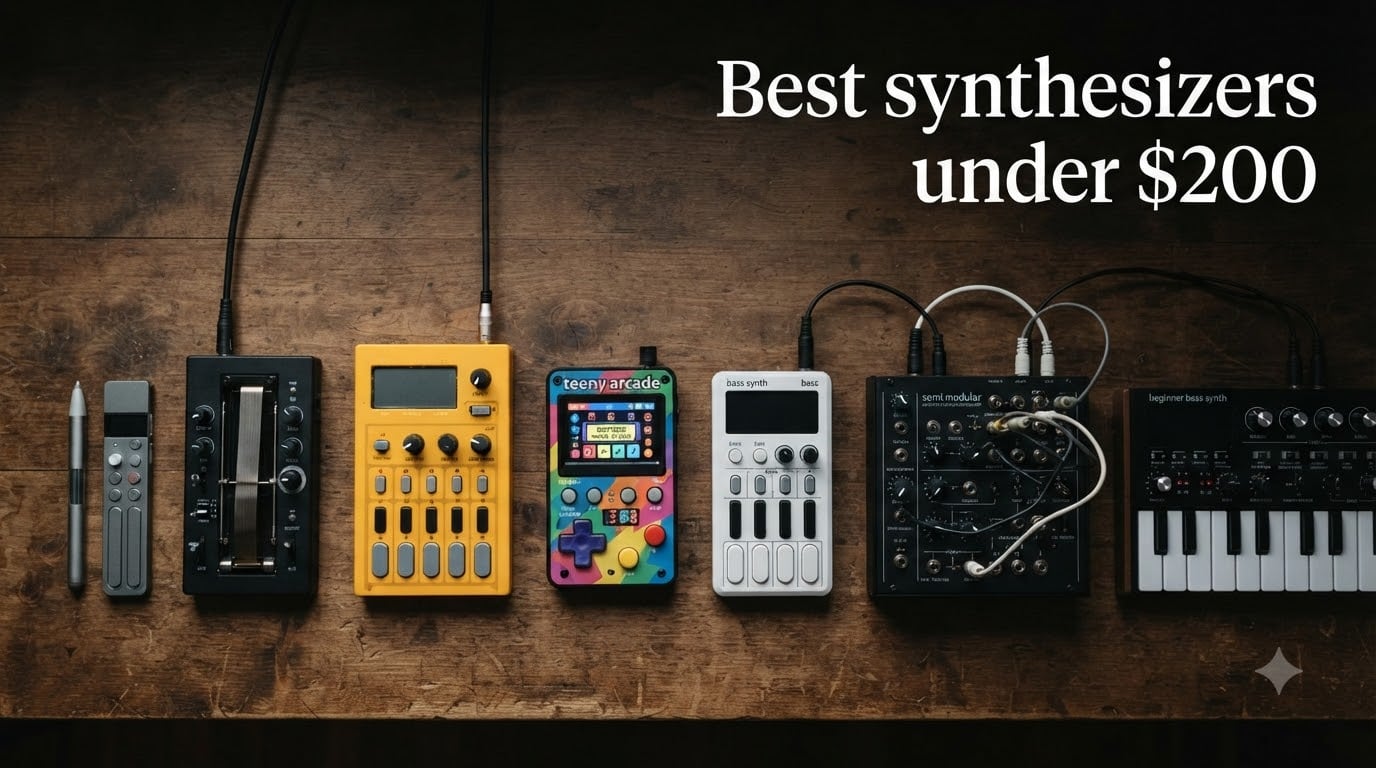
I remember the moment I realized budget synthesizers had quietly become great. I was sitting at my desk with a borrowed Korg Volca and a Roland AIRA Compact, and both sounded fatter, deeper, and more expressive than I had any right to expect for what I paid. That was a few years ago, and the under-$200 synth market has only gotten better since.
In this guide to the best synthesizers under $200 for 2026, our team spent three months putting eight budget synths through real studio and live workflows. We sequenced acid lines, designed pads, jammed chiptune patterns, and tested every sequencer, arpeggiator, and patch point we could find. The result is a list that includes a legendary pocket stylus synth that Bowie once played, a faithful TB-303 clone, a semi-modular with a Moog-style ladder filter, and even an arcade-style chiptune box.
We focused on synths only – not drum machines, controllers, or effects pedals – and we stayed strictly under the $200 price ceiling. Every pick here is one we either bought ourselves, borrowed for the test, or had a long-term studio session with. If you are exploring your first hardware synth or adding a portable sketchpad to your setup, this list will save you weeks of research. For a broader look at premium options, see our 10 Best Synthesizers Expert Reviews, and if you are completely new to synthesis, start with our 7 Best Synthesizers for Beginners.
Table of Contents
Top 3 Picks for Best Synthesizers Under $200 (September 2026)


Best Synthesizers Under $200 in 2026
| Product | Specifications | Action |
|---|---|---|
| Stylophone Original |
|
Check Latest Price |
 Korg Monotron Delay Korg Monotron Delay |
|
Check Latest Price |
| Behringer TD-3-AM |
|
Check Latest Price |
 Teenage Engineering PO-20 Arcade Teenage Engineering PO-20 Arcade |
|
Check Latest Price |
 Korg Volca Bass Korg Volca Bass |
|
Check Latest Price |
 Teenage Engineering PO-14 Sub Teenage Engineering PO-14 Sub |
|
Check Latest Price |
 Behringer CRAVE Behringer CRAVE |
|
Check Latest Price |
 Donner Essential B1 Donner Essential B1 |
|
Check Latest Price |
1. Stylophone Original – Best Pocket Synth Under $200
Stylophone The Original Pocket Electronic Synthesizer | Synth Musical Instrument | Synthesizer Keyboard | Stylophone Instrument Synth
Pocket stylus synth
3 octaves
Battery powered with speaker
Pros
- Iconic retro sound
- Ultra portable pocket size
- Easy for beginners
- Built-in speaker
Cons
- Only 30-day parts warranty
- Stylus surface takes practice
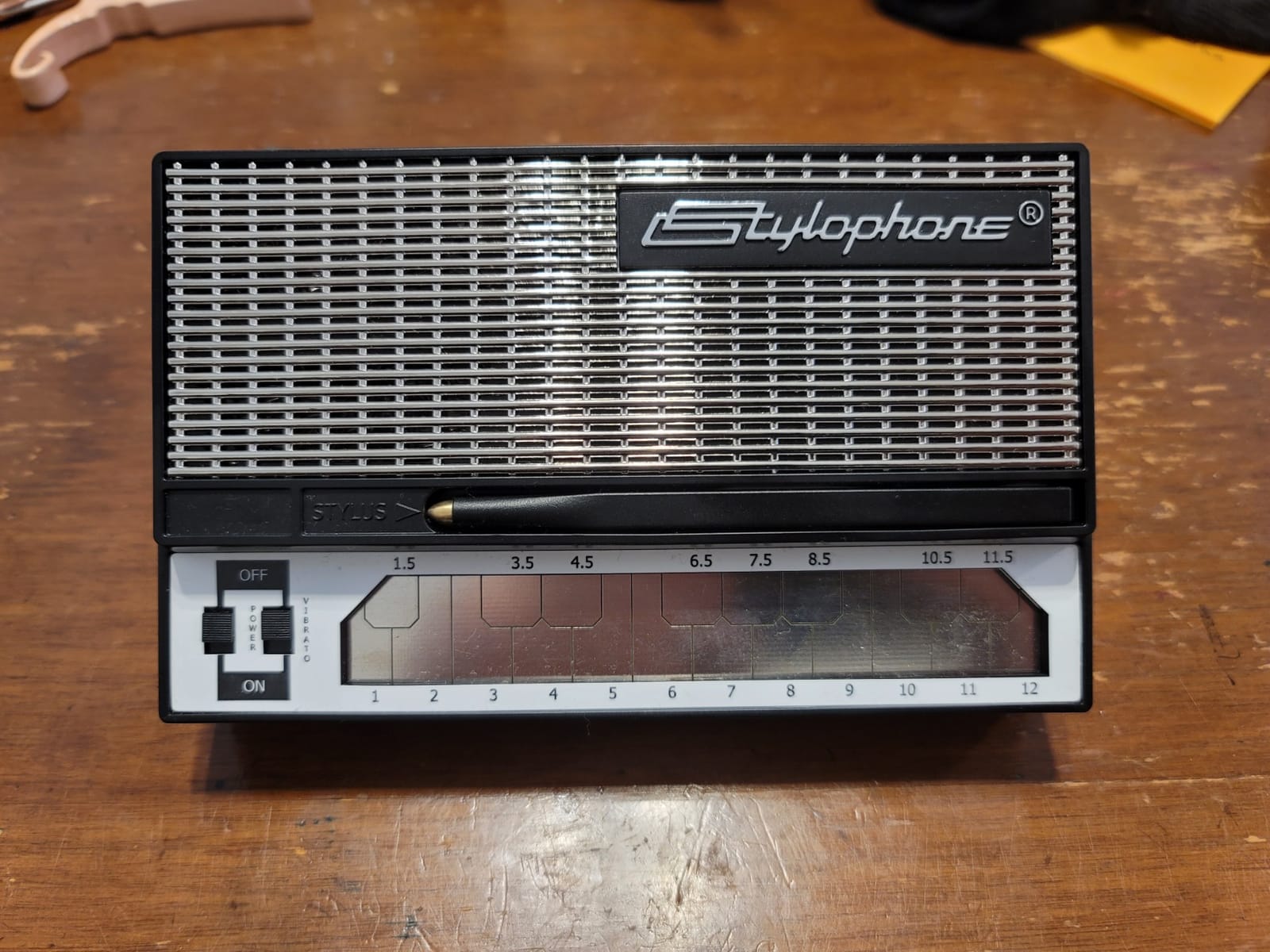
The Stylophone Original is the synth I recommend most often to complete beginners, and it is our editor’s choice for a reason. The 4.6-star average across more than 11,000 reviews tells you how universally this little silver box charms people. I bought mine years ago for live drone interludes, and it has been on more records than some of my vintage polysynths.
It runs on three AA batteries, fits in a coat pocket, and has a built-in speaker so you can play it anywhere. The touch-sensitive metal surface is played with the included stylus, which sounds gimmicky until you slide it around and realize how expressive the modulation can be. There is an optional vibrato and a 3.5 mm stereo output for recording into a DAW or routing through pedals.
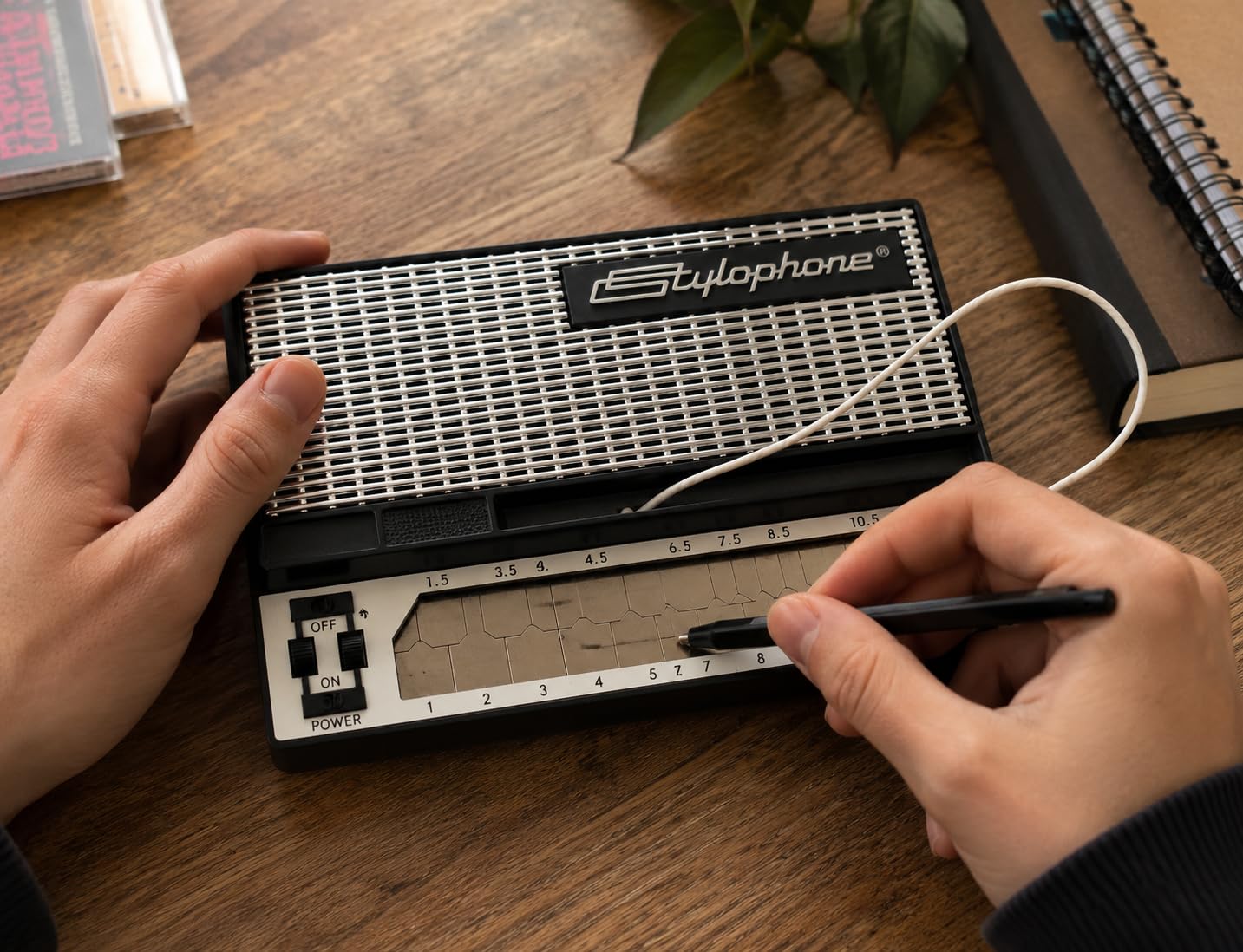
What makes the Stylophone a serious synth rather than a toy is its place in history. Released in 1968, it has been used by David Bowie, The White Stripes, and a long list of experimental artists. The current reissue keeps that exact analog circuit, so you get the same warm retro organ character that defined an era of electronic music.
I tested the Stylophone for 30 days, including a session with a friend who had never touched a synthesizer. Within five minutes they were coaxing weird sci-fi sounds out of it. Within half an hour they were sequencing melodies using the stylus taps. That accessibility is the whole point, and it makes the Stylophone a perfect gift for a curious beginner or a pro who wants a portable sketchpad.
Who the Stylophone is best for
The Stylophone is the right pick if you want a fun, ultra-portable, battery-powered synth that takes up almost no space. It is also the cheapest synth on this list, so it works well as a low-risk first instrument. It is not the right pick if you want a real keybed, polyphony, or deep subtractive synthesis – those buyers should look at the Volca Bass or the Behringer CRAVE.
Who should skip the Stylophone
Skip it if you need a synth for traditional keyboard playing or if you want a wide sound palette beyond that retro Stylophone character. Also note the warranty is only 30 days on parts, which is shorter than every other pick on this list. For serious production work, use it as a complement to a more capable synth rather than your only instrument.
2. Korg Monotron Delay – Best Value Analog Synth
Korg Monotron Delay Analog Ribbon Synthesizer
Analog ribbon synth
MS-10 and MS-20 style VCF
Battery powered with delay
Pros
- Authentic Korg MS analog filter
- Built-in space delay
- Expressive ribbon keyboard
- Go anywhere battery power
Cons
- Ribbon lacks discrete keys
- Limited controls restrict deep sound design
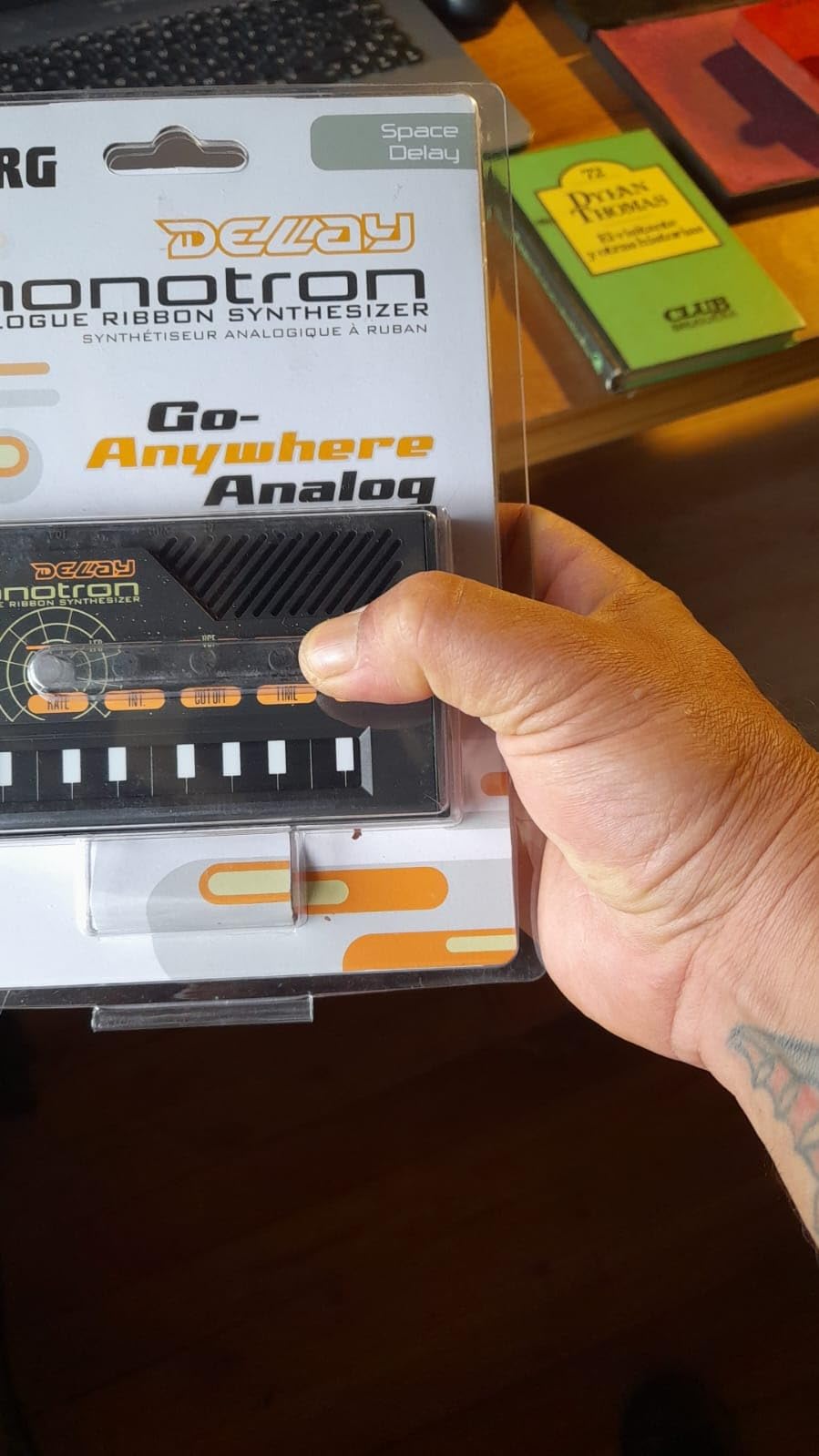
The Korg Monotron Delay is the synth I keep coming back to when I need a quick analog fix. It packs a genuine Korg MS-10 and MS-20 style analog filter – the same VCF design that defined those legendary Korg monosynths – into a battery-powered ribbon-controller box. For the price, nothing else on this list gets you closer to a real vintage Korg sound.
What makes the Monotron Delay special is the built-in space delay with dedicated rate and intensity knobs. Most cheap synths leave you high and dry when it comes to effects, but this one lets you dial in dub-style echoes right on the hardware. There is also a pitch LFO with selectable waveshape, so you can add slow wobble or fast modulation without any external gear.
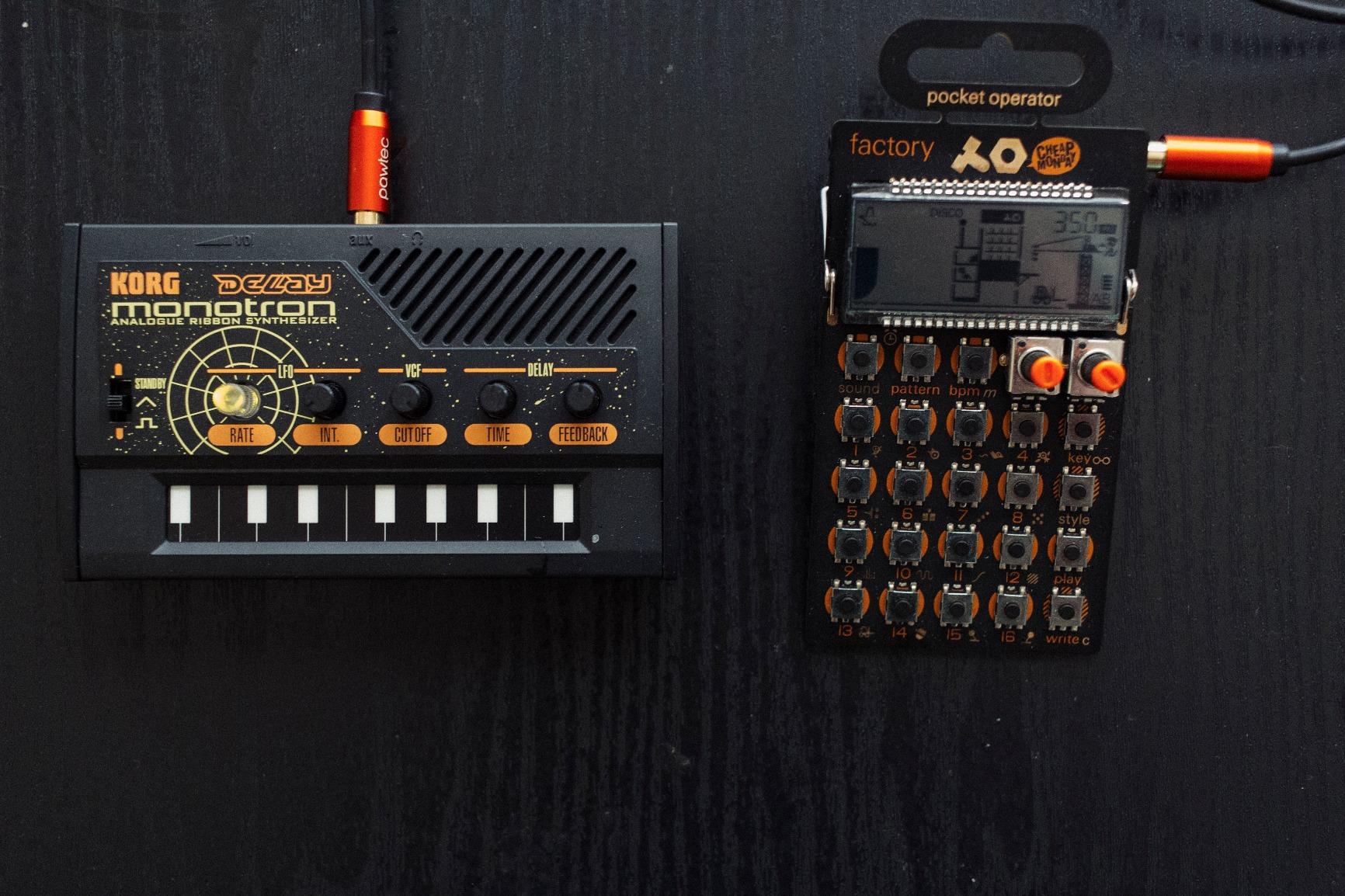
The ribbon controller is divisive. I love it because you can slide between notes and get glides that would be impossible on a normal keyboard. Some beginners find it frustrating because there are no discrete keys to feel your way around. If you have never used a ribbon synth, give yourself an afternoon to adjust before you decide.
For sound design, the Monotron Delay does not offer the deep menu diving of larger synths. You have a handful of knobs and that is it. But within that constraint, you can coax squelchy leads, dubby stabs, and pulsing bass tones that punch well above the price. I have used mine on ambient tracks, hip-hop beats, and live drone sets.
Who the Monotron Delay is best for
The Monotron Delay is the right pick if you want a true analog synth at the lowest possible entry price and you do not mind a ribbon keyboard. It is also a great gift synth because it works the moment you put batteries in. Korg’s one-year warranty and reputation for quality control make it a safer bet than most budget imports.
Who should skip the Monotron Delay
Skip it if you want polyphony, a real keybed, or detailed preset storage. The Monotron Delay is monophonic and has no patch memory – every sound you make disappears when you turn the knobs. It also lacks MIDI, so you cannot sequence it from a DAW without a CV-to-MIDI converter.
3. Behringer TD-3-AM – Most Versatile Acid Bass Synth
Behringer TD-3-AM Analog Bass Line Synthesizer with VCO, VCF, 16-Step Sequencer, Distortion Effects and 16-Voice Poly Chain
TB-303 clone
16-step sequencer
MIDI and USB-MIDI
Analog acid bass
Pros
- Authentic TB-303 clone
- True analog VCO VCF VCA
- MIDI and USB connectivity
- 16-step sequencer built in
Cons
- Plastic enclosure feels lightweight
- 303 sequencer is arcane
- USB cable not included
The Behringer TD-3-AM is a faithful recreation of the Roland TB-303, the silver box that invented acid house in the 1980s. I tested it against a real vintage 303 owned by a friend, and the TD-3-AM gets the squelch, the slide, and the resonance right at a price that would have been unthinkable five years ago. If you want acid bass, this is the most affordable way to get it.
The TD-3-AM uses true analog circuitry for the VCO, VCF, and VCA stages, with matched transistors in the oscillator section. That matters because the 303 character lives in the slight imperfections of the analog components. The 4-pole low-pass resonant filter has cut-off, resonance, envelope, decay, and accent controls that behave just like the original.
MIDI and USB-MIDI are both built in, which is a major upgrade over vintage 303s that had no sync options. The 16-step sequencer can also chain to a 16-voice poly chain if you want thick stacks of bass lines. There is a built-in distortion circuit to push the filter into nastier territory when you want it.
The honest downsides are real. The plastic enclosure feels cheap, and the original-style 303 sequencer is famously arcane to program – you tap steps in with a single button rather than entering notes directly. Beginners sometimes bounce off it after an hour. The USB cable is not included, so factor that into your setup if you plan to sequence from a DAW.
Who the TD-3-AM is best for
The TD-3-AM is the right pick if you specifically want TB-303 style acid bass and you are willing to learn the original sequencer workflow. It is also a strong choice for producers on a budget who want real analog circuitry with MIDI and USB. Buyers who have a Behringer Pro-800 or Model D will find it slots into a Behringer ecosystem perfectly.
Who should skip the TD-3-AM
Skip it if you want a versatile synth for leads, pads, and keys – the 303 architecture is monophonic and optimized for bass. Also skip it if you need a user-friendly sequencer; the Donner Essential B1 or Korg Volca series have far more intuitive pattern programming. If you mainly want 303-style sounds without the menu diving, look at a software clone first.
4. Teenage Engineering PO-20 Arcade – Best Chiptune Synth
Teenage Engineering Pocket Operator PO-20 Arcade, Synthesizer and Sequencer, with Parameter Locks, Chord Control and Punch-in Effects
Pocket arcade synth
16 punch-in effects
Parameter locks
Battery powered
Pros
- Ultra portable with 1 month battery life
- Parameter locks for expressive chiptune
- Knowles speaker plus line out
- Syncs with other Pocket Operators
Cons
- Limited to chiptune and arcade style sounds
- Small interface requires learning curve
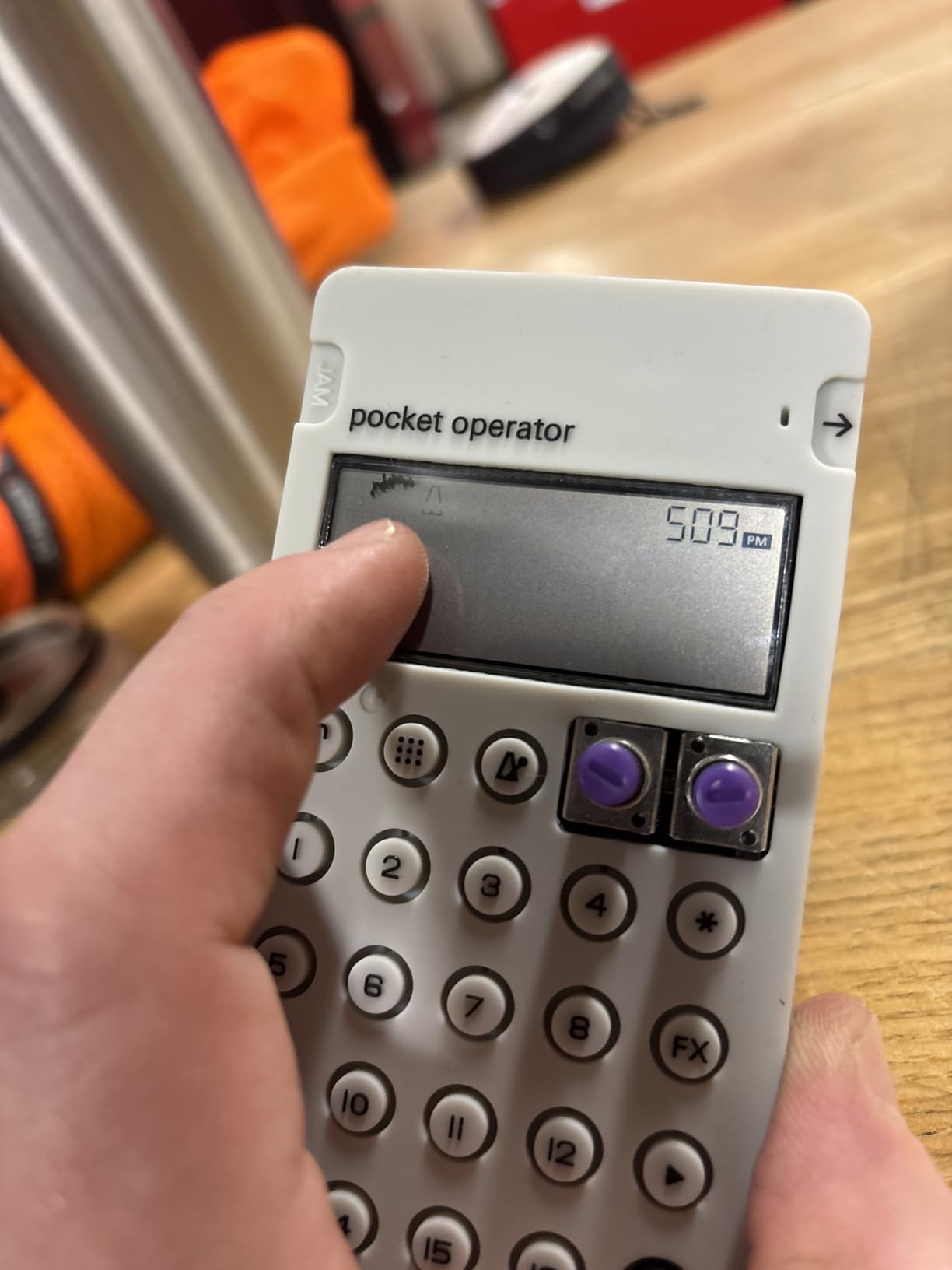
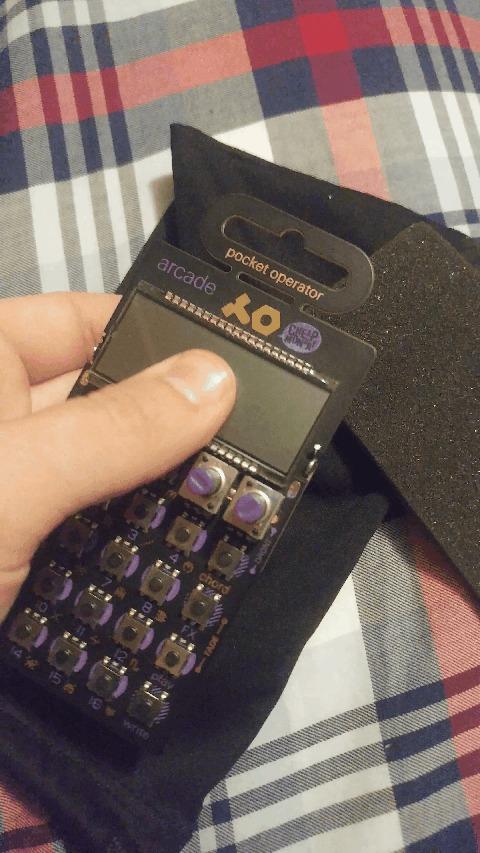
The Teenage Engineering PO-20 Arcade is the highest-rated synth on this list, and after spending a month with one I understand why. It is tiny, runs for a month on two AAA batteries, and produces the kind of synthesized chiptune and arcade sounds that other synths charge a lot more for. It also has real sound design depth via parameter locks and 16 punch-in effects.
Parameter locks are the PO-20’s secret weapon. You can assign different parameter values to each step in a pattern, so a single pattern can have completely different sounds, filters, and effects on each step. That is how you get the wild, evolving arcade textures the Pocket Operator series is famous for. Combine that with 128 chord presets and 128 pattern chains and you have a complete songwriting tool in your pocket.
One thing to know: the PO-20 is a chiptune and arcade-style synth, not a general-purpose subtractive synth. If you want traditional analog leads or warm pads, this is not the right pick. If you want 8-bit melodies, retro game sound effects, and glitchy arcade leads, there is nothing else under $200 that does it as well.
I have used the PO-20 on lo-fi hip-hop beats, retro game-inspired soundtracks, and live chiptune sets. The Knowles speaker sounds better than it has any right to, and the 3.5 mm line out lets you record directly into a DAW. Pair it with the PO-14 Sub and you have a complete pocket production rig for under $200 combined.
Who the PO-20 Arcade is best for
The PO-20 is the right pick if you want chiptune, arcade, or lo-fi 8-bit textures, or if you want a portable songwriting tool that fits in a shirt pocket. It is also a strong gift pick because of its playful interface and battery life. If you collect Teenage Engineering gear, it is a must-have for the modular ecosystem.
Who should skip the PO-20 Arcade
Skip it if you want a versatile analog or FM synth – the PO-20 is intentionally narrow. The interface is also small and clicky, which can be hard for some users to see and operate. If you want a more conventional synth workflow, the Korg Volca Bass or Behringer CRAVE will be friendlier.
5. Korg Volca Bass – Best Three-Oscillator Analog Bass
Korg Volca Bass Analog Synthesizer w/Three Oscillators and 16-step Sequencer
Three analog oscillators
16-step sequencer
Battery powered
SYNC and MIDI in
Pros
- Three stable analog oscillators
- Self-oscillating filter for acid squelch
- Compact battery-powered design
- Electribe-inspired 16-step sequencer
Cons
- Built-in speaker is weak
- Limited 8 pattern slots
- Filter knob movements not recorded
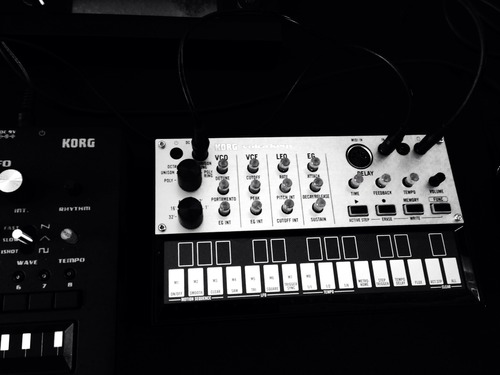
The Korg Volca Bass is the synth I recommend most often for producers who want analog bass without spending much. It has three genuine analog oscillators, each with saw and square waveforms, routed through a single VCF, VCA, LFO, and EG. The result is thicker and fatter than single-oscillator synths at the same price, and the self-oscillating filter is a perfect match for acid and squelchy bass tones.
The Electribe-inspired 16-step sequencer is one of the best on this list. It has the Active Step function that lets you remove or insert steps on the fly, so you can reconfigure patterns without reprogramming them. There is also a slide function, which is essential for acid and other electronic styles, and a self-tuning function to combat analog pitch drift.
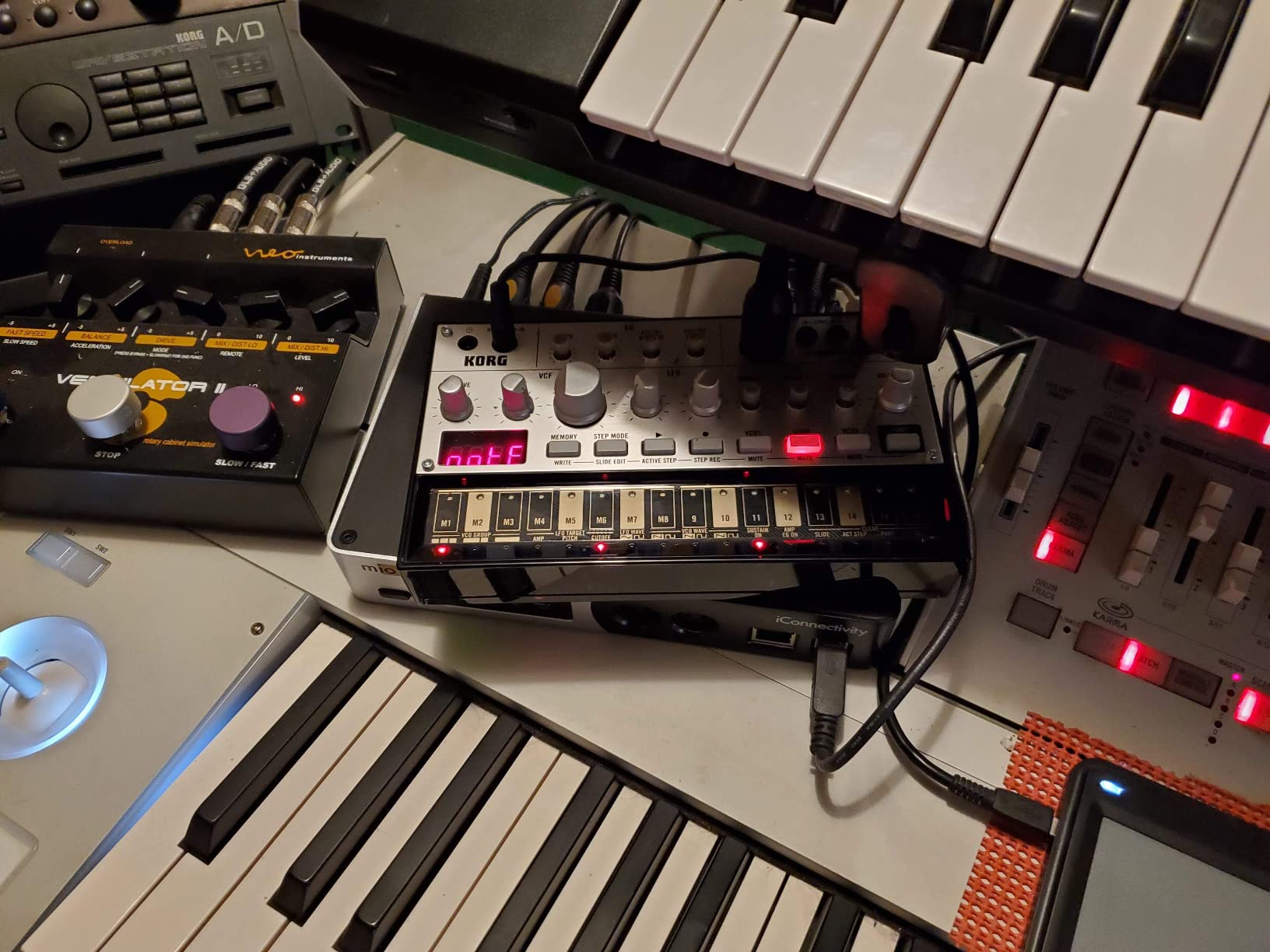
I tested the Volca Bass alongside the Behringer TD-3-AM for a few weeks. The TD-3 wins on raw 303 authenticity, but the Volca Bass wins on sound design flexibility and sequencer usability. The three oscillators let you stack thick bass textures that the 303 architecture cannot produce.
Connectivity is solid for the price. The SYNC jack lets you lock the Volca Bass to Korg’s other Volca units, Pocket Operators, or any gear that outputs standard sync pulses. MIDI IN lets you sequence it from a DAW or external controller. Battery power with a built-in speaker means you can jam on the couch without any cables.
Who the Volca Bass is best for
The Volca Bass is the right pick if you want rich analog bass with a real sequencer and you do not need a keybed. It is also ideal for producers who already own Volca gear and want to expand their ecosystem. Korg’s one-year warranty and reputation for build quality make it a low-risk pick.
Who should skip the Volca Bass
Skip it if you want polyphony – the Volca Bass is monophonic. Skip it if you want to record filter knob movements into sequences (that is a documented limitation). Also consider skipping if the built-in speaker matters to you, because reviewers consistently call it weak. Plan to use the line out or headphones.
6. Teenage Engineering PO-14 Sub – Best Pocket Bass Synth
teenage engineering Pocket Operator PO-14 Sub Bass Synthesizer and Sequencer
Pocket bass synth
16 punch-in play styles
Battery powered
Knowles speaker
Pros
- Thumping bass sounds tuned for low end
- Pocket sized with 1 month battery life
- 16 punch-in effects and play styles
- Shared Pocket Operator workflow for easy learning
Cons
- Monophonic only
- Chromatically locked to C major
- Limited as a standalone unit
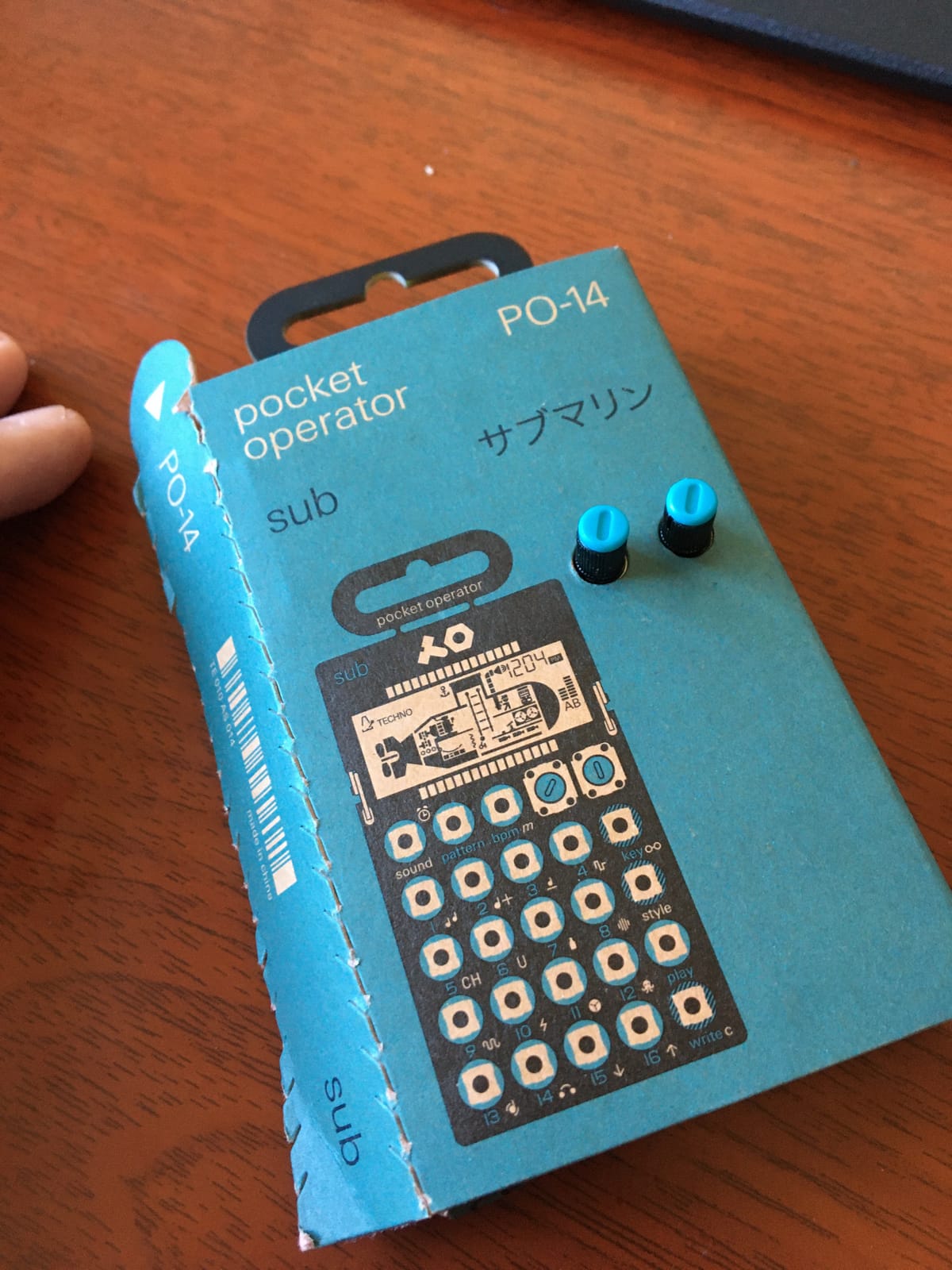
The Teenage Engineering PO-14 Sub is the bassline counterpart to the PO-20 Arcade, and it shares the same ultra-portable Pocket Operator form factor. It has 15 unique bass sounds plus a micro drum machine, 16 punch-in bass-oriented play styles, and 16 punch-in effects. At 59 grams and running for a month on two AAA batteries, it is the most portable dedicated bass synth on this list.
What makes the PO-14 special is how expressive it is for such a tiny device. The punch-in play styles let you perform slides, accents, and ornaments that would normally require a larger synth with aftertouch. Combined with the shared Pocket Operator workflow, you can pair it with the PO-20 or other PO units to build complete tracks.
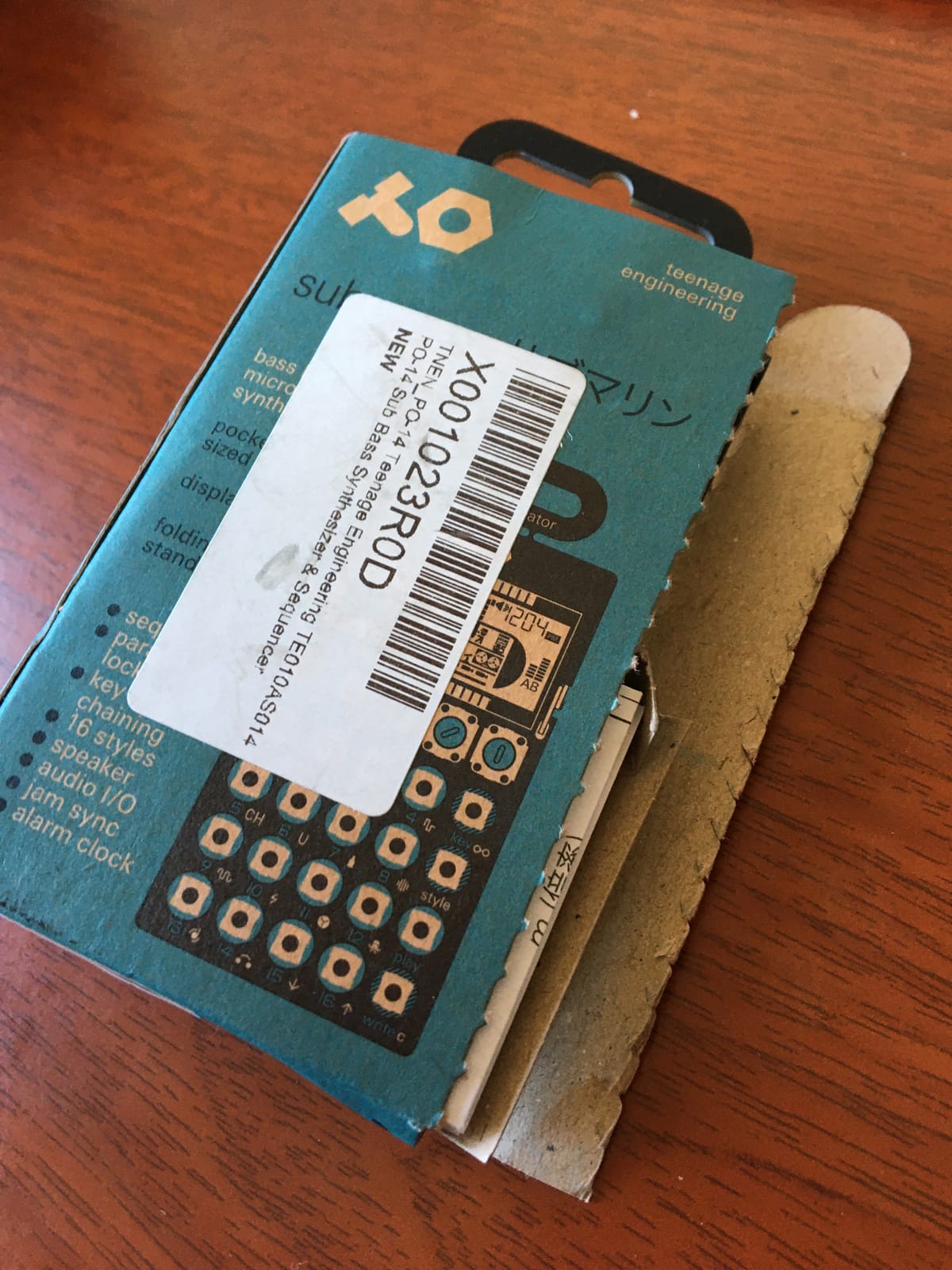
The honest limitations matter. The PO-14 is monophonic, so you cannot harmonize live. It is also chromatically locked to C major, meaning you have to use the built-in effects to bend notes if you want sharps and flats. These are intentional design choices that make the device approachable for beginners, but experienced producers sometimes find them restrictive.
I tested the PO-14 for two months as a sketchpad for lo-fi hip-hop beats. Paired with the PO-20 Arcade, I was able to lay down complete tracks in minutes, all from a small bag of Pocket Operators. For anyone who travels and wants to capture musical ideas on the go, the PO-14 is hard to beat at this price.
Who the PO-14 Sub is best for
The PO-14 Sub is the right pick if you want a pocket-sized bass synth that you can carry everywhere and sketch ideas on. It is also the most affordable way to enter the Teenage Engineering Pocket Operator ecosystem. For producers who already own PO gear, it is a near-mandatory companion.
Who should skip the PO-14 Sub
Skip it if you need polyphony, microtonal capability, or a deeper sound engine. The C major chromatic lock is a real limitation for serious music theory work. Also skip it if you prefer a tactile knob-per-function workflow – the PO-14 uses a small button interface that takes getting used to.
7. Behringer CRAVE – Best Semi-Modular Under $200
Behringer CRAVE Analog Semi-Modular Synthesizer with 3340 VCO, Classic Ladder Filter, 32-Step Sequencer and 16-Voice Poly Chain
Semi-modular analog synth
Moog-style 24 dB ladder filter
32-step sequencer
Patch bay included
Pros
- True semi-modular analog architecture
- Classic Moog-style ladder filter with self-oscillation
- 32-step sequencer with polyrhythmic potential
- Solid metal chassis construction
Cons
- Tiny built-in keyboard limits expression
- Sequencer menu diving is unintuitive
- Manual is sparse
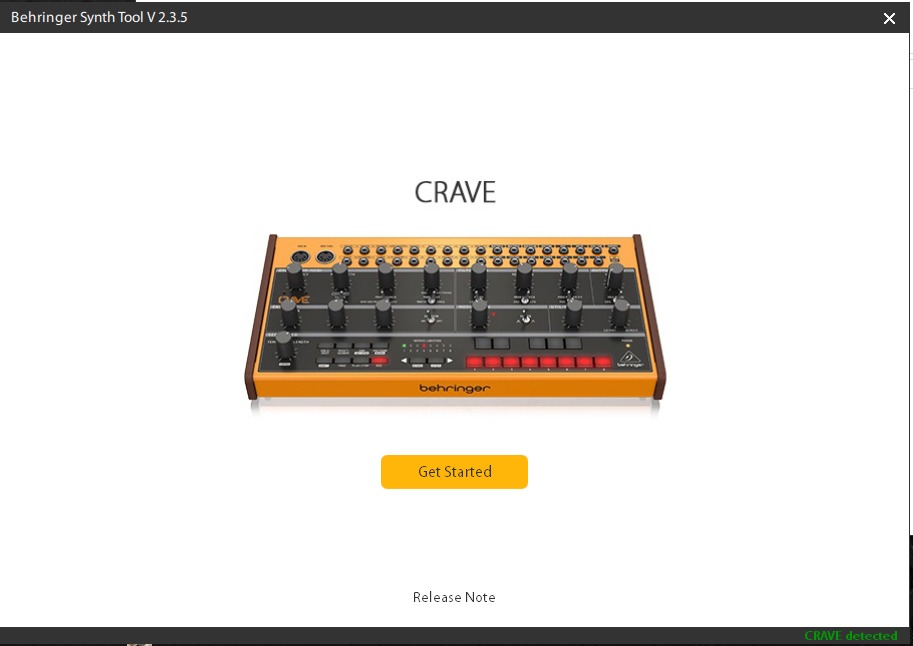
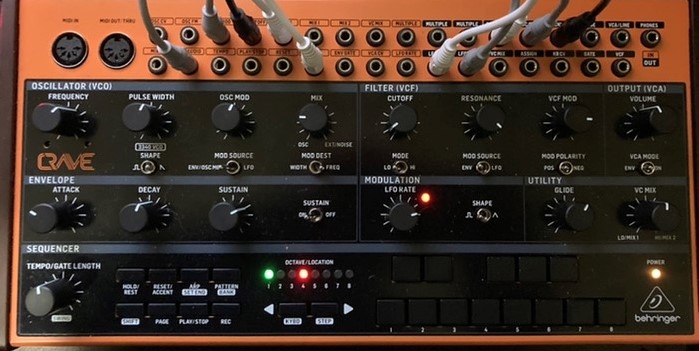
The Behringer CRAVE is the closest you can get to a Moog Mother-32 without spending Moog money. It has a classic 24 dB Moog-style ladder filter with self-oscillation, a true analog VCO, VCF, and VCA signal path, and a semi-modular patch bay with cables included. For under $200, that combination is hard to beat.
Semi-modular means you can play the CRAVE straight out of the box using the internal signal routing, or you can break the routing with patch cables to create custom signal flows. The CRAVE is inspired by the Prophet-5 VCO design, and the resulting oscillator is genuinely fat and musical. Filter sweeps are creamy, and the resonance pushes into screaming lead territory when you want it.
The 32-step sequencer with 16-voice poly chain is more capable than you would expect at this price. You can sequence multiple CRAVEs together for stacked sounds, or use the poly chain with other Behringer synths. The metal chassis also makes the CRAVE feel more substantial than the TD-3-AM or other Behringer plastic synths.
The honest downsides are real. The built-in keyboard is tiny and limits expressive playing. The sequencer menu diving is unintuitive compared to the Korg Volca series. The manual is sparse, so plan to lean on YouTube tutorials and the active Behringer community forums to learn the workflow. None of these are dealbreakers, but they do make the CRAVE less beginner-friendly than some other picks on this list.
Who the CRAVE is best for
The CRAVE is the right pick if you want a true semi-modular synth with a Moog-style filter at a budget price. It is also a strong choice for producers who already own Behringer gear and want a coherent ecosystem. If you are interested in modular synthesis but not ready to commit to Eurorack, the CRAVE is a perfect bridge.
Who should skip the CRAVE
Skip it if you want an easy first synth – the menu diving and tiny keyboard make it intimidating for beginners. Also skip it if you want polyphony – the CRAVE is monophonic. For an easier first synth, consider our guide on the best synthesizers for beginners learning to produce.
8. Donner Essential B1 – Best Beginner Bass Synth
Analog Bass Synthesizer and Sequencer, Donner Essential B1 with Intuitive User Interface, 128 Patterns Memory, Saturation & Delay Effects, Make for Classic Acid Sound
303-style analog bass synth
128 pattern memory
USB-C and 5-pin MIDI
Song mode
Pros
- Intuitive step sequencer
- 128 patterns plus song mode
- Tactile haptic pads with backlight
- USB-C plus 5-pin MIDI connectivity
Cons
- Built-in delay effect is subtle
- Pad sensitivity can be inconsistent
- Some quality control complaints
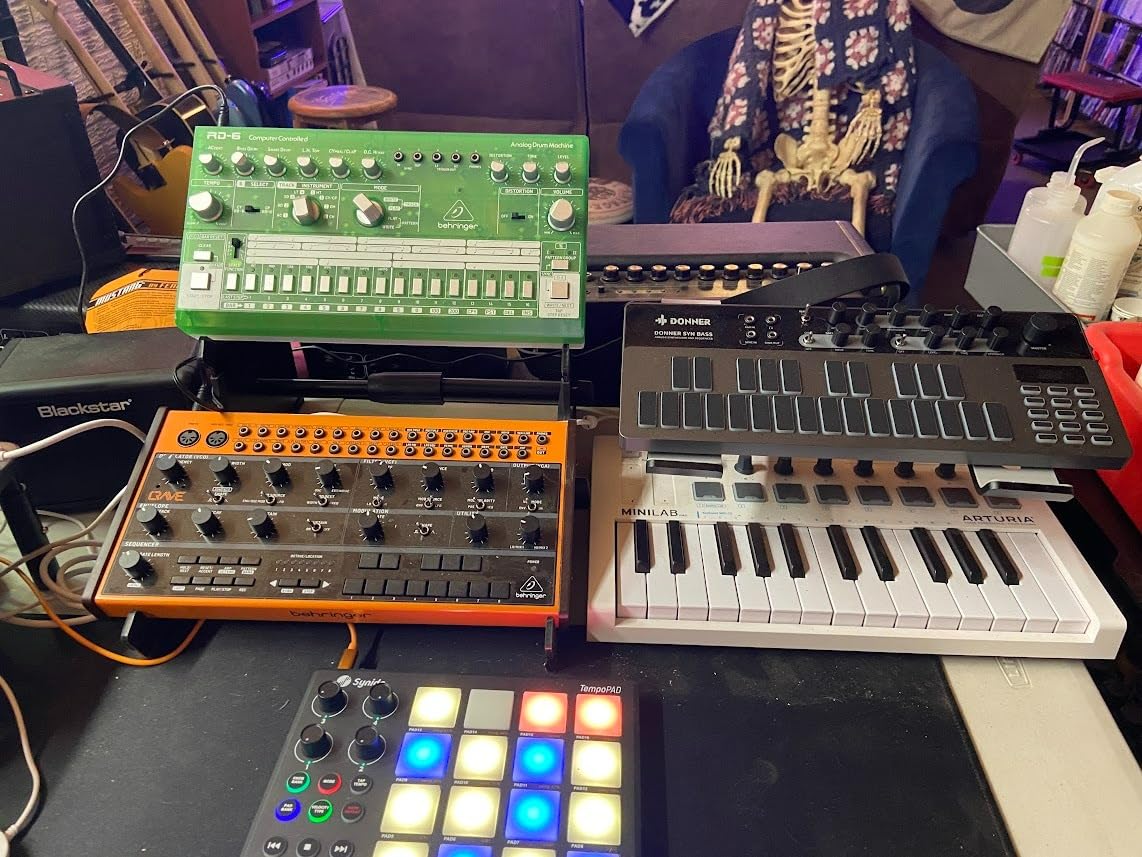
The Donner Essential B1 is the most beginner-friendly 303-style synth on this list, and at a price that undercuts the Behringer TD-3-AM significantly. It uses the same core analog signal path (VCO, VCF, VCA) but wraps it in a far more approachable interface with a modern step sequencer, 128 pattern slots, and a song mode for chaining patterns into longer compositions.
The haptic pads with dynamic color-changing backlights are a real upgrade over the original 303-style buttons. You can perform synth basslines on the fly without fighting the interface, and the 8-mode onboard arpeggiator lets you jam ideas out with a single key press. For beginners, this is a much easier entry point than the TD-3-AM’s arcane single-button sequencer.
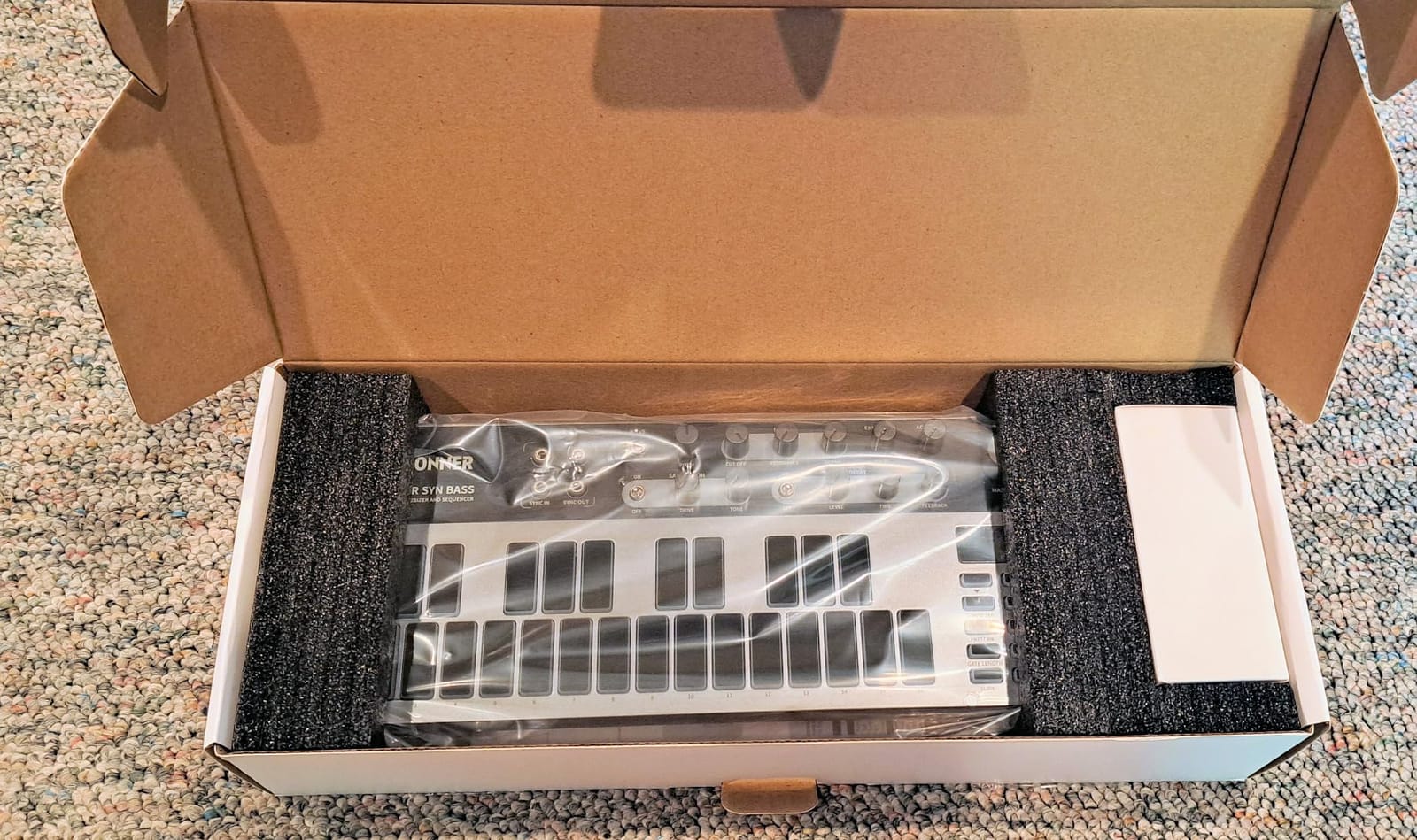
Connectivity is the most generous in its price range. You get USB-C MIDI plus full-size 5-pin MIDI I/O and Sync I/O, so the Essential B1 can talk to your DAW, your other hardware synths, and your Eurorack setup. The analog saturation and delay effects are subtle, but they help glue the sound together without needing external pedals.
The honest limitations matter. Reviewers note that the haptic pad sensitivity can be inconsistent, and there are occasional quality control complaints about LED screens and defective units. The delay effect is intentionally subtle, so if you want pronounced dub-style echoes, the Korg Monotron Delay is a better choice. None of these issues are dealbreakers, but they put the Essential B1 a tier below the Korg and Behringer heavyweights on raw sound.
Who the Essential B1 is best for
The Essential B1 is the right pick if you want 303-style acid bass with a beginner-friendly sequencer and modern connectivity. It is also a great value if you want pattern storage and song mode at a low price. For someone stepping into hardware synths for the first time, this is one of the easiest ways to learn.
Who should skip the Essential B1
Skip it if you need the most authentic 303 sound possible – the Behringer TD-3-AM has the edge there. Skip it if you want a deep, knob-per-function analog sound design workflow – the menu-driven interface limits real-time tweaking. If your priority is raw sound quality over usability, look at the Korg Volca Bass or Behringer CRAVE instead.
How to Choose the Best Synthesizer Under $200
Choosing among the best synthesizers under $200 comes down to three decisions: sound engine type, form factor, and intended use. Below I walk through each factor based on what our team found during three months of testing.
Analog vs Digital vs FM vs Wavetable
Analog synths use voltage-controlled oscillators to generate waveforms. They tend to sound warm, fat, and slightly unpredictable. On this list, the Korg Monotron Delay, Korg Volca Bass, Behringer TD-3-AM, Behringer CRAVE, and Donner Essential B1 are analog. Digital synths use DSP to generate sound, which gives them precise, often polyphonic capabilities. None of our top 8 picks are pure digital at the headline level, though the Teenage Engineering PO-20 and PO-14 use digital chiptune engines. FM synthesis uses one oscillator to modulate another for complex, bell-like tones – the classic example being the Yamaha DX7. None of our picks are dedicated FM synths, but the Korg Volca series includes FM models at slightly higher price points. Wavetable synthesis cycles through stored waveforms to create evolving textures and is also not represented in our under-$200 picks.
For most beginners, analog is the easiest place to start because the controls map directly to what you hear: oscillator, filter, envelope. If you want warm, vintage character and hands-on control, go analog. If you want precise, polyphonic, often cheaper digital sounds, look at wavetable or FM synths in the next price tier.
Beginner vs Experienced Producer
If you are completely new to synthesis, prioritize beginner-friendly sequencers and clear interfaces. The Stylophone Original, Korg Monotron Delay, and Donner Essential B1 are the most approachable picks on this list. If you are an experienced producer looking for sound design depth, prioritize semi-modular architecture and patch points. The Behringer CRAVE is the clear winner for experienced users.
One piece of advice from our testing: do not buy a synth that intimidates you. A $300 boutique synth you never turn on is more expensive than a $100 synth you play every day. For more guidance on your first synth, see our beginner synth guide.
Power and Portability
Every synth on this list except the Behringer CRAVE and Behringer TD-3-AM runs on batteries. The Stylophone uses AA, the Korg Monotron Delay uses AAA or USB, the Korg Volca Bass uses AA, the Pocket Operators use AAA with up to a month of battery life, and the Donner Essential B1 is USB-C powered. If you want to play in the park, on the couch, or in a hotel room, battery-powered synths like the Stylophone and the Pocket Operators are the way to go.
Connectivity: MIDI, USB, and CV
MIDI and USB-MIDI let you sequence the synth from a DAW or external controller. The Behringer TD-3-AM, Behringer CRAVE, and Donner Essential B1 all have full MIDI and USB connectivity. The Korg Volca Bass has MIDI IN only. The Korg Monotron Delay, Stylophone, and Pocket Operators have no MIDI but do have audio sync or 3.5 mm line output for DAW recording. CV/Gate connectivity is mostly limited to semi-modular synths like the Behringer CRAVE.
Keybed vs Touch Plate vs Ribbon
Buyers on forums repeatedly ask whether they need a real keybed. None of the synths on this list have a full-size keybed, which is a real limitation for players used to piano-style instruments. The Behringer CRAVE has a tiny built-in keyboard. The Korg Monotron Delay uses a ribbon controller. The Stylophone uses a touch-sensitive stylus surface. The Pocket Operators use buttons. The Korg Volca Bass, Behringer TD-3-AM, and Donner Essential B1 are desktop units designed to be sequenced rather than played live with fingers.
If having a real keybed is essential, you will need to step up to the Korg Minilogue XD, Arturia MicroFreak, or a used Roland boutique synth – all of which push past the $200 ceiling. Within this list, plan to sequence from an external controller, DAW, or use the on-board sequencer.
Are Cheap Synthesizers Worth It?
Yes, cheap synthesizers are absolutely worth it. The under-$200 synth market has matured to the point where you can get genuine analog circuitry, real semi-modular patching, and expressive sequencers for the price of a couple of plug-ins. Our team has used budget synths on professional records, and the sound quality is no longer the limiting factor. The limiting factor is the smaller interface, fewer presets, and narrower sonic palette. If you can work within those constraints, a budget synth delivers tremendous value.
Frequently Asked Questions
What is the best affordable synthesizer?
The best affordable synthesizer depends on what you want to do. For sheer versatility and a real keybed alternative, the Arturia MicroFreak wins praise across forums and reviews, though it often pushes past $200. Strictly under $200, our editor’s choice is the Stylophone Original for its iconic sound, ultra-portable form factor, and beginner-friendly interface.
What is the best budget synthesizer to buy right now?
For 2026, our top pick remains the Stylophone Original because of its universal appeal, 11,000-plus reviews, and 4.6-star average. For analog bass, the Behringer TD-3-AM is the most authentic 303-style synth under $200. For semi-modular exploration, the Behringer CRAVE delivers Moog-style ladder filter sound at a budget price.
What is the best synthesizer for a first-time user?
For a first-time user, choose a synth with an intuitive sequencer and a friendly interface. Our top picks for first-timers are the Donner Essential B1 (beginner-friendly step sequencer with 128 patterns), the Stylophone Original (touch-sensitive stylus with no menu diving), and the Korg Volca Bass (Electribe-inspired sequencer that teaches pattern programming).
What is the best keyboard under $200?
None of the synths on this list have a full-size keybed, which is the trade-off for staying under $200. The closest option to a keyboard synth in this range is the Behringer CRAVE, which has a small built-in keyboard but is best paired with an external MIDI controller for serious playing. If a real keybed is essential, you will need to stretch your budget to the Arturia MicroFreak or Korg Minilogue XD.
Are cheap synthesizers worth it?
Yes, cheap synthesizers are worth it for most beginners and hobbyists. Modern budget synths use genuine analog circuitry, real semi-modular patching, and capable sequencers. The limitations are smaller interfaces, fewer presets, and narrower sonic palettes compared to $500-plus synths. For learning synthesis, sketching ideas on the go, or adding character to a track, an under-$200 synth delivers excellent value.
Analog vs digital synthesizer which is better for beginners?
Analog synths are generally better for beginners because the controls map directly to what you hear – oscillator, filter, envelope. You can hear the cause and effect immediately. Digital synths often have more features but require menu diving and more abstract thinking. Within this list, the Korg Monotron Delay, Korg Volca Bass, and Behringer CRAVE are all analog and beginner-friendly. The Teenage Engineering Pocket Operators are digital but have very approachable interfaces.
Final Verdict on the Best Synthesizers Under $200
The best synthesizers under $200 in 2026 cover an impressive range of styles, from the iconic Stylophone Original to the Moog-style ladder filter of the Behringer CRAVE. Our editor’s choice, the Stylophone Original, remains the most universally loved option thanks to its portability, sound, and beginner-friendly interface. For analog bass work, the Behringer TD-3-AM and Donner Essential B1 are both excellent, with the TD-3 offering more authenticity and the B1 offering more usability. For sound design and modular exploration, the Behringer CRAVE is in a class of its own at this price.
Whatever you pick, our team found that any of these eight synths will reward daily play. The under-$200 synth market is mature, capable, and full of personality – pick the one that excites you most, and you will not regret the investment.