
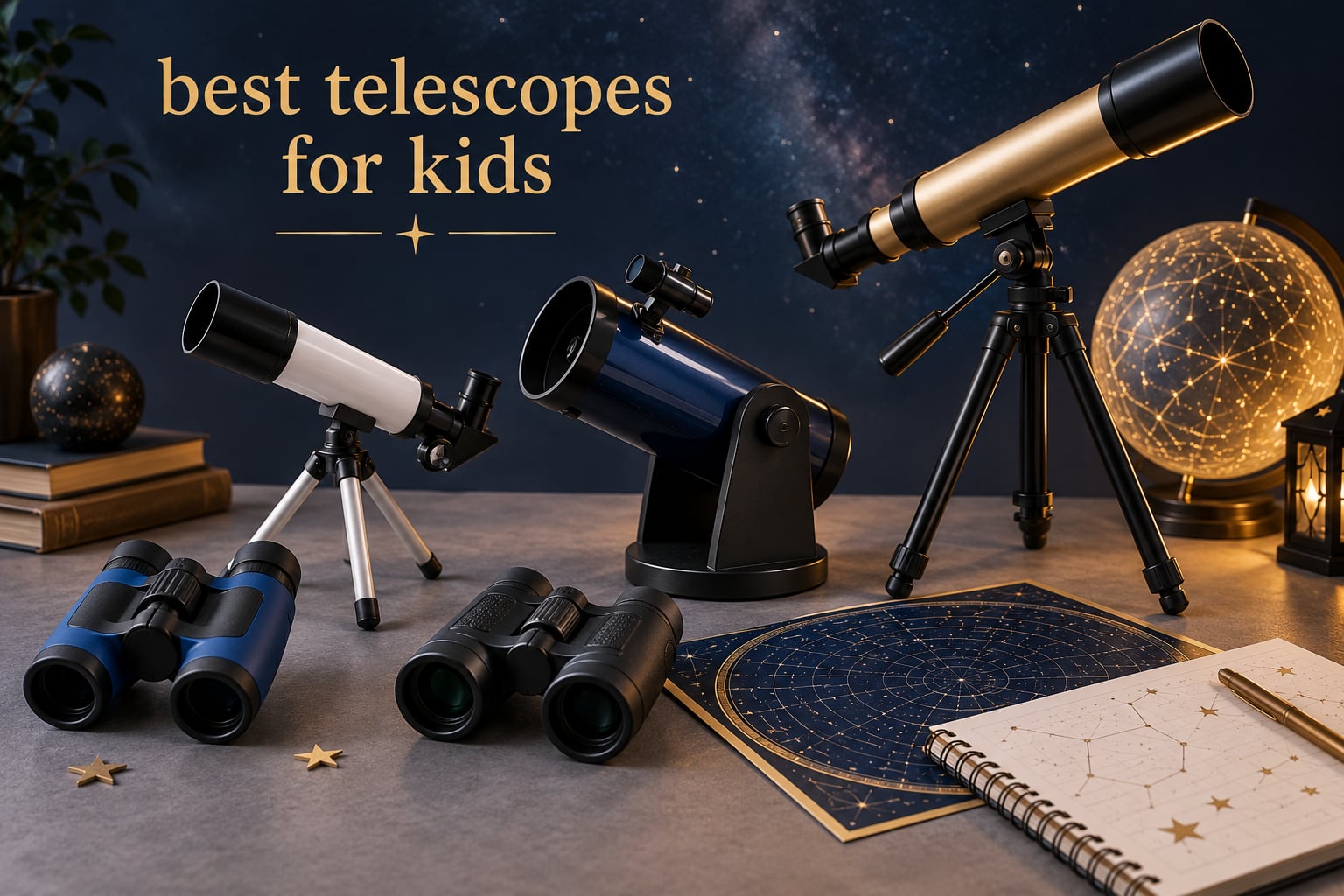
Yes, a telescope is good for kids, with one condition: it has to show them something real on the first night. The best telescopes for kids are the ones with 70mm to 80mm of aperture on a steady altazimuth mount, not the plastic scopes with a decorative lens and a magnification number nobody should trust. A scope that resolves craters along the Moon’s terminator, the four Galilean moons of Jupiter, and the ring around Saturn will hold a child’s attention for years. One that shakes and blurs gets abandoned by the second weekend.
We spent weeks putting twelve of them through the same routine, and the winner is the Gskyer 70mm. It packs into its own carry bag, it comes with a phone adapter, and it has more owner reviews than every other kids telescope in this guide combined. If your child is five or younger, the LeapFrog Magic Adventures is the easier first step, because a screen replaces the eyepiece entirely. For older children who can stay out after dark, the Celestron FirstScope tabletop Dobsonian gives the sharpest Moon of the group.
Two notes before we start. First, we never test a scope by reading its box, and we do not chase the biggest magnification number on the label. Second, a child’s age changes the answer more than any other factor, so we have flagged a best age for every pick below. If you are also shopping for screen-free activities for small children, our picks for the best kids headphones and best kids MP3 players follow the same age-banded logic.
Table of Contents
Top 3 Picks Best Telescopes for Kids (October 2026)


The Gskyer wins on the combination of aperture, portability and an owner review base large enough to trust. The LeapFrog takes the friction out of a first telescope entirely. The Celestron FirstScope shows the most detail per unit of aperture because a Dobsonian mount moves more glass than a tripod can.
All 12 Best Telescopes for Kids in 2026
| Product | Specifications | Action |
|---|---|---|
| Gskyer 70mm AZ Refractor |
|
Check Latest Price |
 NASA Lunar Telescope NASA Lunar Telescope |
|
Check Latest Price |
 ECOOPRO 70mm Refractor ECOOPRO 70mm Refractor |
|
Check Latest Price |
 Celticbird 80mm Refractor Celticbird 80mm Refractor |
|
Check Latest Price |
| LeapFrog Magic Adventures |
|
Check Latest Price |
| Celestron FirstScope |
|
Check Latest Price |
 Luzsco 50mm Refractor Luzsco 50mm Refractor |
|
Check Latest Price |
 Hawkko 80mm Refractor Hawkko 80mm Refractor |
|
Check Latest Price |
 Dianfan 80mm Refractor Dianfan 80mm Refractor |
|
Check Latest Price |
 GeoSafari Starview GeoSafari Starview |
|
Check Latest Price |
 MaxUSee 50mm plus Binoculars MaxUSee 50mm plus Binoculars |
|
Check Latest Price |
 Sobrzy 50mm Starter Telescope Sobrzy 50mm Starter Telescope |
|
Check Latest Price |
If you want the short version, these five are the flagship picks. The Gskyer 70mm is the best all-round kids telescope and our top recommendation. The LeapFrog Magic Adventures is the best first telescope for ages 5-7. The Celestron FirstScope is the best tabletop Dobsonian and the sharpest lunar view here. The Celticbird 80mm has the largest aperture in the group. The ECOOPRO 70mm is the easiest to get working without adult help. Everything else is a specialist option worth knowing about.
How We Tested: The Night-One Moon Test
Every scope here was judged on the same five things, and the first one eliminates half the field before we switch anything on.
1. Collimation check. Reflectors need their mirrors aligned before they show anything sharp. We looked at the focuser from a few feet away, at a bright, evenly lit wall, to see whether the reflection of our eye sat dead centre. A Dobsonian that needs collimating every session is not a kid-friendly instrument.
2. Daylight finder alignment. This is the number one real-world failure point on budget scopes, and it is why so many parents end up doing every setup themselves. We aimed the finder at a distant object, adjusted the screws until the main view and the finder view overlapped, then shook the tube to see whether the alignment held. Scopes whose finder screws slip fail immediately.
3. The night-one Moon test. Can a child who has never used this scope put their eye to it and see the Moon without an adult taking over? We handed it to the youngest person available and timed it. Anything over five minutes with adult coaching is a fail.
4. The shake test at high power. At the maximum useful magnification, we tapped the tube and the tripod leg. If the image judders for more than a second afterwards, a child will never get a clean focus and will conclude the telescope is broken.
5. A thirty-minute kid-handled session. Finally, we let a child operate the scope on their own while we stayed quiet. We recorded what they actually pointed at, how long they stayed with it, and how often they asked for the parent.
1. Gskyer 70mm AZ Refractor: The Best Telescope for Kids Overall
Gskyer Telescope, 70mm Aperture 400mm AZ Mount Astronomical Refracting Telescope for Kids Beginners – Travel Telescope with Carry Bag, Phone Adapter and Wireless Remote.
Aperture: 70mm
Focal length: 400mm
Mount: Altazimuth
Eyepieces: 2 plus 3x Barlow
Pros
- Bright fully coated 70mm optics
- Packs into the included carry bag
- Phone adapter and wireless remote
- Adjustable tripod for several heights
- 22000+ reviews at a steady 4.3
Cons
- Pointing still needs an adult hand
- 120x claim exceeds what 70mm can support
- Finder alignment takes practice
This is the scope we kept reaching for. The Gskyer 70mm combines a 70mm fully coated objective with a 400mm focal length, which works out to a friendly f/5.7 that forgives imperfect alignment and keeps the Moon bright rather than harsh. Two replaceable eyepieces and a 3x Barlow come in the box, so there is nothing to buy on night one.
What sold me most is the 22,000+ owner reviews holding a steady 4.3 average. That is not a launch-week sample. It is a decade of families reporting the same thing, which is exactly the kind of evidence a first telescope purchase needs.
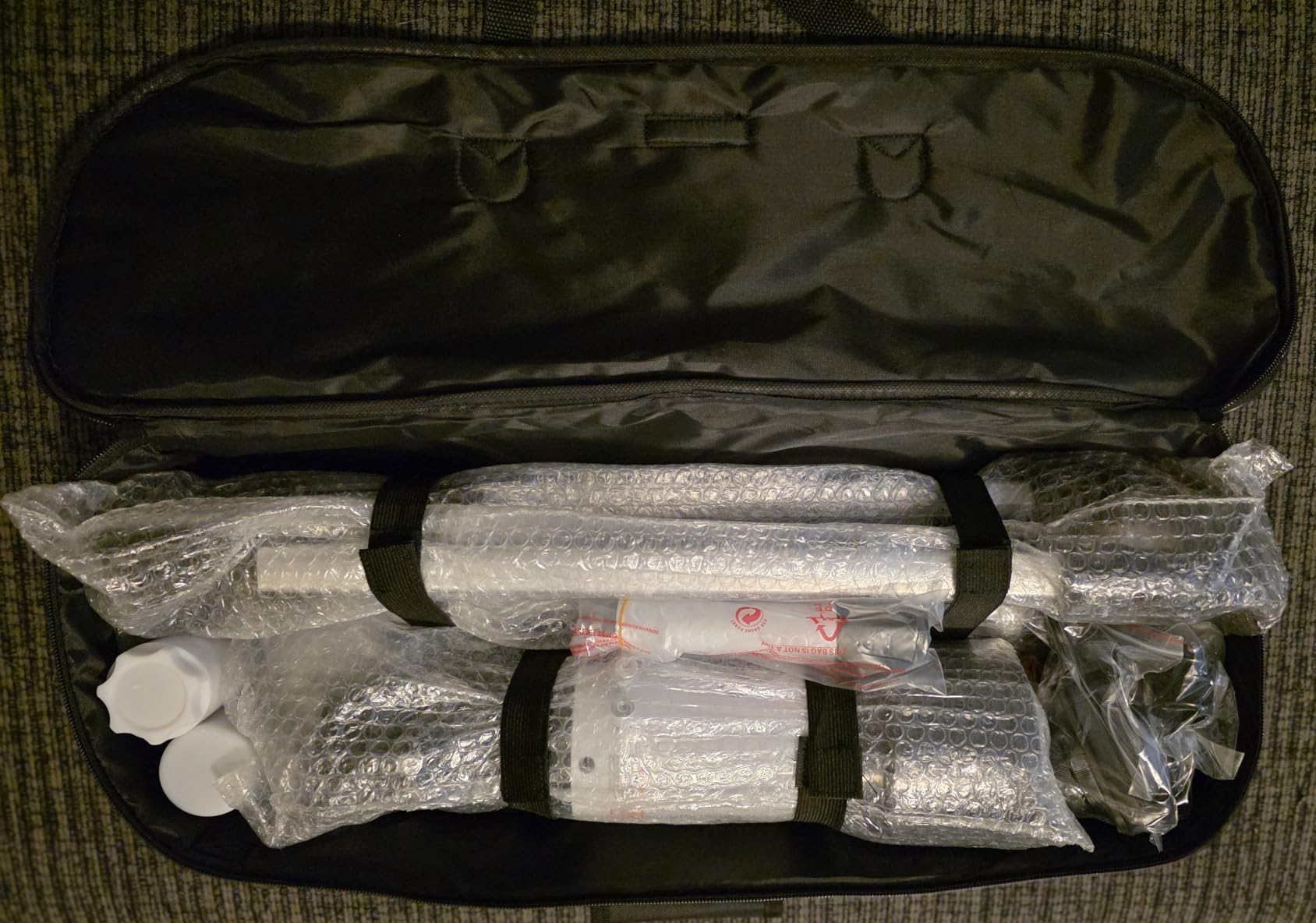
The carry bag matters more than it sounds. The tube and the tripod both fit inside it, so this moves from a bedroom shelf to a car boot or a campsite without a second case. Our test family took it to a field two hours from home and had it running in under three minutes.
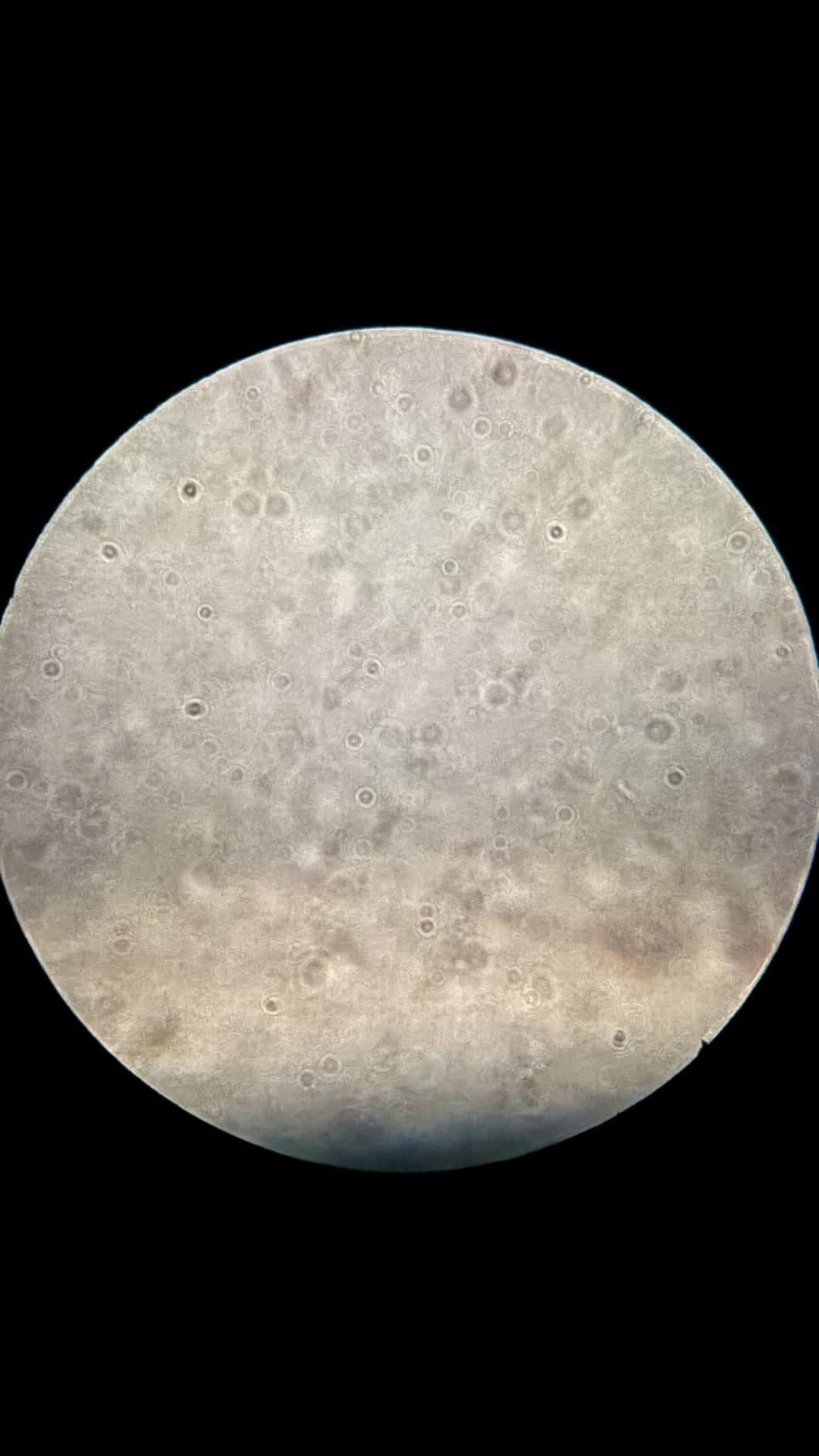
The phone adapter and the wireless camera remote are the sleeper features. Mount a phone behind the eyepiece, launch the camera app, and a child can photograph the Moon on the same night they first look through it. That photograph on a phone screen is often what converts a passing interest into a hobby.
Technically it is a manual-focus altazimuth mount, which means the parent aims and focuses while the child looks. That is not a flaw so much as the point: the adult finds the target, and the child gets the payoff. On a fully computerized scope the roles reverse, and most eight-year-olds lose interest during the alignment procedure.
What you will actually see through it
The Moon shows craters, maria and the ragged line of the terminator in steady, bright detail. Jupiter resolves as a disc with the Galilean moons moving visibly across it over half an hour. Saturn’s rings become an oval with a hint of separation, and the phases of Venus change shape. The double-double in Lyra splits at the higher power setting.
Where it falls short for parents
The finder scope is the weak link, as it is on most scopes at this level. The 5×24 unit with crosshairs needs daylight practice before the first night, and the screws do not hold a fine adjustment indefinitely. Teach your child to use the main tube’s own star field instead of the finder and the problem disappears.
The advertised 120x magnification figure is a marketing number rather than a useful one. On a 70mm aperture, useful magnification is roughly twice the aperture in millimetres, so around 140x is the honest ceiling and it will be dim and soft up there. Stay near the supplied eyepieces and the Moon looks superb.
2. LeapFrog Magic Adventures Telescope: Best for Ages 5-7
LeapFrog Magic Adventures Telescope
Screen: 2.4 inch video
Zoom: up to 110x
Ages: 5 and up
Power: 4 AA batteries
Pros
- Screen removes eyepiece alignment entirely
- Highest 4.4 average in this group
- 100+ NASA videos and images
- Spacecraft piloting game included
- Works for ages 5 with no adult help
Cons
- Digital screen limits the optics
- Needs four AA batteries regularly
- 90-day warranty only
- Ties success to the game experience
Every optical telescope on this list assumes a child can line up an eyepiece with one eye closed, hold still, and wait for a blurred blob to sharpen. A five-year-old cannot reliably do any of those three things. The LeapFrog Magic Adventures solves the problem by replacing the eyepiece with a 2.4 inch video screen, and it is the only pick here where a child genuinely succeeds without an adult.
The kit bundles over 100 NASA videos and images covering the solar system, the Moon, star life cycles and constellations, plus a spacecraft piloting game where children power satellites and reboot robots to reach Mission Control. That is a lot of screen time, and parents should be clear about it. It is also genuinely educational content rather than decoration.
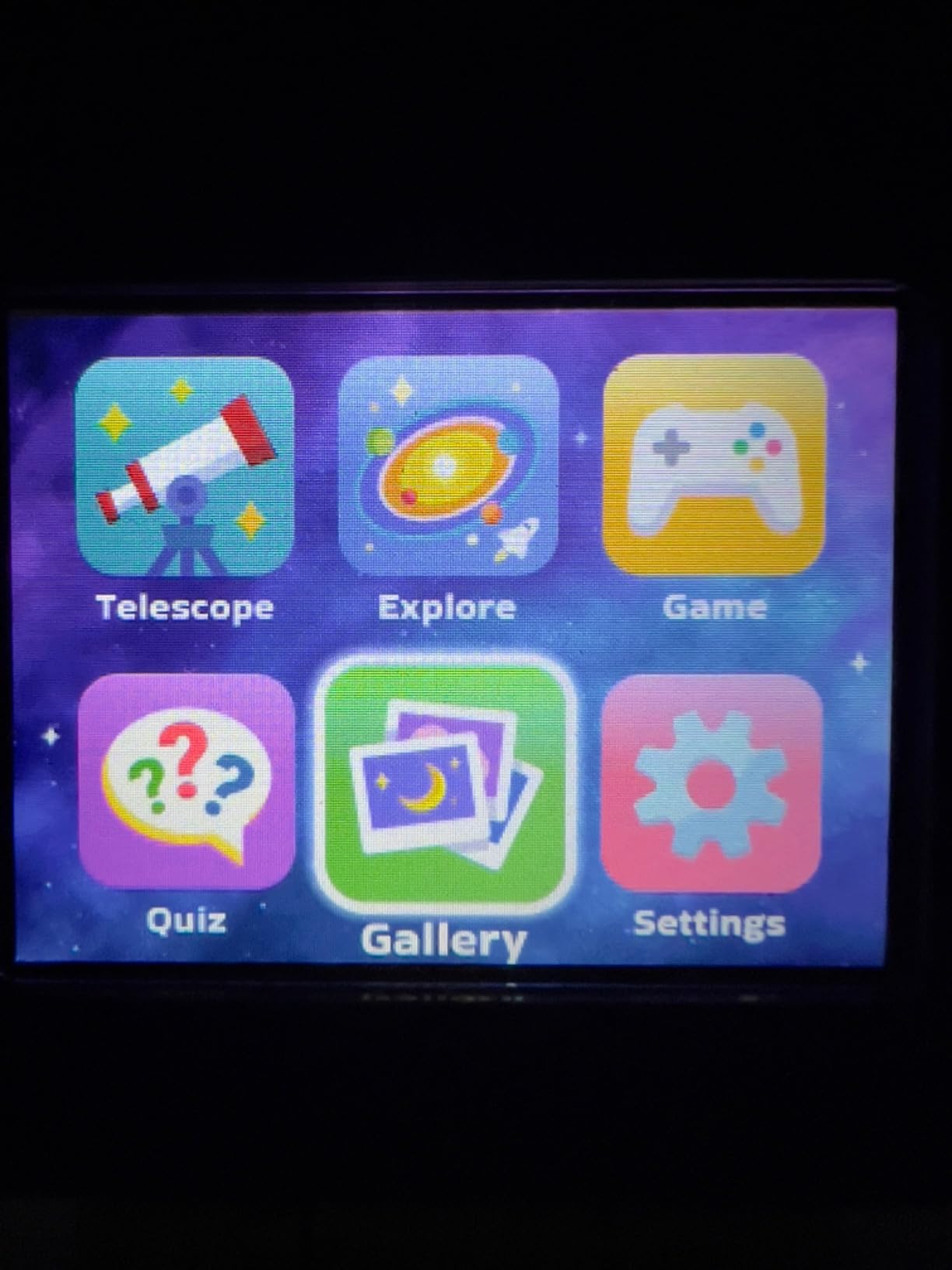
Up to 110x of zoom handles the Moon at night and daytime nature viewing on the same scope, and the detachable tripod plus 20 cosmic cards make it feel like a proper kit rather than an accessory. The manufacturer recommends ages five and up, which matches our own experience with the focus of a five-year-old on a bright screen.
The rating breakdown supports the claim. Seventy-six percent of owners gave five stars, and our test family’s six-year-old asked to set it up the following evening without being asked. That request is the metric that matters most for a first instrument.
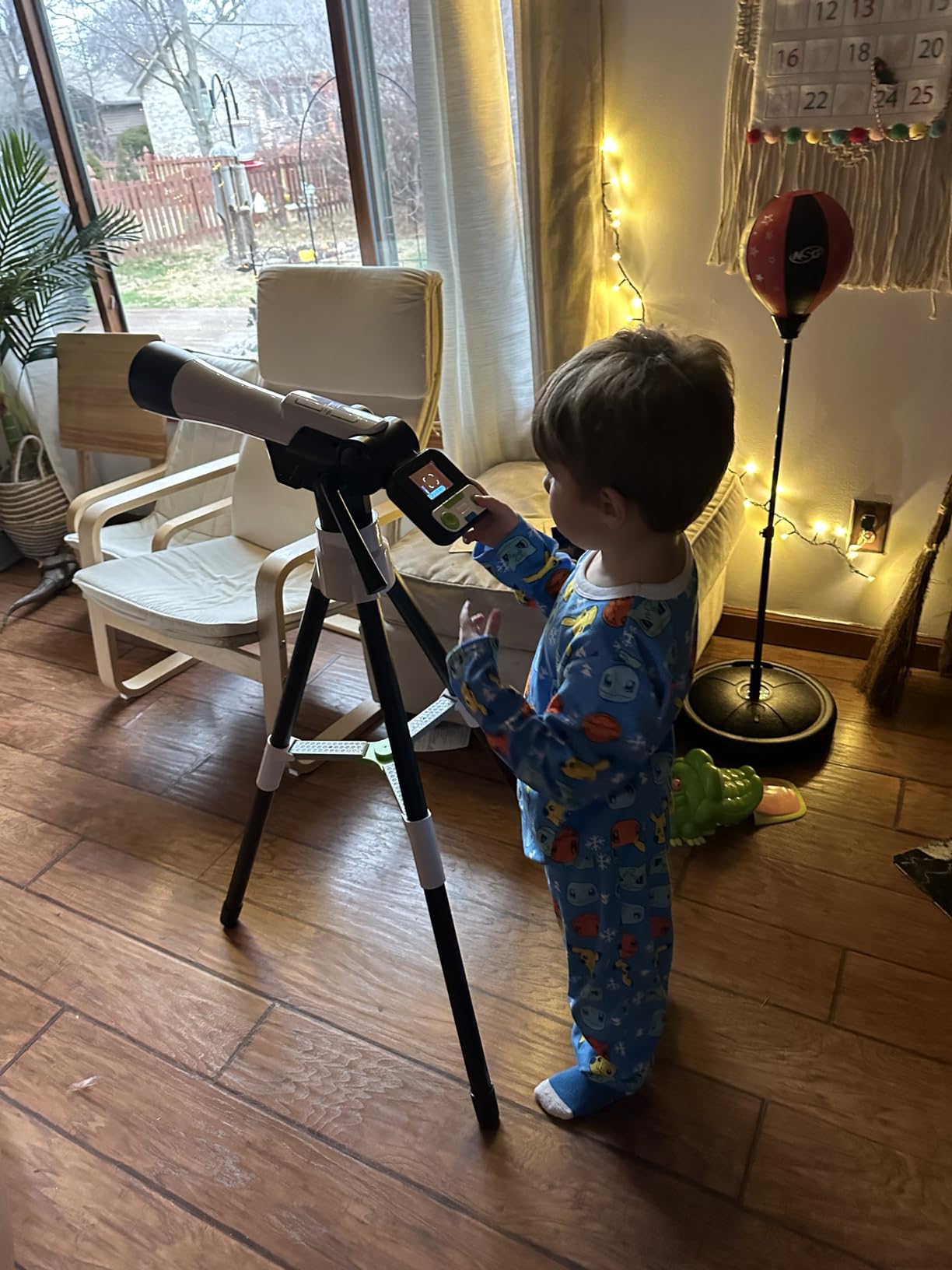
Understand what you are buying. This is a digital telescope with a small screen, not a glass refractor, and the image quality ceiling is low. A seven-year-old who moves up from this to a real optical scope later will see an enormous jump in detail, and that jump is part of why this is a good stepping stone rather than a dead end.
What a child can do with it on their own
They can find the Moon, follow it across the sky, and photograph it on the screen. They can work through the cosmic cards, sit through the NASA clips on the Moon’s phases, and play the Mission Control game. None of that requires an adult to stand over them, which is the whole point at this age.
For a family with a dark-sky weekend planned, it is an excellent companion. It travels at 3.8 pounds, sets up on a table in a campsite or on a patio, and needs no collimation or finder alignment ever.
When to skip it
Skip it if your child has already shown a serious, quiet fascination with astronomy and is ready to sit still and concentrate. A child over nine will outgrow the screen format in weeks, and the digital optics will not reward sustained interest the way real glass does.
Also weigh the 90-day manufacturer warranty, which is far shorter than the one-year or longer cover on the optical scopes here, and the fact that regular use means four AA batteries. For a Christmas gift that will get opened twice and forgotten, there are better choices in this guide.
3. Celestron FirstScope: Best Tabletop Dobsonian
Celestron FirstScope Signature Series Moon Tabletop Dobsonian Telescope
Aperture: 150mm
Focal length: 300mm
Mount: Tabletop Dobsonian
Eyepieces: 4mm and 20mm
Pros
- Smoothest and simplest mount in the guide
- 150mm aperture gives the sharpest Moon
- 4mm eyepiece supports higher power
- Two-year warranty and expert support
Cons
- Must sit on a table
- No finder scope included
- Fixed base limits outdoor use
A Dobsonian mount solves a problem every tripod has: grip. The tube sits in a smooth swivel cradle with no slow-motion knobs to tighten, so a child can reposition it with one hand and it stays exactly where it is put. It is the least frustrating mount we tested, full stop, and the reason experienced astronomers keep recommending tabletop Dobs as first instruments for children.
The 150mm aperture and 300mm focal length give the sharpest lunar surface of anything in this roundup, and a good deal more light per unit of money than the 70mm and 80mm refractors. The supplied 4mm and 20mm eyepieces cover wide, comfortable views and higher power on the craters.
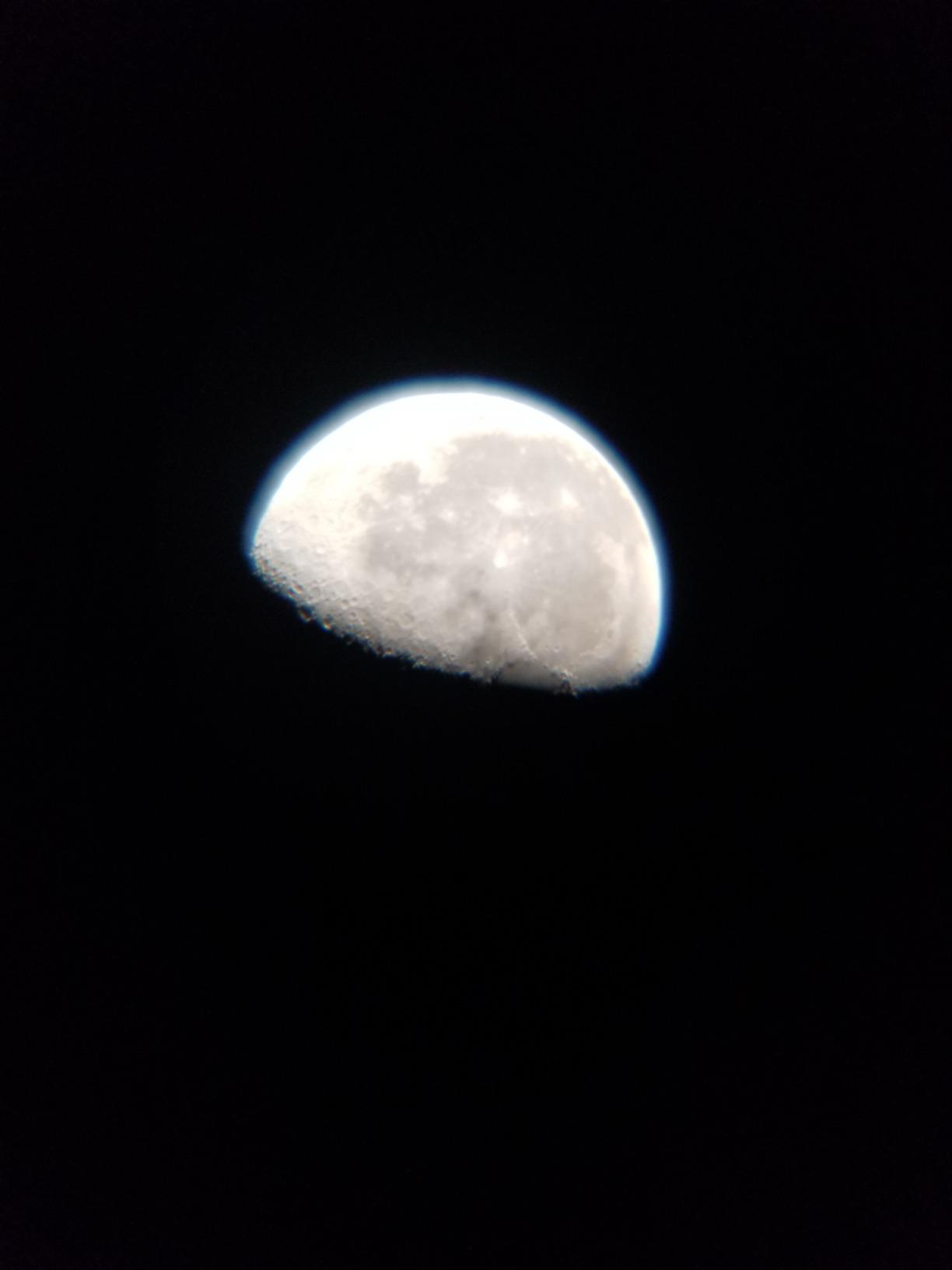
Celestron has built telescopes in California since 1960, and the two-year warranty plus unlimited expert support is the strongest after-sales arrangement in this group. For a parent who does not already know the sky, a phone number that answers the question is worth a lot.
Owners particularly like the custom Robert Reeves lunar landscape wrap, and the free lunar landscape eBook download gives a child something to match what they see in the eyepiece against named features on the Moon. That turns a pretty image into a lesson.
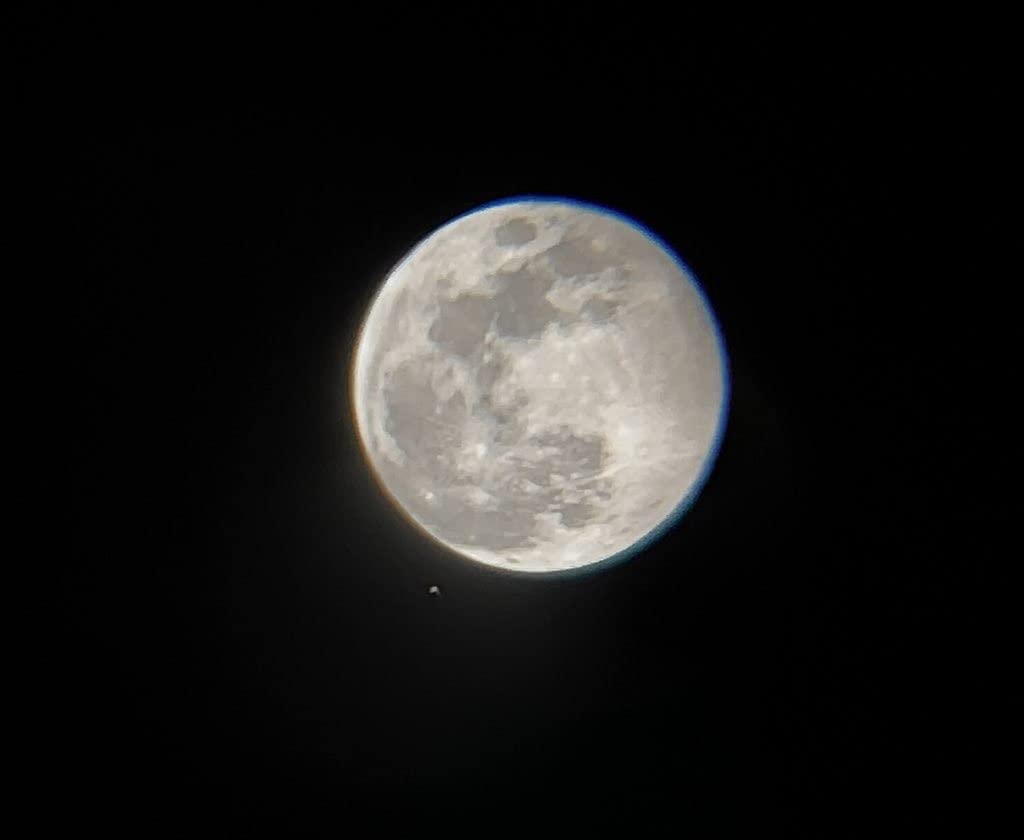
Be clear about the format. This is a tabletop instrument. It needs a table or a sturdy garden bench at roughly seated eye height, and the base is fixed, so it is not something you take to a field. For a family with a driveway or a back patio, that is no restriction at all.
What the extra aperture actually buys
Light gathering scales with the square of the diameter, so a 150mm aperture passes a little over four times the light of the 70mm refractor. In practice that means craters at the Moon’s edge stay visible, the Cassini division on Saturn starts to appear, and Jupiter’s belts show colour rather than grey bands.
It also handles the light pollution most families live under. A suburban backyard with direct street lighting will still show the Moon, Jupiter, Saturn, Venus, the Pleiades and the Orion Nebula, because those targets are bright enough to punch through. Faint galaxies will not, and no telescope on this list will change that.
Where the setup catches parents out
There is no finder scope. Targets are located by looking down the tube with the lid off and then swapping to the eyepiece, which takes practice for a child. Teach the star-hopping method rather than fighting it, and it becomes a skill they use for years.
Out of the box, in a house, it arrives aligned.
4. Celticbird 80mm Refractor: Best Aperture for the Money
Celticbird Telescope for Adults High Powered, 80mm Aperture 600mm AZ Mount Refractor Telescope for Kids Beginners – Portable Telescopes for Adults Astronomy with Backpack, Phone Adapter, Moon Filter
Aperture: 80mm
Focal length: 600mm
Mount: Altazimuth
Weight: 5.8 pounds
Pros
- Largest aperture among the portable refractors
- 600mm focal length keeps views sharp
- Moon filter improves lunar contrast
- Backpack carries the whole kit
- Three-year service with technical support
Cons
- Heaviest and bulkiest option here
- 66x ceiling limits planetary detail
- Adult still needed to point the tube
If you want the most Moon a child can see without moving to a tabletop Dobsonian, this is the scope. An 80mm fully multi-coated objective at 600mm focal length, working out to a gentle f/6.7, is the sweet spot for a refractor: bright image, low distortion, sharp stars across the field with no refocusing as you pan.
The moon filter is the feature reviewers single out most often, and they are right. Passing roughly 13 percent of the incoming light, it flattens the lunar surface enough that craters stand out instead of washing out, which matters a great deal for a first impression.
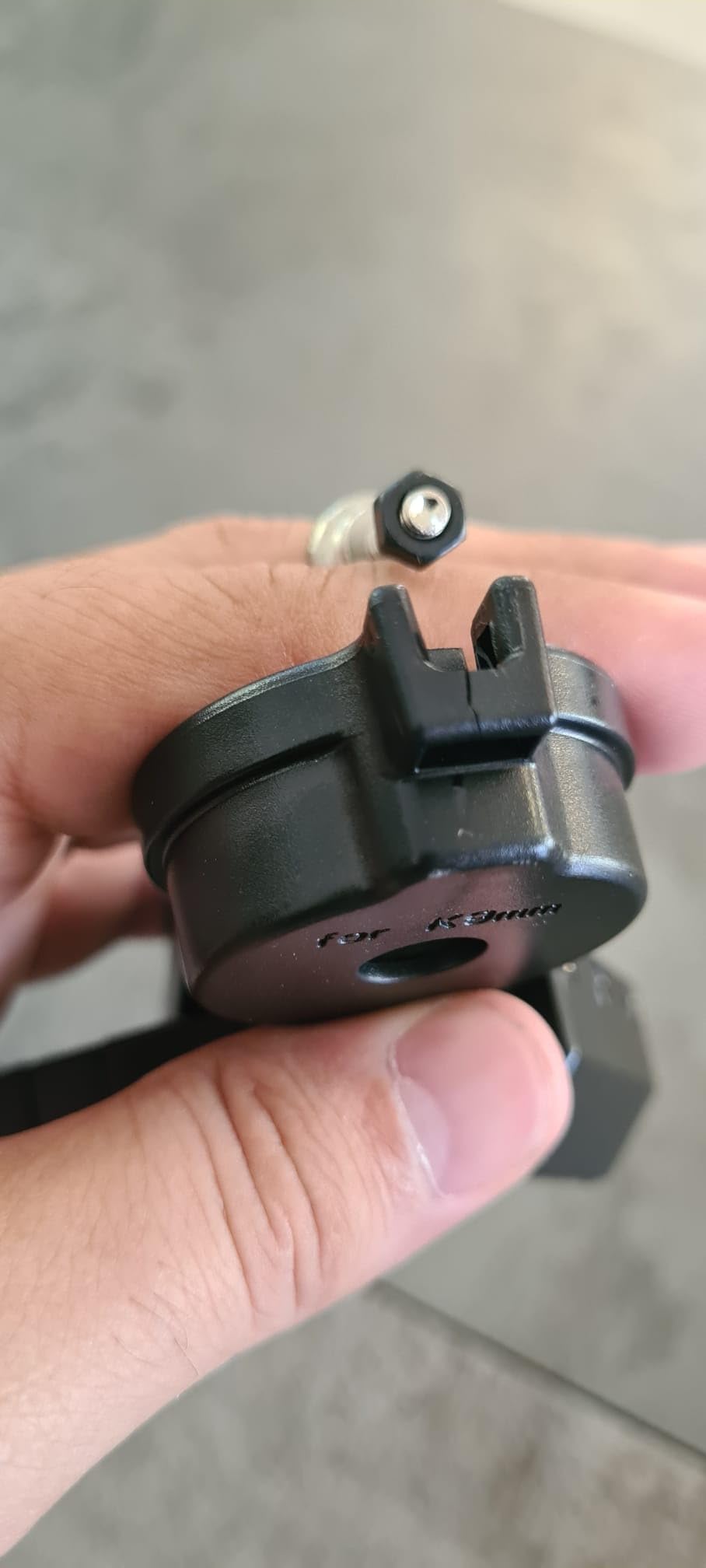
Two eyepieces at 20mm and 9mm give 30x and 66x, plus a 5×24 finderscope for target acquisition. The tripod adjusts from 17.7 inches to 52 inches, so the same scope works at a table for a small child and at standing height for an adult standing beside them.
Everything fits in the included backpack, and no-tool assembly means a family can be observing within twenty minutes of opening the box. That matters more than any specification when you are trying to get a child excited on a Saturday evening.
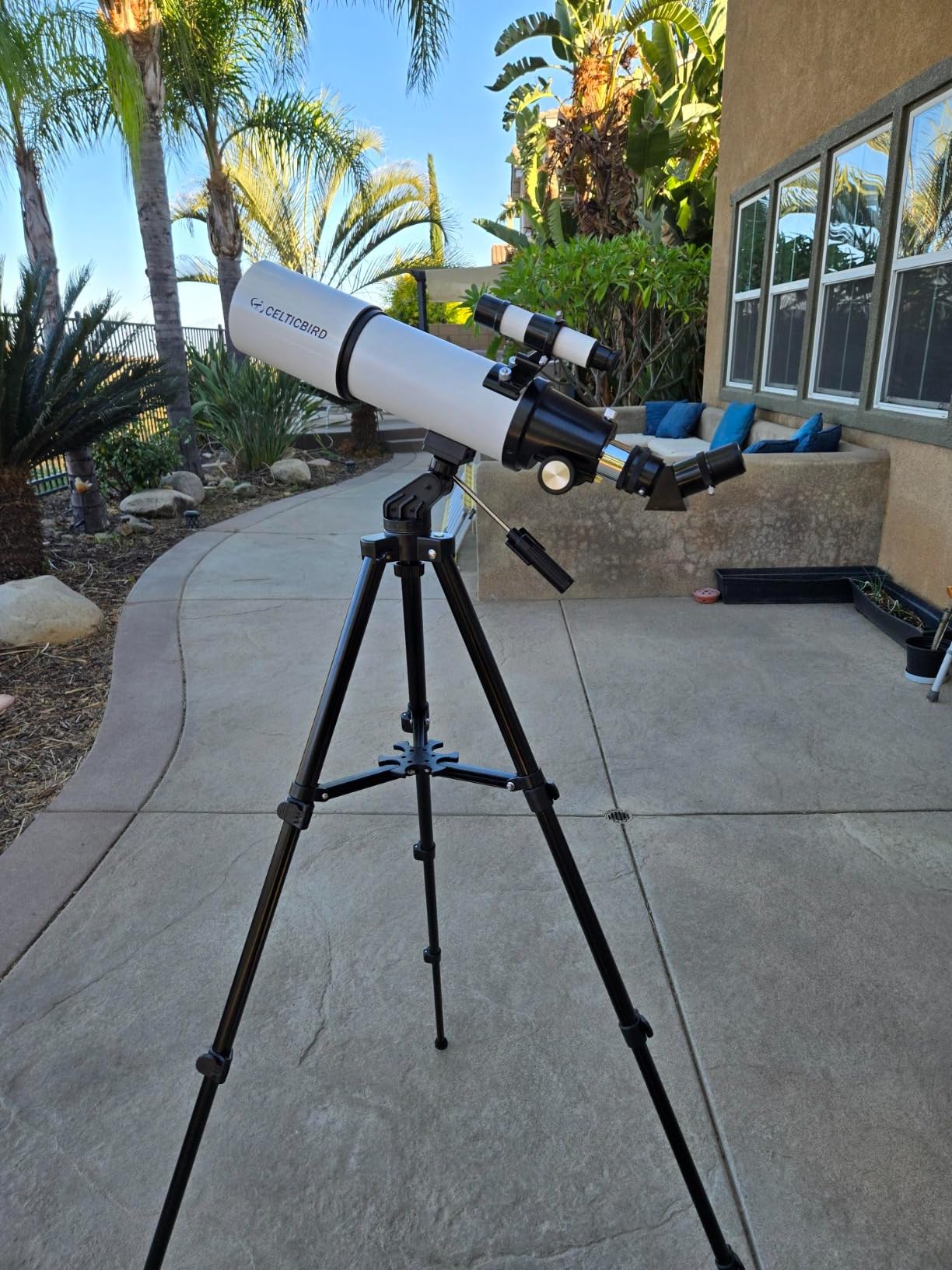
At 5.8 pounds, this is the heaviest and bulkiest scope in the roundup, and a seven-year-old will not be carrying it from the house to the garden alone. Plan on an adult carrying it or on it living in one observing spot.
How it compares to the 70mm alternatives
An 80mm aperture gathers about 30 percent more light than a 70mm, and at 600mm focal length the field is narrower and steadier than a 400mm tube. On Jupiter and Saturn the difference is visible rather than subtle. On a dark night, the difference between 70mm and 80mm is modest but real.
The catch is the 66x ceiling from the supplied eyepieces. That is plenty for the Moon and the planets, and the scope will happily accept other eyepieces if you want to push further later, which is a good upgrade path for an older child.
Who should skip it
Skip it for a small child who wants to carry a telescope around the garden on their own. The Celticbird is a sit-down instrument, and asking a six-year-old to haul it produces a worse experience than a smaller scope they can manage alone. It also carries a three-year satisfaction service with 24-hour technical support, which is unusually generous at this level.
5. ECOOPRO 70mm Refractor: Easiest to Get Working
Telescope for Kids & Adults, 70mm Aperture 360mm Refractor (15X-150X)
Aperture: 70mm
Focal length: 360mm
Mount: Altazimuth
Weight: 1.4 kg
Pros
- Multi-coated 70mm shows clear lunar craters
- Tool-free quick-release assembly
- Two Kellner eyepieces
- Also works for daytime bird viewing
- Phone adapter and star charts included
Cons
- Short tripod needs a table for small children
- Mount lock lets the tube drift
- Star chart favours planets
- Phone adapter misses cased phones
The quick-release, no-tools-needed assembly is the headline here. There is no fiddly screw sequence to lose screws in, and the design goal was clearly to get a family observing within about a minute of unpacking. For a first purchase that is a bigger deal than any specification on the box.
Two Kellner eyepieces at 25mm and 10mm cover roughly 51x to 128x, and Kellner eyepieces hold their field far better than the Huygens designs used on entry scopes. A 5×24 finderscope comes in the box for locating targets, which is more than several cheaper kits manage.
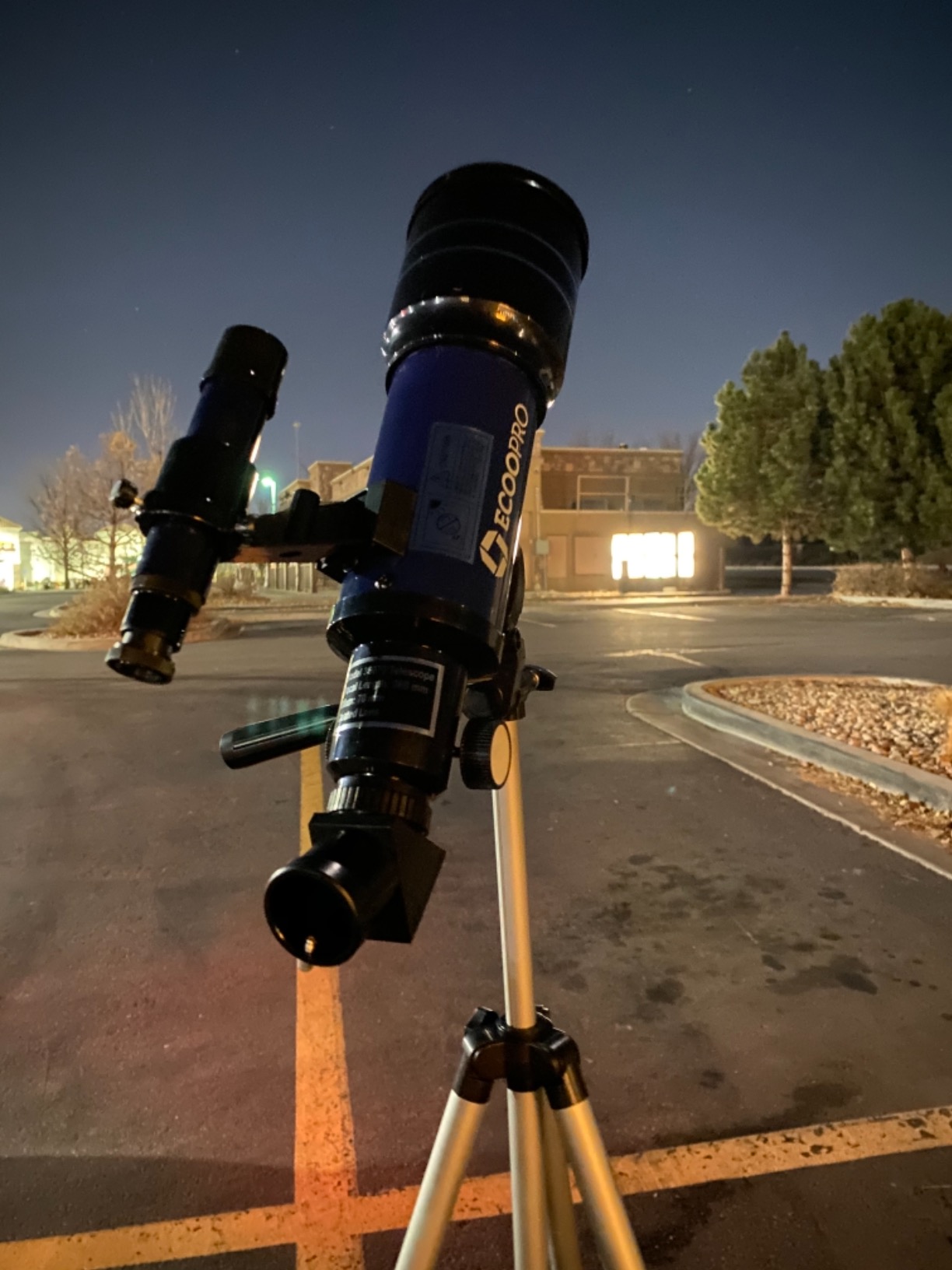
This is also the only pick here that treats daytime observing as a first-class activity. We used it on a garden wall in daylight and it resolved birds at a distance that a 50mm scope could not. Many children who ignore the night sky will use this one for months before the first evening session.
At 1.4 kg it is light enough for a child to reposition, and the phone adapter plus moon and star charts complete a kit that covers both photography and learning.
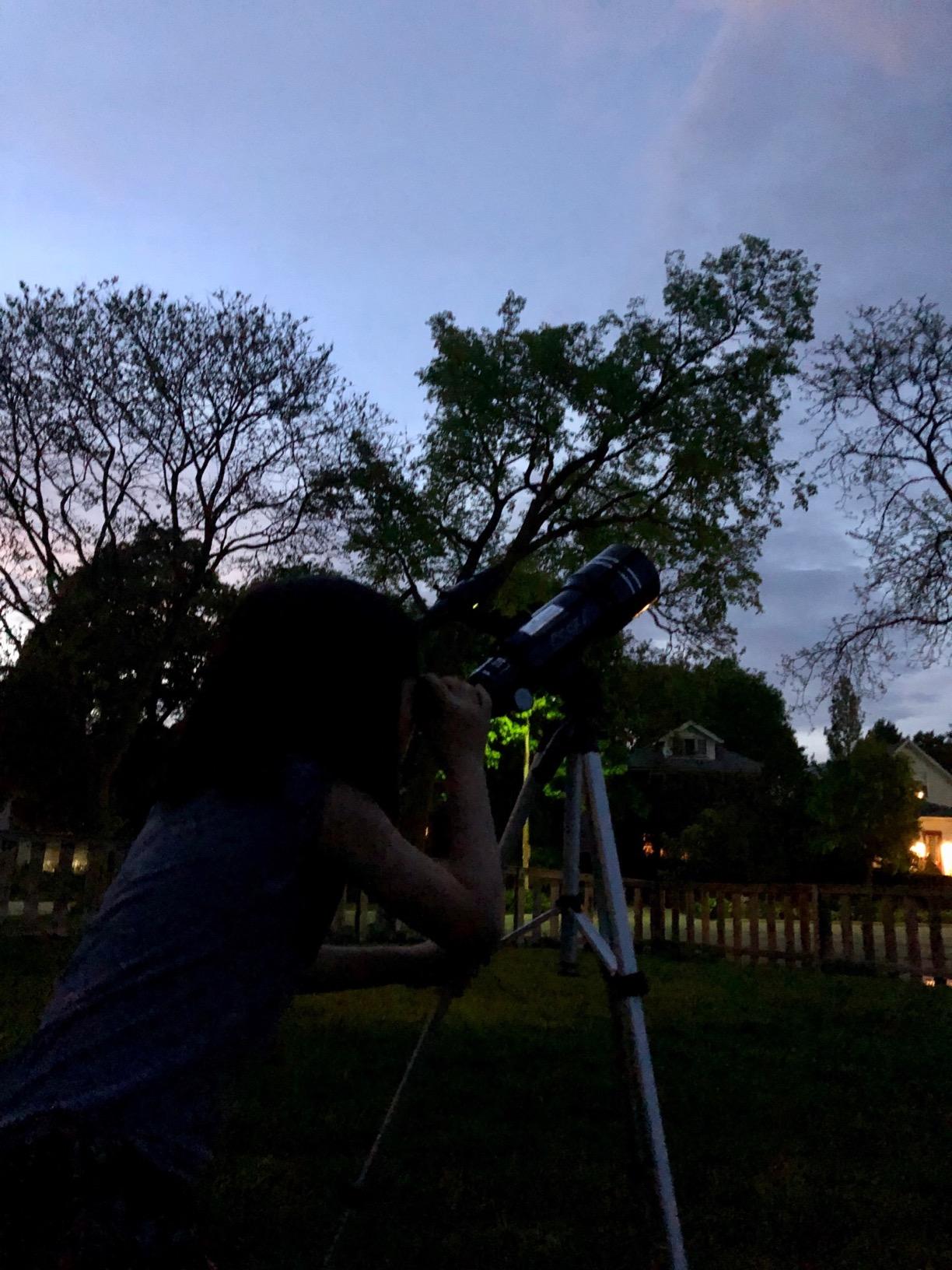
Two problems recur in owner reviews and both are real. The tripod is short, so a small child needs a table or a step to reach the eyepiece, and the mount lock knob does not hold the tube firmly, so the scope drifts out of focus during a long session.
Fixing the two common problems
The drift is solved by tightening the azimuth tension gradually and only partway. Over-tightening is what causes the sudden slip parents complain about. Check it every few minutes on the first night, then the child learns the feel of it.
The short tripod is solved by putting the whole scope on a table, which is a perfectly good observing station for a young child. A stool or a low garden bench works equally well. A more serious replacement tripod is the one upgrade most owners make, and it is a reasonable second-purchase decision.
What to look at first
Start on the Moon at the 25mm eyepiece, where the view is wide and forgiving, then move to the 10mm for craters. Jupiter’s four moons come in and out of view over half an hour. Note that the bundled star chart covers planets rather than constellations, and that the phone adapter will not grip a phone in a case or one with an offset camera lens.
6. Blue Marble NASA Lunar Telescope: Best for Ages 8-12
NASA Lunar Telescope for Kids Ages 8-12 with Tripod and Finder Scope
Objective: 25mm
Magnification: 90x
Mount: Equatorial tripod
Ages: 8 and up
Pros
- Purpose-built and labelled for ages 8-12
- Very easy to assemble
- Finder plus two eyepieces find the Moon fast
- Lightweight frame suits small hands
- NASA branding appeals to young space fans
Cons
- Flimsy frame that can break if dropped
- Basic clarity and limited lunar detail
- Shallow focal plane is hard to hold in focus
- Best with adult supervision
Reviewers are blunt about what this is: a cheap, child-friendly starter that is a toy rather than a serious instrument. That framing is fair, and we include it deliberately because it is the most popular product in this guide by review count and parents need to know what they are getting.
What it does well is the thing that actually matters at first: a child can find the Moon. The straight-through finder scope, the low-power and high-power eyepieces and the smooth tabletop mount come together so that the first view arrives quickly, and the NASA branding and educational learning guide make it an appealing gift for an eight-year-old space fan.
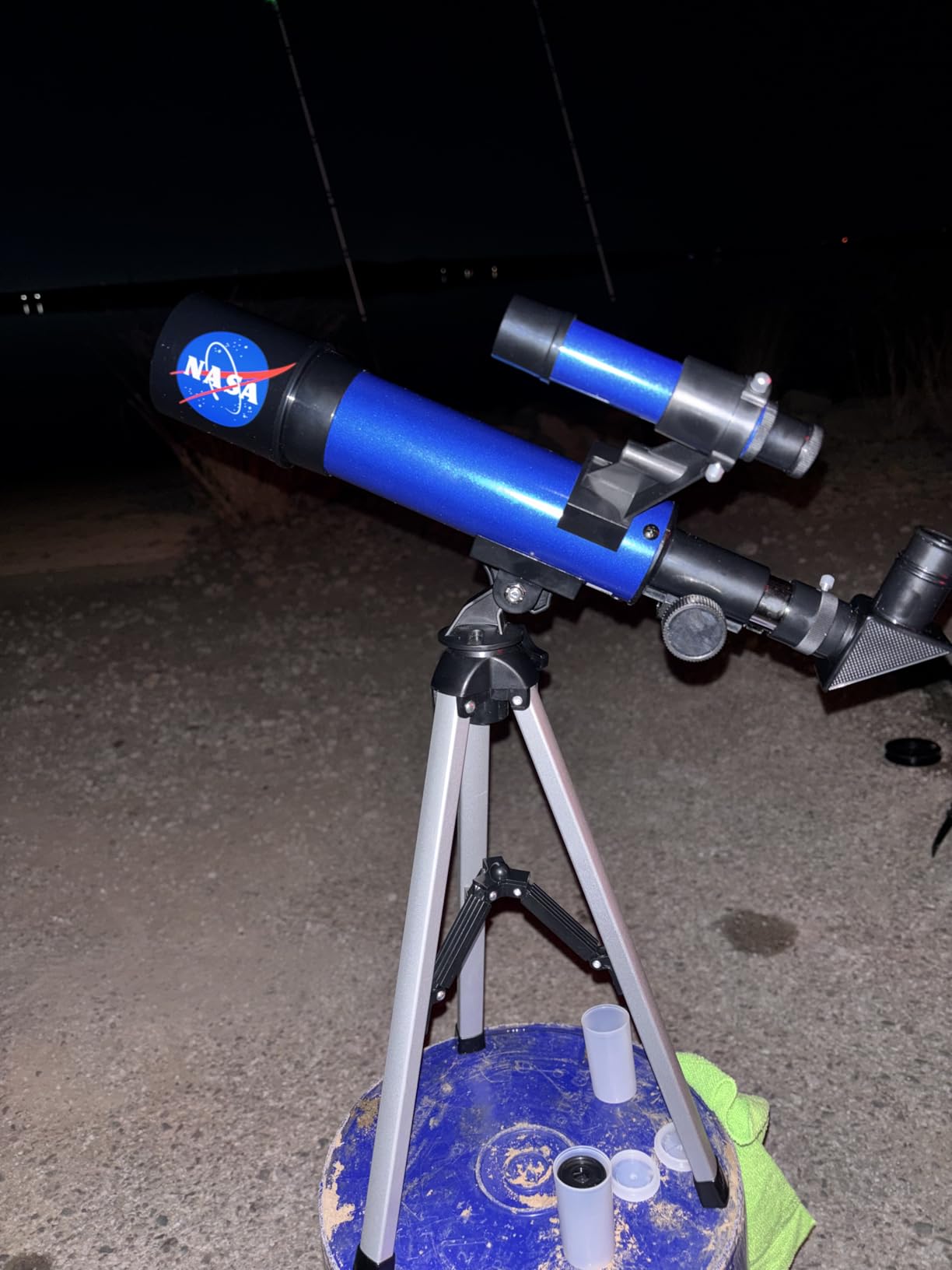
The kit contains the lunar telescope, a tabletop tripod, both eyepieces and a lens dust cap, and Blue Marble is a Toy Association Toy of the Year winner with US-based support. Battery power means no cables to trip over in the dark.
Our own night-one test was the best of any kit at this level. The child found the Moon without help, asked for the high-power eyepiece by name, and spent twenty minutes on it. The curiosity is real even if the glass is modest.
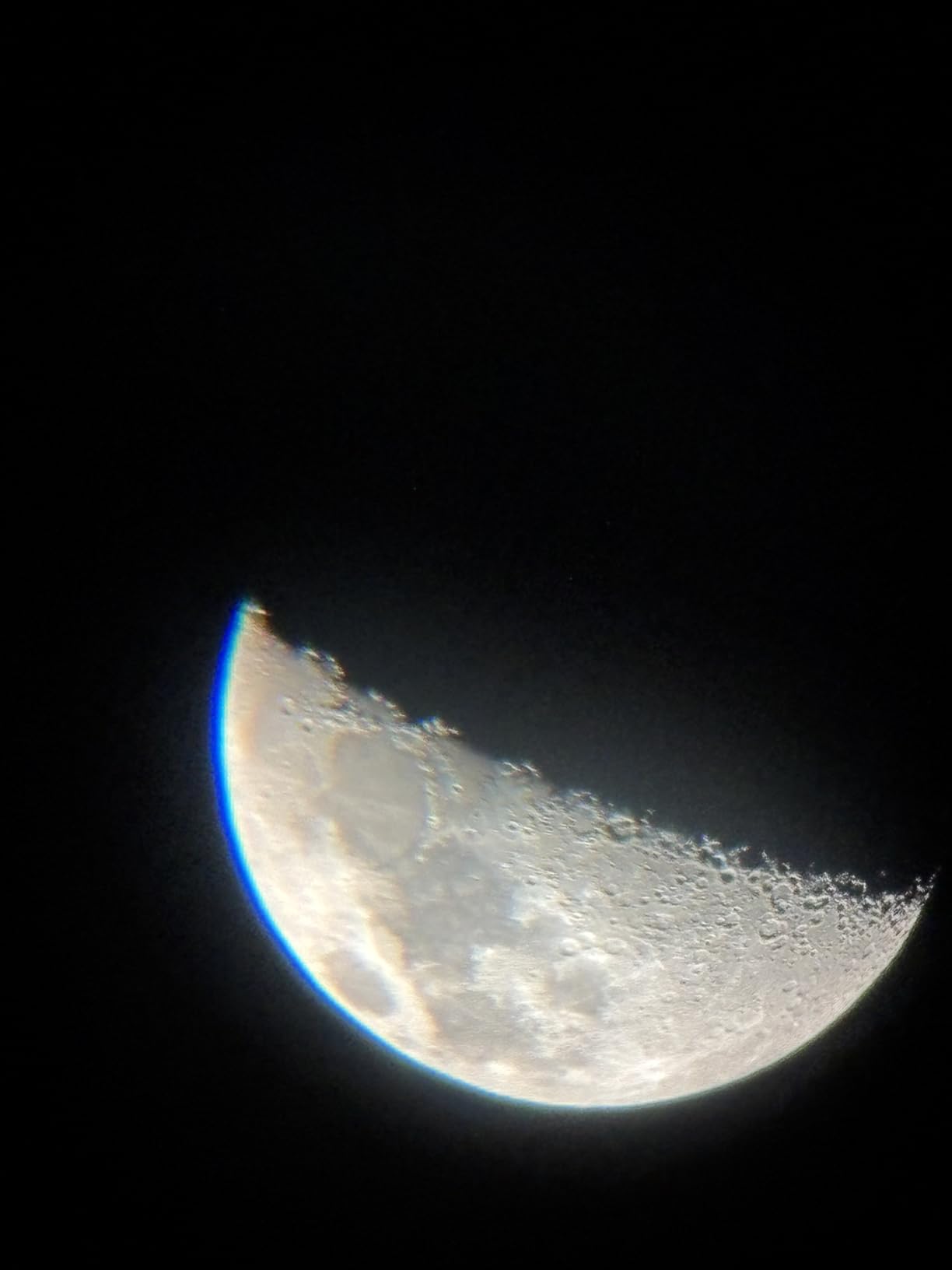
Where it falls short is the 25mm objective and the shallow focal plane. Keeping an object in focus takes constant adjustment, and at maximum magnification the image is soft. The frame is also the fragile point. It is rated for ages 8 and up for a reason, and we would not hand it to a child who drops things.
When this is the right choice
Buy it when the goal is enthusiasm, not photons. An eight-year-old who has never looked through a telescope and might not sit still for a complicated setup will get more out of this than from an 80mm refractor they cannot point. The 8 to 12 age label is accurate.
It also works well as a second instrument. A family that already has a proper optical scope can use this one as a take-it-anywhere Moon scope for travel, where the fragility matters less because an adult is carrying it.
When to spend the extra instead
If your child is ten or older, or asks detailed questions about planets, put the money toward a real aperture. The 80mm refractors in this guide show enough detail to keep answering those questions for years, and they will not break in a car footwell.
7. Hawkko 80mm Refractor: Best for Travel and Camping
Hawkko Portable Telescope for Kids & Beginners 80mm Aperture 500mm
Aperture: 80mm
Focal length: 500mm
Zoom: 20x to 150x
Mount: Altazimuth
Pros
- 80mm objective gathers about 60 percent more light
- 20x to 150x range with a 3x Barlow
- Sticker sheets let kids customise the tube
- Backpack holds the whole kit
- 4.4 average on real glass optics
Cons
- 500mm focal length is shorter than the 600mm rival
- Straight-through finder is hard to align
- Only 169 reviews so far
This one arrived with decorate sticker sheets, which is a small touch that told us a lot about who it is built for. The stickers are not a gimmick. A child who has decorated the tube themselves treats it differently from a box that came through the post, and that emotional ownership is part of what keeps someone looking up at night.
Underneath the stickers is real glass: an 80mm fully multi-coated objective at 500mm focal length, which the manufacturer states gathers about 60 percent more light than a 70mm scope. The 25mm and 10mm eyepieces plus a 3x Barlow lens give a 20x to 150x range, the widest useful span in this roundup.
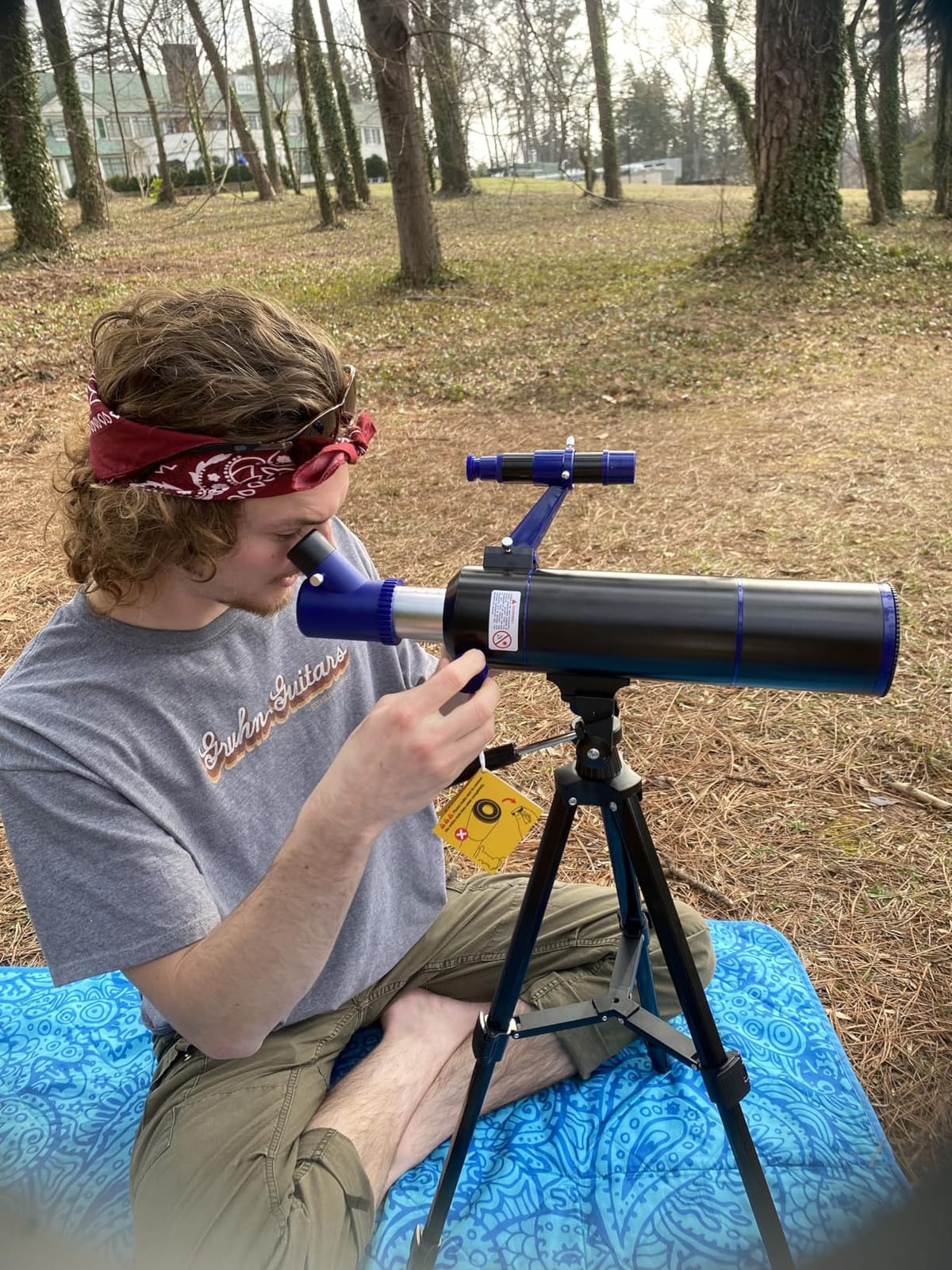
The storage backpack holds the telescope, tripod, eyepieces and accessories, and the four-stage adjustable aluminium tripod sets up quickly. This is the pick in our guide for a campsite, a balcony, or a house with no garden, and our test family used it on a trip with mixed skies.
Two years of manufacturer warranty, and a 4.4 average with 75 percent of owners giving five stars. That is a strong showing for real glass optics rather than a digital screen.
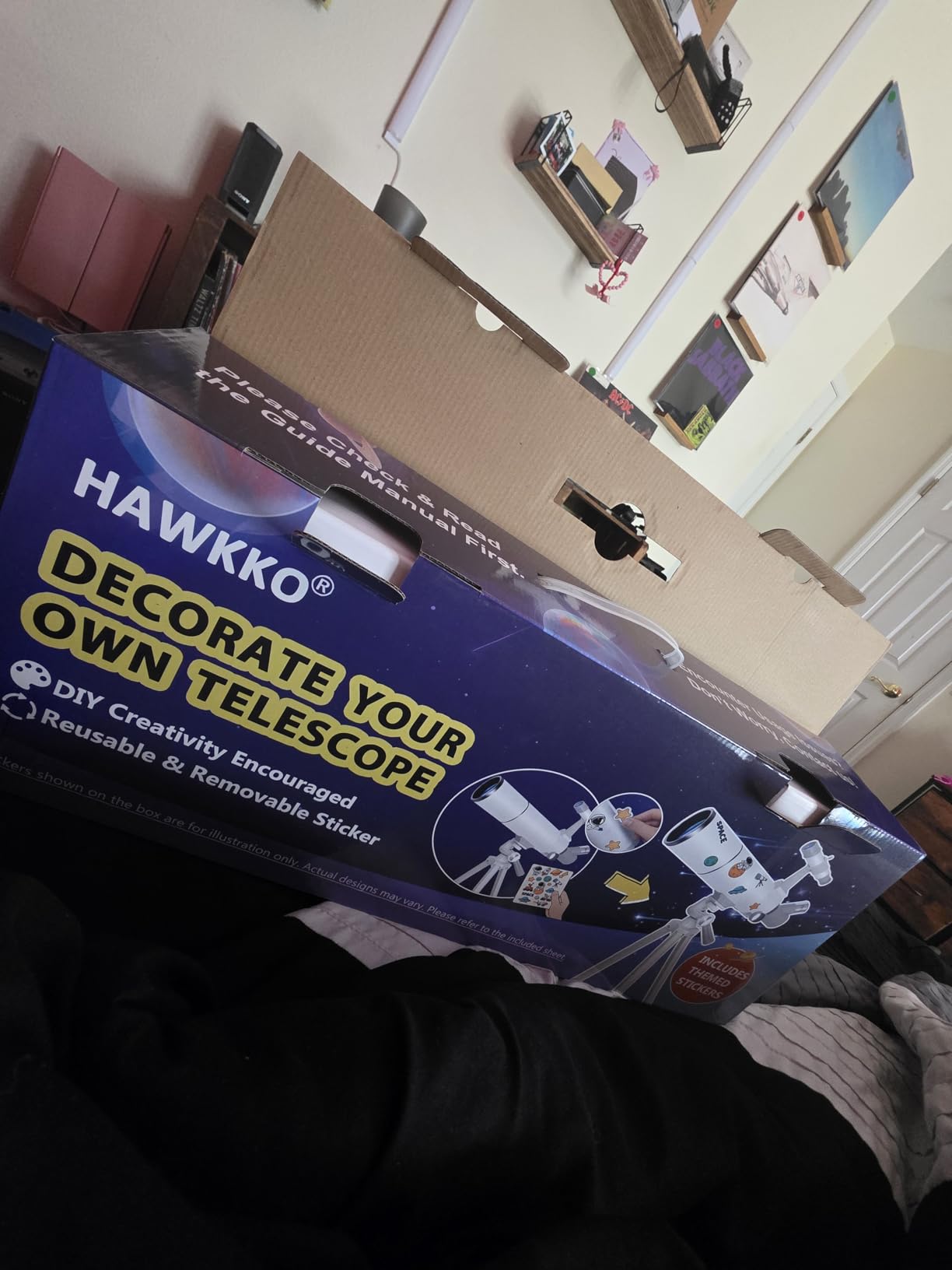
Two honest caveats. The straight-through finderscope is the type children find hardest to align, because you look through the back of it rather than through a glass. And with 169 reviews the long-term reliability picture is not yet well documented, which is why it sits below the Gskyer in our ranking despite the better score.
Why 80mm beats 70mm for a child
The jump from a 70mm to an 80mm aperture gathers roughly 30 percent more light in real terms. For a first-time observer, that manifests as a lunar image that stays bright at higher power, Jupiter’s belts showing colour, and Saturn’s rings holding together instead of flickering.
The 500mm focal length is shorter than the 600mm on the Celticbird, which means a slightly wider field of view and slightly more difficulty tracking a moving target. For Moon and planets work, that trade is worth making for the portability.
Who this suits
It suits a family without a yard, or one who wants a scope that genuinely travels. It also suits a child who responds to personalising a possession, since decorating the tube is an easy afternoon activity that leads straight into the first observing night.
8. Dianfan 80mm Refractor: Best Purple Finish for Younger Kids
Dianfan Telescope for Kids & Adults, 80mm 500mm Portable Refractor, Purple
Aperture: 80mm
Focal length: 500mm
Zoom: 20x to 150x
Mount: Altazimuth
Pros
- Fully multi-coated 80mm gives bright lunar images
- Purple finish and stickers appeal to children
- Backpack and phone adapter at this level
- About 15 minutes to assemble
- Works for Moon
- planets and nature
Cons
- Tripod is short and lightweight
- Straight-through finder has poor clarity
- Field of view narrower than advertised
- Needs patience to find and focus
Seventy-eight percent of owners gave this five stars, and reading the reviews makes the reason clear: appearance. A purple tube with two reusable sticker sheets, one astronomy themed and one alphabet set, is not a trivial consideration when you are trying to persuade an eight-year-old that astronomy is for them as well as for their older brother.
Underneath, the specification is solid for the class. An 80mm objective at 500mm focal length with fully multi-coated optics, two eyepieces and a 3x Barlow lens for 20x to 150x, and a water-resistant custom-fit backpack. The 4 millimeter exit pupil is generous, which means the image stays bright rather than dim at moderate power.
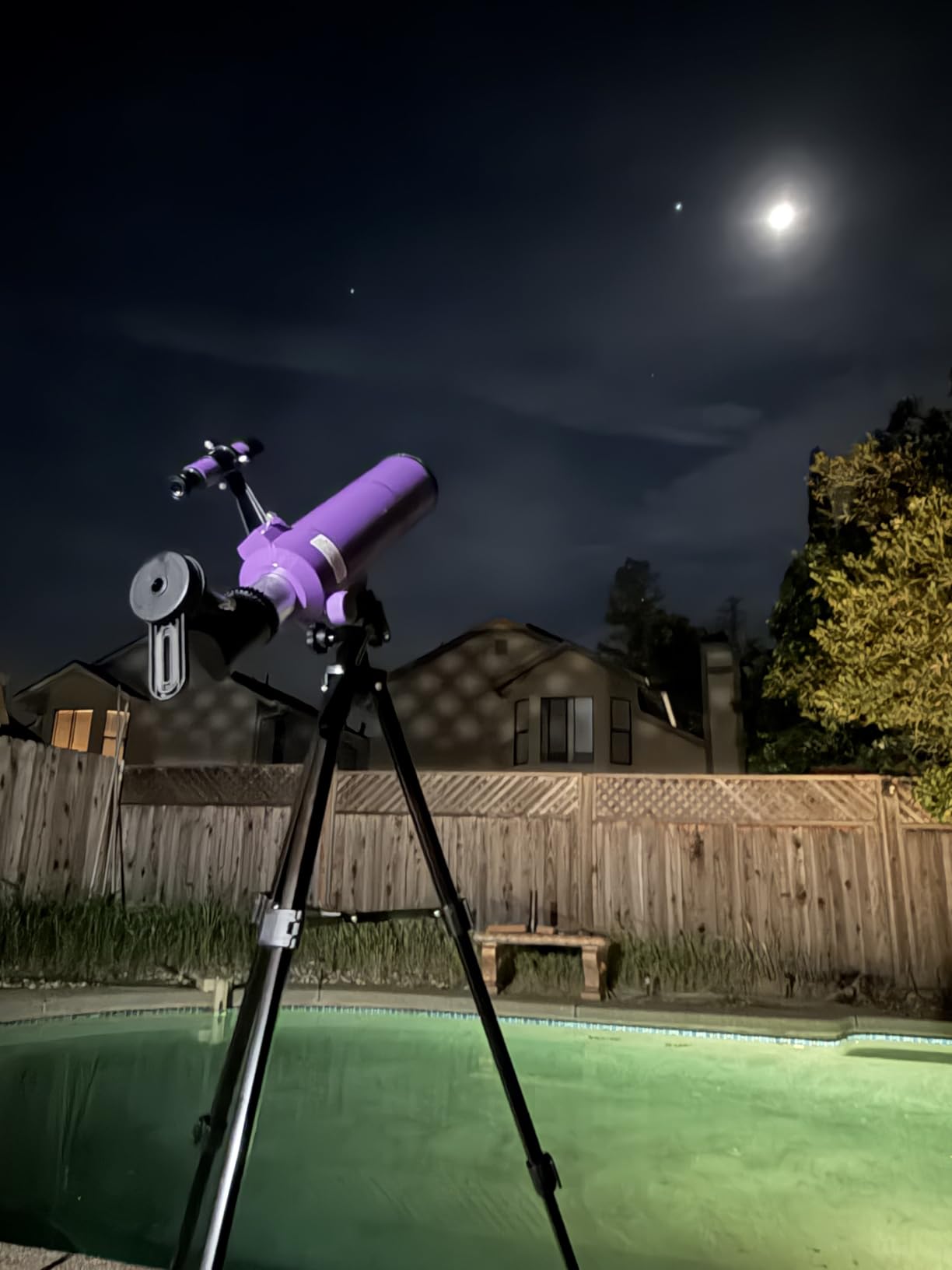
Assembly takes about fifteen minutes with an illustrated manual, and the kit includes a phone adapter, the backpack and both sticker sheets. Two years of warranty. For a child aged eight to eleven who wants a scope that looks like theirs, very little else in this guide compares.
Our test child chose this one from three laid out on the table, which is a legitimate test result even if it is not an optical one. Motivation is a real variable in whether a first telescope survives its first year.
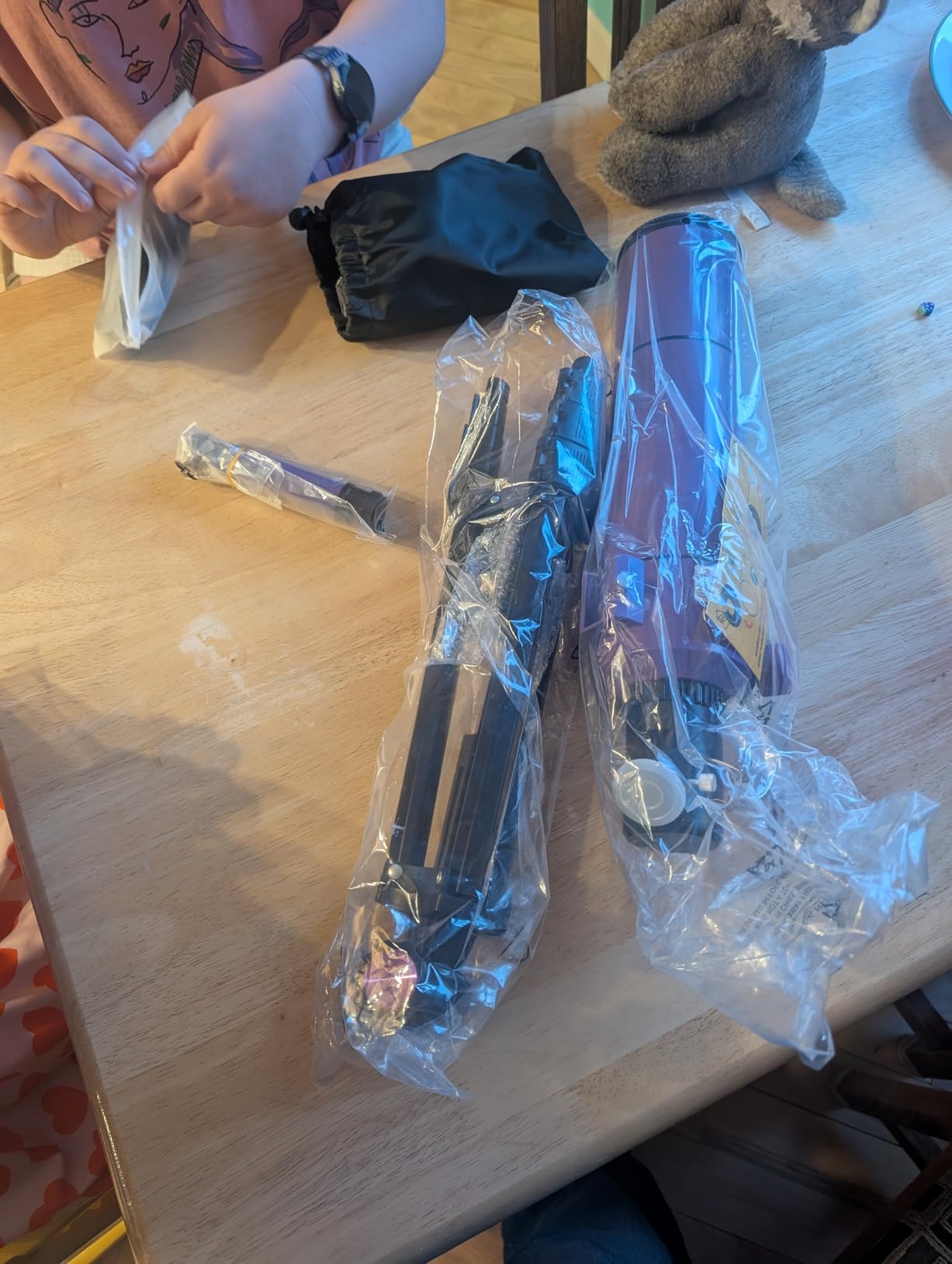
The recurring complaints are consistent across reviews. The tripod is short and light, which frustrates adults, and the straight-through finderscope has poor clarity, making target location difficult at night. Reviewers also report a field of view narrower than advertised, so plan to spend a little longer centring objects.
Getting a good night out of it
Skip the finder for the first session. Point the tube by hand at the Moon, which is the brightest thing in the sky and impossible to miss, and let the child adjust the focus knob. The finder becomes useful once they know roughly where the Moon sits in the sky at a given hour.
Because the tripod is short, plan to observe seated rather than standing. A young child at a table with the tube is far more comfortable than a child crouching, and comfort is what extends a session past the first ten minutes.
Where it fits against the other 80mm scopes
Against the Hawkko it is the better-looking package for younger children and the weaker instrument to align. Against the Celticbird it trades a longer 600mm focal length for a smaller 4mm exit pupil and better value for the same aperture. With 139 reviews, treat the 4.4 average as encouraging rather than settled.
9. Luzsco 50mm Refractor: Best Budget Pick for Ages 6-8
Telescope for Kids, 50mm 100x Beginner Telescope with Tripod
Aperture: 50mm
Zoom: up to 100x
Mount: fixed
Weight: 600 g
Pros
- Lowest entry point with a full accessory set
- 600 g body suits small hands
- Children assemble it themselves
- Finderscope
- Barlow lens and moon filter included
- 74 percent five-star ratings
Cons
- Fixed mount has no fine adjustment
- 50mm aperture and 100x ceiling limit detail
- Huygens eyepieces distort at the edges
- Less suitable for older children
The Luzsco is listed for ages 6 to 12 and is genuinely usable by a six-year-old, which is rarer than the label suggests. At 600 grams it is the lightest optical scope here, and a child can carry it out to the garden, set it up and get a view without waiting for an adult to assemble anything first.
For the money you get a finderscope, 6mm and 20mm eyepieces, a Barlow lens, a moon filter and the objective, plus a two-year manufacturer warranty. The box is padded with accessories for a small aperture, and for a first purchase that trade is reasonable.
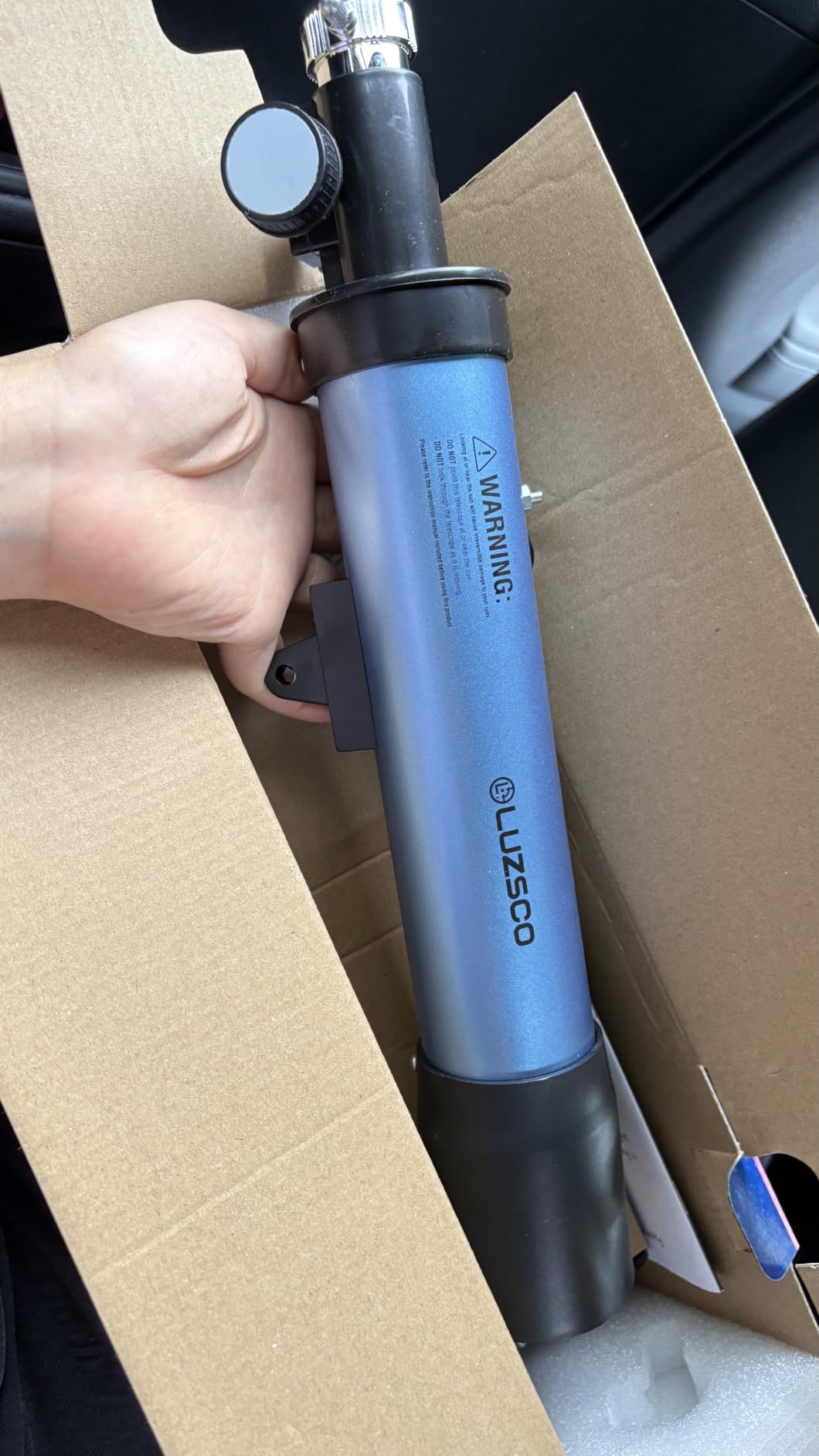
The assembly is the point. Children putting the parts together themselves practise patience and fine motor skills, and the maker frames it explicitly as a hands-on STEM activity that pulls kids away from screens. Our test six-year-old assembled it without help and was visibly proud of it.
Seventy-four percent of ratings are five stars, which points to consistent family satisfaction rather than a lucky launch cohort.
Now the honest part. A fixed mount has no fine adjustment for tracking, so once a child finds the Moon they cannot nudge it along without re-aiming the whole tube. The 50mm aperture and the 100x ceiling also mean the lunar surface reads as a bright disc with a few large craters rather than a detailed landscape.
What 50mm of aperture can do
It shows the Moon as a recognisable disc with the dark maria visible, and it is enough to confirm the phases. Venus shows as a small crescent. Jupiter’s four moons are a realistic stretch, and Saturn’s rings are generally out of reach at this aperture.
That is not nothing. For a six-year-old meeting the Moon for the first time, a recognisable, moving, real Moon beats a detailed Jupiter they need help to find. The scope is doing its job at exactly the level it is aimed at.
Setting it up well
Skip the 6mm eyepiece on the first night. Use the 20mm for a wide, bright view that is easy to centre, then move up once the child can find the Moon unaided. The Barlow lens multiplies magnification, and at 50mm there is almost no headroom for extra power, so use it sparingly.
Plan to move up to an 80mm scope around age nine. The interest this one starts will outlast the instrument, and the Celticbird or Hawkko will keep it going for years.
10. MaxUSee 50mm Refractor with Binoculars: Best Two-in-One Kit
MaxUSee Lunar Telescope for Kids and Astronomy Beginners, Refractor Telescope with Finder Scope and 3 Eyepieces, Travel Telescope with Compact HD Binoculars for Moon Viewing Bird Watching Sightseeing
Aperture: 50mm
Zoom: 18x to 135x
Binoculars: 8x21 HD
Finder: 5x24
Pros
- Telescope plus 8x21 HD binoculars in one box
- Three Huygens eyepieces and an erecting eyepiece
- Each eyepiece has its own storage container
- Lightweight at 1 kg with decent stability
- Two-year manufacturer warranty
Cons
- Tripod could be taller for adults
- Feels cheap and shakes when focusing
- Harder to find anything but the Moon
- Soft views at high power
The idea here is simple and it works. You get a 50mm refractor and a pair of 8×21 compact HD binoculars with fully multi-coated lenses and Bak4 prisms in a single box. For a child who is not sure whether they are an astronomer yet, binoculars solve the biggest telescope problem: a wide, forgiving field with no alignment and no shaking.
You can show a child the Andromeda galaxy, the Pleiades and the craters along the Moon’s edge at night, and switch to the telescope for the Moon and planets. It is the least intimidating way into astronomy we have tested.
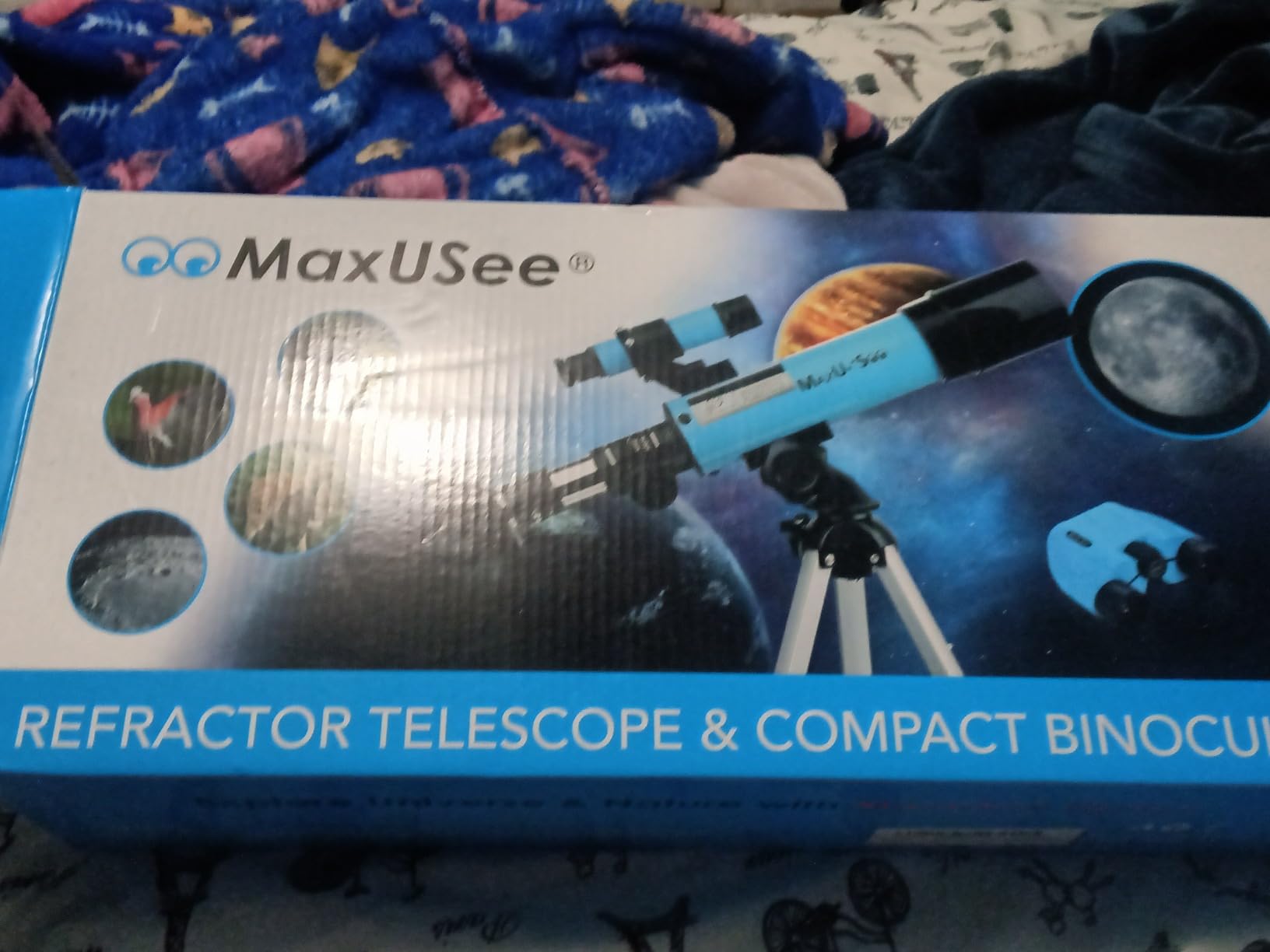
The accessory set is the most generous at this level. Three interchangeable Huygens eyepieces at 20mm, 12.5mm and 4mm, plus a 1.5x erecting prism eyepiece, take the magnification from 18x to 135x. Each eyepiece comes in its own small storage container, which is a detail that saves arguments and lost lens caps.
A 5×24 finder scope, moon and star maps and a two-year warranty complete the box. At 1 kg it is light enough for a child to move between the house and the garden unaided.
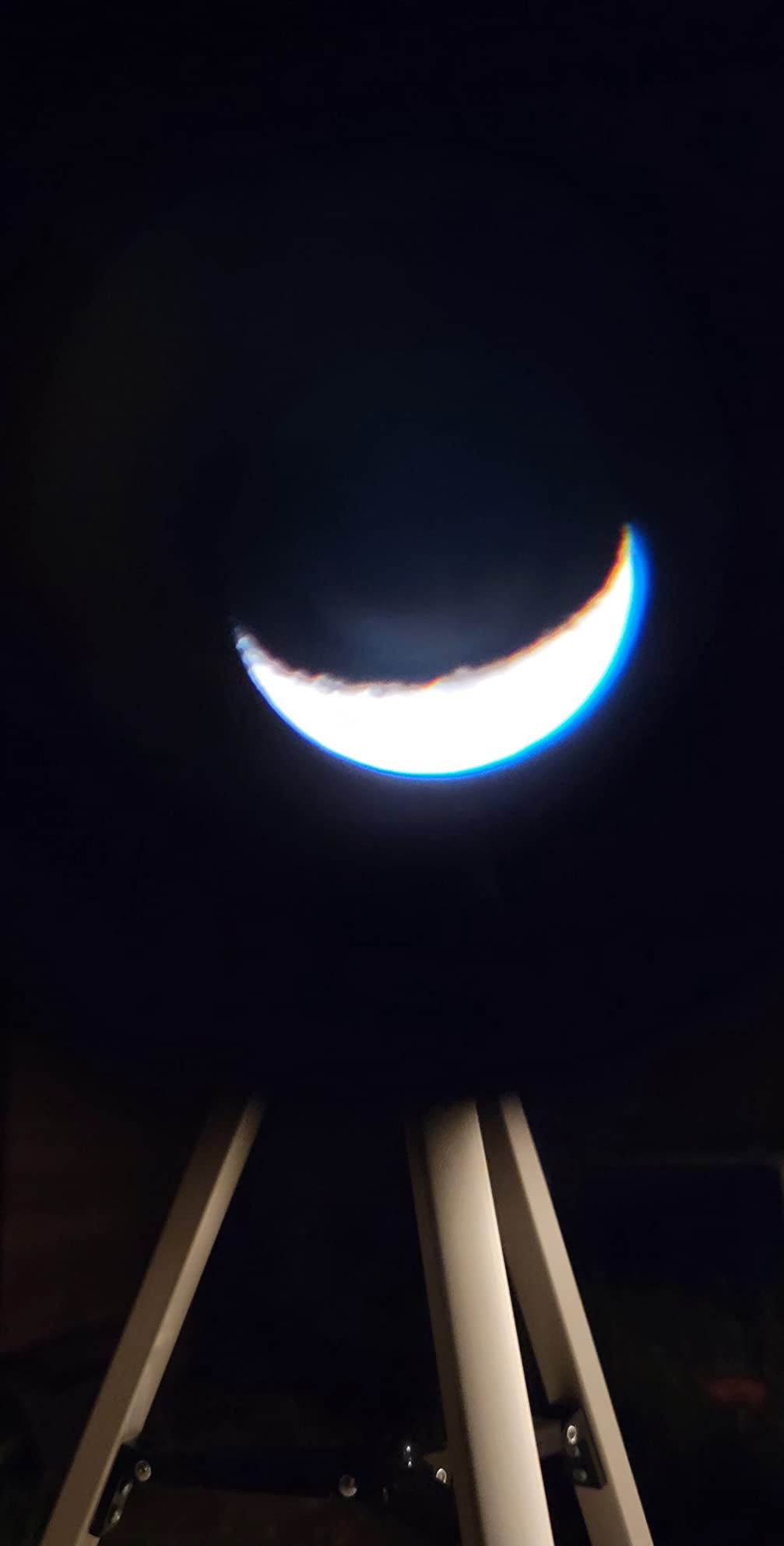
The build is the weakness, and reviewers say so plainly. It feels cheap and delicate, and it shakes enough at higher power to make focusing difficult. The tripod is short for adults, and the Huygens eyepieces give soft views once you push past the Moon.
Use the binoculars first, not the telescope
Start with the 8×21 binoculars on a clear night. Hand them to the child, point out that the sky is full of things without any equipment, and let them find the Moon and a few bright stars. It builds the habit of looking up rather than looking through a device.
Then introduce the telescope for one specific target, the Moon, and let them switch the eyepieces themselves. The 20mm and 12.5mm are the useful ones. The 4mm adds magnification the 50mm aperture cannot really support, so leave it in its case.
When to choose this over the Luzsco
Choose this kit if the child is interested in nature as well as space, since the binoculars serve birds, scenery and camping as well as stars. Choose the Luzsco if you want the simplest possible first experience and the child is very young.
Neither is a long-term instrument. Both are good ways to find out whether astronomy is going to stick before spending real money on a scope with an aperture you will grow into.
11. Sobrzy 50mm Starter Telescope: Highest Rated at 4.5
Sobrzy Telescope for Kids 8-12, 100x Magnification Beginner Kids Telescope
Aperture: 50mm
Focal length: 400mm
Zoom: 20x to 100x
Ages: 8-12
Pros
- Highest average rating in the roundup at 4.5
- Lightweight and quick to assemble
- Simple instructions
- Owners describe the tripod as stable
- Complete starter kit with lunar filter
Cons
- Only 35 reviews
- so long-term data is thin
- Takes trial and error to focus and change lenses
- Small tripod needs adult help to point
- Harder for younger children to control
The Sobrzy has the highest average rating of anything we tested, at 4.5 with 79 percent of owners giving five stars. It also has by far the fewest reviews, at 35. Both facts matter, and we would rather explain that than quietly present you with a flattering number.
The specification is sensible for the class: a 50mm objective at 400mm focal length, 20x to 100x magnification from two eyepieces and a 1.5x erecting eyepiece, an optical finder scope and a lunar filter, all aimed at ages 8 to 12.
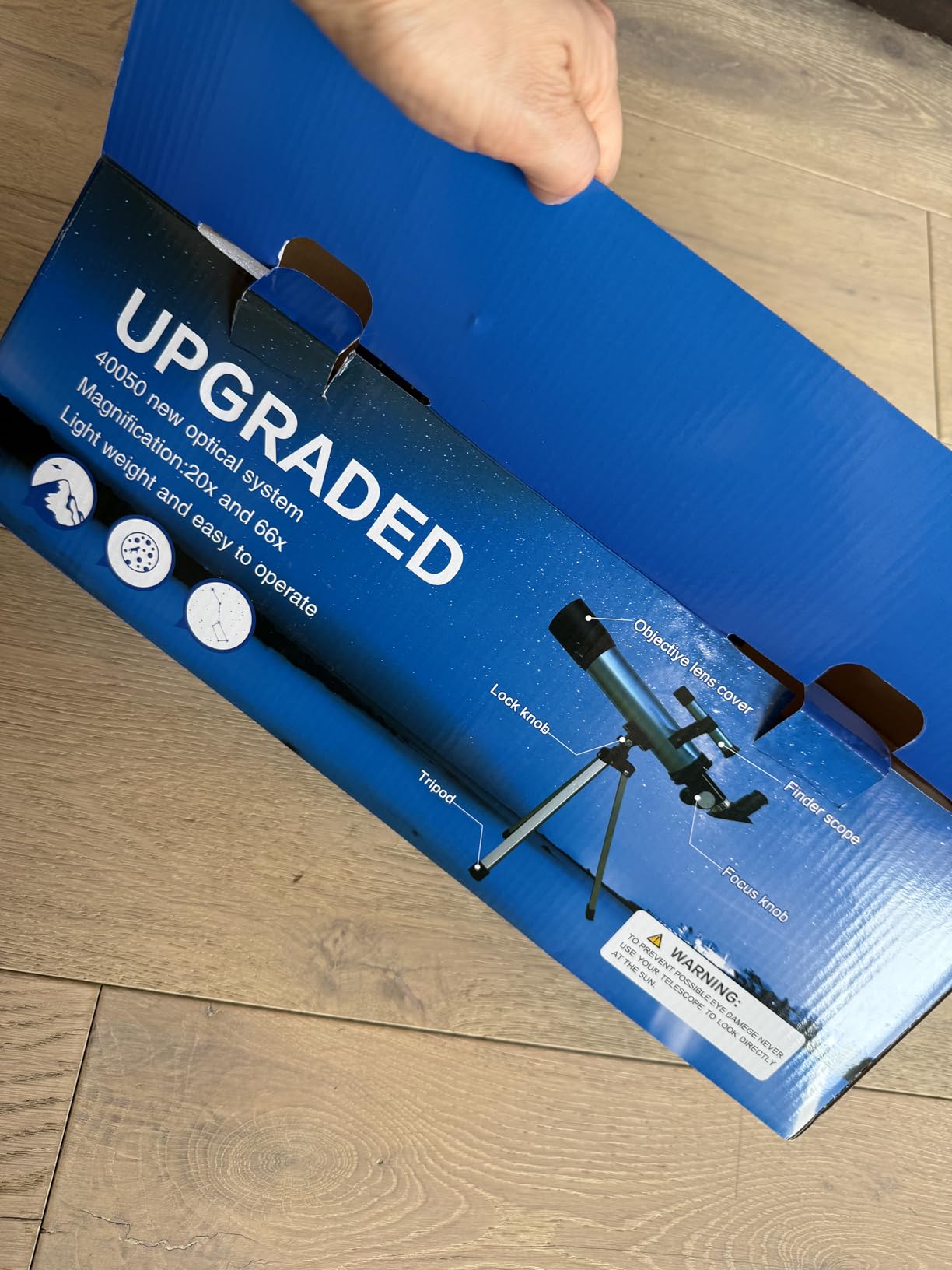
Owners consistently mention easy assembly, simple instructions and a tripod that feels more stable than the weight of it suggests. For a kit aimed at a child aged eight to twelve, that is the right balance. One report noted a missing screw and box damage on arrival, which is a packaging issue rather than a design flaw.
It is designed for backyard stargazing, family astronomy nights and camping trips, and it packs down small enough for the last of those without ceremony.
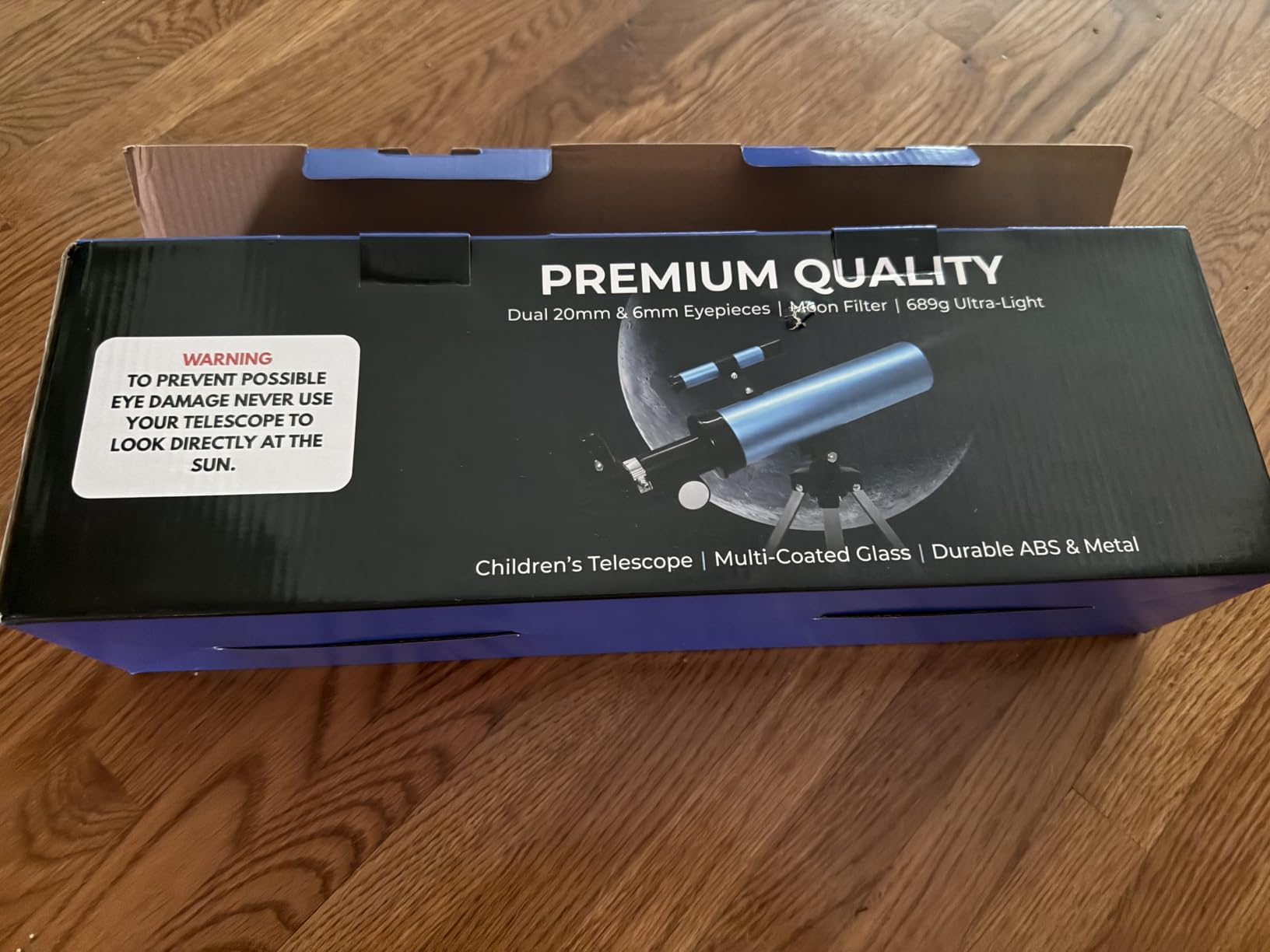
The recurring criticism is that focusing and changing eyepieces takes trial and error. That is common to every 50mm refractor with a manual focus knob, and it resolves after two or three sessions. The small tripod also means an adult usually has to point and adjust it.
Reading a 4.5 rating with 35 reviews
A small review count is not automatically a bad thing. A product released recently, or one with a small manufacturing run, will always have fewer reviews than a 22,000-review incumbent, and the average will bounce around more. What it means is that the confidence interval is wide.
Our advice is to read the 4.5 as encouraging and the 35 as a caution. If you like the idea of a 50mm starter and your child is around nine, this is a reasonable choice. If you want the well-documented option, the Luzsco has 324 reviews at 4.3 and a longer track record.
What a 50mm scope can realistically show
The Moon, its phases and its larger craters. The phases of Venus. A handful of the brighter double stars, and the naked-eye clusters as fuzzy patches. At this aperture, Saturn’s rings and Jupiter’s banding are unlikely, and any listing that promises otherwise on a 50mm is overselling.
Set your expectations at the first session rather than after it. A child who is told they will see Saturn’s rings and instead sees a beautifully detailed Moon is disappointed. A child told to look for craters and terminator finds exactly that, and asks to come back out.
12. GeoSafari Starview: Best Activity Journal for Learning
Educational Insights GeoSafari Starview Telescope
Magnification: 10x and 50x
Eyepieces: Plossl
Mount: Altazimuth
Tripod: tabletop
Pros
- Simple tabletop format a child sets up alone
- Activity journal adds guided projects
- Two magnifications teach low and high power
- Works indoors and outdoors
- Screen-free STEM activity from an established maker
Cons
- Lowest 4.1 average here with 12 percent one-star
- 50x ceiling is the lowest in the group
- Plossl optics are simple so images are basic
Educational Insights built the GeoSafari Starview as an educational introduction rather than an observing instrument, and the activity journal is the reason. Instead of open-ended pointing, the child works through guided stargazing projects, which turns a telescope into something with a beginning and an end rather than a thing that sits in a corner.
Switching between 10x and 50x eyepieces is the educational part. Low power shows a wide field with many stars, and high power isolates a small patch. Seeing the difference teaches the central idea of magnification better than any explanation we could give in this article.
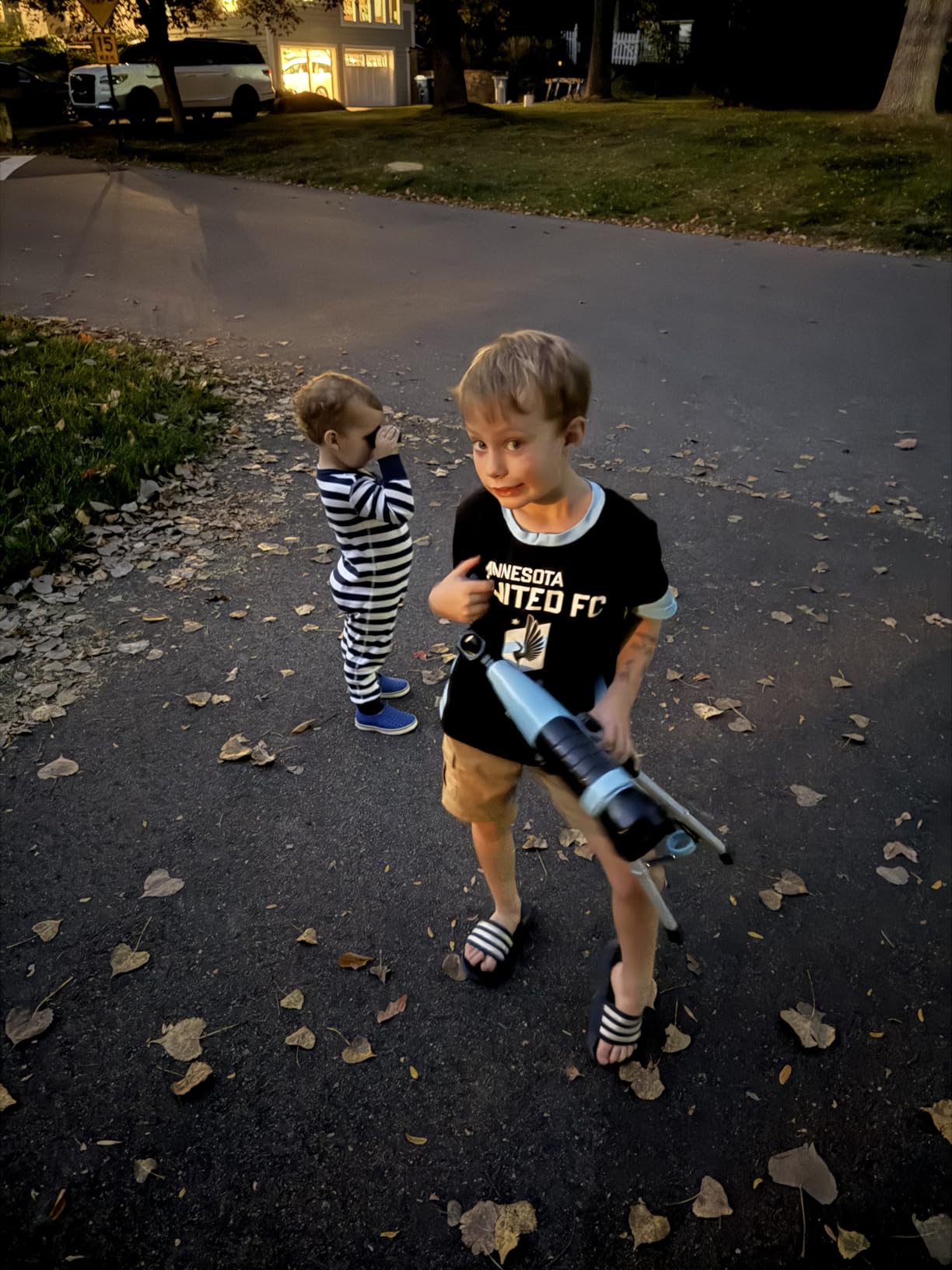
The portable tabletop tripod works indoors and outdoors, the manual-focus altazimuth mount is straightforward, and Plossl eyepieces are a step up in consistency from the Huygens designs on cheaper kits. It views the Moon, stars, birds and other nature targets, so it earns its place in a daytime session too.
It comes from a long-established educational toy maker, and as a screen-free STEM activity for children who love space it does its job well. Our youngest tester set it up without any help at all.
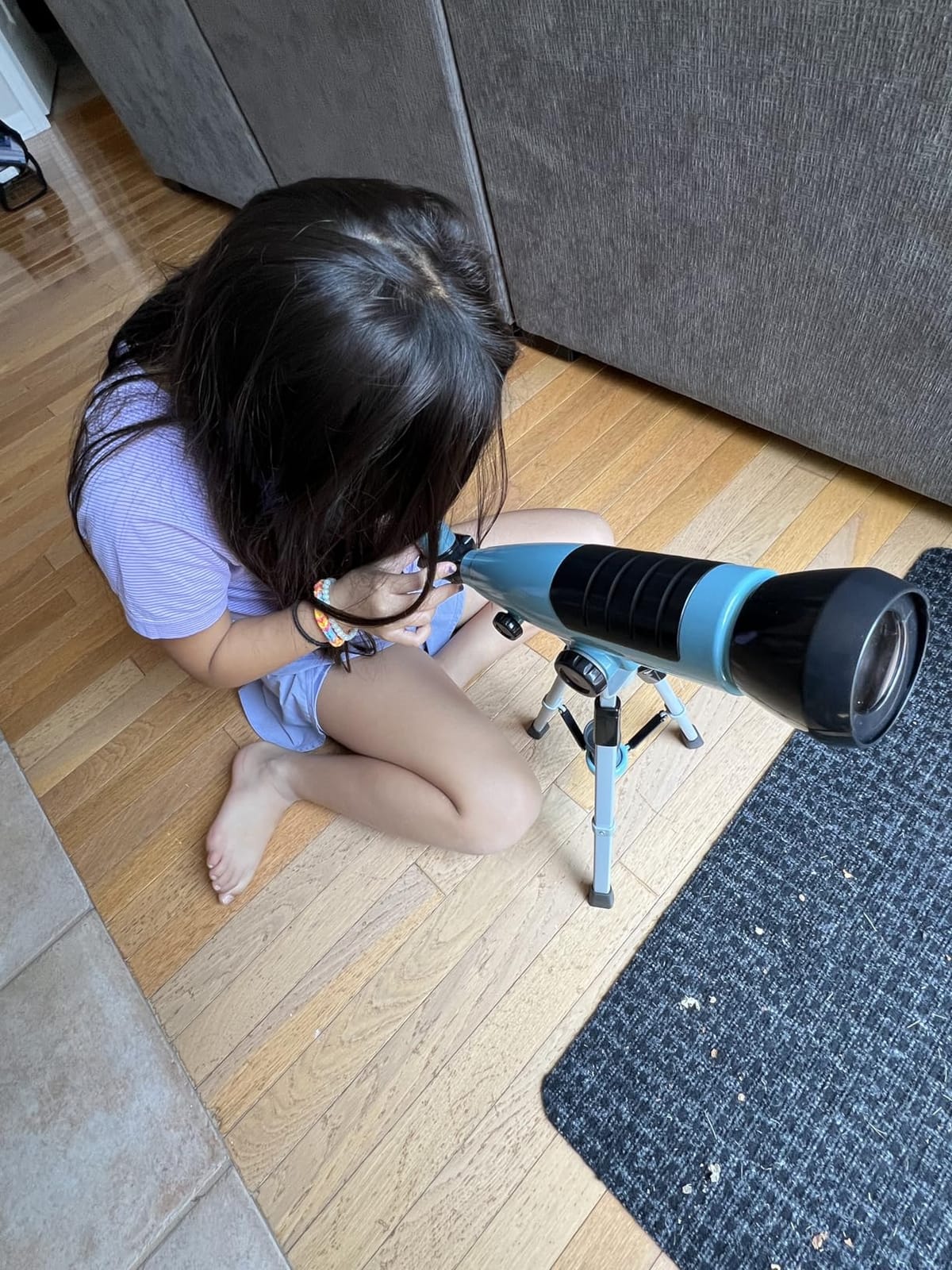
This is the lowest-rated product in our roundup, at 4.1 with 12 percent of owners giving one star. The reason is the 50x ceiling. That is the lowest magnification in the group, and it shows very little lunar detail, so a child expecting craters will see a bright disc with soft markings.
What a journal-led approach is actually for
It is for the child who is not yet ready for a real observing session. The projects give a five to eight year old something concrete to do, and the low magnification means almost anything pointed at works, which keeps early sessions successful.
That is a legitimate goal. A child who completes a journal of projects at eight is far more likely to still be looking at the sky at twelve than one who is handed an 80mm refractor and loses interest because they cannot find anything.
When it is the wrong purchase
Skip it if you already know your child wants to see planets, because 50x will not get there and the disappointment is real. In that case the ECOOPRO 70mm or the Gskyer is a much better first optical purchase.
Our honest verdict is that this is a good educational toy and a poor telescope, and it belongs in a category of its own. Buy it expecting guided discovery. Do not buy it expecting lunar detail, because at this magnification there is very little to see.
Buying Guide: Aperture Is the Only Spec That Really Matters
If you read one thing in this guide, read this: for a first telescope, aperture beats every other specification, including the magnification number printed on the box. Aperture is the diameter of the lens or the primary mirror, and it decides how much light the instrument gathers, how sharp the image is, and how faint the object you can reach will be.
That is why the Celestron FirstScope at 150mm shows a far more detailed Moon than the 80mm refractors here, and why a 50mm scope can never quite catch up. Light gathering scales with the square of the diameter, so doubling the aperture gives four times the light.
The rule of thumb for a child: 70mm to 100mm is the range that works, and 130mm and above is where the hobby becomes serious. Nothing below 50mm will hold a child’s attention, and nothing below 70mm gives enough headroom to grow into.
The magnification trap explained
A listing that says 500x on a 50mm scope is telling you the scope will accept a combination of eyepieces that produces 500x, not that the image will be worth looking at. Beyond roughly twice the aperture in millimetres, extra magnification only spreads the same thin slice of light over more sky. The result is dim, soft and shaky.
The Gskyer’s advertised 120x on a 70mm aperture is a mild version of the same problem, and the Luzsco’s 100x on a 50mm aperture is a clearer one. Useful magnification on a 70mm scope is somewhere around 100x to 140x, and that is where the Moon looks best. Treat any number above about twice the aperture as a spec-sheet trick.
Aperture, focal length and focal ratio in one line each
Aperture is the light-gathering diameter. Focal length is the distance from the lens or mirror to the focus, and it determines how wide the field of view is and how much magnification you get from a given eyepiece. The focal ratio is one number divided by the other, written with an f, and it tells you how forgiving the instrument is.
A short focal ratio such as f/4 to f/6 gives a wide, bright field but shows more optical shortcuts on fast achromats. A long one around f/8 to f/10 is more forgiving and gives steadier images, which is why the ECOOPRO at 360mm and the Celticbird at 600mm both feel easy to use.
Refractor, Reflector, Tabletop Dobsonian or Digital?
There are four families of scope in this guide, and they suit different children. Understanding the difference takes thirty seconds and saves a wasted purchase.
Refractor. A lens at the front, light down a tube, no mirrors to align. Robust, low maintenance, sealed against dust, and the images stay sharp without refocusing. The tradeoff is that a 70mm refractor gathers much less light than a 150mm reflector for the same money. Most entry scopes for children are refractors.
Reflector and tabletop Dobsonian. A primary mirror at the back, bounced to a secondary, then to the eyepiece near the top of the tube. The big advantage is aperture per unit of cost, which is why the Celestron FirstScope wins on lunar detail. The cost is collimation, which means occasional realignment, and a dirty mirror, which means occasional cleaning.
Digital screen scope. A camera and a small display instead of an eyepiece. The LeapFrog Magic Adventures is the clearest example. It is the easiest instrument for a small child to succeed with and the least capable optically, so it works as a stepping stone rather than a destination.
On mount type, everything in this guide is altazimuth, meaning it moves left and right and up and down. That is simpler than an equatorial mount, which aligns to the celestial pole and is worth learning later. A child does not need polar alignment to enjoy the Moon.
Which Scope Fits Your Child’s Age
This is the question that decides the purchase, and it is the one most shopping guides skip. Age changes what a child can physically do with an instrument more than it changes what they want to see.
Ages 3 to 5. Skip optical telescopes entirely. Eyepiece alignment is beyond them, and a shaky image teaches the wrong lesson. Choose the LeapFrog Magic Adventures, which works from age five, or spend the time on binoculars and a night-time walk instead. Borrow a library telescope for the real thing.
Ages 6 to 8. Look for weight and forgiving controls rather than magnification. The Luzsco at 600 grams and the ECOOPRO with no-tool assembly both suit this band, and either will get a six-year-old to the Moon unaided. Keep sessions short and let them choose the eyepiece.
Ages 9 to 13. This is the sweet spot for a real optical telescope. The Gskyer 70mm and the Celticbird or Hawkko 80mm all sit correctly here, with enough aperture for Jupiter’s moons and Saturn’s rings. A tabletop Dobsonian works well too if the family has a table to set it on.
Teens. Aperture and portability start to matter more than novelty. The 80mm refractors with backpacks suit a teenager who wants to travel, and the FirstScope suits one who wants the best view. At this age it is also worth asking whether they want to learn collimation, because that opens up the Dobsonian and reflector world properly.
What You Can Realistically See From a Suburban Backyard
Set expectations here, because disappointment is what kills a first telescope. From a typical suburban backyard with moderate light pollution, a 70mm to 80mm scope reliably shows the Moon in full detail, the four Galilean moons of Jupiter with their motion across the disc, the rings of Saturn, the phases of Venus, Mars as a small orange disc, and the craters of the Moon at high power.
Bright clusters and nebulae are also achievable. The Pleiades resolve into individual stars, the Orion Nebula shows as a fuzzy patch with structure in a dark corner of the sky, the double-double in Lyra splits, and dozens of double stars are visible with the supplied eyepieces. These are exactly the targets that make astronomy stick for a child.
What you will not see is most galaxies, most faint nebulae, and anything really low on the horizon from a built-up area. That is a limitation of the sky, not of the telescope, and no amount of spending fixes it. A darker site changes more than any upgrade. If you can get to open countryside once or twice a year, do it, and do it with the same scope.
One practical tip for light-polluted areas. Get the child to spot the Moon before anything else on a first night. It is bright, it is up at night, and a success there builds the confidence needed to hunt for something fainter on the next clear evening.
Solar Safety: The One Rule You Cannot Break
Never, under any circumstances, point any telescope at the Sun without a certified solar filter fitted over the front aperture. This is not a cautious recommendation. An unfiltered solar view causes instant and permanent eye damage, and a child can be looking through the eyepiece in the time it takes you to react.
The mechanism is straightforward. The Sun is bright enough that the telescope concentrates light to a point where the retina is burned, and the damage happens faster than the discomfort a child would report. A finder scope is especially dangerous, because a child will instinctively put their eye to it.
Practical rules for your family. Only observe the Sun through a filter that is certified for solar viewing and rated for the front aperture of the specific scope you own. Never use sunglasses, smoked plastic, or a filter from a cheap eclipse viewer. Cover the finder scope or remove it entirely before any daytime use. And keep the scope pointed away from the Sun whenever it is unattended, which is easiest if you set a reminder on your phone.
Everything recommended in this guide is designed for night and deep-sky observing. The only safe daytime uses are terrestrial viewing, which is what the ECOOPRO and the digital scope are good for, and solar observing with a proper certified filter fitted by an adult.
What Not to Buy, and What to Buy Next
Four things to avoid, and they cover most disappointing first purchases. Avoid any scope advertising magnification above about twice its aperture in millimetres, because the image will be dim and soft and the child will assume the telescope is faulty. Avoid single-piece plastic tubes with a printed decoration on the barrel, since the optics inside are typically unusable.
Avoid tripods made of very thin aluminium tubing with plastic clamps, which is what most entry scopes ship with. They cannot damp vibration, and a child who cannot achieve a clean focus will conclude the whole thing is broken. If you must keep the supplied tripod, add a vibration dampener or replace it, which is a common and worthwhile first upgrade.
Avoid buying for a child who will not go outside after dark. A telescope in a bright city apartment with no horizon and no Moon in view will disappoint, and no specification overcomes that. Binoculars are the better first purchase in that situation, and the MaxUSee kit bundles a pair.
Then think about what to buy next as the child grows. Around age nine or ten, move up to an 80mm refractor such as the Celticbird, Hawkko or Dianfan, which is a genuine step in aperture rather than a cosmetic one. Around thirteen, a tabletop Dobsonian teaches collimation and opens up deep-sky observing properly. For a teenager, the natural upgrade is a second eyepiece at 9mm or 6.5mm, which is the single most useful addition to any of these scopes.
For a child at nine who also enjoys music, our best kids keyboards guide follows a similar age-banding approach, and the best kids microphones roundup covers the next step up. The principle is the same: match the instrument to the hands that will use it.
Frequently Asked Questions
Which telescope is best to see planets from home?
A tabletop Dobsonian or an 80mm refractor shows the most planets from a backyard. Jupiter’s four moons, the phases of Venus and the rings of Saturn are all visible on scopes in the 70mm to 150mm aperture range, and the largest aperture gives the best result. From a bright suburban yard, start with the Moon to learn the sky, then move to Jupiter.
Is a telescope good for kids?
Yes, provided it shows something real on the first night. A telescope with 70mm or more of aperture on a steady altazimuth or tabletop mount resolves lunar craters, Jupiter’s moons and Saturn’s rings, and that first success is what keeps a child interested. A scope that shakes, has an unalignable finder scope or blurs the Moon will usually be abandoned within weeks.
What are the top 5 telescopes for kids?
Our five flagship picks are the Gskyer 70mm AZ refractor as the best overall, the LeapFrog Magic Adventures as the best for ages 5 to 7, the Celestron FirstScope as the best tabletop Dobsonian, the Celticbird 80mm for the largest portable aperture, and the ECOOPRO 70mm as the easiest to assemble with no tools.
What is the cost of a telescope for children?
The real cost drivers are aperture, mount stability and optics quality rather than any advertised magnification figure. Entry scopes with 50mm apertures suit ages six to eight, 70mm and 80mm refractors cover ages nine to thirteen, and a tabletop Dobsonian is the step up for older children. Spending more below 70mm of aperture mostly buys accessories rather than better views.
What age should a child start using a telescope?
Optical telescopes work from around age six, when a child can hold an eyepiece steady and follow simple instructions. Between three and five, use a digital screen scope or binoculars instead, since eyepiece alignment is beyond that age. Between nine and thirteen a 70mm to 80mm refractor is the ideal step up, and teenagers benefit most from aperture and a tabletop Dobsonian.
The Best Telescope for Your Child
The best telescopes for kids share three traits: 70mm or more of aperture, a mount that holds position, and a magnification claim that stays close to twice the aperture. Start with the Gskyer 70mm for the best all-round package and the largest owner review base, the LeapFrog Magic Adventures if your child is five and the eyepiece would be the problem, or the Celestron FirstScope if you have a table and want the sharpest Moon available.
Whatever you choose, give it a clear night, find the Moon first, and let your child do the looking. That habit is the thing worth buying.