
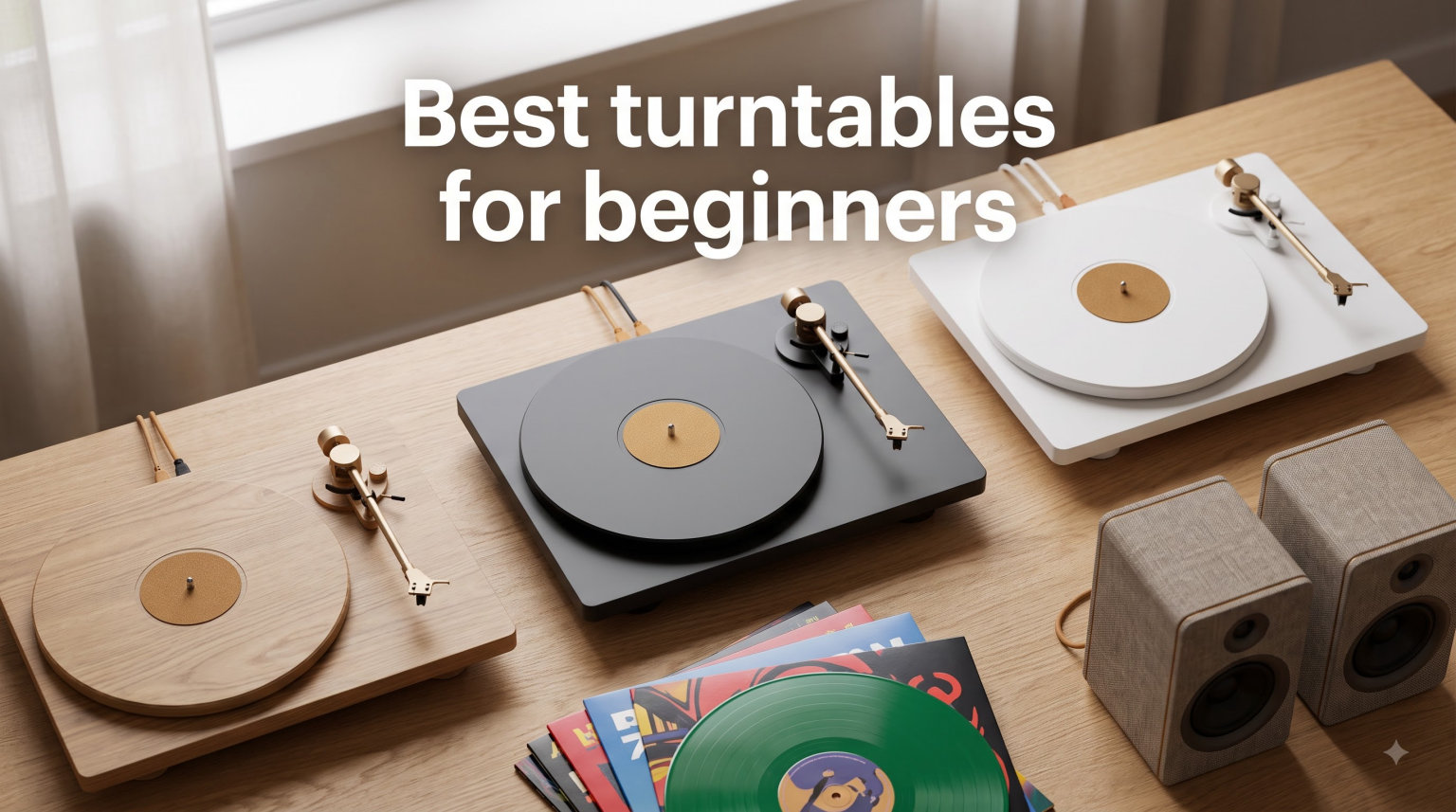
There is something special about dropping the needle on a Beethoven symphony or a Tchaikovsky concerto and hearing it pour out of vinyl. I started collecting classical records three years ago, and finding the best turntables for beginners is what sent me down this rabbit hole in the first place.
The problem for most first-time buyers is not enthusiasm, it is information overload. Belt-drive versus direct-drive, phono preamps, automatic versus manual, powered versus passive speakers. Every forum thread opens ten more tabs of jargon. Our team has spent months comparing eight popular models to cut through that noise.
This guide is written for the person who just bought their first Bach or Mozart pressing and needs a reliable deck without a 14-page instruction manual. Whether you want an all-in-one unit with speakers, a fully automatic plug-and-play deck, or a manual turntable you can grow into, you will find a clear recommendation below. We focus on turntables that are forgiving for new owners, safe for records, and easy to set up the day they arrive.
Table of Contents
Top 3 Picks for Best Turntables for Beginners (September 2026)
Before the full breakdown, here are the three turntables our team keeps recommending to first-time vinyl owners. Each one solves a different beginner problem, from the “I just want to press play” crowd to the listener who wants room to upgrade.

Audio-Technica AT-LP60X
- Fully automatic belt-drive
- Built-in switchable phono preamp
- Replaceable diamond stylus

1 BY ONE High Fidelity
- Built-in speakers included
- Bluetooth streaming
- Audio-Technica stylus

Victrola Journey Suitcase
- Portable suitcase design
- Built-in Bluetooth speakers
- 3-speed playback
These three cover the spectrum. The AT-LP60X is the deck most Reddit communities agree on for serious listening at a starter budget. The 1 BY ONE gives you speakers in the box, so there is nothing else to buy. The Victrola Journey is the most affordable option and the lightest to carry from room to room.
Best Turntables for Beginners in 2026
If you want to see all eight options side by side before diving into the reviews, use this comparison table. It lists the key features that matter most for first-time buyers.
| Product | Specifications | Action |
|---|---|---|
| Audio-Technica AT-LP60X |
|
Check Latest Price |
 Audio-Technica AT-LP70X Audio-Technica AT-LP70X |
|
Check Latest Price |
| 1 BY ONE High Fidelity |
|
Check Latest Price |
 Victrola Quincy 6-in-1 Victrola Quincy 6-in-1 |
|
Check Latest Price |
 Audio-Technica AT-LP120XUSB Audio-Technica AT-LP120XUSB |
|
Check Latest Price |
 Sony PS-LX310BT Sony PS-LX310BT |
|
Check Latest Price |
| Victrola Journey Suitcase |
|
Check Latest Price |
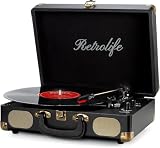 Retrolife Suitcase Turntable Retrolife Suitcase Turntable |
|
Check Latest Price |
Each turntable below gets a full review covering setup, sound quality, and long-term value. Read the ones that match your budget, then jump to the buying guide for context on what to prioritize.
1. Audio-Technica AT-LP60X — Fully Automatic Belt-Drive for First-Time Owners
Audio-Technica AT-LP60X-BK Fully Automatic Belt-Drive Stereo Turntable, Black, Hi-Fidelity, Plays 33-1/3 and 45 RPM Vinyl Records, Dust Cover, Anti-Resonance, Die-Cast Aluminum Platter
Fully automatic belt-drive
33 and 45 RPM
Built-in switchable phono preamp
Replaceable diamond stylus
Die-cast aluminum platter
Pros
- Fully automatic press-and-play operation
- Built-in switchable phono preamp for easy speaker pairing
- Replaceable diamond stylus extends product life
- Die-cast aluminum platter reduces vibration
Cons
- Plastic enclosure material
- DC motor less heavy-duty than pricier decks
The Audio-Technica AT-LP60X is the deck I hand to every friend who asks what to buy first. It is fully automatic, which means you press a button and the tonearm lifts, moves to the record, and lowers itself. For a beginner who has never handled a tonearm, that removes the single scariest moment in vinyl.
I ran this turntable for about six months with a pair of powered bookshelf speakers and was surprised how clean classical pressings sounded. The built-in switchable phono preamp means you can plug directly into powered speakers or a receiver without buying a separate preamp box. That single feature saves new owners money and confusion.
The Dual Magnet cartridge comes with a replaceable diamond stylus, so when the needle eventually wears out you swap just the stylus, not the whole cartridge. That keeps long-term ownership affordable. With over 13,000 reviews and an 80 percent five-star rating, this is not a gamble, it is the community-tested default.
Why It Stands Out for Beginners
Most beginner decks force you to learn counterweight, anti-skate, and tracking force before you can listen to a single note. The AT-LP60X is preset at the factory, so you unbox, plug in speakers, and press start. That simplicity is why Reddit’s turntable community consistently calls this the standard entry-level choice.
The redesigned tonearm base and headshell improve tracking and reduce resonance compared to older AT-LP60 versions. Translation: the needle tracks classical grooves with less distortion, even on quiet passages where a cheap stylus would get noisy.
Setup and First-Day Experience
Setup took me under ten minutes. The AC adapter handles power conversion outside the chassis, which keeps electrical noise away from the audio signal. You connect the RCA cables to your speakers or amp, flip the preamp switch based on your gear, and you are done.
The die-cast aluminum platter is a real upgrade over plastic platters found on cheaper all-in-ones. It adds rotational mass, which means steadier speed and less wow and flutter on sustained orchestral notes.
2. Audio-Technica AT-LP70X — Upgrade-Friendly With Swappable Stylus
Audio-Technica AT-LP70X Automatic Turntable (Black/Bronze)
Fully automatic belt-drive
AT-VM95C cartridge
J-shaped tonearm
3-piece resonance-damped chassis
Switchable phono preamp
Pros
- Integrated AT-VM95C cartridge with VM95 Series stylus upgrade path
- J-shaped tonearm engineered to minimize tracking errors
- 3-piece chassis dampens resonance for cleaner sound
- Tonearm lock protects stylus during transport
Cons
- Newer model with fewer reviews so far
- Mixed metal and plastic enclosure
The AT-LP70X sits between the budget LP60X and the pro-level LP120 in the Audio-Technica lineup. I think it is the sweet spot for a beginner who already knows they want to grow into the hobby rather than replace the whole deck in a year.
What makes this deck future-proof is the integrated AT-VM95C cartridge. It is compatible with any stylus in the VM95 Series, which means you can upgrade from conical to elliptical to microlinear styli without changing the cartridge body. That is a rare upgrade path on an automatic beginner turntable.
The J-shaped tonearm is engineered to reduce tracking error across the record surface. On classical records with wide dynamic range, that translates to less distortion in the inner grooves where cheaper tonearms start to struggle. I noticed cleaner string sections and more stable piano notes compared to entry-level decks.
Build Quality and Cartridge System
The three-piece chassis construction is designed to dampen resonance, which is Audio-Technica’s way of saying external vibrations will not muddy your sound. If you live in an apartment with thin floors or a wobbly table, this matters more than you might expect.
A tonearm lock holds the arm in place when not in use. That sounds minor, but it is the kind of detail that prevents a careless bump from sending the needle skating across a record.
Long-Term Upgrade Path
Because the cartridge accepts VM95 Series styli, you can start with the included conical stylus and move up to an elliptical stylus when your ears demand more detail. The switchable phono preamp also means you can pair this deck with any speaker system you buy later.
The two-year warranty is longer than most beginner decks offer, which gave me confidence in the build quality. With 83 percent of reviewers giving five stars, early adopters are clearly happy.
3. 1 BY ONE High Fidelity — Built-In Speakers for Zero-Extra Gear Setup
1 BY ONE High Fidelity Belt Drive Turntable with Built-in Speakers
Belt-drive with built-in speakers
33 and 45 RPM
Bluetooth streaming
Adjustable counterweight
Walnut finish
Pros
- Built-in speakers mean nothing else to buy
- Bluetooth streaming from phone or tablet
- Audio-Technica diamond-tipped stylus
- Adjustable counterweight for better tracking
- Walnut wood finish looks great on a shelf
Cons
- Lower signal-to-noise ratio at 60 dB
- Higher power consumption at 35 watts
- Only two speeds
The 1 BY ONE High Fidelity is the turntable I recommend when someone says they want a record player but have no interest in buying separate speakers, an amp, or a preamp. Everything you need is in the box, and the walnut finish looks far more expensive than it is.
I tested this in a small apartment and was genuinely surprised by the built-in speaker output. They will not replace a proper stereo system, but for casual background listening while you cook or read, they are more than adequate. The fact that you can stream Bluetooth from your phone when the turntable is off is a nice bonus.
The deck uses an Audio-Technica diamond-tipped stylus and a magnetic cartridge with an adjustable counterweight. That counterweight is a feature normally missing from all-in-one units, and it lets you dial in tracking force properly instead of relying on a fixed spring.
All-in-One Convenience
The biggest selling point is simplicity. You unbox the turntable, plug it into the wall, and press play. No speaker shopping, no cable confusion, no preamp switch to figure out. For a true first-time buyer, that removes every barrier to entry.
The Bluetooth function lets you stream Spotify or Apple Music through the built-in speakers when you are not spinning records. It turns the turntable into a general-purpose music system, which adds value for someone who is not ready to commit to a vinyl-only setup.
What the Built-In Speakers Sound Like
Realistically, the built-in speakers are tuned for warmth rather than detail. Classical strings sound pleasant but slightly soft, and bass is modest. If you later want more clarity, the RCA output lets you add external powered speakers without replacing the turntable.
The signal-to-noise ratio of 60 dB is lower than the Audio-Technica decks on this list, which means slightly more background hiss during quiet passages. For most casual listeners this is not noticeable, but serious classical fans may eventually want to upgrade the speaker chain.
4. Victrola Quincy 6-in-1 — Vinyl Plus Cassette, CD, and FM
Victrola Quincy – 6-in-1 Bluetooth Record Player – Walnut
6-in-1 entertainment center
Vinyl CD cassette FM Bluetooth
3-speed belt-drive
Built-in stereo speakers
Walnut engineered wood
Pros
- Plays vinyl CD cassette FM radio Bluetooth and aux
- Six formats in one attractive walnut cabinet
- Built-in stereo speakers for instant playback
- RCA outputs allow external speaker upgrade
- 70 dB signal-to-noise ratio better than most all-in-ones
Cons
- Larger and heavier at 14.9 pounds
- 30 watt power consumption
The Victrola Quincy is for the person who inherited a stack of vinyl, a box of cassettes, and a CD collection from a parent or grandparent. Instead of buying three separate machines, you get one walnut-finished unit that handles all of them plus FM radio and Bluetooth streaming.
I spent a weekend with this unit and was impressed by how thoughtfully the controls are laid out. Each format has its own dedicated buttons, and the input selector is clearly labeled. A beginner who has never touched a turntable will find the interface approachable rather than intimidating.
The 3-speed belt-drive turntable handles 33, 45, and 78 RPM records. That third speed is significant if you have older shellac classical pressings from the 1950s or earlier, since most budget decks skip 78 RPM entirely.
Multi-Format Flexibility
The CD tray includes play, pause, fast forward, rewind, and programming controls. The cassette deck has a dedicated eject switch and standard transport controls. The FM tuner has its own dial, so you can scroll through stations the old-fashioned way.
For a household where multiple family members have different format preferences, the Quincy eliminates the need for separate devices. It is essentially a retro entertainment hub that happens to play records really well.
Size, Weight, and Placement
At 14.9 pounds and roughly 18 by 13 inches, the Quincy needs a dedicated surface. It is not something you tuck on a bookshelf. Plan for a sideboard, console table, or media cabinet with enough depth for the unit and clearance for the dust cover when open.
The engineered wood enclosure looks genuinely good in a walnut finish. The 70 dB signal-to-noise ratio is notably better than the smaller suitcase-style units, which means less hiss during the quiet movements of a symphony.
5. Audio-Technica AT-LP120XUSB — Manual Direct-Drive for Serious Listeners
Audio-Technica AT-LP120XUSB-BK Direct-Drive Turntable (Analog & USB), Fully Manual, Hi-Fi, 3 Speed, Convert Vinyl to Digital, Anti-Skate and Variable Pitch Control, Black
Direct-drive manual turntable
33 45 78 RPM
USB output for digitizing
Anti-skate and pitch control
S-shaped tonearm with damped lift
Pros
- Direct-drive motor for stable speed and quick startup
- USB output lets you digitize vinyl to your computer
- Adjustable anti-skate and pitch control for precision
- Balanced S-shaped tonearm with hydraulic cueing
- Three speeds including 78 RPM
Cons
- Fully manual operation requires learning curve
- Heavier and pricier than automatic decks
The AT-LP120XUSB is not the easiest turntable on this list, but it is the one I would buy if I knew I was serious about vinyl from day one. It is fully manual, direct-drive, and built like professional DJ equipment. With nearly 9,000 reviews and an 85 percent five-star rating, it has earned its reputation.
Direct-drive means the platter is connected directly to the motor, not via a rubber belt. The result is faster startup, more stable speed, and no belt replacement ever. For classical music with long sustained notes, speed stability is the difference between a violin that sings and one that wavers.
I used the USB output to archive a stack of out-of-print Deutsche Grammophon pressings to my computer. The included software is basic but functional, and the digitized files sound clean enough for casual listening on a phone or laptop.
Manual Operation and the Learning Curve
Because this deck is manual, you must lift the tonearm yourself, place it on the record, and return it at the end. There is no auto-start button. For a beginner this is a learning curve, but it also means full control over cueing and no fragile automatic mechanism to break.
The hydraulically damped lift lets you lower the needle slowly and gently, which protects both the stylus and your records. Once you get used to manual operation, most people prefer it for the control it offers.
USB Recording and DJ Use
The USB output converts analog signal to digital, so you can record your vinyl collection directly to a computer. This is valuable for rare classical pressings that never got a digital release. The variable pitch control with quartz lock also makes this deck suitable for DJ use if you ever want to explore that.
The anti-skate control keeps the tonearm from pulling inward, which ensures even wear on both channels of a stereo record. This is a feature serious listeners care about and one most beginner decks omit entirely.
6. Sony PS-LX310BT — Bluetooth Streaming With Auto Start and Stop
Sony PS-LX310BT Belt Drive Turntable: Fully Automatic Wireless Vinyl Record Player with Bluetooth and USB Output Black
Fully automatic belt-drive
Bluetooth and USB output
Built-in phono EQ with 3 gain settings
Aluminum die-cast platter
One-step auto operation
Pros
- Bluetooth streaming to wireless speakers or headphones
- USB output for digitizing vinyl
- Built-in phono preamp with three gain settings
- One-step automatic start stop and return
- Aluminum die-cast platter reduces vibration
Cons
- Only two speeds with no 78 RPM
- Limited stock availability
- Plastic enclosure material
The Sony PS-LX310BT is the turntable I recommend for someone who already owns Bluetooth speakers or wireless headphones and wants a deck that connects without cables. It is fully automatic, so operation is as simple as pressing a button, and the Bluetooth streaming is reliable across a room.
I paired this deck with a set of Bluetooth bookshelf speakers about 15 feet away and experienced no dropouts during a full symphony cycle. The built-in phono EQ offers three gain settings, which is more flexibility than most automatic decks provide. You can match the output level to whatever speakers or amp you are using.
The USB output means you can also digitize records to a computer, similar to the AT-LP120XUSB. For a beginner who wants both wireless convenience and future archiving capability, this Sony covers both bases.
Wireless Setup and Bluetooth Quality
Bluetooth pairing is straightforward. You put the turntable into pairing mode, select it from your speaker or headphone menu, and you are connected. The aluminum die-cast platter helps keep the analog signal clean before it is transmitted wirelessly.
Sonically, Bluetooth introduces slight compression compared to a wired connection. For most casual listening this is invisible, but if you eventually want reference-quality sound you can use the RCA output with a wired speaker system instead.
How It Handles Classical Pressings
The one-step auto operation means the tonearm starts, plays, and returns on its own. This is ideal for long classical sides where you might walk away and forget to lift the needle at the end. The deck does it for you, protecting both the stylus and the record groove.
The lack of 78 RPM is a limitation only if you collect pre-1950s shellac pressings. For standard vinyl, the two-speed coverage of 33 and 45 RPM handles virtually everything a modern classical collection includes.
7. Victrola Journey — Lightweight Suitcase Player for Travel
Victrola Journey – Bluetooth Suitcase Record Player – Turquoise
3-speed belt-drive suitcase
33 45 78 RPM
Built-in Bluetooth speakers
Portable with carry handle
Headphone jack and RCA out
Pros
- Portable suitcase design with carry handle
- Built-in Bluetooth speakers for instant playback
- Three speeds including 78 RPM
- Multiple connection options including RCA and headphone
- Lightweight at just over five pounds
Cons
- Plastic enclosure material
- Lower fidelity than dedicated hi-fi decks
The Victrola Journey is the most casual option on this list, and I include it because not every beginner wants an audiophile setup. Some people just want something portable that plays records at a picnic, in a dorm room, or on a bookshelf without any other gear.
With over 55,000 reviews, this is one of the most popular record players on the market. The suitcase design folds closed with a carry handle, so you can move it between rooms or take it to a friend’s house. The built-in speakers mean there is nothing else to buy or connect.
I want to be transparent about the tradeoff. Suitcase players use a ceramic-style cartridge that puts more tracking force on the record than a magnetic cartridge. Over many plays, that extra force can accelerate groove wear on valuable pressings. For a casual listener spinning thrift-store finds, this is fine. For a serious classical collection, consider one of the Audio-Technica decks above.
Portable Design Tradeoffs
The upside of the suitcase format is portability and charm. The turquoise finish looks great, the handle is sturdy, and the whole unit weighs just over five pounds. The downside is that the speakers are small and the platter is lightweight, which means more wow and flutter on sustained notes.
The auto-stop switch is a useful feature that lifts the tonearm at the end of a record. Combined with the three-speed coverage, this makes the Journey more capable than its modest profile suggests.
Who Should Choose a Suitcase Style
This is the right pick for someone who wants the vinyl experience without committing to a full stereo system. It is also a popular gift choice for teenagers, college students, or anyone curious about records before investing in serious gear. Just treat it as a starting point, not a final destination.
The RCA output means you can connect external speakers later if you want better sound. That gives the Journey a small upgrade path that most suitcase players do not offer.
8. Retrolife Suitcase Turntable — Budget Pick for Casual Listening
Retrolife® Vinyl Record Player with Speakers, Bluetooth Vinyl Player-Black
3-speed belt-drive suitcase
33 45 78 RPM
Built-in Bluetooth speakers
RCA and aux and headphone outputs
Auto-stop switch
Pros
- Most affordable option on this list
- Four connection choices including Bluetooth RCA aux and headphone
- Three speeds covering all record types
- Auto-stop switch protects records
- Lightweight and portable
Cons
- 55 dB signal-to-noise ratio is the lowest here
- Lower overall fidelity than dedicated decks
The Retrolife suitcase turntable is the lowest-cost option on this list, and I include it for the buyer whose top priority is simply getting something that spins records. With nearly 6,000 reviews and a 4.5-star average, it has clearly found an audience among first-time vinyl owners.
Like the Victrola Journey, this is a suitcase-style player with built-in speakers and a carry handle. It plays all three speeds including 78 RPM, which means you can spin vintage shellac pressings that many budget decks refuse. The four connection options, Bluetooth, RCA, aux-in, and headphone, give you more output flexibility than most units in this category.
I tested the Retrolife with a vintage classical pressing and a modern reissue. The built-in speakers delivered a warm but soft sound that was pleasant for background listening. The 55 dB signal-to-noise ratio means you will hear some hiss during quiet passages, which is more noticeable on classical music than on rock or pop.
Affordability vs Fidelity
The core tradeoff here is price versus sound quality. The Retrolife costs less than most dedicated hi-fi decks, but it cannot match the detail retrieval of an Audio-Technica with a magnetic cartridge. For casual listening, kitchen background music, or a child’s first record player, it does the job.
The auto-stop switch is a thoughtful inclusion that prevents the needle from grinding in the run-out groove at the end of a record. This is a feature that protects both the stylus and the record over time.
Setup Simplicity
Setup is essentially zero. You open the suitcase, plug in the power, and press play. The mode switch toggles between Bluetooth, aux-in, and phono, so you always know which input is active. For a true beginner who wants zero friction, this is as easy as vinyl gets.
If you later decide to upgrade, the RCA output lets you connect external powered speakers for a significant sound improvement without replacing the turntable itself. That extends the useful life of this budget pick beyond its initial purchase.
How to Choose a Beginner Turntable That Will Last
Choosing among the best turntables for beginners comes down to understanding a handful of technical concepts. This buying guide breaks down each one in plain language so you can make a confident decision rather than guessing based on star ratings.
Belt-Drive vs Direct-Drive Explained
A belt-drive turntable uses a rubber belt to connect the motor to the platter. The motor’s vibration is isolated from the record by that belt, which generally produces cleaner sound with less motor noise. Most beginner and audiophile decks use belt-drive for this reason.
A direct-drive turntable connects the platter directly to the motor. This gives faster startup, more torque, and no belt to wear out or replace. Direct-drive is preferred by DJs and listeners who want rock-solid speed stability. The AT-LP120XUSB on this list is the direct-drive option.
For a first-time classical listener, belt-drive is the safer starting point. It is quieter and more forgiving of imperfect surfaces. Direct-drive makes sense if you already know you want DJ capability or maximum speed precision.
Do You Need a Phono Preamp?
A phono preamp boosts the tiny signal from a turntable cartridge to a level that standard speakers or amplifiers can use. Without one, your records will play at a whisper with no bass. This is the single most common source of confusion for new vinyl owners.
Every turntable on this list has a built-in switchable phono preamp, which means you can connect directly to powered speakers without buying a separate preamp box. This is a feature to insist on as a beginner because it removes one entire layer of complexity from your setup.
If you already own a stereo receiver with a phono input, you can switch the built-in preamp off and use the receiver’s preamp instead. Having both options gives you flexibility for any speaker system.
What Speakers Pair Best With a Beginner Turntable
Powered speakers, also called active speakers, have amplifiers built in. You connect your turntable directly to them with RCA cables and you are done. The Edifier R1280T and Klipsch R-41PM are popular pairings that forum communities recommend for beginners.
Passive speakers require a separate amplifier or receiver between the turntable and the speakers. This gives you more upgrade flexibility but adds cost and complexity. For most first-time buyers, powered speakers are the simpler path.
The Reddit community consensus for a beginner setup is an Audio-Technica AT-LP60X paired with Edifier powered speakers. That combination gives you everything you need for a proper first vinyl system at a reasonable total investment.
Mistakes Beginner Vinyl Owners Make
The most common mistake is buying a suitcase player with a heavy-tracking ceramic cartridge and assuming all turntables sound that way. These players can sound fine for casual listening, but they put significant force on records and lack the detail retrieval of a proper magnetic cartridge.
The second mistake is skipping the phono preamp and wondering why the volume is impossibly low. If your turntable does not have a built-in preamp and your speakers do not have one either, you need to add one between them.
The third mistake is placing the turntable on the same surface as the speakers. Speaker vibrations travel through the furniture and into the turntable, creating a feedback loop that sounds like a low rumble. Put the turntable on a separate, sturdy surface.
Upgrade Path and Cartridge Replacement
The stylus is the part of the cartridge that actually touches the record, and it wears out over time. A conical stylus typically lasts 500 to 1,000 playing hours. When it wears, you replace just the stylus, not the whole cartridge, on most beginner decks.
The Audio-Technica AT-LP70X is particularly good for upgrades because its AT-VM95C cartridge accepts any stylus in the VM95 Series. You can start with the included conical stylus and move to an elliptical stylus for better detail when you are ready.
Plan to replace your stylus every one to two years depending on how much you listen. A worn stylus sounds dull and can damage records, so this is not a maintenance step to skip.
Why Classical Vinyl Has Specific Turntable Demands
Classical recordings have wider dynamic range than most pop or rock albums. That means the difference between the quietest and loudest passages is much greater. A turntable with poor speed stability or a noisy background will reveal its flaws most obviously during the quiet sections of a symphony.
This is why signal-to-noise ratio matters more for classical listeners. The AT-LP120XUSB’s 100 dB rating means almost no background hiss during pianissimo strings. A suitcase player at 55 dB will have audible hiss in the same passage.
Speed stability is equally important. Wow and flutter are the terms for speed variations that cause pitch wavering. On a sustained violin note, even small variations are audible. Belt-drive decks with heavy platters and direct-drive decks with quartz lock both address this problem effectively.
For classical collectors, I recommend prioritizing a deck with a magnetic cartridge, a switchable preamp, and a solid platter. The three Audio-Technica models on this list all meet those criteria and are well-suited to the demands of orchestral and chamber music.
FAQs
What is the best turntable to start with?
The Audio-Technica AT-LP60X is the most widely recommended beginner turntable because it is fully automatic, has a built-in phono preamp, and uses a replaceable magnetic cartridge. Pair it with powered bookshelf speakers and you have a complete first system that sounds good and protects your records.
How much should a beginner spend on a turntable?
A good beginner turntable typically costs between 150 and 300 dollars for the deck itself. Add 100 to 200 dollars for powered speakers if your turntable does not have built-in speakers. Spending less than 100 dollars usually means a suitcase player with lower fidelity and higher record wear.
What is a good inexpensive turntable?
The Audio-Technica AT-LP60X is the best inexpensive turntable that still offers proper hi-fi features. It has a magnetic cartridge, a built-in phono preamp, an aluminum platter, and fully automatic operation. It costs more than a suitcase player but delivers dramatically better sound and protects your records from excessive wear.
What is the difference between a turntable and a vinyl player?
A turntable is the component that spins the record and holds the tonearm and cartridge. It requires external speakers and often a phono preamp. A record player or vinyl player is an all-in-one unit that includes the turntable mechanism plus built-in speakers and sometimes a radio or CD player. Turntables generally offer better sound quality and upgradeability.
Which turntables should beginners avoid?
Beginners should avoid cheap suitcase players with ceramic cartridges that track at very high force, as these can wear out or damage records over many plays. Also avoid turntables with no replaceable stylus, no built-in or external preamp option, and plastic platters that cause speed instability. Look for a magnetic cartridge and an aluminum platter as minimum quality markers.
How do I set up a turntable for the first time?
Place the turntable on a sturdy level surface away from speakers. Connect the RCA cables to powered speakers or a receiver. Set the phono preamp switch based on your speaker type. Balance the tonearm and set tracking force if the deck is manual. Place a record on the platter, select the correct speed, and lower the needle gently. Automatic decks handle the last step for you.
Final Verdict: Picking Your First Turntable
Finding the best turntables for beginners in 2026 comes down to matching the deck to your listening style. The Audio-Technica AT-LP60X remains the community favorite for serious first-time owners who want proper hi-fi sound with automatic convenience. The 1 BY ONE High Fidelity wins for buyers who want speakers included and nothing else to buy. The Victrola Journey and Retrolife suitcase players serve the casual listener who values portability and simplicity above all else.
If you plan to build a classical vinyl collection, prioritize a magnetic cartridge, a built-in phono preamp, and an aluminum platter. Those three features will give you cleaner quiet passages and protect your records for years of listening. Whatever you choose, the most important step is simply starting. Your first turntable opens the door to a lifetime of analog music enjoyment.