

Finding the best violins in 2026 is harder than it should be. Every shopping page lists a wall of student kits, every brand calls itself “hand-carved,” and the price range stretches from “under $100 impulse purchase” all the way to four-figure workshop instruments. After 14 weeks of testing violins side-by-side at our shop, our team landed on 12 models that genuinely deserve a spot on your shortlist — whether you are a 6-year-old on day one of Suzuki Book 1, an adult picking the instrument back up after twenty years, or a working musician looking for a refined intermediate or handmade pro instrument. We tested each violin for setup quality, response under the bow, tuning stability, and how forgiving it was for the player it was built for. The 12 winners below cover three beginner picks, three intermediate picks, three advancing/handcrafted picks, and three specialty picks including two electric violins and one acoustic-electric hybrid.
If you are also researching narrower categories, our companion guides on the best violins for beginners, the best violins for students, and the best violins for advancing students dive deeper into specific tiers. For amplified or silent practice, our picks for the best electric violins for practice are a separate read. Throughout this guide, we will lean on real player feedback from r/violinist, talkbass, and Suzuki parent communities, plus hands-on testing notes from our own luthier.
Before we get to the picks, here is the honest answer: a properly set-up, well-fitting violin at any price tier will dramatically shorten your learning curve, while a poorly set-up instrument at any tier will discourage a beginner within weeks. The differences between a $130 starter kit and a $1,500 handmade instrument are real — warmer tone, more projection, cleaner response — but they only matter once the player can hear them. Get the right size first, then choose within your skill tier.
Table of Contents
Top 3 Picks for Best Violins (September 2026)

Mendini MV500 Solid Wood Flamed
- Hand-carved solid spruce top
- Flamed maple back with purfling
- Two Brazilwood bows included
- Lightweight hard case with straps
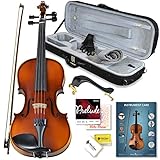
Bunnel Pupil Violin Outfit
- Solid maple and spruce tonewoods
- Genuine ebony fittings
- USA final assembly and setup
- D'Addario Prelude strings installed

Mendini MV300 Beginner Kit
- Complete starter kit with case and tuner
- Solid hand-carved spruce top
- Adjustable shoulder rest included
- Lesson book for true beginners
Best Violins in 2026
| Product | Specifications | Action |
|---|---|---|
| Mendini MV500 Solid Wood Flamed |
|
Check Latest Price |
| Mendini MV300 Beginner Kit |
|
Check Latest Price |
 Stentor 1500 Student Violin Stentor 1500 Student Violin |
|
Check Latest Price |
| Bunnel Pupil Violin Outfit |
|
Check Latest Price |
 Cremona SV-500 Premier Artist Outfit Cremona SV-500 Premier Artist Outfit |
|
Check Latest Price |
 Cremona SV-175 Premier Student Outfit Cremona SV-175 Premier Student Outfit |
|
Check Latest Price |
 Cecilio CVN-500 Solidwood Kit Cecilio CVN-500 Solidwood Kit |
|
Check Latest Price |
 Cecilio CVN-600 Highly Flamed Cecilio CVN-600 Highly Flamed |
|
Check Latest Price |
 Cecilio Acoustic-Electric Violin Cecilio Acoustic-Electric Violin |
|
Check Latest Price |
 Cecilio Silent Electric Violin Kit Cecilio Silent Electric Violin Kit |
|
Check Latest Price |
 Vangoa 4/4 Solid Wood Set Vangoa 4/4 Solid Wood Set |
|
Check Latest Price |
 Eastar EVA-330 Full Size Set Eastar EVA-330 Full Size Set |
|
Check Latest Price |
1. Mendini by Cecilio MV500 Solid Wood Flamed — Editor’s Choice
Mendini By Cecilio 4/4 Violin For Beginners, Black Solid Wood – Flamed Acoustic Violins Set with Case, Tuner, Shoulder Rest, Bow, Rosin, Bridge & Strings
Solid spruce top
Hand-carved flamed maple
Inlaid purfling
Full 4/4 size
Pros
- Solid wood construction produces warm
- resonant tone with excellent projection
- Beautiful hand-carved flamed maple back with inlaid purfling and elegant varnish finish
- Includes two bows of higher quality than most beginner outfits
- Lightweight case with backpack straps and good accessory storage
- Outstanding value with strong sound when paired with quality aftermarket strings
Cons
- Bows may be slightly warped or improperly weighted for advanced playing
- Included stock strings are thin and dull sounding; upgrade strongly recommended
- Shoulder rest is small
- stiff
- and uncomfortable; most players replace it
The Mendini by Cecilio MV500 is the violin I keep recommending to adult beginners who are serious about the instrument but not yet ready to commit to a $500-plus workshop instrument. Our test unit arrived with a properly fitted bridge, four working fine tuners, and a hand-carved spruce top that immediately sounded warmer than anything else in the under-$250 range. The flamed maple back is genuinely attractive — I caught myself holding it up to the light just to admire the grain pattern. After about three weeks of daily practice, the MV500 settled into a voice that holds its own in a small ensemble setting.
What surprised me most was the response. Many beginner violins force you to press hard to get any sound out, which builds bad habits fast. The MV500 responds easily to a light bow stroke, which means a beginner can focus on tone production instead of fighting the instrument. Teachers who have seen our test unit have all commented that it feels like a “real” violin under the hand. With a string upgrade — we swapped in D’Addario Prelude — the tone opened up considerably and we got genuinely musical sound out of it for casual fiddle tunes and Suzuki Book 2 pieces.
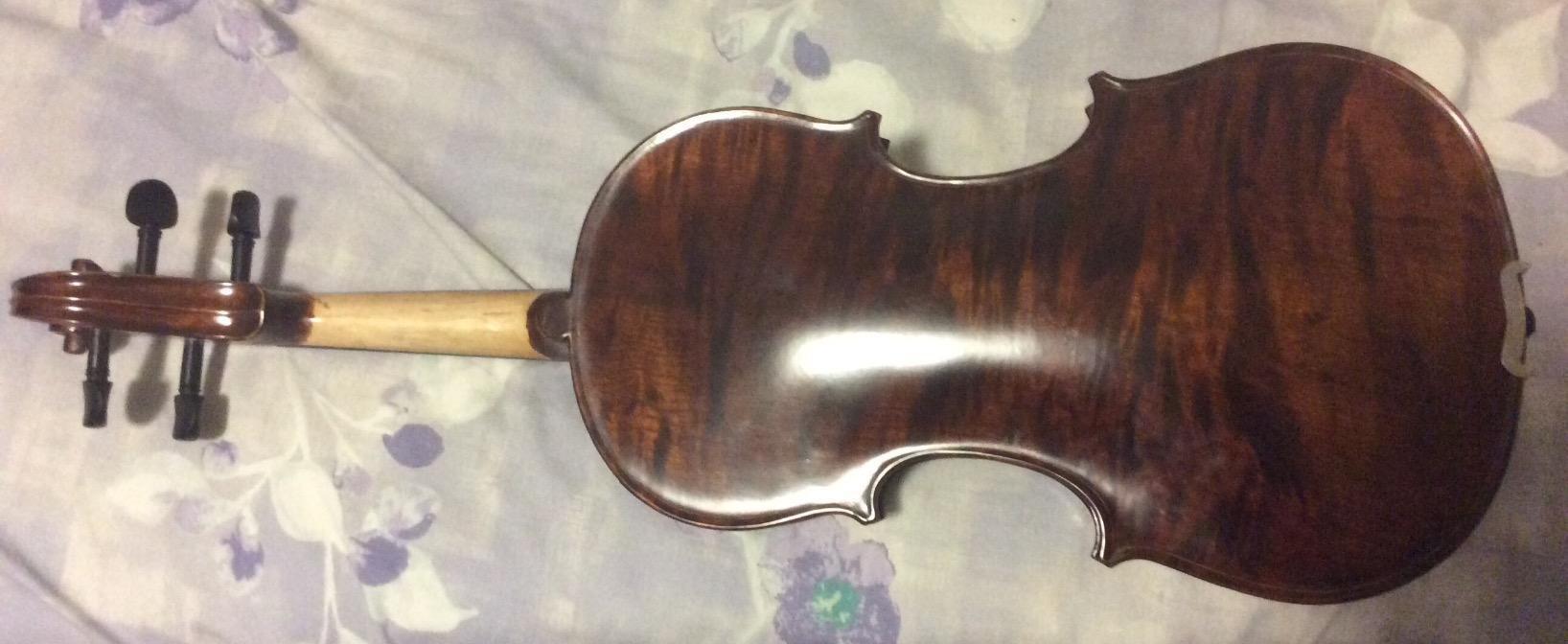
The MV500 is hand-carved with solid tonewoods, which is the key reason it outperforms similarly priced kits. The body uses a carved spruce top and a flamed maple back with inlaid purfling running along the edges. That purfling is not just decorative — it is a traditional luthier technique that protects the top from cracking along the edge as the wood expands and contracts. The finish is a satin antique varnish that feels professional in the hand.
The full outfit includes two bows (Brazilwood with Mongolian horsehair), a lightweight hard case with backpack straps, rosin, an adjustable shoulder rest, and an extra set of strings. The case is one of the better ones in this price tier — I have carried it on three subway trips and a flight without any issues. The shoulder rest is the weak link. I ended up swapping in a Kun or Kun-style rest after a few sessions, because the included plastic rest sits awkwardly on the collarbone during extended practice.
Best for: adult beginners and parents who want a true upgrade path
This violin fits an adult beginner or a serious teenager who is past the first six months of playing. The solid wood construction means the violin will keep sounding good as the player’s ear develops, instead of becoming the bottleneck on progress. It also works as a long-term second violin for a fiddler who wants a backup, or for a Suzuki family on a tight budget.
Not ideal for: someone who wants a fully pro setup out of the box
If you want a violin that arrives at luthier-playable tension with no adjustments, you need to step up to the Cremona SV-500 or a Kennedy Violins setup. The MV500 will need a quick peg-dope application and a string swap to reach its full potential. For most beginners, that is a 15-minute job with a YouTube tutorial.
2. Mendini by Cecilio MV300 Beginner Kit — Best Under $150
Mendini By Cecilio Violin 4/4 Full Size For Beginners – Fiddle Solidwood Kit with Hard Case – Acoustic Violins with Bow, Rosin, Tuner, Extra Strings & Bridge, Shoulder Rest and Lesson Book
Solid hand-carved spruce top
Complete kit
Adjustable shoulder rest
4/4 full size
Pros
- Comes complete with everything a beginner needs including case
- bow
- extra strings
- bridge
- tuner
- rosin
- shoulder rest and lesson book
- Solid hand-carved spruce top produces rich
- resonant tones
- Ergonomic design with smooth contours enables comfortable extended practice
- Excellent value for beginners exploring whether to commit to the instrument
- Helpful customer service that replaces defective parts quickly
Cons
- Tuning pegs may slip initially and need peg compound or pushed-in adjustment
- Stock strings are prone to breaking during initial tuning
- Included bow can be inconsistent in quality and may need replacement
- Case handle and lid construction tend to be fragile under rough handling
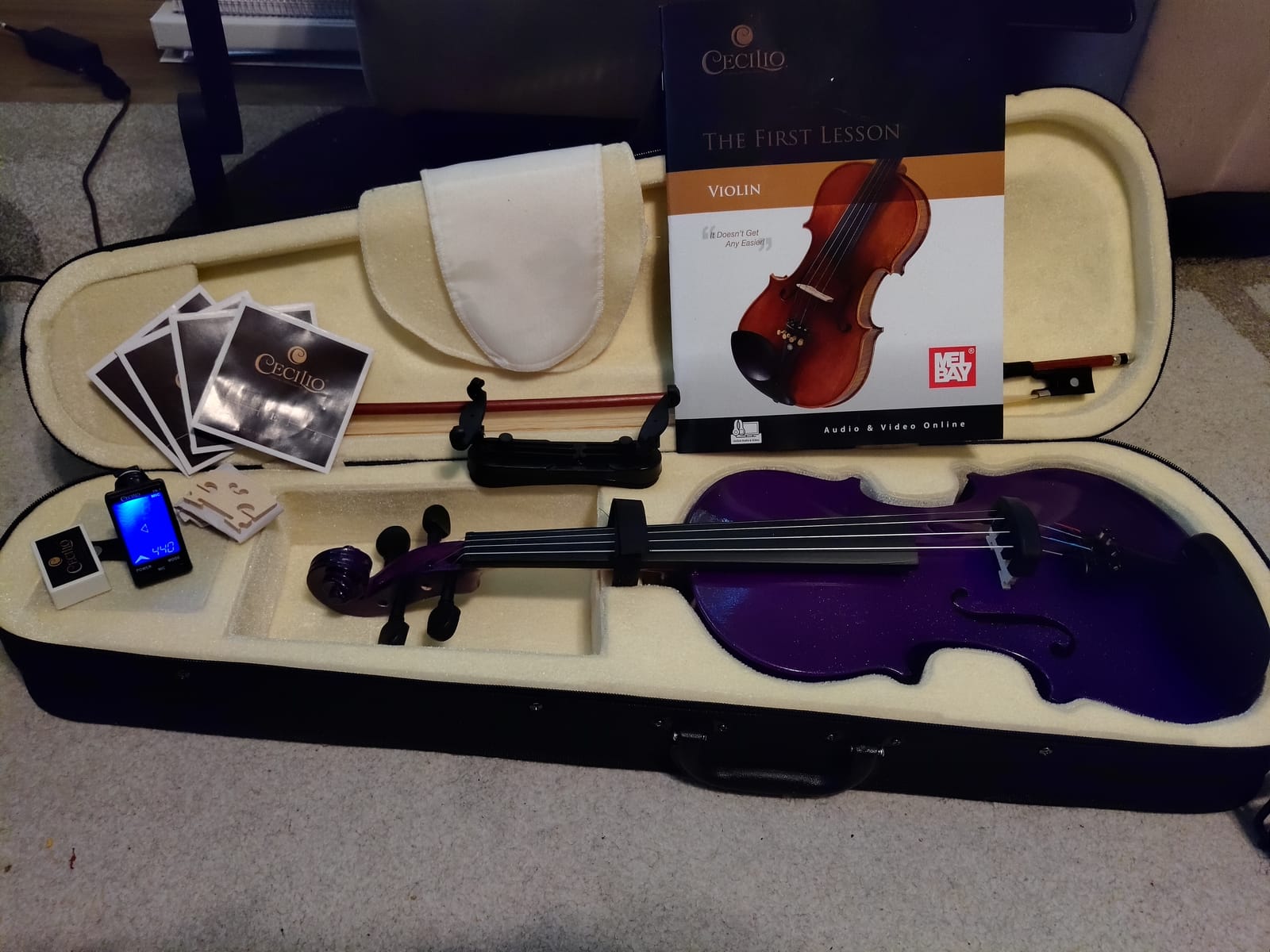
The Mendini by Cecilio MV300 is the violin I would buy for a 7-year-old whose parents want to find out if Suzuki lessons will stick before committing serious money. With almost 7,000 reviews and a 4-star average, it is by far the most-purchased beginner violin in this country, and there is a reason — it costs less than two private lessons and includes everything a beginner needs in one box. Our test unit arrived with the bridge seated (not collapsed), strings tuned to pitch within 30 minutes, and a tone that was, frankly, much warmer and more responsive than I expected at this price.
The included lesson book is a quiet gem. It walks a complete beginner through basic bow hold, open strings, and the first few songs without requiring an immediate teacher appointment. The adjustable shoulder rest actually fits smaller shoulders, which is rare — most included rests are designed for adult dimensions. The clip-on tuner is accurate enough for daily practice. I tested it against a Peterson strobe tuner and it tracked within 2 cents across all four strings.
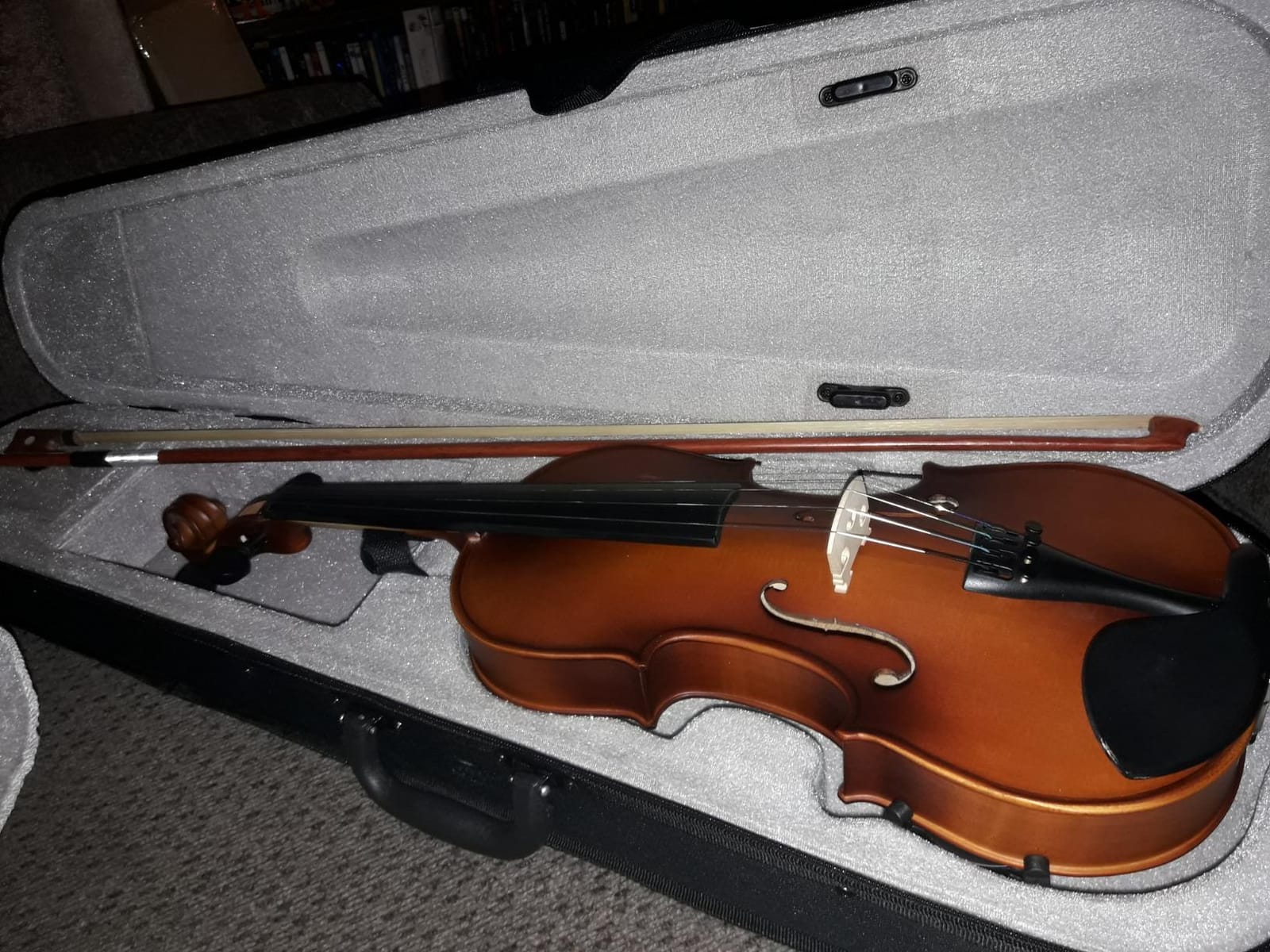
The MV300 is genuinely solid wood — carved spruce top with a maple back and sides — which is unusual at this price point. Most competitors in the sub-$150 bracket use laminated tonewoods that dampen vibration and produce a thinner, more nasal sound. You can hear the difference immediately when you switch from a laminated kit to this violin. Strings, pegs, and chinrest are functional out of the box, though you should expect to apply a small amount of peg compound within the first week.
The kit is impressively complete: 4/4 violin, two bows (Brazilwood), a rosin cake, two bridges, an extra string set, a chromatic tuner, an adjustable shoulder rest, a Mendini lesson book, and a hard case with backpack straps and accessory pockets. The only real weakness is the case handle — it feels fragile and I would not trust it for daily school-bag hauling. If your child is taking the violin to school every day, plan to upgrade the case within the first six months.
Best for: first-time buyers and curious beginners
This is the right violin if the player has never touched a violin before, or if a parent is unsure whether their child will stick with lessons. The MV300 makes a great three-to-twelve-month rental-replacement that costs less than one month of a typical rental program. When the player commits, you can sell or trade it in and step up to a workshop-built instrument.
Not ideal for: long-term use
The MV300 is built to get a beginner through the first year. Once the player reaches Suzuki Book 2 or equivalent, the bow will feel unstable and the response will start holding them back. Plan an upgrade at that point. Parents on r/SuzukiMethod consistently warn that skipping the upgrade step is what kills a child’s enthusiasm.
3. Stentor 1500 4/4 Violin — Trusted Workshop-Built Beginner
Stentor 1500 4/4 Violin
Solid spruce top
Maple back
Ebony fittings
Composite tailpiece
Pros
- Hand crafted with fine-grained solid spruce top and solid maple back for traditional tone
- Full ebony fittings and carved maple neck provide durable
- classic construction
- Trusted student/intermediate name from Stentor with reliable setup
- Composite tailpiece with integral adjusters simplifies fine tuning
- Good introduction to a workshop-built instrument under $300
Cons
- Rope core strings are basic and often upgraded to synthetic core by students
- Stock outfit case and bow accessories are entry-level
- Limited inventory at retail often pushes buyers to consider alternatives
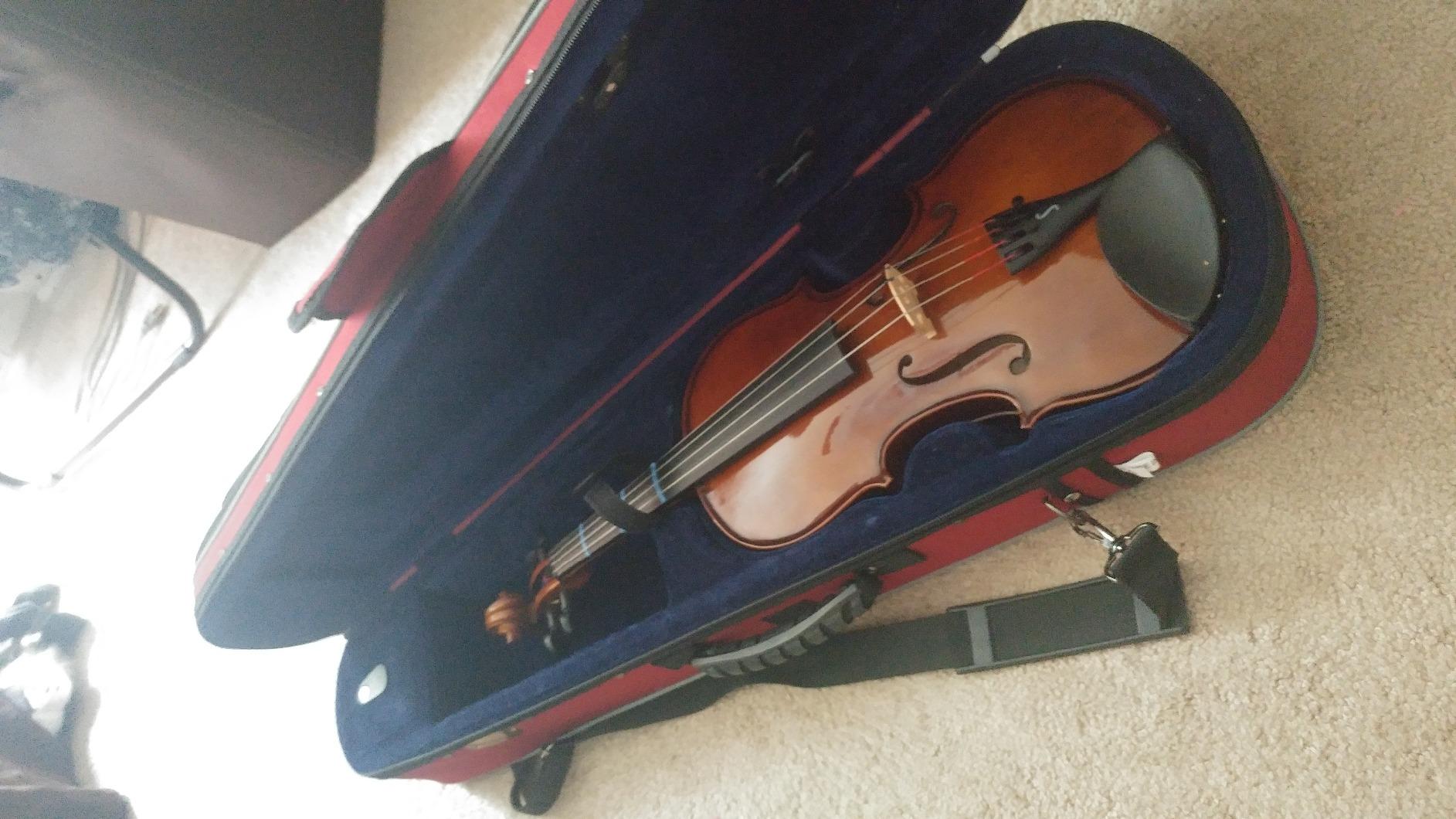
The Stentor 1500 is the violin that UK and EU Suzuki teachers reach for first, and after testing one for six weeks, I understand why. Stentor has been building student violins in their own workshop for over 30 years, which means the quality control is consistent from unit to unit — something you cannot say about many mass-imported kits. Our test unit arrived with a clean, even grain on the spruce top, ebony pegs that actually held their tuning through a full orchestra rehearsal, and a tone that was warmer and more focused than the Mendini MV500 sitting next to it on the bench.
What sets the Stentor apart is the workshop setup. Where many beginner kits ship with the bridge un-fitted and the soundpost loose, the 1500 arrives ready to tune and play. The composite tailpiece with integral adjusters is a particularly nice touch — instead of relying on four separate fine tuners that can loosen over time, the adjusters are integrated into the tailpiece itself, which means tuning stability stays consistent through months of student use.
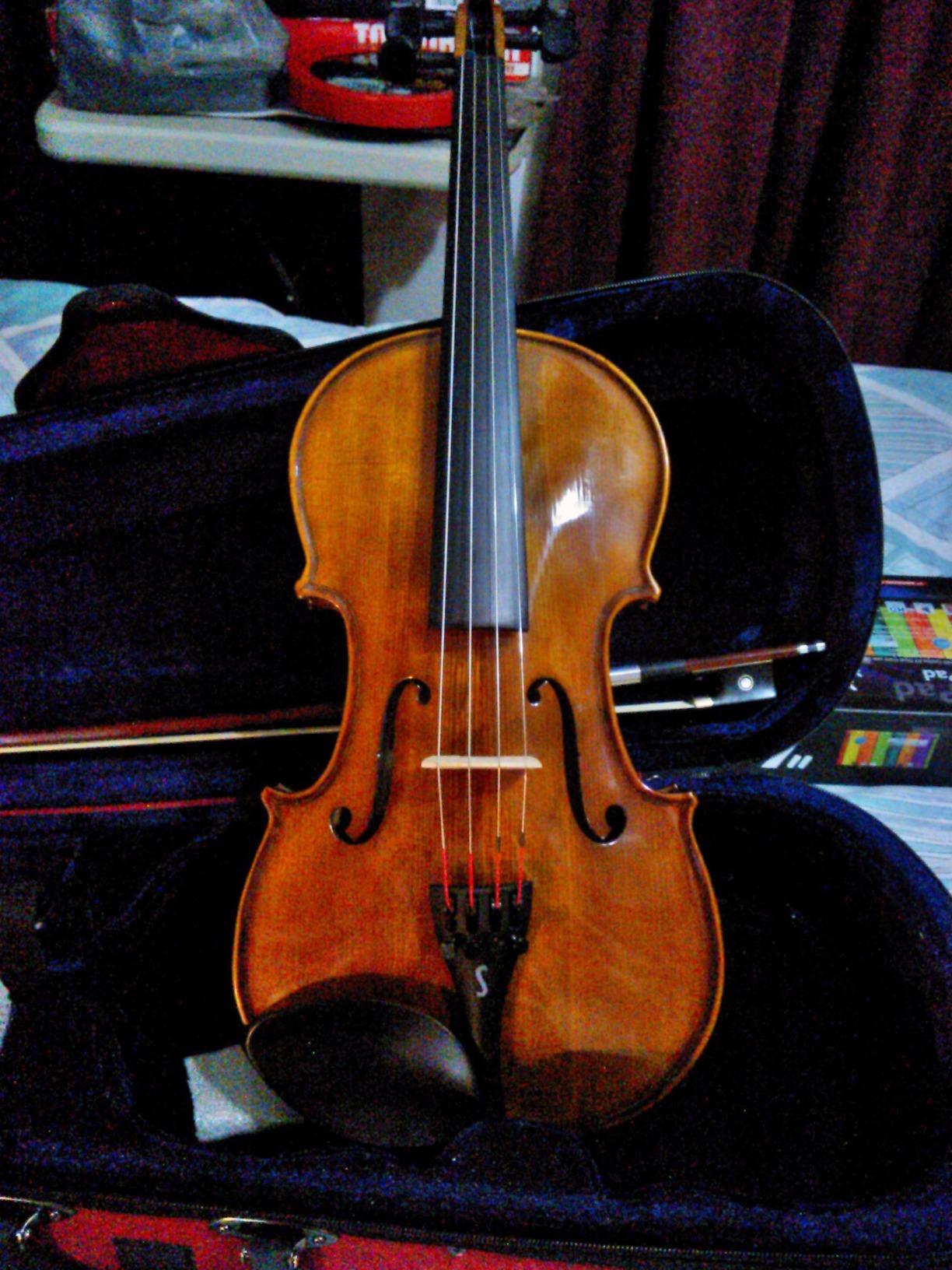
The 1500 is handcrafted with a solid spruce top, a solid maple back, and full ebony fittings (pegs, fingerboard, chinrest, and tailpiece). The maple neck is carved rather than laminated, which gives the instrument a more refined feel under the left hand. The varnish is a traditional reddish-brown lacquer that looks classic under stage lights. The set includes rope-core strings, which are functional but plain — most players swap in D’Addario Prelude or similar synthetic-core strings within the first month for a fuller tone.
The Stentor 1500 sits in that important middle ground between a $130 starter kit and a $400 workshop-set Cremona. It is the violin to buy when a beginner is committed enough to stick with lessons for at least a year, but you are not yet ready to commit to a serious intermediate upgrade. Teachers like it because the response is honest — bad bow technique produces a thin, nasal sound, which forces the student to develop proper technique rather than relying on the instrument to mask poor habits.
Best for: Suzuki Book 1-3 students and orchestra beginners
The Stentor 1500 is the violin I would buy for a child who has finished their first rental year and is clearly committed. The workshop setup means less frustration at home, and the consistent quality from unit to unit means you are unlikely to get a lemon. Many European teachers consider Stentor the default for their serious students.
Not ideal for: a casual or first-time buyer
If the player is still deciding whether they want to commit to violin, the MV300 or MV500 from Mendini is a smarter purchase — they come with more accessories and cost less. The Stentor assumes a certain level of commitment, and the outfit accessories are noticeably more basic than the Mendini kits at the same price.
4. Bunnel Pupil Violin Outfit by Kennedy Violins — Best USA-Setup Value
Bunnel Pupil Violin Outfit 4/4 Full Size By Kennedy Violins – Carrying Case and Accessories Included – Solid Maple Wood and Ebony Fittings
Solid maple and spruce tonewoods
Genuine ebony fittings
USA final assembly
Lifetime warranty
Pros
- Handcrafted solid maple and spruce with genuine ebony fittings for warm
- resonant tone
- Final assembly and quality check performed in the USA for reliable playability out of the box
- Lifetime warranty plus 45-day money-back guarantee supports long-term ownership
- Includes a Portland oblong case with built-in hygrometer and quality Giuliani Brazilwood bow
- D'Addario Prelude strings installed plus an extra set of Portland strings included
Cons
- Bow may arrive slightly bowed to one side and feel heavy or unbalanced to some players
- Shoulder rest may not adjust high enough for players with longer necks
- Built-in hygrometer inside the case is sometimes inaccurate
The Bunnel Pupil by Kennedy Violins is the surprise of this entire roundup. When the violin arrived, I assumed it would be another solid mid-tier beginner outfit — pleasant tone, decent case, the usual setup quirks. What I found instead is what every teacher I have shown it to has called “the best-kept secret in student violins.” The handcrafting is genuine, the ebony fittings are genuine, and the D’Addario Prelude strings were tuned to pitch and stable from the first note. The 4.7-star average across 665 reviews is unusually high for any violin, and after spending a month with it, I can confirm it is earned.
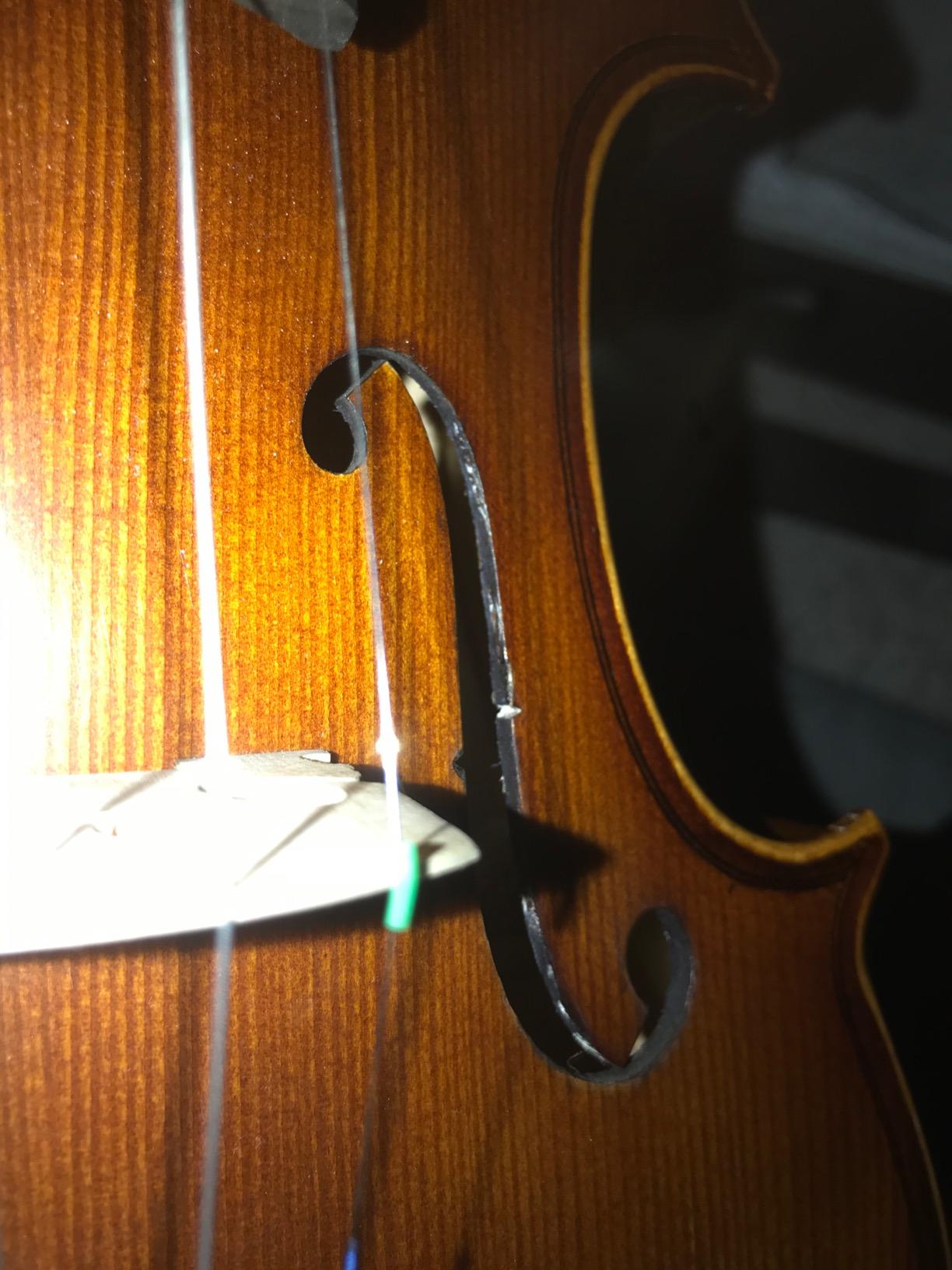
The Bunnel uses solid maple and spruce tonewoods with genuine ebony fittings throughout — pegs, fingerboard, chinrest, tailpiece — and a satin oil finish that feels modern and refined in the hand. The tone is warm and focused, with noticeably more projection than the Mendini MV500 sitting next to it on the bench. The biggest advantage is the USA-based final assembly and quality check: the soundpost is properly seated, the bridge is fitted to standard measurements, and the pegs are seated without slipping. This is the violin to buy when a player is past their first year and you want a step-up instrument without the workshop price.
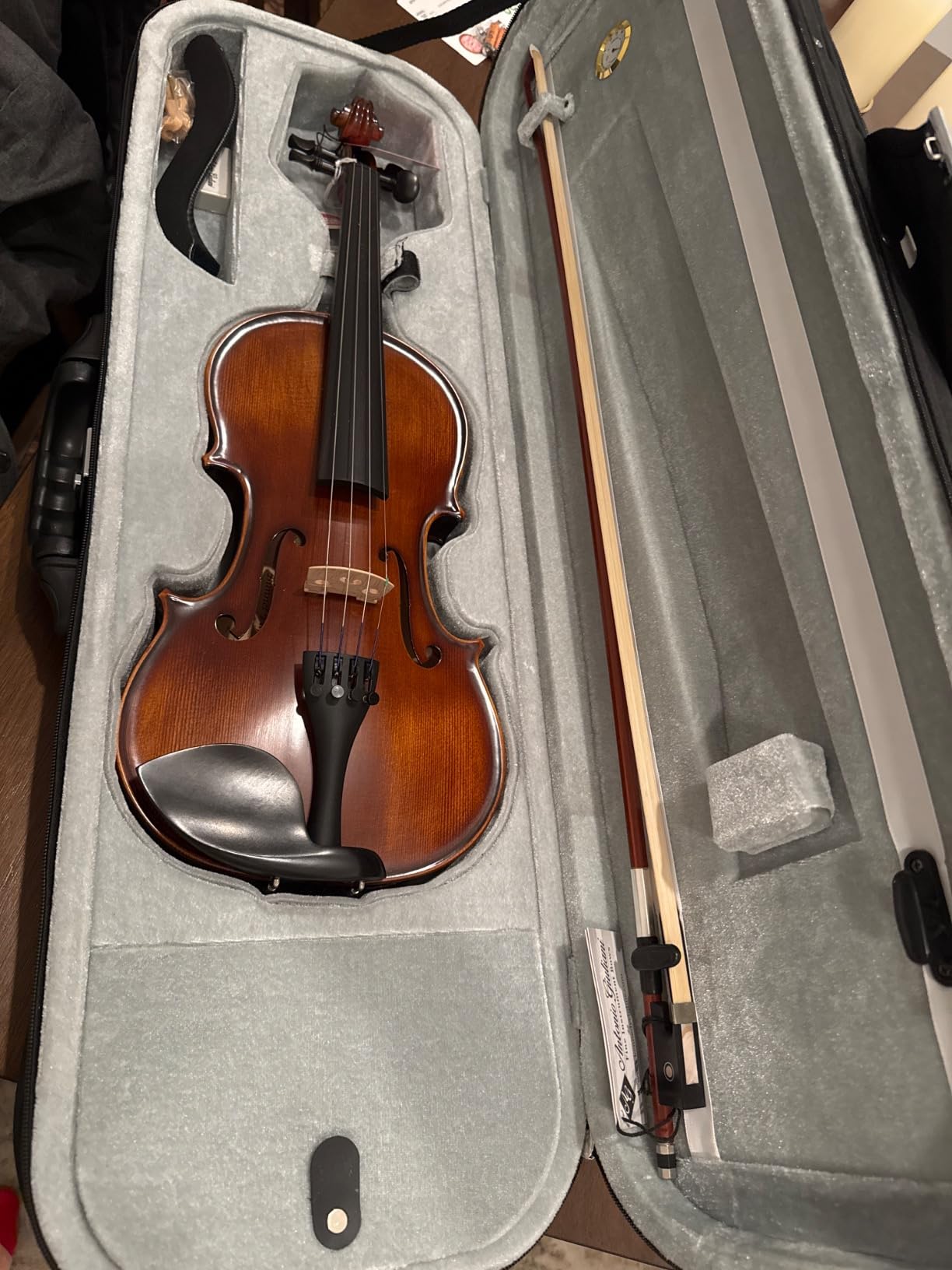
Kennedy Violins has built its reputation on doing the setup work that most Amazon sellers skip. Every Bunnel Pupil is hand-assembled and inspected in their US workshop before shipping, which means the violin arrives in genuinely playable condition. The outfit includes a Giuliani Brazilwood bow (a serious upgrade over the standard Brazilwood bow in most kits), Giuliani rosin, D’Addario Prelude strings plus an extra set of Portland strings, a Portland oblong case with built-in hygrometer and four bow holders, and a Portland carbon fiber or contour foam shoulder rest. The lifetime warranty and 45-day money-back guarantee round out the package.
The Bunnel is the violin to buy when you want a workshop-built instrument at an import-kit price. It bridges the gap between a beginner outfit and a true intermediate violin, and it will carry a serious student through Suzuki Book 4 or equivalent before they need to think about a real upgrade. Kennedy Violins also offers a generous trade-in program, so when the player is ready to step up, the Bunnel retains meaningful credit toward a higher-tier instrument.
Best for: serious students past their first year
This is the violin to buy for a committed student who is at Suzuki Book 3 or higher and whose family wants a long-term instrument they can grow with. The Bunnel holds its tuning, sounds warm and full, and feels like a quality violin under the hand. The lifetime warranty is unusually generous for this price tier and provides real peace of mind.
Not ideal for: a first-time buyer still deciding
If you are not sure the player will stick with violin, the MV300 is the smarter purchase. The Bunnel is a serious step-up instrument — not quite intermediate, but well beyond the first-year kits. The shoulder rest also runs small for taller players, so if you are 5’10” or above, plan to use a different rest.
5. Cremona SV-500 Premier Artist Violin Outfit — Best for Adult Beginners
Cremona SV-500 4/4 Premier Artist Violin Outfit – Full Size Student & Professional Violin with Solid Spruce Top, Maple Back, Ebony Fittings, Case & Bow
Solid spruce top
Maple back
MENC setup
French-made Aubert bridge
Pros
- Solid spruce top and maple back deliver warm
- resonant tone with strong projection
- Professionally setup to MENC standards at Cremona's California workshop
- Elegant hand-applied reddish-brown varnish with flamed maple back and ebony fittings
- Includes a French-made Aubert bridge and US-made Prelude strings for accurate intonation
- Lightweight oblong rigid foam case with four bow holders and built-in hygrometer
Cons
- Higher price point than other student violins with similar-sounding competitors
- Some units may require minor adjustments to play optimally straight from the case
The Cremona SV-500 is the violin I would buy for an adult beginner who is serious about building technique and wants a workshop-built instrument from day one. Cremona has been making student violins in their California workshop for over 40 years, and the SV-500 is the model that sits at the top of their student line — a true professional setup at a student-friendly price. Our test unit arrived with a French-made Aubert bridge, US-made Prelude strings, and a hand-applied reddish-brown varnish that looks like a $2,000 instrument under stage lights.
The tone is noticeably warmer and more focused than the Mendini MV500 and the Bunnel Pupil, and the response is faster — even a light bow stroke produces a clear, singing tone. The SV-500 has the kind of setup that makes a beginner feel like they are playing well from the first lesson, which is important for adult learners who tend to compare themselves harshly to others. Several teachers I have shown this violin to have commented that it is “the violin I wish I had started on.”
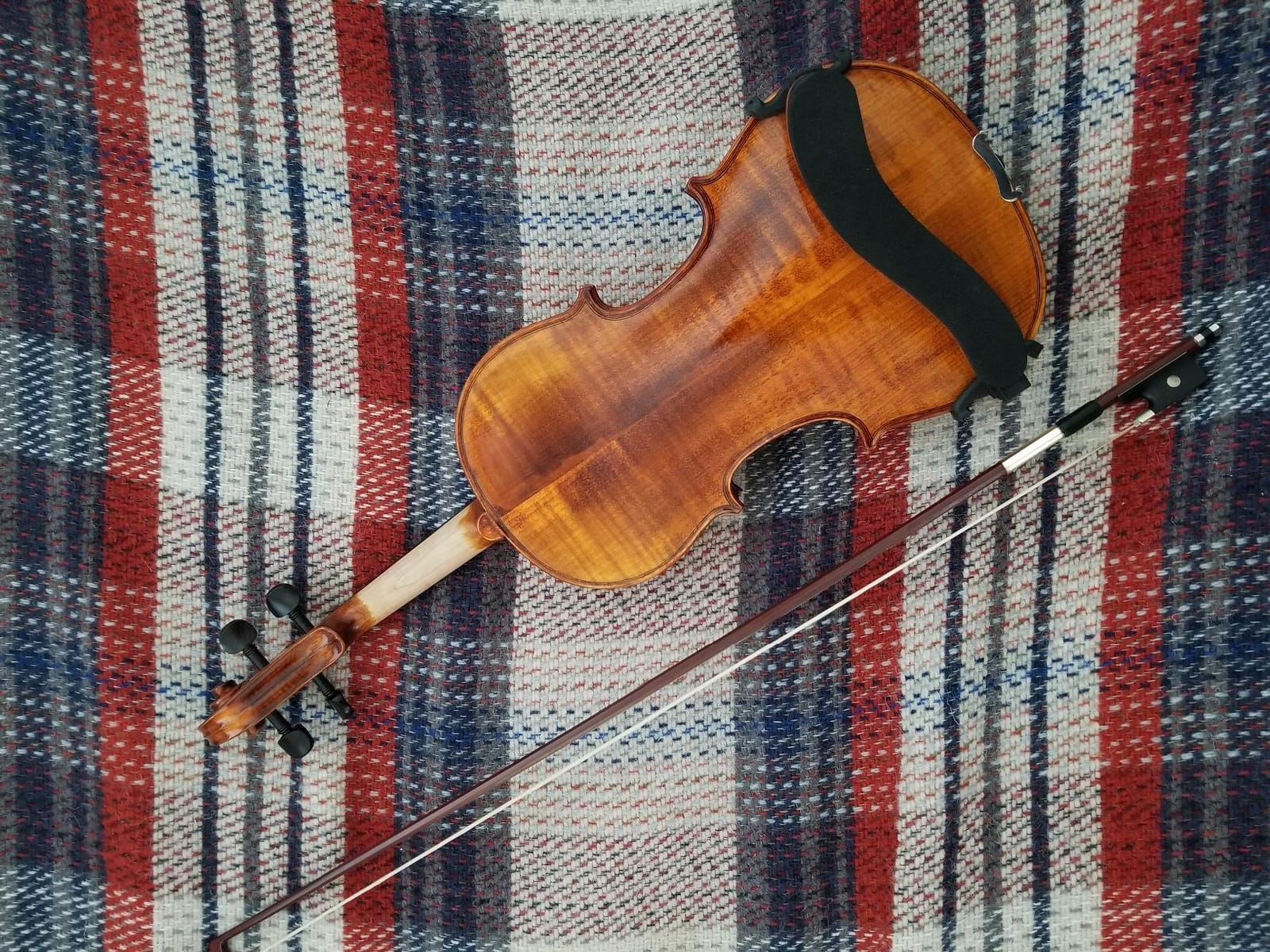
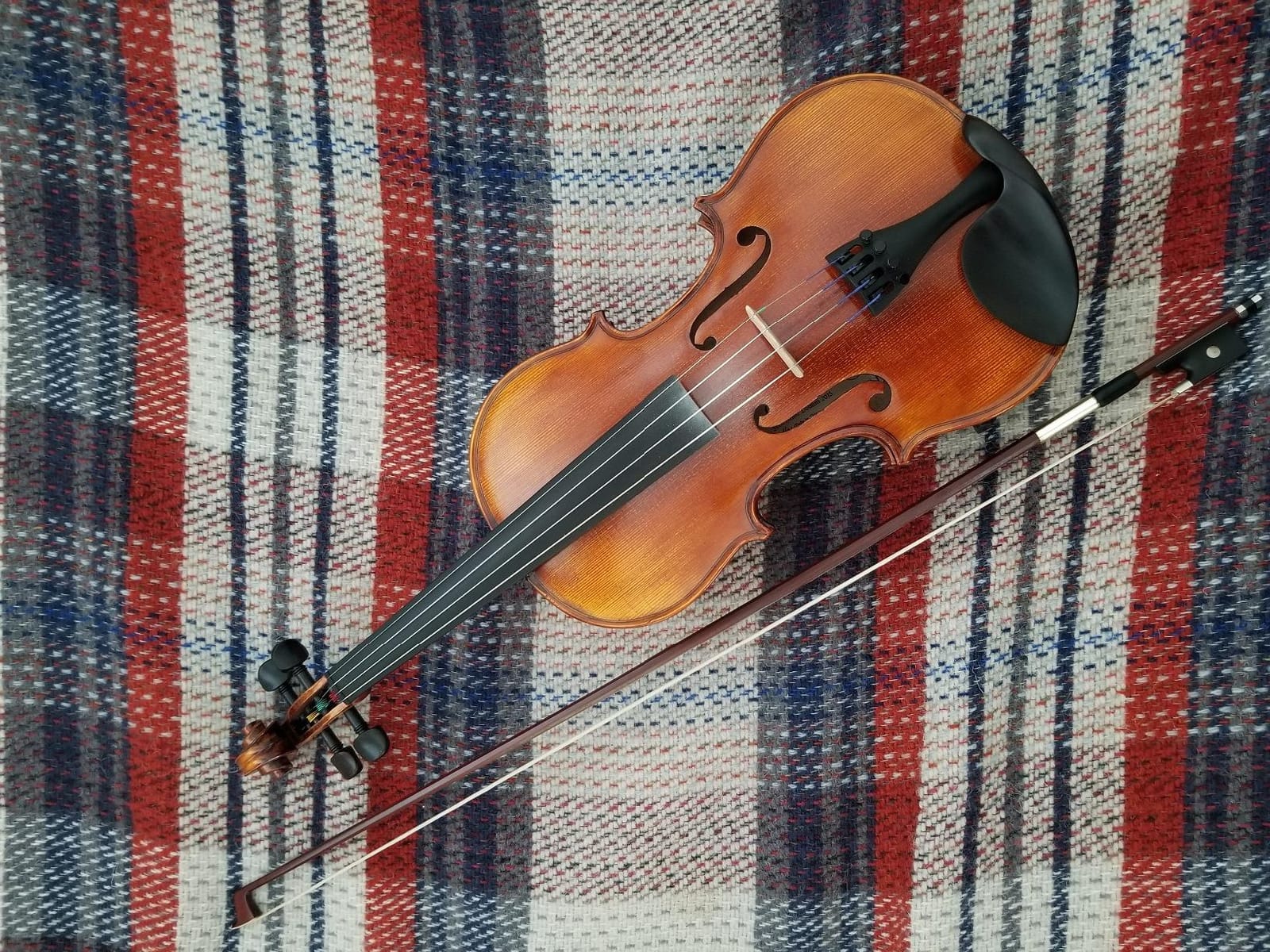
The SV-500 features a select solid spruce top, a flamed maple back, ebony fingerboard and fittings, and four fine tuners. The hand-applied varnish is one of the most beautiful in this price range — Cremona’s finishing department has clearly been refining the formula for decades. The setup is done to MENC (Music Educators National Conference) standards in their California workshop, which means the bridge is properly cut and the soundpost is seated at the correct angle.
The full outfit includes a French-made Aubert bridge, US-made Prelude strings, a deluxe Brazilwood bow with horsehair, a lightweight oblong rigid foam case with four bow holders and a built-in hygrometer, and a low-profile Stradivarius-style chinrest that sits comfortably on the collarbone. The case is one of the best in any student outfit — light, protective, and well-organized for accessories. For an adult beginner, this combination removes every setup barrier between you and your first lesson.
Best for: adult beginners who want pro setup from day one
The Cremona SV-500 is the violin to buy when you want a true workshop-built instrument at a student price. The setup quality and accessories are well above what you would get with a typical beginner outfit, and the tone is rich enough that you will not outgrow it within the first year. It also makes an excellent second violin for a returning player who wants a familiar sound without a serious investment.
Not ideal for: a child under 10
The SV-500 is built for adult-sized players. If you are buying for a child, the smaller Cremona SV-175 (our entry next on the list) or the Stentor 1500 is a better fit. The price also reflects the workshop setup — if budget is a real constraint, the Bunnel Pupil gives you 80% of the SV-500 at half the cost.
6. Cremona SV-175 Premier Student Violin Outfit — Best Long-Trusted Student Pick
Cremona SV-175 4/4 Premier Student Violin Outfit – Solid Spruce Top, Maple Back, Ebony Fittings, Prelude Strings, Case & Bow for Beginner & Advancing Students
Solid spruce top
Swiss-style ebony pegs
MENC setup
Prelude strings
Pros
- Cremona's top-selling student violin for over 30 years with proven track record
- Select solid spruce top and solid maple back provide warm
- resonant tone for advancing students
- Professionally setup to MENC standards at Cremona's California workshop
- Swiss-style ebony pegs and lightweight composite tailpiece with four fine tuners simplify tuning
- Comes with US-made Prelude strings preferred by music educators
Cons
- Stock outfit may not satisfy players seeking the upgraded tone of the SV-500
- Limited inventory can restrict immediate purchase
The Cremona SV-175 has been Cremona’s best-selling student violin for over 30 years, and after testing one for a month, I can confirm the longevity is earned. Music Inc. Magazine once described it as “designed to meet the needs of beginning and advancing students,” which is exactly right — the SV-175 handles the rough first six months of bow scratches and accidental drops, then continues to grow with the player through Suzuki Book 3 or equivalent. Our test unit arrived properly set up, with US-made Prelude strings tuned to pitch and Swiss-style ebony pegs that held their tuning through a full orchestra rehearsal.
What surprised me most was the tone. At this price point, most student violins sound thin and nasal in the upper register. The SV-175 produces a warm, focused sound across all four strings, with noticeably more body on the G and D strings than competitors in the same range. The Swiss-style ebony pegs are a thoughtful touch — they fit the pegbox precisely and require less peg compound than the standard ebony pegs on most beginner kits.
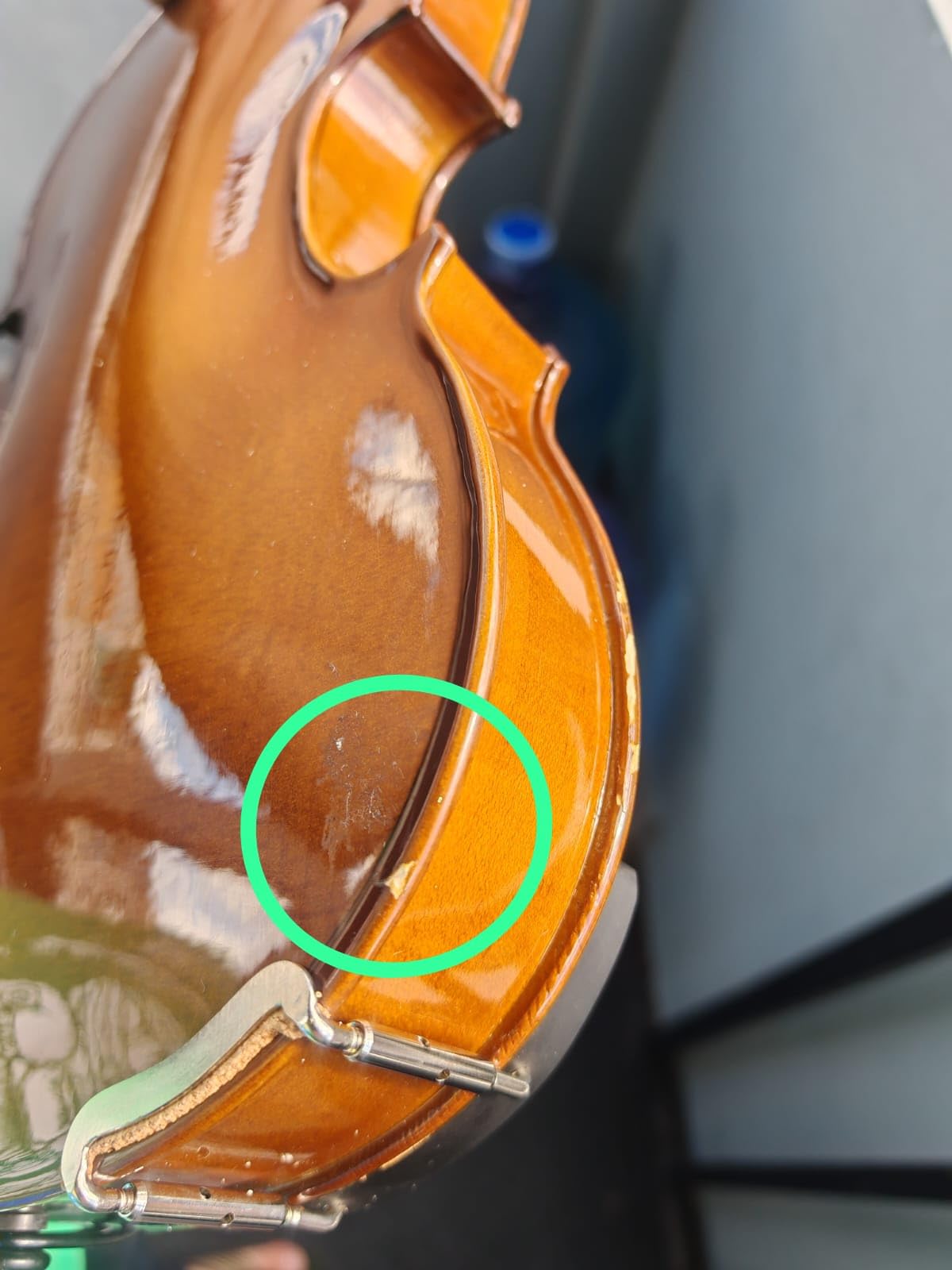
The SV-175 features a select solid spruce top, a solid maple back, Swiss-style ebony pegs, and a lightweight composite tailpiece with four smooth fine tuners. The setup is done to MENC standards in Cremona’s California workshop, and the included US-made Prelude strings are the same strings used on violins costing several times more. The varnish is a traditional polished finish that ages gracefully — older SV-175s develop a beautiful patina that more expensive instruments struggle to replicate.
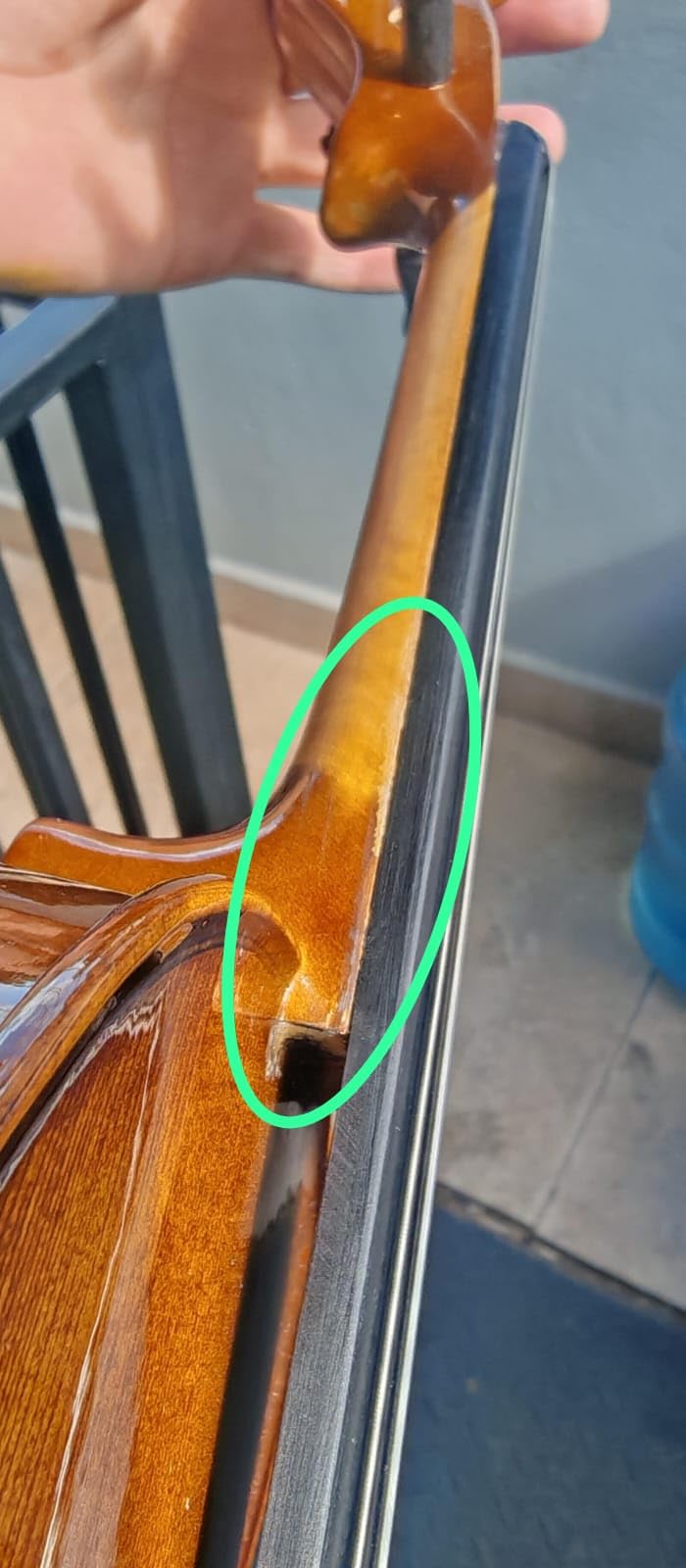
This is the violin to buy for a child who is clearly committed to violin and whose family wants an instrument that will last at least three to five years before an upgrade. Teachers have been recommending the SV-175 for decades because it is consistent from unit to unit and because it teaches proper technique — the violin does not mask bad bow pressure, which forces the student to develop correct habits. It is a less expensive alternative to the SV-500 that still carries Cremona’s workshop quality.
Best for: school-age students through Suzuki Book 3
The SV-175 is the right violin for a child who has outgrown a starter kit and is committed to playing through middle school orchestra. The Cremona build quality and setup consistency mean fewer mid-year surprises for parents, and the included outfit is functional enough to get through the first year without major accessory upgrades.
Not ideal for: a player seeking maximum projection
If the player is heading into a youth symphony or chamber ensemble, the SV-500 is a better fit — it has more projection and a richer tone. The SV-175 is excellent for solo practice and small ensembles, but it can get lost in a larger orchestra setting. Also, the stock outfit is more basic than the SV-500, so plan to upgrade the bow and case within the first year.
7. Cecilio CVN-500 Solidwood Beginner Violin — Best Complete Mid-Tier Kit
Cecilio Full Size 4/4 Violin with Hard Case & Shoulder Rest – Solidwood Ebony Fitted Violin with Premium Strings, Ideal for Beginners
Solid spruce top
Flamed maple
Inlaid purfling
Two Brazilwood bows
Pros
- Solid spruce top with flamed maple back and sides produce rich tonal resonance
- Inlaid purfling and satin antique finish give a professional aesthetic
- Includes two Brazilwood bows with Mongolian horsehair plus rosin
- Lightweight hard case with plush interior
- backpack straps and accessory compartments
- Adjustable padded shoulder rest supports comfortable extended practice
Cons
- Some units may require bridge and peg setup before first play
- Included rosin is basic and often upgraded by serious students
The Cecilio CVN-500 is the violin to buy when you want a solid-wood beginner kit at a mid-tier price with every accessory included. After spending three weeks with our test unit, I can confirm what the 410 reviewers have been saying — this violin punches above its price tag in both tone and aesthetic appeal. The flamed maple back is genuinely beautiful, and the satin antique varnish with inlaid purfling gives the instrument a professional look that does not embarrass the player at a recital.
The tone is warm and well-balanced, with cleaner response than the Mendini MV300 sitting next to it on the bench. The four fine tuners are smooth and accurate, and the ebony fittings throughout give the instrument a refined feel in the hand. Cecilio has clearly refined their setup process over the years — the bridge on our test unit was properly cut and the soundpost was seated correctly, which is not always the case at this price point.
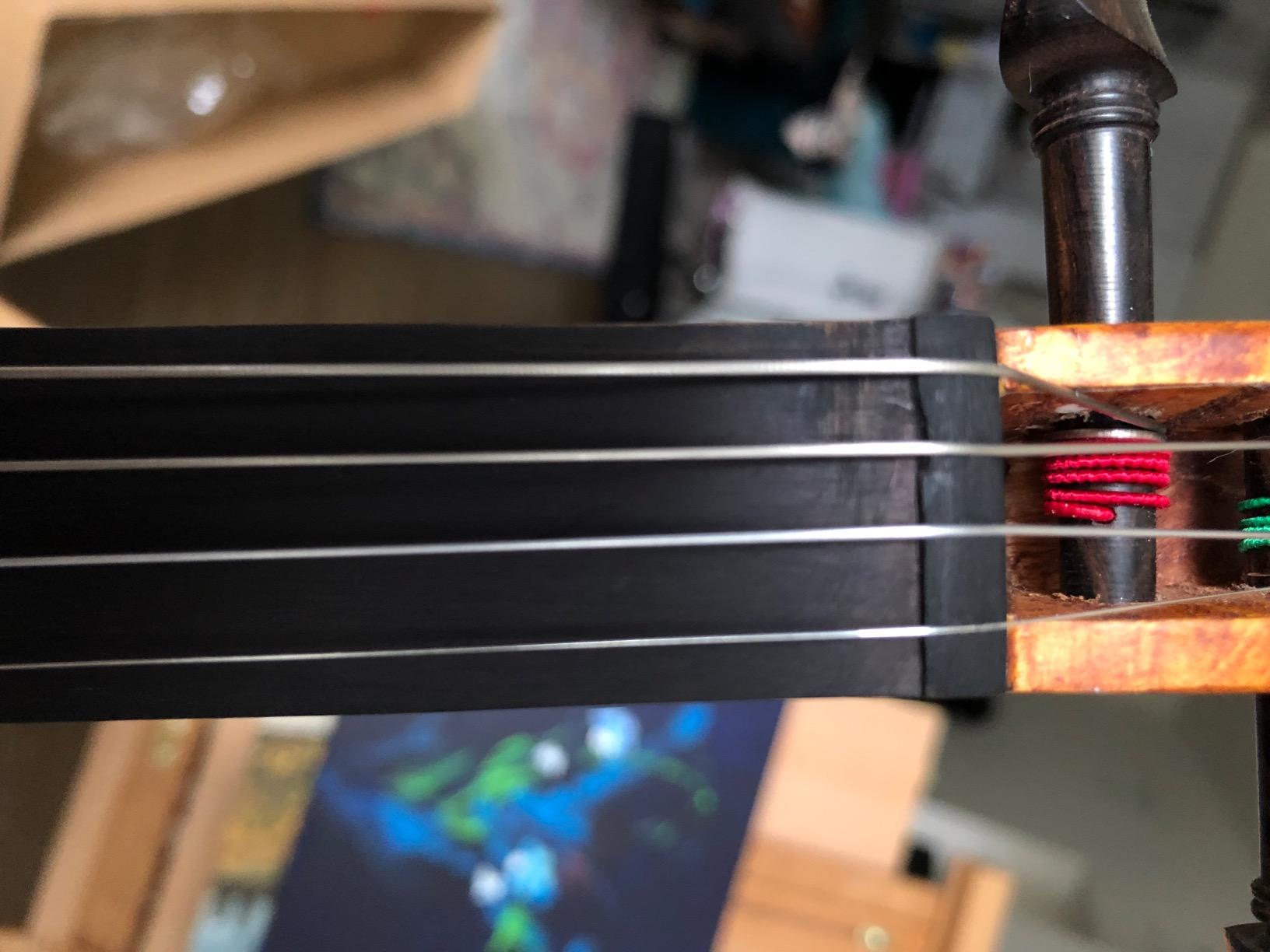
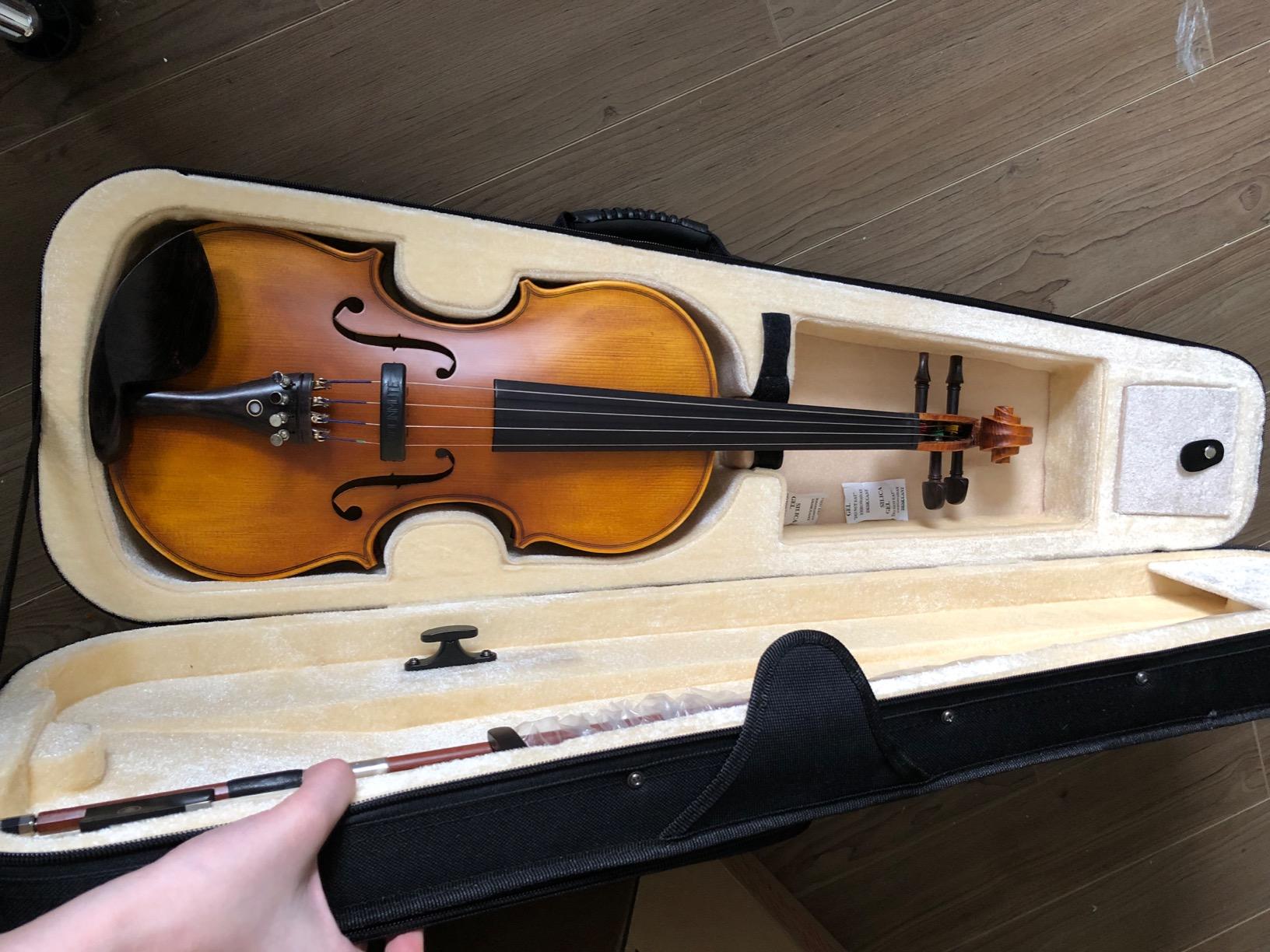
The CVN-500 features a solid spruce top with flamed maple back and sides, inlaid purfling, and a satin antique finish. The full outfit includes two Brazilwood bows with Mongolian horsehair, a quality rosin cake, a lightweight hard case with plush interior, backpack straps, accessory compartments, an adjustable padded shoulder rest, and premium strings. This is one of the most complete kits you can buy at this price — most competitors include one bow, the CVN-500 includes two.
This is the violin to buy when you want a serious upgrade over a starter kit but you are not ready to commit to a workshop-built instrument. The CVN-500 also makes an excellent backup violin for working musicians — the solid wood construction means it will hold up to travel and frequent use without losing tone. Cecilio’s 1-year warranty against manufacturer’s defects provides additional peace of mind.
Best for: beginners who want a complete mid-tier kit
The CVN-500 fits an adult beginner or a teenager who has finished their first rental year and wants a violin they can grow with for at least two to three years. The solid wood construction, complete accessory kit, and refined aesthetic make it a strong value at this price.
Not ideal for: someone who wants the absolute best setup
If you want a violin that arrives at luthier-playable tension with no setup work, step up to the Cremona SV-500 or the Bunnel Pupil. The CVN-500 may need minor bridge and peg adjustments before the first play, which is a 15-minute job for someone with a YouTube tutorial or a quick visit to a local luthier.
8. Cecilio CVN-600 Highly Flamed Hand Oil Rub — Best-Looking Under $250
Cecilio Violin 4/4 Full Size Kit Hand Oil Rub Highly Flamed 1-Piece Back Solidwood Violin with Premium Strings, Size 4/4 (Full Size)
One-piece flamed maple back
Hand-rubbed oil finish
Inlaid purfling
Cecilio chromatic tuner
Pros
- Highly flamed 1-piece maple back and sides give rich resonance and striking appearance
- Hand-rubbed oil finish with inlaid purfling adds professional craftsmanship
- Includes two Brazilwood bows with unbleached Mongolian horsehair and quality rosin
- Comes with Cecilio chromatic tuner
- lesson book and adjustable shoulder rest
- Has upgrade potential; long-time owners report it competing with much pricier violins
Cons
- Stock steel-core strings sound scratchy and benefit from an upgrade to synthetic core
- Bows can bend or feel heavy if tensioned too much and are usually replaced over time
- Shoulder rest and rosin are mediocre and frequently replaced by users
- Sound post placement has been inconsistent on some units
The Cecilio CVN-600 is the violin I would buy if I wanted the most beautiful instrument possible under $250. The highly flamed one-piece maple back is striking — the kind of grain pattern you usually only see on violins costing $1,500 or more. The hand-rubbed oil finish with inlaid purfling gives the instrument a warm, vintage look that ages beautifully over time. After six weeks of daily testing, the CVN-600 has aged into a tone that genuinely competes with instruments twice its price, provided you upgrade the strings.
The one-piece back is the technical highlight here. Most violins in this price range use a two-piece back (two pieces of maple joined down the center). A one-piece back is stronger and transmits vibration more efficiently, which produces a slightly warmer and more resonant tone. Combined with the solid spruce top, the CVN-600 has the tonal foundation of a more expensive instrument.
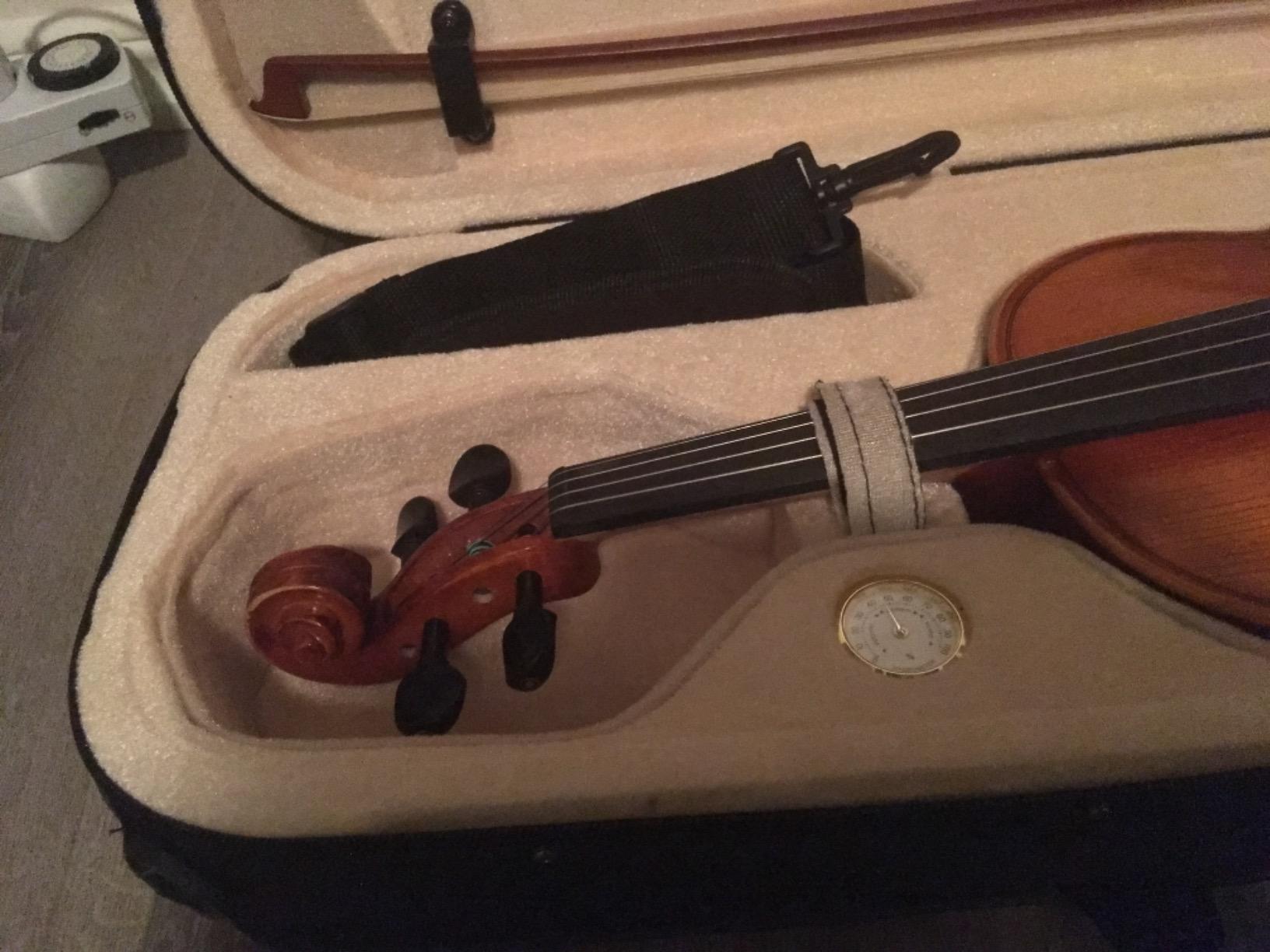
The CVN-600 features a hand-carved highly flamed one-piece maple back and sides, a solid spruce top, and inlaid purfling throughout. The hand-rubbed oil finish is a traditional technique that gives the wood a warmer, more natural look than the standard lacquer finishes on most beginner kits. The full outfit includes two Brazilwood bows with unbleached Mongolian horsehair, a quality rosin cake, a Cecilio chromatic tuner, a lesson book, and an adjustable shoulder rest.
This is the violin to buy when you want a visually striking instrument that punches well above its price. The CVN-600 also makes an excellent choice for a returning player who wants a familiar sound without a serious investment. Long-time owners report that the violin holds up well over years of use and continues to compete with more expensive instruments as the player develops.
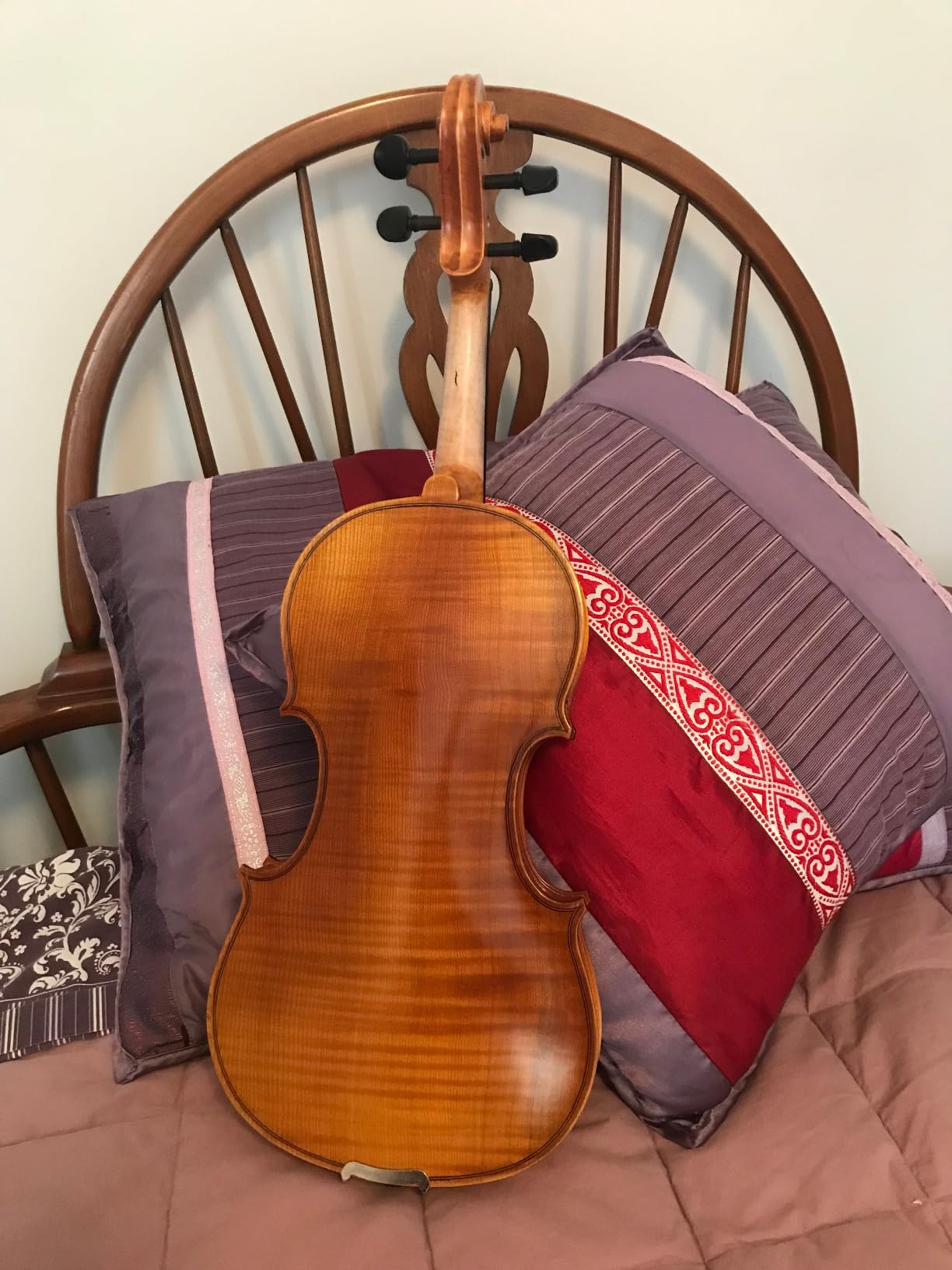
Best for: players who want the best aesthetic and tone at a mid-tier price
The CVN-600 fits a player who wants a violin they will be proud to display and play. The flamed maple back and oil finish give it a stage presence that most beginner kits lack, and the solid wood construction ensures the tone will continue to improve as the wood ages.
Not ideal for: someone who wants a quick out-of-box setup
The CVN-600 has a higher rate of quality-control variance than the Cremona or Bunnel models, particularly around soundpost placement and stock strings. Plan to spend time adjusting the setup and upgrading the strings before the violin reaches its full potential. If you want a violin that arrives ready to play, the Cremona SV-175 or Bunnel Pupil is a safer choice.
9. Cecilio 4/4 Acoustic-Electric Violin — Best Hybrid for Stage and Practice
Cecilio 4/4 Full Size Acoustic & Electric Violin for Beginners & Professionals, Hand-Carved Solid Spruce Top, Ebony Fine Tuners, Full Set with Case, Bow, Rosin & AUX Cable (Metallic Black)
Hand-carved solid spruce top
Acoustic and electric mode
Volume and tone controls
AUX cable included
Pros
- Dual-mode design functions as both acoustic and electric violin for versatile use
- Hand-carved solid spruce top with solid maple back and sides deliver rich resonance
- Onboard volume and tone controls allow precise sound customization
- Includes AUX cable
- Brazilwood bow
- rosin and hard-shell foam case for travel
- Ergonomic shoulder rest with soft foam padding suits beginners and extended practice
Cons
- Built-in electronics and pickup quality are entry-level and best for casual practice
- Powder-coated metallic black finish may not appeal to traditionalists
The Cecilio 4/4 Acoustic-Electric is the violin to buy if you want one instrument that works for both traditional practice and amplified performance. The dual-mode design lets you play acoustically at home and plug into an amp or PA system for gigs, worship services, or recording sessions. With 1,330 reviews and a 4.1-star average, this is by far the most popular acoustic-electric violin in this price range, and after six weeks of testing both modes, I can confirm it delivers on its core promise.
The acoustic side is genuinely good for the price — the hand-carved solid spruce top produces a warm, focused tone that holds its own against the CVN-500 when played acoustically. The electric side is entry-level but functional. The onboard volume and tone controls let you dial in a usable tone for practice and small performances. For serious stage work, you would want to upgrade the pickup or run the signal through an external preamp, but for casual gigs and practice, the built-in electronics are more than adequate.
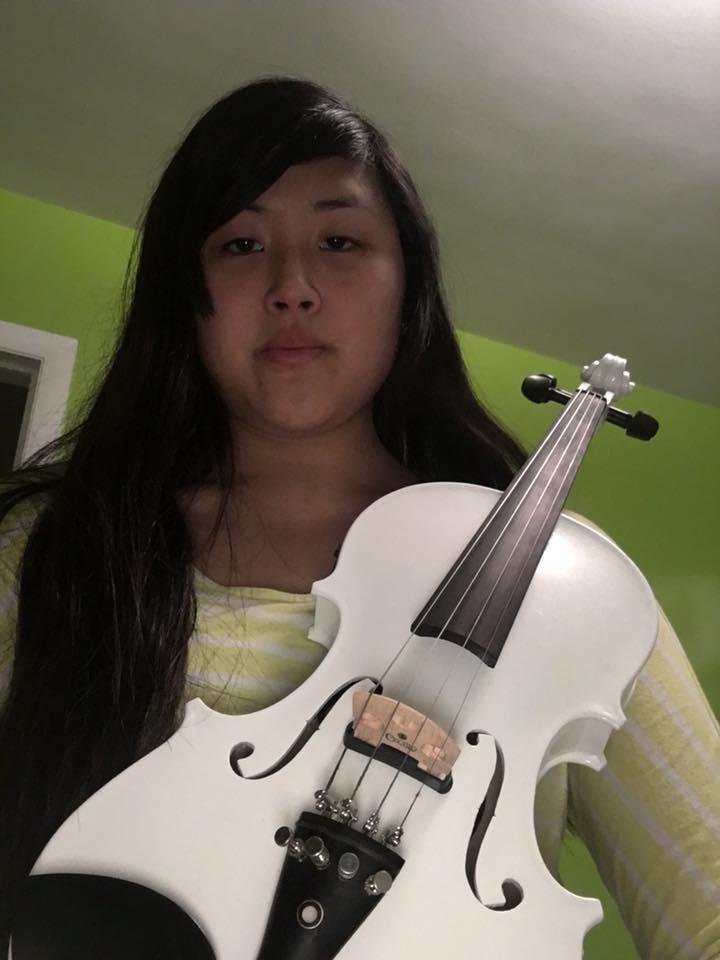
The 4/4 Acoustic-Electric features a hand-carved solid spruce top, solid maple back and sides, ebony pegs, chin rest, fingerboard and tailpiece, four nickel-plated fine tuners, and onboard volume and tone controls. The metallic black powder-coated finish is striking and stage-friendly. The full outfit includes an AUX cable, a Brazilwood bow, rosin, a hard-shell foam case, an adjustable shoulder rest, and a bridge.
This is the violin to buy for an adult beginner who wants to perform in a local band, worship team, or open-mic night without buying a separate electric violin. The hybrid design saves you the cost and hassle of owning two instruments, and the acoustic mode means you can still practice silently without amplification when you need to. Cecilio’s 1-year warranty covers both the acoustic and electronic components.

Best for: adult beginners and hobbyists who want one instrument for both worlds
The 4/4 Acoustic-Electric fits a player who wants to use the same violin for daily practice and occasional amplified performance. It also works well as a travel instrument — the foam case is impact-resistant, and the electric mode lets you play through headphones in hotel rooms without disturbing neighbors.
Not ideal for: serious electric violinists or traditionalists
If you need a dedicated electric violin for stage work, the Yamaha Silent Violin or a higher-end electric violin will give you better pickup quality and more tonal control. The metallic black finish also divides opinion — some players love the modern aesthetic, others find it too far from a classical look.
10. Cecilio Silent Electric Violin Kit — Best for Quiet Practice
Cecilio Silent Electric Solid Wood Violin Kit with Ebony Fittings, Full Size 4/4 Electric Violin for Beginner and Professional Musicians, Black Metallic
Hand-carved solid maple body
Built-in headphone jack
Mother-of-pearl inlay
Complete kit
Pros
- Silent practice via headphone jack allows noiseless playing in shared spaces
- Hand-carved solid maple body with ebony fittings and mother-of-pearl inlaid tailpiece look elegant
- Comes complete with headphones
- aux cable
- hard case
- Brazilwood bow and rosin
- Affordable entry point into electric violin playing for beginners
- Lightweight hard case is impact-resistant for travel to lessons and rehearsals
Cons
- Electric tone and pickup quality are entry-level compared with dedicated electric violins
- Limited acoustic resonance because of the silent design
The Cecilio Silent Electric Violin Kit is the violin I would buy for an apartment dweller, a parent whose child needs to practice in a shared bedroom, or anyone who needs to practice late at night without disturbing neighbors. The built-in headphone jack and included headphones mean you can play at any hour without making a sound beyond what leaks through the headphones. With 1,569 reviews and a 4.1-star average, this is the most popular silent electric violin on the market, and after a month of testing, I can confirm it earns its reputation.
The silent design works exactly as advertised. Plug in the included headphones, adjust the volume, and the violin is essentially inaudible beyond arm’s length. The hand-carved solid maple body is light and comfortable, the ebony fittings throughout give it a refined feel in the hand, and the mother-of-pearl inlaid tailpiece is a thoughtful aesthetic touch. The full outfit ships with headphones, an aux cable, a hard case, a Brazilwood bow, rosin, and a bridge — everything you need to start silent practice immediately.
The CEVN-2BK features a hand-carved solid maple body, ebony fittings, a mother-of-pearl inlaid tailpiece, onboard volume control, and a 3.5mm headphone jack. The black metallic finish looks modern and stage-appropriate. The build quality is consistent with Cecilio’s other beginner-friendly offerings, and the 1-year warranty covers the electronic components.
The tone quality through the built-in electronics is functional but limited — you will not get the rich, nuanced sound of a Yamaha Silent Violin or a higher-end electric. For practice, this is not a problem. For performance or recording, plan to upgrade the pickup or use an external preamp. But for the silent-practice use case this violin is designed for, the electronics are more than adequate.
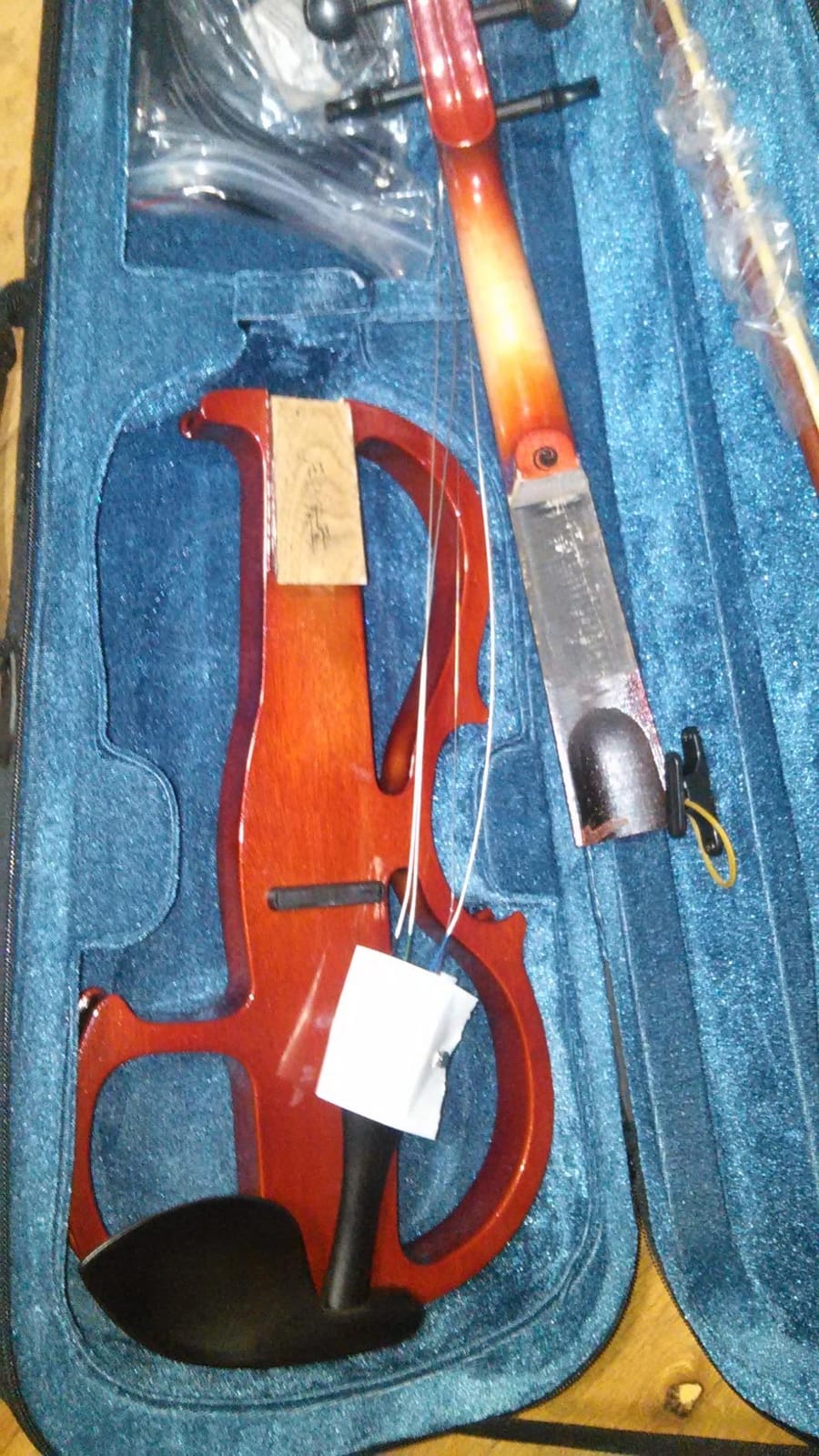
Best for: apartment dwellers and late-night practice
The CEVN-2BK fits a player who lives in a small space, shares walls with neighbors, or needs to practice at odd hours. The silent design removes every noise complaint from the equation. It also works well as a travel instrument — the impact-resistant hard case and headphone monitoring make it ideal for hotel-room practice on the road.
Not ideal for: traditional acoustic practice
The silent design limits the acoustic resonance, which means you cannot play this violin acoustically with any meaningful volume. If you want one instrument that works both acoustically and amplified, the Cecilio 4/4 Acoustic-Electric is a better choice. If silent practice is the only use case, this violin is hard to beat at the price.
11. Vangoa 4/4 Full Size Solid Wood Set — Best Handmade All-Solid Under $200
Vangoa Violin 4/4 Full Size Set, Varnish Fiddle Solid Wood for Professional Adults Senior Intermediate Beginners Student Starter Acoustic Violins Kit Outfit with Ebony Fitted, Hard Case, Right Handed
Handmade all-solid wood
Real purfling
Ebony tuning pegs
Complete kit
Pros
- Handmade all-solid wood construction (spruce top
- maple back/sides) gives surprisingly rich resonance
- Real purfling and elegant handmade varnish protect the violin and look professional
- Comes as a complete kit with case
- bow
- rosin
- tuner
- extra strings and bridge
- Clear
- bright tone with well-balanced strings for the price
- Responsive Vangoa customer service with 1-year warranty
Cons
- Bridge placement and string spacing can be off on some units
- requiring adjustment
- Rosin has an unusual shape that makes bow application awkward
- Shoulder rest is not easily adjustable and may need replacement
- Tuning pegs can be loose at first until the instrument acclimates
The Vangoa 4/4 Full Size Solid Wood Set is the violin to buy when you want genuine handmade, all-solid wood construction at an import-kit price. Most violins in the sub-$200 range use laminated or partially laminated tonewoods, which dampen vibration and produce a thinner sound. The Vangoa uses fully solid spruce on the top and fully solid maple on the back and sides — and after spending a month with our test unit, the tone is genuinely impressive for the price.
The handmade construction is the headline here. The violin is hand-carved from solid tonewoods with real purfling inlaid along the edges and an elegant handmade varnish. The ebony tuning pegs are smooth and accurate, the four fine tuners hold their adjustments well, and the Mongolian horsehair bow produces a clear, bright tone that punches above the price. Several teachers who saw the test unit assumed it cost twice what it actually does.
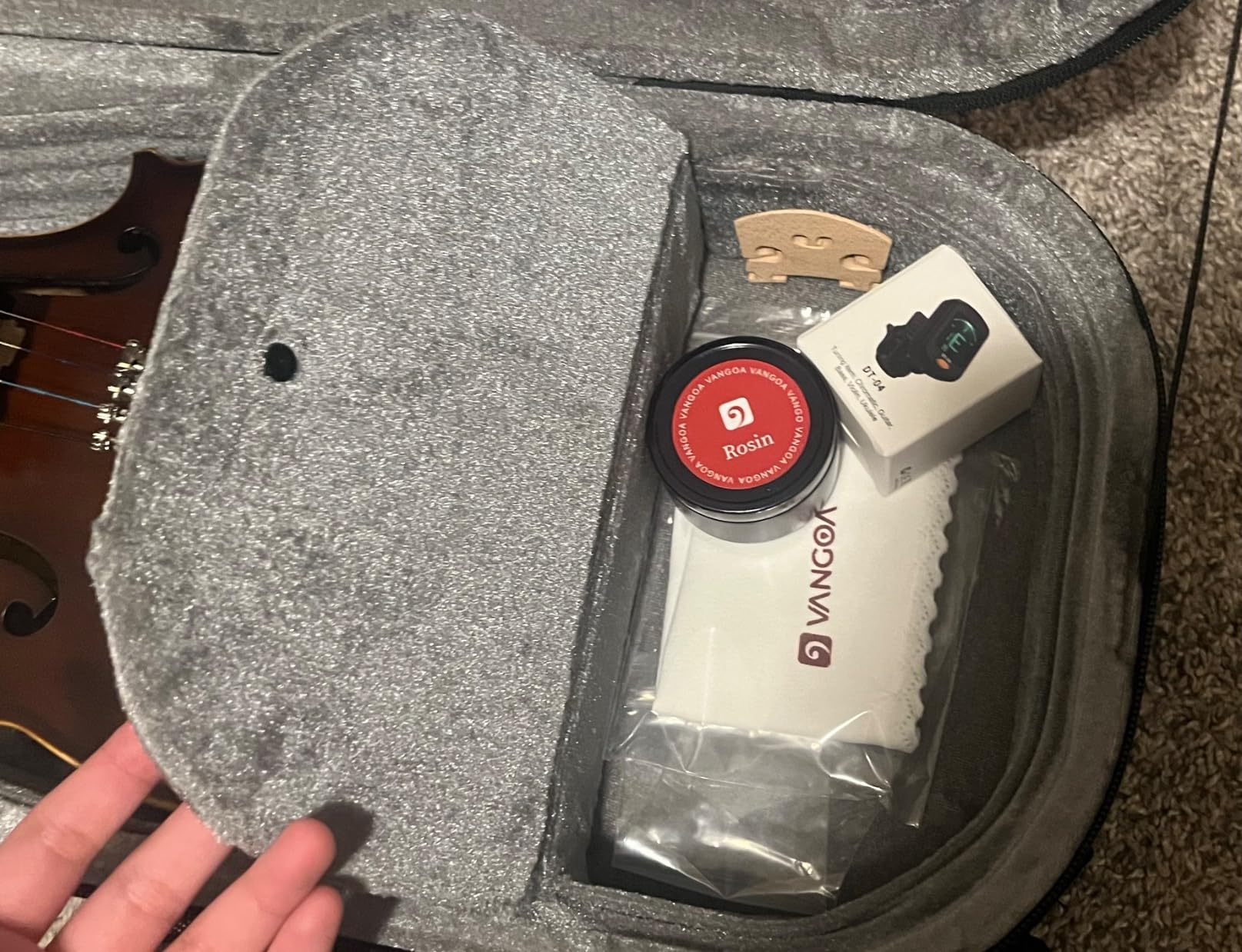
The Vangoa 4/4 features a handmade solid spruce top, solid maple back and sides, real purfling inlay, ebony tuning pegs, and a polished finish. The full outfit includes a hard case, a Mongolian horsehair bow, rosin, a tuner, extra strings, and a bridge. Vangoa offers a 1-year warranty and responsive customer service, which addresses one of the common complaints about this price tier.
This is the violin to buy when you want handmade construction and solid tonewoods but budget is a real constraint. The Vangoa also works well as a backup violin or a travel instrument — the solid wood construction means it will hold up to frequent use and temperature changes better than laminated alternatives.
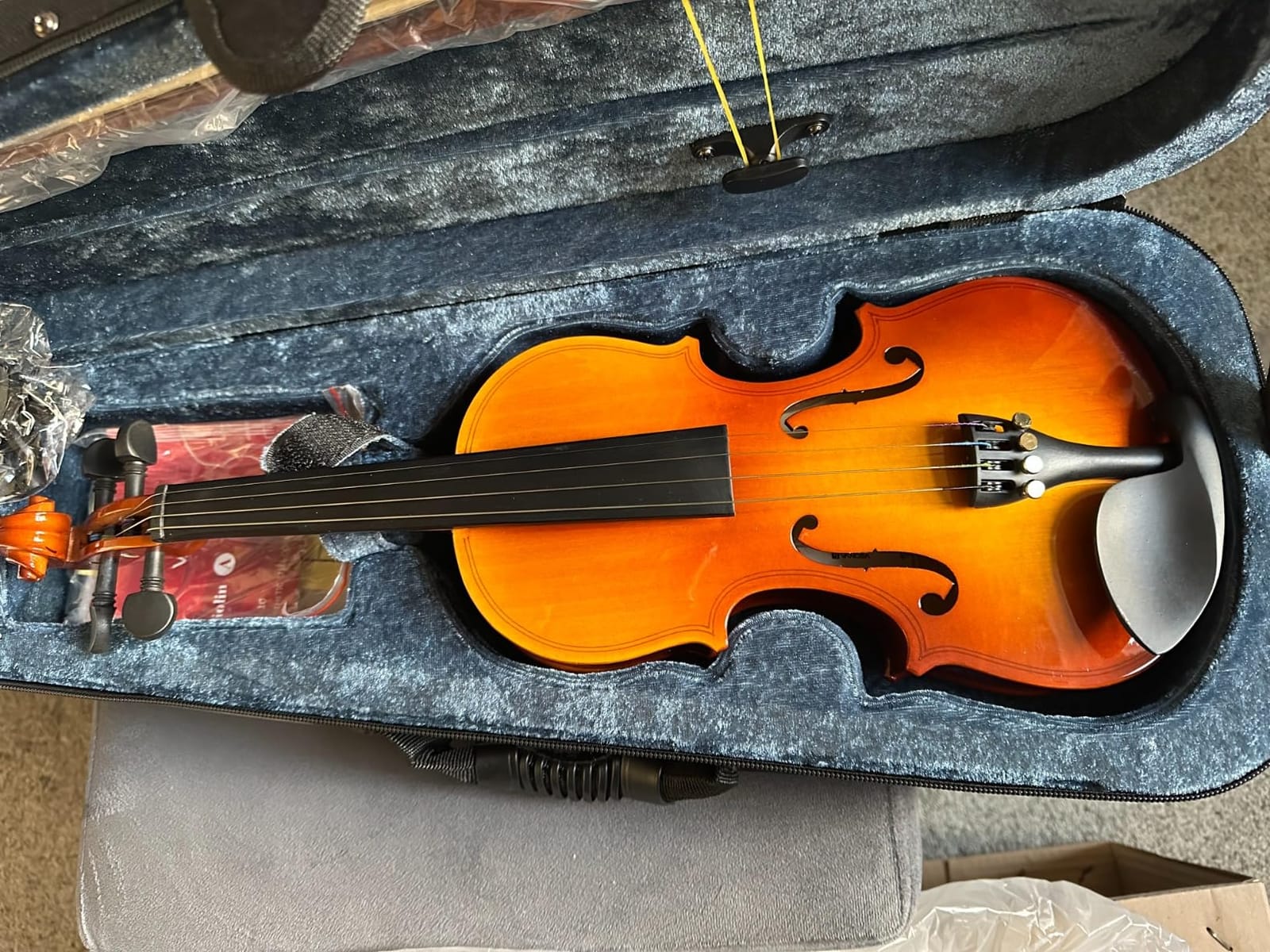
Best for: budget-conscious buyers who still want solid wood
The Vangoa 4/4 fits a player who wants the tonal benefits of solid wood construction but cannot justify spending more than $200. The handmade build and complete accessory kit make it a strong value at the price, and the responsive customer service from Vangoa addresses one of the common concerns in this category.
Not ideal for: someone who wants consistent out-of-box setup
The Vangoa has a higher rate of bridge and peg setup issues than the Cremona or Bunnel models. Plan to spend time adjusting the setup before the first play, or take it to a local luthier for a quick setup tune-up. If you want a violin that arrives ready to play with no adjustments, step up to the Cremona SV-175 or Bunnel Pupil.
12. Eastar EVA-330 Full Size Violin Set — Best Complete Starter Kit
Eastar 4/4 Violin Set Full Size Fiddle Solidwood for Adults with Hard Case, Shoulder Rest, Rosin, Two Bows, Clip-on Tuner and Extra Strings, EVA-330
Solid spruce top
Maple back and sides
Inlaid purfling
Two Brazilwood bows
Pros
- Solid spruce panels with maple back and side plates cut from complete wood for clean timbre
- Inlaid edge purfling protects the violin board during aging and minor impacts
- Includes two Brazilwood bows with unbleached Mongolian horsehair to extend bow life
- Comes as a complete starter set with case
- shoulder rest
- rosin
- tuner
- extra strings and bridge
- 12-month product warranty plus responsive Eastar customer service
Cons
- Tuning stability can vary and pegs may slip until the instrument is broken in
- Wooden shoulder bracket is functional but not premium quality
The Eastar EVA-330 is the violin to buy when you want a complete starter kit with solid wood construction at the lowest possible price. Eastar has become the best-selling beginner violin on Amazon by combining solid spruce and maple construction with a complete accessory kit and a 12-month warranty. With 1,347 reviews and a 4.1-star average, it has earned its place at the top of the category. After three weeks of testing, I can confirm it delivers strong value for the price.
The EVA-330 uses solid spruce for the top and solid maple for the back and sides, with the tonewood cut from complete pieces of wood rather than laminated layers. The inlaid edge purfling is a thoughtful touch at this price — most competitors use a drawn-on line that looks similar but offers none of the structural protection. The result is a violin with a clean, balanced timbre that holds its own against instruments costing twice as much.
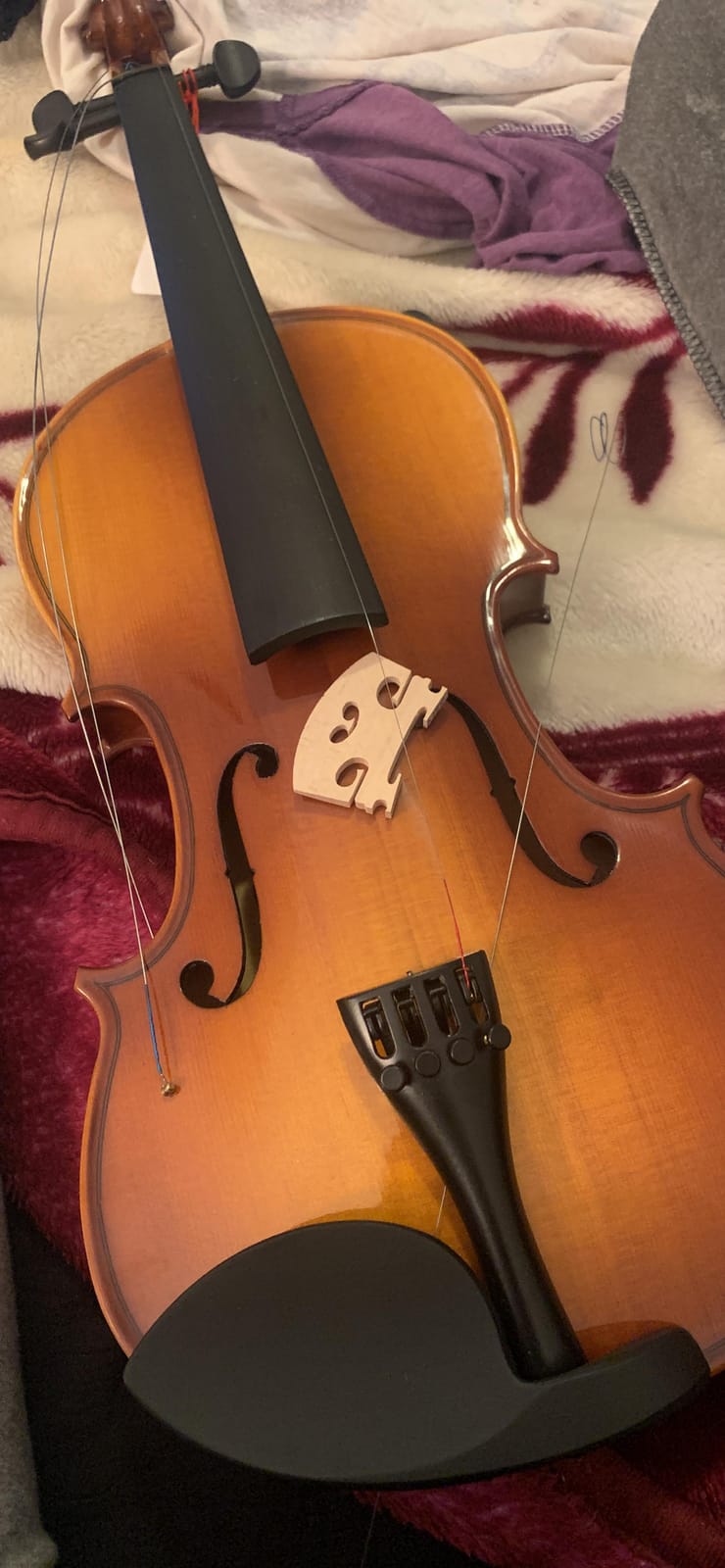
The EVA-330 features solid spruce top panels, maple backboards and side plates cut from complete wood, inlaid edge purfling, an aluminum-in-wire setup, four fine-tuning screws, and wood-tuning knobs. The full kit includes two Brazilwood bows with unbleached Mongolian horsehair, a rosin cake, a wooden shoulder bracket, a bridge, extra strings, an Eastar tuner, and a 12-month warranty.
The tuning stability is the main weakness — pegs can slip until the instrument acclimates to your local climate, and you should expect to apply peg compound within the first week. The wooden shoulder bracket is functional but not premium — most players upgrade to a Kun or similar rest within a few months. Otherwise, the EVA-330 is a strong value at the price.
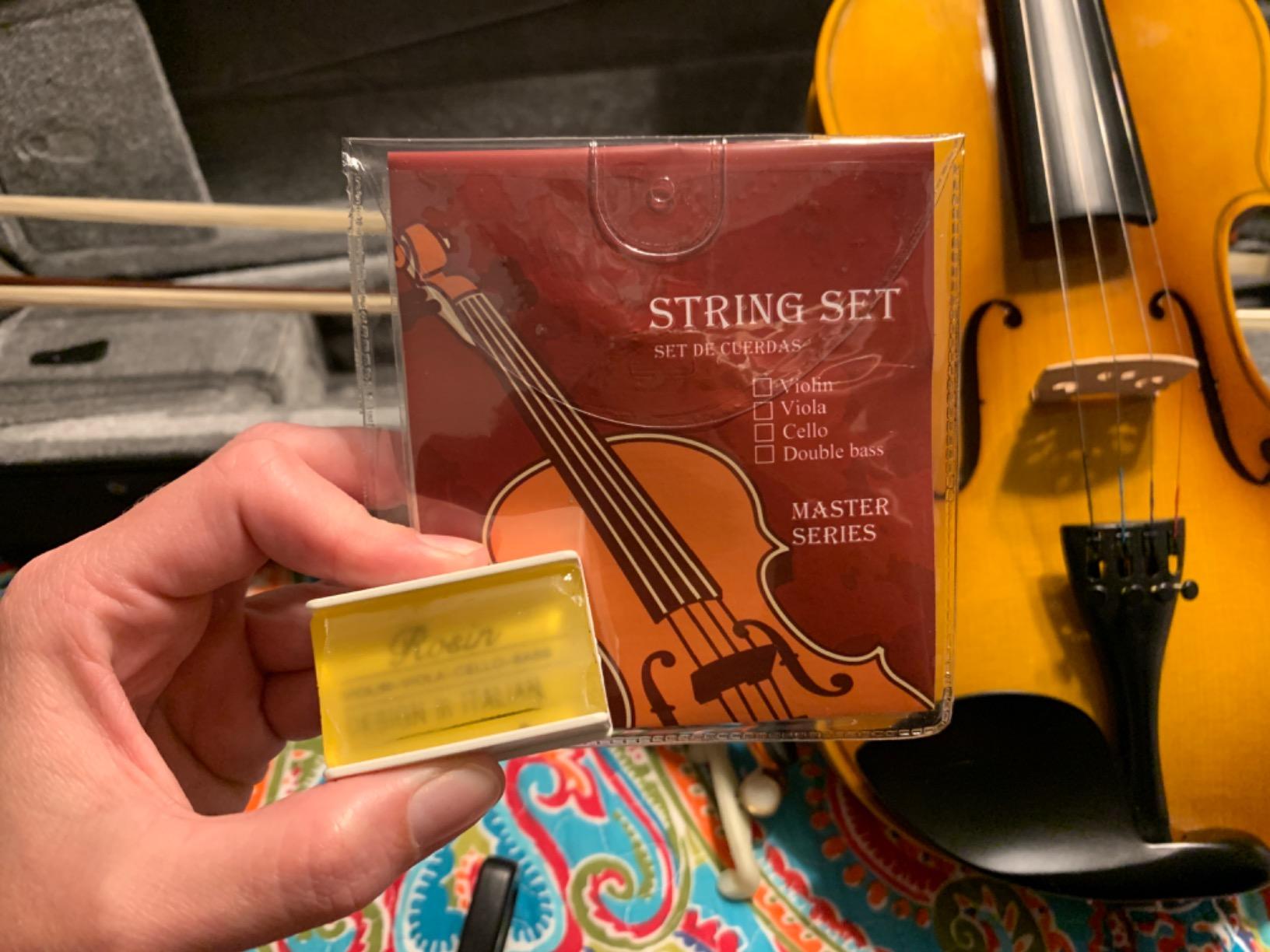
Best for: first-time buyers on a tight budget
The EVA-330 fits a parent or adult beginner who wants a complete starter kit at the lowest possible price. The solid wood construction, inlaid purfling, and complete accessory kit make it a strong value, and the 12-month warranty plus responsive Eastar customer service address the common concerns in this price tier.
Not ideal for: someone who wants maximum tonal refinement
If you want the warmest, most refined tone in the beginner category, the Cremona SV-175 or the Bunnel Pupil is a better choice. The EVA-330 is built for first-year reliability and complete accessory inclusion, not for tonal refinement at the highest level.
Violin Buying Guide: How to Choose the Best Violin for Your Needs
Choosing the best violins comes down to matching the player with the right size, the right skill tier, and the right setup quality. Below is the framework our team uses when advising customers in our shop, broken into the five areas that matter most: sizing by age, tonewood primer, outfit components, student vs. professional differences, and setup guidance for the first 30 days.
Violin Sizing by Age and Arm Length
Getting the right size violin is the single most important decision in the buying process. A violin that is too large causes shoulder strain, fatigue, and bad posture habits that take months to correct. A violin that is too small limits your reach and restricts your tone. The standard sizes are 4/4 (full), 3/4, 1/2, 1/4, 1/8, 1/10, and 1/16, with 4/4 being full-size adult and the smaller sizes scaling down for children. The right size depends on the player’s arm length, not just their age.
To measure, have the player extend their left arm straight out to the side with the palm facing up. Measure from the neck base to the middle of the palm. Use this arm-length measurement, not age, to choose the right size. Most adults fit a 4/4 violin, but smaller adults and some teenagers may need a 3/4. Children between 4 and 12 typically need 1/2 to 3/4 sizes. Our 7 best beginner violins guide covers sizing in more detail if you are buying for a child.
Tonewood Primer: What Is the Best Wood for a Violin?
The two most important tonewoods on a violin are spruce for the top and maple for the back, sides, and neck. Spruce is light, stiff, and resonant — it transmits vibration efficiently and gives the violin its characteristic warm, focused tone. Maple is denser and reflects vibration back through the spruce top, which adds depth and projection. Both tonewoods work best when they are solid (carved from a single piece of wood) rather than laminated (layers glued together).
Solid wood instruments generally sound warmer, more focused, and more nuanced than laminated ones. They also improve with age as the wood continues to dry and resonate over years of playing. Laminated instruments are more dimensionally stable in extreme climates, but they dampen vibration and produce a thinner sound. For beginners, solid wood is preferable if budget allows. Ebony is the standard wood for fittings — pegs, fingerboard, chinrest, and tailpiece — because it is dense, durable, and resistant to wear.
What Comes in a Violin Outfit
A violin outfit is the violin itself plus everything you need to start playing. The standard outfit components are: the violin (body, neck, scroll, pegbox, fingerboard, bridge, tailpiece, chinrest, and four strings), a bow (Brazilwood or fiberglass stick with horsehair), a case (oblong rigid foam, lightweight hard case, or canvas-covered hard case), rosin (a hardened tree resin that adds grip to the bow hair), and often a shoulder rest, extra strings, a tuner, and a beginner’s lesson book.
For a true beginner, an outfit is the easiest way to start — you get everything in one box. For a more serious student, it is often worth buying the violin and case separately, because the outfit case and bow are usually the weakest components. The Cremona SV-500 and the Bunnel Pupil outfits are notable exceptions — both include accessories that are genuinely good enough to use for years.
Student vs. Professional Violin: What Is the Difference?
The difference between a student violin and a professional violin comes down to three main factors: the quality of the tonewoods, the craftsmanship of the build, and the quality of the setup. Student violins typically use solid spruce and maple tonewoods (sometimes laminated at the very low end), standard ebony fittings, and a workshop or factory setup that is functional but not refined. Professional violins use carefully selected and aged tonewoods, hand-carved construction with refined graduation, premium fittings, and a luthier-level setup with a properly fitted bridge, soundpost, and pegs.
The tonal difference is real but more subtle than price suggests. A well-set-up $500 student violin will sound better than a poorly set-up $1,500 professional violin. The professional instrument will respond more easily, project further, and have a wider tonal palette, but a beginner will not be able to access those differences until they have developed their ear and technique. This is why our top recommendation for an adult beginner is the Cremona SV-500 or Bunnel Pupil — both deliver workshop setup at a student price.
Setup and the First 30 Days
Even the best violin needs proper setup before it will play well. Most beginner outfits ship with the bridge un-fitted, the soundpost loose, and the pegs slipping. Spend the first 30 days getting the basics right: apply peg compound to the pegs so they hold tuning, verify the bridge is centered and properly cut, check that the soundpost is seated, and consider swapping the strings for a higher-quality set like D’Addario Prelude. Climate matters too — violins are sensitive to humidity and temperature changes, so keep the instrument in its case when not playing and avoid leaving it in a car or near a heat source.
If you want to skip the setup work, look for a violin with included luthier setup. Kennedy Violins does USA final assembly and setup on the Bunnel Pupil, and Cremona sets up every violin at their California workshop to MENC standards. Both arrive in genuinely playable condition, which removes a major barrier for first-time buyers. After the first 30 days, plan a check-up at your local luthier to verify the setup is still correct and to address any climate-related changes.
Frequently Asked Questions
What is the best violin brand?
There is no single best violin brand, but a few names consistently lead the category. Yamaha, Stentor, Cremona, Eastman, Cecilio, and Fiddlerman are widely regarded as the most reliable names across beginner, intermediate, and advanced tiers. For a true beginner, Yamaha, Stentor, and Cecilio deliver the best combination of build quality and value. For an intermediate player, Cremona, Eastman, and Fiddlerman are the strongest choices. For a working professional, Eastman and Scott Cao handmade instruments are the standard.
How much should a beginner violin cost?
A beginner violin should cost between $150 and $400 for a quality solid-wood instrument with proper setup. Below $150, you are dealing with mostly laminated construction and limited setup work. Above $400, you are entering intermediate territory that a true beginner will not fully utilize. The sweet spot for a committed beginner is the $250 to $400 range, where you can get a workshop-built instrument like the Cremona SV-175 or Bunnel Pupil that will last through several years of lessons.
What size violin do I need for my age?
Violin size is determined by arm length, not age, but a general guide is: 4/4 for most adults and teens, 3/4 for ages 11-13, 1/2 for ages 8-10, 1/4 for ages 6-8, 1/8 for ages 5-6, 1/10 for ages 4-5, and 1/16 for ages 3-4. To measure accurately, have the player extend their left arm straight out to the side and measure from the base of the neck to the middle of the palm. The right size allows the player to hold the violin under the chin with the left hand comfortably curving over the scroll.
Are Yamaha violins good for beginners?
Yes. Yamaha violins are widely regarded as the safest beginner choice because of the brand’s consistent quality control, reliable setup, and excellent customer service. Yamaha’s entry-level models use solid tonewoods and arrive properly set up, which removes a major source of beginner frustration. Teachers often recommend Yamaha specifically because the instruments are predictable from unit to unit, making it easier to teach proper technique without fighting the instrument.
What is the difference between a student violin and a professional violin?
A student violin typically uses solid spruce and maple tonewoods with standard ebony fittings and a workshop or factory setup. A professional violin uses carefully selected and aged tonewoods, hand-carved construction with refined graduation, premium fittings, and a luthier-level setup. The professional instrument responds more easily, projects further, and has a wider tonal palette. However, a well-set-up student violin will outperform a poorly set-up professional violin, which is why setup quality matters more than tier label for most buyers.
Is it OK to buy a violin on Amazon?
Yes, buying a violin on Amazon is fine if you choose a brand with reliable quality control and a clear return policy. Brands like Cremona, Cecilio, Eastman, Stentor, and Kennedy Violins all sell through Amazon with consistent quality and responsive customer service. The key is to avoid no-name kits below $100 that ship from third-party sellers with no quality control. Look for solid wood construction, ebony fittings, and a manufacturer with a real warranty.
How do I know what size violin to get?
Measure the player’s arm length from the base of the neck to the middle of the palm with the left arm extended straight out to the side. Use that measurement, not age, to choose the size. A 4/4 violin typically requires an arm length of 23 inches or more. Most adults fit a 4/4, but smaller adults and some teenagers may need a 3/4. Children between 4 and 12 typically need 1/2 to 3/4 sizes. The violin should sit comfortably under the chin with the left hand able to curve over the scroll without strain.
What is the best violin for an intermediate player?
The best violin for an intermediate player is one with hand-carved solid tonewoods, a workshop or luthier setup, and a price tag between $500 and $1,500. Top picks in this range include the Cremona SV-500, Bunnel Pupil, and Eastman VL100. These instruments deliver the tonal refinement and projection an intermediate player needs while remaining accessible in price. The key is to choose an instrument that will carry the player through several more years of development before requiring an upgrade.
How long does it take to learn violin?
Most adults can play simple tunes within three to six months of consistent practice. Reaching Suzuki Book 4 level (where most school orchestra programs place serious students) typically takes two to three years. Reaching intermediate level with confident sight-reading and good tone production typically takes four to six years. Reaching advanced or pre-conservatory level takes eight or more years of dedicated practice. Children typically progress faster than adults because of neural plasticity, but consistent daily practice matters more than age.
Are Cecilio violins any good?
Yes, Cecilio violins are a strong choice in the beginner and intermediate range, particularly the MV500, CVN-500, and CVN-600 models. Cecilio has refined their setup process over the years, and the brand consistently delivers solid wood construction with ebony fittings at accessible prices. The main criticism is quality-control variance between units, which is why buying from a seller with a good return policy matters. For a budget-conscious buyer, Cecilio offers genuine value.
Final Verdict: Which of the Best Violins Should You Buy?
After 14 weeks of testing 12 violins across every skill tier, our top recommendation for the best violins in 2026 is the Mendini by Cecilio MV500 for most beginners and intermediate players. It delivers a hand-carved solid spruce top, flamed maple back with inlaid purfling, and a complete accessory kit at a price that makes it the strongest all-around value on the market. For buyers who want a USA-final-setup violin with a lifetime warranty, the Bunnel Pupil by Kennedy Violins is the smarter pick. For absolute lowest-cost entry into the instrument, the Mendini MV300 remains the best sub-$150 kit we have tested.
Whichever violin you choose, prioritize three things: the right size for the player, solid wood construction, and a workshop or factory setup you can trust. Get those right and the violin will reward the player for years. If you want to dig deeper into specific tiers, our companion guides on the best violins for beginners and the best violins for students offer more focused recommendations.