
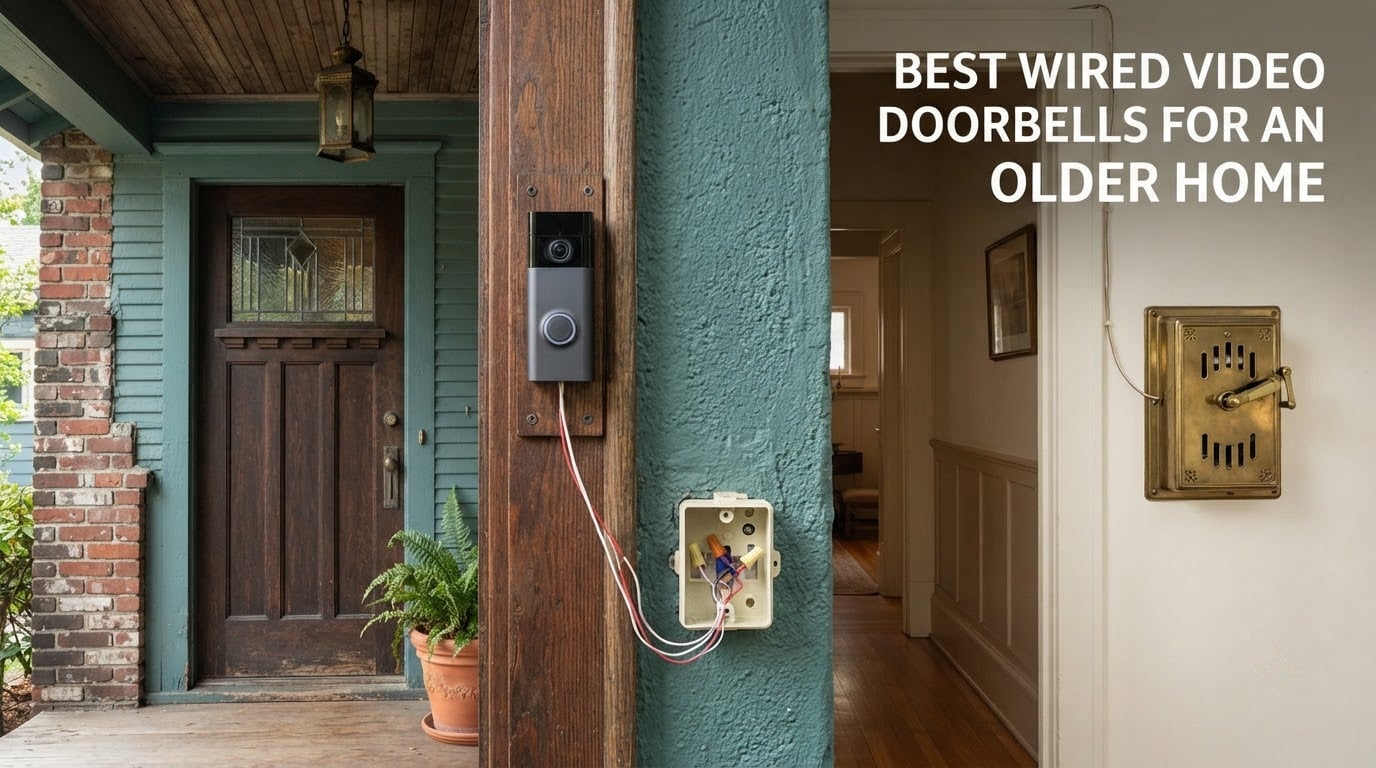
If your house was built before the 1990s, the doorbell on your wall is a polite little button attached to a transformer that has been quietly doing its job since long before anyone downloaded an app. Replacing that button with a camera is where most older-home projects go sideways. The wiring is thinner than you expect, the transformer may be rated well below what a modern video doorbell demands, and the chime sitting inside your entryway may be a mechanical model from 1968 that no video doorbell was ever tested against.
That is why the best wired video doorbells for an older home are not simply the sharpest cameras on the market. They are the ones that tolerate a tired transformer, behave politely around a mechanical chime, and do not force a monthly payment on you for basic video history. We spent weeks reading wiring guides, transformer specifications and thousands of buyer reviews for the ten hardwired models below, then ranked them on exactly those three things.
The short version: if your transformer is between 8V and 24V AC and you want a camera that can still ring the chime you already own, the Tapo D225 and the SimpliSafe Wired Doorbell are the two we would look at first. If you would rather not pay for cloud storage, the Reolink and eufy models are the serious answers. Everything else depends on which smart home you already live in. Here is the full breakdown, updated for 2026.
Table of Contents
Top 3 Picks for Best Wired Video Doorbells for an Older Home (October 2026)

SimpliSafe Wired Doorbell 1080p
- 8-24V AC transformer tolerance
- Works with existing mechanical chime
- 162-degree field of view

Tapo D225 2K+ Doorbell
- Hardwired from 8-24V
- Dual power with 10000mAh battery
- Free person package and vehicle detection

Reolink Video Doorbell WiFi 2K
- Local storage up to 256GB
- 2.4GHz and 5GHz dual-band
- 4:3 head-to-toe 180-degree view
These three cover the three situations we see most often in older houses. The SimpliSafe accepts the widest voltage range of any hardwired model here and is built specifically to keep a mechanical chime working. The Tapo D225 starts at 8V and gives you free AI detection without a subscription. The Reolink records to a card you own and is the only pick that speaks on both Wi-Fi bands, which matters when the front door is at the far end of a long, thick-walled house.
Best Wired Video Doorbells for an Older Home in 2026
| Product | Specifications | Action |
|---|---|---|
| SimpliSafe Wired Doorbell 1080p |
|
Check Latest Price |
| Tapo D225 2K+ Doorbell |
|
Check Latest Price |
| Reolink Video Doorbell WiFi 2K |
|
Check Latest Price |
 Kasa 2K Smart Video Doorbell KD110 Kasa 2K Smart Video Doorbell KD110 |
|
Check Latest Price |
 eufy Security S330 Dual Cam eufy Security S330 Dual Cam |
|
Check Latest Price |
 Wyze Wired Doorbell Camera v2 Wyze Wired Doorbell Camera v2 |
|
Check Latest Price |
 Ring Wired Doorbell 2K Ring Wired Doorbell 2K |
|
Check Latest Price |
 Ring Wired Doorbell 4K Pro Ring Wired Doorbell 4K Pro |
|
Check Latest Price |
 Arlo Video Doorbell 2K 2nd Gen Arlo Video Doorbell 2K 2nd Gen |
|
Check Latest Price |
 Google Nest Doorbell Wired 3rd Gen Google Nest Doorbell Wired 3rd Gen |
|
Check Latest Price |
Two things in that table are worth saying out loud before the individual reviews. First, the power requirements are the whole ballgame in a pre-1970s house: three of these models accept wiring as low as 8V, while the eufy and Wyze both want at least 16V. Second, the Ring models are the only two here that will not ring an existing mechanical chime, so if that brass chime box in your hall is staying, cross them off your list.
1. SimpliSafe Wired Doorbell 1080p – The Best Fit for 8-24V Homes
SimpliSafe Wired Doorbell,1080p – Compatible with SimpliSafe Home Security System – Latest Gen
8-24 VAC transformer
30VA max
1080p at 162 degrees
IP44
model VPD301
Pros
- Accepts 8-24V AC wiring
- works with an existing mechanical chime
- Activity Zones and Smart Person Detection cut false alerts
- Two-way audio and night vision
- 70 percent of reviews are five star
Cons
- 1080p is the lowest resolution in this group
- Will not work with a digital chime
- Best features need a SimpliSafe system
The single most useful thing about this doorbell in an older house is the tolerance. SimpliSafe lists an 8-24 VAC input range against a 30VA maximum, which means it will happily run on the low-voltage transformers that came with homes built in the 1950s and 1960s. It is also one of the few models here that explicitly keeps your existing mechanical chime in the loop instead of asking you to swap it out.
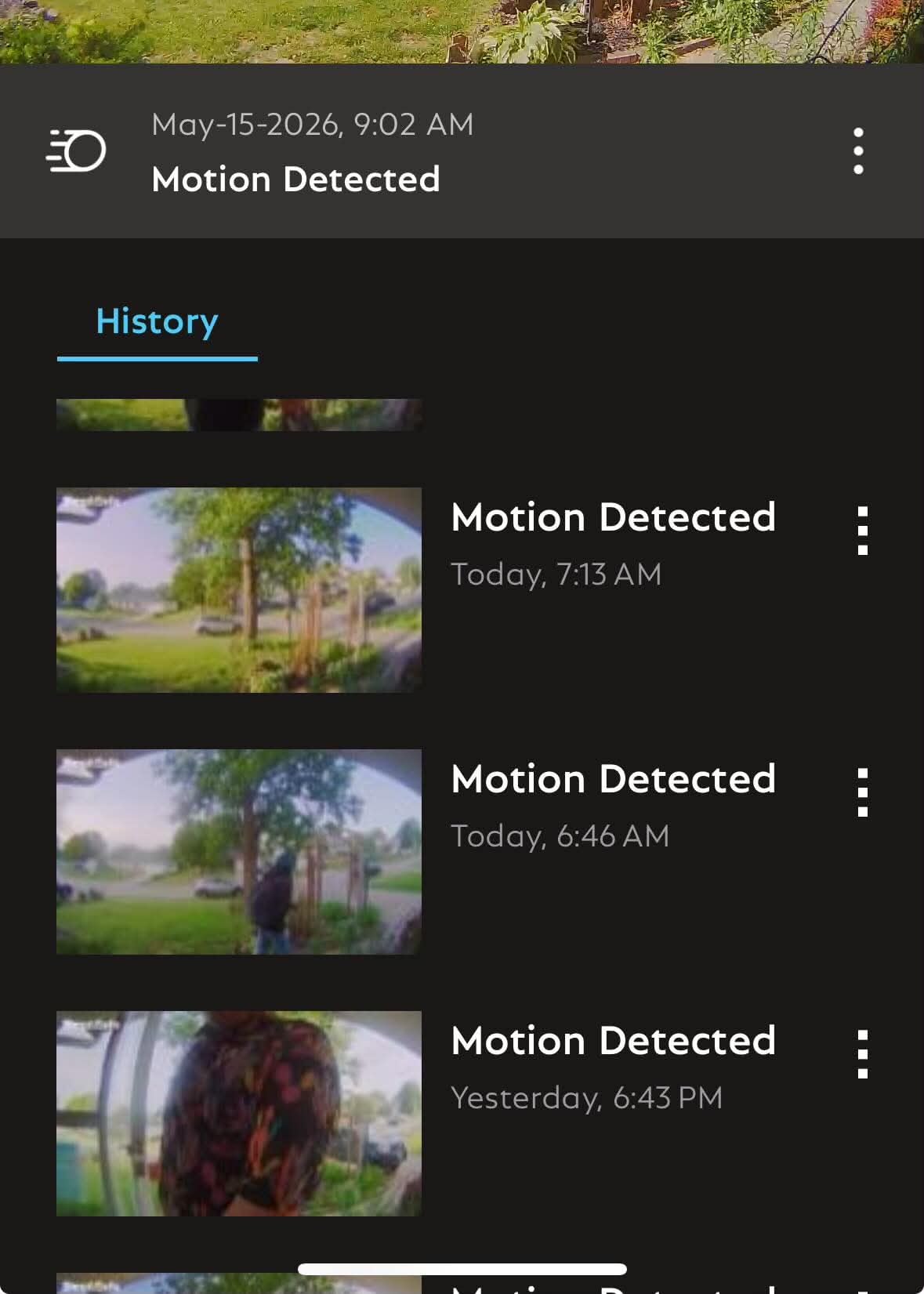
We like the Activity Zones feature for old houses specifically, because an older front porch tends to be covered in trees, streetlights and passing traffic. Drawing a zone around just the walkway and steps cuts the sort of low-level chatter that makes people turn motion alerts off within a week.
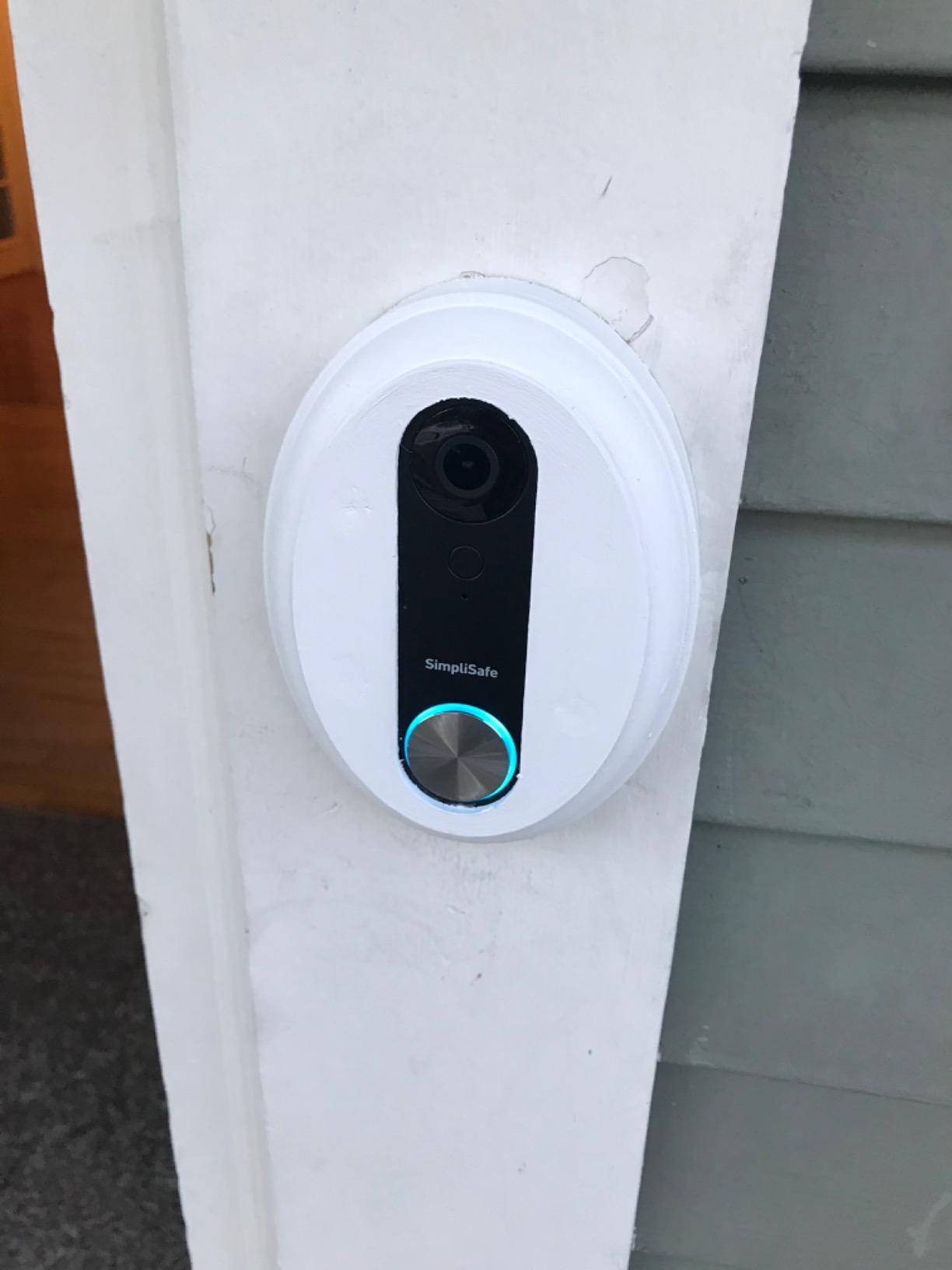
Image quality is the compromise you accept here. At 1080p across a 162-degree field of view, you still get a full head-to-toe frame of the door and any packages at the base, and the night vision holds up in rain and snow. It simply does not resolve license plate detail the way the 2K and 4K models do, which matters less if your goal is knowing who is standing there rather than reading a plate from across the street.
The video-verified professional monitoring option is genuinely useful, but it only reaches full potential if you already run a SimpliSafe system. As a standalone doorbell it is a competent, unfussy camera that respects the wiring you have rather than demanding a visit from an electrician.
Why it fits older homes better than the alternatives
An 8V transformer is not hypothetical. Homes from the first half of the twentieth century were frequently wired with lower-voltage bell circuits, and a doorbell that needs a full 16V will simply show a dead camera. SimpliSafe’s stated 8-24V range is the widest of the ten models we reviewed, which makes it the safest first guess when you have not yet tested your wires.
It is also the most honest option for keeping an existing chime. Reviewers consistently report straightforward installation on existing wiring, reliable person detection and useful activity zones, with 70 percent of ratings at five stars.
Where it will disappoint you
If image sharpness is your priority, 1080p will feel dated next to the Tapo or Reolink, and there is no way to upgrade the sensor later. The IP44 weather rating is also the least generous here, so a porch exposed to driving rain rather than occasional drizzle is worth thinking about.
Be aware that the deep activity features are tied to the wider SimpliSafe platform. Without a system, you get a good camera and a working mechanical chime, which for most older homes is exactly enough.
2. Tapo D225 2K+ Doorbell – The Best Choice for Low-Voltage Wiring
Tapo 2K+ Wired or Battery Powered Smart Video Doorbell with Chime, D225
Hardwired 8-24V or battery
2K at 180 degrees
10000mAh battery
microSD up to 512GB
Pros
- Hardwires from 8V
- works alongside a 10000mAh battery
- Free person package and vehicle detection
- 180-degree head-to-toe view with color night vision
- 4.4 average rating with 76 percent five star
Cons
- 2.4GHz Wi-Fi only
- Battery is sealed inside the unit
- Fixed aspect ratio with no wider option
This is the model we keep coming back to for pre-1970s houses. It hardwires anywhere from 8V upward, which covers essentially every bell circuit still in service, and it carries a built-in 10000mAh battery so it can also run on battery alone if your transformer turns out to be beyond saving. In hardwired mode it records continuously rather than only waking for events.
The detection features are the real differentiator. Person, package and vehicle detection are free, with no care plan required, and you can choose which categories trigger an alert. For a porch where a tree drops branches all afternoon, filtering alerts by type is worth more than any jump in resolution.
Owners describe it consistently as a Ring alternative that does not come with a subscription attached, and the microSD slot accepts up to 512GB of local recording. There is also a Ring Call feature, which sends the doorbell press to your phone as a video call so you can answer without unlocking the app.
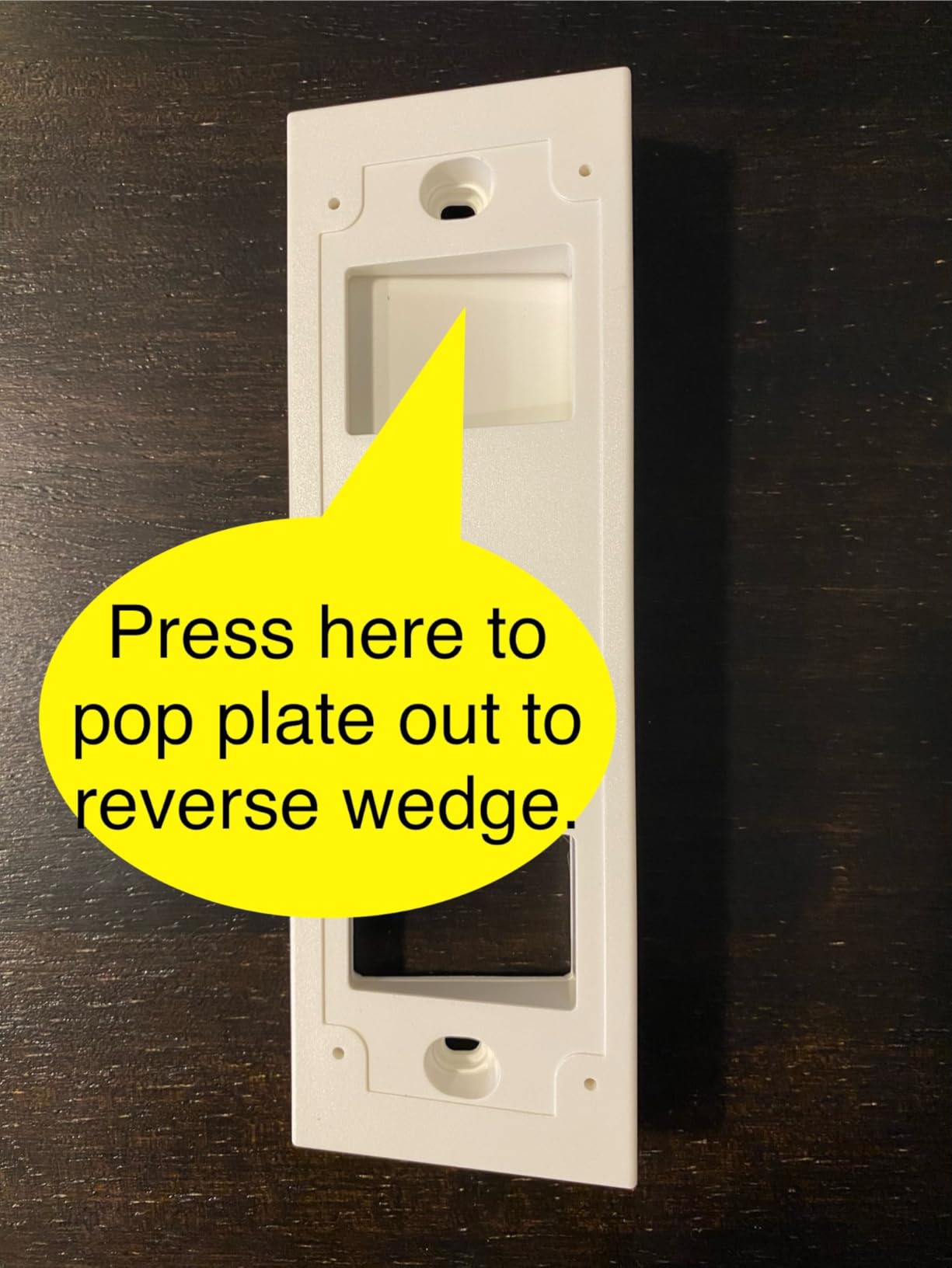
The 180-degree field of view and adjustable spotlight produce a genuinely useful head-to-toe frame, and the color night vision is a step above most competing models at this level. The box even includes mounting wedges, a 15-degree horizontal and 5-degree vertical, which helps when an older doorway is set at an awkward angle.
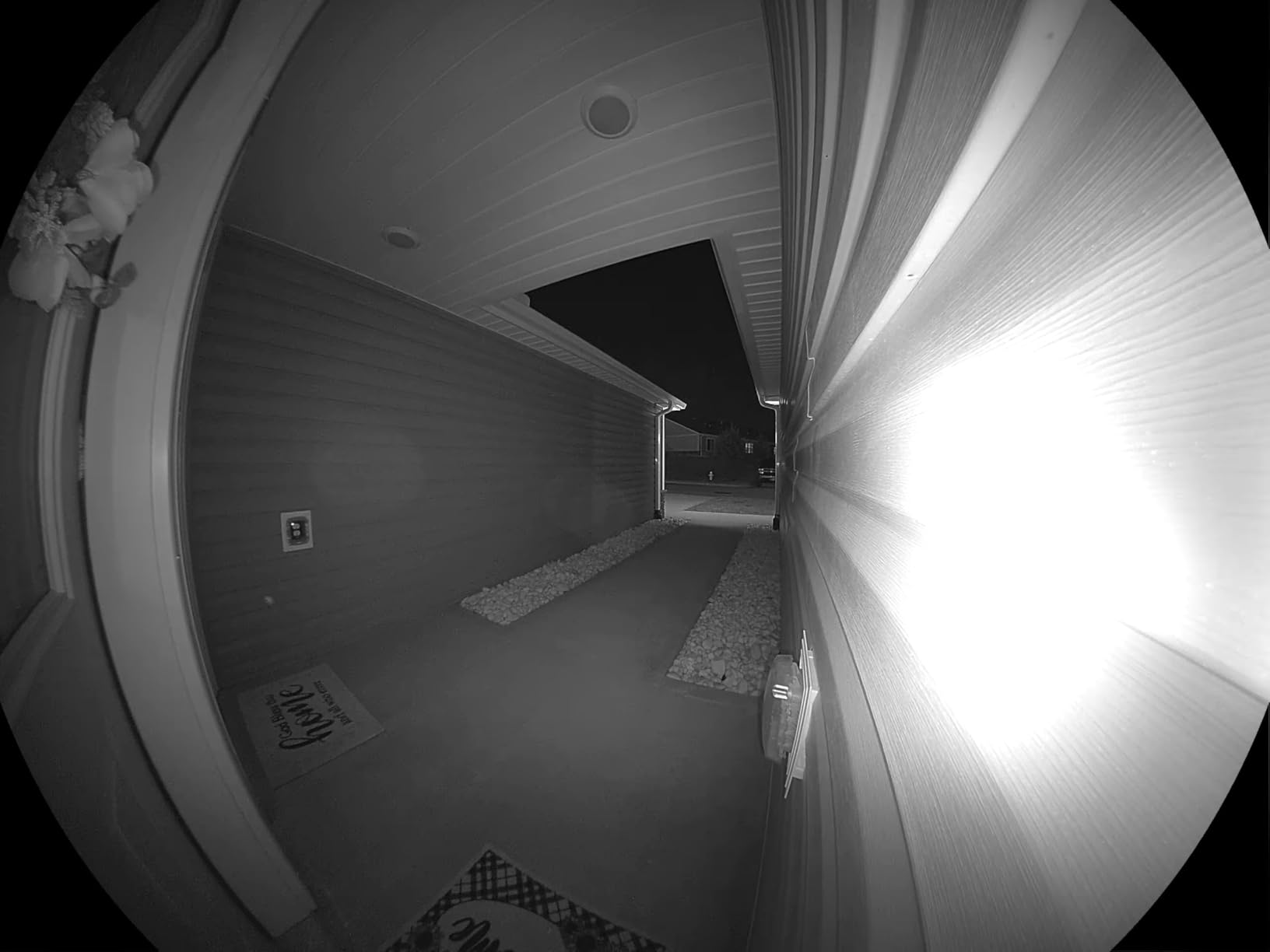
What to check before you order
This doorbell is 2.4GHz only, so if your router now splits the two bands you will need to temporarily disable that or place the router in range of the front door. In a large older house with masonry walls, that 2.4GHz limitation is the one thing most likely to frustrate you, and it is worth thinking about before the box arrives.
Make sure you have a 2.4GHz-capable phone too, and confirm that your doorbell wires are a pair you can reach. Continuous 24/7 recording in hardwired mode is the reason most people choose this model over a battery-only setup.
What to watch out for
The battery is not removable, so if you do run it primarily on battery you will bring the whole unit inside to recharge. Hardwired owners avoid that problem entirely, which is the point in an older home with existing wiring.
Multi-user households report a quirk where two linked accounts both receive the ring call and answering on one phone does not silence the other. White surfaces can also blow out in direct afternoon sun. Neither is serious, but both are worth knowing before the first delivery.
3. Reolink Video Doorbell WiFi 2K – The Best Pick for Local Storage
REOLINK Video Doorbell WiFi 2K Wired Camera, 4:3 Wide View Outdoor Camera
Hardwired 12-24VAC or 24V DC
2K HDR at 4:3 and 180 degrees
microSD up to 256GB
Chime V2 included
Pros
- Records locally with no subscription required
- Only model here with 2.4GHz and 5GHz dual-band
- 4:3 head-to-toe framing with a 15-degree wedge
- Chime V2 with 10 tunes included
- 2K HDR with 3D noise reduction
Cons
- Works best with Reolink chime and NVR accessories
- Free rich notifications capped at 25 per day
- Older homes below 12V may need help
Reolink is the pick for anyone who has decided that doorbell footage belongs on a card in their own house rather than on someone else’s server. The microSD slot takes up to 256GB, recording is continuous, and no subscription is required to review it. That single decision removes the largest recurring cost in this category.
It is also the only hardwired model in the group with dual-band Wi-Fi, supporting both 2.4GHz and 5GHz. In an older home with plaster, brick or stone walls, a 5GHz connection that struggles on a normal front porch can still carry video cleanly, and the option simply removes a whole class of connection problems.
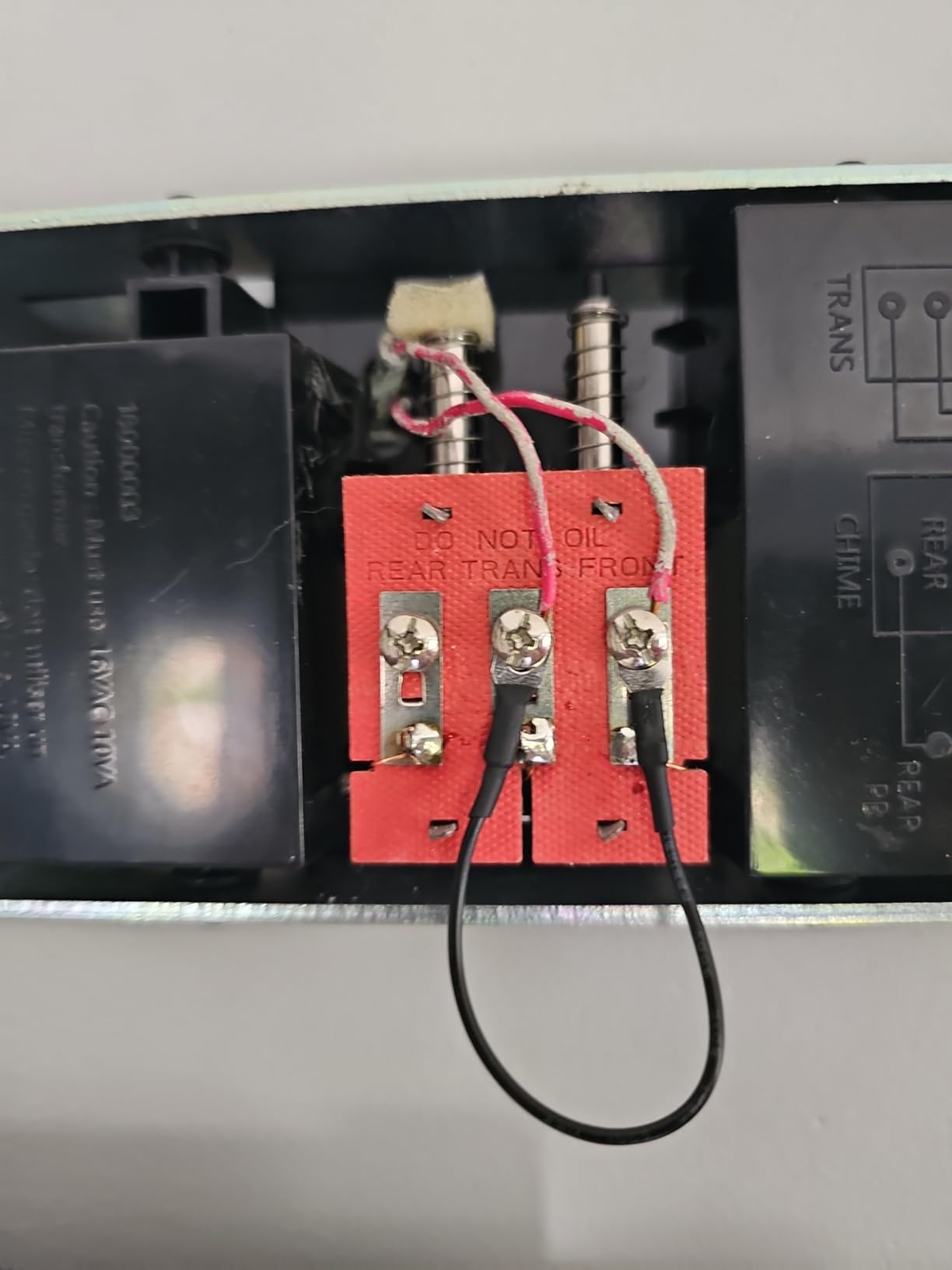
The 4:3 aspect ratio is a deliberate design choice and the reason this camera frames the way it does. Combined with the 180-degree viewing angle and an included 15-degree wedge, you get a head-to-toe view that actually includes the ground where packages land, rather than a wide 16:9 frame dominated by the sky.
Image quality holds up after dark. The 2K sensor with HDR, 3D dynamic noise reduction and distortion correction produces usable low-light footage, and reviewers single out clarity in dim conditions as a consistent strength. The Chime V2 in the box offers 10 tunes with volume control.
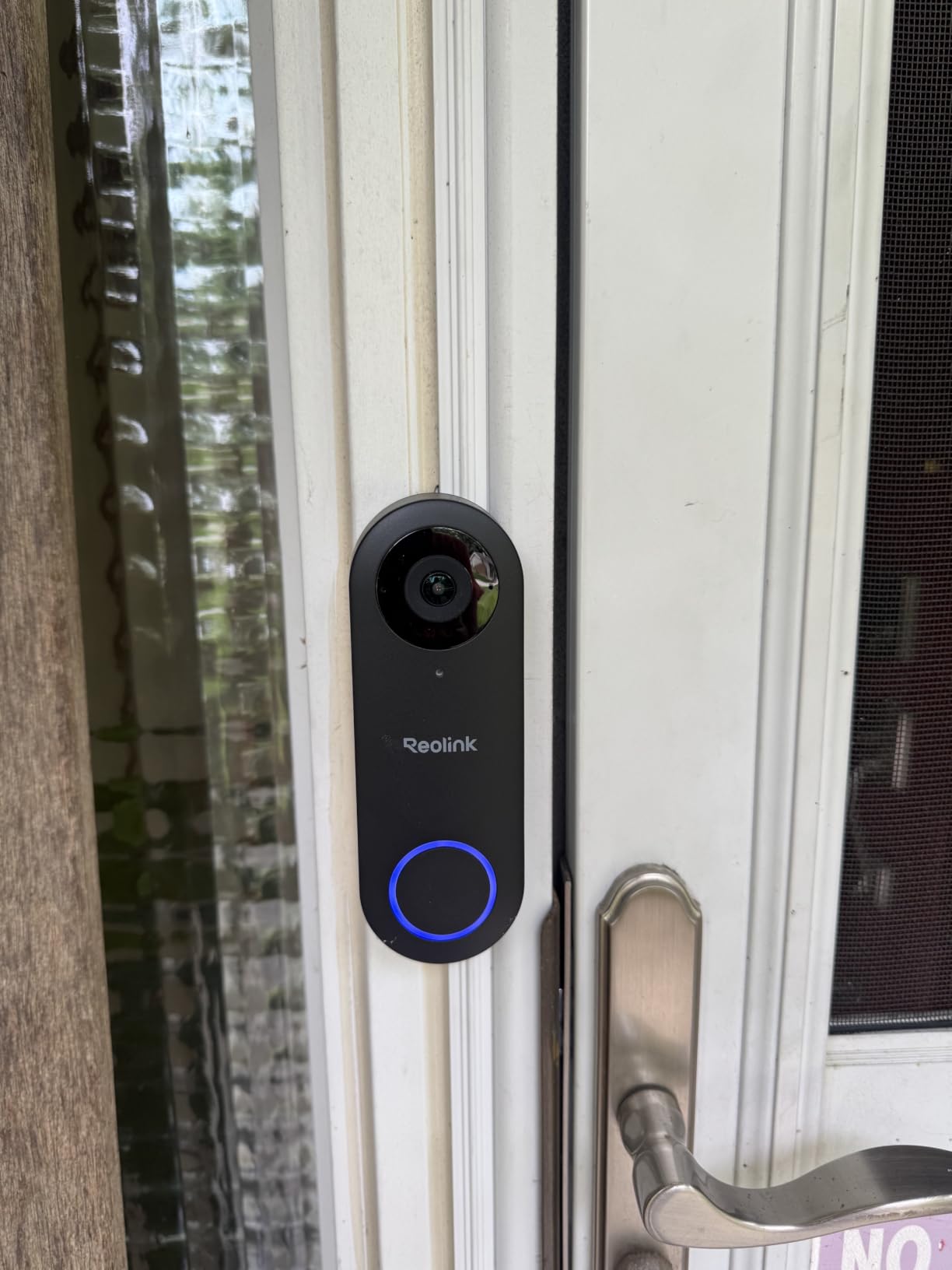
Why local storage matters in an older home
Owners of older houses often have a reason to be cautious about cloud services, whether that is privacy, a dislike of recurring charges, or simply a preference for keeping footage on hardware they own. Reolink is the model that makes that preference workable, with two-way talk, preset voice messages and auto-replies all included.
Its 12-24VAC input range is slightly narrower than the Tapo and SimpliSafe, so if your transformer is truly ancient you will want to test it first. The Chime V2 is included, which means you are not chasing a separate accessory just to hear the door.
Where the compromises sit
Reolink steers you toward its own chime and NVR accessories for the fullest compatibility, and some features are tuned around that ecosystem. The free rich notification tier is capped at 25 per day, which is plenty for a normal household but can run out on a busy street.
If you want 24/7 recording with no card to manage, this is not the model. For everyone else, the combination of dual-band Wi-Fi and local storage makes it the most future-proof pick in the group.
4. Kasa 2K Smart Video Doorbell KD110 – The Best Value Pick
Kasa 2K Smart Video Doorbell Camera Hardwired w/Chime, KD110
24V AC corded power
2K with 3MP sensor
160-degree diagonal view
IP64
model KD110
Pros
- 2K sensor with 160-degree diagonal field of view
- Hardwired for continuous power with no charging
- Modular chime with tones and volume control
- Two-way audio works reliably
- mounting hardware and wire nuts included
Cons
- 2.4GHz Wi-Fi only
- First version hardware caps microSD at 128GB
- Some smart detection features need a care plan
The Kasa KD110 has the most owner feedback of any model in this roundup, with 3755 ratings averaging 4.1. That is a useful signal on its own, because a large body of reviews means the quirks have had time to surface rather than hiding behind a handful of early adopters.
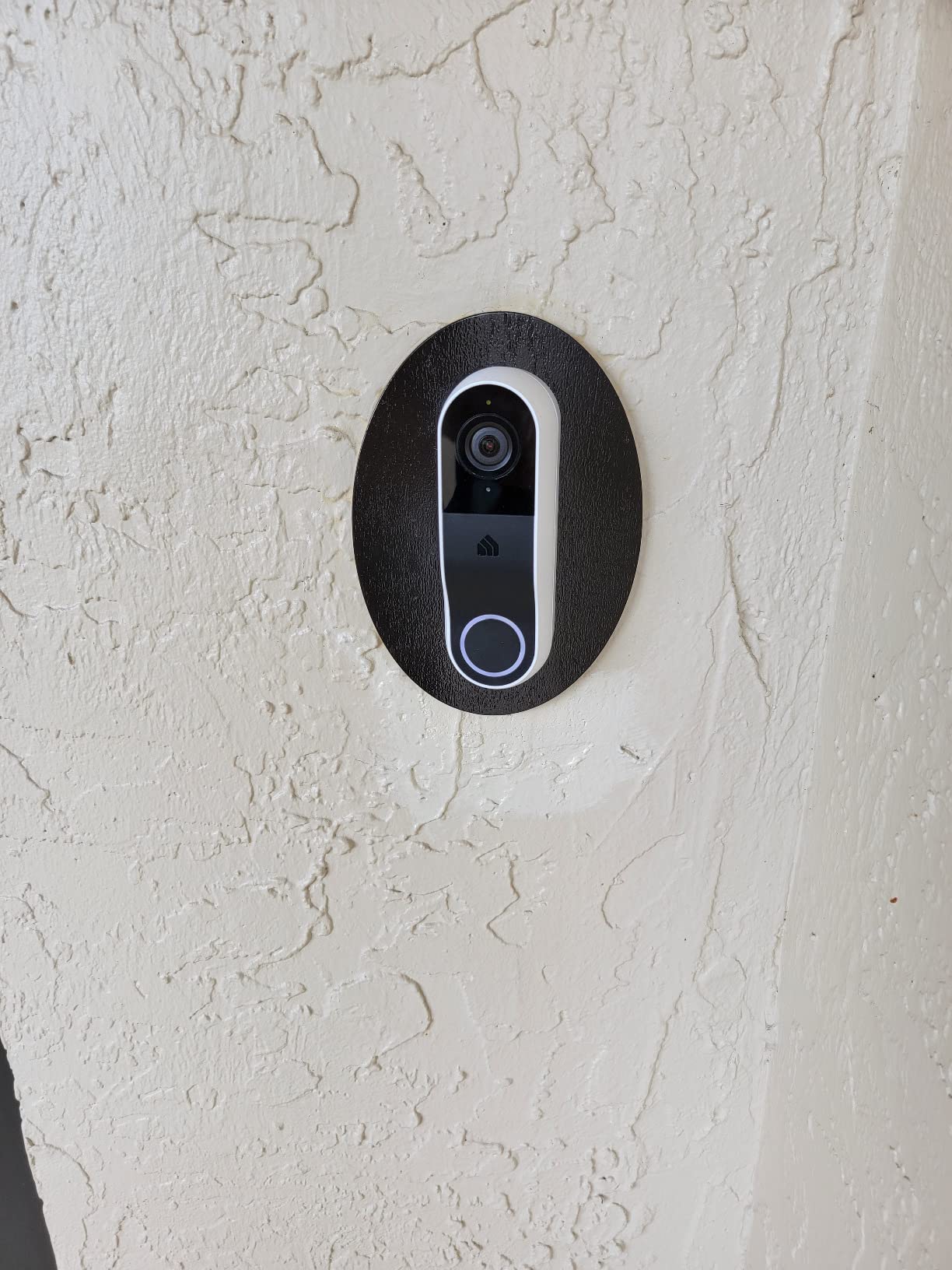
Buyers frequently praise the sharp 2K image, the straightforward hardwired install using existing doorbell wiring, and the included chime. The 3MP sensor behind the 2K label is genuinely crisp for the money, and the 160-degree diagonal field of view covers the door and the immediate approach.
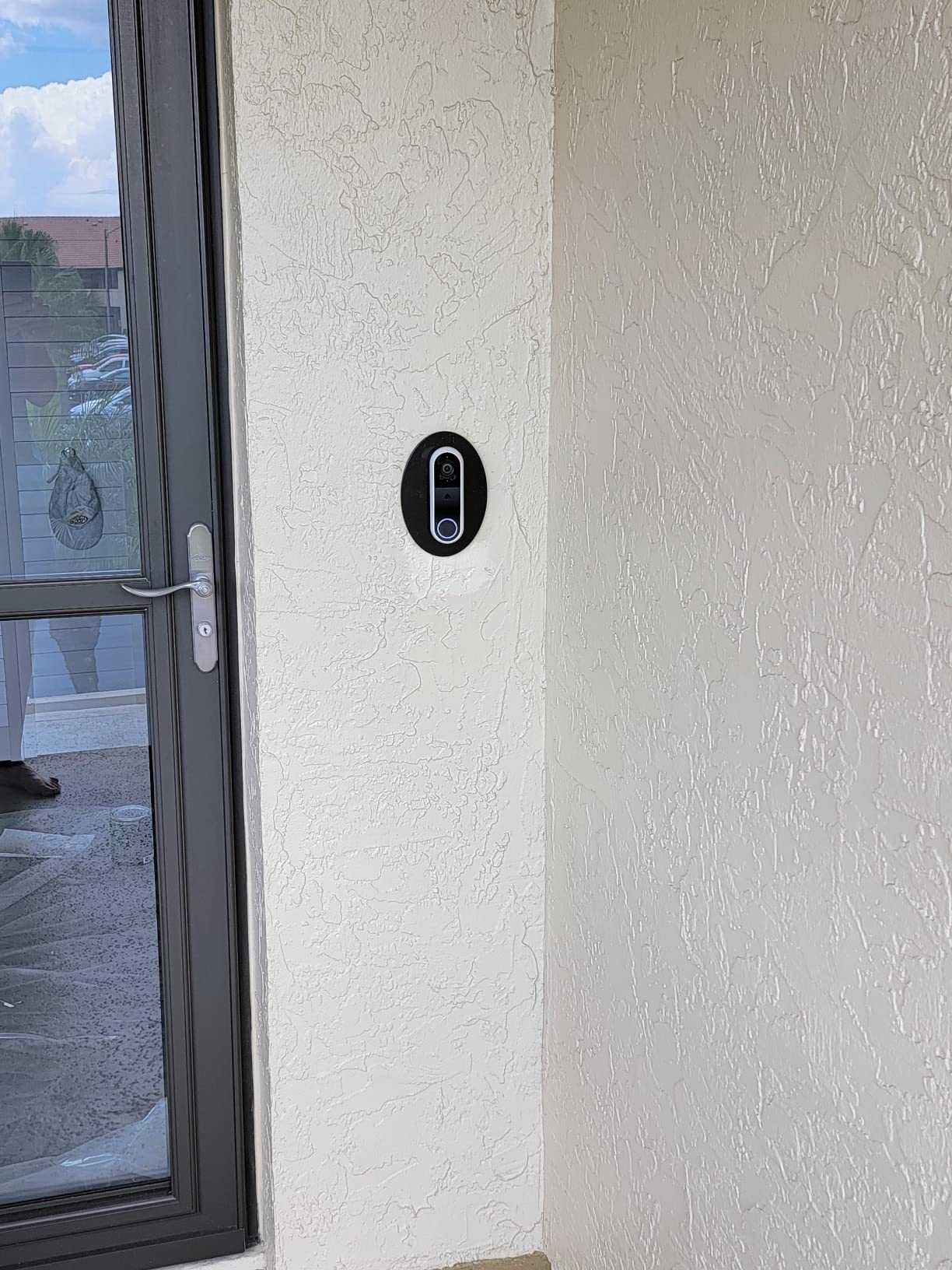
Two-way audio is reported as reliable rather than merely present, which is a higher bar than most. The kit also includes a mounting wedge, bracket, extension wires, wire nuts and chime jumpers, so the install does not depend on you sourcing parts before starting.
For local storage, microSD support means you are not forced into a subscription for basic recording, and it works with both Alexa and Google Assistant, showing on Echo Show displays or Chromecast. Night vision reaches 30 feet, which is among the longer stated ranges in this group.
What makes it the value choice here
For a straightforward wired replacement in a house with standard 24V AC bell wiring, this model covers the essential list: sharp daytime image, reliable two-way talk, a chime, and local recording. Very few buyers need more than that, and fewer still need to pay monthly for it.
The 63 percent five-star share with 11 percent one-star reflects a generally positive but not flawless reception, which is normal for a mid-priced model that makes sensible compromises rather than chasing top specifications.
Where it will let you down
It is 2.4GHz only, so a band-split router will need adjusting. The first version of the hardware caps microSD cards at 128GB rather than the 256GB the marketing implies, and some of the smarter detection features are reserved for a paid care plan.
If your transformer is older than roughly the 1980s, note that the stated power is 24 volts AC. This is a 24V model, and a house wired at 8V or 12V needs the Tapo D225 or the SimpliSafe instead.
5. eufy Security Video Doorbell S330 – The Best Pick for Two Cameras
eufy Security Video Doorbell (Wired) S330 with Chime, Dual Cam, Delivery Guard, Security Camera, 2K with HDR, No Monthly Fee, 16-24V, 30VA, homebase NOT Supported, Motion Only Alert
16-24V 30VA wiring
2K HDR dual camera
8GB onboard storage
IP65
model E8203
Pros
- Dual cameras cover more of the front door
- Subscription-free operation
- Delivery Guard package detection with tamper alerts
- 3-second pre-roll captures activity before motion
- Works with Alexa and Google Assistant
Cons
- HomeBase is not supported
- Alerts are motion only
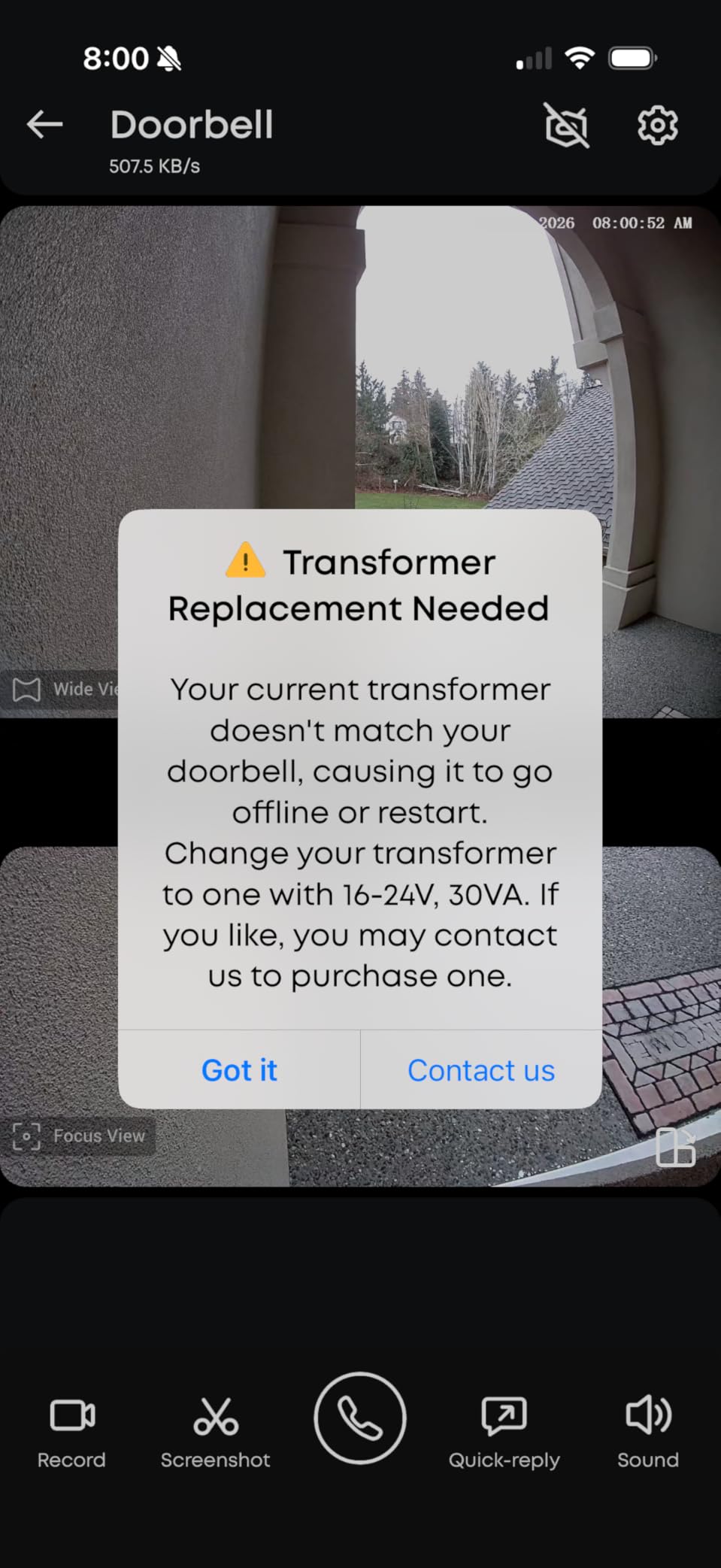
- Requires 16V and 30VA wiring
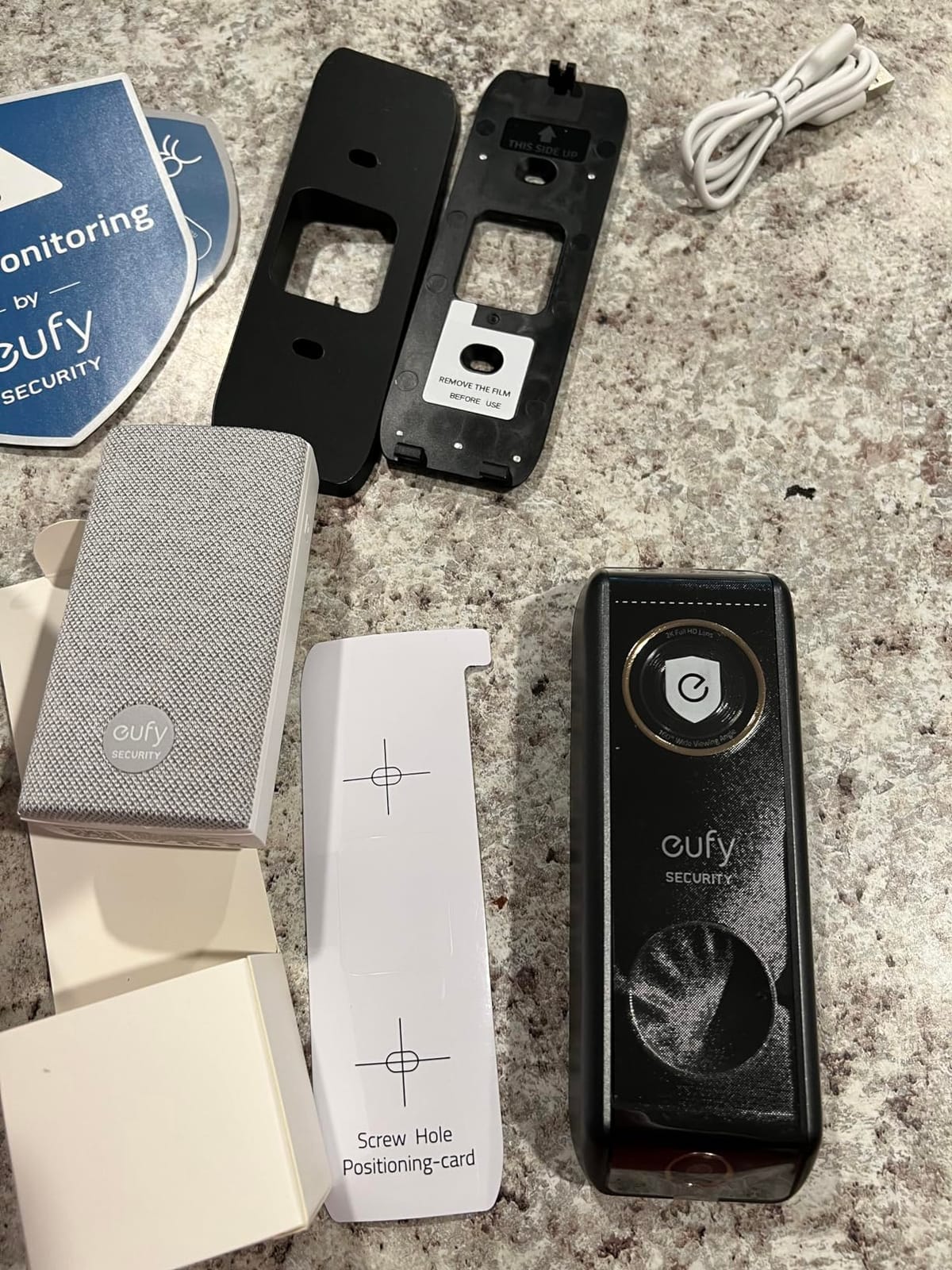
Most doorbells show you one rectangle of the world. This one has two lenses, and buyers point to the resulting front-door coverage in 2K HDR as the main reason to pick it. On a wide older porch, a second camera pointed lower can keep packages and the step in frame without tilting the main view away from the door.
There is no monthly fee. That matters more here than a headline resolution figure, because doorbell subscriptions quietly become a permanent line item the moment you install the camera and forget about it.
Delivery Guard is the feature that gets the most praise in reviews. It will tell you when a package arrives, when it is picked up, and alert you if someone appears to tamper with it, which covers the two events most people actually buy a doorbell camera for. The 3-second pre-roll previews capture what happened before the motion trigger, so you see the approach rather than a person already standing at the door.
Buyers also highlight the 8GB of onboard storage as convenient, since it works without any card or hub. The chime is included in the box, and the unit works with both Alexa and Google Assistant.
Where the dual camera earns its keep
Reviewers consistently value the two-camera design and the absence of a subscription, with 63 percent five-star and 15 percent one-star. If your front door sits under a deep overhang, one lens for faces and one for the ground is a genuinely different proposition from a single wide view.
For an older home, the deciding question is the wiring requirement. The S330 asks for 16-24V at 30VA, which is a fairly demanding ask of a bell circuit that has been running since the 1970s.
Things to know before you commit
Alerts are motion only on this model, so you will not get the type-filtered person and package notifications that the Tapo offers for free. HomeBase is explicitly not supported, which removes one route to local recording beyond the 8GB built in.
If your transformer cannot deliver 16V, this is not the doorbell. Test first, or plan on a transformer replacement, and the Tapo options will fit your existing wiring without the visit.
6. Wyze Wired Doorbell Camera v2 – The Best Pick for Color Night Vision
WYZE Wired Doorbell Camera v2(Existing Doorbell Wiring Required), 2K HD
16-24V AC at 10VA minimum
2K head-to-toe view
starlight color night vision
IP65
Pros
- Standout color night vision from a starlight sensor
- Works with an existing mechanical chime
- 24/7 local microSD recording without a subscription
- Wide head-to-toe view captures packages on the ground
- Two-way audio compared well to a phone call
Cons
- On-unit speaker is quiet outdoors
- Motion alerts can be noisy in rain
- Playback navigation is a simple vertical scroll
- No anti-theft mount
Wyze built this one to run on the wiring you already have. It requires 16-24V AC at a minimum of 10VA, which is a lower VA ceiling than most competing hardwired models ask for, so it is a reasonable fit for an older transformer that cannot manage a heavier draw.
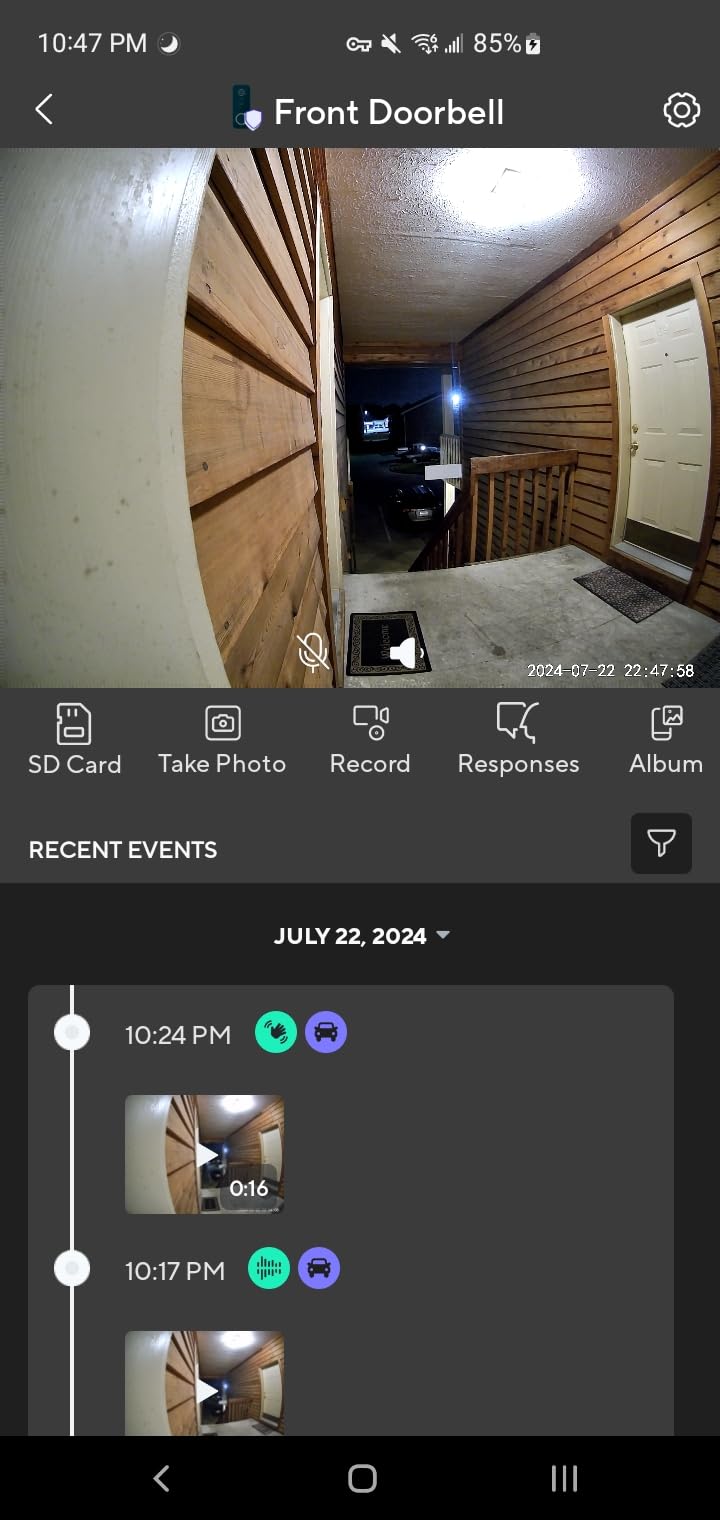
The starlight sensor is the standout. Owners cite strong night-time color imagery as the main draw, and at 2K with a head-to-toe frame you can see who is at the door without the grey wash that most infrared cameras produce.
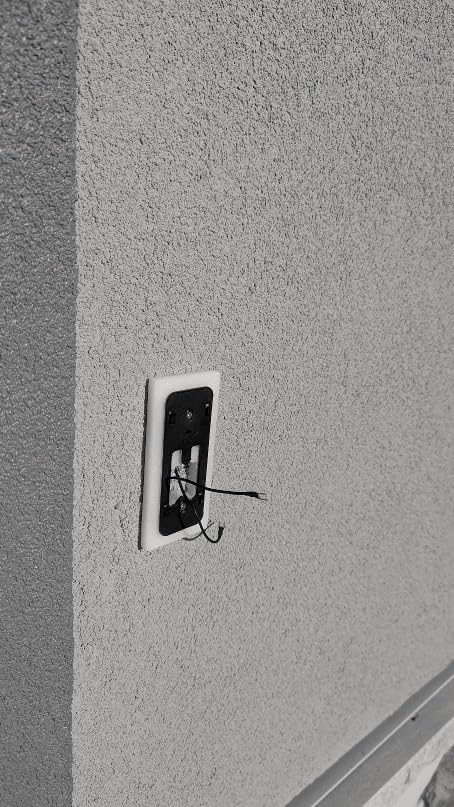
It also works with an existing mechanical chime, which keeps a period-appropriate entryway intact, and 24/7 local recording to a microSD card means basic storage does not require a subscription. Buyers compare the two-way audio favorably to a regular phone call.
The 2K head-to-toe view specifically catches packages on the ground, which is more useful than it sounds on a porch with no shelf. Setup is straightforward on pre-existing wiring, and the unit works with Alexa.
Where it outshines the competition
Owners commonly cite easy installation on pre-existing wiring and strong night-time color as the two things that made them happy, with 62 percent five-star ratings. The mechanical chime compatibility is the quiet advantage in a house where the chime is part of the architecture.
If your priority is identifying a face at the door after dark rather than counting pixels, this camera serves that better than several higher-resolution competitors.
The complaints worth knowing
The on-unit speaker is quiet, so visitors outdoors may struggle to hear you, which is the most repeated criticism. Motion detection produced false alerts in rain and needed sensitivity tuning, and the SD card playback interface is a vertical scroll with no clip scrubbing, which becomes irritating once you have a week of footage.
There is no anti-theft or tamper protection, and some users reported units going offline or needing resets. Check the rating distribution carefully: 15 percent one-star is a meaningful share of 3410 ratings.
7. Ring Wired Doorbell 2K – The Best Pick for Alexa Homes
Ring Wired Doorbell 2K (newest model), Retinal 2K with wide-angle video, up to 6x Enhanced Zoom, and Two-Way Talk, Speckled Gray
Hardwired for nonstop power
Retinal 2K video
up to 6x enhanced zoom
Live View and Two-Way Talk
Pros
- Sharp 2K video with a wider porch view than earlier models
- 6x Enhanced Zoom useful for close detail
- Straightforward install and quick app setup
- Clear and loud two-way audio
- Works with Alexa and Echo Show
Cons
- Does not ring an existing mechanical chime
- Bulky body needs 2-3 inches of clearance
- Needs a Ring plug-in chime
- 2.4GHz-only setup
If your household runs on Alexa, this is the least friction option. It is hardwired for nonstop power, which in an older home with existing wiring means you are reusing the pair you already have rather than adding a battery to maintain.
Buyers consistently rate the 2K clarity and installation ease highly, and the wider porch view is a real improvement over earlier Ring wired models. The 6x Enhanced Zoom is useful when you want to look at a face or a label at the door rather than the whole scene.
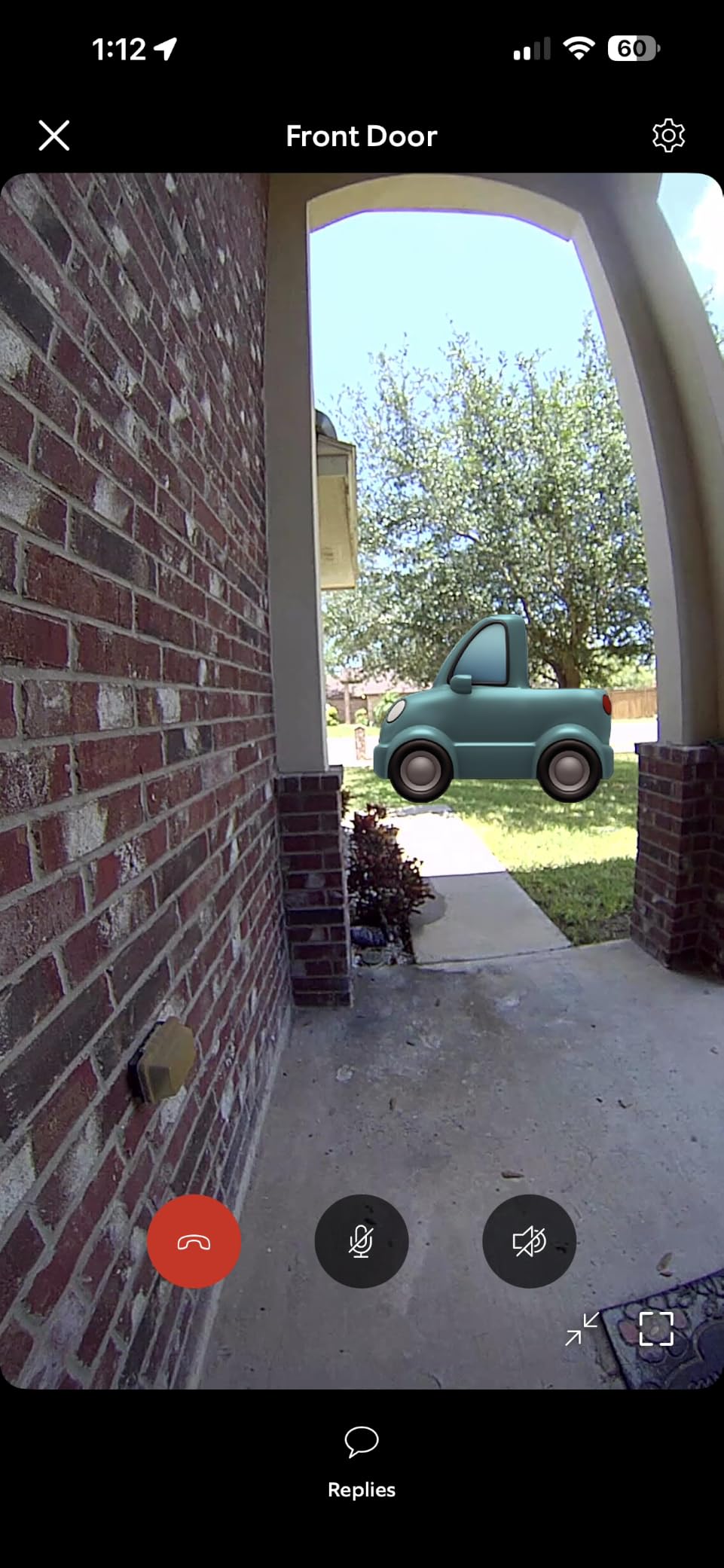
Audio is loud and clear, and reviewers report reliable night mode switching. The speckled gray finish looks modern against older trim without shouting, and the build quality is solid.
Real-time motion notifications arrive on your phone, and the camera displays on Echo Show devices, which is where this model separates itself from the rest of the roundup for anyone already speaking to their house out loud.
What it does well for an existing installation
With 68 percent five-star and 11 percent one-star, sentiment is positive, and the installation itself is rarely the problem. The hardwired power means no charging routine and no battery degrading in a cold entryway over a northern winter.
For a house that is already full of Echo speakers, the integration is the reason to buy it. Notifications, live view and chime prompts all flow into an ecosystem you are already using.
Where older homeowners will object
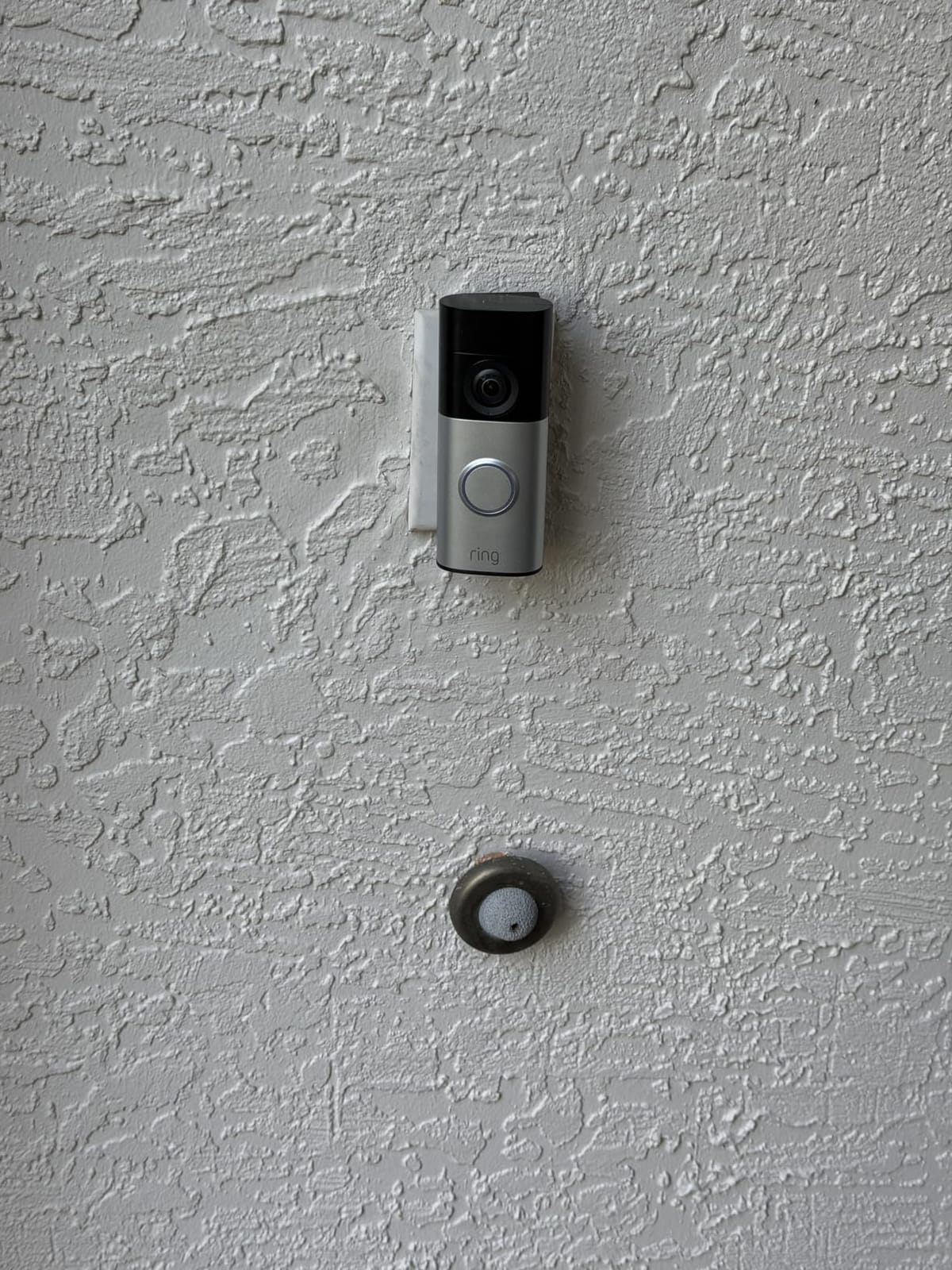
It will not ring an existing mechanical chime, so the bell in your hall stays silent unless you add a Ring plug-in chime. On a house where that chime is original to the interior, that is a real loss.
Video history and AI-powered alerts require a Ring Protect subscription, which is the ongoing cost to plan for. The body is bulky and needs 2-3 inches of clearance with little cavity for wire slack, which matters in tight pre-war door frames, and the unit cannot reconnect automatically after a power outage without a manual reset.
8. Ring Wired Doorbell 4K Pro – The Best Pick for Maximum Detail
Ring Wired Doorbell 4K Pro (Newest Model), Retinal 4K with wide-angle video, 10x Enhanced Zoom, and Night Vision, Deep Silver
Retinal 4K at 2880 by 2880
up to 10x enhanced zoom
140-degree field of view
3D Motion Detection
Pros
- Highest resolution in the group at 2880 by 2880
- 10x Enhanced Zoom for close detail
- Low-Light Sight gives true color with a porch light on
- 3D Motion Detection reduces false alerts
- Premium exterior finish options
Cons
- Bypasses an existing mechanical chime
- Included chime mini sounds thin
- Video Descriptions need a Ring subscription
- Reported network drops on some 2.4GHz mesh setups
This is the highest resolution doorbell in the group, recording at 2880 by 2880 with up to 10x Enhanced Zoom. If you genuinely need to identify a visitor at your door rather than simply see that someone arrived, the detail difference against a 2K model is real rather than marketing.
Upgraders from earlier Ring wired models praise the sharper video, better zoom and improved night performance, and 73 percent of ratings sit at five stars. Low-Light Sight produces near-daylight color when a porch light is on, which pairs well with the large sensor.
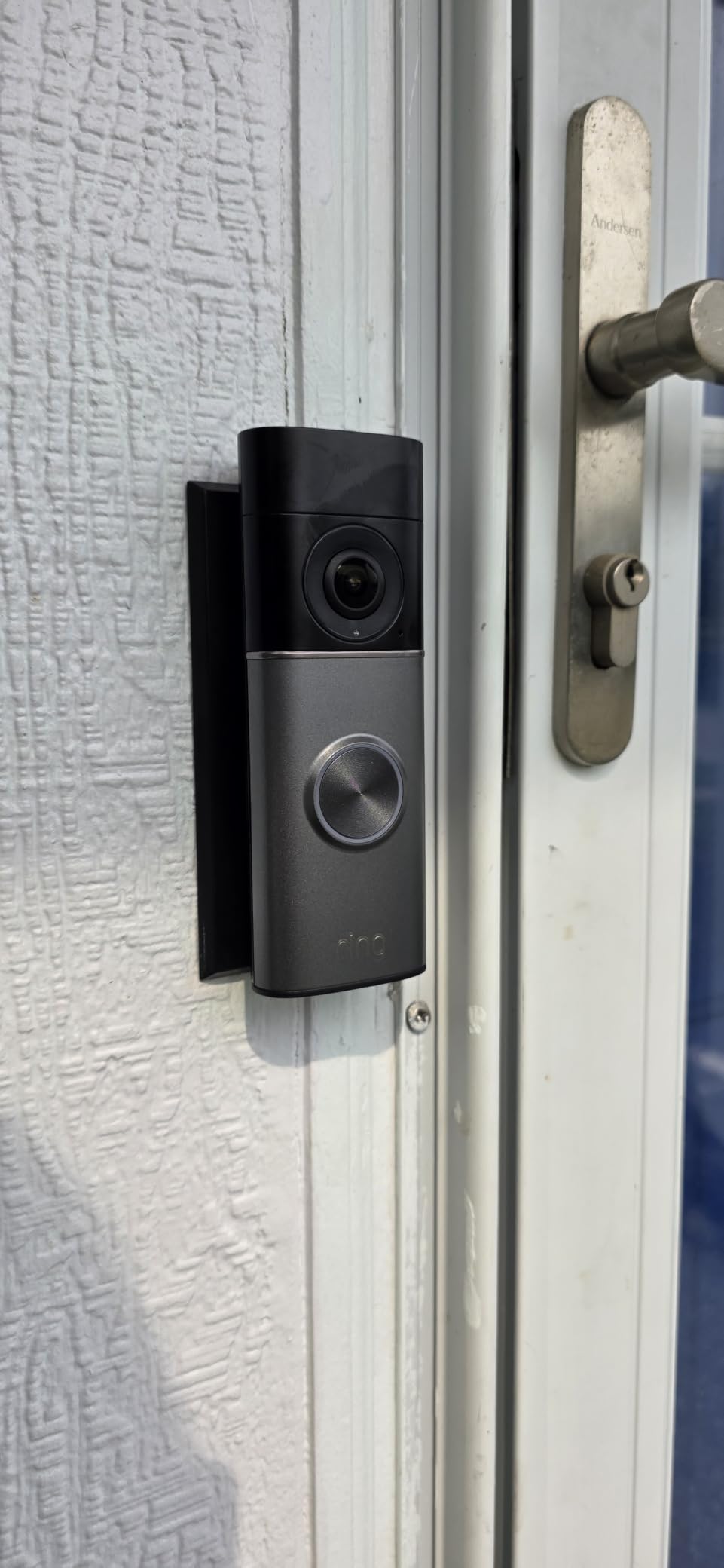
The 1:1 aspect ratio at 140 degrees horizontal by 140 degrees vertical keeps the framing square, which works well for a tall door and the walk beneath it. 3D Motion Detection is more selective than a simple motion sensor, cutting down false alerts from traffic and shadows.
Four finish options let the doorbell match a period exterior rather than looking bolted on, and the two-way audio includes Ring’s Audio+ processing for clearer speech on a weak connection.
When the extra resolution is worth it
Square 4K footage with 10x zoom is the difference between a blob and a face for anyone who has ever received a package theft alert and wanted to act on it. It is also the model to pick if your front door is lit and you want color video after dark.
Installation is a straightforward hardwired job for owners already in the Ring ecosystem, and the device runs on nonstop house power with nothing to recharge.
Where it is not the right call
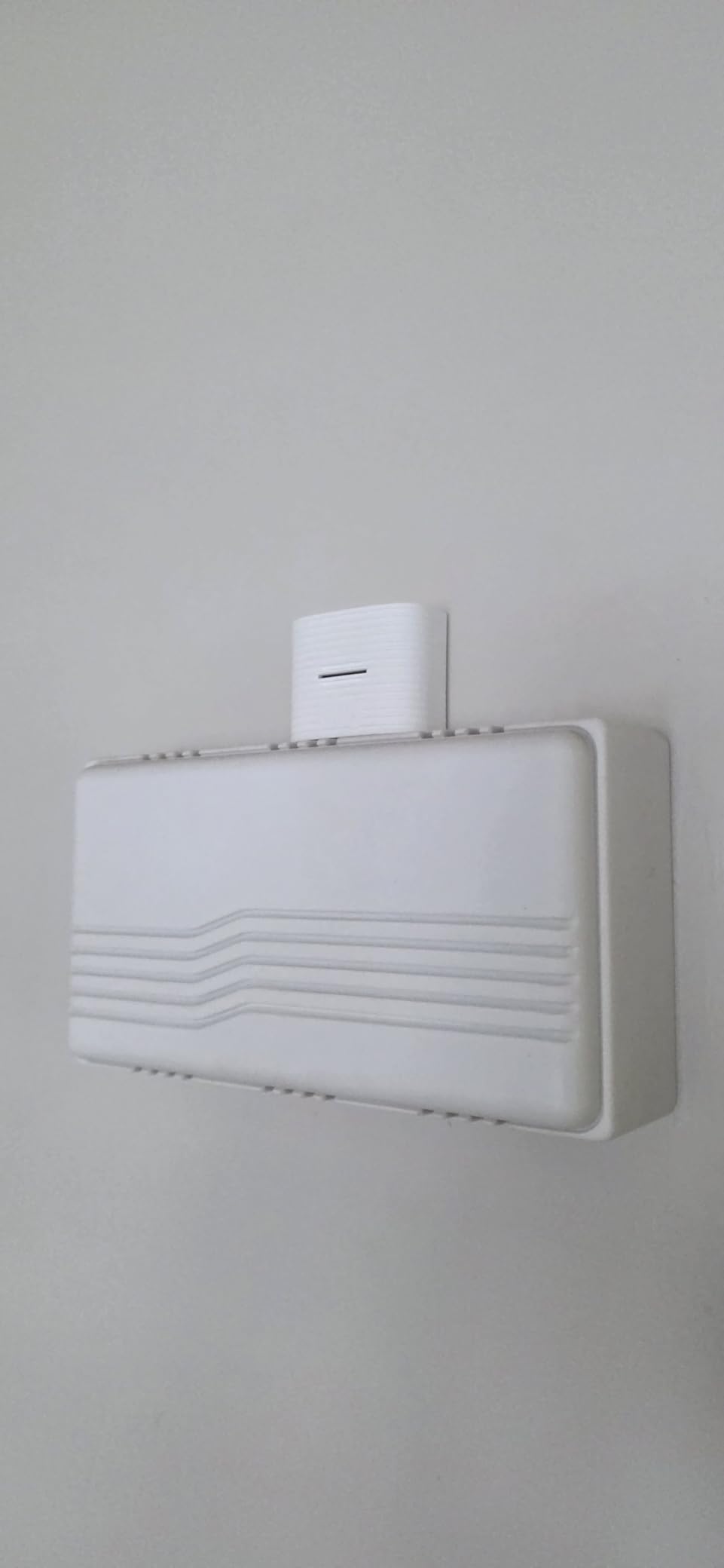
It requires the included chime kit mini or a Ring plug-in chime, so it bypasses an existing mechanical chime entirely. Owners upgrading from an older mechanical setup should weigh that before anything else.
Video Descriptions in notifications require a Ring subscription and are unavailable in Illinois. Some units on 2.4GHz mesh networks showed collapsing speeds and missed motion events, and there is no selectable color night vision in complete darkness. In a thick-walled older house, that mesh reliability note deserves attention.
9. Arlo Video Doorbell 2K 2nd Gen – The Best Pick for Broadest Ecosystem Support
Arlo Video Doorbell 2K (2nd Gen) Wireless or Wired – 1-Cam
Wired or rechargeable battery
1440p 2K HDR at 180 degrees
30 fps
IP65
model AVD4001
Pros
- Clear 2K HDR video across a 180-degree head-to-toe view
- Two-way audio described as clear as a face-to-face conversation
- Works with Alexa Apple Home Google Home SmartThings and IFTTT
- Setup takes only a few minutes
- Wired or wireless installation options
Cons
- Battery is not user-replaceable
- AI detection and history need a paid plan
- 16 percent one-star ratings is the highest in the group
Arlo’s argument is compatibility. This model works with Alexa, Apple Home, Google Home, Samsung SmartThings and IFTTT, which makes it the safest pick for a household that has not committed to one ecosystem, or for an older home where the previous owner left hardware from more than one brand behind.
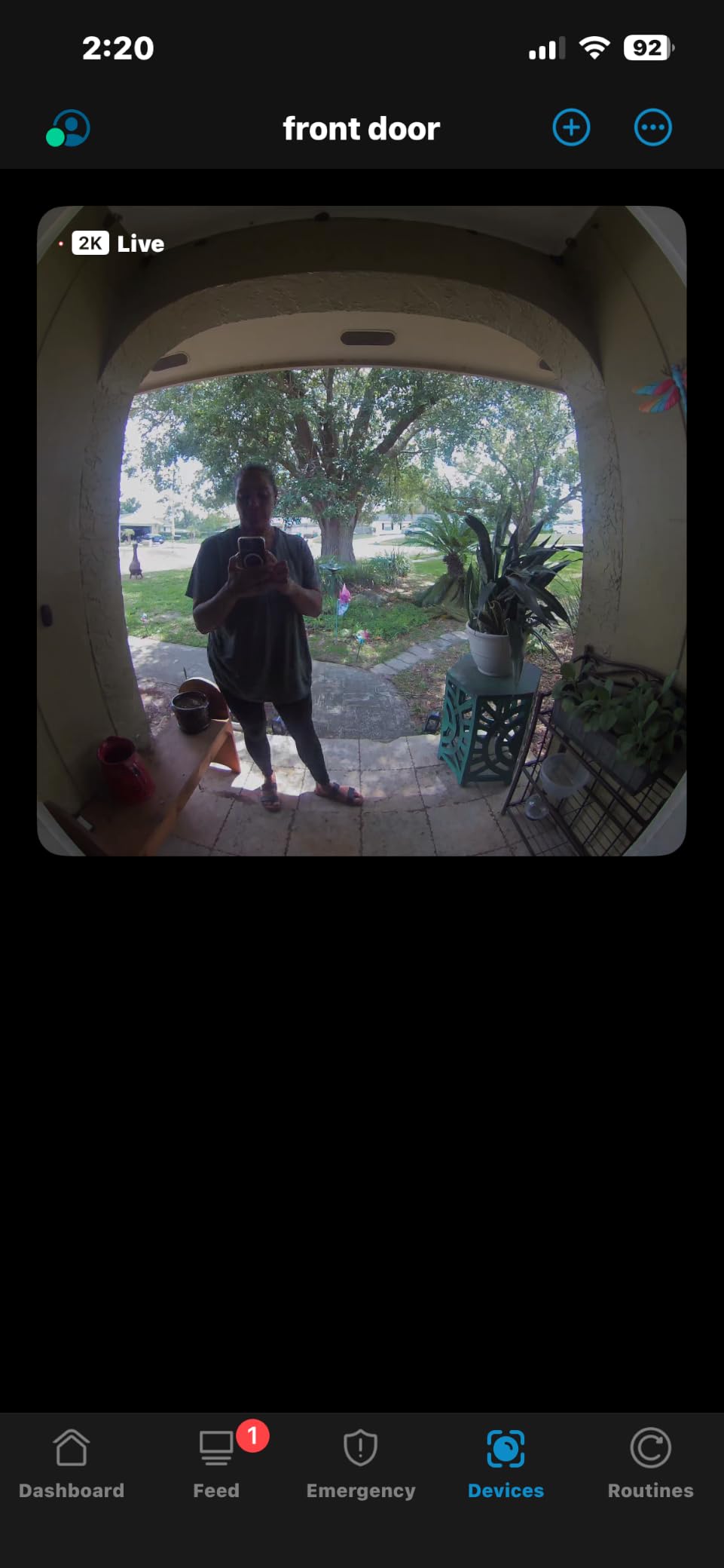
The video is clear 2K HDR across a 180-degree head-to-toe view at 30 frames per second, and owners praise the sound quality, describing two-way audio as clear as a face-to-face conversation. Setup reportedly takes only a few minutes.
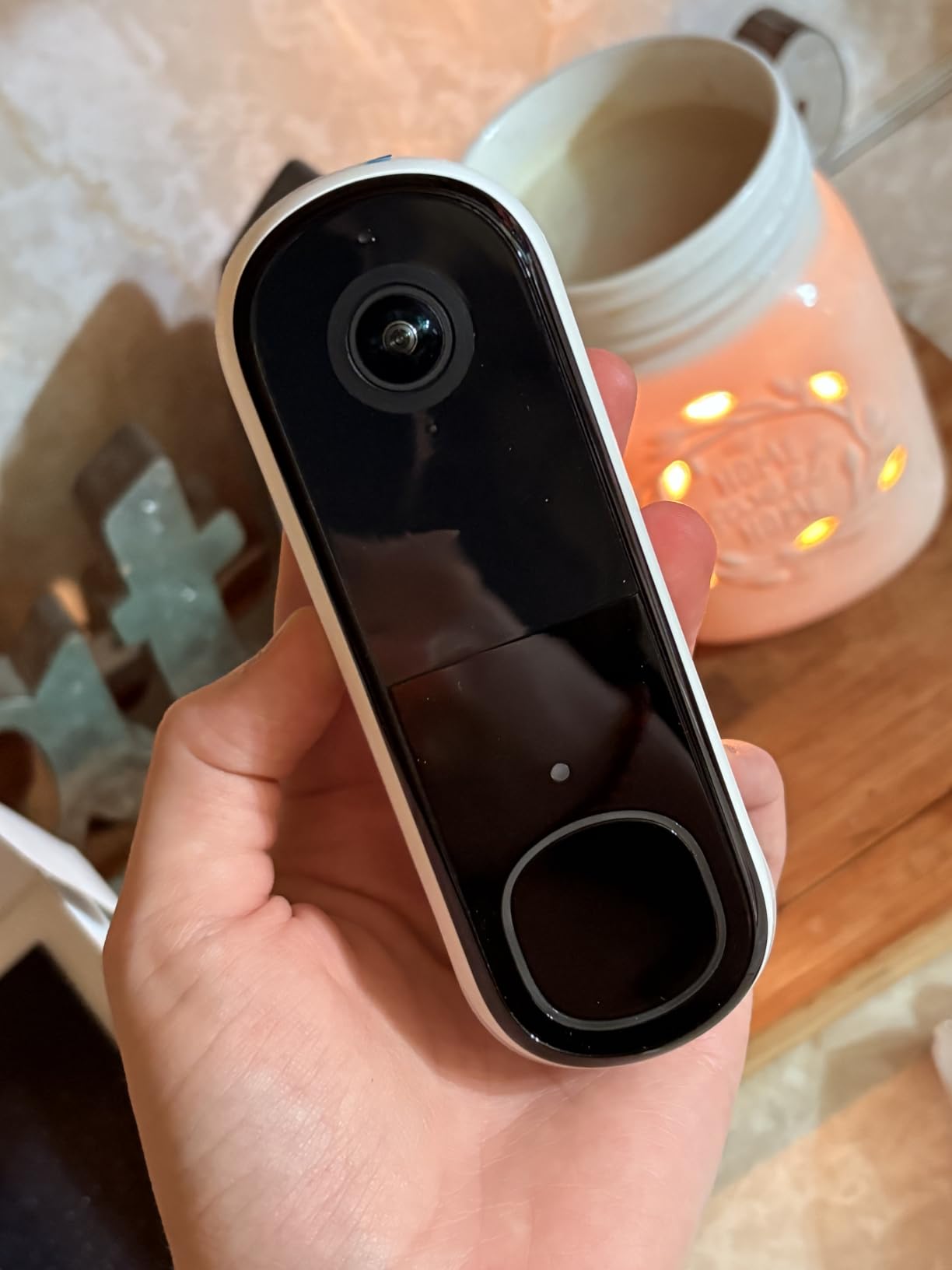
It installs wired or on its rechargeable battery, so it is a reasonable stopgap if your transformer is not ready for a video doorbell yet and you want to come back to the wiring later. Night vision reaches 25 feet with IP65 weather resistance.
Person, package and pet detection come with custom activity and privacy zones, and there are quick replies plus video calls for talking to a visitor.
What it does better than the field
Fewer brands cooperate with Apple Home and Google Home at the same time, and in an older house you may well be maintaining a mix of equipment. Being able to keep everything in one app is a genuine convenience rather than a spec sheet line.
For a wide, low-budget entryway, the combination of 180-degree coverage, 12:1 zoom and quick setup is a lot of capability for the money, and 67 percent of ratings are five stars.
Where owners report problems
Advanced features, 60-day history and AI detection require a paid Arlo Secure plan after the trial, and recording is not constant without a subscription, which undercuts the reason many people hardwire a doorbell in the first place.
The battery is not user-replaceable, so the whole unit comes off the wall to charge. Motion sensitivity also generates a high volume of notifications, and this model carries the highest one-star share in the group at 16 percent, which is worth weighing carefully before buying.
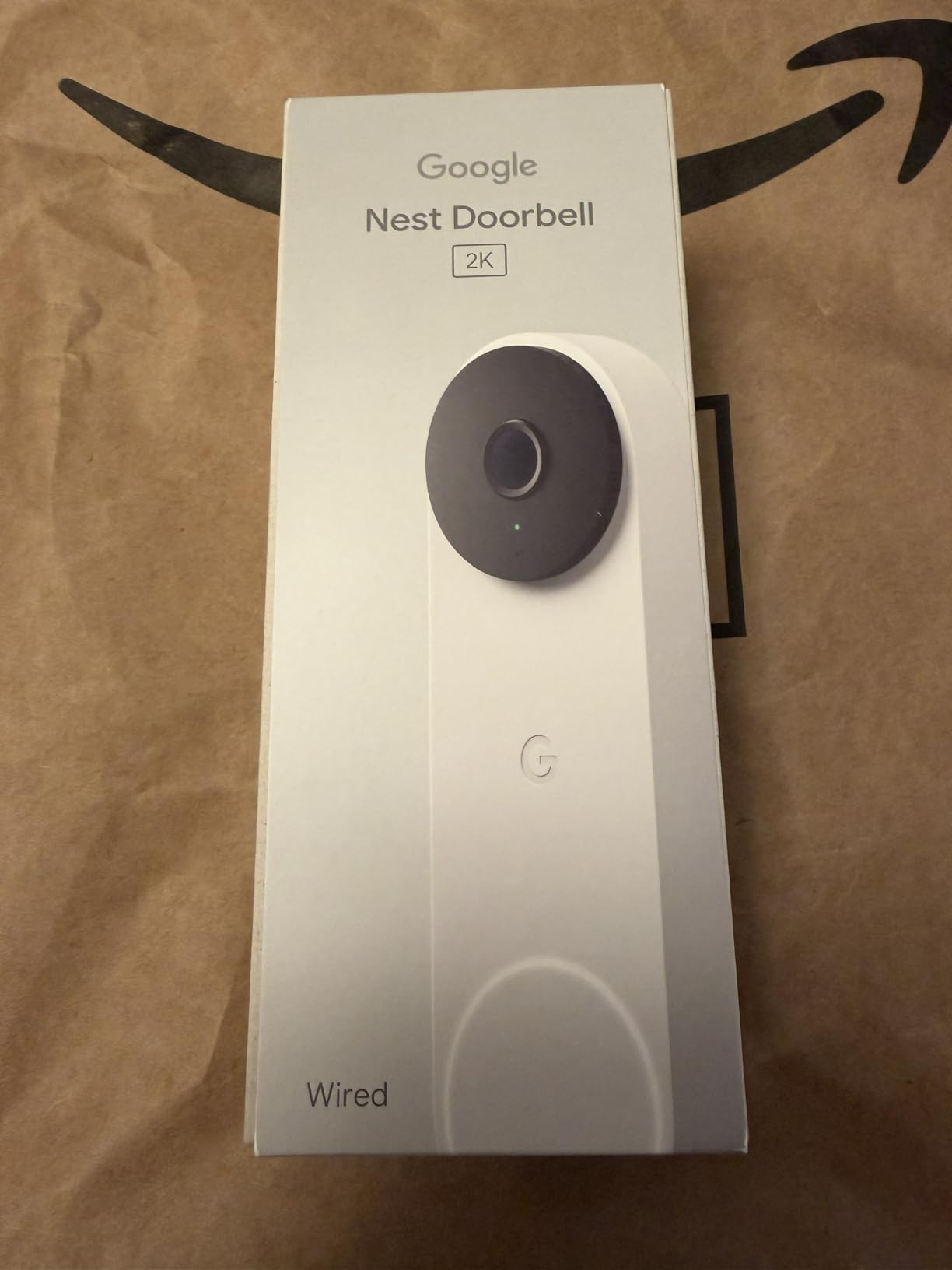
10. Google Nest Doorbell Wired 3rd Gen – The Best Pick for Google Home
Google Nest Doorbell (Wired, 3rd Gen) – 2K Video, Live View – 2025 – Linen
2K HDR at 166 degrees
Wired with no battery
color and IR night vision
model GA09969-US
Pros
- 2K HDR with color night vision
- Can be configured to ring an existing mechanical chime
- No battery to recharge or replace
- Long-term owners report a rock-solid Wi-Fi connection
- Encrypted video with two-step verification
Cons
- Event history and detection need a subscription
- Fixed 1:1 aspect ratio
- Narrow chassis needs extra hardware in recessed brick doorways
The third-generation Nest Doorbell is the most refined camera in this group on pure image quality, and long-term owners describe a clear upgrade in clarity, low-light color and build quality over earlier Nest versions. It runs entirely on house wiring, so there is no battery to recharge or replace in a cold vestibule.
Two details make it particularly good for an older home. It can be configured to ring an existing mechanical chime, so the bell in your hall keeps working, and long-term users report a rock-solid Wi-Fi connection with no drops, which is not a given in a building with heavy plaster or masonry.
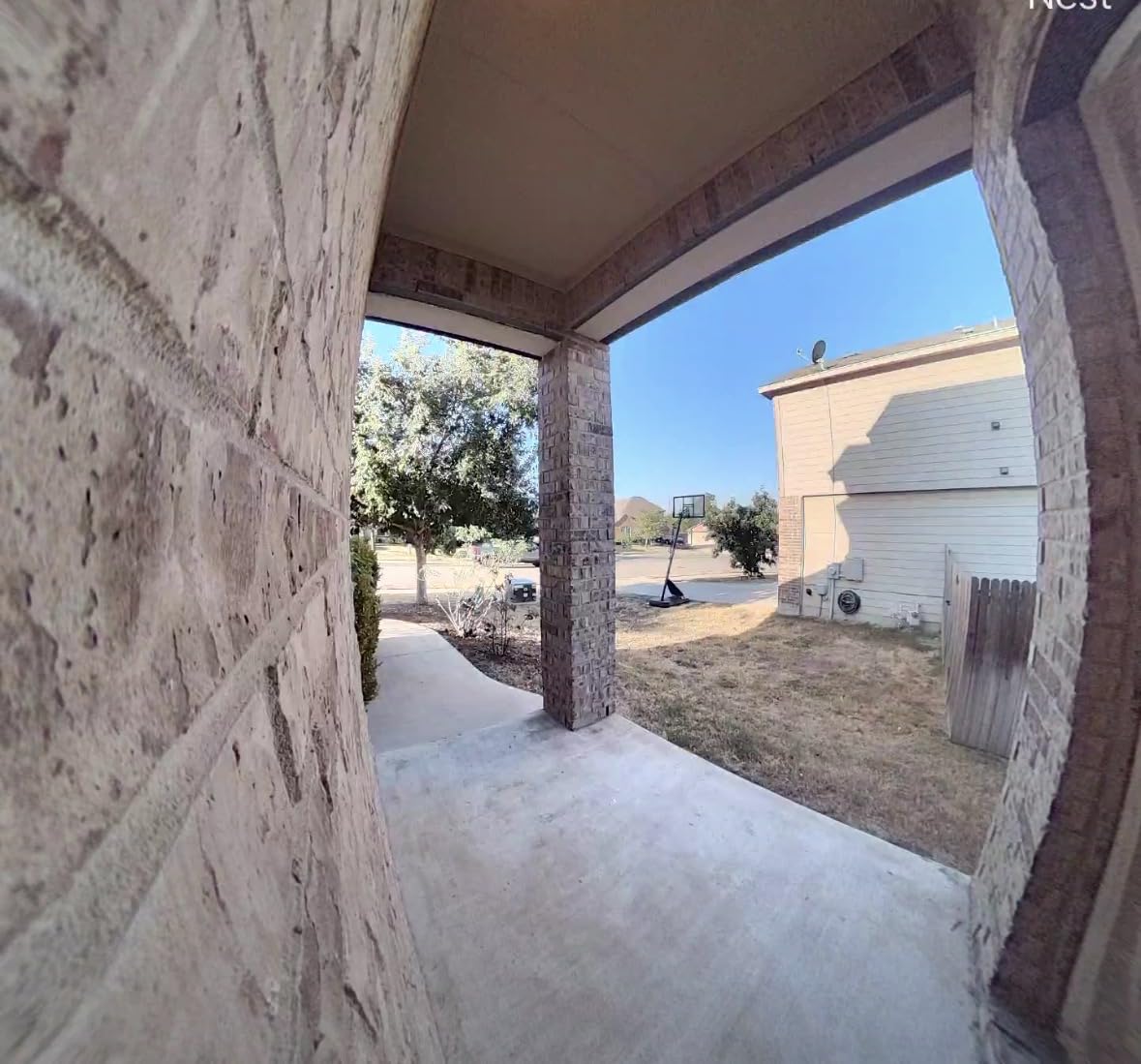
The 2K HDR sensor covers a 166-degree field of view with color night vision backed by infrared in total darkness. Motion and sound sensitivity are adjustable, and facial recognition naming is available for regular visitors.
Video is encrypted with two-step verification and a green LED indicates when the camera is processing or streaming, which is a small privacy touch. The box includes a base plate and wedge, spacers, wall screws, anchors, a security screw, hex key and a chime connector.
Why Google Home owners keep it
Seventy-seven percent of ratings are five stars and the average sits at 4.4, and the reason is consistent: this is the best-looking doorbell video in the roundup, with the most reliable connection we saw reported by people who have owned it longest.
It also suits older homes with a period chime, which is rarer than it should be among premium hardwired models. Live View and two-way audio work from a phone, tablet or Google Home displays.
The ongoing cost to plan for
Event history and intelligent detection require a Nest Aware or Google Home Premium subscription, and the Gemini-generated descriptions, such as a person carrying flowers, are gated behind the same plan. This is the most expensive doorbell here, and the subscription is where that cost recurs.
Two further annoyances: the Google Home app buries features like video download under several menus, and the 1:1 aspect ratio is fixed with no wider option. The narrow chassis also needs extra mounting hardware in recessed brick doorways, which older homes have plenty of.
How to Check Your Doorbell Voltage and Chime Before You Buy
Most disappointing doorbell installations are not a technology problem. They are a mismatch between a camera that wants 16V at 30VA and a transformer from 1962 that was never designed for that load. Spend twenty minutes checking your setup before the box arrives and you can avoid the most common outcome, which is a doorbell that reboots every time someone presses it or a chime that hums continuously.
Test your transformer with a multimeter in four steps
First, find the transformer. In older homes it is often in the basement near the electrical panel, in a closet, attic or garage, and it is a small metal box with two low-voltage wires running off it toward the front door.
Second, set your multimeter to AC volts and choose a range that covers at least 30V, then connect the probes across the two doorbell wires at the chime or at the button itself. With the circuit energised and the doorbell button held down, read the voltage on the display.
Third, interpret the result. A healthy modern bell circuit reads roughly 16V to 24V AC. Anything under 12V suggests wiring or a transformer from a much older installation, and you should look at the Tapo D225, which starts at 8V, or the SimpliSafe, which accepts 8-24V. A reading that drops significantly while the button is held down means the transformer cannot supply enough current.
Fourth, test with the doorbell button disconnected as well, then reconnect. A voltage that is fine until you attach a heavy camera and then sags is a clear signal that a transformer replacement is needed before anything else.
Transformer upgrade or power adapter?
If the voltage test comes back weak, you have two routes. Replacing the transformer at the electrical panel is the cleaner fix, gives every future device headroom, and is the option most electricians will recommend for a house with a bell circuit still in daily use.
A plug-in power adapter is the cheaper alternative and it bypasses your existing wiring entirely, which is useful in a home where the bell wires are brittle cloth-wrapped cabling you would rather not disturb. The trade-off is a second power cord running to a wall outlet and a visible box near the door, and you lose the ability to use your existing chime at all.
Whichever route you take, switch off the breaker for that circuit before touching anything, and if the panel work is unfamiliar to you, this is the point to call an electrician rather than a tutorial.
Mechanical, digital or no chime at all
A mechanical chime uses metal pistons striking a bell and is what most older homes have. A digital chime plays a recorded or synthesised tone and is found in homes from the 1980s onward. Some modern video doorbells drive a mechanical chime happily, some bypass it entirely, and a few cannot work with one at all, so identifying yours before you shop saves an afternoon.
Our picks that keep a mechanical chime working include the SimpliSafe, which is built for it, the Tapo D225, the Wyze Wired Doorbell v2, the eufy S330, which ships with a chime of its own, and the Google Nest Doorbell, which can be set to trigger the chime you own. Both Ring models bypass an existing mechanical chime and need a Ring chime kit or a plug-in unit instead. The SimpliSafe is the one model here that explicitly will not work with a digital chime.
If your home has a vintage or antique chime that you want to preserve, check the manufacturer’s compatibility statement before you buy rather than after, because the bell mechanism is often older than the wiring and the two failure modes look completely different.
Subscriptions, local storage and the true cost
Treat a subscription as an ownership cost, not a feature. The Ring models put video history and AI-powered alerts behind a plan, the Arlo needs a paid plan for 60-day history and AI detection once the trial ends, and the Nest needs a plan for event history and intelligent detection. Against that, the Reolink, the eufy S330 and the Tapo D225 all record locally to a card with no monthly charge, and the Wyze and Kasa models offer microSD recording as well.
Local storage is not automatically free of trade-offs. You manage the card yourself, you have no AI detection on the free tier in most cases, and playback interfaces are simpler than a phone app with a timeline. What you get is footage that stays in your house and a bill that does not change every year. The same ownership-versus-subscription argument shows up across hardwired audio gear, where the trade-off between a cable and a cloud fee is the one we weigh in our guides to the best wired headphones for mixing music at home and the best wired earbuds.
Getting a signal through old walls
Most doorbells in this roundup connect on 2.4GHz, and the two that also support 5GHz are the Reolink and, depending on your network, any mesh system you already run. In a house with thick plaster, brick or stone, the front door is often the furthest point from the router, so test the signal where the camera will actually sit before you commit.
If the connection is weak, a mesh node placed near the entry hallway does more than any doorbell change. A node near the door, not in the same room, gives the camera a nearby access point and removes the most common cause of missed motion events and failed live view. Keep the router in 2.4GHz-compatible mode during setup if the doorbell will not join.
One more older-home detail: check the space above your existing button. Several of these units need two or three inches of clearance behind the faceplate for the body and wire slack, and pre-war door frames are rarely generous.
Frequently Asked Questions
How much voltage should doorbell wires have?
A healthy modern doorbell circuit reads roughly 16V to 24V AC, which is what most current hardwired video doorbells expect. Homes built before the 1970s are the exception, and bell circuits running at 8V or 12V are not unusual in those properties. If a multimeter shows less than 16V, choose a model rated for lower input such as the Tapo D225 or the SimpliSafe Wired Doorbell, both of which accept wiring from 8V upward.
How do I check my doorbell transformer with a multimeter?
Locate the transformer, usually near the electrical panel, in a basement, closet, attic or garage. Set your multimeter to AC volts on a range covering at least 30V, then place the probes across the two doorbell wires while the button is held down. A steady 16V to 24V AC reading means the circuit is healthy. If the reading sags while you hold the button, the transformer cannot supply enough current and should be replaced.
Can I use a video doorbell with my existing mechanical chime?
Yes, with several models. The SimpliSafe Wired Doorbell, the Tapo D225, the Wyze Wired Doorbell v2 and the Google Nest Doorbell can all be configured to ring an existing mechanical chime, and the eufy S330 includes a chime of its own. The two Ring models in this roundup bypass an existing mechanical chime and require a Ring chime kit or plug-in chime instead. Check the manufacturer’s compatibility statement before you buy.
Do I need to upgrade my transformer for a video doorbell?
Only if your existing transformer cannot deliver the voltage and VA the camera needs. Test first with a multimeter, and if the reading is steady at 16V or above you can usually install a hardwired doorbell without any electrical work. If the reading is low, sags under load, or your doorbell asks for 30VA on a circuit rated for 10VA, replacing the transformer at the panel is the cleaner fix. A plug-in power adapter is the cheaper alternative.
Which wired video doorbells work without a subscription?
The Reolink Video Doorbell WiFi 2K, the Tapo D225 and the eufy Security S330 all record to a microSD card or onboard storage with no monthly fee, and the Tapo and Reolink also include free person and package detection tiers. The Kasa KD110 and Wyze Wired Doorbell v2 offer local microSD recording as an alternative to a paid plan. The Ring, Arlo and Nest models place video history and AI detection behind a paid subscription.
Conclusion
The best wired video doorbells for an older home are the ones that respect what is already behind your walls. Test your voltage first, then pick from the list: the SimpliSafe for the widest tolerance and a working mechanical chime, the Tapo D225 for low-voltage wiring plus free detection, the Reolink or eufy if you refuse a subscription, and the Nest or Ring if you are already committed to a smart home platform.
Take the multimeter to your transformer before anything else. It is the single measurement that decides which of these ten belongs on your door, and it takes twenty minutes. The same patience pays off with hardwired listening gear, where our picks for the best wired IEMs are chosen on the same evidence-first basis.