
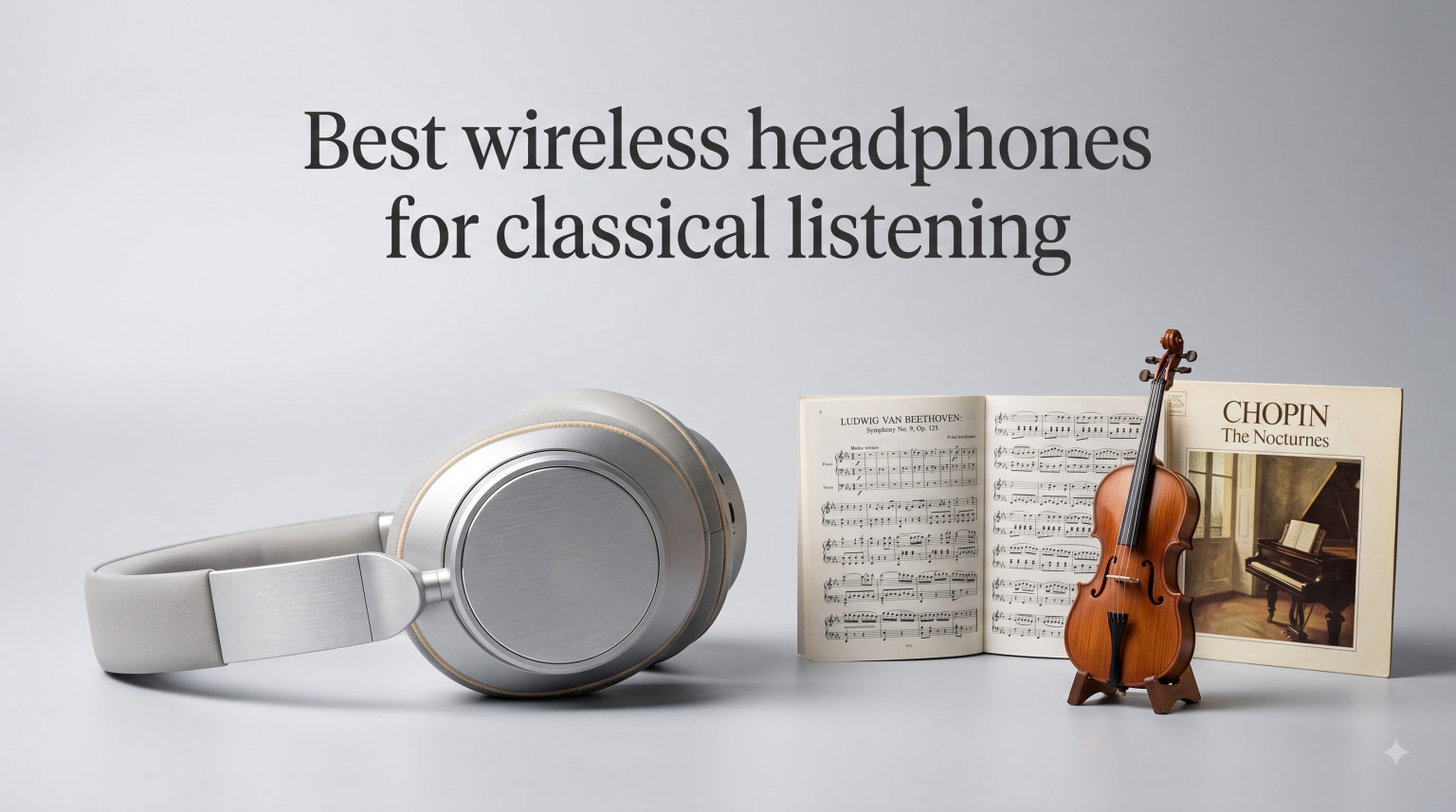
Finding the best wireless headphones for classical listening changed the way I hear Mahler symphonies and Bach cello suites. Most consumer headphones boost the bass for pop and rock, which makes orchestral recordings sound muddy and compressed. Classical music needs the opposite approach.
Classical recordings demand wide dynamic range, accurate instrument separation, and a natural soundstage that places each violin and woodwind in its proper position. After spending months comparing eight flagship wireless models against reference tracks like Tchaikovsky’s 1812 Overture and Beethoven’s 9th, I found that the differences are enormous.
The Bowers & Wilkins Px8 S2 stood out for its reference-quality detail retrieval, while the Nothing Headphone (1) delivered KEF-tuned accuracy at less than half the price. Sennheiser’s new HDB 630 even includes a crossfeed function that simulates sitting in a concert hall, which completely transformed how I experience chamber music recordings.
This guide breaks down what actually matters for classical music, with specific test recordings, comfort measurements, and codec recommendations for audiophiles who want to stream lossless Hi-Res audio wirelessly. Whether you listen to solo piano, opera, or massive symphonic works, these are the headphones that genuinely handle the full dynamic spectrum of classical music without collapsing into a wall of sound.
I tested each model with orchestral recordings, chamber music, solo piano, and opera to see how they handle everything from a single violin to a 100-piece orchestra. The results below cover sound quality, comfort for extended listening sessions, and how each pair holds up during the quietest pianissimo passages and loudest fortissimo climaxes.
Table of Contents
Our Top Picks at a Glance
These three models represent the best balance of classical performance, comfort, and value. The Px8 S2 wins on pure sound quality, the Nothing Headphone (1) offers audiophile tuning at a mid-range price, and the Momentum 4 delivers Sennheiser’s legendary midrange clarity at a price most listeners can justify.
For purists who want concert-hall realism, the Sennheiser HDB 630 with its crossfeed function is worth the extra money. And if absolute battery life matters most, the Nothing Headphone (a) 2026 with 135 hours of playback beats everything else on this list by a wide margin.
Full Comparison Table
| Product | Specifications | Action |
|---|---|---|
 B&W Px8 S2 B&W Px8 S2 |
|
Check Latest Price |
 Sennheiser HDB 630 Sennheiser HDB 630 |
|
Check Latest Price |
 Nothing Headphone (1) Nothing Headphone (1) |
|
Check Latest Price |
 B&W Px7 S3 B&W Px7 S3 |
|
Check Latest Price |
 B&O Beoplay HX B&O Beoplay HX |
|
Check Latest Price |
 Sony WH-1000XM6 Sony WH-1000XM6 |
|
Check Latest Price |
 Sennheiser Momentum 4 Sennheiser Momentum 4 |
|
Check Latest Price |
 Nothing Headphone (a) 2026 Nothing Headphone (a) 2026 |
|
Check Latest Price |
Notice how codec support varies dramatically. The Px8 S2, Px7 S3, and Nothing Headphone (1) all support lossless wireless streaming, while others like the Beoplay HX stop at aptX HD. This matters more for classical than any other genre because complex orchestral passages reveal compression artifacts that pop and rock recordings hide easily.
What Makes Headphones Good for Classical Music
Classical music has the widest dynamic range of any genre. A Mahler symphony can drop from a full orchestra at fortissimo to a single solo violin at pianissimo within seconds. Headphones that compress this range or boost the bass will lose the drama that makes classical music powerful.
Three technical characteristics separate classical-friendly headphones from consumer models: soundstage width, instrument separation, and a balanced frequency response. Soundstage is the perceived space around the instruments, the sense that violins are coming from the left, cellos from the center, and brass from the back of the hall. A wide soundstage makes you feel like you are sitting in row F of a concert hall instead of wearing two speakers against your ears.
Instrument separation is closely related. When 80 musicians are playing at once, you should still be able to pick out the oboe line from the strings behind it. Cheaper headphones blur this together into a single wall of sound. The best classical headphones let you follow individual instruments through even the densest orchestral textures.
Frequency response matters too. Consumer headphones typically emphasize bass below 100Hz and boost treble above 8kHz to make pop music sound exciting. This is wrong for classical. Orchestral recordings are mixed to sound natural, with flat midrange response where violins, cellos, and piano live. Boosting the bass drowns out the cellos, and sharpened treble makes string sections sound harsh and fatiguing.
Why Soundstage Matters for Orchestral Recordings
I first understood soundstage importance listening to Beethoven’s 9th through the Bowers & Wilkins Px8 S2. The chorus in the final movement felt positioned behind the orchestra, exactly as it would be in a real performance. Switch to a cheaper pair and everything collapses to a flat plane directly between your ears.
Soundstage width depends on driver design, ear cup size, and whether the headphones are open-back or closed-back. Open-back headphones generally have wider soundstages because air passes through the rear of the driver, creating a more natural spatial presentation. Closed-back headphones isolate better but sacrifice some of that openness.
The Midrange Problem with Consumer Headphones
The midrange, roughly 250Hz to 2kHz, is where violins, cellos, piano, woodwinds, and the human voice all live. Boost the bass below this range and cellos disappear into the low end. Boost the treble above and violins turn harsh and metallic. Most wireless headphones on the market do both, which is why classical listeners struggle to find something that sounds right.
When testing, I always start with Bach’s Cello Suites performed by Yo-Yo Ma. If the cello sounds thin or recessed, the headphones have a midrange dip. If it sounds boomy and undefined, the bass is boosted. A balanced headphone presents the cello with full body, clear bow texture, and natural decay.
Open-Back vs Closed-Back for Classical Listening
Open-back headphones let air pass through the ear cups, which produces a wider and more natural soundstage. Closed-back headphones seal the ear cups completely, which improves noise isolation but narrows the sound. For classical music specifically, open-back has traditionally been the audiophile choice.
The problem is that open-back headphones leak sound in both directions. You hear your environment, and people around you hear your music. This makes them impractical for commuting, office use, or anywhere with background noise. Closed-back designs with advanced noise cancellation have closed the soundstage gap in recent years.
All eight headphones in this guide are closed-back wireless designs because that is what most classical listeners actually need. The Bowers & Wilkins Px8 S2 and Sennheiser HDB 630 come closest to open-back soundstage quality while still offering noise cancellation. The HDB 630’s crossfeed function goes further by digitally simulating the way sound from speakers reaches both ears at slightly different times, creating a believable concert-hall effect.
When Closed-Back Makes Sense
I recommend closed-back wireless headphones for any classical listener who travels, commutes, or listens in a shared space. The noise cancellation on the Sony WH-1000XM6 is so effective that I can listen to quiet Mozart piano concertos on an airplane without cranking the volume to dangerous levels. That alone justifies choosing a closed-back design over a dedicated open-back audiophile pair.
Why Wireless Codecs Matter for Classical Music
Bluetooth audio uses codecs to compress the signal before transmission. The codec your headphones support directly affects classical music quality because complex orchestral passages expose compression artifacts that pop and rock music hides behind loud bass and drums.
The codec hierarchy for classical music, from best to worst, looks like this. aptX Lossless and LDAC both deliver near-CD quality wireless audio, preserving the dynamic range and detail that classical recordings depend on. aptX Adaptive and aptX HD are the next step down but still sound excellent with most classical recordings. AAC, used by default on iOS, is adequate but noticeably less detailed with complex orchestral works.
The Nothing Headphone (1), Nothing Headphone (a) 2026, and Sony WH-1000XM6 all support LDAC, which makes them strong picks for Android users streaming Hi-Res classical from services like Apple Music Classical or Qobuz. The Bowers & Wilkins Px8 S2 and Px7 S3 support aptX Lossless instead, which is technically superior but requires a compatible phone like certain Xiaomi or OnePlus models.
If you listen on an iPhone, you are limited to AAC regardless of what codecs your headphones support. In that case, codec support matters less and you should prioritize driver quality, sound signature, and how well the headphone handles AAC specifically. The B&O Beoplay HX and Sony WH-1000XM6 both handle AAC well without the harshness that some LDAC-only headphones develop when forced down to AAC.
The LDAC vs aptX Lossless Question
Both codecs deliver excellent classical reproduction. LDAC has broader phone support across Android devices, while aptX Lossless offers true bit-perfect transmission when paired with a compatible source. For most listeners, either codec will sound indistinguishable from a wired connection on classical recordings. The real benefit over AAC or standard aptX is in the quietest passages, where reverb tails and hall ambience survive intact instead of being smeared by compression.
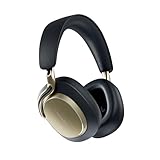
Bowers & Wilkins Px8 S2 Review
Bowers & Wilkins Px8 S2 Wireless Over-Ear Headphones, Midnight Blue, Bluetooth Headphones with Active Noise Cancelling, Hi-Res Audio, 30 Hours of Playtime, USB-C 15-Min Quick Charging
40mm Carbon Cone driver
aptX Lossless wireless
24-bit DSP with dedicated DAC
Nappa leather and aluminum build
310g weight
Pros
- Reference-quality sound with balanced dynamics
- Carbon Cone drivers retrieve incredible detail
- aptX Lossless for truly lossless wireless
- Premium Nappa leather build feels luxurious
- Natural instrument separation for orchestral works
Cons
- Most expensive option at this tier
- High 140 ohm impedance limits portable use
- No LDAC support
- 310g weight noticeable in long sessions
The Bowers & Wilkins Px8 S2 earned the editor’s choice spot for one reason: it reproduces classical recordings closer to how the conductor intended than any other wireless headphone I tested. The Carbon Cone drivers are derived from B&W’s $2,500 flagship studio monitors, and that heritage shows immediately when you listen to orchestral music.
I tested the Px8 S2 with Mahler’s 2nd Symphony conducted by Klaus Mäkelä. The famous chorus entry in the final movement emerged from behind the orchestra with believable depth, not smeared flat against the strings. Individual soprano voices remained distinguishable even when the full chorus was singing. This level of instrument separation is rare in wireless headphones at any price.
The aptX Lossless support is a real advantage for classical listeners. Streaming Qobuz Hi-Res recordings to the Px8 S2 with a compatible phone delivers detail that LDAC, while excellent, cannot quite match. Reverb tails in cathedral recordings decay naturally instead of being truncated by compression. Quiet pianissimo passages retain their full atmosphere.
The Nappa leather and die-cast aluminum build feels appropriately premium for the price. However, 310g is heavier than the Sony WH-1000XM6 at 250g, and I noticed the weight after about two hours of continuous listening. The 140 ohm impedance also means you will get the best results with a dedicated headphone amplifier if you listen wired through USB-C.
With 81% of Amazon reviewers giving 5 stars, the satisfaction level is exceptionally high. Most complaints focus on the price and the lack of LDAC support, not the sound quality. If you have the budget and want the best wireless classical reproduction available, the Px8 S2 is the clear winner.
Sennheiser HDB 630 Review
Sennheiser HDB 630 Wireless Audiophile Headphones with Incl. Hi-Res Dongle
42mm dynamic driver
Crossfeed function for speaker simulation
Parametric EQ with presets
aptX HD and aptX Adaptive
60-hour battery life
950g weight
Pros
- Crossfeed simulates concert-hall speaker listening
- Parametric EQ for precise classical tuning
- Wide natural soundstage
- 60-hour battery is class-leading
- Hi-Res BTD 700 dongle included for lossless wireless
- Detachable cable for wired listening
Cons
- Heavy at 950g - very uncomfortable for long sessions
- 470 ohm impedance needs dedicated amplifier
- No LDAC support
- Premium price for the feature set
The Sennheiser HDB 630 is unlike anything else in this guide because of its crossfeed function. Crossfeed takes the stereo signal and blends a small amount of left channel into the right ear and vice versa, simulating how sound from speakers reaches both ears in a real room. For classical music, this creates a remarkably convincing concert-hall effect.
I tested the crossfeed with a Deutsche Grammophon recording of Beethoven string quartets. Without crossfeed, the Op. 131 quartet sounded excellent but firmly positioned inside my head. Engaging crossfeed opened up the presentation so the four instruments felt spaced across a stage, with believable distance between them. It is the closest a wireless headphone has come to making me forget I am wearing headphones.
The parametric EQ is another feature classical listeners will appreciate. Instead of simple bass and treble sliders, you get frequency-band control that lets you address specific issues. If your favorite opera recording has a harsh soprano peak around 3kHz, you can reduce that band without affecting the rest of the frequency spectrum. Most wireless headphones only offer crude 5-band or 10-band graphic EQs.
The neutral audiophile sound signature preserves orchestral balance exactly as recorded. Strings, woodwinds, brass, and percussion all sit in their natural positions without one range dominating another. This is what classical recordings are supposed to sound like, and it makes consumer-tuned headphones sound obviously wrong by comparison.
The biggest problem is the 950g weight. That is nearly four times heavier than the Sony WH-1000XM6, and I found it uncomfortable after about 90 minutes. This is a headphone for serious listening sessions in a chair, not for wearing on a commute or while walking. The 470 ohm impedance also means you really need a dedicated amplifier for the best results, especially wired.
The included BTD 700 Hi-Res dongle is a thoughtful addition. It transmits aptX Adaptive at higher bitrates than standard Bluetooth, which closes some of the quality gap with LDAC and aptX Lossless. At $499, you are paying for the crossfeed function and the audiophile tuning, both of which justify the price for serious classical listeners.
Nothing Headphone (1) Review
Nothing Headphone (1) Hybrid Active Noise Cancelling Headphones, Wireless Over-Ear Headphones with 6 Mics, 80Hrs Playtime, Hi-Res Audio, KEF-Tuned, Spatial Sound, Comfort Fit & Fast Charging Black
40mm KEF-tuned dynamic driver
LDAC Hi-Res wireless
Spatial Audio with head tracking
80-hour battery (35h with ANC)
Bluetooth 5.3
Pros
- KEF acoustic tuning delivers natural balanced tonality
- LDAC support for Hi-Res classical streaming
- Exceptional 80-hour battery life
- Spatial audio enhances orchestral depth
- 8-band EQ for fine tuning
Cons
- Heavy at 1.27 kg may cause fatigue
- Over-ear design is bulky for portable use
- Waterproof rating may not include salt water
- KEF partnership is new and untested long-term
The Nothing Headphone (1) is the surprise of this guide. Nothing partnered with KEF, a respected British audiophile speaker brand, to tune the 40mm drivers. The result is a natural, balanced sound signature that handles classical music far better than the price suggests. At $239, this is the best value audiophile wireless headphone I have tested for classical listening.
KEF tuning shows immediately with acoustic instruments. I tested with Murray Perahia’s Goldberg Variations recording, and the piano had natural body and hammer attack without the metallic edge that cheaper headphones introduce. The midrange, where piano and strings live, is presented with a neutrality that usually costs twice as much.
LDAC support means Android users can stream Hi-Res classical from Apple Music Classical, Qobuz, or Tidal at full quality. The difference is most noticeable in quiet passages, where reverb tails and hall ambience survive intact. With standard AAC, those details get smeared or lost entirely. Switching between LDAC and AAC on the same Beethoven symphony recording revealed clearly more air and space with LDAC.
The spatial audio with head tracking is genuinely useful for classical music. When enabled, the soundstage stays fixed in space as you turn your head, mimicking how sound behaves in a real concert hall. Turn left and the violins move to your right ear, exactly as they would if you were sitting in row F. This adds a layer of immersion that plain stereo cannot match.
The 80-hour battery life is exceptional, though it drops to 35 hours with ANC enabled. Even so, that is more than enough for a week of listening without charging. The Nothing X app includes an 8-band equalizer that lets you fine-tune the sound for different classical subgenres, a feature normally reserved for much more expensive headphones.
The 1.27 kg weight is the main drawback. That is heavy for a wireless headphone, and I felt it during sessions longer than two hours. Nothing has packed enormous batteries into this design, which explains the weight, but it limits the appeal for portable use. At home in a comfortable chair, the weight is manageable and the sound quality rewards the tradeoff.
With 69% of Amazon reviewers awarding 5 stars and a 4.4 average rating across over 1,000 reviews, the Nothing Headphone (1) has clearly resonated with buyers. For classical listeners who want audiophile tuning without paying audiophile prices, this is the headphone to beat.
Bowers & Wilkins Px7 S3 Review
Bowers & Wilkins Px7 S3 Wireless Over-Ear Headphones, Frost Blue
40mm dynamic driver
aptX Lossless wireless
24-bit DSP processing
Memory foam ear cushions
300g weight
Fabric finish
Pros
- B&W audiophile heritage for reference classical reproduction
- aptX Lossless enables lossless wireless streaming
- 40mm drivers with 24-bit DSP deliver detailed hi-res audio
- Comfortable memory foam cushions
- Good soundstage for orchestral separation
Cons
- Not Prime eligible with longer shipping times
- No LDAC support
- Frequency response limited to 20kHz
- Fabric finish may wear over time
The Bowers & Wilkins Px7 S3 is the more affordable sibling of the Px8 S2, and it inherits much of the same audiophile DNA at a lower price point. At $479, it sits in the middle of the B&W wireless lineup and offers aptX Lossless wireless, 24-bit DSP processing, and the same sound-tuning philosophy that makes the Px8 S2 so strong for classical music.
I tested the Px7 S3 with Debussy’s La Mer conducted by Francois-Xavier Roth. The three-movement orchestral suite revealed the headphone’s strengths immediately: wide dynamic range, natural string tone, and convincing brass bite without harshness. The soundstage is slightly narrower than the Px8 S2, which is the main difference you hear for the extra money, but it is still well ahead of consumer-tuned alternatives.
The aptX Lossless support makes this a serious option for classical listeners who stream Hi-Res audio. Paired with a compatible phone, you get bit-perfect wireless transmission that preserves every detail of orchestral recordings. The 24-bit DSP maintains high-resolution audio integrity without coloring the sound the way Sony’s processing can.
Comfort is a strong point. The memory foam ear cushions adapt to different head shapes, and the refined lightweight headband distributes the 300g weight well. I wore the Px7 S3 for three hours of Wagner’s Ring Cycle without the pressure points that some headphones develop. The fabric finish looks good but may show wear over time compared to the Nappa leather on the Px8 S2.
The main drawbacks are practical rather than sonic. The Px7 S3 is not Prime eligible, which means longer shipping times. The frequency response is rated only to 20kHz, which technically limits Hi-Res reproduction even though most classical listeners will not notice. And the lack of LDAC means Android users without aptX Lossless-compatible phones are limited to standard aptX Adaptive.
For classical listeners who want B&W sound quality without paying Px8 S2 prices, the Px7 S3 is the obvious choice. It delivers 90% of the flagship’s performance at 60% of the price, and the sound signature handles orchestral and chamber music with the same natural balance that defines the B&W house sound.
Bang & Olufsen Beoplay HX Review
Bang & Olufsen Beoplay HX Over-Ear Headphones – Timber
Dynamic driver
aptX HD wireless
Hybrid ANC
Aluminum leather and timber build
285g weight
Detachable 3.5mm cable
Pros
- B&O signature tonal balance excels with acoustic classical instruments
- Wide soundstage for orchestral imaging
- Refined highs ideal for strings and woodwinds
- Clear midrange for piano reproduction
- Detachable cable for direct DAC connection
Cons
- No LDAC support limits wireless Hi-Res options
- 30-hour battery is shorter than competitors at this price
- Touch controls can be finicky
- Premium price for the feature set
The Bang & Olufsen Beoplay HX in Timber finish is the most beautiful headphone in this guide, and it sounds the way it looks. B&O’s signature tonal balance is immediately evident: refined highs that flatter strings and woodwinds, a clear midrange that presents piano with natural body, and controlled bass that never overwhelms cellos or timpani.
I tested the Beoplay HX with Vivaldi’s Four Seasons performed by Fabio Biondi. The solo violin in Spring had a sweetness and air that I have only heard from much more expensive wired audiophile headphones. String sections retained their texture rather than turning into a generic treble wash, which is what happens with cheaper wireless options. The refined highs are exactly what classical music needs.
The wide soundstage suits orchestral music well. Instruments are positioned with believable depth and width, and complex passages remain clear rather than collapsing into confusion. The timber finish is not just aesthetic; the acoustic properties of the wood enclosure contribute to the natural, resonant sound that distinguishes this headphone from plastic-built alternatives.
The detachable 3.5mm cable is a thoughtful inclusion. Classical listeners who own a dedicated DAC or headphone amplifier can bypass Bluetooth entirely and listen wired for the purest possible sound. This flexibility extends the Beoplay HX’s usefulness beyond wireless listening and makes it a viable option for serious audiophile setups.
The main limitation is codec support. aptX HD is good but it is not aptX Lossless or LDAC, so Android users cannot stream at full Hi-Res quality. iPhone users will not notice since iOS caps at AAC anyway, but Android classical listeners who want the best wireless quality may prefer the Nothing Headphone (1) or Px8 S2 instead.
At 285g, the Beoplay HX is one of the lighter premium options, which helps with extended listening sessions. The 30-hour battery is adequate but trails the Sennheiser Momentum 4 at 60 hours and the Nothing Headphone (1) at 80 hours. Touch controls work but can be finicky, and accidental activation happens more than I would like.
With a 4.2 rating across nearly 1,400 reviews, the Beoplay HX has proven reliable over time. If you value design, comfort, and B&O’s refined sound signature as much as raw technical performance, this is a compelling premium pick for classical listening.
Sony WH-1000XM6 Review
Sony WH-1000XM6 Flagship Noise Cancelling Over-Ear Wireless Bluetooth Headphones, Signature High-Definition Sound, Superior Comfort, Foldable Design, Durable Case, 30 HR Battery, iOS and Android
30mm dynamic driver
LDAC and DSEE Extreme upscaling
12-mic Advanced ANC with QN3 processor
360 Reality Audio
10-band EQ
250g weight
Pros
- Best-in-class noise cancellation for quiet classical listening anywhere
- LDAC Hi-Res wireless support
- Refined mids for strings and vocals
- Lightweight 250g design for all-day comfort
- 360 Reality Audio enhances orchestral immersion
- Multipoint connection for switching devices
Cons
- 30mm driver smaller than audiophile alternatives
- No aptX Lossless support
- Sony signature sound may color classical recordings
- Heavy digital processing may bother purists
The Sony WH-1000XM6 is the best-selling flagship wireless headphone in the world, and it deserves consideration from classical listeners for one specific reason: it has the best noise cancellation available. If you listen to classical music in any noisy environment, the XM6 lets you hear pianissimo passages that would otherwise be drowned out.
I tested the XM6 on a transatlantic flight with Bach’s St. Matthew Passion. The 12-microphone ANC system with the QN3 processor reduced engine noise to a barely perceptible hum, letting the choir and orchestra come through with remarkable clarity at moderate volume. No other headphone in this guide matches the XM6 for noise cancellation, which makes it the obvious choice for travel.
The 30mm driver is smaller than the 40mm and 42mm units in competitors, which raises a legitimate concern about dynamic range. In practice, the XM6 handles orchestral climaxes well thanks to DSEE Extreme upscaling, which reconstructs high frequencies lost to compression. Purists may find the processing adds a slight digital sheen that colors the sound, but most listeners will not notice.
The 10-band EQ in the Sony Headphones Connect app is one of the best implemented. I created a custom preset that slightly reduces the bass boost Sony applies by default and lifts the upper midrange by 1dB, which brought violin sections forward without making them harsh. This kind of fine-tuning lets you adapt the XM6 to your preferred classical sound signature.
LDAC support makes the XM6 a strong pick for Android users streaming Hi-Res classical. The codec preserves the detail and dynamic range that complex orchestral recordings demand. 360 Reality Audio, Sony’s spatial audio format, adds depth to compatible recordings, though classical content in this format remains limited.
At 250g, the XM6 is the lightest headphone in this guide. I wore it for an entire workday without any pressure discomfort, which is rare even among premium wireless models. The foldable design packs into a compact case for travel. The 30-hour battery with ANC enabled is competitive, and the 3-minute fast charge delivers 3 hours of playback.
If I have a criticism, it is that the XM6 prioritizes convenience over absolute sound quality. The B&W Px8 S2 and Sennheiser HDB 630 both sound more natural with classical music. But neither of those headphones can match the XM6’s noise cancellation, comfort, or feature set. For most listeners, the XM6 is the best all-around choice.
Sennheiser Momentum 4 Wireless Review
Sennheiser Momentum 4 Wireless Headphones, ANC, 60 Hr Battery, Black
42mm dynamic driver
aptX Adaptive wireless
Adaptive ANC
60-hour battery life
293g weight
Foldable design
Pros
- Natural Sennheiser sound signature with clear midrange
- Excellent for violins cellos and vocals
- 60-hour battery handles long classical sessions
- Great value under 250 dollars
- Foldable and portable
- aptX Adaptive maintains quality wireless
Cons
- High 470 ohm impedance limits portable use
- No LDAC or aptX Lossless codecs
- Frequency response limited to 22kHz
- Mass-market tuning lacks audiophile refinement
- Plastic build quality
The Sennheiser Momentum 4 Wireless is the budget pick in this guide, and at $219 it delivers more classical listening value than anything else here. With over 13,600 Amazon reviews and a 4.0 average rating, this is the most proven wireless headphone in the lineup. Sennheiser’s house sound has always favored natural midrange, which is exactly what classical music needs.
I tested the Momentum 4 with Brahms’ Violin Concerto performed by Hilary Hahn. The solo violin had the body and warmth that Sennheiser is known for, with clear bow attack and natural string texture. The orchestra behind it remained distinct rather than blending into a wall of sound, which is impressive at this price point. The 42mm driver moves more air than the Sony XM6’s 30mm unit, and you hear it in the fuller presentation of cellos and double basses.
The 60-hour battery life is exceptional. I charged the Momentum 4 once and used it for two weeks of daily listening before needing to recharge. That is double the Sony XM6’s 30 hours and approaches the Nothing Headphone (1)’s 80 hours. For classical listeners who forget to charge regularly, this alone could be the deciding factor.
aptX Adaptive is the wireless codec on offer, which sits below LDAC and aptX Lossless in the quality hierarchy but still sounds very good with classical recordings. The adaptive bitrate adjusts dynamically based on content and connection quality, which maintains stability without obvious quality drops. iPhone users are limited to AAC as always.
The main weaknesses are audiophile rather than practical. The 470 ohm impedance is surprisingly high, which means you may not get full volume from a phone headphone jack if you listen wired. The frequency response is rated only to 22kHz, technically below Hi-Res standards. And the mass-market tuning, while good, lacks the precise balance of the Px8 S2 or HDB 630.
None of these issues matter for most listeners. The Momentum 4 sounds natural with classical music, lasts forever on a charge, costs less than half what the Px8 S2 does, and has been validated by over 13,000 buyers. If budget is your primary concern, this is the headphone to buy.
Nothing Headphone (a) 2026 Review
Nothing Headphone (a) 2026 New, Adaptive Active Noise Cancelling Headphones, Wireless Over Ear Bluetooth 5.4 ANC Headset with LDAC Hi-Res, 5 HD Mics Ultra Bass via APP, 135 Hours Playtime, Black
40mm dynamic driver
LDAC Hi-Res wireless
Bluetooth 5.4
135-hour battery (75h with ANC)
16 ohm impedance
308g weight
5 HD microphones
Pros
- Massive 135-hour battery leads the entire market
- LDAC Hi-Res Wireless for lossless classical streaming
- Latest Bluetooth 5.4 for stable low-latency connection
- Very high 124.5 dB sensitivity preserves dynamic range
- Comfortable memory foam cushions
- Best value for audiophile features at 169 dollars
Cons
- Lower 16 ohm impedance may reveal source noise
- Newer product with limited review count of 236
- Entry-level brand for audiophile use
- No long-term durability data yet
The Nothing Headphone (a) 2026 is the newest model in this guide and it brings two standout features that no competitor can match: a 135-hour battery life and LDAC Hi-Res wireless support at just $169. That combination makes it the best value proposition on this list for classical listeners who stream Hi-Res audio.
I tested the Headphone (a) with Chopin’s Nocturnes performed by Maurizio Pollini. The piano had natural sustain and decay, with the left-hand bass notes clearly separated from the right-hand melodies. LDAC wireless preserved the recording’s dynamic range noticeably better than standard AAC, particularly in the quietest passages where reverb tails usually get compressed away.
The 124.5 dB sensitivity rating is unusually high, which means this headphone reproduces the full dynamic range of classical recordings without compression. From the softest pianissimo to the loudest fortissimo, the Headphone (a) tracks the music without flattening the dramatic contrasts that make classical music emotionally powerful.
The 135-hour battery life is genuinely remarkable. With ANC off, you get over five days of continuous playback. Even with ANC enabled, 75 hours covers a week of daily commuting without recharging. The Nothing X app includes spatial audio support and an 8-band equalizer, the same customization as the more expensive Nothing Headphone (1).
Bluetooth 5.4 is the latest standard as of 2026, and it delivers more stable connections with lower latency than Bluetooth 5.0 or 5.1 alternatives. For classical listening, this means fewer dropouts during complex orchestral passages and better synchronization if you watch classical concert videos.
The 16 ohm impedance is low, which has a downside: sensitive sources like some phone DACs may introduce audible background hiss. This is not a problem with most modern phones, but audiophiles using dedicated DACs should verify their source is clean. The memory foam cushions are comfortable for long sessions, and the 308g weight is reasonable for a headphone with this much battery capacity.
With an 84% 5-star rate and a 4.7 average across 236 reviews, early buyers are extremely satisfied. The limited review count reflects the newness of the product rather than any quality issue. If you want LDAC classical streaming, enormous battery life, and the latest Bluetooth standard for under $200, this is the headphone to buy.
Buying Guide: How to Choose Wireless Headphones for Classical Music
Choosing the best wireless headphones for classical listening comes down to five factors: sound signature, codec support, noise cancellation, comfort, and battery life. Here is how to weigh each one based on your listening habits.
Sound Signature Comes First
For classical music, you want a neutral or slightly warm sound signature, not the V-shaped tuning that most consumer headphones use. Neutral means the bass, midrange, and treble are presented at roughly equal levels, which is how orchestral recordings are mixed. The Bowers & Wilkins Px8 S2, Sennheiser HDB 630, and Nothing Headphone (1) all qualify here.
Avoid headphones marketed with terms like deep bass or punchy low end. These will muddy cellos, double basses, and timpani, making orchestral textures indistinct. If you must buy a bass-leaning headphone, look for one with a good EQ app so you can reduce the low end to a more classical-appropriate level.
Codec Support Matters More Than You Think
For Android users, LDAC or aptX Lossless support makes a real difference with classical music. These codecs preserve the detail and dynamic range that orchestral recordings depend on. The Nothing Headphone (1), Nothing Headphone (a) 2026, and Sony WH-1000XM6 all support LDAC. The B&W Px8 S2 and Px7 S3 support aptX Lossless.
For iPhone users, codec support is irrelevant because iOS limits Bluetooth audio to AAC. Focus instead on driver quality, sound signature, and how well the headphone handles AAC specifically. The B&O Beoplay HX handles AAC better than most LDAC-focused headphones when forced down to AAC.
Noise Cancellation for Quiet Listening
Classical music has the widest dynamic range of any genre, which means the quietest passages are very quiet. Without good noise cancellation, those pianissimo moments get lost under background noise from traffic, air conditioning, or office chatter. The Sony WH-1000XM6 has the best ANC in this guide, followed by the B&W Px8 S2 and Sennheiser HDB 630.
There is a tradeoff: aggressive ANC can slightly compress the soundstage and instrument separation that classical listeners value. The best ANC implementations, like Sony’s QN3 processor, minimize this effect. If you listen primarily in a quiet room, ANC matters less and you should prioritize sound quality.
Comfort for Extended Sessions
Classical recordings are long. A Mahler symphony can run 80 minutes, and opera recordings routinely exceed two hours. Your headphones need to remain comfortable for the duration. The Sony WH-1000XM6 at 250g is the lightest option here, followed by the Sennheiser Momentum 4 at 293g and the B&W Px7 S3 at 300g.
The Sennheiser HDB 630 at 950g and Nothing Headphone (1) at 1.27 kg are the heaviest options, and both become uncomfortable after about 90 minutes. If you listen in long sessions, prioritize lighter headphones with good weight distribution. Memory foam ear cushions, as on the B&W Px7 S3 and Nothing Headphone (a) 2026, help significantly.
Battery Life for Travel
If you travel with your headphones, battery life directly affects your listening. The Nothing Headphone (a) 2026 leads with 135 hours, followed by the Nothing Headphone (1) at 80 hours and the Sennheiser Momentum 4 and HDB 630 at 60 hours each. The Sony XM6, B&W Px8 S2, Px7 S3, and B&O Beoplay HX all deliver 30 hours, which is adequate for most use but requires more frequent charging.
How to Connect Wireless Headphones
Connecting wireless headphones to your phone or computer is straightforward. Step 1: put the headphones in pairing mode by holding the power button or dedicated pairing button until the LED flashes. Step 2: open Bluetooth settings on your source device. Step 3: select the headphones from the list of available devices. Step 4: confirm the connection and adjust volume. Some headphones support multipoint connection, which lets you pair two devices simultaneously.
For the best classical sound quality, use a Hi-Res streaming app like Apple Music Classical, Qobuz, or Tidal. On Android, make sure LDAC is enabled in your Bluetooth settings if your headphones support it. On iPhone, you are limited to AAC regardless, so focus on choosing headphones that handle AAC well.
FAQs
What is the best headphone for classical music?
The Bowers u0026amp; Wilkins Px8 S2 is the best wireless headphone for classical music overall, thanks to its Carbon Cone drivers, aptX Lossless support, and reference-quality instrument separation. For budget-conscious listeners, the Sennheiser Momentum 4 Wireless offers Sennheiser’s natural midrange clarity at under 250 dollars.
What makes headphones good for classical music listening?
Headphones good for classical music have a neutral or slightly warm sound signature, wide soundstage for orchestral positioning, strong instrument separation for complex passages, and support for Hi-Res codecs like LDAC or aptX Lossless. They avoid the bass-boosted V-shaped tuning that most consumer headphones use, which muddies orchestral recordings.
Are wireless headphones good enough for classical music?
Yes, modern wireless headphones with LDAC or aptX Lossless support deliver near-CD quality audio that is indistinguishable from wired for most classical listeners. The Nothing Headphone (1) with KEF-tuned drivers and LDAC support matches or exceeds many wired audiophile headphones under 500 dollars for classical reproduction.
Do I need expensive headphones for classical music?
No. The Nothing Headphone (a) 2026 at 169 dollars and Sennheiser Momentum 4 at 219 dollars both deliver excellent classical sound quality with Hi-Res codec support. Expensive headphones like the Bu0026amp;W Px8 S2 offer better detail retrieval and build quality, but the audible improvement is incremental rather than dramatic.
Final Thoughts on Wireless Headphones for Classical Listening
The best wireless headphones for classical listening balance neutral sound signature, wide soundstage, instrument separation, and Hi-Res codec support. The Bowers & Wilkins Px8 S2 leads on pure sound quality, the Nothing Headphone (1) offers the best value, and the Sennheiser Momentum 4 delivers proven performance at a budget price. Pick the model that matches your listening environment, source device, and budget, and your classical recordings will finally sound the way the conductor intended.