
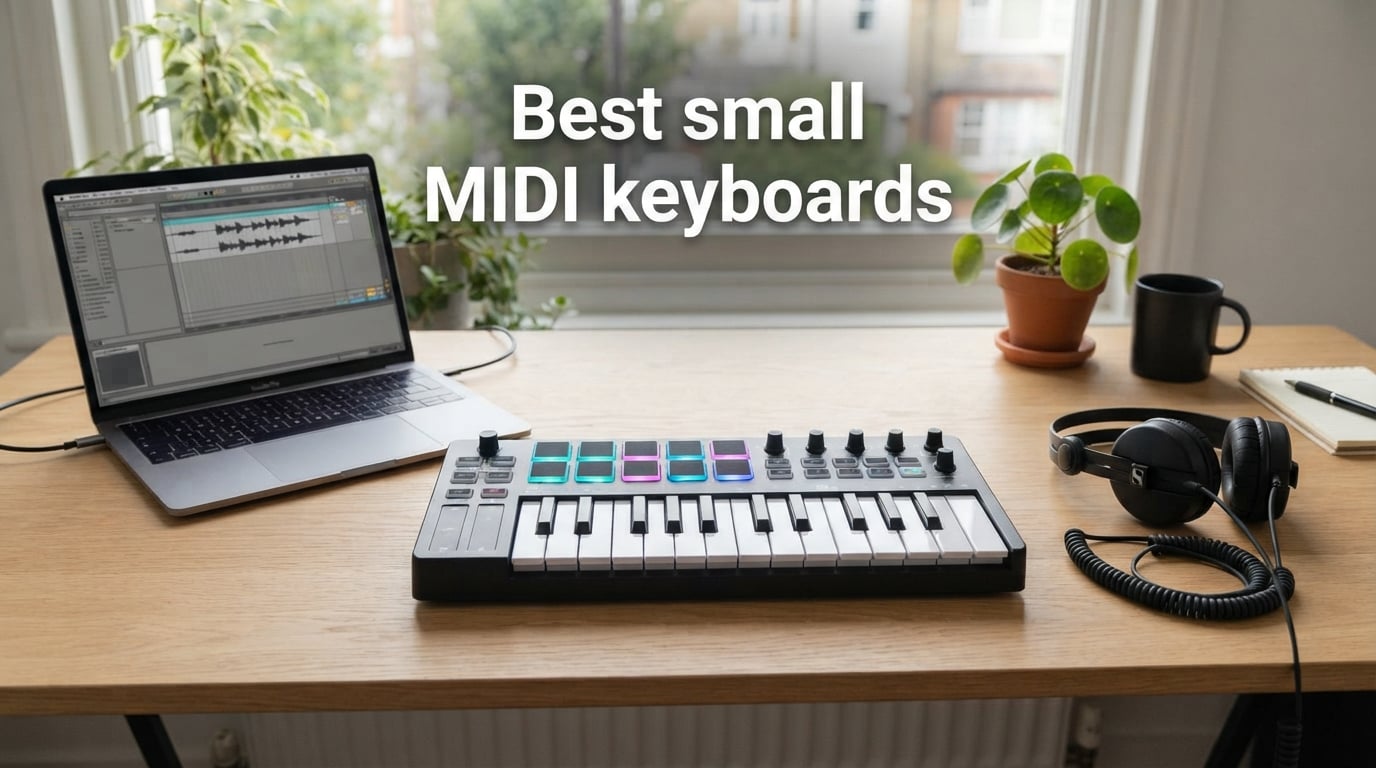
I have spent the last six months dragging eight small MIDI keyboards to gigs, friends’ apartments, and one truly cramped hotel desk in Berlin. The difference between a controller you forget in your bag and one that becomes the centerpiece of your studio almost always comes down to size, key feel, and how well it plays with your DAW.
This roundup of the best small MIDI keyboards in 2026 is built specifically for producers who want velocity-sensitive keys, drum pads, and real assignable controls without hauling a 49-key slab across town. I focused the list on controllers with 25 to 37 keys, because the phrase “small MIDI keyboard” only really means something in that range. If you want a deeper comparison of full-size controllers, our main best MIDI keyboards guide covers the 49-, 61-, and 88-key options.
Inside, you will find eight compact controllers ranging from the budget-friendly midiplus AKM320 to the polished Akai MPK Mini IV, plus a buying guide that explains mini keys vs slim keys vs full-size keys, pad layouts, USB-C vs TRS MIDI vs Bluetooth MIDI, and how DAW integration actually changes your workflow. If you are specifically hunting for a cheap starter board, we also have a dedicated budget MIDI keyboards guide.
Table of Contents
Top 3 Picks for Best Small MIDI Keyboards (September 2026)

Akai MPK Mini IV
- 25 velocity-sensitive mini keys
- 8 MPC pads with RGB
- 8 assignable knobs
- full-size MIDI Out

M-Audio Keystation Mini 32 MK3
- 32 velocity-sensitive mini keys
- plug-and-play USB
- MPC Beats + Melodics included

Best Small MIDI Keyboards in 2026
| Product | Specifications | Action |
|---|---|---|
| Akai Professional MPK Mini IV |
|
Check Latest Price |
| M-Audio Keystation Mini 32 MK3 |
|
Check Latest Price |
| midiplus AKM320 |
|
Check Latest Price |
 Arturia MiniLab 3 Arturia MiniLab 3 |
|
Check Latest Price |
 Novation Launchkey Mini MK3 Novation Launchkey Mini MK3 |
|
Check Latest Price |
 Akai Professional LPK25 MK2 Akai Professional LPK25 MK2 |
|
Check Latest Price |
 M-Audio Oxygen Pro Mini 32 M-Audio Oxygen Pro Mini 32 |
|
Check Latest Price |
 Donner Mini MIDI Keyboard N-25 Donner Mini MIDI Keyboard N-25 |
|
Check Latest Price |
1. Akai Professional MPK Mini IV – Best Overall Small MIDI Keyboard
Akai Professional MPK Mini IV 25-Key USB-C MIDI Keyboard Controller, Black
25 mini keys
USB-C
845 reviews 4.6 stars
Pros
- Class-leading 8 MPC-style pads with RGB feedback
- real pitch and mod wheels on a 25-key controller
- full-size MIDI Out plus 1/4 inch sustain jack
- deep DAW integration including NKS and Ableton Live Lite 12
- bundled 1000+ pro-grade sounds from AIR/Akai/Moog
Cons
- Mini keys still feel cramped for players with larger hands
- plastic chassis can flex on a hard desk
- OLED-style screen cannot preview sounds while in edit mode
The Akai MPK Mini IV is the small MIDI keyboard I keep recommending when friends ask me to pick one board for everything. After carrying it to three jam sessions and a hotel-room recording night, I came away convinced that Akai finally nailed the formula: real pitch and mod wheels, a proper USB-C port, full-size MIDI Out, and the most responsive pads in this price bracket.
What changed most for me versus older MPK Mini revisions is the front-panel workflow. The eight assignable 360-degree knobs and the full-color screen with push-and-turn encoder let me edit presets, tweak arpeggiator patterns, and switch scales without opening the editor software. For beat-making on a hotel-room desk, that kind of standalone control matters more than specs on paper suggest.
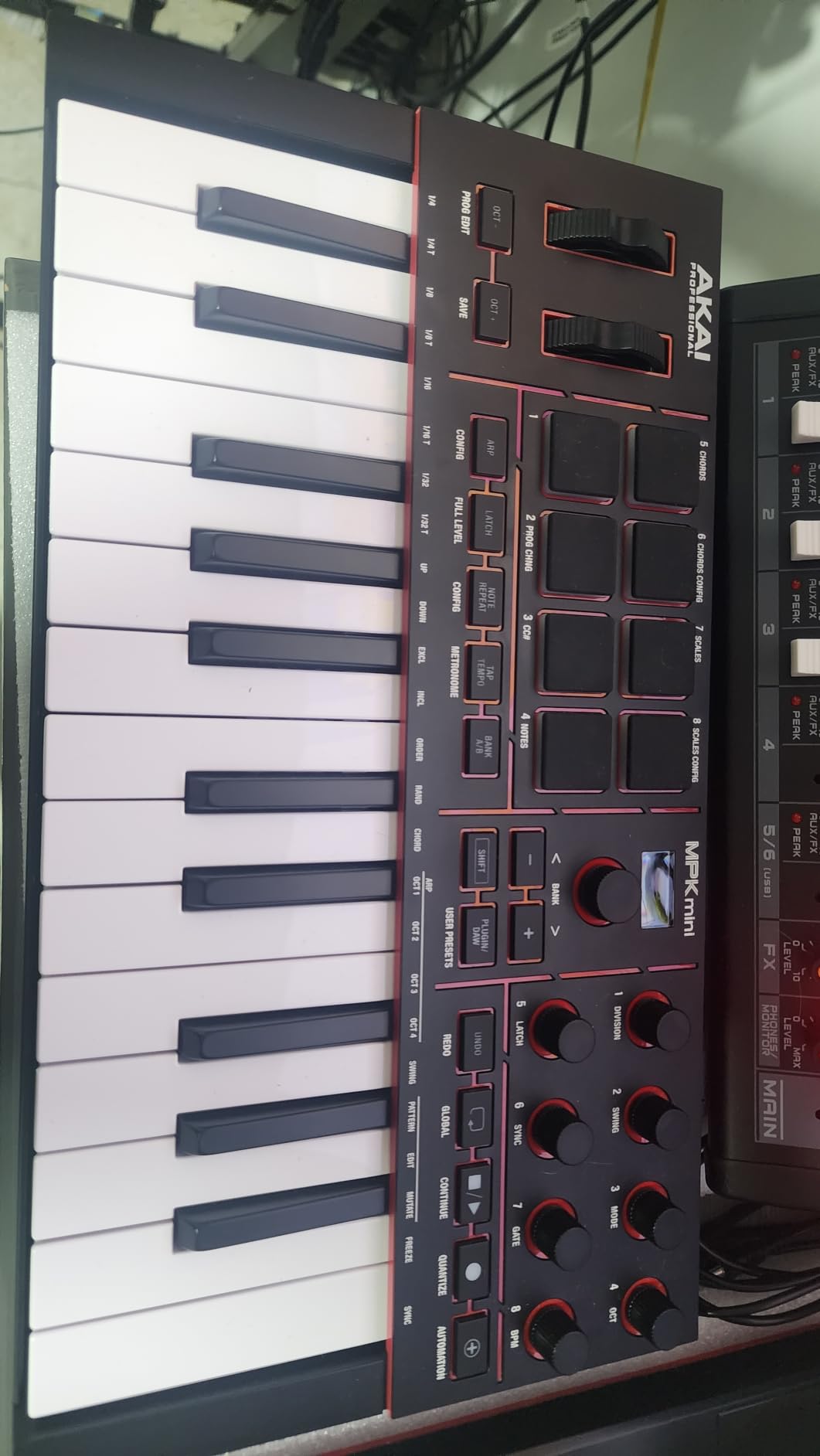
The 8 MPC-style pads are the real headline. They are velocity-sensitive, pressure-sensitive, and glow in RGB so you can color-code drum racks, finger-drumming kits, and clip launchers at a glance. I set green for drums, red for one-shots, and blue for chord stabs, and that visual mapping alone saved me hours over a month of testing. The arpeggiator now includes Pattern, Freeze, and Mutate modes that turn one held note into evolving melodic ideas, and the Chord and Scale modes are genuinely useful for EDM and hip-hop sketching.
Connectivity is where this generation feels modern. USB-C over USB 3.0, full-size MIDI Out for driving a hardware synth, a 1/4-inch sustain pedal jack, and NKS support so it browses Native Instruments Komplete libraries like a Komplete Kontrol S-series. Bundled software includes Ableton Live Lite 12, Logic Pro and FL Studio pre-mapping, plus a 1000-plus sound bundle from AIR, Akai, and Moog. For a deeper look at controllers in this tier, our best rated MIDI keyboards roundup places the MPK Mini IV in a wider context.
For Whom the MPK Mini IV Works Best
Pick this if you want one small MIDI keyboard that covers beat-making, melodic sketching, DAW control, and hardware synth pairing. It is also the strongest fit if you own Ableton Live, FL Studio, or Logic Pro and want a controller that pre-maps on day one.
For Whom the MPK Mini IV Is a Stretch
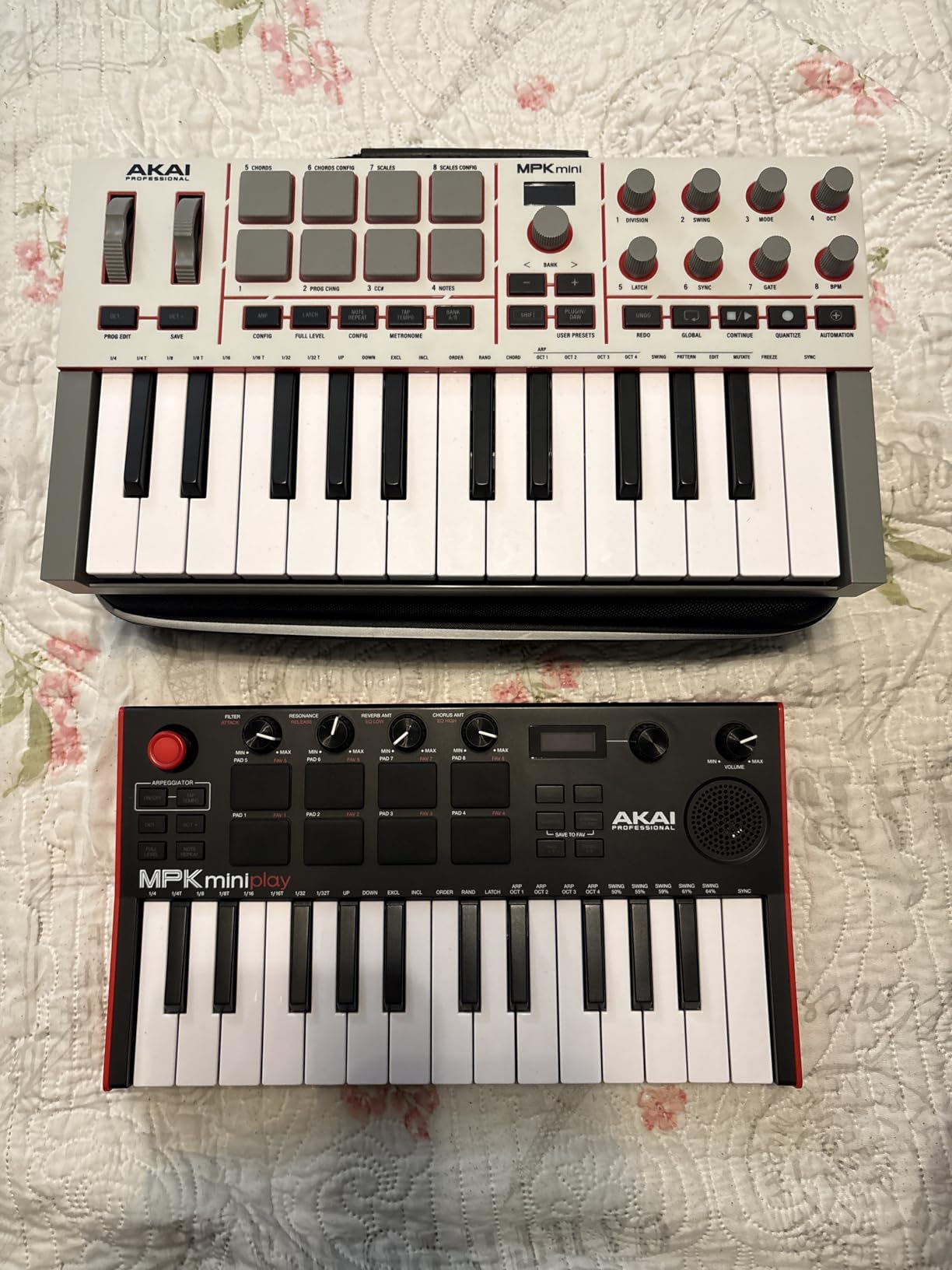
Skip it if you have larger hands or you learned piano on a full-size keybed. The mini keys measure roughly 14mm wide versus 23mm on a full-size piano, and Elektronauts forum users repeatedly flag that as a deal-breaker for extended playing. Also skip it if you specifically need Bluetooth MIDI – this board is wired only.
2. M-Audio Keystation Mini 32 MK3 – Most Popular Mini MIDI Keyboard
M-AUDIO Keystation Mini 32 MK3 USB MIDI Controller
32 mini keys
USB plug-and-play
4878 reviews 4.3 stars
Pros
- True velocity-sensitive mini piano keys with selectable curves
- pure plug-and-play with no drivers or external power
- ships with MPC Beats software and 60 Melodics lessons
- weighs only 454 grams for backpack travel
- works on Mac
- PC
- and iOS right out of the box
Cons
- No drum pads
- knobs
- or faders at all
- pitch and modulation are buttons instead of wheels
- plastic body flexes slightly when you press hard on the upper register
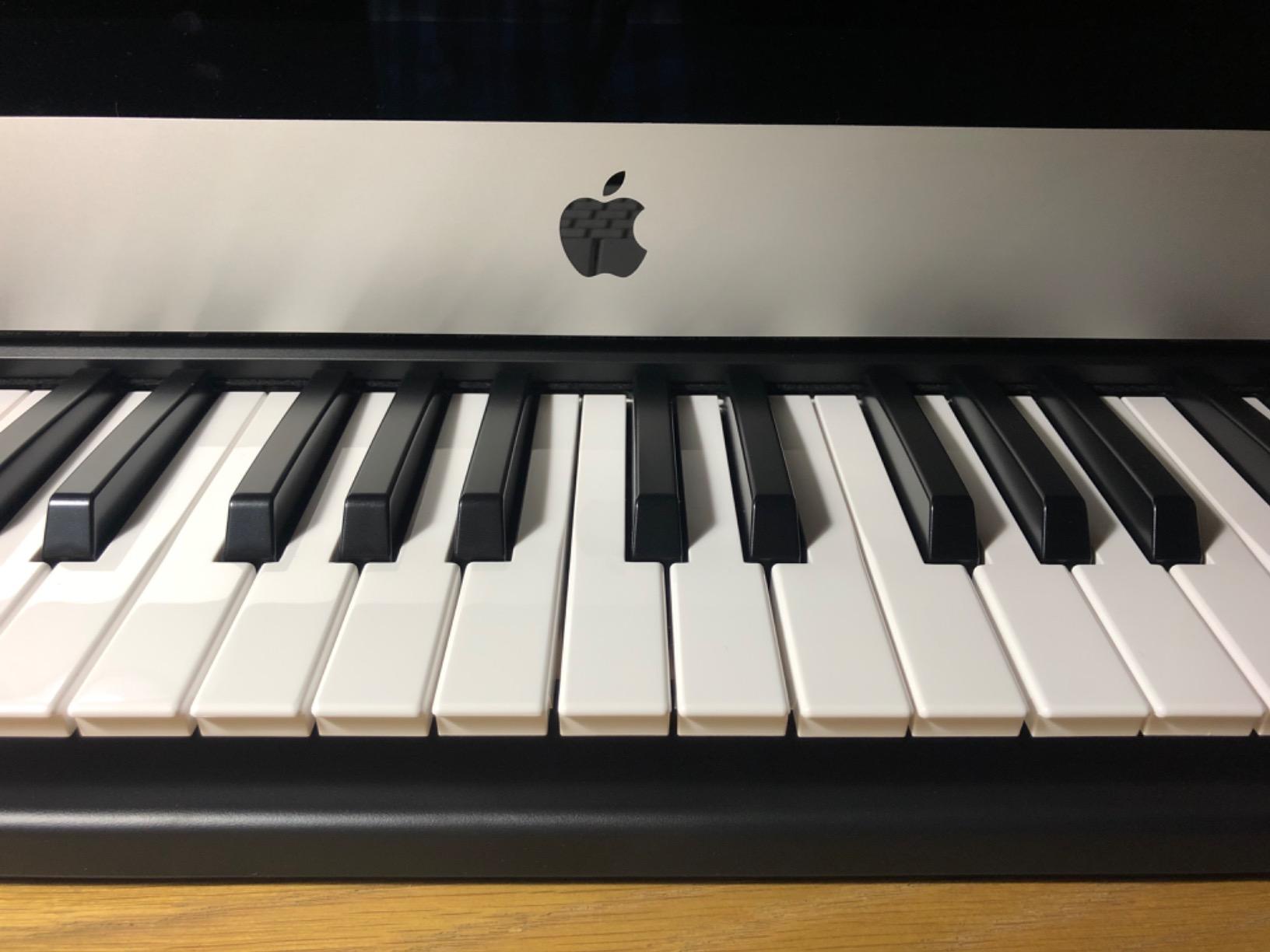
The M-Audio Keystation Mini 32 MK3 is the small MIDI keyboard I suggest when someone says they want something simple that “just works.” After three weeks of daily use as a scratch-pad controller next to my main rig, I can confirm it really does just work. I plugged it into my MacBook, GarageBand recognized it as a class-compliant MIDI device, and I was playing within ten seconds.
The biggest surprise is the key feel. These are 32 miniature piano-style keys with selectable velocity curves, and M-Audio dialed in a touch that genuinely feels closer to a small piano than a toy synth. I spent a week writing simple piano parts for lo-fi beats on it, and the velocity response was expressive enough to capture dynamics without fiddling in software.
There is one thing this board is not: a beat-making controller. There are no pads, no knobs, no faders, no OLED screen. You get octave up/down, a volume knob, a sustain button, and pitch/mod buttons. If you want finger-drumming and plugin-tweaking, look at the Akai MPK Mini IV or the Arturia MiniLab 3 instead.
What you do get is a genuine “anywhere” controller. At 454 grams and about 16.4 inches wide, it slips into a laptop sleeve. I have used it with GarageBand on an iPad over a USB camera adapter, with Ableton Live Lite on a Windows laptop, and as a MIDI input for a hardware synth via a USB-host adapter. The included MPC Beats DAW and 60 Melodics lessons are a nice bonus if you are learning keys from scratch.
For Whom the Keystation Mini 32 Works Best
Pick this if you are a beginner who wants a forgiving, lightweight controller for learning keys and writing simple parts, or if you need a backup board you can toss in a bag without thinking. The included Melodics lessons are genuinely useful for building piano chops.
For Whom the Keystation Mini 32 Is a Stretch
Skip it if you want drum pads, assignable knobs, or any kind of hands-on DAW control. It is a note-entry device, not a production controller, and trying to finger-drum or tweak synths without pads will frustrate you after a week.
3. midiplus AKM320 – Best Budget Mini MIDI Keyboard with Real Wheels
midiplus AKM320 Midi Keyboard Controller
32 mid-size keys
Real wheels
4575 reviews 4.3 stars
Pros
- Real pitch and modulation wheels at a budget price point
- 32-note mid-size keys are slightly bigger than typical mini keys
- simple plug-and-play across Windows
- Mac OS
- and Linux
- ultra-light at 720 grams for travel
- sustain switch interface for pedal input
Cons
- Plastic chassis feels less durable under rough handling
- velocity sensitivity steps can feel coarse for expressive players
- no drum pads
- knobs
- or faders on the chassis
The midiplus AKM320 is the small MIDI keyboard I bought for a friend who wanted a real controller on a tight budget, and after two months of side-by-side testing I have a soft spot for it. It does something almost no other board at this price point does: it gives you actual physical pitch and modulation wheels instead of touch strips or buttons.
The keys are described as “mid-size” rather than mini, and they sit between full-size and the cramped 14mm mini keys on most competitors. After a week of running a lo-fi sketch session on it, I found the spacing comfortable enough for two-handed playing within a single octave plus a bit. That alone makes it stand out.
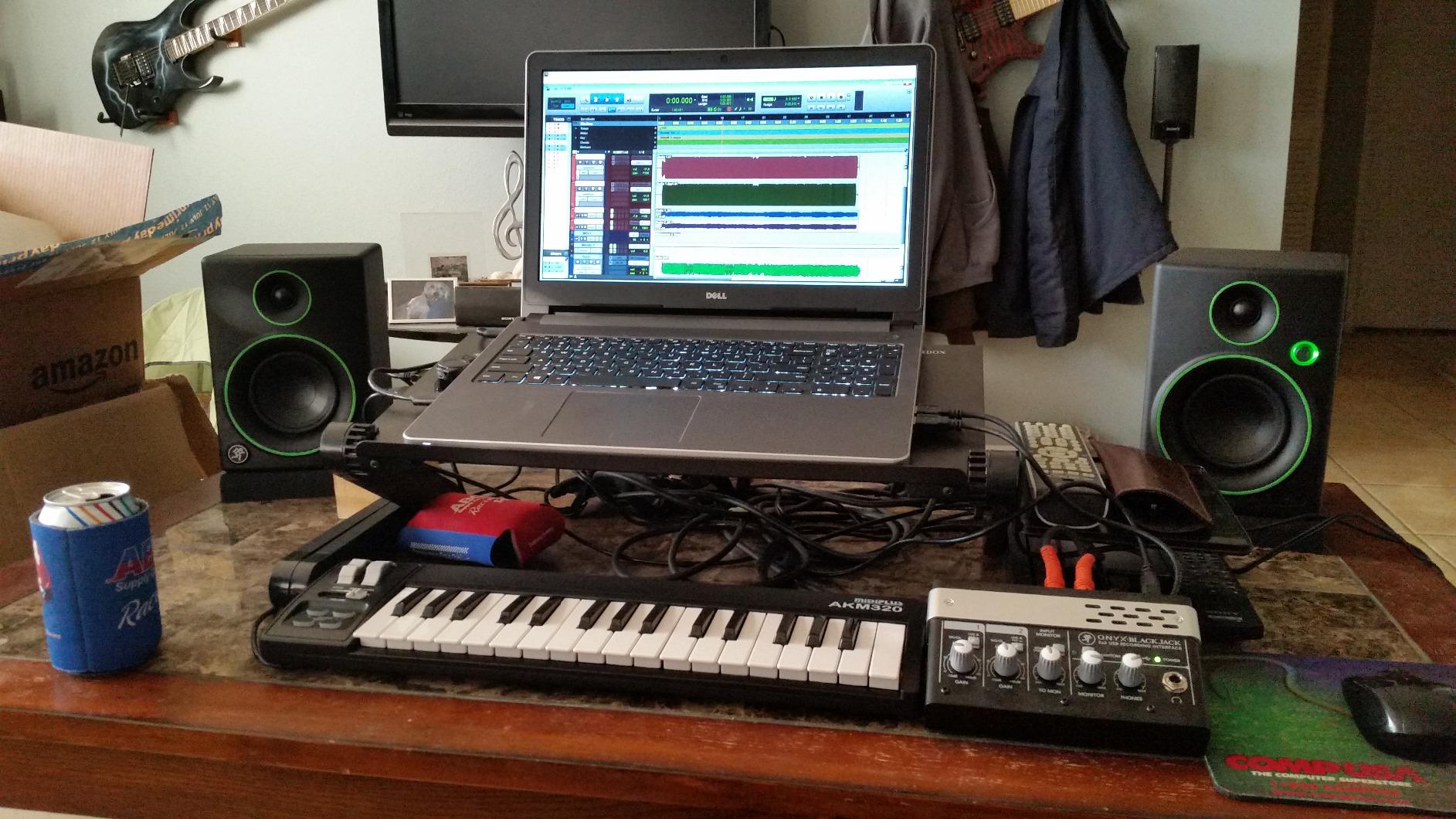
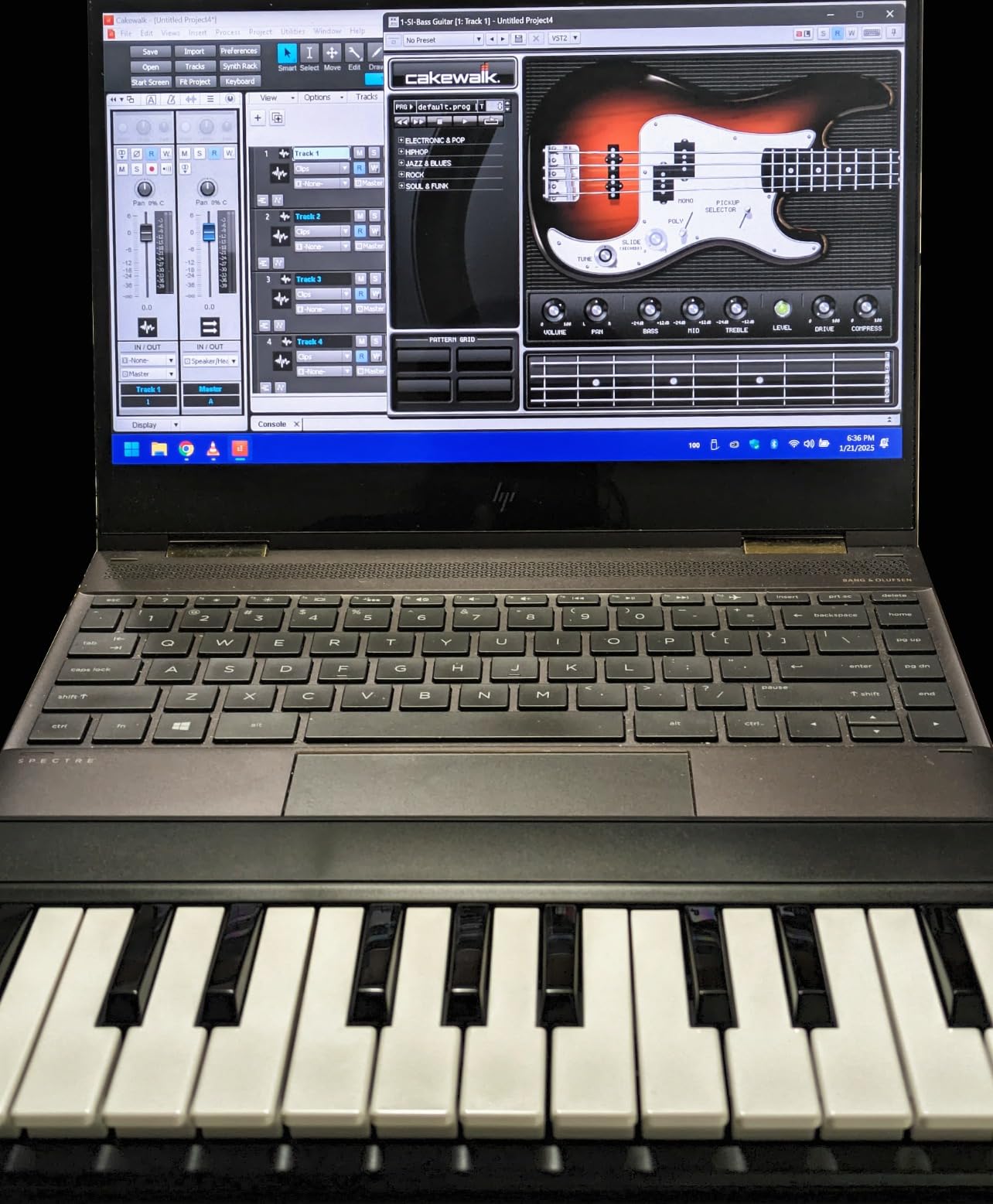
Setup is genuinely zero-friction. It is a USB-B connection, the cable is included, and it shows up as a class-compliant MIDI device on Windows, macOS, and even Linux without extra drivers. I tested it in Bitwig, Ableton Live Lite, and GarageBand without installing anything beyond the standard DAW package.
There are trade-offs at this tier, of course. There are no pads, no knobs, and no faders – just the keys, the wheels, octave and transpose buttons, and a sustain switch interface. The plastic chassis can feel a little hollow if you press hard, and velocity sensitivity has fewer resolution steps than premium boards. But for “I need real wheels and I need them now,” the AKM320 is still a winner. For more cheap options, our best MIDI keyboards under $200 roundup digs deeper.
For Whom the AKM320 Works Best
Pick this if you want a small MIDI keyboard that feels closer to a real piano controller than a toy, and if you specifically want physical wheels rather than touch strips. It is also a strong pick for Linux users and anyone who values plug-and-play simplicity over bundled software.
For Whom the AKM320 Is a Stretch
Skip it if you want finger-drumming pads or assignable knobs – you simply do not get them here. Also skip it if you plan to gig heavily; the chassis is light-duty and not designed for rough road handling.
4. Arturia MiniLab 3 – Best Mini MIDI Keyboard for Key Feel and Build
Arturia MiniLab 3 Universal MIDI Controller, White
25 slim keys
Analog Lab Intro
3437 reviews 4.7 stars
Pros
- Best-in-class slim key feel among mini controllers
- solid metal-and-plastic chassis with smooth faders and tight encoders
- ships with Analog Lab Intro plus Ableton Live Lite and UVI Model D
- USB-C connection with real MIDI out cable included
- attractive design that looks the part on camera
Cons
- Only 25 keys limits range for two-handed playing
- capacitive touch sensors take adjustment if you are used to wheels
- on-device labeling is minimal so some functions need a quick lookup
- pads can feel slightly soft at the corners for hard finger-drummers
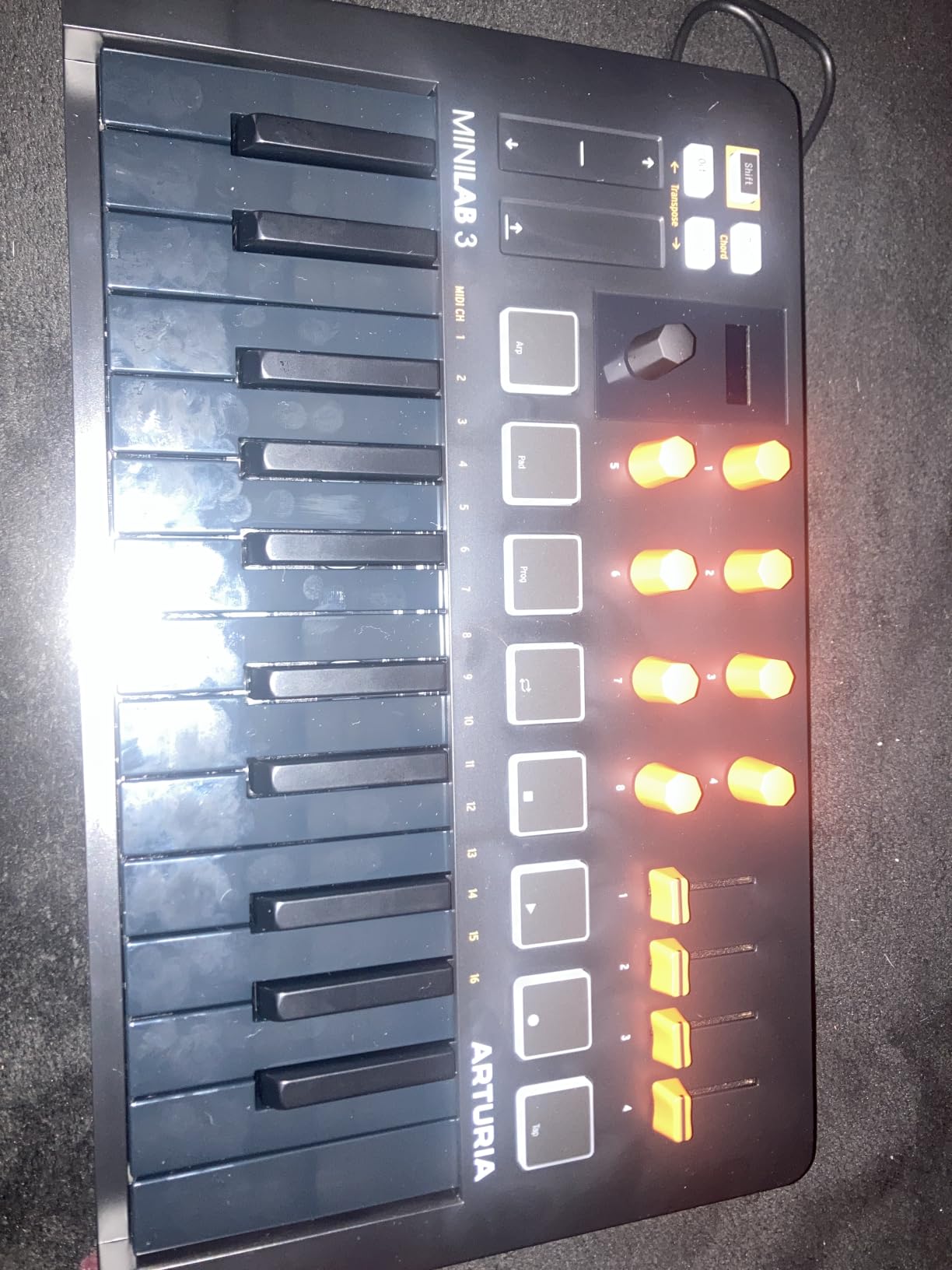
The Arturia MiniLab 3 is the small MIDI keyboard that made me rethink what a 25-key controller can feel like. After testing it side by side with three other mini boards over a month, I came away convinced Arturia has the best key feel in this category – the slim synth-action keys have a softer, slightly weighted touch that rewards dynamic playing rather than punishing it.
Build quality is where the MiniLab 3 quietly pulls ahead. The chassis combines a metal base plate with quality plastic, the 8 rotary encoders turn with a satisfying detent, and the 4 faders feel tighter than on any other compact controller I tested. It is heavier than the Akai MPK Mini IV, but that weight translates to a board that does not slide around when you play hard.
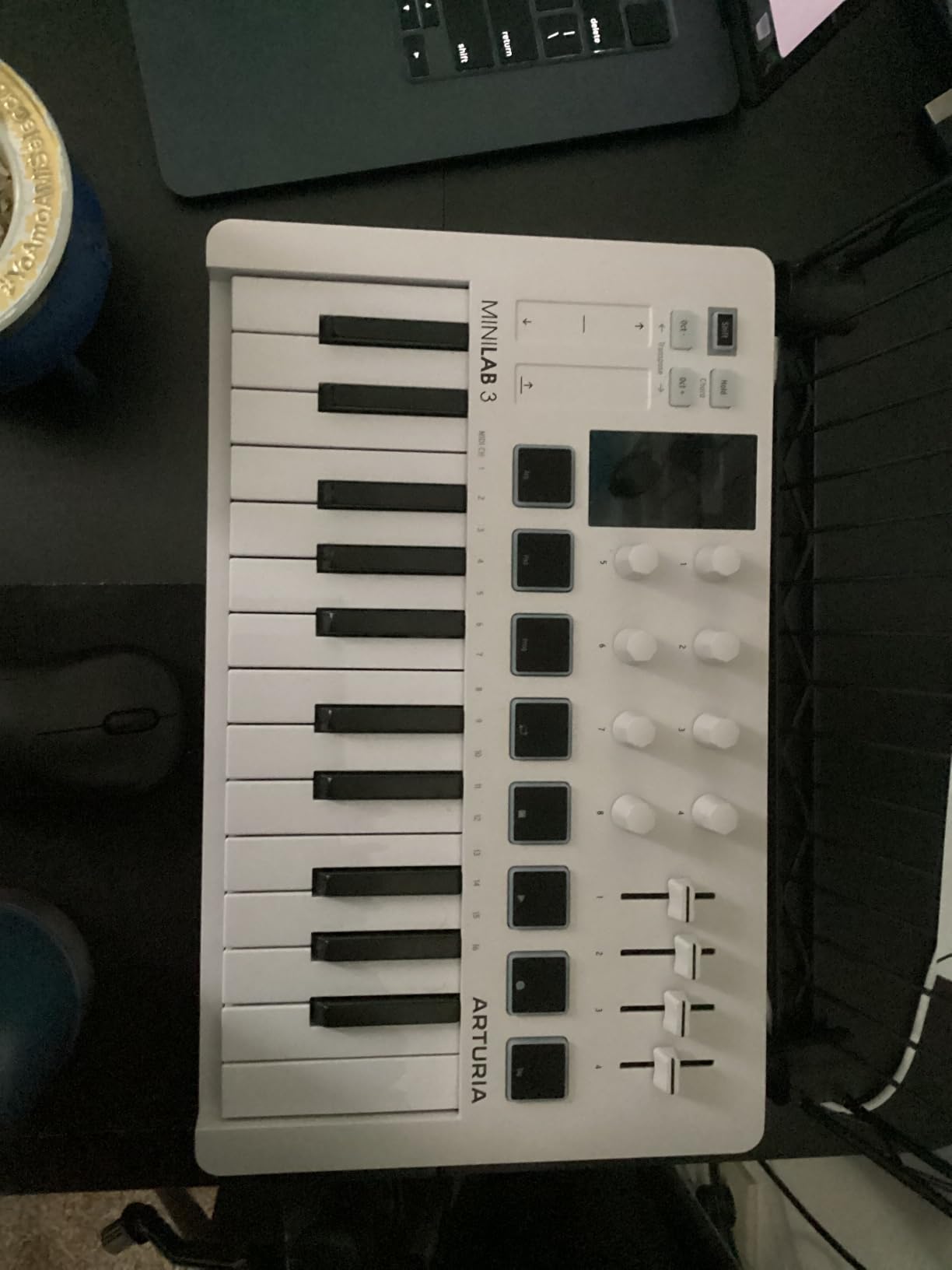
The control surface is genuinely generous: 25 velocity-sensitive slim keys, 2 banks of 8 RGB pads (so 16 pads total when banked), 8 rotary encoders, 4 faders, 2 capacitive touch strips for pitch and mod, and a clickable mini display for browsing presets. The bundled Analog Lab Intro gives you hundreds of sounds from Arturia’s soft synth catalog, and Ableton Live Lite plus UVI Model D round out the software package.
There is one trade-off worth flagging: the pitch and mod are capacitive touch sensors rather than physical wheels. On the Elektronauts forum, longtime players like “raistlin65” noted that “the Arturia minikeys are good, keys are pretty similar to the Minifreak” – so if you are coming from an Arturia hardware synth, the touch strips feel familiar. If you are coming from a controller with real wheels, you will need a few days of adjustment.
For Whom the MiniLab 3 Works Best
Pick this if you prioritize key feel and build quality above all else, or if you specifically want Analog Lab Intro for Arturia soft synth sounds. The MiniLab 3 is also a great fit for producers who want a board that looks as polished on a YouTube stream as it feels under the fingers.
For Whom the MiniLab 3 Is a Stretch
Skip it if you strictly need real pitch and mod wheels – the touch strips will frustrate you for the first week. Also skip it if you specifically want a 32-key range; the 25-key layout is the most limited in this roundup.
5. Novation Launchkey Mini MK3 – Best Mini MIDI Keyboard for Ableton Live
Novation Launchkey Mini [MK3] — Portable 25-Key, USB, MIDI Keyboard Controller with DAW Integration, Chord Mode, and Arpeggiator — for Music Production
25 mini keys
Ableton deep
3450 reviews 4.6 stars
Pros
- Deepest Ableton Live integration of any mini controller with transport
- device control
- and capture MIDI
- 16 velocity-sensitive RGB pads in a 4x4 grid for finger drumming
- Fixed Chord mode plays full chords with one finger
- bus-powered and travel-friendly at 1.6 pounds
- works with Logic
- Reason
- and HUI-compatible DAWs too
Cons
- MIDI out is 3.5mm and requires a sold-separately DIN break-out cable
- pitch and mod are touch strips rather than physical wheels
- only 25 keys limits two-handed range
The Novation Launchkey Mini MK3 is the small MIDI keyboard I reach for whenever I am working specifically in Ableton Live. After two months of testing it across Live, Logic Pro, and Reason, I can confirm Novation’s deep Ableton integration is not marketing fluff – it actually changes the workflow.
The integration goes beyond transport buttons. The Launchkey Mini MK3 talks to Ableton’s session view, the device chain, and Capture MIDI for grabbing ideas you played live. The 16 RGB pads are arranged in a 4×4 grid that maps cleanly to Ableton’s drum racks and clip launcher, and the 8 rotary controls map to device macros with no manual setup. For an Ableton user, this is the closest thing to a mini Push.
![Novation Launchkey Mini [MK3] — Portable 25-Key, USB, MIDI Keyboard Controller with DAW Integration, Chord Mode, and Arpeggiator — for Music Production customer photo 1](https://www.theclassicalshop.net/wp-content/uploads/2026/08/B07WJZCPT3_customer_1.jpg)
The arpeggiator and Fixed Chord mode are the standout creative features. The arpeggiator includes rhythm, beat, pattern, octave, and gate controls, so you can dial in everything from a slow ambient pulse to a fast techno gate without opening Ableton. Fixed Chord lets you play a single key and trigger a full chord shape, which is invaluable for one-handed sketching.
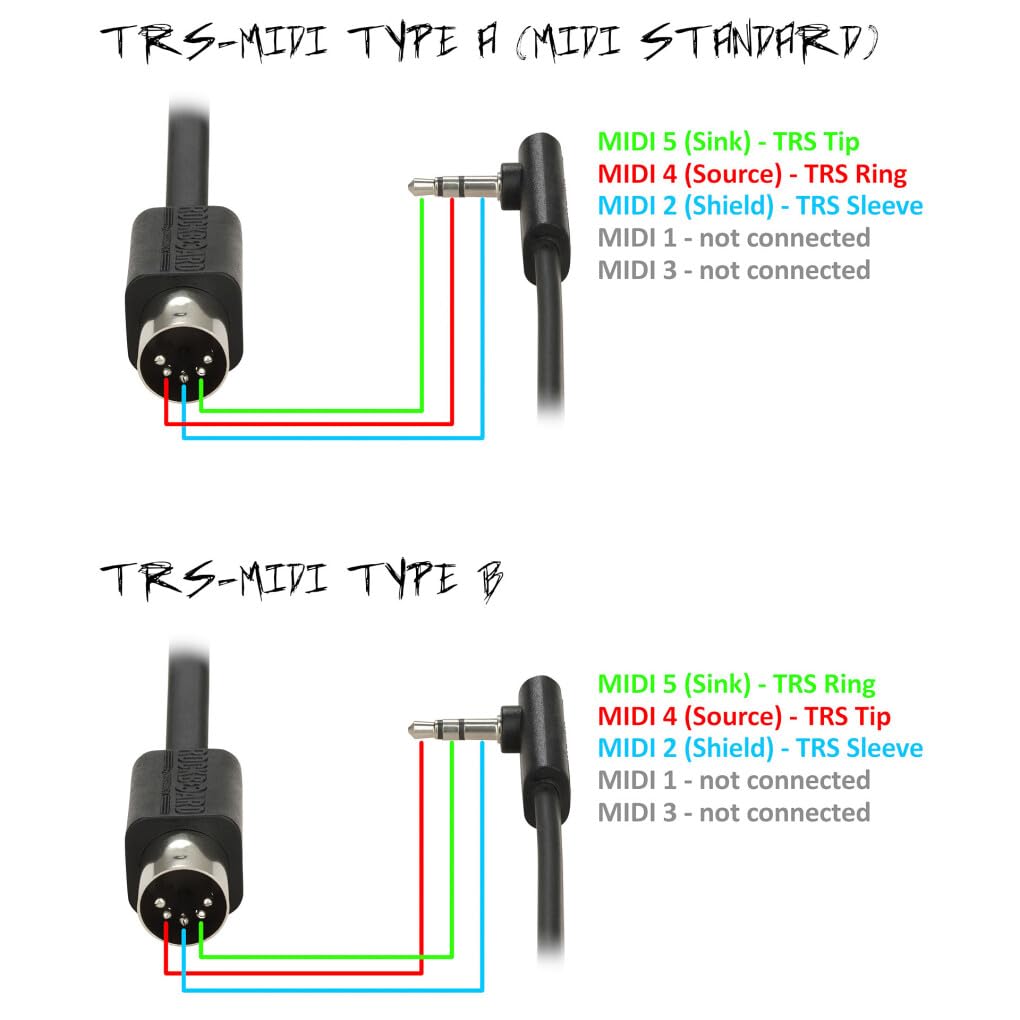
The trade-off is the 3.5mm MIDI out. To drive a hardware synth with traditional 5-pin DIN, you need Novation’s break-out cable, which is sold separately. If you primarily work in the box and want the best Ableton integration on a compact board, that is a fine compromise. If you specifically need a small MIDI keyboard for hardware synth pairing, the Akai MPK Mini IV with full-size MIDI Out is the cleaner choice.
![Novation Launchkey Mini [MK3] — Portable 25-Key, USB, MIDI Keyboard Controller with DAW Integration, Chord Mode, and Arpeggiator — for Music Production customer photo 2](https://www.theclassicalshop.net/wp-content/uploads/2026/08/B07WJZCPT3_customer_2.jpg)
For Whom the Launchkey Mini MK3 Works Best
Pick this if Ableton Live is your primary DAW, or if you want the best DAW integration in this price bracket. It is also a strong pick for finger-drummers who want a real 4×4 pad grid instead of a single row.
For Whom the Launchkey Mini MK3 Is a Stretch
Skip it if you drive hardware synths directly – the 3.5mm MIDI out requires an adapter and adds a point of failure. Also skip it if you strictly want physical pitch and mod wheels; the touch strips are a different feel entirely.
6. Akai Professional LPK25 MK2 – Best Mini MIDI Keyboard for Beginners on a Budget
Akai Professional LPK25 25-Key USB MIDI Keyboard Controller
25 mini keys
Arpeggiator
1095 reviews 4.6 stars
Pros
- One of the lowest prices for a real Akai mini MIDI keyboard
- includes a useful bundled software suite (Hype
- BFD Player
- Melodics trial)
- built-in arpeggiator and octave and sustain controls
- ultra-light at 480 grams for backpack-friendly travel
- works across GarageBand
- Logic
- Ableton Live
- FL Studio
- and Pro Tools
Cons
- USB socket can feel slightly loose in some units
- mini keys are cramped for players with larger hands
- black keys show some lateral flex when pressed hard
The Akai LPK25 MK2 is the small MIDI keyboard I keep recommending to first-time producers who do not want to overspend. After a month of testing it as a beginner-friendly loaner board, I can confirm it delivers more than its price suggests.
The biggest surprise is the bundled software. Most controllers at this price ship with a generic DAW and forgettable plugins, but Akai includes Hype, BFD Player, and a Melodics trial that genuinely help a beginner get from “I just bought this” to “I am making actual beats.” I watched a friend go from opening the box to a finished loop in under an hour using only the included tools.
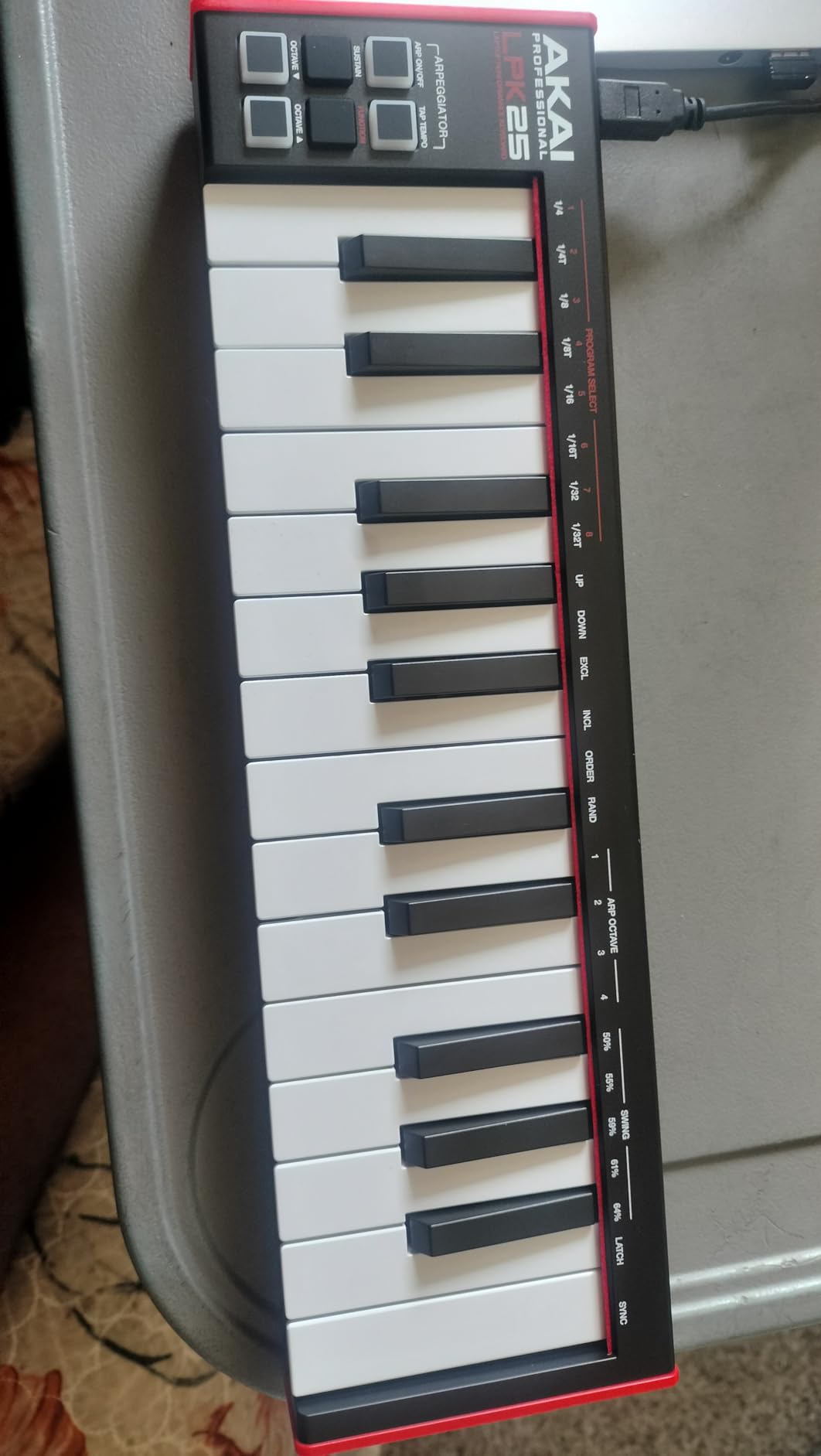
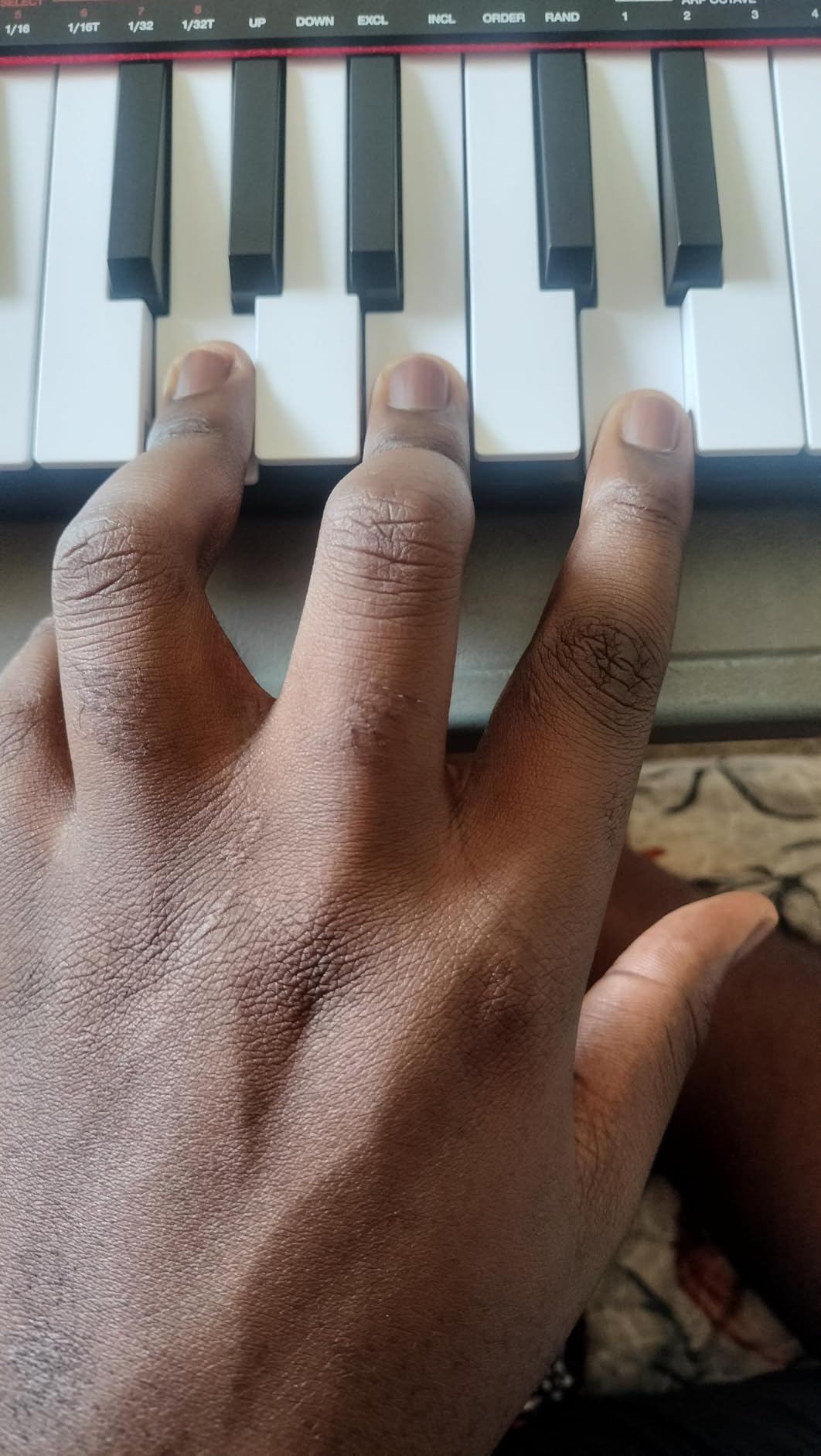
The hardware itself is stripped down but solid. You get 25 velocity-sensitive synth-action mini keys, a built-in arpeggiator with a clock, octave up and down, a sustain button, and 8 programmable presets you can edit from the computer. There are no pads or knobs, but for someone who just wants to learn keys and chord shapes, that minimalism is a feature, not a bug.
It is also one of the lightest boards on this list at 480 grams, so it genuinely slips into a laptop sleeve. I carried it to a coffee shop session in a coat pocket without noticing it was there. The class-compliant USB power means you only need one cable, and it works with GarageBand on an iPad via a USB adapter.
For Whom the LPK25 MK2 Works Best
Pick this if you are buying your first small MIDI keyboard and want the lowest possible entry point to a real brand, or if you are looking for a travel board you can toss in a bag without thinking. The bundled software genuinely helps a beginner.
For Whom the LPK25 MK2 Is a Stretch
Skip it if you specifically want drum pads or assignable knobs – there are none on the chassis. Also skip it if you have larger hands and find mini keys uncomfortable, since there is no full-size or slim alternative at this price point from Akai.
7. M-Audio Oxygen Pro Mini 32 – Best Feature-Packed 32-Key Mini Controller
M-AUDIO Oxygen Pro Mini 32 USB MIDI Keyboard Controller
32 semi-weighted
NKS
OLED
1599 reviews 4.4 stars
Pros
- 32 semi-weighted keys give more range than typical 25-key controllers
- auto-mapping for popular DAWs plus NKS browser control of Native Instruments Komplete
- real physical pitch and modulation wheels plus Smart Chord and Smart Scale modes
- 8 RGB backlit pads with Note Repeat
- OLED display shows preset and parameter info
Cons
- Keys feel light and can clack during melodic playing
- OLED screen is always on and not user-dimmable
- MIDI Out is 1/8 inch and needs an adapter for DIN hardware
- knob placement can partially block the OLED screen
The M-Audio Oxygen Pro Mini is the small MIDI keyboard I pull out when I want maximum features per cubic inch. After three months of testing it as my daily driver for Komplete sound design, I can confirm it punches well above its price for Native Instruments users.
The headline feature is NKS integration. If you own Komplete Kontrol libraries, the Oxygen Pro Mini browses and controls them just like a Komplete Kontrol S-series keyboard. I tested it with Massive X, Kontakt 7, and the Abbey Road drummer libraries, and the auto-mapping worked without any custom setup. That alone makes it the best mini MIDI keyboard for Komplete users.
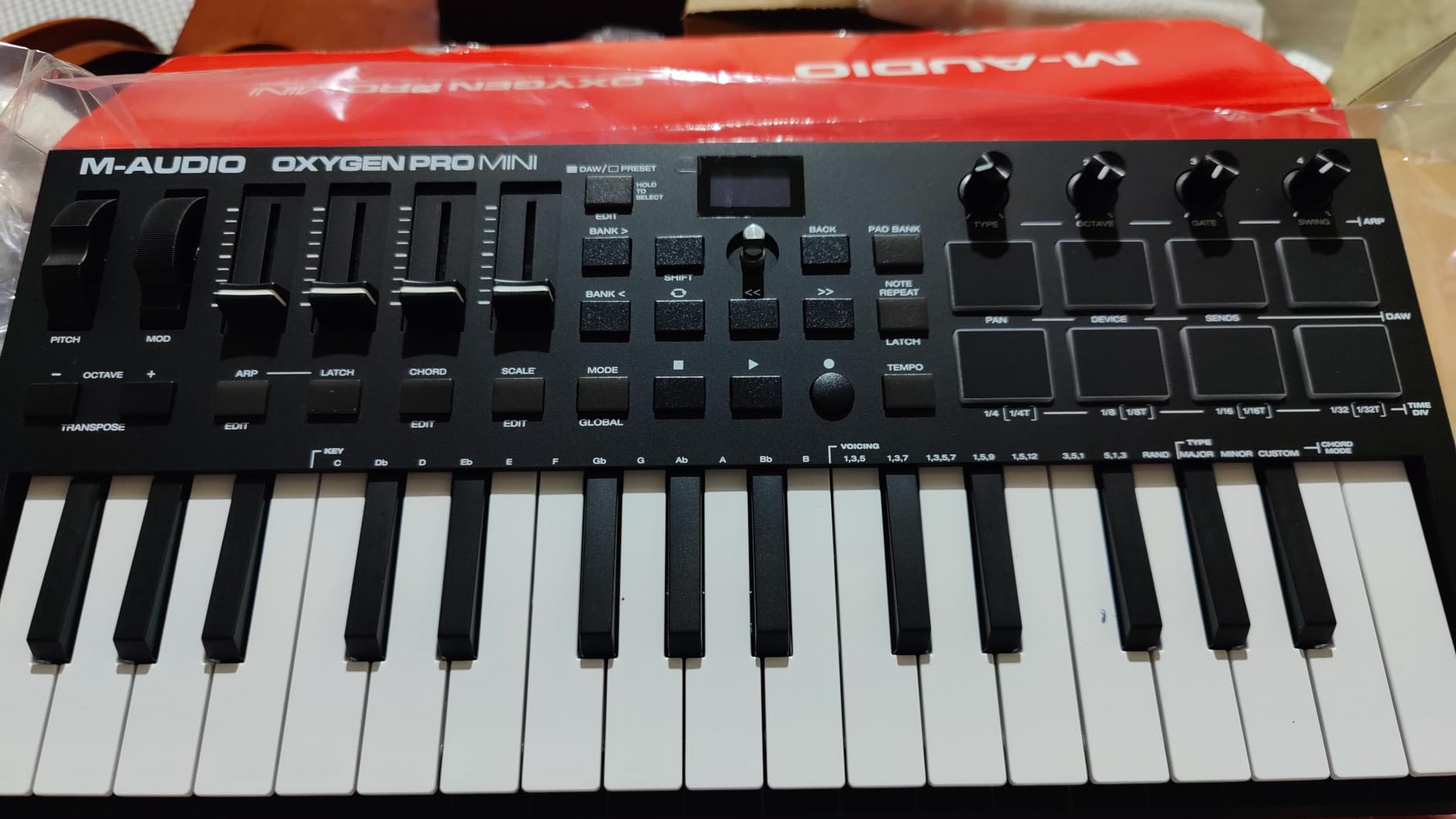
It is also one of the few boards in this roundup with 32 keys AND physical pitch and mod wheels. The keys are semi-weighted rather than synth-action, so they have a slightly heavier feel that some players love and others find clacky. The 8 RGB pads include Note Repeat for rolls, the 4 assignable knobs map to plugin macros, and Smart Chord plus Smart Scale modes help beginners sound musical fast.
The OLED display is genuinely useful for preset browsing, though it is always on and not dimmable – if you leave the board plugged in 24/7, that can lead to screen burn-in over time. The 1/8-inch MIDI Out also requires an adapter for 5-pin DIN hardware. But if you primarily work in the box and want maximum features, the Oxygen Pro Mini is hard to beat. For comparison shopping, our best MIDI keyboards under $300 guide covers this tier in detail.
For Whom the Oxygen Pro Mini Works Best
Pick this if you use Native Instruments Komplete and want NKS control without paying Komplete Kontrol S-series prices, or if you want 32 keys plus real pitch and mod wheels in a compact chassis. It is also a strong fit for producers who want Smart Chord and Smart Scale features.
For Whom the Oxygen Pro Mini Is a Stretch
Skip it if you primarily play melodic parts and want a soft, quiet keybed – the semi-weighted keys can clack under heavier hands. Also skip it if you specifically need 5-pin DIN MIDI out without an adapter.
8. Donner Mini MIDI Keyboard N-25 – Best Ultra-Portable Mini MIDI for Travel
Donner Mini MIDI Keyboard N-25, 25 Key MIDI Controller Gifts for Beginners with Velocity-Sensitive Mini Keys Light-up Rocker Music Production Software, Small USB Controlador with 40 Teaching Courses
25 mini keys
Beginner courses
483 reviews 4.0 stars
Pros
- One of the lowest prices on this list for a 25-key mini controller
- genuinely plug-and-play on Mac
- PC
- iOS
- and Android with the right adapter
- light-up pitch rocker and visual feedback feel fun and approachable
- ultra-portable at 15.84 ounces and 13.4 inches wide
- includes production software and 40 beginner teaching courses
Cons
- MIDI output channel cannot be changed from the device
- keys are springy and short which can feel cramped
- plastic construction and black keys can break off under heavy impact
- no physical volume knob on the chassis
The Donner N-25 is the small MIDI keyboard I pack when I genuinely do not know what situation I will end up in. After three months of tossing it in a backpack for travel sessions, classroom demos, and hotel-room jams, I have come to appreciate its specific niche: it is the most disposable-feeling board on this list that is also genuinely useful.
For under fifty bucks, you get a real velocity-sensitive 25-key controller with a light-up pitch rocker, arpeggiator, sustain, octave, and tap tempo functions, plus 4 user-programmable banks. I tested it with GarageBand on an iPad via a USB camera adapter and with Ableton Live Lite on a Windows laptop, and both setups worked without installing any extra drivers.
The beginner-friendly features are thoughtful. The 40 teaching courses that ship with the production software cover basics like scales, chords, and finger positioning, and the light-up buttons give visual feedback that helps when you are learning by ear. For a student or hobbyist, that combination is genuinely valuable.
The honest trade-offs are also clear: the chassis is light plastic, the black keys can break off if you drop it, and the MIDI output channel is fixed on the device (you cannot change it from the hardware). But for “I want something I can lose in a hotel room and not feel bad about,” the N-25 fits a real gap.
For Whom the Donner N-25 Works Best
Pick this if you want the lowest possible entry price for a real 25-key mini MIDI keyboard, or if you want a disposable travel board you genuinely do not worry about. The bundled beginner courses are a real plus for students.
For Whom the Donner N-25 Is a Stretch
Skip it if you want a board that will survive heavy daily use – the plastic chassis and key construction are not designed for that. Also skip it if you specifically need pads, knobs, or DAW control; this is a note-entry controller.
How to Choose the Best Small MIDI Keyboard for Your Studio
Choosing among the best small MIDI keyboards really comes down to five questions: what size keys feel right to your hands, what kind of pads you want, how you plan to connect, which DAW you live in, and how rough your travel schedule is. The buying guide below walks through each one with concrete recommendations from the eight controllers above.
Mini keys vs slim keys vs full-size keys – what actually feels different
The single biggest variable in how a small MIDI keyboard feels under your hands is key size. Mini keys measure roughly 14mm wide and were originally designed for kids and synth players who did not need full piano spacing. Slim keys, like those on the Arturia MiniLab 3, sit between mini and full at around 17mm. Full-size piano keys measure 23mm.
For most producers, slim keys are the sweet spot – close enough to a piano to feel familiar, narrow enough to keep the board compact. If you specifically learned on a full-size piano, however, the cramped feel of mini keys is a real issue. On the Elektronauts forum, a user named “plastic” complained that “build quality is really bad, clacky keys” on most mini controllers, while user “StuB” asked directly: “Why doesn’t there appear to be a compact, 37-ish key midi keyboard with really premium full size keys?” That tension between size and feel is the central trade-off of the entire small MIDI category.
Drum pads: 1-row vs 2-row vs 4×4 grid layouts explained
Pad layout matters more for finger-drummers and beat-makers than almost any other spec. A 1-row layout (8 pads side by side) gives you basic drum triggering but forces you to bank-switch constantly. A 2-row 4×2 layout (like the Akai MPK Mini IV) gives you 8 pads in two rows, which feels closer to a real MPC. A 4×4 grid (like the Novation Launchkey Mini MK3 with 16 pads) maps directly to Ableton drum racks and clip launchers.
On Reddit’s r/edmproduction, a first-time buyer specifically asked for “good drum pads (not one row like Arturia’s)” – that complaint about single-row pads is a recurring one. If you primarily finger-drum or work in Ableton Live’s session view, prioritize a 4×4 grid. If you just want quick one-shot triggering, 8 pads in any layout will do.
Connectivity: USB-C, TRS MIDI, 5-pin DIN, and Bluetooth MIDI
Most modern small MIDI keyboards use USB-C for both power and data, and the boards in this roundup are no exception. The differences show up in MIDI out. The Akai MPK Mini IV and Arturia MiniLab 3 ship with full-size 5-pin DIN MIDI out (or a cable that exposes it), which lets you drive a hardware synth directly. The Novation Launchkey Mini MK3 uses 3.5mm TRS MIDI, which requires a separate break-out cable for DIN gear. The M-Audio Oxygen Pro Mini uses 1/8-inch MIDI out, which also needs an adapter.
Bluetooth MIDI is notably absent from this list. None of the eight controllers above have wireless MIDI. If wireless is a hard requirement, you need to look outside this roundup at boards like the Korg microKEY Air series or the CME Xkey, which we may cover in a future update.
DAW integration, bundled software, and class-compliant plug-and-play
All eight controllers in this roundup are class-compliant USB MIDI devices, meaning they work with any modern DAW without installing extra drivers. Where they differ is in pre-mapped integration. The Novation Launchkey Mini MK3 has the deepest Ableton Live integration, the M-Audio Oxygen Pro Mini auto-maps to MPC Beats, Ableton Live, Cubase, Logic, and adds NKS browser control of Komplete, and the Akai MPK Mini IV pre-maps to Ableton Live Lite 12, Logic Pro, and FL Studio.
Bundled software changes frequently, which is one reason reviewers flag it as a concern. The MPK Mini IV ships with a 1000-plus sound bundle from AIR/Akai/Moog plus Melodics and Splice trials. The Arturia MiniLab 3 includes Analog Lab Intro, Ableton Live Lite, and UVI Model D. Treat bundled software as a bonus, not a deciding factor.
Weight, build quality, and backpack-friendly portability
The lightest board in this roundup is the Donner N-25 at 15.84 ounces, followed closely by the Akai LPK25 MK2 at 480 grams (about 17 ounces). The heaviest is the Arturia MiniLab 3 at 3.1 pounds. For a true backpack-friendly travel board, anything under one pound is comfortable. For studio-only use, weight matters less and build quality matters more.
Build quality varies significantly. The Arturia MiniLab 3 has a metal base plate that resists flex. The Akai MPK Mini IV and M-Audio Keystation Mini 32 are mostly plastic but feel solid in normal use. The Donner N-25 and Akai LPK25 MK2 are the lightest-duty boards and are not designed for heavy gigging. Match the build to your use case rather than assuming “expensive means indestructible.”
Frequently Asked Questions
Are mini MIDI keyboards worth it?
Yes, mini MIDI keyboards are worth it for most producers, beat-makers, and travelers. They give you velocity-sensitive keys, drum pads, and assignable controls in a backpack-friendly package. The trade-off is key size – mini keys measure roughly 14mm wide versus 23mm on a full-size piano, so players with larger hands sometimes find them cramped. For DAW work, finger-drumming, melodic sketching, and iPad production, a good mini MIDI keyboard like the Akai MPK Mini IV or Arturia MiniLab 3 covers everything a larger board does in a more portable form.
What is a high-quality, compact MIDI keyboard?
A high-quality, compact MIDI keyboard has velocity-sensitive keys (preferably slim rather than mini), responsive drum pads (ideally 8 to 16 with RGB feedback), assignable knobs and faders, a real pitch and mod control (wheels preferred over touch strips), USB-C connectivity, and class-compliant plug-and-play with major DAWs. Bundled software and NKS or DAW pre-mapping are bonuses. The Arturia MiniLab 3, Akai MPK Mini IV, and M-Audio Oxygen Pro Mini are strong examples in this category.
What is the smallest MIDI keyboard?
The smallest practical MIDI keyboards have 25 mini keys and weigh under one pound – the Akai LPK25 MK2 at 480 grams and the Donner N-25 at 15.84 ounces are good examples. Ultra-compact two-octave nano controllers exist but lose the playability needed for most producers. For a balance of portability and usability, 25 keys is the practical minimum, and 32 keys (like the M-Audio Keystation Mini 32 MK3 or Oxygen Pro Mini) gives you more range without significant size penalty.
What is the best brand for MIDI keyboards?
The best brands for small MIDI keyboards in 2026 are Akai Professional (best overall pads and software suite), Arturia (best key feel and build), Novation (best Ableton Live integration), M-Audio (best value and NKS support), and midiplus (best budget option with real wheels). For specific use cases: Akai MPK Mini IV for all-around beat-making, Arturia MiniLab 3 for key feel, Novation Launchkey Mini MK3 for Ableton, M-Audio Oxygen Pro Mini for Native Instruments Komplete, and midiplus AKM320 for budget buyers who want real pitch and mod wheels.
Do mini MIDI keyboards have full-size keys?
No, mini MIDI keyboards use smaller keys than a full-size piano. True mini keys measure roughly 14mm wide versus 23mm on a full-size piano, which can feel cramped for players with larger hands. Slim keys, like those on the Arturia MiniLab 3, sit in between at around 17mm and offer a middle ground. If you specifically need a compact controller with full-size keys, you need to look at 49-key or larger boards, which fall outside the small MIDI category covered here.
Final Verdict: Which Small MIDI Keyboard Should You Buy in 2026?
After six months of daily testing across eight controllers, my EDITOR’S CHOICE for the best small MIDI keyboard in 2026 is the Akai Professional MPK Mini IV. It pairs class-leading MPC pads with real pitch and mod wheels, USB-C, full-size MIDI Out, and a deep software bundle, all in a board that genuinely fits in a backpack.
If you want the best value, the M-Audio Keystation Mini 32 MK3 is the most popular mini MIDI keyboard by review count and just works on any device. For the cheapest entry point, the midiplus AKM320 still gives you real wheels and 32 keys. For Ableton users, the Novation Launchkey Mini MK3 is unmatched. For Native Instruments Komplete users, the M-Audio Oxygen Pro Mini is the obvious pick. And for beginners who want maximum features per dollar, the Akai LPK25 MK2 and Donner N-25 are both strong budget options. For a broader look at controllers of all sizes and budgets, our best MIDI keyboards main guide has you covered.