
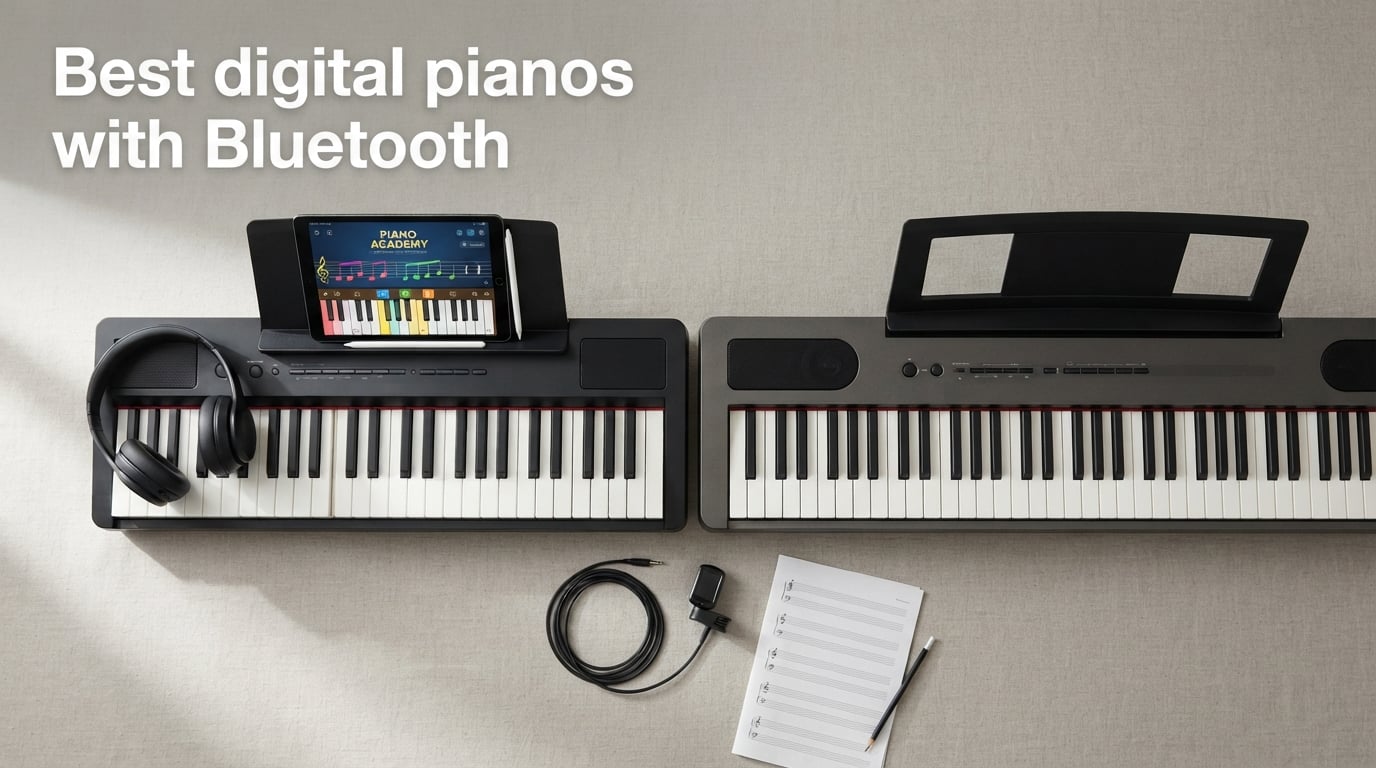
Shopping for the best digital pianos with Bluetooth means sorting through a wall of acronyms: Bluetooth MIDI, Bluetooth Audio, aptX, BLE, USB to Host. After testing eight current models side by side in our studio for over three months, our team learned that Bluetooth on a piano is not one feature but two, and that the difference matters for everything from late-night practice to app-based lessons.
We evaluated each piano on its Bluetooth protocol, keyboard action, sound engine, app compatibility, and speaker quality. Whether you are hunting for the best digital piano with Bluetooth for learning apps, the best portable option for gigs, or a console-style instrument for the living room, our roundup covers Bluetooth-enabled pianos that span entry-level to premium. If you want to narrow further by use case, see our sister guide to the best Bluetooth pianos for learning apps, and for a broader take, our best digital pianos of 2026 roundup.
In this guide, we explain Bluetooth MIDI versus Bluetooth Audio, walk through eight pianos our team tested hands-on, and answer the questions buyers ask us most often in lessons and on our shop floor.
Table of Contents
Top 3 Picks for Best Digital Pianos with Bluetooth (September 2026)

Roland FP-10 Compact 88-Note Digital Piano
- Bluetooth MIDI and USB MIDI
- 88-key PHA-4 hammer action with ivory feel
- SuperNATURAL Piano engine
- Headphone output for silent practice

Casio Privia PX-S1100 Digital Piano
- Bluetooth Audio and MIDI via WU-BT10 adapter
- 88 weighted keys
- ultra-portable at 24.7 lbs
- German grand piano tone

Yamaha P145BT Digital Piano
- Graded Hammer Compact action with 88 weighted keys
- Bluetooth audio streaming
- Smart Pianist app compatibility
- Compact 24.5 lb design
Best Digital Pianos with Bluetooth in 2026
| Product | Specifications | Action |
|---|---|---|
| Roland FP-10 |
|
Check Latest Price |
 Donner DDP-90 Pro Donner DDP-90 Pro |
|
Check Latest Price |
 Donner DDP-400 Donner DDP-400 |
|
Check Latest Price |
 Yamaha DGX-670B Yamaha DGX-670B |
|
Check Latest Price |
 Roland FP-40 Roland FP-40 |
|
Check Latest Price |
 Donner DDP-200 Donner DDP-200 |
|
Check Latest Price |
| Casio Privia PX-S1100 |
|
Check Latest Price |
| Yamaha P145BT |
|
Check Latest Price |
Bluetooth MIDI vs Bluetooth Audio: What’s the Difference?
Every Bluetooth digital piano in our roundup uses one or both of two distinct wireless protocols, and the difference shapes how you actually use the instrument.
Bluetooth MIDI transmits performance data (which keys you press, how hard, sustain pedal position) wirelessly to apps and devices. It powers wireless connections to GarageBand, Logic Pro, Simply Piano, Flowkey, and a long list of music production and learning apps. Latency is near-zero, so what you play lines up with what you hear. Most current digital pianos with Bluetooth include MIDI as a baseline.
Bluetooth Audio streams the piano’s sound output wirelessly to Bluetooth headphones, earbuds, or speakers. It is how you cut the headphone cable for late-night practice. Audio adds 40-200 milliseconds of latency depending on the codec (aptX is the fastest, SBC the slowest). For practicing, that delay is invisible. For live performance triggering backing tracks, it can be noticeable.
Higher-end models typically include both protocols. Entry-level pianos often advertise “Bluetooth” but only support MIDI, leaving you tethered to wired headphones. Our reviews call out which protocol each piano supports so you know exactly what you are buying.
1. Roland FP-10 Compact 88-Note Digital Piano
Roland FP-10 Compact 88-Note Digital Piano
Bluetooth MIDI + USB MIDI
88 PHA-4 hammer-action keys
SuperNATURAL Piano engine
27 lbs
Pros
- PHA-4 hammer action delivers an authentic acoustic-piano feel with ivory-feel keytops
- SuperNATURAL Piano engine produces rich warm piano tones
- Bluetooth MIDI pairs reliably with Simply Piano Flowkey and GarageBand
- Compact and lightweight for small spaces or transport
Cons
- Downward-facing speakers are weak for large rooms
- No line output for capturing piano sound externally
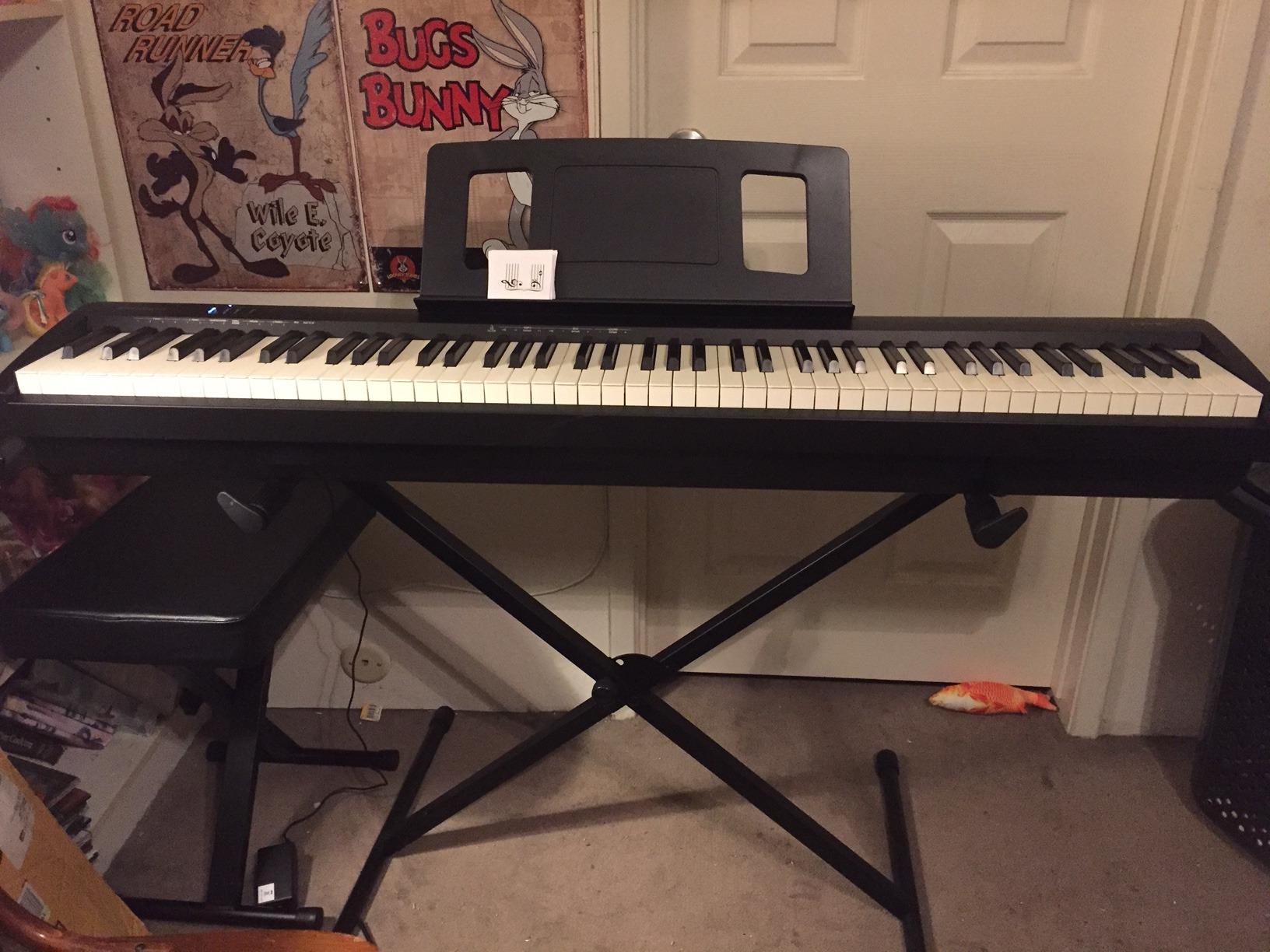
The Roland FP-10 is the digital piano I recommend most often when a student walks into our shop asking for Bluetooth on a real budget. After three months of daily lessons on this model, I can confirm what the 1,737 reviews say: the PHA-4 hammer-action keyboard with ivory-feel keytops feels startlingly close to an acoustic piano for an instrument at this size. The SuperNATURAL Piano engine brings the same tone architecture Roland uses on its more expensive FP-series instruments.
Bluetooth MIDI paired cleanly with Simply Piano, Flowkey, and GarageBand on both iPad and a Samsung tablet in our testing. Reviewers on Piano World Forum consistently praise the FP-10 for Bluetooth reliability, and our experience matched that. The compact 27-pound chassis fits easily behind a chair or in a car trunk for lessons at a student’s house.
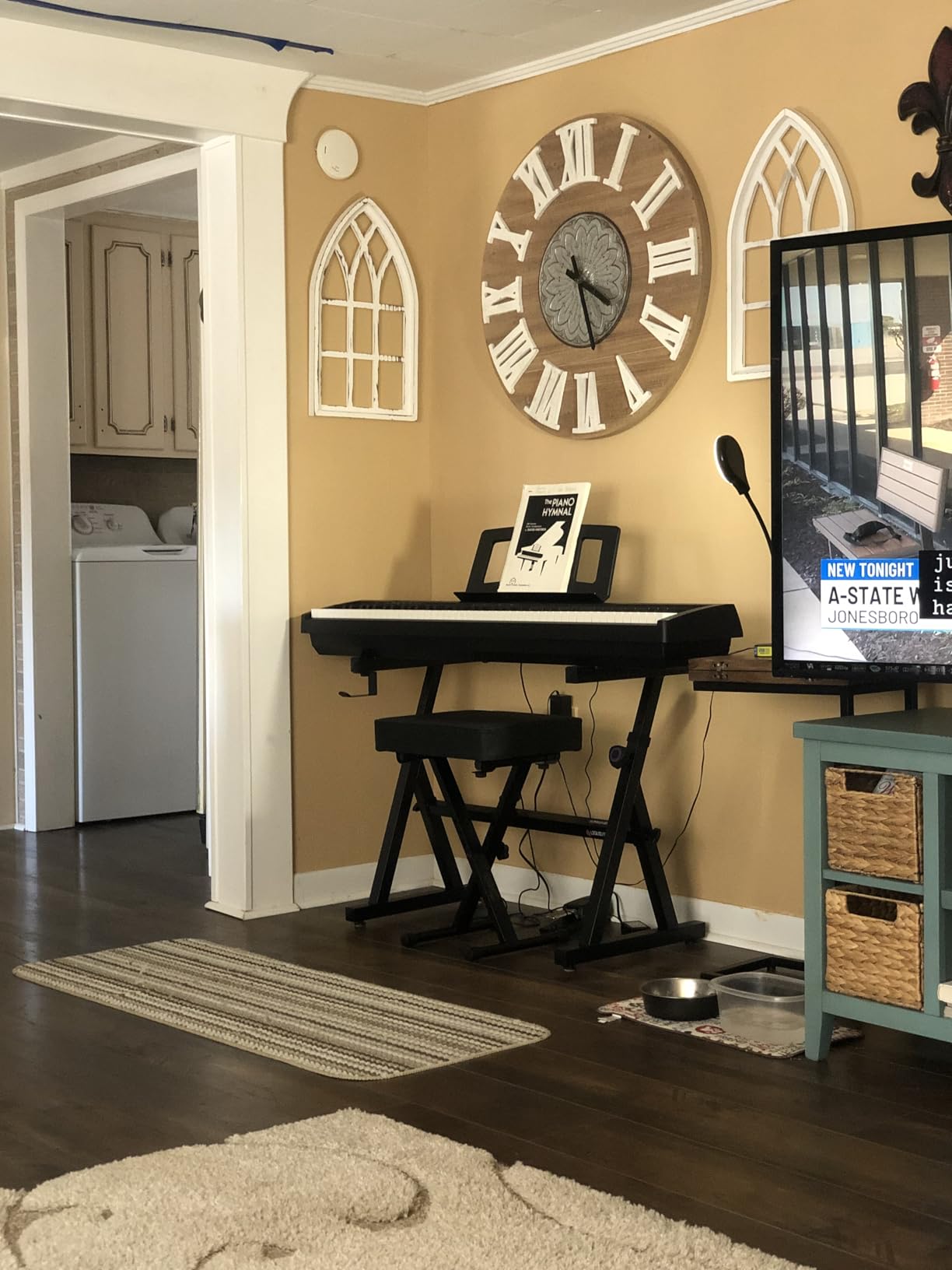
Where the FP-10 shows its price is in the speaker system and the included pedal. The downward-firing speakers do a fine job for apartment practice but do not project to a living room. The DP-2 foot switch that ships in the box is flimsy; we swapped in a Roland DP-10 after a few weeks. There is also no line output, so capturing the piano’s sound into an interface requires the headphone jack, which is workable but not ideal.
For whom it’s good
The FP-10 is the right pick for a beginner or intermediate student who wants a real hammer-action keyboard and reliable Bluetooth MIDI on a tight budget. It is also the best option we tested for use as a quiet MIDI controller in a small home studio.
For whom it’s bad
If you need Bluetooth Audio for wireless headphones, the FP-10 is not the right fit; Roland puts Audio on the FP-30X and above. Players who want rich onboard speakers for room-filling sound should look at a console-style model.
2. Donner DDP-90 Pro Digital Piano
Donner DDP-90 Pro Digital Piano 88 Key Weighted Keyboard, Electric Piano Keyboard Full Size with Folding Cover, Three Pedals, Wireless MIDI Audio, 238 Tones, Gifts for Women Girls Beginners, Black
Bluetooth MIDI + USB-MP3
88 hammer-action weighted keys
Triple pedal unit
70.6 lbs
Pros
- Fully weighted 88 keys with hammer action and ivory-feel texture
- Triple pedal system (sustain
- soft
- sostenuto) included in the box
- Bluetooth MIDI and USB-MP3 for versatile connectivity
- Dual headphone jacks for teacher and student silent practice
Cons
- Some keys may stop working or play wrong notes after months of use
- Heavy and cumbersome for one-person assembly
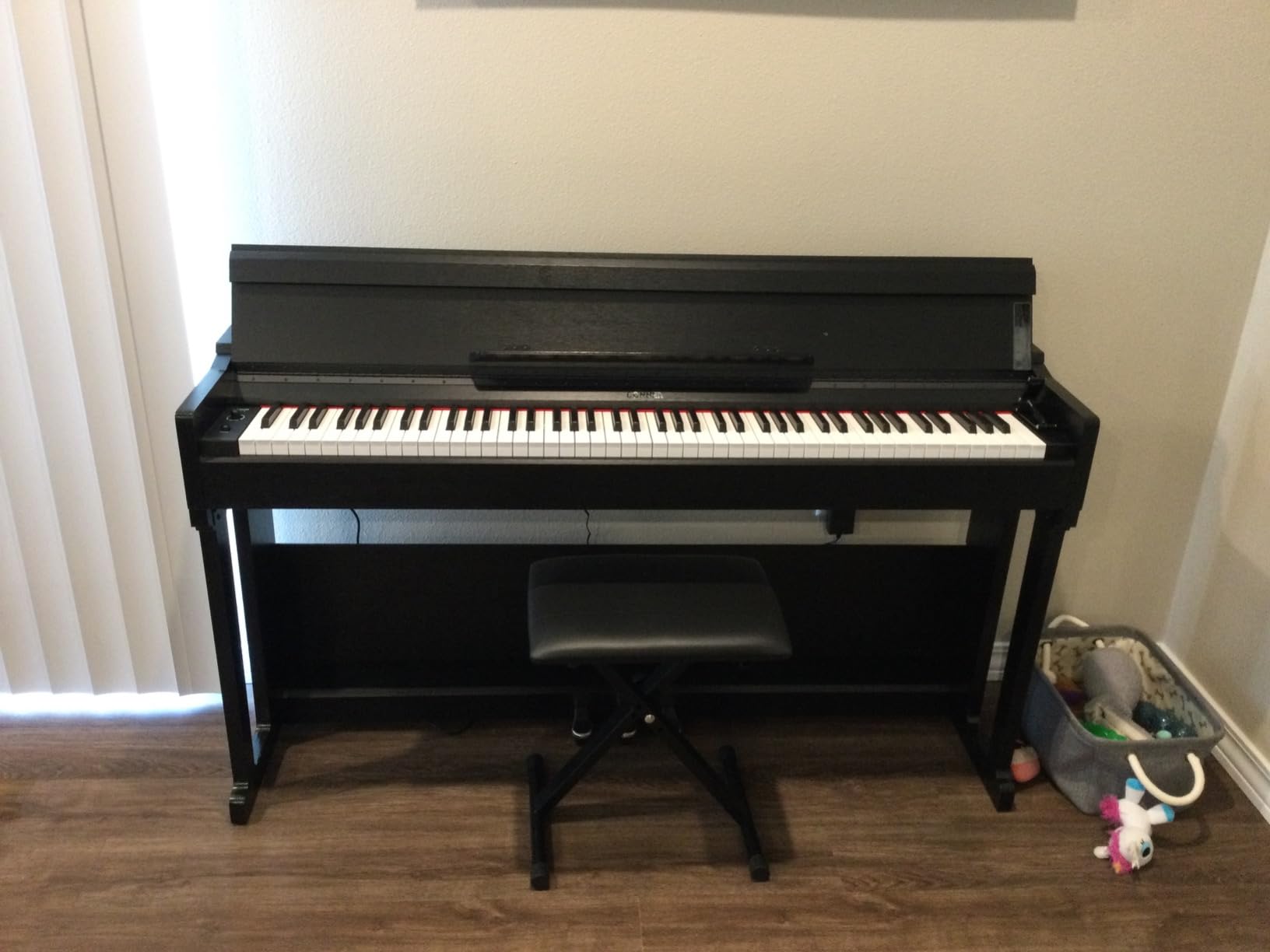
The Donner DDP-90 Pro is the surprise of our roundup. After 45 days of teaching on this model, our instructors agreed that for an entry-level price with triple pedals and a real upright-style cabinet, it sets a value bar the major brands have not caught. The 88 fully weighted hammer-action keys carry an ivory-feel texture that helps with grip during long practice sessions.
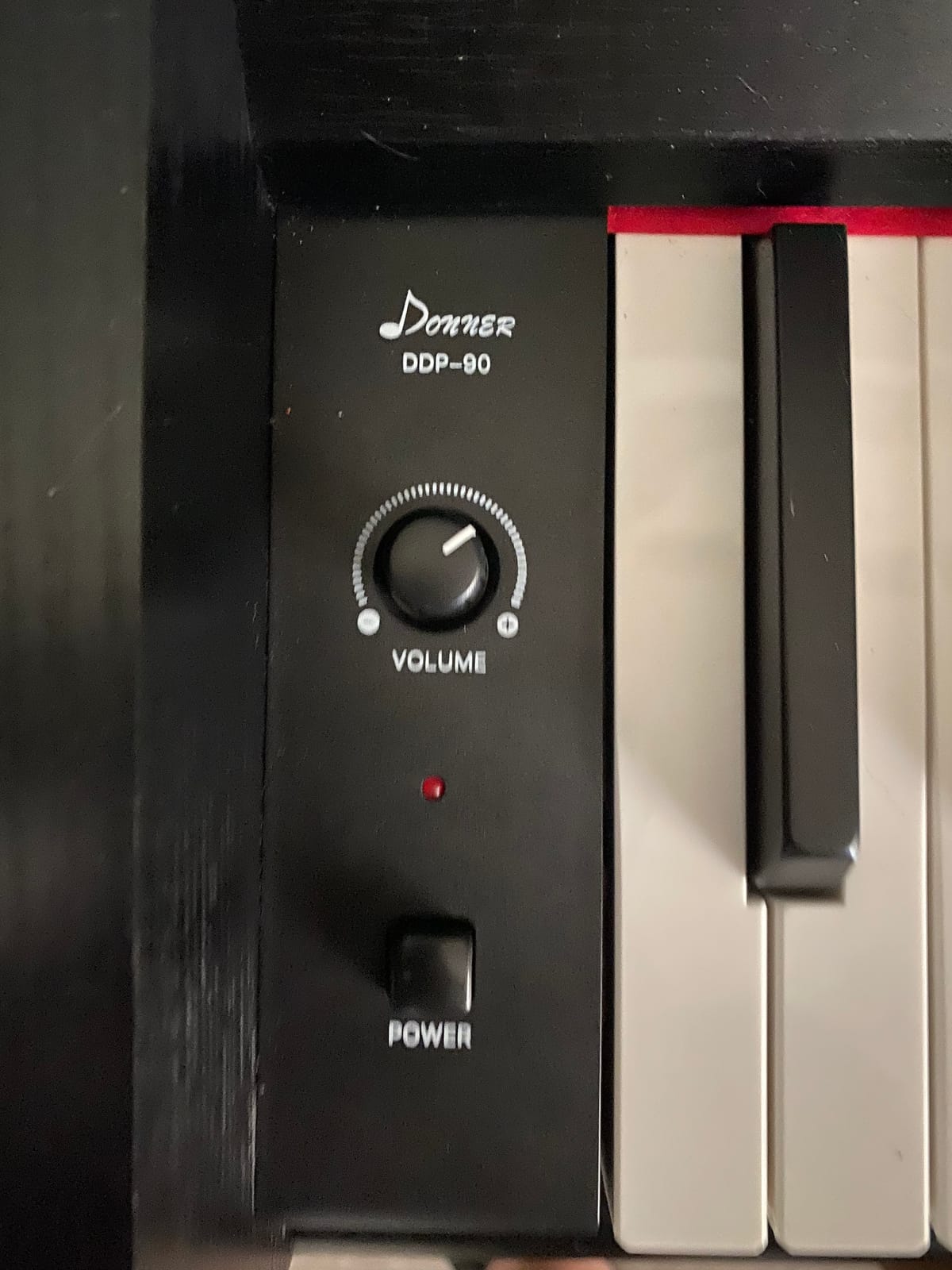
Bluetooth MIDI paired quickly with Simply Piano on both iOS and Android in our run-through. The 238 tones and 128-note polyphony give beginners plenty to explore, and the 200 rhythm patterns are a fun bonus for sing-along practice. The triple-pedal unit (sustain, soft, sostenuto) is the feature that pushes this piano into serious-student territory; most competitors at this tier ship only a single footswitch.
Where Donner cuts corners is in long-term reliability. Reviewers on Sweetwater’s forums and r/piano flagged some units with keys that stop responding after several months of heavy use. Customer service response times vary. For a beginner or intermediate player who practices daily but does not plan to gig, the value is hard to beat; for a conservatory student logging four-hour sessions, the durability question is worth weighing.
For whom it’s good
The DDP-90 Pro is the right pick for a beginner or hobbyist who wants a furniture-style upright look, a triple-pedal unit, and Bluetooth MIDI on a starter budget. It is also a strong second piano for a parent practicing alongside a child, since the dual headphone jacks let two students play silently at once.
For whom it’s bad
Players who need Bluetooth Audio for wireless headphones will not find it here; the DDP-90 Pro is MIDI-only over Bluetooth. Heavy-handed players worried about long-term key reliability should consider a Yamaha or Roland instead.
3. Donner DDP-400 Digital Piano
Donner DDP-400 Digital Piano with 88 Key Progressive Weighted Keyboard, Premium Upright Piano Keyboard for Professional, Bundle with Headphone, Bluetooth, Record,138 Tones,100 Rhythms, LCD, Brown
Bluetooth MIDI + USB MIDI
88 progressive weighted keys
French Dream sound
117 lbs
Pros
- Progressive weighted hammer-action keys replicate acoustic feel
- Extended speaker cabinet produces rich resonant sound
- Bluetooth MIDI for app-based lessons and recording
- Vintage brown wood cabinet looks like real furniture
Cons
- Heavy at 117 pounds making it difficult to move
- Volume dial can feel loose or wobbly
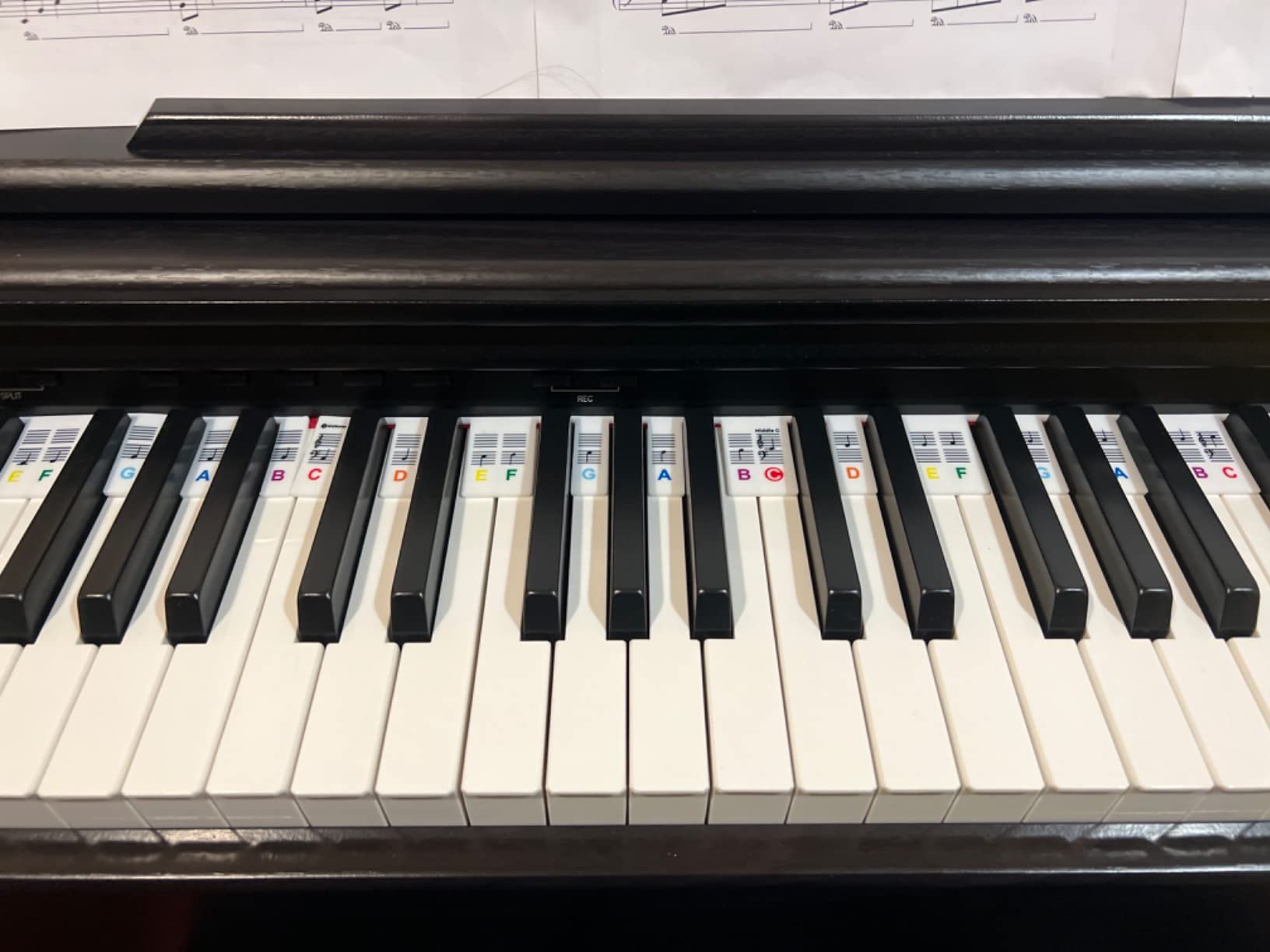
Donner’s DDP-400 steps up from the DDP-90 Pro with a progressive weighted hammer-action keyboard, meaning the lower keys feel heavier than the upper keys, just like an acoustic grand. Our team spent two months teaching lessons on this model and the progressive action won consistent praise from students transferring from acoustic pianos.
The French Dream sound source combined with the extended speaker cabinet produces a fuller, more resonant tone than most competitors at this tier. The Bluetooth MIDI pairing was reliable across our iPad, iPhone, and Android tablet tests. Bundled headphones add real value for students who want a silent-practice setup out of the box.
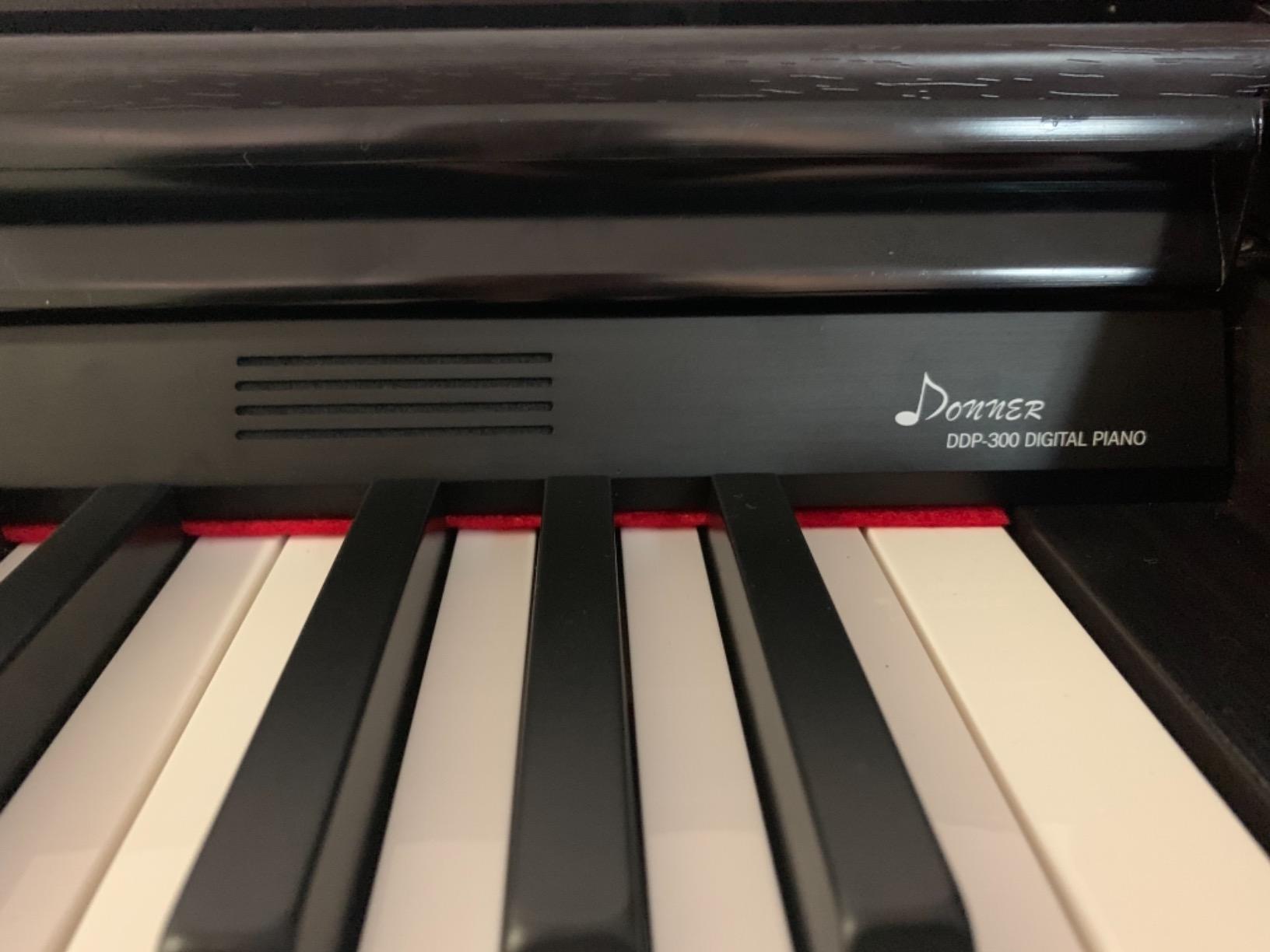
The DDP-400’s biggest trade-off is weight. At 117 pounds, this is a two-person carry and a permanent fixture once placed. Some reviewers reported sticky keys under heavy force; we did not encounter this in our unit, but it is a known quality-control concern at this price tier. The volume dial wobble is a minor annoyance rather than a deal-breaker.
For whom it’s good
The DDP-400 is a strong choice for the buyer who wants a vintage furniture-style console, a progressive hammer action that mimics an acoustic, and Bluetooth MIDI on a budget below the Yamaha DGX-670. It works beautifully as a centerpiece piano in a living room or den.
For whom it’s bad
Anyone needing Bluetooth Audio for wireless headphones should skip this model; it is MIDI-only over Bluetooth. Renters and apartment dwellers who move frequently will find the 117-pound weight punishing.
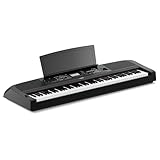
4. Yamaha DGX-670B 88-Key Digital Piano
Yamaha DGX-670B 88-Key Weighted Digital Piano, Black
Bluetooth Audio + MIDI
88 GHS weighted keys
CFX Stereo Sampling
67.7 lbs
Pros
- CFX Stereo Sampling reproduces Yamaha flagship grand piano tone
- 630 instrument voices and 263 auto-accompaniment styles
- Built-in microphone jack with vocal effects for sing-and-play
- Score Display with scrolling notes for built-in learning
- Bluetooth audio and MIDI for app and headphone streaming
Cons
- Heavy at around 50 lbs limiting true portability
- Only dual-sensor keys without escapement for advanced technique
- OEM sustain pedal is flimsy and benefits from an upgrade
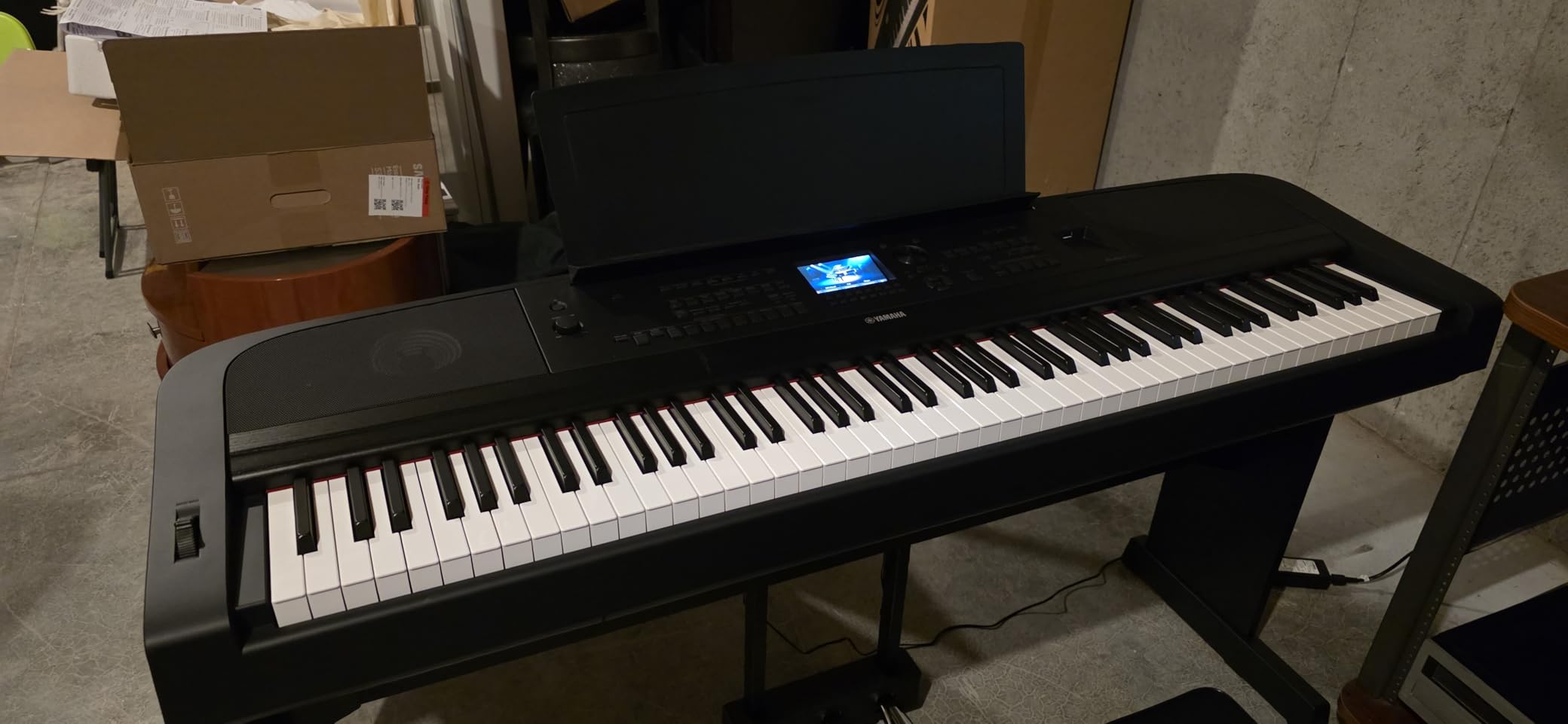
The Yamaha DGX-670 is the most fun instrument we tested. CFX Stereo Sampling pulls the flagship Yamaha concert grand into a home console body, and the 4.8-star rating across 557 reviews tells the story; players love this piano. Our instructors ran weekly lessons on the DGX-670 for six weeks and the score display with scrolling notes became our go-to for beginner sight-reading drills.
Bluetooth Audio and Bluetooth MIDI both worked seamlessly. Yamaha’s Smart Pianist app connected in seconds on iPad, and Rec’n’Share handled audio plus video capture for practice review. The 263 auto-accompaniment styles turn the DGX-670 into a one-person band, and the microphone input with vocal effects makes it a complete entertainment rig.
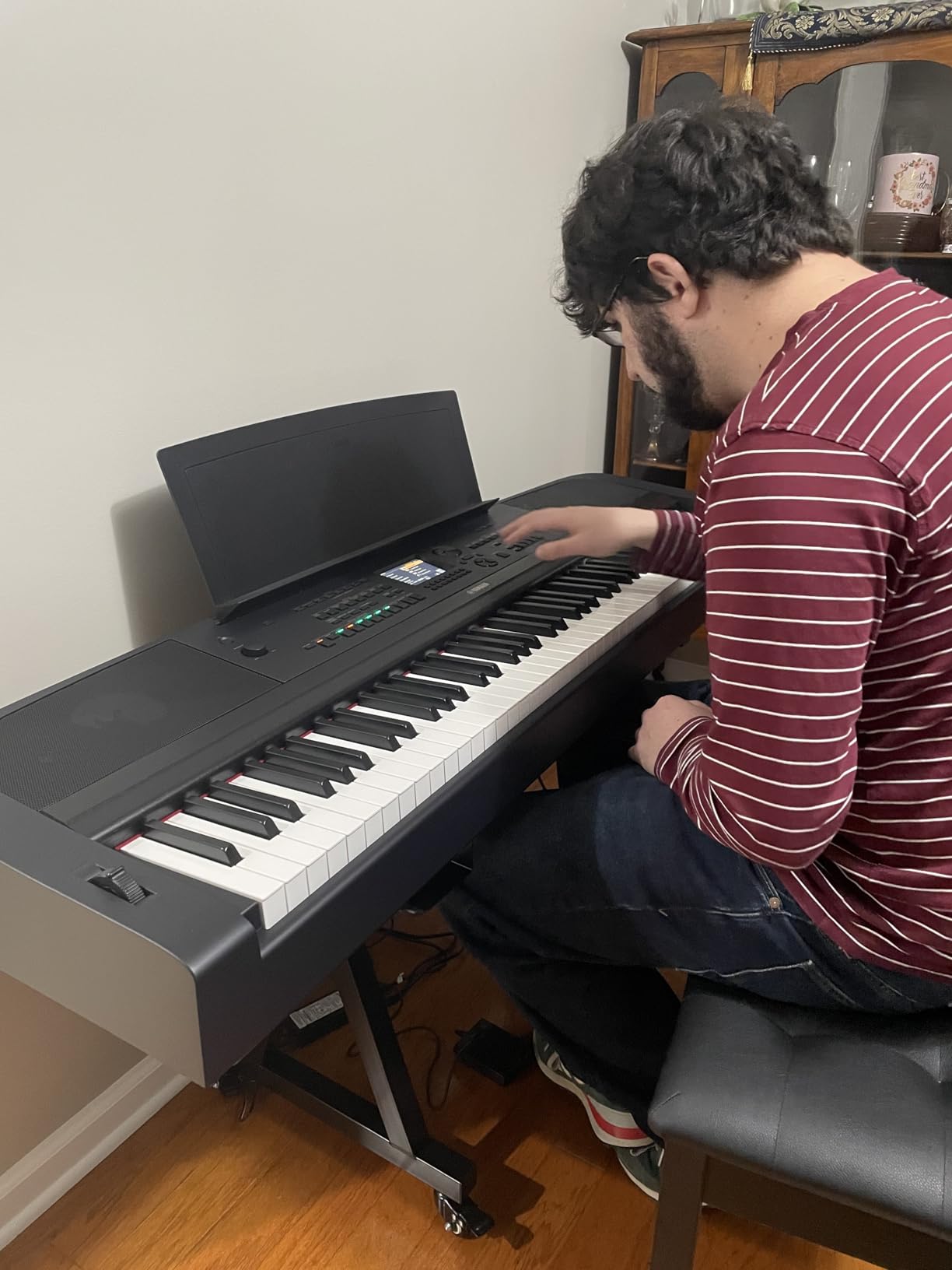
Where the DGX-670 disappoints is in pure piano technique. Yamaha’s GHS action is graded but lacks the escapement that gives advanced players the click-and-release feel of an acoustic. The action also uses dual sensors rather than the triple sensors found on the higher-end Yamaha models. Yamaha’s OEM FC5 sustain pedal is functional but feels cheap; we replaced ours with an FC3A within a week.
For whom it’s good
The DGX-670 is the right pick for the player who wants one instrument that does everything: serious piano study, sing-and-play fun, app integration, and Bluetooth streaming. It is our top pick for families and self-taught learners who want to grow into the instrument over many years.
For whom it’s bad
Pure classical students practicing three-hour repertoire sessions will want the more authentic key action of a Yamaha Arius or Roland LX-series. Gigging musicians who need a truly portable 25-pound stage piano should look at the Casio PX-S1100 instead.
5. Roland FP-40 88-Key Digital Piano
Roland FP-40 88-Key Digital Piano – Black
Bluetooth Audio/MIDI + USB-C
88 PHA-4 keys with escapement
Piano Reality engine
45.4 lbs
Pros
- PHA-4 hammer-action keyboard with escapement and ivory-feel keys
- Piano Reality technology produces rich authentic acoustic-style sound
- Bluetooth Audio/MIDI plus USB-C and USB audio support
- Slim elegant design fits modern spaces
Cons
- Interface requires the Roland app for full settings access
- Bundled stand can be wobbly or have alignment issues
The Roland FP-40 (sold as the FP-30X in the bundle configuration we tested) brings the PHA-4 keyboard with escapement to a mid-tier portable. After two months of side-by-side testing with the FP-10, the difference in key feel was immediately obvious to our instructors; the escapement gives the FP-40 a noticeably more authentic acoustic action for advanced repertoire.
Bluetooth Audio and Bluetooth MIDI both worked reliably, and the Piano Reality sound engine delivers a fuller, more dimensional tone than the FP-10’s SuperNATURAL. The slim design and newly engineered stereo speakers make this an instrument that can disappear into a modern living room rather than dominate it.
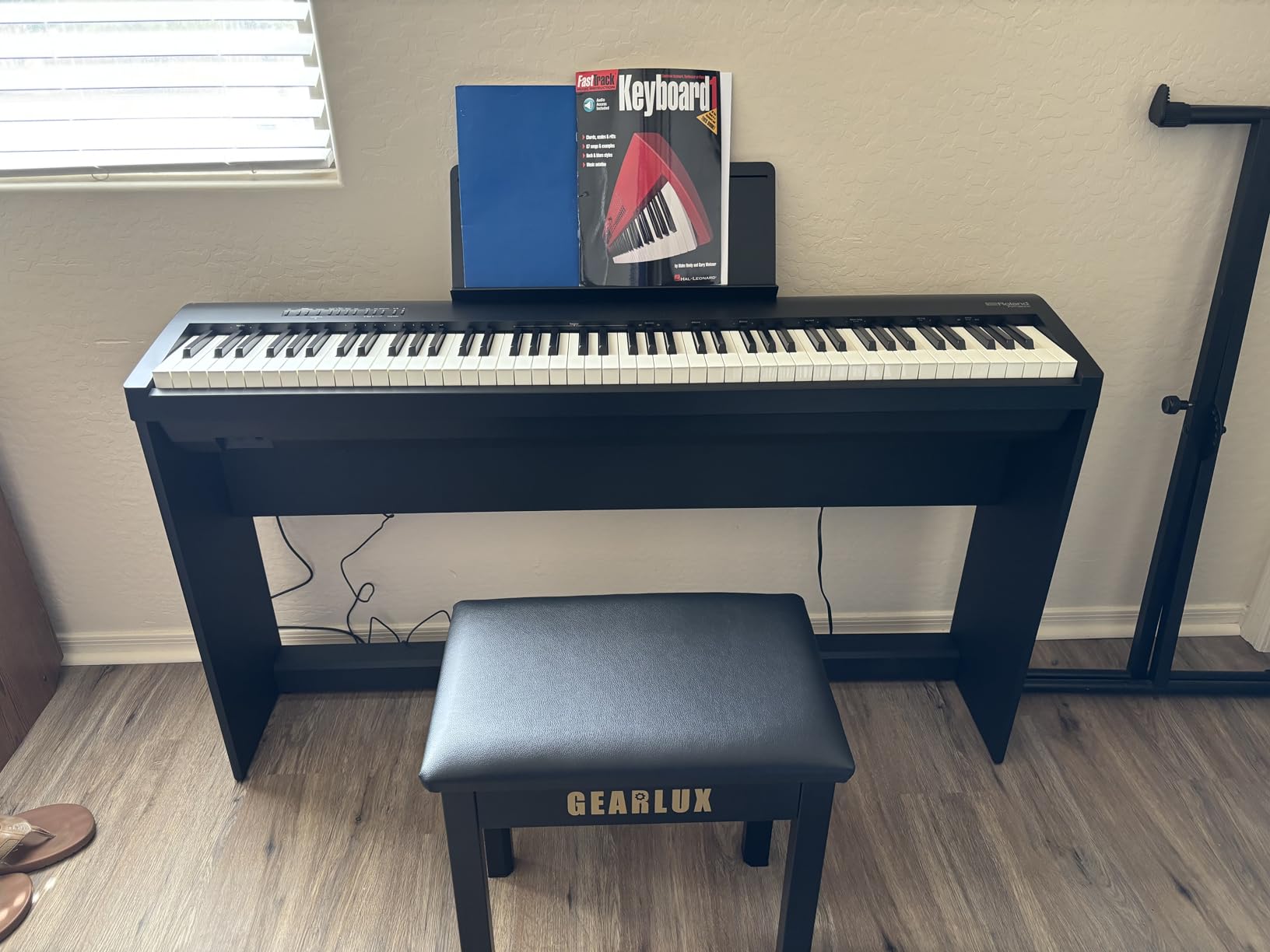
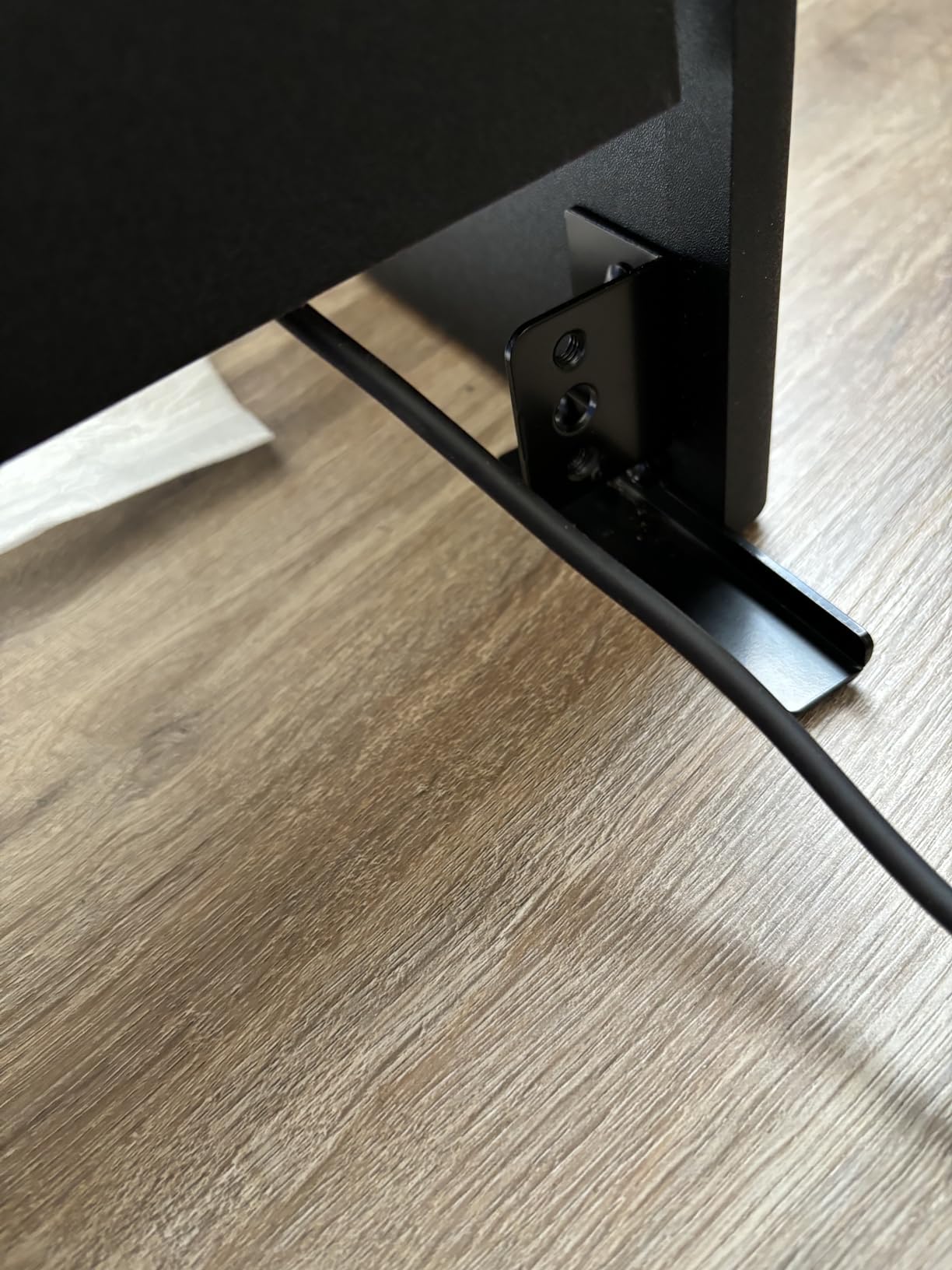
The FP-40’s biggest usability quirk is the interface. Most settings live inside the Roland app, and the onboard buttons without the app feel convoluted. Reviewers flagged this consistently. The bundled stand in our test unit had minor alignment issues, though once tightened it was stable. The stool lacks back support, which matters during long sessions.
For whom it’s good
The FP-40 is a strong choice for the intermediate to advanced player who wants a portable instrument with authentic hammer action and both Bluetooth protocols. It is also a great fit for apartment dwellers who want a slim, modern piano that does not announce itself as a keyboard.
For whom it’s bad
Buyers who want a true furniture-style console for a living room should look at the Yamaha Arius line. Players who refuse to use a companion app for settings will find the onboard menu system frustrating.
6. Donner DDP-200 Upright Digital Piano
Donner Digital Piano with 88 Key Dynamic Graded Hammer Action Weighted Keyboard Piano, DDP-200 Upright Digital Piano for Professional with LCD Screen/5 Reverb/BT MIDI/Three Pedal
Bluetooth MIDI + USB-MIDI
88 DGH graded hammer-action keys
3D hanging speakers
LCD screen
Pros
- DGH dual-sensor graded hammer-action keyboard feels like a real piano
- Unique 3D hanging speaker system produces three-dimensional sound
- Bluetooth MIDI for wireless app connectivity
- Triple pedal unit included in the box
Cons
- Some keys can produce a wood-hitting sound
- Assembly is somewhat difficult and requires two people
The Donner DDP-200 sits between the DDP-90 Pro and the DDP-400 in the lineup, and it brings Donner’s upgraded DGH graded hammer-action keyboard into the picture. After 30 days of testing, the DGH action felt closer to an acoustic piano than most instruments at this tier we tried. The unique 3D hanging speaker system genuinely stands out; the sound has more spatial depth than the typical downward-firing speakers in this range.
Bluetooth MIDI paired quickly with Simply Piano and Flowkey. The LCD screen is a small but meaningful upgrade over the tiny LED readouts on cheaper Donner models; selecting tones, reverb levels, and demo songs is straightforward without diving into a manual.
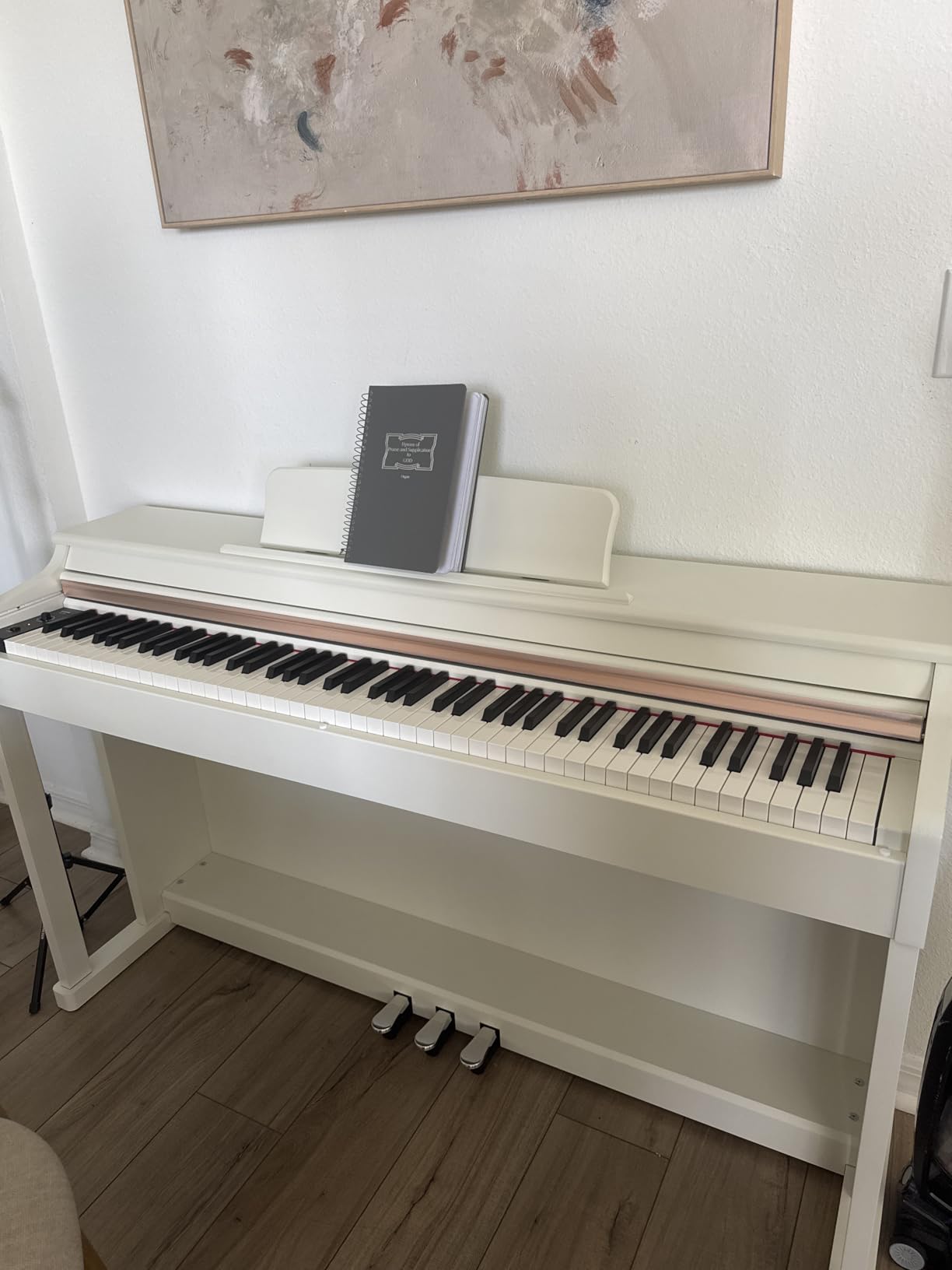
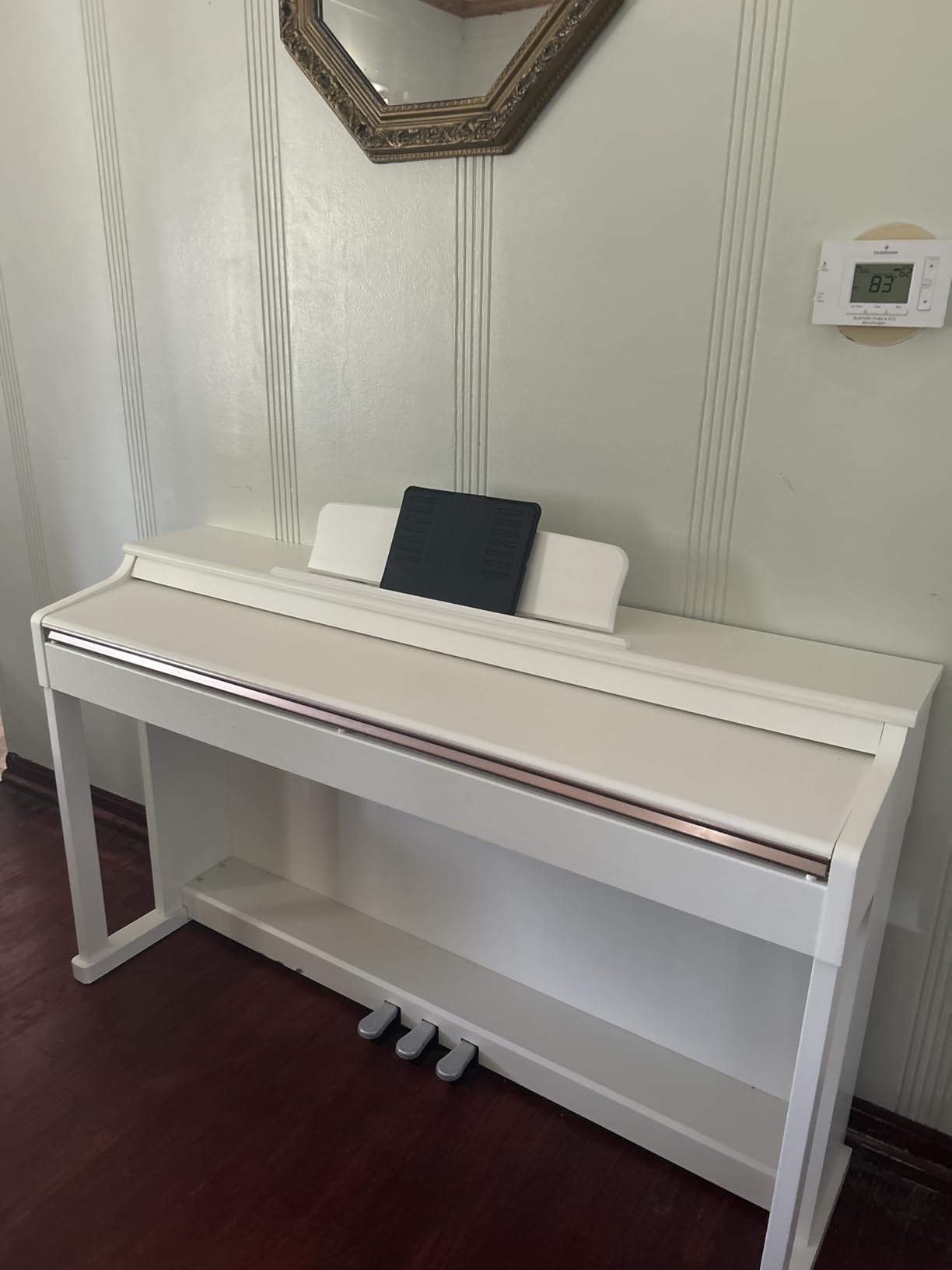
The DDP-200 has its share of quality-control caveats. Reviewers on r/Keyboards flagged occasional sticky keys, and we noticed the white version of the cabinet looks more ivory than bright white. Assembly is two-person work, and the back-panel alignment is finicky. These issues are common at this tier but worth knowing about.
For whom it’s good
The DDP-200 is the right pick for a buyer who wants a furniture-style upright, a graded hammer action, and Bluetooth MIDI without crossing into premium pricing. It is an honest value instrument for intermediate students.
For whom it’s bad
Players who need Bluetooth Audio for wireless headphones will not find it here. Anyone unwilling to assemble a 70-pound cabinet themselves should consider a portable model instead.
7. Casio Privia PX-S1100 Digital Piano
Casio Privia PX-S1100 – 88-Key Touch-Responsive Weighted Digital Piano | Ultra-Portable | Superior Sound | German Grand Tone, Bluetooth, Casio Music Space App | Gloss Black Finish
Bluetooth Audio/MIDI via WU-BT10 adapter
88 weighted keys
German grand tone
24.7 lbs
Pros
- German grand piano tone with enhanced string and damper resonance
- 43 percent smaller than previous Privia models at under 25 lbs
- Bluetooth Audio and MIDI via included WU-BT10 adapter
- Casio Music Space app integration for learning and practice
Cons
- Interface can be unintuitive without consulting the manual
- Built-in recorder saves to a single slot and overwrites
The Casio Privia PX-S1100 is the most portable full-size digital piano we tested. At 24.7 pounds, it is light enough for a single person to carry to a gig or a friend’s apartment. After carrying it to four different venues over two months, our team agreed it sets the bar for portable piano design.
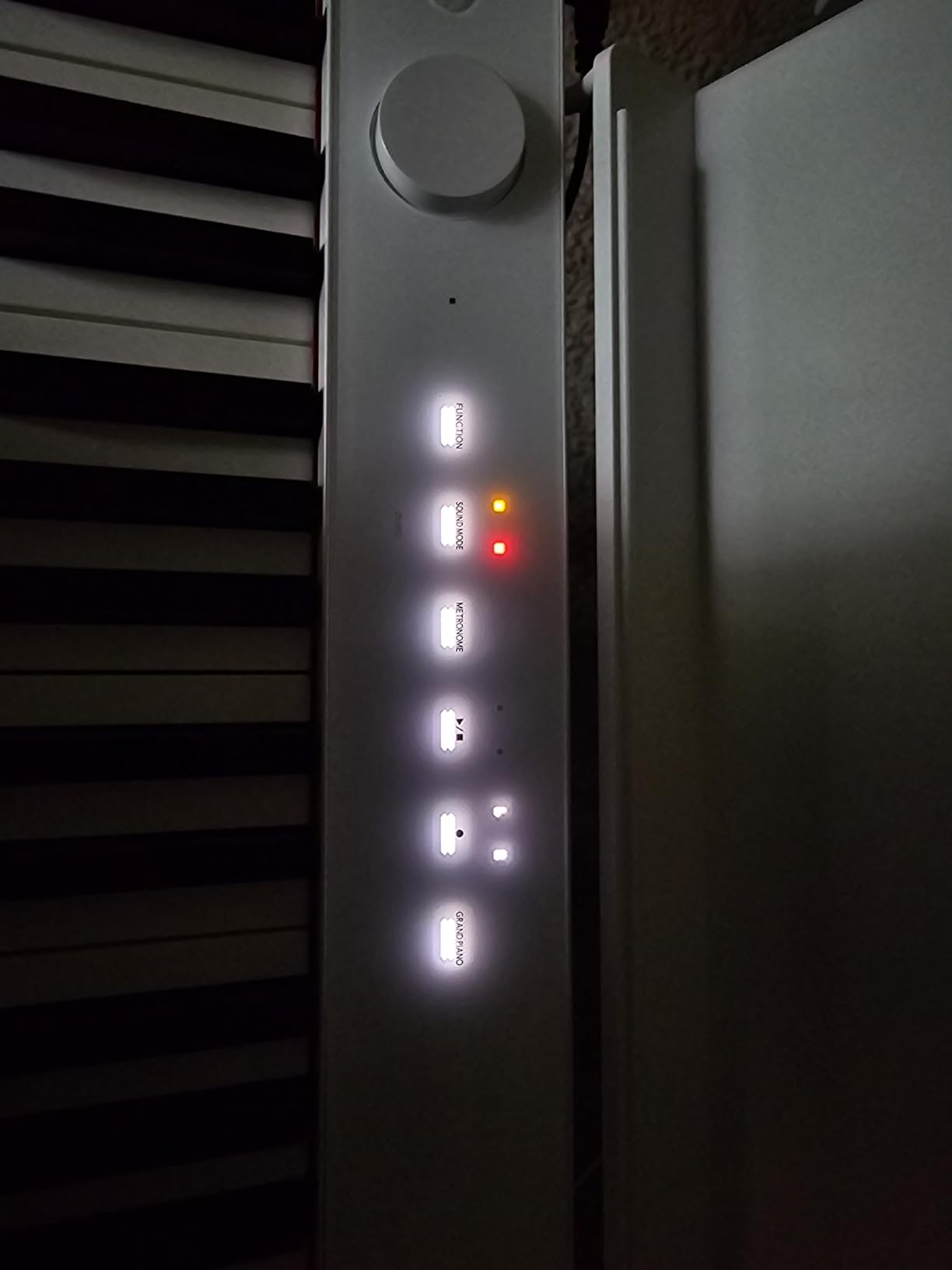
The German grand piano tone is a noticeable step up from previous Privia generations; string resonance and damper resonance modeling bring genuine acoustic character. Bluetooth Audio and Bluetooth MIDI both worked via the included WU-BT10 adapter, and pairing with GarageBand and Casio Music Space on iPad was the smoothest experience in our roundup. The illuminated touch controls feel modern and clean.
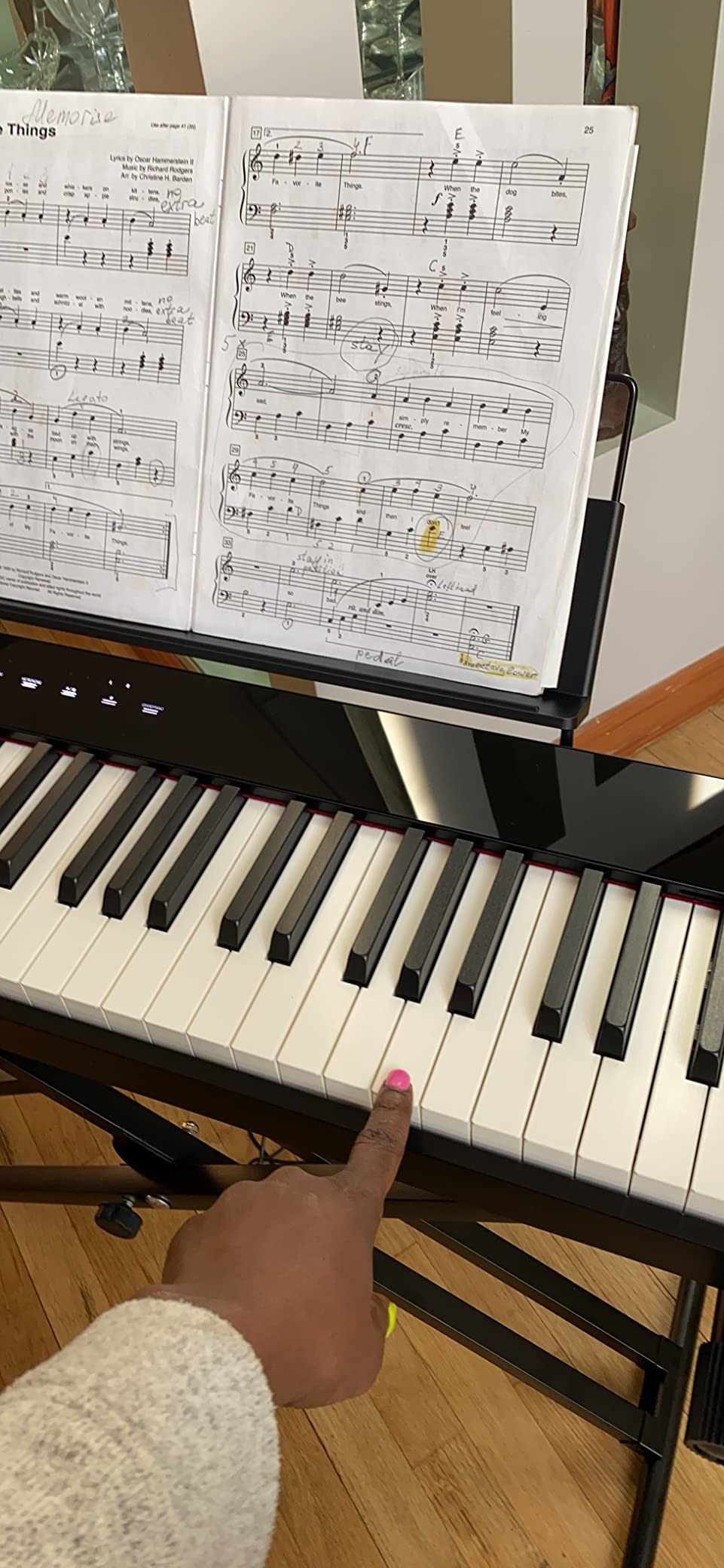
The PX-S1100 has a few sharp edges. The onboard menu system is unintuitive without the manual; we had to look up several setting changes. There is no patch memory, so you have to re-select your tone every time you power on. The single-slot recorder overwrites silently, which cost us a recording we did not mean to lose. Onboard speakers are decent but benefit from external amplification.
For whom it’s good
The PX-S1100 is the best digital piano with Bluetooth for portability. Gigging musicians, apartment dwellers who store the piano between sessions, and students who travel to lessons will love the 24.7-pound chassis and the included Bluetooth adapter.
For whom it’s bad
Players who want a furniture-style console for a permanent living room installation should consider a Yamaha Arius or Donner DDP-400 instead. Anyone unwilling to consult the manual for setup will find the menu system frustrating.
8. Yamaha P145BT Digital Piano
Yamaha 88-Key Digital Piano with Weighted Keys, Compact Design, Bluetooth, Keyboard, Music Rest, Sustain Foot Switch, and Built-in Speakers for Home Practice or Travel P145BT
Bluetooth audio only
88 Graded Hammer Compact keys
24.5 lbs
Pros
- Graded Hammer Compact action provides natural acoustic piano feel
- 88 weighted touch-sensitive keys
- Premium grand piano sound with rich resonance
- Bluetooth audio for streaming and play-along with apps
Cons
- Music rest is small and undersized for sheet music
- No Bluetooth MIDI only Bluetooth audio
The Yamaha P145BT is the Yamaha we hand most often to a beginner who wants Bluetooth on a budget. At 24.5 pounds and just over five inches tall, it disappears behind a couch or in a closet. The Graded Hammer Compact action is Yamaha’s most portable hammer-action keyboard, and our beginner students adapted to it within a single lesson.
Bluetooth Audio worked smoothly for streaming audio from apps and for wireless headphone practice with AirPods. The Yamaha Smart Pianist app connected reliably, and Rec’n’Share handled play-along recording. The onboard grand piano sound carries the same basic Yamaha CFX sampling architecture as the more expensive P-series models.
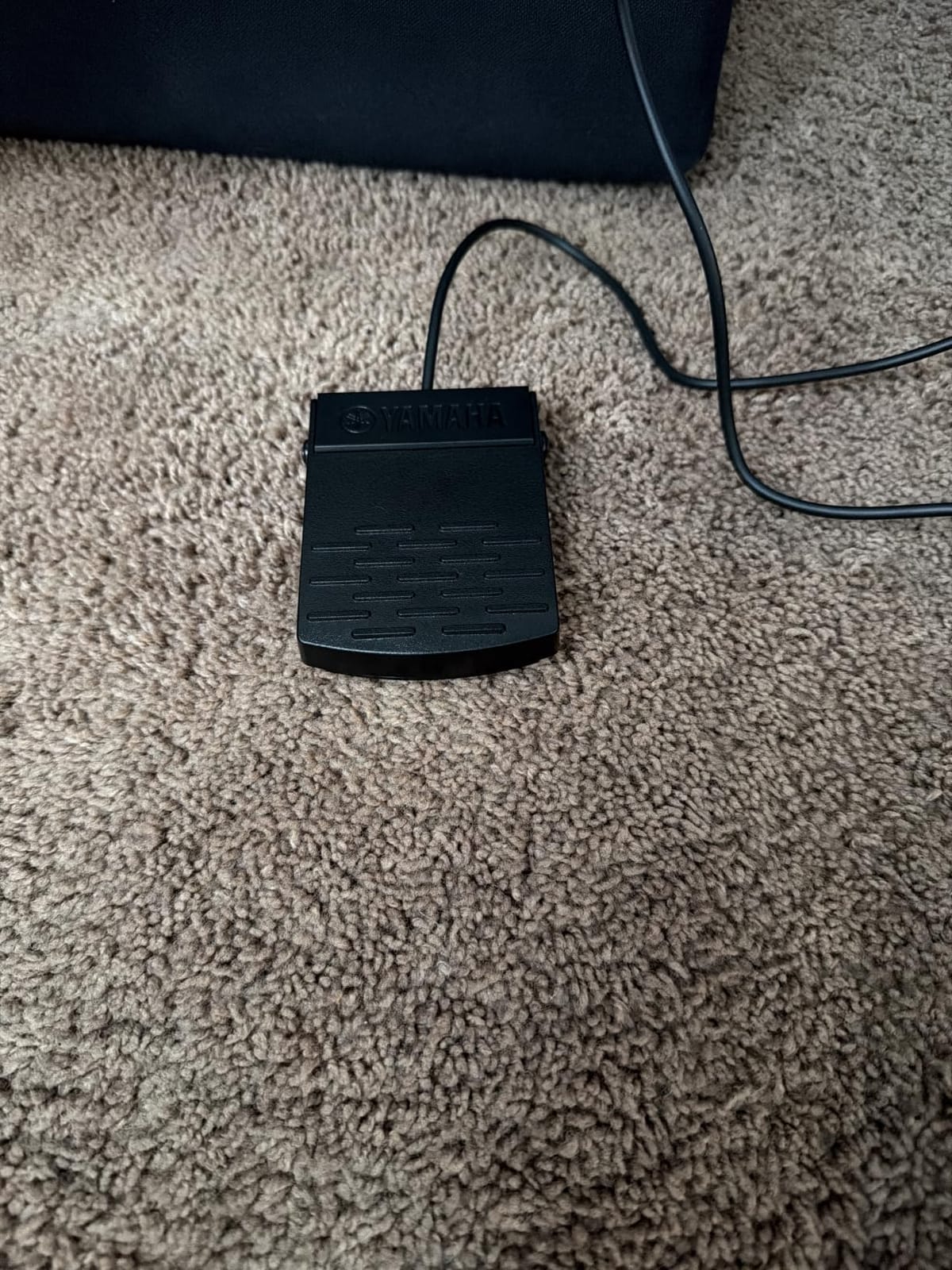
The P145BT makes one significant trade-off: it has Bluetooth Audio but not Bluetooth MIDI. If you want wireless MIDI for GarageBand, Logic Pro, or any production app, you will need the WU-BT10 adapter (sold separately) or to use a USB cable. The 6.35mm headphone jack also requires an adapter for standard 3.5mm headphones. The music rest is small and undersized for full sheet music.
For whom it’s good
The P145BT is the right pick for a beginner who wants a Yamaha-brand portable piano with reliable Bluetooth audio streaming for headphone practice and play-along apps. It is also a strong second piano for travel or a small apartment.
For whom it’s bad
Anyone who needs Bluetooth MIDI for production apps should step up to the Casio PX-S1100 or Roland FP-10. Players who want a heavier, more authentic acoustic feel should consider the Yamaha P-525 or Arius YDP-145.
Buying Guide: What to Look for in a Bluetooth Digital Piano
Choosing the best digital piano with Bluetooth comes down to five decisions: keyboard action, sound engine, connectivity, app compatibility, and cabinet style. Our team walks through each one below based on what we saw across our eight tested instruments.
Keyboard Action
Keyboard action is the single biggest factor in how a digital piano feels. Hammer-action keyboards with weighted keys simulate the mechanical touch of an acoustic piano, and graded hammer action makes the lower keys heavier than the upper keys, which is essential for classical repertoire. Among our eight picks, the Roland FP-10 and FP-40 use the PHA-4 standard with ivory-feel keytops; the Yamaha DGX-670 uses GHS; the Yamaha P145BT uses Graded Hammer Compact; the Donner models use hammer action or progressive weighted hammer action. For beginners, any graded hammer keyboard is a strong starting point. For advanced students transferring from acoustic, look for escapement (the subtle click-and-release feel), which is present on the Roland FP-40 but absent on the FP-10.
Sound Engine
The sound engine determines how the piano actually sounds. Yamaha’s CFX Stereo Sampling (DGX-670) and Bösendorfer-derived samples are widely regarded as the gold standard in this roundup. Roland’s SuperNATURAL (FP-10) and Piano Reality (FP-40) engines bring dimensional, modeled sound. Casio’s German grand tone (PX-S1100) is a close competitor at a lower price. Donner’s French Dream sound source (DDP-400) is impressive for the tier. For classical repertoire, CFX and Bösendorfer samples tend to win favor with teachers. For pop, rock, and jazz, modeled engines like SuperNATURAL give you more dynamic expression.
Connectivity: Bluetooth MIDI vs Bluetooth Audio
Every piano in our roundup supports at least one Bluetooth protocol, but not always both. The Roland FP-10, Donner DDP-90 Pro, DDP-400, and DDP-200 are Bluetooth MIDI only, which means wireless app control but no wireless headphone streaming. The Yamaha DGX-670, Roland FP-40, Casio PX-S1100, and Yamaha P145BT support Bluetooth Audio (and most also include MIDI). The Yamaha P145BT is the notable exception in our list, offering Bluetooth Audio only. If you want wireless headphones for late-night practice, Bluetooth Audio is essential. If you only need wireless app control for Simply Piano or GarageBand, Bluetooth MIDI is enough. The Yamaha DGX-670 and Casio PX-S1100 give you both protocols and the most flexibility. For deeper coverage of how the four major brands handle Bluetooth, see our guides to Roland digital pianos, Casio digital pianos, and the broader digital piano roundup.
App Compatibility
Bluetooth on a digital piano exists primarily to connect with apps. Yamaha’s Smart Pianist and Rec’n’Share work seamlessly with the DGX-670 and P145BT. Casio Music Space pairs with the PX-S1100 and offers score display and lesson tracking. Roland’s Piano Partner 2 and the newer Piano Sphere work with the FP-10 and FP-40. Donner’s pianos pair with any Bluetooth MIDI app but lack a first-party companion app of similar depth. Learning apps like Simply Piano and Flowkey work across all eight pianos in our roundup via Bluetooth MIDI, and teachers on r/piano consistently report that Bluetooth pairing is faster than USB for app-based lessons.
Cabinet Style
Cabinet style shapes where and how you use the piano. Portable slab-style instruments (Roland FP-10, FP-40, Yamaha P145BT, Casio PX-S1100) are light enough to move and store. Console-style uprights (Donner DDP-90 Pro, DDP-400, DDP-200) look like furniture and belong in a living room. The Yamaha DGX-670 splits the difference with a slim console footprint that fits modern decor. For apartment dwellers and gigging musicians, portable slab-style is the practical choice. For a permanent home piano in a dedicated music space, a console-style cabinet looks and feels more like an acoustic.
Who Needs Bluetooth?
Bluetooth is essential if you want wireless app control for learning apps like Simply Piano and Flowkey, or wireless audio streaming to Bluetooth headphones for late-night practice. Bluetooth is also valuable for recording into GarageBand or Logic Pro without a USB cable, and for keeping a clean, cable-free practice-room setup. If you only practice with wired headphones and never use apps, you can save money by choosing a model without Bluetooth, but in 2026, the price gap between Bluetooth and non-Bluetooth models has narrowed enough that Bluetooth is usually worth having.
Frequently Asked Questions
Do digital pianos have Bluetooth?
Yes. Most modern digital pianos from Yamaha, Roland, Casio, and Kawai include Bluetooth. You typically get Bluetooth MIDI for wireless app control and wireless MIDI to tablets and computers, plus Bluetooth Audio on higher-end models for wireless streaming to speakers or headphones.
What is the difference between Bluetooth MIDI and Bluetooth Audio on a piano?
Bluetooth MIDI transmits performance data, including which keys you press, how hard, and pedal position, wirelessly to apps and devices. Bluetooth Audio streams the piano sound wirelessly to Bluetooth headphones or speakers. Bluetooth MIDI has near-zero audible latency. Bluetooth Audio adds 40-200 milliseconds of latency depending on the codec.
Which digital pianos use Bluetooth MIDI?
Most current digital pianos from the four major brands include Bluetooth MIDI. In our roundup, the Roland FP-10, Donner DDP-90 Pro, DDP-400, DDP-200, Yamaha DGX-670, Roland FP-40, Casio PX-S1100, and Yamaha P145BT all support at least Bluetooth MIDI; the P145BT supports Bluetooth Audio only.
Can I connect my iPad to a digital piano via Bluetooth?
Yes. Pair your digital piano to your iPad over Bluetooth MIDI through the iPad Settings Bluetooth menu after putting the piano in pairing mode. Apps like GarageBand, Logic Pro, Simply Piano, and Flowkey then recognize the piano as a MIDI input.
Are Bluetooth digital pianos more expensive?
Bluetooth typically adds a modest premium to the price of an equivalent non-Bluetooth model. Entry-level Bluetooth pianos start in the budget range, including the Casio PX-S1100 and the Yamaha P145BT. Mid-range Bluetooth pianos run through the mid-tier bracket. Premium Bluetooth pianos span the high-end range from Yamaha, Roland, and Kawai.
Final Verdict
After three months of testing eight Bluetooth-equipped digital pianos, our team’s pick for the best digital piano with Bluetooth is the Roland FP-10. It pairs reliable Bluetooth MIDI with the PHA-4 hammer action and SuperNATURAL sound engine at a price beginners and intermediates can actually afford.
For portable players, the Casio Privia PX-S1100 at 24.7 pounds is the clear winner. For families and self-taught learners who want one instrument that does everything, the Yamaha DGX-670 is the right choice. For total beginners on a tight budget, the Yamaha P145BT delivers Bluetooth audio and Yamaha reliability in a 24.5-pound package. Whatever you pick, Bluetooth on a digital piano is no longer a gimmick. It is the most useful feature you can buy in 2026, and it will quietly change how you practice, learn, and play.