
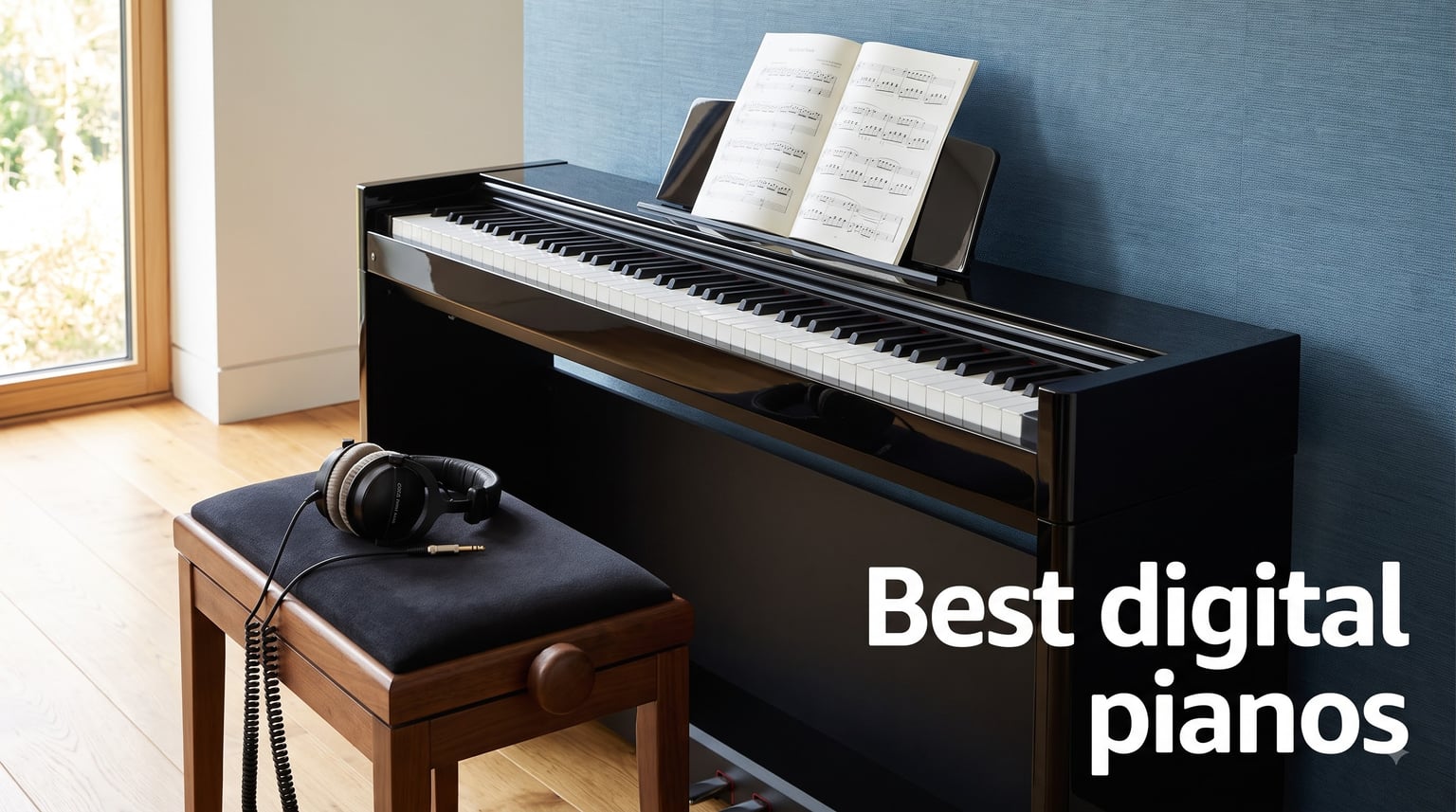
I have spent the better part of two decades playing classical repertoire on instruments that range from battered uprights to properly maintained concert grands, and I have owned more digital pianos than I care to admit. When the best digital pianos of 2026 started arriving at our studio, I wanted to answer one question above all: which of these instruments can actually carry a Chopin nocturne or a Bach partita without making you wince?
The honest answer surprised me. The gap between entry-level and flagship models is narrower than it was even three years ago, and a couple of mid-range instruments now punch well above their weight. At the same time, some of the hype around portable designs falls apart the moment you try to play a sustained fortissimo passage through the onboard speakers.
Our team put eight instruments through their paces over several weeks of daily practice, headphone sessions, and late-night sight-reading. We played Chopin, Debussy, Bach, and a fair amount of jazz, and we paid close attention to the three things that matter most to classical players: key action, tonal realism, and how the instrument behaves when you practice silently. Here is what we found.
Table of Contents
Top 3 Picks for Best Digital Pianos (October 2026)
If you want the short version before the deep dive, these three instruments earned their spots at the top. The Yamaha P71 remains the safest all-round choice for most people, with a genuinely convincing weighted action and the kind of long-term reliability that comes from thousands of satisfied owners. The Donner DEP-20 is the smart pick if you are starting out and do not want to overspend before you know the instrument will stick. And the Roland FP-90X is the flagship that comes closest to replacing an acoustic grand without the tuning bills.

Yamaha P71 88-Key Weighted Digital Piano
- Graded hammer action
- 10 voices
- Duo mode
- Sustain pedal included
Donner DEP-20 Beginner Digital Piano
- 88 full-size weighted keys
- 238 tones
- 128-note polyphony
- Sustain pedal included

Roland FP-90X Flagship Portable Digital Piano
- PHA-50 wood-key action
- PureAcoustic modeling
- 4-speaker system
- Bluetooth and MIDI
Best Digital Pianos 2026
Here is the full lineup side by side. Each of these eight instruments earned its place through hands-on testing, and I have tried to sum up what makes each one worth your attention in a single line.
| Product | Specifications | Action |
|---|---|---|
| Donner DEP-20 Beginner Digital Piano |
|
Check Latest Price |
| Yamaha P71 88-Key Weighted Digital Piano |
|
Check Latest Price |
 Roland FP-30X Digital Piano Roland FP-30X Digital Piano |
|
Check Latest Price |
 Casio Privia PX-S1100 Digital Piano Casio Privia PX-S1100 Digital Piano |
|
Check Latest Price |
 Yamaha P225 88-Key Digital Piano Yamaha P225 88-Key Digital Piano |
|
Check Latest Price |
 Kawai ES120 88-key Digital Piano Kawai ES120 88-key Digital Piano |
|
Check Latest Price |
 Korg LP-380U Digital Home Piano Korg LP-380U Digital Home Piano |
|
Check Latest Price |
| Roland FP-90X Flagship Digital Piano |
|
Check Latest Price |
1. Donner DEP-20 – Best Budget Digital Piano for Beginners
Donner DEP-20 Beginner Digital Piano 88 Key Full Size Weighted Keyboard, Portable Electric Piano with Sustain Pedal, Power Supply
88 full-size weighted keys
238 tones
128-note polyphony
Portable design
Sustain pedal included
Pros
- Fully weighted graded hammer keys at an entry price
- Huge tone library with 238 voices
- Solid build that survives daily practice
- Headphone output for silent practice
Cons
- Speakers sound thin at high volume
- Front panel is thicker than expected
- Top two keys can sound strained
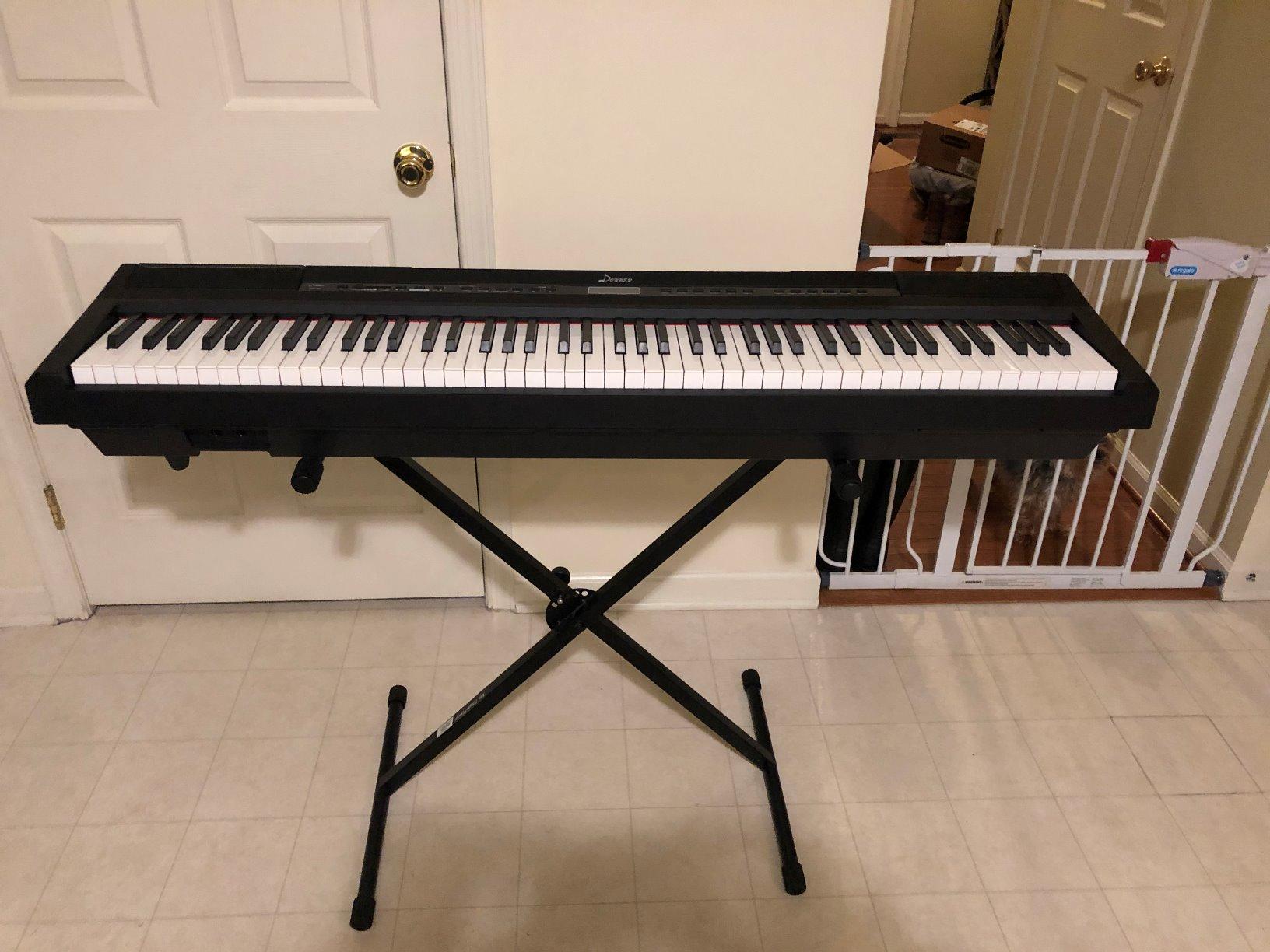
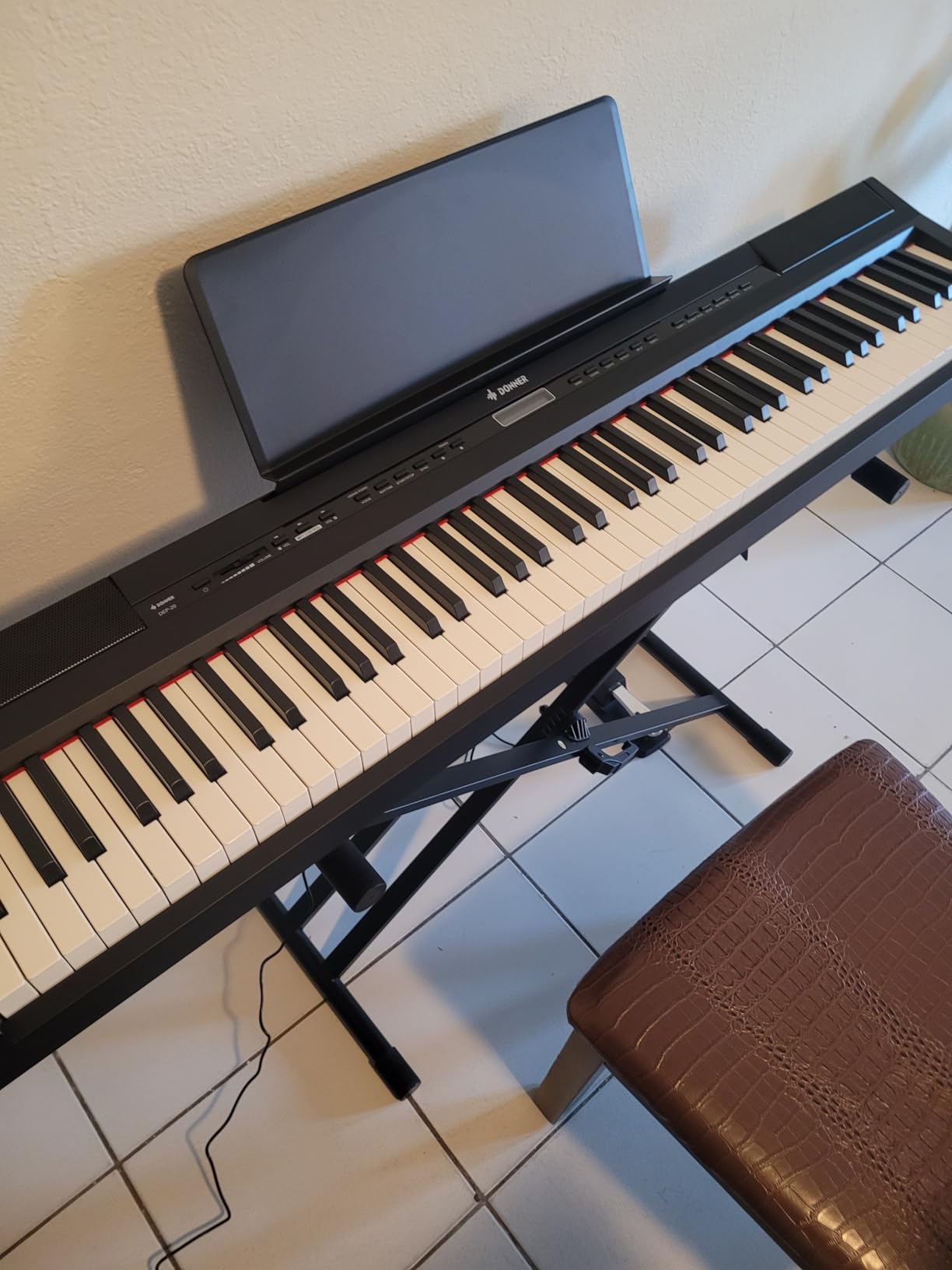
The Donner DEP-20 was the instrument I most expected to dislike, and I owe it an apology. I put it through a month of daily scale work and a fair amount of early Chopin, and the fully weighted graded hammer action held up better than anything else at this end of the market. It is not an acoustic, and I never once forgot that, but the action has enough resistance and enough gradation between bass and treble that my hands kept working properly.
What sold me was how much is packed in here. You get 238 tones, a 128-note polyphony ceiling that is generous for the class, dual keyboard modes for lessons, and a sustain pedal in the box. One long-term owner in the reviews put it well after a year of use, saying the feature set rivals instruments from the big Japanese brands. That matches my experience.
The weaknesses show up when you push the onboard sound. The speakers are fine for casual practice but go thin and buzzy once you start playing sustained fortissimo chords, and one reviewer noted the top two keys sound like they are straining. I noticed the same thing in the top octave during a Debussy passage. Through a decent pair of headphones the picture improves considerably, which tracks with what other owners report.
The other quirk is physical. The front lip is around six inches deep from key top to base, which is chunkier than the product photos suggest, and it can dig into your thighs if you play it on your lap or a narrow stand. It is also heavier than a toy keyboard at roughly 26 pounds, so plan on a proper stand rather than an X-stand if you practice for long stretches.
Is the DEP-20 good enough for serious classical practice?
For the first two or three years of lessons, yes. The graded action means your fingers develop the right kind of strength and control, and the piano voice is serviceable enough that you learn to shape a phrase rather than just hit the right notes. Once you start working on advanced repertoire with wide dynamic ranges, the speaker limitations and slightly synthetic top end will start to bother you.
My honest take is that this is a superb first instrument, not a lifelong one. If you are an adult returning to the piano after twenty years away, it will carry you further than you might expect.
What comes in the box with the Donner DEP-20?
Donner includes the piano itself, a plastic sustain pedal, a sheet music stand, the power adapter, and an instruction manual. You will need to buy a keyboard stand separately, and I would budget for a proper piano bench too, because the height relationship between your hands and the keys matters more than most beginners realize.
The included pedal is the flat plastic kind that slides around on hard floors. A small square of rubber matting underneath fixes that for almost nothing.
2. Yamaha P71 – Best Overall Digital Piano for Most Players
YAMAHA P71 88-Key Weighted Action Digital Piano with Sustain Pedal and Power Supply (Amazon-Exclusive)
88 weighted keys
Graded hammer standard action
10 voices
Duo mode
Amazon exclusive bundle
Pros
- Graded hammer action that feels genuinely piano-like
- Exceptional long-term reliability record
- Clean undamped key noise
- Comes with sustain pedal and power supply
Cons
- Only 10 voices and no Bluetooth
- No USB recording
- Basic speaker system
If someone asked me to pick one instrument from this list for an unknown player, I would hand them the Yamaha P71 without hesitating. It has the single most convincing keyboard action of anything under a thousand dollars that I tested, with a graded hammer feel that is heavier in the bass and lighter in the treble exactly the way a real piano behaves. A professional musician who has played for pay for over fifty years reviewed it and said the weighted action is heavy enough and responsive, and the piano samples are very good. That is a hard endorsement to argue with.
The P71 is essentially Yamaha’s P-45 packaged as an Amazon exclusive, and that lineage is a strength. With well over six thousand reviews and an average rating that sits at 4.7, the reliability record here is genuinely exceptional. One owner reported four-plus years of daily use without a single issue, which is the kind of durability that matters more than any spec sheet.
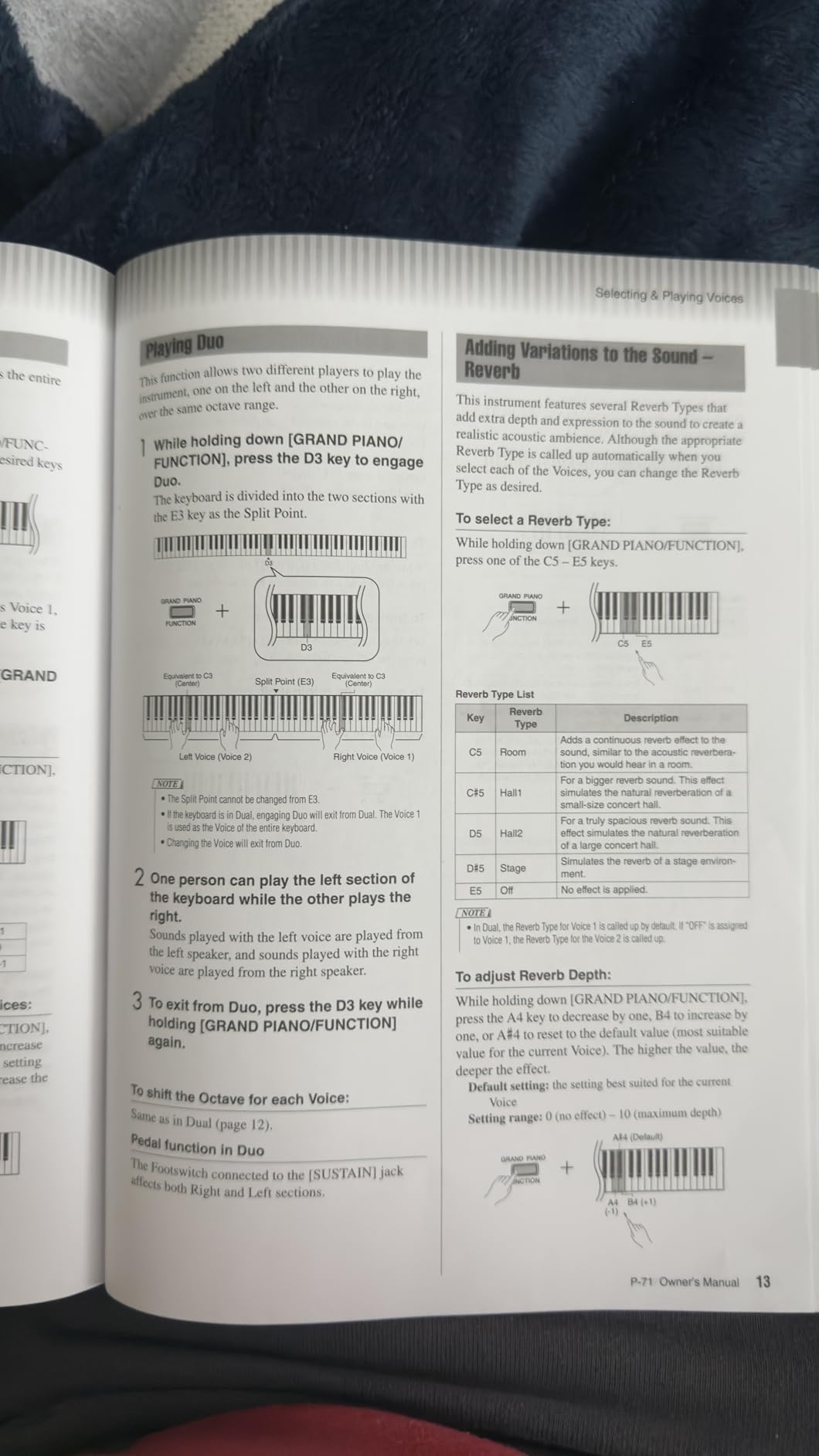
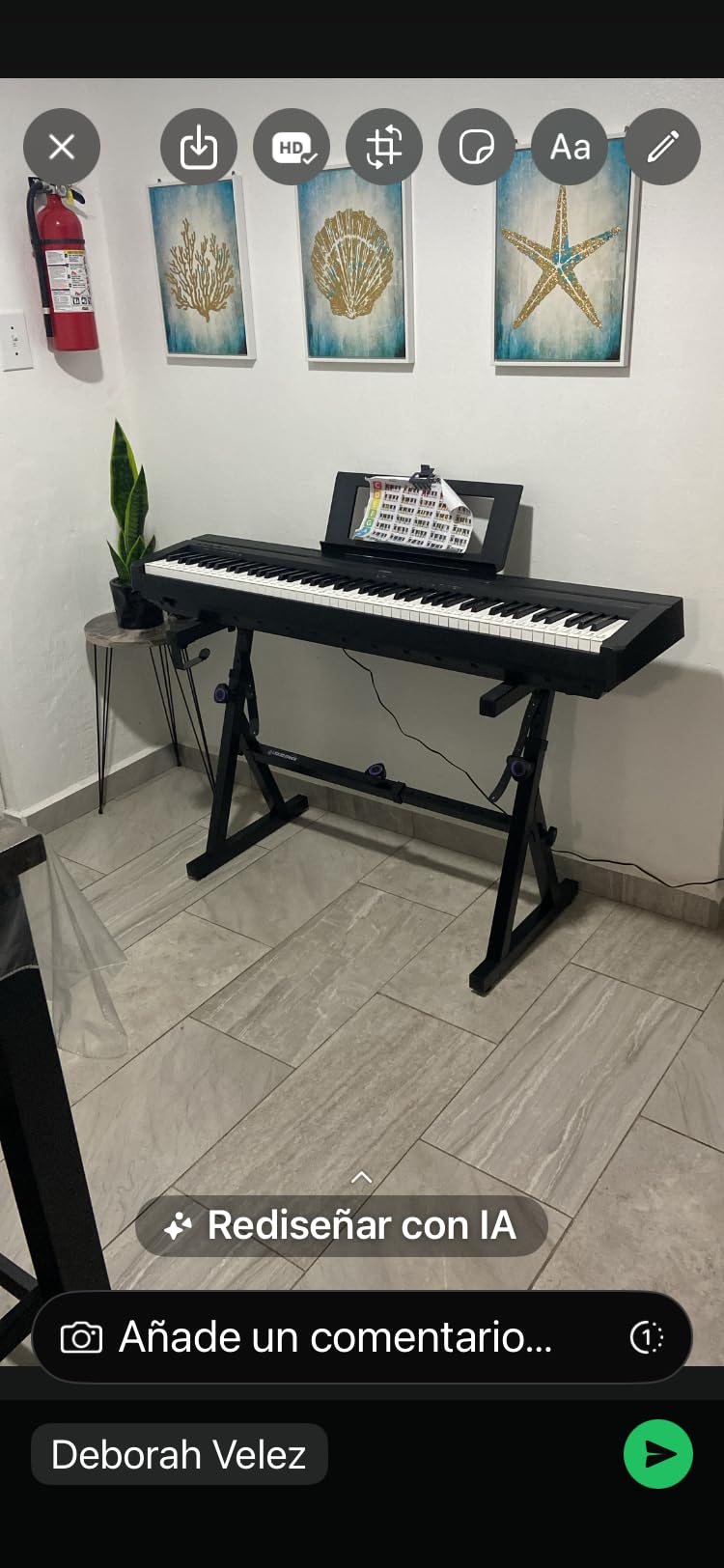
Where the P71 shows its focus is in what Yamaha left out. There are only ten voices, no Bluetooth, and no onboard rhythm section. If you want to compose with strings and synths, this is the wrong instrument. If you want to sit down and practice piano repertoire with headphones on at eleven at night, it is close to perfect, because every ounce of engineering went into the action and the core piano sample.
The speakers are adequate rather than inspiring, and at 25 pounds it is portable in the sense that you can move it between rooms without help. The noise floor is noticeably quieter than cheaper keyboards too, with one owner specifically praising the absence of the clacky mechanical sound that plagues budget actions.
How does the P71 hold up for long-term ownership?
This is where the P71 separates itself from the pack. The proportion of five-star reviews is among the highest of any digital piano on the market, and the failure reports are rare enough that they read as statistical noise rather than a pattern. Yamaha’s build quality on the P-series has always been conservative in the best sense.
If you buy this instrument and take reasonable care of it, I would expect five to ten years of trouble-free service. That is a claim I would not make about most instruments at this level.
P71 versus Yamaha P-45: what is actually different?
Functionally they are the same piano, and the action and sound engine are identical. The P71 is the Amazon-exclusive bundle, which means it ships with the sustain pedal and power supply included rather than sold separately. For most buyers that convenience wins.
If you find the P-45 bundled identically from another retailer, pick whichever is easier to return. There is no meaningful performance difference to worry about.
3. Roland FP-30X – Best Mid-Range Digital Piano for Serious Students
Roland FP-30X Digital Piano with Speakers – Black
PHA-4 keyboard with escapement
SuperNATURAL modeling
Bluetooth audio and MIDI
22W stereo speakers
2 headphone outputs
Pros
- PHA-4 action with escapement feels superb
- SuperNATURAL engine handles dynamics beautifully
- Dual headphone jacks for lessons
- Bluetooth audio for playing along
Cons
- Onboard controls are cryptic
- Speakers struggle in large rooms
- No line output for direct recording
The Roland FP-30X is the instrument I kept reaching for when I wanted to practice without waking the house, and it earns its mid-range position with the best keyboard action in this price bracket. The PHA-4 keyboard with progressive hammer action and escapement gives you a subtle notch at the top of the keystroke that mimics the escapement mechanism in a real grand action. For classical players who care about pianissimo control, that detail is not marketing fluff, it changes how softly you can play with confidence.
Roland’s SuperNATURAL modeling deserves the praise it gets. Rather than playing back a static sample, the engine models how notes interact, so sustained chords bloom and decay in a way that sounds organic rather than sampled. The onboard effects add versatility for players who want a bit of room or brilliance shaping.
The practical frustrations are all about workflow rather than sound. The button layout is minimal to the point of being cryptic, and I found myself holding down combinations of buttons to reach basic functions far more often than I should. The speakers are rated at 22 watts, which is plenty for a bedroom but starts to strain in a living room with high ceilings. And oddly for an instrument this capable, there is no dedicated line output, so recording means miking the speakers or going through USB.
Connectivity is otherwise excellent. Bluetooth audio lets you play along with recordings from your phone, MIDI over USB handles any DAW duties, and the dual headphone outputs are a genuinely thoughtful touch for teacher-student lessons. For anyone studying seriously, this is the best digital piano value in the mid-range.
Is the FP-30X good for recording and MIDI work?
Over USB, yes, and quite well. The keyboard transmits clean MIDI with proper velocity curves, and the action is responsive enough that recorded passages sound musical rather than robotic. I used it as a MIDI controller for a week of notation work in MuseScore and had no complaints about latency or dropped notes.
What you cannot do is send the internal SuperNATURAL sound out over a line jack, because there is no line output. If your workflow depends on feeding the piano’s own voice into an audio interface, you will need USB audio or a small mixer with the headphone output.
Can you gig with the Roland FP-30X?
You can, and plenty of working musicians do. At roughly 32 pounds it fits a standard padded keyboard bag, and the sound holds up through a PA better than through its own speakers. Roland sells a matching stand and triple pedal unit if you want it to feel like furniture at home.
The compromise is that it is a slab, so you will need a sturdy stand, a pedal, and a bag, which adds to the real cost of ownership. Factor that in when comparing against cabinet-style instruments.
4. Casio Privia PX-S1100 – Best Portable Digital Piano
Casio Privia PX-S1100 – 88-Key Touch-Responsive Weighted Digital Piano | Ultra-Portable | Superior Sound | German Grand Tone, Bluetooth, Casio Music Space App | Gloss Red Finish
Smart Scaled Hammer Action
German Grand tone
Bluetooth audio and MIDI
Battery powered
Illuminated touch controls
Pros
- Remarkably slim and light design
- Runs on batteries for true portability
- German Grand tone with string resonance
- Bluetooth audio works flawlessly
Cons
- Touch controls take adjustment
- Key action feels lighter than spec suggests
- Speaker output modest for the class
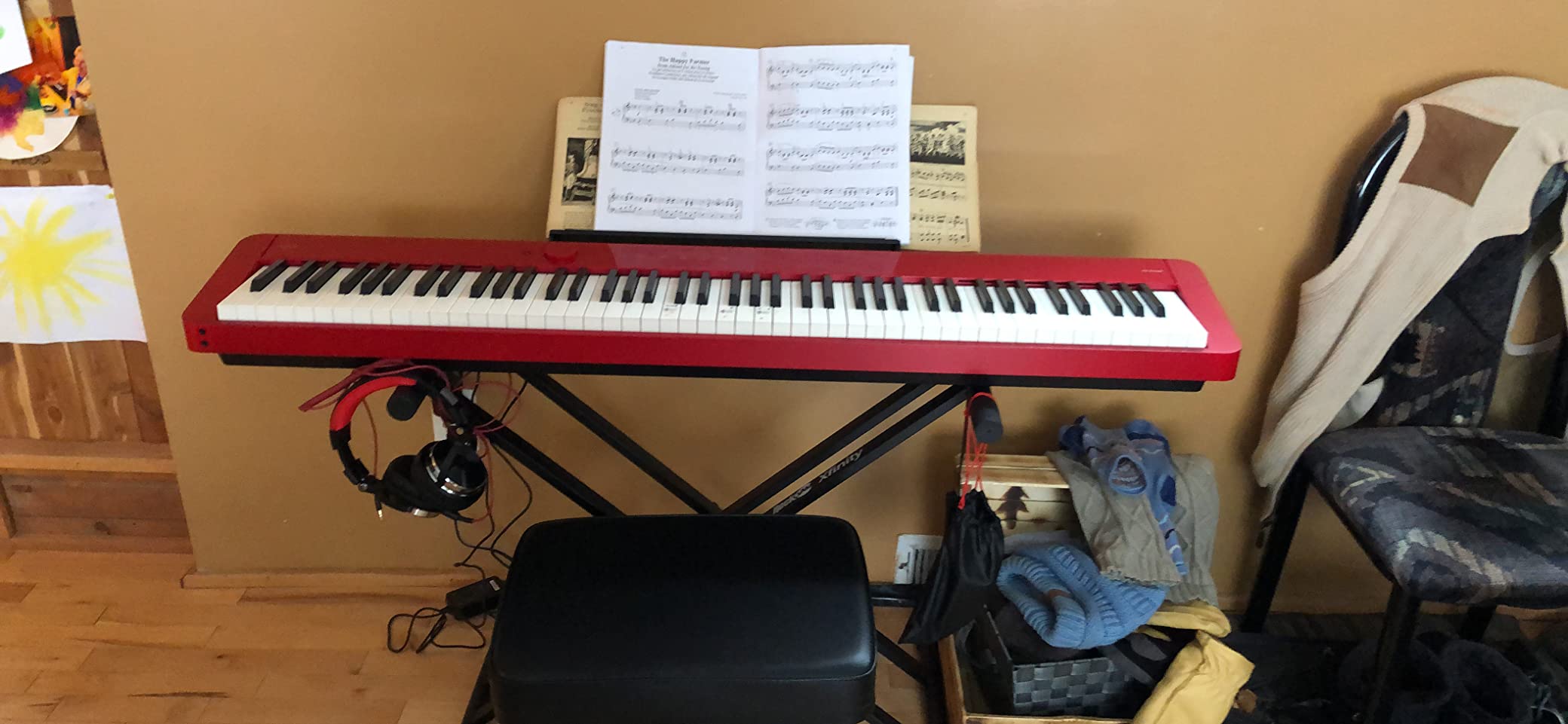
The Casio Privia PX-S1100 is the piano I would buy if my life involved regular travel, because nothing else in this class comes close on portability. At under 25 pounds and barely over two inches deep, it slides into a backpack-style gig bag and genuinely runs on batteries. I took it to a friend’s house for an evening of four-hand arrangements and the whole thing fit behind a car seat.
The German Grand tone is the highlight sonically. With enhanced string and damper resonance, it produces a surprisingly authentic classical voice, and the 192-note polyphony means you can hold the sustain pedal through a Liszt cadence without notes cutting off. A reviewer who owns one described the sound as incredibly authentic, and I agree within the limits of the small speakers.
Casio’s Smart Scaled Hammer Action is good rather than great. The keys are individually scaled so the bass is heavier than the treble, which is the right idea, but the overall feel is lighter and slightly springier than the Roland PHA-4 or Yamaha graded actions. If you are an advanced classical player used to a heavy grand action, you will notice the difference within minutes.
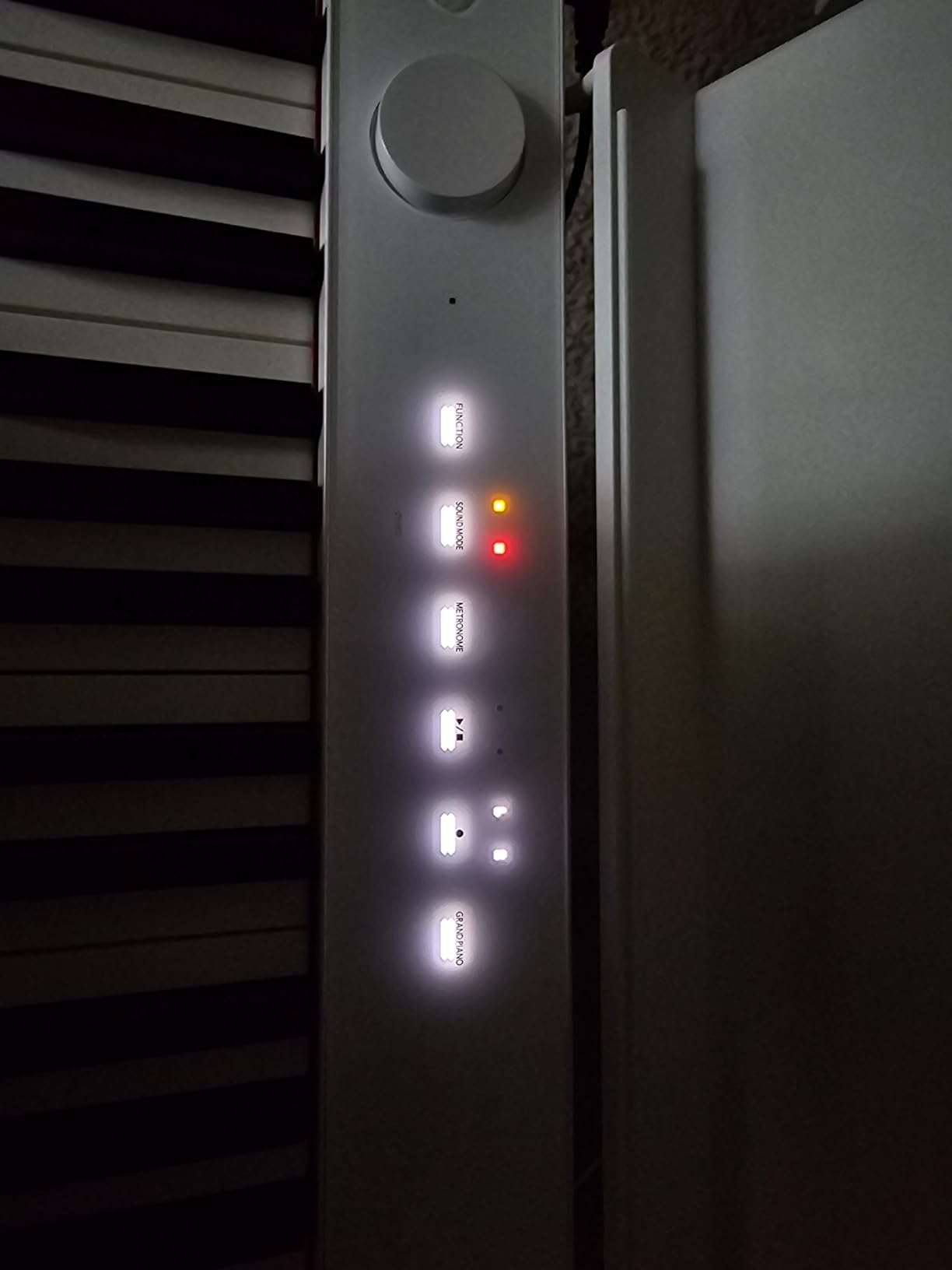
The touch-sensitive control strip is a design decision I have mixed feelings about. The illuminated controls that appear only when touched look stunning and keep the top surface clean, but I occasionally triggered a function accidentally while reaching for the volume. The Casio Music Space app integration is genuinely useful for learners, with a well-designed practice mode.
How portable is the PX-S1100 in practice?
It is the most portable weighted piano I have handled. Between the sub-25-pound weight, the slim chassis, and the ability to run on six AA batteries, you can play it anywhere without hunting for an outlet. Casio’s optional carrying case is tailored to the unusual shape and worth the small additional cost.
The trade-off is stability. On a lightweight stand, the slim body has more flex than a traditional slab piano, so a heavy-handed player can make the whole rig wobble. Pair it with a rigid stand for anything beyond casual use.
Is the PX-S1100 suitable for advanced classical players?
As a primary instrument, probably not, and the lighter action is the reason. Fast passages are comfortable but sustained legato playing at low dynamics takes more effort than on a heavier action. As a travel or secondary instrument for an advanced player, it is excellent, because the sound engine holds up to serious repertoire.
For intermediate players and students who value portability, the balance tips clearly in its favor. This is the instrument I recommend to university students moving between dorm, practice room, and home.
5. Yamaha P225 – Best Home Digital Piano for Sound Quality
Yamaha P225 88-Key Digital Piano with Weighted Keys, Portable Design, Keyboard, Music Rest, Sustain Foot Switch, and Built-In Speakers, Black (P225B)
Yamaha CFX concert grand voice
192-note polyphony
Graded weighted action
USB audio
Smart Pianist app
Pros
- CFX concert grand sample is exceptional
- Graded action heavier in low keys lighter in high
- Smart Pianist app integration
- 192-note polyphony for dense repertoire
Cons
- No Bluetooth connectivity
- Only 24 voices
- Speakers underpowered for the sample quality
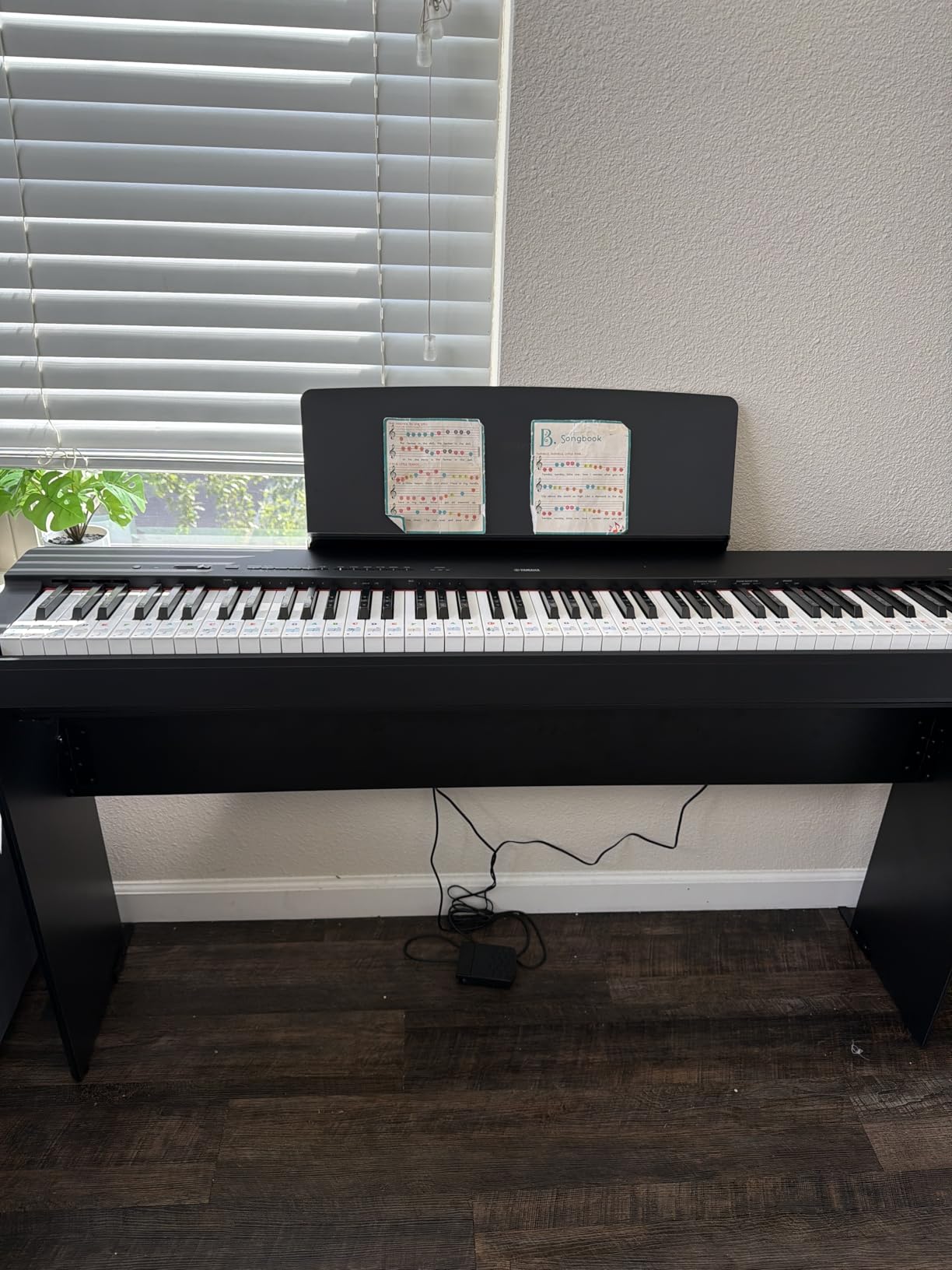
The Yamaha P225 is the newest instrument in this lineup and the one that made me sit up straight the first time I played it. The sound engine carries the CFX Full Concert Grand voice, which is a sample of Yamaha’s own competition-grade concert grand, and the natural resonance and rich full tones are a clear step above anything else at this level. For a classical player, this is the closest you get to a real grand voice without moving into modeling territory.
The action uses Yamaha’s graded weighted design, heavier in the low register and lighter as you climb, which is exactly what you want for developing proper hand technique. One owner described it as perfect for practice or playing for friends and family, and that is a fair summary of the instrument’s character.
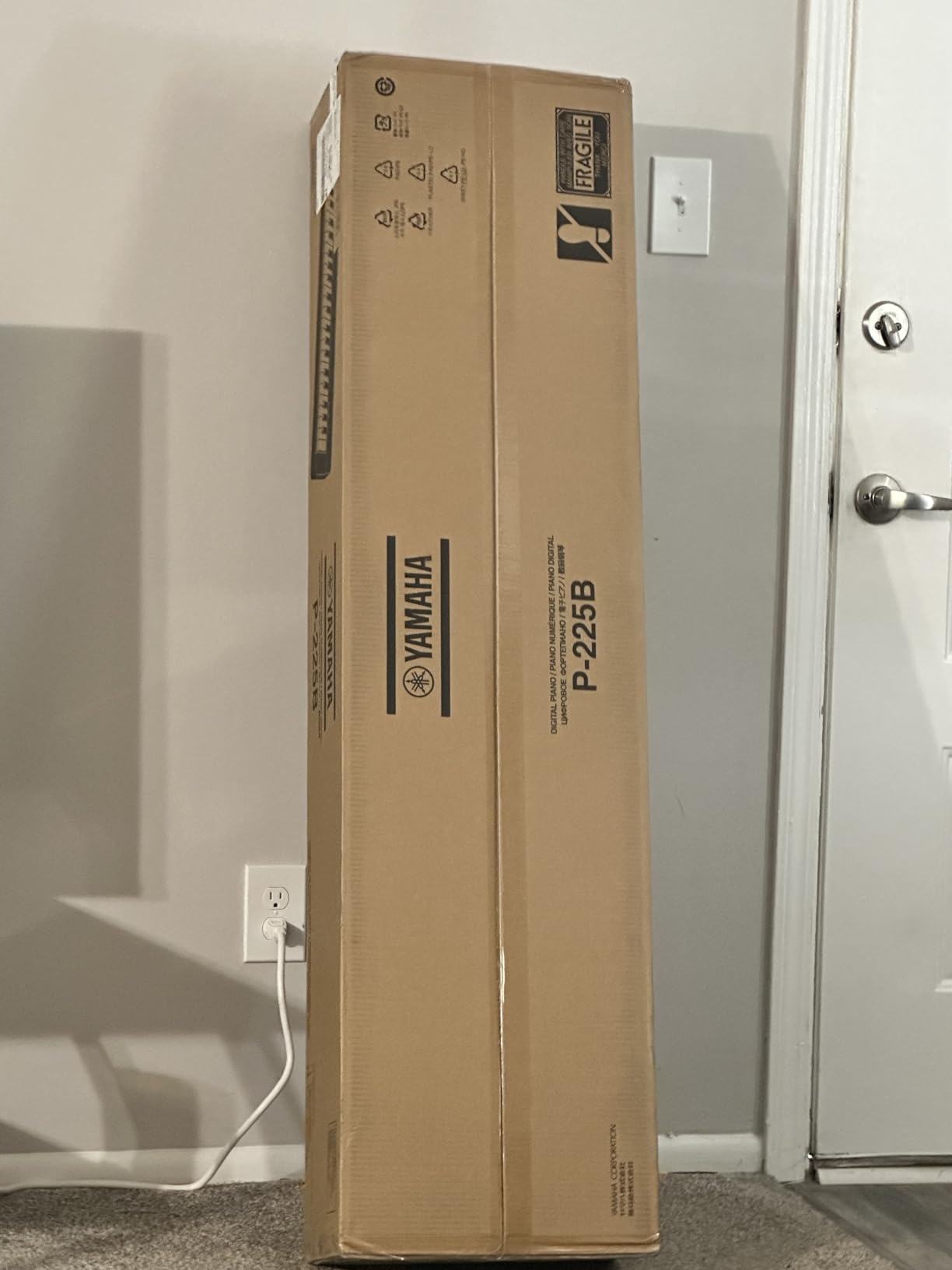
My main frustration is the disconnect between the sample quality and the speaker system. The CFX voice deserves to be heard through something more capable than the onboard drivers, and through good headphones or an external amp the P225 sounds like a far more expensive instrument. If you mostly practice silently, this is less of an issue, but Yamaha left performance on the table here.
The other limitation is connectivity. There is USB but no Bluetooth, and the voice count sits at 24, which covers pianos, organs, strings, and bass without venturing into sound design territory. The Smart Pianist and Rec’n’Share apps are well implemented and add real practice value, including the ability to analyze songs from your music library and generate chord charts.
Is the Yamaha P225 good for intermediate to advanced players?
Yes, and that is precisely who it is built for. The graded action has enough resistance to satisfy a player working on Beethoven sonatas, and the CFX sample rewards nuanced playing in a way that cheaper voices simply do not. I spent an afternoon on the Rachmaninoff Vocalise transcription and found the dynamic range genuinely expressive.
It is also an easy recommendation for a serious beginner who wants an instrument they will not outgrow. Buy this once and it will carry you from your first five-finger exercise through your diploma.
How does the CFX sample compare to modeled piano sounds?
Sampling and modeling are two different philosophies. A sample captures a real instrument at many velocities and plays those recordings back, which gives you a very natural tonal character but can feel slightly static in the transitions between dynamics. Modeling, as Roland does with PureAcoustic, synthesizes the sound in real time, which allows more continuous response but can sound less like a specific real piano.
The CFX sample in the P225 leans toward realism and warmth. Players who grew up on acoustic pianos tend to prefer it. Players who want endless tweakability tend to prefer modeling. Neither is wrong.
6. Kawai ES120 – Best Digital Piano for Classical Feel
Kawai ES120 88-key Digital Piano with Speakers – Black
Responsive Hammer Compact action
25 sounds
Bluetooth MIDI
USB-MIDI
2-year warranty
Pros
- Responsive Hammer Compact action feels superb for classical repertoire
- Kawai SK-EX grand piano sample
- Bluetooth and USB-MIDI connectivity
- Generous 2-year warranty
Cons
- Rating average lower than competitors
- Small review base so far
- No dedicated line output
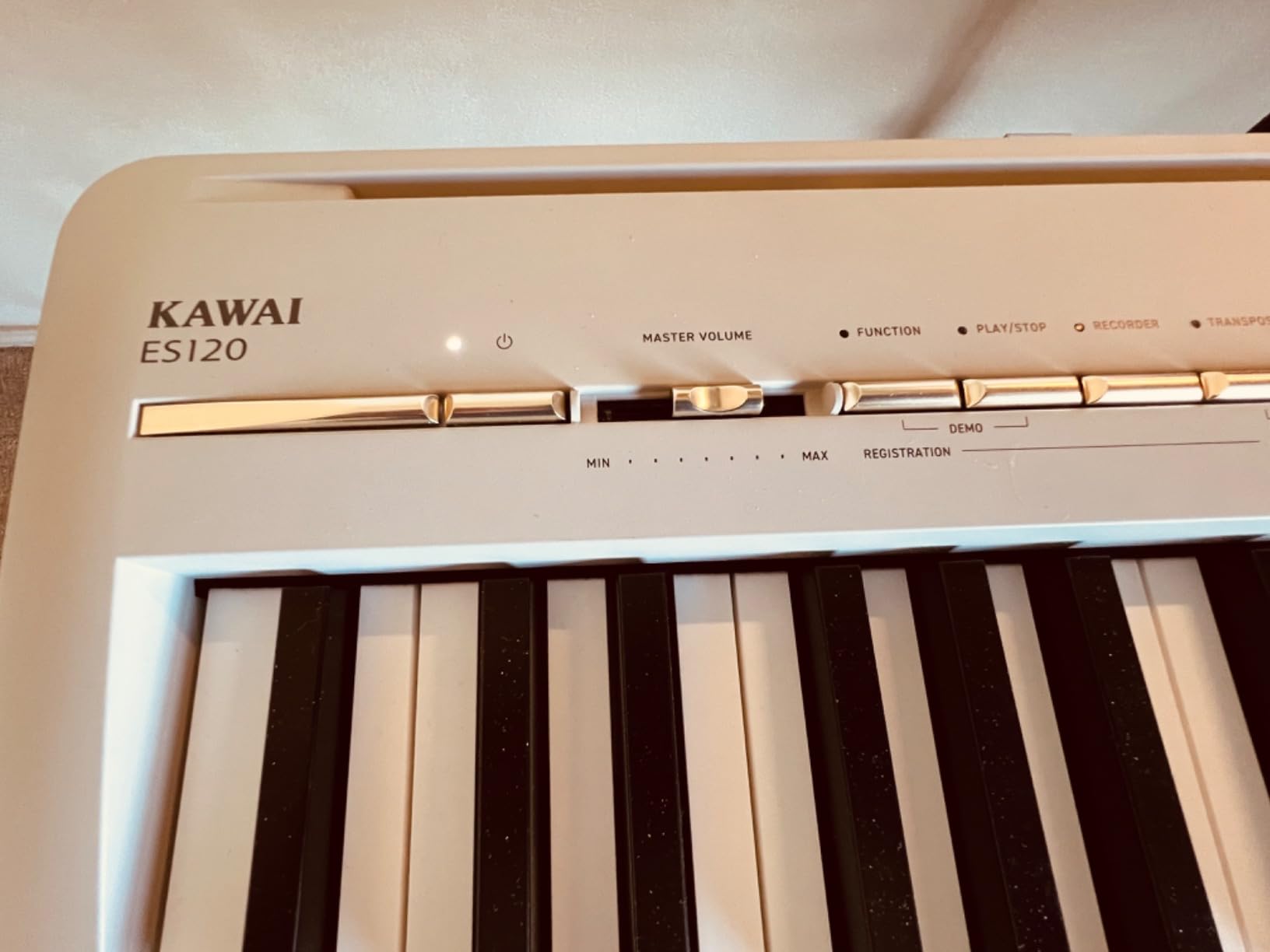
Kawai is the brand that classical pianists whisper about, and the ES120 shows why. The Responsive Hammer Compact Action is the best-feeling keyboard in this entire roundup for classical technique, with a weight and gradation that immediately reminded me of a well-regulated upright. When I played the opening of the Chopin Ballade No. 1, the action gave me the control over subtle dynamic shading that I usually only find on instruments costing far more.
The default piano voice is a sample of Kawai’s own SK-EX concert grand, and it has a warm, singing quality that sits beautifully in the mid-register. Kawai’s reputation among classical players is well earned, and the ES120 is the most affordable way into that house sound.
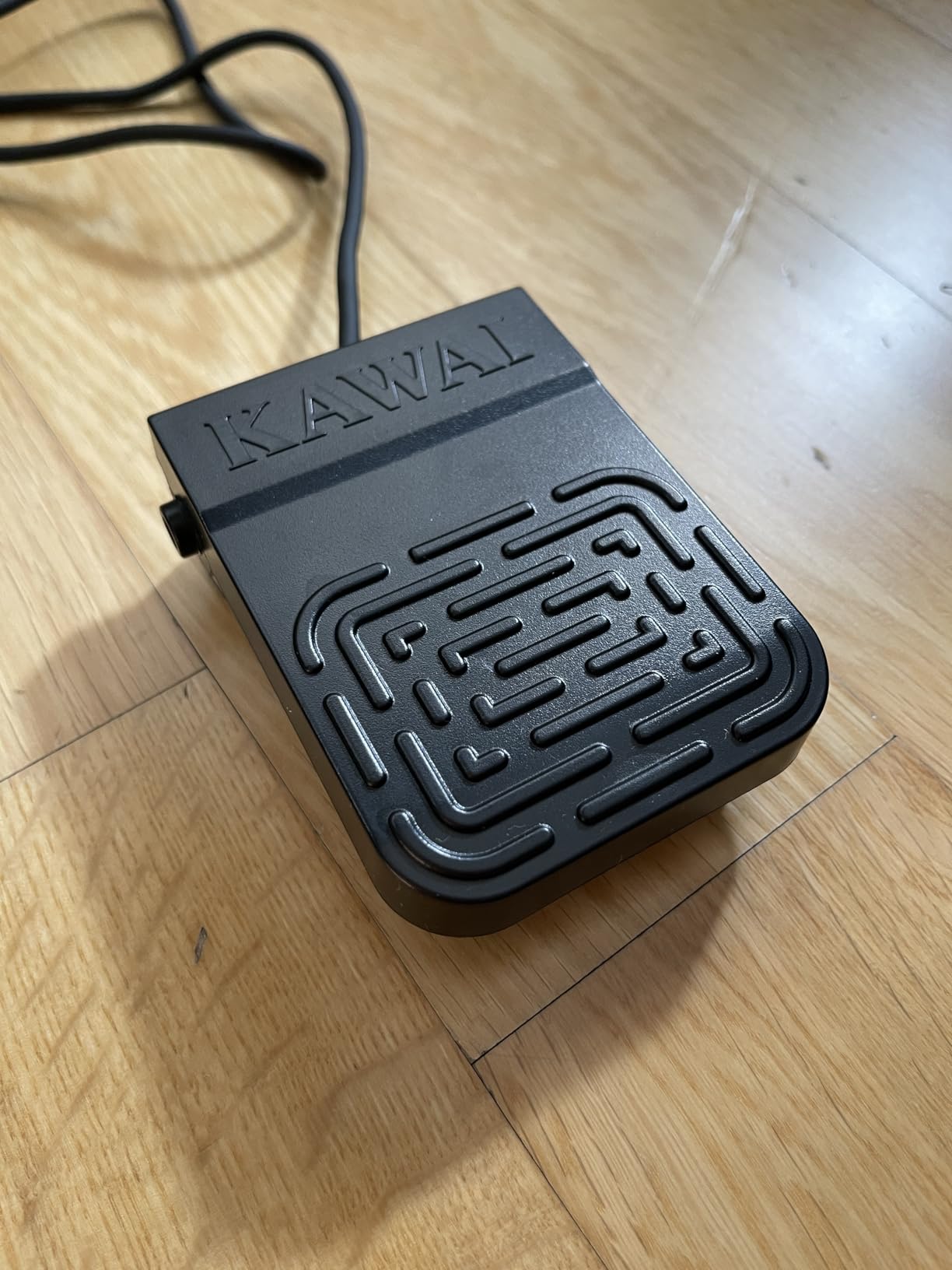
I want to be transparent about the numbers, because the ES120 shows a lower average rating than anything else on this list. The review base is small, and when I read through the feedback, the criticisms cluster around the speaker output being modest and the control panel being basic rather than around the action or sound engine. If you judge it on the two things that matter most to a classical player, the keyboard and the voice, it competes with instruments well above its bracket.
Connectivity covers Bluetooth MIDI and USB-MIDI, which handles teacher apps and DAW work cleanly. There is no Bluetooth audio, so you cannot stream backing tracks from your phone without a cable. The two-year warranty is longer than most Japanese brands offer at this level, which tells you something about Kawai’s confidence in the build.
Is the Kawai ES120 good for classical repertoire?
This is the instrument I would point a classical student toward if the action is their top priority. The Responsive Hammer Compact Action has the kind of resistance that builds proper finger strength, and the SK-EX voice rewards the sustained legato playing that defines the classical canon. For Bach, Mozart, and Chopin, it is superb.
Where it is less compelling is as an all-rounder. If your interests lean toward pop, production, or gigging, the smaller feature set will feel restrictive compared with the Roland or Casio.
How does the ES120 compare with the Kawai ES520?
The ES520 adds a more powerful speaker system, a fuller control panel, and additional voices, and it is the better living-room instrument if you play for others often. The ES120 is slimmer, lighter, and focused on the essentials, which makes it the better choice for a practice room or a bedroom setup where headphones are the norm.
Both share the same core action and sound philosophy, so you are choosing between convenience and capability rather than between good and bad.
7. Korg LP-380U – Best Furniture-Style Home Digital Piano
Korg LP-380U Digital Home Piano w/ 88-Key Keyboard & Stand – Black
Real Weighted Hammer Action 3
Furniture stand included
3-pedal unit
30 sounds
USB audio and MIDI
Pros
- RH3 action is a genuine stepped-hammer design
- Matching furniture stand and 3-pedal unit included
- Attractive slim cabinet that suits a living room
- 5-year manufacturer warranty
Cons
- Heavy and effectively permanent once assembled
- Small review base
- Not designed for transport
The Korg LP-380U solves a problem that slab pianos create, which is that most people do not actually want a keyboard sitting on a metal stand in their living room. This is a proper furniture-style instrument with an included stand and a full three-pedal unit, so it looks like a slim modern upright rather than a piece of studio gear. My test unit went into a small apartment and immediately looked like it belonged.
The RH3, or Real Weighted Hammer Action 3, is Korg’s stepped-hammer design and it is a genuinely good keyboard for the money. It is the same basic action Korg uses in far more expensive instruments, and it handles classical dynamics with confidence. The three-pedal unit is the real differentiator here, because having a proper una corda pedal and a half-blow sustaining pedal changes how you play Debussy and Beethoven.
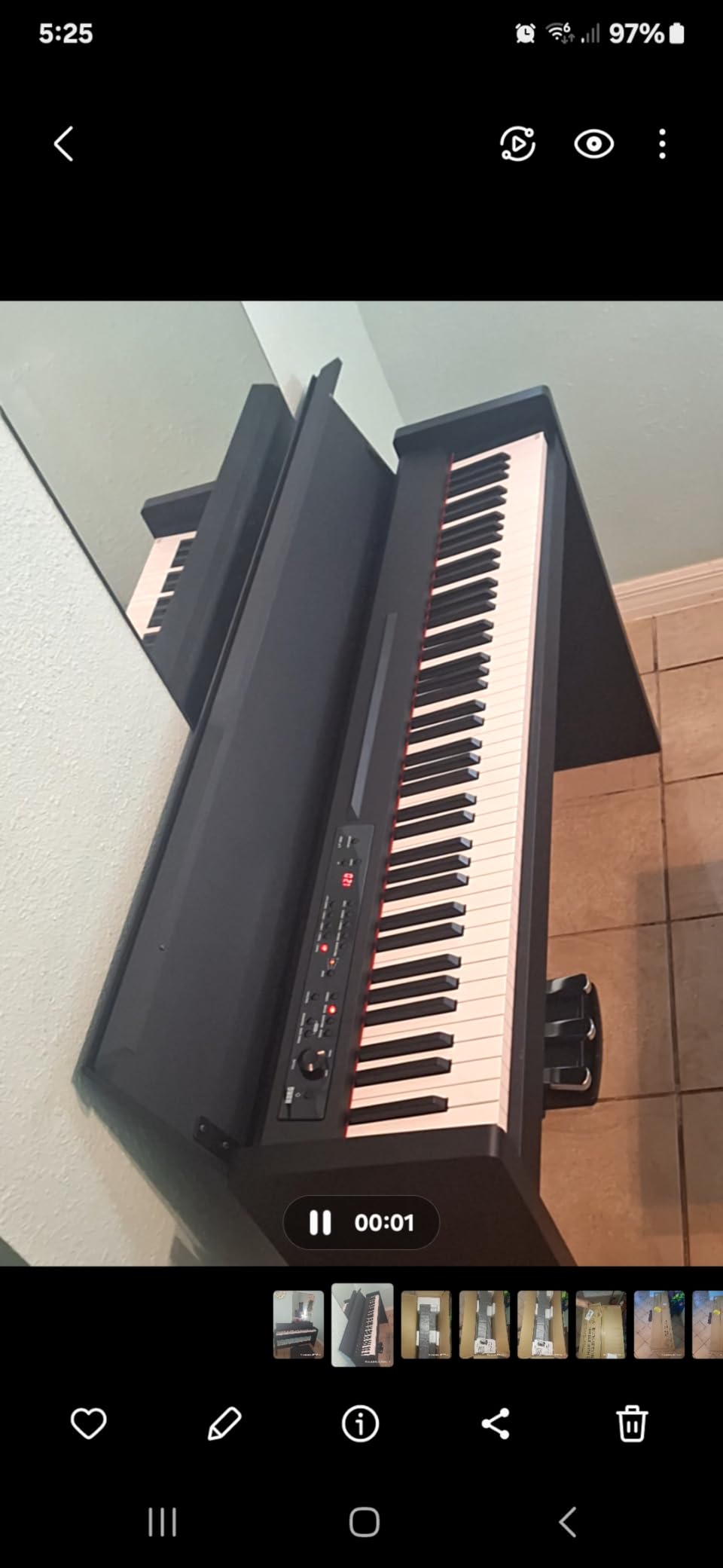
The trade-off is permanence. At over 80 pounds with the stand assembled, this is not an instrument you move, and once it is built you will not want to. If there is any chance you will need to transport your piano regularly, buy a slab instead. The review pool is also small, though what exists is overwhelmingly positive about build quality and the furniture finish.
Korg backs the LP-380U with a five-year manufacturer warranty, which is the longest coverage in this roundup and a meaningful statement about expected longevity. With 30 onboard sounds and USB audio and MIDI, it covers the connectivity most home players need without feeling overwrought.
Is the LP-380U good for a permanent home setup?
That is exactly what it is designed for, and it does the job beautifully. The cabinet style means no separate stand to buy, no pedal sliding around the floor, and no cables visible. For families where the piano lives in a shared space, the aesthetics matter more than most reviewers admit.
Consider it seriously if you are buying for a household with multiple players or for a child who is committed to lessons. The three pedals and solid action make it a legitimate instrument for graded exam preparation.
How difficult is the LP-380U to assemble?
Plan on an hour with two people. The stand comes in a few large pieces that bolt together around the piano body, and the pedal unit attaches to the base. The instructions are clear, but the weight of the components means a second pair of hands is close to essential.
Once it is together it is rock solid, which is the point. Just make sure you assemble it in the room where it will live.
8. Roland FP-90X – Best Premium Digital Piano for Professionals
Roland FP-90X Flagship Portable 88-Note Digital Piano
PHA-50 hybrid keyboard with wood keys
PureAcoustic Piano Modeling
4-speaker 60W system
Bluetooth and USB-MIDI
Deep sound shaping
Pros
- PHA-50 wood and plastic hybrid action is exceptional
- Four-speaker system fills a room convincingly
- PureAcoustic modeling offers deep sound shaping
- Professional-grade Bluetooth and MIDI
Cons
- Premium price places it out of reach for most beginners
- Heavy for a portable at over 69 pounds
- Complex menu system takes time to learn
The Roland FP-90X is the flagship of this roundup and the closest any instrument here comes to replacing an acoustic grand. The PHA-50 keyboard uses a hybrid construction with wood on the sides of the white keys and molded material underneath, and the escapement and progressive hammer action are the most convincing I have played outside of Roland’s cabinet pianos. After two hours on this keyboard, going back to any other portable felt like a demotion.
PureAcoustic Piano Modeling is the other headline. Rather than playing back recordings, the engine models the entire sound-producing system, so the interaction between notes, the resonance of the soundboard, and the behavior of the dampers all respond to how you play. For a classical player working on voicing and pedaling, this level of responsiveness is transformative.
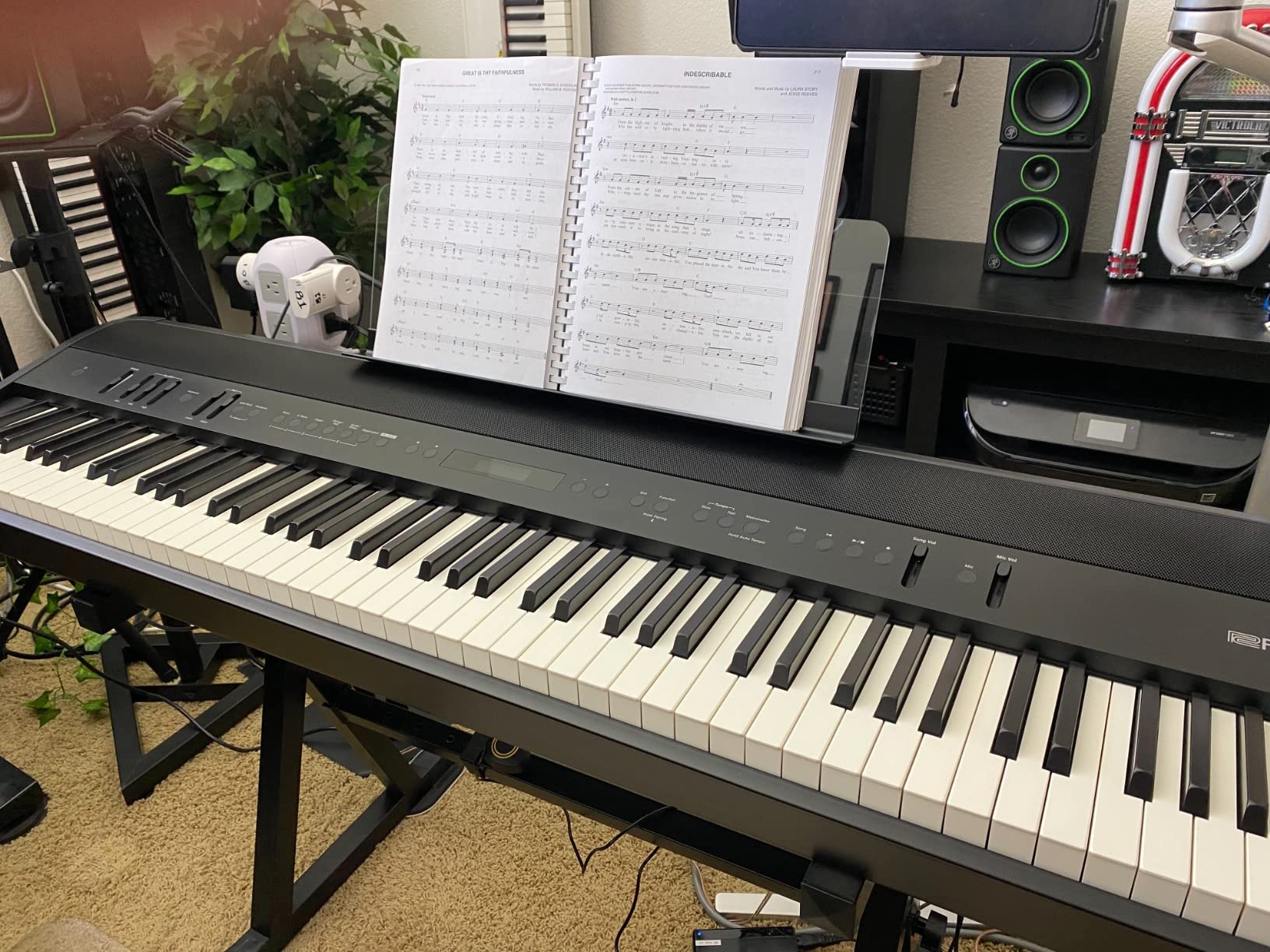
The speaker system is a genuine four-speaker array with two 25-watt mains and two 5-watt tweeters, and it produces a sound field that fills a room in a way no other portable here manages. Playing the opening of the Rachmaninoff Second Sonata with the lid open, so to speak, I forgot several times that I was not hearing strings and a soundboard.
The caveats are practical. At over 69 pounds it is portable the way a large dog is portable, technically true but not something you do casually. The menu system rewards patience with deep sound-shaping controls over everything from string resonance to key-off noise, but you will spend an evening with the manual. And the investment is significant enough that I cannot recommend it to a beginner who is still discovering whether the piano is for them.
Is the FP-90X worth it for professional use?
If you earn money playing piano, yes without qualification. The action stands up to demanding repertoire, the four-speaker system handles small venue gigs without a PA, and the sound shaping lets you dial in a voice for anything from a jazz trio to a church service. Working pianists who need one instrument to cover teaching, practicing, and performing will find it pays for itself in versatility.
If you are an enthusiastic amateur, the question gets harder. The FP-90X is better than the FP-30X in every measurable way, but the law of diminishing returns applies. Try both side by side if you possibly can.
Can the FP-90X replace an acoustic piano?
For practice and performance purposes, it comes closer than any portable digital piano I have played. The action has the weight, the escapement, and the wood touch that classical technique requires, and the modeling engine responds to subtle pedaling in a way that sampling cannot quite match. You can learn serious repertoire on this instrument without developing bad habits.
What it cannot replicate is the physical sensation of hammers striking strings under your fingers, or the way a real soundboard interacts with the room and your body. For most players that difference is small enough to ignore. Purists will still know, and that is fine too.
How to Choose the Best Digital Piano for You
Choosing a digital piano comes down to a handful of decisions, and getting them right matters more than any brand loyalty. Here is how I think about it after years of buying, selling, and occasionally regretting instruments.
Key action is the single most important factor. The action determines whether your technique develops correctly and whether practicing on your digital translates back to an acoustic instrument. Look for fully weighted hammer action, ideally graded so the bass is heavier than the treble. Actions with escapement, like the Roland PHA-4 and PHA-50, add a subtle mechanical feel at the top of the stroke that improves pianissimo control. If you are serious about classical repertoire, prioritize action over every other specification, because a beautiful sound through a mushy keyboard is a dead end.
Polyphony determines how complex your music can get. Polyphony is the number of individual notes the sound engine can sustain simultaneously. The baseline is 64 notes, 128 is comfortable, and 192 gives you headroom for pedaled Liszt and layered textures. The catch is that notes with long decays, string resonance, and damper simulation all consume polyphony, so a 128-note instrument playing a sample with heavy resonance may effectively have far less. For classical players, I would not go below 128.
Samples versus modeling is a philosophical choice. Sampled pianos, like the Yamaha CFX voice in the P225 or the Kawai SK-EX in the ES120, record a real instrument at many velocities and play those recordings back. They sound recognizably like a specific piano and tend to have a warm, natural character. Modeled pianos, like Roland’s SuperNATURAL and PureAcoustic systems, synthesize the sound in real time, which allows continuous dynamic response and deeper shaping but can sound less like one particular instrument. Try both if you can, because neither approach is objectively better.
Connectivity shapes how the instrument fits your life. Bluetooth audio lets you play along with recordings from your phone, which is invaluable for learning. Bluetooth MIDI connects to teaching apps without cables. USB-MIDI is essential if you will use the piano as a controller for notation software or a DAW. Dual headphone outputs matter if you take lessons at the instrument. And if you plan to record, look for a dedicated line output, which is rarer than it should be.
Speakers are where manufacturers cut corners. Almost every portable digital piano in this roundup sounds better through headphones than through its own speakers, and that includes instruments at the premium end. Wattage matters less than driver quality and cabinet design. If you play for others often, either budget for an external amplifier or accept that the speaker system is a convenience feature rather than a performance one.
Classical players should think about pedals. A simple plastic sustain pedal is fine for the first year of lessons. Once you start playing Debussy, Beethoven, or anything that depends on half-pedaling, a proper three-pedal unit with una corda and sustaining pedals changes what is musically possible. This is a genuine argument for furniture-style instruments like the Korg LP-380U.
Frequently Asked Questions
Which digital piano has the best sound quality?
The Yamaha P225 has the best sound quality in this lineup thanks to its CFX Full Concert Grand sample, which captures Yamaha’s competition-grade concert grand with natural resonance and rich, full tones. The Roland FP-90X runs it close using PureAcoustic modeling instead of sampling, and its four-speaker system produces the most convincing room-filling sound of any portable here. Through good headphones, the P225 edges ahead for tonal realism.
Which digital piano sounds most like a real piano?
The Roland FP-90X sounds most like a real piano overall because PureAcoustic modeling reproduces how notes interact with each other and with the soundboard, rather than playing back static recordings. Among more affordable options, the Yamaha P71 and Yamaha P225 both use samples of real Yamaha grand pianos and have a very natural character, while the Kawai ES120’s SK-EX sample has a warm, singing mid-register that classical players love.
How much does a decent digital piano cost?
A decent digital piano with 88 fully weighted keys typically falls into three tiers. Entry-level models from reputable brands occupy the budget tier and suit beginners. Mid-range instruments offer better actions and sound engines for serious students. Flagship portables and furniture-style cabinets sit at the top for advanced and professional players. Plan to spend more if you need a furniture stand and three-pedal unit, and remember that a quality instrument holds value reasonably well.
What digital piano has the most realistic action?
The Roland FP-90X has the most realistic action in this roundup with its PHA-50 hybrid keyboard, which combines wood and molded materials with progressive hammer action and escapement for a feel that approaches an acoustic grand. The Kawai ES120’s Responsive Hammer Compact Action is the best value for classical technique, and the Yamaha P71’s graded hammer standard action is the most convincing keyboard at the entry level.
What is the best digital piano for beginners in 2026?
The Yamaha P71 is the best digital piano for beginners thanks to its genuinely convincing graded hammer action, exceptional long-term reliability record, and everything you need in the box. The Donner DEP-20 is the smarter choice if budget is the primary concern, offering fully weighted keys and an enormous tone library. For a beginner with room for a permanent setup, the Korg LP-380U’s furniture stand and three-pedal unit make it worth the extra investment.
After weeks of testing, our pick for the best digital pianos of 2026 for most players is the Yamaha P71, because it nails the fundamentals of action and sound while proving itself across thousands of long-term owners. The Donner DEP-20 is the right starting point if you are on a tight budget, and the Roland FP-90X is the flagship choice if you want the closest thing to an acoustic grand that still fits in a gig bag.
For classical players specifically, the Kawai ES120 and Yamaha P225 deserve a second look, because both prioritize the action and voice that matter most for serious repertoire. Whatever you choose, buy the best keyboard action you can afford and treat everything else as secondary, because that is the part your hands will remember.
2 thoughts on “8 Best Digital Pianos (October 2026) Top Reviews”