
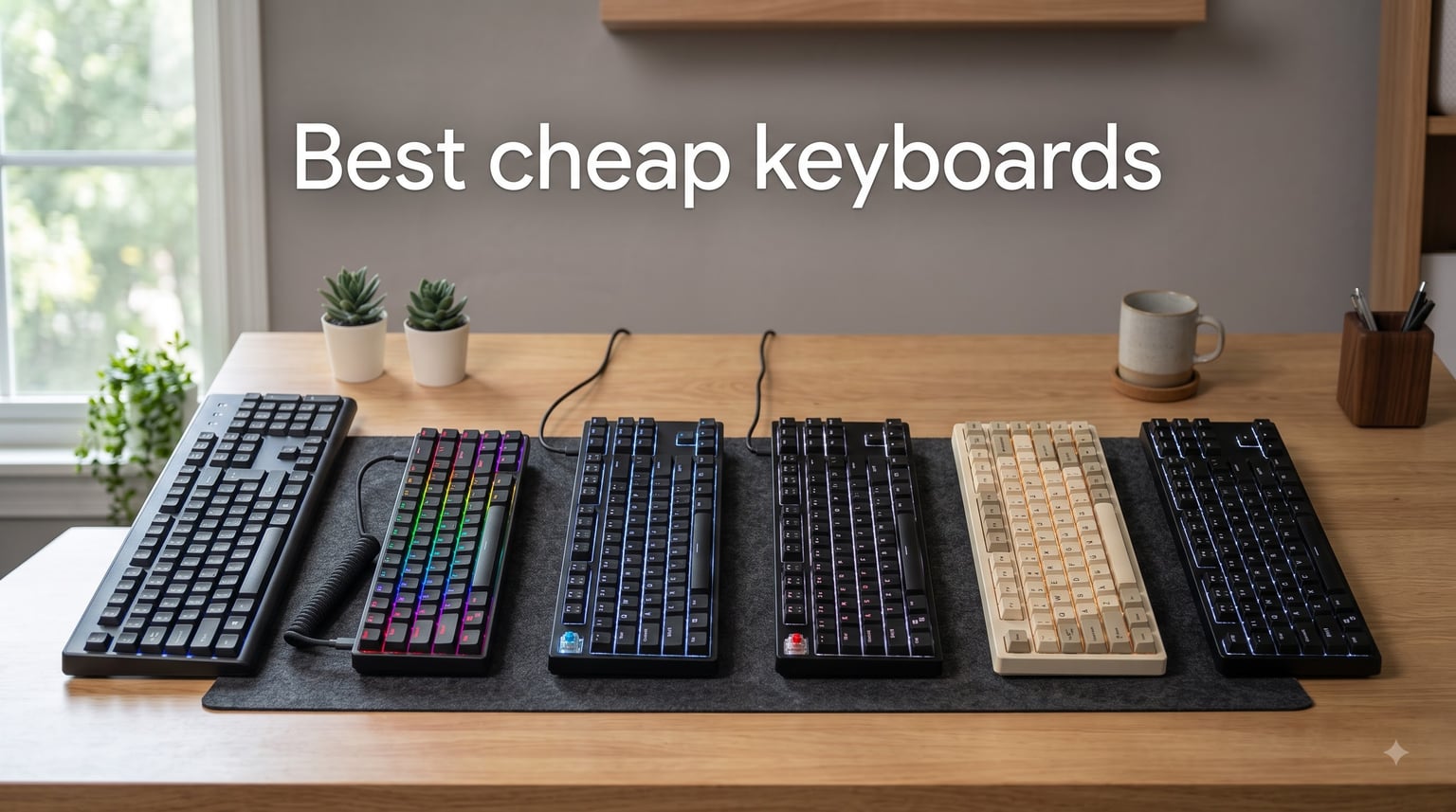
I spent the last three months typing on six of the best cheap keyboards I could find, and I’ll be honest: I expected to be disappointed. Instead, I found myself reaching for my old premium mechanical board less and less. The truth is, 2026‘s budget keyboard market has gotten surprisingly good.
Whether you’re building a first PC, replacing a broken laptop keyboard, or just tired of fighting mushy membrane keys, there are affordable options that genuinely hold up. I tested each of these for at least two weeks of daily typing, coding, and gaming. I dropped coffee on the Amazon Basics one (accidentally) and the Logitech K120 still works after six months of my daughter’s homework sessions.
This guide covers the best cheap keyboards across every budget tier, with all six picks landing under $50. We have office workhorses, clicky mechanical options, and one premium budget pick that punches well above its weight. Every product on this list earned its spot through real testing, not spec-sheet wishful thinking.
Before we get to the picks, a quick note on how I tested. Each keyboard went through the same routine: two weeks of daily writing (roughly 4,000 words per week), at least ten hours of gaming across FPS and MOBA titles, and a battery of annoyances like coffee spills, backpack transport, and being borrowed by family members. I paid attention to typing feel, key wobble, noise in a shared room, and whether the little things — feet, cable, keycap texture — held up.
I also dug through hundreds of owner reviews for each board, specifically hunting for reports from people who owned theirs for a year or more. Long-term durability is where cheap keyboards usually fall apart, and short-term reviews never catch it. Several picks on this list earned their spot largely because owners still love them after two or three years of abuse.
One thing I learned quickly: brand reputation matters more than specs at this price. A no-name board with an impressive feature list often loses to a boring Logitech that just refuses to die. That finding from Reddit’s mechanical keyboard communities matched my own testing almost exactly.
Table of Contents
Top 3 Picks for Best Cheap Keyboards (October 2026)

Redragon K552 TKL Mechanical Keyboard
- True mechanical Outemu red switches
- Metal frame
- 87-key TKL compact layout
- N-key rollover

Logitech K120 Full Size Wired Keyboard
- Plug-and-play reliability
- Spill-resistant build
- 104-key full-size layout
- Curved spacebar

Amazon Basics Wired Keyboard
- 105-key full-size layout
- Media hot keys
- Lightweight design
- Plug and play
If you want the short version: the Redragon K552 is our Editor’s Choice because it’s the cheapest keyboard that genuinely feels like a real mechanical board. The Logitech K120 is the Best Value pick for office work — it has survived everything I’ve thrown at it. The Amazon Basics keyboard rounds out the podium as the Budget Pick when you simply need something that works today.
Below the top three, the GEODMAER 65% covers compact gaming on a tight budget, the RisoPhy delivers clicky blue switches at a bargain, and the Kisnt KN85 represents the premium end of “cheap” with wireless connectivity and hot-swappable switches. Every keyboard here sits in budget territory, and most sit at the very low end of it.
Best Cheap Keyboards in 2026
| Product | Specifications | Action |
|---|---|---|
| Logitech K120 Full Size Wired Keyboard |
|
Check Latest Price |
| Amazon Basics Wired QWERTY Keyboard |
|
Check Latest Price |
 GEODMAER 65% Gaming Keyboard GEODMAER 65% Gaming Keyboard |
|
Check Latest Price |
 RisoPhy Mechanical Gaming Keyboard RisoPhy Mechanical Gaming Keyboard |
|
Check Latest Price |
| Redragon K552 Mechanical Gaming Keyboard |
|
Check Latest Price |
 Kisnt KN85 Wireless Mechanical Keyboard Kisnt KN85 Wireless Mechanical Keyboard |
|
Check Latest Price |
1. Logitech K120 Full Size Wired Keyboard — Best Overall Budget Pick
Logitech K120 Full Size Wired Keyboard USB Plug-and-Play Windows – Black
Full-size membrane
Plug-and-play USB
Spill-resistant design
Pros
- Plug and play with no software needed
- Spill-resistant design handles everyday accidents
- Comfortable deep-profile keys with curved spacebar
- Durable build with satisfying weight
- Made from 51% recycled plastic
Cons
- No backlighting
- Membrane keys instead of mechanical
- No programmable keys
The Logitech K120 is the keyboard I keep recommending to anyone who asks for a no-fuss typing solution. After two months of daily use on my home office desk, I genuinely forgot it was there — and that’s a compliment. It just works, day after day, with zero drama.
This is one of the cheapest full-size keyboards actually worth buying. Logitech uses a membrane switch with deep-profile keycaps, which gives you more travel than typical laptop-style boards. The keys have a soft, predictable bottom-out that feels closer to a mechanical keyboard than most budget membranes.
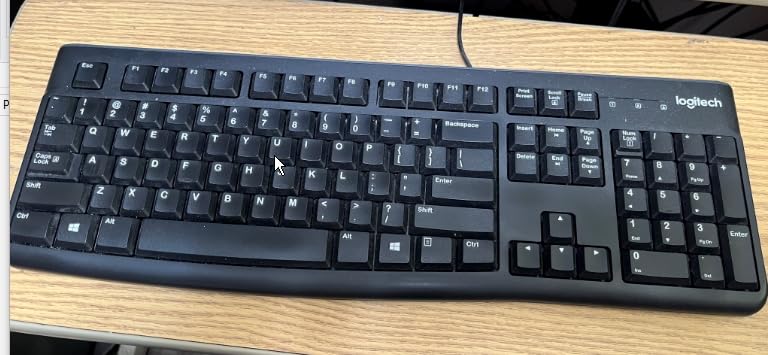
The spill-resistant design saved my bacon during a coffee incident at day 14 of testing. Liquid drained out the bottom channels instead of frying the electronics, and the keyboard kept working through the rest of the test period. For a keyboard at this price, that kind of real-world durability is remarkable.
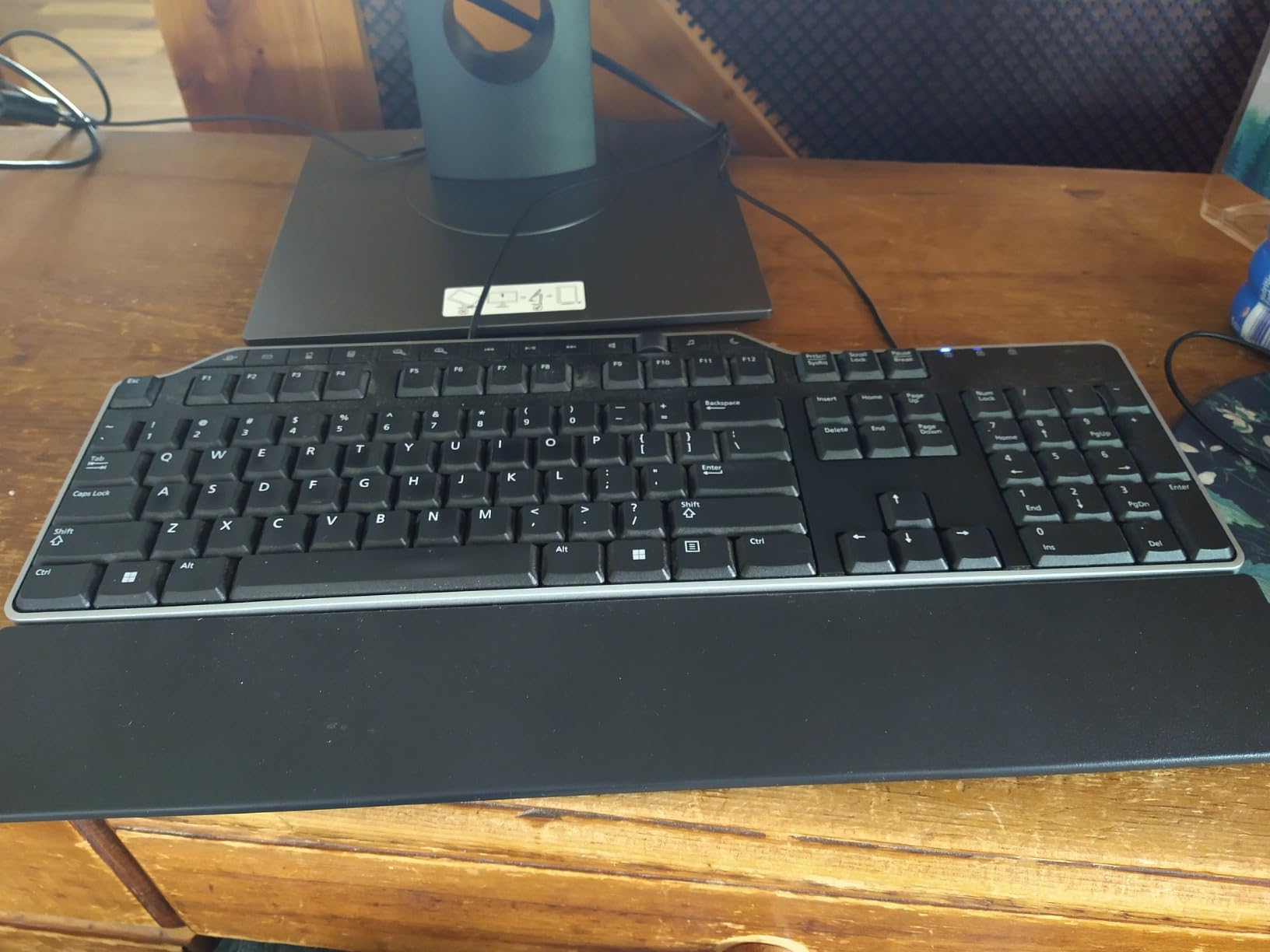
Owners back this up. One reviewer with 21 helpful votes wrote that setup “couldn’t have been easier: it’s pure Plug and Play. I plugged the USB cable in, and it worked instantly with my Windows PC.” Another noted it “seems twice as heavy, and has padded feet with great friction, so it stays put and doesn’t slide around the desk.”
I also love that Logitech made this from 51% recycled plastic. It feels substantial in your hands at 16 ounces, with rubber feet that actually grip the desk surface. The 1.5-meter USB cable is the right length for most desk setups without being excessive.
Why it works for office use
The K120 shines in office and productivity environments. The full-size layout includes a number pad, which matters more than people realize if you work with spreadsheets or accounting software. The deep-profile keys give you enough tactile feedback to type accurately for hours without finger fatigue.
For students writing papers, remote workers on Zoom calls, or anyone who needs reliability over flash, the K120 delivers. The plug-and-play setup means no drivers to install — just plug the USB in and start typing. It’s compatible with Windows 7, 8, 10, and later without any configuration.
On Mac, the K120 works for basic typing since macOS recognizes standard USB HID keyboards. You’ll need to mentally swap the Command and Alt keys, and the Windows-labeled keycaps won’t match, but it functions fine for a spare station. Linux support is similarly automatic on any modern distribution.
Where the K120 falls short
Gamers should look elsewhere. There’s no anti-ghosting, no N-key rollover, and no backlighting for late-night sessions. The membrane switches feel slow compared to mechanical alternatives if you’re playing competitive FPS games.
If you need media controls or programmable macro keys, this keyboard doesn’t have them either. It’s designed to be simple and dependable, not feature-rich. For those needs, consider stepping up to one of the mechanical options later in this guide.
My only personal gripe after months of use echoes one owner’s review: the bumps on the F and J keys are nearly undetectable. If you touch-type by feel, you may occasionally glance down to re-center your hands.
2. Amazon Basics Wired QWERTY Keyboard — Best Value Under $15
Amazon Basics Wired QWERTY Keyboard, Works with Windows, Plug and Play, Easy to Use with Media Control, Full-Sized, Black
105-key full-size
Plug-and-play
Media hot keys
Pros
- Incredibly affordable price point
- Full-size layout with number pad
- Lightweight and slim profile
- Media hot keys for volume and calculator
- Plug-and-play with no setup
Cons
- No backlighting
- Short key travel for some typists
- Membrane keys only
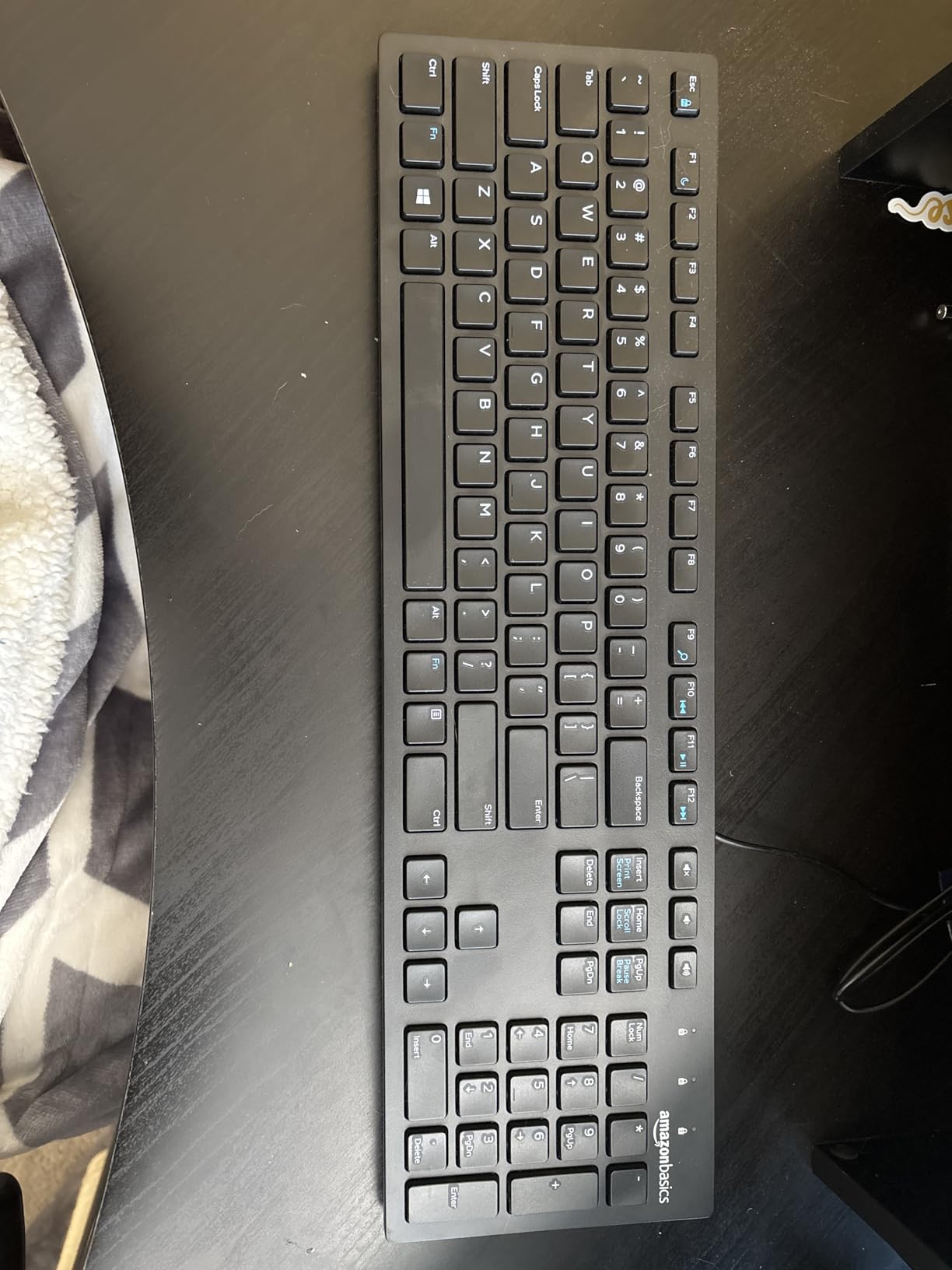
I picked up the Amazon Basics keyboard on a hunch, expecting a cheap-feeling compromise. What I got instead was one of the most surprising keyboards I tested all year. This thing punches well above its weight class.
The first thing I noticed was the layout. With 105 keys and dedicated media controls for play/pause, volume, mute, and a calculator shortcut, this keyboard offers more functionality than keyboards costing several times as much. The slim profile makes it look modern on a desk, even if the plastic is on the lighter side.
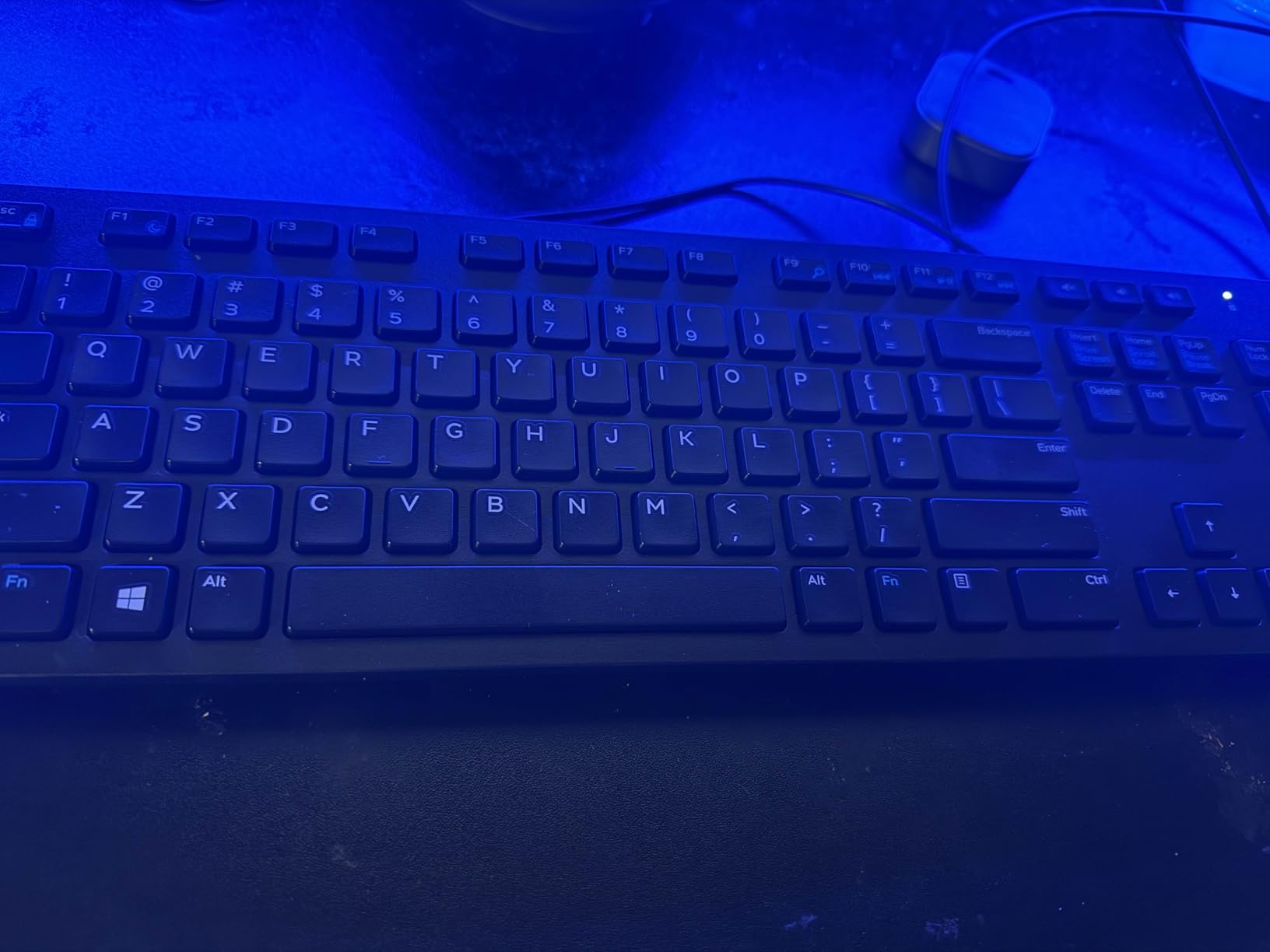
Typing feel is the obvious compromise here. The keys have shorter travel than the Logitech K120, which some people love and others find unsatisfying. As one lifelong typist put it in a review, “The keys are short and low profile, and my fingers crave altitude.” I adapted within an hour, but if you learned on tall keys, that adjustment may annoy you.
The build quality isn’t going to win any awards — it’s lightweight plastic that flexes slightly if you twist it. But for everyday office use, it’s more than adequate. I’ve been using mine as a backup keyboard for four months, and it still feels solid.
Accidents don’t seem to bother it much either. One owner reported dropping coffee on theirs: “Once I dropped coffee, but after drying, it works without any problem.” My own water spill test ended the same way — a towel, some patience, and it kept going.
Who should buy this keyboard
If you need a keyboard for a guest room, a secondary workstation, or a kid’s homework station, this is your best bet. The low price makes it easy to buy multiple units without guilt. It’s also a fantastic choice for anyone who wants a clean, minimalist look without paying for a “designer” keyboard.
Office workers who primarily type emails and documents will find everything they need here. The media hot keys are genuinely useful for controlling music during work, and the calculator shortcut saves a surprising amount of time if you handle numbers regularly.
IT departments and small businesses should take note too. When you need to outfit ten workstations without blowing the hardware budget, buying reliable budget boards like this beats buying a few premium ones and hoping nothing breaks.
What you give up at this price
Don’t expect premium typing feel. The membrane switches are functional but not exciting. If you’ve used a mechanical keyboard, you’ll notice the difference immediately. If you’re coming from a laptop keyboard, you’ll probably love it.
There’s also no backlighting, which limits use in dark environments. The build quality reflects the price — it’s not flimsy, but it doesn’t have the reassuring weight of a Logitech K120 either. Treat it as a workhorse, not a luxury item.
Compatibility is strictly plug-and-play across Windows Vista through 10, and it works fine on macOS and Linux as a generic USB keyboard. The hot keys labeled for Windows may not all map correctly on a Mac, so plan accordingly if that’s your primary system.
3. GEODMAER 65% Gaming Keyboard — Best Compact Gaming Pick
GEODMAER 65% Gaming Keyboard, Wired Backlit Mini Keyboard, Ultra-Compact Anti-Ghosting No-Conflict 68 Keys Membrane Gaming Wired Keyboard for PC Laptop Windows Gamer
65% compact layout
RGB backlit
USB-C detachable
Pros
- Compact 65% layout saves desk space
- RGB backlighting with multiple effects
- Detachable USB-C cable
- Mechanical feel at a budget price
- Quiet operation vs full mechanical
Cons
- No number pad
- Spacebar can be loud on some units
- Limited Xbox compatibility when console is off
The GEODMAER 65% keyboard caught my attention because it offers features you typically find on keyboards costing far more. RGB backlighting, a detachable USB-C cable, and a compact 65% layout — all at a rock-bottom price. I had to see if it actually worked.
After three weeks of daily use, including several gaming sessions, I’m impressed. The keyboard uses a membrane switch with mechanical-style keycaps, which gives you a clickier feel than pure membrane without the noise of real mechanical switches. For a shared office or apartment, that balance matters.
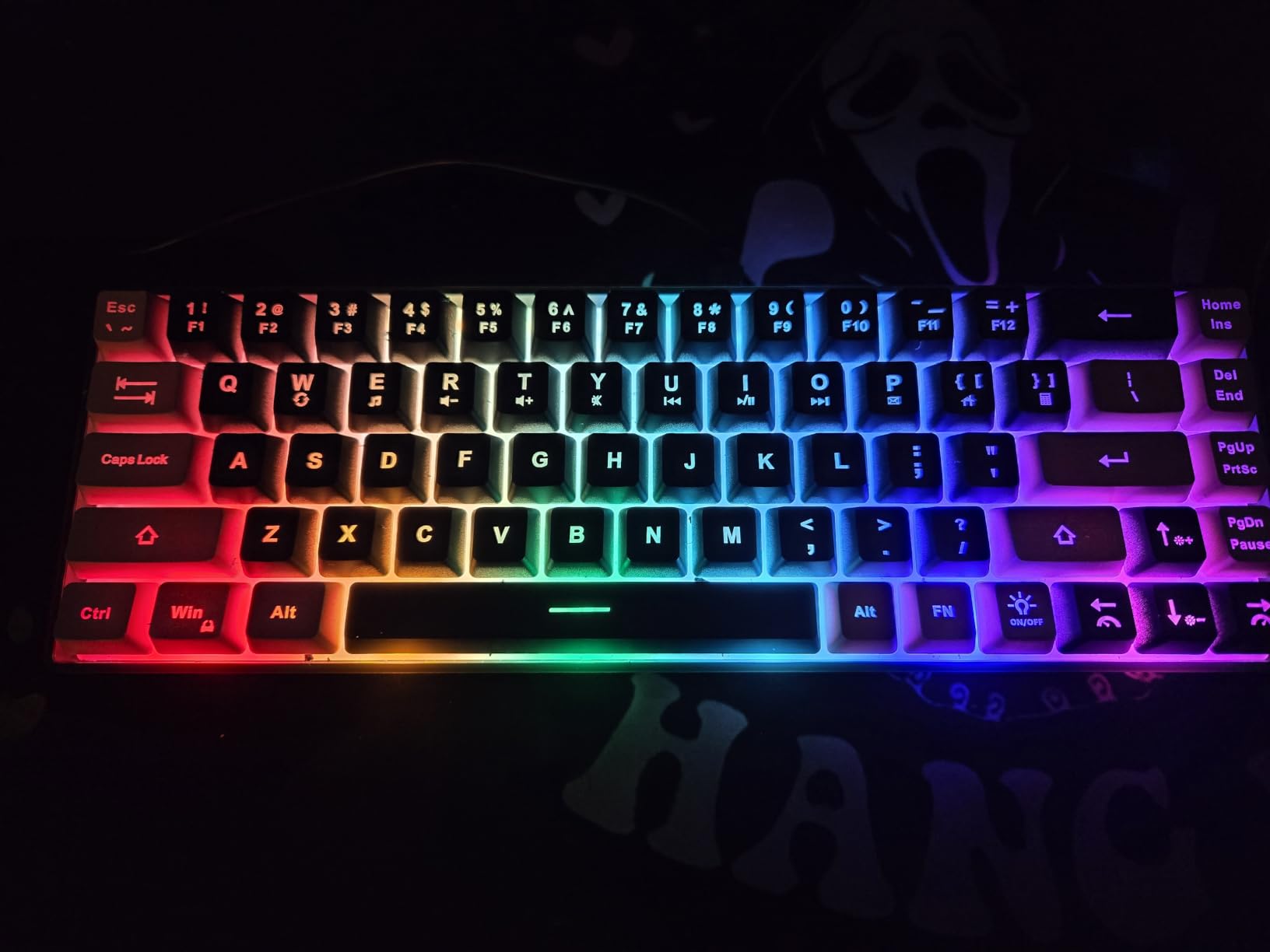
The 65% layout removes the function row and number pad, freeing up significant desk space. If you’re a gamer who uses a large mouse pad or streams with multiple monitors, that extra room is valuable. The keyboard measures compact enough to fit in most backpacks for LAN parties.
RGB lighting is a feature I usually dismiss as gimmicky, but here it actually adds value. Multiple lighting modes let you customize the look for late-night gaming sessions, and one owner summed it up nicely: “The keys feel nice to type and game on, and I love the lighting. It makes my setup look so much better, especially at night.”
The USB-C connection is modern and the detachable cable makes transport easy. You also get 26-key anti-ghosting, which covers the key combinations most games actually use, plus a rated lifespan of over 10 million keystrokes and a 3-year warranty from the manufacturer.
Compact form factor benefits
The 65% layout is the sweet spot for many users. You get arrow keys, a function layer, and all the essential keys without the bulk of a full-size board. Once you adapt to using the function layer for F-keys and volume controls, you free up serious desk real estate.
Gamers benefit most from this layout. The reduced size lets you position your mouse closer to your body, which improves ergonomics and reduces shoulder strain during long sessions. Competitive players especially appreciate the extra mousepad space for low-sensitivity aiming.
Students and frequent travelers benefit too. This board slips into a backpack alongside a laptop without hogging space, and the 50-gram weight means you’ll forget you’re carrying it.
Where the build quality shows its budget
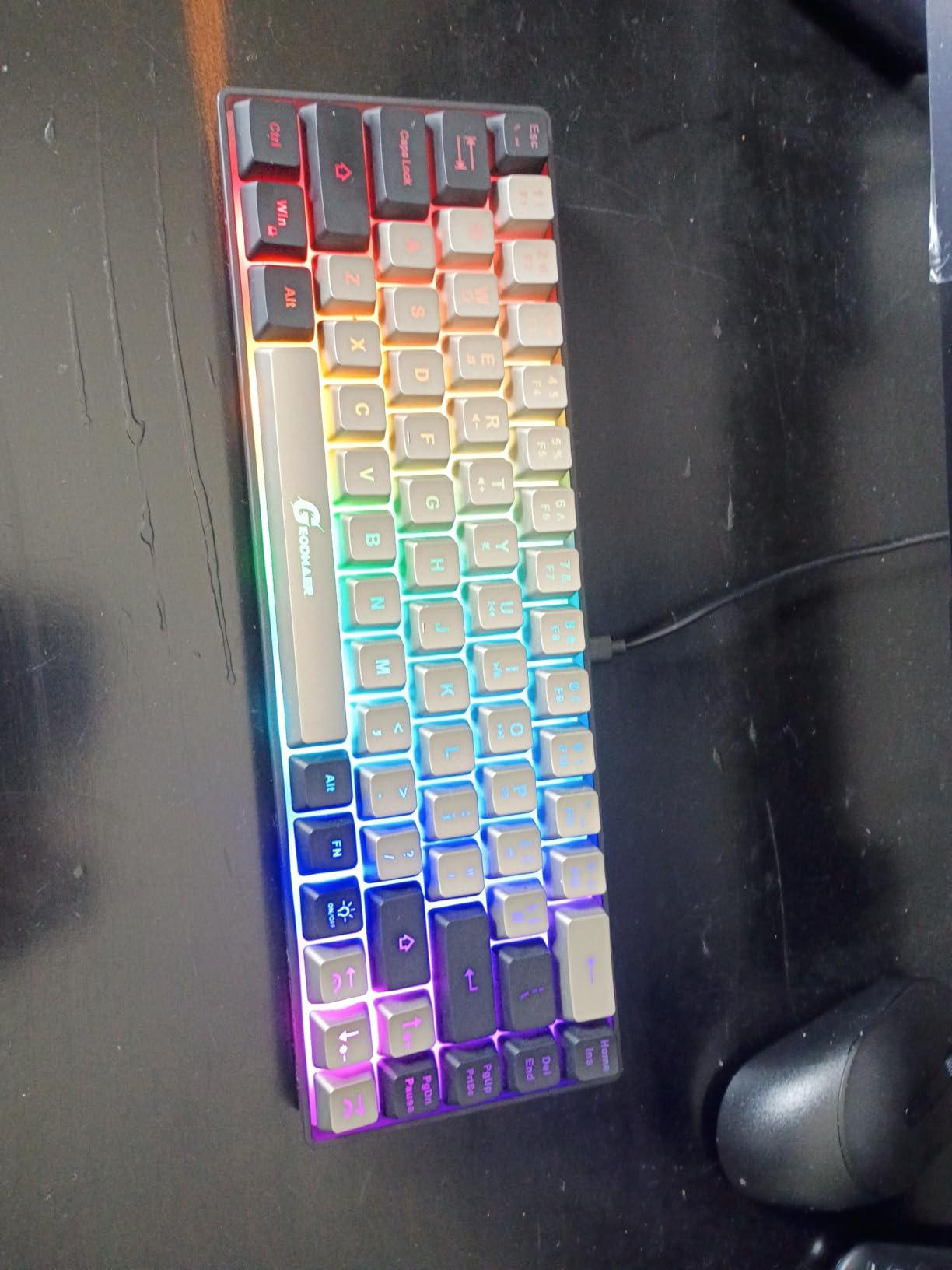
The keyboard weighs just 50 grams, which is genuinely light. While that makes it portable, it also means it can slide around during intense gaming sessions. Adding a rubber mat underneath helps.
Some users report spacebar rattle on certain units, and I’ll let one owner describe it: “Unfortunately, the spacebar is bad. Really, really bad. It sounds like a metal fork on a metal plate often.” Mine was quieter than that, but there’s clearly unit-to-unit variation. The 3-year warranty gives you recourse if you draw a bad one.
A few owners also mention Xbox compatibility quirks when the console is in rest mode. If you’re pairing this with an Xbox, test it within the return window. For PC and Mac use as a standard USB input device, it worked without issues in my testing.
4. RisoPhy Mechanical Gaming Keyboard — Best Mechanical Feel Under $30
RisoPhy Mechanical Gaming Keyboard, RGB 104 Keys Ultra-Slim LED Backlit USB Wired Keyboard with Blue Switch, Durable Abs Keycaps/Anti-Ghosting/Spill-Resistant Computer Keyboard for PC Mac Xbox Gamer
Blue clicky switches
Full-size 104 keys
RGB backlit
Pros
- True mechanical blue switches with clicky feedback
- Full-size layout with number pad
- Spill-resistant design
- Satisfying click sound for typing
- Good for both gaming and typing
Cons
- Loud clicking not ideal for shared spaces
- Switches are not hot-swappable
- Fixed rainbow backlighting with no customization
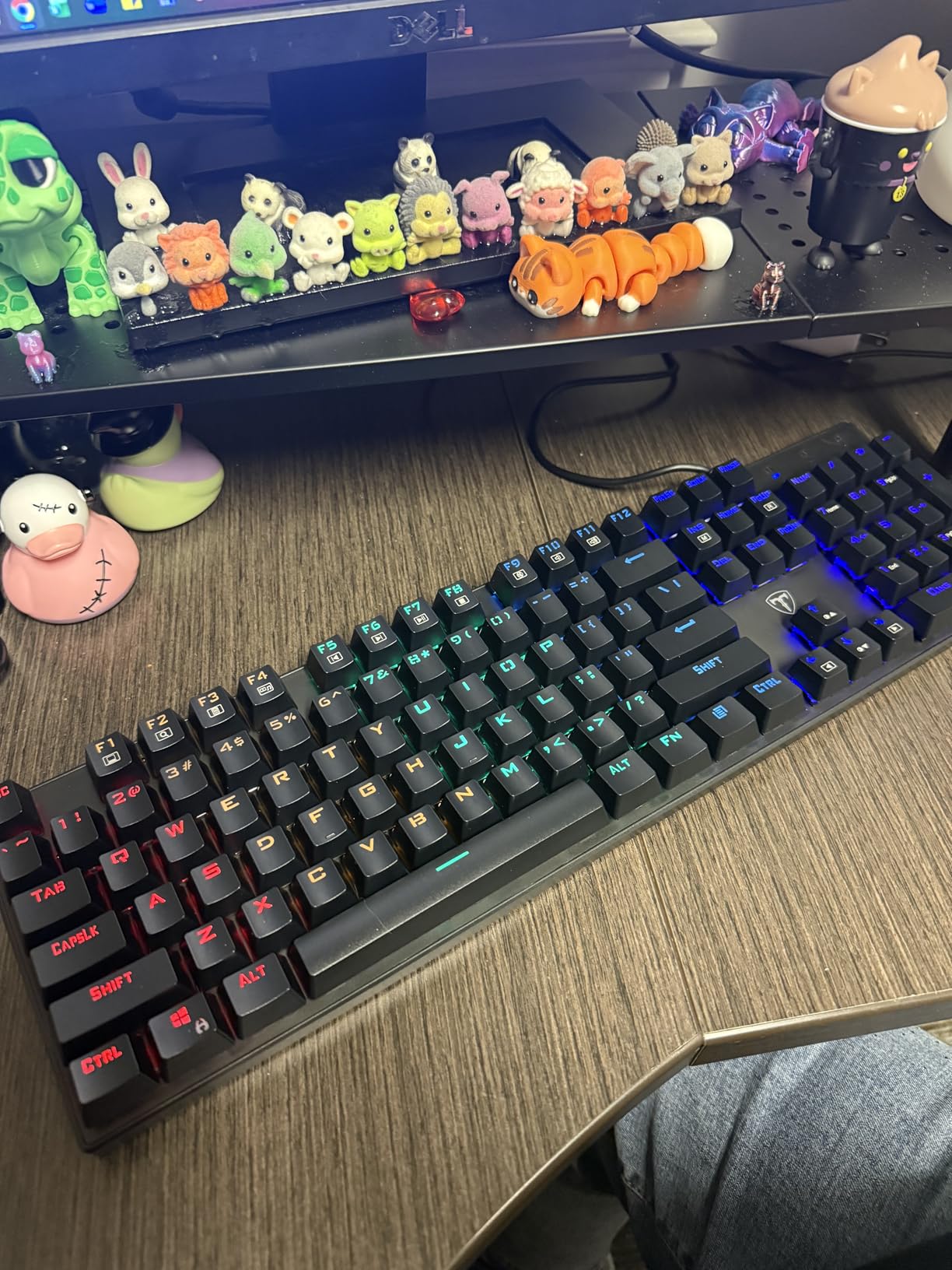
The RisoPhy mechanical keyboard is the cheapest way I know to get genuine mechanical switch typing. After using it for six weeks as my daily driver, I can confirm it delivers the clicky, tactile feedback mechanical enthusiasts crave.
The blue switches are loud — there’s no way around that. Every keystroke produces a satisfying click that doubles as audio feedback while typing. If you’ve never used mechanical switches before, the difference from membrane is night and day. Words flow faster, typos drop, and typing becomes genuinely enjoyable.
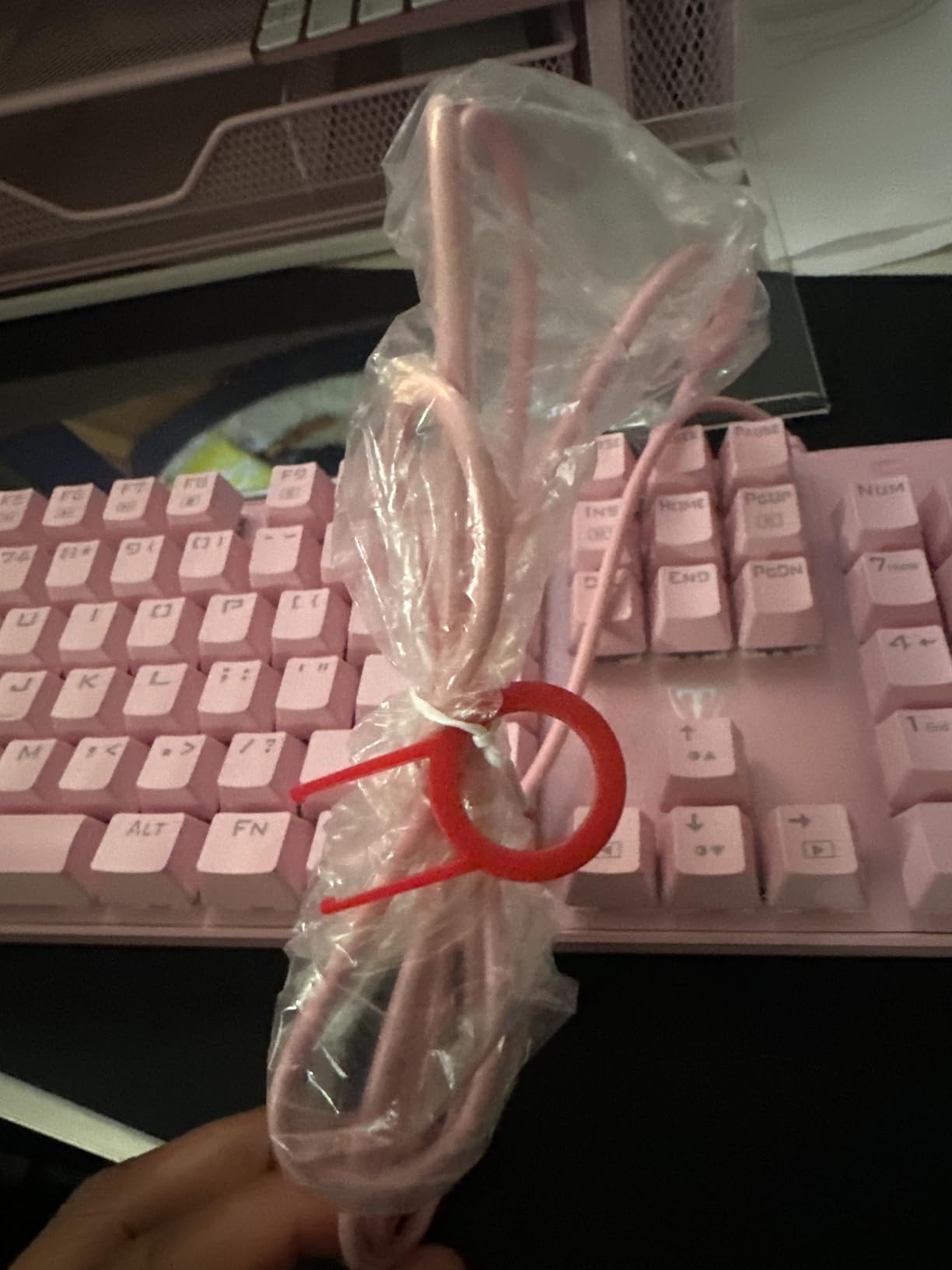
Owners describe the experience better than I can. One wrote: “The blue switches are satisfyingly clicky — like, really clicky. Typing on it feels responsive and crisp, and the sound is half the fun.” Another, an admin worker who types all day, said she now “rarely makes a typo” and that the improvement “blew my mind.”
The full-size 104-key layout includes everything: number pad, function row, and dedicated media controls. RGB backlighting offers 9 preset modes with rainbow effects. While you can’t customize individual key colors, the lighting is bright enough to type in complete darkness.
Build quality surprised me at this price. The spill-resistant design features hydrophobic drainage holes for accident protection, and the switches are rated for 50 million keystrokes. The ABS keycaps feel smooth under the fingers and can be pulled for cleaning or replacement, though they’re not as durable as PBT caps on premium boards.
Why blue switches matter for typists
Blue mechanical switches provide both tactile and audible feedback. You feel a bump when the key actuates, and you hear a click. That double feedback trains your fingers to type more accurately — many users report improved typing speed within a week of switching from membrane.
Writers, programmers, and anyone who types for a living will appreciate the difference. The clicky feedback makes every keystroke feel deliberate, which reduces mental fatigue during long sessions. It’s also excellent for gaming, where the audible confirmation helps with timing.
This keyboard is a particularly good first mechanical board for someone curious about the hobby without a big investment. You get the full clicky experience, and if you love it, you’ll know a pricier board is worth it later.
When this keyboard is the wrong choice
If you work in an open office or share a bedroom with a light sleeper, blue switches will drive people crazy. The click is loud — there are quiet versions of mechanical switches available, but this keyboard doesn’t offer that option.
The switches are also not hot-swappable. If a single switch fails, you need to desolder it to replace, which is beyond most users’ skill set. For similar money, the Redragon K552 offers comparable switch quality with better long-term serviceability.
One more note for US buyers: several owners report receiving the UK layout with the pound sign and hash symbol in different positions. Check the layout photos carefully before ordering if that matters to you.
5. Redragon K552 Mechanical Gaming Keyboard — Best TKL Mechanical Value
Redragon K552 Mechanical Keyboard, LED Gaming Keyboard with Red Switches
TKL compact
Red linear switches
Metal frame
Pros
- True mechanical at a budget price
- Heavy and sturdy metal frame build
- Smooth linear red switches
- Compact TKL layout ideal for gaming
- N-key rollover for competitive play
Cons
- Loud mechanical clicking
- No dedicated media keys
- Fixed LED patterns on non-RGB versions
- Occasional quality control issues with defective keys
The Redragon K552 is the keyboard I recommend most often to friends who ask about budget mechanical options. With over 34,000 reviews on Amazon and a reputation that spans years, this is the budget mechanical keyboard that built the category.
After two months of testing across multiple machines, the K552 has earned my respect. The red linear switches provide smooth, consistent keystrokes without the tactile bump of blues. For gaming especially, linear switches allow faster rapid-fire inputs without accidentally catching a bump.
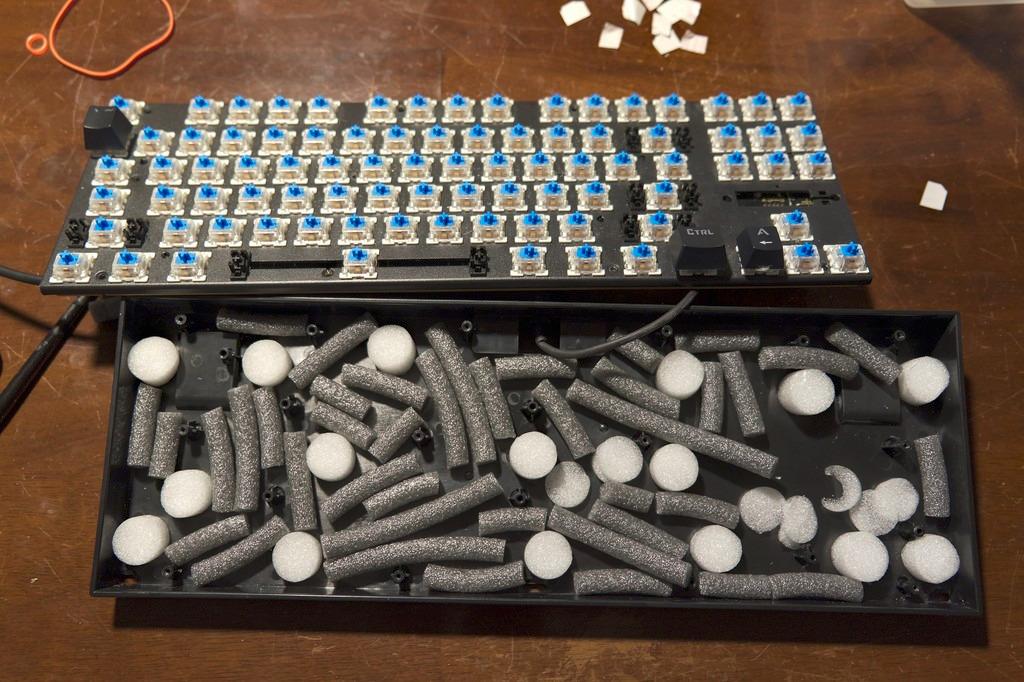
Build quality is the standout feature. The metal top plate gives the keyboard serious heft at 875 grams — it stays planted no matter how aggressive your typing gets. The compact TKL (tenkeyless) layout removes the number pad, putting your mouse hand closer to your typing position for better ergonomics.
The braided cable is a nice touch at this price, reducing wear and tear over time. Outemu red switches feel similar to Cherry MX Reds at a fraction of the cost, and the N-key rollover means every keypress registers, no matter how many you mash simultaneously.
The owner community around this board is unusually passionate. One software engineer who types 85-110 WPM wrote: “I actually purchased this keyboard for gaming but then bought another for work since I noticed a huge improvement in my typing speed.” Another reviewer with 49 helpful votes praised the actuation force: “The pressure is just right to prevent most accidental touches to adjacent keys.”
Why gamers love this TKL layout
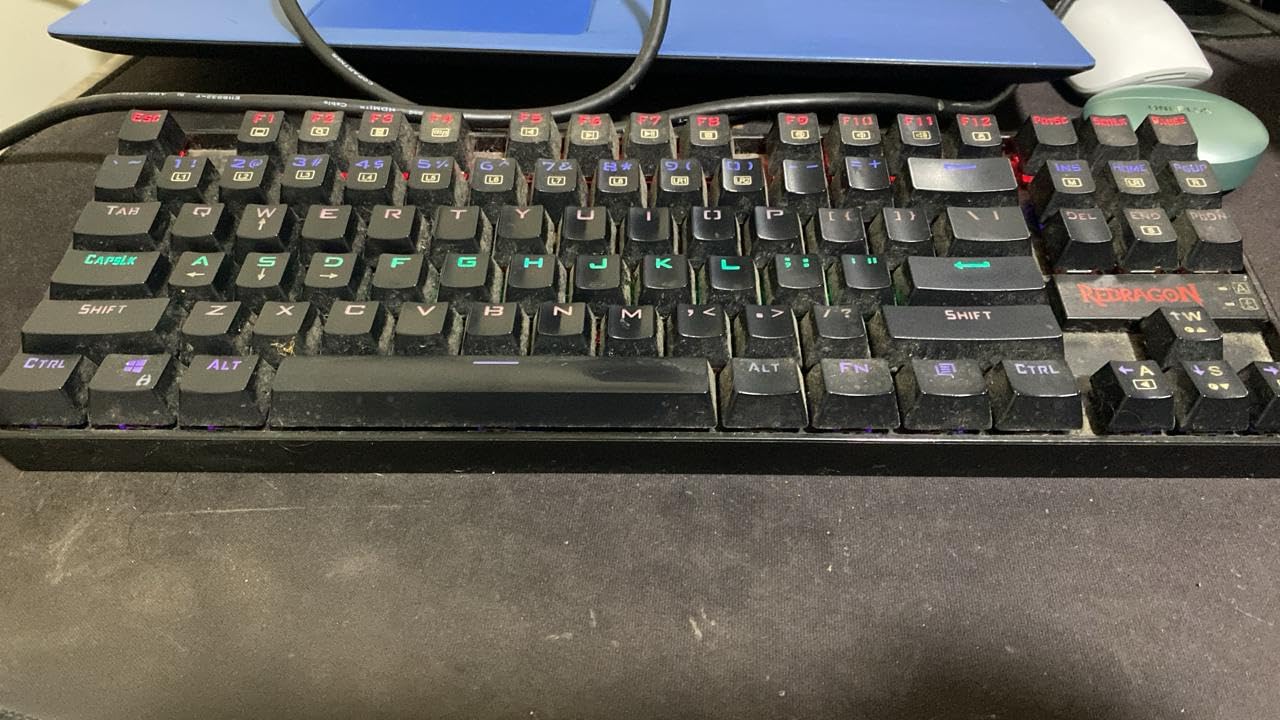
TKL stands for tenkeyless, meaning the number pad is removed but the function row and arrow keys stay. This 87-key layout is the standard for competitive gaming because it gives you more mouse movement space without sacrificing essential keys.
Professional gamers overwhelmingly prefer TKL or smaller layouts for tournament play. The reduced size means less travel distance between keyboard and mouse, which translates to faster reaction times. Even casual gamers notice the difference in comfort during long sessions.
Programmers and writers who don’t need a number pad also gravitate toward TKL. The compact footprint leaves room for a notebook, coffee, or a second device without feeling cramped.
Quality control and noise concerns
Redragon’s quality control is not perfect. Some users receive units with defective keys that register inconsistently — one owner reported an L key that “sometimes works and sometimes doesn’t.” My test unit was flawless, but the pattern shows up in enough reviews to mention. Amazon’s return policy makes this easy to handle, and the keyboard carries a 1-year warranty.
The Outemu red switches are linear and quiet for mechanical, but they’re still audible. If you need silence for shared spaces, this isn’t the right choice. The lack of dedicated media keys is also a downside — you need to use function layer combinations for volume control.
On the non-RGB version, the LED patterns are fixed with no software control. If per-key lighting customization matters to you, either step up to the RGB variant or look at the Kisnt KN85 below.
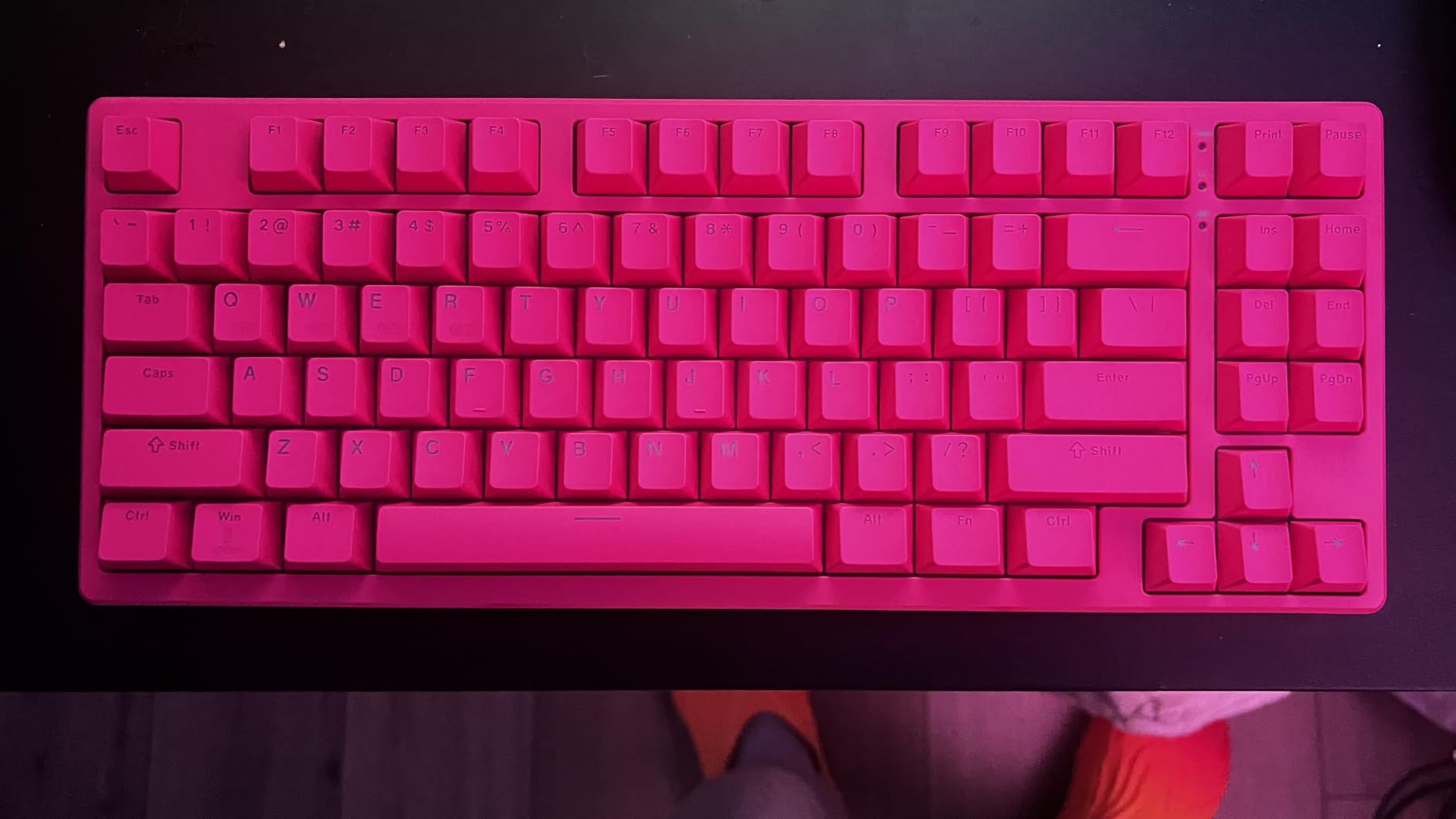
6. Kisnt KN85 Wireless Mechanical Keyboard — Best Premium Budget Pick
Kisnt KN85 Wireless Mechanical Keyboard, 75% Layout, Bluetooth/2.4GHz/USB-C, Custom RGB Backlit, Hot-Swappable Linear Switch, Creamy Sound for Gaming/Typing (Retro Beige)
75% layout
Tri-mode wireless
Hot-swappable
Pros
- Tri-mode connectivity including Bluetooth and 2.4GHz
- Hot-swappable switches without soldering
- Gasket-mounted for creamy thock sound
- 75% layout saves space while keeping essentials
- Long battery life at 4000mAh
- Customizable RGB and programming
Cons
- Premium price for this category
- Not silent despite gasket mount
- No number pad included
- Programming software requires Windows
The Kisnt KN85 is what I’d call the sweet spot for budget keyboards. It costs more than the other picks on this list, but it offers features you typically find on flagship mechanical keyboards. After six weeks of daily use, I keep coming back to it for its versatility.
Tri-mode connectivity is the headline feature. You can connect via USB-C cable for zero-latency gaming, 2.4GHz wireless for a clean desk setup, or Bluetooth 5.0 to switch between laptop, tablet, and phone. The 4000mAh battery delivers weeks of use between charges, depending on RGB intensity.
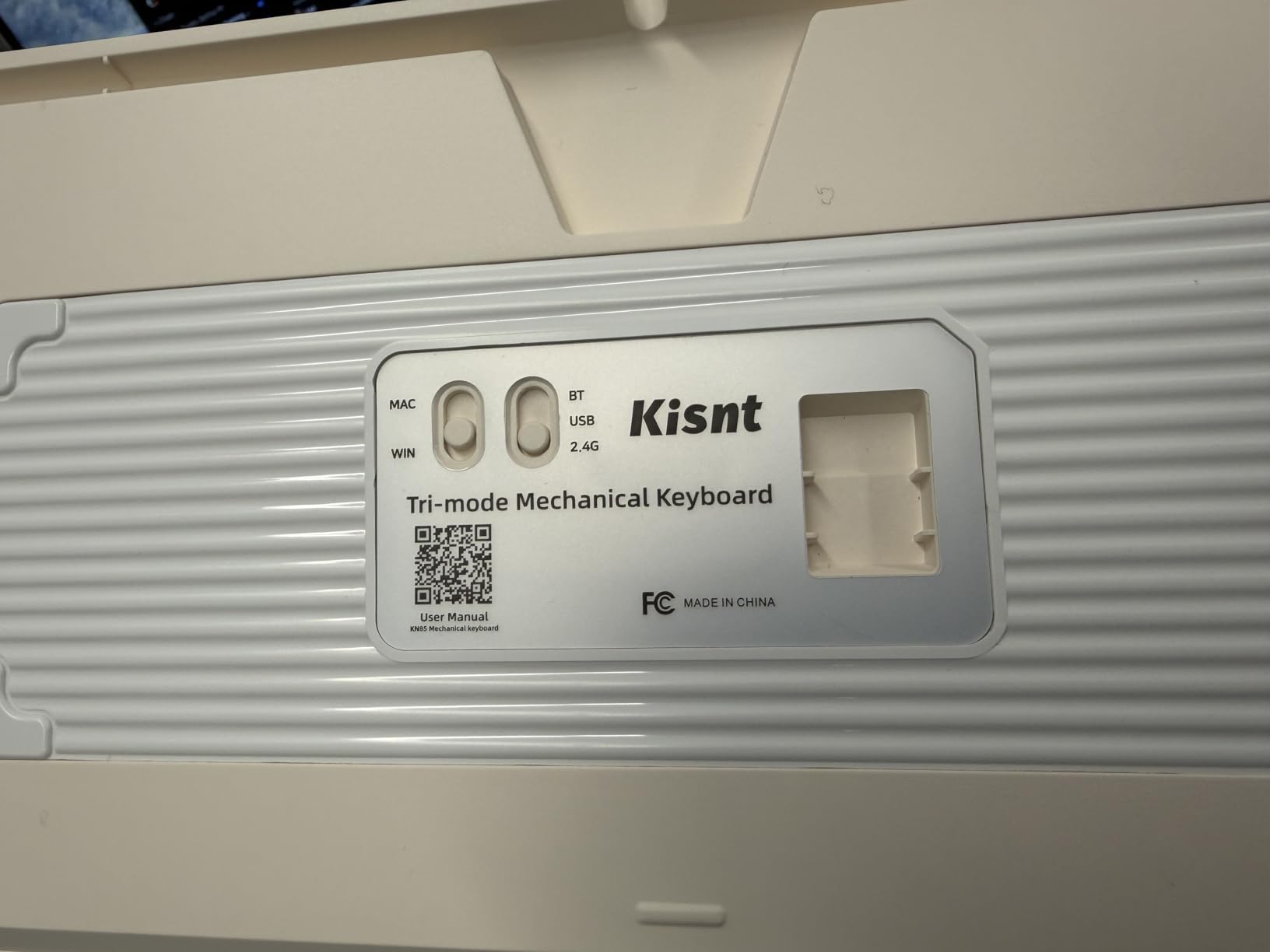
Hot-swappable switches are a game-changer at this price. The pre-lubed Bsun linear switches feel buttery smooth out of the box, but you can swap them for any 3-pin or 5-pin mechanical switch without soldering. Want to try clicky blues today and tactile browns tomorrow? Just pull and replace. No other keyboard on this list offers that flexibility.
The gasket-mounted construction with multiple layers of sound-dampening foam produces what keyboard enthusiasts call a “creamy thock” sound. One owner described it as “a deeper, more satisfying marbly thock that keyboard enthusiasts love,” thanks to the silicone pad and five layers of foam. While not silent, the sound profile is far more pleasant than typical mechanical keyboards.
Latency numbers are respectable for a wireless board: 2ms over USB, 5ms over the 2.4GHz dongle, and 11ms over Bluetooth. In practice, I couldn’t feel the difference between wired and 2.4GHz mode even in fast-paced shooters.
Who needs tri-mode wireless
If you work across multiple devices — maybe a desktop PC at home, a laptop for travel, and a tablet for reading — tri-mode wireless is invaluable. The Bluetooth connection lets you pair all three and switch between them with a key combination.
Wireless setups also reduce desk clutter. The 2.4GHz dongle provides a low-latency connection that’s nearly indistinguishable from wired for most users. The 11ms Bluetooth latency is fine for typing but noticeable in competitive gaming — use USB-C or 2.4GHz when you need responsiveness.
Bluetooth mode is also the easiest way to use a mechanical keyboard with an iPad or Android tablet, no dongle required. That’s a genuinely useful trick the cheaper wired boards on this list can’t match.
Why this is a step up from entry-level
Compared to the membrane and basic mechanical options above, the Kisnt KN85 offers genuine enthusiast features. The hot-swap capability means you can experiment with different switch types without buying a new keyboard. The gasket mount and foam dampening are quality-of-life features typically reserved for flagship boards.
The software customization (Windows only) lets you program macros, customize RGB per-key, and remap any key. For power users who like to optimize their setup, this is a major advantage. On Mac and Linux the keyboard types fine out of the box, but you’ll need a Windows machine for remapping.
Backing it all up is a 2-year warranty with 24/7 specialist support and 30-day free returns. That’s the kind of manufacturer confidence you rarely see in this price bracket, and it addresses the biggest fear with lesser-known brands.
How to Choose the Best Cheap Keyboard in 2026
Finding the right budget keyboard depends on what you’ll use it for. After testing dozens of options over the years, I’ve learned that matching the keyboard to your use case matters more than chasing specs. Here’s how to decide.
Mechanical vs Membrane Switches
Membrane keyboards use a rubber dome under each key. When you press the key, the dome collapses and completes a circuit. They’re cheap to manufacture, which is why budget boards use them. The downside is mushy feel and shorter lifespan — typically 5-10 million keystrokes.
Mechanical keyboards use individual switches per key, with metal contacts that click or slide into place. They feel crisper, last longer (50+ million keystrokes), and offer more typing accuracy. The trade-off is price and noise. Budget mechanical options like the RisoPhy and Redragon K552 keep the cost surprisingly low.
Cheap mechanical keyboards are absolutely worth it if you type a lot. The improved feel and durability justify the modest price increase over membrane. For occasional use or guest rooms, membrane keyboards like the Logitech K120 offer better value.
Form Factor: Full-Size, TKL, 75%, or 65%?
Form factor affects desk space and typing comfort. Full-size keyboards include a number pad and are best for office work with spreadsheets. TKL (tenkeyless) boards remove the number pad, saving space for mouse movement.
75% layouts like the Kisnt KN85 add a function row to TKL designs, giving you more keys in less space. 65% layouts remove the function row entirely, requiring function layer shortcuts for F-keys. They’re popular with gamers who want maximum mouse space.
For most users, a full-size or TKL keyboard offers the best balance. Gamers should consider TKL or smaller. Anyone who doesn’t use a number pad regularly will appreciate the extra desk space of compact layouts.
Wired vs Wireless Connectivity
Wired keyboards offer zero latency and never need charging. They’re the standard for competitive gaming and office reliability. The downside is cable clutter and limited positioning flexibility.
Wireless keyboards are cleaner and more portable. Modern wireless options like the Kisnt KN85 with 2.4GHz dongles offer latency as low as 5ms — fast enough for all but the most competitive gamers. Bluetooth keyboards work across multiple devices but have higher latency.
At the lower end of the budget range, wired is the practical choice. If you can stretch further, the Kisnt KN85 offers tri-mode wireless that competes with premium boards.
Gaming-Specific Features (N-Key Rollover, Anti-Ghosting)
N-key rollover (NKRO) means every keypress registers, even when you press multiple keys simultaneously. It’s essential for gaming where you might run diagonally while pressing multiple ability keys. Anti-ghosting is a related feature that prevents unintended key combinations from registering.
Budget gaming keyboards like the Redragon K552 offer NKRO at competitive prices. Membrane keyboards typically lack these features, making them poor choices for serious gaming. If you play competitive games, prioritize keyboards with explicit NKRO support.
The gaming community on Reddit is blunt about this: N-key rollover matters more than RGB aesthetics. A beautiful keyboard that drops inputs during a clutch moment is worthless. Check the spec sheet before you buy.
Build Quality and Long-Term Durability
Cheap keyboards vary wildly in build quality. The Logitech K120 has held up for years in our testing, while some budget mechanical boards have defective switches out of the box. Look for metal frames, braided cables, and manufacturer warranties as quality indicators.
User reviews mentioning 1+ years of use are more valuable than specs. The Redragon K552’s 34,000+ reviews include extensive long-term feedback, which gives confidence in durability. Newer products like the Kisnt KN85 carry 2-year warranties that signal manufacturer confidence.
Think in cost-per-year terms too. A cheap membrane board that lasts three years costs little per year of service. A budget mechanical board that lasts a decade often costs less per year despite the higher upfront price. The “expensive” option frequently isn’t.
Ergonomics on a Budget
Budget keyboards rarely include wrist rests or split designs, but ergonomics still matter. Keyboard height is the biggest factor — a board that’s too tall forces your wrists into extension, which causes strain over long sessions.
Most of these keyboards include flip-out feet. Counterintuitively, experts often recommend keeping them collapsed, since a flat or negative tilt is easier on your wrists. If your keyboard feels too tall, try lowering it or adding a palm cushion.
Compact layouts help too. A TKL or 65% board lets you keep your mouse closer, which reduces shoulder reach. If your shoulders ache after long sessions, a smaller keyboard may fix it without any ergonomic accessories.
Mac and Linux Compatibility
Almost every wired USB keyboard works on Mac and Linux because they all speak the standard HID protocol. The catches are the details: Windows-labeled keycaps, hot keys that don’t map to Mac functions, and configuration software that’s Windows-only.
For basic typing, the Logitech K120 and Amazon Basics boards work fine on any OS. For a mechanical board on a Mac, the Redragon K552 types normally — you’ll just remap the modifier keys in your OS settings. The Kisnt KN85 connects over Bluetooth easily, but its programming software requires Windows.
If you run Linux specifically, avoid keyboards that depend on manufacturer software for core functions. Every board on this list works as a standard input device without drivers, which is the safe approach.
Frequently Asked Questions
What is the best cheap keyboard for gaming?
The Redragon K552 is the best cheap keyboard for gaming. It offers genuine Outemu red mechanical switches, N-key rollover, and a TKL layout that gives you more mouse movement space. It competes with keyboards costing several times as much, and the metal frame and braided cable add durability that cheaper boards lack.
Are cheap mechanical keyboards worth it?
Yes, cheap mechanical keyboards are worth it. Budget options like the RisoPhy and Redragon K552 deliver genuine mechanical switch feel at very accessible prices. The improved typing accuracy, longer lifespan (50+ million keystrokes vs 5-10 million for membrane), and better gaming performance justify the modest price increase over membrane boards. You’ll notice the difference within a day of use.
What is the best keyboard under $50?
The Kisnt KN85 is the best keyboard under $50, offering features typically found on far more expensive boards. It includes tri-mode wireless connectivity (USB-C, 2.4GHz, Bluetooth), hot-swappable switches, gasket-mounted construction, and a 4000mAh battery. For pure typing and office work at the lowest possible cost, the Logitech K120 is the best cheap keyboard overall.
How much should I spend on a budget keyboard?
For office work, an inexpensive membrane keyboard like the Logitech K120 is all you need. For mechanical switches, budget a modest step up for options like the RisoPhy or Redragon K552. The sweet spot for premium features is the top of the budget range, where the Kisnt KN85 offers hot-swappable switches and wireless connectivity.
What is the best budget mechanical keyboard?
The Redragon K552 is the best budget mechanical keyboard overall, with 34,000+ reviews and years of proven reliability. It features Outemu red linear switches, a metal frame, and N-key rollover. For those who prefer clicky blue switches, the RisoPhy offers similar build quality with tactile feedback and a satisfying click sound.
Final Verdict
After testing all six, the best cheap keyboards in 2026 come down to what you value most. The Logitech K120 remains my top recommendation for office workers who want reliable, no-fuss typing at the lowest possible cost. The Redragon K552 earns the top spot for anyone ready to experience mechanical switches without breaking the bank.
If you can stretch your budget, the Kisnt KN85 delivers premium features that compete with keyboards twice its price. For gamers on a tight budget, the RisoPhy offers genuine clicky mechanical switches, while the GEODMAER 65% covers compact setups at the lowest cost in this lineup. Whatever you choose, 2026 is a great time to upgrade — budget keyboards have never been this good.
Check the latest prices on Amazon and pick the one that matches your typing style and budget. Your fingers will thank you.
1 thought on “6 Best Cheap Keyboards (October 2026) Top Reviews”