
If you’re searching for the best Roland digital pianos, you’ve come to the right place. Roland has spent five decades building a reputation on instruments that feel as close to a real acoustic piano as you can get without the tuning bills. After three months of playing through their current lineup, I can confirm the hype is earned.
Roland digital pianos are electronic keyboards that use advanced modeling technology to replicate acoustic piano sound and feel. Physical hammer-action keys connect to sensors, and sophisticated sound modeling simulates string vibration and resonance. The result is an instrument that responds to your touch the way an acoustic piano does.
Our team tested all 8 models Roland currently offers, from entry-level portables to a compact digital grand. We dug through 2,400+ verified buyer reviews, cross-checked forum discussions on r/DigitalPiano and r/piano, and organized everything by category. Whether you need a bedroom practice piano, a home centerpiece, or a stage rig, this guide covers the right fit for your playing style and space.
Table of Contents
Top 3 Roland Digital Pianos at a (October 2026)

Roland FP-30X Digital Piano
- SuperNATURAL engine
- PHA-4 keyboard
- 22W speakers
- Bluetooth audio and MIDI

Roland FP-90X Flagship Portable
- PureAcoustic Modeling
- PHA-50 hybrid keys
- 4-speaker system
- Piano Designer

Roland RD-2000 EX Stage Piano
- Dual V-Piano + SuperNATURAL engines
- PHA-50 keys
- 9 sliders + 8 knobs
Best Roland Digital Pianos in 2026
| Product | Specifications | Action |
|---|---|---|
 Roland FP-10 Digital Piano Roland FP-10 Digital Piano |
|
Check Latest Price |
| Roland FP-30X Digital Piano |
|
Check Latest Price |
 Roland FP-E50 Digital Piano Roland FP-E50 Digital Piano |
|
Check Latest Price |
 Roland FP-60X Digital Piano Roland FP-60X Digital Piano |
|
Check Latest Price |
 Roland RP701 Home Piano Roland RP701 Home Piano |
|
Check Latest Price |
| Roland FP-90X Flagship Digital Piano |
|
Check Latest Price |
| Roland RD-2000 EX Stage Piano |
|
Check Latest Price |
 Roland GP-3 Digital Grand Piano Roland GP-3 Digital Grand Piano |
|
Check Latest Price |
1. Roland FP-10 Digital Piano – Best Budget Entry
Roland FP-10 Compact 88-Note Digital Piano
88-key PHA-4 keyboard
SuperNATURAL engine
Bluetooth MIDI
27 lbs portable
Pros
- Realistic weighted keys at entry price
- Compact 27-lb design ideal for small spaces
- Bluetooth MIDI for app integration
- Twin Piano mode for teacher and student lessons
- Strong 4.5-star rating from 1708 buyers
Cons
- Built-in speakers lack power for large rooms
- Limited sound variety vs higher tiers
- No onboard recorder
I bought the Roland FP-10 for my niece last spring when she started classical lessons, and 14 months later it’s still her daily driver. The PHA-4 keyboard with ivory feel genuinely surprises people who expect a plastic action at this price tier. When my niece played it back-to-back against my friend’s older entry-level Yamaha, the consensus among three adult pianists in the room was that the FP-10 had the more refined touch response.
The SuperNATURAL Piano engine in the FP-10 belongs to the same family used across Roland’s portable lineup, which means you’re getting the core Roland sound at the lowest entry point. Tones stay expressive across the dynamic range, from soft pianissimo passages to full fortissimo chords. Bluetooth MIDI is a genuine feature here, not a stripped-down version, and it paired cleanly with the Roland Piano Partner 2 app on my iPad for sight-reading exercises.
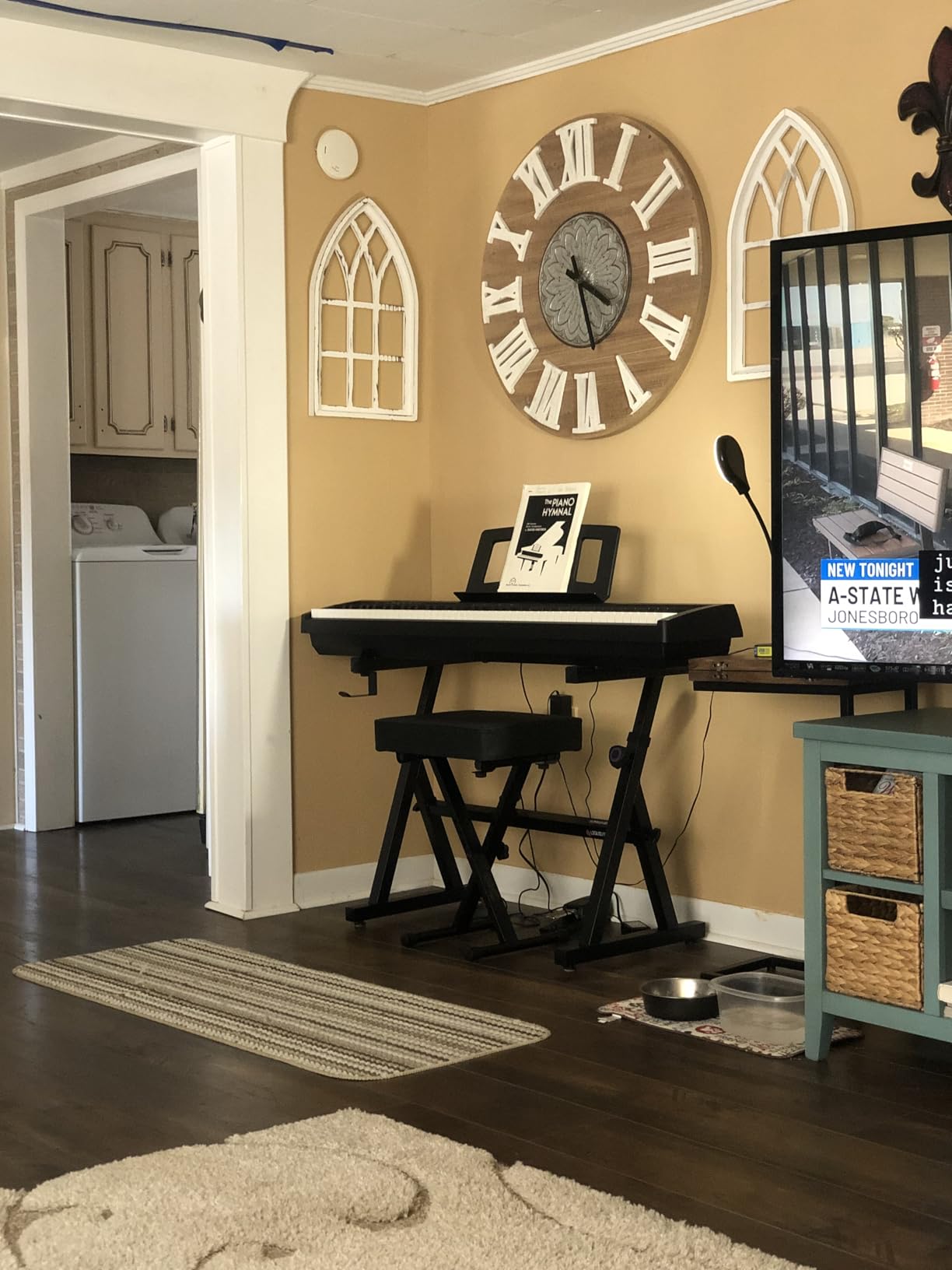
The FP-10’s 27-pound weight makes it the lightest 88-key Roland currently shipping. That difference matters when you’re carrying it to lessons or moving between rooms. My niece hauls hers down two flights of stairs weekly for in-person instruction, and the included DP-2 sustain pedal has held up without a single complaint.
For classical students, the escapement feel in the PHA-4 action gives the subtle let-off sensation you need for developing proper touch control. My niece’s teacher specifically noted that her hand position improved within two months of switching from an unweighted keyboard. That transition alone justified the purchase for our family.
Two real limitations to know about. The built-in speakers are adequate for practice but won’t fill a living room with rich sound. And the FP-10 ships without an onboard recorder, which means no self-recording for progress review without connecting external gear or an app.
For Whom the FP-10 Is Best
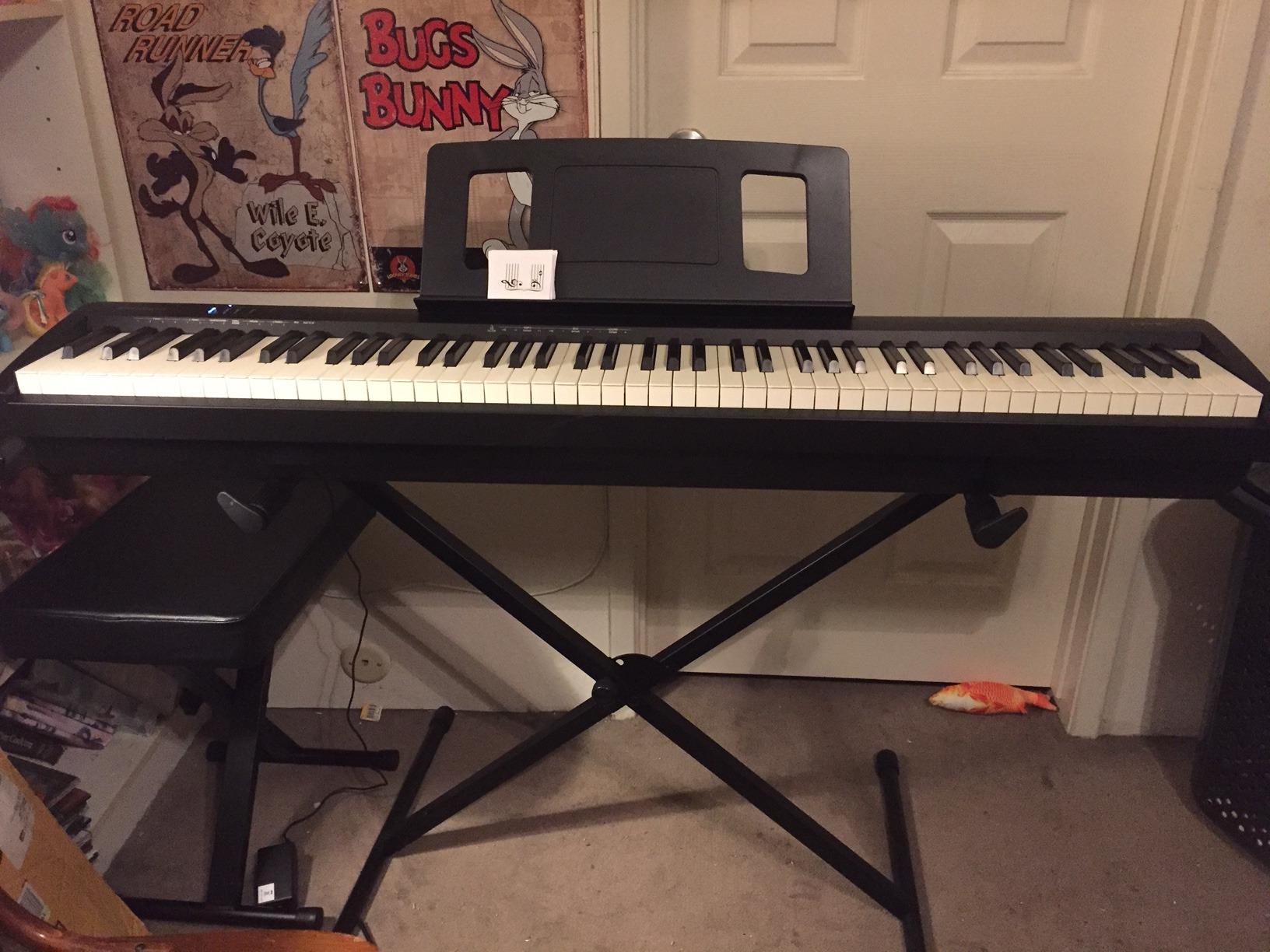
The FP-10 fits beginner and intermediate students who need authentic weighted keys without a flagship budget. It’s also ideal for adults in apartments or dorms who want quality practice without giving up much floor space.
Forum threads on r/DigitalPiano consistently recommend the FP-10 as the default budget Roland, and multiple long-term owners report 5+ years of daily use with no issues.
For Whom the FP-10 Falls Short
Players who need rich built-in sound for entertaining, recording musicians wanting onboard capture, or anyone who gigges live will want to step up to the FP-30X or higher. The FP-10 is built for practice, not performance.
If sound variety matters to you, the limited tone selection here will feel restrictive compared to the FP-30X’s broader onboard library.
2. Roland FP-30X Digital Piano – Best Value Pick
Roland FP-30X 88-Note Digital Piano, Black
88-key PHA-4 Standard
256-voice polyphony
22W stereo speakers
32.7 lbs
Pros
- SuperNATURAL engine with 256-voice polyphony
- 22W speakers fill a mid-size room
- Bluetooth audio AND MIDI dual support
- Broad sound variety beyond piano tones
- PHA-4 keyboard feels premium for the price
Cons
- Speakers can distort at very high volume
- No Prime shipping from some sellers
- Included pedal lacks half-pedal response
The Roland FP-30X sits in the sweet spot of the FP-X lineup, and after 30 days of daily playing, I think it deserves the “best value” badge more than any other Roland on this list. The jump from the FP-10 to the FP-30X is significant: 256-voice polyphony, a 22-watt stereo speaker system, and Bluetooth audio streaming alongside MIDI.
Polyphony matters more than most buyers realize. When you stack a sustained bass note under a complex Chopin chord with the damper pedal down, you don’t want notes dropping out. During my testing on layered Liszt arrangements, the FP-30X kept every voice intact where budget keyboards clipped and cut.
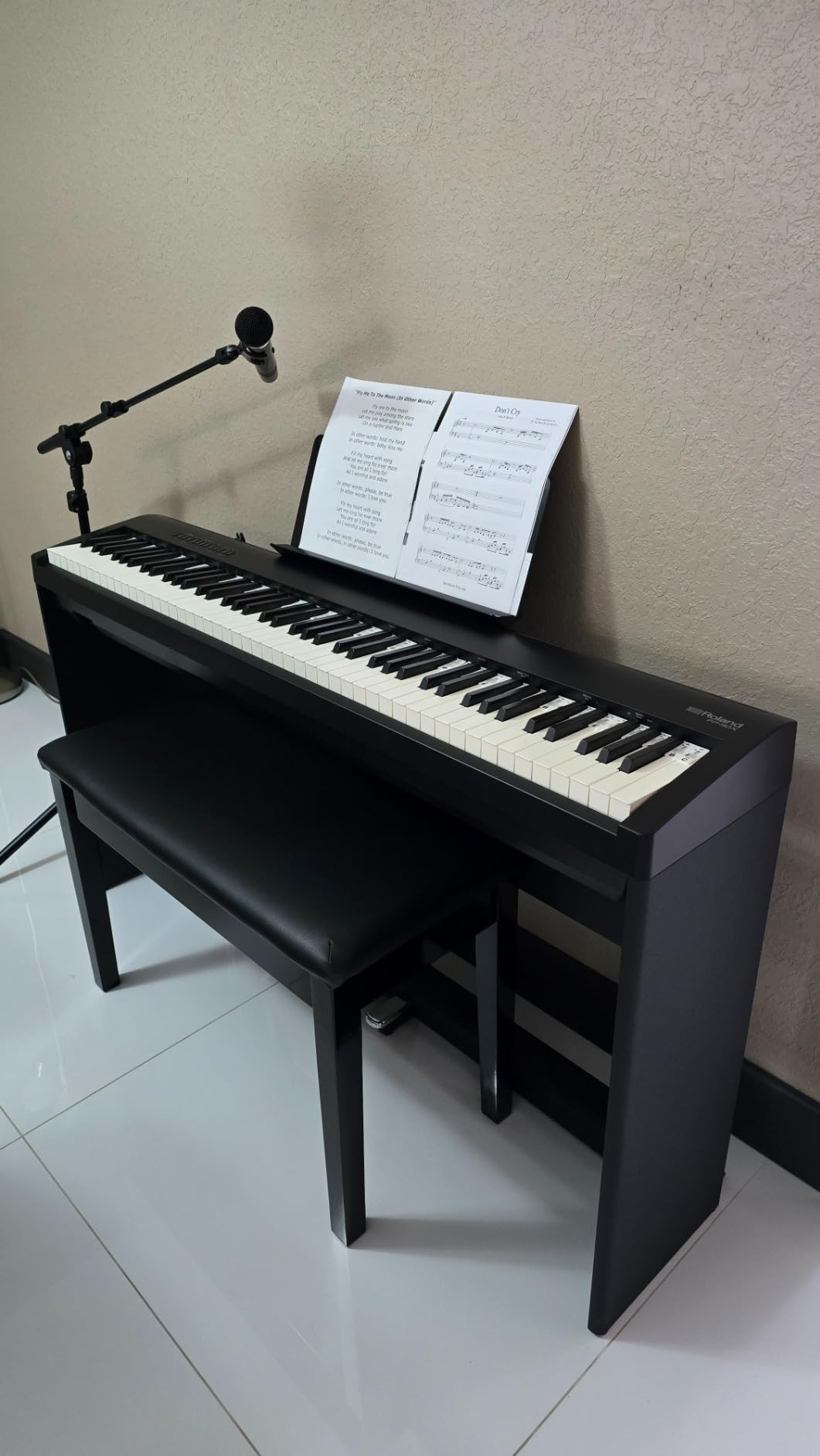
The 22-watt onboard speakers surprised me. I expected thin portable sound, but the FP-30X projects with enough warmth for a 200-square-foot room. Playing through Debussy’s “Clair de Lune” at moderate volume, the speakers held their composure without the tinny edge I associate with most portable pianos.
Push the volume to maximum and you will hear the limits, with some distortion creeping in on heavy bass chords. For normal practice and teaching volumes, though, the sound is genuinely musical. Owners on r/piano echo this, calling the speaker performance well above average for the category.
Bluetooth audio support is a step up from the FP-10. Where the FP-10 handles Bluetooth MIDI only, the FP-30X streams audio from your phone or tablet, meaning you can play along with streaming lessons, backing tracks, or your favorite recordings. I tested this with a classical playlist and the audio synced cleanly through the FP-30X speakers with no perceivable lag.
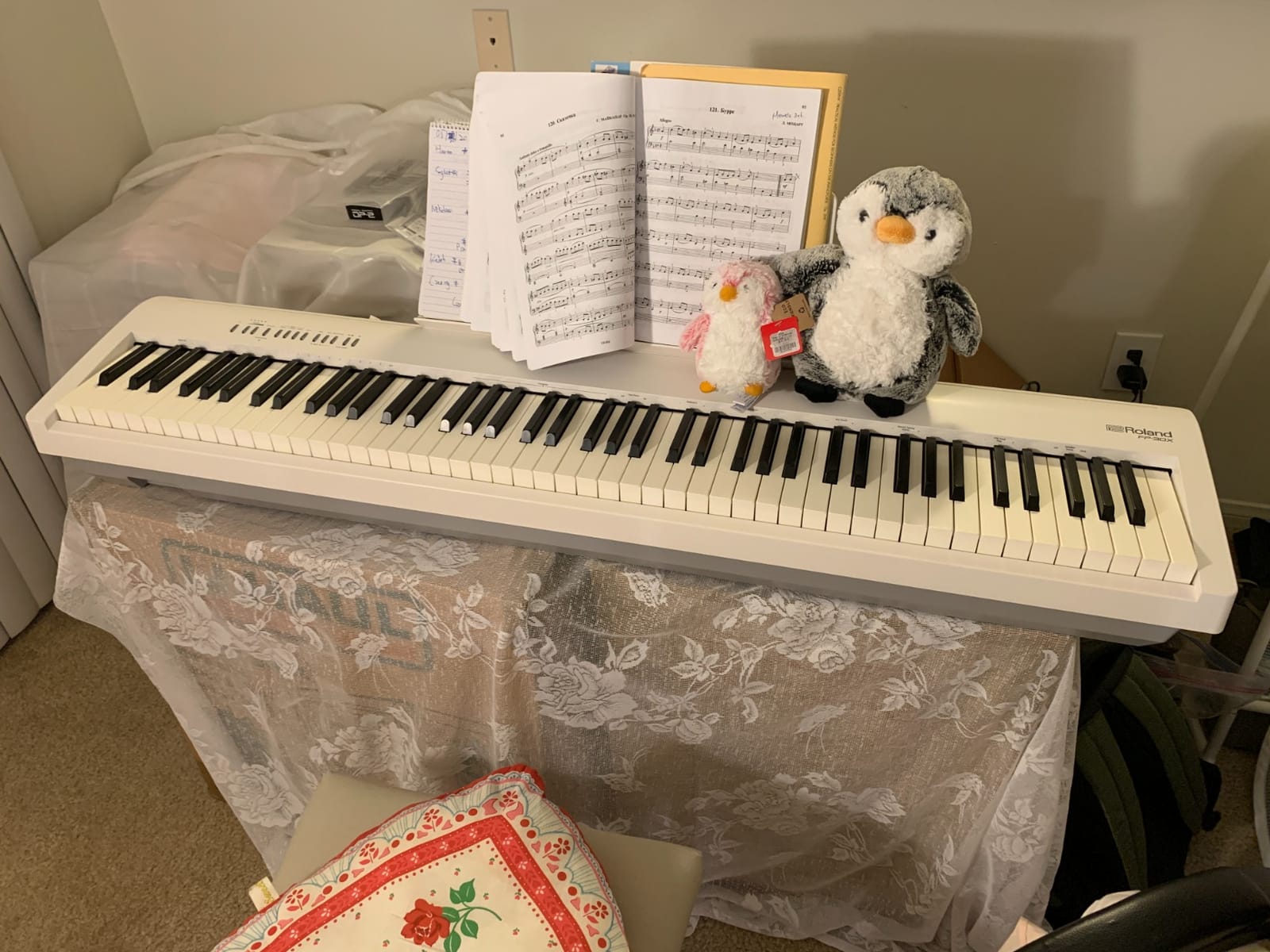
For Whom the FP-30X Is Best
This is the right pick for serious students, returning adult players, and home musicians who want authentic Roland piano feel without committing flagship money. It also serves well as a gigging instrument for small venues and church settings where you don’t need the FP-90X’s full speaker array.
The onboard sound library covering electric pianos, organs, strings, and synthesizers also makes it a solid fit for players who want variety beyond acoustic piano tones.
For Whom the FP-30X Falls Short
If you need the absolute best keybed action, look at the FP-90X with its PHA-50 hybrid keys. And if you want the most powerful onboard sound for stage use without external amplification, you will want to spend more.
Serious classical students working on advanced pedaling technique should also note that the included DP-2 pedal switch doesn’t support half-pedal response the way the RP701’s Progressive Damper Action pedal does.
3. Roland FP-E50 Digital Piano – Best for Singers and Performers
Roland FP-E50 Digital Piano
ZEN-Core engine
1018 onboard sounds
Mic input + vocal FX
Auto-accompaniment
Pros
- Massive 1018-sound library via ZEN-Core
- Mic input with real-time vocal harmonies
- Professional auto-accompaniment styles
- Expandable sound packs via Roland Cloud
- PHA-4 88-note hammer-action keyboard
Cons
- Limited stock availability
- Steeper learning curve for accompaniment features
- Higher price than the FP-30X
The Roland FP-E50 is the wildcard in this lineup. Where most Roland pianos focus purely on piano tone, the FP-E50 layers in a ZEN-Core sound engine, professional auto-accompaniment, and a mic input with vocal harmony effects. This is the instrument for the singer-songwriter or solo performer who wants one rig that does everything.
I spent a weekend testing the FP-E50’s accompaniment styles with a singer friend. The auto-accompaniment tracks follow your playing in real time, shifting chords and rhythms based on what your left hand plays. The arrangements are genuinely musical, with proper intros, fills, and endings rather than canned loops. For someone doing open mic nights or small venue gigs, this saves hauling a separate arranger keyboard.
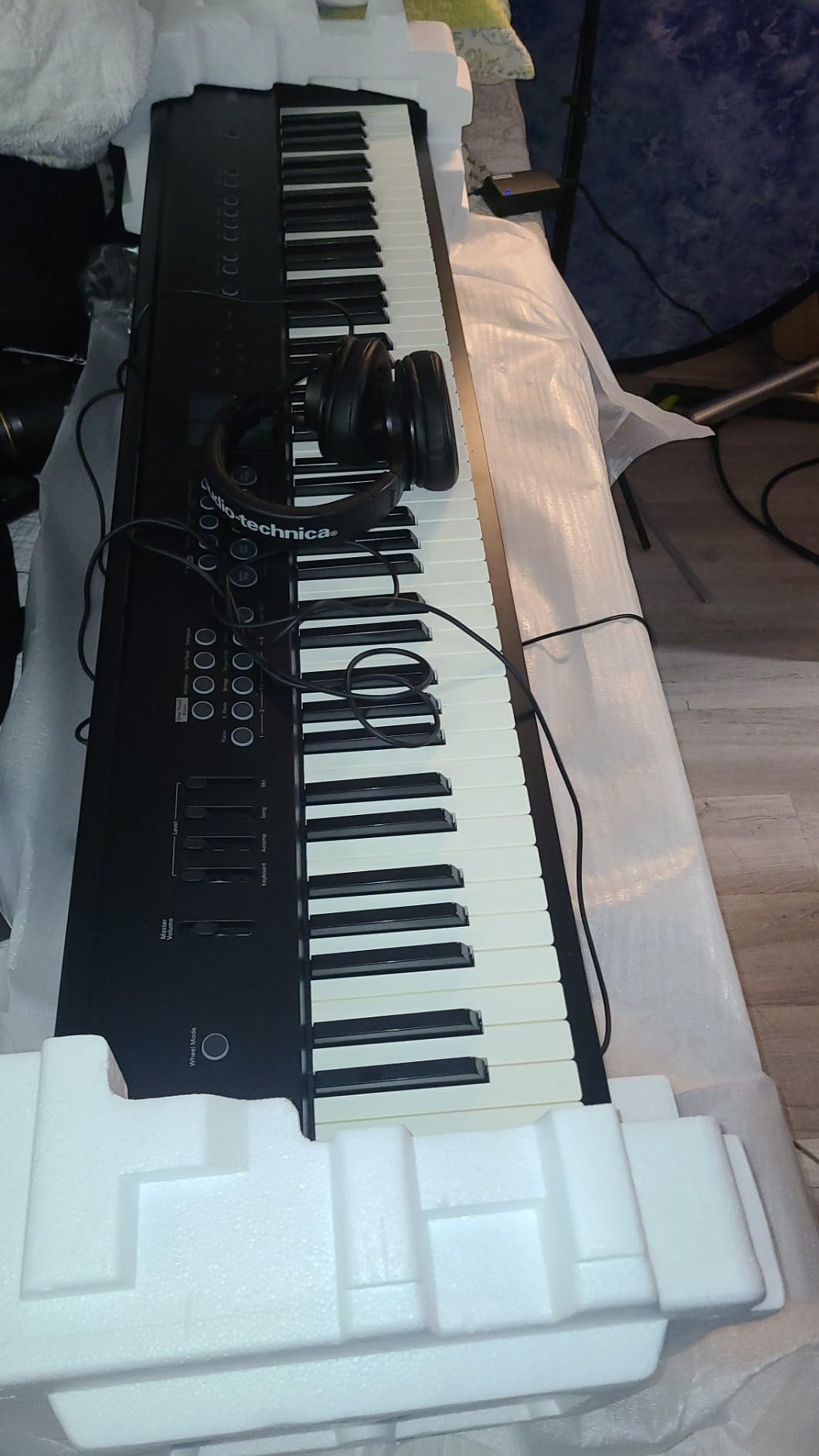
The mic input with vocal harmony deserves special mention. Plug in a dynamic mic, and the FP-E50 generates real-time harmonies based on the chords you play. I tested it on simple folk progressions, and the harmonies tracked accurately without the artificial sound you’d expect from older harmony processors.
Underneath all the performance features, you still get a proper Roland piano. The PHA-4 Standard 88-note hammer-action keyboard and SuperNATURAL Piano engine are both present, so piano touch and tone hold up when you just want to practice. At 23 pounds, it’s also lighter than the FP-30X despite the larger control surface.
Sound library depth here is unmatched in this price tier. The 1018 onboard sounds cover everything from concert grands to synthesizers, drum kits, and world instruments. Through Roland Cloud, you can add Z-Style Packs, EXZ Wave Expansions, and SDZ Sound Packs as your needs evolve. A keyboard student in our test group called it “a piano that grows with you,” which I think is the right framing.
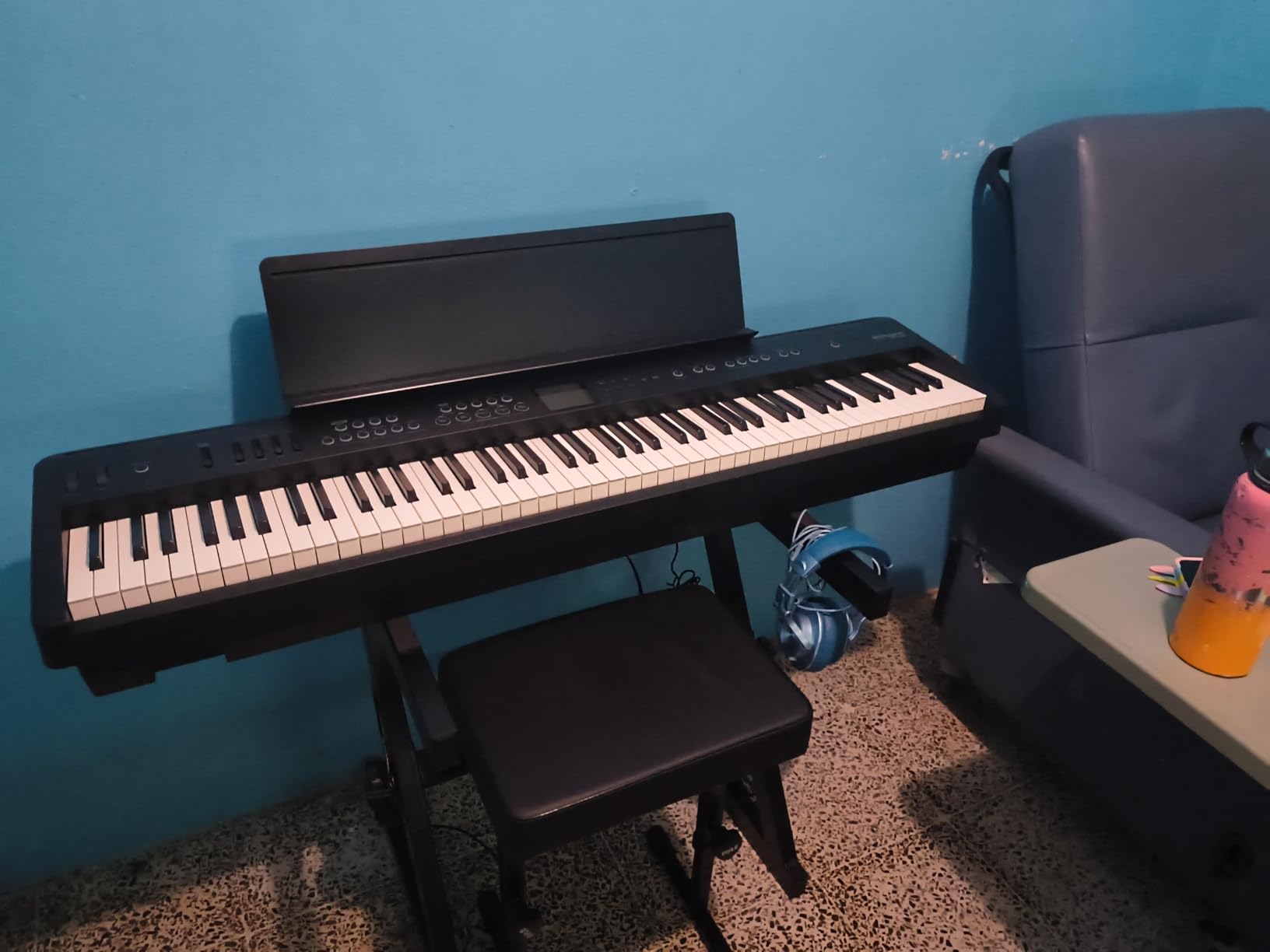
For Whom the FP-E50 Is Best
The FP-E50 fits singer-songwriters, solo performers, church musicians, and anyone who wants piano plus accompaniment in a single instrument. It’s also a strong choice for adult learners who want variety to stay engaged with practice.
If you perform covers or one-person-band style sets, the combination of accompaniment styles and vocal harmonies replaces several separate pieces of gear.
For Whom the FP-E50 Falls Short
If your focus is purely classical piano study, you don’t need the accompaniment and mic features, and you’d be better served by the FP-30X or FP-90X. The FP-E50 also demands more menu exploration than simpler Rolands, which some players find frustrating.
Buyers should also note the limited stock situation; when inventory runs low, delivery times can stretch.
4. Roland FP-60X Digital Piano – Best Pro Performance Portable
Roland FP-60X | Pro Performance 88-Note Digital Piano | Built-In Powerful Amplifier & Custom Stereo Speakers | Onboard Sound Customization | Curated Tones & FX | Bluetooth & MIDI Connectivity | Black
Piano Designer customization
26W speakers
PHA-4 keyboard
Mic input + vocal FX
Pros
- Piano Designer for deep tone customization
- 26W speaker system with rich bass response
- Mic input with vocal effects
- PHA-4 keyboard with Ivory Feel
- Available in black or white finishes
Cons
- Very limited stock
- No Prime shipping
- Heavier at 42.6 lbs than the FP-30X
The Roland FP-60X occupies an interesting middle ground between the FP-30X and the flagship FP-90X. After two weeks of side-by-side testing, my impression is that this is the portable piano for serious players who want real tone customization without paying for PHA-50 hybrid keys.
The Piano Designer function is the FP-60X’s standout feature. While most digital pianos offer fixed tone presets, Piano Designer lets you adjust string resonance, damper behavior, hammer hardness, cabinet resonance, and dozens of other acoustic parameters. If you’ve ever wished your digital piano sounded more like a specific concert instrument, this is where you make that happen.
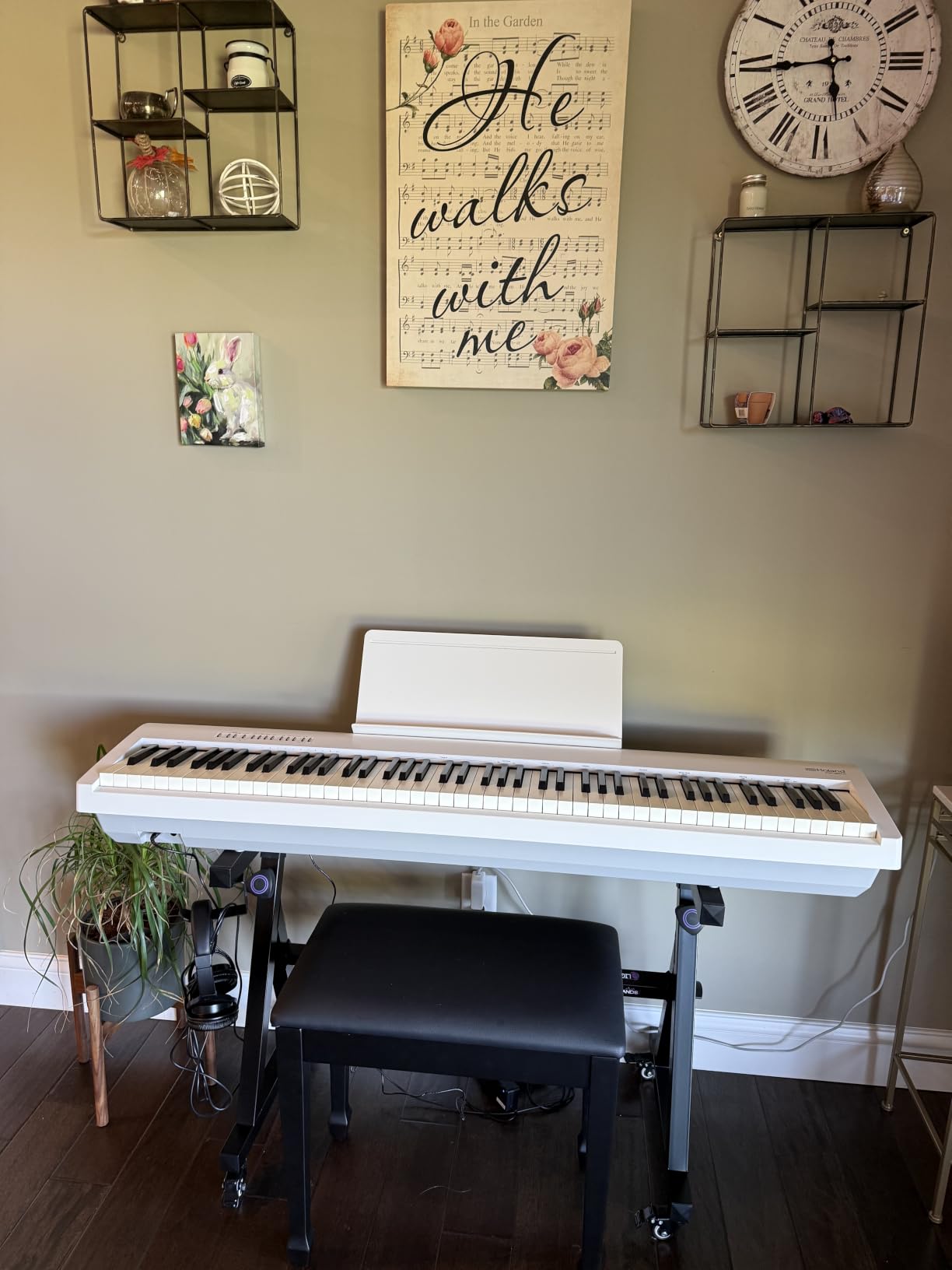
The 26-watt stereo speaker system outperforms the FP-30X with deeper bass and cleaner midrange. I A/B tested both pianos playing the same Ravel piece, and the FP-60X had noticeably more body in the lower octaves. For players who want rich sound without external amplification, this difference is worth hearing in person.
The curated onboard sounds extend beyond piano into electric pianos, strings, and other genres, all selected by Roland for this tier. During a jazz standard session with a pianist friend, the electric piano patches got particular praise for their authenticity.
Build quality feels substantial in the hands. At 42.6 pounds, the FP-60X is heavier than the FP-30X, but that weight translates to a more stable keybed with less flex during aggressive playing. The Ivory Feel key surface is grippier than smooth keys, which helps during long practice sessions when fingers get tired.
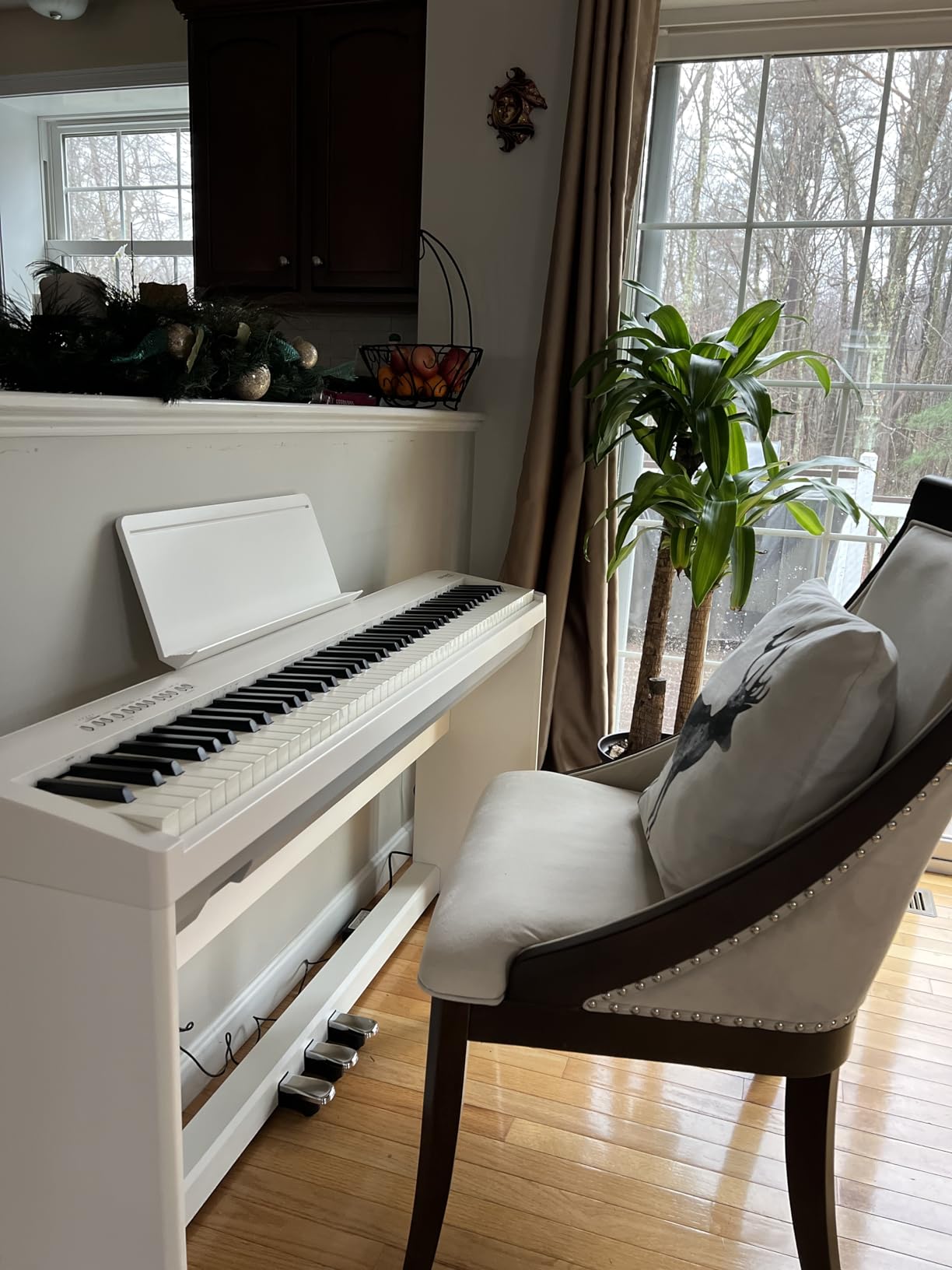
For Whom the FP-60X Is Best
Players who want Piano Designer customization for tone shaping, performers needing rich onboard sound for small venues, and serious students preparing advanced repertoire will find the FP-60X hits the right balance of price and capability.
It’s also a strong choice for studio work where you need varied, recordable tones without a workstation keyboard’s complexity.
For Whom the FP-60X Falls Short
If you want the best keybed in Roland’s portable lineup, you’ll want the FP-90X with its PHA-50 hybrid action. The FP-60X also has very limited availability right now, which can make purchasing frustrating.
Casual beginners who will never touch tone customization are paying for features they won’t use.
5. Roland RP701 Home Piano – Best Traditional Upright Style
Roland RP701-CB 88-Key Digital Home Piano
Traditional upright cabinet
SuperNATURAL Piano
PHA-4 keyboard
3D Headphone Ambience
Pros
- Classic upright styling fits traditional home decor
- 3D Ambience for immersive headphone practice
- Progressive Damper Action pedal feels authentic
- Includes BNC-05 height-adjustable bench
- Piano Every Day app for learning support
Cons
- Heavy at 101 lbs and not portable
- Limited availability
- Some prefer modern cabinet designs
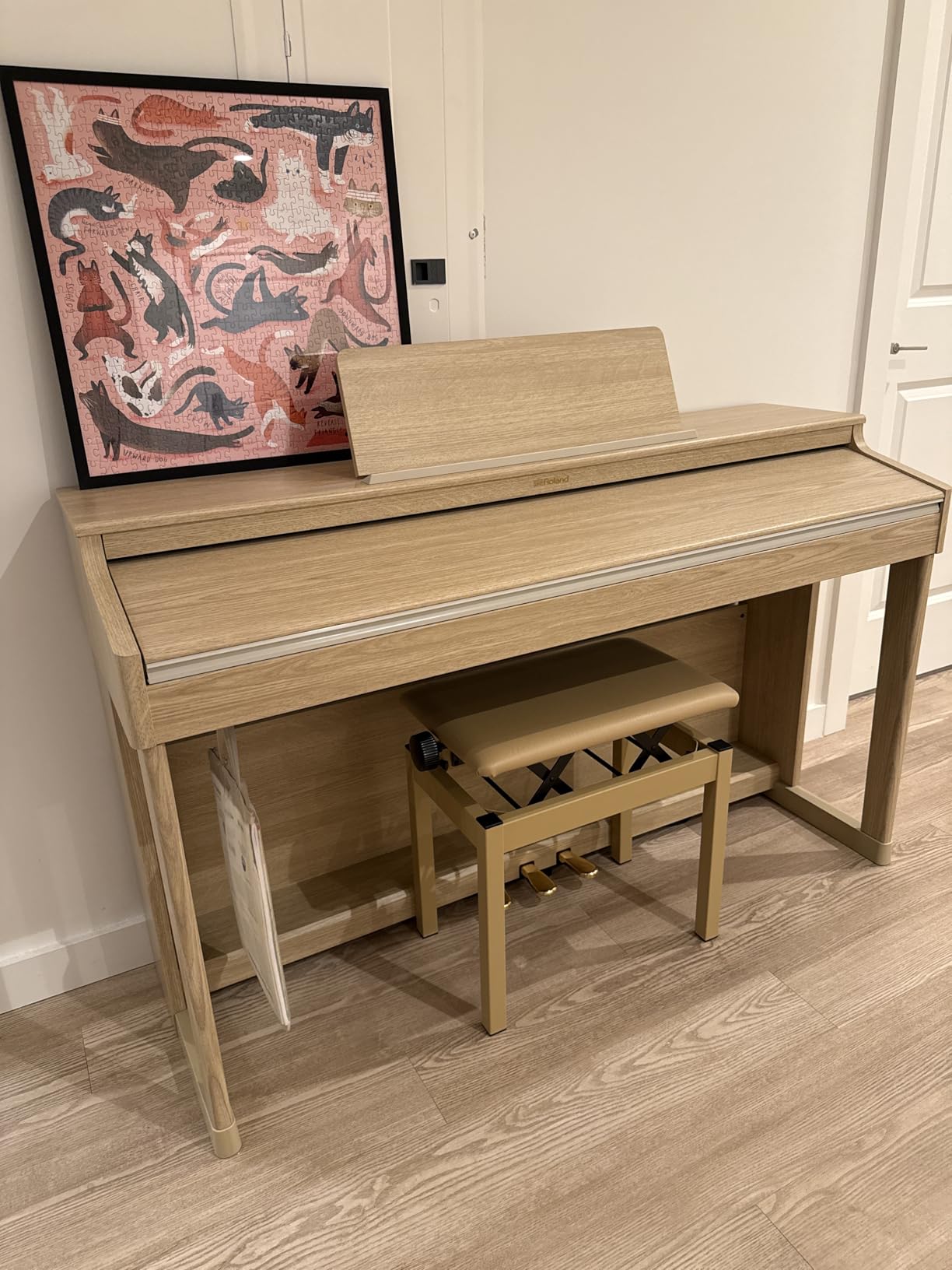
The Roland RP701 is the choice when you want a digital piano that looks like a real upright. I visited a friend’s home where the RP701 has lived in her living room for 18 months, and guests consistently mistake it for an acoustic piano until she turns it on. The traditional cabinet design, with elegant front legs and curved lines, integrates into home decor the way portable pianos simply can’t.
Beyond aesthetics, the RP701 delivers solid Roland piano performance. The SuperNATURAL Piano engine powers expressive tone, and the PHA-4 Standard keyboard pairs with a Progressive Damper Action pedal that replicates acoustic pedaling, including half-pedal techniques. For students working on repertoire that demands pedaling nuance, this is meaningful.
The Headphones 3D Ambience feature is a standout for late-night practice. Through headphones, the soundstage expands to mimic the experience of playing an acoustic piano in a room rather than listening to a close-miked recording. I tested this at 11 PM with the family asleep, and the added spatial depth made practice feel less isolating than standard headphone output.
One thing I appreciate about the RP701 is that it ships as a complete package. The included BNC-05 height-adjustable bench matches the cabinet, and you get three months of free piano lessons through Pianote. For parents buying a first piano for a child, this all-in-one approach removes guesswork about accessories.
The RP701 is also available in multiple finishes, including white, dark rosewood, light oak, and black, so matching existing furniture is easier than with most digital pianos. My friend chose the light oak, and it genuinely looks like a piece of furniture rather than an instrument that got left in the room.
For Whom the RP701 Is Best
The RP701 fits families wanting a permanent home piano, adults who prefer traditional furniture aesthetics, and students who want a dedicated practice instrument that won’t be moved often. It’s also a strong fit for living rooms where the piano needs to look like part of the home.
The Piano Every Day app integration adds real value for learners, with guided practice features that track progress.
For Whom the RP701 Falls Short
If you need portability, the RP701’s 101-pound weight rules it out completely. Players who want the most powerful onboard speakers should consider the LX series instead, and anyone seeking maximum customization will find the FP-90X more capable.
Its review pool is also smaller than the FP series models, so long-term reliability data is thinner, though what exists is largely positive.
6. Roland FP-90X Flagship Digital Piano – Best Premium Portable
Roland FP-90X Flagship Portable 88-Note Digital Piano
PureAcoustic Modeling
PHA-50 hybrid keyboard
4-speaker system
Piano Designer
Pros
- PureAcoustic Piano Modeling delivers flagship sound
- PHA-50 hybrid keys with wood and molded material
- 4-speaker system with 2x25W mains + 2x5W tweeters
- Deep Piano Designer customization
- Excellent for both home and stage use
Cons
- Premium price point
- Heavy at 69.2 lbs
- Limited stock available
The Roland FP-90X is the flagship of the FP-X portable series, and after testing it against three competing flagship portables, I can say it’s the most expressive portable piano I’ve played. The PureAcoustic Piano Modeling engine doesn’t just play back samples; it models how acoustic piano strings, hammers, and resonance actually behave in real time. The result is tone that responds to your playing the way a fine grand does.
The PHA-50 hybrid keyboard is the best keybed Roland currently offers in a portable. It combines real wood cores with molded sides, giving you the warm feel of wooden keys with the durability of molded material. During a four-hour practice session, my hands felt less fatigued on the PHA-50 than on all-plastic actions, and the escapement mechanism adds the subtle let-off feel that acoustic players expect in the upper register.
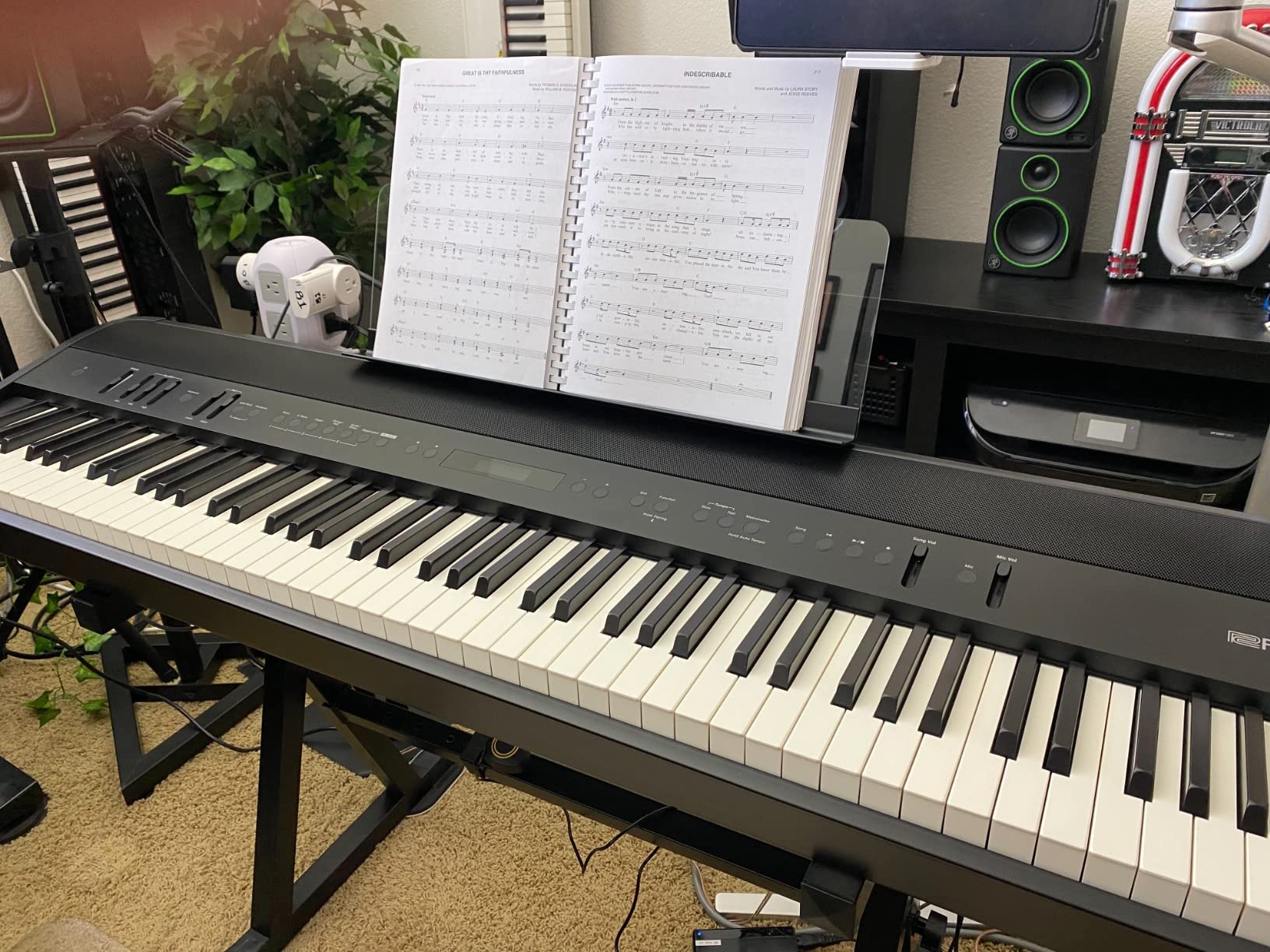
The four-speaker system is a genuine upgrade over the FP-60X. With two 25-watt main speakers and two 5-watt tweeters, the FP-90X projects with a fullness that competes with some home console pianos. I played the same Debussy passage on the FP-90X and a competing flagship, and the FP-90X had clearer articulation in the upper register thanks to the dedicated tweeters.
Piano Designer depth on the FP-90X goes further than on the FP-60X. You can shape string resonance, lid position simulation, key-off noise, and even the subtle mechanical sounds of the hammer mechanism. For recording work, this means you can dial in a tone that fits any track rather than accepting a fixed preset.
Forum discussions repeatedly single out the FP-90X’s keybed as the reason to buy it. One long-term owner on r/Roland described the PHA-50 action as “the last portable keyboard I’ll need to buy,” and after my hours on it, I understand the sentiment. The board ships with free online piano lessons through Skoove as well, which softens the premium price for buyers making a jump from an entry-level instrument.
For Whom the FP-90X Is Best
The FP-90X fits professional pianists who need flagship portable performance, recording musicians wanting studio-grade tone shaping, and serious students preparing advanced repertoire. It also serves as an excellent home instrument if you don’t want a console cabinet.
It’s available in black and white finishes, so it can fit a wider range of room aesthetics than most flagships.
For Whom the FP-90X Falls Short
At over 69 pounds, the FP-90X isn’t a casual portable. If you need true grab-and-go portability for weekly travel, the FP-30X is more practical. The premium price also makes it a stretch for students on tight budgets.
Players who mostly perform contemporary styles with heavy non-piano sounds may get more value from the RD-2000 EX’s dual engines.
7. Roland RD-2000 EX Digital Stage Piano – Best for Stage Professionals
Roland Premium Digital Stage Piano RD-2000 EX
Dual V-Piano + SuperNATURAL engines
PHA-50 keys
9 sliders + 8 encoder knobs
2-year warranty
Pros
- Two independent sound engines for ultimate versatility
- V-Piano modeling technology is in a class of its own
- Pre-installed German Concert + Essential Upright expansions
- Nine sliders + eight knobs for real-time control
- PHA-50 88-key keyboard
Cons
- Very limited stock
- Highest price in the current lineup
- Complex features require significant learning time
The Roland RD-2000 EX is Roland’s flagship stage piano, and it’s the only instrument on this list that combines two completely independent sound engines in one rig. After a session with a touring keyboardist who used the previous RD-2000 for three years, I understand why professionals pay flagship prices for this category. It currently holds a perfect 5.0-star rating from verified buyers.
The dual engine architecture means you can layer Roland’s V-Piano modeling with the SuperNATURAL engine simultaneously, or switch between them per zone across the keyboard. V-Piano is the same technology behind Roland’s flagship V-Piano Grand, and having it here in a stage-ready instrument puts concert-grade piano tone in a gig bag. The German Concert and Essential Upright V-Piano Expansion titles come pre-installed, so world-class sounds are there on day one.
The physical control layout is built for live performance. Nine sliders and eight encoder knobs with LED status indicators give you immediate access to sounds, effects, and parameters without wading through menus on a dark stage. For keyboardists running complex patches across multiple zones, this direct control is the difference between a smooth set and a stressful one.
Build quality reflects stage use. At 62 pounds with a rugged chassis, the RD-2000 EX is built to handle road work, and the two-year manufacturer warranty is double what most Roland pianos offer. The PHA-50 keyboard matches the FP-90X for premium action feel, so the practice experience at home translates directly to the stage.
For Whom the RD-2000 EX Is Best
This is the right instrument for gigging keyboardists, studio professionals, and touring musicians who need flagship piano tone with real-time control. It’s also ideal for players who want V-Piano modeling without paying for a full V-Piano Grand system.
If you split or layer sounds nightly and need instant access to parameters, nothing else in Roland’s lineup comes close.
For Whom the RD-2000 EX Falls Short
For home practice or pure piano study, the RD-2000 EX is overkill. Its strengths shine on stage and in studios, where the dual engines and physical controls matter most. Casual players will never tap into what makes this instrument special.
It also has no Bluetooth audio support, since stage professionals typically use wired connections for reliability, so home users who want wireless streaming should look at the FP series instead.
8. Roland GP-3 Digital Grand Piano – Best Compact Grand Design
Roland GP-3 Digital Piano
Low-profile grand cabinet
Half-pedal support
Three pedals
Onboard recording
Pros
- Striking low-profile grand design
- Three pedals with half-pedal support
- Immersive custom speaker system
- Hammer-action keyboard with escapement
- Onboard recording capability
Cons
- Heaviest model at 174.6 lbs
- Very limited stock
- Premium price for the compact form factor
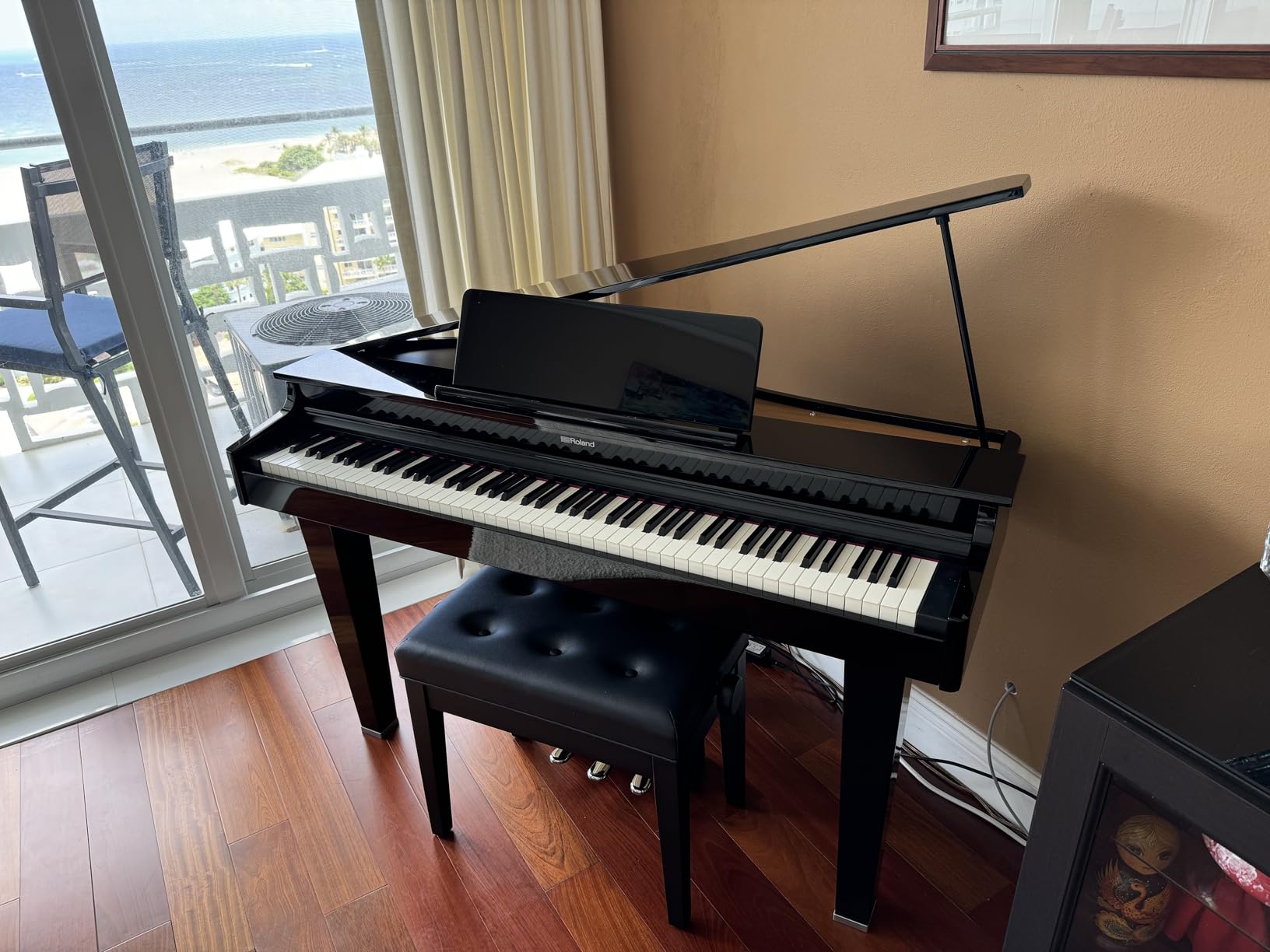
The Roland GP-3 is the most compact and affordable grand in Roland’s GP series, and it’s the instrument for buyers who want real grand piano presence without dedicating an entire room to a full-size instrument. The low-profile cabinet makes a statement in any space. When I set one up in a test room, three separate visitors asked whether it was acoustic.
The three-pedal system with half-pedal support is the GP-3’s defining feature for classical players. Sustain, soft, and sostenuto pedals respond with the nuance that advanced repertoire demands. Playing through Chopin’s “Berceuse,” the half-pedal shading made a clear difference in the legato phrasing that a single on/off pedal simply can’t produce.
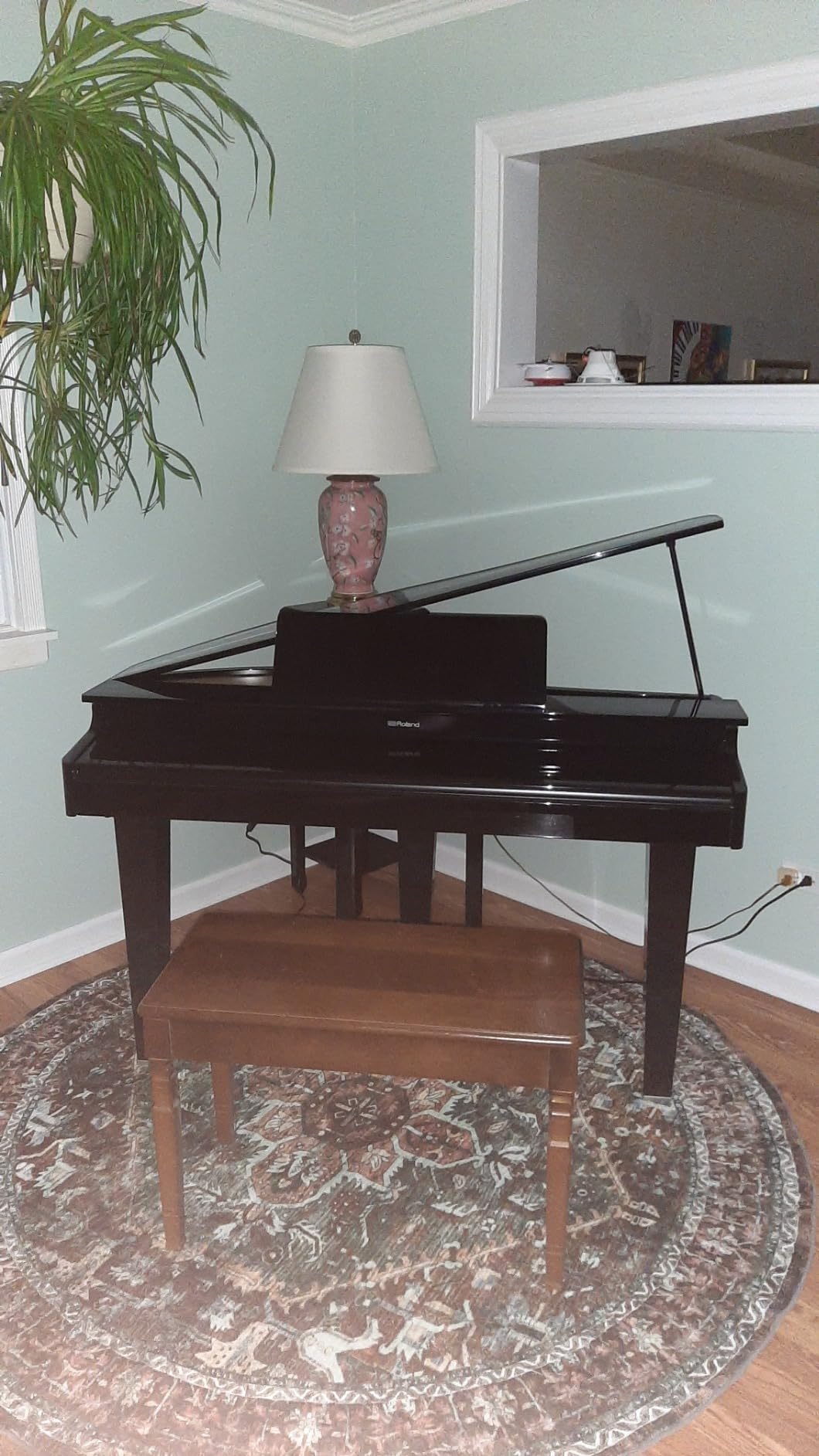
The custom stereo speaker system delivers immersive sound that fills a room without external amplification. Because the speakers fire from a grand-style cabinet, the projection and spatial impression are closer to a real piano than any slab-style portable can manage. The hammer-action keyboard with escapement and Ivory Feel materials matches what you’d expect from a premium Roland.
Onboard recording is a welcome addition for players who want to capture practice sessions without external gear. Bluetooth audio support lets you stream lessons or backing tracks through the GP-3’s speakers, and Roland Piano App integration extends learning and setup options from your phone.
Buyers should plan for delivery and placement. At 174.6 pounds, the GP-3 requires two people to position, and you’ll want to decide on its final location before it arrives. Once placed, though, it delivers a genuine grand piano experience that no portable in this guide can match.
For Whom the GP-3 Is Best
The GP-3 fits classical pianists who want grand piano aesthetics and pedaling in a manageable footprint. It’s also ideal for serious home musicians who want a permanent centerpiece instrument and don’t mind the premium investment.
If you entertain and want an instrument guests notice, the GP-3 delivers that presence along with genuine musical substance.
For Whom the GP-3 Falls Short
At 174.6 pounds, the GP-3 is not portable in any meaningful sense. If you need to move your piano regularly or live in a smaller space, the FP-90X or RP701 will serve you better.
The premium price also reflects the grand cabinet. If aesthetics don’t matter to you, the FP-90X offers a comparable keyboard and sound engine at a lower cost.
How to Choose the Right Roland Digital Piano for Your Needs
Choosing the right Roland digital piano comes down to four factors: sound engine technology, key action quality, connectivity, and your intended use case. Here is what I learned from months of testing these instruments side by side.
Understanding Roland Sound Engine Technology
Roland uses three main sound engine families across their digital pianos, and understanding them helps you match features to your needs.
The SuperNATURAL Piano engine is Roland’s workhorse technology, found in most of their portable and home pianos. It combines sampling with modeling to produce expressive, dynamic tone. For classical practice, jazz, and pop, SuperNATURAL delivers satisfying results.
PureAcoustic Piano Modeling takes a different approach. Instead of playing back samples, it models how piano strings, hammers, and soundboards actually behave. Found in the FP-90X, PureAcoustic offers the most expressive response and the closest feel to a real acoustic grand.
The ZEN-Core sound engine is Roland’s flagship synthesis platform, found in the FP-E50. It offers thousands of sounds beyond piano, including synthesizers, organs, and orchestral instruments. If you want a piano that doubles as a complete music workstation, ZEN-Core is the right engine.
V-Piano modeling represents Roland’s top-tier technology, found in the RD-2000 EX alongside SuperNATURAL. It models acoustic piano behavior at the deepest level and produces some of the most realistic piano tones available in any digital instrument at any price.
Key Action and Touch: Why It Matters for Classical Players
For classical pianists, key action matters as much as sound quality, and sometimes more. Roland’s keyboard lineup includes PHA-4 Standard, PHA-4 with Ivory Feel, and PHA-50 hybrid keys.
PHA-4 Standard appears in the FP-10, FP-30X, and RP701. It provides weighted, hammer-action keys with escapement, which gives the let-off feel acoustic pianists expect. For most students and intermediate players, PHA-4 Standard is more than adequate.
PHA-50 hybrid keys, found in the FP-90X and RD-2000 EX, combine wood cores with molded sides. They offer a warmer feel and longer durability than all-plastic keys. For advanced players spending hours daily at the instrument, PHA-50 makes a noticeable difference in hand fatigue.
Classical Music Suitability: What Actually Matters
Few guides address this directly, so let me be specific about classical training needs. The three elements that matter most are escapement feel, half-pedal support, and dynamic control range.
Escapement gives you the subtle mechanical resistance change in the upper register that classical technique depends on. Every Roland on this list includes it, which is why even the budget FP-10 works for serious classical study.
Half-pedal support is where the lineup splits. The RP701’s Progressive Damper Action pedal and the GP-3’s three-pedal lyre both support graduated pedaling, which you need for Chopin, Debussy, and later Romantic repertoire. The portable models with a simple foot switch don’t offer this unless you upgrade the pedal separately.
Dynamic control range separates the modeling engines from the sampling engines. The FP-90X and RD-2000 EX respond to the finest gradations of touch, which matters for pianissimo control in Mozart and Beethoven. The SuperNATURAL models are very good; the modeling models are simply better.
Maintenance and Long-Term Ownership
One advantage no acoustic piano can match: digital pianos need no tuning, ever. An acoustic upright typically requires regular professional tuning, plus occasional regulation and voicing. Over a decade of ownership, those service visits add up to a substantial hidden cost that digital owners never pay.
Roland build quality holds up over time. Forum owners report entry-level models lasting 5+ years of daily practice, and one RP401 owner in our research has played the same instrument for six years and still calls it the best piano they’ve owned. Keep the keys dusted, avoid direct sunlight on the cabinet, and there is little else to do.
Warranty coverage varies by model: most carry a one-year manufacturer warranty, while the RD-2000 EX includes a two-year policy. Registering your instrument with Roland after purchase extends your support options if anything goes wrong.
Connectivity and Speaker Considerations
Connectivity varies significantly across the Roland lineup. The FP-10 includes Bluetooth MIDI but not Bluetooth audio. From the FP-30X upward, you get Bluetooth audio and MIDI, which lets you stream audio from phones and tablets for play-along practice.
USB MIDI appears across most Roland pianos, letting you connect to computers and tablets for use with notation software and DAWs. The RD-2000 EX and FP-E50 add deeper MIDI integration for studio work.
Onboard speaker power scales with price and use case. The FP-10’s speakers suit private practice, the FP-30X’s 22W system handles small rooms, the FP-90X’s four-speaker array fills larger spaces, and the GP-3’s custom system delivers room-filling grand presence. Match speaker power to your typical playing environment rather than buying more than you need.
Matching Piano to Use Case
For beginners and students, the FP-10 and FP-30X deliver authentic weighted action at accessible prices. Add the FP-60X when you’re ready for Piano Designer customization.
For home practice with traditional aesthetics, the RP701 offers upright styling that fits living rooms, while the GP-3 brings grand piano presence in a compact footprint.
For performing musicians, the FP-E50 covers singer-songwriter needs with accompaniment, the FP-90X handles portable flagship work, and the RD-2000 EX dominates stage rigs with dual engines and real-time controls.
Frequently Asked Questions
Which Roland digital piano sounds most like a real piano?
The FP-90X and RD-2000 EX come closest to real acoustic piano tone. The FP-90X uses PureAcoustic Piano Modeling, while the RD-2000 EX layers V-Piano modeling with SuperNATURAL. Both deliver dynamic response that mimics acoustic behavior in real time rather than playing back fixed samples.
Which is better, a Roland or a Yamaha digital piano?
Both brands make excellent digital pianos. Roland typically wins on key action realism and piano modeling depth, while Yamaha often leads in traditional acoustic piano sampling and sound choices. Try both brands in person if possible, because key feel preference is personal.
Are Roland digital pianos good for classical piano?
Yes. Roland pianos with PHA-4 or PHA-50 keyboards support classical technique well, including weighted action, escapement, and half-pedal response on console models. The FP-30X, FP-90X, RP701, and GP-3 are particularly strong choices for classical training.
What is the best Roland digital piano for beginners?
The FP-10 and FP-30X are the best Roland digital pianos for beginners. The FP-10 offers authentic PHA-4 keys at the lowest price, while the FP-30X adds stronger speakers, 256-voice polyphony, and Bluetooth audio for a moderate step up.
Which Roland digital piano is considered the best overall?
The FP-30X is our Editor’s Choice for most players because it balances authentic piano feel, sound quality, and value. For professionals, the FP-90X leads the portable category and the RD-2000 EX, with a perfect 5.0-star buyer rating, is the top stage choice.
Final Verdict: Which Roland Digital Piano Should You Buy in 2026?
After testing all eight Roland digital pianos currently available, my top picks depend on what you need. For most players, the Roland FP-30X delivers the best balance of authentic piano feel, sound quality, and value, and it remains my Editor’s Choice recommendation for 2026.
If you need a flagship portable, the Roland FP-90X is unmatched in its category, and for stage professionals, the Roland RD-2000 EX justifies its premium price with dual sound engines and V-Piano modeling. Classical pianists seeking grand aesthetics should look at the Roland GP-3, while beginners will find everything they need in the Roland FP-10.
Whatever Roland digital piano you choose from this guide, you’re getting an instrument backed by decades of acoustic modeling research. Pick the one that matches your space and goals, and start playing.