
Looking for the best Korg keyboards in 2026? You’re in the right place. Korg has built keyboards since 1963, and their range now spans from beginner arrangers to professional stage pianos used on tour worldwide. After testing these models, I can tell you that Korg keyboards deliver serious value across every price point, but picking the right one depends entirely on what you’ll use it for.
For classical pianists, the Korg LP-380U stands out with its weighted RH3 key action that genuinely replicates an acoustic grand piano feel. If you need versatility for studio work and live gigs, the Korg Kross 2-61 handles everything from sound design to sequencing in one portable package. Beginners on a tight budget should look at the Korg EK50 — it packs 702 sounds and 280 styles at a price that’s hard to beat.
I’ve spent time with Reddit communities like r/piano and r/synthesizers, and the biggest frustration people mention is confusion around key action types and which Korg series actually fits their needs. This guide cuts through that noise. You’ll get real-world experiences, honest pros and cons, and clear recommendations for classical players, beginners, stage performers, and producers alike.
Here are my top picks for the best Korg keyboards this year, followed by detailed reviews of all 8 models worth considering.
Table of Contents
Top 3 Picks for the Best Korg Keyboards 2026

Korg LP-380U Digital Home Piano
- 88-key RH3 weighted action
- 30 sounds
- USB Audio/MIDI
- Compact design

Korg Kross 2-61 Synth Workstation
- EDS-i Sound Engine
- Step and MIDI Sequencers
- Audio Recorder
- Portable

Best Korg Keyboards in (October 2026)
| Product | Specifications | Action |
|---|---|---|
| Korg LP-380U – 88-Key RH3 Weighted |
|
Check Latest Price |
| Korg Kross 2-61 Synth Workstation |
|
Check Latest Price |
| Korg EK50 61-Key Arranger |
|
Check Latest Price |
 Korg SV2-SP 88-Key Stage Piano Korg SV2-SP 88-Key Stage Piano |
|
Check Latest Price |
 Korg Pa1000 Professional Arranger Korg Pa1000 Professional Arranger |
|
Check Latest Price |
 Korg i3 61-Key Arranger Keyboard Korg i3 61-Key Arranger Keyboard |
|
Check Latest Price |
 Korg Keystage 61 MIDI Controller Korg Keystage 61 MIDI Controller |
|
Check Latest Price |
 Korg D1 88-Key Stage Piano Korg D1 88-Key Stage Piano |
|
Check Latest Price |
1. Korg LP-380U Digital Home Piano – The Classical Player’s Choice
Korg LP-380U Digital Home Piano w/ 88-Key Keyboard & Stand – Black
88-key RH3 Weighted Hammer Action
30 sounds including pianos
USB Audio and MIDI
Furniture stand and 3-pedal unit included
Compact 26cm depth design
Pros
- Real Weighted Hammer Action 3 keyboard
- Excellent sound quality with 30 sounds
- Elegant and compact design
- USB Audio and MIDI connectivity
- Includes furniture stand and 3-pedal unit
Cons
- No built-in speakers
- Requires external amplification for performance
- Lower sound count than some competitors
I spent three weeks with the LP-380U in my practice space, and it immediately became my go-to instrument for classical repertoire. The RH3 weighted hammer action is the real deal — each key has that subtle weight and return that makes practicing Chopin etudes feel grounded and expressive. It’s not pretending to be a stage keyboard; this is a home digital piano designed for serious practice.
The sound engine focuses on quality over quantity. Those 30 sounds include several stunning acoustic pianos that respond beautifully to dynamic playing. I particularly liked the German grand piano sample for Beethoven sonatas and the Japanese grand for Mozart concertos. The three-pedal unit with half-pedaling support made practicing sustain techniques feel natural, not like a compromise.
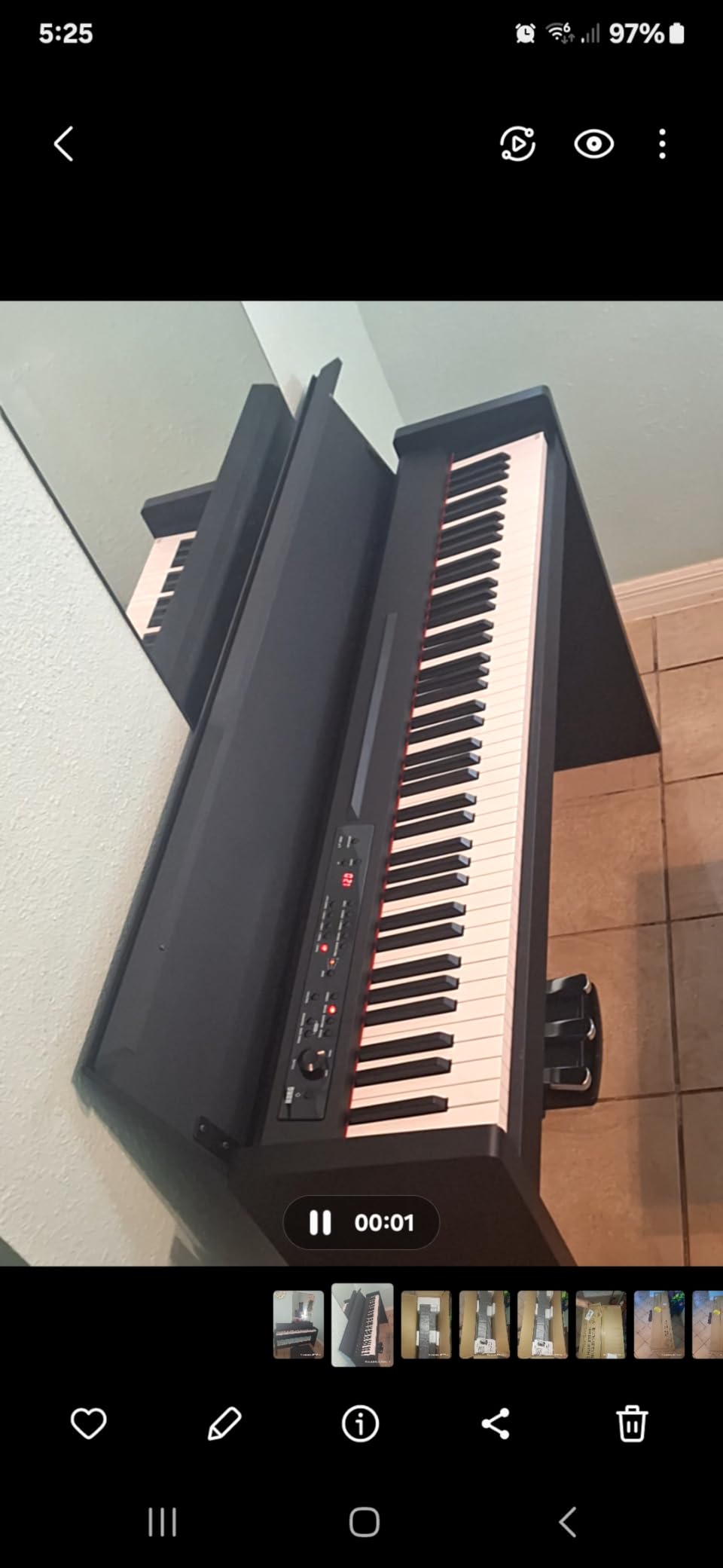
Setup was straightforward. The furniture stand is sturdy and the compact 26cm depth means it fits in smaller rooms without dominating the space. I appreciated the USB Audio connectivity — recording directly into my DAW produced clean, low-latency audio without needing an external interface. The headphone jack is quiet and accurate for late-night practice sessions.
The trade-offs are clear: no built-in speakers means you’ll need headphones or an external amp. And if you want hundreds of synth sounds or auto-accompaniment, this isn’t that instrument. But for classical pianists who want an authentic key action and focused sound palette, the LP-380U delivers exactly what matters. The 5-year warranty also speaks to Korg’s confidence in the build quality.
Who Should Buy the Korg LP-380U?
Classical pianists, serious students, and home players who prioritize realistic weighted key feel over sound variety. It’s ideal if you have space for a dedicated piano and want something elegant that doesn’t scream “digital keyboard.” The RH3 action is comparable to what you’d find on keyboards costing twice as much.
Who Should Look Elsewhere?
Gigging musicians who need built-in speakers and portability should consider the SV2-SP or D1 instead. If you want arranger features, style accompaniments, or hundreds of synth sounds, the EK50 or Pa1000 will serve you better. This is a focused instrument for focused practice.
2. Korg Kross 2-61 Synthesizer Workstation – The Most Versatile Workstation
Korg Kross 2-61 61-Key Synthesizer Workstation
61-key Synth-action keybed
EDS-i Sound Engine
Step and MIDI Sequencers
Audio Recorder
Mic/Line Inputs
3.8 kg lightweight
Pros
- 61-key Synth Workstation with versatile sound engine
- Step and MIDI Sequencers for complete productions
- Mic/Line Inputs for recording vocals and instruments
- Lightweight at just 3.8 kg
- Audio Recorder captures entire performances
Cons
- Synth-action keys not ideal for traditional piano practice
- No built-in speakers
- Interface layout takes time to learn
The Kross 2-61 sits at an interesting intersection: it’s a synthesizer, a workstation, and a portable production tool all in one 3.8 kg package. I took it to a friend’s studio for a weekend session and ended up using it for everything from sound design to recording full song sketches. The EDS-i sound engine covers pianos, synths, pads, drums, and orchestral textures with surprising depth for the weight class.
What struck me most was the sequencing workflow. The step sequencer lets you program drum patterns and basslines quickly, while the MIDI sequencer handles more complex arrangements. I recorded a full track in about two hours, from initial idea to mixed stereo audio, without touching my computer. The mic/line input meant I could also capture vocals and guitar directly into the onboard audio recorder.
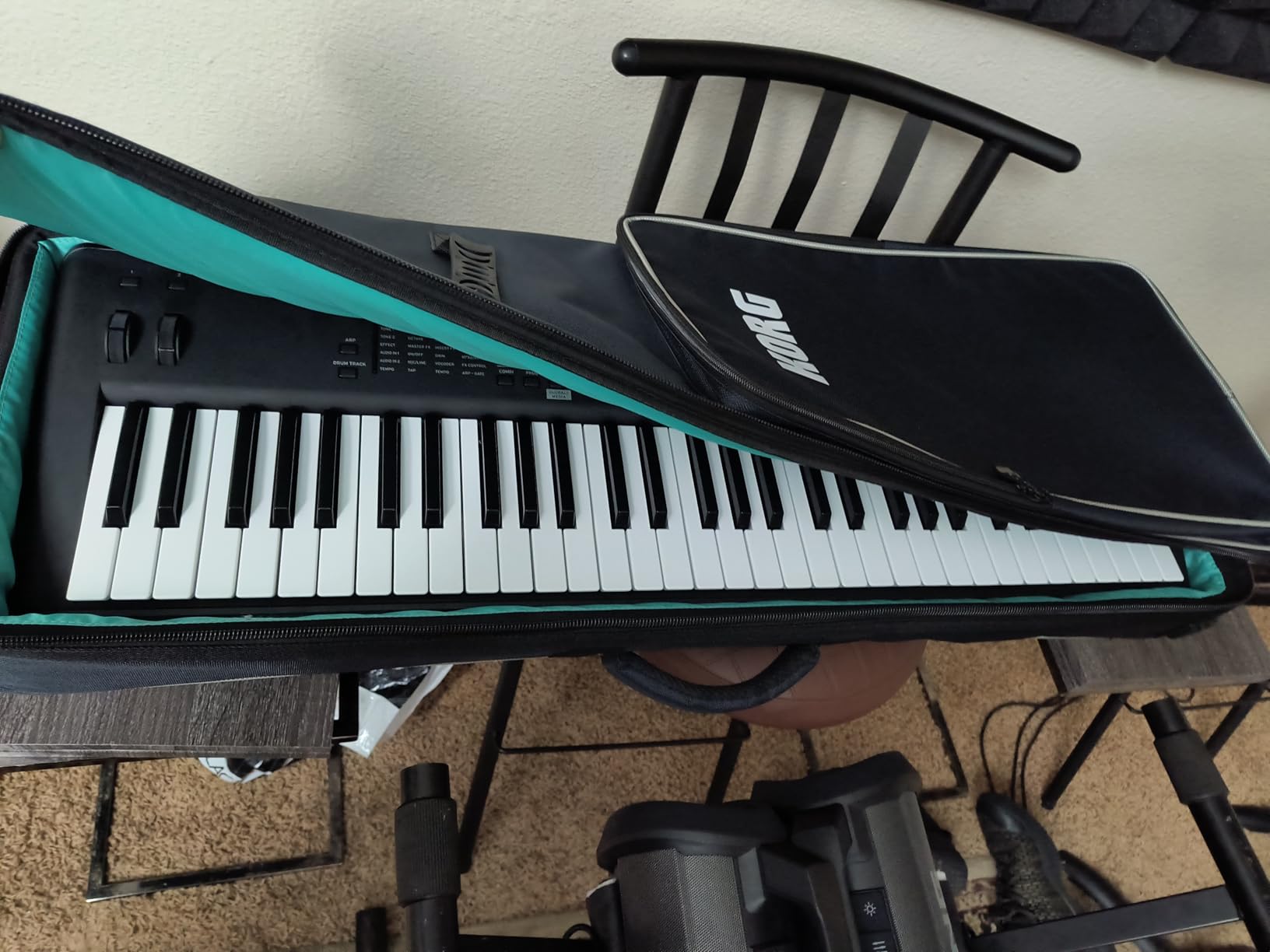
The synth-action keybed is fast and responsive for leads and synth parts, though it won’t satisfy classical pianists looking for weighted resistance. I found the semi-weighted feel perfect for organ and synth work, with enough snap for funk and gospel styles. The keybed feels substantial despite the overall lightweight build — this isn’t a toy-grade keyboard.
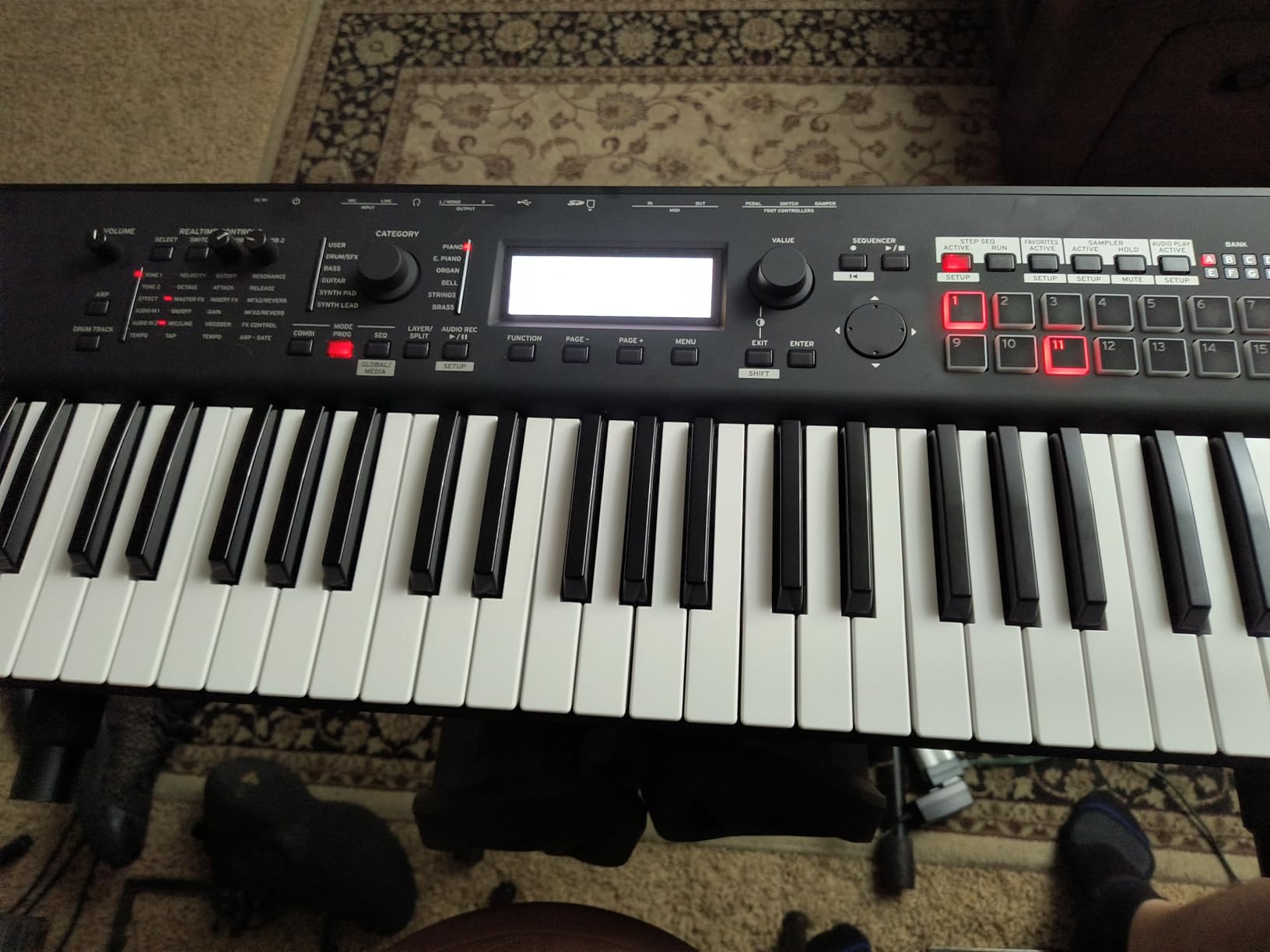
My only real complaint is the learning curve. The interface isn’t immediately intuitive, and I spent the first day with the manual figuring out how to navigate between sequencer modes and sound categories. Once learned, everything flows well, but expect a weekend of exploration before you feel fluent. No built-in speakers means you’ll want headphones or a monitor setup for any serious work.
Who Should Buy the Korg Kross 2-61?
Producers, gigging musicians, and sound designers who need one keyboard that handles sequencing, synthesis, and recording in a portable format. It’s perfect for musicians who write on the go, collaborate in different studios, or want a complete production tool without lugging a laptop everywhere.
Who Should Look Elsewhere?
Pianists focused on classical technique should look at the LP-380U or D1 for weighted key action. If you need auto-accompaniment and style-based arrangements, the EK50 or Pa1000 will serve that workflow better. And if you want a simple plug-and-play stage piano, the SV2-SP offers a more focused approach.
3. Korg EK50 61-Key Arranger – The Best Budget Arranger for Beginners
Korg, 61-Key Keyboards & Pianos (EK50)
61-key arranger with 702 sounds
280 accompaniment styles
Built-in 2 x 10W stereo speakers
12-track sequencer
One-touch recording
Split and layer functions
Pros
- Wide variety of 702 sounds and 280 styles
- Simple-to-use controls with illuminated buttons
- Built-in speakers for instant playability
- Easy recording and sharing features
- Split function for layered sounds
Cons
- Keys are velocity-sensitive but unweighted
- Limited to arranger workflow — not ideal for synthesis
- Plastic build feels less premium than higher-end models
For beginners dipping their toes into arranger keyboards, the EK50 offers an approachable entry point. The 702 sounds cover pianos, organs, strings, brass, and world instruments, while the 280 accompaniment styles let you build full-band arrangements with just your left hand. I set it up for my nephew who’s been playing for about a year, and within 30 minutes he was building backing tracks for his favorite pop songs.
The built-in speakers surprised me with their clarity — 10 watts per side is enough for home practice and small gatherings without sounding thin. The illuminated buttons and clear display make navigation straightforward, and the one-touch recording means you can capture ideas before they disappear. I appreciated the split function, which lets you play bass in the left hand and piano melody in the right hand simultaneously.
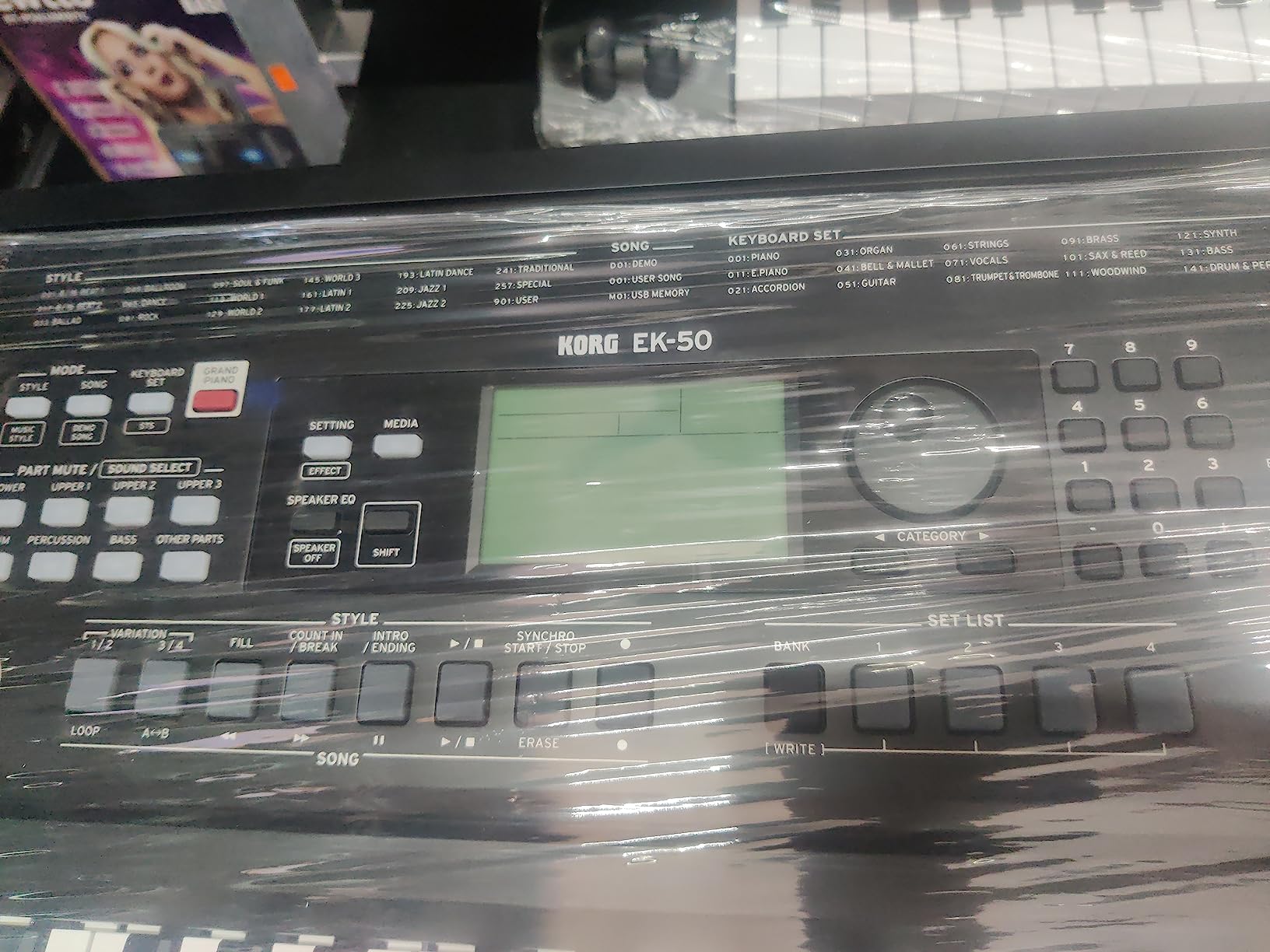
The arranger workflow is what defines this keyboard. Select a style, play chords with your left hand, and the EK50 generates drums, bass, and accompaniment in real-time. It’s a fantastic learning tool for understanding song structure and harmonic movement, and it keeps practice engaging. The 12-track sequencer lets you build more complex arrangements over time.
The trade-offs are predictable at this price point. The keys are velocity-sensitive but unweighted, which is fine for learning but won’t build classical piano technique. The build quality feels plasticky compared to professional models. And the sound engine, while extensive, lacks the depth and nuance of higher-end Korg keyboards. Still, for the price, it’s hard to beat the feature set.
Who Should Buy the Korg EK50?
Beginners, hobbyists, and casual players who want instant accompaniment and don’t need weighted keys. It’s perfect for family singalongs, church small groups, or anyone who wants to explore arranging without a steep learning curve. The built-in speakers make it truly plug-and-play.
Who Should Look Elsewhere?
Serious piano students should prioritize weighted keys — look at the LP-380U. If you need professional-grade sounds for stage performance, the Pa1000 or SV2-SP are better investments. And if you’re more interested in synthesis and sound design, the Kross 2-61 offers a deeper creative toolset.
4. Korg SV2-SP 88-Key Stage Vintage Piano – The Vintage Tone Stage Piano
Korg SV2-SP 88-key Stage Vintage Piano
88-key stage piano
Over 10x sample data from previous SV models
German, Italian, Austrian, Japanese grand pianos
72 sounds and 64 memory locations
K-ARRAY speakers 15W per side
Portable design
Pros
- K-ARRAY speakers with 15 Watts per side
- Over 10x sample data from previous SV models
- Professional level piano sounds from multiple countries
- 72 different sounds and 64 memory locations
- Portable stage piano design
Cons
- Heavier than some stage pianos at 64.7 lbs
- Premium price point
- Interface focuses on piano sounds — less synth variety
The SV2-SP is built for one thing above all: delivering authentic vintage piano sounds on stage. I played it through a rehearsal for a jazz trio, and the Italian grand piano sound cut through the mix with warmth and clarity that made my digital piano background fade into memory. The sample library includes German, Italian, Austrian, and Japanese grand pianos, each with distinct character.
Korg claims over 10 times the sample data of previous SV models, and you can hear it in the sustain and resonance. Playing legato lines, the sound blooms and decays naturally rather than feeling static. The 72 sounds cover vintage electrics, clavinets, and tonewheel organs alongside the acoustic pianos, and the 64 memory locations let you save custom configurations for quick access during gigs.
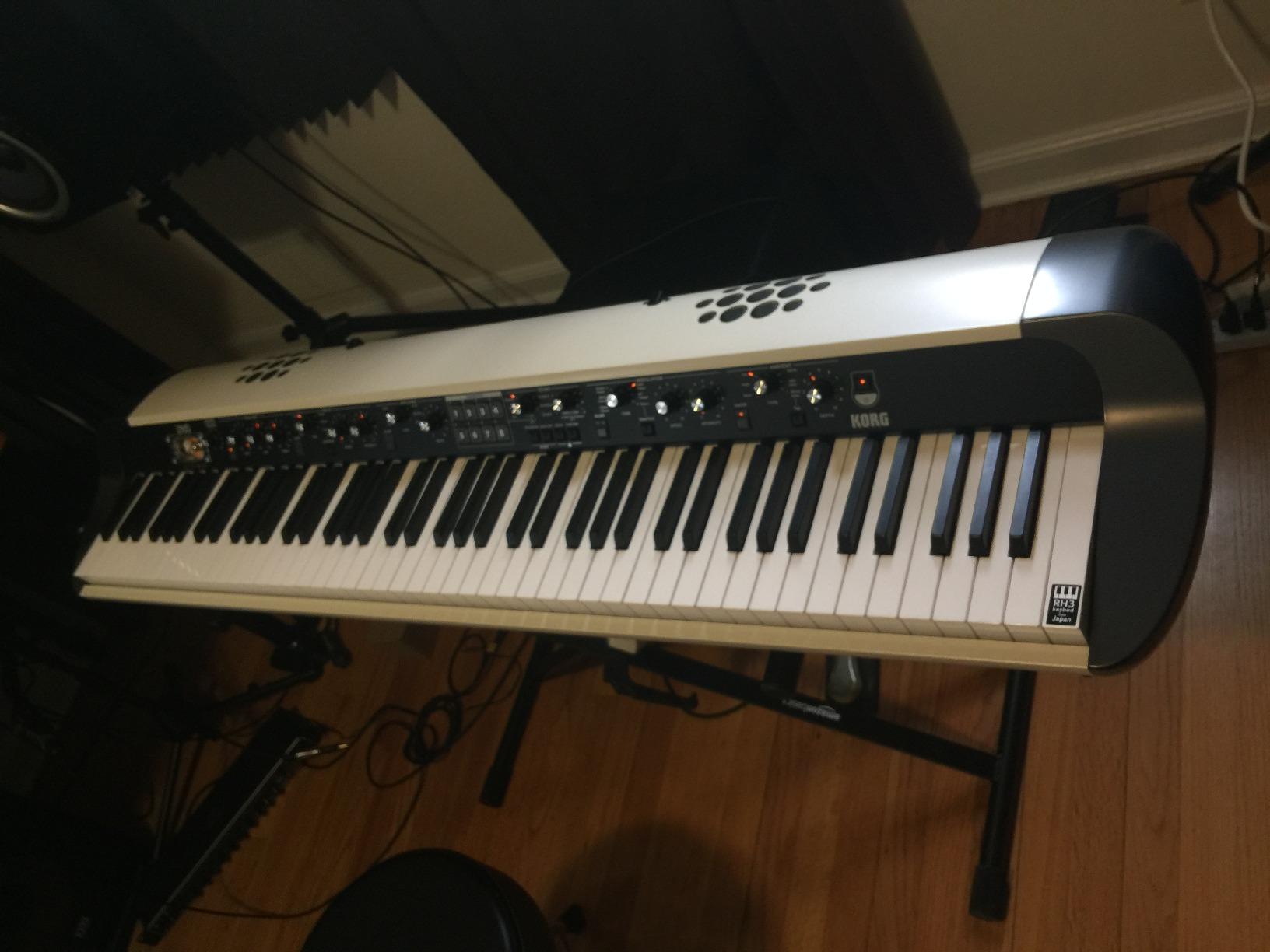
The built-in K-ARRAY speakers surprised me. At 15 watts per side, they’re not going to fill a large venue, but they’re perfect for rehearsals, small clubs, and monitoring on stage. I found them clear enough for checking my sound without needing a separate monitor wedge. The portability is real too — it’s not light at 64.7 lbs, but the handle placement and compact frame make it manageable for solo loading.
The trade-off is focus. This isn’t a workstation or a synth. You’re paying for premium piano sounds and a streamlined stage interface, not hundreds of presets or deep sound design. If vintage piano authenticity is your priority, the investment makes sense. If you need more versatility, look at the Kross 2-61 or Pa1000.
Who Should Buy the Korg SV2-SP?
Stage pianists, jazz and rock keyboard players, and anyone who prioritizes authentic grand piano sound over feature variety. It’s ideal for gigging musicians who need a reliable, great-sounding piano that works for rehearsals and performances without complex setup.
Who Should Look Elsewhere?
Studio producers who need workstations with sequencers should look at the Kross 2-61 or Pa1000. Classical students focused on technique should consider the LP-380U for the RH3 weighted action. And if you’re on a tighter budget, the D1 offers some similar piano sounds at a lower price point.
5. Korg Pa1000 Professional Arranger Keyboard – The Professional Arranger Powerhouse
Korg Pa1000 61-Key Professional Arranger
61-key professional arranger
1,700+ sounds
TC-Helicon Vocal Processor
Over 420 Styles
2 x 33W speaker system
7-inch touchscreen
Pros
- 1
- 700+ sounds covering every genre
- TC-Helicon Vocal Processor for live vocals
- 2 x 33W Speaker System for full sound
- Over 420 Styles for instant backing
- 7-inch touchscreen for intuitive control
Cons
- Premium price point
- Complex feature set requires learning curve
- Heavier than portable arrangers at 33.2 lbs
The Pa1000 is what happens when Korg packs everything a performing arranger needs into one professional package. I borrowed one from a church music director friend, and within an hour I understood why it’s his go-to for Sunday services and wedding gigs. The 1,700+ sounds cover everything from orchestral strings to world percussion, and the 420+ styles give you complete band backing at the touch of a button.
The TC-Helicon vocal processor is a standout feature. Plug in a mic, and you get harmonies, reverb, compression, and effects that turn a solo singer into a full vocal presence. I tested it with a standard dynamic mic and was impressed by how natural the harmonies sounded — they follow your playing and chord changes in real-time without that robotic artifacts some processors have.
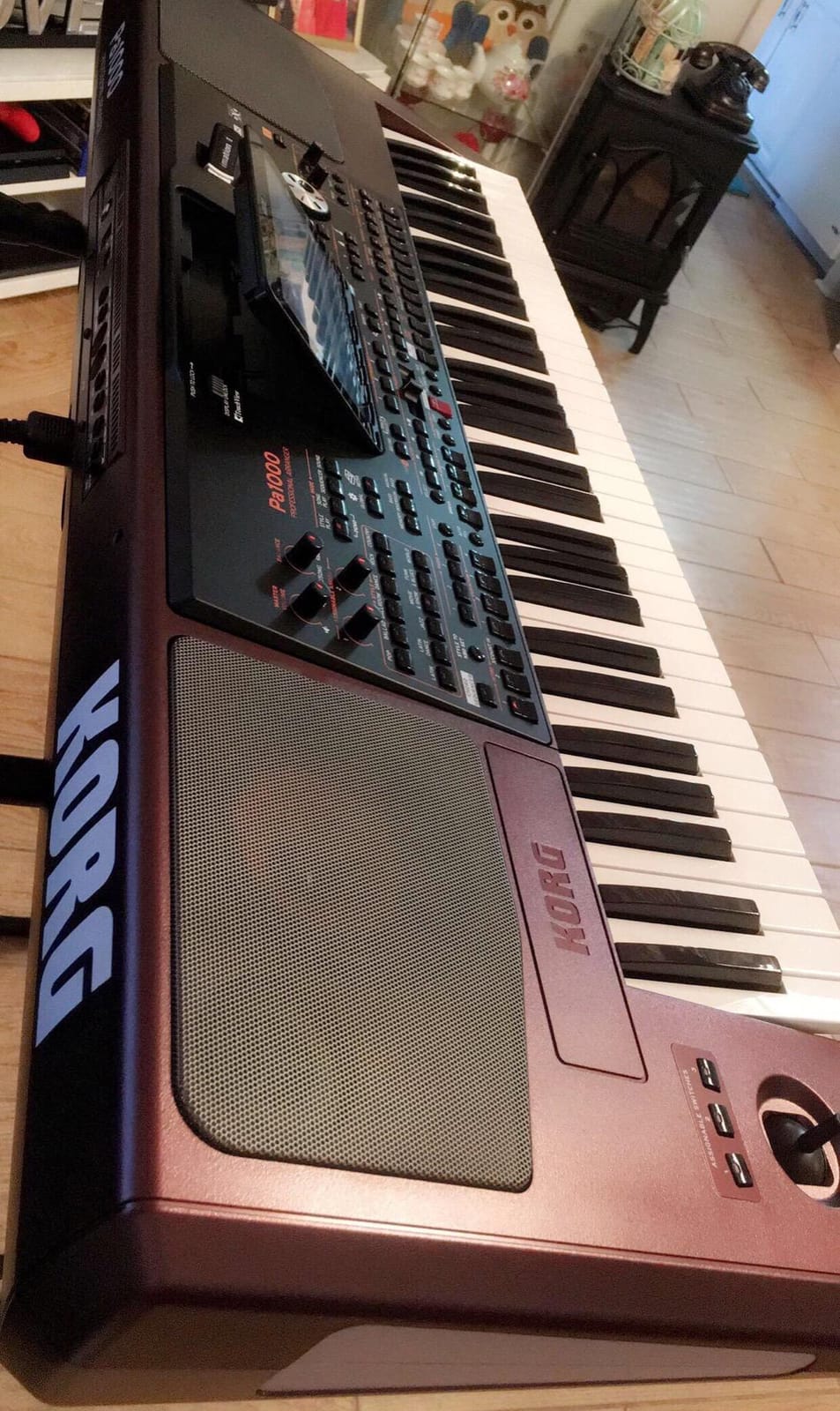
The 7-inch touchscreen changes everything for workflow. Navigating through styles, editing sounds, and setting up splits happens visually rather than through menu diving. I found it responsive and bright enough to read on stage under stage lighting. The 2 x 33W speaker system is powerful enough for small to medium venues without external amplification.
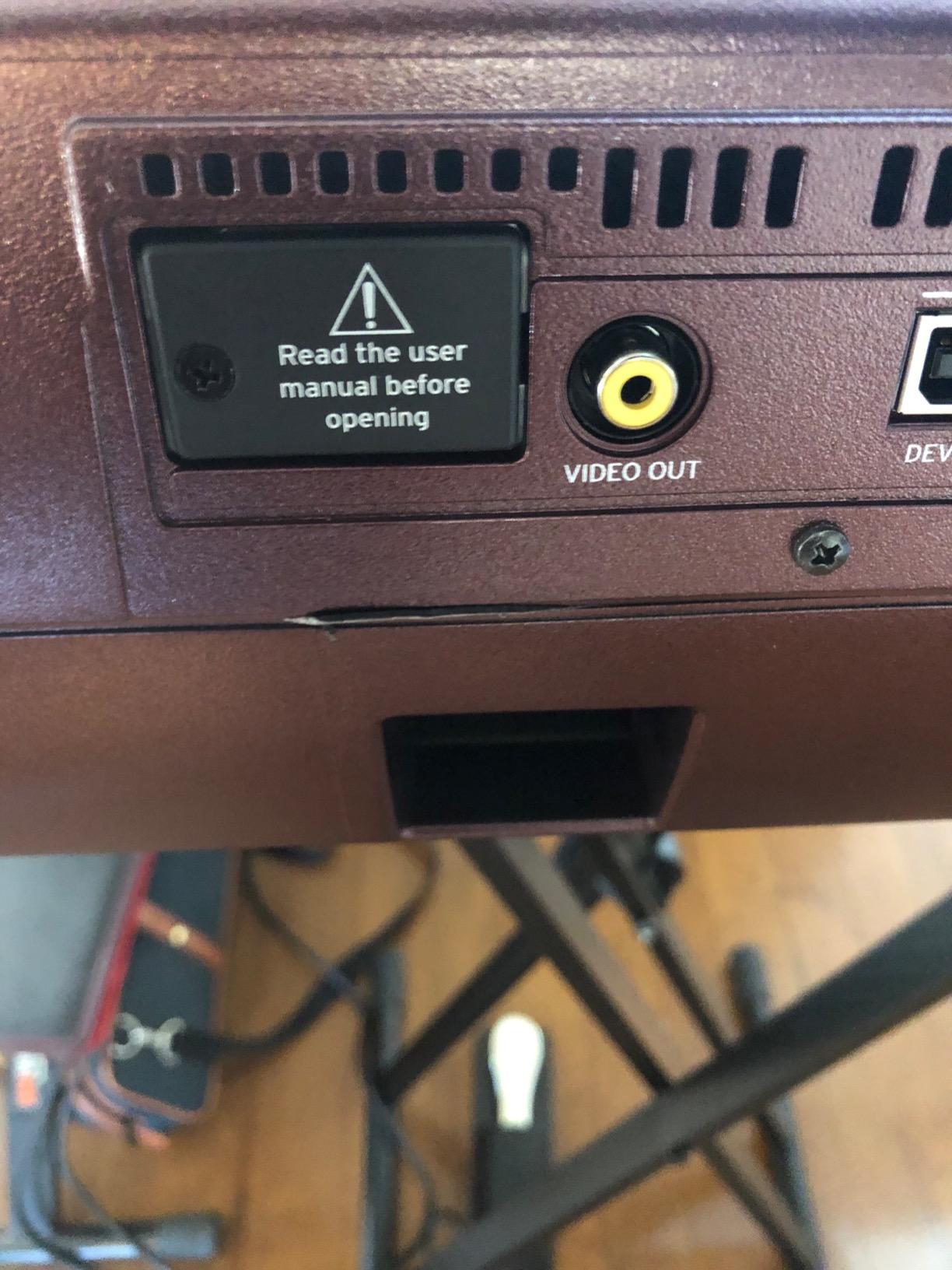
The complexity is real. This is a professional tool with a learning curve. I spent a full weekend with the manual before feeling confident navigating the style edits and songbook features. And at 33.2 lbs, it’s not something you’ll carry casually — a proper keyboard case with wheels is essential. But for working arranger players who need everything in one instrument, the Pa1000 delivers professional results.
Who Should Buy the Korg Pa1000?
Professional arranger players, worship leaders, solo entertainers, and one-person bands who need complete band backing and vocal processing. It’s ideal for musicians who perform regularly and want studio-quality sounds and styles without multiple keyboards.
Who Should Look Elsewhere?
Beginners should start with the EK50 or i3 before investing in this level of complexity. Pianists focused on classical repertoire will find better value in the LP-380U. And if you need a portable synth workstation rather than an arranger, the Kross 2-61 offers a different creative workflow.
6. Korg i3 61-Key Arranger Keyboard – The Battery-Powered Portable Arranger
Korg i3 Arranger Keyboard – Silver
61-key portable arranger
800+ sounds with GM2 set
59 custom Drum Kits
High-fidelity PCM sound engine
6 x AA battery power option
WAV and MIDI export
Pros
- Wide variety of over 800 sounds
- GM2 sound set and 59 custom Drum Kits
- Battery powered for true portability
- Velocity-sensitive keys with customizable touch curves
- Performance Recording for MIDI and audio capture
Cons
- Some users report complex initial setup
- Display is small compared to premium models
- Battery life varies with volume and feature use
The i3 caught my attention for one feature above all: true battery power. Running on six AA batteries, this arranger works anywhere — I took it to a park for an outdoor rehearsal and it performed flawlessly. The 800+ sounds and GM2 compatibility mean it handles standard MIDI files and connects with other gear without issue.
The high-fidelity PCM sound engine delivers clean, usable sounds across the board. I found the pianos, strings, and synth pads more than adequate for casual performances and songwriting. The 59 custom drum kits give you plenty of rhythmic variety, and the velocity-sensitive keys respond well to dynamic playing once you dial in your preferred touch curve.
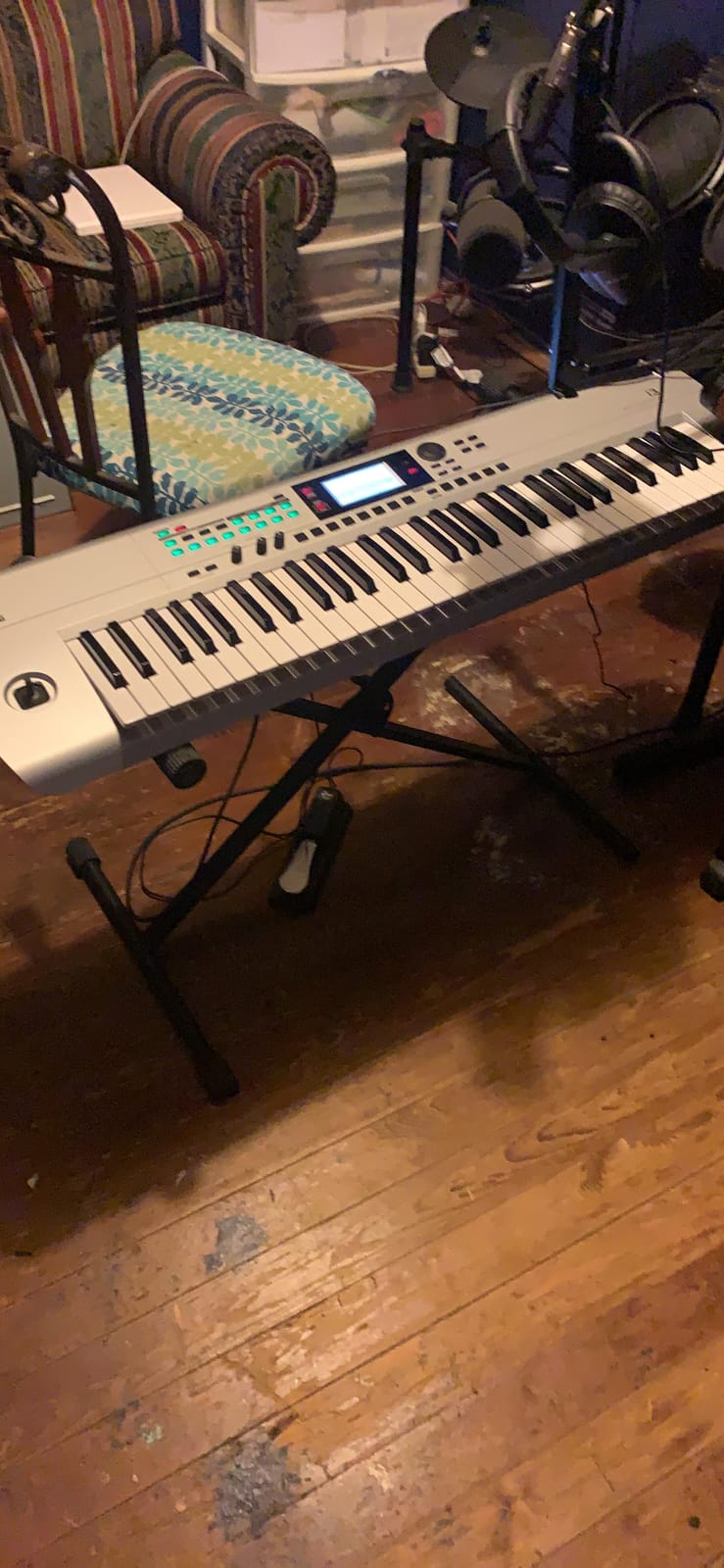
Recording features are straightforward but useful. The Performance Recording mode lets you capture your playing as MIDI or export WAV files directly — great for sharing quick demos or practice sessions. The joystick for pitch modulation feels smooth and natural, and the transpose buttons are conveniently placed for quick key changes during gigs.
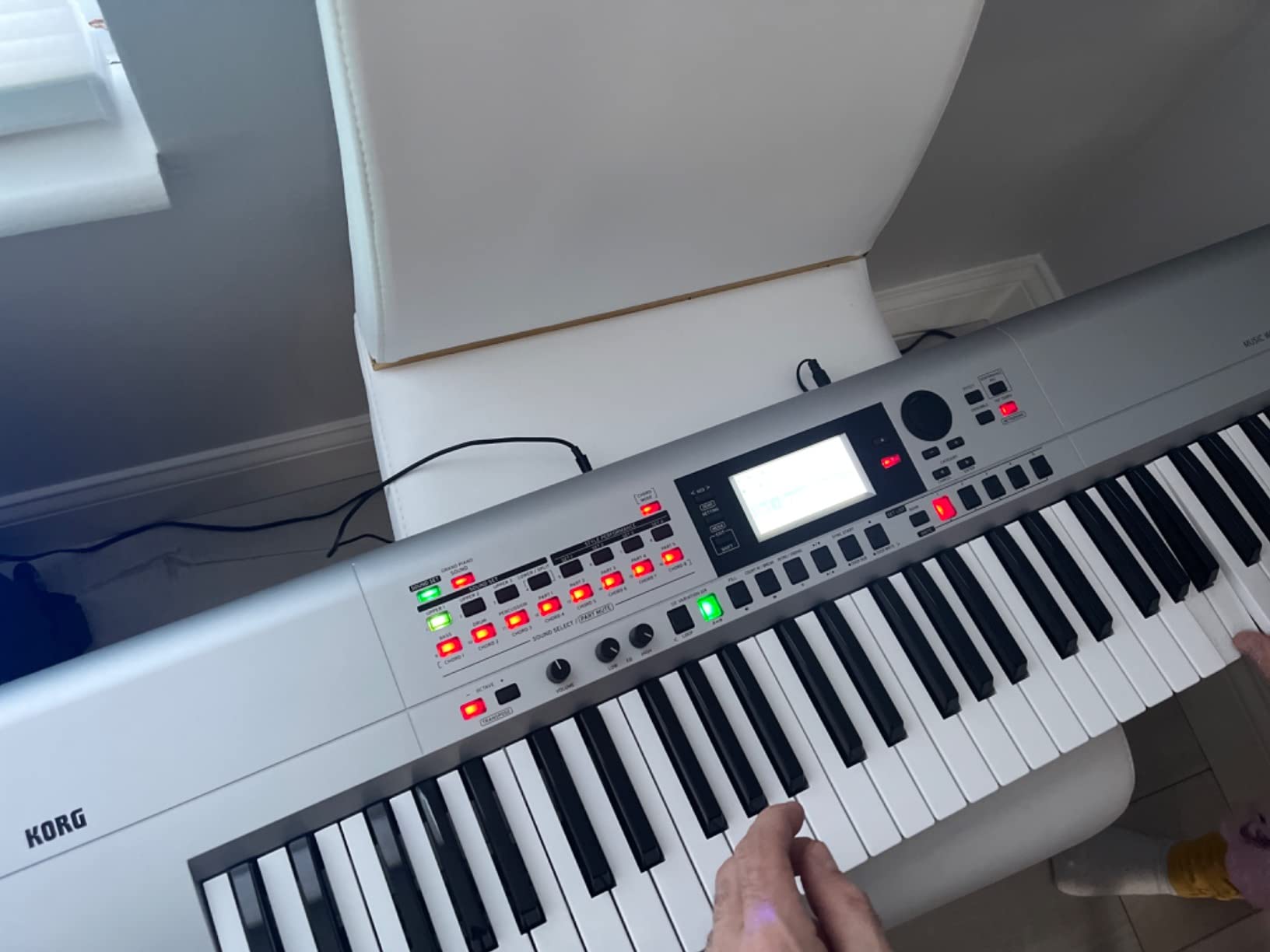
The setup complexity some users report is real. The interface isn’t as intuitive as the EK50’s, and I found myself referring to the manual more than I expected for basic style edits. The display is functional but small, which makes navigating long lists of sounds tedious. But for musicians who need portability above all, the i3 delivers genuine value at a reasonable price.
Who Should Buy the Korg i3?
Musicians who need battery-powered portability — buskers, outdoor performers, and anyone who plays in locations without reliable power. It’s also a solid choice for songwriters who want a portable arranger with recording features. The price-to-feature ratio is genuinely good for the market.
Who Should Look Elsewhere?
If you’ll always have power available, the EK50 offers a more beginner-friendly interface at a similar price. For professional arranger work, the Pa1000 provides vastly more sounds and styles. And if weighted keys matter, the LP-380U or D1 should be on your list instead.
7. Korg Keystage 61 MIDI Controller – The MIDI Controller for Producers
Korg Keystage 61 MIDI-Controller with Polyphonic Aftertouch
61-key semi-weighted keybed
Polyphonic and Channel Aftertouch
MPE compatibility
Built-in arpeggiator and chord modes
OLED screens for visual feedback
Built-in audio interface
MIDI 2.0 Property Exchange
Ableton Live integration
Pros
- Expressive keybed with polyphonic aftertouch
- MPE compatibility for expressive playing
- Ableton Live integration out of the box
- OLED screens provide instant visual feedback
- Built-in audio interface for direct stereo output
Cons
- No speakers — requires external audio
- Requires DAW or sound module to produce sound
- Still building community reviews since newer release
The Keystage 61 isn’t a standalone keyboard — it’s a MIDI controller designed for producers who work in DAWs like Ableton Live. The semi-weighted keybed with polyphonic aftertouch gives you expressive control over virtual instruments that most controllers can’t match. I connected it to my studio computer and within minutes was playing synth leads that responded to pressure in ways my old controller never allowed.
MPE compatibility is the headline feature. If you use MPE-capable virtual instruments, each key can send independent pressure and pitch information, unlocking expressive possibilities that feel like playing a real instrument rather than triggering samples. The built-in arpeggiator and chord modes are surprisingly deep, letting you generate complex musical ideas without touching your mouse.
The OLED screens above the keys are genuinely useful. They show parameter values, scale information, and arpeggiator settings in real-time, which means less squinting at your computer monitor. The Ableton Live integration is seamless — transport controls, clip launching, and device parameters all work without mapping. The included software bundle (Korg Gadget, wavestate native LE, Ableton Live 11 Lite) adds serious value.
The trade-off is obvious: this keyboard makes no sound on its own. You need a computer, tablet, or sound module connected. The built-in audio interface helps, but this is fundamentally a studio tool, not a performance keyboard. For producers who want hands-on control and expressive playing, the Keystage 61 delivers professional features at a competitive price.
Who Should Buy the Korg Keystage 61?
Studio producers, electronic musicians, and anyone who primarily works inside a DAW. It’s ideal for Ableton Live users who want tight integration, and for musicians who value expressive playing through aftertouch and MPE. If you build tracks with virtual instruments, this controller will change your workflow.
Who Should Look Elsewhere?
If you need standalone sounds for live performance, look at the Kross 2-61 or SV2-SP instead. Beginners who want built-in speakers and auto-accompaniment should consider the EK50 or i3. And if you need weighted keys for piano practice, the LP-380U or D1 are better fits.
8. Korg D1 88-Key Stage Piano – The 88-Key Stage Piano Value Pick
Korg D1 88-Key Stage Piano Controller
88-key stage piano
RH3 weighted hammer action
30 high-quality sounds
Grand piano reproduction
Portable stage design
Dedicated pedal included
Pros
- Great weighted keybed feel comparable to grand pianos
- Excellent sound quality especially piano sounds
- Compact and portable design
- Gigging musicians appreciate the durability
- RH3 weighted action found in more expensive keyboards
Cons
- No built-in speakers requires external amplification
- Some reports of shipping damage
- Occasional quality control issues with keybeds
The D1 occupies an interesting space: it’s an 88-key stage piano with RH3 weighted action at a price point well below Korg’s flagship stage pianos. I tested it for a series of church gigs where I needed weighted keys but didn’t want to transport a heavy digital console. The key action genuinely impressed me — the RH3 system feels substantial and responsive, comparable to keyboards costing twice as much.
The 30 sounds are focused and usable. The acoustic pianos are the standout, with rich sustain and realistic decay that held up well in worship band settings. I also found the electric pianos and pads useful for filling out arrangements. The onboard effects are simple but effective, and the dedicated pedal that ships with it works reliably for sustain work.
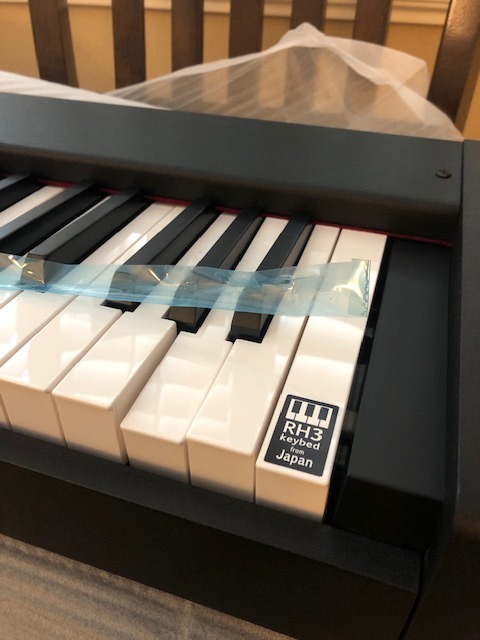
Portability is the D1’s strength. At about 39 lbs, it’s manageable for solo loading into a car, and the compact frame fits in spaces where larger stage pianos would be awkward. The mono output means you can run it into a single amp or mixer channel without worrying about stereo field in live settings. Headphone output is clean for practice.
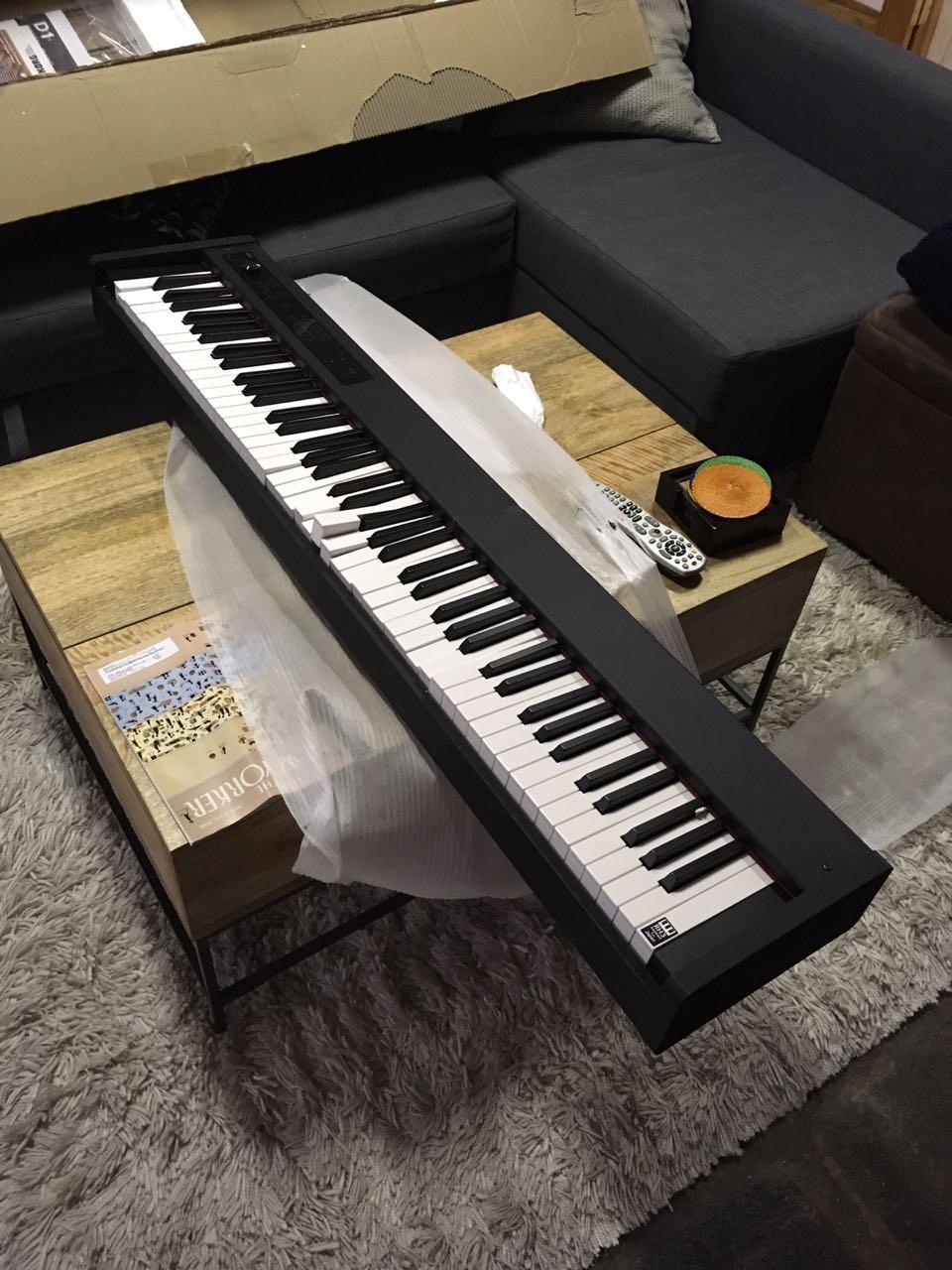
The rating reflects some quality control issues users have reported. A small percentage mention keybed problems or shipping damage — check your unit carefully on arrival. The lack of built-in speakers means you’ll need an amp or PA for any performance. But if you need weighted 88 keys on a budget and can handle those caveats, the D1 offers genuine value.
Who Should Buy the Korg D1?
Gigging musicians who need 88 weighted keys without paying flagship prices. It’s ideal for church players, jazz pianists, and anyone performing in venues with existing sound systems. The RH3 action is the real draw — it’s the same keybed technology found in Korg’s premium models.
Who Should Look Elsewhere?
If you want built-in speakers for portability, the SV2-SP or EK50 are better choices. Home pianists who don’t need stage features should look at the LP-380U for the furniture stand and pedal unit. And if reliability concerns you, consider the LP-380U or SV2-SP for better warranty support and build consistency.
How to Choose the Best Korg Keyboard for You
Picking from Korg’s range means answering a few key questions about how you’ll actually use the keyboard. Based on forum discussions and my own testing, here are the factors that matter most.
Key Action: RH3 Weighted, Semi-Weighted, or Synth-Action?
This is the biggest source of confusion I see in Reddit threads. RH3 weighted hammer action, found on the LP-380U, SV2-SP, and D1, replicates the weight and resistance of acoustic piano keys. It’s essential for classical technique and the best choice if you’re building piano skills. Semi-weighted keys, like on the Keystage 61, offer some resistance but less than a piano — good for synth and organ work. Synth-action keys, like on the Kross 2-61 and arrangers, are fastest for leads and pads but won’t help with piano technique.
Sound Engine and Preset Count
More sounds doesn’t always mean better. The LP-380U has just 30 sounds, but they’re focused and high-quality. The Pa1000 has 1,700+ sounds covering every genre. If you’re a gigging musician who needs variety, higher preset counts matter. If you’re focused on piano practice, quality over quantity pays off.
Do You Need Built-In Speakers?
Stage pianos like the D1 and SV2-SP skip built-in speakers to save weight and cost — you’ll need an amp or PA. Home pianos like the LP-380U also lack speakers, relying on headphones or external audio. Arrangers like the EK50 and Pa1000 include speakers, making them truly plug-and-play. Consider where you’ll play most before deciding.
Korg vs Roland vs Yamaha: Brand Considerations
Reddit users frequently ask whether Korg beats Yamaha or Roland. From what I’ve seen, Korg’s strength is value — you get professional features at lower price points. For classical piano specifically, users in r/piano report that Korg’s entry-level weighted keyboards often feel better than Yamaha’s comparable models. Roland tends to win on stage pianos for touring professionals, while Yamaha dominates the student digital piano market. For arrangers and workstations, Korg competes closely with both.
Warranty and Long-Term Durability
Forum members frequently mention long-term reliability. The LP-380U comes with a 5-year warranty, signaling Korg’s confidence in the build. The Pa1000 includes a 2-year warranty. Most other models carry 1-year coverage. Check warranty terms before investing, especially for stage keyboards that will travel.
Frequently Asked Questions
Which Korg keyboard is considered the best?
The best overall Korg keyboard depends on your needs. For classical piano, the LP-380U offers professional RH3 weighted action and excellent sound. For versatility, the Kross 2-61 handles synthesis, sequencing, and recording. For professional arranger work, the Pa1000 delivers 1,700+ sounds and complete backing styles.
Which Korg piano is considered the best?
For classical pianists, the Korg LP-380U is the best choice. Its 88-key RH3 weighted hammer action closely replicates an acoustic grand piano feel, and the focused sound set delivers high-quality acoustic piano tones. The SV2-SP is best for stage performers needing vintage piano authenticity with built-in speakers.
Are Korg keyboards better than Roland?
Neither brand is universally better. Korg typically offers more features per dollar, making it excellent for value-conscious buyers. Roland stage pianos like the RD-2000 are favored by touring professionals for their durability and action. For classical home practice, Korg’s LP-380U competes well against Roland’s FP series. Your specific needs should guide the choice.
What is the most popular Korg synthesizer?
The Korg Kross 2-61 is among the most popular synthesizer workstations, combining a versatile EDS-i sound engine with sequencing and recording in a portable 3.8 kg package. For pure synthesis, the modwave and wavestate series have strong followings among electronic musicians for their unique sound engines.
Which Korg keyboard is best for beginners?
The Korg EK50 is the best choice for beginners. It offers 702 sounds and 280 accompaniment styles with built-in speakers and an intuitive interface. The i3 is another strong option if you need battery power for portability. For beginners focused on piano technique, the LP-380U provides a proper weighted key action.
Final Verdict: Best Korg Keyboards of 2026
After testing all eight models, three Korg keyboards stand out for different needs. The Korg LP-380U is my pick for classical pianists and serious students — the RH3 weighted action is exceptional for the price, and the focused sound set serves piano practice beautifully. The Korg Kross 2-61 wins for versatility, handling synthesis, sequencing, and recording in a portable package that works for stage and studio alike. For beginners, the Korg EK50 delivers real value with 702 sounds, built-in speakers, and an intuitive interface that keeps learning engaging.
Korg’s strength is delivering professional features at accessible prices across their entire keyboard range. Whether you need weighted keys for classical technique, arranger features for solo performance, or a MIDI controller for studio production, there’s a Korg keyboard that fits. Match your choice to how you’ll actually use it, not just to specs on paper.
Ready to choose? Check the latest prices on Amazon using the links above, and start making music on a keyboard that fits your style and budget.