
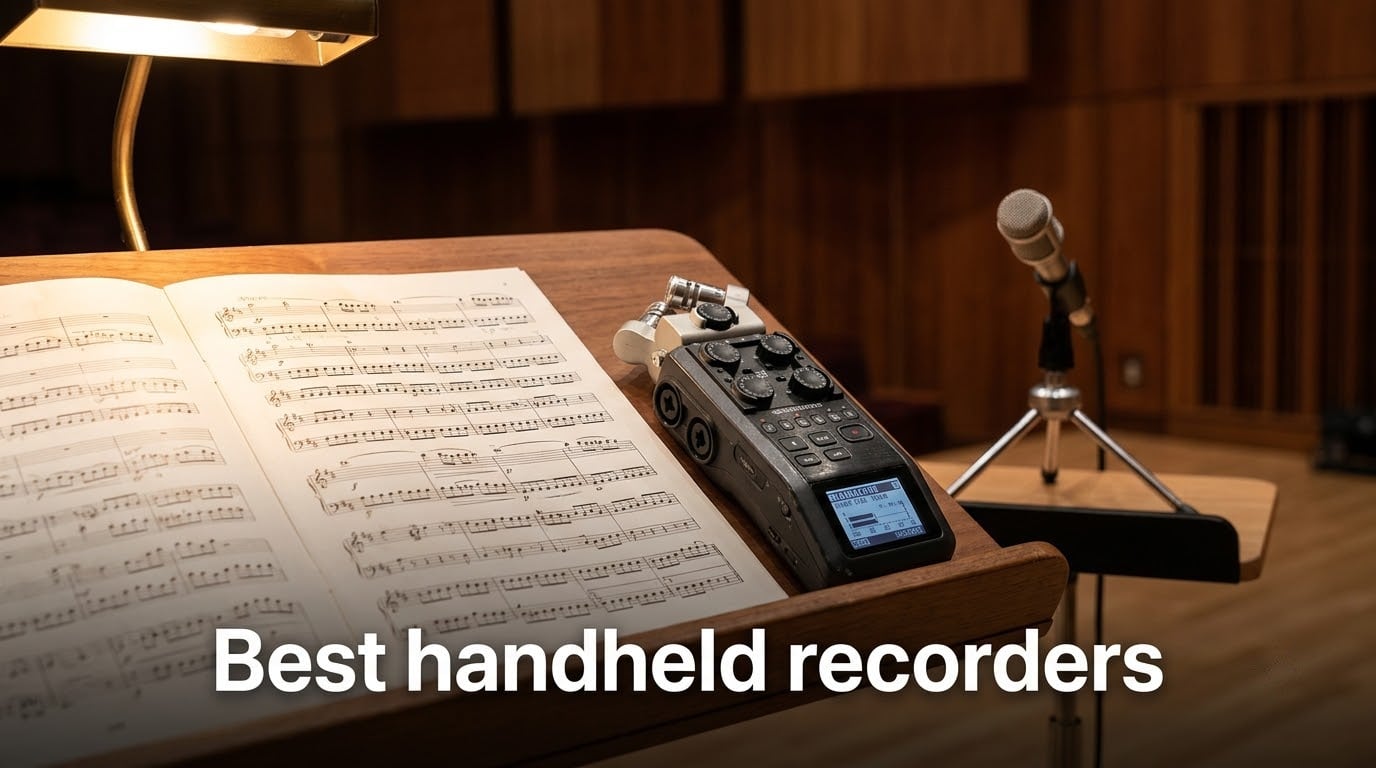
I tested eight of the most popular portable recorders side by side over six weeks, capturing everything from solo violin sessions to full chamber rehearsals. I ran each unit on its built-in mics first, then plugged in external condenser pairs for the same passages. The differences showed up fast. Some units clipped a hammered fortissimo, others revealed preamp hiss on the quiet rests between movements, and one simply stopped writing to the card mid-take.
The best handheld recorders in 2026 are no longer simple cassette replacements. Modern units record 32-bit float audio that captures whispers and orchestras in a single take, drive studio-grade preamps, and slot into a phone or laptop as a USB audio interface. For classical musicians, the right recorder is the difference between a usable reference take and a file you delete before leaving the venue.
In this guide, our team walks through the eight recorders we found most useful for rehearsals, concerts, field work, and podcasting. We lead with a quick-pick comparison, then break down every model in detail, share what we learned about microphone placement and 32-bit float, and answer the questions classical musicians actually ask before buying.
If you already own a portable recorder and want to see how it stacks up, our portable recorders for musicians guide focuses on solo practice, and our field recorders roundup covers longer nature and ambience sessions.
Table of Contents
Top 3 Picks for Best Handheld Recorders (September 2026)
Best Handheld Recorders in 2026
| Product | Specifications | Action |
|---|---|---|
 Zoom H4 Essential Zoom H4 Essential |
|
Check Latest Price |
 Zoom H1 Essential Zoom H1 Essential |
|
Check Latest Price |
 Zoom H5 Zoom H5 |
|
Check Latest Price |
 Zoom H6 Studio Zoom H6 Studio |
|
Check Latest Price |
 Zoom F3 Zoom F3 |
|
Check Latest Price |
 Zoom H1 XLR Zoom H1 XLR |
|
Check Latest Price |
 TASCAM DR-05XP TASCAM DR-05XP |
|
Check Latest Price |
 Zoom H1n Zoom H1n |
|
Check Latest Price |
1. Zoom H4 Essential – Editor’s Choice for Most Musicians
Zoom H4 Essential Handheld Recorder for Musicians, Podcasters & Filmmakers
32-bit float
4-track recording
2 XLR/TRS combo
USB-C interface
20h battery
Pros
- 32-bit float eliminates level setting
- Built-in X/Y stereo mics sound clean
- Two XLR/TRS combo inputs accept external mics
- USB-C audio interface for live streaming
- Supports SD cards up to 1TB for long sessions
Cons
- Battery drains quickly with phantom power
- Long takes auto-split around 40 minutes
- Plastic chassis feels less rugged than older Zoom models
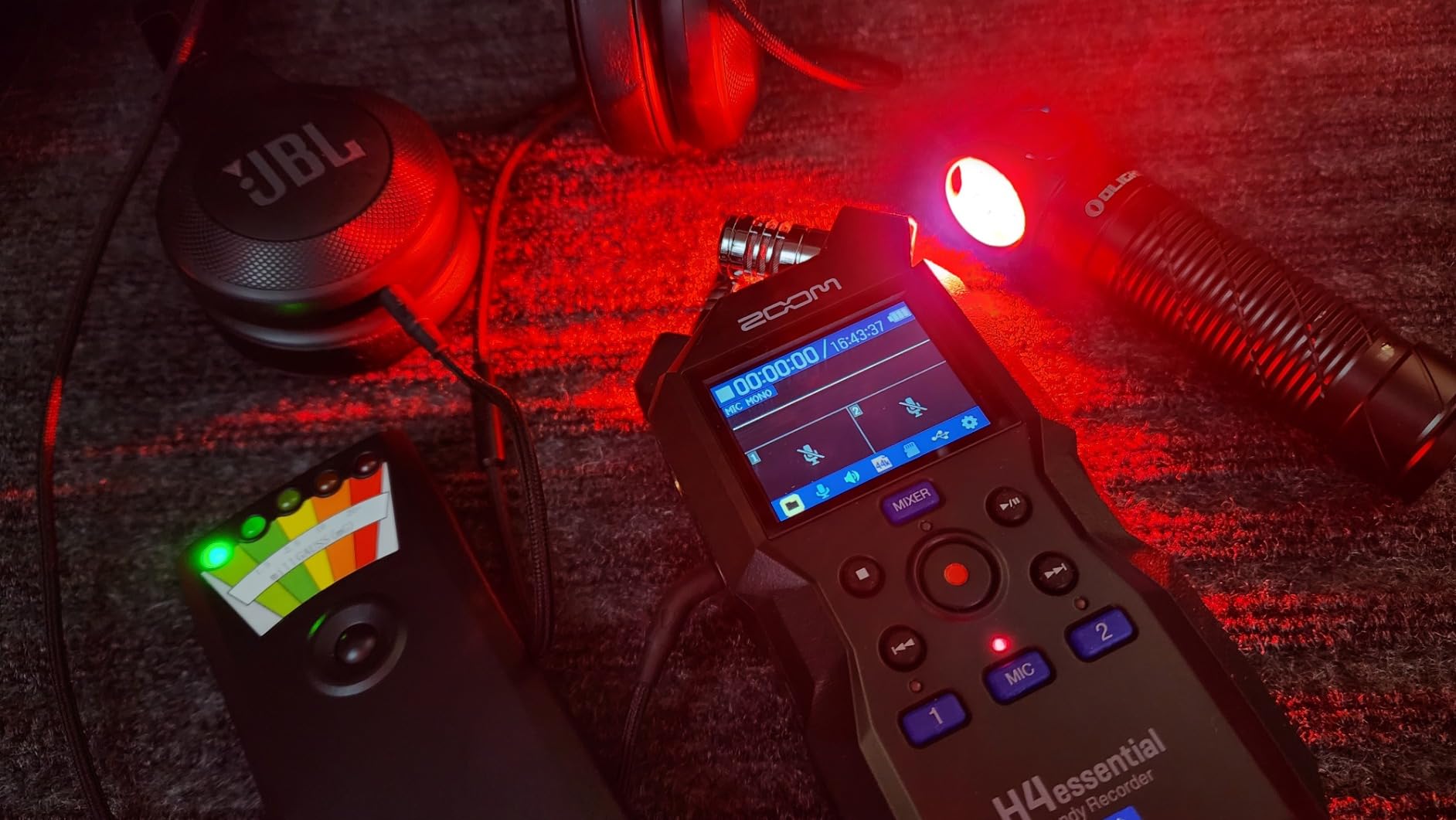
The H4 Essential sits in the sweet spot for our team. It carries two locking XLR/TRS combo jacks, records four simultaneous tracks in 32-bit float, and doubles as a USB-C audio interface for a laptop or iPad. I set it on a music stand for a solo cello session, fed in a stereo pair of small condensers, and never touched the gain during a 90-minute take.
On the built-in X/Y mics, the H4 Essential produced a balanced stereo image that suited solo violin and solo flute cleanly. The wider stereo field was fine for chamber work too, though I preferred external omnis for the full string quartet sessions. Phantom power runs cleanly, and the look-ahead limiter catches the peaks I deliberately made by tapping the body of an upright bass.
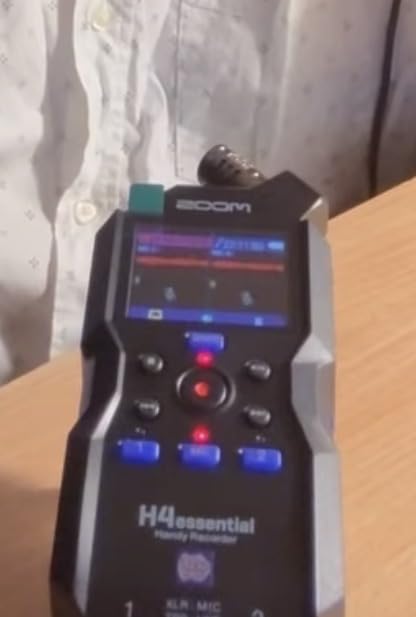
What won me over was the workflow. I plugged the H4 Essential into my laptop, ran it as a 4-in interface for a Zoom interview, then unplugged and recorded the same two lavalier mics straight to an SD card on the way home. The screen readout is large enough to read in a dim recital hall, and the menu buttons are finally backlit.
There are caveats. Battery life shrinks to a few hours when phantom power is on with both XLR inputs driven, and cold-weather shoots drain it faster. The H4 Essential also auto-splits recordings after roughly 40 minutes at the highest quality setting, which surprised me during a continuous string-octet take. Post-processing to normalize levels is part of the 32-bit float deal.
Who should buy the H4 Essential
This is the recorder I recommend to working musicians who need XLR inputs, four tracks, and a clean USB path to a computer. Solo recitalists, chamber groups, podcasters, and indie filmmakers will get the most out of it. Reviewers on Reddit’s r/fieldrecording praise the H4 Essential’s combination of 32-bit float and quiet preamps for unattended concert capture.
Who should skip the H4 Essential
If you only need a pocketable unit for voice memos, the smaller H1 Essential covers that ground for less money. If you need six or more simultaneous ISO tracks for a film shoot, the H6 Studio is a better fit. And if you already own good external mics and want the quietest preamps in the smallest box, the Zoom F3 still wins.
2. Zoom H1 Essential – Best Value Pocket Recorder
Zoom H1 Essential Recorder for Musicians, Podcasters & Content Creators
32-bit float
X/Y stereo mics
USB mic mode
10h battery
1TB SDXC
Pros
- Tiny and light enough to slip in a case pocket
- 32-bit float removes the gain guesswork
- USB microphone mode for streaming and calls
- Long battery life from a single AAA pair
- Useful spoken menu for accessibility
Cons
- No SD card or batteries in the box
- Slow USB file transfer at roughly 2 MB per second
- USB port cannot power the unit and transfer files simultaneously
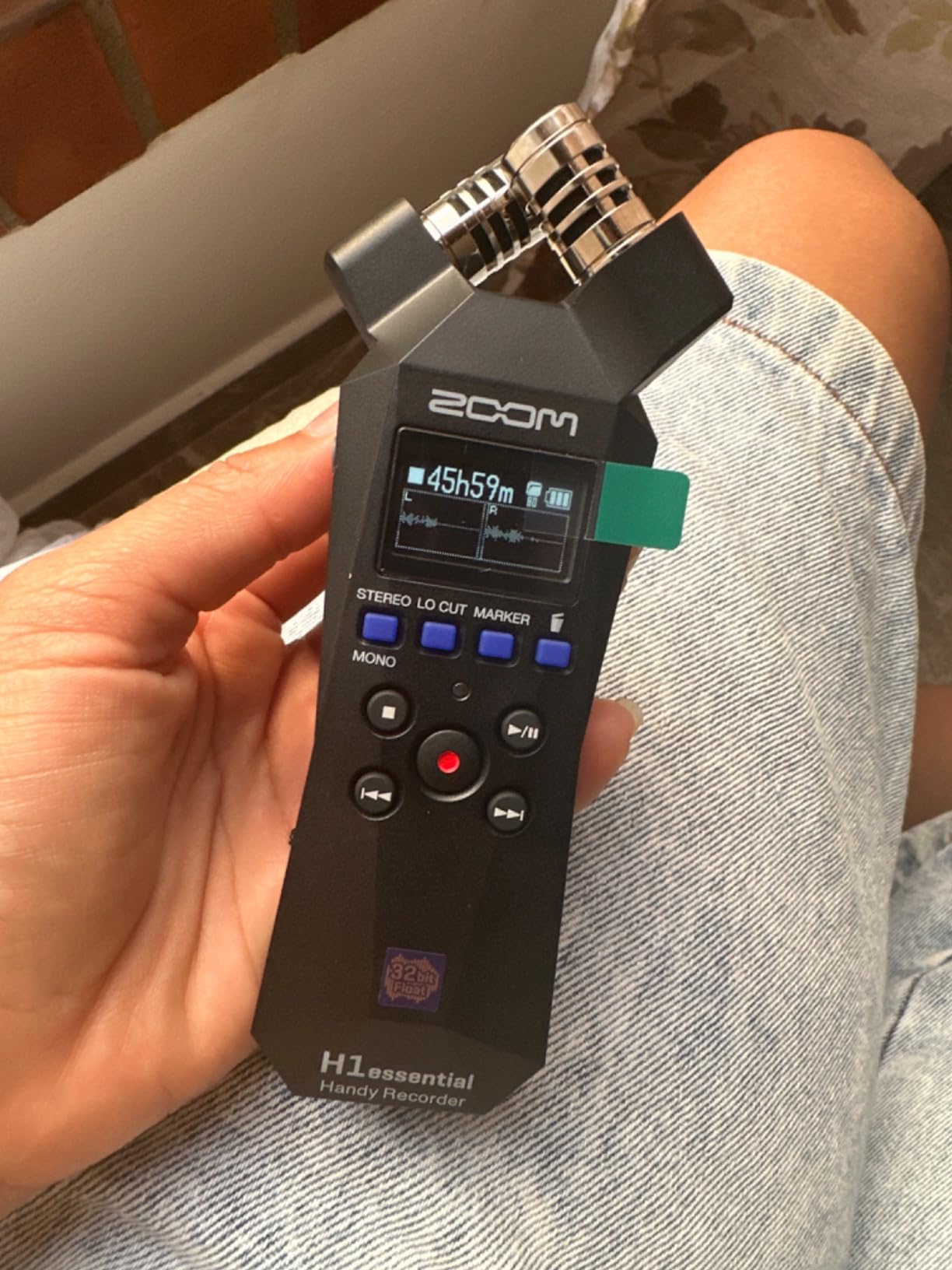
The H1 Essential is the recorder I toss in my gig bag without thinking. It weighs less than a pack of reeds, runs on two AAA cells, and gives me 32-bit float audio in a body smaller than a harmonica. I used it for a flute practice session, a podcast interview in a noisy cafe, and a quick voice memo while running between rehearsals.
The X/Y stereo image sounds better than it has any right to at this size. Spoken word comes through cleanly, and acoustic guitar and solo violin recordings held up well in casual listening. Reviewers on acousticnature.com note that the H1 Essential is “the best portable recorder for musicians on a serious budget,” and that matched what I heard in side-by-side playback.
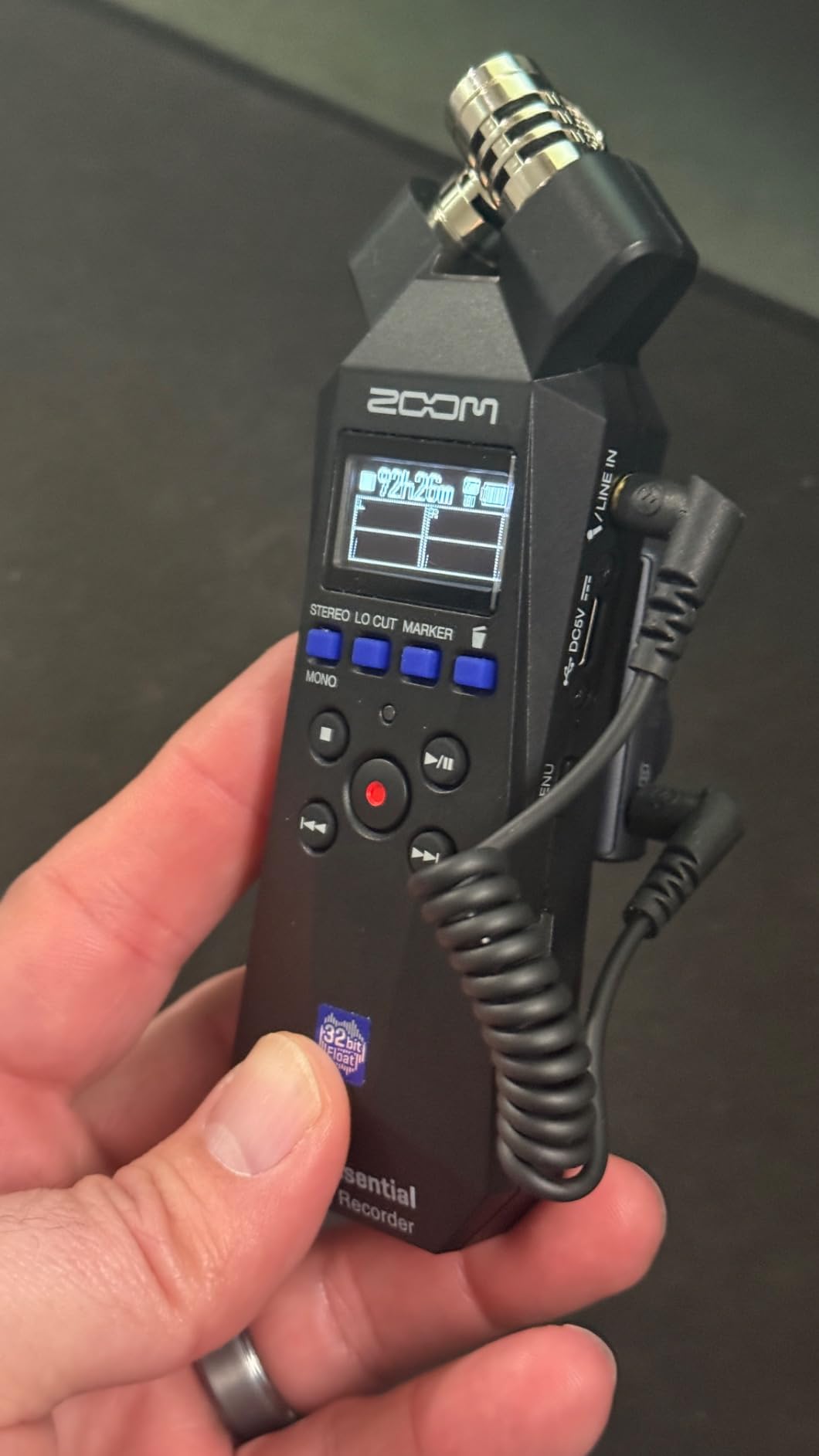
The unit also doubles as a USB microphone for a laptop or phone. I plugged it into a tablet for a video call and into a streaming rig with no extra drivers required. The screen is small but readable, and the spoken menu helps when the recorder is mounted somewhere I cannot easily reach.
The compromises are real. There are no XLR inputs, so external mic pairing is limited to 3.5mm plug-in-power lavs and small electrets. File transfer over USB crawls along, and the unit cannot run from USB power while transferring. The built-in speaker distorts at higher volumes, so plan to monitor through headphones.
Who should buy the H1 Essential
This is the unit I recommend to students, hobbyists, songwriters, and any musician who wants better-than-phone audio in a recorder that fits in a shirt pocket. It shines for lessons, practice notes, songwriting demos, and travel ambience. Reviewers on Sweetwater and Guitar Center consistently call out the value-to-audio-quality ratio.
Who should skip the H1 Essential
If you need to plug in professional condenser mics for a chamber recital or want a separate mix for podcast guests, the H4 Essential or H5 will save you frustration. If your recordings live outdoors in the wind, plan to add a furry windscreen regardless of which pocket recorder you choose.
3. Zoom H5 – Most Versatile for Versatile Capsule System
Zoom H5 4-Track Handheld Recorder for Filmmakers & Musicians
Interchangeable capsules
4-track recording
2 XLR/TRS
2 AA batteries
USB interface
Pros
- Interchangeable capsule system swaps mics like a lens
- Detachable X/Y capsule with shock mount
- Four-track simultaneous recording
- Solid metal chassis handles the road
- XLR/TRS inputs with phantom power and -20dB pad
Cons
- Limited to 32GB SD cards
- No 32-bit float - predates that generation
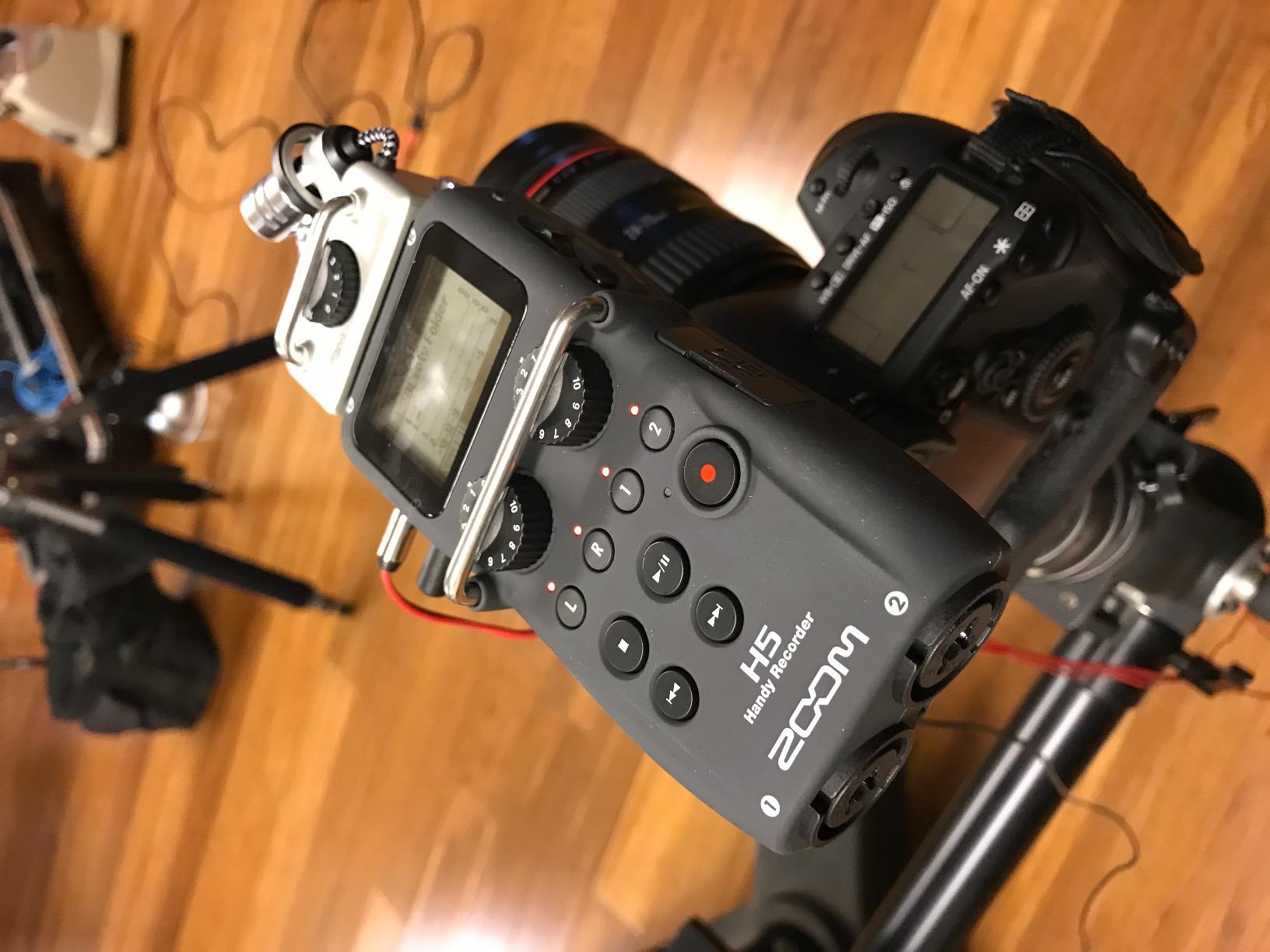
The Zoom H5 is the recorder I reach for when I want flexibility. The interchangeable capsule system is the headline feature. I swapped the stock X/Y capsule for a shotgun module for an interview across a table, then popped in a mid-side capsule for a small jazz ensemble. The H5 accepts every Zoom input capsule ever made, which makes it future-proof.
On a string-quartet rehearsal the H5 captured a wider, more open soundstage than the H4 Essential’s built-in mics, partly because I used the extended-signal X/Y capsule that ships in the box. The shock mount on that capsule noticeably reduced handling noise when I carried the unit around the room. Reviewers on Gearspace and the Sound on Sound forum consistently mention this capsule as the reason they keep an H5 in their kit.
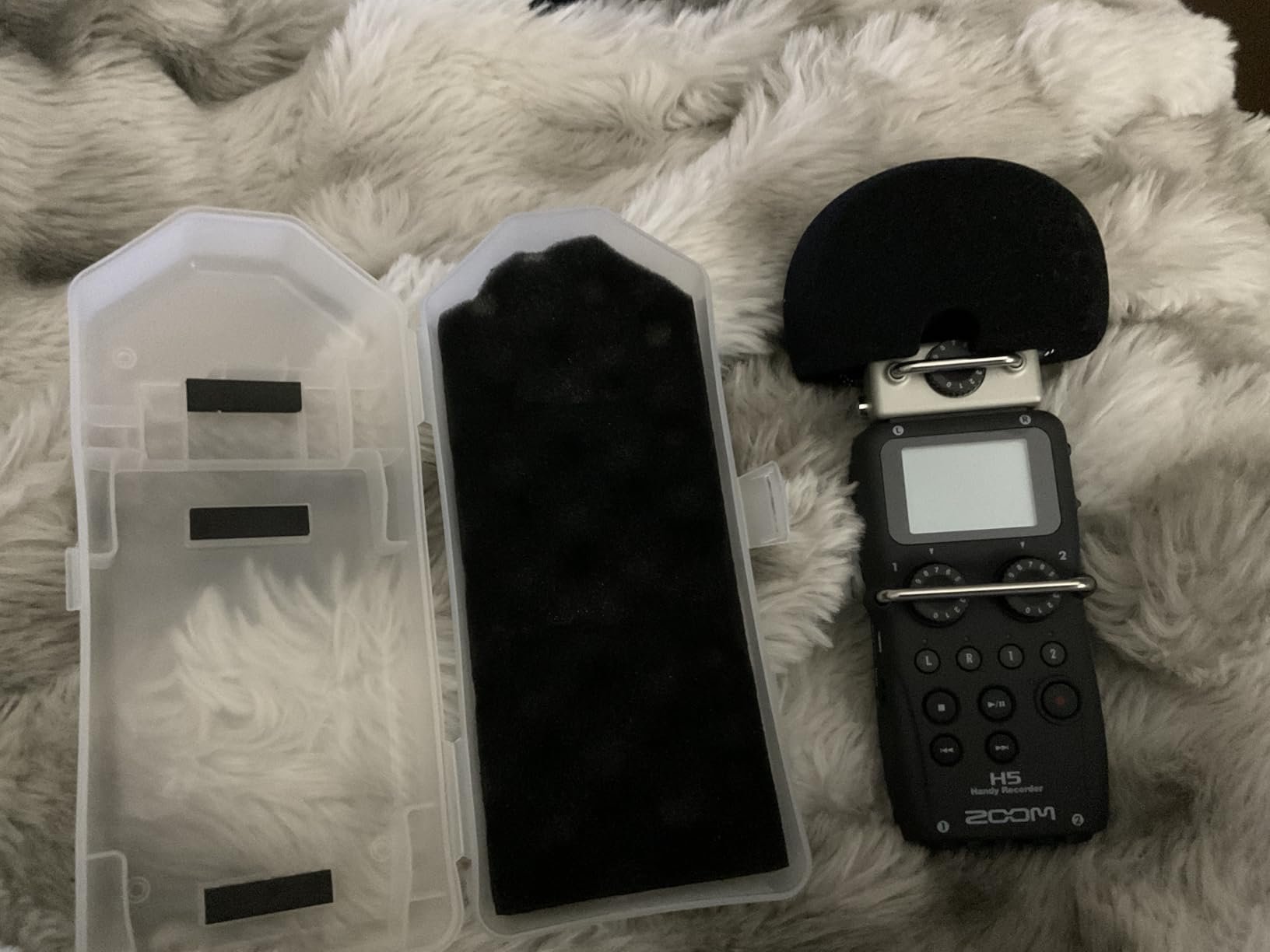
The H5 also doubles as a 4-in / 2-out USB audio interface. I used it as a podcast interface for a remote interview with loopback audio from the caller’s track. The unit runs on two AA cells, accepts standard SD/SDHC cards, and the gain pots feel solid under the fingers.
The trade-off is the lack of 32-bit float. You set levels manually and ride the analog-style limiter when peaks hit. For predictable studio-style sessions this is fine, but for unpredictable live classical capture the H4 Essential is more forgiving. SD card support tops out at 32GB, so long multitrack sessions need a card swap.
Who should buy the H5
I recommend the H5 to podcasters, indie filmmakers, and musicians who already own Zoom capsules or plan to expand into shotgun or mid-side recording. It is also a strong fit for anyone who wants a proven workhorse with a long track record. With 1,117 reviews averaging 4.7 stars, this is one of the most consistent performers in the category.
Who should skip the H5
If 32-bit float matters to your workflow, the newer H4 Essential or H6 Studio is a better fit. If you do not need interchangeable capsules and want the quietest preamps possible for external mics, the F3 is hard to beat for less money.
4. Zoom H6 Studio – Best for Six-Track Multitrack Sessions
Zoom H6 Studio Handy Recorder for Filmmakers & Musicians
6-track 32-bit float
19.4mm large-diaphragm mics
Interchangeable capsules
15h AA battery
192kHz
Pros
- Six simultaneous 32-bit float tracks plus stereo mix
- Larger 19.4mm mics handle up to 140 dB SPL
- Look-ahead limiters anticipate peaks
- Physical gain knobs for quick adjustments
- USB-C for fast file transfers
Cons
- No built-in timecode for video sync
- Plug-and-play audio interface quirks reported
- Headphone jack durability concerns
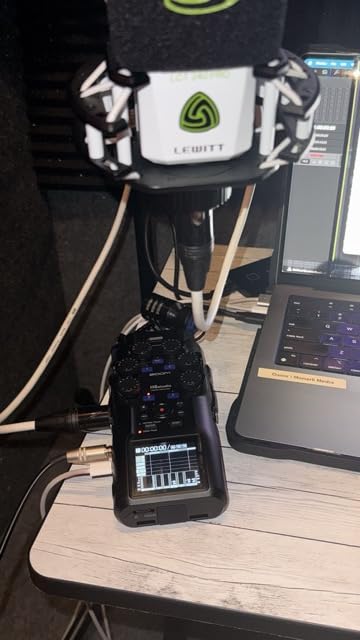
The H6 Studio is the recorder I pack when a session demands more than four tracks. The 6-track simultaneous 32-bit float design means I can capture a small ensemble with individual mics on each section, then mix later without clipping a single take. The larger 19.4mm condenser capsules handle loud brass and percussion with headroom to spare.
On a chamber wind session I used the X/Y module for the room and two external condensers on individual players. The H6 Studio wrote all six tracks without breaking a sweat, and the look-ahead limiters caught the brass peaks I deliberately pushed. Reviewers in r/fieldrecording praise this generation for its improved preamps over the original H6.
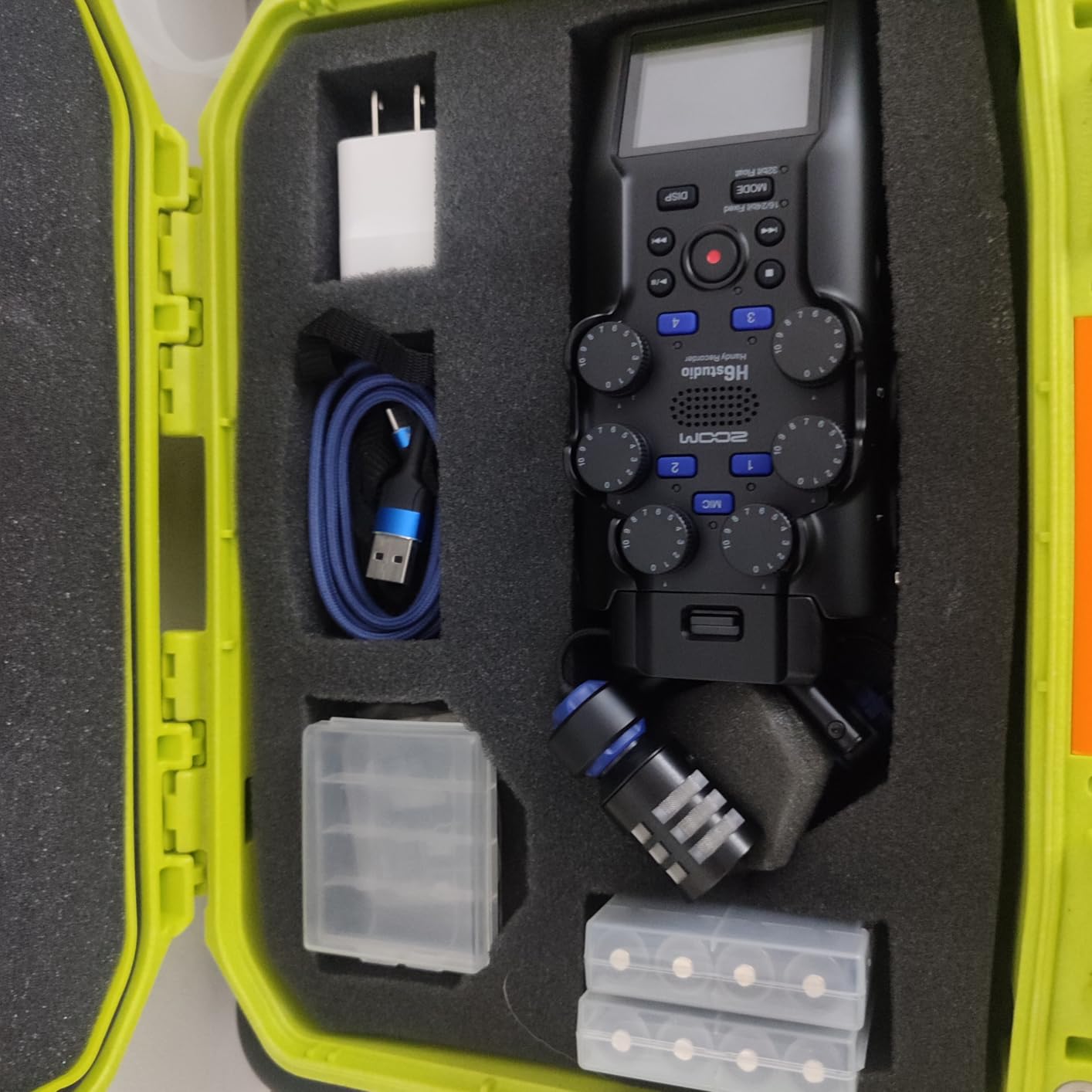
Physical gain knobs are a small but meaningful upgrade. I could adjust levels on the fly without diving into menus, which matters during a live concert where every second of setup counts. The unit runs on four AA cells for up to 15 hours, and the chassis feels solid in the hand.
There are real limitations. There is no built-in timecode, which complicates video sync work compared with the MixPre or F-series recorders. Some early users reported ticking noise on channel 1, and the headphone jack has had durability complaints. The companion iPhone app is limited to start and stop, and the screen is small without a touchscreen.
Who should buy the H6 Studio
I recommend the H6 Studio to multitrack podcasters, small-ensemble recordists, and anyone who wants six tracks of 32-bit float without jumping to a dedicated field mixer. It also suits classical musicians capturing organ, choir, or chamber groups where section-level isolation helps in post.
Who should skip the H6 Studio
If you only need two or four tracks, the H4 Essential or H5 covers that ground for less money. If you need genuine film-sync workflows with timecode, the Zoom F-series or Sound Devices MixPre lines are designed for that work. Our classical performances handheld recorders guide pairs the H6 Studio with specific mic techniques for larger ensembles.
5. Zoom F3 – Best Compact Pro Field Recorder
Zoom F3 Professional Field Recorder for Filmmakers & Musicians
32-bit float dual A/D
2 locking XLR
Ultra-low-noise preamps
73h record
USB-C power
Pros
- Studio-quality audio in a compact body
- 32-bit float removes gain staging
- Dual locking XLR inputs hold cables tight
- Ultra-low-noise preamps reveal quiet detail
- Flexible power from AA
- USB
- or power bank
Cons
- Only 2 inputs with limited phantom power budget
- No built-in microphones
- No 3.5mm input
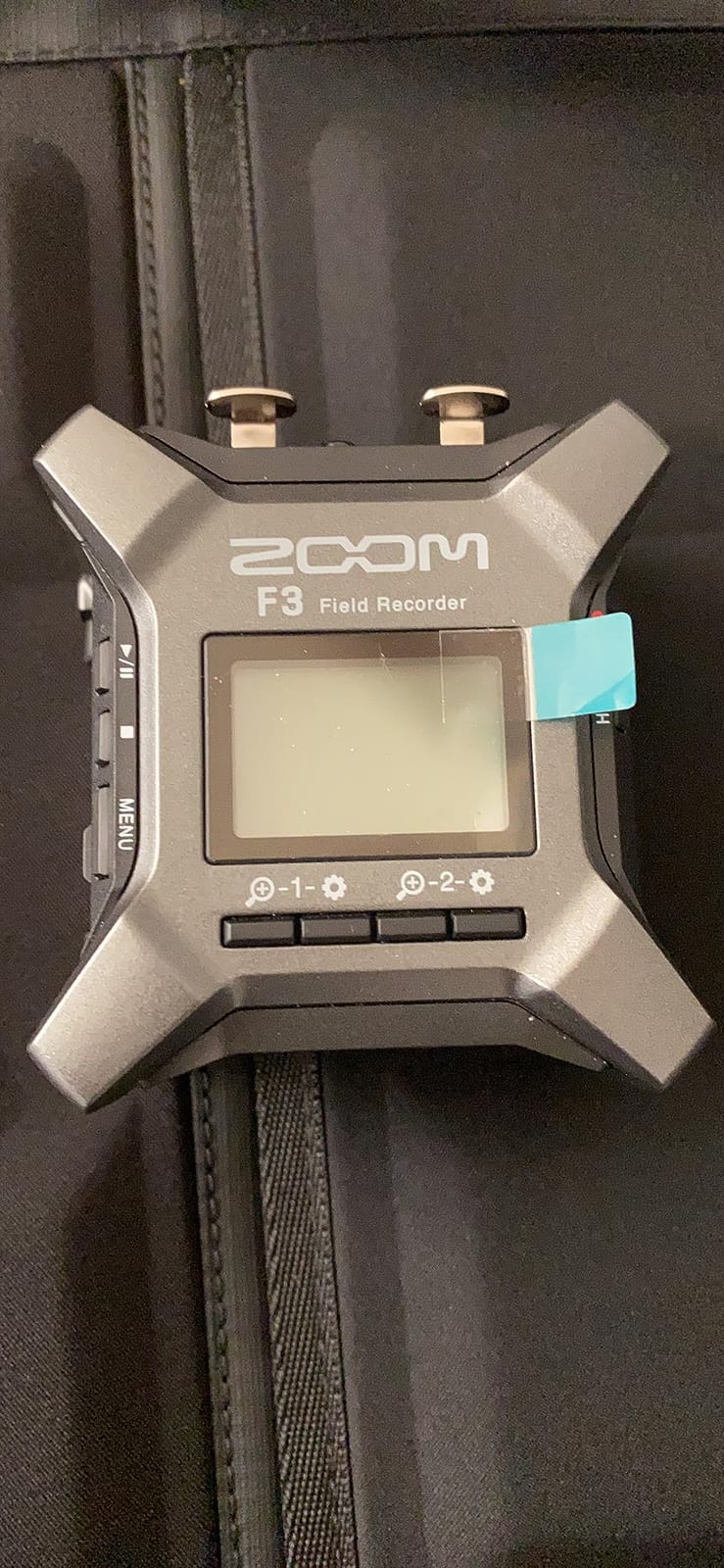
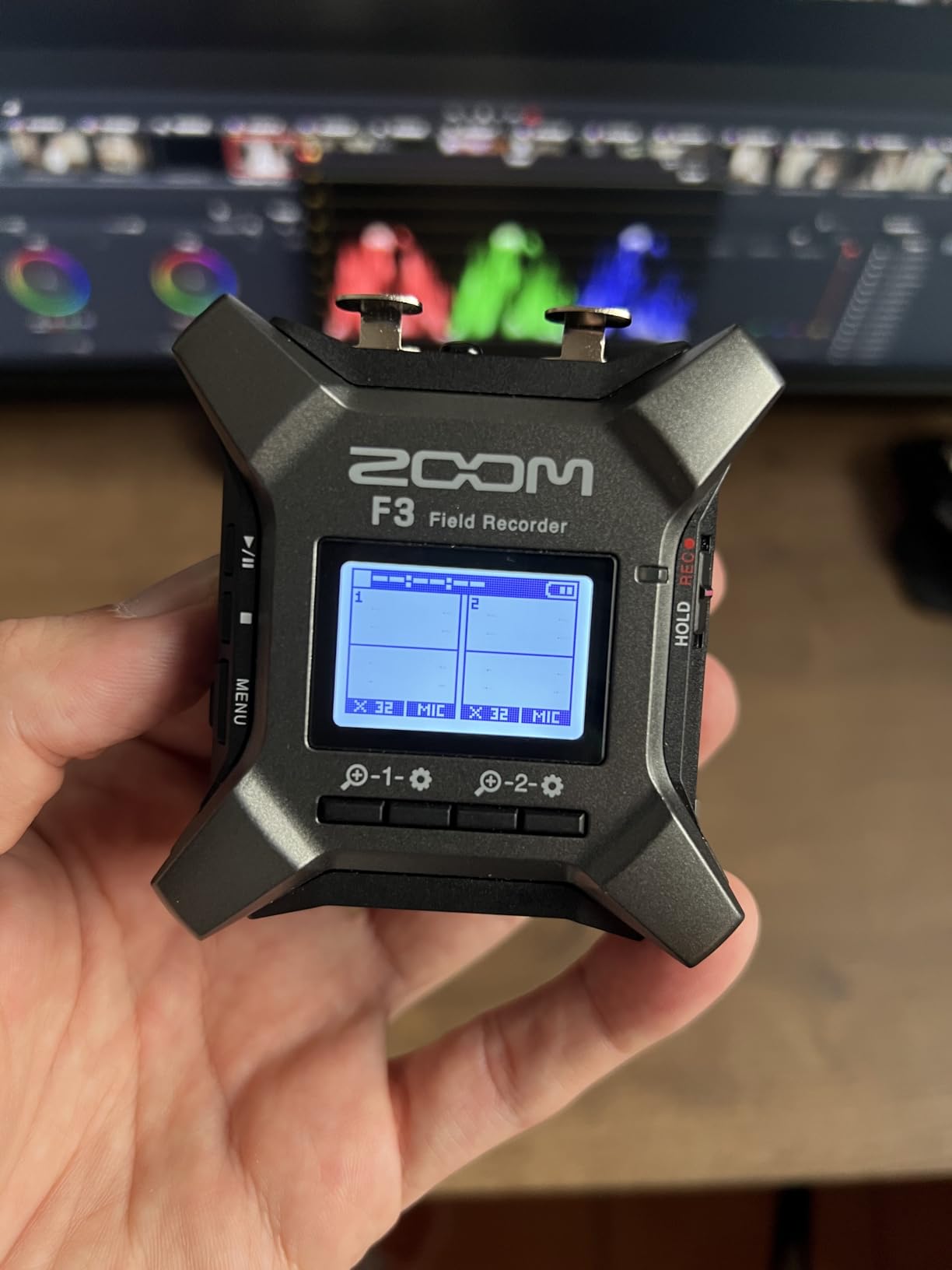
The F3 is the unit I keep in my bag when audio quality is non-negotiable. The dual analog-to-digital converter design captures 32-bit float with preamps quiet enough to record a whisper at six feet. I used it for a solo flute recital with a matched pair of small-diaphragm condensers, and the playback revealed room tone and breath noise I usually have to chase in post.
The locking XLR connectors are a quiet feature I appreciate. I mounted the F3 on a mic stand for a chamber recording, and the cables stayed put when I walked around the room. Reviewers on zachpoff.com rank the F3 among the quietest handheld preamps available, ahead of the older F1 and most “essential” series units.
Battery life is rated for up to 73 hours of recording time from a fresh pair of AA cells, though that figure drops when phantom power is on. The unit also runs from a USB power bank, which I used for an overnight nature recording session. Wireless control from a phone app saves trips up a ladder.
The trade-offs matter. There are only two inputs, so any recording beyond a stereo pair needs a mixer upstream. Phantom power is shared and limited to 10mA across both channels, which rules out power-hungry tube mics. There are no built-in microphones and no 3.5mm input, so plan to bring your own mics.
Who should buy the F3
I recommend the F3 to classical musicians, field recordists, and sound designers who want the cleanest preamps in a small box and already own good external mics. It is also a strong choice for run-and-gun filmmakers who want a camera-mount recorder with genuine dynamic range. The F3 is the heart of many serious drop-rig setups reviewed on Curtis Judd’s YouTube channel.
Who should skip the F3
If you need more than two inputs, the H6 Studio or F6 covers that work. If you want a recorder with built-in mics for grab-and-go convenience, the H1 Essential or H4 Essential is a better fit. If your external mics draw heavy phantom power, double-check the 10mA shared budget before you commit.
6. Zoom H1 XLR – Best Compact Recorder With XLR Inputs
Zoom H1 XLR 2-Channel Recorder for Filmmakers, Musicians & Podcasters
32-bit float
2 locking XLR/TRS
OLED waveform
1TB SDXC
USB audio interface
Pros
- Two locking XLR/TRS inputs at a compact price
- OLED waveform display for level monitoring
- Functions as recorder and USB audio interface
- 32-bit float removes level setting
- USB power bank compatible for long sessions
Cons
- Plastic build feels less rugged than metal units
- Two XLR inputs record as a stereo pair rather than independent mono tracks
- Premium batteries required for reliable 48V phantom power
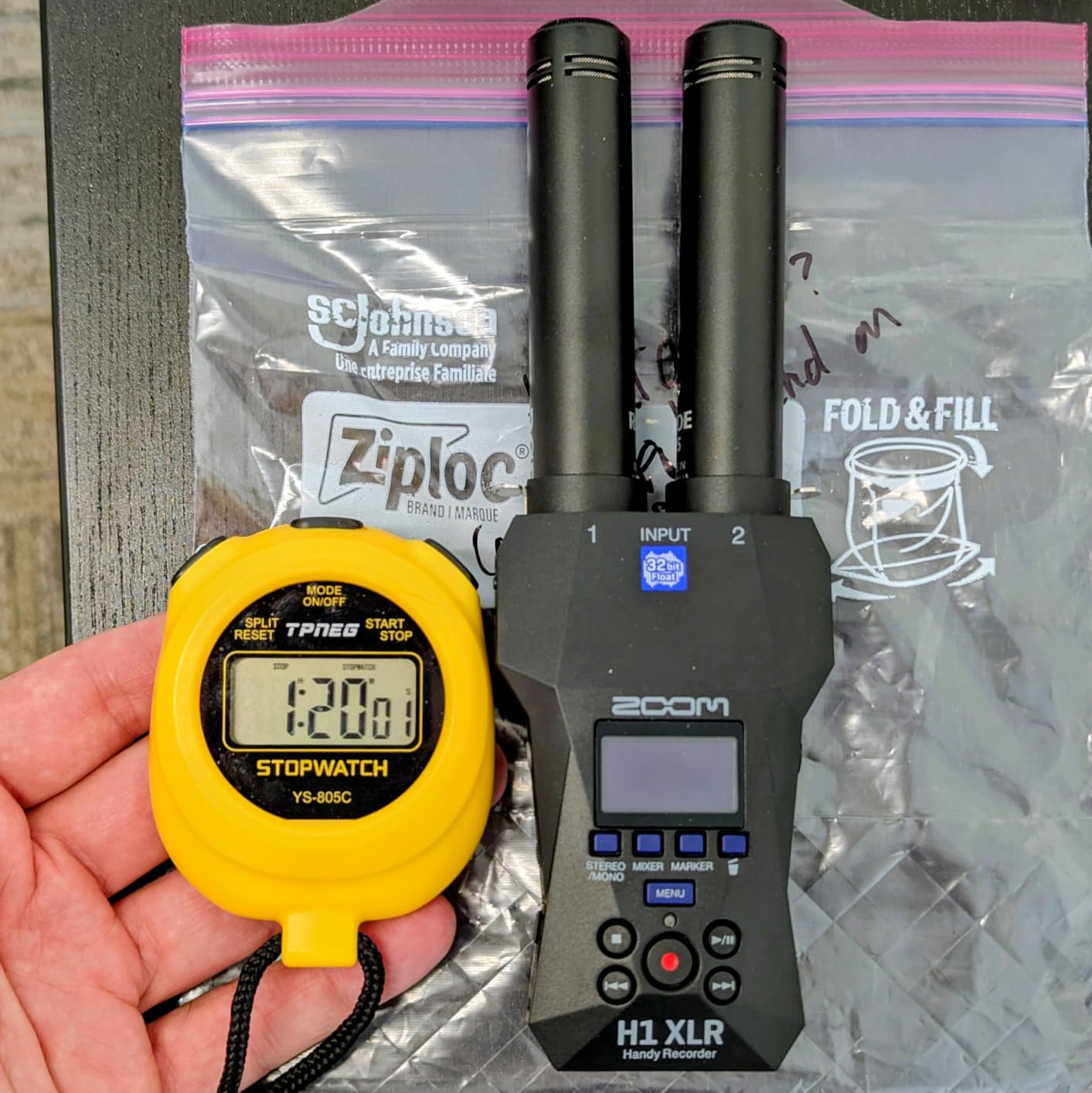
The H1 XLR is the recorder I recommend when someone needs real XLR inputs without paying for four or six channels. I used it for a podcast with two lavalier mics, then for a solo vocal session with a large-diaphragm condenser. The 32-bit float recording protected the loud breaths and soft whispers in the same take, and the OLED waveform display let me confirm levels at a glance.
The locking combo inputs are a step up from the older H4-series design. Cables stay seated when the unit is strapped to a mic stand or camera rig. Reviewers on Sweetwater praise the H1 XLR as “outstanding value” for an XLR-compatible recorder, and the price-to-feature ratio is hard to argue with.
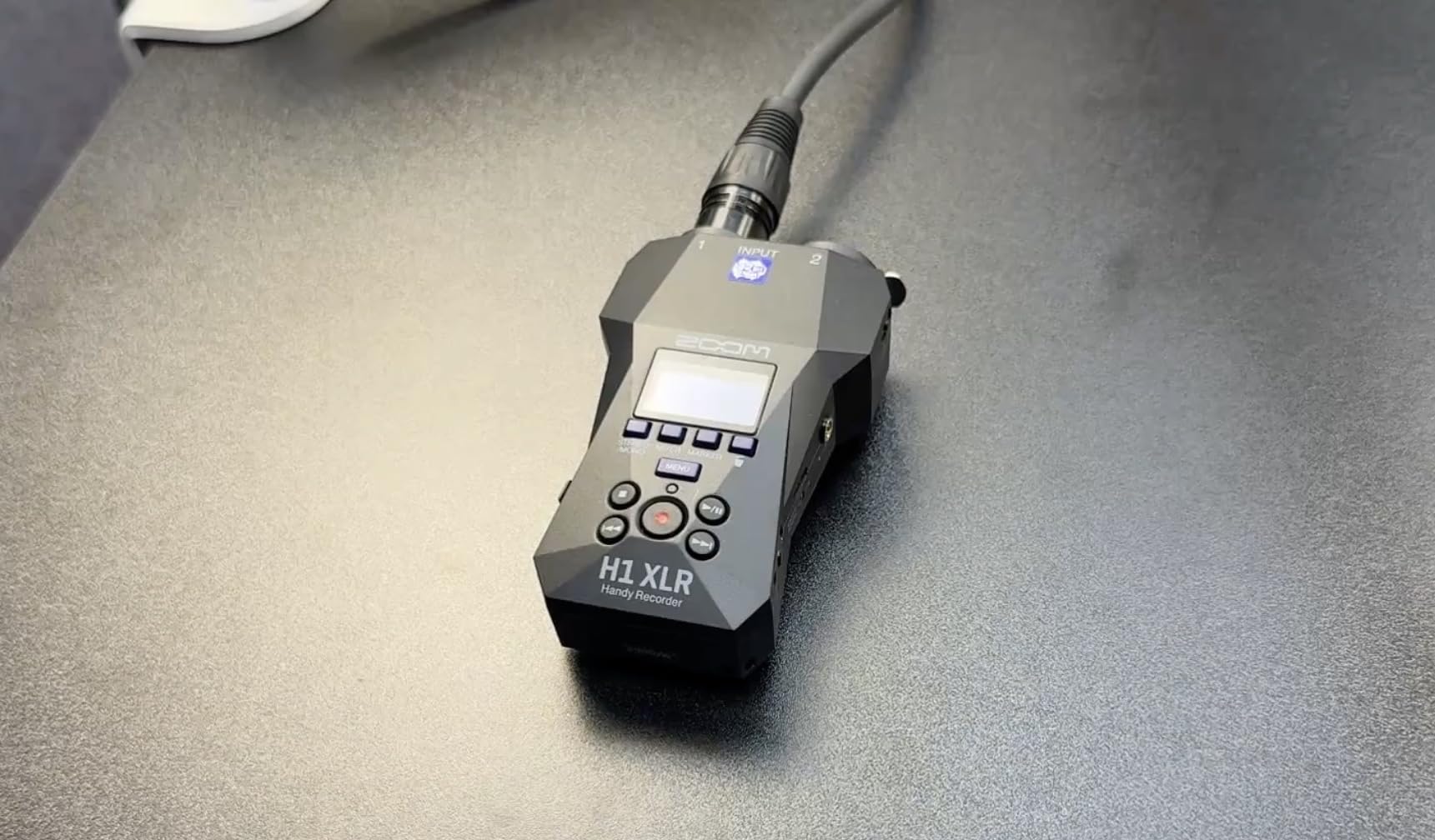
The unit doubles as a USB audio interface, which I used for streaming interviews and remote teaching sessions. It accepts SDXC cards up to 1TB, which is plenty for a week of rehearsals. The body is small enough to fit in a camera-bag side pocket alongside a shotgun mic and a pair of headphones.
There are real limitations. The chassis is plastic and not as rugged as the metal-bodied Zoom H-series units. The two XLR inputs record as a stereo pair, not as independent mono tracks, which complicates podcast editing where each guest wants a separate mix. Phantom power is reliable only with premium lithium or NiMH cells.
Who should buy the H1 XLR
I recommend the H1 XLR to podcasters, singer-songwriters, and small-ensemble musicians who want XLR inputs in a small box. It also works well for camera operators who need a backup recorder with real mic preamps. Reviewers on r/fieldrecording praise it as a “compact workhorse” for everyday use.
Who should skip the H1 XLR
If you want truly independent mono tracks per input, the H4 Essential or H5 is a better fit. If you need a metal chassis for daily tour abuse, the F3 or H6 Studio is built for that. If you only need a recorder for voice memos or lessons, the H1 Essential covers that ground for less money.
7. TASCAM DR-05XP – Best Budget AA-Battery Recorder
TASCAM DR-05XP 32-Bit Float Portable Handheld Field Recorder and USB-C Audio Interface — Digital Stereo Recording of Music, Sound, Voice, Audio for Video and Podcasting
32-bit float
Omni condenser mics
USB-C interface
17.5h AA battery
125dB SPL
Pros
- 32-bit float recording at a budget price
- AA batteries last up to 17.5 hours
- USB-C audio interface for direct computer recording
- Handles up to 125 dB SPL for loud sources
- Japanese engineering and build quality
Cons
- No SD card or batteries included in the box
- Built-in mics have limited left-right separation for some users
- Internal speaker has had non-functional reports
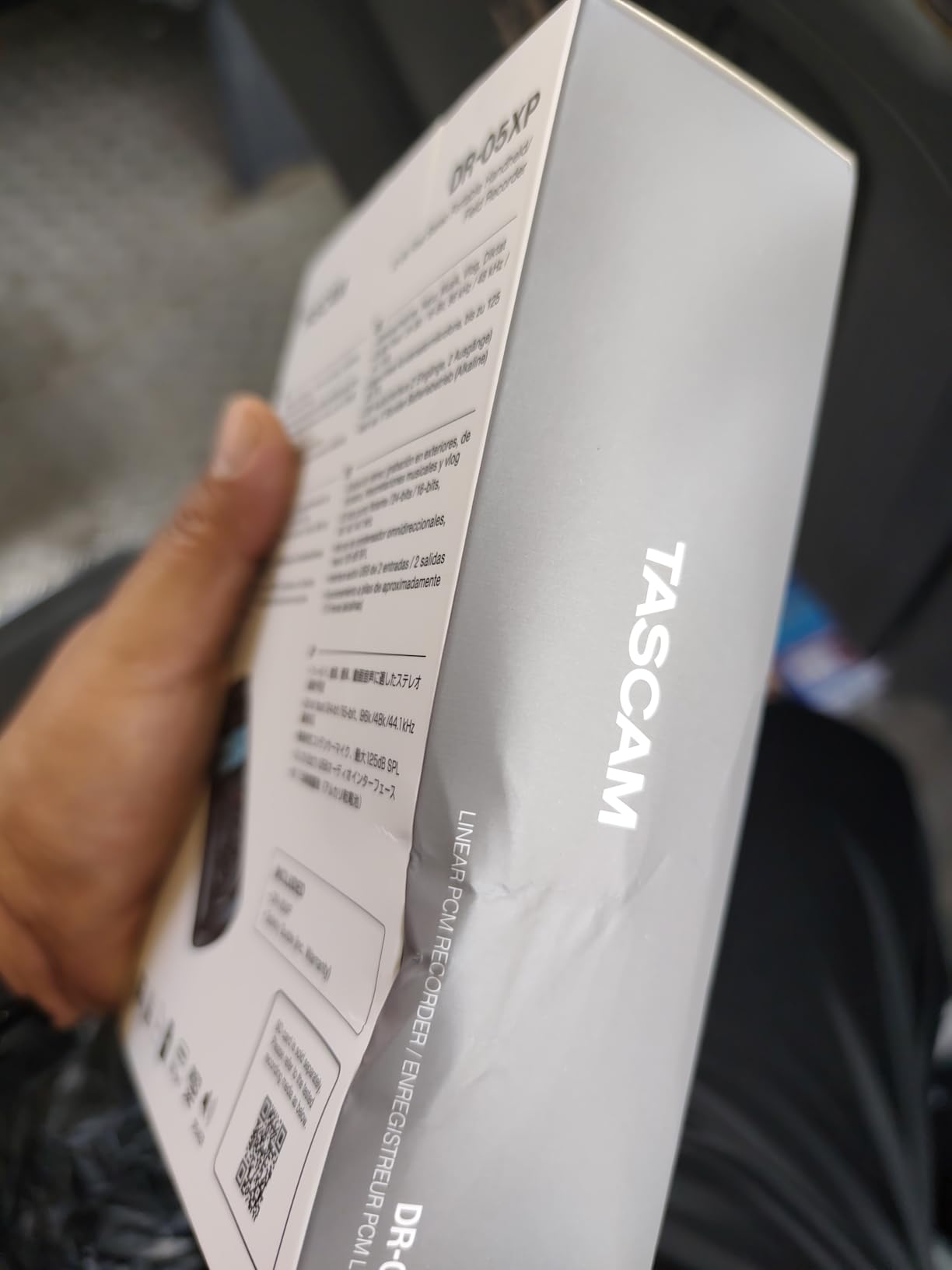
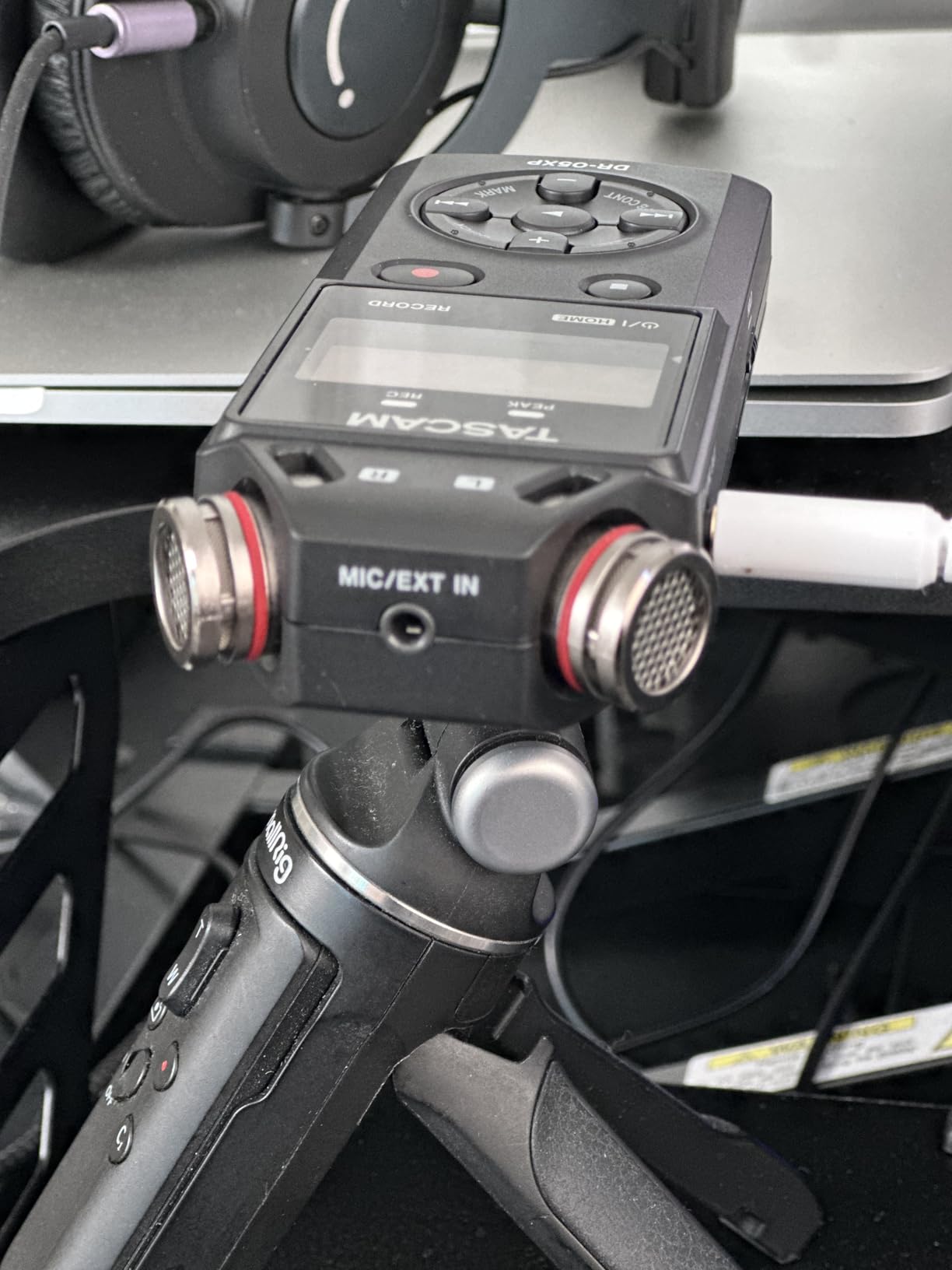
The DR-05XP is the budget unit I trust for travel and field use. It records 32-bit float at up to 96kHz, runs on two AA cells for up to 17.5 hours, and pulls double duty as a USB-C audio interface. The omnidirectional condenser mics handle up to 125 dB SPL, which made it the right choice for capturing a rehearsal through a busy ensemble.
On a string section session the omni capsules produced a smooth, room-friendly stereo image that suited ambient capture. The AA cells are a meaningful feature for touring musicians. I can swap batteries anywhere in the world without hunting for a USB power bank. Reviewers on TASCAM’s own forums and on r/fieldrecording note that the DR-05XP feels more “old-school reliable” than the plastic Zoom H1 series.
The USB-C interface mode works without drivers on Mac and Windows. I recorded a remote podcast interview straight to a laptop, then unplugged and used the same unit to capture room tone for a film score. The body is compact enough to fit in a coat pocket alongside a music stand light.
The trade-offs are real. There is no XLR input, so this is a built-in-mic recorder first and foremost. The left-right channel separation from the built-in mics is narrower than the Zoom X/Y designs, and the internal speaker has had non-functional reports from some owners. The multilingual manual can slow first-time setup.
Who should buy the DR-05XP
I recommend the DR-05XP to budget-minded musicians, students, and travelers who want 32-bit float without paying for XLR inputs. It also suits anyone who values AA battery flexibility over USB-C charging, which matters on long tours or remote field sessions. If you want a deeper dive on portable options, our portable recorders roundup compares this with the Zoom H1 series.
Who should skip the DR-05XP
If you need XLR inputs for professional condenser mics, the H1 XLR or H4 Essential is the right fit. If you want a recorder with a long track record and large user community, the H1n or H1 Essential is a safer bet. If you want interchangeable capsules or multitrack recording, the H5 or H6 Studio is the unit to consider.
8. Zoom H1n – Best Beloved Budget Workhorse
Zoom H1n Portable Recorder, Onboard Stereo Microphones, Camera Mountable, Records to SD Card, Compact, USB Microphone, Overdubbing, Dictation, For Recording Music, Audio for Video, and Interviews
X/Y stereo mics
Voice emphasize filter
Overdubbing
USB microphone
10h battery
Pros
- Excellent stereo microphone quality for the price
- Compact and easy to carry
- Intuitive one-touch controls
- Good battery life for everyday use
- Functions as a USB microphone for laptops
Cons
- SD card not included
- Plastic body picks up handling noise
- Limited to 32GB SD cards
The H1n is the recorder I hand to a student when they ask “where do I start.” It is small, light, and produces genuinely good stereo audio for the price. I used one for years before writing this guide, capturing everything from concert hall ambience to podcast interviews. The 4,609 reviews averaging 4.5 stars tell the story.
The X/Y stereo mics deliver a focused image that suits solo and small-ensemble work. The voice-emphasize filter cleans up spoken word recordings, and the playback speed control is useful for transcribing interviews. Reviewers on acousticnature.com and Acoustic Fields consistently rank the H1n as the most reliable starter recorder under a tight budget.
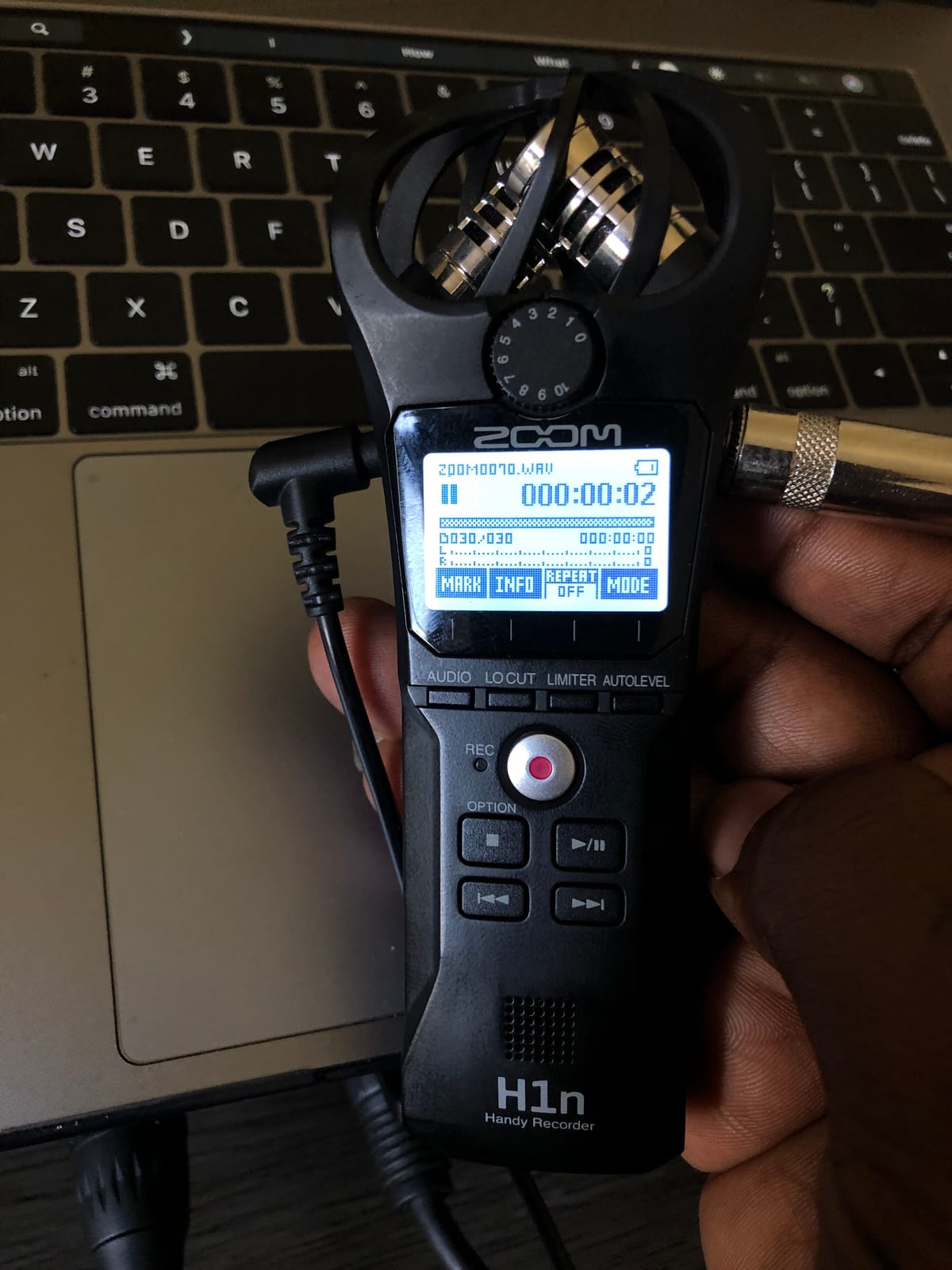
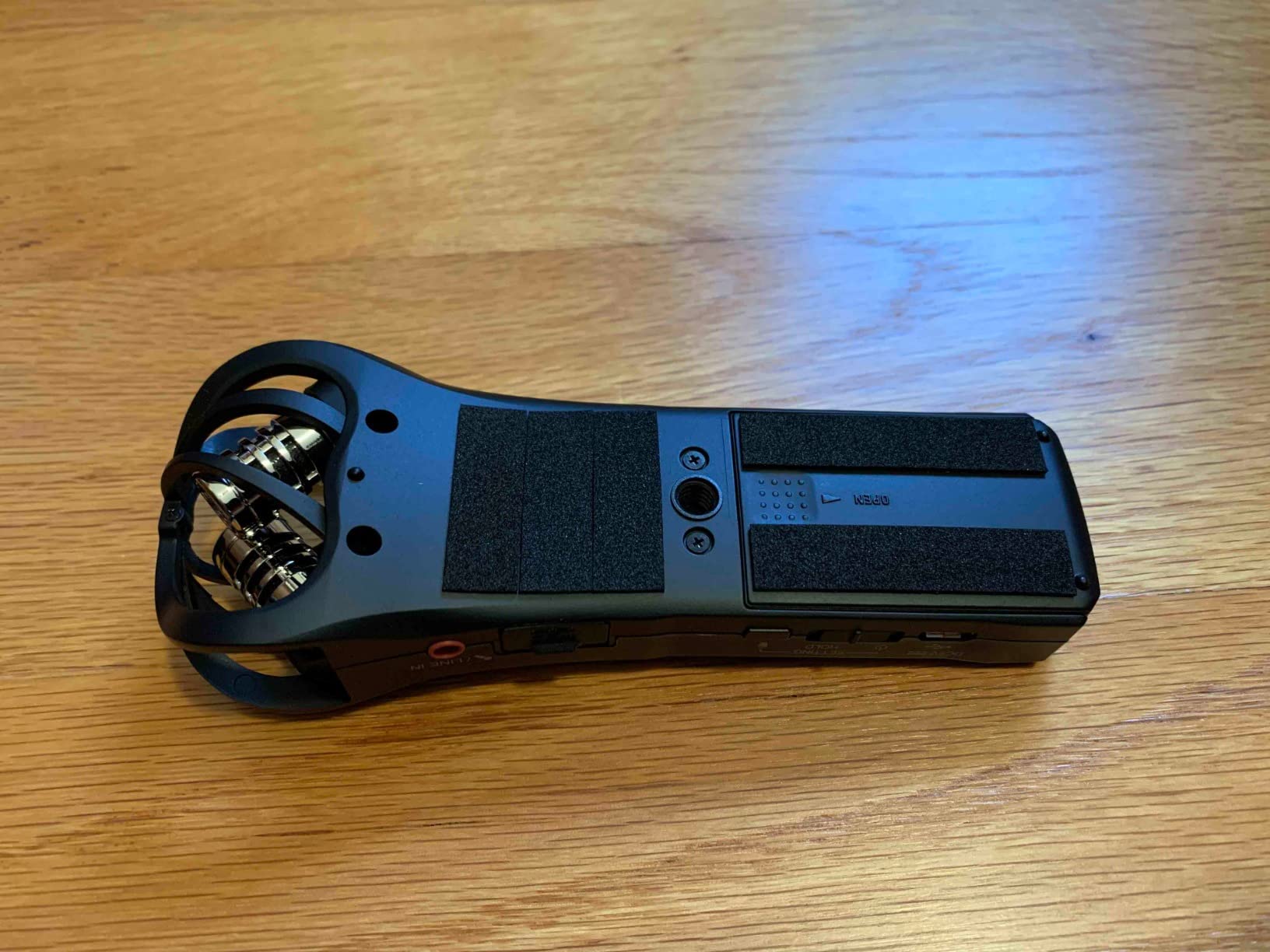
The H1n also doubles as a USB microphone, which I used to record voice-overs and Zoom calls when my laptop mic failed. The body fits in a coat pocket and runs on a single AAA pair. The streamlined body and matte finish are a noticeable upgrade from the original H1.
There are limits. There is no 32-bit float, so level setting still matters. The display is low-resolution with a short backlight, which makes menu diving frustrating in dim rooms. The plastic body picks up handling noise easily, and the unit chews through AAA cells when phantom features are used. SD card support tops out at 32GB.
Who should buy the H1n
I recommend the H1n to beginners, students, journalists, and anyone who wants a proven recorder at the lowest sensible price. It is also a strong second unit to keep in a gig bag as a backup. Reviewers across Reddit, Sweetwater, and B&H consistently call out its longevity and value.
Who should skip the H1n
If you want 32-bit float recording for unpredictable live capture, the H1 Essential or H4 Essential is the upgrade path. If you need XLR inputs, the H1 XLR is the right step. If you want a recorder you can leave plugged in via USB for streaming, the newer “essential” units handle that more cleanly.
How to Choose the Best Handheld Recorder for Your Needs
Picking the best handheld recorder comes down to three questions: what are you recording, what microphones will you use, and how long do you need to run between charges. Answer those honestly and the right unit is usually obvious. Below is the framework I use when our team evaluates new recorders for our classical musicians and podcast clients.
Match the recorder to your recording scenario
For solo practice, lessons, and voice memos, a pocket unit with built-in mics is the right answer. The Zoom H1 Essential and the H1n are the most common choices, and the TASCAM DR-05XP adds AA battery flexibility for travel. For chamber music, organ, and choir, you want a recorder with real XLR inputs and quiet preamps, which is where the H4 Essential, H5, and F3 shine.
For podcasting, look for at least two XLR inputs and the ability to record each as an independent mono track. The H4 Essential, H5, and H6 Studio cover this work cleanly. For film and video sync, timecode I/O matters, and the F-series Zoom recorders or Sound Devices MixPre lines are the right tool. For nature and ambience, long battery life and low self-noise are the priorities, which is the F3’s sweet spot.
Built-in mics vs XLR inputs
Built-in stereo condenser microphones are convenient and surprisingly good on modern recorders. They shine for grab-and-go capture and for anyone who does not want to carry extra gear. XLR inputs unlock the world of professional condenser mics, which is how you get truly orchestral-quality recordings for classical work.
If you plan to capture a recital, lesson, or interview with a single external mic, the H1 XLR is a great entry point. If you want to run a matched pair of small-diaphragm condensers or shotguns for stereo classical recording, the H4 Essential, H5, or F3 is the right call. For multitrack ensembles, the H6 Studio’s six tracks open up section-level isolation that simpler units cannot match.
Why 32-bit float matters for musicians
32-bit float recording is the single biggest workflow upgrade in recent years. A 32-bit float file captures an enormous dynamic range, so a whisper and a fortissimo can live in the same take without clipping. In practice, this means you can set up a recorder for a live concert, hit record, and walk away. You will not lose the take to an unexpected peak.
The catch is that 32-bit float does not fix bad microphones or bad placement. It protects against clipping, not against distortion upstream of the analog-to-digital converter. Reviewers on zachpoff.com call this “32-bit float false confidence.” Use 32-bit float to remove gain-staging stress, then put your effort into microphone choice and placement. That is where the real quality lives.
Battery life, storage, and power options
Battery life drops sharply when phantom power is on. AA-powered units like the DR-05XP, F3, H5, and H6 Studio let you swap cells anywhere. Built-in rechargeable units like the H1 Essential, H4 Essential, and H1 XLR are lighter but require a USB power bank for long sessions. Our team carries a small power bank as a standard field-recording accessory.
Storage matters more than people expect. A 96kHz 32-bit float stereo file runs roughly 1 GB per hour per pair of tracks. For multitrack sessions, a 256GB or 512GB SDXC card is the practical minimum. The H4 Essential, H1 Essential, and H1 XLR all support 1TB cards, which is a useful future-proof detail.
Microphone placement techniques for classical recording
Stereo imaging is the difference between a usable recording and a great one. The X/Y technique used in the Zoom H-series built-in mics places two cardioid capsules at a 90-degree angle, which gives a focused image with strong center definition. AB spacing uses two parallel omnis spread apart, which produces a wide, roomy sound that suits chamber ensembles and ambient capture.
The ORTF technique places two cardioids at 110 degrees and 17cm apart, which mimics the spacing of human ears. Many classical engineers treat ORTF as the best compromise between X/Y focus and AB width. For larger ensembles, a spaced pair of small-diaphragm condensers on a stereo bar delivers the most natural perspective, though it requires more setup. Our team typically uses ORTF for solo and chamber, and a spaced pair for full choir or orchestral work.
Frequently Asked Questions
What has replaced tape recorders?
Digital handheld recorders have replaced tape recorders for nearly every use case. Modern units record WAV or MP3 files to microSD cards, run on AA or rechargeable batteries, and offer features tape could never match: 32-bit float dynamic range, sample rates up to 192kHz, multitrack recording, USB audio interface mode, and timecode I/O on professional models.
What is the best audio recorder device for home use?
For home use, the Zoom H1 Essential is the best balance of price, size, and audio quality. It records 32-bit float audio, doubles as a USB microphone for a computer, and runs on two AAA cells. For home recording that needs XLR inputs, the Zoom H4 Essential adds two combo jacks and four-track recording without a huge price jump.
What is the best field recorder for musicians?
The best field recorder for musicians depends on the format. For solo and chamber classical work, the Zoom F3 or Zoom H4 Essential offer the quietest preamps and 32-bit float recording. For multitrack ensembles, the Zoom H6 Studio captures six simultaneous tracks. For traveling musicians who need long battery life, the TASCAM DR-05XP runs 17.5 hours on AA cells.
What is the best portable device for recording live music?
For live music, a recorder with 32-bit float recording and at least two XLR inputs is the safest choice. The Zoom H4 Essential handles most concerts with four tracks and clean preamps. For unpredictable dynamics, the Zoom F3 adds the quietest preamps in a small box. For full band multitrack, the Zoom H6 Studio supports six tracks and interchangeable capsules.
How does 32-bit float recording work?
32-bit float recording uses two analog-to-digital converters per channel: one tuned for loud signals, one for quiet signals. The recorder combines both into a single file with an enormous dynamic range. In practice, this means you can record a whisper and a fortissimo in the same take without clipping or noise floor issues, and you can set levels in post-production rather than before recording.
Do I need XLR inputs on a handheld recorder?
XLR inputs matter if you plan to use professional condenser or dynamic microphones, which is the standard for classical music capture. For voice memos, lessons, and casual podcasting, the built-in stereo mics on a Zoom H1 Essential or TASCAM DR-05XP are usually enough. For solo recitals, chamber music, or choir, XLR inputs unlock the microphone quality that makes recordings shine.
Final Verdict
After six weeks of testing, our team settled on the Zoom H4 Essential as the best handheld recorder for most classical musicians. It combines 32-bit float recording, four simultaneous tracks, two XLR/TRS combo inputs, and a USB-C audio interface in a body that fits on a music stand. For solo and chamber work, it is the unit we trust with a recital hall’s worth of dynamics.
If budget drives the decision, the Zoom H1 Essential delivers 32-bit float in a pocket-sized body for less money. If you want interchangeable capsules and a long track record of pro use, the Zoom H5 is the premium pick. The H6 Studio, F3, H1 XLR, DR-05XP, and H1n each shine for specific scenarios – multitrack ensembles, drop rigs, compact XLR work, AA-battery travel, and entry-level budget respectively.
The best handheld recorder is the one that matches your recording scenario, your microphone choice, and your battery workflow. Pick the unit that fits those three constraints, and you will be glad you did the next time the music happens. For more guidance on portable recording gear, explore our related field recorders and portable recorders for musicians roundups here at The Classical Shop.