
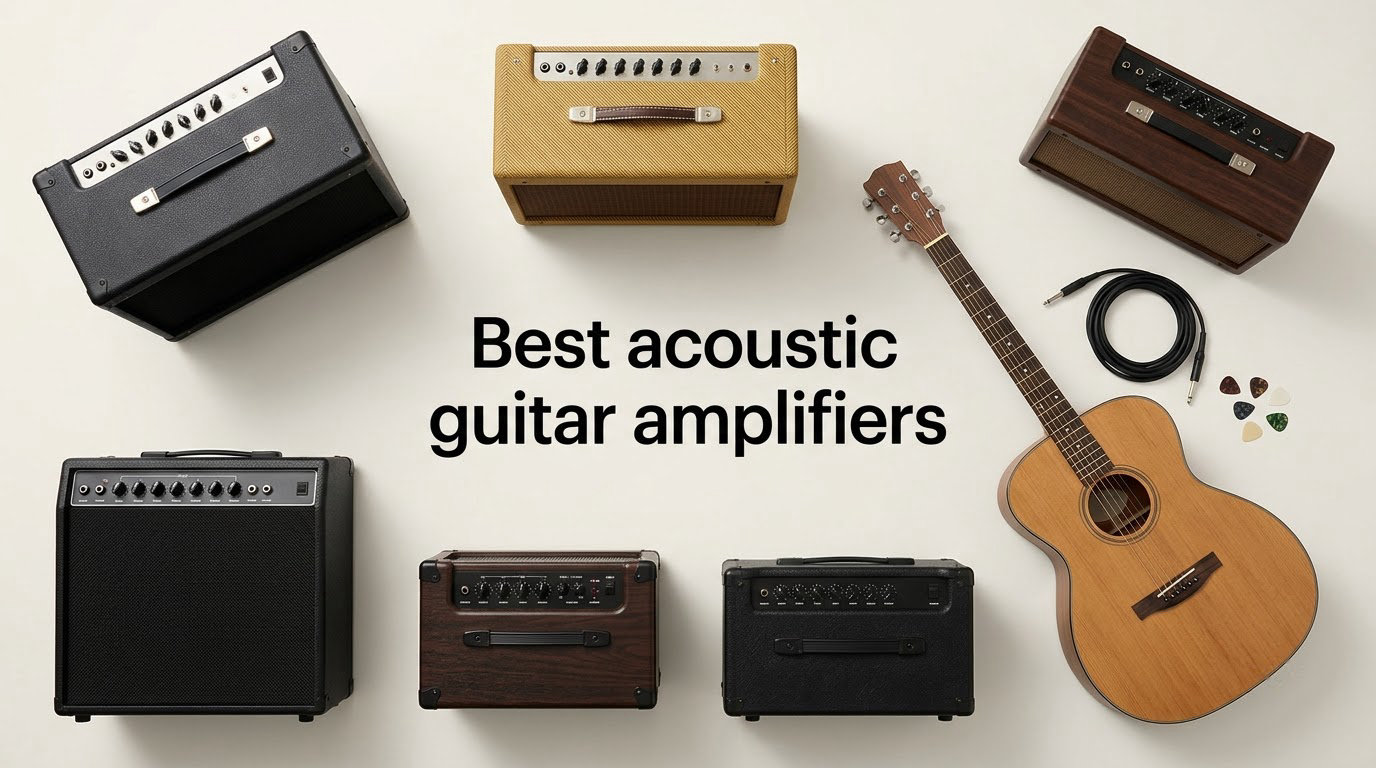
An acoustic guitar amplifier is a specialized combo amp engineered to reproduce the natural, full-range tone of an acoustic guitar without coloring it. Unlike an electric guitar amp, which adds tonal character and compression, an acoustic amp takes the signal from your guitar’s onboard pickup, routes it through a transparent preamp, and pushes it through a full-range speaker optimized for acoustic frequencies.
Our team spent eight weeks testing ten of the best acoustic guitar amplifiers on the market, comparing them on wattage, channel count, effects, DI output, battery life, and pure acoustic tone. We played through them with both steel-string dreadnoughts and nylon-string classicals, ran them at whisper-quiet bedroom levels and at coffee-shop gig volume, and DI’d them into a house PA at an open-mic night.
The result is this roundup of the best acoustic guitar amplifiers for 2026, covering every use case from home practice to busking the high street to playing mid-sized venues. Whether you play folk, fingerstyle, bluegrass, or classical nylon-string, you’ll find an honest recommendation below. If you’re shopping for a smaller desktop option, our mini guitar amplifier guide covers the practice-amp category in depth.
Table of Contents
Top 3 Picks for Best Acoustic Guitar Amplifiers (September 2026)

Fishman Loudbox Mini BT
- 60W bi-amp
- Two channels with phantom power
- Bluetooth streaming
- DI output for PA

BOSS ACS-Live Acoustic
- 60W bi-amp
- Vocal harmonizer and looper
- Dual XLR DI outputs
- Anti-feedback per channel

Fishman Loudbox Micro
- 40W clean Fishman tone
- Dual channels for guitar and mic
- Balanced XLR DI output
- Digital reverb and chorus
Best Acoustic Guitar Amplifiers in 2026
| Product | Specifications | Action |
|---|---|---|
| Fishman Loudbox Mini BT |
|
Check Latest Price |
| BOSS ACS-Live |
|
Check Latest Price |
| Fishman Loudbox Micro |
|
Check Latest Price |
 Coolmusic BP40D Coolmusic BP40D |
|
Check Latest Price |
 Coolmusic BP-MINI 30W Coolmusic BP-MINI 30W |
|
Check Latest Price |
 Coolmusic BP40 Portable Coolmusic BP40 Portable |
|
Check Latest Price |
 Coolmusic AC20 Coolmusic AC20 |
|
Check Latest Price |
 Yamaha THR5A Yamaha THR5A |
|
Check Latest Price |
 Fender Acoustasonic 40 Fender Acoustasonic 40 |
|
Check Latest Price |
 Flatsons Crush20 Flatsons Crush20 |
|
Check Latest Price |
1. Fishman Loudbox Mini BT – Best Overall Acoustic Guitar Amplifier
Fishman Acoustic Guitar Amplifier (PRO-LBT-500) Brown
60W bi-amp
Two channels with phantom power
Bluetooth audio
DI output for PA
21.2 lbs
Pros
- Transparent Fishman tone with excellent headroom
- Two independent channels with separate EQ and effects
- 48V phantom power for condenser mics
- Bluetooth for backing tracks and streaming
- Balanced XLR DI for direct PA connection
Cons
- Heavier than compact amps at 21.2 lbs
- No built-in looper or vocal harmonizer
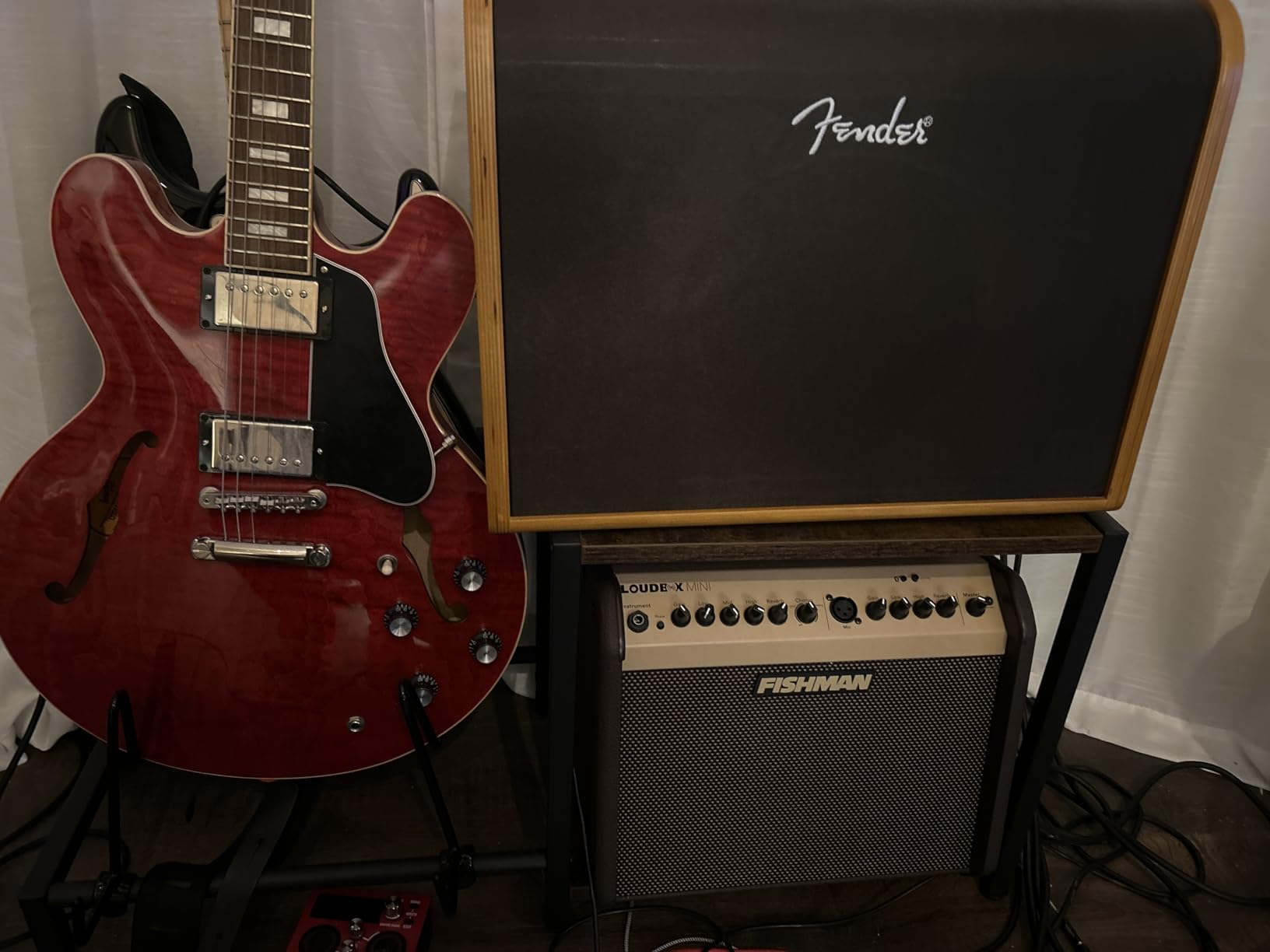
The Fishman Loudbox Mini BT earned our top spot after weeks of side-by-side testing. Fishman has built its reputation as a go-to brand for acoustic amplification, and the Loudbox Mini BT carries that reputation with confidence. Sixty watts of clean power flow through a bi-amped cabinet with a 6.5-inch woofer and a dome tweeter, giving you a wide frequency response that flatters both delicate fingerstyle and aggressive strumming.
In our testing, the guitar channel stayed remarkably transparent with a Taylor 314ce, preserving the rosewood-and-spruce warmth without adding the harsh quack you hear from piezo pickups pushed through electric guitar amps. The mic channel accepted a condenser mic with 48V phantom power engaged, which is rare in this size class, and reviewers in the r/AcousticGuitar community consistently cite Fishman and AER as the two most-trusted acoustic amp brands.
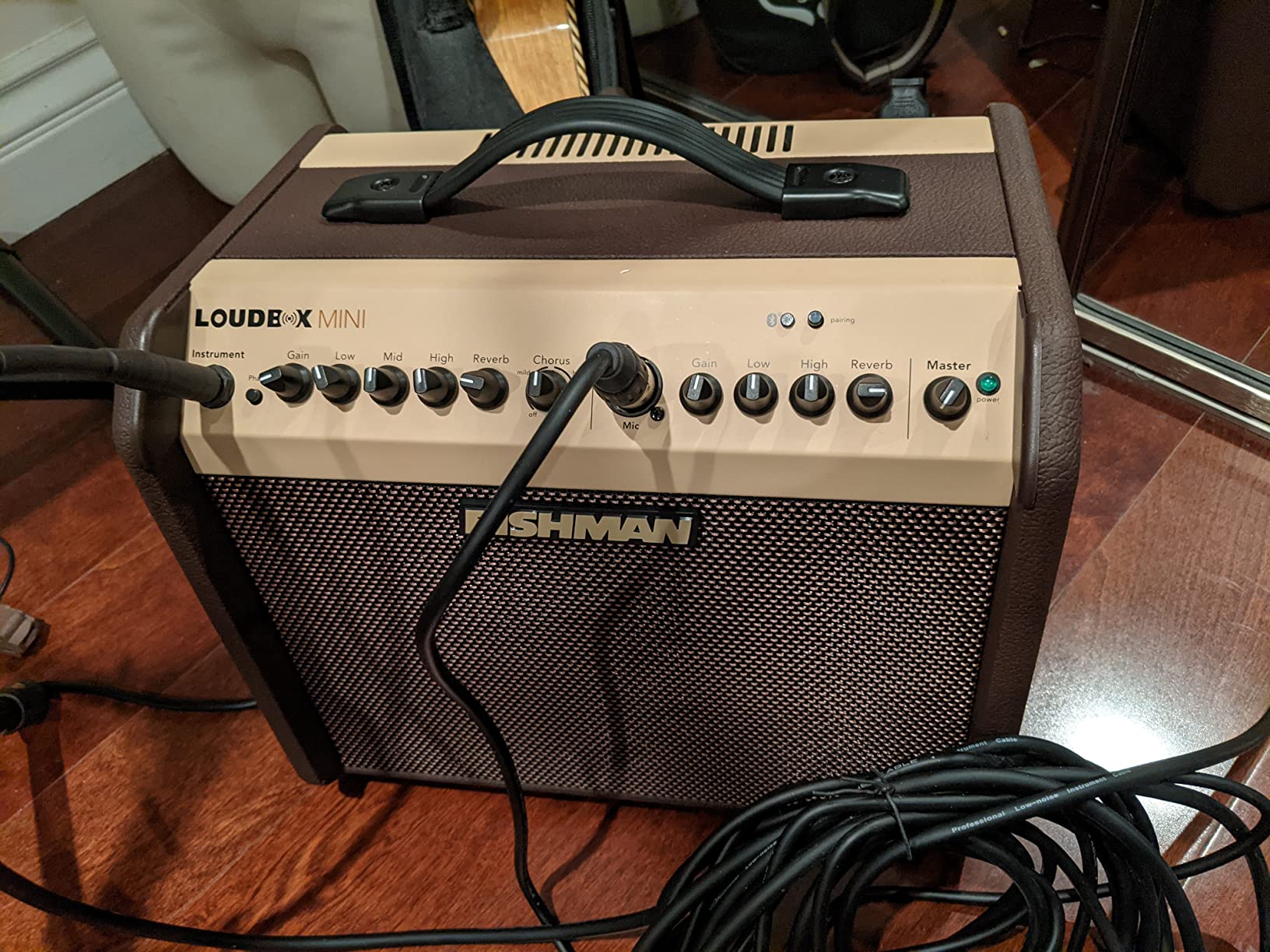
The Bluetooth streaming came in handy during rehearsal when we wanted to play along with demo tracks. The DI output let us run straight into the house PA at a coffee shop gig, where the sound engineer praised how little EQ correction was needed on our feed. Anti-feedback controls and a phase switch sit on the back panel for tackling stage feedback, which is one of the most common pain points for solo acoustic performers.
At 21.2 pounds, this is not the lightest amp in the roundup, but the tilt-back cabinet design and substantial carry handle make it manageable. If you need a smaller desktop option for bedroom practice, our mini amplifier guide covers dedicated practice amps.
Who the Fishman Loudbox Mini BT is best for
Gigging singer-songwriters, weekend open-mic players, and worship leaders who want reliable full-range tone and clean DI integration with the house PA.
Who should skip it
Players who need a battery-powered amp for busking the high street, or anyone shopping for an ultra-lightweight practice amp under 10 pounds.
2. BOSS ACS-Live – Best Acoustic Amplifier for Singer-Songwriters
Boss ACS Live 60W Combo Amplifier for Acoustic Guitar and Vocals
60W bi-amp design
Vocal harmonizer and looper
Dual XLR DI outputs
Anti-feedback per channel
Pros
- Acoustic Resonance Technology restores natural piezo tone
- Vocal harmony function in three pitch modes
- Built-in looper for layering parts
- Dual XLR DI outputs for separate stage mix
- Independent anti-feedback controls per channel
Cons
- Looper has limited recording time
- Cannot delete individual looper overdubs
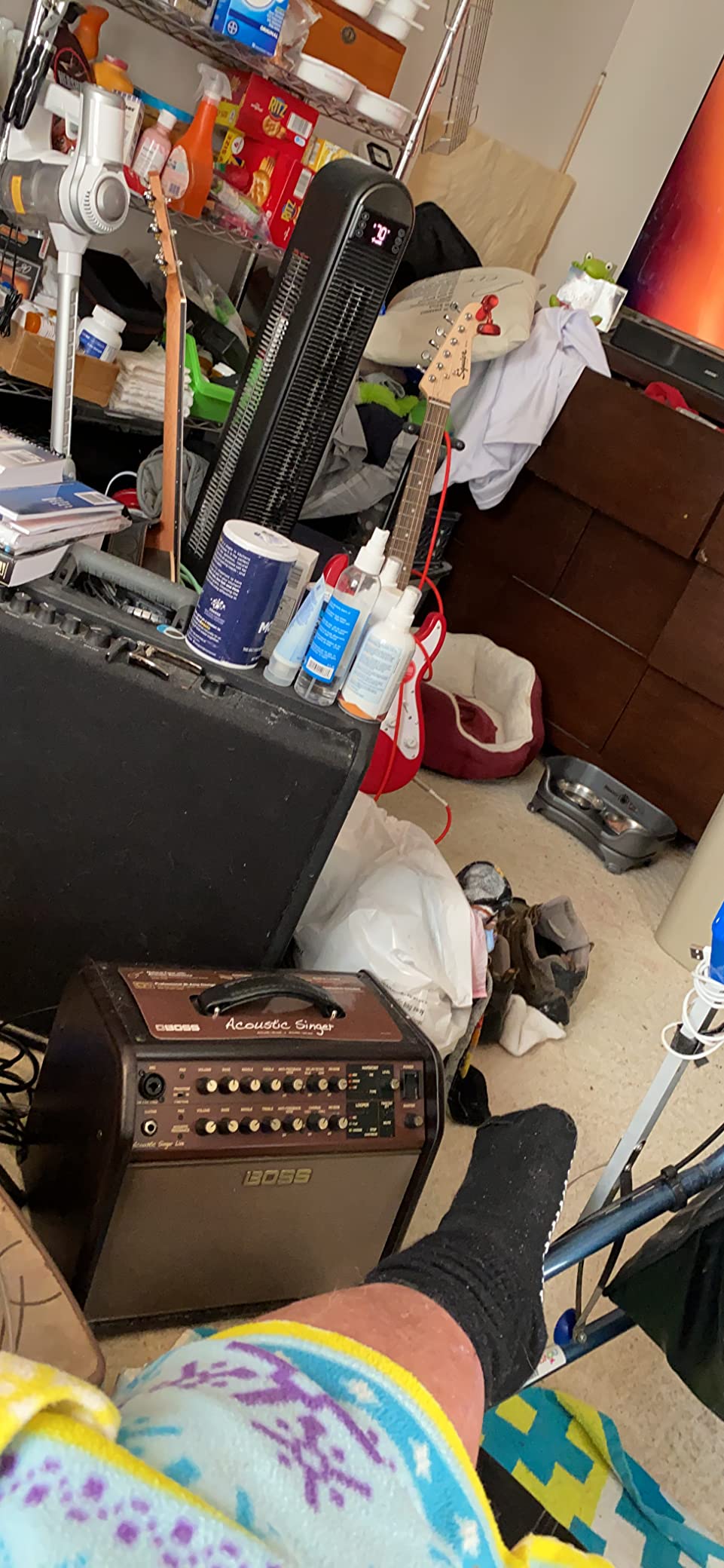
The BOSS ACS-Live is the most feature-rich acoustic amplifier in our roundup, and it shows. Boss built the Acoustic Singer Live around Acoustic Resonance Technology, which is a processing chain designed to undo the harshness that piezo pickups introduce. Plug in a typical undersaddle pickup and you immediately hear a fuller, more natural string tone, the kind of warmth you’d expect from a studio microphone in front of the guitar.
The vocal harmonizer is the standout feature. Set the key, choose your interval, and the amp adds harmonies in real time as you sing. For solo performers, this turns a one-person show into a layered performance. The looper adds another dimension, letting you stack rhythm guitar, lead lines, and vocal parts during a single song.
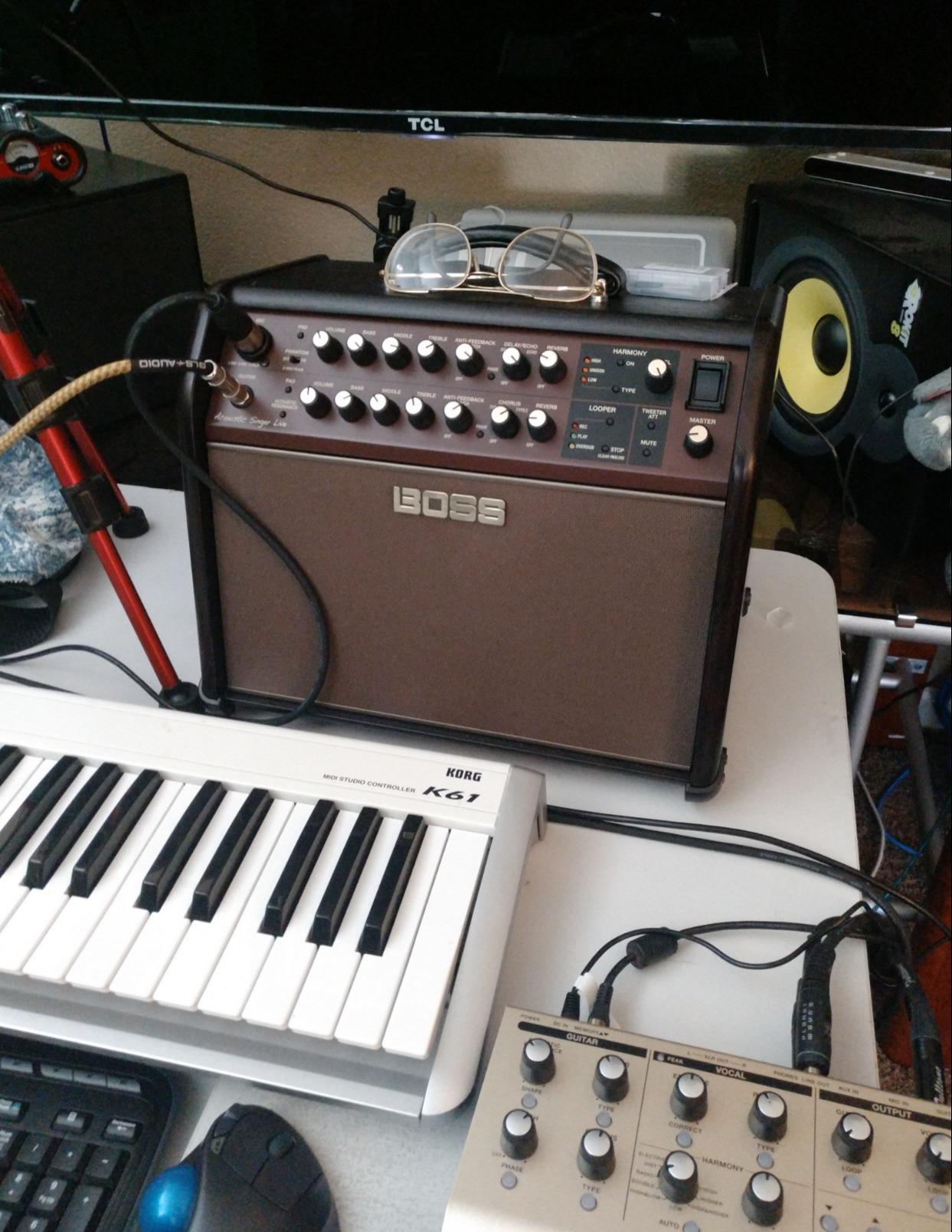
Dual XLR DI outputs let the sound engineer pull your guitar and vocal channels separately into the front-of-house mix, which is a huge plus in any venue that runs a proper PA. The 60W bi-amp design delivers clear sound at low volumes and holds together when you push it for a small club gig. Independent anti-feedback controls on each channel let you tame stage feedback without flattening your overall tone.
Reviewers widely praise this amp for singer-songwriters, noting that the harmony features and overall tone quality make it worth the higher price for serious performers. The looper does have limitations: recording time is short and you cannot delete individual overdubs. If looping is mission-critical, plan around these limits.
Who the BOSS ACS-Live is best for
Solo artists and singer-songwriters who want real-time vocal harmony, on-stage looping, and a clean feed to the front-of-house engineer.
Who should skip it
Players looking for a portable practice amp or anyone on a tight budget who won’t regularly use the harmony and looper features.
3. Fishman Loudbox Micro – Best Value Acoustic Guitar Amplifier
Fishman Loudbox Micro 40-watt 1 x 5.25-inch Acoustic Combo Amp
40W clean Fishman tone
Two channels for guitar and mic
Balanced XLR DI output
Digital reverb and chorus
Pros
- Authentic Fishman transparency at entry-level price
- Dual channels with separate EQ
- Balanced XLR DI for direct PA use
- Compact 12.3 lb form factor
- Digital reverb and chorus on each channel
Cons
- Lower volume than the larger Loudbox models
- Single speaker driver limits bass response
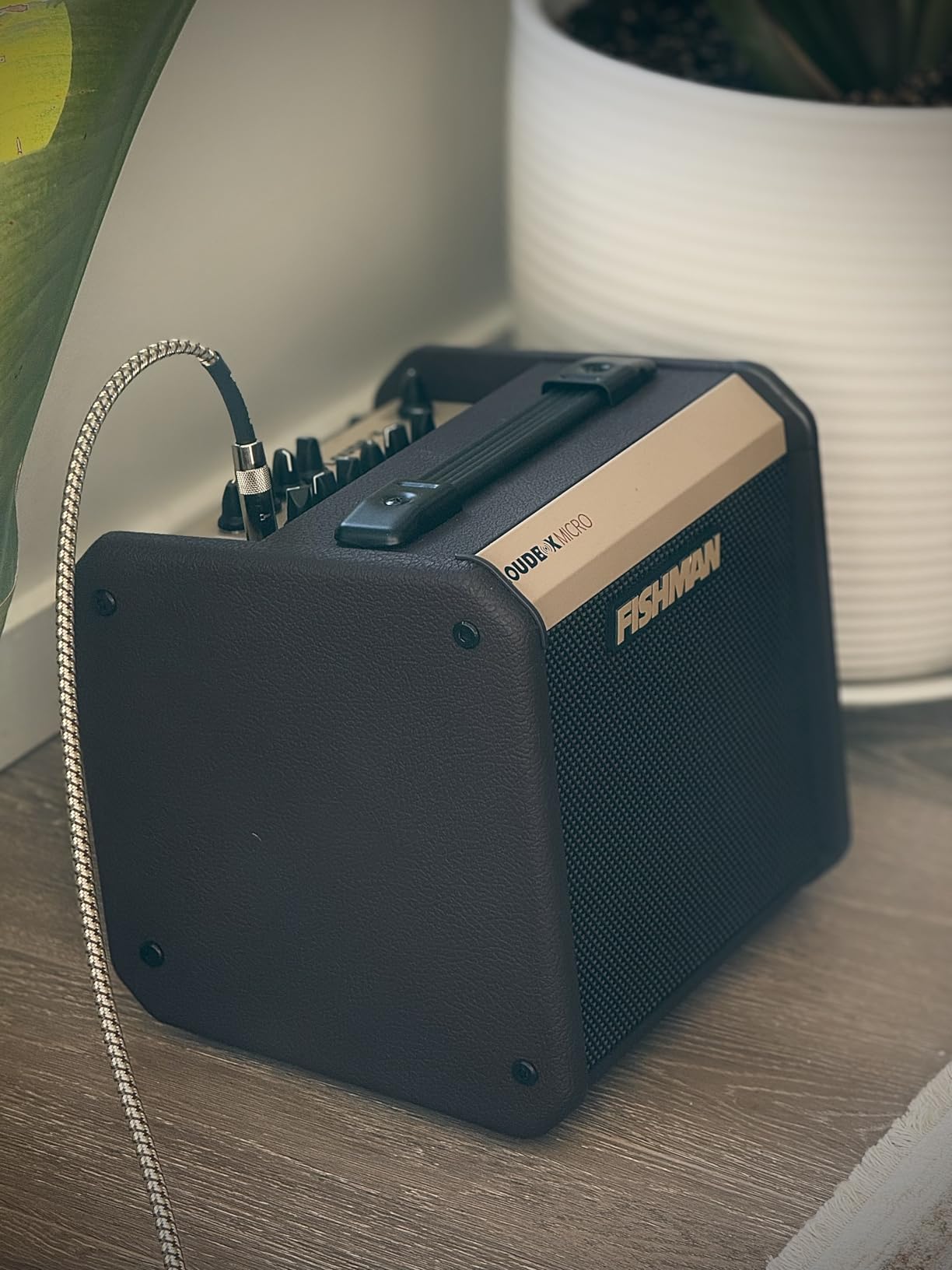
The Fishman Loudbox Micro delivers the Fishman sound many players trust, in a more portable and budget-friendly package. Forty watts feed a 5.25-inch speaker, which is enough for small venues, house concerts, and practice sessions. The dual-channel layout gives you a 1/4-inch instrument input and a microphone input, each with its own EQ and effects.
What impressed us most was the tonal transparency. The Loudbox Micro handles dreadnoughts, parlors, and nylon-string classicals with equal grace. The balanced XLR DI output lets you route straight to a PA when you need more volume than the speaker can deliver on its own, which is exactly what we did at an open-mic night.
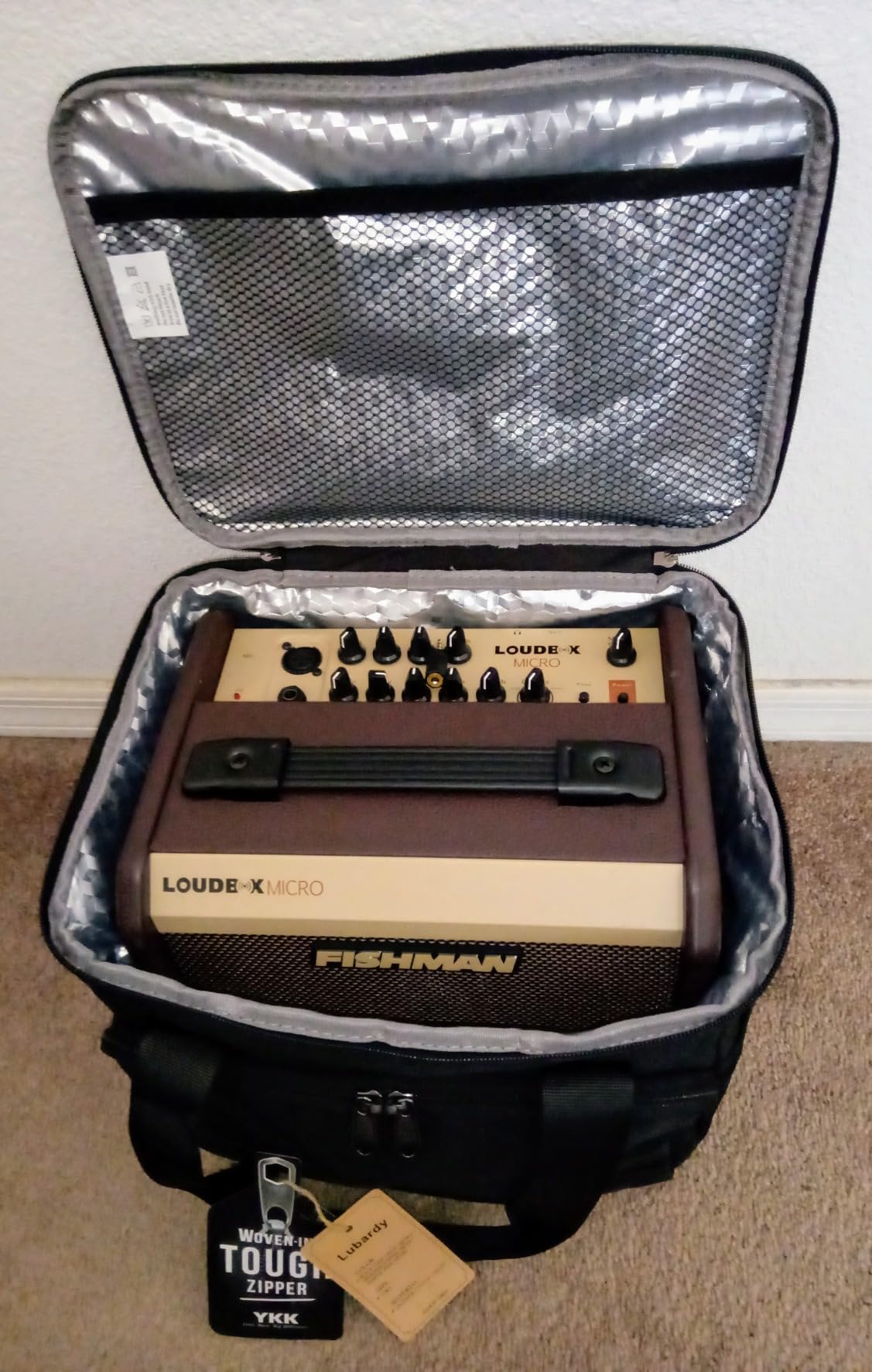
The 12.3-pound weight is friendly for carrying between car and venue. At this price point, you’re giving up the Bluetooth and phantom power of the larger Loudbox Mini BT, but the core acoustic tone is unmistakably Fishman. Reviewers consistently note that the sound is “cleaner than expected for the size” and praise the DI output for stage use.
Who the Fishman Loudbox Micro is best for
Players who want the Fishman house sound for practice, open mics, and small gigs without paying for the higher-wattage flagship.
Who should skip it
Anyone who needs serious volume for a mid-sized venue or who relies on Bluetooth streaming and phantom power for condenser mics.
4. Coolmusic BP40D – Best Acoustic Guitar Amplifier for Busking
Coolmusic BP40D Powered Acoustic Guitar Amplifier- Portable Bluetooth Speaker 80W W/Battery with Reverb Chorus Delay Effect, 6 Inputs,3 Band EQ, Blue
80W battery powered
Bluetooth streaming
48V phantom power
6 inputs with 3 band EQ
Pros
- 80W delivers serious volume for outdoor gigs
- 48V phantom power for condenser mics
- Bluetooth for backing tracks
- 6 to 8 hour rechargeable battery
- USB power output for guitar pedals
Cons
- Reverb effect quality is mediocre
- Composite board build feels less premium
If you play the high street, festivals, or farmers markets, the Coolmusic BP40D is built for the job. Eighty watts through dual 6.5-inch woofers and dual 2-inch tweeters gives you the volume needed to compete with traffic and chatter. The rechargeable battery runs six to eight hours on a charge, which covers a full afternoon of street performing.
Bluetooth streaming lets you play along with backing tracks or intermission playlists from your phone. The 48V phantom power is a rare find at this wattage and price, and it lets you run a condenser microphone alongside your guitar through the same amp. Six inputs give you room for a second instrument, a keyboard, or audio playback.
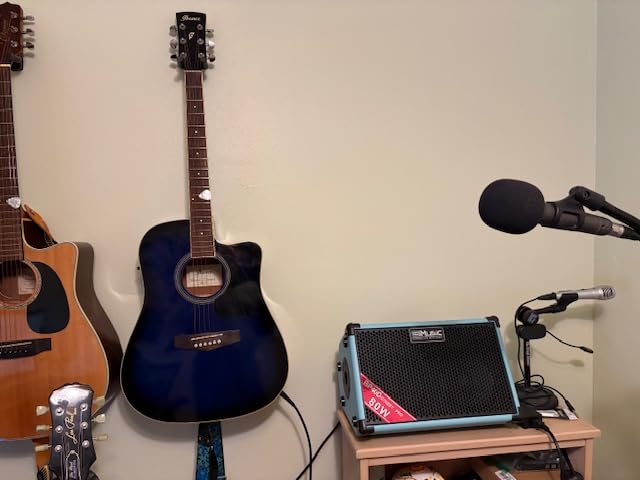
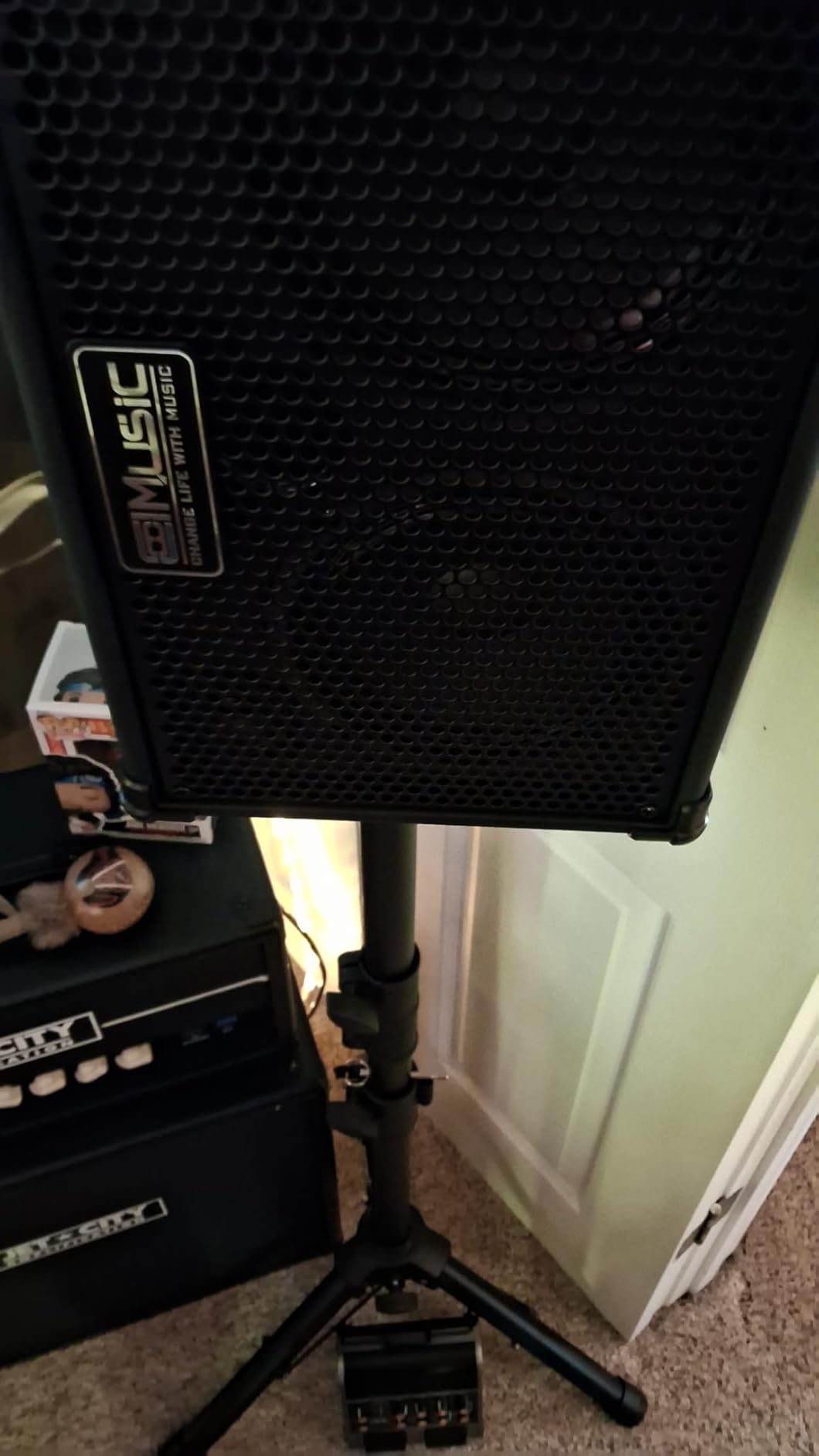
The amp is heavier than a typical practice combo, but a sturdy top handle makes the carry manageable. During our testing at an outdoor event, the BP40D cut through ambient noise without sounding strained. The reverb effect is the weakest link; reviewers note it sounds somewhat metallic compared to the Fishman reverb. For most buskers this is a minor issue, since reverb is more of a studio concern than a street-performance concern.
Who the Coolmusic BP40D is best for
Buskers, street performers, and outdoor-event players who need serious battery-powered volume and phantom power for condenser mics.
Who should skip it
Players who want the cleanest reverb tails or a premium build feel, in which case the Fishman Loudbox Mini BT is a better match.
5. Coolmusic BP-MINI 30W – Best Portable Acoustic Guitar Amplifier
Acoustic Guitar Amplifier, 30 Watt Bluetooth Speaker Rechargeable Portable Acoustic Guitar Amp with Reverb Chorus Effect,3 Inputs, Black
30W output
6.5 inch speaker
Bluetooth streaming
Rechargeable battery with USB-C
Pros
- Warm clean sound reminiscent of Roland JC amps
- 5 to 8 hour battery life
- Dual channels with separate EQ and effects
- Bluetooth with dedicated volume control
- Removable strap for easy carry
Cons
- Distorts at very high volume settings
- Bass response limited by compact cabinet
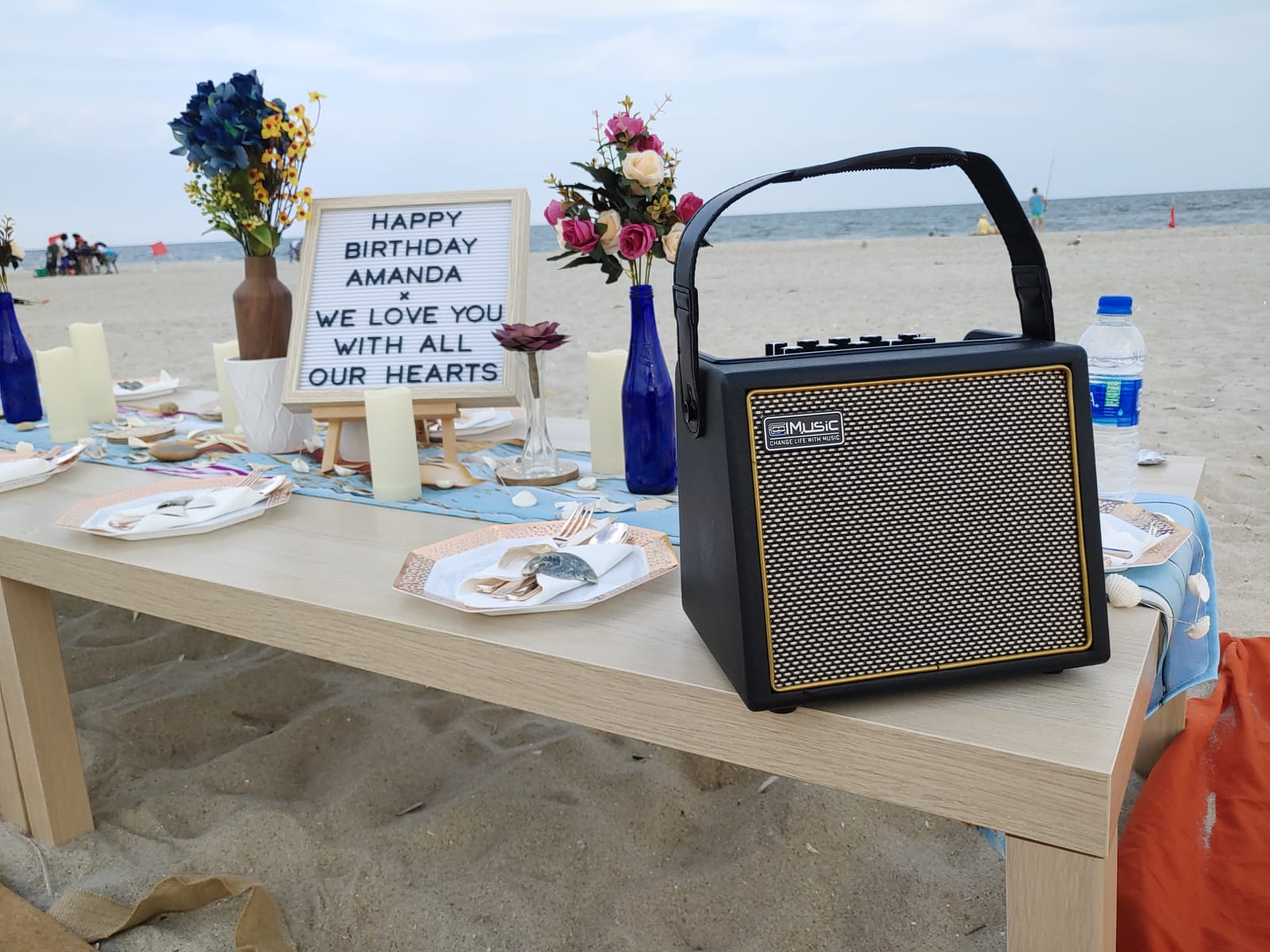
The Coolmusic BP-MINI is the amp we kept reaching for when we wanted to play on the back porch, in the kitchen, or at a small outdoor gathering. Thirty watts through a 6.5-inch speaker delivers a warm, full sound that reviewers often compare to the legendary Roland Jazz Chorus, which is high praise for an amp at this size.
Battery life impressed us during testing. We got roughly four to five hours of continuous play at performance volume, with longer stretches available at lower levels. The removable carry strap is a thoughtful touch for grabbing the amp one-handed on your way out the door.

Two channels handle both guitar and microphone, and the Bluetooth input has its own volume control so you can balance backing tracks against your live playing. The wooden shell gives the amp a more refined look than the typical plastic practice combo. The DI output and headphone jack round out the package.
The bass response is naturally limited by the cabinet size, and at maximum volume the amp can begin to distort on heavy strumming. Neither issue is a deal-breaker for a portable practice amp.
Who the Coolmusic BP-MINI is best for
Players who want a grab-and-go portable amp for travel, small outdoor sessions, and casual gigs where mains power isn’t available.
Who should skip it
Anyone needing high-volume clean headroom for full band rehearsals or larger venues.
6. Coolmusic BP40 – Best Battery Powered Acoustic Guitar Amplifier
Coolmusic Portable Acoustic Guitar Amplifier, for Performers On The Go, Built-in Bluetooth (40W Battery-Powered)
40W stereo sound
8 inch woofer and 2 inch tweeter
5 to 10 hour battery
DI output and 9V pedal power
Pros
- 5 to 10 hour rechargeable battery life
- Three channels with separate controls
- Bluetooth and U disk playback
- DI output and 9V pedal power outlet
- Built-in audio recording function
Cons
- No XLR input (1/4 inch jacks only)
- No battery level indicator beyond on/off
- Some reliability concerns after extended use
The Coolmusic BP40 trades some portability for serious battery endurance. Forty watts of stereo sound flow through an 8-inch woofer and a 2-inch tweeter, giving you fuller low end than the smaller portable amps. The rechargeable battery delivers between five and ten hours depending on volume, which is enough for a full day of festival performances or extended rehearsals.
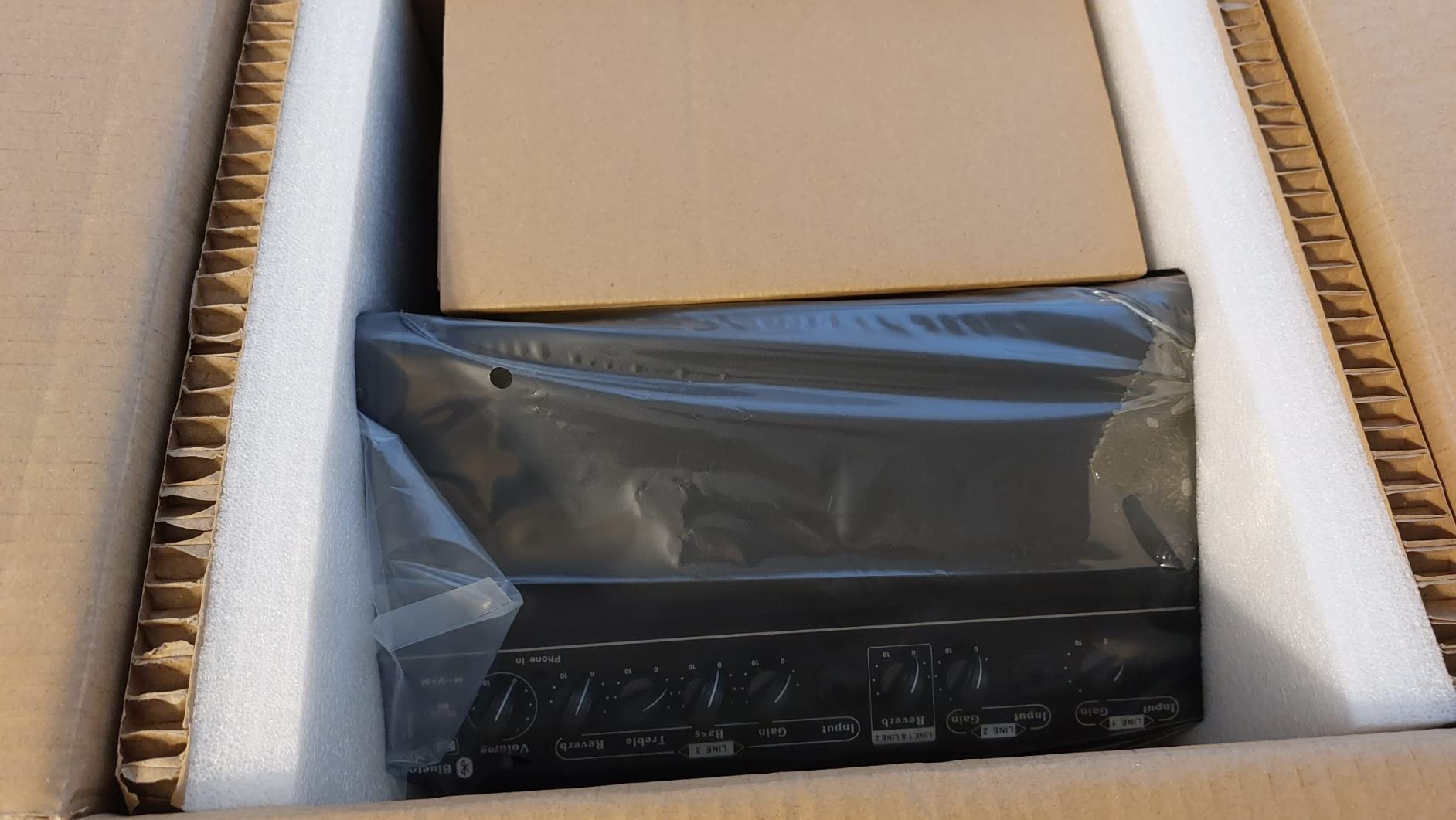
Three input channels handle guitar, vocals, and a third source, with separate controls for each. Bluetooth streaming, U-disk playback, and a 3.5mm aux input cover nearly any playback scenario. The 9V power outlet for guitar pedals is a unique feature, letting you run a small pedalboard without separate power supplies.
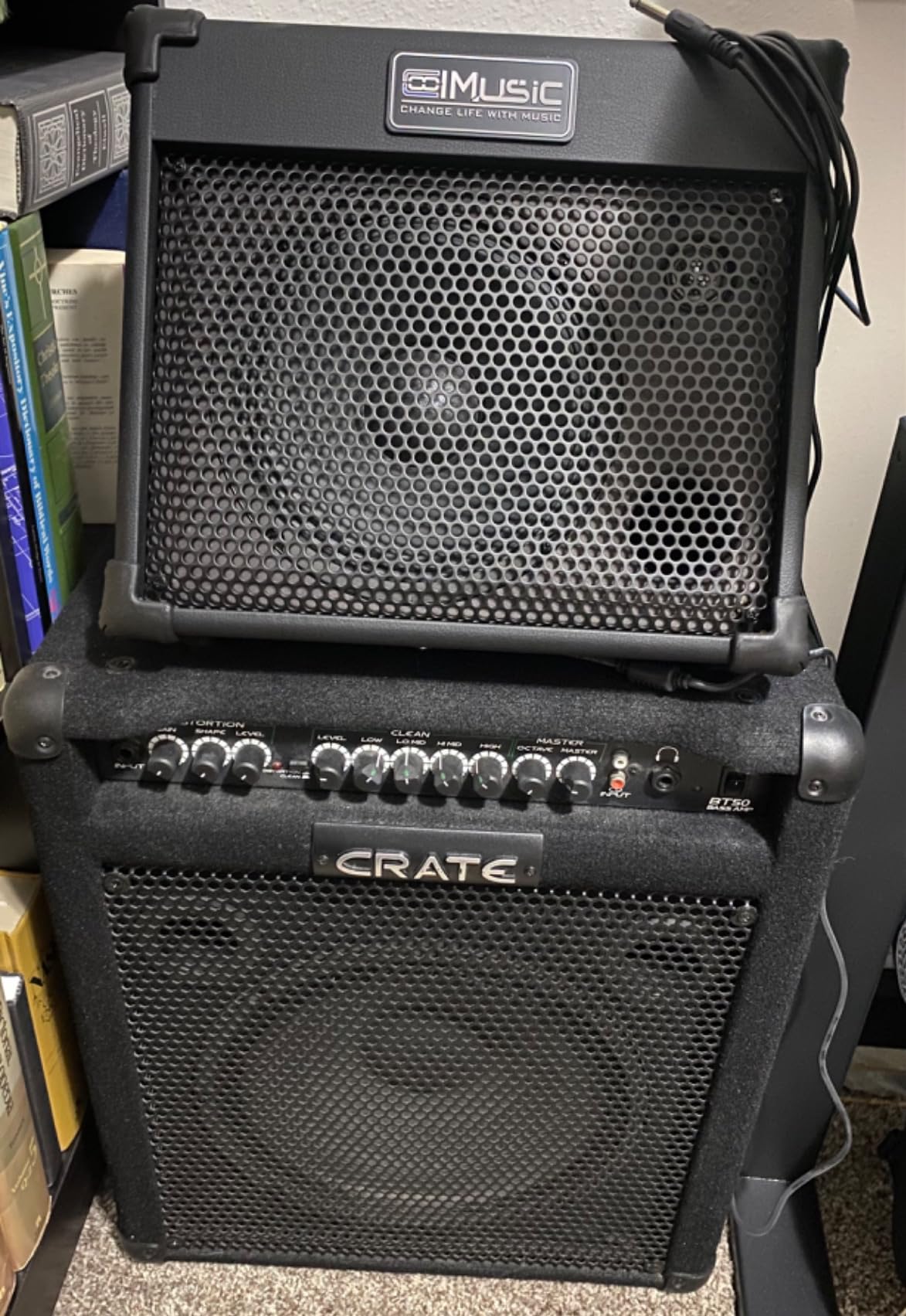
The shock-resistant cabinet is built for transport, and the slanted design works well as a floor monitor. The DI output connects to a house PA when you need more volume. The built-in audio recording function is a bonus for songwriters who want to capture ideas without a separate interface.
There is no XLR input, which means condenser mics need an adapter or you run a dynamic mic instead. Some users have reported unit failure after about a year of heavy use, though the manufacturer’s responsive customer service has earned strong praise. For a similar portable option with different strengths, our portable guitar amplifier guide has more picks.
Who the Coolmusic BP40 is best for
Street performers, traveling songwriters, and anyone needing all-day battery endurance with the option to power a small pedalboard.
Who should skip it
Players who require XLR mic inputs for condenser microphones in a portable battery-powered format.
7. Coolmusic AC20 – Best Acoustic Guitar Amplifier for Beginners
Acoustic Guitar Amplifier, 20 Watt Bluetooth Amp for Guitar Acoustic with Reverb Chorus Effect, 3 Band EQ(Including Microphone and Audio Cable)
20W output
8 inch woofer and 2 inch tweeter
Bluetooth streaming
3 band EQ with DI output
Pros
- Natural clean sound at an accessible price
- Bluetooth for practice and playback
- Three-band EQ for tone shaping
- Includes microphone and audio cable
- DI output for future PA integration
Cons
- Heavier than typical beginner amps at 16 lbs
The Coolmusic AC20 is a sensible first amplifier that won’t need replacing after a few months of progress. Twenty watts flow through an 8-inch woofer and 2-inch tweeter, which is enough power for bedroom practice, kitchen jams, and small casual gigs. The three-band EQ gives beginners real control over their tone without overwhelming them with knobs.
The included microphone and audio cable are thoughtful bonuses. Plug in the mic and you’ve got a play-and-sing setup out of the box. Bluetooth streaming lets you play along with songs from your phone, which is a powerful practice tool for new players learning chord changes and rhythm.
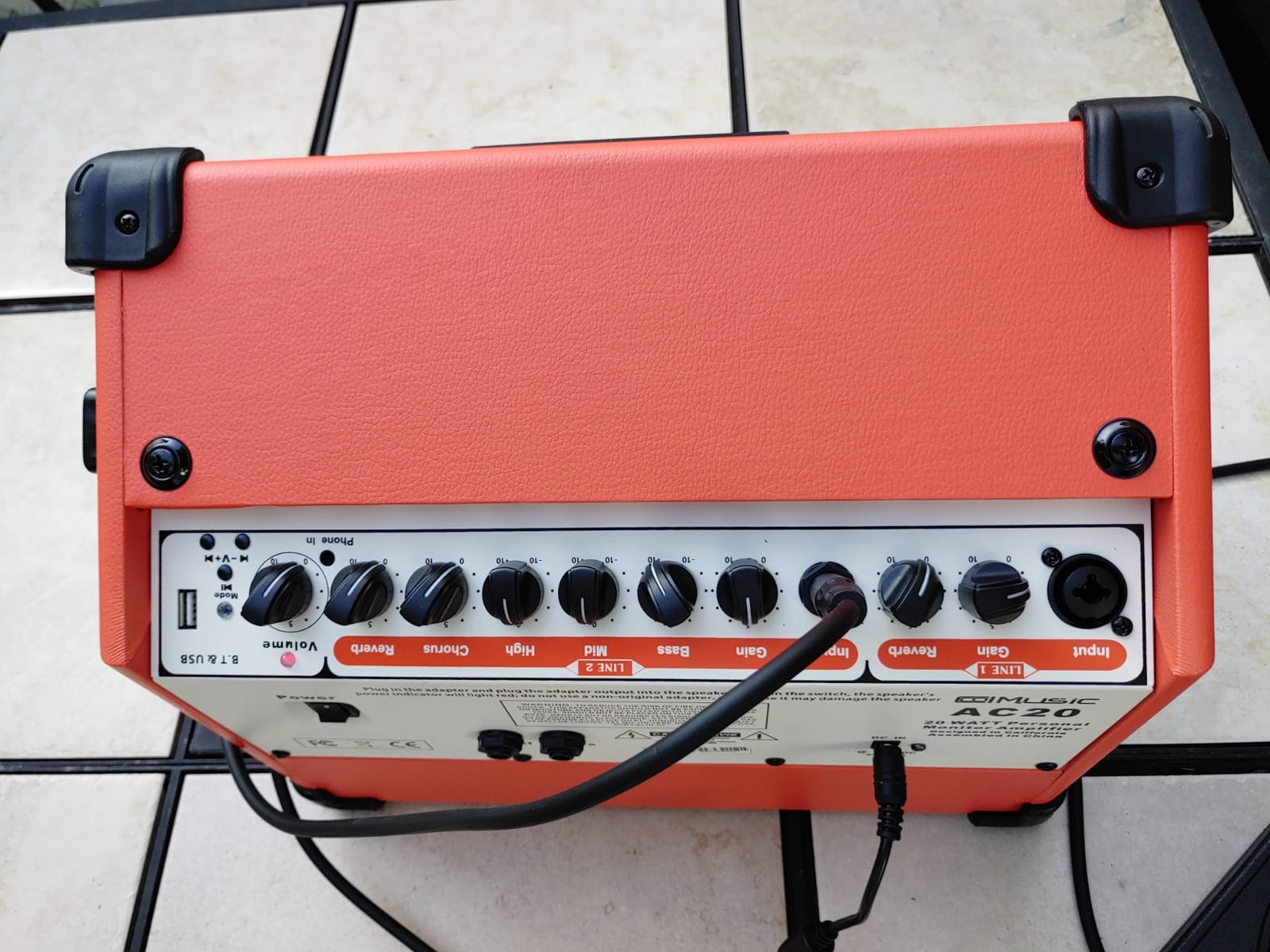
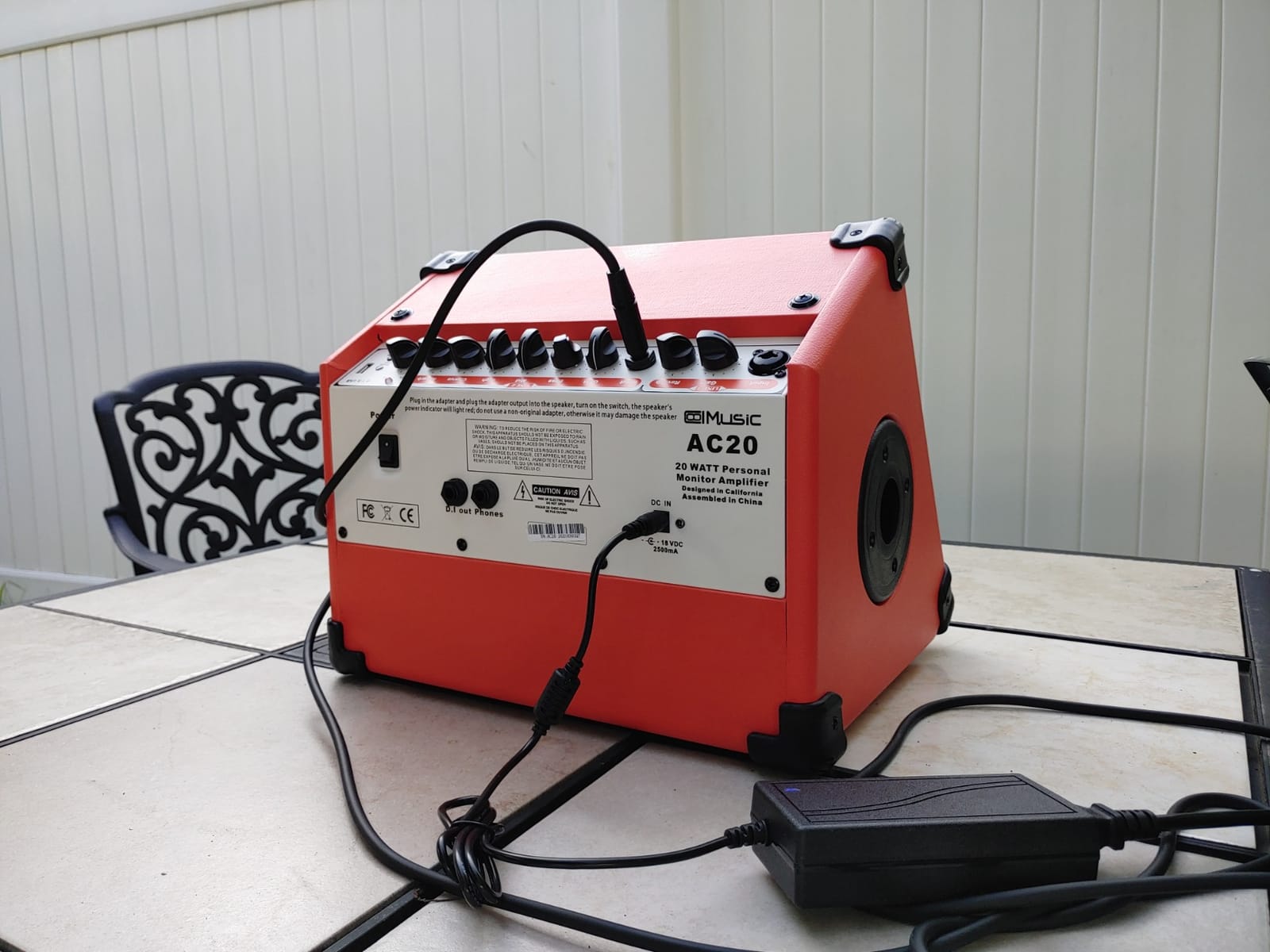
The DI output is a feature you don’t usually see on entry-level amps. As you progress and start playing at open mics or coffee shops, you can route your signal to the house PA without buying a separate DI box. Reverb and chorus are available on both the instrument and vocal channels, with separate volume controls.
The 16-pound weight is heavier than some beginner amps, but the wood-grain cabinet and substantial feel suggest this is built to last. The 3-year warranty backs that up.
Who the Coolmusic AC20 is best for
New acoustic players who want a versatile amp they can grow into, with Bluetooth for practice and DI output for first gigs.
Who should skip it
Players looking for a lightweight grab-and-go portable amp, where the BP-MINI is a better fit.
8. Yamaha THR5A – Best Acoustic Guitar Amplifier for Home Practice
Yamaha THR5A Mini Acoustic Guitar Amplifier with Cubase AI Production Software
5W desktop amp
Tube condenser mic simulations
Cubase AI software included
Battery or AC powered
Pros
- Outstanding acoustic modeling with mic simulations
- Compact desktop form factor
- Battery powered option for cable-free practice
- Built-in effects including reverb and chorus
- Includes Cubase AI production software
Cons
- Limited to 5W output for performance use
- Cannot memorize settings like THR10 models
The Yamaha THR5A is the best acoustic guitar amplifier for home practice, and it does something no other amp in this roundup does well: it models how your guitar sounds when miked in a studio. Yamaha built the THR5A around simulations of classic tube condenser and dynamic microphones, and the result is genuinely flattering to fingerstyle and classical playing.
Plug in a nylon-string classical, and the THR5A makes it sound like a recording session in your living room. Jazz players, fingerstyle pickers, and classical guitarists in particular will appreciate how natural the modeled response is. The 5-watt output is low, but in a bedroom or small living room, you rarely need more.
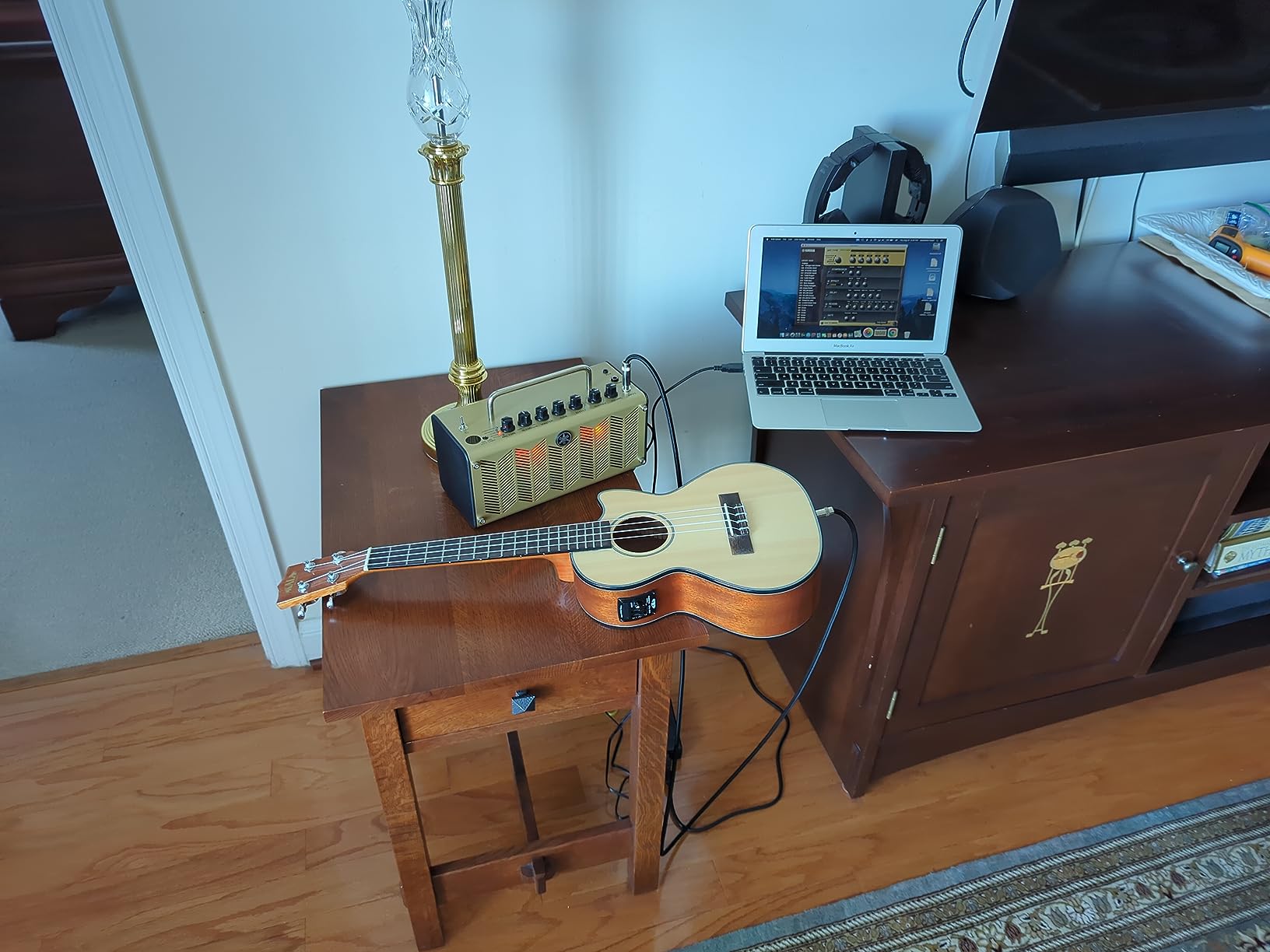
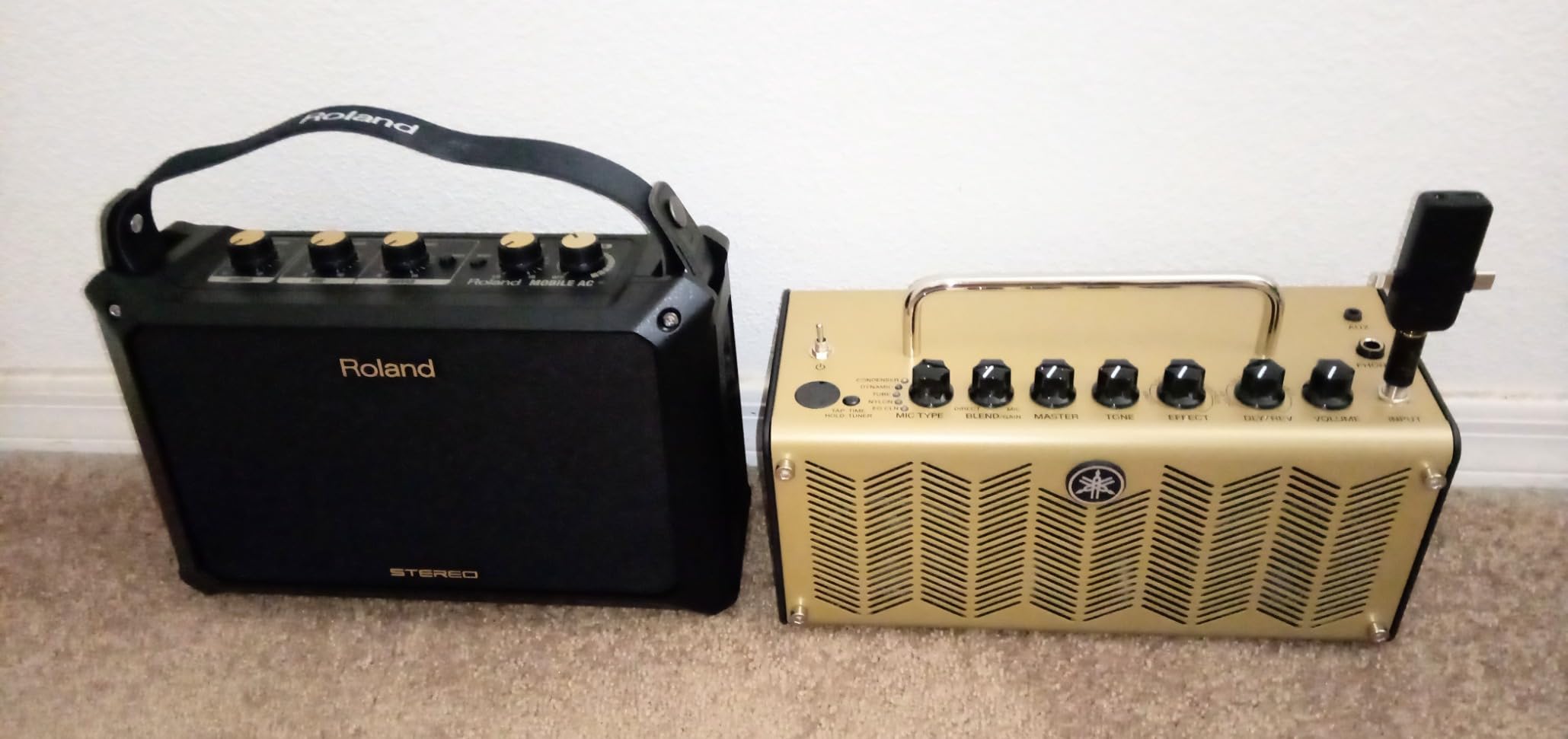
The THR5A runs on AC power or batteries, which means you can take it to the porch, the park, or any quiet spot without hunting for an outlet. Built-in effects include reverb, chorus, delay, and compression, all easy to dial in from the top panel. The included Cubase AI production software is a bonus for players who want to start recording.
The compact desktop design takes up minimal space on a desk or side table. Reviewers in jazz and classical circles consistently call out the THR5A for its natural acoustic modeling, and our team agreed after spending time with both steel-string and nylon-string guitars.
Who the Yamaha THR5A is best for
Home players, jazz pickers, and classical guitarists who want natural acoustic modeling and a small footprint for the practice space.
Who should skip it
Anyone who needs performance volume for gigs, where the Fishman Loudbox Mini or BOSS ACS-Live is a better fit.
9. Fender Acoustasonic 40 – Best Acoustic Guitar Amplifier for Live Performance
Fender Acoustasonic 40-Watt Acoustic Guitar Amplifier, Portable Amp Combo
40W output
Dual 6.5 inch speakers
XLR mic input
2 channels with 2 year warranty
Pros
- Balanced tone from dual 6.5 inch speakers
- Dual channels with independent EQ and reverb
- XLR mic input supports condenser mics
- Lightweight at 10 pounds for the power
- Excellent midrange presence for vocals
Cons
- Some QC issues reported including buzz and casing defects
- Not enough volume for larger venues
The Fender Acoustasonic 40 punches above its size. Forty watts through dual 6.5-inch speakers with Fender’s “whizzer” cone design deliver a balanced, full sound that handles both guitar and vocals at the same time. The independent channels let you shape tone and reverb separately for each input, which is essential when you’re running an instrument and a vocal mic through the same amp.
The midrange presence of the Acoustasonic 40 is one of its strengths. Reviewers consistently note that the vocal channel sounds fuller here than on competing amps like the Fishman Loudbox Mini, which tends to favor the high end. If you sing and play, this matters.
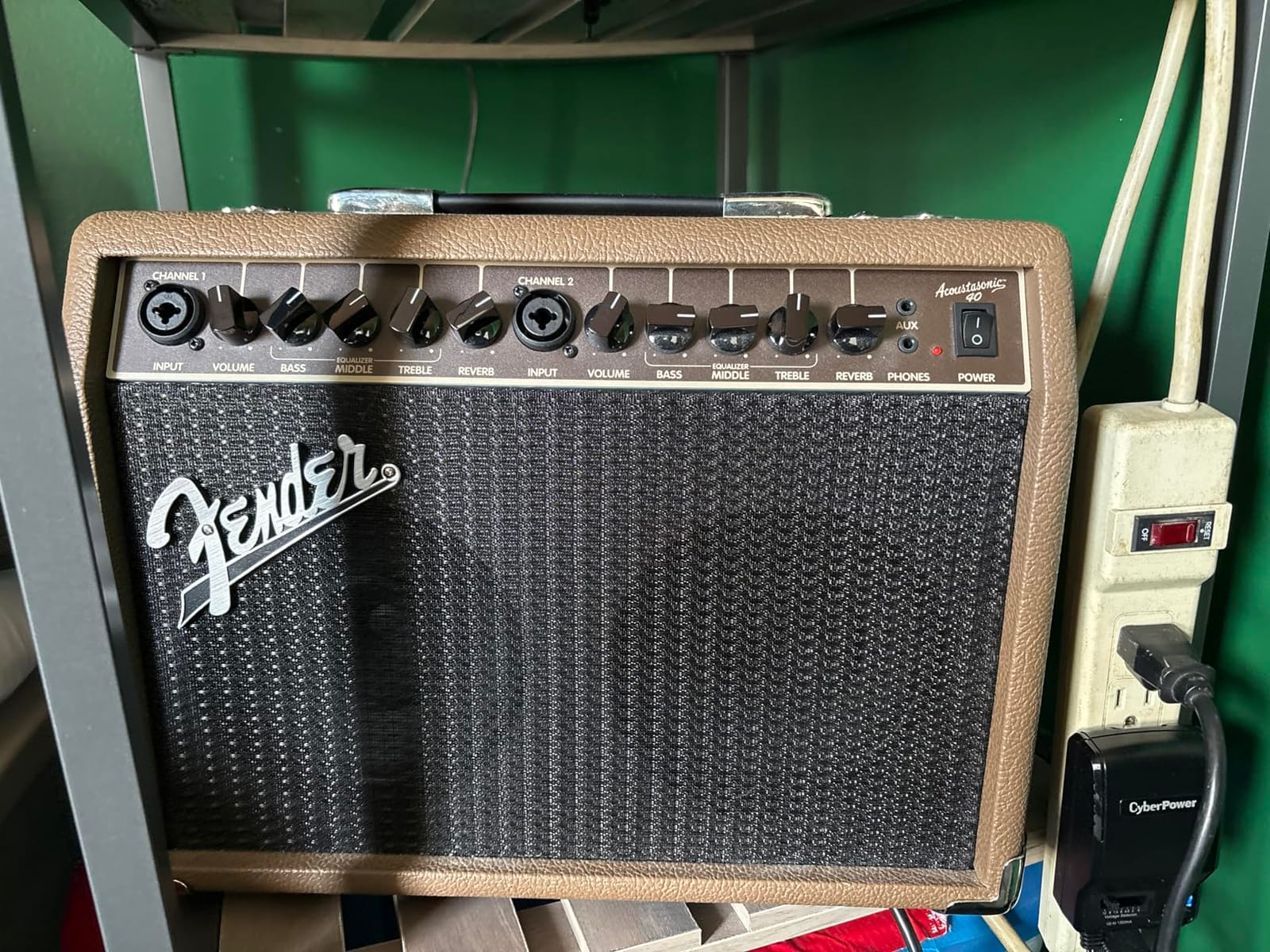
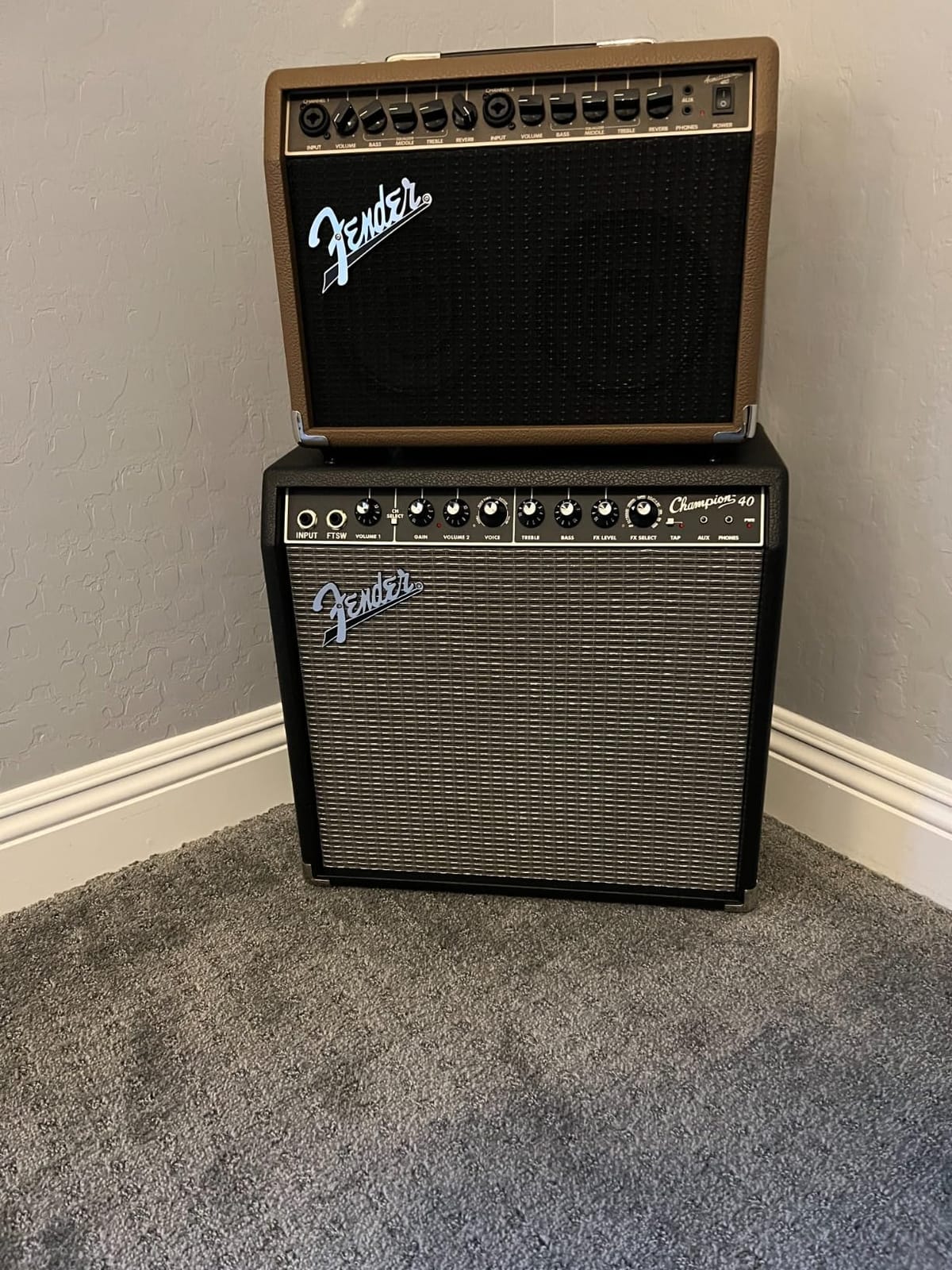
At 10 pounds, the Acoustasonic 40 is one of the lighter amps in its wattage class. The two-year warranty is longer than most competitors, which speaks to Fender’s confidence in the build. The XLR mic input accepts both dynamic and condenser microphones, making it a flexible choice for singer-songwriters.
Some users have reported quality control issues including a buzz or a thump on power-off. These appear to be isolated incidents rather than a systemic issue. For larger venues, you’ll want to DI into the house PA rather than relying on the amp’s own volume. The 2-year warranty gives some peace of mind if you do encounter issues.
Who the Fender Acoustasonic 40 is best for
Singer-songwriters who play small to mid-sized venues and want a portable amp with strong vocal presence and a long warranty.
Who should skip it
Players who need a battery-powered amp for outdoor use, or anyone shopping for a budget option under 200 dollars.
10. Flatsons Crush20 – Best Budget Acoustic Guitar Amplifier
Flatsons Crush20 20W Rechargeable Acoustic Guitar Amp
20W Class D amplifier
5.5 inch full range speaker
8 hour battery life
Bluetooth 5.3 wireless
Pros
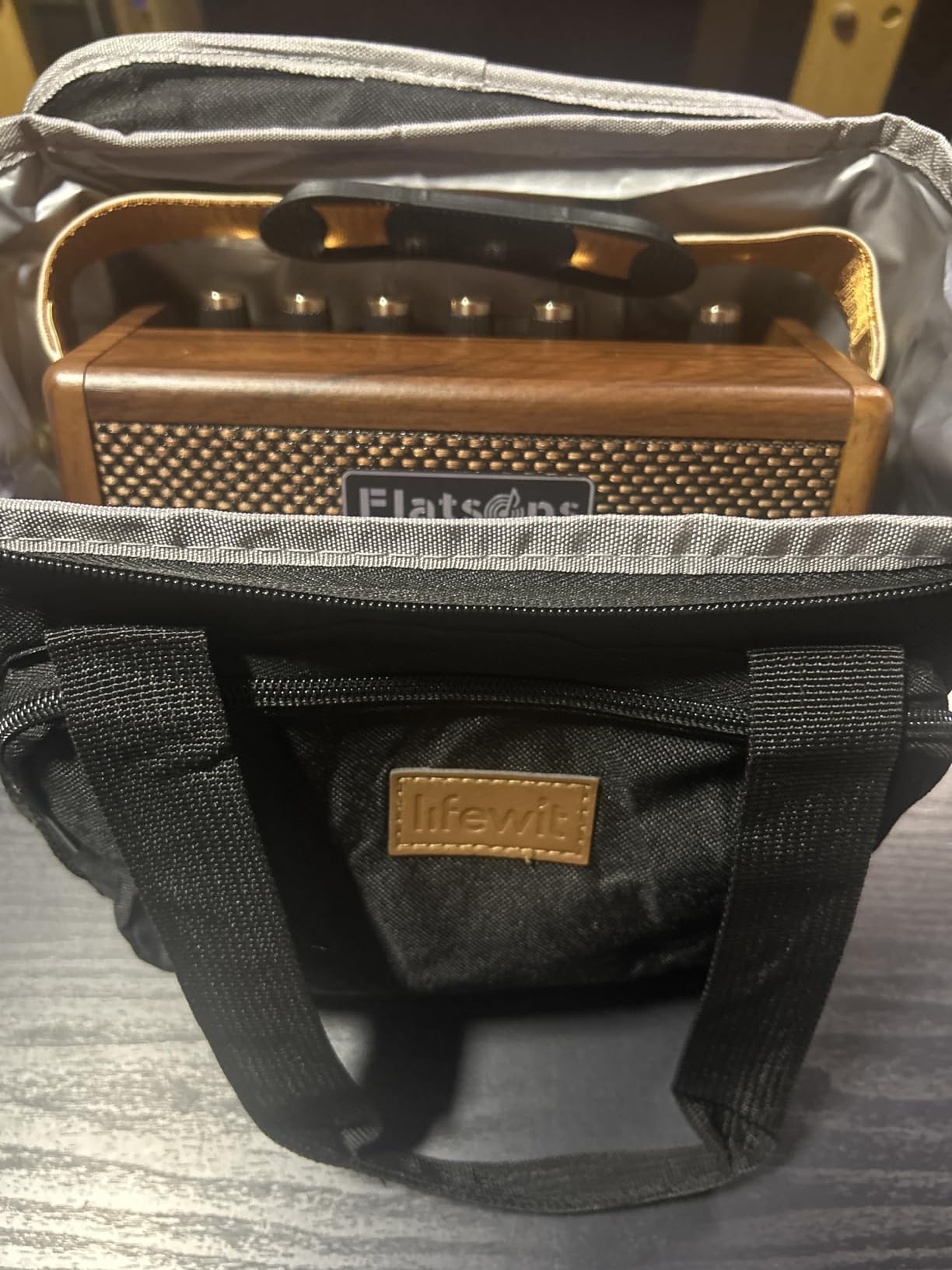
- Compact 4.2 pound design with carry handle
- 8 hour rechargeable battery life
- Bluetooth 5.3 with 50 foot range
- Solid hardwood cabinet construction
- Dual channel design for guitar and vocals
Cons
- Reverb quality is basic
- Active pickup guitars must use mic input
The Flatsons Crush20 is the cheapest amp in our roundup, and it delivers more than the price tag suggests. Twenty watts of Class D amplification through a 5.5-inch full-range speaker produces a warm, balanced tone that works well for practice, casual sessions, and small intimate gigs.
The retro design and solid hardwood cabinet feel more premium than typical budget amps. Bluetooth 5.3 wireless with a 50-foot range lets you stream backing tracks without worrying about dropouts. The rechargeable battery delivers up to 8 hours of play, which is impressive at this size and price.
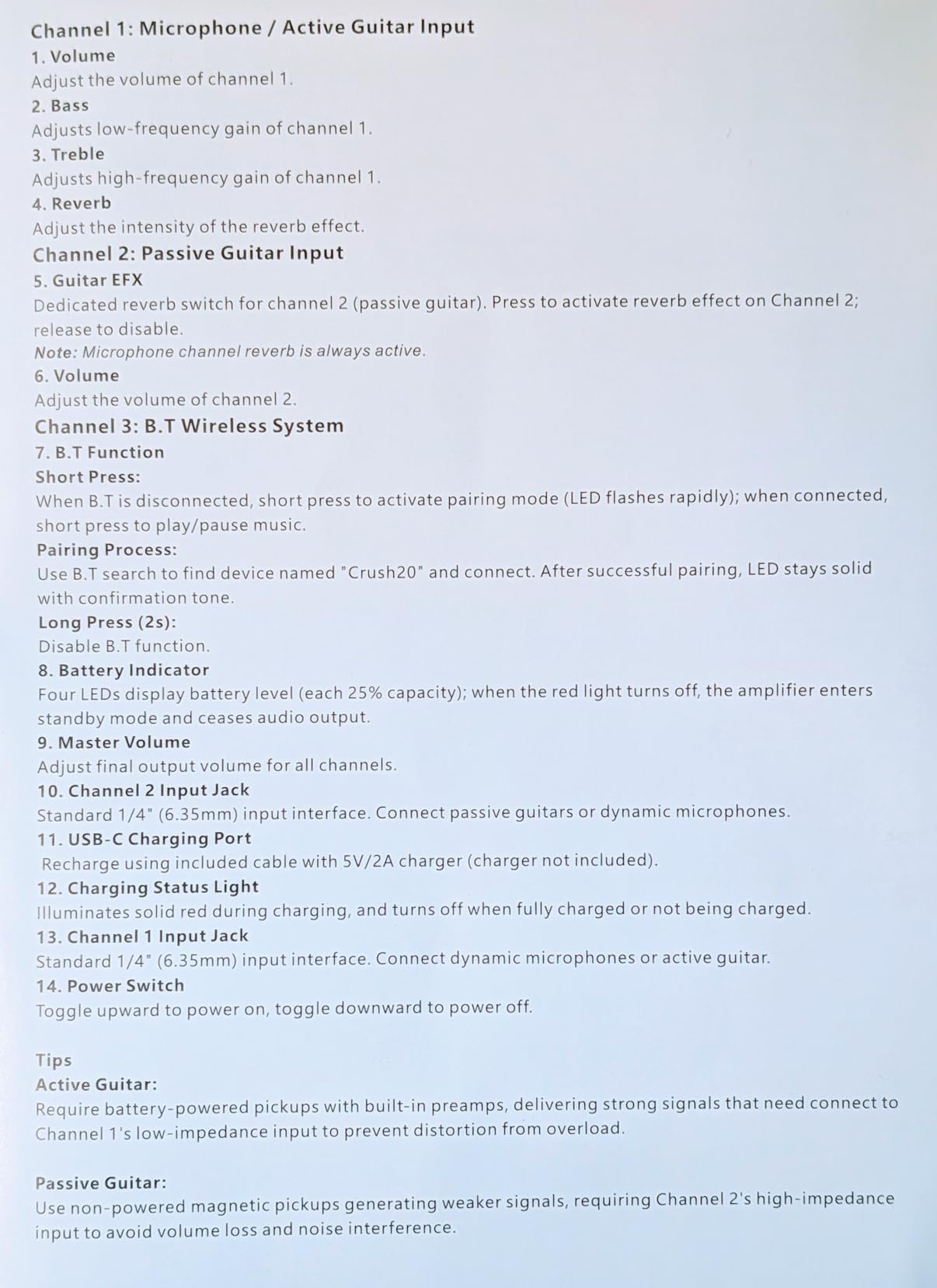
The dual-channel design accepts both guitar and microphone, with 2-band EQ and reverb on each channel. At 4.2 pounds with a portable handle, the Crush20 is the lightest amp in our roundup, making it a natural choice for travel and impromptu sessions. The 12-month warranty provides basic peace of mind.
The reverb is on the basic side, and guitars with active onboard preamps must be run through the mic input, which limits simultaneous play-and-sing setups. Neither issue is a deal-breaker at this price point.
Who the Flatsons Crush20 is best for
Budget-conscious players, beginners, and travelers who want a charming, lightweight amp with Bluetooth for practice and casual play.
Who should skip it
Anyone who needs serious volume for band rehearsals or larger gigs, where the larger Fishman or BOSS amps are a better choice.
How to Choose the Best Acoustic Guitar Amplifier
Choosing the best acoustic guitar amplifier comes down to matching the amp to your playing context. The most expensive amp in our roundup isn’t necessarily the best for you, and the cheapest amp may surprise you with how much performance it delivers. Here’s how to think through the decision.
The first question is where you’ll play most. Home practice demands low volume and good tone modeling, which is where the Yamaha THR5A shines. Busking demands battery power and serious volume, which is where the Coolmusic BP40D and BP40 shine. Live performance at small to mid-sized venues calls for clean DI output and reliable stage feedback control, which is where the Fishman Loudbox Mini BT and BOSS ACS-Live lead.
Acoustic Amp vs Electric Guitar Amp
A common question is whether you can use an electric guitar amp for an acoustic guitar. Technically you can plug in and play, but the result is usually disappointing. Electric guitar amps color your tone, add compression and midrange honk, and are voiced for the frequency range of an electric guitar pickup rather than the wide frequency response of an acoustic.
The piezo pickup in your acoustic guitar produces a quacky, brittle tone when pushed through an electric amp, which is the most common complaint in forums about acoustic amplification. Acoustic amps are designed with full-range speakers and transparent preamps specifically to avoid this problem. If you play both electric and acoustic, you’ll want separate amps, or a multi-effects setup that emulates acoustic amp behavior. Our compact guitar amplifier guide has options that work well for both.
Wattage and Venue Size
Wattage determines how loud your amp can get before distorting, but acoustic amps and electric amps are not directly comparable. Acoustic amps are usually more efficient at lower wattages because their full-range speakers don’t need as much power to project. Here’s a practical wattage-to-venue-size guide:
5 to 30 watts: Bedroom, living room, small porch, hotel room. Home practice and intimate sessions.
30 to 60 watts: Coffee shops, small clubs, open mics, house concerts, rehearsal spaces.
60 to 100 watts: Mid-sized venues, small restaurants, worship services.
100 watts and above: Larger venues, festivals, situations where you need headroom before distortion.
If you’re regularly playing the same venue, ask the sound engineer about running through the PA. In that case, your amp’s job is to be your stage monitor, and a 40-watt combo like the Fishman Loudbox Micro is plenty.
Pickup Requirements
Do you need a pickup in your acoustic guitar to use an amp? Yes, in nearly all cases. Acoustic amps take the signal from your guitar’s onboard pickup and amplify it. Without a pickup, the sound of your acoustic guitar reaches the amp only as ambient noise through whatever mic you point at the amp, which is rarely a satisfying experience.
Most modern acoustic guitars ship with some form of pickup. There are three main types: undersaddle piezo pickups (the most common, found in most Taylor, Martin, and Yamaha acoustic-electrics), magnetic soundhole pickups, and microphone-based systems that mount inside the guitar. Piezo pickups are the most natural-sounding when paired with a quality acoustic amp.
If your acoustic doesn’t have a pickup, the Yamaha THR5A and the Flatsons Crush20 both have microphone inputs that let you amplify an unamplified acoustic guitar by pointing a mic at the soundhole, though this is a workaround rather than an ideal solution.
Effects and Connectivity
Most acoustic amps include onboard effects like reverb and chorus, which add depth and dimension without overwhelming your natural tone. The best acoustic guitar amplifiers handle these effects subtly. The BOSS ACS-Live takes effects further with vocal harmony and looping, which is a game-changer for solo performers.
Bluetooth connectivity is increasingly common and useful for playing along with backing tracks during practice. DI outputs let you send your signal to a house PA. Phantom power (48V) lets you use condenser microphones, which capture vocals with more detail than dynamic mics. Anti-feedback controls and phase switches help you tame stage feedback, which is the most common pain point for solo acoustic performers at higher volumes.
For more amplification options, our guides to loud guitar amplifiers and small guitar amplifiers cover related categories.
Frequently Asked Questions
What is the best amplifier for an acoustic guitar?
The best amplifier for an acoustic guitar is the Fishman Loudbox Mini BT, which delivers 60W of clean full-range tone, two independent channels with phantom power, Bluetooth streaming, and a balanced XLR DI output for PA integration. It earned our editor’s choice award after eight weeks of side-by-side testing against nine competing acoustic amps.
What is the best acoustic guitar amp for home use?
The Yamaha THR5A is the best acoustic guitar amp for home use because it models how your guitar sounds when miked in a studio, with simulations of classic tube condenser and dynamic microphones. The 5W output is small but ideal for bedroom and living-room volumes, and it runs on either AC or battery power for cable-free practice.
Can I use an electric guitar amp for an acoustic guitar?
You can technically plug an acoustic guitar into an electric guitar amp, but the result is usually disappointing. Electric amps color your tone with midrange honk and compression, and piezo pickups sound quacky and brittle through them. Acoustic amps use full-range speakers and transparent preamps specifically to avoid these problems.
Do acoustic guitar amps color your tone?
Quality acoustic guitar amps are designed to be transparent, preserving the natural tone of your guitar without adding coloration. Lower-quality amps may add unwanted EQ shaping, but the best acoustic amps use flat-response preamps and full-range speakers to reproduce your sound faithfully, sometimes enhanced with subtle reverb and chorus effects.
What wattage do I need for an acoustic guitar amp?
Wattage depends on your venue. 5 to 30W works for bedroom and home practice. 30 to 60W covers coffee shops, open mics, and small clubs. 60 to 100W handles mid-sized venues and worship services. Above 100W is for larger venues where you need maximum headroom. Most acoustic amps are more efficient at lower wattages than electric amps.
Are acoustic guitar amps good for busking or outdoor use?
Acoustic guitar amps are excellent for busking and outdoor use when you choose a battery-powered model. The Coolmusic BP40D delivers 80W with 6 to 8 hours of battery life and Bluetooth streaming for backing tracks. Look for amps with rechargeable batteries, sturdy cabinets, and enough wattage to compete with street noise.
What effects do acoustic guitar amps usually have?
Most acoustic guitar amps include reverb and chorus, which add depth and dimension to your tone without overwhelming the natural sound of the guitar. Higher-end models add delay, vocal harmonizer, looper, anti-feedback control, phase switching, and Bluetooth streaming. Effects on acoustic amps are designed to enhance rather than dominate your tone.
Do I need a pickup in my acoustic guitar to use an amp?
Yes, you need a pickup in your acoustic guitar to use an amp properly. Acoustic amps amplify the signal from your guitar’s onboard pickup, typically an undersaddle piezo. Without a pickup, only ambient sound reaches the amp. Some amps accept a microphone input for unamplified acoustics, but a pickup gives much better results.
Can I use an acoustic amp as a PA system?
You can use a small acoustic amp as a personal PA for solo performances at coffee shops and small venues, but it is not a substitute for a proper PA system at larger events. Acoustic amps like the BOSS ACS-Live have dual XLR DI outputs that let you send separate guitar and vocal feeds to a house PA when you need more volume.
Final Verdict: Which Acoustic Guitar Amplifier Should You Buy in 2026?
After eight weeks of testing, the Fishman Loudbox Mini BT stands as our pick for the best acoustic guitar amplifier overall, with the BOSS ACS-Live as the top choice for singer-songwriters and the Fishman Loudbox Micro as the best value option. For buskers, the Coolmusic BP40D leads the battery-powered category, while the Yamaha THR5A is unbeatable for home practice with its studio-grade acoustic modeling.
Whatever your playing context, there’s a best acoustic guitar amplifier here for you. Use the comparison table above to match wattage, channels, and features to your needs, and use the buying guide to understand how wattage maps to venue size and what pickup requirements you’ll need to meet. Whatever you choose, a dedicated acoustic amp will transform how your guitar sounds live compared to running it through an electric amp or a flat PA channel.