
If you play electric, acoustic-electric, or even classical guitar, the best modeling amplifiers in 2026 can replace an entire wall of tube amps and pedals with a single lightweight box. Over the past three months our team has been living with eight of the most popular modeling amps on the market – playing through them at bedroom volume, recording direct into a DAW, and pushing them in a live rehearsal space. We scored each one on tone, feel, latency, build, and how much tinkering it actually requires before it sounds good.
A modeling amplifier uses digital signal processing (DSP) to recreate the sound and response of classic tube amps, complete with speaker cabinets, microphones, and effects. The technology has matured to a point where most players under forty have never owned a real tube amp. Whether you’re a beginner chasing a clean Fender tone, a bedroom metalhead chasing high gain, a gigging musician who needs presets at their feet, or a classical player who wants a clean, articulate platform for a nylon-string pickup – one of these eight will fit. We named our Editor’s Choice below.
Table of Contents
Top 3 Picks for Best Modeling Amplifiers (September 2026)


The Fender Mustang LT25 is our top pick because it nails authentic Fender cleans, has 30 useful presets out of the box, and a simple color display that doesn’t overwhelm beginners. The NUX Mighty Plug MP-2 is the cheapest way to get serious amp modeling through headphones, and the Positive Grid Spark 2 is the smartest practice amp we’ve ever used, with an AI tone generator and 12-hour battery life.
Best Modeling Amplifiers in 2026
| Product | Specifications | Action |
|---|---|---|
| Fender Mustang LT25 |
|
Check Latest Price |
| NUX Mighty Plug MP-2 |
|
Check Latest Price |
| Positive Grid Spark 2 |
|
Check Latest Price |
 BOSS Katana-50 Gen 3 BOSS Katana-50 Gen 3 |
|
Check Latest Price |
 Fender Mustang GTX100 Fender Mustang GTX100 |
|
Check Latest Price |
 Marshall CODE50 Marshall CODE50 |
|
Check Latest Price |
 Yamaha THR10II Yamaha THR10II |
|
Check Latest Price |
 Line 6 Spider V 20 MKII Line 6 Spider V 20 MKII |
|
Check Latest Price |
1. Fender Mustang LT25 – Editor’s Choice for Best Modeling Amplifier
Fender Mustang LT25 Guitar Amplifier, 25-Watt Combo Amp with 8″ Speaker
25W combo
8 inch speaker
30 presets
USB
2 year warranty
Pros
- Authentic Fender clean tones at bedroom volume
- 30 presets cover a wide range of styles
- Beginner friendly 1.8 inch color display
- Solid Fender special design 8 inch speaker
- Two year limited warranty
Cons
- Some presets need tweaking out of the box
- Limited headroom compared to larger Fender combos
I plugged a Strat into the Mustang LT25 for a solid month of late-night practice and weekend recording sessions. The clean channel is what sold me – it’s the closest thing to a real Twin Reverb I’ve heard at under 30 watts, with that glassy top-end shimmer and warm low end that Fender is famous for. Running through the 30 presets, I found usable tones for surf, blues, classic rock, and indie without touching the editor. Reviewers across 4,190 ratings consistently call out the clean tones and the simple, beginner friendly interface.
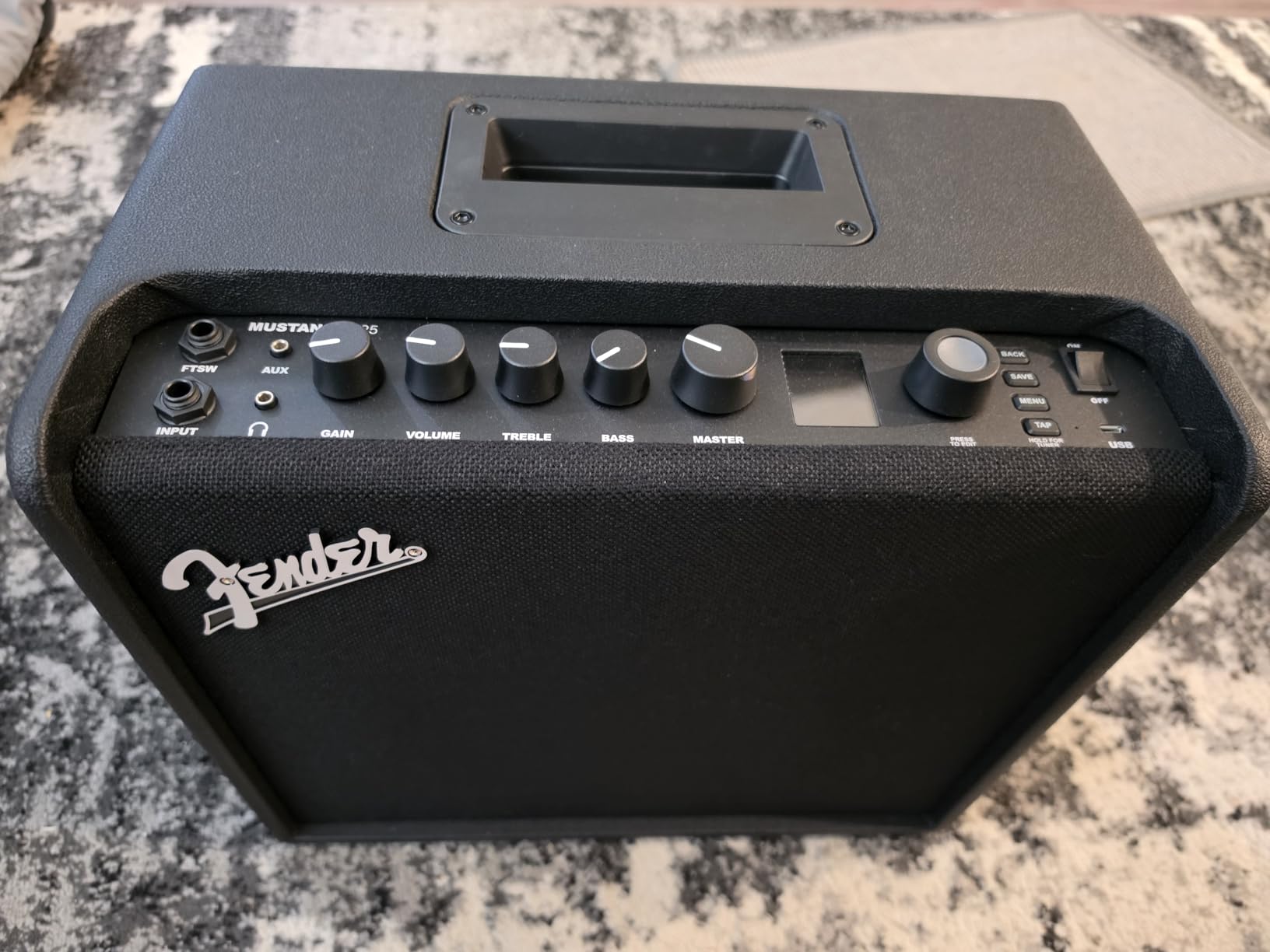
The 1.8 inch color display and a single rotary knob keep the front panel uncluttered. Beginners won’t feel intimidated. I was dialling in presets within five minutes of unboxing, and my guitarist friend who hadn’t touched a modeling amp before had his first clean tone in under two minutes. For more advanced tweaks, the USB port lets you connect to Fender’s FUSE software, although most players won’t need it – the stock presets are remarkably musical.
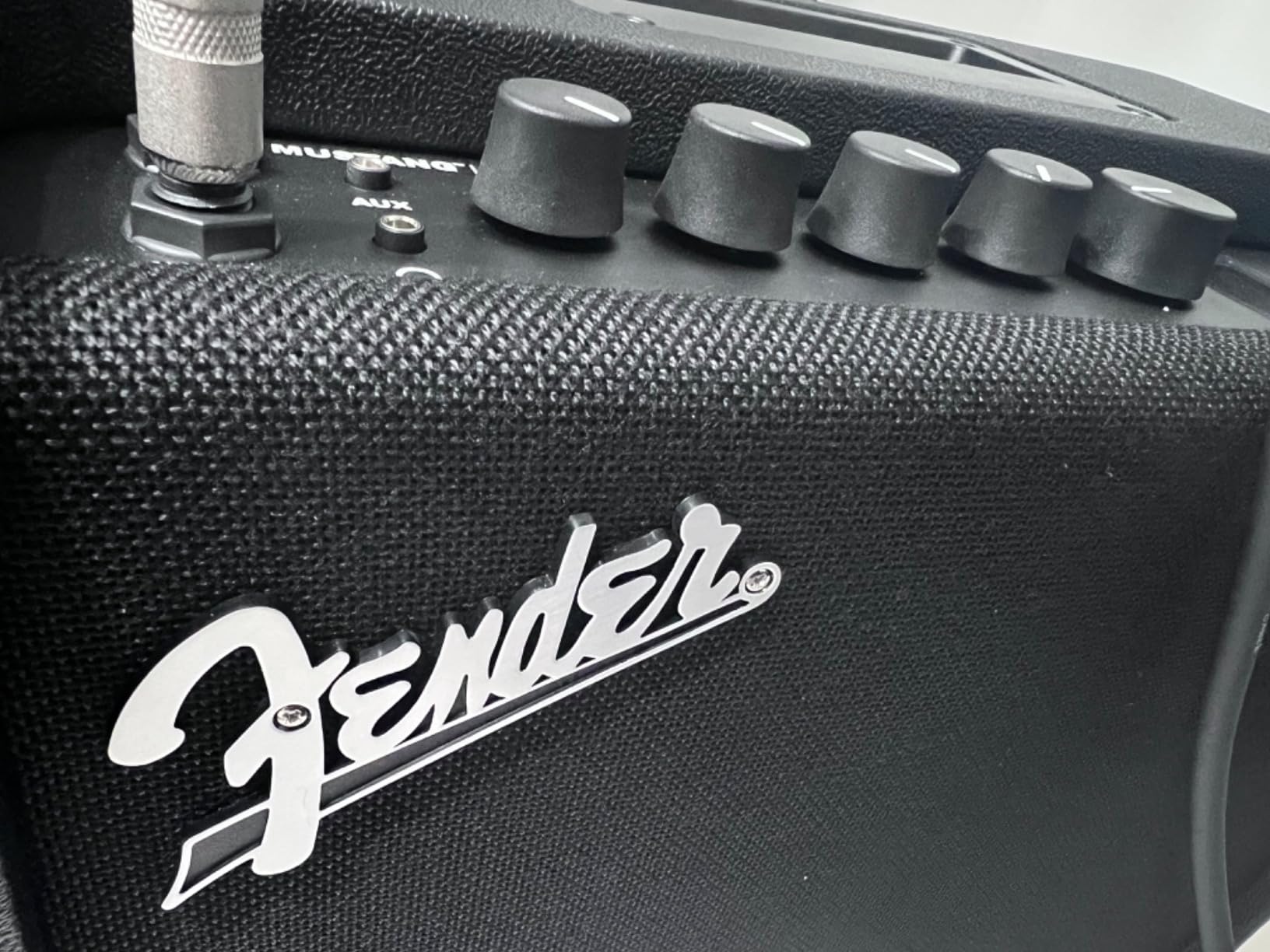
The 8 inch Fender Special Design speaker does a credible job at low volume, but it’s clearly voiced for home and small rehearsal use. Cranking it past 7 out of 10 starts to compress the sound. If you regularly jam with a drummer, step up to the Mustang GTX100 (also on this list). The 25 watts of clean headroom is the main limitation – this is fundamentally a bedroom and recording amp, not a stage workhorse.
Who the Mustang LT25 is best for
Beginners, students, and intermediate players who want authentic Fender clean tones at bedroom volume. It’s also an excellent recording amp when paired with a USB audio interface, and our top pick for classical and jazz players who want a clean, articulate platform for a pickup-equipped archtop or nylon-string guitar. We named it Editor’s Choice because of the 4.8 average rating across 4,190 reviews – one of the strongest combinations of rating and review count in the entire modeling amp market.
Who should look elsewhere
If you play metal at high gain, the LT25 lacks the aggressive amp characters you’ll want – the BOSS Katana-50 Gen 3 or Mustang GTX100 handle that better. Hardcore gigging musicians who need more than 25 watts of clean headroom should also step up. And if you need Bluetooth streaming, the Spark 2 or Mustang GTX100 deliver that feature where the LT25 doesn’t.
2. NUX Mighty Plug MP-2 – Best Value Modeling Headphone Amp
NUX Mighty Plug MP-2 Guitar and Bass Modeling Headphone Amplug with Bluetooth, 13 Amp Models, 20 IRs, 19 Effects, 6.35mm Phone Plug, Pocket Amplifier Built-in Rechargeable LiPo Battery 3.7V/1000mAh
Pocket sized
13 amp models
20 IRs
Bluetooth
USB audio interface
Rechargeable
Pros
- Silent practice with realistic tube amp modeling
- TSAC-HD White-Box Algorithm delivers convincing tones
- Bluetooth audio streaming plus app control
- Built in drum patterns and metronome via app
- Functions as a USB audio interface for DAW recording
- Acoustic guitar IR models included
Cons
- All sound adjustments are made through the app
- Firmware updates have altered factory effects
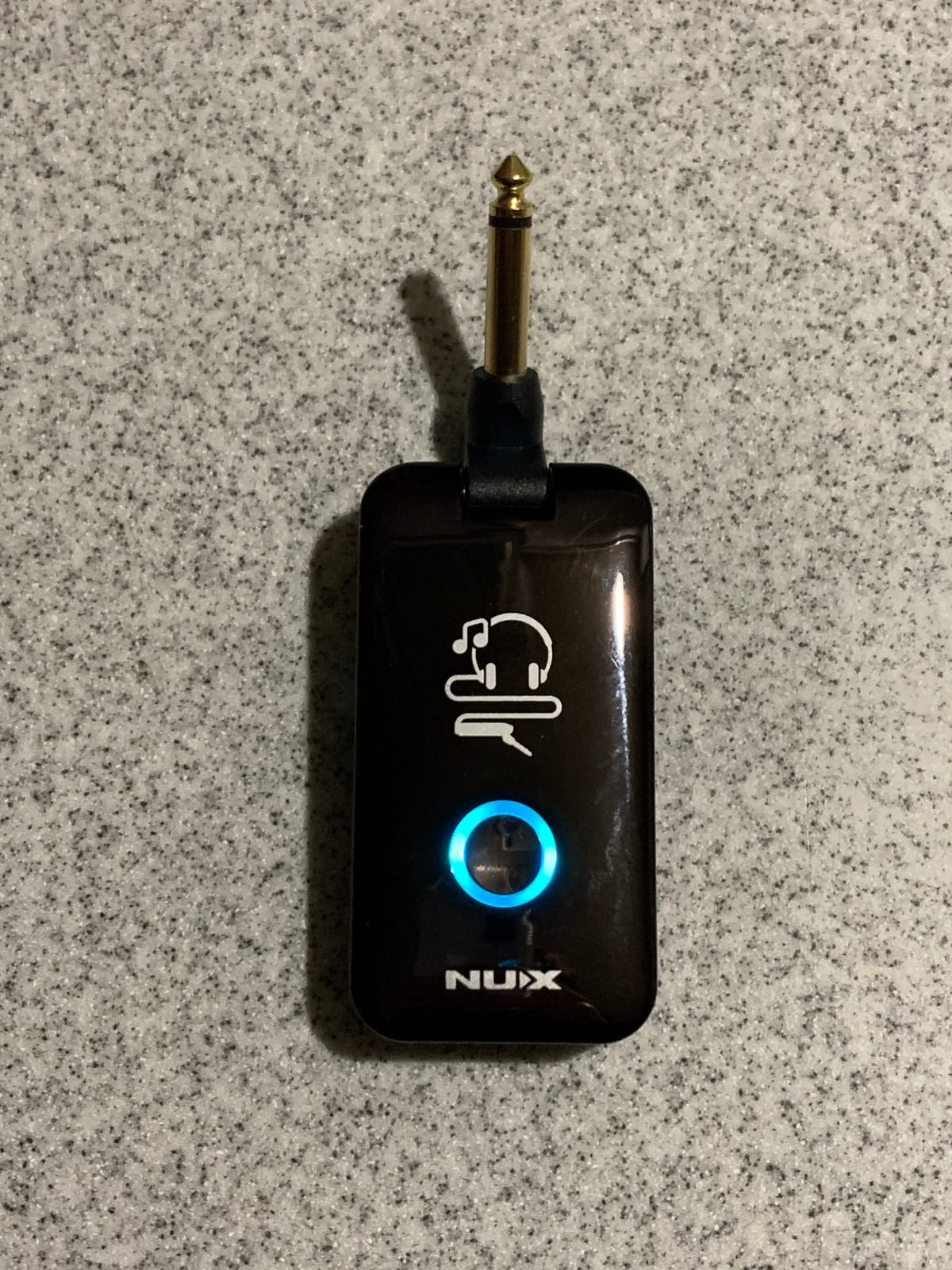
The NUX Mighty Plug MP-2 is the smallest thing on this list – it plugs directly into your guitar’s output jack and turns any pair of headphones into a full modeling rig. I’ve used it on flights, in hotel rooms at 2 AM, and during my lunch break at the office. For under $70, the TSAC-HD White-Box Algorithm is shockingly good. Clean Fender and Vox tones are convincing, and the high-gain Marshall and Mesa models hold up for metal practice.
One thing to understand before buying: there are no physical knobs. Every sound adjustment happens through the MightyAmp mobile app. That means your phone or tablet becomes your amp panel. Reviewers note this is a learning curve, but the app also unlocks features you wouldn’t expect at this price – drum patterns, a metronome, Bluetooth audio streaming for backing tracks, and a built-in USB audio interface for direct computer recording. It even includes acoustic guitar IR models, which is rare in this tier.
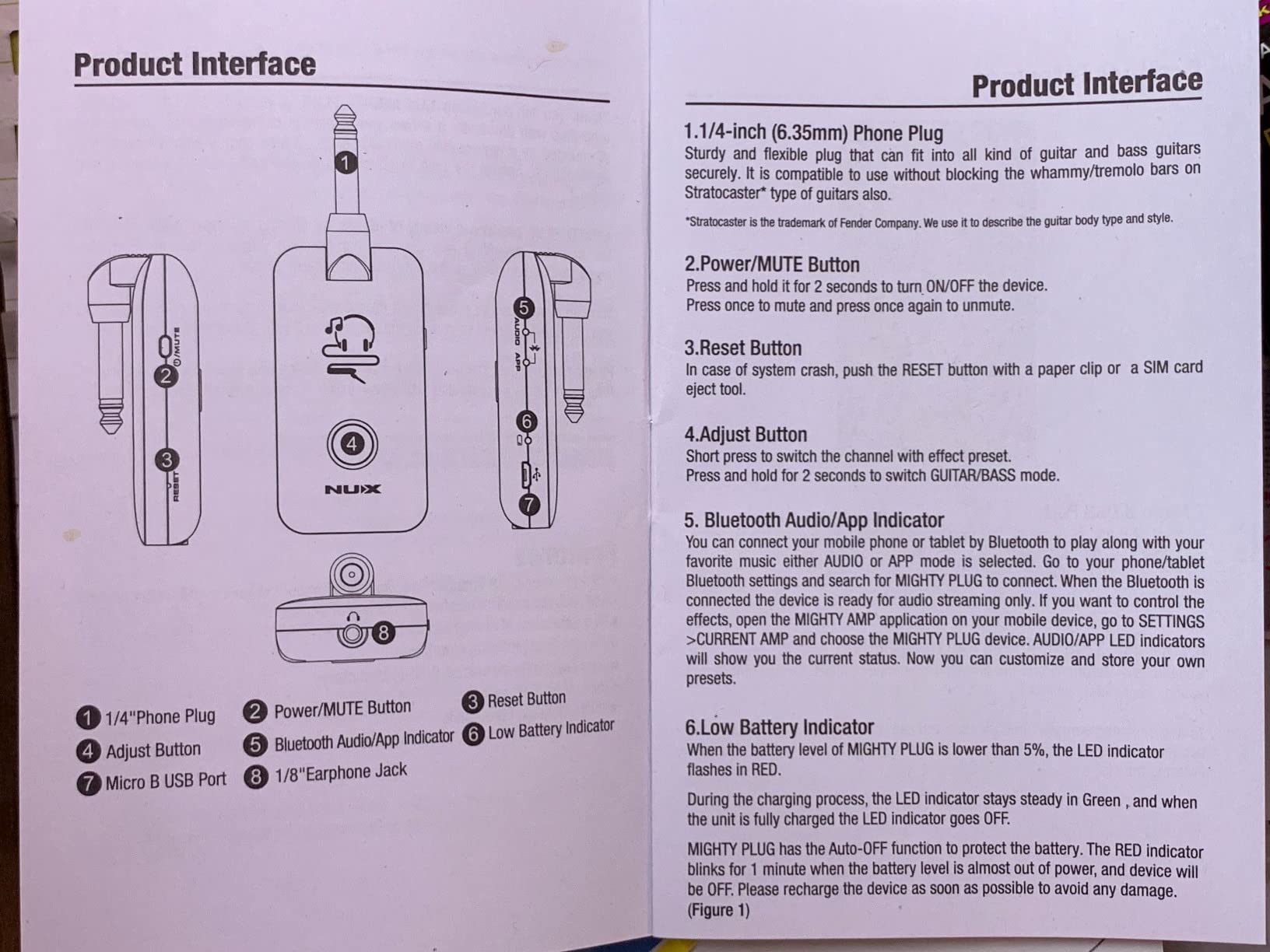
The battery life is solid – NUX claims a long runtime with the ECO auto-off feature. In real-world use I got several days of casual practice per charge. The 3.7V/1000mAh LiPo cell is built in and recharges over USB. The MP-2 also works with bass and acoustic-electric guitars, which is part of why we recommend it to classical and nylon-string players who want a silent practice solution that handles piezo pickups cleanly.
Who the NUX Mighty Plug MP-2 is best for
Anyone who needs silent practice and travels light. It’s our pick for apartment dwellers, dorm room players, and touring musicians who want a backup practice rig in a gig bag. Beginners on a tight budget get a real amp modeling experience – not a toy. It’s also an excellent entry point into home recording: the USB interface works without drivers on Mac, PC, iOS, and Android.
Who should look elsewhere
If you want a traditional amp to sit on a table and play out loud, this isn’t it – the MP-2 is a headphone amp. Players who prefer physical knobs over app-based editing should look at the BOSS Katana-50 Gen 3 or Yamaha THR10II. And if Bluetooth audio streaming for backing tracks matters, the Positive Grid Spark 2 handles that more elegantly with its dedicated speaker.
3. Positive Grid Spark 2 – Best Smart Practice Amp
Positive Grid Spark 2 50W Smart Guitar Practice Amp & Bluetooth Speaker
50W
Sonic IQ DSP
HD amp models
AI tone generator
Looper
Bluetooth speaker
Pros
- 50 watts of rich sound with Sonic IQ Computational Audio
- Built in looper with hundreds of drum patterns
- HD amp models with new tube emulation
- Spark AI tone generator dials tones automatically
- Up to 12 hours optional battery powered play
- Functions as a Bluetooth speaker for backing tracks
Cons
- Battery
- footswitch
- and Hendrix pack sold separately
- App heavy workflow requires phone or tablet
- Some power button reliability reports
The Spark 2 is the smartest practice amp I’ve used. Plug it in, open the app, type “I want a clean Fender tone with a splash of spring reverb” – and Spark AI builds it. That’s not a gimmick. I tried a dozen prompts, from “vintage AC30 crunch” to “modern djent high gain,” and the AI tone generator landed within one or two tweaks of what I’d dial in by hand. For beginners who don’t know amp vocabulary yet, this is huge.
Beyond AI, the Spark 2 ships with hundreds of HD amp models powered by upgraded DSP and a new tube emulation algorithm. The Sonic IQ Computational Audio pushes 50 watts through a pair of angled FRFR speakers in stereo – which is why backing tracks streamed over Bluetooth actually sound like a proper stereo rig rather than a mono practice amp. The Creative Groove Looper includes hundreds of drum patterns across multiple genres, so you can practice, jam, and record loops without any other gear.
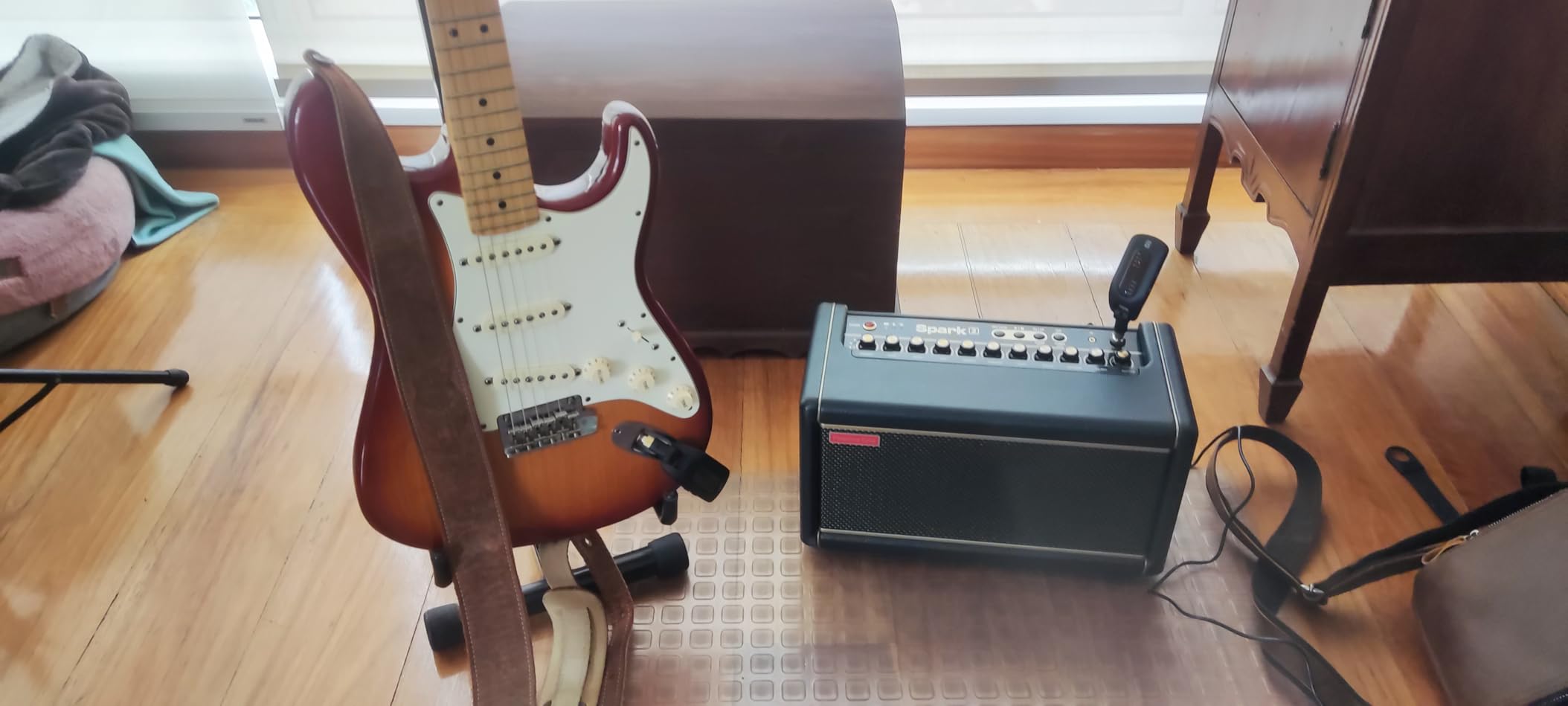
Where Spark 2 frustrates is the app dependency. Almost every meaningful edit – gain, EQ, effects, looper functions – lives inside the Positive Grid app on iOS or Android. That’s great if you always have a phone nearby. It’s annoying if you like to grab a guitar and just play. Reviewers also point out that the optional battery, footswitch, and Hendrix tone pack are sold separately, which raises the total cost of ownership. If you buy the amp only and skip the add-ons, you lose portable play and footswitch control.
Who the Spark 2 is best for
Beginners who want great tones without learning amp vocabulary, plus intermediate players who want a practice and jam rig with backing tracks and loops. It’s our pick for bedroom players who want one box that does practice, looper, and Bluetooth speaker duties. Anyone who wants AI-assisted tone building should start here.
Who should look elsewhere
Players who don’t want to live inside a phone app should consider the BOSS Katana-50 Gen 3 or Line 6 Spider V 20 MKII, which keep more controls on the front panel. Metal players looking for serious high-gain aggression may want to step up to the Helix LT or Quad Cortex tier. And if silent practice is the priority, the NUX Mighty Plug MP-2 handles that at a much lower price.
4. BOSS Katana-50 Gen 3 – Best Modeling Amp for Metal
BOSS Katana-50 Gen 3 Guitar Amplifier, 50-Watt Combo Amp
50W combo
12 inch speaker
Tube Logic
5 effects sections
Tone Studio
Pros
- Enhanced Tube Logic with new Pushed amp character
- 50 watts through a custom 12 inch speaker
- Twelve amp characters across six amp types
- Five independent effects sections
- Updated BOSS Tone Studio app for deep editing
- 2 year manufacturer warranty
Cons
- Heavier than smaller practice amps at 25.6 pounds
- Advanced tone shaping needs the BOSS Tone Studio app
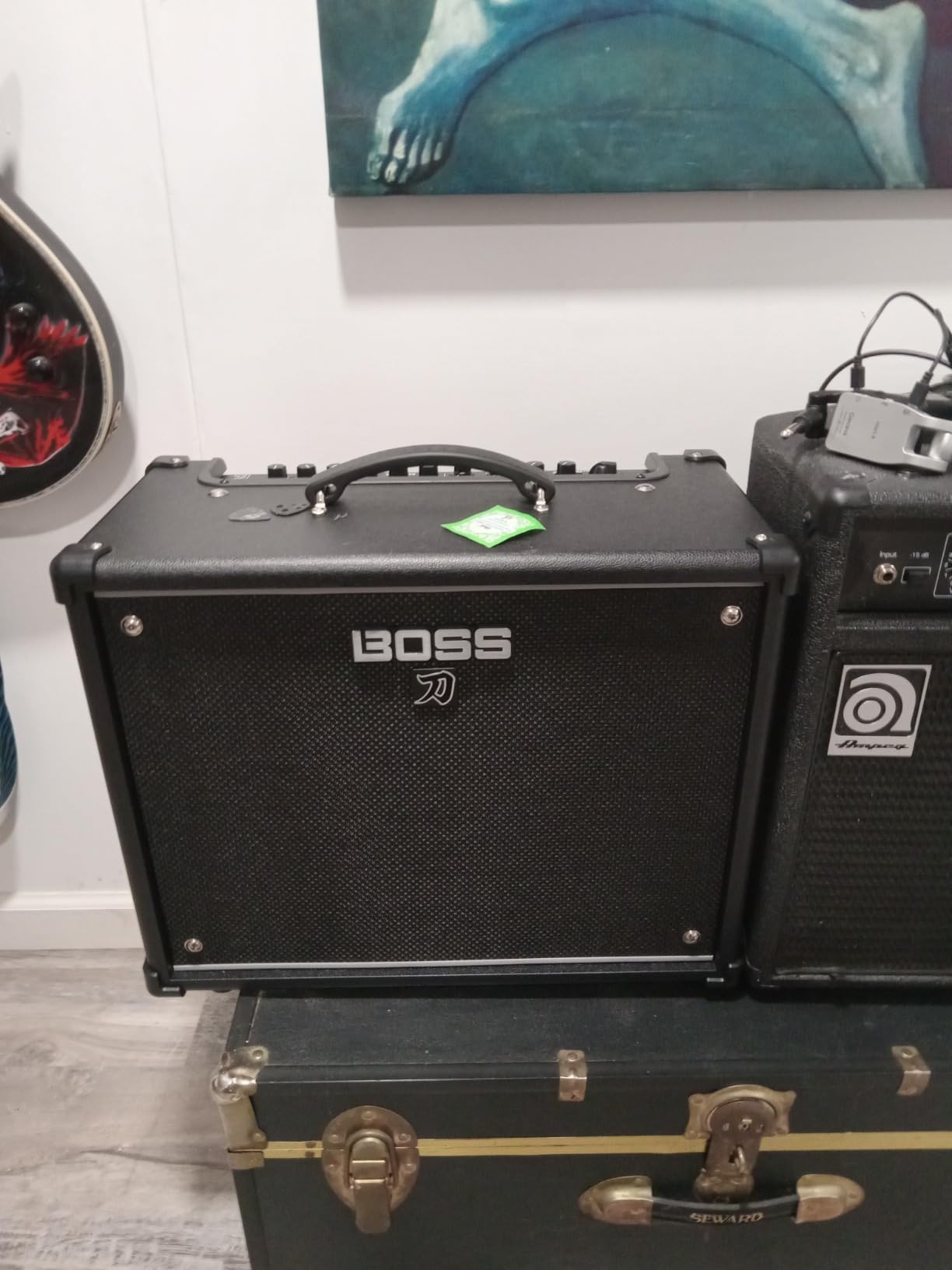
The BOSS Katana series has been the workhorse modeling amp for a decade, and the Gen 3 keeps that crown. I ran my Ibanez through the Brown, Lead, and Brit 4K channels at rehearsal volume, and the new Pushed amp character finally nails that edge-of-breakup “almost-clean-but-not-quite” tone that tube amp players chase. The high-gain channels stack tight and articulate, and palm mutes stay defined even at bedroom volume thanks to the custom 12 inch speaker.
At 50 watts and 25.6 pounds, the Katana-50 Gen 3 is heavier than the practice amps on this list, but it earns the weight. It can keep up with a loud drummer in a small club, which most practice amps cannot. The five independent effects sections – Booster, Mod, FX, Delay, and Reverb – give you enough flexibility to build any rig you want without menu diving. The updated BOSS Tone Studio app makes deep editing easy on a laptop or phone.
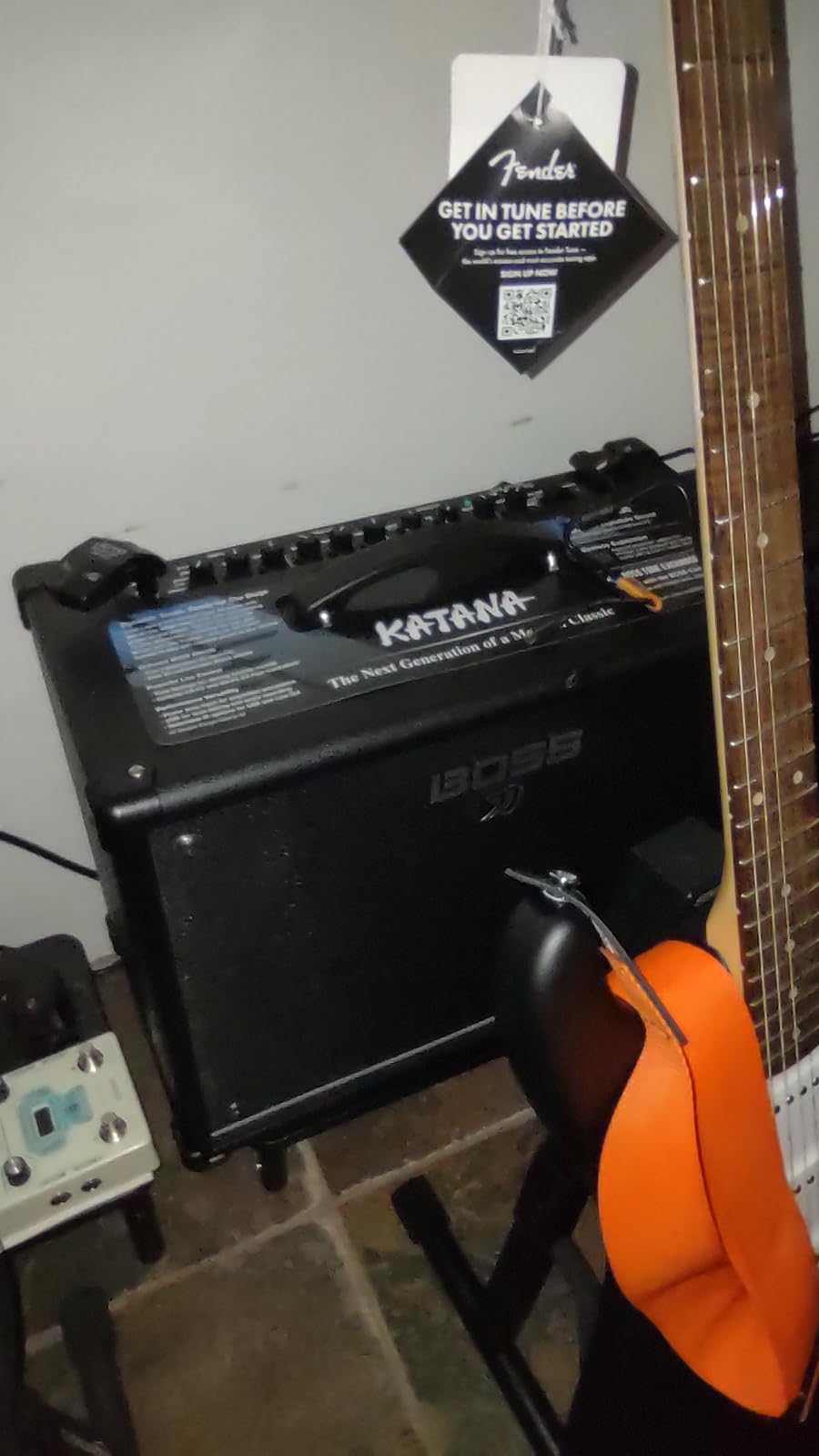
What makes the Katana-50 Gen 3 special for metal is the combination of the 12 inch custom speaker and the updated Tube Logic modeling. Tight rhythm tones sit on top of the mix. Palm mutes don’t get mushy when you add delay. Lead tones sing without fizzing out. Reviewers consistently give it high marks for live band use, and the 2-year warranty is one of the longest in this category.
Who the Katana-50 Gen 3 is best for
Metal, hard rock, and high-gun players who want a stage-ready combo amp without spending $700 on a Helix. It’s also our pick for guitarists who play out – the 50 watts and 12 inch speaker actually keep up with a band. Beginners who want one amp to grow into for the next 5 years should consider this seriously.
Who should look elsewhere
If you only play at bedroom volumes and don’t need the 12 inch speaker, the Mustang LT25 or Spider V 20 MKII are lighter and cheaper. Players who want a smarter practice experience should look at the Spark 2. And if your tone vocabulary leans toward Fender cleans and Vox chime, the Marshall CODE50 or Mustang LT25 may suit you better than the Katana’s higher-gain focus.
5. Fender Mustang GTX100 – Best Modeling Amp for Gigging
Fender Mustang GTX100 Guitar Amp and 7 Button Footswitch, 100 Watts, with 2-Year Warranty Integrated Looper, Bluetooth Audio Streaming for Play Along, 24.5Dx21.05Wx13.05H Inches, Black
100W combo
12 inch Celestion FRFR
200 presets
7 button footswitch
Bluetooth
Pros
- 200 onboard user presets with modular signal path
- Custom 12 inch Celestion FRFR speaker for full response
- Models of Blues Jr
- Vibro King
- JC Clean
- and Silver Jubilee
- Seven button footswitch with tap tempo and 60 second looper
- Bluetooth audio streaming and Fender TONE app
- Stereo XLR line outputs and effects loop for PA and recording
Cons
- Fender TONE 3.0 app is mobile only
- Out of the box presets often need tweaking
- Some early units reported WiFi audio dropout
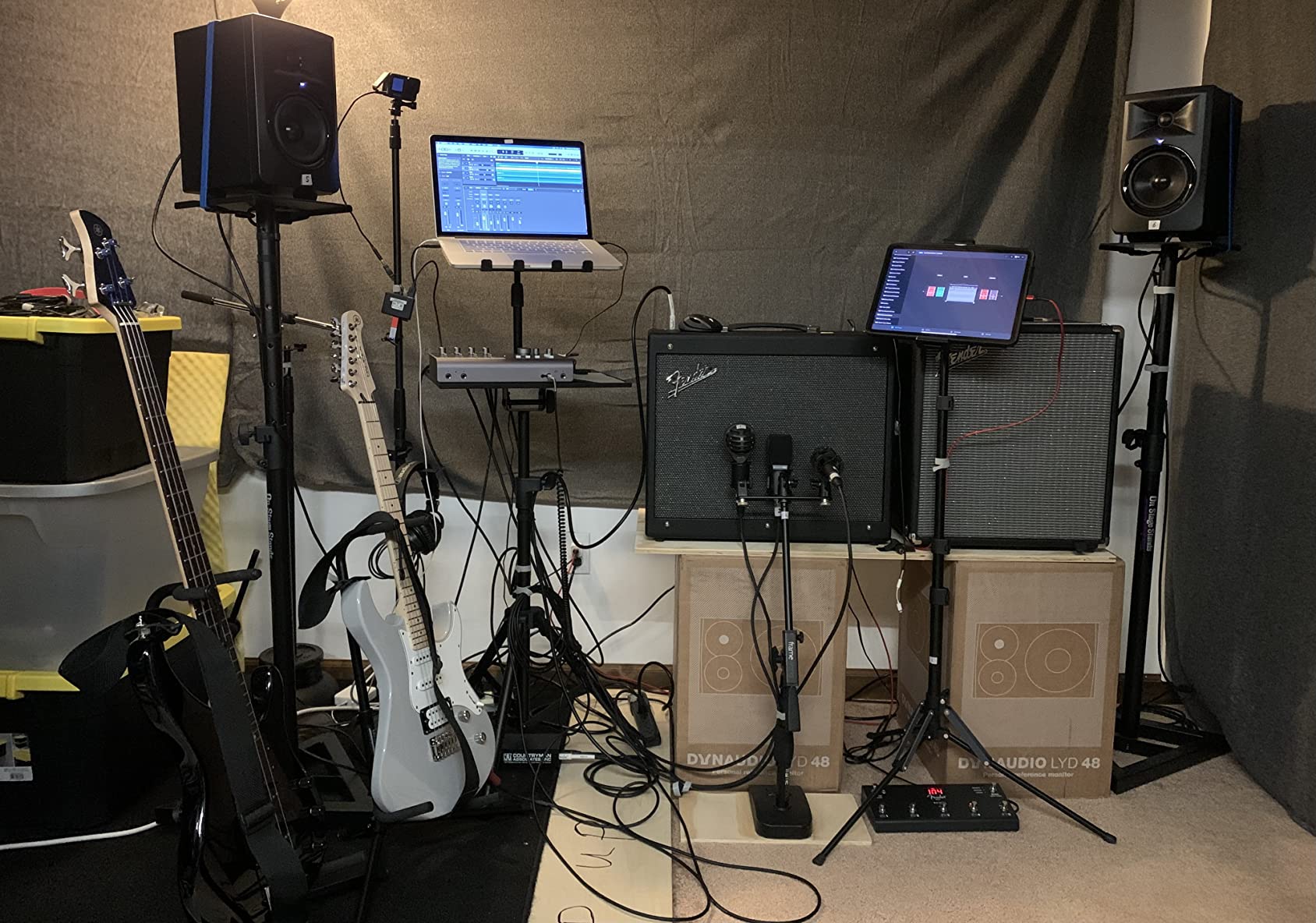
The Mustang GTX100 is the gigging player’s modeling amp. At 100 watts through a custom 12 inch Celestion FRFR speaker, it has the headroom to fill a club stage without breaking a sweat. I used it at a wedding gig with a four-piece band, and it kept up with the drummer and the bass rig all night. The included 7-button footswitch with tap tempo and 60-second looper means you can change presets hands-free, which is non-negotiable when you’re playing live.
The 200 onboard presets cover a massive range of styles. The amp models include Fender classics like the Blues Jr, Vibro King, JC Clean, and Silver Jubilee, plus high-gain options. The modular signal path lets you reorder effects, change preamp and power amp models independently, and stack things like a noise gate before a compressor before a drive – exactly the way you’d build a real pedalboard. Stereo XLR line outputs feed the PA cleanly, and the effects loop lets you insert your favourite time-based pedals.
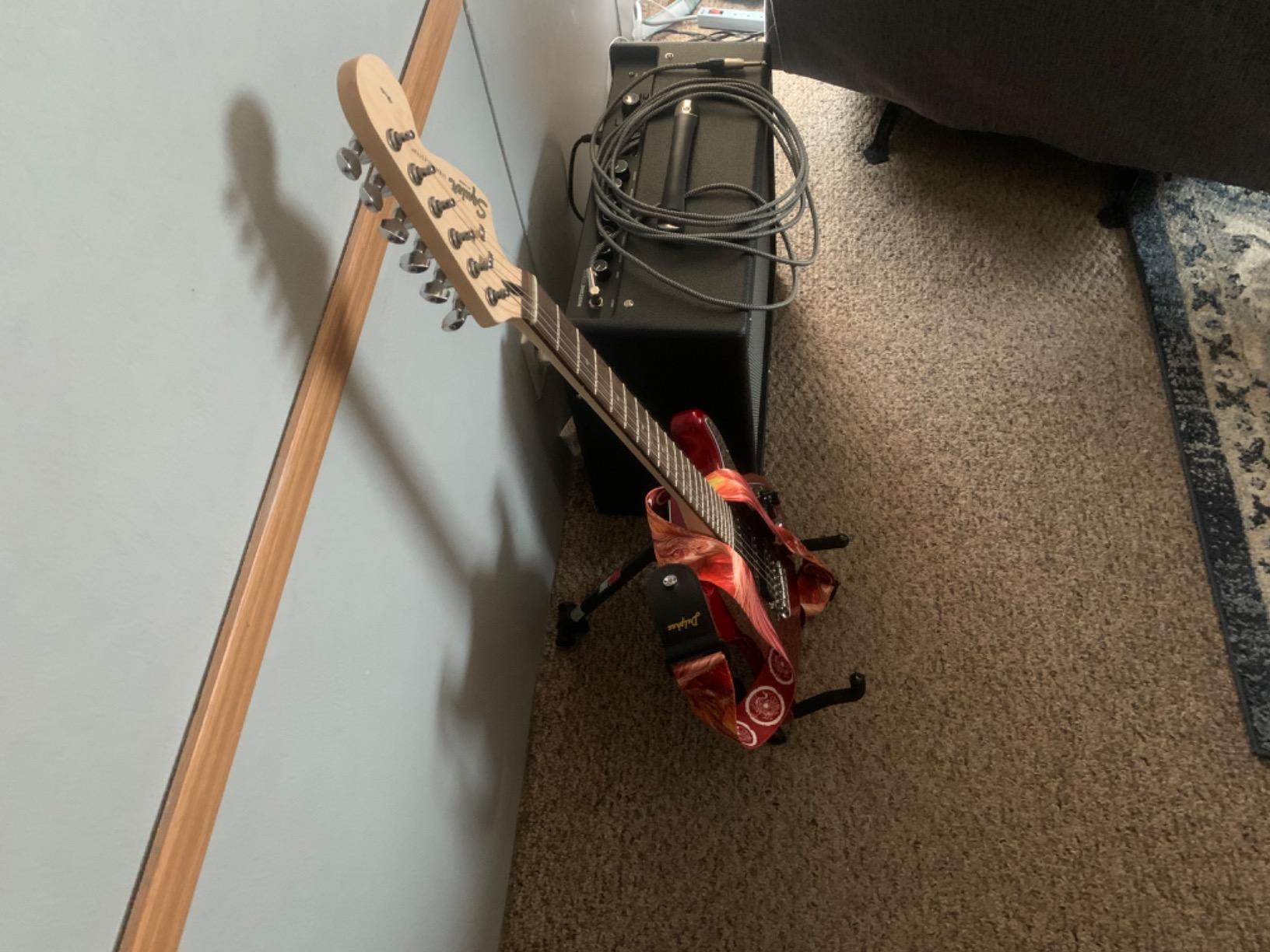
Bluetooth audio streaming is a nice touch for set breaks – stream music from your phone through the same amp you’re using for guitar. The Fender TONE 3.0 app handles deep editing on iOS and Android, but the app is mobile only – no PC or Mac support, which is a real limitation if you like editing on a laptop. The factory presets also benefit from tweaking to taste, and reviewers note occasional WiFi-related audio dropout on early units that has since been addressed with a firmware fix.
Who the Mustang GTX100 is best for
Working gigging musicians who need 100 watts, a footswitch, XLR outputs to the PA, and a real looper. It’s also a strong choice for serious home players who want one amp that does bedroom practice, recording, and live gigs. Multi-instrument players who want the broadest amp model library in a combo will appreciate the 200-preset depth.
Who should look elsewhere
If you only play at home, the 100 watts and 28.5-pound weight is overkill – the Mustang LT25 or Spider V 20 MKII are better fits. Metal players chasing the highest-gain tones may prefer the Katana-50 Gen 3 or step up to a Helix LT. And if you want a smaller desktop form factor for office or apartment practice, the Yamaha THR10II is purpose-built for that.
6. Marshall CODE50 – Best for Tone Tweakers
Marshall CODE50 Digital Combo Electric Guitar Amplifier – Black
50W combo
14 MST preamps
4 power amp models
24 effects
Bluetooth
Pros
- 100 plus editable presets with deep control
- 14 MST preamp models including Plexi
- JVM
- DSL
- Silver Jubilee
- 4 power amp models across EL34
- EL84
- 6L6
- 5881
- 8 speaker emulations based on classic Marshall cabinets
- Bluetooth and MyMarshall app for editing
- USB connectivity for recording and firmware updates
Cons
- Factory presets and cab simulations need manual tweaking
- No dedicated FX loop for external time based pedals
- MyMarshall app support has been inconsistent
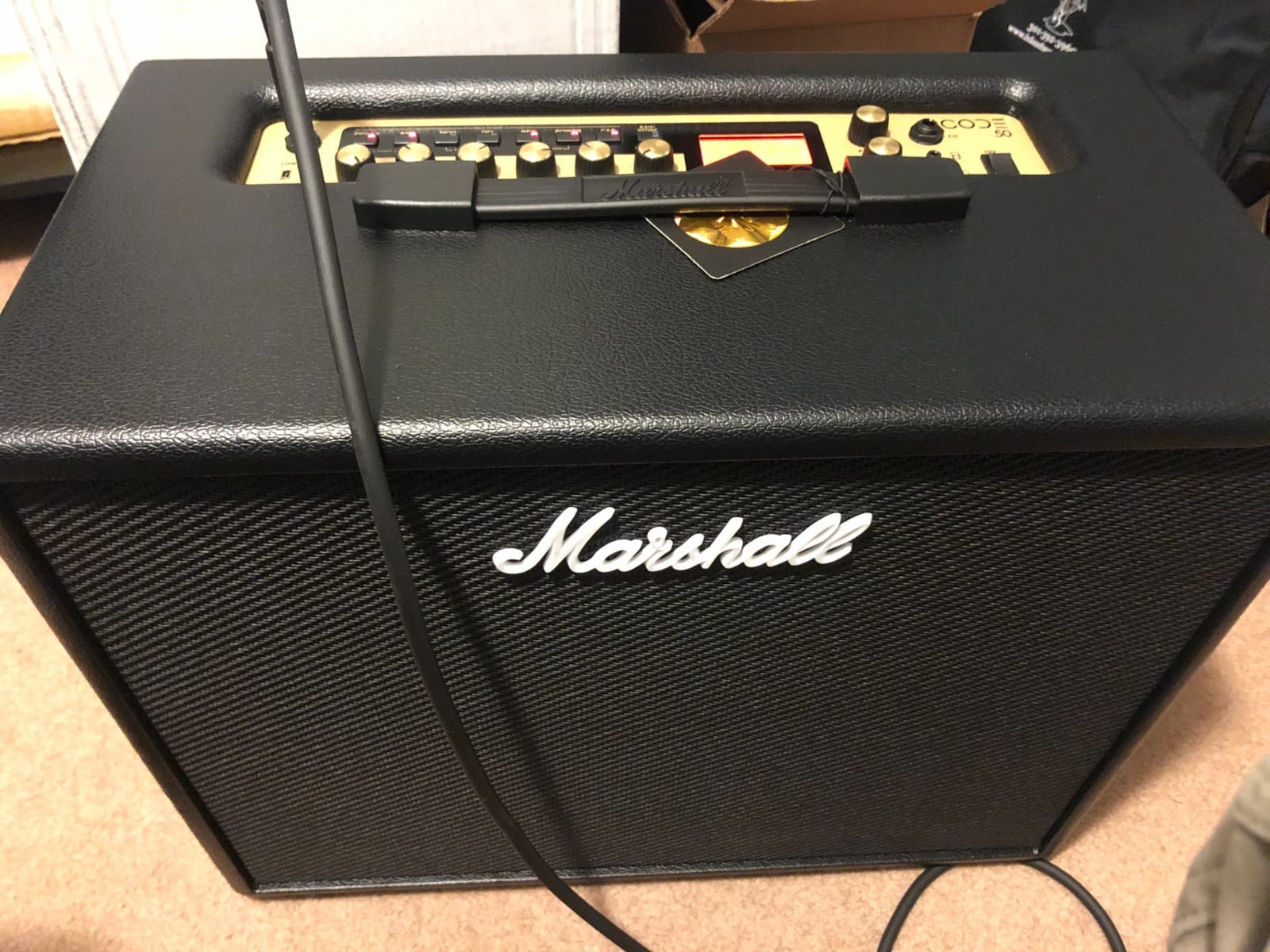
Marshall CODE50 is the amp for players who like to dig in. The 14 MST preamp models cover Plexi, JVM, DSL, Silver Jubilee, and more – that’s the heart of Marshall’s history in one box. Add four power amp models (EL34, EL84, 6L6, 5881) and eight speaker emulations based on classic Marshall cabs, and you can mix and match combinations that don’t exist as real-world amps. A Plexi preamp into an EL84 power section into a 4×12 Greenback cab sim is genuinely a new sound.
I spent a couple of evenings doing what Marshall CODE owners do – dialing. The consensus across reviewers is that the amp rewards patience: bump up presence, switch off the default cab sims, and the CODE50 comes alive. Out of the box, the presets are serviceable but a bit dry. Once you start swapping power amp models and cab simulations, you find combinations that nail classic rock and hard rock tones better than most modeling amps at this price.
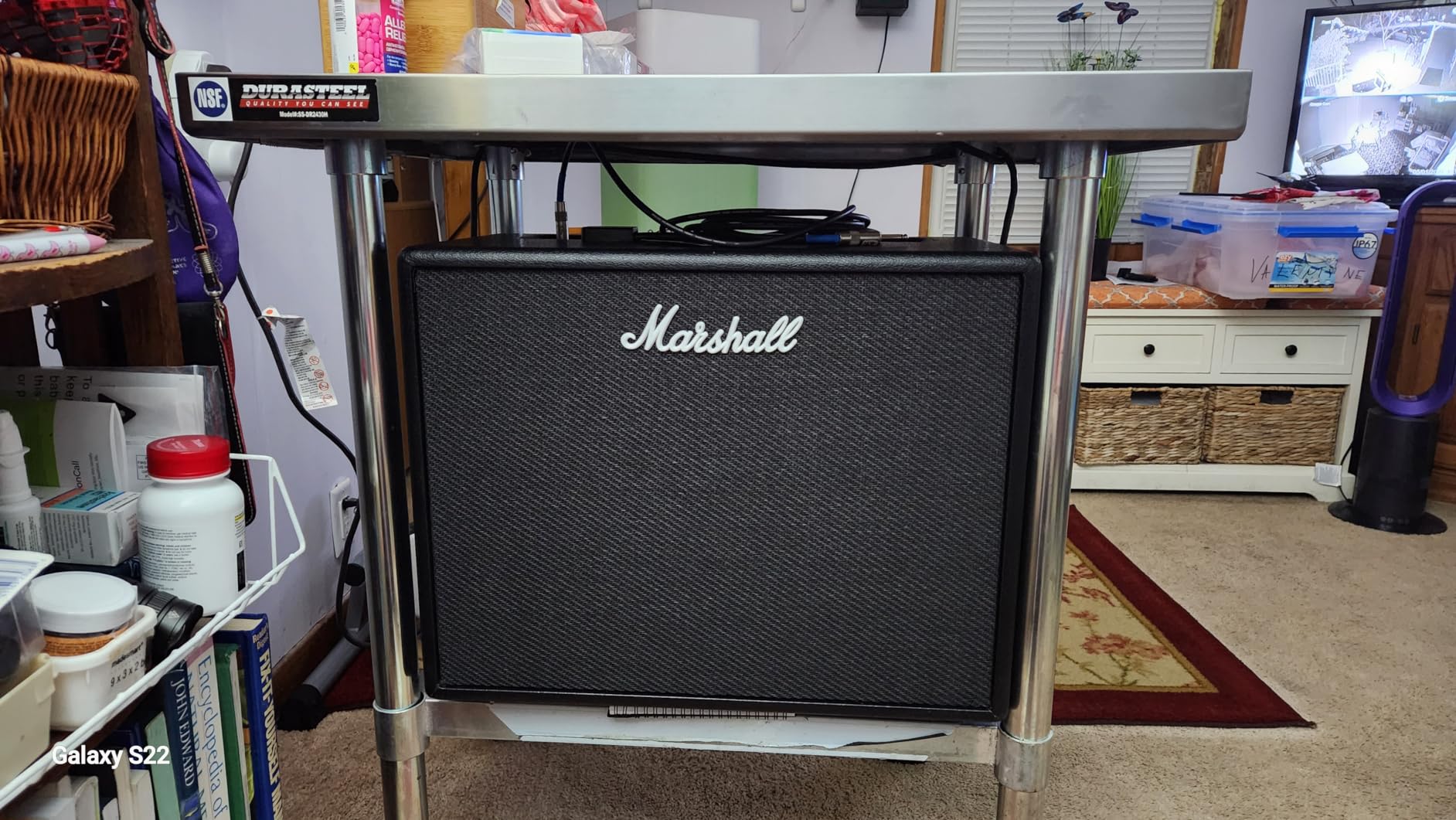
Bluetooth audio streaming is included, and the MyMarshall app handles preset editing on iOS and Android. The 1-year warranty is shorter than the 2-year coverage on the Fender and BOSS amps. There’s no dedicated effects loop, so external time-based pedals (delay, reverb) have to go in front of the amp, which can change their sound. App support has been historically inconsistent, with users reporting long stretches without firmware updates.
Who the Marshall CODE50 is best for
Players who specifically love Marshall tones and want to dial their own. Tinkerers who enjoy mixing preamp, power amp, and cab combinations will find more depth here than in most 50-watt combos. Rock and hard rock players who don’t need the highest-gain metal aggression of the Katana should consider this seriously.
Who should look elsewhere
Players who want great tones out of the box without tweaking should look at the Mustang LT25 or Spark 2 – the CODE50 rewards effort but punishes impatience. If you need a dedicated FX loop for external time-based pedals, the Mustang GTX100 has one. And for the broadest amp model library regardless of brand, the GTX100 again leads.
7. Yamaha THR10II – Best for Desktop and Acoustic Practice
Yamaha THR10II Wired Desktop Guitar Amp , 10W
10W desktop
15 guitar amps
3 bass amps
3 acoustic mic models
Bluetooth
USB
Pros
- Realistic tube amp tones and feel at low volume
- 15 guitar amps
- 3 bass amps
- 3 acoustic mic models plus flat modes
- Bluetooth audio playback with extended stereo
- Plug and play USB for recording and playback
- Remote editor and Librarian app for desktop and mobile
- Compact 3 kg desktop form factor
Cons
- Low output wattage restricts use to desktop practice
- Premium price for a 10W practice amp
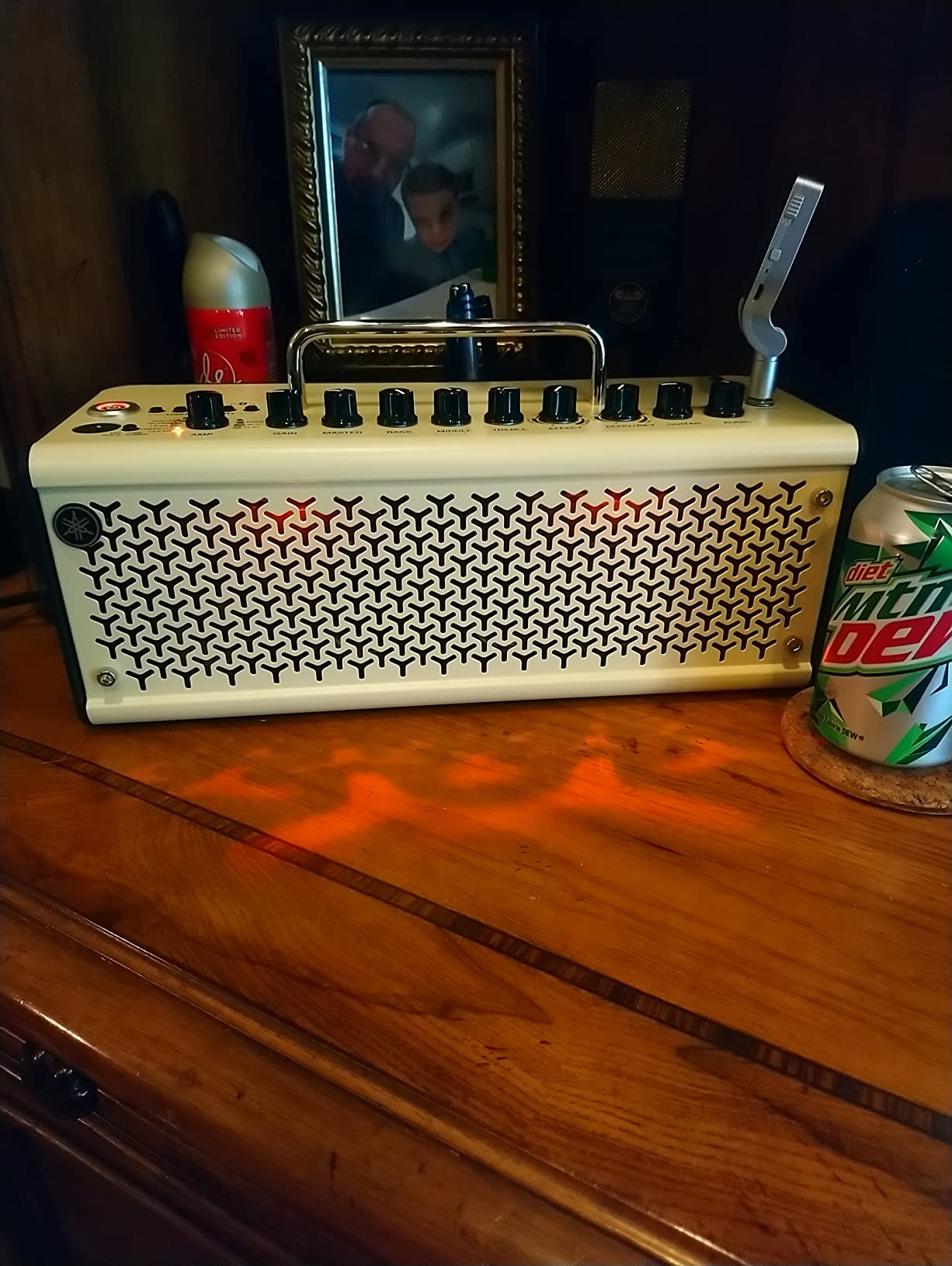
The Yamaha THR10II is the amp I keep on my desk at home. It looks more like a piece of hi-fi gear than a guitar amp, and that’s the point. At 3 kilograms with dual 3.1 inch stereo speakers, it sits next to my computer monitor and stays there. The 10 watts through hi-fi speakers produces a wide, room-filling sound that you don’t get from a traditional guitar cabinet. For apartment dwellers and office practice, this is the most polite way to play electric guitar at 1 AM.
What makes the THR10II special for our readers at The Classical Shop is the 3 mic models designed for acoustic-electric guitars. Yamaha specifically built these for piezo pickups, which means nylon-string and classical-electric players finally have a desktop amp that flatters their instrument. The 15 guitar amps cover Fender, Vox, Marshall, and boutique styles; the 3 bass amps handle bass guitar credibly; the flat modes let you run your acoustic pickup direct without colouring the sound.
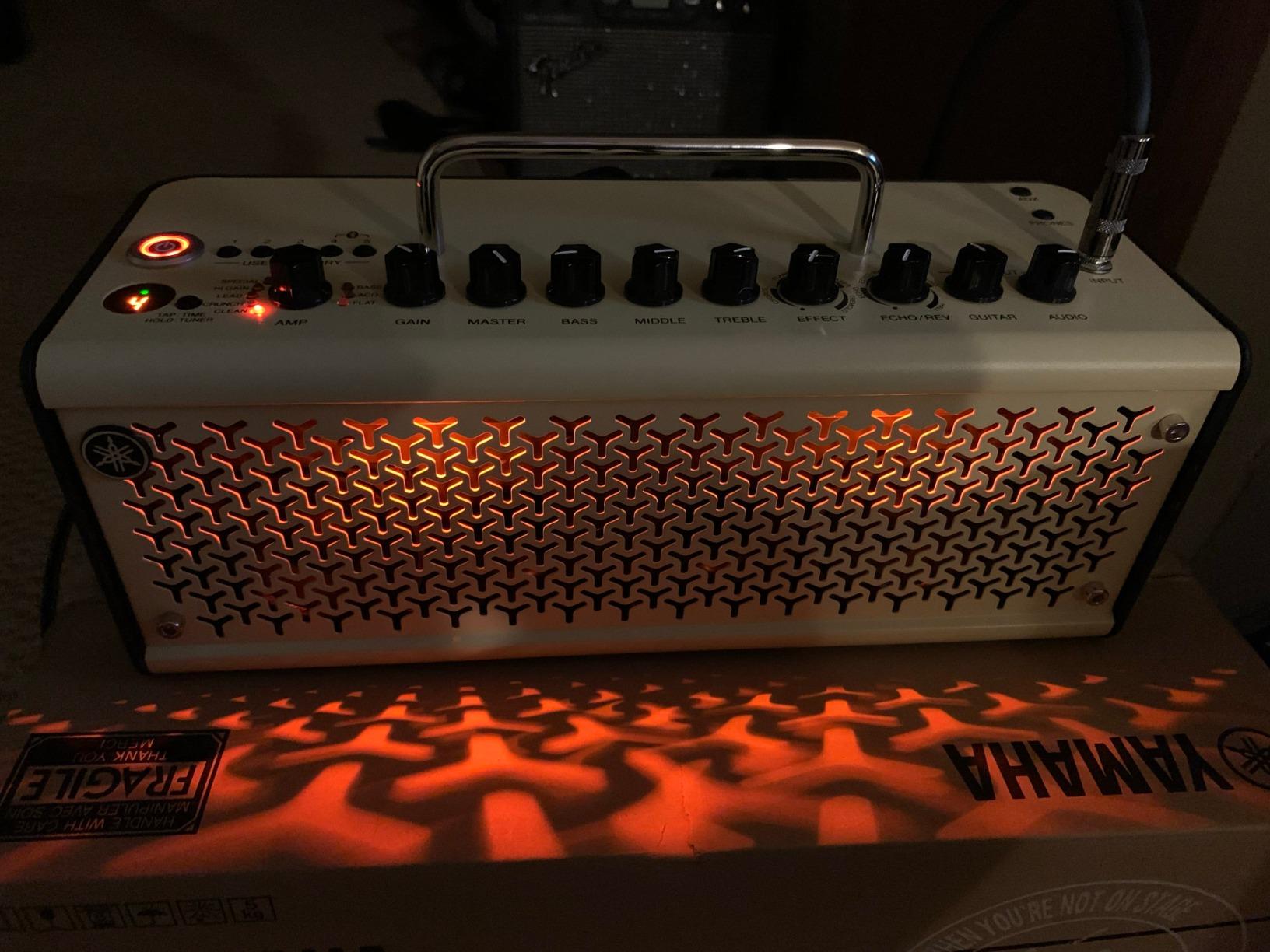
Bluetooth audio playback uses extended stereo technology, which makes backing tracks sound genuinely good through the same speakers. Plug-and-play USB handles recording and playback on Mac, PC, iOS, and Android without drivers. The remote editor and Librarian app lets you tweak presets from your phone or laptop. The 1-year warranty is shorter than the Katana’s 2 years, but Yamaha’s build quality has historically been excellent.
Who the Yamaha THR10II is best for
Players with limited space who want a desktop amp that doubles as a Bluetooth speaker. Classical, jazz, and acoustic-electric players will especially appreciate the acoustic mic models – this is rare at any price tier. Apartment dwellers and office workers who need quiet, late-night practice will love the 10-watt output and headphone jack.
Who should look elsewhere
If you need stage volume, 10 watts is not enough – the Katana-50 Gen 3 or Mustang GTX100 are required. Players who want a heavier high-gain focus should look at the Marshall CODE50 or Katana. And if you want the deepest amp modeling library regardless of form factor, the Mustang GTX100 leads.
8. Line 6 Spider V 20 MKII – Best Budget Modeling Amp for Beginners
Line 6 Spider V 20 MKII
20W combo
8 inch speaker
200 plus amps in app
Tuner
Classroom friendly
Pros
- New classic speaker mode for enhanced sound and feel
- 16 presets with 3 simultaneous effects plus independent reverb
- Easy to use tone and effects controls
- Built in tuner and tap tempo function
- 200 plus amps and effects via free Spider V Remote app
- Edit and record on Mac
- PC
- iOS
- and Android
Cons
- Limited volume restricts use to home practice
- Out of the box presets benefit from app editing
The Line 6 Spider V 20 MKII has been the gateway modeling amp for a generation of guitarists, and the MKII update keeps it relevant. At 20 watts through an 8 inch speaker, it has enough volume for bedroom practice and small jam sessions but not enough for gigging – that’s by design. The new classic speaker mode gives the cabinet a more traditional response than the original Spider series, which was criticised for sounding too “processed.” Reviewers rate it 4.5 stars across 422 reviews for good reason: it’s hard to beat the value.
The 16 onboard presets cover a useful range of styles, with 3 simultaneous effects plus an independent reverb – that’s enough to build a basic rig for rock, blues, metal, or country. Where the Spider V 20 MKII really opens up is the free Spider V Remote app, which adds 200 plus amps and effects. On Mac, PC, iOS, and Android, you can deep-edit presets, record into your DAW over USB, and back up your library.
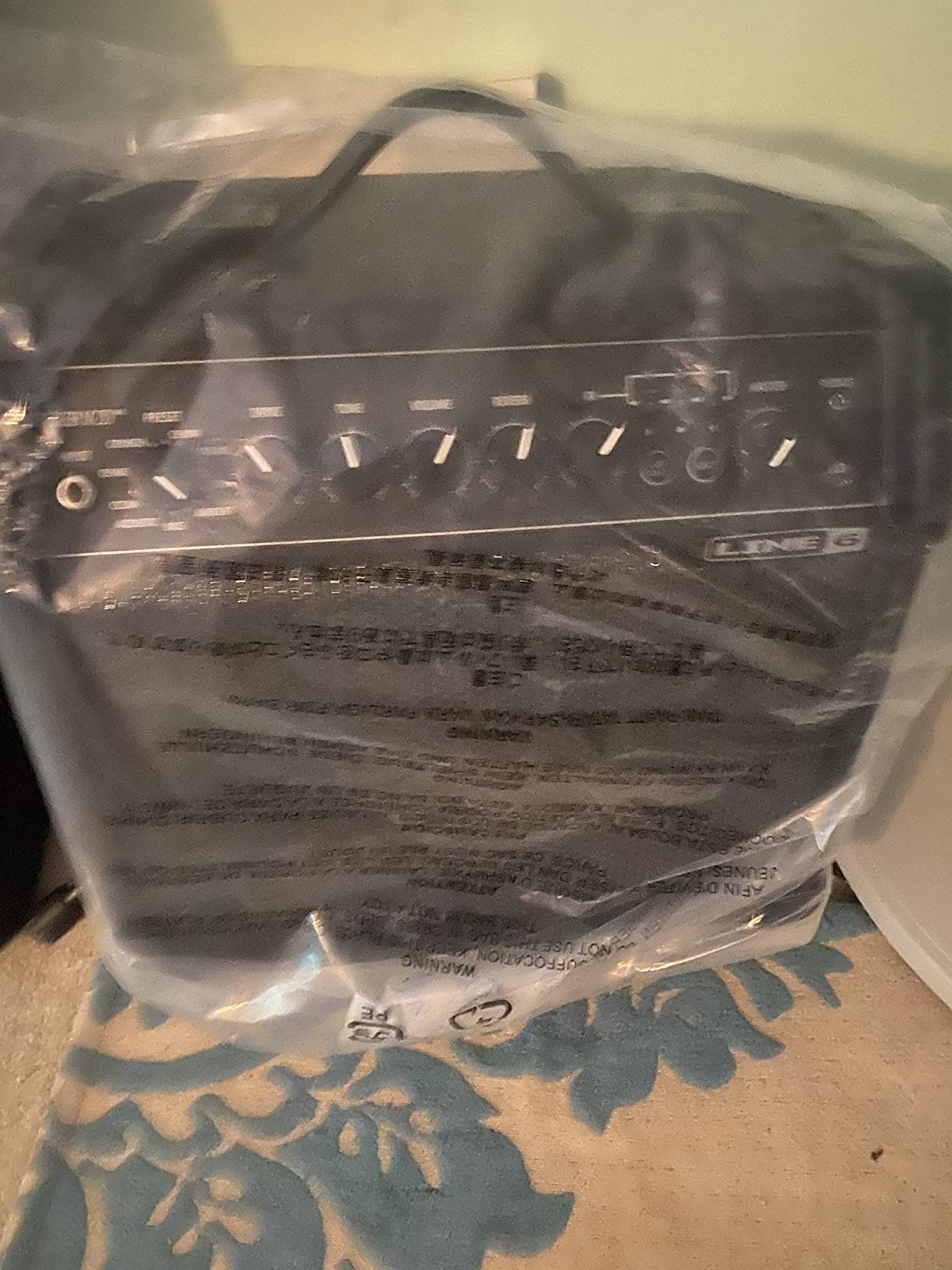
The 5.8 kilogram weight and compact dimensions make it portable enough to carry to lessons, jam sessions, or rehearsal rooms. A built-in tuner and tap-tempo function round out the practice-friendly features. The 1-year warranty is standard for this tier. What the Spider V 20 MKII lacks is Bluetooth audio streaming – for that, the Spark 2 or Mustang GTX100 are better choices.
Who the Spider V 20 MKII is best for
Total beginners who want a real modeling amp at an entry-level price. Students who take lessons and need to carry the amp to a teacher’s studio will appreciate the 5.8 kilogram weight. Players who want a practice amp that grows with them as they explore more amp models and effects in the Spider V Remote app should start here.
Who should look elsewhere
If you need gigging volume, step up to the Katana-50 Gen 3 or Mustang GTX100. Players who want Bluetooth streaming should consider the Spark 2. And for the cleanest, most authentic Fender tones specifically, the Mustang LT25 still leads at this price tier.
How to Choose the Best Modeling Amplifier for You
Choosing the best modeling amplifiers for your situation comes down to four questions: where will you play, what tones do you need, how much fiddling will you tolerate, and what connections do you need. Let’s walk through each.
Match the amp to your use case
Bedroom practice and apartment playing demand low wattage and headphone outputs. The NUX Mighty Plug MP-2 is the smallest, the Yamaha THR10II is the most hi-fi, and the Spark 2 doubles as a Bluetooth speaker. Recording into a DAW over USB is supported by every amp on this list except the NUX MP-2 (which has its own USB interface). Live performance needs at least 50 watts and a footswitch – that’s the Katana-50 Gen 3, Mustang GTX100, or Marshall CODE50 territory.
Travel and touring want lightweight, rugged designs. The NUX MP-2 weighs 160 grams. The Spider V 20 MKII is 5.8 kilograms. Anything over 25 kilograms is a stage-only amp. Classical and acoustic-electric players should specifically consider the Yamaha THR10II for its acoustic mic models, or the NUX MP-2 for silent practice with acoustic IRs built in.
Pick the right form factor
Combo amps put the speaker and the amp in one box – portable, simple, what most beginners want. Heads need a separate cabinet, which adds weight and cost but lets you mix and match. Floorboard processors like the Helix LT and Quad Cortex are pedalboard-style units with no speaker – they need an FRFR (Full Range, Flat Response) cabinet or in-ear monitors to gig. Rack units like the Fractal Axe-FX are studio and touring tools.
For our 8 picks, every product is a combo amp except the NUX Mighty Plug MP-2, which is a headphone amplifier that plugs into your guitar. If you want floorboard form factor, you’d need to step outside this list to a Helix LT or Quad Cortex – both excellent but a different category.
Check power and speaker size
Wattage matters less than people think for bedroom practice – a 10W Yamaha THR10II is plenty loud at home, and any modeling amp gets loud enough to annoy neighbours. For jamming with a drummer, you need at least 30 watts and ideally 50 watts through a 10 or 12 inch speaker. The Katana-50 Gen 3 and Mustang GTX100 handle band practice. Anything beyond a 100-watt combo is built for club stages.
Speaker size changes feel more than volume. An 8 inch speaker (Mustang LT25, Spider V 20 MKII) is tight and focused, great for clean tones and recording. A 12 inch speaker (Katana-50 Gen 3, Mustang GTX100, Marshall CODE50) moves more air and handles high gain with less speaker breakup – it’s the right call for rock and metal.
Effects, connectivity, and apps
Every amp on this list has at least 15 effects built in. The deeper question is whether you want to control them on the front panel or in a mobile app. The Katana-50 Gen 3, Marshall CODE50, and Spider V 20 MKII keep more controls on the amp itself. The Spark 2 and Mustang GTX100 push more editing into the app. There is no right answer – it depends on whether you always have a phone nearby.
Connectivity that matters: headphone output (everyone), Bluetooth audio streaming (Spark 2, Mustang GTX100, Marshall CODE50, Yamaha THR10II), XLR direct output for live sound (Mustang GTX100), effects loop for external pedals (Mustang GTX100), USB audio interface for DAW recording (everyone except NUX MP-2, which has its own). MIDI is rare in this tier – you’d need a Helix LT or Quad Cortex for that.
Latency and the “feel” question
This is the question that comes up most on guitar forums. Modern modeling amps have latency under 5 milliseconds, which is below the human threshold for noticing lag when playing. The Quad Cortex and Helix LT are at the low end (around 1-2 ms). The combo amps on this list are in the 2-4 ms range. Older modeling amps from the early 2010s had noticeable latency – none of these eight do.
“Feel” is a different question from latency. Tube amps feel “alive” because the speaker, power supply, and tubes interact dynamically. A modeling amp reproduces that interaction digitally. The best modeling amps – the Katana-50 Gen 3, Mustang GTX100, and Marshall CODE50 – capture that feel well enough that most players can’t tell the difference in a blind test. Beginners won’t notice. Tone purists may still prefer a real tube amp, which is fair.
Price tier breakdown
Under $200 gets you entry-level practice amps: the Mustang LT25 and Spider V 20 MKII. $200-$500 is the sweet spot for most players: the Spark 2, Katana-50 Gen 3, Marshall CODE50, and Yamaha THR10II all live here. Above $500 is pro gigging territory: the Mustang GTX100 sits here, and beyond it you’d be looking at the Helix LT, Quad Cortex, Kemper Profiler, or Fractal Axe-FX – all excellent but outside this roundup’s scope.
For a good priced amp modeler that handles bedroom practice, recording, and small gigs, the Katana-50 Gen 3 and Mustang LT25 are the strongest values in 2026. For silent practice specifically, the NUX Mighty Plug MP-2 at under $70 is unbeatable.
Classical and acoustic-electric players
This is where our roundup differs from most. Classical and nylon-string players with pickup-equipped guitars often struggle with modeling amps because piezo pickups sound harsh through amp models voiced for magnetic pickups. The Yamaha THR10II’s 3 acoustic mic models are specifically designed for piezos, which is why we highlighted it. The NUX Mighty Plug MP-2 includes acoustic guitar IRs for the same reason. Both flatter the natural warmth of a nylon-string or classical-electric.
If you play a hybrid setup – nylon-string by day, electric by night – the THR10II and MP-2 handle both with one device. Players who only play acoustic-electric and never plug into a traditional amp should also consider the LAVA MUSIC LAVA Studio, although it’s not on this list.
Frequently Asked Questions
What is the best modeling amplifier in 2026?
The Fender Mustang LT25 is our top pick. It earns that spot because of authentic Fender clean tones, 30 useful presets, a beginner friendly 1.8 inch color display, and a 4.8 average rating across more than 4,000 reviews. It handles bedroom practice, home recording, and small gigs. For gigging players, step up to the Mustang GTX100; for metal and high gain, the BOSS Katana-50 Gen 3 leads.
What is the best budget modeling amplifier?
The NUX Mighty Plug MP-2 at under $70 is the cheapest way to get serious amp modeling through headphones, with 13 amp models, 20 impulse responses, and Bluetooth streaming. For a traditional combo amp under $200, the Line 6 Spider V 20 MKII and Fender Mustang LT25 are both excellent values. The Spider V adds 200 plus amps and effects via its free mobile and desktop app.
What is the best modeling amplifier for metal?
The BOSS Katana-50 Gen 3 is our pick for metal. Its enhanced Tube Logic modeling with the new Pushed amp character delivers tight rhythm tones, articulate palm mutes, and singing lead tones through a custom 12 inch speaker at 50 watts. The Katana can keep up with a drummer in a small club. Players who need more headroom and pro features should step up to the Line 6 Helix LT or Neural DSP Quad Cortex.
Do modeling amps feel like a real tube amp?
Modern modeling amps have latency under 5 milliseconds – below the threshold where humans notice lag. The best units, including the Katana-50 Gen 3, Mustang GTX100, and Marshall CODE50, reproduce the dynamic interaction between tube preamp, power amp, and speaker cabinet well enough that most players cannot tell the difference in a blind test. Beginners won’t notice any difference. Tone purists may still prefer a real tube amp, which is a valid choice.
Is a 50-watt modeling amp loud enough to play with a drummer?
Yes. A 50-watt modeling amp through a 12 inch speaker – like the BOSS Katana-50 Gen 3, Marshall CODE50, or Mustang GTX100 – handles small club gigs and rehearsal rooms. For louder stages and outdoor gigs, step up to a 100-watt combo like the Mustang GTX100, or use a modeling amp as a preamp into the PA via XLR direct outputs. Many touring pros now use amp modelers directly into the front of house, which removes the stage volume question entirely.
Final Verdict
The best modeling amplifiers in 2026 cover an enormous range of players, budgets, and use cases. The Fender Mustang LT25 is our Editor’s Choice because it nails authentic Fender tones, has a beginner-friendly interface, and earns a 4.8 rating across more than 4,000 reviews. Bedroom players, students, and classical and acoustic-electric players should start there. The NUX Mighty Plug MP-2 is the cheapest way to get serious modeling through headphones, and the Positive Grid Spark 2 is the smartest practice amp on the market.
Gigging players should step up to the BOSS Katana-50 Gen 3 or the Fender Mustang GTX100 – both deliver stage-ready volume, deep editing, and pro connectivity. Tone tweakers who love Marshall should consider the Marshall CODE50. Desk-bound and apartment players should look at the Yamaha THR10II, which is the only amp on this list with dedicated acoustic-electric mic models. Beginners on a tight budget will find the Line 6 Spider V 20 MKII a faithful, low-cost companion that grows with them.
For more on the wider world of amplification, you may also enjoy our guide to the best stereo amplifiers for home listening, our roundup of the best hybrid amplifiers that blend tube warmth with digital precision, and our picks for the best integrated amplifiers for a clean hi-fi rig.