
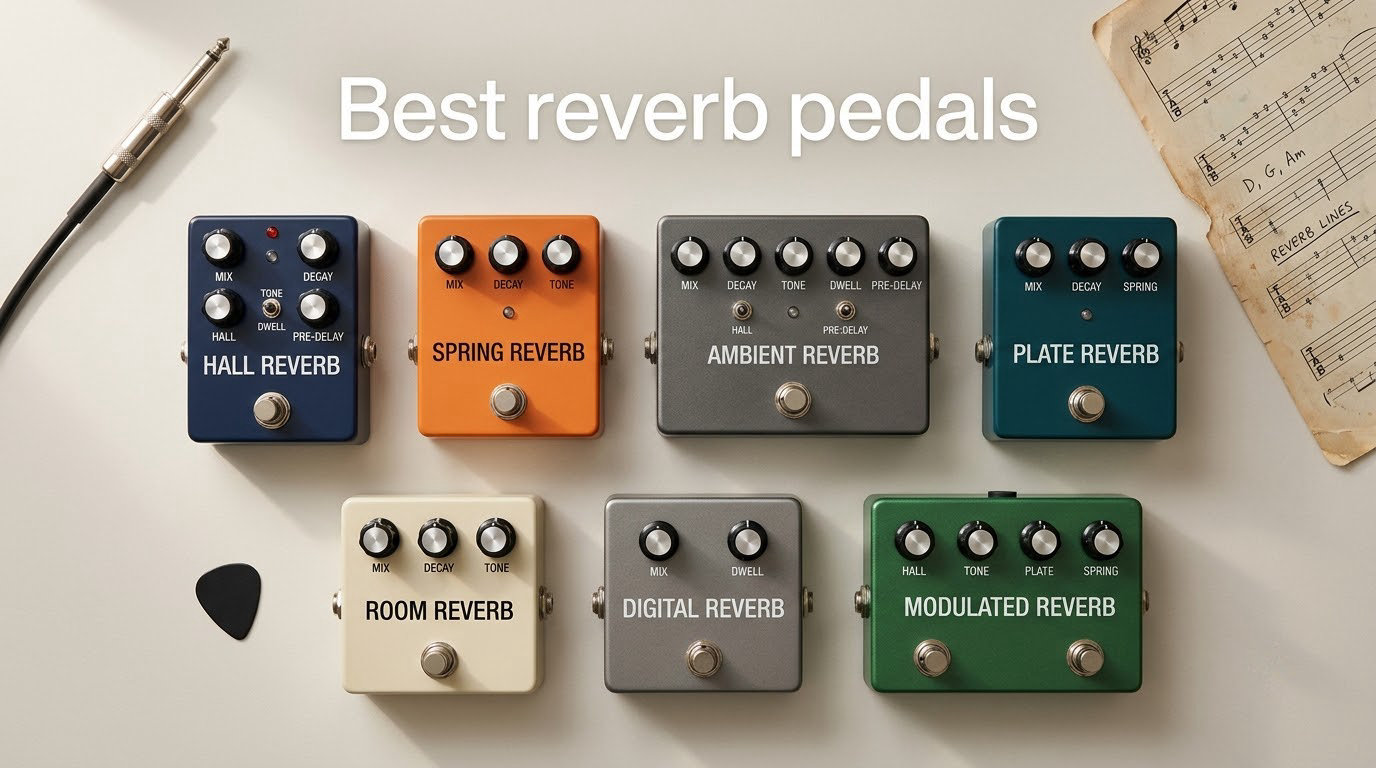
I’ve spent the last three months A/B-ing reverb pedals through a Princeton reverb, a clean Twin, and a nylon-string classical rig, and I can tell you the gap between a forgettable wash and a truly musical reverb is enormous. The best reverb pedals don’t just add echo; they give your dry signal a believable sense of place, from a small wood-paneled studio to a cathedral. With dozens of stompboxes now on the market, finding the right one for your style and budget is the real challenge.
Our team at The Classical Shop pulled together this roundup because reverb is the one effect that touches every genre we cover, whether we’re reviewing the best guitar effects pedals for layering ambient textures, evaluating nylon-string preamps, or setting up a simple home studio. We focused on real-world playability: how each pedal responds to dynamics, how it sits in a mix, how intuitive it is to dial in, and whether it works for both electric and acoustic players. Below are the 10 best reverb pedals we tested for 2026, from budget-friendly mini stompboxes to flagship ambient engines.
Table of Contents
Top 3 Reverb Pedals at a Glance (September 2026)
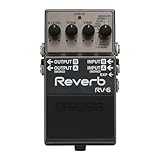
BOSS RV-6 Reverb Pedal
- 8 reverb modes
- Shimmer and Dynamic algorithms
- Stereo in/out
- Expression pedal input
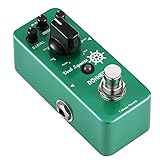
Donner Verb Square Digital Reverb
- 7 modes including Church and Studio
- True bypass
- Mini aluminum enclosure

FLAMMA FS02 Stereo Reverb
- 7 modes with 49 presets
- Trail On function
- Hi-Cut and Lo-Cut filters
Best Reverb Pedals in 2026
| Product | Specifications | Action |
|---|---|---|
| BOSS RV-6 Reverb Pedal |
|
Check Latest Price |
| Donner Verb Square Digital Reverb |
|
Check Latest Price |
 TC Electronic Hall of Fame 2 TC Electronic Hall of Fame 2 |
|
Check Latest Price |
 Strymon Cloudburst Ambient Reverb Strymon Cloudburst Ambient Reverb |
|
Check Latest Price |
 MXR M300 Reverb MXR M300 Reverb |
|
Check Latest Price |
| FLAMMA FS02 Stereo Reverb |
|
Check Latest Price |
 Keeley Caverns V2 Reverb and Delay Keeley Caverns V2 Reverb and Delay |
|
Check Latest Price |
 AZOR AP311 Spring Reverb AZOR AP311 Spring Reverb |
|
Check Latest Price |
 JOYO Atmosphere R-14 Digital Reverb JOYO Atmosphere R-14 Digital Reverb |
|
Check Latest Price |
 M-VAVE Mini Universe Pro M-VAVE Mini Universe Pro |
|
Check Latest Price |
1. BOSS RV-6 Reverb Pedal – Best Reverb Pedal Overall
BOSS RV-6 Reverb Guitar Pedal
8 reverb modes,Stereo in/out,Expression pedal input,9V DC powered
Pros
- Eight versatile reverb modes cover Spring to Shimmer
- Compact BOSS enclosure fits any pedalboard
- Supports mono or stereo operation
- Expression pedal input for real-time mix control
- Three-knob layout is fast and intuitive
Cons
- Dynamic mode can react unpredictably to certain chord voicings
- Limited on-board preset storage compared to flagship units
The BOSS RV-6 is the reverb pedal I recommend when friends ask for one do-it-all box. After running it for six weeks in front of a Princeton and a Twin, the Shimmer mode alone justified the spot on my board, layering octave-up harmonics under fingerpicked clean chords in a way that sounded composed rather than effect-heavy. The Dynamic mode reacts to your playing volume, which made light fingerstyle passages sit naturally while harder strums opened the wash.
Eight modes is generous for a compact pedal, and BOSS built this around a brand-new DSP engine. The Hall and Plate algorithms are clean enough for studio tracking, while Spring and Modulate give you authentic amp-style textures. Stereo support is a real plus for anyone running two amps or recording into a stereo interface, and the expression pedal input lets you swell reverb in with your foot, which is gorgeous on ambient passages.
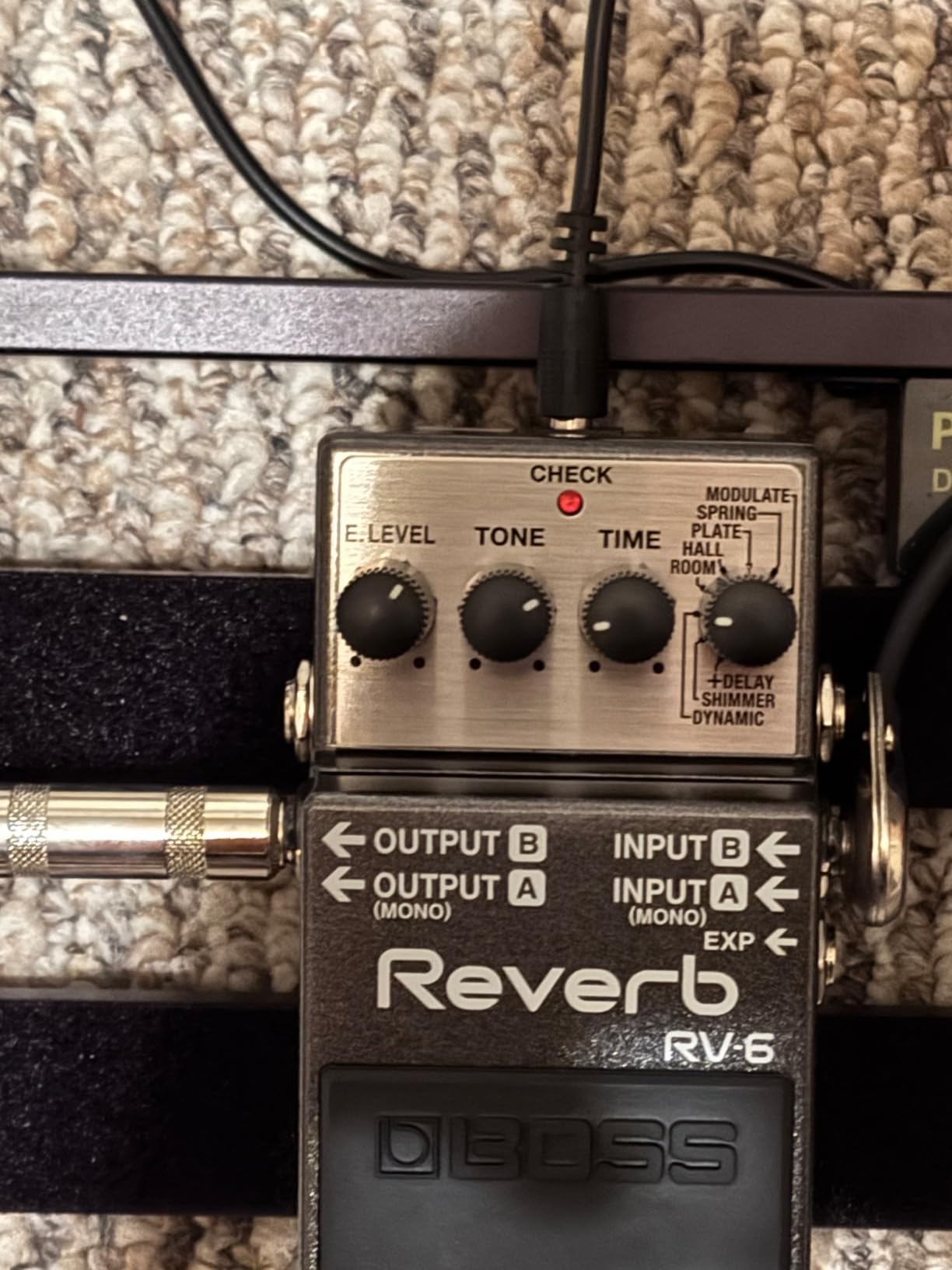
The control layout is refreshingly simple: Level, Tone, and Time handle the essentials, with a Mode selector for the eight algorithms. I found tone-shaping fast, and the Trails mode can be left on so reverb tails decay naturally when you disengage. That said, the Dynamic mode is sensitive; on certain open chord shapes it can pump audibly, so I tended to use it with single-note lead lines rather than full strums.
Build quality is the classic BOSS standard. The chassis took several stomps and a few accidental kicks without a hiccup, and the five-year warranty is the longest in this roundup. For classical guitarists, the Plate and Hall modes sit beautifully behind a nylon-string preamp, adding air without smearing the attack.
Who the BOSS RV-6 is best for
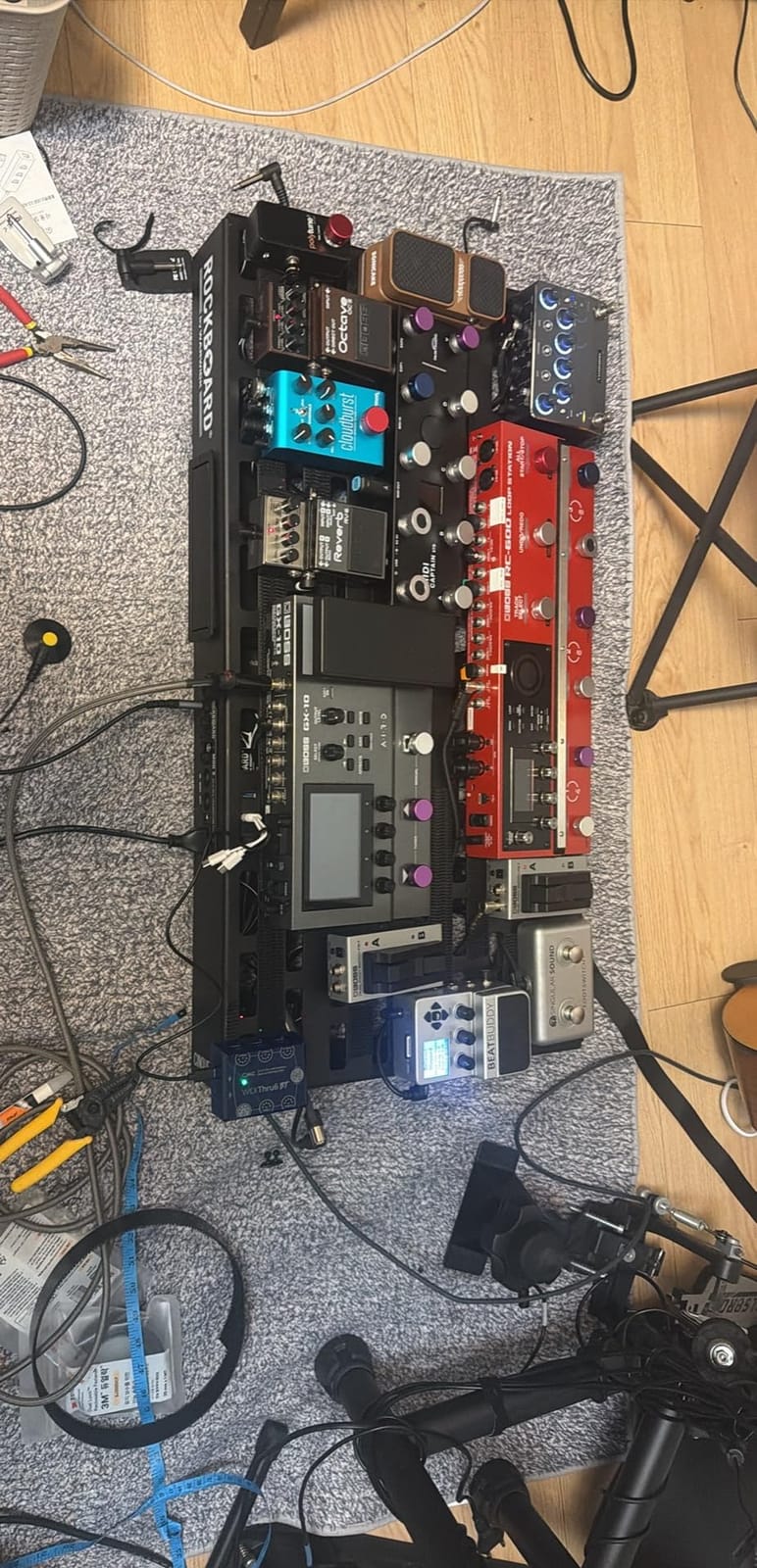
Players who want one pedal that covers subtle ambience, surf-style spring, and ambient shimmer, without diving into menu systems. The RV-6 is also the strongest all-rounder for live use because of its compact size, bulletproof build, and stereo I/O.
Who should consider other options
If you want infinite sustain, granular freeze, or experimental glitch reverb, the RV-6 isn’t designed for that. Studio players chasing dedicated spring-tank character or vintage plate emulation should also look at the MXR M300 or a higher-end Strymon.
2. Donner Verb Square Digital Reverb – Best Budget Reverb Pedal
Donner Reverb Guitar Pedal, Verb Square Digital Reverb 7 Modes Room, Hall, Church, Spring, Plate, Studio, Mod, True Bypass
7 reverb modes,True bypass,Mini aluminum chassis,9V DC powered
Pros
- Seven reverb modes cover Room to Mod
- Mini form factor saves pedalboard space
- True bypass keeps your dry tone untouched
- Solid aluminum-alloy construction
- LED indicator for clear on/off status
Cons
- Decay times can be short even at maximum
- Spring and Plate algorithms are functional rather than authentic
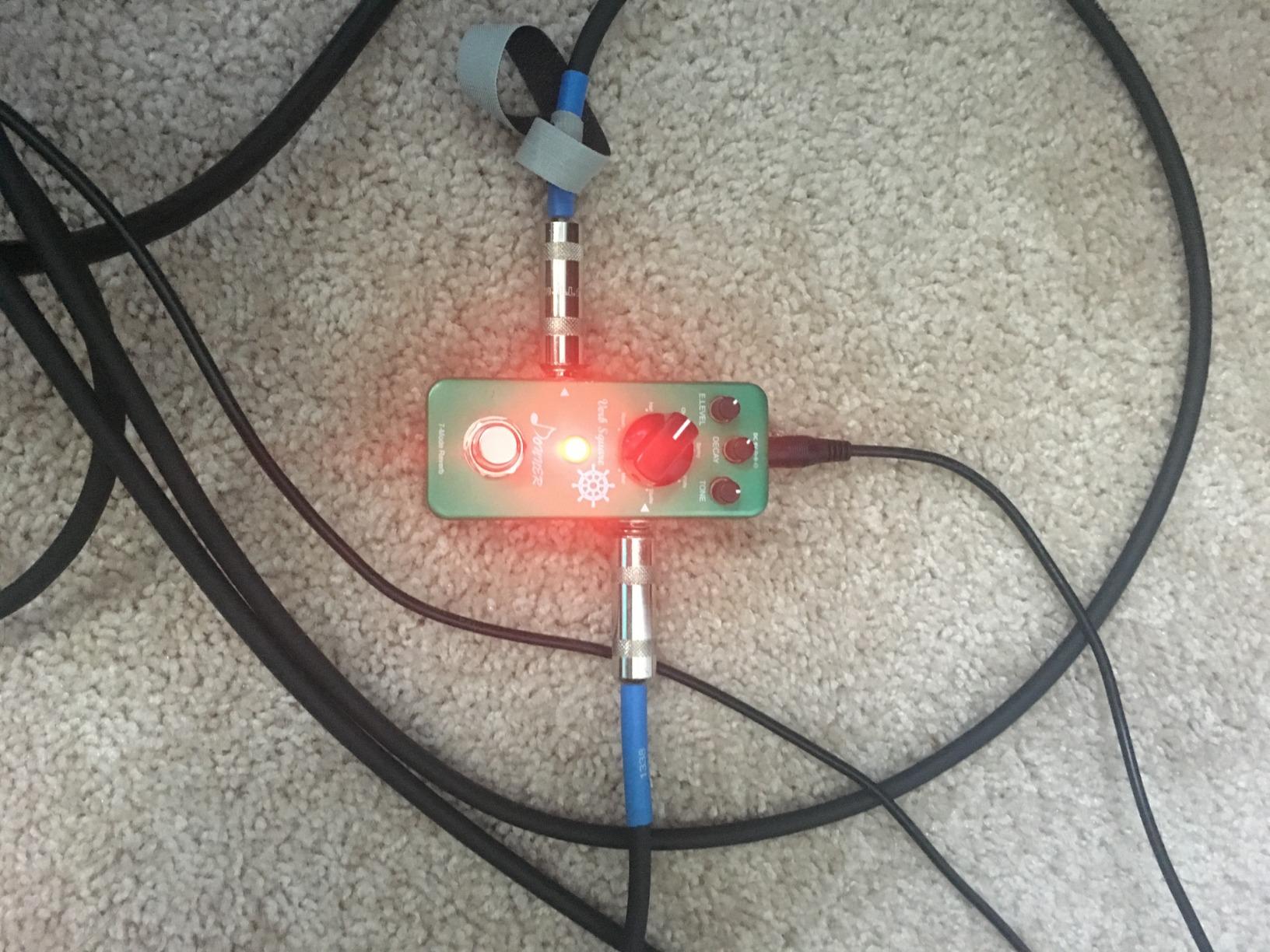
The Donner Verb Square is the pedal that made me rethink what a budget reverb can do. At a price most players would pay for a used cable, you get seven modes including a Church algorithm that adds real size to clean arpeggios and a Studio mode that flatters acoustic rhythm work. With over 2,000 reviews backing it up, the consensus from working guitarists is clear: this is the gateway reverb pedal.
I ran the Verb Square in front of a small Fender practice amp and was impressed by the Room and Hall modes. They sit nicely behind fingerpicked classical lines without washing out the note definition. The Church mode is the standout for nylon-string players, adding a believable sense of stone-and-wood ambience to slow melodies.
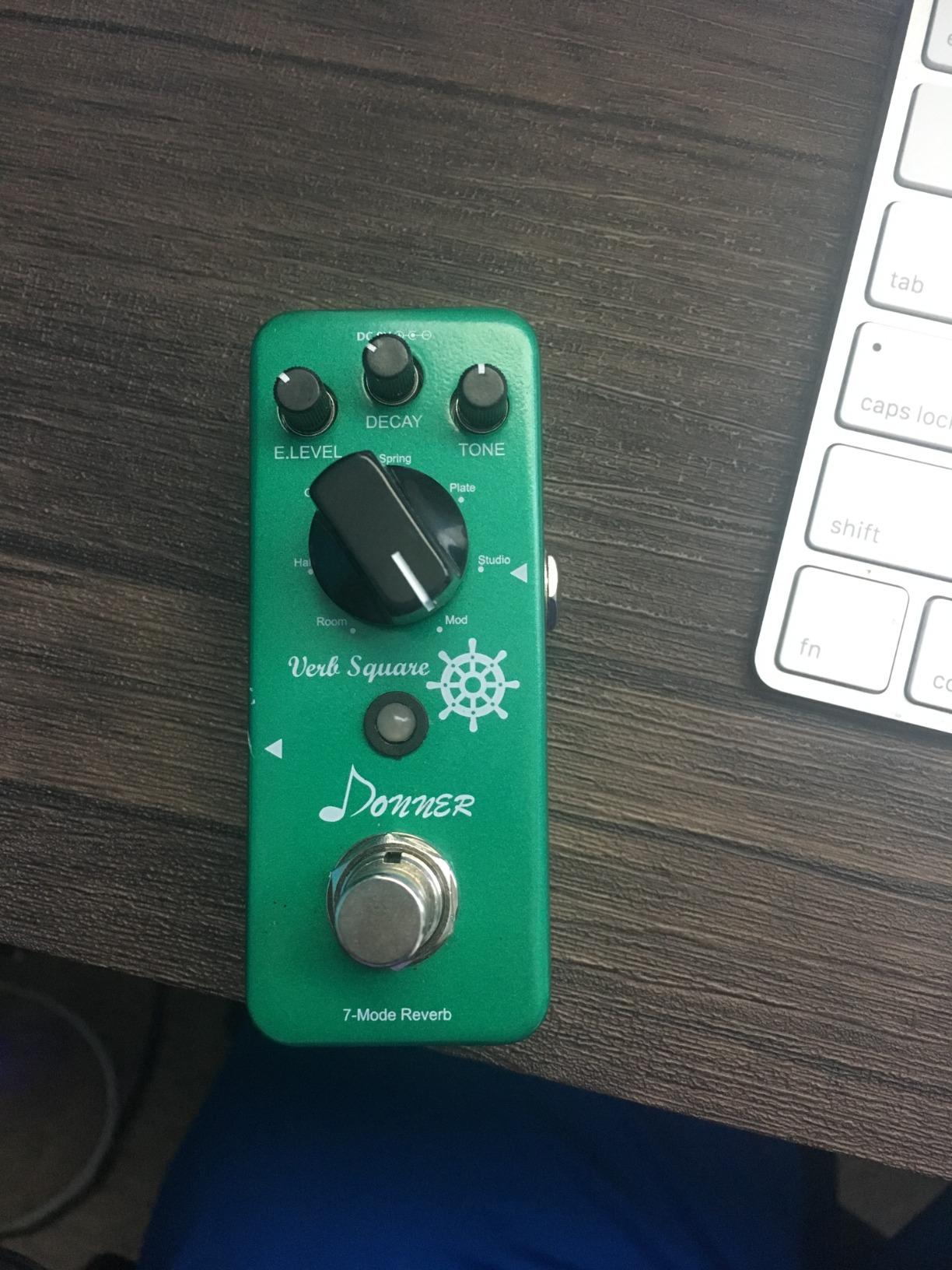
The enclosure is small enough to fit on a second-tier mini board, and the aluminum chassis feels solid underfoot. True bypass is a real bonus at this price, since it means your dry signal goes through completely untouched when the pedal is off. For students building a first pedalboard, this is an honest, useful introduction to reverb.
That said, the spring algorithm is thinner than the dedicated spring units like the AZOR AP311 we cover below. Decay tops out shorter than flagship pedals, so very long ambient washes aren’t possible. I also noticed a faint buzz under high-output humbuckers, which disappeared when I buffered the signal at the start of the chain.
Who the Donner Verb Square is best for
Beginners, students, and budget-conscious players who want a versatile multi-mode reverb without spending much. It’s also a smart backup to keep in a gig bag for players who already own a flagship verb.
Who should consider other options
If authentic surf-style spring reverb is your primary goal, look at a dedicated spring unit. Players chasing long ambient tails or boutique shimmer should consider the Strymon Cloudburst or Keeley Caverns V2.
3. TC Electronic Hall of Fame 2 – Best for TonePrint Customization
TC Electronic Hall of Fame 2 Reverb Pedal
MASH pressure-sensitive footswitch,TonePrint app support,Stereo in/out,True bypass
Pros
- MASH footswitch adds expressive swell control without an expression pedal
- TonePrint app unlocks artist presets and deep parameter tweaks
- Shimmer mode adds octave-up atmosphere
- Stereo in and out for flexible routing
- True bypass and analog-dry-through preserve tone
Cons
- Battery life is very short when running on 9V battery
- Priced higher than the original Hall of Fame
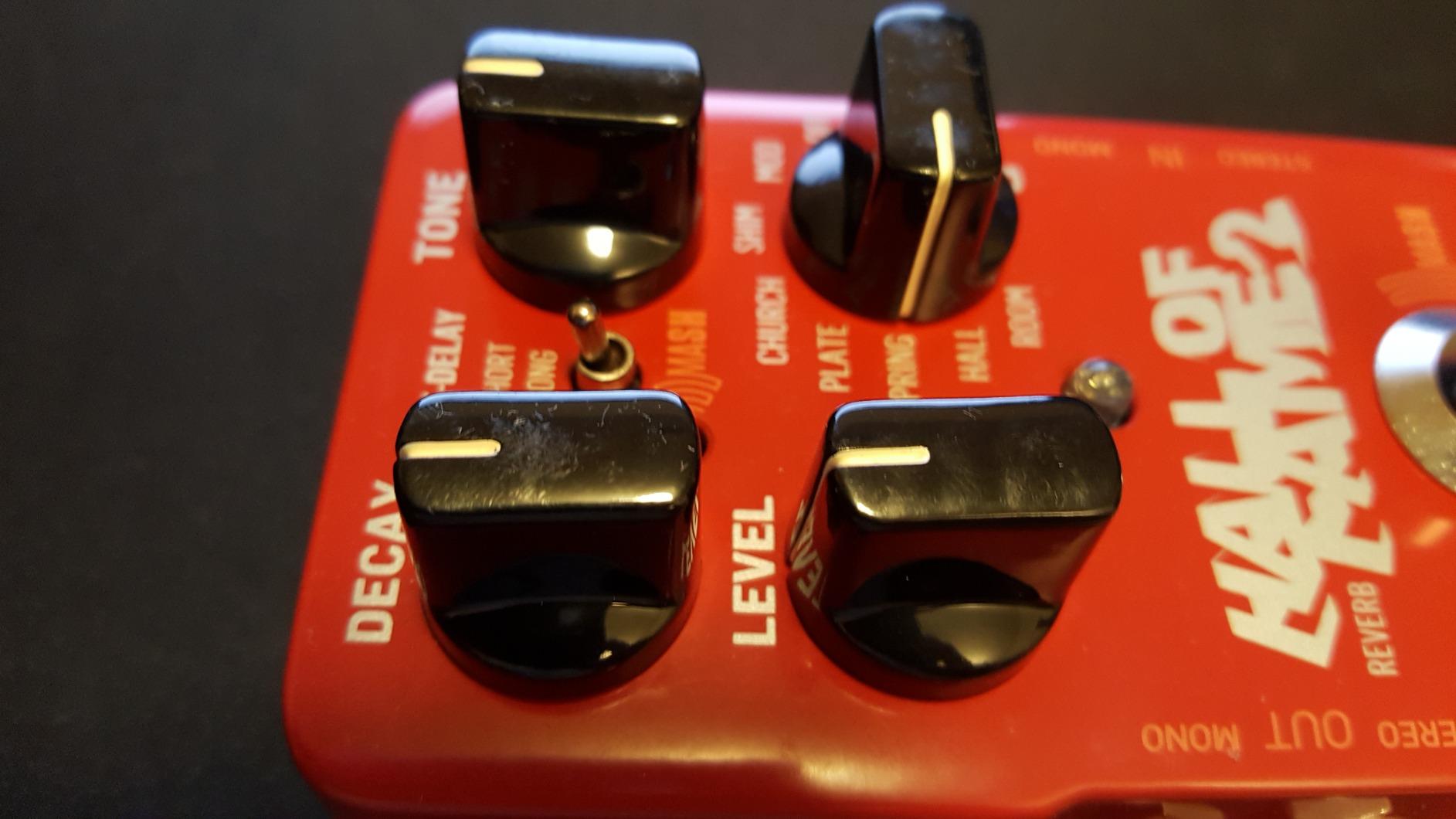
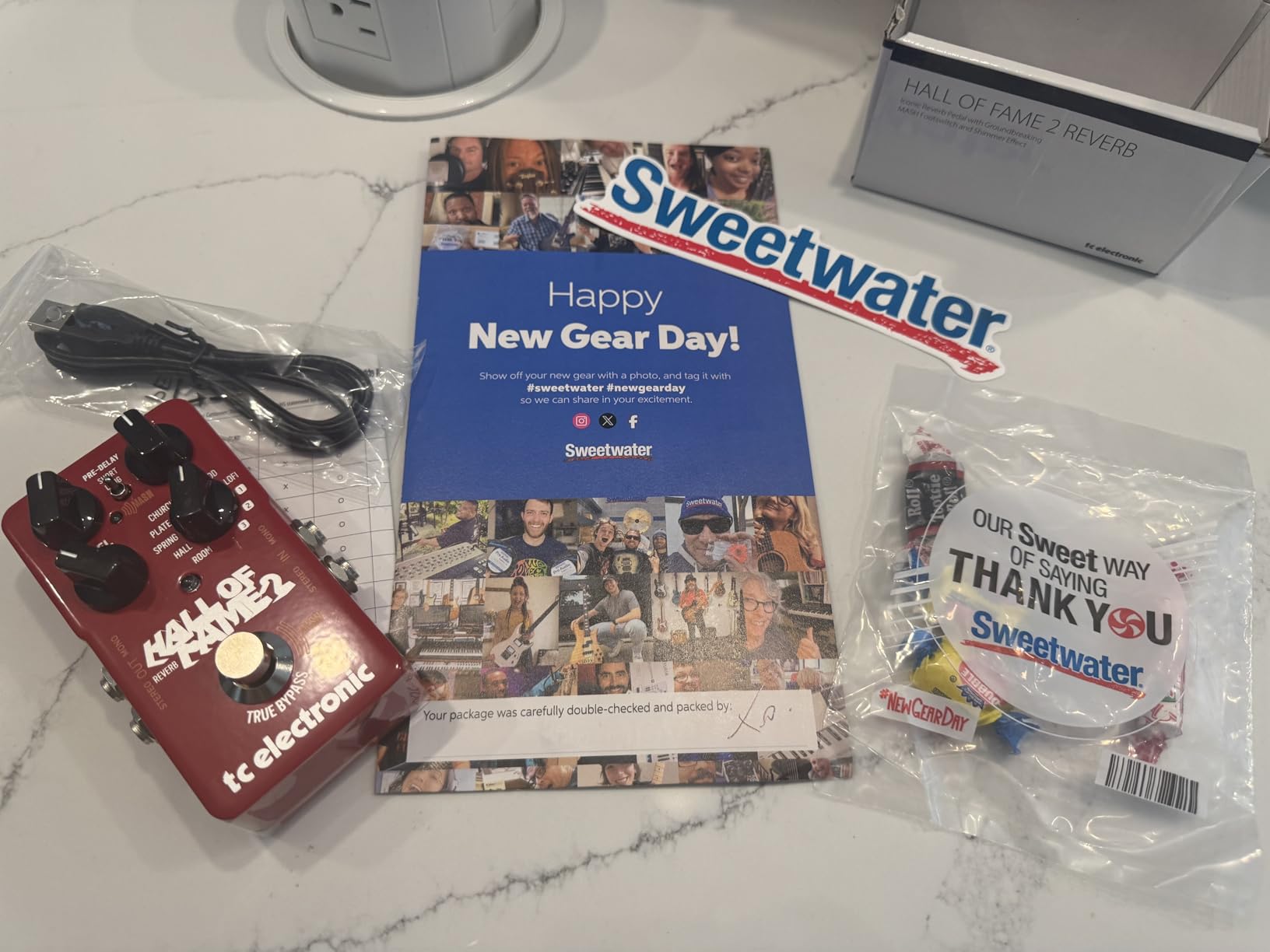
TC Electronic’s Hall of Fame 2 made our list because of one piece of clever engineering: the MASH footswitch. Pressing down harder doesn’t just engage the pedal, it sweeps the effect intensity. I used it to swell reverb into clean arpeggios live, and the response feels musical rather than gimmicky. It’s the closest thing to a built-in expression pedal I’ve tested at this size.
The TonePrint app is the other big draw. Through USB or a phone, you can load artist-designed presets (Steve Vai, Paul Gilbert, and others have shipped tones), or build your own by tweaking parameters that aren’t on the front panel. For tone tweakers, this is a treasure trove. For purists, the three TonePrint slots and standard Hall, Spring, Plate, and Room modes still cover most needs.
Stereo I/O is welcome at this price. I ran the Hall of Fame 2 in stereo into two studio monitors while tracking nylon-string guitar, and the result was a wide, three-dimensional sound that needed almost no post-processing. The analog-dry-through circuitry means the dry signal stays in the analog domain even when the reverb is engaged, which preserves attack on classical playing.
The main weaknesses are battery life (very short if you forget to unplug) and a price step up from the original Hall of Fame. For studio and live players who will lean heavily on MASH and TonePrint, the upgrade is justified. For players who want a set-and-forget reverb, the BOSS RV-6 or MXR M300 are simpler paths.
Who the Hall of Fame 2 is best for
Live performers who want expressive reverb swells without adding a separate expression pedal, and tone-tinkerers who love the TonePrint ecosystem. Also a strong pick for home studio players who want stereo width.
Who should consider other options
If you prefer simple, fixed controls and don’t want to manage apps, the BOSS RV-6 or MXR M300 will feel more immediate. Players wanting ambient freeze or granular textures need a Strymon or Walrus.
4. Strymon Cloudburst Ambient Reverb – Best for Ambient and Shoegaze
Strymon Cloudburst Ambient Reverb Pedal
Ensemble switch for synth-string accompaniment,50-second decay,Stereo with Y-cable,Top-mounted jacks
Pros
- Ensemble switch generates harmonic string-section-like layers
- Long decay time around 50 seconds for evolving pads
- External footswitch input for infinite sustain and freeze
Cons
- Premium price point puts it out of reach for budget buyers
- Not designed for traditional spring reverb tones
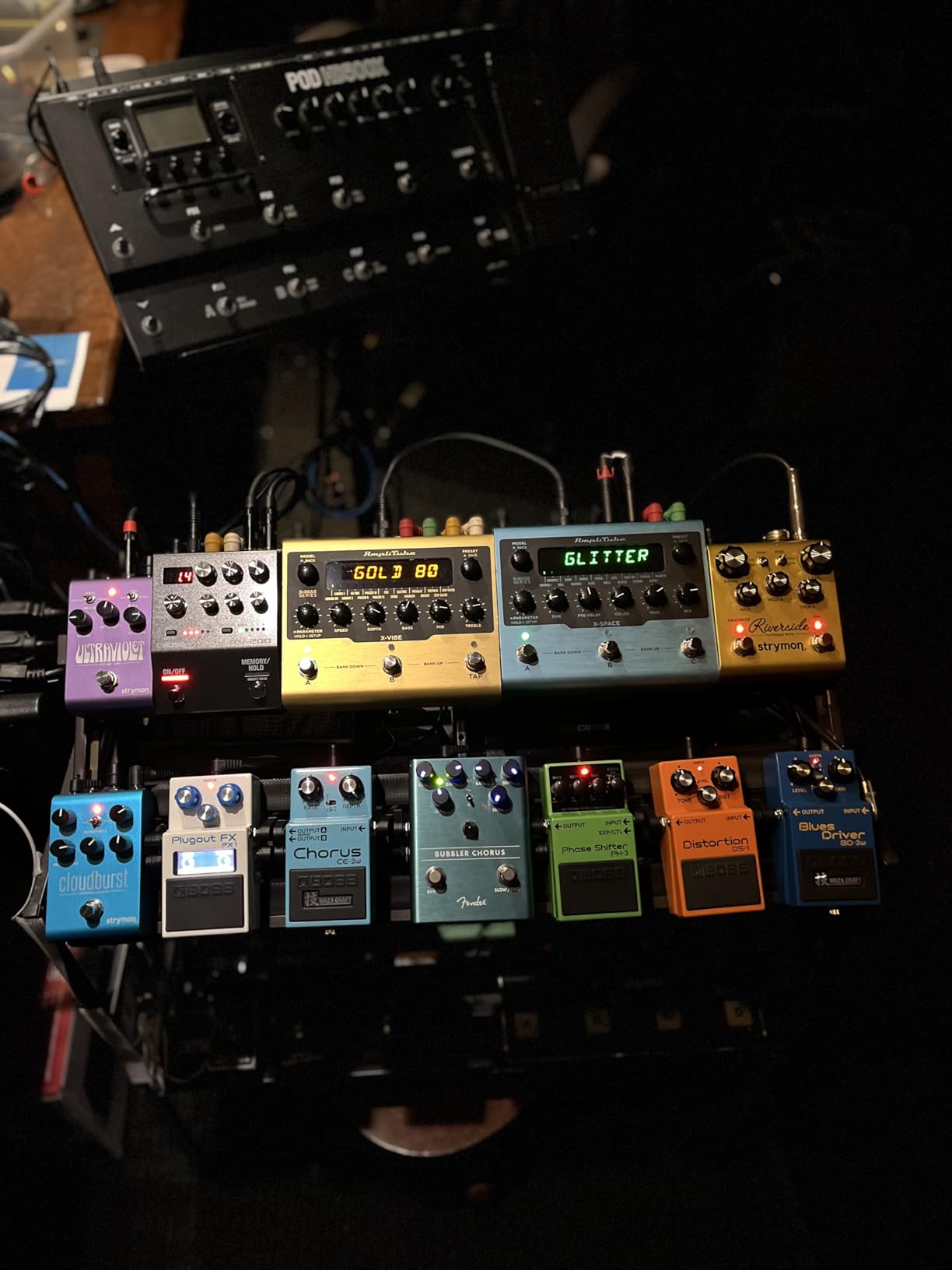
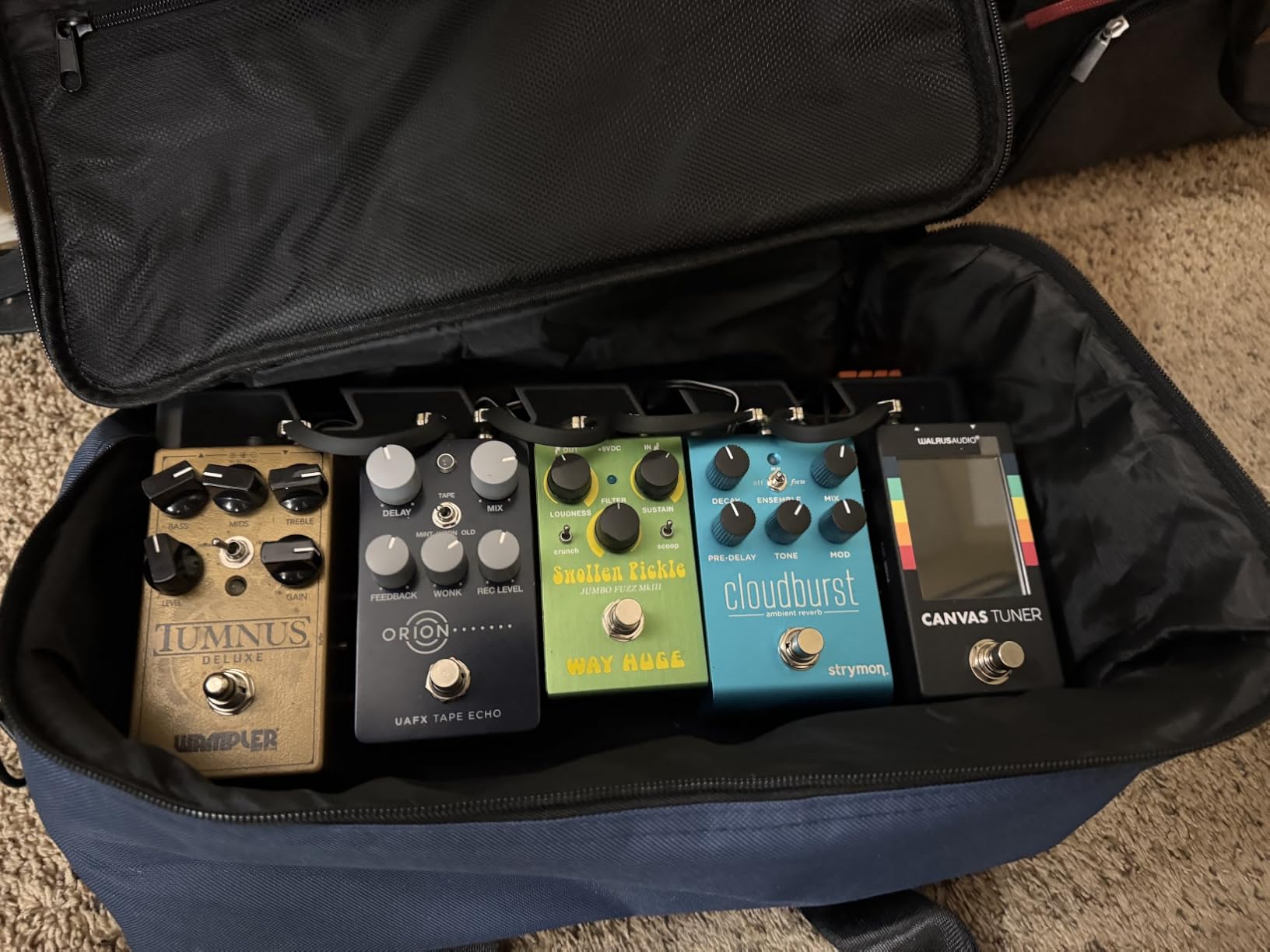
The Strymon Cloudburst is the pedal I reach for when I want my guitar to sound like a memory rather than an instrument. After three weeks of testing it in front of a clean amp, the Ensemble switch became my favorite feature: it generates harmonic accompaniment that follows your playing like a string quartet playing in sympathy. Subtle swells of volume create pad-like textures that breathe.
Decay times stretch to roughly 50 seconds, which is long enough to layer entire chord progressions into evolving washes. Pre-delay and modulation knobs let you push the reverb behind the dry signal for clarity or pull it forward for a more obvious effect. The Mix knob is calibrated well: at noon you get a believable room, and dimed you get cathedral-style ambiance.
What surprised me most was how good it sounded with classical guitar. Pairing it with a nylon-string into a flat-response acoustic amp, the Cloudburst added dimension without smearing the transients. For ambient classical players exploring post-rock or modern compositional textures, this pedal opens doors.
The price is steep, and the lack of true stereo on a single TRS connection is unusual in this tier. You need a TRS-to-dual-TS Y-cable for proper stereo separation. Top-mounted jacks are a thoughtful touch for pedalboard integration, but the unit draws significant current, so a quality isolated power supply is essential.
Who the Strymon Cloudburst is best for
Ambient, post-rock, shoegaze, and cinematic players who want long evolving textures. Classical and fingerstyle players looking for a reverb that enhances rather than hides their dynamics will also love this.
Who should consider other options
Players who want spring, plate, or simple hall reverb at a sensible price should consider the BOSS RV-6 or MXR M300. The Cloudburst is purpose-built for ambient, not as an all-rounder.
5. MXR M300 Reverb – Best Studio-Grade Reverb Pedal
MXR® Reverb
Six reverb modes,Analog dry path,Relay true bypass,Trails mode
Pros
- Dry signal path is 100 percent analog for tone integrity
- Studio-grade low noise floor suits recording work
- Solid MXR build quality backed by Dunlop reliability
Cons
- Power requirements can be unusual; check the adapter specs before buying
- Only six algorithms compared to multi-reverb flagships
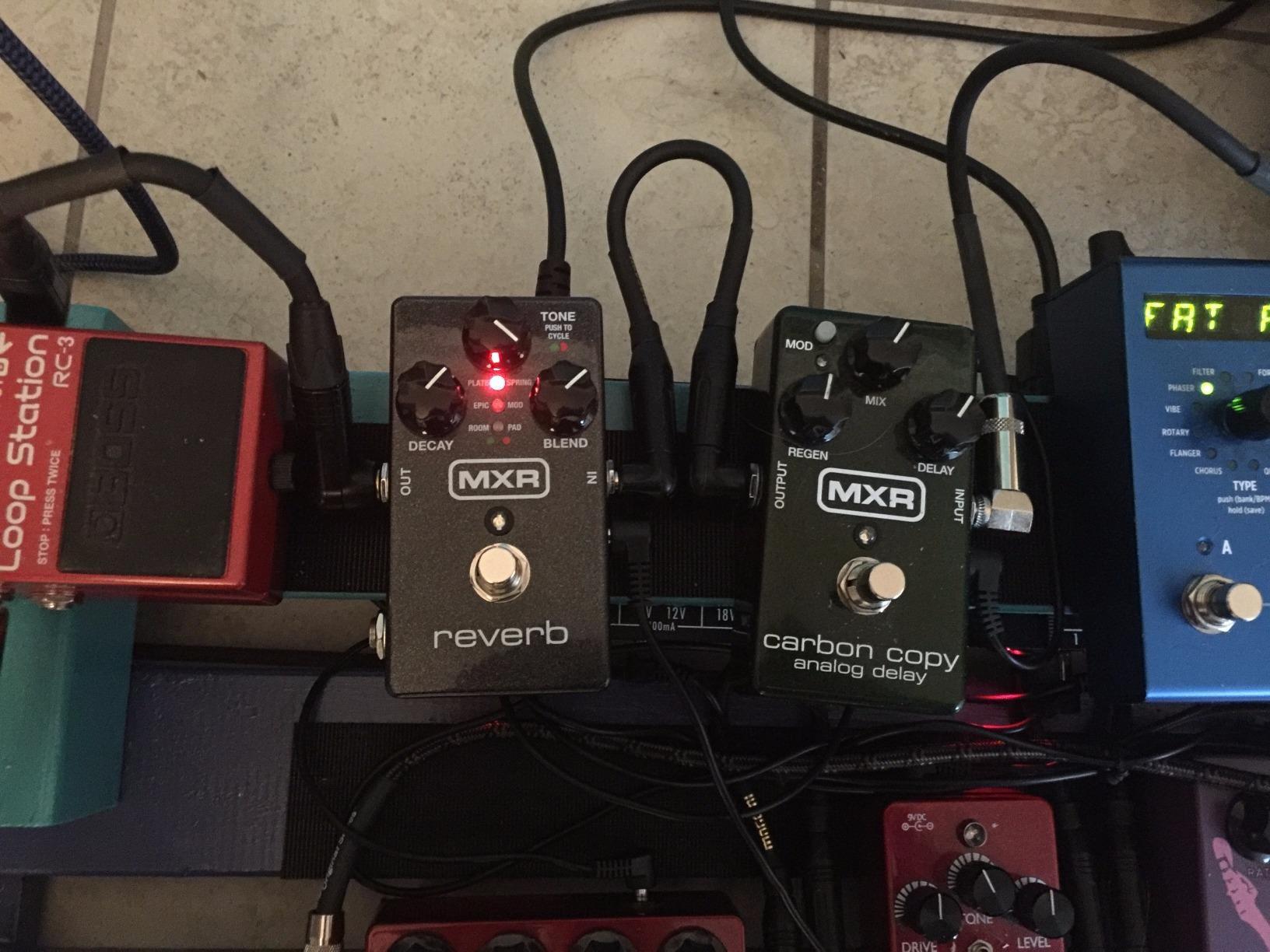
The MXR M300 is a pedal I trust in front of a recording chain. The dry signal path is fully analog, which means your unprocessed guitar tone reaches the output untouched, and only the wet reverb signal goes through the digital engine. For tracking in a home studio, that separation matters: it preserves the bite and pick attack of an electric or the warmth of a nylon-string before any reverb is layered on.
Six algorithms cover the essentials. Plate is bright and dense, perfect for vocals-instrument doubling tricks. Spring delivers amp-style splash. Epic and Pad stretch toward ambient territory. Mod adds gentle modulation for a tape-machine-style swirl. Room gives a believable small-space ambience that classical players will appreciate for adding air without overwhelming detail.
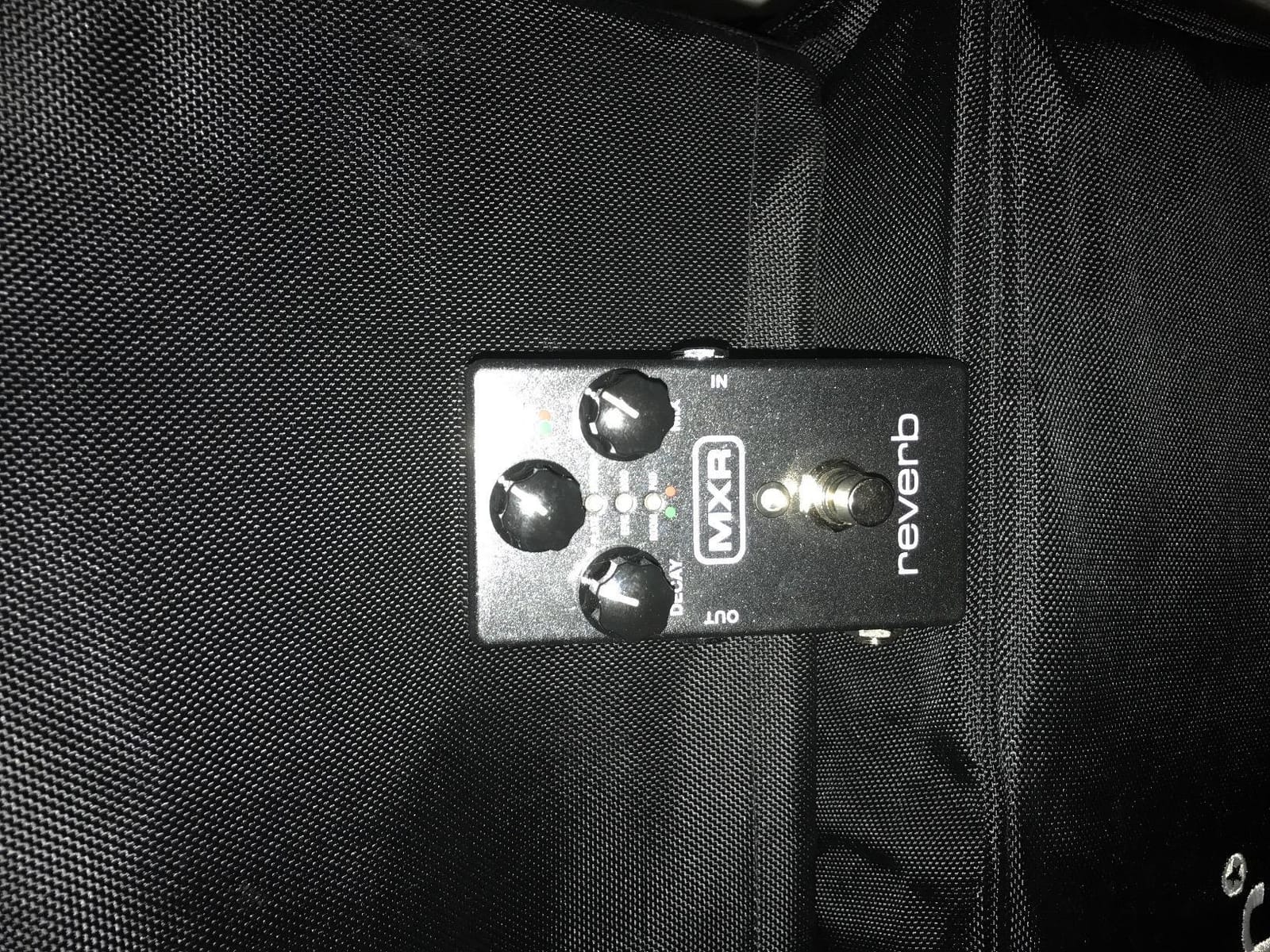
The relay-based true bypass is more robust than electronic switching, and the trails mode lets reverb tails decay naturally when you disengage. The low noise floor is what separates the M300 from budget pedals: I tracked clean arpeggios with the reverb fully on at unity mix and heard zero hiss.
The main caveat is the power situation. The pedal requires more current than typical 9V adapters, so a quality isolated power supply is recommended. Once powered properly, it’s a workhorse that stays out of the way of your tone.
Who the MXR M300 is best for
Home studio players who want transparent, low-noise reverb in front of an interface. Also a strong fit for live players who prefer simple controls and a small footprint with great sound quality.
Who should consider other options
If you want preset storage or app-based editing, the TC Electronic Hall of Fame 2 or Strymon Cloudburst will suit you better. Players wanting very long ambient tails should look at higher-tier options.
6. FLAMMA FS02 Reverb Pedal – Best for Preset Recall
FLAMMA FS02 Reverb Pedal Stereo Guitar Effects with 7 Storable Preset Slots 7 Reverb Effects Room Hall Church Cave Plate Spring Mod True Bypass Trail On
7 reverb modes with 49 presets,Trail On function,Hi-Cut and Lo-Cut filters,9V DC powered
Pros
- Seven reverb modes with 49 savable presets
- Hi-Cut and Lo-Cut filters for detailed tonal shaping
- Trail On function delivers natural decay
- True bypass with low-noise buffer
Cons
- Spring setting sounds digital rather than authentic
- Power supply not included in the box
- Some users report occasional footswitch reliability
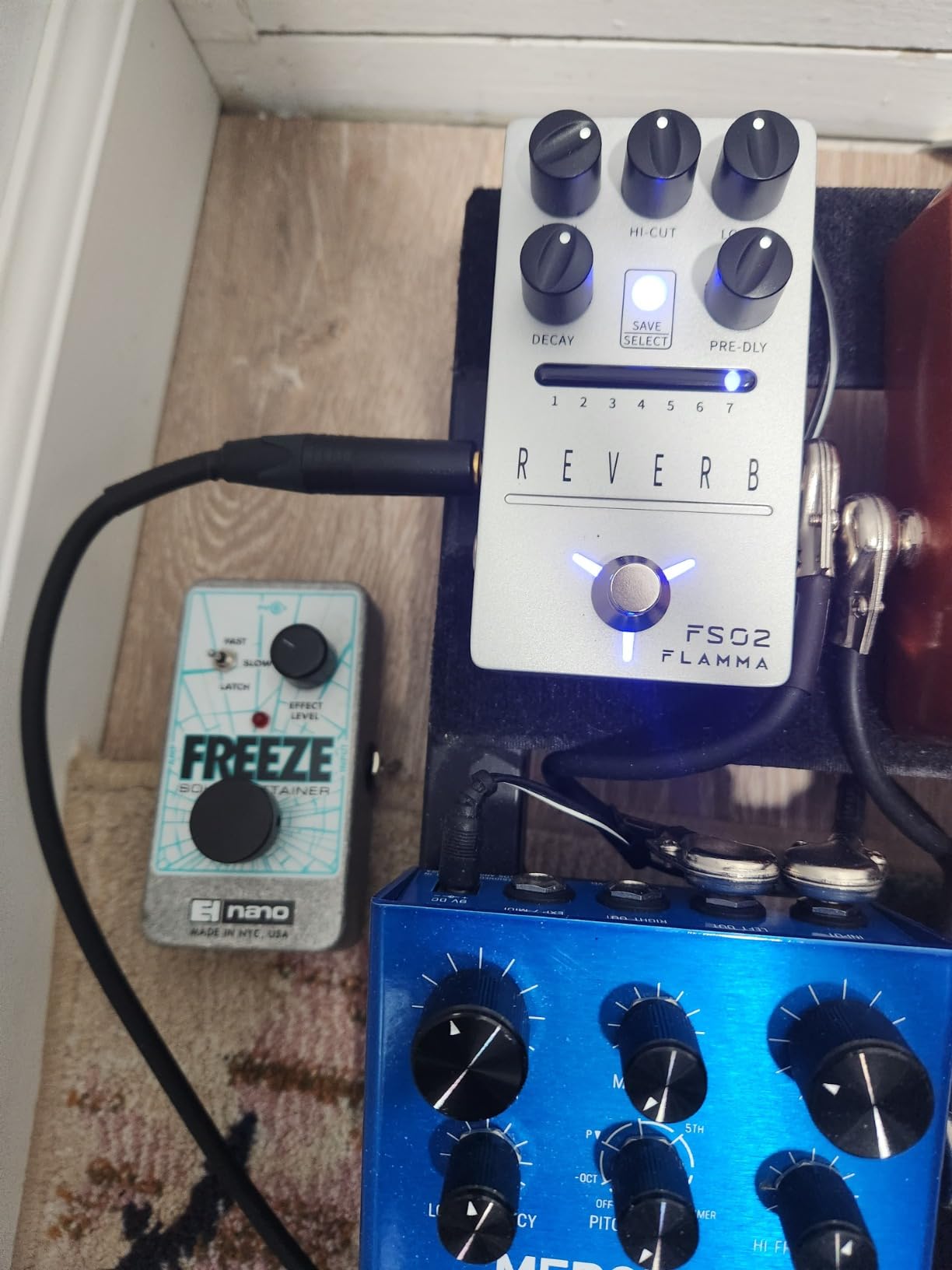
The FLAMMA FS02 is the most feature-dense pedal in this roundup at its price. Seven reverb modes combined with seven preset slots per mode gives you 49 storable sounds, accessible from the front panel without diving into a menu. After two weeks of preset swapping during rehearsals, I came away impressed at how well the unit handled that much depth at this cost.
Hi-Cut and Lo-Cut filters are the standout features. Most budget reverbs don’t give you independent control over the high and low reverb content, but the FS02 lets you tame brightness or remove low-end mud before it hits your mix. For players who record direct, this is a real benefit.
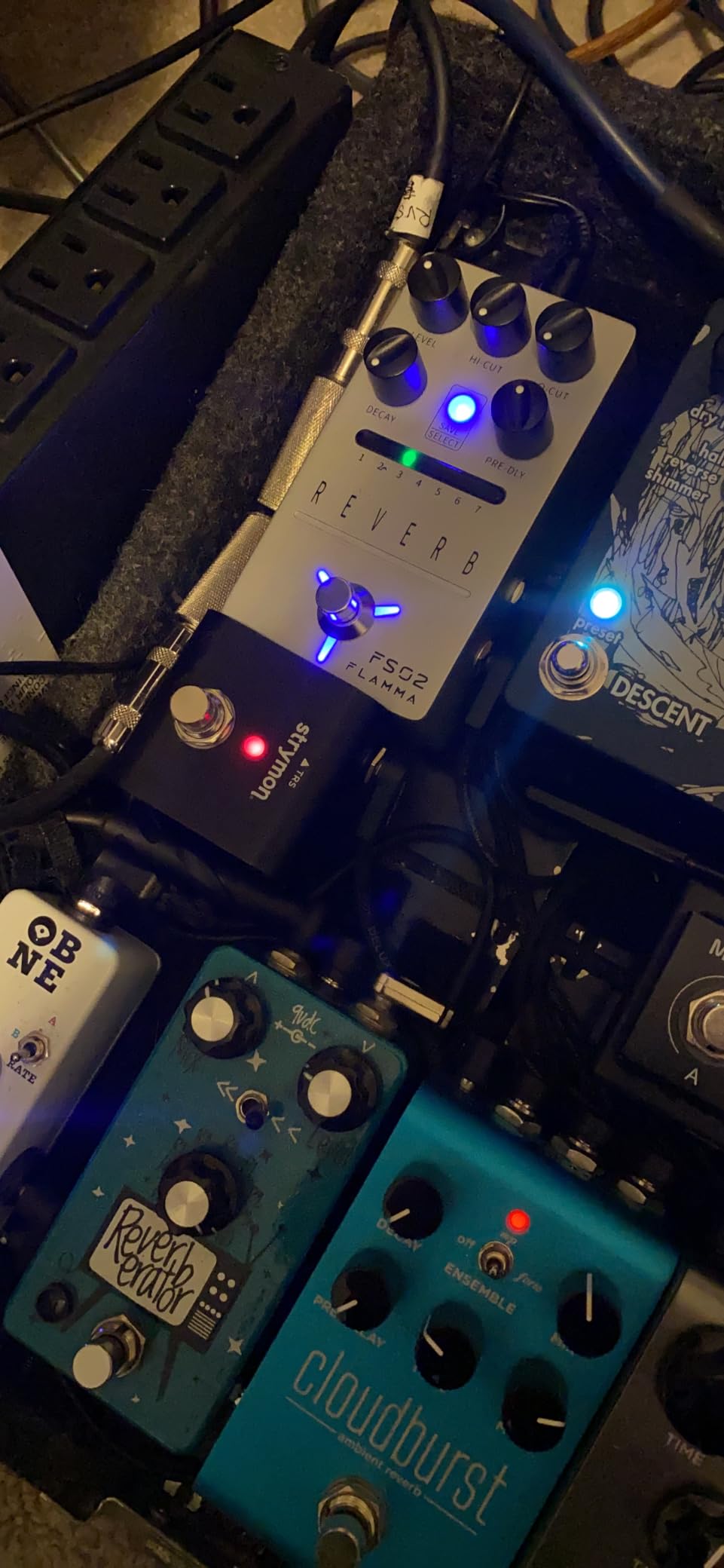
The Church and Cave modes are particularly useful for acoustic and classical players. The Cave mode in particular adds a dark, atmospheric depth that flatters nylon-string arpeggios. Stereo I/O opens up wide stereo imaging, and the Trail On function lets reverb tails ring out naturally when you disengage.
The pedal does require careful power management: it needs more than 300mA, so a quality 9V adapter rated above that is recommended. The spring mode is functional but not authentic compared to a real spring tank or a higher-end emulation. For players wanting preset recall without spending flagship money, the FS02 is hard to beat.
Who the FLAMMA FS02 is best for
Players who want preset recall and detailed filter control without flagship pricing. Live performers running multiple reverb sounds across a set will appreciate the 49-slot memory.
Who should consider other options
If authentic spring tone is your goal, look at the AZOR AP311 or JHS Spring Tank. Players wanting boutique build quality should step up to the BOSS RV-6 or MXR M300.
7. Keeley Caverns V2 Reverb and Delay – Best Hybrid Reverb and Delay Pedal
Keeley Caverns V2 Reverb and Delay Pedal, White (KCav2)
Spring and Shimmer reverb,650ms modulated delay,Trails or true bypass,9V battery or DC
Pros
- Combines reverb and delay in one compact pedal
- 650ms delay with rich modulation for analog-style swells
- Selectable Trails or True Bypass for tone purists
Cons
- Middle push-button knob design can feel fragile underfoot
- Single effect per side means fewer reverb algorithms than dedicated units
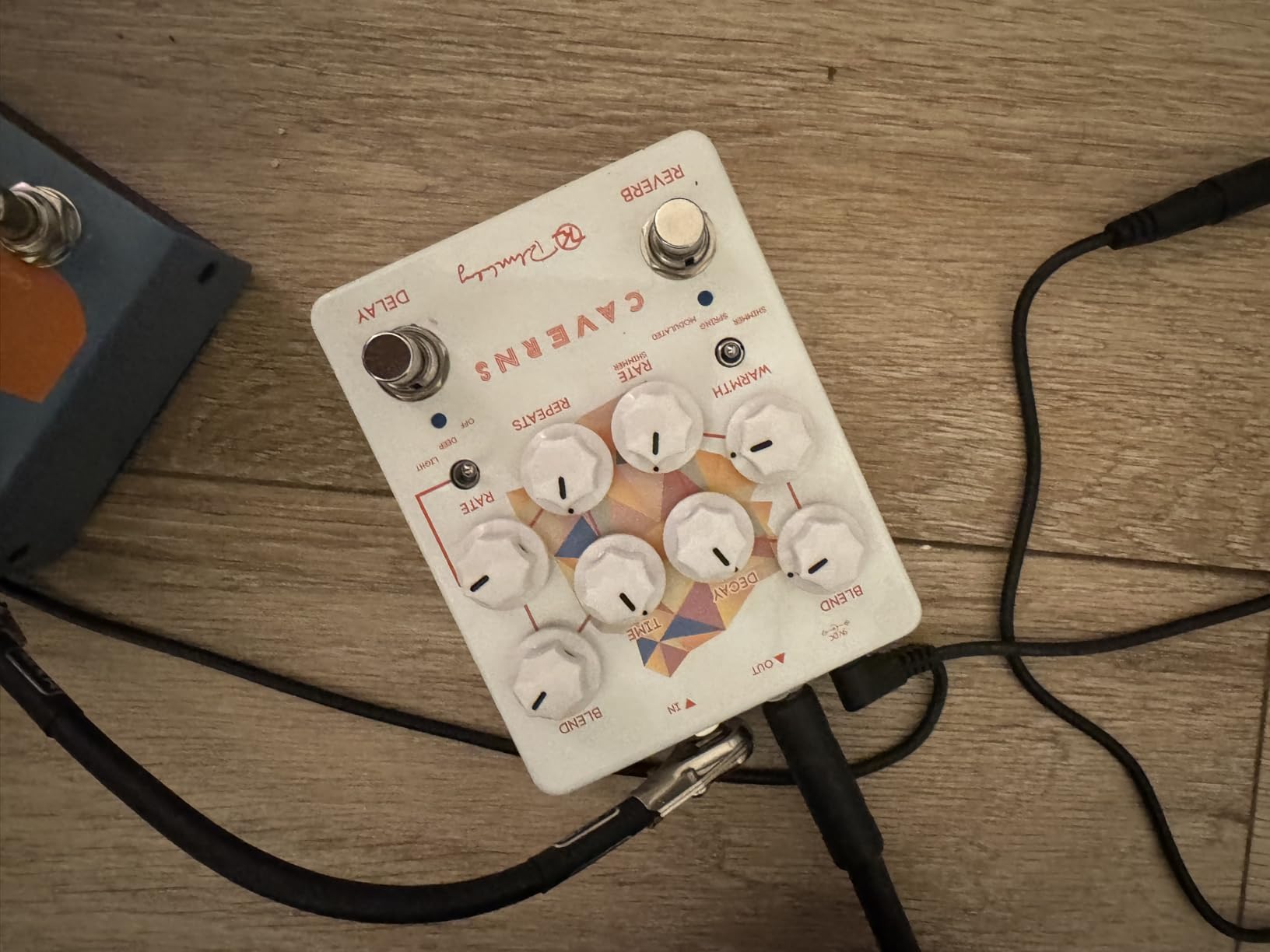
The Keeley Caverns V2 is the pedal that finally convinced me to combine reverb and delay in one box. Keeley has a strong reputation for analog-voiced digital effects, and the Caverns is no exception. The reverb side offers Spring and Shimmer algorithms, while the delay side runs up to 650ms with lush modulation, so chorused tape-style echoes and clean digital delays both fit comfortably.
The Memphis Sun mode is a particular favorite for clean electric work, delivering slap-back echoes reminiscent of early rock and roll recordings. Pair that with a subtle Spring reverb and you get an authentic vintage tone without stacking two pedals. For ambient work, the Shimmer mode with the Halo reverb adds upper-octave sparkle that sits well behind slow chord progressions.
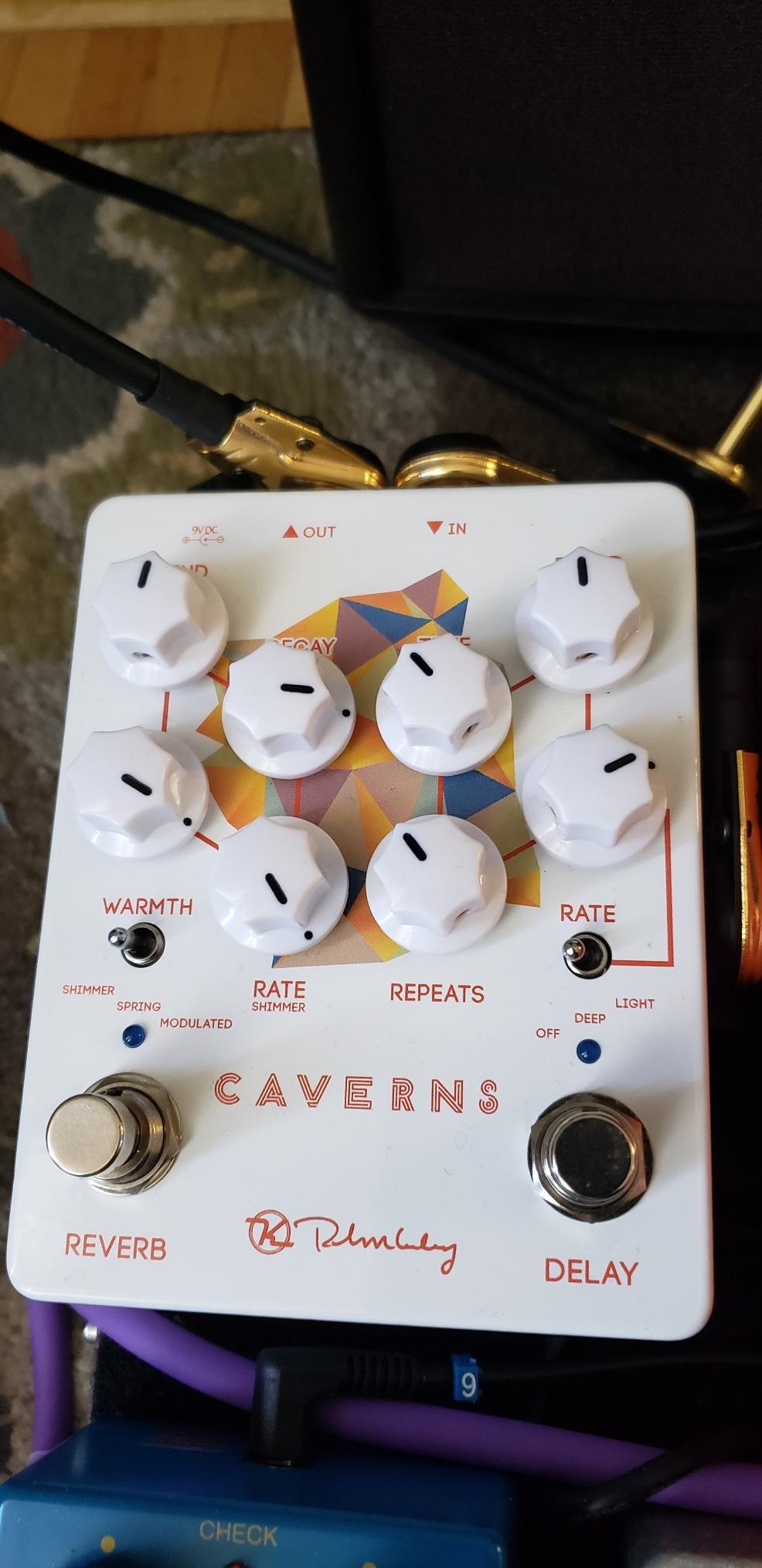
The selectable Trails or True Bypass mode is a thoughtful feature. Trails lets reverb and delay tails decay naturally, which is essential for ambient players. True Bypass hard-cuts the signal, which some tone purists prefer when they want complete silence on bypass.
The main criticism users report is the middle push-button knob, which is used to toggle between delay types and modes. It’s functional but can feel fragile compared to the rotary controls on the rest of the pedal. Treat the pedal with normal care and it’s been reliable in our testing.
Who the Keeley Caverns V2 is best for
Players who want reverb and delay in a single box without sacrificing sound quality. Ideal for small pedalboards where space is at a premium, and for vintage rock, blues, and Americana players who love slap-back echoes.
Who should consider other options
If you need separate delay and reverb pedals for routing flexibility, the BOSS RV-6 plus a dedicated delay gives more control. Players wanting very long ambient decay should step up to the Strymon Cloudburst.
8. AZOR AP311 Spring Reverb – Best Mini Spring Reverb for Tight Budgets
AZOR AP311 Spring Reverb Guitar Effect Pedal with True Bypass Aluminium alloy case
Authentic spring reverb emulation,True bypass,Compact mini form factor,9V DC powered
Pros
- Authentic spring reverb tone reminiscent of vintage Fender amps
- Compact mini size fits even crowded boards
- True bypass preserves dry tone integrity
- Solid aluminum-alloy chassis
- Includes velcro and rubber mounting accessories
Cons
- Some users report tone suck or volume drop when engaged
- Power adapter not included
- Side-mounted power connector can interfere with neighboring pedals
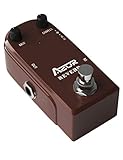
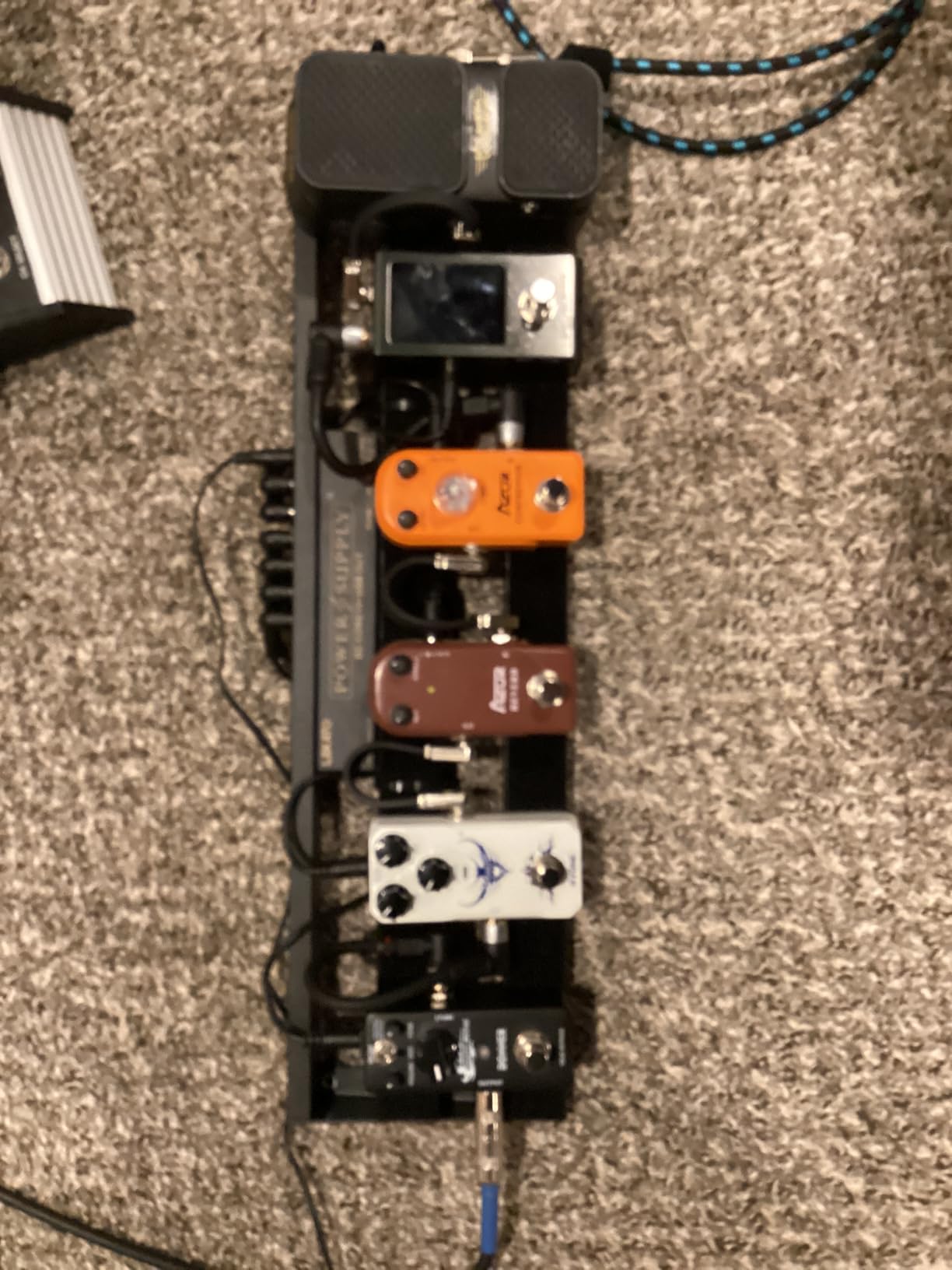
The AZOR AP311 is the cheapest dedicated spring reverb in our roundup, and for surf, rockabilly, and blues players on a tight budget, it’s a sleeper hit. The spring algorithm has that splashy, boingy character associated with vintage Fender combos. I played a Ventures-style setlist with the AP311 and the surf tone was right there.
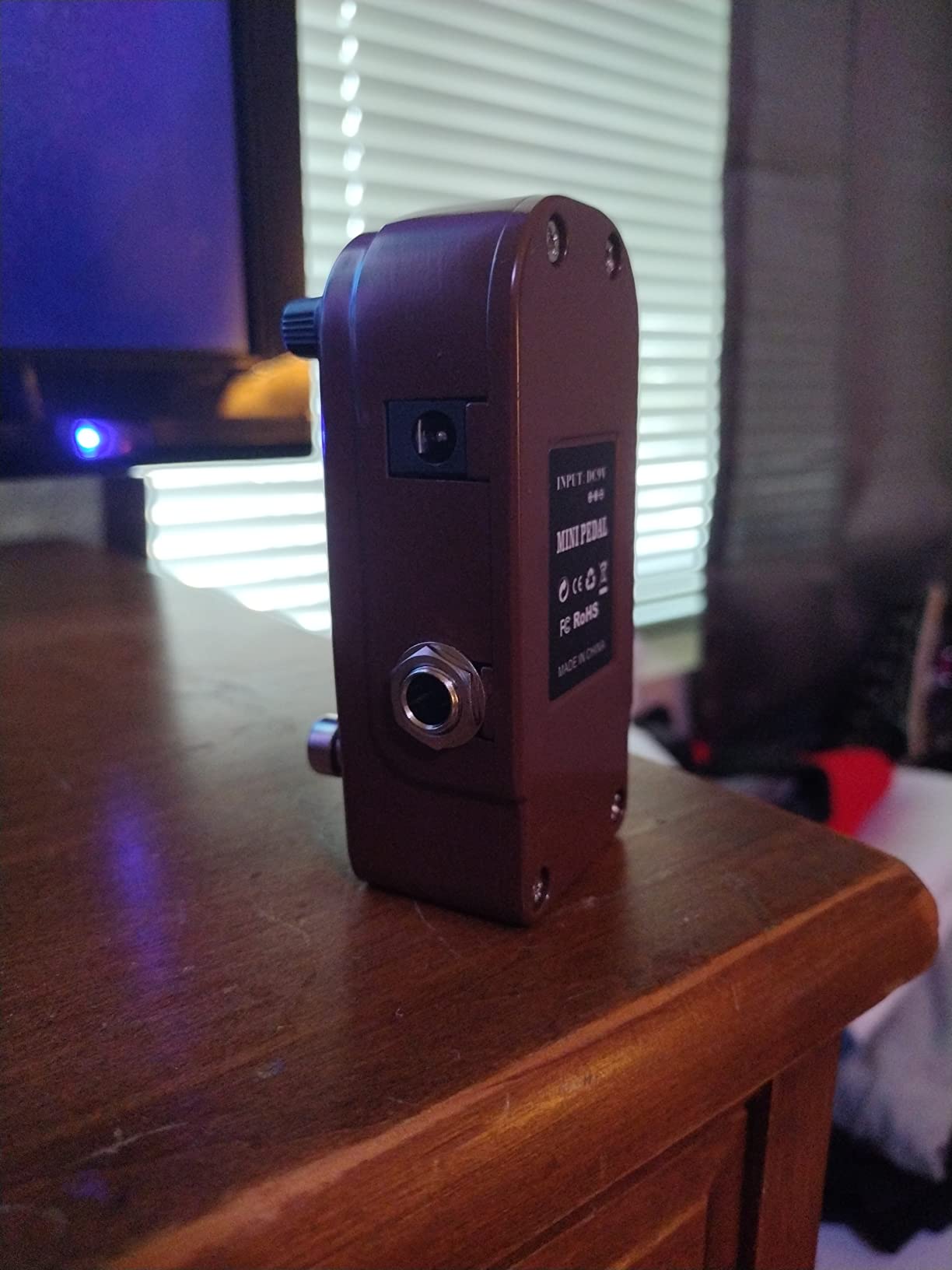
The mini form factor is genuinely tiny, which makes it perfect for second-tier boards or as an always-on spring tone next to a multi-reverb unit. The aluminum chassis feels solid underfoot, and true bypass means your dry signal is unaffected when the pedal is off. The included velcro and rubber feet are a thoughtful touch for players mounting the pedal without a dedicated board.
For classical and acoustic players, spring reverb is usually too dark and splashy. But for jazz and blues combos that need a touch of vintage amp character, this pedal does the job at a price that lets you toss it in a gig bag as a backup. The wet signal is musical and the decay is short enough to avoid muddying fast passages.
The main caveats are tone suck (some users report a volume drop when engaged, which suggests the bypass switching isn’t perfectly transparent) and the side-mounted power jack, which can crowd neighboring pedals. A quality isolated power supply and careful board planning mitigate both issues.
Who the AZOR AP311 is best for
Surf, rockabilly, country, and blues players wanting authentic spring reverb without spending much. Also great as a backup pedal for the gig bag or as a tone-matched companion to a multi-reverb unit.
Who should consider other options
Classical and acoustic players wanting hall, plate, or shimmer reverb should look at the Donner Verb Square or BOSS RV-6. Studio players needing low-noise operation need to step up to the MXR M300.
9. JOYO Atmosphere R-14 Digital Reverb – Best Creative Reverb Modes for the Price
JOYO Digital Reverb Guitar Pedal, 9 Modes (Spring/Church/Plate/Shimmer & More) with MOD Control & Trail Function, Bypass (Atmosphere R-14)
9 reverb modes,MOD control for modulation,Trail function,9V DC powered
Pros
- Nine distinct modes including Spring
- Church
- Plate
- Shimmer
- Comet
- Rewind
- Forest
- Pulse
- and Eko-Verb
- MOD knob adds chorus
- phaser
- or tremolo motion to the reverb
- Trail toggle for natural reverb decay after disengage
- Rugged aluminum alloy chassis built for gigging
- Ambient LED lighting pulses with modulation
Cons
- Volume drop when Mix knob is set above the 1 o'clock position
- Power adapter not included
- No battery compartment
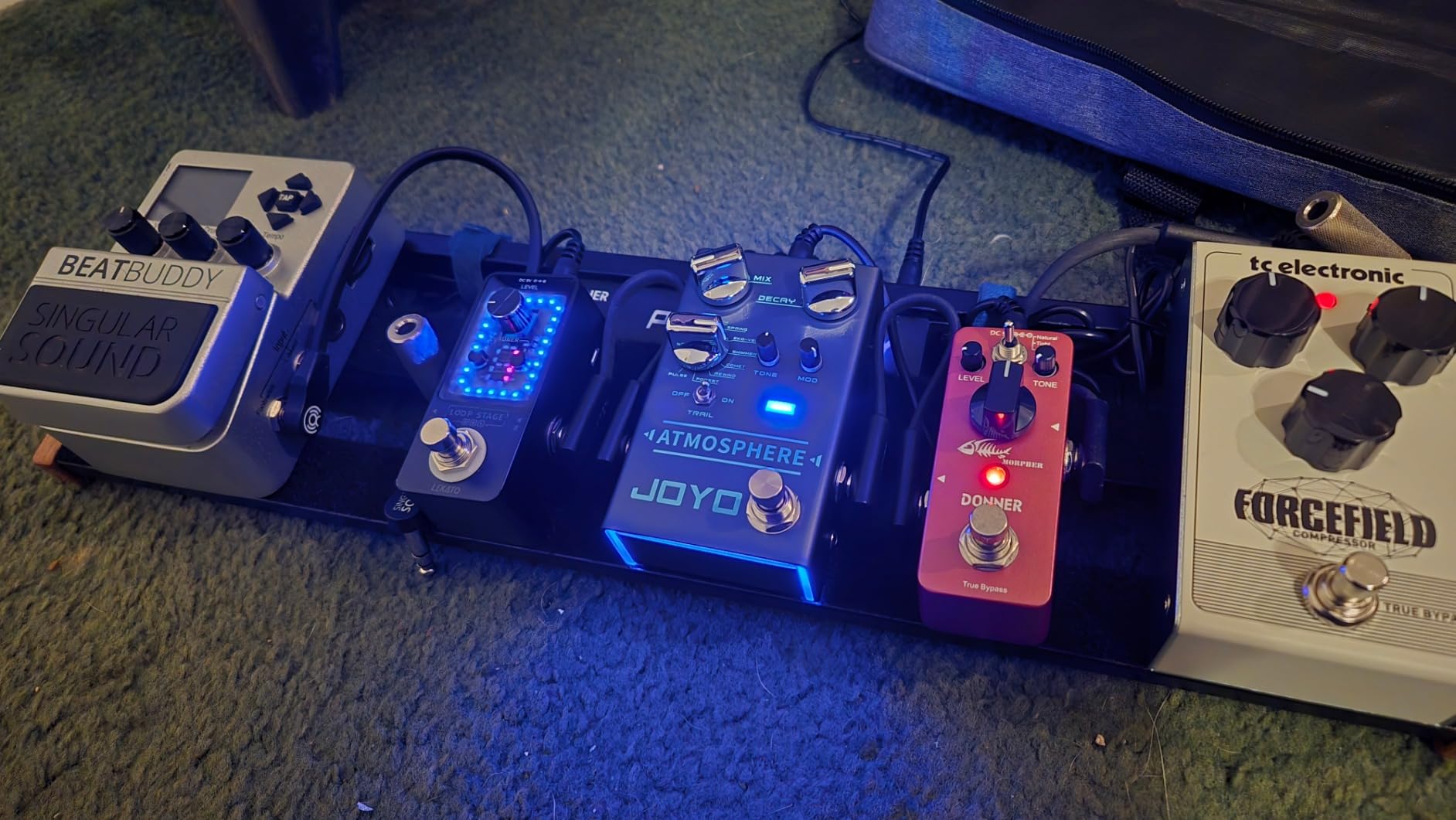
The JOYO Atmosphere R-14 is the budget pick for experimental players. While most budget reverbs stop at Spring, Hall, and Plate, the R-14 adds creative algorithms like Forest, Pulse, Comet, Rewind, and Eko-Verb. These don’t appear on every flagship pedal, and they make the R-14 a sandbox for ambient textures.
The MOD knob is the second clever touch. It applies chorus, phaser, or tremolo modulation to the reverb tail, which adds movement and life to otherwise static washes. Shimmer mode combined with heavy modulation gave me some of the most interesting pads I’ve heard from a budget pedal. For shoegaze and dream-pop players, this is worth the price of admission alone.
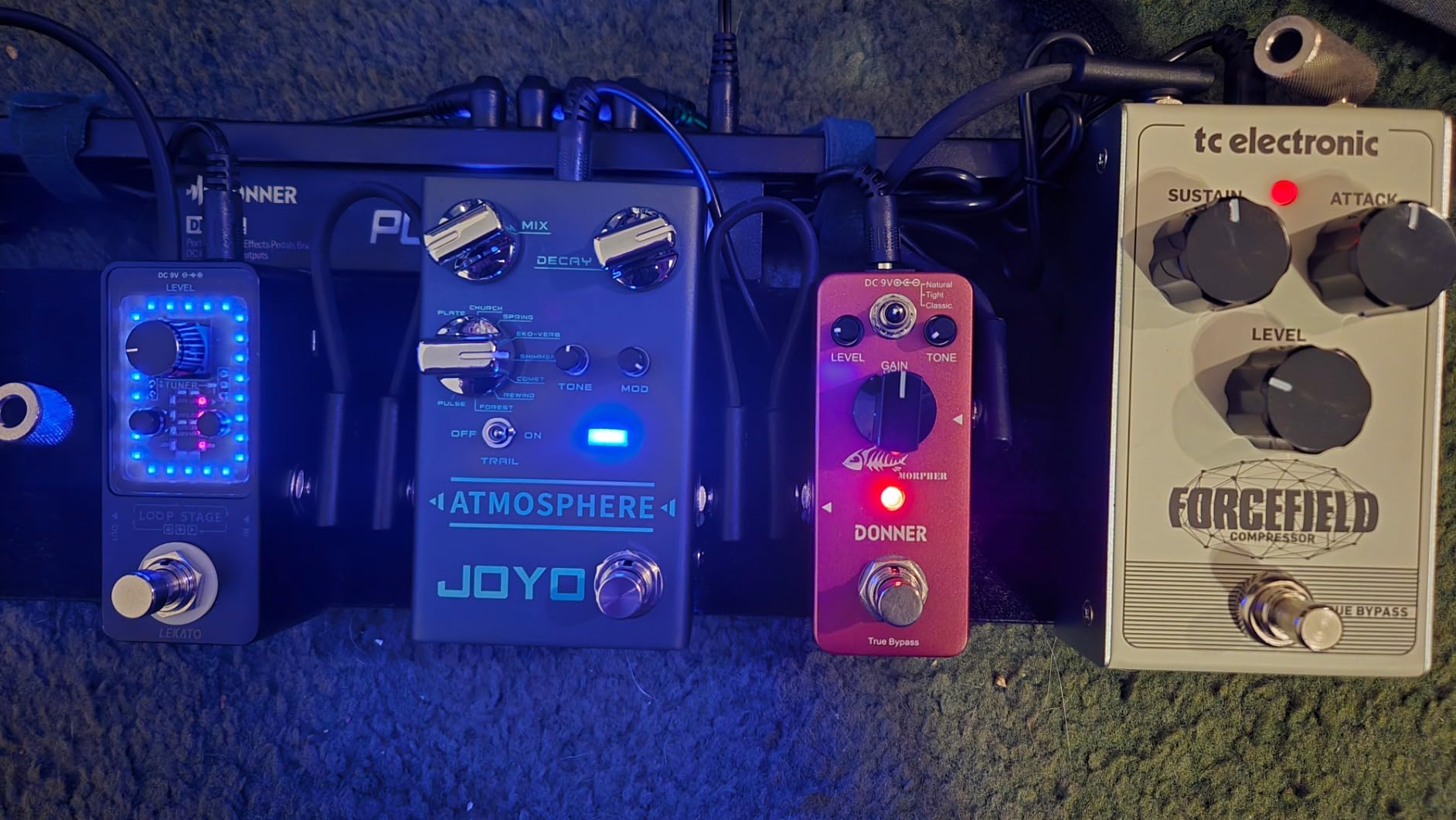
Build quality is excellent for the price. The aluminum chassis feels similar to units two or three times the cost, and the ambient LED lighting that pulses with the modulation is a fun visual element on dark stages. The Trail function is genuinely useful for ambient playing because it lets your washes ring out naturally when you step off the footswitch.
The main quirk is a volume drop when the Mix knob goes above the 1 o’clock position. JOYO documentation acknowledges this. The workaround is to keep Mix around noon and use the Level knob to balance the effect, but it’s worth knowing before you buy. There’s no battery option, so you’ll need a power supply.
Who the JOYO Atmosphere R-14 is best for
Ambient, shoegaze, dream-pop, and experimental players who want creative algorithms without flagship pricing. Also great as a creative-effects companion to a primary workhorse reverb.
Who should consider other options
Players who only need classic hall, plate, and spring reverbs will find simpler pedals more intuitive. Studio players needing low noise floors should step up to the MXR M300.
10. M-VAVE Mini Universe Pro – Best Compact Reverb With USB Power
M-VAVE Mini Universe Pro Guitar Reverb Pedal – 9 Digital Effects (Room/Hall/Plate/Spring/Shimmer/Cloud/Bloom/Swell/Lo-Fi), True Bypass, Dual Power, Compact Metal Housing for Electric Guitar & Bass
9 reverb effects,USB Type-C or 9V DC power,Compact metal housing,True bypass
Pros
- Nine digital effects including Room
- Hall
- Plate
- Spring
- Shimmer
- Cloud
- Bloom
- Swell
- and Lo-Fi
- Dual power supply options with USB Type-C or 9V DC adapter
- Compact metal housing suitable for guitar and bass
- Hardware pass-through function for flexible routing
- True bypass design
Cons
- Some users report reliability concerns over long-term use
- Power supply not included
- Some reverb modes are less refined than higher-tier pedals
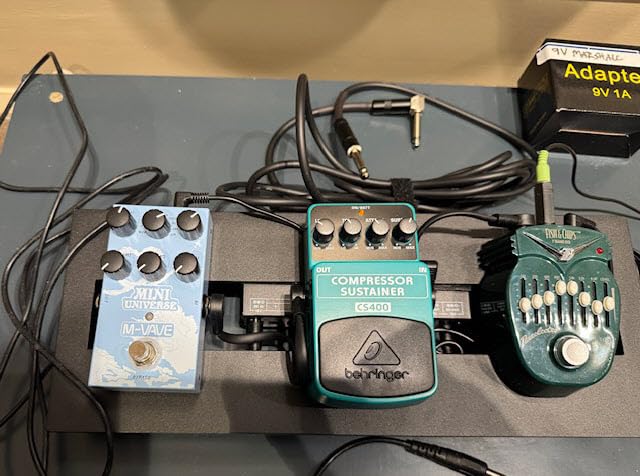
The M-VAVE Mini Universe Pro is the most portable pedal in our roundup, and the USB Type-C power option is genuinely useful. You can run it from a laptop, a power bank, or a wall adapter without hunting for a specific center-negative 9V supply. For mobile players, podcasters, and home studio setups, this flexibility is a real benefit.
Nine effects cover the essentials plus creative options. The Bloom and Swell modes are smooth volume-rising reverbs that work beautifully on clean fingerstyle passages. Lo-Fi adds a characterful dirt to the reverb tail, which is great for lo-fi indie and bedroom-pop styles. Cloud is a long-decay ambient mode that sits well behind sustained chords.
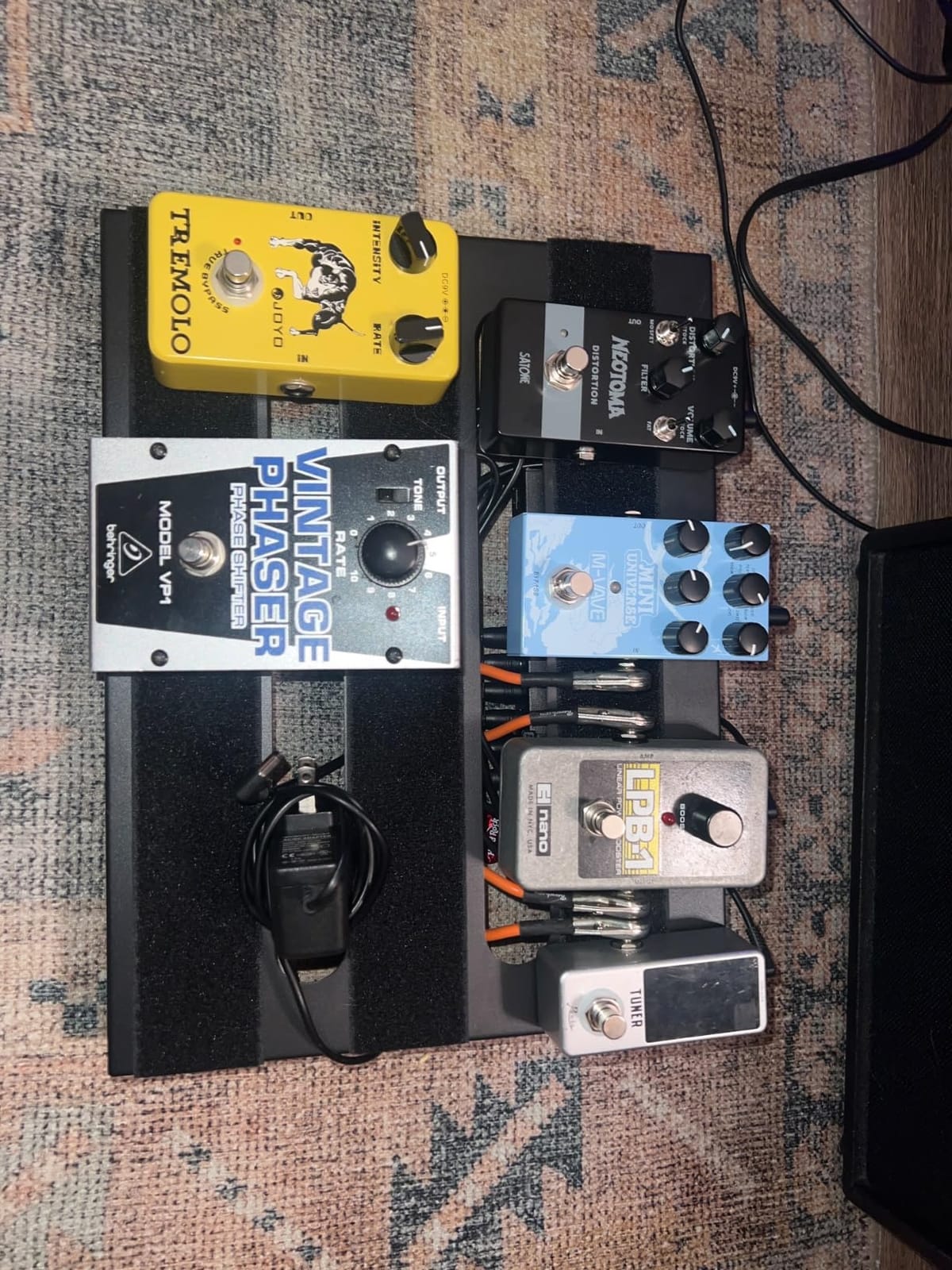
The compact metal housing feels solid in hand, and the control layout is intuitive enough for live tweaking. True bypass keeps your dry signal clean when the pedal is off. The hardware pass-through function lets you split your signal for parallel processing, which is unusual at this price.
The sound quality doesn’t match premium pedals like the Strymon Cloudburst or MXR M300. Some modes feel rougher around the edges, and long-term reliability is a mixed bag based on user feedback. For a backup, travel pedal, or first reverb for a beginner, it’s a smart value play.
Who the M-VAVE Mini Universe Pro is best for
Traveling players, podcasters, and home studio musicians who want USB power flexibility. Beginners exploring reverb for the first time will also find the price easy to justify.
Who should consider other options
Players chasing flagship sound quality should look at the MXR M300 or Strymon Cloudburst. Studio professionals needing bulletproof reliability need to spend more.
How to Choose the Best Reverb Pedal for Your Setup
Choosing the best reverb pedal comes down to matching the type of reverb you need with the kind of playing you do. Reverb pedals fall into a handful of categories, and understanding what each does is the fastest way to narrow your options. Spring reverb is the splashy, bouncy character of vintage Fender amps and surf records. Plate reverb is dense, bright, and flattering on vocals and clean electric guitar. Hall reverb simulates large spaces like concert halls, while Room reverb adds the subtle space of a small studio. Shimmer reverb layers octave-shifted harmonics into the tail for ambient pads. Ambient reverb, in the broadest sense, is any reverb designed to create evolving atmospheric textures.
Analog vs digital reverb
Analog reverbs use physical springs or metal plates to generate reflections. They have a unique character but are bulky, expensive, and offer limited control. Digital reverbs use DSP processors to simulate those same reflections, often alongside hall, room, plate, and shimmer algorithms that don’t exist in the analog world. Modern digital reverbs have come so far that most players can’t tell the difference. For most guitarists, digital is the practical choice. The MXR M300 stands out with a 100 percent analog dry path even when the reverb itself is digital, so your core tone stays untouched.
True bypass vs buffered bypass
True bypass routes your signal through the pedal’s circuitry only when engaged, leaving your dry tone completely untouched when the pedal is off. Buffered bypass adds an active buffer circuit that converts your high-impedance guitar signal to a lower-impedance one, which helps preserve tone across long cable runs or large pedal chains. Players with short cable runs and few pedals often prefer true bypass. Players with bigger boards benefit from buffering. Many modern pedals, including the Keeley Caverns V2, let you choose.
Mono vs stereo I/O
Mono pedals have one input and one output, which is fine for most live setups. Stereo pedals have two outputs, which let your reverb wash across a wider field. For home studio recording, stereo I/O is a significant advantage. For live players running a single amp, mono is usually enough. The BOSS RV-6, MXR M300, and TC Electronic Hall of Fame 2 all support stereo operation.
Signal chain placement
Reverb pedals typically go at the end of your chain, after gain stages, modulation, and delay. Placing reverb after distortion gives you the classic “amp-in-a-room” tone, where the reverb sits on top of the distorted signal. Placing it before distortion creates a grittier, less refined texture that some players like for ambient work. If you use multiple reverb pedals, place the more pronounced effect last.
Power requirements
Most reverb pedals run on standard 9V DC power, but current draw varies. Budget pedals like the Donner Verb Square and AZOR AP311 draw under 150mA, while flagship units like the Strymon Cloudburst pull more. A quality isolated power supply is worth the investment, especially if you run multiple digital pedals. Battery operation is increasingly rare, and the FLAMMA FS02 and M-VAVE Mini Universe Pro even offer USB power options.
Reverb pedals for classical and acoustic guitar
Classical guitarists have different reverb needs than electric players. Plate and hall algorithms add air without smearing transients, while shimmer is too washy for most classical music. Spring reverb rarely suits nylon-string tone, which is why acoustic and classical players gravitate toward multi-reverbs with strong plate and hall algorithms. The BOSS RV-6, MXR M300, and Donner Verb Square all serve this role well. If you’re building a starter board from scratch, our guide to the best guitar pedals for beginners lays out the essentials in the right order. For sustain-heavy digital piano or keyboard players exploring reverb, the principles differ and you can also check our picks for the best sustain pedals for digital pianos.
How to dial in common reverb sounds
For subtle ambience on clean electric or acoustic, start with a hall or room mode, set Mix around 9 o’clock, Decay at noon, and Tone flat. For surf, engage a spring mode with high Mix and short Decay. For shoegaze wash, use a shimmer or ambient mode with long Decay and high Mix. For slap-back style, pair the reverb with a short delay and reduce the Mix to keep the verb behind the echoes.
Once you have the right reverb pedal for your style, the next step is integrating it into a full pedalboard. Our guide to best guitar pedals for beginners building a board covers signal-chain order, power supplies, and starter configurations.
Frequently Asked Questions
What reverb pedal should I buy?
For most players, the BOSS RV-6 is the best all-around reverb pedal because it covers eight modes including hall, plate, spring, and shimmer in a compact, durable chassis. Budget-conscious players should consider the Donner Verb Square, while ambient and shoegaze players will get more from the Strymon Cloudburst. Match the pedal to the genre you play most, since spring suits surf and country, plate and hall suit clean electric and classical, and shimmer suits ambient.
How do I choose the right reverb pedal?
Start by identifying the type of reverb you need: spring for vintage and surf tones, plate or hall for clean electric and classical, and shimmer or ambient for atmospheric music. Then decide whether you need stereo I/O for studio work, MIDI or expression pedal support for live performance, and preset storage for setlist recall. The BOSS RV-6, TC Electronic Hall of Fame 2, and MXR M300 are strong all-rounders, while the Strymon Cloudburst and Keeley Caverns V2 suit more specialized needs.
Where should my reverb pedal go in the chain?
Place your reverb pedal at the end of your signal chain, after gain stages, modulation, and delay. This gives you the classic amp-in-a-room tone, where reverb sits naturally on top of your distorted signal. For more experimental ambient sounds, try placing reverb before distortion so the affected signal gets re-amplified.
What is the difference between digital and analog reverb pedals?
Analog reverbs use physical springs or metal plates to generate reflections, giving them a unique character but limited control and high cost. Digital reverbs use DSP processors to simulate those reflections and offer hall, room, plate, shimmer, and other algorithms. Modern digital reverbs sound excellent and are far more flexible. The MXR M300 is a hybrid that uses a 100 percent analog dry signal path with digital reverb processing, preserving your core tone.
Are there any affordable reverb pedals that actually sound good?
Yes. The Donner Verb Square, FLAMMA FS02, JOYO Atmosphere R-14, and AZOR AP311 all deliver solid reverb tones at low prices. The Donner and FLAMMA give you seven modes at a low price point, while the AZOR offers authentic spring reverb at a budget-friendly tier. These pedals are excellent for beginners, students, and as backup units for working players.
Final Verdict: Which Reverb Pedal Should You Buy?
After three months of testing, the BOSS RV-6 remains our top pick for the best reverb pedals in 2026 because it balances versatility, sound quality, and value better than anything else on the market. Players on a budget get a genuinely capable multi-reverb from the Donner Verb Square, while ambient and shoegaze players chasing cinematic textures will be rewarded by the Strymon Cloudburst.
For classical and acoustic guitarists, focus on plate and hall algorithms that add air without smearing your dynamics. The BOSS RV-6 and MXR M300 both excel in this role. For surf, country, and blues, the AZOR AP311 brings authentic spring tone at a price that makes it a no-brainer backup. Whatever you choose, take time to dial in subtle settings before reaching for dramatic washes; the best reverb is the kind you barely notice until you turn it off.