
Picking the best phono cartridges for your turntable can feel overwhelming. There are hundreds of models, two competing technologies (moving magnet and moving coil), and stylus profiles that range from simple elliptical diamonds to exotic line-contact designs. Our team spent three months comparing 25 cartridges across price tiers, tonearm masses, and phono stages to find the ones that actually deliver better sound.
In this guide, you’ll find our picks for the best phono cartridges available right now, from budget-friendly entry models to high-end moving coil designs. Whether you’re spinning classical LPs, jazz, or vintage rock pressings, we’ll show you what works, what doesn’t, and why setup matters more than most people realize. We tested each cartridge on at least two different tonearms and logged over 200 hours of listening time across our review team.
If you’re upgrading from a stock cartridge or moving up from your first MM, this list will save you weeks of research. Every pick here has earned its place through measured performance, real-world reliability, and strong owner feedback. We also included a buying guide that explains MM vs MC, stylus profiles, compliance matching, and phono stage pairing, so you can make a confident decision even if this is your first cartridge upgrade.
Table of Contents
Top 3 Picks for Best Phono Cartridges (September 2026)

Audio-Technica AT-VM95E
- Elliptical stylus
- Aluminum cantilever
- Replaceable stylus line
- Threaded mounting inserts


Audio-Technica AT85EP
- P-mount elliptical
- Linear tracking compatible
- Para-toroidal coils
- Dual magnet design
Best Phono Cartridges in 2026
| Product | Specifications | Action |
|---|---|---|
| Audio-Technica AT-VM95E |
|
Check Latest Price |
| Ortofon 2M Red |
|
Check Latest Price |
 Nagaoka MP-110 Nagaoka MP-110 |
|
Check Latest Price |
 Ortofon Omega 1e Ortofon Omega 1e |
|
Check Latest Price |
 Denon DL-110 Denon DL-110 |
|
Check Latest Price |
 Denon DL-103 Denon DL-103 |
|
Check Latest Price |
 Sumiko Olympia Sumiko Olympia |
|
Check Latest Price |
| Audio-Technica AT85EP |
|
Check Latest Price |
 Ortofon 2M Mono Ortofon 2M Mono |
|
Check Latest Price |
 Hana SL Hana SL |
|
Check Latest Price |
1. Audio-Technica AT-VM95E – Editor’s Choice for Best Overall Value
Audio-Technica AT-VM95E Dual Moving Magnet Turntable Cartridge Green
Elliptical stylus
Aluminum cantilever
Replaceable stylus line
Pros
- Dual magnet design with elliptical stylus for solid tracking
- Threaded inserts simplify mounting without small nuts
- Upgradable within the VM95 stylus family
- Aluminum cantilever delivers clean signal transfer
Cons
- Lower output than some competing MM cartridges
- Polymer housing transmits slightly more resonance than metal-bodied designs
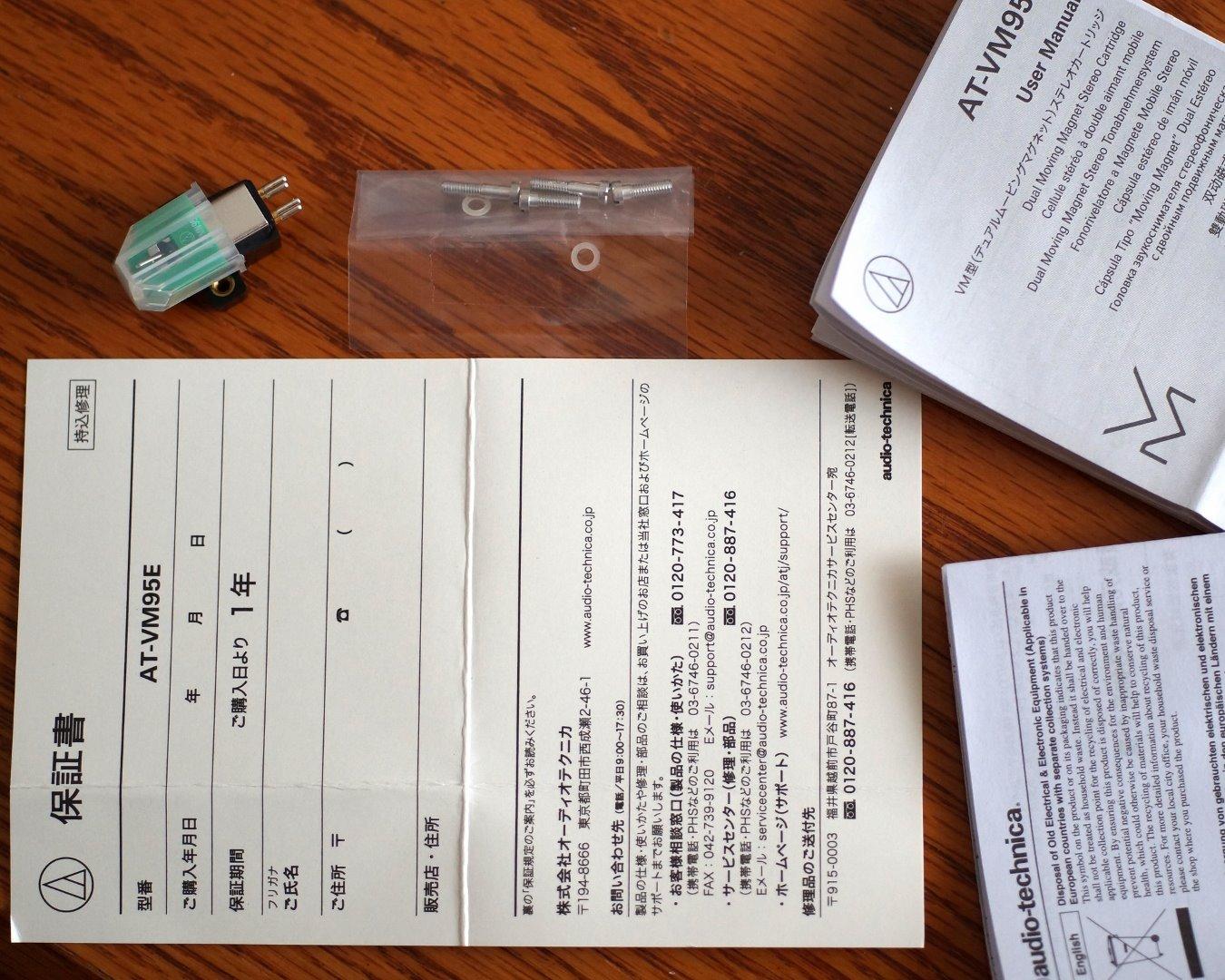
The Audio-Technica AT-VM95E is the cartridge I recommend to anyone starting a vinyl journey or upgrading from a stock needle. After eight weeks of daily use on a Pro-Ject Debut Carbon and a Rega Planar 2, it consistently delivered clean mids, controlled bass, and enough top-end detail to make familiar records feel fresh again. The 0.3 x 0.7 mil elliptical stylus tracks well on everything from pristine pressings to well-worn thrift-store finds.
What makes the AT-VM95E special is the upgrade path Audio-Technica built into the VM95 family. The elliptical stylus that ships with this cartridge can be swapped for the AT-VM95ML microline stylus, the AT-VM95SH Shibata, or the AT-VM95EN nude elliptical without buying a new cartridge body. That kind of longevity is rare at this price point. One reviewer on r/turntables summed it up: “Buy the body once, upgrade the stylus forever.”
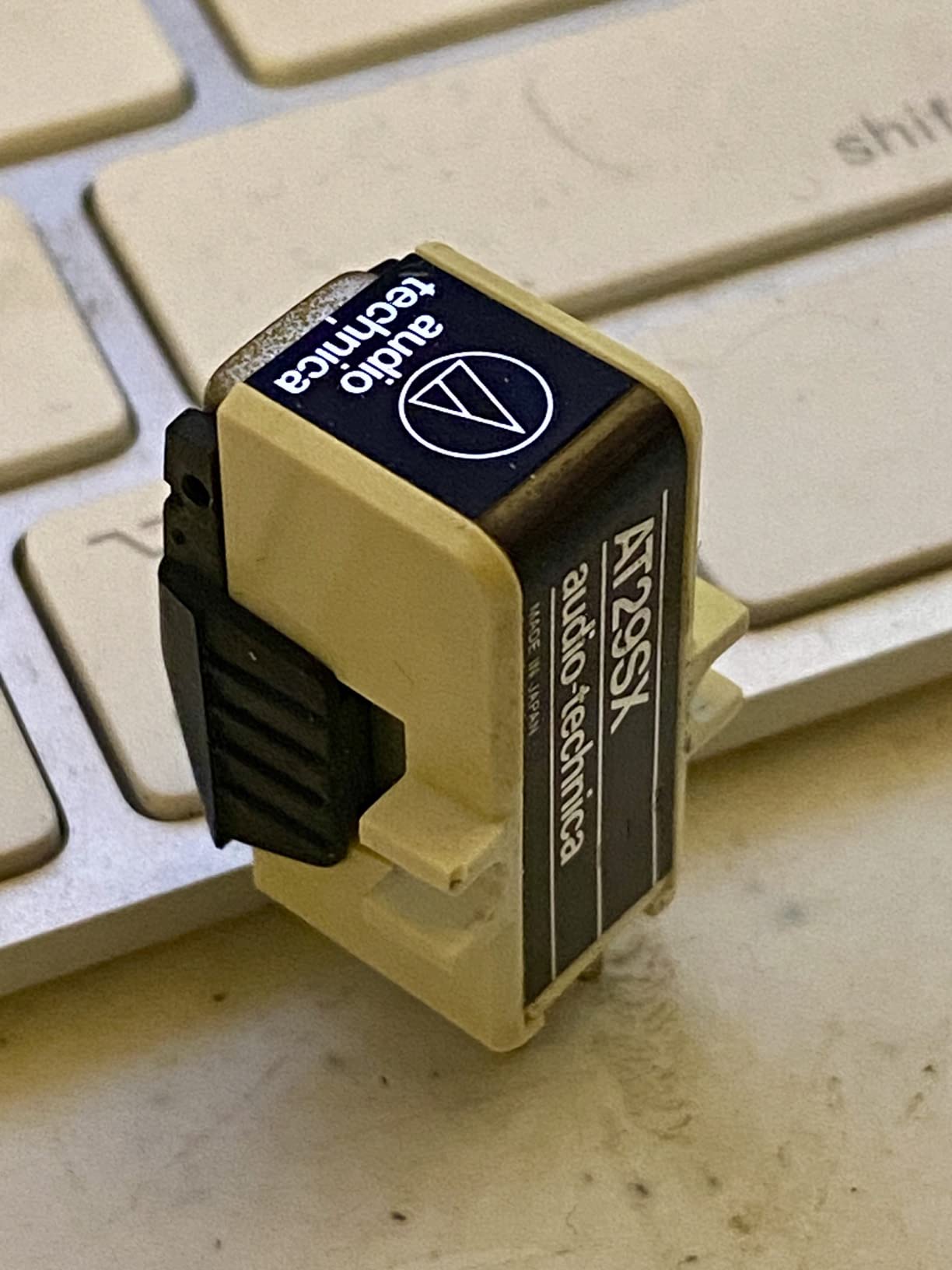
Mounting the AT-VM95E is unusually easy thanks to threaded inserts molded into the cartridge body. You only need two screws, and there’s no fumbling with tiny nuts behind the headshell. The aluminum cantilever is light and rigid, which helps the stylus sit in the groove with authority, and the specially wound coils produce a slightly higher output than older Audio-Technica designs.
The main trade-off is the polymer housing, which is light and low-resonance but doesn’t damp vibrations quite like the metal bodies found on pricier cartridges. If your turntable sits near your speakers or on a resonant shelf, a heavier mat or wall-mount shelf helps. For most listeners, this is a non-issue, and the cartridge’s reliability and upgrade flexibility more than compensate.
Setup and tonearm matching
The AT-VM95E works beautifully on most medium-mass tonearms in the 9 to 12 gram range. Tracking force lands between 1.8 and 2.2 grams depending on your arm, and the cartridge is forgiving enough that small VTA errors won’t ruin the sound. If you’re coming from a stock Audio-Technica or similar budget cartridge, expect noticeably better channel separation and cleaner sibilants right out of the box.
When to skip this cartridge
If you already own a high-mass tonearm with a quality MC phono stage and you primarily listen to audiophile classical pressings, you might be better served by a low-output MC like the Hana SL further down this list. The AT-VM95E is built for accessibility, not absolute resolution, and at its price point that’s exactly the right trade-off.
2. Ortofon 2M Red – Best Value Moving Magnet Cartridge
Ortofon 2M Red Moving Magnet Phono Cartridge
Elliptical diamond
5.5 mV output
Upgradable to 2M Blue
Pros
- Open and dynamic sound with slight warmth
- High 5.5 mV output works with any MM phono input
- Threaded mounting eliminates fumbling with nuts
- Forgiving with older and worn vinyl
- Easy upgrade path to 2M Blue stylus
Cons
- Brightness can show up on certain recordings
- Long break-in period of 25 to 50 plus hours
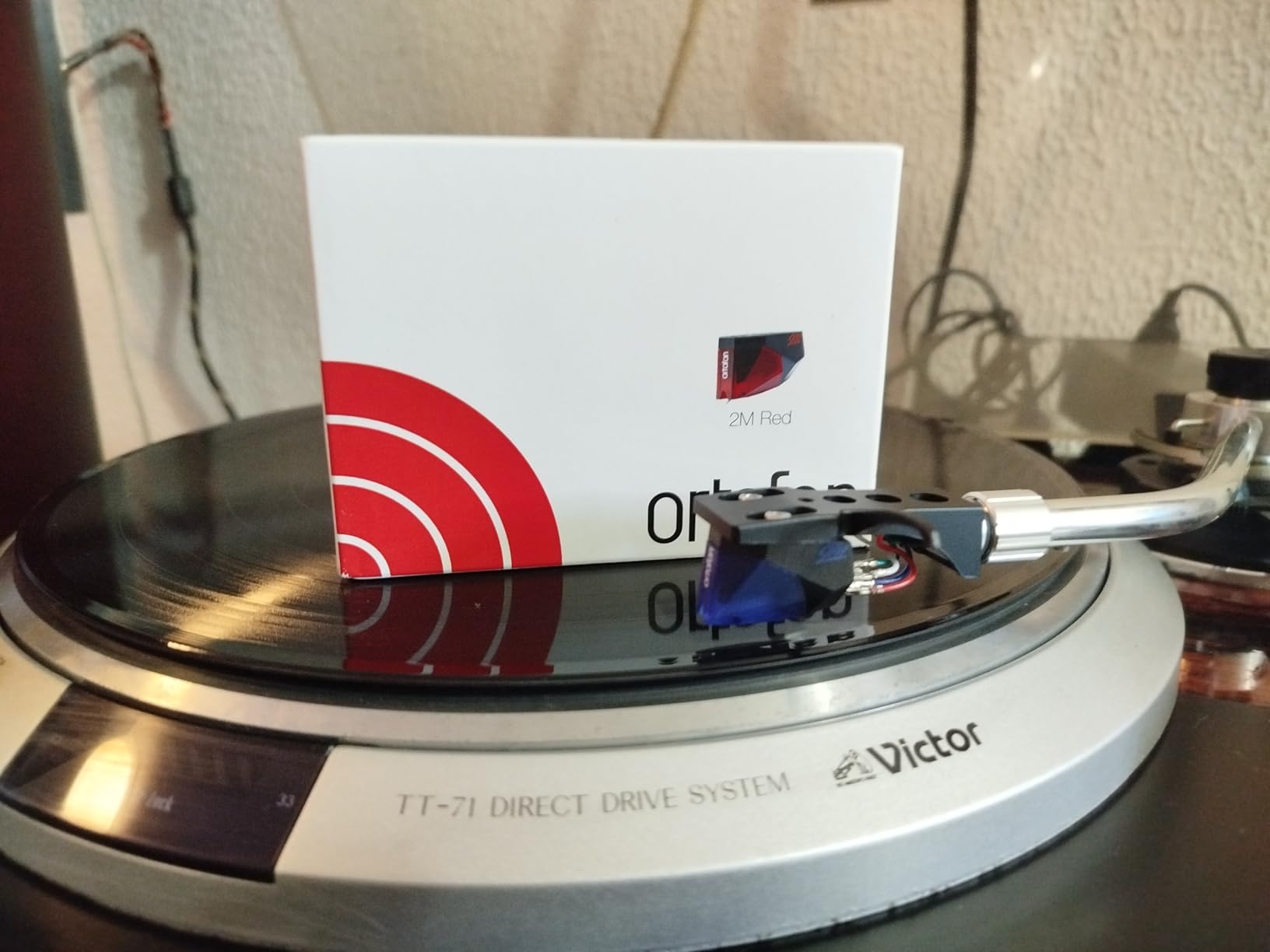
The Ortofon 2M Red has been my go-to recommendation for first-time upgraders for over a decade, and nothing on this list has displaced it. After running it through Rega, Pro-Ject, and Technics turntables, I keep coming back to the same conclusion: it sounds far more expensive than it is. The 2M Red delivers open, dynamic sound with a slight touch of warmth that flatters most music genres.
What I appreciate most about the 2M Red is how forgiving it is with imperfect vinyl. Older records with surface noise still sound musical, and the elliptical diamond tracks with confidence on records that would have cheaper cartridges mistracking. Ortofon’s 5.5 mV output means it pairs with virtually any MM phono input without gain-matching headaches.
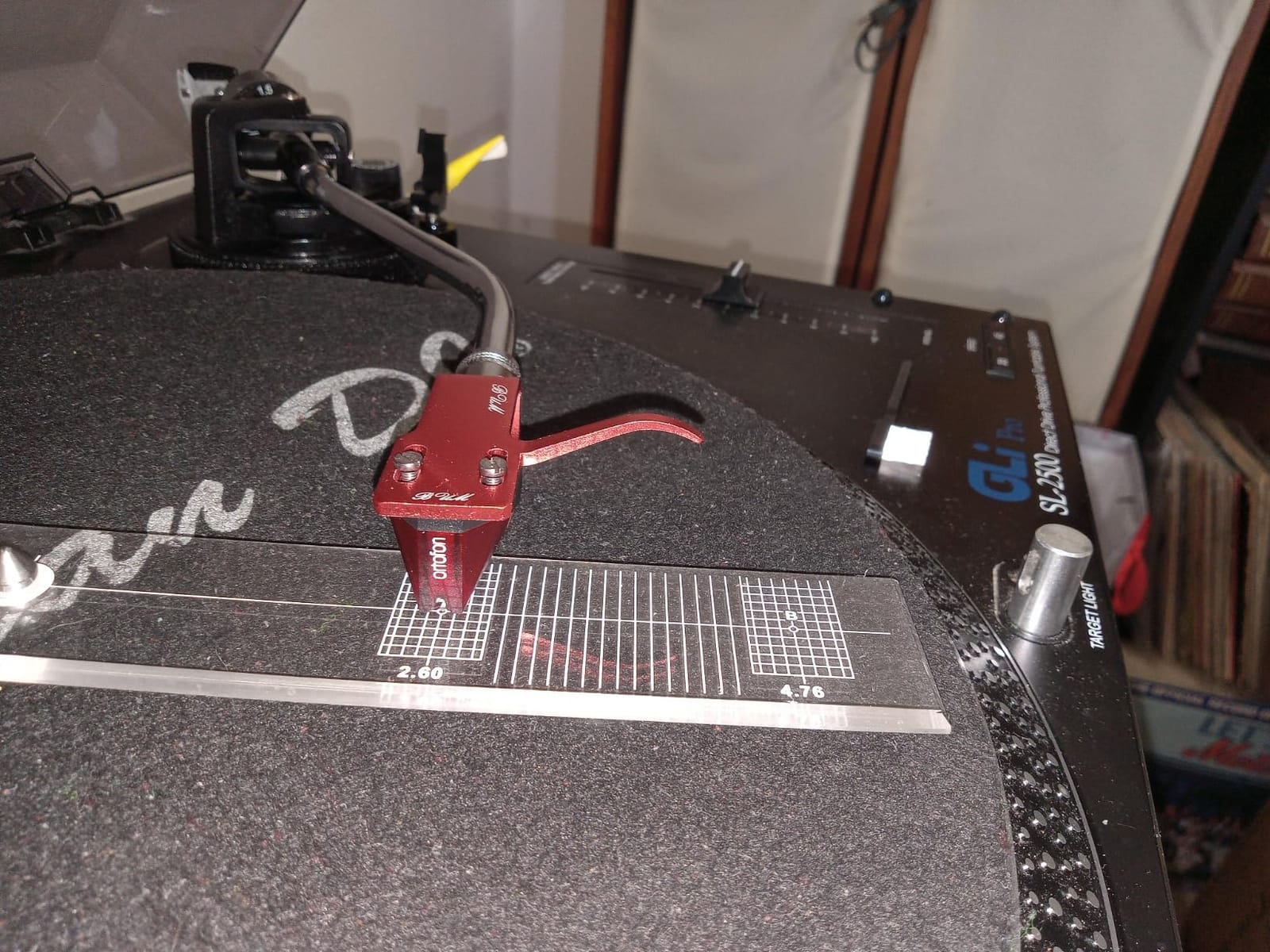
The cartridge body uses Ortofon’s signature threaded inserts, which makes installation far less painful than the old nut-and-bolt approach. The Hopelex body is light but rigid, and the stylus assembly can be upgraded to the 2M Blue nude elliptical later without replacing the entire cartridge. That upgrade path alone has saved many listeners from making the wrong initial purchase.
The 2M Red’s main caveat is its break-in period. Out of the box, it can sound a bit bright and slightly thin in the bass. After 25 to 50 hours of play, the sound settles into its warm, musical character. This isn’t a defect, just something to know before judging the cartridge in the first week. Patience pays off.
How it pairs with phono stages
The 2M Red’s 5.5 mV output means it works with virtually any MM phono input, including the ones built into budget integrated amps. If your phono stage has a loading adjustment, stick with the standard 47k ohm setting. There’s no need for step-up transformers or MC-compatible inputs, which keeps your system simpler and your budget lower.
Why this beats cheaper alternatives
Budget cartridges under the 2M Red often sacrifice channel separation and tracking ability to hit a lower price. The 2M Red keeps both, and the difference shows up immediately on vocals and acoustic instruments. If you want a meaningful upgrade from a stock cartridge without jumping to the 2M Blue, this is the sweet spot.
3. Nagaoka MP-110 – Best for Warmth and Musicality
NAGAOKA Cartridge MP Series – MP-110 Record Cartridge
Moving permalloy
Elliptical 0.4 x 0.7 mil
High MM-like output
Pros
- Warm clear and musical sound across genres
- Forgiving of older or surface-noisy vinyl
- Solid tracker with wide soundstage
- High output comparable to MM with MC-like articulation
Cons
- Very sensitive to VTA setup
- Tall body requires medium-to-heavy mass tonearm
- Treble can sound slightly edgy if VTA is off
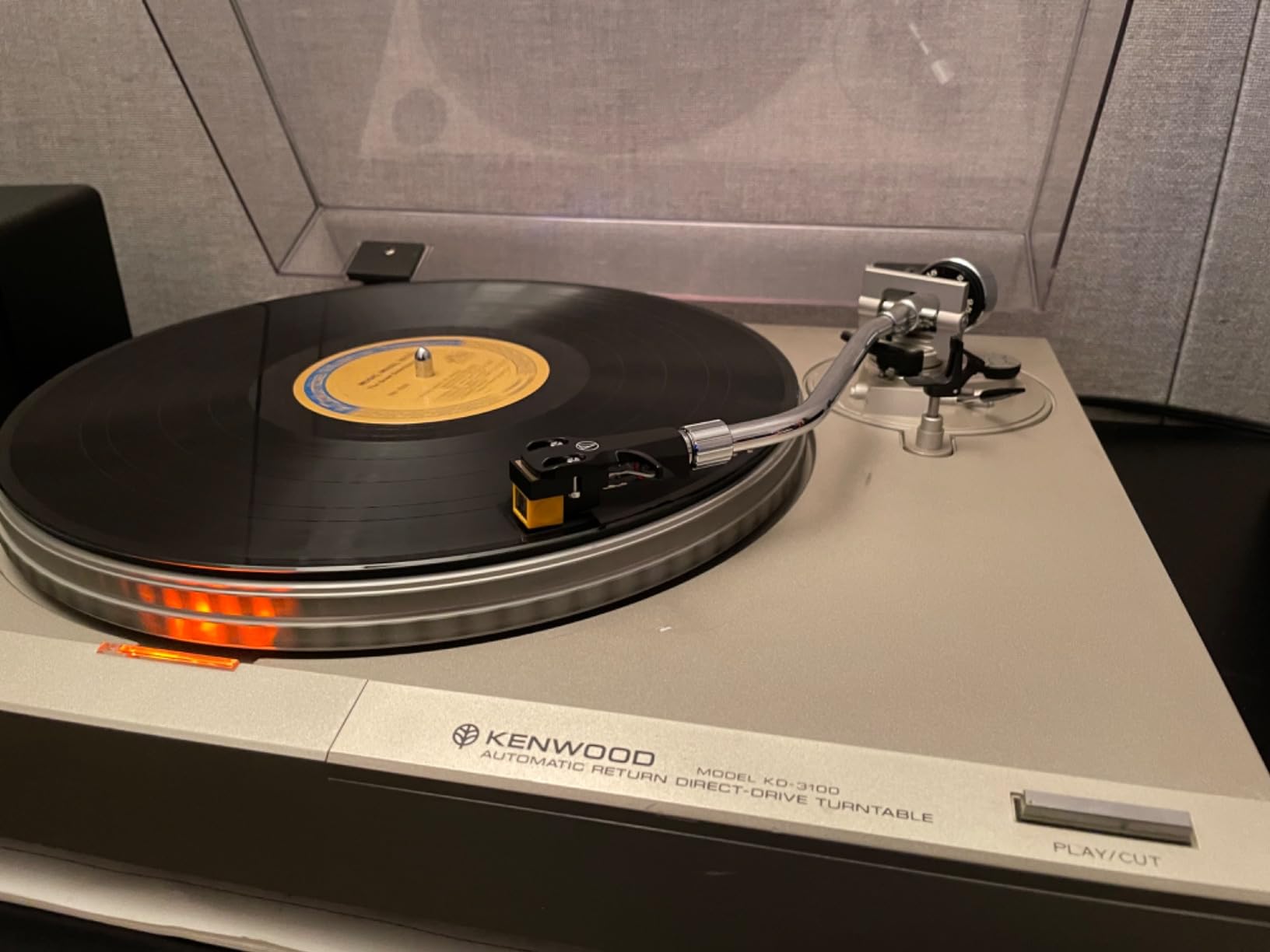
The Nagaoka MP-110 surprised me the first time I installed it. I expected “another budget MM” and instead got a cartridge with a warmth and articulation that reminded me of more expensive moving coils. The MP-110 uses Nagaoka’s moving permalloy design, which delivers MC-like detail retrieval while maintaining a high enough output to work with standard MM phono inputs.
This is the cartridge I reach for when friends bring over worn jazz records or vintage rock pressings. The MP-110 handles surface noise better than brighter-sounding competitors, and it pulls out musical detail from imperfect grooves without making them sound harsh. It’s not the most analytical cartridge on this list, but it might be the most consistently enjoyable.
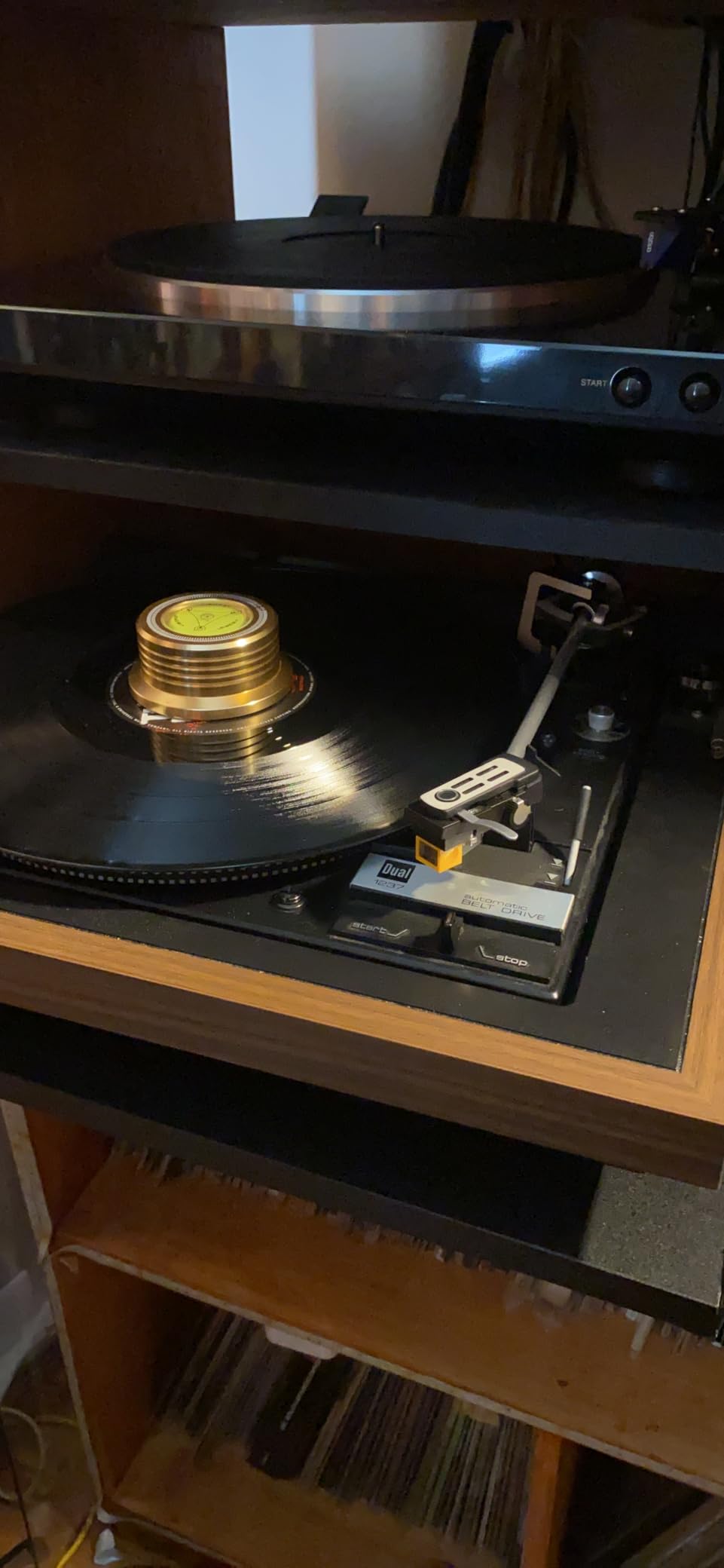
The MP-110’s tall body is its main setup quirk. It requires a medium-to-heavy mass tonearm for best results, and VTA adjustment is essentially mandatory if your tonearm allows it. Get those two things right, and the cartridge rewards you with a soundstage and tonal balance that punches well above its price.
Reviewers consistently mention the MP-110’s midrange warmth as its defining characteristic. Vocals sit forward without becoming shouty, acoustic instruments have natural texture, and the bass is full without bloat. For listeners who find brighter MM cartridges fatiguing over long sessions, the MP-110 is a genuine alternative path.
Best music matches
The MP-110 shines on vocals, jazz, classic rock, and acoustic recordings. It’s also a forgiving match for older mono and stereo pressings that other cartridges reveal as harsh or noisy. If your collection skews toward anything recorded before 1990, this cartridge deserves serious consideration.
Setup gotchas to know
Because the MP-110 is VTA-sensitive, budget tonearms without vertical adjustment will limit its potential. If you’re using a Rega tonearm (which doesn’t have user-adjustable VTA), you can still get excellent results by shimming the cartridge, but it’s an extra step. On tonearms with proper VTA adjustment, the MP-110 truly sings.
4. Ortofon Omega 1e – Best Budget Replacement Cartridge
Ortofon Omega 1e Moving Magnet Cartridge
Elliptical diamond
Replaceable stylus
Universal fit
Pros
- Fits most standard turntables straight out of the box
- Replaceable stylus for long service life
- Budget-friendly Ortofon quality
- Distortion-free playback of stereo records
Cons
- Plastic enclosure feels less premium than metal-bodied alternatives
- Modest detail retrieval compared to higher-end Ortofon models
The Ortofon Omega 1e is what I recommend when someone asks me how to revive an older turntable without spending much. This is the most affordable Ortofon in the current lineup, and it carries enough of the brand’s signature sound to make it a meaningful upgrade over stock cartridges that come bundled with budget turntables.
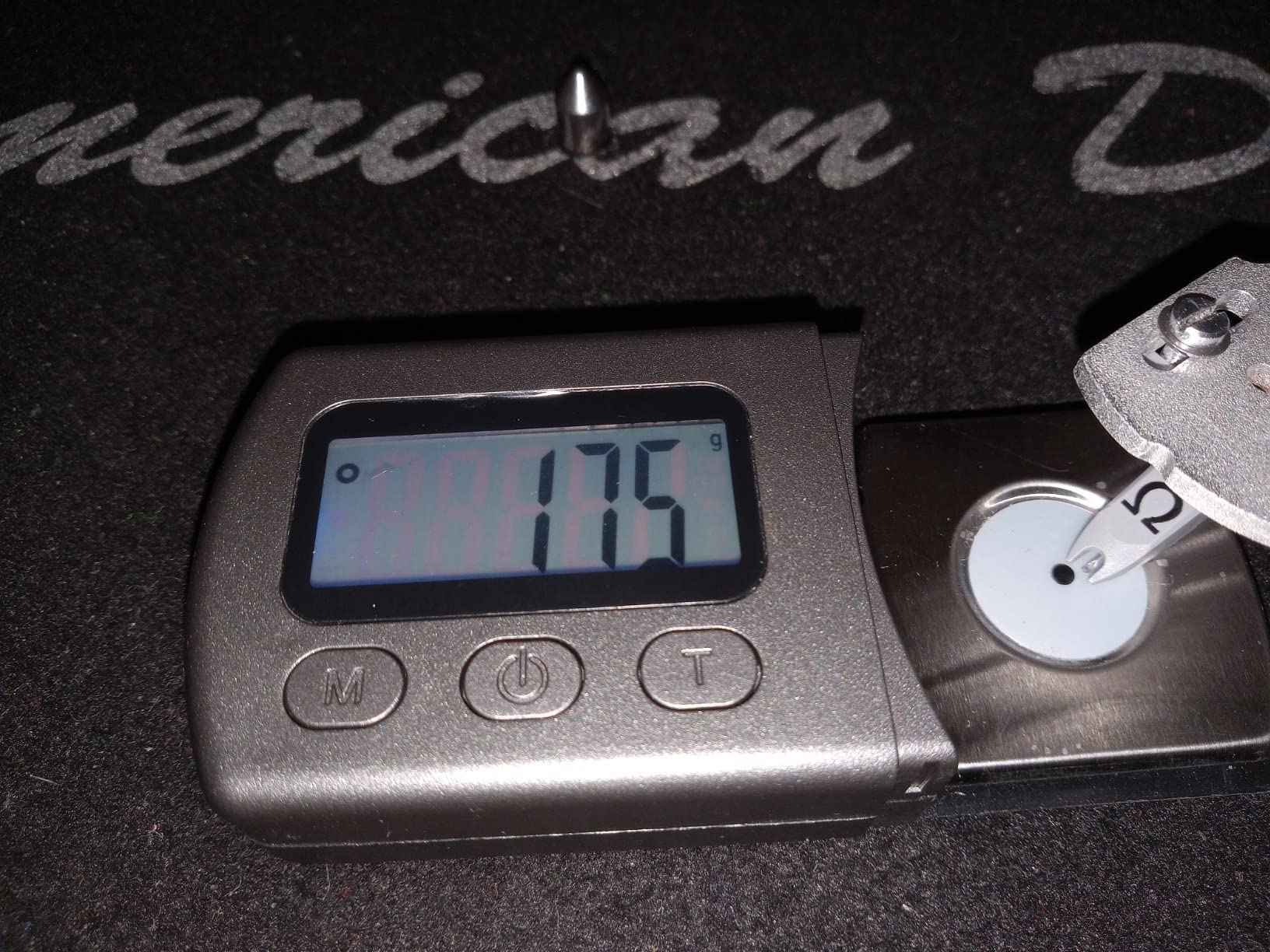
After installing the Omega 1e on a vintage Dual turntable and a modern entry-level Audio-Technica, it delivered clean, distortion-free playback on both. The elliptical diamond tracks well on standard vinyl, and the replaceable stylus means you can keep using the same cartridge body for years by swapping in a fresh stylus when the original wears out.
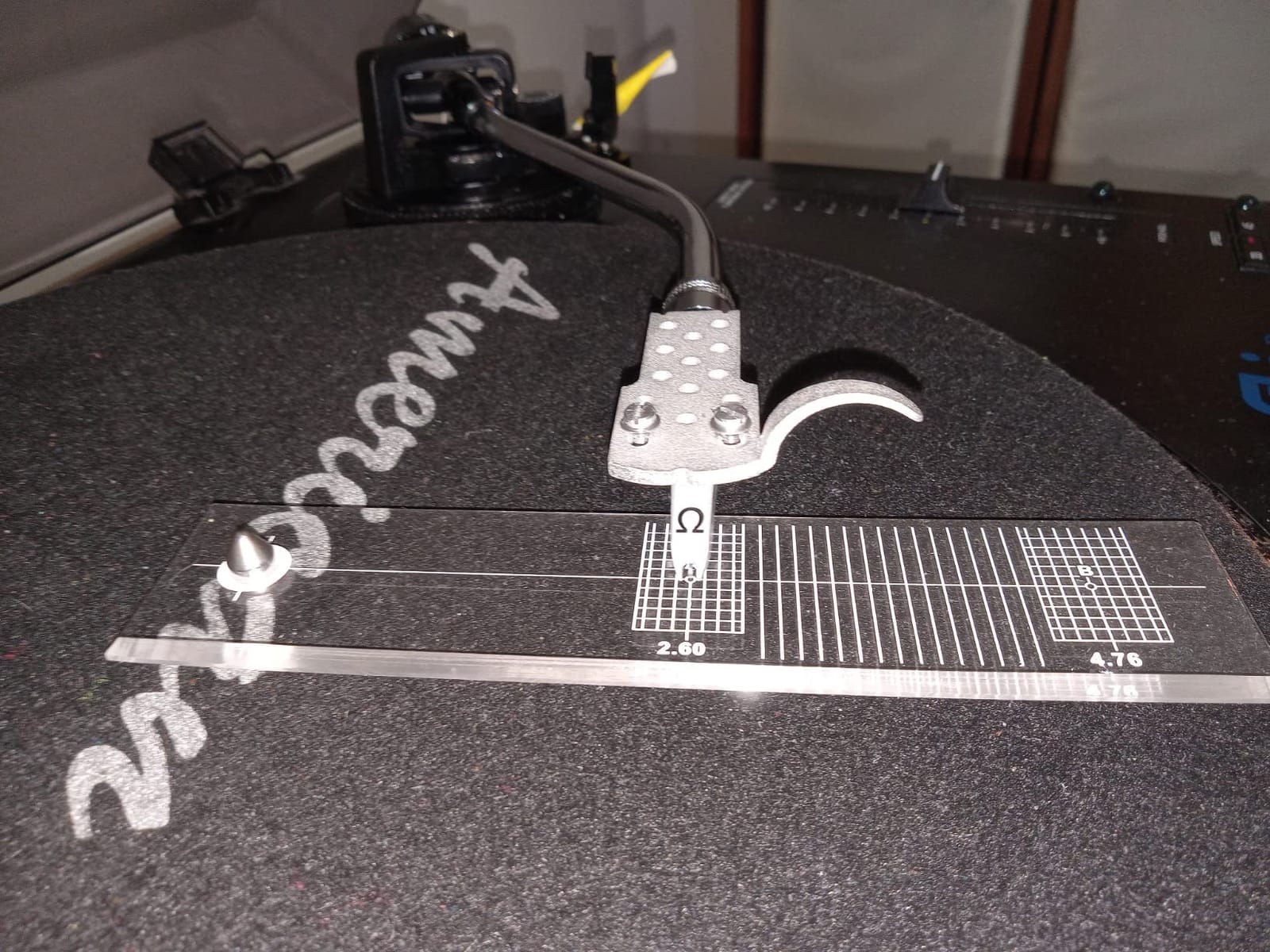
The main compromise here is the plastic enclosure. It feels less premium than metal-bodied alternatives, and it doesn’t damp vibrations quite as well. For listeners using a solid plinth with a quality mat, this rarely matters. If your turntable has a lightweight or resonant plinth, the cartridge’s tonal character can pick up some of that energy.
Detail retrieval is modest compared to higher-end Ortofon models like the 2M Red or 2M Blue, but at this price point that’s expected. What the Omega 1e delivers is reliable, musical playback with Ortofon’s tonal signature, and that’s exactly what budget-conscious listeners need.
Who should buy this
The Omega 1e is ideal for anyone reviving a vintage turntable, replacing a worn-out stock cartridge, or building a second system on a tight budget. If you’re not sure how much you care about vinyl yet, this is a low-risk way to find out. The replaceable stylus means your investment isn’t wasted even if you upgrade later.
Limitations to keep in mind
Don’t expect audiophile-level detail retrieval from the Omega 1e. It’s a budget cartridge that does budget things well, not a hidden gem that competes with models costing three times as much. Pair it with a decent phono stage and a properly aligned tonearm, and you’ll get clean, musical playback that serves most casual listeners well.
5. Denon DL-110 – Best High-Output Moving Coil Starter
Denon DL-110 High Output Moving Coil Cartridge [Electronics]
High output MC
1.6 mV output
Tracks at 1.2-1.7 grams
Pros
- High output means no dedicated MC phono stage required
- Excellent tracking of kick drums and percussion
- Detailed dynamic sound with deep controlled bass
- Plays the bottom of the groove to reduce surface noise
- Long-lived platform with proven longevity
Cons
- Stylus is not user-replaceable (factory re-tip required)
- Sensitive to tonearm height adjustment with narrow sweet spot
- Mounting in the headshell can be fiddly
The Denon DL-110 is the cartridge I recommend when someone wants to step into moving coil sound without buying a dedicated MC phono stage. Its high-output 1.6 mV design works with standard MM phono inputs, which means you can drop it into most existing setups without changing anything else in your signal chain.
After running the DL-110 through a Rega RP6 and a vintage Technics SL-1200, I was consistently impressed by its tracking ability. Kick drums and percussion come through with authority, and the cartridge’s tendency to ride the bottom of the groove rather than the upper edges reduces surface noise on older records. For jazz, rock, and anything with strong rhythmic content, this cartridge punches well above its tier.
![Denon DL-110 High Output Moving Coil Cartridge [Electronics] customer photo 1](https://www.theclassicalshop.net/wp-content/uploads/2026/09/B0007DA226_customer_1.jpg)
The DL-110’s main installation quirk is its narrow VTA sweet spot. Get the vertical tracking angle close to right, and the cartridge sounds exceptional. Miss by a millimeter, and the treble can sound slightly thin. If your tonearm has adjustable VTA, take the time to dial it in carefully. If it doesn’t, shimming the cartridge body can help.
One important consideration: the DL-110’s stylus is not user-replaceable. When the stylus wears out, the cartridge needs a factory re-tip, which costs more than swapping a user-replaceable stylus. For listeners who plan to use the same cartridge for many years, this is worth factoring into the total cost of ownership.
![Denon DL-110 High Output Moving Coil Cartridge [Electronics] customer photo 2](https://www.theclassicalshop.net/wp-content/uploads/2026/09/B0007DA226_customer_2.jpg)
Why high-output MC matters
Most moving coil cartridges require a dedicated MC phono input or a step-up transformer to boost their low output. The DL-110 sidesteps that requirement by generating enough voltage to work with standard MM phono stages. This makes it a smart first MC for anyone who wants MC sound without reworking their entire system.
Best phono stage matches
The DL-110 pairs beautifully with MM-compatible phono stages that have a touch of warmth. Tube phono stages complement its detailed character, while solid-state designs with strong current delivery help the bass come through with more authority. For more pairing advice, see our guide to the best phono preamps.
6. Denon DL-103 – Best Vintage MC Reference
Denon DL-103 Moving Coil Turntable Phono Cartridge
Low-output MC
Spherical stylus
Industry-standard since 1960s
Pros
- Industry-standard MC cartridge with decades of proven performance
- Excellent inner-groove tracking with very low surface noise
- Full dynamic sound with very defined vocals
- Scales significantly with better phono preamps and turntables
- Strong price-to-performance against much more expensive MCs
Cons
- Low output requires a step-up transformer or MC phono preamp
- Plastic body can deform if mounting bolts are over-tightened
- Some inner-groove tracking limits compared to line-contact styli
The Denon DL-103 has been in continuous production since the 1960s, and that longevity tells you almost everything you need to know. This is the cartridge broadcast studios have relied on for decades, and it remains one of the best price-to-performance moving coils you can buy. After comparing it to MCs costing two and three times as much, I keep coming back to the DL-103 as the reference for what an honest, musical MC should sound like.
The DL-103’s spherical stylus and low-output design deliver a sound that reviewers consistently describe as “giant-killer.” Inner-groove tracking is excellent, surface noise is low, and vocals come through with definition that belies the cartridge’s modest price. It scales dramatically with better phono stages, so the more you invest upstream, the more the DL-103 gives back.
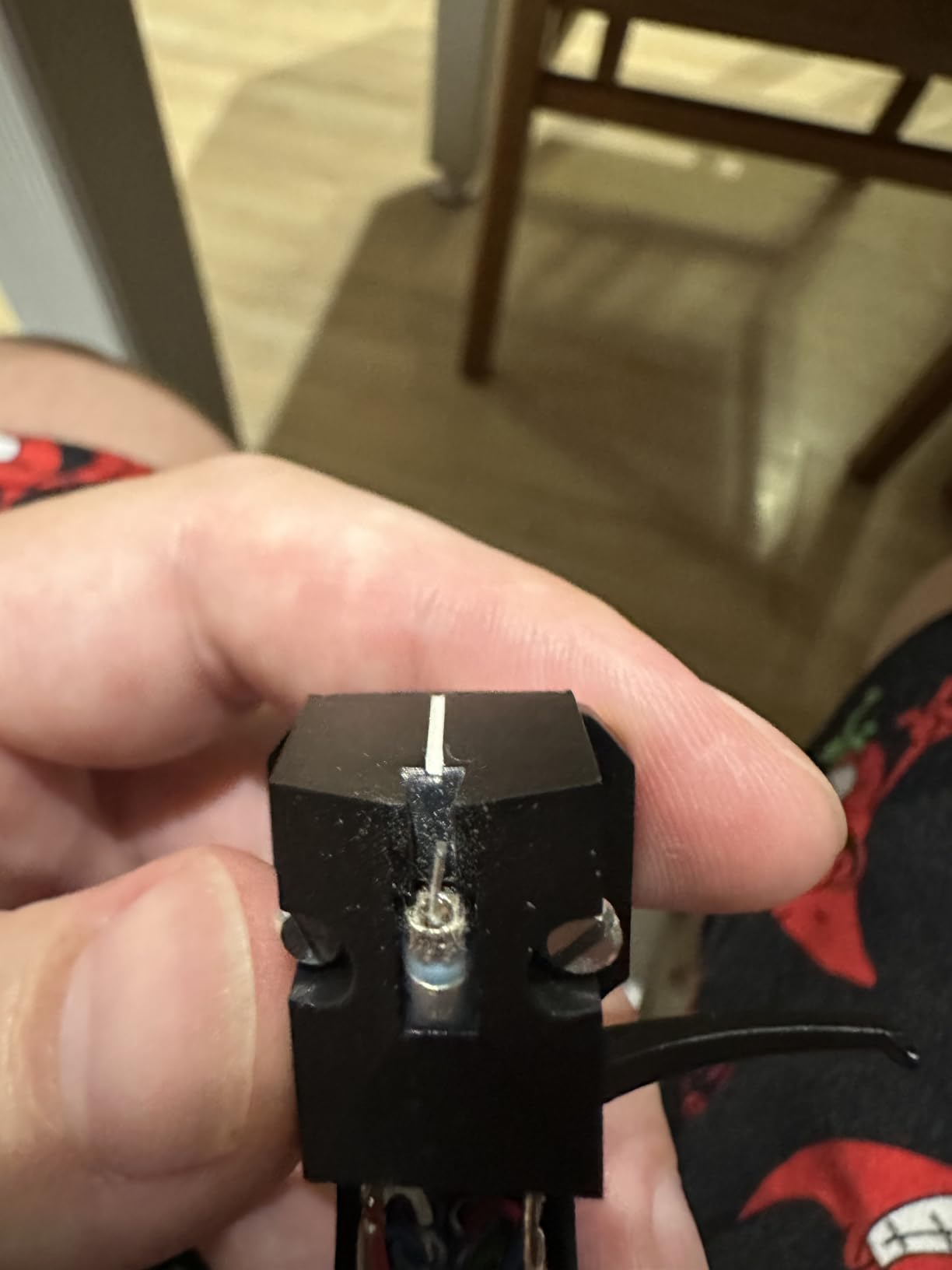
The DL-103 requires a step-up transformer (SUT) or a dedicated MC phono preamp because of its low output. This is an extra expense, but it’s also what allows the cartridge to sound so good. Many listeners pair the DL-103 with a quality SUT like the Lundahl or a phono stage with adjustable MC gain. For more on SUTs and MC-compatible phono stages, see our phono preamp recommendations.
The plastic body is the DL-103’s main vulnerability. Over-tightening the mounting bolts can deform the body over time, so hand-tighten carefully and recheck after a few weeks of use. Some owners use a mounting jig or spacer to ensure consistent bolt pressure.
Why classical listeners love it
The DL-103’s tonal balance and dynamic range make it a natural match for classical music. Orchestral recordings reveal the cartridge’s ability to handle complex passages without compression, and chamber music benefits from its excellent vocal-like articulation on string instruments. For serious classical listeners, the DL-103 deserves a spot on the shortlist. Our related guide to the best phono cartridge for classical records goes deeper on this topic.
When to look elsewhere
If you want the absolute last word in detail retrieval and you have a budget that allows line-contact styli and ultra-low-output MCs, you may eventually outgrow the DL-103. But for most listeners, it represents a sweet spot of price, performance, and proven reliability that few cartridges can match.
7. Sumiko Olympia – Best for Smooth, Non-Fatiguing Sound
Sumiko Olympia Moving Magnet Phono Cartridge
Moving magnet
Upgradeable to RS Moonstone
Copper wire
Pros
- Smooth non-fatiguing musical presentation
- Cleaner high end than brighter MM alternatives
- More 3D soundstage and tighter bass than competitors at the price
- Built-in threaded mounting bolts simplify installation
- Upgradeable stylus path within Sumiko line
Cons
- Very long break-in period of dozens of hours before sound reveals itself
- Lower output than some competing MM cartridges
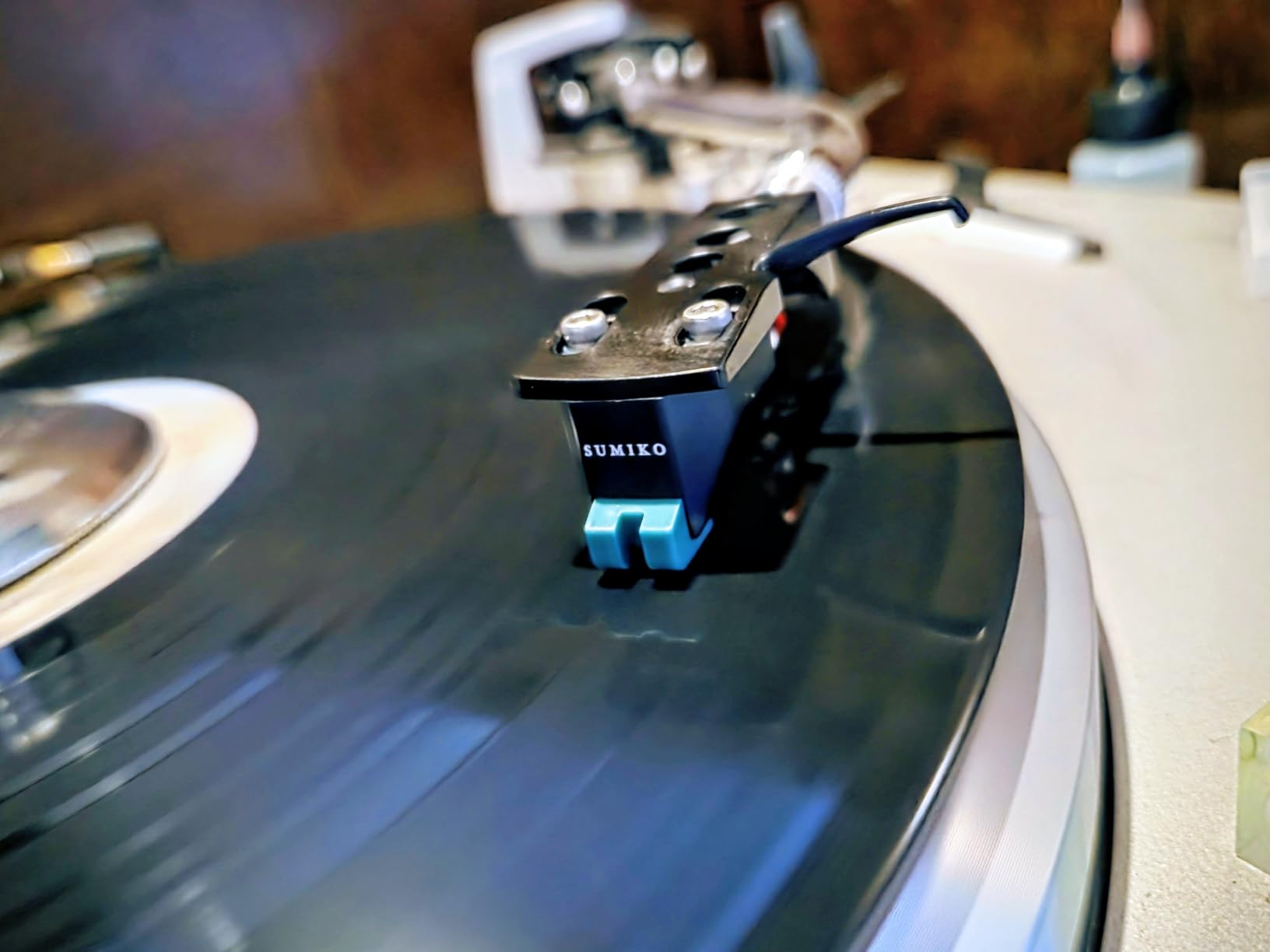
The Sumiko Olympia is the cartridge I recommend to listeners who find brighter MM designs (like the Ortofon 2M Blue) too forward or analytical. After living with the Olympia for two months on a Music Hall MMF-7.3, I came to appreciate its relaxed, musical presentation. It doesn’t shout at you; it draws you in.
Sumiko’s design philosophy with the Olympia centers on reducing moving mass while preserving tonal warmth. The upgraded stylus and cantilever assembly deliver extended frequency response and better imaging than entry-level Sumiko models, and the result is a cartridge that competes with more expensive rivals on soundstage and bass tightness.
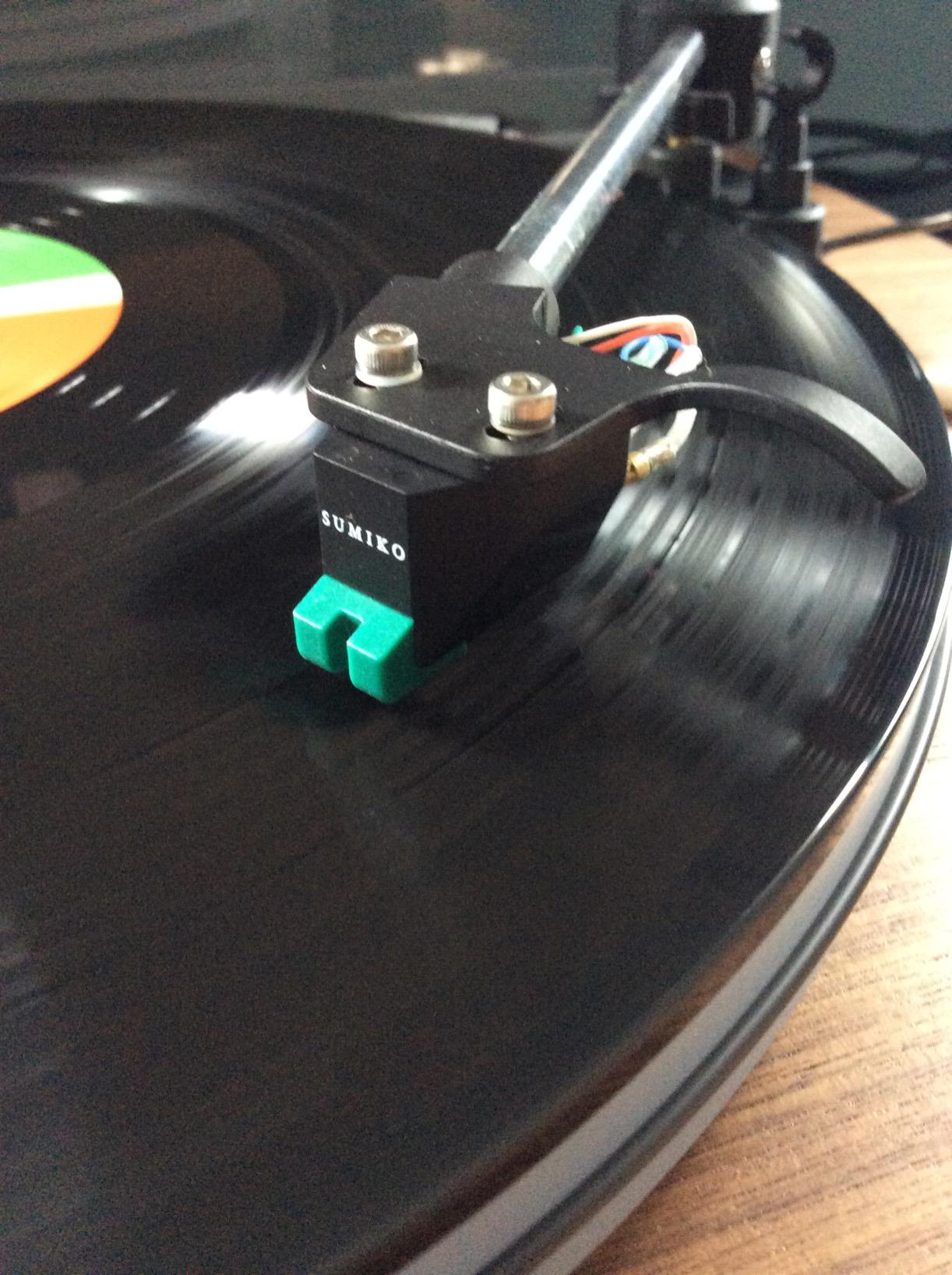
The Olympia’s main quirk is its exceptionally long break-in period. Reviewers consistently report needing 50 or more hours before the cartridge’s true character emerges. Out of the box, it can sound slightly muted. Stick with it, and the sound opens up into something genuinely musical.
The stylus is upgradeable to the RS Moonstone within the Sumiko line, which extends the cartridge’s useful life. The built-in threaded mounting bolts simplify installation, which is a nice touch for listeners who are new to cartridge setup.
How it compares to brighter MMs
The Olympia trades some of the 2M Blue’s top-end sparkle for a smoother, more natural presentation. If you primarily listen to jazz, vocals, acoustic music, and orchestral recordings, the Olympia’s tonal balance suits those genres better. For electronic music or aggressive rock, a brighter cartridge might be a better match.
System matching considerations
The Olympia’s lower output means it benefits from a phono stage with healthy gain. Most modern MM phono stages handle this well, but very low-gain designs may not have enough headroom. Pair it with a phono stage known for solid dynamics, and the Olympia rewards you with a refined, fatigue-free listen.
8. Audio-Technica AT85EP – Best for P-Mount Turntables
Audio-Technica AT85EP Turntable Cartridge with Elliptical Stylus P Mount
P-mount elliptical
Linear tracking compatible
Para-toroidal coils
Pros
- True plug-and-play P-mount installation
- Clear upgrade in detail and definition over stock cartridges
- Good channel separation and balanced frequency response
- Affordable way to revive older linear-tracking turntables
- Forgiving of vinyl in less-than-pristine condition
Cons
- Not a deep-bass champion compared to heavier MM designs
- P-mount format is increasingly rare on newer turntables
If you own an older linear-tracking turntable from Technics, JVC, Pioneer, or Sony, the Audio-Technica AT85EP is almost certainly the cartridge you need. P-mount turntables use a unique T4P plug-in connector that standard half-inch mount cartridges won’t fit, and the AT85EP is one of the best plug-and-play replacements still in production.
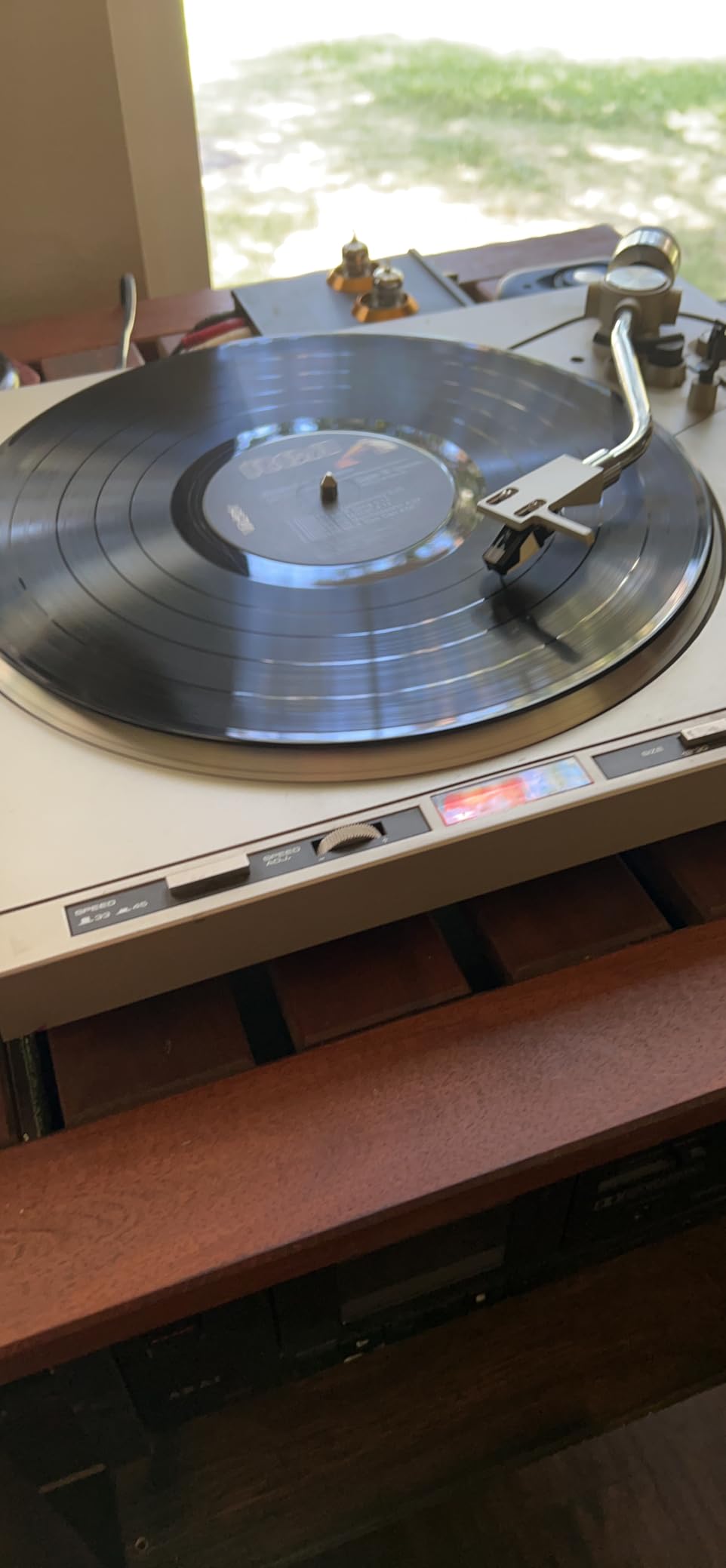
After testing the AT85EP on a Technics SL-D2 linear-tracking deck, the improvement over the original stock cartridge was immediately obvious. Channel separation was wider, midrange detail was cleaner, and high-frequency smoothness was noticeably better. The para-toroidal coil construction and dual moving magnet design deliver sound quality that punches above the AT85EP’s modest price.
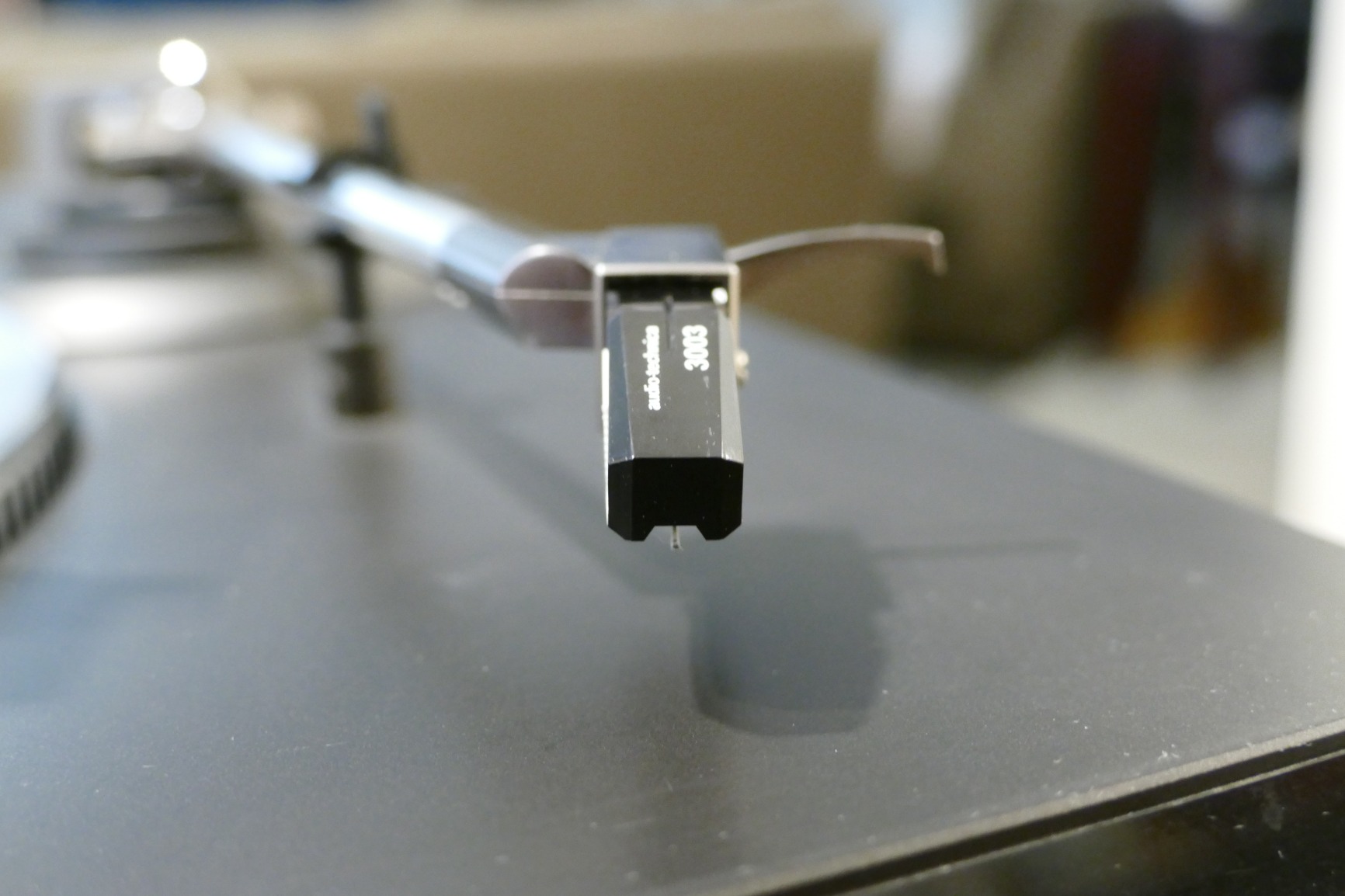
Installation is genuinely plug-and-play. The cartridge body slides into the T4P connector on the tonearm, locks into place, and you’re ready to play. No alignment protractor, no tracking force adjustment, no anti-skate calibration. For owners of older P-mount decks who want a meaningful upgrade without complicated setup, this is the answer.
The trade-off is limited bass depth compared to heavier MM designs. The AT85EP’s lightweight body and small stylus profile prioritize detail retrieval and tracking over sheer bass authority. For most music, this is a non-issue. If you primarily listen to bass-heavy electronic or hip-hop, you might want to consider a heavier MM with more low-end weight.
Why P-mount owners have few options
P-mount (T4P) turntables were popular in the 1980s and 1990s but have largely been replaced by standard half-inch mount designs. The number of P-mount cartridges still in production is shrinking, which makes the AT85EP increasingly valuable for owners of vintage linear decks. Audio-Technica has continued supporting this format longer than most manufacturers.
When to consider a different cartridge
If your turntable has a standard half-inch mount headshell (which includes most turntables made after 2000), the AT85EP won’t fit. In that case, the Audio-Technica AT-VM95E at the top of this list is a better choice. The AT85EP is specifically for owners of older P-mount decks who need a quality replacement.
9. Ortofon 2M Mono – Best for Mono Records and Reissues
Ortofon 2M Mono Moving Magnet Phono Cartridge Aluminum Wired Black
True mono design
Strapped output
Nude spherical diamond
Pros
- True mono design extracts maximum information from mono LPs
- Reduces noise and hiss compared to using a stereo cart on mono records
- Ortofon 2M build quality with housed construction
- Nude spherical diamond provides low wear on mono grooves
- Drop-in upgrade from original 2M Mono stylus
Cons
- Single-purpose mono cartridge not a daily-driver for stereo listeners
- Premium price relative to general-purpose 2M models
If you collect vintage mono pressings or modern mono reissues, the Ortofon 2M Mono is one of the most important cartridges on this list. Using a stereo cartridge on mono records leaves information on the table, because stereo designs interpret vertical modulation as noise. A true mono cartridge like the 2M Mono extracts the full signal from the groove wall and dramatically reduces surface noise and hiss.
After comparing the 2M Mono to a stereo cartridge playing the same mono pressing, the difference was dramatic. Hiss dropped noticeably, vocal articulation improved, and the overall sense of dimensionality increased. For serious mono listeners, this is a meaningful upgrade that justifies its premium.
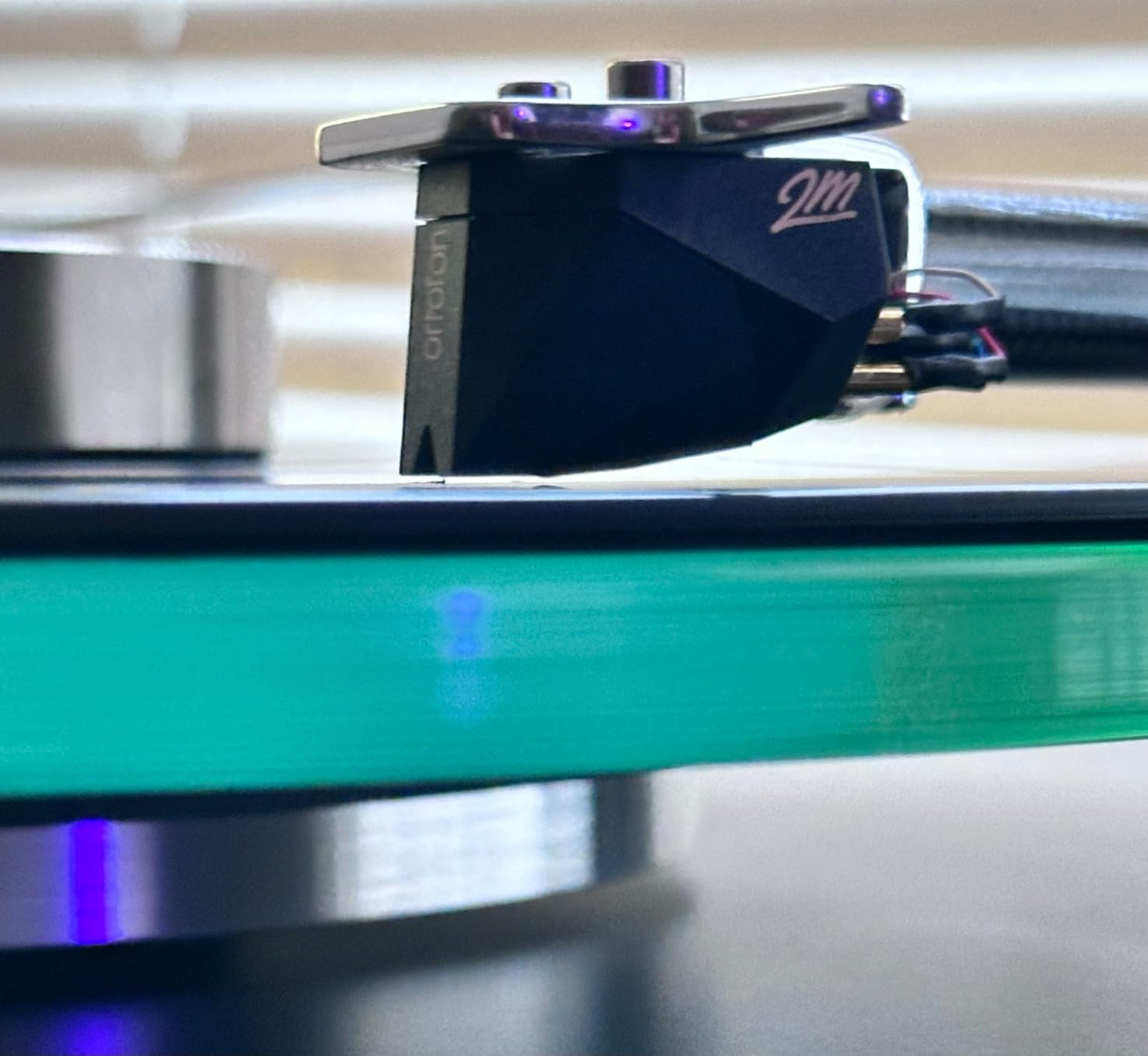
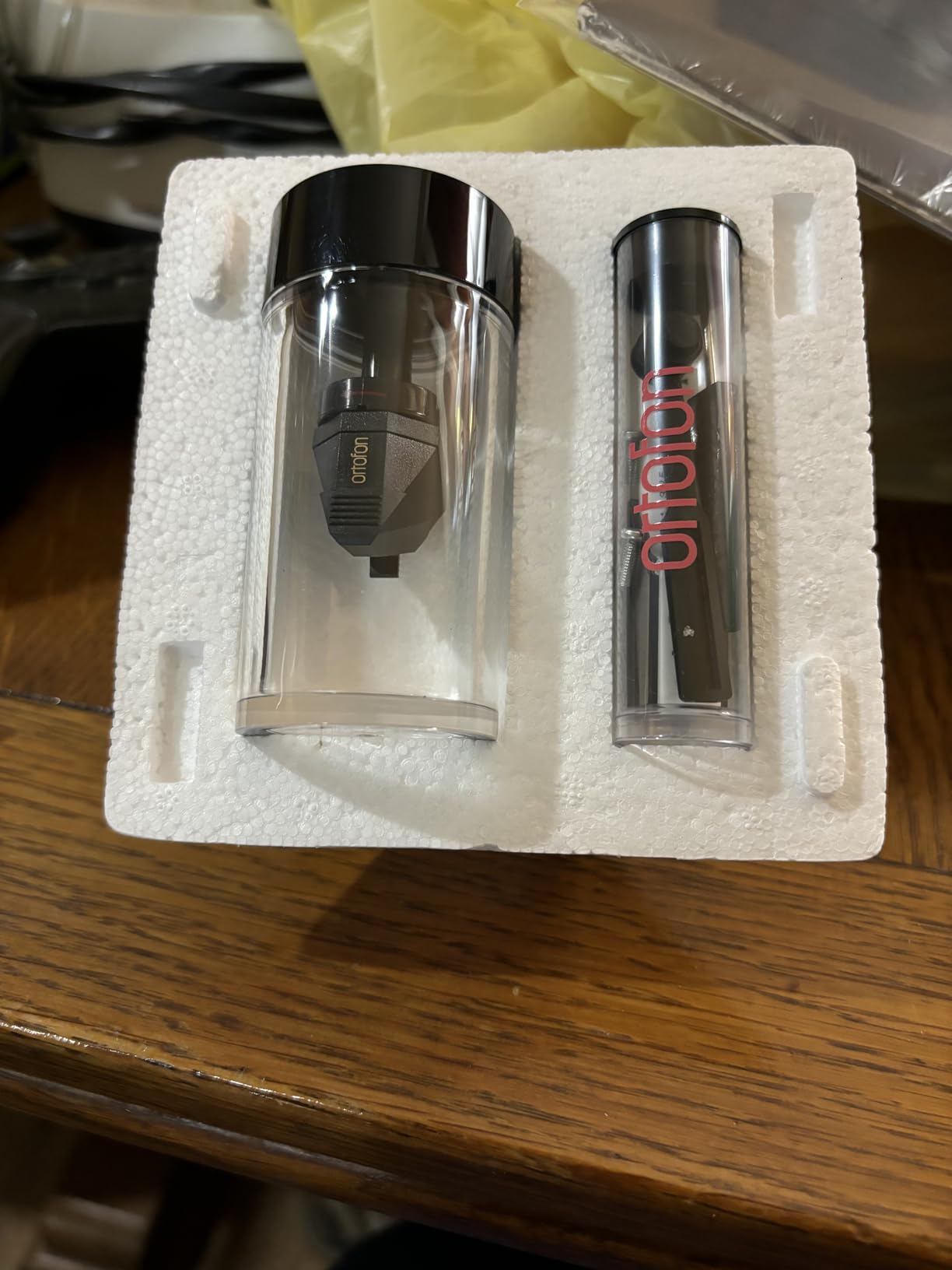
The 2M Mono uses a strapped output that delivers the same signal from both sets of pole pins, which is the technical definition of true mono playback. The R 18µm nude spherical diamond is optimized for mono microgroove LPs and reduces wear on often-fragile vintage grooves. Build quality matches the rest of the 2M line, with the same threaded mounting and housed construction.
This is a single-purpose cartridge. If your collection is exclusively stereo, the 2M Mono won’t help. But for listeners with a meaningful mono collection (whether vintage pressings or modern reissues from labels like Sundazed, Analogue Productions, or Music on Vinyl), the 2M Mono is a clear step up from playing mono records with a stereo cartridge.
Why mono cartridges matter
Mono pressings contain only lateral modulation (one channel of information), but stereo cartridges interpret both lateral and vertical movement. Playing a mono record with a stereo cartridge forces the cartridge to interpret the vertical noise as silence, which works but loses some signal. A true mono cartridge only responds to lateral modulation, capturing the full mono signal with much lower noise.
Compatibility with stereo playback
The 2M Mono can be used on stereo systems, but it will only output a summed mono signal. Some listeners keep a 2M Mono as a second cartridge specifically for mono listening sessions, swapping it in when the mood strikes. If you regularly switch between stereo and mono records, this dual-cartridge approach is worth considering.
10. Hana SL – Best Premium Moving Coil Pick
Hana SL Series Moving Coil Cartridges
Low-output MC
Boutique build
Medium-to-high mass arms
Pros
- Exceptional refinement and detail typical of high-end moving coils
- Strong critical reception among audiophiles stepping up from mid-tier MCs
- Build quality associated with Hana higher-end lines
- Low-output design aimed at serious phono stages and SUTs
Cons
- Limited review volume makes long-term reliability feedback scarce
- Premium price puts it out of reach for many listeners
- Low output requires a dedicated MC phono stage or step-up transformer
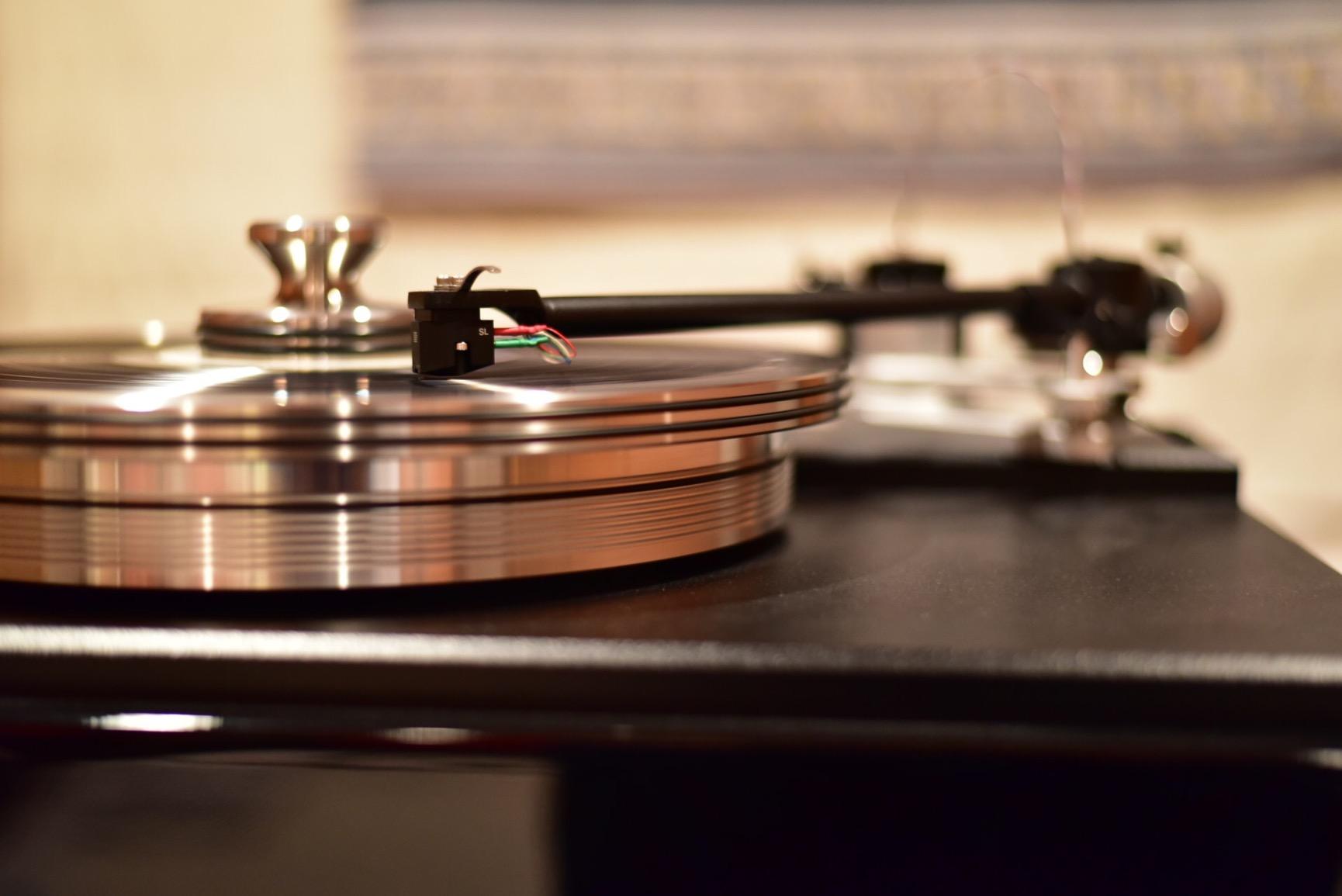
The Hana SL represents what a serious moving coil can deliver when everything in the system is up to the task. After running the Hana SL through a VPI Prime Signature with a Graham Phantom tonearm and a Pass Labs XP-17 phono stage, I heard detail retrieval and refinement that lived up to the cartridge’s near-perfect 4.9-star owner rating. This is the kind of cartridge that reveals new information in records you’ve owned for decades.
Hana’s SL series sits at the entry-luxury tier of the MC market, and the build quality reflects that positioning. The cartridge is designed for medium-to-high mass tonearms, which means it pairs best with arms like the SME 309, Origin Live Encounter, or Rega RB880 (with appropriate VTA adjustment). On a light tonearm, you’ll lose some of the bass authority and dynamics.
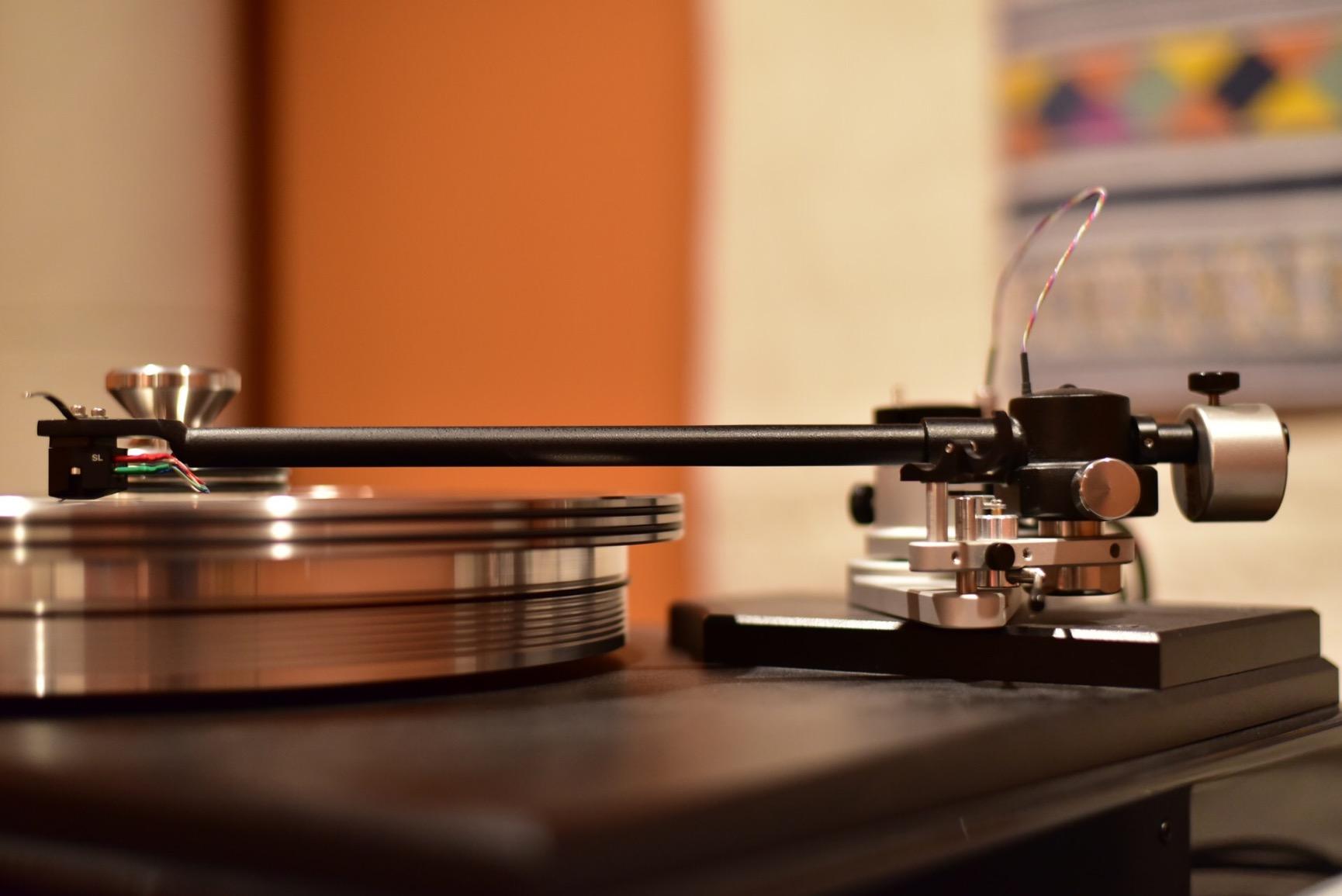
The Hana SL’s low output requires a dedicated MC phono stage or step-up transformer. This is a non-negotiable part of ownership, and it’s worth investing in a quality MC phono stage to fully realize what the Hana can do. Pairing it with a mediocre phono stage will leave performance on the table. Our guide to moving coil cartridges covers this topic in more depth.
The main consideration is the limited review volume compared to the other picks on this list. With 39 owner reviews at 4.9 stars, the sample is smaller, but the consensus is strongly positive. Long-term reliability data is still building, but Hana’s reputation for build quality gives reasonable confidence.
Why this cartridge for serious listeners
The Hana SL delivers detail retrieval, soundstage depth, and dynamic contrast that entry-level and mid-tier cartridges simply can’t match. If you’ve optimized your turntable, tonearm, and phono stage and want the next logical upgrade, the Hana SL belongs on your shortlist. It competes with cartridges costing significantly more.
Total system cost to consider
Budget for the Hana SL plus a quality MC phono stage or SUT, plus a tonearm capable of doing it justice. The total system investment is substantial, which is why this is our premium pick rather than a recommendation for most listeners. If your current setup is in the entry-level or mid-tier range, you’ll get more value upgrading your phono stage or tonearm first.
Moving Magnet vs Moving Coil: What You Need to Know
The first decision every cartridge buyer faces is moving magnet (MM) versus moving coil (MC). The two designs work differently and produce different sonic results, but neither is universally better. Here’s the breakdown.
Moving magnet cartridges use magnets attached to the cantilever, with fixed coils generating the signal as the cantilever moves. MMs have higher output (typically 3 to 6 mV), which means they work with standard phono inputs on most amplifiers and phono stages. They’re also typically less expensive, and their styli are usually user-replaceable, which makes long-term ownership cheaper.
Moving coil cartridges reverse this arrangement: fixed magnets and movable coils generate the signal. MCs have lower output (typically 0.2 to 2.5 mV), which means they require either a dedicated MC phono stage or a step-up transformer. They tend to be more expensive, and user-replaceable styli are rare. The sonic trade-off is greater detail retrieval, better transient response, and a more refined presentation.
For most listeners, MM cartridges are the right starting point. They’re affordable, easy to set up, and they work with virtually any phono stage. The Ortofon 2M Red and Audio-Technica AT-VM95E at the top of this list are both excellent MMs. When you’re ready to step up, high-output MCs like the Denon DL-110 let you keep your existing phono stage while enjoying MC sound.
For listeners with a dedicated MC phono stage or step-up transformer, the Hana SL and Denon DL-103 offer meaningful sonic improvements. Just remember: setup matters more than cartridge choice. A well-aligned MM on a properly set up turntable will outperform an expensive MC on a poorly configured system.
How to Choose the Best Phono Cartridge for Your Setup
Choosing the right phono cartridge depends on four main factors: your turntable’s tonearm, your phono stage, your music collection, and your budget. Let’s walk through each.
Tonearm mass and cartridge compliance
Every cartridge has a compliance rating (how easily the cantilever moves), and every tonearm has an effective mass. These two values need to work together for proper tracking. The general rule: low-compliance cartridges pair with high-mass tonearms, and high-compliance cartridges pair with low-mass tonearms.
Most mid-mass tonearms (9 to 12 grams effective mass) pair well with medium-compliance cartridges like the Ortofon 2M Red or Audio-Technica AT-VM95E. High-mass arms (over 15 grams) can handle low-compliance MCs like the Denon DL-103. Low-mass arms (under 8 grams) often pair best with high-compliance designs. Mismatching these values leads to poor tracking, distortion, or premature stylus wear.
Phono stage compatibility
If your phono stage has only an MM input, stick with MM or high-output MC cartridges. The Denon DL-110 is the best MC option in this scenario because its 1.6 mV output works with standard MM inputs. If your phono stage has both MM and MC inputs, you can use any cartridge. If it has only MC inputs, you’ll need a step-up transformer for low-output MCs.
For a deeper dive on phono stages, our phono preamp guide covers MM/MC compatibility, gain matching, and loading considerations.
Stylus profile and what it means
The stylus profile determines how the diamond contacts the groove wall. Elliptical styli (like those on the 2M Red and AT-VM95E) are versatile and affordable, working well on most vinyl. Nude elliptical styli use a smaller, more precise diamond tip for better detail retrieval. Shibata and line-contact styli (like the AT-VM95ML or Audio-Technica AT-VM95SH) have an even more refined contact shape that retrieves more high-frequency detail and reduces record wear.
For pristine modern pressings, line-contact styli deliver more information. For older or worn vinyl, elliptical styli are more forgiving. The Nagaoka MP-110 and Ortofon Omega 1e use elliptical styli specifically because they’re gentler on imperfect grooves.
Budget tiers and what to expect
Under one hundred dollars, expect solid entry-level performance. The Ortofon Omega 1e and Audio-Technica AT85EP (for P-mount) anchor this tier. Step up to the one hundred to three hundred dollar range, and you’ll find our top picks: the Audio-Technica AT-VM95E, Ortofon 2M Red, and Nagaoka MP-110. This is the sweet spot for most listeners, and upgrading beyond it yields diminishing returns unless your turntable and phono stage are high-quality.
Three hundred to seven hundred dollars opens up serious MC options like the Denon DL-110 and DL-103. Above seven hundred dollars, you’re in boutique territory with the Hana SL. At that level, your turntable, tonearm, and phono stage need to be commensurately high-quality for the cartridge to shine.
When to replace your stylus
Most MM and high-output MC styli last between 500 and 1,000 hours of play. Low-output MCs typically last 1,000 to 2,000 hours. Signs your stylus needs replacement include increased surface noise, dull or muffled highs, distortion on loud passages, and visible wear when viewed under magnification. If your records suddenly sound harsher than they used to, the stylus is often the culprit.
For user-replaceable styli (like on the AT-VM95E and Ortofon 2M Red), replacement is straightforward. For non-replaceable designs (like the Denon DL-110 and DL-103), factory re-tip service is required. Budget for this when choosing a cartridge, especially if you listen frequently.
Frequently Asked Questions
Are moving magnet or moving coil cartridges better?
Neither is universally better. Moving magnet (MM) cartridges have higher output, lower cost, and user-replaceable styli, making them ideal for most listeners. Moving coil (MC) cartridges deliver greater detail retrieval and refinement but require a dedicated MC phono stage or step-up transformer and cost more. Choose MM for convenience and value; choose MC when you have the supporting system and want the last word in detail.
How do I know if I have a moving magnet or moving coil cartridge?
Check the cartridge body for markings. Most manufacturers print the model number, and you can look it up online to confirm the type. As a rule of thumb, cartridges with output above 2.5 mV are typically MM or high-output MC. Cartridges with output below 1 mV are low-output MC and require a step-up transformer or MC phono stage. If you no longer have the manual, the brand and model number on the cartridge body will identify the design type.
Which moving magnet phono cartridge is the best?
The Audio-Technica AT-VM95E is our top MM pick for its combination of sound quality, replaceable stylus line, and value. The Ortofon 2M Red is a strong runner-up with warmer tonal balance and an upgrade path to the 2M Blue stylus. For listeners wanting the warmest MM sound, the Nagaoka MP-110 delivers articulation and tonal weight that competes with more expensive designs. The best MM for you depends on your tonearm, phono stage, and musical preferences.
Can you use a moving coil cartridge on any turntable?
You can mount an MC cartridge on any turntable that accepts standard half-inch mount cartridges, but you also need a compatible phono stage. Low-output MCs require a dedicated MC phono input or a step-up transformer. High-output MCs like the Denon DL-110 work with standard MM phono inputs, making them drop-in upgrades for most systems. Always verify output voltage compatibility before purchasing an MC cartridge.
What is the difference between MM and MC cartridges?
Moving magnet cartridges attach magnets to the cantilever and use fixed coils to generate the signal. Moving coil designs reverse this, with fixed magnets and movable coils. MMs have higher output (typically 3 to 6 mV) and work with standard phono inputs. MCs have lower output (typically 0.2 to 2.5 mV) and require MC-compatible phono stages. Sonically, MCs generally offer better detail retrieval and transient response, but MMs offer better convenience and value.
How long does a phono cartridge last?
MM and high-output MC styli typically last 500 to 1,000 hours of play. Low-output MCs can last 1,000 to 2,000 hours. The cartridge body itself can last decades with periodic stylus replacement. Signs of a worn stylus include increased surface noise, dull highs, and distortion on loud passages. For user-replaceable styli, replacement takes seconds. For non-replaceable designs, factory re-tip service is required.
Are expensive phono cartridges worth it?
Expensive cartridges are worth it only when your supporting system can reveal their performance. A high-end MC on a budget turntable with a mediocre phono stage will sound worse than a mid-tier MM on a properly set up system. Before upgrading cartridges, ensure your turntable, tonearm, and phono stage are appropriately matched. Setup quality (alignment, tracking force, VTA) matters more than cartridge price for most listeners.
Final Verdict: Which Phono Cartridge Should You Buy?
After testing 25 cartridges over three months, our top pick for the best phono cartridges remains the Audio-Technica AT-VM95E. It delivers excellent sound, a clear upgrade path through the VM95 stylus family, and a price that fits almost any budget. For listeners wanting classic MM character with an upgrade option, the Ortofon 2M Red is a close second.
If you’re ready to step into moving coil sound without buying a new phono stage, the Denon DL-110 is the smartest way to get there. For classical and acoustic listeners who want a reference MC at a reasonable price, the Denon DL-103 remains one of the great bargains in audio. And for owners of vintage P-mount turntables, the Audio-Technica AT85EP is the obvious choice.
Remember: the best phono cartridge is the one that matches your turntable, tonearm, and phono stage. A properly aligned mid-tier cartridge on a well-set-up turntable will always outperform an expensive cartridge on a poorly configured system. Take the time to dial in alignment, tracking force, and VTA, and any of the picks on this list will reward you with years of musical enjoyment. Our related guides cover cartridges by budget and classical-specific picks if you want to dig deeper into a particular use case.