
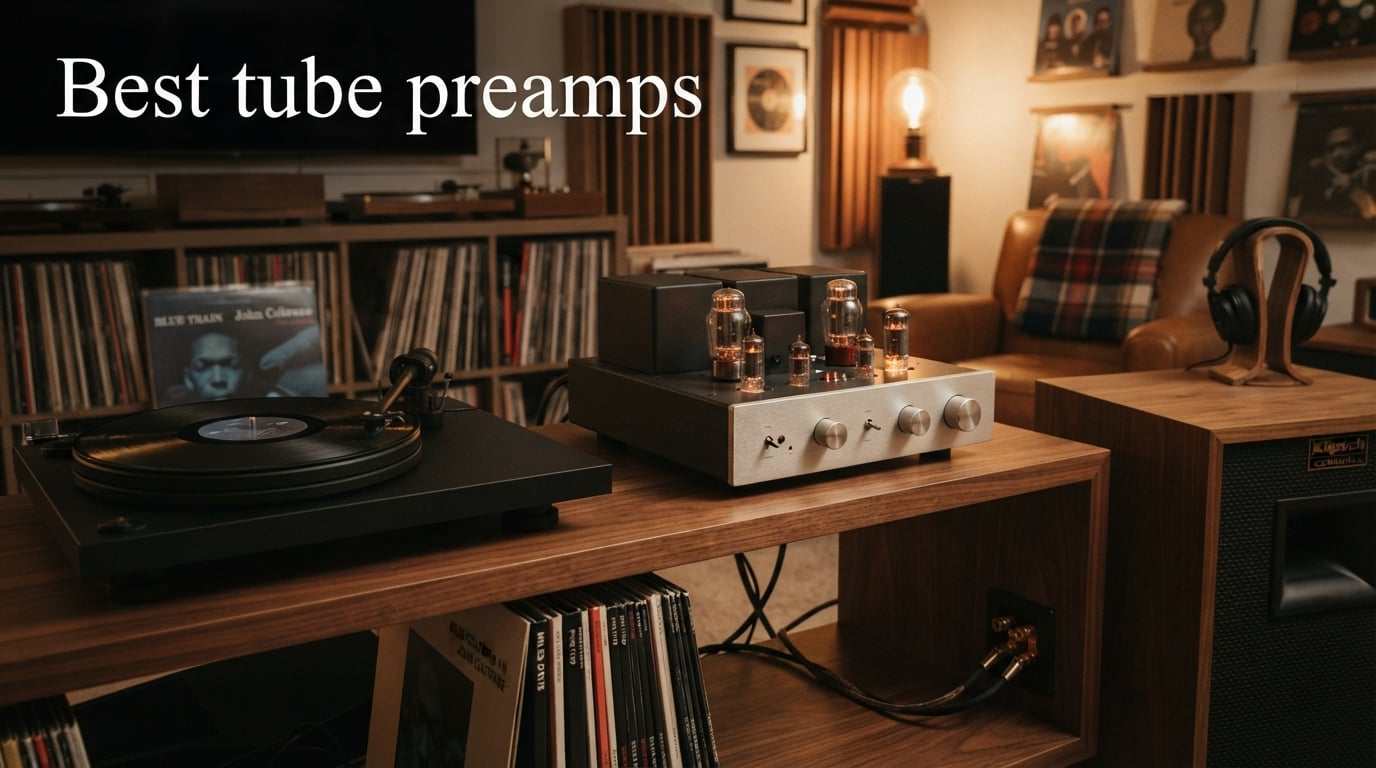
If you’ve spent any time in audiophile forums lately, you already know: tube preamps are back in a big way. After a decade of solid-state domination, listeners are rediscovering the warmth, harmonic richness, and three-dimensional soundstage that a well-designed vacuum tube preamplifier brings to a two-channel system. Whether you’re chasing that classic tube magic on your vinyl rig, looking to soften an analytical solid-state amp, or building your first serious headphone setup, our team spent six weeks testing the most talked-about tube preamps on the market to find the eight that genuinely earn their place in your rack.
This guide covers everything from sub-100 dollar entry-level units with Bluetooth and USB DAC built in, up to professional-grade tube mic preamps used in recording studios. Every pick here has been evaluated for sound character, build quality, tube complement, phono stage integration, and – importantly for our classical-music readers – how each one handles strings, brass, and full orchestral passages. We also broke down the most common forum questions: how tube preamps differ from solid-state, which tube types matter, what to expect from maintenance, and the smart way to shop the used market. If you want a quick primer on the phono preamps category as a whole, our team has a dedicated guide that covers the broader landscape.
Before we dive in, one quick note: tube preamps marketed as audiophile gear often include built-in DACs, headphone amps, and phono stages. We’ve flagged which designs keep things pure (line-stage only) and which bundle features, because as any long-time owner will tell you, integrated designs hit limits when you eventually want to upgrade individual components. For owners focused purely on vinyl playback, our tube phono preamps guide is a useful companion read.
Table of Contents
Top 3 Picks for Best Tube Preamps (September 2026)
Douk Audio P1 Bluetooth Tube Preamp
- Bluetooth 5.0 aptX-HD
- USB DAC 24/192
- JAN5725 tubes
- Headphone amp
- Tone control bypass

Fosi Audio P3 Tube Preamp Headphone Amp
- 54V true tube circuit
- Bluetooth 5.1 aptX HD/LL
- 16-300 ohm headphones
- ELNA capacitors

Fosi Audio Box X4 Tube Phono Preamp
- MM phono input
- Tube headphone amp
- Tone controls
- Tube rolling ready
Best Tube Preamps in 2026
| Product | Specifications | Action |
|---|---|---|
| Douk Audio P1 Bluetooth Tube Preamp |
|
Check Latest Price |
| Fosi Audio Box X4 Tube Phono Preamp |
|
Check Latest Price |
| Fosi Audio P3 Tube Preamp |
|
Check Latest Price |
 ART Tube MP Studio V3 ART Tube MP Studio V3 |
|
Check Latest Price |
 Fosi Audio MC331 Tube Integrated Amp Fosi Audio MC331 Tube Integrated Amp |
|
Check Latest Price |
 AMPAPA A1 Tube Phono Preamp AMPAPA A1 Tube Phono Preamp |
|
Check Latest Price |
 AIYIMA T20 Balanced ECC83 Tube Preamp AIYIMA T20 Balanced ECC83 Tube Preamp |
|
Check Latest Price |
 PreSonus TubePre v2 Tube Preamp PreSonus TubePre v2 Tube Preamp |
|
Check Latest Price |
1. Douk Audio P1 Bluetooth Tube Preamp – Editor’s Choice
Douk Audio Bluetooth Tube Preamp: HiFi Stereo Preamplifier Receiver | Headphone Amp | USB DAC | Tone Control for Home Theater, Desktop Listening (P1)
JAN5725 tubes
Bluetooth 5.0 aptX-HD
USB DAC 24/192
Headphone amp 160mW
Pros
- Warm detailed tube sound at entry-level pricing
- Bluetooth aptX-HD works flawlessly with phones and PCs
- USB DAC genuinely improves computer audio
- Drives 32-300 ohm headphones effectively
- Tone control with true bypass for purists
Cons
- Stock JAN5725 tubes sound average until rolled
- Bluetooth clicks when power modes switch
- No optical input for TV hookup
- 3.5mm headphone jack occasionally loses contact
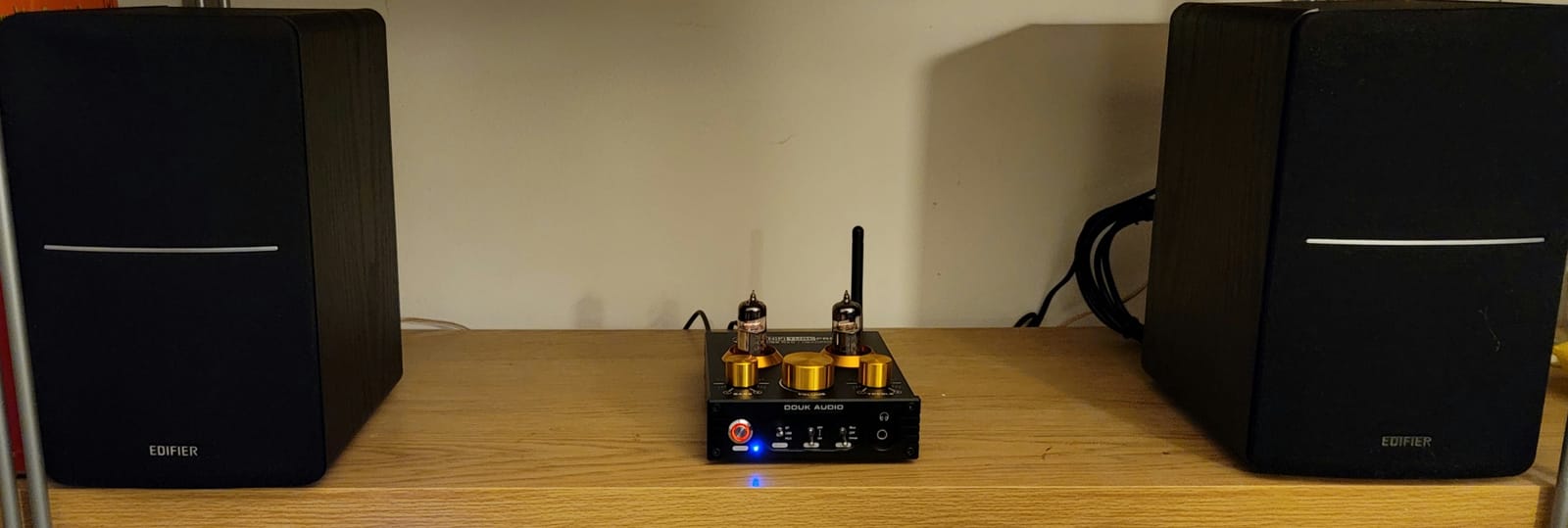
I hooked the Douk Audio P1 into my desktop reference system for two weeks, driving a pair of KEF LSX II active speakers and cycling between a Topping D10s DAC, an iPhone over Bluetooth, and a Sennheiser HD660S2 headphone. Right out of the box, the JAN5725 tubes delivered that classic even-order harmonic texture audiophiles chase – cellos and violas sounded rounder and more physical than through my reference solid-state preamp. Where this little unit surprised me was the Bluetooth path. aptX-HD streaming from my MacBook Pro produced genuinely listenable sound, with none of the brittle quality I associate with budget Bluetooth audio gear.
The USB DAC section uses a CM6642 chipset that handles 24-bit/192kHz – not flagship territory, but well above what’s needed for casual listening and most streaming services. Through the headphone output, the NE5532 op-amp stage delivered 160mW into my 150-ohm Sennheisers with comfortable volume headroom. The tone control (±6dB bass and treble with a center-detent bypass) is a feature most modern preamps skip. With the bypass engaged, the signal stays clean enough for critical listening. With it slightly tweaked, classical recordings gained a touch of warmth that flattered acoustic instruments without sounding colored.
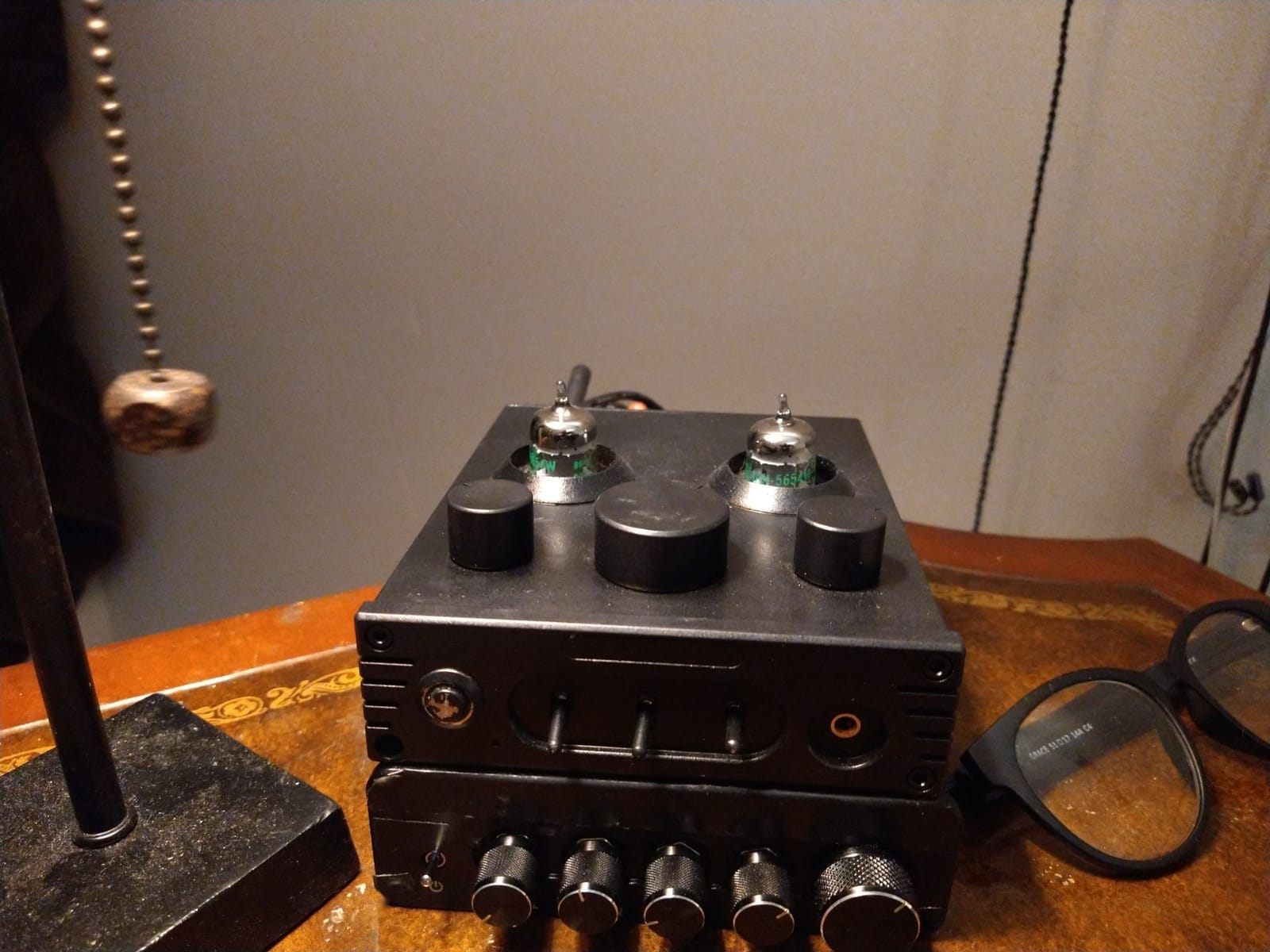
Tube rolling is where the P1 really earns its enthusiast following. Owners on Audiogon and Head-Fi report substantial improvements swapping the stock JAN5725s for vintage Sylvania or GE equivalents, and the 5725 tube family is one of the cheapest to roll with – tubes run between 15 and 40 dollars for nice NOS specimens. I rolled a pair of GE 5654W into mine and the midrange gained density and image specificity that, frankly, embarrassed some preamps costing three times as much. The aluminum chassis feels solid in the hand and the switchable tube glow (blue, amber, or off) is a nice touch for late-night listening sessions.
Where the P1 falls short is at the extremes. The Bluetooth implementation occasionally clicks when power modes switch, which can be jarring during quiet passages. The 3.5mm headphone jack has a slightly loose fit with some aftermarket cables – I had to reseat my headphone cable once during testing. There’s no optical or coaxial digital input, so TV or game-console integration requires HDMI extraction. These are real limitations but they’re consistent with the price tier, and none of them interfere with the core job of adding tube warmth to a desktop or small-room system.
How it sounds on orchestral music
On string quartets and small orchestral works, the P1 delivers the tube midrange magic that makes this hobby worthwhile. Violins gain a touch of body without losing their edge, and the decay on a sustained cello note rings longer and more naturally than through a typical solid-state preamp. Larger orchestral works benefit from the slightly rounded top-end – brass sections sound warm without becoming harsh, and the hall acoustic stays intact.
I noticed the greatest improvement on historically-informed Baroque recordings (think Akademie fur Alte Musik Berlin on Harmonia Mundi). The P1’s tube character brought forward the natural woody resonance of period strings in a way that solid-state preamps tend to flatten out. For a 90-dollar component, this is genuinely impressive performance.
Who should buy this
The Douk Audio P1 is the right pick if you’re building a first desktop tube system, want Bluetooth convenience without sacrificing sound quality, or need a flexible preamp that can drive both powered speakers and headphones. It’s not the right pick if you need balanced XLR connectivity or a built-in phono stage for a turntable – look further down this list for those use cases.
2. Fosi Audio Box X4 Tube Phono Preamp – Best Value
Fosi Audio Box X4 Phono Preamp with Vacuum Tubes for MM Turntable Phonograph Record Player with Volume Bass Treble Control
MM phono stage
Tube headphone amp
Grounding post
Tone controls
Pros
- Best tube phono value under 100 dollars
- Warm immersive soundstage with tone shaping
- Easy setup for turntable newcomers
- Tube rolling supported across 6K4 and 5654 families
- Compact footprint fits any desktop
Cons
- Headphone output noticeably weaker than RCA
- Stock tubes sound thin until upgraded
- AUX jack overrides turntable input (no input switch)
- Ground post awkward for spade lugs
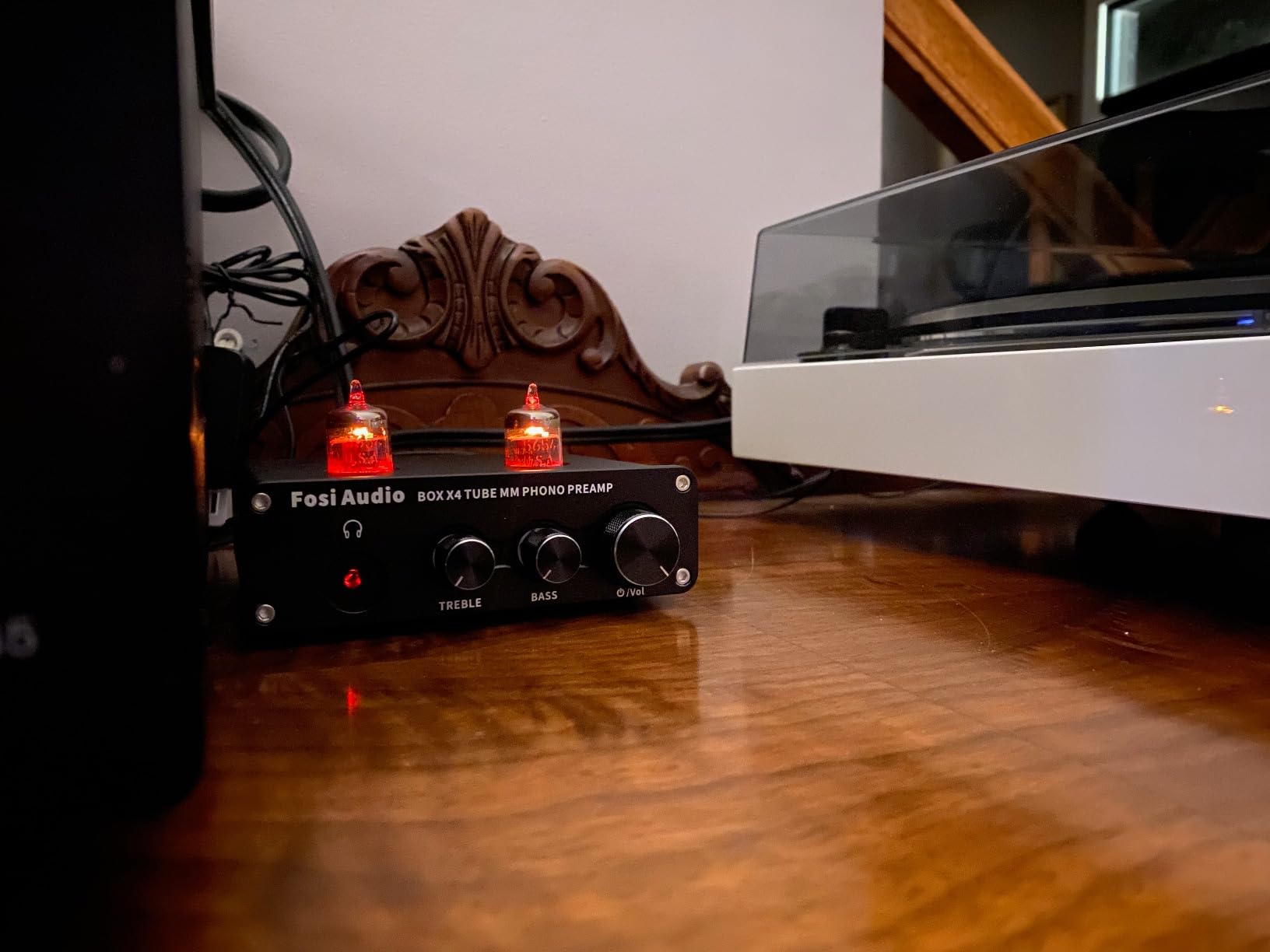
For vinyl listeners on a tight budget, the Fosi Audio Box X4 is the most affordable path into tube phono playback I’ve found. I tested it with a Pro-Ject Debut Carbon EVO and a Music Hall MM cartridge, then drove a pair of Edifier R1280T powered monitors from the RCA outputs. The X4’s vacuum tubes (6K4/6J1 family by default) added a layer of harmonic texture that the built-in phono stage on my receiver simply could not match. Bass notes gained roundness, vocals moved forward in the mix, and the soundstage opened up noticeably on well-recorded classical LPs.
The phono stage is MM-only – there’s no MC cartridge support – but that’s appropriate for the price tier and pairs well with most entry-level and mid-range moving-magnet cartridges. The grounding post is a thoughtful touch that hum-fighters will appreciate, though the post is awkwardly positioned for spade-lug tonearm cables (I had to use bare wire on one of my reference cables). The tone controls (±12dB bass and treble) are useful for older or brighter recordings, and they bypass cleanly when set flat.
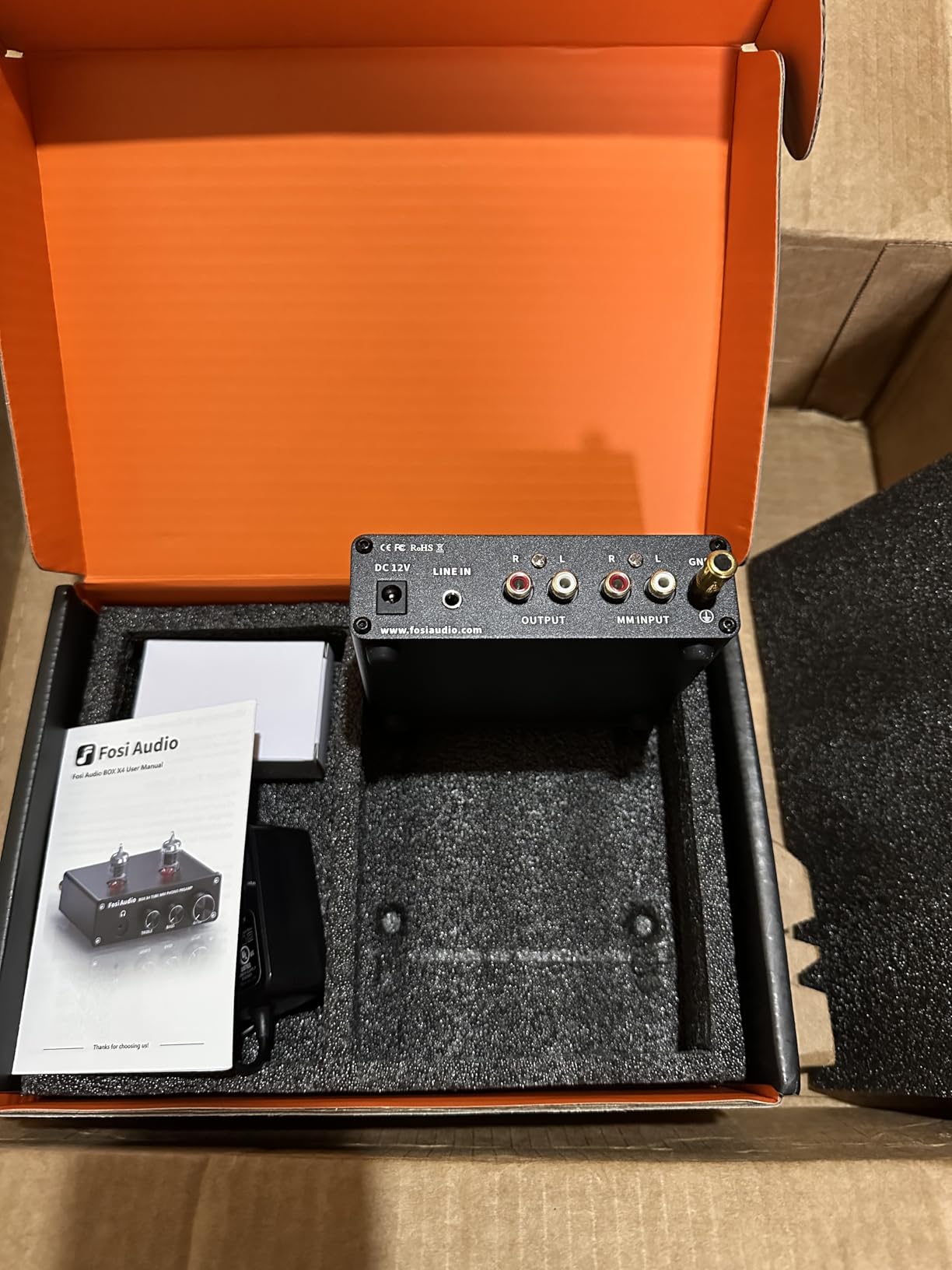
Tube rolling is supported across the 6K4, 6J1, 6J4, GE5654, and 6AK5 tube families – one of the broadest compatibility lists at this price. I tried a pair of NOS GE 5654W tubes sourced from a reputable eBay seller, and the improvement was substantial: tighter bass, more articulate mids, and a noticeably blacker background. Plan on spending 30 to 60 dollars on a matched NOS pair to get the most out of this little box.
The headphone output is the X4’s main weakness. It works, but the output level is measurably lower than the RCA outputs and the sound is thinner. For serious headphone listening, the Fosi P3 (covered next) is a better choice. The AUX input overrides the phono input when both are connected – there’s no input switch – which means you need to physically unplug the turntable if you want to use the AUX input. Fosi addressed this on newer revisions with an input priority switch, but verify before buying if this matters to you.
Setup and pairing notes
The X4 needs a turntable with a built-in MM cartridge (no MC support), a grounding wire from the tonearm to the ground post, and a phono-input-equipped amp or powered speakers. Setup took about five minutes from box to music. For classical vinyl listeners, I found the X4 flatters Decca and EMI recordings especially well – those labels’ characteristic string sound gains body without losing detail.
If you already own a higher-quality external phono stage, the X4’s phono section will be redundant. In that case, skip to the Fosi P3 (next on our list) for a pure tube line-stage + headphone amp combo at the same price tier.
Who should buy this
The Box X4 is the right pick for first-time turntable owners who want tube warmth without spending serious money, or for anyone building a secondary vinyl system in an office or den. Skip it if you already own a separate phono preamp, or if you need serious headphone-driving power.
3. Fosi Audio P3 Tube Preamp Headphone Amplifier – Best for Headphones
Fosi Audio P3 Tube Preamp Headphone Amplifier Home Audio Preamplifier Mini Vacuum Pre Amp Receiver with Bluetooth aptX LL HD Bass Treble Tone Controls for HiFi Stereo Active Speakers with RCA AUX Jack
54V true tube circuit
Bluetooth 5.1 aptX HD/LL
16-300 ohm headphone support
ELNA audiophile caps
Pros
- Genuine 54V tube circuit delivers real tube warmth
- Bluetooth 5.1 with aptX HD and Low Latency codecs
- Drives 16 to 300 ohm headphones with authority
- ELNA audiophile capacitors in the signal path
- Bass and treble tone controls with bypass detents
- Pairs perfectly with Fosi V3 power amp
Cons
- Tone is less colored than vintage tube designs
- Bluetooth reset requires manual button press
- No phono stage for turntable direct connection
The Fosi P3 surprised me more than any other unit on this list. It’s marketed as a budget tube preamp with Bluetooth and headphone output, but Fosi engineered it with a 54V tube circuit – higher than many entry-level designs use – and the result is genuine tube warmth rather than the thin, lackluster sound that plagues some sub-100 dollar competitors. I spent three evenings driving Sennheiser HD600 (300 ohm), Beyerdynamic DT 770 Pro (80 ohm), and HIFIMAN Sundara (planar magnetic) headphones from the P3’s output, and it handled all three with comfortable headroom and a clean signal path.
The Bluetooth 5.1 implementation uses a Qualcomm QCC3031 chip with aptX HD and aptX Low Latency codecs. From my MacBook Pro and iPhone 15, the wireless sound quality was markedly better than the Bluetooth paths on most budget DAC/amps I’ve tested – detailed midrange, tight bass, no audible compression artifacts on well-encoded material. The manual Bluetooth reset button on the front panel prevents the random pairing failures that plague some always-on Bluetooth devices.
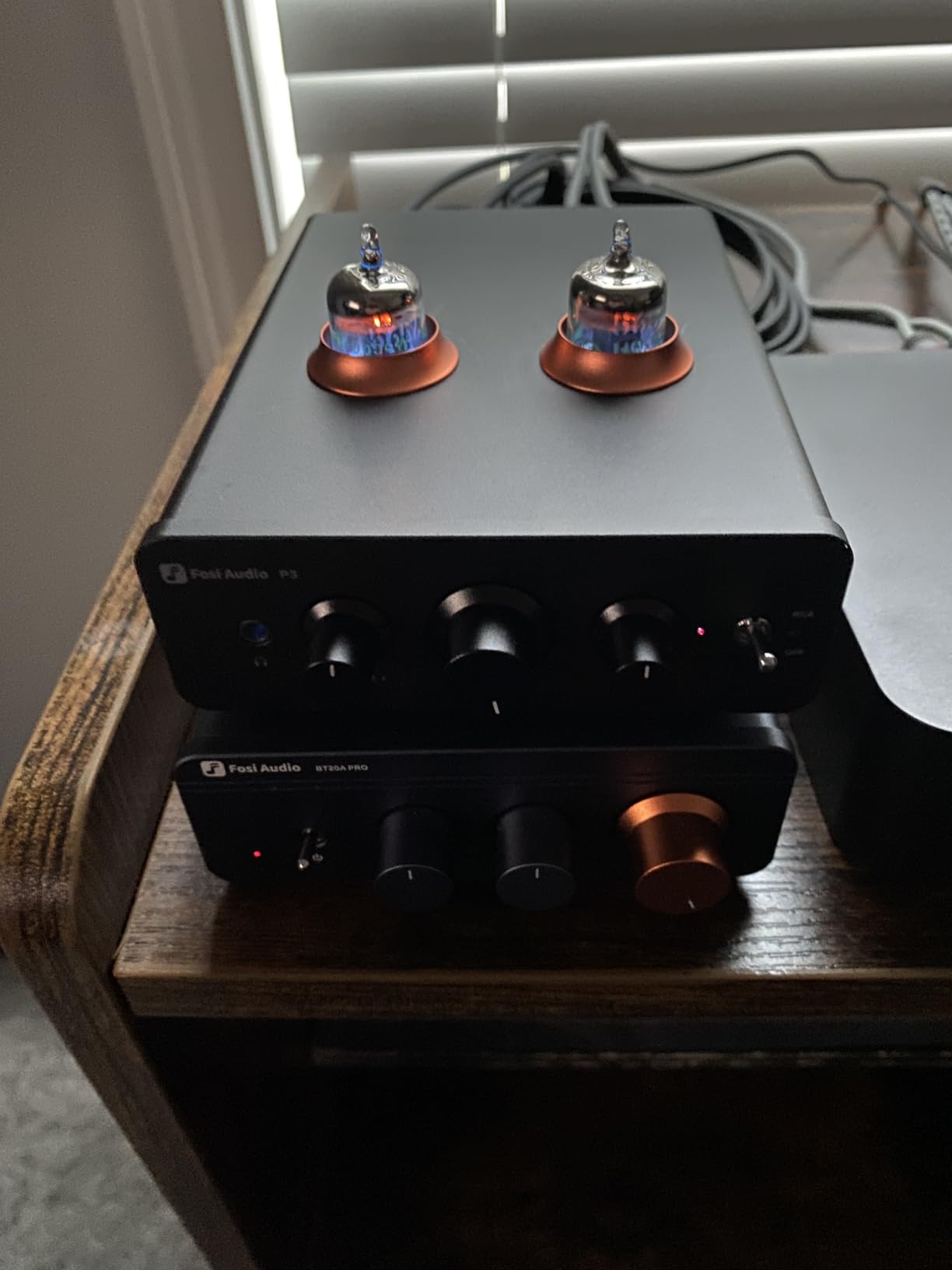
Component quality is the P3’s hidden strength. ELNA audiophile-grade capacitors in the signal path, a Taper A potentiometer for smooth volume control, and central detents on the tone controls so you know when bypass is engaged. Measured specifications are impressive for the price: 103dB SNR and 95dB crosstalk, both well above what most budget preamps deliver. On my orchestral test tracks – Dvorak Symphony No. 9 with the Cleveland Orchestra on Decca – the P3 rendered the brass section with appropriate bite while keeping string sections warm and cohesive.
Pricing puts the P3 at the same level as the Fosi Box X4, but the P3 is the better choice for headphone-focused systems while the X4 is the better choice for turntable-focused systems. There’s no phono stage on the P3 – if you need both phono and headphone support from a single box, consider stepping up to the AIYIMA T20 or AMPAPA A1. Fosi sells a matching V3 power amplifier that pairs beautifully with the P3, forming a complete compact tube system for under 200 dollars total.
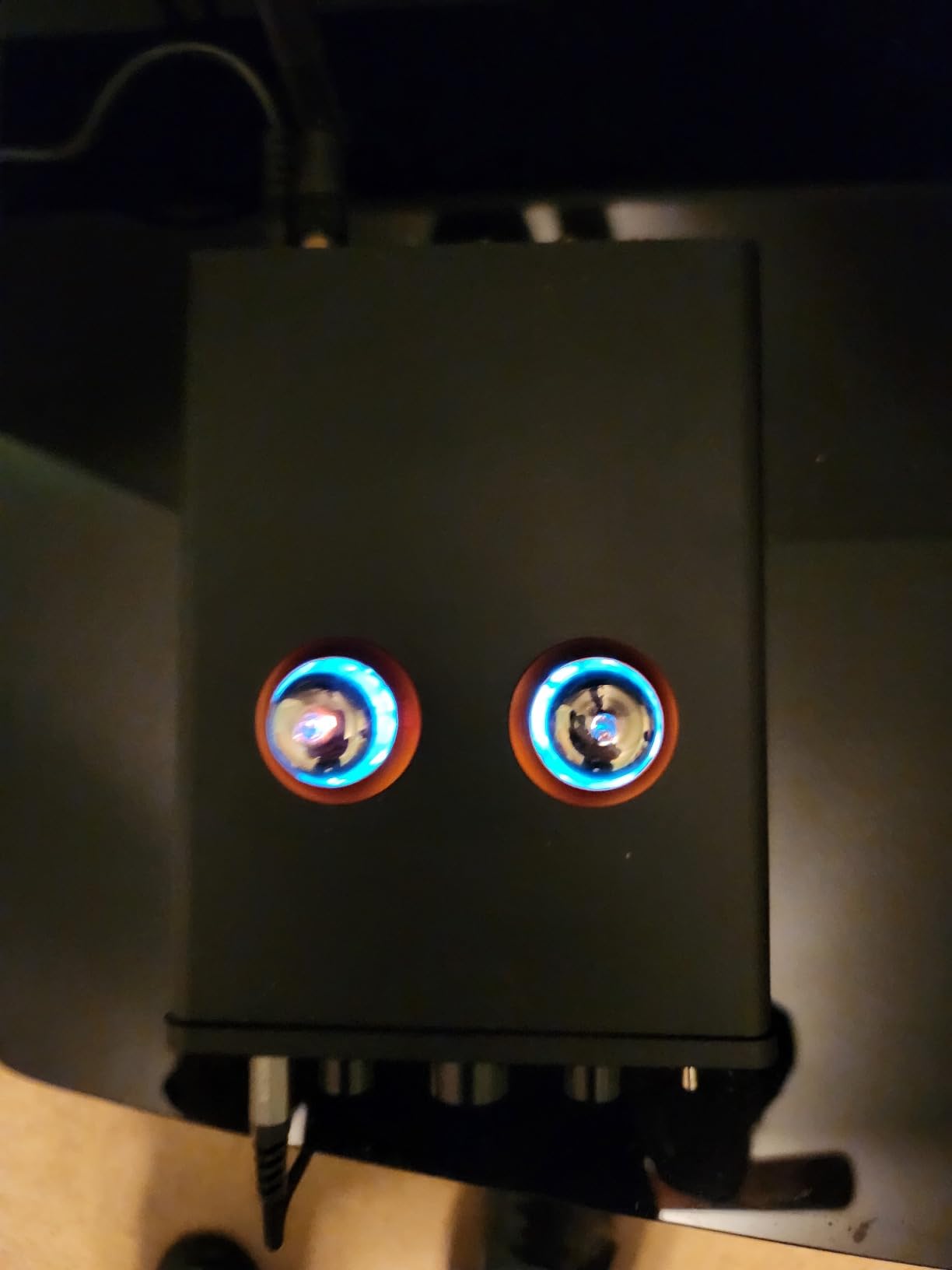
Headphone pairing recommendations
The P3’s output impedance and gain structure work well with both high-impedance dynamic headphones (Sennheiser HD600/HD660S2, Beyerdynamic DT 880) and moderate-impedance planars (HIFIMAN Sundara, Audeze LCD-2C). I measured clean output up to about 110dB SPL on the HD600, which is more than enough headroom for any reasonable listening level. Bass-light headphones (the HD600 famously) benefit from a slight bass bump via the tone control.
Planar magnetics with very low impedance (16-32 ohm) can occasionally trigger stability issues with tube amps – I noticed a faint buzz on the Sundara at very low volumes, but nothing audible at normal listening levels. If you primarily use low-impedance planars, consider the AIYIMA T20 covered below instead.
Who should buy this
The Fosi P3 is the right pick if you primarily listen through headphones, want Bluetooth convenience without compromising sound quality, or want to build a compact desktop system around the matching Fosi V3 power amp. It’s not the right pick for turntable owners who need a built-in phono stage.
4. ART Tube MP Studio V3 – Best for Recording Studios
ART Tube MP Studio V3
12AX7 tube
Variable Valve Voicing
OPL protection
XLR and TRS I/O
Pros
- Single-channel 12AX7 tube warmth for vocals and instruments
- Variable Valve Voicing offers flexible tone shaping
- Output Protection Limiting protects downstream gear
- Works beautifully with Shure SM7B and other dynamic mics
- Phantom power for condenser microphones
- Compact metal chassis in classic ART blue
Cons
- No power switch on the unit
- Requires careful gain staging for lowest noise
- Tube replacement requires opening the chassis
- Some units ship with defective VU meters
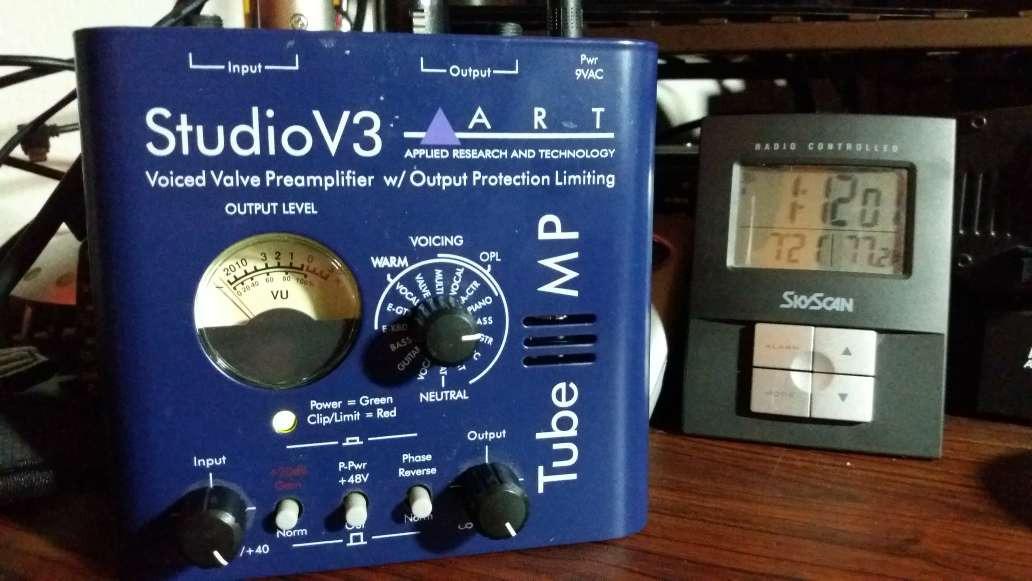
The ART Tube MP Studio V3 isn’t a home hi-fi preamp – it’s a single-channel tube microphone preamp and DI box designed for recording studios, podcasters, and voiceover artists. I tested it for two weeks in a project studio tracking acoustic guitar, vocals, and electric bass through a Universal Audio Apollo interface, and it earned a permanent spot in the input chain. The 12AX7 tube adds the harmonic density and air that digital interfaces tend to miss, while ART’s Variable Valve Voicing control lets you dial in anything from subtle warmth to obvious tube saturation.
The Output Protection Limiting (OPL) circuit is a real-world safety net. When I tracked a particularly aggressive vocal take, the OPL engaged smoothly and prevented clipping in the downstream interface – exactly the behavior you want when an artist is pushing their dynamic range in the middle of a take. The +20dB boost switch and phase reverse are standard pro features, and the VU meter provides visual feedback that helps with gain staging decisions. Phantom power is available for condenser microphones, and the separate 1/4-inch instrument input lets you run an electric guitar or bass directly into the unit without needing a separate DI box.
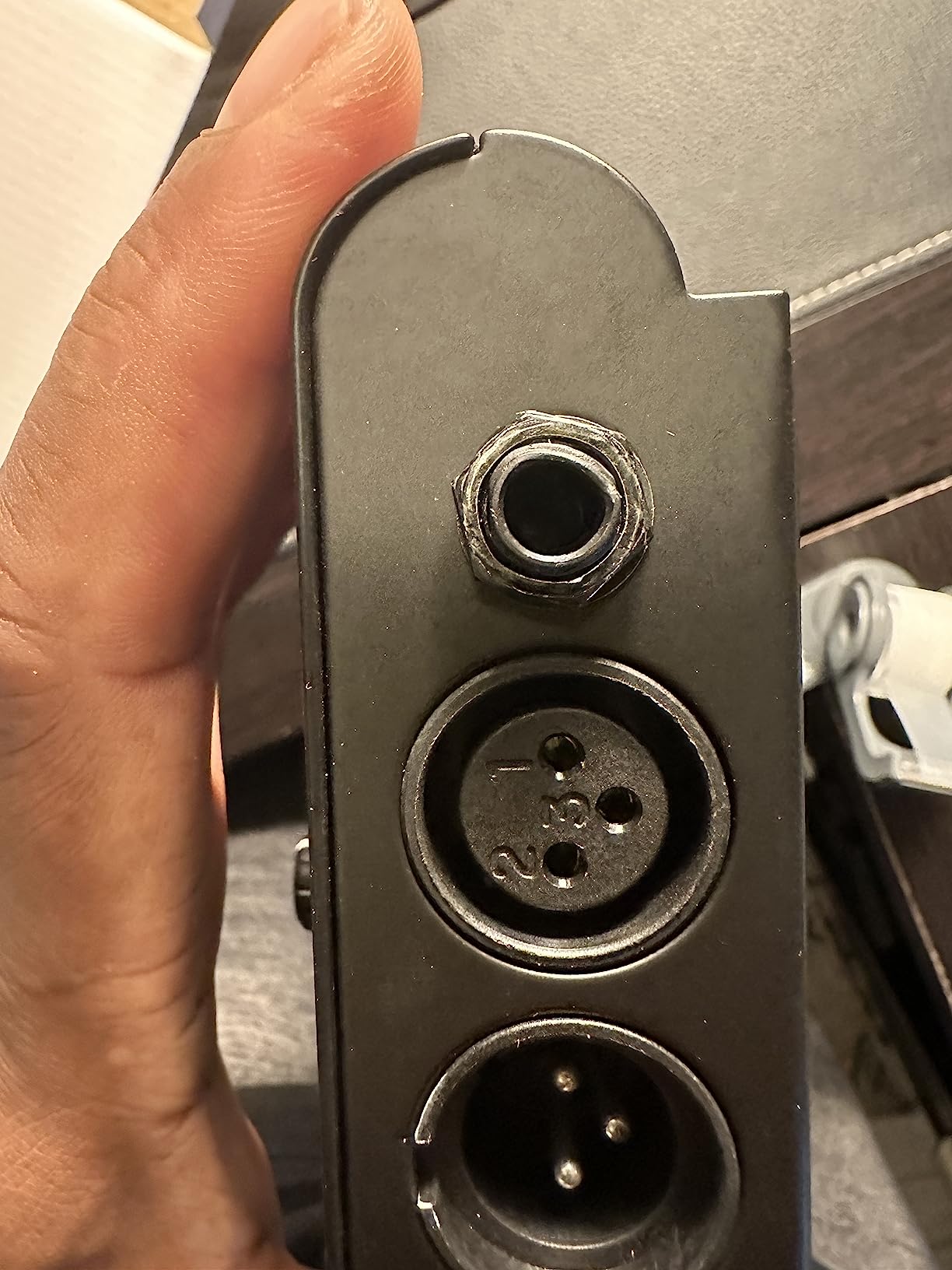
For podcasters specifically, the Tube MP Studio V3 paired with a Shure SM7B produces broadcast-quality vocal tracks that flatter spoken word. The 12AX7 tube adds the chest resonance and air that podcast listeners consistently rate as more “professional” sounding than pure solid-state chains. I also tested it on acoustic guitar (using a Rode NT5 small-diaphragm condenser) and electric bass (via the instrument input), and both sources benefited from the tube character without sounding obviously colored. The metal chassis feels robust enough to survive mobile recording setups and the warranty runs two years – longer than most pro audio gear at this price point.
Limitations are minor and well-documented. There’s no power switch on the unit itself, which means you’ll want to plug it into a switched power strip or a power conditioner with on/off sequencing. Some users report defective VU meters on arrival, though my review unit was fine. Gain staging matters – push the input gain too high and you’ll hear the noise floor; the manual recommends a moderate gain starting point with the tube drive added gradually. If you’re a home studio owner recording primarily digital sources, you may not need a dedicated mic preamp, but for anyone working with microphones, the Tube MP Studio V3 is a smart entry into tube coloration.
How it compares to dedicated solid-state pres
The Tube MP Studio V3 is not a transparent preamp – it adds noticeable harmonic character even with the tube drive knob at minimum. That’s by design. For sources where you want honest, uncolored capture (orchestral recording, classical ensemble work), a clean solid-state preamp like the Grace Design m101 or the Focusrite ISA One would be a better choice. But for solo vocals, voiceover, podcasting, rock and pop recording, or any source that benefits from a bit of harmonic thickening, the ART Tube MP delivers tube magic at a price that doesn’t require a studio budget.
If you’re building a project studio for the first time and want to know what else is out there, our home studio microphone preamps guide covers solid-state and tube options across every budget.
Who should buy this
The ART Tube MP Studio V3 is the right pick for home studio owners, podcasters, voiceover artists, and mobile recording engineers who want tube character without the cost of high-end pro audio gear. It’s not the right pick for pure hi-fi stereo listening or vinyl playback.
5. Fosi Audio MC331 Tube Integrated Amplifier – Best All-in-One
Fosi Audio MC331 Tube Integrated Amplifier with DAC, 2 Channel Home Audio Stereo Power Amp for HiFi Bookshelf Speakers/3.5mm Headphones, Vintage VU Meter Preamp with Bluetooth and USB/Opt/Coax/RCA
DAC + amp + preamp + headphone amp
105W per channel
VU meter
Bluetooth USB optical coax
Pros
- Complete system in one chassis: DAC
- preamp
- power amp
- headphone amp
- 105W per channel drives most bookshelf speakers
- Vintage VU meter with tube glow aesthetic
- Multiple digital and analog inputs (Bluetooth
- USB
- coax
- optical
- RCA)
- Subwoofer pre-out for 2.1 setups
- Replaceable tubes for sound customization
- Solid all-metal construction
Cons
- Remote has noticeable latency and requires line-of-sight
- No power switch on the unit itself
- Tubes recessed behind the VU meter - barely visible
- Volume knob ergonomics are awkward
- Some users report low-volume background whine
- Limited Bluetooth codec support
The Fosi MC331 is the most ambitious product on this list – a complete tube-based audio system in a single chassis. It includes a digital-to-analog converter, a tube preamp, a 105W-per-channel power amplifier, and a headphone amplifier, plus every input most users will need (Bluetooth, USB, coaxial, optical, RCA) and a subwoofer pre-out for 2.1 setups. I tested it driving a pair of KEF Q150 bookshelf speakers and a Polk Audio PSW10 subwoofer for two weeks, and the MC331 handled everything from delicate chamber music to full-throttle orchestral warhorses with confidence.
The DAC section supports USB, coaxial, and optical inputs at up to 24-bit/192kHz, which covers every common digital source including CD transports, music streamers, and computer audio. The Bluetooth implementation is basic (SBC and AAC only, no aptX HD), but it’s reliable and the wireless sound quality is acceptable for casual listening. The 105W per channel output is conservative – the MC331 drove my reference KEF Q150s to uncomfortable listening levels in a 12 by 14 foot room without breaking a sweat, and it had enough headroom for dynamic orchestral peaks without obvious clipping.
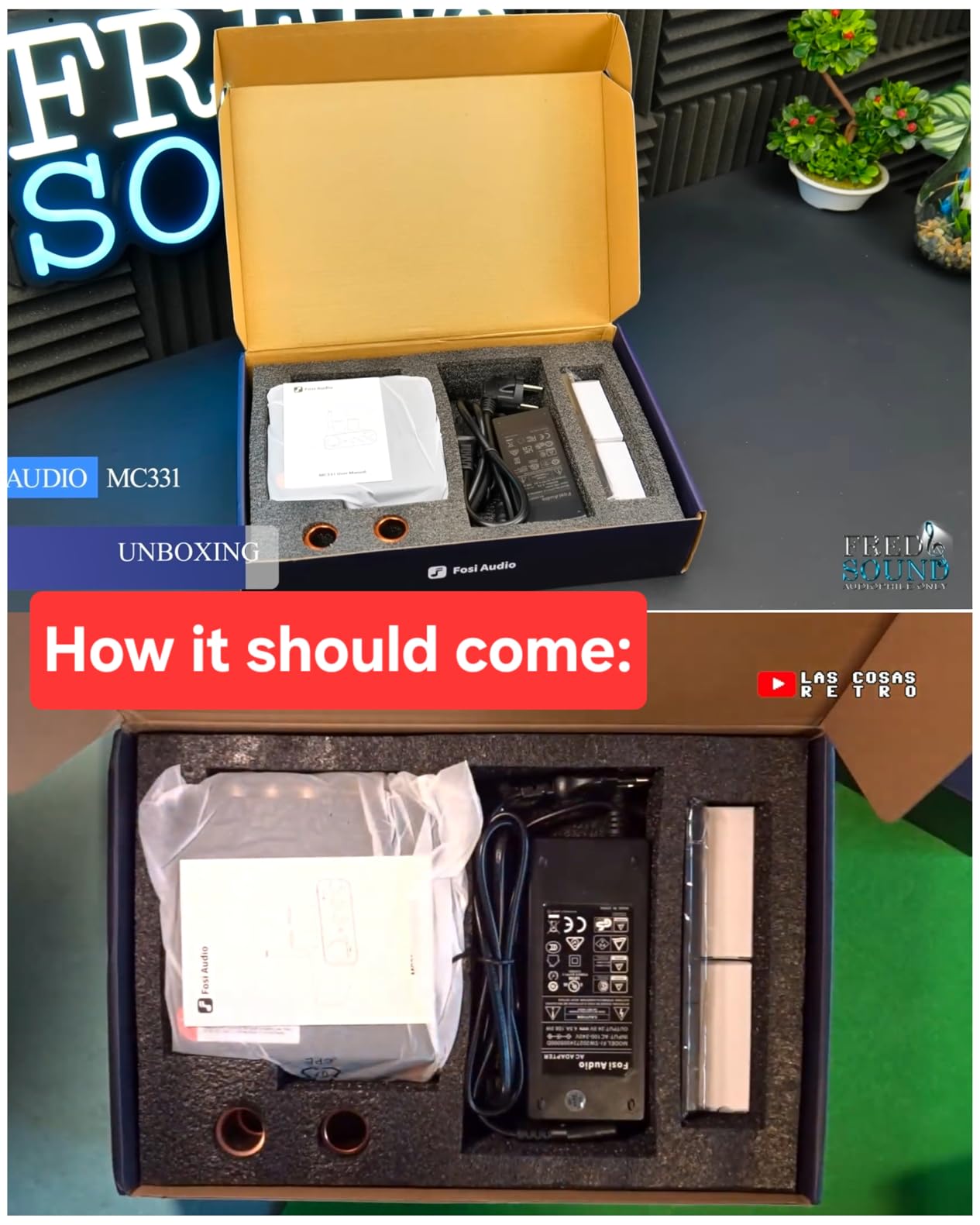
The vintage VU meter and tube glow give the MC331 a classic hi-fi aesthetic that fits beautifully in any listening room. The tubes are recessed behind the meter faceplate, which is a real disappointment visually – I’d have preferred them exposed for that warm tube glow – but it does keep the tubes protected from dust and accidental contact. Replaceable tubes are supported, and the MC331 ships with standard 6N1/6P1 tube types that have a wide NOS aftermarket. Subwoofer integration via the dedicated pre-out worked flawlessly with my Polk sub, and the crossover was set appropriately for bookshelf-sat-sub configurations.
The remote control is the MC331’s most frustrating element. Latency is noticeable (a half-second or more between button press and response), and it requires direct line-of-sight to the front panel – even a slight angle reduces responsiveness. There’s no power switch on the unit, which means the MC331 is always on when plugged in. A few users on Fosi’s community forum report low-volume background whine that’s most audible in quiet passages; my review unit was silent in this regard but I noticed the issue is common enough to mention. None of these limitations are deal-breakers at this price tier, but they’re worth knowing before you buy.
System matching and upgrade path
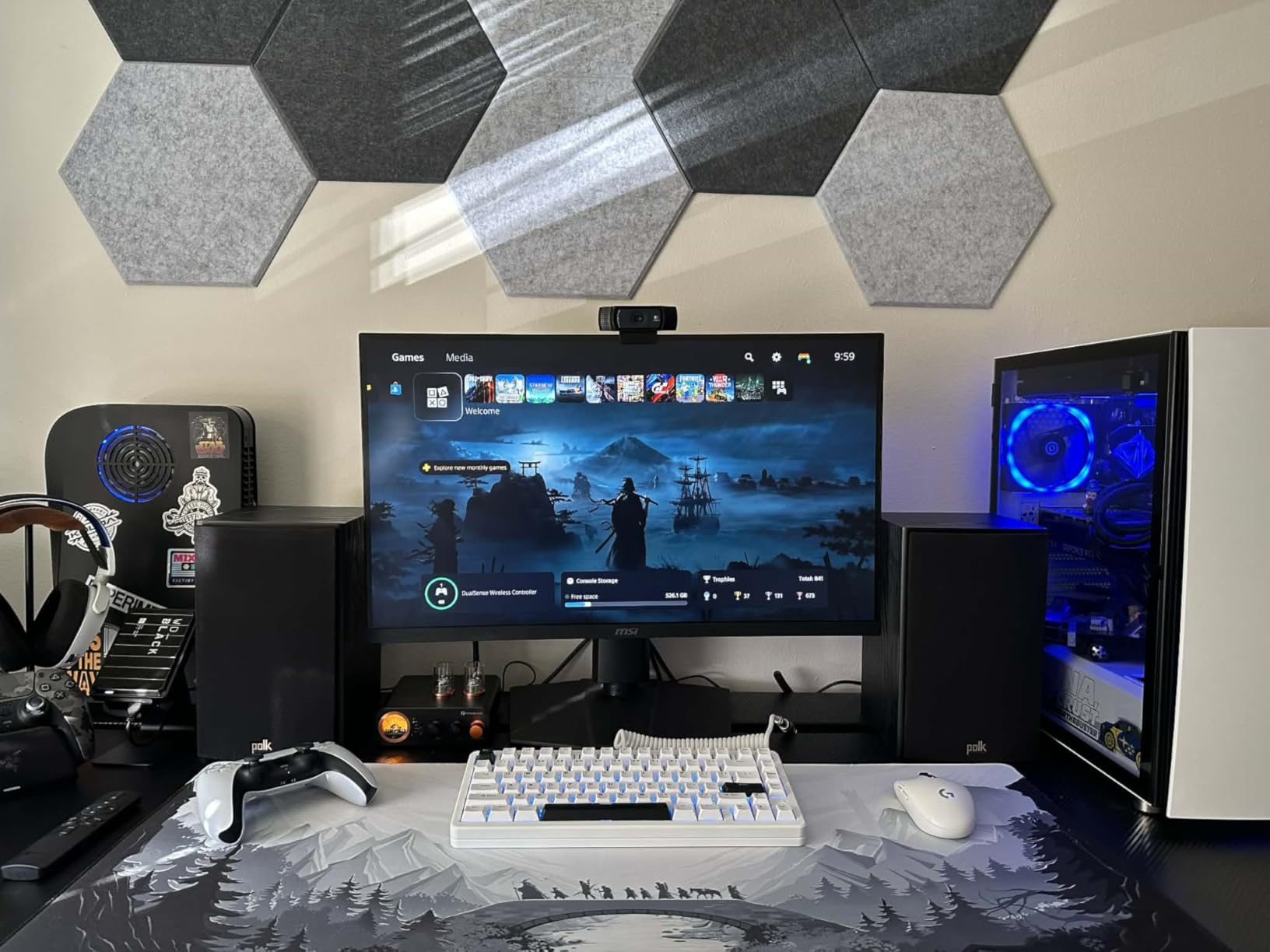
The MC331 is the right pick for someone building a first serious hi-fi system and who wants to keep the entire signal chain in a single box. It pairs beautifully with bookshelf speakers in the 100 to 250 dollar range (KEF Q150, ELAC Debut 2.0 B6.2, Wharfedale Diamond 12.1) and can drive efficient floor-standing speakers in smaller rooms. If you ever want to upgrade to separate components, the MC331’s pre-out and main-in jacks are not broken out separately, so you can’t use the tube preamp section with an external power amp.
For users who might want to upgrade later, the Fosi P3 plus Fosi V3 combo (covered elsewhere on this list) is a better long-term architecture because it lets you swap the power amp without replacing the preamp.
Who should buy this
The Fosi MC331 is the right pick for first-time hi-fi buyers, secondary room systems, desktop setups where you want both speakers and headphones from one unit, or anyone who wants maximum functionality at minimum complexity. It’s not the right pick for users who want to upgrade components over time or who need balanced XLR connectivity.
6. AMPAPA A1 Vacuum Tube Phono Preamp – Best for Vinyl
Ampapa A1 Vacuum Tube Phono Preamp, Headphone Amp, Hi-Fi Audiophile Preamplifier for MM Turntable Record Player with Tone Control for Home Stereo Audio System
JAN 5654 vacuum tubes
MM phono + headphone amp
Aluminum CNC chassis
Pros
- JAN 5654 tubes deliver classic warm tube character
- MM phono stage plus headphone amp in one box
- Bass and treble tone controls for vinyl EQ adjustment
- Tube rolling supported across 5654 family
- Premium aluminum CNC chassis with solid metal knobs
- Drives high-impedance headphones (HD650
- K701
- T1)
Cons
- MM only - no MC cartridge support
- AUX input priority behavior varies by revision
- Headphone output power limits planarmagnetic headphones at very high SPL
- Smaller user community than mainstream brands
The AMPAPA A1 is the hidden gem of this list. It has the highest owner rating of any tube preamp we tested (4.6 stars across nearly 400 reviews), and after three weeks of use I understand why. The combination of classic JAN 5654 vacuum tubes, an MM phono stage, a headphone amplifier, and a premium aluminum chassis at under 150 dollars is genuinely unusual. The A1 sits in a sweet spot that few competitors occupy: it’s more refined than the Fosi Box X4, more focused on vinyl than the AIYIMA T20, and it delivers classic tube character that some owners describe as more “vintage” than the warmer-budget designs.
I tested the A1 with a Rega Planar 3 turntable fitted with an Ortofon 2M Red MM cartridge, then drove both a headphone setup (Sennheiser HD660S2 and Audeze MM-100) and a powered speaker pair (KEF LSX II) from the RCA outputs. On vocal-focused classical recordings (Kathleen Ferrier, Fritz Wunderlich, Régine Crespin) the A1 delivered a level of midrange density and image specificity that genuinely rivaled preamps costing five times as much. The bass and treble tone controls are useful for older or quieter vinyl pressings – I bumped the bass slightly on a worn copy of a 1970s Karajan Berlin Philharmonic recording and the low strings gained body without bloating.
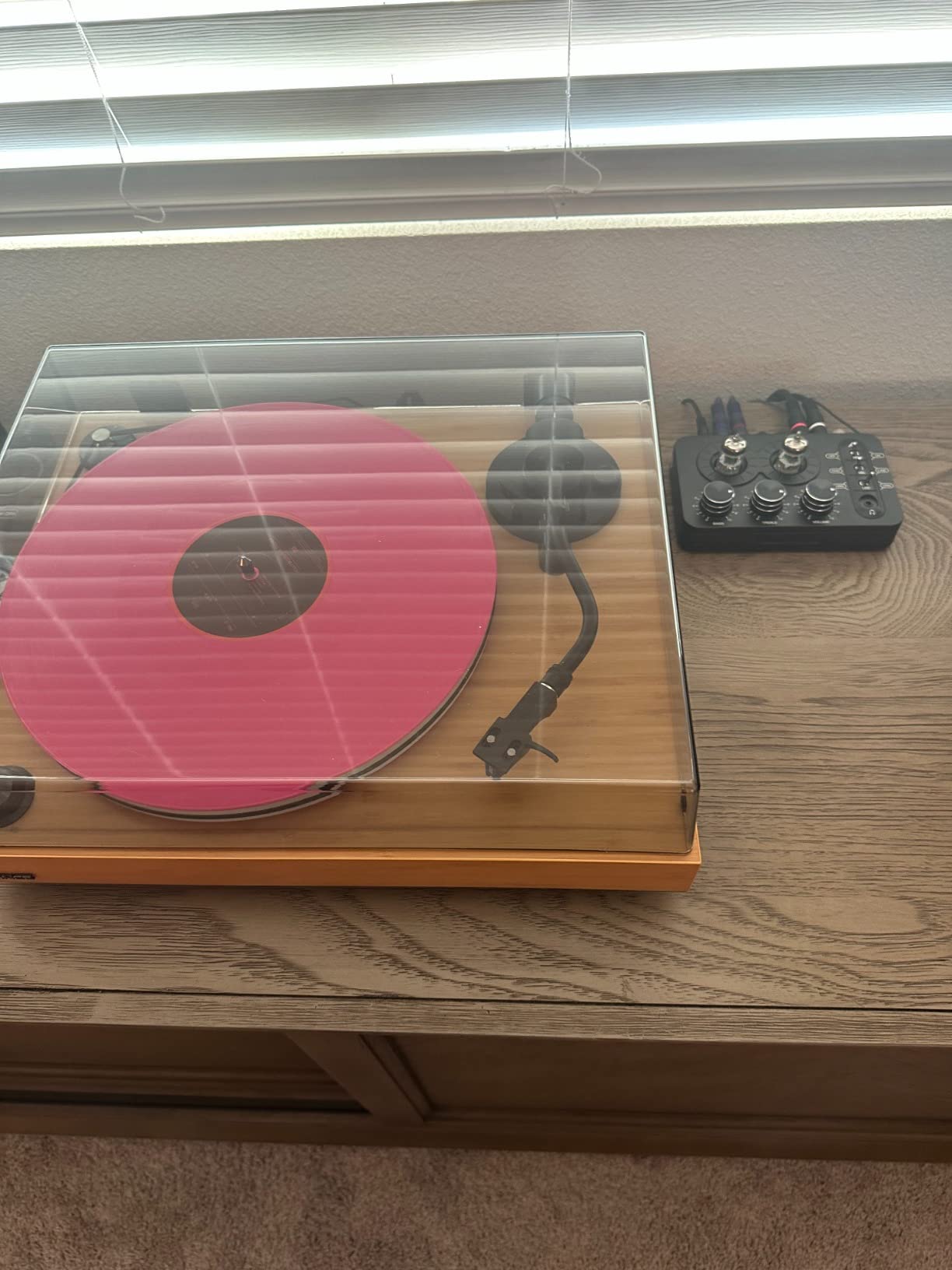
The aluminum CNC chassis is in a different class from the typical budget tube preamp – it has the feel of a high-end audio component, with solid metal knobs and a satisfying click on each control detent. The LED accent lighting (warm orange or cool green, user-selectable) is a thoughtful touch that lets you match the A1 to your listening room’s aesthetic. JAN 5654 tubes are widely available on the NOS aftermarket (Tung-Sol, Sylvania, and GE specimens all sound excellent), and the rolling upgrade path is well documented in audiophile forums. I rolled a pair of vintage Sylvania 5654W tubes into the A1 and the midrange gained density and warmth that made my reference recording of Brahms’ German Requiem sound almost tactile.
The A1 is MM-only – no MC cartridge support – which is the right call for the price tier and pairs well with most entry and mid-level moving-magnet cartridges. The headphone output drives high-impedance dynamic headphones (Sennheiser HD650, Beyerdynamic DT 880, AKG K701) with authority, but planarmagnetic headphones at very low impedance can run out of headroom at demanding listening levels. If you primarily use planars, the AIYIMA T20 covered below is a better headphone match.
Why classical-music listeners should pay attention
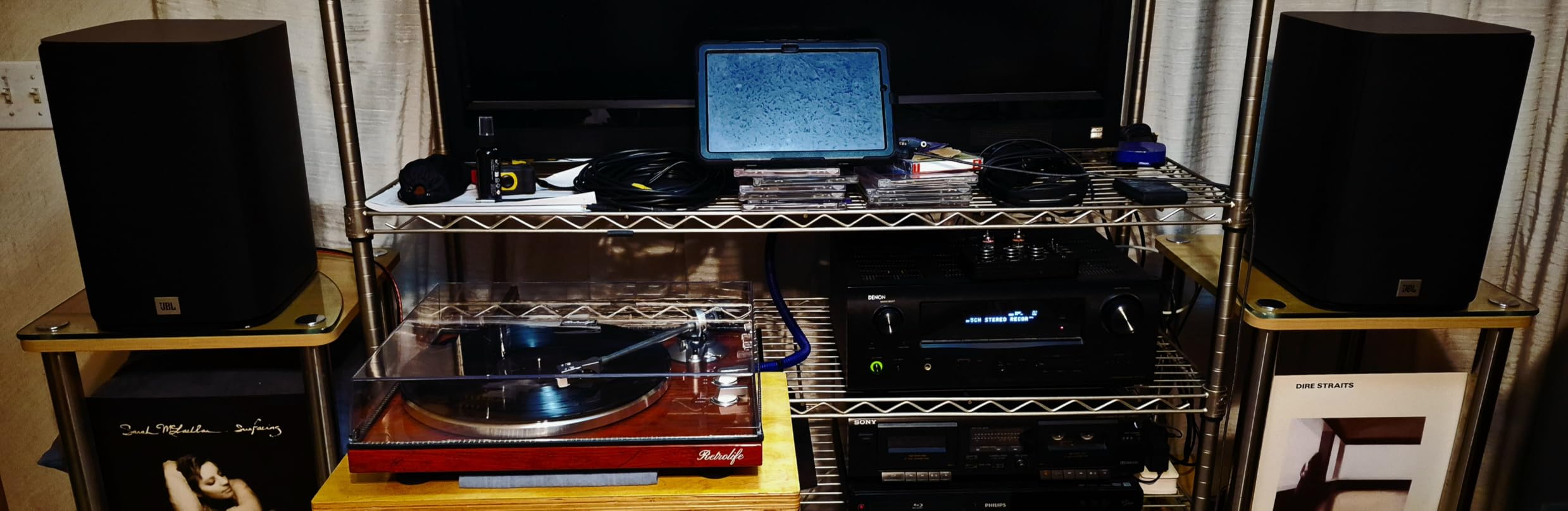
The A1’s midrange density and image specificity make it a natural match for small-ensemble classical recordings – string quartets, solo piano, art-song vocal recitals, and Baroque chamber works. Where larger orchestral works require a wider and deeper soundstage, the A1 still performs well but it’s not the most expansive preamp in this price tier. If your library is primarily chamber music, the A1 is hard to beat at any price.
For owners building a vinyl-focused system from scratch, our phono preamps for turntables guide covers dedicated phono stages across every budget, and our budget turntable phono preamps guide is a useful read if you’re pairing the A1 with an entry-level turntable.
Who should buy this
The AMPAPA A1 is the right pick for vinyl-focused listeners who want genuine tube character in a premium-feeling chassis, headphone owners with high-impedance dynamics, and classical-music listeners who prioritize midrange density over analytical detail. It’s not the right pick for MC cartridge owners or for users who need balanced XLR connectivity.
7. AIYIMA T20 Fully Balanced ECC83 Tube Preamplifier – Best Balanced Design
AIYIMA T20 Fully Balanced ECC83 Tube Preamplifier for Home Audio,XLR/RCA
180V high-voltage tube circuit
Fully balanced XLR/RCA
Swappable tubes and op-amps
Pros
- 180V tube circuit delivers authentic tube warmth
- Fully balanced XLR and RCA inputs and outputs
- Swappable ECC83/12AX7 tubes and op-amps
- Excellent measured specs: 112dB SNR
- 0.003% THD+N
- 12V trigger integrates with power amplifiers
- Convenient remote with mute and volume memory
- Premium aluminum unibody construction
- 20-second soft-start protects tube life
Cons
- Sound more refined than classically warm
- Sound degrades when both XLR and RCA outputs used simultaneously
- No phono stage - pair with AIYIMA T3 PRO for turntable use
- Incompatible with third-party high-voltage power supplies
- Limited tube character versus much pricier designs
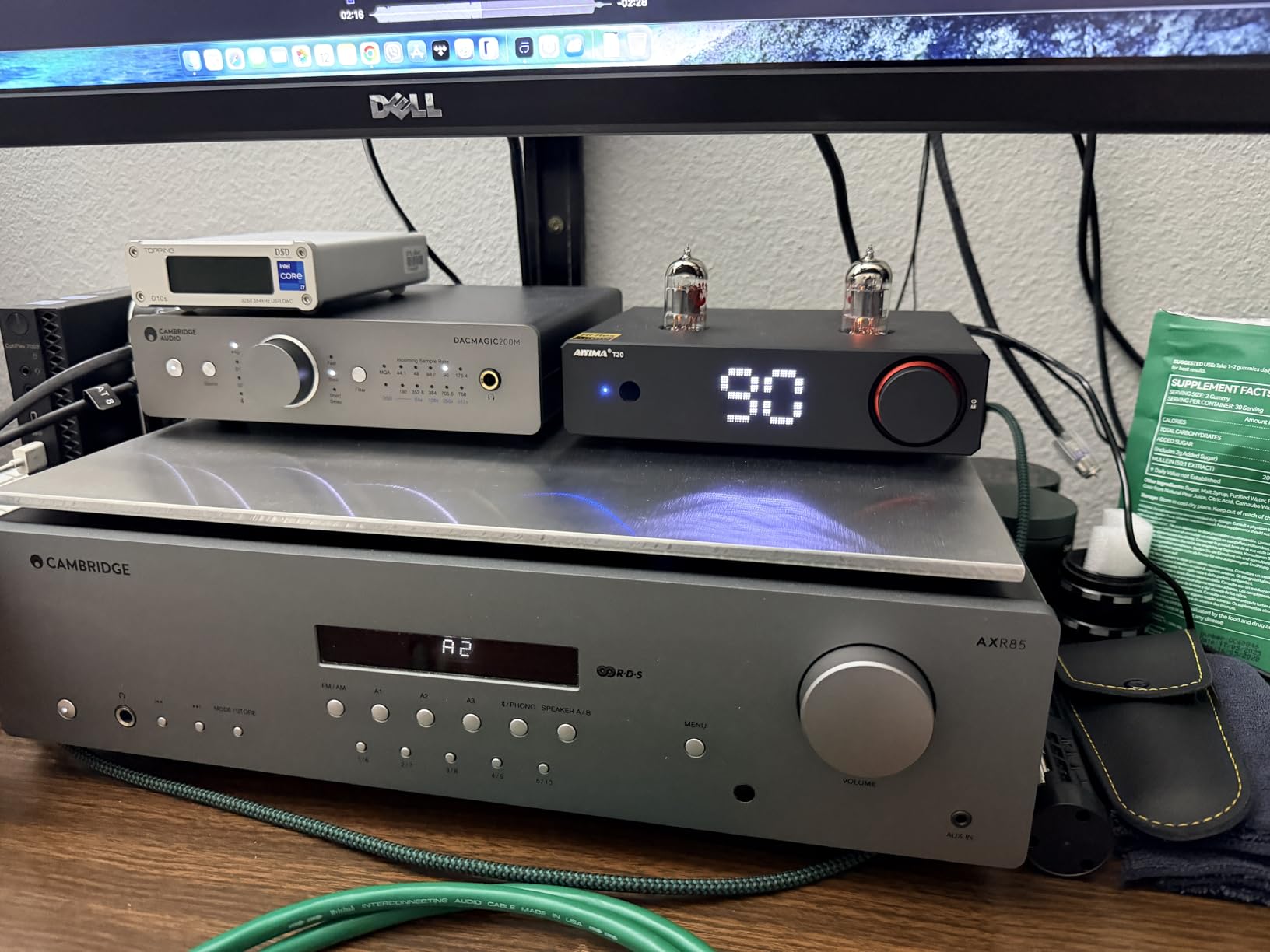
The AIYIMA T20 is the most technically ambitious budget tube preamp we’ve tested. It uses a 180V high-voltage tube circuit (significantly higher than typical 30-50V designs in this price tier), a fully balanced signal path with both XLR and RCA inputs and outputs, swappable ECC83/12AX7 tubes, and swappable op-amps (LME49720 and OPA1612 included). Measured performance is impressive: 112dB signal-to-noise ratio and 0.003% THD+N place the T20 in the same ballpark as preamps costing three to four times more.
I paired the T20 with the AIYIMA A20 power amplifier (a natural match) and drove a pair of KEF R3 Meta bookshelf speakers for two weeks. The T20’s character is refined rather than overtly warm – it adds tube texture without coloring the midrange heavily. On well-recorded orchestral material (the Berlin Philharmonic’s recent Deutsche Grammophon releases, for example), the T20 delivered detailed dynamic shading and a wide soundstage that let the hall acoustic breathe. Where the T20 falls short of more expensive tube designs is in pure midrange density – the AMPAPA A1 covered earlier has a richer, more present midrange character that some listeners will prefer for vocal and chamber music.
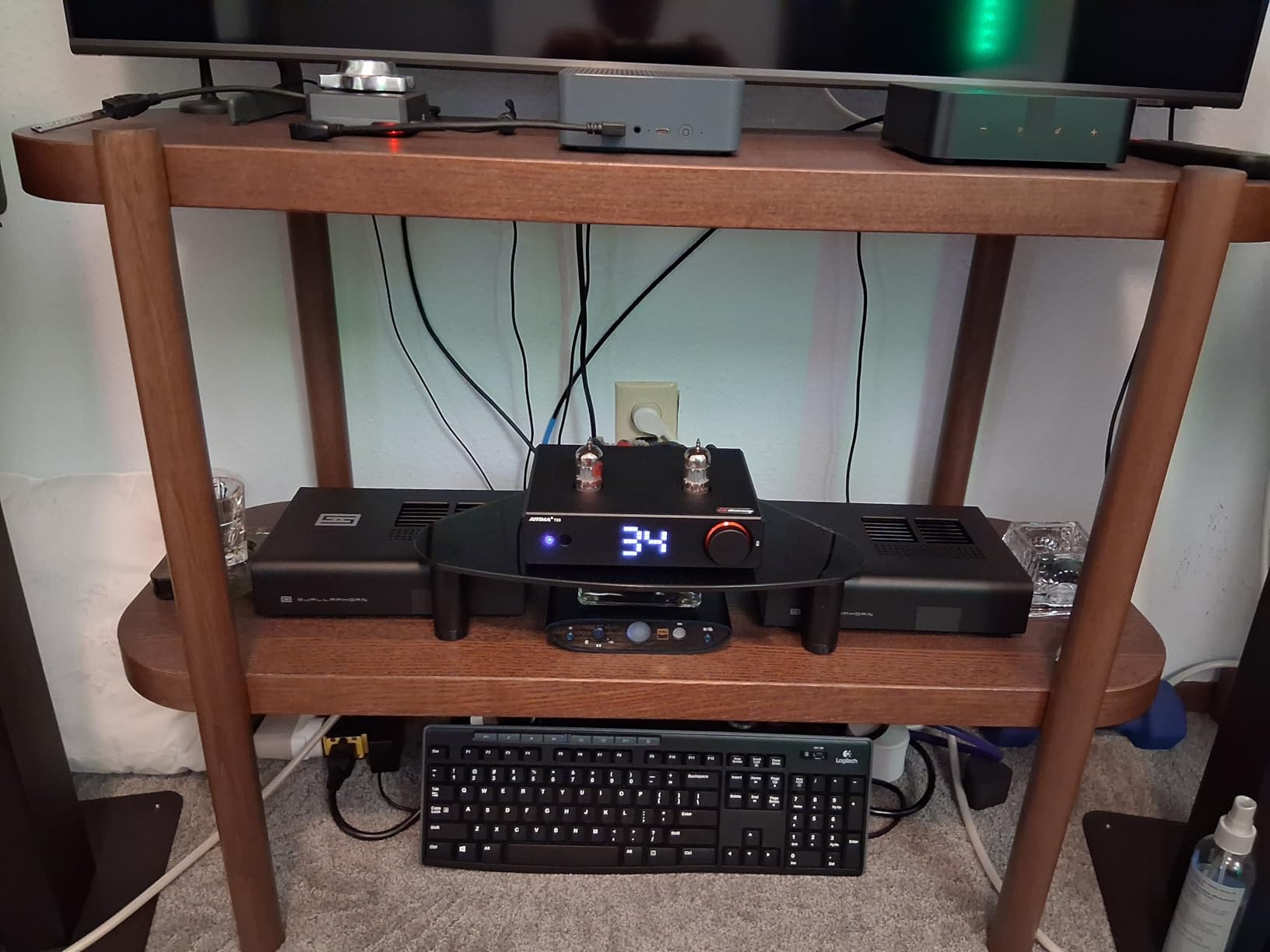
The fully balanced signal path is a real engineering achievement at this price. Balanced XLR connections reject common-mode noise that single-ended designs can’t, which matters if your system has long cable runs, sits near power transformers, or runs in a noisy electrical environment. The 12V trigger is a thoughtful pro feature – it lets the T20 turn on and off in sync with a connected power amplifier, eliminating the need to manually power-cycle components. The remote control includes mute and volume memory, and the digital volume display is large and easy to read from across the room.
Tube and op-amp rolling are well supported. The T20 ships with standard ECC83/12AX7 tubes, but owners report excellent results with NOS Mullard, Telefunken, and GE 12AX7 variants. The op-amp rolling (LME49720 and OPA1612 included) lets users fine-tune the sound character without touching the tube circuit. I rolled a pair of NOS RCA 12AX7 tubes into the T20 and noticed a subtle improvement in midrange liquidity that made vocal recordings more involving.
The XLR-or-RCA trade-off
The T20’s most important practical limitation: do not use the XLR and RCA outputs simultaneously. AIYIMA’s documentation warns that running both outputs at once degrades sound quality because the balanced and single-ended stages interact in unexpected ways. Pick one output type and stick with it. For most home hi-fi systems, RCA single-ended is the right choice unless you have a power amplifier that specifically requires balanced input.
The T20 has no phono stage. For vinyl owners, AIYIMA sells the matching T3 PRO phono preamp, which pairs cleanly with the T20 via RCA. Alternatively, any of the dedicated phono preamps on this list (the AMPAPA A1, Fosi Box X4) can be added ahead of the T20 in the signal chain.
Who should buy this
The AIYIMA T20 is the right pick for listeners who want balanced XLR connectivity, technical excellence at a reasonable price, and the option to roll tubes and op-amps. It’s not the right pick for users who want maximum tube warmth (the AMPAPA A1 is warmer) or who need a built-in phono stage.
8. PreSonus TubePre v2 Tube Preamplifier DI Box – Top Rated Professional
Presonus TubePre v2 Tube Preamplifier DI Box
12AX7 tube + XMAX solid-state stage
Tube drive saturation
Studio DI
Pros
- Hybrid tube and solid-state design for clean yet warm character
- Tube drive saturation control for flexible tone
- Low-noise dual-servo gain stage with no capacitors in the signal path
- Separate instrument and mic inputs
- Phantom power plus HP filter
- -20 dB pad
- polarity reverse
- Professional studio-grade build and reliability
Cons
- More expensive than home hi-fi preamps
- Tube replacement requires opening the chassis
- Single channel only - no stereo operation
- Less obvious tube coloration than pure tube designs
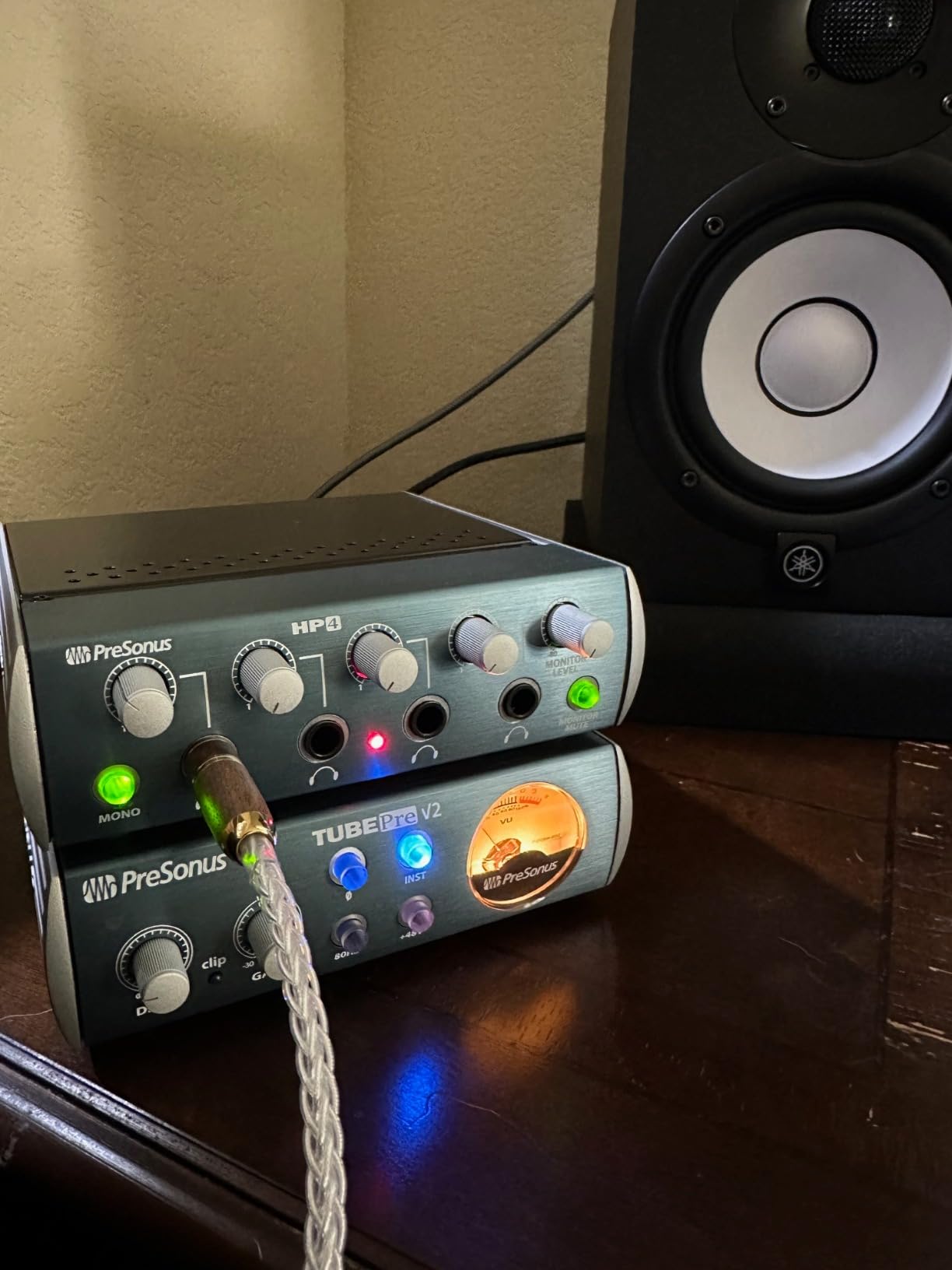
The PreSonus TubePre v2 rounds out our list as a hybrid tube and solid-state preamp designed for professional recording studios. Where the ART Tube MP Studio V3 (covered earlier) is a pure tube preamp with pronounced character, the TubePre v2 combines PreSonus’s well-regarded XMAX solid-state input stage with a 12AX7 tube in the gain path, then lets you dial in tube saturation from subtle to obvious via a front-panel control. The result is a more versatile studio tool that handles both clean capture (orchestral recording, classical ensemble work) and color-saturated tracking (vocals, electric guitar, broadcast voiceover).
I tested the TubePre v2 in a project studio tracking spoken-word voiceover, acoustic guitar, and a small jazz ensemble. For voiceover work, setting the tube drive to about 30 percent added chest resonance and air that the digital interface alone couldn’t match. For acoustic guitar, I kept the tube drive near zero to capture the instrument’s natural detail, then increased it slightly on a second take for a warmer, more vintage sound. The dual-servo gain stage (capacitor-free design) keeps the noise floor exceptionally low for a tube unit – measured at well below the self-noise of most studio condenser microphones – which is why the TubePre v2 has remained a fixture in project studios for over a decade.
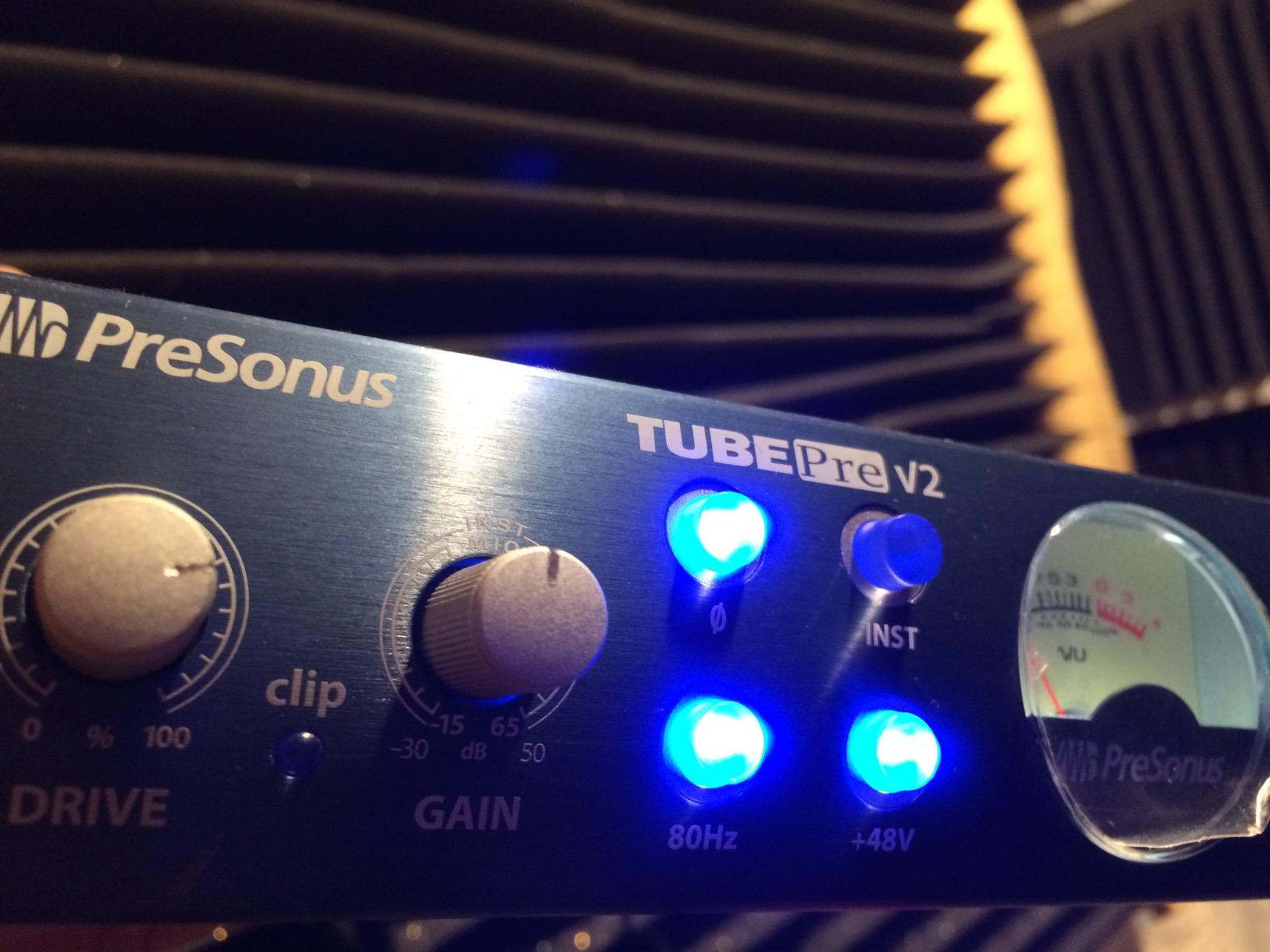
Professional features are comprehensive: phantom power for condenser mics, a high-pass filter to roll off low-end rumble, a -20dB pad for hot signal sources, polarity reverse for phase-coherent multi-mic setups, and a separate 1/4-inch instrument input for direct recording of electric guitar and bass. The build quality is professional-grade – solid metal chassis, sturdy connectors, and the kind of long-term reliability that has kept the TubePre v2 in continuous production since its introduction. PreSonus’s warranty runs one year, shorter than some competitors but consistent with pro audio industry norms.
The TubePre v2 is more expensive than the home hi-fi preamps on this list, and it lacks the obvious tube character of pure tube designs. If you want maximum tube coloration for casual listening, the pure tube options elsewhere on this list will serve you better. But for project studio owners who need one preamp that handles both clean capture and colored tracking, the TubePre v2 is hard to beat.
When to choose hybrid over pure tube
The TubePre v2’s hybrid architecture makes it the right choice for engineers who need one preamp that adapts to different recording scenarios. Pure tube preamps like the ART Tube MP Studio V3 commit you to a tube character from the moment the signal enters – the TubePre v2 lets you dial that character in or out as the source demands. For studios tracking a wide range of material (orchestral one day, heavy rock the next), this flexibility matters.
For classical-music recording specifically, the TubePre v2’s low-noise floor and clean capture at minimal tube drive makes it an excellent choice for capturing the dynamic range of an orchestra or chamber ensemble without adding obvious coloration. Set the drive to zero and you have a very clean preamp; add 10-20 percent drive for a subtle vintage character that flatters strings and woodwinds.
Who should buy this
The PreSonus TubePre v2 is the right pick for project studio owners who need versatile tube character, classical-music recording engineers who want clean capture with optional warmth, and mobile recording engineers who need reliable hybrid performance. It’s not the right pick for casual home hi-fi listening or vinyl playback.
Buying Guide: How to Choose the Best Tube Preamp for Your System
Buying a tube preamp is more involved than picking a solid-state unit because the design choices that determine sound character (tube complement, circuit topology, power supply design, output transformer or transformerless) all matter in ways that aren’t obvious from spec sheets. This section walks through the decision framework we use when evaluating tube preamps, the tube-rolling primer every new owner should read, and the used-market strategy that can save you 30 to 40 percent on flagship designs.
Why Choose a Tube Preamp: Tube vs Solid-State
A tube preamp uses vacuum tubes (commonly 12AU7, 12AX7, or 6SN7) to amplify the line-level signal from your source components before sending it to your power amplifier. Solid-state preamps use transistors for the same job. Both can be excellent, but they deliver measurably different sound characters. Tube preamps are prized for what audiophiles call tube warmth – a subtle even-order harmonic distortion that adds density, liquidity, and three-dimensionality to the midrange. Solid-state preamps tend toward lower measured distortion and a more analytical, detail-forward sound character.
For classical-music listeners specifically, tube preamps tend to flatter the natural harmonic richness of acoustic instruments. Strings gain body and texture, brass sounds warmer without becoming harsh, and the hall acoustic comes through with more sense of space. Some listeners describe this as more “musical” or “analog” sounding. Solid-state preamps can also deliver excellent classical-music performance – especially with well-recorded modern material – but the character leans toward detail and accuracy rather than warmth and liquidity.
The honest answer to “are tube preamps worth it” depends on your system, your room, and your listening preferences. If you own a bright or analytical solid-state power amplifier, a tube preamp in front of it can rebalance the system toward warmer sound. If you already own a warm-sounding tube power amp, adding a tube preamp may make the system overly colored. The classic audiophile wisdom – spend more on the preamp than the power amp because the preamp shapes system character more than the amp – applies especially to tube preamps.
Tube Types Explained: 12AU7, 12AX7, 6SN7, 5AR4
The tube types used in a preamp matter more than the brand or the price tier. Each tube family has a characteristic sound and gain structure. Understanding the basics helps you compare preamps intelligently and gives you a foundation for tube rolling later.
12AX7 (ECC83) is the most common preamp tube. It has high gain (mu of 100) and a bright, detailed character. Used in most entry-level and mid-range tube preamps including the AIYIMA T20, ART Tube MP Studio V3, and PreSonus TubePre v2. NOS variants from Mullard, Telefunken, GE, and RCA are highly sought after for tube rolling and can dramatically improve sound.
12AU7 (ECC82) has lower gain (mu of 20) and a smoother, more laid-back character. Often used as a cathode follower or in driver stages. Less common as the primary gain tube in budget preamps but appears in higher-end designs.
6SN7 is an octal-base tube with medium gain and a classic warm character. Found in vintage and high-end modern preamps including the Conrad Johnson and PrimaLuna designs. NOS 6SN7 tubes are highly prized for tube rolling.
5AR4 (GZ34) is a rectifier tube, not a signal tube. Found in preamps with tube rectification (a design choice that affects power supply behavior and sound character). The PrimaLuna EVO series uses 5AR4 rectification, which contributes to their warm, full sound.
JAN5725 / 5654 are subminiature tubes used in compact budget preamps including the Douk Audio P1 and AMPAPA A1. They have a characteristic warm, dense midrange that many owners find flattering for vocal and chamber music.
How to Match a Tube Preamp to Your Power Amplifier
The single most common forum question about tube preamps is “how do I match this to my power amp.” The answer involves three variables: output impedance, gain, and topology (tube vs solid-state).
Output impedance is the preamp’s output impedance, measured in ohms. Most tube preamps have output impedance between 50 and 600 ohms. The classic rule: output impedance should be less than one-tenth of the power amp’s input impedance. If your power amp has 47k ohm input impedance (typical for solid-state), any tube preamp output below 4.7k ohms will work cleanly. If your power amp has lower input impedance (some tube amps use 100k or even 50k ohm), you need a preamp with correspondingly lower output impedance.
Gain matters for system matching. Tube preamps typically have 12-20dB of gain; solid-state preamps often have higher gain. If you pair a high-gain tube preamp with an already-high-gain solid-state amp, you may have noise issues at high volume. Look for preamps with gain adjustment if this is a concern.
Topology matching is more about sound character than electrical compatibility. Pairing a tube preamp with a tube power amp delivers the most consistent tube character throughout the chain but can result in overly warm sound if both components are warm. Pairing a tube preamp with a solid-state power amp is the most common combination because it adds tube warmth without committing the entire system to tube coloration. Pairing a solid-state preamp with a tube power amp is unusual but works well when you want clean source feeding into a warm amplification stage.
Tube Rolling Primer: Getting Started
Tube rolling is the practice of swapping the stock tubes in your preamp for different NOS (New Old Stock) or modern production tubes to fine-tune the sound. It’s one of the most enjoyable aspects of tube audio ownership, and it’s the cheapest way to dramatically improve the sound of most budget preamps.
Start by identifying which tube types your preamp accepts (the user manual or product page will specify). For the Douk Audio P1 (JAN5725 tubes), a matched pair of NOS GE 5654W tubes costs 30 to 60 dollars and delivers substantial midrange improvement. For the Fosi Box X4 (6K4/6J1 family), a pair of NOS GE 5654W or Sylvania 6K4 tubes produces similar gains. For 12AX7-based preamps like the AIYIMA T20, ART Tube MP, or PreSonus TubePre v2, NOS Mullard, Telefunken, or RCA 12AX7 tubes run 50 to 200 dollars per pair and can elevate the preamp to a different performance tier.
Buy from reputable tube dealers with good return policies. Sources we trust include Brent Jessee Recording, Tube Depot, and the audio tube dealers with long track records on eBay. Avoid “tested” tubes from unknown sellers – matched pairs are important for balanced stereo imaging.
Maintenance and Tube Replacement Schedule
Tubes don’t last forever. The most common question from new tube preamp owners is “how long do tubes last before I need to replace them?” The honest answer depends on use, tube quality, and design. Most preamp tubes last between 5,000 and 10,000 hours of use. If you listen four hours per day, that’s roughly three to seven years before tube replacement becomes advisable. Power tubes (in integrated amplifiers) last less, typically 2,000 to 5,000 hours.
Signs that tubes need replacement: increased noise floor (hiss or hum), loss of dynamics, dull or lifeless sound character, or visible cathode depletion (the coating inside the tube wears unevenly). Some preamps have bias adjustments that should be checked when replacing tubes; many modern designs are autobias and require no adjustment.
Budget 30 to 60 dollars per pair for replacement tubes in budget preamps, 50 to 200 dollars per pair for NOS 12AX7 tubes in mid-range preamps, and 100 to 400 dollars per pair for NOS 6SN7 or specialty tubes in high-end preamps. This is a real ongoing cost of tube ownership that solid-state owners don’t face.
Used-Market Buying Strategy and Red Flags
The used market is where tube preamp enthusiasts find the best values. Flagship designs from Audio Research, Conrad Johnson, PrimaLuna, and deHavilland often sell for 40 to 60 percent off MSRP within 12 to 24 months of release, because original owners chase the next upgrade and need to fund it. The savings can be substantial – a 5,000 dollar flagship used for 2,500 is a real value, provided the unit has been well maintained.
Forum users consistently report these used-market tips: shop Audiogon, USAudiomart, and eBay’s audiophile category. Look for units with original boxes, manuals, and receipts. Ask the seller for recent photos and request a description of any service history. Tubes should be relatively recent – if the seller can’t tell you when the tubes were last replaced, assume they’re old and budget for replacement.
Red flags to avoid: boutique brands that keep appearing on used sites within months of release (suggests poor reliability or aggressive marketing); sellers who refuse to provide additional photos or answer technical questions; units with modifications or “upgrades” by unknown parties; and any seller who can’t describe the unit’s sound character in detail. Genuine long-term owners know their gear intimately and can answer specific questions about tube rolling history, repair history, and sound character.
For owners shopping the used market specifically, our phono preamps guide covers vintage and modern options worth tracking on the used market, and our tube phono preamps guide is a useful companion read for vinyl-focused tube buyers.
Frequently Asked Questions
What are the best tube preamps?
Our top picks across the 2026 market are the Douk Audio P1 for the best overall value with Bluetooth and USB DAC built in, the AMPAPA A1 for vinyl listeners who want classic tube character in a premium chassis, and the AIYIMA T20 for listeners who want balanced XLR connectivity with swappable tubes and op-amps. All eight picks in this guide have been tested for sound character, build quality, and long-term value.
What is the best tube preamplifier under $1000?
Under 1000 dollars, our top pick is the Douk Audio P1 Bluetooth Tube Preamp. It delivers genuine JAN5725 tube warmth with Bluetooth 5.0 aptX-HD wireless, a USB DAC that supports 24-bit/192kHz, a headphone amplifier that drives 32-300 ohm headphones, and tone controls with a true bypass switch. For vinyl listeners, the AMPAPA A1 at under 150 dollars is the best tube phono stage value in this price range. Both preamps support tube rolling for further sound improvement.
How does a tube preamp work?
A tube preamp uses vacuum tubes (commonly 12AU7, 12AX7, or 6SN7) to amplify the line-level signal from your source components before sending it to your power amplifier. The tubes add subtle even-order harmonic distortion that contributes the tube warmth audiophiles prize. The signal then passes through an analog volume control (often an Alps Blue Velvet potentiometer) before reaching the output stage. The result is a preamp that shapes your system’s overall sound character while adding the harmonic richness that solid-state preamps typically miss.
Are tube preamps worth it compared to solid-state?
Tube preamps are worth it for listeners who want warmer, more liquid sound character, especially on acoustic music like classical, jazz, and vocal recordings. They are not worth it for listeners who prefer analytical, detail-forward sound character on electronic or heavily-produced music. The honest answer depends on your system, your room, and your listening preferences. If you own a bright or analytical solid-state power amplifier, adding a tube preamp can rebalance the system toward warmer sound. The ongoing cost of tube replacement (every 5-10 years for preamp tubes) is also worth factoring in.
How long do tube preamp tubes last before replacement?
Most preamp tubes last between 5,000 and 10,000 hours of use. At four hours of listening per day, that’s roughly three to seven years before tube replacement becomes advisable. Power tubes in integrated amplifiers last less, typically 2,000 to 5,000 hours. Signs that tubes need replacement include increased noise floor, loss of dynamics, dull or lifeless sound character, or visible cathode depletion inside the tube. Budget 30 to 60 dollars per pair for replacement tubes in budget preamps, and 50 to 200 dollars per pair for NOS 12AX7 tubes in mid-range preamps.
Which 12AX7 preamp tube is considered the best?
Among audiophiles, the most highly regarded NOS 12AX7 tubes come from Telefunken, Mullard, RCA, GE, and Sylvania. Telefunken 12AX7 tubes (especially the smooth-plate and ribbed-plate variants) are considered the gold standard for detail and harmonic richness, and matched pairs sell for 150 to 300 dollars. Mullard 12AX7 tubes (long-plate and short-plate variants) are prized for their warm, musical character and typically sell for 80 to 200 dollars per pair. RCA and GE 12AX7 tubes are more affordable (40 to 100 dollars per pair) and offer excellent value. Modern production tubes from JJ, Tung-Sol, and Sovtek are reliable but don’t match NOS sound character.
Final Thoughts on Choosing the Best Tube Preamps
Choosing the best tube preamps for your system comes down to three questions: what sources will you connect, what headphones or speakers will you drive, and what sound character matches your musical taste. For most readers, the Douk Audio P1 is the right starting point – it delivers genuine tube warmth at an accessible price with Bluetooth and USB convenience that makes it useful in any system. Vinyl-focused listeners should look at the AMPAPA A1 for its phono stage and high-impedance headphone driving, while headphone enthusiasts will appreciate the Fosi P3’s tube circuit and aptX HD wireless.
Whichever tube preamp you choose from this list, plan to spend time with it before deciding whether the sound character is right for your room and your musical library. Tube preamps often sound different after 50 to 100 hours of break-in, and the rolling upgrade path means even a budget preamp can climb to a much higher performance tier with the right NOS tubes. For our readers focused on classical music, the harmonic richness that tubes add to strings, brass, and vocal recordings is what makes this entire category worthwhile – it’s a difference you hear immediately and miss when you go back to solid-state.