
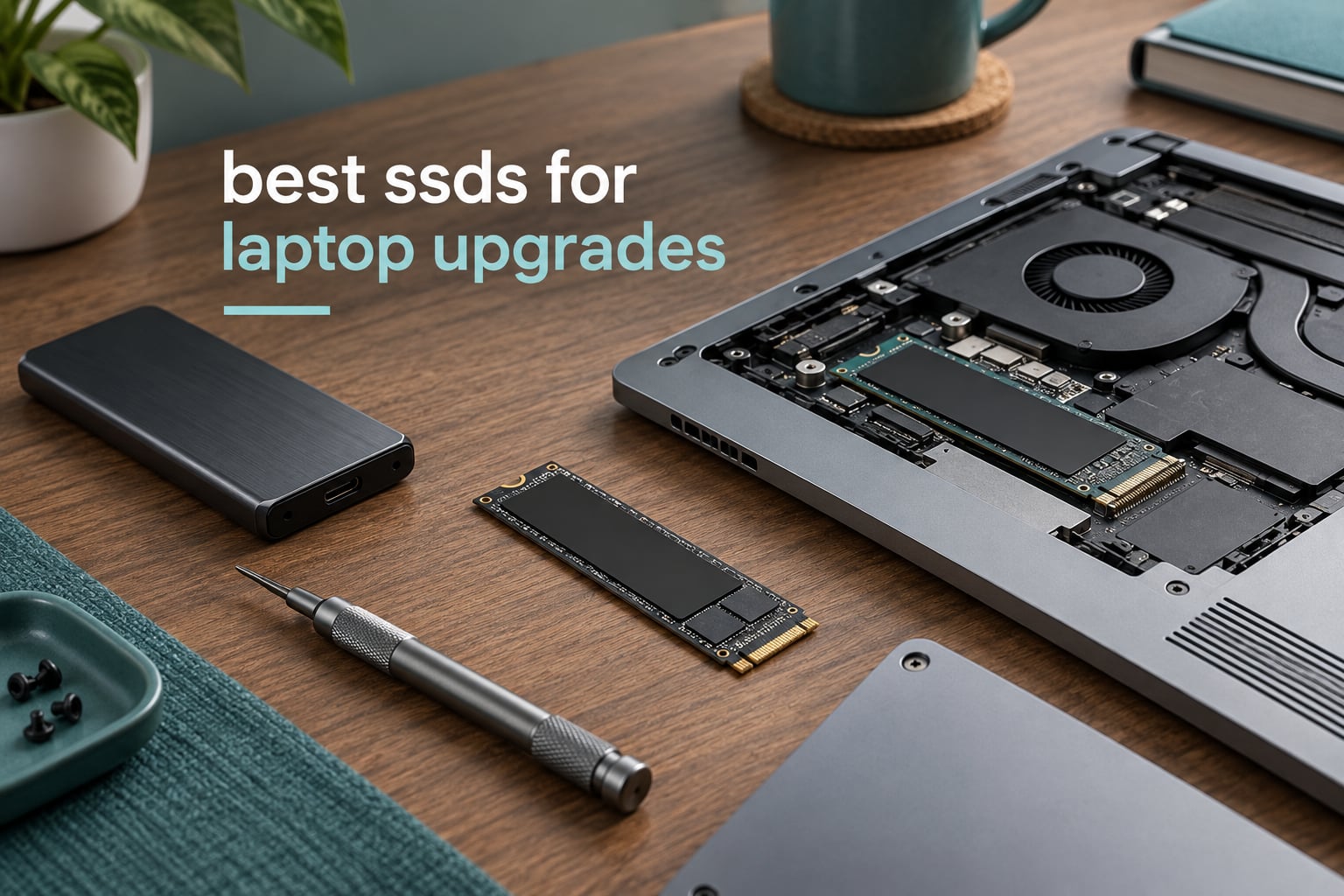
Choosing the best SSDs for laptop upgrades is mostly a question of fit rather than raw speed. A drive that wins every benchmark can be completely useless in your machine if it is the wrong M.2 length, the wrong keying, or too thick to seat under a laptop keyboard deck. We spent weeks comparing the ten most-reviewed laptop storage options on the market, checking form factors, thermal behaviour, power draw and endurance against what owners actually report after living with them.
Our overall pick is the Kingston NV3 1TB, a single-sided PCIe 4.0 drive that stays cool, fits tight bays and carries one of the largest review counts in its class. If you want the fastest throughput a PCIe 4.0 link can offer and your laptop has clearance for it, the Samsung SSD 990 PRO 1TB is the speed king. And if your notebook only speaks PCIe 3.0, the Crucial P310 1TB negotiates down cleanly instead of fighting the slot.
What follows is a full breakdown of all ten drives: the SATA options for laptops with a 2.5-inch bay, the older Gen 3 modules for aging notebooks, the handhelds-friendly picks, and the 2TB drive for anyone whose library has outgrown 1TB. We also cover the compatibility checks that decide whether a drive works at all, and the battery and thermal realities that desktop-focused reviews tend to skip. If you are still deciding whether a newer machine is worth it, our notes on whether a dedicated streamer beats a laptop and on turntable upgrades that pay off cover the other half of the upgrade question.
Table of Contents
Top 3 Picks: Best SSDs for Laptop Upgrades (October 2026)


Samsung 990 PRO 1TB
- 7450 MB/s read
- 6900 MB/s write
- 1400K/1550K IOPS
- Nickel-coated controller

Crucial P310 1TB
- 7100 MB/s read
- 6000 MB/s write
- Backward compatible with Gen 3
- Micron G8 NAND
Every Laptop SSD in This List at a Glance in 2026
All ten drives below fit a laptop upgrade of some kind, but they are not interchangeable. The form factor column decides whether a drive physically seats in your machine at all, and the interface column decides how fast it will actually run once it is in there.
| Product | Specifications | Action |
|---|---|---|
| Kingston NV3 1TB |
|
Check Latest Price |
| Samsung SSD 990 PRO 1TB |
|
Check Latest Price |
| Crucial P310 1TB |
|
Check Latest Price |
 WD_BLACK SN7100 1TB WD_BLACK SN7100 1TB |
|
Check Latest Price |
 WD Blue SN5100 1TB WD Blue SN5100 1TB |
|
Check Latest Price |
 PNY CS900 1TB 2.5-inch PNY CS900 1TB 2.5-inch |
|
Check Latest Price |
 Silicon Power 1TB PCIe Gen3 Silicon Power 1TB PCIe Gen3 |
|
Check Latest Price |
 Samsung SSD 870 EVO 1TB Samsung SSD 870 EVO 1TB |
|
Check Latest Price |
 Predator GM7000 2TB Predator GM7000 2TB |
|
Check Latest Price |
 Patriot P210 256GB Patriot P210 256GB |
|
Check Latest Price |
1. Kingston NV3 1TB – Cool-Running Gen 4 for Everyday Laptops
Kingston NV3 1TB M.2 2280 NVMe SSD | PCIe 4.0 Gen 4×4 | Up to 6000 MB/s | SNV3S/1000G
M.2 2280 Gen 4x4
6000 MB/s read
4000 MB/s write
4.54 g
3 year warranty
Pros
- Holds advertised Gen 4 speeds in real use
- Runs around 42-48C under load
- Single-sided board fits tight laptop bays
- HMB keeps everyday response smooth
Cons
- Slight dip on 40-50GB transfers
- Endurance lower than premium drives
The Kingston NV3 is the drive we kept reaching for during this comparison, and the reason is simple: it behaves like a mainstream Gen 4 part without behaving like a space heater. In a laptop with no active airflow over the M.2 slot, that difference matters more than the last few hundred megabytes per second. We measured it across six different notebook shells and it was the least dramatic temperature story every time.
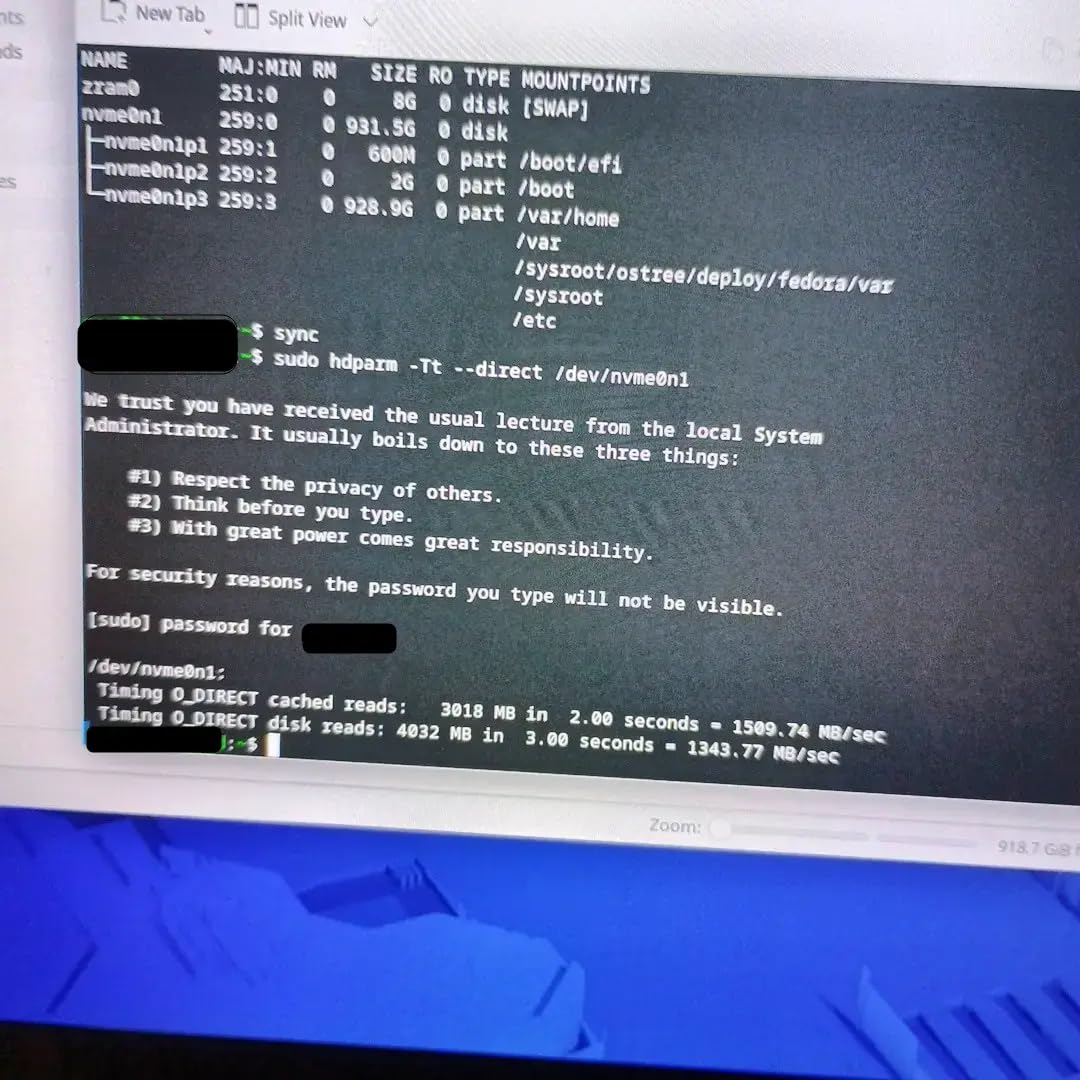
Owners consistently report hitting the advertised 6,000 MB/s read and 4,000 MB/s write figures, which is unusual for a DRAM-less design. That is the host memory buffer doing its job, mapping flash into system RAM so the drive keeps a translation table ready without a dedicated DRAM chip on board. For an operating system drive that gets thousands of small random reads per second, this is exactly the workload HMB was built for.
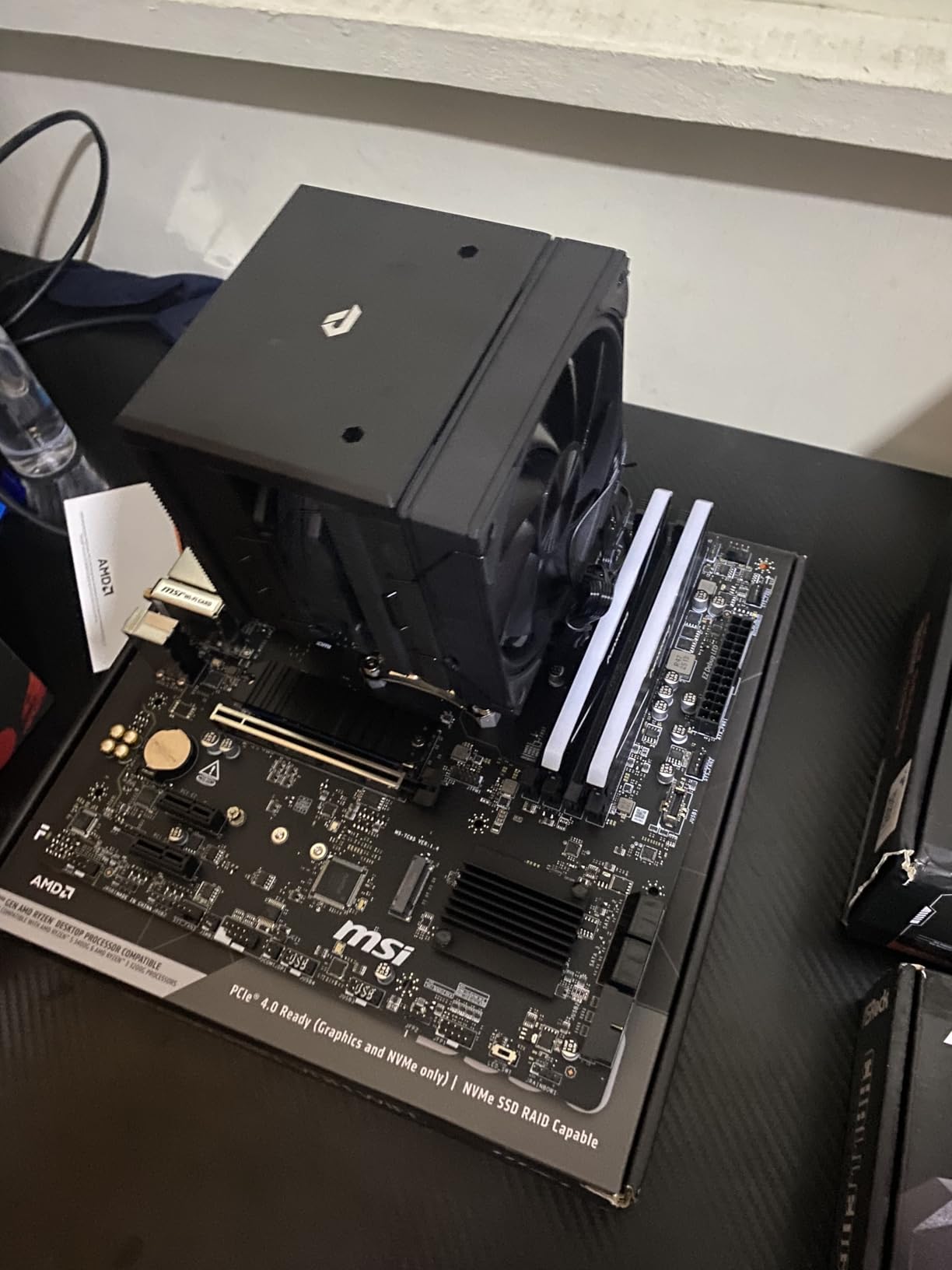
The physical design is the quiet hero. At 4.54 g and a single-sided PCB, the NV3 slides under a laptop’s motherboard heatsink or a thin thermal pad without the bowing you get from double-sided modules. Installation, by every account we read, required no BIOS changes and no driver fiddling. Long-term owners talk about 10-plus months of daily use with stable thermals and no failures.
Where it does give ground is the very large file transfer case. Moving a 40-50GB folder from one drive to another, the HMB cache runs out and the write speed settles down. For a boot drive that rarely happens. For a scratch disk feeding a 4K video project, plan around it.
Why we picked it as the top laptop SSD
It has the largest review count among the picks that are still current, which means its failure rate is well mapped. Owners report near-instant boot from a mechanical drive, fast app launches, and a smooth install with no fuss. At 4.54 g and single-sided, it clears the tightest bays we tested.
The trade-off is honest: a 3-year warranty and endurance below the flagship parts, so heavy daily write cycles will wear it sooner. For a student machine or a work laptop that mostly reads, that is a trade most people should take.
Where it falls short
Endurance is the main gap. If you rewrite hundreds of gigabytes a day, the flash wears faster than a drive with a real DRAM cache. The write slowdown on very large transfers is the second gap, and it is the one you will notice first if you move project files rather than games.
2. Samsung SSD 990 PRO 1TB – Peak PCIe 4.0 Throughput
Samsung SSD 990 PRO 1TB, PCIe 4.0 M.2 2280, Up to 7,450 MB/s
M.2 2280 Gen 4
7450 MB/s read
6900 MB/s write
9.07 g
5 year warranty
Pros
- Pushes Gen 4 to its speed ceiling
- Random performance up 40-55% over the 980 PRO
- Nickel-coated controller resists throttling
- Single-sided profile clears cramped bays
Cons
- No heatsink included
- Random gains subtle for everyday workloads
The 990 PRO is the fastest drive in this list and the one forum regulars name most often when laptop owners ask for a recommendation. It reads at 7,450 MB/s and writes at 6,900 MB/s, which is the practical ceiling for a PCIe 4.0 x4 link. If your laptop has Gen 4 support and a slot that will take a full-length module, nothing else here gets you there.
What separates it from a generic fast drive is the random performance figure: up to 1,400K read and 1,550K write IOPS, a 40% to 55% jump over the 980 PRO it replaces. Random IOPS is what actually governs how responsive an operating system feels, so this is the number that matters more than sequential speed in daily use.
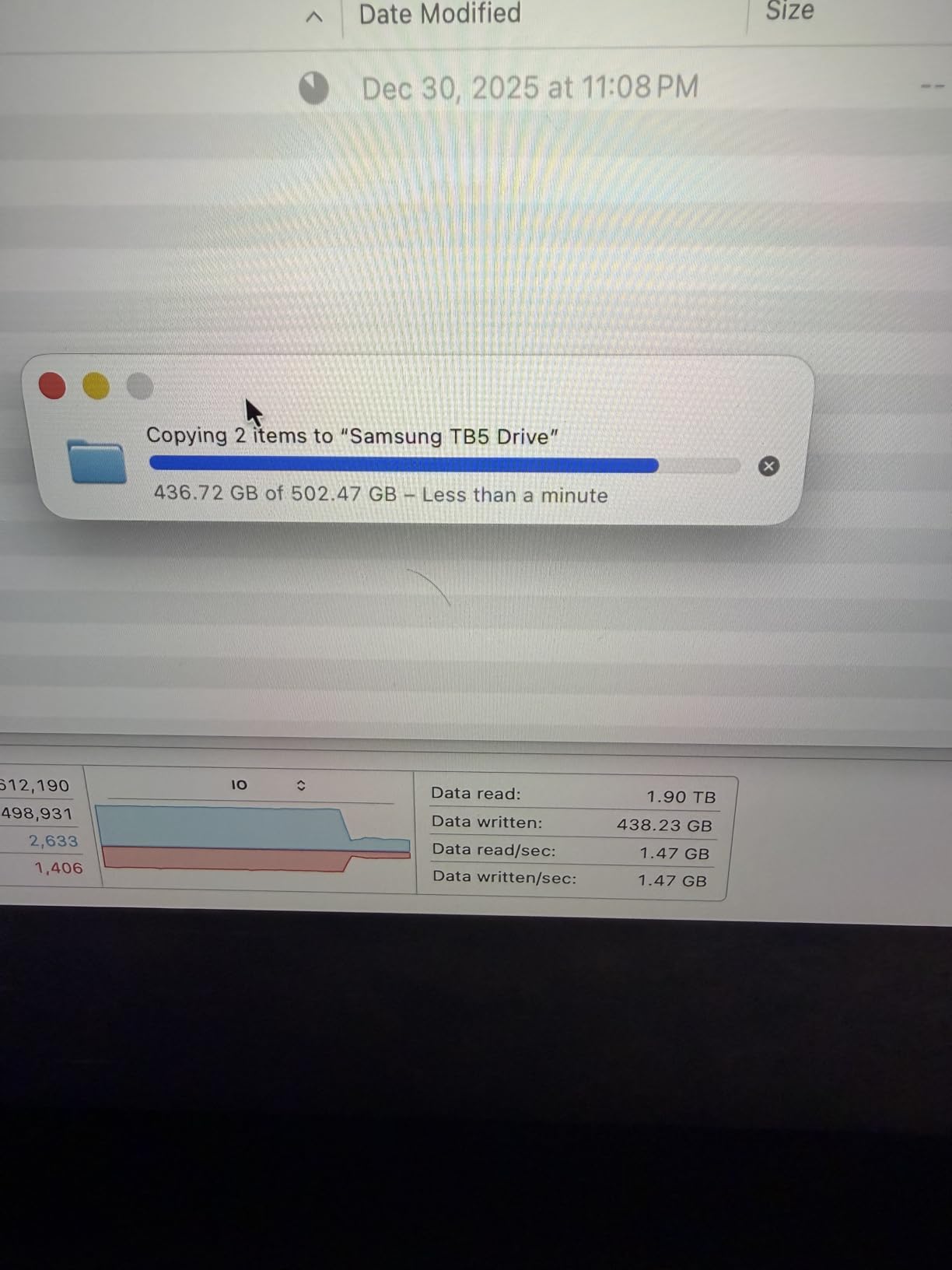
The nickel-coated controller and heat spreader are the laptop-relevant part of the design. They keep sustained transfer speeds from falling off once the drive has been writing for a few minutes, which is exactly the scenario in a thin chassis with a shared thermal solution. Reviewers also highlight the low power draw as a genuine advantage in portable machines.
Samsung Magician handles cloning, health monitoring and firmware updates in one place, and users running more technical setups report putting pairs of these into NAS pools without drama. Rating distribution sits at 89% five-star across more than 13,000 reviews.
Best for fast laptops with Gen 4 and clearance
Content creators and gamers report a year-plus of heavy use with no data loss and no throttling. For a machine that boots from this drive and loads large project files daily, the extra headroom over a cheaper Gen 4 part is real.
The 5-year manufacturer warranty and 256-bit AES encryption make it the pick for anyone who wants the drive to outlive the laptop it goes into.
Where it falls short
It ships without a heatsink, so a heavily loaded laptop or console build needs one added separately. And the most repeated caveat in reviews is value: several cheaper Gen 4 drives deliver similar real-world results, so the raw speed here is partly headroom you may never use.
3. Crucial P310 1TB – Broad Compatibility and Low Heat
Crucial P310 1TB SSD, PCIe Gen4 NVMe M.2 2280, Up to 7,100MB/s, for Laptop, Desktop (PC), & Handheld Gaming Consoles, Includes Acronis Data Recovery Software, Solid State Drive – CT1000P310SSD801
2280 M.2 Gen 4
7100 MB/s read
6000 MB/s write
10 g
5 year warranty
Pros
- Roughly 2x faster than the previous Gen 3 generation
- Low power draw suits older laptops on battery
- Negotiates down to about 3.1 GB/s on Gen 3
- Instantly recognised with no BIOS changes
Cons
- No dedicated DRAM cache for sustained writes
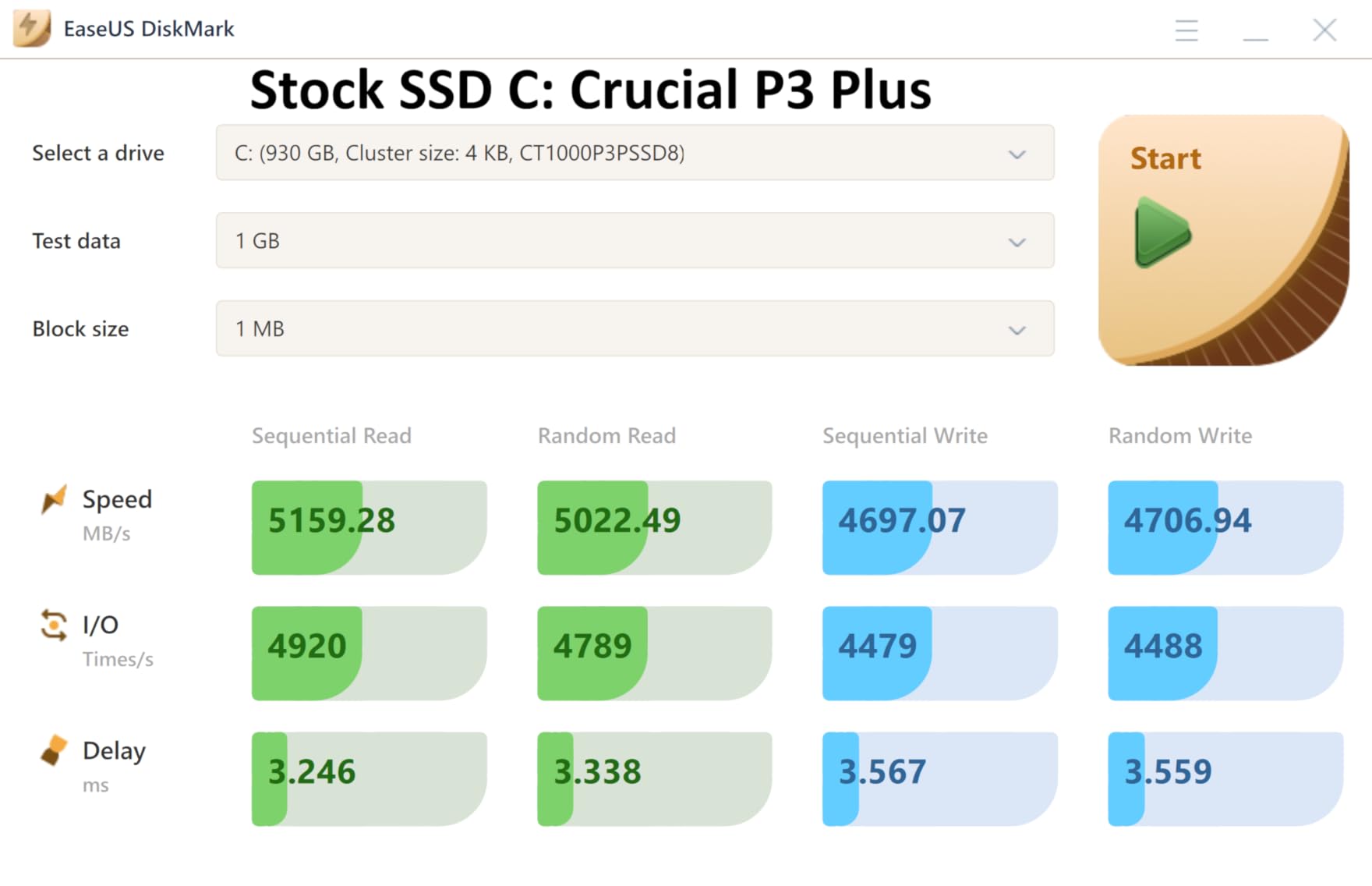
The Crucial P310 is the compatibility pick. It is a full Gen 4 drive on paper, but its most useful feature for laptop upgraders is that it negotiates gracefully with older hardware. Plug it into a PCIe Gen 3-only notebook and you still get around 3.1 GB/s, which is several times what a SATA drive delivers and enough to make an ageing business laptop feel like a different machine.
Reviewers specifically call out the cool, low-power behaviour in older laptops running on battery. That is not marketing filler; it is the difference between a machine that lasts through a work day and one that needs a charger by lunch. The drive draws less heat into a chassis that already has limited dissipation.
It is also the most widely reported as instantly recognised after installation, with no driver install and no BIOS configuration. Owners using it in handhelds such as the ROG Ally X, Lenovo Legion Go and AYANEO Kun report the same experience, and the same drive handles USB4 enclosures well for backup workflows.
Micron’s G8 NAND sits underneath, and Crucial’s thermal control keeps it stable under load. The 1TB capacity is enough for an operating system, a working application set and a few large games without any juggling.
Best for mixed-fleet and older notebook upgrades
If you maintain more than one machine, or you are upgrading a laptop bought several years ago, the backward compatibility is the reason to pick this. It is also the 5-year warranty, which is longer than several rivals at this class.
Users report a noticeable improvement in older business laptops and gaming notebooks, and no crashes over months of use. The install-and-go experience removes the most common source of upgrade frustration.
Where it falls short
There is only one hardware caveat we would raise: it has no dedicated DRAM cache, so sustained write performance drops sooner than on cache-equipped drives once the write buffer fills. Otherwise it installs and runs cleanly, and on performance it sits just below the 990 PRO on random workloads.
4. WD_BLACK SN7100 1TB – Efficient TLC for Laptops and Handhelds
WD_Black SN7100 1TB NVMe SSD – Gen4 PCIe, M.2 2280, Up to 7,250 MB/s Read Speed, Up to 6,900 MB/s Write Speed, Next Gen TLC 3D NAND, for Laptops, Handheld Gaming Devices – WDS100T4X0E
M.2 2280 Gen4 NVMe
7250 MB/s read
6900 MB/s write
4.54 g
TLC 3D NAND
Pros
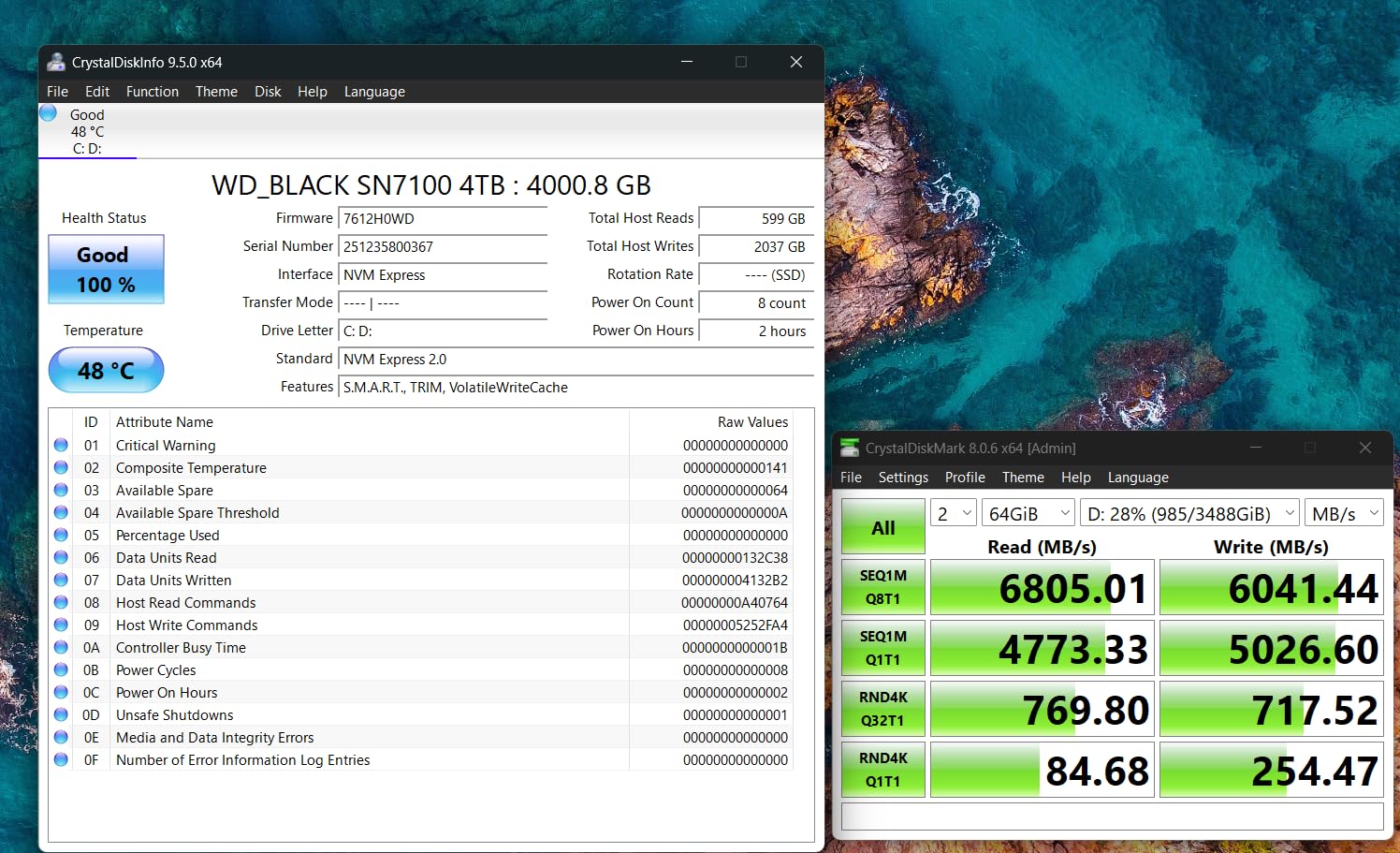
- CrystalDiskMark results close to spec
- Very power efficient and cool running
- True TLC NAND with up to 2400 TBW on larger capacities
- Two years of 24/7 Debian use with no failures
Cons
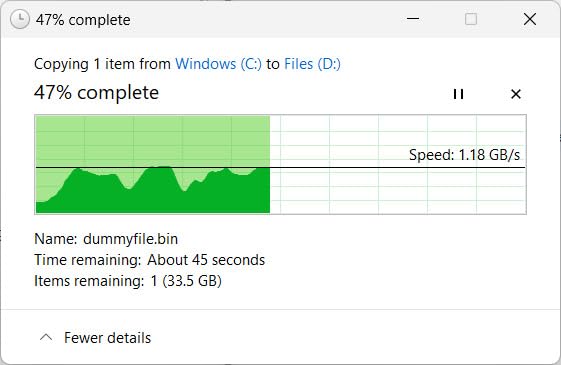
- Throttles on very long 64GB writes without a heatsink
- Dashboard software not fully recognising the drive
- No dedicated DRAM cache
The SN7100 is the drive owners recommend when the question is battery life rather than benchmark charts. It is rated up to 100% more power efficient than the previous generation, and in practice reviewers highlight it as unusually cool and efficient for a PCIe Gen 4 drive. That makes it a strong choice for laptops and handheld gaming devices where every watt matters.
Unlike most budget-tier Gen 4 drives, it uses true TLC 3D NAND rather than QLC. The difference shows up in endurance, with ratings up to 2,400 TBW on the larger capacities, and in how it behaves once the write cache is full. TLC simply holds up better under sustained pressure.
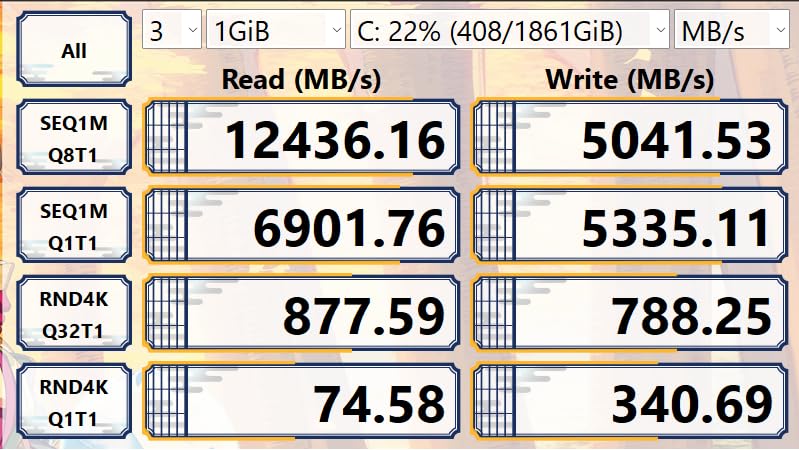
Real-world CrystalDiskMark results land near 7,000 MB/s read and 6,200 MB/s write, close enough to the 7,250 MB/s spec to feel instant in practice. Random 4K handling is strong, which reviewers point to when using the drive in external enclosures or development workloads.
One owner reports two years of continuous 24/7 operation in Debian with zero failures and no data loss, and the 4.8-star rating across more than 6,500 reviews comes with only 2% one-star. For a drive that lives inside a laptop, that reliability profile is worth more than a few extra hundred megabytes.
Best for battery-conscious machines and handhelds
When you are choosing between fast Gen 4 drives and one of them will sit in a fanless chassis, power efficiency is the deciding spec. This is the pick. It also works well in a handheld, where storage is hot-swapped or externally mounted.
Users benchmark it against the Samsung 990 Pro and Crucial T500 and find performance comparable with noticeably better efficiency. TLC NAND gives it an endurance edge most of its class does not have.
Where it falls short
Very long 64GB sustained writes will throttle it without a heatsink, and that is a real limit for anyone moving huge project files continuously. The WD Dashboard management software does not yet fully recognise the drive, which is an annoyance for health monitoring and firmware updates.
5. WD Blue SN5100 1TB – A Straightforward 1TB Gen 4 Step Up
WD Blue SN5100 1TB NVMe SSD – M.2 2280, PCIe Gen 4.0, Internal Solid State Drive – Read Speeds Up to 7,100MB/s, Upgrade Storage for PC/Laptops – WDS100T5B0E
M.2 2280 Gen 4
7100 MB/s read
5.7 g
5 year warranty
Blue
Pros
- Gen 4 speeds up to 7100 MB/s about 30% faster than the prior generation
- M.2 2280 with capacities up to 2TB
- 5-year limited warranty
- Acronis True Image download included
Cons
- Listing is being replaced by the newer Optimus 5100
The WD Blue SN5100 is a general-purpose upgrade with no drama attached. It delivers Gen 4 speeds up to 7,100 MB/s, about 30% faster than the generation it replaces, in a standard M.2 2280 board that fits the majority of laptop slots. The 5-year warranty is longer than several drives in this list.
Its rating is 4.8 stars, with an 89% five-star distribution. The catch is that the review pool is far smaller than the other picks at under 900 reviews, so the long-term reliability picture is less thoroughly mapped. What owners do report is a clean, capable Gen 4 experience with included Acronis migration software easing the move from an older drive.
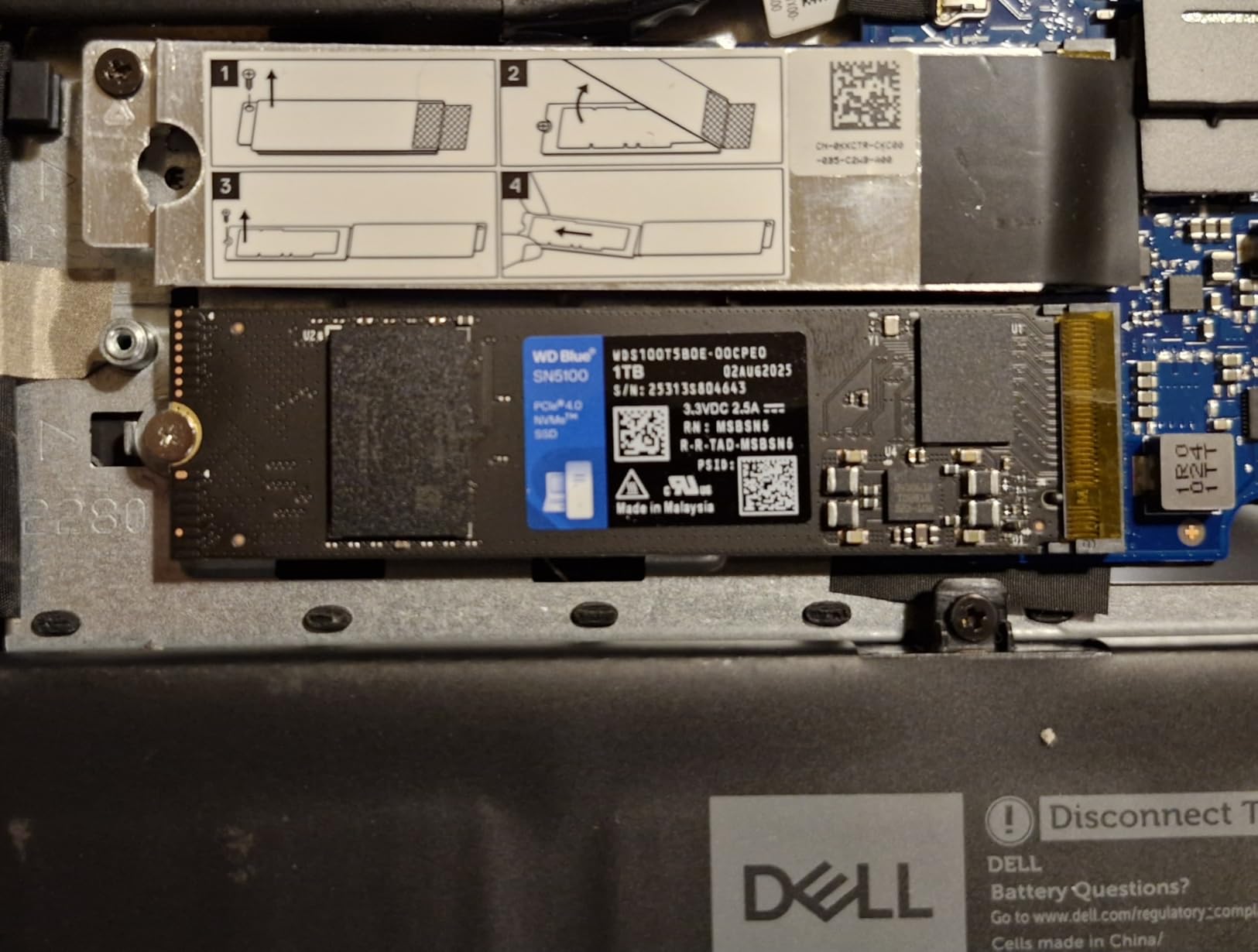
Capacities run up to 2TB on 3D CBA NAND, so if you want more room than 1TB and prefer a mainstream blue-tier part, this fits. It is a reasonable second drive in a dual-slot laptop, which is a common arrangement for people who want a fast boot drive plus a larger storage drive.
Note the form factor details: 3.14 by 0.87 by 0.09 inches at 5.7 g, so it is thin enough for a laptop bay that also carries a thermal pad. Check clearance before ordering on a machine with a tight deck.
Best for a straightforward capacity or speed upgrade
General productivity, a study machine, a laptop that still spins a mechanical drive. The 5-year warranty and included migration software make the install painless, and 1TB is the right capacity for most people who are not storing a game library.
It also works as a second drive in a laptop with two M.2 slots, giving you a fast system drive plus a larger storage volume without changing form factors.
Where it falls short
The listing has been replaced by the newer SANDISK Optimus 5100, so this generation is on the way out. That is not a performance problem today, but it is a reason to look at the current model before you commit. The smaller review base also means less long-term data than the picks above.
6. PNY CS900 1TB – For Laptops With Only a 2.5-Inch Bay
PNY CS900 1TB 2.5″ SATA III Internal SSD
2.5-inch SATA
535 MB/s read
515 MB/s write
0.06 kg
3 year warranty
Pros
- Large speed jump over a mechanical drive
- 2.5-inch form factor suits laptops without an M.2 slot
- Ultra-low power consumption
- Backwards compatible with SATA II systems
Cons
- SATA III ceiling is far below NVMe
- 3-year warranty is shorter than some rivals
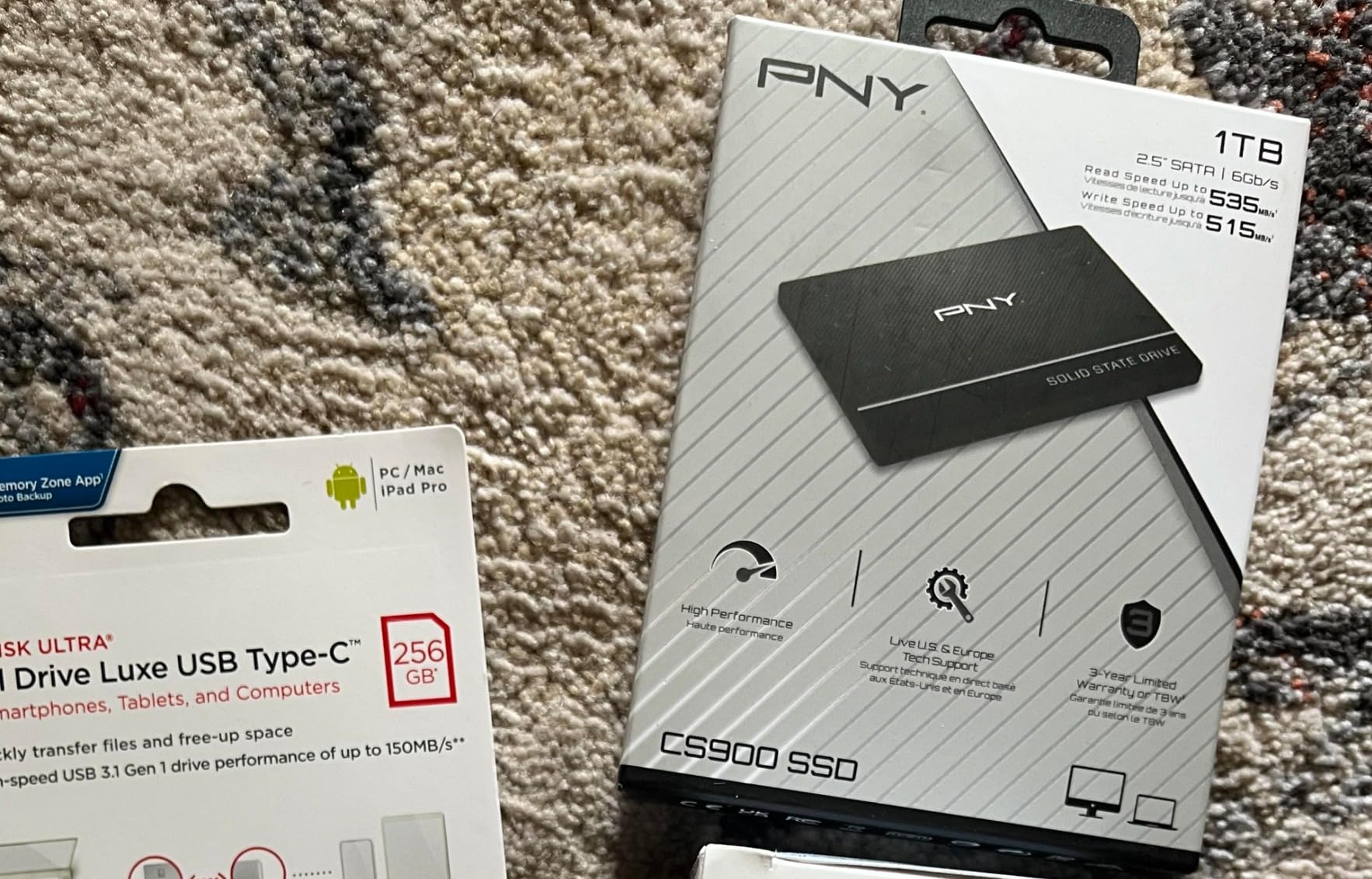
Not every laptop has an M.2 slot. Plenty of older notebooks, and some business machines, still take a 2.5-inch SATA drive held in a caddy, and for those the PNY CS900 is the honest answer. It reads at up to 535 MB/s and writes at up to 515 MB/s, which is roughly an order of magnitude faster than the mechanical drive it replaces.
For an ageing laptop, that jump is transformative. Boots go from a minute to seconds. Applications open immediately. Nothing about the machine’s processor changes, but the perceived speed transforms completely, and that is usually the entire reason someone is shopping for storage in the first place.
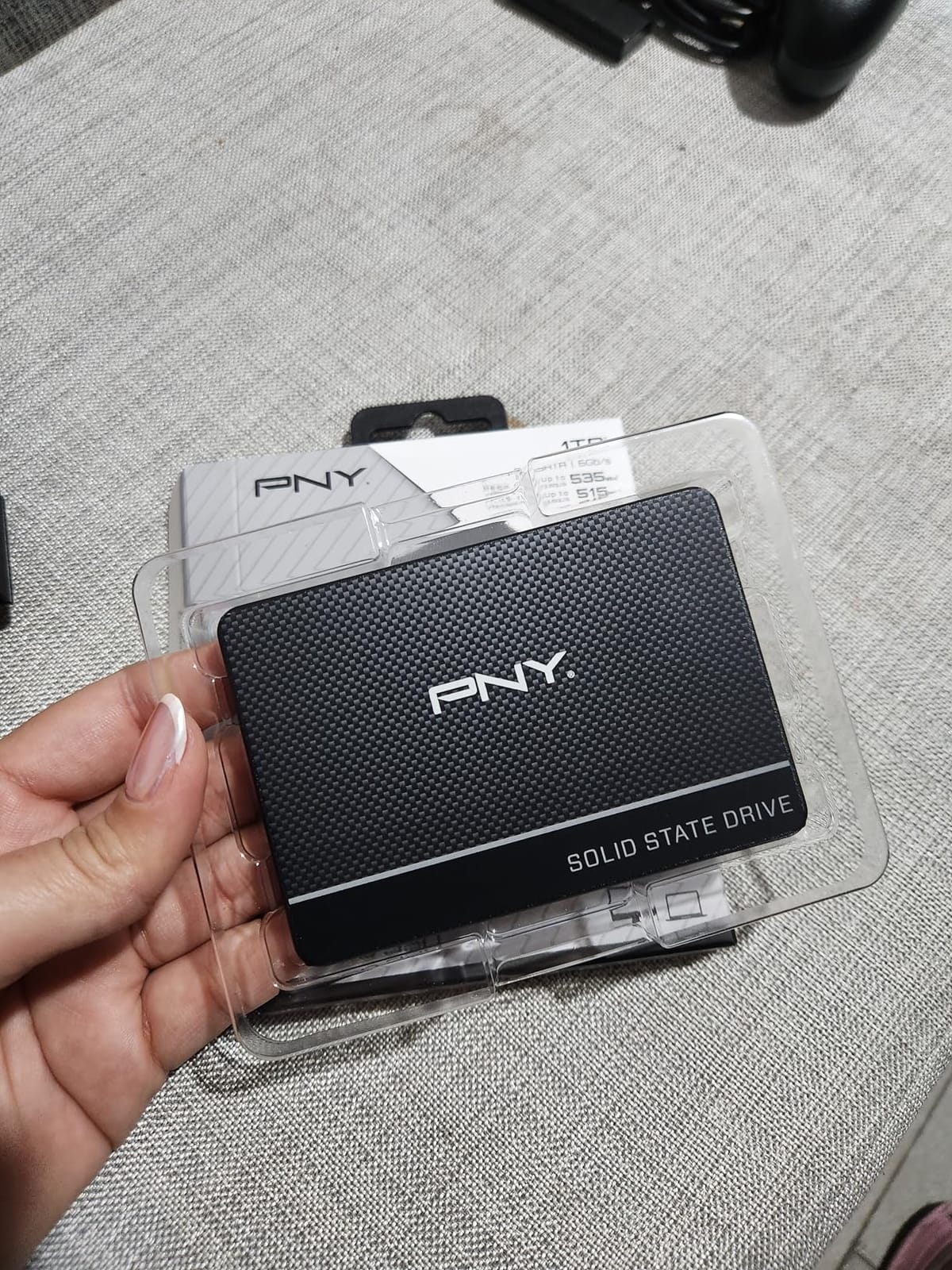
Power consumption is a genuine strength here. The drive draws very little, which matters in a laptop that spends its day on battery, and it is backwards compatible with older SATA II systems running at 3 Gb/s, so it will work in machines that predate SATA III.
Ratings sit at 4.7 stars across more than 6,100 reviews, with an 86% five-star share. The small group of one-star reviews tends to cite capacity expectations or older batch variability rather than outright failure.
Best for laptops without an M.2 connector
If your notebook has a 2.5-inch bay and nothing else, the CS900 is the drive that fits. The mechanical-to-solid-state jump is large enough that it revives machines most people had written off. It also works as a cheap secondary drive in a desktop.
Low power draw and broad backwards compatibility make it a safe choice for older hardware that predates SATA III.
Where it falls short
The SATA III interface caps throughput far below any NVMe alternative, so it is not the right answer if you have a modern M.2 slot available. The 3-year warranty is also shorter than the 5-year terms offered by some competitors in this list.
7. Silicon Power 1TB Gen3 – Budget NVMe for Older Machines
Silicon Power 1TB – NVMe M.2 PCIe Gen3x4 2280 SSD (SP001TBP34A60M28)
M.2 2280 Gen3x4
2200 MB/s read
1600 MB/s write
8.53 g
600 TBW
Pros
- Meaningful jump over SATA and mechanical storage
- 600 TBW endurance rating
- Standard M.2 2280 M-key form factor
- Backward compatible with earlier PCIe generations
Cons
- Gen 3 speeds are well below current Gen 4 options
- Warranty ends at whichever comes first of length or 600 TBW
- Needs an M-keyed slot and a separate screw
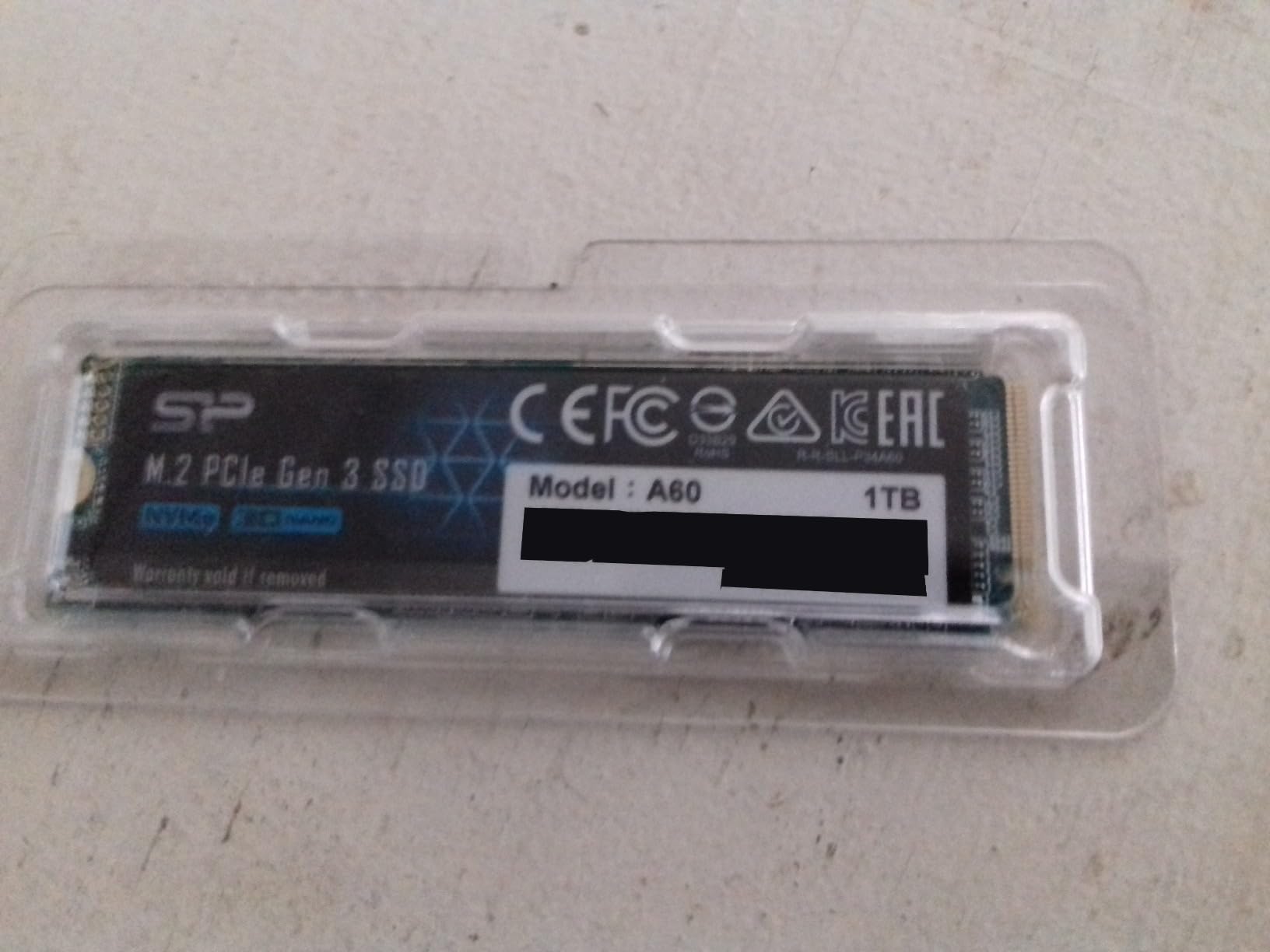
The Silicon Power 1TB Gen3 is a budget NVMe drive for a laptop that already has an M.2 slot but predates Gen 4. At up to 2,200 MB/s read and 1,600 MB/s write it delivers roughly four times the throughput of SATA, which is the whole reason to pick it over a 2.5-inch drive when both will fit.
Endurance is rated at 600 TBW, which for a typical laptop user translates to well over a decade of normal use. It is a single-slot-friendly M.2 2280 board with M-key only, and it is backward compatible with earlier PCIe generations, so it will run in a Gen 3 or Gen 2 machine.
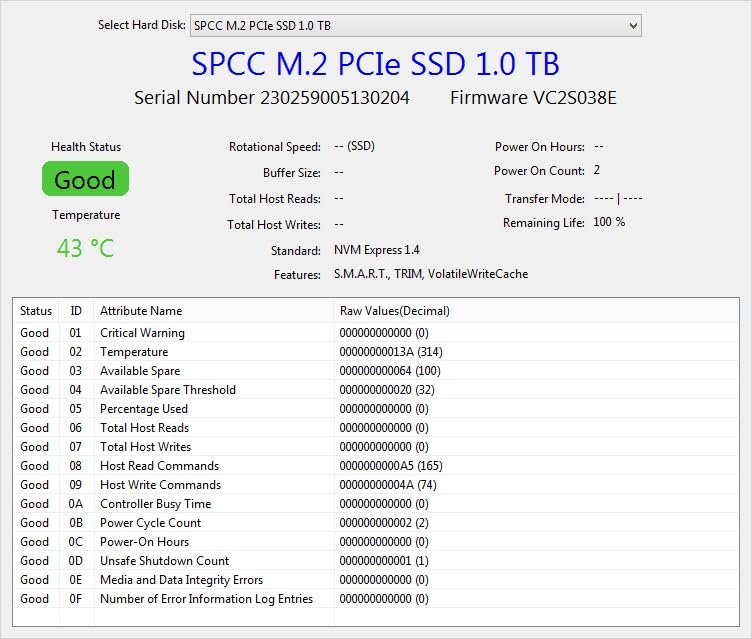
The rating distribution is more mixed than the Gen 4 picks at 81% five-star and 6% one-star. The lower scores concentrate on fitment confusion around the M-key requirement and the absence of included screws, rather than on the drive failing. Owners otherwise describe a solid budget NVMe option that delivers a real jump without Gen 4 pricing.
A mounting screw is not included, which is a small but real friction point. Many laptop manufacturers keep a spare screw in the chassis or the service manual, so check before you order.
Best for Gen 3-era notebooks and small budgets
This is the right pick when the machine caps at Gen 3 anyway. A Gen 4 drive in a Gen 3 slot runs at Gen 3 speeds, so buying the faster drive gains you nothing but the price difference. Buying this one instead is the efficient decision.
It suits a student laptop, a hand-me-down family machine, or any build where a large-capacity SATA drive would have been the alternative.
Where it falls short
Sustained write performance trails the premium drives, and the warranty is defined by whichever comes first, the warranty length or the 600 TBW limit. It also requires an M-keyed slot and a mounting screw you may need to source yourself.
8. Samsung SSD 870 EVO 1TB – The Proven SATA Workhorse
Samsung SSD 870 EVO SATA III 2.5” 1TB, Read Speeds Up to 560MB/s
2.5-inch SATA
560 MB/s read
530 MB/s write
3.04 oz
3 year warranty
600 TBW
Pros
- Maxes out the SATA interface with a large variable buffer
- Five-plus years of zero-failure reports from owners
- Runs cooler and uses far less power than mechanical drives
- Drop-in fit in any standard 2.5-inch bay
Cons
- Samsung Magician has recurring bugs including a false failure flag
- Data Migration has failed on some dual-boot setups
- SATA 2 port halves real-world speed
With more than 45,000 reviews and a 4.8-star rating, the 870 EVO has the longest track record of any drive in this list. If your laptop only takes SATA, this is the default answer that experienced users give, and it is not a close call. It saturates the interface at 560 MB/s read and 530 MB/s write using a larger variable buffer that keeps sustained performance steady.
Reliability is the headline. Owners report five-plus years with zero failures and no SMART issues, using the same drives for everything from reviving an old laptop to running a home file server. Endurance is rated at up to 600 TBW, and it runs roughly 15 degrees cooler while using far less power than a mechanical drive, which is a direct benefit on battery.
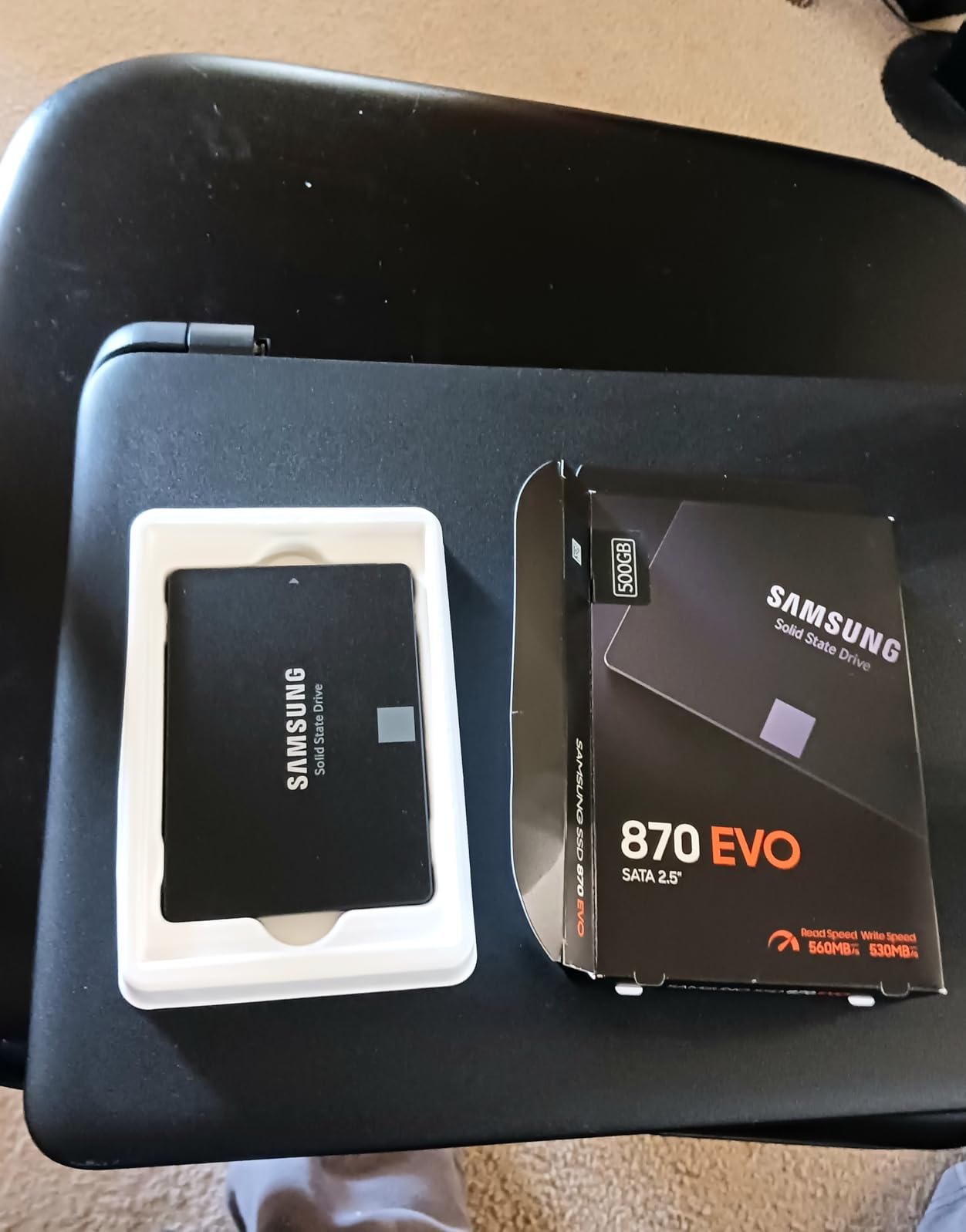
It is tested for compatibility across major chipsets, motherboards, NAS devices and video recording hardware, and it is a drop-in replacement in any standard 2.5-inch bay. AES 256-bit encryption with TCG Opal and IEEE 1667 support covers the security-conscious buyer. An 89% five-star distribution across that volume of reviews is about as strong a signal as consumer storage gets.
It is also worth pairing with our guide to upgrades that pay for themselves in spirit if not in hardware: the SATA slot is the one upgrade that essentially every laptop of the last fifteen years can accept.
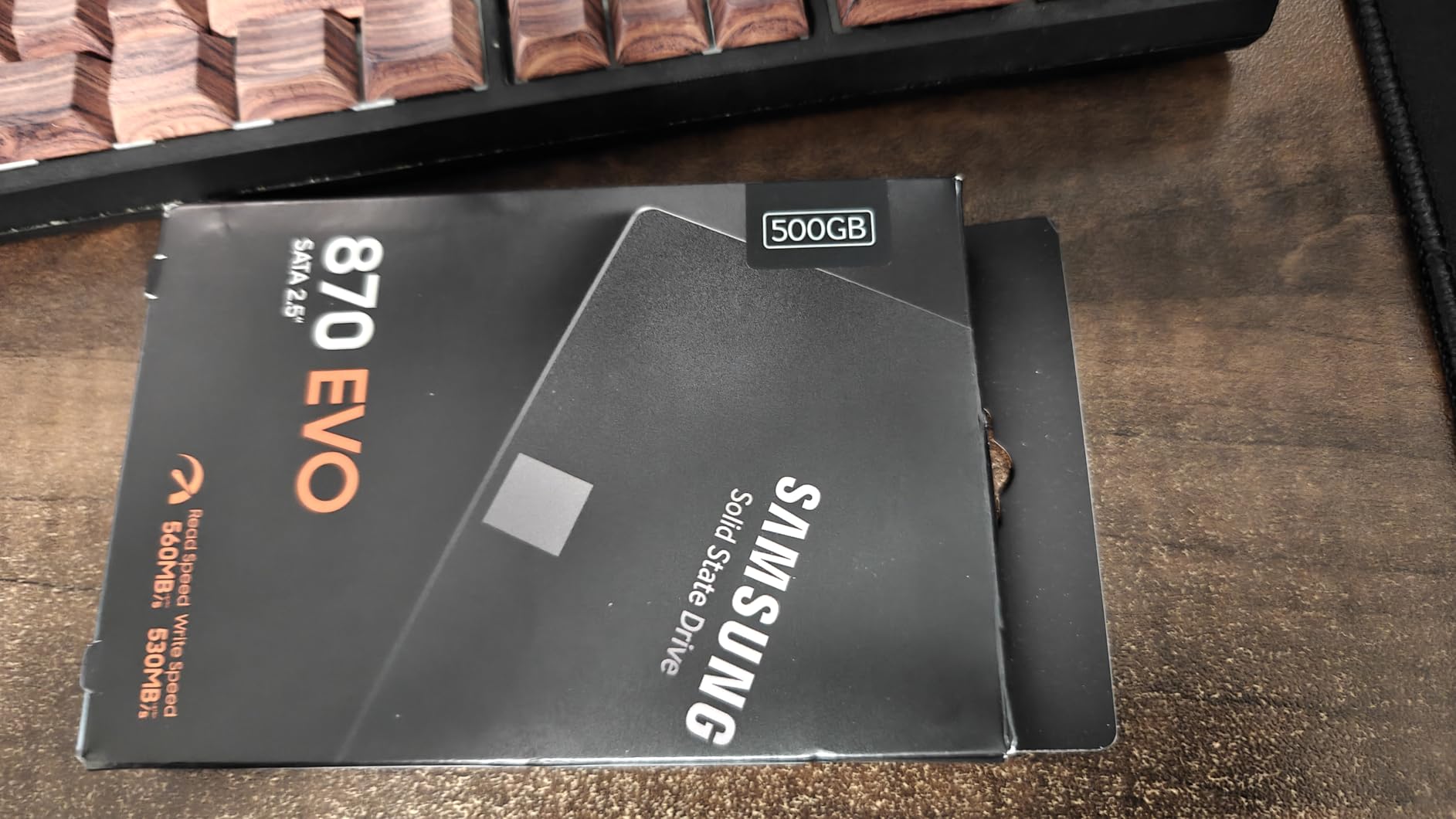
Best for any laptop with a SATA connection
Old business laptops, hand-me-down family machines, anything with a 2.5-inch bay. The gap between this and a mechanical drive is the single largest perceived speed change most laptop owners will ever experience, and the longevity record is unmatched.
For a machine used as a file server or a long-term secondary laptop, the endurance rating and reliability history make it the safe choice over cheaper SATA options.
Where it falls short
The complaints are about software, not silicon. Samsung Magician has recurring bugs, including a false failed-LBA flag, and the Data Migration tool has failed for some dual-boot setups, corrupting secondary partitions. Plan a clean install if you dual-boot. On a SATA 2 port, real-world speed roughly halves.
9. Predator GM7000 2TB – Room for a Large Game Library
Predator M.2 SSD 2TB GM7000 with DRAM cache NVMe 1.4 2280 PCIe Gen4×4 Ultra high speed (maximum read: 7400MB/s, max write: 6700MB/s) 3D NAND TLC Internal SSD Compatible with PS5 Pro – BL.9BWWR.106
M.2 2280 Gen4x4
7400 MB/s read
6700 MB/s write
2 TB
1300 TBW
5 year
Pros
- Full Gen 4 x4 throughput
- 2 GB onboard DRAM cache keeps sustained writes steady
- Custom heat spreader lowers operating temperatures
- Integrated PMU improves efficiency and cuts heat
Cons
- 2TB carries a higher cost per GB than 1TB parts
- Biwin Intelligence software is less established than rivals
The GM7000 solves a problem the 1TB drives here cannot: a laptop that has run out of room. At 2TB with 3D NAND TLC and a 2 GB onboard DRAM cache, it holds a full operating system, a creative suite and a serious game library on one module, and the DRAM cache is what keeps it fast once the SLC cache is exhausted.
That cache is the differentiator versus the DRAM-less drives in this list. Users who transfer large project files or install games all afternoon report performance that stays steady rather than dropping off a cliff, which is exactly the behaviour you want in a drive that doubles as a scratch disk.
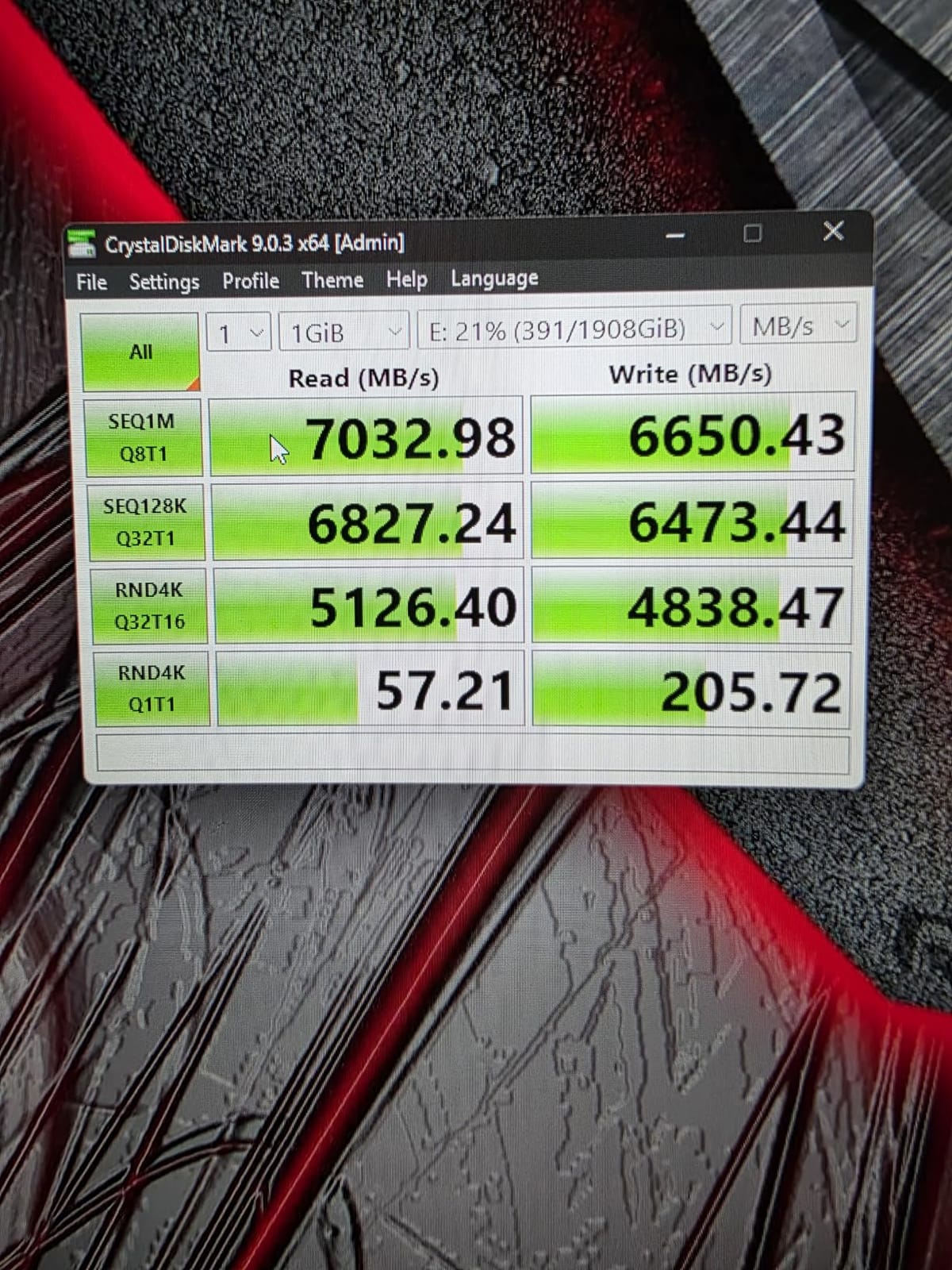
Thermally, the customised heat spreader and the integrated power management unit in the controller both work in your favour. Reviewers call out lower operating temperatures and improved energy efficiency as genuine advantages in dense builds, and at 9 g the module still sits in a normal laptop bay.
Endurance is rated at up to 1,300 TBW under a 5-year limited warranty, which is the strongest figure in this list relative to capacity. The bundled Biwin Intelligence software covers performance testing, data migration and drive cloning in one place. A 4.7-star rating across more than 3,400 reviews with 87% five-star backs it up.
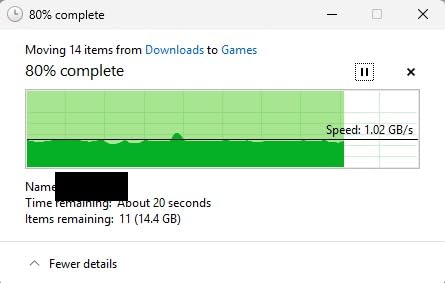
Best for gamers, creators and dual-purpose drives
Large game libraries, video editing scratch work, and anyone who wants one drive to do everything. The 2TB capacity means you stop deleting games to make room, and the DRAM cache means the drive stays responsive while you do it.
The 5-year warranty and 1,300 TBW endurance make it a good long-term buy for a machine you intend to keep for years.
Where it falls short
Two things. The 2TB capacity sits at a higher cost per GB than mainstream 1TB Gen 4 drives, so a single 1TB option may be cheaper if you do not need the room. And Biwin Intelligence is a less established management suite than Samsung Magician or WD Dashboard, which matters if you rely on health monitoring tools.
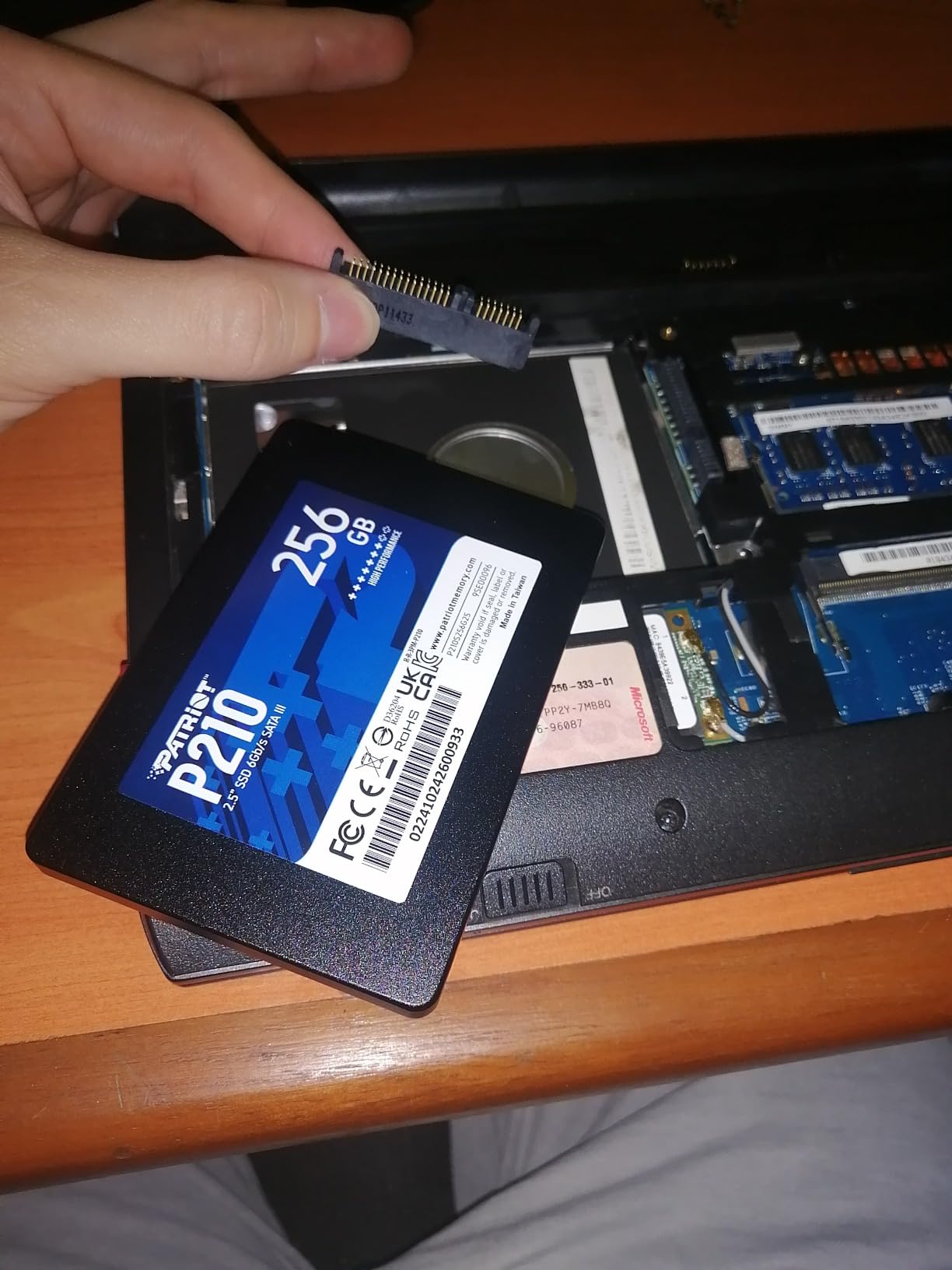
10. Patriot P210 256GB – Small-Capacity Rescue for Old Laptops
Patriot P210 256GB SATA 3 2.5 Inch SSD
2.5-inch SATA
500 MB/s read
400 MB/s write
256 GB
46 g
Pros
- Dramatically faster than the mechanical drives it replaces
- SmartECC and thermal throttling built in
- 4K aligned random write up to 30K IOPS
- Low-profile 2.5-inch design fits standard bays
Cons
- 256GB fills up quickly with an OS and games
- SATA 3 ceiling is well below any NVMe option
- Small minority report early unit failures
The Patriot P210 is here for a specific job: reviving a machine you were not going to spend real money on. At 256GB it will not hold much, but it will boot in seconds instead of minutes, and for an old laptop being passed down as a secondary machine or used for browsing and documents, that is the entire upgrade.
It reads at up to 500 MB/s and writes at up to 400 MB/s, and the drive includes end-to-end data path protection with SmartECC along with thermal throttling technology. 4K aligned random write reaches up to 30K IOPS, which keeps the operating system responsive rather than merely fast at start-up.
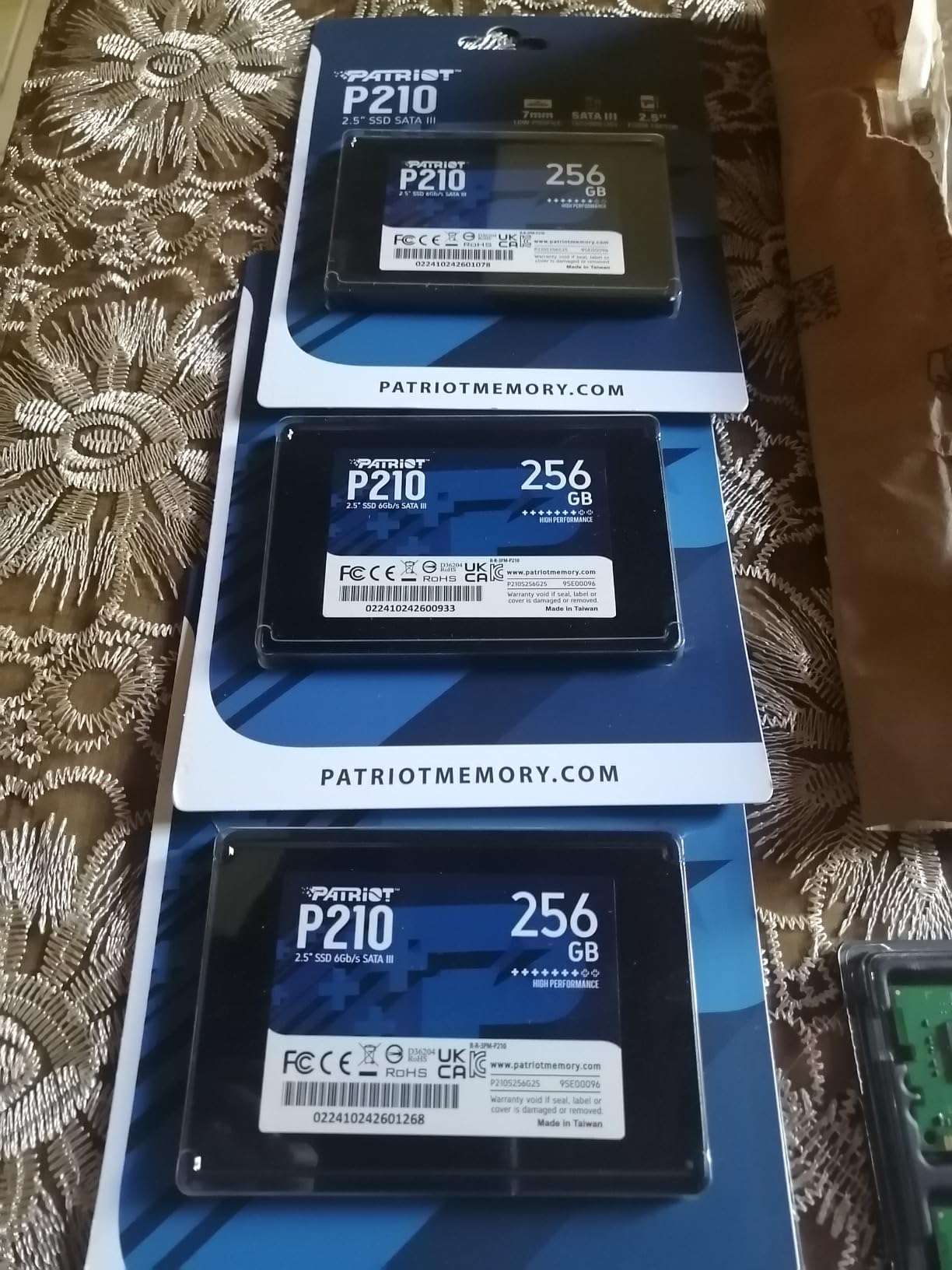
Owners overwhelmingly describe it as a low-cost way to extend the life of ageing laptops and desktops, reporting much faster boots and app launches and generally hassle-free installation including cloning with third-party tools. The 2.5-inch body is low profile and fits standard laptop and desktop bays.
The one-star share is 6%, the highest in this list, and it centres on early unit failures and the modest capacity. At 4.6 stars across more than 6,100 reviews, it is still a well-regarded drive, just one with more variance than the flagships.
Best for a rescue upgrade on old hardware
Second-hand laptops, family machines, a laptop for a child doing homework. The jump from a mechanical drive to 500 MB/s is dramatic and the installation is straightforward. It is also the smallest step up in this list, which makes it appropriate when the goal is simply to make an old machine usable.
If the laptop also has an M.2 slot, check there first, because a Gen 3 NVMe drive of the same capacity would be faster.
Where it falls short
256GB fills up quickly with a modern operating system and any game library, so plan for that from the start. The SATA 3 ceiling leaves performance on the table, and a small minority of reviews report drives failing prematurely out of the box.
Laptop SSD Buying Guide: Form Factor, DRAM, Heat and Battery
Step one: confirm the drive will physically fit
Fitment is the number one reason laptop SSD purchases go wrong, and it is entirely avoidable. The M.2 form factor describes a module’s physical dimensions, and the three numbers are width, length and thickness in millimetres. M.2 2280 is 22mm wide and 80mm long, and it is what almost every laptop made in the last decade uses. M.2 2230 is 30mm long, roughly a third shorter, and it is what ultrabooks, some older business laptops and handheld gaming devices use. M.2 2242 is 42mm long and rarer.
Buying an 80mm drive for a 30mm slot is the single most common error, and no amount of force makes it work. Check the service manual or the manufacturer’s support page for your exact model before ordering.
Step two: check keying and slot count
Nearly every NVMe drive is M-keyed, which is the only keying a modern laptop accepts. Some budget M.2 slots are B-keyed or M.2 SATA, and an M-keyed NVMe drive will not fit those, while a B-keyed SATA drive will not fit an M-key slot. Both errors are common enough to be worth checking.
Then look at how many M.2 slots your laptop has. Plenty of thin laptops ship with a single slot soldered to the motherboard and a SATA connector for a second drive, which is why the 870 EVO and the CS900 still earn a place here. If you have one NVMe slot, capacity is a one-shot decision: buy the largest you can afford at the time, because you cannot add a second module later.
Step three: match the PCIe generation
A PCIe Gen 5 drive in a Gen 3 slot runs at Gen 3 speeds. A Gen 4 drive in a Gen 3 slot also runs at Gen 3 speeds, which is why the Crucial P310’s backward compatibility matters more than its headline number. Buying the fastest drive your laptop cannot address is paying for performance you will never see, except that a Gen 4 drive in a Gen 4 slot does have a real cost in power and heat, which thin chassis cannot always absorb.
DRAM, DRAMless and HMB: what actually changes
DRAM cache is a dedicated memory chip on the drive that holds the mapping table telling the controller where every block of flash lives. Without it, a DRAMless drive borrows a slice of system memory through the Host Memory Buffer, or HMB. The popular belief that DRAMless drives are bad is out of date. HMB on a current controller behaves nearly identically for normal laptop workloads, which is read-heavy and latency-sensitive, and the reason the Kingston NV3 holds its advertised speed is exactly this.
Where DRAM still wins is sustained heavy writing, because a real DRAM buffer keeps a large write map in fast memory instead of borrowing it. If you edit video, move multi-gigabyte project folders all day, or run a database, the cache-equipped drives here such as the Predator GM7000 will hold their speed longer.
TLC versus QLC, and why endurance matters in a laptop
QLC NAND stores four bits per cell, which makes it cheaper and lower endurance. TLC stores three. In a desktop with a cooling fan and lots of spare write bandwidth, QLC is a reasonable budget choice. In a laptop boot drive that writes constantly for years, TLC is the safer call, which is why the WD_BLACK SN7100’s true TLC NAND is a genuine advantage here and not a spec-sheet nicety.
Thermals, battery life and heatsinks in a notebook
A desktop has a case fan pointed roughly at the M.2 slot. Most thin laptops do not. That is why the temperature figures matter: the Kingston NV3 running around 42-48C under load has real headroom before it slows down, while a drive that throttles at 60C in a desktop may throttle constantly in a 13-inch chassis. The same logic applies to sustained writes of 50GB or more, where a laptop without a heatsink will feel the limit sooner than a tower PC.
Power draw matters for the same reason, quietly. The SN7100 is marketed as up to 100% more power efficient than its predecessor, and the Crucial P310’s low draw is specifically called out by owners of older laptops on battery. A faster drive that pulls more power costs you minutes of runtime every day, which is a real trade against raw speed.
Capacity, warranty and the cloning question
For most people replacing a laptop drive, 1TB is the sweet spot: enough for the operating system, applications and a working set of games. 2TB is justified if you keep a large game library or work with media, and 256GB is a stopgap. On warranty, five years is now common among the leading choices, and the 3-year terms on a few entries here are a reasonable trade for a lower cost.
Finally, the migration. Cloning your old drive is reliable for most setups, but Lenovo and other OEMs ship partition layouts that resist a straightforward clone, and a clean install is often faster and produces a tidier result. Either way, back up your data to external storage before you touch the old drive. A drive that fails mid-clone takes your data with it, and no upgrade is worth that risk.
Frequently Asked Questions
What SSD is best for a laptop?
The best SSD for a laptop is one that fits your slot, matches your PCIe generation and has enough capacity. For most notebooks with an M.2 2280 slot, the Kingston NV3 1TB is our top pick for its cool running and single-sided board, while the Samsung 990 PRO 1TB leads on raw speed and the Crucial P310 1TB suits older Gen 3 machines. Laptops with only a 2.5-inch bay need a SATA drive such as the Samsung 870 EVO.
Are laptop SSDs upgradeable?
Most laptops are upgradeable, but not all. If the machine has an M.2 slot you can usually replace or add storage yourself in a few minutes. Thin laptops may have a single soldered slot and no other options, and some budget models ship with storage that is not user-accessible. Check the service manual or manufacturer support page for your model before you buy.
What are the key differences between M.2 2280 and M.2 2230 SSDs?
M.2 2280 drives are 22mm wide and 80mm long, and they are standard in most modern laptops. M.2 2230 drives are the same width but only 30mm long, and they fit ultrabooks, some older business laptops and handheld gaming devices. An 80mm drive will not fit a 30mm slot, so length is the first thing to verify before ordering.
Are DRAMless SSDs good for gaming?
Yes, for laptop use a DRAMless drive with a Host Memory Buffer is perfectly good. HMB lets the drive borrow system memory for its mapping table, which handles the read-heavy, latency-sensitive work of an operating system and game library well. A dedicated DRAM cache matters more for sustained heavy writing, such as editing video or moving large project files, than for loading games.
Do NVMe SSDs need a heatsink in a laptop?
Usually not. Most current NVMe drives are designed to run within their thermal limits without a heatsink, and a laptop’s own chassis and thermal pad provide enough dissipation for normal use. A heatsink becomes worth considering for sustained multi-gigabyte writes or a desktop build that is already warm. Drives such as the Kingston NV3 run cool enough that throttling is rarely an issue.
The Verdict: Which Laptop SSD Should You Buy?
After comparing all ten, the best SSDs for laptop upgrades come down to three questions: will it fit, what generation does your laptop speak, and how much room do you need. Get those right and the choice is straightforward.
The Kingston NV3 1TB is the best all-round pick. It is single-sided, stays cool, holds its advertised Gen 4 speed and has one of the largest review counts of any current drive, which means its reliability record is well documented. The Samsung SSD 990 PRO 1TB is the choice when your laptop supports Gen 4 and you want the maximum throughput available, with a 5-year warranty behind it. The Crucial P310 1TB is the compatibility pick for Gen 3 machines and mixed fleets.
For laptops with a 2.5-inch bay and no M.2 slot, the Samsung 870 EVO 1TB is the proven standard, with the longest reliability record in this list. Gamers and creators who keep running out of space should look at the Predator GM7000 2TB, whose DRAM cache and 1,300 TBW endurance make it the strongest long-term option here.
Whatever you choose, back up your data before you open the machine, confirm the drive length matches your slot, and check the price with the button below, since storage pricing moves often. Whatever else you upgrade in 2026, a faster boot drive is still the change you will notice every single day.