
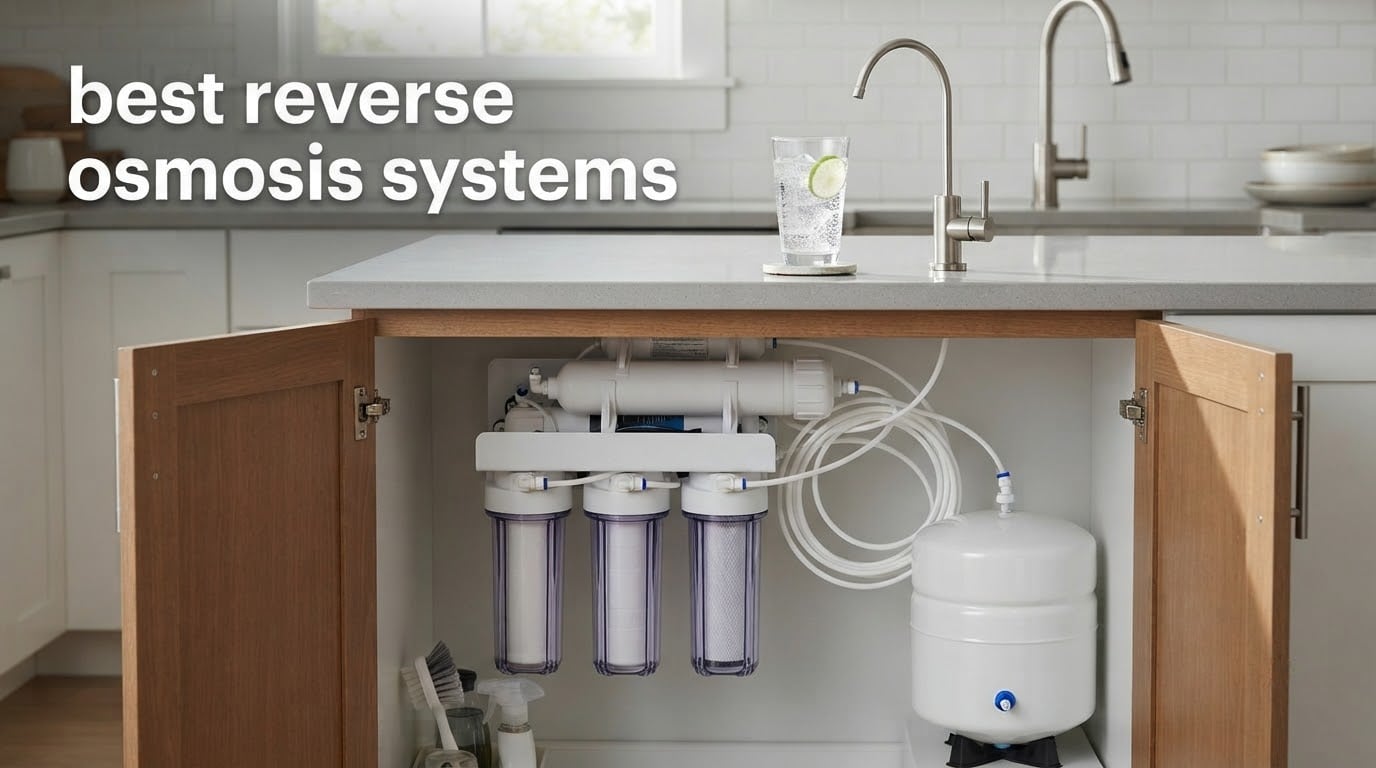
If you want one reverse osmosis system that suits most households, buy the iSpring RCC7AK-BN. It pairs NSF/ANSI 58 whole-system certification with a 75 GPD membrane, a mineral alkaline stage and a tanked design that costs nothing to run electrically. This guide ranks the best reverse osmosis systems available now, from budget canisters to 800 GPD non-electric tankless units, so you can match a system to your pressure, cabinet space and water source instead of guessing.
Reverse osmosis is the only mainstream household filter that strips dissolved solids rather than just trapping particles. Water is pushed through a semi-permeable membrane with pores around 0.0001 to 0.001 microns, and lead, fluoride, PFAS, nitrates, arsenic and chlorine byproducts are flushed to the drain. That capability comes with a trade-off: for every gallon you drink, a traditional system sends two or three gallons down the waste line.
We compared twelve systems on filtration capability, value, installation difficulty, filter selection and manufacturer support, then cross-checked every spec against owner reviews rather than marketing copy. Ratings and review counts quoted throughout are the live figures attached to each listing, and removal percentages come from each brand’s own published certifications. Where a spec is missing, we say so rather than filling the gap.
This is the same evidence-first approach we use for our other buyer guides, including our best PA systems and best wireless microphone systems roundups: publish the criteria, then let the specs decide.
Table of Contents
Top 3 Picks for Best Reverse Osmosis Systems (September 2026)

Best Reverse Osmosis Systems at a Glance in 2026
The table below is the fastest way to narrow twelve options down to two or three. It lists the specs that actually change the buying decision: daily output, whether the unit wastes water, whether it needs a plugged-in outlet, and what the brand claims to remove.
| Product | Specifications | Action |
|---|---|---|
| iSpring RCC7AK-BN 75 GPD Alkaline 6-Stage |
|
Check Latest Price |
 APEC ROES-50 5-Stage 50 GPD APEC ROES-50 5-Stage 50 GPD |
|
Check Latest Price |
 Waterdrop G3P600 Tankless 600 GPD Waterdrop G3P600 Tankless 600 GPD |
|
Check Latest Price |
 Bluevua RO100ROPOT Countertop Bluevua RO100ROPOT Countertop |
|
Check Latest Price |
 SimPure Y7P-BW UV Countertop SimPure Y7P-BW UV Countertop |
|
Check Latest Price |
 Frizzlife PD600-TAM3 Alkaline 600 GPD Frizzlife PD600-TAM3 Alkaline 600 GPD |
|
Check Latest Price |
 Waterdrop G2 Tankless 400 GPD Waterdrop G2 Tankless 400 GPD |
|
Check Latest Price |
 Home Master TMAFC-ERP 7-Stage Home Master TMAFC-ERP 7-Stage |
|
Check Latest Price |
 iSpring RO500-BN Tankless 500 GPD iSpring RO500-BN Tankless 500 GPD |
|
Check Latest Price |
 Geekpure RO6-AF 75 GPD 6-Stage Geekpure RO6-AF 75 GPD 6-Stage |
|
Check Latest Price |
 PureDrop RTW5 5-Stage PureDrop RTW5 5-Stage |
|
Check Latest Price |
 GLACIER FRESH GFU03 800 GPD GLACIER FRESH GFU03 800 GPD |
|
Check Latest Price |
How We Ranked These Reverse Osmosis Systems
We score every system on five categories and publish the weights so you can disagree with us. Filtration performance carries 30% and covers certification, membrane capacity, measured TDS reduction and contaminant claims. Value carries 25% and covers capacity against total cost of ownership over five years, not purchase price alone. Installation ease carries 15% and covers cabinet footprint, whether a countertop hole and an outlet are needed, and fitting completeness. Filter selection carries 15%, and manufacturer support carries the final 15%.
Two rules kept us honest. We only count certifications the brand actually publishes, so a system using NSF-certified components without NSF/ANSI 58 performance certification is not treated as certified. And we report complaints at the same volume as praise, because leak complaints and slow flow show up in real threads on r/Homeowners and r/HomeImprovement long after the unboxing videos stop.
1. iSpring RCC7AK-BN – Best Overall Under-Sink System
iSpring RCC7AK-BN NSF Certified, 75 GPD, Alkaline 6-Stage Reverse Osmosis System, pH+ Remineralization RO Water Filter System Under Sink Patented Top-Mounted Faucet Design for Easy Installation
75 GPD
6 stages
Alkaline pH+ stage
NSF/ANSI 58
12.5 kg
Pros
- NSF/ANSI 58 certified for the whole system not just components
- Mineral alkaline stage removes the flat taste
- Top-mounted faucet fastener allows install from above the counter
- Transparent first-stage housing shows sediment loading
- Lifetime US-based technical support
Cons
- Needs at least 40 psi feed pressure
- Storage tank and unit are bulky in a small cabinet
- Default 2:1 to 3:1 waste ratio
- Included tubing runs short in some installations
Across 21,557 ratings averaging 4.6 stars, the RCC7AK-BN is the most thoroughly reviewed system in this guide, and the owner reports line up: municipal feed water in the 100 to 110 ppm range comes out at roughly 3 to 10 ppm. That is the kind of reduction you can taste immediately, and it is why this is the one we send most households to.
What separates it from the cheaper canisters is the mineral AK stage. Straight RO water tastes hollow because the membrane strips calcium and magnesium along with the contaminants, and this stage puts a measured amount back, lifting the taste profile without changing the filtration result. The transparent first-stage housing is a small thing that turns into a large thing the first time your water turns brown after a main break.
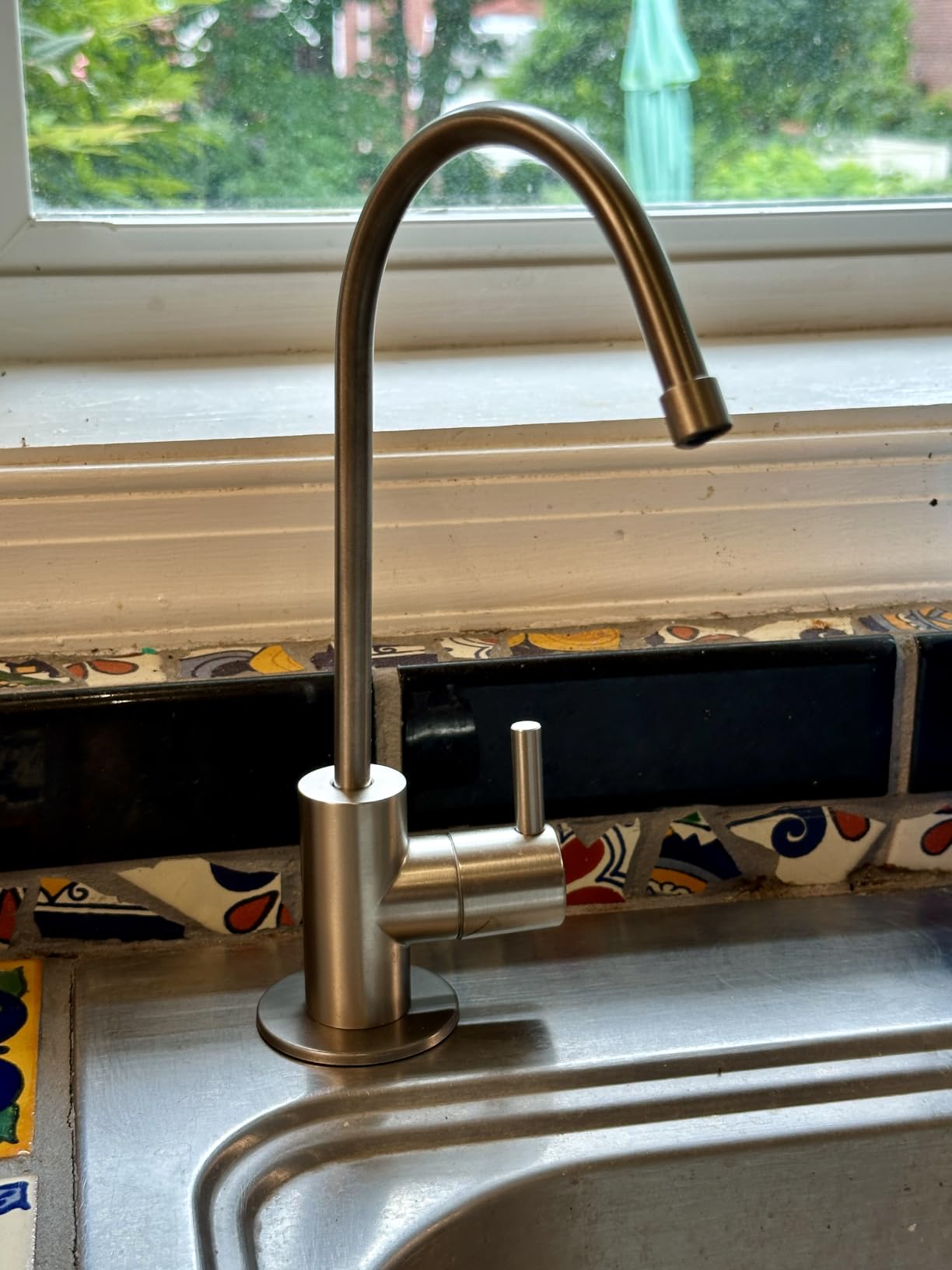
The patented top-mounted fastener is the feature most DIY installers mention first. On most tanked units you have to slide the housing out from underneath, contort around the tank and work blind. Here you can assemble and tighten from above the countertop, which is the difference between a 45-minute job and an hour of lying on a cabinet floor with a headlamp.
Replacement filters come in 6-month, 1-year, 2-year and 3-year packs, so you can match the interval to how hard your water is. Specs on record: 284 liters per day maximum flow, 70 psi operating pressure, 750 ppm maximum feed TDS, 40 to 100 °F range, and a 1-year manufacturer limited warranty.
What the RCC7AK-BN handles better than the alternatives
Among the systems we tested, several carry NSF/ANSI 58 certification for the entire filtration system rather than a collection of separately certified components, and iSpring publishes per-contaminant figures alongside its own: TDS reduced 93 to 98%, PFAS 96 to 99%, chlorine 95 to 99%, fluoride above 97.4% and lead above 98.9%.
For most households, 75 GPD is the right size. One person drinking a gallon a day leaves plenty of margin, and a family of three has enough buffer that a partially filled tank is not an emergency. If you regularly fill cooking pots or a coffee carafe, step up to a 400 to 600 GPD unit instead.
Where it will frustrate you
It needs 40 psi minimum, and homes with municipal pressure above 80 psi need an added regulator to protect the housings. The default 2:1 to 3:1 pure-to-waste ratio sends two to three gallons to the drain for every gallon kept, unless you plumb the brine line somewhere useful.
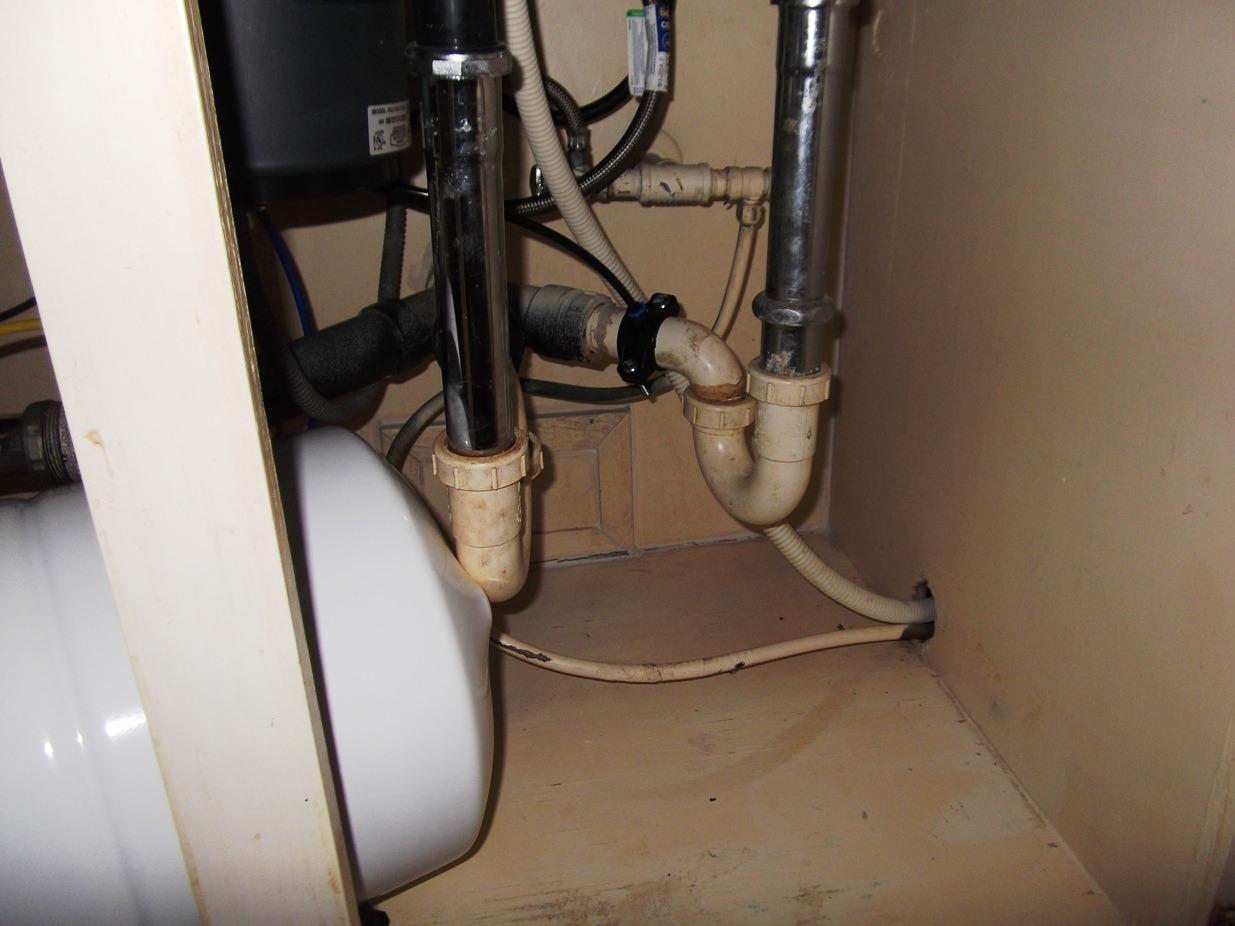
The cabinet footprint is the other recurring theme. The tank fits only lying on its side inside a 36-inch cabinet, so measure before you commit. If under-sink space is tight, the tankless picks further down this list solve the space problem and the water-waste problem at the same time, at the cost of an outlet and a larger countertop hole.
2. APEC ROES-50 – Best Budget Under-Sink Pick
APEC Water ROES-50, 5-Stage Under Sink Reverse Osmosis System, 50 GPD
50 GPD
5 stages
0.03 gpm max flow
NSF/ANSI 58 and 372
11.3 kg
Pros
- Long-running value benchmark with about 9400 ratings
- Quick-connect fittings and color-coded tubing
- Storage tank faucet and full filter set in the box
- APEC designs and tests its systems in-house
Cons
- 50 GPD is the slowest output in this set
- 0.03 gpm max flow means visible waiting
- 2:1 to 3:1 waste ratio
- No tankless or electric option in this configuration
The ROES-50 has been the default recommendation in budget roundups for years, and with 9,406 ratings at 4.5 stars it has the review volume to back that. Seventy-nine percent of those ratings are five stars, which tells you the low rating ceiling is about flow speed, not filtration failure.
Everything you need is in the box: the filter set, a brushed nickel faucet, the storage tank and an install kit. The quick-connect fittings and color-coded tubing are the same approach iSpring uses, so a first-time installer can identify each line by color rather than by diagram.
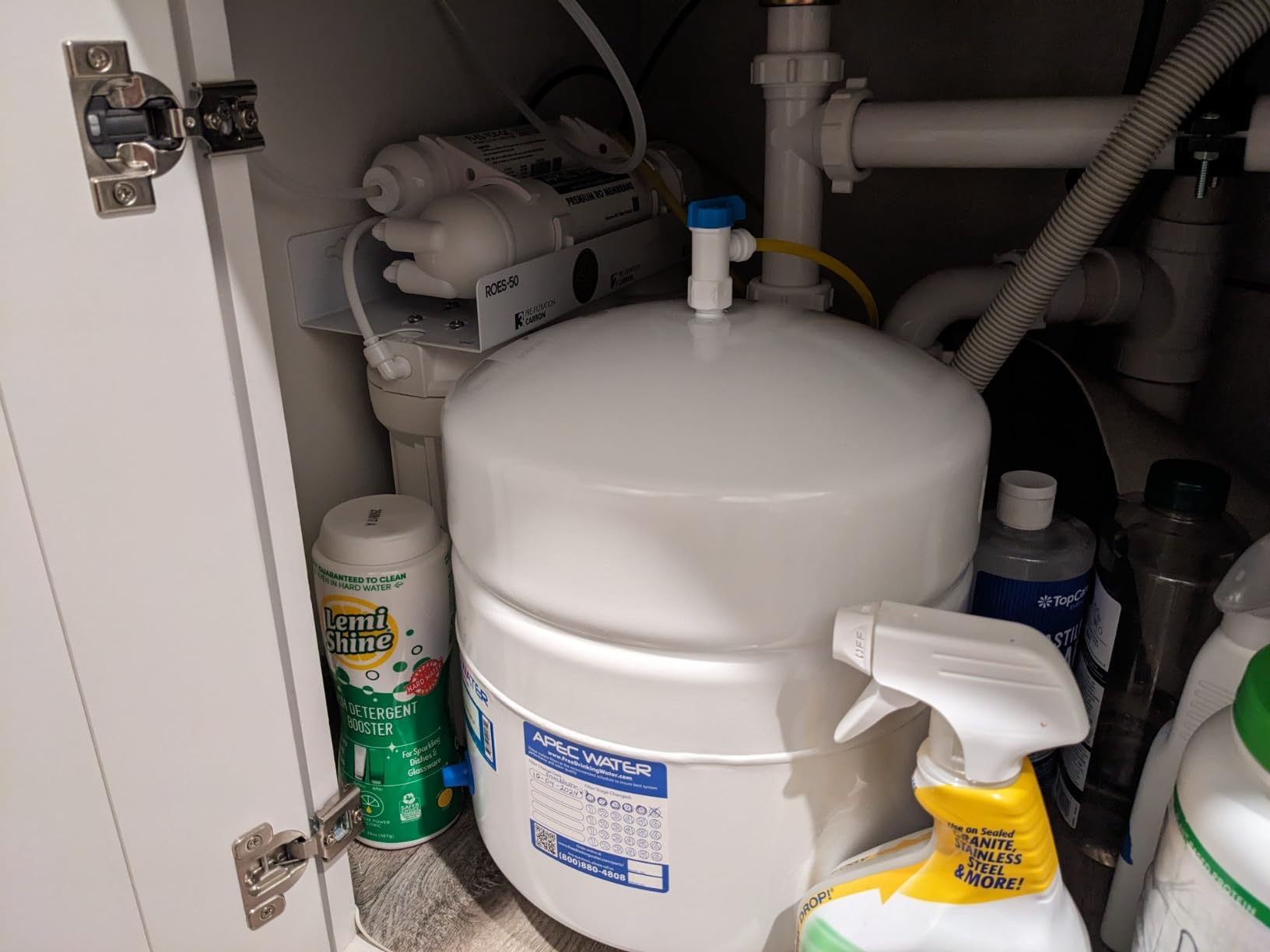
APEC certifies the system to NSF/ANSI 372 and 58, and claims reduction of up to 99% of impurities including arsenic, chlorine, lead, fluoride and heavy metals. The listed maximum feed TDS is 2,000 ppm, the highest in this guide, which makes it a reasonable choice if your water is harder than municipal supply.
Replacement is recommended every 6 to 24 months depending on incoming water quality, and the filter life cycle is listed at 6 months for the pre-filter stage. Operating pressure range is 40 to 85 psi and the temperature range is 40 to 100 °F.
Why this one keeps winning budget comparisons
It holds 2,000 ppm maximum feed TDS, more than double what several competitors accept, so it tolerates a harder supply without constant membrane fouling. It also needs no electricity and no countertop drilling beyond the standard faucet hole, which keeps the install inside what a first-time owner can handle.
APEC designs, engineers and tests its systems in-house and has been doing so for more than 20 years. Buyers who have owned two or three budget canisters in sequence usually end up here because it is a complete kit from a manufacturer that builds its own systems rather than assembling parts from other suppliers.
Where the 50 GPD rating will slow you down
Max rated flow is 0.03 gpm, which is roughly a liter every three minutes. Filling the storage tank takes a while, and pouring a pitcher takes long enough that you will notice. The tank also means a 2:1 to 3:1 waste ratio.
If a slow stream at the tap bothers you, do not fix it by oversizing the pre-filter. Either choose a tankless unit from this list or budget for a taller tank. Note also that the warranty is listed as not specified, which is worth weighing against the iSpring if you expect to keep a system for a decade.
3. Waterdrop G3P600 – Best Tankless System
Waterdrop G3P600 Tankless Reverse Osmosis Water Filter System, 600 GPD
600 GPD
8 stages
2:1 drain ratio
0.42 gpm
Smart TDS faucet
Pros
- Measured TDS drops of an order of magnitude in owner tests
- Tankless format frees roughly 70% of cabinet space
- Forward-facing cartridges change from the front
- TDS meter and filter-life tracker on the faucet
- Responsive support including weekend replies
Cons
- Requires a dedicated under-sink outlet
- Proprietary filters cost more to replace
- Faucet needs a larger countertop hole
- First draw after idle shows TDS creep
The G3P600 is the unit to buy if your household drinks more than a gallon of water a day, and it is the system we recommend for anyone who has been put off by tank size. It produces 600 gallons a day, fills an 8 oz cup in about 8 seconds, and eliminates the storage tank entirely, which also removes the bacterial-growth risk that open tanks carry.
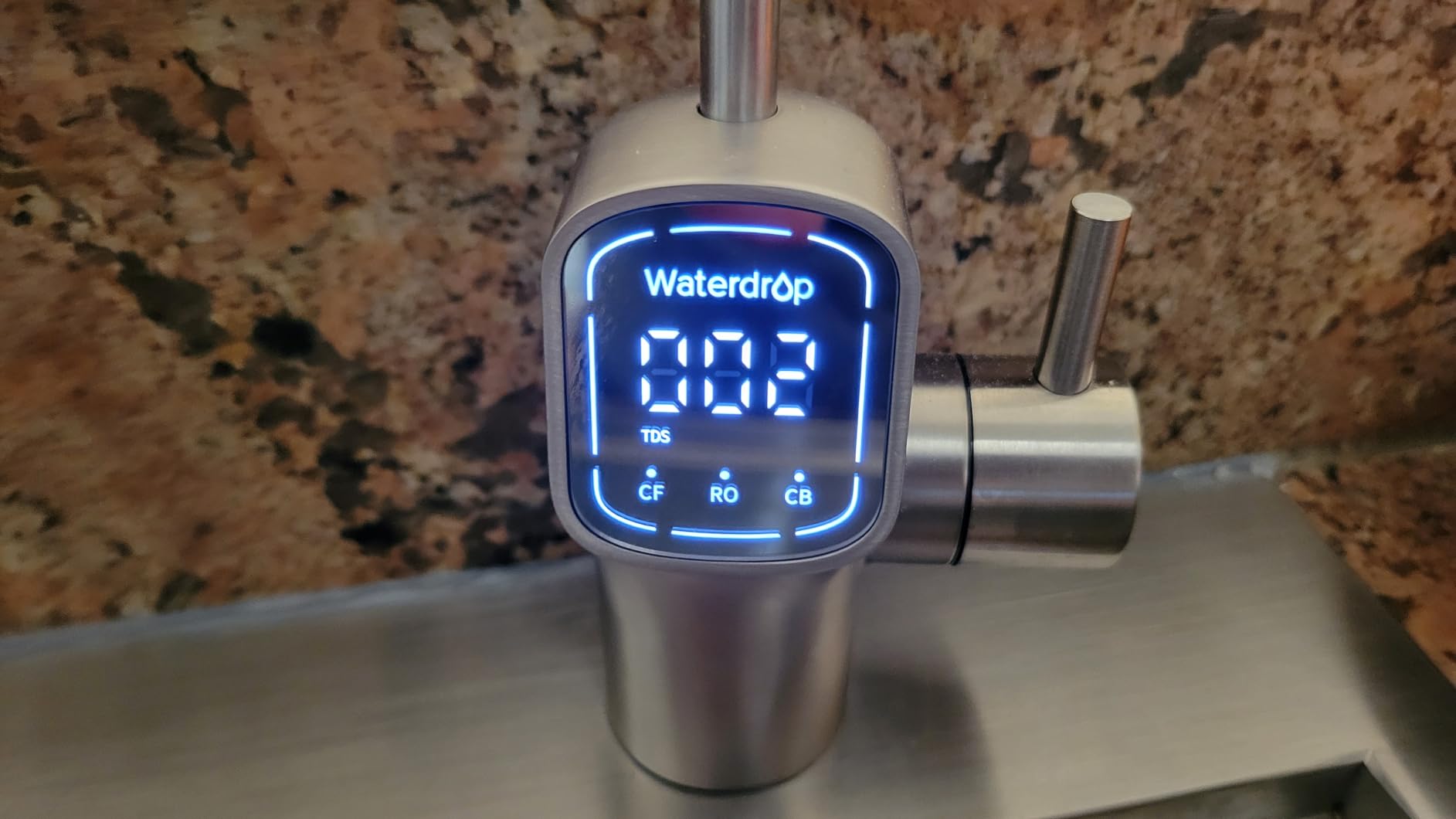
Owners report the largest measured reductions in this group: 99 ppm tap water down to 12 ppm filtered on one unit, and 358 ppm down to single digits on another. The faucet has a live TDS meter and a filter-life tracker, so the two questions every RO owner asks, when is it time and is it still working, get answered on the fixture itself.
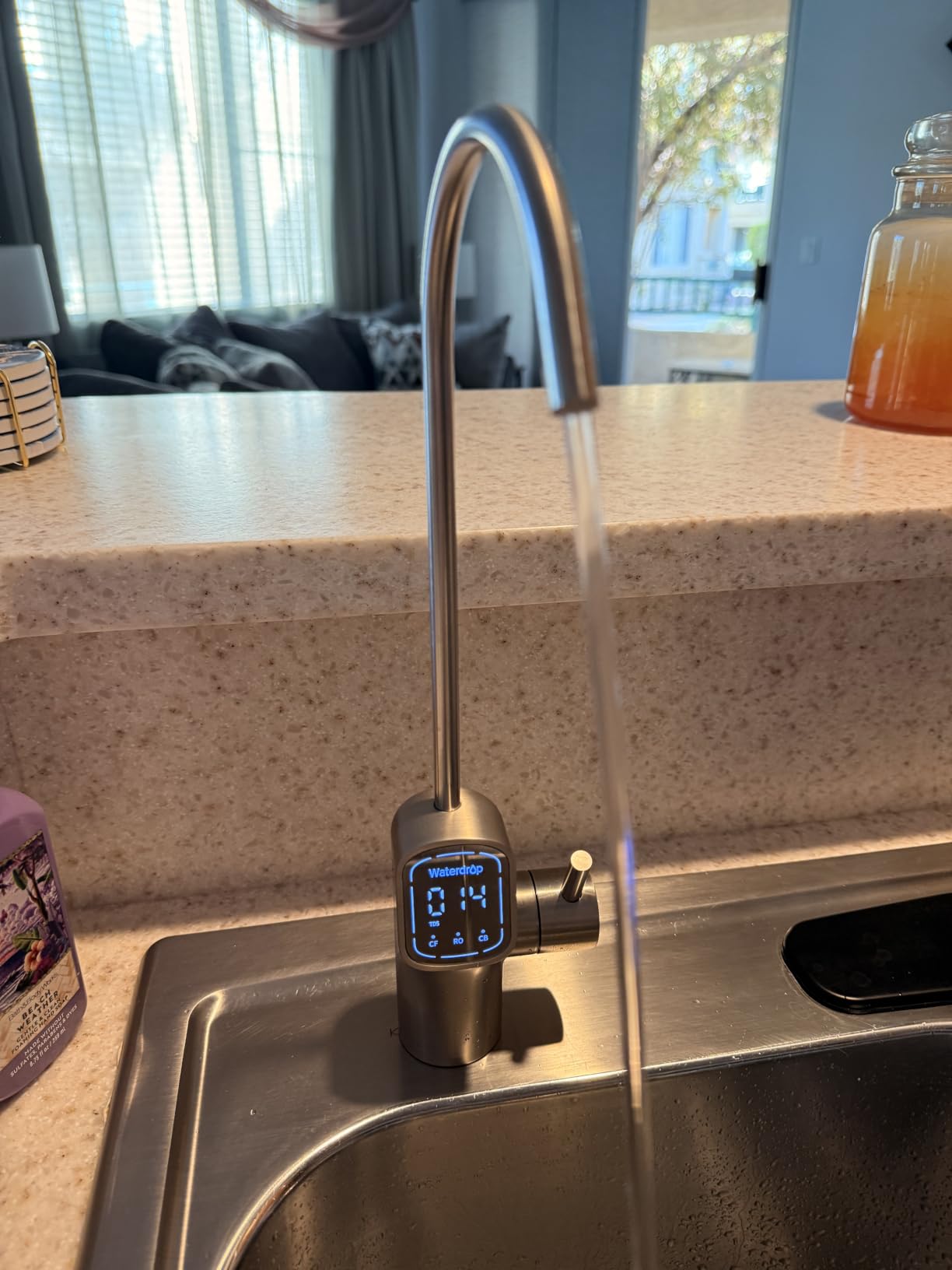
Filtration is an 8-stage system rated to NSF/ANSI 58 for TDS reduction, 372 for lead-free materials, and 42 for chlorine, taste and odor. It is also FCC certified, meets EU and UKCA safety standards, and has been third-party tested by SGS. The list of reduction targets includes chromium, PFAS, radium, fluoride, arsenic, iron and radioactive substances, with a 1,500 ppm maximum feed TDS.
Service is unusually quick. The forward-facing cartridges come out from the front without moving the unit, and tool-free changes take about three seconds. There is also an integrated water and electrical circuit design that reduces leak points compared with a conventional layout.
What tankless actually buys you
Three things. First, space: owners report reclaiming roughly 70% of their under-sink cabinet, which in a small kitchen is worth more than any spec on the list. Second, no tank means no stagnant water sitting in a pressurized bladder, and no tank to swap when the bladder eventually fails. Third, a 2:1 pure-to-drain ratio instead of 3:1, so you waste about a third less.
The 600 GPD rating also means a coffee carafe, a cooking pot or a humidifier can all run at once without waiting. For a family of four drinking, cooking and feeding a pet, that headroom is the whole point of spending more.
What it costs you to own
It needs a dedicated always-on outlet under the sink. Homes without a suitable outlet need an electrician, and that is the single most common reason owners of similar systems return a unit. The faucet also needs a larger countertop hole than a standard RO faucet, which can mean drilling through thick stone or stainless.
Filter costs sit at the high end of the category, with carbon filters every 6 months and the RO filter annually. A minority of reviews report the built-in TDS meter under-reading after a filter change, and all tankless designs show higher TDS on the first draw after a period of no use while the membrane re-stabilises.
4. Bluevua RO100ROPOT – Best Countertop System for Renters and Apartments
Bluevua RO100ROPOT Countertop Reverse Osmosis Water Filter System
Countertop plug-in
5 stages
2:1 drain ratio
12 liter glass carafe
5 kg
Pros
- No plumbing or installation required
- Borosilicate glass carafe instead of plastic storage
- 2:1 ratio with automatic power-saving standby
- Filter life monitor simplifies scheduling
Cons
- Takes visible countertop space
- Needs a nearby outlet and dispenses room temperature only
- 12 liter carafe is small for heavy drinkers
- Cleaning the carafe and rear tank is a recurring task
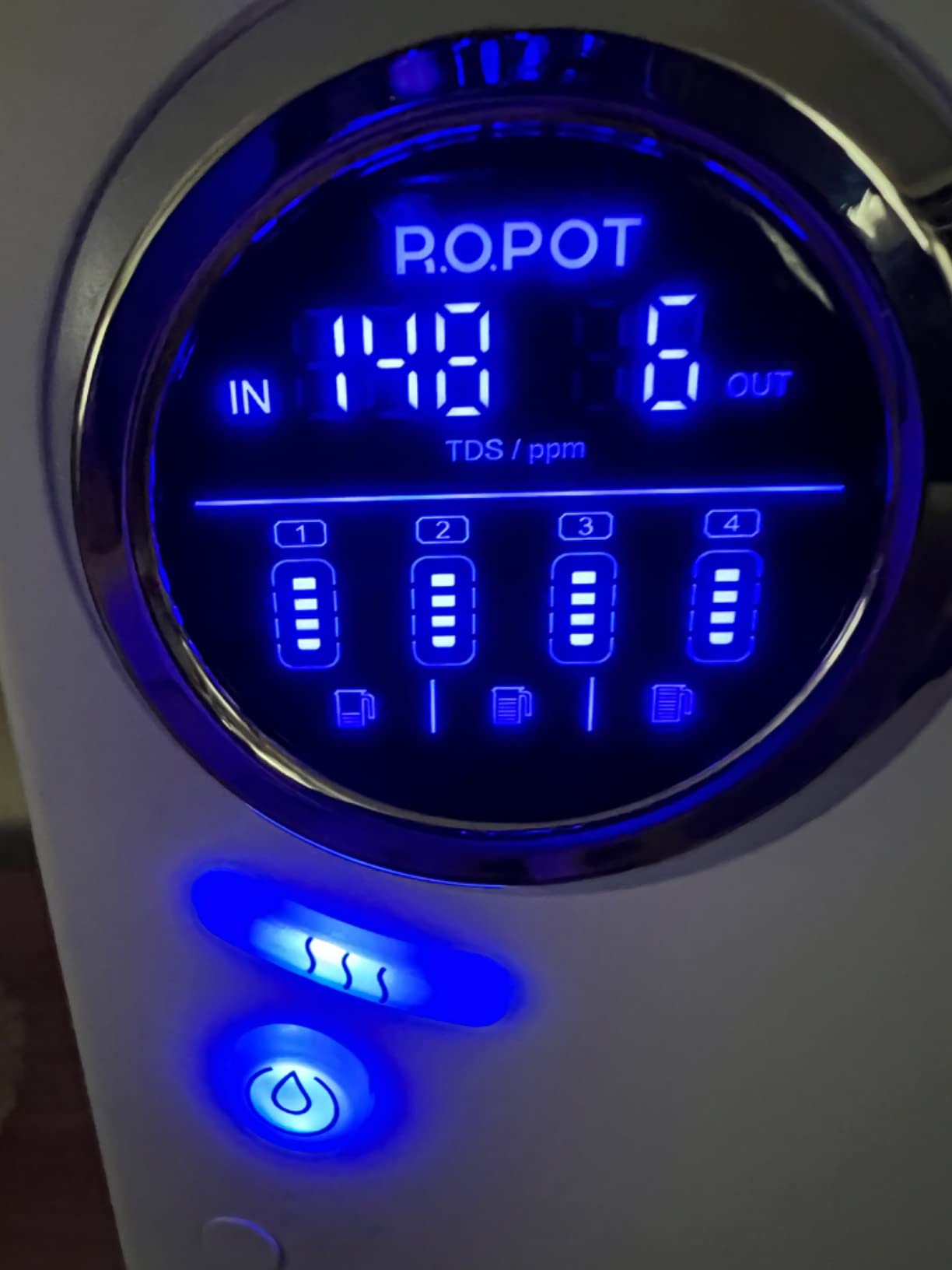
If you rent, the Bluevua solves the problem that stops most people from filtering water at home. It plugs into any outlet, needs no plumbing and no countertop hole, and it holds a 12 liter borosilicate glass carafe instead of asking you to store filtered water in plastic. At 4.6 stars across 3,695 ratings, it holds up as a real long-term option rather than a travel accessory.
Filtration is 5 stages with a mineral filter included, a 2:1 pure-to-drain ratio and an automatic power-saving standby mode. The filter life monitor displays remaining service life and water quality on the front panel, and each filter set is rated for 12 to 24 months or one to two years of drinking water.
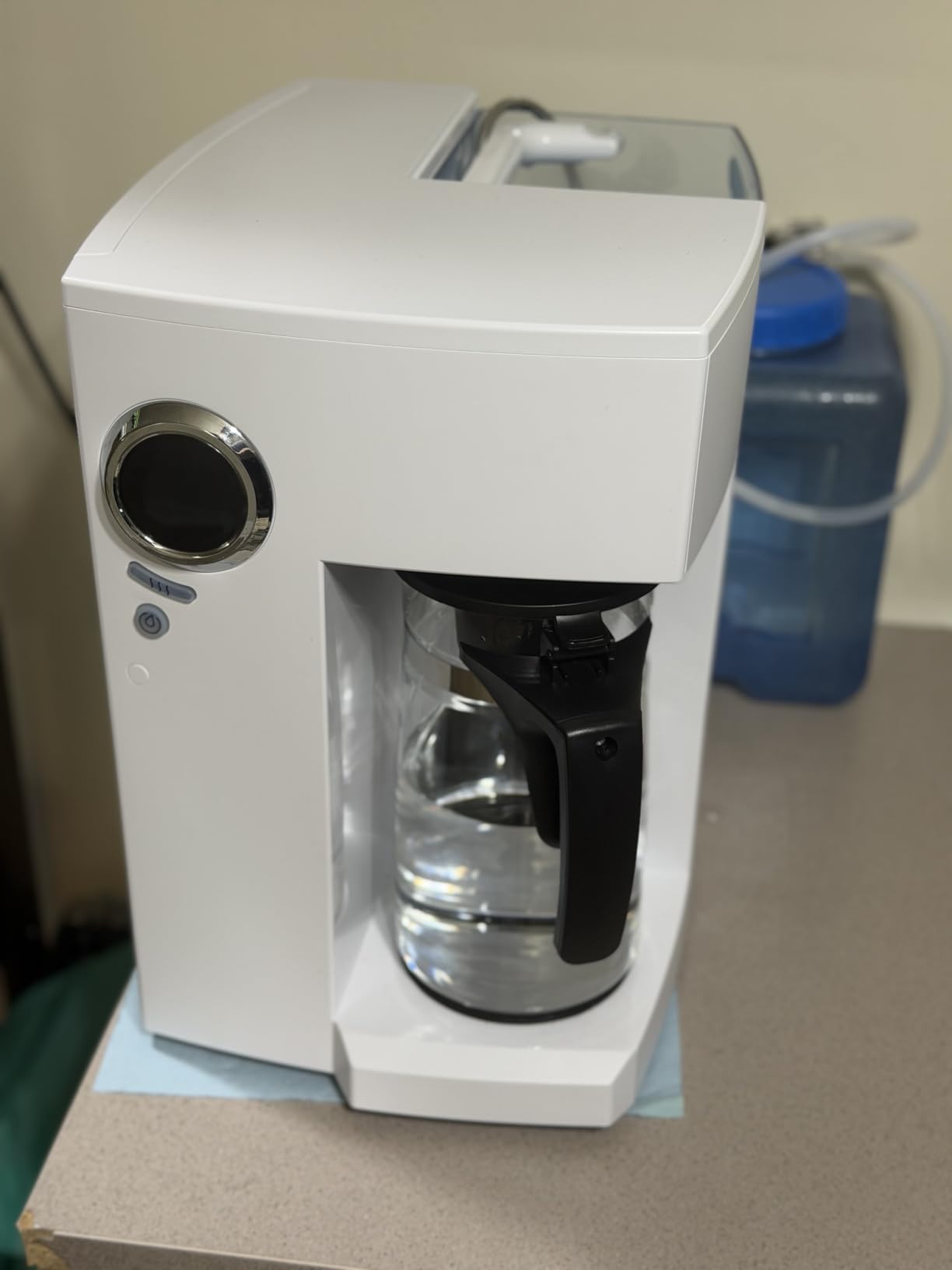
The counter sits at 10.9 by 15.4 by 14.3 inches and weighs 5 kg, so it is a real countertop presence but moves easily between a kitchen and a dorm room. Output is 0.26 liters per minute, the maximum supported feed TDS is 1,000 ppm, and it carries WQA and NSF certification along with ClimatePartner certification.
It is also a reasonable pick for a second drinking point in an office or a guest cottage, or for anyone who wants to compare filtered water against tap water side by side before committing to a permanent install.
Why the glass carafe matters more than it sounds
Filtered water left in plastic absorbs taste over a week, and plastic-lined storage is one of the most common complaints about countertop units. Borosilicate glass has no lining, no flavour carry-over and no warping in a dishwasher, which is a meaningful quality difference if you keep water on the counter for a week between changes.
The filter life monitor matters too. Countertop systems fail quietly because owners forget to change filters, and a panel that shows remaining life removes the most common reason a good unit starts producing disappointing water.
Where the convenience ends
It takes up visible counter space, needs a nearby outlet, and dispenses at room temperature only. Twelve liters is roughly 50 cups, so a household that drinks a gallon a day empties it twice. You also clean the carafe and the rear tank yourself, every week.
If your kitchen lacks under-sink space or you simply do not want a permanent faucet, this is the right trade. If you have a cabinet and an outlet, an under-sink unit gives you more output and a dedicated tap for less total effort over time.
5. SimPure Y7P-BW – Best Countertop System With a UV Stage
SimPure Y7P-BW UV Countertop Reverse Osmosis Water Filter, 5 Stage RO
Countertop plug-in
0.0001um RO plus UV
4:1 drain ratio
1.3 gallon reservoir
Pros
- No installation needed
- works in rentals offices and RVs
- 4:1 ratio wastes less water than most under-sink units
- 528 gallon capacity per filter set
- US customer service from a company serving the US since 2006
Cons
- Reservoir can give water a plastic taste after about a month
- Daily rinse and monthly cleaning required
- 1.3 gallon reservoir refills slowly
- Room temperature output only
- Highest one-star share of any system here
The Y7P-BW is the only system in this guide with a UV purification stage, and that stage is the reason to choose it. If your water comes from a well, or a neighbourhood with a known bacteria advisory, UV adds a chemical-free disinfection step that no other unit here offers. SimPure has served the US since 2006 and the company runs its own US-based customer service.
It has been SGS tested against NSF/ANSI 58 and is listed at 0.0001 micron reverse osmosis, with a claimed 99.99% removal across more than 1,000 contaminants including PFAS, PFOA and PFOS. The UV stage adds no chemicals and produces no by-products, which is exactly why it matters for a disinfection step rather than a filtration step.
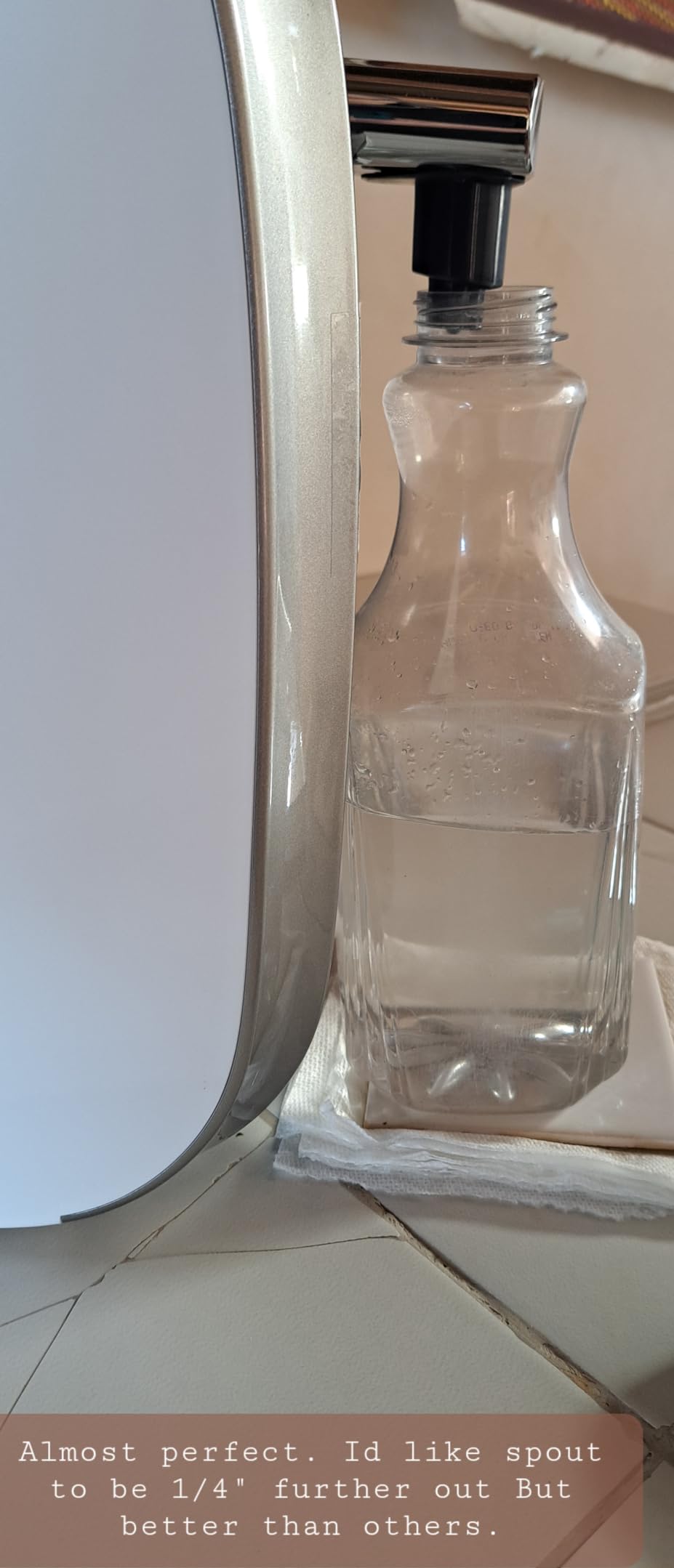
Owners on well water report the largest raw-input swings in this group, including 849 ppm tap water down to 30 ppm filtered after three flush cycles. The 4:1 pure-to-drain ratio is the best water utilisation figure in the guide, and the dispense rate works out to roughly 418 GPD with a cup of purified water in about 15 seconds.
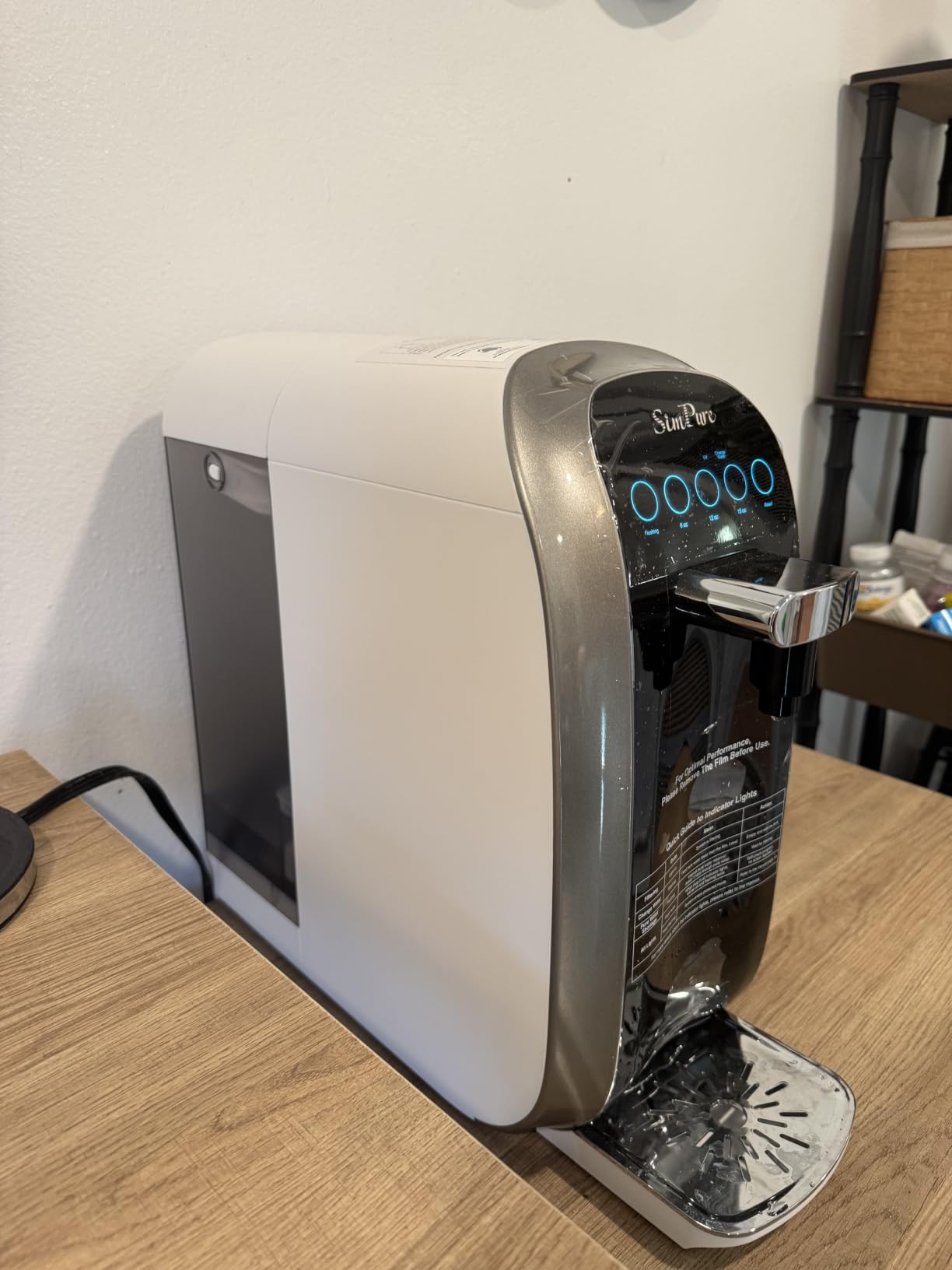
Dispensing options cover 6 oz, 12 oz and 15 oz buttons plus continuous flow, and a removable drip tray is included. Filter changes are twist-and-pull, and each cartridge set is rated at 528 gallons. The footprint is 17.3 by 7.5 by 17 inches at 13 pounds.
When the UV stage earns its place
UV inactivates bacteria, viruses and protozoa that slip past a membrane in a damaged or bypassed housing, and it is the only disinfection step in this list. Well water owners should also note that no RO membrane here is a certified disinfection device, so UV closes a real gap rather than a theoretical one.
The 4:1 ratio is the other quiet advantage. A household drinking 3 gallons a day would send roughly 9 gallons down the drain on a 3:1 system and about 12 on a 4:1 countertop unit, which sounds worse until you count the 1.3 gallon internal reservoir, which does not have to be refilled from scratch each time.
Where this one falls short
At 4.2 stars across 3,685 ratings, it is the lowest-rated system here, and 11% of ratings are one star against 5 to 7% for the others. The complaints cluster: the internal reservoir is not easily accessible, some owners report a plastic-like taste after about a month, and the maintenance is heavier than the no-install messaging suggests, with daily tank rinses, monthly cleaning and descaling every two to four weeks.
The initial flush cycle also takes about 45 minutes across several tank cycles, and the reservoir refills slowly and noisily, which matters for anyone drinking more than a liter at a time. If you can tolerate a maintenance routine, the filtration and UV performance are excellent. If you cannot, the Bluevua is the calmer countertop option.
6. Frizzlife PD600-TAM3 – Best Compact 600 GPD Alkaline System
Frizzlife Reverse Osmosis Water Filter – Alkaline Mineral pH+, NSF/ANSI 58&53&42&372 Standard, 600GPD Tankless RO Reverse Osmosis System, Under Sink, 2:1 Pure to Drain, Reduce FPAS/PFOA, PD600-TAM3
600 GPD
0.41 gpm
2:1 drain ratio
Alkaline pH above 7.5
LED TDS panel
Pros
- Alkaline stage raises pH above 7.5 and restores calcium and magnesium
- Smallest footprint in the 600 GPD class
- LED panel shows live TDS and per-filter life
- Tool-free install with video guides included
Cons
- Requires under-sink power for the pump and display
- First draw after idle shows TDS creep
- Generic filter-change reminders on competing systems confuse upgrades
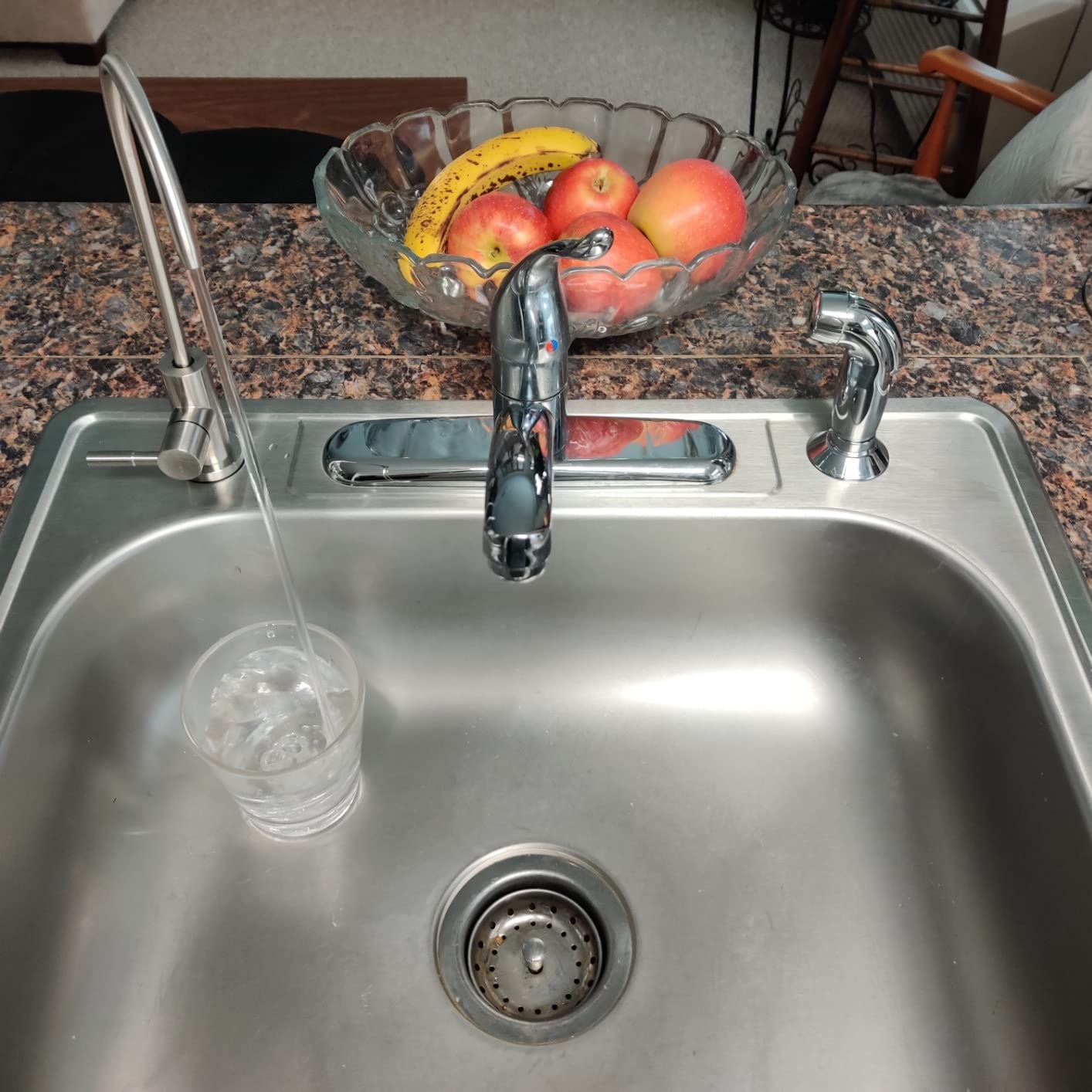
The PD600-TAM3 answers the most common complaint about tankless RO, which is taste. Straight membrane output tastes thin because the process strips calcium and magnesium, and this unit’s third-stage alkaline filter puts pH above 7.5 while restoring those minerals. At 4.6 stars across 2,476 ratings with 77% five-star reviews, owners consistently single out the mineral character as the reason they kept it.
It also solves the cabinet problem in its class. At 14.7 by 5.3 by 15.5 inches it is the smallest listed footprint among the 600 GPD systems compared here, which matters in a cabinet that also has to hold a disposal or a cleaning caddy.
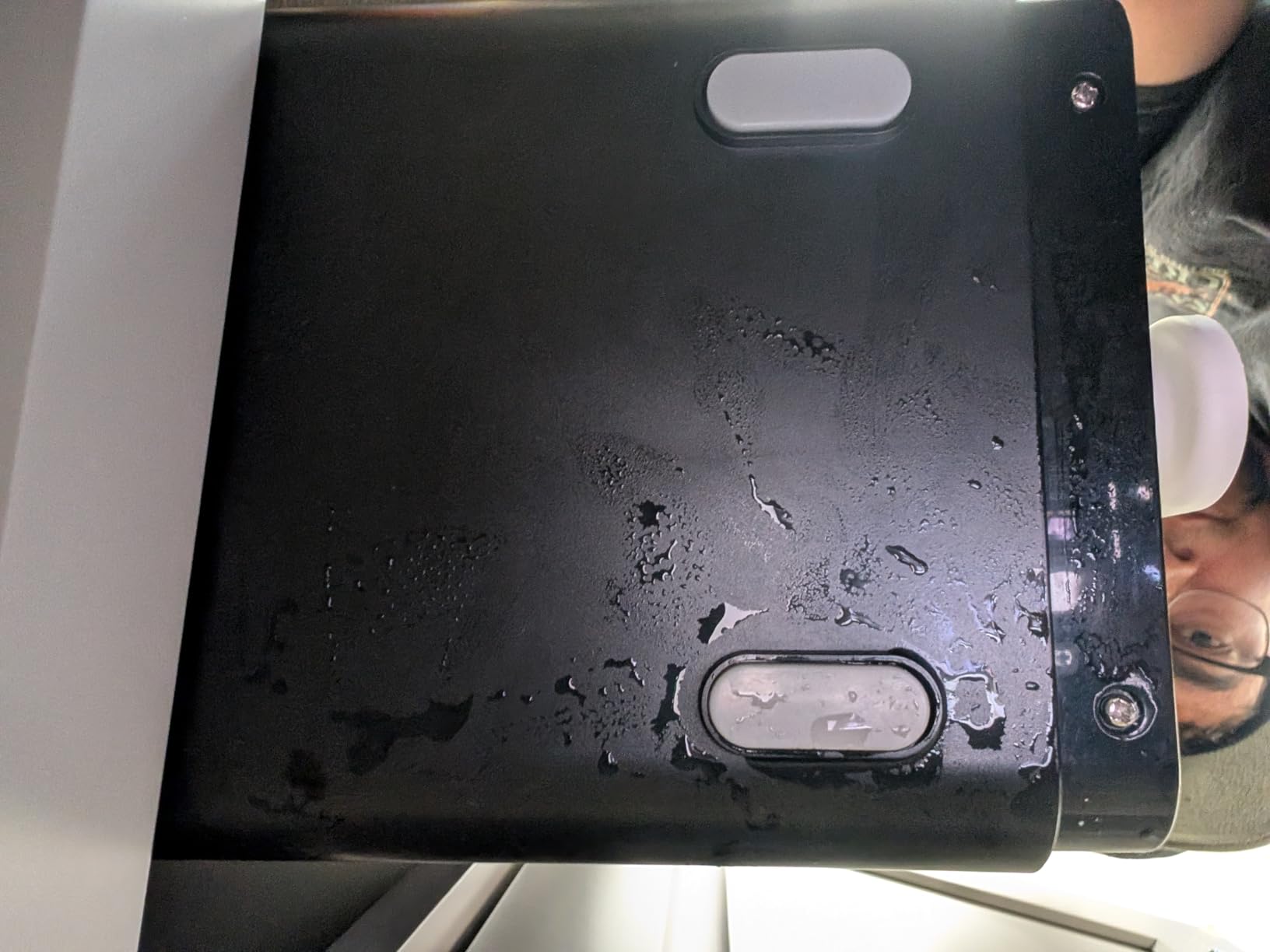
Output is 600 GPD with a 0.41 gpm maximum flow, filling a 330 ml cup in about 10 seconds at a 2:1 pure-to-drain ratio. The brand claims up to 450% water savings against conventional RO at that ratio, and the tankless design removes the storage tank and its secondary pollution risk entirely.
Included in the box are the CP pre-filter, the 600 G membrane, the TAM3 alkaline filter and a brushed nickel faucet. The smart LED panel gives a real-time TDS readout plus per-filter life indicators, which is more instrumentation than most units at this level include.
Why remineralization is the feature to pay for
Several systems here add minerals back, and each does it with a dedicated stage rather than a filter that also does something else. If you have ever tasted RO water and thought of it as dead or flat water, that is the missing mineral profile, not a fault in the membrane. Raising pH above 7.5 also makes the water feel less acidic on the tongue.
The second reason to pay for it is coffee. Low-mineral water is aggressively corrosive, and brewers who switch to remineralized output report fewer bitter and hollow cups. The TDS panel lets you confirm the remineralization stage is still working, which a system without a meter cannot do.
What to plan for before buying
It needs under-sink electrical power for the pump and the display. Like every tankless unit here, it shows TDS creep on the first draw after an idle period, because there is no stored water pushing the membrane to steady state. That is normal, not a fault.
The listed warranty is not specified, which is a fair question to raise with support before purchase. If you want both a strong warranty and remineralization, the Home Master later in this list covers that, though at a larger footprint and with audible pump noise.
7. Waterdrop G2 – Best Tankless System for Low Water Waste
Waterdrop G2 Reverse Osmosis System, 400 GPD Tankless RO Water Filtration
400 GPD
0.28 gpm
1:1 drain ratio
7 stages
No storage tank
Pros
- Lowest water waste of the tankless systems listed at 1:1
- Quiet operation from the airtight integrated housing
- Twist-and-pull filter changes in about 3 seconds
- Installation reported under 30 minutes
- Good value against the 600 GPD tankless models
Cons
- Slower than the 600 GPD Waterdrop and Frizzlife units
- 300 ppm feed TDS ceiling is the lowest here
- Needs under-sink power and countertop drilling
- Filters are proprietary and not interchangeable
The G2 answers the water-waste complaint head on. Its 1:1 pure-to-drain ratio means you send one gallon to the drain for every gallon you keep, half the water a 2:1 tankless unit wastes and a third of what a 3:1 unit wastes. At 400 GPD the brand claims 300% water savings against ordinary RO, and for anyone who has watched an RO system run a tap for ten minutes while their water bill climbed, that ratio is the whole pitch.
Owners also single out the quiet operation. The integrated water and electrical circuit design and airtight housing cut running noise, and buyers who previously lived with a humming pump call the silence out as the reason they switched.
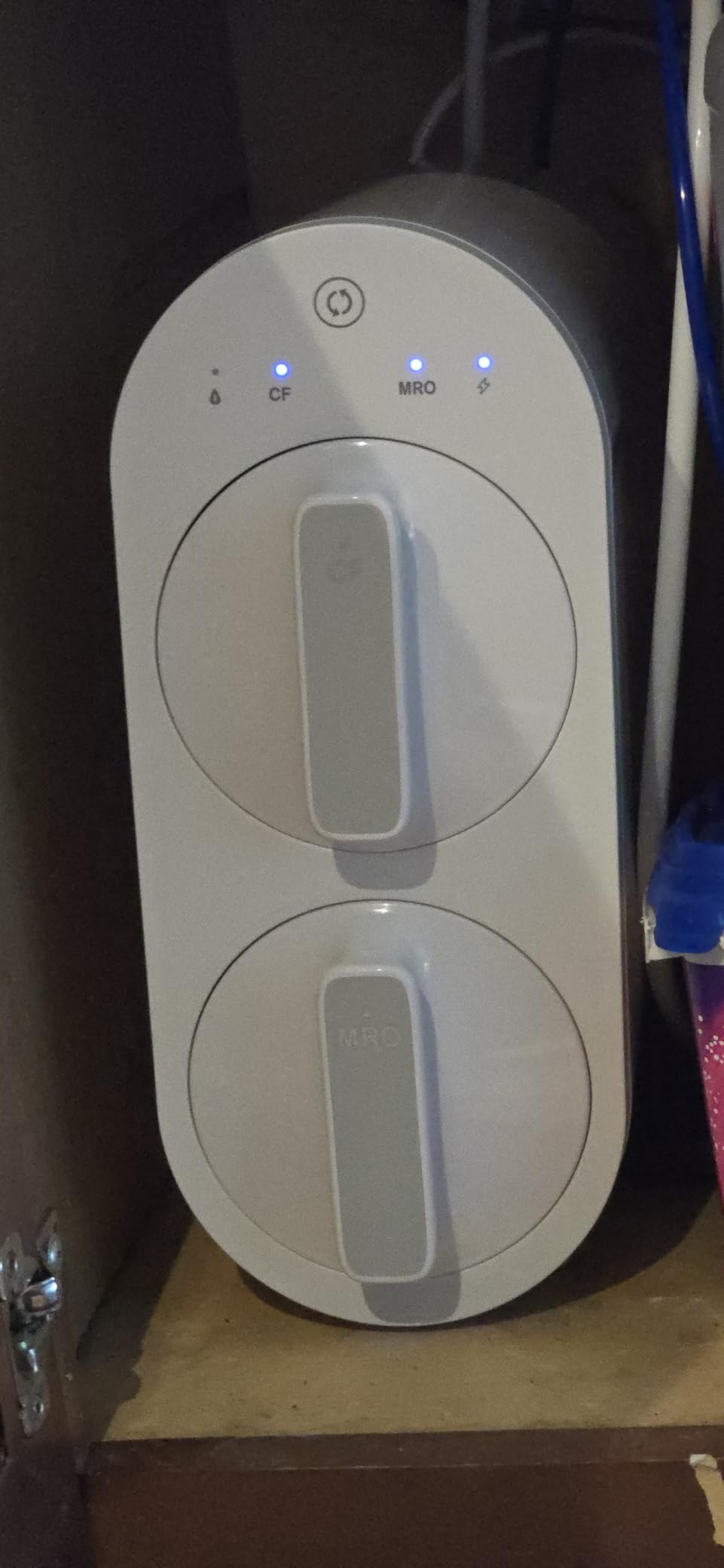
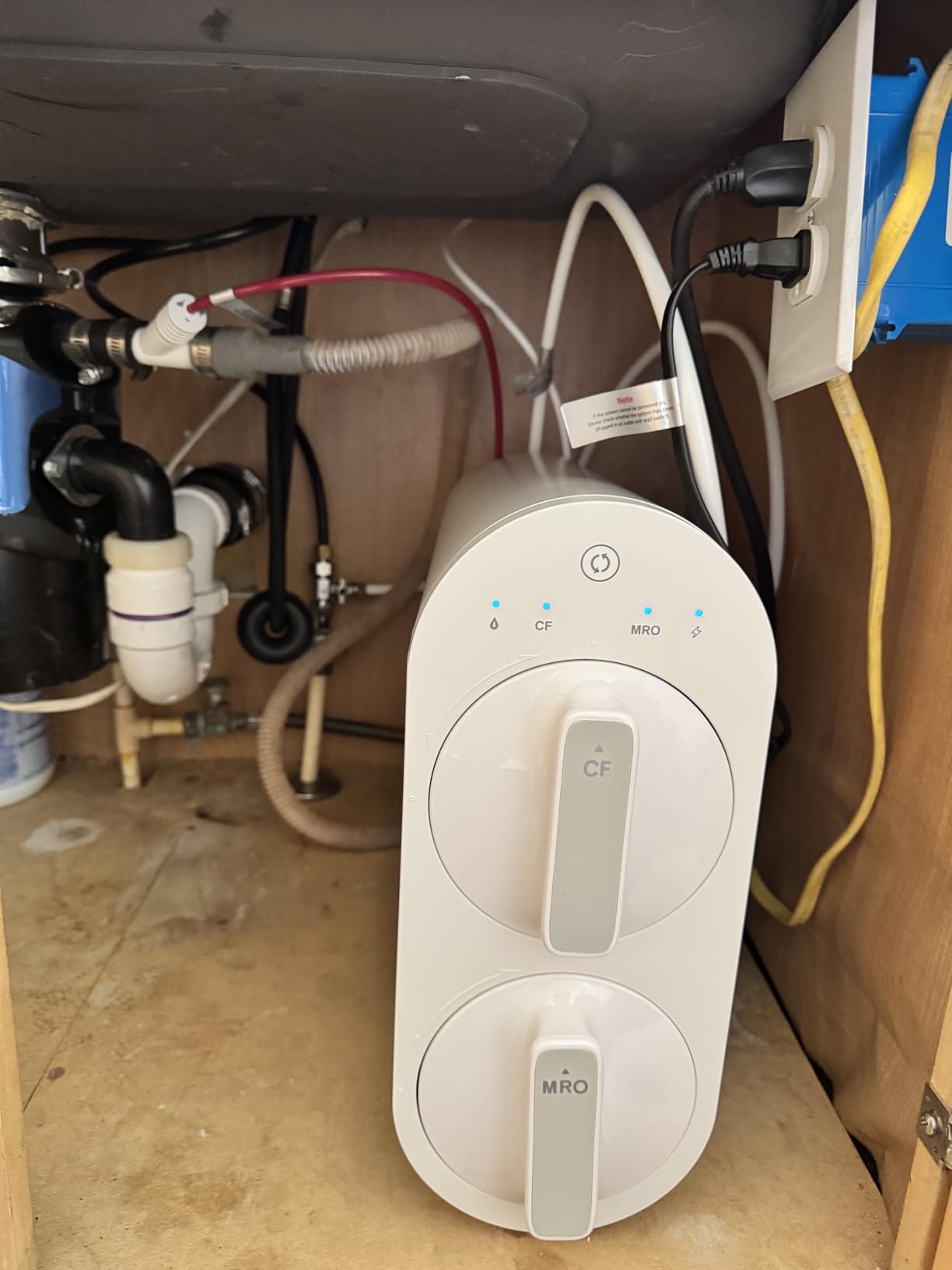
Filtration is 7 stages with a composite pre-filter, NSF/ANSI 372 certified for lead-free materials, and output is 400 GPD at 0.28 gpm, filling a cup in about 12 seconds. The tankless footprint saves more than 70% of under-sink space, and twist-and-pull cartridges make a filter change a three-second job.
Installation is reported at under 30 minutes with the feed adapter fitting standard lines. As with the other electric tankless units, you need under-sink power and a drilled countertop hole, and the self-cleaning membrane rinse runs automatically after prolonged idle.
What a 1:1 ratio does for a real household
At 1 gallon a day of drinking water, a 3:1 unit discards about 3 gallons daily, roughly 1,095 gallons a year. At 1:1 you discard about 365. Across a family of four drinking more, the gap widens fast, and on a metered bill it is a visible line item rather than a rounding error.
That ratio is also the reason the G2 suits a small apartment where every liter counts. There is no storage tank, so there is no stagnant water, and the compact 17.3 by 5.9 by 14 inch body leaves room for other plumbing in a tight cabinet.
Where the trade-off hides
The 300 ppm maximum feed TDS is the lowest ceiling in this guide. If your supply is a municipal system in the 300 to 500 ppm range you will be running the membrane near its limit, and well water in most of the country exceeds it outright. The 600 GPD Waterdrop and Frizzlife accept 1,500 ppm and 1,000 ppm respectively.
Flow is also slower than the 600 GPD units, and the G2CF and G2MRO cartridges are proprietary with no cross-brand interchange, so budget for brand-specific filters rather than generic drop-ins.
8. Home Master TMAFC-ERP – Best Mineral Taste and Best Warranty
Home Master TMAFC-ERP Artesian Full Contact Reverse Osmosis System, 7-Stages, Patented 2-Pass Alkaline Remineralization, Fast 4.5s Fill Rate, 1:1 Waste Ratio, 8.5” Catalytic Carbon, 5-Yr Limited Parts
1:1 waste ratio
4.5 second fill
Patented 2-pass remineralization
5 year parts warranty
Pros
- Highest average rating in the comparison at 4.8 stars with 89% five-star reviews
- Fastest rated flow of any unit here at 1 gpm
- 2-pass remineralization adds calcium and magnesium twice
- Non-electric permeate pump cuts waste sharply
- Tool-free modular filters changed once a year
- Made in the USA with 5-year parts warranty
Cons
- Permeate pump clicks and hisses during tank refills
- Supplied fittings are 3/8 inch so some setups need an adapter
- Kit covers copper and brass shut-offs only
- 20 x 16 x 12 inch footprint plus tank
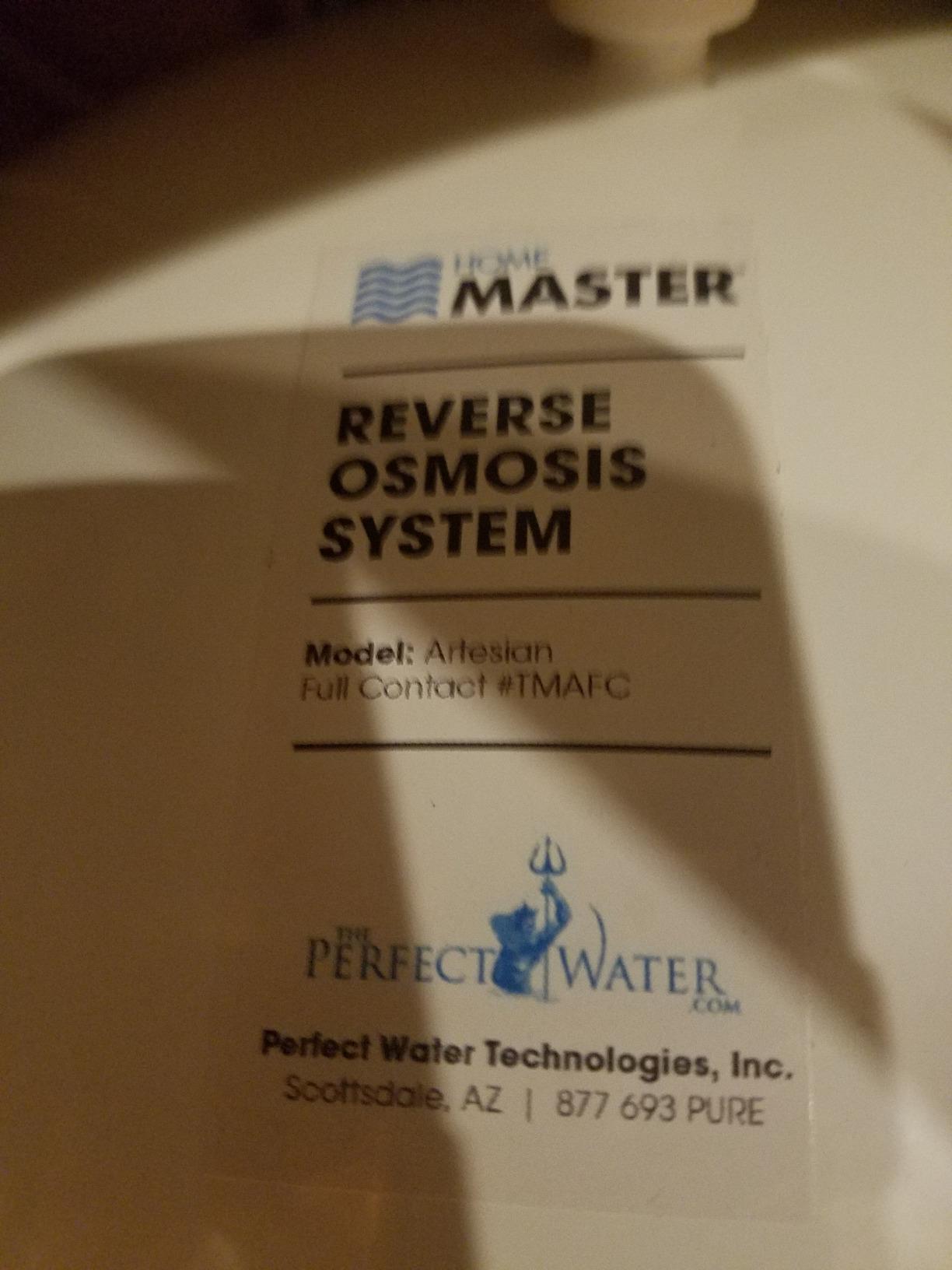
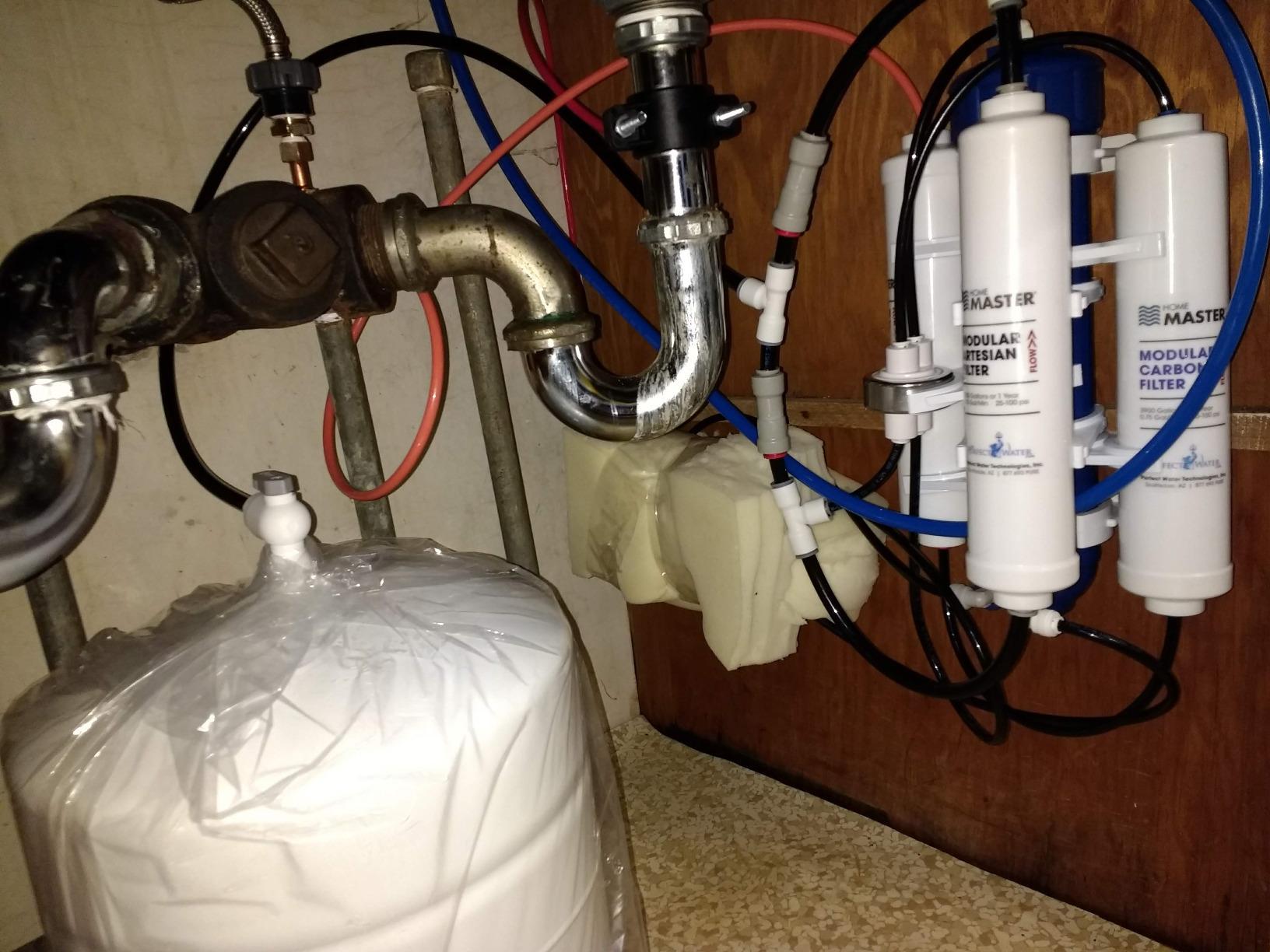
At 4.8 stars across 1,488 ratings with 89% five-star shares, the TMAFC-ERP is the highest-rated system in this guide, and the reasons owners give are unusually specific: the water has body rather than taste hollow, the tap fills an 8 oz glass in about 4.5 seconds, and maintenance happens once a year without tools.
The patented 2-pass remineralization adds calcium and magnesium twice during purification, once through each pass. That is a more deliberate approach than a single post-carbon alkaline stage, and owners describe the result as having a sweet mineral character. It is the pick here if taste is the thing you care about most.
The non-electric permeate pump is the clever part. It reduces water waste by up to 80% and boosts production by up to 50% while still reaching a 1:1 pure-to-waste ratio, and it does it without an outlet. The 8.5 inch catalytic carbon gives 8.5 inches of contact media per pass for chloramine and chlorine, and a dedicated 5-micron sediment filter protects the stages downstream.
Filters are modular and replaced once a year or every 2,000 gallons without wrenches. The system is made in the USA, all components meet or exceed NSF standards, and the warranty is 5 years limited on parts, the longest in this guide. Customer service is US-based and consistently described as responsive by phone and web chat.
What sets the fill rate apart
Four and a half seconds for 8 oz is roughly double both traditional tanked units and the electric tankless systems here, and it comes from a 1 gpm maximum flow rating with a permeate pump pushing harder than feed pressure alone allows. For anyone filling a coffee carafe or a stockpot, that difference is felt every single day.
The pump is the reason the system runs without electricity, and it is also its one acoustic quirk. Owners describe a click and a hiss while the tank refills, which is noticeable in a quiet kitchen at night but not during daytime use.
What you need on install day
The supplied fittings are 3/8 inch, so a 1/2 inch NPT setup needs an extra adapter, and thick granite is where that bites. The kit includes adapters for copper and brass shut-offs only, so PEX plumbing requires extra parts you will need to source separately.
Its 20 by 16 by 12 inch body plus the storage tank is one of the largest footprints in this guide, so measure the cabinet before ordering. Replacement filter sets can also be harder to find outside the US.
9. iSpring RO500-BN – Best Tankless System for Low Water Pressure
iSpring RO500-BN, NSF Certified Tankless RO Reverse Osmosis Water Filtration System, 500 GPD Fast Flow, Brushed Nickel Faucet, 2:1 Pure to Drain Ratio, White
500 GPD
15-70 psi operating range
2:1 drain ratio
Self-cleaning membrane rinse
Pros
- Accepts feed pressure down to 15 psi
- Works in older homes with weak municipal pressure
- 500 GPD with a 2:1 waste ratio
- LED filter minders warn about service in advance
- Filter changes without shutting off the water
Cons
- Loud humming while dispensing and a 60-second flush cycle
- Needs countertop drilling and under-sink power
- 60-second membrane rinse runs about five minutes after each use
- Alkaline add-on raised pH by about 0.3 units
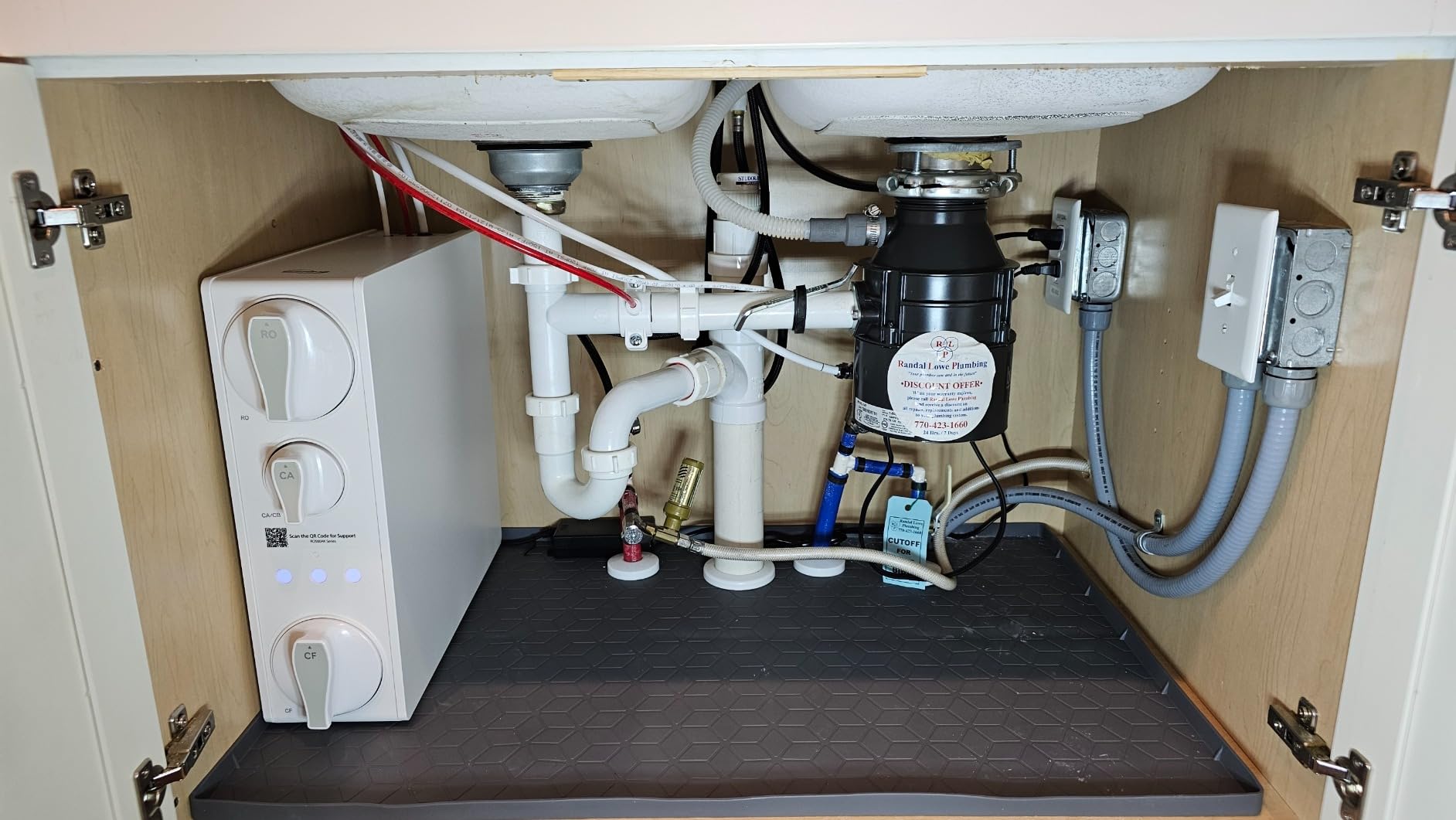
The defining spec on the RO500-BN is the 15 to 70 psi operating range. Almost every other system in this guide wants 40 psi minimum, which is fine on municipal supply and a real problem in older homes, in buildings with a restrictive main, or anywhere a pressure regulator has been set conservatively. If your water pressure is weak, this is the unit to buy.
It is a 3-stage design in a tankless box: a 2-in-1 sediment and carbon block pre-filter, the RO membrane and a carbon block post-filter. It carries NSF/ANSI 58 certification for TDS reduction, and the brand lists removal of up to 99% of more than 1,000 contaminants with lead up to 98%.
Output is 500 GPD at 0.4 gpm, filling an 8 oz cup in about 10 seconds, at a 2:1 pure-to-waste ratio. The feed adapter fits either 1/2 inch or 3/8 inch pipes, filter changes do not require shutting off the water, and the automatic self-cleaning mode rinses the membrane for 20 seconds after 24 hours of no use.
Owner measurements show real reduction, with 240 ppm tap water coming out at 19 ppm filtered. The LED filter minders give a purple prompt about 30 days before service and a red alert when it is due, which removes the guesswork that sends systems past their service interval.
Why the pressure range matters more than the stage count
Low pressure is the most common reason an otherwise good RO system disappoints. Below the membrane’s minimum feed pressure, water passes through too slowly, the tank takes a long time to refill and the first glass of the day is thin. A booster pump solves it, but adding a pump means adding cost, noise and another electrical outlet.
This system has the pump built in, which is why it needs under-sink power. The 750 ppm maximum feed TDS is mid-range, higher than the Waterdrop G2 and lower than the APEC, so it suits ordinary municipal water without covering the hardest well supplies.
The noise question, answered plainly
This unit is noticeably loud. Owners report humming during dispensing plus a 60-second membrane flush that runs about five minutes after each use, and the frequency of that cycle depends on how often you draw water. Budget for pump noise in an open-plan kitchen.
Reports also mention a power supply brick arriving dead, and an alkaline add-on that raised measured pH from 7 to 7.3 and TDS from 19 to 36 ppm, well short of the 1.0 pH unit advertised. iSpring support resolved the hardware issue quickly. If you want alkaline water, pick a system with a dedicated remineralization stage instead of an add-on.
10. Geekpure RO6-AF – Best Budget System With an Alkaline Stage
Geekpure 6 Stage Reverse Osmosis RO Drinking Water Filter System-75 GPD
75 GPD
6 stages
Alkaline pH 7.5-8.5
2.8 gallon tank
No electricity
Pros
- Entry-level cost in the 75 GPD class with a 2.8 gallon tank included
- Alkaline sixth stage raises pH and adds minerals back
- Quick-connect fittings suit first-time installers
- Owner reports of water matching bottled water
- Service resolved a blocked faucet washer and a snapped diverter
Cons
- Large footprint
- about 85% of one cabinet side in one owner estimate
- Printed instructions sparse or missing
- Canister housings can weep on first fill
- 2.8 gallon tank slows after the first glass
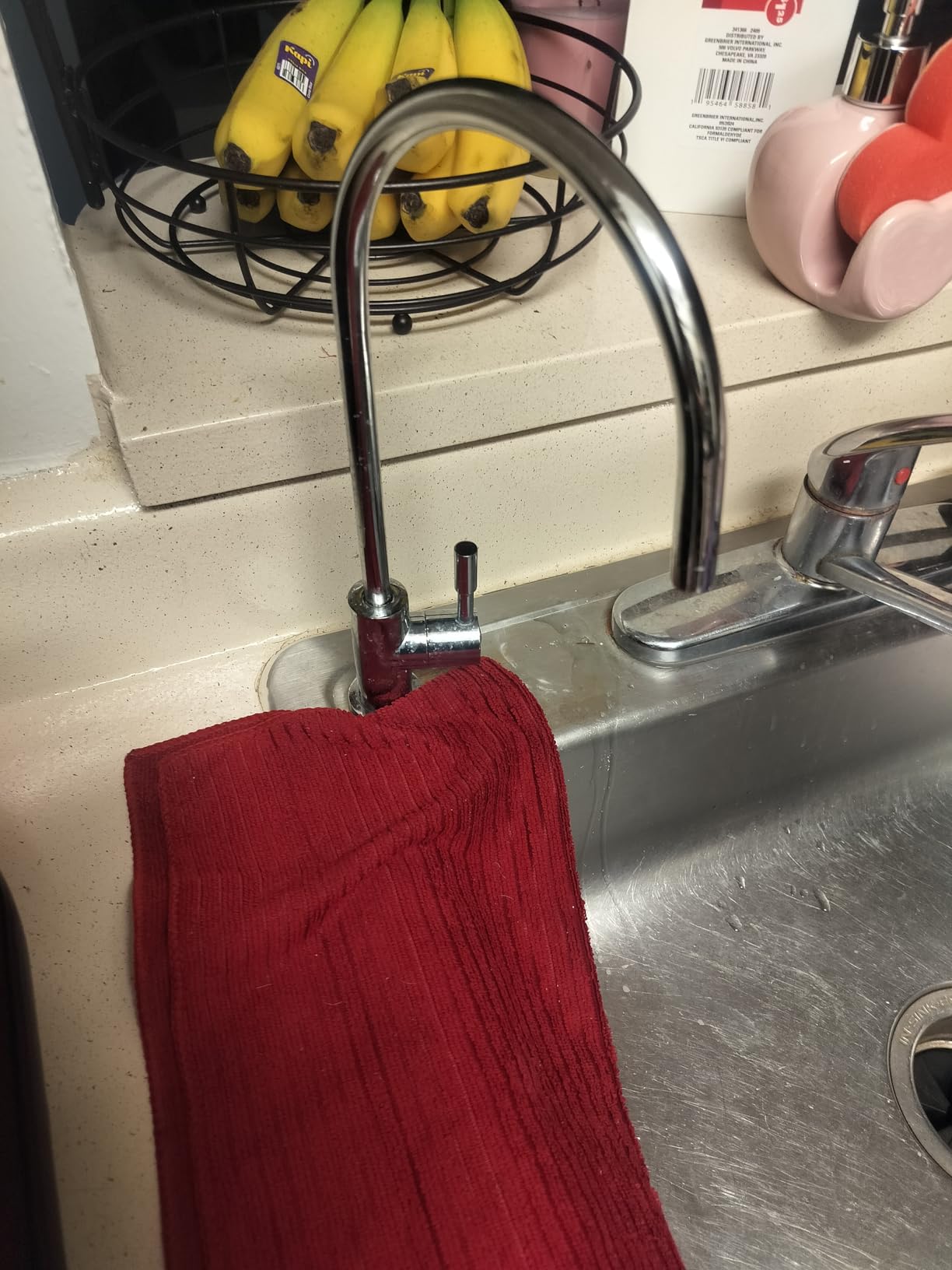
The Geekpure RO6-AF does something unusual at the low end: it puts an alkaline remineralization stage in a six-stage system that needs no electricity, with a 2.8 gallon tank in the box. The sixth stage lifts pH from 5 to 6.5 up to 7.5 to 8.5 and re-adds calcium, magnesium, sodium and potassium ions, and one owner reported measuring 9 to 9.5 after installation.
That is the same taste argument that justifies the Frizzlife and Home Master, at a fraction of the cost of a premium tankless unit. If you find plain RO water flat, a mineral stage is the fix, and 626 ratings averaging 4.5 show a satisfied base with several multi-year repeat buyers.
Specification is 75 GPD at 60 psi, a 2.8 gallon storage tank pre-pressurised to 5 to 7 psi, and a maximum feed TDS of 1,000 ppm. The membrane, tubing, quick push fittings and tank are all NSF certified, and the feed water envelope runs 40 to 100 psi, 40 to 110 °F and pH 3.0 to 11.0 with free chlorine under 0.1 ppm.
Filter life is about one year with the RO membrane at two to three years. The instruction to flush filters for 30 minutes after each change is standard, and the first two tanks of produced water should be discarded on a new installation.
Why the alkaline stage is worth the compromise
Every owner comment about taste in this category lands in the same place, and that is the gap a remineralization stage fills. Six stages with a mineral stage at the end gives you a fuller, less acidic taste on a system that still needs only feed pressure, no outlet and no drilling beyond the faucet hole.
Quick-connect fittings and colour-coded tubing make this one of the more approachable first-time installs, and Geekpure service has resolved real hardware problems for buyers, including a blocked faucet washer and a snapped feed-water diverter.
Where the savings come out of your cabinet
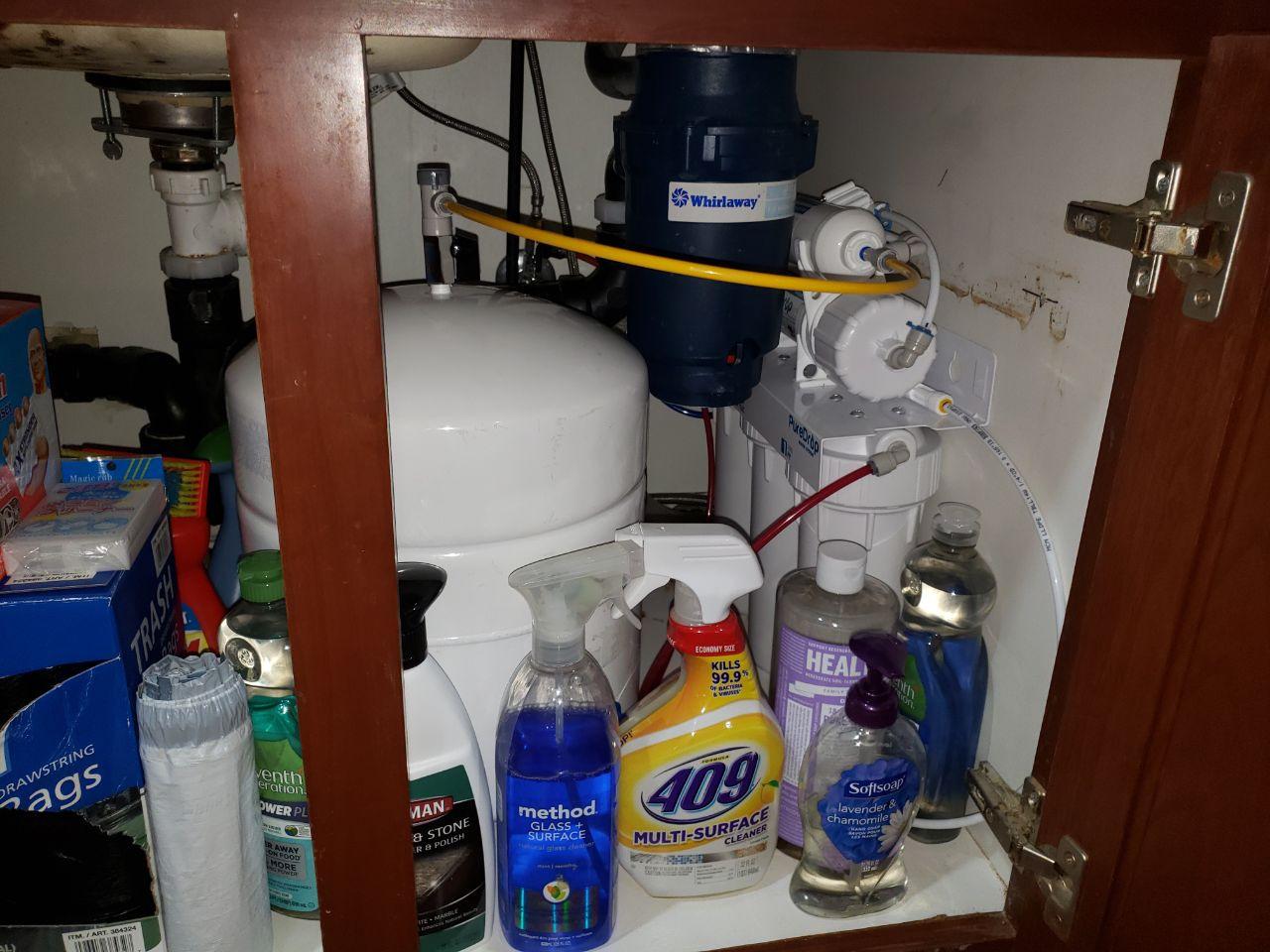
Size. At 14.2 by 6 by 18.1 inches, one owner estimated it took about 85% of one side of the cabinet. If your under-sink space is genuinely tight, spend the extra on a tankless unit rather than trying to make a large tanked system fit.
Printed instructions are sparse or missing in some shipments, so plan to follow a video. Threaded canister housings can weep on the first fill until properly tightened, the feed-water diverter uses US inch measurements and is not metric-compatible without an adapter, and the small tank means flow drops noticeably after the first glass. Below 40 psi you need a booster pump variant.
11. PureDrop RTW5 – Best Pick for a Refrigerator and Ice Maker
PureDrop RTW5 5-Stage Reverse Osmosis Water Filter System
5 stages
SGS tested to NSF/ANSI 58
Top-mount faucet
Silent tank refill
1/4 inch quick-connects
Pros
- Includes refrigerator adapters for fridge and ice maker hookup
- Top-mount faucet installs entirely from above the counter
- Acoustic dampening housing keeps tank refills quiet
- Three spare pre-filters push the next purchase back a year
- Zero scale buildup in kettles reported after 1.5 years
Cons
- Small 2.2 gallon storage tank
- No alkaline or UV stage in the base configuration
- Canister housings crack if over-tightened
- One owner reported repeated storage tank bladder failures
The PureDrop RTW5 is the pick here if you want drinking and ice water from the refrigerator, and it is the only system in this guide whose box includes refrigerator adapters. It uses standard 1/4 inch quick-connects with fridge and ice maker fittings included, which removes the most common reason people abandon an ice maker hookup project halfway.
Beyond that, the patented oval-nut top-mount faucet allows the entire installation to be done from above the countertop, and an acoustic dampening housing keeps tank refills quiet, which is the second most common complaint in owner threads about under-sink RO noise.
Filtration is 5 stages, SGS tested against NSF/ANSI 58 standards, reducing up to 99% of PFAS, lead, arsenic, chlorine, heavy metals and total dissolved solids, with a 500 ppm maximum feed TDS. Output is 50 liters per day, and no electricity is required, so it will work on a fridge line that has no nearby outlet.
It also includes three extra pre-filters, which extends the life of the RO membrane and pushes your next filter purchase back roughly a year. The check valve is a separate component, so a membrane can be replaced on its own rather than only as part of a more expensive membrane-with-check-valve assembly.
How the refrigerator hookup actually works
You tee the RO system’s filtered water line into the refrigerator’s water inlet using the supplied adapter, typically behind the kickplate on the back of the fridge, and the internal water filter is either removed or bypassed so the RO output is not filtered twice. Many owners report a plastic taste from the fridge’s own filter line running dry, so flushing the line after a filter change matters.
The real constraint is pressure and time. A 50 liter per day system will refill an ice maker slowly, so plan to run the tap for an hour or two after a filter change before expecting a full ice bin. If you want instant ice and instant drinking water, an under-sink tap plus a separate high-GPD line is the better pattern.
Where the low rating comes from
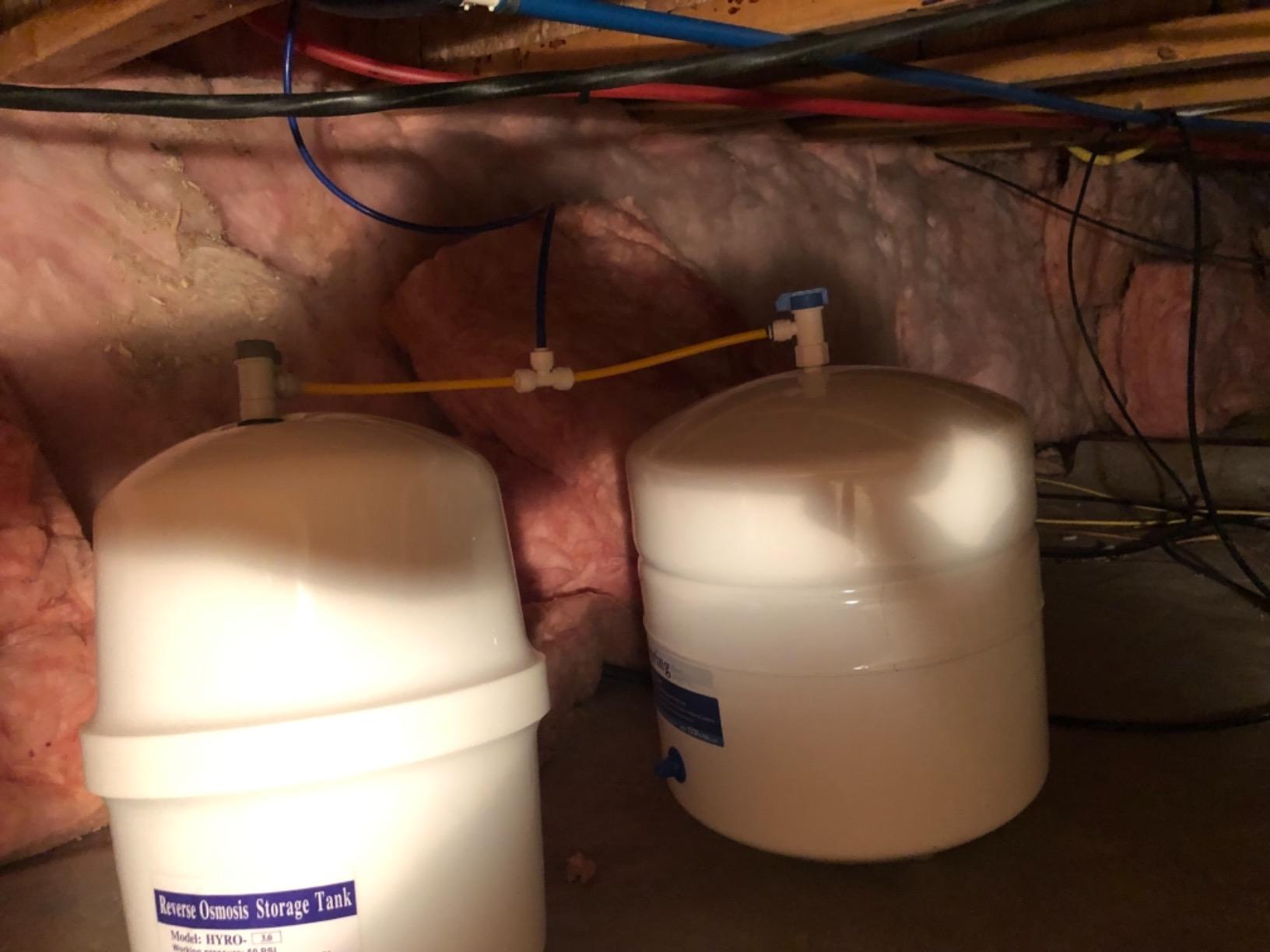
At 4.4 stars across 556 ratings, this is the second-lowest scored system here, with 9% one-star reviews. The critical feedback concentrates on long-term storage tank reliability, including one owner who went through three tanks with repeated bladder ruptures and slow leaks.
The 2.2 gallon tank is also the smallest in the guide, and the base 5-stage configuration has no alkaline or UV stage, so taste is plain RO unless you add a remineralization cartridge. Canister housings need careful tightening, since over-tightening cracks them and under-tightening causes weeping. If you are patient with maintenance and want fridge hookup out of the box, the trade is worth it.
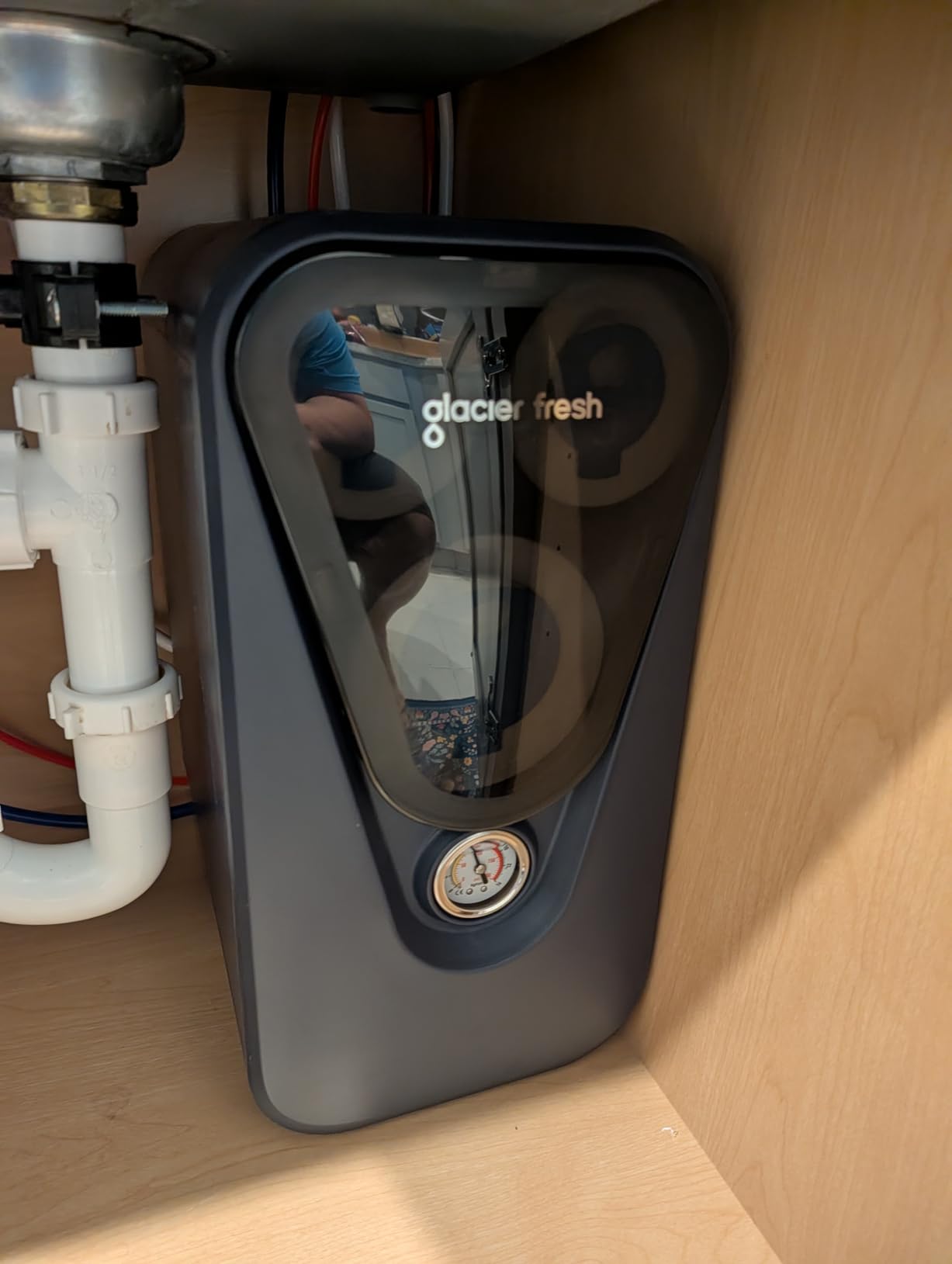
12. GLACIER FRESH GFU03 – Best High-Capacity System With No Power or Noise
GLACIER FRESH GFU03 Reverse Osmosis Water Filter System 800 GPD, TankInside
800 GPD
0.6 gpm
3:1 drain ratio
No electricity
Built-in pressure gauge
Pros
- Water-powered design with zero operating noise
- Highest rated capacity in the comparison at 800 GPD and 0.6 gpm
- Compact 13.58 inch body that fits a standard 36 inch cabinet
- Meets NSF/ANSI 58
- 372 and 401
- Reported as one of the easiest installs
- 30 minute tool-free installation
Cons
- Flow slows after roughly the first quart
- 3:1 drain ratio wastes more water than the 1:1 and 2:1 units
- Ports on one unit were mislabeled from the factory
- Supplied hole saw can be too wide for some sinks
The GFU03 does two things the other systems in this guide do not manage together. It is rated at 800 GPD, more than any other unit here, and it runs with no electricity at all, using water pressure as its only power source, which means zero operating noise. Buyers who previously owned electric tankless units cite the silence as the reason they switched.
Measured results are strong for a non-electric unit, with owners reporting 365 ppm tap water down to 16 ppm filtered, 379 ppm to 32 ppm and 149 ppm to 6 ppm. The all-in-one TankInside design saves up to 70% of cabinet space versus an external tank, and at 13.58 by 8.27 by 16.54 inches it fits a standard 36-inch cabinet.
Filtration is 5 stages on a 0.0001 micron RO membrane, meeting NSF/ANSI 58, 372 and 401, removing more than 1,000 contaminants including PFOA, PFOS, chlorine, lead, fluoride and heavy metals. An 8 oz cup fills in about 8 seconds, a 64 oz fill takes about a minute, and there is a built-in real-time water pressure gauge, which is unusual and genuinely useful for diagnosing low-pressure homes.
Installation is reported at 30 minutes with all adapters and tool-free connectors included, and the pull-out filter cartridge changes in about 3 seconds without shutting off the water valve. Recommended minimum inlet pressure is 40 PSI, and the faucet needs a 1/2 inch to 1 inch drilled hole.
Why silence and capacity together are unusual
Every other high-capacity system in this guide uses an electric pump, and pumps are what produce the hum, the click and the scheduled flush cycle. A water-powered design sidesteps that entirely, which matters in an open kitchen, a bedroom-adjacent utility area, or any home where a pump would be audible at night.
It also removes the electrical requirement, so it installs in a cabinet with no outlet. Combined with a body that measures just over 13 inches deep, it is one of the easiest high-output systems to place in a small kitchen, and owners report finishing installation without a hardware store trip.
The reservoir trade-off, stated plainly
Because there is no large storage tank, the built-in internal reservoir is small, and flow slows noticeably after roughly the first quart. For filling a coffee carafe in one go, that is the limitation to plan around. Pour a quart, wait, pour again, and it works fine. Expecting a continuous 0.6 gpm stream from the first second will disappoint.
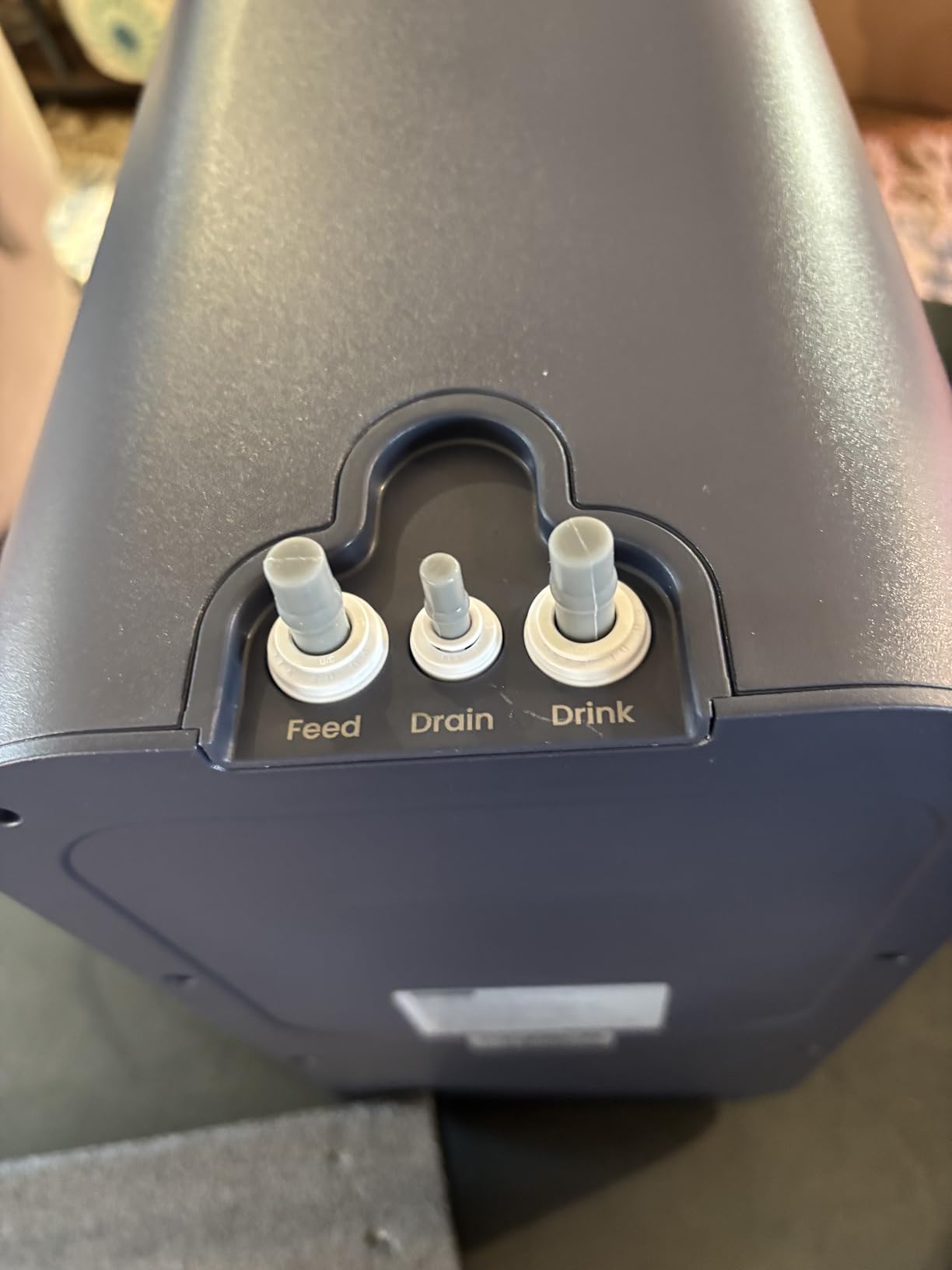
The 3:1 drain ratio also wastes more water than the 1:1 Home Master and Waterdrop G2, so the water saving is on electricity and noise, not on consumption. Owners also report one unit arriving with the feed and drink ports mislabeled from the factory, and the included hole saw being too wide for some sinks. Check the port labels during install.
How to Choose a Reverse Osmosis System in 2026
Pick your format first, then size it. A tanked under-sink system is quiet, cheap to run and fits most homes. A tankless under-sink system gives you instant water, recovers cabinet space and usually wastes less water, but it needs an outlet and a drilled faucet hole. A countertop system needs no plumbing at all and is the only realistic option in a rental, an RV or a kitchen with no under-sink cabinet.
Next, size your output. GPD is the rated daily production of the membrane under ideal conditions, so real output is lower. One person needs about 2 to 3 gallons a day for drinking and cooking. A couple needs 4 to 6. A family of four with a coffee habit, a humidifier and an ice maker needs 15 to 25, which is where the 400, 600 and 800 GPD systems in this guide earn their place. A 50 GPD unit is fine for one or two people and frustrating for four.
Then check your water pressure before anything else. Most tanked systems need 40 psi minimum, the iSpring RO500-BN accepts 15 psi, and anything above 80 psi on a tanked system needs a regulator. If your feed pressure is unknown, a gauge on the cold line under the sink costs almost nothing and saves a wasted install.
What the waste ratio actually means on your bill
Waste ratio is the clean water to drain water ratio. A 3:1 system sends three gallons to the drain for every gallon you keep, 2:1 halves that, and 1:1 is a one-for-one exchange. A household drinking 2 gallons a day discards about 2,190 gallons a year on a 3:1 system, 1,460 on a 2:1 system and 730 on a 1:1 system.
Ratios in this guide range from the 4:1 on the SimPure Y7P-BW down to 1:1 on the Home Master TMAFC-ERP and the Waterdrop G2. The iSpring RCC7AK-BN ships with a default of 2:1 to 3:1, and routing the brine line to a lawn or flower bed recovers most of that waste if you have the space.
Certification: NSF/ANSI 58 versus NSF-certified components
This is the most misunderstood spec in the category. NSF/ANSI 58 certifies the performance of the complete system, meaning the entire assembly reduces total dissolved solids to a stated percentage. NSF-certified components means individual parts were certified, but nobody has tested the finished unit as a whole. Four systems here publish whole-system 58 certification, the iSpring RCC7AK-BN, the APEC ROES-50, the Waterdrop G3P600 and the iSpring RO500-BN, and the GLACIER FRESH GFU03 states it meets 58 alongside 372 and 401.
NSF/ANSI 42 covers aesthetic reduction of chlorine, taste and odor, and 53 covers health-related contaminants such as lead and cryptosporidium. 372 covers lead-free materials, and 401 covers emerging contaminants. Some brands publish SGS testing against an NSF/ANSI 58 standard rather than holding the certification itself, which is a weaker claim. If a listing says certified components but not certified system, take the narrower claim at face value.
Remineralization, UV, and when you actually need them
Remineralization puts calcium and magnesium back after the membrane strips them, which fixes the flat taste that makes people think an RO is broken. Four systems include a dedicated version of it: the iSpring RCC7AK-BN, the Frizzlife PD600-TAM3, the Home Master TMAFC-ERP and the Geekpure RO6-AF. If you drink the water straight with no lemon and find it thin, buy one of those four.
UV disinfects. It inactivates bacteria, viruses and protozoa and adds no chemicals, and the SimPure Y7P-BW is the only system in this guide with a UV stage. UV is worth it on well water, after a boil advisory, or anywhere with a history of bacteriological advisories. It is not a substitute for a membrane on lead, PFAS or fluoride.
For hard water, expect more frequent pre-filter changes and a shorter membrane life, and consider a water softener upstream, since softener brine adds sodium that the RO then removes. If you have a softener, put it before the RO and the drinking water comes out sodium-free.
For well water, check the feed TDS ceiling before you buy. The APEC ROES-50 accepts 2,000 ppm and the Waterdrop G3P600 accepts 1,500 ppm, while the Waterdrop G2 caps at 300 ppm and will not be suitable for most well supplies. Well water also needs disinfection, which is where the SimPure UV stage earns its place.
Filter costs and replacement schedule
Plan on replacing sediment and carbon pre-filters every 6 to 12 months, the post carbon or alkaline filter every 6 to 12 months, and the RO membrane every 2 to 4 years. The iSpring RCC7AK-BN publishes 6-month, 1-year, 2-year and 3-year packs, the Geekpure filter life is about one year with the membrane at 2 to 3 years, and the Home Master modular cluster is changed once a year or every 2,000 gallons.
Budget by tier rather than by brand. Budget canister systems land in the lower range for annual filters, while proprietary tankless cartridges such as the Waterdrop G2CF and G2MRO sit at the upper end because they are not interchangeable with other brands. Ask for the 3-year filter cost before you buy; a cheap system with expensive proprietary cartridges is expensive to own.
Also note the tracking problem. A tanked system with no meter and no minder will quietly pass its service interval, which is where TDS creep and aftertaste come from. The Waterdrop G3P600 faucet, the Frizzlife LED panel, the iSpring RO500 minders and the Bluevua filter monitor all solve it, and the PureDrop RTW5 bundle of three spare pre-filters solves it by giving you a longer runway.
One more decision worth making early: how you will use the reject water. Every system here needs a drain line, and connecting it to a garden hose or a floor drain is a 5-minute job that cuts the effective waste ratio in a way no product upgrade can match.
For the wider audio and equipment context behind our testing standards, see our best shelf stereo systems guide.
Frequently Asked Questions
Is there a downside to drinking reverse osmosis water?
The main downsides are taste and mineral content rather than safety. RO strips dissolved solids, including the calcium and magnesium that give water its body, so the water can taste flat and it is more corrosive than tap water, which is why many people add a remineralization stage. It also sends two to four gallons to the drain per gallon kept on a typical unit. For most people the answer is to add minerals back and plumb the brine line to a garden rather than to avoid RO entirely.
Is reverse osmosis water hard on the kidneys?
There is no established evidence that drinking RO water is harmful to healthy kidneys. Kidney concerns tend to arise in people with existing kidney disease who are advised to limit sodium, potassium, calcium or phosphorus intake for specific clinical reasons, and any water source can be chosen to suit that advice. If you have been told to limit minerals, check with your clinician and consider an RO system paired with a remineralization cartridge so the profile is not near-zero.
What is the highest rated reverse osmosis system?
Among the twelve systems we compared, the Home Master TMAFC-ERP holds the highest rating at 4.8 stars across 1,488 ratings, with 89% five-star reviews. The best-reviewed by volume is the iSpring RCC7AK-BN at 4.6 stars across more than 21,000 ratings. Highest rated and most reviewed are different signals: the first reflects owner satisfaction, the second reflects how much evidence exists.
Which reverse osmosis system is best according to consumer reports?
Consumer Reports and Wirecutter both cover the category, but their picks change with the year and most of their testing sits behind a paywall. The common thread across their guidance matches what we found independently: check for NSF/ANSI 58 whole-system certification, size the GPD to your household, and confirm your feed pressure before buying. Our own ranking applies published weights of filtration 30 percent, value 25 percent, and installation, selection and support at 15 percent each.
What’s better than reverse osmosis?
For chlorine smell, bad taste and sediment from municipal water, a NSF/ANSI 42 carbon block does nearly the same job at a fraction of the cost and with no water waste. Whole-house carbon and sediment filtration is better for reducing chlorine across the whole home. Reverse osmosis remains the right tool when you want lead, PFAS, fluoride, nitrate or arsenic reduction, because those are dissolved contaminants that carbon cannot remove.
Final Verdict: Which Reverse Osmosis System Should You Buy?
For most households, the best reverse osmosis system available now is the iSpring RCC7AK-BN. It is the only tanked unit here that combines NSF/ANSI 58 whole-system certification with a built-in alkaline remineralization stage, it needs no electricity, and more than 21,000 ratings give you more evidence about it than any competitor on this page. Buy it if your feed pressure is at least 40 psi and you can clear cabinet space for a tank.
Buy the APEC ROES-50 if the budget comes first and one or two people use the water. Buy the Waterdrop G3P600 if you want tankless output with a TDS meter and quiet operation. Buy the Home Master TMAFC-ERP if taste, fill speed and a 5-year parts warranty matter most. Buy the Waterdrop G2 if water waste bothers you, and the GLACIER FRESH GFU03 if you want high capacity with no outlet and no pump noise.
For renters and RV users, the Bluevua RO100ROPOT needs no plumbing at all, and the SimPure Y7P-BW adds a UV stage that well water needs. If your main goal is ice and refrigerator water, the PureDrop RTW5 ships the adapters. Check the pressure, measure the cabinet, and read the waste ratio before you click through.