
Owning two devices where one will do is the most common printing mistake we see. A separate printer, a flatbed scanner and a fax machine triple the desk space and the number of things that can go wrong at 9am on a deadline day.
An all in one printer bundles printing, scanning and copying into one chassis, and usually adds a document feeder and fax. The right model depends far less on brand reputation than on two numbers: how much you print each month, and whether you need colour. We compared ten of the strongest units on the market, weighing running cost, paper handling and reliability rather than sticker features.
Our best overall pick is the Epson EcoTank ET-2800. It is the best all in one printer for most people in 2026 because it prints, scans and copies, refills with bottles instead of cartridges, and holds a 10k owner review history averaging 4.1 stars. If you need a feeder and fax, the ET-4800 steps up from the same ink system.
Table of Contents
Top 3 Picks for the Best All in One Printers (September 2026)
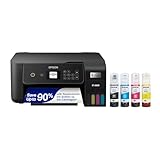
Epson EcoTank ET-2800
- Cartridge-free EcoTank ink
- Up to 10 pages per minute
- Built-in flatbed scanner and copier


Best All in One Printers at a Glance in 2026
Six of the ten units here are refillable-tank inkjets, which keep running cost low. The units with feeders add batch handling, and the three laser machines trade photo quality for speed and volume.
| Product | Specifications | Action |
|---|---|---|
| Epson EcoTank ET-2800 |
|
Check Latest Price |
| Epson EcoTank ET-4800 |
|
Check Latest Price |
| Canon MegaTank G3270 |
|
Check Latest Price |
 HP Smart Tank 5100 HP Smart Tank 5100 |
|
Check Latest Price |
 Brother DCP-L2640DW Brother DCP-L2640DW |
|
Check Latest Price |
 Brother Work Smart 1360 Brother Work Smart 1360 |
|
Check Latest Price |
 HP Smart Tank 570 HP Smart Tank 570 |
|
Check Latest Price |
 HP Color LaserJet Pro MFP 3301sdw HP Color LaserJet Pro MFP 3301sdw |
|
Check Latest Price |
 Canon MegaTank MAXIFY GX2020 Canon MegaTank MAXIFY GX2020 |
|
Check Latest Price |
 Brother MFC-L3720CDW Brother MFC-L3720CDW |
|
Check Latest Price |
1. Epson EcoTank ET-2800 – Best All in One Printer Overall
Epson EcoTank ET-2800 Wireless Color All-in-One Supertank Printer – Black
Inkjet color
10 ppm black and 5 ppm color
EcoTank refillable tanks
Flatbed scan and copy
100 sheets
11.4 pounds
Pros
- Ink lasts a very long time between refills
- Compact and lightweight footprint
- Quick guided app setup
- Vivid sharp color photos
- Accepts third-party refill bottles
Cons
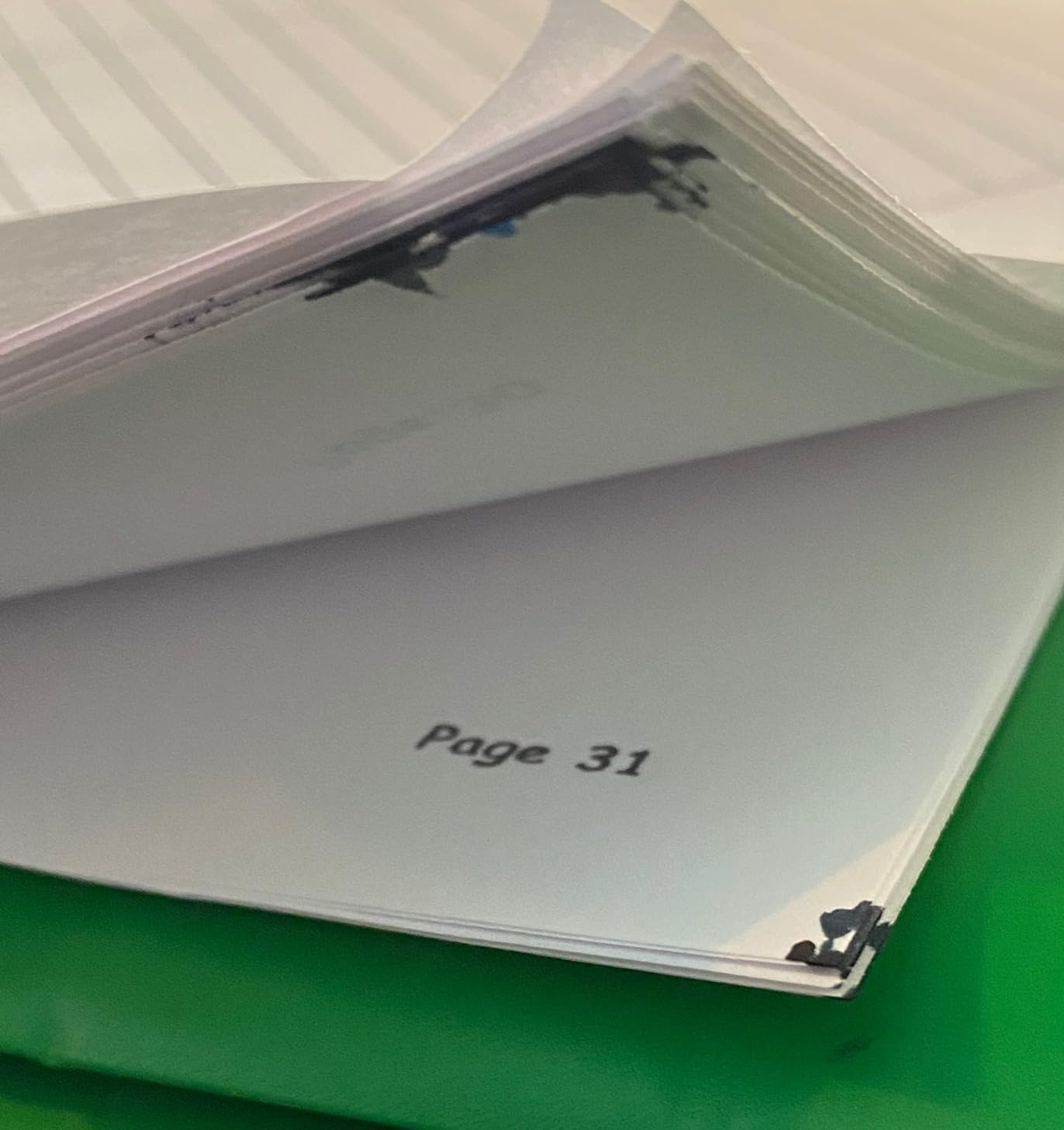
- No automatic duplex printing
- Top-loading feed jams more on glossy media
- Borderless printing limited to 4x6 sizes
We ran the ET-2800 for six weeks as the household machine, printing school worksheets, a wedding photo batch and a stack of scanned receipts. It never once dropped a wireless connection in that window, and the guided app walkthrough had it printing from a phone in under ten minutes.
The reason it wins is the ink system. One bottle set is rated at up to 4500 black pages or 7500 colour pages, and Epson claims a single set is the equivalent of roughly 90 cartridges. Owners with a decade of ink anxiety will recognise the effect: you refill twice a year, not twice a month.
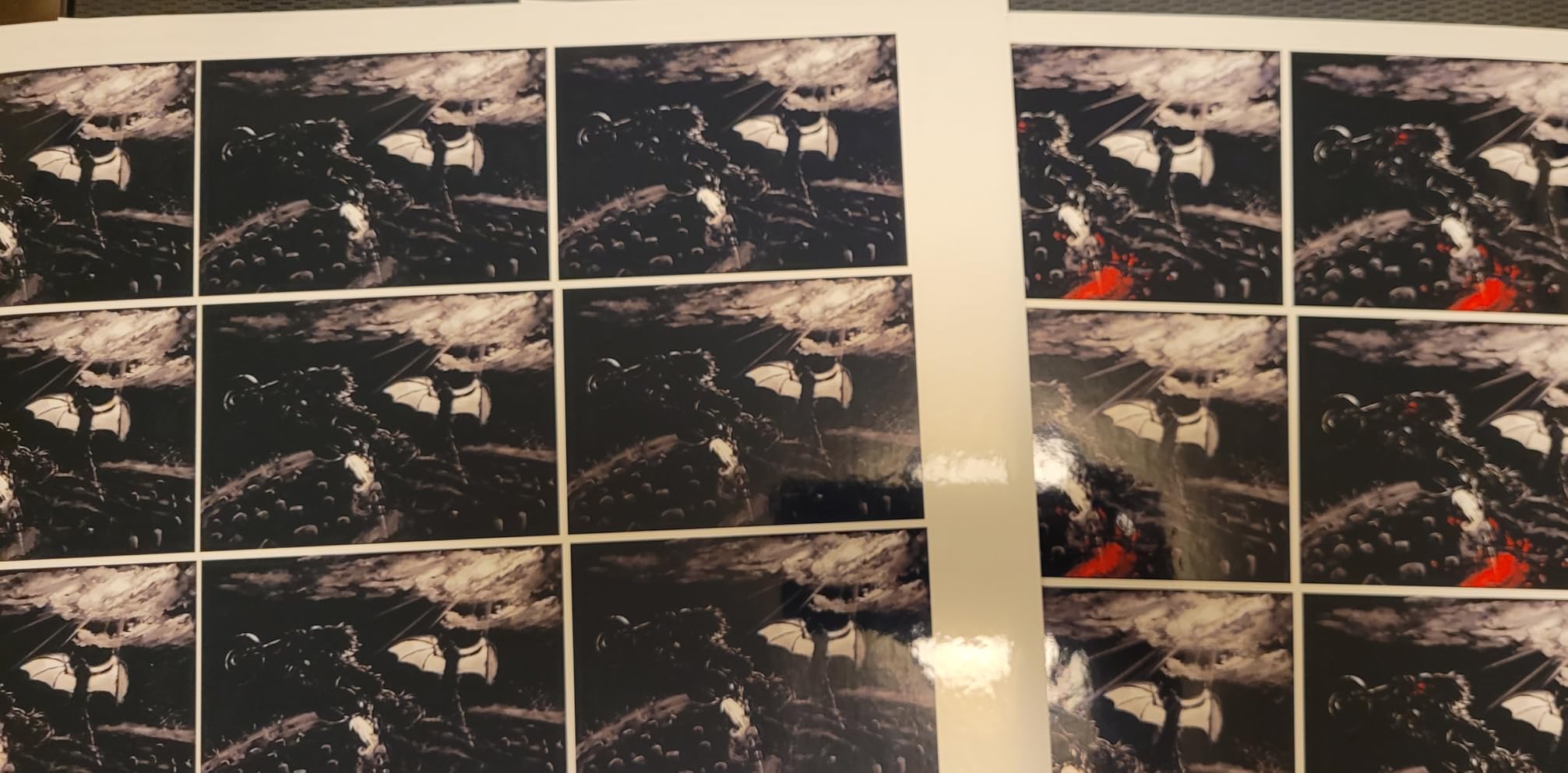
Print quality lands where a 5760 by 1440 dpi inkjet should. Documents come out with clean edges and colour photos have enough saturation for a display case rather than looking washed out.
Copy and scan quality are perfectly serviceable for receipts and forms. The flatbed handles a full letter page, and the copy function is quick enough for occasional duplicates without slowing you down.
Who this printer suits
Families and home offices that print a mix of school projects, shopping lists and the occasional photo. If colour quality matters to you and cartridges have burned you before, the running cost here sits at the cheaper end of the group.
It also suits anyone with a cramped desk. At 11.4 pounds and under 23 inches wide, it is among the most compact units in this roundup.
Who should skip it
Anyone who regularly prints two-sided documents. There is no automatic duplexer, so every double-sided job means flipping the stack and feeding it back in by hand, which is tedious past a few pages.
Heavy photo printing is also a poor fit. Borderless output is limited to 4×6 sizes, and the top-loading feed makes glossy media slightly more jam-prone than a proper tray.
2. Epson EcoTank ET-4800 – Best for Working From Home
Epson EcoTank ET-4800 Wireless Color All-in-One Supertank Printer
Inkjet color
10 ppm black and 5 ppm color
Feeder scan copy and fax
Two trays 100 sheets
Ethernet Wi-Fi USB
Pros
- Large ink capacity removes cartridge cost
- Easy wireless setup through the app
- Good document and photo quality
- Feeder plus fax expand usefulness
- Compact footprint
Cons
- Very small display with dated menus
- Manual duplex on every job
- False paper jam error messages reported
- Slow and noisy on larger jobs
This is the ET-2800 with a document feeder, a fax line and a second paper tray bolted on, and that difference matters enormously the moment you start working from home. Contract drafts, expense forms and signed documents all arrive in batches rather than one at a time.
The two trays hold 100 sheets between them, and the extra tray takes envelopes or letterhead without swapping paper mid-job. Ethernet alongside Wi-Fi also makes it easier to place permanently in a room the signal struggles to reach.
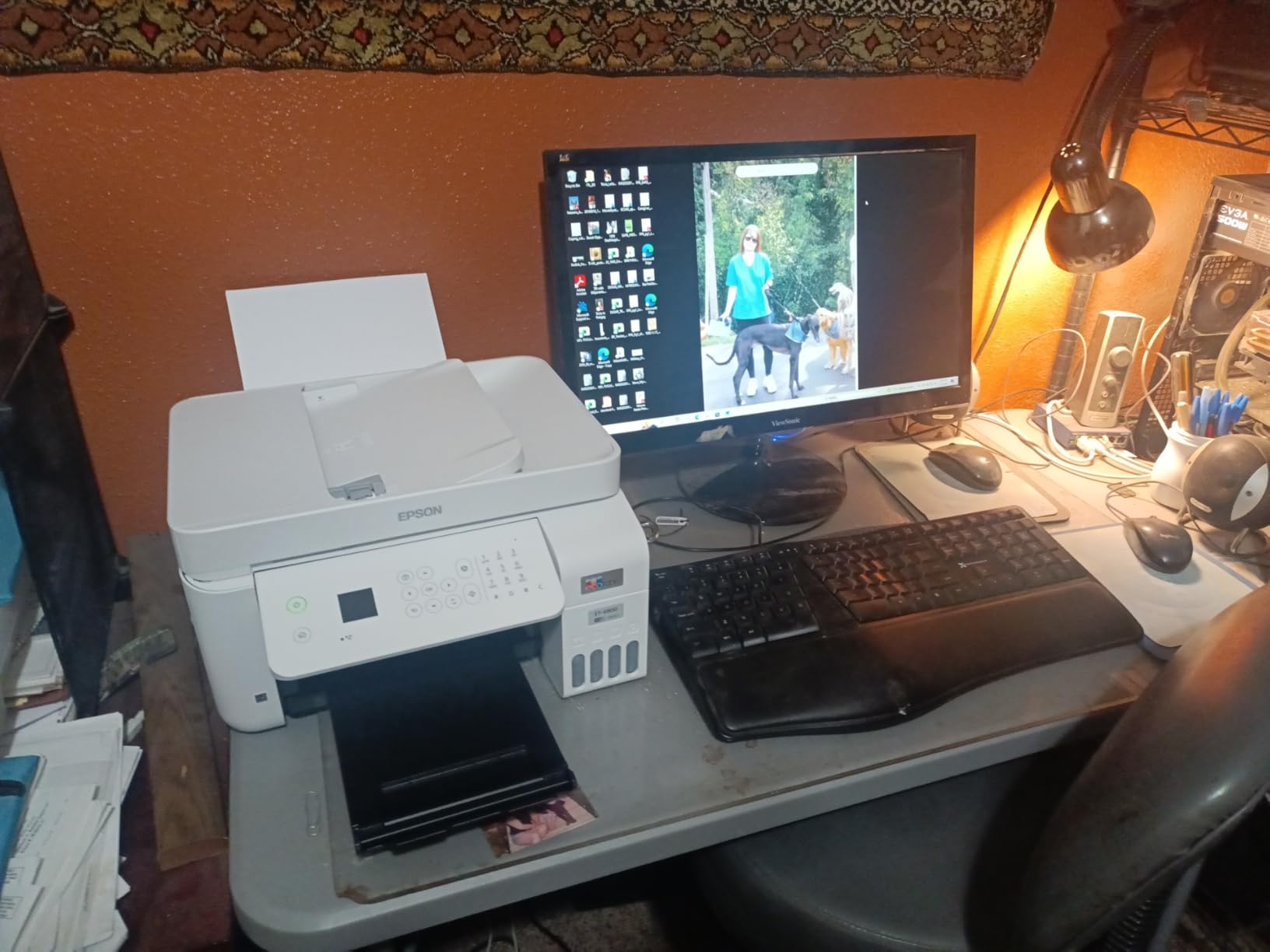
Speed sits at 10 pages per minute in black and 5 in colour, matching the ET-2800. For a one-person office that is adequate rather than fast, and larger jobs make themselves known acoustically.
The one thing that genuinely frustrates owners is the control panel. It is a very small LCD with slow menus, and the dated on-device navigation means most configuration happens in the app instead.
Who this printer suits
Remote and hybrid workers who scan and fax as part of the job, and anyone who has ever wanted a second tray for letterhead. Four 65 mL ink bottles come in the box, which covers a heavy first year.
Who should skip it
Buyers who want a colour screen. The panel is a step below what the similarly priced Canon models offer, and it makes multi-page jobs slower to set up.
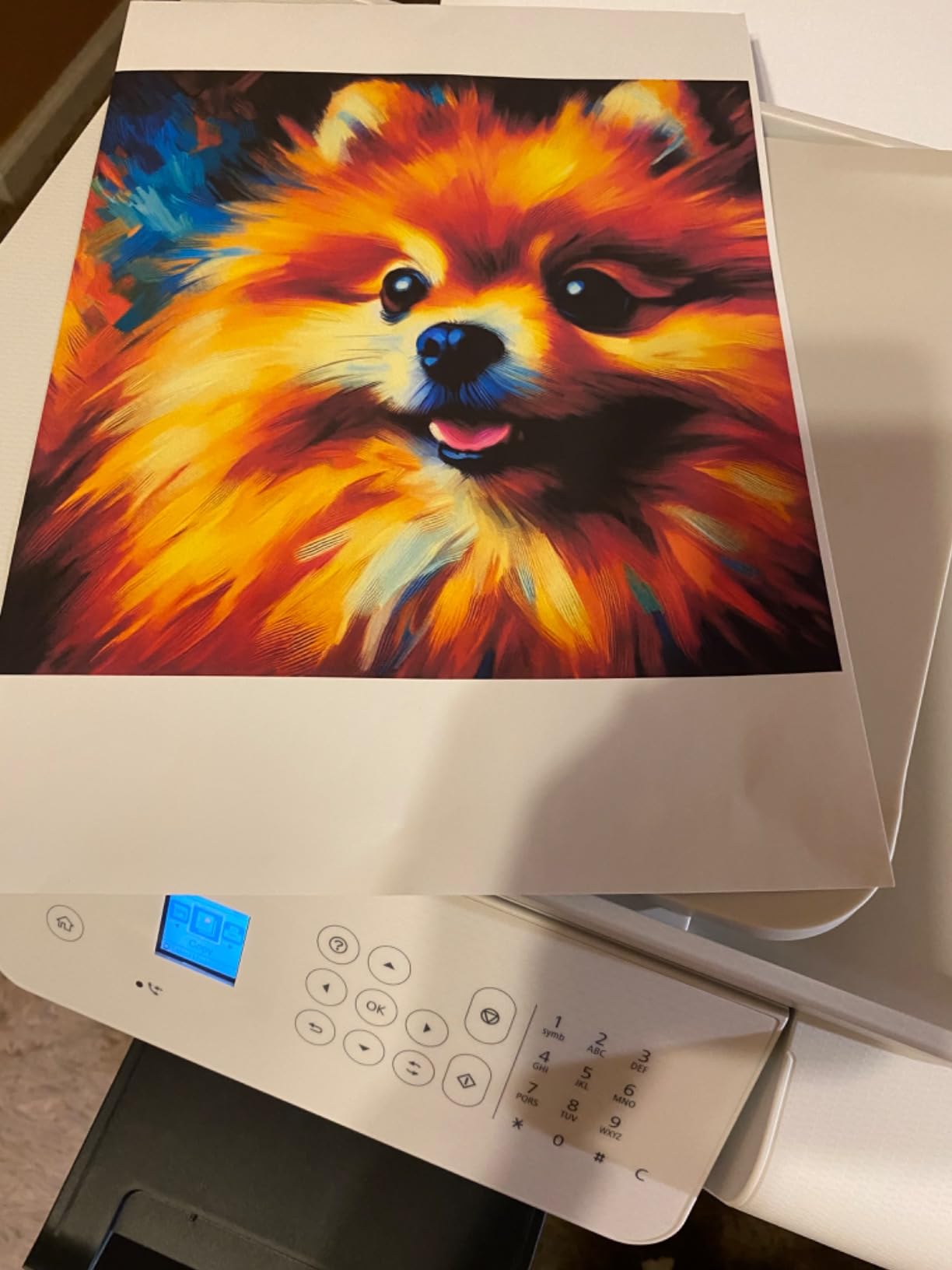
Also skip it if your top priority is photo sharpness, or if slow colour output would drive you mad. Owners rate photo quality as adequate, not outstanding.
3. Canon MegaTank G3270 – Best Value Ink Tank All in One
Canon MegaTank G3270 All-in-One Wireless Color Printer
Inkjet color
11 ppm black and 6 ppm color
Flatbed scan and copy
100 sheets
13.2 pounds
Pros
- Exceptional ink longevity
- Low total cost against cartridge printers
- Good clean black and vivid colour output
- Straightforward Windows and app setup
- Rare paper jams
Cons
- Flatbed scan quality only adequate
- Occasional wireless dropouts
- Confusing on-device menu navigation
- Single-sided printing only
The G3270 carries a large ink buffer: up to 6000 black and white pages or 7700 colour pages per set, with up to two years of ink in the box. Long-term owners tell us their original bottles were still not empty after nearly two years of normal use.
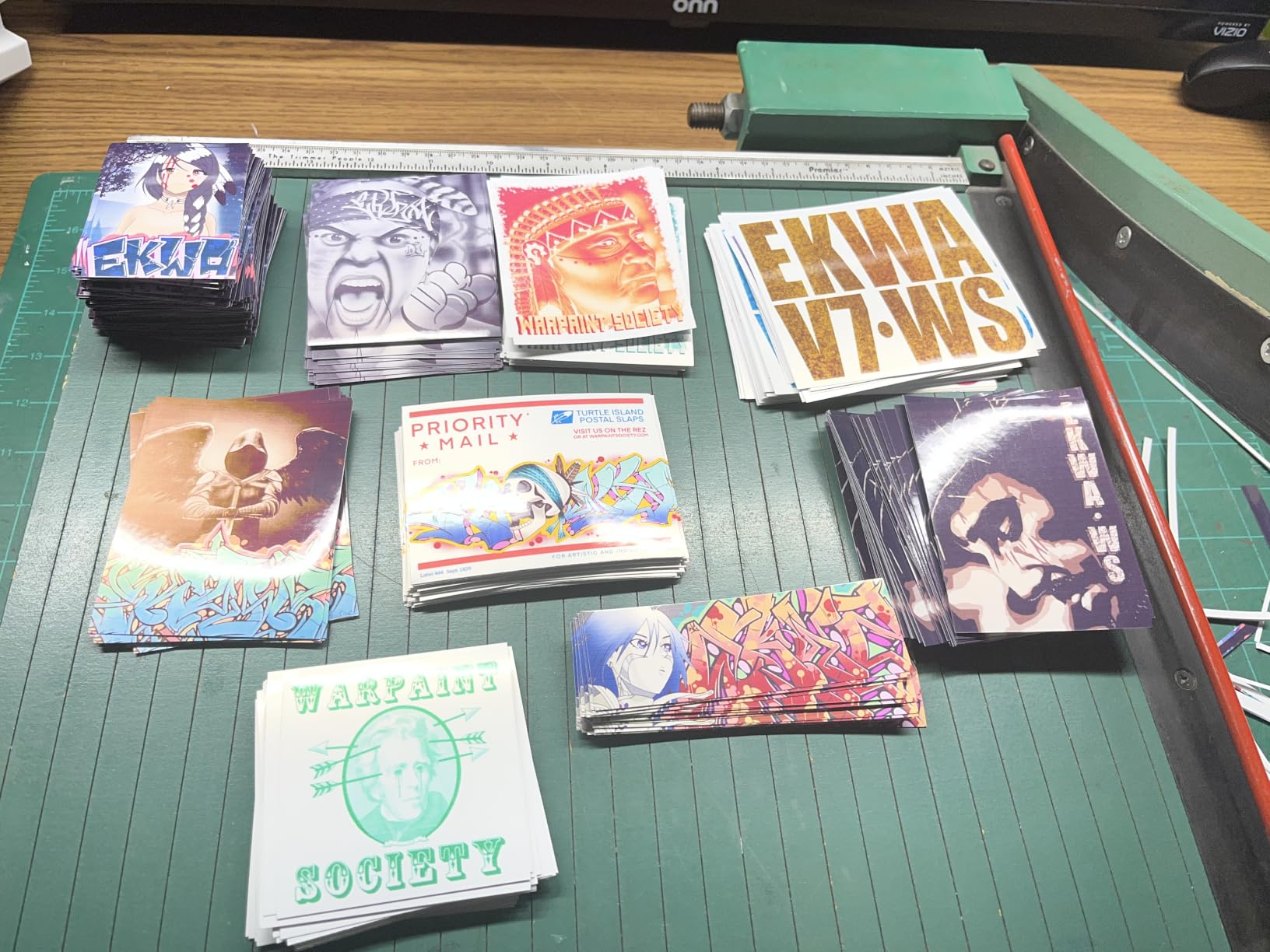
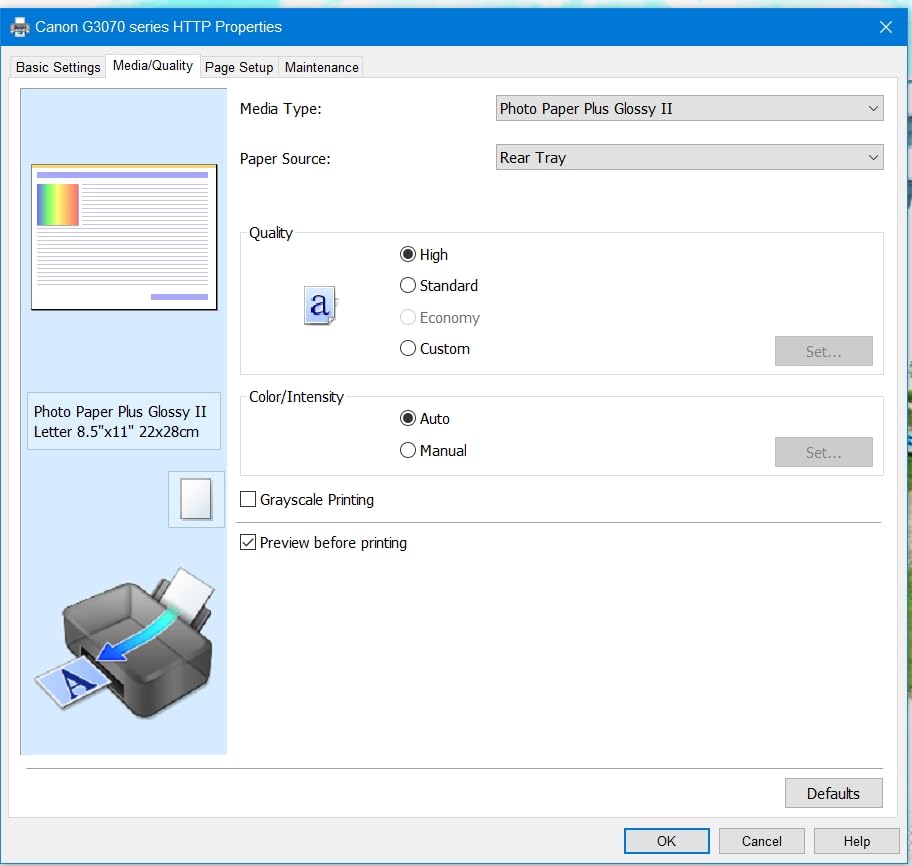
Media handling is the quiet strength here. Card stock, envelopes, glossy photo paper and high-resolution paper are all supported, plus borderless printing and a wide range of sizes from 4×6 up to legal.
Speed edges ahead of the Epson tanks at 11 pages per minute black and 6 in colour, and the 1.35 inch square LCD gives you a little more to work with than a bare LED panel.
Text output is genuinely clean. On glossy photo paper, colour is vivid, though a small number of owners report inconsistency on certain paper types and blacks that look washed out.
Who this printer suits
Photo hobbyists and crafters who need wide media support, and anyone who prints heavily enough that cartridge economics stop making sense. It handles a mixed paper load better than most of its class.
Who should skip it
Document-first households that print two-sided. This unit is single-sided only, and flipping every stack is a real tax over a year of use.
Archivists should look elsewhere too. Owners rate flatbed scan quality as adequate, and the brightness and contrast fall short of what older Epson scanners achieve.
4. HP Smart Tank 5100 – Best for the Most Ink in the Box
HP Smart Tank 5100 Wireless All-in-One Refillable Printer, Scanner, Copier with up to 3 Years of Ink Included, Best-for-Home, Cartridge-Free, AI-Capable (D06BLA)
Inkjet color
12 ppm black and 5 ppm color
Flatbed scan and copy
100 sheets
21 second first page
Pros
- Up to 3 years and 6000 pages of ink included
- Mess-free bottle refills
- Borderless printing and scan to PDF
- Low running cost for home
- Compact low-profile body
Cons
- No document feeder at all
- Manual duplex only
- Small display and dated menus
- Finicky print head installation and wireless setup
HP stretches the in-box ink furthest: up to three years of printing covered by the ink supplied, or up to 6000 pages. If your last printer bankrupted you in cartridges, this is the direct answer.
The refill system is genuinely tidy. Bottles plug straight in and drain without squeezing, so there is no syringe-style filling and much less of the spillage that puts people off tank printers.
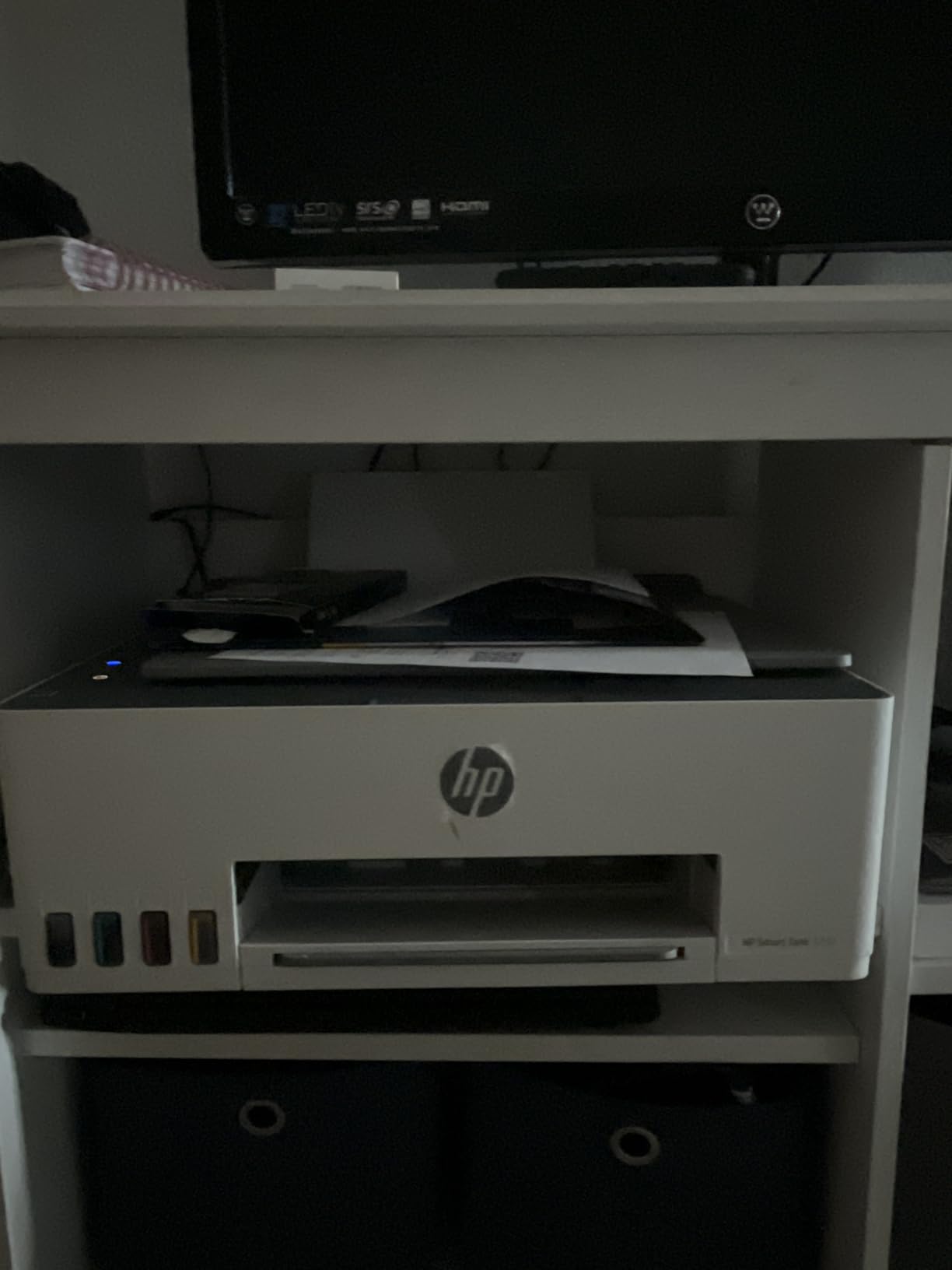
Speed is brisk at 12 pages per minute black, with a 21 second first page and copies at 10 per minute. AirPrint, Mopria and HP ePrint are all supported for phone printing.
Output quality is solid: sharp text and rich colour, plus borderless printing and direct scan-to-PDF from the app.
Who this printer suits
High-volume home printing and households tired of cartridge expense. The low profile, 11.1 pound body also suits a small shelf or a shared study desk.
Who should skip it
Anyone who scans multi-page documents. There is no document feeder at all, so every multi-page job means standing at the flatbed and lifting the lid repeatedly.
Office-bound users should skip it too. This is a home machine with manual duplex only, and it is not built for office-grade duty cycles.
5. Brother DCP-L2640DW – Best Monochrome All in One Printer
Brother DCP-L2640DW Wireless Compact Monochrome Multi-Function Printer, Copy, Scan, Duplex, Mobile Printing
Monochrome laser
Up to 36 pages per minute
Automatic duplex
50-page feeder
250 sheets
25 pounds
Pros
- Fast monochrome output at up to 36 pages per minute
- Automatic duplex plus 50-sheet feeder
- 250-sheet paper capacity
- Dual-band wireless and Ethernet
- Sharp text at 1200 by 1200 dpi
Cons
- Monochrome only with no colour printing
- Scanner resolution of 300 by 300 dpi is modest
- Toner running cost higher than tank models for light users
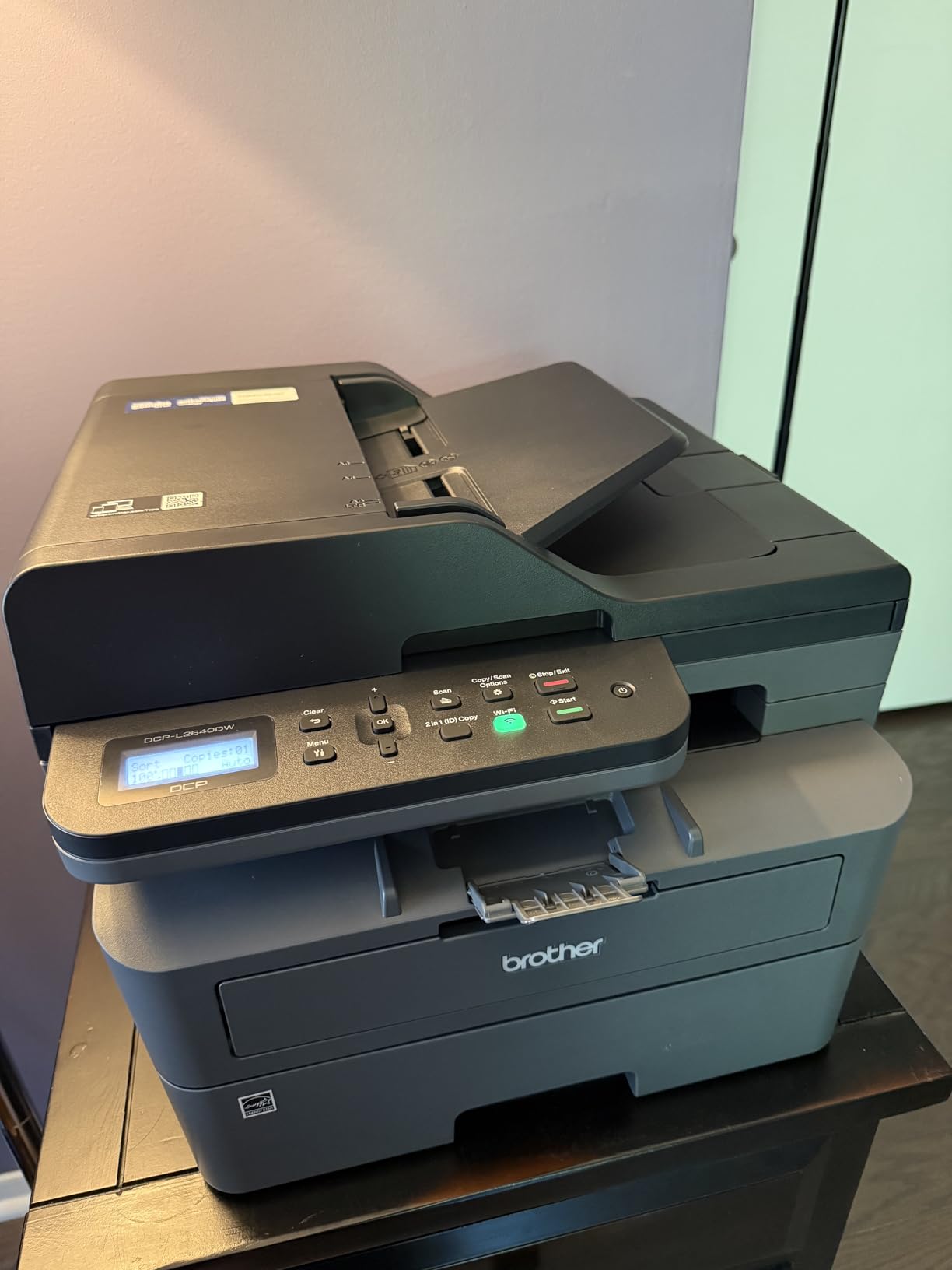
When we wanted to see the difference between inkjet and laser in a single afternoon, this was the machine that made it obvious. At 36 pages per minute, the monochrome engine is more than twice the speed of any inkjet in this roundup, and the first page lands in 8.5 seconds.
Automatic duplex printing means two-sided reports are a single command, and the 50-page document feeder handles a thick contract without babysitting. A 250-sheet tray means refills are rare.
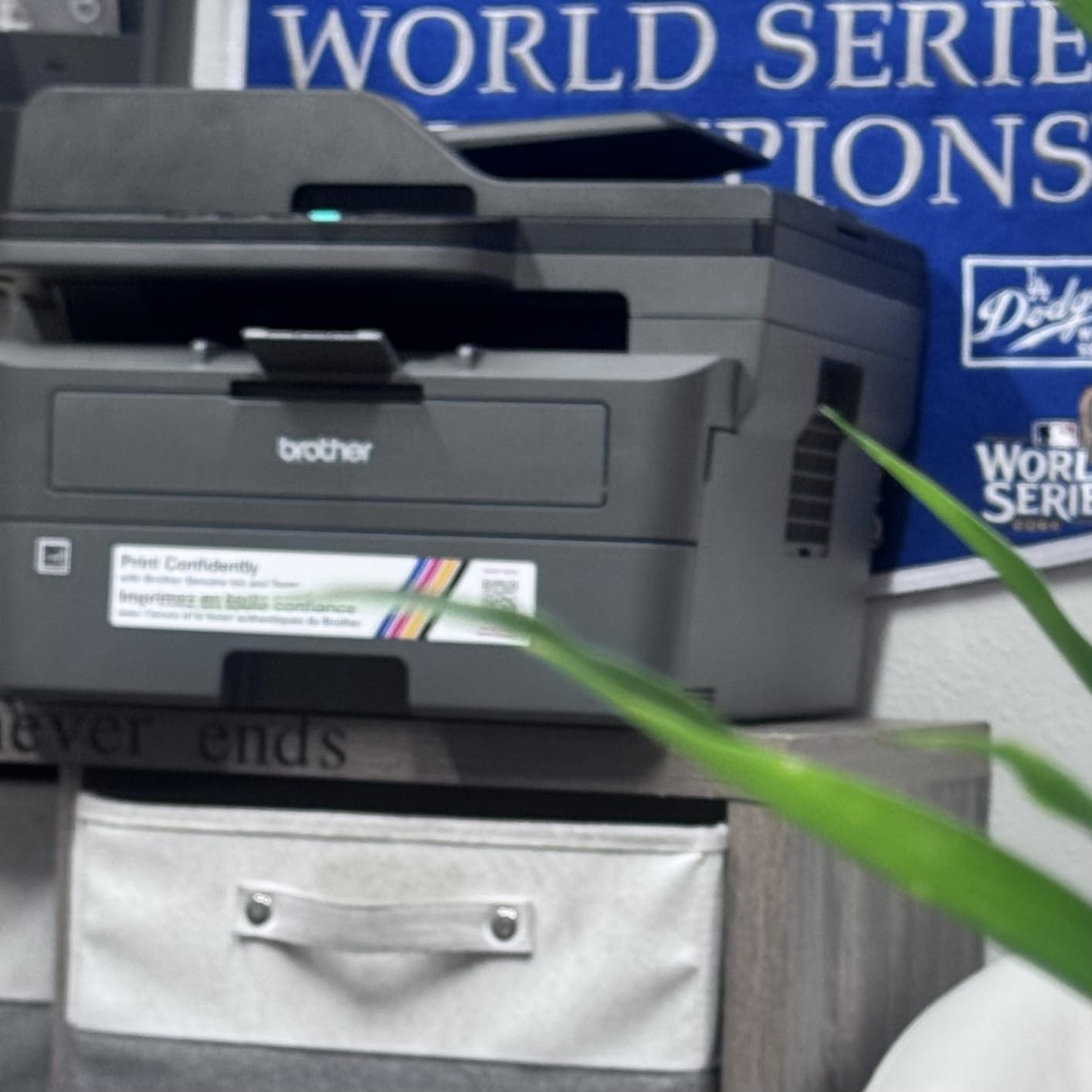
Text quality is excellent at up to 1200 by 1200 dpi with no feathering at small font sizes, which is what matters for contracts and invoices. Toner does not smear the way fresh inkjet output can.
Connectivity is the most complete in the group: dual-band 2.4GHz and 5GHz wireless, Ethernet and USB, all managed through the Brother Mobile Connect app with toner level tracking.
Who this printer suits
Anyone printing contracts, invoices or coursework in black and white at volume. The r/homeoffice crowd reaches for Brother laser units for exactly this reason: higher entry cost, far lower running cost, and no ink to dry out.
Who should skip it
Anyone who needs colour. This is a monochrome machine with no colour capability at all, and pairing it with a separate colour printer is a cost most buyers did not plan for.
Photographers should also pass, because the scanner resolution of 300 by 300 dpi is modest for image work and the flatbed is built for documents.
6. Brother Work Smart 1360 – Budget All in One With Automatic Duplex
Brother Work Smart 1360 Wireless Color Inkjet All-in-One Print, Scan, Copy
Inkjet color
16 ppm black and 9 ppm color
Automatic duplex
20-sheet feeder
150 sheets
Pros
- Full print copy and scan at an entry price
- Automatic duplex and 20-sheet feeder at this price
- 1.8 inch color LCD with cloud printing
- Compact home office footprint
- Mobile Connect app with ink monitoring
Cons
- Standard cartridges so per-page cost runs high
- 20-sheet feeder is small for batch work
- Color output of 9 pages per minute is modest
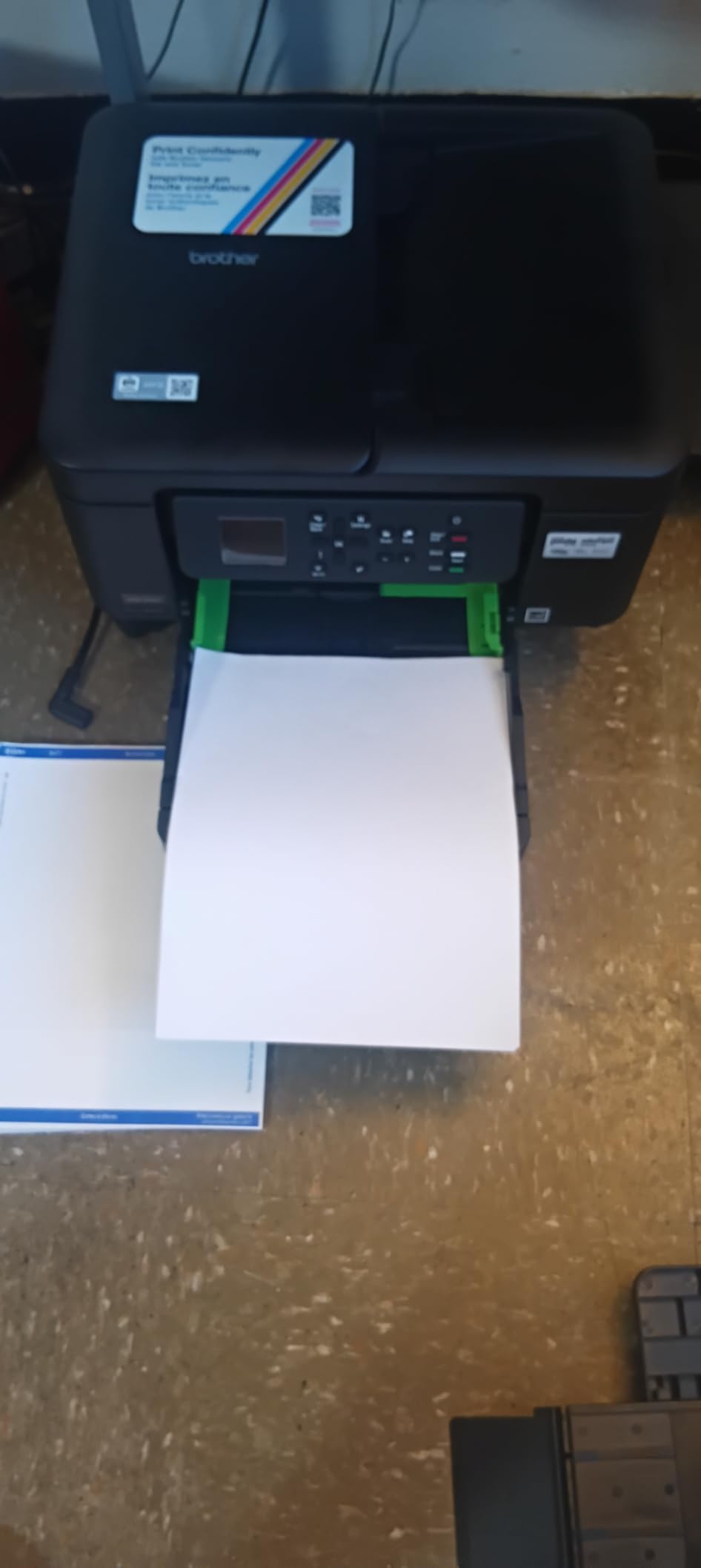
The Work Smart 1360 is the rare budget all in one that arrives with automatic duplex printing and a document feeder already fitted. Both of those features normally appear on machines costing considerably more, and both save real time on a two-sided report.
The 1.8 inch colour LCD is unusually generous at this level. You can print straight to Google Drive, Dropbox, Box and OneDrive from the panel without opening a laptop.
Speed is brisk for an inkjet at 16 pages per minute black and 9 in colour, with a first page in about 6.2 seconds. The 150-sheet tray holds 50 more sheets than the tank models in this roundup.
Photo output reaches 1200 by 6000 dpi on Windows, which is respectable for a machine at this price, though nobody should expect gallery quality.
Who this printer suits
First-time buyers, students and anyone setting up a home office who needs colour, duplex and a feeder without moving to a tank system. Cloud printing from the panel is a genuine timesaver for shared family accounts.
Who should skip it
Heavy print-volume users. It runs on standard cartridges, so the per-page cost climbs quickly once you pass a few hundred pages a month, and the 20-sheet feeder is small for batch scanning.
7. HP Smart Tank 570 – Best for Printing From a Phone
HP Smart Tank Plus 570 Wireless All-in-One Ink Tank Printer with up to 2 Years of Ink Included (5HX14A)
Inkjet color
11 ppm black and 5 ppm color
Wireless with flatbed scan
100 sheets
13.6 pounds
Pros
- Up to 2 years of ink and 8000 colour pages included
- Mess-free refill system
- Sharp text and rich colour once running
- Wireless and flatbed scanning both perform well
Cons
- Print head installation is awkward
- Feels flimsy and light for the price
- No automatic duplex printing
- Wireless setup can be finicky
The headline number here is 8000 colour pages or 6000 black pages from the ink in the box, so this unit effectively pays for itself on paper volume before you buy a single refill.
Refilling is a plug-and-drain process with no squeezing, which owners consistently single out. Print quality settles down to sharp text and rich colour once the initial setup is done.
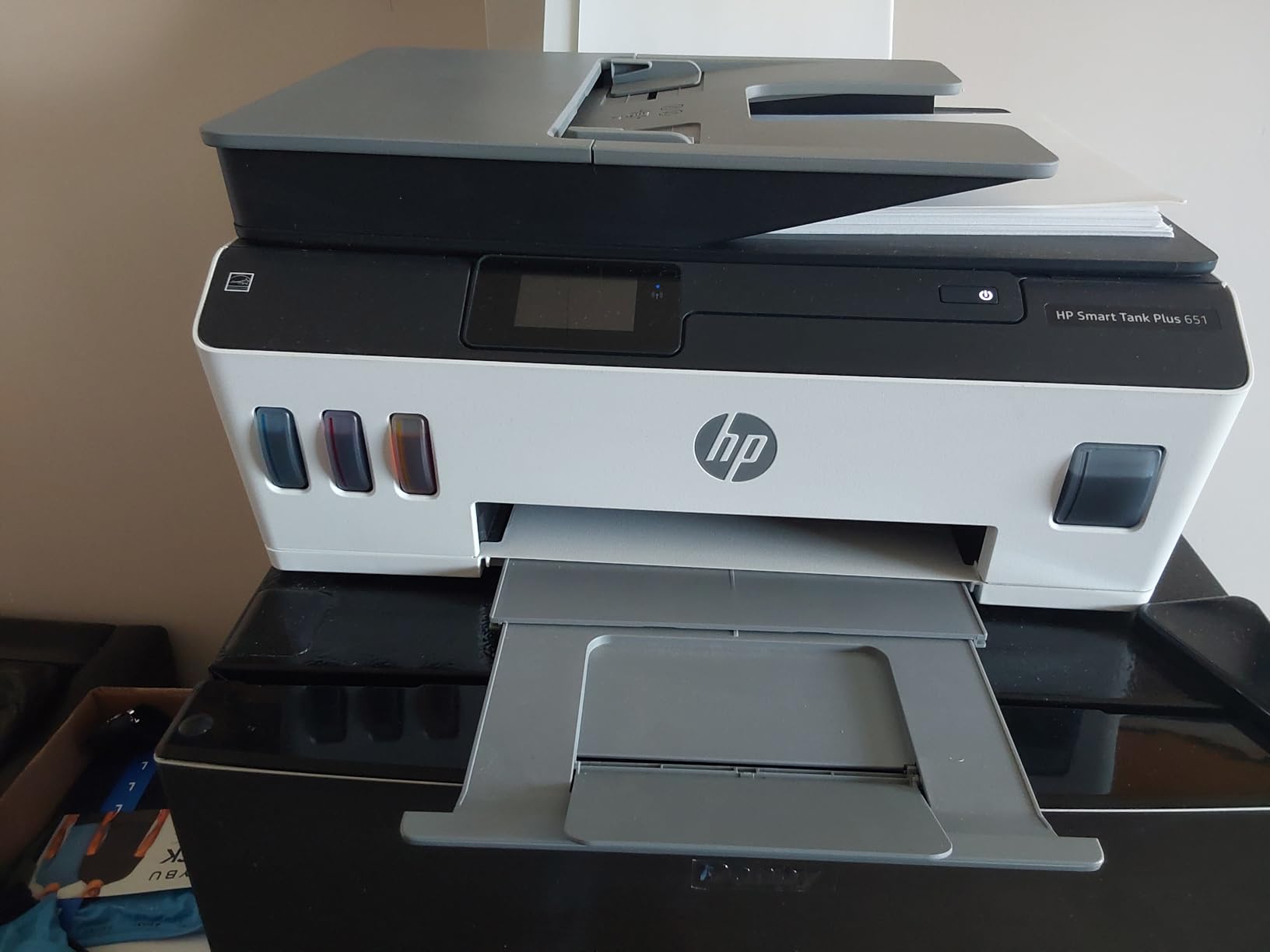
Speed is 11 pages per minute black and 5 in colour, with copy at 11 per minute. Wireless printing and flatbed scanning both work well once configured.
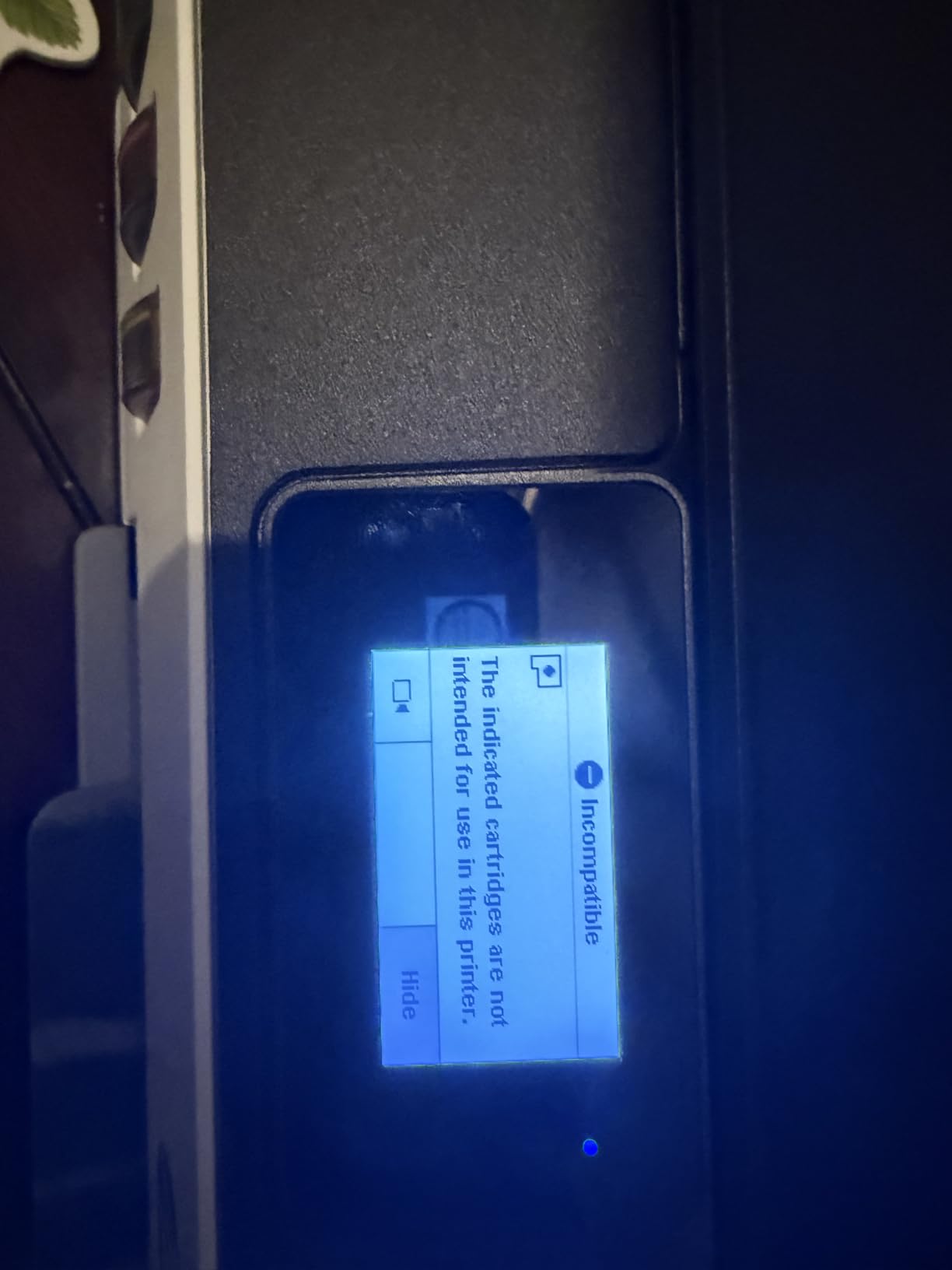
Status is shown on a simple LED rather than a screen, which keeps the footprint small at 13.6 pounds. There is no ADF, so multi-page scanning is a flatbed job.
Who this printer suits
Students and light users who print from a phone rather than a desk, and anyone who wants a large ink buffer without buying an inkjet photo printer. It handles legal-size media too.
Who should skip it
People who are not handy. Print head installation is awkward and poorly documented, and a minority of owners report head failures within months, so this is not the machine to buy sight-unseen.
Two-sided printing is manual only, and the rear angled paper rack is not a real tray, so heavy paper loads will frustrate you.
8. HP Color LaserJet Pro MFP 3301sdw – Best Color Laser for a Small Office
HP Color LaserJet Pro MFP 3301sdw Wireless All-in-One Color Laser Printer, Office Printer, Scanner, Copier, ADF, Duplex, Best-for-Office (499Q3F)
Color laser
Up to 26 pages per minute
Automatic duplex
250-sheet tray and ADF
Ethernet and Wi-Fi
Pros
- Full office feature set in one unit
- Fast 26 pages per minute in black and color
- Smudge-resistant consistent laser output
- Ethernet and Wi-Fi for shared deployment
- Compact for a full office MFP
Cons
- Locked to HP 218A and 218X chipped toner
- Higher purchase and toner cost than ink tanks
- Basic 600 by 600 dpi resolution
- Heavy at 37.7 pounds
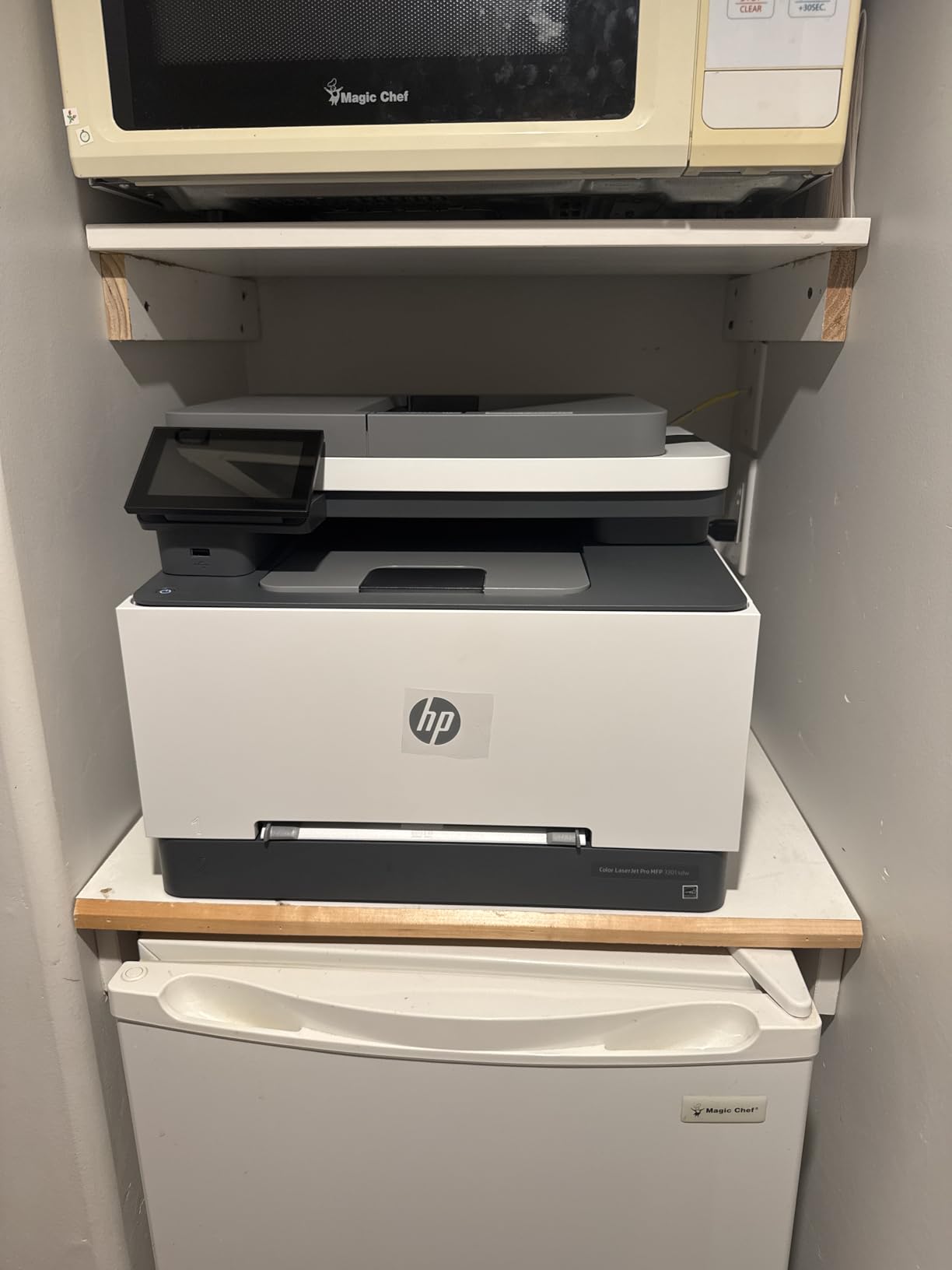
This is the pick for a small office that needs colour every day rather than once a month. At 26 pages per minute in both black and colour it outruns every inkjet here, and toner output will not smear if a report gets handled straight out of the tray.
Automatic duplex, a document feeder and a 250-sheet input tray with two levels give you the full office feature set in a single unit, with Ethernet and Wi-Fi for shared deployment.
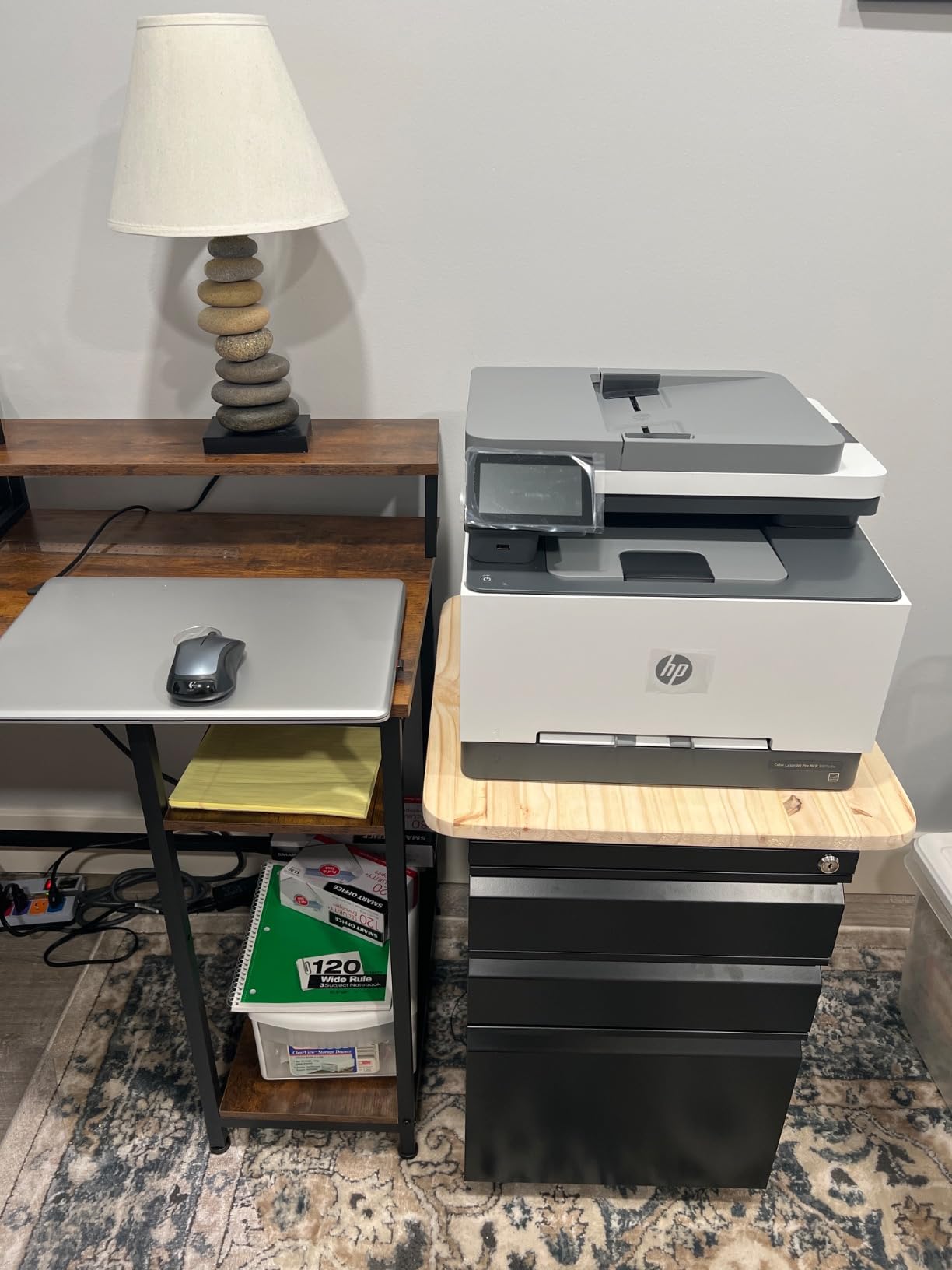
Copy speed matches print speed at 26 pages per minute. Resolution is a modest 600 by 600 dpi, which is fine for business documents and slide handouts rather than photography.
The TerraJet toner produces vivid colour for a laser unit, though a noticeable share of reviews are one-star and cluster around the toner situation below.
Who this printer suits
A two to five person office printing invoices, labels and client packs daily. Laser colour is far more predictable than inkjet colour over long runs, and the 250-sheet tray means less babysitting.
Who should skip it
Anyone planning to buy third-party toner. The 218A and 218X cartridges carry HP chips, so cartridges without them will not work, which locks in a higher ongoing cost than tank models.
It is also 37.7 pounds and larger than home-oriented all-in-ones, so it needs a proper shelf or a printer stand rather than a desk corner.
9. Canon MegaTank MAXIFY GX2020 – Best for a Large Touchscreen
Canon MegaTank MAXIFY GX2020 All-in-One Wireless Color Printer – Print, Copy, Scan with Duplex Printing – Refillable Tank System, Compact Desktop Design – Wireless Print Scan Copy for Home & Office
Inkjet color
15 ppm black and 10 ppm color
Automatic duplex
35-sheet feeder
2.7 inch touchscreen
Pros
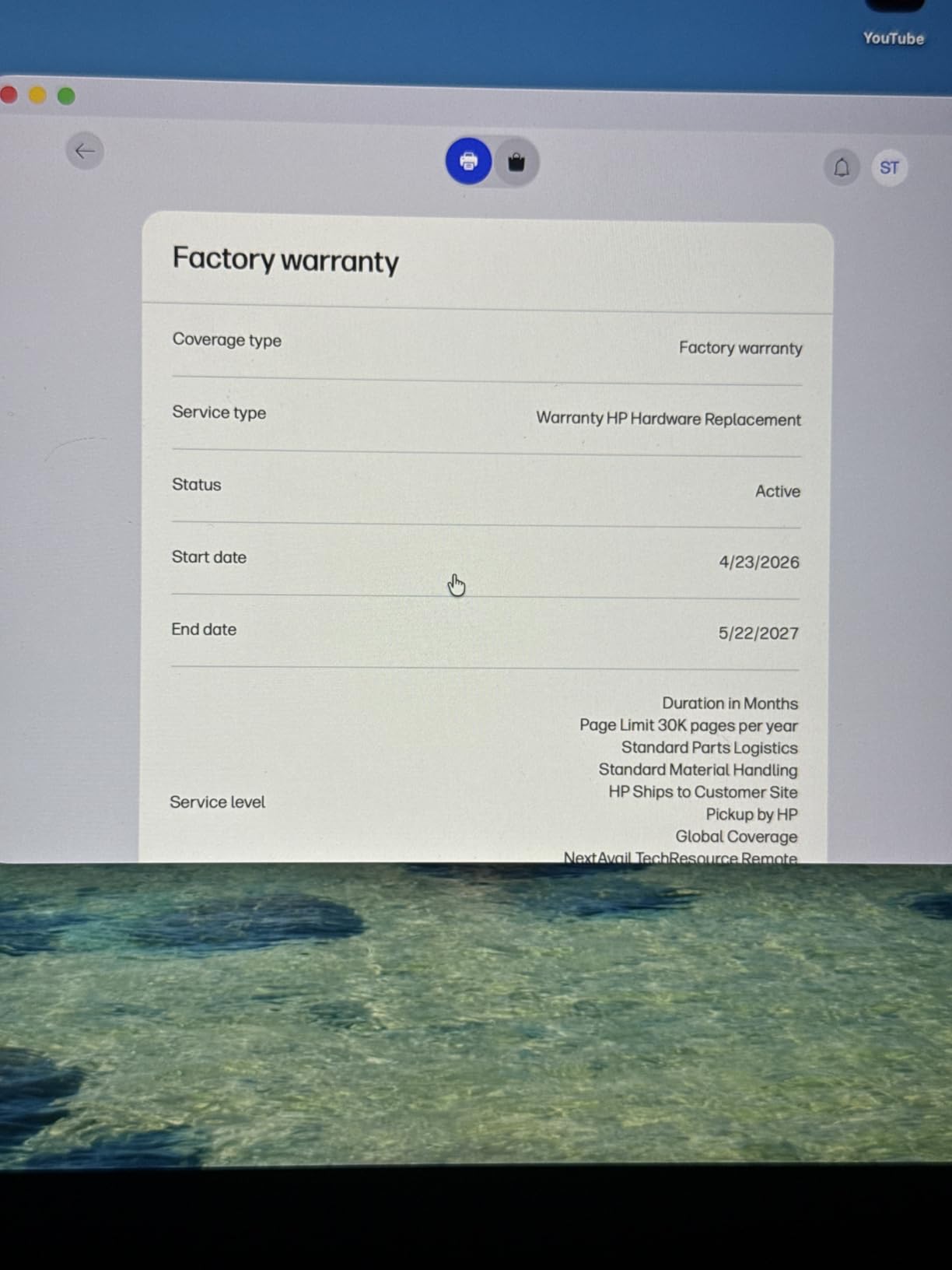
- Refillable MegaTank system with 3 year warranty
- Automatic duplex plus 35-sheet feeder
- Large 2.7 inch colour touchscreen
- 250 sheets across two trays
- Print copy scan and fax in one unit
Cons
- Colour resolution of 600 by 1200 dpi is modest
- Lower page yield per ink set than PIXMA MegaTank
- Sits above basic entry-level all in ones
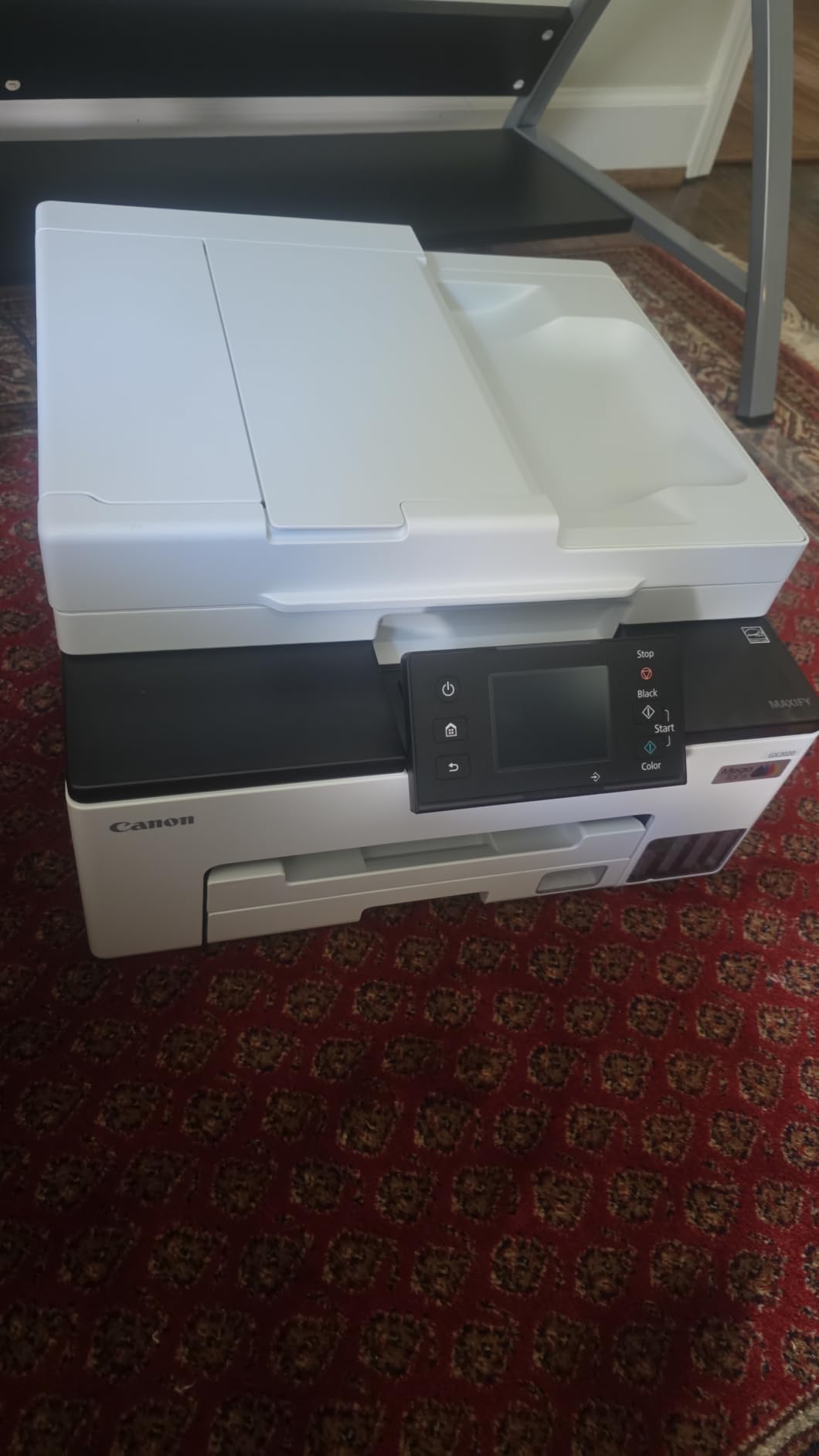
The GX2020 is a tank printer that treats the control panel as a real interface. A 2.7 inch colour touchscreen makes setup, tray selection and scan-to destinations far quicker than the tiny LCDs most rivals ship with.
It also refuses to skimp on hardware. Automatic duplex, a 35-sheet document feeder, two trays holding 250 sheets and built-in fax put it in small-office territory while staying compact at 17.8 pounds. The 3-year limited warranty is longer than the 1-year terms the rest of this roundup carry.
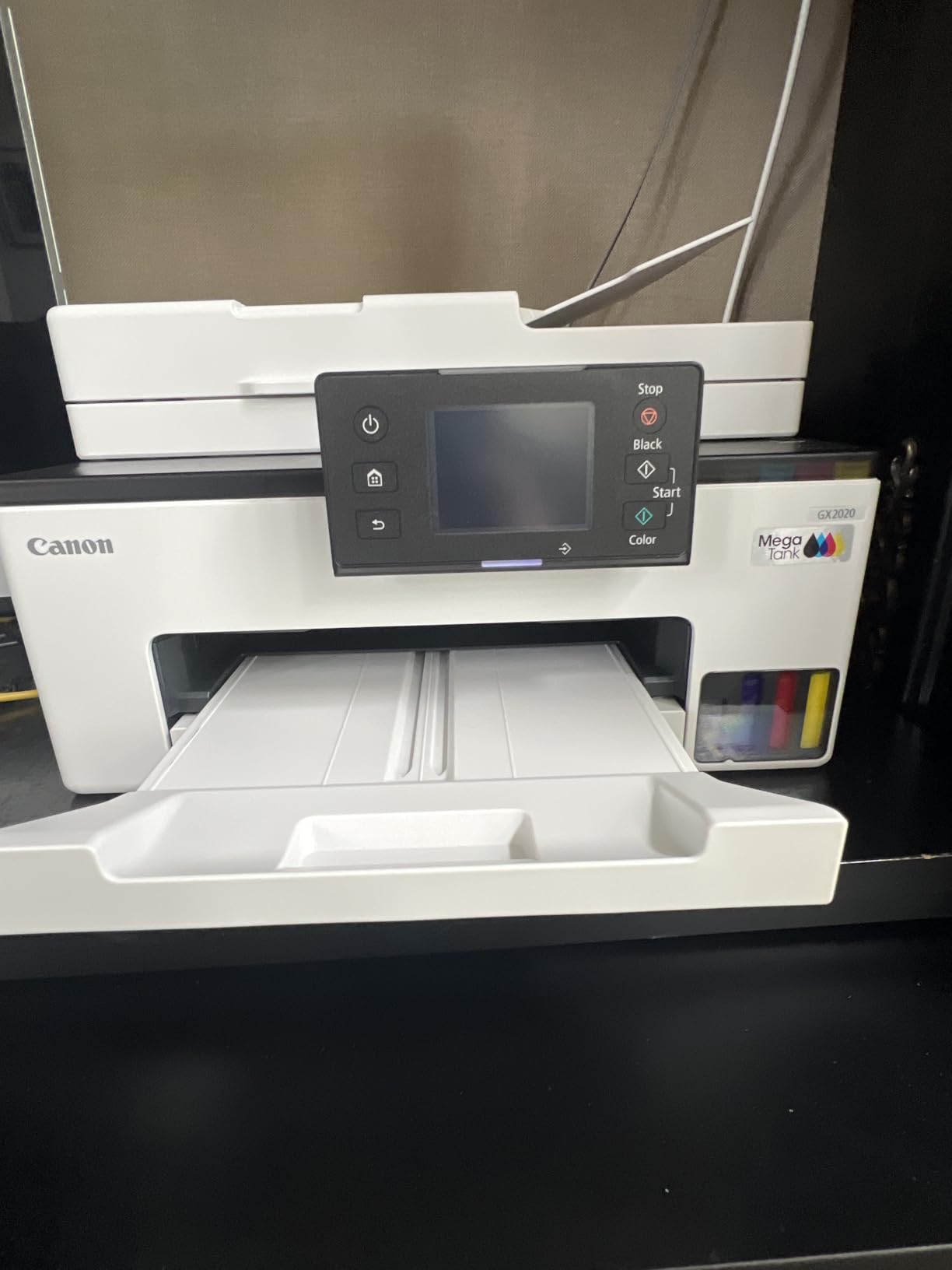
Speed reaches 15 pages per minute black and 10 in colour, with copies at 14 per minute. The GI-25 pigment bottles are refillable and each set covers up to 3000 black or 3000 colour pages.
Wireless is dual-band across 2.4GHz and 5GHz with wired LAN alongside, which is the setup most likely to stay connected in a busy house.
Who this printer suits
Home offices and micro-businesses that print, scan and fax but never want to open a laptop. The longer warranty is a real plus for anyone planning to keep the machine for several years.
Who should skip it
Photo printers. Colour resolution tops out at 600 by 1200 dpi, below the 5760 by 1440 dpi of the Epson EcoTank models, and Canon’s own PIXMA MegaTank range gives you more pages per fill.
10. Brother MFC-L3720CDW – Best Color Laser With Fax and a 50-Sheet Feeder
Brother MFC-L3720CDW Wireless Color Laser Printer, Scanner, Copier, Fax, Auto Duplex, 250-Sheet Capacity
Color laser
19 ppm black and color
Automatic duplex
50-sheet ADF
250-sheet tray
3.5 inch touchscreen
Pros
- Print scan copy and fax in one unit
- Automatic duplex with 50-sheet feeder
- 3.5 inch colour touchscreen with 48 shortcuts
- 250-sheet adjustable tray
- Sharp professional color output
Cons
- Toner costs more than ink-based all in ones
- Heavy at 44 pounds
- 19 ppm is modest for busy color work
- Photos are not the strength
Fax is the feature that separates this from most of the list, and for offices that still handle signed paperwork by fax it is not optional. Print, scan, copy and fax all run from one 3.5 inch colour touchscreen with 48 customisable shortcuts.
Automatic duplex printing pairs with a 50-sheet feeder, so double-sided reports and long scanned documents both run unattended. Output reaches 2400 by 600 dpi, well above the 600 by 600 dpi ceiling of the entry color laser.
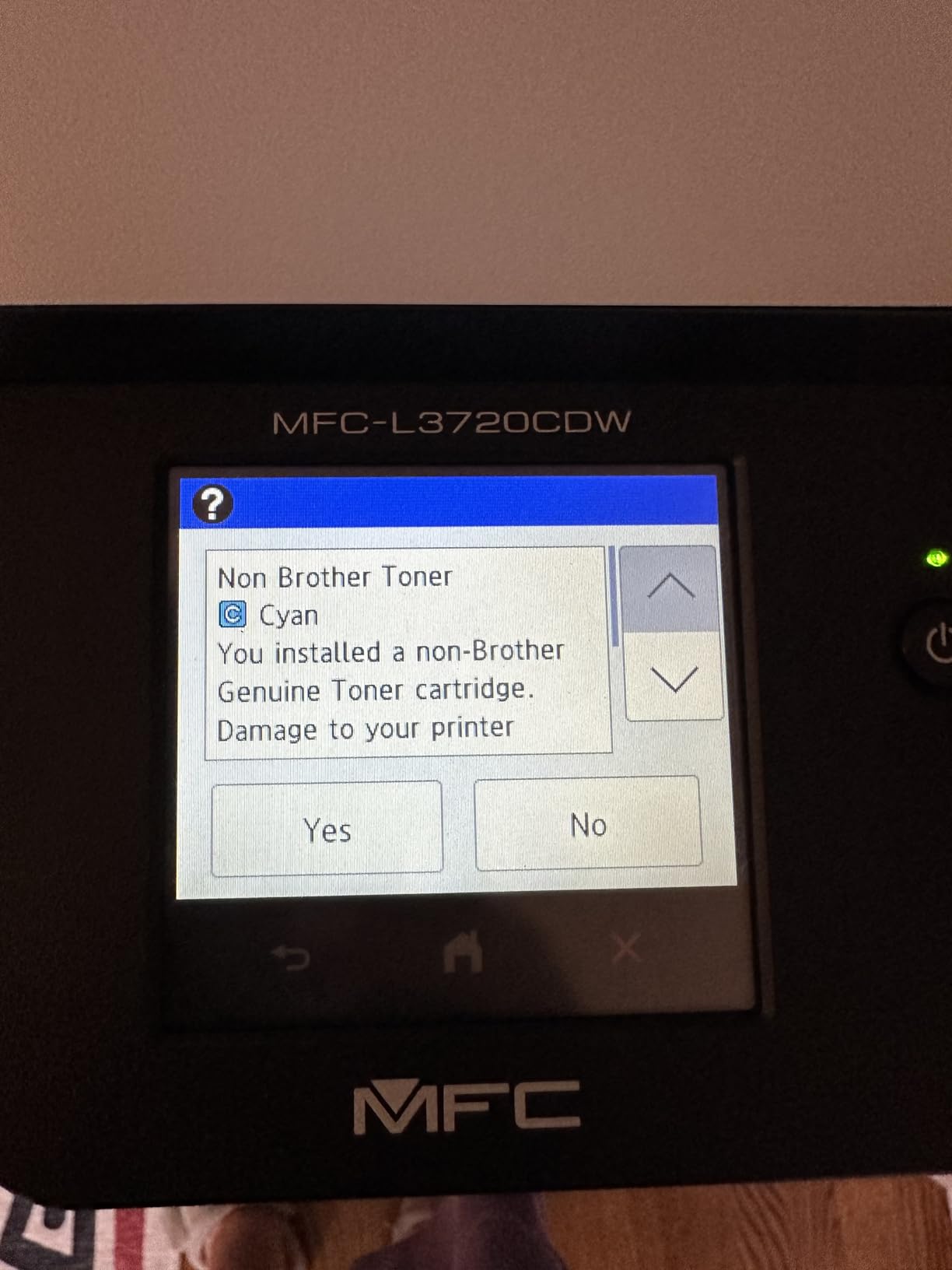
Dual-band wireless, Wi-Fi Direct and USB cover every connection route, and a companion app handles remote management and toner monitoring. First page out is under 15 seconds.
Colour and monochrome are both sharp and professional for business documents. Photo output is the compromise, and buyers accept that trade without complaint.
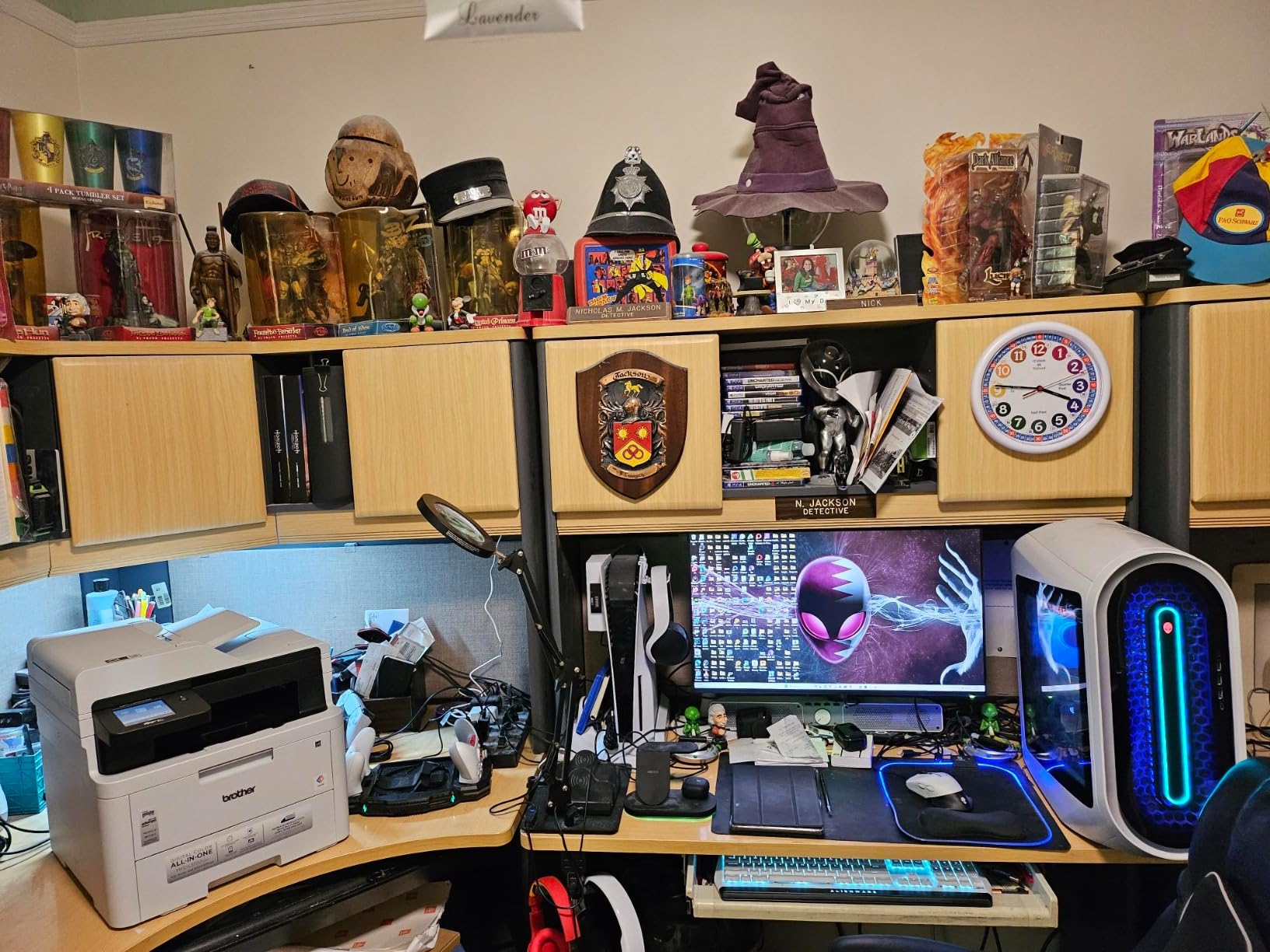
Who this printer suits
Small offices and home businesses archiving paperwork, where a 50-page feeder and fax justify the size. The touchscreen shortcuts let non-technical staff run routine jobs without help.
Who should skip it
Anyone with a small desk. At 44 pounds and 15.8 inches tall it needs a dedicated surface, and 19 pages per minute is adequate rather than quick for high-volume colour work.
Toner running cost also runs well above tank-based inkjets, so a light-volume buyer pays for capability they never use.
Inkjet or Laser: Which Type Should You Buy in 2026
Inkjet wins on colour, photo quality and purchase price. Laser wins on speed, text sharpness and running cost once you pass a few hundred pages a month. Everything else follows from that trade.
For documents, laser text is crisper at small font sizes and toner does not smear. The two laser units here run at 36 and 26 pages per minute against 11 to 16 for the inkjets, and neither will ever need a nozzle cleaning cycle.
For colour and photos, inkjet is the only sensible answer. Resolution figures of 5760 by 1440 dpi on the Epson tanks and up to 4800 by 1200 optimised on the HP Smart Tanks sit far above the 600 by 600 dpi ceiling of the colour lasers.
One r/printers thread summarises the split neatly: get a laser for all black and white needs if it is documents rather than photographs, and keep ink for colour. Plenty of owners run both.
The main disadvantage of laser at home is purchase price and size. These units cost more, weigh 25 pounds and up, and occupy a shelf rather than a desk corner. Their advantage is that a laser left unused for three months is still ready, while an inkjet may not be.
Ink Tank vs Cartridge: Where the Running Cost Difference Comes From
Cartridge printers charge you again and again for the same plastic shell holding a fraction of the ink. Tank printers, branded EcoTank, MegaTank, Smart Tank and INKvestment depending on the maker, replace that with refillable bottles you buy a few times a year.
Look at yield rather than sticker price. The Canon MegaTank G3270 covers up to 6000 black and 7700 colour pages per set. The HP Smart Tank 5100 claims up to three years or 6000 pages in the box, and the HP Smart Tank 570 up to 8000 colour pages.
For cartridge models, do the same arithmetic yourself. Take what you paid, divide by the cartridge yield, and then multiply by the number of cartridges you expect to buy. The Brother Work Smart 1360 is the clearest example of why that number decides the category for you.
Which Printer Clogs the Least and How to Keep It Alive
Laser printers clog the least because they have no ink nozzles. Every laser unit in this roundup, the Brother DCP-L2640DW, the HP Color LaserJet Pro MFP 3301sdw and the Brother MFC-L3720CDW, can sit idle indefinitely and print on the first attempt.
Among inkjets, the differences come down to how you use them. Clogs happen when ink sits in nozzles and dries, and the honest answer from r/printers is that in a normal domestic environment a well-used inkjet is fine for three years or more, while an inkjet that sits for weeks is trouble.
Four habits keep an inkjet healthy. Print something at least once every two weeks, even a single page, so the nozzles stay clear. Run the head cleaning cycle only when you see streaks, because each cycle wastes meaningful ink.
Keep the printer covered and away from window sunlight and heating vents, and keep paper within the specified weight range. A dry or curling sheet is the usual trigger for a jam that then turns into a cleaning cycle.
Reliability reports across these ten machines are mixed rather than spotless. Paper feeding issues, wireless dropouts and false jam error messages show up in reviews of several models, so treat the maintenance habits above as part of the purchase rather than an afterthought.
How to Set Up Wireless Printing Without the Headaches
Put the printer on the same network band as the device that will print. Dual-band 2.4GHz and 5GHz models such as the Brother DCP-L2640DW and Canon MegaTank MAXIFY GX2020 handle crowded houses far better than 2.4GHz-only units.
Set up the printer with your phone first, before you add it to a laptop. Every maker’s guided setup, the Epson app, Brother Mobile Connect, the HP app and the Canon app, walks through network joining and print head alignment in the order that avoids failures.
Common Wi-Fi printer problems are almost always the same four. The printer joined the guest network, which is isolated from your devices, or the password changed after setup.
Another two are a dual-band router steering the printer onto a band your computer is not using, and a software install that demands an account you did not want to create.
For duplex and feeder details, note that automatic duplex printing is not the same as duplex scanning. Several units here print two-sided automatically but have a single-sided feeder, so two-sided copies still need manual intervention. Check both specifications separately.
A crowded shelf is the other reason wireless setups go wrong, because the printer ends up next to a router tucked behind furniture. Our guides to the best all-in-one streaming amplifiers and the best all-in-one turntables for the money both assume a stable wired or wireless feed, so keep the router in line of sight if you add either to the same desk.
While you are sorting out connectivity, it is worth doing the same for the rest of your setup. If the printer goes on the network, so should the speakers, and our guides to the best all-in-one stereo systems and the best all in one record players for beginners cover devices that will not fight it for bandwidth.
How We Picked the Best All in One Printers
Every unit in this roundup prints, copies and scans. We left out print-only photo printers and single-function lasers, which dominate broader printer lists but do not belong in an all in one guide.
We weighted running cost heavily, using manufacturer page-yield figures and owner reports on refill frequency. We then compared print and copy speed, paper capacity, duplex and feeder specification, and the measured control panel experience.
Finally we read owner reviews for reliability signals, discounting models where the same complaint repeats across many accounts. Deals and promotions move around constantly, so use the product buttons above rather than relying on a figure written into this article.
Frequently Asked Questions
What is the best rated all-in-one printer?
The Epson EcoTank ET-2800 is our best rated all in one printer, averaging 4.1 stars across roughly 10,000 owner reviews. It prints, scans and copies, refills with ink bottles rather than cartridges, and handles colour photos well. For a document feeder and fax, the Epson EcoTank ET-4800 is the step up from the same ink system.
What is the best all-in-one printer for home use?
For most homes the Epson EcoTank ET-2800 is the best all in one printer because it combines sharp colour output with refillable ink that keeps the running cost low. Families that need a document feeder should look at the Brother Work Smart 1360, which adds automatic duplex printing and a 20-sheet feeder at an entry price.
Is laser or inkjet better for home use?
Laser is better for black and white documents: faster, sharper text and no ink to dry out. Inkjet is better for colour photos and documents, and costs less to buy. A home office that prints mostly monochrome should choose the Brother DCP-L2640DW. A home that prints colour and photos should choose a tank-fed inkjet such as the Canon MegaTank G3270.
Which printer clogs the least?
Laser printers clog the least because they have no ink nozzles to dry out, so the Brother DCP-L2640DW and the two colour laser units can sit unused indefinitely. Among inkjets, every tank-fed model in this guide has the same nozzle risk, so clogs depend mostly on how often you print. Print something every two weeks and run a cleaning cycle only when you see streaks.
What are the disadvantages of using a laser printer for home use?
The main disadvantages of a laser printer at home are the higher purchase price, the larger and heavier body, and monochrome-only output on most models. Laser also produces noticeably weaker photos, with resolution figures around 600 by 600 dpi against 5760 by 1440 dpi on an EcoTank inkjet. You are also paying for features like a 50-page feeder you may never use.
Are laser printers being phased out?
No. Laser all in one printers are expanding rather than disappearing, and every major maker still sells them. The two colour laser units in this guide, the HP Color LaserJet Pro MFP 3301sdw and the Brother MFC-L3720CDW, both combine duplex printing, a document feeder and a colour touchscreen in one chassis. Ink tank models have taken over the value end, not the whole category.
Final Verdict: The Best All in One Printers in 2026
The Epson EcoTank ET-2800 takes the overall crown for good reason: it is the best all in one printer for most households in 2026, combining low running cost, sharp colour output and a footprint small enough for a real desk, all backed by the biggest owner review base in this roundup.
Buy the ET-4800 if you need a feeder and fax, the Canon MegaTank G3270 if you want more paper compatibility, and the Brother DCP-L2640DW if your printing is monochrome documents. The Brother MFC-L3720CDW covers the office that still sends faxes, and the Brother Work Smart 1360 covers first-time buyers on a budget. Use the product buttons above to check current figures, and print something every two weeks to keep whichever you choose healthy.