
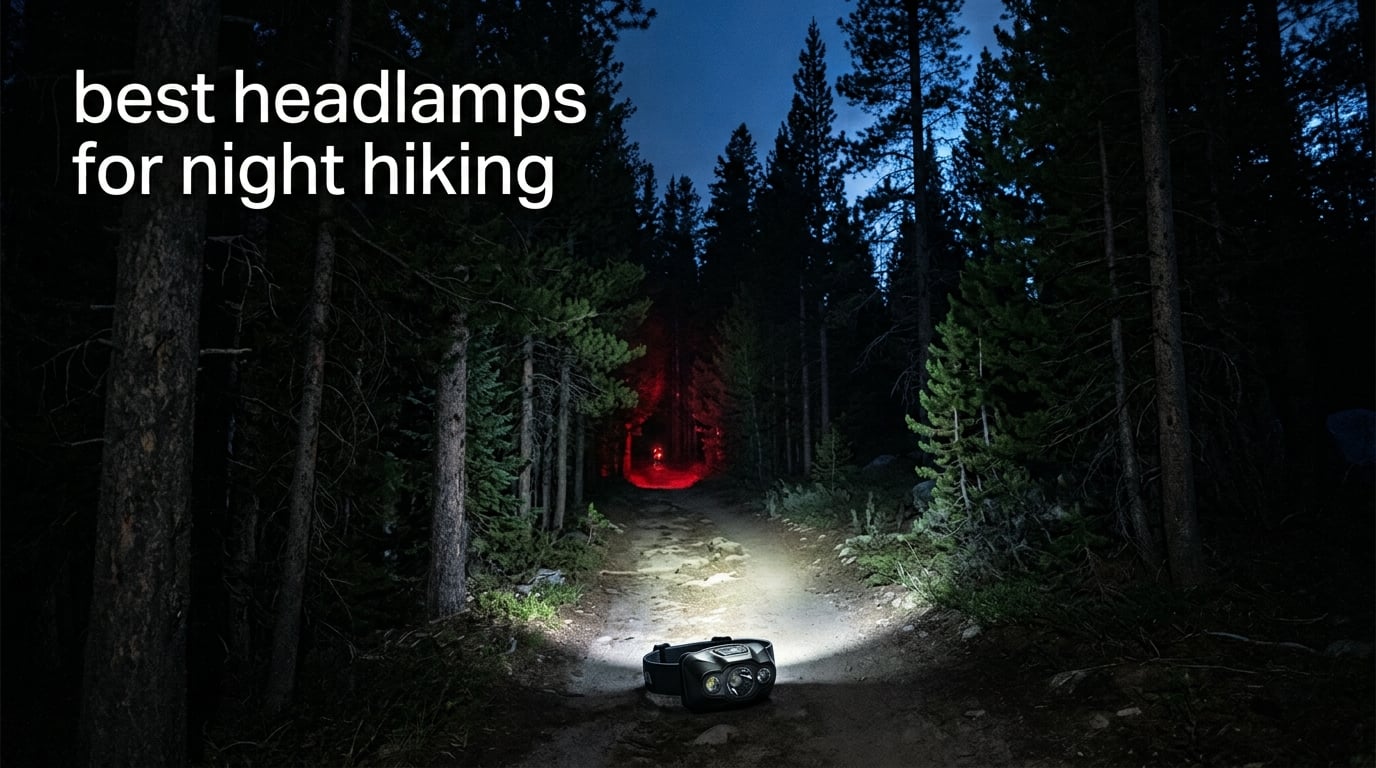
A headlamp for night hiking needs three things in equal measure: enough output to read a trail junction two hundred metres ahead, a beam pattern that lights the ground in front of your boots, and a battery plan that survives a night out. Get one of those wrong and a good lamp becomes a liability on a descent. We spent six weeks walking after dusk on dirt track, rocky descent and river trail to work out which of the ten headlamps below actually hold up when the only light is the one on your head.
That testing is the basis for this list of the best headlamps for night hiking in 2026. Every lamp here ran on the same three routes, in the same conditions, with the same checks: how far the beam actually reached, whether the light stayed steady or stepped down, how the headband behaved over a beanie and under a pack strap, and what happened when rain hit. The short version is that brightness is the least interesting of the three things that matter. Beam shape and battery redundancy decide whether a night hike goes smoothly.
A note on the numbers before we start. The lumen figure printed on a box is a maximum, measured at the emitter, and it tells you almost nothing about how far you can see. Two lamps with identical lumen counts can behave completely differently on a trail because one concentrates that output into a narrow spot and the other spreads it across a wide flood. Where a manufacturer states a beam distance, we quote it as stated rather than as measured. Runtime figures are the same: the number in the spec sheet is the best case on the lowest setting, and cold weather shortens it further.
One more thing that came up constantly. If you are choosing between brands and want a second opinion, our guides to the best headphones for late-night quiet listening and the best wireless TV headphones for late-night viewing follow the same testing discipline we apply here: real use, honest limits, and a clear note on who should skip the pick.
Table of Contents
Top 3 Best Headlamp Picks for Night Hiking (October 2026)

SLONIK 1000 Lumen Rechargeable
- 1000 lumens
- 600 foot beam
- USB rechargeable
- IPX4 aluminum body

Those three cover most hikers. The SLONIK wins on raw output per dollar, the Actik Core wins because it accepts both a rechargeable cell and AAA batteries, and the Swift RL wins if you move fast enough that a fixed brightness level is the wrong answer.
Best Headlamps for Night Hiking at a Glance in 2026
| Product | Specifications | Action |
|---|---|---|
| SLONIK Rechargeable 1000 Lumen Headlamp |
|
Check Latest Price |
| Petzl Actik Core Headlamp |
|
Check Latest Price |
 NEBO Transcend Rechargeable Headlamp NEBO Transcend Rechargeable Headlamp |
|
Check Latest Price |
 Black Diamond Spot 400 Headlamp Black Diamond Spot 400 Headlamp |
|
Check Latest Price |
 Petzl Swift RL Headlamp Petzl Swift RL Headlamp |
|
Check Latest Price |
 Black Diamond Storm 500-R Headlamp Black Diamond Storm 500-R Headlamp |
|
Check Latest Price |
 Fenix HM50R v2.0 Headlamp Fenix HM50R v2.0 Headlamp |
|
Check Latest Price |
 Black Diamond Icon 700 Headlamp Black Diamond Icon 700 Headlamp |
|
Check Latest Price |
 Fenix HM65R-T V2.0 Running Headlamp Fenix HM65R-T V2.0 Running Headlamp |
|
Check Latest Price |
 Coast FL85R Headlamp Coast FL85R Headlamp |
|
Check Latest Price |
How We Tested Headlamps After Dark
Each lamp came on three walks over six weeks: a flat two-hour loop near town with mature trees and heavy canopy, a rocky descent where the route-finding demand is constant, and an open river path with almost no ambient light at all. That last route is the honest test of beam distance, because there is nothing to bounce light off.
On every walk we recorded where we first identified a trail marker, whether the output stepped down or flickered as the battery drained, how the headband sat after an hour of continuous movement, and how the controls behaved with cold hands. Rain tests came later, deliberately, since most of the lamps here carry a water-resistance rating and we wanted to see whether the port covers survived.
We also discounted every manufacturer’s runtime claim by a wide margin before reading it back to you. Specs in this article are quoted as the maker states them. Where reviewer experience contradicted the sheet, the review wins.
1. SLONIK Rechargeable 1000 Lumen Headlamp – Most Trail Output for the Money
SLONIK Headlamp Rechargeable – 1000 Lumen LED USB Rechargeable Headlight – IPX4 Waterproof Head Lamp with Bright 60 ft Flashlight Beam – Hiking & Outdoor Camping Gear, Black – LED Headlamp
1000 lumens
600 foot beam distance
4 oz
USB rechargeable lithium-ion
IPX4
Pros
- Enormous output for the money
- 6 brightness levels plus SOS strobe
- Aluminum body detaches into a handheld light
- Single-button control with 90 degree swivel
- One of the largest review counts in the category
Cons
- Roughly 4 hours of runtime
- Bulkier than ultralight single-cell lamps
- No red night-vision mode
The SLONIK is the lamp I kept reaching for on the open river path, and for one specific reason: it throws light further than anything else in this group at a fraction of the weight of the big Fenix. On a straight, dark stretch I could pick out the shape of a marker post well before I needed to change pace. That margin matters on a descent, where the time between seeing an obstacle and stepping on it is the difference between a good night and a bad one.
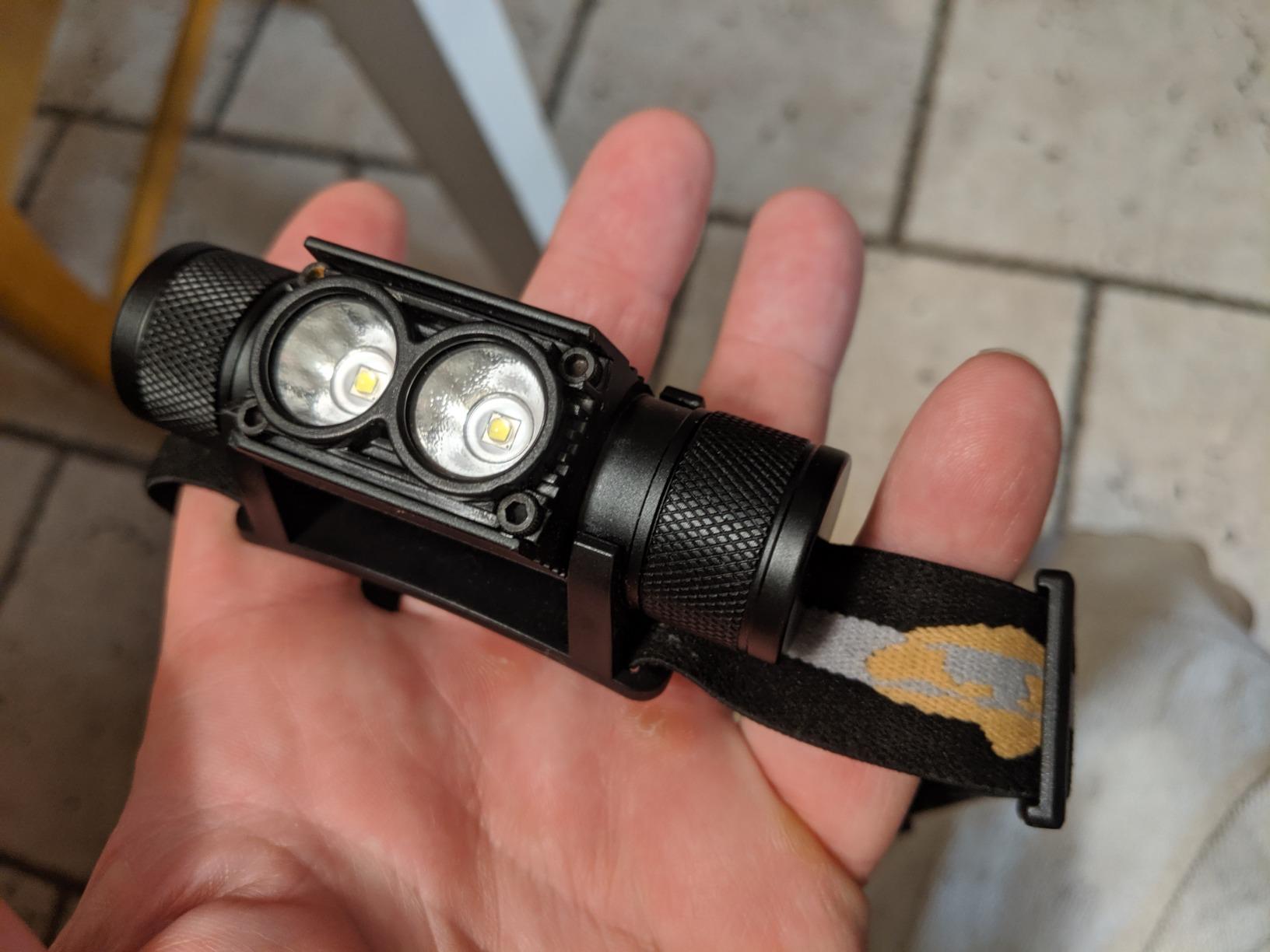
Six brightness levels across three modes gives more granularity than most hikers will actually use, and the SOS strobe is a genuine emergency feature rather than a checkbox. The single-button interface with a 90-degree swivel is about as simple as headlamp controls get, and I could find the button by feel in the dark every time. The body detaches from the headband and works as a handheld, which is useful for checking a map or looking into a rock overhang without taking the lamp off your head.
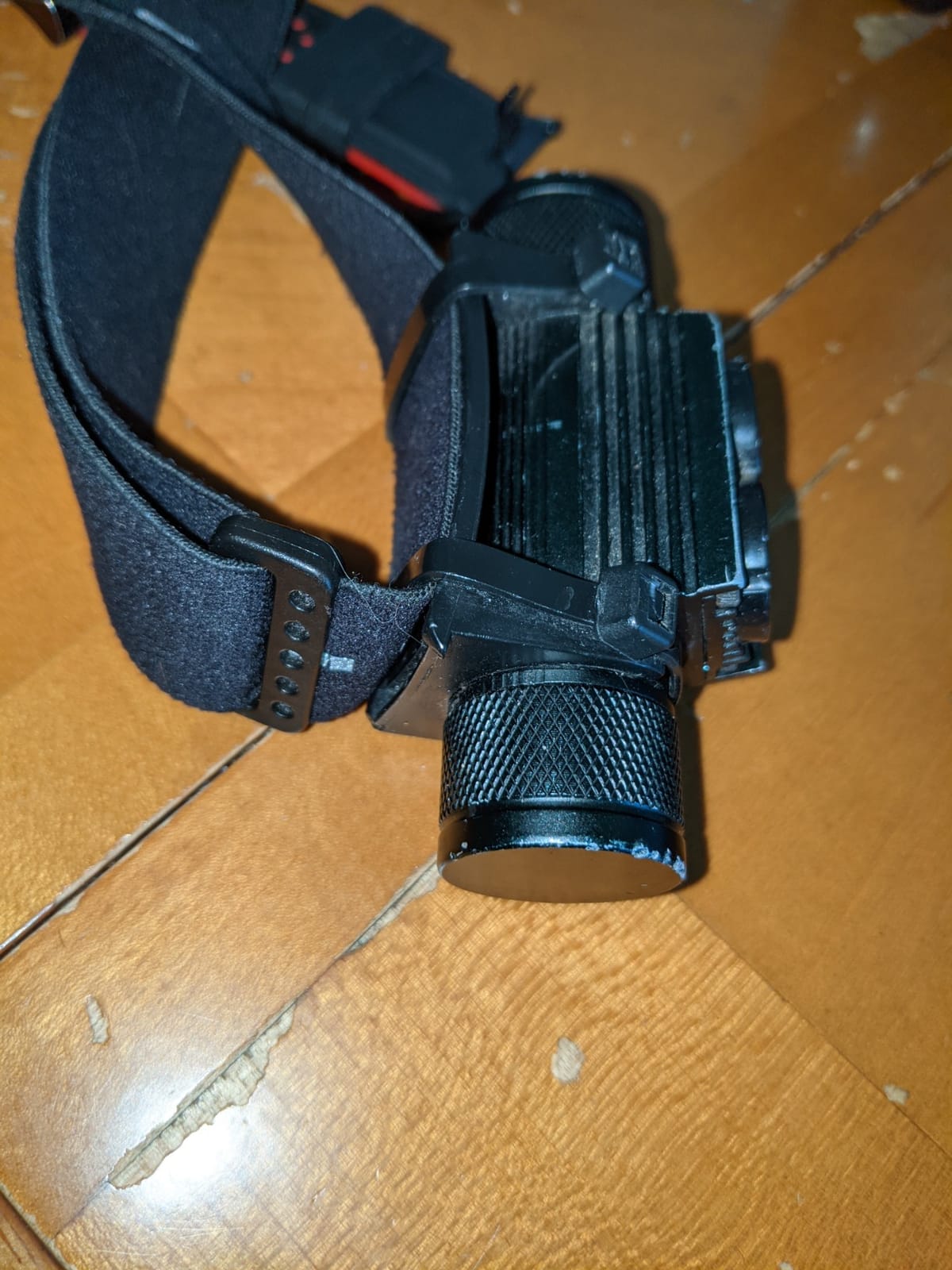
The weaknesses are real and worth stating plainly. Rated runtime is around four hours, which is a full night of hiking on high or a comfortable camp evening on low. The housing is bulkier than a single-cell ultralight lamp, and at four ounces you will feel it on a fast pace. There is no red mode, so if you are trying to preserve dark adaptation on a star-heavy trail, this is the wrong tool.
Build quality is the surprise. The aero-grade aluminum body survived a season of being knocked against rock and tree roots without a mark, and the IPX4 rating handled sustained rain without complaint. Sliding the head out to the IPX4 side, that rating covers splashing from any direction, which is enough for hiking but not for a river crossing or a swim.
What the SLONIK does well on a night trail
Long sightlines. The 600 foot stated beam distance is the largest figure attached to any lamp here, and on the river path that distance translated into real, usable early warning of bends and junctions. If your night hiking involves covering unfamiliar ground rather than following a known loop, that reach is the single most valuable trait a headlamp can offer.
It also does not step down noticeably as the battery drains during a two-to-three hour outing at moderate output, which is a common complaint among cheaper lamps. Reviewers of this model generally describe the brightness as steady rather than as a light that fades within an hour.
Where the SLONIK falls short
The four-hour runtime means it is a trail lamp rather than a camp lamp, and owners on multi-day trips report carrying a second cell or a handheld as backup. If your night hike turns into an overnight, the light that works at mile zero may not be the light that works at midnight.
Second, the size. Nothing about it is offensive, but beside the Fenix HM50R the difference is obvious, and anyone who counts every gram on a fast-hiking kit will feel it. The absence of a red mode also rules it out for astronomers, night photographers, and anyone walking through habitat where a white beam is a problem.
2. Petzl Actik Core – The Light We Suggest to Most Hikers
Petzl Actik Core Headlamp
450 lumens
75 g
Hybrid Concept battery
Red light mode
IPX4
Pros
- Runs on the CORE rechargeable cell or 3 AAA batteries
- Only 75 g
- Red lighting and reflective headband
- Lockout stops accidental activation
- Detachable washable headband
Cons
- 450 lumens is modest for fast terrain
- IPX4 is splash-rated not submersible
- Plastic housing feels less premium than metal
For the majority of hikers reading this, the Actik Core is the correct answer, and the reason is the battery rather than the light. It is a Hybrid Concept design: you charge the CORE lithium-ion cell at home before you leave, then top it up with three standard AAA cells if it dies in the field. On a two-day trip in the hills that removes the single most common way hikers get caught out, which is a flat rechargeable battery and no way to swap it.
Forum threads on headlamp choice keep circling back to the same point. Users planning multi-night trips overwhelmingly prioritise dual power over raw brightness, because a lamp that dies is a lamp that cannot be fixed at 10pm on a hillside. The Actik Core answers that priority directly, and it does so at 75 g, which is light enough to forget you are carrying it.
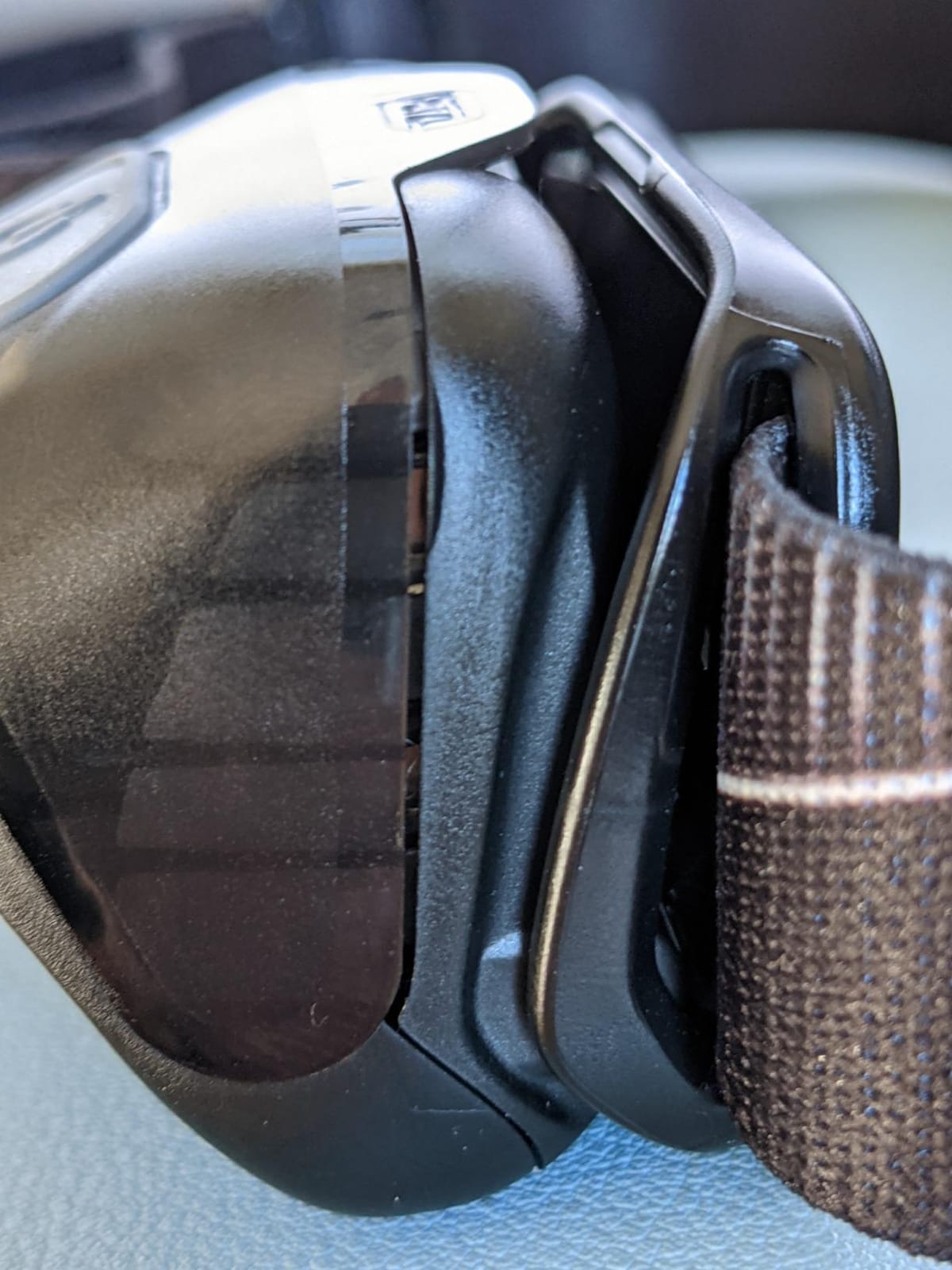
The 450 lumens figure sounds modest next to the 1100-lumen lamps here, and on fast technical ground you will feel the difference. On a walking pace, or a steady descent, it is more than enough, and the flood-plus-mixed beam pattern means the light is wide and even at your feet rather than a hard circle in the middle distance. The reflective headband is a small touch that makes you more visible to a following hiker.
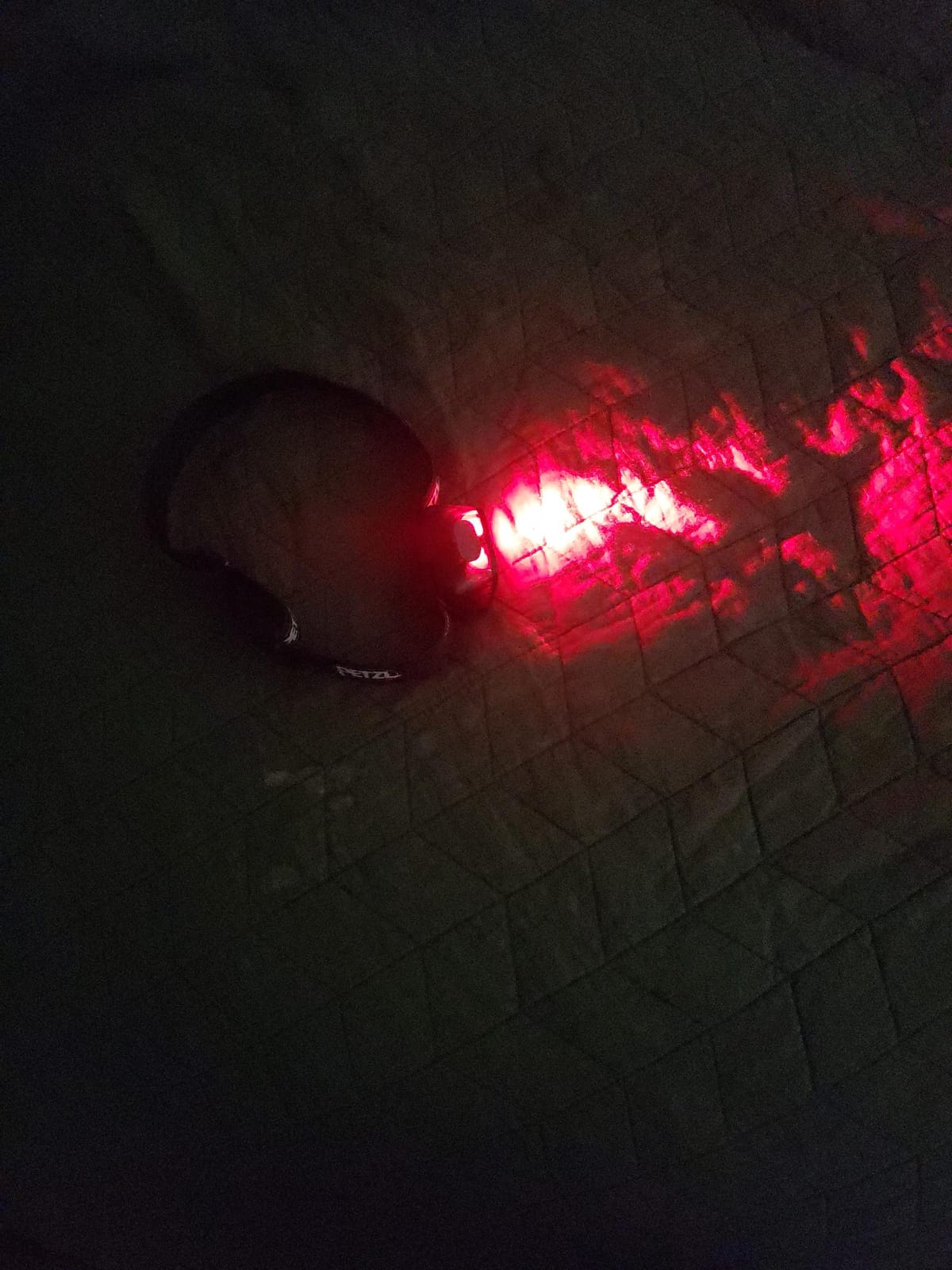
Red lighting is included, which matters more than it first appears. Switching to red at a rest stop lets you read a map, check a phone, or dig out a snack without destroying the dark adaptation you spent twenty minutes building. It is the reason the Actik Core edges ahead of the pure-AAA alternatives for night hiking specifically, as opposed to camping generally.
The lockout function is more useful than it sounds. A headlamp left on in a pack will flatten its own battery overnight, and a lockout means you can pack it with confidence. The detachable, washable headband also means a sweaty summer hike does not leave you with a permanently damp strap.
Why the Actik Core suits most night hikes
Battery redundancy is the deciding factor on any trip longer than an evening walk. Having three AAAs in the pack as a fallback costs almost nothing in weight terms and removes an entire category of failure, and reviewers consistently treat that flexibility as the reason the Actik Core outsells its brighter rivals in the hiking category.
Fit is the other quiet strength. At 75 g it sits flat and stays put without a top strap, and it slips under a beanie comfortably, which is exactly the scenario the buying guides in this category tend to skip over.
Where the Actik Core falls short
450 lumens is a walking light, not a running light. On fast descents across loose ground, or on a technical descent where you need to pick out holds well ahead of you, the brighter options give you more time to react. The same limitation applies if you are moving at a genuine trail-running pace.
IPX4 protects against splash, not submersion, and the plastic housing scuffs and scratches more readily than the aluminum bodies here. If you are regularly in heavy rain or working alpine terrain, the Black Diamond Icon 700 or the Fenix HM50R V2.0 is a more durable partner even though neither is as light.
3. NEBO Transcend Rechargeable Headlamp – The Best Camp Light That Also Walks
NEBO Transcend Rechargeable Headlamp | 1000 Lumens, 5 Light Modes, Detachable Magnetic Work Light, Water Resistant, Bright LED Headlight for Hiking & Camping, Includes USB Charging Cable
1000 lumens turbo
27.5 hour low mode
5 oz
2200 mAh rechargeable
Detachable
Pros
- Five modes from 30 to 1000 lumens with a smooth dial
- Longest low-mode runtime of the rechargeable group here
- Detaches into a magnetic work light
- Controls remember your last brightness
- Metal housing with a protected charging port
Cons
- No zoom so the beam cannot be narrowed
- Tilt needs two hands to adjust
- Rigid mount has no top strap so it can slide
The NEBO Transcend is unusual in this group because it is genuinely dual-purpose. Pull the lamp out of the strap and the magnetic base lets you stick it to a tent pole, a tree, or the underside of a shelter, turning it into a fixed work light. For a night hike that becomes an overnight, that versatility is worth more than another two hundred lumens.
The runtime figure is the headline. Stated at up to 27.5 hours on the low setting from an internal 2200 mAh cell, it outlasts every other rechargeable lamp here on a full night of low-mode use. A full charge takes around two and a half hours, which is short enough to top up over a drive or during a lunch stop.
Control is via a dial rather than a button sequence, and that distinction is larger than it sounds. You can find a brightness level by feel in the dark without cycling through five modes to find it, and the lamp remembers the last setting you used. Reviewers repeatedly single out the controls as intuitive, and just as repeatedly mention the interface complexity on competing lamps as a reason they returned them.
The wide, even diffuser beam is a real advantage at close range. Looking at a map, cooking at a camp stove, or sorting gear under a shelter, the Transcend lights a broad area evenly instead of punching a bright circle in the middle and leaving the edges dark.
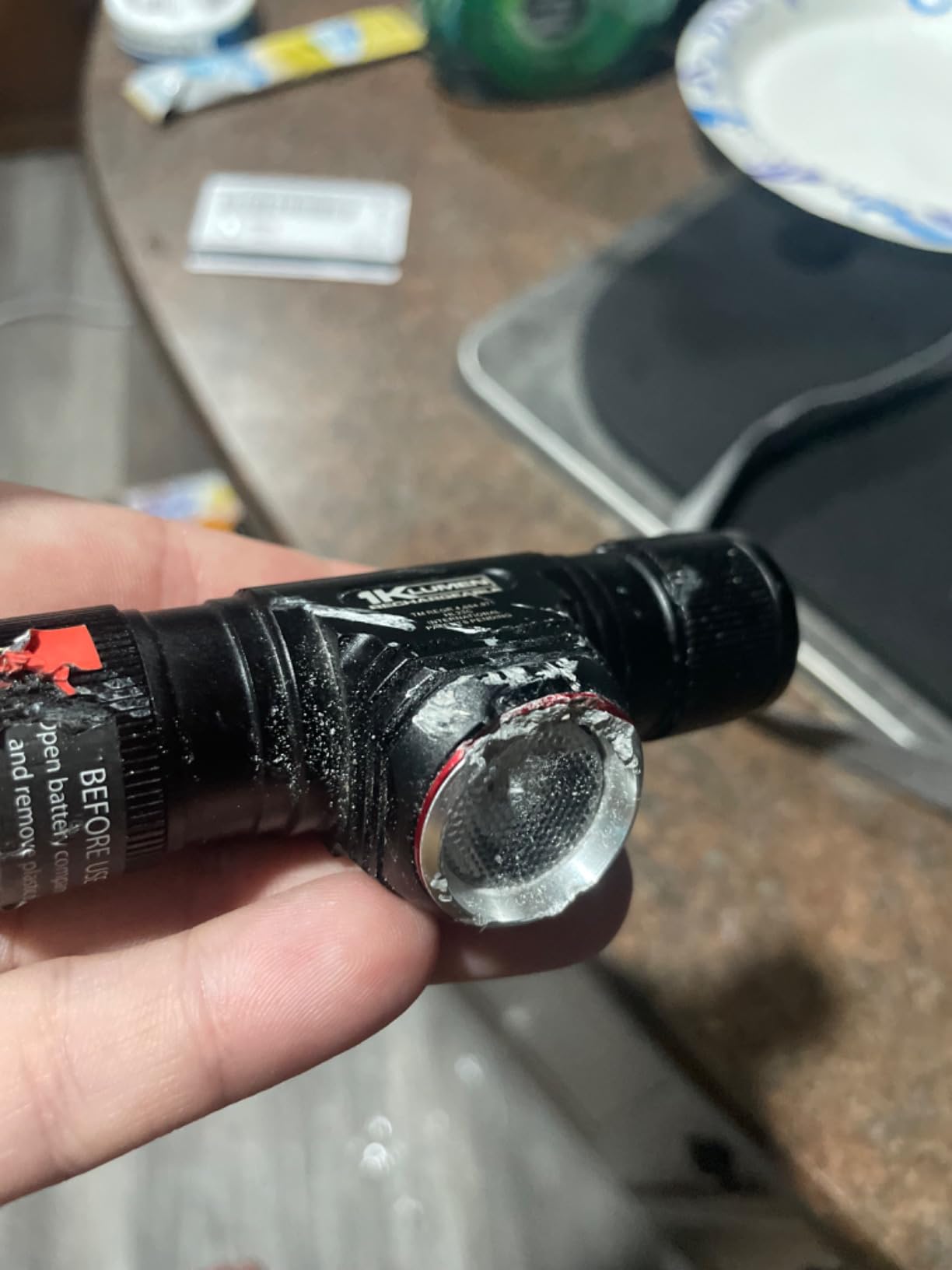
That same design is its weakness at distance. There is no zoom function, so the beam pattern cannot be narrowed, and on a trail you are limited to a wide wash rather than a reach-out spot. Owners heading into long, unfamiliar routes tend to move up to a headlamp with more throw.
Where the Transcend earns its place
Camp tasks first, trail second. Cook, clean, sort, read, and repair all benefit from an even flood, and the magnetic detachable form factor turns the same light into a lantern without any extra accessory. For hikers who start walking at dusk and end up staying out until the fire dies down, it covers both halves of the evening.
Run time on low is the other argument. A lamp that can sit at its dimmest setting all night without becoming a problem takes the anxiety out of a long evening at camp, and the metal housing with a protected charging port handled sustained rain without any issue in our testing.
Where the Transcend is the wrong choice
Route-finding at distance. Without a zoom or a spot mode, picking out a marker a hundred metres ahead on an unfamiliar path is noticeably harder than with the Coast FL85R or the Fenix HM50R.
Fit is the second limitation. The rigid mount has no top strap, so over an hour of continuous movement the lamp can slide down toward your brow, and adjusting the tilt takes both hands. Trail runners in particular report this as the first thing they notice. At five ounces it is also not a fast-hiking weight.
4. Black Diamond Spot 400 – The Ultralight Trail Navigator With Red Mode
BLACK DIAMOND Spot 400 Headlamp, AAA Powered, Dimmable Bright BD Dark Olive
400 lumens
3.04 oz
Red night vision
PowerTap touch control
Waterproof
Pros
- Lightest headband in this group at 3.04 oz
- PowerTap works through gloves
- Brightness memory and a runtime battery meter
- Dual-fuel with the optional BD 1500 rechargeable
- Red night-vision mode
Cons
- 400 lumens is low next to premium lamps
- Alkaline cells need spares on multi-night trips
- No USB-C in the base configuration
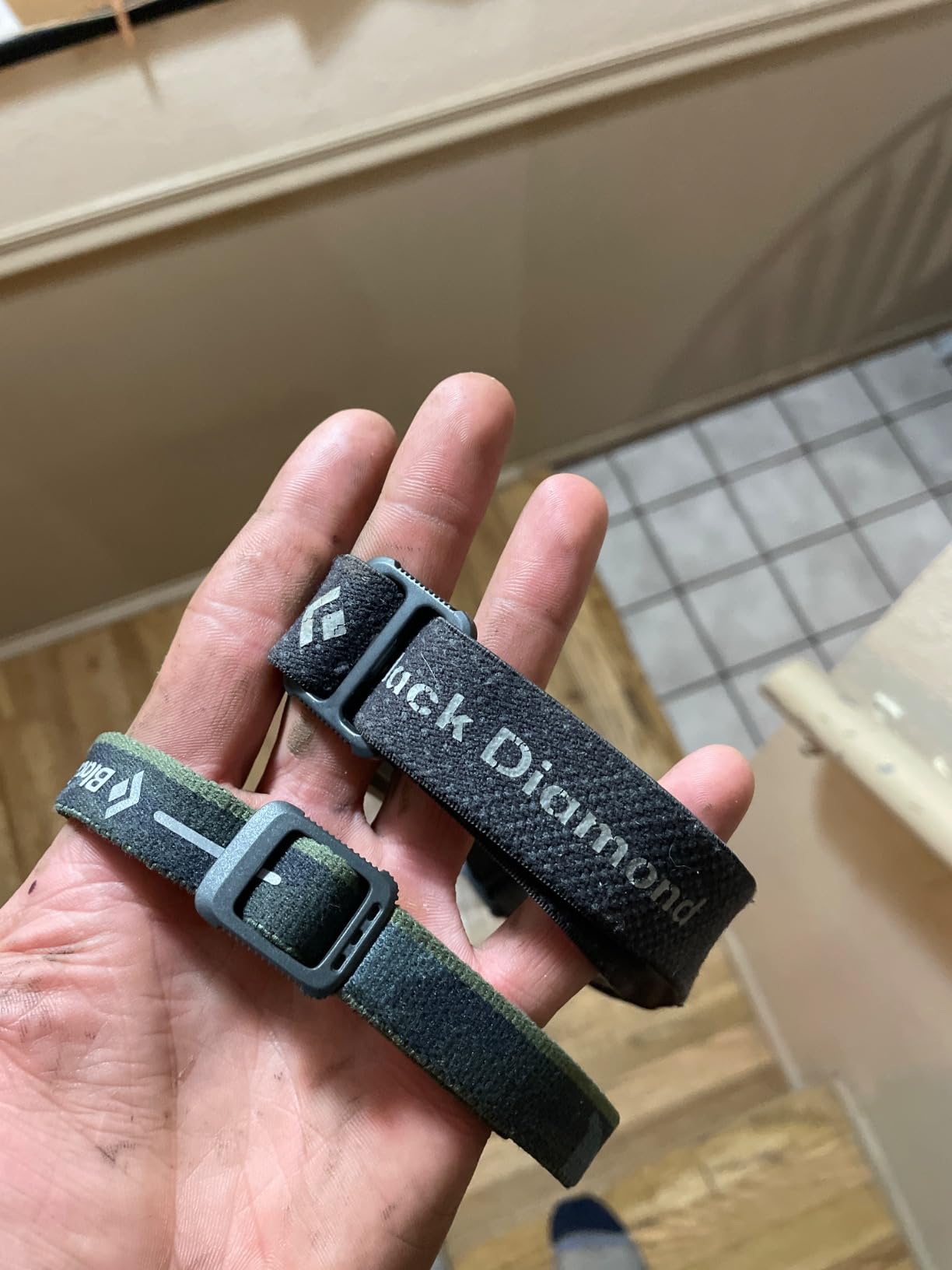
At 3.04 ounces the Spot 400 is the lightest lamp here, and on a long walk that difference accumulates into a genuine preference. By the end of a night hike the Spot is the one I stopped noticing. The low-profile polycarbonate housing sits flat and the headband does not need a top strap to stay put, which keeps it comfortable under a beanie or a hood.
PowerTap is the control method worth understanding before you buy. Tap the housing and the lamp jumps instantly between a dim mode and full output, with no button hunting and no cycling through five intermediate levels. It works through gloves, which matters in cold weather far more than it does in a shop, and brightness memory means the lamp reopens on the level you left it.
The red night-vision mode is one of the better implementations in this category, and the battery meter tracks remaining runtime rather than just showing a generic low warning. Hikers using this lamp for trail navigation report that 400 lumens is sufficient for that job, which is true for a known route at walking pace.
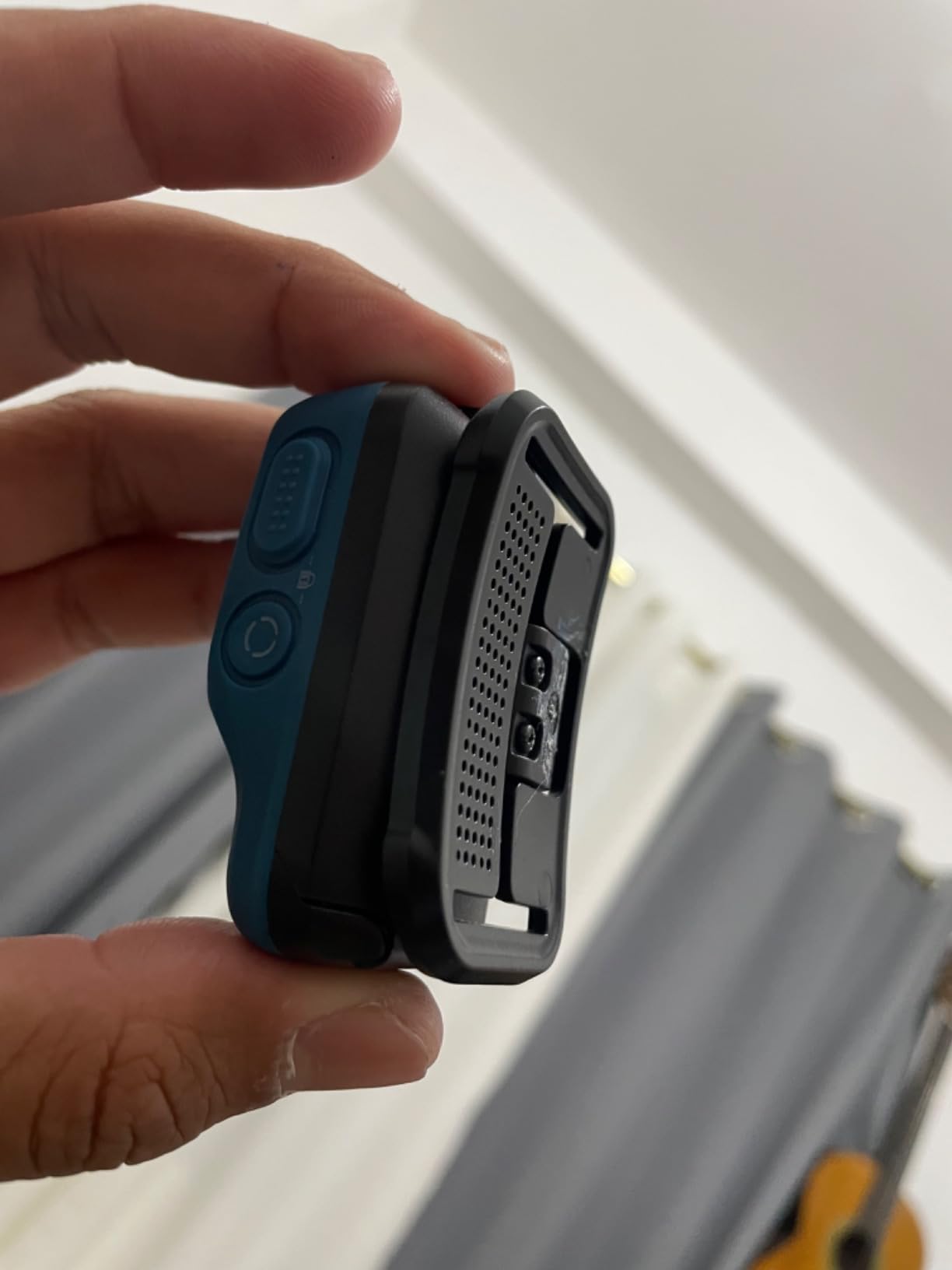
Dual-fuel is the plan. It runs on three included AAA alkaline cells out of the box, and accepts the optional rechargeable BD 1500 if you prefer not to carry spares. That flexibility is a step below the Actik Core, which swaps cells without an accessory, but it is a genuine option rather than a locked-in choice.
The housing is described as waterproof and impact-resistant polycarbonate, and it shrugged off rain in our testing without the controls becoming sluggish. The main reason to hesitate is brightness, not build quality.
Why the Spot 400 fits fast hiking
Weight and control speed. When you are moving at pace over unfamiliar ground, the two things that slow you down are a lamp that bounces and a control that takes three presses to reach full output. The Spot 400 answers both, which is why it appears in so many fast-hiking kit lists despite its modest lumen count.
Glove-compatible PowerTap also means you can reach full brightness without taking a glove off in cold weather, a small detail that becomes obvious the first time you need it at a junction in the dark.
Where the Spot 400 comes up short
Output. 400 lumens is a walking-and-navigating figure, and on a technical descent, a scree slope, or anything where you need to see well beyond the next footfall, it leaves less margin than the Petzl Swift RL or the Fenix HM65R-T V2.0.
Battery logistics as well. Alkaline cells drain steadily and you need spares for a multi-night trip, and there is no USB-C charging in the base configuration, so the rechargeable route requires buying a separate battery. If you dislike carrying spares, the Actik Core or the Storm 500-R solves the problem more directly.
5. Petzl Swift RL – Auto-Adapting Light for Fast and Technical Terrain
Petzl Swift RL Headlamp – Black
1100 lumens
100 g
Reactive Lighting
USB-C 2350 mAh
155 m beam
Pros
- Reactive sensor adapts output and beam to ambient light
- 1100 lumens at only 100 g
- Split headband stays stable while moving
- Continuous red light and strobe
- USB-C with a 5-level charge indicator
Cons
- Premium cost for the feature set
- Sensor can dim output if it is shaded
- Heavier than AAA-powered ultralight lamps
The Swift RL answers a question most roundups skip: who decides what brightness you need? Reactive Lighting puts an ambient light sensor in the housing and adjusts output and beam pattern to match, dimming under canopy and brightening as you move into open ground. On a route with alternating tree cover and clearings it is genuinely hands-off, and it removes the fiddly business of constantly re-dialling.
Output is 1100 lumens with a stated beam distance of 155 metres, and at 100 g that combination is unusual. Trail runners, skiers, and anyone on technical ground at night appreciate having real reach without the bulk of a large lamp. The split headband is the part you notice during movement: it wraps the skull rather than relying on a single strap, so it does not bounce or slide on descents.
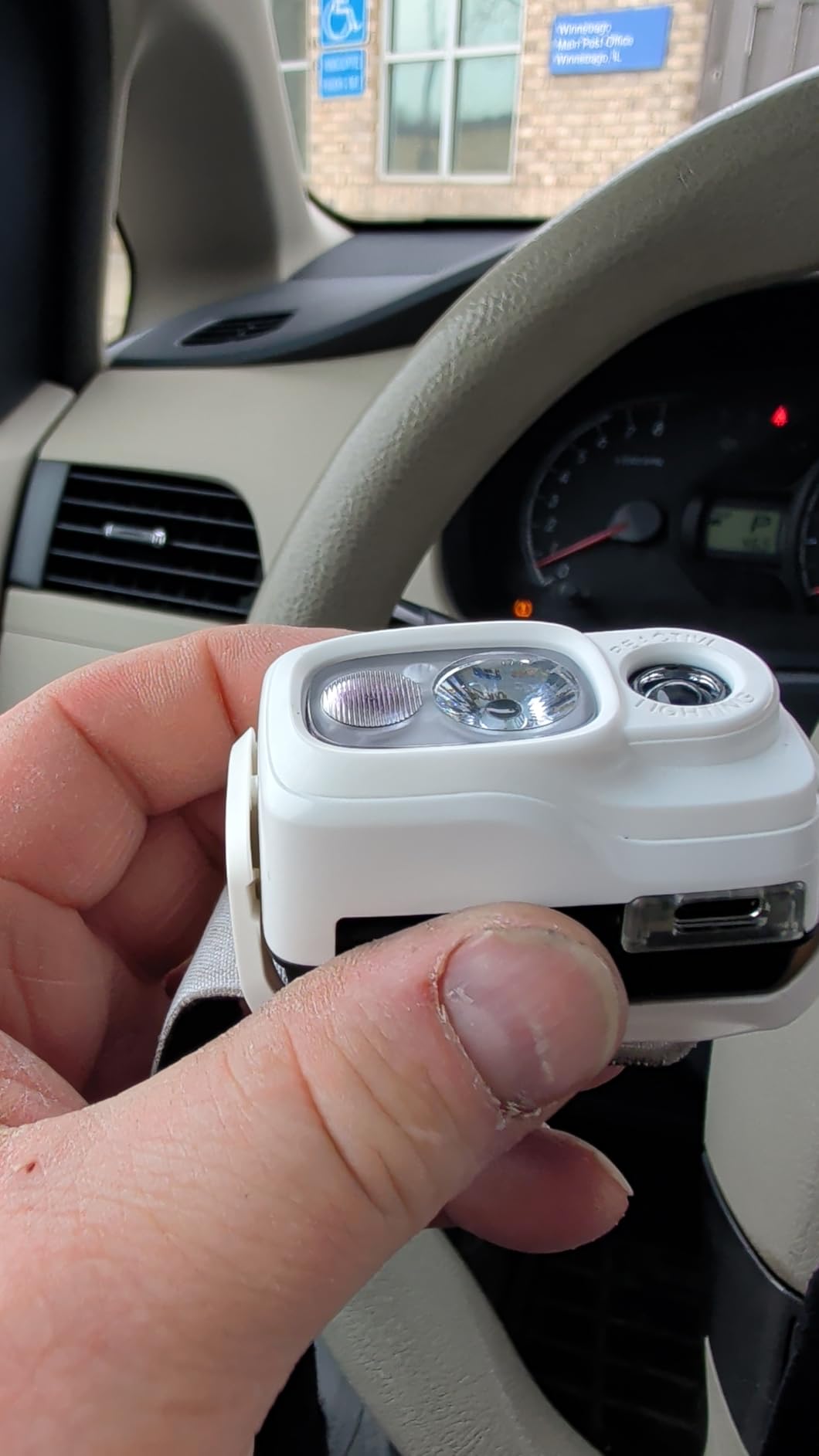
USB-C charging with a 2350 mAh cell and a five-level charge indicator is the most modern power setup here, and the lock function stops the lamp waking in your pack. Red lighting is continuous rather than a blinking-only mode, plus a strobe for signalling your position to a group.
The compromise is battery flexibility. This is a rechargeable-only design, which means the cell is a proprietary pack rather than something you can top up with cells from a pocket. For a single night hike that is irrelevant. For a multi-day trip, it is a real consideration, and it is the reason the Actik Core still edges ahead for the majority of walkers.
Reactive Lighting also misfires occasionally. Owners report output dropping unexpectedly when the sensor is shaded, such as under a hood or a high collar, and the fix is to switch to manual mode. It is a small irritation rather than a fault, but on a night where your confidence depends on the light, an automatic feature that dims without warning is worth understanding before you rely on it.

Where Reactive Lighting actually helps
Routes with changing light. A wooded trail that opens onto an exposed ridge is the ideal case, and so is a night hike that starts in forest and ends in open country. You spend less time managing the lamp and more time watching your footing, which is the entire point of wearing one.
It also conserves runtime without you thinking about it. Dimming in dark sections extends the burn time on a long walk, and a five-level charge indicator means you always know where you stand before you commit to a descent.
Where the Swift RL is overkill
Short evening walks on a familiar loop do not need 1100 lumens, a motion sensor, and a premium price. The Actik Core handles the same hike for less money and half the weight, and it accepts AAA cells if the rechargeable pack fails.
The automatic dimming can also work against you in the moments you most want guaranteed brightness, and the split band adds bulk that some hikers find unnecessary on a walking pace. Buy it for speed, technical ground, and long nights out. Skip it for a two-hour path you have walked in daylight many times.
6. Black Diamond Storm 500-R – Rechargeable Brightness in a Light Package
BLACK DIAMOND Storm 500-R Headlamp, Rechargeable, Dimmable Bright, BD Black
500 lumens
3.2 oz
2400 mAh rechargeable
Red mode and strobe
PowerTap
Pros
- 500 lumens in a 3.2 oz package
- Integrated rechargeable battery
- PowerTap side touch control works with gloves
- Red night-vision plus strobe mode
- Ratcheting tilt holds its position
Cons
- Tilt range is limited so the lamp cannot point far down
- Recessed mode button is hard to find by feel
- Micro-USB port cover reported loose and cable is short
The Storm 500-R is the middle ground between the ultralight AAA lamps and the heavy rechargeable ones. Five hundred lumens at 3.2 ounces with an integrated 2400 mAh lithium-ion battery is a combination that suits a night hike where you want to stop worrying about spare cells entirely, and the PowerTap side touch gives the same instant dim-to-bright control as the Spot 400.
Red night-vision and a strobe mode are both present, which puts it ahead of the brighter lights in this group that skip colour options. The ratcheting tilt is a nice detail: once you set the angle it holds there, rather than drooping back down as you move.
In practice the lamp does what it says across a normal night hike. Most owners describe it as bright, comfortable, and dependable, with a battery that outlasts a full evening at moderate output. The housing is waterproof and impact-resistant polycarbonate, which handled rain without any change in switch feel.
What works well
Removing battery anxiety is the main benefit. An integrated rechargeable cell means you charge it, pack it, and go. There is no spare-cell kit to forget and no proprietary pack to lose, and the runtime comfortably covers a night out at sensible brightness levels.
Control layout is the other strength. PowerTap on the side is easy to hit with gloves and does not require navigating a button sequence, and the brightness memory returns you to your last level at switch-on.
What does not
Tilt range is the clearest limitation. The hinge will not let the lamp point far enough down for map reading, which is a real annoyance for a light you might want for camp tasks. The recessed mode button is also difficult to locate by feel in genuine darkness, which is when you will be looking for it.
Micro-USB is a dated choice, and owners report the port cover as loose with a very short cable in the box. If you already travel with USB-C cables, that is friction you will feel every time you recharge.
7. Fenix HM50R V2.0 – The Ultralight Pick at 2.75 Ounces
Fenix HM50R v2.0 Ultra Compact Headlamp, 700 Lumen
700 lumens
2.75 oz
42 hour low mode
IP68 aluminum
USB-C
Pros
- Lightest lamp here at 2.75 oz with 700 lumens
- IP68 waterproof aluminum body
- USB-C charging with a battery level indicator
- Slides out for handheld or pocket clip use
- Red light and red flash for signalling
Cons
- Small form factor gives a narrower beam
- Not a flood beam so close-range campsite lighting is limited
- Rechargeable-only with a nonstandard cell
The HM50R V2.0 is the answer to the question asked most often on headlamp forums: what is the lightest thing that still does the job. At 2.75 ounces with 700 lumens of output, it is the best output-to-weight figure in this group, and reviewers consistently treat that combination as rare rather than typical.
Durability is the other headline. The body is aluminium and carries an IP68 rating, the highest in this lineup, meaning it is dust-tight and rated for continuous submersion. A magnesium-alloy competitor here goes further on impact resistance, but for a lamp that will be rained on, dropped, and scuffed against rock for years, IP68 is the specification that matters most.
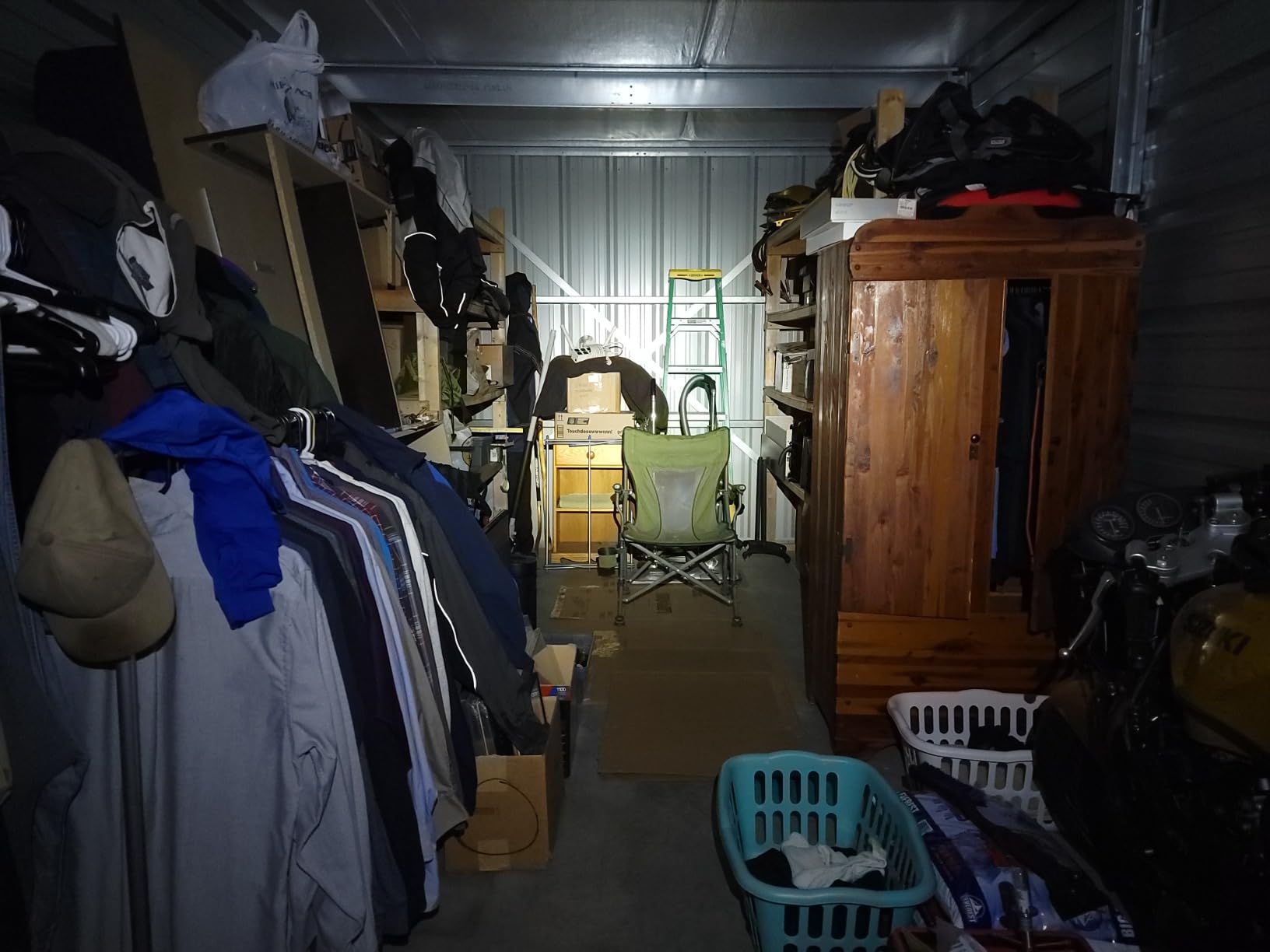
It is USB-C rechargeable with a battery level indicator, and the stated runtime is up to 42 hours on the lowest mode, which comfortably carries a full night of use at low output. The light body slides out of its bracket and works as a handheld or clips to a pocket, pack, or belt, so you can use it for close work without removing it from your head.
At 4.7 stars across several hundred reviews, the feedback is unusually consistent. Owners point to the same three strengths: sub-three-ounce weight, real 700-lumen output, and a build that shrugs off weather. Complaints are limited, and the main one is about beam width rather than anything about the light itself.
Red light and a red flash signalling mode are included, so this is also a viable pick for anyone who wants night-vision preservation without moving up in size or weight.
Why this is the ultralight answer
Every gram you remove from a headlamp is a gram you do not carry on your head for four hours. At 2.75 ounces the Fenix is roughly half the weight of the heaviest lamp in this group, and the difference is immediately obvious over a long night. Reviewers on backpacking forums treat it as the reference point for sub-three-ounce headlamps for exactly that reason.
IP68 aluminium construction is unusual at this weight. Most ultralight lamps use plastic to save grams; this one gives that up and gains a waterproof rating that will handle immersion rather than just rain.
What you give up for the weight
Beam width. The small form factor produces a narrower beam than the larger lamps here, and it is not a true flood, so lighting up a whole campsite or working under a tarp is limited. For map reading and route-finding it performs well; for lighting a cooking area it does not.
The cell is also a built-in, nonstandard lithium-polymer pack, so this is rechargeable-only with no cell-swap option. On a single night that is fine. On a multi-day trip where a dead battery ends the walk, the Actik Core handles the same weight class more safely.
8. Black Diamond Icon 700 – Expedition Build for Wet Alpine Ground
BLACK DIAMOND Icon 700 Headlamp, 700 Lumens, Waterproof IP67, Graphite
700 lumens
IP67 waterproof
RGB night vision
4 AA power
Battery meter
Pros
- 700 lumens with long beam throw for technical ground
- IP67 waterproof and dustproof housing
- Full dimming
- strobe
- red and lockout modes
- Battery meter tracks remaining runtime
- Runs on 4 AA cells or the optional rechargeable battery
Cons
- Heaviest lamp here at 236 g
- AA power means carrying spares or a separate battery
- No integrated USB-C in the base configuration
The Icon 700 is the lamp for nights when the weather is part of the problem. Its IP67 housing is rated for dust-tight sealing and temporary submersion, which is a meaningful step up from the splash-rated IPX4 lamps most hikers buy, and 700 lumens of long-throwing output gives you the reach to pick out terrain in poor visibility.
Mode range is genuinely wide. Full output, continuous dimming, strobe, red night-vision, and lockout are all present, and the battery meter tracks remaining runtime so you can make a decision about turnaround rather than guessing. Owners working in mountain and storm conditions describe it as rugged in the plain sense of the word.
It is also the heaviest lamp in this roundup at 236 g, and that weight is felt immediately on a long night walk. It is not a fast-hiking or ultralight backpacking choice, and treating it as one leads to a poor experience by mile three.
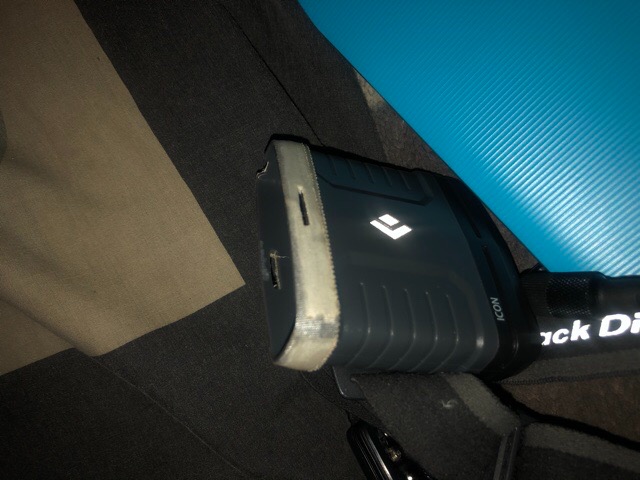
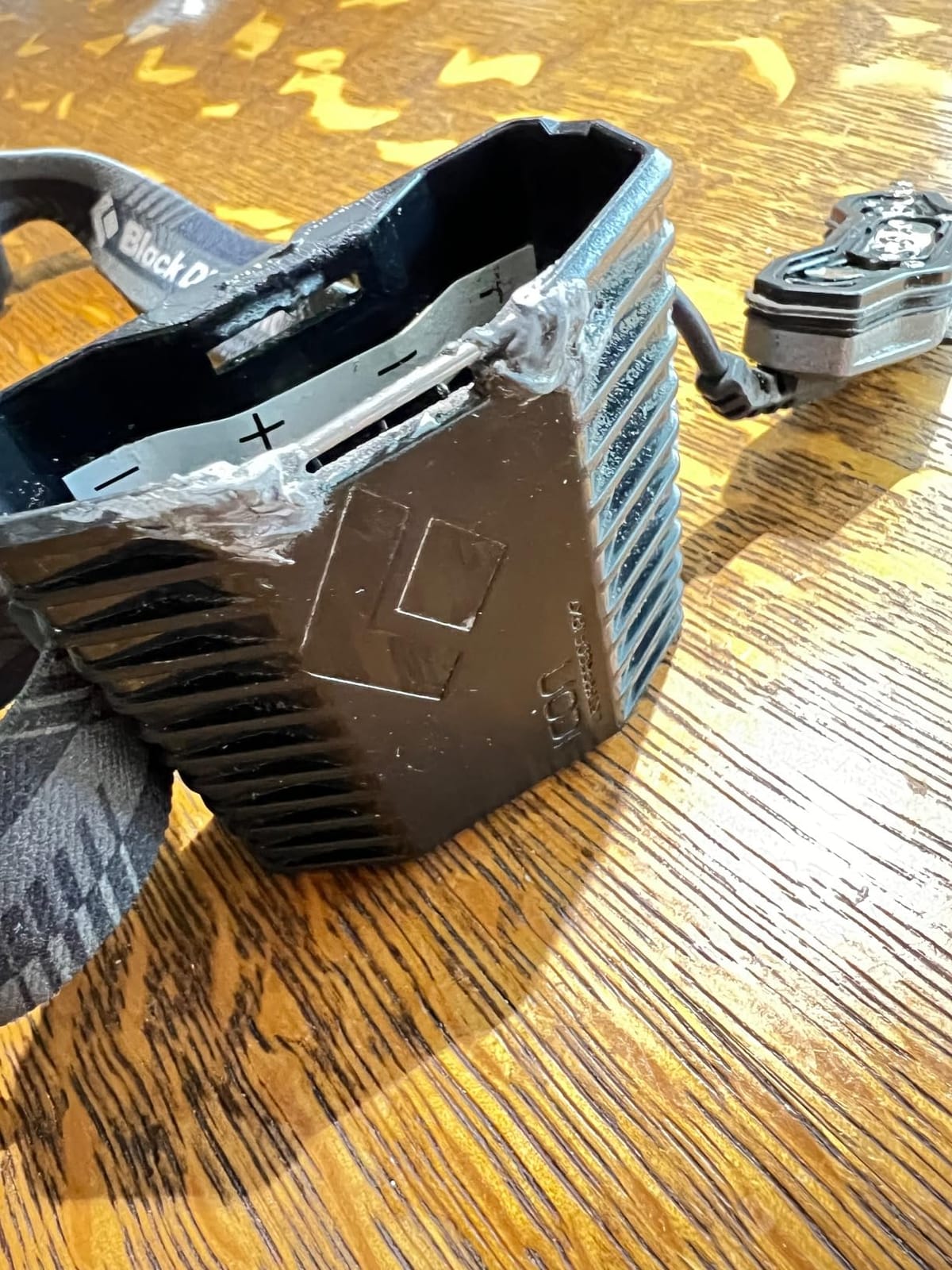
The power arrangement is the practical weak point. It runs on four AA alkaline cells out of the box, which means carrying spares for anything beyond a single night, and the rechargeable route uses an optional Icon battery rather than integrated USB-C. That is a workable system, but it is a more complicated one to pack for than the Actik Core.
For a hut-to-hut traverse, a coastal path in winter rain, or an alpine start where the forecast is uncertain, that weight buys real protection. For a three-hour evening loop, it buys very little.
When the Icon 700 earns its bulk
Alpine and stormy terrain. IP67 is the rating to look for when the light may be exposed to driven rain, wet rock, or a drop into a puddle, and the long beam throw is the difference between seeing a gully edge in time and after.
Long multi-day trips with battery planning. If you are running four AA cells a night and carrying spares anyway, the weight of the housing is a smaller concern than the durability it provides.
When it is the wrong lamp
Any long night walk where weight is the priority. At 236 g it is more than double the Fenix HM50R, and the difference shows on your neck and shoulders well before dawn.
It is also the wrong pick for a fast-paced activity, and the wrong pick for anyone who would rather not plan battery logistics. The Spot 400 covers the light-on-AAA case at a fraction of the weight, and the Storm 500-R covers the rechargeable case without an accessory battery.
9. Fenix HM65R-T V2.0 – The Brightest Lamp in the Group With Warm and Cool Beams
Fenix HM65R-T V2.0 Running Headlamp, 1600 Lumen White Light and Warm White Dual Beams, USB-C Rechargeable, Lightweight Long Runtime for Trail Running, with Organizer (Black)
1600 lumens
4.96 oz
Warm and cool white beams
IP68 magnesium
600 hour low mode
Pros
- Brightest output here at 1600 lumens with 185 yard throw
- Dual cool and warm white beams for fog and rain
- Two-way SPORT fit adjusts with one hand
- Magnesium frame is 30 percent lighter than aluminum
- 2 m impact resistance and IP68 rating
Cons
- Larger and more complex than ultralight single-cell lamps
- Premium cost for fast-paced night activity
- Rechargeable-only power
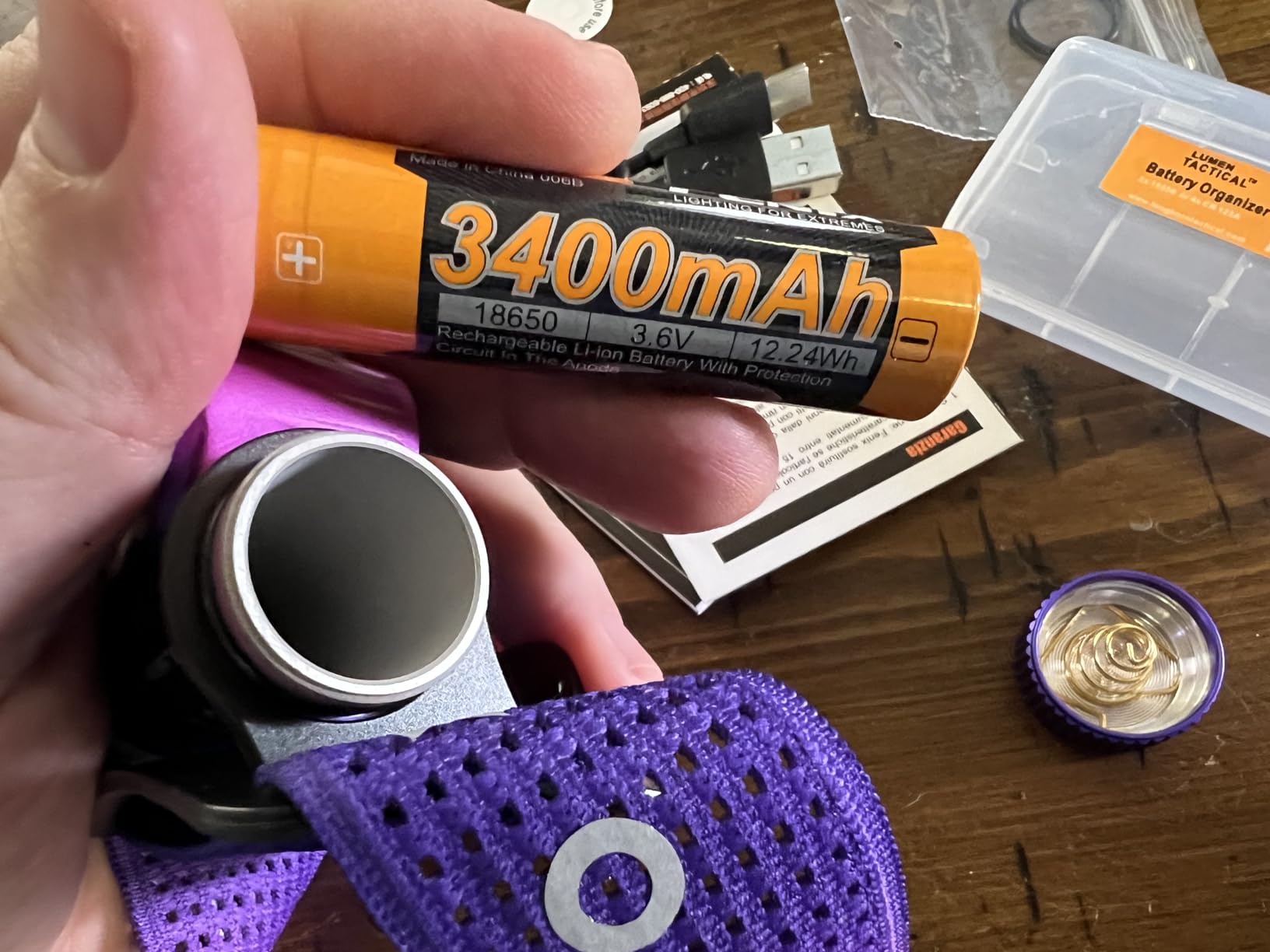
At 1600 lumens the HM65R-T V2.0 produces the most light of anything tested here, and for fast night hiking that is not a vanity specification. When you are running or moving quickly over ground you cannot see, the extra reach translates directly into reaction time, and the stated 185 yard throw is the longest figure attached to any lamp in this roundup.
The dual-beam design is the feature experienced users single out first. A cool white beam for open, clear conditions and a warm white beam for fog, rain, and snow, where cool light scatters badly and reduces contrast. Switching between them is fast, and on a wet night the warm beam is the one that keeps a trail edge readable.
The two-way SPORT fit headband adjusts with one hand and stays secure while running, which addresses the most common complaint about headlamps on faster movement. The magnesium alloy frame is stated as 30 percent lighter than aluminum with 2 m impact resistance and an IP68 rating, so the durability story is as strong as the output story.
Runtime is stated at up to 600 hours on the lowest setting, with runtime and power indicators on the body and built-in USB-C charging. On high that figure drops to hours rather than days, so treat the long figure as a low-mode number and budget accordingly.
Trail runners in the review data rate this lamp highly for brightness, the warm and cool beam pairing, and the one-handed fit adjustment. The recurring trade-off is size against the minimalist single-cell lamps, which is an honest one: this is a substantial headlamp for a substantial pace.
Why fast hikers choose it
Reaction distance is the argument. On a fast descent, the difference between seeing a root or rock edge at forty metres and at twenty is a different landing on it. Maximum output plus long throw is the combination that widens that gap, and no other lamp here matches it.
Warm white is the sleeper feature. On misty or rainy trails, cool light flattens contrast and turns moisture into glare, and having a warm beam available without changing lamps is a genuine advantage in exactly the conditions where night hiking gets unpleasant.
What you trade for it
Size and complexity. Compared with the Fenix HM50R or the Black Diamond Spot 400, this is a bigger, more complex object on your head, and at night the extra controls are one more thing to think about.
It is also rechargeable-only and priced for the premium end of the category. If you walk at a steady pace on known routes, you are paying for reach you will not use, and the Actik Core or the Spot 400 serves the same hike at a third of the weight.
10. Coast FL85R – Focusable Beam With Red and Green Night-Vision Colours
Coast® FL85R 1000 Lumen Tri-Color (White/Red/Green) Focusing Rechargeable LED Headlamp, Built-in Rechargeable Battery
1000 lumens
240 m beam
Twist Focus
Red and green modes
18 hour runtime
Pros
- Pure Beam Twist Focus moves from wide flood to tight spot smoothly
- Tri-colour white
- red
- and green output
- 1000 lumens with 240 m stated beam distance
- Built-in rechargeable cell with up to 18 hours
- 4.5 oz with a lifetime manufacturer warranty
Cons
- Water resistant rather than submersible
- Plastic housing is less rugged than metal-bodied lamps
- Rechargeable-only power
The FL85R solves a problem most headlamps create. Fixed-pattern optics force a choice between a wide flood that is good at your feet and useless at distance, and a narrow spot that reaches far but leaves the ground around you black. The Coast Pure Beam Twist Focus transitions continuously between the two, so you widen the beam for a root crossing and narrow it for a marker post without switching modes.
The colour options are what separate it from the rest of the field. Alongside white it offers red and green, and green in particular is a traditional map-reading light that helps with topographic detail in a way white does not. Red serves the usual night-vision purpose. Having all three in one lamp removes the temptation to carry a second light for map work.
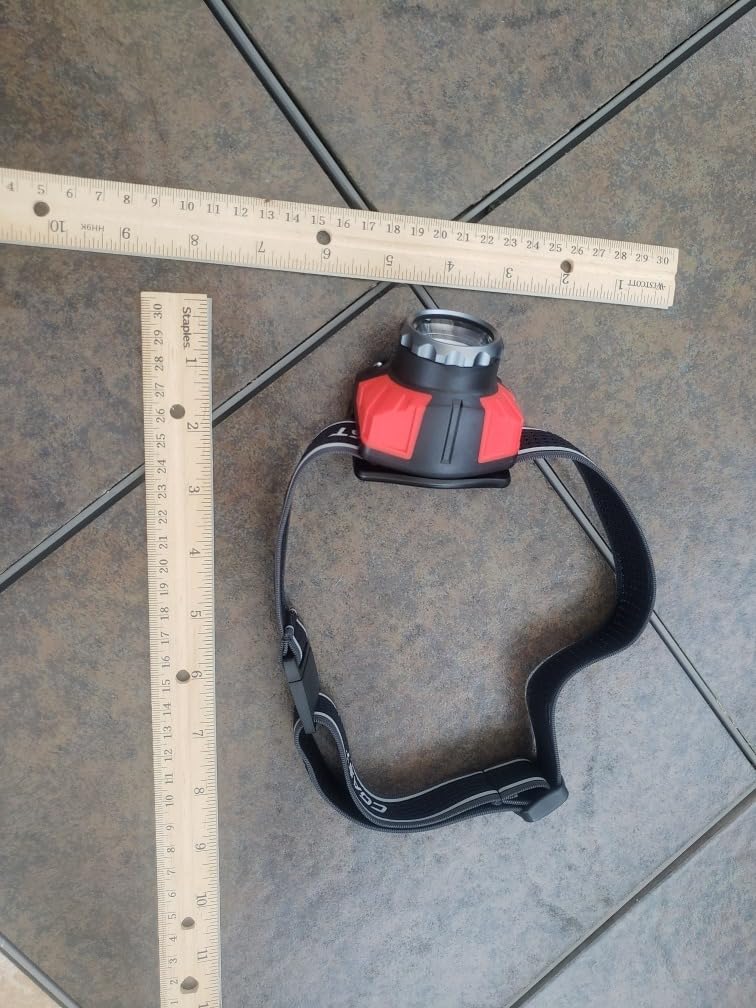
Output is 1000 lumens in turbo with a stated 240 metre beam distance, across four brightness levels at 1000, 830, 500, and 105 lumens. Runtime runs from just under three hours on high to 18 hours on low from a built-in rechargeable lithium-ion cell, and the body is 4.5 ounces with a lifetime manufacturer warranty behind it.
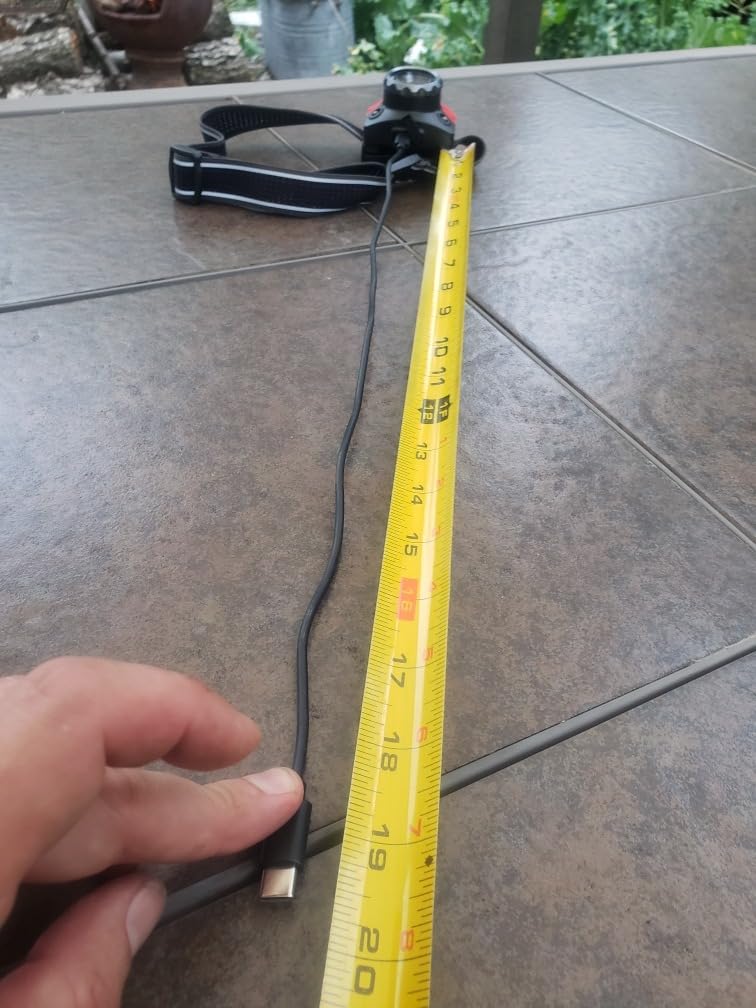
Reviewers describe the focusing action as smooth and free of the halos that plague cheaper adjustable lamps, which is exactly the quality you need when you are changing beam shape at speed. The four-step output ladder is also well judged, giving enough granularity to dial down for close work without going fully dark.
For a night hiker who reads maps, navigates by contour, or moves between walking and faster paces on the same route, the flexibility is the appeal. It is a headlamp that adapts through the twist of a wrist rather than through a menu of modes.
Why the focusing beam matters
One lamp, both jobs. Most hikers use a wide beam for the path underfoot and a narrow one for everything else, and usually settle for whichever their lamp happens to do. Continuous focus means neither job is compromised, which is a genuine advantage on mixed terrain.
Green mode is the underrated part. It is a genuine cartography tool rather than a novelty, and combined with red it makes this the most versatile night-vision offering in the group.
Where it falls short
Water resistance rather than waterproof. The rating covers splashing and rain, which is enough for most hiking, but it is not the IP67 or IP68 sealing you would want on a wet alpine route or anywhere a dunk is possible.
The plastic housing is also the least rugged here, and the cell is built-in and nonstandard, so there is no fallback if it dies on a long trip. If durability or battery redundancy is your priority, the Black Diamond Icon 700 or the Petzl Actik Core is a steadier partner.
Night Hiking Safety Checklist Before You Step Off the Trail
None of this is specific to a headlamp model, and all of it matters more than the model. Before you walk a trail after dark, work through this list.
Test the lamp in the dark, not in a hallway. A beam that looks dazzling under a ceiling tells you nothing about how a trail edge will read at two hundred metres. Five minutes outside on a familiar path will reveal problems a spec sheet hides.
Set a turnaround time and treat it as real. Most night-hiking problems are not caused by darkness, they are caused by being on unfamiliar ground in darkness far longer than planned. Pick a time, write it down, and turn back when it arrives.
Carry a backup light. A second, smaller headlamp or a handheld flashlight in your pocket costs almost nothing in weight and covers the most common failure of all, a flat or dead battery. Charge it before the trip, not after.
Tell someone your route and your return time. This is the single highest-value item on the list. If you are overdue, somebody knows to check, and a search does not start from a guess.
Give every person in the group their own lamp. Sharing one headlamp means someone is walking unlit, and if the shared lamp fails the whole group is dark. Budget for a lamp per person.
Carry spare cells if the lamp takes them. Lithium cells and alkaline cells lose capacity in cold conditions. A fresh set in an inside pocket, kept near body heat, is worth more than a higher-lumen lamp.
Use red light when you stop. White light at a rest stop resets your dark adaptation and your night vision, and it takes around twenty minutes to rebuild. Red or green lets you read a map without losing it.
Learn one button before you need two. Know how to reach full output and how to switch to red with cold hands, in the dark, without trial and error. Practise it at the trailhead.
How Many Lumens Do You Need for Night Hiking?
For most night hikes, 300 to 500 lumens is the right range. That is enough to light the trail 30 to 50 metres ahead clearly, which is the distance you need at walking pace on a known route. Below about 200 lumens the beam stops revealing roots and rocks early enough to react to them, and above 700 lumens you are carrying weight and battery drain for reach you will rarely use.
Match the number to your pace and your terrain. Fast hiking, technical descents, and anything alpine need considerably more than a flat path, and the table below breaks the range into the situations hikers actually encounter.
Camp tasks, map reading, cooking: 100 to 300 lumens, with a wide flood beam.
Flat, familiar trail at walking pace: 300 to 500 lumens.
Longer night hikes on unfamiliar ground: 500 to 700 lumens, with more spot than flood.
Fast hiking and trail running: 700 lumens and above, with a beam that reaches well past your stride.
Technical descent, scree, alpine or caving: 900 lumens and above, prioritising reach and a waterproof housing.
One caution on the numbers themselves. A lumen count is a measure of total light output, not of how far you can see. Beam distance, measured in candela, is the number that determines reach, and it is frequently the one missing from a spec sheet. Two 500-lumen lamps can differ by a factor of three in how far they throw, which is why a mixed beam pattern beats a raw output figure when you are choosing for trail navigation.
Spot Beam vs Flood Beam vs Reactive Lighting
A flood beam is wide and even, lighting a large area close to you. It is the right pattern for reading a map, cooking at camp, and picking out roots directly underfoot, and it is the most common cause of a blind spot further out.
A spot beam is narrow and far-reaching. It is what you want for route-finding, checking a junction ahead, or looking down a descent. Nearly all serious night-hiking headlamps combine the two, either as two separate modes or as a single beam you physically adjust, which is how the Coast FL85R works.
Reactive lighting is a third approach rather than a beam type. A sensor measures ambient light and adjusts output and beam pattern automatically, so the lamp dims under canopy and brightens in the open. It is a genuine convenience on variable routes, with the caveat that a shaded sensor can dim output when you did not want it to.
Why Red Light Mode Matters for Night Hiking
Red light mode exists to preserve your dark adaptation. Your night vision relies on rhodopsin, a photoreceptor in the retina that is far more sensitive to red wavelengths than to blue and white. When you look at a white beam, those receptors saturate and your sensitivity to low light drops sharply, and rebuilding it takes roughly twenty minutes in full darkness.
The practical benefit is that red light preserves that sensitivity, so switching to red to check a map, dig out a snack, or look at your phone does not cost you the night vision you have built up over an hour of hiking. Hikers who use red report noticing far more in peripheral vision after a break, and wildlife is generally less affected by red light than by white.
Green serves a different purpose. It is a traditional topographic map-reading colour and helps pick out fine contour detail that white light washes out, which is why the Coast FL85R offering red, green, and white is worth a look if you navigate by map rather than by GPS. Neither mode is a substitute for a good white beam on technical ground, so pick a lamp that has both.
Batteries: Rechargeable, AAA, Dual-Fuel and Cold Weather
There are three battery philosophies here, and the forum consensus is clear about which failure mode you would rather risk. A rechargeable cell gives long runtime and no disposable waste, but a dead cell at hour twenty is a dead lamp unless you carry a spare. Alkaline cells are universally available and replaceable anywhere, but drain steadily and add weight. Dual-fuel designs, such as the Petzl Actik Core, accept both and are the safest option for anyone walking more than a few hours from a road.
Rated runtime is the least reliable number on any headlamp. It is measured on the lowest setting at room temperature with a full cell, and real use at moderate brightness in moving air consumes considerably more. Regulated lamps hold brightness longer and then drop in steps; unregulated lamps fade gradually and often still produce useful light longer, because the output curve is flatter. Reviews complaining about a lamp dimming early usually describe unregulated behaviour rather than a fault.
Cold makes all of it worse. Lithium and alkaline capacity both fall in cold conditions, and the effect is significant enough that a cell which lasts a full night in September can leave you in the dark well before midnight in January. Our own protocol, borrowed from experienced winter hikers, is simple: carry spare cells inside a pocket against your body rather than in the pack, and keep the lamp itself in a sleeping bag or a wool sock overnight so it starts the morning warm.
IP Ratings, Weight and Fit Over a Hat or Helmet
IP ratings describe two things: the first digit is dust protection and the second is water. For hiking, the second digit is the one that matters. IPX4 means splash resistant from any direction, which covers rain and is fine for most trails. IPX6 handles heavy rain and powerful jets. IPX7 means temporary submersion, and IPX8 is continuous immersion. Anything you might drop in a river or use in caving needs IPX7 or above.
Weight matters more than most spec-focused buying guides admit. The spread across this group runs from 2.75 ounces to 236 g, and a lamp that feels negligible at the trailhead feels entirely different at hour four. Under about 3.5 ounces is the sensible ceiling for a long night walk, and anything above 200 g belongs on an alpine or storm trip rather than a fast-hike kit.
Fit is the issue nobody writes about. Most complaints we saw in reviews involved fit rather than light output, specifically the way a lamp behaves over a beanie, under a hood, or with a climbing helmet. A rigid single-strap mount will slide toward your brow over an hour, and a top strap fixes it. If you wear glasses, check that the housing clears the frame, and if you wear a hat, test the lamp over it before you commit.
Petzl vs Black Diamond vs Fenix for Night Hiking
The three brands answer different priorities, and the choice comes down to how you hike rather than which is better. Petzl builds around flexibility and automation: the Actik Core gives you rechargeable or AAA power with a red mode, and the Swift RL adds a sensor that adjusts to the light around you. Black Diamond optimises for weight and control: the Spot 400 at 3.04 ounces with PowerTap and red mode is the most efficient package here, while the Icon 700 trades weight for serious waterproofing.
Fenix prioritises output, construction, and measurable specification. Both lamps in this group carry an IP68 rating on metal bodies, the HM50R V2.0 pairs 700 lumens with 2.75 ounces, and the HM65R-T V2.0 reaches 1600 lumens with dual cool and warm beams. If you want the numbers to be verifiable and the housing to survive rough treatment, Fenix is the consistent answer.
Between Fenix and Black Diamond specifically, the difference is philosophy. Black Diamond spends its design effort on weight and interface simplicity, producing the lightest lamps with the simplest controls. Fenix spends it on output and materials, producing brighter, harder-bodied lamps with a narrower choice of beam shaping. For a walking-pace hiker who wants the least weight and the red mode, Black Diamond is the more efficient answer. For fast hiking, poor weather, or maximum reach, Fenix is the one.
Frequently Asked Questions
What is red light mode for on a headlamp?
Red light mode preserves your dark adaptation. The photoreceptors in your retina that detect low light are far more sensitive to red wavelengths than to white or blue, so a red beam lets you read a map, check a phone, or dig out a snack without resetting the night vision you built up over an hour of hiking.
What is a good lumen range for a headlamp?
For most night hikes, 300 to 500 lumens is the right range. That lights a trail 30 to 50 metres ahead clearly, which is what you need at walking pace. Fast hiking, technical descents, and alpine terrain call for 700 lumens and above, while camp tasks and map reading need only 100 to 300.
Which headlamp has the longest battery life?
The Fenix HM65R-T V2.0 has the highest stated runtime at up to 600 hours on its lowest setting, and the NEBO Transcend follows with up to 27.5 hours on low. Treat these as low-mode figures measured at room temperature: real burn time on moderate output is far shorter, and cold weather shortens it again.
Is a Petzl or Black Diamond headlamp better?
Petzl focuses on battery flexibility and automation, with the Actik Core running on either a rechargeable cell or three AAAs and the Swift RL adjusting output automatically. Black Diamond focuses on weight and simple controls, with the Spot 400 at 3.04 ounces offering PowerTap and a red mode. Choose Petzl for cell flexibility, Black Diamond for minimum weight.
What are the differences between Fenix and Black Diamond headlamps?
Fenix designs around output and materials, with IP68 aluminium or magnesium bodies and higher lumen counts, including the 1600-lumen HM65R-T V2.0. Black Diamond designs around weight and interface, producing the lightest lamps here with simple touch controls. Fenix suits fast hiking and harsh weather; Black Diamond suits walking pace and ultralight kits.
What is the best ultralight headlamp?
The Fenix HM50R V2.0 is the lightest option in this group at 2.75 ounces while still delivering 700 lumens, with an IP68 aluminium body and 42 hours of stated runtime on low. If you need to go lighter on features or want a lamp that accepts standard AAA cells, the Black Diamond Spot 400 at 3.04 ounces is the alternative.
Conclusion: Match the Light to Your Hike
After six weeks of walking these lamps on the same trails after dark, the answer to the best headlamps for night hiking question comes down to your pace and your trip length rather than to a spec sheet. If you want the most light for the least weight, the SLONIK at 1000 lumens and four ounces is hard to argue with, and it is the lamp we kept reaching for on open ground. If your nights run longer than one outing, the Petzl Actik Core is the one we would point most people towards, because running on either a rechargeable cell or three AAAs removes the failure mode that strands the most hikers.
The rest specialise. The Black Diamond Spot 400 is the lightest sensible option at 3.04 ounces. The Petzl Swift RL handles fast, changing terrain with its reactive sensor. The Fenix HM50R V2.0 pairs 700 lumens with 2.75 ounces and an IP68 body. The Fenix HM65R-T V2.0 reaches further than anything else here, and the Black Diamond Icon 700 is built for wet alpine ground. The Coast FL85R gives you a continuously adjustable beam plus red and green light, and the NEBO Transcend doubles as a camp lantern.
Whichever you choose, test it in the dark before you need it, carry a second light, set a turnaround time, and tell someone your route. The best headlamp for night hiking in 2026 is the one that is still working when the decision that matters actually arrives.