
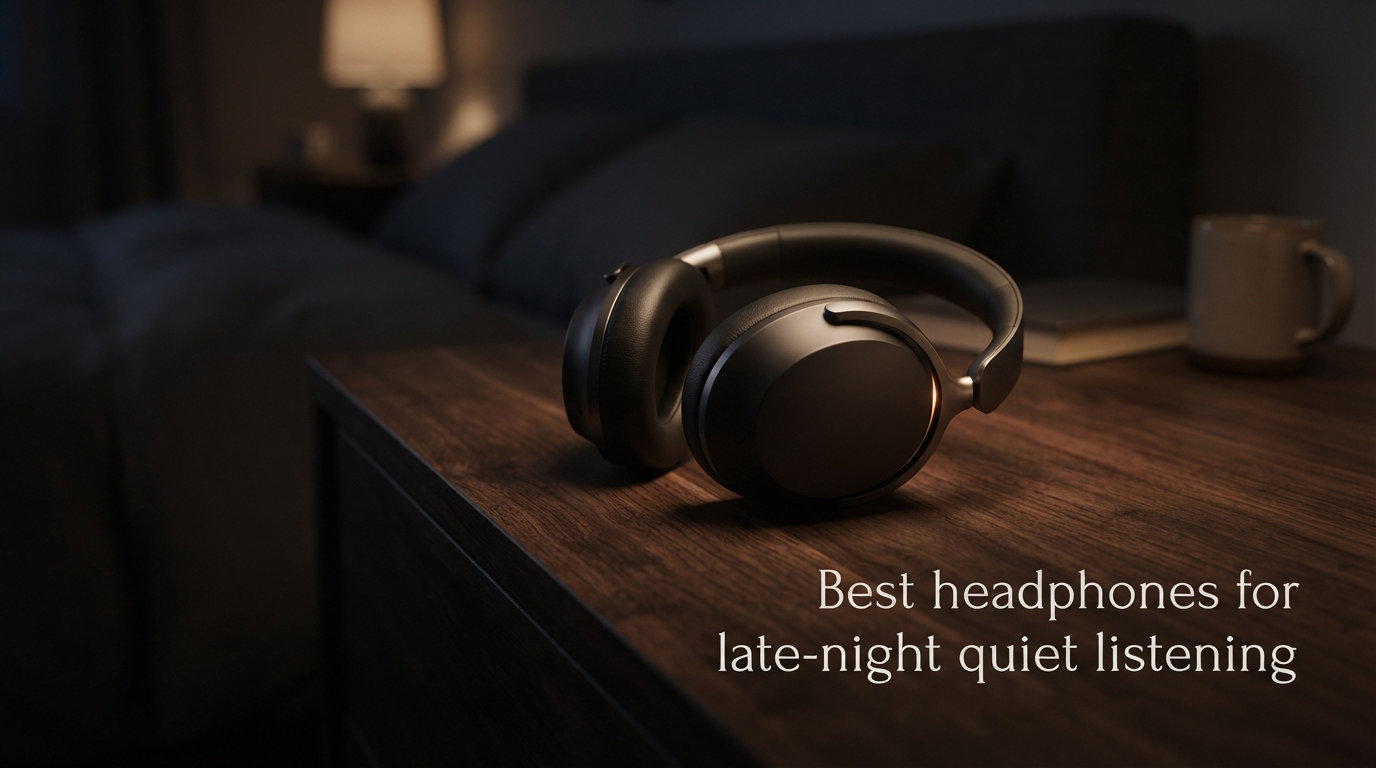
There is something special about listening to classical music after the rest of the household has gone to sleep. The distractions of the day fade away, and you can finally focus on every note. But finding the best headphones for late-night quiet listening means thinking about more than just sound quality.
You need headphones that keep sound from leaking out and waking others, that stay comfortable for hours, and that let you hear the softest pianissimo passages without cranking up the volume. Classical music in particular has extreme dynamic range, so your headphones need to handle the quietest whispers and the loudest crescendos with equal clarity.
In this guide, our team walks through everything that matters for night-time listening: open-back versus closed-back designs, noise isolation versus cancellation, comfort for extended sessions, and the specific sound characteristics that bring orchestral and chamber music to life at low volumes. Whether you live with a partner who sleeps early, share an apartment with thin walls, or just prefer your listening sessions after midnight, this guide will help you understand what to look for. Continue your classical journey with our Mozart beginner’s guide once you have your setup sorted.
Table of Contents
Understanding Headphone Types for Night Listening
Not all headphones work equally well for late-night sessions. The design type you choose affects sound leakage, comfort, and how much of the outside world bleeds into your music. Understanding these trade-offs is the foundation of choosing the best headphones for late-night quiet listening.
Open-Back Headphones
Open-back headphones have grilles or vents on the outside of the earcups that let air pass through the driver. This design creates a wider, more natural soundstage that audiophiles love for classical music. Instruments feel like they exist in a real space rather than being trapped inside your head.
The trade-off is significant for night use. Open-back headphones leak sound outward, meaning someone sleeping nearby may hear your music even at moderate volumes. They also let external noise in, so a snoring partner or traffic outside can disrupt quiet passages. If you live alone or have a private listening space, open-back designs offer unmatched realism for orchestral works.
Closed-Back Headphones
Closed-back headphones seal the earcups completely, trapping sound inside and blocking external noise. This makes them the practical choice for shared bedrooms and apartments. A well-designed closed-back pair keeps your music private even during louder symphonic passages.
The downside is that closed-back designs typically produce a more intimate, in-your-head soundstage. High-end models have narrowed this gap considerably, but purists still tend to prefer open-back for critical listening. For late-night use where discretion matters, closed-back is usually the smarter pick.
In-Ear Monitors and Earbuds
In-ear monitors (IEMs) sit inside the ear canal and offer excellent noise isolation, often blocking 25 to 35 decibels of external sound passively. They are lightweight and ideal for side-sleepers since nothing presses against your ears. Some classical listeners find deep-insertion IEMs fatiguing after a few hours, so fit matters enormously.
Traditional earbuds rest in the outer ear rather than sealing the canal. They leak less than open-back headphones but provide minimal isolation. Their main advantage for night listening is comfort for people who cannot tolerate ear canal pressure.
Over-Ear Versus On-Ear
Over-ear headphones with large earcups that surround the entire ear generally provide better isolation and comfort for long sessions. The larger surface area distributes pressure more evenly. On-ear headphones press directly against the cartilage of your ear, which can become uncomfortable after 60 to 90 minutes of continuous use.
For late-night listening sessions that might stretch two or three hours, over-ear designs are almost always the better choice. The added comfort alone makes a noticeable difference when you are lying back with a Mahler symphony.
Key Features That Matter for Late-Night Quiet Listening
Beyond the basic headphone type, several specific features determine how well a pair performs for quiet night-time sessions. These are the characteristics our team recommends prioritizing.
Noise Isolation Versus Active Noise Cancellation
Noise isolation works passively by creating a physical seal between your ear and the outside world. Thick earpads on closed-back headphones and well-fitted IEM tips block sound without any electronics. This approach adds no latency, requires no batteries, and never introduces processing artifacts into your music.
Active noise cancellation (ANC) uses microphones to detect external sounds and generates an inverted waveform to cancel them out. Modern ANC is remarkably effective at eliminating low-frequency rumble from air conditioners, traffic, and snoring. For classical music at low volumes, ANC lets you hear detail that would otherwise be masked by ambient noise.
The trade-off is that some users experience a sense of pressure or discomfort with ANC engaged, similar to the feeling during airplane descent. A small percentage of people find this sensation fatiguing over long sessions. If you are sensitive to this effect, prioritize strong passive isolation instead.
Comfort for Extended Sessions
Late-night listening often means two to four hours in the same position. Comfort is not a luxury here; it determines whether you actually finish that Brahms symphony or give up halfway through. Look for plush earpads made of memory foam, velour, or protein leather.
Headband clamping force should be firm enough to maintain a seal without squeezing your temples. Lightweight designs under 300 grams reduce fatigue significantly over long sessions. If you listen while reclining or lying down, consider how the headband feels against the back of your head or a pillow.
Low-Volume Performance
This is where many headphones fall short for night use. Some models sound thin and lifeless at low volumes, losing bass presence and midrange warmth. The best headphones for late-night quiet listening maintain tonal balance even when you keep the volume at 50 to 60 decibels.
Dynamic driver headphones often perform better at low volumes than some planar magnetic designs, which can sound lean until driven harder. However, this varies by model. The key is finding headphones that do not require high volume to sound full and engaging.
Cable Management and Wireless Convenience
If you listen in bed, a tangled cable can be genuinely frustrating. Wireless headphones eliminate this problem entirely, and modern Bluetooth codecs like aptX Adaptive and LDAC transmit high-resolution audio with minimal quality loss. Battery life of 30 hours or more means a single charge lasts an entire week of nightly sessions.
The main drawback of wireless is latency. For pure music listening this rarely matters, but if you watch concert videos or films late at night, look for headphones with low-latency modes. A long braided cable also works well if you prefer the reliability and sound quality of a wired connection.
Volume Safety Features
Some modern headphones include automatic volume limiting or alerts when you exceed safe listening levels. These features are valuable because the temptation to increase volume during quiet classical passages can damage hearing over time. Headphones that maintain clarity at low volume reduce this temptation naturally.
Sound Characteristics Classical Music Demands at Low Volume
Classical music places unique demands on headphones compared to pop, rock, or electronic genres. The score calls for everything from a single sustained violin note to a full orchestra at fortissimo. Your headphones need to handle this entire range without strain.
Wide Dynamic Range Handling
Classical recordings routinely span 60 decibels or more from the quietest passage to the loudest climax. This is the core challenge of late-night listening. If you set the volume so the loud parts do not disturb anyone, the quiet sections may become inaudible. Explore the best 1812 Overture recordings and you will immediately understand the problem, as Tchaikovsky pushes dynamic contrast to its absolute limit.
Headphones with excellent detail retrieval help here. When a pair resolves subtle spatial cues and low-level information clearly, you can follow the music even during hushed passages. This is why audiophile headphones are so popular among classical listeners who need to keep volume down.
Soundstage and Imaging
Soundstage refers to the perceived width, depth, and height of the sonic space your headphones create. Imaging is the precision with which you can locate individual instruments within that space. For orchestral music, these qualities matter enormously because they let you hear where each section sits.
A wide soundstage makes a symphony feel expansive and realistic rather than compressed. Open-back headphones typically excel here, but certain closed-back designs with angled drivers and carefully tuned acoustics approach open-back performance. If you value the sensation of sitting in a concert hall, prioritize soundstage width in your research.
Midrange Clarity
The midrange is where most classical instruments live. Violins, cellos, woodwinds, and the human voice all occupy frequencies between roughly 200 Hz and 4 kHz. Headphones with recessed or muddy midranges rob classical music of its emotional core.
Look for headphones with a forward, clear midrange presentation. Female vocals should sound natural and present. String tone should have texture and body rather than sounding thin or shrill. Test your headphones with the dramatic Planets suite by Holst, which features lush strings and brass that will immediately reveal any midrange weaknesses.
Frequency Response Smoothness
A smooth frequency response free from sharp peaks and dips is essential for long classical listening sessions. Pronounced treble peaks can make cymbals and high strings sound piercing at low volumes, while boomy bass muddies the lower register of cellos and double basses.
Neutral or slightly warm tuning tends to suit classical music best at night. Slightly elevated bass adds fullness at low volumes without overwhelming the midrange. Treble should be extended but never harsh.
Driver Types and Their Sound Signatures
Dynamic drivers are the most common type and typically deliver punchy bass and natural timbre. They perform well at low volumes and are found in headphones across every price range. Planar magnetic drivers use a flat diaphragm and offer exceptional detail retrieval, fast transient response, and low distortion, though some models sound lean at very low volumes.
Balanced armature drivers appear mainly in IEMs and provide precise, detailed sound in a tiny package. Many high-end IEMs use multiple balanced armature drivers, each tuned for a specific frequency range. Electrostatic headphones offer the highest resolution of all but require specialized amplifiers that are impractical for most night-time setups.
Comfort Considerations for Extended Night Sessions
Even the best-sounding headphones become useless if they hurt after an hour. Late-night listening sessions tend to be long and relaxed, so physical comfort ranks alongside sound quality in importance.
Headband Pressure and Clamping Force
Clamping force keeps earpads sealed against your head, which is necessary for bass response and noise isolation. Too much clamp causes headaches and discomfort around the temples and jaw. Too little clamp means poor isolation and a loose fit that shifts when you move.
The sweet spot varies by person, but most listeners find 3 to 5 newtons of clamping force comfortable for extended use. Headphones with adjustable headband tension or flexible yokes accommodate more head shapes and sizes.
Ear Cushion Materials
Earpad material directly affects comfort, sound, and isolation. Protein leather provides excellent sealing and isolation but can trap heat during long sessions. Velour pads are cooler and softer against skin but sacrifice some isolation compared to solid materials.
Memory foam filling conforms to the shape of your ears and jawline, distributing pressure evenly. Replacement pads are available for many popular models, so you can experiment with different materials to find what suits your skin and listening habits.
Weight and Heat Buildup
Heavier headphones cause neck strain during reclined listening. Models weighing under 280 grams are ideal for sessions lasting more than two hours. Materials like magnesium, carbon fiber, and high-grade plastics help manufacturers reduce weight without sacrificing durability.
Heat buildup is a real concern for night listening. Your ears generate warmth inside sealed earcups, and trapped heat leads to sweating and discomfort. Open-back designs breathe better naturally, while some closed-back models use moisture-wicking pad materials to manage this.
Side-Sleeper Considerations
If you listen while lying on your side, over-ear and on-ear headphones are generally impractical because they press painfully against your ear. Thin IEMs with low-profile housings are the most comfortable option for side-sleeping. Specialized sleep headphones with flat speakers embedded in a soft headband offer another alternative, though sound quality is typically modest compared to dedicated audio equipment.
Wired vs Wireless for Quiet Night Listening
The choice between wired and wireless comes down to convenience, sound quality, and how you plan to listen. Both approaches work well for late-night sessions when you understand their trade-offs.
The Case for Wireless
Wireless headphones free you from cable management entirely. You can lie down, shift position, and even walk to the kitchen without removing your headphones. Modern Bluetooth codecs transmit audio at quality levels that satisfy all but the most demanding audiophiles. ANC is typically built into wireless models, giving you noise cancellation as a bonus feature.
Battery life has improved dramatically in recent years. Many current wireless headphones deliver 30 to 60 hours per charge, so you can listen nightly for a week or more between charges. Just remember to charge during the day.
The Case for Wired
Wired headphones never run out of battery and deliver a direct analog signal with no compression or latency. For classical music purists who want every detail preserved, a quality wired connection remains the gold standard. High-impedance headphones paired with a dedicated amplifier can extract extraordinary detail at low volumes.
The main inconvenience for night listening is cable management. A 3-meter cable gives you freedom to move in bed, and cable organizers or clips keep the wire from tangling. Some listeners route the cable over their shoulder or behind a pillow to keep it out of the way.
Hybrid Approaches
Some headphones support both wired and wireless operation. These hybrid models let you enjoy wireless convenience most nights and switch to wired when you want maximum fidelity or the battery is dead. This flexibility is worth considering if you are investing in a single pair for all your listening needs.
FAQs
What are the best headphones for listening while sleeping?
For sleeping, lightweight in-ear monitors or specialized sleep headphones with flat speakers inside a soft headband are the most comfortable options. Over-ear headphones press against your ears when side-sleeping and become painful quickly. Look for designs with low profile housings that do not protrude from your ear, and prioritize passive noise isolation so you can keep volume low.
Is it bad to listen to headphones on low volume while sleeping?
Listening at low volume, generally below 60 decibels, is considered safe for hearing health and is unlikely to cause damage. The risk arises when headphones are worn for many continuous hours, which can cause skin irritation or ear canal discomfort. Taking breaks every few hours and keeping volume moderate protects both your hearing and your physical comfort.
Can you use headphones to silence noise to sleep?
Yes, headphones with active noise cancellation can reduce ambient sounds like snoring, traffic, or air conditioning units. Noise isolating in-ear monitors also block sound passively without electronics. For sleep specifically, choose lightweight and comfortable designs, and consider whether the pressure sensation of ANC bothers you before committing to a pair.
What headphones block noise while sleeping?
The most effective options for blocking noise during sleep are memory-foam tipped in-ear monitors for passive isolation and wireless over-ear headphones with strong active noise cancellation. In-ear monitors block 25 to 35 decibels of external sound without batteries. Noise cancelling over-ear headphones excel at low frequencies like snoring but may be uncomfortable for side-sleeping.
Conclusion: Choosing Your Late-Night Listening Companion
Finding the best headphones for late-night quiet listening comes down to balancing three factors: sound leakage control, low-volume clarity, and physical comfort over long sessions. Classical music’s wide dynamic range makes this combination especially important, because you need to hear every whisper-quiet passage without disturbing anyone nearby.
Closed-back over-ear headphones with strong noise isolation are the safest all-around choice for shared living spaces. Open-back designs reward listeners with private rooms by delivering unmatched soundstage and realism. In-ear monitors remain the best option for side-sleepers who refuse to compromise on sound quality.
Prioritize a smooth frequency response, clear midrange, and excellent detail retrieval so you can keep volume low without losing the emotional impact of the music. Test your chosen pair with demanding repertoire to confirm they handle the full dynamic spectrum. Most importantly, listen at safe volumes so you can enjoy classical music for decades to come. Explore our Mozart beginner’s guide for repertoire ideas to enjoy during your next late-night session.
1 thought on “Best Headphones for Late-Night Quiet Listening (October 2026) Trusted Reviews”