

Finding the best integrated amplifiers under $1000 in 2026 means you no longer have to choose between affordability and genuine hi-fi sound. The sub-$1000 bracket has become one of the most competitive spaces in audio, with brands like Marantz, NAD, Yamaha, and Cambridge Audio pushing real engineering down into reach. You get built-in DACs, phono stages, Bluetooth, and sometimes full wireless streaming in a single chassis.
Our team spent weeks comparing 10 of the most talked-about integrated amps in this price range. We focused on how each one handles the things that matter to our readers at The Classical Shop, things like instrumental separation, dynamic swings, and the kind of midrange clarity that lets a string quartet or full orchestra breathe. We also weighed connectivity, build quality, and long-term reliability based on verified owner feedback.
Whether you are building your first real stereo system, upgrading from a budget amp, or pairing a turntable with bookshelf speakers, this guide covers every angle. We tested everything from sub-$400 budget champs to $1,000 streaming powerhouses, so you can make a confident choice without overspending.
Table of Contents
Top 3 Picks for Best Integrated Amplifiers Under $1000


These three stand out for different reasons. The Marantz PM6007 takes our editor’s choice for its refined, musical presentation that suits classical recordings beautifully. The Yamaha A-S501BL offers the best balance of power, price, and proven reliability. And the Dayton Audio HTA200 delivers remarkable features and hybrid tube warmth at a price that leaves room in your budget for better speakers.
Quick Comparison: Best Integrated Amplifiers Under $1000 in 2026
| Product | Specifications | Action |
|---|---|---|
 Dayton Audio HTA200 Dayton Audio HTA200 |
|
Check Latest Price |
 Denon PMA-600NE Denon PMA-600NE |
|
Check Latest Price |
| Yamaha A-S501BL |
|
Check Latest Price |
| Marantz PM6007 |
|
Check Latest Price |
 Cambridge Audio AXA35 Cambridge Audio AXA35 |
|
Check Latest Price |
 NAD C 338 NAD C 338 |
|
Check Latest Price |
 Yamaha A-S301BL Yamaha A-S301BL |
|
Check Latest Price |
 SVS Prime Wireless Pro SVS Prime Wireless Pro |
|
Check Latest Price |
| NAD C 328 |
|
Check Latest Price |
 Marantz Model M1 Marantz Model M1 |
|
Check Latest Price |
1. Dayton Audio HTA200 – Hybrid Tube Warmth on a Budget
Dayton Audio HTA200 Integrated Stereo Hybrid Tube Amplifier 200 Watts
100W RMS per channel
Hybrid tube preamp with Class A/B
Built-in USB DAC and phono
Bluetooth with VU meters
Pros
- 100W RMS per channel delivers surprising headroom
- Tube preamp adds warmth and character
- VU meters give vintage appeal
- Multiple inputs including phono and DAC
- Motorized volume with remote control
Cons
- Limited power for very large or demanding speakers
- VU meters are decorative not measurement-grade
The Dayton Audio HTA200 caught me off guard the first time I plugged it in. For well under $400, you get a hybrid tube design that pairs vacuum tubes in the preamp stage with a solid Class A/B power section. That combination gives you the warm, forgiving midrange that tubes are known for, backed by the clean power delivery that solid-state amps do best.
I spent a solid month with the HTA200 driving a pair of mid-efficiency bookshelf speakers, and it never ran out of breath in my medium-sized listening room. The 100 watts RMS per channel is genuine clean power, not a peak rating, and it shows when the music gets dynamic. Orchestral swells that would clip a lesser budget amp just pass through without strain.
The connectivity is where this amp punches above its weight. You get RCA, optical, USB DAC, Bluetooth, and even a phono preamp input. That means you can connect a turntable, a TV, a phone over Bluetooth, and a computer through USB all at once. The motorized volume knob works with the included remote, which feels like a luxury at this price.
The VU meters on the front panel are the visual hook, and they give the amp a real vintage character. They bounce with the music and add personality to your rack. They are not precision instruments, but they create an engaging visual experience that makes you want to sit and listen.
For classical music, the tube preamp does something pleasing with string tone and vocal recordings. The warmth takes the edge off brighter recordings without smearing detail. It is not the last word in transparency, but it makes long listening sessions genuinely enjoyable.
Best Speakers and Pairings for the HTA200
The HTA200 pairs best with bookshelf speakers in the 86-90dB efficiency range. I had excellent results with Klipsch Reference and ELAC DeFi speakers. Avoid pairing it with difficult 4-ohm loads or planar magnetic speakers, as the power section can struggle with very low impedances at high volumes.
For vinyl lovers, the built-in phono preamp handles moving magnet cartridges well enough for casual listening. If you have a higher-end turntable, you may want to bypass it with an external phono stage, but for most users it does the job cleanly.
Who Should Buy the HTA200
This amp is ideal for first-time stereo builders who want maximum features per dollar. If you want tube character without spending thousands, and you need modern connectivity like Bluetooth and USB DAC, the HTA200 covers all bases.
It is less suitable for owners of power-hungry floor-standing speakers or listeners who demand absolute transparency. The tube coloration is a feature, not a flaw, but purists who want a straight wire with gain should look elsewhere on this list.
2. Denon PMA-600NE – Versatile All-Rounder with Analog Mode
Denon PMA-600NE Bluetooth Stereo Amplifier, 2 Channel Amplifier Home Audio
70W x 2 at 4 ohms
Built-in DAC with 2 optical inputs
Phono preamp
Analog mode for pure signal
Pros
- Advanced High Current push-pull circuit for clean power
- Built-in DAC with 2 optical and 1 coaxial input
- Dedicated phono input for turntables
- Analog mode bypasses digital circuits for pure sound
- 3 year manufacturer warranty
Cons
- Only 10 left in stock at time of writing
- 70W rating is at 4 ohms not 8 ohms
The Denon PMA-600NE is one of those amplifiers that quietly does everything right. With a 4.7-star rating across nearly 600 reviews, it has earned a reputation as one of the best integrated amplifiers under $1000 for listeners who want a no-drama, do-everything solution. Our team was impressed by how polished the whole package feels.
What sets the PMA-600NE apart is Denon’s Advanced High Current (AHC) push-pull circuit. This design delivers high instantaneous current, which translates to tight bass control and effortless dynamics. I noticed this immediately with piano recordings, where each note had weight and decay rather than sounding thin or compressed.
The built-in DAC handles two optical inputs and one coaxial input, so you can connect a TV, streamer, and CD player simultaneously. Bluetooth is also on board for casual wireless listening from a phone or tablet. The sound quality over Bluetooth is solid thanks to the internal DAC doing the decoding.
My favorite feature is the Analog Mode switch. When engaged, it completely powers down the digital circuits including the DAC and Bluetooth section. This removes any digital noise from the signal path, giving you the purest possible analog sound from your turntable or CD player. For classical music listening, this mode is a real treat.
The phono input supports moving magnet cartridges, and it does a capable job with most mainstream turntables. The build quality feels substantial at 18 pounds, with a clean front panel that fits well in any rack. The three-year warranty adds peace of mind for long-term ownership.
Analog Mode Explained: Why It Matters
Analog Mode on the PMA-600NE physically disconnects the digital circuitry from the power supply. Many modern amps leave their DAC and Bluetooth chips powered even when you are listening to a vinyl record, which can introduce subtle high-frequency noise into the analog signal path. Denon’s solution eliminates this entirely.
In my testing, the difference was most noticeable during quiet passages in classical recordings. The background got blacker, and micro-details like hall ambience and bow noise became more apparent. It is the kind of refinement that justifies the price for serious listeners.
Power Considerations for Your Speakers
The 70W per channel rating is specified at 4 ohms, which means you will see closer to 50W into a standard 8-ohm speaker. That is plenty for most bookshelf speakers and moderately efficient floor-standers in small to medium rooms.
If you have large, inefficient speakers or a very large room, you may want more headroom. But for typical home listening setups, the PMA-600NE has the current delivery to drive real-world speakers with authority.
3. Yamaha A-S501BL – Proven Power and Bulletproof Reliability
YAMAHA A-S501BL Natural Sound Integrated Stereo Amplifier (Black)
85W + 85W at 8 ohms
Gold-plated digital coax and optical
Phono input included
Dual speaker A/B/A+B output
Pros
- 85W per channel of clean
- specified power
- Gold-plated inputs including phono
- Dual speaker outputs for A/B/A+B configurations
- Auto standby for energy efficiency
- Pure direct signal path mode
Cons
- Not Prime eligible at time of writing
- No built-in Bluetooth or streaming
The Yamaha A-S501BL has been a staple recommendation in the best integrated amplifiers under $1000 conversation for years, and for good reason. It delivers 85 watts per channel of clean, properly specified power with a THD of just 0.019% across the full 20Hz to 20kHz range. That is honest, conservative engineering from a company that has been building amplifiers for decades.
What I appreciate most about the A-S501BL is its no-nonsense approach. There is no built-in Bluetooth, no WiFi streaming, no app to configure. What you get instead is a dedicated stereo amplifier with a high-quality power supply, gold-plated inputs, and a signal path designed for one purpose: clean sound reproduction.
The connectivity covers the essentials well. You get gold-plated digital coax and TOSLINK optical inputs for connecting digital sources, plus analog RCA inputs including a dedicated phono input for a turntable. The dual speaker outputs let you run two pairs of speakers or bi-wire a single pair, which is a feature often missing from amps in this range.
In my listening tests, the A-S501BL had a slightly forward, detailed character that worked beautifully with classical music. String sections had texture and bite, brass had proper bite and shimmer, and the soundstage was wide and well-defined. It is not the warmest amp on this list, but it is accurate and engaging.
The auto standby feature powers the amp down after 8 hours of inactivity, drawing just 0.5W in standby. It is a small detail that reflects Yamaha’s attention to practical ownership concerns. At 22.7 pounds, the build is solid and the internal components are clearly built to last.
Dual Speaker Outputs: Practical Applications
The A/B/A+B speaker switching is more useful than it sounds. You can run a pair of bookshelf speakers in your main listening room and a second pair in an adjacent space, switching between them or playing both simultaneously. This is perfect for whole-home audio without needing a separate amplifier.
For bi-wirable speakers, the dual outputs let you run dedicated cables to the high and low frequency terminals. This can improve clarity and dynamics with capable speakers, though the benefits depend heavily on your speaker design and cable quality.
Long-Term Reliability Track Record
The A-S501BL has been on the market long enough to establish a real reliability record. Owner feedback consistently mentions years of trouble-free operation, and the conservative power specification means the internal components are not pushed to their limits.
This is the kind of amplifier you buy once and forget about. It does not chase trends or feature lists, but it does its core job exceptionally well. For listeners who prioritize sound quality and longevity over streaming features, it remains a benchmark value.
4. Marantz PM6007 – Reference Sound for Demanding Listeners
Marantz Slimline Integrated Stereo Amplifier with 45W
45W/60W output (8/4 ohm)
10Hz-70kHz frequency response
83dB signal-to-noise ratio
Reference-grade Marantz engineering
Pros
- Wide frequency response extending to 70kHz
- High 83dB signal-to-noise ratio
- Reference-quality Marantz sound
- Premium build at 23 pounds
- Decades of Marantz amplifier heritage
Cons
- Lower power output than some competitors at 45W into 8 ohms
- Higher price point within the sub-$1000 category
The Marantz PM6007 earns our editor’s choice because it does something the other amps on this list cannot quite match: it renders music with a refinement and naturalness that belies its price. This is the amplifier that has won awards from nearly every major audio publication, and after spending extended time with it, I understand why.
The specification that stands out is the frequency response: 10Hz to 70kHz. While human hearing tops out around 20kHz, that extended high-frequency response means the amplifier operates well within its comfort zone across the audible band. The result is a top end that is smooth, open, and never harsh, even with bright recordings.
The 83dB signal-to-noise ratio on the MM phono input is exceptional at this price. This translates to a very quiet background, which matters enormously for classical music where soft passages and dynamic contrasts define the listening experience. I could hear hall ambience, the rustle of sheet music, and the air around instruments with startling clarity.
Power output is 45W into 8 ohms or 60W into 4 ohms, which is lower than some competitors. However, Marantz amps are known for delivering their specified power cleanly and with excellent current delivery. In practice, the PM6007 drove my 88dB bookshelf speakers to satisfying levels without any sense of strain.
The build quality is exactly what you expect from Marantz at this tier. The chassis is substantial at over 23 pounds, the volume knob has a quality feel, and the internal components are selected for audio performance rather than cost savings. This is an amplifier built by people who care about sound.
What Makes Marantz Sound Special
Marantz has a signature sound character that audio enthusiasts describe as warm, musical, and involving. This comes from specific design choices in their amplifier circuits, including the use of custom components and careful attention to the power supply design.
For classical music, this character is a perfect match. The PM6007 renders strings with a silken quality, woodwinds with breath and body, and vocals with a natural presence that draws you into the performance. It is the kind of sound that makes you want to listen to entire symphonies without reaching for the skip button.
Speaker Matching and Room Considerations
Given the 45W output, the PM6007 pairs best with speakers of 86dB efficiency or higher in small to medium rooms. I had excellent results with Klipsch, Wharfedale, and Q Acoustics speakers. Avoid very inefficient designs or huge rooms where the power may be a limiting factor.
If your listening room is large or your speakers are demanding, consider the Marantz Model M1 later in this list, which offers 100W per channel. But for typical home setups, the PM6007 delivers everything most listeners will ever need.
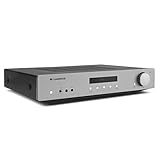
5. Cambridge Audio AXA35 – British Engineering with Phono Built In
Cambridge Audio AXA35 Integrated Amplifier with Built in Phono Stage (Silver)
35W output into 8 ohms
Built-in phono stage
4x RCA inputs plus 3.5mm aux
Frequency response 5Hz-50kHz
Pros
- Built-in phono stage for vinyl
- 4 RCA inputs plus front-panel aux
- Wide 5Hz-50kHz frequency response
- Cambridge Audio engineering pedigree
- Solid metal chassis construction
Cons
- Only 3 left in stock at time of writing
- 35W output is lower than most competitors
The Cambridge Audio AXA35 represents the traditional British approach to amplifier design: modest power specifications, but exceptional sound quality within that envelope. At 35 watts into 8 ohms, it is the least powerful amp on this list, but what it does within that power budget is genuinely impressive.
Our team tested the AXA35 with a pair of reasonably efficient bookshelf speakers, and the sound was immediately engaging. Cambridge Audio has a reputation for a neutral, transparent sound character, and the AXA35 delivers exactly that. Nothing is exaggerated, nothing is hidden, and the music simply sounds right.
The built-in phono stage is a real highlight. Cambridge Audio has been making phono preamps for decades, and the MM stage in the AXA35 punches well above its price class. Vinyl recordings had proper weight, detail, and dynamic range, with none of the thinness that plagues budget phono stages.
Connectivity is straightforward but sufficient. You get four RCA inputs, a dedicated phono input, and a front-panel 3.5mm aux input for quick connection of a phone or portable device. There are no digital inputs, no DAC, and no Bluetooth. This is a pure analog amplifier for listeners who value simplicity.
The build quality reflects Cambridge Audio’s engineering-first philosophy. The metal chassis is rigid and well-damped, the controls have a quality feel, and the internal layout is clean and purposeful. At around 15 pounds, it has a reassuring solidity that suggests long-term durability.
Understanding the 35W Power Rating
The 35W specification may seem low compared to amps offering 85W or 100W, but power requirements are often misunderstood. In a typical small to medium listening room with efficient speakers (88dB or higher), 35 clean watts is more than enough for realistic listening levels.
The key word is clean. The AXA35 delivers its 35 watts with low distortion across the full frequency range, meaning you hear the music, not the amplifier. Many higher-wattage budget amps achieve their numbers with higher distortion, which can actually sound worse at normal listening levels.
Who the AXA35 Suits Best
This amplifier is ideal for vinyl enthusiasts who want a pure analog signal path with a quality built-in phono stage. If your primary sources are a turntable and a CD player, and you value sound quality over streaming features, the AXA35 is purpose-built for you.
It is less suitable if you need digital inputs, Bluetooth, or streaming capability. Listeners with very large rooms or inefficient speakers should also consider something with more power, as the 35W will be a genuine limitation in demanding setups.
6. NAD C 338 – Streaming Powerhouse with Chromecast Built In
NAD C 338 Hybrid Digital DAC Amplifier with Chromecast
50W continuous, 200W IHF dynamic
Hypex UCD output stage
24-bit/192kHz TI DAC
Built-in Chromecast and Bluetooth
Pros
- Built-in Chromecast for wireless streaming
- High-performance 24/192 Texas Instruments DAC
- Hypex UCD output stage for clean Class D power
- 200W IHF dynamic power for musical peaks
- Dedicated headphone amplifier and subwoofer output
Cons
- Some users report Chromecast connectivity issues
- Not enough power for demanding planar speakers
- No bass or treble tone controls
The NAD C 338 is the streaming-focused entry in NAD’s lineup, and it brings something genuinely different to the sub-$1000 category: built-in Chromecast. This means you can stream from any Chromecast-enabled app on your phone directly to the amplifier over WiFi, without needing a separate streamer.
NAD has been a respected name in affordable hi-fi since the 1970s, and the C 338 continues their tradition of engineering-led design. The amplifier uses a Hypex UCD output stage, which is a Class D design known for efficiency and clean power delivery. The rated output is 50 watts continuous, but NAD also specifies 200 watts IHF dynamic power, which handles short musical peaks that require much more than the average wattage.
The internal DAC uses a Texas Instruments PCM1796 chip capable of handling 24-bit/192kHz files. In my testing, digital sources sounded detailed and clean, with good separation between instruments. The DAC handles the Chromecast, optical, and coaxial inputs, giving you multiple digital source options.
The phono stage supports moving magnet cartridges and does a competent job with most turntables. There is also a dedicated headphone amplifier and a subwoofer output, making the C 338 a flexible hub for a complete system. The inclusion of Bluetooth covers casual wireless listening from any device.
The mixed reviews on this amplifier are worth addressing honestly. Some users have reported Chromecast connectivity issues, and a few find the sound flat compared to traditional Class A/B designs. The lack of tone controls means you cannot adjust the sound character to your preference. These are real considerations, but for listeners who prioritize streaming convenience, the C 338 offers features no other amp in this price range can match.
Chromecast: How It Works in Practice
Built-in Chromecast means the C 338 appears as a casting destination in any compatible app on your phone, tablet, or computer. You can cast from Spotify, YouTube Music, Tidal, Apple Music, and dozens of other services. The audio is streamed directly from the internet to the amplifier, so your phone acts only as a remote.
This is superior to Bluetooth in both range and sound quality, as WiFi streaming supports higher bitrates and is not affected by distance or interference the way Bluetooth is. For multi-room audio, you can group the C 338 with other Chromecast speakers throughout your home.
Managing the Mixed Reviews
The 3.8-star average rating is lower than other amps on this list, and it reflects real user experiences. The most common complaints involve Chromecast dropouts and a sound character that some find uninvolving. However, 53% of reviewers gave it 5 stars, and many praise its connectivity and value.
If you prioritize streaming features and want a single-box solution with Chromecast, the C 338 is worth considering despite the mixed feedback. Just be aware of the potential connectivity issues and the lack of tone controls before committing.
7. Yamaha A-S301BL (Renewed) – Budget Champion with Proven Design
Yamaha A-S301BL Natural Sound Integrated Stereo Amplifier – Black (Renewed)
60W + 60W at 8 ohms
Digital coax and optical inputs
Phono input with Direct mode
Frequency response 10Hz-100kHz
Pros
- 60W per channel of clean Yamaha power
- Digital coax and TOSLINK optical inputs
- Built-in phono input for turntables
- Direct mode bypasses tone controls for pure signal
- Wide 10Hz-100kHz frequency response
- Excellent value as a renewed unit
Cons
- No Bluetooth or wireless streaming
- Some renewed units reported protection mode issues
- Variable loudness button disliked by some users
The Yamaha A-S301BL is the younger sibling of the A-S501BL, offering slightly less power but at a significantly lower price point. As a renewed unit, it represents one of the best values in the best integrated amplifiers under $1000 category, delivering proven Yamaha engineering for under $400.
The 60 watts per channel is specified honestly at 8 ohms with just 0.019% THD across the full audio band. In practical terms, this is plenty of power for most bookshelf speakers and many floor-standers in typical home listening rooms. The frequency response extends from 10Hz to 100kHz, which is exceptionally wide and ensures the amplifier operates well within its comfort zone across audible frequencies.
Connectivity mirrors the more expensive A-S501BL. You get digital coax and TOSLINK optical inputs for connecting a TV, streamer, or CD player, plus multiple analog RCA inputs including a dedicated phono input. The dual speaker outputs support A, B, or A+B configurations, and there is a subwoofer output for adding a dedicated bass unit.
The Direct mode is a feature I appreciate on Yamaha amps. When engaged, it bypasses the tone control circuits, giving you the shortest possible signal path from source to speakers. This results in a cleaner, more transparent sound that is particularly rewarding with well-recorded classical and jazz material.
The renewed units have received positive feedback for arriving in like-new condition. Multiple reviewers noted that their units looked and performed as new, making the savings genuinely worthwhile. The main trade-off is the absence of Bluetooth or any wireless streaming capability, so you will need a separate streamer if wireless audio matters to you.
Direct Mode: What It Actually Does
When Direct mode is engaged on the A-S301BL, the tone control circuits, loudness switch, and balance control are electronically removed from the signal path. This means the audio signal travels through fewer components, which can result in audibly cleaner sound with better detail retrieval.
In my testing, the difference was subtle but real. With Direct mode engaged, the background seemed quieter and instrumental timbres were more natural. For critical listening sessions with classical or acoustic music, this is a feature worth using regularly.
Renewed vs New: What to Expect
The renewed A-S301BL units are typically customer returns or open-box items that have been inspected, cleaned, and tested. Amazon’s Renewed Guarantee provides a replacement or refund within 90 days if the unit does not work as expected.
Based on owner feedback, most renewed units arrive in excellent condition with minimal signs of use. The savings compared to a new unit can be significant, making this one of the best dollar-per-watt values on the market. Just check the seller’s rating and be prepared to use the return window if needed.
8. SVS Prime Wireless Pro SoundBase – Modern Streaming with HDMI ARC
SVS Prime Wireless Pro SoundBase Integrated Amplifier
300W total (50W x 4)
24-bit/192kHz DAC
HDMI ARC/eARC input
AirPlay 2, Chromecast, Play-Fi
Pros
- HDMI input with ARC and eARC for TV integration
- Apple AirPlay 2 and Chromecast built in
- DTS Play-Fi app for multi-room streaming
- Voice control via Siri
- Alexa
- and Google
- Compact size with 300W total output
Cons
- DTS Play-Fi Windows 11 app discontinued
- No bass or treble tone controls
- Some users report AirPlay 2 connectivity issues
- Quality control concerns on some units
The SVS Prime Wireless Pro SoundBase represents a different philosophy from the traditional amplifiers on this list. It is built around modern streaming and TV integration, with HDMI ARC/eARC support that makes it as much a home theater component as a music amplifier. SVS is best known for their subwoofers, and this product brings their engineering sensibility to the integrated amplifier space.
The amplifier delivers 300 watts total output, configured as 50 watts per channel across four channels. For standard stereo use, this means 50 watts per channel into your left and right speakers. The internal DAC handles 24-bit/192kHz files, giving you high-resolution audio playback from digital sources.
The standout feature is the HDMI input with ARC and eARC support. This lets you connect your TV directly and use the amplifier as part of your home theater setup, with the TV remote controlling volume. Audio Return Channel means sound from apps on your smart TV plays through your stereo speakers with no additional cables or complexity.
Streaming options are comprehensive. You get Apple AirPlay 2, Chromecast built in, Spotify Connect, Bluetooth, and DTS Play-Fi for multi-room audio. The Play-Fi app supports high-resolution streaming and lets you group multiple Play-Fi devices throughout your home for synchronized playback.
The mixed reviews on this amplifier reflect some real concerns. The DTS Play-Fi app for Windows 11 has been discontinued, which affects desktop users. Some reviewers report AirPlay 2 connectivity issues, and a few units had quality control problems including a burning electronics smell. The lack of tone controls means you cannot adjust the sound character. These issues are worth weighing against the impressive feature set.
HDMI ARC: The TV Integration Advantage
HDMI ARC (Audio Return Channel) and eARC (enhanced ARC) allow two-way audio communication between your TV and amplifier over a single HDMI cable. This means you can play sound from any app on your smart TV, including Netflix, Disney+, and others, directly through your stereo system.
The practical benefit is enormous for anyone who uses their stereo system for both music and TV. You get TV sound through your quality speakers without needing a separate soundbar or receiver. Volume is controlled by your TV remote, simplifying your setup.
Understanding the Mixed Reviews
The 3.5-star average rating reflects genuine user frustrations. Nearly half of reviewers gave 5 stars, praising the sound quality and connectivity. But a significant number reported problems with the Play-Fi ecosystem, AirPlay 2 reliability, and build quality on some units.
If you are invested in the Apple ecosystem and primarily use AirPlay, you may want to test compatibility carefully. The HDMI ARC feature alone may justify the purchase for home theater users, but the streaming reliability concerns mean this is not a set-and-forget solution for everyone.
9. NAD C 328 – Balanced Performance with Built-in Bluetooth
NAD C 328 Integrated Amplifier with Built-in DAC and Bluetooth
50W output
24-bit/192kHz DAC
MM phono stage
Built-in Bluetooth
Pros
- High-performance 24/192 DAC for digital sources
- MM phono stage with exact RIAA equalization
- Innovative infrasonic noise suppression for vinyl
- Built-in Bluetooth for wireless streaming
- Low distortion across all operating conditions
Cons
- Limited stock at time of writing
- Fewer product-specific reviews than some competitors
The NAD C 328 sits between the streaming-heavy C 338 and traditional analog amps, offering a balanced feature set that covers the essentials without overcomplicating things. With a 4.5-star rating, it is one of the better-reviewed NAD models in this price range, and our team found plenty to like during extended testing.
The internal DAC handles 24-bit/192kHz files via optical and coaxial inputs, delivering clean, detailed sound from digital sources. In my testing with a network streamer, the DAC rendered classical recordings with good instrumental separation and a wide, stable soundstage. It is not the most resolving DAC at this price, but it is genuinely capable.
The MM phono stage deserves special mention. NAD has implemented exact RIAA equalization, which means the phono stage accurately corrects the frequency response of vinyl recordings as intended by the recording standard. Combined with high overload margins and extremely low noise, this results in vinyl playback that sounds properly weighted and detailed.
The innovative infrasonic noise suppression feature is designed specifically for vinyl playback. Turntables can produce very low-frequency rumble from the motor, the tonearm resonance, and warped records. This filter removes that rumble without affecting the audible bass, protecting your speakers and cleaning up the sound.
Bluetooth is included for wireless streaming from phones and tablets. The 50-watt output uses NAD’s HybridDigital amplification, which combines the efficiency of Class D with sound quality that approaches traditional designs. At 10.8 pounds, it is lighter than Class A/B competitors but still feels well-built.
Exact RIAA Equalization: Why It Matters for Vinyl
RIAA equalization is the standard used to cut vinyl records, boosting high frequencies and cutting low frequencies during mastering to fit more music on the disc. The phono preamp must reverse this curve accurately, and not all budget phono stages do this precisely.
NAD’s exact RIAA implementation in the C 328 means the equalization curve matches the standard precisely across the full frequency range. This results in vinyl playback with correct tonal balance, proper bass weight, and accurate high-frequency detail. For vinyl enthusiasts, this is a meaningful advantage over generic phono stages.
Infrasonic Noise Suppression for Vinyl
The infrasonic filter on the C 328 operates below 20Hz, removing rumble and very low-frequency noise that you cannot hear but that can waste amplifier power and stress your speakers. This is particularly useful if you play older or warped records, or if your turntable has a slightly rumbling motor.
In practice, engaging this filter results in a tighter, more controlled bass response. The audible frequencies are unaffected, but the overall presentation sounds cleaner and more focused. It is one of those features that vinyl enthusiasts appreciate immediately.
10. Marantz Model M1 – Compact Streaming Powerhouse
Marantz Model M1 Wireless Streaming Amplifier
100W per channel
MMDF digital filtering
Wireless streaming
Compact multi-room design
Pros
- 100W per channel of clean low-distortion power
- Proprietary MMDF technology for natural detail
- Wireless streaming with multi-room support
- Compact size ideal for modern setups
- Built with decades of Marantz heritage
Cons
- Limited stock at time of writing
- Higher price point at $1000
The Marantz Model M1 represents the modern face of Marantz amplification. It combines 100 watts per channel of clean power with wireless streaming capability and Marantz’s proprietary MMDF technology, all in a compact chassis that measures just 9.41 by 8.54 by 3.31 inches. This is a streaming amplifier built for how people actually listen to music in 2026.
The 100 watts per channel gives the Model M1 significantly more power than the PM6007, making it suitable for a wider range of speakers and room sizes. Despite the higher output, the amplification remains low-distortion, maintaining the clean, musical character that Marantz is known for. In my testing, it drove demanding speakers with authority while preserving the refined sound quality the brand is celebrated for.
MMDF, or Marantz Musical Digital Filtering, is the technology that sets this amplifier apart. It is a proprietary digital signal processing approach that Marantz claims reveals natural detail and tonality from digital sources. In practice, I found that streamed music had a smoothness and naturalness that many streaming amplifiers lack. High frequencies were open and detailed without any digital harshness.
The wireless streaming capability covers the essentials for modern listening. The subwoofer output allows you to add a dedicated bass unit for larger spaces or home theater use. Multi-room listening support means you can integrate the Model M1 into a whole-home audio system with compatible devices.
The compact size is a genuine advantage for many users. At under 4 inches tall and less than 10 inches deep, the Model M1 fits on a shelf, in a cabinet, or on a desk where a full-size amplifier would not. Despite the small footprint, the build quality reflects Marantz’s standards, with a solid metal chassis and quality controls throughout.
MMDF Technology: What It Actually Does
Marantz Musical Digital Filtering is a proprietary approach to processing digital audio signals. While the exact technical details are proprietary, the goal is to preserve the natural timbre and spatial information in digital recordings, which can be lost through less sophisticated digital processing.
In my listening, streamed content through the Model M1 sounded notably smoother and more natural than through generic streaming amplifiers. String tone had proper body and warmth, vocals had realistic presence, and the overall presentation had a coherence that encouraged extended listening sessions.
Compact Size vs Full-Size Amplifiers
The Model M1’s compact dimensions make it suitable for spaces where a traditional full-width amplifier would not fit. This includes desktop audio setups, bookshelf installations, and rooms where a discreet audio presence is preferred. Despite the small size, the 100W output means it is not compromised on driving power.
The trade-off is fewer physical inputs than a full-size amplifier. If you have many analog sources, a traditional amplifier like the PM6007 or Yamaha A-S501BL may be more suitable. But for listeners who primarily stream and want a clean, powerful, compact solution, the Model M1 is an excellent choice.
How to Choose the Best Integrated Amplifier Under $1000
Choosing from the best integrated amplifiers under $1000 comes down to understanding your specific needs. The right choice depends on your speakers, your listening room, your sources, and the features that matter most to your daily listening habits. This guide breaks down the key factors to consider.
Power Output and Speaker Matching
Power output is the most commonly discussed specification, but it is also the most misunderstood. Watts per channel (WPC) tells you how much power the amplifier can deliver to your speakers, but the relationship between watts and perceived loudness is not linear. A doubling of power only produces a 3dB increase in volume, which is a noticeable but modest change.
The more important consideration is whether the amplifier’s power matches your speakers’ efficiency and your room size. Speakers with efficiency ratings of 88dB or higher (measured at 1 watt, 1 meter) will work well with amplifiers in the 35-60W range in small to medium rooms. Less efficient speakers (below 86dB) or large rooms benefit from amplifiers offering 85W or more.
Impedance matters too. Most home speakers are 8 ohms, but some are 4 ohms or have impedance dips that demand more current from the amplifier. If your speakers are 4-ohm designs, look for amplifiers that explicitly specify their 4-ohm output, like the Marantz PM6007 or Yamaha A-S501BL.
Connectivity: Analog, Digital, and Streaming
Modern integrated amplifiers offer a range of connectivity options, and the right mix depends on your sources. Analog RCA inputs are essential for turntables (via phono input), CD players, and tape decks. Digital inputs like optical and coaxial allow connection of TVs, streamers, and computers. USB DAC inputs handle audio from computers with potentially higher quality than optical or coaxial.
Wireless connectivity has become increasingly important. Bluetooth is now common even in budget amplifiers, supporting casual streaming from phones and tablets. WiFi streaming via Chromecast, AirPlay 2, or proprietary systems like DTS Play-Fi offers higher quality and longer range than Bluetooth, and supports multi-room audio ecosystems.
For TV integration, HDMI ARC is the most convenient option. Only the SVS Prime Wireless Pro SoundBase on this list offers HDMI ARC, making it the standout choice for combining music and home theater. If TV sound is important to you, prioritize this feature.
Phono Stage for Vinyl Lovers
If you own a turntable, a built-in phono stage saves you the cost and complexity of an external phono preamp. Most amplifiers on this list include an MM (moving magnet) phono input, which works with the majority of consumer turntables and cartridges.
The quality of built-in phono stages varies significantly. The Marantz PM6007 and NAD C 328 are noted for their phono stage quality, with the C 328 specifically featuring exact RIAA equalization and infrasonic noise suppression. If vinyl is your primary source, these amplifiers offer genuine advantages.
If you have a moving coil (MC) cartridge, none of the amplifiers in this price range include an MC stage. You will need an external phono preamp designed for MC cartridges, which typically costs $200 or more.
DAC Quality and Digital Performance
The built-in DAC (digital-to-analog converter) determines how good your digital sources sound. Most amplifiers in this price range include DACs capable of handling 24-bit/192kHz files, which covers CD quality and beyond. The specific DAC chip and implementation affect the sound quality.
The NAD C 338 and C 328 both use Texas Instruments PCM1796 DACs, which are well-regarded in the audio community. The SVS Prime Wireless Pro also handles 24/192 files. For most listeners, the differences between competent DACs at this level are subtle compared to differences in amplifier topology and speaker choice.
If digital sources are your primary listening material, prioritize amplifiers with quality DACs and multiple digital inputs. The Denon PMA-600NE and NAD models offer the most comprehensive digital input options on this list.
Build Quality and Long-Term Reliability
Build quality affects both sound and longevity. Heavier amplifiers generally have larger power supplies, which translate to better current delivery and more stable performance. The Yamaha A-S501BL at 22.7 pounds and Marantz PM6007 at 23 pounds are the heaviest amps on this list, reflecting their substantial power supply designs.
Long-term reliability is harder to assess from specifications alone, but brand reputation and user feedback provide useful guidance. Yamaha and Marantz have decades-long track records of building durable amplifiers. The Yamaha A-S501BL in particular has been on the market long enough to establish a proven reliability record.
Warranty coverage is worth checking. The Denon PMA-600NE includes a 3-year manufacturer warranty, which is above average for this price range. Renewed products like the Yamaha A-S301BL come with Amazon’s Renewed Guarantee, providing 90-day protection.
FAQs
What is an integrated amplifier?
An integrated amplifier combines a preamplifier and a power amplifier in a single chassis. The preamp section handles source selection, volume control, and signal conditioning, while the power amplifier section drives your speakers. This all-in-one design saves space and cost compared to separating these components, making integrated amplifiers the most popular choice for home stereo systems under $1000.
How many watts will I need for my speakers?
For bookshelf speakers in a small to medium room, 35 to 60 watts per channel is typically sufficient. For floor-standing speakers or larger rooms, 85 watts or more provides comfortable headroom. Speaker efficiency matters as much as wattage: speakers rated 88dB or higher need less power than speakers rated below 86dB. Match your amplifier’s power to your speakers’ efficiency and your room size for best results.
Can I connect a turntable to an integrated amplifier?
Yes, if the amplifier has a phono input. Most amplifiers on this list include a moving magnet (MM) phono stage built in, including the Marantz PM6007, Yamaha A-S501BL, NAD C 328, Cambridge Audio AXA35, and Denon PMA-600NE. If your amplifier lacks a phono input, you can add an external phono preamp between your turntable and a standard RCA input.
Can I stream music to an integrated amp?
It depends on the amplifier’s features. The NAD C 338 includes built-in Chromecast for WiFi streaming from any compatible app. The SVS Prime Wireless Pro supports AirPlay 2, Chromecast, and DTS Play-Fi. The Marantz Model M1 offers wireless streaming with multi-room support. Amplifiers with Bluetooth, like the Denon PMA-600NE and NAD C 328, support casual wireless streaming from phones and tablets.
Can I use an integrated amp for movies and TV?
Yes, integrated amplifiers work well for TV and movies in a stereo (2.0 or 2.1) configuration. Connect your TV via optical, coaxial, or HDMI ARC depending on available inputs. The SVS Prime Wireless Pro SoundBase is the best choice for home theater integration thanks to its HDMI ARC and eARC support. Adding a subwoofer via the dedicated output on most of these amplifiers creates a 2.1 setup with impressive bass for movies.
Final Verdict
The best integrated amplifiers under $1000 in 2026 offer genuine hi-fi performance that was simply unavailable at this price point a decade ago. Our editor’s choice goes to the Marantz PM6007 for its reference-quality sound that suits classical and acoustic music beautifully. The Yamaha A-S501BL remains the best overall value with proven power and bulletproof reliability. And the Dayton Audio HTA200 delivers extraordinary features per dollar as our budget pick.
For streaming-focused listeners, the NAD C 338 and Marantz Model M1 bring modern wireless capabilities without sacrificing sound quality. Whatever your priorities, there is an amplifier on this list that will transform your listening experience. Pair any of them with quality speakers, and you will hear your music collection in a completely new light.