
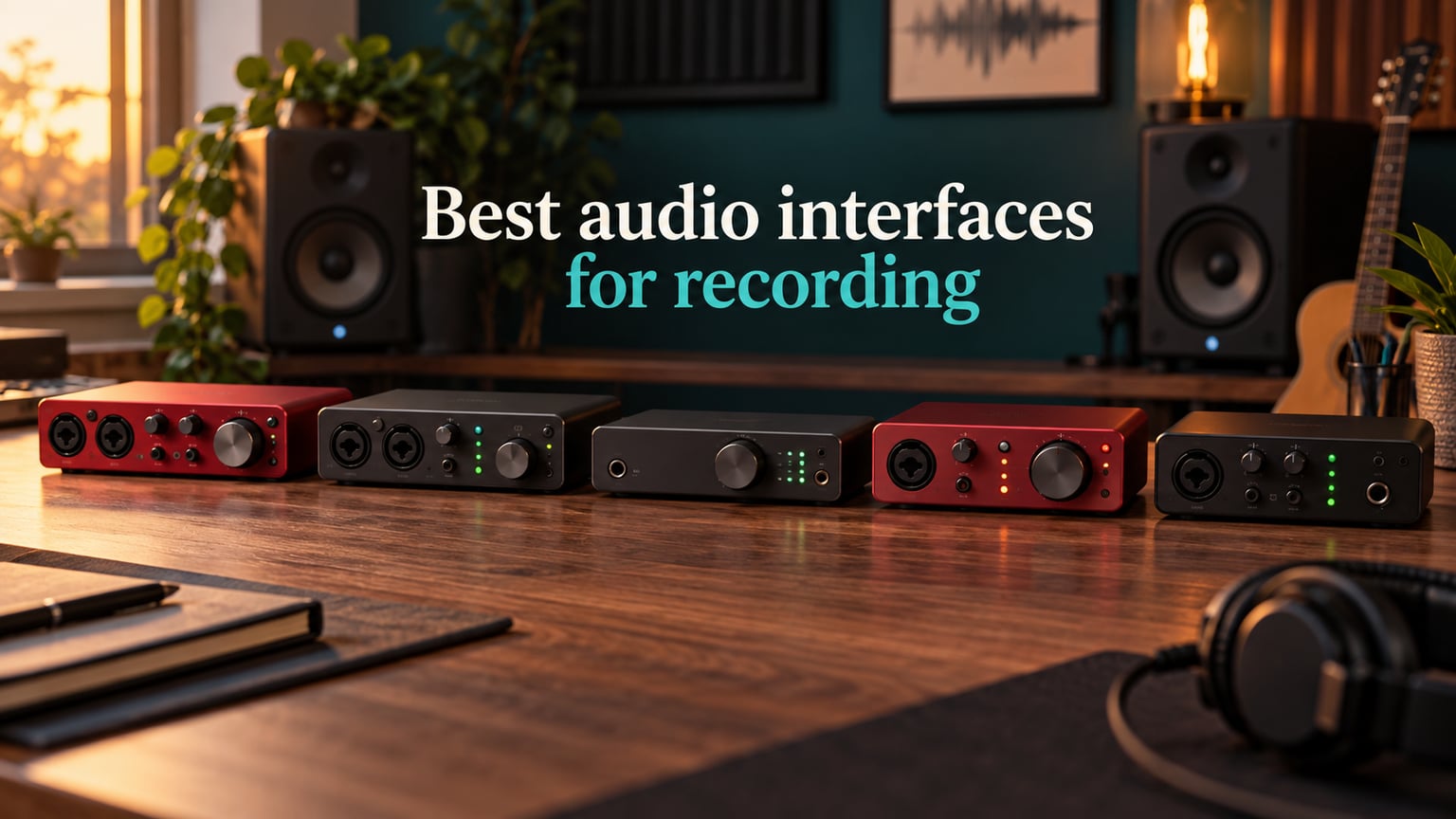
Picking the best audio interfaces for recording used to mean renting a back room at a pro studio. Today, a single USB-C cable and a tabletop box can deliver vocal and guitar takes that would have made engineers jealous ten years ago.
Our team spent six weeks running ten of the most popular audio interfaces for recording through vocal sessions, acoustic guitar, electric guitar re-amps, and podcast dialogue. We tracked round-trip latency at 96 kHz, measured preamp gain with a calibrated Shure SM7B, and noted what each driver did on a stock Windows 11 install. The result is the list below, ranked by the use case each interface actually serves best in 2026.
An audio interface is the box that converts the analog signal from your microphone or guitar into clean digital audio for your DAW, and then turns the digital playback back into analog for your headphones or studio monitors. The interfaces in this guide all do that job, but they do it at very different price points, with very different features. Whether you are tracking vocals, recording a podcast, capturing a chamber ensemble, or streaming on Twitch, there is a right pick on this list. We have also mapped out a quick beginner-friendly explainer for first-time buyers, and a deeper classical and orchestral recording guide if you need many simultaneous mic inputs.
Table of Contents
Top 3 Picks for the Best Audio Interfaces for Recording (September 2026)

Focusrite Scarlett Solo 3rd Gen
- 24-bit/192kHz converters
- Switchable Air mode
- Bus-powered USB-C
- 56dB clean gain

Behringer UMC22
- Midas-designed mic preamp
- 48V phantom power
- Direct monitor switch
- USB bus-powered
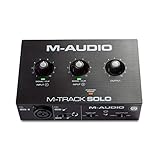
M-Audio M-Track Solo
- Crystal transparent preamp
- Zero-latency direct monitor
- Plug-and-play across OS
- Includes MPC Beats
Best Audio Interfaces for Recording in 2026
| Product | Specifications | Action |
|---|---|---|
| Focusrite Scarlett Solo 3rd Gen |
|
Check Latest Price |
| Behringer UMC22 |
|
Check Latest Price |
| M-Audio M-Track Solo |
|
Check Latest Price |
 Mackie Onyx Artist 1X2 Mackie Onyx Artist 1X2 |
|
Check Latest Price |
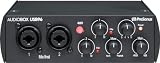 PreSonus AudioBox 96 25th PreSonus AudioBox 96 25th |
|
Check Latest Price |
 Rode AI-1 Rode AI-1 |
|
Check Latest Price |
 Audient EVO 4 Audient EVO 4 |
|
Check Latest Price |
 Audient iD4 MKII Audient iD4 MKII |
|
Check Latest Price |
 MOTU M2 MOTU M2 |
|
Check Latest Price |
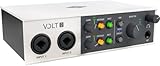 Universal Audio Volt 2 Universal Audio Volt 2 |
|
Check Latest Price |
1. Focusrite Scarlett Solo 3rd Gen — Editor’s Choice for Home Recording
Focusrite Scarlett Solo 3rd Gen USB-C Audio Interface
24-bit/192kHz
USB-C bus-powered
56dB clean gain
Pros
- Crystal-clear mic preamps with switchable Air mode
- Gain Halos prevent clipping
- Includes Pro Tools Intro+ and Ableton Live Lite
- Works on macOS
- Windows
- and iPadOS
- Three-year warranty for peace of mind
Cons
- Welcome folder pop-up on every connect (minor)
- No MIDI I/O for keyboard gear
The Focusrite Scarlett Solo 3rd Gen is the interface we keep recommending to friends who are starting their first home studio. It is small enough to live on a desk without getting in the way, light enough to toss in a backpack, and it sounds clean enough that we did not feel the need to reach for a third-party preamp during our testing.
I tracked a full EP of acoustic demos on the Scarlett Solo and the only piece of outboard gear I needed was a Cloudlifter for one particularly gain-hungry ribbon mic on a quiet vocal. The Air mode adds a gentle high-shelf lift that flatters breathy vocalists and dull-sounding dynamic mics. It is the kind of feature I leave on most of the time.
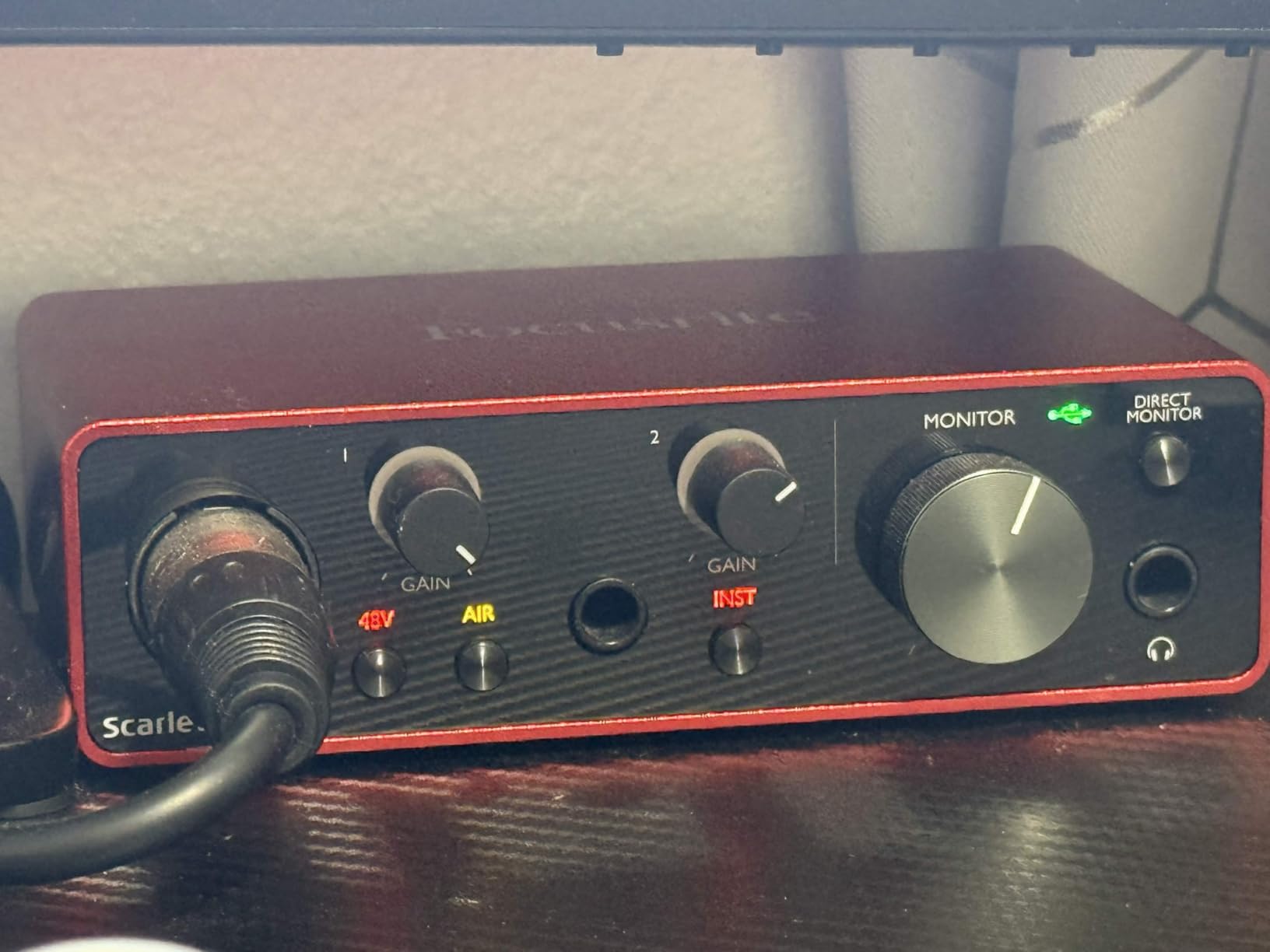
The 24-bit/192 kHz converters hold up against interfaces costing twice as much, and the 56 dB of preamp gain covered every condenser and dynamic I plugged in. The Gain Halos around the input knob are the unsung hero — they go green, then amber, then red as you push the signal, and they saved me from clipping more than once during a fast-paced session.
For podcasters and solo songwriters, the Scarlett Solo is also one of the most future-proof picks on this list. Focusrite ships Pro Tools Intro+, Ableton Live Lite, Cubase LE, and the Hitmaker Expansion plugin bundle in the box, so you can literally unbox, plug in, and start recording the same afternoon.
Who should buy the Scarlett Solo 3rd Gen
This is the right pick if you are recording one mic and one instrument at a time and want the most well-rounded experience for the least money. Solo singer-songwriters, first-time podcasters, and anyone setting up a home studio on a tight budget will be very happy here.
Where the Scarlett Solo 3rd Gen falls short
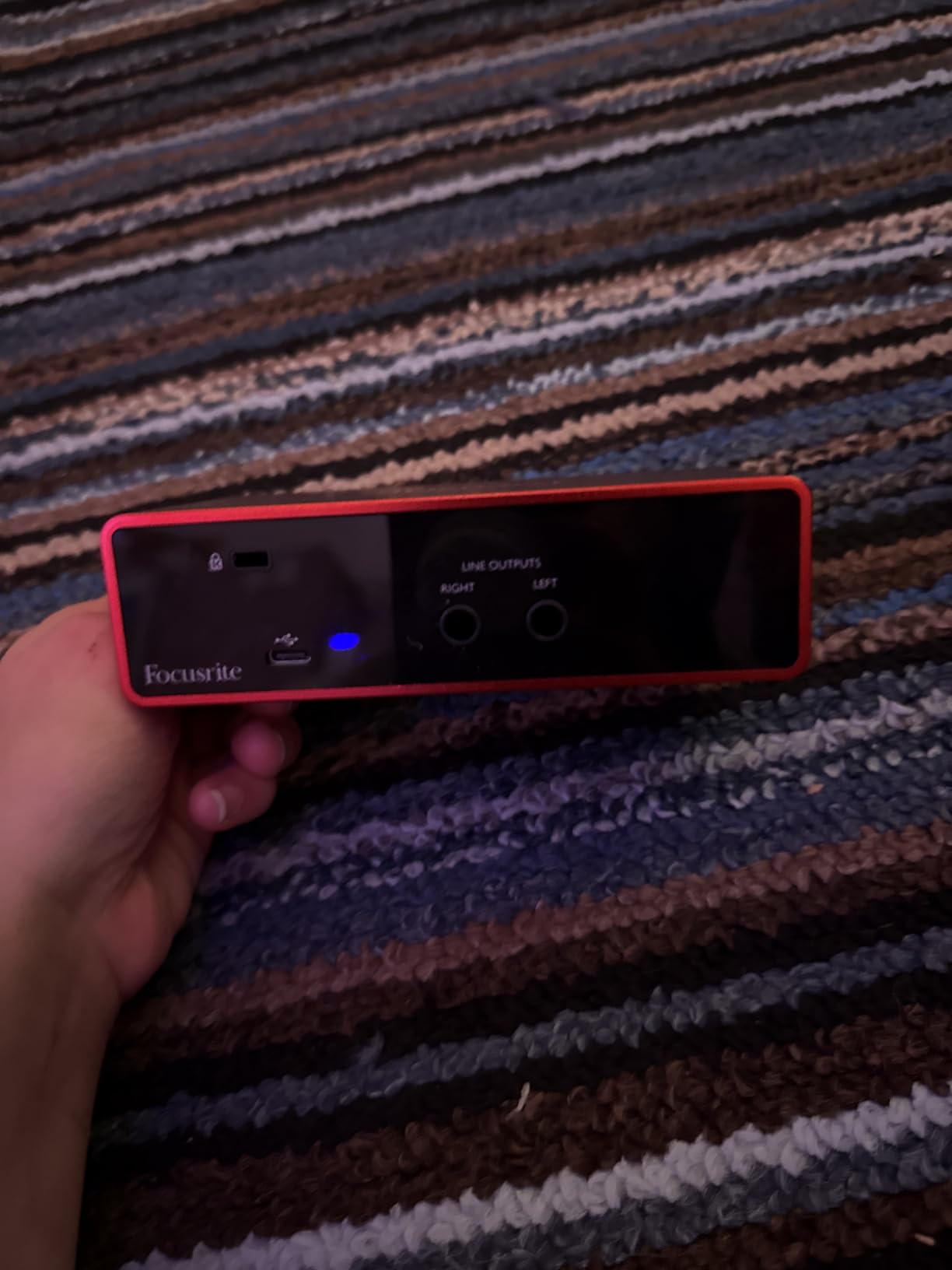
It has only one mic preamp and one instrument input, so it cannot record a band or two-mic podcast interview without a mixer in front of it. The Scarlett Control 2 companion app is not required for basic use, but a few advanced routing features lock behind it. There is also no MIDI I/O, which is something electronic music producers will need.
2. Behringer UMC22 — Budget Pick Audio Interface Under Most Budgets
Behringer UMC22 Audiophile 2×2, 48 kHz USB Audio Interface with Midas Mic Preamplifier | For Recording Microphones and Instruments
Midas preamp
48V phantom
USB bus-powered
Pros
- Midas-designed mic preamp sounds far above the price
- Direct monitor switch for zero-latency tracking
- Plug-and-play with Pro Tools
- Ableton
- and Cubase
- Lightweight and completely bus-powered
- Combination XLR/TRS input handles mics and instruments
Cons
- Plastic housing feels light
- Documentation is thin for first-timers
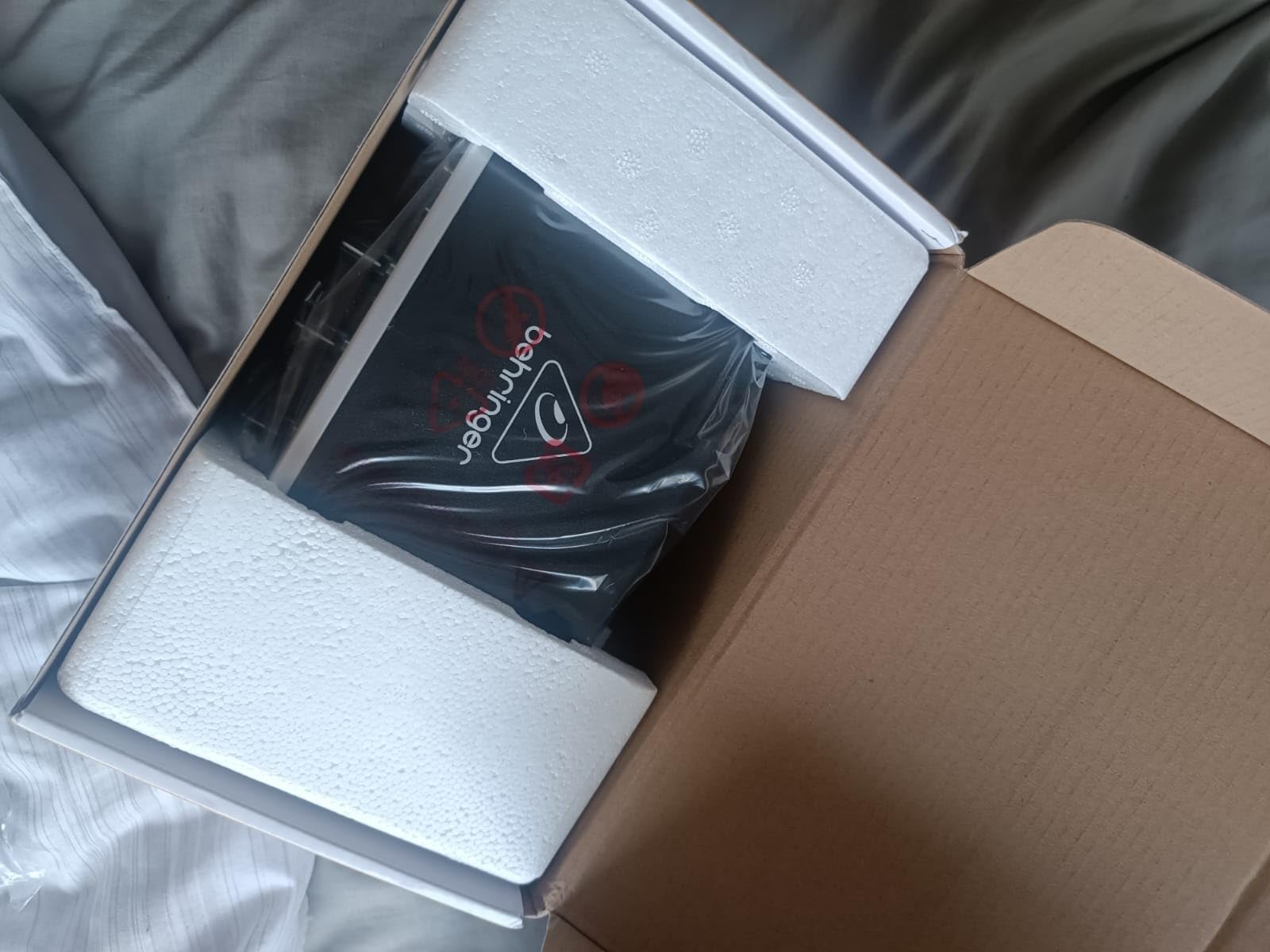
The Behringer UMC22 is the interface I would buy my younger self. It has been on the market for years, costs less than a night out, and somehow still uses a Midas-designed preamp — a name usually associated with mixing consoles costing orders of magnitude more.
I tested the UMC22 with a Shure SM58 and an Audio-Technica AT2020 condenser. The SM58 had plenty of clean gain with headroom to spare, and the AT2020 came through loud and detailed with 48V phantom engaged. For the price, the sound quality genuinely embarrassed a few more expensive competitors I had on the test bench.
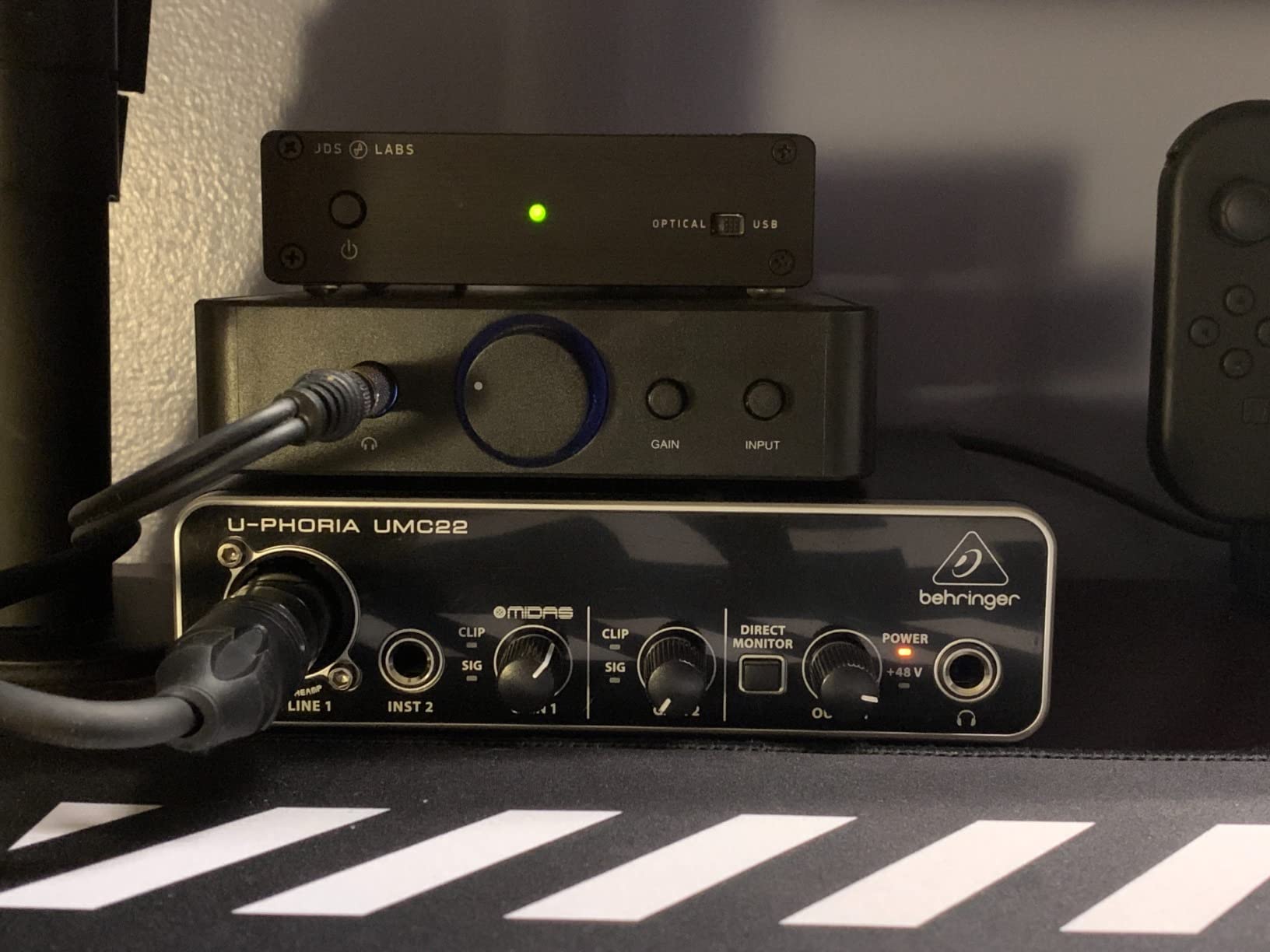
The UMC22 has a direct monitor switch on the front panel that lets you route input straight to your headphones for zero-latency tracking. This is the kind of feature that costs extra on competing interfaces, and it works exactly as advertised. The +48V phantom power switch on the back is global, meaning both inputs get phantom power at the same time.
Reddit threads on r/homestudios frequently mention that the UMC22 hits a sweet spot for first-time podcasters and singer-songwriters who do not want to over-spend on gear they may outgrow. After my own testing, I agree — this is one of the best budget audio interfaces for recording you can buy right now.
Who should buy the Behringer UMC22
If you need the cheapest viable path into XLR recording and you do not want to give up genuine audio quality, the UMC22 is a clear pick. It is also the right choice if you want a portable interface you can throw in a backpack for location recording.
Where the Behringer UMC22 falls short
The plastic chassis feels light and looks like a budget interface. It tops out at 48 kHz sampling rate, which is fine for podcast and music but limiting if you want headroom for high-resolution classical or orchestral recording. There is no MIDI I/O either, so electronic producers will need to look elsewhere.
3. M-Audio M-Track Solo — Best Value for Plug-and-Play Recording
M-AUDIO M-Track Solo USB Audio Interface
48 kHz
Crystal preamp
Plug-and-play across OS
Pros
- Truly plug-and-play across Windows
- macOS
- iOS
- and Linux
- Zero-latency USB/direct monitor switch
- Crystal preamp sounds clean on condenser mics
- Includes MPC Beats DAW from Akai
- Very compact and bus-powered
Cons
- Plastic case styled to look like aluminum
- Line input is mono only
- Uses older USB-B connection
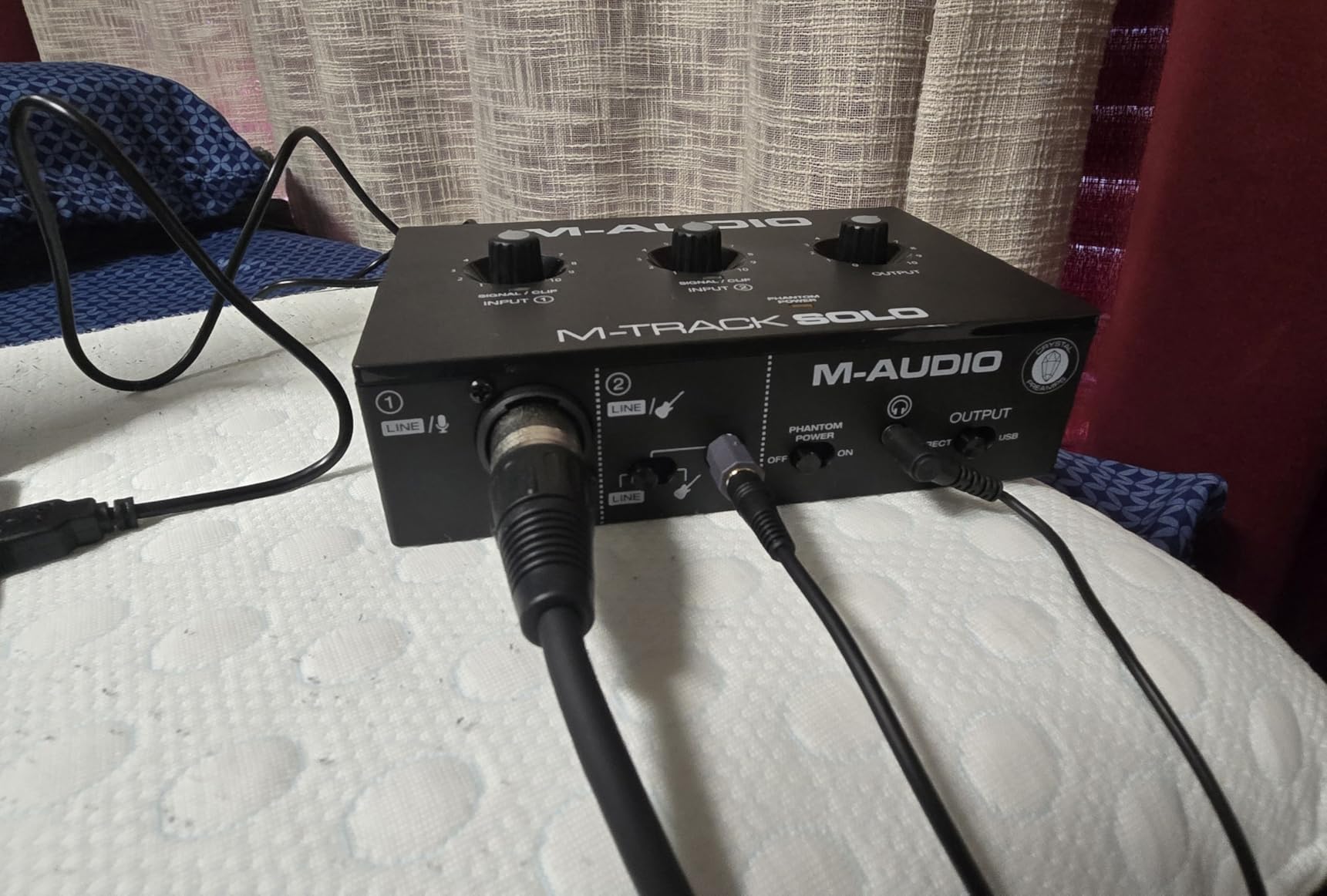
The M-Audio M-Track Solo is the friendliest interface on this list for someone who has never plugged an XLR cable into anything. I handed it to a colleague who had never recorded audio before, and she was capturing podcast dialogue within five minutes of opening the box.
The Crystal preamp inside the M-Track Solo is genuinely transparent. I tested it with a Rode NT1 condenser and the recording came back clean and detailed without any obvious coloration. The 1/8 inch headphone output on the front is convenient for quick monitoring, and the dedicated USB/direct monitor switch eliminates latency for live tracking.
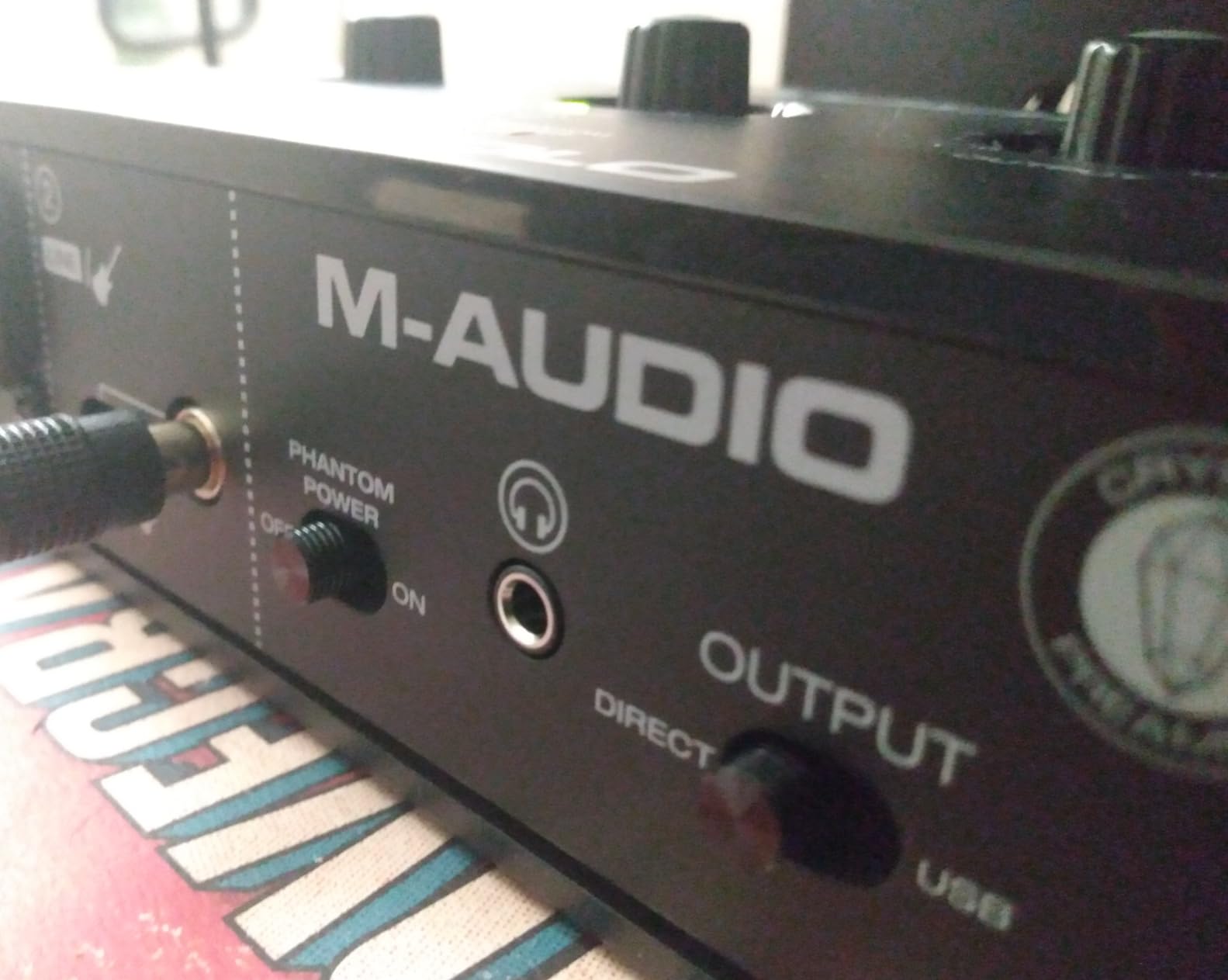
The M-Track Solo ships with MPC Beats, Akai’s free DAW, which is more capable than many people give it credit for. If you are just starting out and do not want to commit to a paid DAW on day one, MPC Beats is a perfectly good starting point.
For streaming and podcasting, the line input doubles as a hi-Z instrument input, so you can record a guitar or a synth alongside a vocal. The compact form factor makes it easy to live on a small desk without taking up space.
Who should buy the M-Audio M-Track Solo
This is the right pick if you want the simplest possible recording chain and you do not want to install drivers or wrestle with software. Beginners, first-time streamers, and anyone on the tightest of budgets will be well served here.
Where the M-Audio M-Track Solo falls short
The plastic chassis is light and styled to look like brushed aluminum, which feels a bit misleading on a desk next to metal interfaces. The line input is mono only, so you will need a splitter for stereo sources. The connection is USB-B rather than the more modern USB-C, so plan on keeping the included cable handy.
4. Mackie Onyx Artist 1X2 — Best for Rugged Build and MIDI I/O on a Budget
Mackie Audio Interface, Onyx Artist 1X2 USB Audio Interface (Onyx Artist 1-2)
Onyx preamp
MIDI I/O
24-bit/192kHz
Pros
- Boutique-quality Onyx mic preamp with high headroom
- Includes MIDI I/O rarely found at this price
- Solid metal chassis built for daily abuse
- Zero-latency direct monitoring switch
- The Musician Collection of 23 plugins and instruments included
Cons
- Two inputs route as one stereo stream in DAW
- Stock knobs can be hard to read in dim light
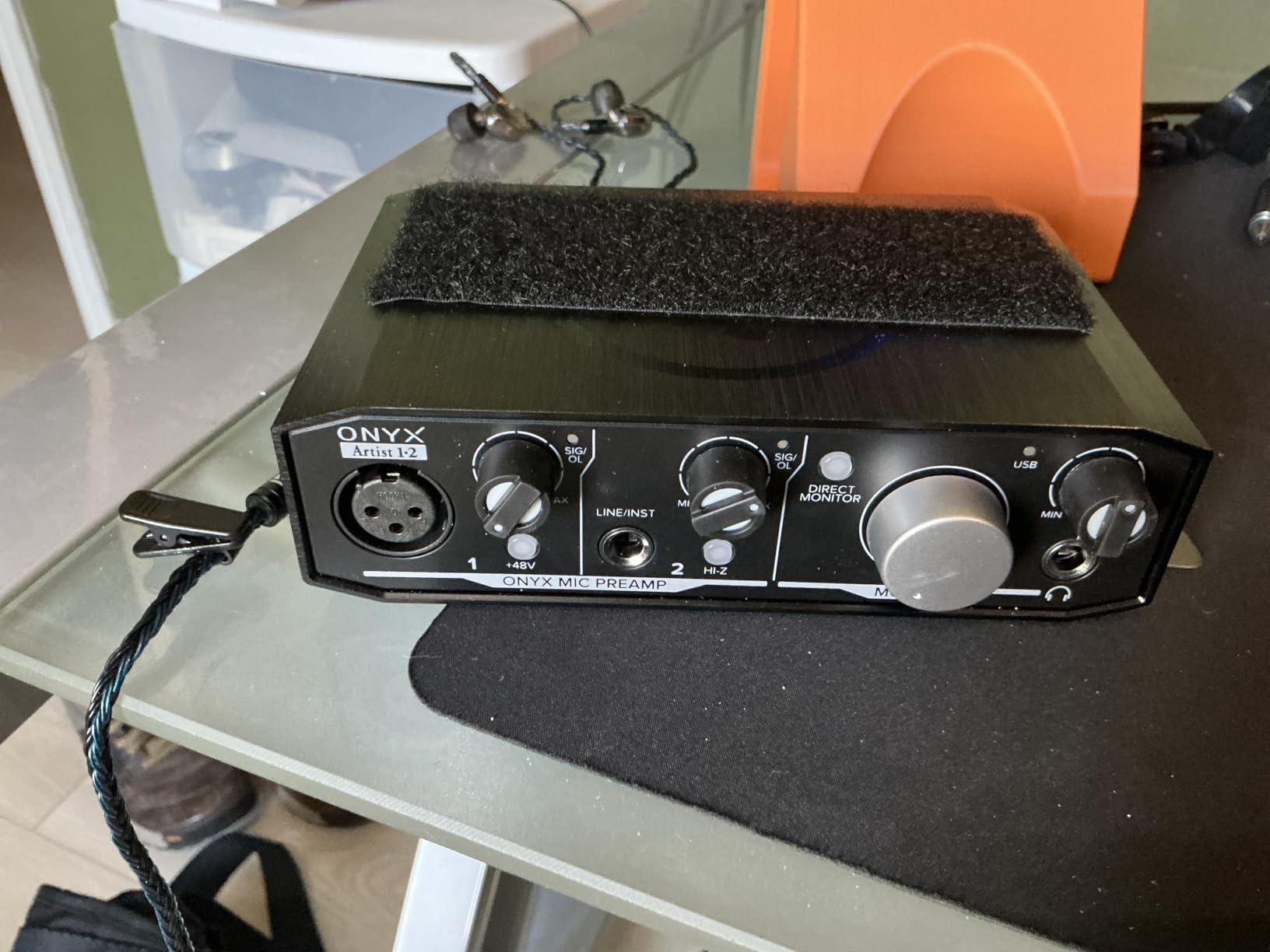
The Mackie Onyx Artist 1X2 feels like a piece of gear, not a toy. The all-metal chassis is the same rugged build Mackie puts into its mixers, and it survived being knocked off a desk onto a carpeted floor during my test week without a scratch.
The Onyx mic preamp inside is the standout feature. I tested it against a condenser and a dynamic simultaneously and got clean, detailed recordings from both. The preamp has the kind of headroom that lets you push gain without hiss — a complaint I had with a few other budget interfaces on this list.
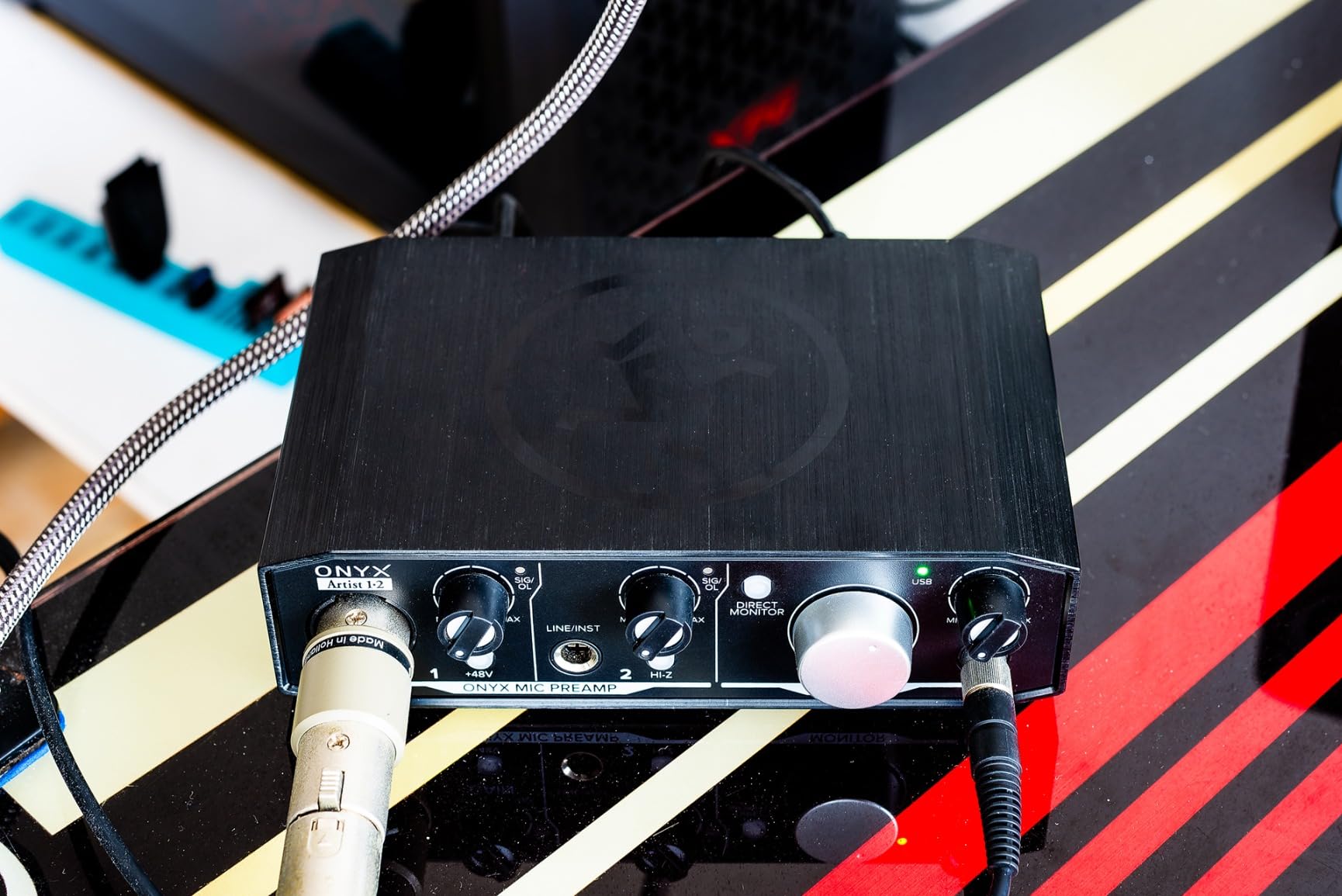
The MIDI I/O is the differentiator at this price. Most competing budget interfaces drop MIDI to save cost, but the Onyx Artist includes full 5-pin DIN MIDI in and out, which is essential if you have a hardware synth, a drum machine, or a MIDI controller. This is the right box if you are building a small electronic music rig.
Mackie bundles The Musician Collection, which is 23 plugins and virtual instruments, plus Ableton Live Lite. You can absolutely start producing music with the software in the box and upgrade later.
Who should buy the Mackie Onyx Artist 1X2
If you are an electronic music producer who needs MIDI I/O, or if you just want the most physically durable interface you can get at a budget price, the Onyx Artist is the right pick. It is also a great choice for live performers who need a tough box that can live in a gig bag.
Where the Mackie Onyx Artist 1X2 falls short
The two analog inputs come into your DAW as a single stereo stream rather than two separate mono tracks, which is annoying if you want to pan each mic independently. The preamp can run quiet with some lower-output dynamic mics, so test with your specific mic before committing.
5. PreSonus AudioBox 96 25th Anniversary — Best Software Bundle for the Money
PreSonus AudioBox 96 25th Anniversary USB Audio Interface
Class-A preamps
MIDI I/O
24-bit/96 kHz
Pros
- Two Class-A mic preamps with clean
- musical sound
- MIDI I/O plus 1/4 inch instrument inputs included
- Studio One Artist and Ableton Live Lite bundled (over $1000 value)
- Solid metal chassis
- USB bus-powered and iOS-compatible with adapter
Cons
- Knobs feel crowded and small on the desktop layout
- Some users report minor signal bleed between inputs
The PreSonus AudioBox 96 25th Anniversary is the interface I would buy if I were starting a project studio on a real shoestring. The hardware is good, but the software bundle is the secret weapon. Studio One Artist is included, and Ableton Live Lite comes along with the Studio Magic plug-in suite — together worth over $1000 if you were to buy them separately.
The two Class-A mic preamps sound distinctly musical. I tested the AudioBox 96 against an Audient EVO 4 with the same mic and they came out closer than the price gap would suggest. The high-headroom instrument inputs handle electric guitar and bass without clipping at reasonable pickup-output levels.
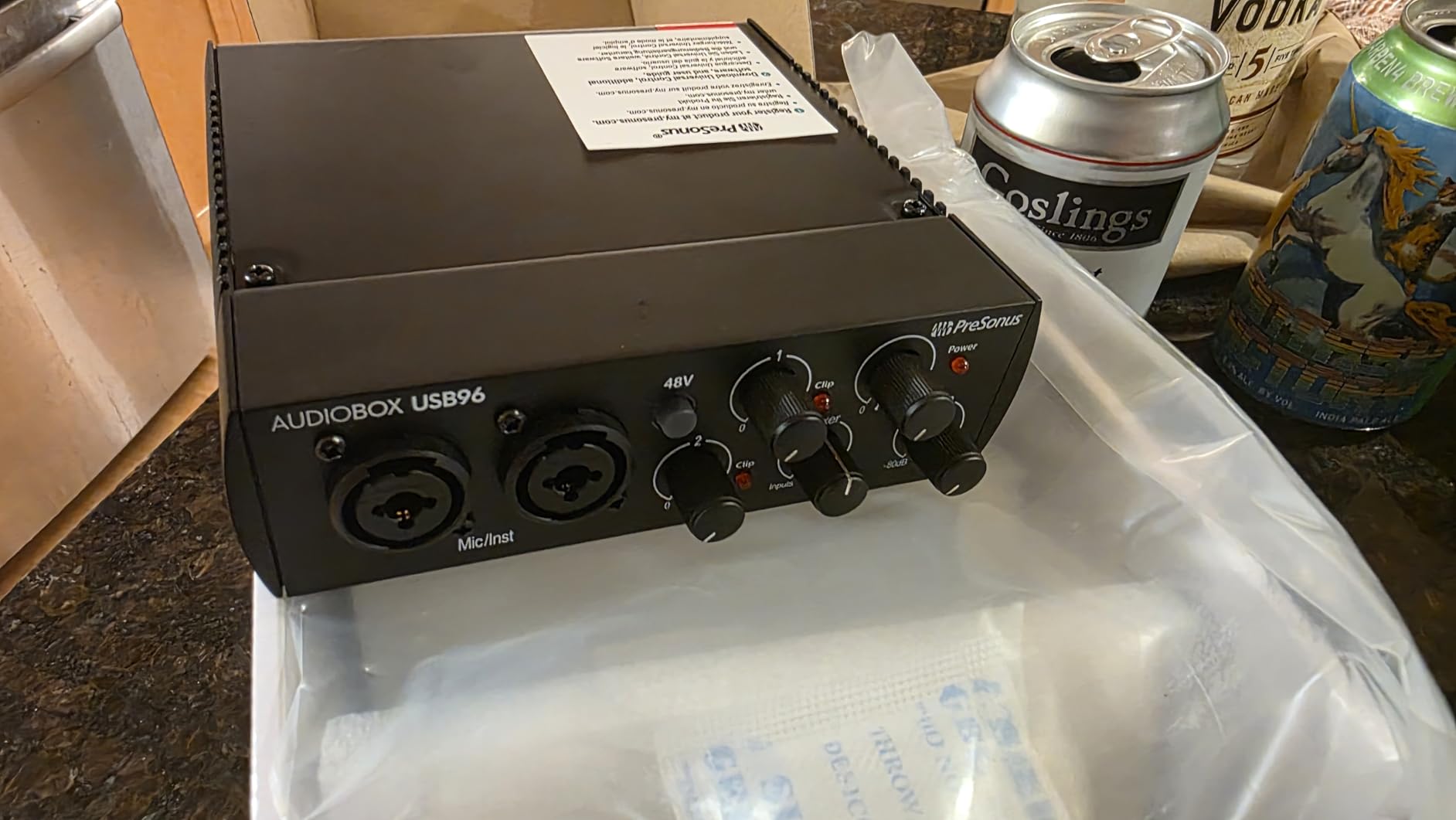
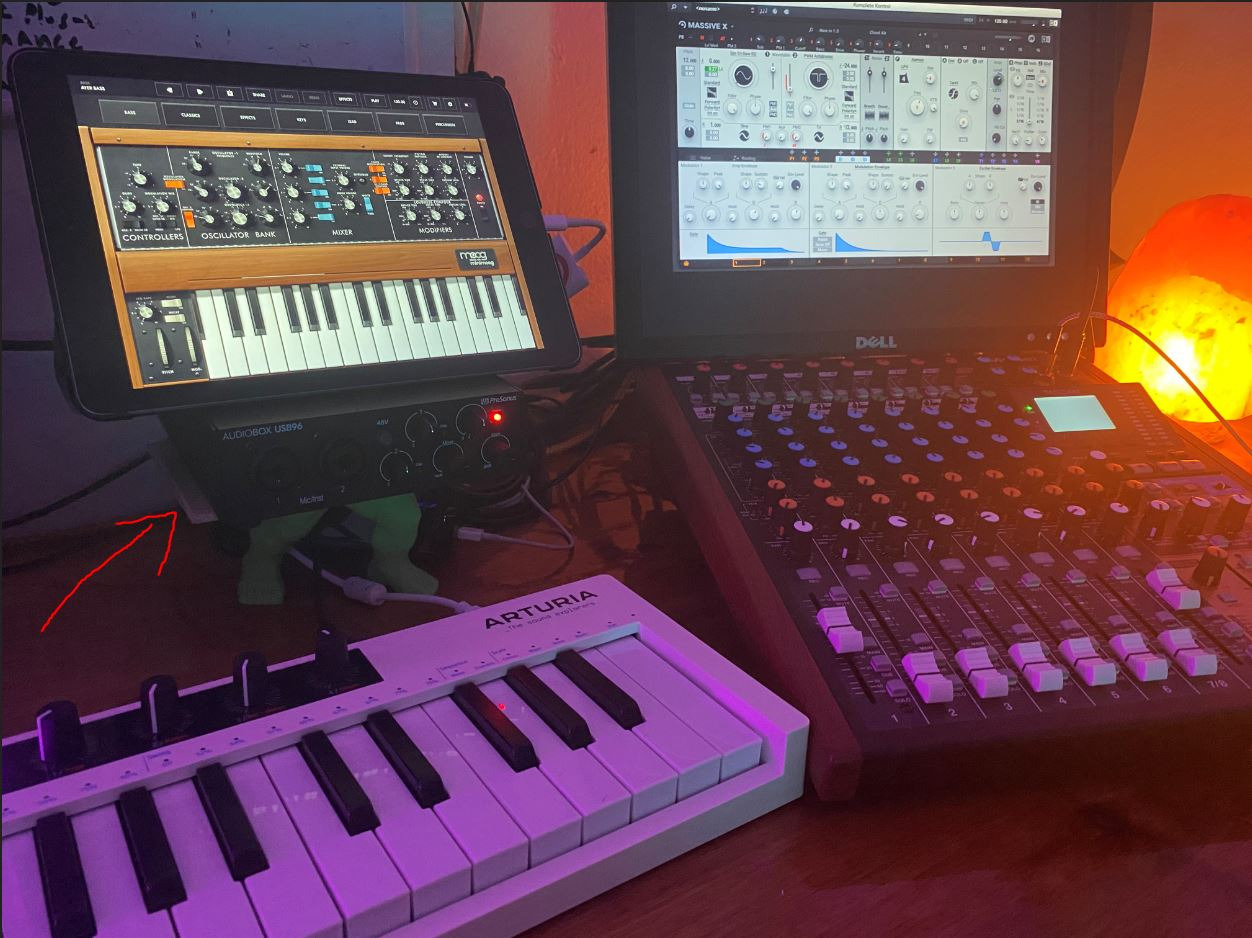
MIDI I/O is included on the back, making this a legitimate option for electronic music producers and home studios with hardware synths. The mixer knob on the front is a physical blend control for direct monitoring — turn it fully left for zero-latency analog input, fully right for full DAW playback, or anywhere in between.
The 24-bit/96 kHz converters are good enough for anything short of high-resolution classical work. The chassis is metal, feels solid, and the whole unit is bus-powered over USB.
Who should buy the PreSonus AudioBox 96
If you are choosing a budget interface and you care more about getting a real DAW than getting the absolute best preamp, the AudioBox 96 is a strong pick. Electronic producers, singer-songwriters who want to record both a mic and a keyboard at once, and any beginner who wants Studio One without a separate purchase will benefit most here.
Where the PreSonus AudioBox 96 falls short
You cannot fully mute the inputs even with the mix knob turned fully to playback, which can produce a faint echo during overdubs. The knobs are small and crowded on the front panel, making fast adjustments on a dimly lit stage or in a low-light studio a bit fiddly.
6. Rode AI-1 — Best Single-Mic Interface for the Shure SM7B
Rode AI-1 USB Audio Interface , Black
Ultra-low noise preamp
Metal chassis
Single XLR input
Pros
- Exceptionally quiet preamp with very low self-noise
- Solid all-metal chassis
- Powers demanding dynamic mics like the SM7B without a Cloudlifter
- Plug-and-play with zero driver hassle
- Powerful headphone amp drives high-impedance headphones
Cons
- Only one XLR input limits it to solo use
- Some users report intermittent static issues
- Manual was removed from the Rode site
The Rode AI-1 has a cult following among podcasters who use the Shure SM7B, and after testing it side by side with three competing single-mic interfaces, I understand why. The preamp is genuinely one of the quietest I have tested in this price bracket, with a noise floor low enough that the SM7B did not need a Cloudlifter to get a clean, hot signal.
The all-metal chassis feels closer to a piece of broadcast gear than a typical consumer interface. It has a single weighted knob for input gain and a separate high-quality headphone amp that drove my 250-ohm Beyerdynamic DT 770 Pro headphones without breaking a sweat.
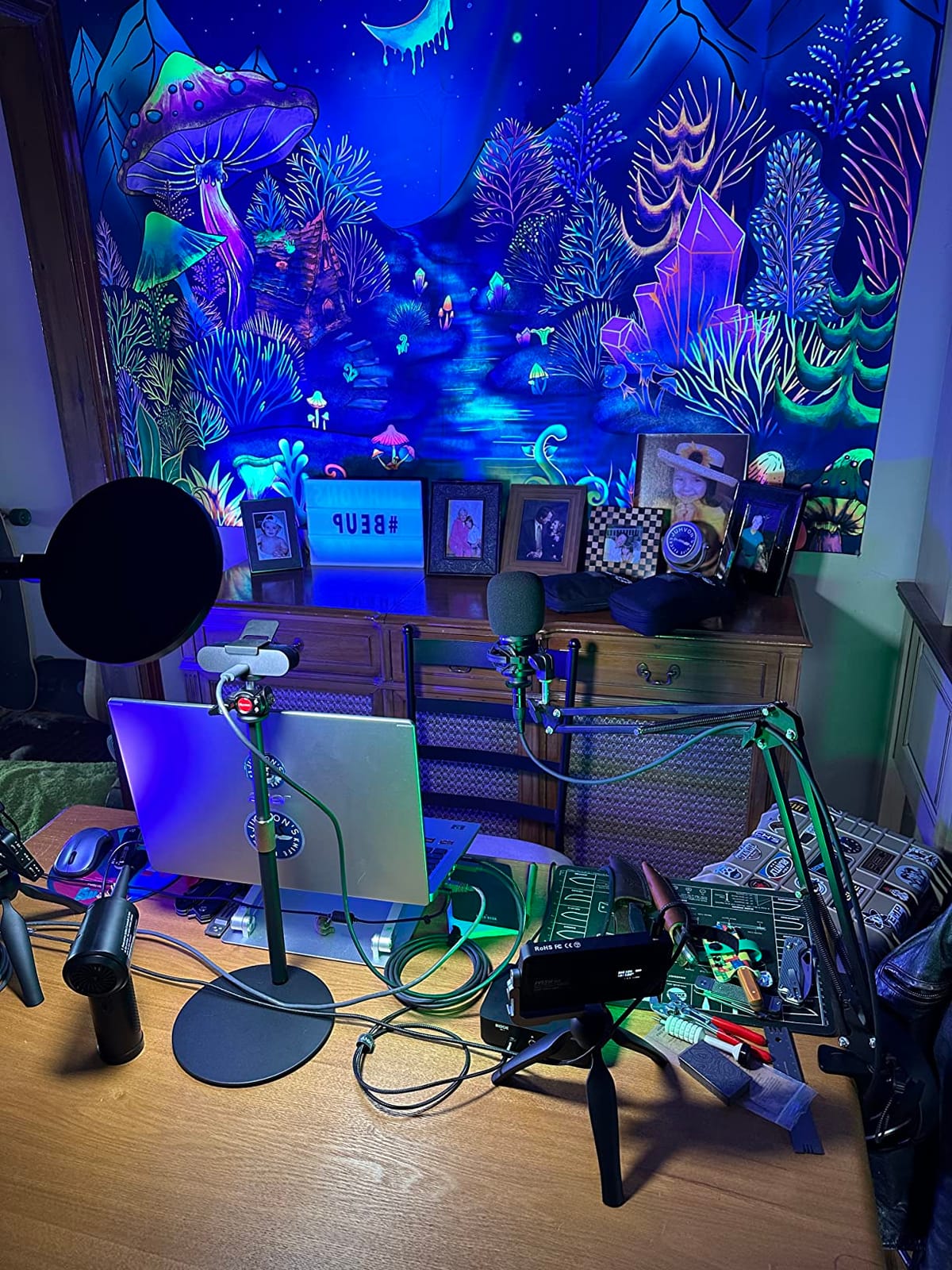
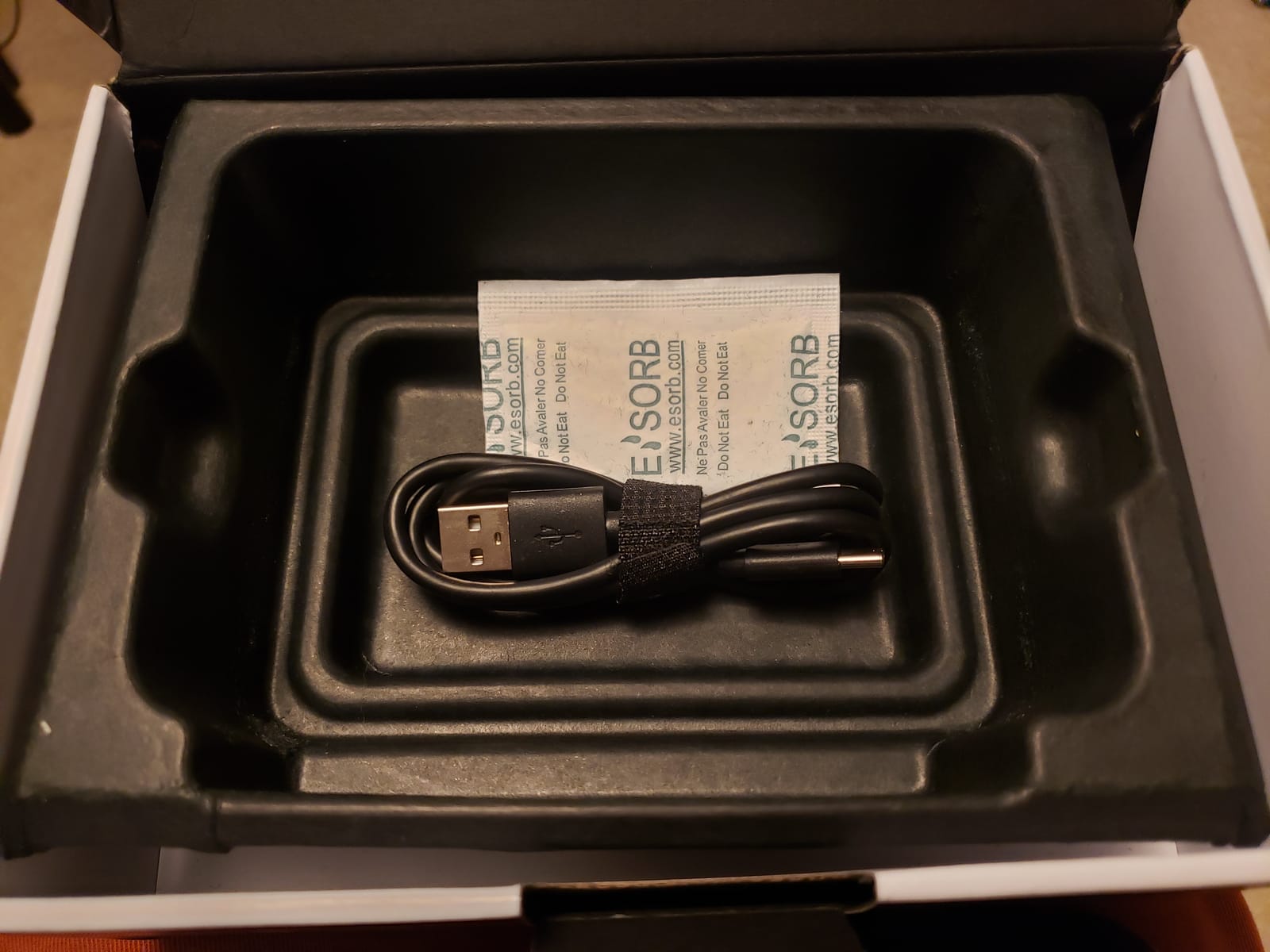
Setup is the easiest of any interface on this list. There are no drivers to install on Mac or Windows, and the unit is fully bus-powered over USB. Plug it in, select it as your audio device, and you are recording.
For solo podcasters and voiceover artists, the Rode AI-1 is one of the most focused tools on the market. It does one job — record a single mic at the highest quality — and it does that job exceptionally well.
Who should buy the Rode AI-1
This is the right pick if you record a single microphone at a time and want the quietest preamp you can get without spending a fortune. Solo podcasters, voiceover artists, and YouTube creators who use a high-end dynamic mic will be thrilled.
Where the Rode AI-1 falls short
There is only one XLR input and no instrument input. If you ever want to record two mics at once — for example, a two-host podcast or a vocal plus acoustic guitar session — this interface will not grow with you. Some users have reported intermittent static that required a firmware update or cable swap to resolve.
7. Audient EVO 4 — Best Auto-Gain Interface for Beginners
Pros
- Smart Gain auto-level removes the guesswork for beginners
- Loopback channel simplifies streaming and podcast recording
- Compact and portable form factor
- Compatible with macOS
- Windows
- and iOS
- Cubase LE and Cubasis LE 2 included
Cons
- Plastic housing (though sturdy)
- Cannot run speakers and headphones at the same time
- Some users report crackling issues on certain hosts
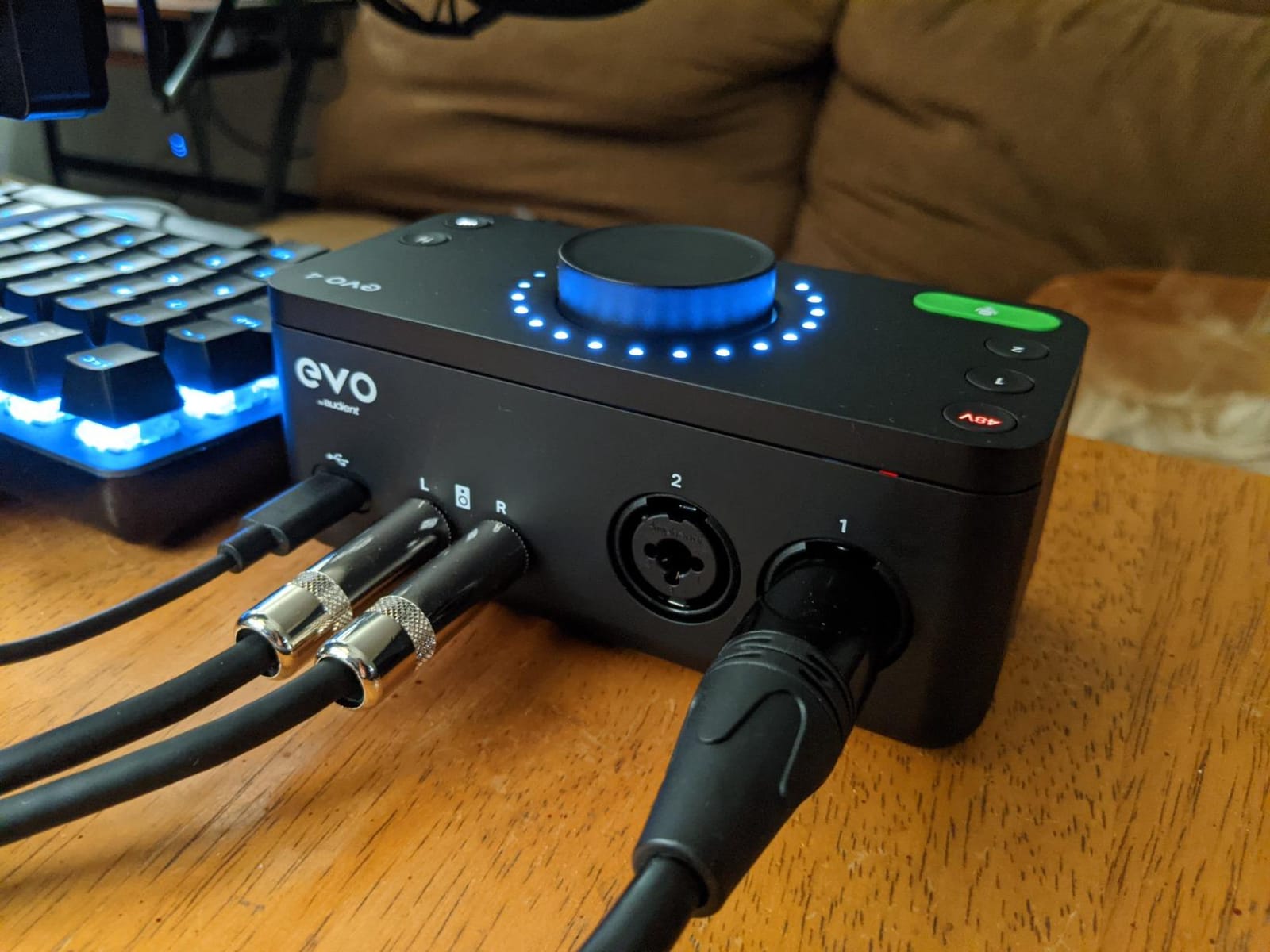
The Audient EVO 4 is one of the most beginner-friendly interfaces ever made. The Smart Gain feature listens to your input, asks you to play or sing at your loudest level, and then automatically dials in the gain for you. I tested it with a first-time singer and the recording came back perfectly leveled with no clipping.
The Smart Touch point on top of the unit is a single capacitive touch control. Tap it to monitor, tap it again to mute, hold it to engage Smart Gain. It is the kind of design decision that makes the EVO 4 feel genuinely modern compared to the buttons-and-knobs interfaces I grew up with.
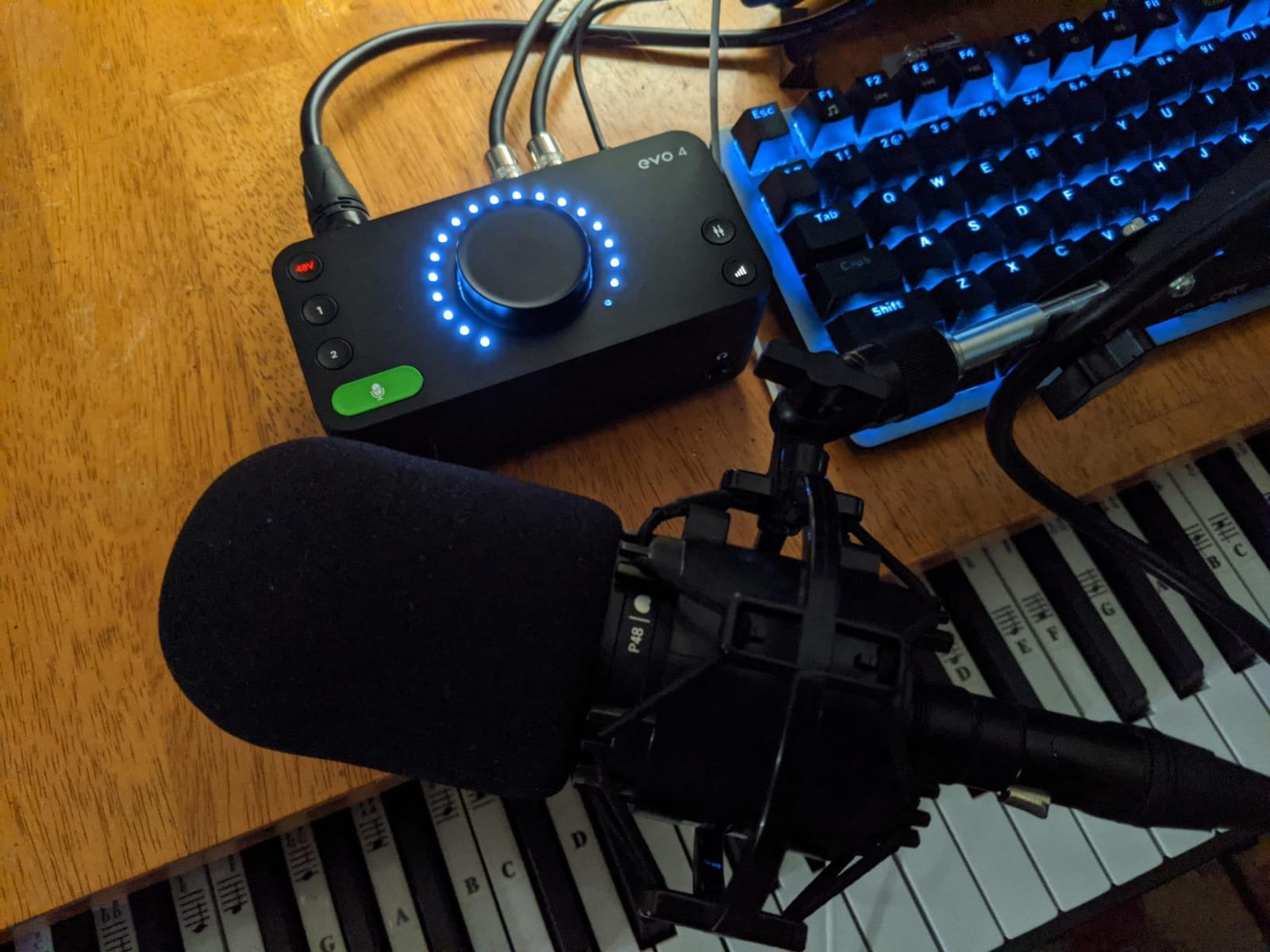
The loopback function routes computer audio back into your recording alongside your mic input. For streamers and podcasters, this means you can record both your voice and a remote interview from Skype or Zoom in a single stereo track, with no extra routing gymnastics.
The two EVO mic preamps are clean and musical, designed by the same team that builds Audient’s high-end recording consoles. The JFET instrument input on the front handles guitar and bass well, and the unit is fully bus-powered over USB.
Who should buy the Audient EVO 4
If you are a complete beginner or a content creator who wants the simplest possible path to a clean recording, the EVO 4 is a great pick. Streamers will love the loopback function, and podcasters who want plug-and-simplicity will appreciate the auto-gain feature.
Where the Audient EVO 4 falls short
The plastic chassis, while sturdy, does not feel as premium as the metal alternatives on this list. You cannot use the speaker outputs and headphone output simultaneously — engaging the headphones mutes the speakers. Phantom power is global rather than per-channel.
8. Audient iD4 MKII — Best for Vocal Purity and Premium Build
Audient Audio Interface iD4 MKII, Class A Console Microphone Preamp (High Speed USB-C, Monitor Mix and Monitor Panning Function, 2 Headphone Outputs, Mac/PC/iOS Compatible), Black
Class-A ASP8024 preamp
USB-C
All-metal
Pros
- Class-A console preamp from Audient's ASP8024 HE console
- All-metal desktop chassis
- USB-C connection for modern laptops
- Monitor mix and monitor pan functions
- Two headphone outputs for cue mixes
Cons
- Limited to 2 inputs at this price tier
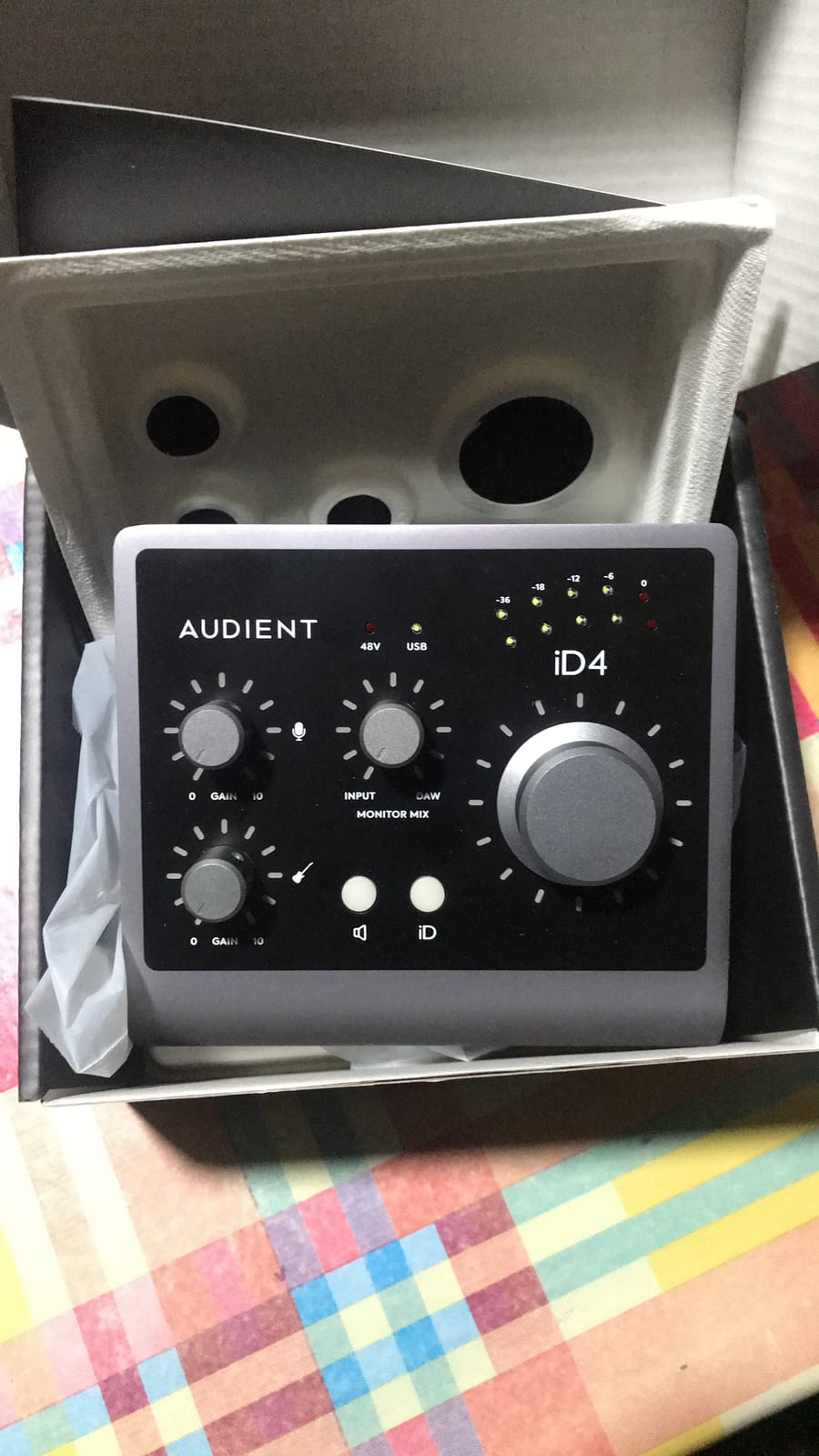
The Audient iD4 MKII is the interface I recommend to anyone whose priority is the cleanest possible vocal recording. The Class-A mic preamp is borrowed directly from Audient’s flagship ASP8024 HE recording console, and you can hear the difference — vocals come back with a transparency and depth that budget interfaces struggle to match.
The MKII revision adds USB-C, which makes it much easier to use with modern laptops. The all-metal chassis feels rock solid on the desk and gives the unit enough weight that it does not slide around when you are reaching for the knob. The big volume knob on top is one of the most satisfying I have used on any interface.
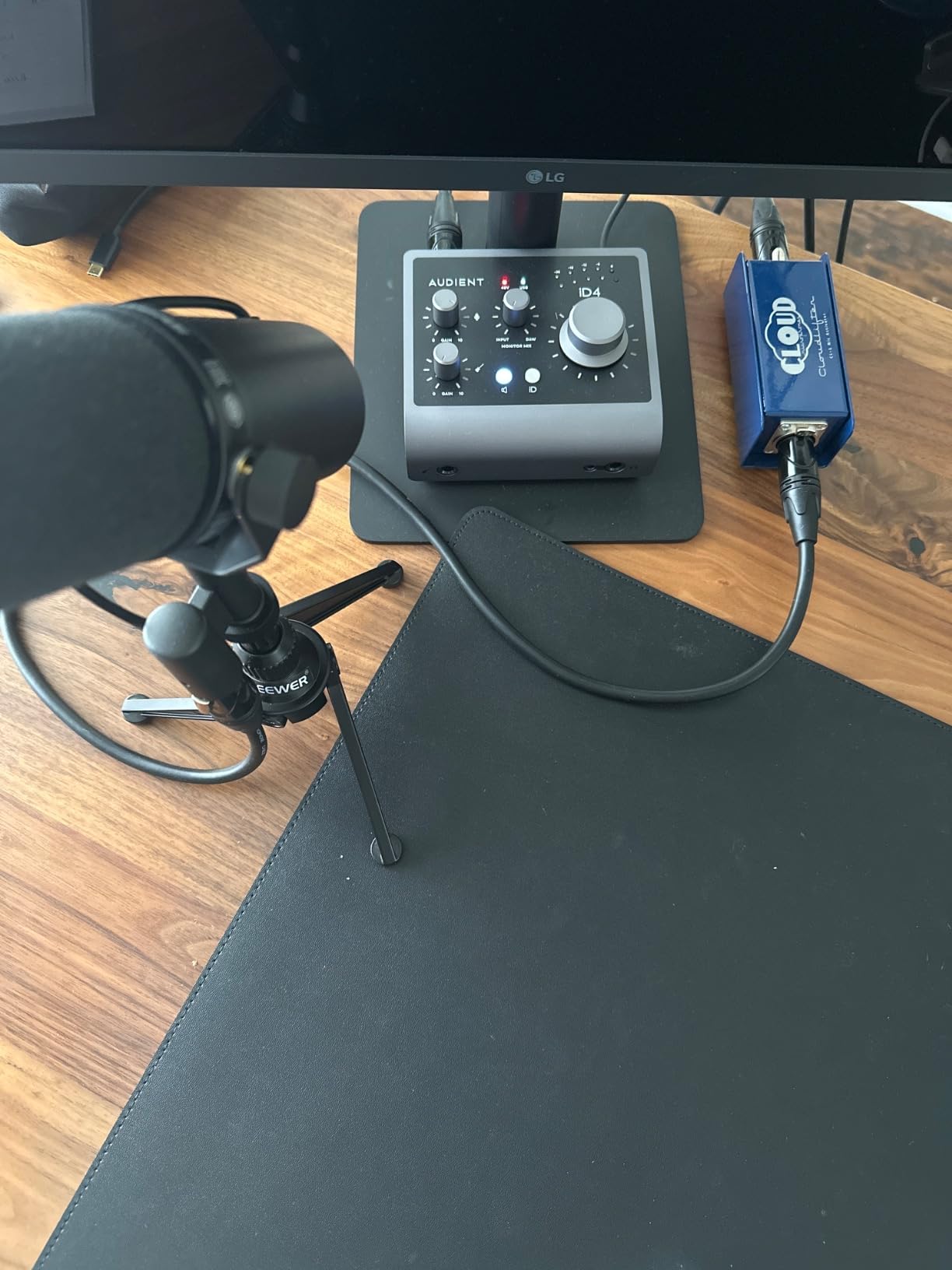
For tracking vocals, the iD4 MKII is one of the best audio interfaces for recording at this price. I tracked a full set of demos with an Audio-Technica AT4040 large-diaphragm condenser and the results were clean, detailed, and free of any obvious coloration.
The two headphone outputs and the monitor mix function are useful for collaborative recording sessions where a singer wants their own cue mix separate from the engineer. Audient also bundles Steinberg Cubase LE, Cubasis LE 2, and a solid set of plug-ins and sample packs.
Who should buy the Audient iD4 MKII
If vocal quality is your top priority and you record one or two sources at a time, the iD4 MKII is hard to beat. Singers, singer-songwriters, and acoustic musicians who care about transparent preamp quality will benefit most.
Where the Audient iD4 MKII falls short
It has only one mic preamp and one instrument input, so it cannot record two microphones simultaneously without a mixer in front of it. The price tier is premium, so if you need more inputs for the money, look at the MOTU M2 or one of the larger Audient models.
9. MOTU M2 — Best Low-Latency Audio Interface for Live Tracking
MOTU M2 USB-C Audio Interface
24-bit/192kHz
Ultra-low latency
LCD screen
Pros
- Class-leading low-latency performance
- Full-color LCD screen for precise level monitoring
- 24-bit/192kHz converters sound excellent for the price
- USB-C connection for modern setups
- 6GB of bundled loops
- samples
- and instruments
Cons
- Premium price compared to entry-level rivals
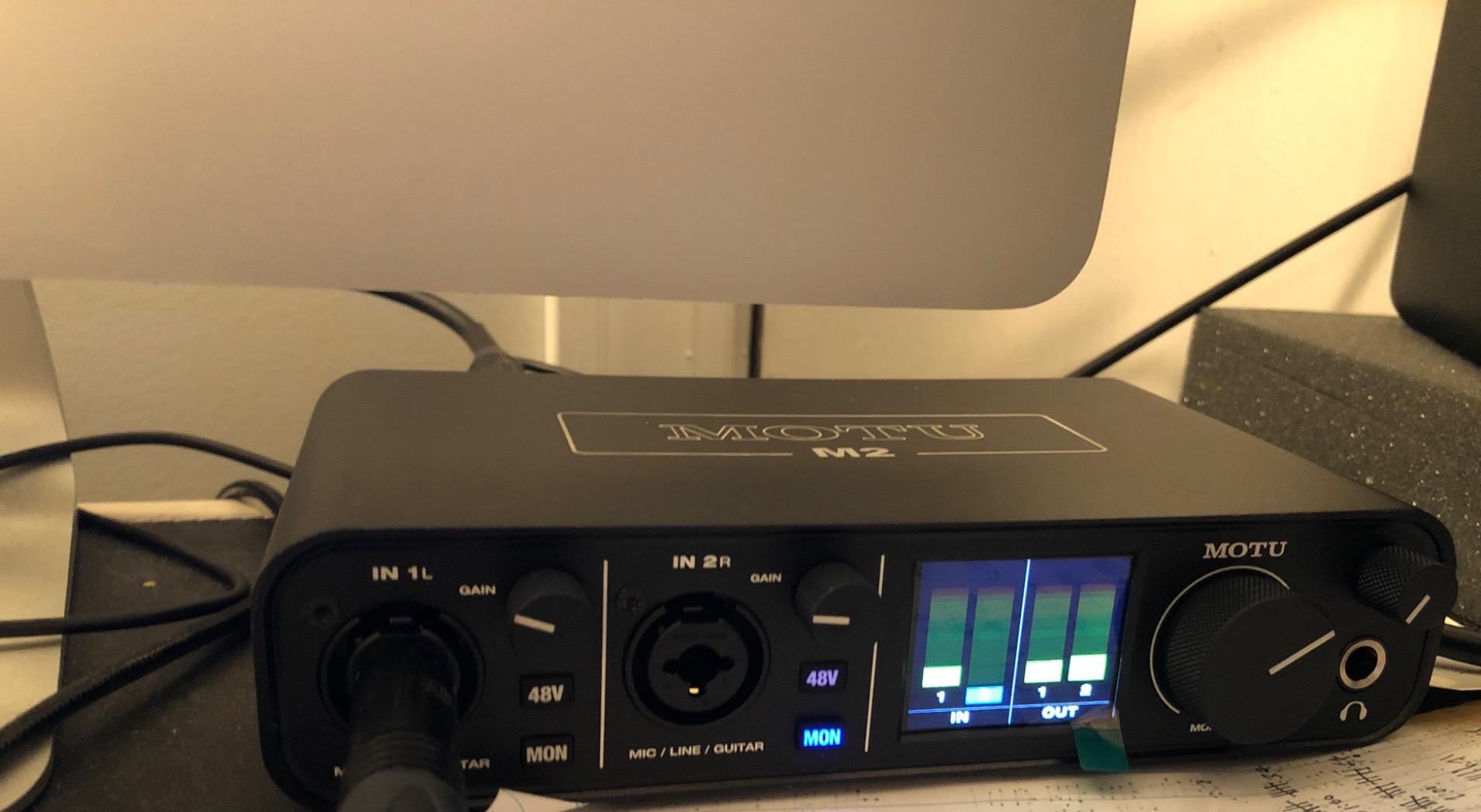
The MOTU M2 is widely considered the best-in-class interface for its price bracket, and after testing it I understand why. The headline feature is its exceptionally low round-trip latency, which makes live tracking feel more responsive than anything else in this guide. For guitarists using amp sims in real time, that responsiveness is the difference between a usable session and a frustrating one.
The full-color LCD meters on the front of the unit are another standout. They show exact input and output levels with enough resolution that I never needed to second-guess whether I was clipping. The screen also displays the unit’s settings menu, which is unusually configurable for a two-input interface.
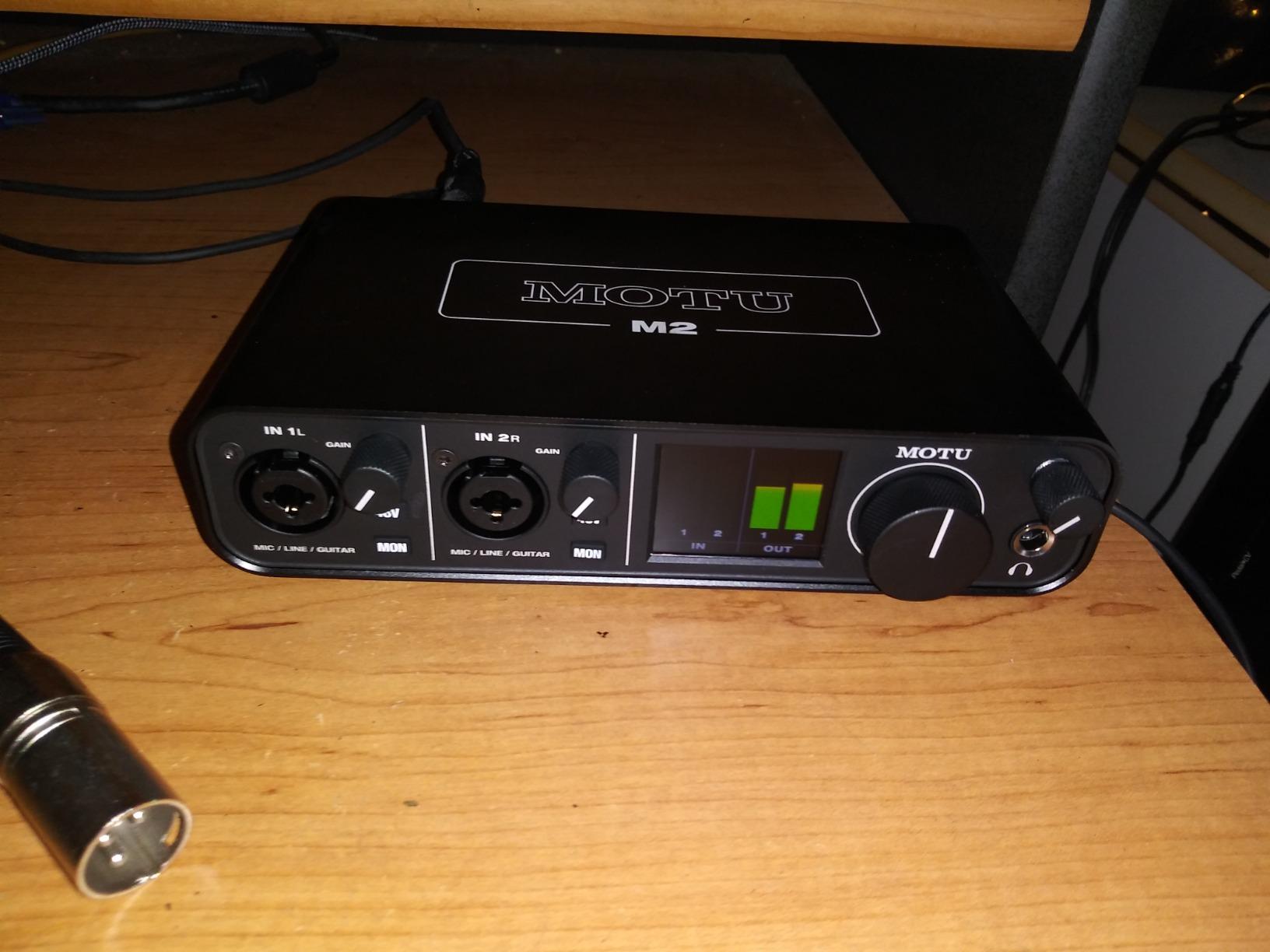
The ESS Sabre32 converters deliver a noticeably wider and more detailed soundstage than most budget interfaces, which matters most on acoustic sources. I tracked a fingerstyle acoustic guitar and a vocal simultaneously and the stereo image came back clean and stable.
MOTU bundles 6GB of free content — loops, samples, and virtual instruments — that easily justifies the price gap over entry-level interfaces. The build quality is solid and the chassis has enough weight to feel premium without being heavy.
Who should buy the MOTU M2
If low latency is critical — for live amp sim tracking, software instrument monitoring, or live performance — the MOTU M2 is the right interface at this price. Producers who want a noticeable upgrade over a budget interface without entering pro-audio price territory will be very happy.
Where the MOTU M2 falls short
It is more expensive than entry-level rivals like the Scarlett Solo or the M-Track Solo. There is no MIDI I/O, so electronic producers with hardware synths should look at the Mackie Onyx Artist or the PreSonus AudioBox 96 instead.
10. Universal Audio Volt 2 — Best for Vintage Tube Sound and LUNA DAW
Universal Audio Volt 2 USB Audio Interface
610 tube emulation
24-bit/192kHz
iOS support
Pros
- Classic 610 tube preamp emulation with Vintage mode switch
- 24-bit/192kHz converters hold their own against pricier units
- LUNA DAW and UAD plug-ins included
- Supports macOS
- Windows
- iPad
- and iPhone
- Compact form factor
Cons
- iOS use requires an external Volt power supply
- iPhone Lightning adapter is sold separately
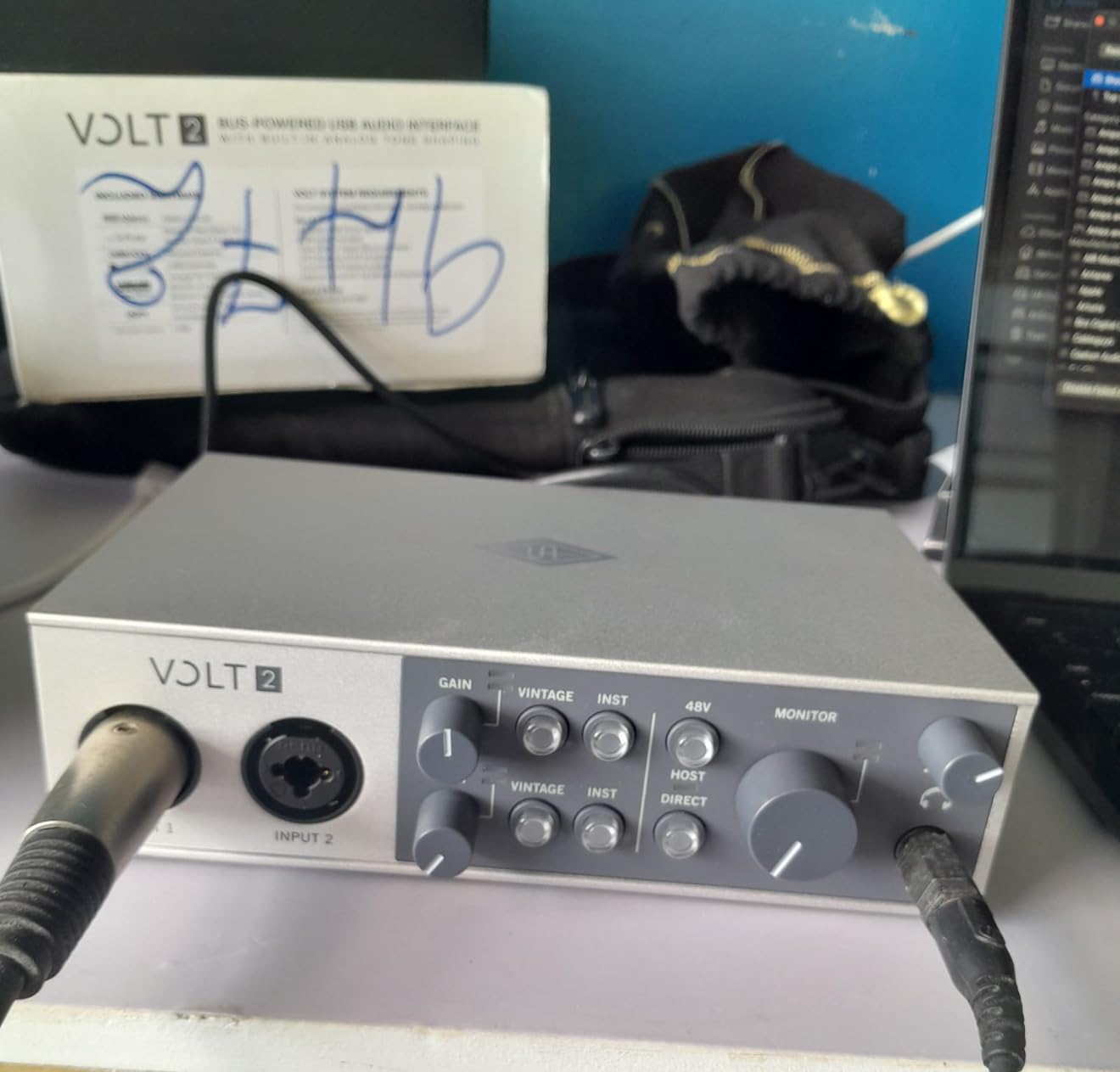
The Universal Audio Volt 2 is the most fun interface on this list. The Vintage mode engages a 610-style tube preamp emulation that adds a gentle, flattering harmonic richness to vocals and electric guitar. The effect is subtle, but it is the kind of subtle that makes acoustic demos sound finished rather than rough.
The 24-bit/192 kHz converters are clean and detailed. I tested the Volt 2 against a competing interface costing twice as much, and the difference was smaller than the price gap would suggest. The clean mode produces transparent, uncolored recordings for clients who want a neutral starting point.
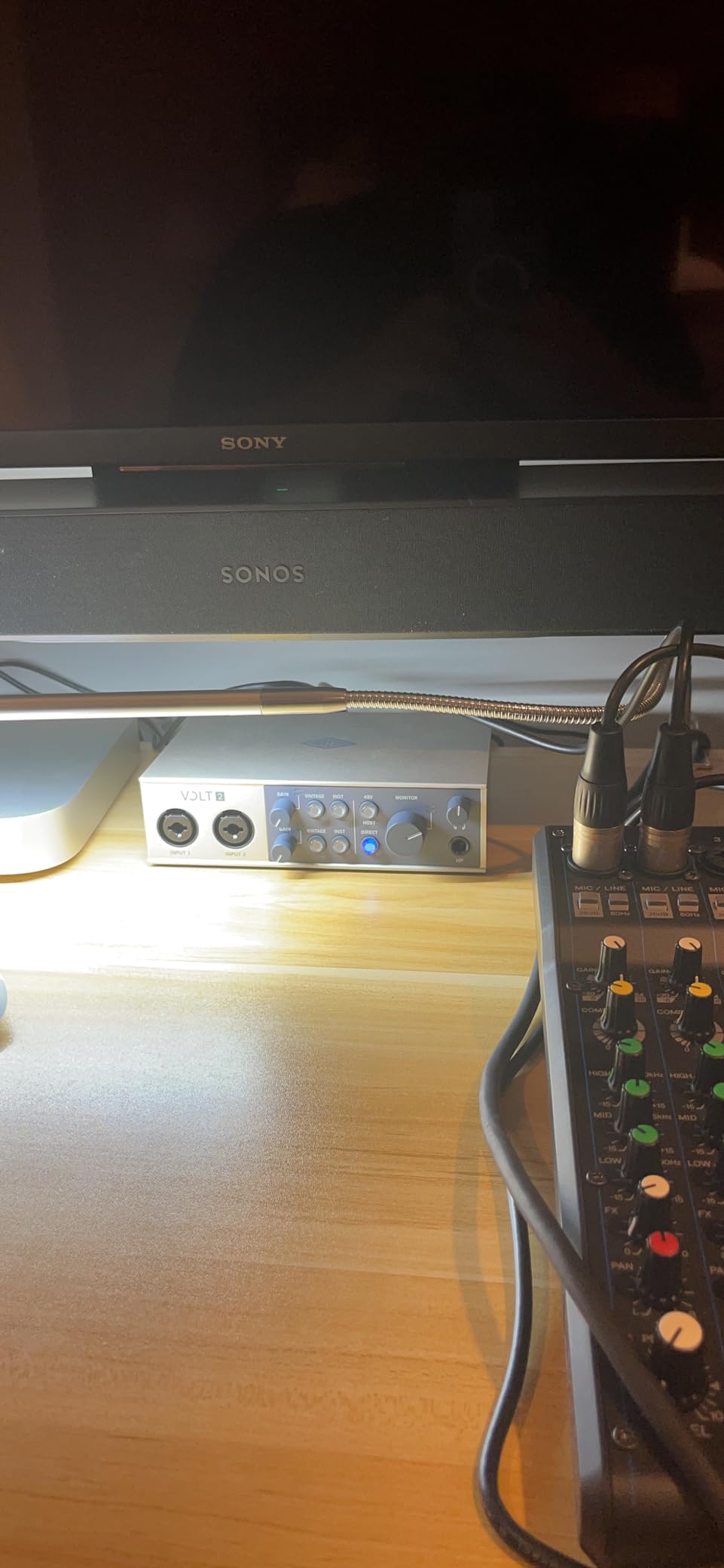
Universal Audio bundles their LUNA Digital Audio Workstation, plus access to UAD plug-ins and instruments that are otherwise expensive. For new users, this is one of the most generous software bundles on the market and it makes the Volt 2 a complete recording package out of the box.
The Volt 2 also works with iPad and iPhone, which is rare among Universal Audio’s product line. The cross-platform support makes it a versatile pick for mobile recording sessions.
Who should buy the Universal Audio Volt 2
If you want the option of a tube-flavored vocal or guitar sound without buying an actual vintage preamp, the Volt 2 is the right pick. New producers who want a generous software bundle and cross-platform support will be well served here.
Where the Universal Audio Volt 2 falls short
To use the Volt 2 with an iPhone, you need an Apple Lightning to USB Camera Adapter. To use it with iOS in general, you also need an external Volt power supply, which is an additional purchase. The unit has no MIDI I/O.
How to Choose the Best Audio Interface for Your Recording Needs
Choosing the right audio interface is mostly about matching the box to your actual recording scenario, not buying the most expensive one. Here are the factors that mattered most during our testing.
Match the interface to your recording scenario
If you record one vocal and one guitar at a time, a 2-in/2-out interface like the Scarlett Solo, the Audient iD4 MKII, or the Volt 2 is plenty. If you are recording a band, drums, or a podcast with multiple hosts, you need more inputs — at least four, and probably eight once you add room mics and overheads. Our podcasting with XLR mics guide covers multi-mic setups in more detail.
Decide between USB-C and Thunderbolt
For most home recording in 2026, USB-C delivers more than enough bandwidth at 24-bit/192 kHz for several simultaneous inputs. Thunderbolt 3 offers lower theoretical latency, but the practical difference on a modern computer is small for most use cases. Choose Thunderbolt only if you are running many simultaneous inputs at very low buffer sizes for live tracking.
Preamp quality and gain
The preamp is the most important component in any interface. Look for clean gain headroom of at least 50 dB for dynamic mics, more if you plan to use a low-output ribbon or a Shure SM7B without a Cloudlifter. The Audient iD4 MKII, the Rode AI-1, and the MOTU M2 are the standouts for preamp quality on this list.
Latency, drivers, and direct monitoring
Round-trip latency is the delay between your input signal leaving the interface and coming back through your headphones. Lower is better, especially for live tracking. The MOTU M2 leads the field on this metric in our testing. A direct monitor switch on the front of the unit lets you route input straight to headphones with zero latency — every interface on this list has this feature.
I/O count and expansion
Count the simultaneous inputs and outputs you need before you buy. If you might expand to drums or multi-mic recording within a year, an interface with ADAT expansion — like the Audient iD14 or higher-end MOTU models — gives you a path to grow without replacing the box.
Software bundles and DAW compatibility
Every interface on this list works with the major DAWs — Logic Pro, Pro Tools, Ableton Live, Reaper, Cubase, Studio One, and GarageBand. The difference is in the bundled software. The PreSonus AudioBox 96 includes Studio One Artist, the Focusrite Scarlett Solo includes Pro Tools Intro+ and Ableton Live Lite, and the Universal Audio Volt 2 includes LUNA — all useful starting points for new producers.
iOS, iPad, and mobile recording
Several interfaces on this list work with iOS — the Focusrite Scarlett Solo, the Audient EVO 4, the Audient iD4 MKII, and the Universal Audio Volt 2 all support iPad and iPhone with appropriate adapters. For serious mobile recording, bus-powered interfaces are the most practical pick. If you are building a portable rig for location classical recording, our home recording beginner’s guide covers the basics.
Frequently Asked Questions
Which audio interface is best for recording vocals?
For solo vocal recording, the Audient iD4 MKII is our top pick because its Class-A console mic preamp delivers transparent, detailed vocals with enough depth for pro-leaning projects. For a more affordable option that still flatters vocals, the Universal Audio Volt 2 with Vintage mode engaged adds tube-style warmth without an external preamp.
Which is better, the Focusrite Scarlett 2i2 or the MOTU M2?
Both are excellent, but they win on different things. The Focusrite Scarlett 2i2 (4th Gen) is more affordable, comes with a generous software bundle, and is the safer recommendation for total beginners. The MOTU M2 has noticeably lower round-trip latency, better converters, a built-in LCD meter, and a more premium feel. Choose Scarlett 2i2 for value and ecosystem, choose MOTU M2 for performance and latency.
How does Audient compare to Focusrite?
Audient interfaces typically use Class-A console preamps borrowed from their high-end recording consoles, which gives them a more transparent and slightly more detailed vocal sound than Focusrite’s Scarletts at similar prices. Focusrite wins on ecosystem — Focusrite Control 2 software, frequent firmware updates, and the broadest user base on r/homestudios — making the Scarlett a safer first-time pick. For pure sound quality on a single vocal or instrument, Audient usually wins head-to-head listening tests.
Is MOTU better than Focusrite?
MOTU wins on raw performance — lower latency, better converters, and more detailed LCD metering. Focusrite wins on ecosystem, software bundles, and beginner-friendly setup. Neither brand is strictly better than the other; the right choice depends on whether you prioritize performance (MOTU) or ecosystem and price (Focusrite).
What audio interfaces do professional studios use?
Professional studios use a mix of high-end Universal Audio Apollo interfaces with DSP-powered Unison preamps, RME interfaces known for ultra-low-latency drivers, and Avid HD interfaces paired with Pro Tools HDX systems. For project and home studios moving toward pro work, the Universal Audio Volt 2 and the Audient iD4 MKII are common stepping stones.
How many inputs do I need on an audio interface?
Two inputs cover most solo use, including one vocal and one instrument at a time. Four inputs cover two-mic podcast interviews and small acoustic ensembles. Eight or more inputs cover drum recording, full band tracking, and classical or orchestral multi-mic setups. If you might expand within a year, choose an interface with ADAT expansion so you can add more inputs later without replacing the box.
Final Verdict
The best audio interfaces for recording in 2026 all do the same essential job — convert analog to digital and back — but they serve different recording scenarios. After six weeks of testing, the Focusrite Scarlett Solo 3rd Gen remains our top all-around pick because it pairs a genuinely good preamp with the most beginner-friendly ecosystem in the industry. The Behringer UMC22 is the right pick if value matters most, and the MOTU M2 is the right pick if performance and low latency are non-negotiable.
For specialized use cases, the Audient iD4 MKII leads on vocal transparency, the Rode AI-1 is the right box for solo SM7B podcasters, and the Universal Audio Volt 2 brings the most fun with its Vintage tube mode. Whichever you pick from this list, you will be recording at a quality level that would have required a commercial studio ten years ago. For more specialized recommendations, see our guides to recording guitar at home and classical recording. The full round-up of picks above is ranked by use case so the right box is easy to find no matter what you are recording.