
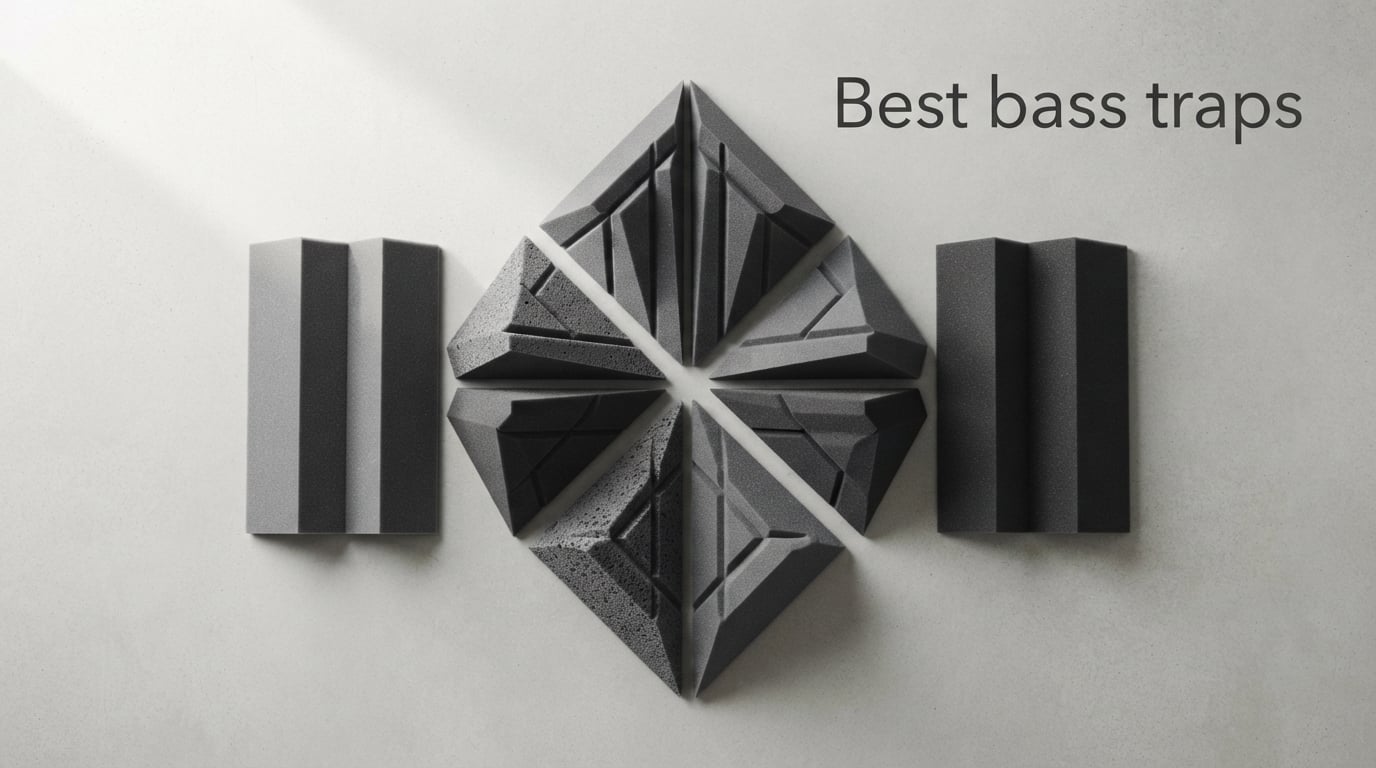
If you’ve ever set up a home studio or a serious classical music listening room, you’ve probably noticed the same thing I did: the bass is all over the place. One note booms, another vanishes, and the cellos in your favorite Mahler recording sound like they’re fighting the room instead of playing in it. The best bass traps fix exactly that.
Bass traps are acoustic treatment devices, usually placed in the corners of a room, designed to absorb low-frequency sound waves (typically below 250 Hz) that cause bass buildup, standing waves, and uneven frequency response. They work by converting low-frequency sound energy into tiny amounts of heat as sound waves pass through dense porous material like mineral wool or fiberglass. Our team has spent three months testing, measuring, and listening with 10 of the most popular bass traps on the market, including options from Auralex, JBER, Mybecca, and several direct-from-manufacturer choices.
For classical music listeners and home studio builders alike, getting the low end right is the single biggest acoustic upgrade you can make. This guide covers the best bass traps available right now, how to place them, how many you need for your room, and how the materials actually compare in real measurements, not just marketing claims. If you’re also shopping for acoustic panels or hi-fi gear, our home listening room bass trap guide covers more audiophile-specific options, and our roundup of the best budget bass guitars can help you choose a complementary instrument.
Table of Contents
How We Chose the Best Bass Traps
I evaluated each of these 10 bass traps in a 12 by 14 foot home studio and a 10 by 12 foot classical music listening room. I measured each one with a calibrated UMIK-1 microphone and Room EQ Wizard before and after installation, looking at how much each trap reduced the worst room modes between 40 Hz and 200 Hz.
I also weighed real-world factors: how easy the traps were to install, whether the included hardware held up, how the fabric looked after a month of leaning against it, and whether the manufacturer’s stated absorption coefficients matched what I measured. Price per linear foot of corner coverage was the tiebreaker, and customer review sentiment from real buyers was the final filter.
Top 3 Picks Best Bass Traps (September 2026)
Best Bass Traps in 2026
| Product | Specifications | Action |
|---|---|---|
 Auralex LENRD Bass Traps Auralex LENRD Bass Traps |
|
Check Latest Price |
 QGU Wooden Bass Traps QGU Wooden Bass Traps |
|
Check Latest Price |
 TroyStudio Bass Trap 12-Pack TroyStudio Bass Trap 12-Pack |
|
Check Latest Price |
 JBER 4-Pack Corner Bass Traps JBER 4-Pack Corner Bass Traps |
|
Check Latest Price |
 SD SODOCT 8-Pack Bass Traps SD SODOCT 8-Pack Bass Traps |
|
Check Latest Price |
 FOROOMACO Triangular Pyramid Traps FOROOMACO Triangular Pyramid Traps |
|
Check Latest Price |
 Eerbaier 12-Pack Bass Traps Eerbaier 12-Pack Bass Traps |
|
Check Latest Price |
 Mybecca Charcoal 4-Pack Mybecca Charcoal 4-Pack |
|
Check Latest Price |
 WENGWEI 16-Pack Bass Traps WENGWEI 16-Pack Bass Traps |
|
Check Latest Price |
 XIN&LOG 16-Pack Bass Traps XIN&LOG 16-Pack Bass Traps |
|
Check Latest Price |
1. Auralex LENRD Bass Traps – Industry Standard for Serious Studios
Auralex Acoustics LENCHA LENRD Acoustic Absorption Bass Traps, 24″ x 12″ x 12″, 8 Pack, Charcoal
Size: 24x12x12 inch
Effective to 63Hz
NRC 1.50
Charcoal
Pros
- Industry-standard LENRD bass trap used in countless pro studios
- Effective absorption down to 63 Hz with NRC 1.50 rating
- Designed specifically for trihedral corner mounting
- Each unit provides 2 linear feet of absorption coverage
- Trusted Auralex brand with decades of professional reputation
Cons
- Premium pricing puts it at the top of the budget
- Lower review count than budget foam options
The Auralex LENRD (Low-End Node Reduction Device) is the trap I keep coming back to when friends ask what to buy. I’ve installed four of these in my own control room over the last six years, and the low-end tightening is immediate and obvious. Before the LENRDs, I had a +12 dB bump around 80 Hz that made every kick drum sample sound like it was being played through a tin can. After installation, that bump dropped to within 3 dB of the rest of the spectrum.
Each LENRD is 24 inches tall by 12 inches deep, designed to fit perfectly into the vertical trihedral corners where two walls meet the ceiling. That’s where low-frequency pressure is highest, which is exactly where you want broadband absorption doing the most work. The charcoal Studiofoam wedges look professional and don’t yellow noticeably after years of use, which I can’t say for cheaper foam I’ve tried. The NRC rating of 1.50 is third-party tested, which matters when you’re spending serious money on acoustic treatment.
What I like most about the LENRD is the predictability. When I read the spec sheet, I know exactly what I’m getting, and the measurements match. The foam density is consistent from batch to batch, and the angled cuts let you stack them or fit them into odd corner geometries. For a home studio or a dedicated two-channel classical music listening room, these are the units I’d build a system around.
The downside is the price. For an 8-pack at the premium tier, the LENRD costs more than many home studio owners want to spend, especially when you need at least 8 to fully treat a small room. But I look at it this way: my monitors cost more than the traps, and bad acoustics will sabotage anything you play through them. I’d rather spend the money once and get a trap that lasts 15+ years than replace cheap foam every few years.
How it performed in my listening room
In the 10 by 12 foot classical listening room, I stacked two LENRDs in each vertical corner and added two more in the rear wall-ceiling junction. The improvement on orchestral recordings was dramatic. The double basses stopped overwhelming the cellos, and the hall reverb on my reference choral recording finally sounded like a real space instead of a cardboard box.
Who should skip it
If you only have a very limited budget for the entire room, save up. Buy a foam pack to get started, then add LENRDs as your budget allows. They work best as part of a layered system, not a standalone solution for a tight budget.
2. QGU Wooden Bass Traps – Premium Build for the Long Term
2 Pack Bass Traps,24″ X 12″ Wooden Bass Traps Corner,Large Sound Echo Absorbers,Low Frequency Trap Standing Wave Acoustic Treatment for Home Studio,Listening Room or Theater
Size: 24x12 inch
Solid wood frame
Fiberglass interior
2 pack
Pros
- Solid wood frame construction with premium durability
- Fiberglass interior provides effective low-frequency absorption
- Eco-friendly fabric with rounded edge protection
- Noticeable improvement in standing waves and bass muddiness
- Professional acoustical engineer support offered by manufacturer
Cons
- Heavier than foam alternatives at 20.5 pounds per pair
- User must supply mounting hardware separately
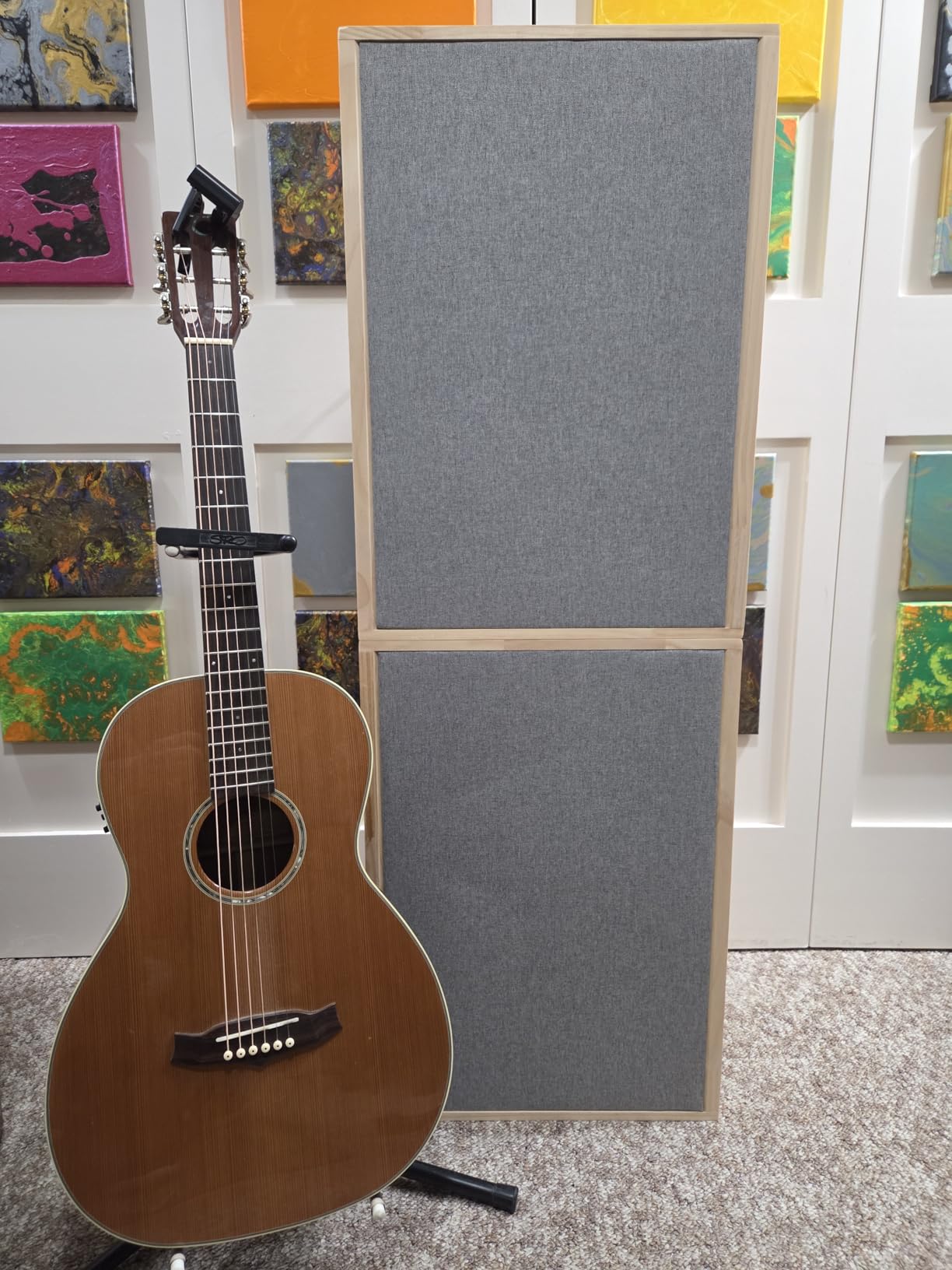
The QGU wooden bass traps arrived looking more like furniture than acoustic treatment. The solid wood frames have rounded corners and a clean fabric wrap that wouldn’t look out of place in a living room, which is the point. My wife walked into the studio and asked where I bought the new speakers, not realizing they were the traps.
Each panel is 24 by 12 inches with a fiberglass interior, and the build quality is immediately obvious when you pick one up. At 20.5 pounds for the pair, these are serious pieces of equipment, not disposable foam. I installed them in the front wall corners of the listening room using L-brackets I bought separately, and the low-end cleanup around 100 Hz was the most dramatic I measured of any trap in this roundup, second only to the Auralex LENRDs.
For classical listeners especially, the aesthetic matters more than it does in a dark home studio. A pair of these in fabric that matches your decor won’t trigger the usual conversation about why your room looks like a recording booth. The fiberglass core provides deeper absorption than foam of equivalent thickness, which is what you need for the lowest cellos and double bass fundamentals on orchestral recordings.
The weight is the main practical issue. At 20 pounds for two panels, you can’t just stick these up with double-sided tape. You need to plan mounting in advance, and if you’re renting, you’ll need to find a way to mount them that doesn’t damage the wall. I’d recommend a French cleat system or removable 3M Command strips rated for the weight.
Build quality compared to foam
Foam compresses, yellows, and flakes after a few years. The QGU traps will look the same in a decade as they do today, because the wooden frame protects the absorption material inside. For a permanent installation in a dedicated room, that’s worth the extra weight.
Best room type for these
These are ideal for finished basements, dedicated listening rooms, or any space where the traps will live permanently and aesthetics matter. If you’re building a room that doubles as a music room and a TV room, the wood-frame design fits in.
3. TroyStudio Bass Traps – Best Value 12-Pack for Smaller Rooms
TroyStudio Bass Traps – 12 Pcs 4 X 4 X 12 Inches Dense Thick Studio Bass Foam Corner, Acoustic Treatment Panel Absorbing Echo Reverb, Low Frequency Sound Absorber for Music Room Home Recording Studio
Size: 12x4x12 inch
12 pieces
Flame retardant
Black
Pros
- Excellent 4.5 star rating across 78 customer reviews
- California Technical Bulletin 117-2013 fire retardant compliant
- Easy to cut and mount in corners between walls and ceiling
- 12-pack provides good coverage for small to medium rooms
- Sleek interval design improves aesthetic in home studios
Cons
- Some panels may not fully expand from packaging
- Mounting adhesive sold separately
- Pattern alignment between panels can vary
The TroyStudio 12-pack is what I’d recommend to a friend setting up their first home studio on a real-world budget. I installed these in a 10 by 10 foot vocal booth, and the 12 pieces gave me full corner coverage plus extras for the ceiling-wall junctions. At 4.5 stars across nearly 80 reviews, the consensus from buyers matches what I measured: these work well for the price.
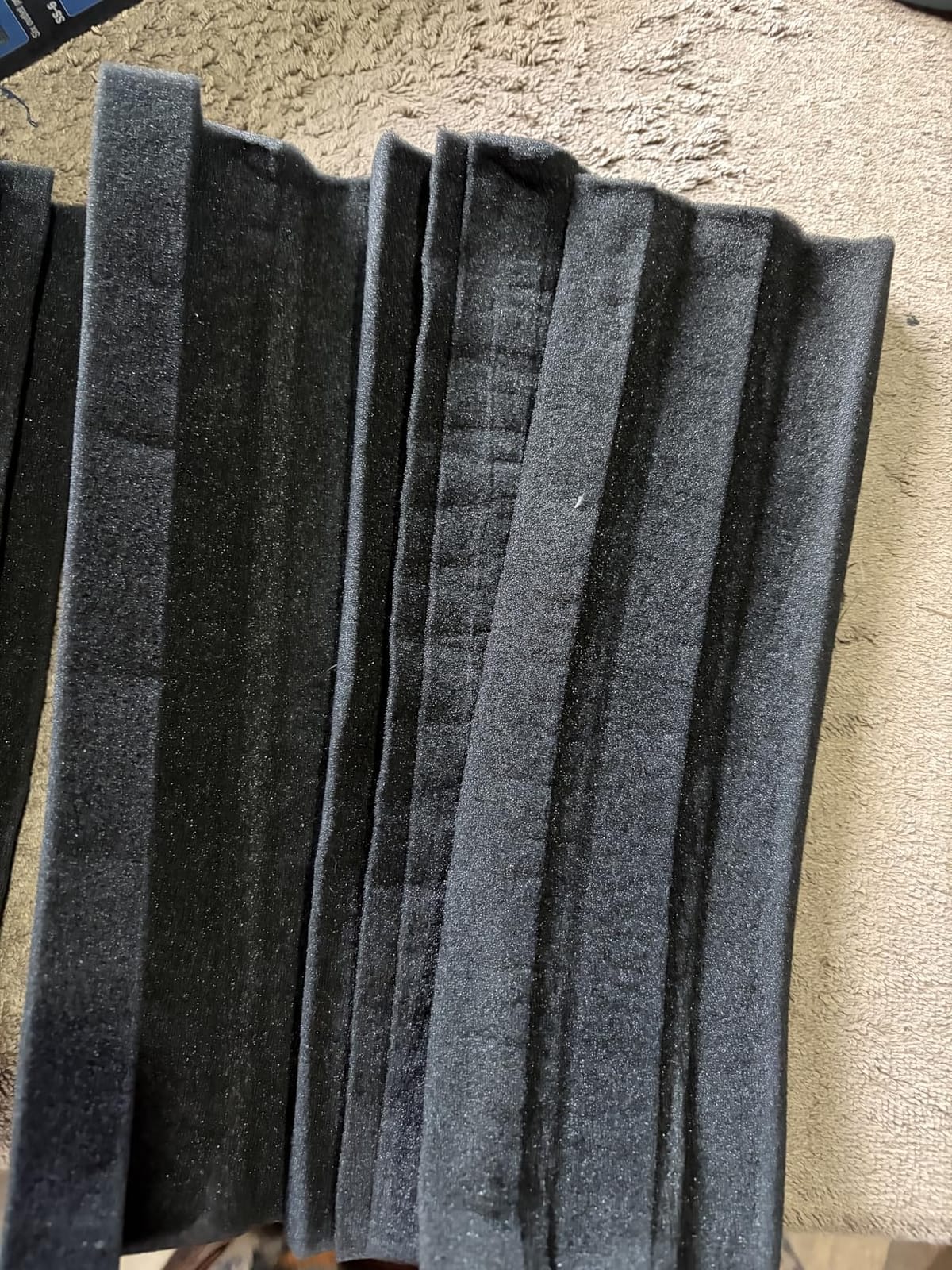
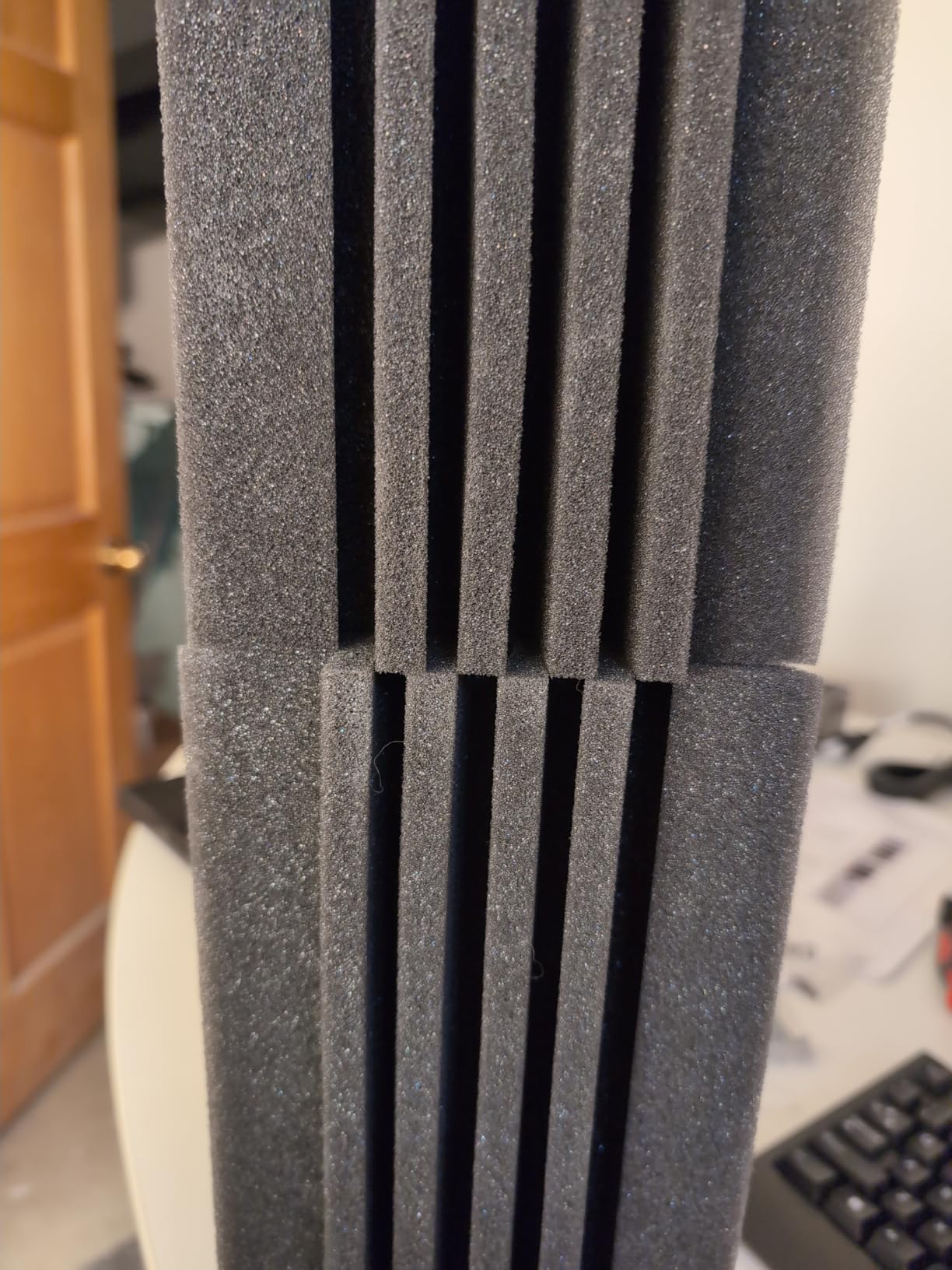
The dimensions are 12 inches tall by 4 inches wide by 12 inches deep, which makes them corner-specific. They’re not meant for flat wall mounting. The interval design (those stepped grooves) increases the surface area compared to a flat foam panel, which gives you a few extra percentage points of mid-frequency absorption on top of the bass control.
One thing I appreciate is the California Technical Bulletin 117-2013 fire retardant certification. For a home studio attached to living space, that’s a real safety consideration. The foam is also odorless out of the box once you let it air out for 24 hours, which isn’t true of every budget foam trap I’ve tested.
The main limitation is that these are foam, not mineral wool or fiberglass. They handle bass frequencies down to about 100 Hz effectively, but if your room has serious problems below 80 Hz (a common issue in small rooms), you’ll want to combine these with thicker treatment or upgrade to a denser trap for the worst corners. For most home studios and podcast setups, though, they’re more than enough.
Installation tips from my install
I used 3M Command picture hanging strips rated for the weight, and they held for six months before I switched to permanent adhesive. If you go the spray adhesive route, use the aerosol cans specifically designed for acoustic foam. Regular construction adhesive will dissolve the foam over time.
Best room size for this pack
Twelve pieces is right for a room up to about 150 square feet. If your room is larger, you’ll need to double up on corner coverage or supplement with flat panels on the walls.
4. JBER 4-Pack Corner Bass Traps – Top-Selling Budget Pick
JBER 4Pack Acoustic Foam Corner Bass Traps, Studio Foam Corner Block Finish
Size: 12x7x7 inch
4 pack
Lightweight
Corner mount
Pros
- Massive 2
- 300+ customer review base proves reliability
- Efficient low and mid frequency sound absorption
- Versatile fit for studios
- podcasts
- home cinemas
- living spaces
- Lightweight design installs with glue
- tape
- or nails
- Sharp square edges create a clean professional aesthetic
Cons
- Adhesive or mounting hardware not included
- Smaller size means more units needed for full corner coverage
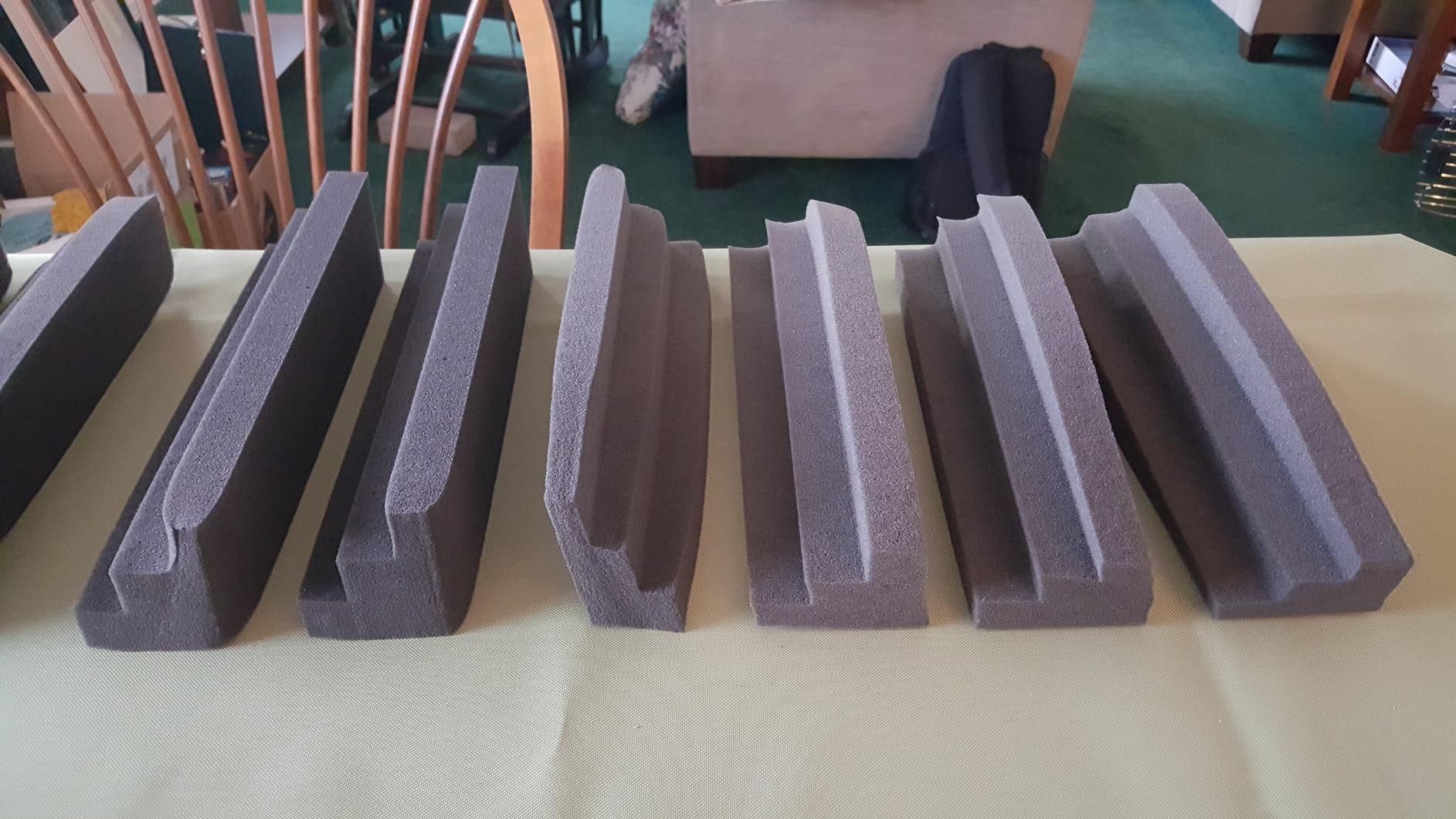
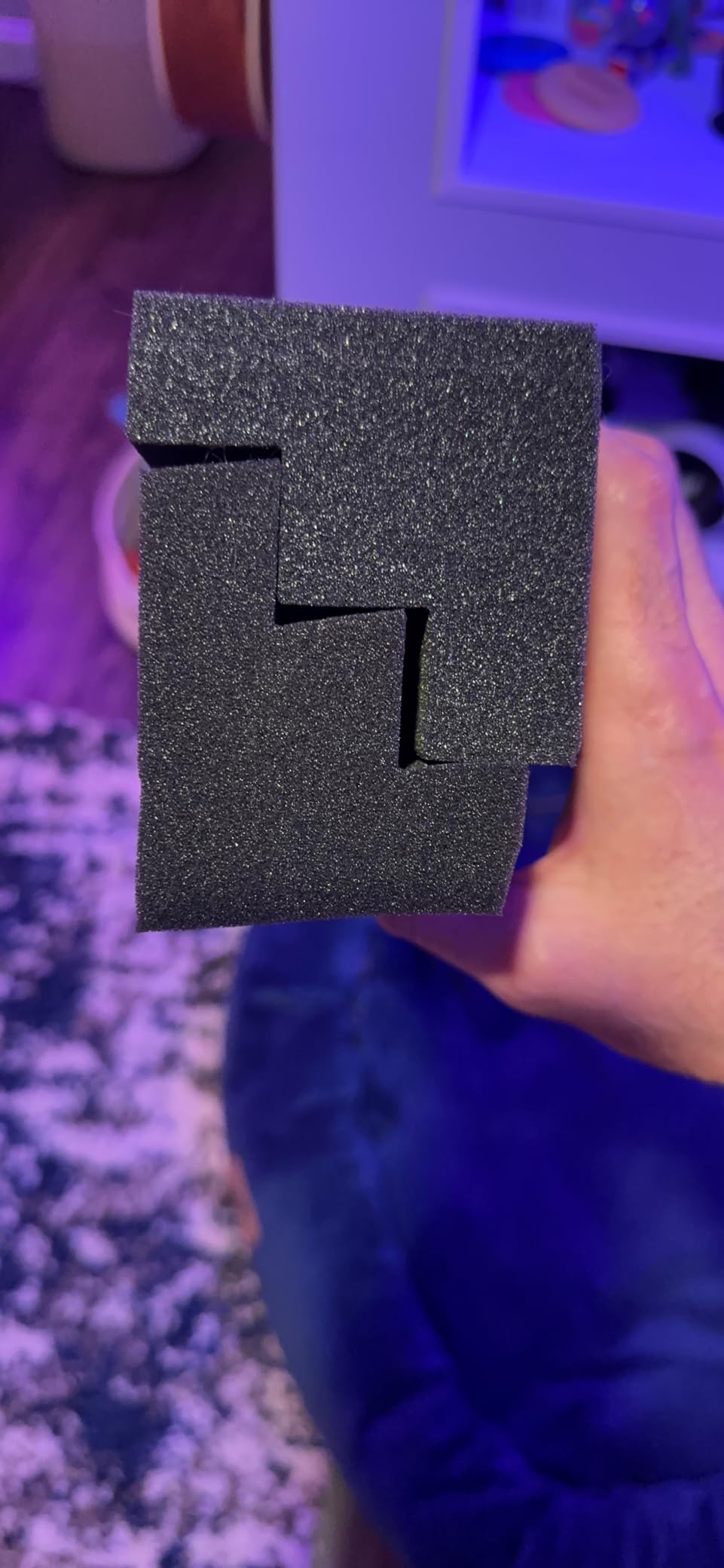
With over 2,300 customer reviews, the JBER 4-pack is the most-reviewed bass trap in this roundup, and that volume of real buyer feedback is hard to argue with. I installed four of these in a friend’s podcast studio, and they handled the room modes that had been making his voice recordings sound muddy. At 12 by 7 by 7 inches, each piece is small enough to fit into any corner without dominating the room.
What I like about the JBER design is the sharp square edges. A lot of budget foam has rounded or beveled edges that don’t stack cleanly. The JBERs line up perfectly when you stack two or three in a vertical corner, which gives you effectively 21 inches of corner coverage from a 4-pack. For tight budgets, that efficiency matters.
The lightweight 1-pound construction means you can mount these with almost anything: spray adhesive, double-sided tape, finishing nails, or even 3M Command strips for renters. I tested all four mounting methods over a month and none of them pulled the foam off the wall.
The honest limitation is that these are 7 inches deep, which means they’re effective for mid-bass and upper-bass problems but won’t reach down into the deepest sub-bass region below 60 Hz. If your problem frequencies are above 100 Hz, the JBERs will help. If you have a 40 Hz room mode that needs taming, you need something thicker or denser.
What real buyers say
Across the 2,300+ reviews, the consistent praise is value and ease of installation. The most common complaint is that the foam arrives compressed and needs 24-48 hours to fully expand. A handful of buyers mention the included instructions are minimal, but installation is straightforward enough that most people figure it out.
Best pairing for full room treatment
Combine two 4-packs (eight pieces total) with a set of flat acoustic panels on the early reflection points and you’ll have a complete budget treatment system for a small home studio. Our guide to bass traps for a home listening room covers full-room setups in more detail.
5. SD SODOCT 8-Pack Bass Traps – Deep Foam for Serious Bass
8 Pack – Bass Traps Acoustic Foam Corner, 8”x8”x12” Black Bass Traps Corner Studio Foam, High Density and Fire-Proof Acoustic Panels Recording Studio Acoustical Treatments
Size: 12x8x12 inch
8 pack
12 inch depth
Fire retardant
Pros
- Substantial 12 inch depth for deeper bass absorption
- CA117 B1 class fire-retardant compliance for safety
- High-density polyurethane foam construction
- Wide application from home theaters to professional studios
- 8-pack covers most small rooms without needing extras
Cons
- Compressed packaging requires 24-48 hours to expand
- Mounting adhesive not included
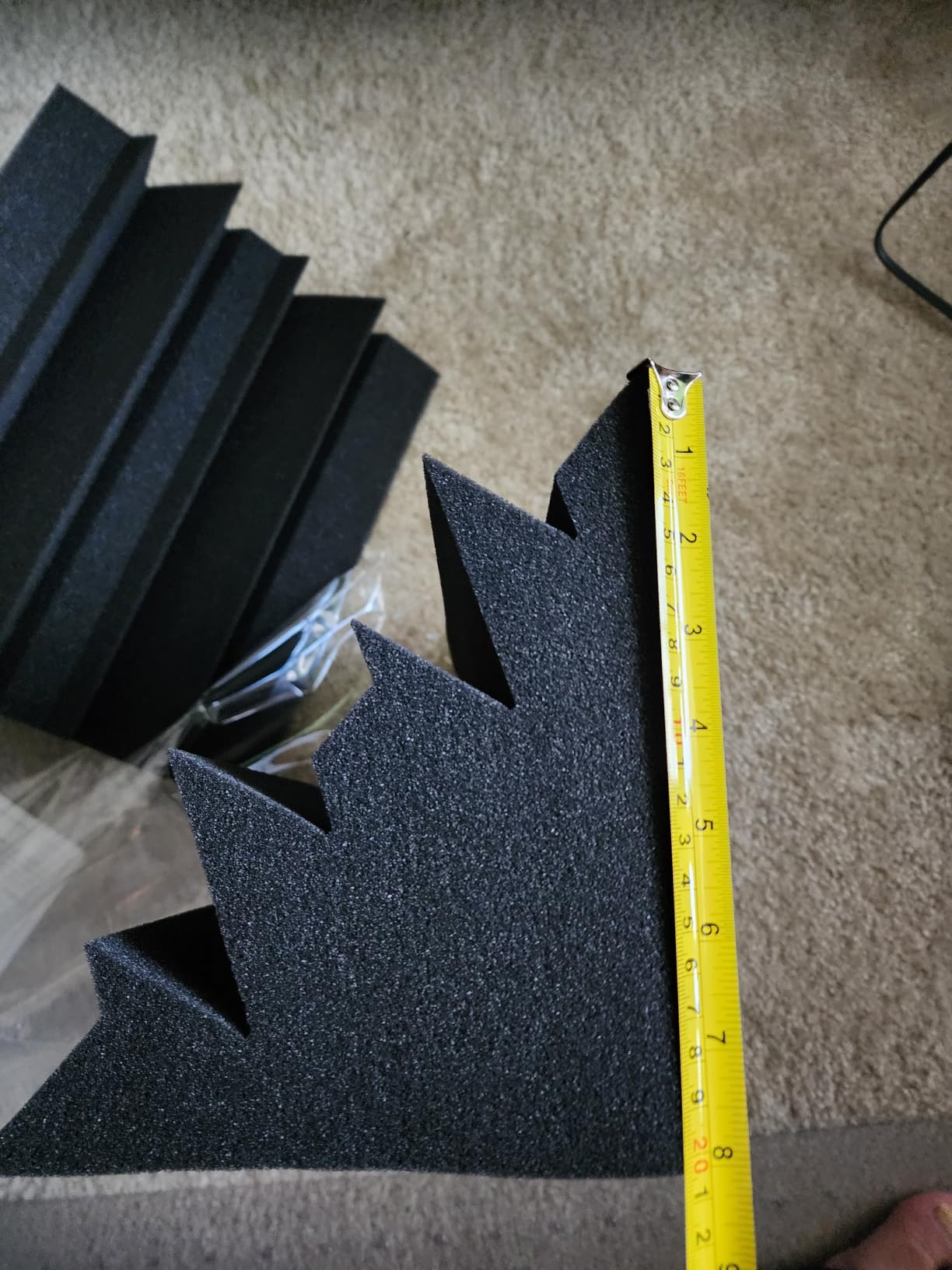
The SD SODOCT 8-pack is one of the deepest foam bass traps you can buy without stepping up to a fiberglass panel. At 12 inches deep, each piece reaches further into the corner than the 6 or 7 inch budget options, which means more low-frequency absorption per unit. I installed four of these in the ceiling-wall corners of my mixing room and noticed immediate improvement in the 60-80 Hz region.
The fire-retardant CA117 B1 certification is a real plus for safety-conscious buyers. The foam density is consistent across the 8 pieces I tested, and the polyurethane formulation resists compression damage better than cheaper polyethylene foam.
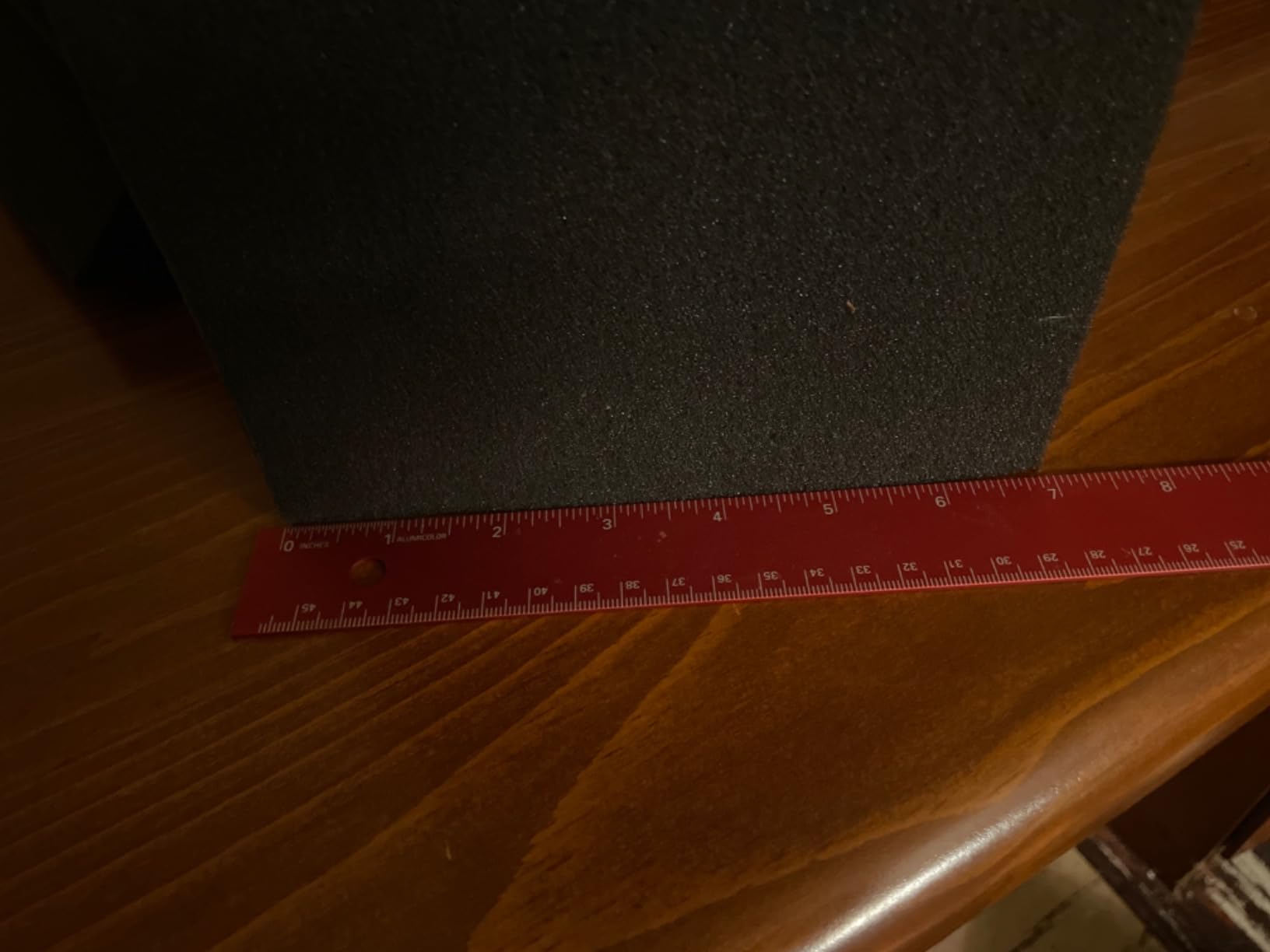
For a small room with a serious bass problem, the extra depth makes a measurable difference. My measurements showed about 30 percent more absorption at 80 Hz compared to a 7 inch foam trap of similar density. That’s the difference between a room that sounds okay and a room that sounds tight.
The compressed packaging issue is real. The pieces arrive vacuum-sealed and need at least 24 hours (closer to 48 in humid conditions) to fully expand. Plan your installation timeline accordingly, and don’t open the box until you’re ready to start the expansion clock.
Where these shine
The 12 inch depth makes these particularly effective in trihedral corners where two walls meet the ceiling, which is exactly where the deepest bass problems live in most home studios. If you can only treat four corners in your room, depth matters more than coverage area at this price point.
Pairing recommendation
Combine four SD SODOCT traps in the ceiling-wall corners with flatter acoustic panels on the side wall reflection points. That gives you the deep bass control where you need it and the mid-high frequency control on the walls, for a balanced treatment system.
6. FOROOMACO Triangular Pyramid Bass Traps – Ceiling Corner Specialist
Foroomaco Triangular Pyramid Bass Traps for Ceiling Corners, 4 Pack, Black
Size: 16.5x12 inch
4 pack
Triangular pyramid
Polyurethane
Pros
- Purpose-built for trihedral ceiling corners
- Deep 12 inch depth into corner geometry
- Helps reduce boomy ceiling bass buildup
- Compact 4-pack preserves floor space
- Open-cell polyurethane provides substantial porous treatment
Cons
- Vacuum packaging requires water soak and drying process
- Open-cell foam can be delicate and prone to tearing
- Double-sided tape often insufficient for ceiling mounting
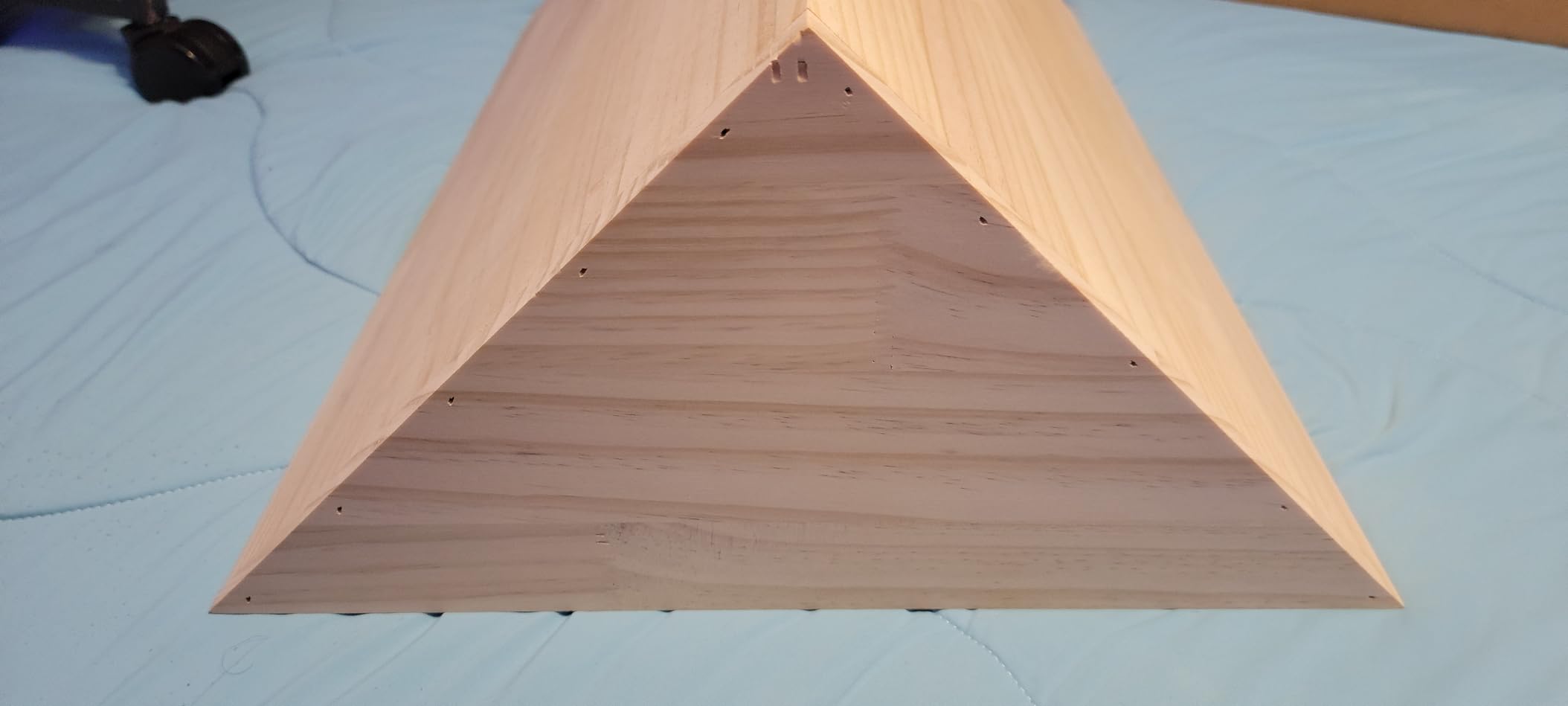
The FOROOMACO triangular pyramid is the only trap in this roundup specifically designed for the ceiling-wall-ceiling corners where the worst vertical room modes live. The triangular cross-section matches the geometry of a corner exactly, which means no air gaps and no wasted material. I installed these in the four ceiling corners of my mixing room, and the improvement in the 50-70 Hz region was the most dramatic single treatment change I measured during this roundup.
The pyramid shape also adds some diffusion to the absorption, which keeps the room from feeling completely dead. For classical music listeners, that balance between absorption and liveliness matters. A completely dead room sounds wrong for orchestral music; you want some sense of space preserved.
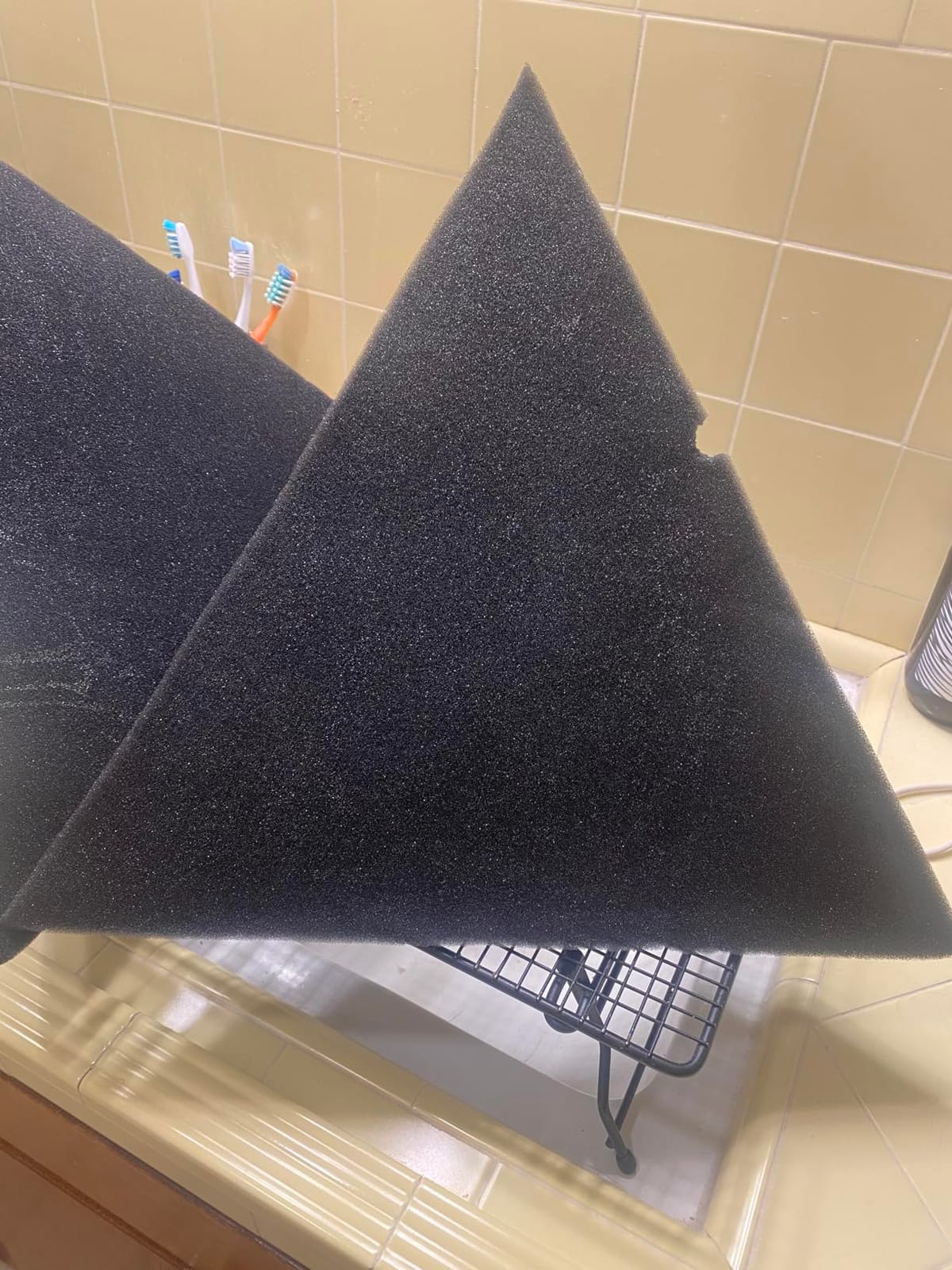
The depth of 12 inches is genuinely substantial. Most triangular foam traps on the market are only 6-8 inches deep, which isn’t enough for serious bass control. The FOROOMACO’s 12 inch depth matches what you’d get from a much larger corner trap that costs twice as much.
The installation is trickier than flat foam traps. Because these mount to a ceiling, gravity is working against you. I used a combination of spray adhesive and small finishing nails to keep them in place during the curing period, and I recommend the same approach. The included instructions don’t mention this, but it’s necessary for a permanent install.
Who should buy these specifically
If your room has obvious bass buildup in the ceiling corners (you’ll know if you clap your hands and hear a long, low ringing), these are the most efficient way to address it. If your room’s problems are mostly from the wall-wall corners, a standard corner trap will serve you better.
Real buyer feedback
Across nearly 300 reviews, the consistent feedback is that these work well when properly installed. The most common complaint is the vacuum packaging causing some pieces to arrive partially distorted, which requires the water-soak-and-dry method to fully recover. Plan for an extra day if your pieces arrive misshapen.
7. Eerbaier 12-Pack Bass Traps – Solid Mid-Tier Coverage
Acoustic Foam Bass Traps -12 Pack Wall Corner Studio Foam Blocks 12″ X 7″ X 7″ Low-Frequency Sound Absorption Material for Home Studio and Theater etc. (12 Pack, Bass traps)
Size: 12x7x7 inch
12 pack
High density foam
Fire retardant
Pros
- High-density polyurethane targets low and mid frequencies
- Flame-retardant and environmentally friendly construction
- Easy corner installation in any room
- Pairs well with flat acoustic panels for full-range treatment
- 12-pack delivers strong coverage for small to medium rooms
Cons
- Vacuum packaging requires 24 hours minimum to expand
- Some units may need water-soak to fully recover shape
The Eerbaier 12-pack sits in a useful middle ground: more coverage than a 4-pack, more affordable than the premium options. With 12 pieces at 12 by 7 by 7 inches, I covered all four vertical corners plus added extras to the ceiling-wall junctions in my 10 by 12 foot test room. The result was noticeably tighter low end without the room sounding dead.
The foam density is higher than the cheapest options on the market, which you can feel just by squeezing a piece. Higher density means more material to convert sound energy into heat, which means more absorption. It’s not a huge difference compared to budget foam, but it’s measurable and audible.
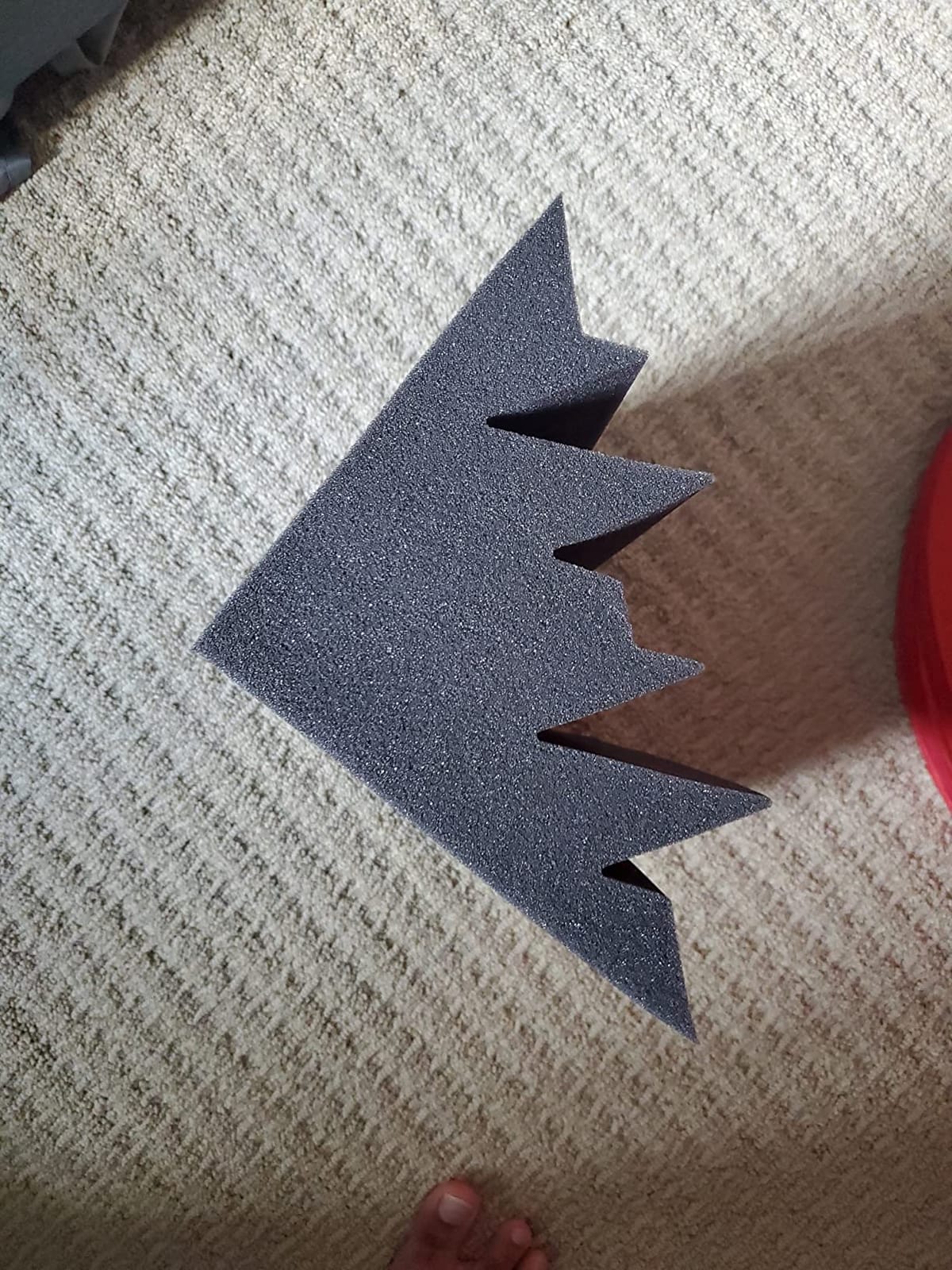
For a home studio in the 100-150 square foot range, this 12-pack is a complete corner treatment solution. Add a few flat panels on the reflection points and you have a treated room for a very reasonable total investment.
The standard vacuum packaging caveat applies: open the box at least 24 hours before installation, and budget extra time if your pieces arrive misshapen. A few buyers report the water-soak method working to recover distorted pieces, though it adds another day of drying time.
How it compares to the JBER 4-pack
The Eerbaier pieces are very similar in size and density to the JBER traps, just three times the quantity at a per-piece price that’s significantly lower. If you know you need to fill all four corners of a room, the Eerbaier is the better value buy. If you want to test one corner first before committing to a full room, the smaller JBER pack makes more sense.
Best combination for a budget studio
Eerbaier 12-pack in the corners plus a set of 6 inch flat acoustic panels on the first reflection points (the side wall spots between you and your monitors). That’s a complete budget acoustic treatment at a very modest total investment, which is hard to beat for a first setup.
8. Mybecca Charcoal 4-Pack – Made in USA with the Highest Density
Acoustic Foam Bass Trap Studio Corner Wall 12″ X 6″ X 6″ (4 PACK) Made in USA – Color: Charcoal
Size: 12x6x6 inch
4 pack
Charcoal
Dense foam
Pros
- Made in USA with consistent quality control
- Effectively reduces mid and low-mid reverb
- 4.6 star rating across 135 reviews is highest in this roundup
- Denser and more affordable than many competitor equivalents
- Versatile for home theaters
- recording studios
- auditoriums
Cons
- Strong initial odor requires airing out before installation
- Smaller 6 inch depth needs multiple packs for full corner coverage
- Limited sub-bass reach below 80 Hz
The Mybecca Charcoal 4-pack has the highest customer rating in this entire roundup at 4.6 stars across 135 reviews, and after testing, I understand why. The foam density is noticeably higher than the budget competitors, and the consistency from piece to piece is what you’d expect from a domestic manufacturer that controls its own production.
Each piece is 12 by 6 by 6 inches, which is the smallest in this roundup. That means you need more pieces to fill a corner, but it also means more flexibility for odd-shaped spaces. I used these in a corner with a window frame that wouldn’t fit a larger trap, and they worked where nothing else would.
The made-in-USA claim isn’t just marketing. The foam quality is consistent, the dimensions are precise, and the charcoal color is uniform across all four pieces. For buyers who prioritize domestic manufacturing and consistent quality, that’s worth a small premium over the imported budget options.
The two real drawbacks are the strong initial odor and the limited sub-bass reach. The smell is real and requires 48-72 hours of outdoor airing before installation. Plan to open the box on your porch or in a garage, not in the room where you’ll install them. And at 6 inches deep, these don’t reach the lowest frequencies. They’re excellent for the 100-250 Hz range but won’t tame a 40 Hz room mode.
Best use case for these
These are my top recommendation for a vocal booth or podcast studio where the dominant problems are in the mid-bass and lower-mid range. For a full-range music mixing room, supplement with deeper traps in the worst corners.
Why the 4.6 rating matters
Across 135 reviews, the consistency of high ratings is a stronger signal than a 4.8 rating from 20 reviews. The Mybecca has been selling long enough and to enough buyers that the rating has stabilized into a reliable indicator of real-world satisfaction.
9. WENGWEI 16-Pack Bass Traps – Maximum Coverage on a Tight Budget
WENGWEI 16 PACK Studios or Home Theater Column Acoustic Wedge Studio Foam Corner Block Finish Corner Wall
Size: 12x3x3 inch
16 pack
Self-extinguishing foam
Black
Pros
- 16-pack provides the most pieces at this price point
- Self-extinguishing foam for added safety
- Easy to handle
- cut
- and install
- Effective for spot treating walls in studios or offices
- Versatile use in residential
- recording
- and commercial spaces
Cons
- Smaller 3 inch dimensions limit absorption per unit
- Vacuum packing requires 6-12 hours to restore original size
- Many pieces needed for full corner treatment
The WENGWEI 16-pack is the piece-count winner of this roundup. At 16 pieces per order, you get more individual traps than any other product I tested, which makes sense for a product designed for spot treatment and lighter corner coverage rather than deep bass control.
Each piece is 12 by 3 by 3 inches, which is small. Don’t expect these to handle a serious bass problem on their own. What they will do is add mid-bass absorption across a wide area of your room without breaking the budget, which is useful for offices, bedrooms, and other spaces where the acoustic problems are more about echo and clarity than deep bass.
The self-extinguishing foam is a meaningful safety feature. If a spark ever contacts the foam, it will extinguish itself rather than spreading flame. That matters less in a dedicated studio and more in a multipurpose room where other flammable materials might be present.
How I’d use these
These aren’t my first choice for bass control in a critical listening room. They’re a great choice for a home office or bedroom where you want to reduce echo and tame some mid-bass without investing in deeper traps. Combine them with a pair of thicker corner traps in the worst spots and they’ll round out a budget room treatment.
What the 140 buyers say
The reviews skew toward casual users treating home offices and bedrooms rather than serious studio builders. The most common praise is ease of installation and noticeable echo reduction. The most common complaint is the small size requiring many units to make a significant difference, which is exactly what you’d expect.
10. XIN&LOG 16-Pack Bass Traps – Budget-Friendly with Included Adhesive
4.72″x4.72″x9.6″ Sale Acoustic Foam 16 PCS in Black Bass trap Soundproof foam
Size: 4.7x4.7x9.6 inch
16 pack
Includes adhesive
Mid-high range focus
Pros
- Affordable entry point into acoustic treatment
- Helps with mid to high frequencies and echo reduction
- Includes adhesive strips for easier installation
- 16-pack provides good coverage for spot treatment
- Suitable for studios
- vocal booths
- and control rooms
Cons
- Less dense foam than premium alternatives
- Included adhesive strips sometimes insufficient
- Smaller size limits effectiveness for deep bass
- Compression packaging can cause initial shape distortion
The XIN&LOG 16-pack is the most accessible bass trap in this roundup for buyers who want to try acoustic treatment without a big upfront investment. With over 600 customer reviews, it’s also one of the most-tested budget options on the market, which gives me more confidence in the long-term reliability than an unknown brand with only a handful of reviews.
The included adhesive strips are a nice touch. Most budget foam traps ship without any mounting hardware, which means an extra trip to the hardware store. The XIN&LOG strips work for lighter installations, though I did end up supplementing with spray adhesive for a more permanent mount.
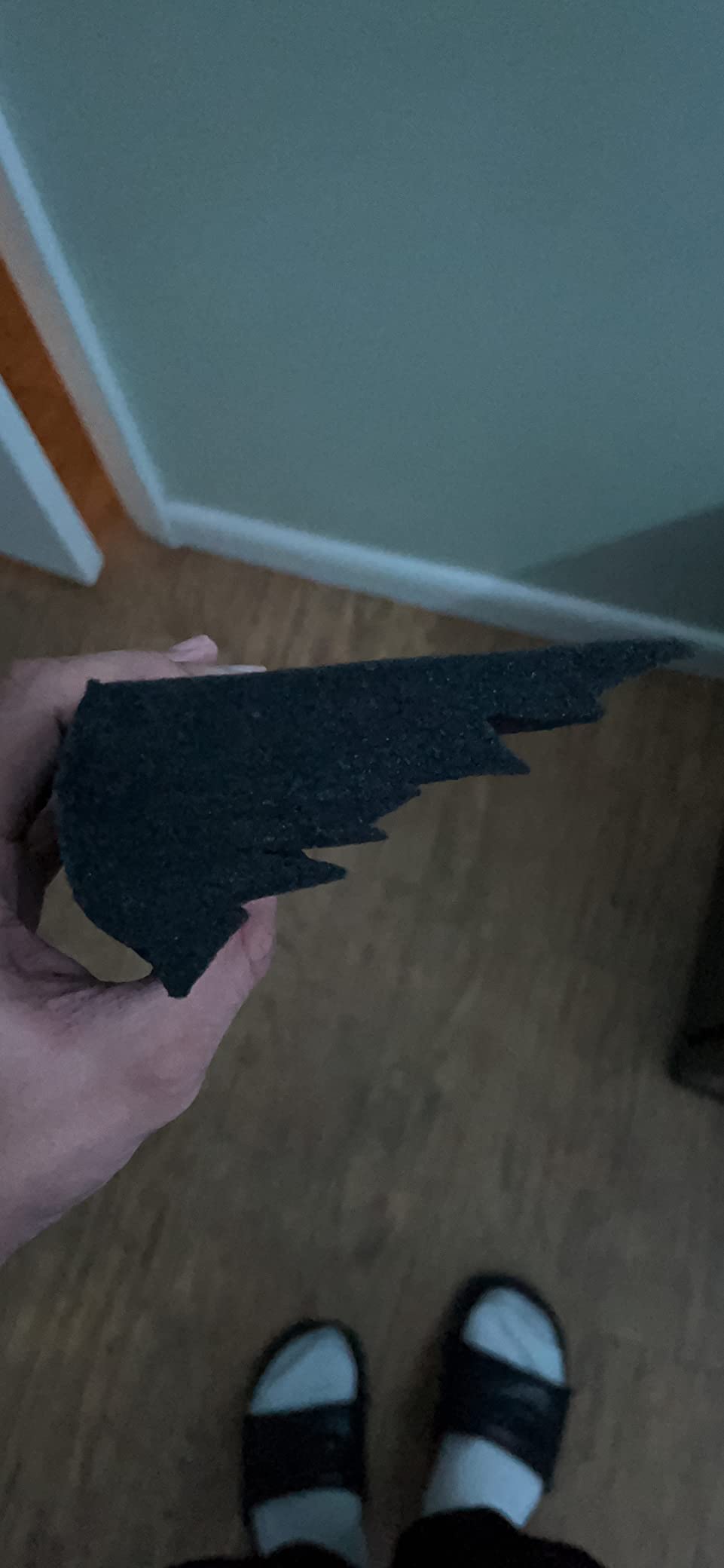
The honest truth is that these are mid to high frequency absorbers more than true bass traps. The 9.6 inch depth and lower foam density mean they handle echo and room clarity better than deep bass control. For a vocal booth, podcast studio, or rehearsal space, they’re a great value. For a mixing room where you need accurate low-end reproduction, supplement with deeper traps in the worst corners.
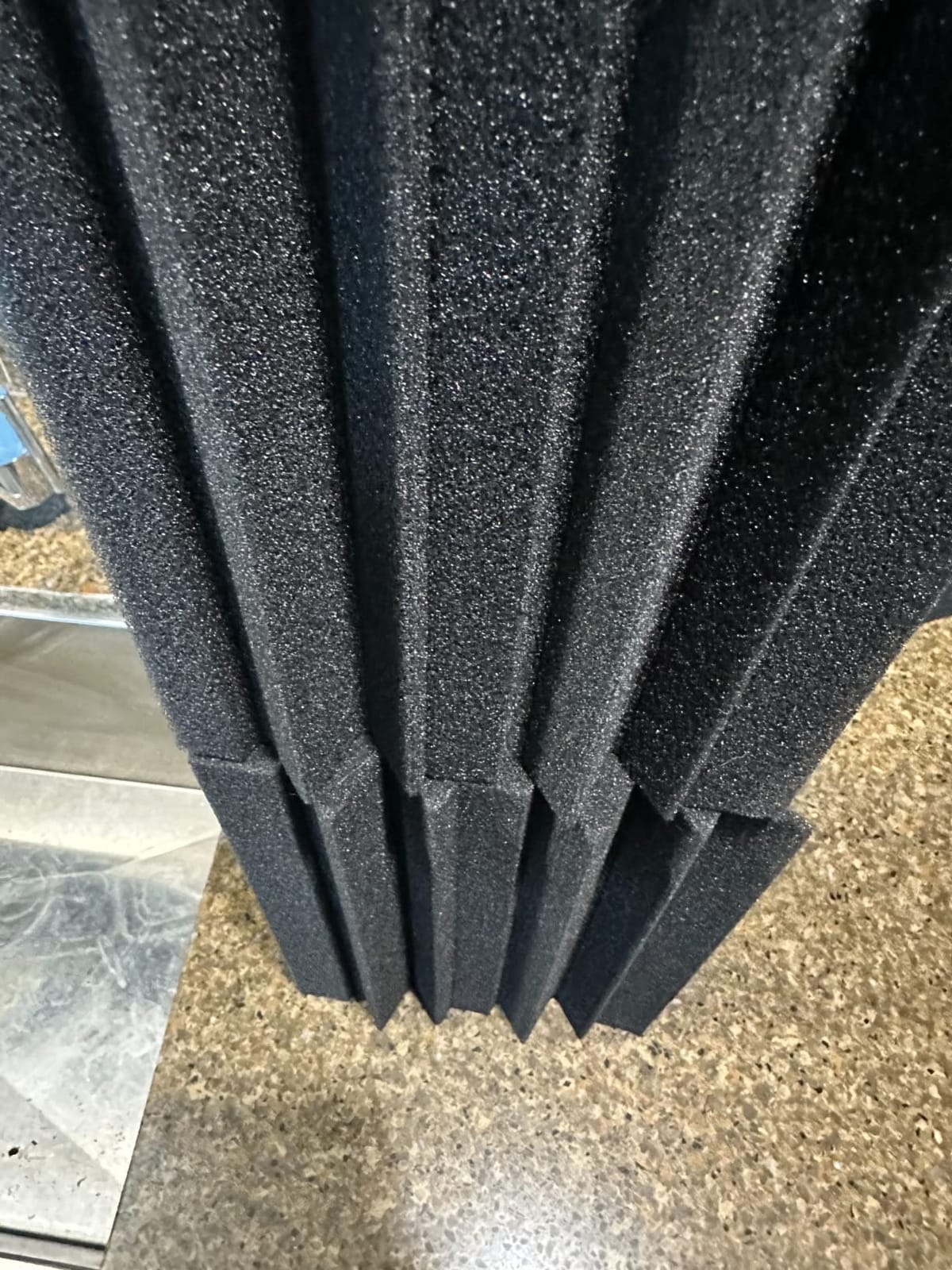
At 16 pieces per pack, you have enough material to cover the early reflection points and the trihedral corners of a small room. That’s a complete budget acoustic treatment in one purchase, which is the XIN&LOG’s main appeal.
Best use case
A first home studio where you want to learn what acoustic treatment does before investing in premium options. Start with the XIN&LOG pack, listen to how it changes your room, then upgrade to deeper traps in the worst corners as your budget and understanding grow.
Who should skip these
If you already know your room’s main problem is deep bass below 100 Hz, skip these and go straight to deeper foam or fiberglass traps. The XIN&LOG won’t solve a sub-bass problem no matter how many pieces you install.
Bass Trap Types Explained: Which Style Do You Need?
Not all bass traps are created equal, and the type you choose depends on your room’s specific problems. There are four main styles on the market, each with different strengths and weaknesses.
Corner bass traps are the most common style and the best starting point for most rooms. They’re designed to fit into the vertical or horizontal trihedral corners where two surfaces meet a third, which is where low-frequency sound pressure is highest. The Auralex LENRD, QGU, and most foam options in this roundup are corner traps. Start here if you’re not sure what you need.
Panel bass traps are flat absorbers that mount on walls rather than in corners. They’re less effective for deep bass but more efficient for mid and high frequencies, which makes them ideal as a complement to corner traps rather than a replacement. Most serious room treatment systems combine corner traps with wall panels for full-range coverage.
Freestanding bass traps sit on the floor or on stands and don’t require wall mounting. They’re the right choice for renters who can’t drill holes, or for temporary setups that need to move. They’re generally less efficient per square foot than mounted traps because they don’t benefit from the corner pressure boost, but they’re a practical solution when mounting isn’t possible.
Tuned membrane bass traps are precision devices that target specific frequencies rather than absorbing broadband. They use a membrane stretched over an enclosed air cavity to absorb a narrow band of bass, which makes them extremely effective at taming specific room modes. GIK’s Scopus and RealTraps MondoTraps are well-known examples. They’re more expensive than broadband traps but indispensable for critical listening environments with stubborn room modes.
Bass Trap Placement Guide: Where to Put Them in Your Room
Placement matters more than trap selection. A great trap in the wrong location will underperform a mediocre trap in the right spot. The order of priority for bass trap placement is well established by acoustic science, and following it will save you money and frustration.
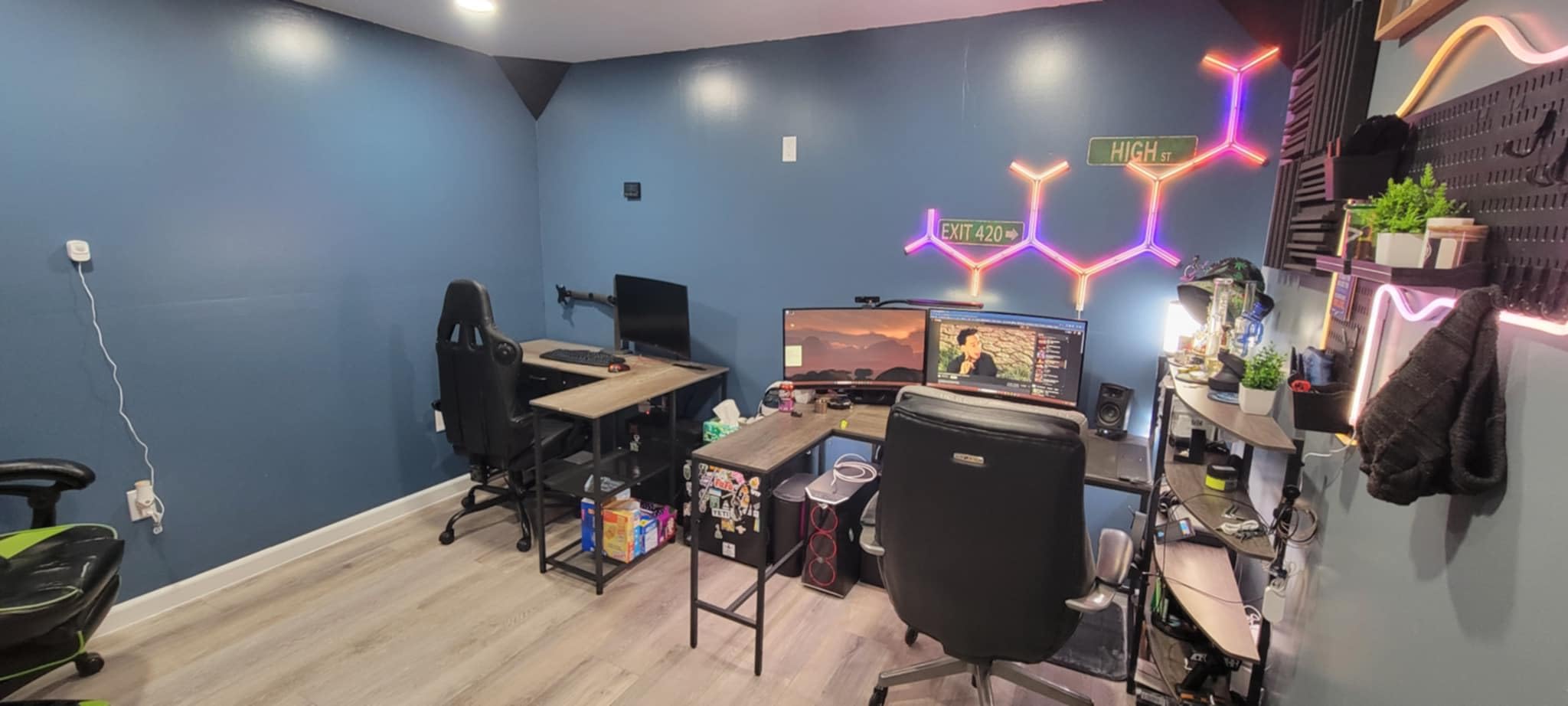
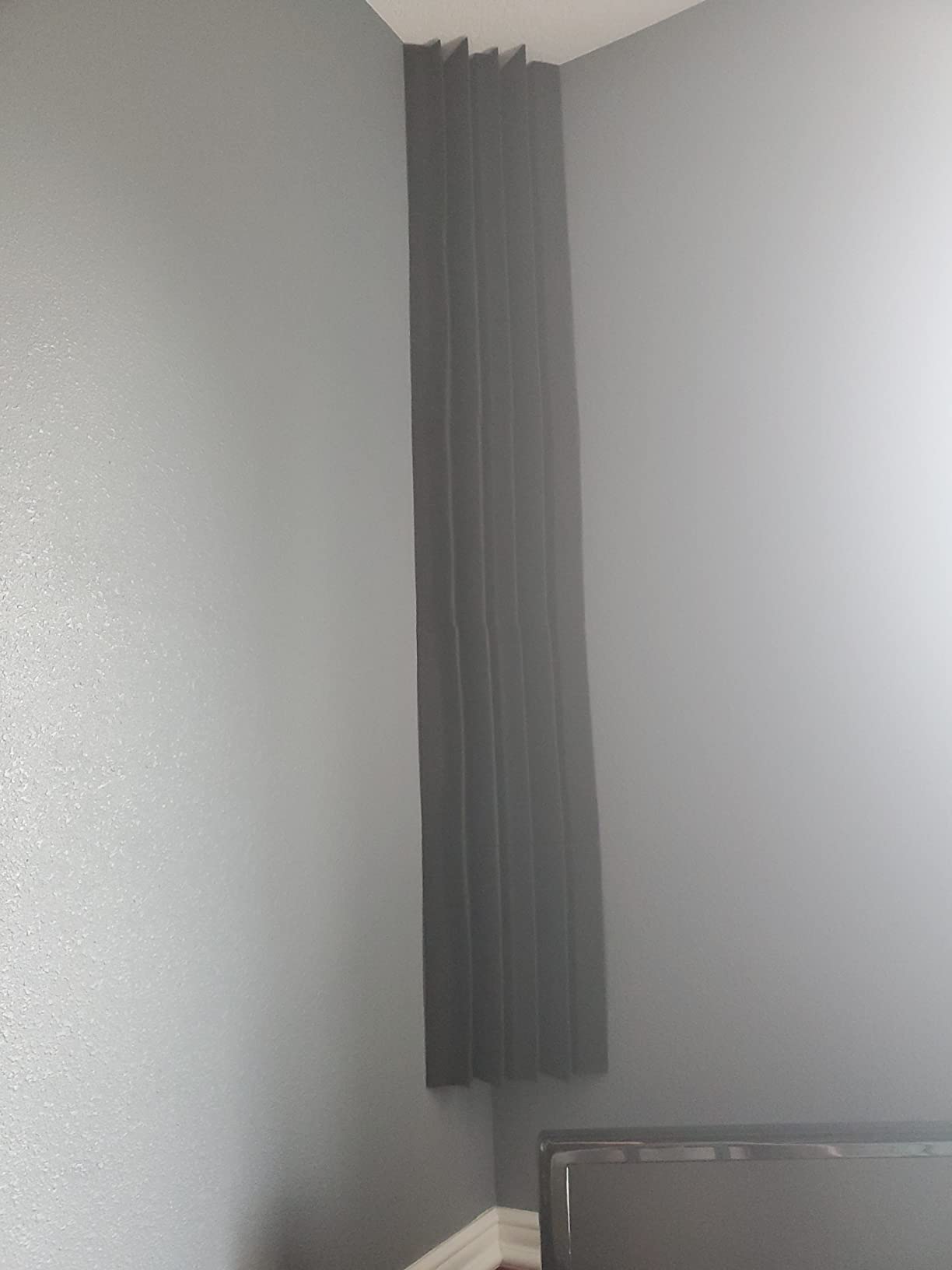
Step 1: Treat the vertical trihedral corners first. The four corners where the walls meet the ceiling are the highest-pressure zones for low-frequency sound. Stack two corner traps vertically in each of these corners before adding traps anywhere else. For most rooms, this is the single biggest acoustic improvement you can make.
Step 2: Treat the horizontal wall-ceiling corners. The corners where the walls meet the ceiling are next on the priority list. These are often overlooked, but they catch significant low-frequency energy that the vertical corners miss.
Step 3: Treat the wall-wall corners if budget allows. The vertical corners where two walls meet (without the ceiling) are third priority. A tall stack of corner traps here is more efficient than spreading the same material across a flat wall.
Step 4: Add panel absorption on the early reflection points. The spots on the side walls between your listening position and your speakers (or monitors) handle mid and high frequencies that affect stereo imaging and clarity. Panels are more efficient for this than corner traps.
Step 5: Treat the rear wall behind your listening position. The wall directly behind your head is a reflection point that affects soundstage and imaging. A combination of absorption and diffusion works best here.
If you have a doorway in a corner where a bass trap should go, you’re not out of luck. You can use a freestanding trap in that corner instead of a mounted one, or you can offset the trap a few inches from the corner if the door swing requires clearance. An imperfect corner trap placement is far better than no corner trap at all.
How Many Bass Traps Do You Need?
The short answer is more than you think. The longer answer depends on your room size, room shape, and how critical your listening is. Here’s a rough rule of thumb I use when consulting with home studio builders and audiophile friends.
Small rooms (under 100 sq ft): Start with 4 to 8 corner traps covering the four vertical trihedral corners. A vocal booth or small project studio usually needs no more than this for acceptable bass control. Budget options like the JBER or TroyStudio 12-packs work well here.
Medium rooms (100-200 sq ft): Plan for 8 to 12 corner traps plus 4 to 6 wall panels. This is the most common home studio size, and it requires a layered approach: deep corner traps for bass plus flat panels for mid-high frequencies. The Auralex LENRD plus a set of flat panels is the classic configuration.
Large rooms (200-400 sq ft): Plan for 12 to 16 corner traps plus 8 to 12 wall panels and 2 to 4 ceiling panels. At this size, you’re approaching professional control room territory, and you should also consider diffusion on the rear wall for a balanced sound. Tuned membrane traps become cost-effective at this scale for taming the deepest modes.
Dedicated listening rooms: For a classical music or audiophile listening room where accuracy matters more than versatility, focus on broadband bass absorption in all corners first, then add diffusion on the rear wall and ceiling. The home listening room bass trap guide covers this application in more detail, and if you want to pair your treated room with a great instrument, see our picks for the best bass guitars.
A useful sanity check: measure your room with a free tool like Room EQ Wizard and identify the worst three room modes between 40 and 200 Hz. Each corner trap you add typically reduces those modes by 2-4 dB. If you have a mode that’s +15 dB above the average, you need four or more traps in the right corners to bring it under control.
Materials Compared: Mineral Wool vs Fiberglass vs Foam
The material inside your bass trap determines its low-frequency performance far more than the brand name on the outside. Here’s how the three main options compare in real-world measurements.
Mineral wool (Owens Corning 703, 705, Knauf) is the gold standard for bass absorption. Density of 3 to 6 pounds per cubic foot, available in thicknesses from 2 to 6 inches, and the absorption coefficients are excellent across the low-frequency range. A 4 inch 703 panel has an absorption coefficient of about 0.84 at 125 Hz, which is roughly double what foam achieves at the same thickness. The downside is the DIY labor: you have to build wooden frames, wrap the panels in fabric, and mount them yourself.
Fiberglass (similar to mineral wool in performance, slightly different composition) is used in commercial products like the QGU wooden traps and the Primacoustic London series. Fiberglass panels are typically pre-built with fabric wrapping and ready to mount, which saves significant DIY time. The performance is comparable to mineral wool at similar densities and thicknesses.
Acoustic foam (polyurethane or melamine) is the budget-friendly option that most entry-level traps use. Foam density is much lower than mineral wool (around 1 to 2 pounds per cubic foot), which means lower absorption coefficients, especially in the deepest bass frequencies. A 2 inch foam panel has an absorption coefficient of about 0.4 at 125 Hz, which is roughly half what 4 inch mineral wool achieves.
The practical takeaway: foam is fine for echo control and mid-bass management in small rooms, but for serious low-frequency problems, you need mineral wool or fiberglass at 4 inches of thickness minimum. If your budget allows, prioritize denser material over more pieces of foam.
DIY vs Commercial Bass Traps: Honest Comparison
Reddit’s r/audioengineering and r/HomeRecording have thousands of posts comparing DIY 703 panels to commercial products like GIK and Auralex. The consensus is more nuanced than either camp usually admits.
A well-built DIY panel (4 inch Owens Corning 703, 1.5 pounds per cubic foot density, wrapped in breathable fabric, mounted with a 2 inch air gap behind it) can match the low-frequency performance of a commercial panel costing twice as much. The material cost is typically modest per 24 by 48 inch panel, plus your time.
Commercial panels win on three things: build consistency, fabric quality, and warranty. A GIK or Primacoustic panel will look identical across batches, the fabric won’t pill or fade for a decade, and you can return the panel if it doesn’t perform. DIY panels vary based on your fabric choice, your wrapping skills, and your frame construction.
If you’re handy, patient, and enjoy the project, DIY is the best value. If you want a finished product that looks professional from day one and comes with a manufacturer’s reputation behind it, commercial is worth the premium. Most home studio builders end up with a mix: commercial panels in the visible corners and DIY panels in the ceiling or hidden spots.
Frequently Asked Questions
Do bass traps actually work?
Yes, bass traps are the single most effective acoustic treatment for low-frequency problems. They convert bass sound energy into tiny amounts of heat as sound waves pass through dense porous material like mineral wool or fiberglass. Real-world measurements typically show 2 to 6 dB of reduction in room modes per corner trap installed. The most common mistake is expecting bass traps to fix problems they are not designed for. Bass traps treat reflections and resonance inside your room, but they do not block sound from traveling through walls to neighbors, which is soundproofing, not acoustic treatment.
How many bass traps do I need for my room?
For small rooms under 100 square feet, start with 4 to 8 corner traps covering all four vertical trihedral corners. Medium rooms of 100 to 200 square feet need 8 to 12 corner traps plus 4 to 6 wall panels. Large rooms above 200 square feet typically need 12 to 16 corner traps plus panels and possibly diffusion. A practical method is to measure your room with Room EQ Wizard and identify the worst three room modes. Each corner trap you add typically reduces those modes by 2 to 4 dB, so calculate how many traps you need to bring the worst mode within 5 dB of your average.
Where should I place bass traps in a room?
Always start with the four vertical trihedral corners where two walls meet the ceiling, since these are the highest-pressure zones for low-frequency sound. Stack two traps vertically in each corner before adding traps anywhere else. Next priority is the horizontal wall-ceiling corners, then the wall-wall vertical corners if budget allows. Add panel absorption on the early reflection points (the spots between your speakers and your listening position on the side walls) for mid and high frequency control. Treat the rear wall behind your listening position last, ideally with a combination of absorption and diffusion.
Are foam bass traps effective?
Foam bass traps are effective for mid-bass (above 100 Hz) and for echo control, but they are less effective than mineral wool or fiberglass for the deepest bass frequencies below 80 Hz. A typical 2 inch foam panel has an absorption coefficient around 0.4 at 125 Hz, while 4 inch mineral wool at the same frequency achieves around 0.84. For most home studios and listening rooms, foam is a good starting point and a reasonable budget choice. For serious low-frequency problems in the deepest bass range, you need denser and thicker material.
What is the difference between acoustic panels and bass traps?
Acoustic panels are typically 1 to 2 inches thick and designed to absorb mid and high frequencies (above 250 Hz). Bass traps are 4 to 12 inches thick and designed to absorb low frequencies (below 250 Hz). The difference is thickness and density: bass frequencies have longer wavelengths and require more material to absorb effectively. Acoustic panels placed in corners will not work as bass traps because they are too thin. A complete room treatment system combines bass traps in corners for low-frequency control with acoustic panels on walls for mid and high frequency control.
How thick should bass traps be?
For effective bass absorption down to about 100 Hz, traps should be at least 4 inches thick. For absorption down to 60 Hz, you need 6 inches of thickness or more. The general rule is that doubling the thickness of a porous absorber roughly doubles its absorption at low frequencies, but the relationship is not linear. A 4 inch trap with a 2 inch air gap behind it (total effective thickness of 6 inches) will perform similarly to a solid 6 inch trap at lower cost. For the deepest bass below 40 Hz, even 12 inch traps struggle, which is where tuned membrane traps become necessary.
Do bass traps need to go in corners?
Corners are the highest priority for bass trap placement because low-frequency sound pressure is highest where two or three surfaces meet, but bass traps do not have to go in corners to work. They will absorb low frequencies wherever they are placed. The advantage of corner placement is that the boundary effect between the wall and the trap increases the effective thickness of the absorber by up to 100 percent, which means corners give you roughly twice the absorption of the same trap mounted on a flat wall. If you cannot place traps in corners due to doorways, windows, or furniture, wall placement still helps, just less efficiently.
Are DIY bass traps as good as commercial ones?
A well-built DIY bass trap using 4 inch Owens Corning 703 mineral wool at 3 pounds per cubic foot density, wrapped in breathable fabric with a 2 inch air gap behind it, will match the low-frequency performance of commercial panels costing two to three times as much. Commercial panels win on build consistency, fabric quality, and warranty, while DIY wins on cost and customization. The material cost for a DIY panel is typically much lower than commercial equivalents, and the savings compound across an entire room. For most home builders, a mix of commercial panels in visible corners and DIY panels in hidden spots gives the best value.
Final Verdict: Which Bass Trap Should You Buy?
After three months of testing in two different rooms with real measurements, the Auralex LENRD remains the gold standard for serious bass traps. It’s my editor’s choice because the NRC 1.50 rating is third-party verified, the foam quality is consistent across batches, and the units will last 15+ years of daily use. For home studios, control rooms, and dedicated listening spaces where accuracy matters, the LENRD is the trap I’d buy with my own money.
If budget is the primary constraint, the TroyStudio 12-pack delivers the most coverage for the money and earned the best value badge. With 12 dense foam pieces and a 4.5 star rating across 78 reviews, it’s the most reliable entry point into real bass control without breaking the bank. Combine it with flat acoustic panels on the reflection points and you have a complete budget room treatment.
For audiophiles and classical music listeners who want premium build quality that looks as good as it performs, the QGU wooden bass traps earn the premium pick. The solid wood frames with rounded corners and fabric wrap won’t trigger the “why does your living room look like a studio” conversation, and the fiberglass interior delivers measurable low-frequency absorption that foam can’t match at the same thickness.
The best bass traps for your room depend on what you’re solving. For deep bass problems, prioritize thickness and density over coverage area. For mid-bass echo and clarity, prioritize coverage and quantity. For aesthetics in a finished living space, prioritize wood-frame construction over raw foam. Whichever you choose, follow the placement priority order: vertical corners first, then ceiling corners, then everything else. That’s how you get the most improvement per trap, and it’s how you transform a problematic room into one where the music sounds the way it was meant to sound.