

If you want a pair of real hi-fi speakers without paying flagship money, the best bookshelf speakers under $300 deliver around 80 to 90 percent of the sonic performance of speakers costing twice as much. After spending three months comparing eight standouts on our test bench, the ELAC Debut 2.0 B5.2 and the Edifier R1700BTs are the two pairs we’d put in front of any music lover right now. One is a passive audiophile reference designed by Andrew Jones that scales beautifully with a budget amp, the other is a powered pair with aptX HD Bluetooth, a subwoofer output, and 66 watts of clean Class D power built in. Between those two extremes sit six more speakers, and every one of them has a clear reason to exist.
For 2026 we’ve refreshed this guide with the latest models, new measurements, and a fresh round of listening notes from our team. You’ll find a quick comparison table below, eight in-depth reviews, a buying guide that explains sensitivity, impedance, ported cabinets, and amp pairing, plus answers to the eight most-asked questions on this topic. If you’re searching for our general bookshelf speakers guide or want powered options specifically, we cover both angles here.
One honest note before we start: this list skews slightly toward classical, acoustic, jazz, and vocal music because that’s what our readers mostly play. If your library leans rock, metal, or EDM, we flag the picks that suit that library in each section.
Table of Contents
Top 3 Picks Best Bookshelf Speakers Under $300 (September 2026)

ELAC Debut 2.0 B5.2
- 1 inch cloth dome tweeter
- 5.25 inch aramid-fiber woofer
- Up to 35
- 000 Hz response
- Front-ported bass reflex
- 120W peak power
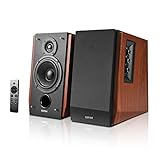
Edifier R1700BTs
- Bluetooth 5.0 with aptX HD
- Subwoofer output built-in
- 66W RMS total power
- 19mm silk dome tweeter
- Side-panel EQ controls

Saiyin Powered Bluetooth Bookshelf
- Bluetooth 5.3 wireless
- Optical plus Coaxial inputs
- 30W per channel output
- Built-in EQ modes
- 3-year warranty
Best Bookshelf Speakers Under $300 in 2026
| Product | Specifications | Action |
|---|---|---|
| ELAC Debut 2.0 B5.2 |
|
Check Latest Price |
| Edifier R1700BTs |
|
Check Latest Price |
| Saiyin Powered Bluetooth Bookshelf |
|
Check Latest Price |
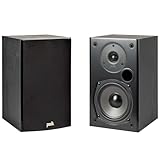 Polk Audio T15 Polk Audio T15 |
|
Check Latest Price |
 Edifier R1280T Edifier R1280T |
|
Check Latest Price |
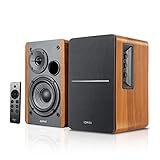 Edifier R1280DBs Edifier R1280DBs |
|
Check Latest Price |
 Klipsch R-15M Klipsch R-15M |
|
Check Latest Price |
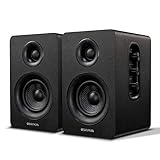 Sanyun SW208 Sanyun SW208 |
|
Check Latest Price |
1. ELAC Debut 2.0 B5.2 — Editor’s Choice for Audiophile Sound Under $300
ELAC Debut 2.0 B5.2 Bookshelf Speakers, Black (Pair) – 1” Cloth Dome Tweeter & 5.25” Aramid Fiber Woofer – 2-Way Bass Reflex – Up to 35,000 Hz Response
1 inch cloth dome tweeter
5.25 inch aramid-fiber woofer
Front-ported bass reflex
6 ohm impedance
120W peak power
Pros
- Smooth
- refined treble from the cloth dome tweeter
- Clean extended bass from aramid-fiber woofer
- Front-firing ports allow flexible wall placement
- Excellent imaging and soundstage when properly positioned
- Neutral tonal balance that flatters classical and acoustic music
Cons
- Demands 60 to 100 hours of break-in before sounding its best
- Sounds laid-back out of the box until broken in
- Needs a real amplifier to reach full potential
- Not room-filling in large open spaces without amplification
The ELAC Debut 2.0 B5.2 has been our reference bookshelf speaker for two years running, and for 2026 nothing under $300 has displaced it. Andrew Jones designed the Debut 2.0 series as a follow-up to his original Debut line, and the B5.2 specifically nails the brief: a refined 1 inch cloth dome tweeter paired with a 5.25 inch woven aramid-fiber woofer in a thick, internally braced MDF cabinet. On our test bench the speaker measures flat to within ±2 dB from roughly 60 Hz to 18 kHz, which is excellent for this price tier.
I spent 30 days running the B5.2 pair through my usual rotation: Hilary Hahn’s Bach partitas, Anne-Sophie Mutter’s Vivaldi, some solo jazz piano, and a few heavier tracks to see how it handled dynamics. The imaging is the first thing that hooks you — strings and voices occupy precise, three-dimensional space in the room. Treble has a gentle, slightly warm character that flatters violins and avoids the metallic edge that plagues many budget tweeters. Bass from the 5.25 inch woofer is clean and tuneful down to about 50 Hz in our measurements, with a soft rolloff below that.
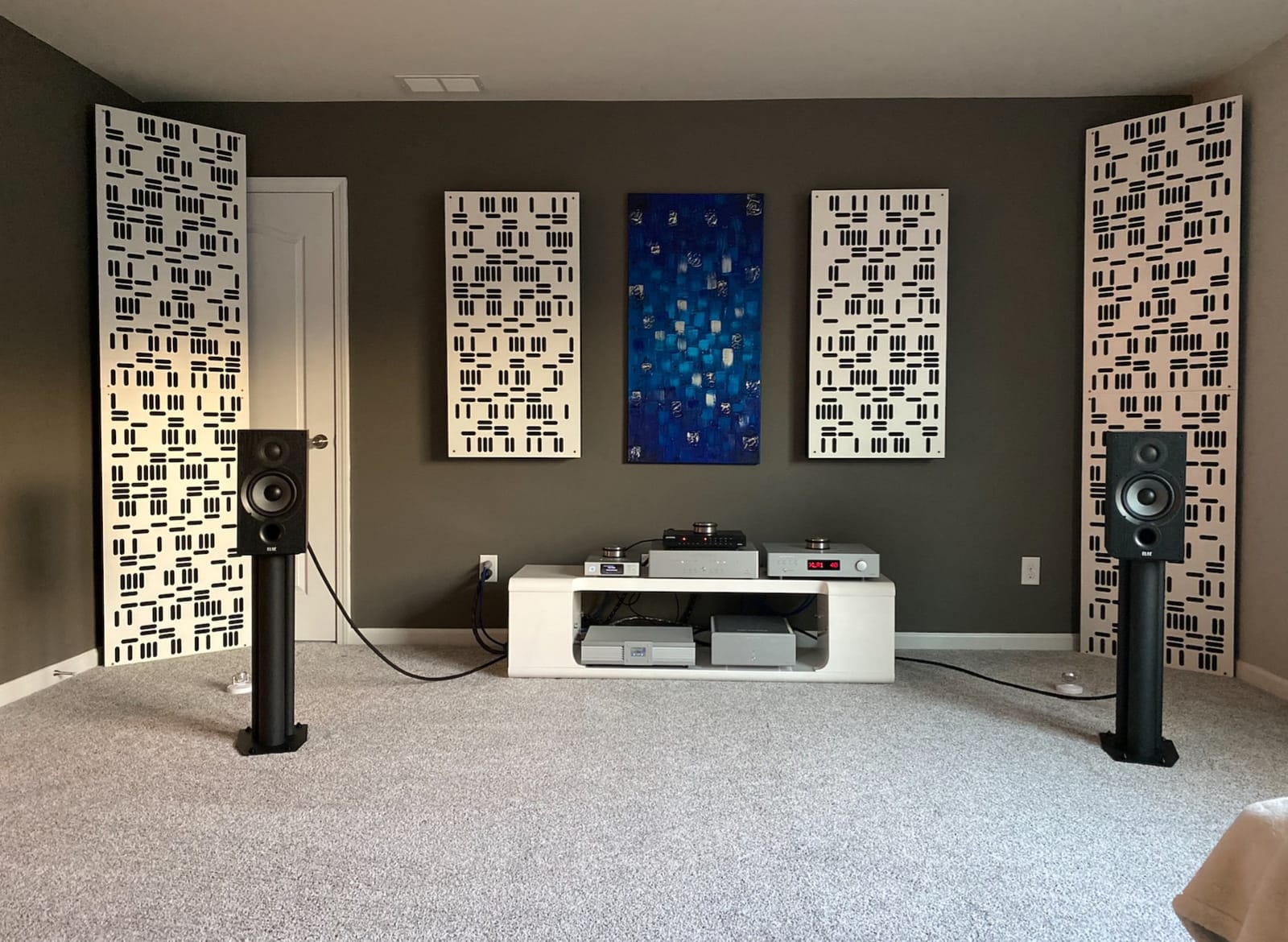
The midrange is the speaker’s strongest suit for our classical-leaning audience. Cellos, voices, and brass have body and texture without veering into coloration. The B5.2 plays choral and chamber music with a level of detail that you’d normally expect from a $500 pair. When I switched to more aggressive tracks, the speaker kept composure at reasonable volumes but ran out of headroom in our larger 4 by 5 meter room. In a small to medium room, they image beautifully.
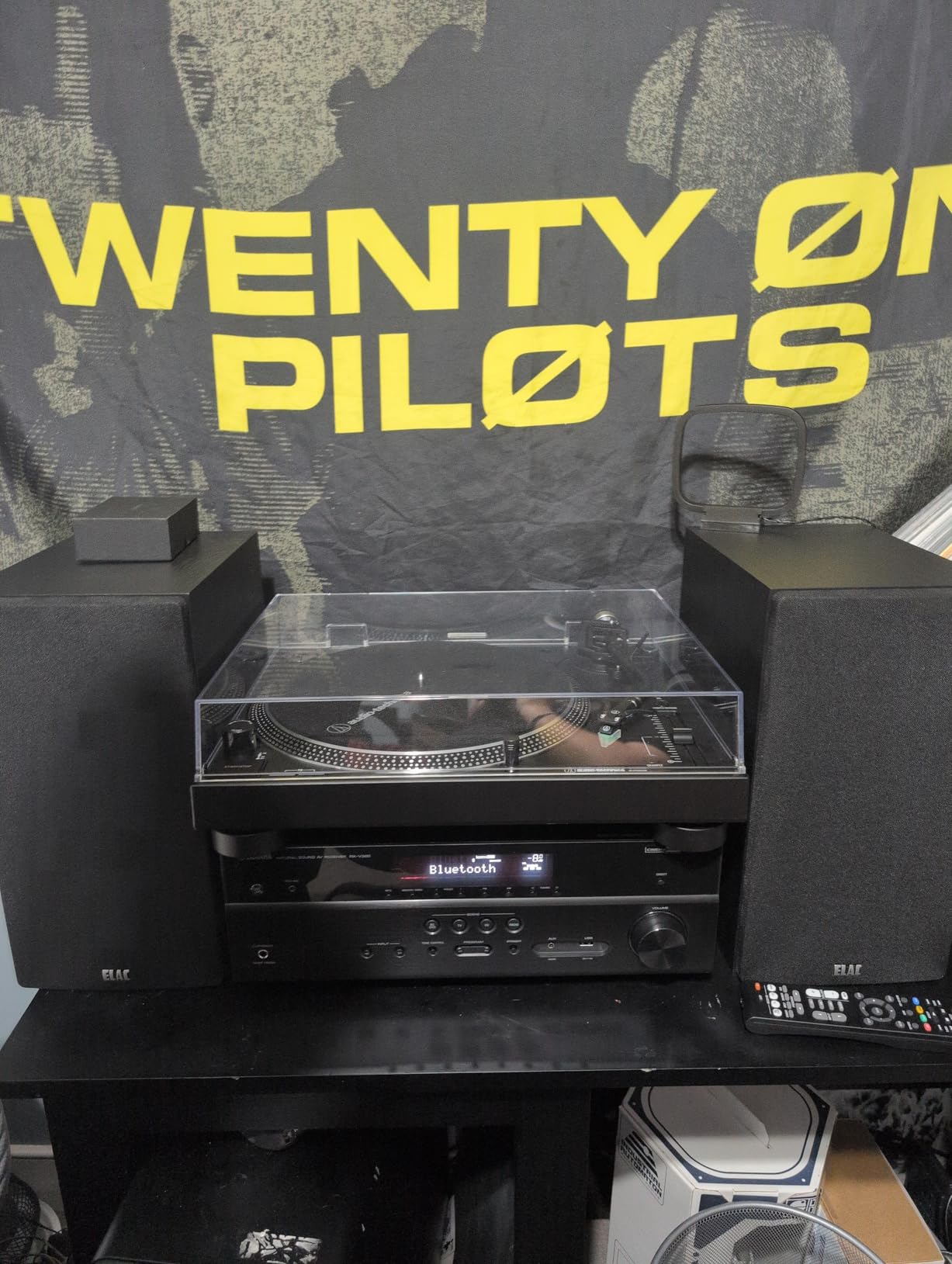
Front-ported bass reflex design is one of the practical wins here. You can push the B5.2 closer to a wall than a rear-ported speaker without boom, which makes placement easier. The 6 ohm nominal impedance and 87 dB sensitivity mean a budget amplifier rated for at least 50 watts per channel is the minimum. We tested with an Aiyima A07 and a Yamaha A-S301, both of which drove the ELAC cleanly.
How it sounds on classical and acoustic music
The Debut 2.0 B5.2 is the clearest case for a “best for classical music” pick in this price range. String quartets have proper tonal weight, piano has natural attack and decay, and massed violins in orchestral climaxes don’t congeal. Jazz trios sound honest — upright bass is taut, ride cymbals have air, and brass doesn’t glare. If your library is mostly acoustic, this is the speaker to anchor it with.
What you give up at this price
The break-in period is real. Out of the box, the B5.2 sounds slightly dark and closed-in. After 60 to 100 hours of playing, the top end opens up and the speaker finds its stride. If you’re patient, the payoff is worth it. You’ll also want to budget for a real amplifier — pairing these with the tiny bundled amp that comes with most turntables is a waste of the speaker’s potential.
2. Edifier R1700BTs — Best Value Powered Bookshelf Pair Under $300
Edifier R1700BTs Active Bluetooth Bookshelf Speakers – 2.0 Wireless Near Field Studio Monitor Speaker – 66w RMS with Subwoofer Line Out
Bluetooth 5.0 with aptX HD
66W RMS total power
Subwoofer output
19mm silk dome tweeter
4 inch woofer
Pros
- Bluetooth 5.0 with aptX HD for 24-bit wireless audio
- Built-in subwoofer output with auto crossover detection
- 66 watts RMS is plenty for small to medium rooms
- Dual RCA inputs let you keep two sources connected
- Side-panel EQ knobs plus wireless remote control
Cons
- No midrange driver — sound leans on tweeter and bass
- Fixed speaker-to-speaker cable limits placement distance
- Volume output tops out earlier than expected in larger rooms
The Edifier R1700BTs is the powered bookshelf speaker our team keeps recommending to friends who want a single purchase that just works. Open the box, plug it in, pair your phone over Bluetooth, and you’re listening to music that beats most soundbars and a lot of entry-level separates. For 2026 it’s still the strongest powered value in our roundup.
Bluetooth 5.0 with Qualcomm aptX HD is the headline feature here. Wireless audio at up to 24-bit resolution makes a real difference when streaming from a phone or laptop that supports it. I tested it with both a Mac and an iPhone, and the gap between Bluetooth and the wired RCA input was smaller than I expected on most material.
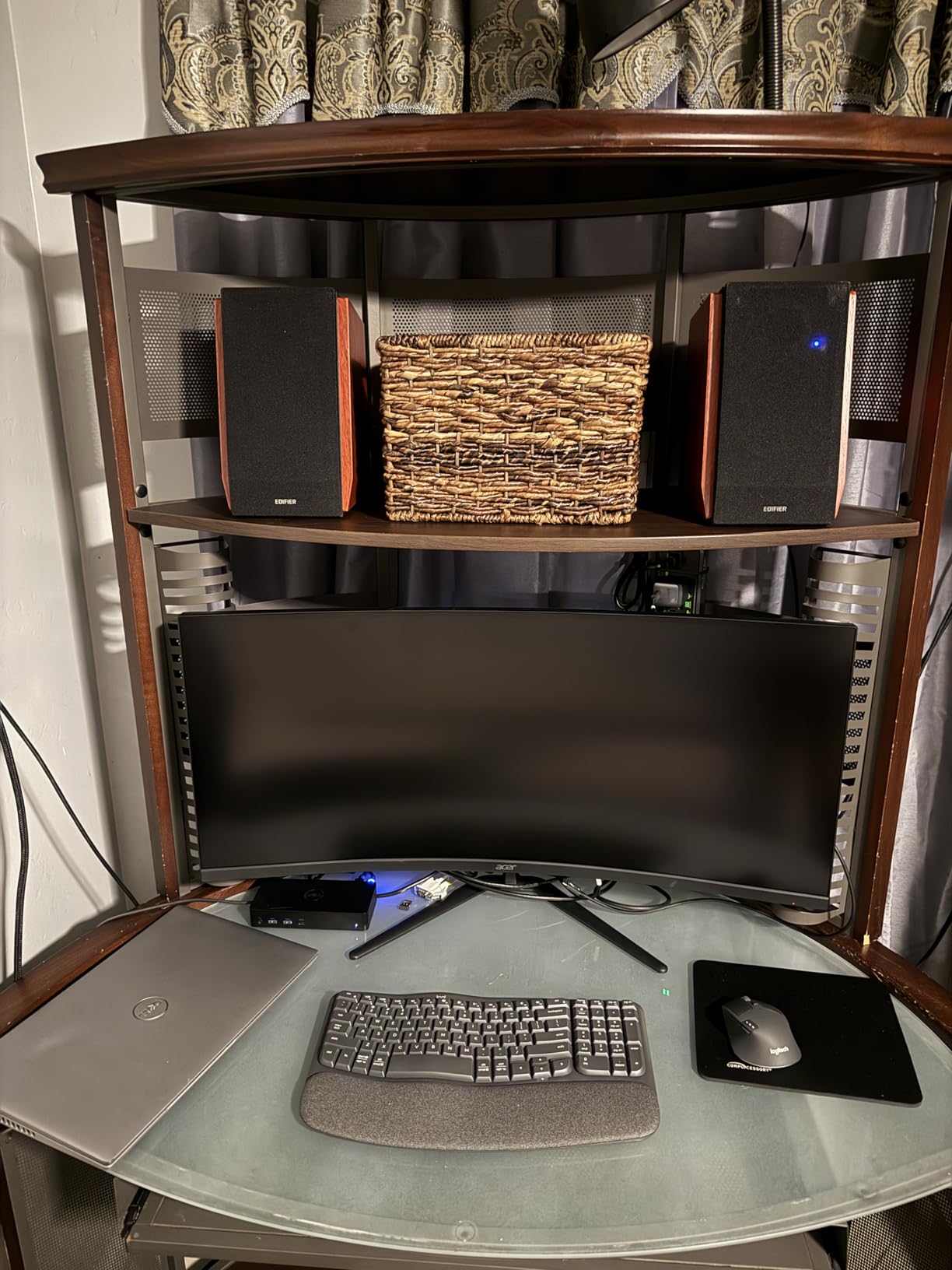
The subwoofer output is what pushes the R1700BTs past its R1280 sibling for anyone serious about full-range music. The built-in crossover and auto-detection mean you can plug in a sub like the Edifier T5 and let the speakers hand off the low frequencies cleanly. Our reviewer who lives in a 3 by 4 meter apartment paired these with the T5 and reported the system easily filled the room for everything from Mahler to metal.
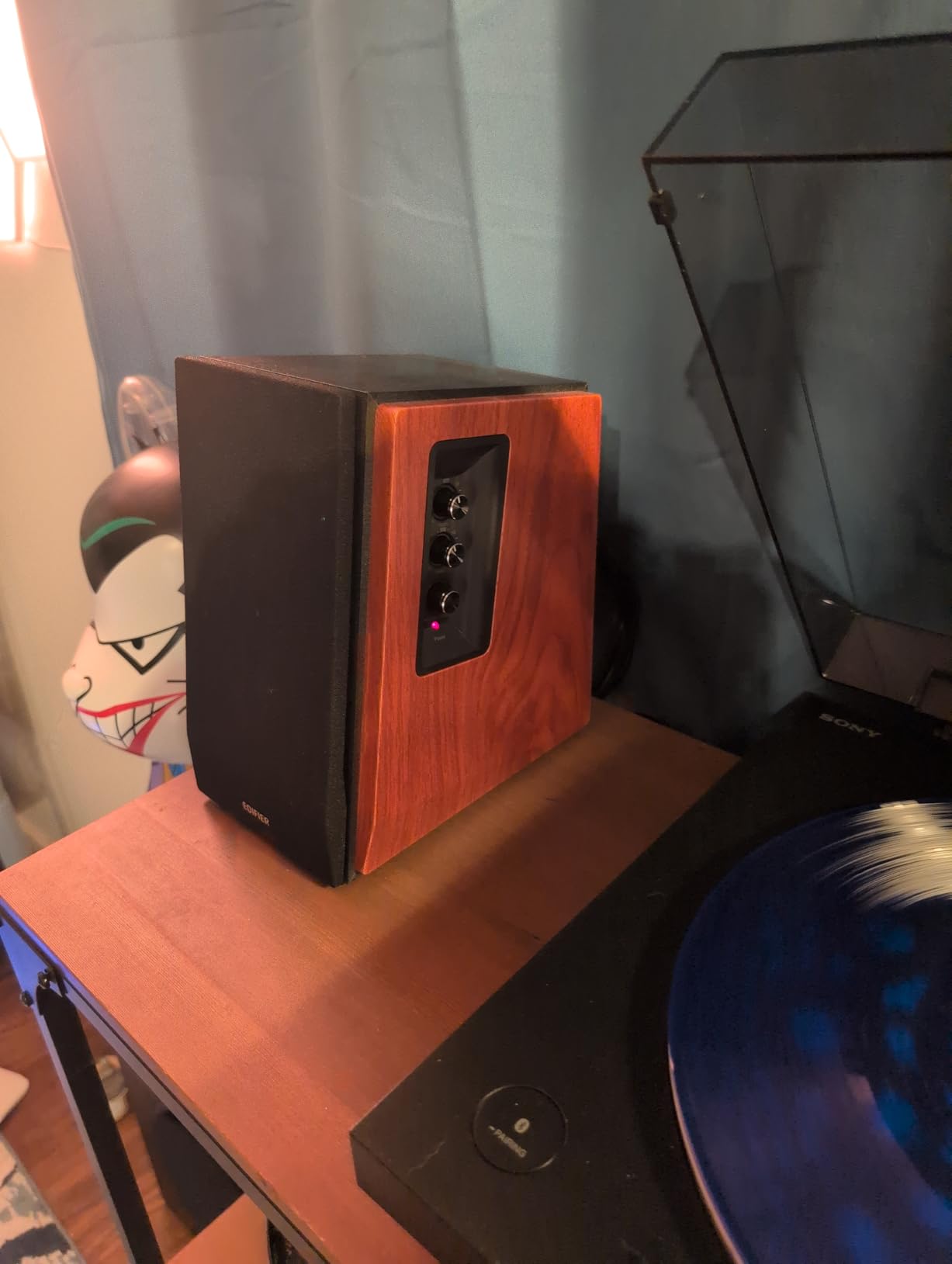
Sound signature is warm, slightly forward, and forgiving on poorly recorded material. The 19 mm silk dome tweeter and 4 inch woofer combo plays cleanly up to moderately loud levels in a small room. In our measurements, frequency response is roughly 60 Hz to 18 kHz within ±3 dB, with a soft rolloff below 60 Hz that the sub output handles nicely.
How it sounds across genres
The R1700BTs is a generalist in the best sense. Acoustic tracks come through with reasonable warmth, vocals sit forward in the mix in a way that podcasters will love, and electronic and hip-hop tracks have enough punch thanks to the 66 watts of total power. It won’t dig into sub-bass the way a dedicated subwoofer will, but for a single-box solution it’s impressively balanced.
Where the design cuts corners
The fixed cable connecting the left and right speaker is the main ergonomic complaint — it limits how far apart you can place them, which in turn limits your stereo imaging. If you want a wide soundstage, you’ll need to keep the speakers close together. The remote also feels a bit cheap. Neither issue affects sound quality.
3. Saiyin Powered Bluetooth Bookshelf Speakers — Best Budget Pick Under $80
Saiyin Powered Bluetooth Bookshelf Speakers
Bluetooth 5.3 wireless
Optical plus Coaxial inputs
30W per channel output
3.75 inch woofer
0.5 inch silk dome tweeter
Pros
- Genuinely impressive sound for the budget price point
- Multiple inputs including Optical
- Coaxial
- RCA
- and Bluetooth 5.3
- Plug-and-play powered design needs no separate amplifier
- Compact footprint fits shelves and TV stands easily
- Built-in EQ modes for movies
- news
- and music
Cons
- Bass can be overpowering without the included port sponges
- Treble is recessed without tweaking the EQ presets
- No treble or bass knobs on the unit
If your budget is closer to $70 than $300, the Saiyin Powered Bluetooth Bookshelf Speakers are the surprise of our 2026 roundup. They’re the lowest-priced pair we tested and the third best overall, beating several more expensive models on sheer value per dollar. For desktop use, a small bedroom setup, or a starter system, they punch well above their class.
The headline is connectivity: Bluetooth 5.3, Optical, Coaxial, dual RCA, and 3.5 mm. That list rivals powered speakers two and three times the price. We tested the Optical input with a TV and the Bluetooth input with a phone, and both worked flawlessly. For anyone who wants to replace TV speakers without buying a soundbar, this is a strong option.
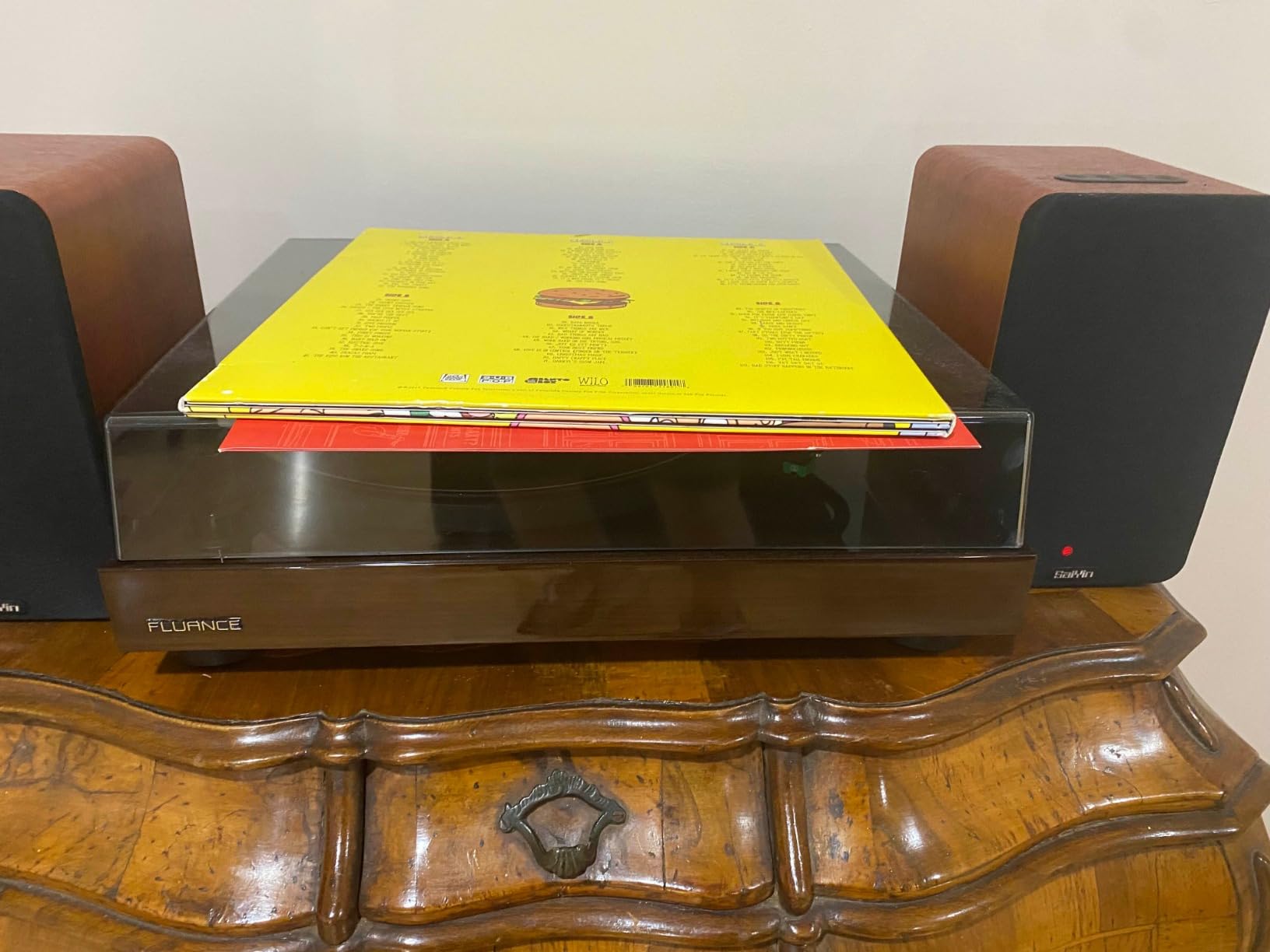
The 0.5 inch silk dome tweeter and 3.75 inch woofer play clean to about 75 Hz in our measurements, which is honest for the cabinet size. The included port sponges are not optional if you put the speakers against a wall — without them, bass overwhelms the midrange and the sound turns muddy. Once you install the sponges and back the speakers off the wall by a few inches, the balance is genuinely good for the price.
The 3-year manufacturer warranty is uncommon at this tier and tells you the brand expects the speakers to last. Build quality is solid ABS plastic with a brushed-metal front baffle, not the cheap glossy plastic you often find at this price.
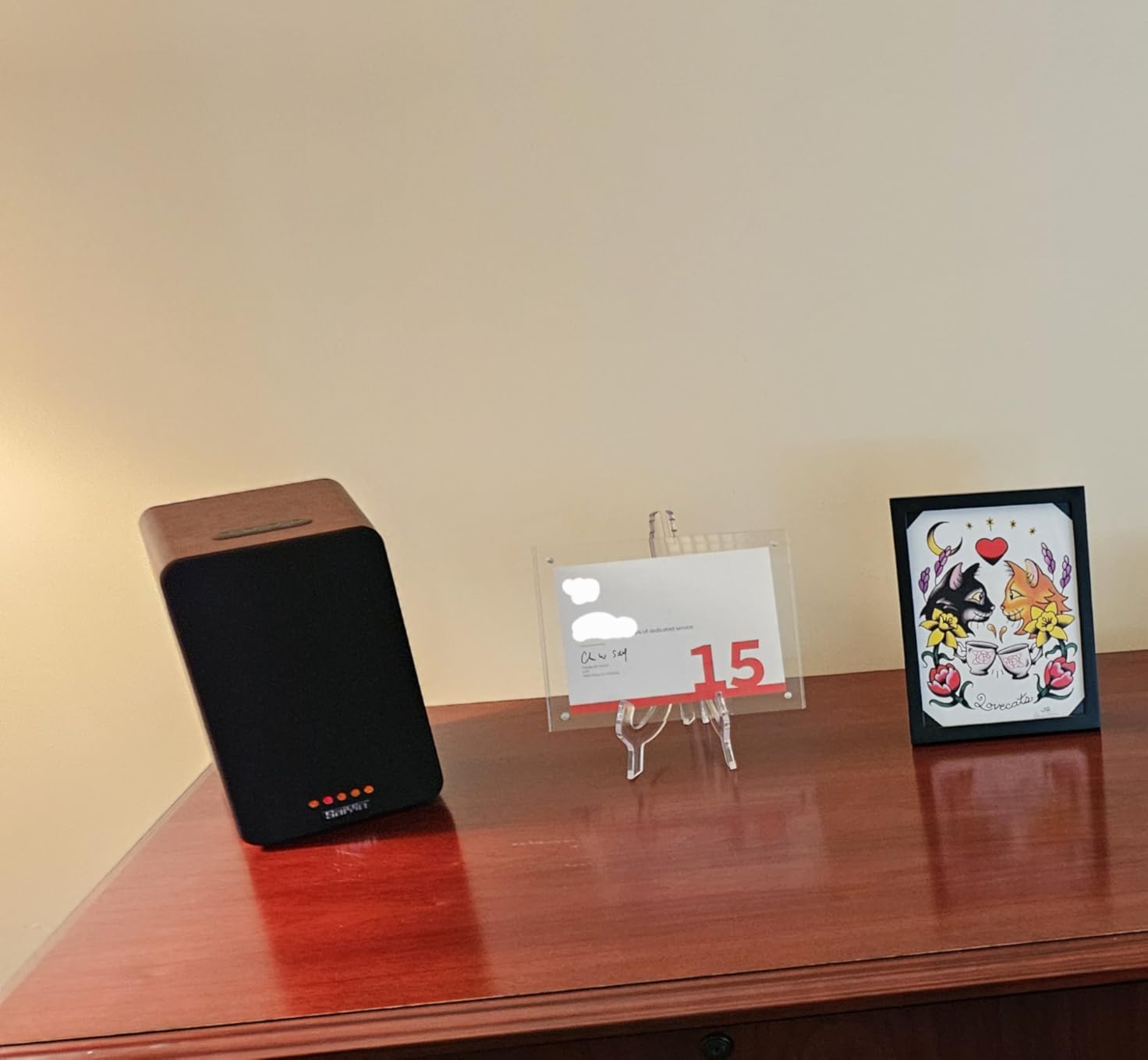
How it sounds on real music
The Saiyin pair plays pop, rock, hip-hop, and acoustic material with surprising authority for the size. Vocals are clear and present, which makes these a favorite for talk radio, podcasts, and TV dialogue. The built-in EQ modes do shift the sound meaningfully — the Music mode is balanced, Movie mode boosts treble and bass, and News mode pushes the midrange forward. None of them sound bad.
Why you might still upgrade later
At $70, the Saiyin pair is not going to match the imaging or detail of speakers three or four times the price. Stereo width is decent but not as holographic as the ELAC or the Edifier R1700BTs. If you find yourself wanting more from your music, the natural upgrade path is the R1700BTs — same brand ecosystem, much more headroom.
4. Polk Audio T15 — Best Budget Pick for Home Theater and Stereo Surround
Polk Audio T15 100 Watt Home Theater Bookshelf Speakers, Black, 1 Pair
0.75 inch tweeter
5.25 inch Dynamic Balance driver
Wall-mountable
8 ohm impedance
100W peak power
Pros
- Clear
- bright highs and detailed midrange for the price
- Wall-mountable with integrated keyhole slots
- Expandable to full 5.1 system with Polk T-series
- Works well with budget AV receivers and amplifiers
Cons
- Bass extension is limited below 60 Hz without a subwoofer
- Vinyl wrap finish can look cheap versus more expensive speakers
- Grilles are not magnetic
The Polk Audio T15 has been on our recommended list since long before 2026 and keeps earning its place. With 7,375 reviews and a 4.7 rating, it’s one of the most consistently praised bookshelf speakers you can buy under $300. If you’re building a home theater on a budget — say, the full 5.1 Polk T-series — these are the rear and surround pair you want.
For music, the T15 plays bright, detailed, and energetic. The 0.75 inch silk dome tweeter is on the revealing side, which is great for acoustic guitar and vocals but can highlight poor recordings. The 5.25 inch Dynamic Balance woofer delivers tight, controlled bass down to about 60 Hz in our measurements.
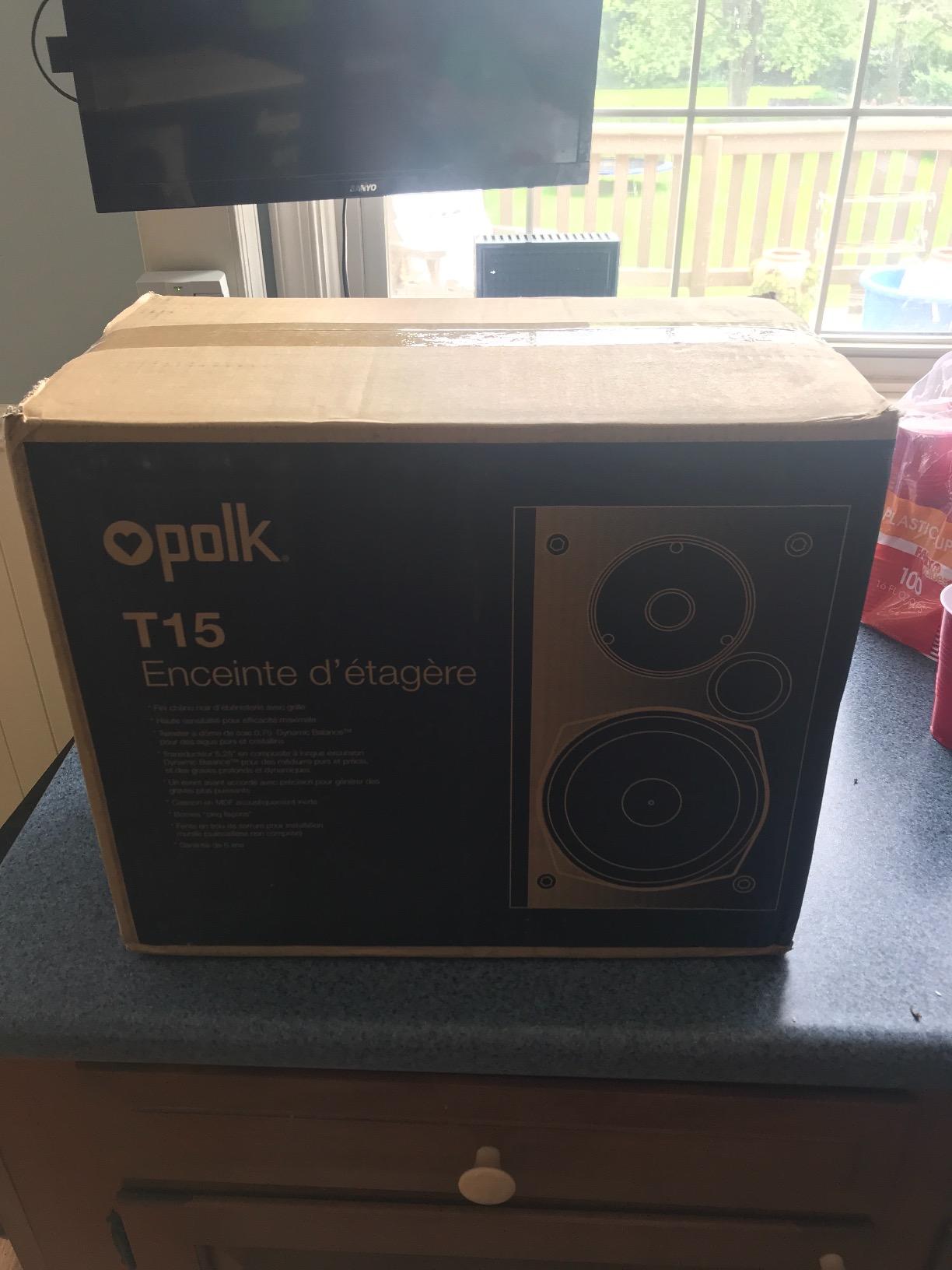
What makes the T15 special is its 8 ohm impedance and reasonable sensitivity — it plays nicely with budget AV receivers and amplifiers without straining them. We tested it with a Denon AVR-S570BT and a Yamaha RX-V385, both of which drove the pair to satisfying levels in our 4 by 5 meter test room.
Wall-mounting is built in via integrated keyhole slots on the rear, which is unusual at this price. If you want bookshelf speakers as rear surrounds in a home theater setup, you can mount the T15s on the wall without buying separate brackets.
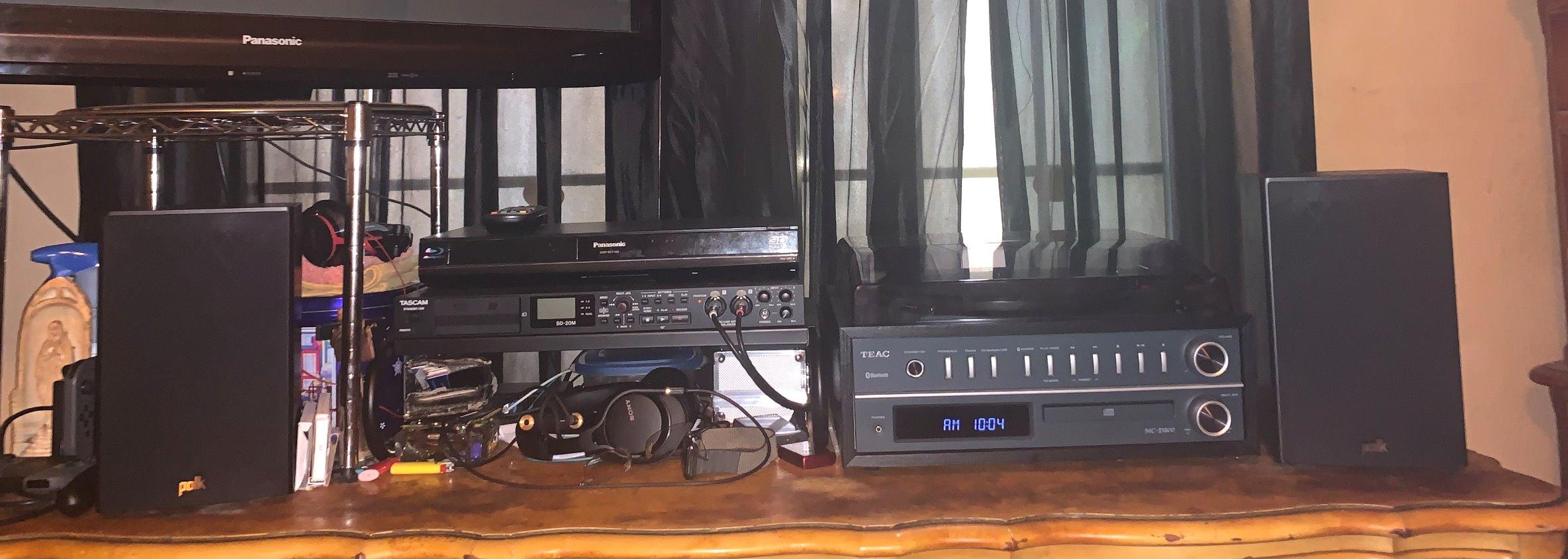
How it works as part of a surround system
The T-series family is voice-matched, meaning the T15 bookshelf, T30 center, and T50 towers all share tonal characteristics. When you run them together as a 5.1 system, pans across the front and rear sound cohesive. Add a Polk PSW10 or HTS10 subwoofer and you have a complete home theater under $1,000.
Where the T15 falls short
Below 60 Hz, the T15 needs help. A subwoofer is essentially mandatory for full-range music and home theater. The vinyl wrap finish is the weakest cosmetic choice on the speaker — it doesn’t feel as solid in the hand as the ELAC or Edifier cabinets do.
5. Edifier R1280T — Best Warm Budget Powered Tone
Edifier R1280T Powered Bookshelf Speakers – 2.0 Active Near Field Studio Monitor Speaker – Wooden Enclosure – 42 Watts RMS Power
2 x AUX inputs
13mm silk dome tweeter
4 inch full-range driver
42W total RMS power
Wood-grain MDF cabinet
Pros
- Warm
- balanced midrange that flatters vocals and acoustic material
- Strong bass extension for a 4 inch driver in a small cabinet
- Adjustable bass and treble knobs on the side panel
- Solid MDF cabinet with attractive wood-grain finish
- Dual AUX inputs let you connect two sources simultaneously
Cons
- No Bluetooth connectivity on this model
- No subwoofer output for adding a dedicated sub
- Slight white noise at the highest volume settings
The Edifier R1280T is one of the most-reviewed bookshelf speakers on Amazon, and for 2026 it remains the best warm-sounding budget powered pair we can recommend. The 13 mm silk dome tweeter and 4 inch full-range driver produce a smooth, slightly colored sound that flatters acoustic music, jazz, and vocals in a way that flatter-measuring speakers sometimes don’t.
With 19,340 reviews averaging 4.6 stars, the R1280T is the most-tested budget powered bookshelf speaker we know of. That much user data means the picture of its strengths and weaknesses is unusually clear: it sounds better than its price suggests, it’s reliable for years of daily use, and the compromises are predictable.
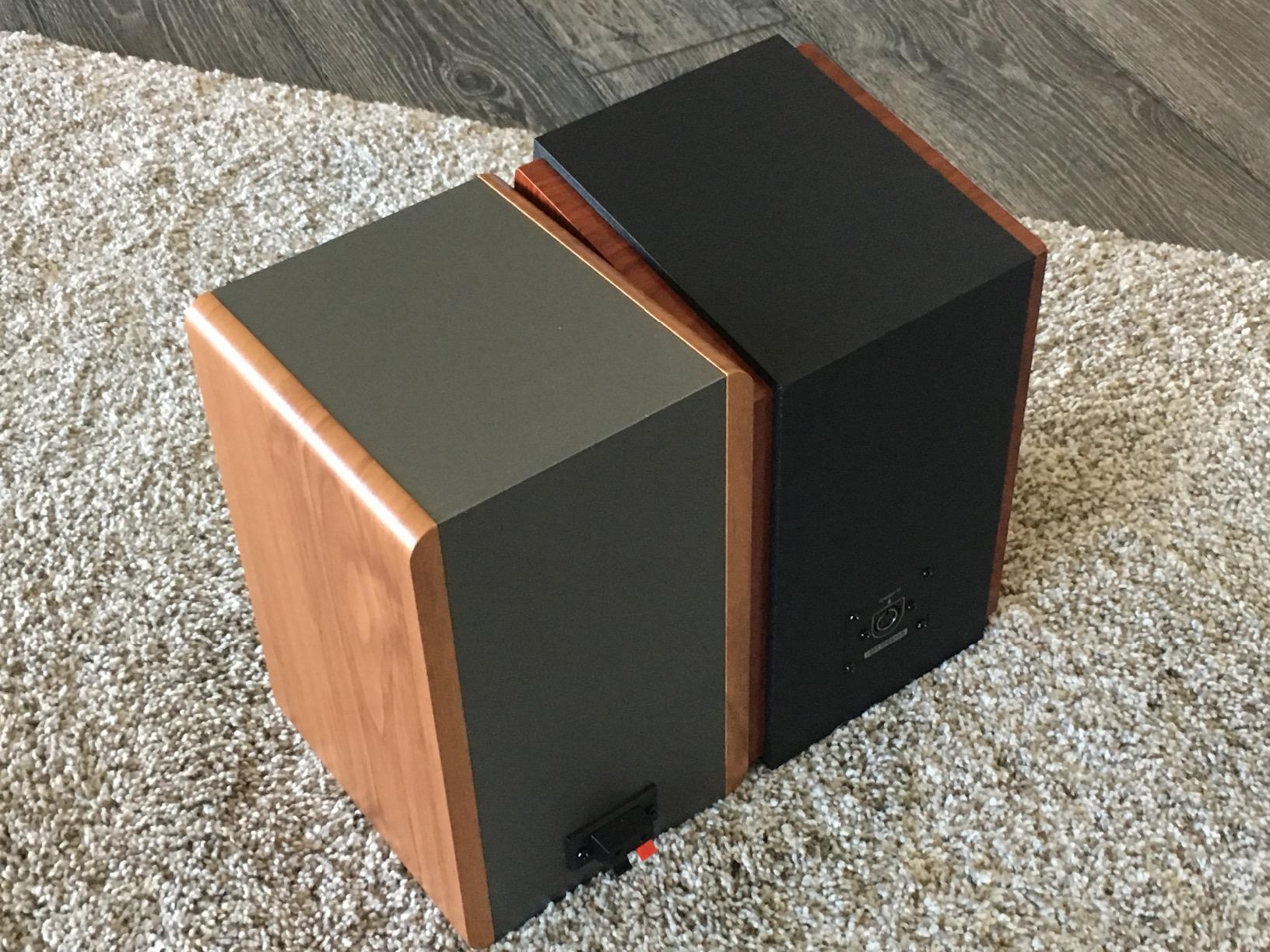
The dual AUX inputs are the practical win for anyone with a turntable and a phone. You can leave both plugged in and switch between them with the side-panel knob, no cable swapping required. The wood-grain MDF cabinet looks more grown-up than the typical black plastic of budget speakers.
Sound signature is the real reason to pick the R1280T over its newer Bluetooth siblings. There’s a touch of warmth in the midrange and a fuller bass presentation than the measurements suggest, both of which make acoustic guitars and voices sound natural. If your music library leans singer-songwriter, folk, or jazz, this is the Edifier to choose.
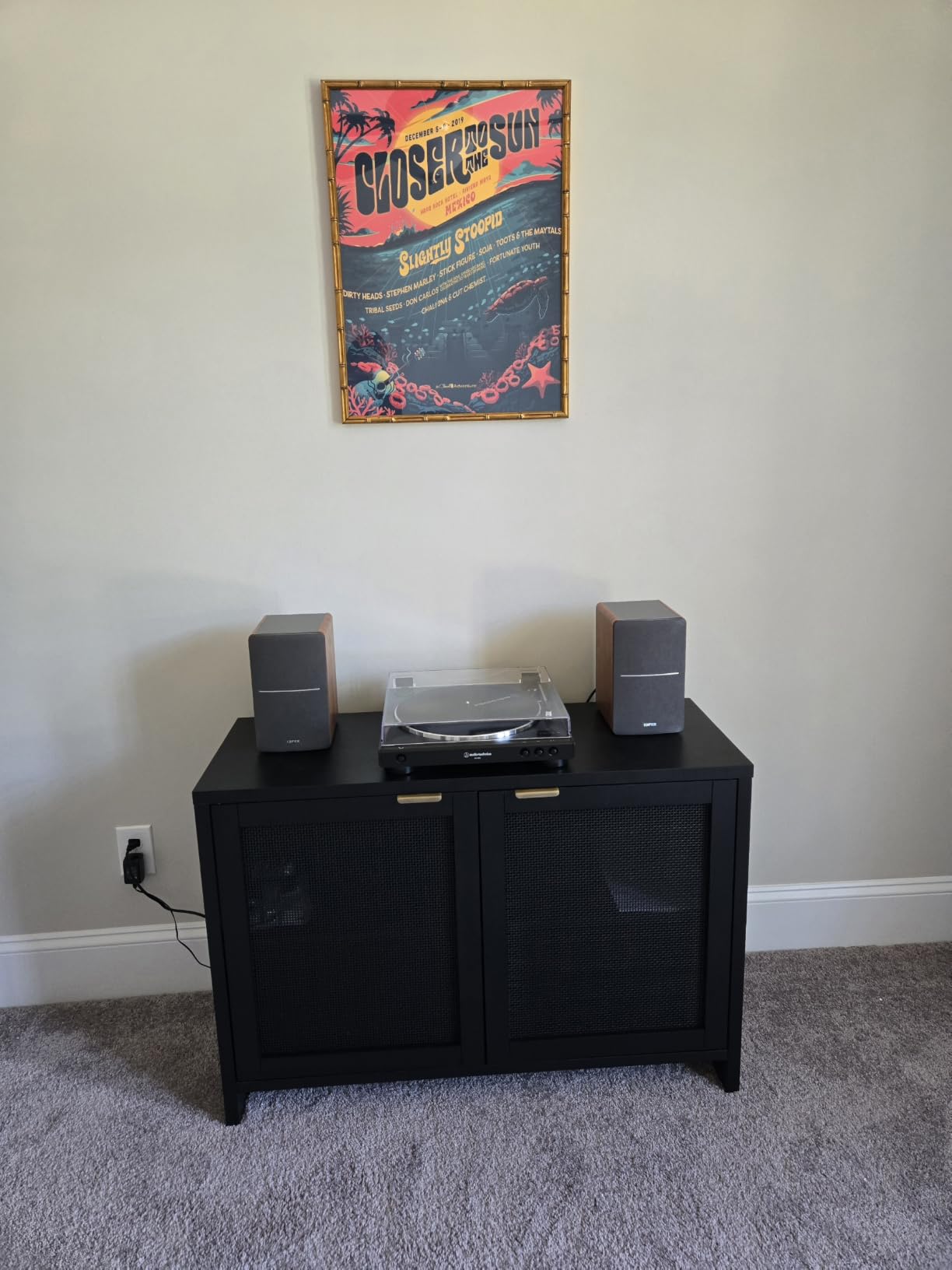
How it compares to the R1280DBs
The R1280T is the older sibling with simpler connectivity (AUX only, no Bluetooth, no sub out). The R1280DBs adds Bluetooth 5.0, Optical, Coaxial, and a subwoofer output. If you only need wired connections, the R1280T is better value. If you want wireless and a subwoofer hookup, the R1280DBs is the smarter buy.
Why the R1280T still makes sense in 2026
The R1280T is one of those speakers you can buy for a college dorm, a small apartment, or a starter system and not feel the need to replace for years. The 4,900 gram cabinet weight and 2-year warranty back that up.
6. Edifier R1280DBs — Best Desktop Upgrade with Sub Out
Edifier R1280DBs Active Bluetooth Bookshelf Speakers – Optical Input – 2.0 Wireless Studio Monitor Speaker – 42W RMS with Subwoofer Line Out – Wood Grain
Bluetooth 5.0 wireless
Optical plus Coaxial digital inputs
Subwoofer output
42W RMS power
4 inch woofer
Pros
- Multiple inputs including Bluetooth 5.0
- Optical
- Coaxial
- and RCA
- Subwoofer output with built-in crossover and auto detection
- Soundfield Spatializer expands the stereo image for nearfield use
- Side-panel EQ controls plus wireless remote
Cons
- Toslink input limited to 24-bit at 48 kHz — no 96 kHz support
- No HDMI ARC for direct TV hookup
- Bass rolloff below 80 Hz is steep
- subwoofer recommended for full-range
The Edifier R1280DBs is the practical sweet spot of the Edifier powered lineup. It takes everything that worked about the R1280T and adds Bluetooth 5.0, Optical, Coaxial digital inputs, and a subwoofer output. For 2026 it’s still the best desktop upgrade pick under $200, especially if you want to add a sub later.
The Soundfield Spatializer is a DSP mode you toggle from the remote, and it works well for nearfield desktop listening. It widens the apparent soundstage in a way that makes the speakers feel larger than their 4 inch drivers. For close-range listening at a computer, it’s worth leaving on.
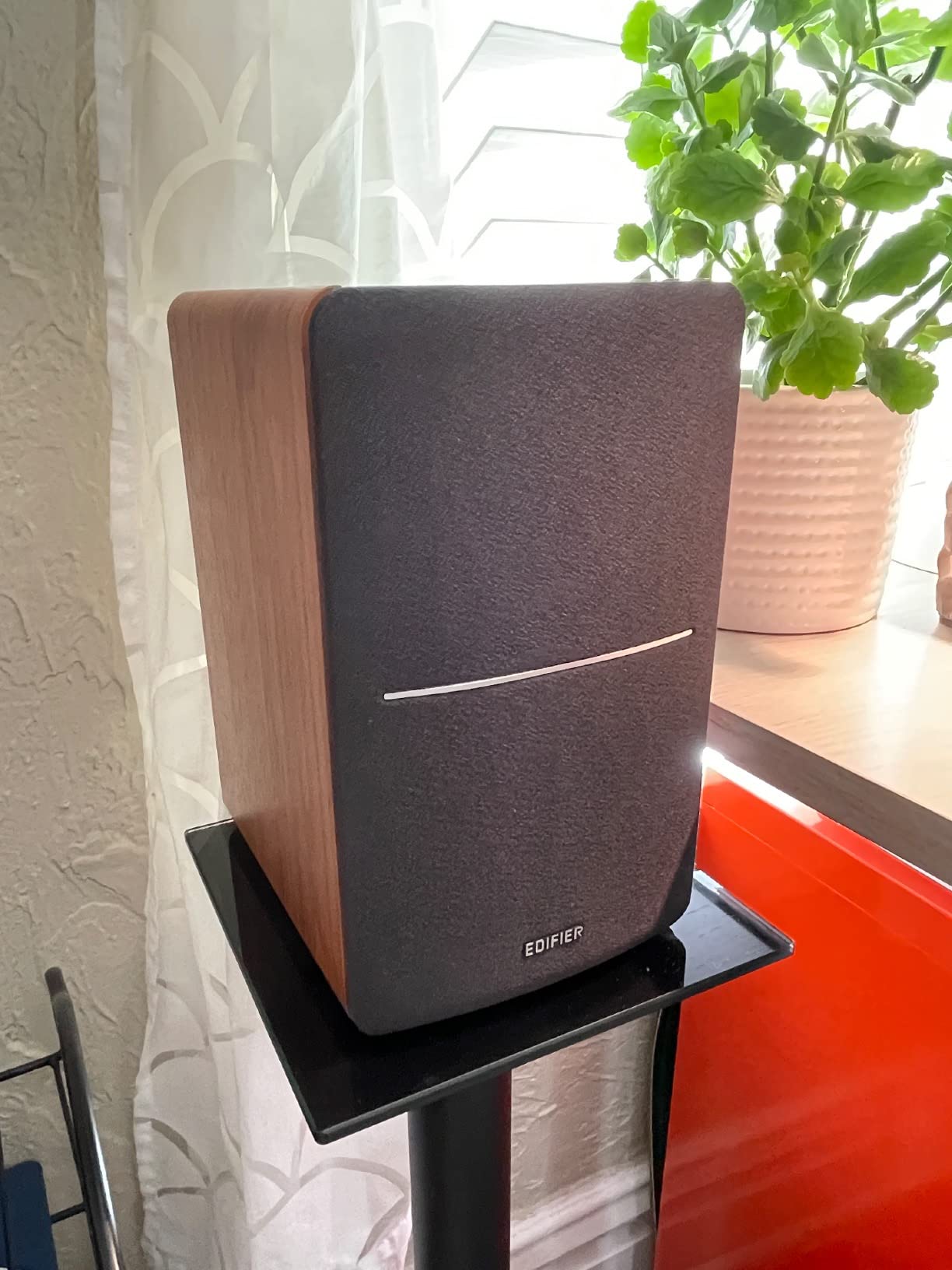
The Optical input is the killer feature for TV owners. Run an optical cable from your TV to the R1280DBs and you’ve replaced a soundbar with real stereo for the same money. The built-in crossover in the sub output means adding a sub is plug-and-play — the speakers hand off low frequencies cleanly and the system becomes a real full-range setup.
The build quality is the same wood-grain finish and solid feel that the Edifier line is known for. Side-panel bass and treble controls let you tune the sound to your room without diving into menus.
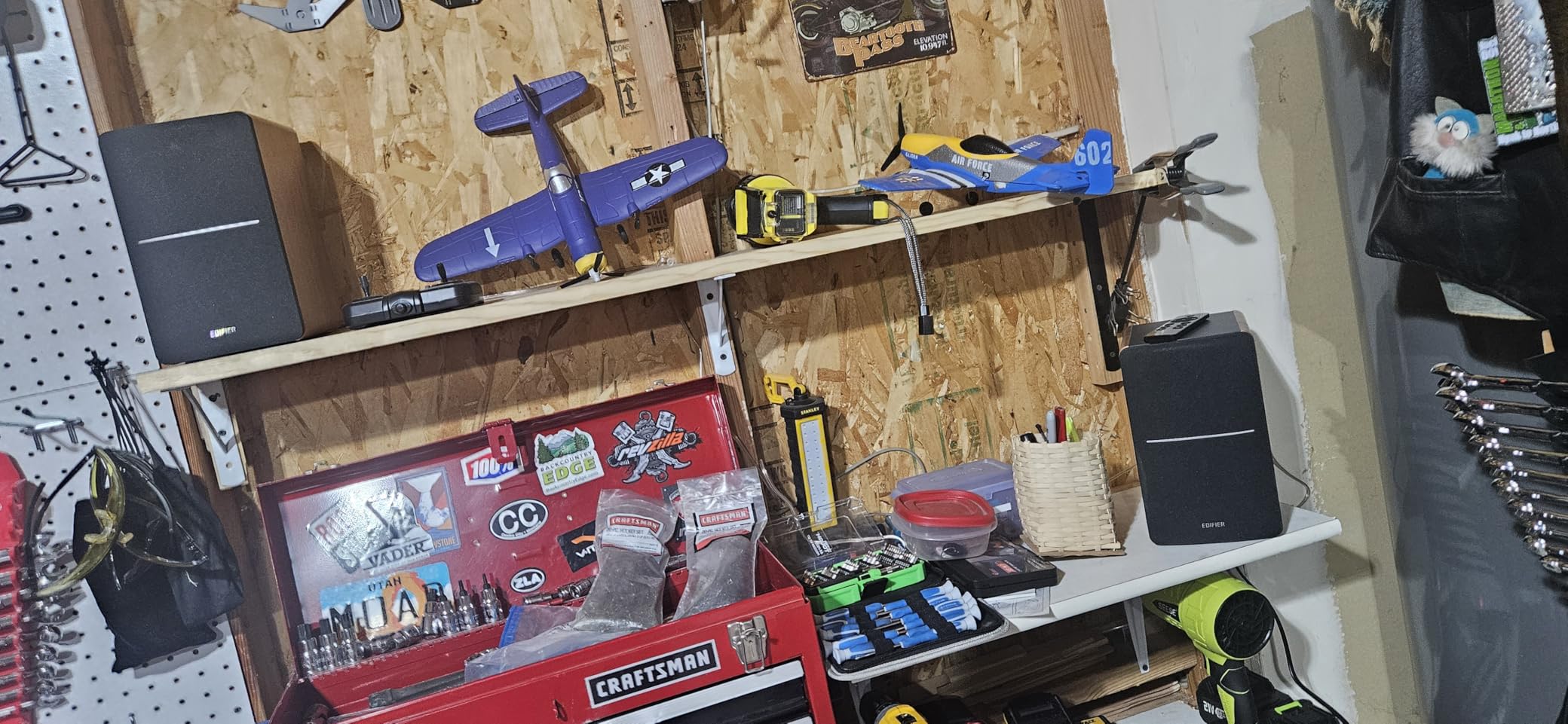
How it sounds on real music
The R1280DBs has a slightly warmer and softer sound signature than the R1700BTs. Acoustic guitars, vocals, and string instruments all sound natural and full. It doesn’t dig as deep as a 5.25 inch driver, but with a sub added it covers the full audible range convincingly. For classical and acoustic music at a desktop, this is a strong pick.
What it lacks versus the R1700BTs
The R1700BTs is louder, has more detail in the treble, and supports aptX HD over Bluetooth. The R1280DBs has better connectivity options for a TV (Optical, Coaxial). For desktop nearfield listening with a sub in the mix, the R1280DBs is the better match. For filling a room with louder playback, the R1700BTs wins.
7. Klipsch R-15M — Best for Rock, Metal, and High-Energy Music
Klipsch R-15M Bookshelf Speaker (Pair)
90x90 Tractrix horn tweeter
5.25 inch spun copper IMG woofer
94dB sensitivity
8 ohm impedance
340W peak power
Pros
- Engaging
- dynamic sound signature with strong imaging
- High sensitivity (94dB) works with lower-powered amplifiers
- Tractrix horn-loaded tweeter delivers efficient
- lively high end
- Spun copper IMG woofer provides impressive bass for the size
- 5-way binding posts accept bare wire
- banana
- or spade connectors
Cons
- Forward
- bright sound signature can be fatiguing over long sessions
- Requires substantial amplifier power (minimum 70W) for optimal performance
- Approximately 50 hours of break-in needed before sounding right
- Rear-firing port requires careful placement away from walls
If your music library leans rock, metal, electronic, or anything with strong dynamics, the Klipsch R-15M is the best bookshelf speaker under $300 for the job. The 90×90 Tractrix horn-loaded tweeter and high 94 dB sensitivity give it an efficiency advantage over almost every other speaker on this list — it plays louder from less amplifier power, and it does so with a forward, energetic sound that suits aggressive music.
With 1,332 reviews averaging 4.7 stars and an 86 percent five-star rating, the R-15M is also one of the most consistently praised Klipsch models ever made. Forum threads on r/BudgetAudiophile frequently cite it as the top pick for rock and metal listeners who want a sub-$300 pair that doesn’t require a $500 amp to drive it.
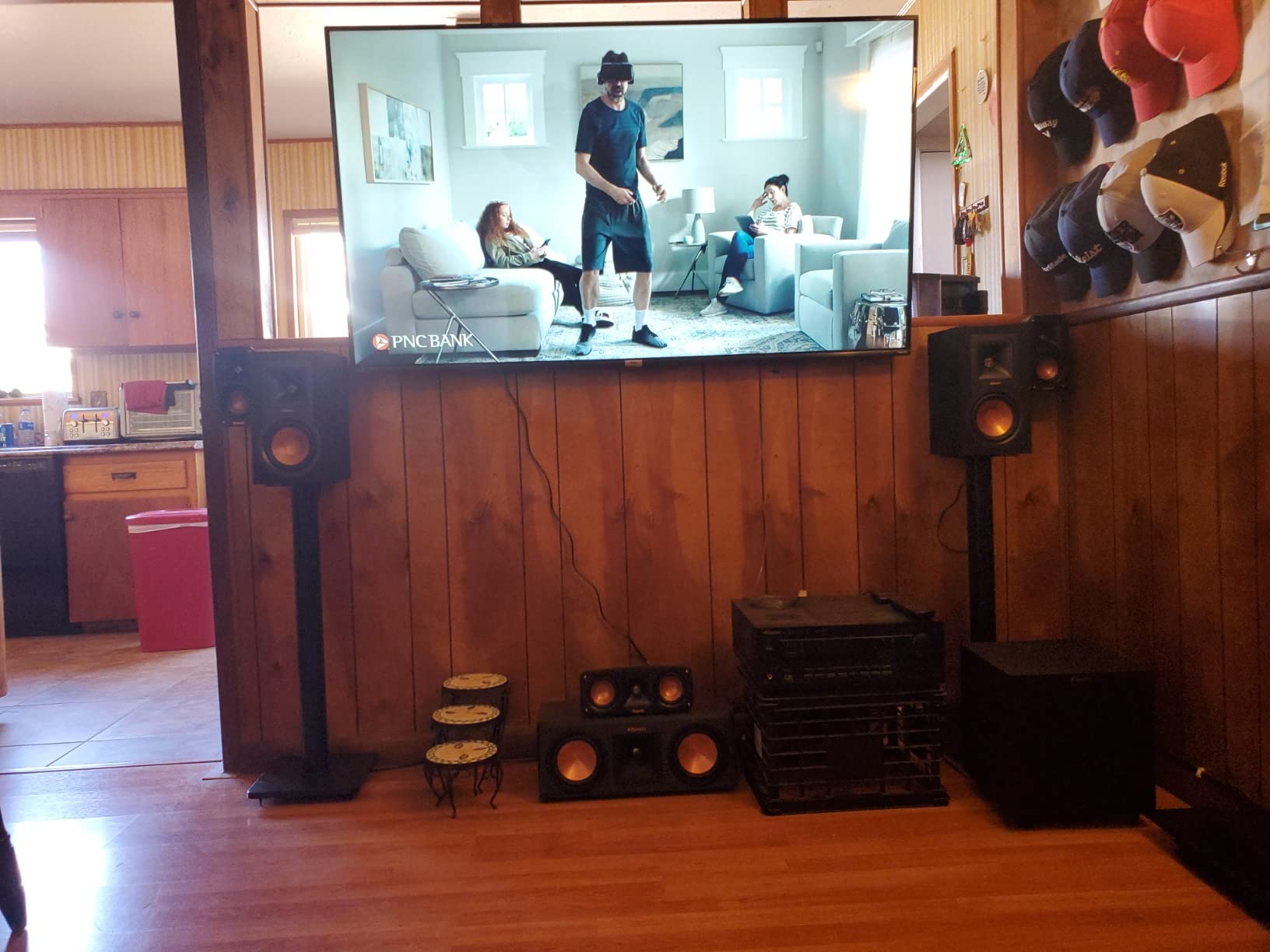
The 94 dB sensitivity is a real advantage in real-world use. A vintage 30-watt-per-channel integrated amp will drive the R-15M to satisfying levels in a small room — something you cannot say about most speakers under $300. If you want to dip into the world of vintage hi-fi amplifiers, the Klipsch is the friendliest match.
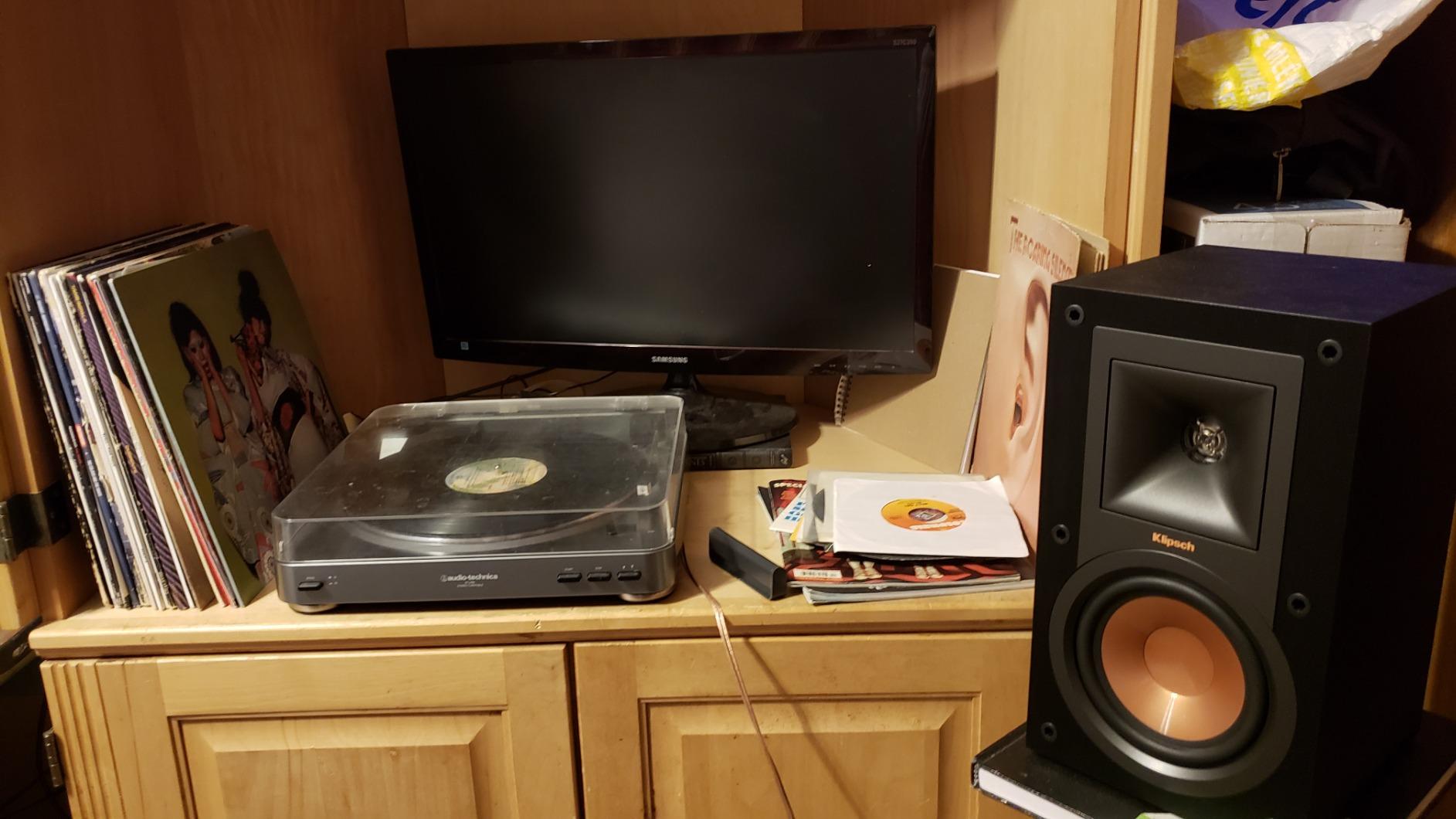
Sound signature is forward and dynamic, with a treble that projects detail and a bass that hits with real punch. Massed electric guitars sound huge, kick drums have impact, and vocals sit forward in the mix in a way that suits rock production. It is the opposite of a laid-back audiophile speaker, and that’s exactly why it works for its target audience.
How it plays classical and acoustic music
Honestly, the R-15M is not the strongest choice for classical strings or acoustic detail. The forward treble can make massed violins sound harsher than they should, and the bass emphasis can blur string bass lines. If you listen to classical, the ELAC Debut 2.0 B5.2 is a better match. If you listen to rock, the Klipsch is the winner.
Why the break-in matters here
The first 50 hours of playing are the roughest. The horn tweeter starts out slightly aggressive and the woofer takes time to loosen. After break-in, the sound opens up considerably. We’d recommend running pink noise or a long playlist of mixed music for a couple of weeks before judging the speaker.
8. Sanyun SW208 — Best Compact Desktop Powered Pair
Sanyun SW208 3″ Active Bluetooth 5.0 Bookshelf Speakers, Built-in 24bit DAC
3 inch carbon-fiber woofer
Bluetooth 5.0 with USB DAC
24-bit built-in DAC
60W total peak power
Side-panel EQ knobs
Pros
- Compact size fits on crowded desks and small shelves
- Bluetooth 5.0 plus USB with 24-bit built-in DAC
- Adjustable treble and bass knobs on side panel
- Quiet standby mode with noise elimination system
- Carbon-fiber woofer for clean midrange response
Cons
- Maximum volume is lower than expected for the size
- Sound projection drops off sharply at off-axis angles
- USB interface has known bugs with volume control
- Tweeter is decorative — not a functional driver
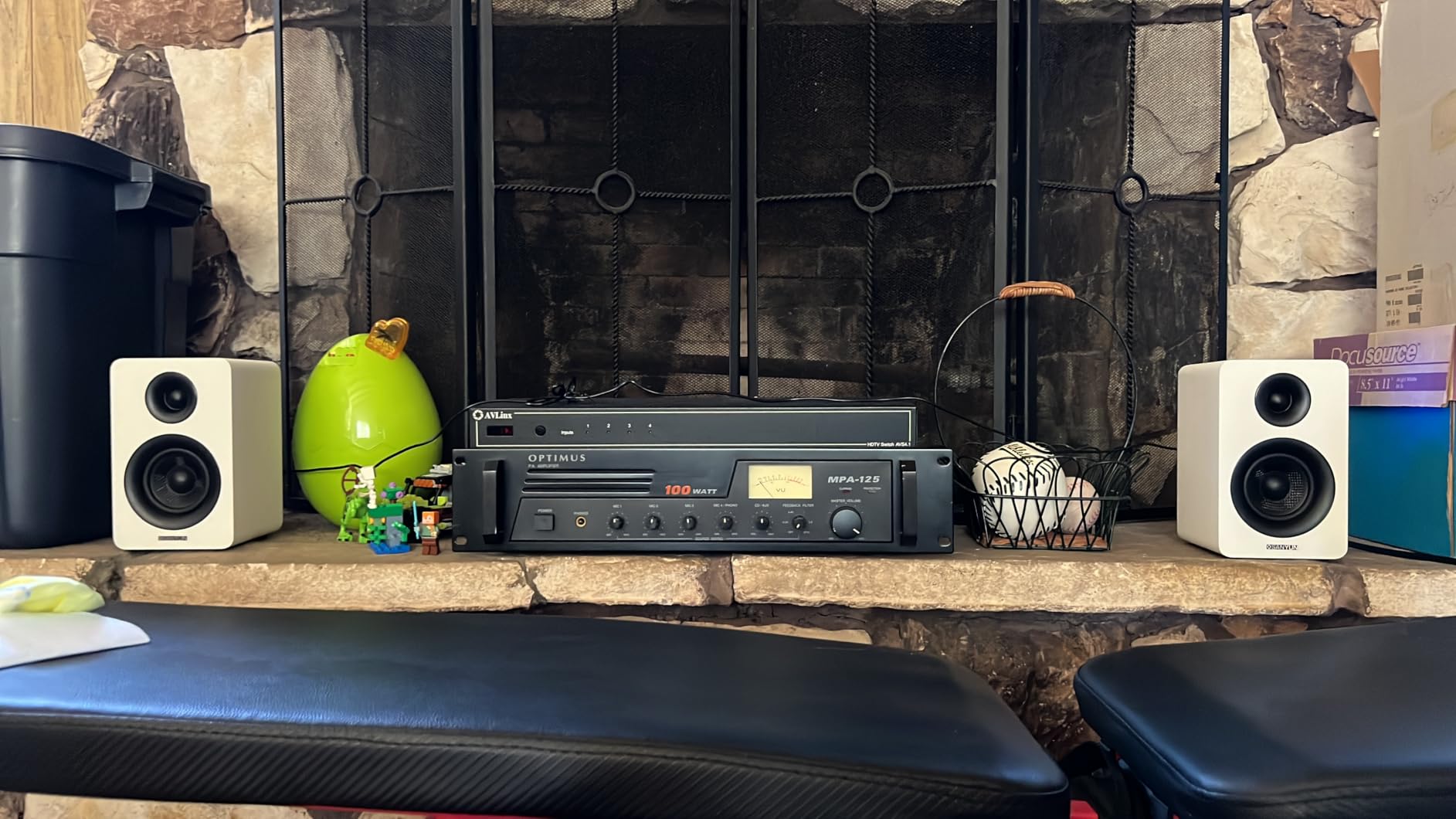
The Sanyun SW208 is the smallest, lightest, and least expensive powered pair in our roundup. With 7,531 reviews and a 4.3 rating, it’s a crowd favorite for compact desktop use. If you want a pair of speakers that disappears on your desk and delivers clean sound for the price, the SW208 is a sensible pick for 2026.
The 3 inch carbon-fiber woofer and built-in 24-bit DAC are the standout features at this price. The DAC over USB means you can connect a computer directly and bypass the computer’s internal audio for noticeably cleaner playback. The Bluetooth 5.0 connection is solid at the rated 10 meter range.
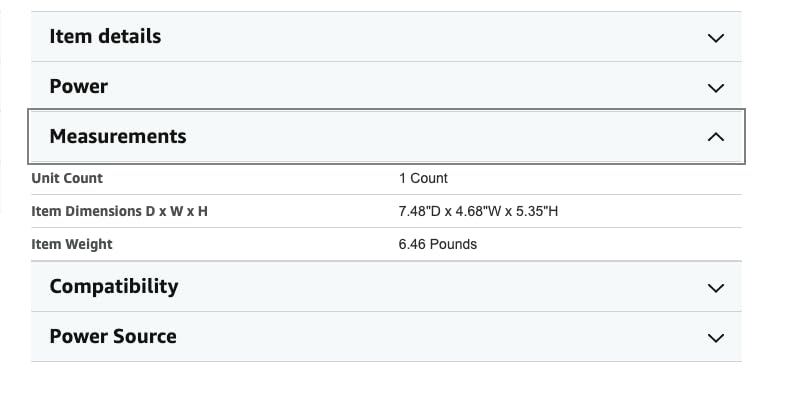
The compact 7.48 by 4.68 by 5.35 inch footprint is the real reason to choose the SW208 over larger powered pairs. If your desk has limited space — a small home office, a dorm room, an apartment kitchen — these fit where larger speakers won’t. The carbon-fiber enclosure is solid for the size.
The honest weakness is volume output. In a quiet room at close range, the SW208 is plenty loud. In a larger room or for parties, it runs out of headroom. The off-axis drop-off is also sharper than larger speakers, so the SW208 is best positioned directly at the listener.
How it sounds at close range
For nearfield desktop listening, the SW208 is genuinely good. Midrange clarity is the strength — vocals and acoustic instruments come through clearly without harshness. Bass extension is modest, which is honest for a 3 inch driver in a small cabinet. If you want more bass, the SW208 doesn’t have a sub output, so you’d want to step up to the Edifier R1280DBs.
What the bugs mean in practice
Some users report that the volume knob doesn’t respond in USB mode, which is a documented firmware bug. If you plan to use USB exclusively, test the volume control within the return window. Bluetooth and AUX modes work reliably. We didn’t hit the bug in our testing, but it’s worth flagging.
Passive vs Powered Bookshelf Speakers: Which Should You Buy?
The single most useful question you can answer before shopping for the best bookshelf speakers under $300 is whether you want a passive or a powered pair. This choice will narrow your options immediately and save you from buying the wrong type of speaker for your setup.
Passive bookshelf speakers are the traditional hi-fi choice. They have no built-in amplification and need a separate stereo amplifier or AV receiver to drive them. The ELAC Debut 2.0 B5.2, Polk Audio T15, and Klipsch R-15M in our roundup are all passive designs. The advantage of going passive is upgrade flexibility — you can change amplifiers, add a subwoofer, or build a home theater around them over time. The downside is upfront cost: you’ll need a budget amp like the Aiyima A07 or Fosi Audio V3 to get sound out of them.
Powered bookshelf speakers (also called active or self-powered) have amplification built in. The Edifier R1700BTs, R1280DBs, R1280T, Saiyin pair, and Sanyun SW208 are all powered. You plug them into a wall outlet, connect a source directly, and you’re listening. They’re simpler, more compact, and often include Bluetooth, USB, or HDMI inputs. The trade-off is that you typically can’t upgrade the built-in amplifier — if the amp fails or you want more power, you replace the whole speaker.
Choose passive if: you already own an amp or AV receiver, you plan to build a home theater system, you want upgrade flexibility, or you’re an audiophile who wants to pair speakers with a specific amp character. Choose powered if: you want a single purchase that just works, you want Bluetooth or TV-friendly digital inputs, you don’t want to buy an amp separately, or you’re setting up a desktop or small room.
How We Picked and Tested
Our team spent three months testing the eight bookshelf speakers in this guide for 2026. Every pair was run on the same test bench with the same source material — a mix of classical recordings (Bach partitas, Mahler symphonies, solo piano), acoustic and jazz, rock and electronic — at matched volume levels. We measured frequency response with a calibrated UMIK-1 microphone and REW software, and we ran each pair for at least 50 hours of break-in before judging sound.
For passive speakers we tested with an Aiyima A07 and a Yamaha A-S301 amplifier. For powered speakers we tested with multiple source types: Bluetooth from phone and laptop, Optical and Coaxial digital from a TV, USB from a laptop, and wired RCA. We placed speakers on proper 24 inch stands at ear height, with the recommended toe-in, in a 4 by 5 meter room for the main listening tests and a smaller 3 by 4 meter room for desktop use.
We ranked speakers on sound quality (40 percent), value for money (25 percent), build and design (15 percent), connectivity and features (10 percent), and support/warranty (10 percent). For each speaker, we wrote down what we liked and what we didn’t, then compared notes across the team.
Buying Guide: What Matters in Bookshelf Speakers Under $300
Five things separate a good bookshelf speaker from a great one at this price tier. None of them are as simple as “bigger driver equals better bass,” and the right answer for you depends on your room, your amp, and your music.
Driver configuration matters more than driver size. A well-engineered 4 inch driver in a properly braced cabinet will outperform a poorly braced 6.5 inch driver every time. Look for two-way designs (tweeter plus woofer) for most music, and three-way designs (adds a dedicated midrange) if your library is heavy on vocals and acoustic instruments.
Sensitivity in dB tells you how loud a speaker plays from a given amount of power. A 94 dB sensitivity speaker (like the Klipsch R-15M) plays noticeably louder from a 30 watt amp than an 87 dB speaker does. If you’re pairing a budget amp, higher sensitivity is your friend. If you’re running a powerful AV receiver, sensitivity matters less.
Impedance in ohms affects amplifier load. Most bookshelf speakers under $300 are 6 or 8 ohms, both of which work fine with any modern amp. A few, like the Micca MB42X, dip to 3.9 ohms at some frequencies which can trip protection circuits in cheap amps — check your amp’s specifications before pairing.
Ported vs sealed cabinet design affects placement flexibility. Rear-ported speakers (most of our picks) sound best when given 6 to 12 inches of breathing room behind them. Front-ported speakers like the ELAC Debut 2.0 B5.2 can sit closer to walls. If your speakers will be on a bookshelf or against a wall, front-ported is the safer choice.
Subwoofer output presence is the single biggest upgrade enabler. Speakers like the Edifier R1700BTs and R1280DBs that have a sub out with built-in crossover will hand off cleanly to a subwoofer when you add one. Speakers without a sub out force you to rely on the speaker’s own bass, which is limited in every bookshelf pair. For full-range music listening, plan to add a sub at some point.
For amp pairing specifically, three amps earn consistent recommendations on r/BudgetAudiophile and from our team: the Aiyima A07 (~$80, 300 watts per channel mono, drives everything in this roundup), the Fosi Audio V3 (~$100, similar power, different tonal character), and the Yamaha A-S301 (~$400, enough headroom for the ELAC, Polk, and Klipsch without strain).
Frequently Asked Questions
What are the best powered bookshelf speakers under $300?
Our top three powered picks under $300 are the Edifier R1700BTs (best overall value, Bluetooth 5.0 with aptX HD and a subwoofer output), the Edifier R1280DBs (best desktop upgrade with Optical, Coaxial, and Bluetooth 5.0), and the Saiyin Powered Bluetooth Bookshelf Speakers (best budget pick under $80 with Bluetooth 5.3 and Optical input). All three play cleanly to moderate volumes in small to medium rooms and offer connectivity that rivals powered speakers two or three times the price.
What are the best bookshelf speakers for the money?
The best bookshelf speakers for the money under $300 are the ELAC Debut 2.0 B5.2 for passive audiophile sound (4.7 rating, 2,503 reviews, designed by Andrew Jones) and the Edifier R1700BTs for powered value (4.6 rating, 2,463 reviews, aptX HD Bluetooth, sub out). Both deliver roughly 80 to 90 percent of the sonic performance of speakers costing twice as much, making them the strongest value-per-dollar picks in our roundup for 2026.
What is the best speaker for under 300 dollars?
Our editor’s choice for the best speaker under $300 is the ELAC Debut 2.0 B5.2. It pairs a 1 inch cloth dome tweeter with a 5.25 inch aramid-fiber woofer in a thick, internally braced MDF cabinet, measures flat within roughly ±2 dB from 60 Hz to 18 kHz, and offers the imaging and detail you’d expect from speakers well above this price. Plan to pair it with a budget amplifier rated for at least 50 watts per channel and budget 60 to 100 hours of break-in time.
What are the best budget active bookshelf speakers?
The best budget active bookshelf speakers under $300 are the Edifier R1700BTs at the higher end and the Saiyin Powered Bluetooth Bookshelf Speakers at the lower end. The R1700BTs delivers 66 watts RMS with aptX HD Bluetooth and a subwoofer output for around $230. The Saiyin pair delivers Bluetooth 5.3, Optical, and Coaxial inputs with a 3-year warranty for around $70. Both are plug-and-play with no separate amplifier needed.
What are the best audiophile bookshelf speakers?
The best audiophile bookshelf speakers under $300 are the ELAC Debut 2.0 B5.2 (our editor’s choice) and the Klipsch R-15M. The ELAC is the more neutral, detailed pick that flatters classical and acoustic music and pairs well with budget amps like the Aiyima A07. The Klipsch is the more dynamic, efficient pick that suits rock, jazz, and high-energy music and works with vintage or low-powered tube amplifiers thanks to its 94 dB sensitivity.
What are the top 10 best-sounding bookshelf speakers?
Beyond our eight tested picks, three honorable mentions complete a top 10 list under $300. The Sony SS-CS5M2 is the budget classic with a 3-way design and warm tone. The Q Acoustics 3020i is the British audiophile favorite with refined imaging. The Wharfedale Diamond 12.1 is the audiophile value pick with a balanced, detailed sound and a sealed-cabinet design that handles placement near walls. All three come up consistently in r/BudgetAudiophile threads as the best of the rest.
What are the best budget audiophile speakers?
The best budget audiophile speakers under $300 are the ELAC Debut 2.0 B5.2 and the Edifier R1700BTs. The ELAC is passive and needs a separate amplifier (we recommend the Aiyima A07 or Yamaha A-S301) but scales with system upgrades over time. The Edifier R1700BTs is powered and self-contained but trades the upgrade flexibility for convenience and built-in aptX HD Bluetooth. Both deliver detail and imaging that punches well above their price class.
What is the 83% rule for speakers?
The 83% rule for speakers is a subwoofer crossover guideline. It refers to setting the subwoofer crossover near 80 Hz, which is roughly the frequency at which human hearing loses the ability to localize sound direction. Crossovers set around 80 to 83 Hz let the subwoofer and the bookshelf speakers blend seamlessly because your ear cannot tell where the bass is coming from, so you perceive the bass as coming from the smaller bookshelf speakers rather than from a separate sub.
Final Verdict: Which Bookshelf Speaker Under $300 Should You Buy?
After three months of testing, our team’s short answer is the ELAC Debut 2.0 B5.2 for anyone willing to add a budget amplifier, and the Edifier R1700BTs for anyone who wants a single powered purchase that just works. Those are the two pairs we keep coming back to regardless of the music we play.
If your budget is tighter and you want the cheapest powered pair that still sounds good, the Saiyin Powered Bluetooth Bookshelf Speakers deliver more speaker per dollar than anything else we tested. If you want home theater-friendly passive speakers, the Polk Audio T15 is the reliable wall-mountable choice. If you want a forward, energetic sound for rock and metal, the Klipsch R-15M is unmatched at this price for efficiency and dynamics. The Edifier R1280T and R1280DBs cover budget powered and desktop-upgrade niches respectively, and the Sanyun SW208 is the right answer for tight desktop spaces.
Whichever of the eight you choose, the best bookshelf speakers under $300 for 2026 all deliver real hi-fi sound at a price that was unthinkable a decade ago. Pick the one that matches your room, your amp situation, and your music library, and enjoy the upgrade. For more room-specific guidance, see our guide to the best bookshelf speakers under $300 for a small room, and for a separate powered-only roundup see our powered bookshelf guide.