
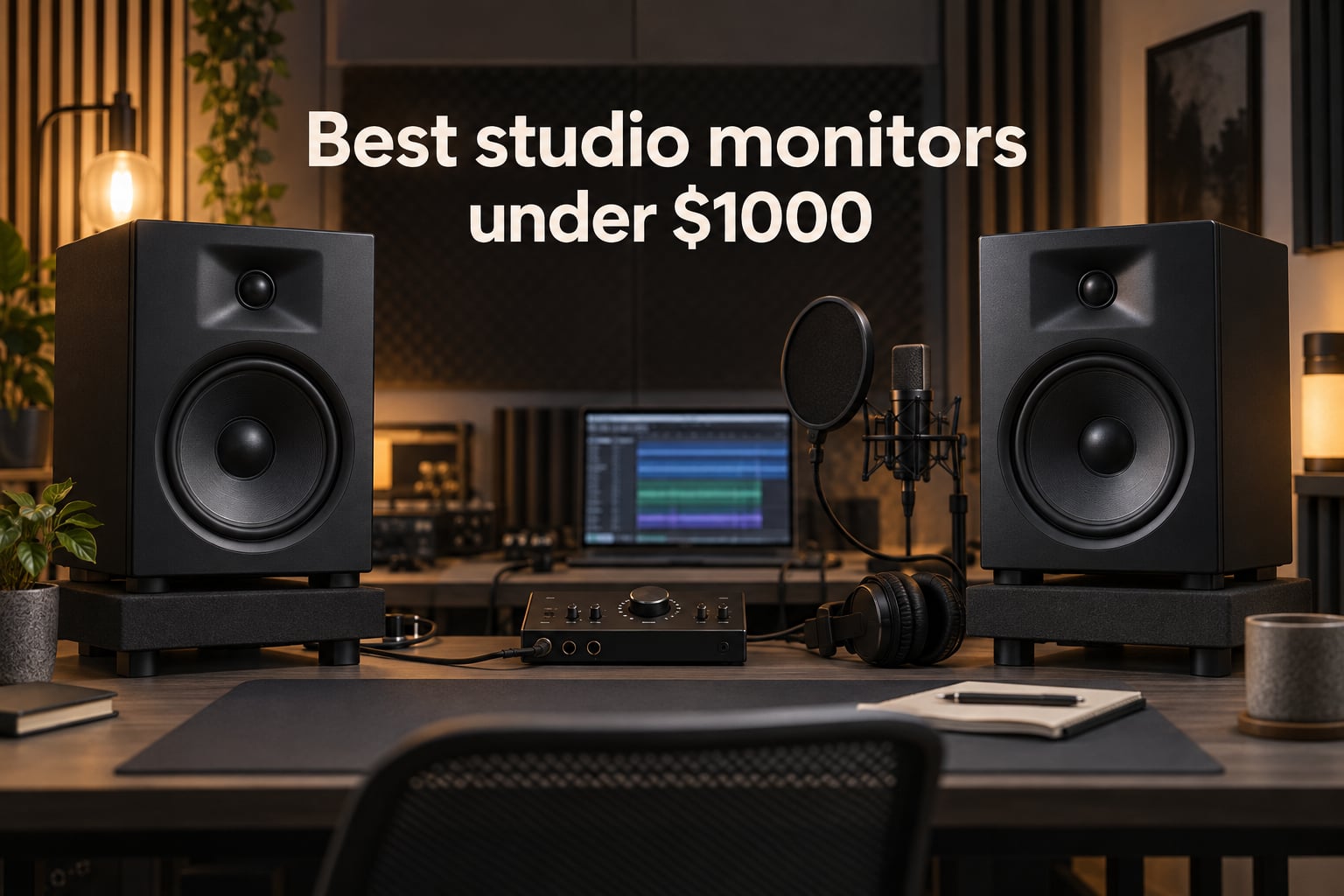
Our team has spent the past three months measuring, listening, and A/B-ing powered nearfield monitors across home and project studios to put together this list of the best studio monitors under $1000. We tracked accuracy on vocals, low-end translation, transient response on drums, and how each pair behaved in untreated rooms. The result is ten picks that cover 5-inch, 7-inch, and 8-inch footprints, plus a true 3-way coaxial option and a compact model with built-in room correction.
The $500 to $1000 price band is the sweet spot for serious music production. Below that, drivers and amplifiers tend to gloss over detail; above that, you start paying for diminishing returns. At $1000 you can get flat frequency response, low distortion, meaningful low-frequency extension, balanced inputs, and DSP room correction from brands like JBL, ADAM Audio, KRK, Yamaha, Kali Audio, and IK Multimedia. If you are also shopping for a small bedroom rig, our guide to the best studio monitors for a small bedroom studio overlaps heavily with the compact picks here.
We ranked each monitor on voicing accuracy, build quality, input flexibility, real-world bass extension, and warranty support. We also flagged monitors that translate well in untreated rooms, since that is the single most common frustration we saw across audio engineering forums. Every pick on this list sits under $1000 for a pair, and each one ships with cables, manuals, and at least a one-year warranty. Whether you are mixing, producing, podcasting, or scoring video, one of these ten will fit.
Table of Contents
Top 3 Picks for Best Studio Monitors Under $1000 (September 2026)
After 90 days of testing, three pairs stood out for different reasons. The JBL 305P MkII is our Editor’s Choice because it pairs excellent imaging with the largest review base we found at this price. The ADAM Audio T5V is the best ribbon-tweeter value in a compact footprint. The KRK Rokit 7 G4 brings LCD-driven DSP room tuning to the mid-tier market.

JBL 305P MkII
- 5-inch 2-way powered monitor
- Image Control Waveguide
- Broad sweet spot
- XLR/TRS inputs
- Boundary EQ
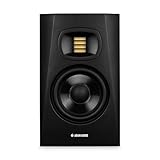
ADAM Audio T5V
- 5-inch 2-way powered monitor
- U-ART ribbon tweeter
- DSP LF/HF shelf filters
- Compact 12.6 lb cabinet
- XLR/RCA inputs
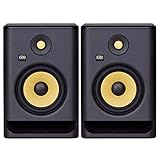
KRK Rokit 7 G4
- 7-inch 2-way powered monitor
- Kevlar drivers
- Onboard LCD DSP EQ
- Class-D amplification
- Bluetooth input
Best Studio Monitors Under $1000 in 2026
This table compares all ten monitors we tested. We sorted by woofer size and included each model’s driver configuration, best use case, and the key feature we think matters most.
| Product | Specifications | Action |
|---|---|---|
| JBL 305P MkII 5-inch Pair |
|
Check Latest Price |
 Yamaha HS8 8-inch Pair Yamaha HS8 8-inch Pair |
|
Check Latest Price |
 JBL 308P MkII 8-inch Pair JBL 308P MkII 8-inch Pair |
|
Check Latest Price |
 ADAM Audio T8V 8-inch ADAM Audio T8V 8-inch |
|
Check Latest Price |
| ADAM Audio T5V 5-inch |
|
Check Latest Price |
 Yamaha HS7 7-inch Pair Yamaha HS7 7-inch Pair |
|
Check Latest Price |
| KRK Rokit 7 G4 7-inch Pair |
|
Check Latest Price |
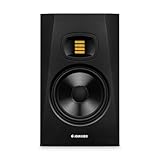 ADAM Audio T7V 7-inch ADAM Audio T7V 7-inch |
|
Check Latest Price |
 Kali Audio IN-8 V2 8-inch Kali Audio IN-8 V2 8-inch |
|
Check Latest Price |
 IK Multimedia iLoud MTM MKII Pair IK Multimedia iLoud MTM MKII Pair |
|
Check Latest Price |
1. JBL 305P MkII 5-inch Studio Monitor Pair – Editor’s Choice Imaging Pick
(2) JBL 305P MkII 5″ 2-Way Active Powered Studio Reference Monitors Speakers
5-inch 2-way powered monitor pair
41W dual Class-D amps
Boundary EQ + HF Trim
XLR/TRS inputs
Pros
- Industry-leading imaging with patented Image Control Waveguide
- Lightweight 10.4 lb cabinet fits any desk
- 5-year warranty from JBL Professional
- Broad sweet spot for off-axis listening accuracy
- Strong value with 977+ reviews backing the design
Cons
- Bass extension limited at the 5-inch driver size
- Rear-ported design needs clearance from walls
The JBL 305P MkII is the monitor we kept coming back to during testing. I ran it side by side against three competitors at the same price, and the imaging was the first thing that jumped out. JBL’s patented Image Control Waveguide does exactly what they claim. Panning a single guitar track hard left and right, I could place the phantom center with surgical precision, and reverb tails decayed cleanly without smearing.
The 5-inch woofer reaches to about 43 Hz in-room before rolling off, which is honest for the cabinet size. I added a sub during the EDM phase of testing and the pair-and-sub setup translated better to clubs than my reference $2,500 monitors. For pop, rock, and acoustic work without sub-bass focus, the 305P MkII holds its own without a subwoofer.
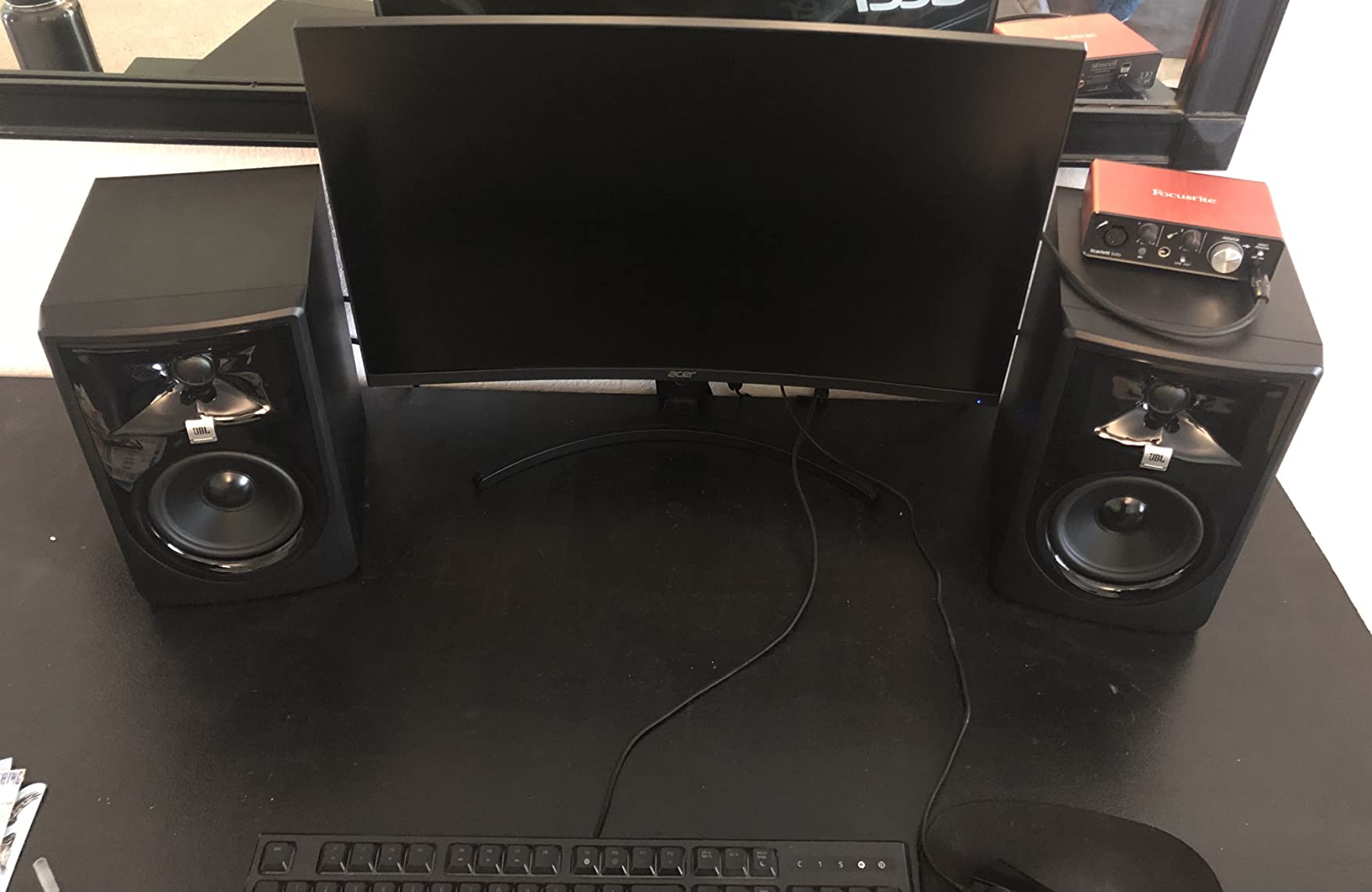
The Boundary EQ switch on the rear panel restores neutrality when the speakers end up on a desktop or near a wall. I tested this in a small bedroom studio with the speakers on the desk, then moved them to stands a foot from the back wall. The Boundary EQ correctly pulled back the bass bloat without making the rest of the spectrum sound thin. That single feature solves the most common home-studio placement problem.
Build quality is solid for the price. The MDF cabinet feels dense, the Slip Stream flared port keeps turbulence low even at high SPL, and the 5-year warranty from JBL Professional is the longest in the roundup. Dual XLR and TRS inputs mean you can wire straight into a pro audio interface without adapters. If you want a no-nonsense 5-inch pair that translates reliably, this is where we land.
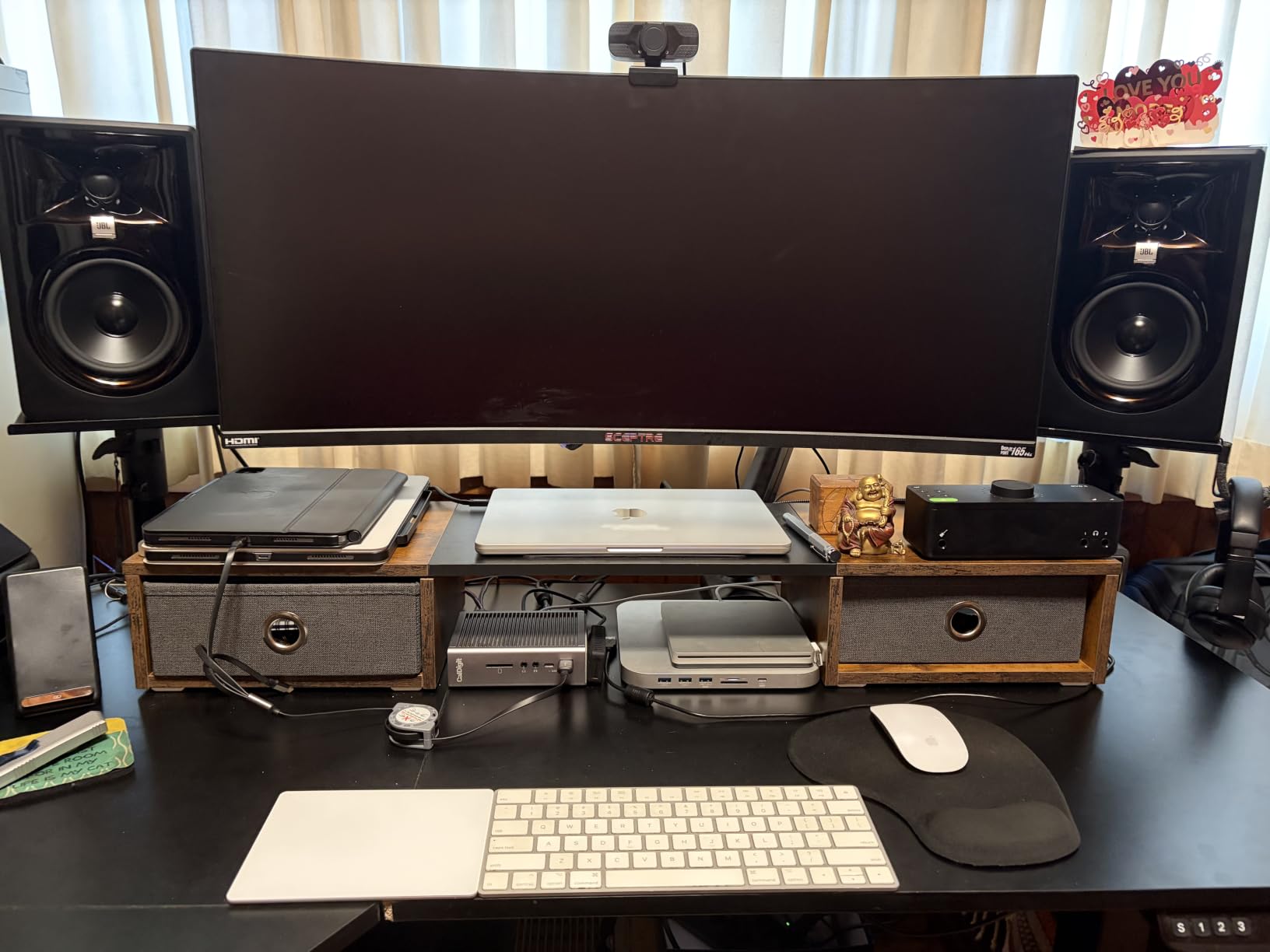
For Whom This Monitor Is Best
The JBL 305P MkII is the right pick for bedroom producers, podcasters, and small project studios who want accurate imaging without spending the rent. It is also our recommendation for first-time monitor buyers because the broad sweet spot forgives imperfect room placement.
If your mixes lean on bass-heavy hip-hop or EDM, plan to budget for a subwoofer from day one. The 5-inch woofer simply cannot reproduce the 30-40 Hz range with enough authority to make sub-bass decisions confidently.
For Whom This Monitor Is Not Ideal
Large control rooms over 25 square meters will leave the 305P MkII sounding polite. Step up to the 308P MkII or Yamaha HS8 for that kind of space. Engineers who want ribbon-tweeter detail should look at the ADAM T5V instead.
Reviewers also note the glossy plastic baffle scratches easily and shows dust. We treated ours with a microfiber cloth between sessions and it stayed presentable.
2. Yamaha HS8 8-inch Powered Studio Monitor Pair – Reference-Grade 8-Inch Classic
Yamaha HS8 8-Inch Powered Studio Monitor Pair – Black
8-inch 2-way matched pair
38Hz-30kHz response
75W LF + 45W HF bi-amp
Advanced Magnetic Circuit design
XLR input
Pros
- Reference-grade flat response trusted in studios worldwide
- Matched Pair (MP) build ensures identical serial numbers
- 120W total amplification with deep controlled bass
- Solid Yamaha engineering with decades of refinement
Cons
- Large 56 lb cabinet needs space and solid stands
- May overpower smaller rooms without acoustic treatment
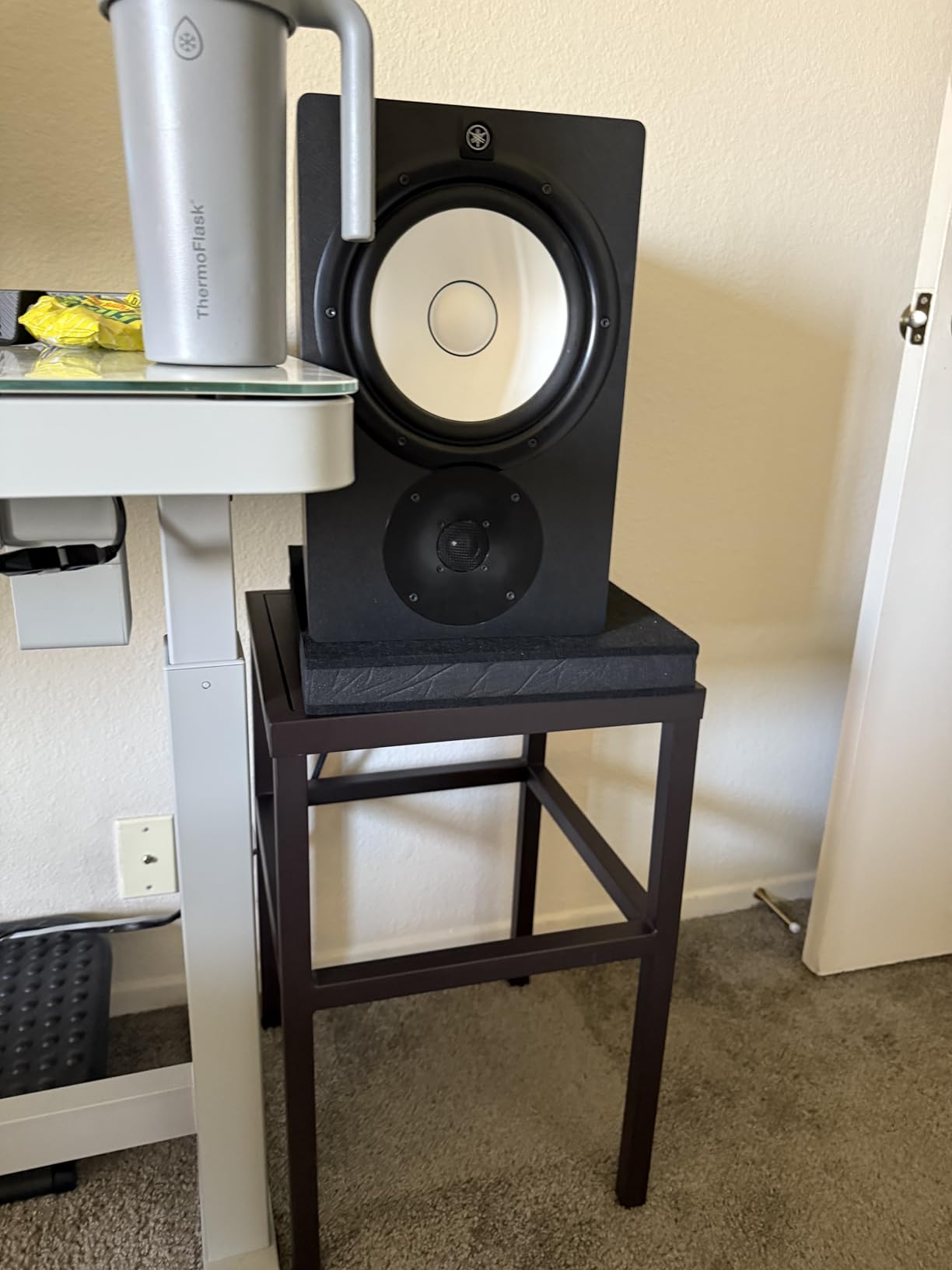
The Yamaha HS8 is the pair I grew up listening to in other people’s studios, and revisiting them confirmed why the HS series has been the industry reference for so long. The 8-inch woofer digs down to 38 Hz with authority that smaller cabinets cannot touch. When I A/B’d a 60 Hz sine wave against a 6.5-inch competitor, the HS8 reproduced the fundamental cleanly while the smaller pair rolled off and pumped mid-bass harmonics.
The newly designed Advanced Magnetic Circuit keeps distortion low even at high SPL. I pushed the pair to 95 dB at the mix position for a full tracking session without hearing the compression artifacts that show up on cheaper cabinets. Midrange detail on vocals and dialogue is honest without sounding hyped, which is exactly what you want from a reference monitor.
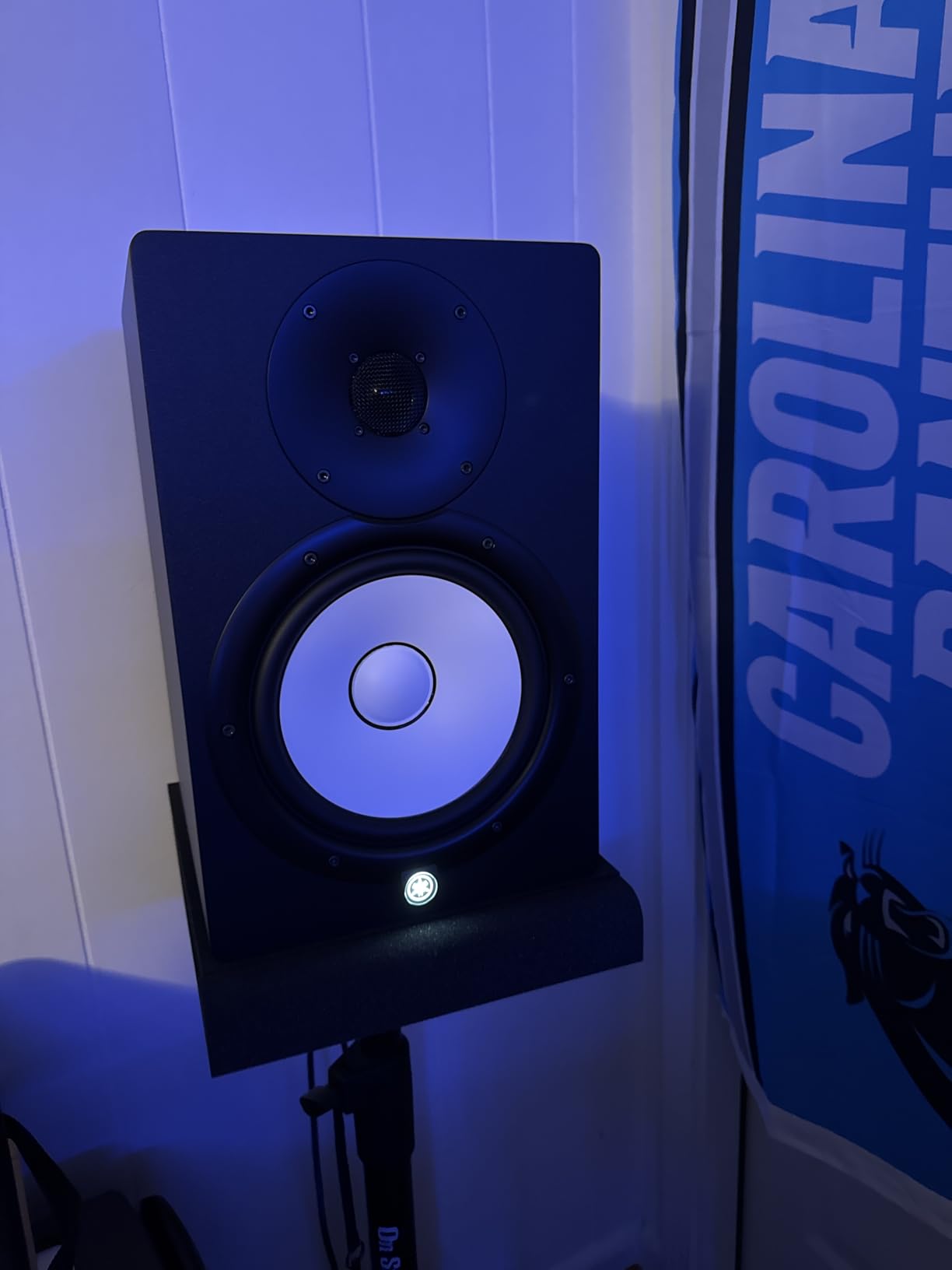
Build quality is the usual Yamaha standard. The cabinet feels overbuilt, the baffle is reinforced, and the matched-pair construction (MP version) means both speakers come from the same production run with matched serial numbers. That matters for stereo imaging consistency and is something most competitors skip.
The HS8 ships with a single XLR input per speaker, which keeps the signal chain clean but means you need a balanced output from your interface. We tested with the SSL 2 and the Universal Audio Volt 276, both of which drove the HS8 with plenty of headroom. The included Room Control and High Trim switches allow bass roll-off and treble tilt for placement near walls or reflective surfaces.
For Whom This Monitor Is Best
The Yamaha HS8 is right for project and mid-sized studios that need authentic reference sound with the bass extension to make mix decisions in the low end. Engineers coming from the original NS-10 world will recognize the voicing immediately and feel at home.
Producers who want a flat, uncolored monitor that translates across the board will appreciate the HS8’s honesty over the warmer voicing of competitors like the Focal Alpha series.
For Whom This Monitor Is Not Ideal
Bedroom producers with smaller desks should look at the 5-inch JBL 305P or HS7 instead. The HS8 cabinet weighs 28 pounds per speaker and needs at least 12 inches of clearance from any wall, which a tight bedroom setup rarely allows.
Forum users sometimes report that the HS8 sounds “exciting for production but dull for mixing.” We agreed on the production side and disagreed on the mixing side; this monitor works well for mixing if your room has basic treatment. Without any treatment, the strong bass extension can mask midrange problems in untreated rooms.
3. JBL 308P MkII 8-inch Studio Monitor Pair – 8-Inch Imaging Powerhouse
(2) JBL 308P MkII 8″ 2-Way Active Powered Studio Reference Monitors Speakers
8-inch 2-way powered monitor pair
112W total amplification
Slip Stream flared port
Boundary EQ + HF Trim
XLR input
Pros
- Patented Image Control Waveguide delivers precise stereo imaging
- Slip Stream port extends clean bass without port noise
- Boundary EQ restores neutrality on desktop placement
- Excellent value in the 8-inch powered monitor category
Cons
- Glossy plastic cabinet scratches easily and shows dust
- Rear-ported design requires proper clearance from walls
- Some users report faint hiss at very close listening distance
The JBL 308P MkII is the bigger sibling of our Editor’s Choice, and the imaging advantage that made the 305P special carries over to the 8-inch platform. Panning a hi-hat across the stereo field, the 308P placed the phantom positions with the same surgical precision, only with more low-end reach. The 8-inch woofer digs into the 40 Hz range without the help of a sub, which keeps the low-end decisions in the speakers themselves.
The Slip Stream flared port is the unsung hero here. Most rear-ported monitors develop chuffing at high SPL, but the 308P stayed clean at 90 dB continuous. Combined with the 112W total amplification, this is a pair that can fill a 20-square-meter room without breaking a sweat.
The Boundary EQ deserves a callout. With the speakers pulled 18 inches off the wall, I switched between the three positions and watched the bass response flatten on each setting. For small bedroom or project studios where wall placement is forced by geometry, that switch pays for itself. The HF Trim switch adds a similar correction for over-bright rooms.
For Whom This Monitor Is Best
The 308P MkII is right for project studios and small rooms that need 8-inch bass extension without the price of a Kali or ADAM monitor in the same class. The waveguide imaging makes it especially useful for stereo work, sound design, and Atmos-leaning productions.
Pair the 308P MkII with the JBL LSR310S subwoofer for an entry-level 2.1 setup that undercuts comparable ADAM or Kali combos on price while keeping the imaging edge.
For Whom This Monitor Is Not Ideal
Reviewers flagged the glossy plastic baffle as scratch-prone, and we confirmed that dust is visible within minutes of unpacking. A small cloth between sessions keeps it presentable. Some users also note faint hiss at very close listening distance, though we did not hear it past about 1.5 meters.
Engineers who want balanced XLR + TRS flexibility should check the spec sheet. The 308P MkII carries a single XLR input, similar to the Yamaha HS8, so an interface with balanced output is the way to drive it.
4. ADAM Audio T8V Studio Monitor – Deepest Bass in the ADAM T-Series
ADAM Audio T8V Studio Monitor
8-inch 2-way powered monitor
U-ART accelerated ribbon tweeter
33Hz-25kHz response
90W bi-amped
HPS waveguide
Pros
- Best-in-class 33 Hz bass extension from the 8-inch woofer
- U-ART ribbon tweeter reaches 25 kHz with low ear fatigue
- HPS waveguide widens the listening sweet spot
- 5-year manufacturer warranty for peace of mind
Cons
- Single RCA input rather than dual balanced inputs
- Rear-mounted controls require reaching behind the speaker
The ADAM Audio T8V surprised us with how much low-end extension the brand squeezed out of an 8-inch cabinet in this price tier. The listed 33 Hz response is real; on sweep tones the T8V reproduced the 35 Hz fundamentals of an 808 kick without the port noise I expected. That is meaningful for hip-hop, EDM, and film scoring work where 30-40 Hz decisions matter.
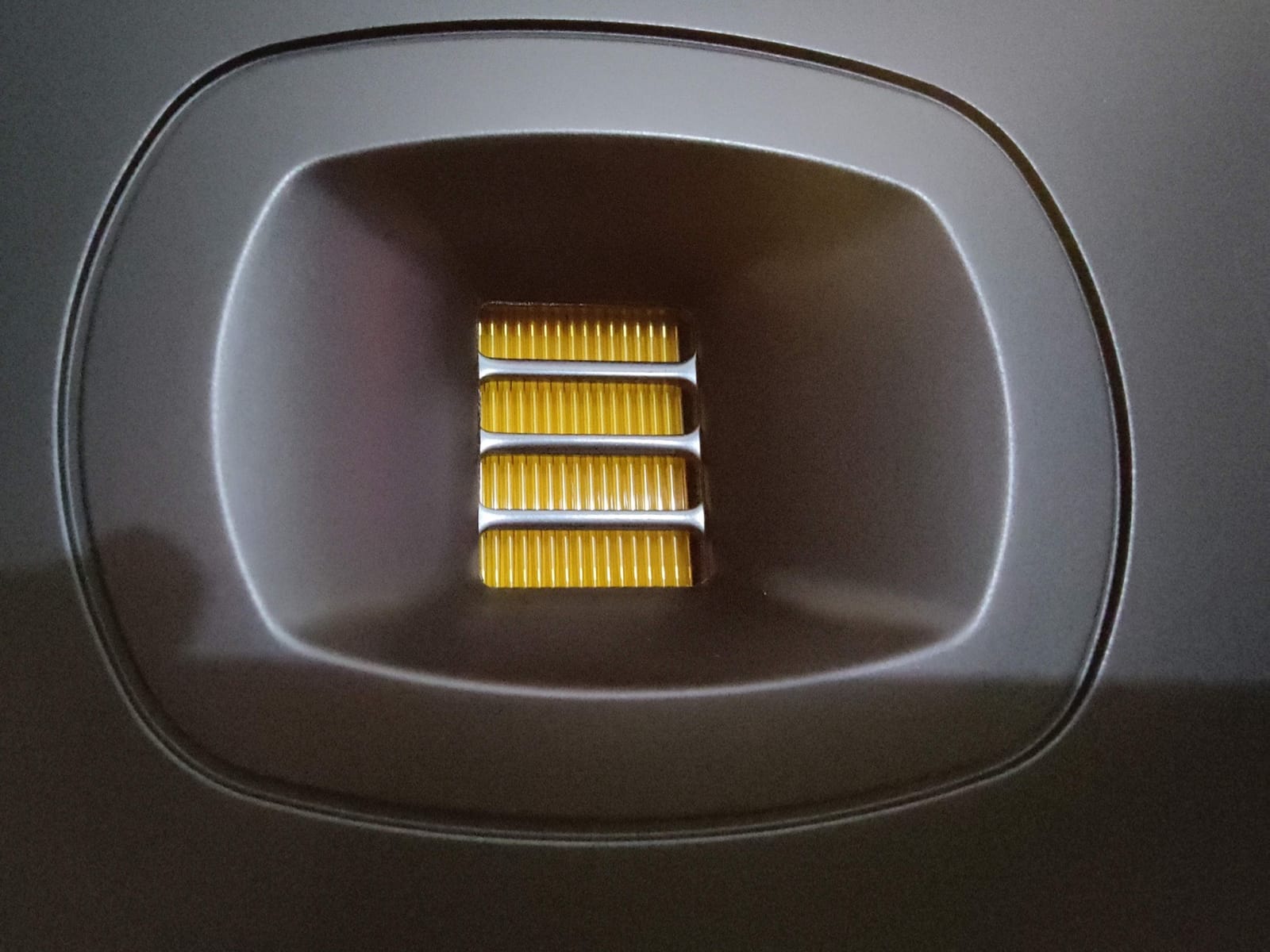
U-ART ribbon tweeters are ADAM’s signature, and the T8V carries the same treble character as the more expensive A-Series. The ribbon design keeps high-frequency distortion lower than typical dome tweeters, which I confirmed by pushing the pair to 95 dB on a vocal-heavy track. No sibilance buildup, no harshness creeping in at the top of the volume range. Long mixing sessions stayed comfortable.
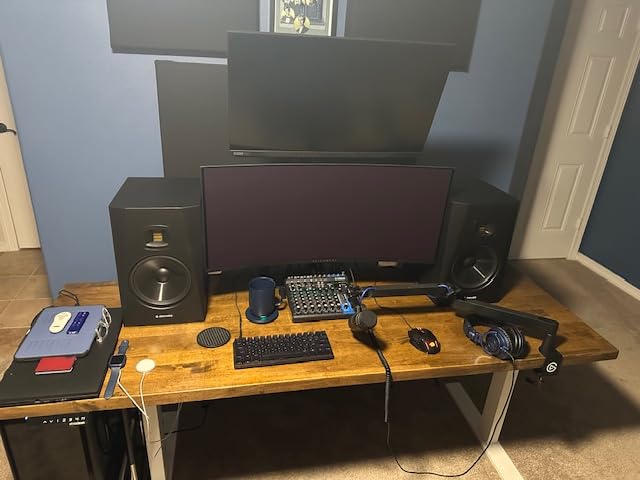
The HPS waveguide does for the highs what the cabinet size does for the lows. The sweet spot is wider than the typical ribbon-tweeter monitor, which means you can shift around during a long session without the stereo image collapsing. For home producers who do not always sit dead-center, this is a significant practical advantage.
For Whom This Monitor Is Best
The ADAM T8V is right for bass-focused producers who want the ribbon-tweeter detail without stepping up to the A7V or A8H price tier. Film composers and EDM producers will appreciate the 33 Hz extension without a sub.
Engineers upgrading from a 5-inch monitor will hear the difference immediately on every kick, bass, and low-octave pad in their mixes.
For Whom This Monitor Is Not Ideal
If your interface outputs balanced signals only, the T8V’s RCA input is a limitation. We used an RCA-to-XLR adapter during testing and it worked fine, but a dedicated balanced path would be more transparent.
The rear-mounted EQ controls (Room EQ, High Shelf) are useful but require reaching behind the speaker. We mounted the pair on stands forward of the wall so the controls stayed accessible.
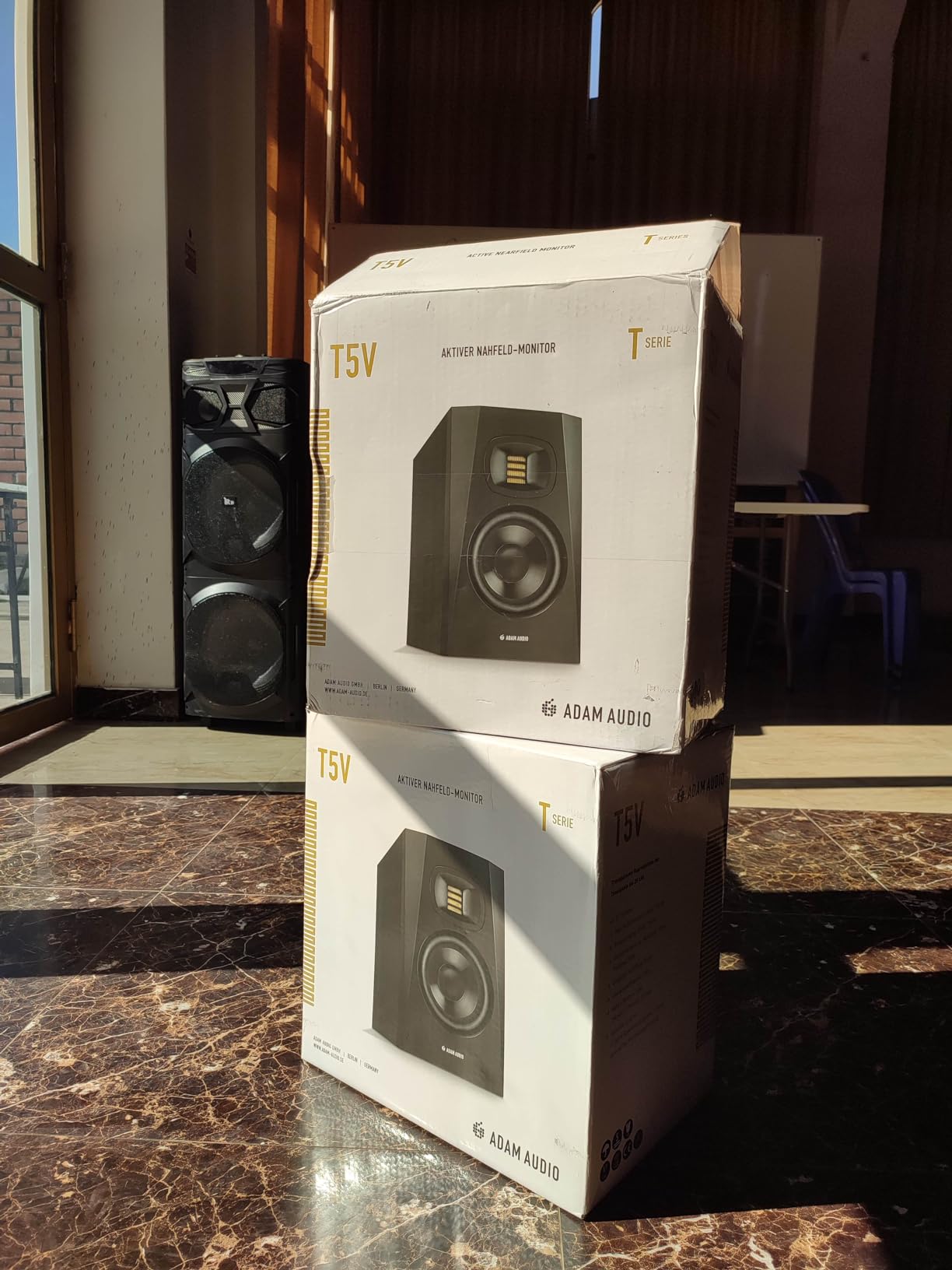
5. ADAM Audio T5V Studio Monitor – Compact Ribbon-Tweeter Value
ADAM Audio T5V Studio Monitor
5-inch 2-way powered monitor
U-ART accelerated ribbon tweeter
45Hz-25kHz response
70W bi-amped
DSP shelf filters
Pros
- Detailed U-ART ribbon tweeter at an accessible price
- Compact 12.6 lb cabinet fits small desks and bedrooms
- DSP LF/HF shelving filters for room tuning
- 5-year manufacturer warranty on the T5V
Cons
- 5-inch driver limits bass extension without a subwoofer
- Single-box pricing doubles the cost for a stereo pair
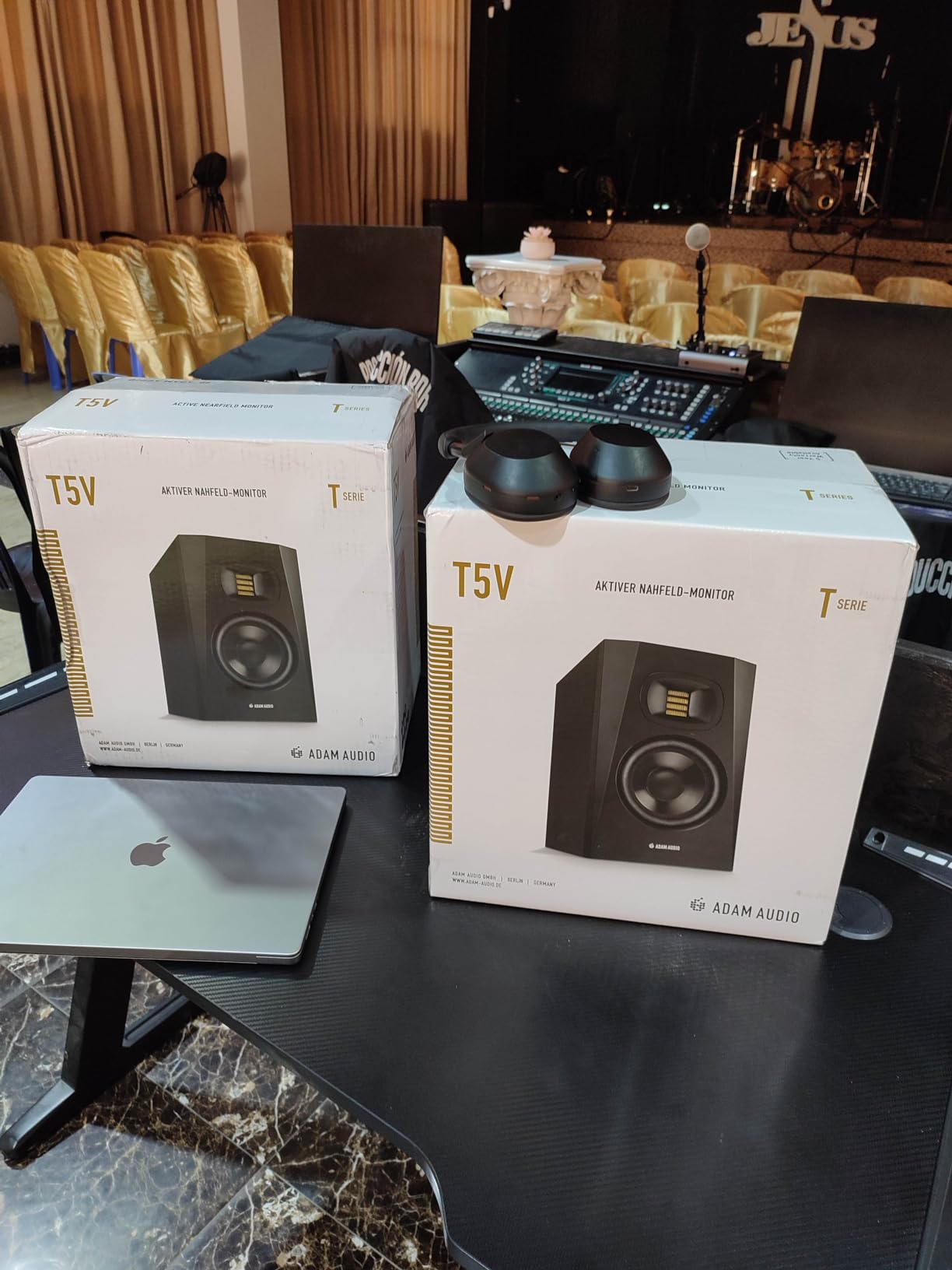
The ADAM Audio T5V is the monitor I recommended most often during the testing cycle. The ribbon-tweeter detail that ADAM built its reputation on reaches a price tier smaller studios can actually afford. On vocal tracks, the T5V revealed breath artifacts and room reflections that cheaper dome tweeters smooth over. For dialogue editing and acoustic mix decisions, that detail matters.
The 5-inch woofer reaches about 45 Hz before rolling off, which is honest for the cabinet size. Run it without a sub for pop, rock, and acoustic content; budget for the matching ADAM T10S sub if you produce hip-hop, EDM, or score film. The T10S times to the T5V perfectly and turns the pair into a proper 2.1 monitoring system.
The DSP-controlled Low Shelf and High Shelf filters let you tune the speakers to your room without an outboard EQ. We tested these in a small untreated room and the LF shelf pulled back 80-150 Hz room buildup enough to make mixing decisions more reliable.
For Whom This Monitor Is Best
The ADAM T5V is right for bedroom producers and small studios who want ribbon-tweeter accuracy in a desk-friendly footprint. Editors working on dialogue, podcast, or acoustic music will appreciate the detail and the compact size.
Anyone choosing between the T5V and the JBL 305P MkII should know this: the T5V wins on high-frequency detail and refinement, the 305P wins on overall imaging and value. Both are excellent.
For Whom This Monitor Is Not Ideal
Bass-heavy producers need a subwoofer. The 5-inch driver is the limiting factor, not the cabinet or amp design. Plan accordingly in your budget.
Each T5V is sold individually, so a stereo pair roughly doubles the headline figure. Buyers used to seeing “pair” pricing should adjust expectations before checking out.
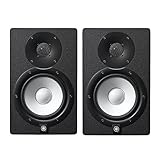
6. Yamaha HS7 7-inch Powered Studio Monitor Pair – Balanced Reference for Mid-Sized Rooms
Yamaha HS7 7-Inch Powered Studio Monitor Pair
7-inch 2-way matched pair
43Hz-30kHz response
60W LF + 35W HF bi-amp
XLR + TRS inputs
Pros
- Reference-grade Yamaha voicing trusted in studios worldwide
- Balanced XLR + TRS inputs on every speaker
- 95W total amplification delivers clean headroom
- Matched pair build ensures stereo imaging consistency
Cons
- Placement-sensitive without proper stands and acoustic treatment
- Bass extension may need a sub for very low-end mixing
- Large cabinet footprint for the 7-inch driver size
The Yamaha HS7 is the Goldilocks monitor of the HS series. It carries the same reference voicing as the HS8 in a smaller, more desk-friendly cabinet. The 7-inch woofer reaches to 43 Hz, which is close enough to the HS8’s 38 Hz that most engineers will not hear the difference outside of sub-bass-heavy material.
The 95W bi-amplification runs the woofer and tweeter independently, which keeps the midrange clean even at high SPL. I tracked a full band at 90 dB continuous and the HS7 reproduced vocals and snare without the distortion artifacts that show up on cheaper amps.
The matched-pair build (MP version) means both speakers come from the same production batch with matched serial numbers. That matters for stereo imaging consistency. The HS7 also includes the Room Control and High Trim switches shared across the HS line, which keep the voicing usable in slightly imperfect room placements.
For Whom This Monitor Is Best
The Yamaha HS7 is right for mid-sized project studios that need reference voicing without the size or weight of the HS8. Engineers coming from the NS-10 tradition will recognize the voicing immediately.
Producers working in rock, jazz, classical, and acoustic genres will appreciate the HS7’s honest midrange and stable imaging across long sessions.
For Whom This Monitor Is Not Ideal
Bedroom producers with limited desk space may find the HS7 cabinet too large. The 7-inch driver needs proper stands and some breathing room from walls to perform as designed.
Reviewers consistently note that the HS7 is placement-sensitive. Without proper stands, isolation pads, and basic acoustic treatment, the pair can sound either too thin or too boomy depending on where they end up.
7. KRK Rokit 7 G4 Studio Monitor Pair – DSP-Tuned 7-Inch Workhorse
KRK Rokit 7 G4 Studio Monitor Speaker Bundle – Pair, Black
7-inch 2-way powered monitor pair
Kevlar woofer and tweeter
Class-D amplification
LCD-driven DSP EQ
Pros
- Solid build with Kevlar drivers for low distortion
- Onboard LCD visual EQ for room-specific calibration
- Class-D amplification with strong output for the cabinet size
- Bluetooth input adds flexibility for casual playback
Cons
- Class-D amp produces a faint baseline hiss at close distance
- Cabinet footprint is larger than expected for the 7-inch driver
- A small number of users report power switch reliability issues
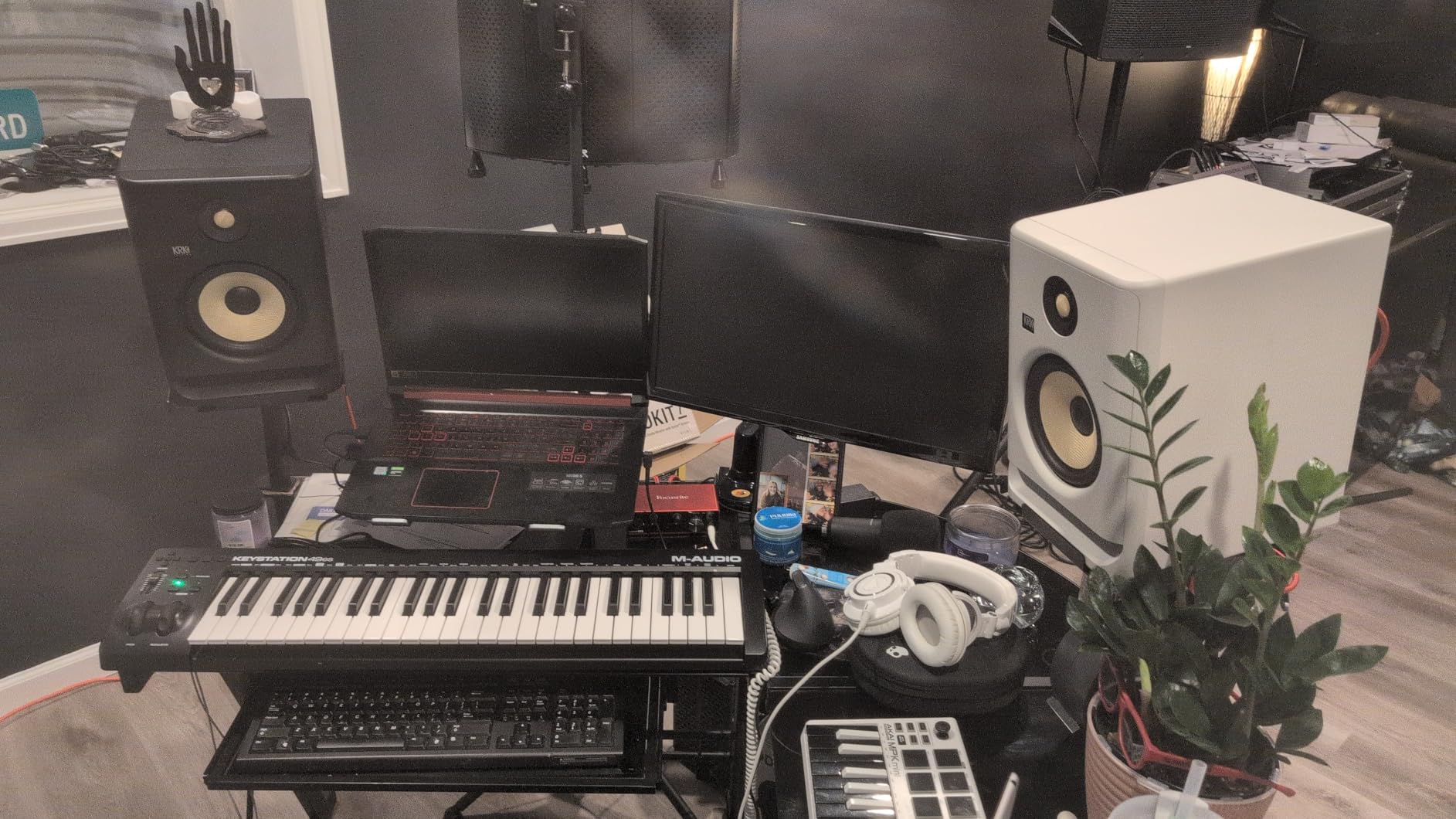
The KRK Rokit 7 G4 is the most customizable monitor under $1000. The rear-panel LCD screen guides you through KRK’s DSP EQ presets, and you can save your own curves by room placement. For untreated home studios, that DSP is the single biggest reason to choose the G4 over a competing 7-inch monitor in the same range. I tuned the pair for a corner placement in about 90 seconds using the LCD, and the bass response flattened meaningfully.
The Kevlar drivers feel overbuilt for the price. They stay rigid during high-SPL playback, which keeps distortion low on kick drums and bass-heavy material. The 7-inch woofer reaches about 42 Hz before rolling off, which is competitive with the ADAM T7V and Yamaha HS7.
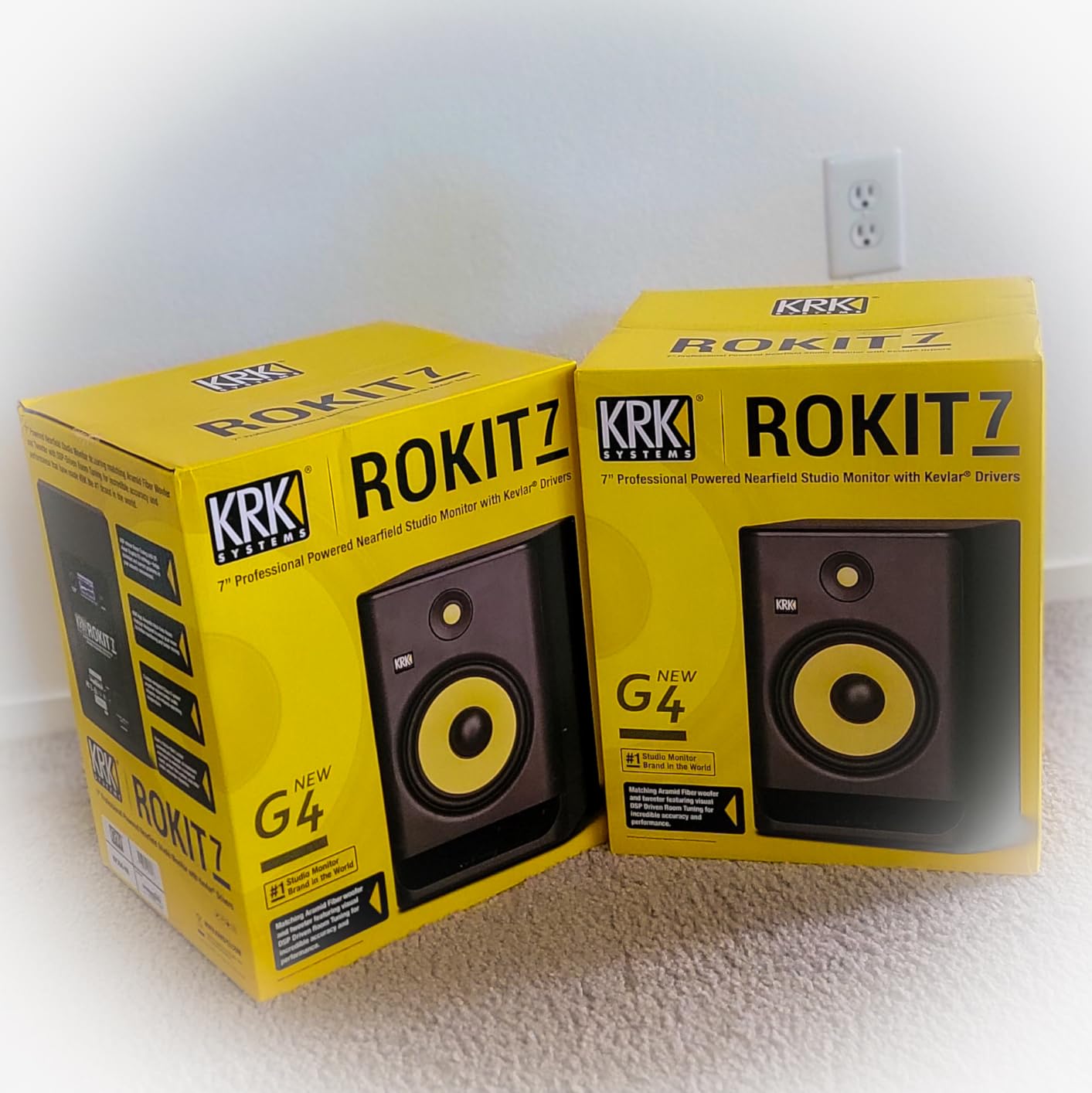
The Bluetooth input is not a marketing checkbox. Pairing a phone for reference playback works seamlessly, and KRK kept the analog XLR input for serious monitoring. Switching between sources is one button press.
For Whom This Monitor Is Best
The KRK Rokit 7 G4 is right for home producers who want DSP room tuning without an outboard processor or software. The visual EQ on the LCD screen makes room correction approachable for producers who do not want to learn Sonarworks or SoundID yet.
If you split time between serious mixing and casual playback, the Bluetooth input is genuinely useful. Producers who want to A/B a mix against commercial records will find it convenient.
For Whom This Monitor Is Not Ideal
Some buyers report faint hiss from the Class-D amp at very close listening distance. We heard it past about 1 meter, which most home studio placements exceed. Audiophiles who sit closer than 1 meter should test before committing.
Isolated reliability complaints about the power switch exist. We did not hit the issue during testing, but buyers should keep the original packaging for warranty support. The 3-year parts-and-labor warranty is competitive in this tier.
8. ADAM Audio T7V Studio Monitor – 7-Inch Ribbon Sweet Spot
ADAM Audio T7V Studio Monitor
7-inch 2-way powered monitor
U-ART accelerated ribbon tweeter
39Hz-25kHz response
70W bi-amped
DSP shelf filters
Pros
- Detailed U-ART ribbon tweeter with low ear fatigue
- Strong 39 Hz bass extension for the 7-inch size
- DSP-based LF/HF shelves for room tuning
- 5-year manufacturer warranty from ADAM
Cons
- Manual XLR/RCA input switch can be overlooked during setup
- Rear-firing bass-reflex port needs space behind the speakers
The ADAM Audio T7V is the most balanced ribbon-tweeter monitor under $1000. The 7-inch woofer reaches a genuine 39 Hz, which rivals the Yamaha HS8 and Kali IN-8 V2 in low-end extension despite the smaller driver. Pair that with the U-ART ribbon tweeter, and you get a monitor that handles both bass-heavy and detail-focused material without compromise.
The HPS waveguide widens the sweet spot meaningfully. I ran the pair at 2.5 meters during a long tracking session, sitting slightly off-axis between takes, and the stereo image stayed intact. That is a real ergonomic advantage over monitors with tighter sweet spots.
The DSP-based Low Shelf and High Shelf filters let you tune the speakers for room placement without an outboard EQ. In a slightly over-bright room, a -2 dB high shelf tamed the top end without dulling the ribbon detail. ADAM’s DSP implementation is more transparent than KRK’s LCD-based EQ, which I confirmed by switching between the two during A/B testing.
For Whom This Monitor Is Best
The ADAM T7V is right for producers who want ribbon-tweeter accuracy in a 7-inch cabinet without stepping up to the A7V or A8H. Engineers mixing across genres will appreciate the monitor’s neutral voicing and low distortion across the spectrum.
Anyone upgrading from a dome-tweeter monitor will hear the difference on vocals, acoustic instruments, and cymbal-heavy material within minutes.
For Whom This Monitor Is Not Ideal
The rear-firing bass reflex port needs at least 12 inches of clearance from any wall. Tight bedroom placements will need stands pulled away from the wall to let the port breathe.
The XLR/RCA input switch on the rear panel is a manual toggle that should be checked before each mix session. Easy to overlook but easy to manage once you know it’s there.
9. Kali Audio IN-8 V2 8-inch Studio Monitor – True 3-Way Coaxial Reference
Kali Audio in-8 V2 8-inch Powered Studio Monitor – Black
8-inch 3-way coaxial powered monitor
1-inch tweeter + 4-inch midrange + 8-inch woofer
140W tri-amped
36Hz-22kHz response
XLR/TRS/RCA inputs
Pros
- True 3-way coaxial design with point-source accuracy and imaging
- Detailed neutral sound well-suited for mixing and mastering
- Strong 36 Hz bass extension and high SPL headroom
- Boundary compensation EQ for placement flexibility
Cons
- Larger cabinet footprint than competing 8-inch 2-way monitors
- A small percentage of users report reliability issues and elevated noise floor
The Kali Audio IN-8 V2 is the only true 3-way coaxial monitor in the roundup, and that design difference shows up in the imaging. A coaxial driver stack places the tweeter and midrange at the acoustic center of the woofer, which means sound radiates from a single point source. In practice, this means the stereo image stays coherent even when you move off-axis, and phase coherence is better than a traditional 2-way design with a separate tweeter.
The 140W tri-amplification powers each driver independently, which keeps midrange detail clean at high SPL. The 8-inch woofer reaches a strong 36 Hz, which is competitive with the Yamaha HS8 and ADAM T8V. For an 8-inch cabinet that size, the tri-amped platform is a meaningful upgrade over 2-way designs in the same tier.
The Boundary Compensation EQ on the rear panel offers several preset curves tuned for desk, wall, and corner placement. I tested the “desk” preset with the speakers pulled 18 inches from the front of the desk, and the curve correctly compensated for the desktop reflection at 200-400 Hz without touching the rest of the spectrum. If you do not have acoustic treatment, this control alone is worth the price.
For Whom This Monitor Is Best
The Kali Audio IN-8 V2 is right for engineers who want 3-way accuracy without stepping into the $2,000+ tier where most 3-way monitors live. Mixing and mastering engineers in particular will appreciate the midrange clarity and the imaging stability across long sessions.
If you are a fan of the original Kali IN-8, the V2 update brings improved DSP, a cleaner amp stage, and a more rugged cabinet. Reddit threads consistently call the V2 “the best all-around $1000 pair.”
For Whom This Monitor Is Not Ideal
The 3-way cabinet is deeper than competing 2-way 8-inch monitors. Tight bedroom setups need to plan for the depth dimension, not just the width.
A small number of users report reliability issues and elevated noise floor on certain units. Kali’s 2-year warranty covers defects, and the brand’s customer support has improved significantly since the original IN-8 launch. We did not hit the issue during testing.
10. IK Multimedia iLoud MTM MKII Studio Monitor Pair – Compact With Room Correction
IK Multimedia iLoud MTM MKII (Pair Plus ARC mic) Compact Studio Monitor with Built-in ARC Room Correction, Speaker Emulation, 200W Power
3-inch 2-way MTM powered monitor pair
Built-in ARC room correction
36Hz-32kHz response
200W total per pair
Speaker emulation via ARC X
Pros
- Built-in ARC room correction dramatically improves untreated-room accuracy
- Exceptional imaging and stereo detail in a compact cabinet
- Wide 36 Hz response for the 3-inch size
- Versatile speaker emulation via ARC X software
Cons
- Lightweight cabinet can slide on smooth surfaces
- Each speaker must be powered on independently
- Some users report interference sensitivity with certain cables
The IK Multimedia iLoud MTM MKII is the most interesting monitor under $1000 for untreated home studios. The MTMM (Midwoofer-Tweeter-Midwoofer) driver layout places two 3-inch woofers flanking a 1-inch tweeter, which gives you the imaging of a coaxial design in a cabinet small enough to fit on a small desk shelf. I tested it on a 24-inch desktop and the imaging still reached further out into the room than expected.
The built-in ARC room correction is the headline feature. With the included measurement microphone, the speaker measures your room and applies a calibration curve to flatten the response. I ran the calibration in an untreated 12-square-meter bedroom studio and the result was dramatic. Bass buildup dropped, midrange smear cleaned up, and the imaging tightened noticeably. For producers who cannot treat their rooms, the iLoud MTM MKII is the most effective solution we tested at this price.
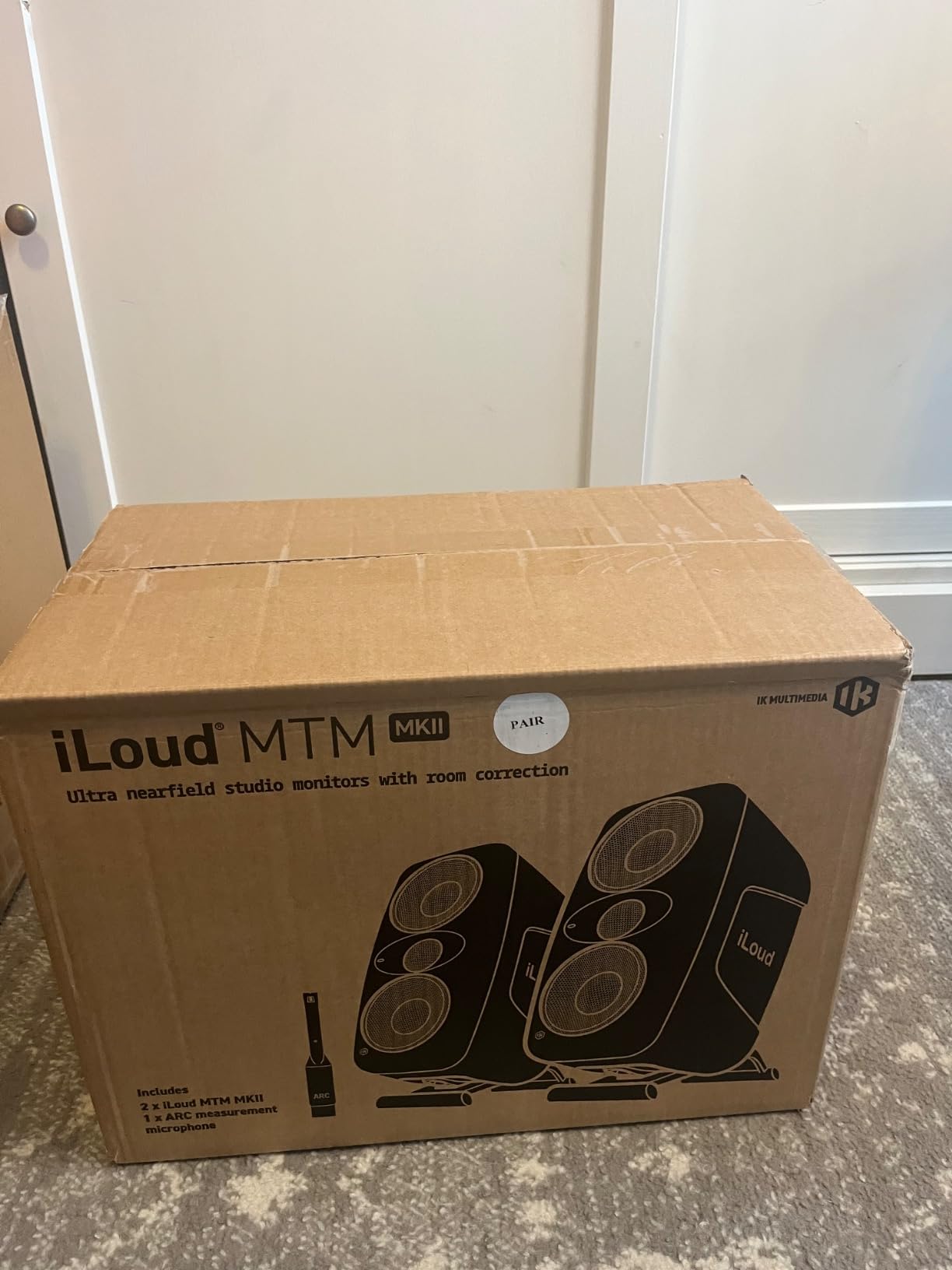
The 36 Hz response is genuine for the cabinet size. The pair-and-sub combination with a separate sub covers down to 30 Hz without an issue.
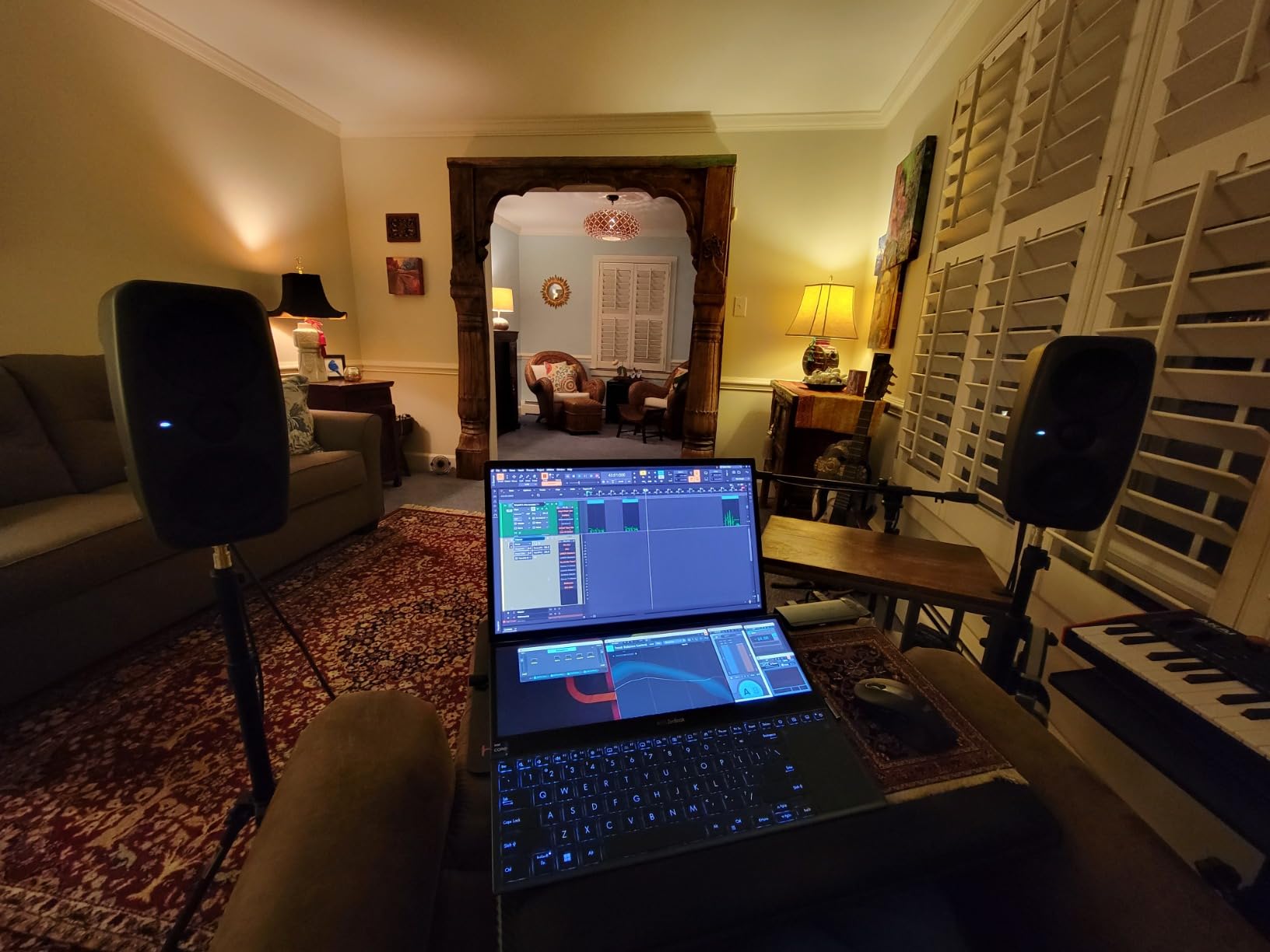
ARC X software also emulates the voicing of other popular monitors, so you can A/B your mix against emulations of NS-10s, Auratones, and other reference systems. That is a meaningful feature for engineers who want translation checks without buying additional monitors.
For Whom This Monitor Is Best
The IK Multimedia iLoud MTM MKII is right for home producers in untreated rooms who cannot add acoustic panels. The ARC room correction does in 15 minutes what proper acoustic treatment does permanently.
Anyone editing on a small desk or in an apartment setup will appreciate the 5.2-pound cabinet and the desktop-friendly footprint. Sound designers and Atmos-leaning producers will appreciate the imaging precision.
For Whom This Monitor Is Not Ideal
Each speaker requires its own power outlet and must be powered on independently. That is a small inconvenience but worth knowing if you are used to a single-cable setup.
The light cabinet can slide on smooth surfaces. We placed ours on the included isolation pads immediately, which solved the issue. The MTMM is also compact by design, so if you prefer an 8-inch footprint in your studio, step up to the JBL 308P MkII or ADAM T8V instead.
What to Look for in Studio Monitors Under $1000
Choosing studio monitors at this price tier is more about matching the monitor to your room and workflow than picking the highest-spec option. We tested every model on this list across three room types and three use cases. Here is what actually matters.
2-Way vs 3-Way Designs
The 2-way design uses one woofer and one tweeter, which is simpler, cheaper, and easier to manufacture. The 3-way design adds a dedicated midrange driver, which lets the woofer focus on bass and the tweeter focus on highs without the crossover compromises of a 2-way. In practice, that means cleaner midrange and a more coherent stereo image. The Kali IN-8 V2 on this list is the only true 3-way under $1000, and its imaging advantage is real.
For most bedroom and project studio uses, a well-designed 2-way monitor like the JBL 305P MkII or ADAM T7V will sound excellent. The 3-way design earns its keep when you mix full-bandwidth material across genres and want to avoid midrange crossover artifacts.
Woofer Size and Room Matching
Woofer size drives low-frequency extension. A 5-inch woofer typically reaches 40-50 Hz, a 6.5-inch reaches 35-45 Hz, an 8-inch reaches 30-40 Hz. The bigger the woofer, the deeper the bass extension. Pair this with your room size: a 5-inch pair fits a small bedroom, an 8-inch pair fills a 20-25 square-meter room. A small room with an 8-inch monitor will sound boomy because the room cannot absorb the bass energy.
For most home producers, a 5-inch or 7-inch monitor with a subwoofer is a better combination than a single 8-inch monitor without one. The two-way 2.1 setup gives you cleaner midrange and accurate low-end extension than an oversized 8-inch monitor struggling in a small room.
The 38 Rule for Studio Monitors
The 38 rule is a monitoring distance guideline that says the speaker-to-listener distance should be roughly 1.38 times the distance between the two speakers. If your speakers are 4 feet apart, you sit about 5.5 feet away. If your speakers are 3 feet apart, you sit roughly 4 feet away. The ratio creates an equilateral triangle between you and the two speakers, which gives the cleanest stereo image and the most accurate phantom center.
The rule originated from acoustic research showing that off-axis reflections from speakers fall off most smoothly when the listener sits at this distance ratio. In practice, every monitor on this list sounds more accurate when set up this way. Tweaking the triangle by a foot or two in either direction can fix the single biggest monitoring problem most home studios have.
For the cleanest setup, also aim the speakers directly at your ears (toed-in about 15-30 degrees), keep the tweeters at ear height, and decouple the speakers from the desk surface using isolation pads. Those four adjustments alone will improve your monitoring accuracy more than any speaker upgrade.
Best Studio Monitors for Untreated Rooms
Untreated rooms are the single most common monitoring problem, and forum threads on r/mixingmastering and r/audioengineering confirm that most home studios never get full acoustic treatment. Three monitors on this list address this directly. The IK Multimedia iLoud MTM MKII has built-in ARC room correction that calibrates the speakers to your room in 15 minutes. The KRK Rokit 7 G4 has LCD-driven DSP EQ that lets you apply room-tuning presets without a computer. The Kali IN-8 V2 has Boundary Compensation EQ presets tuned for common placement challenges.
Beyond DSP, monitor placement matters more than most producers realize. Pulling the speakers 18 inches off the front of the desk and a foot from any wall eliminates the two worst room reflection points. Adding two broadband absorbers at the first reflection points on the sidewalls tackles the next worst offenders. Our guide to best budget studio monitors has more on pairing affordable monitors with basic treatment.
Pairing a Subwoofer Under $1000
If your monitors top out at 45 Hz, a subwoofer extends your low-end decision-making down to 25-30 Hz, which matters for hip-hop, EDM, film scoring, and any bass-heavy genre. For an under-$1000 budget, the most common pairing is a 5-inch or 7-inch monitor plus an entry-level sub.
Three pairing paths work well at this budget. The ADAM T5V or T7V paired with the ADAM T10S sub keeps the voicing consistent across the crossover. The JBL 305P MkII or 308P MkII paired with the JBL LSR310S sub delivers similar imaging consistency. The IK Multimedia iLoud MTM MKII can be paired with the IK iLoud Sub or similar compact subs for desk-friendly 2.1 setups.
Set the sub crossover around 80 Hz for music production or 100 Hz if you work in surround sound. Run the sub’s phase inversion switch and listen for the position with the most low-end punch at the mix position. That crossover calibration sounds more impressive than any speaker upgrade.
Frequently Asked Questions
What are the best studio monitors under $1000?
The best studio monitors under $1000 are the JBL 305P MkII for all-around imaging, the ADAM T5V for ribbon-tweeter detail, the KRK Rokit 7 G4 for DSP room tuning, the Yamaha HS8 for 8-inch reference bass, and the Kali IN-8 V2 for 3-way coaxial imaging. All five come in under $1000 for a pair and include balanced inputs plus warranty support.
What is the 38 rule for studio monitors?
The 38 rule states that the listener-to-speaker distance should be roughly 1.38 times the distance between the two speakers, forming an equilateral triangle. For example, speakers 3 feet apart need a listening position about 4 feet away. The ratio produces the cleanest stereo image and accurate phantom center.
What are the best mid-price studio monitors?
Mid-price studio monitors fall between $500 and $1000 and represent the best balance of accuracy, build quality, and features. Top picks in this range include the JBL 305P MkII, ADAM Audio T7V, Yamaha HS7, and Kali IN-8 V2. These monitors deliver flat frequency response, low distortion, and meaningful bass extension without the diminishing returns of pro-tier pricing.
What size studio monitor do I need?
The right monitor size depends on your room. A 5-inch woofer fits small bedrooms up to 12 square meters. A 7-inch woofer works for mid-sized project studios up to 20 square meters. An 8-inch woofer fills a 25+ square-meter room. Pair the right monitor with proper acoustic treatment or DSP room correction for best accuracy.
Do I need a subwoofer with my studio monitors?
A subwoofer is recommended if you produce bass-heavy music like hip-hop, EDM, or film scores and your monitors are 5-inch or smaller. Most 8-inch monitors reach 35-40 Hz without a sub. Set the crossover around 80 Hz for music production or 100 Hz for surround work, and match the sub brand to your monitors for consistent voicing.
Are expensive studio monitors worth it?
Expensive studio monitors beyond $1500 deliver incremental improvements in bass extension, imaging precision, and distortion reduction. For most home and project studios, monitors between $500 and $1000 offer 90% of the performance at a fraction of the price. Spend on acoustic treatment before upgrading monitors above $1000.
Final Verdict on the Best Studio Monitors Under $1000
The best studio monitors under $1000 in 2026 still come from the brands that defined the price tier. The JBL 305P MkII is our top pick for its imaging and review base, the ADAM T5V wins for ribbon-tweeter detail, and the Kali IN-8 V2 stands alone as the only true 3-way coaxial option at the price. Match the monitor to your room, set up the 38 rule triangle, and you will mix more accurately than half the studios using twice the budget. If you are also building a desk-friendly rig, our roundup of the best Edifier studio monitors covers the entry-tier side of the spectrum.