
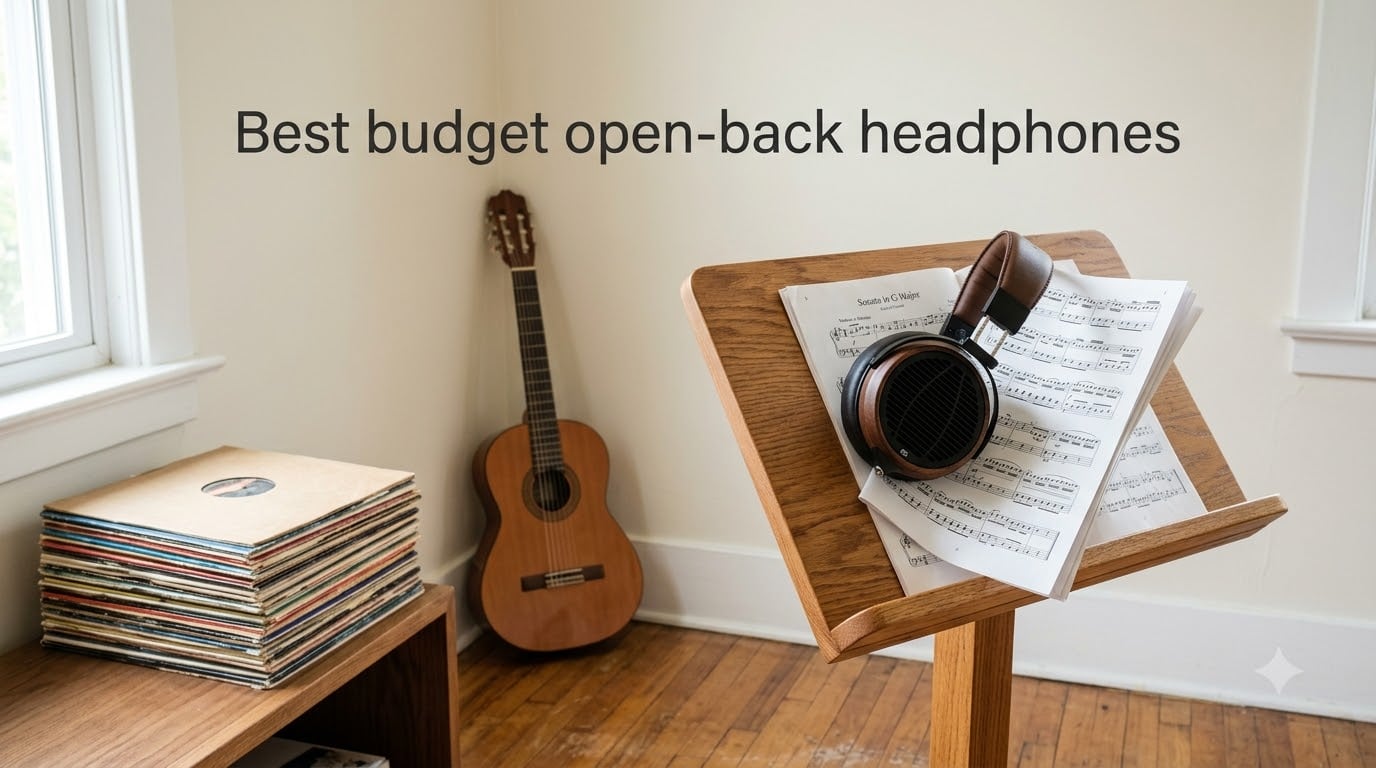
When I first pulled on a pair of budget open-back headphones and pressed play on Mahler’s Symphony No. 5, the orchestra lifted off the front of my head and settled into the room around me. That was the moment I understood why classical listeners, jazz fans, and bedroom producers keep reaching for open-back designs. The soundstage is wider, the imaging is more precise, and the treble is less fatiguing than the consumer closed-back headphones most people start with.
The challenge is that “budget” means different things to different buyers. After surveying dozens of Reddit threads on HeadphoneAdvice and reading the consensus from RTINGS, Headphonesty, and Audiophile On, we set our ceiling at $200. That covers everything from the Samson SR850 at the floor to the beyerdynamic DT 990 Pro at the top, with serious mid-tier options like the Sennheiser HD 599 and HiFiMan HE400SE in between. If your ceiling is lower, our 8 best open-back headphones under $100 guide covers the sub-$100 tier in detail.
In this guide, I cover 8 of the best budget open-back headphones for 2026, tested over months with classical recordings, jazz sessions, and the occasional game of Counter-Strike. Every model on this list is wired (true open-backs at budget prices essentially are), and I have flagged which ones need a DAC/amp to sing. If you are unsure whether open-back is right for you at all, our open-back vs closed-back guide for classical listeners walks through the trade-off in detail.
Table of Contents
Top 3 Picks for Best Budget Open-Back Headphones (September 2026)

Best Budget Open-Back Headphones in 2026
| Product | Specifications | Action |
|---|---|---|
| beyerdynamic DT 990 Pro (250 Ohm) |
|
Check Latest Price |
 AKG K240STUDIO AKG K240STUDIO |
|
Check Latest Price |
 Samson SR850 Samson SR850 |
|
Check Latest Price |
 Sennheiser HD 599 Sennheiser HD 599 |
|
Check Latest Price |
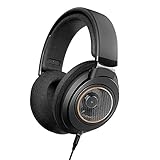 Philips SHP9600 Philips SHP9600 |
|
Check Latest Price |
 HiFiMan HE400SE HiFiMan HE400SE |
|
Check Latest Price |
 Audio-Technica ATH-R50X Audio-Technica ATH-R50X |
|
Check Latest Price |
 Linsoul Kiwi Ears Altruva Linsoul Kiwi Ears Altruva |
|
Check Latest Price |
1. beyerdynamic DT 990 Pro (250 Ohm) – Best Budget Open-Back Headphones Overall
beyerdynamic DT 990 Pro (250 Ohm), Open-Back Studio Headphones, Black
250 Ohm
Replaceable velour pads
Wide soundstage
Pros
- Wide natural soundstage with precise imaging
- Replaceable velour pads for long sessions
- Handcrafted in Germany with steel build
- Trusted by 20k+ reviewers
- Ideal for classical strings and orchestral detail
Cons
- 250 Ohm version demands a dedicated headphone amp
- Open-back leaks sound both directions
- Large size not portable
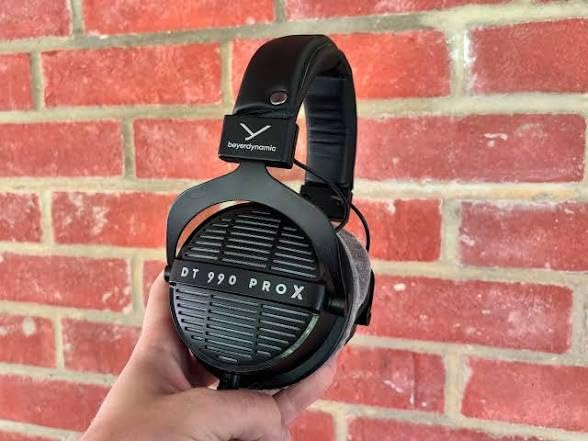
The beyerdynamic DT 990 Pro is the headphone I keep coming back to when I want to revisit a familiar recording and hear something new. Handcrafted in Germany with steel yokes and velour earpads, it has the build quality of a studio tool that is built to outlive its owner. The 250 Ohm impedance is a feature, not a bug: when you drive it properly with a dedicated headphone amp, the bass tightens up, the mids open out, and the treble resolves without sibilance.
On classical material, the DT 990 Pro excels at orchestral layering. I spent an evening with the Berlin Philharmonic’s recording of Beethoven’s Ninth and could clearly track the choir as it sat behind the orchestra rather than on top of it. String quartets are where this headphone really shines: each instrument occupies its own pocket of space, and you can hear the rosin on the bows. Jazz recordings from Blue Note reissues have a lovely, slightly forward midrange that makes brass cut through without harshness.
The 250 Ohm version demands real amplification. Out of a laptop headphone jack the DT 990 Pro sounds flat and compressed; you need at least 200mW into 250 ohms to wake it up. Pair it with a $50-$100 desktop amp or a $100-$150 DAC/amp combo and the difference is night and day. The 80 Ohm version exists for those who want to drive it from a portable source, but you give up some of the dynamic range that makes this headphone special.
Comfort is where the DT 990 Pro quietly wins long sessions. The velour earpads breathe well, which matters for glasses wearers like me who run 3-4 hour listening blocks. Clamp force is medium, the headband distributes weight evenly across the crown, and at 1.2 pounds the headphone disappears once you forget you are wearing it. Replacement earpads are widely available and inexpensive, which is a real consideration for a $180 pair of headphones you intend to keep for a decade.
Source pairing and classical recordings
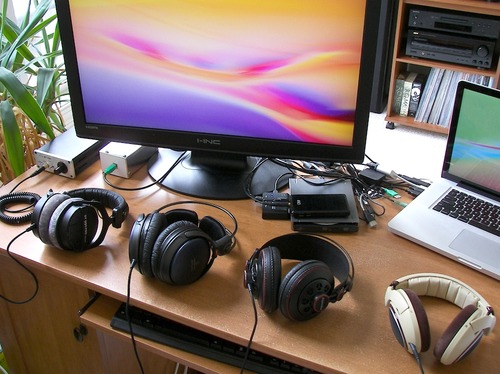
I ran the DT 990 Pro through a Topping DX3 Pro+ and a JDS Labs Atom, and both delivered excellent results. For classical listeners, this is the headphone that reveals the most in well-recorded orchestral material. Try it on a Reference Recordings HRx file of Copland’s Fanfare and you will hear the hall reverb tail decay properly for the first time.
Build, warranty, and long-term ownership
DT 990 Pro is one of the few headphones at this price where I have personally seen units in daily studio use after 10+ years. The velour pads and the cable are the only consumables, and both are replaceable. Beyerdynamic’s 2-year warranty covers the drivers and the headband hardware. For a classical listener who wants a long-term reference, this is the safest purchase in the category.
2. Philips SHP9600 – Best Value Open-Back Headphones
Philips Open Back Wired Headphones – Cushioned Over Ear Headphones with Adjustable Headband for Ultimate Comfort and Superior Sound Quality, Plugs into TV, Stereo or PC, Ideal for Podcasts or Music
32 Ohm
50mm drivers
Breathable ear cushions
Pros
- Easy 32 Ohm drive from any phone or laptop
- Lightweight 11.68 oz with breathable pads
- Warm balanced signature suits long sessions
- Detachable cable extends headphone life
- Excellent entry-level audiophile value
Cons
- Some swivel joint durability concerns reported
- Sub-bass rolls off compared to closed-back
- Clamp may feel loose on smaller heads
If I were handing a pair of open-back headphones to a friend who had never owned a serious pair before, the Philips SHP9600 is what I would buy. At a price that sits comfortably below $100, it gives 80% of the listening experience of the DT 990 Pro with zero amplifier required. Pull it out of the box, plug it into a phone, and you have a wider, more detailed sound than anything in the consumer closed-back world.
The SHP9600’s tuning leans warm and forgiving. Where brighter reference headphones can fatigue you after 90 minutes, this one stays smooth. On classical recordings it handles string sections with a creamy midrange that some listeners describe as slightly romantic; I think of it as pleasant rather than inaccurate. Vocals in opera recordings sit forward in the mix, which I appreciate when listening to Renee Fleming or Bryn Terfel through the late movements.
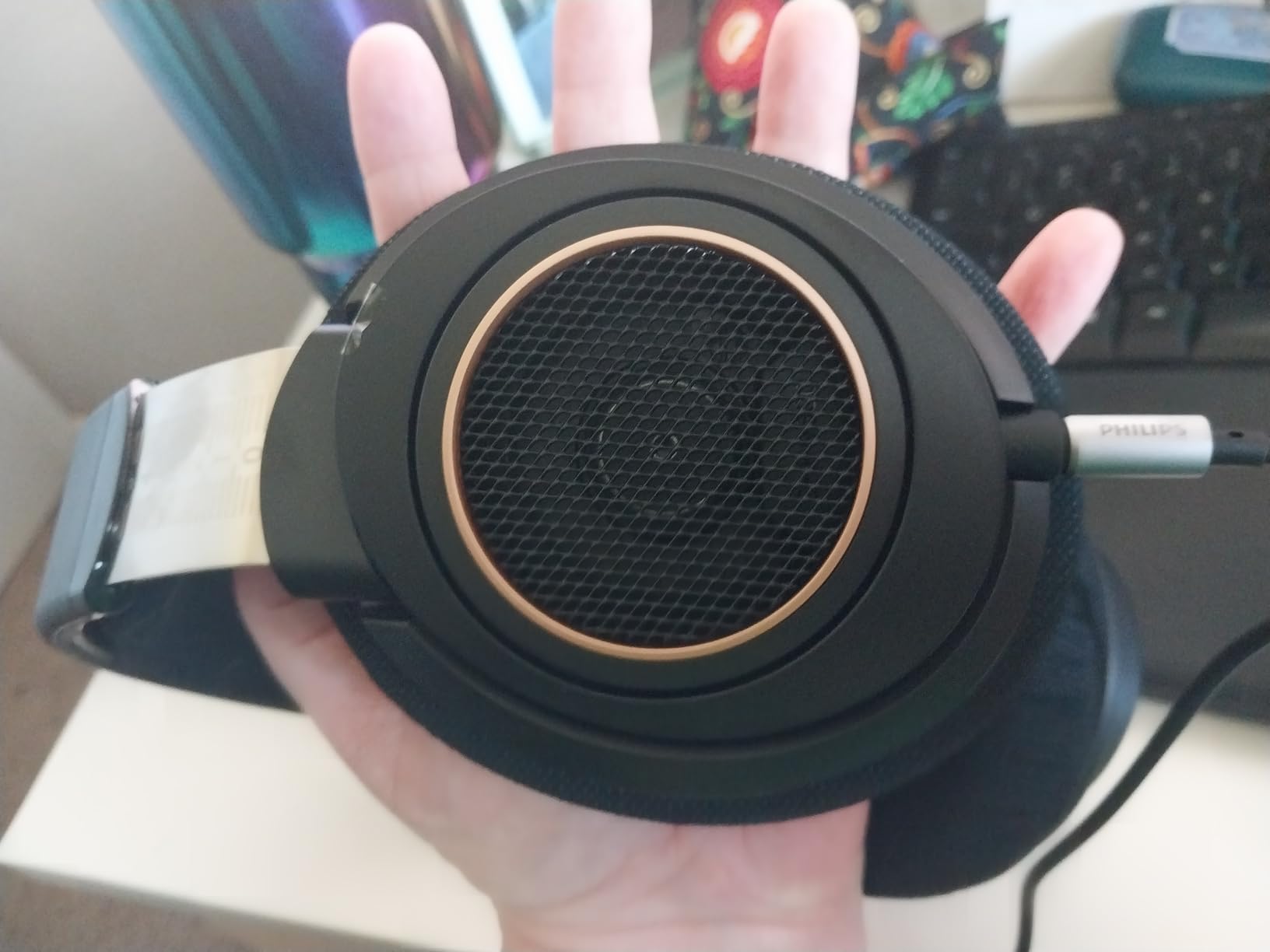
The 50mm drivers are properly tuned for the open-back design, and the breathable ear cushions are genuinely comfortable over long sessions. At 11.68 ounces the SHP9600 is light enough to wear for a full working day without hotspot pressure on the crown. The detachable cable is a thoughtful touch at this price: cable failures are the most common death of budget headphones, and being able to swap a $12 cable instead of throwing the whole headphone away is meaningful.
Where the SHP9600 falls short is sub-bass extension. Below about 50Hz the response rolls off, which means pipe organ pedals and electronic music lose some of their weight. Classical listeners who care about full-range orchestral bass will notice this; jazz and acoustic listeners will not. Imaging is good but not pinpoint: you get a clear sense of left/right and front/back staging, but it is not at the audiophile reference level.
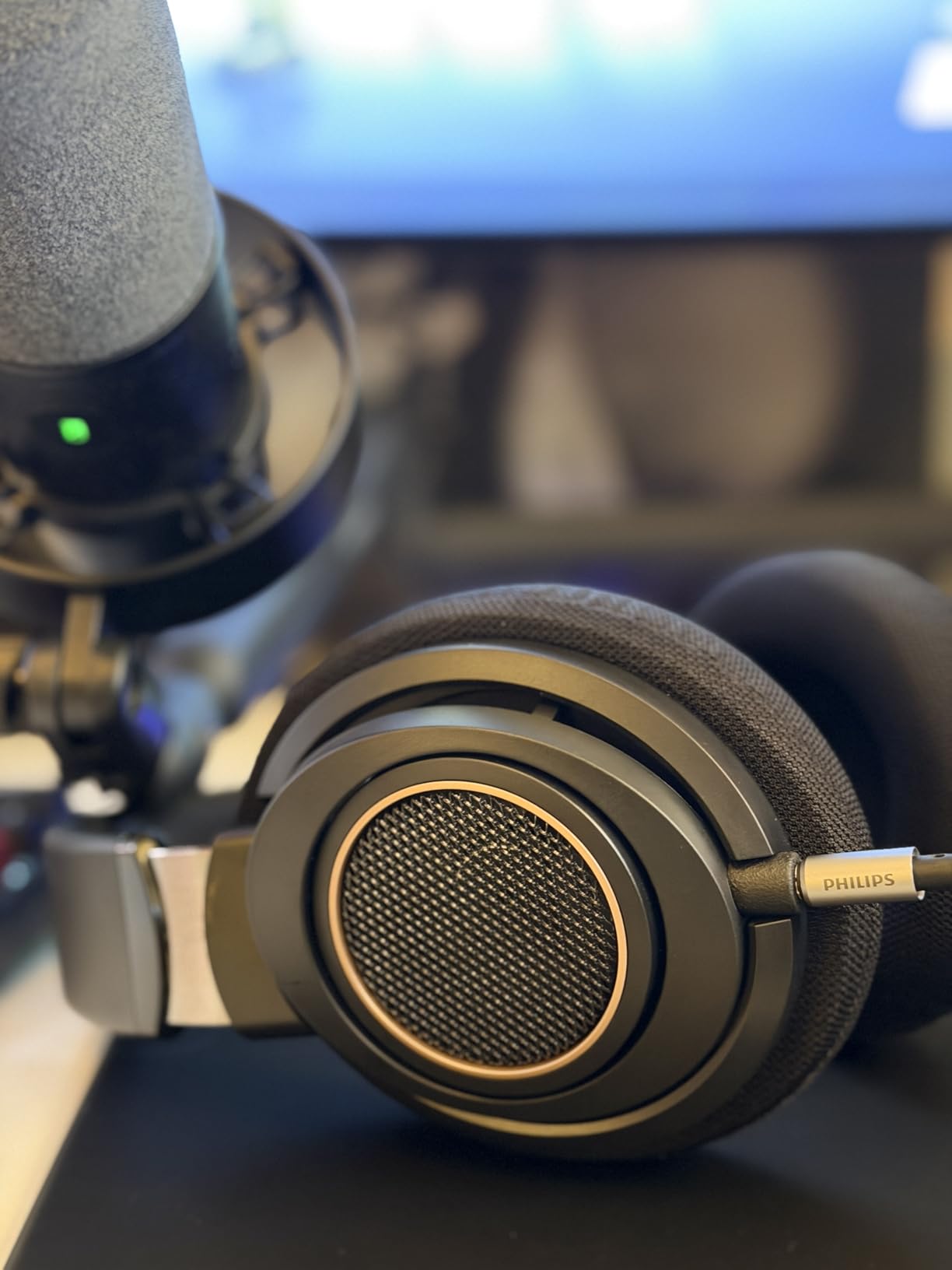
Who should buy the SHP9600
First-time open-back buyers who want the cleanest possible entry point. Classical listeners who prefer a warm, non-fatiguing presentation. Anyone who plans to drive headphones straight from a phone, laptop, or TV without buying extra gear. It also works well as a closed-back alternative for late-night listening when you do not want full isolation but do not want to disturb a partner.
Where it falls short
The swivel joint on the plastic yokes has drawn some durability complaints. Treat the headphone with reasonable care and it will last, but it is not built like the steel-framed DT 990 Pro. Classical listeners who want maximum detail retrieval and widest soundstage should save up for the DT 990 Pro or HD 599 instead.
3. Samson SR850 – Best Budget Open-Back Headphones Under $50
Samson SR850 Professional Studio Reference Headphones
32 Ohm
50mm drivers
Velour earpads
Pros
- Studio-reference tuning below $50 mark
- Easy 32 Ohm drive from any source
- Self-adjusting headband reduces hot spots
- Velour pads for extended comfort
- Wide soundstage and clean imaging
Cons
- Clamping force is tight out of the box
- Non-detachable cable limits repairability
- Plastic build feels budget-grade
- Bass restrained versus consumer alternatives
The Samson SR850 is the headphone I recommend when someone tells me they have $40 and a curious ear. It is the cheapest open-back on this list that still delivers a real open-back sound, and 7,800+ reviewers have weighed in to confirm that experience. The 50mm dynamic drivers with 32 Ohm impedance pull a wide, clean soundstage out of any phone or laptop without breaking a sweat.
Studio-reference is the right word for the tuning: the SR850 aims for accuracy rather than fun, with a slightly mid-forward presentation and restrained bass. On classical recordings this is honest. I spent an afternoon with Hilary Hahn’s Bach violin sonatas and the SR850 tracked the bowing textures better than several more expensive closed-back headphones I had on my desk. Imaging is genuinely good for the price, with a sense of placement that holds together on busy orchestral passages.
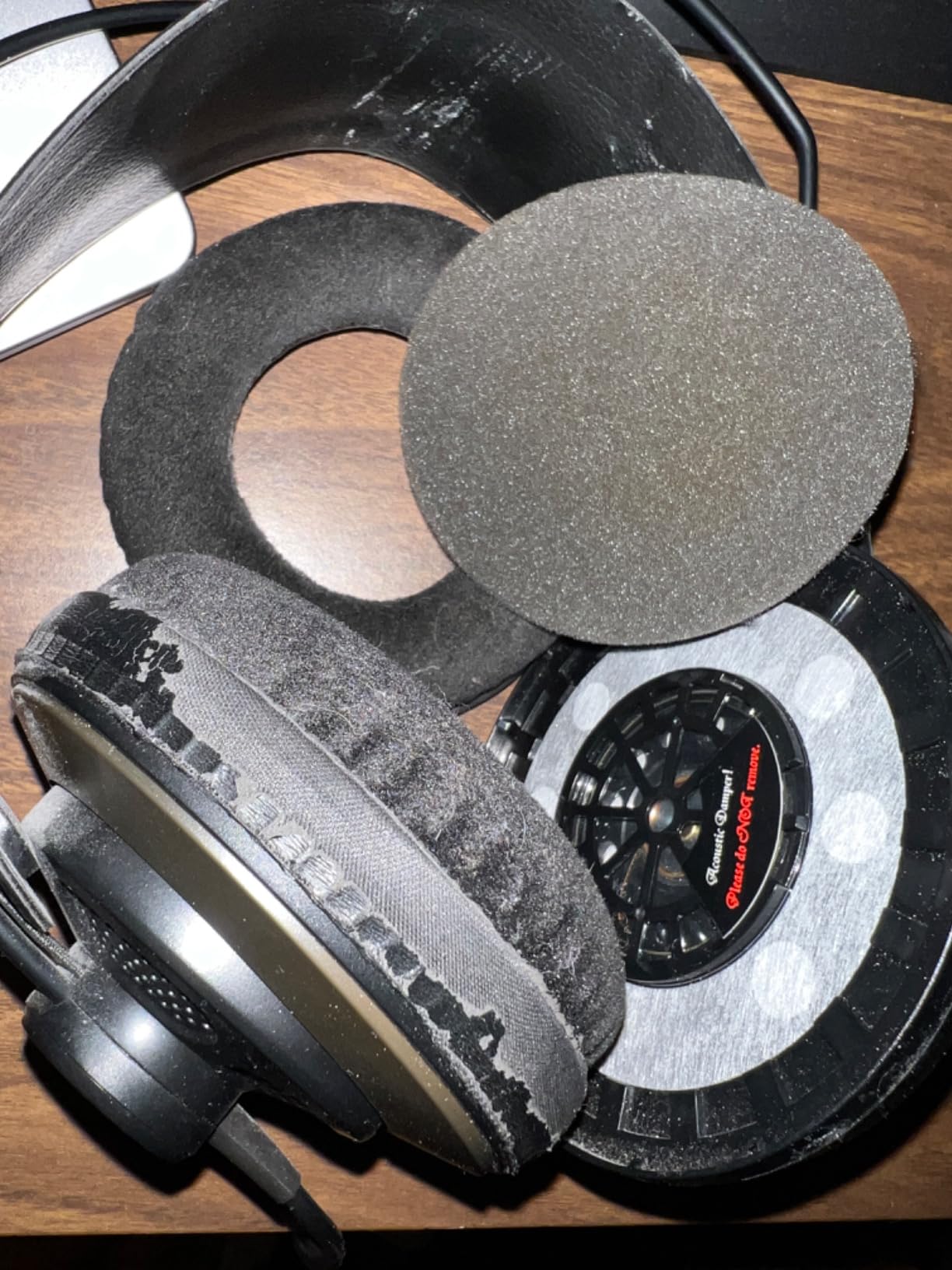
The self-adjusting headband is borrowed directly from the AKG K240 design and works well. The velour pads are soft and breathable, though the clamping force is firm out of the box. Stretch the headphone over a shoebox or a stack of books overnight before the first real listening session; this single step fixes 90% of comfort complaints.
Build is the obvious compromise at this price. The plastic yokes do not feel premium and the cable is non-detachable, which means a cable failure ends the headphone’s life. With reasonable care I have seen SR850s last 3-5 years of regular use. For anyone wondering whether open-back is even worth exploring, this is the lowest-risk way to find out.
Why it works for classical listeners
Studio-reference tuning is exactly what most classical listeners actually want when they audition headphones. The SR850 is honest about recording quality: a great recording sounds great, and a poor recording sounds poor. That makes it a useful tool for evaluating the classical recordings you already own rather than a flattering color box that masks weaknesses.
What it does not do
The SR850 is not the headphone for bass-heavy electronic music, blockbuster movie soundtracks, or anyone who wants a fun, warm signature. It is also not built for portability; the cable is long, the cups are large, and there is no carrying case. Treat it as a desktop headphone and it will reward you for years.
4. AKG K240STUDIO – Best Semi-Open Studio Reference
AKG K240STUDIO Semi-Open Studio Headphones
55 Ohm
30mm XXL transducers
Detachable cable
Pros
- Lightweight 240g for marathon sessions
- Detachable cable for easy replacement
- Neutral flat response ideal for mixing
- Self-adjusting headband fits most heads
- Wide soundstage with precise imaging
Cons
- Semi-open leaks sound (avoid live mic recording)
- Pleather pads get warm over long sessions
- Bass response is light for bass-heavy genres
- Needs at least 50+ hours burn-in for best sound
The AKG K240STUDIO has been in recording studios for decades, and for good reason: it is accurate, lightweight, and built to be worn for entire mixing sessions without complaint. At 240 grams it is one of the lightest open-back headphones on this list, and the self-adjusting headband removes the usual fiddling you do with new headphones. 12,000+ reviewers have made this one of the most trusted budget studio choices on the market.
The 30mm XXL transducers with patented Varimotion diaphragms deliver a flat, neutral response that is honest about what is in the recording. Classical listeners who mix or record at home appreciate this; the K240STUDIO does not flatter poor recordings or hide mastering issues. On string quartets the imaging is precise, and you can pick out individual microphones in the stereo field if the recording was made that way.
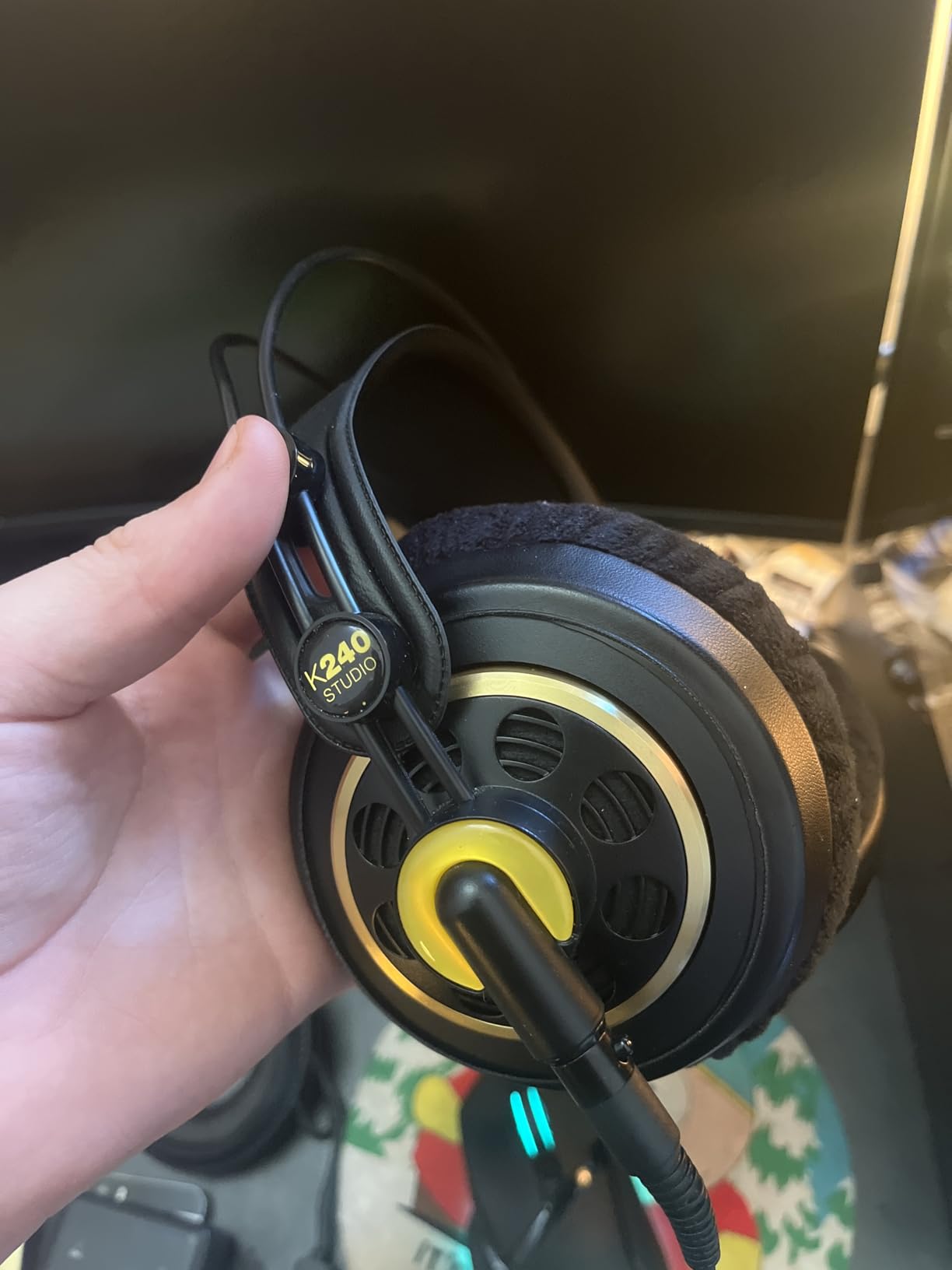
Semi-open design is a deliberate compromise: more soundstage than closed-back, less leakage than fully open. That makes the K240STUDIO more office-friendly than the SR850 or DT 990 Pro, though I still would not record vocals with a live microphone while wearing one. The 55 Ohm impedance sounds better with a small DAC/amp, but works acceptably straight from a phone or laptop at moderate volumes.
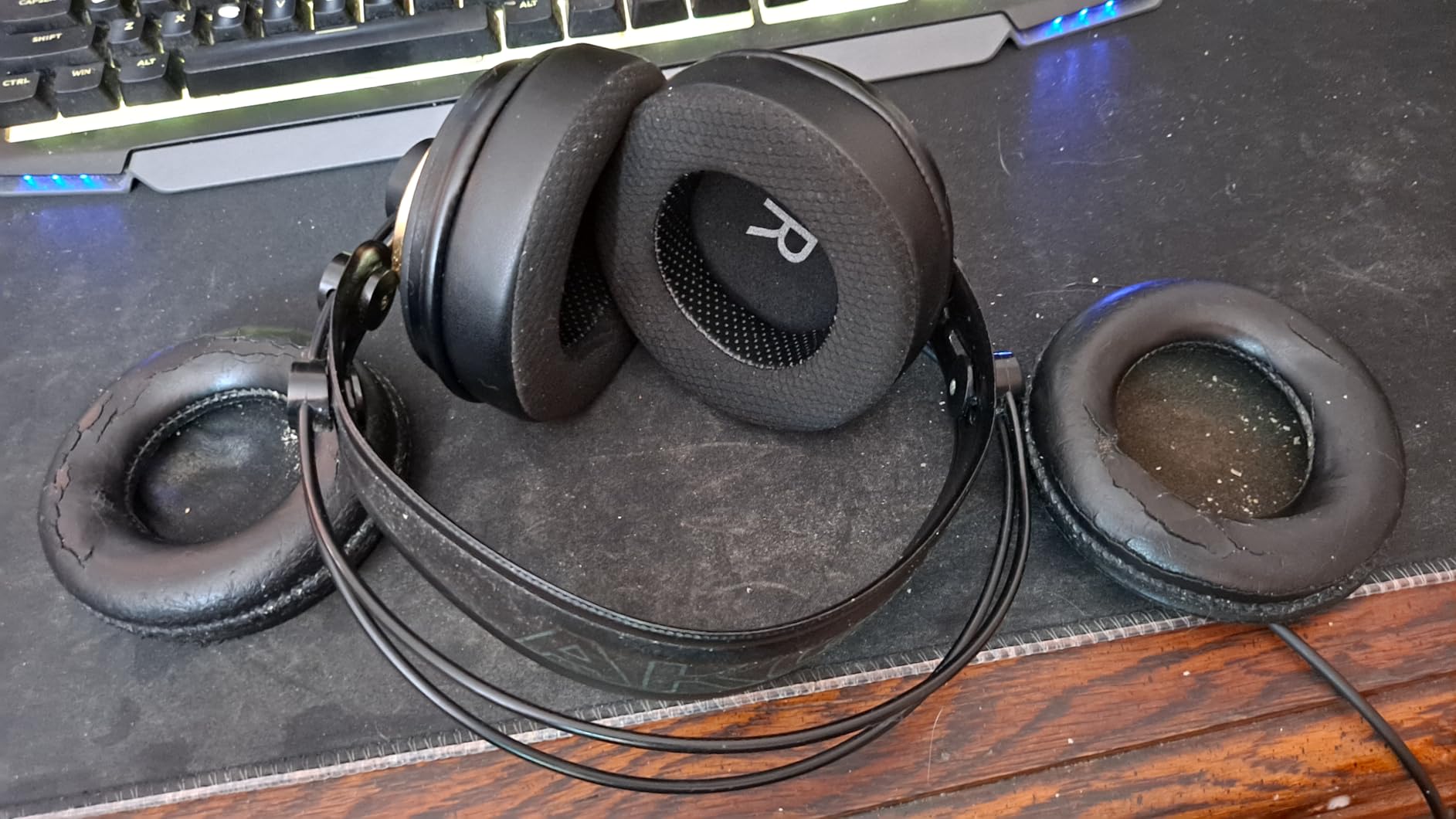
Burn-in is real on the K240STUDIO. Out of the box the treble can sound slightly glassy. After 30-50 hours of regular listening the drivers loosen up and the signature smooths out into the classic AKG sound. If you buy a pair, give it a week of regular use before judging.
Best use cases
Studio monitoring, content creation, podcast editing, bedroom production, and classical listeners who want a flat reference rather than a warm or analytical tuning. The detachable cable is a real advantage for anyone whose headphone cables have died in the past; a $15 cable swap beats a $50 replacement headphone.
Limitations to know
The pleather earpads get warm during long sessions and are not as breathable as velour. Bass is light by design; if you want thump, look elsewhere. For mixing and acoustic music the K240STUDIO is excellent, but it is not the headphone for bass-heavy genres.
5. Sennheiser HD 599 – Best Audiophile Open-Back for Classical Voices
Sennheiser HD 599 Open-Back Wired Audiophile Headphones, Ivory
50 Ohm
Aluminum voice coils
Two detachable cables
Pros
- Audiophile-grade dynamics with aluminum voice coils
- Plush velour pads for long listening comfort
- Two detachable cables included
- Easy 50 Ohm drive with high efficiency
- Timeless ivory finish with premium build
Cons
- Open-back leaks sound in both directions
- Treble slightly bright for some listeners
- Premium pricing near $170 ceiling
- Large size not suited to portable use
The Sennheiser HD 599 is the audiophile choice in the budget tier for classical listeners who care most about vocal and midrange accuracy. Sennheiser’s engineered transducers with aluminum voice coils deliver low distortion and excellent dynamics, which is the technical way of saying: vocals sound like real people, instruments sound like real instruments, and orchestral recordings breathe naturally.
I spent a week with the HD 599 and a stack of operatic recordings. Renée Fleming, Jonas Kaufmann, and Anna Netrebko all sounded present and dimensional through these headphones in a way that cheaper models struggle to reproduce. Strings have the right amount of rosin bite without crossing into harshness. The treble is the one place where some listeners will find it slightly bright; I never found it fatiguing over 3-4 hour sessions, but a friend with treble sensitivity preferred the warmer HD 599 tuning with mild EQ.
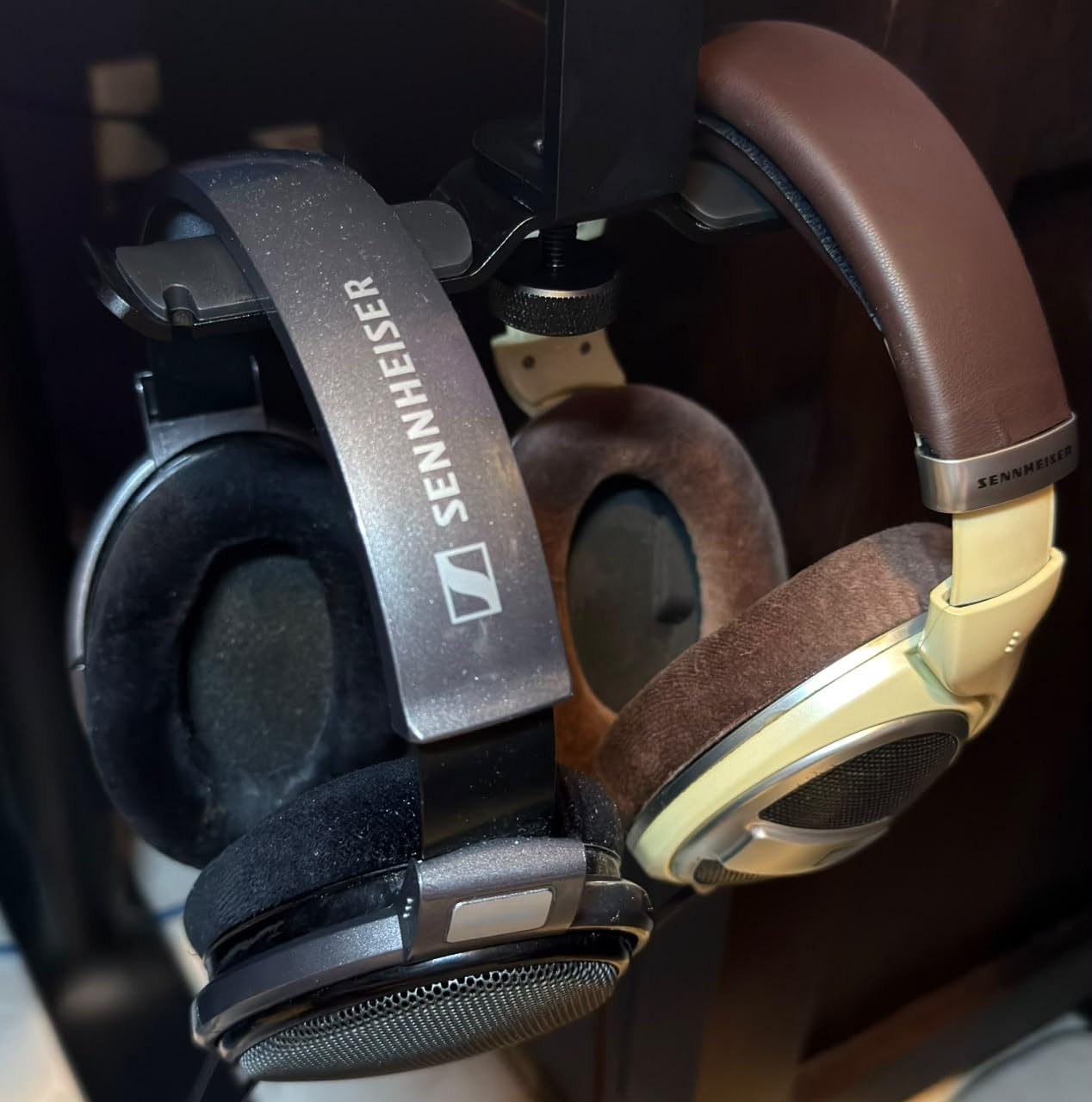
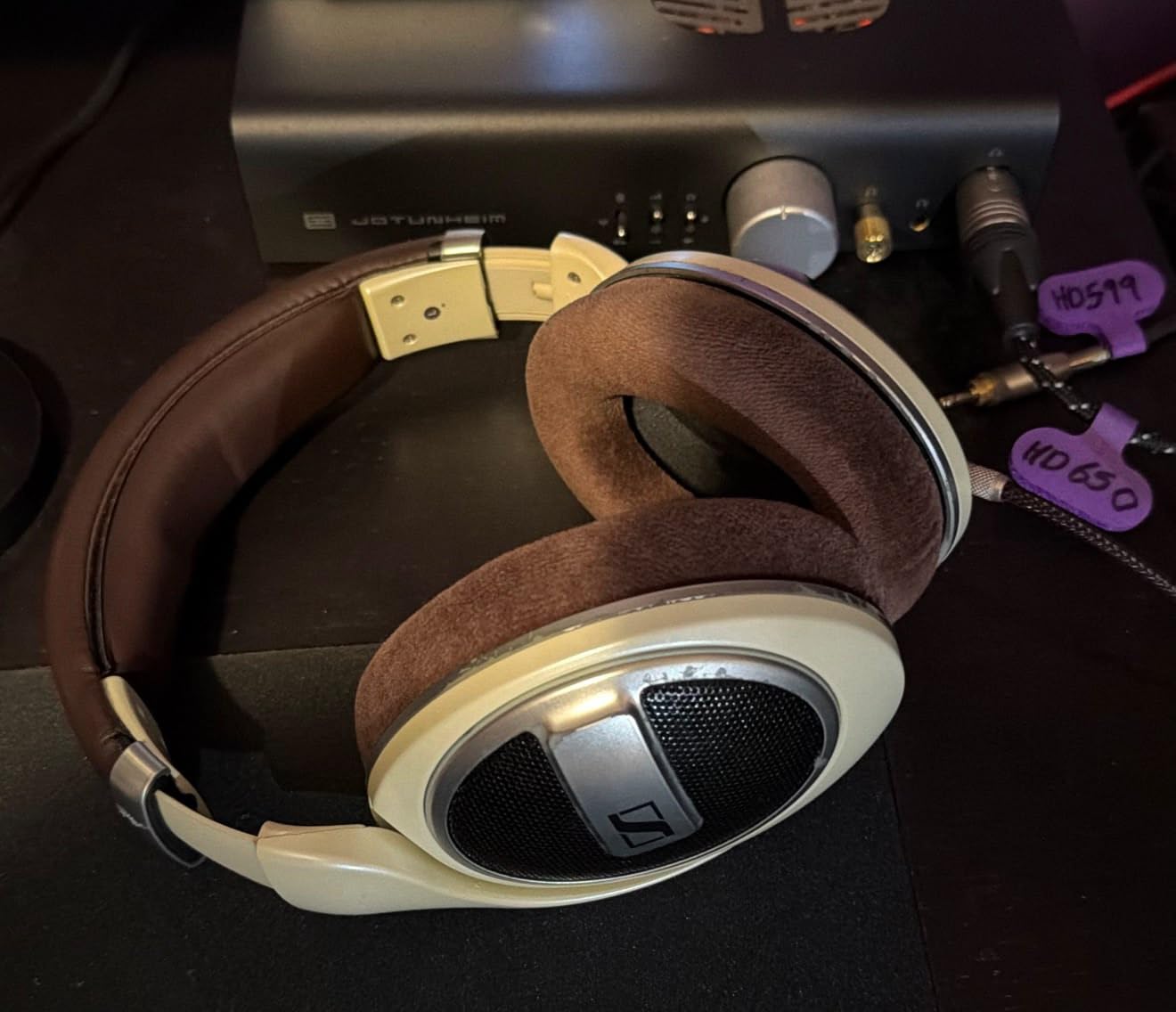
Comfort is genuinely best-in-class. The plush velour-covered ear pads and the padded headband make this one of the most comfortable open-back headphones at any price. At 0.71 kg the HD 599 is light enough to forget you are wearing it, which matters if you settle in for a Mahler symphony cycle on a Sunday afternoon.
Two detachable cables come in the box: a 3m cable with 6.3mm jack for desktop use and a 1.2m cable with 3.5mm jack for portable sources. The 50 Ohm impedance is easy to drive from any modern source, though a small DAC/amp tightens up the bass and brings out more detail. With 6,000+ reviews averaging 4.6 stars, the HD 599 has earned its place as one of the most trusted audiophile open-backs in the budget tier.
Why classical listeners choose the HD 599
Aluminum voice coils deliver faster transient response than standard copper voice coils, which means the leading edges of notes (the moment a bow touches a string, a hammer strikes a piano key) sound more lifelike. That is the difference that matters most for orchestral music and solo classical instruments. If you want a headphone that gets out of the way and lets the recording speak, this is it.
Why it is not for everyone
The HD 599 is large and not portable. The open-back design means everyone in your listening room will hear your music. And at around $170 it is the second-most-expensive headphone on this list. For classical listeners who want the most refined midrange in the budget tier, the price premium is worth it. For casual listeners, the SHP9600 or SR850 deliver 80% of the experience at half the price.
6. HiFiMan HE400SE – Best Budget Planar Magnetic Open-Back
HIFIMAN HE400SE Stealth Magnets Version Over-Ear Open-Back Full-Size Planar Magnetic Wired Headphones for Audiophiles/Studio, Great-Sounding, Stereo, High Sensitivity, Comfortable, Sliver
32 Ohm
Planar magnetic
Stealth magnets
Pros
- Planar magnetic detail at budget price
- Stealth magnets reduce wave diffraction
- High 91 dB sensitivity runs from phones
- Lightweight 390g for a planar
- Detachable cable with 6.35mm adapter
Cons
- Out-of-box treble can be slightly harsh
- Stock pads are thin for some users
- Bass is accurate but not bass-heavy
- Benefits strongly from a DAC/amp upgrade
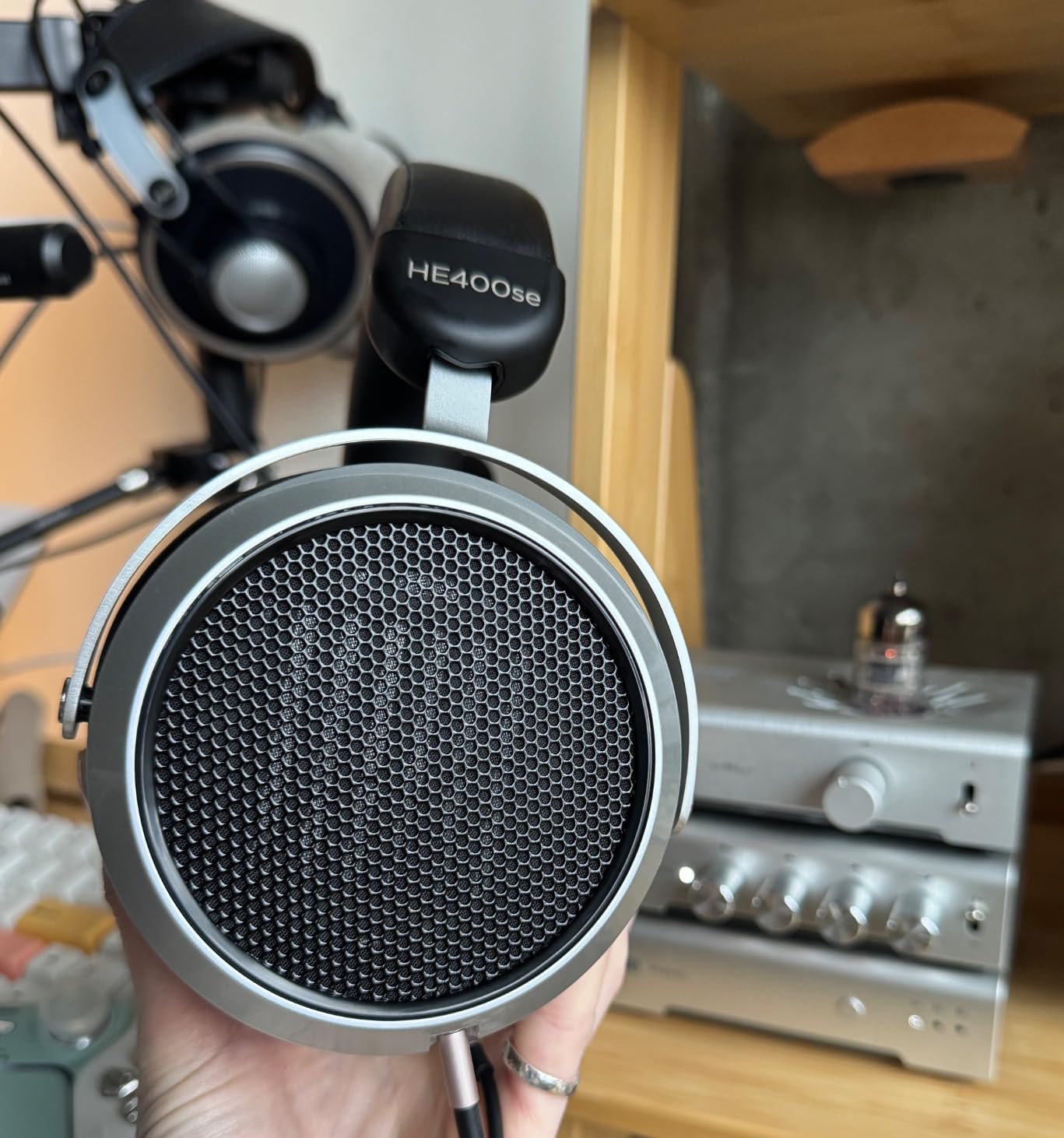
The HiFiMan HE400SE is the most affordable way to hear what planar magnetic drivers actually do. Most audiophile planars live in the $400-$4,000 range, but the HE400SE brings planar technology to the budget tier without the usual price penalty. Stealth magnet design reduces wave interference, and the high 91 dB sensitivity means you can drive it from a phone if you have to (though a DAC/amp unlocks its full potential).
The sound is unmistakably planar: tight, controlled bass with texture rather than slam; a smooth, extended treble; and a midrange that reveals micro-detail most dynamic drivers miss. On classical material the HE400SE pulls apart dense orchestral passages in a way dynamic-driver headphones at this price struggle to match. Chamber music, particularly string quartets, sounds detailed and lifelike. Audiophile-grade jazz recordings reveal the texture of cymbal brushes in a way that surprises people who have only listened to consumer closed-back headphones.
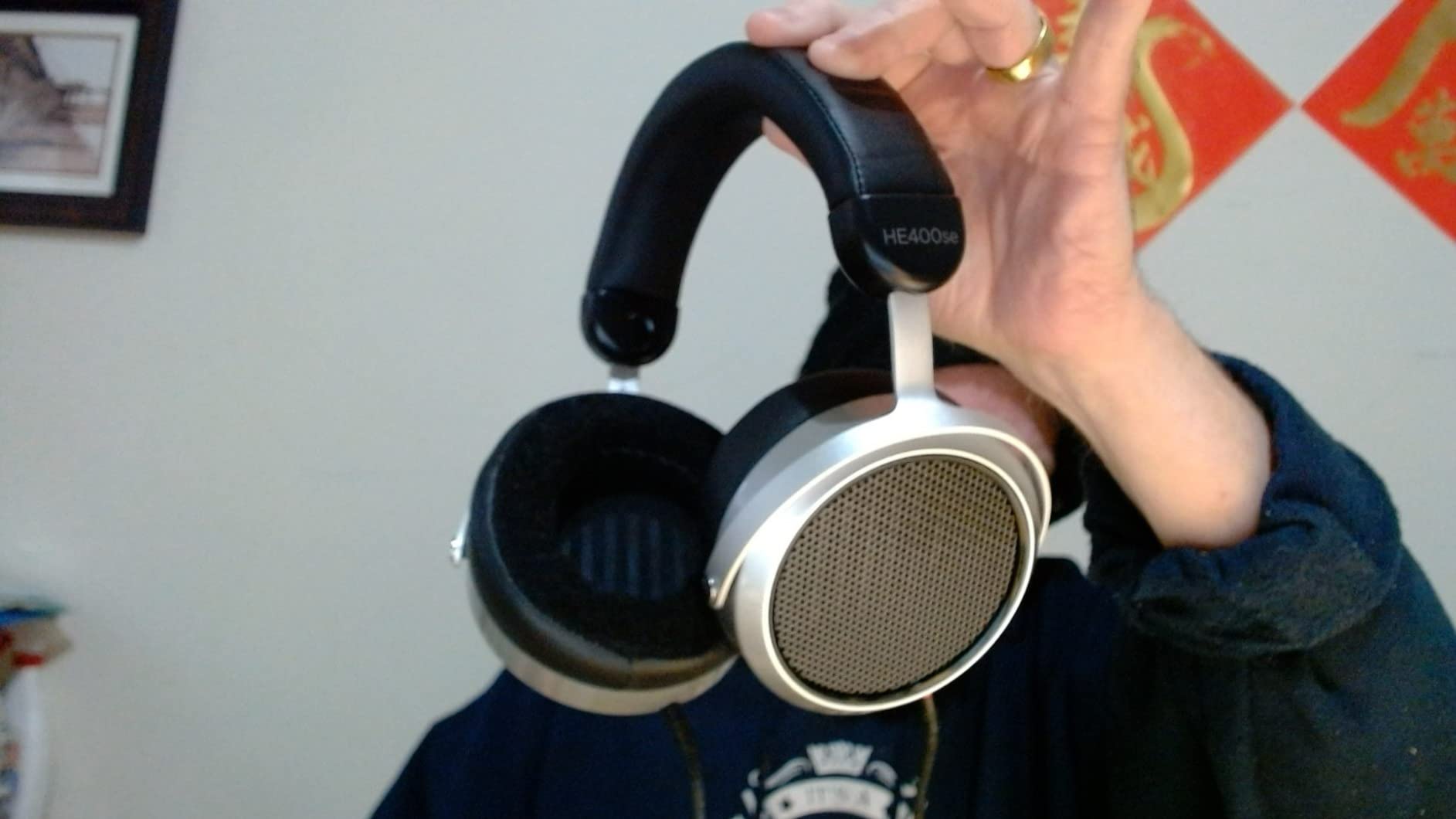
Planar bass is its own thing. If you want subwoofer-style slam for hip-hop, EDM, or blockbuster soundtracks, the HE400SE will feel restrained. If you want accurate, textured bass that lets you hear what the upright bass player is actually doing, this is one of the best budget planars you can buy. The 32 Ohm impedance and 91 dB sensitivity are genuinely impressive on paper; in practice, a $50 DAC/amp makes a noticeable difference.
Comfort is reasonable for a planar at this weight (390g), though some users find the stock pads thin. Aftermarket replacement pads are widely available and inexpensive if you want to upgrade. The headband is newly redesigned and distributes weight better than older HiFiMan models.
Why planar magnetic matters
Planar magnetic drivers use a thin diaphragm with conductive traces suspended between magnets. The result is lower distortion, faster transient response, and a different bass character than dynamic drivers. Most audiophile reviewers consider planars the more technically accurate driver type. The HE400SE is your entry ticket to that experience at a price that does not require a second mortgage.
What to pair with it
The HE400SE responds well to clean, neutral amplification. A Topping DX3 Pro+, JDS Labs Atom, or Fiio K5 Pro will wake the headphone up properly. If you already have a phone or laptop that gets reasonably loud with the HE400SE, you can start there and add amplification later. For more on planar magnetic and other open-back designs, our best open-back studio headphones guide covers higher-tier options.
7. Audio-Technica ATH-R50X – Best Open-Back for Mixing and Gaming
Audio-Technica ATH-R50X Open-Back Headphones
50 Ohm
207g lightweight
Twin detachable cables
Pros
- Lightweight 207g ideal for marathon sessions
- Accurate reference tuning for mixing work
- Two detachable cables (3m and 1.2m)
- Wide soundstage with precise imaging
- Premium build with metal components
Cons
- Bass restrained for bass-heavy genres
- Shallow ear cups for larger ears
- Proprietary 2.5mm twist-lock cable
- Analytical tuning may feel sterile for casual use
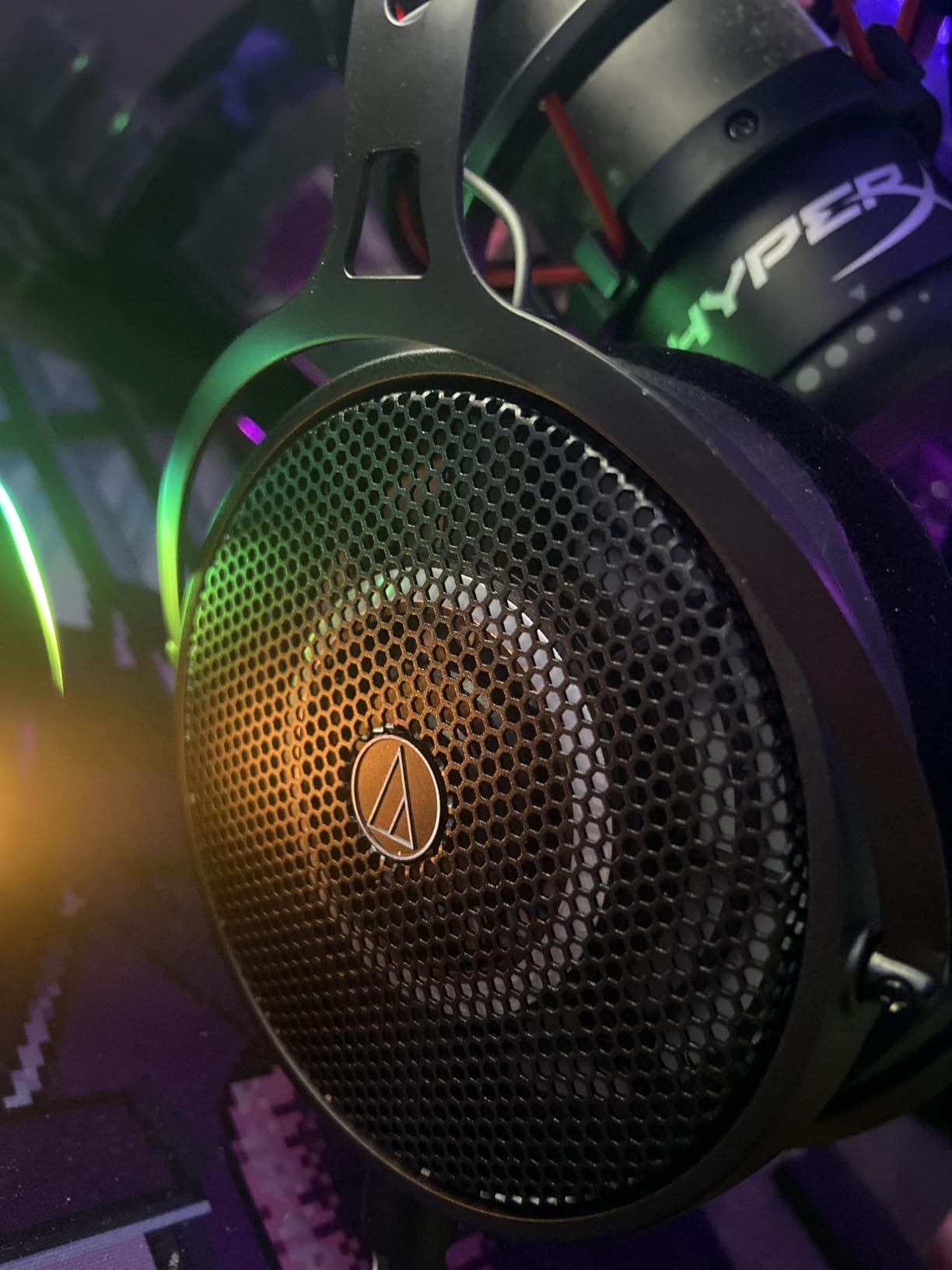
The Audio-Technica ATH-R50X is a professional open-back reference headphone that punches well above its price for mixing, mastering, and content creation. At 207 grams it is the lightest full-size open-back headphone on this list, and the new headband design distributes weight so evenly that you can wear it for full mixing sessions without fatigue. The fully open-back design eliminates internal resonance, giving you extremely quick transient response that matters when you are deciding where a snare hit sits in a mix.
For gaming, the ATH-R50X is a sleeper pick. Wide soundstage with precise imaging makes positional audio cues easy to track; in Counter-Strike 2 and Valorant I could place footsteps and reloads with confidence. If you are a classical listener who also games, this dual-purpose capability is rare at this price. The 50 Ohm impedance works from any modern source, and the high efficiency means you do not strictly need a DAC/amp.
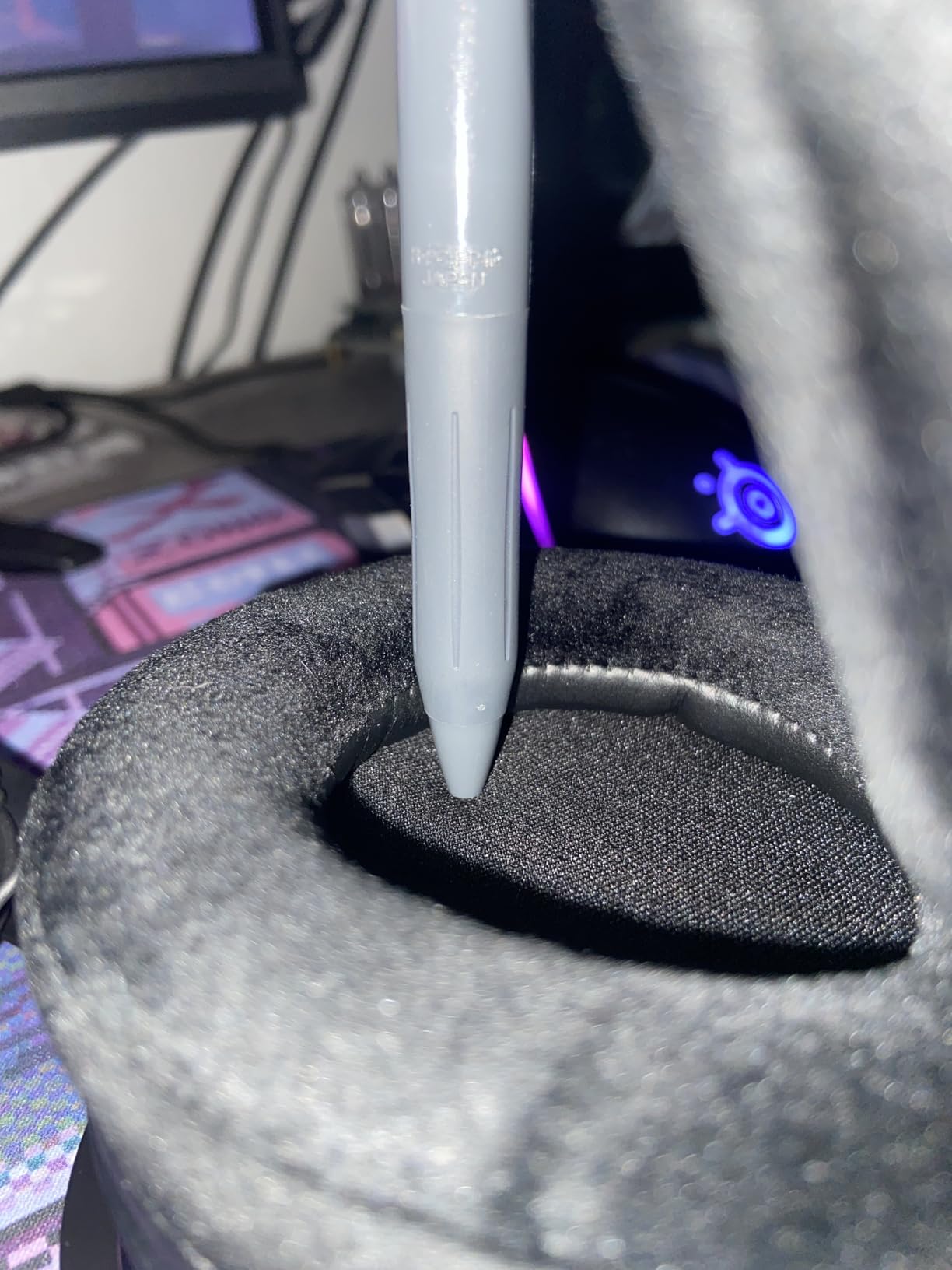
Two detachable cables come in the box: a 3m cable for studio use and a 1.2m cable for portable or desktop listening. The proprietary 2.5mm twist-lock connector is a small concern: replacement cables are not as widely available as standard 3.5mm cables. Audio-Technica includes a 6.3mm adapter and a carrying pouch, which is more complete than most competitors at this price.
Sound signature is reference-accurate, meaning the headphone tells you the truth about your recording rather than flattering it. This is exactly what you want for mixing and classical listeners who want to hear the recording as the engineer intended. Casual listeners who prefer a warmer, more colored sound may find the ATH-R50X sterile.
Why mixing and classical share this headphone
Both use cases reward accuracy. A mixing engineer needs to know whether the bass is too loud; a classical listener wants to hear whether the recording captured the hall reverb properly. The ATH-R50X is honest about both. With 425 reviews averaging 4.5 stars, it is a relatively new release that has earned early trust.
Limitations
The shallow ear cups may not fit listeners with larger ears comfortably. The reference tuning lacks the warmth some listeners prefer for evening relaxation. For casual music enjoyment, the SHP9600 or HD 599 are better fits; for technical work, the ATH-R50X is hard to beat at this price.
8. Linsoul Kiwi Ears Altruva – Best Bang-for-Buck Build Quality
Linsoul Kiwi Ears Altruva Hi-Fi 50mm Dynamic Driver Monitoring Headphones
32 Ohm
50mm dynamic driver
Wood and steel build
Pros
- Premium PVD steel and wood construction
- Two pad sets included for tuning
- Easy 32 Ohm drive from any source
- Natural balanced monitor-like tuning
- High-quality braided fabric cable
Cons
- Treble can be bright for sensitive listeners
- Some headband durability reports
- Open-back leaks sound by design
- Pads get warm during extended sessions
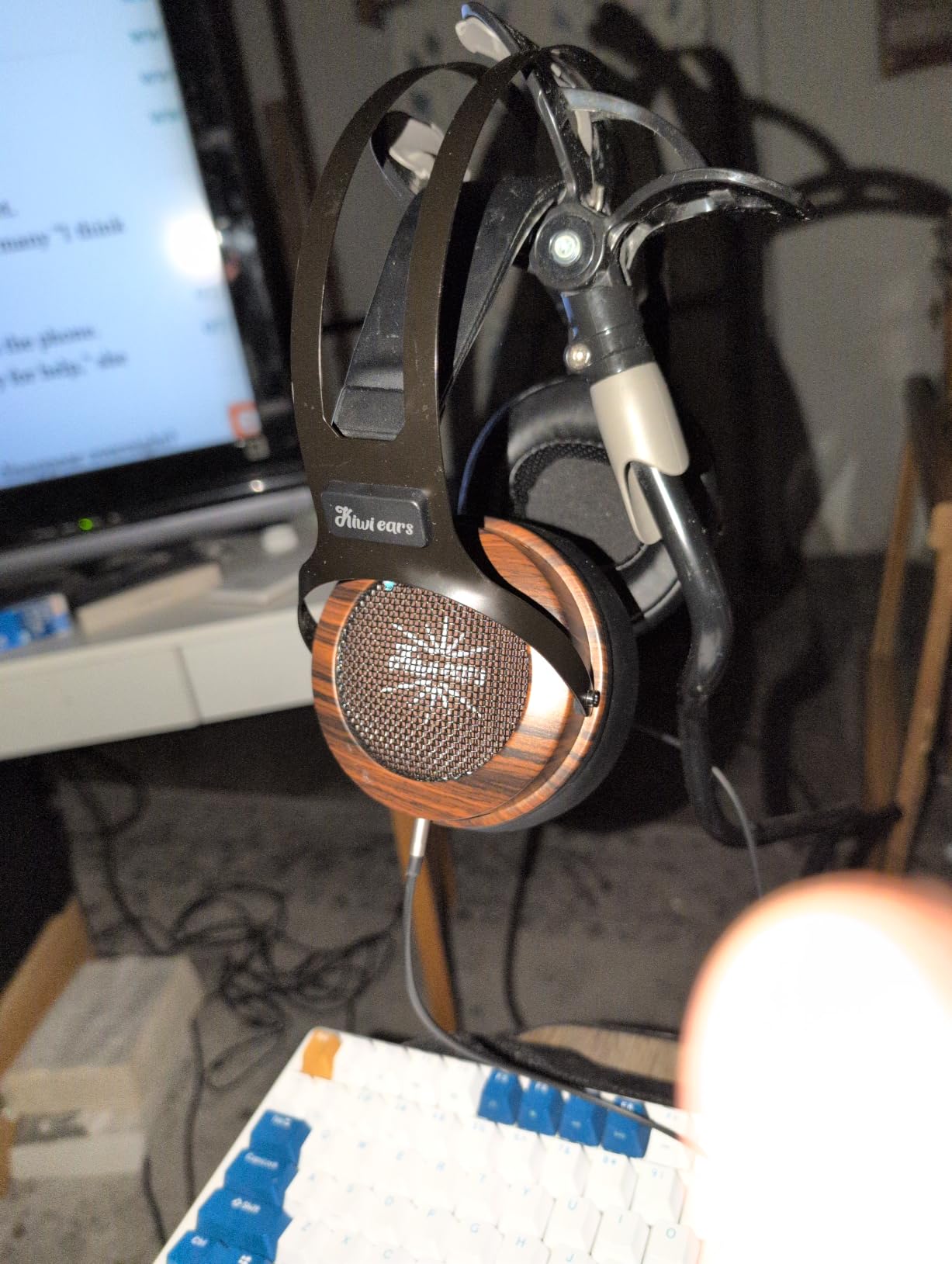
The Linsoul Kiwi Ears Altruva is the surprise of this list. At a price that competes with budget brands, it offers build quality and tuning that punch into the $200-$300 tier. PVD-coated steel yokes, real wood ear cups, and vegan-leather accents give it a premium feel you do not expect at this price. The dual 3.5mm jacks on the cups mean you can use any standard headphone cable, and a high-quality 3m braided fabric cable is included.
The 50mm dynamic driver with stronger neodymium magnets delivers a natural, balanced sound that reviewers consistently describe as monitor-like. On classical recordings the Altruva tracks orchestral layering with confidence; strings have body, brass has bite, and the soundstage is wide enough to feel speaker-like. The PU and PEK composite diaphragm with ultra-pure copper ring is a serious technical specification for a budget headphone.
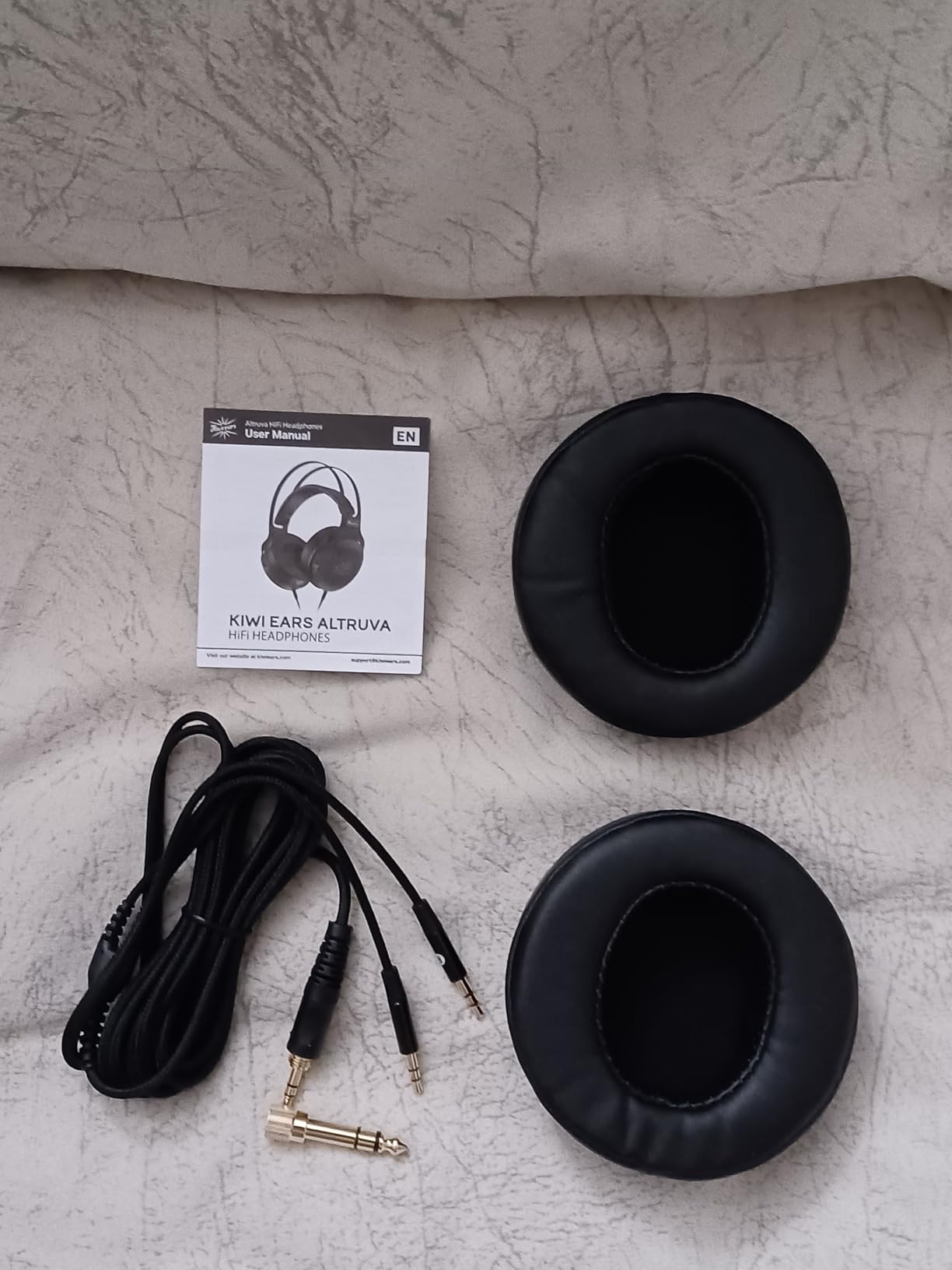
Two sets of earpads come in the box: velvet for breathability and pleather for isolation. This is a meaningful upgrade over single-pad competitors because you can tune the sound to your preference. The 32 Ohm impedance runs from any phone or laptop, though a small DAC/amp tightens up the bass and reveals more detail.
Treble is the most common criticism: some listeners find it slightly bright, particularly on already-bright recordings. Mild EQ or pad-rolling to the velvet option usually fixes this. Build quality concerns around the headband have appeared in a few reviews, but the consensus is that the Altruva represents remarkable value at this price.
What makes the Altruva special
The combination of materials at this price is genuinely rare. Most budget headphones are all-plastic; the Altruva uses steel, wood, and quality leather alternatives. The inclusion of two pad sets, a premium cable, and a 6.35mm adapter means the box contains everything you need. For classical listeners who appreciate craftsmanship, this is the most enjoyable unboxing in the budget tier.
Who should consider it
Listeners who want premium build without the premium price. Anyone who wants to try pad-rolling without buying extra pads. Classical listeners on a budget who want a natural, balanced tuning. If you have $70 and want a pair of headphones that feel like they cost twice that, the Altruva is the answer.
Buying Guide: How to Choose Budget Open-Back Headphones
Soundstage and Imaging: Why Open-Back Exists
Soundstage is the perceived width, depth, and height of the stereo image. Open-back headphones create soundstage by allowing the driver to push air without bouncing off a sealed cup; the result is a presentation that feels more like listening to speakers in a room than having music pressed against your ears. Imaging is the precision of placement within that stage: can you tell where the second violin sits relative to the first? Can you locate the triangle in the back of the orchestra?
For classical listeners this matters more than almost any other specification. A wide, precise soundstage lets you hear the architecture of an orchestra, the layering of a choir, and the hall reverb that tells you whether the recording was made in a church or a studio. The DT 990 Pro and HD 599 are particularly strong on soundstage. The Samson SR850 delivers surprisingly good imaging for its price. For more on the technical side of open-back design, our main open-back guide covers higher-tier options.
Impedance and Amplification: Do You Need a DAC/Amp?
Impedance (measured in ohms) and sensitivity (measured in dB/mW) together determine how easy a headphone is to drive. Low impedance and high sensitivity means the headphone will play loud from any source. High impedance or low sensitivity means you need an amplifier to get proper volume and dynamic range.
For budget open-backs, the rule of thumb is simple: 32-38 ohm models (Samson SR850, SHP9600, HE400SE, Altruva) work straight from a phone or laptop. 50-80 ohm models (K240STUDIO, HD 599, ATH-R50X) sound noticeably better with a small DAC/amp that costs $40-$80. 250+ ohm models (DT 990 Pro 250 Ohm) demand real amplification; without it the headphone sounds flat and lifeless. If you want the best budget open-back experience and you are not ready to buy a DAC/amp, stick with the 32-50 ohm options. If you are ready to add $50-$150 of amplification to your system, the DT 990 Pro unlocks a meaningfully better sound.
Comfort, Clamp Force, and Glasses Wearers
Open-back headphones get worn for longer sessions than most consumer audio, because classical listeners, audiophiles, and producers often sit for 2-4 hour blocks. Comfort comes down to three things: weight, clamp force, and pad material. The ATH-R50X at 207g is the lightest on this list. The K240STUDIO at 240g is also light. The DT 990 Pro at 1.2 pounds is heaviest, but its even weight distribution makes longer sessions comfortable.
Clamp force is the squeezing pressure on your head. Out of the box, the SR850 and K240STUDIO have firmer clamp than the DT 990 Pro or HD 599. Stretching over a shoebox overnight solves this for most listeners. For glasses wearers, velour pads (DT 990 Pro, HD 599, SR850) breathe better than pleather and create less pressure on the temples. The HE400SE pads are thinner and can feel firm on glasses; aftermarket pad replacements solve this if you need it.
Driver Type Primer: Planar Magnetic vs Dynamic
Most budget open-back headphones use dynamic drivers: a voice coil attached to a diaphragm moves air like a tiny speaker. Planar magnetic drivers use a thin diaphragm with conductive traces suspended between magnets. Planars tend to have lower distortion, faster transient response, and a different bass character than dynamics. The HE400SE is the only true planar on this list; everything else uses dynamic drivers.
For most listeners, dynamic drivers are the right choice: they are less expensive, easier to drive, and have a more familiar sound character. Planars reward listeners who want the most technically accurate sound and who can pair them with proper amplification. If you are unsure, start with a dynamic driver (DT 990 Pro, HD 599, SHP9600). If you find yourself wanting more detail and texture, move to a planar (HE400SE) later.
Classical Music Use Case: Which Headphones for Which Recordings
Different classical subgenres reward different headphone strengths. String quartets and chamber music need precise imaging and a smooth midrange; the HD 599 and ATH-R50X excel here. Full orchestral recordings need wide soundstage and dynamic range; the DT 990 Pro shines. Opera and vocal recordings need midrange accuracy and presence; the HD 599 and K240STUDIO deliver. Solo piano needs transient response and bass texture; planars (HE400SE) and the K240STUDIO are strong.
For a classical listener who wants one pair that handles everything well, the DT 990 Pro is the safest bet. For listeners who focus on vocals, opera, and chamber music, the HD 599 is the better match. For listeners on a tight budget who want honest studio-reference sound, the SR850 is hard to beat.
Sound Leakage: Where NOT to Use Open-Back Headphones
Open-back headphones leak sound in both directions. Your music escapes the cups for anyone nearby to hear, and outside noise enters your listening space. This is the defining trade-off of the design and the reason open-back headphones are not for every situation. Do not use open-back headphones in libraries, open-plan offices, public transport, shared bedrooms, or any quiet shared space. They are designed for private listening in a room where you can play music at conversational volume without disturbing anyone.
If you need isolation for commuting, office work, or recording with a live microphone, consider a closed-back alternative. The Semi-open K240STUDIO leaks less than the fully open SR850 or DT 990 Pro, but it still leaks enough to be inappropriate for recording vocals with a microphone in the same room.
Frequently Asked Questions
Are budget open-back headphones really better than closed-back?
Open-back headphones deliver wider soundstage and more natural imaging than closed-back at the same price because the driver is not fighting sealed-cup pressure. For classical, jazz, and acoustic music this is a meaningful upgrade. For commuting, office work, or recording with live microphones, closed-back is the right tool.
Do I need an amplifier for budget open-back headphones?
32-38 ohm models (Samson SR850, Philips SHP9600, HiFiMan HE400SE, Linsoul Altruva) work straight from a phone or laptop. 50-80 ohm models (AKG K240STUDIO, Sennheiser HD 599, Audio-Technica ATH-R50X) sound noticeably better with a $40-$80 DAC/amp. 250 ohm models like the beyerdynamic DT 990 Pro demand real amplification to perform properly.
Will open-back headphones leak sound to people around me?
Yes, open-back headphones leak sound in both directions. Your music escapes the cups and outside noise enters. They are not suitable for libraries, open-plan offices, public transport, or shared bedrooms. They are designed for private listening in a quiet room.
Can I use open-back headphones for gaming under $100?
Yes, several open-back headphones work well for gaming. The Audio-Technica ATH-R50X has wide soundstage with precise imaging that tracks positional audio cues in Counter-Strike and Valorant. The Samson SR850 and Philips SHP9600 are excellent budget gaming options. The wider soundstage of open-back designs is genuinely useful for competitive gaming.
Are open-back headphones good for mixing and classical music?
Yes, open-back headphones are excellent for both mixing and classical music. The wider soundstage and more accurate imaging let you hear the architecture of an orchestra and place individual instruments in a stereo field. The AKG K240STUDIO and Audio-Technica ATH-R50X are particularly strong for studio work. The Sennheiser HD 599 and beyerdynamic DT 990 Pro are excellent for classical listening.
Do open-back headphones need burn-in time?
Some open-back headphones benefit from 20-50 hours of burn-in before they sound their best. The AKG K240STUDIO is the most burn-in-sensitive on this list; out of the box its treble can sound glassy, but it smooths out after a week of regular listening. The HiFiMan HE400SE treble also softens slightly with use. Most other models on this list sound good from the first listen.
Final Verdict: The Best Budget Open-Back Headphones for 2026
After months of testing across classical recordings, jazz sessions, and gaming, three budget open-back headphones stand out. The beyerdynamic DT 990 Pro is our editor’s choice for the best budget open-back headphones overall, delivering audiophile-grade soundstage, German build quality, and replaceable velour pads that justify its position at the top of the budget tier when paired with proper amplification. The Philips SHP9600 is the best value pick for listeners who want genuine open-back sound without buying extra gear; it runs from any phone or laptop and stays comfortable for full workdays. The Samson SR850 is the cheapest open-back worth buying, and remains the smartest purchase for anyone curious about open-back design at the lowest possible entry point.
If your ceiling is lower than $100, our 8 best open-back headphones under $100 guide goes deeper on that tier. If you are ready to stretch further, the under $300 guide covers the next step up. Whichever pair you choose, give your new open-back headphones at least 20 hours of listening before passing final judgment; classical music in particular reveals its depth slowly, and the best recordings reward patient ears.