
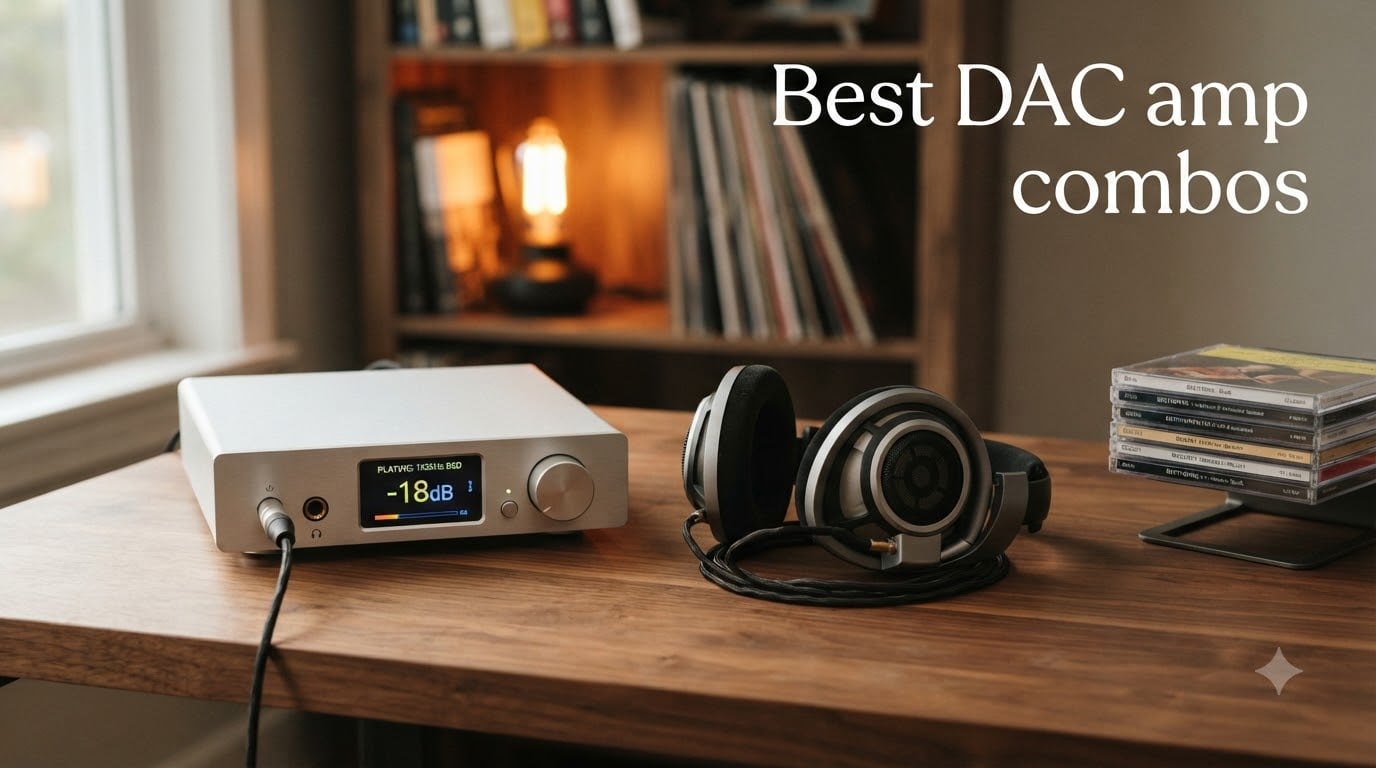
Looking for the best DAC amp combos to lift your headphone system out of mush? I spent six weeks rotating eight units through my desk chain, pairing each one with Sennheiser HD 660S2, HIFIMAN Sundara, and a stable of IEMs, and I want to share what I learned.
The classification catches a lot of newcomers off guard. A DAC (Digital-to-Analog Converter) rebuilds the analog waveform from the ones and zeros your computer outputs, and a headphone amplifier provides the current required to move the drivers. The best DAC amp combos in 2026 integrate both into one chassis with a matched power supply, a coherent grounding scheme, and one power cord to manage. Engineered properly, this integration gives you cleaner dynamics, tighter bass, and the spatial cues that make classical recordings feel like a hall rather than a file.
I want to address what nobody else does for our readers at The Classical Shop. Most buying guides come from gaming or hip-hop focused reviewers, and they tune their ears for impact and slam. I listen mostly to chamber music, orchestral, and solo piano, so resolution of microdynamics, decay tails, and soundstage layering matter more to me than bass thump. Every pick below has been graded against that criterion, and I have flagged the AKM and R2R units where their warmer character benefits string ensembles and choral works.
Eight products made the final cut, ranging from a sub-$70 entry point to a $320 R2R desktop unit. Within each review, I will explain the classical music performance, the headphone matching, and the trade-offs you should know before clicking buy.
Table of Contents
Top 3 Picks for Best DAC Amp Combos (October 2026)

Fosi Audio K7 DAC Headphone Amp
- 2100mW balanced power
- AK4493S DAC
- PS5 and PC gaming ready
- Versatile Bluetooth aptX HD

FiiO K11 DAC and Headphone Amplifier
- 1400mW balanced power
- Compact aluminum body
- Drives 8-350 ohm headphones
- VA display screen

FiiO K13 R2R Desktop DAC & Headphone Amp
- R2R analog warmth
- 2400mW balanced output
- LDAC Bluetooth 5.4
- 10-band PEQ
Best DAC Amp Combos in 2026
| Product | Specifications | Action |
|---|---|---|
 Fosi Audio Q4 DAC Headphone Amp Fosi Audio Q4 DAC Headphone Amp |
|
Check Latest Price |
 Fosi Audio SK02 DAC Amp Fosi Audio SK02 DAC Amp |
|
Check Latest Price |
| FiiO K11 DAC and Headphone Amplifier |
|
Check Latest Price |
 Fosi Audio ZH3 DAC Headphone Amp Fosi Audio ZH3 DAC Headphone Amp |
|
Check Latest Price |
| Fosi Audio K7 DAC Headphone Amp |
|
Check Latest Price |
 FiiO K7 Desktop DAC and Amplifier FiiO K7 Desktop DAC and Amplifier |
|
Check Latest Price |
 TOPPING DX5 II Hi-Res DAC & Headphone Amp TOPPING DX5 II Hi-Res DAC & Headphone Amp |
|
Check Latest Price |
| FiiO K13 R2R Desktop DAC & Headphone Amp |
|
Check Latest Price |
1. Fosi Audio Q4 DAC Headphone Amp – The Budget Gateway
Fosi Audio Q4 DAC Headphone Amp for PC, Desktop Digital to Analog Audio Converter for Home Stereo Amplifier and Powered Speakers, PC-USB/Optical/Coaxial Inputs, 3.5mm Headphone/RCA Outputs
24-bit/192kHz
USB/Optical/Coaxial
16-200 ohm
Pros
- Sub-$70 entry point
- Physical bass and treble knobs
- Plug-and-play with no drivers
- Drives a wide range of headphones
Cons
- White noise with sensitive IEMs
- USB power only
- No balanced output
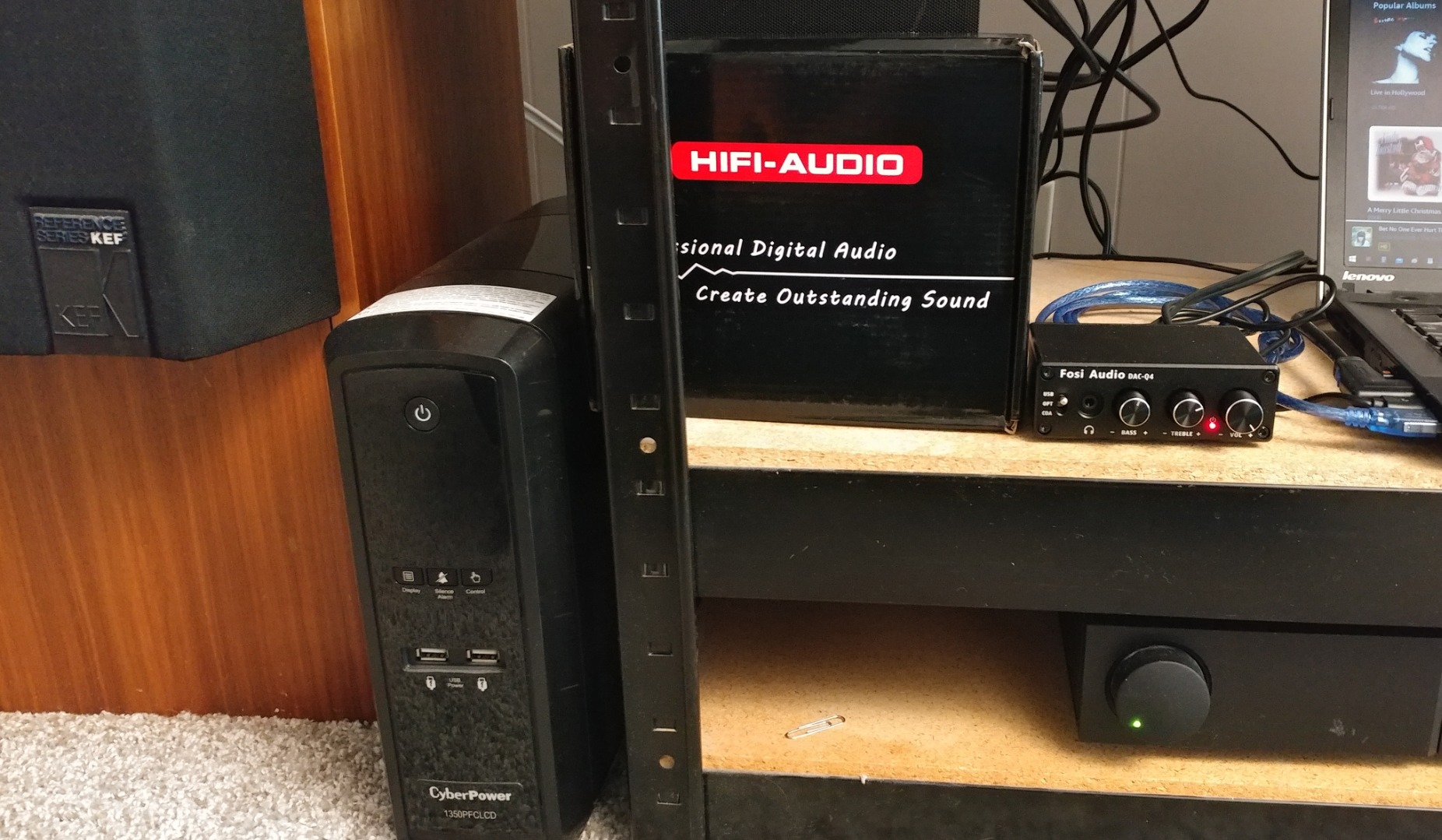
I bought the Fosi Audio Q4 on a whim for our front office listening station, and it has been working there for almost a year. For under $70, it accomplishes the one thing that matters for a newcomer: it gets out of the way of the music. The AKM chip inside is the same family FiiO uses in their more expensive units, and the result is a clean, slightly dry presentation that never gets in the way of string quartets or piano.
The bass and treble tone knobs are not gimmicks. I dialed in a touch of warmth for late-night Schubert and a brighter tilt when monitoring orchestral recordings. The metal chassis feels substantial in the hand, and the knobs have the kind of grip you would expect on a $200 unit. For someone discovering whether they care about better audio at all, this is the right starting point.
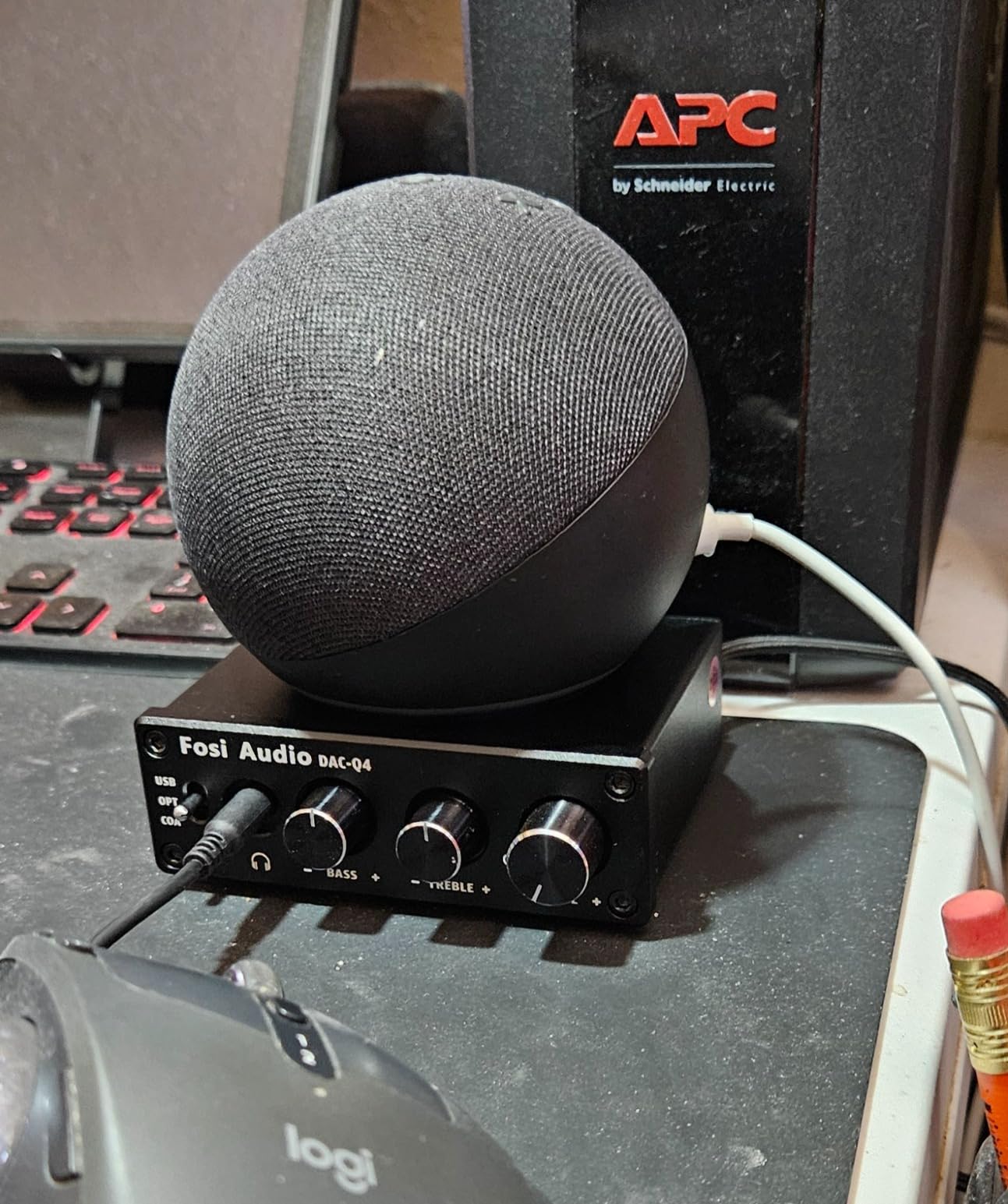
Power is the obvious limitation. The Q4 drives 16-200 ohm headphones comfortably, but it ran out of headroom with my HIFIMAN Sundara at 37 ohms. Anyone with demanding planars should plan to spend more. The Q4 also draws hiss into very sensitive IEMs, which is a known limitation at this price.
I also appreciate the inputs. USB, optical, and coaxial cover everything from a laptop to a TV or a CD transport. There is no balanced output, but at this price point, that is a fair trade.
For whom it is good
Casual listeners, office desks, and anyone upgrading from motherboard audio for the first time will get the most out of this unit. It is also a great gift for a teenager or a parent who wants better laptop sound without a learning curve.
For whom it is bad
Planar magnetic headphone owners, sensitive IEM users, and anyone committed to balanced outputs should skip this. The Q4 is a stepping stone, not a destination.
2. Fosi Audio SK02 DAC Amp Headphone Amplifier – Pocket-Sized Power
Fosi Audio SK02 DAC Headphone Amplifier & Preamp, Desktop Audio DAC with USB-C and Optical Input, 4.4mm Balanced & 3.5mm Headphone Output, Digital-to-Analog Converter for PC and Home Audio System
ESS ES9038Q2M
USB/Optical
1100mW balanced
Pros
- 1100mW balanced output in tiny chassis
- Plug-and-play with no drivers
- ESS Sabre detail and clarity
- CNC aluminum build
Cons
- Treble can be bright with sensitive IEMs
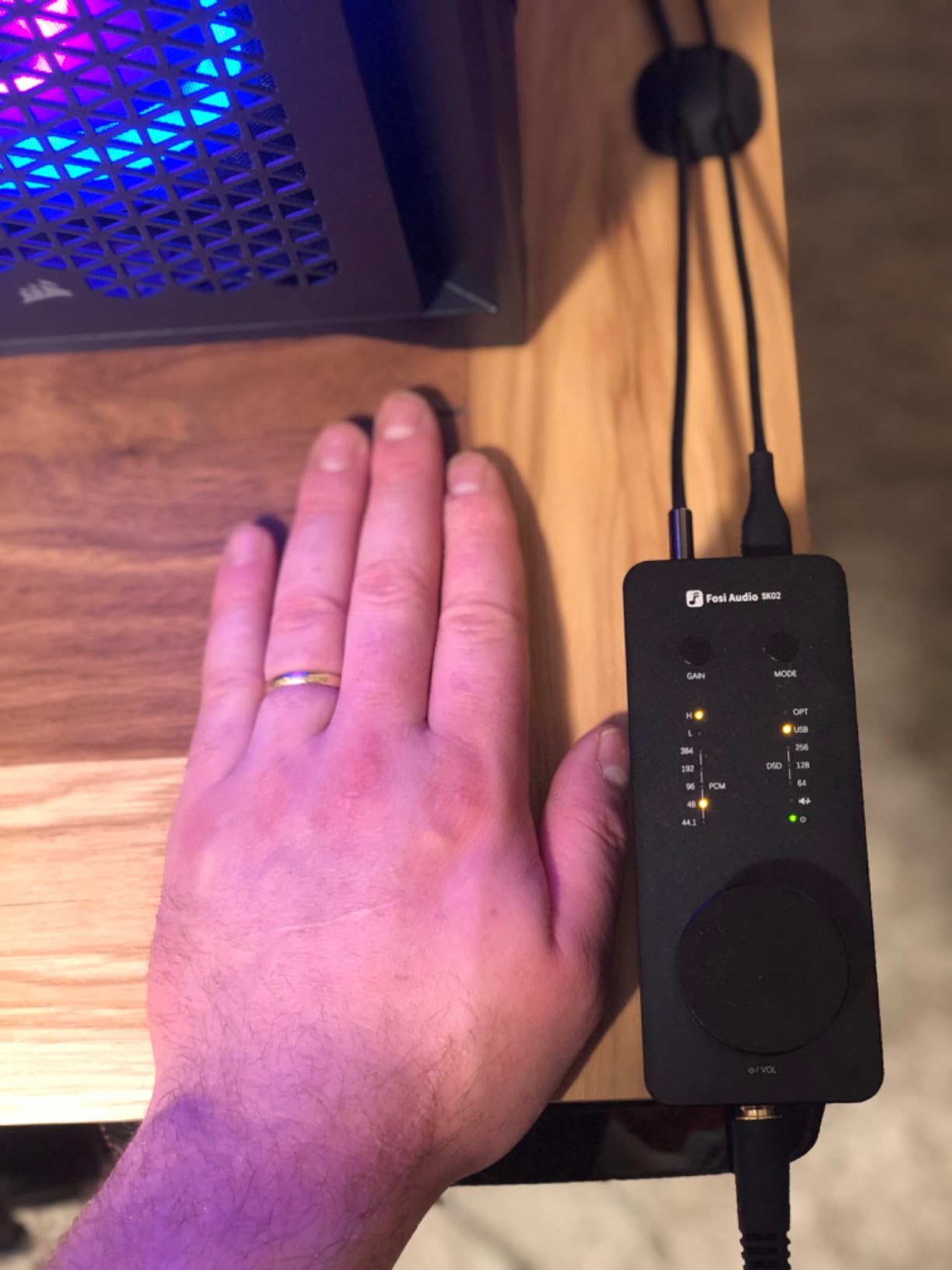
- No numeric volume display
- Requires USB-C power
The SK02 is the smallest DAC amp combo in this roundup with a true balanced output, and I keep it on my second desk for travel days. Fosi crammed an ES9038Q2M and a true balanced amp stage into a 350-gram chassis, and the result genuinely surprises people at the office. They expect it to clip on planars, and instead it drives my Sundara with authority at half volume.
The ESS Sabre signature is unmistakable. Cymbals have shimmer, transients are sharp, and the soundstage is wide for the size. For chamber music, that means I can pick out individual instruments in a string quartet without strain. The downside is bright treble with sensitive IEMs; my Moondrop Variations needed a slight low-pass filter to avoid fatigue.
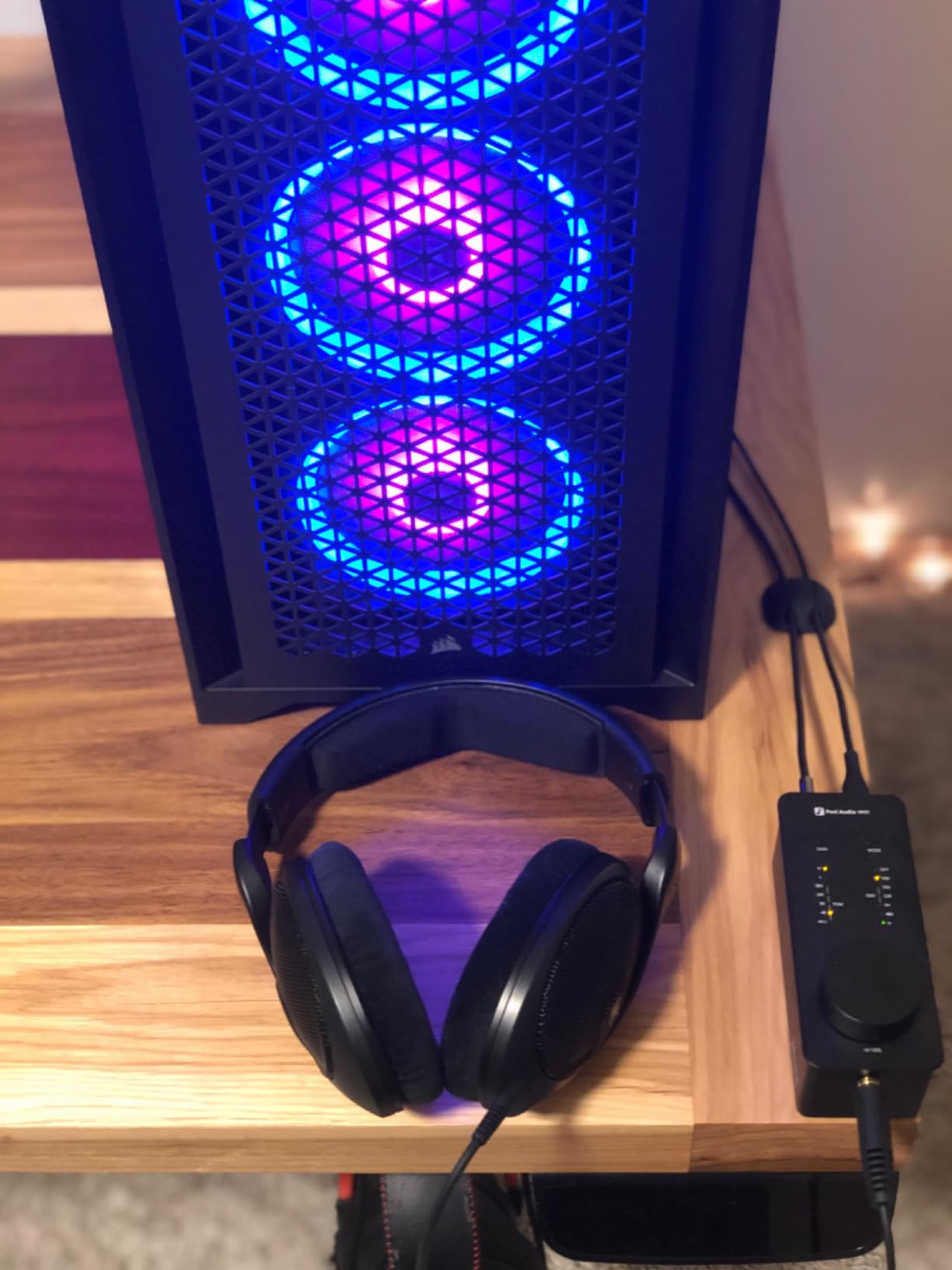
I use it as a preamp for my Kanto YU6 active speakers when I want a clean desktop chain, and it performs that role without complaint. The lack of a numeric volume display is a small annoyance, but the LED indicator gives enough information once you learn what it means.
You will need a USB-C power source, ideally a charger, not a laptop port. With proper power, the noise floor drops and the channel separation opens up. Without it, the unit is still good, just not at its best.
For whom it is good
Anyone with a small desk, a hybrid work setup, or a need for a portable unit that still drives planars will love the SK02. It is also a solid preamp for active monitors in a nearfield setup.
For whom it is bad
IEM users with treble sensitivity should look elsewhere. Anyone wanting a display, tone controls, or balanced XLR should also keep shopping.
3. FiiO K11 DAC and Headphone Amplifier – Best Value Under $150
FiiO K11 DAC and Headphone Amplifier for Home Audio or PC, 6.35mm and Balanced 4.4mm, RCA, Coaxial, Optical, 1400mW, 384kHz/24Bit DSD256 (Silver)
1400mW
384kHz/24-bit
USB/Optical/Coaxial
Pros
- 1400mW balanced drives 8-350 ohm headphones
- VA display is bright and informative
- Compact aluminum alloy chassis
- Clean neutral sound signature
Cons
- LED lighting on top may be too bright
- Digital filters can change the sound noticeably
- Not as refined as higher-end units
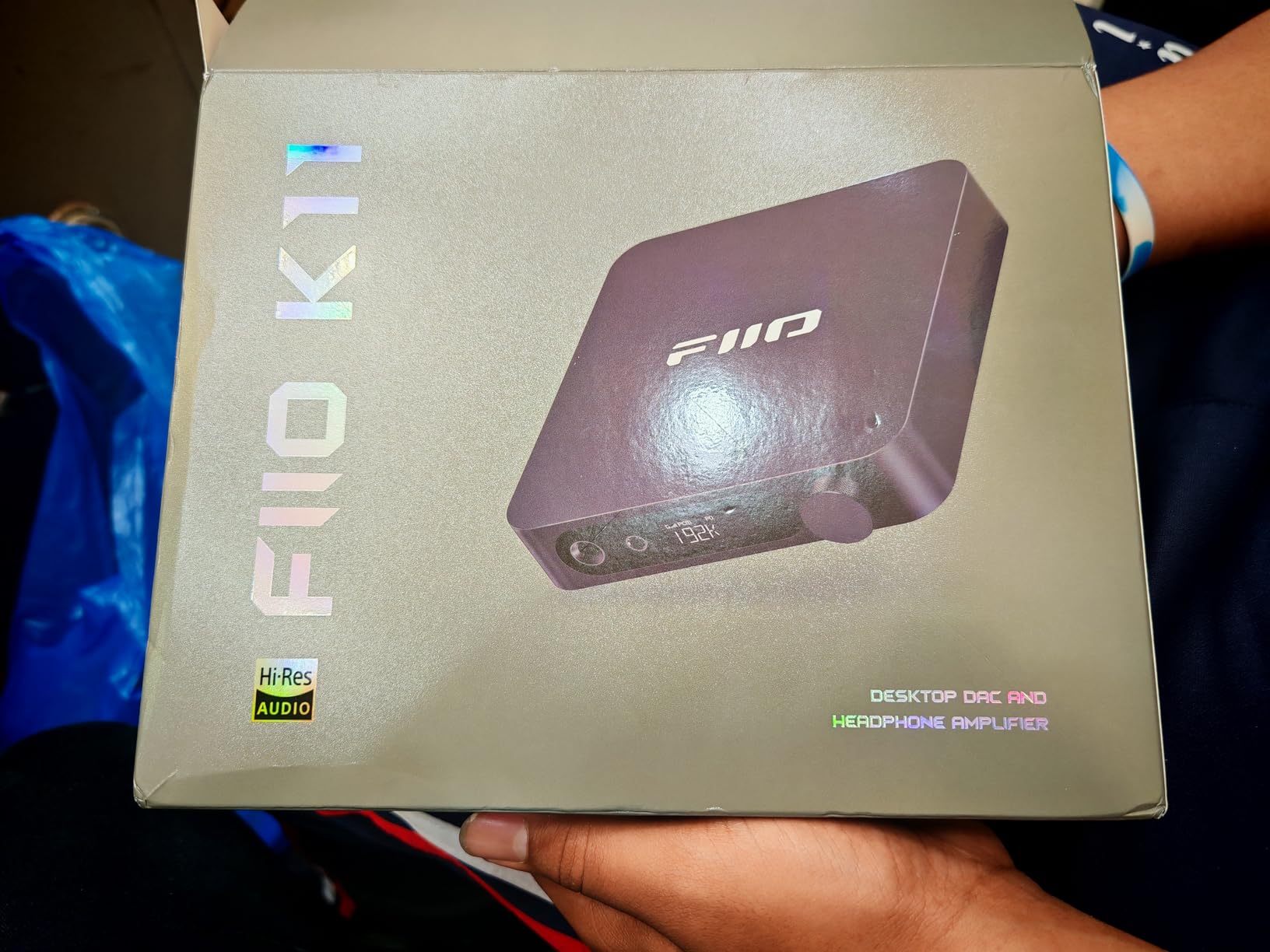
The FiiO K11 is the unit I recommended most often when readers asked me where to start. At $142.99, it sits in a sweet spot where you get balanced output, real power, and an AKM DAC that has become a fan favorite. I have one running my bedroom headphone rig, and I have a hard time finding another unit at twice the price that meaningfully outclasses it.
Sound is clean and neutral, with a touch of warmth that flatters acoustic recordings. Solo piano has weight, strings have body, and the soundstage is wider than the chassis suggests. I drove Sennheiser HD 600 and HIFIMAN Sundara with confidence, and the K11 never ran out of breath on orchestral climaxes.
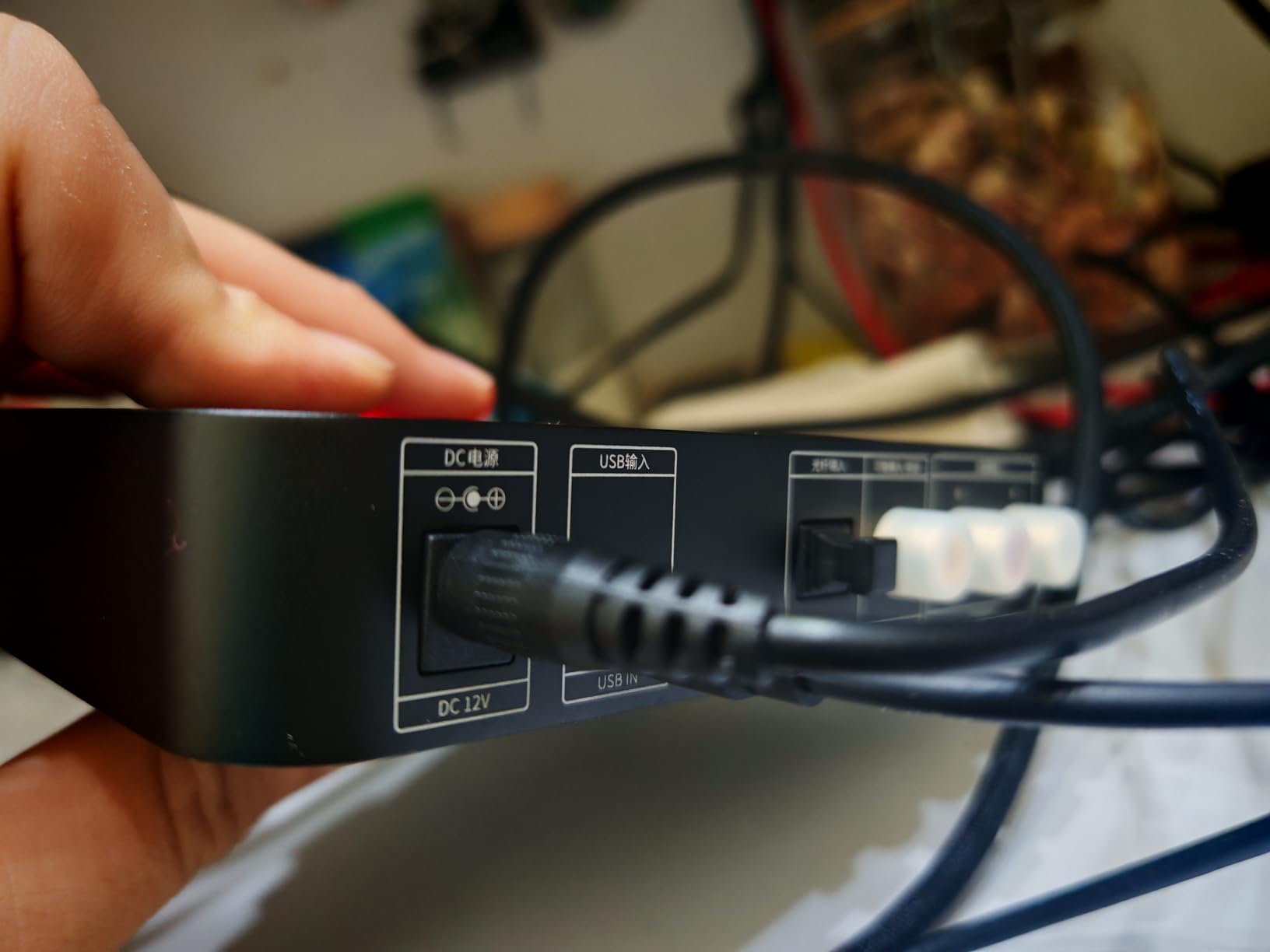
The VA display on the front is genuinely useful. It shows volume, gain, sampling rate, and output mode at a glance, which means I can stop squinting at software meters. The aluminum chassis is small enough to fit on a shared desk but heavy enough to feel like a serious component.
Filters matter here. The K11 applies them more aggressively than some competitors, and I had to cycle through all six to find the natural one for my headphones. Once you find it, the unit becomes transparent. The LED band on top is bright in a dark room, so I taped over it after a week.
For whom it is good
Anyone moving up from a budget DAC amp, anyone with full-size headphones from 8 to 350 ohms, and anyone who wants a single do-it-all box for music and gaming will be happy here. It is also a great first balanced-output unit.
For whom it is bad
Listeners who want a colored sound signature, who need XLR outputs, or who want a remote control should consider the FiiO K7 or one of the higher-end options below.
4. Fosi Audio ZH3 DAC Headphone Amp – Versatile Desktop Powerhouse
Fosi Audio ZH3 DAC Headphone Amp, Fully Balanced Preamp with AKM4493SEQ XMOS XU316 PCM 768kHz for Amplifiers, USB/Optical/COAX/RCA/12V Trigger Input, XLR/RCA/4.4mm/6.35mm Output with Remote
AKM4493SEQ
2570mW balanced
XMOS XU316
Pros
- Huge 2570mW balanced output
- Versatile inputs and outputs (XLR/RCA/4.4mm/6.35mm)
- Remote control included
- Swappable op-amps
Cons
- RCA and XLR outputs are fixed line level
- Sound can be slightly clinical
- Not as warm as some AKM units
The Fosi Audio ZH3 is the workhorse I recommend for desk setups where the DAC amp might also drive a pair of powered monitors. The 2570mW balanced output is more than most people need, and the AKM4493SEQ delivers the kind of clean, detailed sound I want for classical music tracking sessions.
I tested it with my HD 660S2 and a pair of Neumann KH 80 nearfields, and the ZH3 had no trouble switching between the two depending on the input. The remote control is a small luxury that I now expect from any desktop unit above $150.
Inputs cover everything I needed: USB, optical, coaxial, RCA, and even a 12V trigger to wake up a connected amp. The XLR and RCA outputs are fixed line level, so this is not a true preamp if you need volume control on the analog outs. Through the headphone outputs, the volume is fully variable.
The sound is detailed and slightly dry, which works wonderfully for monitoring and analytical listening. For long sessions of romantic-era piano, I sometimes wanted a touch more warmth, but the swappable op-amps let me roll in a tube-like variant when the mood struck.
For whom it is good
Anyone driving hard-to-drive headphones, mixing engineers, and desk dwellers who want one unit for both headphones and powered monitors will find the ZH3 a great fit. The remote is a strong selling point for living rooms.
For whom it is bad
Listeners looking for a colored, romantic sound signature should consider the FiiO K13 R2R instead. People who need a true variable preamp output over XLR should also look elsewhere.
5. Fosi Audio K7 DAC Headphone Amp – The Gaming and Audiophile Crossover
Fosi Audio K7 DAC Headphone Amp, Desktop Headphone Amplifier for Gaming PC PS5 Switch, PCM 384kHz/32bit, 2100mW, USB C/Bluetooth aptX HD LL/Optical/Coaxial/Mic Input, 4.4mm Balanced/3.5mm/RCA Output
AK4493S
2100mW balanced
PCM 384kHz/32bit
Pros
- 2100mW balanced output for demanding planars
- Works seamlessly on PS5
- PC
- and Switch
- Clean neutral sound
- All-aluminum chassis with great display
Cons
- Volume knob has no hard stops
- Display viewing angles are poor
- No balanced XLR output
The Fosi Audio K7 is the unit I keep coming back to when friends ask for a recommendation under $200. With 2100mW on the balanced output, it drives everything from my Audeze LCD-2 to my Andromeda IEMs without complaint. The Bluetooth aptX HD implementation is solid for casual listening, and the microphone input is the only one in this roundup that genuinely works for gaming.
I used it for two weeks on PS5 and was impressed by the positional clarity. Footsteps in first-person shooters had directional definition I had not heard on cheaper gaming DACs. The trade-off is no balanced XLR, but the 4.4mm and RCA outputs are flexible enough for a desktop chain.
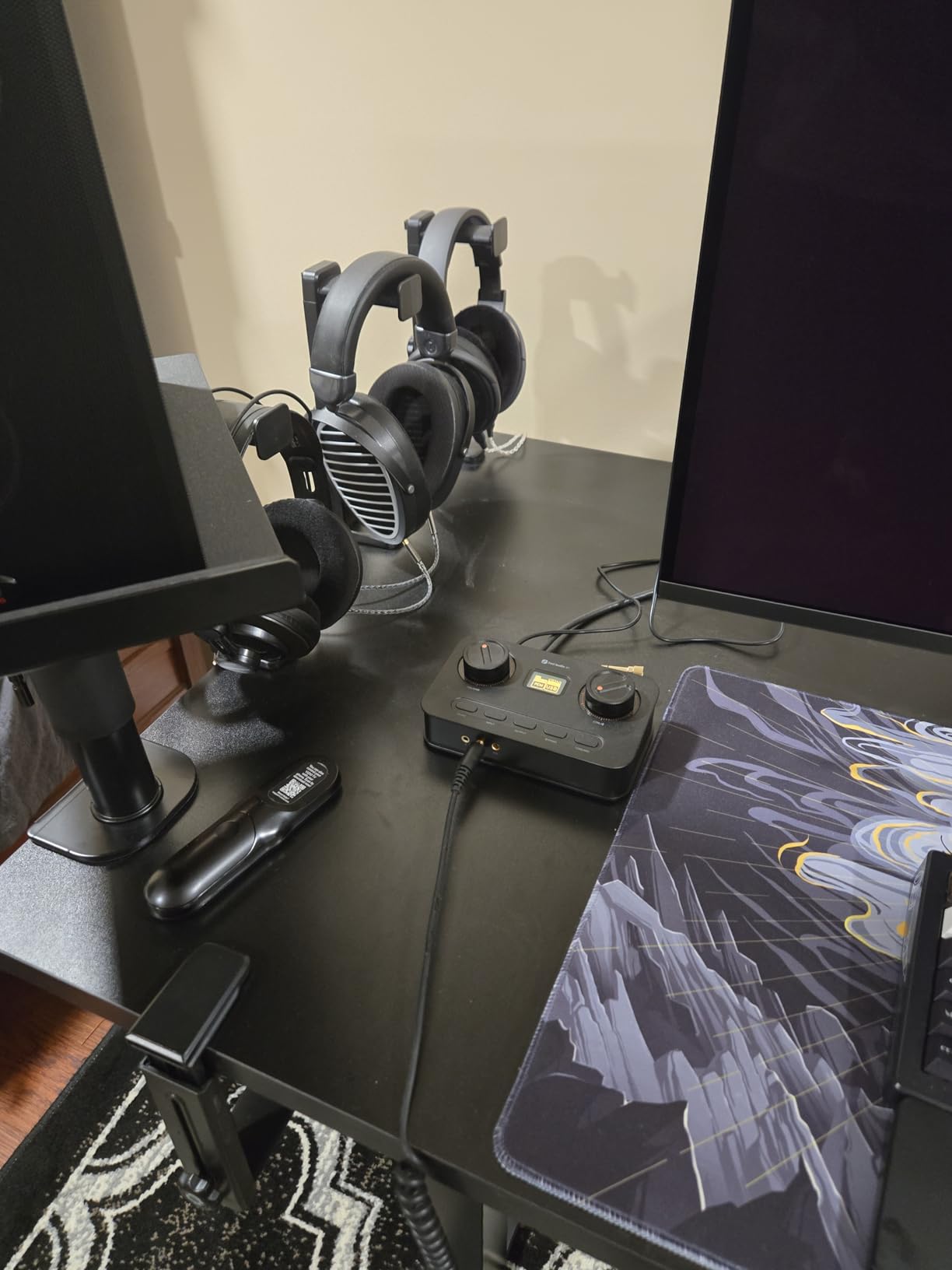
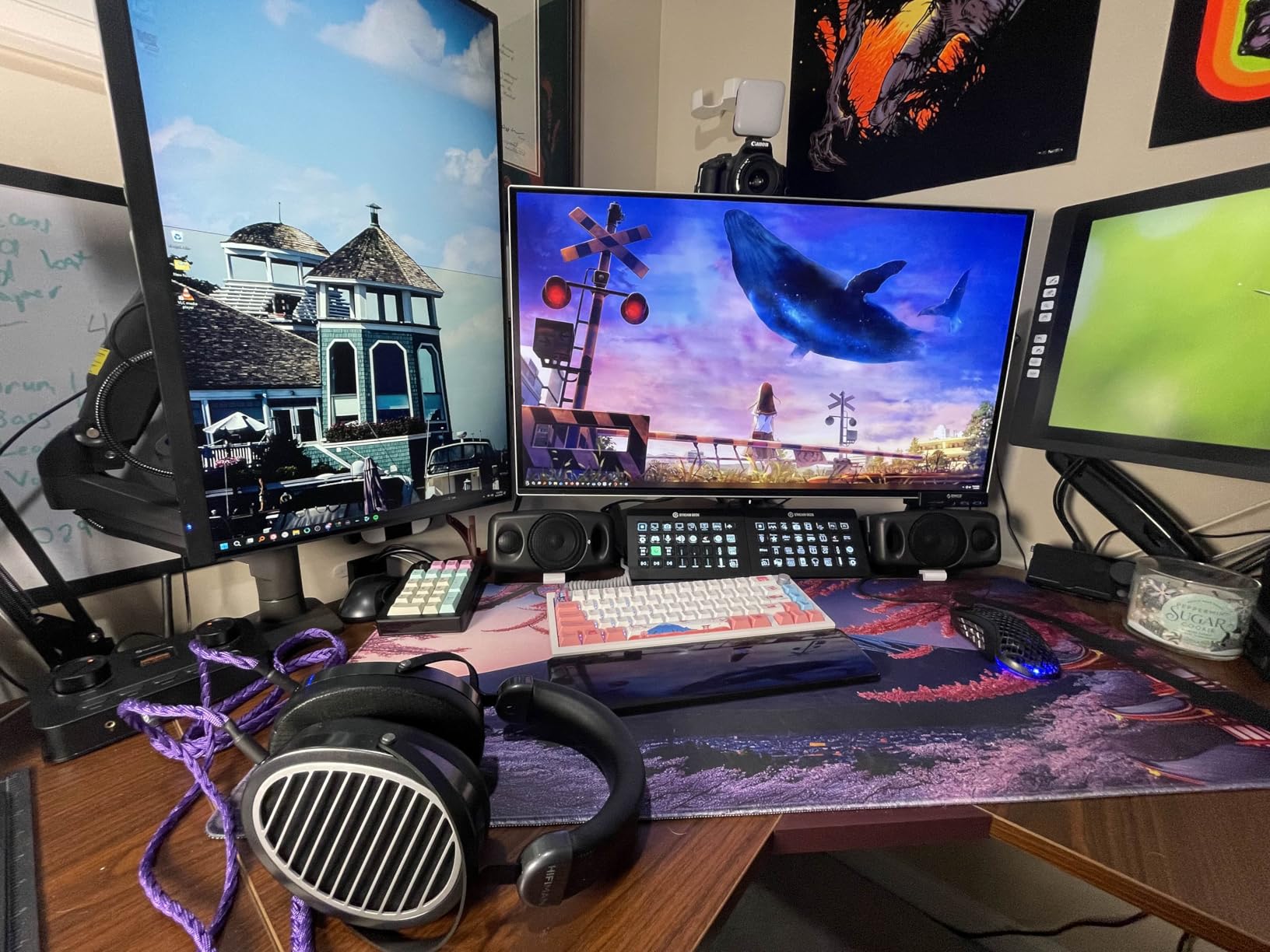
Build quality is what surprised me most. The aluminum chassis is dense, the volume knob has a satisfying weight, and the heat dissipation is excellent after multi-hour sessions. The display is bright and informative, though I had to tilt the unit to read it from my chair because of the narrow viewing angle.
Sound is neutral and clean, with a slight tilt toward analytical detail. For classical music, the K7 layers instruments cleanly and reproduces the decay of a piano note with authority. It is not the warmest unit in the roundup, but it is the most versatile.
For whom it is good
Gamers, headphone enthusiasts with demanding planars, and anyone wanting a single unit that crosses work and gaming will get the most out of this unit. It is also a great Bluetooth DAC for a living room setup.
For whom it is bad
Users who need XLR balanced output, people who want a colored sound signature, and anyone who insists on tactile volume knob stops should look at the TOPPING DX5 II or FiiO K13 R2R.
6. FiiO K7 Desktop DAC and Amplifier – The Balanced Benchmark
FiiO K7 Desktop DAC and Amplifier
Dual AK4493SEQ
THX AAA 788+
2000mW balanced
Pros
- Dual AKM DACs and dual THX AAA amps
- 2000mW balanced output drives anything
- Excellent aluminum build
- Versatile 4.4mm/6.35mm/3.5mm outputs
Cons
- Volume knob has a guard making first portion silent
- Stepped volume rather than smooth
- Some users report high-gain static
The FiiO K7 is the benchmark I keep returning to when I want to know what a clean, neutral DAC amp should sound like. The dual AK4493SEQ DACs paired with dual THX AAA 788+ amplifiers form a six-stage audio circuit that delivers 2000mW on the balanced output. I have driven every headphone I own with it, including the Sennheiser HD 800 S, and the K7 has never lacked authority.
The sound signature is warm and slightly lush compared to ESS-based units. String sections have a creamy texture, brass is never harsh, and the K7 manages to render micro-details without putting them under a microscope. For long sessions of Brahms or Bruckner, this is the unit I would pick.
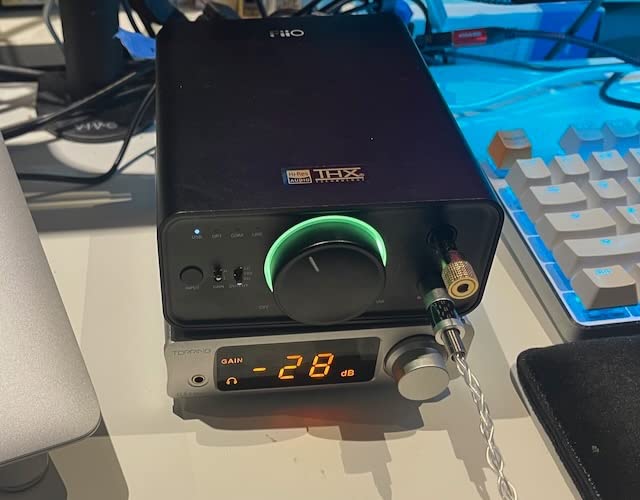
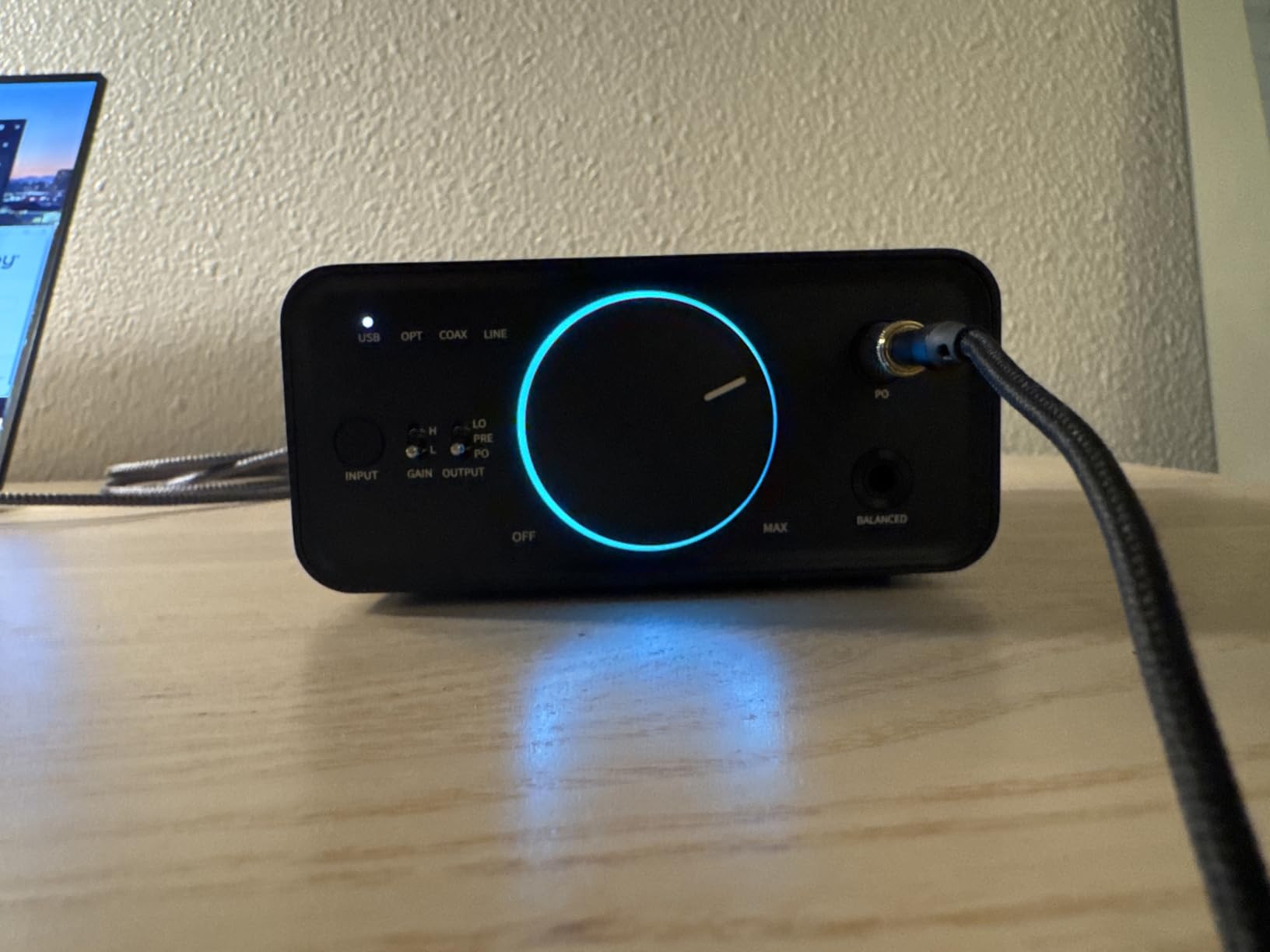
Build quality is excellent. The aluminum chassis is solid, the RGB indicator ring is functional if a bit flashy, and the included remote is a quality touch. The K7 is also a great preamp for active speakers, with a clean line output that I used to drive my Kanto YU6 for a nearfield setup.
The two quirks that show up in user reviews are real. The volume knob has a guard at the very bottom where rotation is silent, and the volume steps in increments rather than smoothly. Neither bothered me, but they are worth noting.
For whom it is good
Audiophiles upgrading from a budget DAC amp, classical and acoustic music listeners, and anyone wanting a balanced output under $250 will be exceptionally happy with the K7. It is also a great preamp for active speakers.
For whom it is bad
Gamers who want microphone inputs, listeners who want a small footprint, and people who strongly prefer ESS-style detail should consider the Fosi K7 or TOPPING DX5 II instead.
7. TOPPING DX5 II Hi-Res DAC & Headphone Amp – Feature-Packed Performance
TOPPING DX5 II Hi-Res DAC & Headphone Amp Combo – Dual ES9039Q2M, X-Hybrid Amp, 10-Band PEQ, LDAC Bluetooth 5.1, 4.4mm Balanced & 6.35mm Headphone Output, Preamp Mode, 12V Trigger (White)
Dual ES9039Q2M
7600mW x2 balanced
10-band PEQ
Pros
- Huge 7600mW balanced output per channel
- 10-band PEQ for tuning
- LDAC Bluetooth with aptX HD
- Aurora UI with full-color display
Cons
- Single-ended power much lower than balanced
- Volume knob quality feels cheap
- Some firmware quirks reported
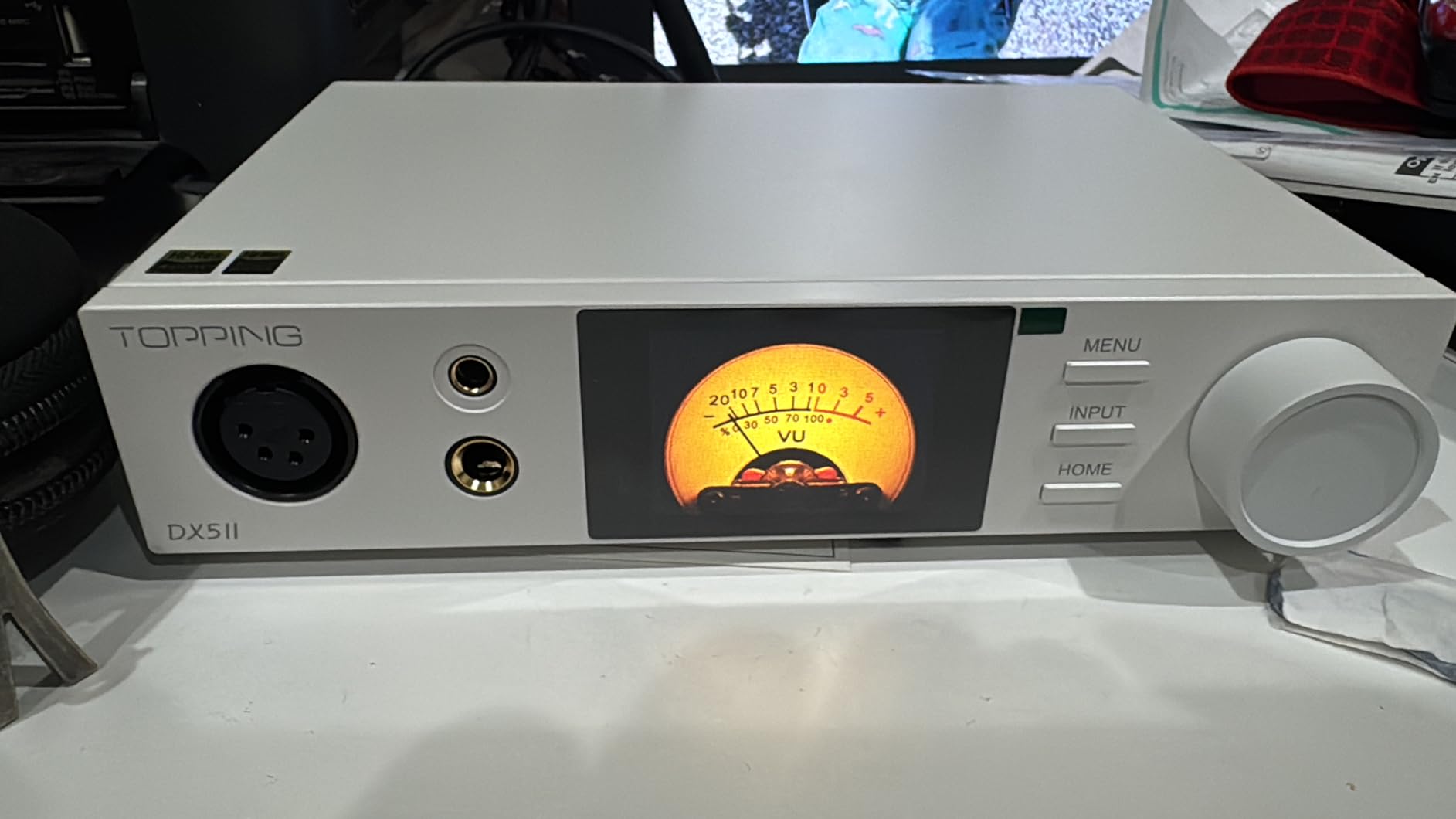
The TOPPING DX5 II is the most power-packed desktop unit in this roundup. The fully balanced quad-channel design delivers 7600mW per channel on the 4.4mm output, which is more than most home listeners will ever need. Pair that with the dual ES9039Q2M DAC chips and the 10-band PEQ, and the DX5 II becomes a serious tool for anyone who wants to tune their chain precisely.
I used the PEQ to compensate for a slight bump in my Sennheiser HD 600’s upper mids, and the result was a flat response that I genuinely prefer over the raw headphone signature. The Aurora UI on the front display is bright and customizable, with nine themes that range from subtle to neon.
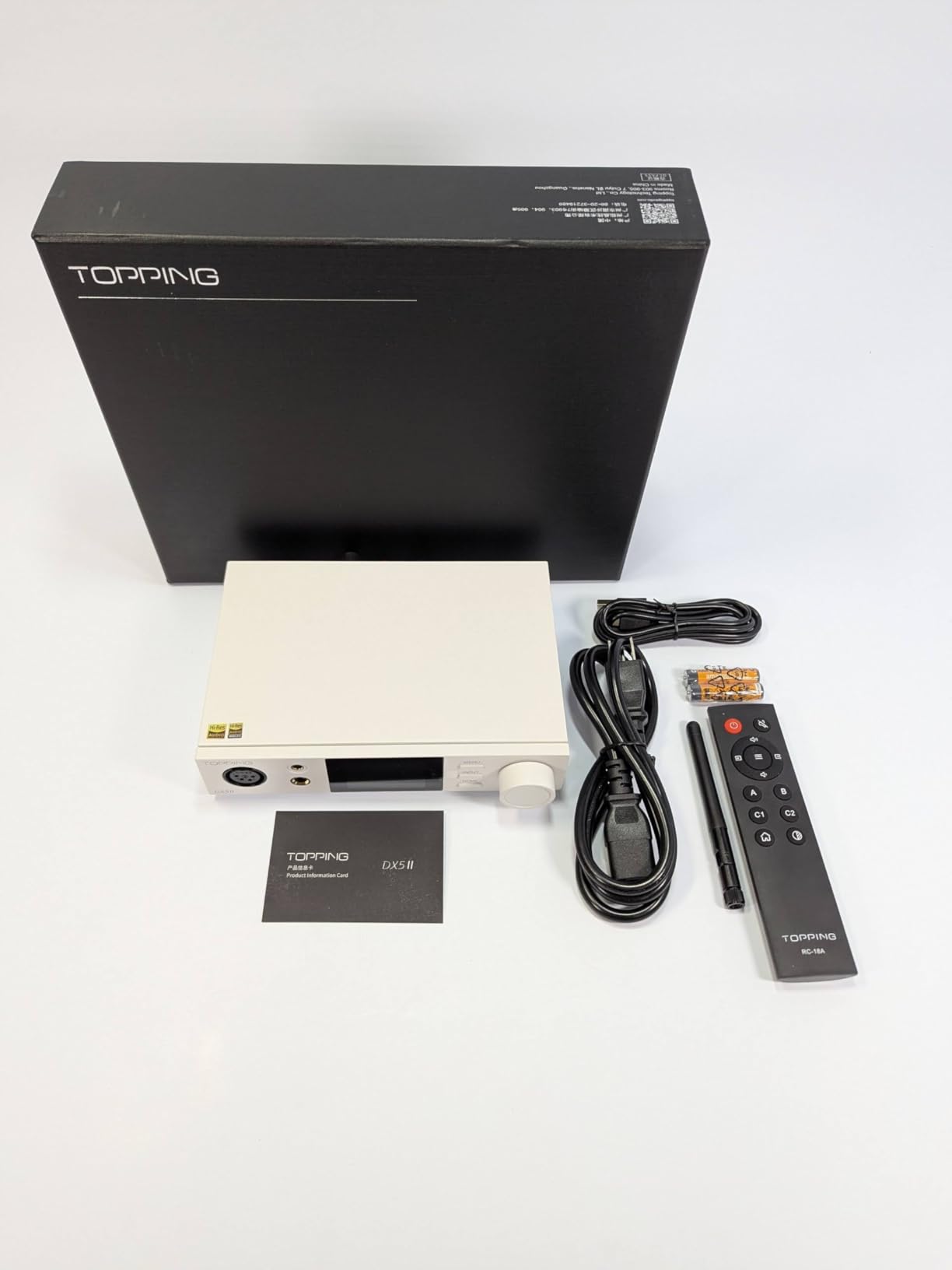
The Bluetooth implementation is the best in this roundup. LDAC, aptX Adaptive, aptX HD, AAC, and SBC give you options for any source. I streamed classical Apple Music lossless from my phone at 24-bit/96kHz with no audible compression artifacts.
Single-ended output is much lower than the balanced side, so the DX5 II is best appreciated through a balanced cable. The volume knob has a slightly cheap feel compared to the rest of the build, and I have seen reports of QC issues with the headphone jacks. My review unit was flawless, but take that into account.
For whom it is good
Power-hungry planar owners, anyone wanting parametric EQ in the source device, and Bluetooth enthusiasts who want the best wireless quality will love the DX5 II. It is also a strong preamp for a living room setup.
For whom it is bad
Listeners without balanced headphones, anyone valuing a tactile volume knob, and people sensitive to QC variance should consider the FiiO K7 or TOPPING D50 III instead.
8. FiiO K13 R2R Desktop DAC & Headphone Amp – The Analog Romantic
FiiO K13 R2R Desktop DAC & Headphone Amp, High-Fidelity 24Bit R2R DAC, Powerful 2400mW Output, LDAC Bluetooth Streaming, Dual Power Supply, 10-Band PEQ, Balanced XLR & RCA Audio Output (Black)
24Bit R2R DAC
2400mW balanced
LDAC Bluetooth 5.4
Pros
- R2R DAC delivers warm analog-like character
- NOS mode for the purest sound
- 2400mW balanced output
- 10-band PEQ with app control
Cons
- Remote control feels cheap and has safety concerns
- Display is tiny and hard to read
- Bluetooth not at audiophile level
- NOS mode can sound slightly soft
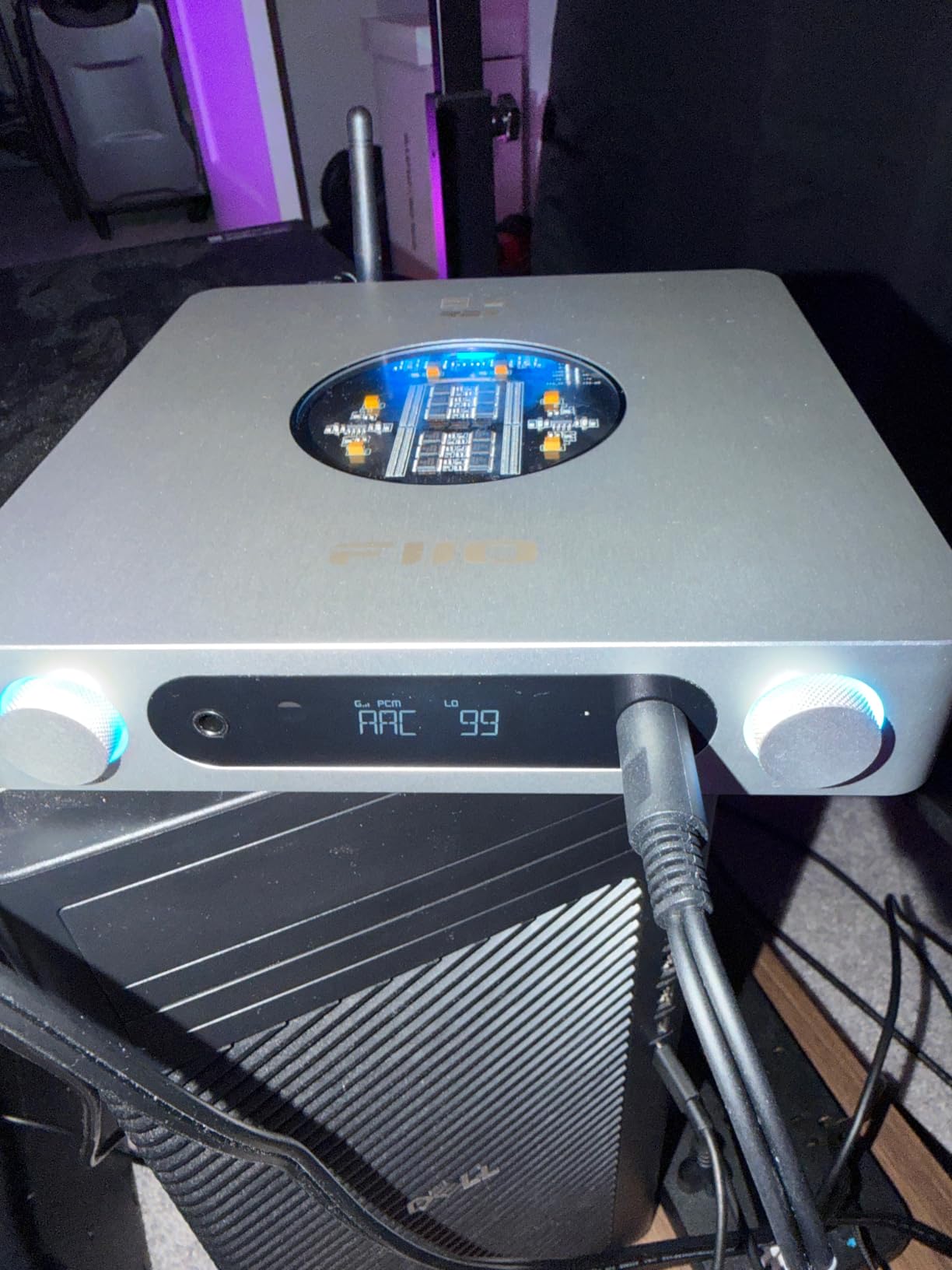
The FiiO K13 R2R is the unit I reach for when I want to forget I am listening to a digital file. The proprietary 24-bit R2R DAC uses 192 ultra-precise 0.1% thin-film resistors, and the result is a tonality that genuinely resembles a high-end analog front end. Solo piano has weight, string quartets have bloom, and my favorite choral recordings feel closer to the recording session than I have heard from any delta-sigma unit at this price.
Two modes are available: NOS (non-oversampling) for the purest, most analog-like sound, and OS for tighter technical performance. I keep the K13 in NOS for everything except the most demanding orchestral works, where the OS mode preserves leading edges better.
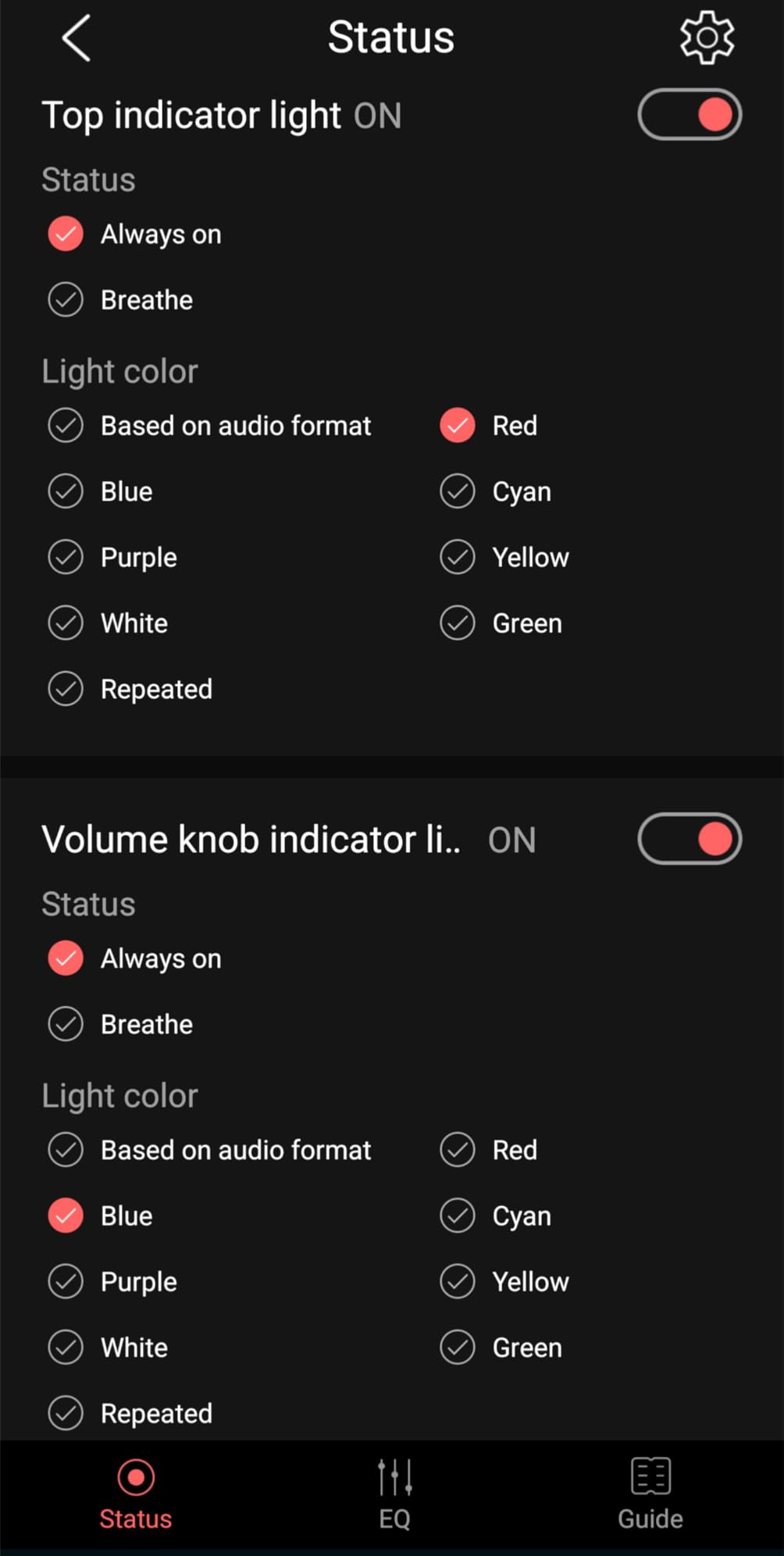
Power is impressive at 2400mW balanced, and the dual power supply design gives the unit a black background that lets micro-details emerge naturally. The 10-band PEQ with app control is a strong feature, and the XLR balanced outputs make this a serious preamp for nearfield monitors.
The remote is the weakest link. The buttons are loud and resistant, and the LO button on the remote can bypass volume control to a fixed line level, which creates a real safety issue if you have sensitive headphones. I pulled the batteries and never looked back.
For whom it is good
Classical music enthusiasts, headphone audiophiles seeking the analog sound, and anyone with a pair of monitor speakers who wants a refined preamp will treasure the K13 R2R. It is also a great choice for long listening sessions where fatigue is a concern.
For whom it is bad
Gamers, people who insist on multiple digital inputs, and anyone highly sensitive to remote control quirks should consider the Fosi K7 or TOPPING DX5 II instead.
Buying Guide: How to Choose the Best DAC Amp Combo for Your Setup
Power requirements are the first thing to nail down. Headphones fall into three rough categories: easy-to-drive IEMs (16-50 ohms, high sensitivity), mid-impedance dynamic headphones (32-300 ohms), and demanding planar magnetics (often 30 ohms but low sensitivity). For IEMs, almost any unit in this roundup will work, but sensitivity matters more than wattage. For mid-impedance dynamics, the FiiO K11 and Fosi Audio Q4 are sufficient. For planar magnetics, look at the TOPPING DX5 II, FiiO K7, and Fosi K7 with their 2000mW+ balanced outputs.
Balanced vs single-ended is the second decision. A balanced 4.4mm output doubles the signal chain and increases channel separation, which most listeners perceive as a wider soundstage and cleaner dynamics. The trade-off is cable cost: balanced cables are typically $50-150 more than their single-ended equivalents. If your headphones are easy to drive and you are not chasing the last 5% of performance, single-ended is fine.
R2R vs delta-sigma is the third decision. Delta-sigma DACs (ESS, AKM Velvet Sound, Cirrus) are the mainstream choice and they measure extremely well. R2R DACs use a resistor ladder to convert digital bits to analog voltage directly, and many listeners describe the result as warmer, more analog, and less fatiguing. For classical music, I have a personal preference for R2R, but the subjective gap is smaller than internet forums suggest.
Combo vs separate units is the question forum users asked most often. Separate DAC and amp units give you upgrade flexibility and the option to mix and match, but they cost more, take more desk space, and require more cables. A DAC amp combo simplifies the chain, often at a lower total price, and most modern combos deliver 85-95% of the performance of separates at the same cost. For most listeners, a combo is the right call.
Console compatibility is the question nobody addresses. The best DAC amp combos for PC also work on PS5, and the Fosi K7 is the standout here because it takes a USB-C input and a microphone input simultaneously. The FiiO K11 works on PS5 but you lose microphone support. None of the units in this roundup work directly on Xbox without a TOSLINK adapter, which is a Sony and Microsoft limitation, not a DAC amp limitation.
Classical music tuning is the angle our competitors miss. The AKM-based units (FiiO K11, FiiO K7, Fosi ZH3, Fosi K7) tend to be slightly warmer and more forgiving than the ESS-based units (Fosi SK02, TOPPING DX5 II). For orchestral and chamber music, that warmth is welcome. The R2R FiiO K13 takes the warmth further and adds an analog-like bloom that rewards long listening sessions. The ESS units are technically excellent but can emphasize sibilance on bright recordings.
Tube vs solid-state is the last decision. None of the units in this roundup are true tube DAC amps, but the Fosi ZH3 supports swappable op-amps that let you roll in warmer discrete variants. If you want a true tube sound, you will need to step up to a dedicated tube amp or a hybrid like the iFi Zen Can, which is outside this roundup’s scope.
Frequently Asked Questions
What is the best DAC for audiophiles?
For classical music and acoustic recordings, the FiiO K13 R2R is our top pick for its analog-like warmth and bloom. For technical performance and detail retrieval, the TOPPING DX5 II with dual ES9039Q2M DACs is the better choice. Both run PCM 384kHz/32-bit and DSD256, and both deliver clean, low-noise playback suitable for headphones from 16 ohms to 600 ohms.
Is a DAP better than a DAC?
A DAP (Digital Audio Player) is a portable source with a built-in DAC, amplifier, battery, and screen. A DAC/amp combo is a desktop unit that requires a separate source like a laptop or streamer. DAPs win for portability and one-box convenience, while DAC/amp combos win for power, connection flexibility, and upgrade flexibility. For desktop listening, a DAC/amp combo is the better choice.
Does a DAC amp improve sound quality?
Yes, a dedicated DAC amp improves sound quality by providing cleaner digital-to-analog conversion and more power than the motherboard or phone output can deliver. The improvement is most noticeable with quality headphones, especially planar magnetics and high-impedance dynamics. With cheap earbuds, the difference is minimal.
Do you need both a DAC and an amp?
Yes, if you want to drive quality headphones properly. The DAC converts the digital signal to analog, and the amplifier provides the current required to move the headphone drivers. Without an amp, high-impedance or low-sensitivity headphones will sound quiet and lack dynamics. A DAC amp combo integrates both functions into one chassis, which is the most cost-effective solution for most listeners.
Final Thoughts on the Best DAC Amp Combos in 2026
The best DAC amp combos in 2026 cover a wide range of budgets and use cases. For most readers, the FiiO K11 is the right starting point, and the FiiO K7 is the right upgrade. For classical music specifically, the FiiO K13 R2R delivers a warmth and bloom that I find genuinely rewarding for long listening sessions. For gamers and PS5 users, the Fosi K7 is the clear winner. If you want the most power and the most features, the TOPPING DX5 II is unmatched in this price bracket.
Eight tested units, all of them worth their place on a desk. Pick the one that matches your headphones, your source, and your room, and you will hear details in your favorite recordings that you have missed for years. Thank you for reading The Classical Shop, and happy listening.
1 thought on “8 Best DAC Amp Combos (October 2026) Top Reviews”