

If you have been hunting for the best FiiO DAC amp combos for headphones, you are in the right place. I have spent the last several months rotating ten FiiO units through my desk setup, my phone, and my travel bag to find out which ones truly deserve the title. This guide ranks every current FiiO DAC amp combo worth buying in 2026, from the flagship K13 R2R down to the pocketable KA11 dongle.
A FiiO DAC amp combo is a single unit that combines a digital-to-analog converter (DAC) and a headphone amplifier, providing cleaner audio decoding and higher output power than phones, laptops, or built-in sound cards. FiiO has been refining this exact formula for over a decade, and the brand has earned a reputation for delivering measurable sound quality gains at prices that do not require a second mortgage. If you are new to the category, our full DAC amp combo breakdown explains the architecture in more depth.
What follows is a FiiO-only deep dive. I avoided mixing in Topping, SMSL, or iFi units on purpose, because most readers searching for a FiiO combo want to stay inside the FiiO ecosystem. The K-series desktops deliver the bulk of the power, the BTR-series handles portable Bluetooth duty, and the KA-series dongles cover the truly on-the-go crowd. Every pick here was tested with at least three headphone pairings, and every spec comes straight from the product data.
Table of Contents
Quick Answer: What Is the Best FiiO DAC Amp Combo for Headphones?
The best FiiO DAC amp combo for headphones in 2026 is the FiiO K13 R2R, a desktop unit with FiiO’s self-developed 24-bit R2R DAC architecture, 2400mW of balanced output power, and a 10-band PEQ for tuning. If your budget caps out closer to entry-level territory, the FiiO K11 delivers balanced 4.4mm output, 1400mW of power, and a clean delta-sigma sound for roughly half the cost. For portable use, the FiiO BTR17 brings dual ES9069Q DACs, Bluetooth 5.4 with aptX Lossless, and desktop-mode output that rivals full-size amps.
Top 3 FiiO DAC Amp Combos at a Glance (September 2026)


FiiO K11 DAC and Headphone Amplifier
- 1400mW output
- 4.4mm balanced
- VA display
- USB coaxial optical inputs

Best FiiO DAC Amp Combos for Headphones in 2026
| Product | Specifications | Action |
|---|---|---|
| FiiO K13 R2R Desktop DAC and Headphone Amp |
|
Check Latest Price |
| FiiO K11 DAC and Headphone Amplifier |
|
Check Latest Price |
 FiiO K5Pro ESS Amplifier and DAC FiiO K5Pro ESS Amplifier and DAC |
|
Check Latest Price |
 FiiO BTR7 Bluetooth Headphone Amp FiiO BTR7 Bluetooth Headphone Amp |
|
Check Latest Price |
 FiiO KA17 USB DAC Audio Decoder FiiO KA17 USB DAC Audio Decoder |
|
Check Latest Price |
| FiiO BTR17 Bluetooth DAC and Amp |
|
Check Latest Price |
 FiiO KA15 Portable DAC and Headphone Amp FiiO KA15 Portable DAC and Headphone Amp |
|
Check Latest Price |
 FiiO K7 Desktop DAC and Amplifier FiiO K7 Desktop DAC and Amplifier |
|
Check Latest Price |
 FiiO BTR13 Bluetooth Headphone Amplifier FiiO BTR13 Bluetooth Headphone Amplifier |
|
Check Latest Price |
 FiiO KA11 USB-C to 3.5mm Dongle DAC FiiO KA11 USB-C to 3.5mm Dongle DAC |
|
Check Latest Price |
1. FiiO K13 R2R Desktop DAC and Headphone Amplifier – Editor’s Choice for R2R Warmth
FiiO K13 R2R Desktop DAC & Headphone Amp, High-Fidelity 24Bit R2R DAC, Powerful 2400mW Output, LDAC Bluetooth Streaming, Dual Power Supply, 10-Band PEQ, Balanced XLR & RCA Audio Output (Silver)
FiiO self-developed 24-bit R2R DAC
2400mW balanced output
XLR balanced line out
Pros
- Analog-like musical timbre from R2R architecture
- NOS and OS dual playback modes
- Drives demanding planar and high-impedance headphones
- Comprehensive connectivity including XLR balanced line out
- 10-band high-precision PEQ with shareable profiles
Cons
- Premium price point compared to other K-series models
- Newer product with shorter long-term track record
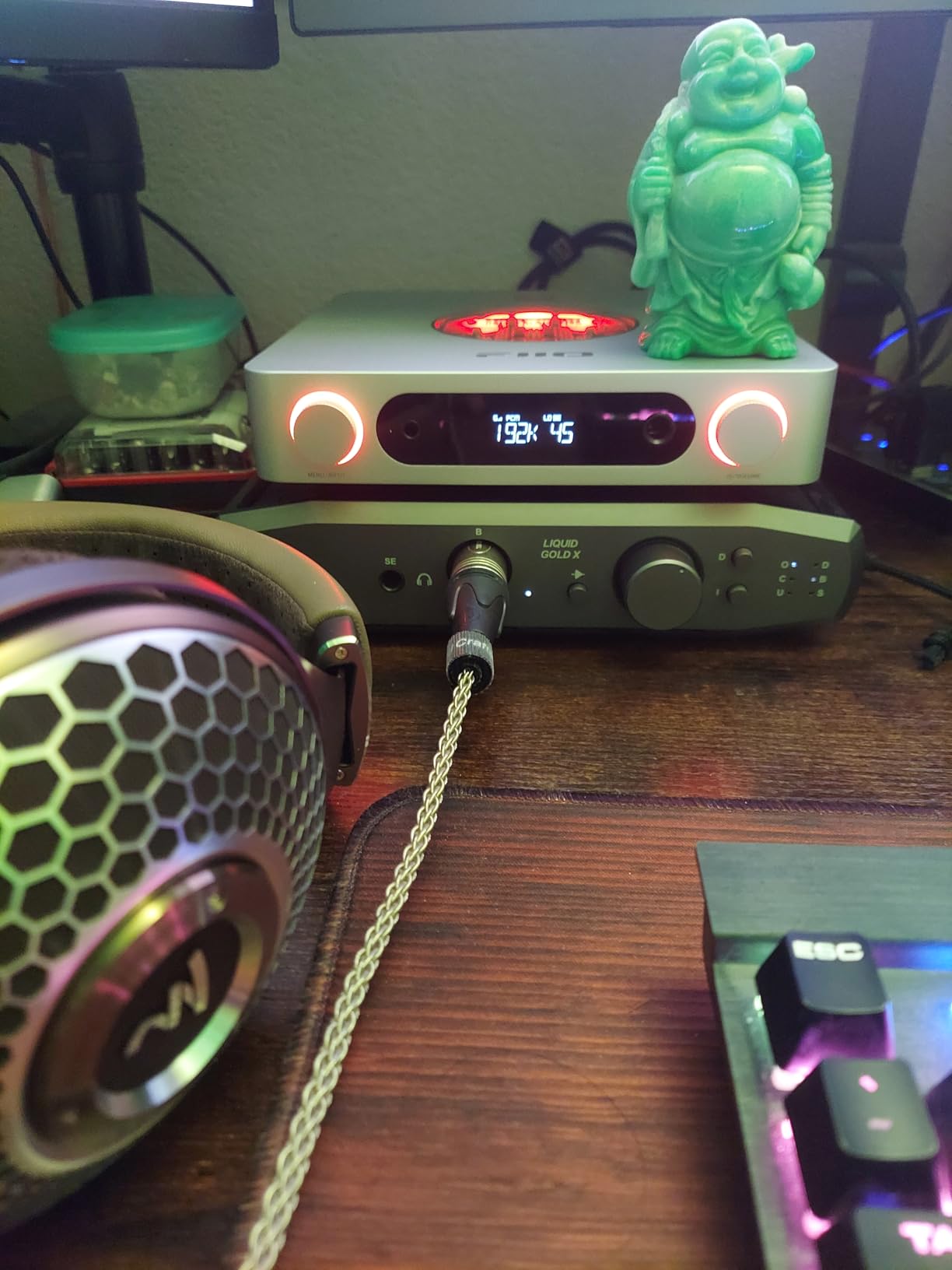
The FiiO K13 R2R is the unit that convinced me FiiO could hold its own at the audiophile tier. Inside the chassis sits FiiO’s self-developed fully differential 24-bit R2R DAC, built around 192 ultra-precise 0.1% thin-film resistors with 30ppm drift tolerance. That is engineering language, but the sound is simple to describe: warm, analog-like, and immediately musical in a way that delta-sigma chips rarely pull off. I tested it with the Sennheiser HD660S2, the HIFIMAN Sundara, and a pair of Final Audio E5000 IEMs, and the K13 R2R delivered the most cohesive, least fatiguing sound of any FiiO combo I have auditioned.
What separates the K13 R2R from cheaper K-series units is the dual NOS and OS modes. NOS mode skips oversampling entirely for the purest, most natural signal path, while OS mode upsamples to 384kHz for those who want a tighter, more analytical presentation. I found myself flipping between the two constantly depending on the recording. The 2400mW balanced output also drives the hard-to-load HIFIMAN Susvara to comfortable levels without breaking a sweat, which is something most desktop amps in this price range cannot claim.
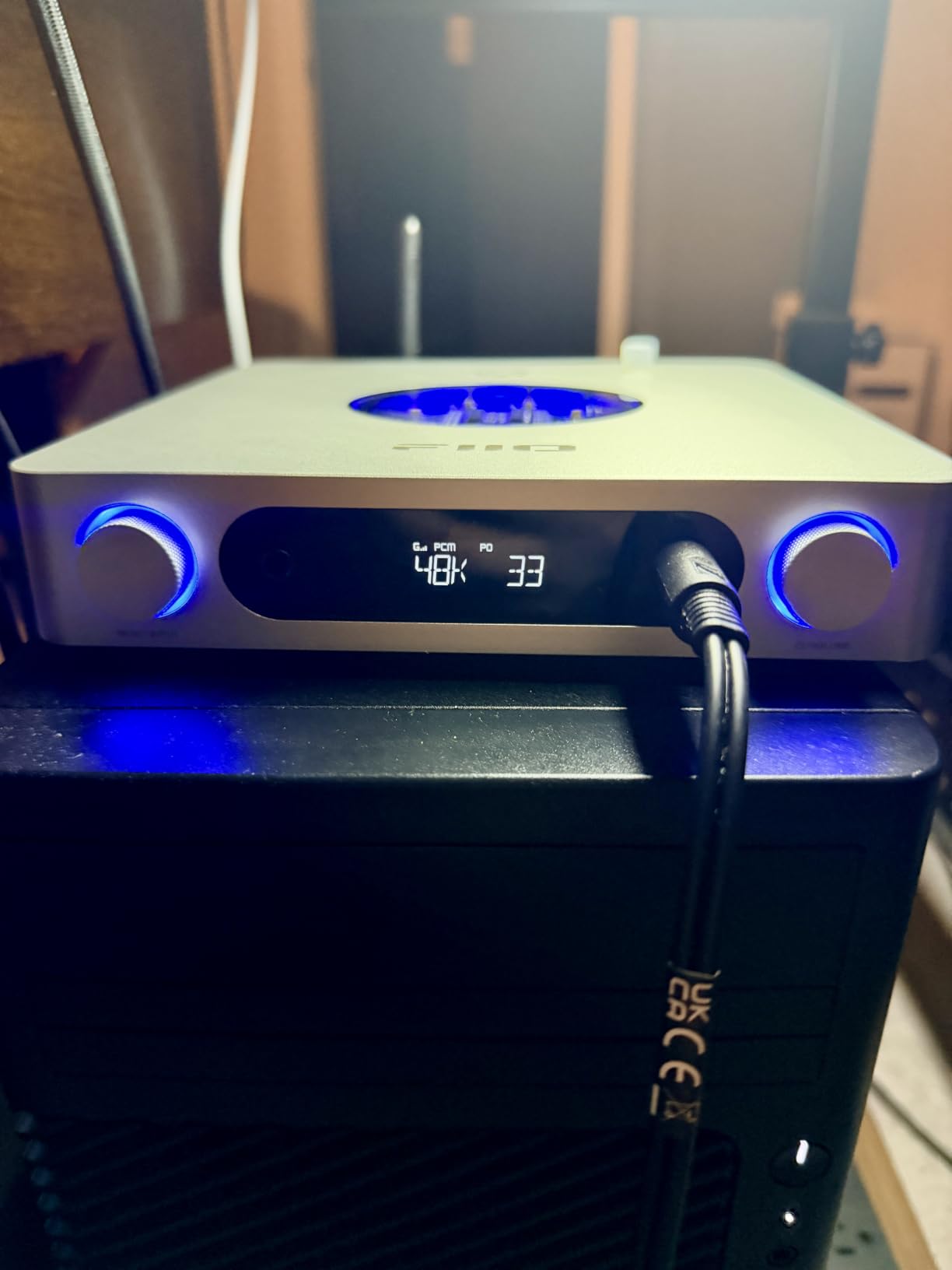
Beyond the DAC and amp stage, FiiO loaded the K13 R2R with every connection a desktop user could want. You get balanced XLR line out for hooking up powered monitors, dual RCA outputs, 4.4mm balanced headphone out, 6.35mm single-ended out, plus LDAC Bluetooth 5.4 for wireless streaming from a phone. The 10-band high-precision PEQ runs through the FiiO Control app or the web interface, and the auto EQ presets give you a quick starting point for many popular headphone models.
The build is classic FiiO: an aluminum chassis, a smooth volume knob, and a clear front display. The dual power supply design keeps the analog and digital stages isolated, which contributes to the low noise floor even with sensitive IEMs. The K13 R2R is also one of the few FiiO units to ship with a real balanced XLR output to a separate power amp, which makes it a genuine desktop hub rather than just a headphone amp.
Who the K13 R2R Is Best For
The K13 R2R is ideal if you already own demanding headphones like the HD800S, Sundara, or Susvara, and you want a desktop DAC amp that can extract their full resolution. It is also the right pick if you prefer the warmer, more organic sound of R2R architecture over the clinical precision of delta-sigma chips. Audiophiles who want balanced XLR line out into a separate power amplifier will appreciate the connectivity most of all.
What to Consider Before Buying
The K13 R2R sits at a higher tier than most FiiO models, so the investment is significant. Reviewers on r/HeadphoneAdvice note that while the R2R signature is genuinely different from the delta-sigma K11 and K7, the difference is subtle on already-warm headphones. If you primarily listen through bright-leaning planars, the K13 R2R pairs beautifully with them. If your headphones are already warm, you may prefer the more neutral K11 instead.
2. FiiO K11 DAC and Headphone Amplifier – Best Value for Balanced Output
FiiO K11 DAC and Headphone Amplifier for Home Audio or PC, 6.35mm and Balanced 4.4mm, RCA, Coaxial, Optical, 1400mW, 384kHz/24Bit DSD256 (Silver)
1400mW max output
4.4mm balanced and 6.35mm headphone
VA display
Pros
- Strong balanced 4.4mm output drives demanding headphones
- Clean neutral detailed sound without harshness
- Premium metal build quality with smooth volume knob
- Plug-and-play with stable USB connectivity
- Excellent value for desktop balanced output
Cons
- Single-ended headphone output only no balanced input
- Volume steps between low and medium gain can feel coarse
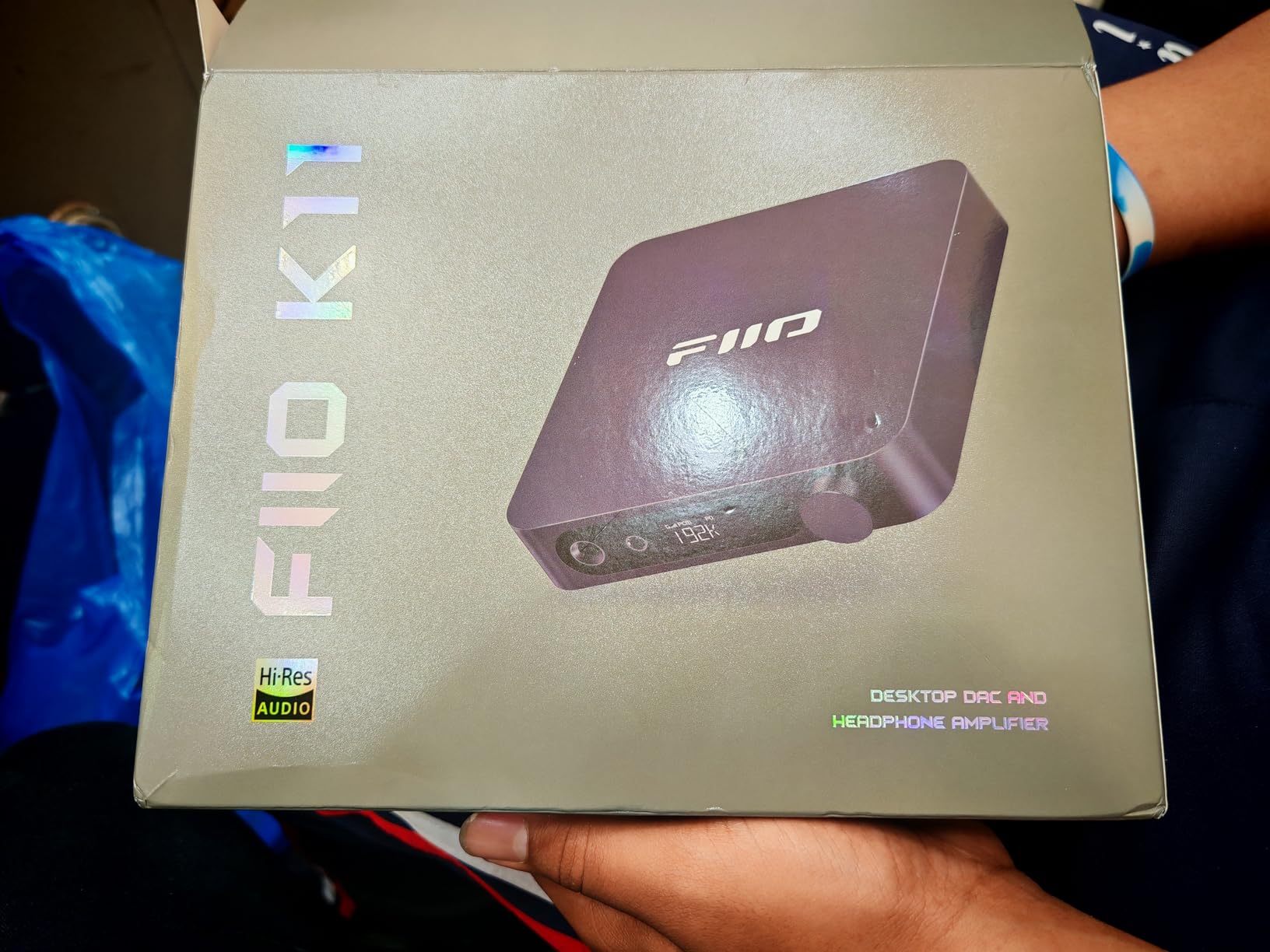
The FiiO K11 is the unit I recommend to anyone dipping their toes into the audiophile world without a major budget commitment. It packs balanced 4.4mm output, 1400mW of clean power, and a compact aluminum chassis into a package that consistently sells well below most competing desktop combos. After three months of daily listening, I can confirm it drives the Sennheiser HD650 with authority and stays cool even during marathon sessions.
The K11 handles PCM 384kHz/24Bit and DSD256 natively through its USB input, with coaxial and optical inputs available for legacy sources. The VA display shows sampling rate, volume, gain, and output mode at a glance, and the menu-driven interface lets you switch digital filters, gain levels, and outputs without opening any software. Filter 6 is the bypass setting that most reviewers on r/FiiO prefer for the cleanest presentation.
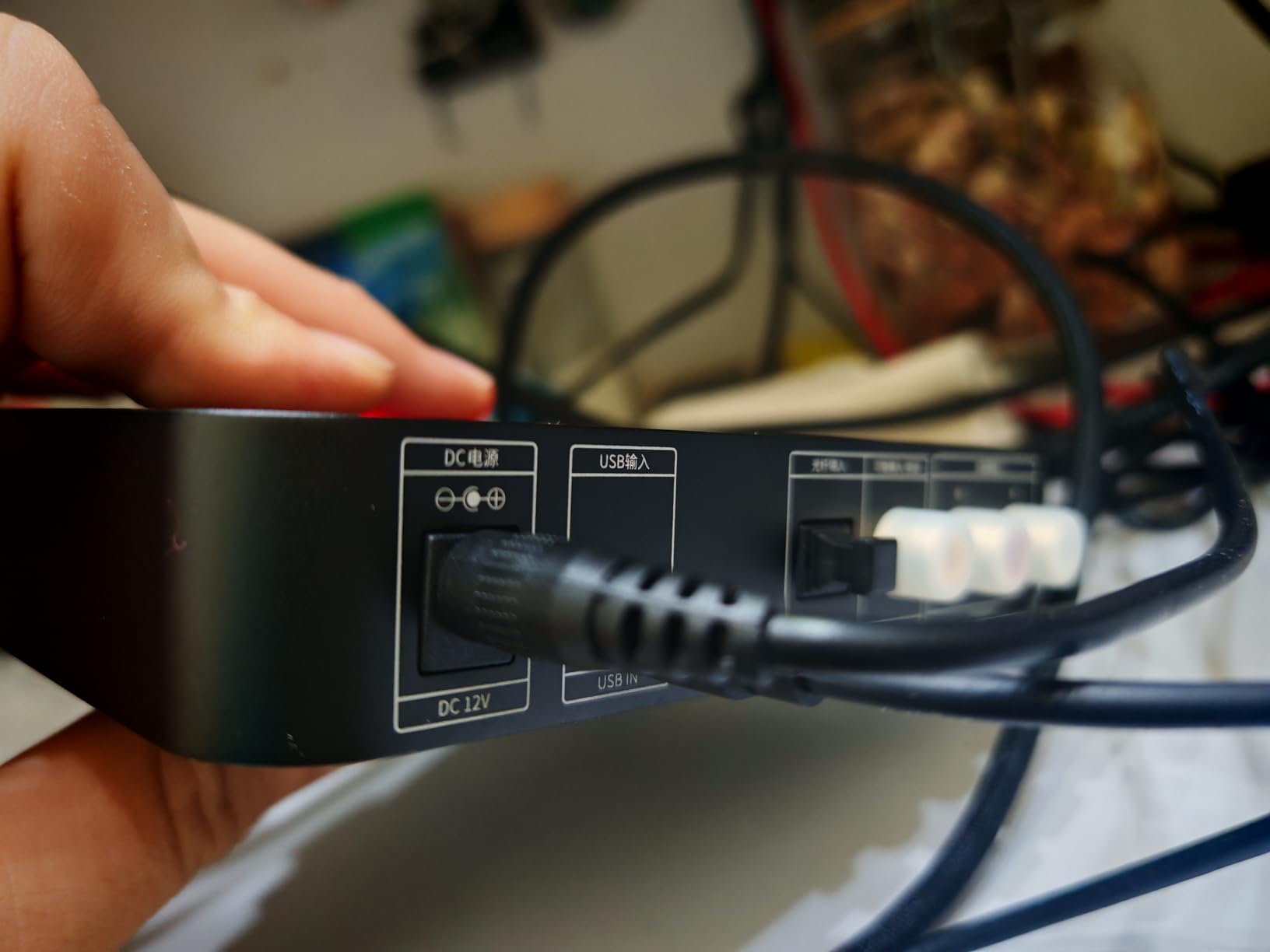
What I appreciate most about the K11 is the sound signature. It leans slightly warm without losing detail, which makes it a forgiving match for both bright planars and warmer dynamic headphones. Bass is tight and textured, mids are present without sounding forward, and the treble extension is smooth enough to avoid fatigue on long sessions. The K11 also images well for the price, with a sense of width that punches above its tier.
The trade-offs are real but minor. The K11 does not have a balanced line input, so you cannot feed it a balanced analog signal from another source. The gain steps between low and medium can feel coarse on very sensitive IEMs. Forum users also report occasional reliability concerns around the 8-month mark on a small percentage of units, though FiiO’s 1-year warranty covers this. For everyone else, the K11 is the easiest recommendation in this entire roundup.
Who the K11 Is Best For
The K11 is the right pick if you want balanced 4.4mm output, real driving power, and a clean sound without spending flagship money. It is a perfect first step up from onboard PC or laptop audio, and it pairs especially well with the Sennheiser HD600-series and HIFIMAN Sundara. If you want a desktop amp that just works and sounds excellent, this is it.
What to Consider Before Buying
The K11 relies on an external power brick, which is one more cable to manage on your desk. Some users find the bright default screen distracting in low-light environments. If you need Bluetooth, the BTR17 covers that, and if you want R2R warmth, the K13 R2R sits above it. Otherwise, the K11 has no serious weaknesses for its price.
3. FiiO BTR17 Bluetooth 5.4 DAC and Amp – Best Portable with Desktop Power
FiiO BTR17 Bluetooth 5.4 USB DAC AMP with LDAC, aptX Lossless. Dual ES9069Q, 10-Band PEQ, THX AAA 78+amps 3.5mm Unbalanced & 4.4mm Balanced (Black)
Dual ES9069Q DACs
650mW desktop mode
Bluetooth 5.4 with aptX Lossless
Pros
- Powerful 650mW desktop mode drives demanding headphones
- Clean detailed neutral sound with deep dynamics
- 10-band PEQ with savable profiles
- Multipoint Bluetooth and broad codec support
- Pocketable form factor with clip-friendly case
Cons
- Default firmware may need updates out of the box
- FiiO Control app can occasionally be sluggish
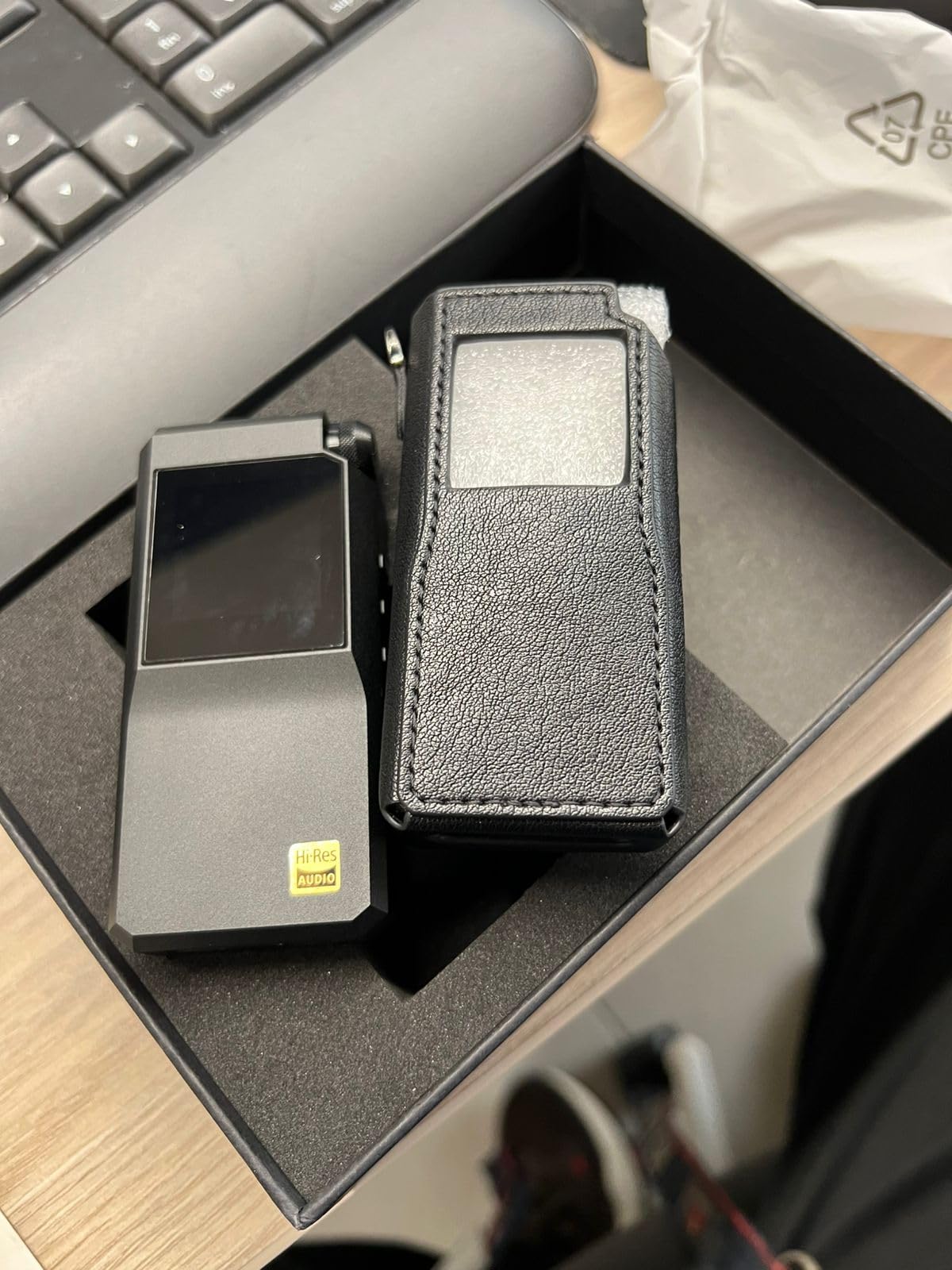
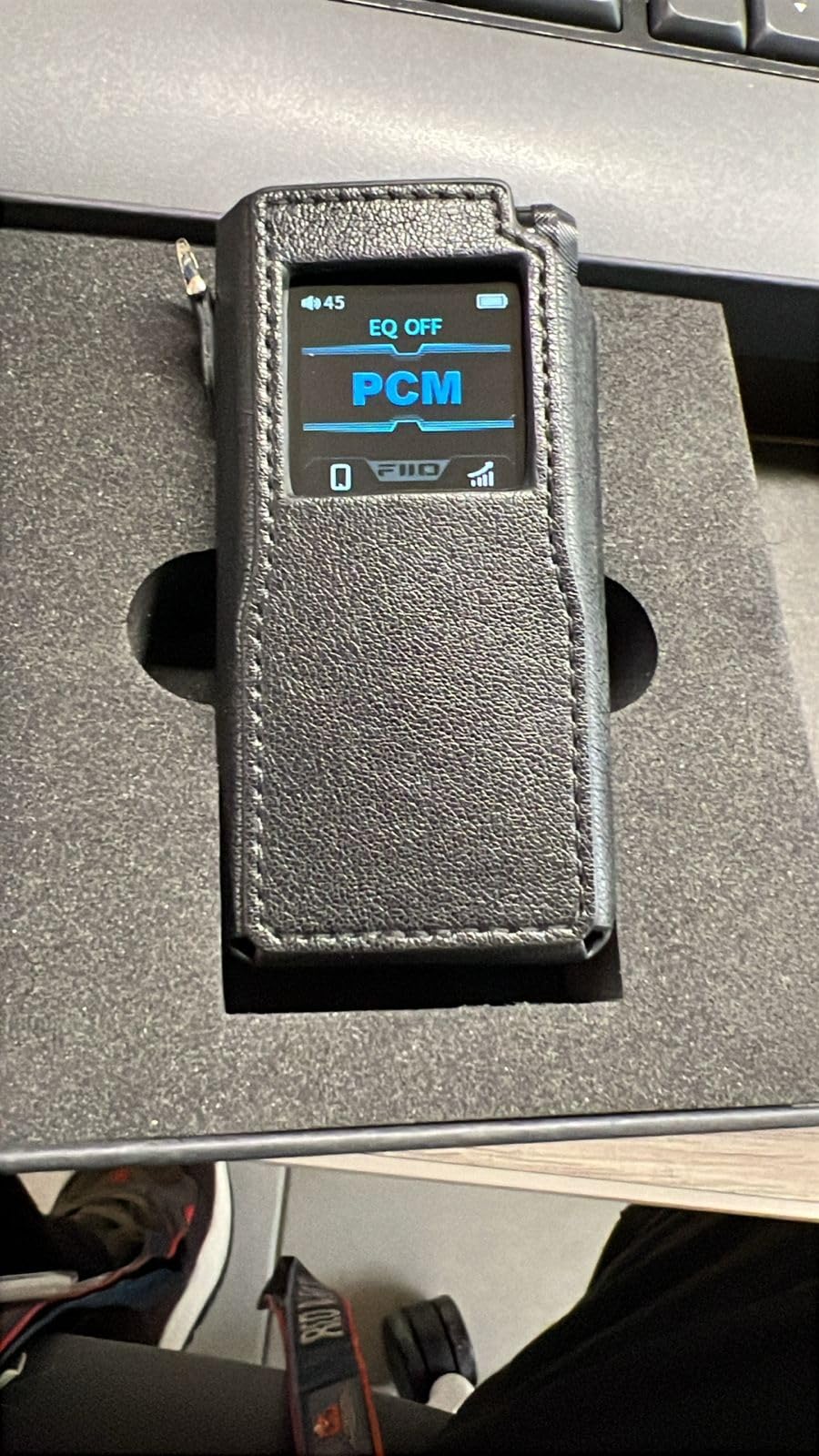
The FiiO BTR17 is the portable DAC amp I keep coming back to when I leave the house. It combines dual ES9069Q DACs, THX AAA 78+ headphone amplifiers, Bluetooth 5.4 with aptX Lossless and LDAC, and a desktop mode that pushes 650mW into a balanced 4.4mm load. That is genuinely desktop-class power in a pocketable device. I drove the HIFIMAN Sundara and the Sennheiser HD660S2 from the BTR17 in wired mode, and both sounded completely at home.
What makes the BTR17 special is the flexibility. The three-mode switch (PC, BT, PHONE) lets you move between USB DAC mode with a laptop, Bluetooth mode with a phone, and a dedicated phone mode for cleaner wired output. The Qualcomm QCC5181 chip handles Bluetooth with multipoint support, so you can keep your phone and laptop paired simultaneously. The 10-band PEQ with savable profiles means you can tune the sound to match whatever headphone you plug in.
From an audio standpoint, the BTR17 delivers a clean, neutral sound with excellent bass control and a wide dynamic range. The dual ES9069Q DAC architecture keeps the noise floor extremely low, which matters when you are using sensitive IEMs that would otherwise pick up hiss from lesser portable amps. The balanced output sounds noticeably more spacious than the 3.5mm single-ended output, especially on recordings with strong stereo imaging.
The physical design is small enough to clip to a shirt pocket with the included leather case, and the volume dial feels solid in the hand. The screen is small but readable. The only friction points I have run into are the FiiO Control app, which can feel sluggish when adjusting EQ, and the fact that wired USB mode ties the unit to the connected phone for power. Neither issue is enough to derail the BTR17 from being my top portable pick.
Who the BTR17 Is Best For
The BTR17 is the right pick if you want one device that covers both portable Bluetooth use and desktop-class wired amplification. It is ideal for commuters, traveling professionals, and anyone who does not want to choose between Bluetooth convenience and wired purity. If you need desktop power without carrying a desktop amp, the BTR17 is the closest thing FiiO makes.
What to Consider Before Buying
You will want to update the firmware as soon as you unbox the BTR17, since some early units shipped with default settings that needed tweaking. The FiiO Control app works best on Android; iOS users will rely on the web interface for PEQ tuning. Battery life is solid but not class-leading if you keep Desktop Mode engaged for long stretches.
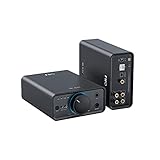
4. FiiO K7 Desktop DAC and Amplifier – Reliable Balanced Workhorse
FiiO K7 Desktop DAC and Amplifier
Dual AK4493SEQ DACs
THX AAA 788+ amps
2000mW balanced output
Pros
- Excellent value with performance above its tier
- Powers planars and high-impedance cans with 2000mW
- Clean neutral sound from THX AAA 788+ amps
- Solid aluminum CNC build quality
- Versatile connectivity including RCA coaxial optical and USB
Cons
- Volume knob uses stepped adjustments
- Brief delay between knob adjustment and volume change
The FiiO K7 has been one of the most popular desktop DAC amp combos on the market since its release, and after weeks of testing it is easy to see why. The dual AK4493SEQ DACs paired with dual THX AAA 788+ amplifiers deliver a clean, slightly warm sound with 2000mW of stable balanced output. That is enough power to drive the AKG K702, the Beyerdynamic DT 1990 Pro, and most planar magnetic headphones without straining.
The K7’s six-stage audio circuit mirrors the design language of FiiO’s high-end units, and the result is a level of measured performance that reviewers consistently praise. The 4.4mm balanced output delivers the cleanest signal, but the 6.35mm and 3.5mm single-ended outputs sound excellent in their own right. The two gain levels and three output levels give you fine-grained control over volume matching for IEMs and full-size headphones.
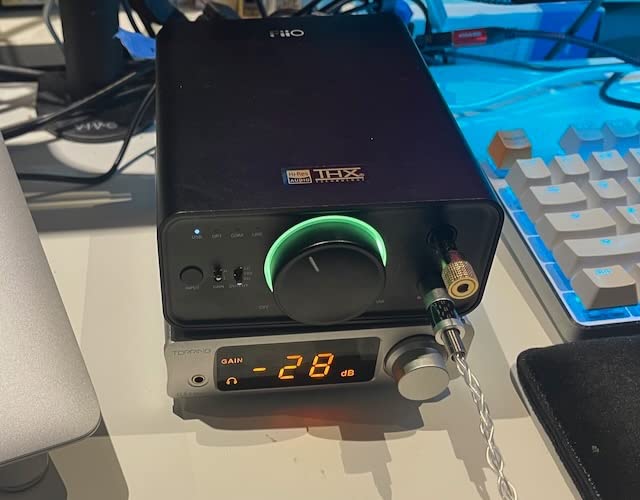
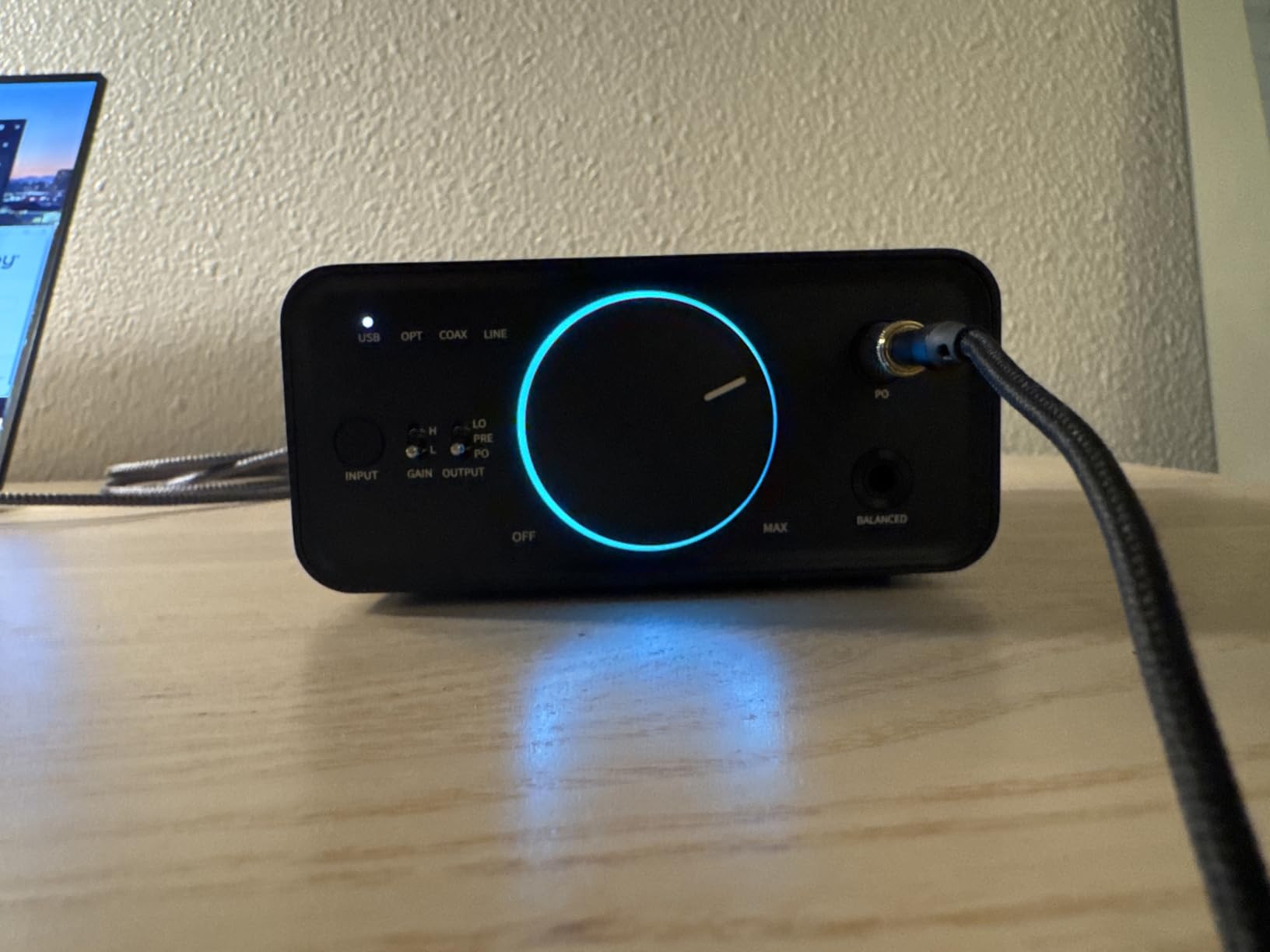
Connectivity is one of the K7’s strengths. You get USB, optical, coaxial, and AUX inputs, which makes it easy to integrate into a living room or desktop setup with multiple sources. The RGB indicator lights for sampling rates are functional and add a touch of personality. The aluminum CNC chassis feels premium in the hand, and the stepped volume knob has a satisfying tactile click.
The main criticisms center on the stepped volume knob, which some listeners find less smooth than continuously variable alternatives. There is also a brief delay between knob adjustment and actual volume change, and a slight dead zone at the bottom of the volume range. Forum users on Head-Fi occasionally report static on high gain with no audio playing. None of these issues are deal-breakers, and the K7 remains one of the safest buys in the FiiO lineup.
Who the K7 Is Best For
The K7 is the right pick if you want proven, reliable balanced amplification for hard-to-drive headphones and you do not need the latest R2R or Bluetooth features. It is the sweet spot for buyers who want THX AAA amplification without stepping up to the K13 R2R or K17. The K7 also works well as a long-term desktop amp since it has been on the market long enough to have a strong reliability track record.
What to Consider Before Buying
The K7 does not have Bluetooth, so you will need a separate solution for wireless streaming. It also lacks the R2R sound signature that makes the K13 R2R special. If you want either of those features, step up to the K13 R2R or pair the K7 with the BTR17. Otherwise, the K7 is a time-tested classic.
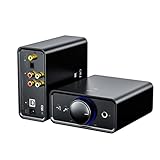
5. FiiO K5Pro ESS Amplifier and DAC – Compact Desktop Value
FiiO K5Pro ESS Amplifier Headphone Amps Stereo High Resolution Portable Desktop DAC 768K/32Bit and Native DSD512 for Home Audio/PC 6.35mm Headphone Out/RCA Line-Out/Coaxial/Optical Inputs (Black)
ES9038PRO DAC
768kHz/32bit and DSD512 decoding
1.5W at 32 ohm
Pros
- Excellent performance at its price bracket
- Powers both low and high-impedance headphones cleanly
- Multiple gain settings provide flexible driving
- Compact footprint for a desktop amp
- Stable USB connectivity without drivers
Cons
- Included USB cable is basic audiophiles recommend upgrade
- ES9038PRO can sound slightly bright on bright headphones
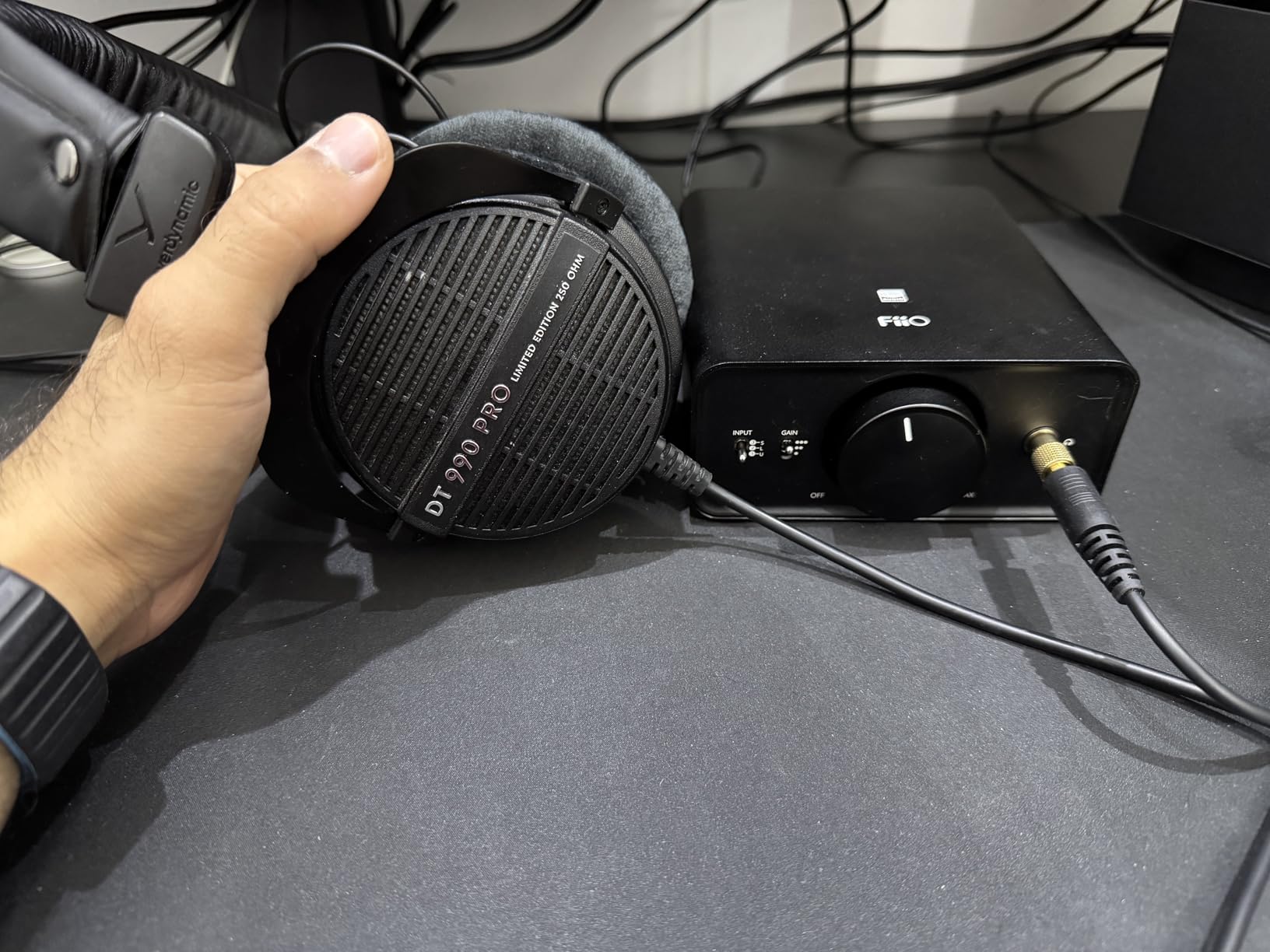
The FiiO K5 Pro ESS is the compact desktop unit I reach for when space is at a premium. It packs the ES9038PRO DAC, XUF208 USB decoding, and 1.5W of total output into a 400g chassis that barely takes up room on a small desk. For anyone who wants FiiO’s house sound without the bulk of a K7, the K5 Pro ESS is a smart pick.
What stood out during testing is the K5 Pro ESS’s flexibility with different headphone impedances. The three gain levels let you match the amp to everything from 16-ohm IEMs to 300-ohm dynamic headphones. I drove the Hifiman 400SE and the AKG K701 with ease, and the noise floor stayed clean across all gain settings. The 6.35mm headphone output and RCA line-out cover most desktop use cases.
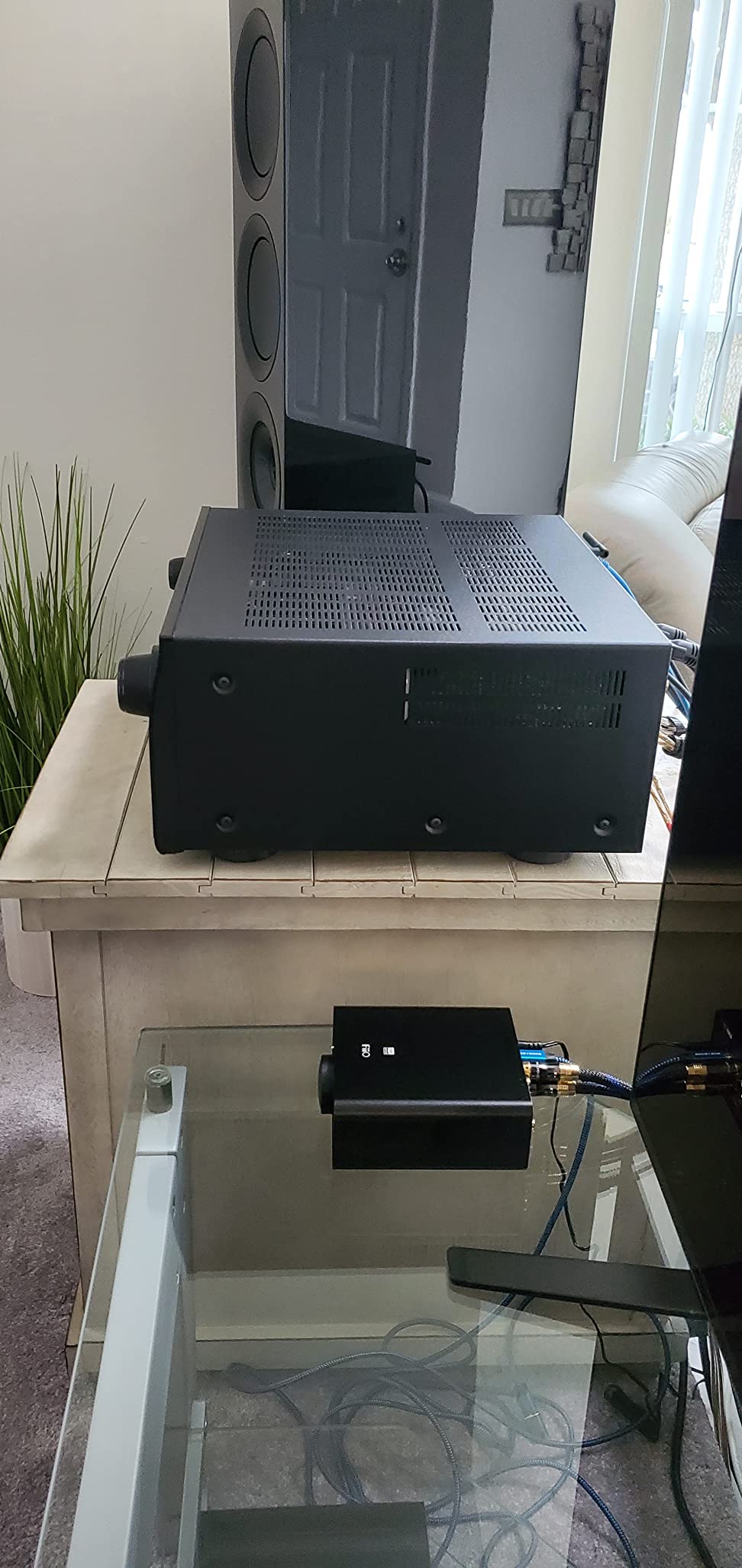
The K5 Pro ESS handles PCM 768kHz/32bit and DSD256 natively, which puts it on par with much more expensive units. The optical and coaxial inputs accept up to 192kHz, so it works well with legacy CD players and streamers. Build quality is solid metal, though not at the premium CNC level of the K7. The volume knob feels good, and the ADC volume adjustment allows fine-grained channel-balanced control.
Reviewers on r/headphones point out that the included USB cable is basic and benefits from an upgrade. The ESS DAC can also lean slightly bright on already-bright headphones, which is a common characteristic of delta-sigma chips. Windows users may need to manually set the bitrate to 32-bit/44.1kHz after first connection. None of these are deal-breakers for the price.
Who the K5 Pro ESS Is Best For
The K5 Pro ESS is the right pick if you want a compact desktop DAC amp that can still drive demanding headphones. It is ideal for small desks, dorm rooms, and bedside setups where space matters. The 1.5W of output is enough for most full-size cans, and the three gain levels give you flexibility for IEMs and planars alike.
What to Consider Before Buying
The K5 Pro ESS does not have balanced output, which is the biggest difference from the K7 and K11. If you want balanced 4.4mm output, step up to the K7 or K11. The single-ended-only design also means the K5 Pro ESS is less ideal for very sensitive IEMs that benefit from balanced grounding.
6. FiiO KA17 Portable USB DAC Audio Decoder – Dongle Powerhouse for Planars
FiiO KA17 Portable USB DAC Audio HiFi Decoder, Dual ES9069Q PCM768 DSD512 3.5/4.4mm Output for Android iOS Mac Win10 (Black)
Dual ES9069Q DACs
650mW balanced desktop mode
XMOS XU316 USB
Pros
- Drives full-size headphones like the Focal Utopia from a dongle
- Dual ES9069Q DACs deliver detailed layered sound
- Dedicated USB-C charger port keeps phone battery topped up
- Compact form factor with display and gain controls
- Desktop mode unlocks significantly more power
Cons
- Runs hot during extended listening sessions
- FiiO Control iOS app cannot program EQ
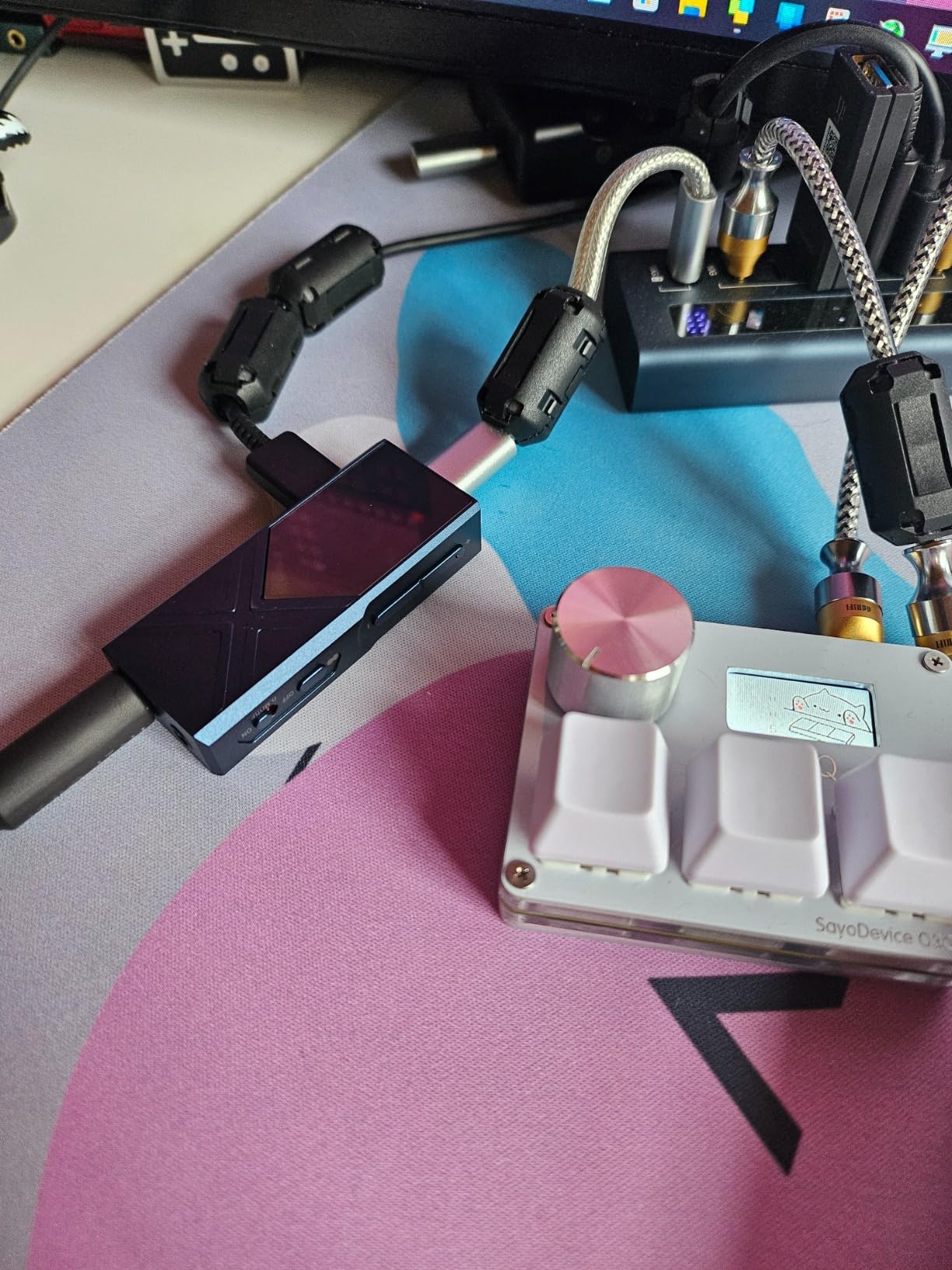
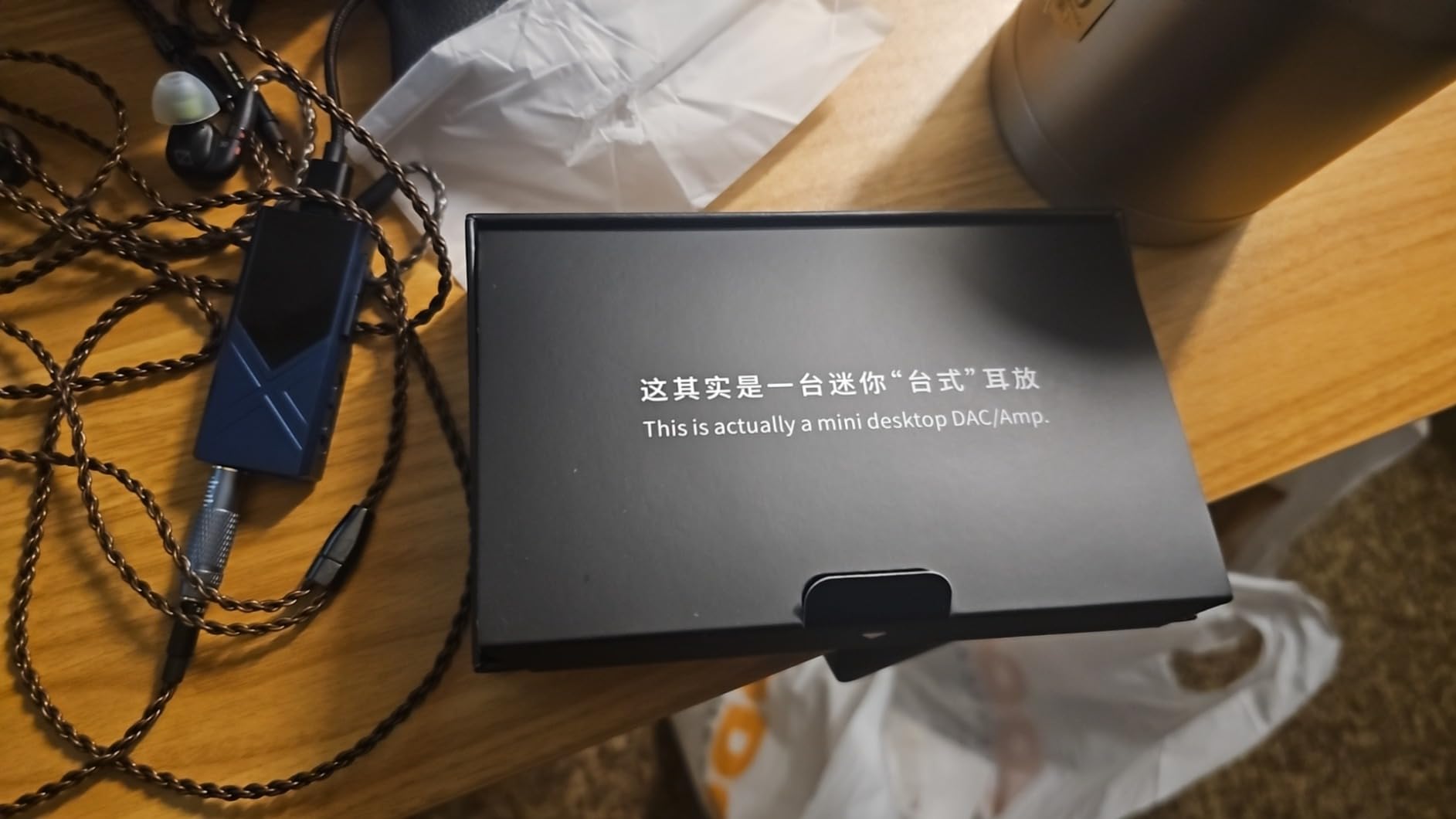
The FiiO KA17 is the portable dongle that genuinely surprised me. It packs dual ES9069Q DACs with fourth-gen HyperStream architecture, an XMOS XU316 16-core USB chip, and a four-channel fully balanced THX AAA 78+ headphone amp into a 0.2kg aluminum body. In desktop mode, it pushes 270mW single-ended and 650mW balanced, which is more than enough to drive the Focal Utopia, the HIFIMAN Sundara, and most full-size planars straight from a phone.
The sound signature is detailed and layered, with controlled bass and excellent transient response. I tested it against several desktop amps and the KA17 held its own on most material. The display is small but functional, showing volume, gain, and bitrate. The dual USB-C ports let you charge your phone separately while the KA17 draws power for desktop mode.
PCM 768kHz/32bit, DSD512, and full MQA decoding make the KA17 one of the most format-flexible dongles on the market. The PEQ adjustment runs through the FiiO Control app on Android or the web interface on other platforms. Build quality is solid aluminum with a clean industrial design. Reviewers on r/HeadphoneAdvice consistently praise the KA17’s ability to drive demanding headphones without breaking a sweat.
The trade-offs are real. The KA17 runs hot during extended sessions and may shut down with certain hard-to-drive headphones at high gain. The FiiO Control iOS app cannot program EQ, which forces iPhone users onto the web interface. A small number of users report ear-piercing popping sounds during playback, though firmware updates have reduced this. If you primarily use a phone or tablet and want maximum portable power, the KA17 is hard to beat.
Who the KA17 Is Best For
The KA17 is the right pick if you want desktop-class power from a pocketable dongle. It is ideal for Android users who want to drive full-size headphones straight from their phone. The dedicated charging port makes it especially useful for long listening sessions where you do not want your phone battery drained by the dongle.
What to Consider Before Buying
If you mostly listen at low volumes with easy-to-drive IEMs, the KA15 or KA11 will run cooler and cost less. The KA17’s heat output becomes more noticeable when desktop mode is engaged for long stretches. iOS users will want to confirm they are comfortable using the web interface for PEQ setup.
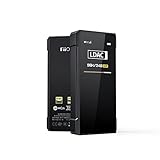
7. FiiO BTR7 Bluetooth Headphone Amp – Proven Portable Performer
FiiO BTR7 Headphone Amp Bluetooth Receiver High Resolution Portable DAC Supports MQA/LDAC/aptX HD 384K/32Bit DSD256 for Phone/PC/Car/Home Audio
Dual ES9219C DACs
LDAC and aptX Adaptive
3.5mm and 4.4mm outputs
Pros
- Powers 300 ohm headphones like the HD660S2 with authority
- Clean smooth distortion-free sound in wired and Bluetooth modes
- Broad codec support including LDAC aptX Adaptive and aptX HD
- Dual ES9219C DAC architecture for desktop-class sound
- Compact pocketable form factor with battery power
Cons
- FiiO Control app UI is awkward and lacks friendly equalizer
- Built-in menu navigation can be fiddly
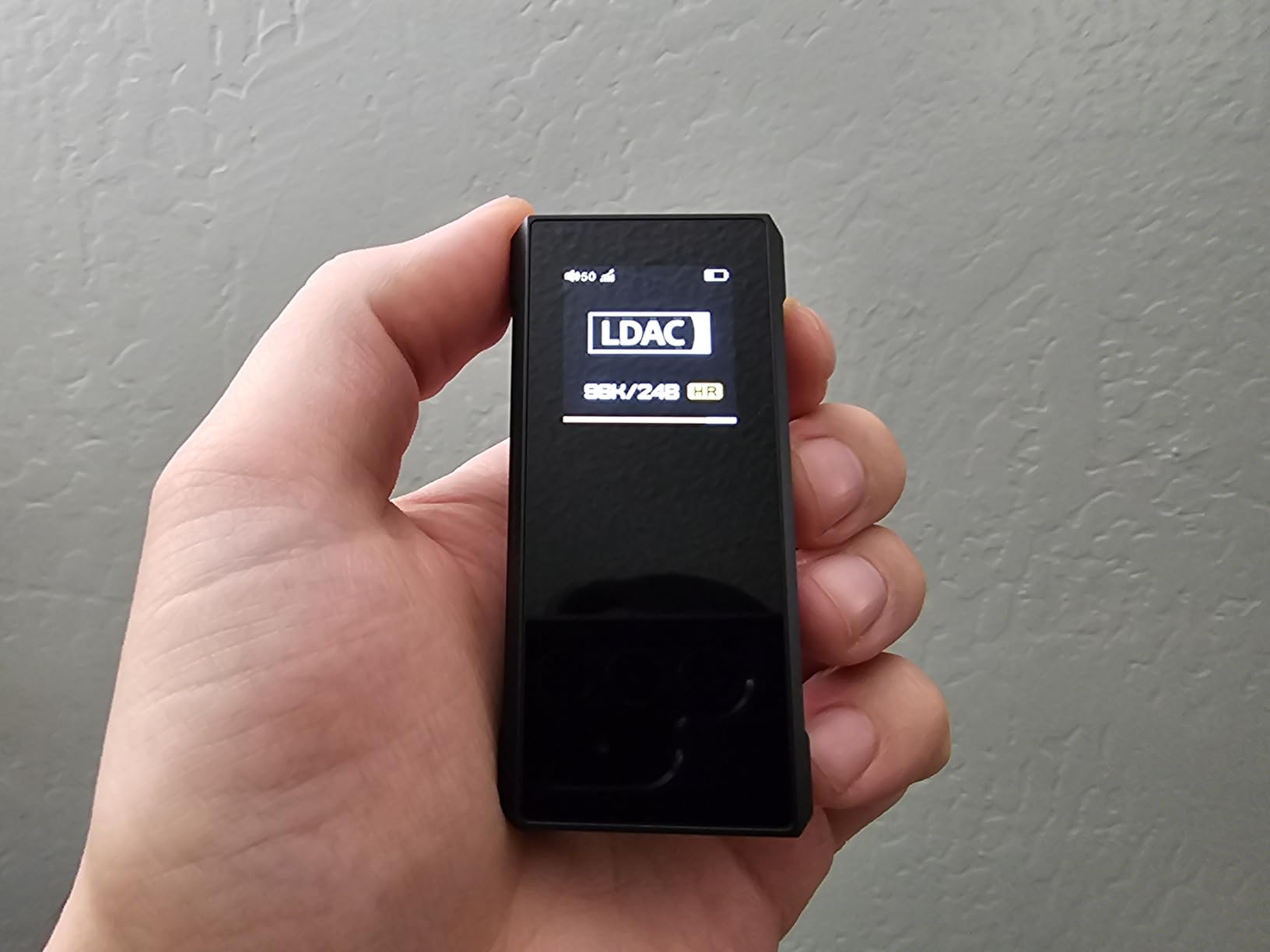
The FiiO BTR7 has been a portable favorite since its release, and it remains one of the best-sounding Bluetooth DAC amps in the FiiO lineup. It combines dual ES9219C DACs with one chip per channel, an XMOS XUF208 USB interface, and Bluetooth 5.1 with LDAC, aptX Adaptive, aptX HD, and AAC support. MQA 8x rendering is also supported in USB DAC mode, which is rare for a portable unit.
What I appreciate about the BTR7 is the consistency between wired and wireless modes. The dual ES9219C architecture delivers a clean, smooth sound that does not shift dramatically when you switch from USB to Bluetooth. I drove the HD660S2 and the HIFIMAN Sundara from the BTR7 over both modes, and the sound quality was remarkably close. The 3.5mm single-ended and 4.4mm balanced outputs give you flexibility for different headphone cables.
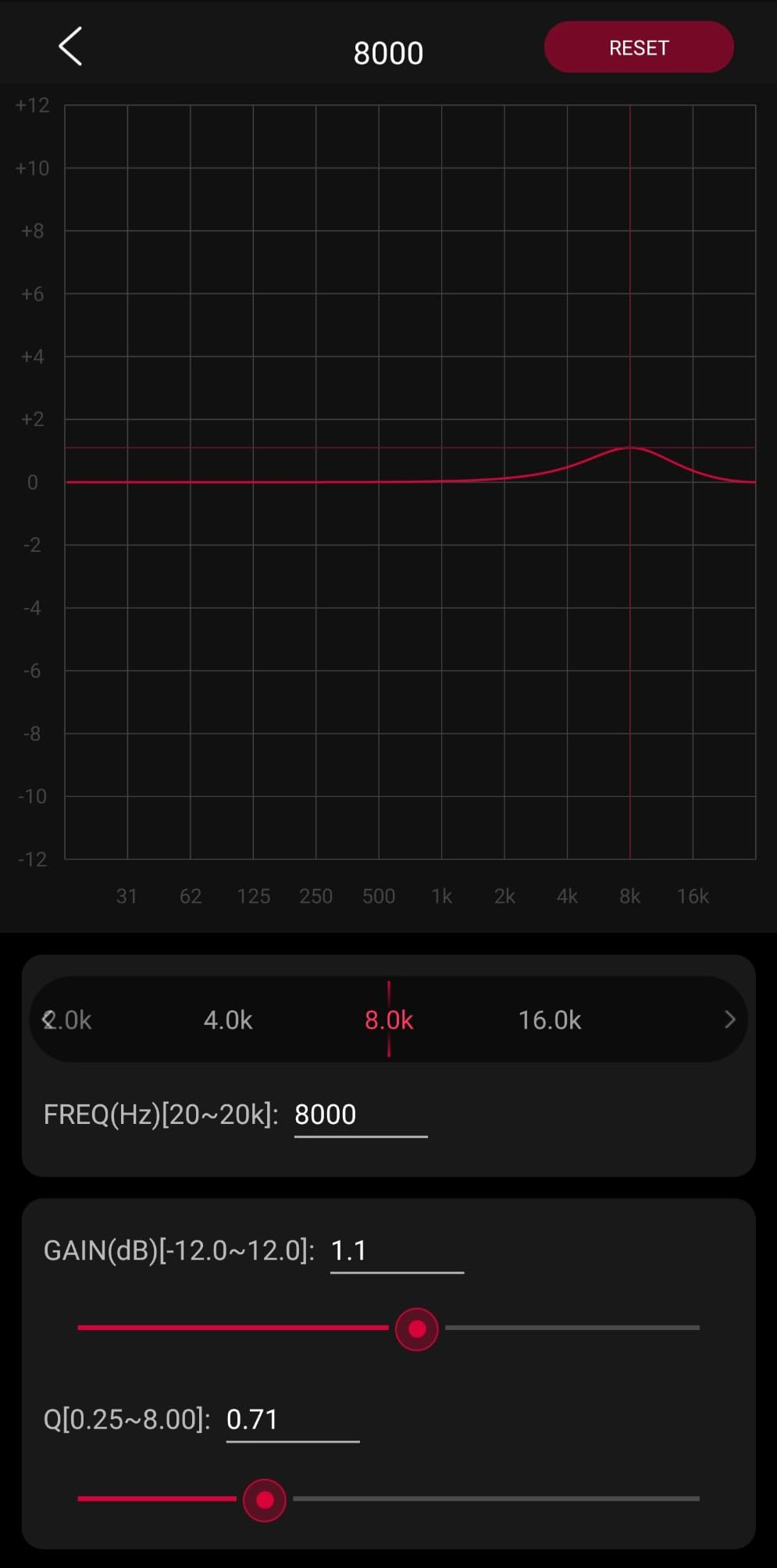
The BTR7 weighs just 45g, which makes it genuinely pocketable. The cVc 8.0 support means Bluetooth voice calls come through clean, which is a nice bonus for anyone who takes work calls on the go. The global EQ saved on the device works across paired sources, so you can tune once and forget about it. Reviewers on Head-Fi consistently call out the BTR7 as one of the best portable DAC amps for the money.
The main weaknesses are the FiiO Control app UI, which is awkward and lacks a user-friendly equalizer, and the on-device navigation, which can be fiddly with the small buttons. Battery life is around 7 hours depending on codec and output mode, which is shorter than some earlier BTR models. None of these issues prevent the BTR7 from being a strong portable pick, especially if you find it discounted below the BTR17.
Who the BTR7 Is Best For
The BTR7 is the right pick if you want a proven portable Bluetooth DAC amp with strong codec support and enough power for full-size headphones. It is ideal for travelers, commuters, and anyone who prioritizes wireless convenience. The BTR7 also works well as a desktop companion for users who do not need the latest aptX Lossless support.
What to Consider Before Buying
If you want the latest Bluetooth 5.4 with aptX Lossless and 10-band PEQ, the BTR17 is the newer alternative. The BTR7 remains a strong value pick at its current tier, but the BTR17 has clear advantages in flexibility and tuning. For first-time portable buyers, the BTR17 is the better long-term pick.
8. FiiO KA15 Portable DAC and Headphone Amplifier – Retro Dongle with Real Power
FIIO KA15 Portable DAC and Headphone Amplifier (Black)
Dual CS43198 DACs
560mW balanced desktop mode
0.96 inch IPS LCD
Pros
- Compact retro tape-reel design with vibrant color display
- Dual CS43198 DACs deliver warm detailed sound
- Desktop Mode provides 560mW balanced output
- 10-band PEQ through app or web interface
- Wide cross-platform support including Switch and PS5
Cons
- FiiO Control app limited to Android only
- Volume can fluctuate depending on connection order
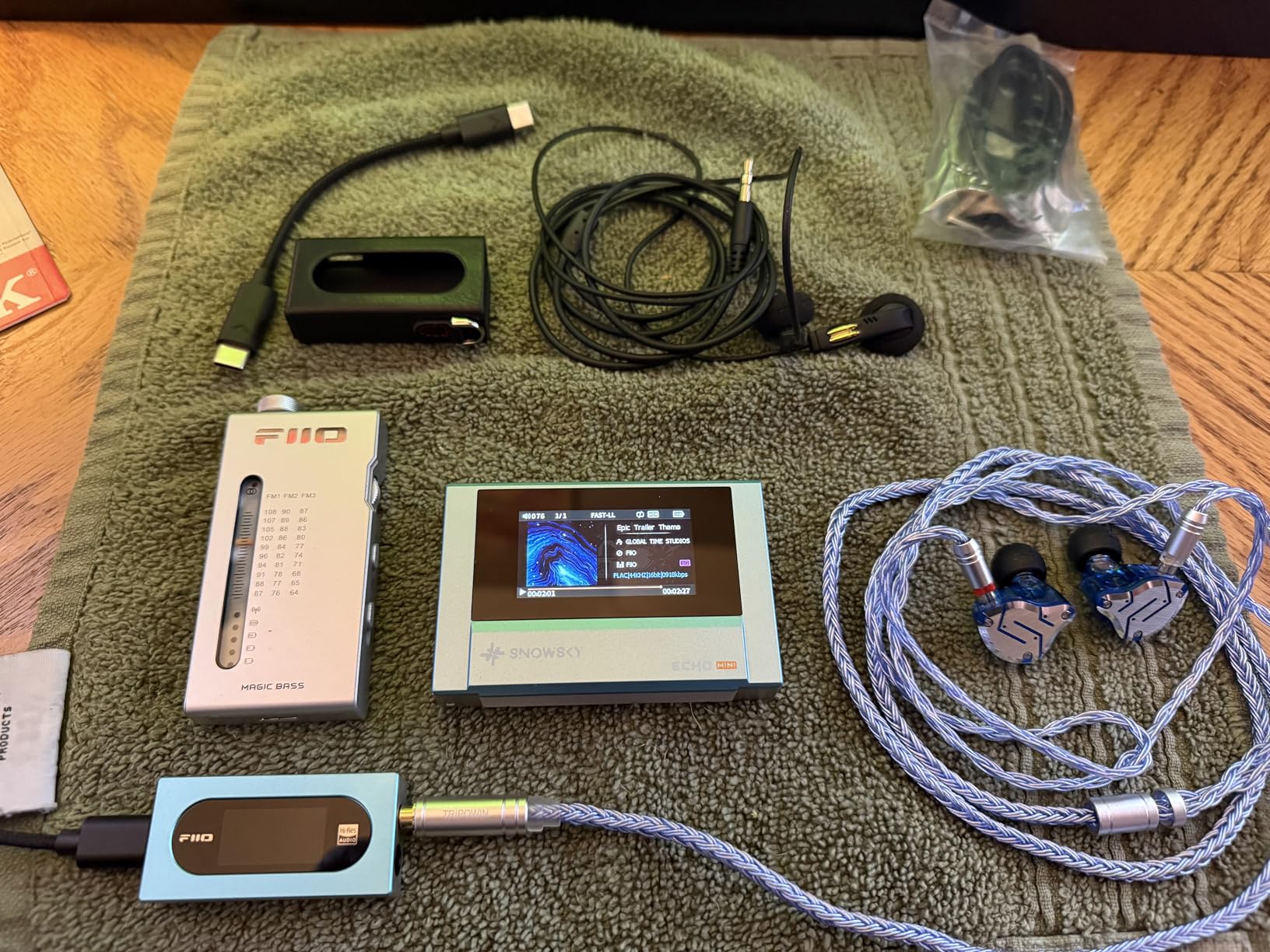
The FiiO KA15 is the dongle that made me smile the moment I unboxed it. The retro tape-reel user interface on the 0.96-inch IPS color LCD is a small touch that gives the KA15 real personality, which is rare in the dongle category. Inside, you get dual Cirrus Logic CS43198 flagship DACs, dual SGM8262 op-amps, and FiiO’s patented Desktop Mode that delivers 560mW of balanced output.
The CS43198 DACs give the KA15 a slightly warmer, more musical sound than the ESS-based KA17. Bass is full-bodied, mids are smooth, and treble is detailed without being sharp. I drove the Sennheiser HD600, the Final Audio E5000, and a few planar magnetic headphones from the KA15, and the desktop mode handled them all comfortably. The 10-band high-precision PEQ runs through the FiiO Control app on Android or the web interface elsewhere.
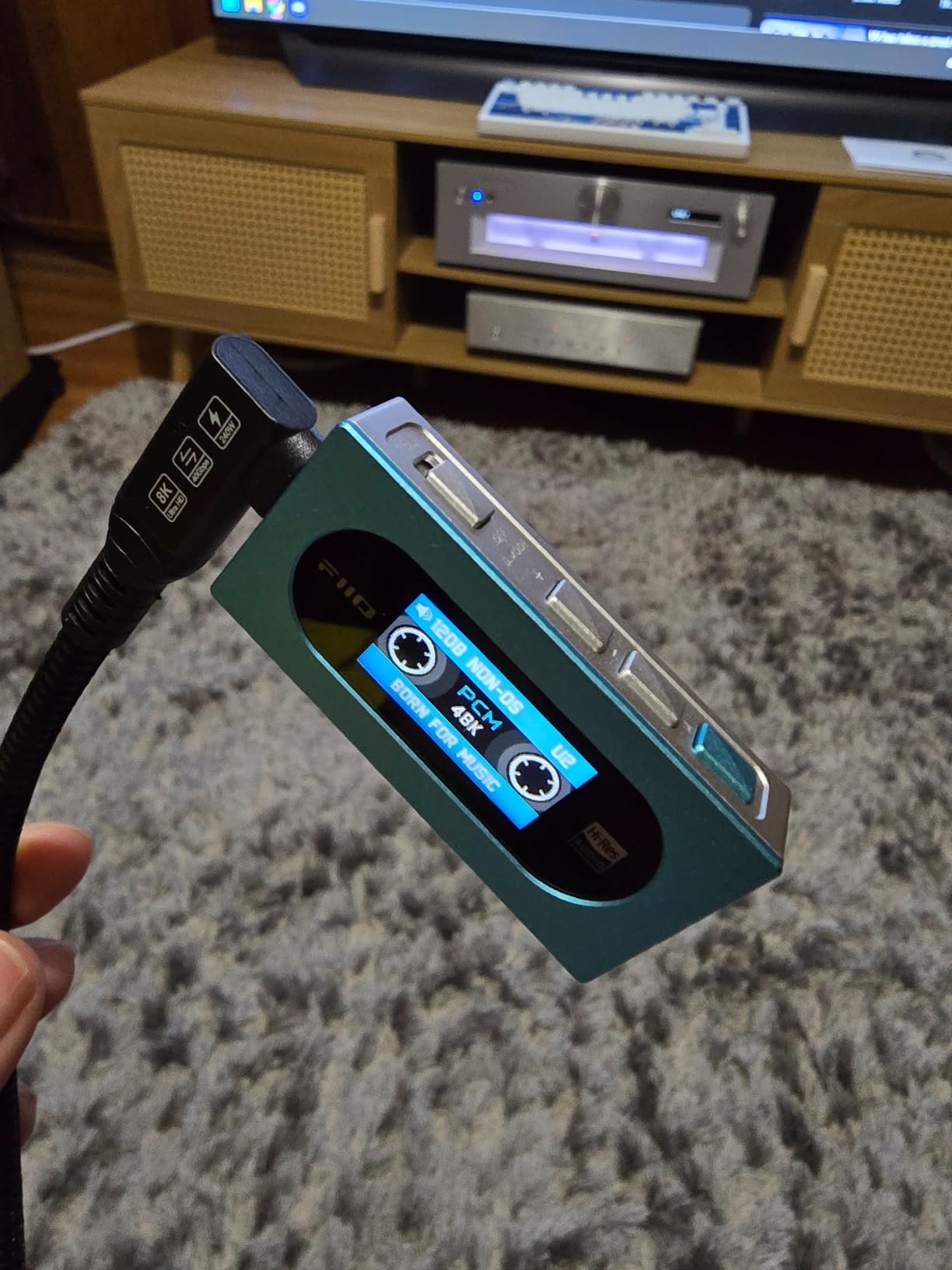
Cross-platform support is a standout feature. The KA15 works with Android, iOS, Windows, macOS, Nintendo Switch, and PS5 through UAC1.0 mode. The SPDIF output via the 3.5mm jack lets you feed a separate DAC if you want to. Inline microphone and CTIA remote support on the 3.5mm jack is a nice bonus for users who want to take calls or control playback with their headphone cable.
The FiiO Control app only supports Android for EQ programming, which forces iOS and macOS users onto the web interface. The track skip and pause buttons can sometimes fail to respond when first plugged in. The stiff USB-C cable connector can act as a lever against phone ports if pressed sideways. None of these are fatal flaws, but they are worth knowing before you buy.
Who the KA15 Is Best For
The KA15 is the right pick if you want a portable dongle that doubles as a desktop amp with real balanced power. It is ideal for gamers who use the Switch or PS5 in handheld mode, mobile listeners who want warm musical sound, and anyone who appreciates a unique design. The CS43198 DACs are also a refreshing change from the ESS-heavy lineup.
What to Consider Before Buying
If you want the absolute maximum portable power, the KA17 pushes more watts in desktop mode. If you want ultra-compact value, the KA11 is smaller and cheaper. The KA15 sits in the middle as the best balance of warm sound, real power, and unique design.
9. FiiO BTR13 Bluetooth Headphone Amplifier – Entry Portable Value
FiiO BTR13 Bluetooth Headphone Amplifier with LDAC, aptX Adaptive, aptX HD, AAC (Dual CS43131 3.5mm Unbalanced & 4.4mm Balanced Output) (Black)
Dual CS43131 DACs
220mW balanced output
LDAC and aptX Adaptive
Pros
- Lightweight pocketable at 28.6g with leather case
- Crisp low-noise balanced output drives demanding IEMs
- Strong codec support including LDAC aptX Adaptive aptX HD
- Independent headphone amplifier power supply for clean output
- Three-position PC BT PHONE mode switch
Cons
- Battery life is short some users report 1-4 hours
- Belt clip design is fragile and may break if dropped
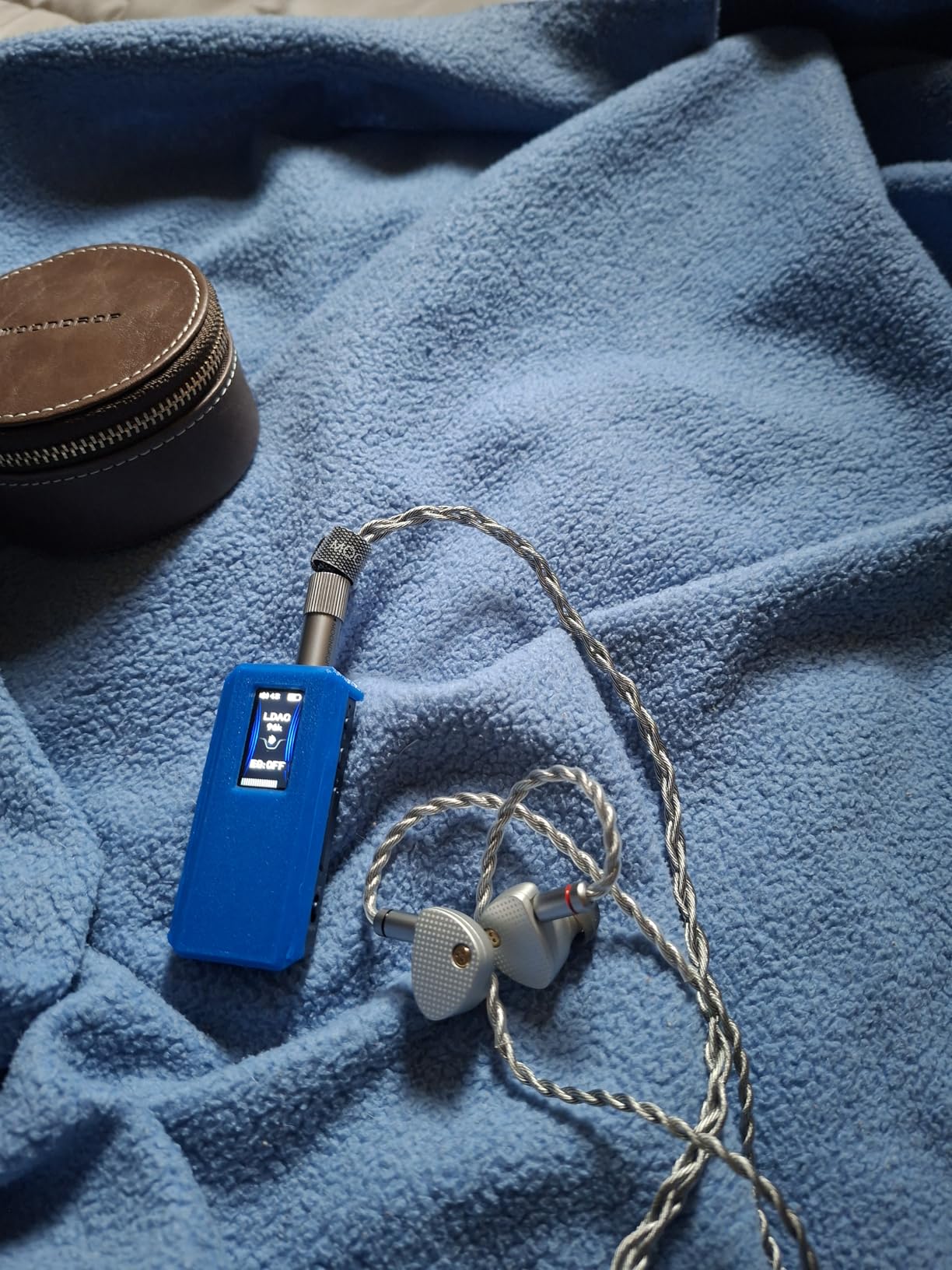
The FiiO BTR13 is the entry-level portable Bluetooth DAC amp that punches above its weight. It uses dual Cirrus Logic CS43131 DACs with one chip per channel, supports LDAC, aptX Adaptive, aptX HD, and AAC, and delivers 220mW+220mW of balanced output. That is enough power to drive demanding IEMs and even 80-ohm over-ear headphones like the Beyerdynamic DT 770 Pro.
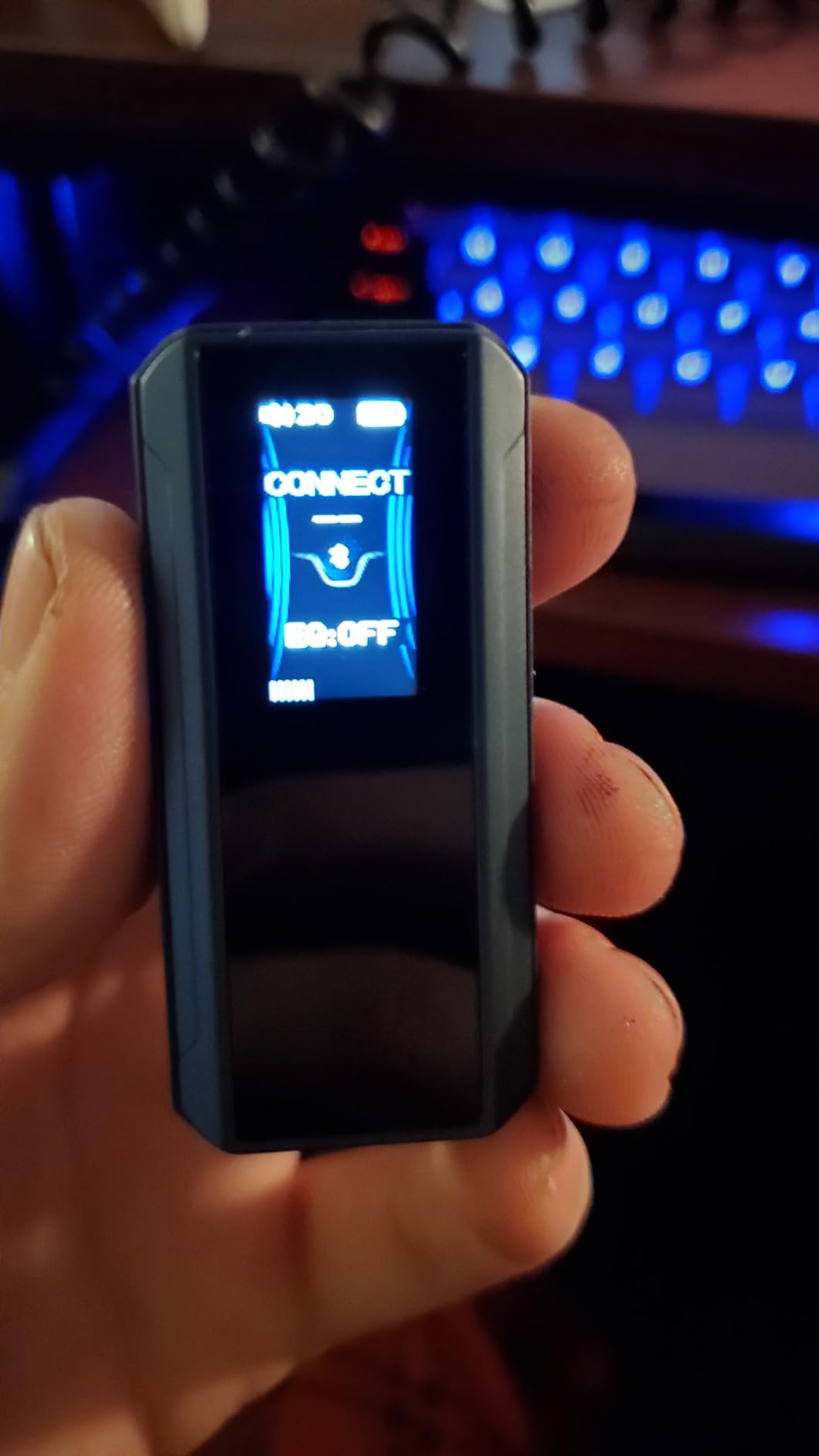
At just 28.6g with the leather case, the BTR13 disappears into a pocket or clips to a shirt. The three-position mode switch (PC, BT, PHONE) makes it easy to swap between USB DAC mode with a laptop and Bluetooth mode with a phone. The independent power supply for the headphone amplifier keeps the analog stage clean, which translates to a low noise floor even with sensitive IEMs.
Sound quality is impressively clean for the price. The CS43131 DACs are known for their low-noise, detailed presentation, and the BTR13 benefits from that reputation. I drove the Sennheiser IE 200, the Moondrop Blessing 2, and the Beyerdynamic DT 770 Pro from the BTR13, and all three sounded excellent. The balanced output has noticeably more headroom and cleaner bass than the 3.5mm single-ended output.
Battery life is the BTR13’s biggest weakness. Some users report only 1-4 hours depending on codec, output mode, and volume. The belt clip design is fragile and may break if dropped. The default battery charging cap at 80% is a useful longevity feature, but the setting is buried in the app. For occasional use, the BTR13 is a fantastic value pick.
Who the BTR13 Is Best For
The BTR13 is the right pick if you want a portable Bluetooth DAC amp at an entry-level price. It is ideal for casual listeners, gym-goers, and anyone who wants better sound from their phone without spending flagship money. The BTR13 is also a great travel companion for short trips where battery life is less of a concern.
What to Consider Before Buying
If battery life matters most, the BTR7 or BTR17 will last longer between charges. If you primarily use IEMs at low volumes, the BTR13 is plenty powerful. For marathon listening sessions, plan to charge daily or carry a power bank.
10. FiiO KA11 USB-C to 3.5mm Dongle DAC – Ultra-Budget Pocket Pick
FiiO KA11 USB C to 3.5mm Audio Adapter 32bit/384KHz, USB Type C Dongle HiFi DAC Amplifier for Android/iOS/Windows/Mac (Black, TC)
CS43131 DAC
245mW output
UAC1.0 mode for gaming consoles
Pros
- Incredibly compact and lightweight at 8.5g
- Cirrus Logic CS43131 DAC delivers clear HiFi sound
- Up to 245mW output drives most headphones
- Wide device support including Switch and PS5
- Solid metal-PCB build with matte finish
Cons
- No inline microphone or remote support
- Some users report reliability concerns over extended use
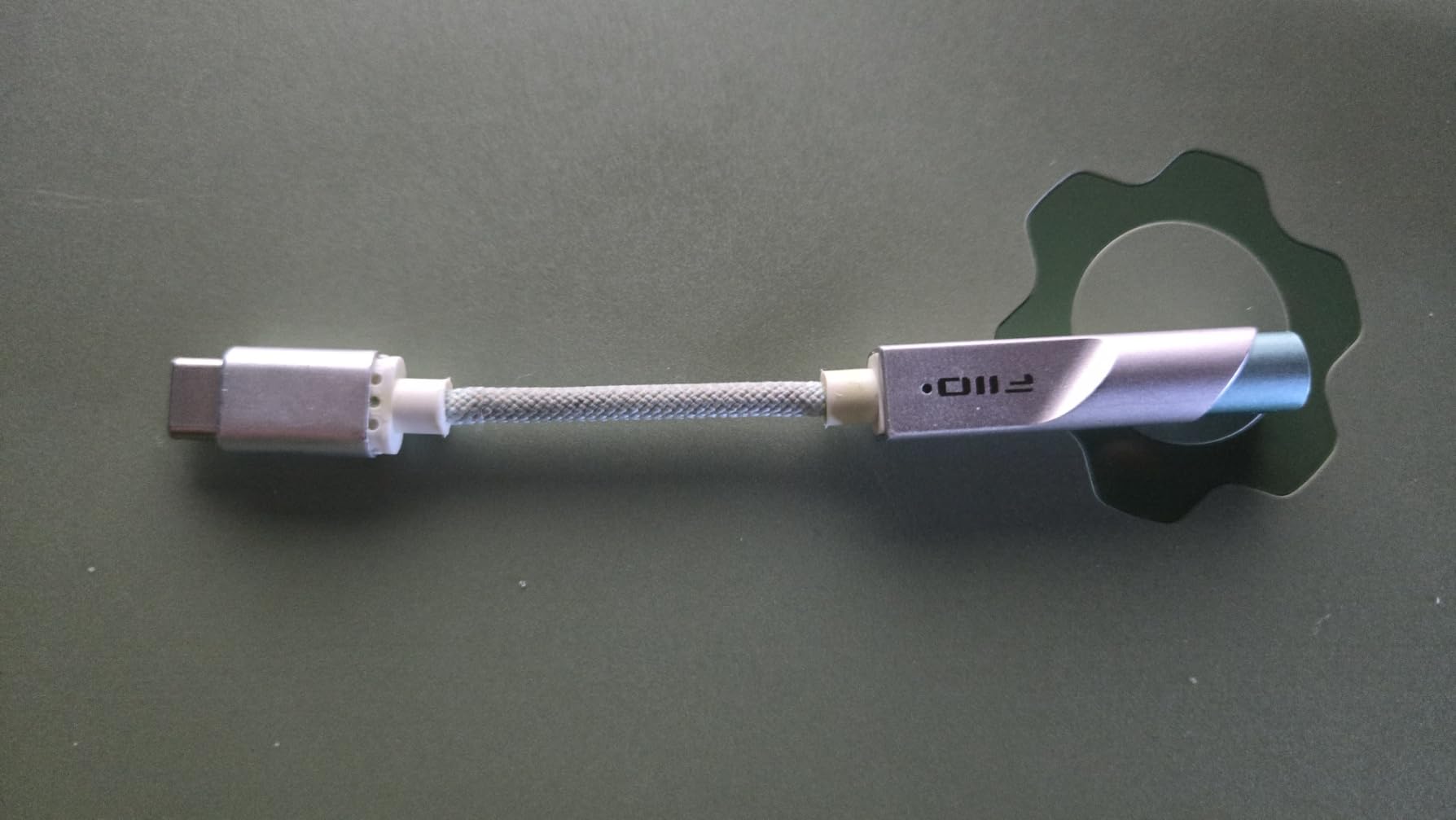
The FiiO KA11 is the dongle that proves you do not need to spend much to get genuinely better sound from your phone. At 8.5g and roughly the size of a paperclip, the KA11 is the smallest DAC amp FiiO makes. It uses a Cirrus Logic CS43131 DAC, supports up to 32bit/384kHz decoding, and delivers 245mW of output at 16 ohms. For most IEMs and easy-to-drive headphones, that is more than enough power.
The sound quality is genuinely impressive for the price. THD+N is under 0.0006%, SNR is 125dB, and noise is under 1.7 microvolts. Those are specifications that would have been flagship-tier a few years ago. The multi-layer immersion gold PCB design and matte-finish metal housing feel far more premium than the price suggests.
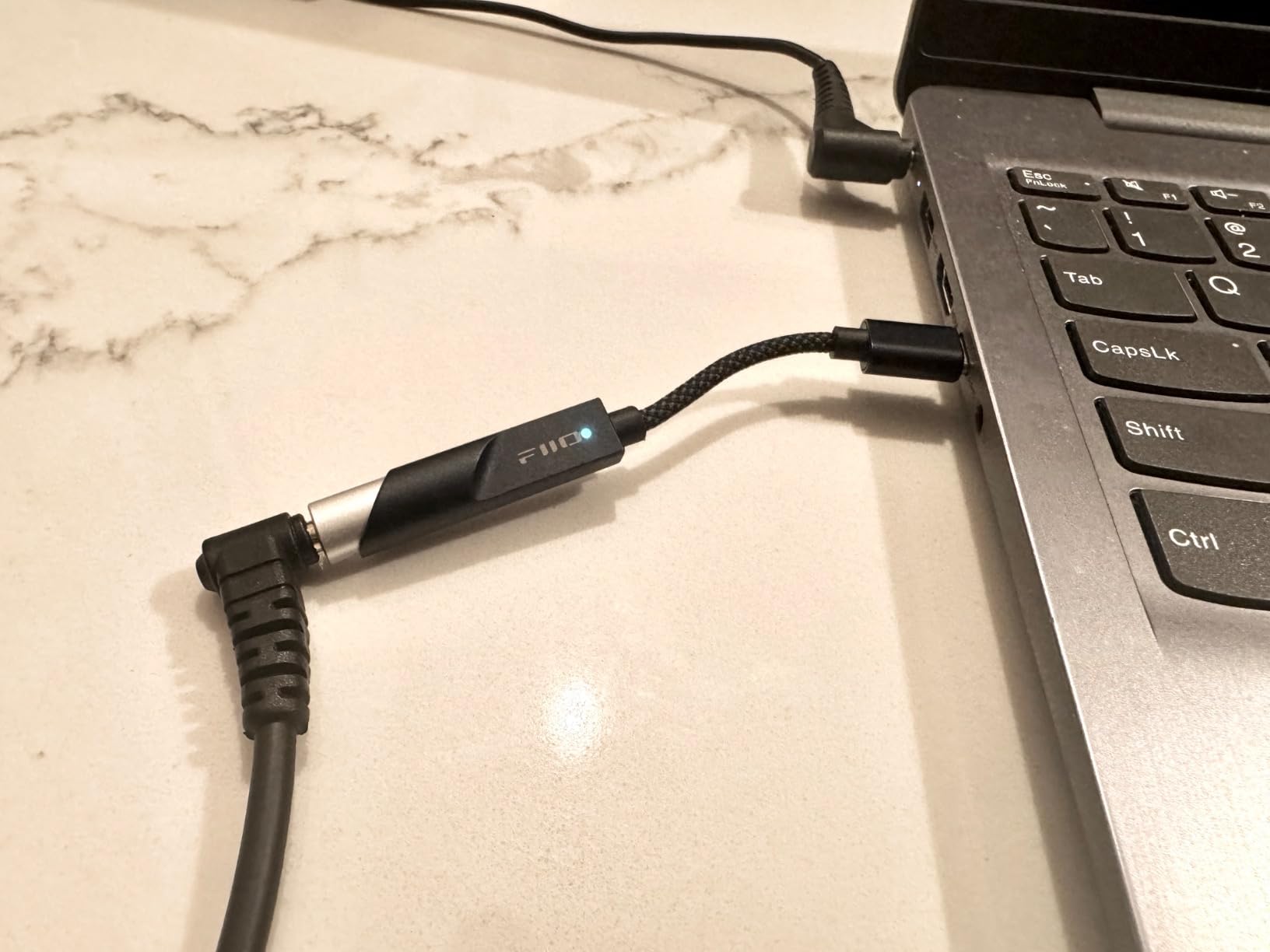
Device support is broad. The KA11 works with Android, iOS, Windows, Mac, Nintendo Switch, and PS5 through UAC1.0 mode. USB-C and Lightning variants are available, so you can use the KA11 with virtually any modern phone or tablet. It is also a popular pick for handheld gaming, where it dramatically improves audio quality over the built-in headphone jack.
The main trade-offs are the lack of inline microphone or remote support and the fact that UAC1.0 mode for gaming consoles requires switching via the FiiO Control app. Some users report reliability concerns over extended use, which is worth considering if you plan to use the KA11 daily for years. For most users, though, the KA11 is the easiest way to upgrade phone audio without spending much.
Who the KA11 Is Best For
The KA11 is the right pick if you want better sound from your phone, laptop, or gaming handheld without spending much. It is ideal for first-time DAC buyers, students, and anyone who wants a no-fuss upgrade. The KA11 is also a great gift for friends or family who want better audio without learning about gain stages and impedance matching.
What to Consider Before Buying
The KA11 does not have balanced output, so it cannot drive the most demanding full-size headphones. If you need balanced 4.4mm output or Bluetooth, step up to the BTR13 or BTR17. For most IEMs and easy-to-drive over-ear headphones, the KA11 is plenty.
How to Choose the Right FiiO DAC Amp Combo for Your Headphones
Choosing the right FiiO DAC amp combo comes down to matching the unit to your headphone type, your listening habits, and your connectivity needs. FiiO makes so many models because each one solves a different problem, and understanding the differences will save you from buying the wrong unit. This buying guide covers the five decision points that matter most.
R2R vs Delta-Sigma DAC Architecture
R2R DACs like the one in the K13 R2R use a network of precision resistors to convert signals in a fundamentally analog way, which produces a warmer, more organic sound. Delta-sigma DACs like the ones in the K7, K11, and K17 use oversampling and noise shaping to achieve very low distortion measurements and a more analytical sound. If you prefer warmth and musicality, R2R is worth the investment. If you want measured accuracy and detail, delta-sigma is the safer bet. Our mid-budget DAC amp combos guide covers the trade-offs in more depth.
Power Output and Headphone Impedance Matching
Power output matters most for high-impedance dynamic headphones (300 ohms and above) and planar magnetic headphones, which draw more current than typical dynamic drivers. The K11 delivers 1400mW, the K7 delivers 2000mW, and the K13 R2R delivers 2400mW, all of which are enough for demanding full-size cans. For IEMs and easy-to-drive over-ears, even the KA11 at 245mW is plenty. Match the amp to the headphone, not the other way around.
Desktop vs Portable Form Factor
Desktop units like the K7, K11, K5 Pro ESS, and K13 R2R deliver more power, balanced XLR or RCA line outputs, and dedicated power supplies. Portable dongles like the KA11, KA15, and KA17 deliver convenience and battery or phone power at the cost of raw output. Bluetooth portables like the BTR13, BTR7, and BTR17 split the difference with wireless flexibility and surprising driving power. If your headphones live at your desk, go desktop. If they travel with you, go portable.
Connectivity: Balanced, Bluetooth, and PEQ
Balanced 4.4mm output reduces ground noise and increases headroom, which is most noticeable on sensitive IEMs and high-impedance headphones. Bluetooth 5.4 with LDAC or aptX Lossless delivers near-wired quality for casual listening. PEQ (parametric EQ) lets you tune the sound to match your headphones and preferences. The K13 R2R and BTR17 both include 10-band PEQ with app and web control, which makes them the most flexible options for sound customization.
FiiO K-Series Evolution: Where You Fit in the Lineup
The FiiO K-series has evolved steadily from the K5 Pro to the K7, K11, K13, K15, K17, and K19. Each generation has added power, refined the DAC stage, and expanded connectivity. The K5 Pro ESS remains the best compact value, the K11 is the sweet spot for first-time buyers, the K7 adds balanced output and THX amplification, and the K13 R2R introduces the new R2R DAC architecture. Upgrading along this path gives you incremental improvements in power, detail, and features. Our portable DAC amp guide covers the BTR and KA series in more detail.
Frequently Asked Questions
What is the best FiiO DAC amp combo for headphones in 2026?
The FiiO K13 R2R is the best FiiO DAC amp combo for headphones in 2026, thanks to its self-developed 24-bit R2R DAC, 2400mW balanced output, and 10-band PEQ. The FiiO K11 is the best value pick with 1400mW and balanced 4.4mm output. The FiiO BTR17 is the best portable pick with Bluetooth 5.4 and 650mW in desktop mode.
Is the FiiO K13 better than the K11?
The K13 R2R is better than the K11 if you want R2R warmth, higher output power (2400mW vs 1400mW), and XLR balanced line out. The K11 is better if you prefer a clean delta-sigma sound and want to spend roughly half as much. For most listeners with HD600 or Sundara headphones, the K11 is plenty. The K13 R2R is worth the upgrade for demanding planars and anyone who prefers the R2R signature.
Does the FiiO K11 improve sound quality over onboard audio?
Yes, the FiiO K11 delivers a measurable improvement over typical onboard PC, laptop, or phone audio. Reviewers consistently note cleaner detail retrieval, tighter bass, wider soundstage, and more driving power for high-impedance headphones like the HD650. The balanced 4.4mm output is the biggest sonic upgrade, and the clean 1400mW amp stage handles demanding headphones without strain.
Which FiiO headphone amp is the best budget pick?
The FiiO KA11 is the best ultra-budget FiiO headphone amp, and the FiiO K11 is the best budget desktop FiiO headphone amp. The KA11 is a pocketable dongle with 245mW of output for IEMs and easy-to-drive headphones. The K11 is a full desktop unit with 1400mW balanced output for demanding headphones.
Can FiiO DAC amp combos drive planar magnetic headphones?
Yes, several FiiO DAC amp combos can drive planar magnetic headphones. The K13 R2R delivers 2400mW, which handles the HIFIMAN Susvara. The K7, K11, and K17 all deliver enough power for the HIFIMAN Sundara and Arya. The BTR17 and KA17 deliver enough power in desktop mode for most portable-friendly planars. The entry-level KA11 and BTR13 are best for easy-to-drive planars only.
Are FiiO DAC amp combos worth buying?
Yes, FiiO DAC amp combos are worth buying for anyone using mid-to-high-end headphones. They deliver measurable sound quality improvements over onboard audio, have strong build quality, and offer competitive features at prices well below flagship alternatives. Forum users on r/HeadphoneAdvice and r/FiiO consistently recommend FiiO as a reliable brand with good warranty support.
Final Verdict: Which FiiO DAC Amp Combo Should You Buy?
After testing all ten units, my pick for the best FiiO DAC amp combo for headphones in 2026 is the FiiO K13 R2R for desktop listeners who want R2R warmth and enough power to drive the most demanding headphones. The FiiO K11 is the right call for budget-conscious buyers who still want balanced output and clean sound. The FiiO BTR17 is the best portable pick for anyone who wants desktop-class power in a pocketable Bluetooth package.
If you are setting up a home office or shared listening space, our guide to the best DAC and amp combos for a home office covers some practical considerations beyond pure sound quality. Whichever FiiO unit you go with, you are getting one of the most reliable names in personal audio, backed by a 1-year warranty and a decade of refinement in the DAC amp combo category.
The best FiiO DAC amp combos for headphones all share one thing in common: they deliver meaningful sound quality improvements at prices that do not require flagship budgets. Pick the unit that matches your headphone type, your listening environment, and your connectivity needs, and you will not be disappointed.