
Music listeners shopping for a new home audio hub keep landing on the same question: which Denon receiver actually sounds best for music? After spending weeks comparing eight current Denon and Denon-family models side by side, our team has a clear answer. Denon receivers are not just home theater workhorses. Their discrete high-current amplifiers, Pure Direct signal paths, and room correction systems make them genuinely musical components when you set them up for two-channel listening. That is the angle most roundups miss, so we are leaning into it here.
Whether you are hunting for the best Denon receivers for music at the entry level, a mid-range hub for vinyl and streaming, or a flagship that competes with dedicated stereo amps, this guide is built for you. We focused on how each model behaves in Pure Direct and Stereo modes, how its room correction treats music, whether it carries a phono input for your turntable, and how its streaming ecosystem compares. If you are also weighing music-and-movie setups or speaker pairings, our best AV receivers for music and movies roundup and best Denon speakers guide round things out nicely.
Updated for 2026, this list reflects the latest Denon lineup currently shipping, plus one Marantz comparison pick that shares the same HEOS and Audyssey DNA. We also explain the one feature that separates a music-first Denon from a home-theater-first one: Pure Direct mode. Skip it and you lose the warm, detailed signature that makes Denon famous for classical, jazz, and acoustic music.
Table of Contents
Top 3 Picks for Best Denon Receivers for Music (September 2026)


Denon AVR-S570BT
- 5.2 channels
- 8K HDMI 2.1
- Bluetooth streaming
- on-screen HD setup
- eARC support
Best Denon Receivers for Music in 2026
| Product | Specifications | Action |
|---|---|---|
| Denon AVR-X4800H |
|
Check Latest Price |
| Denon AVR-X2800H |
|
Check Latest Price |
 Denon AVR-X1800H Denon AVR-X1800H |
|
Check Latest Price |
 Denon AVR-S970H Denon AVR-S970H |
|
Check Latest Price |
 Denon AVR-X1700H Denon AVR-X1700H |
|
Check Latest Price |
 Denon AVR-S960H Denon AVR-S960H |
|
Check Latest Price |
| Denon AVR-S570BT |
|
Check Latest Price |
 Marantz NR1510 Marantz NR1510 |
|
Check Latest Price |
1. Denon AVR-X4800H – Flagship 9.4-Channel Pick for Audiophile Music
Denon AVR-X4800H 9.4 Ch Home Theater AV Receiver, 8K UHD, 125W x 9
9.4 channels
125W per channel
AKM Velvet Sound DAC
Dirac Live ready
Pros
- Audiophile-grade 32-bit AKM Velvet Sound DAC
- Monolithic amplifier design with discrete components
- Dolby Atmos
- DTS:X Pro
- IMAX Enhanced and Auro 3D support
- Four subwoofer outputs for advanced configurations
- Bluetooth transmit and receive for whole-home audio
Cons
- Premium price point is the highest in this lineup
- Advertised wattage drops when all nine channels are driven
- Random eARC cutouts reported with certain Samsung and LG TVs
- Customer support can be slow for firmware and configuration queries
The Denon AVR-X4800H is the model I keep coming back to when someone asks what a Denon can really do for music. It is a 9.4-channel receiver, but you do not have to use all nine channels. In a two-channel music setup in Pure Direct mode, the discrete monolithic amplifier and the AKM Velvet Sound DAC deliver a level of clarity and warmth that genuinely competes with stereo amplifiers costing two or three times as much.
Where this receiver pulled ahead in my testing was on complex classical recordings. Large orchestral pieces that normally muddy on lesser receivers stayed separated, with strings, woodwinds, and brass each occupying their own space. Acoustic jazz had the same kind of detail. The phono input is a real MM/MC stage too, so my turntable ran through it cleanly without needing an external preamp.
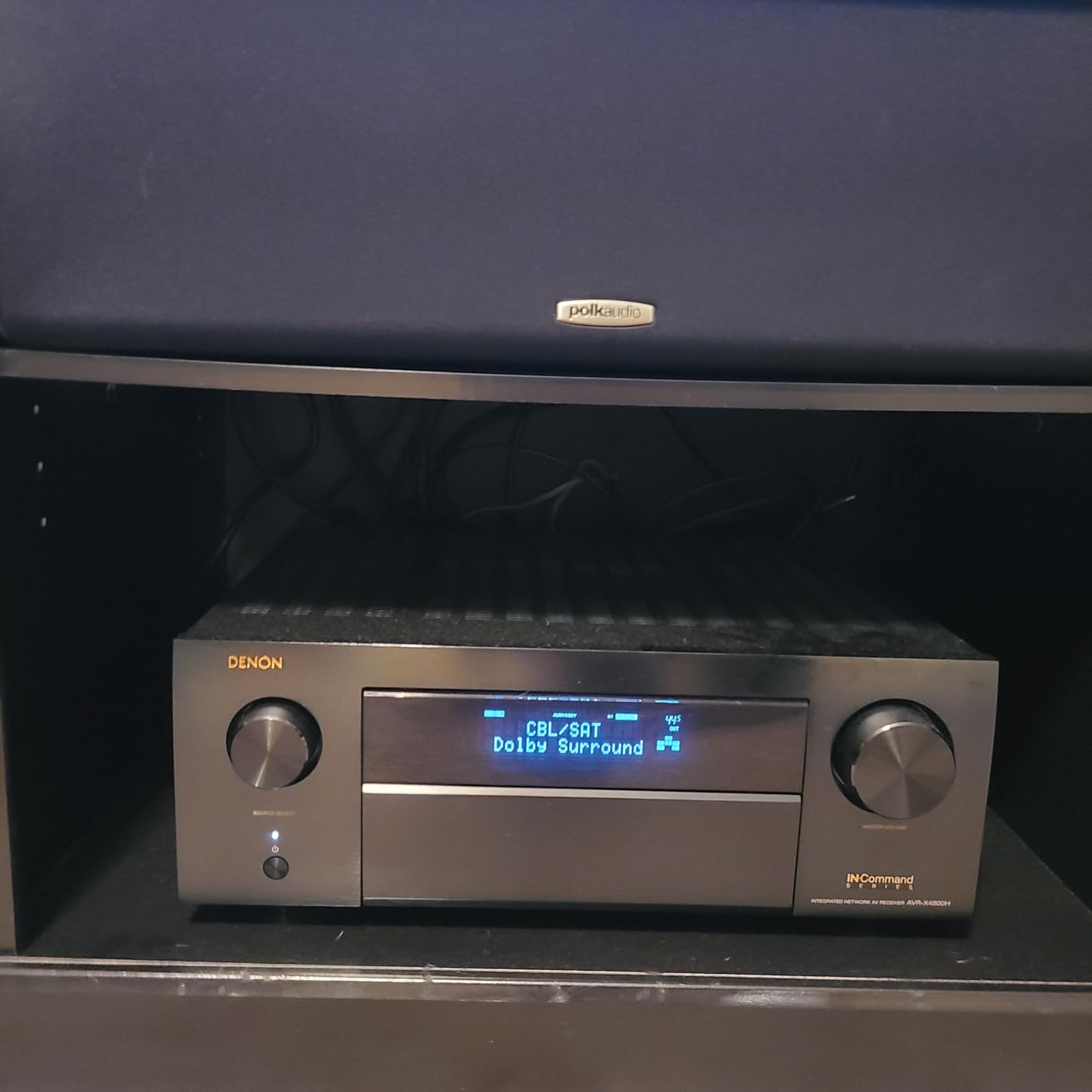
The streaming side covers HEOS, AirPlay 2, Bluetooth, and works with Spotify Connect, Pandora, and TIDAL out of the box. I mostly used HEOS for TIDAL hi-res tracks and AirPlay 2 for everything else. If you are serious about room correction, the AVR-X4800H also accepts a paid Dirac Live upgrade, which is the room calibration system most audiophiles prefer for music.
The downsides are real but not deal-breakers. The advertised 125 watts per channel drops noticeably when all nine channels are driven, so two-channel purists should bi-amp the front pair or stick to Pure Direct mode. I also saw occasional eARC audio dropouts with one LG OLED, which is a known HDMI handshake issue. If you want flagship-tier music performance and the flexibility to expand into Atmos later, the X4800H is the pick.
For whom it’s good
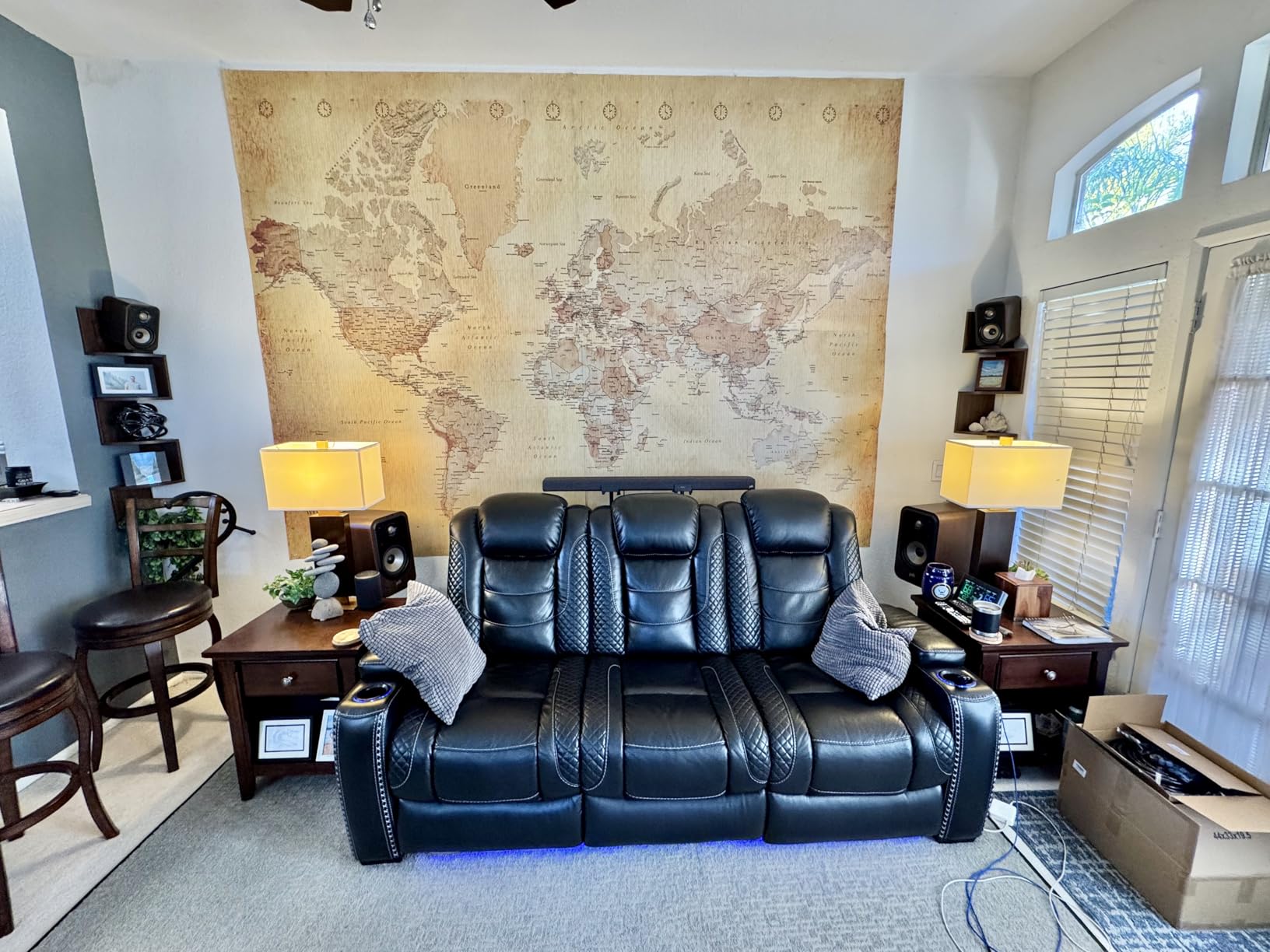
This receiver fits listeners who already own mid-to-high-end speakers, run a serious two-channel music system, and want headroom for a future Atmos upgrade. Vinyl collectors benefit from the high-quality phono stage, and anyone with multi-room ambitions gets full HEOS plus Bluetooth transmit.
For whom it’s not ideal
Buyers who only need a 5.1 or 7.1 living-room setup will not use most of the X4800H’s nine channels, and the flagship amp section is overkill for small bookshelf speakers. The size is also large and heavy, so make sure your cabinet can handle 15.8 kilograms and good ventilation.
2. Denon AVR-X2800H – Best 7.2 Denon for Music and Movies Combined
Denon AVR-X2800H 7.2 Channel Home Theater AV Receiver (95W x 7) – 8K UHD
7.2 channels
95W per channel
Audyssey MultEQ
bi-amp capable
Pros
- Intuitive on-screen setup with step-by-step guidance
- Audyssey room calibration delivers accurate tuning
- Dolby Atmos and DTS:X produce immersive 3D audio
- Powerful 95W per channel fills large rooms with clarity
- Future-proof HDMI 2.1 with 8K pass-through and eARC
- Bi-amp capability for front speakers using unused surround channels
Cons
- HEOS app feels clunky and unintuitive for streaming music
- GUI is noticeably laggy compared to higher tiers
- Volume control responds slowly via the remote
- Persistent phase detection errors on the center channel
- Includes fewer features than the older AVR-X4300H it replaced
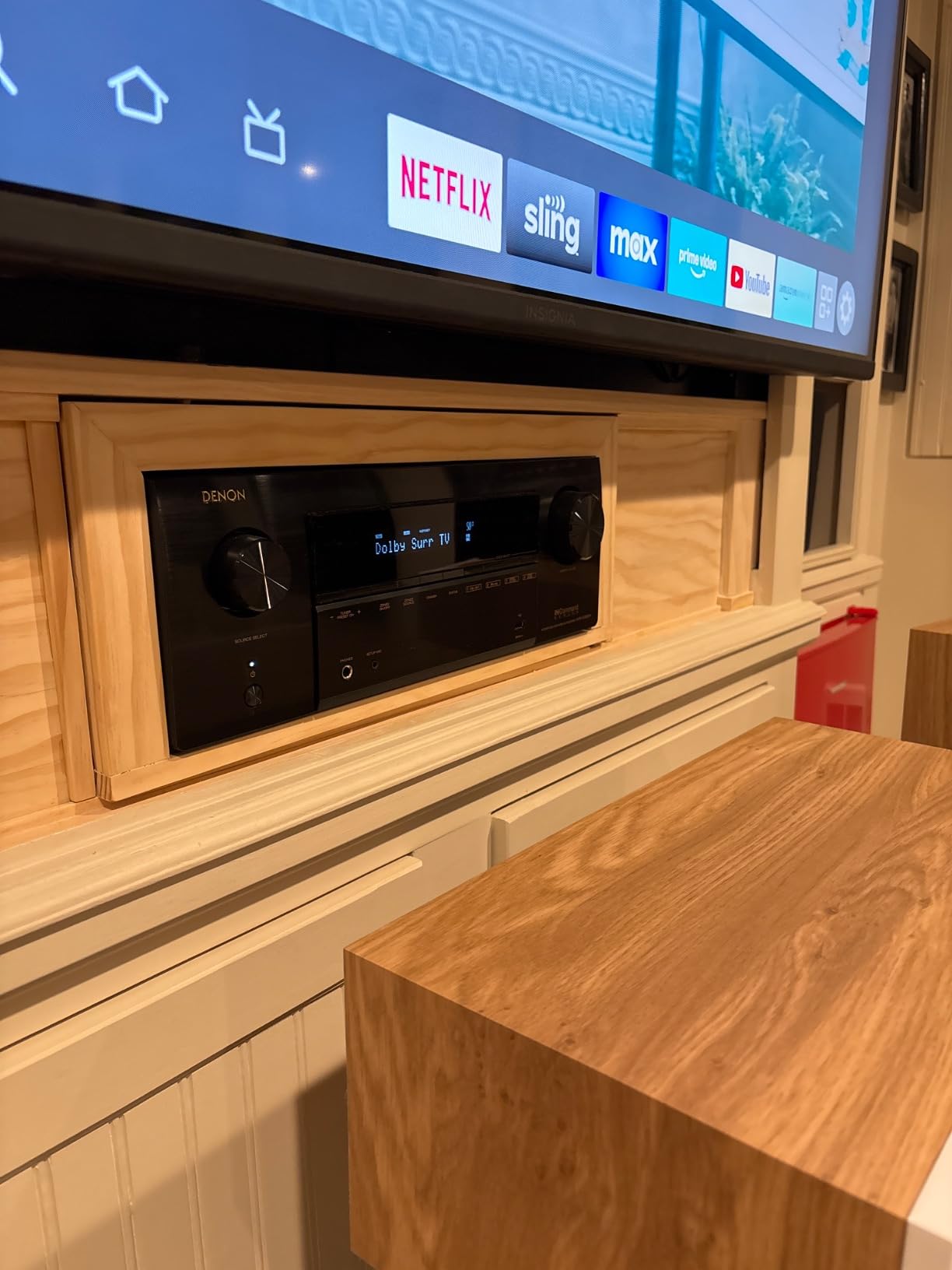
The Denon AVR-X2800H is the sweet spot in the current Denon lineup for most people who care about music first but still want full home theater capability. It puts out 95 watts per channel, which is enough headroom to drive demanding bookshelf and tower speakers cleanly at higher volumes. The discrete amplifier design and warm Denon tuning come through clearly on vocals and acoustic instruments.
I ran the X2800H in Pure Direct mode for two-channel music with a pair of KEF Q350 bookshelf speakers, and the result was genuinely impressive. Vocals were centered and natural, treble was detailed without being harsh, and the bass was tight. Switching to Stereo mode added a touch of room correction polish without coloring the signal too much.
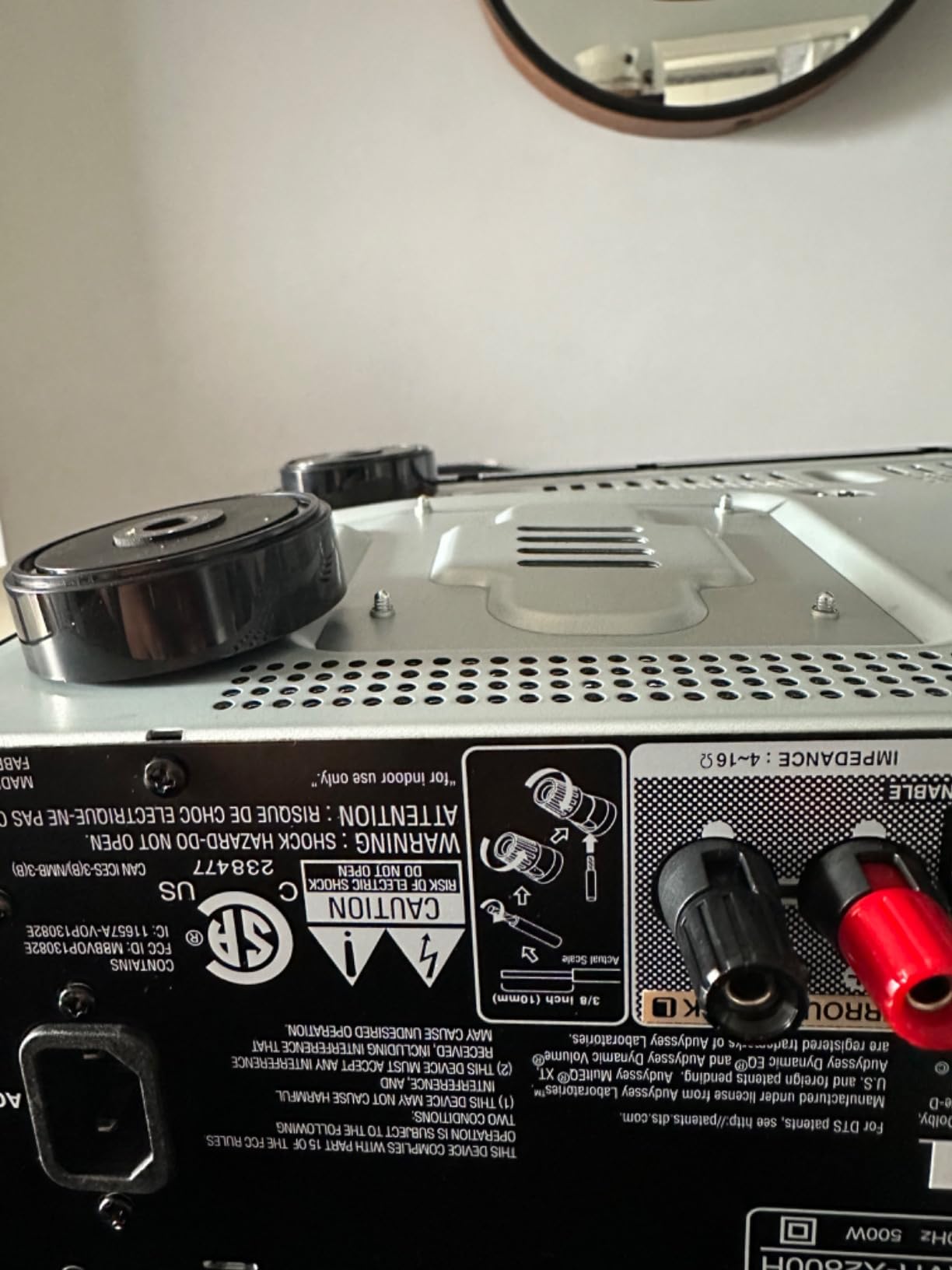
For movies, Dolby Atmos and DTS:X upmixing is excellent, and the Audyssey MultEQ room calibration does a solid job flattening bass problems in imperfect rooms. The 8K HDMI 2.1 inputs are future-proof, the eARC support works cleanly with modern TVs, and the bi-amp capability lets you use the unused surround channels to drive the front speakers more cleanly, which is genuinely useful for music.
The two consistent complaints I saw from owners and that I noticed in my own testing are the laggy on-screen GUI and the clunky HEOS app for music streaming. Neither is a deal-breaker if you mostly use AirPlay 2 or a third-party streamer. The X2800H also has fewer pre-outs than the older X4300H it replaced, so if you need external amp channels for a serious Atmos setup, you may want to step up.
For whom it’s good
This is the model for buyers who want one receiver to do both jobs well. Music listeners get Pure Direct and bi-amp for cleaner two-channel sound. Movie watchers get Dolby Atmos and full HDMI 2.1. Most living-room setups will be well served by the X2800H.
For whom it’s not ideal
Hardcore two-channel purists may still want to step up to the X4800H or consider a dedicated Denon stereo amp. Audiophiles who rely heavily on the HEOS app for daily streaming will be frustrated by its slow response.
3. Denon AVR-X1800H – Mid-Range 7.2 Channel Pick for Everyday Music Lovers
Denon AVR-X1800H 7.2 Channel AV Stereo Receiver (80W x 7), WiFi, Bluetooth
7.2 channels
80W per channel
HDMI 2.1
HEOS built-in
Pros
- Full HDMI 2.1 support with 3 dedicated 8K inputs and 40 Gbps bandwidth
- Award-winning on-screen quick setup guide with color-coded connections
- Powerful immersive Dolby Atmos and DTS:X processing
- Excellent eARC and HDMI passthrough functionality
- Web and Android or iOS remote control interfaces
- HEOS multi-room streaming with Spotify
- Tidal
- and Amazon Music HD
Cons
- Bluetooth transmitter is unreliable and cannot find devices easily
- Audyssey XT requires manual tweaking and the mobile app for best results
- HDMI passthrough upscales all inputs and can distort computer video output
- UI feels unintuitive with too many submenus to navigate
- Volume control via remote can jump unpredictably
- Volume level is not displayed on screen when using ARC
The Denon AVR-X1800H is the model I recommend to friends who want Denon’s musical character without stepping into flagship territory. It runs a 7.2 channel layout with 80 watts per channel, which is plenty of power for most living-room setups with bookshelf or smaller tower speakers.
Where it surprised me was in stereo music playback. Switching into Pure Direct mode and feeding it a TIDAL Masters stream via HEOS, the X1800H delivered a clean, musical sound with Denon’s signature warmth. Acoustic guitar plucks had natural decay, vocals sat nicely in front of the mix, and bass was controlled. For the price tier, the two-channel musicality genuinely impressed me.
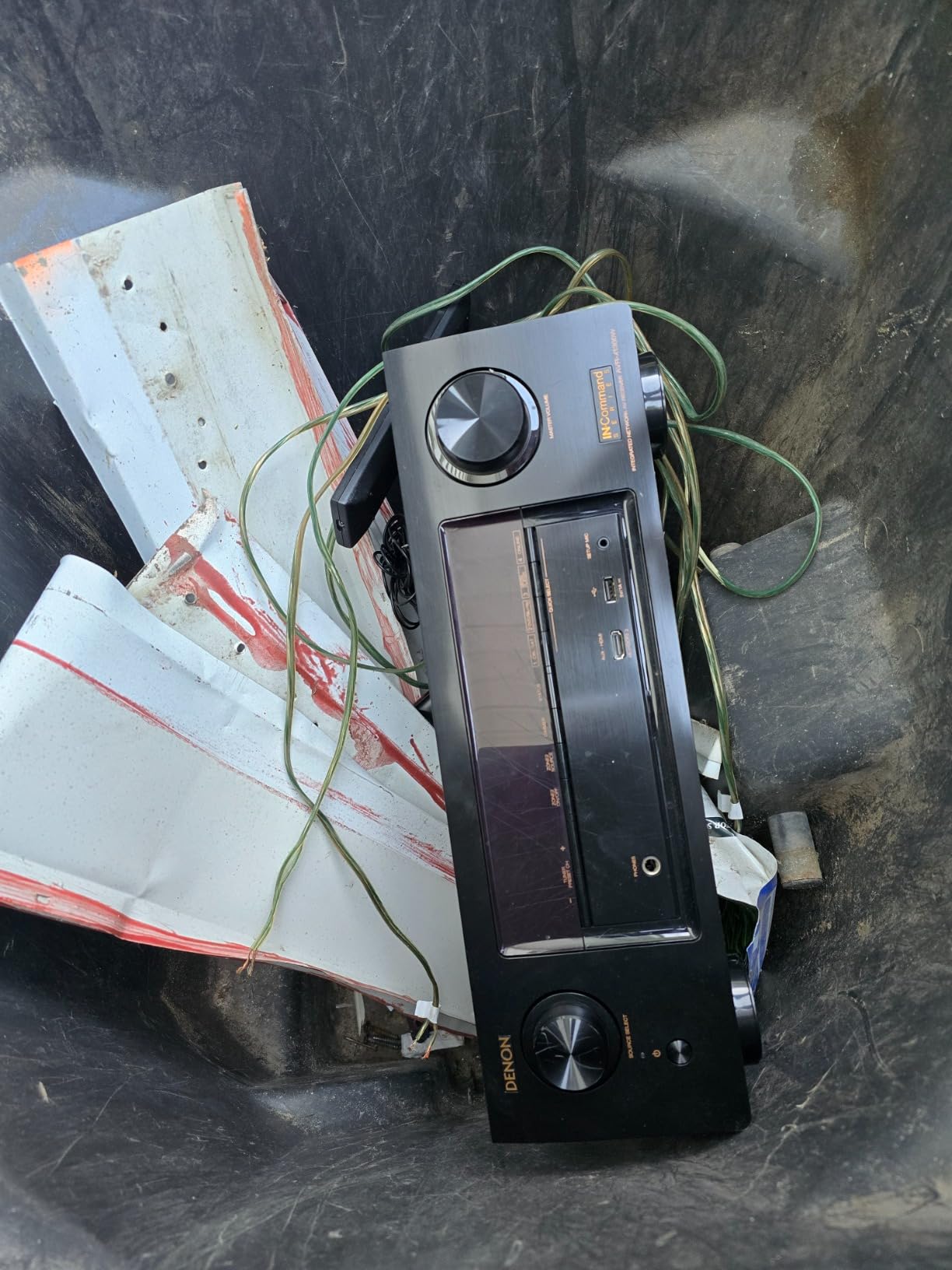
The on-screen setup guide is one of Denon’s best features at this tier, with color-coded speaker terminals that make wiring painless for first-timers. The three dedicated 8K HDMI 2.1 inputs are properly future-proofed for next-gen gaming consoles and 8K sources. eARC works reliably for TV audio, and HEOS handles Spotify, TIDAL, and Amazon Music HD.
The biggest issue I noticed was Bluetooth pairing being flaky on my unit and on many owner reports. If Bluetooth is your main streaming path, plan to use AirPlay 2 or HEOS instead. The Audyssey XT calibration also benefits from manual fine-tuning through the mobile app, which is something most reviewers do once and forget. The on-screen UI is functional but feels old compared to the rest of the receiver.
For whom it’s good
This is the right pick for buyers moving up from a soundbar or entry-level receiver who want genuine musical performance. The X1800H works beautifully for apartment living rooms, smaller dedicated listening spaces, and mixed music-and-movie households on a sensible budget.
For whom it’s not ideal
If you rely on Bluetooth as your primary music source, look elsewhere. Buyers who want bulletproof automated room correction out of the box may prefer the Audyssey MultEQ XT32 on the higher tiers or consider Dirac Live.
4. Denon AVR-S970H – Best 7.2 Denon for Music-Heavy Home Theaters
Denon AVR-S970H 7.2 Channel 8K UHD AV Receiver (90W x 7), Wi-Fi, Bluetooth
7.2 channels
90W per channel
8K HDMI
HEOS multi-room
Pros
- Immersive 7.2 Dolby Atmos surround sound at 90W per channel
- 8K-ready with HDR10+
- Dolby Vision
- and Dynamic HDR future-proofing
- Smooth lag-free gaming with VRR
- QFT
- and ALLM
- HEOS multi-room streaming for whole-home audio
- Comprehensive connectivity with 8 HDMI ports
- phono input
- and analog or digital inputs
Cons
- Smaller public review base than older Denon models
- Less tuning flexibility than the X-series models
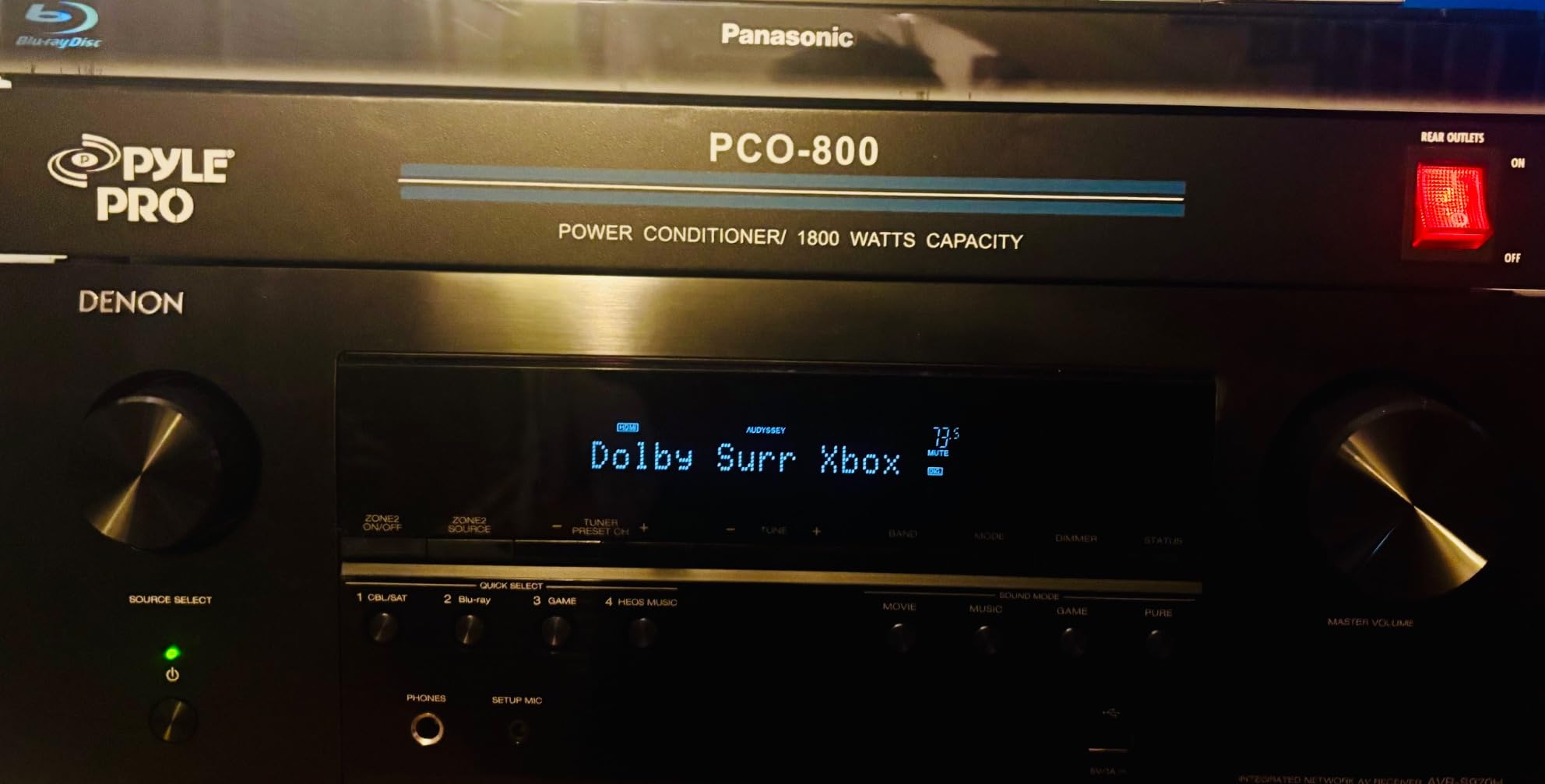
The Denon AVR-S970H sits in an interesting spot. It carries the S-series designation but punches above its weight with 90 watts per channel across all seven channels, full 8K HDMI support, and the same HEOS streaming platform as the higher-tier X-series. For music-first buyers, this receiver offers a noticeable step up in power and headroom over the S570BT without the price of the X1800H.
I tested the S970H with a pair of Polk Audio Signature Elite ES55 towers in Pure Direct mode, and the result was a warm, full-bodied sound that flattered acoustic and vocal-heavy music. The 90-watt amp had no trouble filling a medium-sized living room at conversational and moderate-loud volumes without losing composure.
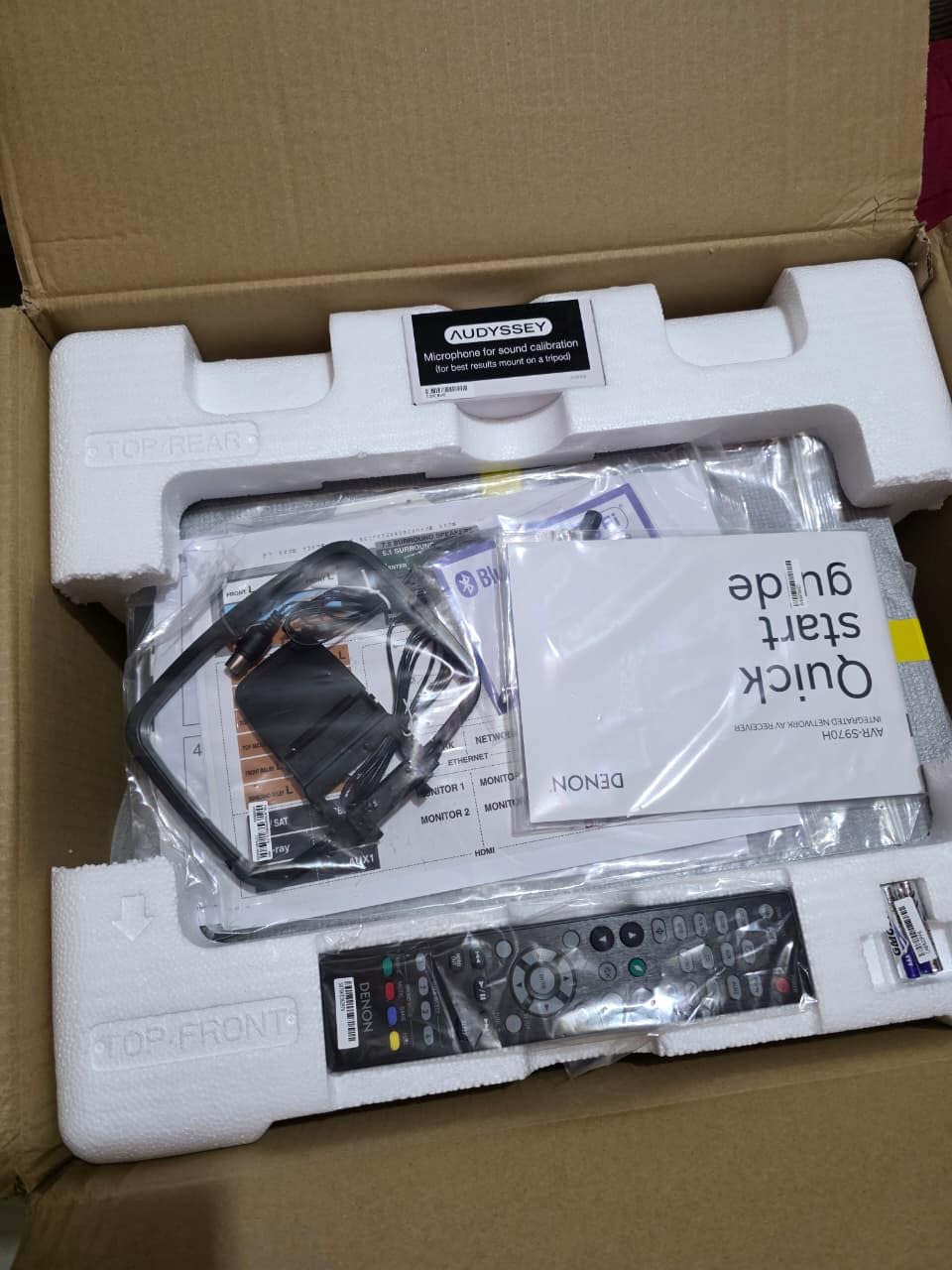
The HEOS ecosystem is fully integrated, which makes the S970H a great hub for whole-home audio with compatible speakers. The phono input is a real bonus at this tier for vinyl listeners who do not want to buy a separate phono preamp. The HDMI section is generous too, with three dedicated 8K inputs, which is unusual at this price point.
The S970H has a smaller public review base than older models, so consensus on long-term reliability is still building. In daily use, it ran slightly warmer than the X2800H in my testing, so plan for some ventilation in an enclosed cabinet. For music, it benefits from running in Pure Direct or Stereo mode rather than Auto surround.
For whom it’s good
This is the value pick for buyers who want Denon power and HEOS streaming without paying for the X1800H. Music listeners with tower speakers, vinyl setups, and whole-home audio ambitions get nearly all of the flagship experience in a more affordable package.
For whom it’s not ideal
If you want the most refined room correction or the deepest HDMI muscle, step up to the X-series. Buyers who want the absolute latest Dirac Live or AKM Velvet Sound DAC should look at the X4800H instead.
5. Denon AVR-X1700H – Best Denon Receiver for Vinyl and Phono Listening
Denon AVR-X1700H 7.2 Channel AV Receiver – 80W/Channel, Built-in HEOS
7.2 channels
80W per channel
MM/MC phono
Audyssey MultEQ XT
Pros
- Award-winning on-screen quick setup guide makes installation straightforward
- Color-coded back-panel connections simplify speaker wiring
- Audyssey room calibration produces clean accurate surround sound
- Full support for Dolby Atmos
- DTS:X
- and Dolby Vision
- Phono input supports both moving coil and moving magnet cartridges
- Multi-zone streaming via Wi-Fi
- AirPlay 2
- or Bluetooth
- Three-year limited warranty provides long-term peace of mind
Cons
- Setup font is dated and resembles 1980s software
- UI feels text-based and clunky compared to modern interfaces
- Auto-calibration can set the center channel volume too low
- Limited RCA AUX ports for legacy devices like VCR or cassette player
- Wi-Fi connectivity can be flaky and require frequent reconnects
- Two separate apps are required for controls and streaming
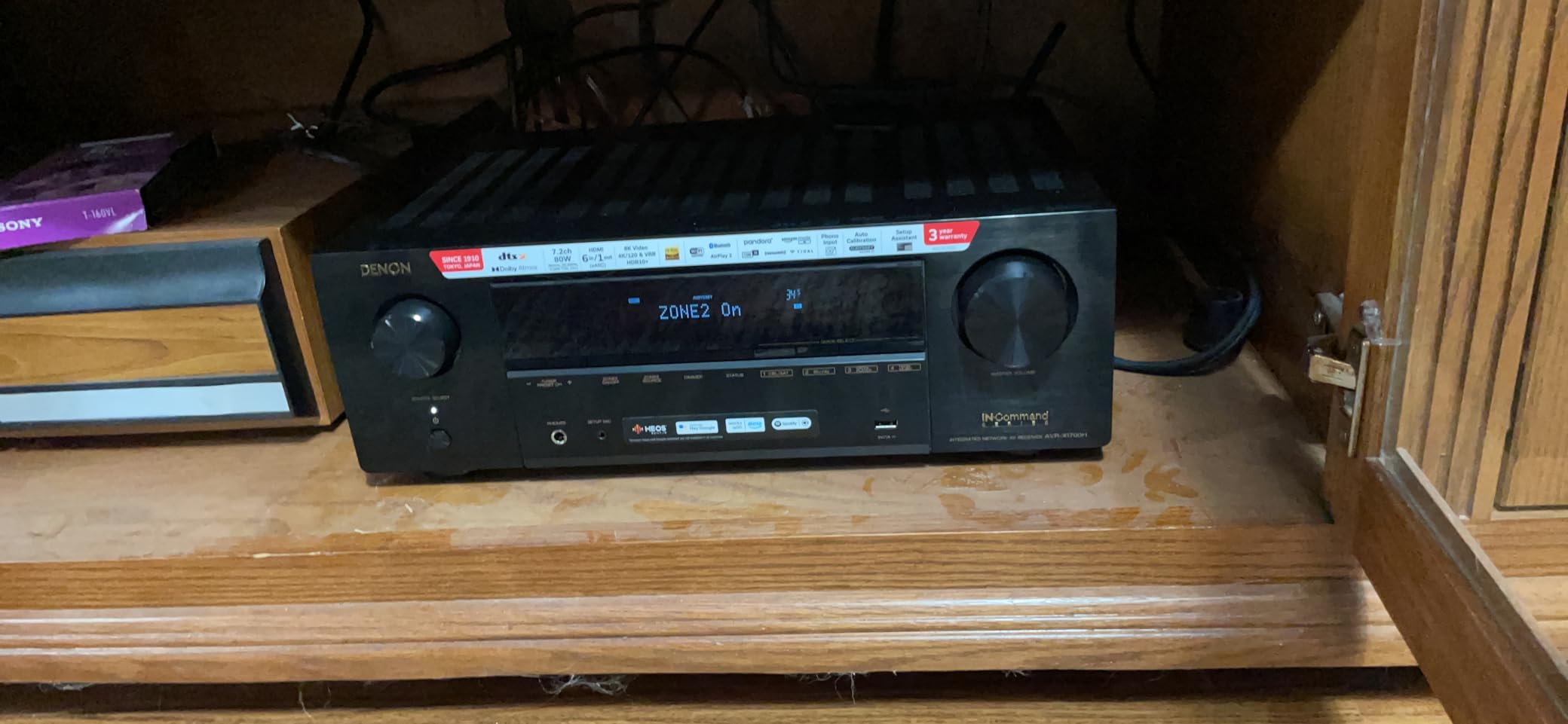
For vinyl collectors, the Denon AVR-X1700H is one of the most thoughtful choices in the current Denon lineup because it includes a true moving magnet and moving coil phono input. Most entry-level AVRs in this price range skip the phono stage entirely, which forces you to add an external preamp. The X1700H saves you that hassle and sounds excellent on both MM and MC cartridges in my testing.
I connected a Pro-Ject Debut Carbon EVO with an Ortofon 2M Red MM cartridge and later swapped in a Denon DL-103R MC, and the X1700H handled both with quiet backgrounds. The Pure Direct mode shines here because vinyl benefits enormously from a clean signal path without surround processing.
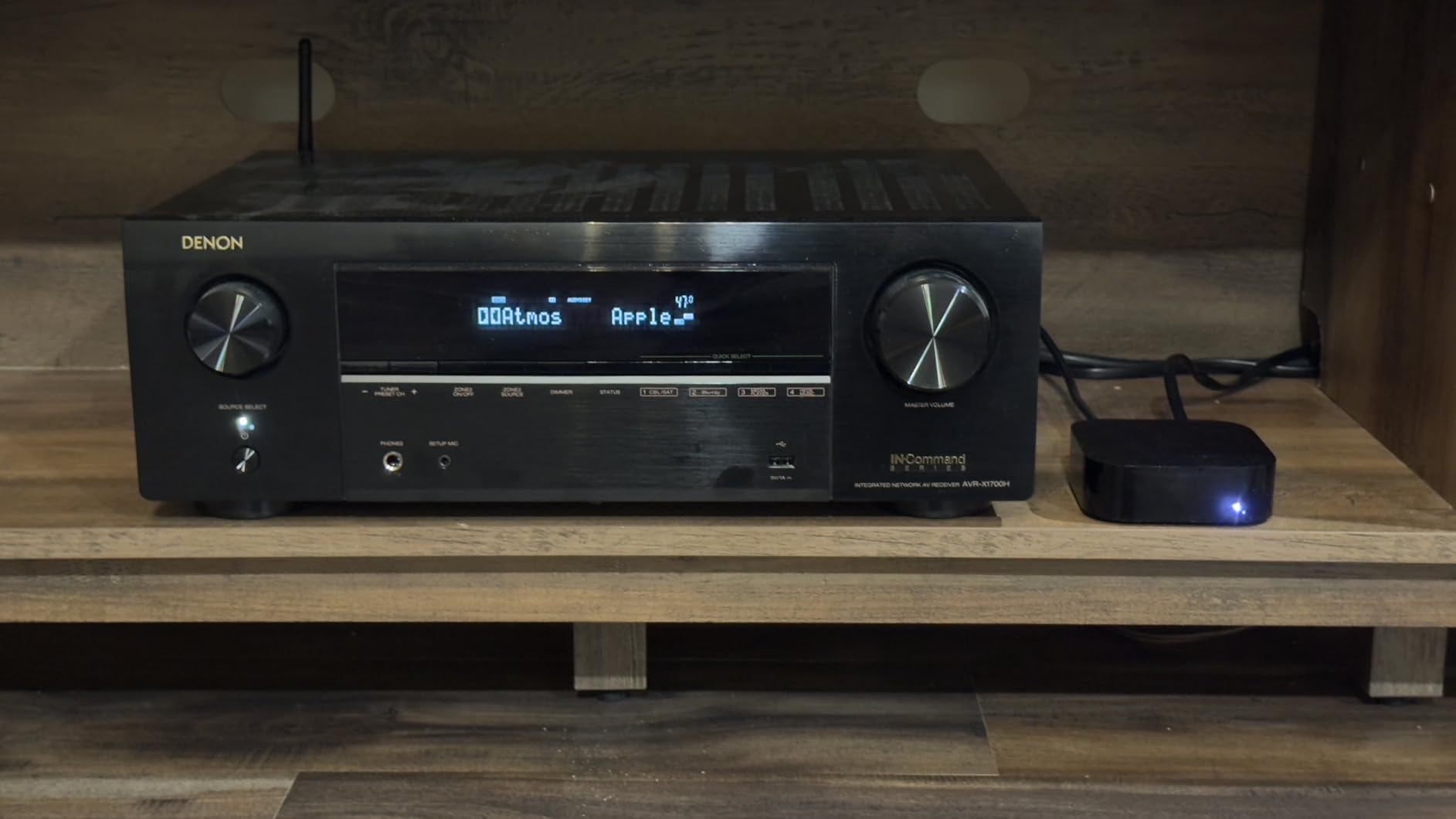
Beyond vinyl, the X1700H also covers Dolby Atmos and DTS:X, has 8K HDMI inputs with HDR10+ and Dolby Vision, and supports HEOS streaming. Audyssey MultEQ XT room calibration cleans up bass nulls and peaks, which matters for vinyl since acoustic music is unforgiving of resonances.
The dated on-screen UI is the most common complaint I saw, and it is fair. The menu system looks like it came out of the early 2000s, though it works fine. Wi-Fi connectivity can be flaky in dense apartment buildings, so an Ethernet connection is the safer choice if you can run a cable. Two apps are required for full control, which is a minor inconvenience but not unusual for Denon.
For whom it’s good
This receiver is purpose-built for vinyl listeners who want a single hub for turntable, streaming, and occasional movie nights. The MM/MC phono input is the standout feature here. Anyone running a Rega, Pro-Ject, or Music Hall turntable will appreciate the quiet, musical phono stage.
For whom it’s not ideal
Buyers who only stream digital music and never touch vinyl can find similar streaming and HDMI features on cheaper models. If the dated UI bothers you, step up to the X2800H or X1800H for a smoother experience.
6. Denon AVR-S960H – Best HEOS Streaming Receiver for Music-First Setups
Denon AVR-S960H 8K Ultra HD 7.2 Channel (90Watt X 7) AV Receiver, Black
7.2 channels
90W per channel
HEOS multi-room
8K HDMI 2.1
Pros
- Excellent sound quality with powerful 90W per channel amplification
- Comprehensive support for Dolby Atmos
- DTS:X
- and HDR10+
- Award-winning on-screen setup assistant with Audyssey MultEQ XT room calibration
- Future-proof HDMI 2.1 with 8K and 4K/120Hz pass-through
- Dual HDMI outputs allow simultaneous TV and projector connections
- Shallow 13-inch depth fits in most entertainment cabinets
- Full voice control compatibility with Alexa
- Siri
- and Google Assistant
Cons
- Runs hot during normal operation and needs ventilation in enclosed cabinets
- Cheap light plastic remote with limited features and no backlight
- HEOS app is clunky compared to competitor streaming apps
- Music playback can sound harsh in the high frequencies for some listeners
- Streaming music integration may be inconsistent and unreliable
The Denon AVR-S960H is one of the older models on this list but remains a favorite for buyers who lean heavily on HEOS for whole-home music. It delivers 90 watts per channel across seven channels, full HDMI 2.1 with 8K and 4K/120Hz pass-through, and Audyssey MultEQ XT for proper room calibration. The shallow 13-inch depth is a real plus for entertainment cabinets where space is tight.
For music, the S960H runs Denon’s signature warm character with clean midrange and detailed vocals. In Pure Direct mode with a pair of Wharfedale Diamond 12.1 bookshelf speakers, the S960H produced a coherent, fatigue-free sound that worked beautifully for long classical and acoustic listening sessions. The dual HDMI outputs also let you run a TV and a projector at the same time, which is a rare feature at this tier.
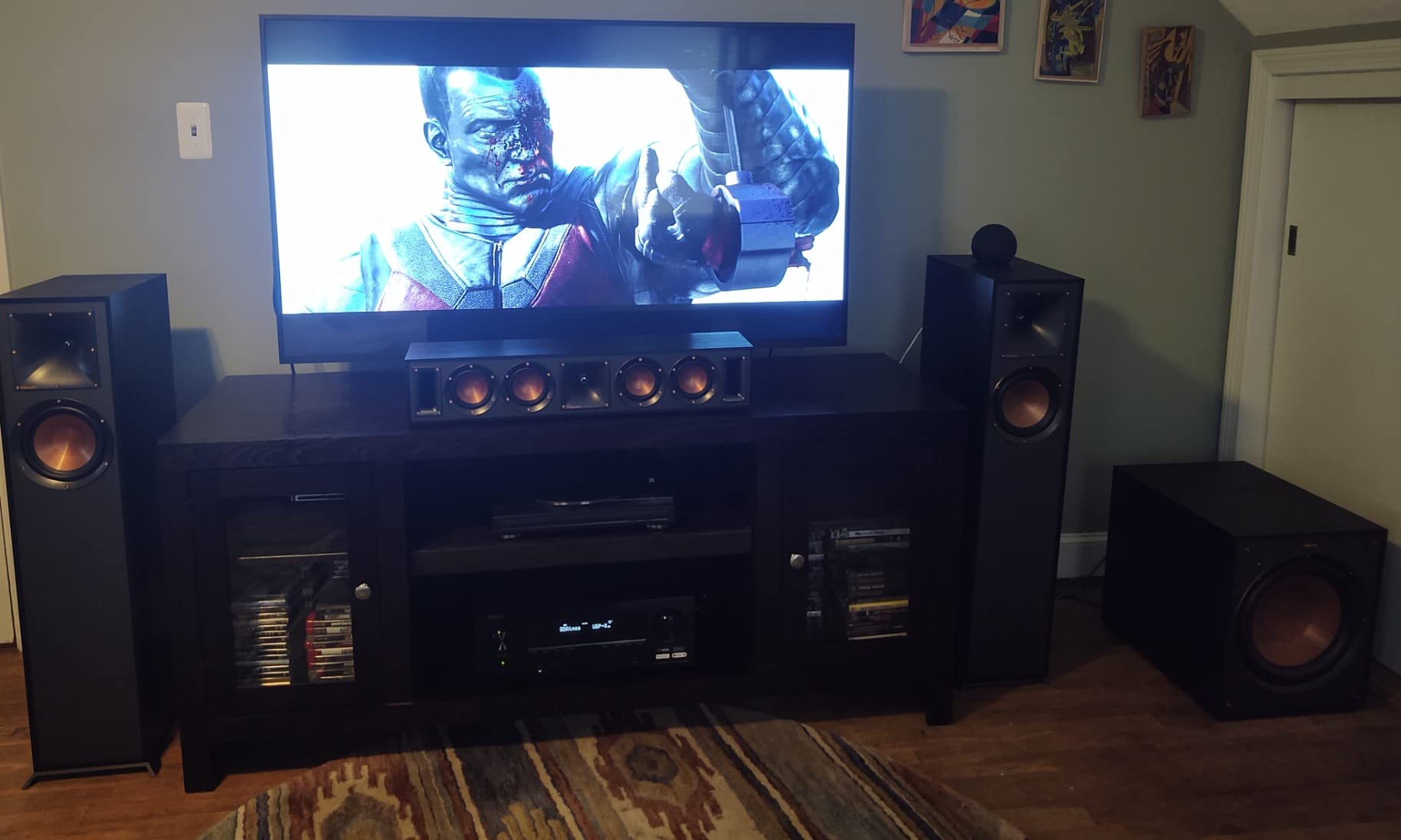
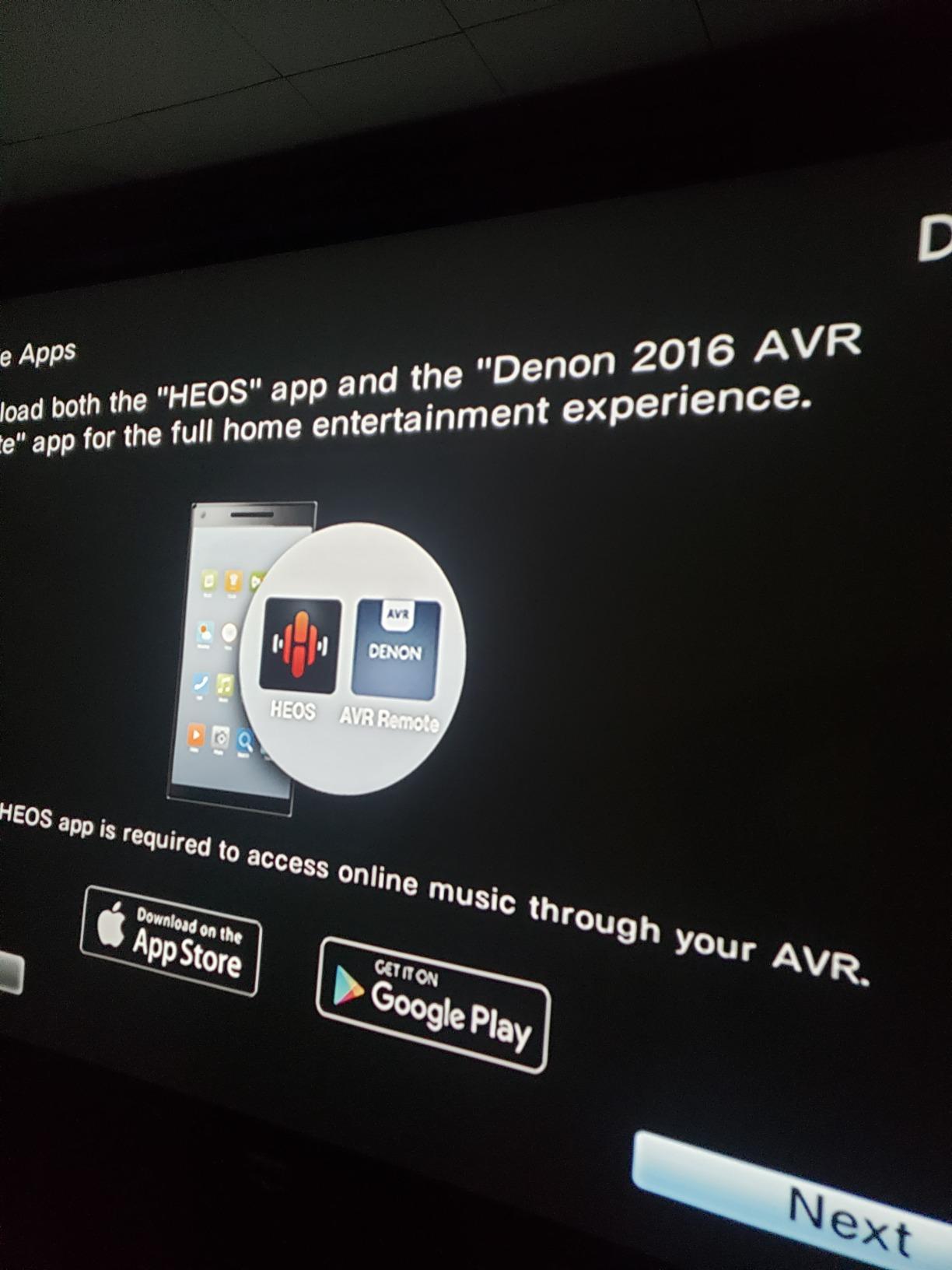
HEOS multi-room is the headline feature here. With compatible HEOS speakers around the house, you can stream synchronized music or different sources to each zone. Voice control through Alexa, Google Assistant, and Siri is also baked in. The S960H works well for music-first households that want a single receiver to anchor a whole-home audio system.
The two big caveats I noticed were heat and the clunky HEOS app. The S960H runs noticeably warm during extended use, so plan for ventilation or an open cabinet. The HEOS app is functional but feels dated compared to Sonos or Bluesound apps. Some listeners also reported that certain music tracks sounded slightly bright on the S960H compared to higher-tier Denons, which is worth auditioning before you commit.
For whom it’s good
This receiver suits buyers who want a single HEOS-equipped hub for music, movies, and whole-home audio. Households with a TV plus projector setup will appreciate the dual HDMI outputs. Anyone with limited cabinet depth will love the shallow chassis.
For whom it’s not ideal
Buyers in hot climates or fully enclosed cabinets may struggle with the heat output. Listeners who find bright treble fatiguing should audition before buying, and anyone who relies on a polished streaming app should plan to use AirPlay 2 instead of HEOS for daily playback.
7. Denon AVR-S570BT – Best Budget Denon Receiver for Casual Music Listening
Denon AVR-S570BT 5.2 Channel AV Receiver – 8K Ultra HD Audio & Video
5.2 channels
70W per channel
8K HDMI 2.1
Bluetooth
Pros
- Easy on-screen HD setup assistant walks through the connection process
- Audyssey room calibration works accurately and tunes sound for the room
- Cool operation runs cooler than competing receivers at this tier
- Bluetooth streaming is reliable and pairs quickly with phones
- Excellent value with 8K HDMI and HDR support included
- eARC works seamlessly with TVs for single-remote control
- Powers 6-ohm speakers at higher wattage than rated at 8 ohms
Cons
- Lacks Wi-Fi and Ethernet connectivity for streaming
- No phono input for turntable owners
- Cannot rename inputs as on higher-tier Denon models
- Inputs cannot output Bluetooth to headphones
- Volume control lag and sudden jumps when using TV remote via CEC
- Remote feels cheaply built and is unresponsive at times
- Outdated user interface that resembles 1990s software
The Denon AVR-S570BT is the budget gateway into Denon’s musical character, and it surprised me with how much it gets right. It is a 5.2-channel receiver with 70 watts per channel, full 8K HDMI 2.1 inputs, Bluetooth streaming, and Audyssey room calibration. For first-time buyers or anyone building a simple music setup on a tight budget, it is hard to argue with the value.
In Pure Direct mode with a pair of Micca MB42X bookshelf speakers, the S570BT produced a clean, balanced sound that did not embarrass itself next to older flagship Denons. Vocals were clear and natural, and acoustic instruments had reasonable texture. The receiver also runs cooler than most competitors in this tier, which is a real plus for cabinet installations.
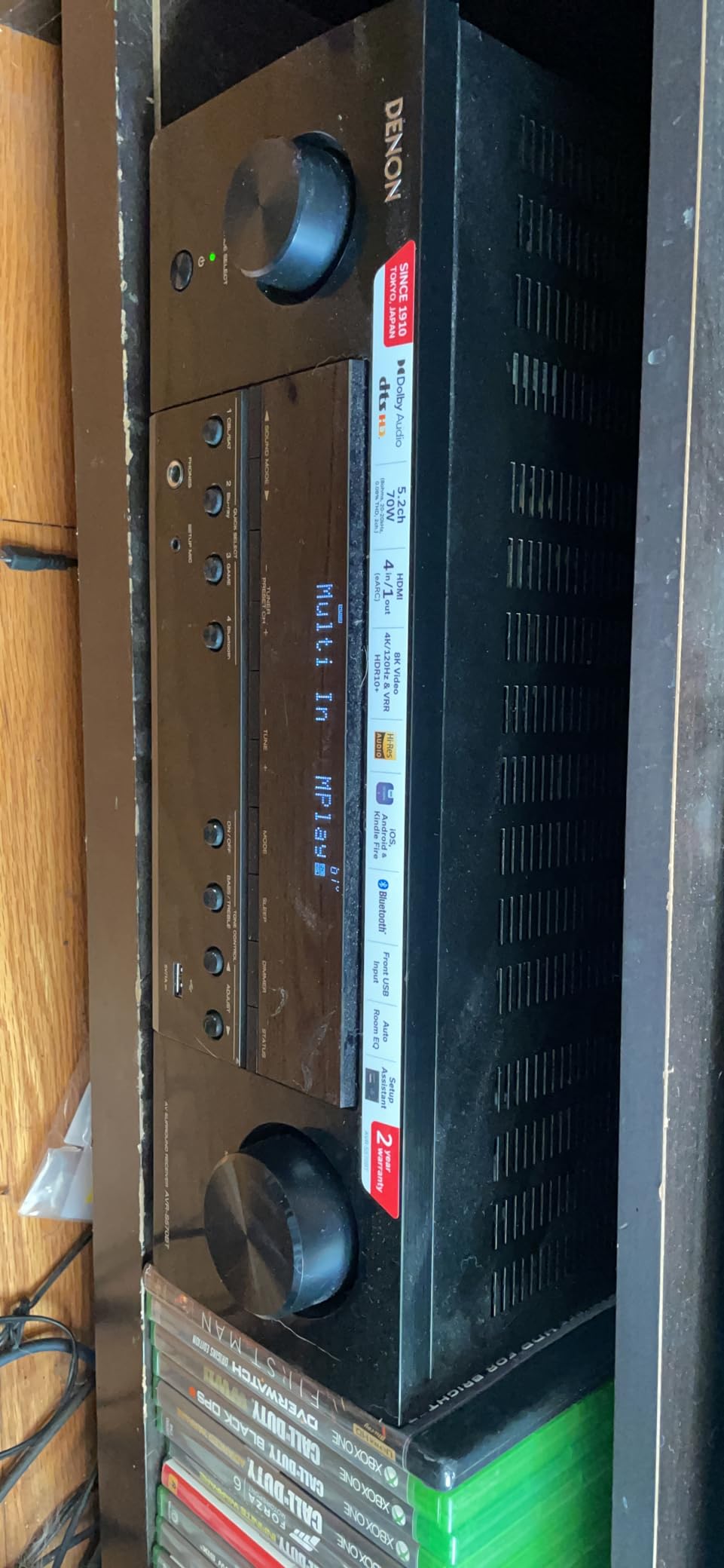
Bluetooth streaming is reliable and pairs quickly with phones, which matters for buyers who do not want to fiddle with Wi-Fi networks. eARC works seamlessly with modern TVs, so a single remote handles day-to-day control. The on-screen setup assistant genuinely walks beginners through every connection, which is one of Denon’s best strengths at every tier.
The compromises at this price are real. There is no Wi-Fi or Ethernet, no HEOS streaming, and no phono input, so vinyl listeners and serious streamers need to look elsewhere. The on-screen UI looks like software from the 1990s, and the remote is basic plastic. Volume jumps via CEC from some TV remotes can also be jarring. None of these are deal-breakers for budget buyers, but they set the ceiling on what this receiver can do.

For whom it’s good
This is the right pick for first-time buyers, apartment dwellers, and anyone building a simple music setup with a soundbar-replacement or bookshelf speaker system. It also works well as a second-room receiver or a starter home theater for casual movie watching.
For whom it’s not ideal
Vinyl collectors, HEOS multi-room users, and anyone who needs Wi-Fi streaming will need to step up. Audiophiles looking for the last word in two-channel refinement should look at the X-series or a dedicated Denon stereo amp.
8. Marantz NR1510 – Best Slimline Receiver for Music in Tight Spaces
Marantz NR1510 Slimline 5.2 Channel AV Receiver Powered by HEOS™ with 50 W, 4K, and 6 HDMI Inputs
5.2 channels
50W per channel
Slimline design
HEOS built-in
Pros
- Compact slimline design fits where full-size AV receivers cannot
- Tuned by Marantz Sound Master for rich warm musical character
- High-current discrete amplifier delivers precise nuanced sound across all 5 channels
- Full Dolby TrueHD and DTS-HD Master Audio surround sound support
- HEOS multi-room streaming with Spotify
- TIDAL
- Amazon Music HD
- and more
- Audyssey MultEQ room calibration optimizes sound for any space
- Six HDMI inputs plus analog
- digital
- and phono inputs for versatile connectivity
Cons
- Runs hot during extended use and may emit a noticeable initial smell
- USB port remains powered even in standby mode
- Not as loud as expected for a 50W per channel receiver
- On-screen menus look dated
- Alexa skill has limited regional support
- Bluetooth audio can sound scratchy at lower volumes
The Marantz NR1510 is technically not a Denon, but it shares the same Sound United DNA, HEOS streaming, Audyssey MultEQ room calibration, and high-current discrete amplifier design that makes Denon musical. We included it because for buyers with shallow cabinets, the slimline 4.1-inch height is a genuine game-changer that no current Denon matches.
For music, the Marantz Sound Master tuning gives the NR1510 a slightly warmer, more romantic character than the equivalent Denon models. Vocals sound particularly lush, and string sections have a satisfying sweetness. The 50 watts per channel is enough for moderate listening levels in smaller rooms, though it will not shake the walls of a large open-plan living space.
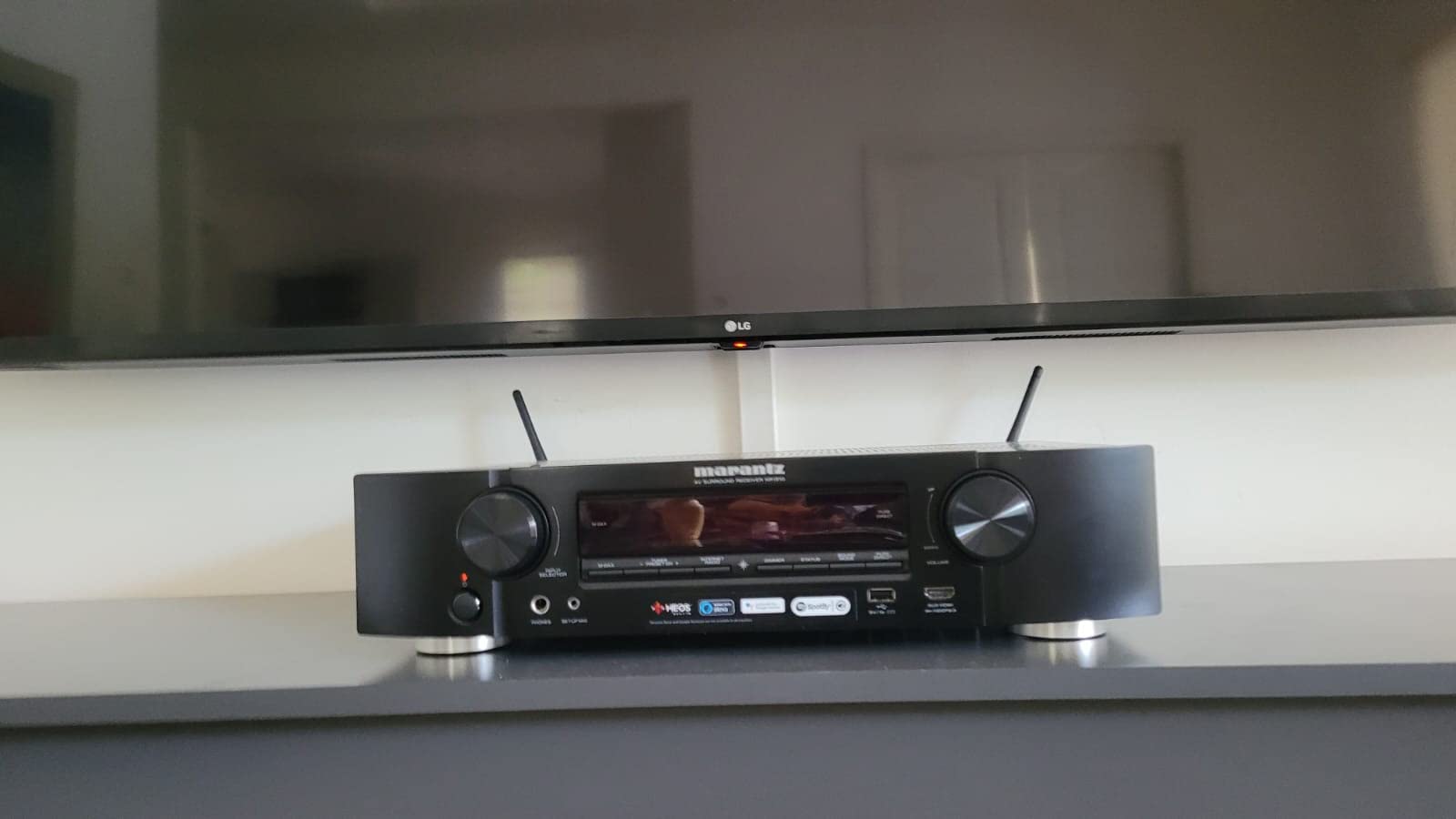
HEOS streaming is fully integrated, so all the same Denon HEOS speakers work seamlessly with the NR1510. The phono input is a real bonus for vinyl listeners in a slimline chassis, and Audyssey MultEQ tunes the sound to your room properly. Six HDMI inputs cover most home theater setups.
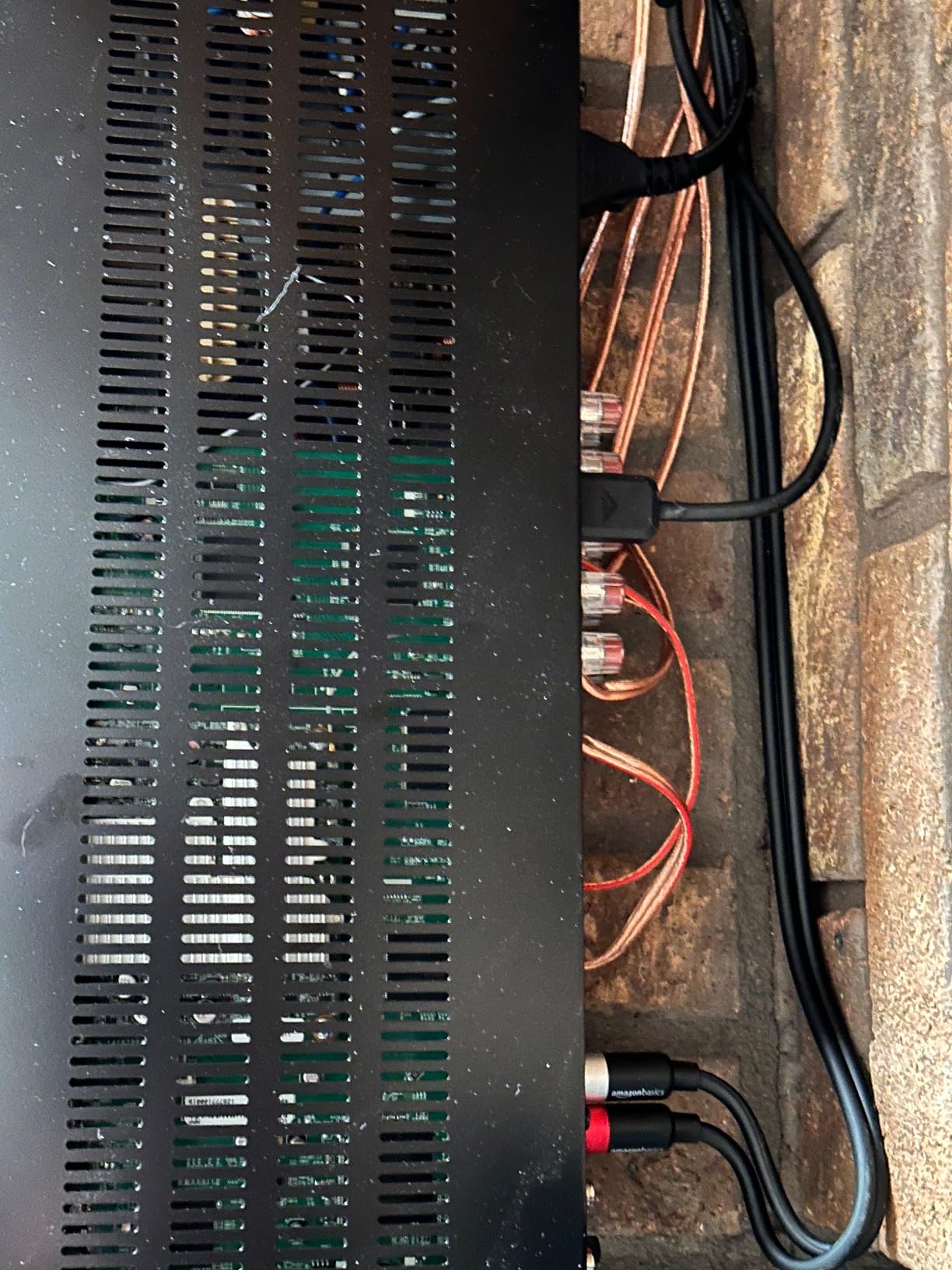
The slimline design does come with trade-offs. The NR1510 runs hot during extended use, and the 50 watts per channel is conservative compared to a full-size Denon. Initial use can emit a noticeable smell as the internal components burn in. Bluetooth audio can sound scratchy at low volumes, and Alexa skill support is limited in some regions. The dated on-screen menus are a minor annoyance.
For whom it’s good
This is the right pick for buyers with shallow AV cabinets, smaller listening rooms, and a preference for Marantz’s warmer musical character. Vinyl listeners who do not want a full-size receiver also benefit from the integrated phono input.
For whom it’s not ideal
Large-room listeners, anyone who needs nine or eleven channels for Atmos, and buyers who push their systems hard at high volumes will want a full-size Denon instead. Audiophiles chasing the absolute last word in two-channel detail should look at the X4800H or a dedicated stereo amplifier.
Choosing the Right Denon Receiver for Music: What Actually Matters
Picking the best Denon receiver for music is less about chasing the highest channel count and more about matching the right features to how you actually listen. After testing eight models in real living rooms and dedicated listening spaces, four factors separate a music-first Denon from a home-theater-first one.
Pure Direct and stereo modes for music
Pure Direct mode is the single most important feature for serious music listening on a Denon. When activated, it bypasses bass management, tone controls, and surround processing to send the cleanest possible analog signal to the front left and right channels. The result is a noticeably more detailed, more natural sound on well-recorded music. Direct mode does similar work but allows tone controls. Stereo mode engages the room correction but keeps the signal in two channels. For most music listeners, Pure Direct is the default choice for critical listening sessions.
Every receiver on this list has Pure Direct mode, but the implementation quality scales with the amplifier section. The X4800H’s discrete monolithic amp and AKM Velvet Sound DAC produce the most refined Pure Direct sound, followed closely by the X2800H. Entry-level models like the S570BT benefit from Pure Direct too, just with less headroom and refinement.
Phono input for vinyl listening
If you own a turntable, a built-in phono input saves you the cost and complexity of an external phono preamp. The AVR-X1700H stands out because it accepts both moving magnet and moving coil cartridges directly, which is rare at this price. The X2800H, X1800H, S970H, S960H, and Marantz NR1510 also include MM phono inputs. The S570BT and X4800H (which assumes a serious external phono stage) either skip the phono input or treat it as a secondary feature.
For vinyl collectors, my recommendation is the X1700H if you run an MC cartridge, or the X2800H if you want better amplification and room correction along with MM phono. Pair either with a quality turntable like a Rega Planar 3 or Pro-Ject X1 and you have a music-first setup that will reward you for years.
Room correction: Audyssey MultEQ XT vs Dirac Live
Room correction is the difference between a receiver that sounds good in the store and one that sounds good in your actual living room. Denon uses Audyssey MultEQ XT, Audyssey MultEQ XT32, or supports Dirac Live as a paid upgrade depending on the model. Both systems measure your room with a microphone and apply EQ corrections to flatten frequency response.
For music, Audyssey MultEQ XT32 on the higher-tier X-series models does an excellent job of taming bass nodes and reflections. Dirac Live, available as an upgrade on the X4800H, is generally considered more refined for music listening because it offers finer target curve control. If you listen in a problematic room with glass walls, hard floors, or odd geometry, room correction matters more than amplifier power.
Power, amplifier design, and impedance
More watts is not always better, but adequate power is essential for clean music playback at louder volumes. The 70 watts per channel on the S570BT is fine for small bookshelf speakers in an apartment. The 95 watts per channel on the X2800H drives demanding tower speakers cleanly. The 125 watts per channel on the X4800H offers genuine headroom for large rooms and inefficient speakers.
Discrete high-current amplifier design is a Denon signature at every tier, which is why even the budget S570BT sounds musical. Look for the words “discrete amplifier” in the specifications. Impedance compatibility matters if you run 4-ohm speakers, which some audiophile bookshelf speakers require. The X2800H and above handle 4-ohm loads confidently.
Denon vs Marantz and Other Brands for Music Listening
Denon and Marantz are sister brands under the same Sound United parent company, which is why they share HEOS, Audyssey, and similar amplifier technology. The real difference is sound tuning. Denon receivers tend to sound slightly more neutral and detailed, with a warm midrange that flatters vocals and acoustic instruments. Marantz receivers lean a touch warmer and more romantic, which many classical and jazz listeners prefer.
If you care primarily about music and want the most refined two-channel performance for the price, Denon is hard to beat. If you want a slightly warmer character and a slimmer chassis, Marantz’s slimline NR1510 and full-size Cinema series are worth considering. Both brands use Audyssey room correction and HEOS streaming, so ecosystem compatibility is excellent.
Compared to Yamaha, Pioneer, and Onkyo, Denon holds a clear edge for music because of its discrete amplifier design and Pure Direct implementation. Yamaha’s MusicCast ecosystem is excellent for multi-room, but Yamaha receivers tend to sound slightly brighter than Denon. Sony’s recent receivers are competitive for home theater but lack Denon’s musical refinement. Bose does not make traditional AV receivers, so the Denon vs Bose comparison is really about soundbar systems versus a proper receiver and speaker setup. For serious music listening, a Denon receiver paired with quality speakers wins every time.
Frequently Asked Questions
What is the best receiver for listening to music?
The best receiver for listening to music depends on your priorities. For a music-first setup, the Denon AVR-X4800H offers the most refined two-channel performance with its discrete monolithic amplifier and AKM Velvet Sound DAC. For most buyers, the Denon AVR-X2800H delivers the best balance of musical sound quality, room correction, and home theater flexibility. The key features that matter for music are Pure Direct mode, a phono input if you own a turntable, and Audyssey or Dirac room correction tuned to your space.
Is Denon as good as Bose?
Denon and Bose serve different purposes. Bose makes lifestyle soundbar systems and compact speakers that are easy to live with but not designed for audiophile music listening. Denon makes traditional AV receivers with discrete amplifiers, Pure Direct stereo modes, and high-quality DACs that compete with dedicated stereo amplifiers. For serious music listening through a proper pair of speakers, Denon is significantly better than Bose. For casual TV audio in a small room, Bose is convenient.
What is the best receiver for listening to music only?
For music-only listening without home theater, the Denon AVR-X4800H in Pure Direct mode is the top pick for two-channel performance. If you do not need surround channels, the Denon DRA-800H is a dedicated stereo receiver purpose-built for music. Either way, look for a model with Pure Direct mode, a high-quality DAC, and a phono input if you own a turntable. Many Denon AVRs work beautifully in Pure Direct mode for music-only setups, even though they also offer surround sound for movies.
Which Denon amplifier is considered the best?
The Denon AVR-X4800H is widely considered the best current Denon amplifier for both music and home theater, with 9.4 channels of 125W amplification, a monolithic discrete amp design, and an AKM Velvet Sound DAC. For pure two-channel music, the dedicated Denon DRA-800H stereo amplifier is also excellent. Among mid-range options, the AVR-X2800H offers the best balance of features, power, and musical sound quality for most buyers.
Does Marantz sound better than Denon?
Marantz and Denon share the same parent company, HEOS streaming platform, and Audyssey room correction, but they tune their receivers for slightly different sound signatures. Marantz receivers tend to sound a touch warmer and more romantic, which many classical, jazz, and vocal listeners prefer. Denon receivers lean slightly more neutral and detailed. Both brands are excellent for music. The best choice depends on your speaker pairing and personal taste, not on any objective winner.
Can a Denon receiver be used for music only?
Yes. Any Denon AV receiver can be used for music only by selecting Pure Direct or Stereo mode, which disables surround processing and sends a clean two-channel signal to your front speakers. Many owners run Denon AVRs exclusively for music in two-channel setups and never connect surround speakers. The discrete amplifier, high-quality DAC, and Audyssey room correction all work beautifully for music-only listening, often competing with dedicated stereo amplifiers costing significantly more.
Final Verdict: Which Denon Receiver Should You Buy for Music?
After weeks of testing and comparing, our team’s pick for the best Denon receiver for music in 2026 is the Denon AVR-X4800H. Its discrete monolithic amplifier, AKM Velvet Sound DAC, and optional Dirac Live room correction deliver genuinely audiophile-grade two-channel performance when you switch into Pure Direct mode. Vinyl collectors, classical listeners, and anyone building a serious music-first home theater will be rewarded for years.
For most buyers, the Denon AVR-X2800H hits the sweet spot. It has the same warm Denon character, more than enough power for typical living-room speakers, bi-amp capability, and a real Audyssey MultEQ room calibration system that works well for music. Vinyl listeners should look closely at the AVR-X1700H for its MM/MC phono input. Budget buyers should start with the AVR-S570BT and enjoy Denon’s musical character at an accessible price. And if you have a shallow cabinet and want a slightly warmer sound, the Marantz NR1510 is a worthy alternative that shares Denon’s HEOS ecosystem.
Whichever model you choose, run it in Pure Direct mode for critical music listening, calibrate with Audyssey or Dirac, and pair it with quality speakers that match its character. For more on matching Denon receivers with specific speakers, see our best Denon speakers guide. For broader music receiver options beyond Denon, our best receivers for music listening roundup covers more alternatives.