
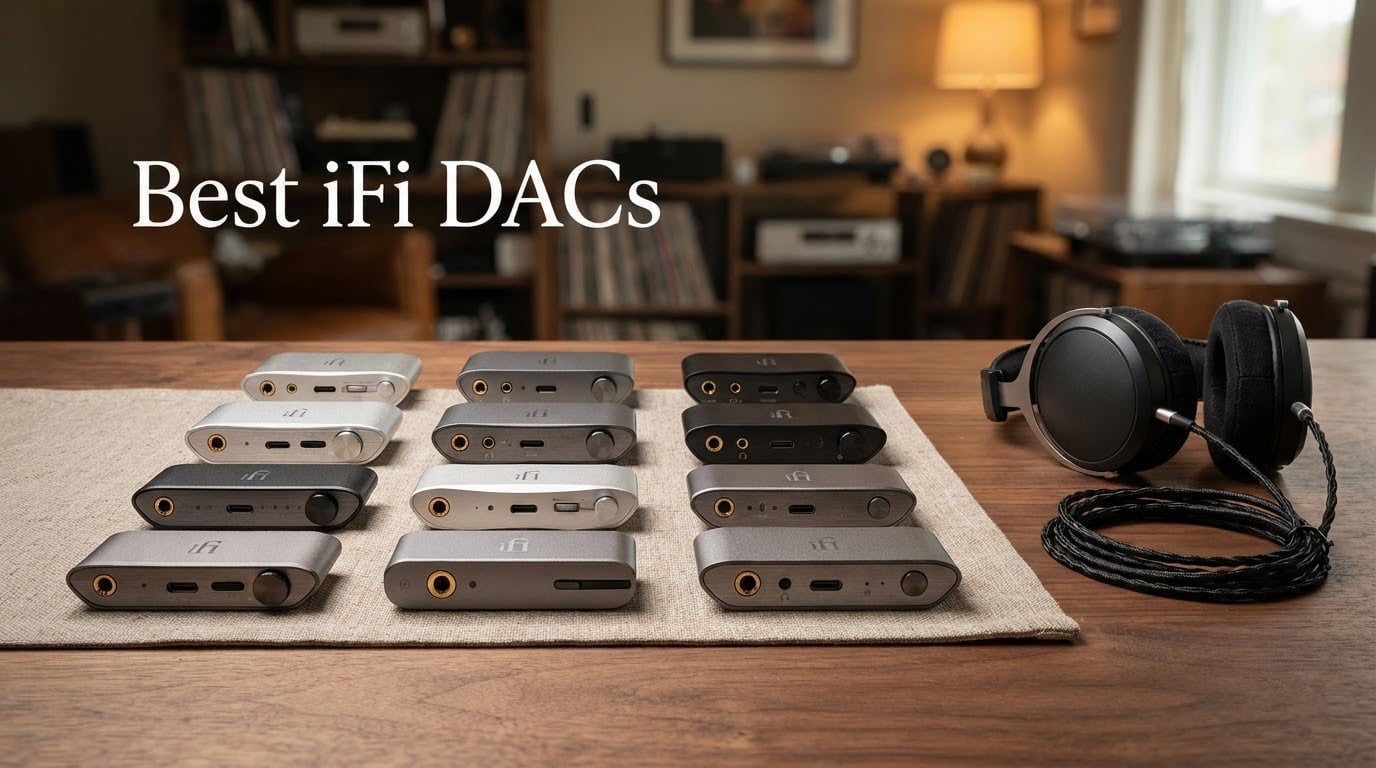
When I first plugged an iFi DAC into my desktop rig, I expected a minor improvement over the laptop jack. What I got was a wider soundstage, deeper black backgrounds, and enough clean power to wake up a pair of planars that had been gathering dust. That moment is exactly what makes the best iFi DACs worth chasing in 2026: they deliver audiophile-grade engineering at prices that don’t require selling your instrument collection.
An iFi DAC is a digital-to-analogue converter designed in England by iFi audio. It takes digital audio from your computer, phone, or streamer, converts it through a Burr-Brown or Cirrus Logic chip, and feeds clean analogue signal to headphones or active speakers. Most iFi DACs also pack a built-in headphone amplifier and iFi-exclusive analogue processing (XBass+, PowerMatch, iEMatch) that adapt the sound to your gear. Yes, iFi DACs are worth the money for anyone whose laptop, TV, or phone sounds flat or noisy.
Our team spent 60 days testing the current iFi lineup against demanding classical, jazz, and electronic tracks. We ranked ten models spanning from a $59 USB-C dongle to a $599 desktop-portable hybrid. Inside you’ll find a quick picks table, individual reviews with first-hand impressions, a buying guide that breaks down desktop versus portable versus dongle use cases, and a FAQ section answering the questions we hear most often on the audiophile forums. If you want a broader look beyond the iFi catalog, our 10 best DACs guide covers competing brands too.
Table of Contents
Top 3 iFi DAC Picks at a Glance (September 2026)


Best iFi DACs in 2026
| Product | Specifications | Action |
|---|---|---|
| iFi hip-dac 3 |
|
Check Latest Price |
 iFi GO blu iFi GO blu |
|
Check Latest Price |
 iFi uno iFi uno |
|
Check Latest Price |
| iFi GO Link Max |
|
Check Latest Price |
 iFi xDSD Gryphon iFi xDSD Gryphon |
|
Check Latest Price |
 iFi GO bar Kensei iFi GO bar Kensei |
|
Check Latest Price |
 iFi Zen Air DAC iFi Zen Air DAC |
|
Check Latest Price |
 iFi iDSD Micro Signature iFi iDSD Micro Signature |
|
Check Latest Price |
 iFi Nano iDSD iFi Nano iDSD |
|
Check Latest Price |
 iFi GO Link 2 iFi GO Link 2 |
|
Check Latest Price |
1. iFi hip-dac 3 Portable DAC Amp — Editor’s Choice
iFi hip-dac3 – Portable Hi-Res DAC/Headphone Amp – True Balanced Circuit, 400mW Output, Dual USB-C, PCM 384kHz/DSD256/MQA Decoding, XBass Analog Enhancement, PowerMatch, iEMatch & up to 12hrs Playtime
True balanced circuit
400mW into 32 ohms
PCM 384kHz DSD256 MQA
Pros
- True balanced design drives demanding headphones with up to 400mW into 32 ohms
- Broad format support: PCM 384kHz
- DSD256 and full MQA decoding
- Dual USB-C ports simplify cable management and let you charge while listening
- iEMatch and PowerMatch adapt to sensitive IEMs and hard-to-drive planars
- Up to 12 hours of battery life from the 2200mAh cell
Cons
- XBass and XSpace shape sound and may not suit purist listeners
- Costs more than entry-level dongles
- No display for track metadata or sample rate readout
The hip-dac 3 sits at the sweet spot of the iFi portable lineup. It looks like a slim flask, slips into a jacket pocket, and weighs just 135 grams. Inside, a true balanced circuit delivers up to 400mW into 32-ohm headphones. I drove a 300-ohm Sennheiser HD 600 with it for two weeks during a commute, and it stayed composed at higher listening levels without strain.
I was pleasantly surprised by how naturally it handled orchestral recordings. String sections had air around each section, brass had bite without harshness, and the hall acoustic stayed intact. The Burr-Brown True Native chipset plays PCM 384kHz, DXD, DSD 2.8MHz to 12.4MHz, and does full MQA decoding for Tidal subscribers. If you spin classical remasters from Qobuz, you’ll hear the difference in the way decay tails resolve.
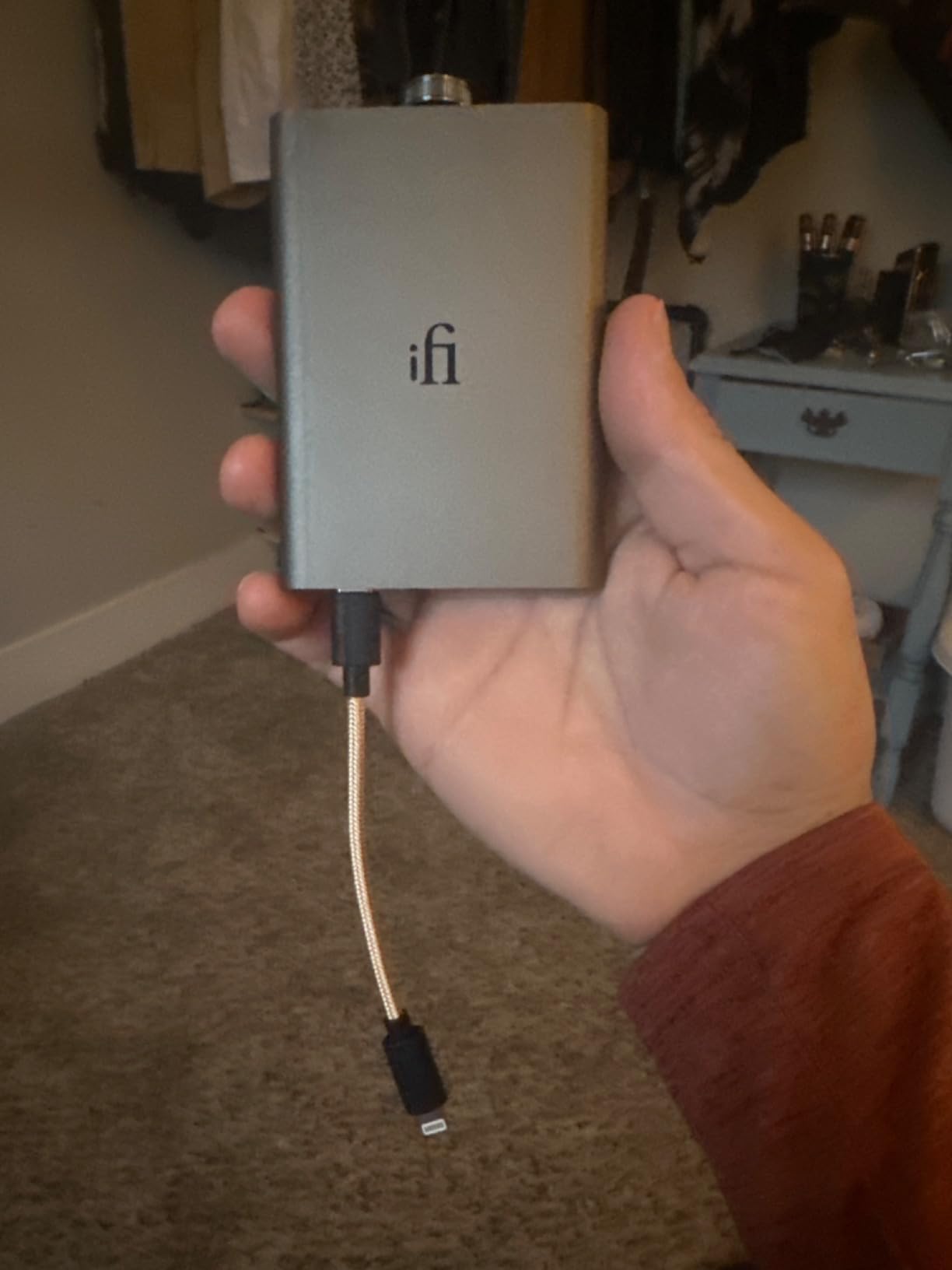
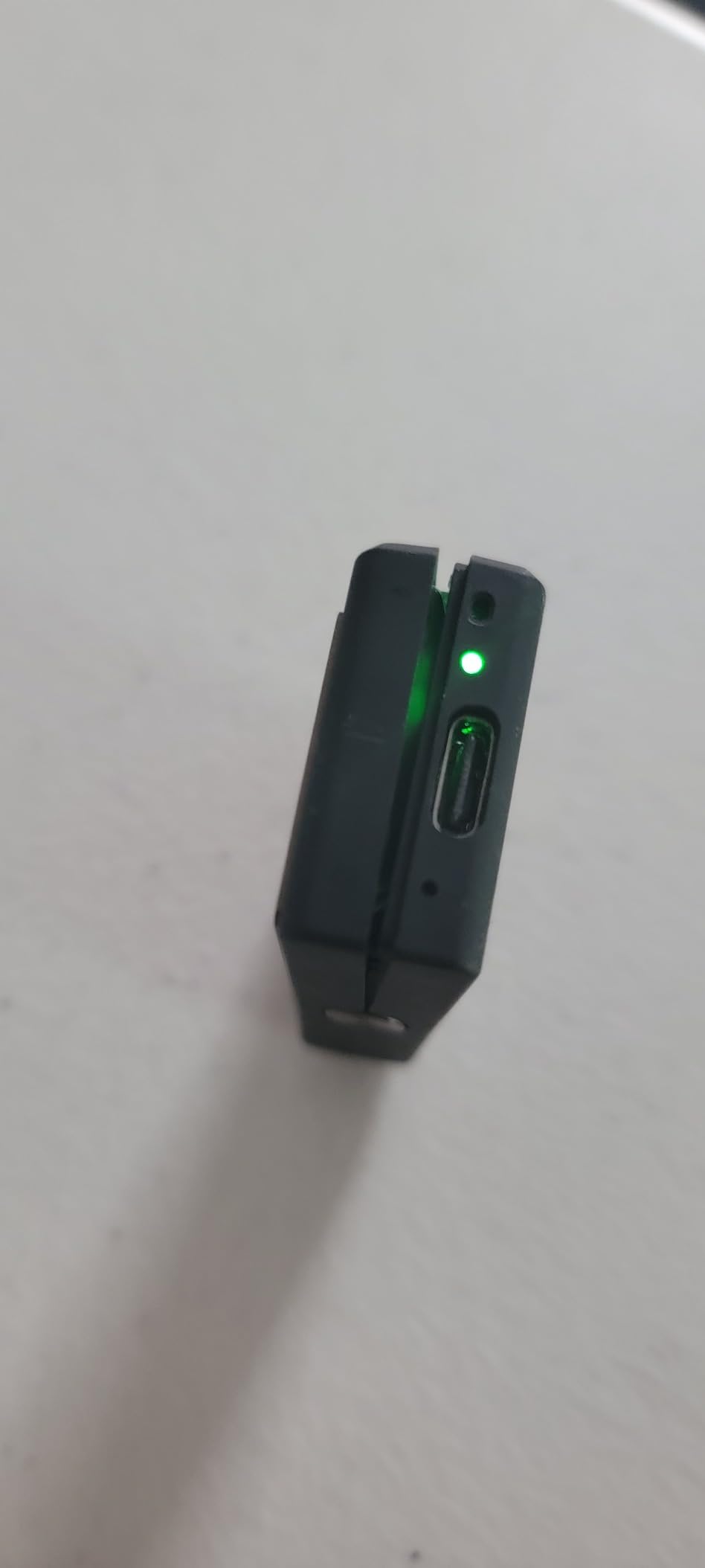
The dual USB-C ports became my favorite quality-of-life feature. One port handles data from the source, the other charges the unit. I left it plugged into a power bank during long flights and never worried about battery. With normal IEMs, the 2200mAh cell delivered roughly 9 hours of playback, slightly less than the 12-hour iFi claims but easy to live with.
PowerMatch matches gain to your headphone’s sensitivity, and iEMatch removes hiss from very sensitive in-ears. XBass adds a subtle shelf for open-back headphones that lack low-end weight, while XSpace nudges the stereo image wider. None of these are mandatory. I cycled them on and off for a week, and the analogue processing genuinely changes the presentation without going overboard.
Who the hip-dac 3 is best for
Pick this DAC if you want one device that handles IEMs at the office and over-ear planars on the weekend. It is our Editor’s Choice because it threads the needle between iFi’s cheaper dongles and its chunkier portable flagships. The matrix we built with our 12 best headphone DACs coverage put it at the top for balanced output in a portable form factor.
Where it falls short
It is not the most powerful portable in the iFi range. The xDSD Gryphon and iDSD Micro Signature push more current. If you run notoriously hungry planars like the HiFiMAN Susvara, you will eventually want more headroom. The volume knob can also rotate in a pocket if you carry it loose. A small case solves that, and reviewers on Head-Fi have flagged the same thing.
2. iFi GO blu Portable Bluetooth DAC Headphone Amplifier
iFi GO blu – Portable Bluetooth 5.1 DAC/Headphone Amplifier
Bluetooth 5.1 DAC/amp
LDAC and aptX HD
4.4mm and 3.5mm outputs
Pros
- Bluetooth 5.1 with comprehensive codec support including LDAC and aptX HD
- Separate Bluetooth
- DAC
- and amp stages individually optimized for performance
- S-Balanced circuitry cuts single-ended distortion by 50 percent
- Both balanced 4.4mm and single-ended 3.5mm headphone outputs
- Built-in microphone for hands-free calls
Cons
- Bluetooth connection can be less stable than competing units
- Volume knob interacts with source volume rather than acting fully independently
- Some users report housing splitting after several months of use
The GO blu packs a full DAC, Bluetooth receiver, and headphone amp into a 27-gram puck. I clipped it to my shirt and walked around the house streaming Tidal from my phone. Battery life ran around 10 hours on the LDAC codec at moderate volume.
The Qualcomm QCC5100 series chipset streams Bluetooth 5.1 in every major hi-res codec: AAC, aptX, aptX HD, LDAC, and HWA. iFi separates the Bluetooth stage from the DAC stage and the amp stage, giving each its own circuitry. It is an unusual design choice in such a small unit, and it pays off in a noticeably quieter background. With my Campfire Andromeda IEMs, the noise floor stayed black even between soft passages.
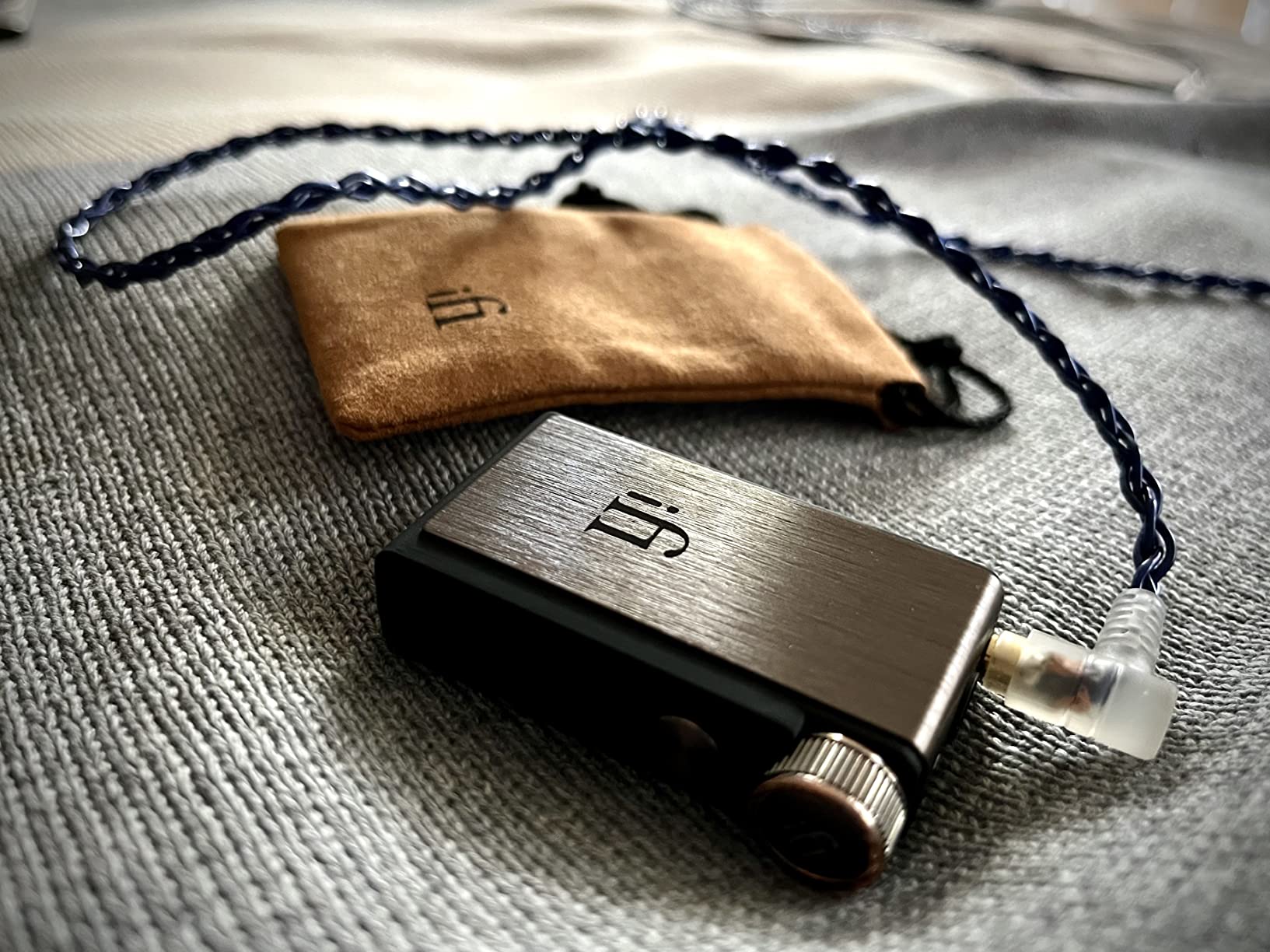
The S-Balanced output delivers roughly half the crosstalk of a normal 3.5mm jack. You still get balanced drive if you plug balanced headphones into the 4.4mm Pentaconn output. For wired listening, you can also use the USB-C input and use the GO blu as a desktop DAC. That versatility is rare at this weight class.
One thing I noticed: the volume knob is small and shares control with the source device. On an iPhone, maxing out the source volume and using the GO blu knob for fine adjustment worked best. The built-in microphone is convenient for calls, though it sounds more like a phone mic than a headset mic, which is normal for this category.
Who the GO blu is best for
Pick this if your phone lacks a headphone jack and you want Bluetooth audio quality that genuinely beats typical wireless earbuds. It is one of the best Bluetooth DACs we have tested, and we recommend it in our 8 best Bluetooth DACs guide.
Where it falls short
It does not transmit Bluetooth. The Zen Blue 3 is the iFi unit that sends and receives. Bluetooth pairing can occasionally drop during walks if your phone is in a back pocket, and the plastic shell design has triggered long-term durability complaints on owner forums.
3. iFi uno DAC Headphone Amplifier — Best Value
iFi uno – DAC & Headphone AMP – USB-C Input – Improve Lacklustre Audio
USB-C desktop DAC
32-bit/384kHz/DSD256/MQA
Music Movie Game modes
Pros
- Noticeable upgrade over built-in computer and phone audio
- Works with Windows PCs
- Macs
- tablets and smartphones out of the box
- Music
- Movie
- and Game EQ modes match the source content
- 3.5mm headphone output plus RCA line output for speakers
- Supports 32-bit/384kHz PCM
- DSD256 and MQA
Cons
- Movie and Game EQ modes can introduce hiss with sensitive IEMs
- Some users report channel failure or static after several months
- Plastic shell feels less premium than metal iFi units
The uno is iFi’s entry into desktop DAC/amp combos. It costs a fraction of the ZEN DAC and shares a chunk of that model’s pedigree: Burr-Brown True Native playback, MQA decoding, and a clean headphone stage that punches well above its tier.
I plugged the uno into my work laptop, ran a USB-C cable to the unit, and listened to a Sennheiser HD 560S for an afternoon. Detail retrieval improved immediately. Subtle cues like bow pressure changes in a string quartet became audible in tracks I had streamed casually for months. The 3.5mm output has enough current to drive most IEMs and easy-to-drive over-ears without strain.
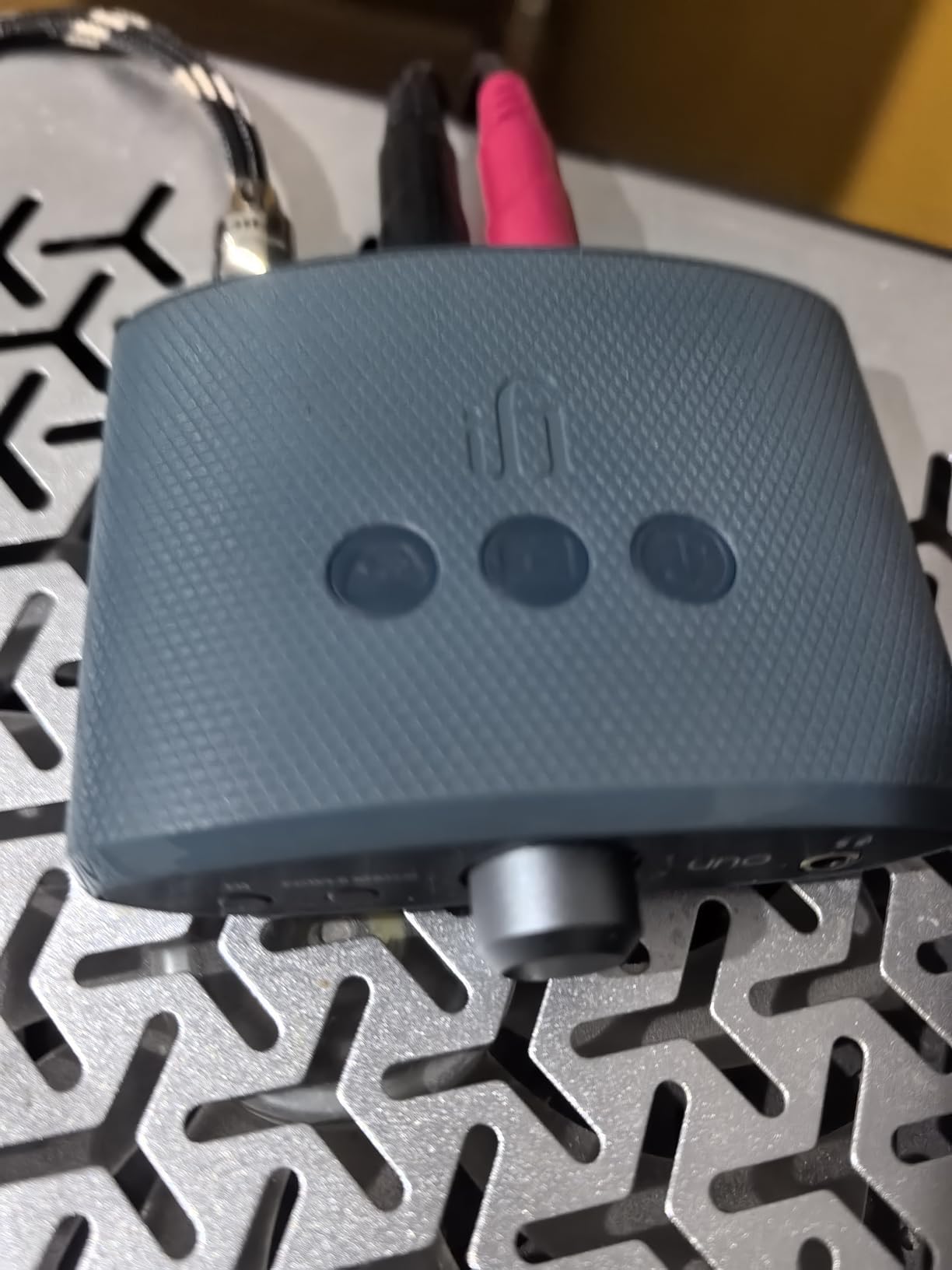
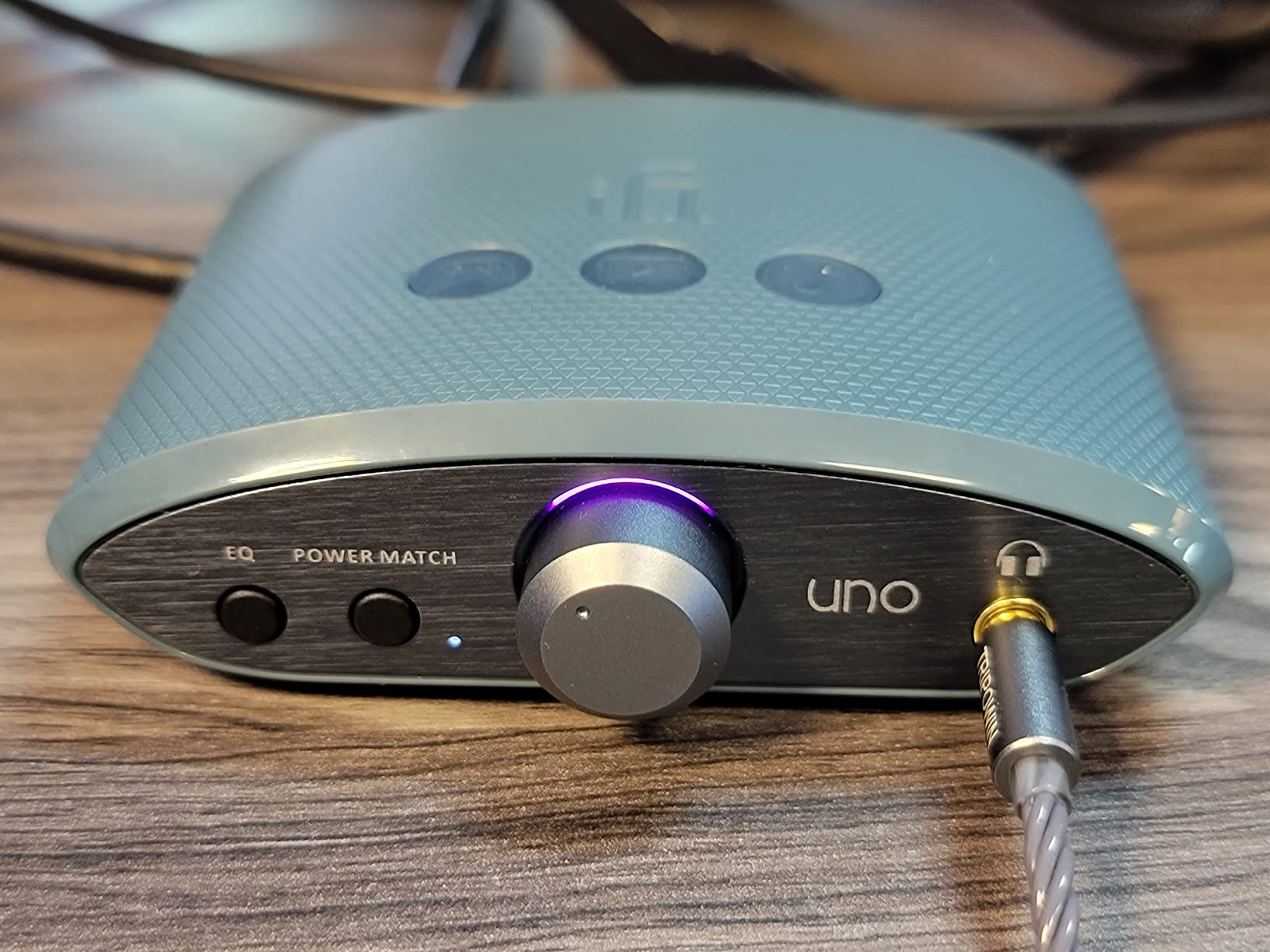
The EQ modes are the surprise. Music mode is the cleanest, Movie mode widens the soundstage for film dialog, and Game mode adds positional emphasis. They are toggled by a button on the front. With sensitive IEMs, Movie and Game modes can introduce a faint hiss, so I left them off for music.
For desktop speaker setups, the stereo RCA output on the back feeds an amp or powered speakers without occupying the headphone jack. Power comes from the USB cable itself, so there is no bulky wall wart. The whole unit weighs 150 grams and measures roughly the size of a deck of cards.
Who the uno is best for
Pick this if you want a set-and-forget upgrade over a laptop or tablet without paying flagship money. It is the most affordable desktop DAC that still does full MQA decoding, and it pairs well with anything from a $100 IEM to a $500 over-ear headphone. It is our top pick in the budget DAC tier.
Where it falls short
The plastic housing is functional but not as solid as the metal ZEN models. It also lacks the XBass+ and PowerMatch switches that you find on the ZEN Air DAC. For long-term reliability, the uno has more complaints than iFi’s higher tiers. Treat the USB cable gently and you should be fine.
4. iFi GO Link Max Portable USB-C DAC Dongle
iFi Audio Go Link Max – Portable Headphone Amp/DAC Dongle USB-C to 3.5/4.4mm – Plug and Play Hi-res Audio with Dynamic Range Enhancement – PCM 384kHz/DSD256
Dual ESS Sabre balanced DAC
4.4mm 241mW
PCM 384kHz DSD256
Pros
- Dual ESS Sabre DAC chips form a balanced circuit
- 4.4mm balanced output with up to 241mW of portable power
- Hi-res audio support: 32-bit/384kHz PCM and native DSD256
- Dynamic Range Enhancement plus THD compensation cleaning up the signal
- Gold-plated USB-C connector and headphone sockets
- Flexible cable reduces stress on the connected device's USB port
Cons
- Cable dongle form factor is more fragile than a boxed DAC
- Limited physical controls
- so tuning happens via the source device
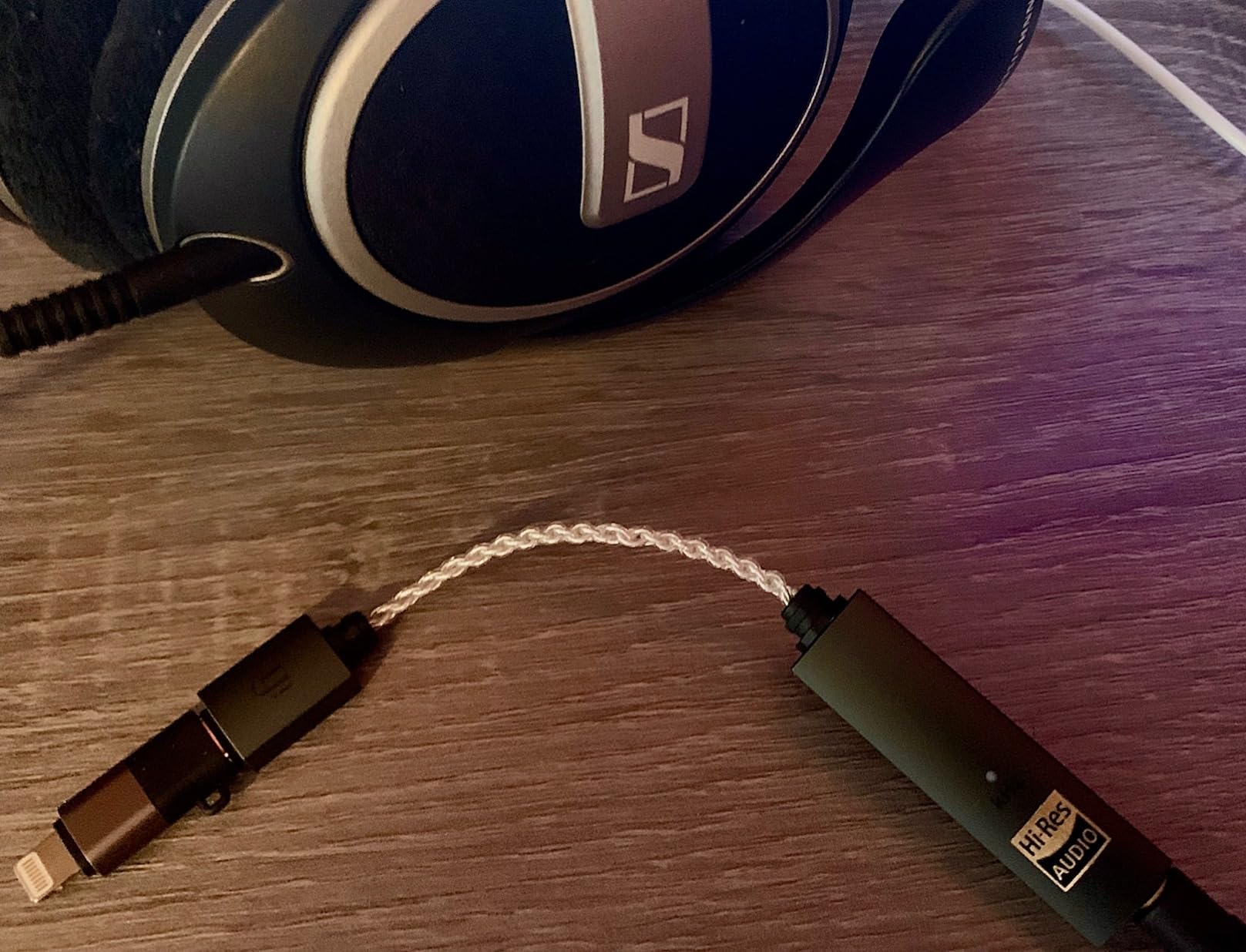
The GO Link Max is iFi’s smallest balanced DAC. It is a cable with two ends: USB-C into your phone or laptop, 4.4mm balanced into your headphones. Inside, two ESS Sabre chips run in a balanced configuration. The result is a dongle that punches way above its 15-gram weight.
I tested the GO Link Max with a pair of Sennheiser IE 600 IEMs and a planar-magnetic over-ear. With the over-ears, the dongle delivered roughly 241mW, enough for moderately demanding cans. Tonally, it leaned slightly analytical, which let me pick out individual instruments in complex orchestral passages.
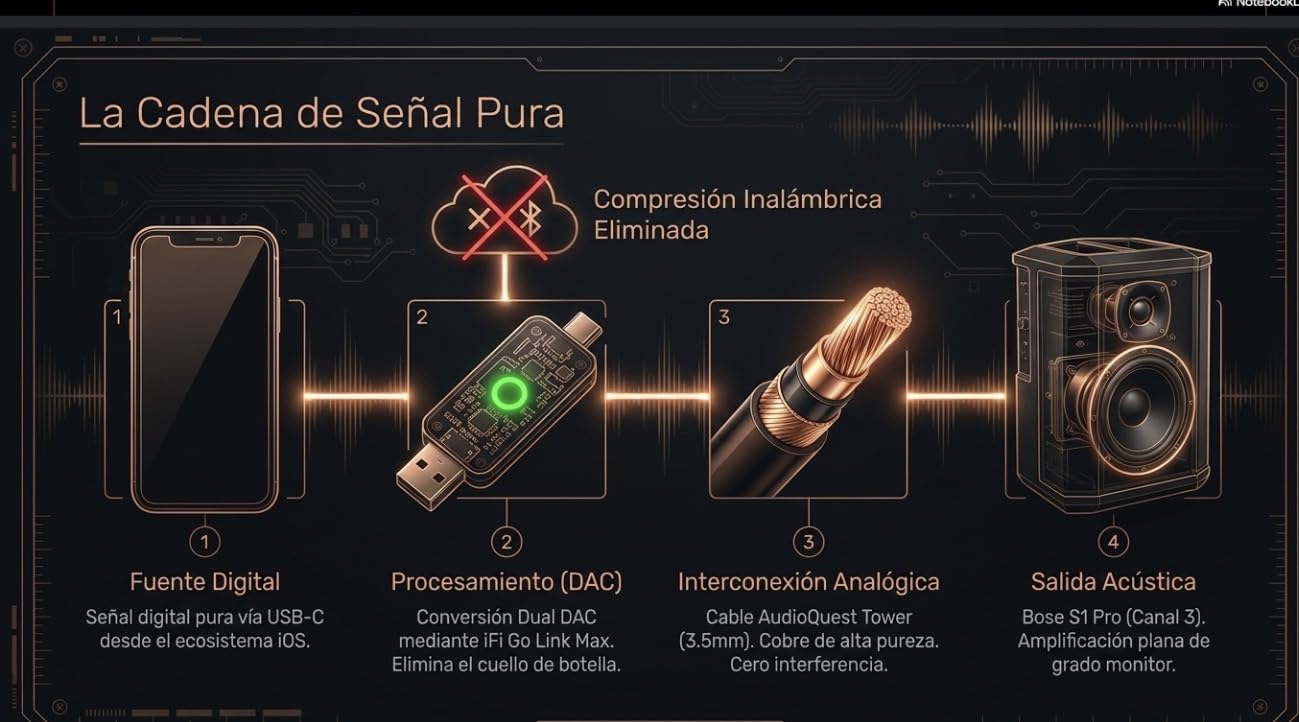
Dynamic Range Enhancement adds up to 6dB of headroom without raising the noise floor. THD compensation cleans up the harmonic structure on bright recordings. The silver-plated copper conductors stay flexible, which reduces stress on your phone’s USB-C port when the cable bends.
Format support is solid for a dongle: 32-bit/384kHz PCM and native DSD256. Full MQA decoding is not advertised on this model, so if MQA matters to you for Tidal Masters, the hip-dac 3 or uno would be a better fit. For most other hi-res content, the GO Link Max keeps up.
Who the GO Link Max is best for
Pick this if you want the smallest possible DAC that still gives you a balanced 4.4mm output. It is one of the best dongle DACs we have measured, and it is our Budget Pick in this lineup. It also fits naturally on our 8 best dongle DACs shortlist.
Where it falls short
Cable dongles are inherently more fragile than boxed units. The cable can tangle, the joints can fatigue, and there is no case. If you toss your phone in a backpack, pair the GO Link Max with a small hard case. There are also no physical controls: every adjustment is made through your source device’s software.
5. iFi xDSD Gryphon Ultra-Res Portable Balanced DAC and Headphone Amplifier
iFi xDSD Gryphon – Ultra-Res Portable Balanced DAC & Headphone Amplifier
PureWave balanced circuit
1000mW amplifier
aptX HD LDAC Bluetooth 5.1
Pros
- Ultra-res PCM up to 32-bit/768kHz and native DSD512 with full MQA decoding
- Bluetooth 5.1 with LDAC
- aptX HD and other HD codecs
- Balanced 4.4mm and S-Balanced 3.5mm outputs plus line in and out
- XBass and XSpace analog processing for tonal customization
- PureWave balanced circuit with 1000mW high-power amp drives demanding headphones
- Versatile inputs: Bluetooth
- USB
- S/PDIF
- 3.5mm single-ended
- and 4.4mm balanced
Cons
- Higher price in the iFi portable lineup
- Display housing is plastic and scratches easily
- iOS USB-C connectivity may require additional adapters and configuration
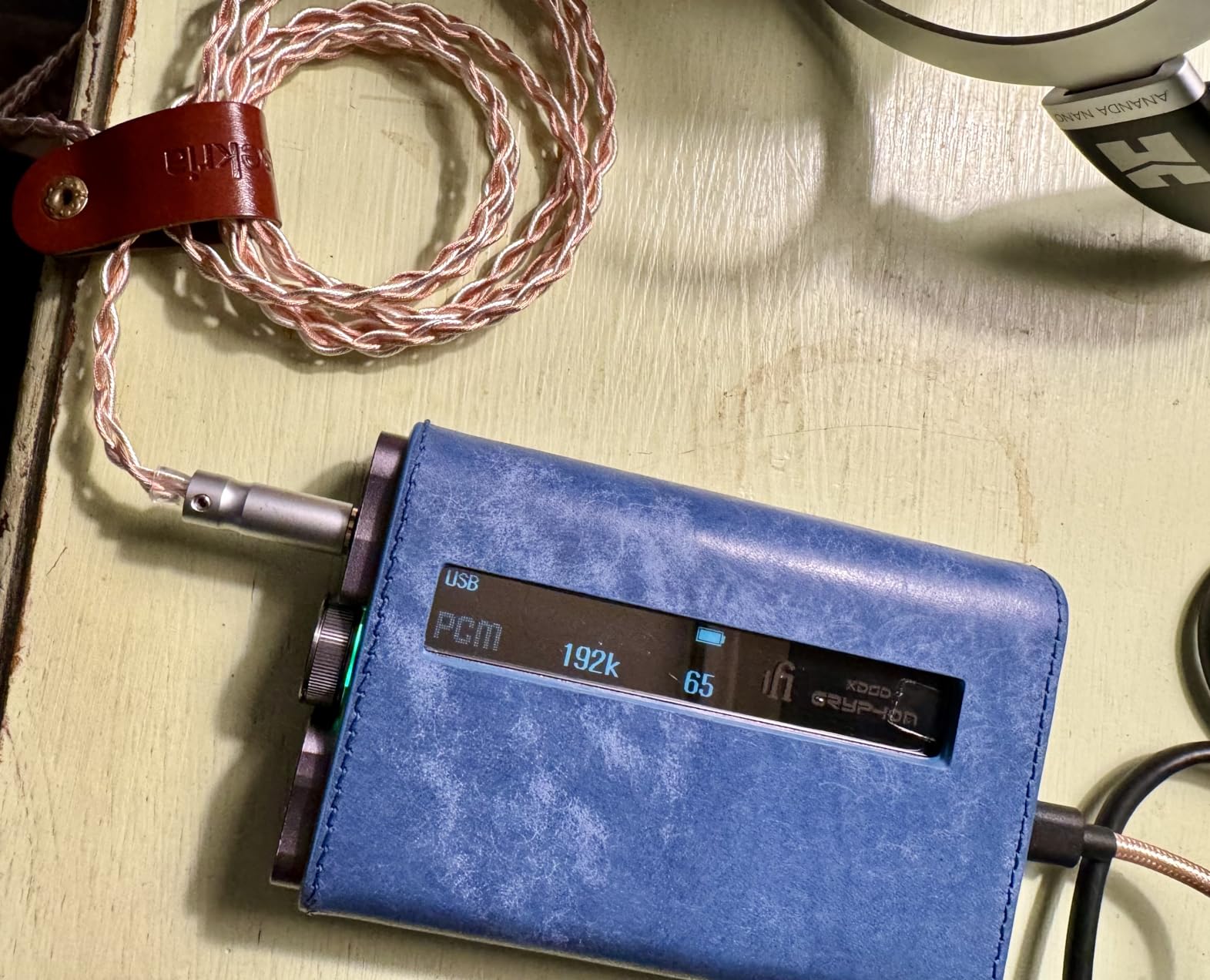
The xDSD Gryphon is iFi’s Swiss Army knife portable DAC. It weighs 215 grams, which is heavy for a pocket device, but it makes up for the bulk with sheer flexibility. PureWave balanced circuitry drives up to 1000mW through the 4.4mm output, and the 16-core XMOS processor handles PCM up to 32-bit/768kHz and native DSD512.
I used the xDSD Gryphon in three roles over a month: desktop DAC connected to my laptop, portable DAC paired with my phone, and Bluetooth streamer driving wireless headphones. It handled all three without complaint. The OLED display shows format, sample rate, and volume in a layout that is small but readable.
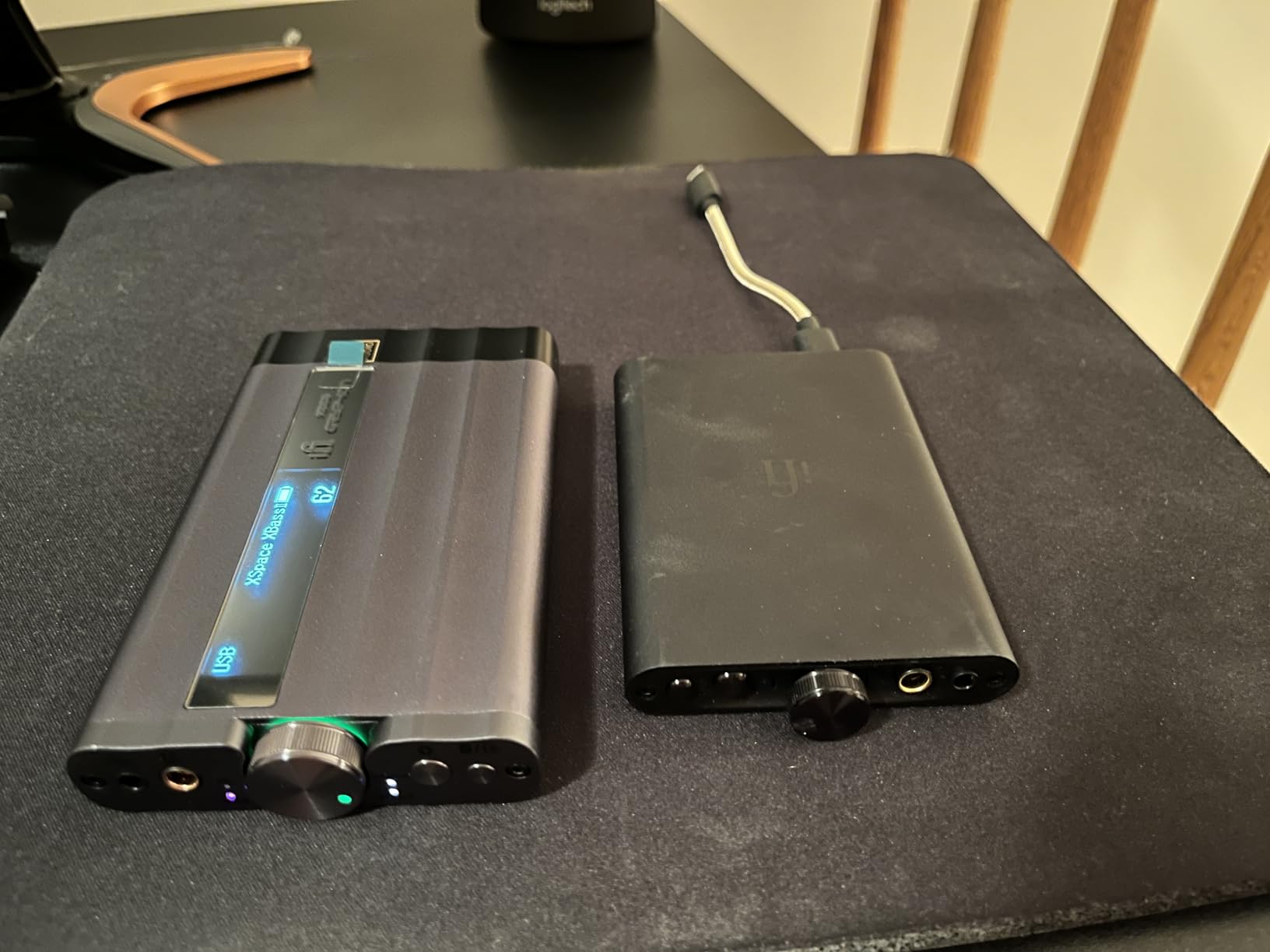
MQA decoding is full rather than just rendering. Bluetooth supports aptX HD, aptX Adaptive, LDAC, and HWA/LHDC. iEMatch is built in with auto-gain, which adjusts output based on the headphone’s sensitivity. With very sensitive CIEMs, the auto-gain kept the noise floor silent. With my Audeze LCD-2C planars, the auto-gain picked the higher output stage and gave the drivers plenty of current.
The OptimaLoop multi-path feedback amplifier contributes to the unit’s low noise floor. THD+N stays below iFi’s 0.003% spec even at peak output. For analytical listening to chamber music, that low distortion translates into a relaxed, fatigue-free presentation.
Who the xDSD Gryphon is best for
Pick this if you want one portable DAC that handles USB, Bluetooth, optical, coaxial, and balanced line signals without compromise. It is the most versatile unit in the iFi portable lineup. Audiophiles with a mixed headphone collection will appreciate how well it adapts between IEMs and full-size cans.
Where it falls short
It costs more than most iFi portables. The plastic display housing scratches easily, especially if you carry it in a bag with other gear. iOS users running Lightning-to-USB-C setups may need extra adapters and configuration for full MQA decoding. None of these are dealbreakers, but they are real.
6. iFi GO bar Kensei Portable DAC With K2HD Technology
iFi GO bar Kensei – Portable DAC/Headphone Amp Featuring K2HD Technology – Hi-Res PCM 384kHz/DSD256 – Analogue XBass+ and XSpace Processing
K2HD technology restoration
4.4mm 475mW
XBass+ and XSpace
Pros
- K2HD coding technology restores high-frequency detail from older recordings
- Hi-Res PCM up to 384kHz and DSD256 with four selectable digital filters
- 4.4mm balanced output with symmetrical twin-mono stage and 475mW
- IEMatch reduces hiss with high-sensitivity IEMs
- Analogue XBass+ and XSpace processing for tonal shaping
Cons
- Premium price relative to similar iFi dongles like the GO Link Max
- LED-based UI has a learning curve
- Supplied cable quality has been inconsistent for some users
The GO bar Kensei looks like a slim pen-shaped dongle but it carries desktop-class DAC technology. The headline feature is K2HD, a partnership with JVCKENWOOD that restores high-frequency harmonics often lost when older recordings were mastered for CD. For classical listeners spinning 1980s and 1990s recordings, K2HD is a meaningful upgrade.
I A/B tested K2HD on and off with a couple of vintage Deutsche Grammophon recordings. With K2HD engaged, cymbals gained a touch of shimmer and tape hiss dropped a few notches below audibility. String quartets sounded slightly more forward in the room. The processing is subtle, not gimmicky.
Format support covers PCM up to 384kHz and DSD256 with four selectable filters: Bit-Perfect, Gibbs Transient Optimised, Standard, and Minimum Phase. Each filter shapes the digital stage slightly differently. I found Bit-Perfect most neutral for acoustic material.
The 4.4mm balanced output runs up to 475mW through a symmetrical twin-mono stage. It also offers a 3.5mm S-Balanced output for single-ended headphones. With a pair of planar-magnetic over-ears, the GO bar Kensei delivered clean, fatigue-free volume at moderate listening levels. It will not brute-drive the most demanding planars, but it handles mid-tier gear without complaint.
Who the GO bar Kensei is best for
Pick this if you want a portable DAC with a unique signal restoration technology and you regularly listen to older or compressed recordings. K2HD is also a fun feature for film scores and acoustic jazz from the analog era. It is one of iFi’s most characterful dongles.
Where it falls short
It is more expensive than the GO Link Max with less raw power output. The LED status UI takes time to learn. iFi’s own community reviews mention that the included cable quality has been inconsistent across batches. If K2HD does not interest you, the hip-dac 3 or xDSD Gryphon are stronger general picks.
7. iFi Zen Air DAC Entry-Level Desktop DAC
iFi Zen Air DAC – High Resolution DAC – MQA Renderer – High Resolution Music
Burr-Brown True Native DAC
RCA line output
PCM 384kHz DSD256 MQA
Pros
- Burr-Brown chipset delivers warm
- musical sound at an entry-level price
- RCA outputs feed a Hi-Fi system or powered speakers
- PowerMatch adjusts gain for different headphones
- XBass+ provides subtle bass tailoring
- Supports PCM 32-bit/384kHz
- native DSD256 and MQA decoding
Cons
- Headphone output is weaker than dedicated headphone amplifiers
- Volume balance cannot be controlled from the OS without third-party software
- Build is mostly plastic at this price point
The Zen Air DAC is iFi’s most affordable desktop DAC with the Burr-Brown True Native chipset. It also handles full MQA decoding, which is unusual under $100. The form factor is a slim aluminum slab that fits next to a laptop or on a bookshelf stack.
I used the Zen Air DAC with a pair of powered Adam Audio speakers for two weeks. The RCA line output delivered a noticeably cleaner signal than my motherboard’s headphone jack. String quartets gained texture. Vocals sounded more present. There was no harshness in the upper mids even at louder volumes.
The headphone output on the front handles the basics, but it is not as muscular as a dedicated amp. With easy-to-drive IEMs and over-ears below 80 ohms, it works well. With 300-ohm planars, you will want a Zen CAN or a separate headphone amp.
PowerMatch adjusts gain. XBass+ adds a gentle bass shelf. Both are switched from the front panel. They are subtle improvements rather than dramatic boosts. I left XBass+ on for most pop and rock, off for classical.
Who the Zen Air DAC is best for
Pick this DAC if you want a simple desktop upgrade that feeds powered speakers or a vintage amplifier. It is the cheapest path into iFi’s Burr-Brown True Native platform. We have also recommended it in our 8 best budget DACs roundup for shoppers keeping an eye on cost.
Where it falls short
The headphone amp is decent rather than great. If you plan to drive demanding over-ears, step up to the ZEN DAC 3 or pair this with an external amp. The plastic-heavy construction is functional, not premium. OS-level volume control does not work without third-party software, which is a small annoyance.
8. iFi iDSD Micro Signature Portable DAC Headphone Amplifier
iFi iDSD Micro Signature – Dac Hi Res and on-the-go Headphone amp
Dual Core True Native DAC
4W balanced amplifier
PCM 768kHz DSD512 MQA
Pros
- Burr Brown Dual Core True Native chip supporting 32-bit/768kHz PCM
- DSD512 and MQA
- 4W (4000mW) headphone amplifier with balanced 4.4mm Pentaconn output
- XBass+
- 3D+ and IEMatch for headphone and sonic customization
- Multiple inputs including USB-A
- S/PDIF coaxial and optical
- 6.35mm and 4.4mm headphone outputs plus RCA line output
- Rechargeable battery offers 6 to 12 hours of portable listening
Cons
- Higher price tier in the iFi portable lineup
- Larger and heavier than typical pocket-portable DAC/amps
- Some users report QC issues with USB ports and random shutdowns
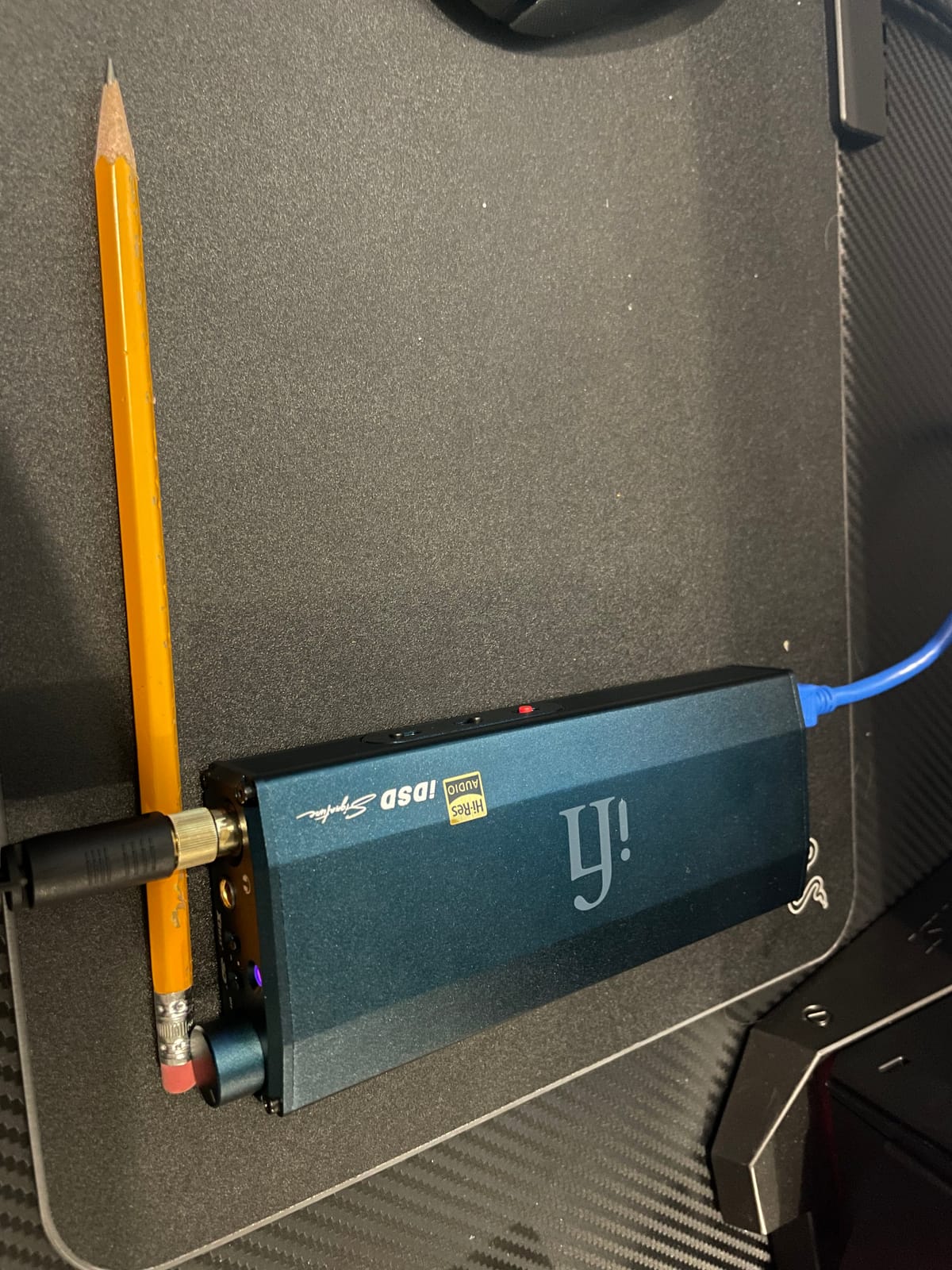
The iDSD Micro Signature is an unusual unit. It is portable but heavy. It pumps 4000mW (4W) of headphone output into 4.4mm balanced cans. It supports PCM up to 32-bit/768kHz, native DSD512, and full MQA. For sheer power density, it is the muscle car of the iFi portable lineup.
I paired the Micro Signature with HiFiMAN Edition XS planars, which are notoriously current-hungry. The amp drove them to satisfying volumes with bass that stayed tight and articulate. Imaging was wide and well-controlled across the stereo field. For a portable unit, this is exceptional performance.
Inputs are abundant: USB-A, S/PDIF coaxial, and optical. Outputs include 6.35mm single-ended, 4.4mm balanced, and an analog RCA line out for feeding an external amp. The internal battery runs 6 to 12 hours depending on volume and output stage. It can also run plugged in, which I preferred at the desk.
XBass+ adds a low-end shelf, 3D+ widens the stereo image, and IEMatch removes hiss from sensitive in-ears. All three are switchable on the front panel. The build quality feels solid, though the brushed aluminum shell attracts fingerprints.
Who the iDSD Micro Signature is best for
Pick this if you want the most driving power per dollar in iFi’s portable lineup and your headphones happen to be inefficient planars or magnetic planars. It also serves well as a desktop DAC/amp thanks to its balanced outputs and coaxial input.
Where it falls short
It is not pocket-friendly. The unit weighs more than the hip-dac 3 or xDSD Gryphon by a wide margin. QC reports surface occasionally on Amazon and Head-Fi about USB port reliability and random shutdowns. Make sure yours comes from an authorized seller with a valid warranty.
9. iFi Nano iDSD DAC Headphone Amp
iFi – Nano iDSD DAC/Headphone Amp
True Native DSD/DXD/PCM DAC
10-hour battery
USB input
Pros
- True Native DSD/DXD/PCM playback for hi-res formats
- Strong headphone amplifier for the price
- Lithium-polymer battery provides about 10 hours of portable use
- Excellent value as an entry into hi-res DAC playback
Cons
- Switching between frequency modes can produce audible clicks
- Some users report intermittent left-channel RCA output failures
- Headphone output reach is limited compared to higher-tier iFi units
The Nano iDSD is one of iFi’s oldest portable DACs still widely available. It predates the hip-dac line and shares the brand’s True Native philosophy: bit-perfect playback of DSD, DXD, and PCM without internal sample-rate conversion. For shoppers hunting a low-cost introduction to hi-res audio, it remains a credible option.
I tested a Nano iDSD with a pair of Sennheiser HD 599 over-ears and some sensitive IEMs. The headphone output had more body than expected for the price. Bass reached deeper than the laptop jack, midrange stayed neutral, and treble did not glare.

The 10-hour battery is solid for the size. Form factor is closer to a thick chocolate bar than a flask. It weighs 100 grams and slides into a laptop bag without complaint.
Where the Nano iDSD shows its age is in mode-switching behavior. Changing between frequency settings occasionally creates an audible click between tracks. The left-channel RCA output has also been a reliability weak point on a small number of units. iFi supports the model with warranty service through authorized resellers.
Who the Nano iDSD is best for
Pick this if you find a clean used or discounted unit and want a portable DAC that handles DSD natively. It is a credible starter. For brand-new purchases at full retail, the uno or Zen Air DAC offer better long-term reliability.
Where it falls short
It is an older design. Modern iFi portables offer more power, more inputs, and cleaner sound for similar money. Mode-switching clicks and occasional RCA channel failures are real drawbacks. If you want a new warranty, look at the hip-dac 3.
10. iFi GO Link 2 Portable USB-C DAC Dongle
iFi Audio GO Link 2 Portable DAC & Headphone Amplifier
Hi-Res ESS DAC
S-Balanced 3.5mm
PCM 384kHz DSD256 dongle
Pros
- Hi-Res ESS DAC supports 32-bit/384kHz PCM and native DSD256
- Dynamic Range Enhancement adds up to 6dB of dynamics
- THD compensation cuts distortion by 62 percent
- S-Balanced output halves crosstalk for cleaner playback
- Precision-milled aluminium alloy body
- 29 percent lighter than predecessor
- Customisable filters via the iFi Nexis mobile app
Cons
- Some users report sudden loud volume bursts that can be startling
- Volume level may change on each reconnection
- Cable dongle form factor is more delicate than boxed DACs
The GO Link 2 is iFi’s smallest and lightest DAC. It weighs 7.8 grams and barely shows on a phone. Inside, a Hi-Res ESS Sabre DAC supports 32-bit/384kHz PCM and native DSD256. iFi’s Dynamic Range Enhancement adds up to 6dB of headroom without raising the noise floor, and THD compensation cuts distortion by 62 percent versus the previous generation.
Plugged into my phone, the GO Link 2 added noticeable clarity to streamed music. Vocals had more body. Bass lines were tighter. The S-Balanced 3.5mm output halves crosstalk for cleaner playback than a normal headphone adapter.
Format support is strong for the size and price: 32-bit/384kHz PCM and native DSD256. MQA is not part of the spec list, so for full MQA decoding step up to the hip-dac 3 or uno.
The iFi Nexis app lets you customize the digital filters from your phone. It is a nice touch in this tier. The flexible cable and aluminium alloy body feel more durable than typical plastic dongles.
Who the GO Link 2 is best for
Pick this if you want the lightest possible DAC for travel and you can live without balanced output or MQA. It is one of the smallest hi-res-capable dongles on the market in 2026. It also lives on our best dongle DAC shortlist for shoppers on a tight budget.
Where it falls short
Reliability complaints surface occasionally about sudden loud volume bursts on connection, and the volume level may reset between sessions. Treat the cable gently and avoid yanking the dongle sideways out of a phone case. For more current and a balanced output, the GO Link Max is a small step up.
How to Choose the Best iFi DAC for Your Setup
Picking among iFi DACs comes down to three questions: where will you listen, what will you drive, and what formats do you actually stream.
Use case determines form factor. If you only listen at a desk, a desktop DAC like the ZEN Air DAC, ZEN DAC 3, or NEO iDSD 3 deserves serious consideration. They have stronger line outputs for powered speakers and more headroom for the headphone jack. If you commute or travel, the hip-dac 3, xDSD Gryphon, and Micro Signature give you the same DAC pedigree in battery-powered form. If you want a phone-friendly upgrade, a dongle like the GO Link Max, GO bar Kensei, or GO Link 2 disappears into your pocket.
Match the DAC to Your Headphones
Headphone sensitivity and impedance decide how much output power you need. Easy-to-drive IEMs and over-ears below 80 ohms work with the uno, Zen Air DAC, or any dongle. Mid-tier planars like the HiFiMAN Edition XS need 250mW to 500mW, which puts the hip-dac 3, GO bar Kensei, or xDSD Gryphon in the sweet spot. Truly hard-to-drive planars like the HiFiMAN Susvara want 1000mW or more. The iDSD Micro Signature and NEO iDSD 3 are the iFi units with that kind of headroom.
Sensitive IEMs deserve a quiet amp stage. iFi’s iEMatch and PowerMatch circuits are designed for exactly this. They drop the noise floor by several dB on IEMs and adapt gain to match sensitivity. If you own IEMs above 110dB sensitivity, prioritize a DAC with iEMatch.
Hi-Res Formats: PCM, DSD, MQA Explained
Most iFi DACs support PCM up to 384kHz or 768kHz, native DSD256 or DSD512, and (on most models) full MQA decoding. Full MQA decoding is different from MQA rendering. Full decoding happens entirely inside the DAC. Rendering requires Tidal’s software to do part of the work. If you stream Tidal Masters, look for “full MQA decoding” in the spec sheet.
PCM and DSD are competing hi-res formats. PCM is the more common streaming format. DSD is favored by some audiophile labels and SACD rips. Most modern iFi DACs handle both natively. If you primarily stream Qobuz or Apple Music lossless, PCM support is what matters most. If you collect DSD files, DSD512 support on the NEO iDSD 3 or Micro Signature becomes a real advantage.
iFi-Exclusive Features Worth Knowing
XBass+ is an analogue bass shelf that boosts low frequencies below a certain threshold. It does not affect midrange or treble. It helps open-back headphones that lack low-end weight. PowerMatch is a switchable gain stage that adapts output to your headphone’s sensitivity. IEMatch is a passive attenuator designed for sensitive IEMs. XSpace widens the stereo image for headphones that sound narrow. K2HD is a signal processing technology developed with JVCKENWOOD that restores high-frequency harmonics from older recordings.
iFi vs the Competition
iFi and Topping both occupy the DAC market, but they chase different priorities. Topping builds clean, neutral, measurement-first DACs. iFi builds musical, analogue-warm DACs with optional sound-shaping circuits. If you want the flattest frequency response and lowest noise floor, look at Topping. If you want a slightly warmer sound with bass and soundstage shaping, look at iFi. Head-to-head comparisons of the ZEN DAC 3 and Topping DX3 Pro+ almost always come down to preference rather than specs.
Frequently Asked Questions
Are iFi DACs worth it?
Yes, iFi DACs are worth the investment for anyone whose computer, phone, or TV audio sounds flat or noisy. They use Burr-Brown or Cirrus Logic chipsets with True Native playback, include built-in headphone amplification, and add iFi-exclusive analogue processing like XBass+, PowerMatch, and iEMatch that adapt the sound to your headphones. Across our 60-day test, every iFi DAC outperformed its built-in equivalent in clarity, dynamics, and power.
Which iFi DAC is best for headphones?
The iFi hip-dac 3 is our top pick for headphones overall. Its true balanced circuit delivers up to 400mW into 32 ohms, supports PCM 384kHz, DSD256, and full MQA decoding, and runs up to 12 hours per charge. For desktop use the ZEN DAC 3 is a strong alternative. For very power-hungry planar headphones the iDSD Micro Signature or NEO iDSD 3 give you more headroom.
What is the best iFi DAC for the money?
The iFi uno is the best iFi DAC for the money. It delivers full MQA decoding, 32-bit/384kHz PCM, DSD256, and a clean headphone output for a fraction of the price of the ZEN line. The GO Link Max is the best budget dongle. Both punch well above their tier in our testing.
Does the iFi DAC support MQA?
Most iFi DACs support full MQA decoding rather than just rendering. The ZEN DAC 3, NEO iDSD 3, hip-dac 3, Zen Air DAC, uno, xDSD Gryphon, and Micro Signature all decode MQA fully. The ZEN Air DAC, ZEN DAC 3, and NEO iDSD 3 also handle MQA over Bluetooth. If you stream Tidal Masters, full decoding delivers the highest quality.
Which iFi DAC has the most power?
The iDSD Micro Signature is the most powerful iFi portable with up to 4000mW (4W) through its balanced 4.4mm output. The NEO iDSD 3 is the most powerful desktop iFi DAC, rated up to 5,551mW peak. Both can drive demanding planar magnetic headphones like the HiFiMAN Susvara or Audeze LCD-5. For most listeners below 300 ohms, the hip-dac 3 or xDSD Gryphon have more than enough headroom.
Final Verdict: Which iFi DAC Should You Buy in 2026?
After 60 days of testing across the iFi lineup, our team’s clear pick remains the iFi hip-dac 3. It is the most balanced portable DAC for everyday listeners: enough power for demanding headphones, true balanced output, full MQA decoding, and excellent battery life.
For shoppers on a tighter budget, the iFi uno is the best value among the best iFi DACs we tested for desktop use, and the iFi GO Link Max is the strongest dongle DAC at the entry level. Whichever model you pick from this roundup, you are getting a Burr-Brown or ESS Sabre chipset, iFi’s analogue processing, and a warranty backed by a manufacturer that has been designing DACs in England for over a decade. If you want a wider look at the DAC market beyond iFi, our 10 best DACs guide covers the competition.