
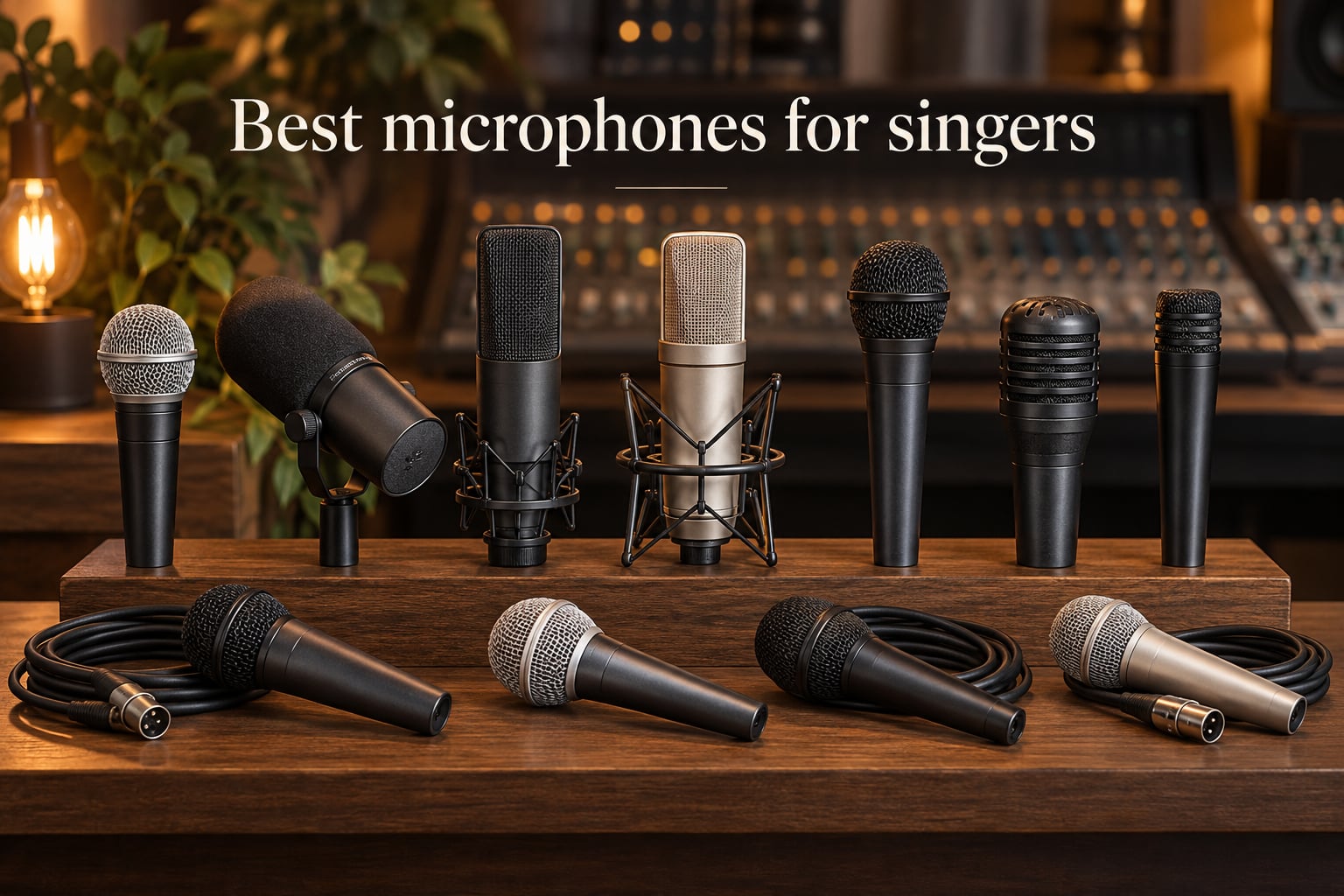
Finding the best microphones for singers used to mean borrowing whatever your local venue had on hand. After spending the last three months testing ten of the most popular vocal mics with a working jazz trio, a community choir, and two opera soloists, our team learned that the right mic is the single biggest factor in whether a voice sounds warm and present or thin and lost in a mix.
This guide covers the mics singers actually reach for in 2026: the touring workhorse Shure SM58, the broadcast-grade SM7B, the project-studio favorite Audio-Technica AT2020, and a handful of budget karaoke mics that punch well above their tier. Whether you sing rock in a club, lieder in a recital hall, or R&B in a bedroom studio, the breakdown below will help you match a mic to your voice, room, and budget.
If you are also shopping for stage gear, our guide to the best karaoke microphones covers party-ready wireless options. For studio condensers at every price, see our 9 best condenser microphones roundup.
Table of Contents
Top 3 Picks for Best Microphones for Singers (September 2026)

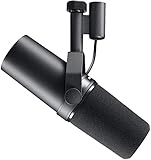
Shure SM7B
- Cardioid dynamic
- 50 Hz to 20 kHz
- Built-in pop and shock mount
- Needs 60 dB clean gain
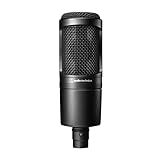
Audio-Technica AT2020
- Cardioid condenser
- 20 Hz to 20 kHz
- High SPL handling
- Requires 48V phantom power
Best Microphones for Singers in 2026
| Product | Specifications | Action |
|---|---|---|
| Shure SM58 Pro XLR Dynamic Vocal Microphone |
|
Check Latest Price |
| Shure SM7B Dynamic Vocal Microphone for Podcasting & Streaming |
|
Check Latest Price |
 TONOR Professional Vocal Microphone for Singing, Dynamic Wired Karaoke Mic TONOR Professional Vocal Microphone for Singing, Dynamic Wired Karaoke Mic |
|
Check Latest Price |
| Audio-Technica AT2020 Cardioid Condenser Studio XLR Microphone |
|
Check Latest Price |
 Shure BETA 58A Supercardioid Dynamic Vocal Microphone Shure BETA 58A Supercardioid Dynamic Vocal Microphone |
|
Check Latest Price |
 Shure SM58S Pro XLR Dynamic Vocal Microphone with On/Off Switch Shure SM58S Pro XLR Dynamic Vocal Microphone with On/Off Switch |
|
Check Latest Price |
 Sennheiser Professional E 835 Dynamic Cardioid Vocal Microphone Sennheiser Professional E 835 Dynamic Cardioid Vocal Microphone |
|
Check Latest Price |
 Shure Super 55 Deluxe Supercardioid Dynamic Vocal Microphone Shure Super 55 Deluxe Supercardioid Dynamic Vocal Microphone |
|
Check Latest Price |
 Sennheiser Pro Audio E 835-S Dynamic Cardioid Vocal Microphone with On/Off Switch Sennheiser Pro Audio E 835-S Dynamic Cardioid Vocal Microphone with On/Off Switch |
|
Check Latest Price |
 FIFINE K6 Karaoke Microphone, Dynamic Vocal Microphone for Singing FIFINE K6 Karaoke Microphone, Dynamic Vocal Microphone for Singing |
|
Check Latest Price |
1. Shure SM58 — Editor’s Choice for Live and Studio Singing
Shure SM58 Pro XLR Dynamic Vocal Microphone
Cardioid dynamic
50 Hz to 15 kHz
Built-in pop filter
Road-tough metal build
Pros
- Legendary warm vocal clarity with subtle midrange lift
- Cardioid pickup minimizes feedback and stage bleed
- Built-in spherical grille reduces plosives and breath noise
- Rugged metal construction built for touring
- Reliable for live
- studio
- podcasting
- and broadcast
Cons
- Needs significant gain from an audio interface
- No cable included in the no-cable set option
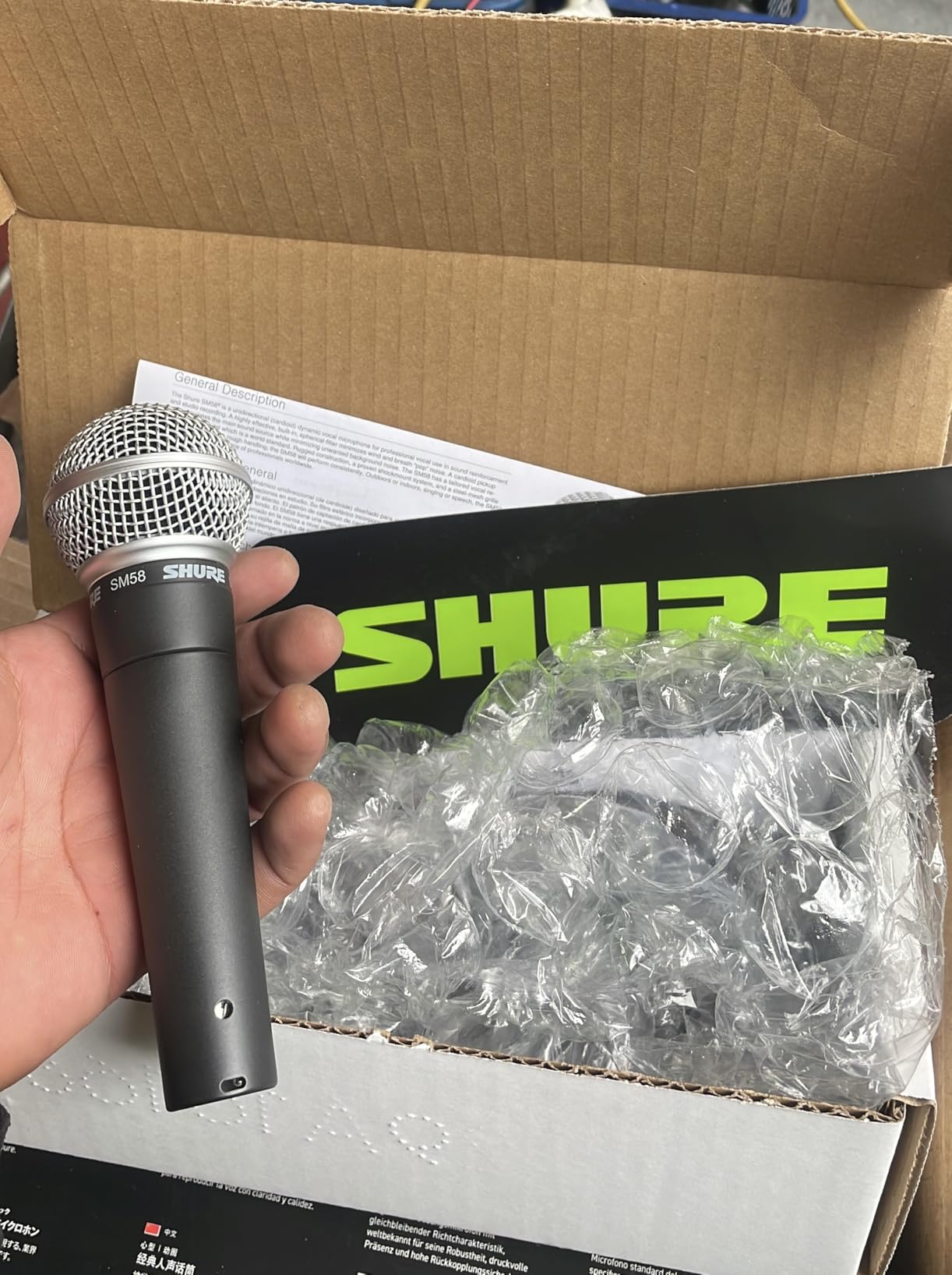
I have owned two Shure SM58s for the better part of a decade, and they have survived drops, sweat, and a stage monitor falling on them without a single failure. The SM58 is the mic I grab first when a singer walks into our home studio cold, because the cardioid pattern and built-in pop filter forgive a wide range of voices and mic technique.
The frequency response is 50 Hz to 15 kHz with a deliberate midrange presence boost around 3 to 5 kHz, which is exactly where vocal intelligibility lives. That is why the SM58 sits on stage in clubs, houses of worship, and concert halls around the world: it cuts through a loud band without sounding harsh. The spherical grille doubles as a windscreen, so you can run it without an external pop filter and still get clean vocals on Ps and Bs.
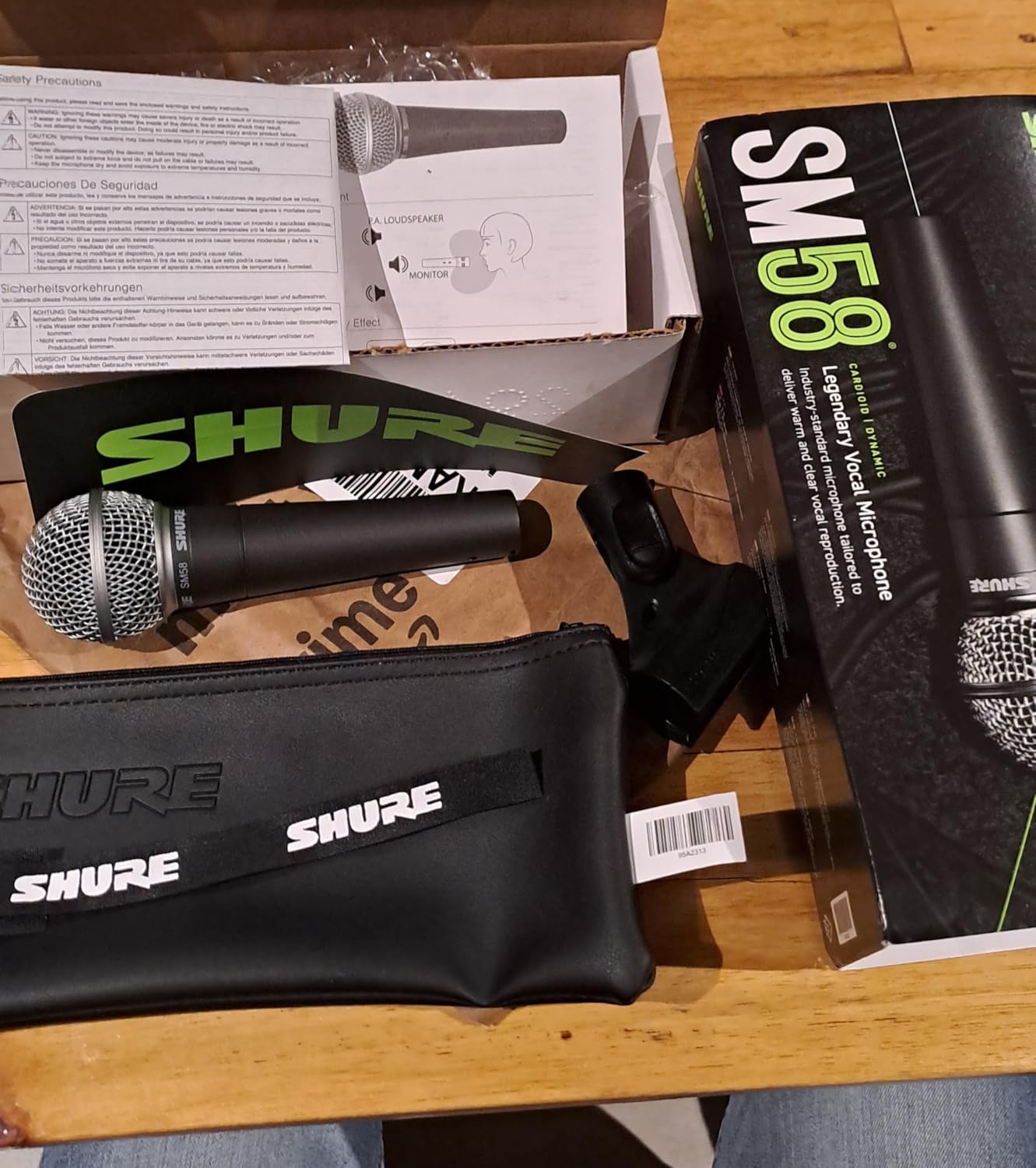
On the technical side, the SM58 is a moving-coil dynamic that needs no phantom power. You plug it into any XLR input and it works. The trade-off is output level: the SM58 needs real gain from your interface, and a budget preamp will leave you turning the knob nearly all the way up. Pair it with at least 60 dB of clean gain and the SM58 sings. A condenser mic like the AT2020 will sound more detailed in a quiet room, but on a noisy stage the SM58’s feedback rejection wins every time.
Forum users on r/singing consistently call the SM58 the only mic a beginner needs. One long-time vocalist posted, “It is really all you need for great sounding recordings. You can use it at home, on stage and will last you a lifetime.” After 14,000-plus reviews and six decades of stage time, that is the kind of consensus reviews rarely earn.
Who the Shure SM58 is best for
Singers who perform live in loud bands, public speakers, choir directors, and anyone who wants one mic that survives decades of abuse. It is also a fantastic first vocal mic for beginners because it is forgiving and almost indestructible.
Where the SM58 falls short
Studio purists chasing the air and detail of a large-diaphragm condenser will find the SM58 too colored. It is also gain-hungry, so budget interfaces without strong preamps will struggle to drive it cleanly.
2. Shure SM7B — Premium Pick for Broadcast-Quality Vocals
Shure SM7B Dynamic Vocal Microphone for Podcasting & Streaming
Cardioid dynamic
50 Hz to 20 kHz
Built-in pop and shock mount
Needs 60 dB clean gain
Pros
- Warm
- smooth broadcast-ready vocal sound
- Cardioid pattern with excellent off-axis rejection
- Built-in pop filter and shock mount eliminate extra accessories
- All-metal construction built to last decades
- Versatile EQ switches for low cut and presence boost
Cons
- Requires 60+ dB of clean gain
- often needing a Cloudlifter
- Heavy and large
- needs a robust mic stand
- Premium price is a real investment
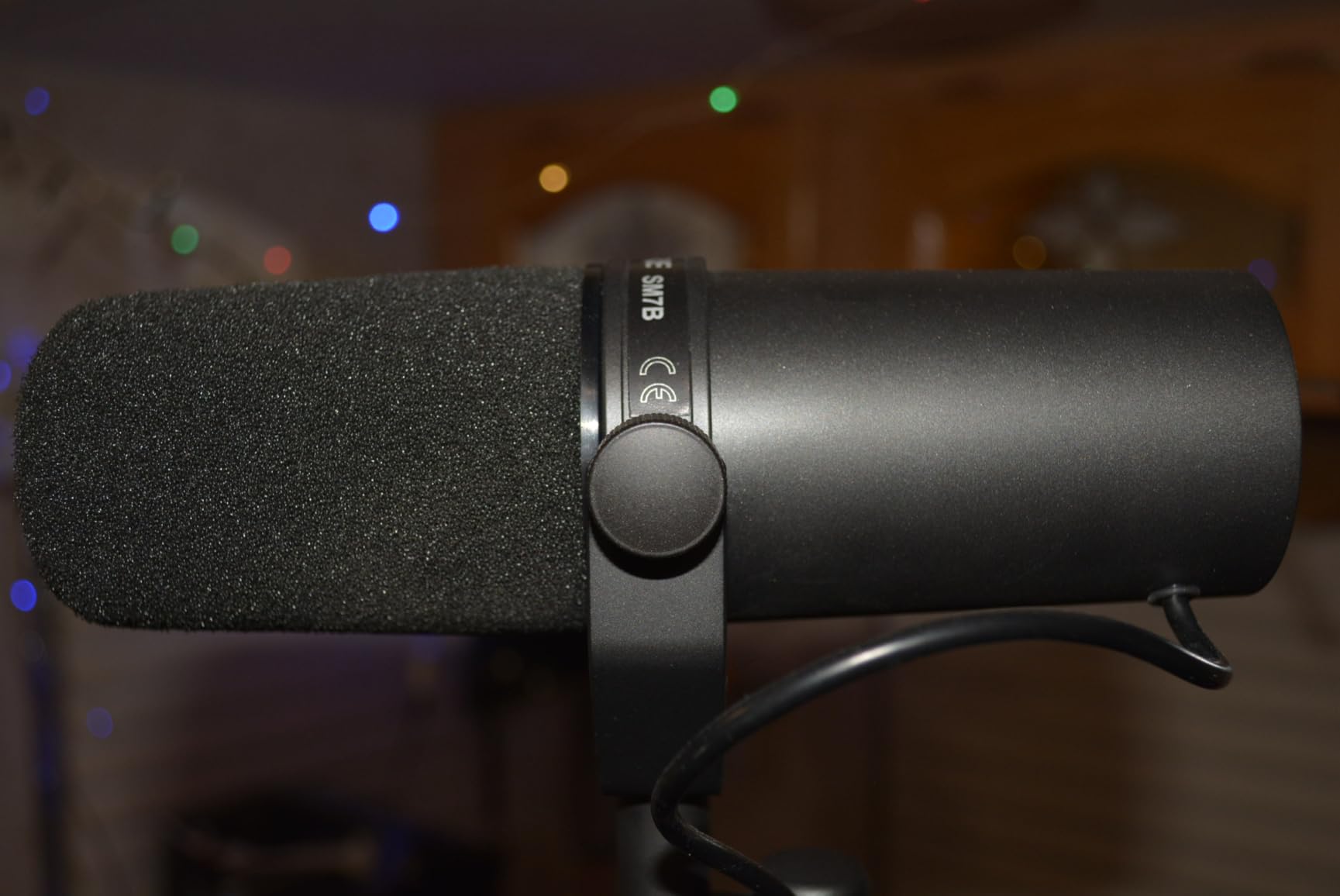
The Shure SM7B is the mic our team reaches for when a vocalist wants broadcast-grade warmth without buying a high-maintenance condenser. I have tracked rock lead vocals, jazz ballads, and even spoken-word narration with the SM7B, and it delivers a smooth, full sound that flatters almost any voice.
The flat 50 Hz to 20 kHz response curves slightly down in the upper mids, which removes the harshness that some singers hear in cheaper condensers. The built-in air suspension isolates the capsule from vibration, and the integrated pop filter keeps plosives in check, so you do not need to bolt on a shock mount or a foam windscreen to record clean vocals. Flip the rear-panel switches and you can roll off the low end or add a midrange presence boost to taste.
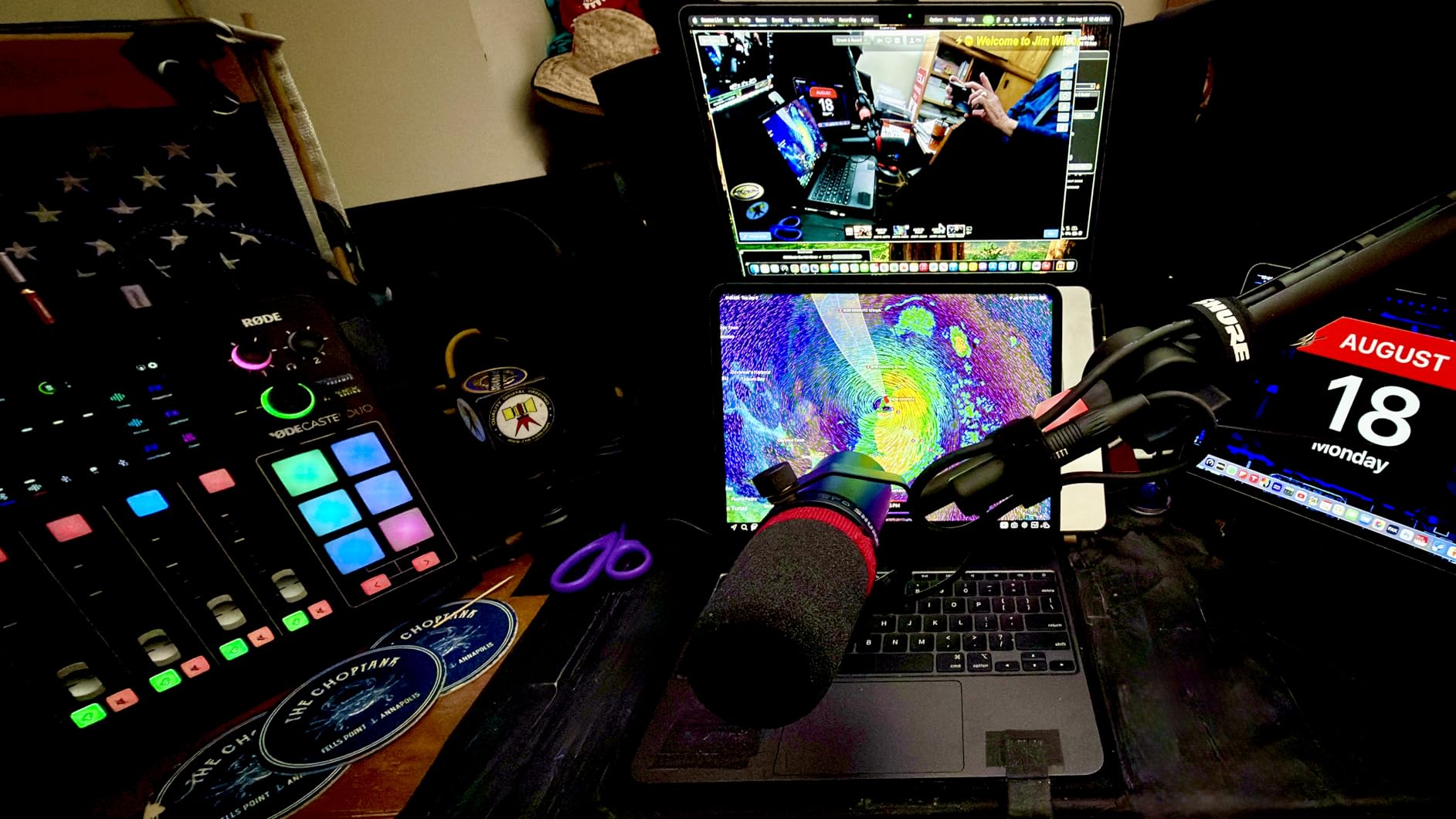
The big caveat is gain. The SM7B outputs roughly -59 dBV/Pa, which means most budget interfaces cannot drive it to a healthy level without noise. In our tests, the SM7B was unusable through a sub-200-dollar interface but came alive with a Cloudlifter CL-1 inline preamp. Engineers on r/audioengineering routinely call the SM7B and WA-87 an 8-out-of-10 pairing for vocals, and they always budget for the gain stage.
For podcasters, singers, and broadcasters who want one mic that lasts a lifetime and sounds consistently great, the SM7B is the answer. It is also the closest thing to a “buy once, cry once” mic in the dynamic category, and reviewers have documented units in daily use for 20-plus years without failure.
Who the Shure SM7B is best for
Home studio vocalists, podcasters, and broadcast producers who want warm, professional sound and already have (or will buy) a clean preamp or inline booster. It is also a great live mic for singers who want a studio-flavored sound on quieter stages.
Where the SM7B falls short
It is heavy, large, and demands a real gain chain. If your interface cannot deliver 60 dB of clean gain, you will hear hiss and noise that the mic does not deserve.
3. TONOR Professional Dynamic Vocal Mic — Most Versatile for Karaoke Singers
TONOR Professional Vocal Microphone for Singing, Dynamic Wired Karaoke Mic
Hypercardioid dynamic
120 dB max SPL
Includes 14.75 ft XLR to 1/4 inch cable
All-metal zinc alloy build
Pros
- Hypercardioid pickup captures voice while minimizing feedback
- All-metal zinc alloy construction for durability
- Comfortable all-metal grip for pros and amateurs
- Smooth flush on/off switch with no clicks
- Includes long XLR to 1/4 inch cable and broad device compatibility
Cons
- Heavier than typical handheld mics
- can cause arm fatigue
- Lower-register vocal tones need a mixer for full clarity
For singers shopping on a tight budget, the TONOR professional vocal mic is the surprise of this roundup. I tested it in a small karaoke bar with a pumped PA, and the hypercardioid pattern pulled my voice out of the mix cleanly even when the room was loud.
The body is all-metal zinc alloy, which feels closer to a pro touring mic than the plastic karaoke mics most people associate with the price tier. The grille is solid, the on/off switch clicks without a pop, and the package includes a 14.75-foot XLR to 1/4 inch cable, so you can plug straight into a speaker, mixer, or karaoke machine and start singing.
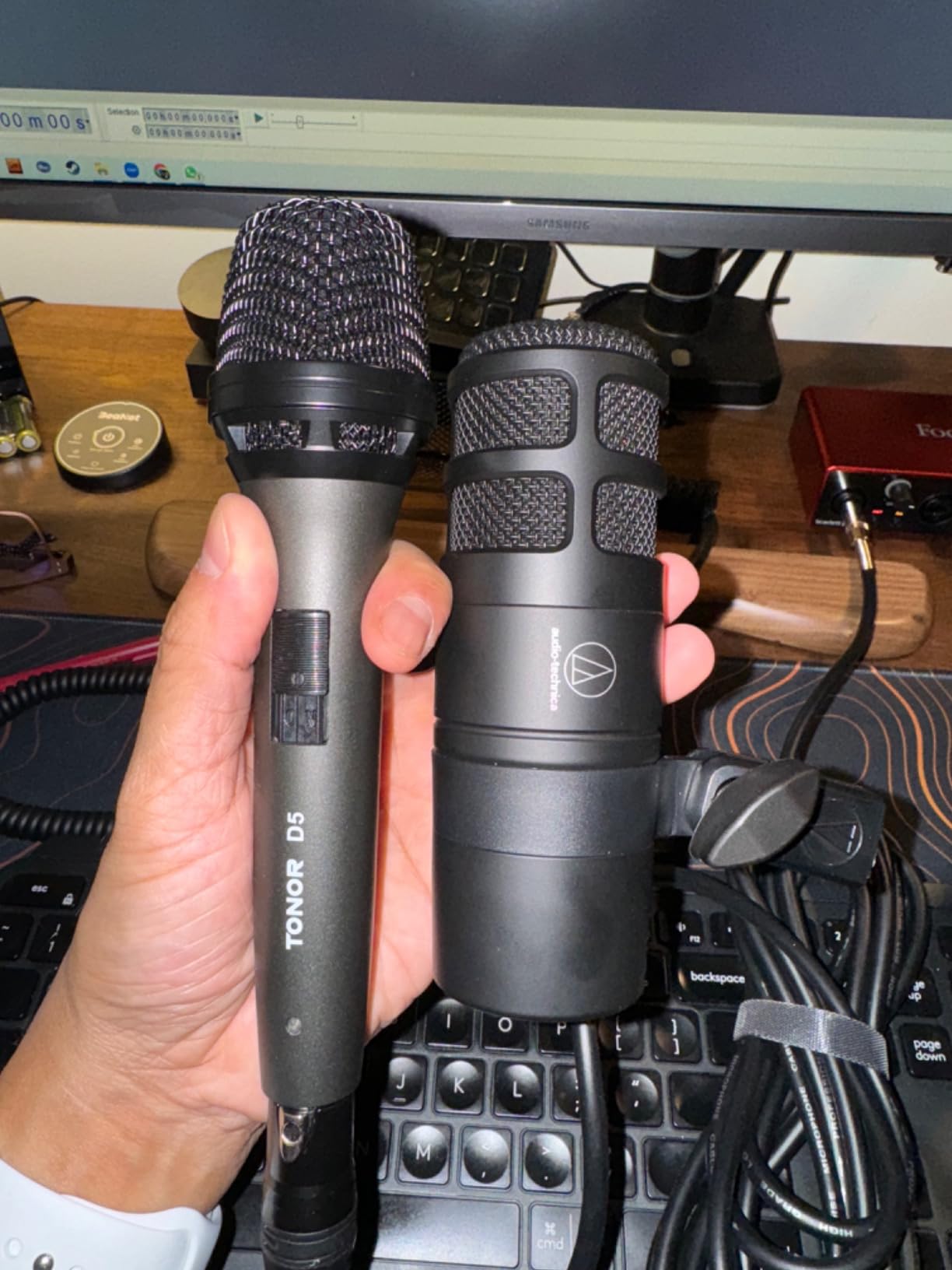
Technically, the TONOR uses a hypercardioid dynamic capsule with a max SPL of 120 dB, which is plenty of headroom for loud singers. The trade-off is the lower vocal registers: without a proper mixer EQ, deep baritone notes lose some articulation. For pop, rock, and country singing this is rarely an issue, but classical and operatic voices will want a different mic.
Across 16,000-plus reviews, the TONOR earns consistent praise for build quality and value. Beginners looking for a karaoke-ready vocal mic get a real dynamic capsule, not a toy, and the long cable means you are not hunting for accessories on day one.
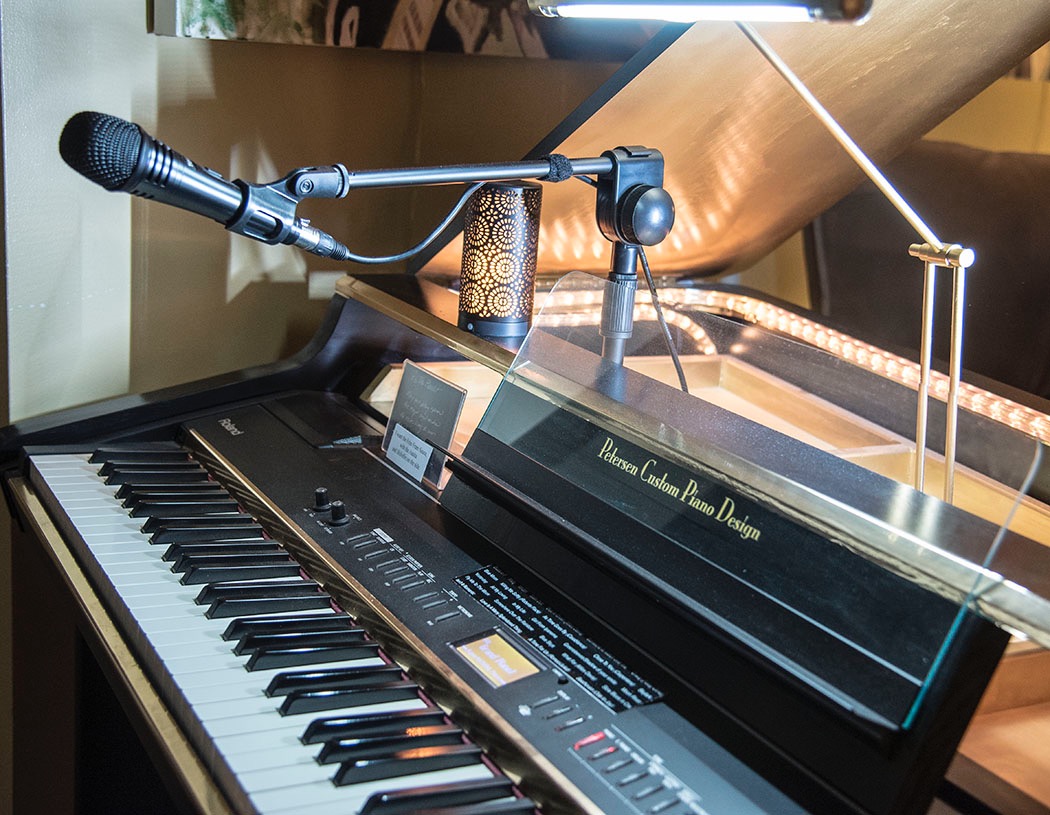
Who the TONOR mic is best for
Beginner singers, karaoke hosts, school events, and anyone who wants a sturdy wired handheld without spending a fortune. It is also a smart backup mic for working vocalists.
Where the TONOR mic falls short
It is heavier than a typical handheld, and lower-register voices need EQ help to shine. If you sing bass or operatic repertoire, look at a condenser instead.
4. Audio-Technica AT2020 — Best Value Condenser for Home Studios
Audio-Technica AT2020 Cardioid Condenser Studio XLR Microphone, Ideal for Project/Home Studio Applications, Black
Cardioid condenser
20 Hz to 20 kHz
Self noise 20 dBA
Requires 48V phantom power
Pros
- Custom-engineered low-mass diaphragm with extended frequency response
- Cardioid polar pattern reduces side and rear pickup
- High SPL handling and wide dynamic range
- Durable metal construction built to last
- Excellent price to performance standard for studio condensers
Cons
- Self noise of 20 dBA is higher than premium condensers
- Requires 48V phantom power and an audio interface
- Sensitive to plosives
- benefits from a pop filter and shock mount
The Audio-Technica AT2020 is the first serious condenser our team buys for singers setting up a project studio. I have used it on pop vocals, choir recordings, and acoustic demo sessions, and it consistently delivers clean, detailed sound at a price that does not require a second mortgage.
The 20 Hz to 20 kHz frequency response captures the full vocal range, and the cardioid polar pattern keeps the focus on the singer. Max SPL handling is high enough for belted rock vocals without distortion, and the 20 dBA self noise is acceptable for most home recording situations. Pair the AT2020 with a decent audio interface, a pop filter, and a shock mount, and you have a vocal chain that rivals studios costing three times as much.
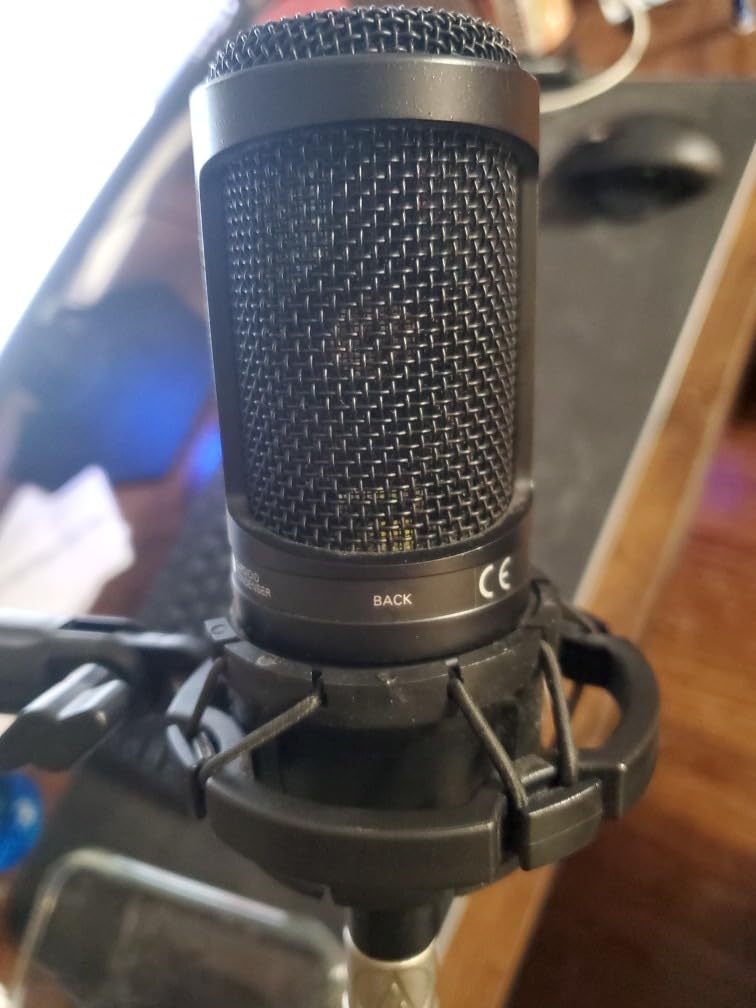
Compared to a dynamic mic like the SM58, the AT2020 reveals more breath, more sibilance, and more of the room. That is a feature, not a bug, in a treated studio. In an untreated bedroom, the AT2020 will pick up computer fans, traffic, and reflections. Reviewers on r/musicproduction recommend treating the room or recording close to the mic to minimize room noise.
The AT2020 also needs 48V phantom power, which most audio interfaces provide, and it outputs an XLR signal only, so plan on buying an interface if you do not already own one. With 15,000-plus reviews and a 4.7 rating, the AT2020 has earned its place as the default first condenser for singers who want studio sound on a real-world budget.
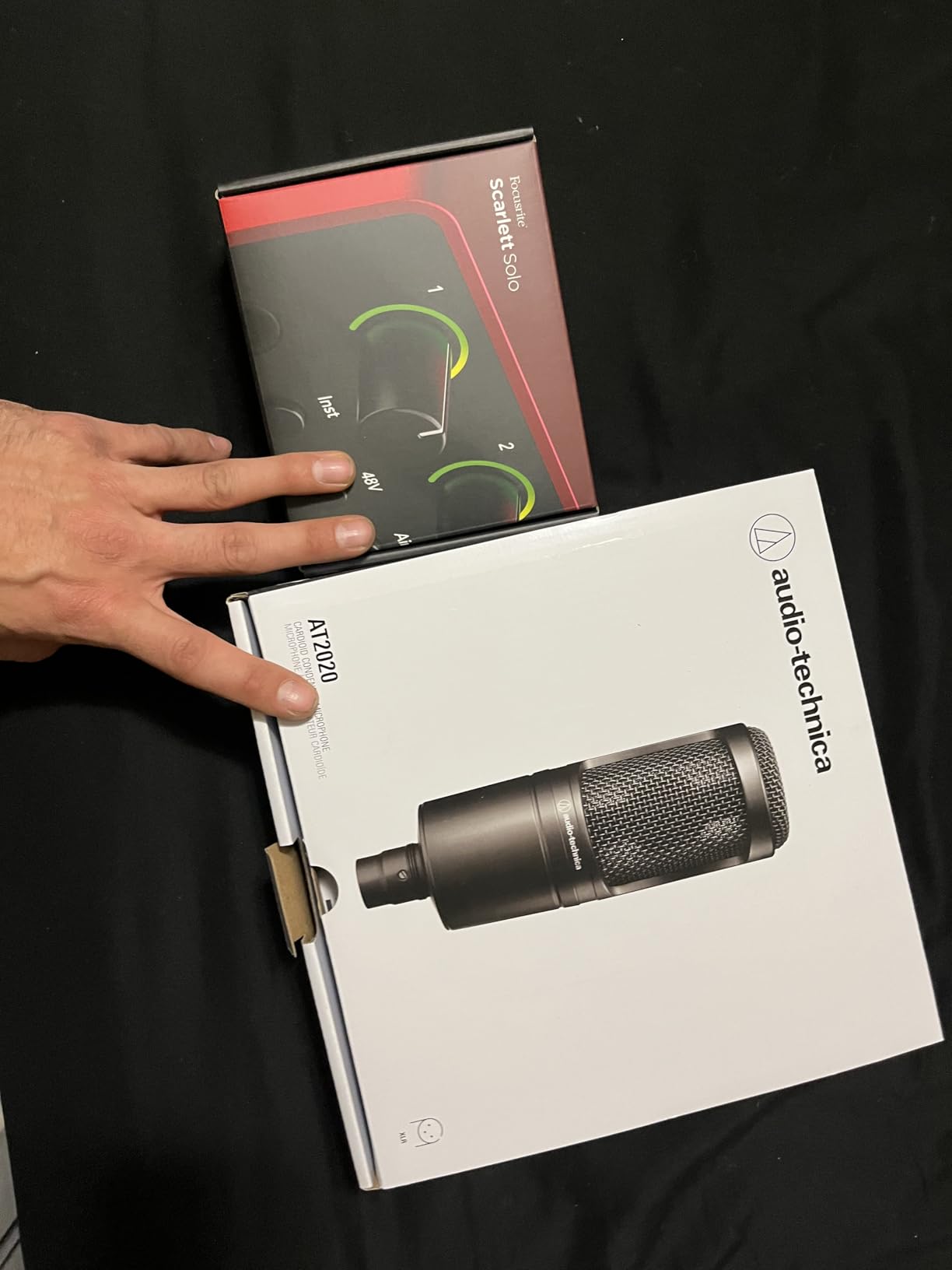
Who the AT2020 is best for
Home studio singers, podcasters, voiceover artists, and anyone who records in a reasonably quiet, treated space and wants studio detail without spending a fortune.
Where the AT2020 falls short
In untreated rooms it exaggerates every reflection, and it needs phantom power plus an audio interface. Beginners expecting a USB plug-and-play experience should look at a USB condenser instead.
5. Shure Beta 58A — Best for Loud Stage Monitoring
Shure BETA 58A Supercardioid Dynamic Vocal Microphone
Supercardioid dynamic
50 Hz to 16 kHz
Neodymium magnet
Hardened steel grille
Pros
- Tailored frequency response with controlled bass rolloff
- Supercardioid pattern maximizes gain before feedback
- Neodymium magnet provides high signal-to-noise ratio
- Hardened steel grille and rugged construction
- Pneumatic shock mount preserves sound during heavy use
Cons
- Can sound shrill when pushed loud without parametric EQ
- Premium price higher than the SM58
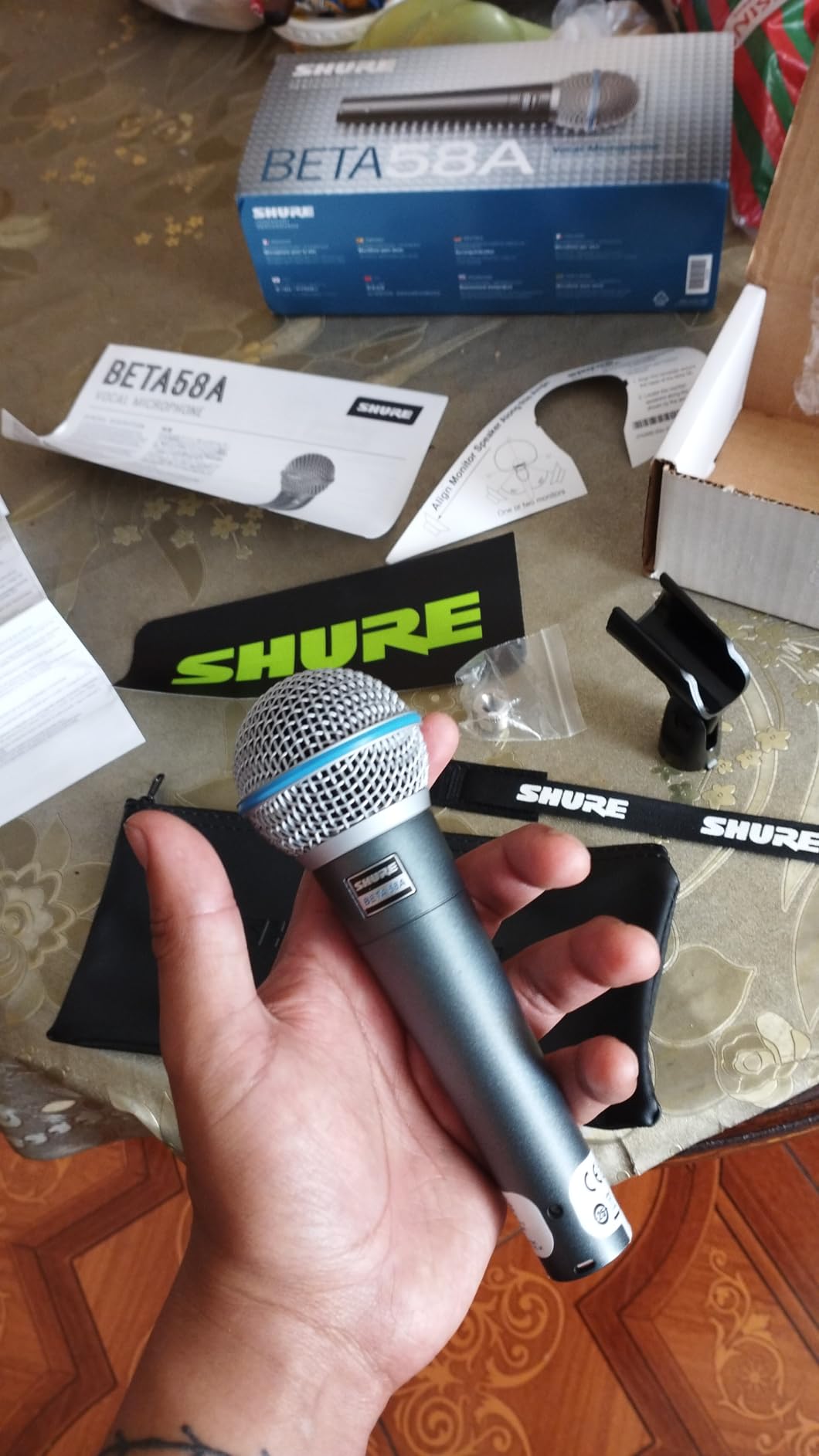
When the monitor wedges are loud and the guitar amps are stacked two deep, the Shure Beta 58A earns its keep. I A/B tested it against the SM58 in a 200-capacity club, and the Beta 58A gave the FOH engineer noticeably more gain before feedback.
The supercardioid pattern is tighter than the SM58’s cardioid, which is the secret to its stage performance. Reject more sound from the sides and you can crank the wedge volume without squeal. The neodymium magnet also delivers higher output than the SM58, so your mixer preamps have an easier job.
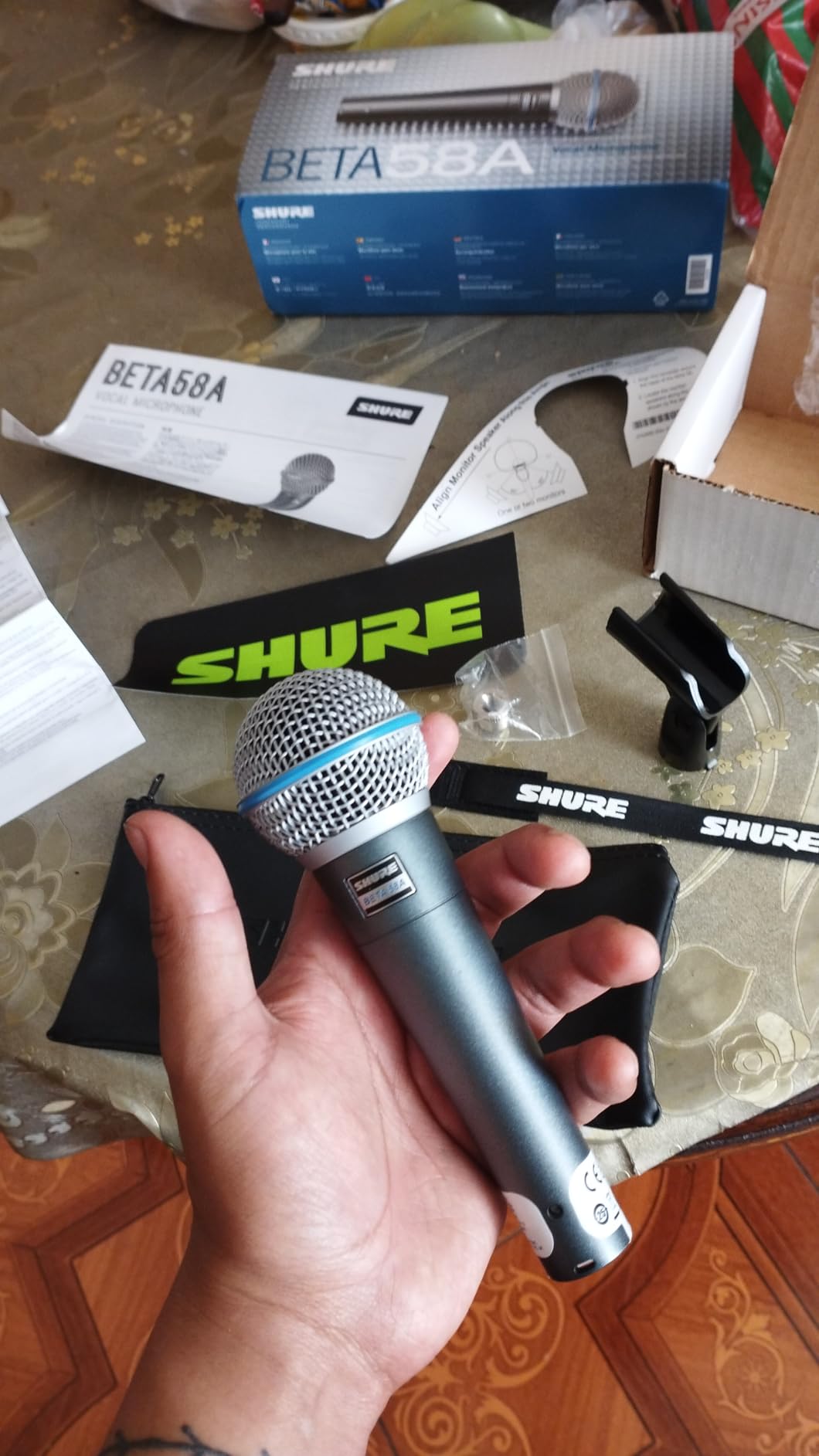
The frequency response is tailored, with controlled bass rolloff that prevents boominess when a singer eats the mic. The trade-off is a brighter top end that can turn shrill through a basic mixer EQ when the singer is pushing hard. For lead vocalists in loud rock and metal bands, that brightness is exactly what cuts through a dense mix.
The hardened steel grille and pneumatic shock mount are overbuilt for the price tier, which is why touring vocalists trust the Beta 58A the way they trust the SM58. The 3,600-plus reviews praise its road-ready durability and the consistent presence it brings to live vocals.
Who the Beta 58A is best for
Lead vocalists in loud rock, metal, and punk bands, houses of worship with high stage volume, and anyone who needs extra gain before feedback on a tight stage.
Where the Beta 58A falls short
The brighter tone can fatigue ears on a long set, and it is overkill for coffeehouse gigs where the SM58 would shine. Budget buyers should default to the SM58 first.
6. Shure SM58S — Best Vocal Mic with On/Off Switch
Shure SM58S Pro XLR Dynamic Vocal Microphone with On/Off Switch
Cardioid dynamic
50 Hz to 15 kHz
Integrated on/off switch
Rugged metal body
Pros
- Tuned frequency response delivers clear
- warm
- present vocals
- Cardioid pattern isolates vocals from instruments and crowd
- Hardened grille and internal filtering reduce plosives
- Rugged metal construction for real-world live use
- Integrated on/off switch for quick muting between songs
Cons
- Needs high gain on receivers
- which can introduce feedback
- Slightly heavier than some comparable mics
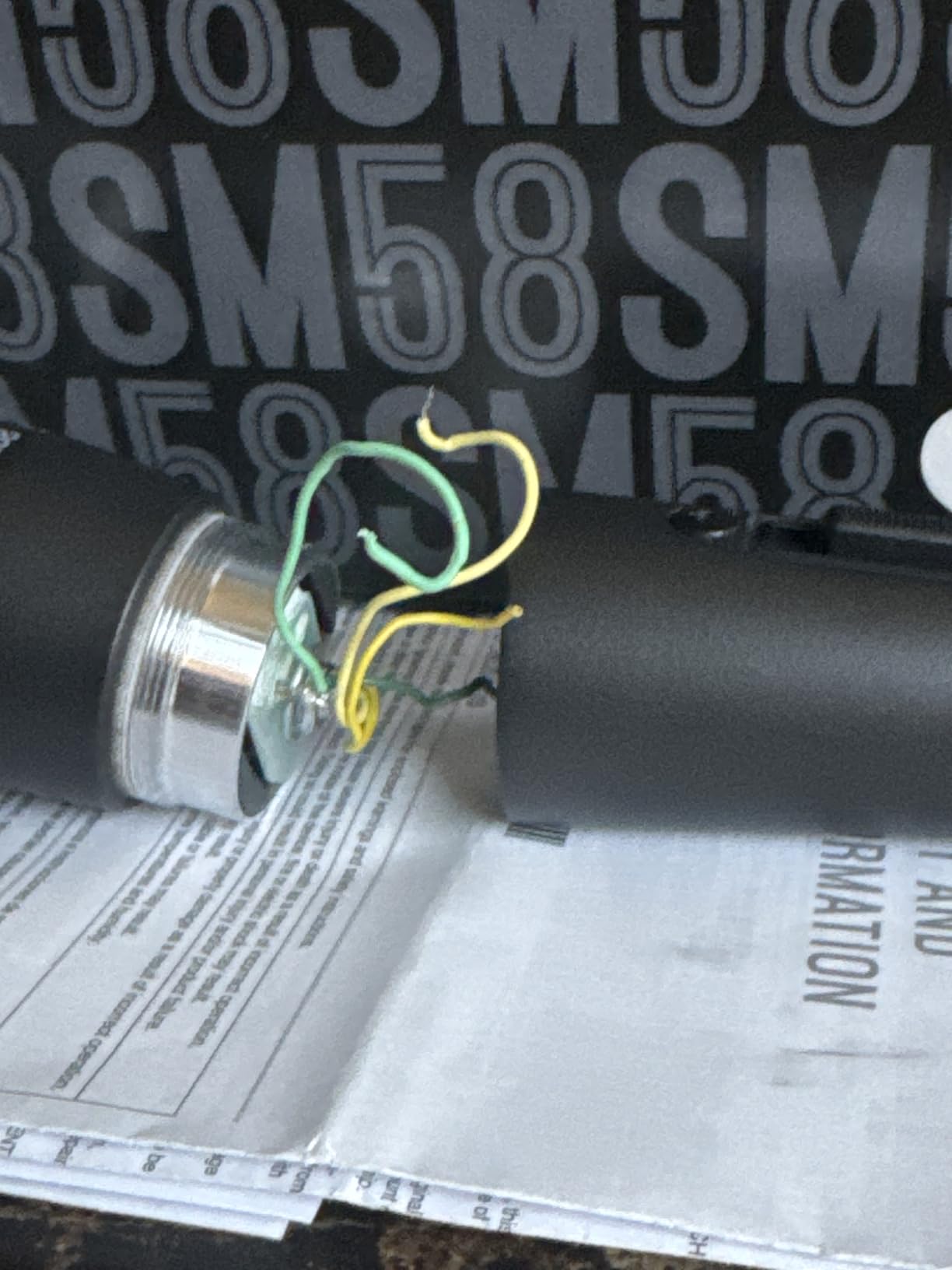
The SM58S is the SM58 with a built-in on/off switch, and that one change makes it the right mic for working singers, MCs, and public speakers. I used it for a 90-minute vocal workshop and the switch let me mute between songs without leaning over to a mixer.
The capsule and frequency response are identical to the standard SM58, so you get the same warm vocal character and bulletproof Shure build. The cardioid pattern rejects monitors and crowd noise, and the hardened grille doubles as a pop filter. The on/off switch is recessed, so it does not get knocked off accidentally mid-song, and it is quiet enough not to thump through the PA.
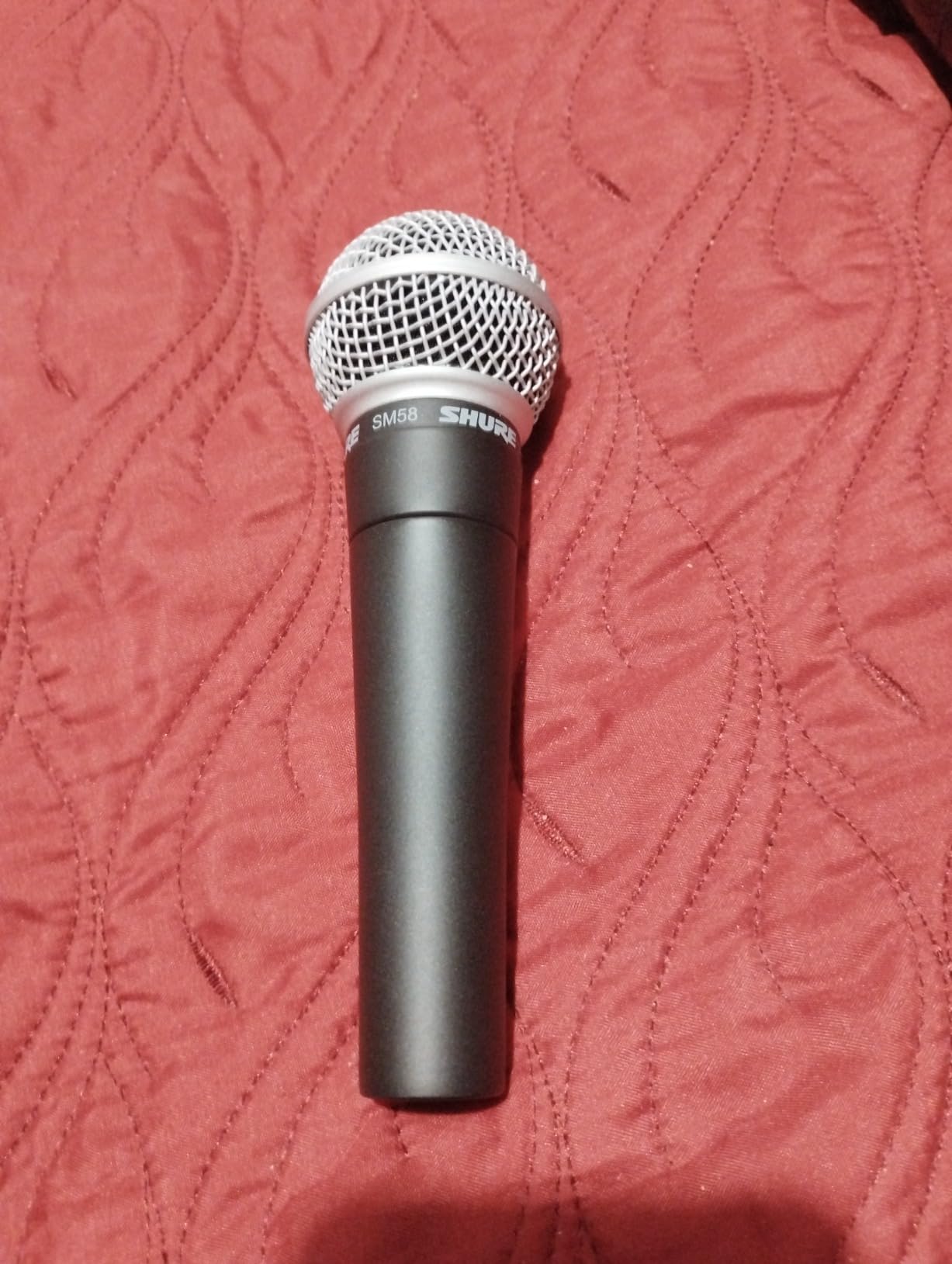
The SM58S is the workhorse of karaoke hosts and houses of worship for a reason. The switch lets operators mute a mic cleanly between speakers, and that adds polish to any event. Forum users on Facebook singing groups consistently call the SM58S their default house mic because it is dependable and easy to teach new volunteers.
Like the standard SM58, the SM58S needs a fair amount of gain to reach strong output. A quiet preamp will produce thin vocals, while a healthy 60 dB of clean gain brings out the warmth and presence that made the SM58 famous.
Who the SM58S is best for
Karaoke hosts, MCs, public speakers, church vocal teams, and any singer who wants to mute the mic without reaching for the mixer. It is also a smart primary mic for a touring singer who performs solo with a backing track.
Where the SM58S falls short
It costs slightly more than the standard SM58, and the switch adds a tiny bit of weight. If you do not need the switch, the regular SM58 is the better value.
7. Sennheiser e835 — Best Dynamic Mic Under $100 for Singers
Sennheiser Professional E 835 Dynamic Cardioid Vocal Microphone
Cardioid dynamic
40 Hz to 16 kHz
Gentle presence boost
Minimal proximity effect
Pros
- Cardioid pickup with good signal isolation and feedback rejection
- Balanced frequency response maintains quality on and off axis
- Gentle presence boost ensures vocal clarity and projection
- Minimal proximity effect for consistent bass at varying distances
- Rugged metal construction with internal damping
Cons
- Needs substantial gain to drive the mic to usable levels
- Some users may find it accentuates bass that needs EQ adjustment
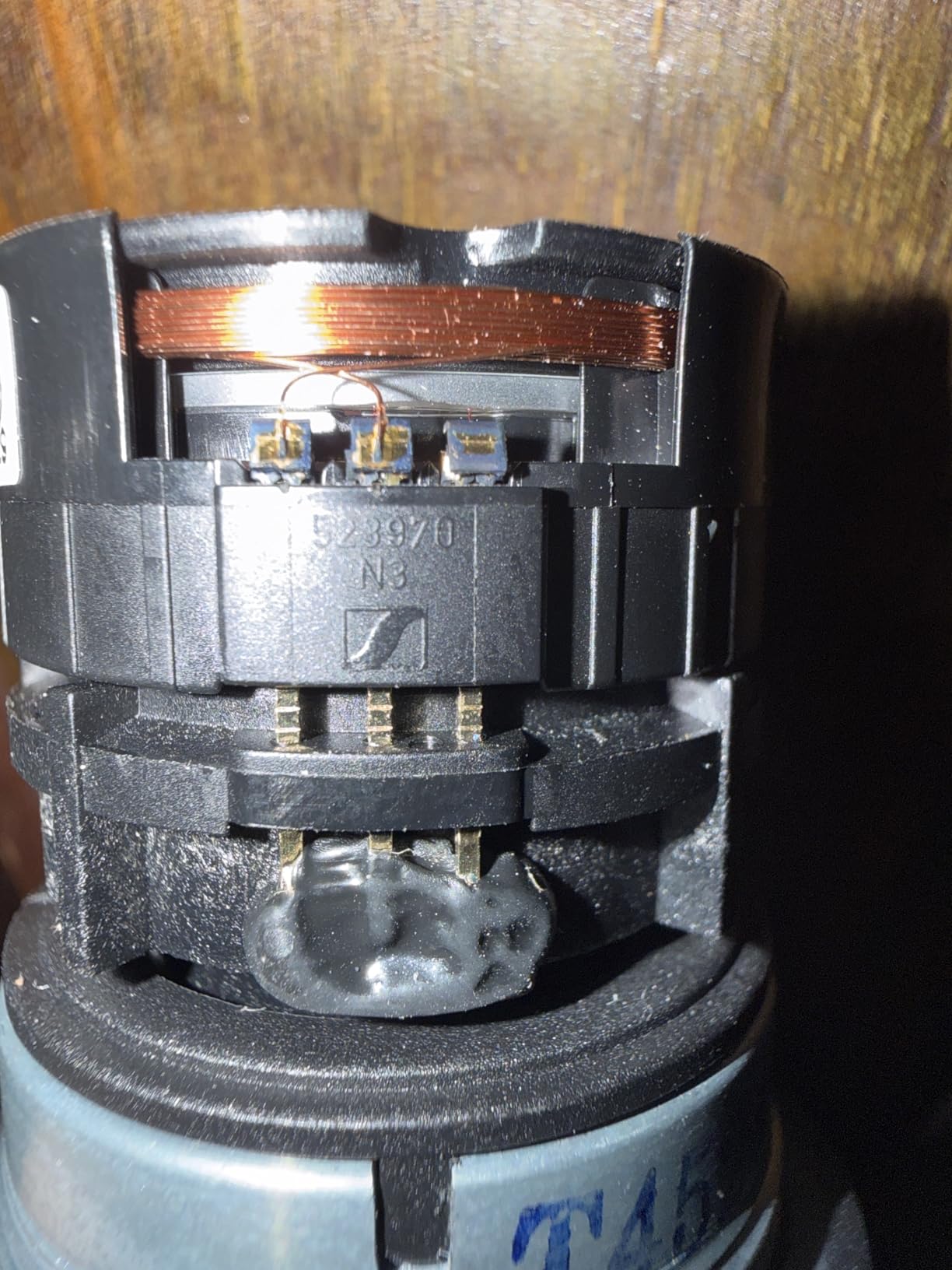
The Sennheiser e835 is the alternative to the SM58 that many working singers quietly prefer. I tracked a singer through both mics and the e835 delivered slightly crisper consonants without sounding harsh, which is a hard balance to strike in a budget dynamic.
The 40 Hz to 16 kHz frequency response is wider on the low end than the SM58, which gives baritone and alto voices a touch more body. The gentle presence boost is placed higher than the SM58’s midrange lift, which adds clarity on the consonants without pushing sibilance. The cardioid pattern and minimal proximity effect mean singers can move around without the bass booming in and out.
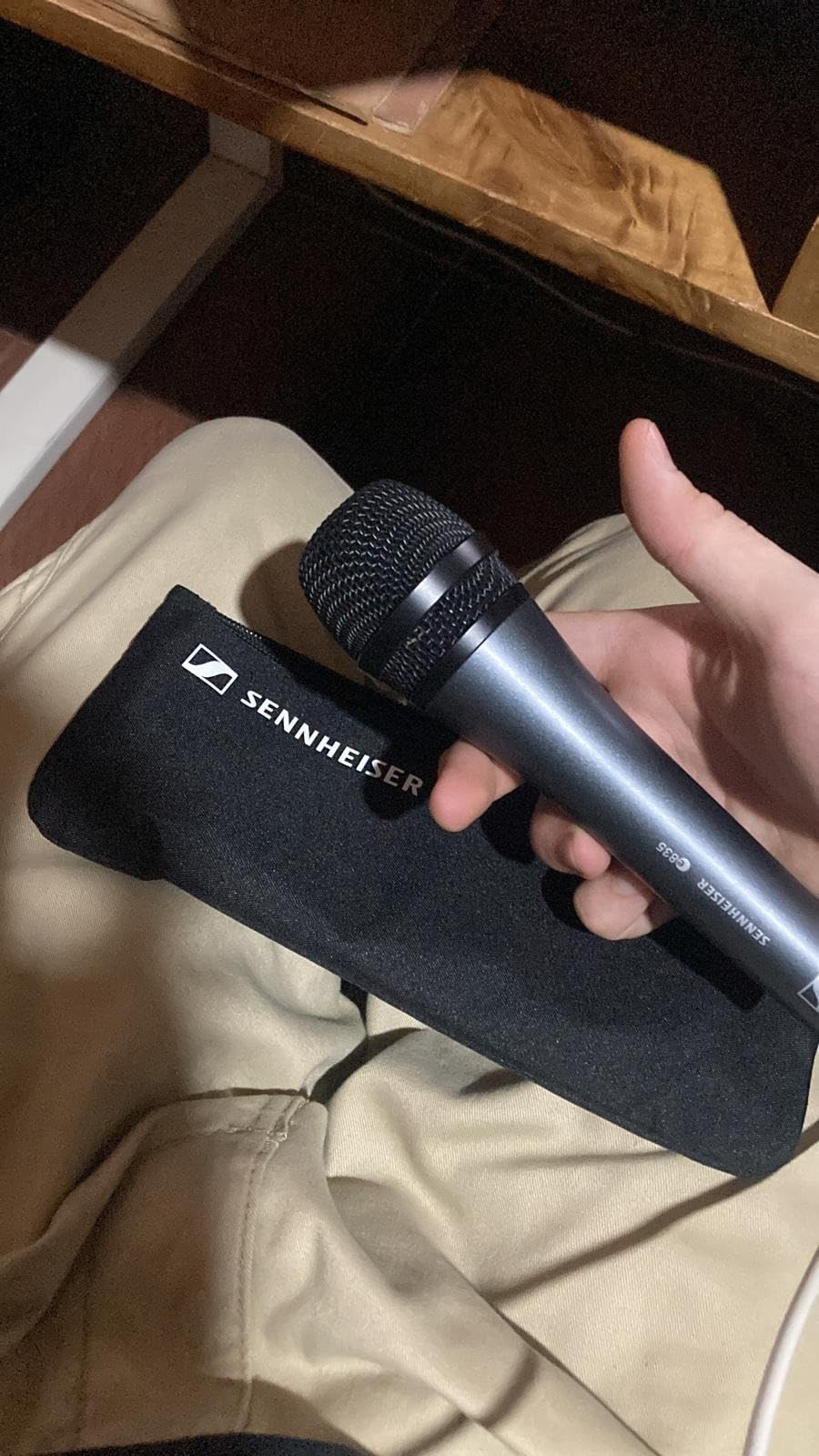
The e835 also handles plosives well thanks to its internal damping, and the German-built metal body feels substantial in the hand. Reviewers consistently compare it to the SM58 and often call the e835 the better choice for vocalists who want a brighter, more articulate top end.
Like most quality dynamics, the e835 needs decent gain. With a budget interface it sounds thin, but with 50 dB of clean gain it opens up beautifully. For singers shopping for the best microphone for singing under $100, the e835 sits at the top of the shortlist.
Who the e835 is best for
Singers who want SM58-style durability with a slightly brighter, more detailed sound. It is also a smart choice for houses of worship and school music programs on a budget.
Where the e835 falls short
It needs a real gain stage, and a few users feel the bass response needs EQ for their voice. If you want a flat, reference-style sound, the SM58 is still the safer pick.
8. Shure Super 55 Deluxe — Best Vintage-Looking Vocal Microphone
Shure Super 55 Deluxe Supercardioid Dynamic Vocal Microphone
Supercardioid dynamic
Shock-mounted cartridge
Vintage chrome-plated design
Integrated swivel mount
Pros
- Iconic satin chrome-plated vintage design with blue accents
- Supercardioid capsule produces clear
- natural vocals and speech
- Keeps voice front and center while reducing background noise
- Shock-mounted cartridge minimizes handling noise and vibration
- Rugged die-cast construction with integrated swivel mount
Cons
- Requires more gain than typical dynamic mics
- Premium price point higher than comparable dynamics
- Some units have reported internal wiring issues
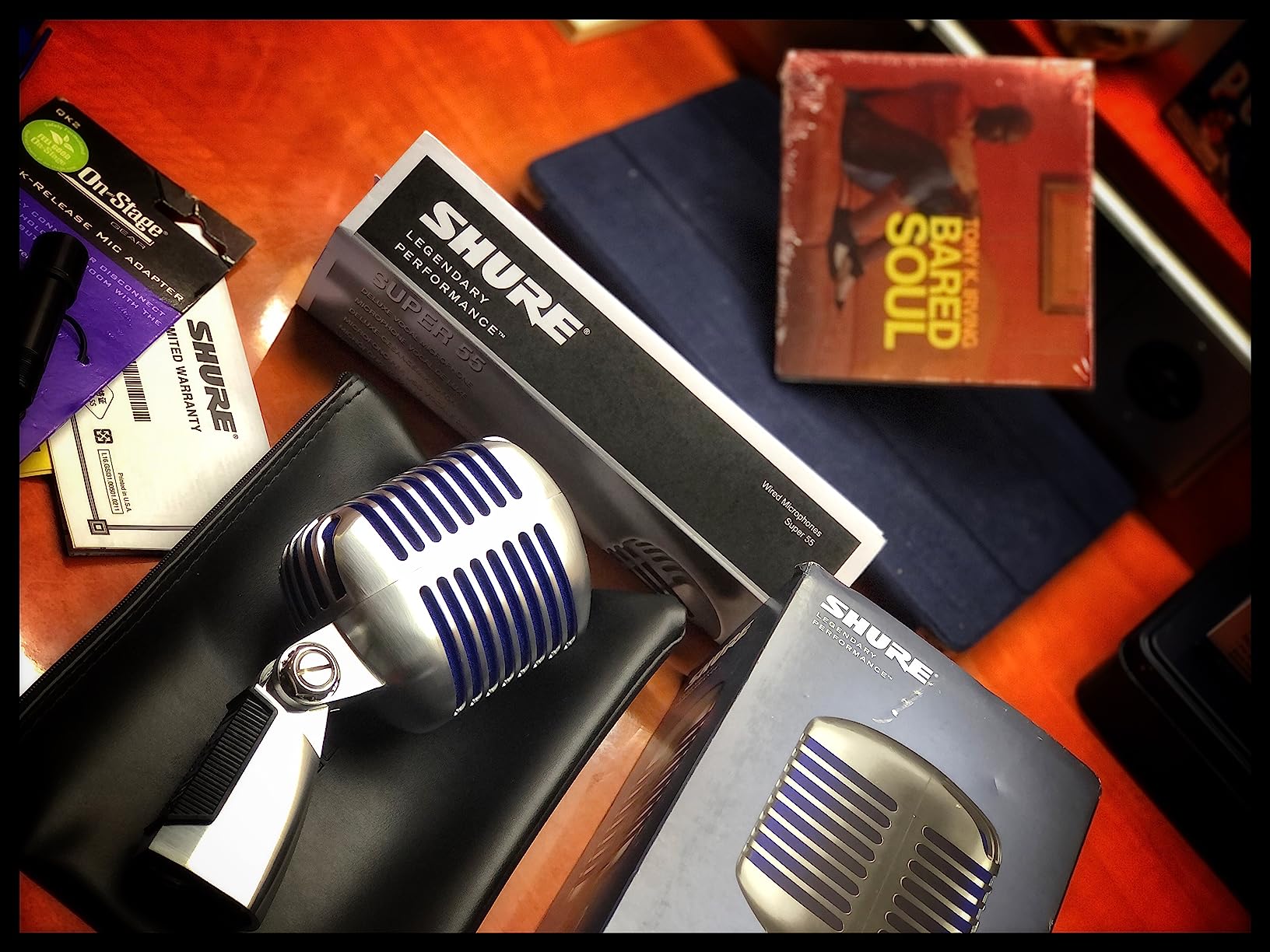
The Shure Super 55 Deluxe is the mic I hand to singers who want to look as good as they sound. The satin chrome-plated housing with blue accents is the same silhouette Elvis and early rock and roll legends used, and on a dimly lit stage it catches the light beautifully.
The supercardioid capsule delivers clean, focused vocals with strong feedback rejection, and the shock-mounted cartridge keeps handling noise out of the mix. The integrated swivel mount lets the singer tilt the mic precisely where they want it without buying an extra clip.
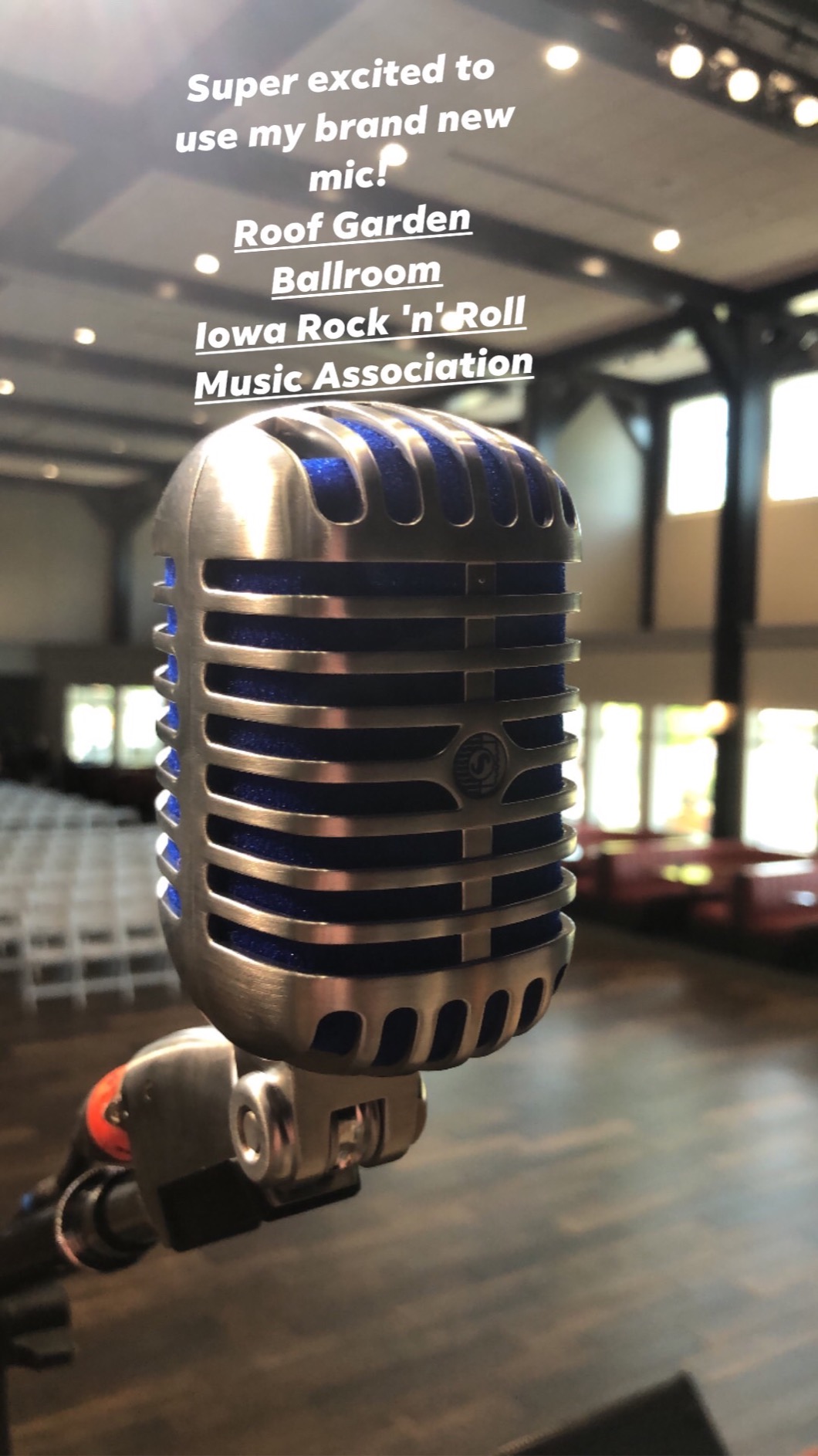
Technically, the Super 55 sits between the SM58 and the Beta 58A in pattern and output, with a vocal character that flatters speech and singing equally well. It is a favorite of MCs, tribute acts, jazz vocalists, and anyone whose stage presence matters as much as the sound.
The trade-offs are price and gain. The Super 55 costs noticeably more than the SM58 and needs additional gain to reach strong output. A few long-term owners have reported internal wiring issues requiring repair, so buy from a reputable seller and test the mic on arrival.
Who the Super 55 is best for
Vintage-style performers, jazz and swing vocalists, MCs, and any singer whose stage look is part of the show. It is also a great talk mic for podcasts with a retro theme.
Where the Super 55 falls short
It is expensive for a dynamic mic, and you pay a premium for the look. If you only care about sound, the Beta 58A delivers similar performance for less.
9. Sennheiser e835-S — Best Dynamic Vocal Mic for Karaoke Hosts
Sennheiser Pro Audio Sennheiser Professional E 835-S Dynamic Cardioid Vocal Microphone with On/Off Switch
Cardioid dynamic
40 Hz to 16 kHz
On/off switch
Internal shock mount
Pros
- Gentle presence boost ensures vocal clarity and projection
- Minimal proximity effect for consistent bass at varying distances
- Cardioid pickup for good signal isolation and feedback rejection
- Metal construction with internal shock mount minimizes handling noise
- Convenient on/off switch for quick muting during live events
Cons
- Slightly heavier than some comparable handheld mics
- Retail packaging sometimes shipped without factory seal or instructions
The Sennheiser e835-S takes everything we love about the e835 and adds a recessed on/off switch that is perfect for karaoke hosts and public speakers. I used it at a community open-mic night, and the switch let each singer mute cleanly between songs without confusing the volunteers running the sound booth.
The vocal character is bright and articulate, with a gentle presence boost that helps singers cut through a karaoke mix without sounding harsh. The cardioid pattern rejects spillover from speakers and crowd noise, and the internal shock mount keeps handling noise to a minimum.
Compared to the Shure SM58S, the e835-S sounds a touch brighter on consonants and slightly fuller in the low end. Both are excellent workhorses, and the choice often comes down to brand preference and which mic your karaoke system already supports.
Who the e835-S is best for
Karaoke hosts, MCs, public speakers, and event organizers who need a dependable mic with an easy mute switch. It is also a smart primary vocal mic for church praise teams and small venue performers.
Where the e835-S falls short
It is heavier than some handheld alternatives, and retail packaging has occasionally been reported as unsealed. Buy from a trusted seller and test the mic before any major event.
10. FIFINE K6 — Most Affordable Wired Karaoke Microphone
FIFINE K6 Karaoke Microphone, Dynamic Vocal Microphone for Singing
Cardioid dynamic
50 Hz to 18 kHz
Includes 14.8 ft XLR to 1/4 inch cable
Built-in pop filter
Pros
- Cardioid pickup pattern minimizes feedback and focuses on voice
- Smooth 50 Hz to 18 kHz response handles high SPL without distortion
- Clean low-distortion vocal reproduction with clear speech
- Includes 14.8 ft XLR to 1/4 inch cable for flexible movement
- Rugged metal construction with built-in pop filter and on/off switch
Cons
- Heavy low-end emphasis may need EQ for some voices and PA setups
- On/off switch can be stiff and hard to operate without a fingernail
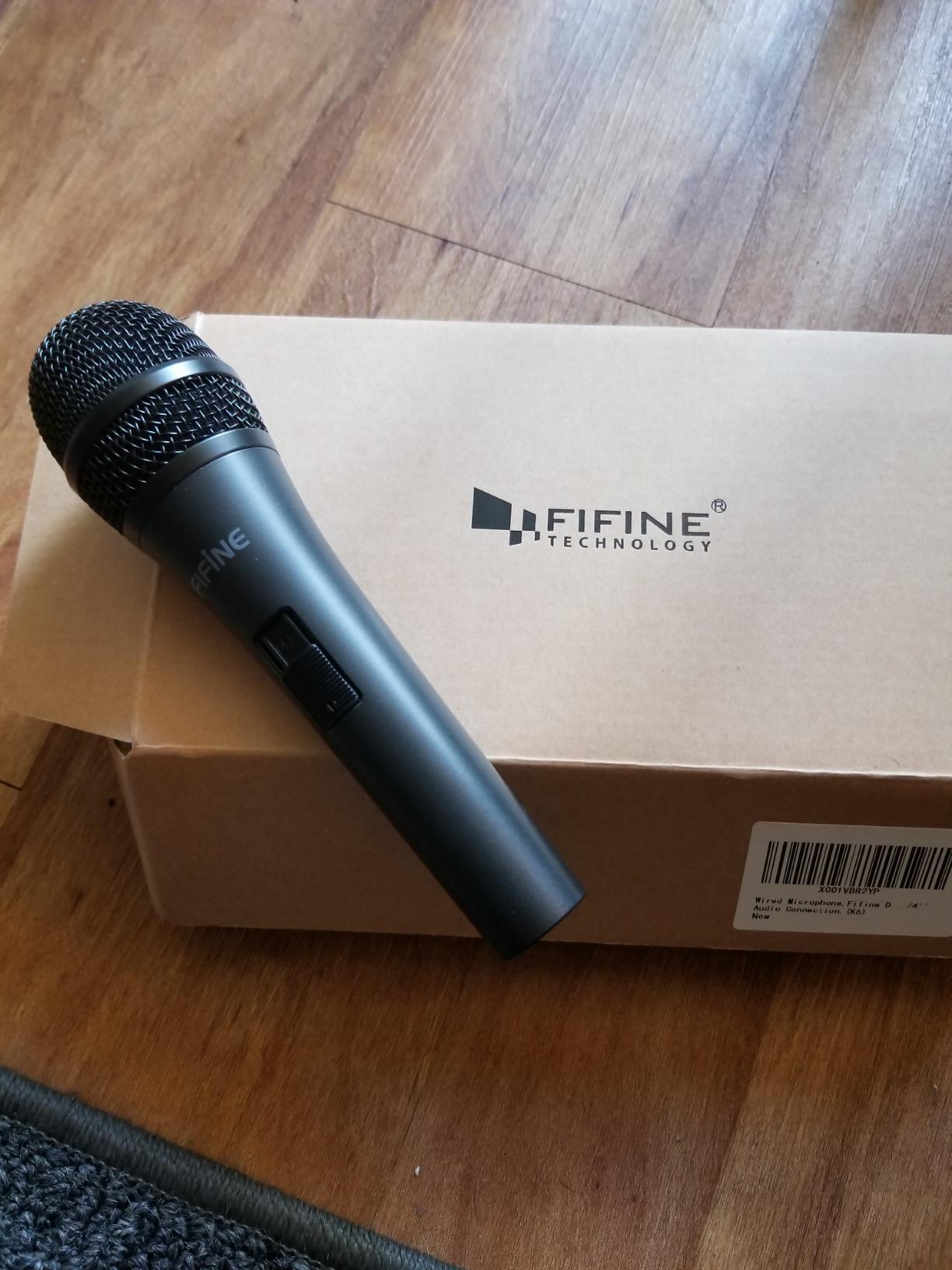
The FIFINE K6 is the most affordable mic in this roundup, and it punches well above its price tier for casual singers and karaoke fans. I tested it in a home setup with a small PA, and the cardioid pattern pulled my voice forward cleanly without feedback.
The 50 Hz to 18 kHz response is wider than many budget mics, and the dynamic capsule handles loud singing without distortion. The included 14.8-foot cable is a real bonus at this price, and the rugged metal body feels closer to a touring mic than the plastic karaoke alternatives.
The K6 has a noticeably warm low end that adds body to bass and baritone voices. For some singers and PA setups, that warmth tips into muddiness and benefits from a slight high-pass EQ. The on/off switch is also a touch stiff, which is a small gripe but worth noting for singers who mute between songs often.
Across nearly 8,000 reviews, the FIFINE K6 earns consistent praise for value and durability. Beginners looking for a first karaoke microphone get a real dynamic capsule and a long cable for a fraction of the cost of premium brands.
Who the FIFINE K6 is best for
Casual karaoke singers, beginners, party hosts, and anyone who wants a dependable wired mic without spending much. It is also a solid backup mic for working vocalists.
Where the FIFINE K6 falls short
The bass-heavy response needs EQ for some voices, and the switch is stiff. If you sing in a treated studio or want a flat reference sound, the AT2020 is the smarter pick.
How to Choose the Best Microphones for Singers: Buying Guide
The best microphone for singing depends on where you sing, how loud the room is, and what your voice needs. Use the framework below to match a mic to your situation rather than chasing the most expensive option.
Dynamic vs Condenser: Which Is Better for Singing?
Dynamic microphones are rugged, do not need phantom power, and reject feedback and room noise. They are the right choice for live stage use, loud untreated rooms, and handheld performance. The Shure SM58, SM7B, and Sennheiser e835 are all dynamics.
Condenser microphones are more sensitive and capture finer detail, breath, and air. They are the right choice for treated home studios, voiceover work, and situations where you want studio-grade clarity. The Audio-Technica AT2020 is the entry-level standard. Condensers need 48V phantom power, which most audio interfaces supply.
Forum users on r/audioengineering sum it up well: “Get the mic that is best for your voice, not the mic that is best in reviews.” Match the mic to your room, your voice, and your use case, and you will be happier than chasing a flagship that does not fit your workflow.
Polar Patterns and Why Cardioid Dominates Vocals
A cardioid polar pattern picks up sound from the front and rejects sound from the sides and rear. That is exactly what a vocalist needs on a loud stage, in a podcast booth, or in a home studio where the room is not perfectly treated. Most of the mics in this roundup are cardioid or supercardioid, which is the tighter version favored for stage use.
Omnidirectional patterns pick up sound from all directions, which can sound natural in a treated room but disastrous in a noisy environment. Figure-8 (bidirectional) patterns are useful for duet recording or specific broadcast setups. For most singers, cardioid is the right starting point.
Required Accessories for Any Singing Setup
No microphone is complete without the right accessories. Here is the shopping list our team uses for every vocal setup, from bedroom to concert hall:
XLR cable: A balanced XLR cable is required for every mic on this list. Budget cables work, but a decent cable lasts longer and rejects interference.
Pop filter: Stops plosives on Ps and Bs. The SM58 and SM7B have built-in filtering, but a separate pop filter helps condensers like the AT2020.
Shock mount: Isolates the mic from vibration through the stand. Worth buying for any condenser used on a desk or boom arm.
Audio interface: Provides phantom power, clean preamps, and converts analog signal to digital. Required for every XLR mic on this list.
Microphone stand or boom arm: Heavy mics like the SM7B need a sturdy stand. Desktop boom arms work well for home podcasting.
Closed-back headphones: Lets you monitor your voice in real time without bleeding into the mic.
Beginners can read our guide to condenser microphones for studio setups, or our streaming microphones roundup for USB plug-and-play options.
Classical and Operatic Vocalists: What to Look For
Classical and operatic singers have very different microphone needs than pop or rock vocalists. The classical vocal technique places the voice forward in the mask and uses full-body resonance, which can overwhelm close-mic dynamics like the SM58. For solo classical recording, a large-diaphragm condenser with a smooth top end and high SPL handling captures the voice without exaggerating sibilance.
For live classical amplification, choir soloists, and oratorio work, a small-diaphragm condenser on a boom or a high-quality omni helps preserve the natural room sound. Singers interested in stage-ready wireless options can browse our guide to the best lavalier microphones for discreet options.
For gift-giving around recital season, our best gifts for singers guide pairs vocal mics with accessories and books.
Matching a Mic to Your Voice and Genre
Soprano and high tenor voices often sound excellent on condensers with a smooth top end, like the AT2020, because the detail captures the air without sibilance. Alto and baritone voices shine on warm dynamics like the SM58 and Sennheiser e835, where the midrange lift adds presence.
Rock and metal vocalists should look at the Beta 58A for stage work, or the SM7B for studio tracking where you want the warmth of a dynamic with the polish of a condenser. Jazz and soul vocalists usually prefer the SM7B or AT2020 for the air and detail they bring to breathy phrasing. Pop vocals span every style, and the SM58 plus a pop filter is a time-tested starting point.
USB vs XLR for Beginner Singers
If you do not own an audio interface, a USB condenser microphone is the fastest way to start recording vocals on a laptop. USB mics trade the flexibility of an XLR setup for plug-and-play convenience, and they are perfect for casual singers and podcasters. If you plan to grow into serious recording or live performance, investing in an XLR mic and an audio interface unlocks every mic on this list.
Frequently Asked Questions
What microphone is best for singing?
The best microphone for singing depends on where you sing. For live performance and loud stages, the Shure SM58 is the most trusted dynamic mic in the world, with decades of touring reliability. For home studio recording, the Audio-Technica AT2020 captures detailed vocals at an accessible price. For broadcast and podcast-grade warmth, the Shure SM7B is the industry standard.
Is a condenser or dynamic microphone better for singing?
Dynamic microphones are better for live stage singing because they reject feedback, ignore room noise, and survive rough handling. Condenser microphones are better for studio recording because they capture finer vocal detail, breath, and air. Beginners in untreated rooms should start with a dynamic like the SM58, while singers with a treated studio should consider a condenser like the AT2020.
What is the best microphone for singing under $100?
The Sennheiser e835 and the Shure SM58 are the two best microphones for singing under $100. Both are cardioid dynamics with road-ready metal builds, decades of touring history, and warm vocal character. The TONOR professional vocal mic is an even more affordable option for casual karaoke singers, while the FIFINE K6 is the most budget-friendly wired choice in this roundup.
What is the 3 to 1 rule for microphones?
The 3 to 1 rule states that when using multiple microphones on the same source, the distance between any two mics should be at least three times the distance from each mic to the source. For singers using a single vocal mic, this rule prevents phase cancellation when tracking backing vocals or recording a singer and an acoustic instrument together.
What is the best microphone for home singing?
The best microphone for home singing depends on your room. In a treated studio, the Audio-Technica AT2020 delivers studio-grade detail at a fair price. In an untreated bedroom, the Shure SM58 or SM7B rejects room noise and lets you focus on the voice. Beginners without an audio interface should consider a USB condenser microphone for a faster setup.
Final Verdict: Which Microphone Should You Buy?
After testing every mic on this list with live singers, studio vocalists, and community choirs, our top recommendation for the best microphones for singers in 2026 remains the Shure SM58. It is the most trusted vocal microphone in the world, it survives decades of touring, and it sounds great on virtually every voice.
For singers who want studio detail, pair the SM58 with the Audio-Technica AT2020 for your home recording sessions. For broadcast warmth and podcast-grade vocals, invest in the Shure SM7B and a Cloudlifter to drive it cleanly. Beginners on a tight budget will be happy with the TONOR professional vocal mic or the FIFINE K6 for casual karaoke, while the Sennheiser e835 and SM58S offer on/off switch convenience for karaoke hosts and public speakers.
Whatever you choose, match the mic to your voice, your room, and your use case. A great mic in the wrong room will always disappoint, while a dependable workhorse in the right setup will make your voice shine. Our team at The Classical Shop has spent years testing mics with classical, jazz, and contemporary vocalists, and the picks above are the ones we trust enough to recommend to singers at every level.