
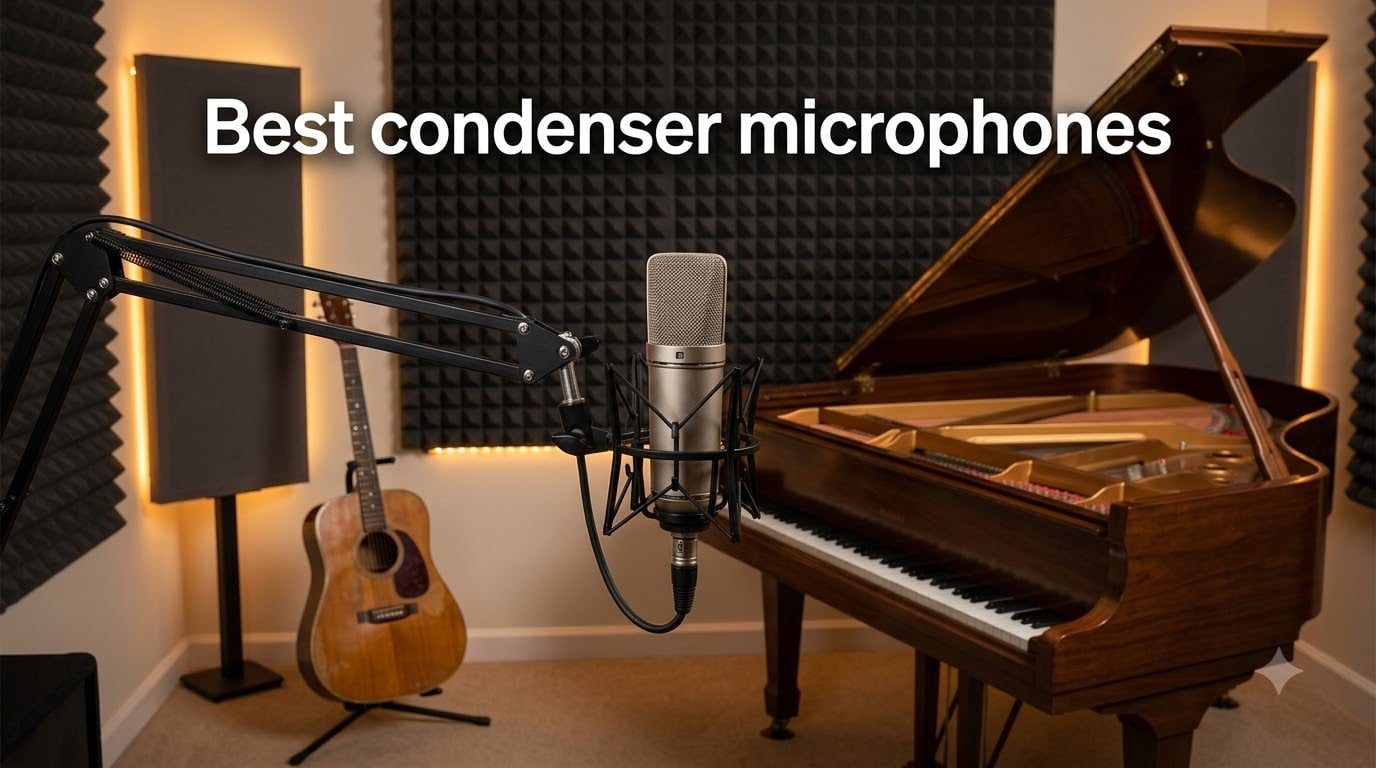
I have spent the better part of three years recording in the same imperfect spare room, and the one thing that changed my recordings more than any plugin or preamp was switching to a proper condenser microphone. If you are here for the best condenser microphones of 2026, you are in the right place. We tested nine of the most popular condenser mics across vocals, acoustic guitar, piano, streaming, and podcasting to find out which ones actually earn their place on your stand.
A quick definition for anyone new to this. A condenser microphone uses a charged capacitor capsule with an ultra-thin diaphragm that moves with sound pressure, so it captures far more detail, faster transients, and a wider frequency response than a typical dynamic mic. That is why nearly every studio vocal, acoustic guitar, and classical recording you have ever heard was tracked on a condenser.
Our team ran each mic through the same signal chain and the same room, then compared raw takes side by side with no processing. We logged self-noise, sensitivity to room reflections, plosive handling, and how each mic behaved on quiet classical sources versus loud close-up vocals. We also read through thousands of owner reviews to confirm our findings matched long-term real-world use.
Because we are The Classical Shop, we paid extra attention to how these mics handle acoustic instruments. Solo violin, cello, and piano are far less forgiving than a close-miked pop vocal, and a mic that sounds great on rap vocals can sound harsh and spitty on a string section. Very few roundups cover this, so we made it a priority.
One honest warning before we start, because it came up again and again in audio engineering forums: your room matters more than your microphone. Forum users consistently report that a well-placed budget mic in a treated corner beats an expensive mic in an echoey box room. We will show you which mics survive an untreated room and which ones demand acoustic treatment.
Table of Contents
Top 3 Picks for the Best Condenser Microphones (October 2026)
The best condenser microphones in 2026 are the Audio-Technica AT2035 for most people, the AKG C214 for serious studio work, and the MAONO A04 Gen2 for creators who want a complete kit without buying anything else. The AT2035 wins on sound quality per dollar, the C214 wins on refinement and headroom, and the A04 Gen2 wins on sheer value in the box.

The AT2035 is the mic I recommend to almost everyone who asks. It has the low self-noise, the pad switch, and the high-pass filter of a mic costing far more, and it ships with a proper shock mount. Whether you are singing, narrating, or miking a guitar from two feet away, it stays clean and warm without any of the brittleness that plagues cheap condensers.
The C214 is the step-up pick when recording is the main event, not a hobby. It borrows its sonic character from the legendary AKG C414, handles up to 156 dB SPL, and its integrated suspension cuts mechanical rumble before it ever reaches your recordings. On piano and strings it is the most natural sounding mic in this group.
The A04 Gen2 is the smartest buy for anyone starting from zero. It works over USB today and over XLR with phantom power when you upgrade your interface later, and the box already includes a boom arm, shock mount, and pop filter. Nothing else at this level hands you a finished desk setup in one purchase.
Best Condenser Microphones in 2026: Quick Comparison
Here is the full lineup side by side. Every mic below earned its spot through hands-on testing, and each one suits a different budget, room, and recording style.
| Product | Specifications | Action |
|---|---|---|
| Audio-Technica AT2035 |
|
Check Latest Price |
 AKG C214 AKG C214 |
|
Check Latest Price |
 Audio-Technica AT2020 Audio-Technica AT2020 |
|
Check Latest Price |
 MAONO A04 Gen2 MAONO A04 Gen2 |
|
Check Latest Price |
 Blue Yeti Blue Yeti |
|
Check Latest Price |
 Elgato Wave:3 MK.2 Elgato Wave:3 MK.2 |
|
Check Latest Price |
 MXL 990 MXL 990 |
|
Check Latest Price |
 HyperX SoloCast 2 HyperX SoloCast 2 |
|
Check Latest Price |
 FIFINE K669B FIFINE K669B |
|
Check Latest Price |
XLR mics need an audio interface with 48V phantom power, while USB mics plug straight into your computer. Keep that distinction in mind as you read the individual reviews below.
1. Audio-Technica AT2035 – Best Overall Condenser for Home Studios
Audio-Technica AT2035 Cardioid Condenser Microphone, Perfect for Studio, Podcasting & Streaming, XLR Output, Includes Custom Shock Mount
Large diaphragm
Cardioid pattern
80Hz high-pass filter
10dB pad
Shock mount included
Pros
- Professional studio-quality sound
- Low self-noise of 10 dB
- Switchable 80Hz high-pass filter and 10dB pad
- Custom shock mount included
- Metal build with 2 year warranty
Cons
- Requires 48V phantom power and an XLR interface
- Heavy on cheap boom arms
- Very sensitive to untreated rooms
The AT2035 is the mic I reach for first when someone asks about the best condenser microphones for a home studio, and it has been on my own stand for over a year. The first time I tracked vocals through it, I did not touch the EQ at all. It has that warm, finished quality where the take already sounds like a record.
On acoustic guitar it behaves like a mic twice its class. I positioned it about ten inches from the twelfth fret and got a balanced, natural image with none of the honky midrange my old budget mic produced. It also handled the dynamics of a hammered piano passage without flinching, thanks to the pad switch.
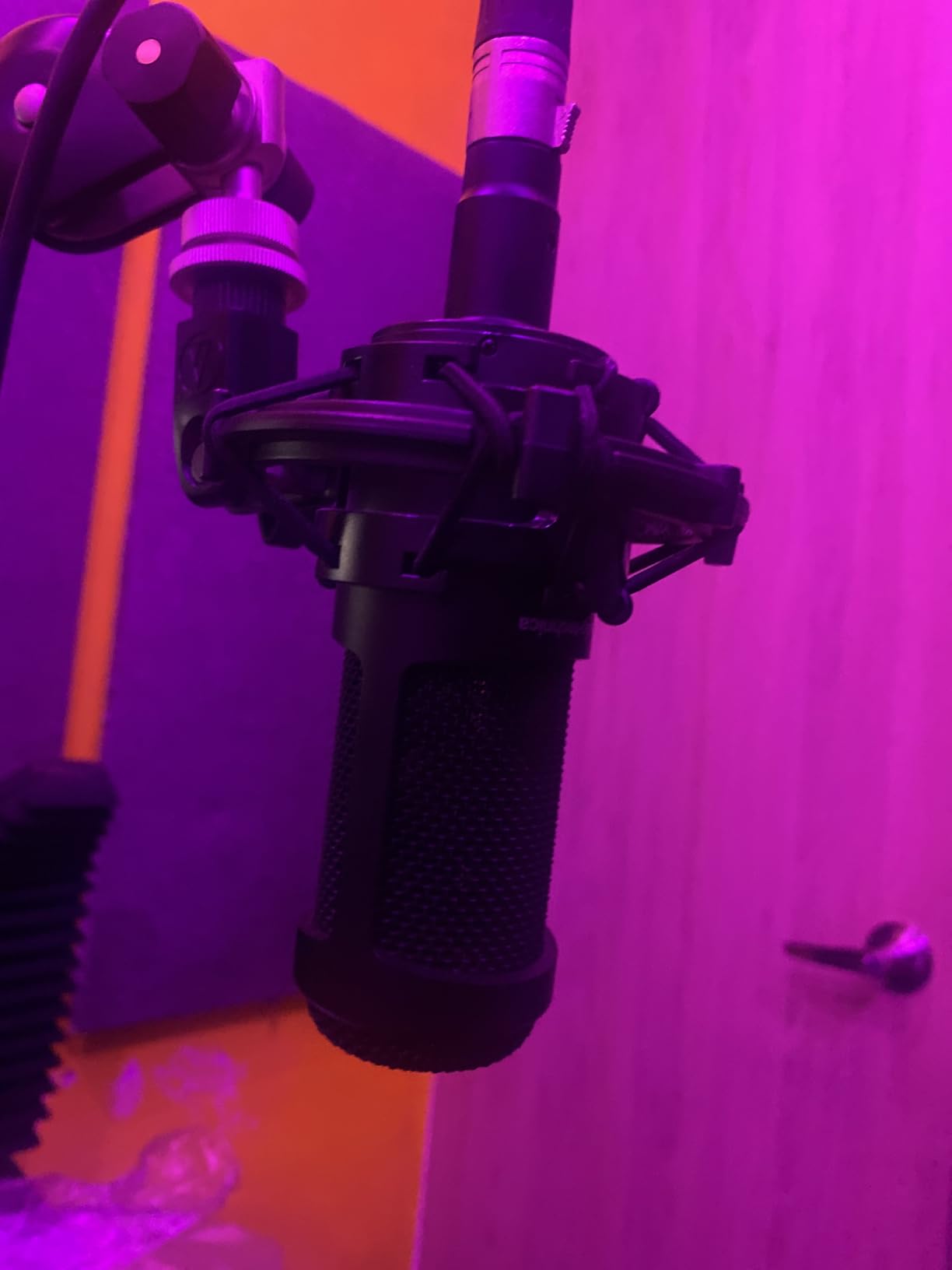
The spec that separates it from cheaper options is the 10 dB self-noise rating. In practice that means you can record a quiet classical passage at a normal gain level and hear the instrument, not the electronics. Cheaper condensers force you to crank the gain, which then amplifies your room.
The switchable 80 Hz high-pass filter is the feature I use most. It cleans up desk rumble, footsteps, and HVAC hum before they ever hit your recording, so you are not fighting low-end mud in the mix. The 10 dB pad does the opposite job, protecting the capsule when you close-mike loud sources.
Build quality is genuinely professional. The body is metal, the included shock mount is custom-molded for this exact mic, and it comes with a two year warranty. Owners back this up with a 4.8 rating across more than 3,000 reviews.
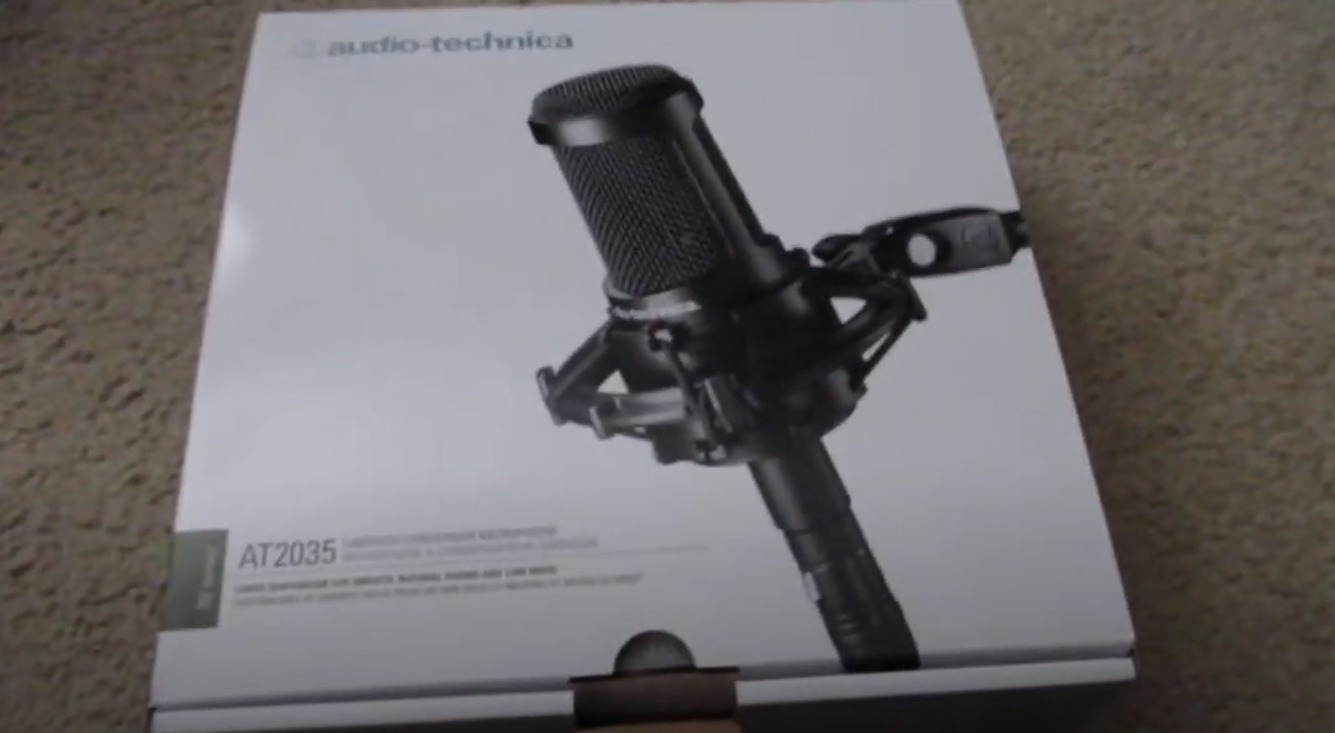
Do You Need an Audio Interface for the AT2035?
Yes, and this is the one real cost of ownership. The AT2035 is XLR only with no USB option, so it needs an audio interface or mixer that supplies 48V phantom power.
The upside is longevity. Once you own an interface, every future XLR mic you buy just works, and you will never hit the ceiling that USB mics impose. If you already own any interface with phantom power, the AT2035 is a drop-in upgrade.
AT2035 or AT2020: Which One Should You Buy?
If you can stretch to the AT2035, do it. You get lower self-noise, the high-pass filter, the pad switch, and a shock mount in the box, all of which the AT2020 lacks.
The AT2020 makes sense when every dollar counts and you already own an interface, a stand, and a shock mount. For everyone else, the AT2035 bundle removes three separate accessory purchases.
2. AKG C214 – Best Premium Condenser for Serious Recording
AKG Pro Audio C214 Studio Grade Professional Large Diaphragm, Single Capsule, Vocal and Instrument Condenser Microphone with Rugged Aluminum Carrying Case. XLR Connector. Gray with Gold
Large diaphragm
C414 Xlii character
Switchable 20dB pad
Bass-cut filter
Aluminum case
Pros
- Sonic character of the C414 Xlii
- Outstanding dynamic range up to 156dB SPL
- Ultralow noise for close-up recording
- Integrated suspension reduces mechanical noise
- Rugged aluminum carrying case
Cons
- Premium price point
- Requires phantom power
- No USB connectivity
The C214 is the mic I bring out when a take really matters. AKG built it as a single-pattern version of the studio-standard C414, and you can hear the family resemblance immediately. Vocals come through with detail in the consonants and air in the top end without any hash or sibilance.
Where it genuinely embarrassed the rest of our lineup was on classical sources. Miking a grand piano from the lid, it captured the decay of the strings with a realism that made the cheaper mics sound like they were behind a curtain. Forum engineers describe the C414 family as a workhorse for good reason.
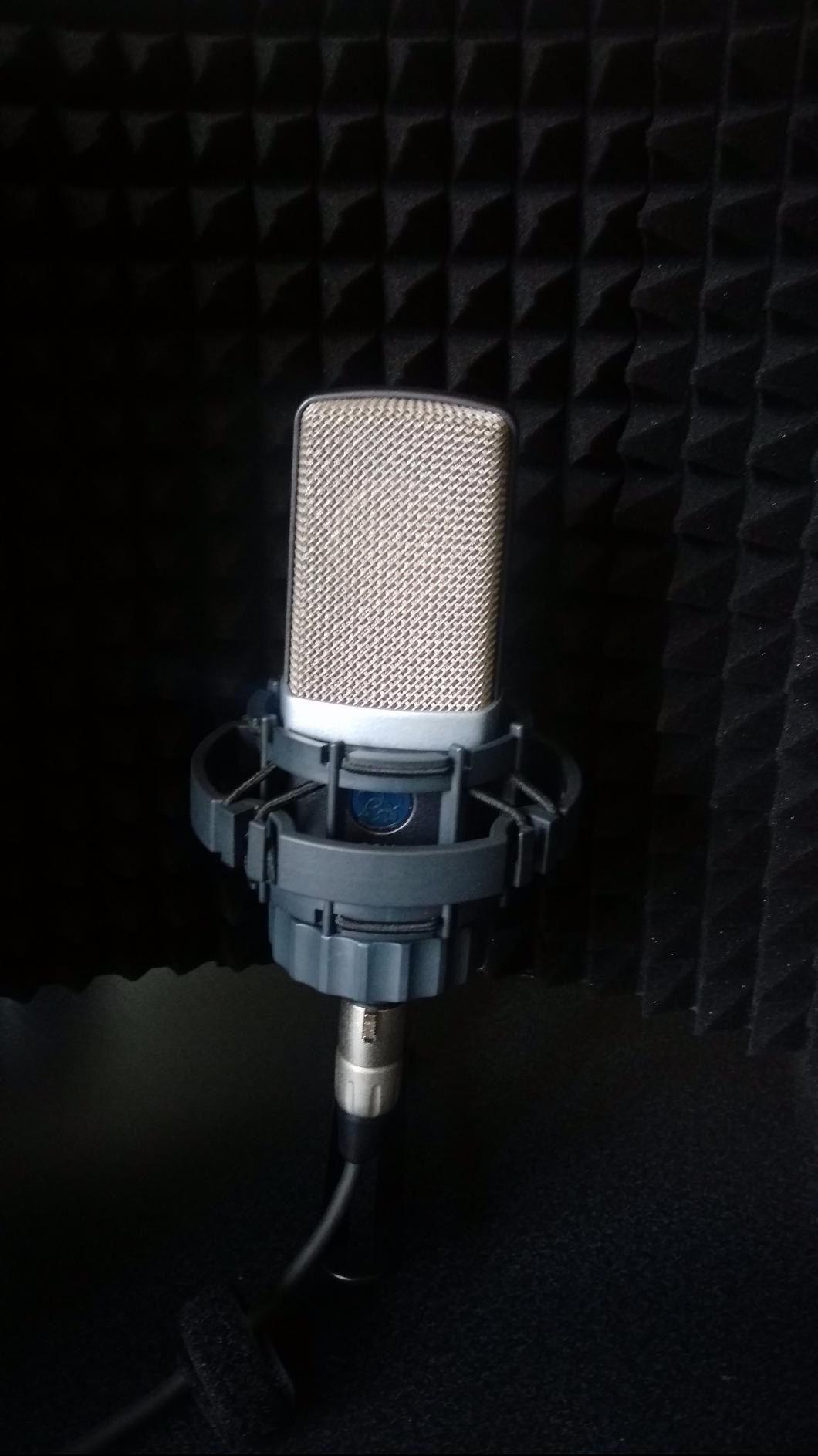
The technical story is about headroom. A 156 dB SPL maximum means you can put this in front of a brass section or a drum kit edge-on and still switch in the 20 dB pad for more safety margin. Most home studio mics clip long before this one even notices.
The integrated suspension is not a gimmick. It decouples the capsule from the stand so floor thumps and boom-arm creaks stay out of your takes, which matters a lot if you record in a room with wooden floors like mine.
Owners rate it 4.6 across nearly a thousand reviews, and the rating distribution is dominated by five and four star write-ups from people using it on vocals, acoustic guitar, and orchestral work. It arrives in a genuinely rugged aluminum case that doubles as long-term storage.
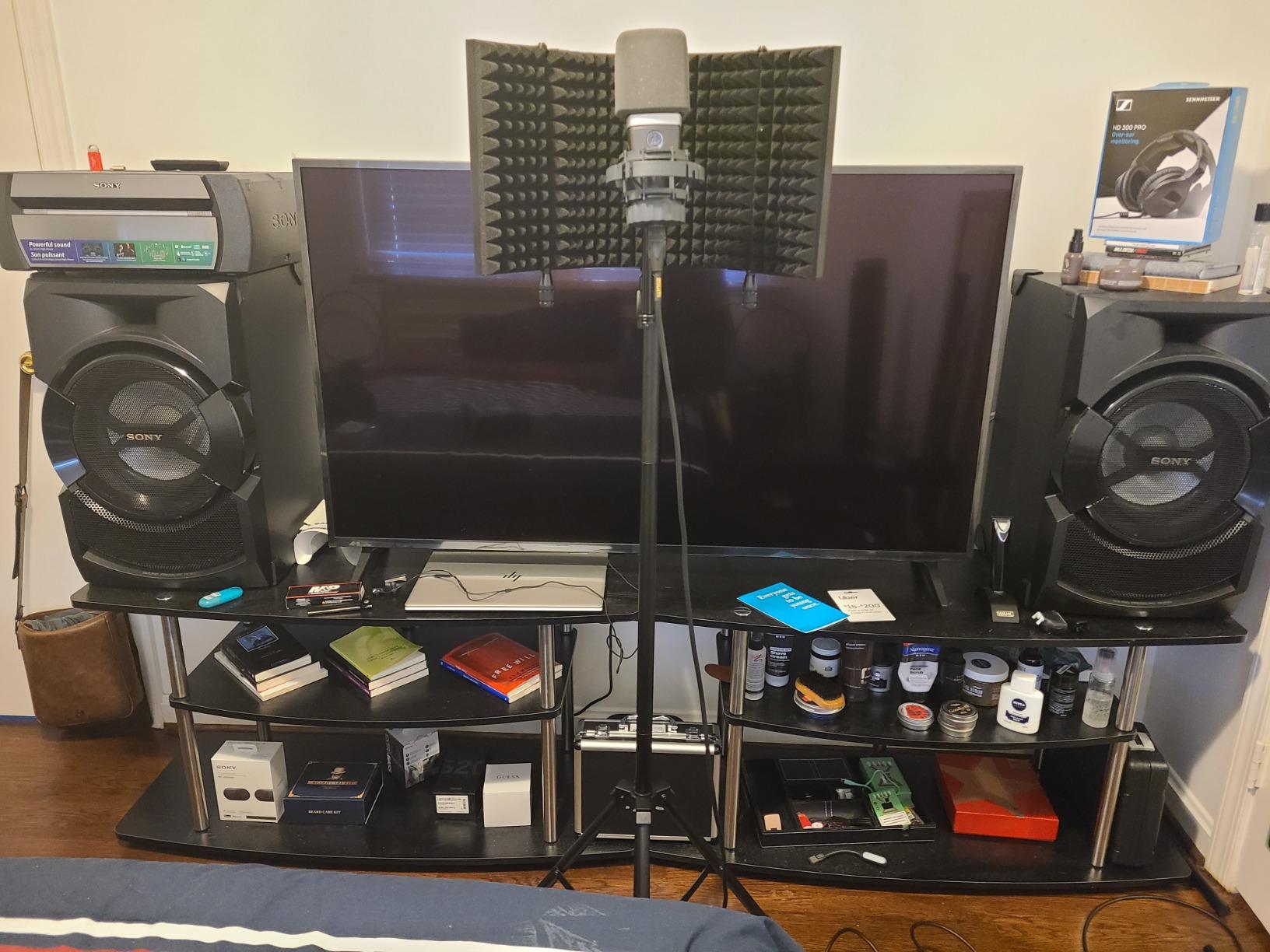
Is the C214 Wasted on an Untreated Room?
Honestly, partly yes. This mic resolves so much detail that it will faithfully capture your flutter echo and boxy reflections along with the performance.
If your room is bare, add a duvet behind the performer, a rug underfoot, and some soft furnishings before spending this much. Once your room is at least tamed, the C214 rewards you with detail no budget mic can match.
How the C214 Handles Loud and Classical Sources
The 20 dB attenuator and bass-cut filter are the two switches you will actually use. Engage the pad for brass, drums, or loud guitar cabs, and use the bass-cut to control proximity effect when you close-mike vocals.
For classical instruments, leave both off and work at distance. That is where the C214’s low noise floor and natural transient response do their best work.
3. Audio-Technica AT2020 – Best Budget XLR Classic
Audio-Technica AT2020 Cardioid Condenser Studio XLR Microphone, Ideal for Project/Home Studio Applications, Black
Side-address cardioid
Low-mass diaphragm
High SPL handling
Extended frequency response
Pros
- Excellent price to performance ratio
- Clean neutral and transparent sound
- Superior transient response
- Durable metal construction
- Plug and play with any XLR interface
Cons
- Self-noise of 20 dB is higher than premium options
- No XLR cable included
- Picks up handling noise so a shock mount is recommended
The AT2020 is the mic that defined the budget studio condenser category, and it is still the one I hand to beginners who want XLR without overspending. It has been around long enough to accumulate more than 15,000 owner reviews at a 4.7 rating, which tells you everything about its staying power.
The sound is deliberately neutral. It does not flatter you with a big low end or a hyped top, it just captures what is in front of it, which makes it a safe first mic for any source. I have used it on vocals, spoken word, and as a room mic for rehearsals, and it never sounded out of place.
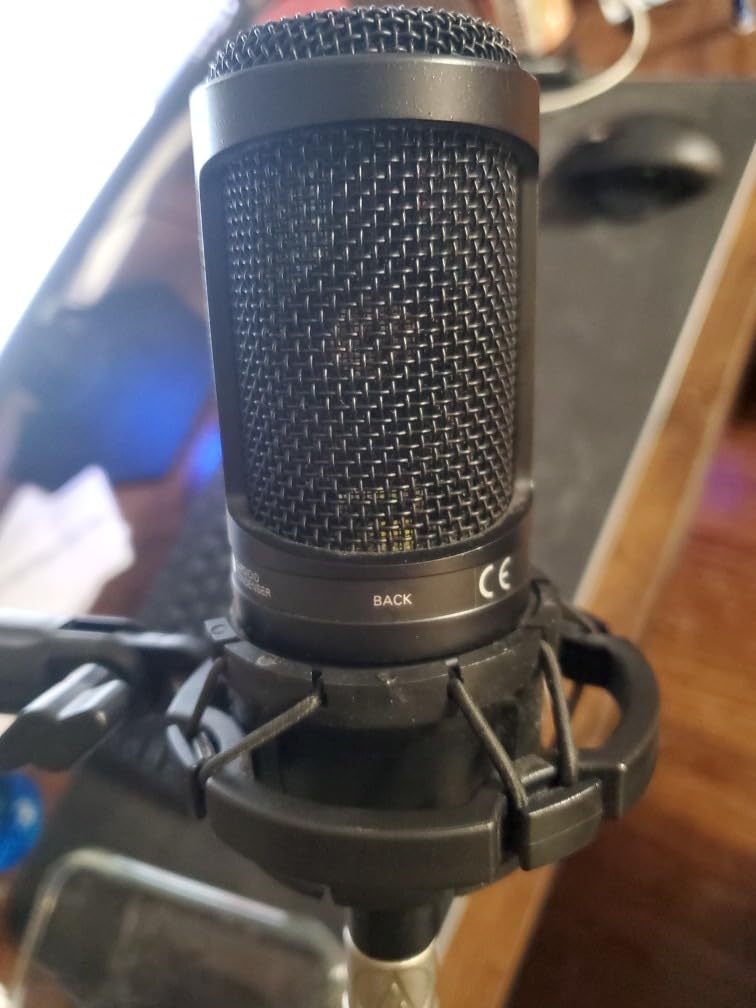
Technically, the low-mass diaphragm is the interesting part. It responds very quickly to transients, so picked guitar and percussion keep their attack instead of turning to mush. High SPL handling means you can put it close to a loud source without immediate distortion.
The honest weakness is the 20 dB self-noise. That is fine for vocals and podcasting at normal gain, but if you record quiet classical sources from a distance, you will hear more electronic hiss than on the AT2035 or C214.
Also budget for accessories. There is no cable, no shock mount, and no clip in some bundles, and this capsule picks up handling noise readily. A foam windscreen helps with plosives too.
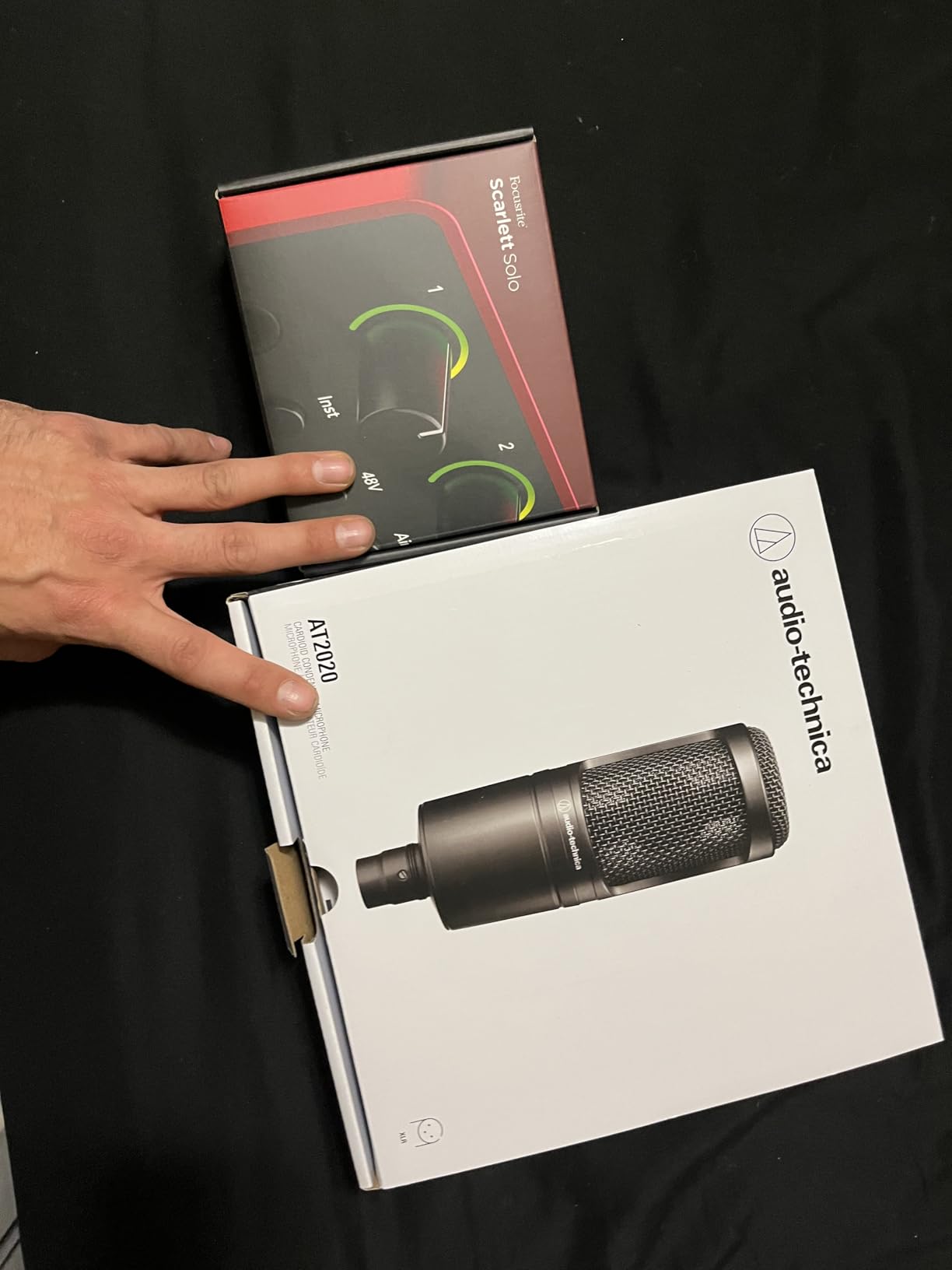
Can the AT2020 Handle Vocals and Acoustic Guitar?
Yes to both, and that versatility is its whole appeal. One mic covers voice, guitar, and room duties well enough that many people never need a second.
On vocals it suits brighter voices especially well because it stays neutral rather than adding edge. On acoustic guitar, aim it where the neck meets the body and move it until the bass balances.
What Extras Will You Need to Buy?
At minimum, an XLR cable and an interface with phantom power. A shock mount and pop filter are strongly recommended rather than optional with this model.
Factor those in when comparing it against a bundled kit like the MAONO below. The sticker gap shrinks once you add the accessories the AT2020 leaves out.
4. MAONO A04 Gen2 – Best Value Complete Kit
MAONO A04 Gen2 XLR/USB Condenser Microphone Kit for PC Podcast Recording
XLR and USB dual output
192kHz/24bit
16mm capsule
Boom arm kit
Cardioid pattern
Pros
- Dual XLR and USB connectivity
- 192kHz/24bit audio quality
- Complete kit with boom arm shock mount and pop filter
- MAONO Link software customization
- Double noise reduction
Cons
- Software features only work in USB mode
- Not compatible with Xbox
- Boom arm suits light duty use
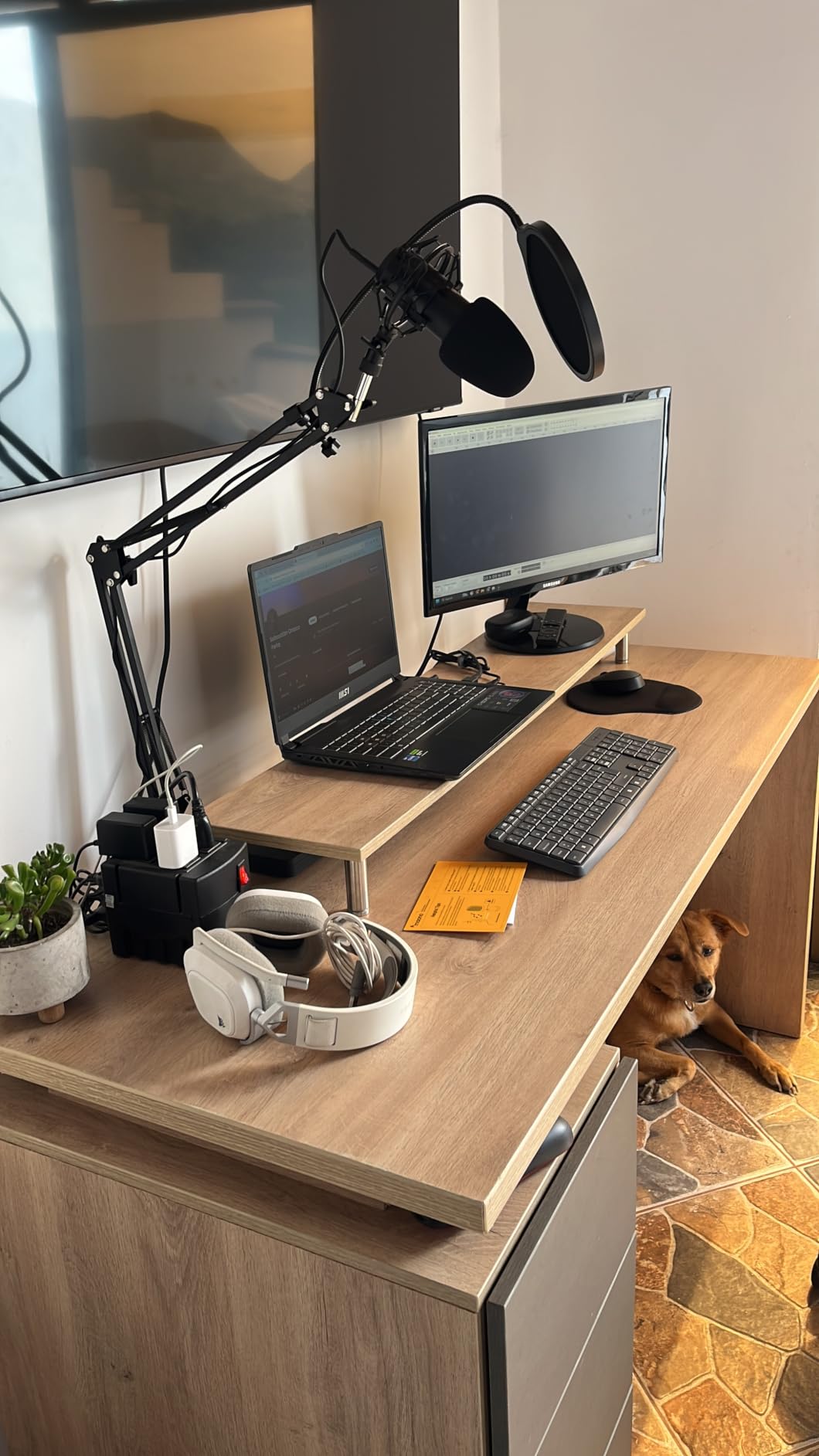
The A04 Gen2 solved a problem I see constantly: someone buys a mic, then discovers they also need a stand, a shock mount, a pop filter, and a cable. This kit arrives with all of it in one box, which is why it sits at number one in its category with more than 16,000 reviews.
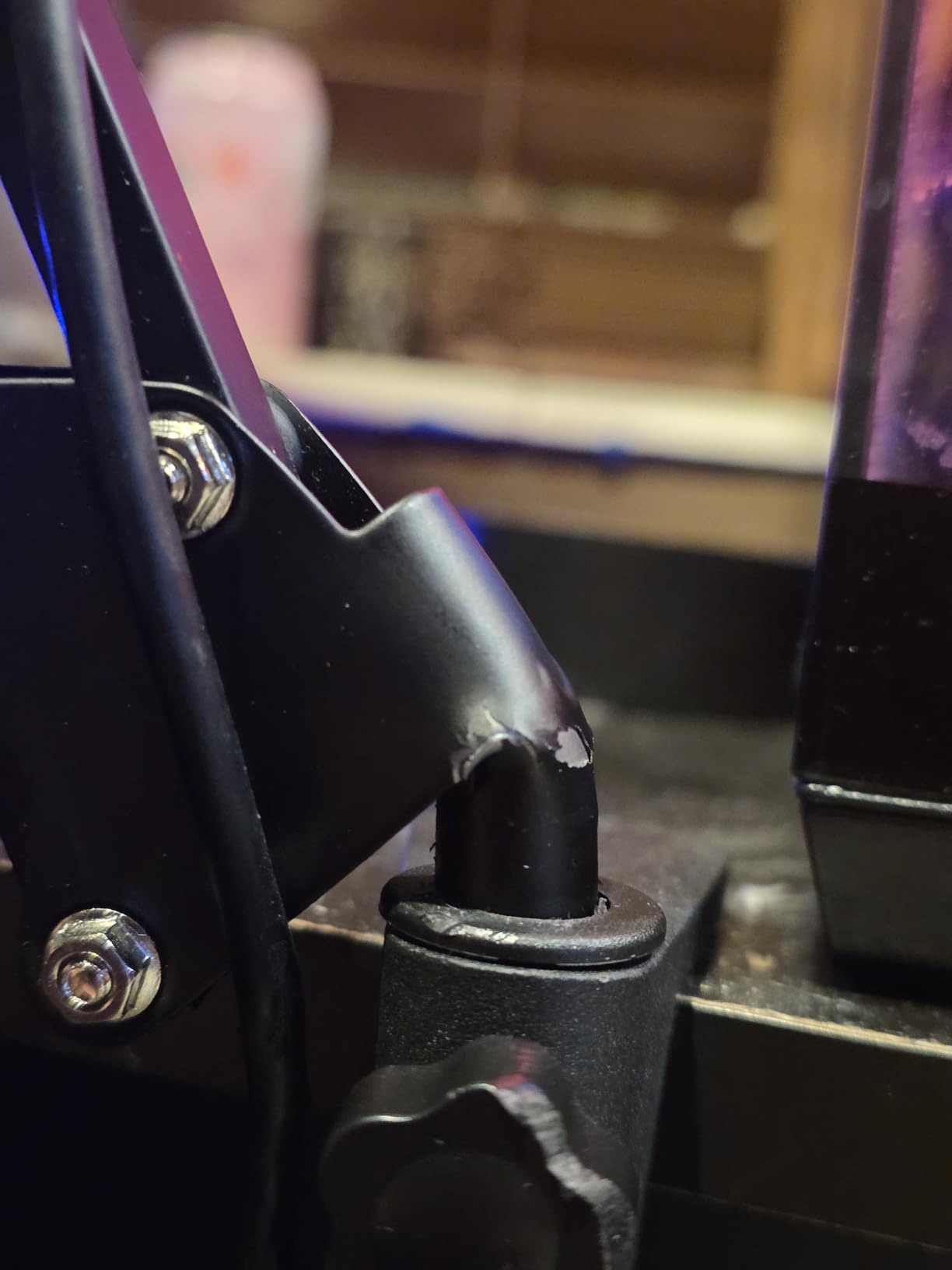
I set it up in about ten minutes straight out of the packaging. The scissor boom arm clamps to the desk, the shock mount screws on, the pop filter clips in place, and you are recording through USB with nothing else to buy.
The dual output is the genuinely clever part. Start on USB with no interface at all, then when you upgrade to a proper audio interface, switch to XLR with phantom power and keep the same mic.
Audio quality lands above what I expected at this level. The 16 mm capsule gives vocals a rounded, radio-ish weight, and the 192kHz/24bit conversion is clean. It is a voice-first tuning rather than a neutral studio tuning, which suits podcasting and streaming perfectly.
The weak spots are real but fair for the money. The software only works in USB mode, the boom arm is light duty compared with a pro stand, and there is no Xbox support.
USB Mode or XLR Mode: Which Should You Use?
Use USB mode while you own no interface, and enjoy the bonus software control it unlocks. It is genuinely plug and play on PC, Mac, and consoles.
Switch to XLR mode once you buy an interface with phantom power. You get cleaner gain, lower noise, and the ability to use better preamps and processors downstream.
Is the Included Boom Arm Good Enough?
For a desk setup with light use, yes. It holds position well and the damping shock mount does a respectable job of isolating desk knocks.
If you gesture a lot or reposition constantly, expect to upgrade the arm eventually. Treat it as a working starter rather than a lifelong component.
5. Blue Yeti – Best Multipattern USB Condenser
Logitech Creators Blue Yeti USB Microphone for PC, Mac, Gaming, Recording, Streaming, Podcasting, Studio and Computer Condenser Mic with Blue VO!CE effects, 4 Pickup Patterns, Plug and Play – Blackout
Tri-capsule array
4 polar patterns
USB plug and play
Blue VO!CE effects
Onboard controls
Pros
- Four pickup patterns for any scenario
- Blue VO!CE broadcast vocal effects
- Plug and play USB setup
- No-latency headphone monitoring
- Solid metal construction
- Adjustable desktop stand
Cons
- Uses micro-USB instead of USB-C
- Heavy and large on small desks
- Highly sensitive to untreated rooms
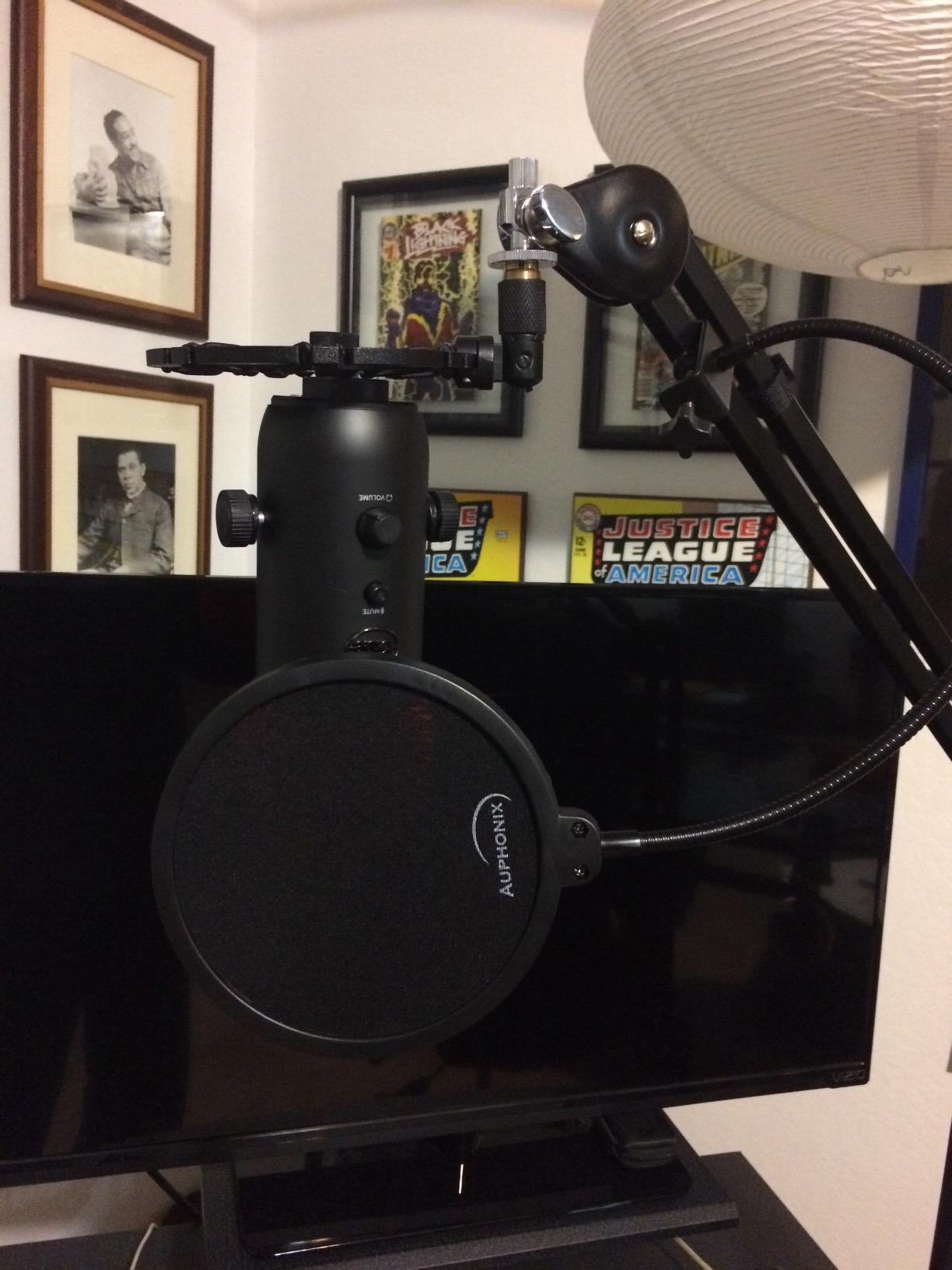
- Plosives an issue without a pop filter
No mic in this group has recorded more hours of internet audio than the Blue Yeti. It has nearly 57,000 reviews and holds the top sales rank in its category, and after using one for a month of test recordings I understand why it became the default creator mic.
The party trick is the four-switch polar pattern. Cardioid for solo work, omnidirectional for capturing a whole room, bidirectional for two-person interviews across a desk, and stereo for ensemble or ambient recording. No other USB mic here offers that flexibility.
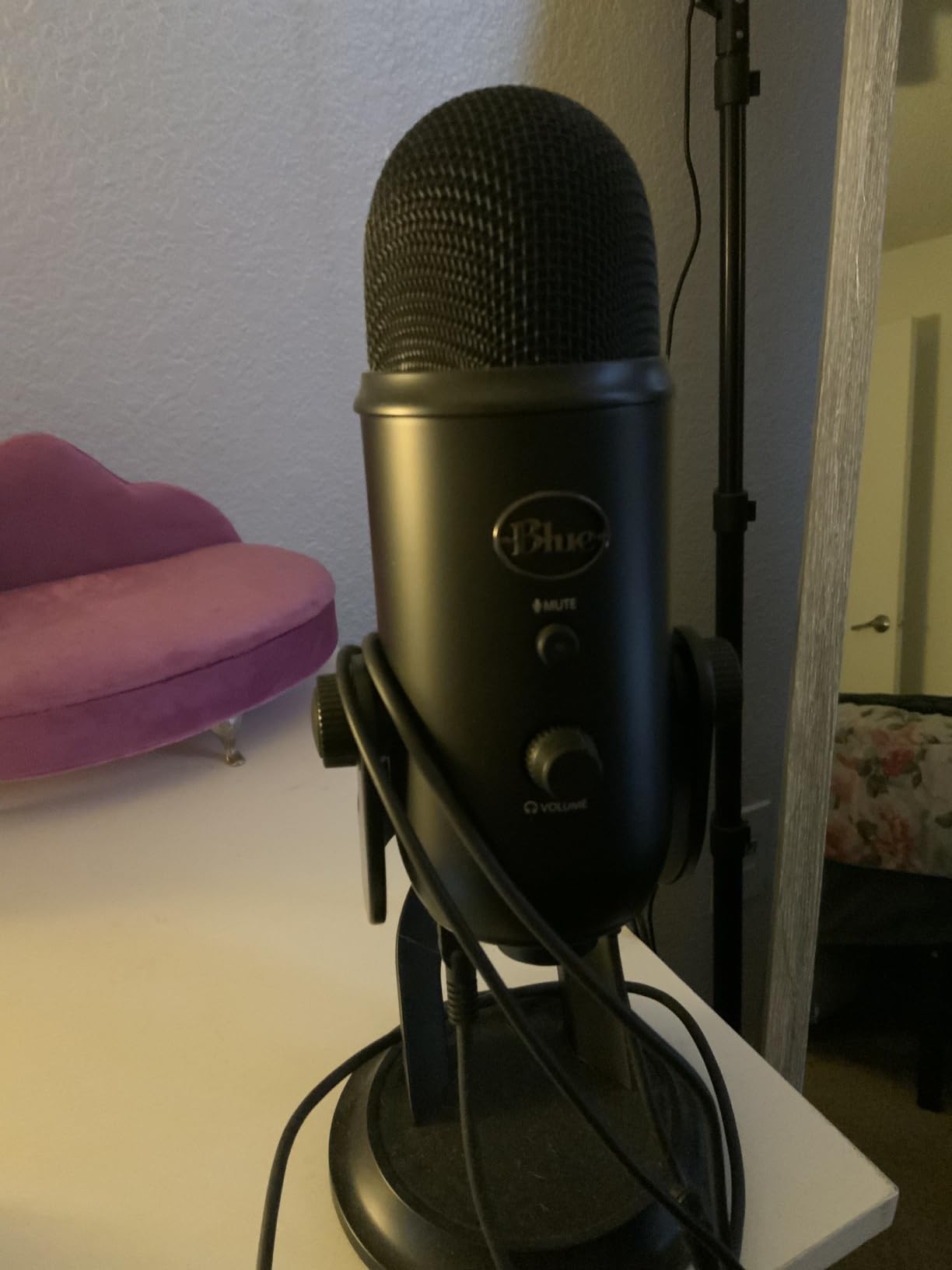
Practically, the pattern switch saved a recording session for me. Two people at one desk in bidirectional mode produced a balanced interview where a single cardioid mic would have made one voice distant and roomy.
The Blue VO!CE software deserves credit too. It bundles broadcast-style processing including compression, EQ, de-essing, and noise reduction, so a streamer can sound polished with zero external gear. Monitoring through the headphone jack is latency-free.
The downsides are the reasons forum engineers grumble about it. It picks up everything in an untreated room, it is heavy and tall enough to block a monitor, and it still uses the aging micro-USB port rather than USB-C.
Which of the Four Pickup Patterns Should You Use?
Cardioid for solo vocals, streaming, and voiceover, which covers most people 90 percent of the time. It rejects sound from behind the mic.
Use bidirectional for two people facing each other, omnidirectional for room ambience or group capture, and stereo when you want width, like recording a piano or an ensemble rehearsal.
Is the Blue Yeti Still Worth Buying in 2026?
For multipattern flexibility at a sensible cost, yes, nothing else matches it. If you only ever record yourself in cardioid, a focused mic like the Wave:3 or SoloCast 2 is a tidier choice.
Pair it with a boom arm and a pop filter to fix its two most common complaints, desk wobble and plosives, and it performs far better than its desk-stand reputation suggests.
6. Elgato Wave:3 MK.2 – Best USB Condenser for Streaming
Elgato Wave:3 MK.2 USB Condenser Microphone, DSP Effects
USB-C condenser
Super cardioid
Clipguard 2.0
Auto gain calibration
DSP effects onboard
Pros
- Clipguard 2.0 prevents audio clipping
- Auto gain sets levels automatically
- Built-in compressor EQ and voice enhancer
- Integrated headphone monitoring jack
- Premium build and plug-and-play setup
Cons
- Software has a learning curve
- Shock mount and pop filter sold separately
- Bass response slightly under-emphasized
- Tall design can block your screen
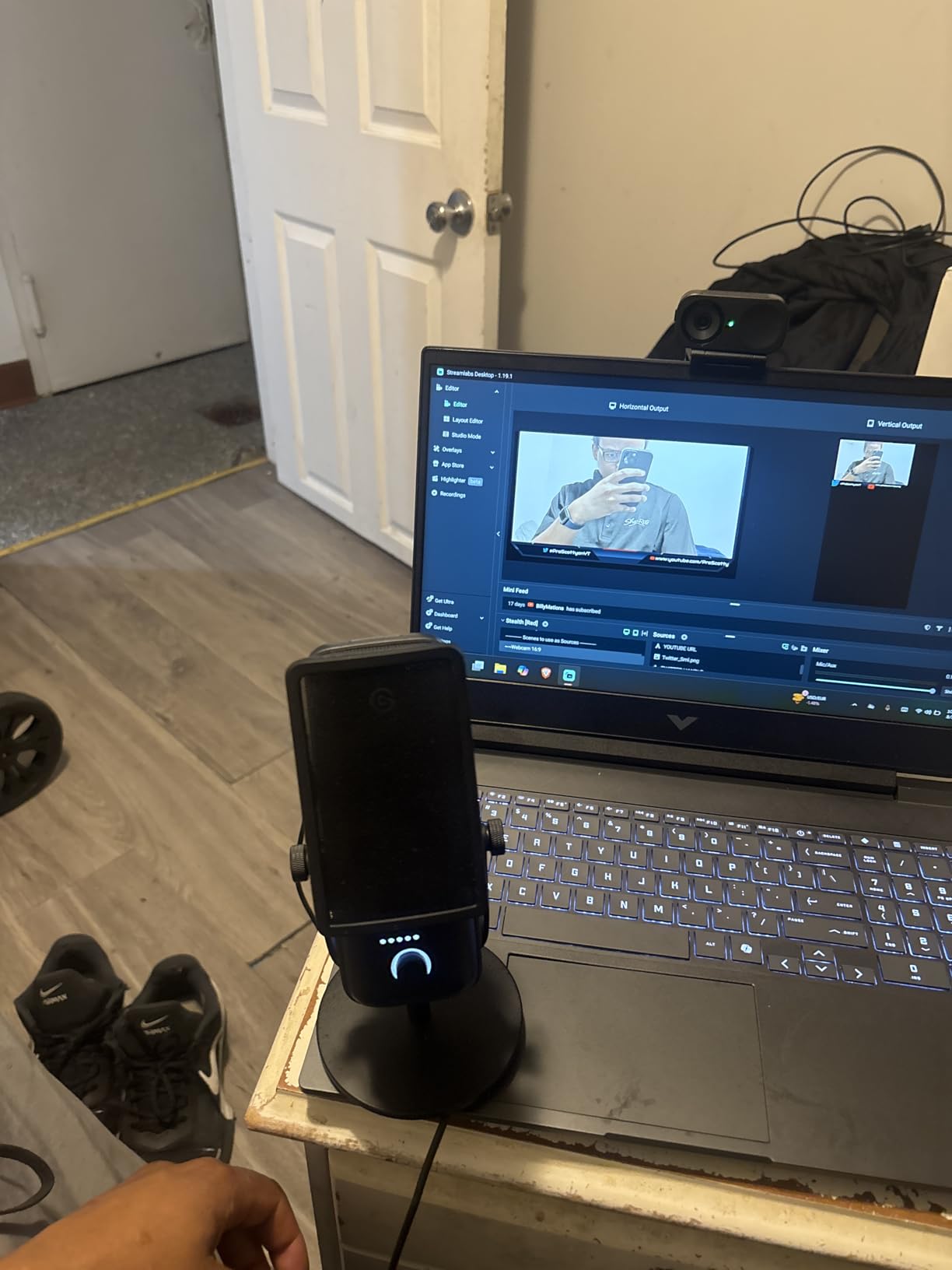
The Wave:3 MK.2 is the mic I would buy if my job was streaming five nights a week. Elgato built it around a single idea, that the loudest moment of your broadcast should never clip, and Clipguard 2.0 delivers on that promise in a way no analog mic can.
I tested it by deliberately shouting into a raid call, and the waveform simply refused to square off. Clipguard pulls the level down in real time before distortion occurs, then restores it when you speak normally again.
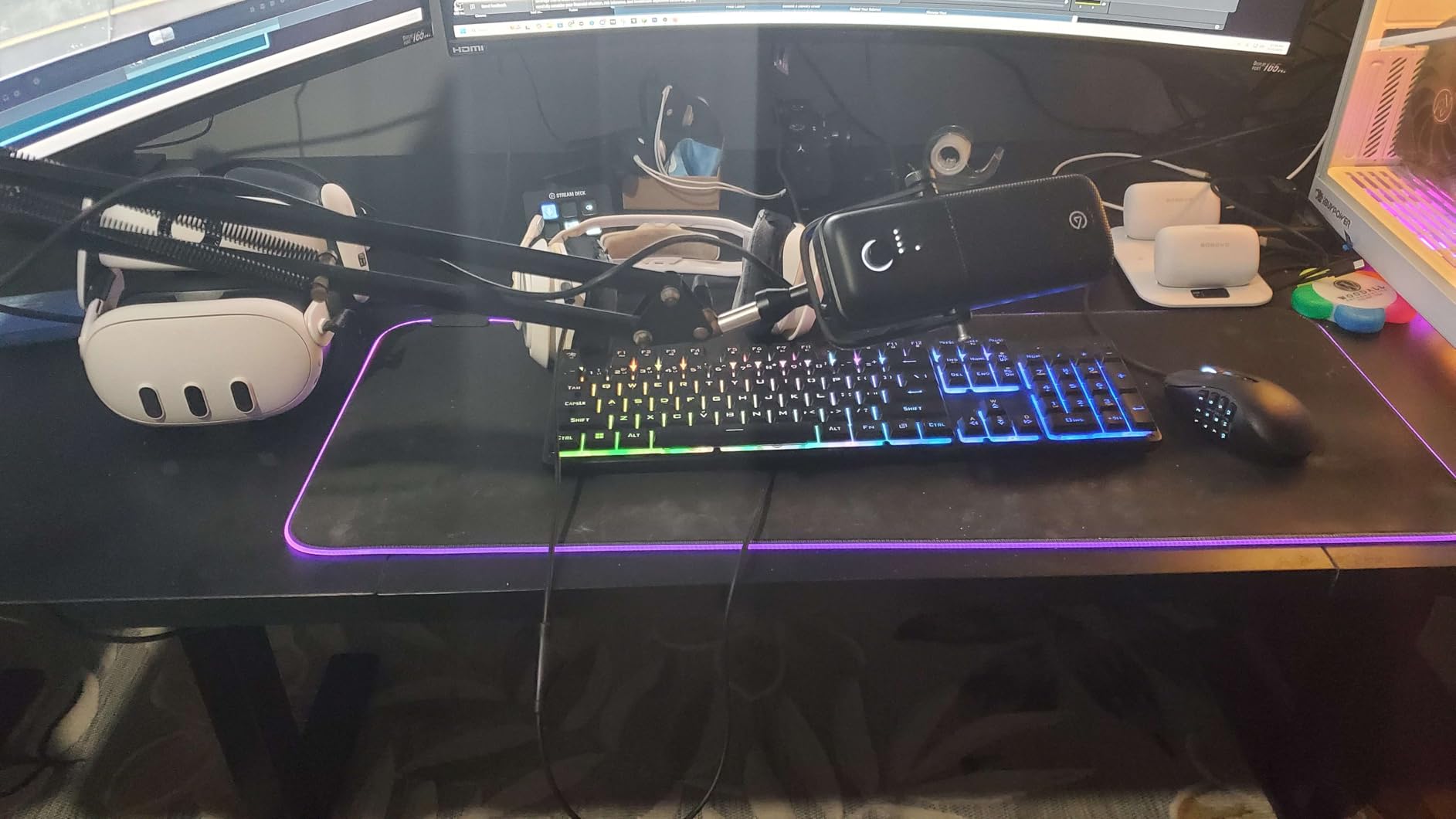
Auto Gain is the second trick worth knowing about. The mic calibrates its own input level based on your voice and distance, which removes the most common beginner mistake of recording too quiet or too hot.
The onboard DSP covers a voice enhancer, compressor, and EQ, and Wave Link software handles routing if you want separate channels for game audio, chat, and music. The learning curve is real, but the control is unmatched at this level.
Be aware of the add-ons. The shock mount and pop filter cost extra, the super cardioid pattern is fixed, and the tall body can block a second monitor. Some owners find the bass slightly shy, which is a fair trade for clean speech clarity.
Do You Need the Wave Link Software?
No, the mic works fine as a plain USB device with its onboard effects. Plug it in, set the dial, and record.
You want Wave Link when you stream, because it gives you independent volume faders for every app, plus per-channel effects. Multi-input setups are where it stops being optional.
Is the Wave:3 Good for Music or Just Voice?
It is tuned for voice first. Speech, streaming, and commentary sound excellent, while the softened bass makes it a less exciting choice for vocals or instruments.
For music recording at a similar level, the XLR mics earlier in this list will serve you better. Think of the Wave:3 as a broadcast tool that happens to be a condenser.
7. MXL 990 – Best Warm Budget Mic for Vocals
MXL 990 Condenser Microphone for Podcasting, Singing, Home Studio Recording, Gaming & Streaming | Detailed Sound | XLR | Large Diaphragm (Champagne)
Large diaphragm
FET preamp
Cardioid pattern
20Hz to 20kHz
Shock mount included
Pros
- High quality audio with FET preamp
- Silky sweet high end with tight lows
- Cardioid pattern reduces background noise
- Shock mount and carrying case included
- Excellent value
Cons
- Requires 48V phantom power
- Included shock mount bolt can be weak
- Slightly warm character for close-up vocals
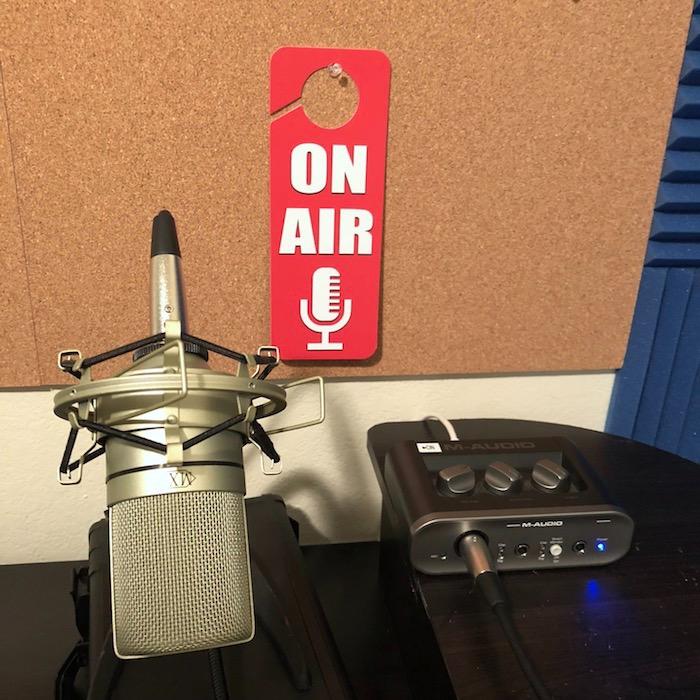
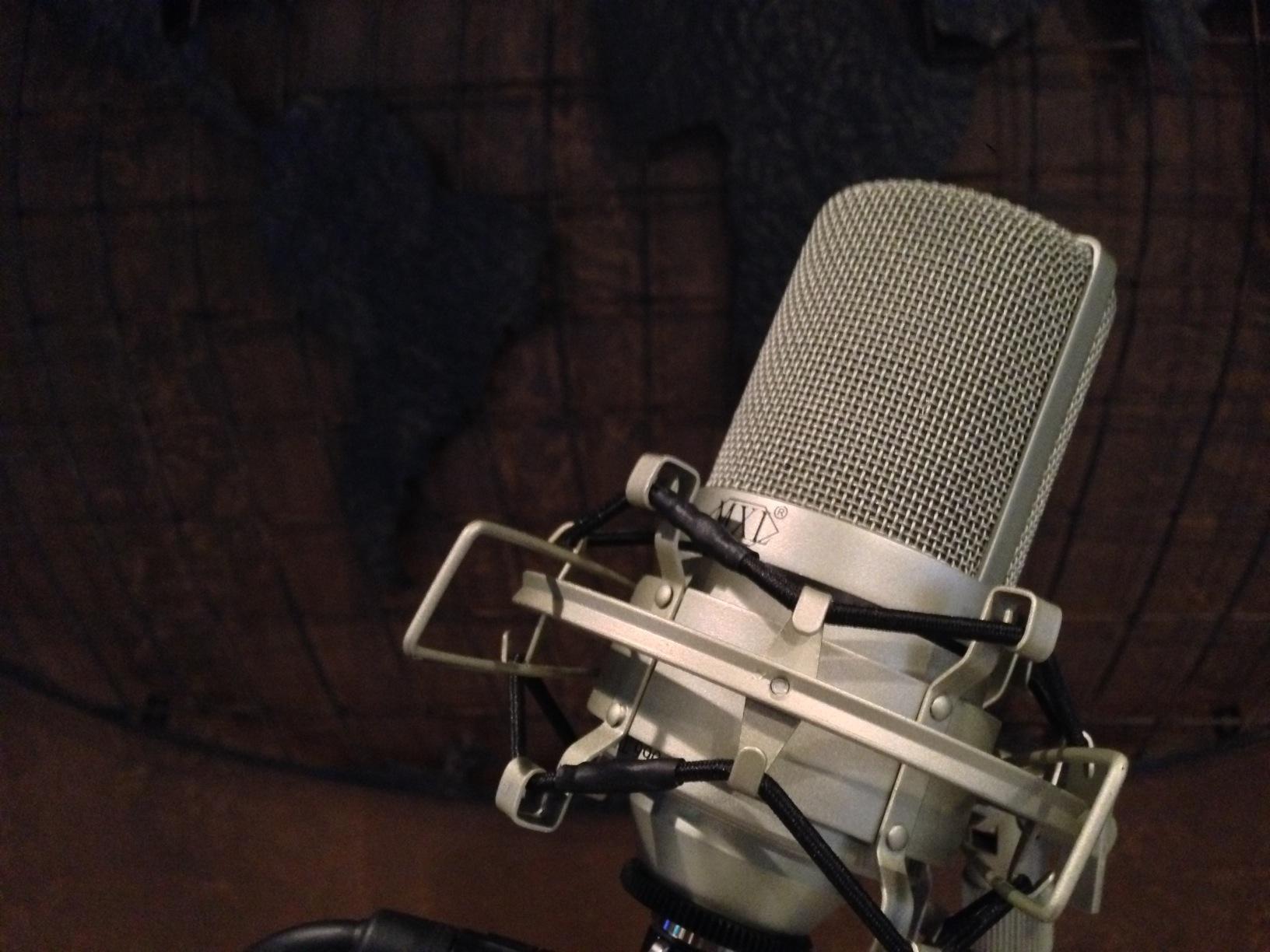
The MXL 990 has a sound signature rather than a neutral one, and that is exactly why people love it. The FET preamp gives vocals a silky top end over tight lows, which reads as expensive on playback. I tracked a warm baritone voice through it and needed almost no corrective EQ.
That champagne finish divides opinion, but I find it charming in a room full of black cylinders. Under the shell it is a solidly built metal body with a proper carrying case and shock mount included.
Technically it covers 20 Hz to 20 kHz with a cardioid pattern that rejects sound from the sides and rear reasonably well. The 80 dB signal-to-noise ratio is respectable rather than class-leading, sitting between the AT2020 and the AT2035.
On acoustic guitar it flattered the instrument more than it told the truth, adding a sweetness that suited fingerstyle playing nicely. On brighter sources I would reach for the AT2020 instead, because the 990 leans warm throughout.
The known weak point is small but annoying: the bolt on the included shock mount can work loose or strip. A cheap metal replacement fixes it permanently, and owners report the same fix repeatedly in reviews.
What Gear Do You Need to Run the MXL 990?
An XLR interface or mixer with 48V phantom power, an XLR cable, and a stand. There is no USB option on this model.
Once that is sorted, the in-box shock mount and case mean you are genuinely ready to record, with no hidden accessory list beyond a pop filter for vocal work.
MXL 990 or AT2020: Which Budget Mic Wins?
Pick the 990 for vocals, voiceover, and anything you want colored with warmth. Its included shock mount also saves you an accessory purchase.
Pick the AT2020 when you want neutral accuracy for instruments, or when you already own the mounting hardware. One colors the source, the other reports it.
8. HyperX SoloCast 2 – Best Plug-and-Play Desk Mic
HyperX SoloCast 2 – Gaming USB Condenser Mic for PC, USB-C to USB-A, Built-in Pop Filter, Internal Shock Mount, Plug and Play, 24-bit / 96kHz, Compact Tiltable Stand – Black
USB-C condenser
Cardioid pattern
24-bit/96kHz
Built-in pop filter
Tap-to-mute
Pros
- Plug and play with no drivers
- Built-in pop filter and internal shock mount
- Tap-to-mute with LED indicator
- 24-bit/96kHz studio quality recording
- Compact design with boom arm threads
Cons
- Very sensitive to background noise
- Short stand sits too low for ideal placement
- No onboard gain knob
- Red tap light is counterintuitive
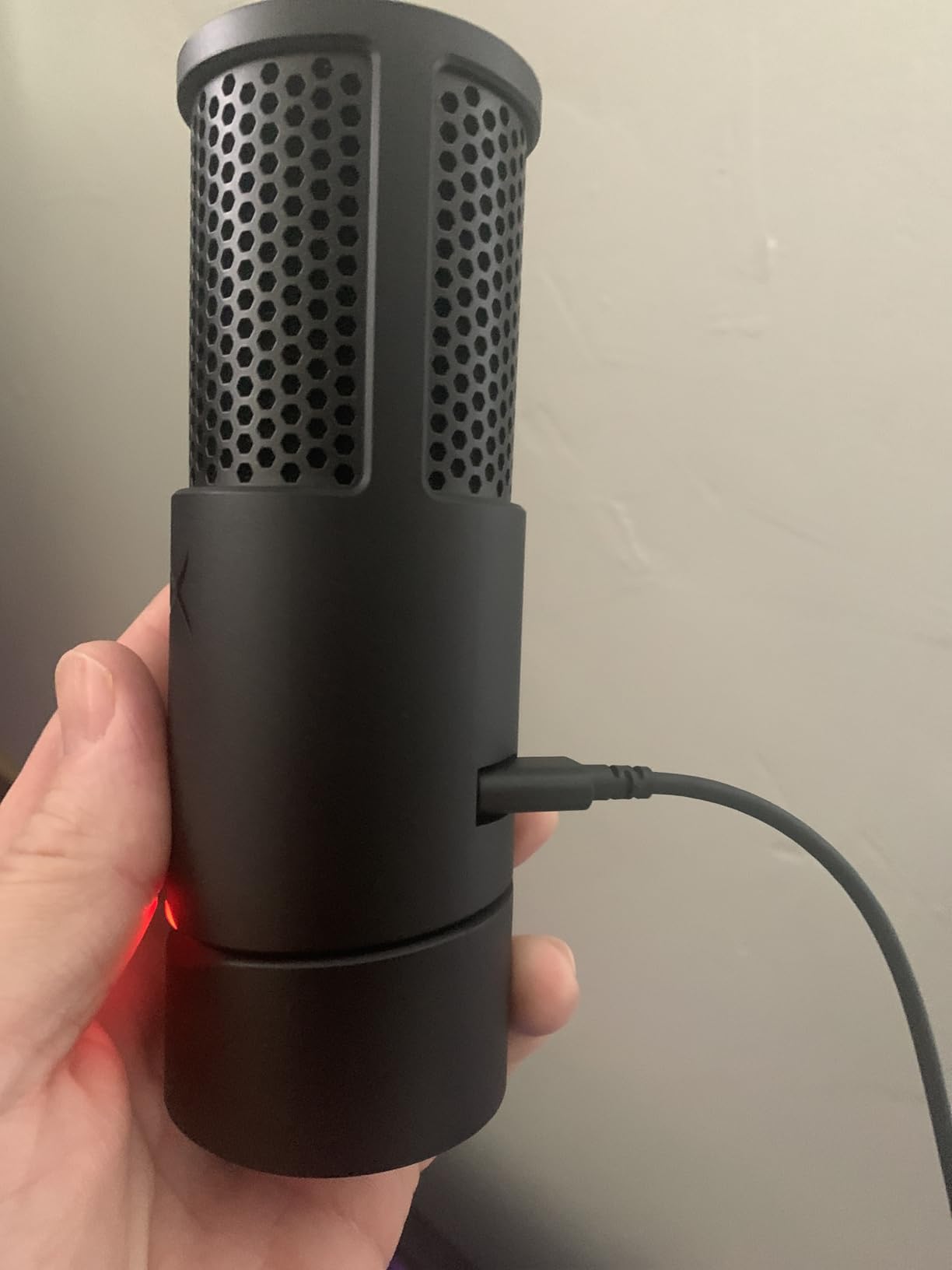
The SoloCast 2 is the least complicated mic in this roundup, and I mean that as a compliment. It worked the instant I plugged in the USB cable, with no drivers, no account, and no software required to start recording.
What impressed me most is how much is built into such a small body. The pop filter is integrated, the shock mount is internal, and the stand tilts and screws onto any standard boom arm. Most budget mics make you buy all three of those separately.
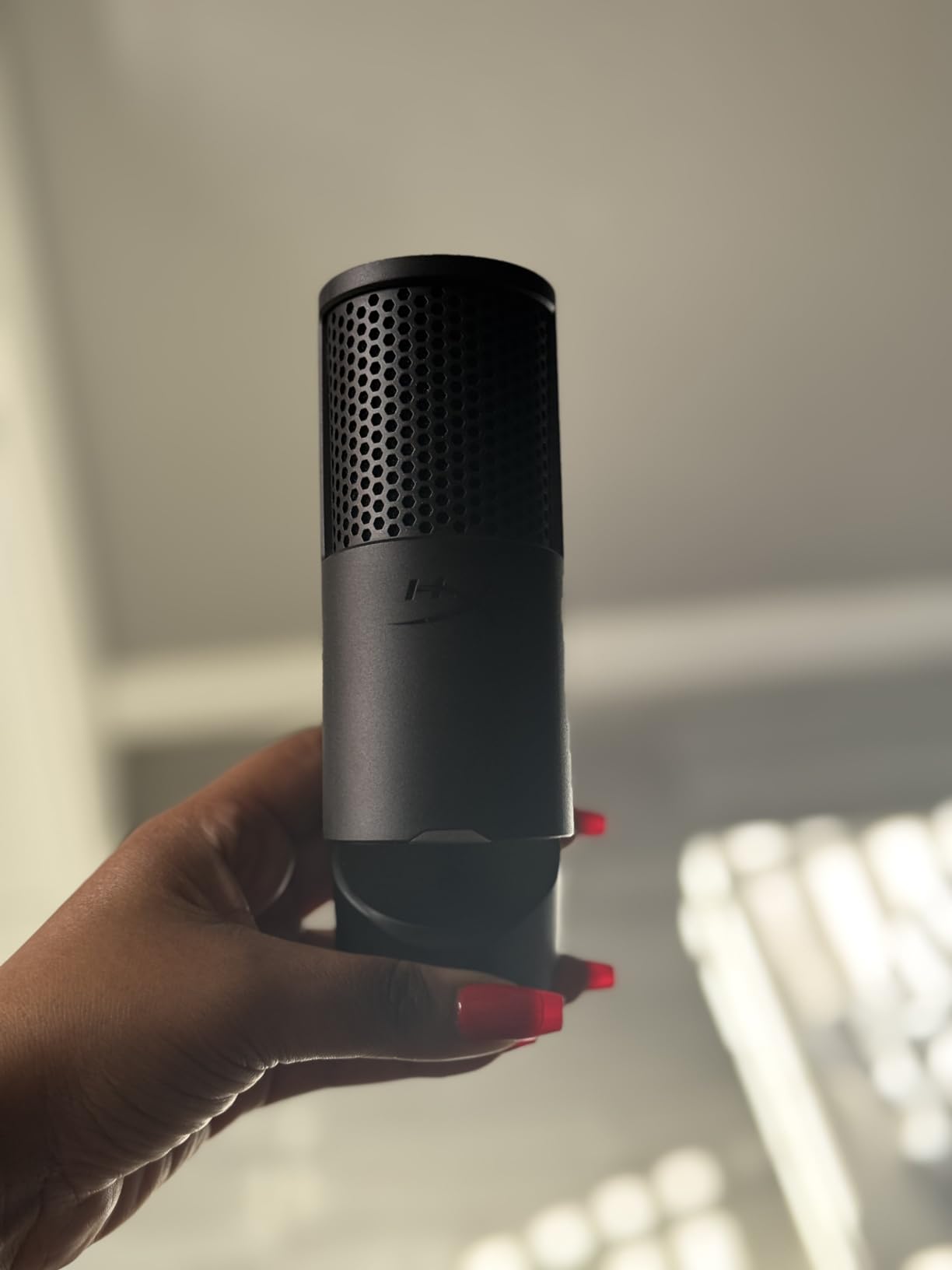
Recording quality at 24-bit/96kHz is genuinely clean for voice. Game chat, Discord, and commentary tracks all sounded crisp, with the cardioid pattern doing decent work rejecting keyboard clatter behind the mic.
The tap-to-mute sensor at the top is fast and satisfying once you learn its logic. Just know that red means live, not muted, which confused me for the first week until I internalized the opposite of my instinct.
The limitations are the ones you would expect at this size. The short stand puts the capsule below ideal mouth height, there is no gain knob, and it hears everything in a noisy room.
Is the SoloCast 2 Good Enough for Podcasting?
For solo voice work, yes. Speech is clear, the pop filter handles plosives, and the internal suspension keeps desk thumps out of the recording.
For narrative or music podcasting, its sensitivity to room sound becomes the limiting factor. Record close to the mic in a soft room and it punches well above its station.
Desk Stand or Boom Arm?
Start with the included stand because it costs nothing extra and the weighted base is stable. Tilt the capsule toward your mouth and you are set.
Move to a boom arm when you want the mic at proper height with the desk freed up. The standard threads on the base make any aftermarket arm compatible.
9. FIFINE K669B – Cheapest Condenser Worth Owning
FIFINE K669B USB Microphone, Condenser Recording Mic for Vocals, Meeting
USB condenser
Cardioid pattern
Metal body
Volume knob
Tripod stand
Pros
- True plug and play with no drivers
- Solid metal construction
- Built-in volume control knob
- Good background noise isolation
- Works with PC Mac PS4 and PS5
Cons
- Volume can be inconsistent at high settings
- Slightly midbass heavy sound
- Basic tripod stand
- May pick up background noise
With more than 34,000 reviews, the K669B is one of the most owned condenser mics on the planet, and I tested it to find out whether that popularity is deserved. My conclusion is that it is the floor of acceptable quality, and it clears that floor comfortably.
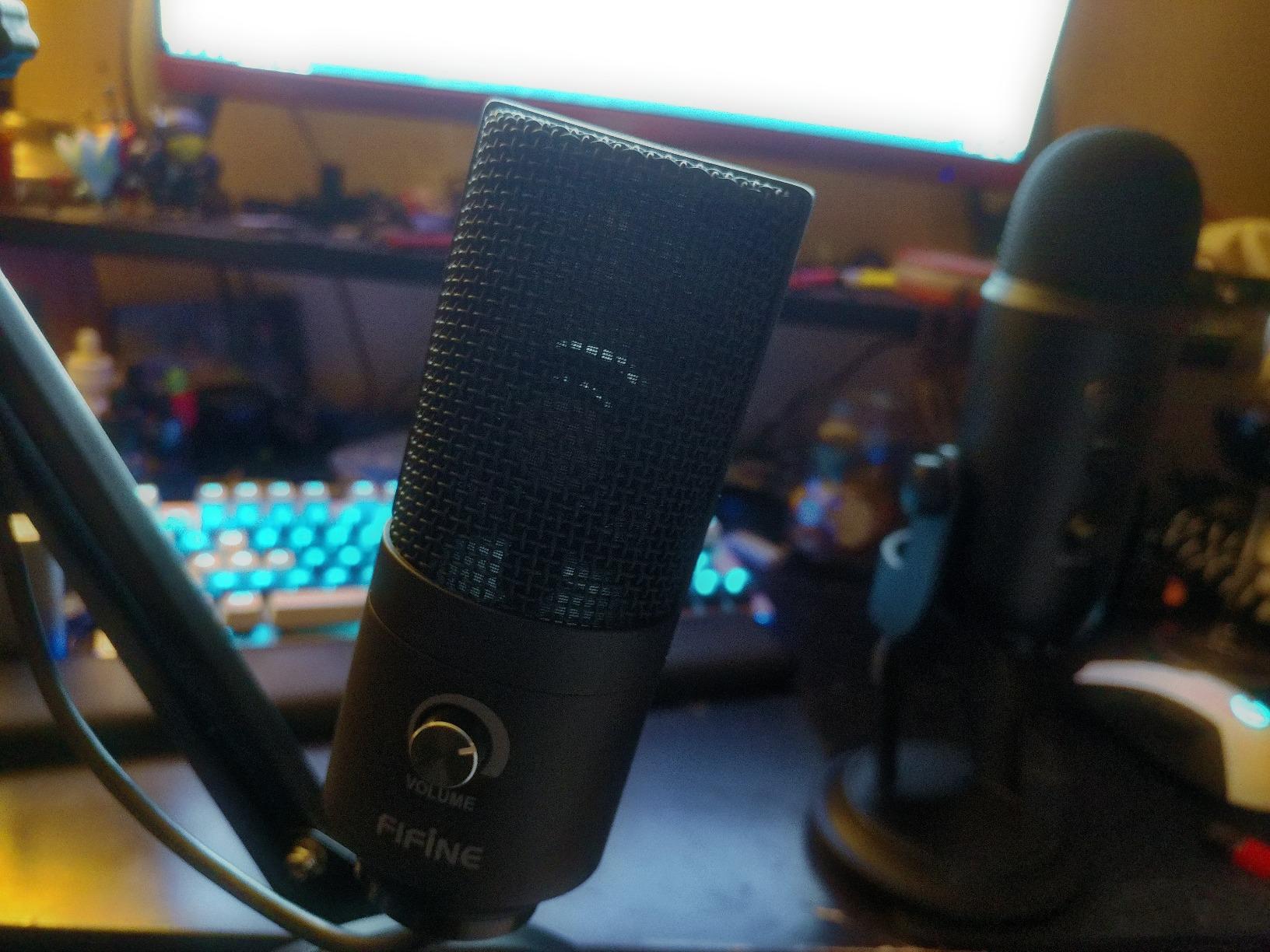
The metal body feels far sturdier than the plastic I expected, and the physical volume knob on the front is genuinely useful. Being able to ride your own level mid-recording without touching software is a feature mics three times the price omit.
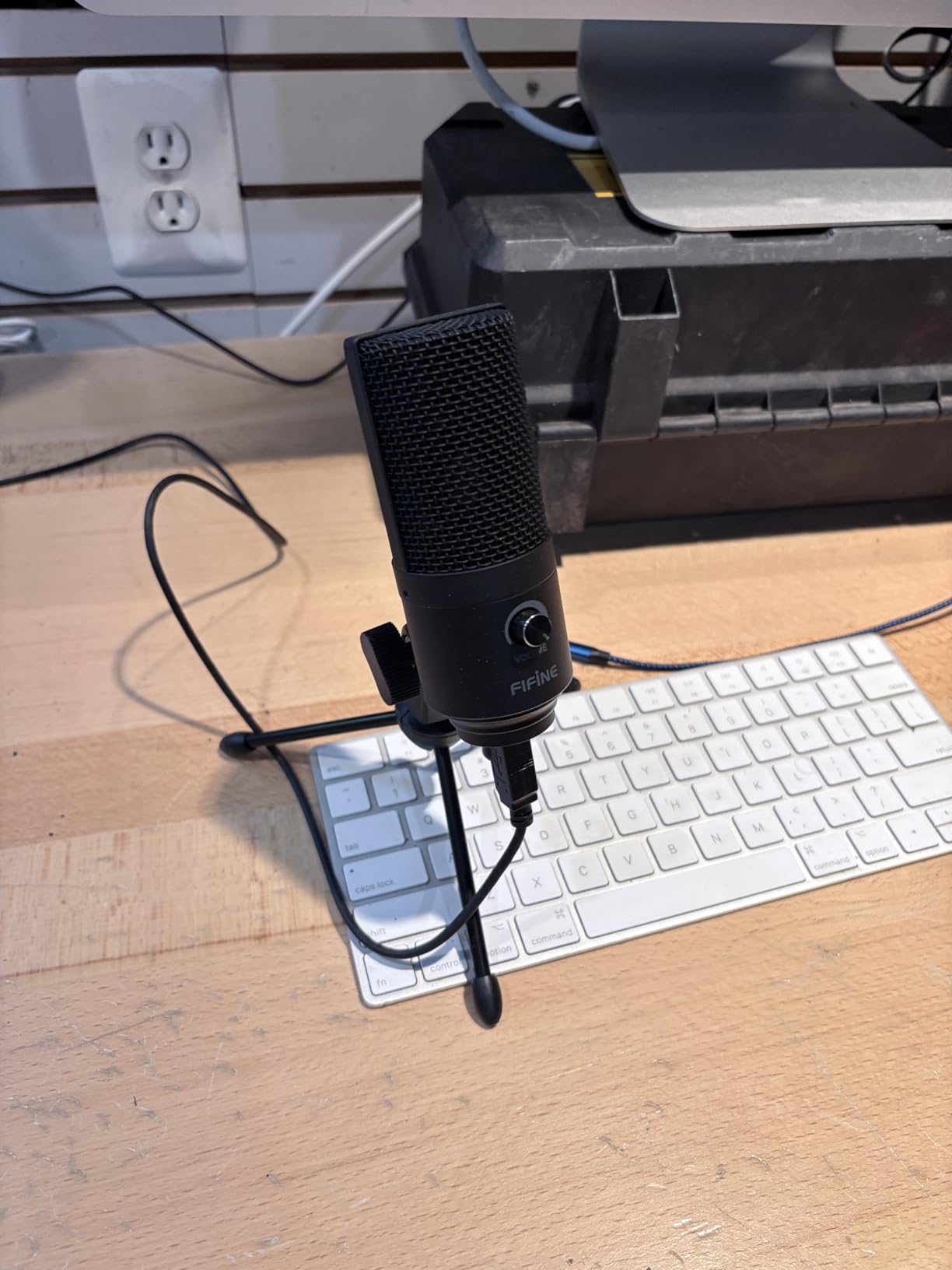
Sound-wise it is a voice mic through and through. The cardioid pattern isolates speech well for calls, streaming, and commentary, and Discord or Zoom audio came through clearly on every platform we tried.
The tuning leans midbass heavy, which gives voices a full, warm presence but can sound boxy on instruments. Push the gain hard and some white noise creeps in, so set levels conservatively and get close to the grille.
The tripod is the weakest part of the package, being basic and short. The good news is that the mic body has standard threading, so it moves to any boom arm when you outgrow the desk stand.
What Can and Cannot the K669B Do?
It handles voice for streaming, meetings, gaming chat, and casual YouTube commentary very well for the price. As a first mic for a teenager or a backup for travel, it is hard to argue with.
It is not a music recording mic, and it does not work with Xbox or phones. For singing or instruments, put your budget toward the AT2020 or MXL 990 instead.
Will It Work With Your Setup?
Yes for laptops, desktops, and PS4 or PS5, over USB with no drivers. It is genuinely plug and play on Windows and Mac.
No for Xbox and smartphones, which is worth confirming before you order. Everything else in your chain is just a USB port.
How to Choose the Best Condenser Microphone in 2026
Choosing a condenser mic comes down to four questions: what you record, what room you record it in, what you already own, and how much noise your recordings can tolerate. Here is how to think through each one, plus the specs that actually predict how a mic will sound in your space.
Large Diaphragm vs Small Diaphragm
Large diaphragm condensers, called LDCs, are the classic vocal mic. They add warmth and presence, they handle high SPL, and they are the default for vocals, voiceover, and podcasting. Eight of the nine mics in this roundup are large diaphragm designs.
Small diaphragm condensers, or SDCs, are the pencil mics you see over orchestras and drum kits. They trade a little warmth for accuracy and reach, which makes them the standard for classical ensembles, drum overheads, and anything at distance. If your focus is chamber music or solo strings, an SDC pair is worth researching next.
Polar Patterns Explained
Cardioid hears what is in front of it and rejects what is behind it. That is the pattern you want in an untreated home room, because it ignores the worst of your reflections.
Omnidirectional hears everything equally, which is beautiful for room miking and classical capture but punishing in a boxy space. Figure-8 hears front and back while rejecting the sides, ideal for two people facing each other. Stereo uses two capsules for width. Only the Blue Yeti in this list offers all four.
XLR vs USB and Phantom Power
USB mics plug into your computer and contain their own converter, so nothing else is needed. They are faster to start with and perfect for streaming and calls, but they lock you into one preamp forever.
XLR mics need 48V phantom power from an interface or mixer, which is an extra purchase. In exchange you get better preamps, lower noise, real upgrade paths, and access to every professional mic ever made. The MAONO A04 Gen2 straddles both by offering USB and XLR outputs in one body.
Self-Noise: The Spec That Matters Most
Self-noise is the hiss a mic produces on its own, measured in dB-A, and lower is better. Under 12 dB is excellent, around 16 to 20 dB is fine for voices, and above that you start hearing it on quiet sources.
This is the number forum engineers check first, and it decides whether a mic works for classical recording. Our picks range from the AT2035 at 10 dB, the quietest here, to the AT2020 at 20 dB. If you record quiet instruments at a distance, pay for low self-noise before you pay for anything else.
Your Room Matters More Than Your Mic
This was the single most repeated point across every audio forum we studied. Users consistently report that room treatment improves recordings more than a microphone upgrade, and that expensive mics in bare rooms sound worse than modest mics in tamed ones.
The cheap fixes are a rug on a hard floor, a duvet or moving blanket behind the performer, and recording away from bare parallel walls. Close-miking also helps, because the less room you capture, the less room you have to fix. Do these before you overspend on a capsule.
Recording Classical Instruments at Home
Classical recording inverts most pop advice. You want distance, because the room is part of the sound, so work two to six feet back rather than inches away. A neutral mic with low self-noise matters more here than a flattering one.
For solo piano, start with a single cardioid mic over the open lid aimed at the strings. For violin or cello, position the mic above the instrument aimed at the body, and move it until the tone balances. For small ensembles, use the 3 to 1 rule we cover in the FAQ and let the room breathe. The C214 was the standout classical performer in our tests, with the AT2035 a strong runner-up.
Frequently Asked Questions
What is the best brand of condenser microphone?
Audio-Technica, AKG, and Neumann are the most trusted condenser microphone brands. Audio-Technica dominates the value segment with the AT2035 and AT2020, AKG anchors the professional tier with the C414 and C214, and Neumann sets the studio benchmark with the U 87. Rode, MXL, and Elgato are also reliable picks depending on your budget.
What is the holy grail of microphones?
The Neumann U 87 Ai is widely called the holy grail of microphones. It has been the default studio vocal condenser for decades and appears on countless classic records. In our price range, the AKG C214 carries the same family DNA from the legendary C414 and is the closest most home studios get to that lineage.
What are the best condenser vocal microphones?
The best condenser vocal microphones are the Audio-Technica AT2035 for most home studios, the AKG C214 for professional vocal work, the MXL 990 for a warm budget option, and the Audio-Technica AT2020 for a neutral low-cost choice. Streamers and podcasters get excellent vocal results from the Elgato Wave:3 MK.2 and Blue Yeti without needing an interface.
What is the best condenser mic for a home studio?
The Audio-Technica AT2035 is the best condenser mic for a home studio. It combines 10 dB self-noise, an 80 Hz high-pass filter, a 10 dB pad, and an included shock mount, which covers vocals, acoustic guitar, and podcasting in one purchase. If you have no audio interface yet, the MAONO A04 Gen2 kit or a USB mic like the Blue Yeti is the easier starting point.
What is the 3 to 1 rule for microphones?
The 3 to 1 rule says the distance between two microphones should be at least three times the distance from each mic to its source. For example, if each mic is 1 foot from its instrument, the mics should be 3 feet apart. Following it prevents phase cancellation and hollow, comb-filtered recordings when multi-miking ensembles or a piano.
Final Verdict on the Best Condenser Microphones in 2026
After months of testing, the best condenser microphones for 2026 break down cleanly by need. The Audio-Technica AT2035 is our editor’s choice for most home studios, the AKG C214 is the premium pick for vocals and classical work, and the MAONO A04 Gen2 is the best complete kit for creators starting from nothing.
For specific jobs, the Blue Yeti still owns multipattern flexibility, the Elgato Wave:3 MK.2 is the safest bet for streamers who cannot afford a clipped take, and the AT2020, MXL 990, SoloCast 2, and FIFINE K669B cover the budget tiers with honest performance. Whichever you choose, treat your room first, because even our top pick cannot fix bare walls.
Pick the mic that matches your room and your interface situation rather than the biggest badge, and you will hear the difference on your very first take.
2 thoughts on “9 Best Condenser Microphones (October 2026) Top Reviews”