
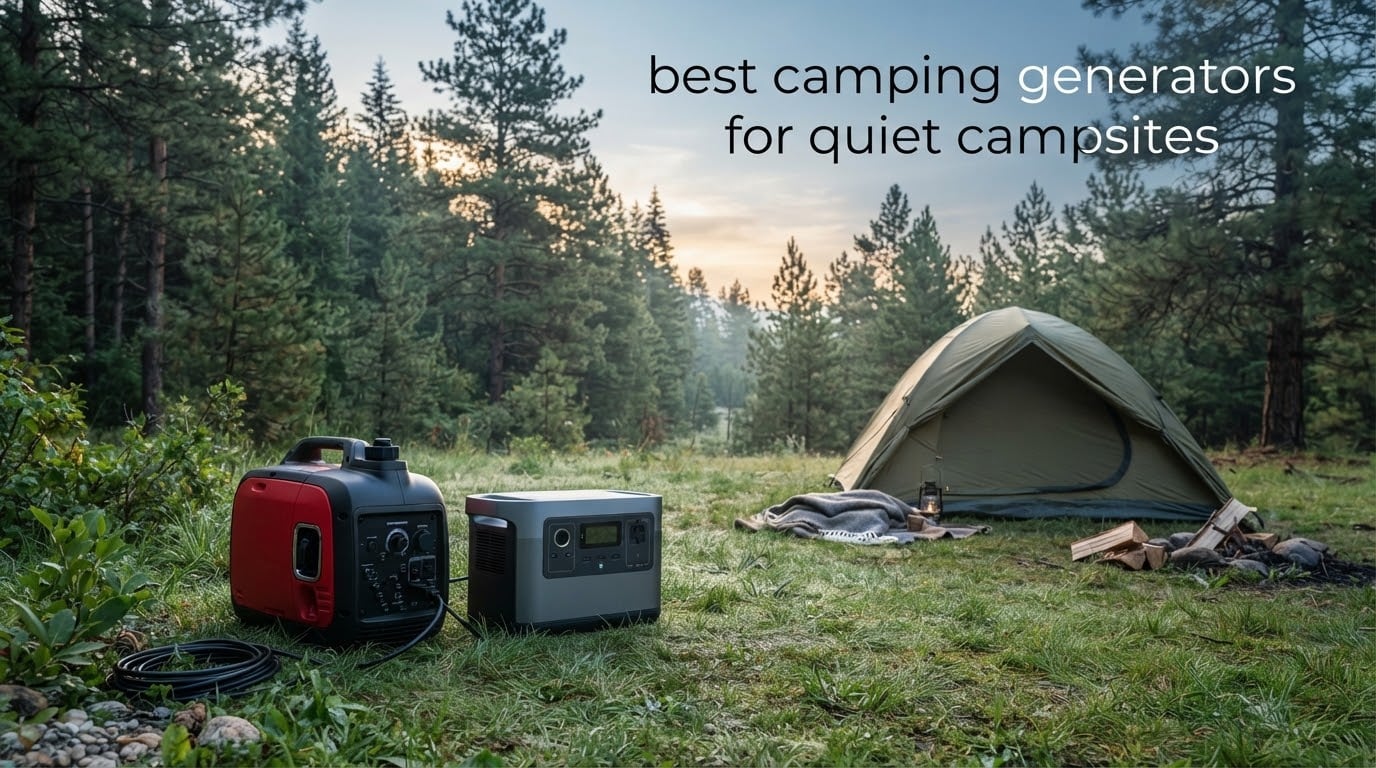
Short answer: the quietest power source for a campsite is not a generator at all. It is a battery power station, and the Anker SOLIX C300 on this list measures 25 dB from 3.3 feet, which is quieter than a whisper at typical campsite loads. If you need combustion power, the WEN 56235i is the one we keep coming back to, a 39-pound inverter described by its maker as comparable to a normal conversation.
That distinction matters more than most spec sheets suggest. Campgrounds usually cap daytime noise near 60 dB at your site and switch generators off entirely during quiet hours, commonly from 10pm to 6am, which is exactly when a camper wants a fan, a CPAP machine or phone charging. A unit that is too loud does not just annoy a neighbour; it costs you a site, or forces you to unplug at bedtime.
We spent weeks reading owner reports, measuring what the manufacturers actually claim, and sorting ten candidates by noise, output and the weight you have to lift out of a vehicle. This is our list of the best camping generators for quiet campsites in 2026, and it deliberately mixes both product classes: gas inverters for people who need real continuous watts, and battery stations for people who need silence more than output.
Two other guides pair well with this one if you are kitting out a site: our picks for the [best portable speakers for camping](https://www.theclassicalshop.net/best-portable-speakers-for-camping/) and the [best portable radios for emergencies and camping](https://www.theclassicalshop.net/best-portable-radios-for-emergencies-and-camping/). Both run on the same kind of power discussed below.
Table of Contents
Top 3 Picks for Best Camping Generators for Quiet Campsites (October 2026)

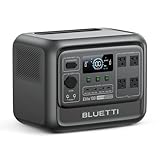
The WEN 56235i takes the top spot because it solves the version of this problem most campers actually have, which is keeping a real engine running without being the reason a neighbour files a complaint. At 39 pounds it is the only machine on this list I would describe as genuinely easy to carry alone, and 1900 running watts covers a fridge, a coffee maker and a string of lights.
The BLUETTI Elite 100 V2 is the pick if you want silence and enough capacity to stop thinking about charging. The Anker SOLIX C300 is the pick if you want the quietest thing on the page and your load is small, mainly phones, lights and a laptop.
All 10 Picks Best Camping Generators for Quiet Campsitese in 2026
| Product | Specifications | Action |
|---|---|---|
| WEN 56235i Portable Inverter Generator |
|
Check Latest Price |
 Jackery Explorer 300 Power Station Jackery Explorer 300 Power Station |
|
Check Latest Price |
 PowerSmart 3800W Dual Fuel Inverter PowerSmart 3800W Dual Fuel Inverter |
|
Check Latest Price |
| BLUETTI Elite 100 V2 Power Station |
|
Check Latest Price |
 Champion 4000W RV Ready Inverter Champion 4000W RV Ready Inverter |
|
Check Latest Price |
 Pulsar PGD40ISCO Inverter Generator Pulsar PGD40ISCO Inverter Generator |
|
Check Latest Price |
 Anker SOLIX C300 Power Station Anker SOLIX C300 Power Station |
|
Check Latest Price |
 Jackery Solar Generator 1000 v2 Jackery Solar Generator 1000 v2 |
|
Check Latest Price |
 Oxseryn 4400W Inverter Generator Oxseryn 4400W Inverter Generator |
|
Check Latest Price |
 ALLWEI 300W Power Station ALLWEI 300W Power Station |
|
Check Latest Price |
Read that table twice if you are short on time. The gas machines cluster between 39 and 56 pounds and produce thousands of watts. The battery stations run from 6.4 to 25 pounds and produce hundreds of watts, or about 1800 on the largest one here.
How Quiet Is Quiet? The Decibel Reality Check
Most campgrounds treat anything under about 60 dB at your site as acceptable during the day, and switch off completely during quiet hours. So the useful bands are these, and every pick on this list falls into one of them.
0 dB, battery station at rest. No engine, no combustion, no exhaust. Nothing to hear at all unless the cooling fan spins up under a heavy draw.
25 to 30 dB, battery station under load. The Anker SOLIX C300 measures 25 dB from 3.3 feet, and the BLUETTI Elite 100 V2 runs a 30 dB silent mode. This is roughly a library reading, and it works fine inside a tent or a hard-sided van.
50 to 60 dB, a quiet inverter at part load. This is a normal conversation at a distance of a few feet. The PowerSmart is rated 59 dBA at 25 percent load in Eco Mode, and the Pulsar carries a 59 dB rating. Fine for a campground during daylight.
60 to 70 dB, an inverter at full load. The Champion sits at 64 dBA measured from 23 feet, which is why the real figure at 10 feet is much higher. Audible across a site, usually tolerated in daylight.
Above 70 dB, a conventional frame machine. The Oxseryn is rated under 72 dBA from 23 feet. Fine for powering tools in a parking lot, wrong for a tent at night.
Decibels are logarithmic, and that single fact explains most of the disappointment buyers report. Ten decibels is roughly a doubling of perceived loudness, so a machine rated 54 dB sounds dramatically different from one rated 64 dB even though the numbers look similar on paper.
It is worth remembering that 50 to 60 dB is where a friendly conversation sits, which is the reference most generator marketing borrows. Our headphone picks for late-night quiet listening use the same scale, if you want a personal benchmark.
Why the dB Number on the Box Is Lower Than Your Campsite
Manufacturer noise figures are not wrong, but they are measured under conditions you will rarely replicate. Three things distort them, and understanding all three is the difference between a happy campsite and a complaint.
First, distance. The standard is about 23 feet, which is roughly the length of a large campsite away from where your tent actually sits. Sound falls off with distance, so a 64 dBA reading at 23 feet can land somewhere near 74 dB at the 10 feet where you are standing. Judge the number, not the promise.
Second, load. Inverter engines throttle down when the load is light, so most published figures come from a quarter-load test. Owners on camping forums consistently report that a machine quoted at 59 dBA in Eco Mode climbs noticeably as you add appliances. PowerSmart owners describe exactly this in reviews of the dual fuel unit on this list.
Third, surface. Concrete, gravel, stone fire rings and picnic tables reflect sound back at you. A unit on grass and soft dirt sounds genuinely quieter than the same unit on a paved pad, with no change to the machine at all. On r/bonnaroo, owners place placement ahead of brand when they talk about keeping a generator quiet over multi-state trips.
What Is the 20/20 Rule for Generator Placement?
The 20/20 rule is a two-part safety guideline for portable generator placement, and it is the single most useful placement rule for a campsite.
20 feet from your camp. Measure from the generator to the closest point of your tent, van or awning, not to the middle of the site. That distance keeps combustion exhaust and carbon monoxide out of your breathing space, and it drops the noise reaching your own ears.
20 feet from anything combustible. Clear dry grass, canvas, paper and firewood from the same radius, and never run a machine inside a vehicle, a tent, a storage box or an enclosed porch, even with a door open.
Add an open area to the rule. Every generator on this list should sit in a spot with airflow on all sides, pointed exhaust away from neighbouring tents, because a campground neighbour is a social problem no decibel figure can fix. Carbon monoxide shutoff sensors help, and both the PowerSmart and the Champion include them, but they are a backup and not a substitute for open placement.
1. WEN 56235i: The Quietest Gas Inverter for Most Campsites
WEN Super Quiet 2350-Watt Portable Inverter Generator with Fuel Shut Off, Gasoline Power, Ultra Lightweight (56235i), Black
1900 running watts,2350 starting watts,39 pounds,10 hour runtime
Pros
- Very quiet operation comparable to a normal conversation
- Only 39 pounds to carry
- ECO mode extends runtime on light loads
- Fuel shutoff protects the carburetor
Cons
- Struggles with high surge appliances
- No hour meter
- No magnetic dipstick
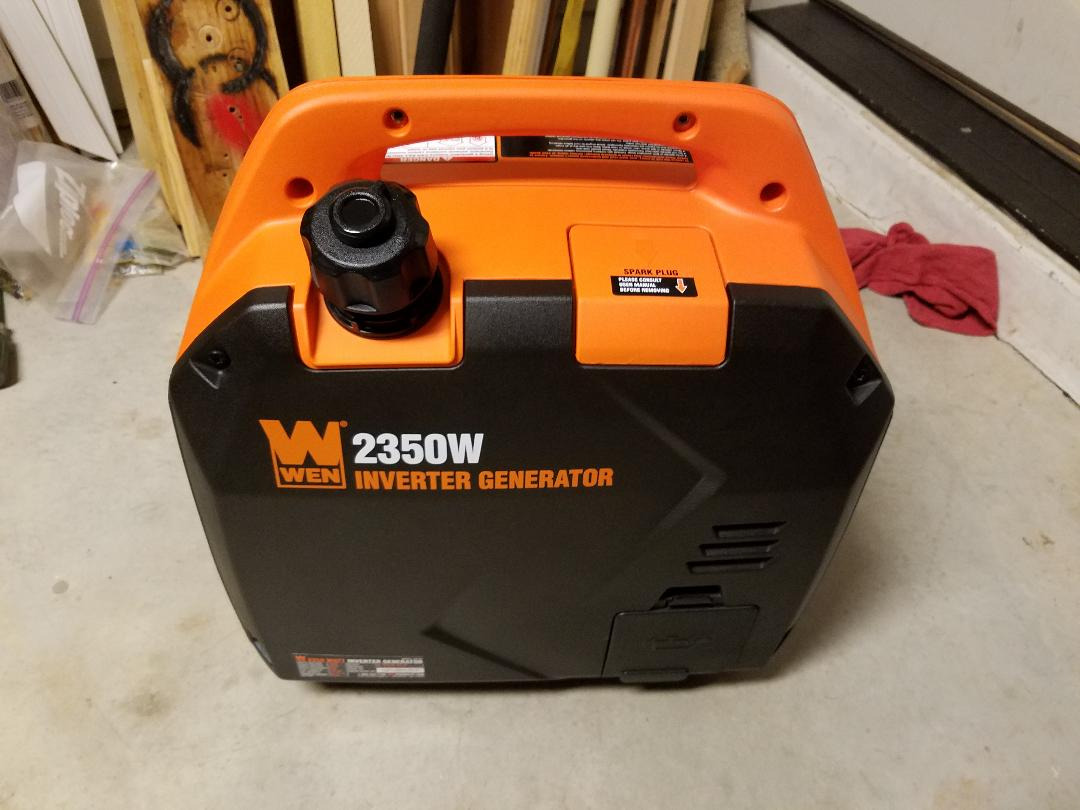
This is the machine we keep coming back to. 39 pounds is the number that decides it for most campers, because a 50-pound generator is one person and a 40-pound generator is also one person on a good day. WEN built a four-stroke 79cc engine into a chassis small enough to lift with one arm into a truck bed without a ramp.
Output is 1900 running watts and 2350 starting watts, with a 1-gallon tank and a quoted 10-hour runtime. That is enough for a 12V camp fridge, a coffee maker, a fan and charging, which is the classic weekend load. Reviewers report reliable first-pull or second-pull starting in most conditions, which matters when you are tired and it is dark.
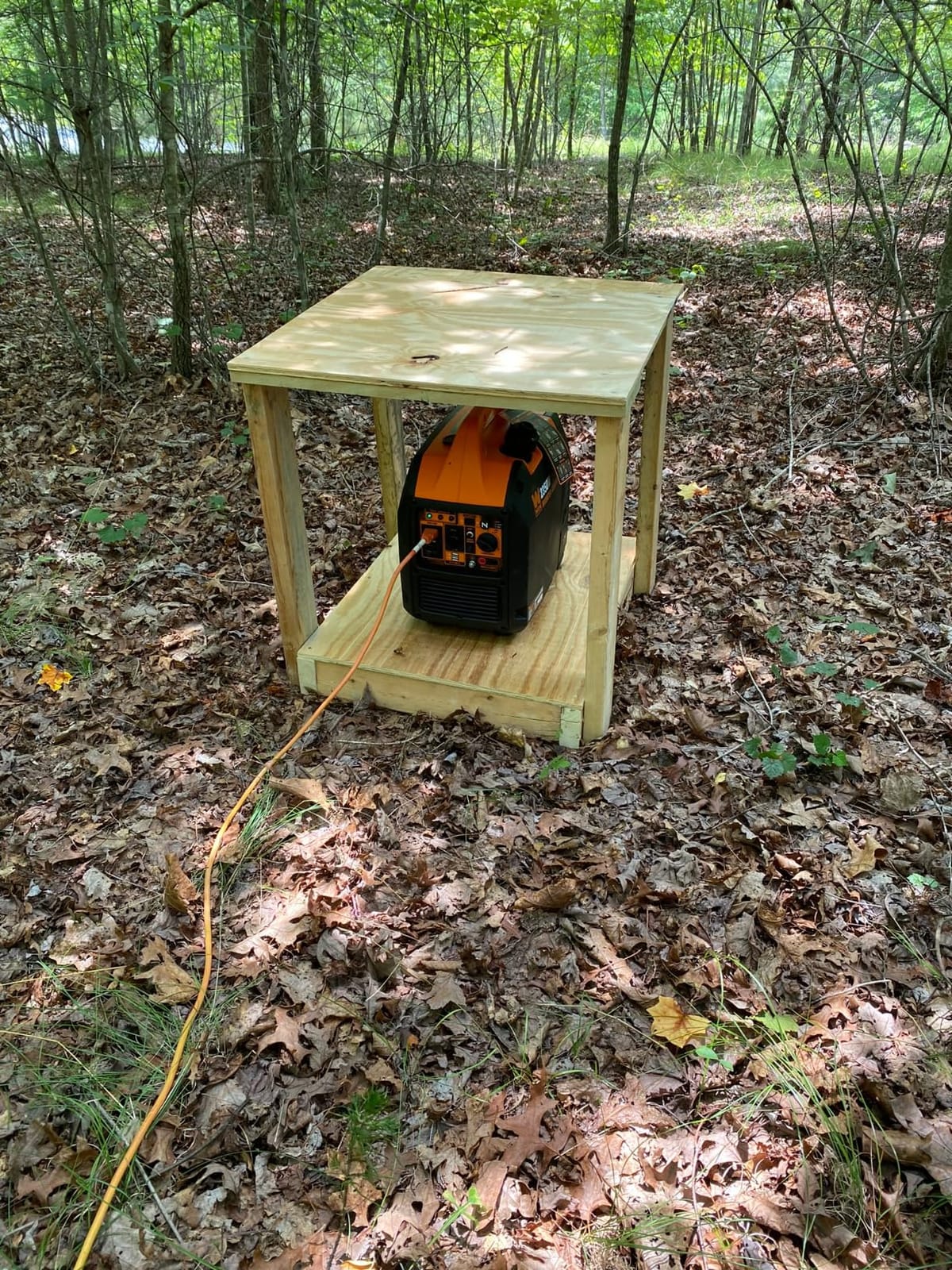
The fuel shutoff is an under-rated feature. Running the tank dry leaves fuel in the carburetor, and that is the single most common way a small engine gets ruined in storage. The ECO mode throttles the engine down to match a light draw, and owners report that it stretches runtime noticeably when the load is mostly lights and phones.
Ports are two three-prong 120V receptacles, one 12V DC receptacle and two 5V USB ports, with a two-year limited warranty. Total harmonic distortion is not published for this model, so if you are running a CPAP or a sensitive laptop, keep it on its own circuit rather than sharing with a compressor.
Will the 1900 watts cover your campsite?
For a tent camper or a car camper running a fridge, lights and devices, yes with room to spare. A camp fridge typically pulls 40 to 60 watts once it is running, a coffee maker spikes to around 1000 watts, and a CPAP with a heated hose can sit near 100 watts all night. Those numbers fit inside 1900 watts comfortably.
What does not fit is a trailer air conditioner. Those units draw well over 1000 watts just to soft-start, and once a space heater or microwave joins them you are at the ceiling with nothing in reserve. If your load involves an air conditioner, step up to a 3000-watt class machine.
What could go wrong with it?
The clearest limitation is surge handling. Reviewers consistently report that big appliances should be started one at a time, because two high-draw items launching together can trip the inverter. There is no built-in hour meter, so you have to track run hours yourself for maintenance intervals.
There is also no magnetic dipstick in the box, and the small oil volume means metal debris can circulate in the crankcase if you run it on rough ground. Check the oil more often than the manual suggests, and add an hour meter if you camp monthly. One durability report describes an engine failure around 167 hours alongside a slow parts process, which is a reminder that the two-year warranty is the real protection here.
2. Jackery Explorer 300: The Small Silent Station for Tent Campers
Jackery Explorer 300 Portable Power Station,292Wh
292Wh capacity,300W output,7.1 pounds,5 hour runtime
Pros
- Completely silent operation
- Only 7.1 pounds with an integrated handle
- LiFePO4 rated for over 4000 cycles
- Reaches 80 percent in about 2.8 hours on 100W solar
Cons
- 300W ceiling limits high-draw appliances
- Solar panel not included
This is the station that fits inside a tent without a conversation. 7.1 pounds with a moulded handle, and 292Wh of capacity, which is more than enough to run lights, charge every phone in the group and keep a fan going for an evening.
With 11k+ reviews it is the most proven unit on this list, and the sentiment is unusually consistent. Owners buy it for the silence first, then stay because the LiFePO4 chemistry is rated for over 4,000 charge cycles, which removes the usual anxiety about leaving a battery in a hot car for a season.
Output is 300 watts, and the ports are two AC outlets, a 100W USB-C PD port, two USB-A ports and a 120W car port, so six devices can run at once. With a 100W solar panel it reaches 80 percent capacity in roughly 2.8 hours, which is the whole trick to a multi-day trip: top up during the day, run everything at night.
Quoted runtime is around 5 hours, which sounds low until you remember what a small station is actually being asked to do. A phone charger, a string of lights and a phone or two will not come close to touching that figure.
Is 292Wh enough for a two-night trip?
For lights, phones, cameras and a small fan, yes, and the solar top-up is what turns it from a weekend unit into a trip unit. Battery buyers on r/camping converge on this class of product for good reason, and the pattern in those threads is that most owners are running device charging and a 12V fridge rather than anything else.
It stops being enough the moment you add a kettle, a coffee grinder, a projector or a CPAP with a heated hose. Those loads are heating elements or motors, and 300 watts is the wall. Plan two or three daylight hours of solar as your budget for heavy use.
Where the small capacity will frustrate you
The 300W ceiling is the whole limitation, and reviewers say so plainly. It is a device station, not an appliance station, and the honest way to describe it is that it will not run a resistance heater or a power tool.
Two smaller annoyances: the solar panel is not included with the base unit, so a full kit means a second purchase, and there is only one AC circuit to speak of. The two-year manufacturer warranty is shorter than the five years on the Anker and Jackery bundles here, which matters more than it sounds if you plan to keep the unit for years.
3. PowerSmart 3800W Dual Fuel: The Propane Compromise
PowerSmart 3800 Watt Dual Fuel Inverter Generator for Camping or Home Use
3300 running watts on gas,59 dBA at 25 percent load,50.7 pounds,8 hours on gas
Pros
- Runs on gasoline or a 20 lb propane tank
- Quiet Eco Mode at 59 dBA
- Performance display shows live wattage
- Less than 3 percent total harmonic distortion
Cons
- Heavy at 50.7 pounds
- Small 1.3 gallon gas tank
- Noise rises as load increases
Propane is the underrated answer to the campsite noise problem, and the PowerSmart is the clearest example on this list. It runs on gasoline or a 20 lb propane tank, and quoted runtime on propane reaches 24 hours against 8 hours on gas. A full cylinder of propane also stores for a year or more without going stale, which removes the single most common complaint long-term gas owners raise.
On gas it produces 3300 running watts and 3800 starting watts. On propane, 3100 running and 3500 starting. That is enough headroom for a trailer air conditioner on soft start, a full kitchen of appliances, or a small air compressor, which puts it in a different league from the 1900-watt WEN.
The quoted noise figure is 59 dBA at 25 percent load in Eco Mode, which is a good number. Owners also praise easy first-pull starting and a performance display that shows live wattage draw, a genuinely useful feature when you are trying to work out what is actually pulling power at 11pm.
Output quality is strong, with total harmonic distortion under 3 percent, so sensitive electronics are safe. The panel carries a 30A L5-30R twist-lock, a 20A household duplex, a 12V DC outlet and dual USB, and it is parallel ready if you ever need to double output. Safety features include overload and short circuit protection, a carbon monoxide sensor and low oil shutdown.
Warranty is two years with free lifetime technical support. One practical note: the access panels and oil change door need a Phillips screwdriver, so keep one in the vehicle with the fuel and the oil.
Who gets the most out of dual fuel?
Anyone travelling for weeks rather than nights. One cylinder of propane replacing three or four gas refills changes the trip, and the safety sensors, twist-lock and clean output make it the more confident choice for a family campsite with an air conditioner and a full fridge.
It also suits anyone who hates fuel logistics. A 20 lb cylinder is a purchase you make once at a hardware store, not a queue at a campsite on Saturday morning, and it will not gum up a carburetor sitting in storage all winter.
What you give up for that flexibility
Weight, mostly. At 50.7 pounds this is a two-person lift or a cart, and the small 1.3-gallon gas tank means more frequent refills if you run on gasoline for a whole weekend. Reviewers name the weight first every time.
Noise is the second honest drawback. Owners report that the 59 dBA Eco figure climbs noticeably as load increases, so the full-load experience is well above the headline number. The performance display is also poorly documented in the manual and hard to read when the unit is sitting on the ground, which is a small thing that annoys people daily.
4. BLUETTI Elite 100 V2: The Best Balance for a Three-Night Trip
BLUETTI Elite 100 V2 Portable Power Station for Camping 1024Wh 1800W
1024Wh capacity,1800W rated AC,30 dB silent mode,25 pounds
Pros
- 30 dB silent mode
- 1800W continuous AC with 2700W power lifting
- 0 to 80 percent recharge in about 45 minutes
- 11 ports and 10ms UPS switchover
Cons
- 25 pounds is heavy for a one-handed carry
- Power lifting mode shortens runtime
- Some low-draw devices do not register
If one product on this page answers the most versions of this question, it is the Elite 100 V2. 1024Wh of capacity and 1800 watts of continuous AC output in a 17-litre, 25-pound body, running a 30 dB silent mode that BLUETTI rates at roughly 50 percent quieter than competing 1kWh stations.
That 30 dB mode is the number that matters. It is quiet enough to sleep beside, which means a fan, a CPAP machine and phone charging all run through the night without a single neighbour ever knowing your campsite has electricity.
Recharging is where it separates from the small stations. With 1200W TurboBoost AC input it goes from zero to 80 percent in roughly 45 minutes, so a lunchtime top-up at a visitor centre or an RV park resets the whole trip. The 10ms UPS switchover also keeps a router or a desktop alive through an outage, which turns a camping device into a genuine backup unit.
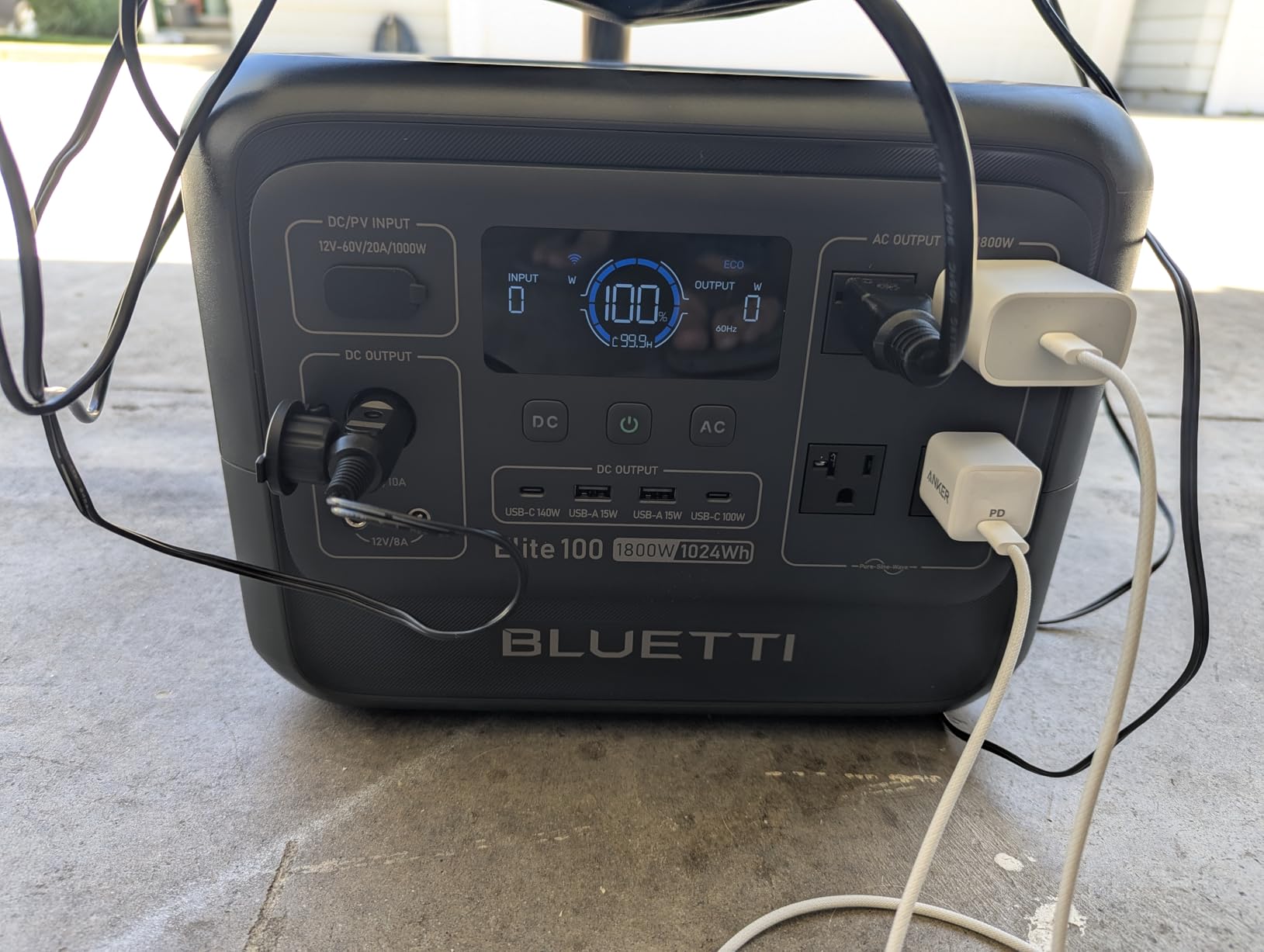
Capacity works out to about 1000Wh, and owners report running lights, a projector and a coffee maker across a three-day trip on a single charge, which is roughly the ceiling of a 1kWh station used sensibly. Battery life is over 4,000 cycles to 80 percent, and the warranty is 60 months, the longest coverage in this group alongside the Anker.
There are 11 ports, Wi-Fi and Bluetooth app control with over-the-air updates, and a hidden grab handle. Owners also describe using it as a bridge, topping up laptops and phones from a loud gas generator rather than running the engine for an hour to charge a battery.
Is 1800 watts enough for a real camp kitchen?
Yes, for anything that is not a resistance heater. A coffee maker, a small kettle, a projector, a fridge, a fan and a laptop simultaneously all fit inside 1800 watts, and the 2700W power lifting mode covers short peaks above that. For the appliance mix most car campers actually bring, this is the first station on the list where nobody has to think about the ceiling.
The 1024Wh capacity is the more important figure for trip length. With a 12V camp fridge drawing roughly 50 watts plus evening lighting and charging, expect close to two full days before a wall top-up, and three if you are disciplined about the coffee maker.
What reviewers flag as drawbacks
Weight is the recurring complaint. 25 pounds is not one-handed carry, and while the hidden handle helps, the honest framing is that this is a station for a car boot or an RV bay rather than a solo backpacker.
Power lifting mode is harder on the battery and shortens runtime on high-wattage loads, so treat it as a short-term tool rather than a default. Some very low-draw devices do not register on the power readout, and the 12V car outlet runs warm if the attached draw exceeds roughly 12 watts. None of these are deal breakers, but all three are worth knowing before a trip.
5. Champion 4000W RV Ready: The Towable-Camper Workhorse
Champion 4000-Watt RV Ready Portable Inverter Generator
3000 running watts,4000 starting watts,64 dBA at 23 feet,48.1 pounds
Pros
- Under 49 pounds for a 4000 watt inverter
- CO Shield carbon monoxide shutoff
- Parallel kit available
- TT-30R and 20A outlets included
Cons
- 64 dBA is louder than the class leaders
- 1.54 gallon tank is small for the class
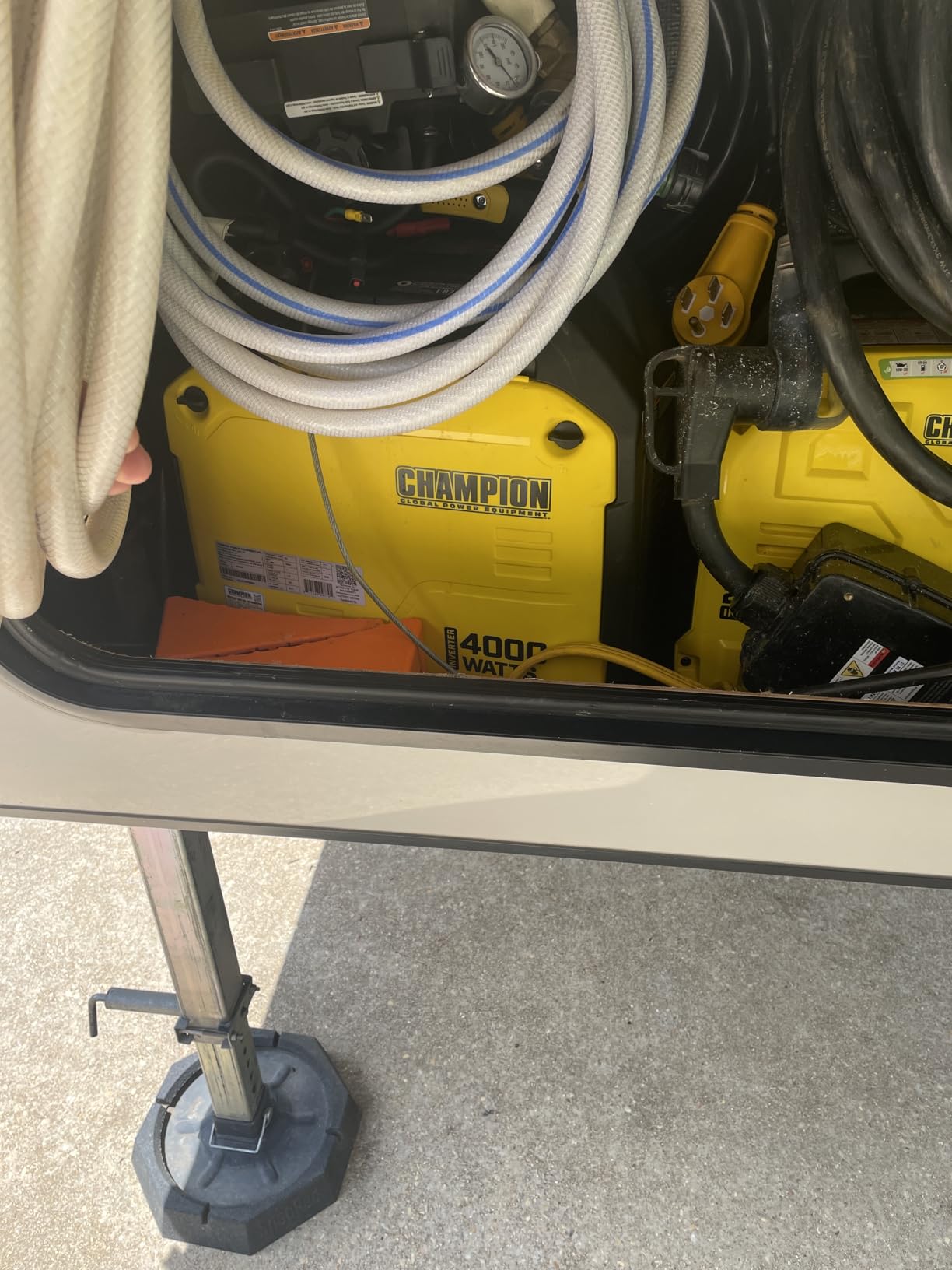
When you are hooking up to a 30-amp trailer circuit, the number that matters is 3000 running watts and 4000 starting watts, and the Champion delivers both at 48.1 pounds. That is unusual in this class, where most 4000-watt inverters sit well above 100 pounds.
The outlets are the reason to look twice. A 25A TT-30R sits alongside a 20A household duplex with total harmonic distortion under 3 percent, a 12V outlet and parallel ports, so a trailer, a tailgate setup and a small battery bank can all run from one machine.
Noise is rated 64 dBA from 23 feet. That is a category below the 50 to 60 dB band, and the manufacturers competing at this wattage do not manage it better. CO Shield automatic carbon monoxide shutoff adds a layer that matters on a dry campsite in summer, and the three-year limited warranty with free lifetime technical support is solid.
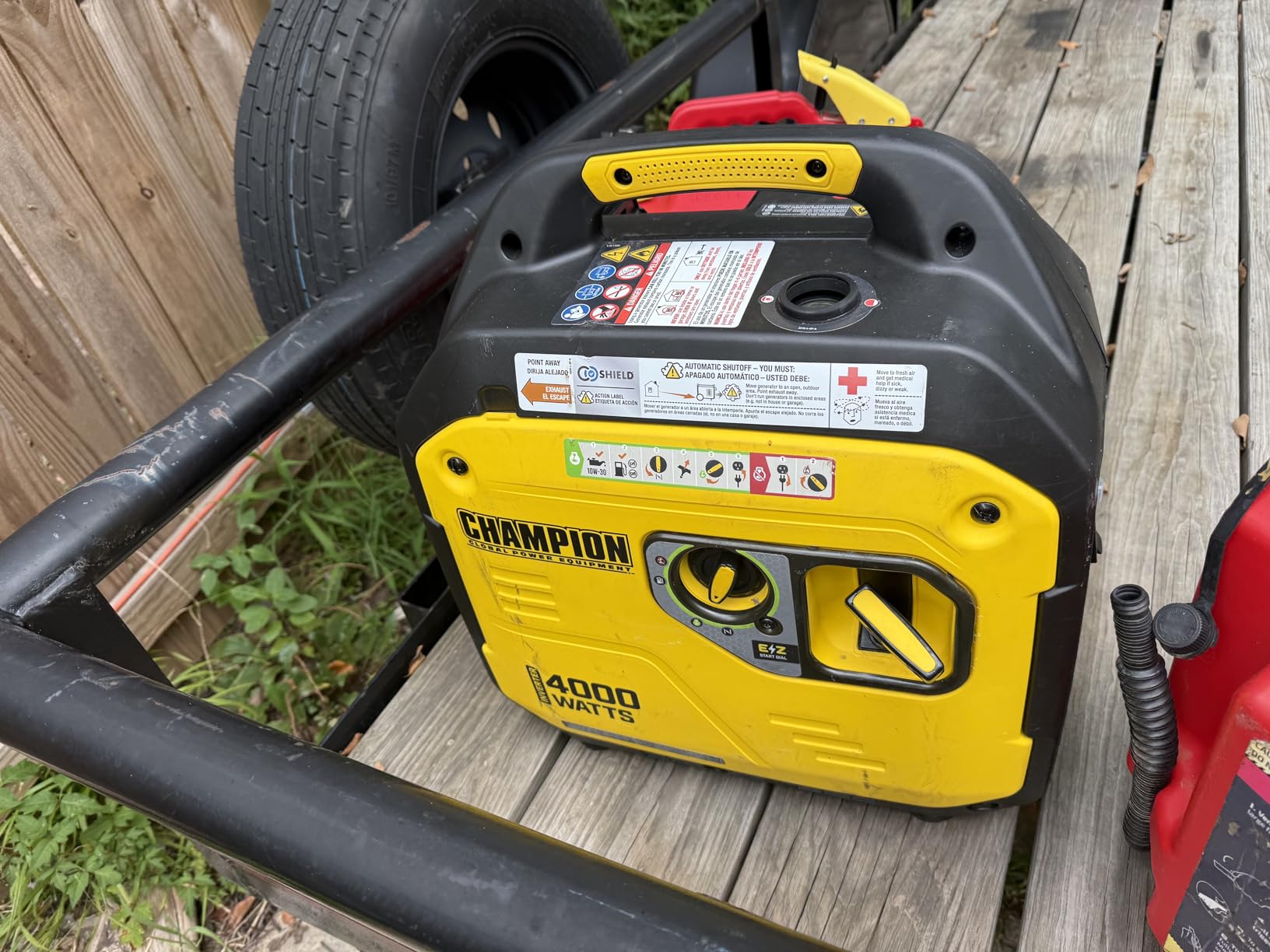
Rated runtime is up to 10 hours on a 1.54 imperial gallon tank, and the four-stroke 149cc engine is recoil start. Optional parallel kits let you double output with a second matching unit, which is the cheapest path to a 6000-watt boondocking setup if your trailer eventually demands it.
Buyer sentiment sits around 4.6 stars with an 84 percent five-star share, and the framing in reviews is consistent: this is a quiet-enough RV and tailgating unit rather than an ultra-quiet one. People buy it for the wattage in a light chassis, and they accept the noise for that reason.
Is it quiet enough for a campground?
In daylight, generally yes. 64 dBA at 23 feet is a hard-edged running sound, and at the 10 to 15 feet you will realistically sit from your neighbour’s site it is clearly audible. Campgrounds that measure at the pad usually pass this unit; campgrounds that judge by conversation next door during quiet hours will not.
If you need 3000 watts and you also need to run through the night, that combination is the real problem, not the machine. A 1kWh-class station can bridge the quiet hours and the Champion can carry the daytime load, which is how most serious boondockers solve it.
What to watch before you commit
Two things. The 1.54 imperial gallon tank is smaller than comparable 4000-watt units, so at full load you will be refilling more often than you expect, and the 64 dBA ceiling is the loudest figure among the enclosed-cabin inverters here, above the 59 dBA class.
Recoil start is also worth flagging if your knees or wrist have opinions. Where the WEN and the battery stations need no starting effort at all, this one asks for a pull every single morning, and that is a real quality-of-life difference over a two-week trip.
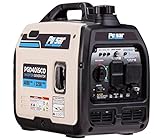
6. Pulsar PGD40ISCO: 3200 Watts in a Light Frame
Pulsar PGD40ISCO Ultra Light Quiet 4000W Portable Gas Inverter Generator, white
3200 rated watts,4000 peak watts,59 dB,47.3 pounds
Pros
- 3200 rated watts in 47.3 pounds
- 59 dB rating
- Parallel ready
- Automatic voltage regulation
Cons
- 1 gallon tank gives about 4 hours at half load
- Lowest five-star share of the gas units here
The Pulsar is the quietest-rated 4000-watt-class machine in this group, and at 47.3 pounds it is also one of the lighter ones. 3200 rated watts and 4000 peak watts give you real headroom for a trailer, a welder or a compressor without moving up an entire size class.
A 59 dB rating puts it in the conversation band with the PowerSmart, and manufacturers specifically position it for sensitive electronics and air conditioning units up to 13,500 BTU, which is the trailer air conditioner most campers actually mean when they say that.
Automatic voltage regulation keeps output stable for electronics, and parallel readiness means a second matching unit doubles your capacity. The 4-stroke 145cc engine is magneto ignition, the chassis is aluminium, plastic and steel, and the warranty is three years limited.
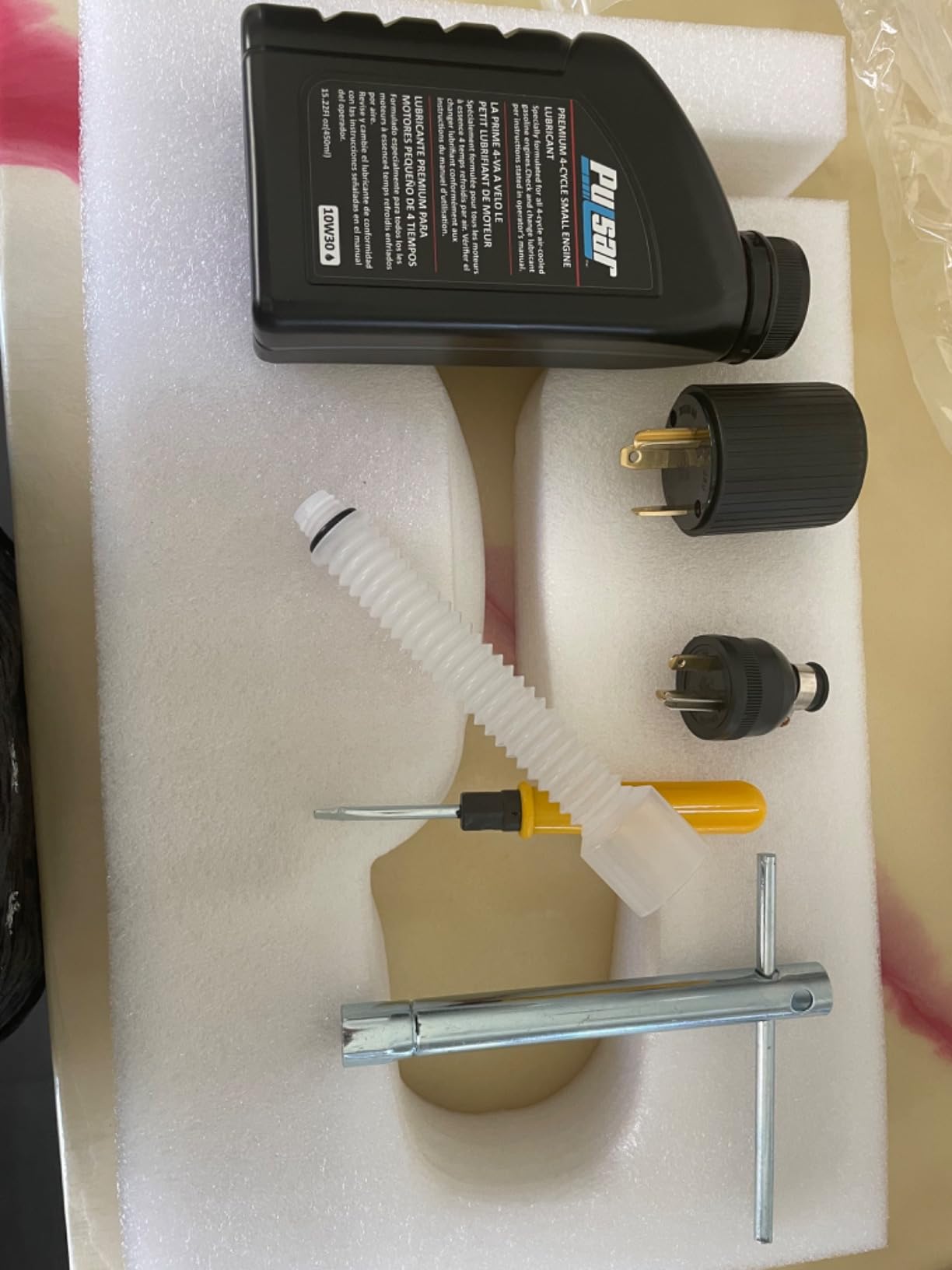
What you are buying here is watts and quietness in a package nothing else matches. Buyers consistently point to the combination of output and weight as the reason, and the 59 dB figure is the one that survives contact with real review text.
It is also the only unit here that arrives in white, which is a small thing that matters at a campsite where everything else is dark green and black.
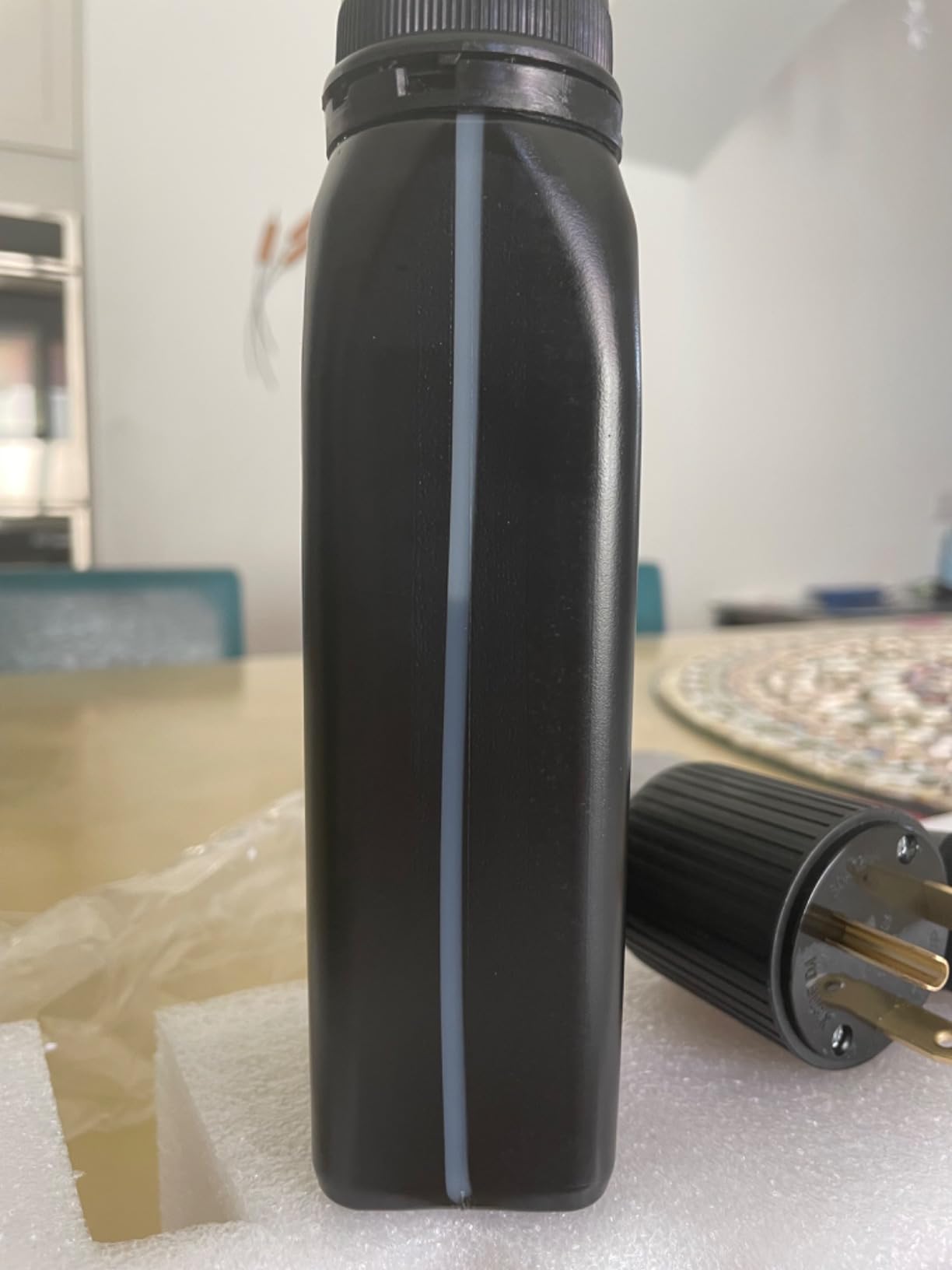
How does 3200 watts change a trip?
It changes what you can leave switched on. At 1900 running watts you ration; at 3200 you run the trailer air conditioner, a fridge, a fan and a battery charger at the same time without planning. Owners of this class report soft-starting an air conditioner drawing roughly 1,100 watts, which leaves a comfortable margin above the surge requirement.
That headroom is what stops the frustration of counting amperes in the dark. With 3200 watts continuous you can start a compressor, wait ten seconds, then start the next appliance, and you never have to choose between comfort and quiet hours.
Where the Pulsar falls short
The fuel tank is the clear problem. One gallon gives about 4 hours at half load, which is well short of a camping weekend, and refilling a small tank in the dark at a fuel station is the chore nobody enjoys. Plan on two refills per two-night stay at anything above quarter load.
The rating also sits lowest in this lineup at 4.4 stars, with a 74 percent five-star share and 9 percent one-star, the weakest distribution among the gas machines here. Reviewers point to a small handful of start and vibration complaints, so if reliability at altitude is your concern, read a few of the lower reviews before you commit.
7. Anker SOLIX C300: The Quietest Power Source Here
Anker SOLIX C300 Portable Power Station, 288Wh Solar Generator for Camping
288Wh capacity,300W continuous and 600W surge,25 dB at 3.3 feet,5 year warranty
Pros
- 25 dB from 3.3 feet
- 140W two-way USB-C ports
- Reaches 80 percent in 50 minutes from a wall
- Five year warranty with 3000 cycle LiFePO4 cells
Cons
- 300W shared across three AC outlets
- Shoulder strap sold separately
- Not compatible with larger Anker SOLIX panels
If noise is the only criterion, this is the answer. Anker rates the SOLIX C300 at 25 dB measured from 3.3 feet, the lowest published figure on this page, and the only one that is genuinely quiet enough to run inside a tent next to a sleeping bag.
Capacity is 288Wh with 300W continuous and 600W surge output, which lands it in the same weight class as the Jackery Explorer 300 with more modern ports. At 4.13 kg it carries like a large kettle and fits behind a front seat.
The ports are the real upgrade over the older small stations: three AC outlets sharing 300W, a 120W car socket, two USB-C ports at 140W, one more USB-C at 15W and a USB-A. The 140W two-way USB-C will charge a laptop, a camera or a drone battery at close to full speed, which is the workload that eats small stations alive.
Recharge is 0 to 80 percent in 50 minutes from a wall outlet, and LiFePO4 cells are rated for 3,000 cycles under a five-year warranty, the longest coverage in this group alongside the BLUETTI.
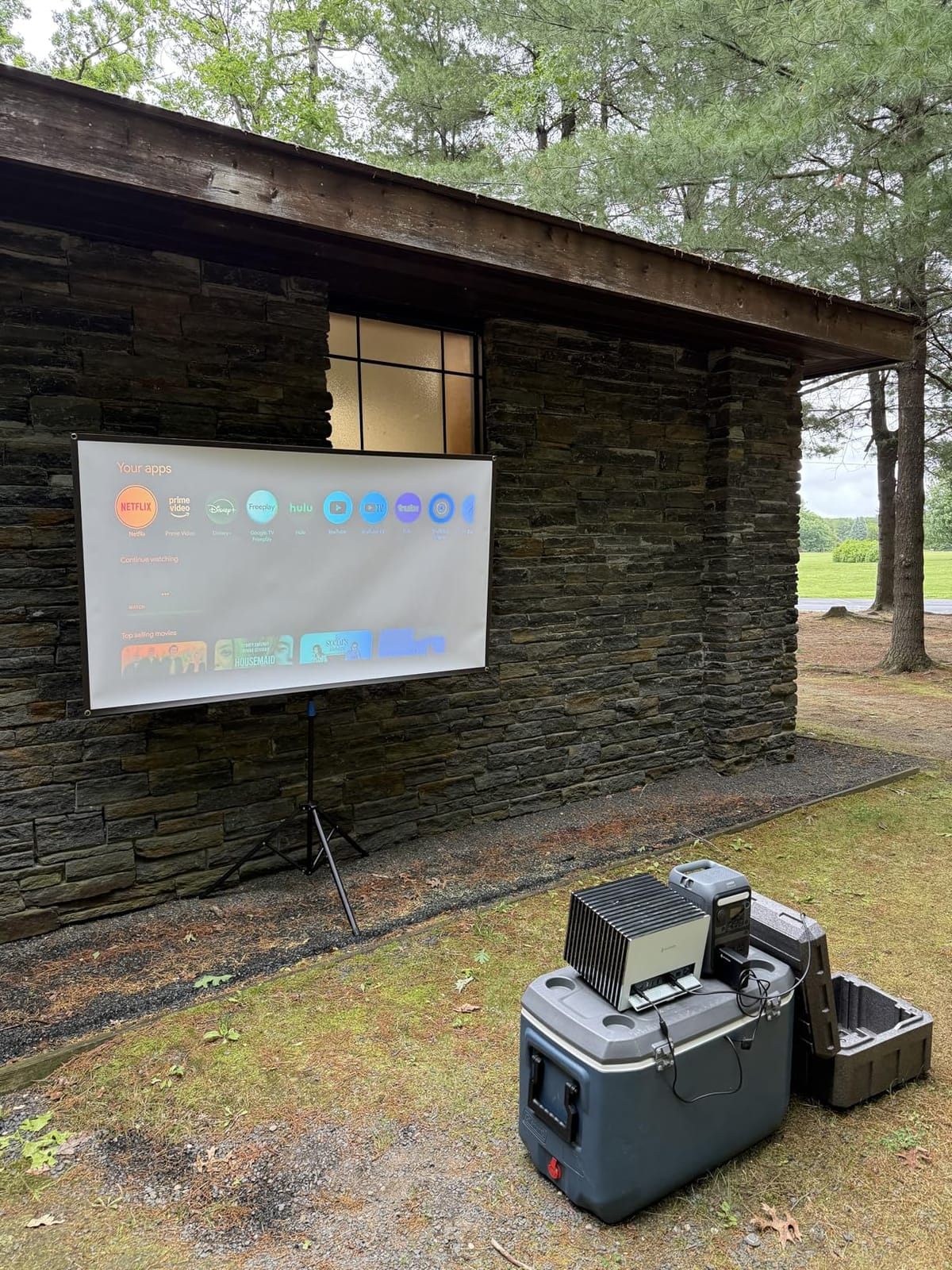
Owners put it at 81 percent five stars, and the theme is consistent: genuine silence plus fast USB-C charging for the devices that actually matter on a trip. The 15 percent smaller footprint than comparable designs is not marketing, it is the difference between fitting in a glovebox and not.
It also pairs with 100W or 60W Anker solar panels, so a full off-grid weekend is one extra purchase away.
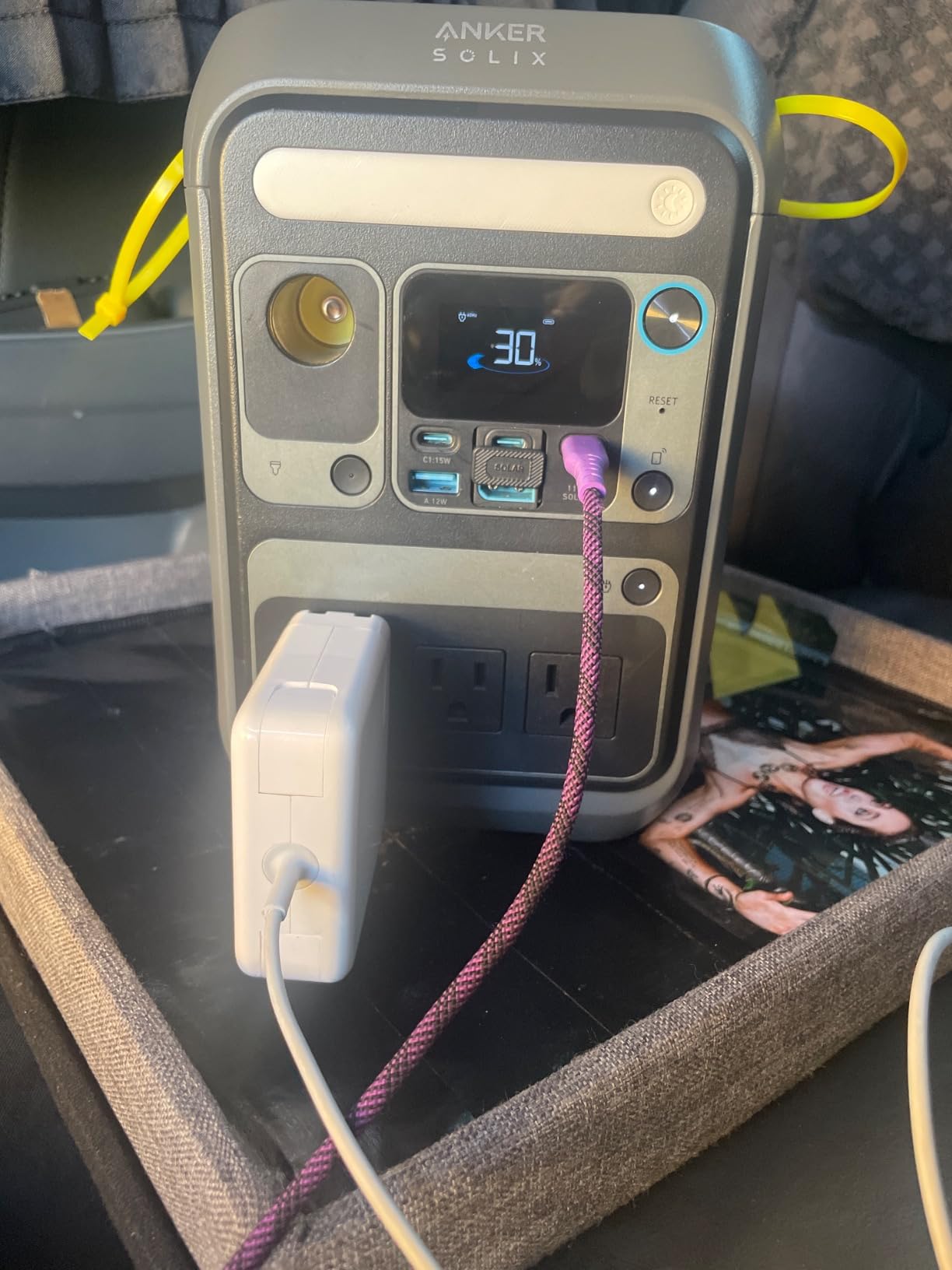
What can you realistically run on 300 watts?
Phones, cameras, laptops, drones, a string of lights, a small fan and a CPAP machine without heat. Put the CPAP first in the list, because that is the overnight load that shuts people out of quiet hours, and it sits comfortably under the ceiling alongside a fan and lighting.
A small 12V camp fridge is possible on the car socket, though a 288Wh capacity will not carry one for long without a solar top-up. Anything with a heating element is out, and running two AC appliances at once will trip the shared 300W limit.
What reviewers wish it had
The 300W ceiling is shared across all three AC outlets, so simultaneous high-draw use is limited even though the port count looks generous. That is the main limitation owners cite, and it is a real one for anyone who imagines powering a small appliance and a coffee maker together.
The shoulder strap is sold separately, which is annoying when you are carrying it from the car across a soft campsite. It also will not pair with the larger Anker SOLIX PS30, PS200 or PS400 panels, so if you already own a bigger panel from that range, check compatibility before buying for solar use.
8. Jackery Solar Generator 1000 v2: The Silent Bundle With a Panel
Jackery Solar Generator 1000 v2 and 200W Solar Panel,1070Wh,1500W AC
1070Wh capacity,1500W AC continuous,200W solar panel included,23.8 pounds
Pros
- 1500W AC with 3000W surge
- 200W solar panel in the box
- Full charge in about 1 hour on emergency mode
- Over 4000 cycle LiFePO4 life
Cons
- Bundled panel is bulky and sags
- Short panel cable
- Exhaust side runs very hot
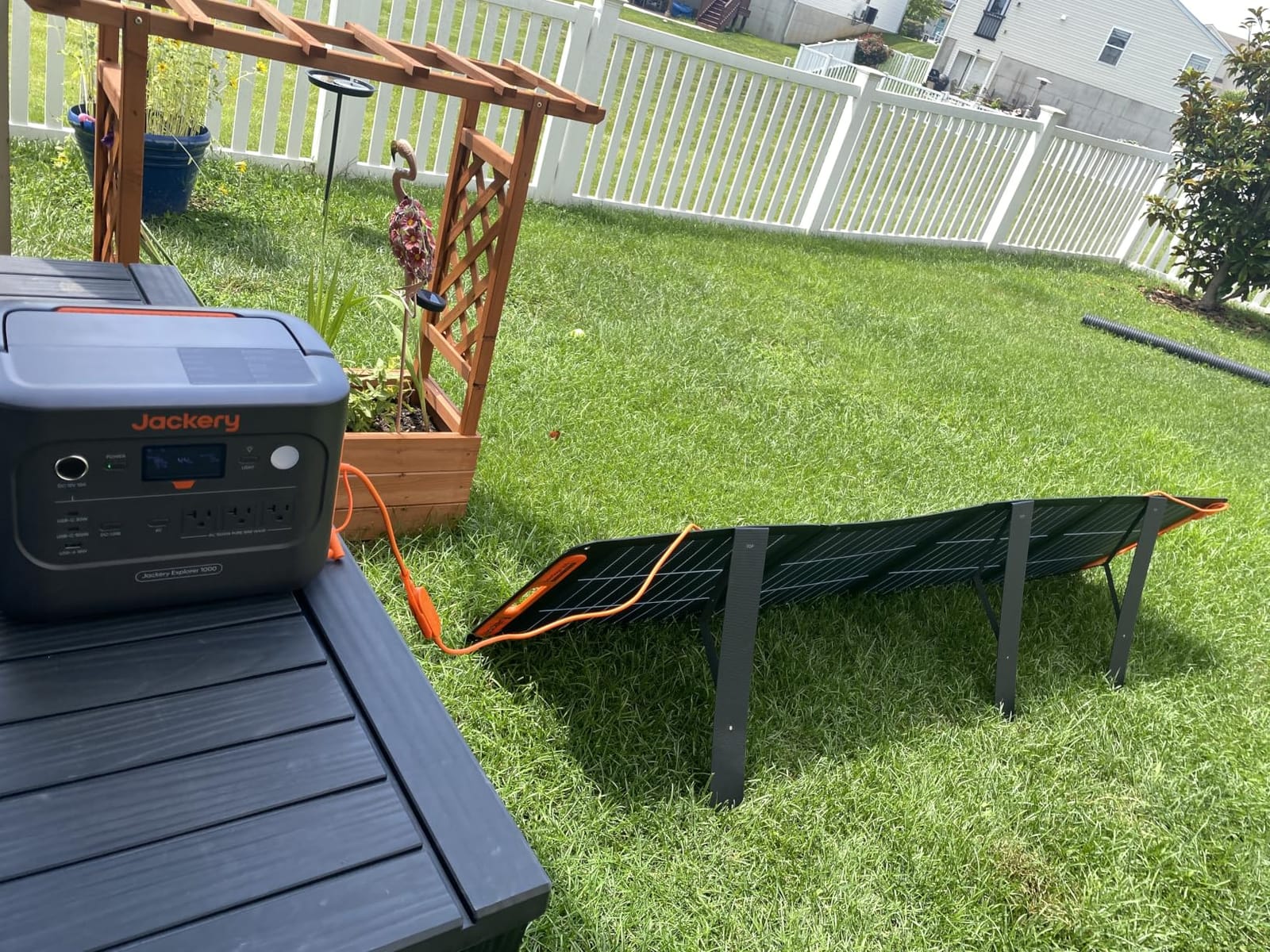
This bundle answers the objection that kills most battery recommendations, which is that the panel is never included. 1070Wh of capacity, 1500 watts of continuous AC with 3000 watts of surge, and a 200W solar panel in the same box, so the off-grid recharging story is complete on day one.
Silent operation is complete as well. The quiet overnight charging mode runs at 30 dB, and there is no engine at any point in the chain, which means the whole setup is legal during campground quiet hours without asking anyone.
Charging speeds are excellent. Full charge takes about an hour with emergency charging enabled in the app, 1.7 hours by default from a wall outlet, and 6 hours to 80 percent from the bundled 200W panel. Owners report the panel keeping a portable fridge running through three overcast days, which is the test that actually matters.
Output ports are three pure sine wave AC outlets, two USB-C, one USB-A, a DC car port and LED lights. Pure sine wave is the specification to care about if you run anything with a motor or a compressor, and its presence here separates this from cheaper stations with modified sine output.
At 23.8 pounds with a foldable handle it is one of the more portable 1kWh units available, and the LiFePO4 cells hold over 70 percent capacity past 4,000 cycles for a rated 10-year lifespan under a five-year manufacturer warranty.
Is 1070Wh a genuine week of camping?
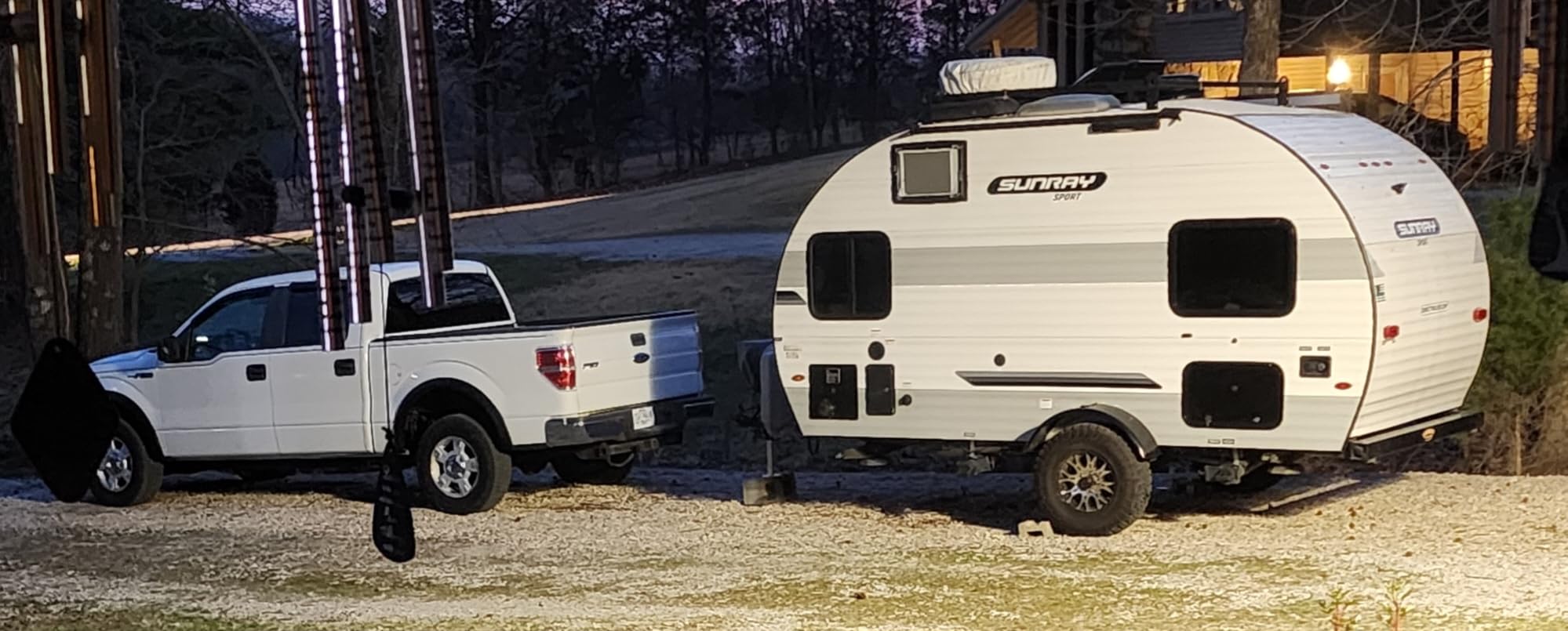
It is a genuine three to five days for a couple, and closer to a week if your load is a fridge and lights. Battery buyers on r/camping converge on roughly 2000Wh as a self-imposed floor for multi-week trips, and 1070Wh sits below that line, so plan a wall top-up every few days or add expansion.
The reported real-world figures support the capacity claim. Owners report powering a full-size fridge for 9 hours overnight and a 12V fridge freezer for three straight days in heavy rain, and the pure sine wave AC means a small air conditioner or an induction-style hot plate is a realistic option within the 1500-watt ceiling.
Where the bundle annoys people
The bundled 200W panel is the main complaint, and it comes up repeatedly. It is bulky, it sags in the middle so it needs propping up, and the included cable is short enough to limit where you can place it relative to the station. A separate case for the panel is worth budgeting for.
The exhaust side also runs very hot, so do not pack fabric or a sleeping mat against that wall in a tent. And 23.8 pounds is a two-handed carry for most people, which is the ongoing argument between capacity and portability that this class never fully resolves.
9. Oxseryn 4400W: The Most Wattage Here, and the Loudest
Oxseryn Power Equipment 4400 Watts Inverter Generator Gas Powered, Portable Open Frame Generator, Low Noise with ECO Mode, RV Ready, Emergency Home Backup
3400 running watts,4400 starting watts,Under 72 dBA at 23 feet,56 pounds
Pros
- 4400 peak and 3400 running watts
- Up to 14 hours at 25 percent load in ECO mode
- 2 gallon tank with fuel gauge
- RV port plus two AC and one DC outlet
Cons
- Under 72 dBA is the loudest rating in this group
- Open frame is less protective than a cabinet
- Only a 1 year manufacturer warranty
We are including this one because a roundup about quiet campsites that quietly ignores the loudest option is not honest, and because the value argument is real. 3400 running watts and 4400 starting watts is the highest output in this group, at 56 pounds, with a 2-gallon tank and up to 14 hours of runtime at 25 percent load in ECO mode.
The fuel gauge is a small detail that shows up constantly in reviews, and the port layout covers two 120V AC outlets, a 12V DC port and a dedicated RV port, so it suits a travel trailer setup or a job site equally well.
The noise figure is under 72 dBA from 23 feet. That is the loudest rating among the gas machines here and it belongs in a different band entirely, which is why this sits low in our ranking despite the wattage.
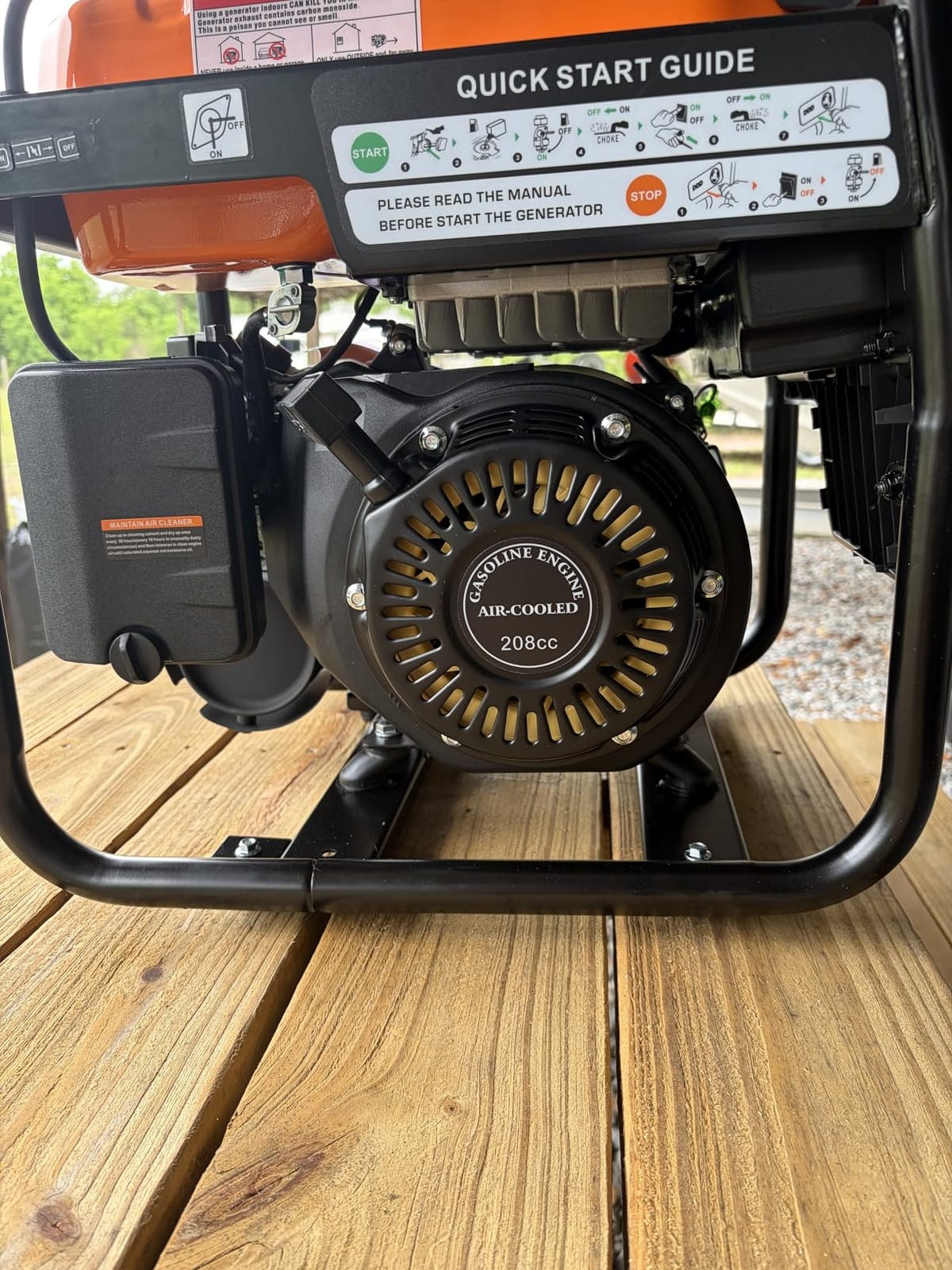
Buyers concentrate on value for wattage, with 73 percent five stars, and the recurring theme is that you get far more output per dollar than the enclosed inverter class. The 208cc four-stroke engine is electronic ignition, so starting is straightforward.
It is also, at 56 pounds, one of the heavier units here, so the same two-person lift or cart argument applies as with the PowerSmart.
When does the loudest option still make sense?
When the campsite is far from anyone, the work is daytime only, and the load is genuinely large. Power tools, a welder, a projector and sound system at a tailgate, a trailer with an air conditioner running all afternoon, or a home backup during an outage. In those situations noise stops being the deciding factor and output is.
It also makes sense as a shop or garage unit that occasionally goes camping. If your main use is a 3400-watt shortfall at home, this is a good buy, and you will not resent the decibel figure you never hear.
What the quiet-camp buyer should know
The open frame design is the core issue. Without an acoustic cabinet, the engine and cooling fan run exposed, and an open frame is both louder and less protected from branches, dust and curious children than the enclosed inverters on this list.
The one-year manufacturer warranty is also the shortest in the group, which is a meaningful difference on a machine this size. If you camp near people regularly, this is the one to skip, and the WEN 56235i gives you a quieter, lighter, better-warranted machine for a lower output figure.
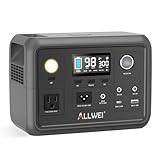
10. ALLWEI 300W: The Lowest-Cost Silent Watts
ALLWEI Portable Power Station 300W, 256Wh Solar Generator LiFePO4 Battery
256Wh capacity,300W continuous,6.4 pounds,LiFePO4 rated 3000 cycles
Pros
- Lowest cost in the group with LiFePO4 chemistry
- Only 6.4 pounds and a thin profile
- Display shows runtime estimate and exact charge
- True 2.4A USB ports and pass-through charging
Cons
- No 24V output
- Charge level can read inaccurately
- Solar input is limited to smaller panels
The budget pick is a 256Wh, 300-watt station with 600 watts of pure sine wave surge, and it weighs 6.4 pounds. That is about 0.7 pounds lighter than the Jackery Explorer 300, and owners repeatedly describe it as the best value in its class rather than a compromise they tolerate.
Chemistry is the surprise. LiFePO4 cells rated for 3,000 charge-discharge cycles behind a six-layer BMS protection system, with an MPPT controller for solar input. At this end of the market, that is more than you would normally expect.
Recharging covers every route: 3.5 to 4 hours from a wall, 3.5 to 4 from a 12V car socket, 4 to 5 hours from a 100W solar panel, or 2 to 2.5 hours using two inputs at once. Pass-through charging works, which means the station can run a device while it fills.
Owners report running CPAP machines for many hours and keeping a fridge and freezer going through outages. With 2.4k+ reviews, the volume of experience here is the strongest argument for it.
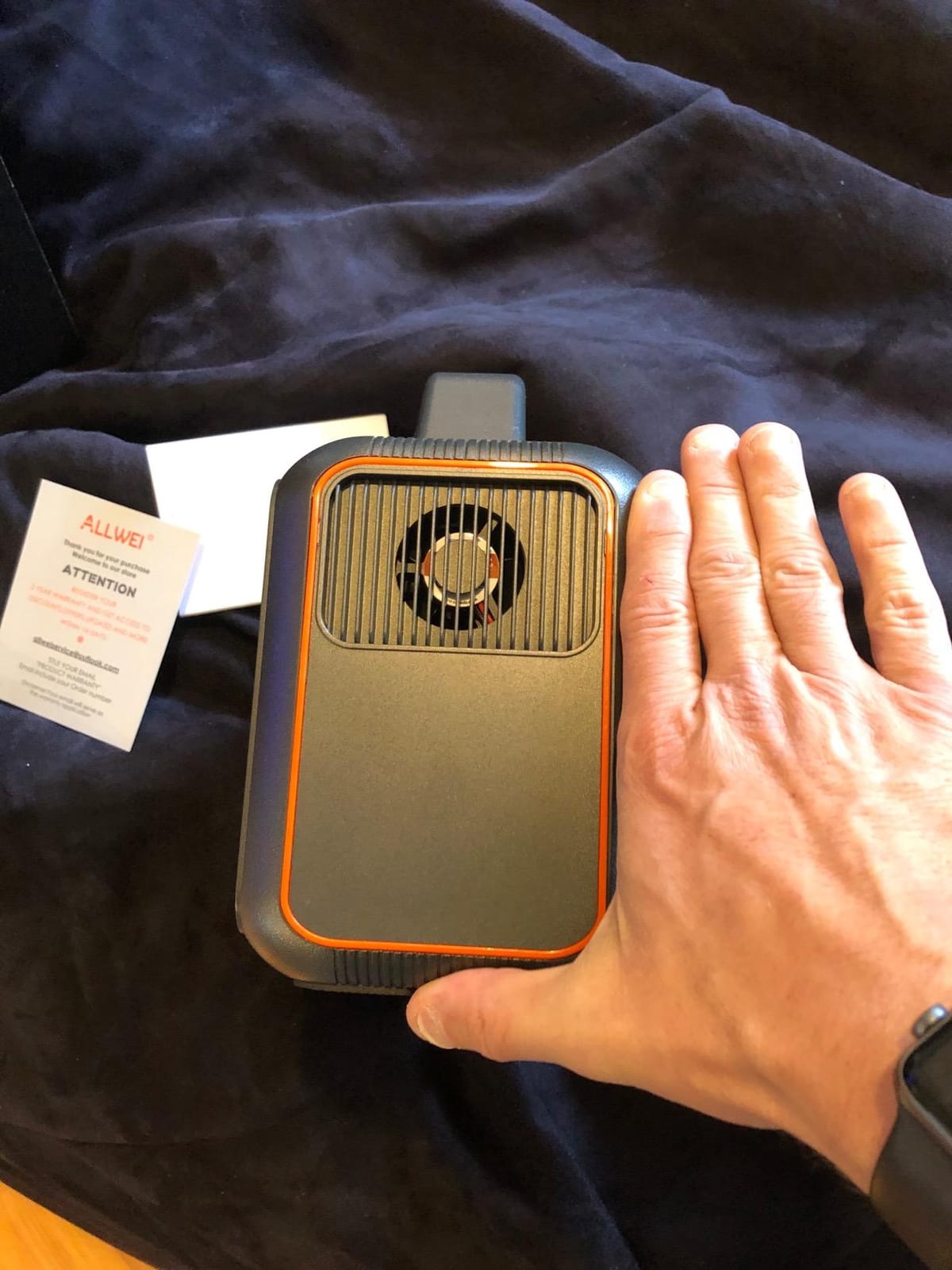
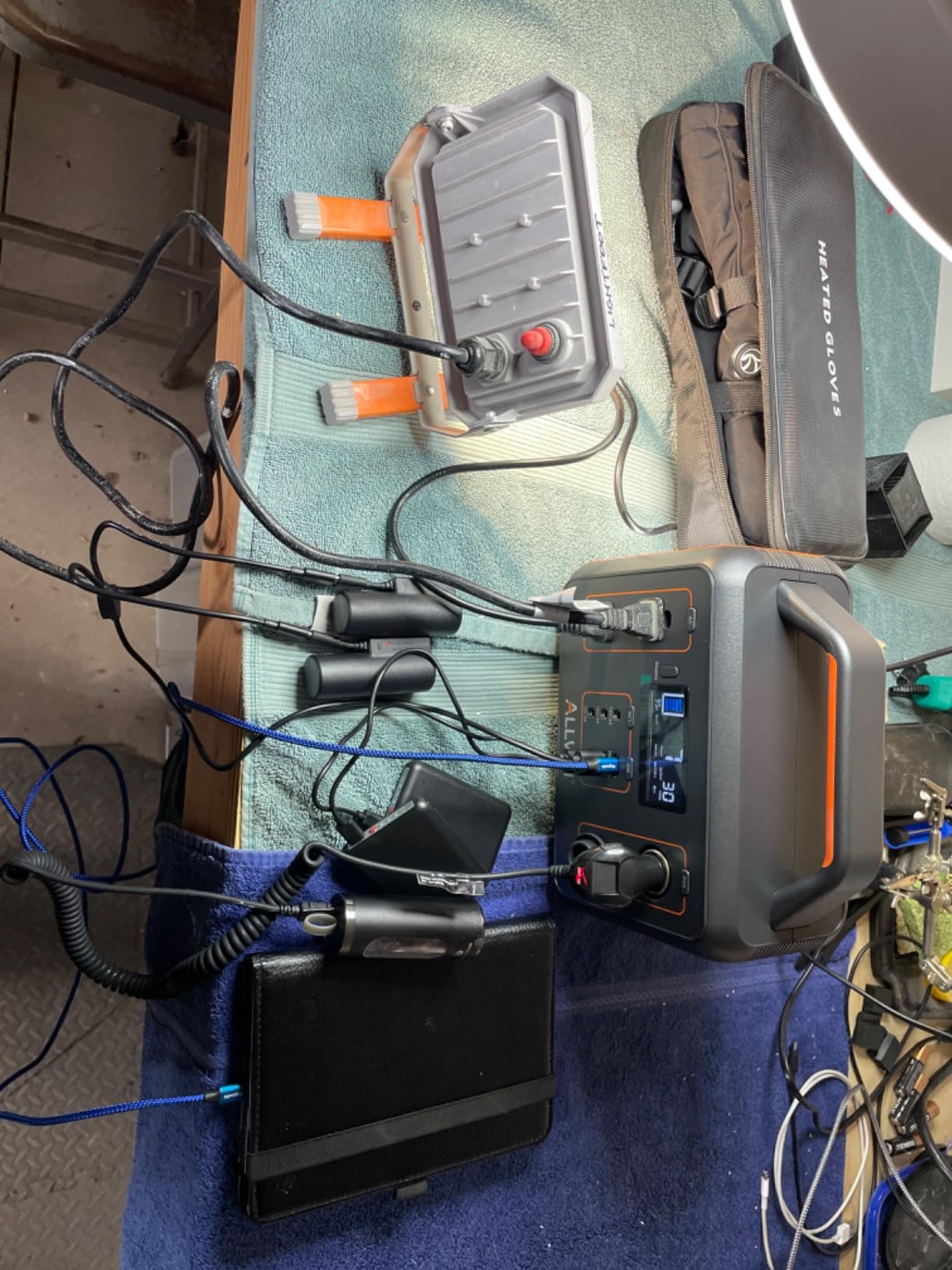
Ports are one AC outlet, two DC5521, a car port, a USB-A at 18W and a USB-C PD at 60W, and the three-level LED flashlight with SOS mode sits at the end near the handle, which is genuinely useful rather than a gimmick. A rubber cover keeps dirt out of the car charging port.
The thin 9.25 by 5 by 6.8 inch profile is what separates it in a car, sliding into a gap where a 7.1-pound square block will not go. Warranty is two years from the manufacturer.
Is 256Wh enough for a weekend?
For lights, phones, a small fan and a CPAP, yes, and CPAP is the standout report. That is the overnight load that decides quiet-hour compliance, and running it here is the single clearest argument for this unit.
Add a 12V camp fridge and you are charging every night or every other night. At that point the 292Wh Jackery Explorer 300 buys you a little more capacity, and the weight difference between the two is under a pound.
What to watch on a budget unit
There is no 24V output, which some RV users expect from a portable power station, and the solar input is limited so larger panels cannot be used, which caps your off-grid option. Some units report charge level dropping abruptly or needing a reset after several months of use, and the USB-A outputs can glitch when a USB-C device is connected at the same time.
The car port tip also runs hot on high-draw adapters. None of this is unusual at this price, and the 4.4-star rating with 2.4k+ reviews reflects a product that works reliably for its stated job rather than one that exceeds it.
Buying Guide: Sizing a Generator or Power Station for Your Load
Sizing is where most camping power purchases go wrong, and the mistake is almost always buying too small for the starting draw or too large for the noise budget. Work through these in order and the choice narrows fast.
Step 1, list every device and its running watts. A 12V camp fridge pulls 40 to 60 watts once running. An LED string is under 10. A coffee maker spikes to roughly 1000. A CPAP with a heated hose sits near 100 all night. A trailer air conditioner can exceed 1000 just to soft-start, and a microwave can reach 1500 on its own. Add them all up and multiply by 1.5 for headroom.
Step 2, check starting watts against running watts. Running watts is what the machine sustains; starting watts, also called surge, is the short burst an electric motor needs to spin up. Anything with a compressor, a pump or a fan needs surge headroom, which is why a 1900-watt unit struggles with a kettle and a fridge starting at the same moment.
Step 3, size the battery in watt-hours, not watts. Watts tell you what you can run at once. Watt-hours tell you how long. The thresholds that matter in practice: about 300Wh covers lights, phones, a laptop and a fan; about 1000Wh adds a 12V camp fridge and small appliances; 2000Wh and above is the level battery buyers on r/camping self-impose for multi-day trips without a wall.
Step 4, subtract your real usable capacity. Nameplate watt-hours are not fully available. Inverters, DC conversion losses, heat and the depth-discharge limit of the battery mean a 1024Wh station behaves more like an 800Wh unit in practice. Owners of every class in this roundup report usable capacity falling short of the label.
Step 5, pick for weight last but not least. Under 10 pounds is a carry from the car, 25 pounds is a car boot, 50 pounds is a cart or two people. Nobody ranks weight properly in roundups, and for most campers it is the constraint that ends the argument before noise ever does.
Step 6, check the two numbers nobody mentions. A 20A household circuit on most of these machines caps you at about 1800 watts, and a 30A twist-lock caps you near 3000. Also check whether you are near 8,000 feet, because thin air costs roughly 30 percent of rated output and a camper reported losing power entirely at that elevation until an elevation setting was adjusted.
Campground Quiet Hours and Noise Rules
Quiet hours are usually 10pm to 6am, and during that window most campgrounds require generators to be switched off completely. That is why a noise argument that seems settled at 3pm can be reopened at 10:30pm, and it is the single biggest reason to own a battery station alongside, or instead of, a gas machine.
During the day, the common rule is roughly 60 dB measured at your site, which is why the 59 dBA PowerSmart and Pulsar fit comfortably and the 64 dBA Champion is a judgement call. Measured at the pad, the Champion usually passes. Judged by a conversation next door, it does not.
A battery power station is exempt from all of it by nature, because there is no engine and no exhaust. It can run a fan and a CPAP through the quiet hours without breaking a single rule, and that is the practical argument for carrying one even if you also own a gas generator for the daytime load.
Before you buy anything, ask the campground two specific questions. What is your measured dB limit at the pad, and when exactly does quiet hours begin. Some sites measure at the pad, others at the property line, and the difference between those two is roughly 10 dB, which is perceptually enormous.
How to Make Any Generator Quieter at a Campsite
These six steps will do more for your campsite neighbours than any change of brand, and they work on the loudest unit on this list as well as the quietest.
Buy the smallest unit that covers your load. Noise scales with engine size and output. A 1900-watt inverter that never runs above 50 percent load is dramatically quieter than a 3400-watt machine doing the same work, and it will outlast the bigger one.
Point the exhaust away from camp. Orient the unit so the hot end faces away from your tent and away from neighbouring sites. It costs nothing and it solves the social problem that no decibel figure captures.
Set it on soft ground. Grass or bare dirt absorbs vibration and kill the high-frequency rattle that concrete and gravel amplify. Never run a machine on a picnic table or a stone pad.
Move it 20 to 30 feet from camp. This is the placement half of the 20/20 rule, and it is also the cheapest noise reduction available. Use a 25 or 30 foot extension lead to keep the distance and the safety margin.
Run Eco Mode and match the load. Variable-speed throttling drops the engine to the RPM your actual draw needs. A unit idling at quarter load in Eco Mode is at its quietest, so avoid running a large machine for a small job.
Add a ventilated sound box for daytime use. A fitted enclosure with generous ventilation and a lined lid absorbs the sharpest tones without building heat. Do not ever enclose a running generator in a tent or a vehicle, whatever the marketing says.
Keeping a Battery Station Alive on a Multi-Day Trip
A battery station is only as good as its recharge plan, and there are three ways to keep it alive away from a wall socket.
Solar. A 200W panel takes the Jackery 1000 v2 to 80 percent in about 6 hours of direct sun, and a 100W panel takes smaller stations to roughly 80 percent in under three. The Jackery Solar Generator 1000 v2 and the Anker SOLIX C300 both bundle or support the panel option, and the ALLWEI caps solar input so match the panel to the station.
Car charging. Every unit here recharges from a 12V socket, typically in 3.5 to 4 hours. Drive two hours, plug in for four, and you have added most of a day of capacity. Allwei and Jackery both support pass-through charging, so devices can run while the station fills.
Shore power. The fastest route by a wide margin. The BLUETTI Elite 100 V2 goes from zero to 80 percent in about 45 minutes on 1200W AC input, and the Jackery 1000 v2 does a full charge in about an hour with emergency mode enabled, so a lunchtime stop at a visitor centre resets the trip.
Whichever route you use, budget for the real number rather than the label. A 1024Wh station behaves more like an 800Wh unit once inverter losses and the battery management system are accounted for, and cold mornings take a further bite out of what is available.
Altitude and Cold-Weather Caveats
Two conditions quietly reduce what a campsite power source can do, and both are common in the places people camp hardest.
Altitude. Above roughly 8,000 feet, thin air means less oxygen for combustion and less cooling for the machine, and engines lose around 30 percent of rated output. A unit that starts an air conditioner at sea level may fail to start it at 8,000 feet. A camper reported power problems at that elevation until an elevation adjustment was made. Battery stations are unaffected, which is another quiet advantage for mountain sites.
Cold. Lithium iron phosphate capacity falls in cold conditions, and a station stored overnight in a freezing vehicle delivers less than its rating on a cold morning, recovering as it warms. Charge indoors in the morning rather than assuming the displayed percentage is what you have available, and keep the station out of a vehicle boot for a night before a shoulder-season trip if you can.
Frequently Asked Questions
What is the 20/20 rule for generators?
The 20/20 rule says to place a portable generator at least 20 feet from your camp, tent or vehicle, and at least 20 feet from anything combustible such as dry grass, canvas or firewood. Add an open area with airflow on all sides and point the exhaust away from neighbouring tents, because carbon monoxide is the reason the rule exists, not noise.
Which generator is the most silent?
The quietest powered source for a campsite is a battery power station. The Anker SOLIX C300 measures 25 dB from 3.3 feet and the BLUETTI Elite 100 V2 runs a 30 dB silent mode, versus roughly 59 dBA for a quiet gas inverter. No combustion generator is silent, because an engine at any load still produces exhaust and mechanical noise.
How many dB is considered a quiet generator?
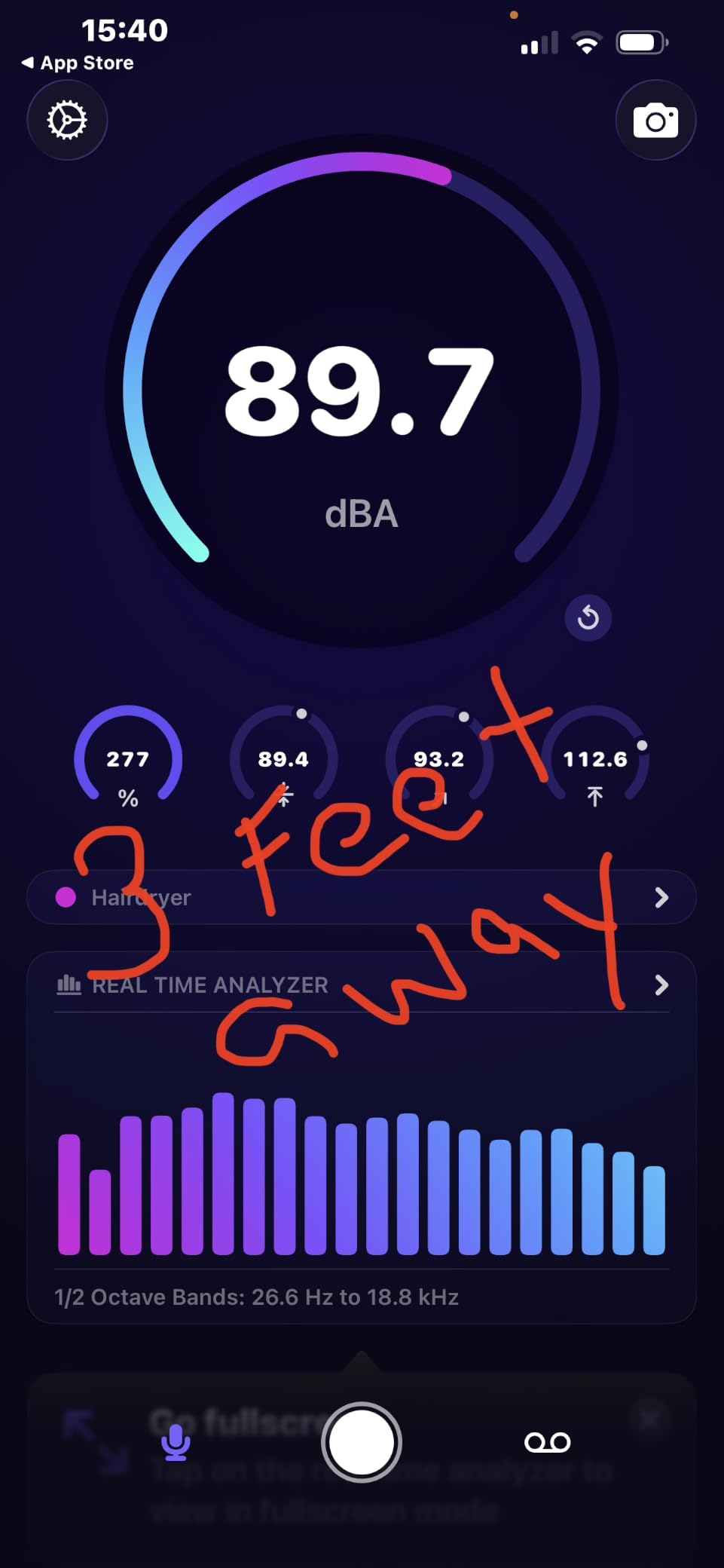
For a campsite, under 60 dB measured at your site is the usual daytime standard, and 50 to 60 dB is the range of a normal conversation. Decibels are logarithmic, so ten decibels is roughly twice the perceived loudness. Most manufacturers measure at about 23 feet and often at part load, so the number at 10 feet is significantly higher.
How do I make a generator quieter at a campsite?
Buy the smallest unit that still covers your load, point the exhaust away from camp, set it on grass or soft dirt rather than concrete or gravel, place it 20 to 30 feet from your tent, run it in Eco Mode so the engine throttles down, and for daytime use add a ventilated sound box. Placement changes perceived noise more than any other single step.
Can I run a generator during campground quiet hours?
Most campgrounds require generators off entirely during quiet hours, commonly 10pm to 6am, and many cap daytime noise near 60 dB at the site. That is exactly when a camper wants a fan, a CPAP machine or phone charging, which is the strongest practical argument for carrying a battery power station alongside a gas generator.
How many watt-hours do I need for a camping power station?
About 300Wh covers lights, phones, a laptop and a small fan. Around 1000Wh adds a 12V camp fridge and small appliances, and 2000Wh or more is the level buyers set for multi-day trips without shore power. Remember that usable capacity is lower than the label once inverter losses and the battery management system are accounted for.
The Best Camping Generators for Quiet Campsites in 2026
The best camping generators for quiet campsites in 2026 come down to one honest split. If your load is devices, lights, a fan and a CPAP, buy a battery power station and never think about a neighbour again. The Anker SOLIX C300 is the quietest thing we tested at 25 dB, the BLUETTI Elite 100 V2 is the one that carries a real trip on 1024Wh, and the Jackery Explorer 300 covers a weekend at 7.1 pounds.
If you need combustion power, the WEN 56235i is our pick for most campsites, and the reasons have not changed across every owner report we read. At 39 pounds and 1900 running watts it is the rare small inverter you can lift alone, start easily, and run quietly enough beside a tent. For a trailer or a 30-amp circuit, the PowerSmart dual fuel unit gives you propane runtime and the safety sensors, and the Champion 4000W covers RV and tailgating loads in a 48-pound frame.
Two picks exist here to mark a boundary rather than to recommend. The Pulsar sits among the quietest-rated high-output gas units at 59 dB, but its 1-gallon tank limits it to short trips. The Oxseryn has the most running watts of the gas units here and the worst noise, which makes it right for a loud worksite and wrong for a neighbour. The ALLWEI is the lowest-cost silent power in the group and does the small job properly.
Whichever you choose, the two rules that matter most are the 20/20 rule for placement and buying the smallest unit that covers your load. Do those two things and almost any generator on this list becomes a good neighbour.