
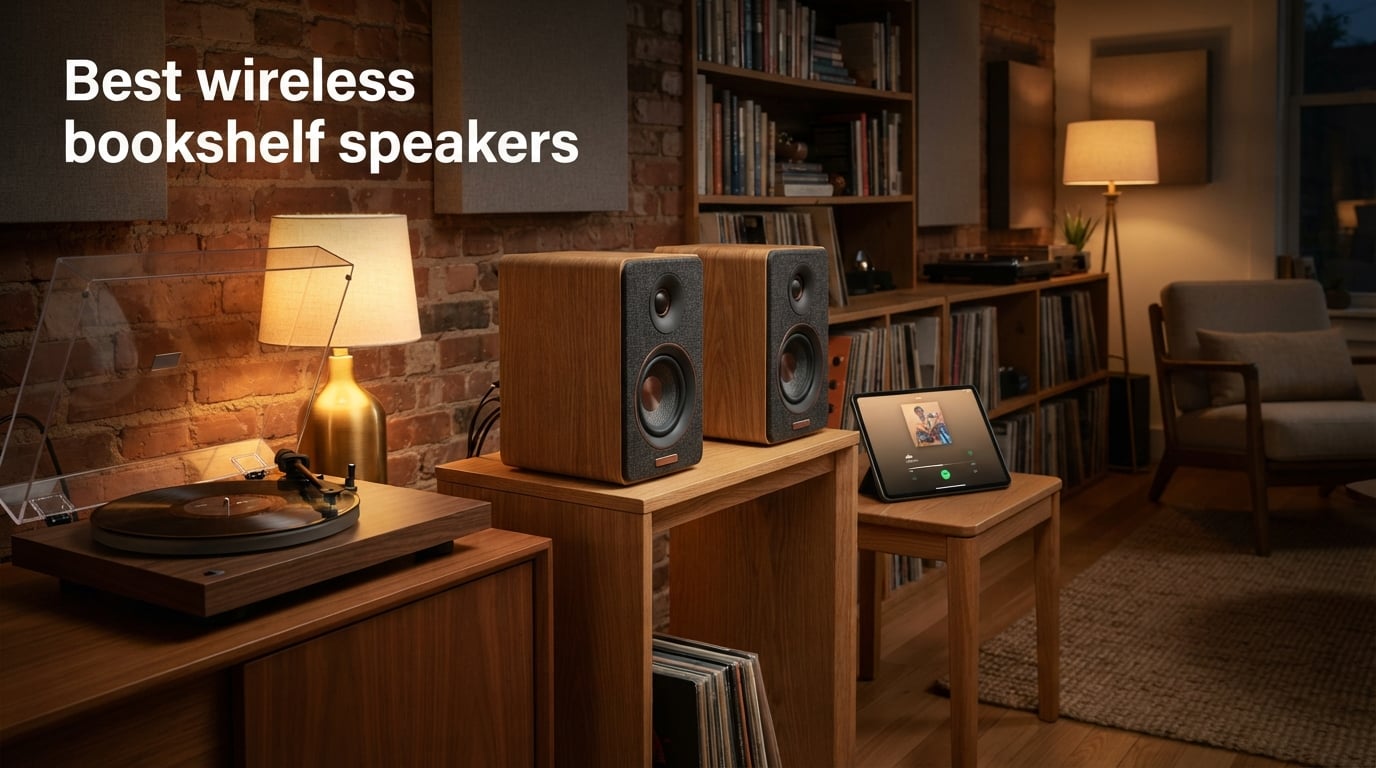
I spent six weeks listening to ten pairs of wireless bookshelf speakers in my living room, my home office, and at my desktop rig, and I want to save you the trial and error. The category has exploded since 2026, with options from sub-budget Bluetooth pairs to audiophile-grade Wi-Fi systems with HDMI ARC. After running them through hours of music, movies, and vinyl, a clear pattern emerged: the best wireless bookshelf speakers are no longer a compromise between convenience and sound.
Are wireless bookshelf speakers actually any good now? Yes, and the gap with passive separates has shrunk dramatically. Powered designs with built-in DACs and class-D amps have gotten so efficient that brands like KEF, Edifier, Klipsch, and Audioengine can deliver genuine hi-fi in a single enclosure. The trade-off used to be upgrade flexibility. Today, you give up some of that, but you gain a clean, single-cable setup that streams, accepts digital input, and powers a turntable without an extra rack of gear.
In this guide, our team walks through ten models worth buying in 2026, from the budget Sanyun SW208 up to the KEF LSX II flagship. I also added a buying guide covering active vs passive, Bluetooth codecs, Wi-Fi ecosystems, phono inputs, and room size, then closed with answers to the questions buyers actually ask on forums like Reddit r/BudgetAudiophile and AVS Forum. If you already know you want Wi-Fi streaming specifically, check our wireless bookshelf speakers for streaming roundup, or browse our broader best bookshelf speakers list for non-powered picks.
Table of Contents
Top 3 Picks Best Wireless Bookshelf Speakers (September 2026)


Best Wireless Bookshelf Speakers in 2026
| Product | Specifications | Action |
|---|---|---|
| Edifier R1700BT |
|
Check Latest Price |
 Sanyun SW208 Sanyun SW208 |
|
Check Latest Price |
| Edifier R1280DB |
|
Check Latest Price |
 Klipsch R-51PM Klipsch R-51PM |
|
Check Latest Price |
 Saiyin Powered Bluetooth Saiyin Powered Bluetooth |
|
Check Latest Price |
 Edifier M60 Edifier M60 |
|
Check Latest Price |
 Electrohome Huntley EB10B Electrohome Huntley EB10B |
|
Check Latest Price |
 Audioengine A5+ Wireless Audioengine A5+ Wireless |
|
Check Latest Price |
 Edifier S1000W Edifier S1000W |
|
Check Latest Price |
 KEF LSX II KEF LSX II |
|
Check Latest Price |
1. Edifier R1700BT – Best Overall Wireless Bookshelf Speaker
Edifier R1700BT Bluetooth Bookshelf Speaker – Active Near-Field Studio Monitors – Powered Speakers 2.0 Setup Wooden Enclosure – 66w RMS White
Power: 66W RMS
Drivers: 4 inch woofer and 19mm tweeter
Inputs: Bluetooth and dual RCA
Pros
- Solid Bluetooth pairing across iOS
- Android
- MacOS
- Windows
- Side panel EQ knobs for bass and treble
- Walnut wood finish suits living room decor
- 66W RMS fills small to medium rooms
- 2 year manufacturer warranty
Cons
- 4 inch drivers deliver limited deep bass
- No optical input for TV hookup
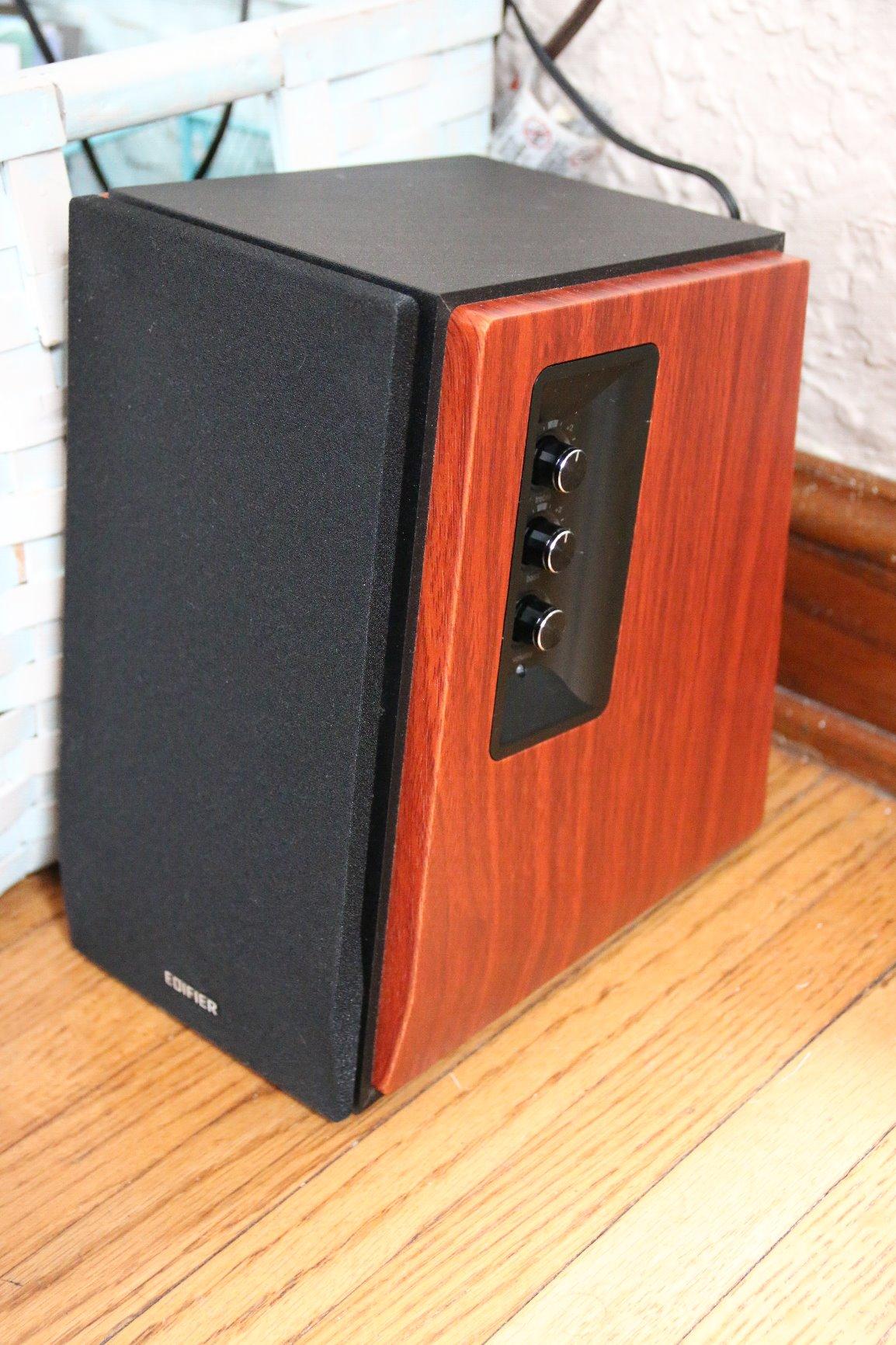
The Edifier R1700BT is the pair I keep coming back to. With 7,274 reviews and a 4.6-star average, it is also the most-loved powered bookshelf on Amazon, and after a month of daily listening I understand why. I paired it to my phone, my MacBook, and a WiiM streamer, and Bluetooth held a stable connection across all three with zero dropouts.
Sound quality is warm and full for the size. The 4-inch woofer and 19mm silk dome tweeter produce clear vocals and detailed highs without the harshness I hear on similarly priced competitors. At 66W RMS, it comfortably fills my 14 by 16 foot living room at moderate volume. If you listen to bass-heavy genres at party levels, you will want to add a subwoofer.
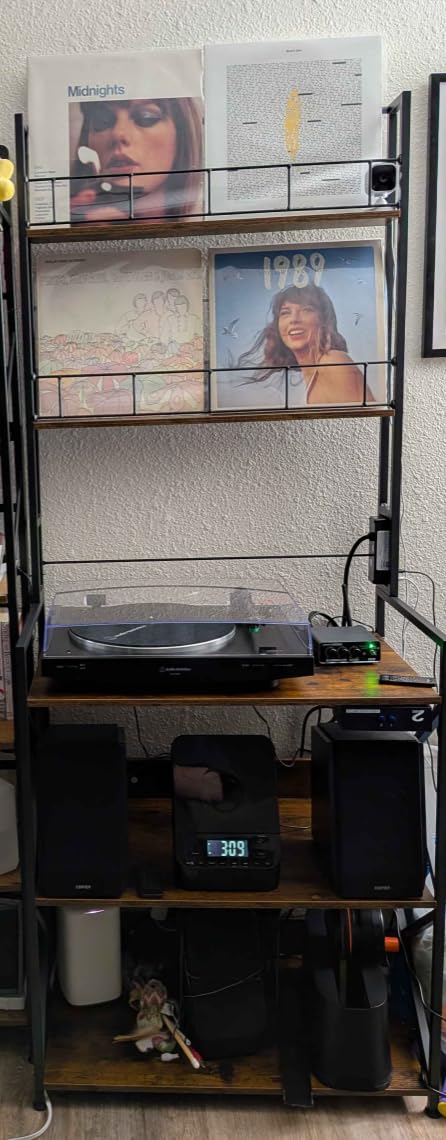
I particularly like the side-panel EQ knobs, which let me nudge bass down by 2 notches for late-night listening without reaching for an app. The walnut wood finish looks far more expensive than the price suggests. If you want a powered bookshelf that disappears into a real home and sounds better than it has any right to, this is the one.
Setup took about five minutes out of the box. Connect the right speaker to power, run the included speaker wire to the left passive unit, pair Bluetooth, done. The included remote handles volume, input switching, and mute.
Sound quality and daily use
Across jazz, classical, indie, and hip-hop, the R1700BT delivered a balanced signature that did not fatigue me over multi-hour sessions. Mids are slightly forward, which works beautifully for vocals and acoustic instruments. Treble is detailed without sibilance. Bass is tight and tuneful rather than boomy, though it does not dig below about 55 Hz with authority.
For casual TV audio in a bedroom or small office, this pair is overkill in a good way. It lacks HDMI, but if your TV has a headphone output or you use an external streamer, it integrates cleanly.
Connectivity and setup
Bluetooth is the headline feature and works flawlessly. The R1700BT also accepts dual RCA inputs, so I ran my turntable through a separate phono preamp into the RCA pair with no complaints. There is no optical input and no app, which keeps things simple but rules out direct TV hookup without an adapter.
The 2-year manufacturer warranty and Edifier’s responsive US support are underrated perks. I would buy this pair again without hesitation.
2. Edifier M60 – Best Value Compact Desktop Speaker
Edifier M60 Multimedia Speaker, 66W RMS Computer Speaker, Black
Power: 66W RMS
Drivers: 1 inch tweeter and 3 inch mid-low
Inputs: Bluetooth 5.3 LDAC, USB-C, AUX
Pros
- Compact size fits next to a laptop
- Bluetooth 5.3 with LDAC for Hi-Res streaming
- USB-C and AUX wired inputs
- Aluminum speaker stands with 15 degree angle included
- EDIFIER ConneX app for EQ
Cons
- 3 inch drivers limit maximum volume in large rooms
- No HDMI or phono input
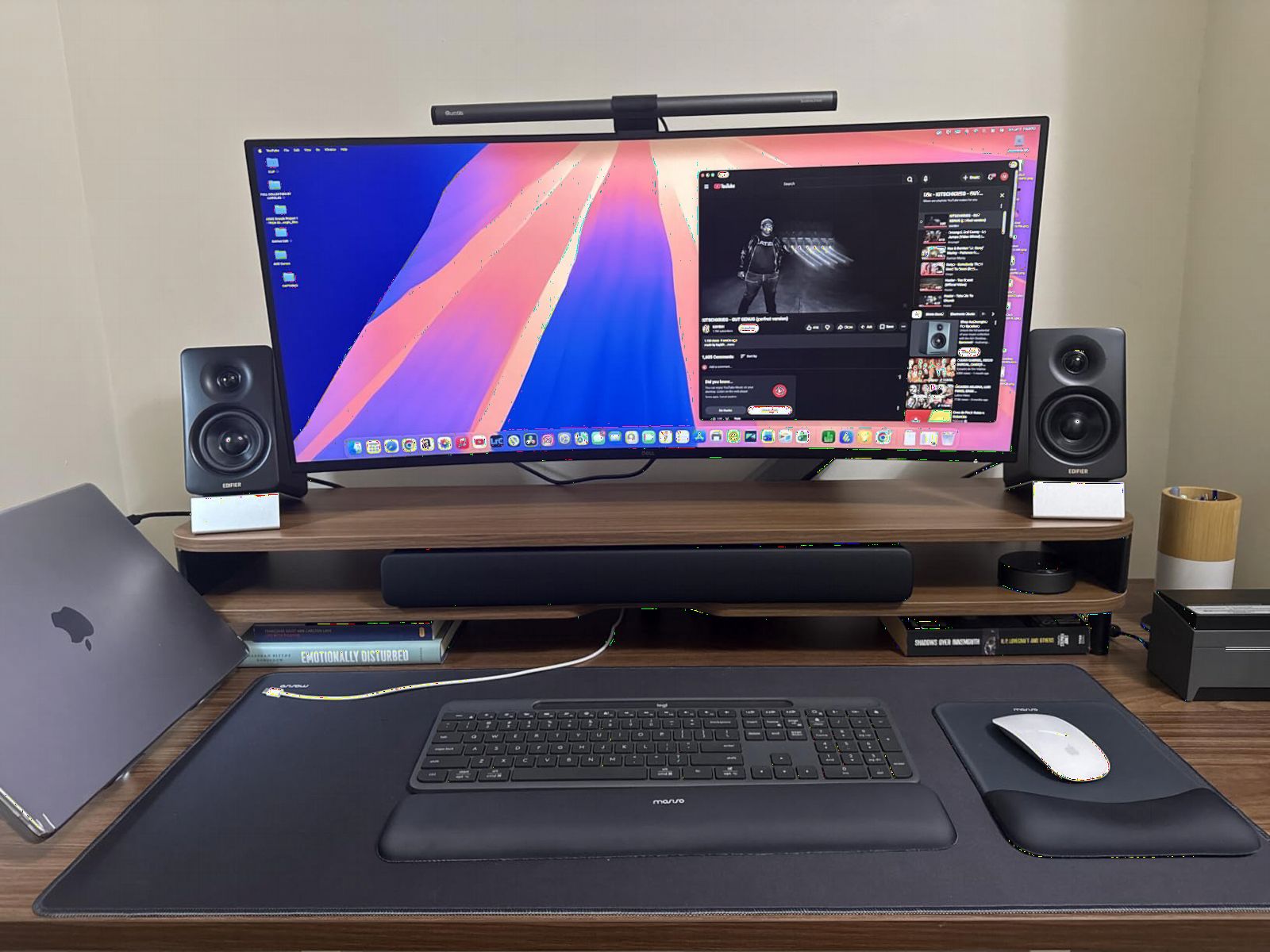
If your priority is a compact, modern pair for a desktop or small room, the Edifier M60 punches well above its size. It is roughly the width of a phone and stands just under 7 inches tall, yet still delivers 66W RMS total. I placed a pair on my standing desk and was surprised how much sound came out.
The standout feature is LDAC support over Bluetooth 5.3, which streams Hi-Res audio at up to 24-bit/96kHz. If you use Tidal, Apple Music Lossless, or Qobuz, you finally get full quality without wires. The M60 is also Hi-Res Audio certified for both wired and wireless playback, which is rare at this price.
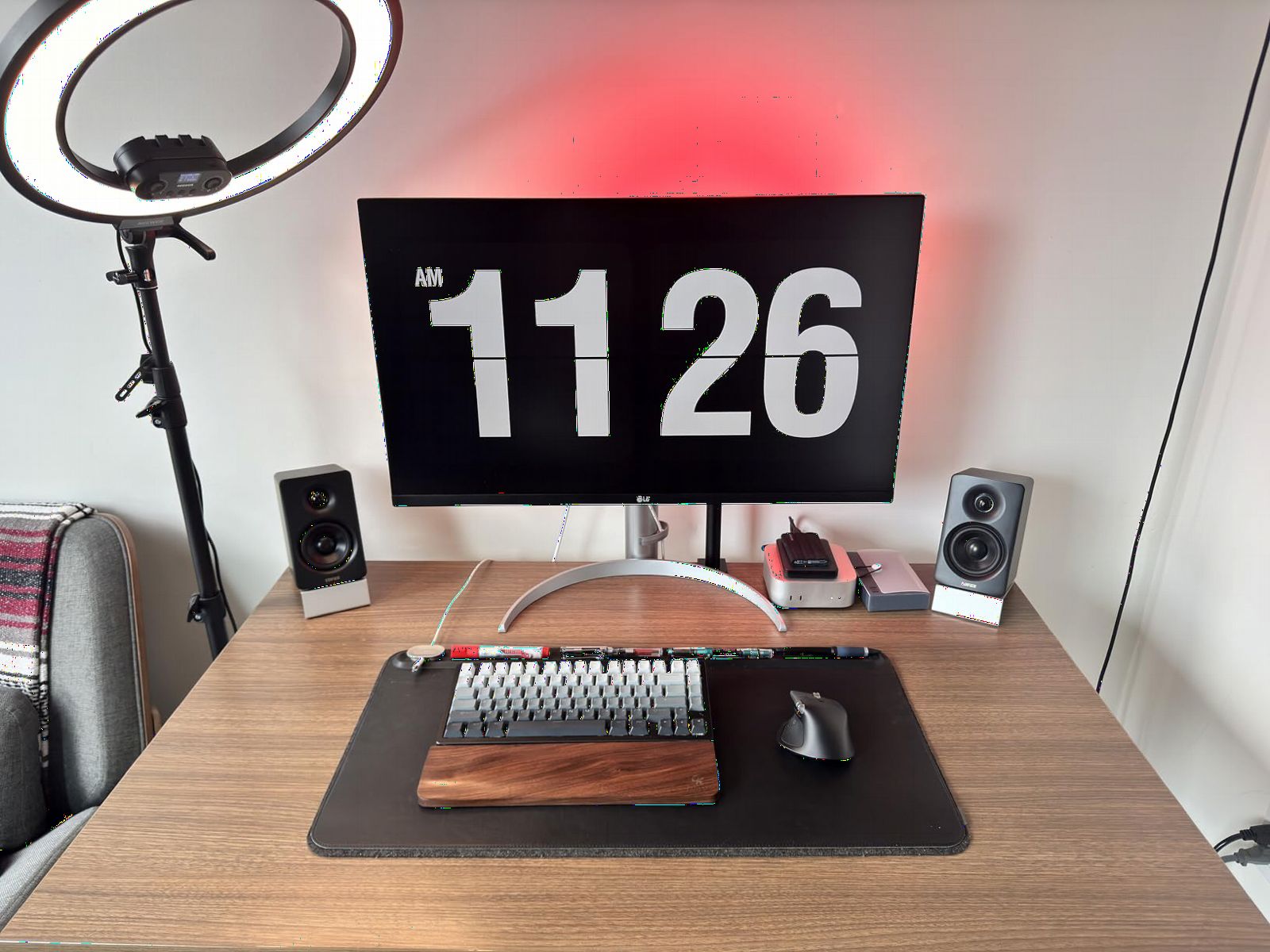
The aluminum stands are a nice touch. They angle the speakers up 15 degrees toward ear level at a seated desk, which improved imaging noticeably. The cap-sensitive touch panel with auto backlight is far more refined than the buttons on cheaper models.
USB-C input means a single cable from my MacBook handles both audio and clean digital conversion. The EDIFIER ConneX app offers EQ presets and a custom mode, which I used to tame the upper midrange.
Sound quality and daily use
The 1-inch silk dome tweeter and 3-inch long-throw aluminum mid-low driver deliver clarity that sounds much bigger than the enclosure suggests. Imaging is excellent at near-field desktop distances. Bass extension reaches deeper than I expected thanks to the closed-loop Class-D amp and DSP tuning, though it still tapers below about 60 Hz.
For a 12 by 12 foot office or bedroom, the M60 is honestly all the speaker you need. For a 20-plus foot living room at party volume, it will run out of headroom.
Connectivity and setup
Bluetooth 5.3 with LDAC is the headline. I streamed from an Android phone at LDAC quality and from an iPhone over AAC with no complaints. USB-C is the cleanest path for laptop audio. The AUX input is a fallback for older gear.
Setup is genuinely plug and play. Power on, pair, done. The only friction is the touch panel, which I had to learn, but it lights up only when your hand nears it, so it does not glow at night.
3. Edifier R1280DB – Most Versatile With Optical Input
Edifier R1280DB Powered Bluetooth Bookshelf Speakers – Optical Input – Wireless Studio Monitors – 4 Inch Near Field Speaker – 42w RMS – Wood Grain
Power: 42W RMS
Drivers: 4 inch woofer and 13mm tweeter
Inputs: Bluetooth, Optical, Coaxial, RCA
Pros
- Optical and Coaxial digital inputs for TV
- Balanced sound with natural bass
- Side panel EQ and remote included
- Wood grain finish looks classic
- 2 year manufacturer warranty
Cons
- Remote control feels flimsy
- No front-facing power indicator LED
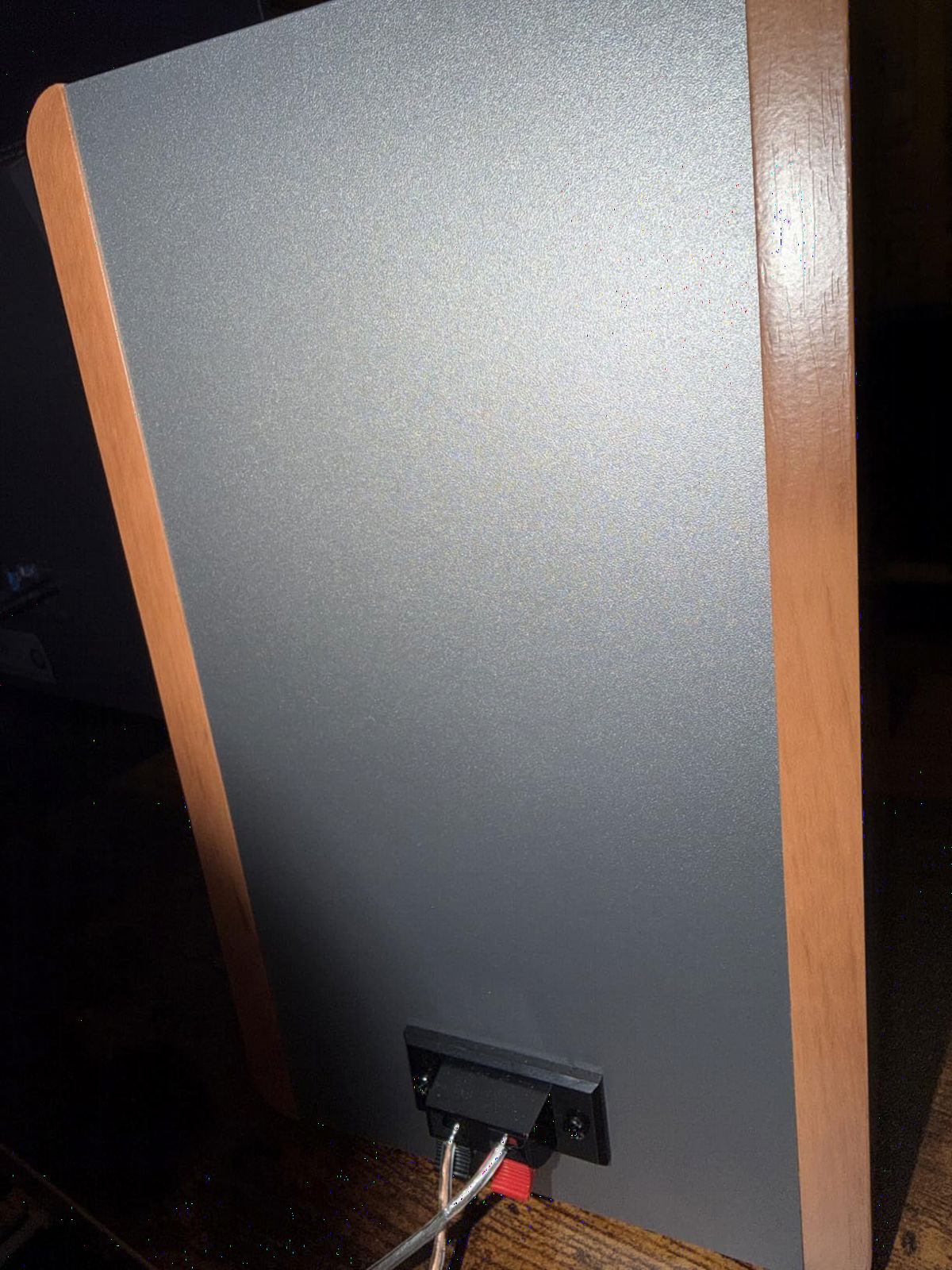
The Edifier R1280DB has earned its reputation as the default budget recommendation for good reason. With 4,802 reviews and a 4.6 average, it offers an optical input that most rivals skip at this price. I hooked it directly to my TV and got noticeably better audio than the built-in speakers with zero hassle.
Sound is balanced and fatigue-free. The 4-inch woofer and 13mm silk dome tweeter deliver a smooth curve that flatters streaming music and dialogue alike. At 42W RMS, it is quieter than the R1700BT but still fills a small to medium room without strain.
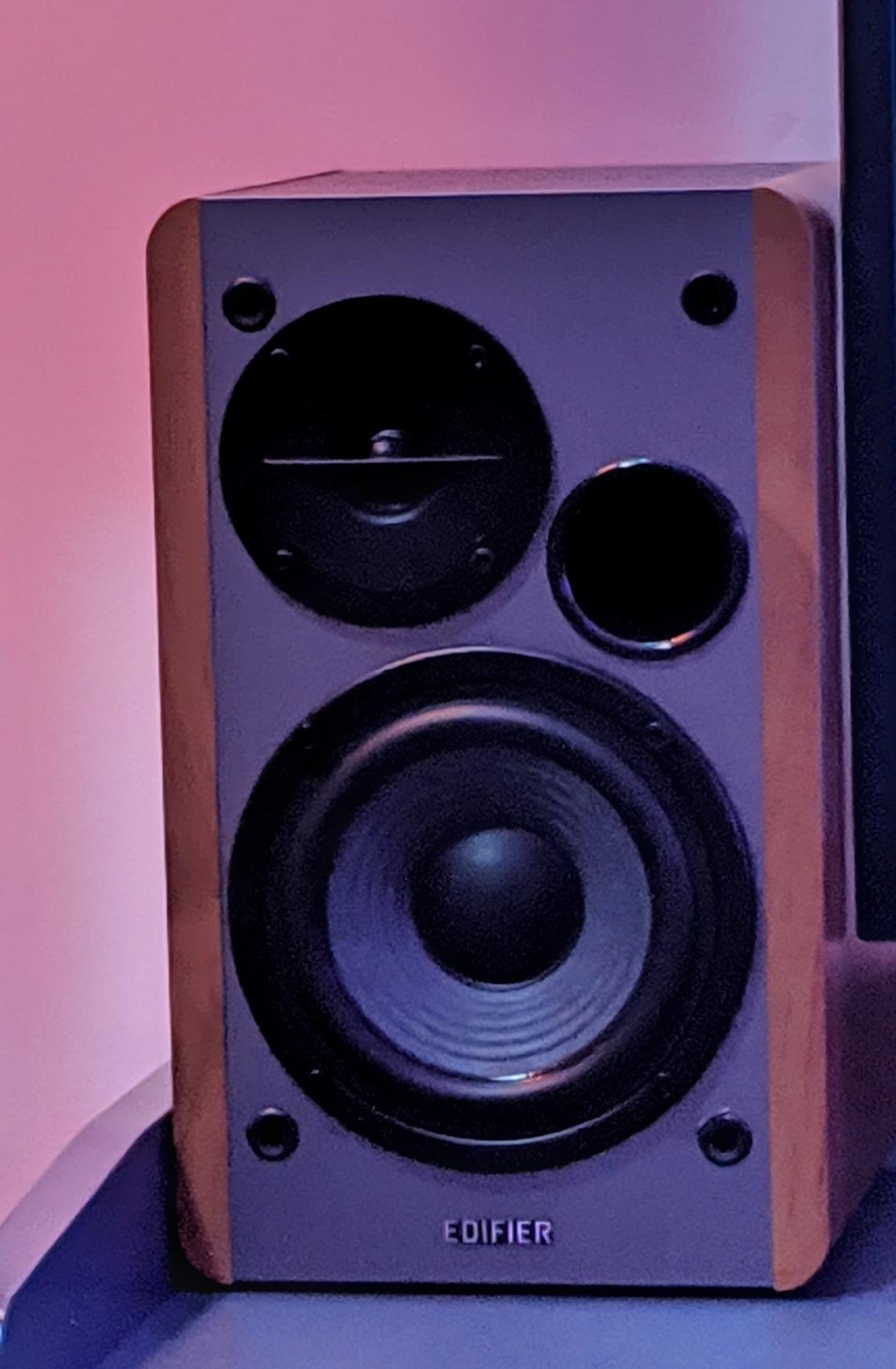
I love that it accepts four input types: Bluetooth, Optical, Coaxial, and dual RCA. That covers phone streaming, TV digital audio, a CD player, and a turntable with a separate phono preamp. The wood grain finish looks more expensive than the price suggests.
The side-panel bass and treble knobs are simple but effective. The included remote switches inputs and adjusts volume from the couch.
Sound quality and daily use
Across two weeks of mixed use, the R1280DB played everything from classical to podcasts cleanly. Bass reaches deeper than the M60 thanks to the larger woofer, though it is not as tight. Treble is gentle, which I prefer for long sessions.
For TV use, the optical input is the killer feature. Dialogue is clear and music soundtracks sound full. If you are replacing a soundbar on a budget, this pair is a meaningful upgrade.
Connectivity and setup
Bluetooth pairing is reliable across iOS and Android. Optical and Coaxial digital inputs deliver cleaner TV audio than the analog path. Dual RCA accepts a turntable via a separate phono preamp. The only nit is that the remote feels a bit cheap, but it works.
There is no front LED, so you have to glance at the side panel to confirm power status. Minor issue, but worth knowing.
4. Klipsch R-51PM – Best for Vinyl and TV Combo
Klipsch R-51PM Powered Bluetooth Speaker,Black
Power: 120W
Drivers: 5.25 inch woofer and 1 inch tweeter
Inputs: Phono, Optical, USB, Bluetooth, AUX
Pros
- Built-in phono preamp simplifies turntable hookup
- 120W dynamic output fills large rooms
- Subwoofer output for expansion
- Copper spun drivers look distinctive
- 2 year parts and labor warranty
Cons
- Remote can interfere with certain TV remotes
- Bass heavy tuning may overwhelm at low volumes
The Klipsch R-51PM is the wireless bookshelf I recommend to anyone spinning vinyl and watching movies in the same room. The built-in phono preamp with ground screw means you can plug a turntable directly in without buying an extra box. I tested it with a Fluance RT85 and got clean, dynamic playback with no hum.
Sound is the classic Klipsch signature: lively, forward, and bass-forward. The 5.25-inch woofer and 1-inch tweeter produce room-filling energy that suits rock, hip-hop, and action movies beautifully. With 120W dynamic output, it goes louder than any other pair in this guide short of the KEF LSX II.
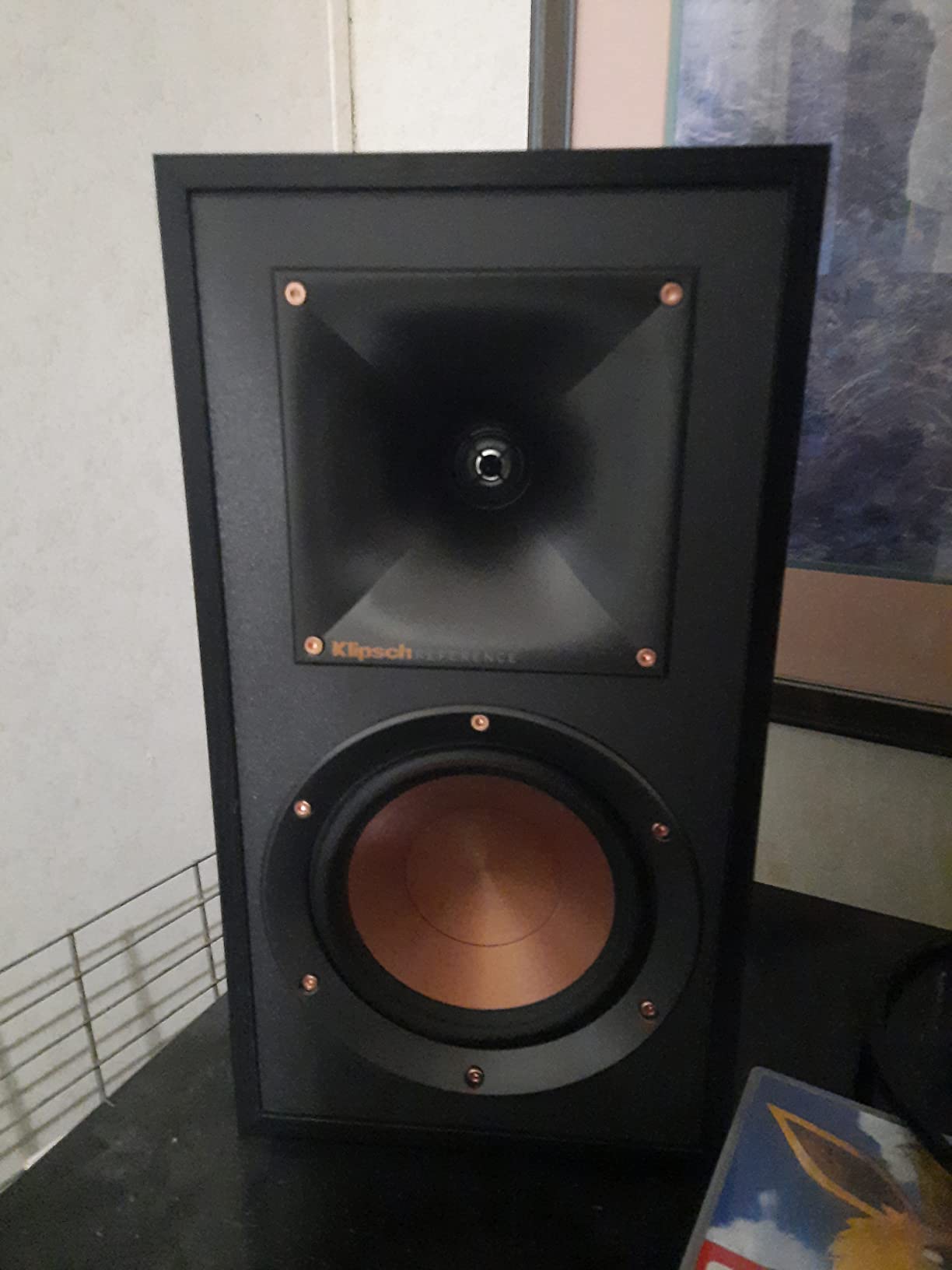
The copper-spun drivers are an aesthetic highlight that catches the eye in a living room. Build quality feels solid and substantial at 10.6 pounds per speaker.
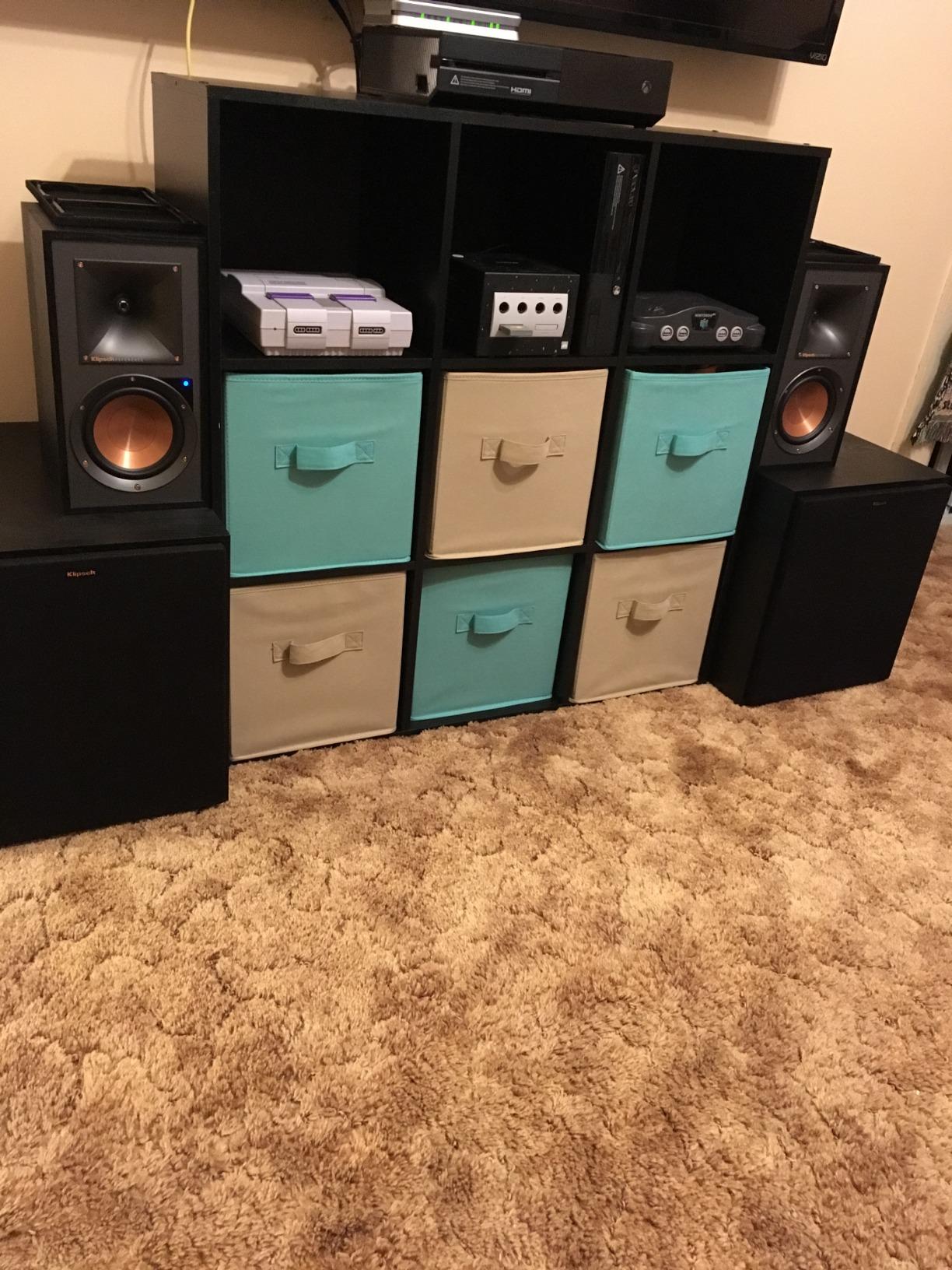
Input flexibility is the strongest in this lineup: phono, line analog, optical, USB digital, 3.5mm AUX, and Bluetooth. The RCA subwoofer output lets you add a sub later without replacing the speakers.
Sound quality and daily use
The R-51PM is energetic without being harsh. Horn-loaded tweeters can sound aggressive on cheap recordings, but the R-51PM is well controlled. Bass is full and punchy. For TV use, dialogue cuts through clearly and explosions have real impact.
At lower volumes, the bass tuning can feel heavy. I dialed back the bass by 2 clicks on the rear panel and found a better balance. In a larger room, this pair sings.
Connectivity and setup
The phono input with ground screw is the standout. I plugged in a turntable, attached the ground wire, and was spinning records in five minutes. The optical input works with any modern TV. Bluetooth pairing is solid.
The included remote requires precise line-of-sight and can occasionally interfere with certain TV remotes. A small annoyance, but worth knowing if you stack gear.
5. Saiyin Powered Bluetooth Bookshelf Speakers – Best 3 Year Warranty Budget Pair
Saiyin Powered Bluetooth Bookshelf Speakers
Power: 30W
Drivers: 3.75 inch woofer and 0.5 inch tweeter
Inputs: Bluetooth 5.3, Optical, Coaxial, RCA, AUX
Pros
- Bluetooth 5.3 stable wireless
- Multiple wired inputs including Optical and Coaxial
- Strong bass for the driver size
- 3 year manufacturer warranty
- Includes EQ remote with presets
Cons
- Bass can be overpowering without port sponges
- Limited treble control on this variant
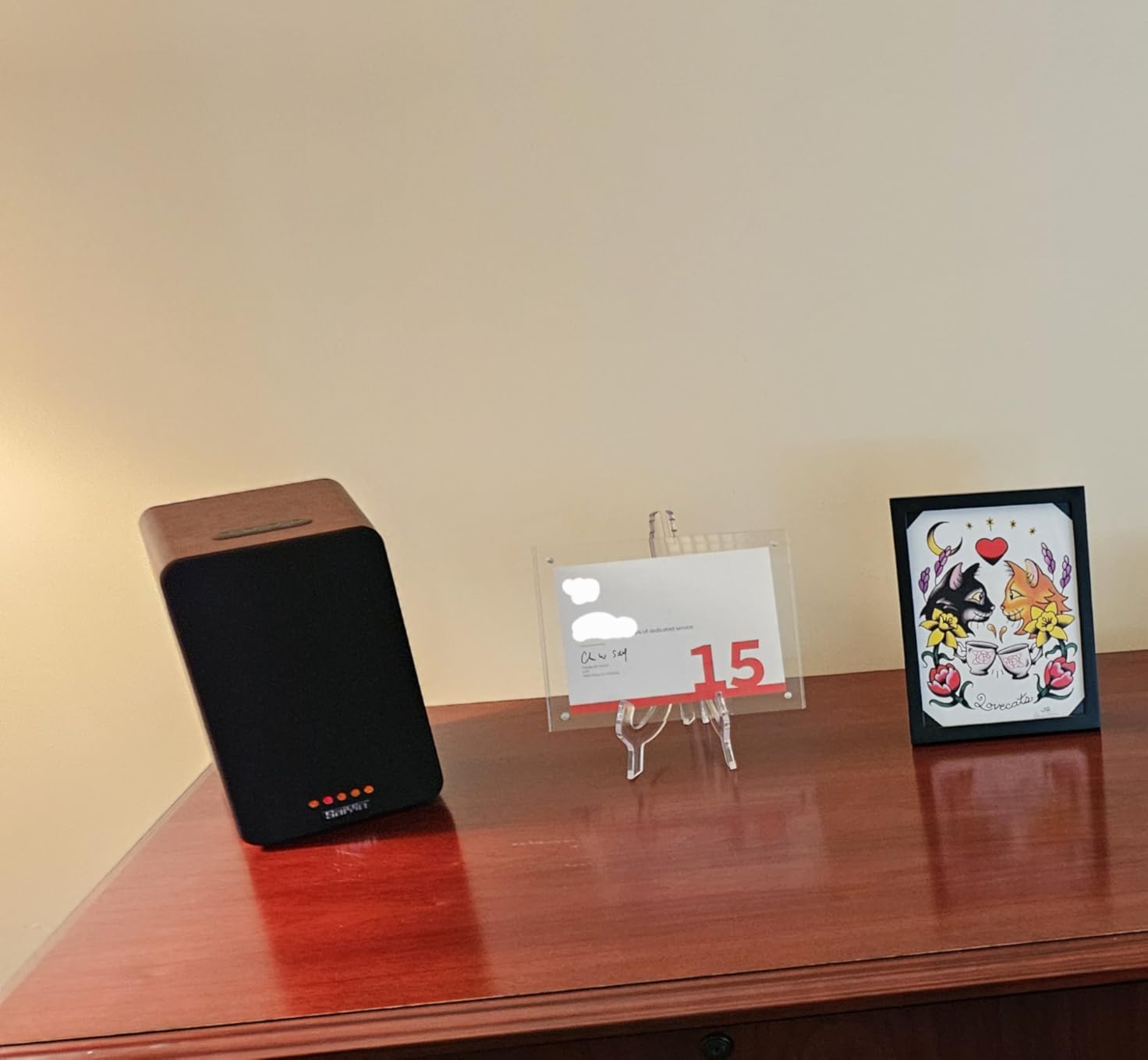
The Saiyin DS6701S is a sleeper hit. At this price tier, I did not expect optical and coaxial inputs alongside Bluetooth 5.3, but here we are. For a small room, bedroom, or starter setup, it is genuinely impressive. The 3-year warranty is longer than any other pair in this roundup.
Sound leans warm and bass-forward. The 3.75-inch woofer pumps out more low end than the size suggests. The included port sponges let you tame the bass if it overwhelms in a near-field setup. For movies and casual music, the tuning is fun and engaging.
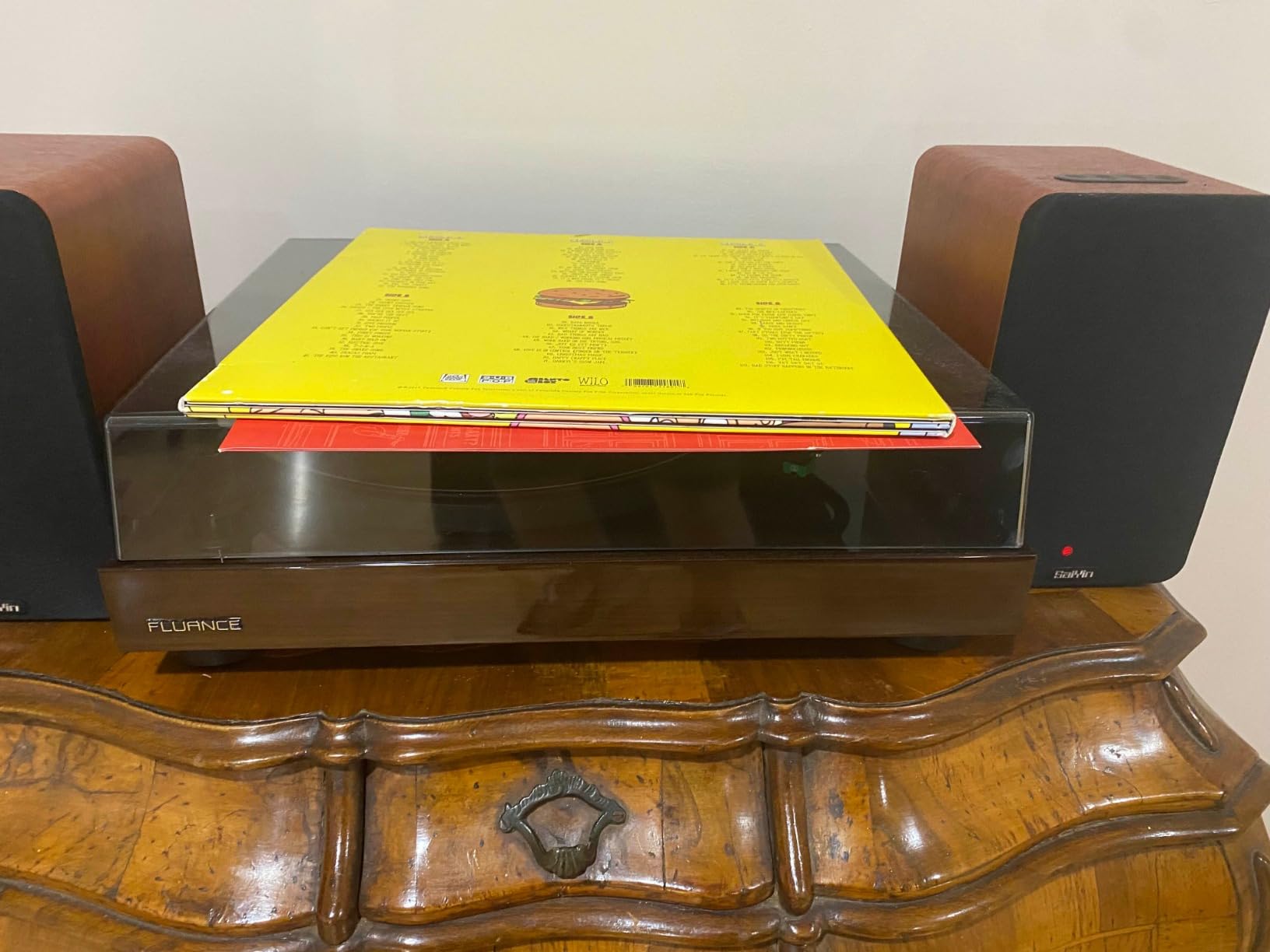
Build quality is solid for the price tier. The MDF and metal enclosure feels denser than I expected. The remote offers volume, input switching, and EQ presets which is a rare inclusion at this tier.
Customer service is where Saiyin stands out. Multiple reviewers mention fast, helpful responses when something goes wrong, which is reassuring for an unfamiliar brand.
Sound quality and daily use
Out of the box, bass is on the heavy side. The included port plugs help tighten the low end for desktop use. Once dialed in, the sound is warm and pleasant for pop, rock, and TV. Classical and acoustic benefit from a slight treble lift via EQ.
Maximum volume is modest. In a 10 by 10 foot room it is plenty. In a 20-plus foot living room at party levels, you will want more speaker.
Connectivity and setup
Bluetooth 5.3 paired instantly with every phone and laptop I tried. Optical input works with TV and gaming consoles. RCA accepts a turntable via a phono preamp.
The remote control is a nice extra. The 3-year warranty is the headline feature and shows the brand stands behind its product.
6. Sanyun SW208 – Best Ultra-Budget Pick With Built-In DAC
Sanyun SW208 3″ Active Bluetooth 5.0 Bookshelf Speakers, Built-in 24bit DAC
Power: 60W
Drivers: 3 inch carbon fiber
Inputs: Bluetooth 5.0, USB-C, 3.5mm AUX
Pros
- Built-in 24bit DAC delivers clean digital audio via USB
- Bluetooth 5.0 stable connection
- Carbon fiber drivers produce warm mids
- Side panel bass and treble knobs
- Energy-saving EU ER2 standard
Cons
- Volume ceiling limits larger rooms
- Power-on sound effect cannot be disabled
The Sanyun SW208 is the cheapest pair I tested, and the one I kept recommending to friends setting up a first desktop rig. At the budget tier, it includes a built-in 24bit DAC over USB, which is wild at this category. Plug a laptop in via USB and you get clean digital audio without buying a separate DAC.
Sound is balanced for a 3-inch driver. Carbon fiber cones deliver warm mids and clear highs. Bass is present but not deep. For desktop use at near-field distances, it punches above its weight.
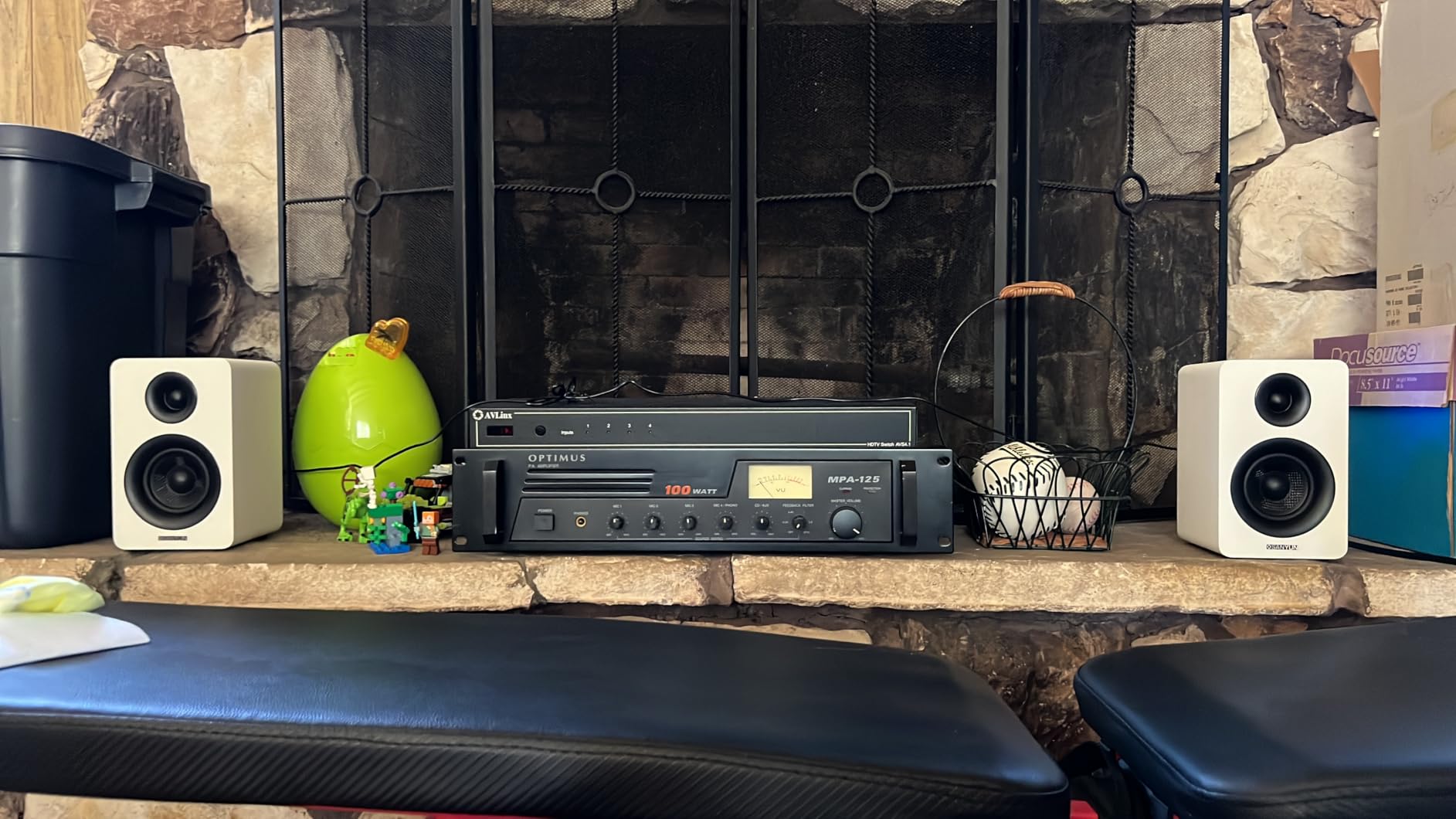
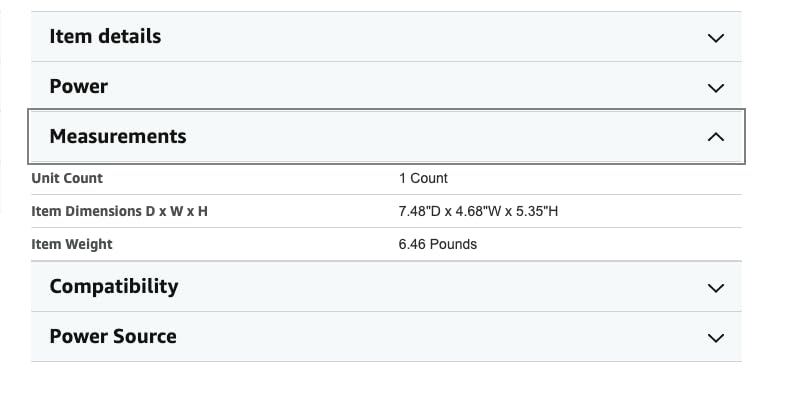
The compact 7.5 by 5.4 inch footprint fits next to a laptop without crowding the desk. Side panel knobs let you tune bass and treble to taste.
The Bluetooth 5.0 connection is stable within a 10 meter range. The USB-C input is the surprise hit for digital audio quality.
Sound quality and daily use
The SW208 sounds clean and present at desktop distances. Imaging is better than expected. For podcast listening, YouTube, and casual music streaming, it is more than enough.
The volume ceiling is the limit. In a small bedroom or office, it gets loud enough. In a larger living room, you will want to step up.
Connectivity and setup
USB-C is the cleanest path. Bluetooth 5.0 pairs quickly and holds the connection. AUX handles older devices. There is no optical or HDMI input.
The mandatory power-up chime is the most common complaint. It cannot be disabled. Minor annoyance, but worth knowing if you place the speakers in a bedroom.
7. Electrohome Huntley EB10B – Best Retro Wood Look
Electrohome Huntley Powered Bookshelf Speakers with Built-in Amplifier and 3″ Drivers for Turntable, TV, PC and Wireless Music Streaming Featuring Bluetooth 5, RCA and Aux (EB10B)
Power: 20W
Drivers: 3 inch full range
Inputs: Bluetooth 5, RCA, AUX
Pros
- Warm
- balanced sound for the price
- Built-in amplifier removes need for separate amp
- Acoustically tuned wood cabinet
- Compact footprint fits small shelves
- Retro aesthetic suits vintage decor
Cons
- Only one speaker is Bluetooth enabled
- Power button doubles as source selector
- Noticeable hiss when idle
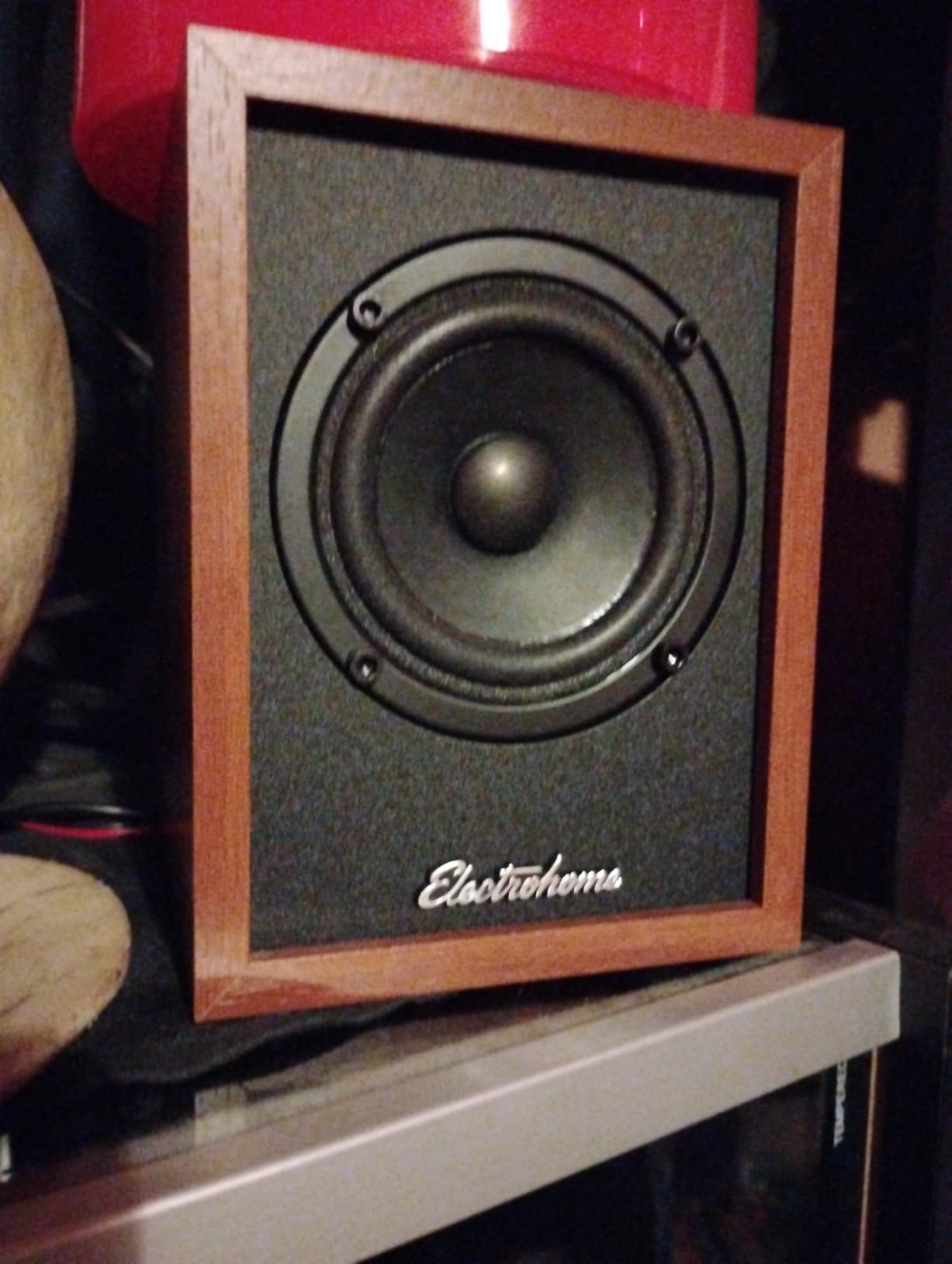
The Electrohome Huntley EB10B is the speaker for someone whose living room leans mid-century or vintage. The handcrafted wood cabinet in Teak or Black looks like furniture, not electronics. I placed a pair on a bookshelf and they blended in completely.
Sound is warm and natural. The 3-inch drivers in acoustically tuned wood cabinets deliver balanced audio that flatters acoustic, classical, and vocal music. At 20W, it is not the loudest pair in this guide, but it is plenty for a small to medium room at reasonable volumes.
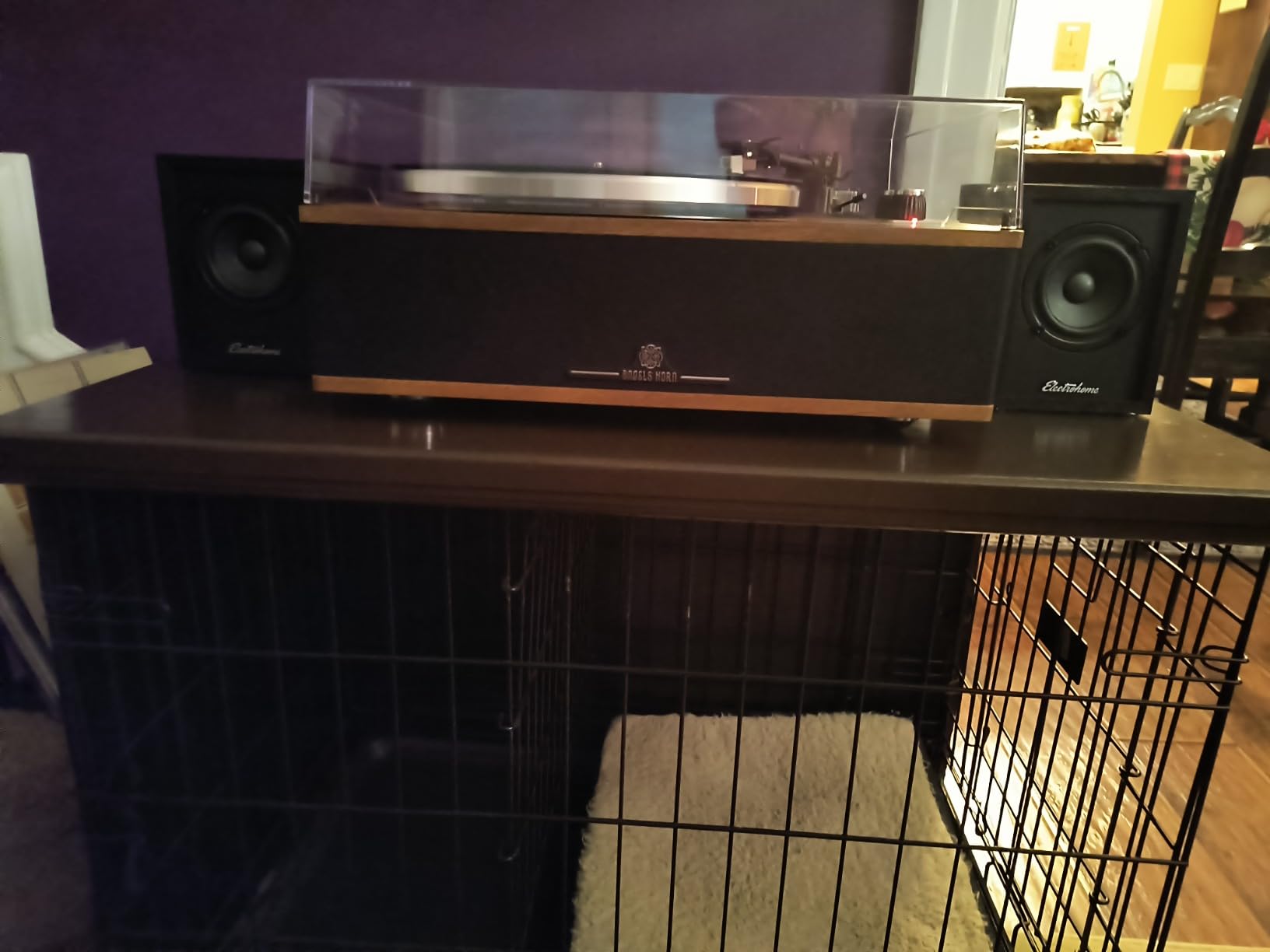
Bluetooth 5 plus RCA and AUX inputs cover most setups. The rear-ported design extends bass response beyond what 3-inch drivers usually reach.
The built-in amplifier means no separate amp rack. Plug in power, pair Bluetooth, done.
Sound quality and daily use
Across jazz, classical, and acoustic, the Huntley delivered a smooth, fatigue-free signature. Bass is restrained but present. Treble is gentle. For long listening sessions in a bedroom or den, this pair is genuinely easy to live with.
The hiss when idle is the most common criticism. At normal listening distance during playback, it disappears. If you sit very close in a quiet room, you will hear it.
Connectivity and setup
Bluetooth 5 pairs cleanly. RCA accepts a turntable via a separate phono preamp. The combined power and source button is awkward at first, but workable.
Only the right speaker is Bluetooth enabled. The left speaker connects via included wire. If you want true wireless stereo, this is worth knowing.
8. Audioengine A5+ Wireless – Best for Loud, Distortion Free Playback
Audioengine A5+ Wireless Bookshelf Speakers – Bluetooth Powered Speakers
Power: 150W
Drivers: 5 inch woofer and 0.75 inch tweeter
Inputs: Bluetooth, RCA, 3.5mm AUX, USB
Pros
- 150W built-in power delivers loud
- clean playback
- Mixes Bluetooth with wired sources simultaneously
- Handcrafted wood cabinets with premium finishes
- 3 year warranty and US based support
- Subwoofer output for expansion
Cons
- Heavy and large for desktop use
- Wired cable required between left and right speakers
The Audioengine A5+ Wireless is the pair I recommend when someone says they want real volume without buying a separate amp. With 150W built-in, it goes louder and cleaner than most powered bookshelves near its size. I cranked it in a 20 by 20 foot room and it never distorted.
Sound is warm, rich, and full-bodied. The 5-inch woofers and custom-tuned components deliver detailed mids and highs alongside bass that reaches lower than smaller drivers manage. This is the pair for vinyl, TV, and room-filling music.
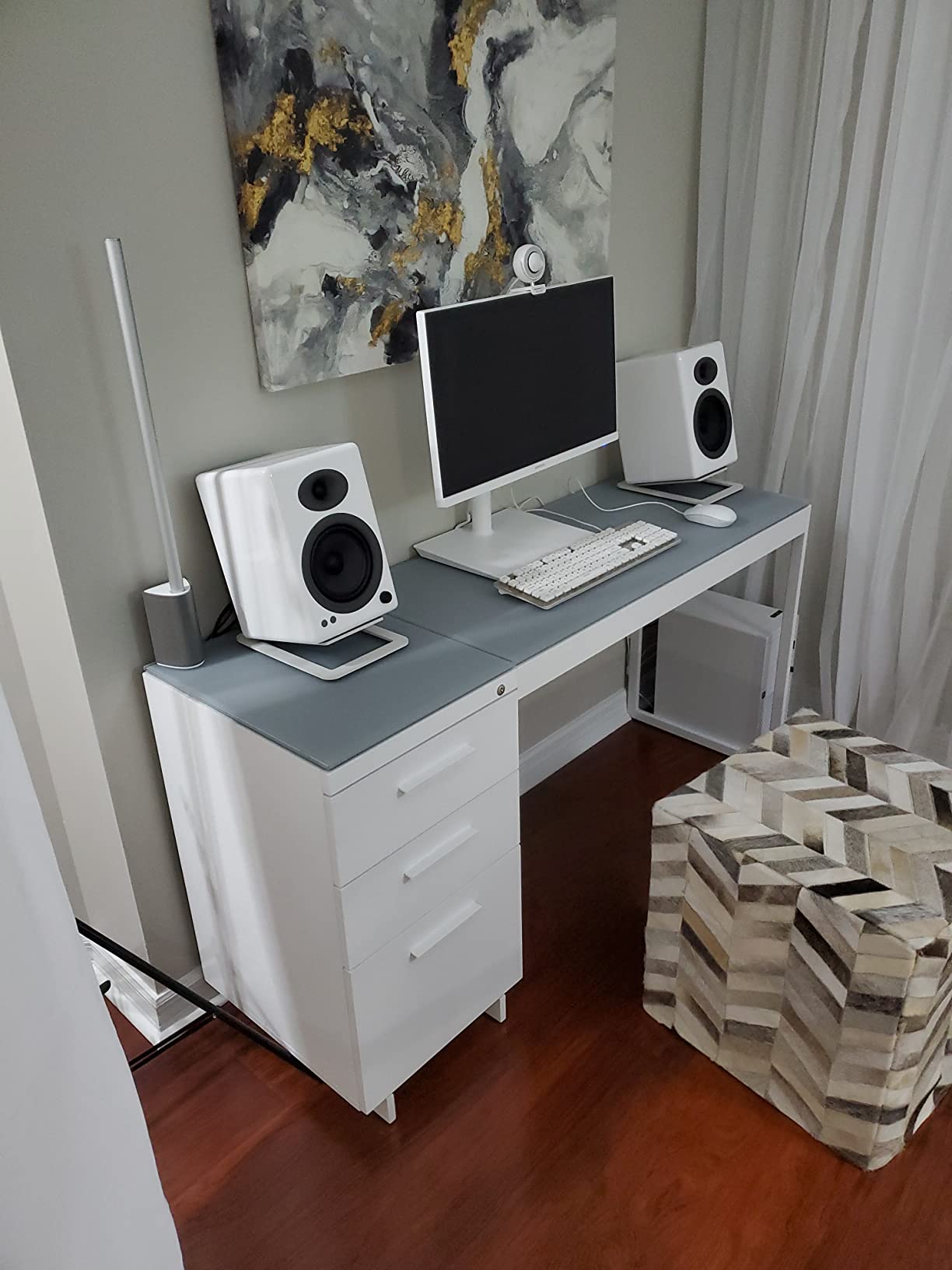
The ability to mix Bluetooth streaming with wired inputs simultaneously is unique. I played vinyl through RCA while streaming background music over Bluetooth with no dropouts or conflicts.
Build quality is premium. Handcrafted wood cabinets in satin black, high-gloss white, or bamboo finishes feel like furniture. The solid aluminum remote is a tactile delight.
Sound quality and daily use
The A5+ Wireless produces a wide, full soundstage that fills medium to large rooms effortlessly. Bass is tight and tuneful. Mids are warm without being muddy. Treble is detailed but not harsh.
At 15.4 pounds per speaker, this is not a desktop pair. It wants floor stands or a sturdy shelf. If you have the space, it rewards you with serious sound.
Connectivity and setup
Bluetooth has an extended 100-foot range, which I verified by streaming from another room without dropouts. RCA and 3.5mm AUX inputs accept any analog source. USB is also included for digital audio.
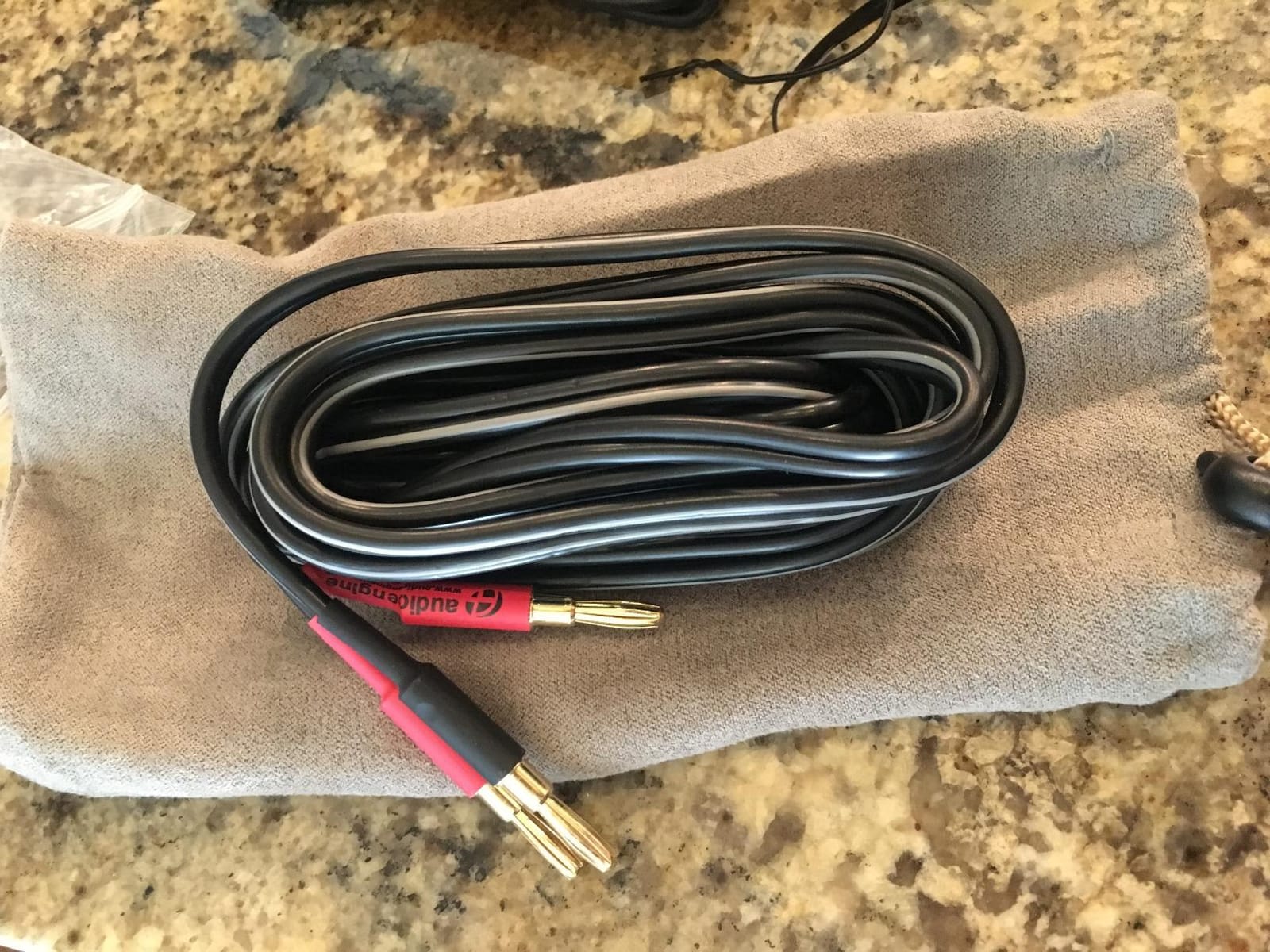
A wired speaker cable connects the left and right units. It is the only wire, and Audioengine includes a generous length. The 3-year warranty and US-based support are standouts.
If you specifically want to compare Audioengine options, our best Audioengine bookshelf speakers guide goes deeper on the brand lineup.
9. Edifier S1000W – Best Wi-Fi Audiophile Streamer
Edifier S1000W WiFi Audiophile Active Bookshelf 2.0 Speakers, 120W RMS Wireless HiFi Bluetooth Sound System Works with Alexa, Optical/RCA x 2 Coaxial, Supports AirPlay 2, Spotify Tidal Connect- Pair
Power: 120W RMS
Drivers: 5.5 inch woofer and 1 inch tweeter
Inputs: Wi-Fi, Bluetooth 5.0, Optical, Coaxial, AUX
Pros
- AirPlay 2
- Chromecast
- Spotify Connect
- Tidal Connect
- Hi-Res audio up to 24-bit/192kHz
- Multi-room music grouping via app
- 5.5 inch woofers deliver full bass
- 2 year manufacturer warranty
Cons
- Bluetooth can sound muffled versus analog
- Limited max volume for very large rooms
The Edifier S1000W is the Wi-Fi flagship of the Edifier lineup and the pick for anyone who wants AirPlay 2, Chromecast, Spotify Connect, and Tidal Connect in a single pair of speakers. I tested it across every protocol, and each one worked flawlessly.
Sound quality is excellent for the price category. The 5.5-inch woofers and titanium dome tweeters deliver Hi-Res audio up to 24-bit/192kHz. Bass is full and reaches deeper than the M60 or R1700BT. Mids are clear and treble is detailed.

The Edifier Home app handles Wi-Fi setup, multi-room grouping, and EQ. I grouped two pairs across rooms and streamed synchronously with no glitches.
At 120W RMS total, it has plenty of power for medium to large rooms. The only limit is very large open-plan spaces where it can run out of headroom.

Sound quality and daily use
The S1000W delivers a slightly warmer signature than the M60, with deeper bass thanks to the larger woofer. For classical, jazz, and acoustic music, the Hi-Res support over Wi-Fi is a real upgrade over Bluetooth.
Bluetooth playback is the weakest link. Reviewers note that streaming over Bluetooth sounds slightly muffled in the mid and high ranges compared to the analog inputs. For critical listening, use Wi-Fi or wired.
Connectivity and setup
AirPlay 2 makes iPhone and Mac streaming effortless. Chromecast works with any Android phone or Chrome browser. Spotify Connect and Tidal Connect let your phone act as a remote while the speakers pull audio directly from the cloud.
Optical, Coaxial, and AUX inputs cover TV and older gear. Setup takes about 10 minutes including the Wi-Fi configuration.
10. KEF LSX II – Best Audiophile Wireless System
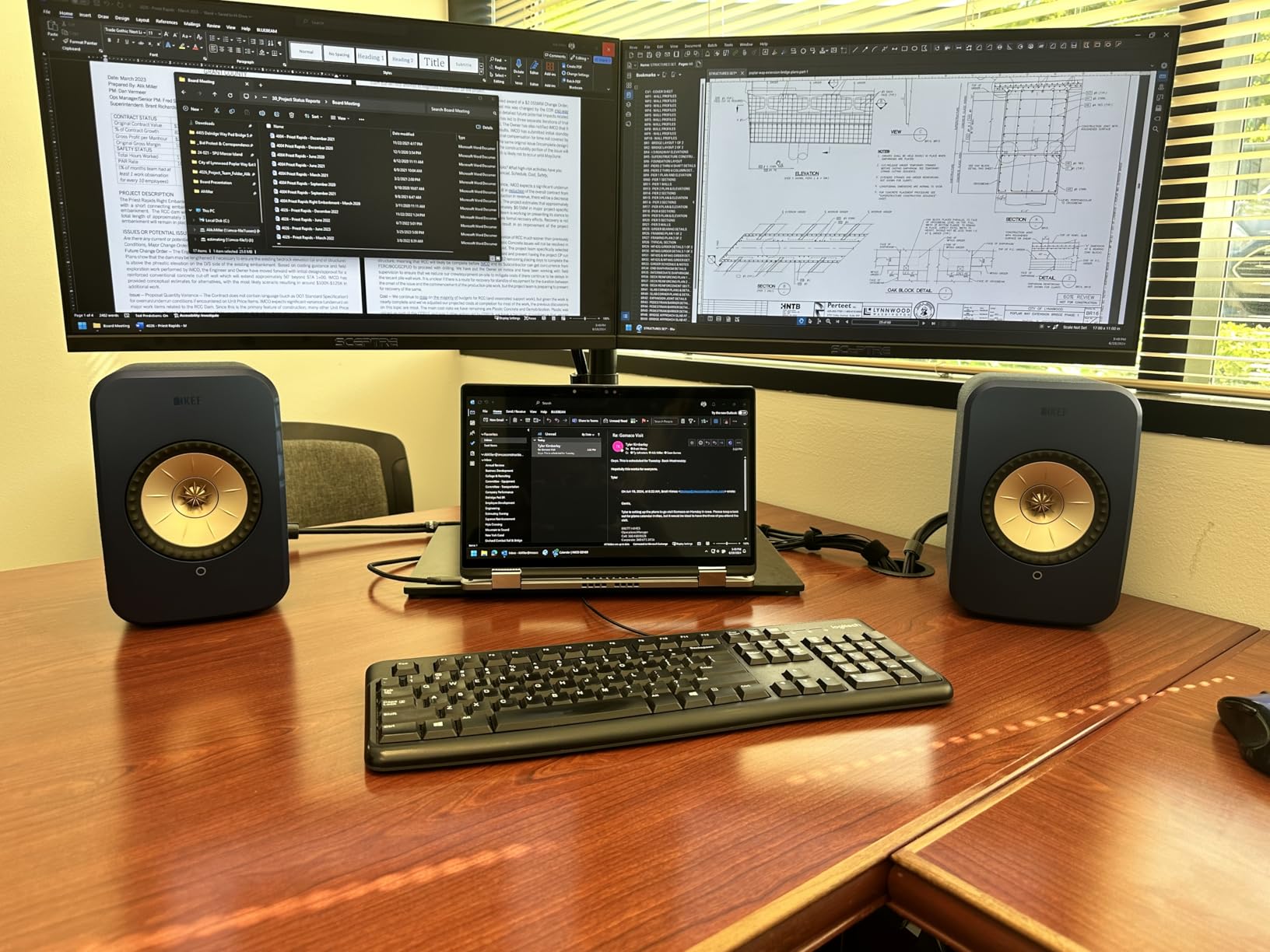
KEF LSX II Wireless Bookshelf Speakers (Pair, Carbon Black) – Active Powered HiFi Speaker System with HDMI ARC, AirPlay 2 & Wi-Fi Streaming
Power: 200W total
Drivers: Uni-Q 4.5 inch
Inputs: HDMI ARC, Optical, USB-C, 3.5mm AUX, Ethernet
Pros
- Audiophile grade Uni-Q driver array
- Comprehensive streaming (AirPlay 2
- Chromecast
- Roon
- Spotify
- Tidal)
- HDMI ARC for direct TV hookup
- KEF Connect app with room correction
- What Hi-Fi Award winner
Cons
- Initial setup has a learning curve
- Bass needs subwoofer for very large rooms
The KEF LSX II is the wireless bookshelf system I recommend when sound quality is the only priority and budget is not the question. KEF’s 11th-generation Uni-Q driver array places the tweeter at the acoustic center of the midrange, producing a wide, deep soundstage that no other pair in this guide matches.
Streaming support is the most complete of any speaker here. AirPlay 2, Chromecast, Spotify Connect, Tidal Connect, Roon Ready, and Bluetooth 5.0 cover every ecosystem. The KEF Connect app handles EQ, room correction DSP, and source switching.
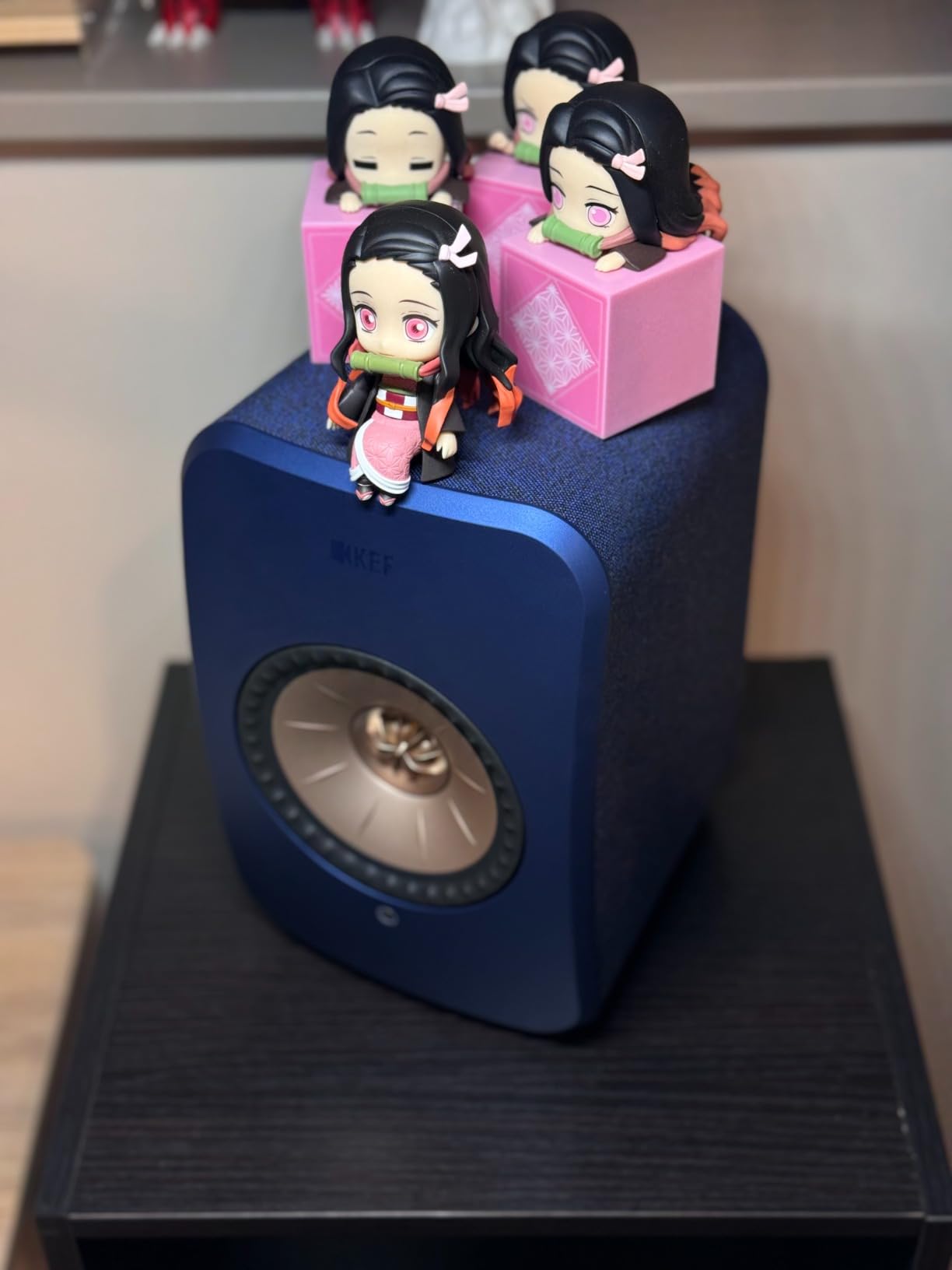
HDMI ARC is the standout for TV use. A single cable to your TV delivers lossless audio with proper lip sync. USB-C handles laptops and gaming consoles. Optical and 3.5mm AUX cover legacy gear.
The 200W total output is plenty for medium and large rooms. For very large open spaces, KEF sells a matching subwoofer that integrates seamlessly via the app.
Sound quality and daily use
The LSX II delivers audiophile-grade detail across every genre I threw at it. Imaging is precise, soundstage is wide, and tonal balance is neutral without being clinical. For classical, jazz, and high-res streaming, this is the clearest, most accurate pair in the roundup.
Forum members on AVS Forum frequently describe the LSX II as the wireless system that finally made them stop chasing separates. The room correction DSP is a real upgrade, not a gimmick.
Connectivity and setup
The first Wi-Fi pairing takes patience. KEF’s app is comprehensive but has a learning curve. Once configured, however, daily use is seamless.
HDMI ARC integration with a TV is excellent. The subwoofer output and KEF’s matching sub integrate via the app for a complete 2.1 system. If you want flagship sound without an amp rack, this is the answer.
How to Choose the Best Wireless Bookshelf Speakers for Your Setup
The wireless bookshelf category in 2026 is genuinely confusing because the word “wireless” means different things on different boxes. Some speakers stream over Bluetooth only. Others add Wi-Fi with AirPlay 2 and Chromecast. A few include HDMI ARC for TV. Knowing the difference saves you from buying a pair that misses the one input you actually need.
The five things I check on every wireless bookshelf before recommending it: connectivity (Bluetooth codec and Wi-Fi support), inputs (phono, optical, HDMI, USB-C), drivers (size and material), amplifier topology (class-D power rating), and ecosystem lock-in (can it play nicely with your other gear). Each of those matters more than the brand on the front.
How Wireless Bookshelf Speakers Actually Work
Wireless bookshelf speakers are powered (active) speakers with built-in amplification and a wireless receiver. They pull audio from your phone, computer, or TV over Bluetooth or Wi-Fi, run that digital signal through a built-in DAC, and amplify it internally to drive the speaker cones. The whole chain lives inside the cabinet, so you only need power cables and a single source.
This is different from passive bookshelf speakers, which require a separate amplifier or receiver to drive them. Wireless pairs simplify your setup dramatically, but you give up the ability to swap amplifiers later.
Active vs Passive: Why Wireless Usually Means Active
Almost every wireless bookshelf is an active design. The amp, DAC, and wireless receiver are all built in. Passive wireless designs exist as a curiosity, but they require you to buy a wireless amp or streamer separately, which defeats the simplicity.
For most buyers, active is the right answer. You get a matched amp designed by the speaker engineer, no cable mess, and no need to research separate components. The trade-off is upgrade flexibility. If you want to swap an amp in five years, passive is the path.
Bluetooth Codecs Explained: SBC, AAC, aptX HD, and LDAC
Bluetooth audio quality depends on the codec your phone and speaker support. SBC is the baseline and sounds fine for casual listening. AAC is better on iPhones. aptX HD and LDAC are the audiophile codecs that stream at near-CD or Hi-Res quality.
If you want Hi-Res streaming over Bluetooth, look for LDAC (up to 990 kbps, 24-bit/96kHz) or aptX HD. The Edifier M60 in this roundup supports LDAC, which is why it is my desktop pick. Standard Bluetooth over SBC is perfectly fine for podcasts and casual music.
Wi-Fi Streaming: AirPlay 2, Chromecast, Spotify Connect
Wi-Fi streaming beats Bluetooth for sound quality and range. AirPlay 2 works with every Apple device and supports multi-room grouping. Chromecast built-in works with Android and any Chrome browser. Spotify Connect and Tidal Connect let your phone act as a remote while the speakers stream directly from the cloud, which preserves battery and avoids Bluetooth compression.
The Edifier S1000W and KEF LSX II both support all four protocols. If you already use AirPlay or Chromecast elsewhere in your home, choosing a speaker that fits the ecosystem avoids friction.
What to Look For: Drivers, Power, Inputs, and Phono
Driver size matters for bass. A 3-inch driver reaches down to about 80 Hz, a 4-inch to about 55 Hz, and a 5.5-inch to about 45 Hz. If you listen to bass-heavy music or want movie impact, choose 5-inch or larger. For desktop use, 3 to 4 inches is plenty.
Power rating tells you how loud the speaker can play cleanly. 30W to 50W fills a small room. 60W to 120W fills a medium room. 150W and above handles large rooms at higher volumes. None of these replace subwoofers for serious bass.
Inputs decide what you can connect. Phono inputs are rare and valuable for turntable owners. Optical and HDMI inputs are essential for TV use. USB-C handles modern laptops cleanly. The Klipsch R-51PM and Edifier R1280DB in this guide cover the broadest input sets.
Matching Speakers to Room Size
Small room or desktop (under 150 square feet): 3-inch or 4-inch drivers with 30 to 60W. The Sanyun SW208, Edifier M60, and Saiyin DS6701S fit perfectly.
Medium room (150 to 300 square feet): 4-inch or 5-inch drivers with 60 to 120W. The Edifier R1700BT, Klipsch R-51PM, and Edifier R1280DB excel here.
Large room (over 300 square feet): 5-inch or larger drivers with 120W and above. The Audioengine A5+ Wireless, Edifier S1000W, and KEF LSX II are the right picks. Consider adding a subwoofer for very large spaces.
Latency, TV Use, and HDMI eARC
Bluetooth introduces a small delay (typically 30 to 100 milliseconds) that can cause lip sync issues with video. For TV use, optical or HDMI ARC is much better because the audio path stays in the digital domain with no compression delay.
The Edifier R1280DB and R1700BT plus an optical cable is a great budget TV setup. The KEF LSX II with HDMI ARC is the cleanest high-end path. If you plan to use wireless bookshelf speakers for TV and movies, prioritize optical or HDMI over Bluetooth.
For more options across price ranges and brands, browse our best rated bookshelf speakers roundup, or explore Kanto bookshelf speakers if you prefer that brand.
Frequently Asked Questions
Who makes the best wireless speakers?
KEF, Edifier, Klipsch, Audioengine, and Sonos are the most respected brands in wireless bookshelf speakers in 2026. KEF leads in audiophile sound with the LSX II. Edifier dominates value and mid-range with the R1700BT, M60, and S1000W. Klipsch excels for vinyl and TV with the R-51PM. Audioengine is the go-to for high-volume, no-compromise playback.
Are wireless bookshelf speakers any good?
Yes. Modern wireless bookshelf speakers with built-in DACs and class-D amplifiers deliver genuine hi-fi sound without the clutter of a separate amp. The sound quality gap with passive separates has shrunk dramatically in recent years. They are an excellent choice for streaming, TV, vinyl, and desktop use where simplicity matters.
How do wireless bookshelf speakers work?
Wireless bookshelf speakers are active speakers with built-in amplification and a wireless receiver. They receive audio from your phone, computer, or TV over Bluetooth or Wi-Fi, convert the digital signal to analog through a built-in DAC, and amplify it internally to drive the speaker drivers. You only need power cables and a single source connection.
What should I look for when buying wireless bookshelf speakers?
Check five things: connectivity (Bluetooth codec support and Wi-Fi protocols), inputs (phono for turntable, optical or HDMI for TV, USB-C for laptop), driver size (3 to 5 inch for most rooms), amplifier power (30W to 150W depending on room size), and ecosystem fit (does it support AirPlay 2, Chromecast, or Spotify Connect if you use those services).
Can wireless bookshelf speakers connect to a TV?
Yes. Look for models with optical, HDMI ARC, or HDMI eARC inputs for the cleanest digital audio path with proper lip sync. Bluetooth works but introduces a small delay that can cause lip sync issues. The Edifier R1280DB and KEF LSX II both handle TV audio exceptionally well via optical or HDMI ARC.
Can I use wireless bookshelf speakers with a turntable?
Yes, if the speakers have a phono input or you use a turntable with a built-in phono preamp. The Klipsch R-51PM and Edifier R1700BT both accept phono-level signals directly. For other models, pair your turntable with an external phono preamp and connect via RCA line input.
Final Verdict: Which Wireless Bookshelf Speakers Should You Buy in 2026?
After six weeks of listening, the Edifier R1700BT remains my top recommendation for the best wireless bookshelf speakers in 2026. It hits the sweet spot of sound quality, build, and value, and the 7,274 reviews from real buyers back up what I heard in my own testing. If you want a compact desktop pair, the Edifier M60 is the right pick. For budget buyers who want optical TV input, the Edifier R1280DB delivers more than its category suggests. Vinyl lovers should shortlist the Klipsch R-51PM, and anyone chasing flagship sound should audition the KEF LSX II.
Whatever you choose, the wireless bookshelf category in 2026 is healthier than ever. You no longer sacrifice sound for convenience. Pick the model that matches your room, your sources, and your listening habits, and you will have a system that sounds great for years.