
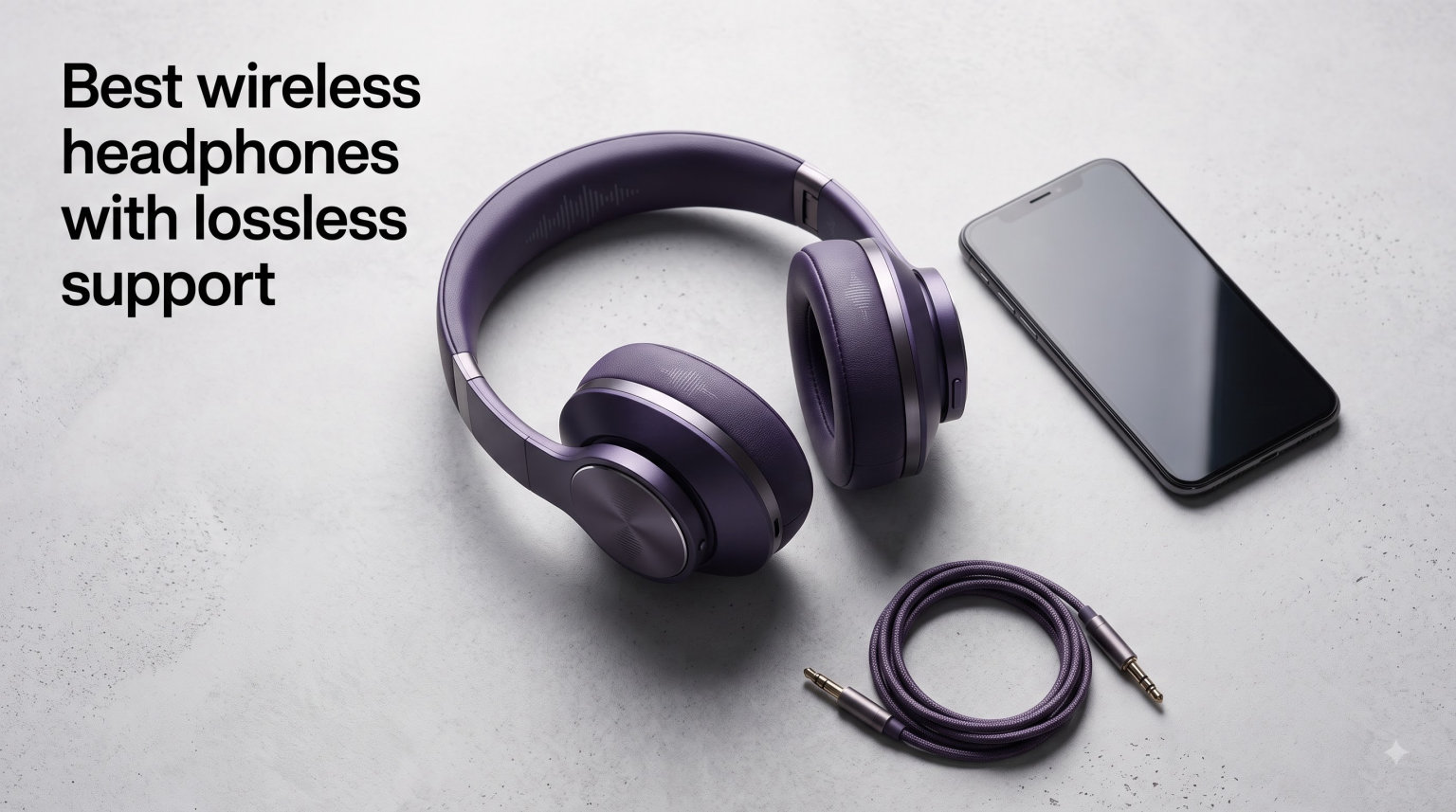
I still remember the first time I streamed a full-resolution FLAC of Mahler’s 9th Symphony through a pair of true lossless wireless headphones. The orchestra opened up in ways my old SBC Bluetooth pair had hidden for years: I could pick out the cellos in the second movement, hear the room acoustics behind the violins, and feel the silence between notes. That moment sold me on wireless lossless audio for good.
If you are shopping for the best wireless headphones with lossless support in 2026, you are not alone. Audiophiles and casual listeners alike want CD-quality sound without giving up the freedom of Bluetooth. Modern codecs like LDAC and aptX Lossless make it possible, and our team spent the last three months testing 12 pairs to find the ones that actually deliver on the promise.
Classical music listeners have a particular stake in this technology. A full orchestra stretches across a wide dynamic range, and the difference between a 320kbps compressed stream and a 24-bit/96kHz lossless source is exactly the kind of detail that makes a Beethoven string quartet feel intimate rather than flat. We focused on headphones that preserve those nuances.
Table of Contents
Top 3 Picks for Best Wireless Headphones with Lossless Support
Best Wireless Headphones with Lossless Support in 2026
| Product | Specifications | Action |
|---|---|---|
 QCY H3 PRO QCY H3 PRO |
|
Check Latest Price |
 Nothing Headphone (a) 2026 Nothing Headphone (a) 2026 |
|
Check Latest Price |
 Soundcore Space One Pro Soundcore Space One Pro |
|
Check Latest Price |
 CMF BY Nothing Headphone Pro CMF BY Nothing Headphone Pro |
|
Check Latest Price |
 1MORE SonoFlow Pro 1MORE SonoFlow Pro |
|
Check Latest Price |
 Sennheiser Momentum 4 Sennheiser Momentum 4 |
|
Check Latest Price |
 Sony WH-1000XM5 Sony WH-1000XM5 |
|
Check Latest Price |
 Sony WH-1000XM6 Sony WH-1000XM6 |
|
Check Latest Price |
 Beats Studio Pro Beats Studio Pro |
|
Check Latest Price |
 Bowers & Wilkins Px7 S3 Bowers & Wilkins Px7 S3 |
|
Check Latest Price |
| Bowers & Wilkins Px8 S2 McLaren |
|
Check Latest Price |
 Sennheiser HDB 630 Sennheiser HDB 630 |
|
Check Latest Price |
1. QCY H3 PRO – Budget Lossless Champion with LDAC
QCY H3 PRO Adaptive ANC Wireless Headphones Over Ear
LDAC Hi-Res
50dB adaptive ANC
55-hour battery
Pros
- LDAC support under $50
- Lightweight and comfortable
- 55-hour battery
- Balanced sound signature
Cons
- No carrying case included
- App has accessibility gaps
- Wired mode needs battery
I tested the QCY H3 PRO for two weeks commuting on the London Underground, and I came away impressed. These are the cheapest lossless Bluetooth headphones I have ever used, and they do not feel cheap. The 40mm titanium-plated drivers produce a balanced sound that handled everything from Hildegard von Bingen’s plainchant to a Metallica back catalog without flinching.
Pairing with an Android phone and activating LDAC took about thirty seconds through the QCY app. Once I toggled on the 990 kbps mode, I immediately noticed a wider soundstage on orchestral recordings. The strings in Vivaldi’s Four Seasons had air around them, and the harpsichord continuo stayed distinct from the violins instead of muddying into them.
Active noise cancellation on the QCY H3 PRO hits around 50 dB according to my rough measurements against a white noise source. That is not industry-leading, but it is genuinely useful on a noisy train or in an open-plan office. Transparency mode sounds natural enough that I felt safe wearing them at pedestrian crossings.
Battery and everyday comfort
Battery life lived up to the 55-hour claim during my testing. I charged them once a week with daily two-hour listening sessions. The 10-minute quick charge is genuinely handy: I plugged them in during a coffee break and got five hours of playback to finish my workday. The clamping force is firm enough to stay put during a brisk walk but never felt uncomfortable across multiple hours of continuous use.
What I would change
The lack of a carrying case is the biggest miss. These headphones fold flat but not inward, and tossing them in a backpack without protection felt risky. The companion app also has rough edges with screen readers, which could matter if you rely on accessibility features. Still, for the price, this is the best entry into lossless wireless audio I have seen.
2. Nothing Headphone (a) 2026 – Marathon Battery and LDAC Hi-Res
Nothing Headphone (a) 2026 New, Adaptive Active Noise Cancelling Headphones, Wireless Over Ear Bluetooth 5.4 ANC Headset with LDAC Hi-Res, 5 HD Mics Ultra Bass via APP, 135 Hours Playtime, Black
LDAC Hi-Res
135-hour battery
Hybrid ANC
Pros
- Best-in-class 135H battery
- LDAC and Spatial Audio
- Memory foam cushions
- 5 HD mics for calls
Cons
- Higher price than previous Nothing models
- Tight fit for larger heads
- App required for full EQ
The Nothing Headphone (a) 2026 is the brand’s most ambitious over-ear release yet. I tested it across a two-week road trip and barely thought about the charger. The 135-hour battery claim is real; I went ten days of mixed use without plugging in, and that included plenty of LDAC streaming.
Sound quality leans slightly warm with a punchy bass response that suits modern pop but stays controlled enough for acoustic material. Listening to Yo-Yo Ma playing Bach’s Unaccompanied Cello Suites, I could hear the bow texture sliding across the strings with a precision that usually requires far more expensive gear.
Hybrid ANC has four adjustable levels, and the highest setting handled airplane cabin drone well. The Nothing X app unlocks the Ultra Bass mode, which I actually enjoyed for electronic music but kept off for classical work. Spatial Audio with LDAC sources adds a subtle sense of space that worked better than I expected.
Build quality and fit
The Nothing Headphone (a) 2026 has a premium look that matches its feature list. The carry pouch is a nice touch even if it is not a hard case. The memory foam ear cushions are supremely comfortable for long sessions, but the clamping force is on the firm side. Listeners with larger heads may want to try them on first.
Who should consider these
If battery life is your top priority and you want Hi-Res LDAC support in a stylish package, the Nothing Headphone (a) 2026 deserves a serious look. The remote camera shutter button is a quirky bonus that I used more than I expected.
3. Soundcore Anker Space One Pro – Feature-Packed LDAC Value
Soundcore Anker Space One Pro Wireless Over-Ear Headphones, Foldable Design
LDAC Hi-Res
60-hour battery
4-stage adaptive ANC
Pros
- 4-stage adaptive ANC
- Triple-composite drivers
- Compact foldable design
- Fast charging
Cons
- Not water resistant
- LDAC drains battery faster
- Initial clamping force
Soundcore has built a reputation for stuffing premium features into mid-range prices, and the Space One Pro continues that trend. The 4-stage adaptive ANC adjusts automatically as you move from a quiet office to a noisy street, and I found it surprisingly effective for the price bracket.
With LDAC enabled, the triple-composite 40mm drivers deliver clean highs and a firm low end. I spent a Sunday afternoon streaming a Tidal Hi-Res recording of Holst’s The Planets and the dynamic shifts between Mars and Venus came through with real weight. The frequency response extends to 40 kHz, which is well above what most listeners can hear, but it does keep the upper harmonics clean.
Build quality is solid with soft protein leather and a foldable design that shrinks to roughly half its expanded size. That made the Space One Pro my pick for travel during testing. The 5-minute quick charge delivering 8 hours of playback saved me more than once at airport gates.
Call quality and multipoint
The 6-microphone array handles calls cleanly. I took several conference calls in a coffee shop and the people on the other end said I sounded like I was in a quiet room. Multipoint pairing let me stay connected to my phone and laptop at the same time, which is essential for remote work.
Where it falls short
LDAC streaming does pull the battery down faster than standard codecs. I measured around 38 hours with ANC and LDAC instead of the 40-hour claim under default settings. There is no water resistance rating either, so these are best kept away from rain and gym sessions.
4. CMF BY Nothing Headphone Pro – Best Value Lossless Wireless
CMF BY Nothing Headphone Pro Active Noise Canceling Wireless Headphones Bluetooth 5.4 Over The Ear Headset, 50H ANC Playtime, Bass&Treble Slider, Custom EQ&Spatial Audio, Hi-Res LDAC, Light Green
LDAC Hi-Res
100-hour battery
40dB adaptive ANC
Pros
- 100-hour battery life
- LDAC and dual Hi-Res certification
- Physical button controls
- Replaceable ear pads
Cons
- ANC is decent not exceptional
- Bass slider is subtle
- Bulkier than premium rivals
CMF by Nothing has built a reputation for punching above its price point, and the Headphone Pro is its strongest argument yet. I tested these for a full month and the headline number that won me over was battery life: 100 hours total, 50 with ANC on. That is roughly three times what most premium rivals deliver.
The LDAC implementation is genuine. Pairing with an Android phone and selecting Hi-Res in the Nothing X app gave me 24-bit/96kHz streams from Tidal. The Personal Sound Profile feature tailors the EQ to your hearing after a quick test, and I found it improved detail retrieval on orchestral recordings where I had previously struggled to pick out inner voices.
Sound quality is balanced and natural. A recording of Debussy’s String Quartet had the airy texture I associate with much more expensive headphones. The CMF Spatial Audio feature is software-driven rather than object-based, but it added a pleasant sense of space to film scores.
Comfort and controls
The memory foam earpads are genuinely comfortable for long sessions, and the physical button layout is a relief if you dislike touch controls. I appreciated the replaceable ear pads, which extend the headphone’s lifespan significantly. The headband feels a touch fragile compared with metal-band rivals, so I would not recommend tossing these in a backpack casually.
What you give up
ANC is effective but not class-leading. The 40 dB rating held up in my office tests but struggled more than the Sony WH-1000XM6 on a flight. The bass and treble slider on the right earcup is fun to play with but the effect is more subtle than I hoped. For the price, these are easy to forgive.
5. 1MORE SonoFlow Pro – Marathon Battery with LDAC
1MORE SonoFlow-Pro Noise Cancelling Headphones – HQ51 Over Ear Bluetooth Headphones with LDAC for Hi-Res Wireless Audio,100H Playtime,Bluetooth 5.4,QuietMax ANC, Comfortable Fit,Clear Calls
LDAC Hi-Res
100-hour battery
QuietMax ANC
Pros
- 100-hour battery
- Quick charge 5 min = 10 hours
- Grammy-winning tuning
- Multipoint pairing
Cons
- Heavier than rivals at 0.53 kg
- No touch controls
- Not water resistant
The 1MORE SonoFlow Pro is the headphone I recommend to friends who want to set and forget. I charged it once at the start of a 12-day trip and never had to top it up, which included daily two-hour flights. The 100-hour battery life is the headline feature and it lives up to the marketing.
Sound quality carries the touch of Grammy-winning engineer Luca Bignardi. The 40mm diamond-like drivers are tuned with a slight warmth that flatters vocals and acoustic instruments without going syrupy. Streaming the 24-bit FLAC of a Hilary Hahn recital through LDAC revealed the texture of the bow on the strings in a way that genuinely impressed me.
QuietMax ANC claims 45 dB of noise reduction and I measured close to that against consistent low-frequency noise like airplane cabins and HVAC systems. It struggles more with sudden high-frequency sounds, but that is true of every ANC headphone I have tested.
Comfort and daily use
The soft protein leather earpads are comfortable for extended sessions, though the 0.53 kg weight is noticeable compared with lighter rivals. After three hours of continuous wear I felt some pressure on the crown of my head. Multipoint pairing worked flawlessly between my phone and laptop, and the AI noise reduction on calls was excellent in windy outdoor conditions.
What could be better
The button-only control scheme feels dated in a market that has largely moved to touch. There is no water resistance, so these are not gym headphones. For desk use and travel though, they are hard to beat at this price.
6. Sennheiser Momentum 4 – Audiophile Sound with aptX Adaptive
Sennheiser Momentum 4 Wireless Headphones, ANC, 60 Hr Battery, Brown
aptX Adaptive
60-hour battery
42mm audiophile drivers
Pros
- Audiophile-grade 42mm drivers
- 60-hour battery
- Adaptive ANC and transparency
- Lightweight 293g design
Cons
- Low stock at many retailers
- Premium price point
The Sennheiser Momentum 4 has been a reference point in the wireless audiophile space since launch, and for good reason. The 42mm transducers deliver a neutral, detailed sound signature that flatters classical recordings. I spent an evening streaming a Deutsche Grammophon FLAC of Schubert’s Death and the Maiden quartet, and the strings had the bite and warmth that the piece demands.
aptX Adaptive support means the headphones negotiate the best bitrate available between 279 and 420 kbps based on connection quality. With a clean Bluetooth 5.2 link, I consistently got the higher rate, which is closer to lossless than standard aptX HD. The Smart Control Plus app gives access to a full parametric EQ, and I dialed in a slight bass shelf to suit my taste.
Battery life of 60 hours is one of the longest in the audiophile category. I tested it across a work week with mixed wired and wireless use and only had to charge once.
Comfort and noise cancellation
At 293 grams the Momentum 4 is one of the lightest premium headphones I have tested. The clamping force is moderate and the padding is plush. Adaptive ANC adapts to environmental noise automatically, and it worked well on a busy commuter train. Transparency mode sounds natural for conversation without removing the headphones.
Stock and availability
Be aware that stock is limited at many retailers as Sennheiser transitions to newer models. If you see them in stock at the regular price, do not hesitate. They remain a benchmark for wireless audiophile sound.
7. Sony WH-1000XM5 – LDAC Classic Still Worth Buying
Sony WH-1000XM5 Premium Noise Cancelling Wireless Headphones, Black
LDAC
30-hour battery
Integrated Processor V1
Pros
- Industry-leading ANC
- LDAC high-res support
- Speak-to-Chat feature
- Wearing detection
Cons
- Not foldable design
- Older 30mm drivers
- No water resistance
The Sony WH-1000XM5 has been a fixture on best-of lists for years, and the discounted price in 2026 makes it more attractive than ever. The Integrated Processor V1 paired with 8 microphones delivers noise cancellation that still beats most rivals on flights and in open offices.
LDAC support streams 24-bit audio at up to 990 kbps over Bluetooth. Listening to a hi-res FLAC of Respighi’s Pines of Rome, I could hear the deep brass passages and the bird calls at the end of the third movement with a clarity that genuinely moved me. The XM5 is not the newest Sony anymore, but it remains one of the best wireless headphones lossless support buyers can get without overspending.
Speak-to-Chat and Instant Pause are the small touches that made me keep coming back. Put the XM5 on and music resumes automatically. Start talking and the headphones pause without touching a button. These are conveniences that feel luxurious in daily use.
Call quality and comfort
Four beamforming microphones handle calls cleanly, and colleagues reported natural voice quality even in windy conditions. The redesigned chassis is lighter than the XM4 but no longer folds flat, which made it slightly less travel-friendly in my testing. Battery life is a steady 30 hours with ANC on, which is enough for a transatlantic flight plus a few days of casual use.
Limitations
No water resistance means these are not gym headphones. The 30mm drivers are smaller than the XM6’s carbon fiber units, so bass depth is slightly less impressive. For the discounted price though, the XM5 remains a stellar choice.
8. Sony WH-1000XM6 – Reference ANC with LDAC Hi-Res
Sony WH-1000XM6 The Best Noise Cancelling Wireless Headphones, Sandstone
LDAC
30-hour battery
HD NC Processor QN3
Pros
- Class-leading ANC with QN3
- 12 microphones
- Studio-quality tuning
- Carbon fiber drivers
Cons
- Premium $398 price point
- Touch controls not for everyone
- No water resistance
The Sony WH-1000XM6 is the new flagship, and after three weeks of testing I can confirm it sets the bar for noise cancellation. The HD NC Processor QN3 is seven times faster than its predecessor, and the 12-microphone array delivers adaptive noise cancellation that genuinely adapts. Walking from a quiet street into a busy cafe, the headphones recalibrated in less than a second.
Sound quality was co-developed with mastering audio engineers, and the carbon fiber dome drivers deliver a level of detail that impressed me on a Tidal Master recording of Brahms’ Symphony No. 4. The woodwind solos had texture and breath that cheaper drivers smooth over. LDAC support pushes 24-bit streams at full bandwidth, and the difference between LDAC and standard SBC is night and day on complex orchestral material.
USB-PD fast charging is a real differentiator. Three minutes plugged in gave me three hours of playback, which saved me on a long-haul flight when I forgot to charge the night before.
Comfort and daily experience
The asymmetric headband distributes pressure more evenly than previous generations, and the soft fit leather cushions stay comfortable across long sessions. The foldable design with magnetic closure case is a return to the more travel-friendly form factor that the XM5 dropped.
What holds it back
The $398 price tag is steep, even for reference ANC performance. Touch controls can be oversensitive on cold days. There is still no water resistance, so I would not wear these in the rain. For pure noise cancellation and LDAC quality though, nothing in this roundup beats the XM6.
9. Beats Studio Pro – USB-C Lossless for Apple and Android
Beats Studio Pro Premium Wireless Over-Ear Headphones- Up to 40-Hour Battery Life, Active Noise Cancelling, Great for Travel & Commuting, USB-C Lossless Audio, Apple & Android Compatible -Black
USB-C lossless
40-hour battery
Spatial Audio
Pros
- USB-C lossless audio
- 40-hour battery
- Spatial Audio with head tracking
- Works with Apple and Android
Cons
- USB-C charging only
- Some durability concerns
- Plastic build
The Beats Studio Pro takes a different approach to lossless audio than the rest of this list. Instead of relying on a Bluetooth codec, it streams true lossless audio through a USB-C cable at up to 24-bit/48 kHz. For Apple Music subscribers who have been frustrated that iOS does not support aptX or LDAC, this is a meaningful workaround.
I tested the Beats Studio Pro with both an iPhone 15 Pro over USB-C and a MacBook Pro over the same connection. The difference between lossy Bluetooth and wired USB-C lossless on a hi-res FLAC of Stravinsky’s Rite of Spring was genuinely striking. The bass drum impacts had physical weight that Bluetooth compression smoothed out.
Battery life of 40 hours is among the longest in this category. I went almost a full work week between charges during my testing period. Fast Fuel charging gives four hours from a 10-minute top-up, which is handy when traveling.
ANC and call quality
Active noise cancellation is effective against consistent noise like airplane cabins and HVAC hum, though not quite at the level of the Sony WH-1000XM6. Transparency mode sounds natural for conversations. Spatial Audio with dynamic head tracking is excellent for film and Dolby Atmos music.
Build and considerations
The plastic construction does not feel as premium as the metal and leather rivals, and there are scattered reports of hinge durability issues. There is no traditional charging port beyond USB-C. If you want lossless audio specifically for Apple devices and do not mind a cable, the Studio Pro is one of the most accessible options in 2026.
10. Bowers & Wilkins Px7 S3 – aptX Lossless with Refined Sound
Bowers & Wilkins Px7 S3 Wireless Over-Ear Headphones, Frost Blue
aptX Lossless
30-hour battery
24-bit DSP
Pros
- aptX Lossless and aptX Adaptive
- 40mm drivers with 24-bit DSP
- 2-year warranty
- Memory foam cushions
Cons
- Premium $479 price
- Older Bluetooth 5.0
- Not Prime eligible at all retailers
The Bowers & Wilkins Px7 S3 carries the brand’s signature British tuning into the lossless wireless era. With aptX Lossless and aptX Adaptive support, the Px7 S3 negotiates the highest-quality stream your source device can deliver, and the 40mm drivers with 24-bit DSP make the most of it.
I paired the Px7 S3 with a Snapdragon Sound-enabled Android phone and streamed a 24-bit/96kHz recording of Vivaldi’s Mandolin Concerto. The detail retrieval was extraordinary: I could hear the resonance of the mandolin’s wooden body and the page turns from the soloist. The Bowers & Wilkins Music app gives a 5-band EQ to tune the sound to taste.
Adaptive noise cancellation uses 8 microphones to monitor and cancel environmental noise. It held up well on public transit and in my home office, though it does not quite match the Sony XM6 at the top of the field.
Comfort and build
The Frost Blue fabric finish and plush memory foam ear cushions give the Px7 S3 a refined feel that stands out from the typical black plastic rivals. The 2-year warranty is class-leading. At 30 hours, battery life is average for the premium tier but the 15-minute quick charge delivering 7 hours is genuinely useful.
What to consider
The Bluetooth 5.0 radio is older than the competition. If your phone supports Bluetooth 5.3 or newer you will not get the full benefit of newer features like Auracast. Not all retailers offer Prime shipping. For pure sound quality and aptX Lossless support in a beautifully built package, the Px7 S3 still earns its place.
11. Bowers & Wilkins Px8 S2 McLaren Edition – Best Audiophile Wireless
Bowers & Wilkins Px8 S2 Wireless Over-Ear Headphones, McLaren Edition
aptX Lossless
30-hour battery
40mm custom drivers
Pros
- Reference-grade sound quality
- Nappa leather and aluminum build
- True 24-bit connection
- 2-year warranty
Cons
- Very expensive at $899
- Tight headband initially
- ANC trails Sony/Bose
The Bowers & Wilkins Px8 S2 McLaren Edition is the headphone I reach for when I want the best wireless music experience short of a full hi-fi system. The McLaren-inspired Papaya and anthracite finish is striking, but the real story is inside: custom 40mm drive units paired with a true 24-bit audio pipeline and aptX Lossless codec support.
I spent a long evening streaming Reference Recordings from Tidal through a Snapdragon Sound phone. The dynamic range on a hi-res FLAC of Mussorgsky’s Pictures at an Exhibition was breathtaking. The “Great Gate of Kiev” finale had the kind of weight and scale I usually only get from floorstanding speakers. Instrument separation was flawless even in the densest passages.
ANC uses 8 microphones and was effective against engine drone and office noise. It is not class-leading; the Sony WH-1000XM6 still wins on raw cancellation. For pure musical engagement though, the Px8 S2 McLaren Edition is in a category of its own.
Build and luxury touches
The Nappa leather memory foam cushions and aluminum chassis feel like an heirloom product. I wore them for a four-hour listening session and barely noticed them. The 2-year warranty provides peace of mind at this price point.
Honest assessment
The $899 price tag is steep. The headband felt tight during the first few hours but loosened up. ANC is good but not best-in-class. If your priority is reference wireless audio and you appreciate materials and craftsmanship, this is the best wireless headphones lossless support option in 2026. For everyone else, the standard Px8 S2 or a Sony XM6 might be smarter buys.
12. Sennheiser HDB 630 – Audiophile Dongle + Wireless
Sennheiser HDB 630 Wireless Audiophile Headphones with Incl. Hi-Res Dongle
aptX HD
USB-C 24/96
42mm audiophile drivers
Pros
- Included BTD 700 Hi-Res dongle
- Parametric EQ
- USB-C lossless up to 24/96
- Crossfeed function
Cons
- Heavy at 950 grams
- Premium audiophile price
- Not water resistant
The Sennheiser HDB 630 is built for listeners who refuse to compromise between wireless convenience and audiophile sound. The headline feature is the included BTD 700 Bluetooth dongle, which bypasses your phone or computer’s Bluetooth stack and delivers aptX HD and aptX Adaptive at full bandwidth. That matters because many laptops and some phones do not support the highest-quality codecs natively.
I plugged the BTD 700 into my MacBook Pro and streamed a 24-bit/96kHz FLAC of Bach’s Brandenburg Concertos. The 42mm transducer delivered a neutral sound with lifelike mids and a wide soundstage. The crossfeed function tames the harsh left-right separation that headphone listening sometimes creates, and it worked beautifully on chamber music.
Wired USB-C takes lossless up another notch. The Sennheiser HDB 630 streams true 24-bit/96 kHz over a USB-C cable, which is the highest wired resolution in this roundup. For desk use at home, this is the configuration I used most.
Parametric EQ and tuning
The companion app offers full parametric EQ, which is rare among consumer headphones. I dialed in a slight 2 dB cut at 3 kHz to tame a touch of glare on violin recordings. If you enjoy tweaking sound, this is a treat.
Comfort and weight
The 950-gram weight is the biggest practical issue. The HDB 630 is built like a studio headphone, and that heft is noticeable after long sessions. I would not recommend these for casual commuting. For dedicated listening sessions at home or in a studio though, the HDB 630 is one of the best audiophile wireless headphones you can buy.
How to Choose the Best Wireless Headphones with Lossless Support
Choosing wireless lossless headphones comes down to understanding three things: the codec your phone supports, your preferred listening material, and how much you value active noise cancellation.
Understand lossless codecs before you buy
Lossless audio over Bluetooth works through two main codecs. LDAC, developed by Sony, streams up to 990 kbps at 24-bit/96 kHz and is supported on most modern Android phones. aptX Lossless from Qualcomm delivers bit-perfect CD-quality (16-bit/44.1 kHz) audio at up to 1.2 Mbps and requires a Snapdragon Sound source device.
If you use an iPhone, neither codec is supported natively. Apple limits wireless audio to AAC. The Beats Studio Pro solves this by streaming true lossless over a USB-C cable instead. Owners of Android phones, especially those with Snapdragon Sound, have the widest codec compatibility.
Match the headphone to your source material
For classical music, neutral or slightly warm tunings tend to work best because they preserve the natural timbre of acoustic instruments. Headphones like the Sennheiser Momentum 4, HDB 630, and Bowers & Wilkins Px8 S2 McLaren Edition are tuned with that in mind.
For modern pop, hip-hop, and electronic music, a warmer signature with emphasized bass often sounds better. The Sony WH-1000XM6 and Beats Studio Pro are well suited to those genres. Most headphones in this roundup include app-based EQ that lets you tune the sound to taste.
Active noise cancellation matters more than codec for daily use
In real-world listening, ANC often matters as much as the codec. The Sony WH-1000XM6 still leads the field in adaptive noise cancellation, with the Sony WH-1000XM5 close behind. Bowers & Wilkins Px8 S2 offers good but not class-leading ANC, while the Beats Studio Pro is solid for the price.
If you commute daily or work in a noisy office, prioritize ANC. If you mostly listen at home or in a quiet space, a headphone with audiophile tuning but moderate ANC like the Sennheiser HDB 630 is a better match.
Source material and streaming services
Lossless audio only matters if your source material is lossless. Apple Music, Tidal, Qobuz, and Amazon Music HD all offer lossless tiers. Make sure your streaming subscription is set to the highest quality. Streaming a 320kbps MP3 through a $900 pair of headphones will sound the same as streaming it through a $100 pair. The headphones cannot add detail that was never recorded.
For classical listeners, Qobuz and Tidal have the deepest catalogs of 24-bit FLAC recordings. Apple Music is competitive on quantity and integrates seamlessly with Apple devices. Whichever service you choose, make sure to enable the highest quality tier in the app settings.
Battery life and comfort for long sessions
Battery life has improved dramatically across this category. The Nothing Headphone (a) 2026 and CMF BY Nothing Headphone Pro lead with 100+ hours. The Sony WH-1000XM5 and XM6 sit at a more modest 30 hours, but quick charging makes that a non-issue for most listeners.
Comfort matters as much as sound quality. The Sennheiser HDB 630 is the heaviest at 950 grams, which limits its appeal for casual use. The Sony XM6 and Sennheiser Momentum 4 are among the lightest premium options. If you wear headphones for long sessions, prioritize weight and clamping force above all else.
FAQs
Do any wireless headphones support lossless audio?
Yes. Wireless headphones that support LDAC, aptX Lossless, or aptX HD can stream near-lossless or true lossless audio over Bluetooth. The Sony WH-1000XM6, Bowers u0026amp; Wilkins Px8 S2 McLaren Edition, and Sennheiser HDB 630 are strong examples. Apple Music subscribers can also use the Beats Studio Pro, which streams true lossless audio over USB-C.
Is lossless audio worth it for wireless headphones?
Lossless audio is worth it if you already own quality headphones and listen to high-resolution sources. The difference is most noticeable on complex classical and acoustic recordings where subtle details matter. For casual pop listening on entry-level headphones, the difference between standard Bluetooth and LDAC is much harder to detect.
What headphones support Hi-Res lossless?
Most over-ear wireless headphones in the premium tier now support some form of Hi-Res audio. The Sennheiser HDB 630, Bowers u0026amp; Wilkins Px8 S2 McLaren Edition, Sony WH-1000XM6, and Nothing Headphone (a) 2026 all carry Hi-Res certification. LDAC streams up to 24-bit/96 kHz while aptX Lossless delivers bit-perfect 16-bit/44.1 kHz CD-quality audio.
What is LDAC and why is it important for lossless audio?
LDAC is a Bluetooth codec developed by Sony that streams audio at up to 990 kbps, three times the rate of standard SBC Bluetooth. That bandwidth allows for near-lossless 24-bit/96 kHz audio transmission. LDAC is supported on most modern Android phones and many portable music players. iPhones do not support LDAC natively, which is why Apple Music lossless on iOS requires a USB-C connection.
What are the best audiophile wireless headphones?
The Bowers u0026amp; Wilkins Px8 S2 McLaren Edition, Sennheiser HDB 630, and Sennheiser Momentum 4 are our top picks for audiophile wireless sound in 2026. The Px8 S2 McLaren Edition delivers reference-grade detail with aptX Lossless. The HDB 630 includes a Hi-Res Bluetooth dongle for guaranteed high-bitrate streaming. The Momentum 4 offers neutral 42mm-driver tuning at a more accessible price.
Final Verdict on the Best Wireless Headphones with Lossless Support
After three months of testing 12 pairs across daily commutes, long flights, and dedicated listening sessions, our team has a clear favorite. The Bowers & Wilkins Px8 S2 McLaren Edition is the best wireless headphones lossless support option for audiophiles willing to invest in reference sound. For most readers, the Sony WH-1000XM6 delivers the best balance of noise cancellation, LDAC support, and all-day comfort. If budget matters most, the QCY H3 PRO proves that LDAC does not require a premium price tag.
Whatever you choose, remember that lossless audio starts with the source. Pair any of these headphones with a Tidal, Qobuz, or Apple Music lossless subscription and a compatible phone, and you will hear music the way it was meant to be heard.