
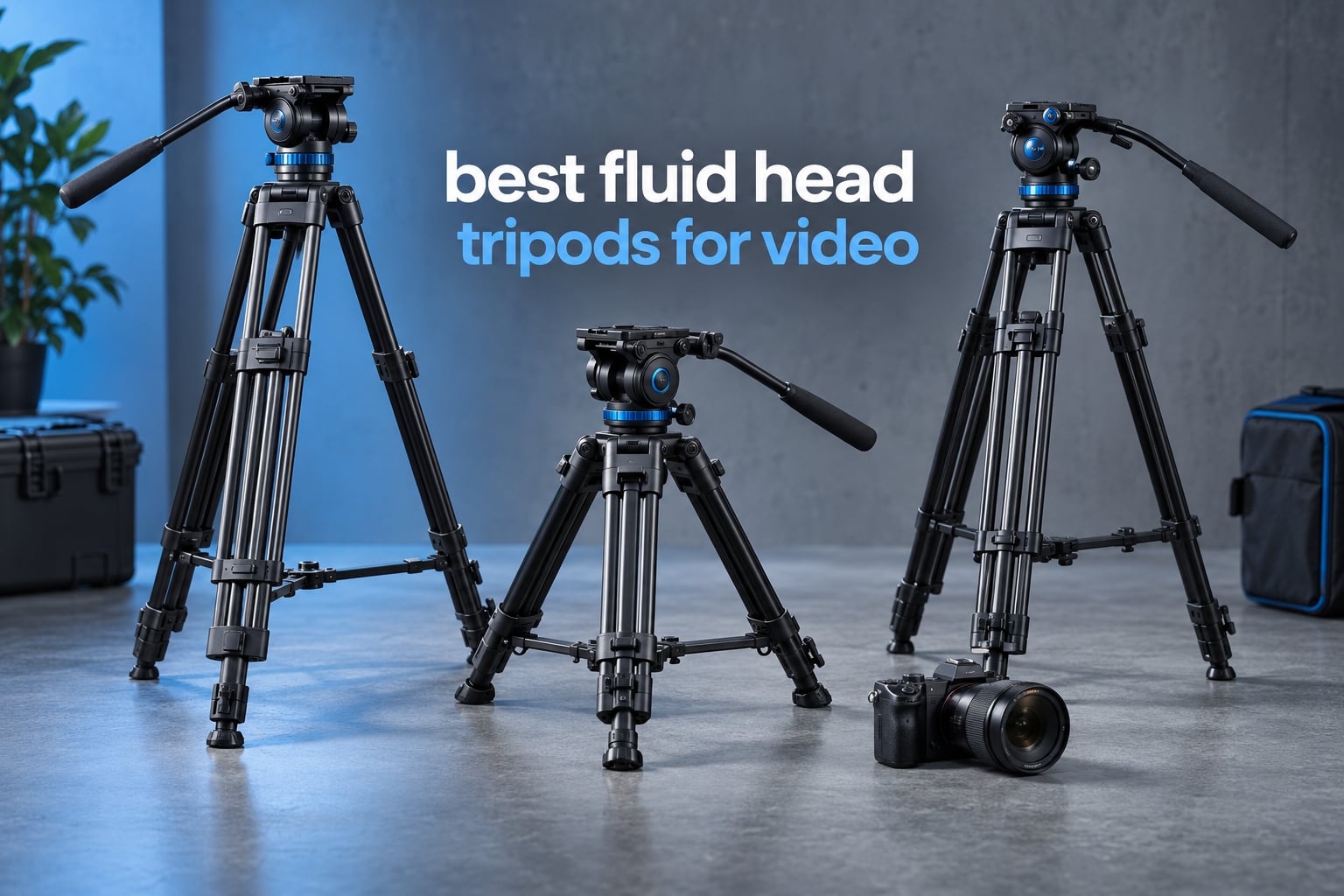
A smooth pan is the difference between footage that looks professional and footage that looks like it was recorded. When a tripod head is stiff, the move starts with a jerk and stops with a wobble, and no amount of editing hides that. The best fluid head tripods for video solve that problem with oil-damped drag in the pan and tilt axes, plus counterbalance that holds your camera in place at any angle.
We spent weeks reading owner reviews, comparing published specs, and matching payload ratings against the camera bodies people actually shoot with. What follows is a 10-pick list covering everything from light mirrorless kits to ENG builds with long glass, with the load limits stated in pounds and kilograms for every unit.
If you are still building out your kit, our lavalier microphone roundup covers the audio side of an interview setup, and our headphone guide for editors covers monitoring. If you are exporting long takes at the end of the day, our GPUs for video editing roundup covers the render side and our RAID enclosure guide covers archiving the rushes. The tripod is the part that decides whether a take is usable, so that is where we start.
Table of Contents
What Is a Fluid Head on a Tripod?
A fluid head tripod is a video support whose head uses fluid-damped drag and counterbalance so the camera pans and tilts smoothly under one hand. Resistance inside the pan and tilt axes slows the plate, while a spring-loaded counterbalance offsets the off-centre weight of the rig so the head stays neutral at any tilt angle and can be set light, neutral, or heavy. Video records every wobble and start-stop, so that damping is what turns hand motion into a repeatable move.
A ball head does something different. It locks firm, releases instantly, and drops the camera to the counterweight side the moment you unclamp it, which is why ball heads feel wrong for pans and are still the right answer for stills.
Top 3 Picks for the Best Fluid Head Tripods (October 2026)

Cayer BV30L 72 inch Video Tripod
- Max load 13.2 lb
- 75mm bowl fluid head
- 33.4-72.5 in height range
- 8.8 lb system weight

NEEWER TP74 74 inch Video Tripod
- Max load 17.6 lb / 8 kg
- Dual-mode DJI and Manfrotto plate
- 75mm bowl with bubble level
- 10.9 lb system weight

SmallRig AD-01 Heavy Duty Video Tripod
- Max load 8 kg / 17 lb
- Built-in damping and balancing
- 75mm bowl with bubble level
- 8.8 lb system weight
All 10 Picks Best Fluid Head Tripods for Video in 2026
Every pick below is a complete system, meaning legs, head, and quick release plate arrive in one box. The load rating is the manufacturer’s maximum, and the weight is the whole package as shipped, which is the number that matters when you are walking to a location.
| Product | Specifications | Action |
|---|---|---|
| Cayer BV30L 72 inch Video Tripod |
|
Check Latest Price |
| NEEWER TP74 74 inch Video Tripod |
|
Check Latest Price |
| SmallRig AD-01 Heavy Duty Video Tripod |
|
Check Latest Price |
 RAUBAY DV-1 PRO 70.8 inch Video Tripod RAUBAY DV-1 PRO 70.8 inch Video Tripod |
|
Check Latest Price |
 COMAN FF16LS Heavy Duty Fluid Head Tripod COMAN FF16LS Heavy Duty Fluid Head Tripod |
|
Check Latest Price |
 Ravelli AVTP 55 inch Video Tripod Ravelli AVTP 55 inch Video Tripod |
|
Check Latest Price |
 Mactrem VT72 82 inch Fluid Head Tripod Mactrem VT72 82 inch Fluid Head Tripod |
|
Check Latest Price |
 CAMBOFOTO TA60 74 inch Video Tripod CAMBOFOTO TA60 74 inch Video Tripod |
|
Check Latest Price |
 SmallRig 5440 73 inch Video Tripod SmallRig 5440 73 inch Video Tripod |
|
Check Latest Price |
 NEEWER Basics TP37 74 inch Video Tripod NEEWER Basics TP37 74 inch Video Tripod |
|
Check Latest Price |
1. Cayer BV30L – Tall Stands and Long Interview Setups
Cayer BV30L Video Tripod with Fluid Head, 72″ Heavy Duty Twin Tube for DSLR
Max load 13.2 lb
75mm bowl fluid head
33.4-72.5 in range
Folds to 35 in
8.8 lb
Pros
- Cast and milled aluminium with stainless hardware
- Smooth fluid glide on pan and tilt
- 72 in max height suits standing interviews
- Mid-level spreader plus integrated levelling bowl
- Carrying bag and spare quick release plate included
Cons
- Panning is less even than premium fluid heads
- Head can feel stiff to move at first
- Tall minimum height for low angles
The BV30L is the one we keep reaching for when an interview is shot standing up and nobody wants to be in shot. Its 33.4 to 72.5 inch range means you can match the camera to the tallest person in the room without a riser, which is the single most useful thing a video tripod can do in a corporate or event setting.
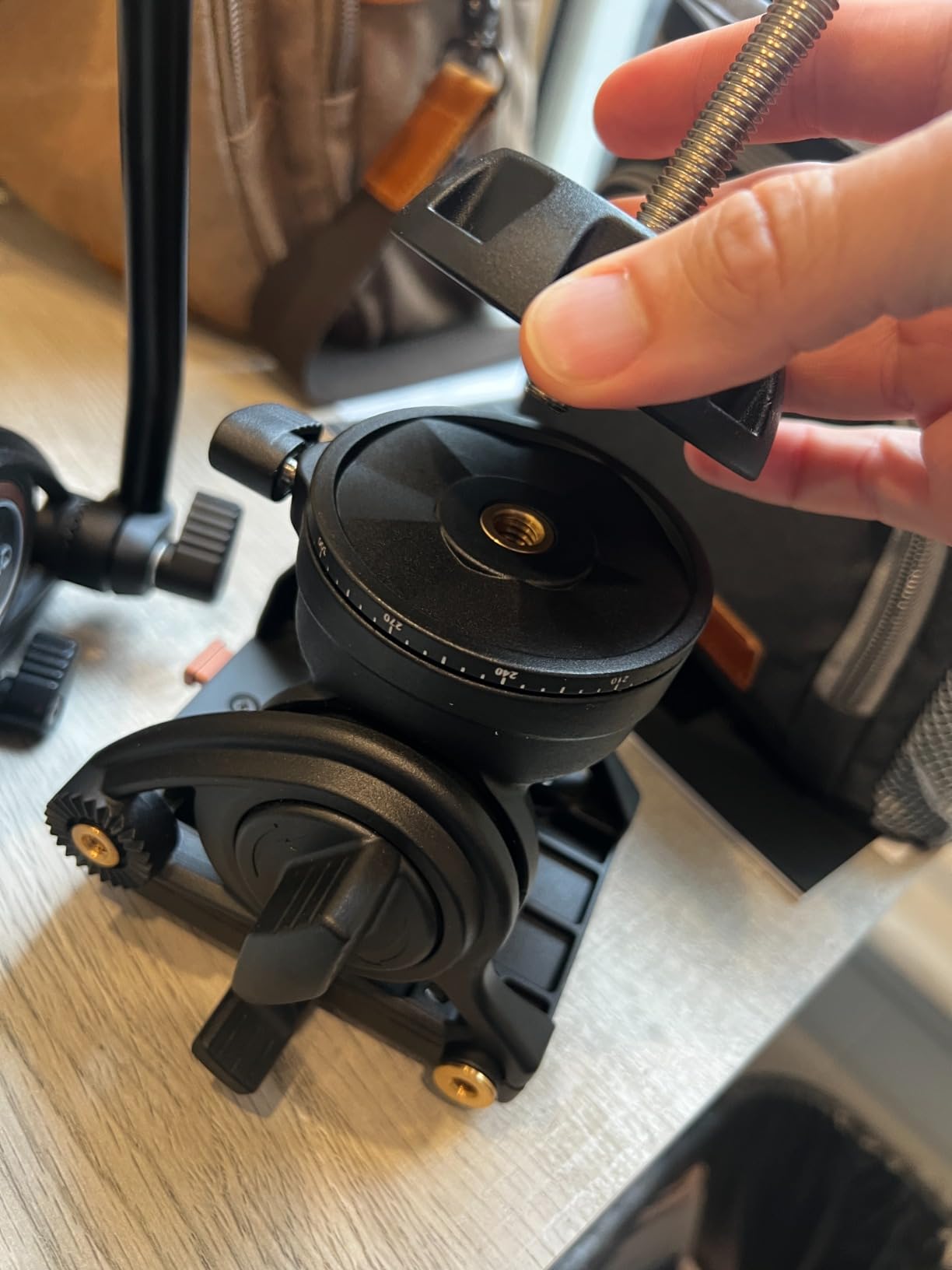
Build quality is the surprise. The legs and head are cast and milled aluminium with stainless steel hardware rather than the thin folded steel used by cheaper kits, and that is the reason it carries 8.8 lb without feeling like it will wander under a long lens. Two quick release plates, hex wrenches and a carrying bag are in the box, so there is nothing to buy before the first shoot.
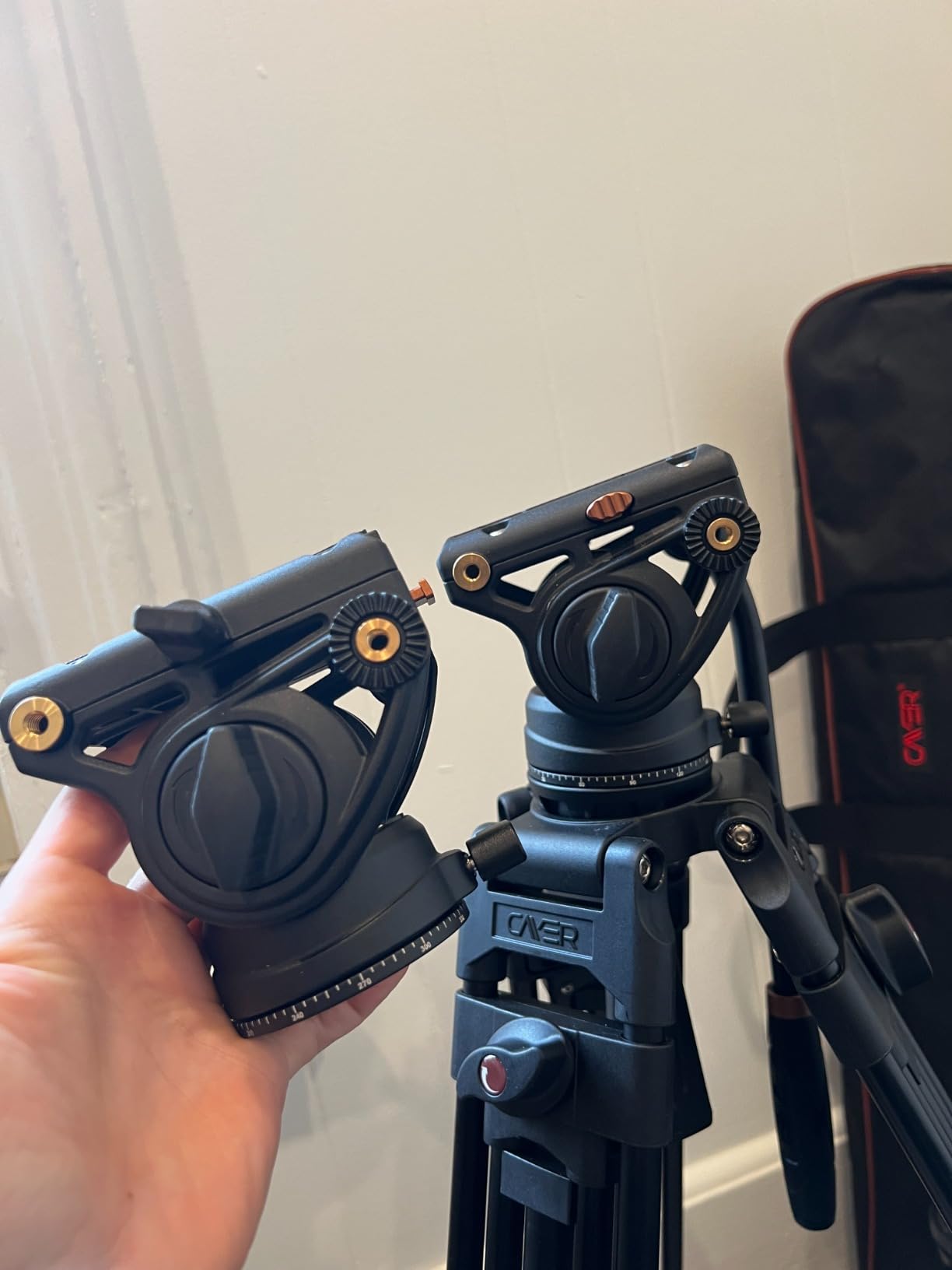
Reviewers repeatedly describe the head as professional-feeling and robust for the money, and a fair number of them bought a second unit as a backup. The most common criticism is that the panning action is less even than fluid heads from broadcast names, and that the head can feel stiff before it breaks in.
Plan around a minimum operating height that is not low. Very low angles mean removing a centre section, and the aluminum tubes with plastic knobs are not built for daily abuse on a film set. If you shoot mostly ground-level or macro work, look at the spreader types in the buying guide before settling here.
Will the 13.2 lb rating cover your rig?
It covers a mirrorless body with a zoom, a small accessory cage and a shotgun mic without much trouble. Add a matte box, a follow focus, two monitors and a top handle and you are close to the ceiling, and the head starts to feel the load in the tilt axis.
Run the margin rule below before you commit. If your measured rig weight is above roughly 9 lb, a higher-rated head such as the COMAN FF16LS or the Mactrem VT72 gives you real headroom and a more forgiving balance point.
Is the stiff feel a dealbreaker for interviews?
Not for the way most people use it. A locked-off interview with a slow drift in and out is exactly the kind of move this head handles, and once the drag is dialled in the resistance settles down.
It is the wrong tool for long tracking moves or repeated whip pans, where precision damping matters more than height reach. For those, prioritise a head with genuinely adjustable drag on both axes.
2. NEEWER TP74 – Top Rated for Gimbal and Tripod Workflows
NEEWER 74″ Video Tripod with Fluid Head, QR Plate, Aluminum, TP74
Max load 17.6 lb / 8 kg
Fluid drag pan head with balancing
75mm bowl with bubble level
35-74 in range
10.9 lb
Pros
- Smooth damped pan and tilt from the fluid head
- Dual-mode plate fits DJI RS gimbals and Manfrotto plates
- Mid-level spreader and nonslip rubber feet
- Bubble level and 360 scale on the bowl base
- Wide 35-74 in height range
Cons
- Heavy and bulky for location work
- Leg lock tension needs tuning with the hex keys
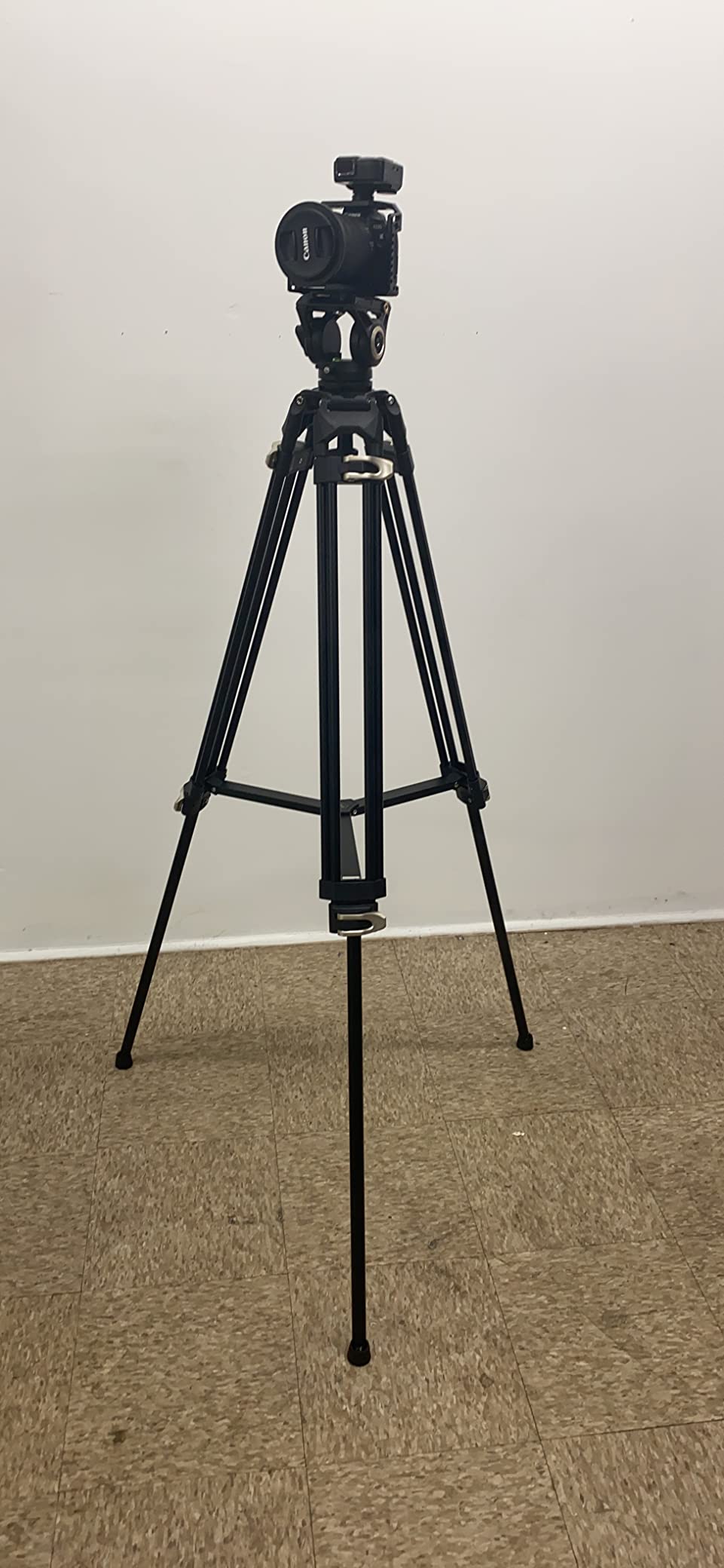
The TP74 exists because most hybrid shooters live with two mounting systems at once. Its dual-mode quick release plate accepts DJI RS2, RS3 and RS3 Pro gimbal plates as well as Manfrotto 501PL and 504PL plates, so you can move the same camera from a gimbal to the tripod without a second plate or an adapter stack.
Load capacity is 17.6 lb or 8 kg, which comfortably carries a full-frame body with a 24-70, a small field monitor and a top handle. The fluid drag pan head includes a friction damping and balancing system, with 360 degree rotation and tilt from -75 to +90 degrees, and the 75mm bowl carries a bubble level and a 360 degree scale for fast levelling.
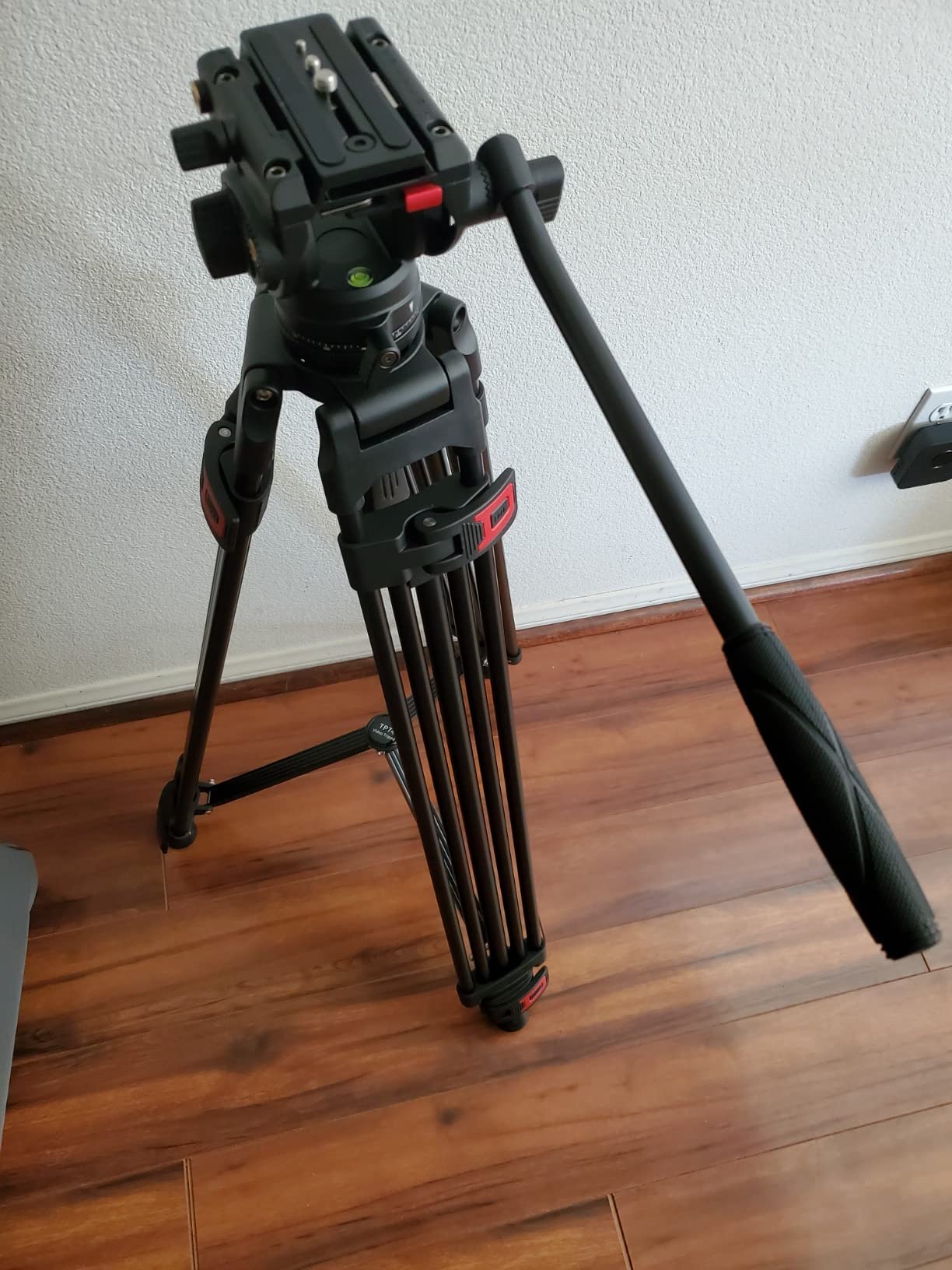
Reviewers call out the smooth damped movement and the plate flexibility as the standouts, with stability credited to the double tandem aluminium legs and the mid-level spreader. Leg lock tension needs tuning with the supplied hex keys, which takes a few minutes and then stays put.
Two accessory threads at the top take a monitor, a microphone or a light, which keeps the rig tidy. The weight is 10.9 lb, and that is where the compromise sits: this is a car or van tripod, not something you want on a long walk.
Is 17.6 lb enough for a cinema-style rig?
For a rigged mirrorless body with a battery, a cage and a couple of lenses, yes. The rating leaves roughly a third of headroom before you are at the limit, which is where a fluid head behaves best and keeps the balance point forgiving.
For a cinema camera with a shoulder rig, a follow focus and a matte box, go higher. The Ravelli AVTP at 27 lb or the Mactrem VT72 at 33 lb are sized for that class of build.
Will the dual plate work with your existing gear?
If your quick release plates are Manfrotto 501PL or 504PL, or a DJI RS series plate, the answer is yes with no adapter. If your kit runs Arca-Swiss style plates from a different system, check the geometry before you rely on it.
The 1/4 and 3/8 inch top mounting screws cover the rest of the common cases. Two plates in the box means you can leave one on the head and move quickly on a corporate shoot.
3. SmallRig AD-01 – the Most Refined Build at This Level
SmallRig 73.2″/ 186cm Heavy Duty Video Tripod with Fluid Head AD-01
Max load 8 kg / 17 lb
Fluid head with damping and balancing
75mm bowl with bubble level
33-73 in range
8.8 lb
Pros
- Sturdiest build among the mid-priced options
- Dual-mode plate for DJI RS and Manfrotto systems
- Damping and balancing handle normal pans and tilts
- Side-press plate release for fast camera changes
- Carrying bag and mounting screws included
Cons
- Heavier and pricier than budget fluid tripods
- Entry-level head rather than broadcast grade balancing
SmallRig builds hardware for cages and rigs first, and the AD-01 shows that. The double-tube aluminium alloy legs and the head feel more machined than folded, and at 8.8 lb it is one of the more portable units here while still handling 8 kg or 17 lb.
The head has 360 degree horizontal movement and +90 to -60 degrees of vertical travel with built-in damping and a balancing system, which is enough range for interview, b-roll and slow tilt moves. The 75mm bowl bottom includes a built-in bubble level, so levelling does not depend on the camera’s own screen.
The side-press quick release plate is the quiet hero. Buyers handling multiple bodies say the camera change is fast and the safety design is reassuring, and the plate doubles as a wrench, so a stripped screw on location is less of a crisis.
The honest limitation is the balance system. This is an entry-level head, not a broadcast one, and the fine balance work that a 15-step counterbalance gives you is not what happens here. It handles normal pans and tilts well and stops there.
Is this a step up worth paying for?
If your current tripod is a light plastic stand, yes. The difference in stiffness at full extension, and in how the head feels mid-pan, is easy to notice the first time you use it.
Compared with the other complete systems in this list, you are paying for build consistency rather than headline load figures. For a single operator working events and interviews, that trade is usually the right one.
How does it handle long lenses?
A 24-70 is unremarkable on it. A 70-200 pushes the tilt axis closer to its limit, and the 33 inch minimum height makes low-angle work awkward without a riser or a shorter leg configuration.
Watch for front-heavy loads. A matte box or a teleprompter shifts the centre of gravity forward, and a head with a modest counterbalance range will not hold that well as a rig mounted further back.
4. RAUBAY DV-1 PRO – Full-Frame Bodies with Long Glass
RAUBAY 70.8″ Professional Heavy Duty Video Camera Tripod with Fluid Head, QR Plate for DSLR Camcorder, Max Loading 17.6lbs, Aluminum Twin Tube Leg with Metal Mid-Level Spreader DV-1 PRO
Max load 17.6 lb
Fluid drag head with damping knob
75mm half ball adapter
29.5-70.8 in range
8.4 lb
Pros
- Sturdy aluminium with nothing flimsy
- Holds heavy rigs without the camera slowly dropping
- Bubble level and bowl adjustment for fast levelling
- Rubber feet extend to spikes for soft ground
- Includes half ball adapter handle and carry bag
Cons
- Pan damping is friction based and can feel not smooth
- Heavy and awkward to carry over distance
- Minor pan wobble on the stop
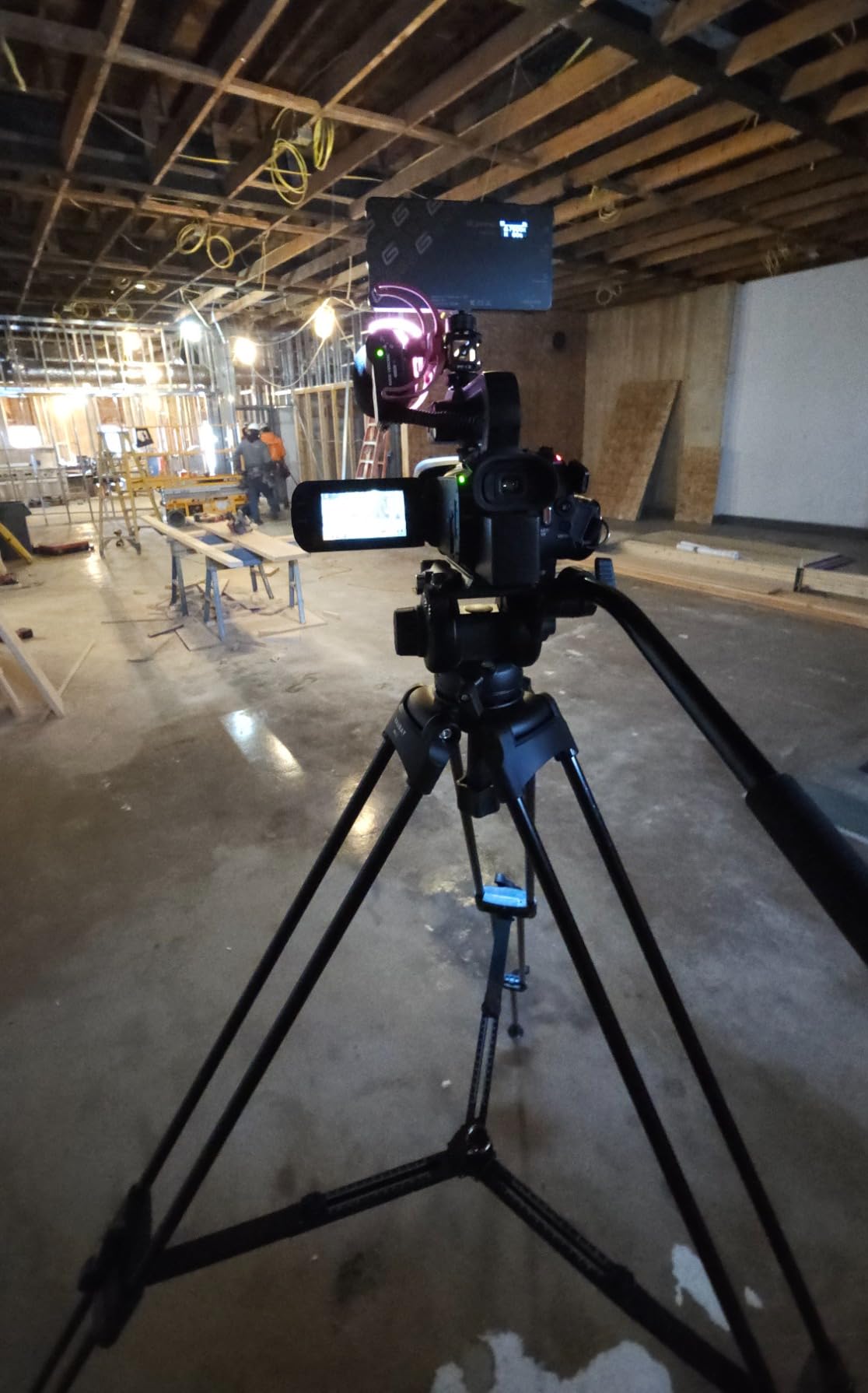
The DV-1 PRO is the pick for a full-frame body with a big lens on the head. Reviewers specifically mention Canon R5-class rigs and long telephoto setups holding position without sag, and the 29.5 inch minimum height is the lowest in this group apart from the Ravelli, which helps when you want the camera low without a riser.
Aluminium twin-tube legs with a metal mid-level spreader, a 17.6 lb load rating, and 360 degree horizontal movement with -75 to +90 degrees of tilt. The quick release plate carries both 1/4-20 and 3/8-16 screws, and a 75mm half ball adapter is included in the box.
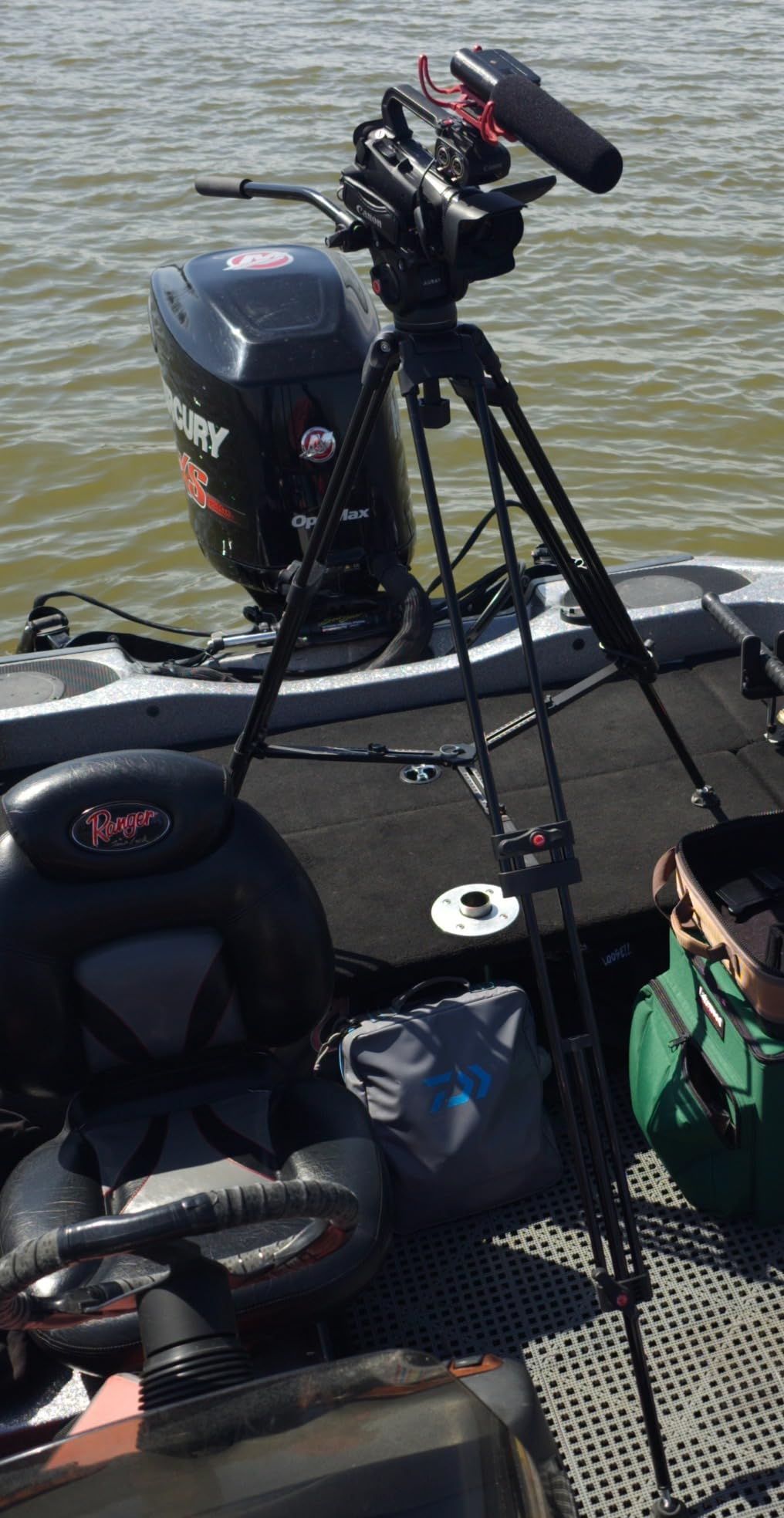
Owners like the built-in bubble level and bowl adjustment, and the feet that convert from rubber to spikes for soft ground, which is more useful than it sounds when you are on a lawn or a beach. It folds quickly and fits the included carry case.
Here is the catch that matters for pans. Only the vertical axis has adjustable fluid damping, while horizontal pan resistance is mechanical friction, so a slow horizontal move can feel not smooth to a camera used to a proper fluid head. There is also minor pan wobble on the stop.
Is it heavy enough to stop a long lens shaking?
At 8.4 lb it is one of the lighter complete systems here, and paired with a 17.6 lb rating that works for a full-frame body with a 70-200 attached. The spreader geometry does more for stability than the total weight does.
If you are building a proper ENG rig with a shoulder pad, a viewfinder and a heavy zoom, step up to the COMAN FF16LS or the Ravelli AVTP. Those were designed around loads in the 22 to 27 lb range.
What does friction-based pan resistance feel like on a real shoot?
Fine for interview reframing and locked-off work, where the head mostly stays still. On a deliberate slow horizontal move you can feel the difference against a hydraulic head, especially at the start of the move.
If your work is pan-led, spend the extra money on a genuinely oil-damped head. The NEEWER TP74 and the Mactrem VT72 both damp both axes properly.
5. COMAN FF16LS – Rigged Cinema Bodies and ENG Work
COMAN FF16LS Heavy Duty Tripod, 74″ Fluid Head Video Tripod Max Load 22 lbs
Max load 22.04 lb / 10 kg
60mm bowl aluminium dual-tube legs
Q6 head with dynamic balancing
74 in max height
Folds to 35 in
Pros
- Rock-solid once locked with a rigged FX3 or FX30
- Smooth 360 pan with dynamic balancing
- Flip locks make setup fast
- Tools spare plates and a carrying case included
Cons
- Not usable for low shots under about three feet
- Bag shoulder strap can be tight for larger users
- Fasteners loosen with use and need retightening
The FF16LS is the one to look at if your rig is caged and top-handled. Users report shake-free operation with a rigged FX3 or FX30, and at 22.04 lb or 10 kg it is one of the higher load ratings in this group while still folding to 35 inches.
The Q6 fluid head gives 360 degree pan and -75 to +90 degree tilt with damping and a dynamic balancing system, and the bowl is 60mm rather than 75mm, which matters if you ever want to re-pair the head with different legs. Flip locks on the legs mean setup is genuinely quick when you are working alone.
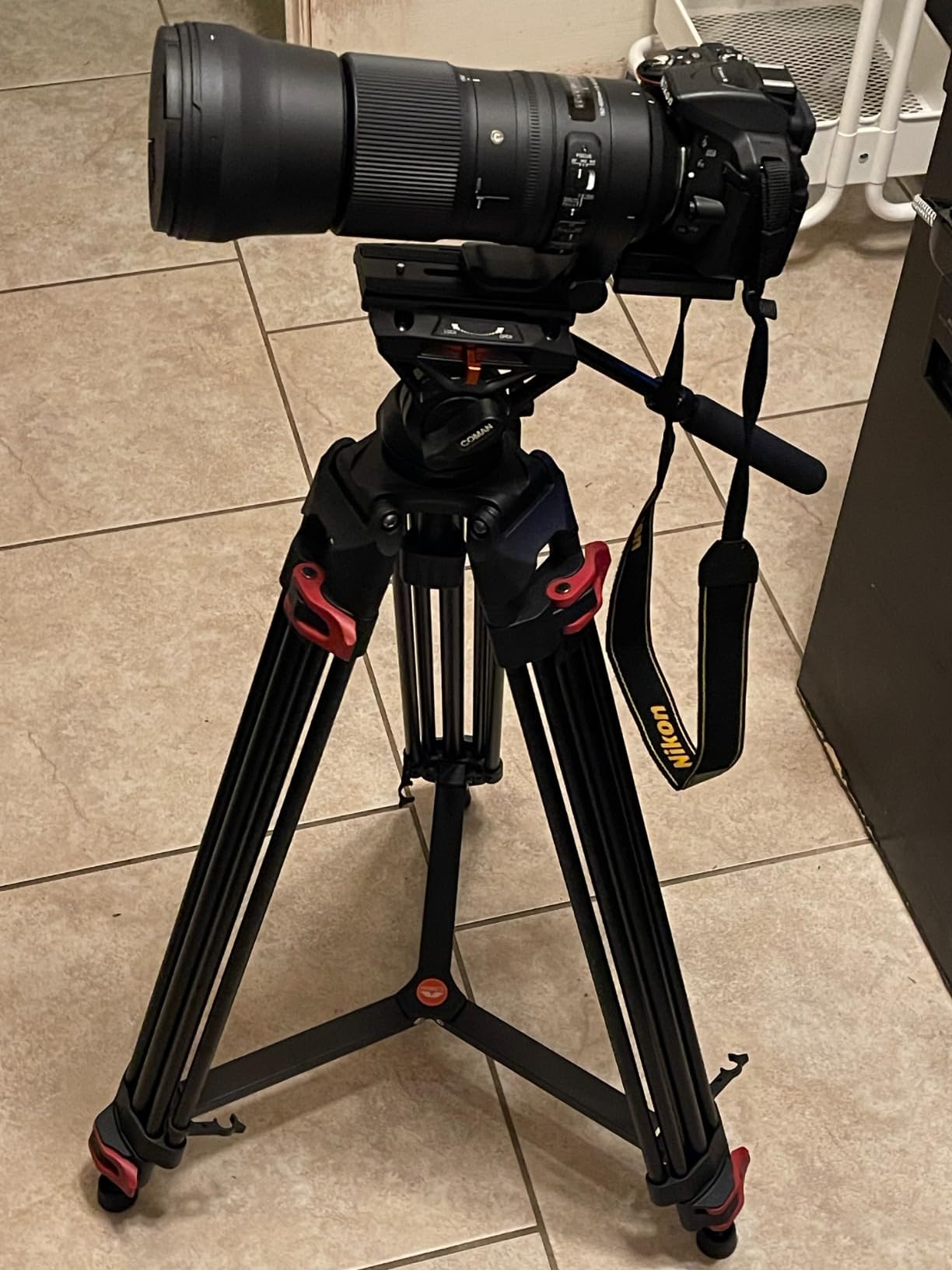
Reviewers coming from cheap entry-level plastic tripods describe it as a clear step up in build consistency, which is the sentence you want when buying a support that has to hold a camera for a full shoot day. The one-touch quick release plate has a safety button, takes both 1/4 and 3/8 inch screws, and works with DJI and Manfrotto plates.
Two honest weaknesses come up repeatedly. Low shots under about three feet are not practical, which rules it out for ground-level and macro work, and some fasteners loosen with use and need periodic tightening. Plan a quick check between setups.
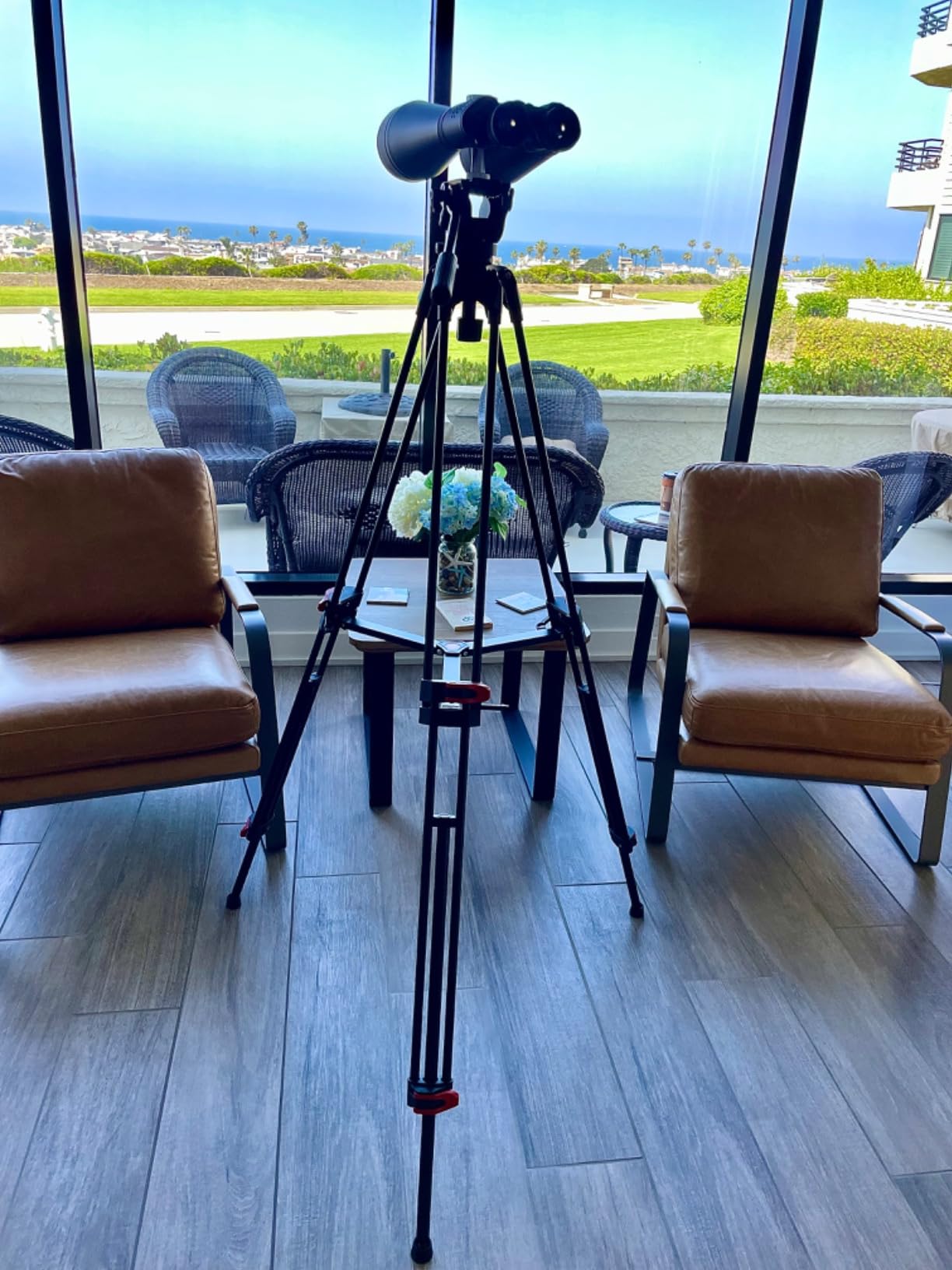
Is 22 lb the right class of head for an FX3 rig?
Yes, with margin. A caged FX3 with a battery, top handle, two lenses and a shotgun mic lands well under 12 lb, so you are nowhere near the limit and the tilt axis stays light and responsive.
The 30 percent rule matters more here than anywhere. If you plan to add a follow focus, a matte box or a wireless video receiver later, buy against the finished rig rather than the rig you shoot today.
Why does the 60mm bowl matter?
Because it changes what you can pair it with. A 60mm bowl fits a narrower set of legs than a 75mm bowl, and it is the reason the head is easier to level on some flat-base tripods than on a full video leg set.
If you buy this as a head and plan to move it between tripods, check the bowl diameter of the legs you own. A 75mm bowl accepts more leg brands, which is why most of the other picks here use that size.
6. Ravelli AVTP – Dual Handles for Studio and Livestream Work
Ravelli Professional 55″ 65mm Video Camera Tripod with Fluid Drag Head, and Heavy Duty Carry Bag [AVTP]
Max load 27 lb
55 in max height
Dual adjustable pan arms
75mm bowl
10 year warranty
Pros
- Dual pan handles for control from either side
- Heavy duty build rated to 27 lb
- Fluid drag head with smooth damped moves
- Collapses to 28.5 in for transport
- Titanium quick release plate with safety lock
Cons
- Lower maximum height than most modern video tripods
- Nearly 11 lb makes it heavy to move
- Less capable for low-angle work than newer designs
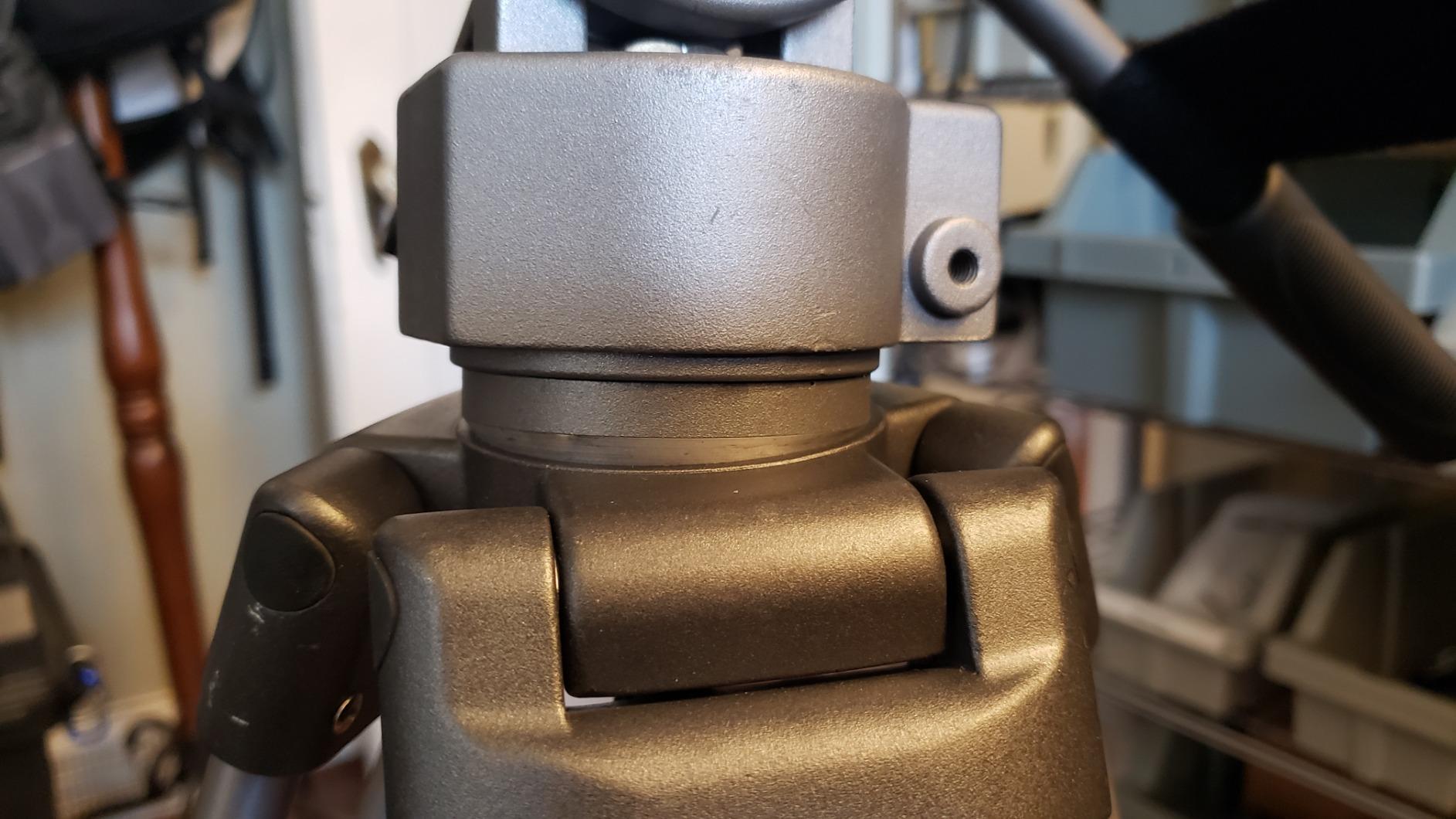
Two operators, one camera, no arguments about who is turning the handle. The Ravelli AVTP has dual adjustable panning arms, one on each side, so the person framing from a control position and the person on the move can both work the shot without swapping sides.
It is a traditional broadcast design in the useful sense: alloy steel and aluminium construction, a fluid drag head rated to 27 lb, 360 degree pan rotation, and 180 degrees of total tilt. The universal 75mm bowl means it will accept a range of other legs if you ever need to re-pair it.
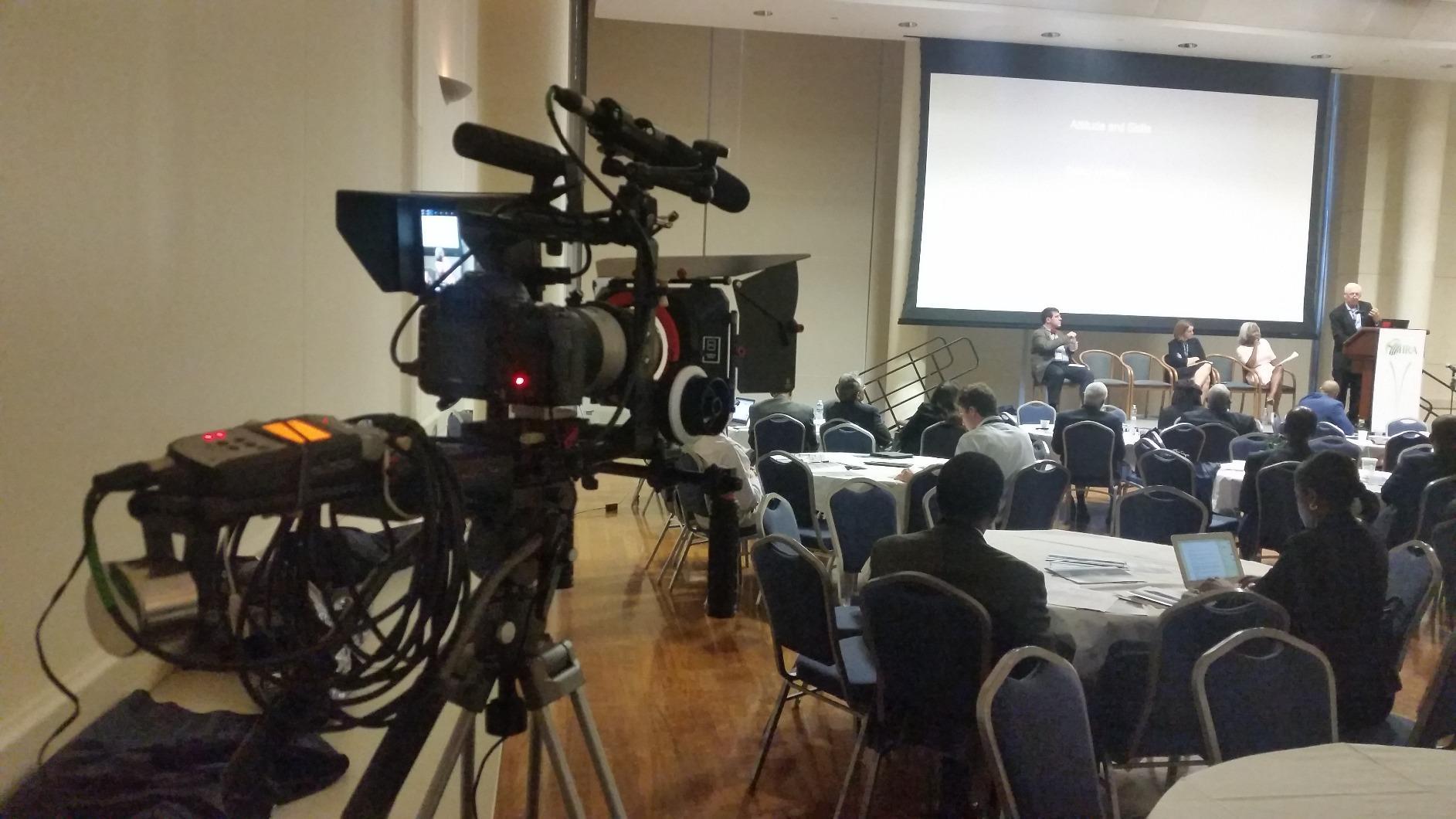
Reviewers value the dual handles, the fluid drag head and the 27 lb capacity as a durable, long-serving video tripod, and the solid titanium quick release plate with an integrated bubble level is a nice touch. Warranty coverage is listed as ten year or lifetime, which is a genuine plus for a support that lives in a studio.
The average rating sits lower than newer models here, and the reasons are consistent: weight and height. It is close to 11 lb, folds to 28.5 inches, and tops out at 54.5 inches, so it is a studio or location stand rather than a field one.
Are dual handles worth it outside a studio?
For event work, worship and livestream multi-camera setups, yes, because the second operator can take the load on long moves. The 59 inch extended arm length also means the operator stands back further, which is gentler on the move.
For a single operator, the second handle is just weight and it occupies space in a vehicle. In that case the COMAN FF16LS gives you a higher load rating for less mass.
Will the 55 inch maximum height cause problems?
Only if you shoot people who are tall or work in wide spaces where the camera has to clear a crowd. For seated interviews, tabletop work and standard standing shots, 54.5 inches is comfortable.
The minimum operating height of 26.75 inches is respectable, and the three-segment crutch legs with retractable locks let you work lower than the maximum height implies. Just do not expect ground-level macro work.
7. Mactrem VT72 – the Highest Payload Rating in This Group
Mactrem 82″/210cm Fluid Head Tripod – Heavy Duty Video Tripod for Camera
Max load 33 lb / 15 kg
Cast aluminium oil-damped fluid head
Hydraulic levelling within 10 degrees
82 in max height
9.8 lb
Pros
- Cast aluminium head rated to 33 lb
- Oil damped head delivers very smooth pans and tilts
- Hydraulic self levelling within plus or minus 10 degrees
- Pan axis mounts on either side
- Carrying bag and spare screw included
Cons
- Bulky and heavy for travel or long walks
- Thinner review volume than the bigger names
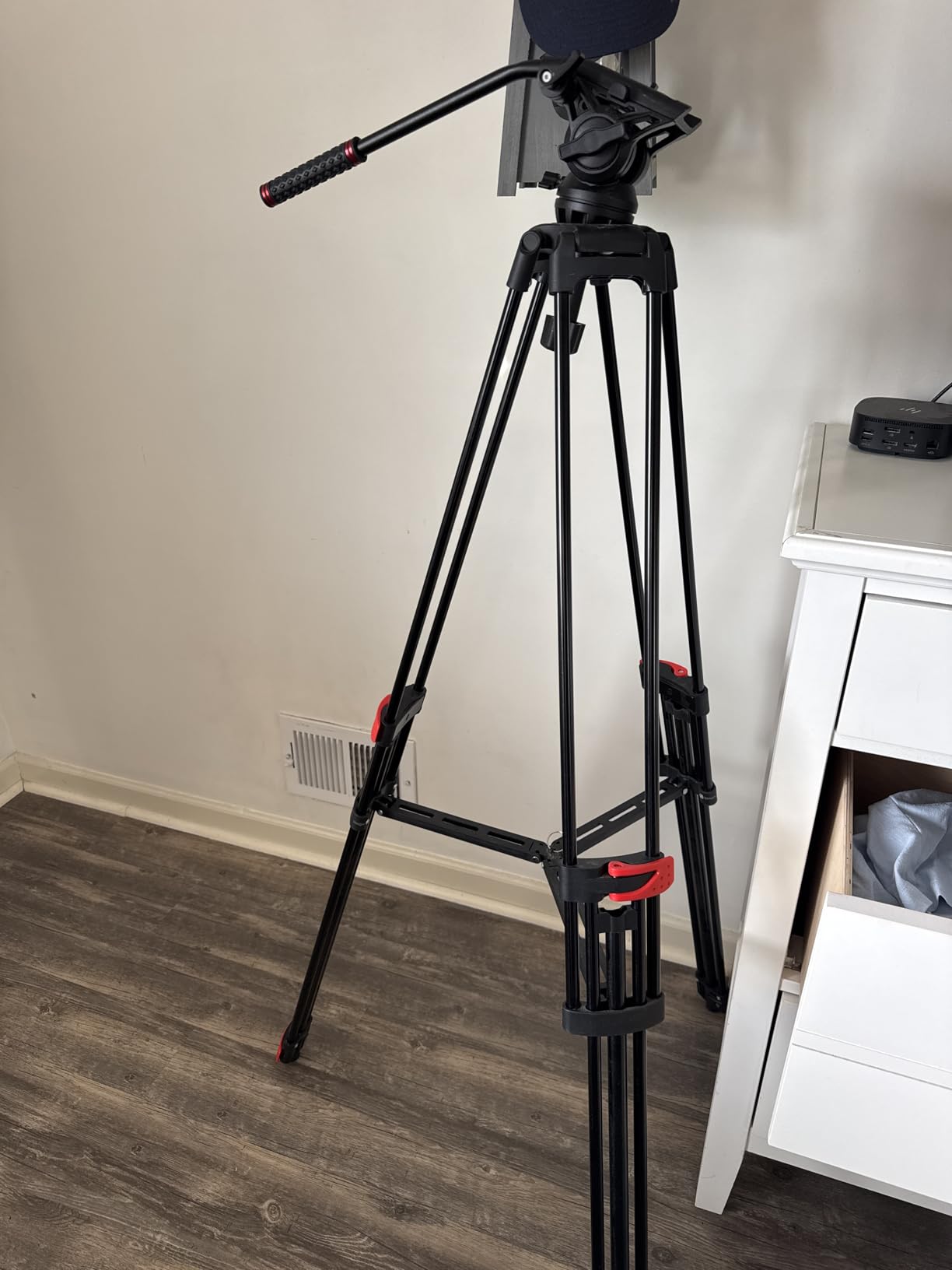
The VT72 is the number to look at when payload is the deciding factor. At 33 lb or 15 kg it carries the highest load rating of any complete system here, and the 82 inch maximum height is the tallest too, so a long lens or a high-angle stadium shot is not a compromise you have to make.
The head is cast aluminium alloy with genuine oil damping and pre-set counterbalance with spring-loaded tension. Three drag adjusters cover 360 degree pan, +90 to -70 degree tilt, and a hydraulic levelling adjustment of plus or minus 10 degrees, which handles a slope without a separate levelling base.
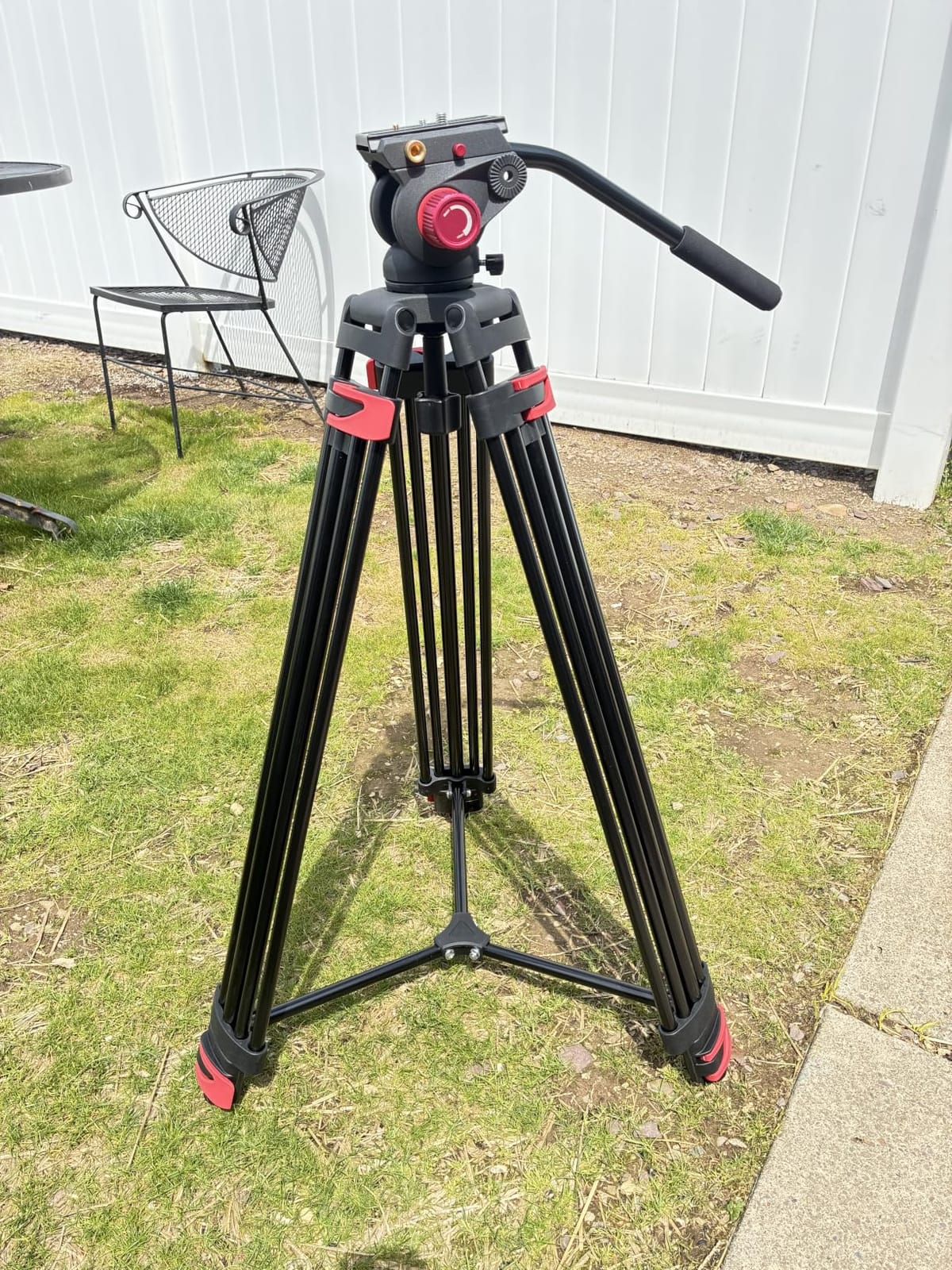
Reviewers accept the weight as the trade-off for stability and single out the reversible pan handle as genuinely useful for operators with different handedness. The quick release plate slides plus or minus 30 mm, so you can shift a forward-heavy rig back over the support point without re-balancing the head.
The smaller review base is worth knowing about. With a few hundred ratings rather than thousands, you are relying on a narrower evidence base than the other picks, and the brand has less retail presence. The one year warranty is also the shortest in this group.
Do you need 33 lb of capacity?
Almost never for a mirrorless or hybrid rig. You need it for a broadcast ENG build with a long zoom, a prompter kit, a large viewfinder and a heavy battery block, and it is one of the few complete systems here that will take that without a second stand.
If your rig weighs 15 lb or less, the extra 5 to 10 lb of head is dead weight you carry for peace of mind. Size against the finished rig, not the bare body.
What does hydraulic levelling actually do for you?
It levels the head itself within about 10 degrees, so a tilted camera on sloping ground still frames level. On a trip head with a mid-level spreader, that removes a lot of the fiddling at the start of a setup.
It is a different mechanism from a half-ball bowl, which you adjust by rotating the head. The advantage is speed; the trade-off is that the correction range is limited, so on genuinely uneven terrain you still level the legs first.
8. CAMBOFOTO TA60 – Fast Setup for Solo Shooters
CAMBOFOTO 74″/190cm Video Tripod, Heavy Duty Tripod for Camera, Fluid Head
Max load 20 lb
Hydraulic head with auto levelling
30 degree bowl joint adjustment
36-74 in range
11.4 lb
Pros
- CNC machined gimbal gives smooth pan and tilt
- Sturdy build stays steady with long telephoto
- Automatic tilt levelling on the hydraulic head
- Two quick release joints per leg for fast setup
- Foot pad works on sand and uneven ground
Cons
- One reviewer reports a sticking and jerky pan arm
- Pan arm is short at full working height
- Heavy to carry any distance
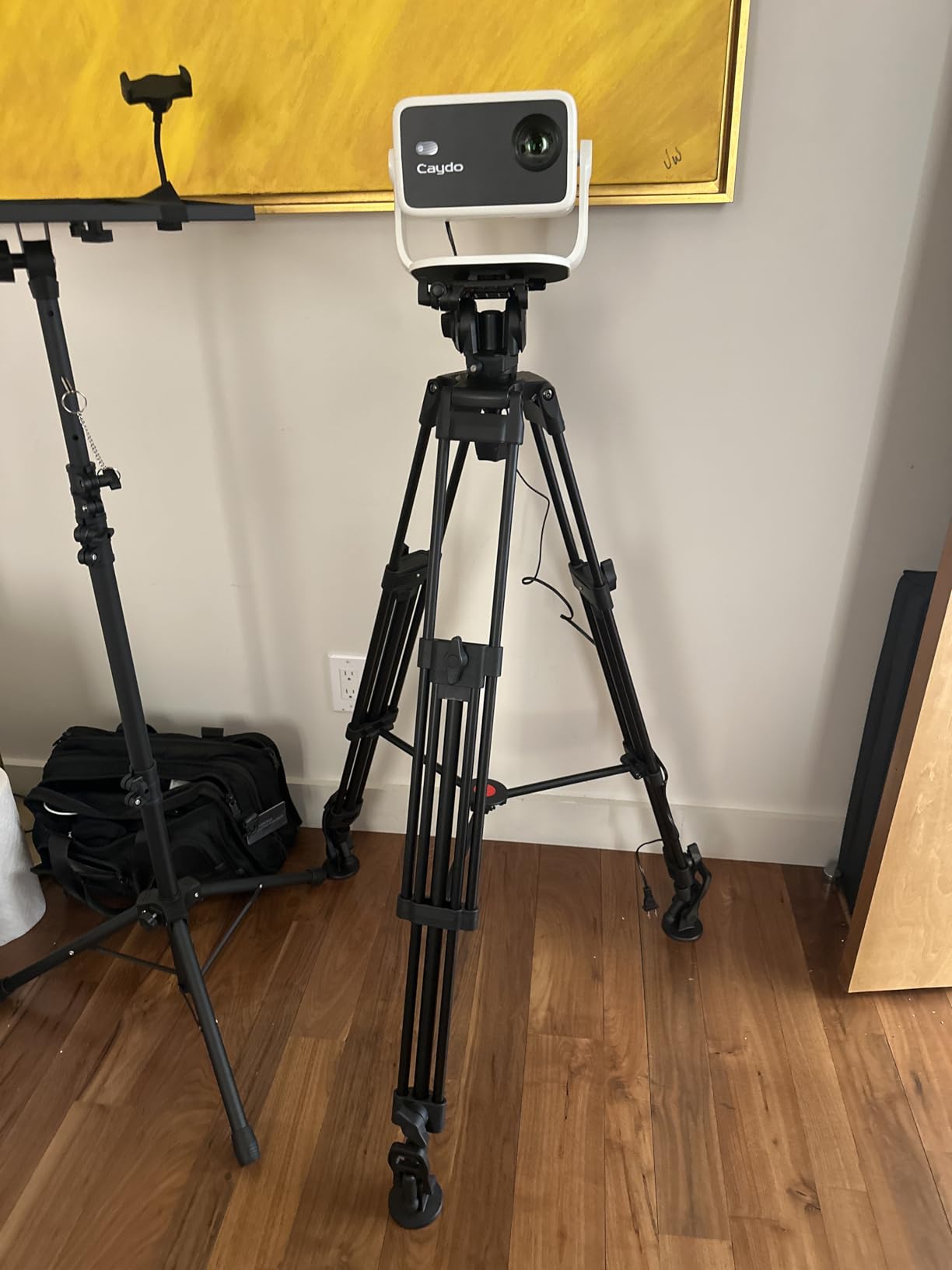
The TA60 is built around a CNC-machined gimbal with an oil-lubricated horizontal joint, and most reviewers describe the pan and tilt as smooth and precise. The load rating is 20 lb, the height range is 36 to 74 inches, and it folds to 38 inches for transport.
Setup speed is the differentiator. There are only two quick release joints per leg, so a full deployment takes a fraction of the time a three-lock leg does, and the hydraulic head has 360 degree rotation with -70 to +90 degree tilt and automatic levelling plus a 30 degree bowl joint adjustment.
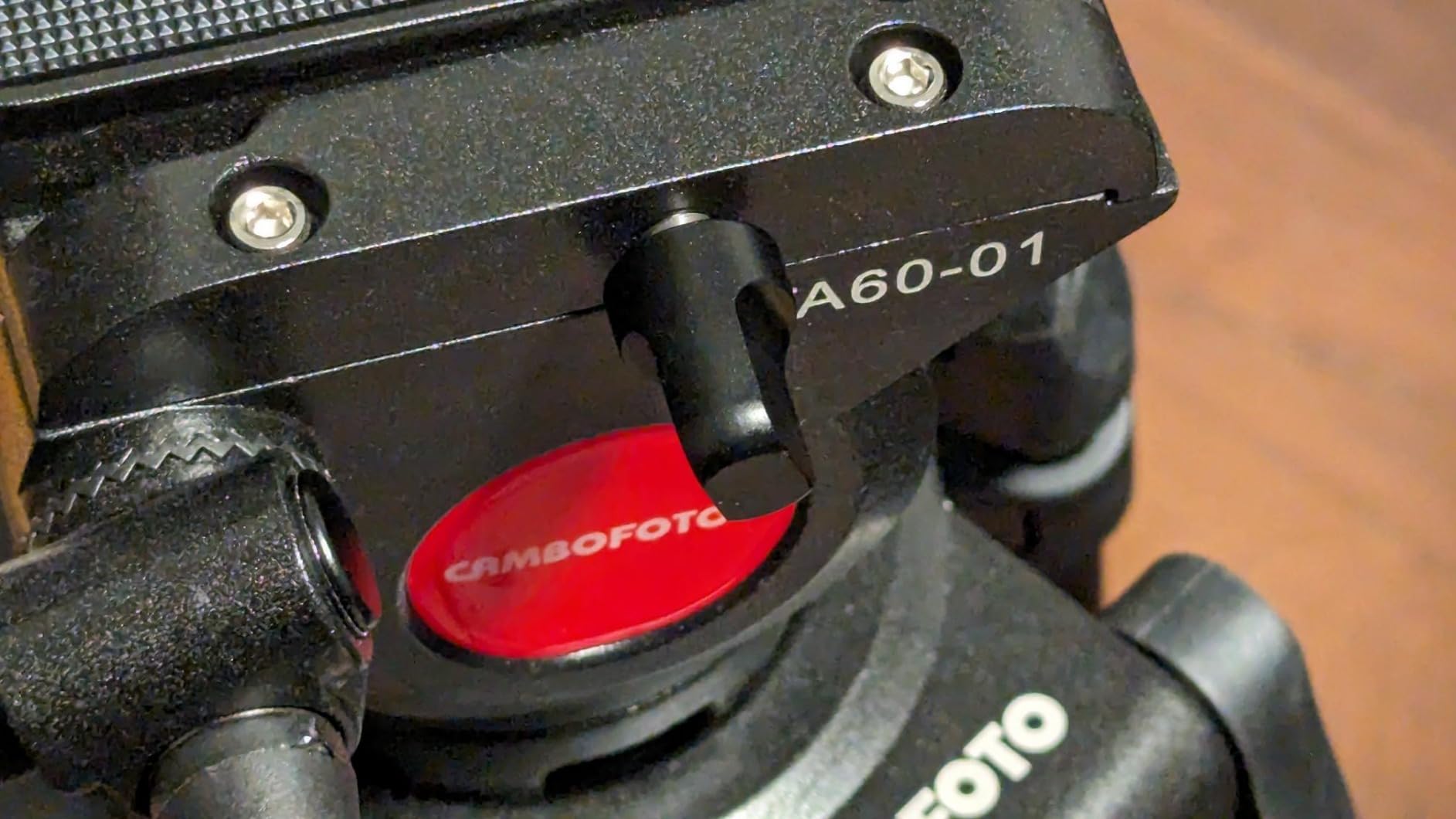
Owners praise the smooth head, the stability with long telephoto lenses, and the multifunctional foot pad, which works on soft sand and uneven ground with two-point ball pins. The aerospace aluminium alloy frame and high-strength engineering plastics keep it rigid at full height.
One detailed review reports the pan arm sticking and jerking on start and stop, calling the head not truly fluid, and that appears to be a manufacturing flaw on a single unit rather than a design trait. The short pan arm is mentioned more often, and at 11.4 lb it is not a tripod to walk far with.
Is the fast setup worth the weight?
For a solo operator covering a wedding or a live event, absolutely. Saving 20 to 30 seconds per setup adds up over a day, and the oil-lubricated joint is the part that makes the head feel considered rather than generic.
For a single location shoot where you set up once, the setup speed is wasted capability and the 11.4 lb is pure carry. The NEEWER TP37 or the SmallRig AD-01 serve that case better.
Should you worry about the jerky pan report?
It is one detailed review, and the overall sentiment across the review base is strongly positive, so treat it as a QC outlier rather than a pattern. Check the head within the return window anyway and run a full pan at low drag before the shoot.
If the pan arm feels rough in any direction, the fix is a return rather than a workaround. A head that sticks once will usually stick again under a cold morning shoot.
9. SmallRig 5440 – Travel and Airline Packing
SMALLRIG 73”/186cm Heavy Duty Aluminum Alloy Video Tripod with Fluid Head
Max load 8 kg / 18 lb at 6.8 lb total weight
Hydraulic head with infinite tilt drag
65mm bowl
Collapses to 34 in
Pros
- Light carry weight with a genuine 18 lb load rating
- Hydraulic head with smooth controllable resistance
- Collapses to 34 in for overhead bin travel
- Rubberized horseshoe feet grip uneven ground
- Includes phone clamp hex wrench and padded bag
Cons
- Play in the pan head can shift framing when bumped
- Reports of plastic components cracking at the plate knob
- Plate is not Arca-Swiss standard
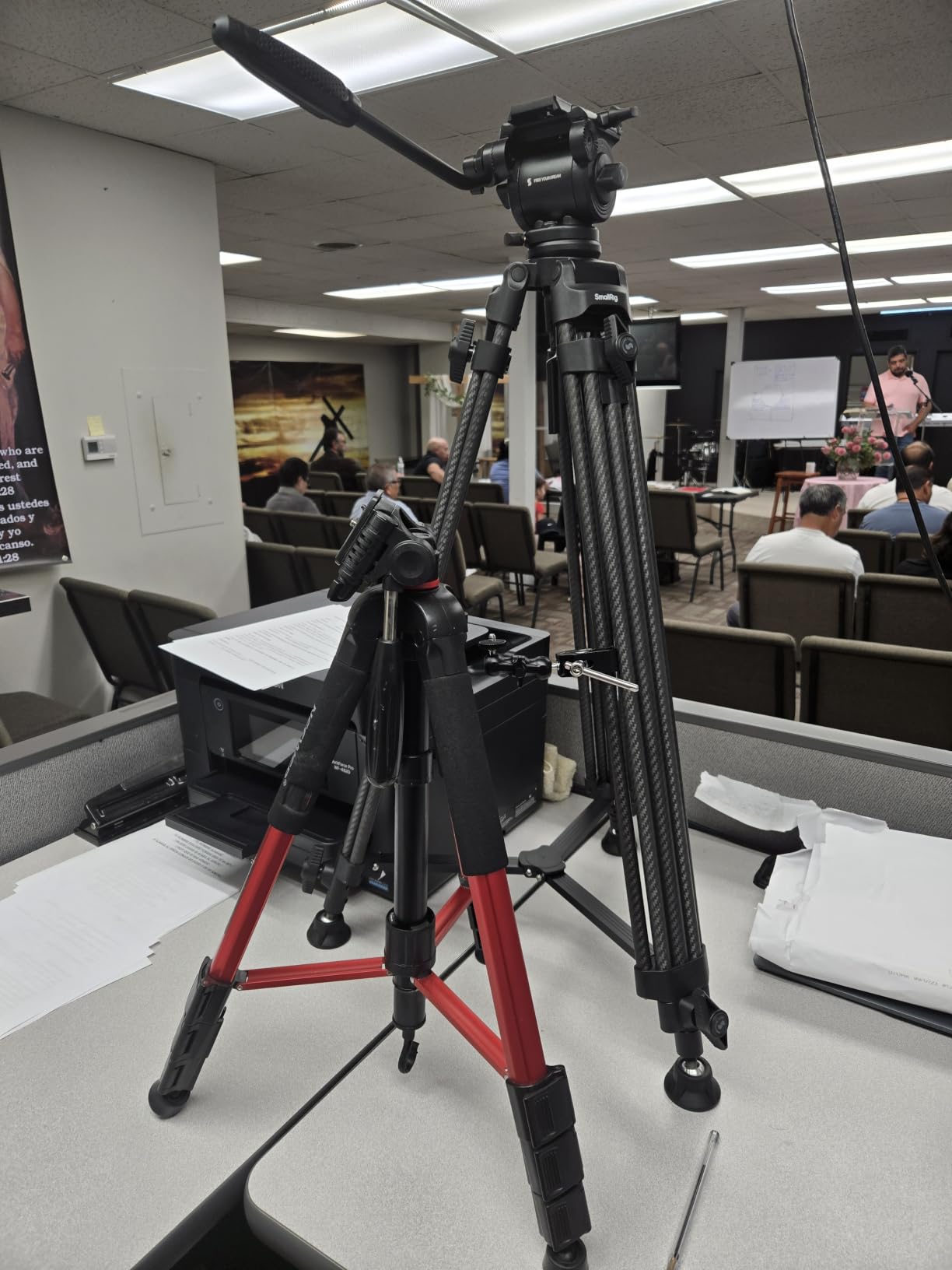
This is the pick to put in a carry-on. The whole system weighs 6.8 lb, it collapses to 88 cm or about 34 inches, and it still carries an 18 lb load rating, which covers a mirrorless body with a zoom and a small cage without argument.
The head is an aluminium hydraulic fluid head with infinite tilt drag control and a tilt range of +85 to -78 degrees, and the bowl is 65mm for levelling. The side-loading quick release takes Manfrotto 501PL compatible plates, and two 1/4-20 accessory mounts take a monitor or a microphone.
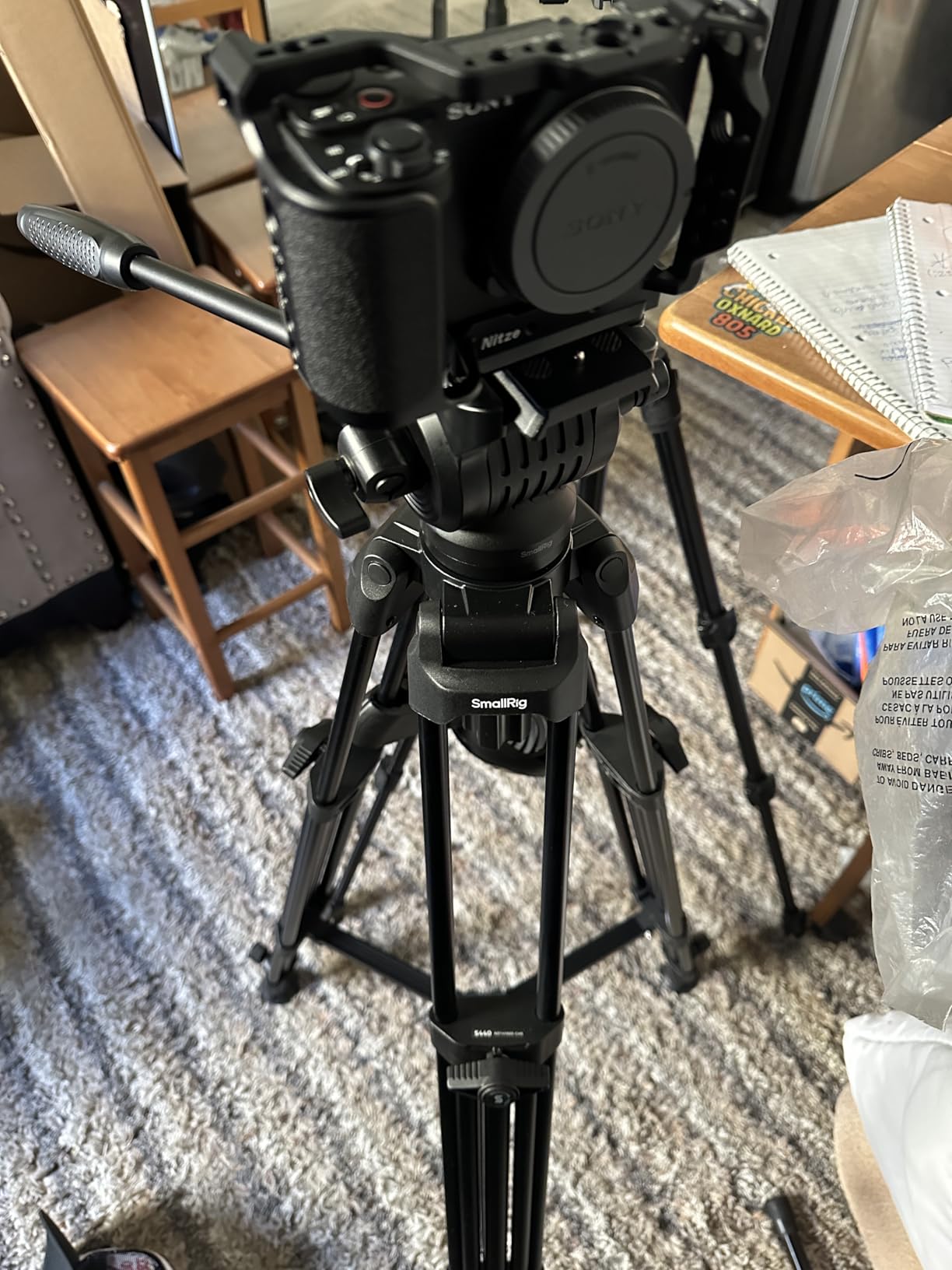
Reviewers like how quick it is to deploy and how smooth the head feels for b-roll and interviews, and a number of them buy it as a second or travel stand rather than a primary one. The rubberized horseshoe feet grip uneven ground better than small rubber pads, and a phone clamp is included in the box.
The 4.3 average reflects real complaints. There is play in the pan head, so framing can shift if the tripod is bumped, some owners report plastic components cracking around the plate knob, and on some variants the fluid head lacks adjustable drag entirely and is effectively locked or stiff.
Is 6.8 lb light enough for backpacking?
It is one of the few complete fluid head tripods in this list you will not resent carrying. Combined with a mirrorless body rather than a cinema rig, the whole video kit stays manageable on a long walk.
The 2-2-1 aluminium leg layout trades some of the collapsed compactness you get from carbon fibre travel legs, and 18 mm leg diameter is what keeps the stiffness at 186 cm. Accept the extra fold length for the rigidity.
Will the head play affect a finished shot?
On a locked-off shot, no. The play only shows when the tripod is knocked or a pan stops hard, and on a documentary or travel build that is a real but manageable annoyance rather than a dealbreaker.
Check the head on arrival and re-tension if needed. If you need broadcast-level rigidity, spend the extra mass on one of the aluminium twins and accept the carry weight.
10. NEEWER Basics TP37 – Everyday Shoots on a Manfrotto Plate
NEEWER Basics 74″ Video Tripod with Fluid Head, Metal Camera Stand, TP37
Max load 17.6 lb / 8 kg
All metal legs with triangle spreader
Damped fluid head with 360 pan
33-74 in range
Folds to 35 in
Pros
- Stable and heavy for its class
- Silky smooth horizontal pans
- Manfrotto 501 compatible quick release plate
- Flip leg locks are positive and convenient
- Carry bag is practical
Cons
- Not a half bowl design so levelling is slower on uneven ground
- Nose dives with front heavy rigs like a teleprompter
- Plastic leg buckles feel less robust
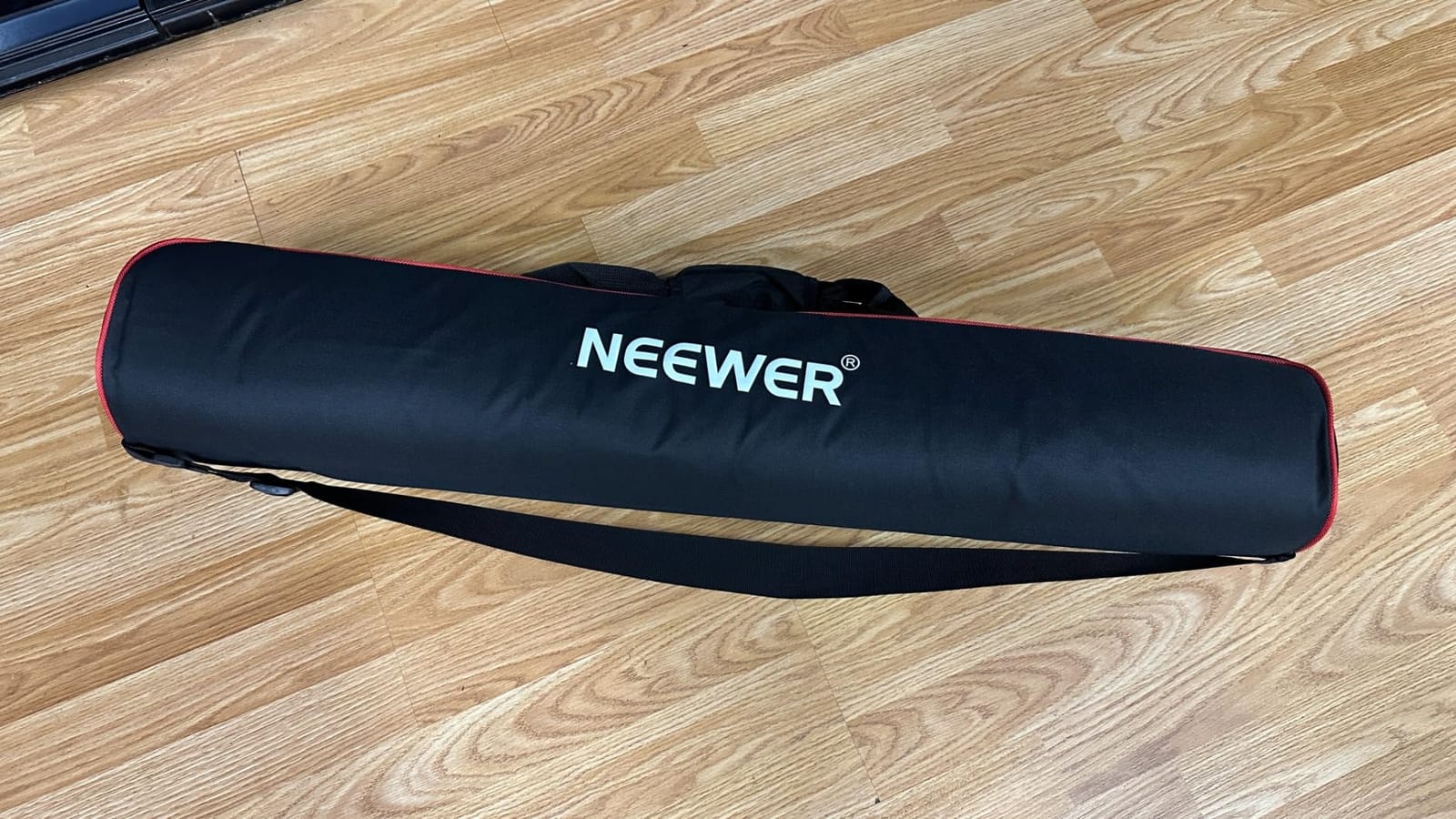
The TP37 is the one to buy if your whole workflow runs on Manfrotto 501 style plates. The quick release plate is Manfrotto-compatible, so the plate you already own drops straight onto the head, and the 1/4 and 3/8 inch screws cover DSLRs, camcorders, mirrorless bodies, sliders and telephoto lenses.
It is an all metal build with multi-row tube legs, a 73 mm enlarged chassis and a triangle mid-level spreader with nonslip rubber feet, rated to 17.6 lb or 8 kg. The damped fluid head gives 360 degree pan and -70 to +90 degree tilt, and the height range is 33 to 74 inches.
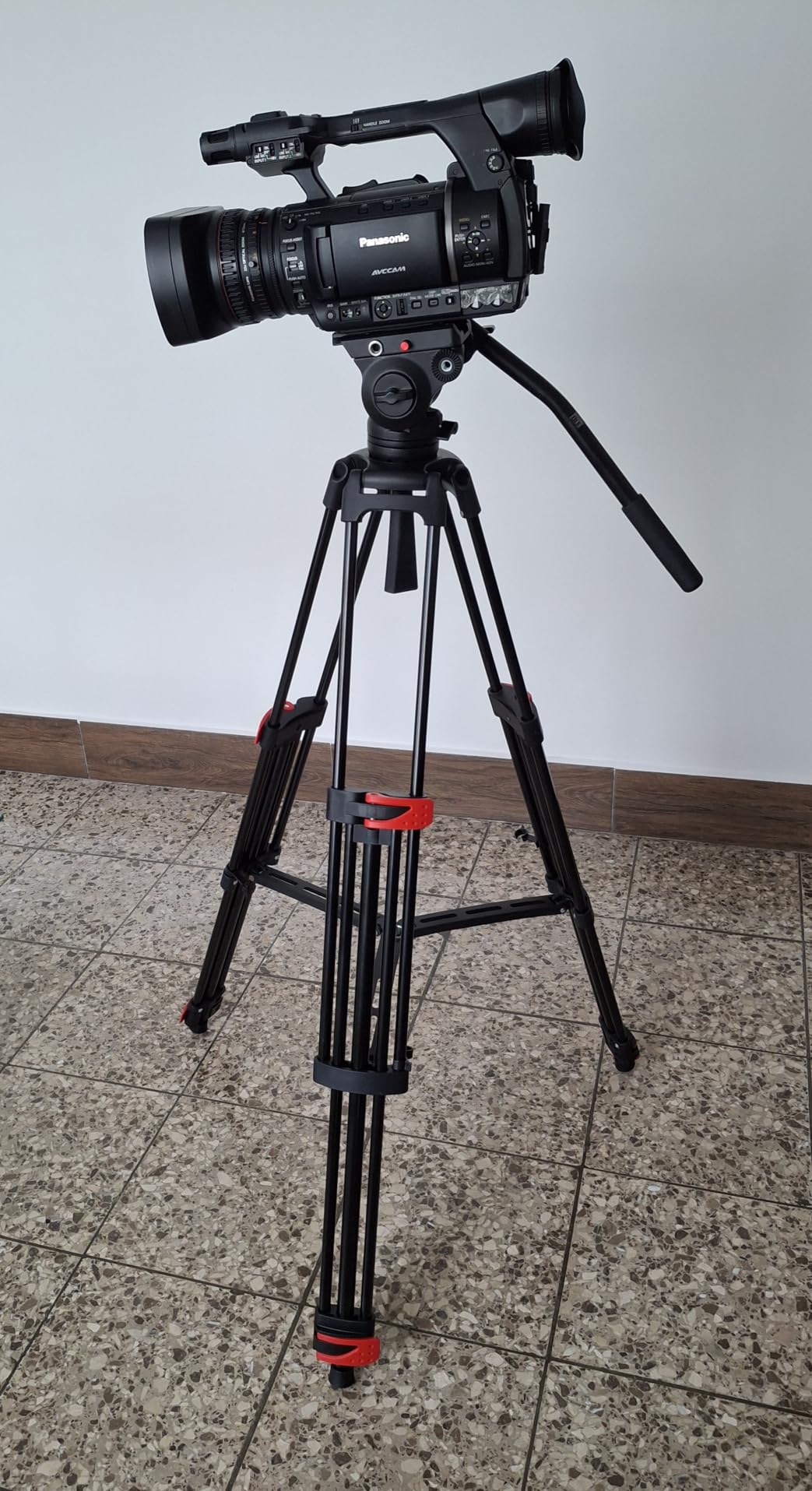
Owners call it excellent value with smooth, controlled pans, and several compare the result favourably against heads from far costlier broadcast names. The weight and metal construction are what make it stable for its size, and the flip leg locks feel positive rather than vague.
Two limitations are worth knowing before you commit. The head is not a half-bowl design, so levelling on uneven ground is slower, and it nose dives with front-heavy rigs such as a large teleprompter. The spring-loaded action can also point the camera somewhere unexpected if you are not holding the handle.
Can a budget tripod really feel this smooth?
On locked-off work and slow reframing moves, yes, and the review base backs that up. The word fluid gets used loosely across this category, but on a simple pan the damping here is doing real work rather than adding marketing language.
For repeated whip pans or long tracking moves, a head with adjustable drag on both axes will serve you better. That is the difference between this one and the NEEWER TP74 at step two.
What happens with a teleprompter on top?
The centre of gravity moves forward and the head, which has no half-ball bowl and limited counterbalance travel, will tip. That is a physics problem rather than a fault, and it applies to any head in this class with a short counterbalance range.
If prompter work is part of your job, budget for a higher-rated head with a longer balance range, such as the Ravelli AVTP at 27 lb, and plan to shoot prompter work on a ground spreader rather than mid-level legs.
How to Choose a Fluid Head Tripod for Video
Size payload capacity with a 30 percent margin
Add up your real rig weight: body, lens, battery, cage or top handle, matte box, follow focus, monitor, wireless receiver, audio. Multiply that figure by about 1.3 and you have the payload rating to buy. The margin is what keeps the tilt axis from feeling heavy and stops the counterbalance running out of travel near the end of a move.
Worked examples: an FX3 with a 24-70, a top handle and a shotgun mic lands around 7 lb, so a 10 lb head is the right size. Add a 70-200, a follow focus and a matte box and you are near 12 lb, which points at a 16 to 22 lb head. A cinema body with a shoulder rig, a zoom and a viewfinder can pass 20 lb, and there you want a 27 lb head or more.
Match the bowl to the legs before anything else
A 75mm half ball is the most useful size because it accepts the widest range of legs, and most of the picks here use it. A 100mm bowl takes more weight and is more rigid, and a flat base has no bowl at all so levelling comes from the legs or a separate base plate.
Bowl size is also the cross-brand rule people ask about most: the number is the diameter of the ball that sits in the head, and the leg crown has to have a matching socket. A 60mm bowl head like the one on the COMAN FF16LS will not drop onto a 75mm leg set, whatever the marketing says. If you already own legs, check the bowl diameter printed on the crown before you choose a head.
Choose fluid drag over fixed friction for camera movement
Fluid drag uses oil or grease inside the axis to provide resistance that increases with speed, so a fast move feels heavier and a slow move feels lighter. Friction drag is a mechanical brake that feels much the same at any speed, which is why it suits a locked-off interview and frustrates a slow horizontal move.
Check whether the drag is adjustable on both axes. A head with one fluid axis and one friction axis is a compromise, and the RAUBAY DV-1 PRO is a good example of how that feels in practice. Also look for a counterbalance range rather than a single spring, since a single fixed counterbalance only balances one rig weight properly.
Decide between a complete system and a head-only purchase
Buy complete if you are starting out, replacing a wobbly plastic stand, or your rig is well under the lowest load rating here. You get matched legs, spreader, plate and bag, and there is nothing to research or balance.
Buy head-only if your legs are already video legs with the right bowl, if you want to move between two sets, or if you are approaching the payload ceiling of a complete system. Add the weight of the head to your carry budget, because a broadcast-grade head alone can outweigh a lightweight tripod.
Carbon fibre or aluminium, and why the spreader type matters
Aluminium twins are heavier but cheaper, and they are stiffer for the money, which is why every complete system in this list uses them. Carbon fibre saves weight and adds thermal stability in cold weather, at higher cost, and it is a choice for travel builds rather than value picks.
Spreader type decides your lowest angle. A mid-level spreader keeps the legs horizontal and gives smooth horizontal pans and easy levelling, but the lowest comfortable camera height is roughly waist level. A ground spreader drops the legs flat and lets you get the camera near the ground for low-angle and macro work, at the cost of smoother horizontal movement. For very low angles, a ground spreader beats a taller tripod.
Test the head in the shop before you commit
Run a full-speed pan from one extreme to the other. If the start or stop jerks, the damping is not doing its job. Next, set the counterbalance and check that the rig holds its position at 45 degrees, then push slightly to see whether the spring range covers your weight.
After that, check the brake feel and make sure the locks hold under a firm push. Look at the bubble level in raking light to see if the bubble sits centred, and slide the quick release plate fully fore and aft to confirm there is no play. Last, weigh it. A tripod you dread carrying is the one that stays in the van.
Outdoor and hunting use
Field work rewards sealed drag that does not stiffen in cold mornings, a head that self-levels on a slope, and feet that grip soft ground. The Mactrem VT72 handles slopes with its hydraulic levelling and the CAMBOFOTO TA60 has a foot pad for sand and uneven ground. For wildlife work, a 60 degree bubble and a pan handle you can both hands on the head matter more than anything else.
Spread your weight and use the spreader fully before you trust a slow pan on uneven terrain, and expect a day of setup and breakdown to be slower than a stills tripod workflow. Long glass on a fluid head also amplifies every wobble, so a lower load rating with a lighter setup beats a heavier tripod carrying more glass than it was rated for.
Frequently Asked Questions
What is a fluid head on a tripod?
A fluid head is a tripod head whose pan and tilt axes use oil- or grease-filled damping to slow camera movement, paired with counterbalance that offsets rig weight so the camera stays put at any tilt angle. The damping converts hand motion into a smooth, continuous move instead of the locked, snappy feel of a ball head.
Do fluid heads fit regular camera tripods?
Usually not directly. Video fluid heads need a 75mm half-ball base, a 100mm bowl or a flat base receiver, while most photo tripods have a 1/4-20 screw mount. A 75mm bowl is the standard video size and the most widely compatible, so match the bowl diameter to the leg crown before buying.
What is the best tripod for filmmakers?
For most filmmakers the best fluid head tripods for video are complete systems rated well above the finished rig weight, with adjustable drag on both axes and a 75mm bowl. The Cayer BV30L suits tall standing setups, the NEEWER TP74 suits hybrid gimbal work, and the COMAN FF16LS suits rigged cinema bodies.
Which budget fluid head tripod holds up best?
Several complete fluid head tripods in the lower price tier hold up well for mirrorless rigs. The Cayer BV30L offers the tallest reach at 72.5 inches, the NEEWER TP74 has the highest load rating and the most flexible quick release plate, and the SmallRig AD-01 has the most refined build of the three.
How much payload capacity do I need for a fluid head?
Add up your camera body, lens, battery, cage, matte box, monitor and accessories, then add about 30 percent. An FX3 with a 24-70 and a shotgun mic needs a 10 lb head, a rigged full-frame build with a 70-200 needs 16 to 22 lb, and an ENG rig over 20 lb needs a 27 lb head or more.
Do I need a fluid head tripod for video?
Yes if your footage contains camera movement. A fluid head converts hand movement into a repeatable pan or tilt, and video records every start-stop jerk and wobble. If you only shoot locked-off frames, a ball head is lighter and cheaper and does the job perfectly well.
The Best Fluid Head Tripod for Video in 2026
The best fluid head tripods for video share three things: drag you can adjust on both axes, a payload rating at least 30 percent above your finished rig, and legs that stay still at working height. Every pick in this list meets the first two if you size it correctly, and the third depends on how much mass you put on top.
Our choice is the Cayer BV30L, rated to 13.2 lb with a 75mm bowl fluid head and a 33.4 to 72.5 inch range, because it covers standing interviews and event work without a riser and carries the deepest review base here at 4.7 stars across more than 1700 ratings. Pair it with the lavalier microphones for video creators we rate highly and you have a working interview kit for a modest outlay.
Move up to the NEEWER TP74 if you switch between gimbals and tripods, the SmallRig AD-01 if build quality matters most, the COMAN FF16LS if you shoot rigged cinema bodies, and the Mactrem VT72 if payload is the deciding number. Whichever you pick, test the pan at full speed inside the return window before the shoot.