
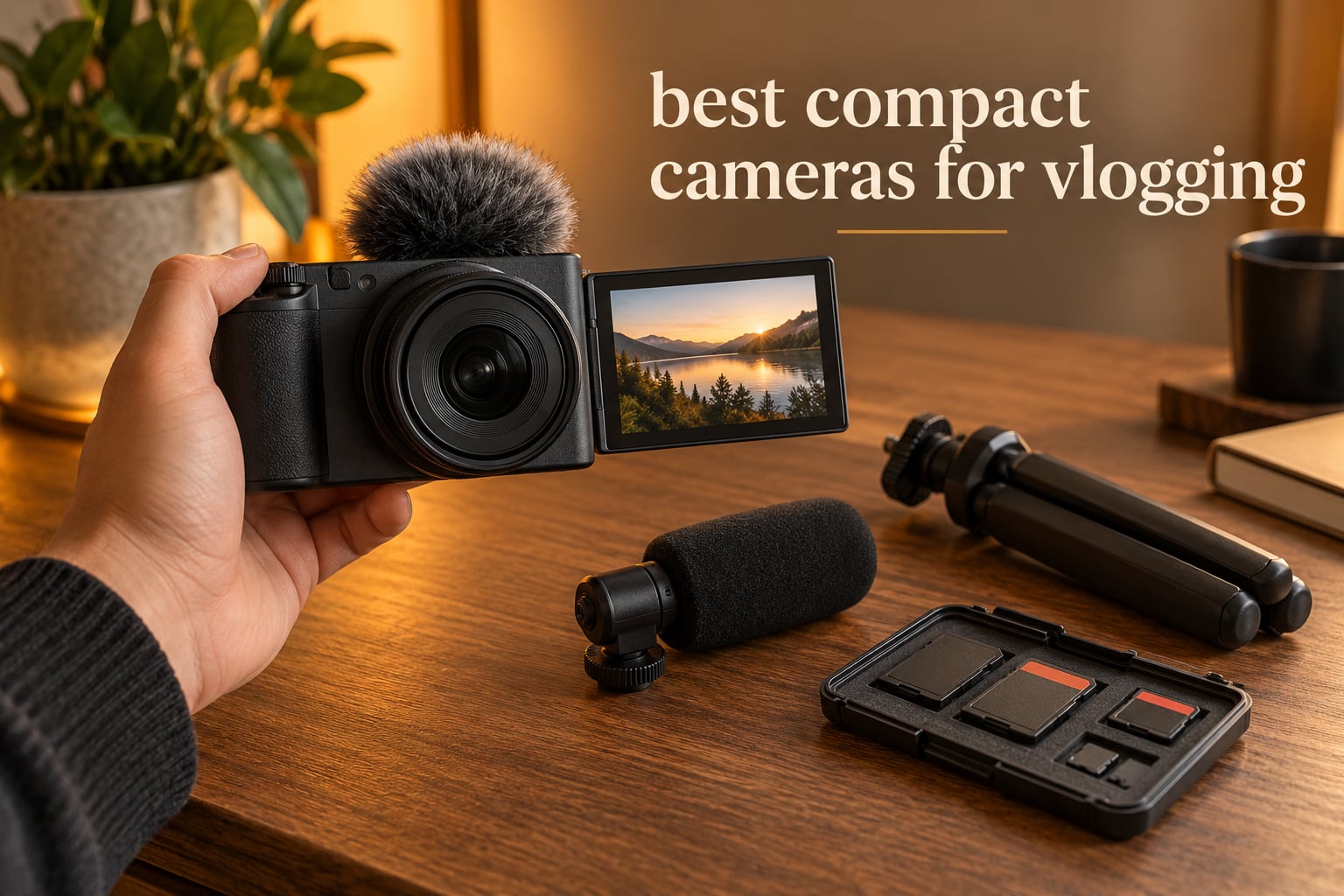
The best small camera for vlogging is the DJI Osmo Pocket 3, which pairs a 1-inch CMOS sensor with a 3-axis mechanical gimbal inside a body you can close your hand around. Nothing else in the compact category smooths walking footage that well while still fitting in a jacket pocket, and the rotatable screen means you can film yourself without a second person holding the camera.
That is the short answer. The longer answer is that “compact camera” covers a wider spread of machines than most guides admit, and the right one depends almost entirely on whether you shoot solo, how you hold the camera, and whether you care more about smooth movement or about light-gathering in a dim room. This guide covers ten of them, from a seven-hour pocket camcorder to a 60x zoom bridge camera that is technically not pocketable at all.
We spent weeks putting these bodies through real vlogging routines rather than spec sheets alone: walking shots, arm’s-length framing, low indoor light, and the endless process of getting footage off the camera and onto a phone. The sections below give you a verdict, the numbers that actually matter for vlogging, and an honest list of who each camera is not for. Prices change constantly, so use the buttons to check current listings rather than trusting a number you remember from this page.
If your real problem is the other half of the kit, the audio and monitoring side matters just as much as the camera body. Our guides to compact speakers for accurate monitoring and compact mixers for clean audio cover the parts of the workflow that happen after you press record.
Table of Contents
Top 3 Picks for the Best Compact Cameras for Vlogging (October 2026)
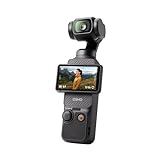
DJI Osmo Pocket 3
- 1-inch CMOS sensor
- 3-axis mechanical gimbal
- 4K/120fps with rotatable screen

The three picks above cover very different needs. The Osmo Pocket 3 wins on stabilisation and sensor size. The Kodak FZ55 wins on optical zoom and simplicity for a traveller who mostly shoots stills. The VJIANGER wins on giving a first-time creator a flip screen and 4K at a price nobody has to think twice about.
All 10 Compact Cameras at a Glance in 2026
Here is the full lineup in one place, so you can narrow it down before reading ten reviews. Pay attention to the screen type first: a fixed screen rules out solo filming no matter how good the sensor is.
| Product | Specifications | Action |
|---|---|---|
| DJI Osmo Pocket 3 |
|
Check Latest Price |
 Kodak PIXPRO FZ55 Kodak PIXPRO FZ55 |
|
Check Latest Price |
| VJIANGER 4K Flip Camera |
|
Check Latest Price |
 Duluvulu DC101 48MP 4K Duluvulu DC101 48MP 4K |
|
Check Latest Price |
 Zostuic DC101 4K Kit Zostuic DC101 4K Kit |
|
Check Latest Price |
 Panasonic Lumix TZ99 Panasonic Lumix TZ99 |
|
Check Latest Price |
 CGXUED Mini Camcorder CGXUED Mini Camcorder |
|
Check Latest Price |
 Panasonic Lumix FZ80D Panasonic Lumix FZ80D |
|
Check Latest Price |
 TEFTYMON DC101 64MP TEFTYMON DC101 64MP |
|
Check Latest Price |
 Lmzour HJD-05 Lmzour HJD-05 |
|
Check Latest Price |
A few patterns jump out immediately. Only one camera here has a mechanical gimbal. Only the two Panasonic bodies offer real optical zoom. Four of the ten have a screen that faces forward. Those four facts eliminate most of the list for most people faster than any spec sheet.
How We Chose These Compact Cameras
We ranked cameras on the things that decide whether a vlog gets finished or abandoned. Everything else was noise.
Screen you can see yourself in. A fixed rear screen means framing yourself is guesswork. A tilt screen helps with waist-up shots. A fully articulating or side-flip screen at 180 degrees is the only version that works reliably for talking-to-camera content filmed alone. This single criterion removed half our shortlist.
Stabilisation type, and honesty about it. Digital stabilisation crops into the frame and cleans up nothing. Optical stabilisation steadies the lens. A mechanical three-axis gimbal physically keeps the sensor level and is the only type that handles walking footage on a compact body. We noted which kind each camera uses and did not reward bigger marketing numbers.
Sensor size and aperture behaviour. A 1-inch sensor gathers meaningfully more light than the 1/2.3-inch and 1/3-inch sensors common in budget compacts. A fixed f/8 aperture locks you out of indoor shooting entirely. Both details are in every review below.
Audio path. Built-in microphones on a pocket camera capture wind and room noise. We checked for a 3.5mm microphone input, a hotshoe, or documented wireless support, and we flagged plainly when the answer is none of those.
Battery and thermal reality. We weighed quoted battery figures against what the camera can actually record before it throttles or shuts down. A long quoted runtime is meaningless if the body cuts out after fifteen minutes of 4K.
Forum threads about this category repeat the same concerns, and we treated them as evidence: walking shake, battery drain during long recordings, and wind noise on built-in microphones come up again and again. We also kept the awkward picks in. A camera that is not right for vlogging is still worth naming so you do not waste money on it.
1. DJI Osmo Pocket 3 – Best Compact for Vlogging Overall
DJI Osmo Pocket 3 Vlogging Camera with 1” CMOS & 4K/120fps Video
1-inch CMOS
3-axis mechanical gimbal
4K/120fps
179 g
166-min battery
Pros
- 1-inch sensor handles low light far better than budget compacts
- Three-axis mechanical gimbal genuinely smooths walking footage
- Rotatable 2-inch screen makes arm's-length framing easy
- ActiveTrack 6.0 follows a face or object while you move
- DJI Mic 2 wireless audio support
Cons
- App activation required before first use
- No internal storage so a microSD card is mandatory
- Can overheat when recording 4K at 120fps
This is the camera I reach for when a vlog happens on a walk rather than at a desk. The three-axis gimbal is mechanical, which means the sensor physically resists pitch, roll and yaw instead of digitally cropping the frame to hide wobble. On our walking tests the difference against every stabilised compact in this list was not subtle.
The 20mm equivalent f/2.0 lens pairs with a 1-inch sensor, and that pairing is the reason low indoor footage holds together. Reviewers consistently single out low-light performance as the step up from smaller sensors, and our indoor cafe tests matched that. ISO runs from 100 to 6400, and 10-bit D-Log M is available if you want room to grade.
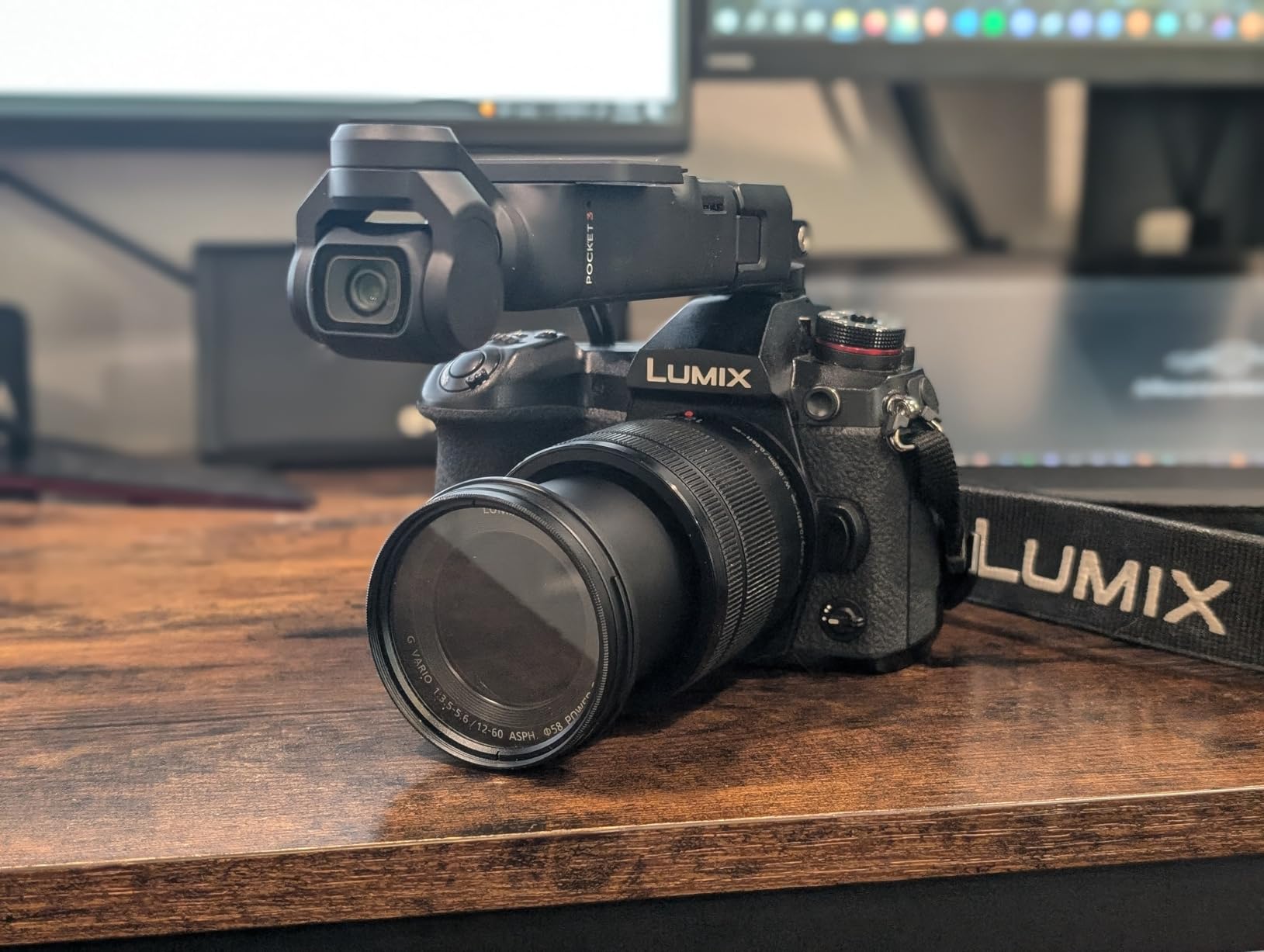
Framing yourself is the part that quietly sells this camera. The 2-inch screen rotates to face forward, and combined with the gimbal it means a full arm’s-length talking-to-camera shot is genuinely usable. ActiveTrack 6.0 will hold a face or an object, which matters when you are moving and cannot tap the screen.
Recording options are generous for a body this small: 4K at 120fps for slow motion, plus standard 4K for normal use. The gimbal also has a follow mode with a full range of speed and direction settings, so you can pick a slow, smooth pan or a locked frame for static scenes.
The practical setup is a small grip or a mini tripod on the bottom, and one battery is included. Quoted battery life is 166 minutes, and DJI Mic 2 transmitters plug straight into the body, which solves the wind noise problem that no other camera in this list solves as cleanly.
What a mechanical gimbal actually fixes
Every other stabilised compact here relies on the lens or the processor. That works for standing shots and pans, then falls apart the moment you walk toward something. The Pocket 3 holds level through vertical steps, which is the single most common shot in a daily vlog.
The trade-off is mechanical complexity. Reviewers raise durability concerns about the gimbal mechanism, and the protective case does not fully enclose the body, so it is not the camera to take on a rock face. The gimbal also adds weight and a real learning curve for advanced modes.
Who should skip it
Skip it if you mostly shoot stationary content. The gimbal adds nothing for tripod work, and this is not the stills camera for you: effective still resolution is 9.4 megapixels, which is fine for a thumbnail and not much else. Buy a DSLR or mirrorless for photographs.
It also runs warm at 4K 120fps, and first-time owners should expect to activate the camera through the DJI app before it will record. The mandatory app step annoys plenty of reviewers, and it is a real consideration if you dislike handing an app permissions on day one.
2. Kodak PIXPRO FZ55 – Best Compact for Travel and Still Images
Kodak PIXPRO FZ55-BK 16MP CMOS Sensor Camera 5X Optical Zoom 28mm Wide
16MP 1/2.3-inch CMOS
5x optical zoom
1080p video
105 g
Rechargeable battery
Pros
- Lightest body here at 105 g so it genuinely fits a pocket
- 5x optical zoom from 28mm to 140mm equivalent
- Simple controls a beginner can learn in minutes
- Good daylight image quality for the class
- SD card support up to 512GB
Cons
- Fixed 2.7-inch screen with no flip
- 1080p only with no 4K option
- No microphone input and no wireless transfer
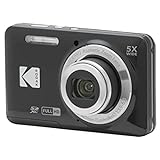
The FZ55 is not a vlogging camera and we will not pretend otherwise. What it is, is the cheapest way to carry a real optical zoom lens that is not a phone, in a body that weighs 105 grams and disappears into a jacket.
The 5x optical zoom covers 28mm to 140mm equivalent, which is the range that solves the problem vloggers actually hit while travelling: you cannot walk closer to the cathedral, the performer, or the bird. Digital zoom on every budget camera in this list simply crops pixels and looks soft. Optical zoom does not.
Daylight still images are the strength here. The 1/2.3-inch 16MP sensor is small, but in good light it produces clean, sharp photos with a built-in flash and a 1/2000-second top shutter speed. ISO tops out at 3200, and contrast-detection autofocus across 9 points is quick enough for daylight.
For video, the FZ55 records 1080p full HD with digital image stabilisation only. There is no 4K mode. Stabilisation is electronic, so walking shots will wobble in a way the Pocket 3 does not.
The 2.7-inch screen has 230K dots and is fixed to the back of the body. That single fact closes the door on talking-to-camera filming, because you have no way to see your own framing.
Storage runs through SD, SDHC or SDXC cards up to 512GB, which is generous. Connectivity is USB 2.0 only: no Wi-Fi, no Bluetooth, no app. Getting footage off the camera means pulling the card, which is friction you will notice every single time.
When a point-and-shoot outranks a vlogging camera
If your vlog is really a travel diary with talking segments shot on a phone, this camera earns its place. Reviewers describe it consistently as a great first real camera or a travel backup, and the multi-colour options make it easy to spot in a bag.
It also handles stills far better than anything else at this weight. If half your output is photographs, the FZ55 is the correct buy and the absence of 4K stops mattering.
Why the screen ends the conversation
There is no flip, no tilt, and no viewfinder. You cannot see yourself, and in bright sun the small low-resolution screen is awkward to judge. There is also no microphone input, so every clip relies on the internal mic, which is where wind noise comes from.
Our advice: treat it as the stills camera you carry, and use the phone for the talking segments. Trying to make it do both is where people get disappointed.
3. VJIANGER 4K Vlogging Camera with 180-Degree Flip Screen
VJIANGER 4K Digital Camera, Vlogging Camera with 180° Flip Screen
64MP sensor
4K UHD and 1080p
3-inch 180-degree flip screen
Wi-Fi
Webcam mode
Pros
- 180-degree flip screen makes solo filming possible
- 4K UHD recording in a body this simple
- Two rechargeable batteries plus a 32GB card in the box
- Wi-Fi transfer to a phone
- USB webcam mode for streaming
Cons
- Fixed f/8.0 aperture blocks low-light shooting
- Digital zoom and digital stabilisation only
- Autofocus can hunt during video
This is the camera I recommend without hesitation to someone starting a channel this month with almost no budget. It has the one feature the FZ55 lacks and that vloggers actually cannot work without: a screen that flips all the way around to face forward.
You press record, turn the screen toward yourself, and hold the camera at arm’s length. That workflow is the whole reason compacts with flip screens became popular, and no amount of image quality replaces it.
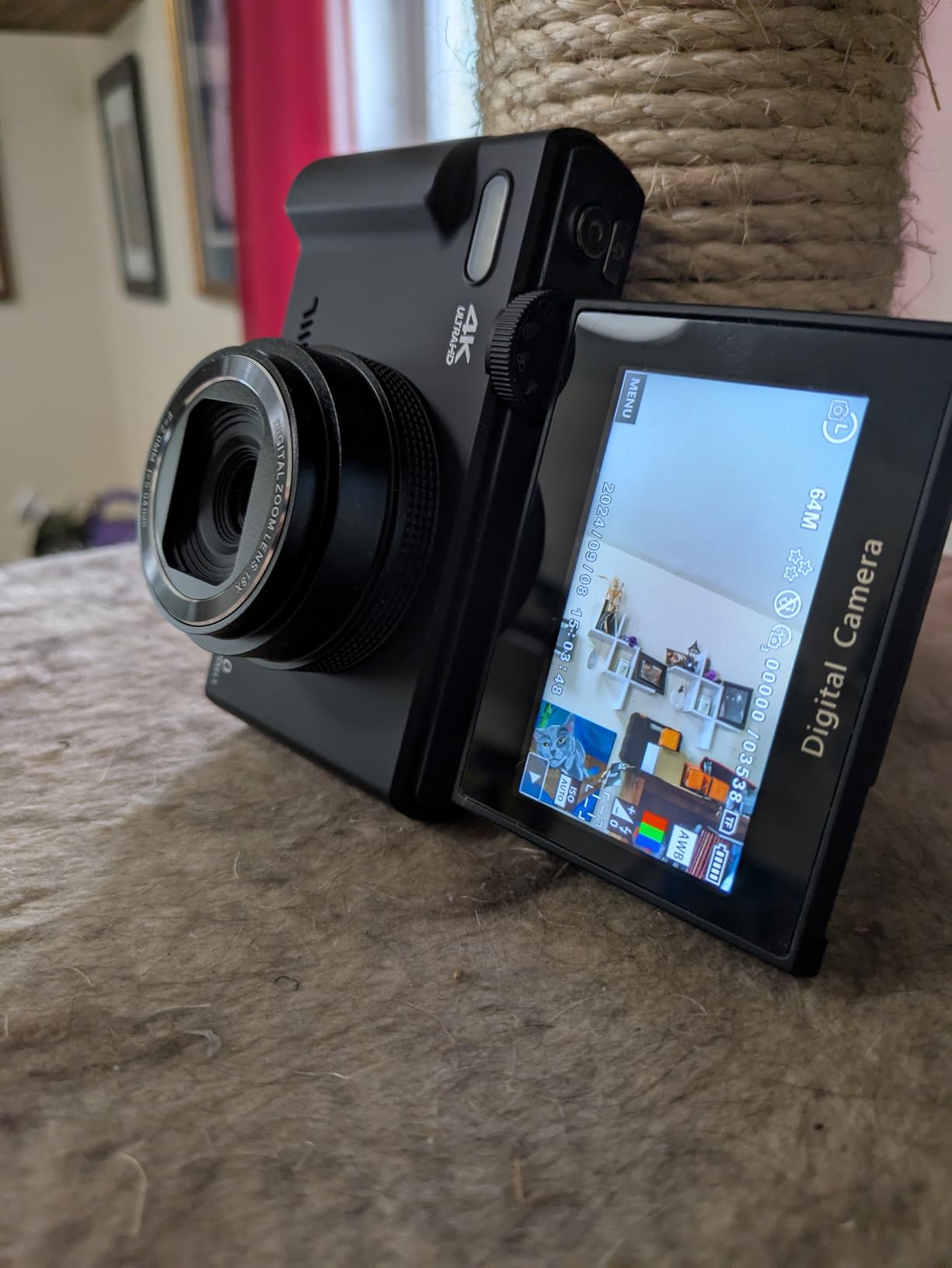
The specifications look impressive on paper. A 64MP 1/2.5-inch CMOS sensor, 4K UHD 2160p video, 18x digital zoom, 150 autofocus points, and Wi-Fi transfer to a phone. Continuous shooting runs at 3 fps and the aperture is fixed at f/8.0, which is the detail that tells you what to expect in real use.
A fixed f/8 aperture only opens wide in bright light. Shoot indoors in the evening and you raise ISO to 6400 on a small sensor, and the result is noise. Video autofocus also hunts, because contrast detection has nothing to lock onto when the subject moves toward the lens.
The package is unusually generous for the money: two rechargeable batteries, a 32GB microSD card up to 256GB, a bag and a lanyard. Reviewers highlight that bundle value most often, and it removes the first real purchase decision a beginner faces.
Weight is 277.8 g, which is heavier than the Kodak but light for what it does. USB webcam mode means it doubles as a streaming camera, and a standard 1/4-inch tripod mount is on the base for a small grip or tripod.

Who this suits immediately
Teens, students, and anyone filming short vertical or horizontal clips for social platforms. At this level the 4K resolution and flip screen matter more than low-light performance, because most content is made in daylight or in a lit room.
The Wi-Fi transfer is the quiet hero feature. App connectivity is described by some reviewers as unreliable, so keep the card reader nearby as a fallback for anything you cannot afford to lose.
Where the image quality ceiling sits
Digital zoom on an 18x setting produces soft, smeared frames, so treat it as a framing aid rather than a real zoom. There is no microphone input, so audio comes from the internal mic alone, and outdoors you will fight wind noise in every edit.
Reviewers are consistent that this is a starter camera, not a tool. Expect to outgrow it within a year of consistent posting, and buy it knowing that rather than being surprised later.
4. Duluvulu DC101 4K Camera with 48MP and Flip Screen
Duluvulu 4K Digital Camera for Photography Autofocus, 2026 Latest 48MP Vlogging Camera for YouTube with SD Card, 2 Batteries, 3″ 180°Flip Screen Compact Travel Camera for Teens with 16X Zoom,Black
48MP stills
4K 2160p video
3-inch 180-degree flip IPS
Webcam mode
18-month warranty
Pros
- Wide range of shooting modes including night and sports
- Time-lapse slow-motion and pause functions for editing clips
- Two batteries plus a 32GB SD card included
- Continuous autofocus works for walking shots
- 18-month manufacturer warranty
Cons
- Small 1/3-inch sensor caps overall quality
- Digital zoom only with no optical lens
- Writes AVI video rather than MP4
The DC101 is the pick for someone who wants more to play with in editing rather than a cleaner file. Where the VJIANGER is a straightforward point-and-shoot, this one hands you a menu of creative tools that give a young creator something to cut between.
That list includes time-lapse, slow motion, a video pause function that stitches clips together, date stamp, beauty face and smile detection. There are dedicated scene modes for night, portrait, landscape, sports, party, beach and backlight, plus continuous-servo autofocus that handles movement better than most cameras at this level.
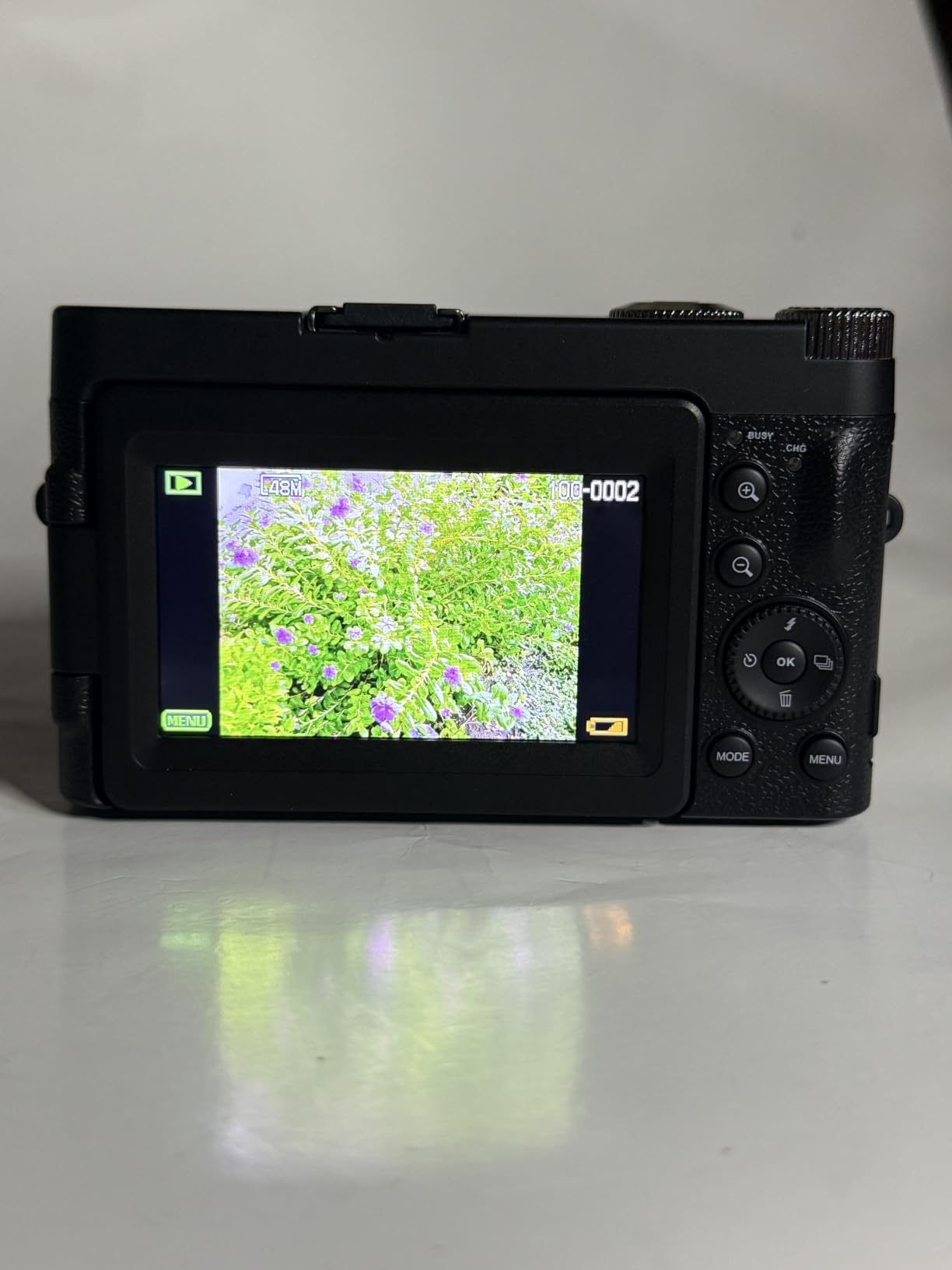
Video is 4K 2160p and stills are 48MP, both from a 1/3-inch CMOS sensor. That is the smallest sensor class in this guide, and it is the reason image quality tops out well below the Kodak and far below the Pocket 3. Aperture runs f/3.2 to f/6.4 with automatic ISO.
Something to know before you buy: this camera writes AVI video, not MP4. That is an older container, and some editing software handles it awkwardly. It works, but expect a conversion step or a compatibility check with your editor.
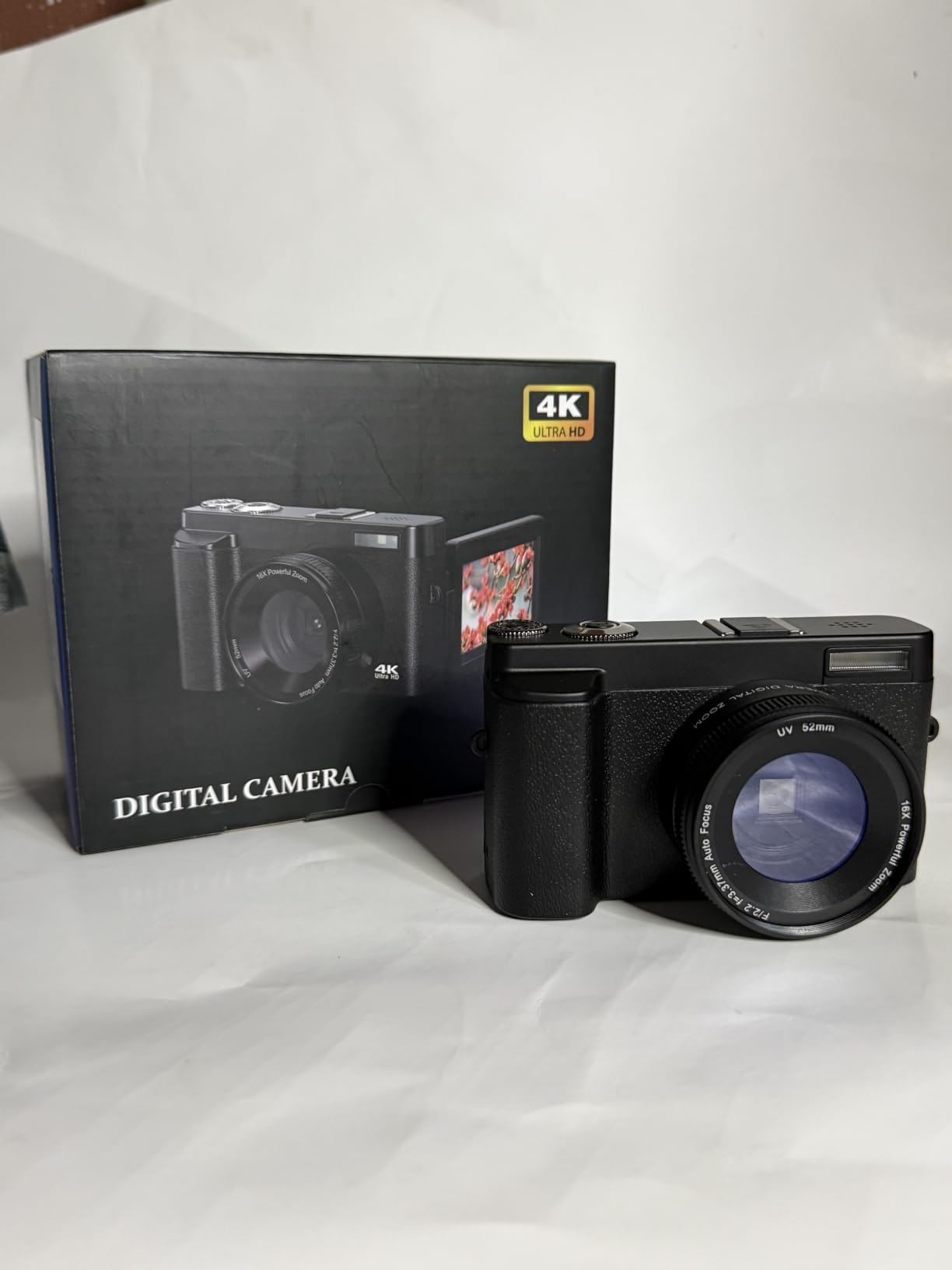
The 3-inch IPS panel flips 180 degrees and faces forward, and the body includes a 1/4-inch style mount region, two 800mAh batteries and a 32GB SD card. USB webcam mode is supported for streaming.
Reviewers describe the build as plasticky, and the listed weight of 0.56 kg is noticeably heavier than the pocket bodies here. It is a desk or table camera more than a walk-and-talk camera.
Editing tools versus clean files
Pause, time-lapse and slow-motion features are genuinely useful for short-form content where you want three angles of the same moment. The scene modes also save a beginner from learning exposure settings before they understand what a vlog is.
The trade is that every one of those features runs on a small sensor with digital stabilisation and a 16x digital zoom. You are getting more tools, not better images.
When a different camera is the smarter buy
If your content is a daily talking-to-camera vlog in a bedroom, put your money into a flip-screen camera with a wider aperture instead. The DC101 is built for someone shooting short clips in variable light where the scene modes do the work for you.
Also skip it if you edit on a phone with a simple app, because the AVI workflow adds friction exactly where you have least patience for it.
5. Zostuic DC101 4K Camera Kit for Beginners
4K Digital Camera for Beginners & Teens, with Flip Screen, 32G Card(Black)
48MP stills
4K and 1080p video
3-inch 180-degree flip screen
f/2.2 lens
2-year warranty
Pros
- Brightest lens in the budget group at f/2.2
- Bundled with a card two batteries a cradle charger and a bag
- Two-year warranty longer than most rivals offer
- Flip screen plus face and smile detection
- Webcam mode included
Cons
- Also records AVI rather than MP4
- Marketing quotes 16x optical zoom but the specification is digital
- No Wi-Fi or Bluetooth transfer
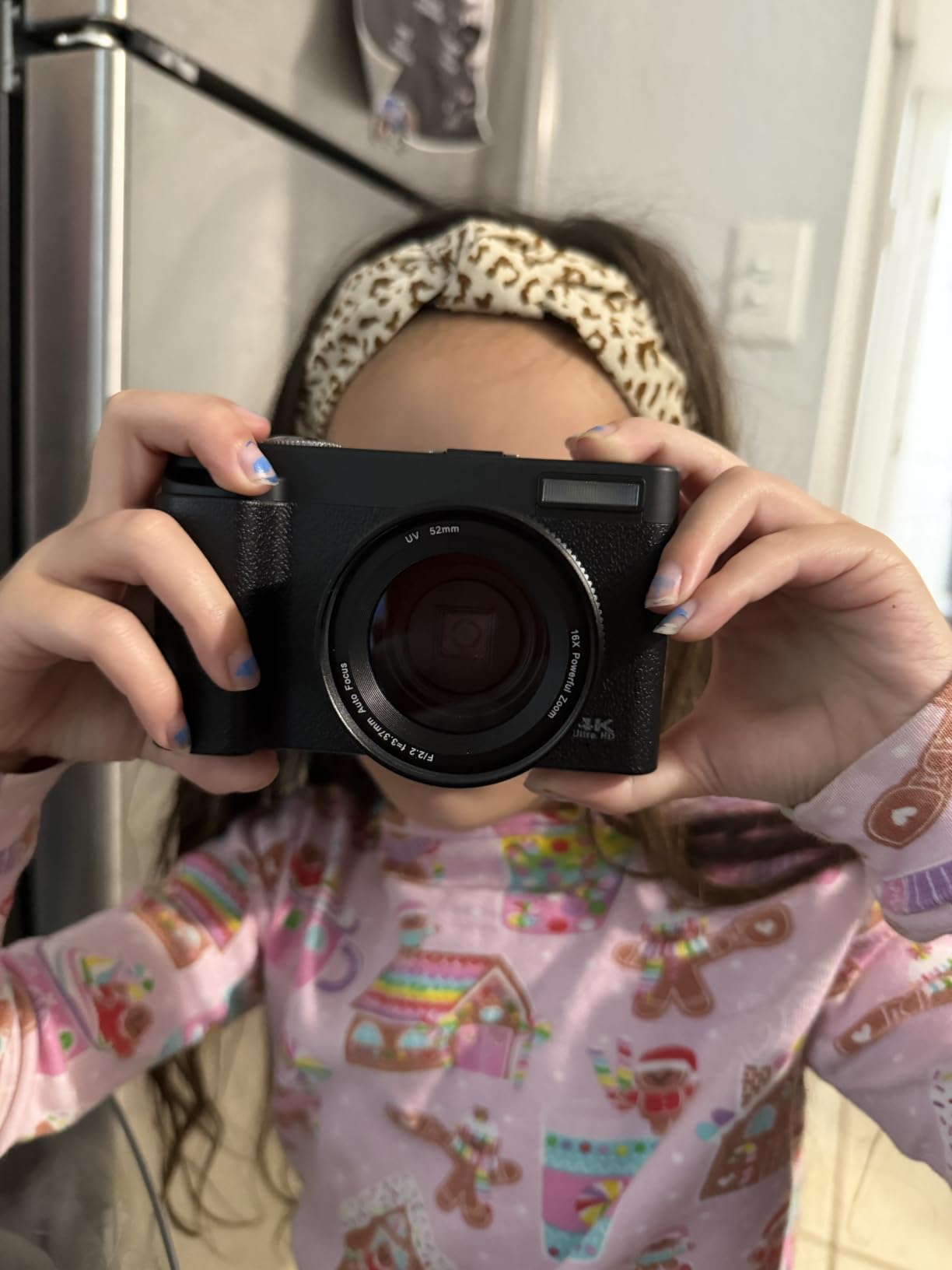
This kit answers the question a first-time buyer actually asks, which is what else do I need to buy. The answer here is almost nothing: a 32GB card, two rechargeable batteries, a cradle charger, a carry bag and a cleaning cloth all come in the box.
Compared with the other budget bodies, the detail that matters most is the f/2.2 lens. Where most cameras in this price bracket are fixed at f/8.0 and effectively unusable after sunset, f/2.2 opens the aperture far wider, which means the DC101 gathers meaningfully more light in an evening indoor vlog.

Video is 4K 2160p or 1080p, stills are 48MP, and the 3-inch screen flips 180 degrees to face forward. Autofocus is contrast detection with both single and continuous modes, and face and smile detection are available for talking-to-camera work.
One thing to flag clearly, because it trips people up: the marketing for this model quotes 16x optical zoom, and reviewers repeatedly point out that the actual specification is 16x digital. Digital zoom crops the frame and softens everything it touches, so treat the number as marketing rather than a feature.
Video also records in AVI format. That is the same caveat as the Duluvulu, and it is the single biggest reason we rank this second rather than first among the kits at this level.
There is no Wi-Fi and no Bluetooth. Transfers run over USB, which means more cable handling than the VJIANGER, but also fewer connection problems when the app decides not to pair.
Why the bundled kit matters more than the specs
Beginners lose weeks to the accessory gap. A card reader, spare batteries and a charger are a real running cost, and this bundle removes the lot. The cradle charger is a genuinely useful inclusion, because swapping batteries in a camera that charges in-camera means carrying a cable everywhere.
The two-year warranty is longer than the 18 months offered on several rivals, which matters most for the audience most likely to drop a camera on a pavement.
Where you will feel the limits
The 1/3-inch sensor is the ceiling on image quality, and 3 fps continuous shooting is not fast enough for action. Digital stabilisation and a fixed lens mean no optical reach at all, and the build is basic by design.
If you are filming a talking-head channel in a room with any daylight, the f/2.2 aperture will carry you further than the price suggests. If you are filming at night, it will not.
6. Panasonic Lumix TZ99 – Best Compact for Travel Zoom
Panasonic LUMIX TZ/ZS99 Point and Shoot Camera, Compact Camera for Travel with 30x Zoom with 24-720mm Zoom Lens, and 4K Video/Photo, Great for Travel and Concerts, DC-TZ99 (Silver)
20.3MP 1/2.3-inch BSI CMOS
30x optical zoom
4K 30p
3-inch tilting touchscreen
Leica lens
Pros
- 30x optical zoom from 24mm to 720mm equivalent
- Genuine five-axis hybrid optical stabilisation
- 4K 30p video plus 4K Photo stills mode
- Electronic viewfinder for bright daylight
- USB-C charging and Bluetooth transfer
Cons
- Screen only tilts upward and never faces forward
- No microphone input for external audio
- Small sensor struggles at night
The TZ99 is the travel camera in this list, and the reason is the lens. A 24mm to 720mm equivalent Leica zoom in a body you can hold in one hand changes what you can film, because you no longer have to approach everything you want to record.
Video is 4K at 30p with 1080p slow motion at 120fps, and stills can be extracted at 4K resolution using the camera’s 30fps burst. Post Focus and Focus Stacking let you choose where focus lands after the shot, which is a genuinely useful feature for product and food vlogs.
Stabilisation is the real headline. Five-axis hybrid optical stabilisation works with the optical stabilisation in the lens, which is why this camera holds a long telephoto shot far steadier than the digital-stabilised budget models. Hybrid autofocus across 171 points is quick to find a subject.
The 3-inch screen has 1,840K dots and a 1,840K dot electronic viewfinder. The viewfinder matters more than vloggers expect: in bright daylight a screen washes out completely, and a viewfinder keeps the shot framed.
ISO runs from 80 to 6400 on a 1/2.3-inch BSI sensor, and the aperture falls from f/3.3 to f/6.4 as you zoom in. That wide-open end is not going to compete with a 1-inch sensor indoors, and the sensor size sets the ceiling.
Weight is 322 g, and USB-C charging plus Bluetooth 5.0 and Wi-Fi mean transfers are painless. There is no built-in flash and no microphone input, which for a camera aimed at video creators is a genuine limitation.

When reach matters more than framing yourself
Concerts, wildlife, distant landscapes, and details of architecture you cannot walk up to. The optical zoom is not marketing inflation here, it is the reason the camera exists, and it produces real detail at the long end where a phone cannot.
Reviewers consistently describe it as a specialised travel and concert camera rather than a vlogging-first device, and they are right. The stabilisation and the fast telephoto focus are what earn the recommendation.
Why the tilt screen stops it being a vlogging camera
The screen tilts upward for shooting from low angles, which is useful. It does not rotate to face forward, so there is no arm’s-length talking-to-camera workflow here at all. You would be filming yourself blind or relying on a separate monitor.
Add the absent microphone port and it is clear: buy this as a travel camera, and use your phone or one of the flip-screen bodies for the talking segments.
7. CGXUED Mini Camcorder – Tiniest Camera for Vlogging
CGXUED Vlogging Camera, Mini Camcorder, Portable Handheld Video Camera
Ultra-compact 5-inch body
Rotating 180-degree wide lens
1072p video
2000mAh battery
Pros
- Genuinely pocketable at 5.35 inches long
- Built-in 2000mAh battery rated for around seven hours of recording
- One-button recording with no app or setup
- 32GB card included and ready out of the box
- Two-year manufacturer warranty
Cons
- Not real 4K with resolution quoted as 1072p
- Fixed focus lens with no autofocus
- 1.3-inch screen is far too small to judge framing
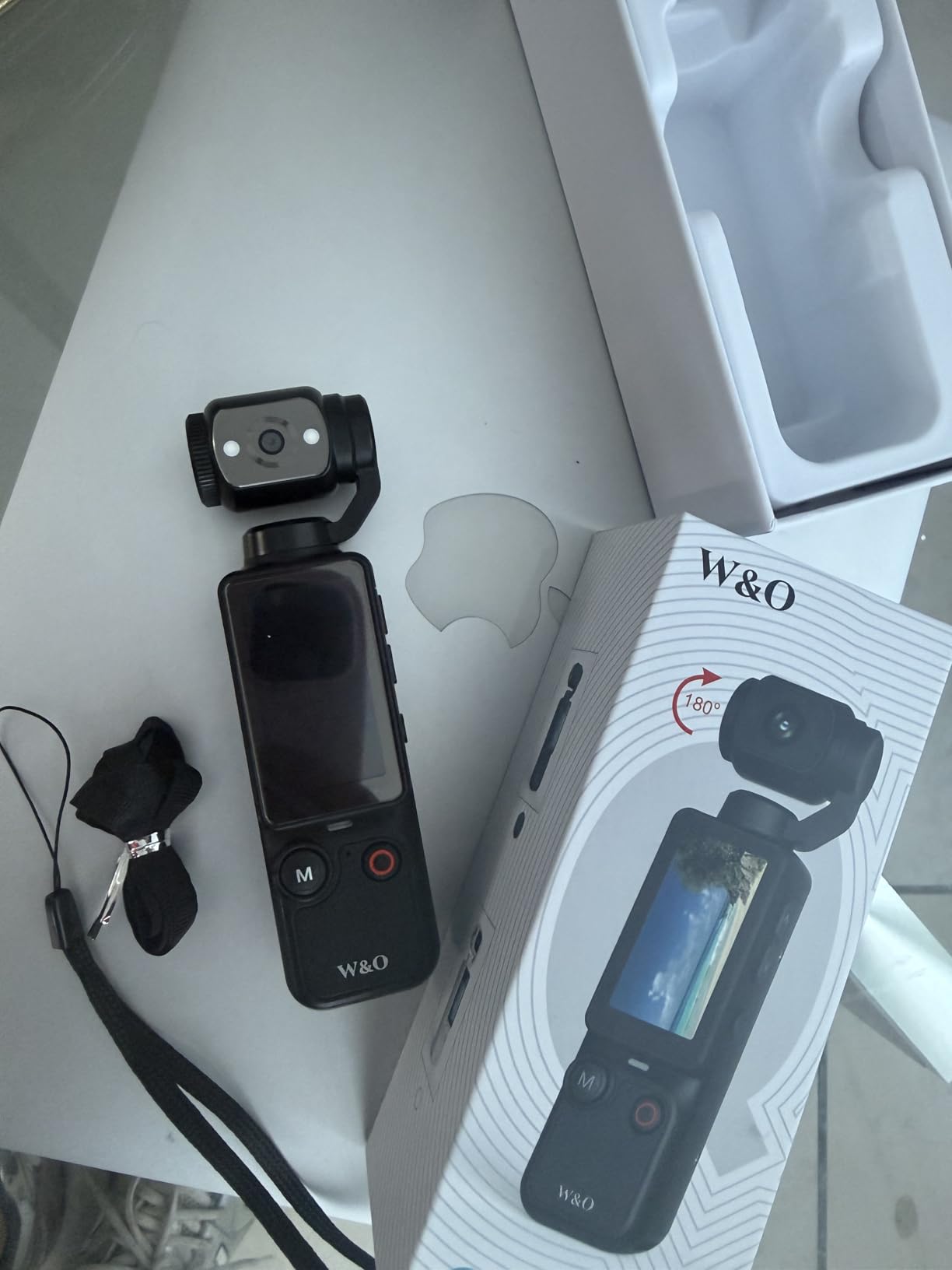
Every other camera in this guide requires a decision about where to put it during the day. This one does not. It is a stick you can leave in a shirt pocket, and the seven-hour quoted battery means it can stay there all day.
The 180-degree manually rotating wide-angle lens is the feature that makes it interesting for vlogging. You swing the lens around to face yourself, press the single record button, and you have a point-of-view or selfie shot with no menus in the way.
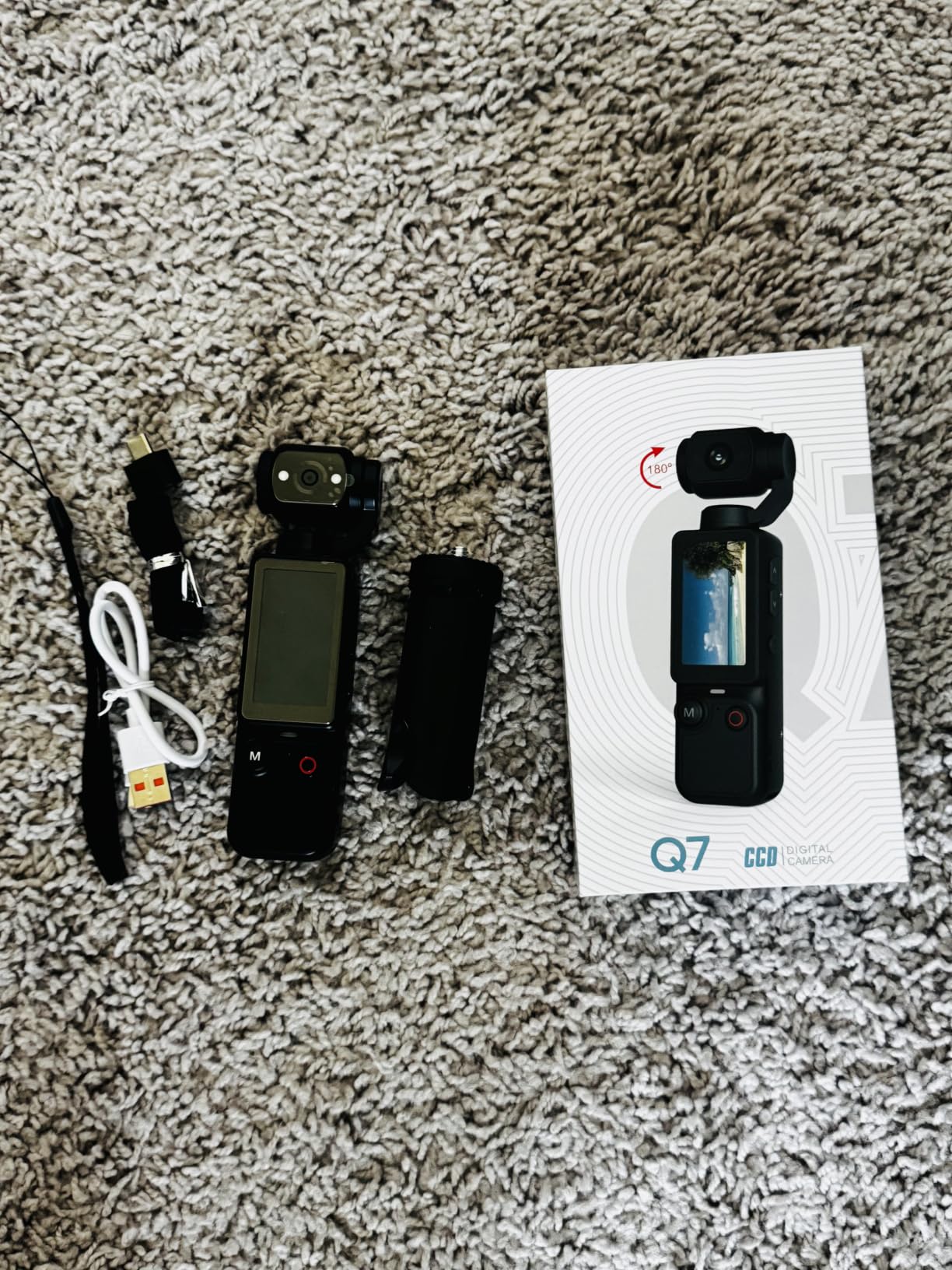
Everything about the image quality is a compromise. Video is quoted at 1072p, with effective resolution described as 2.5K from interpolation, and the sensor is listed as NMOS. There is no autofocus: the lens is fixed focus, so you set a distance and it stays there.
The 1.3-inch screen is the practical problem. It is too small to compose a shot with any accuracy, which means you are relying on instinct rather than framing. Combined with fixed focus, this is a camera for capturing moments rather than composing them.
Still images are listed at 66MP interpolated, which is a specification exercise rather than a real capability. Audio records to MP3 with a built-in speaker, and there is no external microphone input at all.
Storage is a 32GB card included in the box, and there is no app and no Wi-Fi or Bluetooth, so transfer is over USB. A fill light and a time-lapse mode round out a genuinely unusual feature list for the size.
What seven hours of battery actually unlocks
It unlocks the freedom to film a full day of travel without thinking about power, and there is no pack of spare batteries to carry. A built-in 2000mAh battery also means the body stays pocketable, because the alternative is external cells and a bulge.
For a parent recording school events, a traveller capturing a whole day, or anyone who wants a camera that never runs out, that reliability is worth more than resolution.
Why we would not recommend it for a channel
Fixed focus means a subject who moves toward or away from you drifts out of focus permanently, with no way to correct it. The tiny screen means you cannot check whether a shot is level, and there is no microphone input for wind protection.
Reviewers describe it as a fun pocket camera for casual everyday recording, a backup, or a travel novelty. That is an accurate summary. It is not water resistant either, so keep it away from rain.
8. Panasonic Lumix FZ80D – Best for Long Reach, Least for Vlogging
Panasonic Point and Shoot Digital Camera 4K, Vlogging Camera for Travel
18.1MP 1/2.3-inch MOS
60x optical zoom
4K video
0.74x OLED viewfinder
635 g
Pros
- 60x optical zoom from 20mm to 1200mm equivalent
- True optical stabilisation across five axes
- Large 0.74x OLED electronic viewfinder
- 55mm filter thread accepts adapters and filters
- 4K Photo mode extracts stills from video
Cons
- Fixed rear screen with no tilt or flip
- Weighs 1.4 pounds so it is not pocketable
- No microphone input for vlogging audio
We include the FZ80D because it is regularly recommended to vloggers by mistake. It is a bridge camera built for reach, and understanding why it is wrong for this job tells you something useful about the category.
The lens covers 20mm to 1200mm equivalent. Nothing else in this list comes close, and for wildlife, distant sport, and stadium shots it produces detail no other body here can match. Optical stabilisation works across five axes, which matters at that focal length.

The 0.74x OLED electronic viewfinder with 2,360K dots is excellent, and there is a 55mm filter thread on the front for adapters, filters and ring lights. Shooting runs at 10 fps continuously with a 1/16000-second top shutter speed, and Post Focus lets you pick the focus point after capture.
Then the vlogging problems start. The 3-inch screen is fixed to the back with no tilt and no flip, so there is no way to frame yourself. The body weighs 1.4 pounds, which is the weight of a small mirrorless kit and the opposite of a compact.
There is no microphone input, and the FZ80D variant listed here has no built-in Wi-Fi or Bluetooth. Autofocus is contrast detection across 39 points, which is slower to acquire than the hybrid systems in the other Panasonics.
Video is 4K at 3840p or 1080p. ISO runs from 80 to 6400 on a 1/2.3-inch sensor, so low light is a genuine limit even with optical stabilisation working for you.
What a 60x zoom is genuinely good for
Distant subjects you cannot approach: a lion on a plain, a player at the far end of a pitch, a speaker on a stage. Optical stabilisation and a fast lens make the long end usable in a way that a cropped digital zoom never will be.
The viewfinder also solves a problem most compacts have, since you can compose and shoot without fighting screen glare in daylight. For pure video capture from a fixed position, it is a capable tool.
Why it fails as a vlogging camera
Three reasons, and none of them are fixable. No flip screen means no self-framing. 635 grams means you will not carry it every day, and a camera you leave behind is worth nothing. No microphone input means your audio is at the mercy of the internal mic in any wind.
Our recommendation is specific: buy this if you film wildlife or distant sport and also happen to take stills. Do not buy it because it appears high in a vlogging list.
9. TEFTYMON DC101 64MP with Wi-Fi and Hotshoe
4K Digital Camera for Photography Autofocus, Upgraded 64MP WiFi Vlog Camera
64MP stills
4K 2160p video
3-inch 180-degree flip IPS
Wi-Fi
Hotshoe mount
Pros
- Wi-Fi transfer to a phone without pulling a card
- Hotshoe mount for a flash or accessory at this price is rare
- 180-degree flip screen for solo filming
- Bundle includes a 32GB card two batteries a UV filter and a bag
- Time-lapse slow-motion and pause functions
Cons
- ISO ceiling of 400 limits exposure flexibility
- Digital zoom only despite optical wording in the listing
- AVI video format rather than MP4
This is the pick for anyone whose real problem is workflow rather than optics. Wi-Fi transfer means footage moves to a phone without a cable or a card reader, and the hotshoe on top is a feature you normally only see on cameras costing several times more.
The 3-inch IPS screen flips 180 degrees to face forward, video is 4K 2160p, and stills are 64MP. Autofocus is contrast detection across 9 points with face and smile detection, and there is a time-lapse mode, slow motion, a pause function and a date stamp.
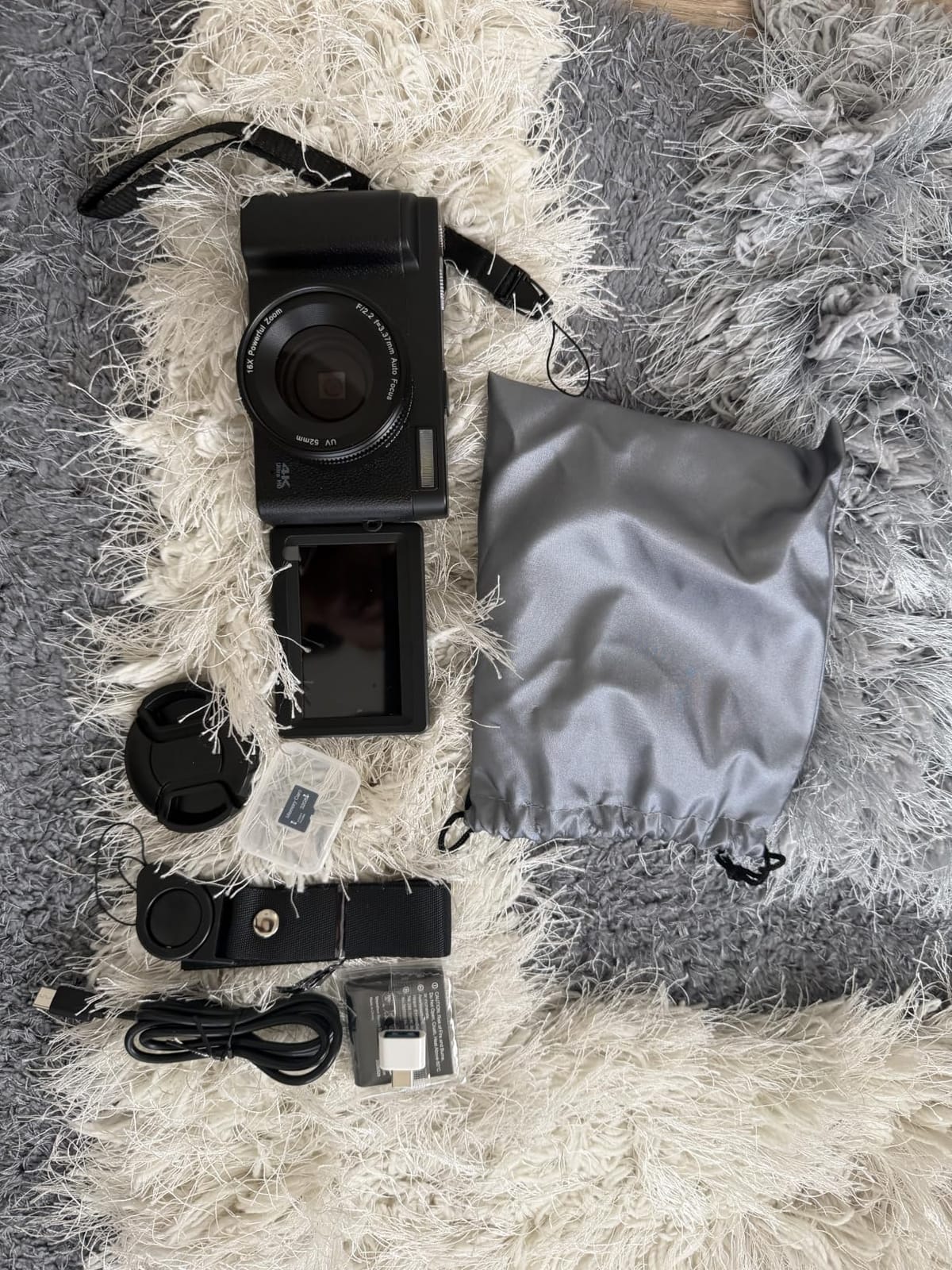
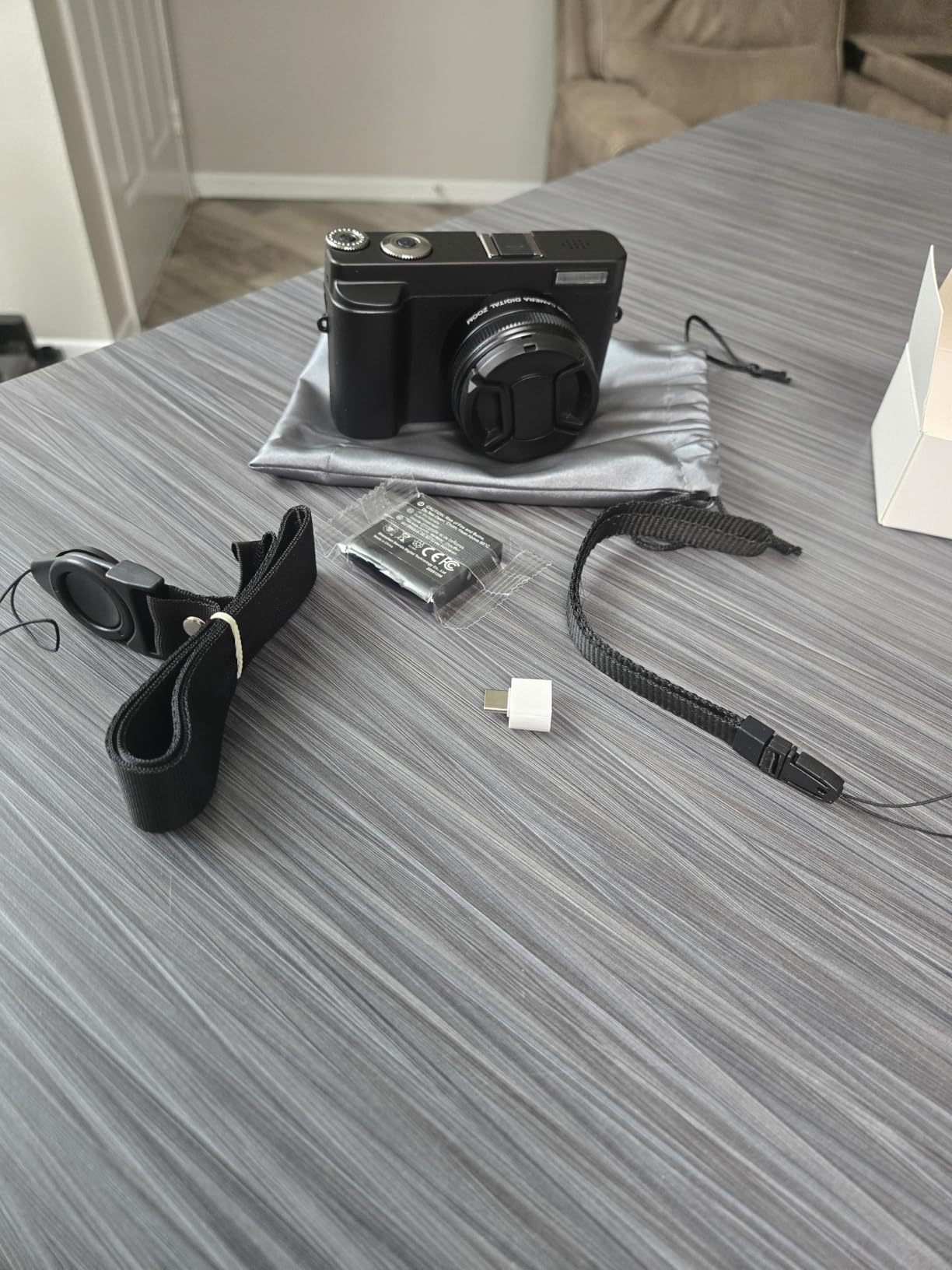
What you get in the box is unusually generous: a 32GB SD card, two rechargeable batteries, a UV filter, a bag, and a charger. Cards up to 256GB are supported, and a built-in fill light plus webcam mode add to the streaming use case.
Now the limitation that matters most. ISO is listed as 100 to 400, which is an extremely narrow range. In practice that means the camera is deciding exposure almost entirely on its own, and you will see noise and flat contrast in anything dimmer than a well-lit room.
There is a small inconsistency in the listing itself, which reviewers also flag: the zoom is quoted as 16x optical in places, but the specification and the behaviour are digital. Treat it as digital.
Video records to AVI, the same older container as the other budget bodies here, and the Wi-Fi app is described as occasionally finicky. Keep the card as a backup for anything important.
Why the hotshoe is the sleeper feature
A hotshoe at this level opens the door to a small flash, a small LED panel, or a mounting adapter for a proper microphone. That last one matters for vlogging, because a camera with a mic input would solve audio properly and this gets you part of the way there.
It also makes the camera more useful for stills, where a fill light genuinely improves results in dim indoor vlog setups.
Where the ISO ceiling bites
An ISO range capped at 400 is the hardest ceiling to work around here. Daylight and bright interiors are fine. An evening vlog in a living room is not, and no amount of editing recovers detail that was never recorded.
For a creator filming short vertical clips in good light, the wireless workflow and accessory mount outweigh this. For anyone filming in the evening, look at the Kodak or the Zostuic with its wider f/2.2 lens instead.
10. Lmzour HJD-05 with 330-Degree Rotating Lens
Lmzour 4K Vlogging Camera, Pocket Digital Camera, 330° Rotating Lens
75MP 1/2.5-inch CMOS
4K video
330-degree rotating lens
1.72-inch touchscreen
Wi-Fi
Pros
- Rotating lens covers more framing angles than a flip screen
- Built-in gimbal-like stabilization smooths side-to-side motion
- Phase detection autofocus with active face tracking
- Complete kit with a 16GB card mini tripod bag and strap
- Compact and genuinely pocketable
Cons
- Battery rated at only about 1.5 hours
- 1.72-inch screen is too small to compose with
- No external microphone input
The Lmzour solves the self-framing problem differently from everyone else here. Instead of a screen that flips around, the 330-degree rotating wide-angle lens turns toward you, so the camera points at your face while the body stays where it is.
In practice that means a selfie or point-of-view shot with a 79-degree field of view and a body that does not need to be turned edge-on. It works, and on a walk it takes up less room in your hand than a flip-screen model.
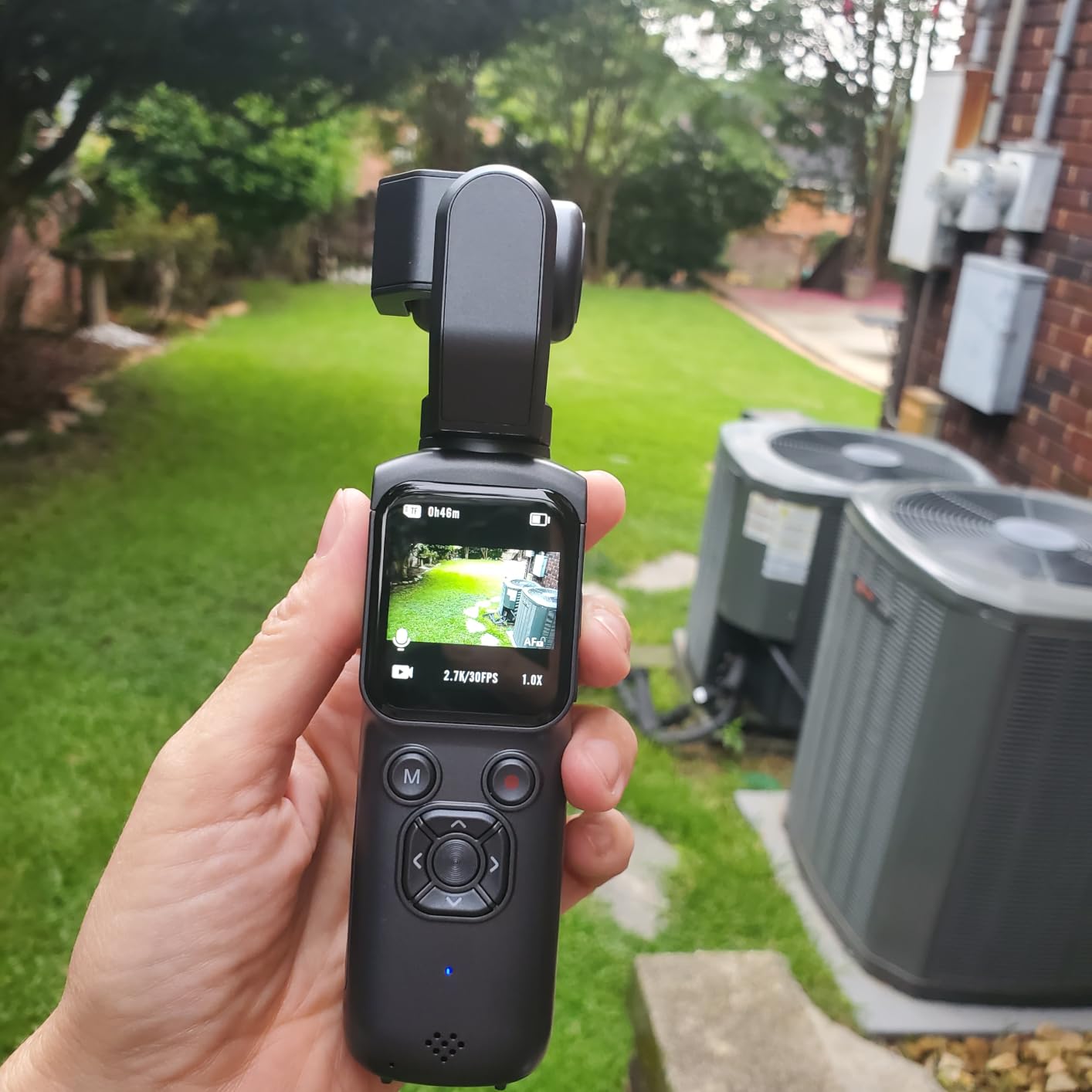
Video is 4K at 30fps or 1080p, and the sensor is a 1/2.5-inch CMOS. Autofocus is phase detection with active face and subject tracking, which is a genuinely better autofocus system than the contrast detection used by most cameras at this size and price.
Stabilisation is described as gimbal-like and it handles side-to-side movement well. Reviewers are clear about the limit: it lags when tracking mode is active, and vertical movement while walking is not stabilised. That is the same weakness the forum complaints about walking shake describe.
Screen size is the problem. At 1.72 inches it is smaller than the CGXUED’s, and you genuinely cannot judge framing or focus from it. That makes this a camera for people who already know where they are pointing.
Battery life is quoted at about 1.5 hours, which is the shortest in this list and the biggest practical limitation. The kit includes a 16GB card, a mini tripod, a bag and a wrist strap, but at 4K that card fills quickly, so bring a larger one.
Rotating lens versus flipping screen
A flip screen shows you a larger preview as you compose, which is why it is the safer choice for a beginner. A rotating lens gives you framing flexibility the flip screen cannot match, and it keeps the body narrower when you hold it one-handed at arm’s length.
Buyers who already know where the camera is pointing rate the rotating lens as the better mechanism. If you are learning to frame, this is not the camera to learn on.
Where it will disappoint you
Ninety minutes of battery means carrying a spare cell or shooting shorter blocks, and the bundled 16GB card is barely a start at 4K. Low-light performance is weak, and there is no microphone input, so audio is entirely at the mercy of the internal stereo microphone.
Wi-Fi is present for phone transfer, which helps a lot at this price. The warranty is one year, which is shorter than the two years offered by several budget rivals.
How to Choose a Compact Camera for Vlogging
Every mistake we see in this category comes from buying a camera on sensor size or megapixels and discovering the screen or the audio problem on day one of filming. Work through these criteria in order instead.
1. The screen decides whether you can film alone. A fixed screen is a no. A tilting screen works for high and low angles but still cannot face you. Look for a fully articulating or side-flip screen that turns 180 degrees. If you are a one-person channel, this is the one feature you cannot compromise on, and it is the reason four cameras in this guide made the list while others did not.
2. Stabilisation type matters more than the number in the spec sheet. Digital stabilisation crops into the frame and removes no shake, so the image ends up softer and slightly tighter. Optical stabilisation moves a lens element and does real work. A three-axis mechanical gimbal physically holds the sensor level and is the only one of the three that handles walking shots properly on a compact body. Only the Osmo Pocket 3 in this list has one.
3. Rolling shutter is the complaint vloggers raise most. Cheap sensors read the frame line by line rather than all at once, so fast pans and vertical steps bend straight lines into rubbery curves. It shows up badly when you walk and pan at the same time. Mechanical gimbal stabilisation reduces it, which is another reason the Pocket 3 handles walking shots better. There is no menu setting that fixes it, so the practical advice is to pan slowly, stabilise what you can, and check a test clip before you rely on a technique.
4. Sensor size sets your ceiling in dim rooms. A 1-inch sensor such as the one in the Pocket 3 gathers far more light than the 1/2.5-inch and 1/2.3-inch sensors in the budget bodies, which is why indoor footage holds together. Watch the aperture as much as the sensor: a fixed f/8.0 lens only opens wide in daylight, while an f/2.2 or f/2.0 lens keeps collecting light after dark.
5. Audio is where most vlog quality is won or lost. A 3.5mm microphone input is the baseline, a hotshoe is better, and native support for a wireless transmitter system is better still. Of the ten cameras here, only the Pocket 3 offers a clean documented path to external audio, and the TEFTYMON has a hotshoe you can improvise with. If your camera has neither, you are relying on an internal microphone, and that means wind noise in every outdoor clip. Getting this right in the edit is impossible.
6. Check recording limits and battery in the same breath. Small bodies run hot. A camera that records beautifully for twelve minutes and then shuts down is worse than one that records steadily for an hour, especially if you film a whole walking vlog in one take. Ask what the quoted battery figure means in real continuous 4K recording, and how many batteries you would need to cover a full day.
7. Vertical video support saves real editing time. If your audience is on short-form platforms, a camera with a vertical recording mode lets you shoot one clip and publish it to several formats without reframing everything by hand. A rotating screen of any kind also helps, because you can hold the camera the way you will present the video.
One last practical note on zoom. Digital zoom is not zoom. It crops the frame and interpolates the missing pixels, which is why an 18x digital zoom looks worse than a 3x optical one. If reach matters to your videos, buy optical and accept a bigger body, which is exactly why the two Panasonics and the Kodak sit in this list alongside the flip-screen budget options.
Compact vs Mirrorless vs Your Phone
A compact camera sits between a phone and a mirrorless body, and the honest comparison comes down to what you give up for pocketability.
A modern phone already has excellent stabilisation, unlimited video, and a front-facing screen. What it does not have is a real sensor with a wide aperture, a microphone input, or 10-bit capture. If your vlog is talking-head clips in a lit room, a good phone genuinely may be enough, and we would rather say that than have you buy a camera you do not need.
A mirrorless body wins on image quality decisively. Larger sensors, interchangeable lenses, headphone monitoring, proper external audio, and unlimited record limits make it the right tool for anything beyond a single camera. The cost is size, weight, and price, and for many creators the size is what kills it. A camera you leave at home because it is a nuisance is worse than the phone you already carry.
A compact wins in the specific middle ground: small enough to carry daily, a sensor meaningfully larger than a phone’s, a screen that faces forward, and a stabilisation system good enough to walk with. For a travel vlog, a one-bag vlog, or a channel shot entirely in daylight, that middle ground is exactly right.
It also wins for the specific frustration of filming alone. Mirrorless bodies usually need a cage, a grip, or a flip screen fitted before they are comfortable at arm’s length, and they need a second person or a tripod more often. A compact is designed from the start to be held at arm’s length in one hand.
Our rule of thumb: if you will grow into better video over the next two years, skip the compact and go mirrorless. If you need something in your pocket today, the compact is the correct answer.
The Accessories Each Pick Actually Needs
A camera body is half a kit, and the second half costs less than most beginners expect.
A grip or mini tripod. Essential for any camera without a built-in stand. A small hand grip with a cold shoe mount doubles as a wrist strap anchor and gives you a stable platform when you set the camera down. The Lmzour kit already includes one, as do several of the budget bundles.
A microphone. If your camera has a 3.5mm input, use it. A small directional mic on a short cable aimed at your chest does more for perceived quality than any camera upgrade. Our guide to compact speakers for accurate monitoring covers checking the result properly rather than trusting the camera’s own levels.
A spare battery or a power bank. The quoted battery figures assume mild use. Continuous 4K recording, a bright screen, and Wi-Fi transfers all drain faster. Two bodies is better than one body and a charging cable.
A fast card and a card reader. 4K video fills a small card quickly, and every camera here records to removable storage. Budget for a high-speed card and a reader that works with the phone you edit on.
A microphone position for the audio path. If your camera has no microphone input, get the microphone and recorder as separate devices and sync in editing. Our picks on compact mixers for clean audio cover the monitoring side of that setup. It is more work than a wired mic, but it is the only option on several of the budget bodies here.
Frequently Asked Questions
What is a good small camera for vlogging?
A good small camera for vlogging needs four things: a screen that flips forward so you can frame yourself, stabilisation that survives walking, a sensor with a reasonably wide aperture, and a microphone input. The DJI Osmo Pocket 3 meets all four with a 1-inch sensor and a 3-axis mechanical gimbal. Below that tier, the VJIANGER 4K flip-screen camera is the cheapest way to get a usable front-facing screen.
What is the best mini camera for vlogging?
The best mini camera for vlogging is the CGXUED mini camcorder if pocketability is the whole priority. It is a 5-inch stick with a rotating wide-angle lens, one-button recording and a battery rated at around seven hours, so it can stay in a pocket all day. The trade-off is fixed focus, a 1.3-inch screen and video resolution quoted at 1072p, so it suits capturing moments rather than composing polished shots.
What cameras do most vloggers use?
Most vloggers today shoot on a phone, a mirrorless body with a vari-angle screen, or a compact with a flip-out screen. Compact point-and-shoots with flip screens remain popular because they are cheap, light and designed to be held at arm’s length. The Canon G7 X Mark III in particular is still widely recommended in forum threads, though newer fixed-lens bodies with better stabilisation now outperform it for video.
Do I need a vlogging camera or can I use my phone?
You can absolutely use your phone. For talking-to-camera clips filmed in a lit room, a recent phone with stabilisation and a good lapel microphone will look and sound better than most budget compact cameras. Move to a compact when you need a real microphone input, better low-light performance, a sensor larger than a phone, or a body you can hold at arm’s length without a rig.
Is a compact camera better than a mirrorless for vlogging?
A mirrorless camera is better for image quality, and a compact is better for everything else. Mirrorless bodies give you a much larger sensor, interchangeable lenses, headphone monitoring, proper external audio and no recording limits. Compacts win on size, weight, price, and a screen designed for arm’s-length solo filming. If you will shoot regularly for years, go mirrorless. If you need it in your pocket today, go compact.
Which Compact Camera Should You Buy?
The DJI Osmo Pocket 3 is our pick for the best compact cameras for vlogging in 2026. It is the only body here with a mechanical three-axis gimbal and a 1-inch sensor, and that combination is the difference between footage that looks handheld and footage that looks deliberate. It is also the only one with a clean path to external audio.
If your budget is tighter, the Kodak PIXPRO FZ55 gives you a real optical zoom in a 105-gram body for travellers who shoot as many stills as clips, and the VJIANGER 4K flip-screen camera gives a first-time creator the front-facing screen that vlogging genuinely requires.
The rest of the list is niche and worth knowing. The Zostuic and TEFTYMON kits are the best bundled starting points. The CGXUED mini camcorder is the one you will actually carry every day. The Panasonic TZ99 is the travel zoom, and the FZ80D is a long-reach camera that should stay out of a vlogging conversation.
Whichever you pick, buy a grip, buy a microphone, and test one walking shot before you commit to a shooting style. The best compact cameras for vlogging are the ones you take with you.