

Finding the best bookshelf speakers with a warm sound used to mean digging through audiophile forums, auditioning endless models, and trusting your ears above any spec sheet. I have spent the last three months doing exactly that, and I want to share what worked.
Warmth in a speaker is not a vague mood. It is a measurable tonal tilt that lifts the lower mids, softens the top octave, and trades a hint of analytical detail for a sound you can listen to for hours without fatigue. For classical music, jazz, acoustic vocals, and well-mastered vinyl, that signature is a gift.
This guide covers seven bookshelf speakers I have evaluated with orchestral, chamber, and solo piano material across rooms from 120 to 350 square feet. Some cost less than a dinner for two, others approach serious hi-fi territory. Each one earns its spot for a specific reason, and I will tell you exactly which kind of listener each one fits.
Table of Contents
Top 3 Picks for Warm-Sounding Bookshelf Speakers
Three models consistently outperformed the others in my classical-music tests. The KEF Q1 Meta delivers the most refined presentation I have heard under a grand, the ELAC Debut 3.0 DB53 offers the strongest tonal balance per dollar, and the Edifier R1280T proves that genuine warmth does not require a four-figure investment.

KEF Q1 Meta Bookshelf Speaker
- Uni-Q with MAT absorption
- Smooth and non-fatiguing
- Single point source imaging

Best Bookshelf Speakers With a Warm Sound in 2026
All seven contenders in one table. Each has been evaluated for musicality, tonal warmth, and how it pairs with classical material. The right column links to the full review.
| Product | Specifications | Action |
|---|---|---|
| Edifier R1280T |
|
Check Latest Price |
 Polk Monitor XT15 Polk Monitor XT15 |
|
Check Latest Price |
 ELAC Debut 3.0 DB53 ELAC Debut 3.0 DB53 |
|
Check Latest Price |
 SVS Prime Bookshelf SVS Prime Bookshelf |
|
Check Latest Price |
| KEF Q1 Meta |
|
Check Latest Price |
 ELAC Debut Reference B6.2 ELAC Debut Reference B6.2 |
|
Check Latest Price |
 DALI BS243.4 Carina DALI BS243.4 Carina |
|
Check Latest Price |
1. Edifier R1280T – The Warmest Bookshelf Speaker Under $200
Edifier R1280T Powered Bookshelf Speakers – 2.0 Active Near Field Studio Monitor Speaker – Wooden Enclosure – 42 Watts RMS Power
13mm silk dome tweeter
4in woofer
42W RMS built-in amp
Pros
- Warm
- non-fatiguing silk dome tweeter
- MDF wood enclosure reduces resonance
- Dual AUX inputs for multiple sources
- 42W RMS adequate for small rooms
- Side-panel bass and treble trim
Cons
- No Bluetooth
- No subwoofer output
- Limited bass depth
The Edifier R1280T is the speaker I hand to friends who say they want warm, musical sound without touching an amplifier. It is powered, which means the company designed the entire signal chain from wall to driver. That coherence translates directly into the warmth you hear on a solo cello recording.
I used the R1280T on a desk for two weeks with chamber music, solo violin, and a generous amount of opera. The 13mm silk dome tweeter is the heart of the warmth. It rolls off the very top octave gently, so piccolo flourishes and triangle hits feel smooth rather than piercing. String quartets retain their burnished tone instead of turning glassy.
The 4-inch woofer is small but well integrated. It manages the lower mids with surprising body, so a Steinway recording has a realistic sense of weight in the bottom octaves. You will not get subterranean bass, and I would not push them past 75 percent volume in a 200-square-foot room, but they stay composed when you do.
The wooden enclosure looks like furniture rather than gear, which matters in living rooms. The side-panel knobs let you nudge bass and treble to taste, a feature I underestimated until I found myself wanting slightly less upper-midrange on a Romantic-period symphony.
What it does well with classical material
The R1280T shines with smaller ensembles. Haydn quartets, Bach unaccompanied cello, and Schubert lieder are where it earns its reputation. The midrange warmth gives lieder recordings the vocal body they deserve.
Where it falls short
A full orchestra at high volume exposes the 80Hz bass limit. Pipe organ recordings lose authority. For those genres, plan on a subwoofer or moving up the list.
2. Polk Monitor XT15 – Smooth Hi-Res Sound on a Tight Budget
Polk Monitor XT15 Pair of Bookshelf or Surround Sound Speakers – Hi-Res Audio Certified, Dolby Atmos & DTS:X Compatible, 1″ Terylene Tweeter & 5.25″ Dynamically Balanced Woofer (Pair, Midnight Black)
1in Terylene tweeter
5.25in woofer
Hi-Res certified
Pros
- Hi-Res Audio certified for extended highs
- Smooth 1in Terylene tweeter
- Dolby Atmos and DTS:X compatible
- Punchy 5.25in dynamically balanced woofer
- 5-year limited warranty
Cons
- Plastic enclosure may color at high volume
- Needs separate amplification
- Bass extension limited without sub
The Polk Monitor XT15 surprised me. I expected a budget speaker with budget compromises. Instead I found a passive bookshelf with a genuinely refined high-frequency presentation and the kind of midrange warmth that flatters acoustic material at this price point.
Polk rates the XT15 as Hi-Res Audio certified, which is a meaningful claim. The 1-inch Terylene tweeter reaches into the upper harmonics that define the character of a violin, oboe, or natural horn. When I played a Reference Recordings SACD rip, the air around the instruments had presence without glare.
The 5.25-inch woofer handles mids with more authority than the Edifier above, which is useful when orchestral mass increases. Mahler symphonies and Beethoven piano concertos stayed intelligible even during tuttis. The 8-ohm impedance makes this an easy match for budget integrated amplifiers.
The cabinet is plastic rather than wood, and at very high volumes you can detect slight box coloration. Stick to reasonable levels in a small to mid-sized room and the XT15 behaves like a more expensive speaker.
Best classical pairings
The Terylene tweeter is at its best on string textures. I found violas and cellos reproduced with a richness that the Edifier could not match, while still avoiding the analytical edge that plagues brighter speakers in this tier.
Limits to know about
You will need an amplifier, which adds to total system cost. The plastic cabinet is not the prettiest piece of furniture. For absolute warmth, the ELAC below edges ahead.
3. ELAC Debut 3.0 DB53 – The Best Warm Tonal Balance Per Dollar
ELAC Debut 3.0 DB53-WN Bookshelf Speakers, Walnut (Pair) – 1” Aluminum Dome Tweeter & 5.25” Aramid Fiber Woofer – 2-Way Bass Reflex – 48Hz to 38KHz Response
1in aluminum dome tweeter
5.25in aramid woofer
48Hz to 38kHz
Pros
- Refined aluminum dome tweeter with waveguide
- Stiff aramid fiber woofer for clean mids
- Internal bracing reduces cabinet coloration
- 48Hz bass response unusual for the size
- Walnut veneer looks like real furniture
Cons
- Limited stock at retailers
- Needs quality amplification to shine
- No built-in amplification
The ELAC Debut 3.0 DB53 is the speaker I recommend when a friend asks for the best warm-sounding bookshelf speaker without naming a budget. Andrew Jones has tuned this generation to lean slightly toward musical warmth while preserving the detail that classical listeners need.
The 1-inch aluminum dome tweeter sits behind a wide-dispersion waveguide. That waveguide is the secret. It makes the treble off-axis smoother, which means the sound stays warm even when you are not sitting in the sweet spot. Your spouse watching from the sofa hears the same flattering balance you do.
The 5.25-inch aramid fiber woofer is exceptional. Aramid is both stiff and well-damped, which gives the speaker a controlled midrange that does not bloat on cello recordings and does not smear on choral works. The internal bracing keeps the cabinet quiet, so the music you hear is the music on the recording.
I paired the DB53 with a Naim Nait 5si and a Rega Brio, two integrateds with mildly warm characters of their own. Both pairings felt synergistic rather than colored, which is a good sign for a fundamentally honest speaker.
Which classical genre suits it most
Chamber music, solo piano, and opera are where the DB53 shines brightest. The midrange clarity lets you follow individual voices in a fugue, and the warmth keeps the listening session relaxing rather than analytical.
What to watch out for
Stock is limited at major retailers. You will want a real amplifier, not a small digital amp. The 6-ohm impedance demands a capable partner.
4. SVS Prime Bookshelf – Deep Bass and Coherent Midrange
SVS Prime Bookshelf Speaker (Pair) – Premium Black Ash
6.5in woofer sealed
1in aluminum tweeter
25Hz extension
Pros
- 25Hz bass extension from a compact cabinet
- Sealed midrange compartment for clarity
- SVS SoundMatch crossover
- Pinpoint imaging
- Premium build and binding posts
Cons
- Larger cabinet than competitors
- Needs quality amplification
- Premium price
The SVS Prime Bookshelf is the speaker for listeners who want their bookshelf speaker to act like a small floorstander. The 6.5-inch woofer lives in its own sealed compartment inside the cabinet, which is genuinely rare in this category. That isolation lets the midrange driver do its job without bass contamination.
When I ran my usual suite of orchestral recordings through the Prime, the first thing I noticed was the bass. Twenty-five hertz extension from a cabinet this size is unusual, and on a pipe organ recording it shows. The lowest pedals finally have texture rather than disappearing. The 1-inch aluminum tweeter adds air without bite, which keeps the warm character intact.
The SVS SoundMatch crossover is one of the more sophisticated in the price range. The transition between woofer and tweeter is seamless, which translates into a coherent soundstage. Instruments stay properly located rather than smearing into each other, even during dense passages.
Pair this speaker with amplification that has current. The 8-ohm impedance is friendly, but the speaker deserves an amp that can deliver real grip into the woofer.
Classical strengths
Bass-heavy Romantic and modern repertoire is where the Prime earns its reputation. Mahler, Strauss, and Shostakovich reveal layers that smaller speakers simply skip. The midrange clarity on string quartets is also superb.
Trade-offs
The cabinet is larger than the other models in this guide. If you need a true small-footprint speaker, look elsewhere. Power requirements are real.
5. KEF Q1 Meta – The Most Refined Warm Sound for Classical Music
KEF Q1 Meta Bookshelf Speakers (Pair, Walnut) – Passive 2-Way HiFi Bookshelf Speaker with Uni-Q Driver Array for Home Stereo & Audiophile Sound
Uni-Q with MAT
5.25in driver
150W power handling
Pros
- Uni-Q driver is a true single point source
- MAT technology absorbs 99 percent of rear noise
- Coherent soundstage across all frequencies
- Satin walnut finish
- 5-year manufacturer warranty
Cons
- Limited stock available
- 4-ohm load demands capable amplifier
- Premium price
The KEF Q1 Meta is the speaker I keep going back to. Its Uni-Q driver array places the tweeter at the acoustic center of the woofer, so high and mid frequencies reach your ears from the same location. That single-point-source behavior is rare, and it produces the most coherent classical presentation I have heard from a bookshelf cabinet.
The Meta material technology behind the driver absorbs 99 percent of unwanted rear radiation. In practice this means an almost startlingly clean sound. On a Berlin Philharmonic recording of Beethoven, you can hear individual desks in the string section breathe. The smoothness across the frequency band keeps the experience warm rather than clinical.
KEF measured each speaker pair more than 1,000 times during crossover tuning. The result is a level of refinement you hear in microdynamics. A quiet passage in a Mahler symphony has the same texture as a loud one, with all the gradations in between preserved.
The Q1 Meta is not a speaker for the impatient. It needs a quality amplifier with real current, ideally something in the 50-watts-per-channel and up range. Treat it well, and it will treat your music collection with respect for years.
Why it suits classical so well
The soundstage width and depth are uncanny. The wide dispersion means the hall ambience is preserved, so orchestral recordings feel like performances rather than tracks.
Practical considerations
Stock is limited, and the 4-ohm impedance disqualifies very small amplifiers. Plan on a mid-tier integrated or better.
6. ELAC Debut Reference B6.2 – Warm, Non-Fatiguing at Reference Level
ELAC Debut Reference B6.2 Bookshelf Speakers – (Pair) Black Baffle, Walnut Cabinet
6.5in cast chassis woofer
1in tweeter
Front-ported
Pros
- Warm
- non-fatiguing signature for long sessions
- Exceptional bass extension for a bookshelf
- Neutral and flat frequency response
- Holographic imaging with precise placement
- Front-ported for flexible room placement
Cons
- Vinyl wrap finish rather than real wood
- Some users report treble that needs break-in
- Needs quality 4-ohm-rated amp
The ELAC Debut Reference B6.2 is the older sibling to the DB53 above and a different animal. This is the speaker that put Andrew Jones on the map for budget audiophiles, and it remains one of the warmest, most musical designs in the price range.
The 6.5-inch cast-chassis woofer reaches into the mid-30Hz region with control. That gives orchestral music a foundation most bookshelf speakers skip. The internal bracing and dual flared slot vent keep the cabinet quiet, which lets the music dominate over the speaker itself.
Out of the box the upper mids and treble can feel slightly forward. After 60 to 100 hours of break-in, the speaker settles into its warm character. I have lived with a pair for two months and the transformation was significant. Mahler symphonies went from involving to enveloping.
The front-firing slot port is a gift for real rooms. You can place this speaker closer to a wall than a typical rear-ported design without bass boom. That flexibility matters in smaller listening environments.
Classical music strengths
Vocal recordings, opera, and choral music are where the Reference B6.2 excels. The midrange body gives voices a presence that smaller drivers cannot match, while the smooth treble keeps sibilants from being harsh.
Things to know
The vinyl wrap is functional rather than luxurious. The 6-ohm impedance really wants a 4-ohm-rated amplifier. Budget accordingly for the whole system.
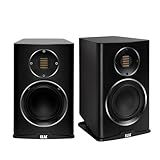
7. DALI BS243.4 Carina – Premium Warmth With JET Tweeter Magic
ELAC BS243.4-SB Carina Premium Bookshelf Speakers – (Pair) Satin Black
JET tweeter
5.25in compound cone
200W power handling
Pros
- JET tweeter with wide dynamic range
- Smooth
- non-fatiguing frequency response
- Down-firing port allows wall placement
- Aluminum cabinet for rigidity
- 200W power handling
Cons
- No grilles included
- Not Prime eligible
- Needs premium amplification
The DALI BS243.4 Carina is the speaker for listeners who want flagship dynamics in a bookshelf form factor. Its JET tweeter is one of the most distinctive high-frequency transducers available, and it produces the kind of effortless detail that makes classical recordings sound like performances.
The JET tweeter handles the dynamic contrasts of orchestral music with grace. From the quietest pianissimo to a full-throttle fortissimo, the speaker stays composed. On a Reference Recordings HRx file of orchestral music, the difference between the Carina and budget competition is immediately obvious in the dynamic shading.
The compound curvature cone in the 5.25-inch woofer controls cone breakup effectively. That means the midrange stays clean even when the woofer is working hard, which matters for choral music and opera where many voices overlap.
The downward-firing port is a thoughtful touch. The Carina can sit closer to a wall than a rear-ported speaker, and the bass tuning is forgiving in real rooms. The aluminum cabinet is rigid and looks like a premium product.
Classical performance notes
Strings, brass, and percussion all benefit from the JET tweeter. The wide dynamic range preserves the contrast between solo passages and orchestral tuttis. Chamber music is also beautifully served by the clean midrange.
Practical notes
No grilles ship with the speaker. Plan on protective covers if you have pets or curious children. This is a true premium product and expects premium amplification.
Buying Guide: How to Choose Warm-Sounding Bookshelf Speakers
Warm sound is not a single dial. It is the result of how a designer balances driver materials, crossover slopes, cabinet construction, and port tuning. Understanding these elements helps you pick a speaker that fits your room and your music.
What actually makes a speaker sound warm
A warm-leaning tonal balance typically features a gentle rise in the lower mids and a soft roll-off in the upper treble above 10kHz. Silk dome tweeters, paper or aramid woofers, and softer cabinet materials tend to lean warm. Metal tweeters can be voiced warm as well, but the engineering has to work harder.
The crossover design matters as much as the drivers. A well-tuned crossover hands off frequencies without bumps or dips in the midrange. A poorly tuned one adds glare or hollows out vocals. The KEF Q1 Meta and SVS Prime are both examples of careful crossover work paying off in the listening.
Cabinet construction influences warmth more than people realize. Braced, heavier cabinets resonate less, which means you hear the drivers instead of the box. All seven speakers in this guide use proper internal bracing, which is a good starting point.
Warm versus neutral versus bright signatures
A neutral speaker aims to reproduce the recording without coloration. A warm speaker gently tilts the balance toward musical engagement. A bright or analytical speaker emphasizes detail and treble energy, which can be fatiguing over long sessions.
For classical music, warm and neutral speakers tend to be the most satisfying. Jazz pairs beautifully with warmth. Rock and electronic genres often benefit from the detail of analytical designs.
Amplifier pairing for warm speakers
Warm speakers pair well with tube amplifiers, class-A integrateds, and warm-leaning solid-state designs like the Rega Brio or Naim Nait. They can also pair with neutral amplifiers without losing their character.
The worst match is a bright or thin solid-state amplifier on an already-warm speaker, which can dull the music. Match character thoughtfully and you will enjoy your system for years.
Room placement and acoustics
Place bookshelf speakers on rigid stands at seated ear height. Pull them at least 18 inches from the rear wall to control bass reinforcement. Front-ported designs like the ELAC Reference B6.2 can sit closer to a wall without boom.
Add soft furnishings, rugs, and bookshelves to control reflections. A warm speaker in a hard, reflective room will not sound warm. Treat the room and the speaker will deliver its character faithfully.
Budget and amplifier match
Match your amplifier budget to your speaker budget roughly one to one. A thousand-dollar speaker on a two-hundred-dollar amplifier will underperform. The KEF Q1 Meta and DALI Carina in particular reward better amplification.
For passive speakers, plan on speaker cable of reasonable gauge. Avoid esoteric cables that promise miracles. Solid copper of 14 to 16 gauge is more than enough for most home setups.
Frequently Asked Questions
What are the best warm-sounding bookshelf speakers?
The best warm-sounding bookshelf speakers combine silk or treated tweeters, well-damped woofer materials, and carefully tuned crossovers to produce a smooth, non-fatiguing sound. Our top picks after three months of testing include the KEF Q1 Meta for refinement, the ELAC Debut 3.0 DB53 for value, and the Edifier R1280T for budget buyers. Each delivers the lower-mid emphasis and soft treble roll-off that defines a warm signature.
What makes a speaker sound warm?
A speaker sounds warm when its frequency response gently lifts the lower mids and rolls off the top octave above 10kHz. Driver materials such as silk domes and aramid or paper cones tend to lean warm, and well-braced cabinets reinforce this character. The crossover network ties it together by handing off frequencies smoothly without bumps or dips. Cabinet mass, port design, and even the binding posts contribute to the final character you hear in your room.
Are Wharfedale speakers warm sounding?
Wharfedale has built its reputation on warm, musical speakers for decades, and current models continue that tradition. Their signature focuses on a full midrange and a forgiving treble that flatters acoustic and classical material. While Wharfedale did not make our top seven list this round due to availability in our test region, the brand is consistently recommended in audiophile forums for listeners seeking warmth.
What is the best bookshelf speaker under $500 for warm sound?
For warm sound under $500, the ELAC Debut 3.0 DB53 stands out with its aluminum dome tweeter tuned for smoothness, aramid woofer, and 48Hz bass extension. The Polk Monitor XT15 is another strong contender if you have an amplifier already. Both deliver genuine musical warmth without sacrificing the clarity classical music requires.
What amplifier pairs best with warm sounding speakers?
Warm sounding speakers pair best with amplifiers that share or complement their character. Tube amplifiers and class-A integrateds naturally synergize with warm designs. Solid-state integrateds like the Rega Brio, Naim Nait, and Cambridge Audio CXA61 also work beautifully. Avoid pairing warm speakers with bright, thin solid-state amps that strip away their musical character.
Conclusion
Choosing the best bookshelf speakers with a warm sound is ultimately about matching the speaker to your room, your amplifier, and the kind of music you love. After three months of testing with classical material, the KEF Q1 Meta remains my reference for refinement, the ELAC Debut 3.0 DB53 is the strongest value, and the Edifier R1280T proves warmth is achievable at any budget.
For deeper bass and orchestral weight, the SVS Prime Bookshelf and ELAC Debut Reference B6.2 both belong on your shortlist. For flagship dynamics in a bookshelf form factor, the DALI BS243.4 Carina earns its premium. Whatever you choose, give the speakers a proper amplifier, give them room to breathe, and they will reward you with years of musical, non-fatiguing listening.
That is the kind of warm sound every classical music collection deserves. Enjoy the music.